EP2552504B1 - Method to make poly(l-lactide) stent with tunable degradation rate - Google Patents
Method to make poly(l-lactide) stent with tunable degradation rate Download PDFInfo
- Publication number
- EP2552504B1 EP2552504B1 EP11707253.8A EP11707253A EP2552504B1 EP 2552504 B1 EP2552504 B1 EP 2552504B1 EP 11707253 A EP11707253 A EP 11707253A EP 2552504 B1 EP2552504 B1 EP 2552504B1
- Authority
- EP
- European Patent Office
- Prior art keywords
- lla
- plla
- stent
- monomer content
- polymer material
- Prior art date
- Legal status (The legal status is an assumption and is not a legal conclusion. Google has not performed a legal analysis and makes no representation as to the accuracy of the status listed.)
- Not-in-force
Links
Images


Classifications
-
- A—HUMAN NECESSITIES
- A61—MEDICAL OR VETERINARY SCIENCE; HYGIENE
- A61L—METHODS OR APPARATUS FOR STERILISING MATERIALS OR OBJECTS IN GENERAL; DISINFECTION, STERILISATION OR DEODORISATION OF AIR; CHEMICAL ASPECTS OF BANDAGES, DRESSINGS, ABSORBENT PADS OR SURGICAL ARTICLES; MATERIALS FOR BANDAGES, DRESSINGS, ABSORBENT PADS OR SURGICAL ARTICLES
- A61L31/00—Materials for other surgical articles, e.g. stents, stent-grafts, shunts, surgical drapes, guide wires, materials for adhesion prevention, occluding devices, surgical gloves, tissue fixation devices
- A61L31/14—Materials characterised by their function or physical properties, e.g. injectable or lubricating compositions, shape-memory materials, surface modified materials
- A61L31/148—Materials at least partially resorbable by the body
-
- A—HUMAN NECESSITIES
- A61—MEDICAL OR VETERINARY SCIENCE; HYGIENE
- A61F—FILTERS IMPLANTABLE INTO BLOOD VESSELS; PROSTHESES; DEVICES PROVIDING PATENCY TO, OR PREVENTING COLLAPSING OF, TUBULAR STRUCTURES OF THE BODY, e.g. STENTS; ORTHOPAEDIC, NURSING OR CONTRACEPTIVE DEVICES; FOMENTATION; TREATMENT OR PROTECTION OF EYES OR EARS; BANDAGES, DRESSINGS OR ABSORBENT PADS; FIRST-AID KITS
- A61F2/00—Filters implantable into blood vessels; Prostheses, i.e. artificial substitutes or replacements for parts of the body; Appliances for connecting them with the body; Devices providing patency to, or preventing collapsing of, tubular structures of the body, e.g. stents
- A61F2/82—Devices providing patency to, or preventing collapsing of, tubular structures of the body, e.g. stents
-
- A—HUMAN NECESSITIES
- A61—MEDICAL OR VETERINARY SCIENCE; HYGIENE
- A61F—FILTERS IMPLANTABLE INTO BLOOD VESSELS; PROSTHESES; DEVICES PROVIDING PATENCY TO, OR PREVENTING COLLAPSING OF, TUBULAR STRUCTURES OF THE BODY, e.g. STENTS; ORTHOPAEDIC, NURSING OR CONTRACEPTIVE DEVICES; FOMENTATION; TREATMENT OR PROTECTION OF EYES OR EARS; BANDAGES, DRESSINGS OR ABSORBENT PADS; FIRST-AID KITS
- A61F2/00—Filters implantable into blood vessels; Prostheses, i.e. artificial substitutes or replacements for parts of the body; Appliances for connecting them with the body; Devices providing patency to, or preventing collapsing of, tubular structures of the body, e.g. stents
- A61F2/82—Devices providing patency to, or preventing collapsing of, tubular structures of the body, e.g. stents
- A61F2/86—Stents in a form characterised by the wire-like elements; Stents in the form characterised by a net-like or mesh-like structure
- A61F2/89—Stents in a form characterised by the wire-like elements; Stents in the form characterised by a net-like or mesh-like structure the wire-like elements comprising two or more adjacent rings flexibly connected by separate members
-
- A—HUMAN NECESSITIES
- A61—MEDICAL OR VETERINARY SCIENCE; HYGIENE
- A61L—METHODS OR APPARATUS FOR STERILISING MATERIALS OR OBJECTS IN GENERAL; DISINFECTION, STERILISATION OR DEODORISATION OF AIR; CHEMICAL ASPECTS OF BANDAGES, DRESSINGS, ABSORBENT PADS OR SURGICAL ARTICLES; MATERIALS FOR BANDAGES, DRESSINGS, ABSORBENT PADS OR SURGICAL ARTICLES
- A61L31/00—Materials for other surgical articles, e.g. stents, stent-grafts, shunts, surgical drapes, guide wires, materials for adhesion prevention, occluding devices, surgical gloves, tissue fixation devices
- A61L31/04—Macromolecular materials
- A61L31/06—Macromolecular materials obtained otherwise than by reactions only involving carbon-to-carbon unsaturated bonds
-
- C—CHEMISTRY; METALLURGY
- C08—ORGANIC MACROMOLECULAR COMPOUNDS; THEIR PREPARATION OR CHEMICAL WORKING-UP; COMPOSITIONS BASED THEREON
- C08G—MACROMOLECULAR COMPOUNDS OBTAINED OTHERWISE THAN BY REACTIONS ONLY INVOLVING UNSATURATED CARBON-TO-CARBON BONDS
- C08G63/00—Macromolecular compounds obtained by reactions forming a carboxylic ester link in the main chain of the macromolecule
- C08G63/02—Polyesters derived from hydroxycarboxylic acids or from polycarboxylic acids and polyhydroxy compounds
- C08G63/06—Polyesters derived from hydroxycarboxylic acids or from polycarboxylic acids and polyhydroxy compounds derived from hydroxycarboxylic acids
- C08G63/08—Lactones or lactides
-
- C—CHEMISTRY; METALLURGY
- C08—ORGANIC MACROMOLECULAR COMPOUNDS; THEIR PREPARATION OR CHEMICAL WORKING-UP; COMPOSITIONS BASED THEREON
- C08G—MACROMOLECULAR COMPOUNDS OBTAINED OTHERWISE THAN BY REACTIONS ONLY INVOLVING UNSATURATED CARBON-TO-CARBON BONDS
- C08G63/00—Macromolecular compounds obtained by reactions forming a carboxylic ester link in the main chain of the macromolecule
- C08G63/88—Post-polymerisation treatment
- C08G63/90—Purification; Drying
-
- C—CHEMISTRY; METALLURGY
- C08—ORGANIC MACROMOLECULAR COMPOUNDS; THEIR PREPARATION OR CHEMICAL WORKING-UP; COMPOSITIONS BASED THEREON
- C08L—COMPOSITIONS OF MACROMOLECULAR COMPOUNDS
- C08L67/00—Compositions of polyesters obtained by reactions forming a carboxylic ester link in the main chain; Compositions of derivatives of such polymers
- C08L67/04—Polyesters derived from hydroxycarboxylic acids, e.g. lactones
-
- A—HUMAN NECESSITIES
- A61—MEDICAL OR VETERINARY SCIENCE; HYGIENE
- A61F—FILTERS IMPLANTABLE INTO BLOOD VESSELS; PROSTHESES; DEVICES PROVIDING PATENCY TO, OR PREVENTING COLLAPSING OF, TUBULAR STRUCTURES OF THE BODY, e.g. STENTS; ORTHOPAEDIC, NURSING OR CONTRACEPTIVE DEVICES; FOMENTATION; TREATMENT OR PROTECTION OF EYES OR EARS; BANDAGES, DRESSINGS OR ABSORBENT PADS; FIRST-AID KITS
- A61F2/00—Filters implantable into blood vessels; Prostheses, i.e. artificial substitutes or replacements for parts of the body; Appliances for connecting them with the body; Devices providing patency to, or preventing collapsing of, tubular structures of the body, e.g. stents
- A61F2/95—Instruments specially adapted for placement or removal of stents or stent-grafts
- A61F2/958—Inflatable balloons for placing stents or stent-grafts
-
- A—HUMAN NECESSITIES
- A61—MEDICAL OR VETERINARY SCIENCE; HYGIENE
- A61F—FILTERS IMPLANTABLE INTO BLOOD VESSELS; PROSTHESES; DEVICES PROVIDING PATENCY TO, OR PREVENTING COLLAPSING OF, TUBULAR STRUCTURES OF THE BODY, e.g. STENTS; ORTHOPAEDIC, NURSING OR CONTRACEPTIVE DEVICES; FOMENTATION; TREATMENT OR PROTECTION OF EYES OR EARS; BANDAGES, DRESSINGS OR ABSORBENT PADS; FIRST-AID KITS
- A61F2/00—Filters implantable into blood vessels; Prostheses, i.e. artificial substitutes or replacements for parts of the body; Appliances for connecting them with the body; Devices providing patency to, or preventing collapsing of, tubular structures of the body, e.g. stents
- A61F2/02—Prostheses implantable into the body
- A61F2/30—Joints
- A61F2002/30001—Additional features of subject-matter classified in A61F2/28, A61F2/30 and subgroups thereof
- A61F2002/30003—Material related properties of the prosthesis or of a coating on the prosthesis
- A61F2002/3006—Properties of materials and coating materials
- A61F2002/30062—(bio)absorbable, biodegradable, bioerodable, (bio)resorbable, resorptive
-
- A—HUMAN NECESSITIES
- A61—MEDICAL OR VETERINARY SCIENCE; HYGIENE
- A61F—FILTERS IMPLANTABLE INTO BLOOD VESSELS; PROSTHESES; DEVICES PROVIDING PATENCY TO, OR PREVENTING COLLAPSING OF, TUBULAR STRUCTURES OF THE BODY, e.g. STENTS; ORTHOPAEDIC, NURSING OR CONTRACEPTIVE DEVICES; FOMENTATION; TREATMENT OR PROTECTION OF EYES OR EARS; BANDAGES, DRESSINGS OR ABSORBENT PADS; FIRST-AID KITS
- A61F2210/00—Particular material properties of prostheses classified in groups A61F2/00 - A61F2/26 or A61F2/82 or A61F9/00 or A61F11/00 or subgroups thereof
- A61F2210/0004—Particular material properties of prostheses classified in groups A61F2/00 - A61F2/26 or A61F2/82 or A61F9/00 or A61F11/00 or subgroups thereof bioabsorbable
-
- A—HUMAN NECESSITIES
- A61—MEDICAL OR VETERINARY SCIENCE; HYGIENE
- A61K—PREPARATIONS FOR MEDICAL, DENTAL OR TOILETRY PURPOSES
- A61K9/00—Medicinal preparations characterised by special physical form
- A61K9/14—Particulate form, e.g. powders, Processes for size reducing of pure drugs or the resulting products, Pure drug nanoparticles
- A61K9/16—Agglomerates; Granulates; Microbeadlets ; Microspheres; Pellets; Solid products obtained by spray drying, spray freeze drying, spray congealing,(multiple) emulsion solvent evaporation or extraction
- A61K9/1605—Excipients; Inactive ingredients
- A61K9/1629—Organic macromolecular compounds
- A61K9/1641—Organic macromolecular compounds obtained otherwise than by reactions only involving carbon-to-carbon unsaturated bonds, e.g. polyethylene glycol, poloxamers
- A61K9/1647—Polyesters, e.g. poly(lactide-co-glycolide)
-
- A—HUMAN NECESSITIES
- A61—MEDICAL OR VETERINARY SCIENCE; HYGIENE
- A61K—PREPARATIONS FOR MEDICAL, DENTAL OR TOILETRY PURPOSES
- A61K9/00—Medicinal preparations characterised by special physical form
- A61K9/20—Pills, tablets, discs, rods
- A61K9/2004—Excipients; Inactive ingredients
- A61K9/2022—Organic macromolecular compounds
- A61K9/2031—Organic macromolecular compounds obtained otherwise than by reactions only involving carbon-to-carbon unsaturated bonds, e.g. polyethylene glycol, polyethylene oxide, poloxamers
- A61K9/204—Polyesters, e.g. poly(lactide-co-glycolide)
-
- B—PERFORMING OPERATIONS; TRANSPORTING
- B29—WORKING OF PLASTICS; WORKING OF SUBSTANCES IN A PLASTIC STATE IN GENERAL
- B29C—SHAPING OR JOINING OF PLASTICS; SHAPING OF MATERIAL IN A PLASTIC STATE, NOT OTHERWISE PROVIDED FOR; AFTER-TREATMENT OF THE SHAPED PRODUCTS, e.g. REPAIRING
- B29C48/00—Extrusion moulding, i.e. expressing the moulding material through a die or nozzle which imparts the desired form; Apparatus therefor
- B29C48/001—Combinations of extrusion moulding with other shaping operations
- B29C48/0022—Combinations of extrusion moulding with other shaping operations combined with cutting
-
- B—PERFORMING OPERATIONS; TRANSPORTING
- B29—WORKING OF PLASTICS; WORKING OF SUBSTANCES IN A PLASTIC STATE IN GENERAL
- B29K—INDEXING SCHEME ASSOCIATED WITH SUBCLASSES B29B, B29C OR B29D, RELATING TO MOULDING MATERIALS OR TO MATERIALS FOR MOULDS, REINFORCEMENTS, FILLERS OR PREFORMED PARTS, e.g. INSERTS
- B29K2067/00—Use of polyesters or derivatives thereof, as moulding material
- B29K2067/04—Polyesters derived from hydroxycarboxylic acids
- B29K2067/046—PLA, i.e. polylactic acid or polylactide
-
- B—PERFORMING OPERATIONS; TRANSPORTING
- B29—WORKING OF PLASTICS; WORKING OF SUBSTANCES IN A PLASTIC STATE IN GENERAL
- B29L—INDEXING SCHEME ASSOCIATED WITH SUBCLASS B29C, RELATING TO PARTICULAR ARTICLES
- B29L2031/00—Other particular articles
- B29L2031/753—Medical equipment; Accessories therefor
- B29L2031/7532—Artificial members, protheses
- B29L2031/7534—Cardiovascular protheses
-
- C—CHEMISTRY; METALLURGY
- C08—ORGANIC MACROMOLECULAR COMPOUNDS; THEIR PREPARATION OR CHEMICAL WORKING-UP; COMPOSITIONS BASED THEREON
- C08J—WORKING-UP; GENERAL PROCESSES OF COMPOUNDING; AFTER-TREATMENT NOT COVERED BY SUBCLASSES C08B, C08C, C08F, C08G or C08H
- C08J2367/00—Characterised by the use of polyesters obtained by reactions forming a carboxylic ester link in the main chain; Derivatives of such polymers
- C08J2367/04—Polyesters derived from hydroxy carboxylic acids, e.g. lactones
-
- C—CHEMISTRY; METALLURGY
- C09—DYES; PAINTS; POLISHES; NATURAL RESINS; ADHESIVES; COMPOSITIONS NOT OTHERWISE PROVIDED FOR; APPLICATIONS OF MATERIALS NOT OTHERWISE PROVIDED FOR
- C09D—COATING COMPOSITIONS, e.g. PAINTS, VARNISHES OR LACQUERS; FILLING PASTES; CHEMICAL PAINT OR INK REMOVERS; INKS; CORRECTING FLUIDS; WOODSTAINS; PASTES OR SOLIDS FOR COLOURING OR PRINTING; USE OF MATERIALS THEREFOR
- C09D167/00—Coating compositions based on polyesters obtained by reactions forming a carboxylic ester link in the main chain; Coating compositions based on derivatives of such polymers
- C09D167/04—Polyesters derived from hydroxycarboxylic acids, e.g. lactones
-
- C—CHEMISTRY; METALLURGY
- C09—DYES; PAINTS; POLISHES; NATURAL RESINS; ADHESIVES; COMPOSITIONS NOT OTHERWISE PROVIDED FOR; APPLICATIONS OF MATERIALS NOT OTHERWISE PROVIDED FOR
- C09J—ADHESIVES; NON-MECHANICAL ASPECTS OF ADHESIVE PROCESSES IN GENERAL; ADHESIVE PROCESSES NOT PROVIDED FOR ELSEWHERE; USE OF MATERIALS AS ADHESIVES
- C09J167/00—Adhesives based on polyesters obtained by reactions forming a carboxylic ester link in the main chain; Adhesives based on derivatives of such polymers
- C09J167/04—Polyesters derived from hydroxycarboxylic acids, e.g. lactones
Definitions
- This invention relates to methods of treatment of blood vessels with bioabsorbable polymeric medical devices, in particular, stents.
- This invention relates to radially expandable endoprostheses, that are adapted to be implanted in a bodily lumen.
- An "endoprosthesis” corresponds to an artificial device that is placed inside the body.
- a “lumen” refers to a cavity of a tubular organ such as a blood vessel.
- a stent is an example of such an endoprosthesis.
- Stents are generally cylindrically shaped devices that function to hold open and sometimes expand a segment of a blood vessel or other anatomical lumen such as urinary tracts and bile ducts. Stents are often used in the treatment of atherosclerotic stenosis in blood vessels.
- Steps refers to a narrowing or constriction of a bodily passage or orifice. In such treatments, stents reinforce body vessels and prevent restenosis following angioplasty in the vascular system.
- Restenosis refers to the reoccurrence of stenosis in a blood vessel or heart valve after it has been treated (as by balloon angioplasty, stenting, or valvuloplasty) with apparent success.
- Stents are typically composed of scaffolding that includes a pattern or network of interconnecting structural elements or struts, formed from wires, tubes, or sheets of material rolled into a cylindrical shape. This scaffolding gets its name because it physically holds open and, if desired, expands the wall of the passageway.
- stents are capable of being compressed or crimped onto a catheter so that they can be delivered to and deployed at a treatment site.
- Delivery includes inserting the stent through small lumens using a catheter and transporting it to the treatment site.
- Deployment includes expanding the stent to a larger diameter once it is at the desired location.
- Mechanical intervention with stents has reduced the rate of restenosis as compared to balloon angioplasty.
- restenosis remains a significant problem. When restenosis does occur in the stented segment, its treatment can be challenging, as clinical options are more limited than for those lesions that were treated solely with a balloon.
- Stents are used not only for mechanical intervention but also as vehicles for providing biological therapy.
- Biological therapy uses medicated stents to locally administer a therapeutic substance.
- the therapeutic substance can also mitigate an adverse biological response to the presence of the stent.
- Effective concentrations at the treated site require systemic drug administration which often produces adverse or even toxic side effects.
- Local delivery is a preferred treatment method because it administers smaller total medication levels than systemic methods, but concentrates the drug at a specific site. Local delivery thus produces fewer side effects and achieves better results.
- a medicated stent may be fabricated by coating the surface of either a metallic or polymeric scaffolding with a polymeric carrier that includes an active or bioactive agent or drug.
- Polymeric scaffolding may also serve as a carrier of an active agent or drug.
- the stent must be able to satisfy a number of mechanical requirements.
- the stent must have sufficient radial strength so that it is capable of withstanding the structural loads, namely radial compressive forces, imposed on the stent as it supports the walls of a vessel. Once expanded, the stent must adequately provide lumen support during a time required for treatment in spite of the various forces that may come to bear on it, including the cyclic loading induced by the beating heart. In addition, the stent must possess sufficient flexibility with a certain resistance to fracture.
- PCI percutaneous coronary intervention
- SFA superficial femoral artery
- stent In order not to affect healing of a diseased blood vessel, the presence of the stent is necessary only for a limited period of time.
- stent can be made from materials that erode or disintegrate through exposure to conditions within the body.
- erodible portions of the stent can disappear from the implant region after the treatment is completed, leaving a healed vessel.
- Stents fabricated from biodegradable, bioabsorbable, and/or bioerodable materials such as bioabsorbable polymers can be designed to completely erode only after the clinical need for them has ended.
- a biodegradable stent Like a durable stent, a biodegradable stent must meet time dependent mechanical requirements. For example, it must provide patency for a minimum time period. However, it is also important for a biodegradable stent to completely degrade from the implant site with in a certain period of time. A biodegradable material that can provide the mechanical requirements may not possess the requisite or desired degradation time. In addition, the requisite or desired degradation time varies between types of applications, i.e. coronary or peripheral.
- BENDIX D "Chemical synthesis of polylactide and its copolymers for medical applications", POLYMER DEGRADATION AND STABILITY, BARKING, GB, vol. 59, no. 1-3, 1 January 1998 (1998-01-01), pages 129-135 , discloses a method of fabricating a stent comprising: obtaining a PLLA polymer material having an LLA monomer content of greater than 4 wt%; processing the PLLA polymer to reduce the monomer content to no more than 2 wt%; and making a polymeric stent body from the processed PLLA. Wherein the processing comprises a liquid solvent extraction process, wherein exposure of the PLLA polymer material extracts LLA monomer from the material.
- TAMMELA T L J ET AL "Biodegradable urethral stents.”, BJU INTERNATIONAL, vol. 92, no. 8, 28 October 2003 (2003-10-28), pages 843-850 , discloses a method of fabricating a stent comprising: making PLLA polymer material with a polymerization reaction of LLA monomers, and making a polymeric stent body from the processed PLLA polymer material
- the present invention is directed to a method of fabricating a stent as defined in the claims.
- Additional embodiments of the present invention include a method of making a stent comprising: selecting a reaction time between 1 - 100 h of a polymerization reaction of LLA monomer to PLLA; selecting a target monomer content of PLLA polymer material from the polymerization reaction between 0.5 to 2 wt%; performing the polymerization reaction for different reaction temperatures between 120-180°C to determine a target reaction temperature that provides the target LLA monomer content; making the PLLA polymer material with the target LLA monomer content from the polymerization reaction at the target reaction temperature for the target reaction time; and making a stent from the PLLA polymer material with the target monomer content.
- Coronary arteries refer generally to arteries that branch off the aorta to supply the heart muscle with oxygenated blood.
- Peripheral arteries refer generally to blood vessels outside the heart and brain.
- the arteries become hardened and narrowed or stenotic and restrict blood flow.
- blood flow is restricted to the heart, while in the peripheral arteries blood flow is restricted leading to the kidneys, stomach, arms, legs, and feet.
- the narrowing is caused by the buildup of cholesterol and other material, called plaque, on the inner walls of the vessel.
- plaque Such narrowed or stenotic portions are often referred to as lesions.
- Artery disease also includes the reoccurrence of stenosis or restenosis that occurs after an angioplasty treatment. Although there are probably several mechanisms that lead to restenosis of arteries, an important one is the inflammatory response, which induces tissue proliferation around an angioplasty site.
- the inflammatory response can be caused by the balloon expansion used to open the vessel, or if a stent is placed, by the foreign material of the stent itself.
- Embodiments of the present invention are applicable to treatment of coronary and peripheral disease in coronary arteries and various peripheral vessels including the superficial femoral artery, the iliac artery, and carotid artery.
- the embodiments are further applicable to various stent types, such as self-expandable and balloon expandable stents.
- the embodiments are further applicable to various stent designs including scaffolding structures formed from tubes, wire structures, and woven mesh structures.
- a stent in embodiments of the present invention, includes a plurality of cylindrical rings connected or coupled with linking elements. When deployed in a section of a vessel, the cylindrical rings are load bearing and support the vessel wall at an expanded diameter or a diameter range due to cyclical forces in the vessel. Load bearing refers to the supporting of the load imposed by radial inwardly directed forces. Structural elements, such as the linking elements or struts, are non-load bearing, serving to maintain connectivity between the rings.
- a stent may include a scaffolding composed of a pattern or network of interconnecting structural elements or struts.
- FIG. 1 depicts a view of an exemplary stent 100.
- a stent may include a body, backbone, or scaffolding having a pattern or network of interconnecting structural elements 105.
- Stent 100 may be formed from a tube (not shown).
- FIG. 1 illustrates features that are typical to many stent patterns including cylindrical rings 107 connected by linking elements 110.
- the cylindrical rings are load bearing in that they provide radially directed force to support the walls of a vessel.
- the linking elements generally function to hold the cylindrical rings together.
- FIG. 1 The structural pattern in FIG. 1 is merely exemplary and serves to illustrate the basic structure and features of a stent pattern.
- a stent such as stent 100 may be fabricated from a polymeric tube or a sheet by rolling and bonding the sheet to form the tube.
- a tube or sheet can be formed by extrusion or injection molding.
- a stent pattern, such as the one pictured in FIG. 1 can be formed on a tube or sheet with a technique such as laser cutting or chemical etching. The stent can then be crimped on to a balloon or catheter for delivery into a bodily lumen.
- the prevailing mechanism of degradation of biodegradable polymers is chemical hydrolysis of the hydrolytically unstable backbone.
- polymer In a bulk eroding polymer, polymer is chemically degraded and material is lost from the entire polymer volume. As the polymer degrades, the molecular weight decreases. The reduction in molecular weight is followed by a reduction in mechanical properties, and then erosion or mass loss. The decrease in mechanical properties eventually results in loss of mechanical integrity demonstrated by fragmentation of the device. Enzymatic attack and metabolization of the fragments occurs, resulting in a rapid loss of polymer mass.
- the treatment of artery disease with a stent of the present invention has time dependent properties once it is implanted which enable the treatment and healing of a diseased section of the vessel.
- the molecular weight, the mechanical properties, the mechanical integrity, and mass change with time.
- the stent After deployment at a diseased section artery, the stent supports the section at an increased diameter for a period of time. Due to a decrease in molecular weight, the radial strength degrades to the point that the stent can no longer support the walls of the section of the vessel.
- “Radial strength" of a stent is defined as the pressure at which a stent experiences irrecoverable deformation. The loss of radial strength is followed by a gradual decline of mechanical integrity.
- Mechanical integrity refers to the size, shape, and connectivity of the structural elements of the stent.
- shape refers to the generally tubular shape of the stent formed by the cylindrically-shape rings connected by the linking elements of the pattern. Mechanical integrity starts to be lost when fractures appear or propagate in structural elements of the stent due to chemical degradation (molecular weight decline). Further loss of mechanical integrity occurs when there is breaking or loss of connectivity in structural elements.
- the initial clinical need for any stent is to provide mechanical support to maintain patency or keep a vessel open at or near the deployment diameter.
- the patency provided by the stent allows the stented segment of the vessel to undergo positive remodeling at the increased deployed diameter.
- the stent prevents negative remodeling. Remodeling refers generally to structural changes in the vessel wall that enhance its load-bearing ability so that the vessel wall in the stented section can maintain an increased diameter in the absence of the stent support. A period of patency is required in order to obtain permanent positive remodeling.
- the stent inhibits or prevents the natural pulsatile function of the vessel.
- the stent structure prevents recoil and maintains a circular lumen while the vessel remodels and molds itself to the stented diameter, which corresponds to positive remodeling.
- Early recoil before sufficient modeling takes place can result in negative remodeling, referring to molding of the stent to a diameter significantly less than the original stented diameter, for example, 50% or less than the original deployment diameter.
- the radial strength of the stent decreases and the load of the vessel is gradually transferred from the stent to the remodeled vessel wall. Remodeling of the vessel wall continues after loss of radial strength of the stent. Before the stent loses mechanical integrity, it is desirable for the stent structural elements to become incorporated in the vessel wall by an endothelial layer. The stent then breaks apart which allows vasomotion. The vessel wall continues to remodel as the vessel moves due to vasomotion. The stent eventually erodes away completely leaving a healed vessel with an increased diameter and which can exhibit vasomotion the same or similar to a healthy vessel section.
- Poly(L-lactide) (PLLA) is attractive as a stent material due to its relatively high strength and a rigidity at human body temperature, about 37 °C. Since it has glass transition temperature between about 60 and 65 °C ( Medical Plastics and Biomaterials Magazine, March 1998 ), it remains stiff and rigid at human body temperature. This property facilitates the ability of a stent to maintain a lumen at or near a deployed diameter without significant recoil.
- PLLA has an in vitro degradation time of up to 3 years ( Medical Plastics and Biomaterials Magazine, March 1998 ; Medical Device Manufacturing & Technology 2005 ).
- the degradation time is the time required for complete loss of mass of a polymer construct, such as a stent.
- the degradation time in vivo is shorter and depends on the animal model.
- a PLLA stent has associated molecular weight and mechanical property (e.g., strength) profiles. As demonstrated above, the time dependence of the mechanical properties and mechanical integrity are important in the treatment of a diseased vessel.
- the degradation properties of PLLA do not generally coincide with what is required or desired for a particular treatment application.
- a PLLA stent it is desirable for a PLLA stent to have a degradation time of about two years (e.g., 22 to 26 months) for coronary vascular application, of about eighteen months (e.g., 16-20 months) for a peripheral application (e.g., superficial femoral artery (SFA)), and less than a year for nasal applications.
- the radial strength should be maintained for between one to six months, wherein maintaining radial strength refers to the ability of the stent to maintain the stented section at a diameter at least 50% of the original deployed diameter.
- the start of the loss of mechanical integrity should not occur until at least between 2 and 4 months, where the start of the loss of mechanical integrity corresponds to breaking apart of structural elements.
- the embodiments of the present invention relate to adjusting the time-dependent degradation behavior of a PLLA stent through inclusion L-lactide (LLA) monomer in a stent body composed of PLLA.
- LLA L-lactide
- the embodiments of the stent can include a body or scaffolding that is composed of PLLA with a targeted small amount of LLA monomer.
- the body can be composed of targeted amount of LLA and the rest of the body can be 100% PLLA. Additionally, the body can be made of the targeted amount of LLA, additional components, and the rest of the body 100% PLLA.
- the body can be 95 wt% or greater and the rest of the body can be the targeted amount of LLA and optionally the additional components.
- the additional components can be drugs, polymers, or filler materials such as bioceramic particles.
- the present invention includes embodiments that exclude additional components or exclude one or more of the additional components mentioned above.
- the PLLA stent body can include additionally or alternatively, d-lactide, meso-lactide, glycolide, lactic acid, or their oligomers with an Mn less than 1,000 g/mol.
- concentration of these additional monomers can be the same as those disclosed for L-lactide.
- the stent can further include a coating over the body or scaffolding.
- the coating can be a polymer and drug mixture.
- the coating can be poly(D,L-lactide) and the drug could be an antiproliferative such as everolimus.
- the coating can be free of the LLA monomer other than incidental migration or diffusion of LLA into the coating.
- Low molecular weight PLLA oligomers can also increase the degradation rate, and thus adjust degradation behavior. However, the increase is primarily due to acidic end groups that act as catalysts to increase degradation rate of the PLLA. Thus, the larger the oligomer, a higher the weight fraction of oligomer in the PLLA that is required. Therefore, a much lower weight fraction of LLA monomer than given oligomer is required for a similar effect as the oligomer. The high weight fraction of oligomer can negatively impact the mechanical properties of the stent.
- LLA monomers The qualitative and precise effect of LLA monomers on PLLA degradation behavior is not known. For example, the amount of monomer required to obtain desired degradation behavior is not. This can be at least partially attributed to the fact that the degradation behavior of a stent made from a semicrystalline degradable polyester, such as PLLA, is a complex function of several properties of the material and stent body.
- These properties include the intrinsic hydrolysis rate of the polymer (i.e., the chain scission reactions of the polymer backbone), the degree of crystallinity, the morphology (size and distribution of crystallite domains in the amorphous matrix), molecular weight (as measured by the inherent viscosity, number or weight average molecular weight), and stent body parameters (pattern, strut dimensions and the surface to volume ratio).
- a semicrystalline polymer generally may have insufficient strength and fracture toughness to provide adequate and safe treatment of a blood vessel.
- the fabrication of the stent of present invention includes processing which increases the strength and fracture toughness of the final stent product. This processing provides certain characteristics that affect the degradation behavior, e.g., crystallinity, morphology.
- the strength and fracture toughness are increased by induced biaxial orientation of polymers in the hoop or circumferential and/or axial direction, a particular range of the degree of crystallinity, and small dispersed crystallites.
- the stent is made from an extruded PLLA polymer tube that has been radially expanded and axially stretched to provide the induced orientation.
- the polymer tube is expanded by blow molding with a percent radial expansion between 200% and 500%, and a percent axial stretch from 20% to 200%.
- the extruded PLLA tubing has a percent of axial stretch from 100% to 400%.
- the stent is formed from the expanded tube by laser cutting the tubing in its expanded state.
- the blow molding process is performed in a manner that results in small crystallites dispersed through an amorphous matrix.
- the tube Prior to expansion, the tube is heated to a temperature between 70 °C and 95 °C to induce formation of smaller crystallites that enhance fracture toughness.
- the tube is quenched below the glass transition temperature (Tg) after expansion to prevent further crystal growth.
- Tg glass transition temperature
- the degree of crystallinity is 30-50%. Below 30% crystallinity the stent body may not be have sufficient strength, while above 50% crystallinity the stent body may be too brittle.
- the number average molecular weight (Mn) of scaffolding material in the final product is between 60,000 and 300,000, or more narrowly between 80,000 and 200,000.
- An exemplary strut cross-section can be rectangular, for example, 140 x 140 ⁇ m to 160 x 160 ⁇ m or having a cross-sectional area between 20,000 and 25,000 ⁇ m 2 .
- the stent is composed of PLLA and less than 1 wt% of LLA monomer.
- the stent includes less than 0.9 wt%, less than 0.7 wt%, less than 0.5 wt %, less than 0.4 wt %, less than 0.3 wt%, less than 0.2 wt %, or less than 0.1 wt % of LLA monomer.
- the stent has between 1-2 wt% LLA, 2-3 wt% LLA, 3-4 wt% LLA.
- an LLA content of greater than 1 wt% or greater than 2 wt% will result in a stent that does not maintain radial strength and mechanical strength long enough for effective treatment of a diseased section of a vessel.
- the LLA monomer can be dispersed in the form of a powder or particular particles through all or a portion of a stent body.
- the size of such particles can be less than 100 nm, between 100 nm and 200 nm, or greater than 200 nm, where size can refer to diameter or some other characteristic length.
- the LLA monomer can be mixed or dissolved on a molecular level with the PLLA.
- LLA provides a dramatic and unexpected increase in the degradation rate of the stent, particularly above about 1 wt%.
- Stents having monomer compositions above about 1 wt% LLA lose mechanical strength, lose mechanical integrity, and erode away in a fast way. Additionally, the low concentration of LLA are advantageous since the effect of the dispersed monomer in the polymer has no or a minimal effect on the mechanical properties of the polymer.
- additional embodiments include a method of mixing the LLA in the PLLA stent material.
- the in vitro studies were performed in a phosphate buffered saline (PBS buffer) solution at 37 °C.
- the Mn of the stent was measured by GPC using polystyrene standards.
- the animal model for the in vivo studies was Yucatan mini swine.
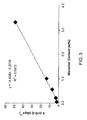
- the Mn dependence on time is plotted in the form of ln[Mn(t)/Mn(0)] versus time to assess the predictive ability of the hydrolytic degradation model.
- the model is then used to assess the effect of LLA on the degradation of PLLA.
- FIG. 2 depicts a plot of ln[Mn(t)/Mn(0)] versus time for this set for four groups of stents: nominal (0.05 wt % LLA), 0.2 wt% LLA, 0.55 wt% LLA, 1 wt% LLA, and 3.3 wt% LLA monomer in PLLA.
- Rate constant K for degradation model from in vitro data.
- Stent Group wt% LLA k (x 10 3 ) (days -1 )
- R 2 Nominal 1.9 0.962 0.2 3.0 0.972 0.55 7.2 0.969 1 13.4 0.960 3.3 48.8 0.989
- the coefficient of determination, R2 is given for each group of data to assess the predictability of the linear degradation model. The closer R2 is to 1, the more reliable the predictive ability of the model.
- Table 2 shows an unexpectedly dramatic effect of LLA monomer content on the degradation of the stent.
- K increases near three times and from near 0 to 1 wt%
- the rate constant increases near six times.
- Table 3 shows the percent drop in Mn and the Mn at time points based on the model predictions for 1 wt% LLA for the second set of data. Table 3.
- the in vitro start of mass loss is expected to be an upper limit for in vivo degradation, that is, mass loss starts at an earlier time in vivo.
- the start of mechanical integrity loss and the loss of radial strength might also occur at an earlier time in vivo than in vitro .
- Table 4 shows in vivo and in vitro data for mass loss for a PLLA stent with no LLA monomer. The difference in the time that mass loss starts and the difference in the degree of loss is significant. Table 4. Comparison of in vitro and in vivo mass loss for PLLA stent with no LLA monomer. Time (months) In vitro mass loss In vivo Mass loss 9 0% 20% 12 0% 30% 18 - 35% 21 9% -
- the mechanical integrity should remain intact for at least 2 to 4 months without severe fractures (e.g, breaking of struts) after implantation to allow incorporation of stent into vessel wall. Additionally, it is believed that radial strength should be maintained for at least about 1 month to prevent negative remodeling. The radial strength is expected to be lost prior to the mechanical integrity and the start of the loss of mechanical integrity is expected to start before mass loss. A prelude to the start of the loss of mechanical integrity corresponds to the formation of cracks in the stent. Therefore, based on this in vitro data, the LLA concentration should be less than 1 wt% for the stent to maintain radial strength and mechanical integrity for the desired times for coronary and peripheral applications.
- stent groups with near 0 wt%, 0.2 wt%, 0.55 wt%, 1 wt% and about 3 wt% of LLA in PLLA were studied and tracked over a four month period. In these studies, the radial strength and stent integrity were tracked. Table 5 summarizes the observed change in radial strength and mechanical integrity after radial strength testing for the different groups. As shown in Table 5, for near 0 wt%, 0.2 wt%, and 0.55 wt% LLA, the radial strength is maintained up to more than 4 months and there were no fractures observed up to more than 4 months.
- the LLA can be mixed with PLLA using solvent blending.
- Solvent blending may include making a master batch of PLLA and LLA mixture with concentrations of LLA larger than the target concentration.
- the master batch is made by dissolving LLA and PLLA in a solvent such as chloroform.
- the chloroform is evaporated to form the master batch which is a uniform mixture of PLLA and LLA.
- the master batch is then mixed by melt processing, such as in an extruder, with a sufficient amount of PLLA to obtain the target LLA concentration.
- the method is illustrated by the following example:
- LLA can be mixed with PLLA using spray coating.
- the spray coating can include preparing a uniform mixture of LLA in PLLA includes dissolving LLA in a solvent such as methanol to form a solution and spraying the solution on PLLA pellets. The solvent is removed leaving the LLA deposited on the PLLA pellets.
- the PLLA pellets are melt processed, in an extruder, for example, to form tubes with the target concentration of LLA in PLLA. The method is illustrated by the following example:
- melt blending can result in nonuniform mixing of LLA monomer and PLLA polymer.
- phase separation of LLA from PLLA occurs and has been observed by the inventors.
- the phase separation is likely due to the large density variation between LLA monomer and PLLA.
- the nonuniform distribution may result in variations in the degradation rate of the final products made from the PLLA.
- further embodiments of making a PLLA material with uniform LLA monomer content for making a stent or other medical device involves control of polymerization conditions during PLLA synthesis, control of post-processing conditions, or both.
- Such embodiments can provide PLLA pellets for processing into a stent with uniformly distributed LLA monomer at both low and high concentrations of LLA, i.e., from 0.01 wt% to 5 wt%.
- PLLA synthesis is ring-opening polymerization of L-lactide in the bulk phase using stannous octoate(tin(II1 2- ethylhexanoate) as catalyst.
- stannous octoate(tin(II1 2- ethylhexanoate) as catalyst.
- polymerization is conventionally performed at relatively low temperatures (lower than 180 °C, preferably 140-160 °C) with short reaction times (less than 16 h).
- the lower temperatures and short reaction times reduce or prevent depolymerization that regenerates monomers.
- the reaction temperature at a later polymerization stage is lowered to eliminate any depolymerization.
- polymerization temperatures for PLLA are between 120 - 180 °C, preferably, 140-160 °C.
- the molecular weight of the product is also affected by the temperature and reaction time, but is also controlled by the monomer/initiator ratio.
- Typical initiators are alcohols like dodecanol or hexanol.
- a monomer/initiator molar ratio of about 1500:1 to 4000:1 (molar) may be used.
- a monomer/catalyst weight ratio of between 1000:1 to 2000:1 (weight) is used.
- the final product which is cut into quite small pellets, for example, a pellet can be about 0.1 g.
- residual monomer content is reduced by subjecting the polymer to post- processing that extracts monomer from the synthesized polymer.
- monomer extraction post-processing methods such as solvent extraction, supercritical CO 2 extraction, and vacuum/high temperature extraction.
- solvent extraction the polymer is soaked in a solvent for the monomer which is a nonsolvent for polymer.
- CO 2 extraction the PLLA material is exposed to supercritical carbon dioxide which extracts LLA monomer from the material.
- vacuum/high temperature extraction a PLLA sample is exposed to temperatures in a range between 140-160°C at very low pressures, less than 0.1 atm.
- process variables in each of these processes that influence the degree of monomer extraction. However, the primary variable is time of exposure to the process. The longer the exposure, the higher the removal of monomer.
- Extraction solvents for extracting LLA from PLLA include methanol, ethanol etc, which is solvent for LLA but poor or non-solvent for PLLA.
- the amount extracted is a function of soaking time in the solvent. Different soaking times result in final products with different monomer content. The higher the soaking time, the higher the removal of the monomer and the lower the monomer content of the resulting product. Due to the small size of the pellets, the extraction results in uniform content of monomer in the pallet.
- the exposure time necessary to get a target monomer concentration less than 0.1% in solvents such as methanol may be at least 24 h.
- polymerization is performed to result in a product with a monomer content as low as possible.
- monomer extraction conventionally is applied to remove all monomer or as much as practically possible from a polymer.
- polymerization alone or in combination with post-processing extraction, is performed to deliberately result in a PLLA polymer material with a LLA monomer content higher than conventionally desirable with the object to provide or control the degradation rate of a stent made from the PLLA material.
- post-processing monomer extraction may be applied either alone or in combination with polymerization to provide a PLLA product with such monomer content.
- the target LLA monomer concentration resulting from polymerization, post-processing, or both is between 0.01 to 2 wt%, 0.05 to 2 wt%, 0.05 to 1 or wt% or 0.5 to 2 wt%.
- the target LLA monomer concentration is less than 2 wt%, less than 1 wt%, less than 0.9 wt%, less than 0.7 wt%, less than 0.5 wt %, less than 0.4 wt %, less than 0.3 wt%, less than 0.2 wt %, or less than 0.1 wt % of LLA monomer.
- the target LLA monomer concentration is 1 wt% LLA, 1-2 wt% LLA, 2-3 wt% LLA,.
- the target content of LLA of the PLLA product is controlled through control of the post-processing.
- the LLA monomer content is controlled through the exposure time of the PLLA pellets in a process such as solvent extraction, supercritical CO 2 extraction, or vacuum/high temperature extraction.
- solvent extraction the exposure time corresponds to the time the PLLA pellets are soaked in the extraction solvent.
- supercritical CO 2 extraction the exposure time corresponds to the time of exposure of the PLLA pellets to supercritical CO 2 at the extraction conditions.
- vacuum/high temperature extraction the exposure time corresponds to the time of exposure of the PLLA pellets to the vacuum/high temperature extraction conditions.
- a PLLA polymer material is obtained that has a relatively high LLA monomer content.
- the LLA content may be, for greater than 4 wt%, or greater than 5 wt% LLA.
- the PLLA is exposed to the extraction conditions for a target exposure time during which LLA is extracted from the PLLA and then extraction is terminated. Terminating extraction can correspond to removing the PLLA from the solvent or extraction chamber or changing the conditions of an extraction chamber to conditions that do not extract LLA.
- the extraction can be performed in stages in which extraction can be terminated before reaching a target LLA content and then exposed one or more additional times until a target LLA content is reached.
- the target exposure time is the exposure time that results in a target LLA monomer content, ranges of which are provided above, in the PLLA polymer material.
- the target exposure time can be determined from exposure of a plurality of PLLA samples at different exposure times. For example, an initial exposure time for a sample can be selected and then additional samples can be exposed at progressively higher exposure times until an exposure is reached that provides the target LLA monomer content.
- a PLLA material with the target LLA content is obtained through control of conditions of post-processing monomer extraction in combination with control of polymerization.
- a PLLA polymer material with relatively high monomer content is prepared first by control of polymerization conditions.
- PLLA polymer material refers to PLLA polymer, LLA monomer, and any other impurities or residue.
- the PLLA polymer material can be made with a LLA monomer content of, for example, greater than 4 wt%, or greater than 5 wt% LLA.
- the relatively high LLA monomer content can be achieved with a relatively low reaction temperature and short reaction time.
- the relatively high LLA monomer content can be achieved with high reaction temperature and relatively long reaction time.
- the relatively high LLA monomer content can be achieved in two steps.
- the reaction temperature can be less than 160 °C for a first stage with a reaction time of less than 20h.
- the LLA monomer content at the end of this first stage can be lower than 1%, lower than 0.5%, or lower than 0.1%
- the first stage is then followed by a second stage with a temperature greater than 180°C or 180-200°C and a reaction time of more than 4 h.
- the LLA monomer content of the PLLA polymer material at the end of the second stage may be greater than 4 wt%, greater than 5 wt%, 5-7 wt%, 7-10 wt%, or greater than 10 wt%.
- the PLLA polymer material at the end of the second stage with the relatively high monomer content can then be subjected to post-processing extraction to reduce the LLA content to a target LLA monomer content.
- the LLA monomer content can be reduced by the extraction to any value of the disclosed target LLA content ranges, or any value between 100 ppm to 5 wt%.
- a PLLA polymer material with the target LLA content can be made by a polymerization scheme that includes two stages. In the first stage, the polymerization has a relatively high conversion resulting in a PLLA material with a relatively low LLA monomer content. The relatively low LLA monomer content can be lower than the disclosed target LLA monomer content ranges or within such ranges. In the second stage, the reaction temperature is increased to cause depolymerization which increases the LLA monomer content to a target LLA monomer content.
- the conversion of the first stage polymerization can be greater than 98%, 99%, or 99.5%.
- the LLA monomer content at the end of the first stage may be less than 2%, 1%, or 0.5%.
- the depolymerization causes the LLA monomer content to increase to any range or any value in the disclosed ranges of the target LLA monomer content.
- the resulting PLLA material from the depolymerization stage may then be used for making a stent without any post-processing extraction process to decrease the LLA monomer content.
- post-processing extraction can be performed on the PLLA material to reduce the LLA monomer content further to a lower target LLA monomer content.
- the polymerization that achieves the high conversion can be achieved using a variety of combinations of temperature and reaction times.
- the polymerization can be performed at a temperature or temperatures between 120-160 °C, 125-150 °C, or 140-150 °C.
- the reaction time is sufficient to provide the high conversion that is desired, for example, the reaction time may be greater than 10 h, 15 h, 20h, or more than 20 h. These reaction time ranges may correspond to any of the above temperature ranges.
- the reaction temperature for the second stage may be greater than 180 °C, 180-200 °C, or greater than 200 °C.
- the reaction time is sufficient to increase the LLA monomer content to a target LLA monomer content. For example, the reaction time may be less than 6 h, less than 1 h, 1-2 h, 2-3 h, 3-4h, or 4-6 h.
- a PLLA material with a target LLA monomer content can be made by a polymerization reaction performed at a selected reaction temperature for a selected reaction time to results in the PLLA material with the target LLA content.
- the polymerization reaction provides the PLLA material without further post-processing extraction of LLA monomer.
- post-processing extraction can be performed on the PLLA material to reduce the LLA monomer content further to a lower target LLA monomer content.
- Embodiments include any temperature between 120-180°C and any reaction time between 1 h and 100 h and any combination of these temperatures and reaction times that provides a PLLA polymer material with any of the ranges and values with in such ranges of the disclosed target LLA monomer content.
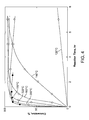
- the selected reaction temperature and reaction time that provides a target LLA monomer content may be determined in at least two ways. One way is to fix a reaction temperature and perform the polymerization reaction at different reaction times to determine the reaction time that provides the target LLA monomer content at the selected reaction temperature. For example, a target LLA monomer content may be 0.5% wt% and a selected reaction temperature may be 140 °C. The polymerization reaction may then be performed for reaction times between at least 6 h and 30 h. The selected reaction time is that which corresponds to the reaction time that provides the target LLA monomer content of 0.5 wt%.
- Another way to determine the selected reaction temperature and reaction time that provides a target LLA monomer content is to fix a reaction time and perform the polymerization reaction at different reaction temperatures to determine the reaction temperature that provides the target LLA monomer content in the selected reaction time.
- a target LLA monomer content may be 0.5 wt% and a selected reaction time may be around 20 h.
- the polymerization reaction may then be performed for reaction temperatures between at least 120 and 170 °C.
- the selected reaction temperature is that which corresponds to the reaction temperature that provides the target LLA monomer content of 0.5 wt%. If the reaction time is too short, there may not provide the target LLA monomer content (see FIG. 4 ). Additionally, there is a lower limit of the LLA content at higher temperatures due to depolymerization (see FIG. 4 ).
Landscapes
- Health & Medical Sciences (AREA)
- Chemical & Material Sciences (AREA)
- Chemical Kinetics & Catalysis (AREA)
- Life Sciences & Earth Sciences (AREA)
- Heart & Thoracic Surgery (AREA)
- Vascular Medicine (AREA)
- Animal Behavior & Ethology (AREA)
- General Health & Medical Sciences (AREA)
- Public Health (AREA)
- Veterinary Medicine (AREA)
- Medicinal Chemistry (AREA)
- Polymers & Plastics (AREA)
- Organic Chemistry (AREA)
- Surgery (AREA)
- Epidemiology (AREA)
- Engineering & Computer Science (AREA)
- Biomedical Technology (AREA)
- Cardiology (AREA)
- Oral & Maxillofacial Surgery (AREA)
- Transplantation (AREA)
- Materials For Medical Uses (AREA)
- Polyesters Or Polycarbonates (AREA)
- Biological Depolymerization Polymers (AREA)
Applications Claiming Priority (2)
| Application Number | Priority Date | Filing Date | Title |
|---|---|---|---|
| US12/751,773 US8889823B2 (en) | 2009-07-21 | 2010-03-31 | Method to make poly(L-lactide) stent with tunable degradation rate |
| PCT/US2011/025074 WO2011123194A1 (en) | 2010-03-31 | 2011-02-16 | Method to make poly(l-lactide) stent with tunable degradation rate |
Publications (2)
| Publication Number | Publication Date |
|---|---|
| EP2552504A1 EP2552504A1 (en) | 2013-02-06 |
| EP2552504B1 true EP2552504B1 (en) | 2015-10-14 |
Family
ID=43983510
Family Applications (1)
| Application Number | Title | Priority Date | Filing Date |
|---|---|---|---|
| EP11707253.8A Not-in-force EP2552504B1 (en) | 2010-03-31 | 2011-02-16 | Method to make poly(l-lactide) stent with tunable degradation rate |
Country Status (6)
| Country | Link |
|---|---|
| US (4) | US8889823B2 (https=) |
| EP (1) | EP2552504B1 (https=) |
| JP (1) | JP5850042B2 (https=) |
| CN (1) | CN102892442B (https=) |
| ES (1) | ES2559207T3 (https=) |
| WO (1) | WO2011123194A1 (https=) |
Families Citing this family (14)
| Publication number | Priority date | Publication date | Assignee | Title |
|---|---|---|---|---|
| US8370120B2 (en) * | 2010-04-30 | 2013-02-05 | Abbott Cardiovascular Systems Inc. | Polymeric stents and method of manufacturing same |
| US8709070B2 (en) | 2011-05-10 | 2014-04-29 | Abbott Cardiovascular Systems Inc. | Bioabsorbable scaffold with particles providing delayed acceleration of degradation |
| US8834776B2 (en) * | 2011-05-10 | 2014-09-16 | Abbott Cardiovascular Systems Inc. | Control of degradation profile of bioabsorbable poly(l-lactide) scaffold |
| US8545546B2 (en) * | 2011-05-13 | 2013-10-01 | Abbott Cardiovascular Systems Inc. | Bioabsorbable scaffolds made from composites |
| US9205456B2 (en) * | 2012-07-24 | 2015-12-08 | Abbott Cardiovascular Systems Inc. | Modifying polymer properties with penetrants in the fabrication of bioresorbable scaffolds |
| US10143572B2 (en) | 2013-09-04 | 2018-12-04 | Abbott Cardiovascular Systems Inc. | Assessment of a drug eluting bioresorbable vascular scaffold |
| KR101846769B1 (ko) | 2014-04-08 | 2018-04-06 | 보스톤 싸이엔티픽 싸이메드 인코포레이티드 | 부분적으로 코팅된 스텐트 |
| US20150328373A1 (en) | 2014-05-19 | 2015-11-19 | Abbott Cardiovascular Systems Inc. | Additives To Increase Degradation Rate Of A Biodegradable Scaffolding And Methods Of Forming Same |
| US10518003B2 (en) * | 2014-07-07 | 2019-12-31 | Meril Life Sciences Pvt. Ltd. | Method to manufacture thin strut stent from bioabsorbable polymer with high fatigue and radial strength |
| US9730819B2 (en) * | 2014-08-15 | 2017-08-15 | Elixir Medical Corporation | Biodegradable endoprostheses and methods of their fabrication |
| US20160374838A1 (en) * | 2015-06-29 | 2016-12-29 | Abbott Cardiovascular Systems Inc. | Drug-eluting coatings on poly(dl-lactide)-based scaffolds |
| JP6667758B2 (ja) | 2015-11-26 | 2020-03-18 | 株式会社 日本医療機器技研 | 生体吸収性ステント |
| WO2022115548A1 (en) | 2020-11-24 | 2022-06-02 | Boston Scientific Scimed, Inc. | Additive mannufacturing of a medical device |
| CN115337466A (zh) * | 2022-08-23 | 2022-11-15 | 苏州健雄职业技术学院 | 一种调节降解环境酸碱性的植入材料及其制备方法 |
Family Cites Families (35)
| Publication number | Priority date | Publication date | Assignee | Title |
|---|---|---|---|---|
| US4539981A (en) | 1982-11-08 | 1985-09-10 | Johnson & Johnson Products, Inc. | Absorbable bone fixation device |
| DE4014974A1 (de) * | 1990-05-10 | 1991-11-14 | Boehringer Ingelheim Kg | Verfahren zur herstellung von loesungsmittel- und restmonomerenfreien in spritzgiess-, extrusions- und schmelzspinnverfahren einsetzbaren polymeren |
| JPH04166165A (ja) * | 1990-10-30 | 1992-06-12 | Shimadzu Corp | 骨固定用材料 |
| JPH04282337A (ja) | 1991-03-08 | 1992-10-07 | Fuji Photo Film Co Ltd | 2−アリールオキシ−1−クロルプロパンの製造方法 |
| JP3054451B2 (ja) * | 1991-03-11 | 2000-06-19 | 三井化学株式会社 | 加水分解性樹脂組成物 |
| US5357034A (en) * | 1992-09-08 | 1994-10-18 | Camelot Technologies Inc. | Lactide polymerization |
| US5338822A (en) | 1992-10-02 | 1994-08-16 | Cargill, Incorporated | Melt-stable lactide polymer composition and process for manufacture thereof |
| US5747637A (en) * | 1995-09-07 | 1998-05-05 | Mitsui Toatsu Chemicals, Inc. | Bioabsorbable polymer and process for preparing the same |
| US6174330B1 (en) | 1997-08-01 | 2001-01-16 | Schneider (Usa) Inc | Bioabsorbable marker having radiopaque constituents |
| US5824059A (en) | 1997-08-05 | 1998-10-20 | Wijay; Bandula | Flexible stent |
| US6206883B1 (en) | 1999-03-05 | 2001-03-27 | Stryker Technologies Corporation | Bioabsorbable materials and medical devices made therefrom |
| DK2298366T3 (da) | 2000-03-13 | 2012-11-26 | Kyoto Iryo Sekkei Kk | Lineært materiale til intravaskulær stent og intravaskulær stent med anvendelse deraf |
| KR100354828B1 (ko) | 2001-03-12 | 2002-10-05 | 주식회사 씨엠리서치 | 생분해성 폴리에스테르의 제조방법 및 그에 의해 제조된생분해성 폴리에스테르 |
| US20030069629A1 (en) | 2001-06-01 | 2003-04-10 | Jadhav Balkrishna S. | Bioresorbable medical devices |
| GB0116341D0 (en) | 2001-07-04 | 2001-08-29 | Smith & Nephew | Biodegradable polymer systems |
| US8747879B2 (en) | 2006-04-28 | 2014-06-10 | Advanced Cardiovascular Systems, Inc. | Method of fabricating an implantable medical device to reduce chance of late inflammatory response |
| US7731890B2 (en) | 2006-06-15 | 2010-06-08 | Advanced Cardiovascular Systems, Inc. | Methods of fabricating stents with enhanced fracture toughness |
| US20060041102A1 (en) | 2004-08-23 | 2006-02-23 | Advanced Cardiovascular Systems, Inc. | Implantable devices comprising biologically absorbable polymers having constant rate of degradation and methods for fabricating the same |
| US8778375B2 (en) * | 2005-04-29 | 2014-07-15 | Advanced Cardiovascular Systems, Inc. | Amorphous poly(D,L-lactide) coating |
| US7291166B2 (en) | 2005-05-18 | 2007-11-06 | Advanced Cardiovascular Systems, Inc. | Polymeric stent patterns |
| DE102005033101A1 (de) * | 2005-07-15 | 2007-01-25 | Boehringer Ingelheim Pharma Gmbh & Co. Kg | Resorbierbare Polyetherester und ihre Verwendung zur Herstellung von medizinischen Implantaten |
| US20070179276A1 (en) | 2006-01-31 | 2007-08-02 | Purac Biochem Bv | Method for the purification of resorbable polymers from residual monomers |
| US8486135B2 (en) | 2006-06-01 | 2013-07-16 | Abbott Cardiovascular Systems Inc. | Implantable medical devices fabricated from branched polymers |
| US7846361B2 (en) * | 2006-07-20 | 2010-12-07 | Orbusneich Medical, Inc. | Bioabsorbable polymeric composition for a medical device |
| JP5150074B2 (ja) * | 2006-09-06 | 2013-02-20 | 帝人株式会社 | ポリ乳酸およびその製造方法 |
| PL2079767T3 (pl) * | 2006-10-11 | 2015-05-29 | Tolmar Therapeutics Inc | Wytwarzanie biodegradowalnych poliestrów z właściwościami niskiego wyrzutu przez ekstrakcję płynem nadkrytycznym |
| CA2667890C (en) | 2006-10-31 | 2015-01-27 | Surmodics Pharmaceuticals, Inc. | Spheronized polymer particles |
| US20080177373A1 (en) | 2007-01-19 | 2008-07-24 | Elixir Medical Corporation | Endoprosthesis structures having supporting features |
| US9248219B2 (en) | 2007-09-14 | 2016-02-02 | Boston Scientific Scimed, Inc. | Medical devices having bioerodable layers for the release of therapeutic agents |
| US8303650B2 (en) | 2008-01-10 | 2012-11-06 | Telesis Research, Llc | Biodegradable self-expanding drug-eluting prosthesis |
| US8252215B2 (en) * | 2008-03-31 | 2012-08-28 | Abbott Cardiovascular Systems Inc. | Method for fabricating a stent with nucleating agent |
| CN102105509B (zh) * | 2008-07-24 | 2014-04-23 | 东洋纺织株式会社 | 脂肪族聚酯树脂及其制备方法 |
| US9492587B2 (en) | 2009-04-13 | 2016-11-15 | Abbott Cardiovascular Systems Inc. | Stent made from an ultra high molecular weight bioabsorbable polymer with high fatigue and fracture resistance |
| US9889238B2 (en) | 2009-07-21 | 2018-02-13 | Abbott Cardiovascular Systems Inc. | Biodegradable stent with adjustable degradation rate |
| US8834776B2 (en) | 2011-05-10 | 2014-09-16 | Abbott Cardiovascular Systems Inc. | Control of degradation profile of bioabsorbable poly(l-lactide) scaffold |
-
2010
- 2010-03-31 US US12/751,773 patent/US8889823B2/en active Active
-
2011
- 2011-02-16 EP EP11707253.8A patent/EP2552504B1/en not_active Not-in-force
- 2011-02-16 CN CN201180017582.9A patent/CN102892442B/zh active Active
- 2011-02-16 ES ES11707253.8T patent/ES2559207T3/es active Active
- 2011-02-16 WO PCT/US2011/025074 patent/WO2011123194A1/en not_active Ceased
- 2011-02-16 JP JP2013502575A patent/JP5850042B2/ja not_active Expired - Fee Related
-
2014
- 2014-10-31 US US14/530,595 patent/US9248218B2/en active Active
-
2015
- 2015-12-16 US US14/970,890 patent/US9687594B2/en active Active
-
2017
- 2017-05-17 US US15/597,962 patent/US9844612B2/en active Active
Also Published As
| Publication number | Publication date |
|---|---|
| US9844612B2 (en) | 2017-12-19 |
| CN102892442A (zh) | 2013-01-23 |
| ES2559207T3 (es) | 2016-02-11 |
| US20170252493A1 (en) | 2017-09-07 |
| WO2011123194A1 (en) | 2011-10-06 |
| CN102892442B (zh) | 2015-06-10 |
| EP2552504A1 (en) | 2013-02-06 |
| JP2013527778A (ja) | 2013-07-04 |
| US9248218B2 (en) | 2016-02-02 |
| US20150057744A1 (en) | 2015-02-26 |
| US20110021717A1 (en) | 2011-01-27 |
| US9687594B2 (en) | 2017-06-27 |
| JP5850042B2 (ja) | 2016-02-03 |
| US8889823B2 (en) | 2014-11-18 |
| US20160101222A1 (en) | 2016-04-14 |
Similar Documents
| Publication | Publication Date | Title |
|---|---|---|
| US9844612B2 (en) | Method of making a poly(L-lactide) stent with tunable degradation rate | |
| EP2456480B1 (en) | Biodegradable stent with adjustable degradation rate | |
| EP2763712B1 (en) | Rubber toughened bioresorbable polymer peripheral scaffold | |
| US9931431B2 (en) | Implantable medical devices fabricated from branched polymers | |
| WO2008011048A2 (en) | Controlled degradation of stents | |
| US8703038B2 (en) | Method to minimize chain scission and monomer generation in processing of poly(L-lactide) stent | |
| HK1216303B (en) | Biodegradable stent with adjustable degradation rate | |
| HK1186991A (en) | Method to minimize chain scission and monomer generation in processing of poly(l-lactide) stent | |
| HK1186991B (en) | Method to minimize chain scission and monomer generation in processing of poly(l-lactide) stent |
Legal Events
| Date | Code | Title | Description |
|---|---|---|---|
| PUAI | Public reference made under article 153(3) epc to a published international application that has entered the european phase |
Free format text: ORIGINAL CODE: 0009012 |
|
| 17P | Request for examination filed |
Effective date: 20121031 |
|
| AK | Designated contracting states |
Kind code of ref document: A1 Designated state(s): AL AT BE BG CH CY CZ DE DK EE ES FI FR GB GR HR HU IE IS IT LI LT LU LV MC MK MT NL NO PL PT RO RS SE SI SK SM TR |
|
| DAX | Request for extension of the european patent (deleted) | ||
| 17Q | First examination report despatched |
Effective date: 20130731 |
|
| GRAP | Despatch of communication of intention to grant a patent |
Free format text: ORIGINAL CODE: EPIDOSNIGR1 |
|
| INTG | Intention to grant announced |
Effective date: 20150422 |
|
| GRAS | Grant fee paid |
Free format text: ORIGINAL CODE: EPIDOSNIGR3 |
|
| GRAA | (expected) grant |
Free format text: ORIGINAL CODE: 0009210 |
|
| AK | Designated contracting states |
Kind code of ref document: B1 Designated state(s): AL AT BE BG CH CY CZ DE DK EE ES FI FR GB GR HR HU IE IS IT LI LT LU LV MC MK MT NL NO PL PT RO RS SE SI SK SM TR |
|
| REG | Reference to a national code |
Ref country code: GB Ref legal event code: FG4D |
|
| REG | Reference to a national code |
Ref country code: AT Ref legal event code: REF Ref document number: 754621 Country of ref document: AT Kind code of ref document: T Effective date: 20151015 Ref country code: CH Ref legal event code: EP |
|
| REG | Reference to a national code |
Ref country code: IE Ref legal event code: FG4D |
|
| REG | Reference to a national code |
Ref country code: DE Ref legal event code: R096 Ref document number: 602011020567 Country of ref document: DE |
|
| REG | Reference to a national code |
Ref country code: FR Ref legal event code: PLFP Year of fee payment: 6 |
|
| REG | Reference to a national code |
Ref country code: CH Ref legal event code: NV Representative=s name: MARKS AND CLERK (LUXEMBOURG) LLP, CH |
|
| REG | Reference to a national code |
Ref country code: ES Ref legal event code: FG2A Ref document number: 2559207 Country of ref document: ES Kind code of ref document: T3 Effective date: 20160211 |
|
| REG | Reference to a national code |
Ref country code: LT Ref legal event code: MG4D |
|
| REG | Reference to a national code |
Ref country code: NL Ref legal event code: FP |
|
| REG | Reference to a national code |
Ref country code: AT Ref legal event code: MK05 Ref document number: 754621 Country of ref document: AT Kind code of ref document: T Effective date: 20151014 |
|
| PG25 | Lapsed in a contracting state [announced via postgrant information from national office to epo] |
Ref country code: IS Free format text: LAPSE BECAUSE OF FAILURE TO SUBMIT A TRANSLATION OF THE DESCRIPTION OR TO PAY THE FEE WITHIN THE PRESCRIBED TIME-LIMIT Effective date: 20160214 Ref country code: HR Free format text: LAPSE BECAUSE OF FAILURE TO SUBMIT A TRANSLATION OF THE DESCRIPTION OR TO PAY THE FEE WITHIN THE PRESCRIBED TIME-LIMIT Effective date: 20151014 Ref country code: NO Free format text: LAPSE BECAUSE OF FAILURE TO SUBMIT A TRANSLATION OF THE DESCRIPTION OR TO PAY THE FEE WITHIN THE PRESCRIBED TIME-LIMIT Effective date: 20160114 Ref country code: LT Free format text: LAPSE BECAUSE OF FAILURE TO SUBMIT A TRANSLATION OF THE DESCRIPTION OR TO PAY THE FEE WITHIN THE PRESCRIBED TIME-LIMIT Effective date: 20151014 |
|
| PG25 | Lapsed in a contracting state [announced via postgrant information from national office to epo] |
Ref country code: BE Free format text: LAPSE BECAUSE OF NON-PAYMENT OF DUE FEES Effective date: 20160229 Ref country code: PL Free format text: LAPSE BECAUSE OF FAILURE TO SUBMIT A TRANSLATION OF THE DESCRIPTION OR TO PAY THE FEE WITHIN THE PRESCRIBED TIME-LIMIT Effective date: 20151014 Ref country code: PT Free format text: LAPSE BECAUSE OF FAILURE TO SUBMIT A TRANSLATION OF THE DESCRIPTION OR TO PAY THE FEE WITHIN THE PRESCRIBED TIME-LIMIT Effective date: 20160215 Ref country code: SE Free format text: LAPSE BECAUSE OF FAILURE TO SUBMIT A TRANSLATION OF THE DESCRIPTION OR TO PAY THE FEE WITHIN THE PRESCRIBED TIME-LIMIT Effective date: 20151014 Ref country code: AT Free format text: LAPSE BECAUSE OF FAILURE TO SUBMIT A TRANSLATION OF THE DESCRIPTION OR TO PAY THE FEE WITHIN THE PRESCRIBED TIME-LIMIT Effective date: 20151014 Ref country code: GR Free format text: LAPSE BECAUSE OF FAILURE TO SUBMIT A TRANSLATION OF THE DESCRIPTION OR TO PAY THE FEE WITHIN THE PRESCRIBED TIME-LIMIT Effective date: 20160115 Ref country code: LV Free format text: LAPSE BECAUSE OF FAILURE TO SUBMIT A TRANSLATION OF THE DESCRIPTION OR TO PAY THE FEE WITHIN THE PRESCRIBED TIME-LIMIT Effective date: 20151014 Ref country code: RS Free format text: LAPSE BECAUSE OF FAILURE TO SUBMIT A TRANSLATION OF THE DESCRIPTION OR TO PAY THE FEE WITHIN THE PRESCRIBED TIME-LIMIT Effective date: 20151014 Ref country code: FI Free format text: LAPSE BECAUSE OF FAILURE TO SUBMIT A TRANSLATION OF THE DESCRIPTION OR TO PAY THE FEE WITHIN THE PRESCRIBED TIME-LIMIT Effective date: 20151014 |
|
| REG | Reference to a national code |
Ref country code: DE Ref legal event code: R097 Ref document number: 602011020567 Country of ref document: DE |
|
| PG25 | Lapsed in a contracting state [announced via postgrant information from national office to epo] |
Ref country code: CZ Free format text: LAPSE BECAUSE OF FAILURE TO SUBMIT A TRANSLATION OF THE DESCRIPTION OR TO PAY THE FEE WITHIN THE PRESCRIBED TIME-LIMIT Effective date: 20151014 |
|
| PLBE | No opposition filed within time limit |
Free format text: ORIGINAL CODE: 0009261 |
|
| STAA | Information on the status of an ep patent application or granted ep patent |
Free format text: STATUS: NO OPPOSITION FILED WITHIN TIME LIMIT |
|
| PG25 | Lapsed in a contracting state [announced via postgrant information from national office to epo] |
Ref country code: DK Free format text: LAPSE BECAUSE OF FAILURE TO SUBMIT A TRANSLATION OF THE DESCRIPTION OR TO PAY THE FEE WITHIN THE PRESCRIBED TIME-LIMIT Effective date: 20151014 Ref country code: SM Free format text: LAPSE BECAUSE OF FAILURE TO SUBMIT A TRANSLATION OF THE DESCRIPTION OR TO PAY THE FEE WITHIN THE PRESCRIBED TIME-LIMIT Effective date: 20151014 Ref country code: SK Free format text: LAPSE BECAUSE OF FAILURE TO SUBMIT A TRANSLATION OF THE DESCRIPTION OR TO PAY THE FEE WITHIN THE PRESCRIBED TIME-LIMIT Effective date: 20151014 Ref country code: EE Free format text: LAPSE BECAUSE OF FAILURE TO SUBMIT A TRANSLATION OF THE DESCRIPTION OR TO PAY THE FEE WITHIN THE PRESCRIBED TIME-LIMIT Effective date: 20151014 Ref country code: RO Free format text: LAPSE BECAUSE OF FAILURE TO SUBMIT A TRANSLATION OF THE DESCRIPTION OR TO PAY THE FEE WITHIN THE PRESCRIBED TIME-LIMIT Effective date: 20151014 |
|
| 26N | No opposition filed |
Effective date: 20160715 |
|
| PG25 | Lapsed in a contracting state [announced via postgrant information from national office to epo] |
Ref country code: LU Free format text: LAPSE BECAUSE OF FAILURE TO SUBMIT A TRANSLATION OF THE DESCRIPTION OR TO PAY THE FEE WITHIN THE PRESCRIBED TIME-LIMIT Effective date: 20160216 Ref country code: MC Free format text: LAPSE BECAUSE OF FAILURE TO SUBMIT A TRANSLATION OF THE DESCRIPTION OR TO PAY THE FEE WITHIN THE PRESCRIBED TIME-LIMIT Effective date: 20151014 |
|
| PG25 | Lapsed in a contracting state [announced via postgrant information from national office to epo] |
Ref country code: SI Free format text: LAPSE BECAUSE OF FAILURE TO SUBMIT A TRANSLATION OF THE DESCRIPTION OR TO PAY THE FEE WITHIN THE PRESCRIBED TIME-LIMIT Effective date: 20151014 |
|
| PG25 | Lapsed in a contracting state [announced via postgrant information from national office to epo] |
Ref country code: BE Free format text: LAPSE BECAUSE OF FAILURE TO SUBMIT A TRANSLATION OF THE DESCRIPTION OR TO PAY THE FEE WITHIN THE PRESCRIBED TIME-LIMIT Effective date: 20151014 |
|
| REG | Reference to a national code |
Ref country code: FR Ref legal event code: PLFP Year of fee payment: 7 |
|
| PG25 | Lapsed in a contracting state [announced via postgrant information from national office to epo] |
Ref country code: MT Free format text: LAPSE BECAUSE OF FAILURE TO SUBMIT A TRANSLATION OF THE DESCRIPTION OR TO PAY THE FEE WITHIN THE PRESCRIBED TIME-LIMIT Effective date: 20151014 |
|
| REG | Reference to a national code |
Ref country code: FR Ref legal event code: PLFP Year of fee payment: 8 |
|
| PGFP | Annual fee paid to national office [announced via postgrant information from national office to epo] |
Ref country code: CH Payment date: 20180125 Year of fee payment: 8 |
|
| PG25 | Lapsed in a contracting state [announced via postgrant information from national office to epo] |
Ref country code: HU Free format text: LAPSE BECAUSE OF FAILURE TO SUBMIT A TRANSLATION OF THE DESCRIPTION OR TO PAY THE FEE WITHIN THE PRESCRIBED TIME-LIMIT; INVALID AB INITIO Effective date: 20110216 Ref country code: CY Free format text: LAPSE BECAUSE OF FAILURE TO SUBMIT A TRANSLATION OF THE DESCRIPTION OR TO PAY THE FEE WITHIN THE PRESCRIBED TIME-LIMIT Effective date: 20151014 |
|
| PG25 | Lapsed in a contracting state [announced via postgrant information from national office to epo] |
Ref country code: TR Free format text: LAPSE BECAUSE OF FAILURE TO SUBMIT A TRANSLATION OF THE DESCRIPTION OR TO PAY THE FEE WITHIN THE PRESCRIBED TIME-LIMIT Effective date: 20151014 Ref country code: MK Free format text: LAPSE BECAUSE OF FAILURE TO SUBMIT A TRANSLATION OF THE DESCRIPTION OR TO PAY THE FEE WITHIN THE PRESCRIBED TIME-LIMIT Effective date: 20151014 Ref country code: MT Free format text: LAPSE BECAUSE OF FAILURE TO SUBMIT A TRANSLATION OF THE DESCRIPTION OR TO PAY THE FEE WITHIN THE PRESCRIBED TIME-LIMIT Effective date: 20160229 |
|
| PG25 | Lapsed in a contracting state [announced via postgrant information from national office to epo] |
Ref country code: BG Free format text: LAPSE BECAUSE OF FAILURE TO SUBMIT A TRANSLATION OF THE DESCRIPTION OR TO PAY THE FEE WITHIN THE PRESCRIBED TIME-LIMIT Effective date: 20151014 |
|
| PG25 | Lapsed in a contracting state [announced via postgrant information from national office to epo] |
Ref country code: AL Free format text: LAPSE BECAUSE OF FAILURE TO SUBMIT A TRANSLATION OF THE DESCRIPTION OR TO PAY THE FEE WITHIN THE PRESCRIBED TIME-LIMIT Effective date: 20151014 |
|
| PGFP | Annual fee paid to national office [announced via postgrant information from national office to epo] |
Ref country code: ES Payment date: 20190201 Year of fee payment: 8 Ref country code: IT Payment date: 20190213 Year of fee payment: 9 |
|
| REG | Reference to a national code |
Ref country code: CH Ref legal event code: PL |
|
| PG25 | Lapsed in a contracting state [announced via postgrant information from national office to epo] |
Ref country code: CH Free format text: LAPSE BECAUSE OF NON-PAYMENT OF DUE FEES Effective date: 20190228 Ref country code: LI Free format text: LAPSE BECAUSE OF NON-PAYMENT OF DUE FEES Effective date: 20190228 |
|
| PG25 | Lapsed in a contracting state [announced via postgrant information from national office to epo] |
Ref country code: FR Free format text: LAPSE BECAUSE OF NON-PAYMENT OF DUE FEES Effective date: 20200229 |
|
| PGFP | Annual fee paid to national office [announced via postgrant information from national office to epo] |
Ref country code: IE Payment date: 20210126 Year of fee payment: 11 Ref country code: NL Payment date: 20210115 Year of fee payment: 11 |
|
| PGFP | Annual fee paid to national office [announced via postgrant information from national office to epo] |
Ref country code: DE Payment date: 20210113 Year of fee payment: 11 Ref country code: GB Payment date: 20210129 Year of fee payment: 11 |
|
| REG | Reference to a national code |
Ref country code: ES Ref legal event code: FD2A Effective date: 20210706 |
|
| PG25 | Lapsed in a contracting state [announced via postgrant information from national office to epo] |
Ref country code: ES Free format text: LAPSE BECAUSE OF NON-PAYMENT OF DUE FEES Effective date: 20200217 |
|
| PG25 | Lapsed in a contracting state [announced via postgrant information from national office to epo] |
Ref country code: IT Free format text: LAPSE BECAUSE OF NON-PAYMENT OF DUE FEES Effective date: 20200216 |
|
| REG | Reference to a national code |
Ref country code: DE Ref legal event code: R119 Ref document number: 602011020567 Country of ref document: DE |
|
| REG | Reference to a national code |
Ref country code: NL Ref legal event code: MM Effective date: 20220301 |
|
| GBPC | Gb: european patent ceased through non-payment of renewal fee |
Effective date: 20220216 |
|
| PG25 | Lapsed in a contracting state [announced via postgrant information from national office to epo] |
Ref country code: NL Free format text: LAPSE BECAUSE OF NON-PAYMENT OF DUE FEES Effective date: 20220301 |
|
| PG25 | Lapsed in a contracting state [announced via postgrant information from national office to epo] |
Ref country code: IE Free format text: LAPSE BECAUSE OF NON-PAYMENT OF DUE FEES Effective date: 20220216 Ref country code: GB Free format text: LAPSE BECAUSE OF NON-PAYMENT OF DUE FEES Effective date: 20220216 Ref country code: DE Free format text: LAPSE BECAUSE OF NON-PAYMENT OF DUE FEES Effective date: 20220901 |