EP2532360B1 - Pharmaceutical compositions and methods to vaccinate against vaginal candidiasis - Google Patents
Pharmaceutical compositions and methods to vaccinate against vaginal candidiasis Download PDFInfo
- Publication number
- EP2532360B1 EP2532360B1 EP12001586.2A EP12001586A EP2532360B1 EP 2532360 B1 EP2532360 B1 EP 2532360B1 EP 12001586 A EP12001586 A EP 12001586A EP 2532360 B1 EP2532360 B1 EP 2532360B1
- Authority
- EP
- European Patent Office
- Prior art keywords
- als
- mice
- vaccine
- albicans
- protein
- Prior art date
- Legal status (The legal status is an assumption and is not a legal conclusion. Google has not performed a legal analysis and makes no representation as to the accuracy of the status listed.)
- Not-in-force
Links
Images
















Classifications
-
- A—HUMAN NECESSITIES
- A61—MEDICAL OR VETERINARY SCIENCE; HYGIENE
- A61K—PREPARATIONS FOR MEDICAL, DENTAL OR TOILETRY PURPOSES
- A61K39/00—Medicinal preparations containing antigens or antibodies
- A61K39/0002—Fungal antigens, e.g. Trichophyton, Aspergillus, Candida
-
- A—HUMAN NECESSITIES
- A61—MEDICAL OR VETERINARY SCIENCE; HYGIENE
- A61P—SPECIFIC THERAPEUTIC ACTIVITY OF CHEMICAL COMPOUNDS OR MEDICINAL PREPARATIONS
- A61P3/00—Drugs for disorders of the metabolism
- A61P3/08—Drugs for disorders of the metabolism for glucose homeostasis
- A61P3/10—Drugs for disorders of the metabolism for glucose homeostasis for hyperglycaemia, e.g. antidiabetics
-
- A—HUMAN NECESSITIES
- A61—MEDICAL OR VETERINARY SCIENCE; HYGIENE
- A61P—SPECIFIC THERAPEUTIC ACTIVITY OF CHEMICAL COMPOUNDS OR MEDICINAL PREPARATIONS
- A61P31/00—Antiinfectives, i.e. antibiotics, antiseptics, chemotherapeutics
-
- A—HUMAN NECESSITIES
- A61—MEDICAL OR VETERINARY SCIENCE; HYGIENE
- A61P—SPECIFIC THERAPEUTIC ACTIVITY OF CHEMICAL COMPOUNDS OR MEDICINAL PREPARATIONS
- A61P31/00—Antiinfectives, i.e. antibiotics, antiseptics, chemotherapeutics
- A61P31/04—Antibacterial agents
-
- A—HUMAN NECESSITIES
- A61—MEDICAL OR VETERINARY SCIENCE; HYGIENE
- A61P—SPECIFIC THERAPEUTIC ACTIVITY OF CHEMICAL COMPOUNDS OR MEDICINAL PREPARATIONS
- A61P31/00—Antiinfectives, i.e. antibiotics, antiseptics, chemotherapeutics
- A61P31/10—Antimycotics
-
- A—HUMAN NECESSITIES
- A61—MEDICAL OR VETERINARY SCIENCE; HYGIENE
- A61P—SPECIFIC THERAPEUTIC ACTIVITY OF CHEMICAL COMPOUNDS OR MEDICINAL PREPARATIONS
- A61P37/00—Drugs for immunological or allergic disorders
- A61P37/02—Immunomodulators
- A61P37/04—Immunostimulants
-
- A—HUMAN NECESSITIES
- A61—MEDICAL OR VETERINARY SCIENCE; HYGIENE
- A61P—SPECIFIC THERAPEUTIC ACTIVITY OF CHEMICAL COMPOUNDS OR MEDICINAL PREPARATIONS
- A61P37/00—Drugs for immunological or allergic disorders
- A61P37/02—Immunomodulators
- A61P37/06—Immunosuppressants, e.g. drugs for graft rejection
-
- C—CHEMISTRY; METALLURGY
- C07—ORGANIC CHEMISTRY
- C07K—PEPTIDES
- C07K16/00—Immunoglobulins [IGs], e.g. monoclonal or polyclonal antibodies
- C07K16/14—Immunoglobulins [IGs], e.g. monoclonal or polyclonal antibodies against material from fungi, algea or lichens
-
- A—HUMAN NECESSITIES
- A61—MEDICAL OR VETERINARY SCIENCE; HYGIENE
- A61K—PREPARATIONS FOR MEDICAL, DENTAL OR TOILETRY PURPOSES
- A61K39/00—Medicinal preparations containing antigens or antibodies
- A61K2039/51—Medicinal preparations containing antigens or antibodies comprising whole cells, viruses or DNA/RNA
- A61K2039/515—Animal cells
- A61K2039/5156—Animal cells expressing foreign proteins
-
- A—HUMAN NECESSITIES
- A61—MEDICAL OR VETERINARY SCIENCE; HYGIENE
- A61K—PREPARATIONS FOR MEDICAL, DENTAL OR TOILETRY PURPOSES
- A61K39/00—Medicinal preparations containing antigens or antibodies
- A61K2039/58—Medicinal preparations containing antigens or antibodies raising an immune response against a target which is not the antigen used for immunisation
-
- A—HUMAN NECESSITIES
- A61—MEDICAL OR VETERINARY SCIENCE; HYGIENE
- A61K—PREPARATIONS FOR MEDICAL, DENTAL OR TOILETRY PURPOSES
- A61K39/00—Medicinal preparations containing antigens or antibodies
- A61K39/02—Bacterial antigens
- A61K39/085—Staphylococcus
-
- C—CHEMISTRY; METALLURGY
- C07—ORGANIC CHEMISTRY
- C07K—PEPTIDES
- C07K2317/00—Immunoglobulins specific features
- C07K2317/70—Immunoglobulins specific features characterized by effect upon binding to a cell or to an antigen
- C07K2317/76—Antagonist effect on antigen, e.g. neutralization or inhibition of binding
-
- Y—GENERAL TAGGING OF NEW TECHNOLOGICAL DEVELOPMENTS; GENERAL TAGGING OF CROSS-SECTIONAL TECHNOLOGIES SPANNING OVER SEVERAL SECTIONS OF THE IPC; TECHNICAL SUBJECTS COVERED BY FORMER USPC CROSS-REFERENCE ART COLLECTIONS [XRACs] AND DIGESTS
- Y02—TECHNOLOGIES OR APPLICATIONS FOR MITIGATION OR ADAPTATION AGAINST CLIMATE CHANGE
- Y02A—TECHNOLOGIES FOR ADAPTATION TO CLIMATE CHANGE
- Y02A50/00—TECHNOLOGIES FOR ADAPTATION TO CLIMATE CHANGE in human health protection, e.g. against extreme weather
- Y02A50/30—Against vector-borne diseases, e.g. mosquito-borne, fly-borne, tick-borne or waterborne diseases whose impact is exacerbated by climate change
Definitions
- Candida albicans the major pathogen in this genus, can switch between two morphologies: the blastospore (budding yeast) and filamentous (hyphae and pseudohyphae) phases.
- Candida mutants that are defective in genes regulating filamentation are reported to have reduced virulence in animal models. This reduced virulence suggests that the ability to change from a blastospore to a filament is a key virulence factor of C. albicans.
- no essential effectors of these filamentation pathways have been identified in C. albicans. See Caesar-TonThat, T.C. and J.E. Cutler, "A monoclonal antibody to Candida albicans enhances mouse neutrophil candidacidal activity," Infect. Immun. 65:5354-5357, 1997 .
- Staphylococcus aureus infections also are common and increasingly result in drug resistance to antibiotics.
- S. aureus is a common cause of skin and skin structure infections, endocarditis and bacteremia in the U.S. and throughout the world.
- CA-S. aureus formerly community acquired S. aureus (CA-S. aureus) infections were nearly uniformly susceptible to penicillinase-resistant beta lactams such as cefazolin, oxacillin, methicillin, penicillin and amoxicillin.
- beta-lactam resistant 5 as of beta-lactam resistant 5.
- aureus (MRSA) infection have been seen in multiple locales throughout the world, especially community acquired MRSA (CA-MRSA). In many places MRSA has become the predominant S.
- the identification of effectors in the regulatory pathways of the organism that contribute to virulence offers the opportunity for therapeutic intervention with methods or compositions that are superior to existing antifungal agents.
- the identification of cell surface proteins that affect a regulatory pathway involved in virulence is particularly promising because characterization of the protein enable immunotherapeutic techniques that are superior to existing antifungal agents when fighting a candidal infection.
- Candida albicans The virulence of Candida albicans is regulated by several putative virulence factors of which adherence to host constituents and the ability to transform from yeast-to-hyphae are among the most critical in determining pathogenicity. While potent antifungal agents exist that are microbicidal for Candida, the attributable mortality of candidemia is approximately 38%, even with treatment with potent anti-fungal agents such as amphotericin B. Also, existing agents such as amphotericin B tend to exhibit undesirable toxicity. Although additional antifungals may be developed that are less toxic than amphotericin B, it is unlikely that agents will be developed that are more potent. Therefore, either passive or active immunotherapy to treat or prevent disseminated candidiasis is a promising alternative to standard antifungal therapy.
- Spellberg et. al. ( Spellberg et al.; Infection and Immunity, American Society for Microbiology, Vol. 73, No. 9, pp. 6191-6193; 2005 ) describes a vaccine for the prevention of invasive candidiasis comprising the recombinant N-terminus of Candida Als1p.
- the present invention relates to the following items:
- Candida albicans and Staphylococcus aureus are common pathogen in humans.
- C. albicans while normally a harmless commensal, this organism can cause a variety of conditions ranging from superficial mucocutaneous infection such as vaginal and/or oropharyngeal candidiasis, to deep organ involvement in disseminated candidiasis.
- the fungus Prior to causing disease, the fungus colonizes the gastrointestinal tract, and in some cases skin and mucous membranes. Adherence to host mucosal surfaces is a key prerequisite for this initial step.
- C. albicans enters the bloodstream via infected intravascular devices or by transmigration through gastrointestinal mucosa compromised by chemotherapy or stress ulcerations. Organisms then disseminate via the bloodstream, bind to and penetrate the vascular endothelium to egress from the vascular tree, and invade deep organs such as liver, spleen, and kidney.
- the identification and functional characterizations of a variety of exemplary Als protein family members described herein allow this family of proteins to be effectively utilized in the treatment of candidiasis.
- Specific binding activity to diverse substrates and other selective cell adhesion functions can be exploited in the production of vaccines for active or passive immunization, in the production of peptide, analogue of mimetic inhibitors of cell adhesion to reduce or prevent initial infection by inhibiting binding, adhesion or invasion of a host cell.
- the differential binding and invasion profiles allow design and use of broad spectra or targeted inhibition of Als protein family member activities.
- functional fragments that confer binding and/or invasive activity allow elimination of unwanted foreign protein sequences, thus, increasing the efficacy of the Als family protein member vaccine or therapeutic inhibitor.
- Candida albicans AlsIp an adhesin that is a downstream effector of the EFGI filamentation pathway. Molecular Microbiology 44:61 -72 . Sheppard DC, Yeaman MR, Welch WH, Phan QT, Fu Y, (2004) AS, Filler SG, Zhang M, Waring AJ, Edwards, Jr., JE 2004. Functional and Structural Diversity in the Als Protein Family of Candida albicans. Journal Biological Chemistry. 279: 30480-30489 . The ALS gene family of Candida albicans.
- Candida albicans ALS1 domains related to a Saccharonzyces cerevisiae sexual agglutinin separated by a repeating motif. Mol. Microbiol. 15:39-54 .
- the human fungal pathogen Candida albicans colonizes and invades a wide range of host tissues. Adherence to host constituents plays an important role in this process.
- Two members of the C. albicans Als protein family (AlsIp and Als5p) have been found to mediate adherence and exemplify the binding, adhesion and cell invasion activities of Als protein family members.
- members of the ALS gene family were cloned and expressed in S. cerevisiae to characterize their individual functions.
- Distinct Als proteins conferred distinct adherence profiles to diverse host substrates. Using chimeric Als5p-Als6p constructs, the regions mediating substrate-specific adherence were localized to the N-terminal domains in Als proteins.
- a vaccine having an isolated Als protein family member having cell adhesion activity, or an immunogenic fragment thereof, and an adjuvant in a pharmaceutically acceptable medium.
- the vaccine can be an Als protein family member derived from a Candida species such as Candida albicans, Candida knisei, Candida tropicalis, Candida glabrata or Candida, parapsilosis.
- the Als protein family member can be, for example, Ais1 p, Als3p, Als5p, Als6p, Als7p and Als9p, or an immunogenic fragment thereof.
- AU other Als protein family members within an Candida species can similarly be employed as a vaccine described herein.
- Described herein is a gene product of C. albicans agglutinin like sequence protein family member as a vaccine to treat, prevent, or alleviate disseminated candidiasis.
- the vaccine is effective against different strains of C. albicans as well as against different Candida species.
- the Als protein family member can be, for example, Als1p, Als3p, Als5p, Als[omicron]p, Als7p and Als9p.
- the invention exploits the role of the ALS gene products in the adherence of and invasion by C. albicans to endothelial and/or epithelial cells and the susceptibility of the Als protein family member-expressed surface protein for use as a vaccine to retard the pathogenesis of the organism.
- An ALS family member gene encodes a surface adhesin that is selected as the target of an immunotherapeutic strategy against C. albicans.
- the Als protein family members can be structurally characterized as having a signal peptide at the N- termimis, a glycosylphosphatidylinosine (GPI) anchorage sequence in the C-terminus, and a central region comprising repeats rich in threonine and serine.
- GPI glycosylphosphatidylinosine
- Als protein family members have N-, and 0-glycosylation sites, typical of proteins that are expressed on the cell surface.
- This expression of Als1P is increased during hyphal formation and is localized to the junction where the hyphal element extends from the blastospores as indicated by the diffused surface staining.
- this monoclonal antibody blocked the enhanced adherence of C. albicans overexpression mutant to endothelial cells, thereby establishing the principle for immunotherapy applications using Als1p. Functional characteristics as they relate to cell adhesion and invasion of other Als family members are described further below in Example VI.
- an Als family member surface adhesion protein designated, for example, Als1p, Als3p, Ais5p, Als6p, Als7p and Als9p, or a functional fragment, conjugate or analogue thereof, having useful properties when formulated in a pharmaceutical composition and administered as a vaccine with or without an adjuvant.
- An Als protein family member, combination of two or more Als protein family members or one or more functional fragments, analogues, conjugates or derivatives thereof, can be obtained from, for example, Candida albicans.
- Similar adhesin or invasin molecules or analogues or derivatives thereof can be of candidal origin and can be obtainable, for example, from species belonging to the genera Candida, for example Candida parapsilosis, Candida kmsei, Candida glabrata and Candida tropicalis.
- a surface adhesin or invasin protein can be obtained in isolated or purified form, and thus, a substantially pure Als protein family member Candida surface adhesin protein, or functional fragment, immunogenic fragment, analogue, conjugate or derivative thereof, is formulated as a vaccine to cause an immune response in a patient to elicit an immune response against Candida and/or to block adhesion of the organism to the endothelial cells.
- Fragments of Als protein family members that exhibit similar binding, adhesion or invasion activity as an intact Als protein family member is referred to herein as a functional fragment.
- Fragments of Als protein family members that are capable of eliciting an antibody or cellular immune response against a Candida species are referred to herein as an immunogenic fragment.
- Exemplary functional fragments include the.NTterminal polypeptide region ,of the Als protein family member described further below in Example VI.
- Exemplarily immogenic fragments include the N-terminal Als polypeptide region, the C- terminal Als polypeptide region as well as any other Als fragment that is sufficient to generate an antibody, cellular or both an antibody and cellular immune response.
- Such immogenic fragments can be as small as about four amino acids and as large as the intact polypeptide as well as include all polypeptide lengths in between.
- analogue or derivative of the surface adhesion protein described herein can be identified and further characterized by the criteria described herein for an ALS family member gene and/or gene product. For example, a null mutant of the analogue or derivative would share markedly reduced adhesion to endothelial cells compared to controls. Similarly, over-expression of the analogue or derivative in an appropriate model would show an increased adherence to endothelial cells compared to controls and would be confirmed as a cell surface adhesin in accord with the criteria described above. Also, antisera to an analogue or derivative can cross-react with anti-Als protein family member antibodies and can exhibit increased survival times when administered in a mouse model of disseminated candidiasis as disclosed herein.
- Described herein is a method of treating or preventing disseminated candidiasis.
- the method includes administering an immunogenic amount of a vaccine an isolated Als protein family member having cell adhesion or invasion activity, or an immunogenic fragment thereof, in a pharmaceutically acceptable medium.
- the vaccine can be administered with or without an adjuvant.
- the Als protein family member can be derived from different Candida strains as well as from different Candida species such as Candida albicans, Candida knisei, Candida tropicalis, Candida glabrata and Candida, parapsilosis .
- An Als protein family member used in the method of treating or prevention disseminated candidias includes Ais1p, Als3p, Als5p, Als6p, Als7p and Als9p.
- Example V shows that anti-ALS antibodies are effective against mucosal and hematogenously disseminated candidal infections.
- Example VII shows that vaccination with rAls1 p-N improves survival during murine disseminated candidiasis by enhancing cell- mediated immunity.
- Example VIII shows that the vaccines reduce fungal burden and improve survival in both immunocompetent and immunocompromised mice.
- Example IX shows the effectiveness of the ALS vaccines of the invention against S. aureus infections.
- Example X exemplifies that the vaccines are effective against different strains of C.
- Example XI also exemplifies the effectiveness of the different vaccines in different animal models as well as provides a comparison of the different responses elicited and potency of two representative ALS vaccines.
- a method of treating or preventing disseminated candidiasis that includes administering an effective amount of an isolated Als protein family member having cell adhesion activity, or an functional fragment thereof, to inhibit the binding or invasion of Candida to a host cell or tissue.
- the Als protein family member can be derived from Candida albicans, Candida krusei, Candida tropicalis, Candida glabrata, and Candida, parapsilosis.
- An Als protein family member used in the method of treating or prevention disseminated candidias includes Als1p, Als3p, Als5p, Als6p, Als7p and Als9p.
- the cell adhesion activity includes binding to gelatin, fibronectirt, laminin, epithelial cells or endothelial cells and/or promoting cell invasion.
- Described herein is also a method of treating or preventing Staphylococcus aureus infections using the Als protein family members described herein.
- the method of treating or preventing Staphylococcus aureus infections includes administering an immunogenic amount of a vaccine an isolated Als protein family member having cell adhesion activity, or an immunogenic fragment thereof, in a pharmaceutically acceptable medium.
- Als1 p and Als3p are particularly efficacious because of significant homology to S. aureus cell surface proteins.
- the sequence and structural homology of, for example, Als1p and Als3p, are described further below in Example IX.
- the vaccines and methods of the described herein can be applied to the treatment of Candida and Staphylococcus infections alike.
- those skilled in the art also will understand that the vaccines and methods also can be applied to other pathogens having cell surface polypeptides with similar immunogenicity, sequence and/or structural homology to the Als protein family members described herein, including fungus, bacteria and the like.
- Immunotherapeutic and/or Als polypeptide inhibition of cell adhesion or invasion strategies against Candida or Staphylococcus infection can operate at the level of binding to the vascular endothelial cells as well as through a downstream effector of the filamentation regulatory pathway.
- An immunotherapeutic strategy or inhibition of binding using a soluble Als protein family member or functional fragment is useful in this context because: (i) the morbidity and mortality associated with hematogenously disseminated candidiasis and other infectious pathogens remains unacceptably high, even with currently available antifungal therapy; (ii) a rising incidence of antifungal and antibiotic resistance is associated with the increasing use of antifungal and antibacterial agents, iii) the population of patients at risk for serious Candida and Staphylococcus infections is well-defined and very large, and includes post-operative patients, transplant patients, cancer patients and low birth weight infants; and iv) a high percentage of the patients who develop serious Candida infections are not neutropenic, and thus may respond to a vaccine or a competitive
- Candida and Staphylococcus are attractive fungal and bacterial targets for passive immunotherapy, active immunotherapy or a combination of passive or active immunotherapy. Additionally, Candida also is attractive for competitive inhibition using an Als protein family member polypeptide, functional fragment thereof and/or a compound or mimetic thereof that binds to one or more Als family members and prevents binding of Candida to a host cell receptor.
- immunotherapeutic methods well know in the art can be employed with the Als protein family members described herein, immunogenic fragments, analogues, conjugates, and/or derivatives thereof, to use one or more of the molecule as an immunogen in a pharmaceutically acceptable composition administered as a vaccine with or without an adjuvant.
- pharmaceutically acceptable composition refers to compositions formulated by known techniques to be non-toxic and, when desired, used with carriers or additives that can be safely administered to humans. Administration can be performed using well known routes including, for example, intravenous, intramuscular, intraperitoneal or sub-cutaneous injection.
- Such vaccines also can include buffers, salts or other solvents known to these skilled in the art to preserve the activity of the vaccine in solution.
- any of a wide range of adjuvants well known in the art can be employed with the vaccine of the invention to elicit, promote or enhance a therapeutically effective immune response capable of reducing or blocking binding, invasion and/or infection of Candida or Staphylococcus to a susceptible host cell.
- inhibitory formulations can similarly be administered using well known method in the art including, for example, intravenous intramuscular, intraperitoneal or sub-cutaneous injection.
- inhibitory compositions that bind Als family member receptors and block an Als protein family member binding also can include buffers, salts or other solvents known to these skilled in the art to preserve the activity of the vaccine in solution.
- any of a wide range of formulations well known in the art can be employed with the inhibitory compositions described herein to target and/or enhance delivery or uptake so as to reduce or inhibit binding, invasion and/or infection of Candida or Staphylococcus to a susceptible host cell.
- an Als protein family member can be truncated to yield an N-terminal fragment by truncation from the C-te[pi]ninal end with preservation of the functional properties described above and further below in the Examples.
- C-terminal fragments can be generated by truncation from the N-terminal end with preservation of their functional properties.
- Other modifications in accord with the teachings and guidance provided herein can be made to create other Als protein family member functional fragments, immunogenic fragments, analogs or derivatives thereof, to achieve the therapeutically useful properties described herein with the native protein.
- adherence and/or invasion blocking therapies include active or passive immunotherapy or inhibitory binding directed against the candidal adhesins, invasins, or cognate receptors disclosed herein.
- any suitable host can be injected with protein and the serum collected to yield the desired anti-adhesin antibody after appropriate purification and/or concentration.
- the adhesin or invasin protein or a combination thereof can be formulated in a suitable vehicle preferably a known immunostimulant such as a polysaccharide or delivery formulation such as liposomes or time-released compositions.
- a suitable vehicle preferably a known immunostimulant such as a polysaccharide or delivery formulation such as liposomes or time-released compositions.
- a pharmaceutical composition comprising a candidal adhesin or invasin protein together with one or more pharmaceutically acceptable excipients in a formulation for use as a vaccine or Als receptor inhibitor.
- a pharmaceutical composition comprising an Als protein family member adhesin or invasin protein, functional or immunogenic fragment, derivative, analogue, or conjugate thereof is formulated as a vaccine or Als receptor inhibitor in a pharmaceutical composition containing a biocompatible carrier for injection or infusion and is administered to a patient.
- antiserum raised against Als family member protein or isolated or recombinant Als family member protein can be used to block the adherence of C. albicans to a mammalian host constituent or effect the removal of a Staphylococcus pathogen.
- Antiserum against adhesin protein can be obtained by known techniques, Kohler and Milstein, Nature 256: 495-499 ( 1975 ), and may be humanized to reduce antigenicity, see USP 5,693,762 , or produced in transgenic mice leaving an unrearranged human immunoglobulin gene, see USP 5,877,397 .
- isolated or recombinant Als protein family member also can be produced using methods well known to - those skilled in the art including, for example, the recombinant production described in the Examples below.
- a still further use described herein, for example, is using the Als protein family member adhesin or invasin protein to develop vaccine strategies for the prevention and/or amelioration of candidal or Staphylococcus infections.
- standard immunology techniques can be employed to construct a multi-component vaccine strategy that can enhance and/or elicit immune response from a host constituent to bock adherence of C. albicans or to effect the elimination of Staphylococcus pathogens.
- the ALS family member polynucleotides encoding Als protein family member adhesin or invasin or a functional fragment thereof is administered according to a protocol designed to yield an immune response to the gene product. See e.g., Felgner USP 5,703,055 .
- anti-ALS protein family member antibodies may be used with antibodies in treating and/or preventing candidal or Staphylococcus infections. See USP 5,578,309 .
- Example 1 describes the preparation of an ALSI null mutant and a strain of C. albicans characterized by overexpression of ALSI to confirm the mediation of adherence to endothelial cells.
- Example 2 describes the localization of Als Ip and the implication of the efg filamentation regulatory pathway.
- Example 3 describes the purification of ALS1 adhesin protein.
- Example 4 describes the preparation of rabbit polyclonal antibodies raised against the ALS1 surface adhesin protein to be used to demonstrate the blocking of the surface adhesin protein.
- Example 5 describes the blocking of adherence in vivo, using polyclonal antibodies raised against the ALS1 surface adhesion protein as described herein to protect against disseminated candidiasis in a mouse model.
- Example VI describes the structural and functional characteristics- of Als protein family members.
- the URA blaster technique was used to construct a null mutant of C albicans that lacks express of the AlsIp.
- the alsI/alsI mutant was constructed in C. albicans strain CAI4 using a modification of the Ura-blaster methodology ( Fonzi and Irwin, Genetics 134, 717 (1993 )) as follows: Two separate alsl-hisG-IRA3-hisG-alsI constructs were utilized to disrupt the two different alleles of the gene.
- a 4.9 kb AsLS 1 coding sequence was generated with high fidelity PCR (Boehringer Mannheim, Indianapolis, IN) using the primers: 5'-CCCTCG AG ATGCTTCAACAATTTACATTGTTA-S' (SEQ ID NO:8) and 5'-CCGCTCGAGTCACTAAATGAACAAGGACAATA-B' (SEQ ID NO:9).
- the PCR fragment was cloned into pGEM-T vector (Promega, Madison, WI), thus obtaining pG EM-T-ALSI .
- the hisG-URA3-hisG construct was released from pMG-7 by digestion with Kpn I and Hind3 and used to replace the portion of ALSI released by KpnI and Hind3 digestion of pGEM-T-ALS 1 .
- the final als I -hisG-URA3-hisG-als I construct was released from the plasmid by digestion with Xhol and used to disrupt the first allele of ALSI by transformation of strain CAI-4.
- a second alsI -hisG-URA3-hisG-alsI construct was generated in two steps. First, a Bgl2-Hind3 hisG-URA3-hisG fragment of pMB7 was cloned into the BamHI-Hind3 sites of pUC19, thereby generating pYC2. PYC2 was then digested with Hind3, partially filled in with dATP and dGTP using T4 DNA polymerase, and then digested with Smal to produce a new hisGURA3-hisG fragment. Second, to generate ALSI complementary flanking regions, pGEM-T-ALSI was digested with Xbal and then partially filled in with dCTP and dTTP.
- This fragment was digested with Hpa I to delete the central portion of ALS I and then I[iota]gated to the hisG-URA3-hisG fragment generating pYC3.
- This plasmid was then digested by Xhol to release a construct that was used to disrupt the second allele of the ALS I. Growth curves were done throughout the experiment to ensure that the generated mutations had no effect on growth rates. All integrations were confirmed by Southern blot analysis using a 0.9kb ALSI specific probe generated by digestion of pYF5 with Xbal and HindIII.
- the null mutant was compared to C. albicans CAI-12 (a URA + revertant strain) for its ability to adhere in vitro to human umbilical vein endothelial cells.
- yeast cells from YPD 2% glucose, 2% peptone, and 1 % yeast extract
- RPMf glutamine at 25[deg.]C
- HSS Hanks balanced salt solution
- the inoculum size was confirmed by quantitative culturing in YPD agar. At the end of incubation period, the nonadherent organisms were aspirated and the endothelial cell monolayers were rinsed twice with HBSS in a standardized manner. The wells were over laid with YPD agar and the number of adherent organisms were determined by colony counting. Statistical treatment was obtained by Wilcoxon rank sum test and corrected for multiple comparisons with the Bonferroni correction. P ⁇ 0.001.
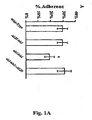
- a comparison of the ALS1/ALS 1 and alsI/alsI strain showed that the ALSI null mutant was 35% less adherent to endothelial cells than C. albicans CAI- 12.
- the adherence of the wild-type strain grown under non-ALS I expressing conditions was compared with a mutant autonomously expressing Als I p. This mutant was constructed by integrating a third copy of ALSI under the control of the constitutive ADH I promoter into the wild-type C. albicans. To achieve constitutive expression of the ALSI in C.
- pOAU-3 had only one Bgl 2 site between the ADH I promoter and terminator.
- ALSI coding sequence flanked by BamHI restriction enzyme sites was generated by high fidelity PCR using pYF-5 as a template and the following primers: 5'- CGGG ATCC AGATGCTTCA-ACAATTTACATTG-S' (SEQ ID NO: 10) and 5'-CGGGATCCTCACTAATGAACAAGGACAATA-3' (SEQ ID NO: 1 1 ).
- This PCR fragment was digested with BamH I and then cloned into the compatible Bgl 2 site of pOAU-3 to generate pAU-1.
- pAU-1 was linearized by Xbal prior to transforming C. albicans CAI-4. The site-directed integration was confirmed by Southern Blot analysis.
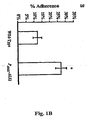
- overexpressing ALS 1 in this PADHI-ALS1 strain resulted in a 76% increase in adherence to endothelial cells compared to the wild-type C. albicans.
- yeast cells were grown overnight in YPD at 25[deg.]C (non-inducing condition of AlsIp).
- AlsI p expression was not induced to reduce the background adherence of the wile-type, thus magnifying the role of Alsl p in adherence through PADHI-ALS1 hybrid gene.
- the adherence assay was carried out as described above. Statistical treatment was obtained by Wilcoxon rank sum test and corrected for multiple comparisons with the Bonferroni correction. P ⁇ 0.001.
- a monoclonal anti-AlsIp murine IgG antibody was raised against a purified and truncated N-terminus [upsilon]f AlsIp (amino acid #17 to #432) expressed using Clontech YEXpress ((TM)) Yeast Expression System (Palo Alto, CA).
- the adherence blocking capability of these monoclonal anti-AlsI p antibodies was assessed by incubating C. albicans cells with either anti-AlsI antibodies or mouse IgG (Sigma, St. Louis, MO) at a 1 :50 dilution. After which the yeast cells were used in the adherence assay as described above.
- Als1p For Als1p to function as an adhesin, it must be located on the cell surface.
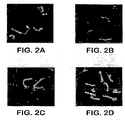
- the cell surface localization of AlsIp was verified using indirect immunofluorescence with the anti- Als-1 p monoclonal antibody. Diffuse staining was detected on the surface of blastospores during exponential growth. This staining was undetectable on blastospores in the stationary phase. Referring to Figure 2A , when blastospores were induced to produce filaments, intense staining was observed that localized exclusively to the base of the emerging filament. No immunofluorescence was observed with the alsI/alsI mutant, confirming the specificity of this antibody for AlsIp. See Figure 2B . These results establish that AlsIp is a cell surface protein.
- the specific localization of Als1p to the blastospore-filament junction implicates Als1p in the filamentation process.
- the filamentation phenotype of the C. albicans ALSI mutants was analyzed. Referring to Figure 3 A , the alsl/als I mutant failed to form filaments after a 4 day incubation on Lcc's solid medium, while both the ALS1/ALS1 AND ALS1/alsI strains as well as the ALS 1 -complemented mutant produced abundant filaments at this time point.
- the alsI/alsI mutant was capable of forming Filaments after longer periods of incubation.
- ovcrexpressing ALS1 augmented filamentation: the PADH I - ALS1 strain formed profuse filaments after a 3 day incubation, whereas the wild-type strain produced scant filaments at this time point. See Figure 3 B .
- a negative control was provided using mutant similar to the ALSI overexpression mutant, except the coding sequence of the ALS1 was inserted in the opposite orientation.
- the filamentation phenotype of the resulting strain was shown to be similar to that of the wild-type strain.
- the filament- inducing properties of Als1p are specific to cells grown on solid media, because all of the strains described above filamented comparably in liquid media.
- Ura ⁇ +> clones were selected and integration of the third copy of ALSI was confirmed with PCR using the primers: 5 '-CCGTTTATACCATCCAATC-3' (SEQ ID NO:13) and 5'-CTACA TCCTCC AATGAT AT AAC-3' (SEQ ID NO: 14).
- the resulting strain expressed ALSI autonomously and regained the ability to filament on Lee's agar. See Figures 4B and C . Therefore, Efglp induces filamentation through activation of ALSI expression.
- mice infected with the alsI/alsI null mutant survived significantly longer than mice infected with the ALS I/ALS1 strain, the ALSI/alsI mutant or the ALS1 -complemented mutant.
- the kidneys of mice infected with the alsI/alsI mutant contained significantly fewer organisms (5.70 ⁇ 0.46 log 10 CFU/g) (P ⁇ 0.0006 for both comparisons).
- C. albicans ALSI encodes a cell surface protein that mediates both adherence to endothelial cells and filamentation.
- Als Ip is the only identified downstream effector of any known filamentation regulatory pathway in C. albicans. Additionally, Als1p contributes to virulence in hematogenous candidal infection. The cell surface location and dual functionality of AlsIp make it an attractive target for both drug and immune-based therapies.
- the ALS1 protein synthesized by E. coli is adequate as an immunogen. However eukaryotic proteins synthesized by E. coli may not be functional due to improper folding or lack of glycosylation. Therefore, to determine if the ALS1 protein can block the adherence of C. albicans to endothelial cells, the protein is, preferably, purified from genetically engineered C. albicans.
- PCR was used to amplify a fragment of ALS1 , from nucleotides 52 to 1296.
- This 1246 bp fragment encompassed the N-terminus of the predicted ALS1 protein from the end of the signal peptide to the beginning of the tandem repeats.
- This region of ALS1 was amplified because it likely encodes the binding site of the adhesin, based on its homology to the binding region of the S. cerevisiae Agal gene product.
- this portion of the predicted ALS1 protein has few glycosylation sites and its size is appropriate for efficient expression in E. coli.
- the fragment of Als1 was ligated into pQE32 to produce p[NS5.
- the protein is expressed under control of the lac promoter and it has a 6-hits tag fused to its N- tcrmimis so that it can be affinity purified.
- the cell lysate was passed through a Ni ⁇ 2+>-agarose column to affinity purify the ALSI -6His fusion protein. This procedure yielded substantial amounts of ALSI -6His.
- the fusion protein was further purified by SDS-PAGE.
- Sera from immunized rabbits were absorbed with whole cells of 5. cerevisiae transformed with empty plasmid to remove antibodies that are reactive with components of the yeast other than ALSI protein.
- the titer of the antisera was determined by immunofluorescence using S. cerevisiae that express the ALSI gene.
- FITC-labeled anti- rabbit antibodies were purchased from commercial sources (Southern Biotechnology, Inc).
- Affinity-ptirified secondary antibodies were essential because many commercially available sera contain antibodies reactive with yeast glucan and mannan. The secondary antibodies were pretested using Candida albicans as well as S. cerevisiae transformed with the plasmid and were absorbed as needed to remove any anti-5.
- Negative controls were 1) preimmune serum 2) S. cerevisiae transformed with the empty plasmid, and 3) S. cerevisiae transformed with the ALS gene but grown under conditions that suppress expression of the ALS gene (glucose).
- the membrane proteins were separated by SDS-PAGE and then transferred to PVDF membrane by electroblotting. Harlow, E. and D. Lane. 1988. Antibodies: a laboratory manual. Cold Spring Harbor Laboratory Press . After being blocked with nonfat milk, the blot was incubated with the ALS antiseru. The preabsorbed antiserum did not react with proteins extracted from S. cerevisiae containing empty plasmid. This antiserum blocked the adherence of S. cerevisiae pYF5 (a clone that expresses Candida albicans ALS1 to endothelial cells.
- antisera that block the adherence of a clone of S. cerevisiae transformed with an ALS gene under the above conditions, these antisera were demonstrated to protect mice from intravenous challenge with Candida albicans.
- the antisera against the ALS proteins were first tested in the murine model of hematogenoiisly disseminated candidiasis.
- Affinity-purified anti-ALS antibodies are effective in preventing adhesion of yeast cells to various substrates (see EXAMPLE 3). Affinity-purification is useful in this system because antibody doses can be accurately determined.
- the unfractionated antisera will undoubtedly contain large amounts of antibody directed toward antigens on the S. cerevisiae carrier cells.
- Antibody doses may be administered to cover the range that brackets the levels of serum antibody that can be expected in most active immunization protocols and to cover the range of antibody doses that are typically used for passive immunization in murine models of candidiasis. See Dromer, F., J. Charreire, A. Contrepois, C. Carbon, and P. Yeni. 1987, - Protection, of mice against experimental cryptococcosis by anti-Cryptococcus neofornwns monoclonal antibody, Infect. Immun. 55:749-752 ; Han, Y and .I.E. Cutler. 1995, Antibody response that protects against disseminated candidiasis, Infect. Immun.
- mice (femal, 7 week old, the NCI) were given anti-ALS that had been absorbed with mouse splenic cells by an intraperitoneal (i.p.) injection.
- Control mice received prebled serum that had been absorbed with mouse spenic cells, intact anti-ALS serum, or DPBS, respectively.
- 2 ml of anti-ALS or prebled sera were mixed with 100/// of mouse (BALB/c, 7 weeks old female, NCI) splenic cells (app. 9 x 10 ⁇ (I> cells per ml) at room temperature for 20 minutes. The mixture was washed with warm sterile DPBS by centrifugation (@300 xg) for 3 minutes. This procedure was repeated three times.
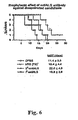
- mice The volume of i.p. injection was 0.4 ml per mouse. Four hours later, the mice were challenged with C. albicans (strain CA-I; 5 x 10 ⁇ 5> hydrophiiic yeast cells per mouse by i.v. injection. Then, their survival times were measured, See Figure 6 .
- C. albicans strain CA-I; 5 x 10 ⁇ 5> hydrophiiic yeast cells per mouse by i.v. injection. Then, their survival times were measured, See Figure 6 .
- mice infected intravenously with 10 ⁇ 6> blastopores of ALSI null mutant-had a longer median survival time when compared to mice infected with Candida albicans CAI-12 or Candid albicans in which one allele of the ALS 1 had been deleted (p 0.003).
- ALSI encodes a cell surface protein that mediates adherence to endothelial and epithelial cells. Disruption of both copies of this gene in C. albicans is associated with a 35% reduction in adherence to endothelial cells, and overexpression of ALSI increases adherence by 125% ( Fu et al., Mol. Microbiol. 44:61 -72 (2002 )).
- ALS1 is a member of a large C. albicans gene family consisting of at least eight members originally described by Hoyer et al. ( Hoyer et al., Trends Microbiol. 9: 176- 180 (2001 ), Zhao et al., Microbiology 149:2947-2960 (2003 )). These genes encode cell surface proteins that are characterized by three domains. The N-terminal region contains a putative signal peptide and is relatively conserved among Als proteins. This region is predicted to be poorly glycosylated ( Zhao et al., Microbiology 149:2947-2960 (2003 ), Hoyer et al., Genetics 157:1555-1567 (2001 )).
- the central portion of these proteins consists of a variable number of tandem repeats ( ⁇ 36 amino acids in length) and is followed by a serine-threonine-rich C- terminal region that contains a glycosylphosphatidyl inositol anchor sequence ⁇ supra).
- the proteins encoded by this gene family are known to be expressed during infection ( Hoyer et al., Infect. Immun. 67:4251 -4255 (1999 ), Zhang et al., Genome Res. 13:2005-2017 (2003 )), the function of the different Als proteins has not been investigated in detail.
- ALSI, -3, -5, -6, -7, and -9 were successfully amplified and expressed as described below. Briefly, for cloning and other culture steps, 5. cerevisiae strain S150-2B (leu2 his3 trpI ura3) was used for heterologous expression as has been described previously ( Fu et al., Infect. Immun. 66:2078- 2084 (1998 )). C. albicans strain SC5314 was used for genomic cloning.
- Plasmid pADH I obtained from A. Brown (Aberdeen, UK) contains the C. albicans alcohol dehydrogenase gene (ADH 1) promoter and terminator, which are functional in S. cerevisiae ( Bailey et al.3 J. Bacteriol. 178:5353-5360 (1996 )). This plasmid was used for constitutive expression of ALS genes in S. cerevisiae.
- Human oral epithelial and vascular endothelial cells were obtained and cultured as follows.
- the FaDu oral epithelial cell line isolated from a pharyngeal carcinoma, was purchased from the American Type Culture Collection (ATCC) and maintained as per their recommended protocol.
- Endothelial cells were isolated from umbilical cord veins and maintained by our previously described modification of the method of Jaffe et al. ( Fu et al., Mol. Microbiol. 44:61 -72 (2002 ).
- Jaffe et al.. J. Clin. Invest. 52:2745-2756 (1973 1Y AU cell cultures were maintained at 37 ⁇ °>C in a humidified environment containing 5% CO2.
- RNA sequences of members of the ALS family were identified by BLAST searching of the Stanford data base (available on the World Wide Web at URL: sequence.stanford.edu/group/candida/search.html).
- PCR primers were generated to specifically amplify each of the open reading frames that incorporated a 5' BgIII and a 3'
- Sequence-verified ALS open reading frames were then released from pGEM-T-Easy by BgIII-XhoI co-digestion and ligated into pADH I, such that the ALS gene of interest was under the control of the ADH I promoter.
- S. cerevisiae strain S150-2B was transformed with each of the ALS overexpression constructs as well as the empty pADHI construct using the lithium acetate method. Expression of each ALS gene in S. cerevisiae was verified by Northern blot analysis before phenotypic analyses were performed. Table I PCR primers used to amplify the coding regions of ALS gene for heterologous expression in S.
- ALS mRNA expression was detected by Northern blot analysis for each construct.
- HBSS Hanks' balanced salt solution
- Als5p expression in 5. cerevisiae confered adherence to multiple substrates, including gelatin and endothelial cells, whereas Als[omicron]p expression resulted in adherence to gelatin alone. Despite this marked difference in function, Als5p and Als6p are more than 80% identical at the amino acid level. The tandem repeat and C-terminal portions of these proteins are virtually identical, and the majority of the sequence differences are concentrated in the N termini of these two proteins.
- chimeric Als5/Als6 proteins were Constructed by exchanging the N termini of each protein.
- Chimeric ALS5/6 genes were constructed as follows. A BgHI-Hpal fragment of ALS5 encompassing the 5' 21 17 bp of the gene was isolated. pGEM-T-ALS6 was then digested with BgIII and Hpal to release the corresponding 5' 2126 bp of ALS6, and the fragment consisting of pGEM-T-Easy plus the 3!
- sequences of ALS6 was isolated and.ligated to the 5' ALS5 fragment to generate plasmid pGEM-T-5N6C.
- An identical approach using the corresponding 5' fragment of ALS6 and 3' fragment of ALS5 was used to generate plasmid p-GEM-T-6N5C.
- each chimeric ALS gene was released by BgIII-XhoI digestion and subcloned into pADH I as above.
- S. cerevisiae SI 50- 2B was then transformed with these constructs, and expression was verified by Northern blot analysis before characterization of their adherence properties.
- albicans ligands required for this process are unknown. Further, it is unclear if distinct candidal ligands are required for both adherence and endocytosis. In addition to being nonadherent, S. cerevisiae does not undergo significant endocytosis by endothelial cells. Therefore, to test whether Als proteins could serve as invasins as well as adhesins, the ability of S. cerevisiae strains expressing Als proteins to invade endothelial cells was determined.
- the endothelial cells were then permeabilized in 0.2% Triton X-100 in phosphate-buffered saline for 10 min, after which the cell-associated organisms (the internalized plus adherent organisms) were again stained with the anti-C. albicans antiserum conjugated with Alexa 488, which fluoresces green.
- the coverslips were then observed under epifluorescence.
- the number of organisms that had been internalized by the endothelial cells was determined by subtracting the number of adherent organisms (fluorescing red) from the number of cell-associated organisms (fluorescing green). At least 100 organisms were counted on each coverslip, and all experiments were performed in triplicate on at least three separate occasions.
- Fibronectin bead adherence assays also was performed to further characterize the binding characteristics of certain Als proteins.
- Als5p was originally identified by virtue of the protein's ability to induce agglutination of fibronectin-coated beads when expressed on the surface of S. cerevisiae ( Gaur et al., Infect Immune. 65:5289-5297 (1997 )). Therefore, S. cerevisiae strains transformed with ALS5, ALS6, 5N6C, and 6N5C for fibronectin were tested for bead adherence using this methodology ( Gaur et al., Infect. Immune. 65:5289-5297 (1997 ), Gaur et al.. Infect. Immun.
- tosylated magnetic beads (Dynal Biotech) were coated with fibronectin following the manufacturer's instructions.
- 10 [mu]l of coated beads (I O ⁇ 6> beads) were mixed with 1 x 10 ⁇ 8> transformed S. cerevisiae in 1 ml of I x Tris-EDTA (TE) buffer, pH 7.0, and incubated with gentle mixing for 45 min.
- the tubes were placed in a magnet to separate beads and adherent S. cerevisiae from nonadherent organisms.
- the supernatant containing nonadherent organisms was removed by aspiration, and the remaining beads were washed three times by resuspending in 1 ml of TE buffer, followed by magnetic separation and aspiration of the supernatant. ⁇ '> Finally, the washed beads and adherent organisms were resuspended in 100 [mu]l of TE buffer and examined microscopically-for co-agglutination.
- Als proteins also were found to be homologous to adhesins and invasins of the immunoglobulin superfamily.
- a knowledge-based search algorithm was used to identify molecules that share significant structural similarity with Als family members. Briefly, homology and energy-based modeling was conducted to compare overall physicochemical features of Als proteins.
- SWISS- MODEL a knowledge-based method (SWISS- MODEL) ( Guex et al., Electrophoresis 18:2714-2723 (1997 ), Schwede et al., Nucleic Acids Res.
- Als7p shared significant homology with collagen-binding protein of Staphylococcus aureus.
- the specific primary, secondary, and tertiary homologs varied for most family members (Table III).
- Als2p and Als9p shared an identical primary, secondary, and tertiary homolog.
- Table III Comparison of homologs among Als proteins Homologes of each Als protein were identified by the knowledge-based algorithm described and were ranked in descending order of structural correlation from J to 3.
- NS no significant model identified for homology modeling (correlation coefficient ((r ⁇ 2>) ⁇ 70%.
- PDB Protein Data Bank code per the National Center for Biotechnology Information format.
- PDB 1cwv pseuodtuberculosis
- PB 1LOQA Surface layer protein Methanosarcina mazei
- c Als3p Collagen-binding protein S. aureus PB Invasin/integrin-binding protein Y .
- Clumping factor S . aureus (PDB 1n67A) c 1d2p) ⁇ pseuodtuberculosis (PDB 1cwv) b Als4p Collagen-binding protein S. aureus (PDB 1d2p) ⁇ Invasin/integrin-binding protein Y .
- PDB 1cwv NS Als5p Invasin/integrin-binding protein Yersinia pseuodtuberculosis
- PB 1cwv Surface layer protein M. mazei
- PB 1LOQA Collagen-binding protein S . aureus
- PB 1d2p Collagen-binding protein S . aureus
- PB 1d2p Invasin/integrin-binding protein Y.
- Als proteins were also determined to contain.N-terininal hypervariable regions that map to predicted loop/coil structures. In this regard, despite the observed differences in substrate-specific adherence mediated by individual Als proteins, large regions of sequence in the N-terminal domains are conserved across this family. However, seven regions of significant divergence among Als proteins designated hypervariable regions (HVRs) 1-7, were found. These regions (composed of 8 or more amino acids) contained no apparent consensus identity across Als proteins and less than 50% consensus conservation. In contrast, the intervening conserved regions (CRs) 1-7, displayed more than 30% consensus identity and more than 50% consensus conservation across Als proteins.
- HVRs hypervariable regions
- the instrument was routinely calibrated with (+)-10-camphorsulfonic acid (1 mg/ml in a 1-mm path length cell) ( Johnson et al., Proteins 7:205-214 (1990 )), and ellipticity was expressed as the mean residue ellipticity (I)MRE (degrees-c[tau]n2 dmol-1).
- the protein concentration was determined by absorbance at 280 nm based on aromatic amino>acid composition of the expressed AlsIp domain ( Pace et al, Protein Sci 4:241 1-2423 (1995 )).
- the CD spectra were deconvolved into helix, [beta]-sheet, turn, and disordered structures using Selcon ( Sreerama et al, Protein Sci.
- Infrared spectra of Alsl p self-films were recorded at 25 ⁇ 0>C on a Bruker Vector 22 FTIR spectrometer (Bruker Optics) fitted with a deuterated triglycine sulfate detector at a gain of 4, averaged over 256 scans, and at a resolution of 2 cm-1.
- Fifty micrograms of the protein in 50 [mu]l of phosphate-buffered saline were spread onto the surface of a 50 x 20 x 2- mm germanium attenuated total reflectance sample crystal (Pike Technologies) and allowed to dry. The dry protein self-film was then hydrated with D2O for 1 h prior to recording the infrared spectra.
- Amide I bands of the infrared spectra were analyzed for secondary conformations by area calculations of component peaks with curve-fitting software
- GRAMS/32 Version 5; Galactic.
- the frequency limits for the various conformations were as follows: [alpha]-helix (1662-1645 cm-1), [beta]-sheet (1637-1613 and 1710-1682 cm- 1), [beta] -turn loops (1682-1 662 cm-1), and disordered structures (1 645-1637 cm-1) (50-52).
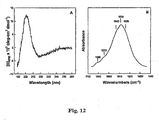
- Circular dichroism results of the N-terminal domain of Als I p are shown in Figure 12A and reveal a dichroic minimum at 217 mil and strong positive dichroic maximum near 200 nm. These features are characteristic of a protein having a dominant anti-parallel [beta] sheet component. Deconvolution of the CD spectra indicated that the protein assumed conformations of 50. 1 % [beta] sheet, whereas other structure class contributions include disordered structures (26.9%), turn structures (19.3%), and [alpha]-helix (3.7%).
- Curve fitting of the - spectra indicated that the protein construct is -57.2% antiparallel [beta]-sheet.
- Other secondary structural conformations from curve fitting of the IR spectra include disordered structures (20.5%), turn components (13.3%), and [alpha]-helix (9.0%).
- Three-dimensional models further indicate Physicochemical distinctions among Als N-terminal domains.
- molecular models indicated differences in predicted physicochemical attributes of the N-terminal domains of Als proteins that likely influence their interactions with host cells and several substrates.
- Als proteins are separable into three distinct groups based on surface distributions of hydrophobicity, charge, and hydrogen bonding potential.
- AlsIp, Als3p, and Als5p each share similar patterns of these properties and thus are considered the Als group A.
- the predicted physicochemical properties of Als[omicron]p and Als7p N-terminal domains Als group B
- Als group B have striking differences from those of the Als group A ( Fig. 13 ).
- Als group A members are typically segregated from their neutral or anionic facets
- positive charge is broadly distributed across the entire surface of the Als group B members Als[omicron]p and Als7p.
- Als group C the Als group C proteins that differ structurally from either the Als group A or B proteins.
- the Als group C proteins would appear to be more similar to the Als group A than Als group B proteins in terms of hydrophobic or electrostatic distribution,
- Hwpl p has been shown to mediate adherence to buccal epithelial cells by acting as a substrate for mammalian transglutaminase (5).
- EAPI was recently identified by heterologous expression in S. cerevisiae and mediates adherence to polystyrene and renal epithelial cells //; vitro (J).
- AlsIp and Als5p have been studied from a functional perspective.
- Heterologous expression of AlsIp has been shown to mediate binding to human vascular endothelial cells and epithelial cells, a finding that has been confirmed in C.
- variable loop regions significantly alter substrate binding in these homologous proteins ( Renz et al.j J. Cell Biol. 125-1395-1406 (1994 ), Viney et al., J. Immunol. 157:2488-2497 (1996 )).
- the three-dimensional modeling results further indicate that N-terminal domains of individual Als proteins possess distinctive molecular signatures that relate to their adhesive profiles. These signatures incorporate parameters such as surface area, hydrophobic ity, and electrostatic charge, yielding configurations that distinguish structural relationships among Als proteins.
- Als proteins that bind to multiple substrates such as the Als group A members (Alslp, Als3p, and Als5p) have similar predicted N-terminal profiles in terms of steric bulk, hydrophobic distribution, and electrostatic potential. Yet, even within this group, specific physicochemical distinctions exist that can govern functional differences within the group ( Fig. 13 ).
- Als proteins with reduced adhesive capacity have surface features predicted to be distinct from the Als group A proteins in multiple physicochemical properties, including hydrophobicity and electrostatic potential. It is highly likely that the aggregate effects of differences in these structural features confer the specific functional properties of distinct Als proteins.
- the above results indicate an analogy between antibodies and Als proteins at both the structural and functional level.
- the homology modeling underscores the similarities in structural configurations of these families, with hypervariability targeted to localized domains within an otherwise stable framework (e.g. HVRs of Als proteins and Fab regions in immunoglobulins).
- the genetic variability of the ALS gene family may provide the opportunity for Candida to display a diverse array of proteins with a spectrum of specificity in adherence and invasion. The availability of such a group of related proteins is likely to improve the ability of the organism to colonize and invade different anatomical and physiological niches during infection.
- Vaccination with rAlslp-N improves survival during murine disseminated candidiasis by enhancing cell-mediated, not humoral, immunity
- the C. albicans used in the study was SC5314, a well-characterized clinical isolate that is highly virulent in animal models ( Spellberg et al., Infect Immun. 71 :5756-5764 (2003 )) was supplied by W. Fonzi (Georgetown Univeristy). The organism was serially passaged three times in yeast peptone dextrose broth (Difco) prior to infection.
- mice strains used in the study were female BALB/c mice obtained from the National Cancer Institute (Bethesda, MD). To explore the impact of age on vaccine efficacy, both juvenile mice (8-10 weeks) and retired breeders (> 6 months) were utilized.
- Female B cell-deficient mice bearing a homozygous deletion of the igh loci (C. I29B6-IgH-Jhdtm I Dhu), T cell-deficient nude mice (C.Cg/AnBomTac-Foxnl nuN20), and congenic wild-type BALB/c littermates were obtained from Taconic Farms (Germantown, NY).
- mice were housed in filtered cages with irradiated food and aiitoclaved water ad libitum.
- mice were immunized with varying doses of antigen (see below) and subsequently infected via the tail vein with the appropriate inoculum of C. albicans SC5314 blastospores, or PBS (Irvine Scientific, Irvine, CA) control. Results of replicate survival studies were combined if the individual datasets demonstrated no statistical heterogeneity (see below). All procedures involving mice were approved by the institutional animal-use and care committee, following the National Institutes of Health guidelines for animal housing and care.
- rAlslp-N immunization procedures described below were performed as follows. Briefly, rAlsl p-N (amino acids 17 to 432 of Alslp) was produced in S. cerevisiae and purified by gel filtration and Ni-NTA matrix affinity purification ( Fu et al., Molec. Microbiol. 44:61-72 (2002 )). The amount of protein was quantified by modified Lowry assay. A high degree of purity (“90%) was confirmed by SDS-polyacrylamide gel electrophoresis as well as circular dichroism and FTIR, as described above.
- mice were immunized by intraperitoneal (ip) injection of rAlsl p-N mixed with complete Freund's adjuvant (CFA, Sigma-Aldrich) at day 0, boosted with another dose of the antigen with incomplete Freund's adjuvant (IFA, Sigma-Aldrich) at day 21 , and infected two weeks following the boost.
- CFA complete Freund's adjuvant
- IFA incomplete Freund's adjuvant
- Resultant Antibody titers were determined by ELISA in 96 well plates. Briefly, wells were coated with 100 [mu]l per well of 5 [mu]g/ml rAlslp-N in PBS. Mouse sera were incubated for 1 h at room temperature following a blocking step with tris buffer saline (TBS) (0.01 M TrisHCl, pH 7.4, 0.15 M NaCl) containing 3% bovine serum albumin. The wells were washed 3 times with TBS containing 0.05% Tween 20, followed by another 3 washes with TBS.
- TBS tris buffer saline
- Goat anti-mouse secondary antibody conjugated with horseradish peroxidase was added at a final dilution of 1 :5000 and the plate was further incubated for 1 h at room temperature.
- Wells were washed with TBS and incubated with substrate containing 0.1 M citrate buffer (pH 5.0), 50 mg/ml of o-phenylenediamine (Sigma), and 10 [mu]l of 30% H2C>2- The color was allowed to develop for 30 min after which the reaction was terminated by adding 10% H2SO4 and the optical density (OD) was determined at 490 nm in a microtiter plate reader.
- Negative control wells received only diluent, and background absorbance was subtracted from the test wells to obtain final OD readings.
- the ELISA titer was taken as the reciprocal of the last serum dilution that gave a positive OD reading (i.e. > mean OD of negative control samples + 2standard deviation).
- C. albicans-induced cytokine profiles were performed to determine the effect of the rAlsl p-N vaccine on cell-mediated immunity and in vivo cytokine profiles. Mice were immunized as described above. Two weeks after the final boost, splenocytes were harvested and cultured in complete media at a density of 4 x 10 ⁇ 6> cells/ml as previously described ( Spellberg et al., Infect. Immun. 71 :5756-5764 (2003 )). To stimulate cytokine production, splenocytes were co-cultured with heat-killed C. albicans SC5314 germ tubes. We used heat-killed C.
- the C albicans cells were pre-germinated in RPMI-1640 with glutamine (Gibco BRL) for 90 minutes to induce expression of Alslp ( Fu et al., Molec Microbiol. 44:61 -72 (2002 )).
- the resulting C. albicans germ tubes were heat-killed by incubation for 90 minutes at 60 ⁇ 0>C ( Wheat et al., infect. Immun. 63:4368-74 (1995 )).
- the heat-killed fungi were added to the , splenocyte cultures at a density of 2 x 10 ⁇ 7> pseudohyphae/ml (ratio of five fungi to one leukocyte).
- splenocytes were profiled for Thl (CD4+IFN- ⁇ "> +1 L-4-), Th2 ⁇ J> (CD4+IFN- -IL-4+), or CD4+IL-10+ frequencies by intraceljular.'cytokine detection and flow cytometry, as previously described ( Spellberg et al., Infect. Immun.-71 :5756-5764 (2003 )).
- Three-color flow cytometry was performed on a Becton-Dickinson FACScan instrument calibrated with CaliBRITE beads (Becton Dickinson, San Jose, CA) using
- FACSComp software as per the manufacturer's recommendations.
- CD4+ lymphocytes were gated by concatenation of forward and side scatter, and FITC-anti- CD4 antibody fluorescence properties. Data for each sample were acquired until 10,000 CD4 ⁇ lymphocytes were analyzed. Results are presented as the median ⁇ 25th and 75th quartiles of the percentage of all gated lymphocytes that were Thl or Th2 cells.
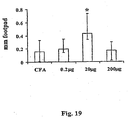
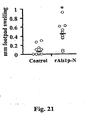
- Footpad swelling was determined by the method of Oomura et al (41). Briefly, mice were immunized with the appropriate dose of [tau]Alslp-N or CFA alone as described above. Two weeks following the boost, baseline footpad sizes of immunized mice were measured using an electronic digital caliper. Fifty [mu]g of rAlsl p-N in 25 [mu]l of PBS was injected into the right footpads, and PBS alone injected into the left footpads of the immunized mice. Twenty- four hours later the footpads were again measured. Antigen-specific footpad swelling was calculated as: (right footpad thickness at 24 h - right footpad thickness at baseline) - (left footpad thickness at 24 h - left footpad thickness at baseline).
- the non-parametric Log Rank test was utilized to determine differences in survival times of the mice. Titers of antibody, frequency of Thl or Th2 lymphocytes, and footpad swelling were compared by the Steel test for non-parametric multiple comparisons ( Rhyne et al., Biometrics 23:539-49 (1967 ) or the Mann Whitney U test for unpaired comparisons, as appropriate. Correlations were calculated with the Spearman Rank sum test. To determine if heterogeneity existed in replicate survival studies, the Kolmogorov-Smirnov test was utilized. P values ⁇ 0.05 were considered significant.
- mice Female retired breeder BALB/c mice were immunized with rAlslp-N plus adjuvant (CFA/IFA) or adjuvant alone. Immunized mice were bled 2 weeks after boosting to determine anti-rAls 1 p-N antibody titers (see below). The mice were subsequently infected with a lethal inoculum of C. albicans (2 x 10 ⁇ 5> blastosporcs).
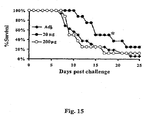
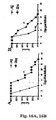
- p 0.001 by Log Rank test, Fig. 16A
- To determine if the age of the mice influenced their response to the rAlsl p-N vaccine, we tested it in juvenile mice. A similar survival benefit was found when juvenile mice were vaccinated and infected with the same high inoculum (p 0.02 by Log Rank test, Fig. 16B ).
- mice immunized with the highest dose of antigen 200 [mu]g
- anti-rAlsl p-N antibody titers in excess of 1 : 100,000 but had survival durations no different from mice immunized with lower doses of antigen whose titers were at the lower limit of detection ( ⁇ 1 : 100).
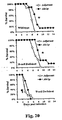
- B cell-deficient, T-cell deficient nude, or congenic B[Lambda]LB/c wild-type control mice were immunized with 20 [mu]g of rAlsl p-N plus adjuvant or adjuvant alone, and infected with a lethal inoculum (8 x 10 ⁇ 5> blastospores) of C. albicans.
- the inverted U-shaped dose-response efficacy curve is reminiscent of the classical studies of Parish et ai , who first described the inverse relationship between the induction of humoral and cell-mediated immunity by a given dose of antigen.
- an inverted U- shaped dose-response efficacy curve could be explained if: 1) vaccine efficacy depended on cell-mediated immunity and, 2) intermediate doses of rAlslp-N stimulated superior cell- mediated immunity compared to the high, antibody-stimulating dose.
- the inverted U-shaped dose response efficacy curve seen with the rAlsl p-N vaccine was due to superior induction of cell-mediated immunity by the protective, intermediate doses of antigen.
- Thl cells were of functional significance / ⁇ '>// vivo
- Th2 cells were activated in peripheral lymph nodes rather than the spleen.
- other T cell populations e.g. NKT cells
- NKT cells may have been responsible for inducing the high antibody titers seen in response to the 200 [mu]g dose of rAlslp-N.
- the anti-Candida albicans rAlslp-N vaccine reduces fungal burden and improves survival in both immunocompetent and immunocompromised mice
- This example describes enhancement of the efficacy of the r Alslp-N vaccine described in example VII when administered by a subcutaneous (SQ) route in both immunocompetent and' immunocompromised mice.
- SQ subcutaneous
- rAlslp-N encompassing amino acids 19-433 of the full length protein, was produced in S. cerevisiae and purified as described above. Control preparation was similarly purified from S. cerev[iota]siae transformed with an empty plasmid.
- mice 25-30 g were immunized by SQ injection of rAlslp-N (20 [mu]g) or control preparation mixed with Complete Freund's Adjuvant (CFA) at day 0, followed by a booster dose in Incomplete Freund's Adjuvant (IFA) at day 21.
- CFA Complete Freund's Adjuvant
- IFA Incomplete Freund's Adjuvant
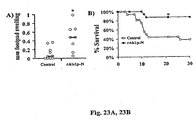
- Vaccinated or control mice were infected via the tail-vein with rapidly lethal inocula (2.5-5 x 10 ⁇ 5> blastospores) of C, albicans. We have previously shown that mice infected such inocula die of overwhelming septic shock ( Spellberg et al., J. Infect. Pis. In press (2005 )). Vaccination markedly prolonged time to death (p ⁇ 0.05 for both inociila by Log Rank test) and improved 30 day survival ⁇ 50-57% vs. 0%, p ⁇ 0.05 for both inociila by Fishers Exact test).
- the efficacy of the rAlslp-N vaccine also was assessed in immunocompromised mice. Having demonstrated efficacy in immunocompetent mice, the potential for the rAlsl p- N vaccine to induce immunity in and protect neutropenic mice from disseminated candidiasis also was evaluated.
- Vaccinated BALB/c mice were made neutropenic by administration of cyclophosphamide (200 mg/kg ip on day -2, and 100 mg/kg ip on day +9 relative to infection, resulting in approximately 12 days of neutropenia, as described ( Sheppard et al., Antimicrob. Agents. Chemother. 48: 1908-1 1 (2004 )).
- Footpad swelling reaction was performed 2 days after the first dose of cyclophosphamide.
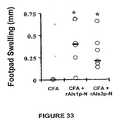
- Vaccinated neutropenic mice developed DTH reactions of similar magnitude to immunocompetent mice ( Fig. 23 A vs. 1 , experiments performed in parallel).
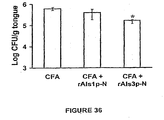
- mice were treated with cortisone acetate (225 mg/kg SQ on days -1, 1, and 3 relative to infection) and infected sublingual ly as described. Tongues were excised on day 5 post-infection.
- OPC murine oropharyngeal candidiasis
- mice developed marked fungal invasion of their tongues in numerous locations, while only two vaccinated mouse developed any tongue lesions.
- CFU colony forming units
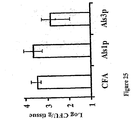
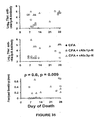
- kidney fungal burden indicative of a fatal infection is 5 log CFU/g; mice with kidney fungal burdens above this level typically die from infection, whereas mice with kidney fungal burdens below this burden survive the infection ( Spellberg et a!.. J. Infect. Pis. In press (2005 ) and ( Spellberg et a!... Infect. Immun. 71 :5756-5764 (2003 )). Therefore, breakthrough deaths in the vaccinated group likely reflect high fungal burden in spite of vaccination.
- the mouse to mouse variations in tissue fungal burden may reflect the complexities of host-pathogen interactions and/or variable vaccine responsiveness.
- the rAlslp-N vaccine can be used for the treatment, reduction in severity and/or prevention of increasingly common and highly lethal disseminated candidiasis.
- the vaccine is efficacious in immunocompetent mice, and efficacy is retained even in neutropenic and corticosteroid -treated hosts.
- the vaccine can protect against mucocutaneous candidiasis including vaginal and oropharyngeal candidiasis
- Als adhesins of C. albicans were identified to be significantly homologous to adhesins on S. aureus. This characteristic was used to design and implement an effective vaccine against S. aureus using Als adhesins.
- the C. albicans ALS family is comprised of at least 9 genes ( Hoyer et ah, Genetics 157: 1555-67 (2001 ); Hoyer LL., Trends Microbiol. 9: 176-80 (2001 )).
- Als proteins function as adhesins to biologically relevant substrates ( Fu et al., Molec. Microbiol. 44:61 -72 (2002 ); Gaur and
- homology calculation takes into account both features of sequence alignment and 3-dimensional surface structure. Homology of Alslp was calculated to be greater than 95% or 90% compared to collagen binding protein or clumping factor of S. aureus (r > 90%; Sheppard.et al., supra). Similarly, homology of Als3p was calculated to be greater than 95% or 80% compared to collagen binding protein.or clumping factor of S. aureus (r ⁇ 2> > 90%).
- the predicted functional cleft motif in Alslp maps to specific residues originating from hypervariable regions in the N- terminal region encompassing amino acid residues 30 - 300.
- a monoclonal antibody against S. aureus also was identified that may reduce infections caused by C. albicans. As with the above structural findings, this characteristic also was used to design and implement an effective vaccine against 5. aureus using Als adhesins.
- a humanized anti-staphylococcal monoclonal antibody (Aurexis ⁇ (R)>) that is known to recognize surface adhesins on S. aureus is currently in clinical trials. This monoclonal antibody also cross reacts with Als family members.
- exemplary [Lambda]ls adhesin vaccines were designed and shown to improve survival of mice infected with S. aureus.
- the exemplary Als adhesins used to vaccinate were rAlsl p-N or rAls3p-N, which were produced and used as described above. Briefly, to determine if these Als vaccines against Candida, rAlslp-N and rAls3p-N, can mediate cross-species protection against S.
- mice female Balb/c mice were vaccinated with the previously described regimen (Complete Freund's Adjuvant + 20 [mu]g of rAlslp-N or rAls3p-N on day 0, followed by a booster dose in' Incomplete Freund's Adjuvant ⁇ "> at 3 weeks, both administered subcutaneousiy).
- a booster dose in' Incomplete Freund's Adjuvant ⁇ at 3 weeks, both administered subcutaneousiy.
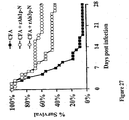
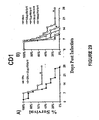
- mice Two week ⁇ '>s following vaccination, mice were infected via the tail-vein with a lethal dose of S. aureus strain 67-0, which is methicillin-resistant and known to be virulent in animal models. The results showing mice survival are shown in Figure 26 .
- both the rAlslp-N and rAJs3p-N vaccines mediated improved long- term survival in these infected mice ( Figure 27 ). Additionally, the mechanism of protection likely to be an enhancement of Thl rather than Th2 since no correlation between Ab titers and survival of mice vaccinated with either rAlslp-N or rAls3p-N was observed ( Figure 28 ).
- the Anti-Candida rAlsl p-N Vaccine Mediates a Broad Range of Protection Against Disseminated Candidiasis
- mice were obtained from the National Cancer Institute (Bethesda. MD). All procedures involving mice were approved by the institutional animal use and care committee, following the National Institutes of Health guidelines for animal housing and care. The mice were vaccinated with rAlslp-N + Freund's adjuvant as previously described above and in, for example, Web et al., Infect. Imniun. 73:999-1005 (2005 ); Spellberg et al., Infect. Immun. 73:6191 -93 (2005 ).
- rAlslp-N (amino acids 17 to 432 of Alsl p) was produced in S. cerevisiae and purified by gel filtration and Ni-NTA matrix affinity purification. A high degree of purity ("90%) was confirmed by SDS-polyacrylamide gel electrophoresis as well as circular dichroism and FTIR, as described above and in, for example, Sheppard et a]., J Biol Chem 279:30480-89, (2004 ). Mice were immunized by SQ injection of rAlslp-N (20 [mu]g) mixed with Complete Freund's Adjuvant (CFA; Sigma- Aldrich, St. Louis; MO) at day 0, followed by a booster dose- in Incomplete Freund's
- the rAlsl p-N vaccine also was shown to improve the survival of Balb/c mice infected with several strains of C. albicans.
- Particularly useful vaccines utilize an immunogen that can prime the immune system to recognize multiple strains of the target pathogen.
- DNA sequence analysis we found that the predicted amino acid sequence of the N-te[pi]nina! region of Alsl p was 99.9% conserved amongst a diverse group of clinical C. albicans isolates from bloodstream (5 strains), urine (5 strains) and oropharyngeal (10 strains) infections (data not shown). These results indicated that the rAlsl p-N vaccine can be effective against a broad array of C. albicans strains.
- mice were vaccinated with rAls 1 p-N + Fre[iota]tnd ⁇ :>s adjuvant as above, and infected with one of several clinical isolates of C. albicans ( Wheat et al., Infect Iminiin 63:1993-98 (1995 )). As shown in Figure 30 , the rAlsl p-N vaccine significantly improved the survival of mice infected with each of these strains.
- the rAls I p-N vaccine also was shown to reduce tissue fungal burden in mice infected with several non-albicans species of Candida. Briefly, the ALS gene family is present in other Candida species, including C. dubliniensis and C tropicalis ( Hoyer et al., Genetics 157: 1555-67 (2001 )). Similarly, an adhesin analogous to .Alsj family members has been described in C glahrata ( Cormack et al., Scze/7ce.285:57S-82 (1999 ); Frieman et al., [Lambda]/o/ Microbiol 46:479-92 (2002 )).
- mice were vaccinated with rAlslp-N in Freund's adjuvant as above, and infected via the tail-vein with C. glabrata 31028 (a clinical bloodstream isolate from the microbiology laboratory at Harbor-UCLA Medical Center), C., krusei 91 - 1 1-59, (generously provided by Michael Rinaldi, San Antonio, Texas), C. parapsilosis 22019 (clinical bloodstream isolate from Harbor-UCLA Medical Center), or C. tropica I Ls .4243 (clinical bloodstream isolate from Harbor-UCLA Medical Center).
- the rAlsl p-N vaccine reduced the kidney fungal burden of mice infected with each of these species.
- the rAlslp-N vaccine is able to prevent and/or reduce the severity of an increasingly common and highly lethal disseminated candidiasis.
- the vaccine is efficacious in both inbred and outbred mice, when mixed with alum as an adjuvant, against multiple strains of C. albicans, and against several non-albicans species of Candida.
- This Example compares the efficacy of rAls3p-N to rAls1p-N vaccines in murine models of hematogenously disseminated, oropharyngeal, and vaginal candidiasis.
- the ALSI and ALS3 genes encode adhesins with the broadest array of substrate affinity.
- Alslp mediated greater adherence to endothelial cells and gelatin, but inferior adherence to epithelial cells ( Sheppard et a)., J Biol Chem 279:30480-89 (2004 )).
- Their differences in adherence qualities suggested that rAls3p-N may have different efficacy as a vaccine immunogen compared to rAlslp-N.
- rAlslp-N and rAls3p-N (amino acids 17 to 432 of Als Ip or Als3p) were produced in S. cerevisi[alpha]e and purified by gel filtration and Ni-NTA matrix affinity purification, as described above and in Bennett et al., (2005), supra; Spellberg et a)., (2005), supra). The amount ofprotein was quantified by modified Lowry assay..
- mice were immunized by subcutaneous (SQ) injection of 20 [mu]ig of rAlslp-N or rAls3p-N mixed with Complete Freund's adjuvant (CFA, Sigma-Aldrich, St. Louis, MO) at day 0, boosted with another dose of the antigen with Incomplete Freund ⁇ '>s adjuvant (IFA, Sigma-Aldrich) at day 21 , and infected two weeks following the boost.
- SQ subcutaneous
- CFA Complete Freund's adjuvant
- IFA Incomplete Freund ⁇ '>s adjuvant
- mice vaccinated with CFA + rAlsl p-N or rAls3p-N developed antibody titers significantly greater than mice receiving CFA alone.
- mice vaccinated with rAls3p-N generated anti-rAlsl p-N antibodies at equivalent titers to mice vaccinated with rAlslp-N ( Fig. 32 , top).
- mice vaccinated with rAlsl p-N generated smaller titers against rAls3p-N than did mice vaccinated with rAls3p-N ( Fig. 32 , bottom).
- both rAlsl p-N and rAls3p-N resulted in similar delayed type hypersensitivity responses in vivo as shown in Figure 33 .
- mice were vaccinated with CFA, CFA + rAlslp-N, or CFA + rAls3p-N, and subsequently infected via the tail-vein with C. albicans.
- the results shown in Figure 34 demonstrate that both the rAlslp-N and rAls3p-N vaccines resulted in significant improvement in survival.
- mice sera were incubated for 1 h at room temperature following a blocking step with tris buffer saline (TBS) (0.01 M TrisHCl, pH 7.4, 0.15 M NaCl) containing 3% bovine serum albumin.
- TBS tris buffer saline
- the wells were washed 3 times with TBS containing 0.05% Tween 20, followed by another 3 washes with TBS without Tween.
- Goat anti-mouse IgG secondary antibody conjugated with horseradish peroxidase (Sigma-Aldrich) was added at a final dilution of 1 :5000 and the plate was further incubated for 1 h at room temperature.
- mice were immunized with rAlslp-N, rAls3p-N, or CFA alone. Two weeks following the boost, baseline footpad sizes of immunized mice were measured using an electronic digital caliper. Fifty [mu]g of rAlslp-N or rAls3p-N in 25 [mu]l of PBS were injected into the right footpads, and PBS aione injected into the left footpads of the immunized mice. Twenty-four hours later the footpads were again measured. Antigen-specific footpad swelling was calculated as: (right footpad thickness at 24 h - right footpad thickness at baseline) - (left footpad thickness at 24 h - left footpad thickness at baseline).
- the rAls3p-N. vaccine also demonstrated more efficacy than rAlslp-N in two models ⁇ - of mucosal candidiasis. Because Als3p mediated superior adhesion to epithelial cells compared to Als I p. This observation indicates that rAls3p-N can exhibit unique efficacy in mucosal models of infection. The efficacy of rAlslp-N compared to rAls3p-N assessed in a steroid-treated, oropharyngeal model of infection and in a model of candidal vaginitis.
- mice were immunocompromised by treatment with cortisone acetate (225 mg/kg SQ on days -1, 1 , and 3 relative to infection). On the day of infection, the mice were anesthetized by intraperitoneal injection with 8 mg xylazine and 1 10 mg ketamine per kg.
- Calcium alginate urethral swabs were saturated with C. albicans by placing them in a suspension of 10 ⁇ 6> organisms per ml in HBSS at 3O ⁇ 0>C. The saturated swabs were placed sublingually in the oral cavity of the mice for 75 min. After 5 days of infection, the tongue and hypoglossal tissue were excised, weighed, homogenized, and then quantitatively cultured to determine the oral fungal burden. Effectiveness of the vaccine against murine vaginal candidiasis was performed by vaccinating female Balb/c mice were treated with 30 [mu]g of subcutaneous estradiol valerate dissolved in peanut oil (both from Sigma-Aldrich) on day -3 relative to infection to induce pseudoestrus.
- mice On the day of infection, mice were sedated by ip administration of 100 mg/kg of ketaminc. Sedated mice were infected intravaginally with 10 ⁇ 6> blastospores of C. albicans in 10 [mu]l of HBSS. On day 3 post-infection, vaginas and approximately one centimeter of each uterine horn were dissected en block, homogenized, and quantitatively cultured.
- Antibody titers did not correlate with the protective effect of either vaccine during disseminated candidiasis, but induction of delayed type hypersensitivity in vivo did correlate with protection. These data also further corroborate the mechanism of vaccine-induced protection was induction of Type 1, cell-mediated immunity to the fungus. Both rAlslp-N and rAls3p-N induced equivalent titers of antibody against rAlslp-N, but that rAls3p-N induced significantly higher titers of anti-rAls3p-N antibodies than did rAlslp-N.
- the anti-candidal rAls3p-N vaccine induced equivalent cell-mediated but broader antibody-based responses than did the rAlsl p-N vaccine.
- the immunogens resulted in an equivalent degree of protection against hematogenously disseminated candidiasis, but rAls3p-N mediated greater protection against both oropharyngeal and vaginal candidiasis.
Landscapes
- Health & Medical Sciences (AREA)
- Life Sciences & Earth Sciences (AREA)
- Chemical & Material Sciences (AREA)
- Medicinal Chemistry (AREA)
- Immunology (AREA)
- General Health & Medical Sciences (AREA)
- Organic Chemistry (AREA)
- Veterinary Medicine (AREA)
- Pharmacology & Pharmacy (AREA)
- Animal Behavior & Ethology (AREA)
- Public Health (AREA)
- Nuclear Medicine, Radiotherapy & Molecular Imaging (AREA)
- General Chemical & Material Sciences (AREA)
- Chemical Kinetics & Catalysis (AREA)
- Mycology (AREA)
- Engineering & Computer Science (AREA)
- Bioinformatics & Cheminformatics (AREA)
- Communicable Diseases (AREA)
- Diabetes (AREA)
- Oncology (AREA)
- Epidemiology (AREA)
- Microbiology (AREA)
- Proteomics, Peptides & Aminoacids (AREA)
- Molecular Biology (AREA)
- Genetics & Genomics (AREA)
- Biophysics (AREA)
- Biochemistry (AREA)
- Transplantation (AREA)
- Emergency Medicine (AREA)
- Endocrinology (AREA)
- Hematology (AREA)
- Obesity (AREA)
- Medicines Containing Antibodies Or Antigens For Use As Internal Diagnostic Agents (AREA)
- Peptides Or Proteins (AREA)
- Medicines That Contain Protein Lipid Enzymes And Other Medicines (AREA)
Applications Claiming Priority (2)
| Application Number | Priority Date | Filing Date | Title |
|---|---|---|---|
| US11/327,197 US20070077256A1 (en) | 1999-11-19 | 2006-01-06 | Pharmaceutical compositions and methods to vaccinate against disseminated candidiasis and other infectious agents |
| EP07709622A EP1982190B1 (en) | 2006-01-06 | 2007-01-05 | Pharmaceutical compositions and methods to vaccinate against disseminated candidiasis and other infectious agents |
Related Parent Applications (2)
| Application Number | Title | Priority Date | Filing Date |
|---|---|---|---|
| EP07709622.0 Division | 2007-01-05 | ||
| EP07709622A Division EP1982190B1 (en) | 2006-01-06 | 2007-01-05 | Pharmaceutical compositions and methods to vaccinate against disseminated candidiasis and other infectious agents |
Publications (2)
| Publication Number | Publication Date |
|---|---|
| EP2532360A1 EP2532360A1 (en) | 2012-12-12 |
| EP2532360B1 true EP2532360B1 (en) | 2016-09-28 |
Family
ID=38256965
Family Applications (4)
| Application Number | Title | Priority Date | Filing Date |
|---|---|---|---|
| EP12001586.2A Not-in-force EP2532360B1 (en) | 2006-01-06 | 2007-01-05 | Pharmaceutical compositions and methods to vaccinate against vaginal candidiasis |
| EP07709622A Not-in-force EP1982190B1 (en) | 2006-01-06 | 2007-01-05 | Pharmaceutical compositions and methods to vaccinate against disseminated candidiasis and other infectious agents |
| EP11008862.2A Not-in-force EP2428800B1 (en) | 2006-01-06 | 2007-01-05 | Pharmaceutical compositions and methods to vaccinate against mucosal candidiasis |
| EP12001595A Withdrawn EP2532361A1 (en) | 2006-01-06 | 2007-01-05 | Pharmaceutical composition and methods to vaccinate against disseminated candidiasis and other infectious agents |
Family Applications After (3)
| Application Number | Title | Priority Date | Filing Date |
|---|---|---|---|
| EP07709622A Not-in-force EP1982190B1 (en) | 2006-01-06 | 2007-01-05 | Pharmaceutical compositions and methods to vaccinate against disseminated candidiasis and other infectious agents |
| EP11008862.2A Not-in-force EP2428800B1 (en) | 2006-01-06 | 2007-01-05 | Pharmaceutical compositions and methods to vaccinate against mucosal candidiasis |
| EP12001595A Withdrawn EP2532361A1 (en) | 2006-01-06 | 2007-01-05 | Pharmaceutical composition and methods to vaccinate against disseminated candidiasis and other infectious agents |
Country Status (10)
| Country | Link |
|---|---|
| US (5) | US20070077256A1 (enExample) |
| EP (4) | EP2532360B1 (enExample) |
| JP (3) | JP5692963B2 (enExample) |
| AU (1) | AU2007205065B2 (enExample) |
| CA (2) | CA2636277C (enExample) |
| CY (1) | CY1113693T1 (enExample) |
| DK (1) | DK1982190T3 (enExample) |
| ES (3) | ES2391580T3 (enExample) |
| PT (1) | PT1982190E (enExample) |
| WO (1) | WO2007081896A2 (enExample) |
Families Citing this family (13)
| Publication number | Priority date | Publication date | Assignee | Title |
|---|---|---|---|---|
| US8541008B2 (en) * | 1999-11-19 | 2013-09-24 | Los Angeles Biomedical Research Institute At Harbor-Ucla Medical Center | Pharmaceutical compositions and methods to vaccinate against candidiasis |
| US20060083750A1 (en) * | 1999-11-19 | 2006-04-20 | Los Angeles Biomedical Research Institute At Harbor-Ucla Medical Center | Pharmaceutical compositions and methods to vaccinate against disseminated candidiasis |
| US20070077256A1 (en) | 1999-11-19 | 2007-04-05 | Los Angeles Biomedical Research Institute | Pharmaceutical compositions and methods to vaccinate against disseminated candidiasis and other infectious agents |
| CA2766805A1 (en) * | 2009-07-03 | 2011-01-06 | Los Angeles Biomedical Research Institute At Harbor-Ucla Medical Center | Hyr1 as a target for active and passive immunization against candida |
| WO2012163533A1 (en) | 2011-06-01 | 2012-12-06 | Eth Zurich | T cell epitope of candida albicans |
| WO2013015831A1 (en) * | 2011-07-22 | 2013-01-31 | Novadigm Therapeutics, Inc. | Methods and compositions for vaccinating against staphylococcus aureus |
| RU2717306C2 (ru) | 2013-03-15 | 2020-03-19 | Лос-Анджелес Биомедикал Ресерч Институт Эт Харбор-Укла Медикал Центер | Композиции и способы лечения грибковых и бактериальных патогенов |
| JP6566616B2 (ja) * | 2014-08-19 | 2019-08-28 | キヤノン株式会社 | 通信装置、その制御方法、およびプログラム |
| JP7036718B2 (ja) | 2015-11-16 | 2022-03-15 | メドインセルル | 滑膜組織への医薬活性成分の小分割化及び/又は標的化の方法 |
| JP2019507759A (ja) * | 2016-03-09 | 2019-03-22 | ロサンゼルス バイオメディカル リサーチ インスティテュート アット ハーバー− ユーシーエルエー メディカル センター | 外陰部膣カンジダ症の予防及び治療で使用するための方法及びキット |
| US10308571B2 (en) * | 2017-10-11 | 2019-06-04 | Uop Llc | Process for minimizing benzene, toluene, and a recycle loop in a zero benzene aromatics complex |
| US12324830B2 (en) | 2018-04-10 | 2025-06-10 | Los Angeles Biomedical Research Institute At Harbor-Ucla Medical Center | Methods of treatment for Candida auris infections |
| EP3552620A1 (en) * | 2018-04-11 | 2019-10-16 | Los Angeles Biomedical Research Institute at Harbor-UCLA Medical Center | Methods of treatment for candida auris infections |
Family Cites Families (41)
| Publication number | Priority date | Publication date | Assignee | Title |
|---|---|---|---|---|
| CA1133829A (en) | 1978-08-24 | 1982-10-19 | Neil J.L. Gilmour | Pasteurellosis vaccines |
| US5530101A (en) | 1988-12-28 | 1996-06-25 | Protein Design Labs, Inc. | Humanized immunoglobulins |
| US5703055A (en) | 1989-03-21 | 1997-12-30 | Wisconsin Alumni Research Foundation | Generation of antibodies through lipid mediated DNA delivery |
| US5622939A (en) | 1992-08-21 | 1997-04-22 | Alpha-Beta Technology, Inc. | Glucan preparation |
| US5877397A (en) | 1990-08-29 | 1999-03-02 | Genpharm International Inc. | Transgenic non-human animals capable of producing heterologous antibodies of various isotypes |
| US5961970A (en) | 1993-10-29 | 1999-10-05 | Pharmos Corporation | Submicron emulsions as vaccine adjuvants |
| WO1995031998A1 (en) | 1994-05-23 | 1995-11-30 | The Research & Development Institute, Inc. | Candida albicans adhesin as a vaccine |
| US5668263A (en) | 1994-12-16 | 1997-09-16 | Smithkline Beecham Corporation | Conserved yeast nucleic acid sequences |
| EP0831897B1 (en) | 1995-06-07 | 2001-03-28 | Pfizer Inc. | In ovo vaccination against coccidiosis |
| CA2255669A1 (en) * | 1996-05-16 | 1997-11-20 | The Texas A & M University System | Collagen binding protein compositions and methods of use |
| US6747137B1 (en) | 1998-02-13 | 2004-06-08 | Genome Therapeutics Corporation | Nucleic acid sequences relating to Candida albicans for diagnostics and therapeutics |
| US6248329B1 (en) * | 1998-06-01 | 2001-06-19 | Ramaswamy Chandrashekar | Parasitic helminth cuticlin nucleic acid molecules and uses thereof |
| US6703025B1 (en) * | 1998-08-31 | 2004-03-09 | Inhibitex, Inc. | Multicomponent vaccines |
| US7067138B1 (en) | 1999-11-19 | 2006-06-27 | Los Angeles Biomedical Research Institute At Harbor-Ucla Medical Center | Pharmaceutical compositions and methods to vaccinate against disseminated candidiasis |
| US8541008B2 (en) * | 1999-11-19 | 2013-09-24 | Los Angeles Biomedical Research Institute At Harbor-Ucla Medical Center | Pharmaceutical compositions and methods to vaccinate against candidiasis |
| US20060083750A1 (en) * | 1999-11-19 | 2006-04-20 | Los Angeles Biomedical Research Institute At Harbor-Ucla Medical Center | Pharmaceutical compositions and methods to vaccinate against disseminated candidiasis |
| US20070077256A1 (en) * | 1999-11-19 | 2007-04-05 | Los Angeles Biomedical Research Institute | Pharmaceutical compositions and methods to vaccinate against disseminated candidiasis and other infectious agents |
| EP1461442B1 (en) | 2001-11-30 | 2017-09-06 | Amgen Fremont Inc. | Transgenic animals bearing human ig lambda light chain genes |
| CA2486618C (en) | 2002-05-21 | 2013-04-09 | Schering-Plough Ltd. | Methods for the in vitro culture of sporozoea sp. and uses thereof |
| US7241613B1 (en) | 2002-06-05 | 2007-07-10 | Oscient Pharmaceuticals Corporation | Identification of Candida cell surface proteins and their uses |
| US7723087B2 (en) * | 2002-11-12 | 2010-05-25 | The Brigham And Women's Hospital, Inc. | Nucleic acid molecules for enhanced production of a bacterial polysaccharide and methods of use thereof |
| KR100785601B1 (ko) | 2003-11-21 | 2007-12-14 | 화이자 프로덕츠 인크. | 백신 아쥬반트로서의 항생제의 용도 |
| WO2005060713A2 (en) * | 2003-12-19 | 2005-07-07 | Inhibitex, Inc. | Method of inhibiting candida-related infections using donor selected or donor stimulated immunoglobulin compositions |
| GB0420466D0 (en) | 2004-09-14 | 2004-10-20 | Cassone Antonio | Anti-glucan antibodies |
| WO2006036817A2 (en) | 2004-09-24 | 2006-04-06 | Microbia, Inc. | Fungal variants and uses thereof |
| CA2489194A1 (en) | 2004-12-03 | 2006-06-03 | Guilhem Janbon | Polypeptides involved in candida biofilm formation and uses thereof |
| WO2007126813A2 (en) | 2006-03-29 | 2007-11-08 | Inhibitex, Inc. | Cross-reactive monoclonal antibodies recognizing als family proteins |
| US7732187B2 (en) | 2006-04-17 | 2010-06-08 | Intervet Inc. | Recombinant attenuated clostridium organisms and vaccine |
| EP2164511A1 (en) | 2007-05-22 | 2010-03-24 | Baylor College Of Medicine | Immune complex vaccination as a strategy to enhance immunity in the elderly and other immune compromised populations |
| TW201010717A (en) | 2008-05-29 | 2010-03-16 | Intervet Int Bv | Coccidiosis vaccines |
| US20100150942A1 (en) | 2008-12-03 | 2010-06-17 | Cantor Thomas L | Affinity purified human polyclonal antibodies and methods of making and using them |
| HUE036372T2 (hu) | 2009-06-22 | 2018-07-30 | Wyeth Llc | Staphylococcus aureus antigének immunogén készítményei |
| CA2766805A1 (en) | 2009-07-03 | 2011-01-06 | Los Angeles Biomedical Research Institute At Harbor-Ucla Medical Center | Hyr1 as a target for active and passive immunization against candida |
| WO2012163533A1 (en) | 2011-06-01 | 2012-12-06 | Eth Zurich | T cell epitope of candida albicans |
| WO2013015831A1 (en) | 2011-07-22 | 2013-01-31 | Novadigm Therapeutics, Inc. | Methods and compositions for vaccinating against staphylococcus aureus |
| JP2014527084A (ja) | 2011-09-14 | 2014-10-09 | ロサンゼルス バイオメディカル リサーチ インスティテュート アット ハーバー− ユーシーエルエー メディカル センター | Hyr1由来組成物およびそれを使用する処置方法 |
| RU2717306C2 (ru) | 2013-03-15 | 2020-03-19 | Лос-Анджелес Биомедикал Ресерч Институт Эт Харбор-Укла Медикал Центер | Композиции и способы лечения грибковых и бактериальных патогенов |
| US20160030533A1 (en) | 2013-03-15 | 2016-02-04 | Los Angeles Biomedical Research Institute At Harbor-Ucla Medical Center | Compositions and methods of treating fungal and bacterial pathogens |
| WO2014144024A1 (en) | 2013-03-15 | 2014-09-18 | Los Angeles Biomedical Research Institute At Harbor-Ucla Medical Center | Hyr1 compositions and methods for treating fungal and bacterial pathogens |
| GB201503812D0 (en) | 2015-03-06 | 2015-04-22 | Univ Aberdeen | Antibody molecules and uses thereof |
| JP2019507759A (ja) | 2016-03-09 | 2019-03-22 | ロサンゼルス バイオメディカル リサーチ インスティテュート アット ハーバー− ユーシーエルエー メディカル センター | 外陰部膣カンジダ症の予防及び治療で使用するための方法及びキット |
-
2006
- 2006-01-06 US US11/327,197 patent/US20070077256A1/en not_active Abandoned
-
2007
- 2007-01-05 ES ES07709622T patent/ES2391580T3/es active Active
- 2007-01-05 US US12/160,073 patent/US20090297562A1/en not_active Abandoned
- 2007-01-05 EP EP12001586.2A patent/EP2532360B1/en not_active Not-in-force
- 2007-01-05 EP EP07709622A patent/EP1982190B1/en not_active Not-in-force
- 2007-01-05 CA CA2636277A patent/CA2636277C/en not_active Expired - Fee Related
- 2007-01-05 EP EP11008862.2A patent/EP2428800B1/en not_active Not-in-force
- 2007-01-05 AU AU2007205065A patent/AU2007205065B2/en not_active Ceased
- 2007-01-05 DK DK07709622.0T patent/DK1982190T3/da active
- 2007-01-05 CA CA2948424A patent/CA2948424A1/en not_active Abandoned
- 2007-01-05 WO PCT/US2007/000433 patent/WO2007081896A2/en not_active Ceased
- 2007-01-05 ES ES11008862.2T patent/ES2608309T3/es active Active
- 2007-01-05 ES ES12001586.2T patent/ES2608354T3/es active Active
- 2007-01-05 EP EP12001595A patent/EP2532361A1/en not_active Withdrawn
- 2007-01-05 JP JP2008549598A patent/JP5692963B2/ja not_active Expired - Fee Related
- 2007-01-05 PT PT07709622T patent/PT1982190E/pt unknown
-
2011
- 2011-01-10 US US12/987,949 patent/US20120014995A1/en not_active Abandoned
-
2012
- 2012-09-21 JP JP2012207831A patent/JP5775044B2/ja not_active Expired - Fee Related
- 2012-10-18 CY CY20121100979T patent/CY1113693T1/el unknown
-
2013
- 2013-03-05 US US13/785,835 patent/US20140037689A1/en not_active Abandoned
-
2014
- 2014-05-22 JP JP2014105980A patent/JP2014148547A/ja not_active Withdrawn
-
2016
- 2016-02-03 US US15/014,440 patent/US10300120B2/en not_active Expired - Fee Related
Also Published As
| Publication number | Publication date |
|---|---|
| JP2014148547A (ja) | 2014-08-21 |
| AU2007205065A1 (en) | 2007-07-19 |
| JP2012255031A (ja) | 2012-12-27 |
| EP1982190B1 (en) | 2012-07-18 |
| WO2007081896A2 (en) | 2007-07-19 |
| EP1982190A2 (en) | 2008-10-22 |
| ES2608354T3 (es) | 2017-04-10 |
| US20090297562A1 (en) | 2009-12-03 |
| ES2391580T3 (es) | 2012-11-28 |
| EP2428800A1 (en) | 2012-03-14 |
| WO2007081896A3 (en) | 2007-11-22 |
| CY1113693T1 (el) | 2016-06-22 |
| PT1982190E (pt) | 2012-10-22 |
| EP2428800B1 (en) | 2016-09-28 |
| DK1982190T3 (da) | 2012-10-22 |
| JP5692963B2 (ja) | 2015-04-01 |
| US20160220648A1 (en) | 2016-08-04 |
| CA2948424A1 (en) | 2007-07-19 |
| US20070077256A1 (en) | 2007-04-05 |
| ES2608309T3 (es) | 2017-04-07 |
| US10300120B2 (en) | 2019-05-28 |
| US20120014995A1 (en) | 2012-01-19 |
| EP2532360A1 (en) | 2012-12-12 |
| EP2532361A1 (en) | 2012-12-12 |
| AU2007205065B2 (en) | 2013-10-31 |
| JP5775044B2 (ja) | 2015-09-09 |
| EP1982190A4 (en) | 2009-12-23 |
| CA2636277C (en) | 2017-06-13 |
| CA2636277A1 (en) | 2007-07-19 |
| US20140037689A1 (en) | 2014-02-06 |
| JP2009524601A (ja) | 2009-07-02 |
Similar Documents
| Publication | Publication Date | Title |
|---|---|---|
| US10300120B2 (en) | Pharmaceutical compositions and methods to vaccinate against disseminated candidiasis and other infectious agents | |
| Sui et al. | The vaccines and antibodies associated with Als3p for treatment of Candida albicans infections | |
| Wang et al. | Vaccines in the treatment of invasive candidiasis | |
| US20140127217A1 (en) | Pharmaceutical compositions and methods to vaccinate against candidiasis | |
| EP2448959B1 (en) | Hyr1 as a target for active and passive immunization against candida | |
| Mochon et al. | Prospects of vaccines for medically important fungi Is a vaccine needed against Candida albicans? | |
| AU2006244401B2 (en) | Pharmaceutical compositions and methods to vaccinate against disseminated candidiasis and other infectious agents | |
| US7067138B1 (en) | Pharmaceutical compositions and methods to vaccinate against disseminated candidiasis | |
| AU2013203750A1 (en) | Pharmaceutical compositions and methods to vaccinate against disseminated candidiasis and other infectious agents | |
| AU2012216520A1 (en) | Pharmaceutical compositions and methods to vaccinate against disseminated candidiasis and other infectious agents | |
| Chandley et al. | Role of Vaccines and Monoclonal Antibodies in Systemic Candidiasis: Past and Future Approaches | |
| Mochon et al. | Prospects of vaccines for medically important fungi | |
| Ito | 34 Vaccine Development against Fungi | |
| AU2461802A (en) | Peptides which mimic candida carbohydrate epitopes and their use in a vaccine |
Legal Events
| Date | Code | Title | Description |
|---|---|---|---|
| PUAI | Public reference made under article 153(3) epc to a published international application that has entered the european phase |
Free format text: ORIGINAL CODE: 0009012 |
|
| AC | Divisional application: reference to earlier application |
Ref document number: 1982190 Country of ref document: EP Kind code of ref document: P |
|
| AK | Designated contracting states |
Kind code of ref document: A1 Designated state(s): AT BE BG CH CY CZ DE DK EE ES FI FR GB GR HU IE IS IT LI LT LU LV MC NL PL PT RO SE SI SK TR |
|
| 17P | Request for examination filed |
Effective date: 20130611 |
|
| RBV | Designated contracting states (corrected) |
Designated state(s): AT BE BG CH CY CZ DE DK EE ES FI FR GB GR HU IE IS IT LI LT LU LV MC NL PL PT RO SE SI SK TR |
|
| 17Q | First examination report despatched |
Effective date: 20140423 |
|
| GRAP | Despatch of communication of intention to grant a patent |
Free format text: ORIGINAL CODE: EPIDOSNIGR1 |
|
| RIC1 | Information provided on ipc code assigned before grant |
Ipc: C07K 16/14 20060101ALI20160413BHEP Ipc: A61K 39/00 20060101AFI20160413BHEP |
|
| INTG | Intention to grant announced |
Effective date: 20160506 |
|
| GRAS | Grant fee paid |
Free format text: ORIGINAL CODE: EPIDOSNIGR3 |
|
| GRAA | (expected) grant |
Free format text: ORIGINAL CODE: 0009210 |
|
| AC | Divisional application: reference to earlier application |
Ref document number: 1982190 Country of ref document: EP Kind code of ref document: P |
|
| AK | Designated contracting states |
Kind code of ref document: B1 Designated state(s): AT BE BG CH CY CZ DE DK EE ES FI FR GB GR HU IE IS IT LI LT LU LV MC NL PL PT RO SE SI SK TR |
|
| REG | Reference to a national code |
Ref country code: GB Ref legal event code: FG4D |
|
| REG | Reference to a national code |
Ref country code: CH Ref legal event code: EP |
|
| REG | Reference to a national code |
Ref country code: AT Ref legal event code: REF Ref document number: 832175 Country of ref document: AT Kind code of ref document: T Effective date: 20161015 |
|
| REG | Reference to a national code |
Ref country code: IE Ref legal event code: FG4D |
|
| REG | Reference to a national code |
Ref country code: DE Ref legal event code: R096 Ref document number: 602007048154 Country of ref document: DE |
|
| REG | Reference to a national code |
Ref country code: NL Ref legal event code: FP |
|
| REG | Reference to a national code |
Ref country code: FR Ref legal event code: PLFP Year of fee payment: 11 |
|
| REG | Reference to a national code |
Ref country code: SE Ref legal event code: TRGR |
|
| REG | Reference to a national code |
Ref country code: LT Ref legal event code: MG4D |
|
| PG25 | Lapsed in a contracting state [announced via postgrant information from national office to epo] |
Ref country code: FI Free format text: LAPSE BECAUSE OF FAILURE TO SUBMIT A TRANSLATION OF THE DESCRIPTION OR TO PAY THE FEE WITHIN THE PRESCRIBED TIME-LIMIT Effective date: 20160928 Ref country code: LT Free format text: LAPSE BECAUSE OF FAILURE TO SUBMIT A TRANSLATION OF THE DESCRIPTION OR TO PAY THE FEE WITHIN THE PRESCRIBED TIME-LIMIT Effective date: 20160928 |
|
| PG25 | Lapsed in a contracting state [announced via postgrant information from national office to epo] |
Ref country code: GR Free format text: LAPSE BECAUSE OF FAILURE TO SUBMIT A TRANSLATION OF THE DESCRIPTION OR TO PAY THE FEE WITHIN THE PRESCRIBED TIME-LIMIT Effective date: 20161229 Ref country code: LV Free format text: LAPSE BECAUSE OF FAILURE TO SUBMIT A TRANSLATION OF THE DESCRIPTION OR TO PAY THE FEE WITHIN THE PRESCRIBED TIME-LIMIT Effective date: 20160928 |
|
| PGFP | Annual fee paid to national office [announced via postgrant information from national office to epo] |
Ref country code: NL Payment date: 20170110 Year of fee payment: 11 |
|
| REG | Reference to a national code |
Ref country code: ES Ref legal event code: FG2A Ref document number: 2608354 Country of ref document: ES Kind code of ref document: T3 Effective date: 20170410 |
|
| PG25 | Lapsed in a contracting state [announced via postgrant information from national office to epo] |
Ref country code: EE Free format text: LAPSE BECAUSE OF FAILURE TO SUBMIT A TRANSLATION OF THE DESCRIPTION OR TO PAY THE FEE WITHIN THE PRESCRIBED TIME-LIMIT Effective date: 20160928 Ref country code: RO Free format text: LAPSE BECAUSE OF FAILURE TO SUBMIT A TRANSLATION OF THE DESCRIPTION OR TO PAY THE FEE WITHIN THE PRESCRIBED TIME-LIMIT Effective date: 20160928 |
|
| PGFP | Annual fee paid to national office [announced via postgrant information from national office to epo] |
Ref country code: CH Payment date: 20170118 Year of fee payment: 11 Ref country code: SE Payment date: 20170110 Year of fee payment: 11 |
|
| PG25 | Lapsed in a contracting state [announced via postgrant information from national office to epo] |
Ref country code: PT Free format text: LAPSE BECAUSE OF FAILURE TO SUBMIT A TRANSLATION OF THE DESCRIPTION OR TO PAY THE FEE WITHIN THE PRESCRIBED TIME-LIMIT Effective date: 20170130 Ref country code: CZ Free format text: LAPSE BECAUSE OF FAILURE TO SUBMIT A TRANSLATION OF THE DESCRIPTION OR TO PAY THE FEE WITHIN THE PRESCRIBED TIME-LIMIT Effective date: 20160928 Ref country code: SK Free format text: LAPSE BECAUSE OF FAILURE TO SUBMIT A TRANSLATION OF THE DESCRIPTION OR TO PAY THE FEE WITHIN THE PRESCRIBED TIME-LIMIT Effective date: 20160928 Ref country code: BG Free format text: LAPSE BECAUSE OF FAILURE TO SUBMIT A TRANSLATION OF THE DESCRIPTION OR TO PAY THE FEE WITHIN THE PRESCRIBED TIME-LIMIT Effective date: 20161228 Ref country code: PL Free format text: LAPSE BECAUSE OF FAILURE TO SUBMIT A TRANSLATION OF THE DESCRIPTION OR TO PAY THE FEE WITHIN THE PRESCRIBED TIME-LIMIT Effective date: 20160928 Ref country code: IS Free format text: LAPSE BECAUSE OF FAILURE TO SUBMIT A TRANSLATION OF THE DESCRIPTION OR TO PAY THE FEE WITHIN THE PRESCRIBED TIME-LIMIT Effective date: 20170128 |
|
| PGFP | Annual fee paid to national office [announced via postgrant information from national office to epo] |
Ref country code: AT Payment date: 20170109 Year of fee payment: 11 Ref country code: IE Payment date: 20170109 Year of fee payment: 11 |
|
| REG | Reference to a national code |
Ref country code: DE Ref legal event code: R097 Ref document number: 602007048154 Country of ref document: DE |
|
| PGFP | Annual fee paid to national office [announced via postgrant information from national office to epo] |
Ref country code: TR Payment date: 20170104 Year of fee payment: 11 |
|
| PG25 | Lapsed in a contracting state [announced via postgrant information from national office to epo] |
Ref country code: DK Free format text: LAPSE BECAUSE OF FAILURE TO SUBMIT A TRANSLATION OF THE DESCRIPTION OR TO PAY THE FEE WITHIN THE PRESCRIBED TIME-LIMIT Effective date: 20160928 |
|
| PLBE | No opposition filed within time limit |
Free format text: ORIGINAL CODE: 0009261 |
|
| STAA | Information on the status of an ep patent application or granted ep patent |
Free format text: STATUS: NO OPPOSITION FILED WITHIN TIME LIMIT |
|
| 26N | No opposition filed |
Effective date: 20170629 |
|
| PG25 | Lapsed in a contracting state [announced via postgrant information from national office to epo] |
Ref country code: MC Free format text: LAPSE BECAUSE OF FAILURE TO SUBMIT A TRANSLATION OF THE DESCRIPTION OR TO PAY THE FEE WITHIN THE PRESCRIBED TIME-LIMIT Effective date: 20160928 |
|
| PG25 | Lapsed in a contracting state [announced via postgrant information from national office to epo] |
Ref country code: LU Free format text: LAPSE BECAUSE OF NON-PAYMENT OF DUE FEES Effective date: 20170105 Ref country code: SI Free format text: LAPSE BECAUSE OF FAILURE TO SUBMIT A TRANSLATION OF THE DESCRIPTION OR TO PAY THE FEE WITHIN THE PRESCRIBED TIME-LIMIT Effective date: 20160928 |
|
| REG | Reference to a national code |
Ref country code: FR Ref legal event code: PLFP Year of fee payment: 12 |
|
| REG | Reference to a national code |
Ref country code: SE Ref legal event code: EUG |
|
| REG | Reference to a national code |
Ref country code: CH Ref legal event code: PL |
|
| REG | Reference to a national code |
Ref country code: NL Ref legal event code: MM Effective date: 20180201 |
|
| REG | Reference to a national code |
Ref country code: AT Ref legal event code: MM01 Ref document number: 832175 Country of ref document: AT Kind code of ref document: T Effective date: 20180105 |
|
| PG25 | Lapsed in a contracting state [announced via postgrant information from national office to epo] |
Ref country code: SE Free format text: LAPSE BECAUSE OF NON-PAYMENT OF DUE FEES Effective date: 20180106 |
|
| REG | Reference to a national code |
Ref country code: IE Ref legal event code: MM4A |
|
| PG25 | Lapsed in a contracting state [announced via postgrant information from national office to epo] |
Ref country code: LI Free format text: LAPSE BECAUSE OF NON-PAYMENT OF DUE FEES Effective date: 20180131 Ref country code: AT Free format text: LAPSE BECAUSE OF NON-PAYMENT OF DUE FEES Effective date: 20180105 Ref country code: NL Free format text: LAPSE BECAUSE OF NON-PAYMENT OF DUE FEES Effective date: 20180201 Ref country code: CH Free format text: LAPSE BECAUSE OF NON-PAYMENT OF DUE FEES Effective date: 20180131 |
|
| PG25 | Lapsed in a contracting state [announced via postgrant information from national office to epo] |
Ref country code: IE Free format text: LAPSE BECAUSE OF NON-PAYMENT OF DUE FEES Effective date: 20180105 |
|
| PG25 | Lapsed in a contracting state [announced via postgrant information from national office to epo] |
Ref country code: HU Free format text: LAPSE BECAUSE OF FAILURE TO SUBMIT A TRANSLATION OF THE DESCRIPTION OR TO PAY THE FEE WITHIN THE PRESCRIBED TIME-LIMIT; INVALID AB INITIO Effective date: 20070105 |
|
| REG | Reference to a national code |
Ref country code: AT Ref legal event code: UEP Ref document number: 832175 Country of ref document: AT Kind code of ref document: T Effective date: 20160928 |
|
| PG25 | Lapsed in a contracting state [announced via postgrant information from national office to epo] |
Ref country code: CY Free format text: LAPSE BECAUSE OF NON-PAYMENT OF DUE FEES Effective date: 20160928 |
|
| PGFP | Annual fee paid to national office [announced via postgrant information from national office to epo] |
Ref country code: IT Payment date: 20200123 Year of fee payment: 14 Ref country code: ES Payment date: 20200205 Year of fee payment: 14 Ref country code: GB Payment date: 20200127 Year of fee payment: 14 Ref country code: DE Payment date: 20200129 Year of fee payment: 14 |
|
| PGFP | Annual fee paid to national office [announced via postgrant information from national office to epo] |
Ref country code: BE Payment date: 20200127 Year of fee payment: 14 |
|
| PGFP | Annual fee paid to national office [announced via postgrant information from national office to epo] |
Ref country code: FR Payment date: 20200127 Year of fee payment: 14 |
|
| REG | Reference to a national code |
Ref country code: DE Ref legal event code: R119 Ref document number: 602007048154 Country of ref document: DE |
|
| GBPC | Gb: european patent ceased through non-payment of renewal fee |
Effective date: 20210105 |
|
| REG | Reference to a national code |
Ref country code: BE Ref legal event code: MM Effective date: 20210131 |
|
| PG25 | Lapsed in a contracting state [announced via postgrant information from national office to epo] |
Ref country code: FR Free format text: LAPSE BECAUSE OF NON-PAYMENT OF DUE FEES Effective date: 20210131 |
|
| PG25 | Lapsed in a contracting state [announced via postgrant information from national office to epo] |
Ref country code: DE Free format text: LAPSE BECAUSE OF NON-PAYMENT OF DUE FEES Effective date: 20210803 Ref country code: GB Free format text: LAPSE BECAUSE OF NON-PAYMENT OF DUE FEES Effective date: 20210105 |
|
| REG | Reference to a national code |
Ref country code: ES Ref legal event code: FD2A Effective date: 20220413 |
|
| PG25 | Lapsed in a contracting state [announced via postgrant information from national office to epo] |
Ref country code: IT Free format text: LAPSE BECAUSE OF NON-PAYMENT OF DUE FEES Effective date: 20210105 |
|
| PG25 | Lapsed in a contracting state [announced via postgrant information from national office to epo] |
Ref country code: TR Free format text: LAPSE BECAUSE OF NON-PAYMENT OF DUE FEES Effective date: 20180105 |
|
| PG25 | Lapsed in a contracting state [announced via postgrant information from national office to epo] |
Ref country code: ES Free format text: LAPSE BECAUSE OF NON-PAYMENT OF DUE FEES Effective date: 20210106 Ref country code: BE Free format text: LAPSE BECAUSE OF NON-PAYMENT OF DUE FEES Effective date: 20210131 |