EP2528869B1 - Method for reducing sludges produced by wastewater treatment facilities - Google Patents
Method for reducing sludges produced by wastewater treatment facilities Download PDFInfo
- Publication number
- EP2528869B1 EP2528869B1 EP11725828.5A EP11725828A EP2528869B1 EP 2528869 B1 EP2528869 B1 EP 2528869B1 EP 11725828 A EP11725828 A EP 11725828A EP 2528869 B1 EP2528869 B1 EP 2528869B1
- Authority
- EP
- European Patent Office
- Prior art keywords
- wastewater
- treatment
- sludge
- bod
- microbes
- Prior art date
- Legal status (The legal status is an assumption and is not a legal conclusion. Google has not performed a legal analysis and makes no representation as to the accuracy of the status listed.)
- Active
Links
Images


Classifications
-
- C—CHEMISTRY; METALLURGY
- C02—TREATMENT OF WATER, WASTE WATER, SEWAGE, OR SLUDGE
- C02F—TREATMENT OF WATER, WASTE WATER, SEWAGE, OR SLUDGE
- C02F9/00—Multistage treatment of water, waste water or sewage
-
- C—CHEMISTRY; METALLURGY
- C02—TREATMENT OF WATER, WASTE WATER, SEWAGE, OR SLUDGE
- C02F—TREATMENT OF WATER, WASTE WATER, SEWAGE, OR SLUDGE
- C02F11/00—Treatment of sludge; Devices therefor
- C02F11/02—Biological treatment
-
- C—CHEMISTRY; METALLURGY
- C02—TREATMENT OF WATER, WASTE WATER, SEWAGE, OR SLUDGE
- C02F—TREATMENT OF WATER, WASTE WATER, SEWAGE, OR SLUDGE
- C02F11/00—Treatment of sludge; Devices therefor
- C02F11/02—Biological treatment
- C02F11/04—Anaerobic treatment; Production of methane by such processes
-
- C—CHEMISTRY; METALLURGY
- C02—TREATMENT OF WATER, WASTE WATER, SEWAGE, OR SLUDGE
- C02F—TREATMENT OF WATER, WASTE WATER, SEWAGE, OR SLUDGE
- C02F11/00—Treatment of sludge; Devices therefor
- C02F11/12—Treatment of sludge; Devices therefor by de-watering, drying or thickening
- C02F11/121—Treatment of sludge; Devices therefor by de-watering, drying or thickening by mechanical de-watering
-
- C—CHEMISTRY; METALLURGY
- C02—TREATMENT OF WATER, WASTE WATER, SEWAGE, OR SLUDGE
- C02F—TREATMENT OF WATER, WASTE WATER, SEWAGE, OR SLUDGE
- C02F11/00—Treatment of sludge; Devices therefor
- C02F11/12—Treatment of sludge; Devices therefor by de-watering, drying or thickening
- C02F11/14—Treatment of sludge; Devices therefor by de-watering, drying or thickening with addition of chemical agents
-
- C—CHEMISTRY; METALLURGY
- C02—TREATMENT OF WATER, WASTE WATER, SEWAGE, OR SLUDGE
- C02F—TREATMENT OF WATER, WASTE WATER, SEWAGE, OR SLUDGE
- C02F11/00—Treatment of sludge; Devices therefor
- C02F11/12—Treatment of sludge; Devices therefor by de-watering, drying or thickening
- C02F11/16—Treatment of sludge; Devices therefor by de-watering, drying or thickening using drying or composting beds
-
- C—CHEMISTRY; METALLURGY
- C02—TREATMENT OF WATER, WASTE WATER, SEWAGE, OR SLUDGE
- C02F—TREATMENT OF WATER, WASTE WATER, SEWAGE, OR SLUDGE
- C02F3/00—Biological treatment of water, waste water, or sewage
- C02F3/006—Regulation methods for biological treatment
-
- C—CHEMISTRY; METALLURGY
- C02—TREATMENT OF WATER, WASTE WATER, SEWAGE, OR SLUDGE
- C02F—TREATMENT OF WATER, WASTE WATER, SEWAGE, OR SLUDGE
- C02F3/00—Biological treatment of water, waste water, or sewage
- C02F3/02—Aerobic processes
- C02F3/12—Activated sludge processes
-
- C—CHEMISTRY; METALLURGY
- C02—TREATMENT OF WATER, WASTE WATER, SEWAGE, OR SLUDGE
- C02F—TREATMENT OF WATER, WASTE WATER, SEWAGE, OR SLUDGE
- C02F3/00—Biological treatment of water, waste water, or sewage
- C02F3/28—Anaerobic digestion processes
- C02F3/2866—Particular arrangements for anaerobic reactors
-
- C—CHEMISTRY; METALLURGY
- C02—TREATMENT OF WATER, WASTE WATER, SEWAGE, OR SLUDGE
- C02F—TREATMENT OF WATER, WASTE WATER, SEWAGE, OR SLUDGE
- C02F3/00—Biological treatment of water, waste water, or sewage
- C02F3/34—Biological treatment of water, waste water, or sewage characterised by the microorganisms used
-
- C—CHEMISTRY; METALLURGY
- C02—TREATMENT OF WATER, WASTE WATER, SEWAGE, OR SLUDGE
- C02F—TREATMENT OF WATER, WASTE WATER, SEWAGE, OR SLUDGE
- C02F3/00—Biological treatment of water, waste water, or sewage
- C02F3/34—Biological treatment of water, waste water, or sewage characterised by the microorganisms used
- C02F3/348—Biological treatment of water, waste water, or sewage characterised by the microorganisms used characterised by the way or the form in which the microorganisms are added or dosed
-
- C—CHEMISTRY; METALLURGY
- C02—TREATMENT OF WATER, WASTE WATER, SEWAGE, OR SLUDGE
- C02F—TREATMENT OF WATER, WASTE WATER, SEWAGE, OR SLUDGE
- C02F1/00—Treatment of water, waste water, or sewage
- C02F1/001—Processes for the treatment of water whereby the filtration technique is of importance
-
- C—CHEMISTRY; METALLURGY
- C02—TREATMENT OF WATER, WASTE WATER, SEWAGE, OR SLUDGE
- C02F—TREATMENT OF WATER, WASTE WATER, SEWAGE, OR SLUDGE
- C02F1/00—Treatment of water, waste water, or sewage
- C02F1/24—Treatment of water, waste water, or sewage by flotation
-
- C—CHEMISTRY; METALLURGY
- C02—TREATMENT OF WATER, WASTE WATER, SEWAGE, OR SLUDGE
- C02F—TREATMENT OF WATER, WASTE WATER, SEWAGE, OR SLUDGE
- C02F1/00—Treatment of water, waste water, or sewage
- C02F1/42—Treatment of water, waste water, or sewage by ion-exchange
-
- C—CHEMISTRY; METALLURGY
- C02—TREATMENT OF WATER, WASTE WATER, SEWAGE, OR SLUDGE
- C02F—TREATMENT OF WATER, WASTE WATER, SEWAGE, OR SLUDGE
- C02F1/00—Treatment of water, waste water, or sewage
- C02F1/44—Treatment of water, waste water, or sewage by dialysis, osmosis or reverse osmosis
-
- C—CHEMISTRY; METALLURGY
- C02—TREATMENT OF WATER, WASTE WATER, SEWAGE, OR SLUDGE
- C02F—TREATMENT OF WATER, WASTE WATER, SEWAGE, OR SLUDGE
- C02F1/00—Treatment of water, waste water, or sewage
- C02F1/52—Treatment of water, waste water, or sewage by flocculation or precipitation of suspended impurities
-
- C—CHEMISTRY; METALLURGY
- C02—TREATMENT OF WATER, WASTE WATER, SEWAGE, OR SLUDGE
- C02F—TREATMENT OF WATER, WASTE WATER, SEWAGE, OR SLUDGE
- C02F1/00—Treatment of water, waste water, or sewage
- C02F2001/007—Processes including a sedimentation step
-
- C—CHEMISTRY; METALLURGY
- C02—TREATMENT OF WATER, WASTE WATER, SEWAGE, OR SLUDGE
- C02F—TREATMENT OF WATER, WASTE WATER, SEWAGE, OR SLUDGE
- C02F2203/00—Apparatus and plants for the biological treatment of water, waste water or sewage
- C02F2203/004—Apparatus and plants for the biological treatment of water, waste water or sewage comprising a selector reactor for promoting floc-forming or other bacteria
-
- C—CHEMISTRY; METALLURGY
- C02—TREATMENT OF WATER, WASTE WATER, SEWAGE, OR SLUDGE
- C02F—TREATMENT OF WATER, WASTE WATER, SEWAGE, OR SLUDGE
- C02F2303/00—Specific treatment goals
- C02F2303/06—Sludge reduction, e.g. by lysis
-
- C—CHEMISTRY; METALLURGY
- C02—TREATMENT OF WATER, WASTE WATER, SEWAGE, OR SLUDGE
- C02F—TREATMENT OF WATER, WASTE WATER, SEWAGE, OR SLUDGE
- C02F2305/00—Use of specific compounds during water treatment
- C02F2305/06—Nutrients for stimulating the growth of microorganisms
-
- C—CHEMISTRY; METALLURGY
- C02—TREATMENT OF WATER, WASTE WATER, SEWAGE, OR SLUDGE
- C02F—TREATMENT OF WATER, WASTE WATER, SEWAGE, OR SLUDGE
- C02F3/00—Biological treatment of water, waste water, or sewage
-
- C—CHEMISTRY; METALLURGY
- C02—TREATMENT OF WATER, WASTE WATER, SEWAGE, OR SLUDGE
- C02F—TREATMENT OF WATER, WASTE WATER, SEWAGE, OR SLUDGE
- C02F3/00—Biological treatment of water, waste water, or sewage
- C02F3/02—Aerobic processes
- C02F3/12—Activated sludge processes
- C02F3/1205—Particular type of activated sludge processes
- C02F3/1215—Combinations of activated sludge treatment with precipitation, flocculation, coagulation and separation of phosphates
-
- C—CHEMISTRY; METALLURGY
- C02—TREATMENT OF WATER, WASTE WATER, SEWAGE, OR SLUDGE
- C02F—TREATMENT OF WATER, WASTE WATER, SEWAGE, OR SLUDGE
- C02F3/00—Biological treatment of water, waste water, or sewage
- C02F3/28—Anaerobic digestion processes
-
- Y—GENERAL TAGGING OF NEW TECHNOLOGICAL DEVELOPMENTS; GENERAL TAGGING OF CROSS-SECTIONAL TECHNOLOGIES SPANNING OVER SEVERAL SECTIONS OF THE IPC; TECHNICAL SUBJECTS COVERED BY FORMER USPC CROSS-REFERENCE ART COLLECTIONS [XRACs] AND DIGESTS
- Y02—TECHNOLOGIES OR APPLICATIONS FOR MITIGATION OR ADAPTATION AGAINST CLIMATE CHANGE
- Y02E—REDUCTION OF GREENHOUSE GAS [GHG] EMISSIONS, RELATED TO ENERGY GENERATION, TRANSMISSION OR DISTRIBUTION
- Y02E50/00—Technologies for the production of fuel of non-fossil origin
- Y02E50/30—Fuel from waste, e.g. synthetic alcohol or diesel
-
- Y—GENERAL TAGGING OF NEW TECHNOLOGICAL DEVELOPMENTS; GENERAL TAGGING OF CROSS-SECTIONAL TECHNOLOGIES SPANNING OVER SEVERAL SECTIONS OF THE IPC; TECHNICAL SUBJECTS COVERED BY FORMER USPC CROSS-REFERENCE ART COLLECTIONS [XRACs] AND DIGESTS
- Y02—TECHNOLOGIES OR APPLICATIONS FOR MITIGATION OR ADAPTATION AGAINST CLIMATE CHANGE
- Y02W—CLIMATE CHANGE MITIGATION TECHNOLOGIES RELATED TO WASTEWATER TREATMENT OR WASTE MANAGEMENT
- Y02W10/00—Technologies for wastewater treatment
- Y02W10/10—Biological treatment of water, waste water, or sewage
Definitions
- Wastewater generated by municipalities and industries water is commonly collected and routed to a treatment facility for the removal of a variety of physical, chemical and biological pollutants prior to being discharged into a receiving body of water.
- many public and private treatment facilities employ both physical and biological treatment methods.
- lighter, smaller solids, and other soluble pollutants in the wastewater resist removal by physical methods.
- biological treatment methods such as activated sludge and trickling filters are commonly employed.
- Pollutants can be of many forms with the most common being Biochemical Oxygen Demand (BOD), Chemical Oxygen Demand (COD), Total Suspended Solids (TSS), ammonia, total nitrogen, nitrate, nitrite and phosphorous.
- BOD Biochemical Oxygen Demand
- COD Chemical Oxygen Demand
- TSS Total Suspended Solids
- Biological treatment systems such as conventional activated sludge systems and membrane bioreactors are one method to reduce the pollutants in a wastewater influent.
- the term "influent” refers to wastewater or other liquid - raw (untreated) or partially treated - flowing into a reservoir, basin, treatment process or treatment plant or treatment facility.
- Biological treatment systems are designed and operated to retain an adequate amount of activated sludge such that the pollutant load contained in the water mass of waste active sludge produced is related to the Solids Retention Time (SRT) of the system.
- SRT Solids Retention Time
- Conventional activated sludge systems retain activated sludge by the use of settling or clarification devices and can maintain adequate activated sludge by the use of settling or clarification devices and can maintain adequate SRTs to treat pollutants provided that the flow of the activated sludge concentration and settleability of the activated sludge going to the settling basins or clarifiers are within reasonable limits set by the design parameters, which depend upon the area of the settling basins or clarifiers and the characteristics of the activated sludge.
- Membrane bioreactor systems retain the activated sludge by the use of membrane filtration equipment and can operate successfully at significantly higher activated sludge contraction than typical for conventional activated sludge systems, but are more limited in their ability to process occasional high flow rates.
- treatment facilities face the risk of permit limit violations, the possibility of Federal or State enforcement action, and restrictions on prohibitions on domestic and industrial growth within the collection system service area of the treatment works.
- wastewater treatment facilities undergo physical expansion to meet the needs of increased hydraulic loading. But, physical expansion is expensive and often requires additional land that may not be available adjacent to existing facilities, particularly in large cities, where land is more expensive.
- a significant advantage of the present invention over prior art methods of sludge processes is that volumetric pollutant loading can be substantiality increased with addition of the Biofermentor to existing physical facilities.
- the enhanced sludge process produces a biological sludge with improved settling characteristics. Improved settling characteristics allow increases in hydraulic loading without requiring an increase in the size of the physical elements of the activated sludge system because the net sludge wastage and/or production is lower.
- Another advantage is a reduction in operating costs, such as chemicals, manpower, energy and transportation because there is less biological sludge to be handled in the operating costs of a wastewater treatment facility.
- new wastewater treatment plants can be constructed in smaller sizes, with much reduced need for sludge handling facilities and hence at lower capital costs than known systems.
- For existing wastewater treatment systems requiring upgrades it may be possible to eliminate the need for capital expansion or delay parts or all of the expansion.
- the time between wasting biological sludge may be extended from the activated sludge process to an aerobic or anaerobic digester by 25-50%, and from that process by 25-50% to the dewatering step, such as drying bed, filter press or centrifuge./ This additional time means less manpower requirements, less equipment, less power usage and less chemical usage.
- the invention relates to a method of reducing sludge production in a wastewater treatment process by at least about 10% whilst reducing the solids and BOD in a final effluent stream; wherein the method comprises treating a wastewater stream in a wastewater treatment facility by addition of a treatment batch from a biofermentor; wherein the treatment batch is added to an anaerobic digester, to an equalization basin or to a primary clarifier of the wastewater treatment facility; wherein the wastewater treatment process comprises:
- Various embodiments provide systems and methods for treating wastewater. Many embodiments are capable of receiving an influent that exceeds one or more environmental standards and discharging an effluent that meets current environmental standards, including limitations on BOD, COD, TSS, ammonia, nitrate, nitrite, total nitrogen, and phosphorus levels. Such environmental standards for discharge are controlled under or by the National Pollutant Discharge Elimination System (NPDES). Aspects of the invention may be selected to maximize treatment efficacy and minimize operational costs during the "normal" operation, yet yield acceptable discharge quality with the same system even during high input periods.
- NPDES National Pollutant Discharge Elimination System
- the present invention relates to a wastewater treatment method, in which the net biological sludge wasted or produced is reduced.
- Wastewater can be treated close to where it is created (in septic tanks, biofilters or aerobic treatment systems), or collected and transported via a network of pipes and pump stations referred to as a collection system to a wastewater treatment plant. Wastewater collection and treatment is typically subject to local, state and federal regulations and standards. Industrial sources of wastewater often require specialized treatment processes.
- wastewater treatment involves three stages, called primary, secondary, and tertiary treatments.
- Primary or sedimentation treatment/stage consists of temporarily holding the influent wastewater in a quiescent basin where heavy solids can settle to the bottom while fats, oils, grease and lighter solids float to the surface. The settled and floating materials are removed and the remaining liquid may be discharged or subjected to secondary treatment.
- primary clarifiers In the primary stage, wastewater flows through large tanks, commonly called “primary clarifiers” or “primary sedimentation tanks.”
- the term “clarifier” refers to settling tank or sedimentation basin,” which are tanks or basins in which wastewater is held for a period of time, during which the heavier solids settle to the bottom and the lighter material will float to the water surface.
- the tanks are large enough that sludge can settle and floating material such as grease and oils can rise to the surface and be skimmed off.
- the main purpose of the primary sedimentation stage is to produce both a generally homogenous liquid capable of being treated biologically and a sludge that can be separately treated or processed.
- Primary settling tanks are usually equipped with mechanically driven scrapers that continually drive the collected sludge towards a hopper in the base of the tank from where it can be pumped to further sludge treatment stages.
- sludge encompasses “primary sludge,” “secondary sludge” or “biological sludge,” and miscellaneously “solids”, these three words are used herein interchangeably and depending on the context, refer to the excess biomass produced during secondary (biological) treatment from the biodegradation of organic matter.
- primary sludge refers to a semi-liquid waste resulting from sedimentation using primary treatment, with no additional treatment. It typically includes organics, paper, fecal matter/solids which settle and are removed from the bottom of the primary clarifier or dredged from a pretreatment or equalization basin. Primary sludge may also include secondary sludge where co-settling of secondary and primary sludge are practiced in the primary clarifiers
- Secondary sludge refers to excess biomass produced during secondary (biological) treatment from the biodegradation of organic matter. Secondary sludge includes activated sludge, mixed sludge, and chemically precipitated sludge.
- solids refers to the primary sludge, secondary sludge or both.
- biomass refers to a primary solid product, produced by wastewater treatment processes.
- Solids concentrating/reduction via anaerobic digestion combines primarily secondary sludge. Aerobic processes usually just process secondary.
- the sludge is typically removed from the wastewater to maintain solids build up in the biological process. Following the removal of the sludge, it can undergo a sludge handling process that can take many forms from initial treatment to reduce volume of the sludge using aerobic or anaerobic digestion, followed by concentration step using chemical agents (flocculants or polymers) in machines, such as centrifuges, belt presses to final disposal via land application and incineration and landfill. Sludge wastage and subsequently the handling process is important for maintaining the food to microorganism ratio (F:M ratio) in an activated sludge plant, as the F:M ratio is a major parameter in determining and controlling the effluent quality.
- F:M ratio refers to food to microorganism ratio, which is a measure of food provided to bacteria in an aeration tank.
- Secondary treatment removes dissolved and suspended biological matter. Secondary treatment is typically performed by indigenous, water-borne micro-organisms in a managed habitat, namely the biological waste treatment system. Secondary treatment requires a separation process to remove the micro-organisms from the treated water prior to discharge or tertiary treatment.
- Tertiary treatment is sometimes defined as anything more than primary and secondary treatment.
- Treated water is sometimes disinfected chemically or phys8ically (for example by lagoons and microfiltration) prior to discharge into a stream, river, bay, lagoon, or wetland, or it can be used for irrigation of a golf course, green way or park. If it is sufficiently clean, it can also be used for groundwater recharge or agricultural purposes.
- the influent wastewater may also be pretreated.
- Pre-treatment removes materials, such as large objects that can be easily collected from the raw wastewater before they damage or clog the pumps and skimmers of primary treatment clarifiers. This is not commonly done with an automated mechanically raked bar screen in modern plants serving large populations, whilst in smaller or less modern plants and manually cleaned screen may be used.
- the raking action of a mechanical bar screen is typically paced according to the accumulation on the bar screens and/or flow rate. The solids are collected and later disposed in a landfill or incinerated.
- Pre-treatment may also include a sand or grit channel or chamber where the velocity of the incoming wastewater is carefully controlled to allow sand, grit and stones to settle.
- the accumulated sludges must be treated and disposed of in a safe and effective manner.
- the purpose of digestion is to reduce the amount of organic matter and the number of disease-causing microorganisms present in the solids.
- the most common treatment options include anaerobic digestion, aerobic digestion, and composing. Incineration may also be used.
- Choice of wastewater solid treatment method depends on the amount of solids generated and other site-specific conditions. However, in general, composting is most often applied to smaller-scale applications followed by aerobic digestion and then lastly anaerobic digestion for the larger-scale municipal applications.
- Anaerobic digestion is a bacterial process that is carried out in the absence of oxygen.
- the process can either be thermophilic digestion, in which sludge is fermented in tanks at a temperature of 55°C, or mesophilic, at a temperature of around 36 °C. Though allowing shorter retention time (and thus smaller tanks), thermophilic digestion is more expensive in terms of energy consumption for heating and sludge.
- biogas with the most useful component being methane
- methane the most useful component of methane
- Aerobic digestion is a bacterial process occurring in the presence of oxygen. Under aerobic conditions, bacteria rapidly consume organic matter and convert it into carbon dioxide. The operating cost for aerobic digestion are significant because of the energy used by the blowers, pumps and motors needed to add oxygen to the process even with recent advent of stone fibre filter technology which uses natural air currents for oxygenation. Aerobic digestion can also be achieved by using jet aerators to oxidize the sludge, which is also costly but less expensive than traditional processes.
- Composting is also an aerobic process that involves mixing the sludge with sources of carbon such as sawdust, straw or wood chips. In the presence of oxygen bacteria digest both the wastewater solids and the added carbon source and, in doing so, produce a large amount of heat.
- sources of carbon such as sawdust, straw or wood chips.
- Incineration of sludge is less common due to air emissions concerns and the supplemental fuel (typically natural gas or fuel oil) required to burn the low calorific value sludge and vaporize residual water.
- Stepped multiple hearth incinerators with high residence time as well as fluidized bed incinerators are the most common systems used to combust wastewater sludge. Co-firing in municipal waste-to-energy plants is occasionally done, this option being less expensive assuming the facilities already exist for solid waste as well as no need for auxiliary fuel.
- sludges are thickened (dewatered) to reduce the volumes transported off-site for disposal. There is no process which completely eliminates the need to dispose of biosolids. There is, however, an additional step some cities are taking to superheat the wastewater sludge and convert the "cake" into small pelletized granules that are high in nitrogen and other organic materials and used as fertilizers. This product may then be soled to local farmers and turf farms as a soil amendment or fertilizer, reducing the amount of space required to dispose of sludge in landfills. The removed fluid, called centrate, is typically reintroduced into the wastewater process.
- FIG. 1 One example of wastewater treatment system is an activated sludge process, which is illustrated in FIG. 1 with a flow diagram.
- the influent is first screened to remove roots, rags, cans, and large debris, which then can be hauled to a landfill or of possible grind and returned to plant flow.
- the sand and gravel is removed from the influent during the grit removal step and the wastewater is pre-aerated to freshen the wastewater and to help remove oil.
- the influent is then passed through a flow meter that measures and records the flow.
- the influent is subjected to primary treatment, including sedimentation and flotation that removes settleable and floatable materials following the primary treatment, the wastewater enters secondary treatment (also known as biological treatment) to remove through biodegradation soluble or dissolved organics while suspended solids are removed via entrapment in the floc with some biodegradation over time.
- secondary treatment also known as biological treatment
- the wastewater enters tertiary treatment where the wastewater is disinfected to kill pathogenic organisms, and usually re-aerated prior to discharge of the effluent.
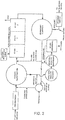
- FIG. 2 illustrates another example of wastewater treatment process.
- the pure oxygen system is a modification of the activated sludge process.
- the main difference is the method of supplying dissolved oxygen to the activated sludge.
- air is compressed and released under water to produce an air-water interface that transfers oxygen into the water (dissolved oxygen).
- surface aerators agitate the water surface to drive the air into the water to obtain the oxygen transfer in the pure oxygen system, the only real differences are that the pure oxygen rather than air is released below the surface or driven into the water by means of surface aerators and the aerators are covered.
- the influent is subjected to primary clarification. As shown in FIG.
- the influent is pretreated, then subjected to a primary clarifier, pure oxygen reactors, and a secondary clarifier.
- the effluent may be contacted with chlorine and disposed into the receiving waters.
- the sludge can be returned to the pure oxygen reactors or combined with the thickened sludge from the primary clarifier and subjected to primary and secondary anaerobic digester. Solids may then be dewatered.
- the invention is a method of treating wastewater, in which the net sludge wasted and/or produced in the method is reduced.
- the on-site system is for growing microbes at the site or location of the contaminated wastewater and generally, includes a main tank, an input for water, an output for treatment batch, a mixing apparatus, and a temperature control apparatus. Nutrient, water and an inoculums comprising microbes is deposited into the on-site system. The inoculums is grown in the on-site system to provide a treatment batch that includes an increased number of microbes. At least a portion of the treatment batch that includes microbes is then directly applied to the contaminated wastewater, such that the microbes are not isolated, concentrated or freeze dried between the steps of growing and applying.
- a holding tank may be used for transfer of the treatment batch where the treatment batch may be diluted to create greater volume for pumping and dosing purposes in order to achieve continuous discharge of the treatment batch.
- the use of the on-site biofermentation system allows for sufficient, repeated inoculation of the functional microbes (whether an exogenous or indigenous source) that allows a microbial population to be established quickly and out-compete an undesirable indigenous population, such as filamentous or Zoogloeal type microbes, which cause bulking.
- an undesirable indigenous population such as filamentous or Zoogloeal type microbes, which cause bulking.
- filamentous or Zoogloeal bulking can increase the total cost of operating a wastewater treatment plant by as much as 20-25%.
- the first area of increased treatment costs arise because of the need to use settling aids or chemicals to clarify the water and concentrate the biomass in the secondary clarifier. Examples of such chemicals include polymer, bentonite, alum, or ferric salts.
- the second area of increased costs arise due to the poor dewaterability of filamentous and Zoogoeal growth, thereby increasing the amount of equipment required to process the sludge and the amount of polymer for dewatering, and hence the costs.
- the third area of increased cost arise as more manpower is required as the operation becomes less efficient and the costs of transportation and fees for disposal increase.
- the biofermentation system provides a process which is applied to control or displace undesirable microbes, such as filamentous or Zoogloeal type microbes which cause bulking and settleability problems.
- the fermentation process is used to decrease or eliminate the use of polymers to enhance settling, to minimize the use of dewatering chemicals, and to minimize the need for sludge handling, manpower, transportation costs and fees for disposal.
- the biofermentation process allows for providing an effective concentration of desired microbes at a point of application sufficient to significantly treat the wastewater at the application point.
- the inoculum is grown to a concentration of approximately 10 8 -10 9 colony forming units per milliliter (fcfu/ml) to achieve a preferred minimum inoculation of approximately 10 3 -10 4 cfu/ml at the point of application.
- the types of microbe or microbes present in the innoculum depend on the type of wastewater to be treated.
- the innoculum may contain a single strain or multiple strains provided as a liquid or a dry product. Dry product is commonly freeze dried or air dried. Additionally, the microbes may be exogenous to the wastewater or indigenous microbes may be isolated from the wastewater under treatment.
- microorganism microbe, or organism, as used herein, are interchangeable and, include fungus, yeast, bacteria, and other biodegrading small unicellular organisms.
- sludge-reducing microorganisms which can be purchased from Advanced Biofermentation Services Inc of Fleming Island, FL, are used for wastewater treatment at wastewater treatment facilities where the efficiency of BOD removal is low, the system is overloaded, and/or in any treatment facility to reduce operating costs related to sludge handling, which typically represents about 400-50% of the operating costs of any facility.
- microbes with particular biodegradation characteristics are provided in Table 1.
- Determining which culture or manufacturer's formulation is the most effective for treating a particular wastewater can be done using standard respirometric techniques.
- the principle of repirometry is to measure the activity of a biomass exposed to a test substrate compared to a control containing biomass and a known substrate which gives a predictable result.
- the substrate to be tested can range from a specific chemical or waste stream to a combined wastewater.
- Respirometry experiments can be set up to stimulate either aerobic or anaerobic environments. Typical applications of respirometry include assessing the following: treateability of municipal and industrial wastewater, toxicity of specific waste streams or chemicals; biodegradability of chemicals; biochemical oxygen demand (BOD); and oxygen uptake rates (OUR).
- Aerobic microorganisms use oxygen to grow and to metabolize organic substrates.
- oxygen uptake rate OUR is considered to be directly related to organic stabilization, and hence, related to the ability of the formulation to biodegrade the organic waste.
- Respirometry equipment and treatability procedures for both aerobic and anaerobic studies can be obtained from manufacturers in the U.S. such as Challenge Environmental Systems of Fayetteville, Ark.; Arthur Technology of Fond du Lac, Wis.; and Bioscience Management of Bethlehem, Pa.
- Examples of aerobic treatability stides can be found in technical papers such as Whiteman, G. R., TAPPI Environmental Conference-"Application of Selected Microbial Formulations in the Pulp and Paper Industry," TAPPI Environmental Proceedings, Book 1, pp. 235-238, April 1991 ; Whiteman, G. R., Gwinnett Industrial Conference-"Optimizing Biological Processes-A Look Inside The Black Box," April 1995 ; and Whiteman, G. R., TAPPI Environmental Conference-"Improving Treatment "Performance with Natural Bioaugmentation", TAPPI Environmental Proceedings, Vancouver, BC, 1998 .
- RNA ribonucleic acid
- DNA deoxynucliec acid
- microbes have different requirements for macronutrients (nitrogen and phosphorus) and micronutrients (for examples magnesium, calcium, potassium, sodium, manganese, cobalt, nickel, zinc, iron, chloride and sulfur) to optimize the fermentation process.
- macronutrients nitrogen and phosphorus
- micronutrients for examples magnesium, calcium, potassium, sodium, manganese, cobalt, nickel, zinc, iron, chloride and sulfur
- Active biomass mainly composed of bacteria, in a biological treatment plant contains 8-15% nitrogen for most bacteria, most typically 12-12.5% and 2-5% phosphorus, most typically 2.3-2.6%.
- Phosphorus is important in the formation of adenosine triphosphate (ATP) which is how microbes store energy.
- Microbes are composed of proteins, carbohydrates, fatty materials called lipids, or combinations of these substances.
- the proteins are used to make enzymes that are the basis of the biodegradation process.
- a series of reactions makes up the biodegradation process for any particular organic substance.
- a specific enzyme carries out each reaction.
- These enzymes are composed of amino acids and sometimes co-factors, usually metals, which make up the reactive sites of the enzymes where the biodegradation and conversion of an organic substance takes place.
- micro-nutrients are present in sufficient quantity in order to optimize the fermentation or biodegradation process.
- Micro-nutrients include substances such as vitamins, co-enzymes, metals, or inorganic compounds required such as cofactors for the production of enzymes, coenzymes or for cell growth. For example, sulfur is required for the assimilation of the essential amino acids cystiene and methionine.
- Information regarding the role of such micronutrients such as coenzymes, including folic acid, pantothenic acid (Coenzyme A), vitamin B 12 (cobamide), biotin, nicotinic acid or nicotinamide (NAD), vitamin B 1 (thiamin, vitamin B 2 (riboflavin, vitamin B 6 (pyroxidine), lipoic acid and ascorbic acid is found in Biochemistry, Second Edition, Albert L.
- microbe or microbes used in the wastewater treatment process of the present invention depends on the type of wastewater problem to be addressed.
- the microbes used most often are bacteria, and most commonly, aerobic, mesophilic bacteria are used. Aerobic bacteria use oxygen to metabolize organic matter, as measured, for example, by biochemical oxygen demand (BOD), chemical oxygen demand (COD), total organic carbon (TOC), or total carbon (TC). It is also possible to use facultative bacteria, which can metabolize with or without oxygen, or anaerobic bacteria, which do not use oxygen. Bacteria are also classified with respect to the temperature at which they grow optimally. Optimum temperatures are, for thermophiles-55-75°.; for mesophiles-30-45°C.; and for psychrophiles: obligate-15-18°C.
- FIGS. 3 and 4 A preferred wastewater treatment sequence and processes according to this invention are generally illustrated in FIGS. 3 and 4 .
- the methods are not limited to any particular system illustrated in the drawings or detailed above, any apparatus that enables performance of a method of the invention may be used instead.
- wastewater treatment according to the methods of this invention includes a pretreatment, primary treatment (chemical and physical), secondary treatment (dissolved organics and suspended solids removal), tertiary treatment, sludge treatment, sludge disposal and liquid disposal.
- FIG. 4 The specific treatment steps of the wastewater treatment method of this invention are shown in FIG. 4 .
- the pretreatment step includes screening and grit removal, equalization and storage and oil separation.
- the chemical primary treatment includes at least 2 neutralization steps and chemical addition and coagulation.
- the physical primary treatment includes multiple flotation, sedimentation and filtration steps.
- the secondary treatment of dissolved organics includes activated sludge, anaerobic lagoon, trickling filter aerated lagoon, stabilization basin, rotating biological contractor and filter.
- the suspended solid removal of the secondary treatment includes sedimentation of the solids or the internal aeration basin having a quiescent cycle (SBR) or use of membranes.
- SBR quiescent cycle
- the wastewater undergoes the tertiary treatment, which includes coagulation and sedimentation, filtration, carbon absorption, ion exchange and membrane.
- the sludge resulting from the treatment steps is then available for sludge treatment.
- the sludge can be treated by digestion or we combustion.
- the sludge can also be thickened (dewatered) by gravity or flotation to reduce the volumes transported off-site for disposal.
- the sludge can be treated by pressure filtration, vacuum filtration, centrifiguration or lagooning or drying beds.
- the sludge can be disposed by incineration, ocean disposal and landfill.
- the treated diluted wastewater can also be disposed into the receiving waters, controlled or transported discharge, ocean disposal surface application or groundwater seepage, evaporation and incineration.
- the concentrated organic wastewater can be disposed by deep well injection or incineration.
- wastewater treatment process that incorporates the on-site biofermentation system that utilizes sludge-reducing microbes of the present invention results in a lower net sludge wastage and/or production.
- Biological sludge production rates vary for different wastewater constituents, for example fat, oil and/or grease (FOG) might produce 0.32-0.36 kg sludge / 0.45 kg (0.7-0.8 lbs sludge/lb) of BOD reduced, while chemicals such as benzene or phenol could be as low as 0.11 kg sludge / 0.45 kg (0.25 lbs sludge/lb) of BOD reduced.
- FOG fat, oil and/or grease
- the benefit of reducing filamentous microbes results in a better settling sludge allowing for more sludge to be carried in the biological system thereby decreasing F:M ratio and increasing SRT.
- This reduction in F:M and increases in SRT is a classical method of reducing net sludge wastage as more sludge auto-digests itself in the biological system resulting in lower net sludge wastage.
- the goal of this study was to improve treatment efficiency for BOD and gyraulic capacity at the activated sludge wastewater treatment facility at the City of Gray, as the conventional treatment system was often overloaded on a daily basis at design capacity.
- a Model 250 Biofermentation system which can be purchased from Advanced Biofermentation Services, Fleming Island, FL and installed as previously described in U.S. Pub. No. 2003/0190742 , was set up on-site adjacent to the activated sludge system to be treated.
- the Model 250 Biofermentor was set up to feed 113.561 (30 gallons) daily of a 1 ⁇ 4 strength treatment batch, including BOD removing microbes with the trade name "Biobooster for BOD removal" which can be purchased from (Advanced Biofermentation Services, Fleming Island FL).
- a full strength treatment batch is defined as adding 4.54 kg (10 pounds) of Bionutrient (the nutrient used to grow the microbes) to the Biofermentor.
- a 1 ⁇ 4 strength treatment batch is equivalent to 1 ⁇ 4 or 1.13 kg (2.5 pounds).
- Bionutrient used in the process can be purchased from Advanced Biofermentation Services, Fleming Island FL.
- the Biofermentation process was initially set up for 90 days prior to winter. Within the 90 days of starting the treatment, significant improvements in the treatment process were observed by the operators, including improved hydraulic capacity without loss of TSS in the effluent during peak flows (sometimes greater than IMGD) and better BOD removal. Such observations were made visually and anecdotally from operators.
- the City of Dublin's wastewater treatment plant has used Alum to precipitate suspended solids and the associated BOD out of the final effluent for the past eight (8) years.
- the plant is a 18.2 ⁇ 10 6 l/d (4.0 MGD) trickling filter plant, with two traveling bridge sand filters at the end which produce reusable water.
- the WWTP has three permits:
- Biofermentation process as described herein was implemented at the City of Dublin WWTP.
- Model 250 Biofermentation system which can be purchased from Advanced Biofermentation Services, Fleming Island FL and installed as previously described in U.S. Pub. No. 2003/0190742 , was set up on-site adjacent to the percolating filter system.
- the Model 250 was set up to feed 227.121 (60 gallons) daily of a 1 ⁇ 4 strength treatment batch using a specific culture developed for sludge reduction called "Biobooster for sludge reduction", which can be purchased from Advanced Biofermentation Services Inc, Fleming Island, FL.
- the treatment was run for 45 days.
- Digester sludge (including primary sludge and secondary sludge) also improved. Specifically, digester sludge changed from 1 1 ⁇ 2% solids to 3% solids and cleaner supernatant from digesters.
- a Biofermentor purchased from Advanced Biofermentation Services, Fleming Island FL
- the dosing rate may vary based on volume of the digester. However, typically for less than 1 MGV digester, the dosing rate is 37.85-227.121 (10-60 gallons) per day of a 1 ⁇ 4 to 1 ⁇ 2 strength batch.
- the cost benefit to the customer is dependent on improving supernatant quality of the digester and thickness of the solids which would aid dewaterability and result in lower chemical/polymer costs for dewatering. Also, the operation costs would be due to less manpower and lower frequency of disposal. Furthermore, efficiency of such anaerobic digesters is improved where digestion capacity is limited thereby avoiding capital expenditure or m minimizing the need for expenditure.
- a Biofermentor (purchased from Advanced Biofermentation Services, Fleming Island FL) is set up on-site of the equalization basin to add a treatment batch directly to the equalization basin at the inlet to the wastewater plant.
- the dosing rate would may based on volume of the equalization basin or incoming flow. However, typically, the volume of the incoming flow for less than 1-3MGV would be 37.85-227.121 (10-60 gallons) per day of a 1 ⁇ 4 to 1 ⁇ 2 strength batch. Scale-up for larger plants would be proportional. To achieve faster rates of metabolism the dosing rates could be doubled or quadrupled should that be required to obtain the desired results.
- Dredging is extremely expensive as it incurs costs for dewatering equipment, chemical/polymer for dewatering, manpower, transportation and disposal fees. Furthermore, the treatment may result in improving efficiency of such equalization capacity where such capacity is limited thereby avoiding capital expenditure or minimizing the need for expenditure.
- a Biofermentor (purchased from Advanced Biofermentation Services, Fleming Island FL) is set up on-site to add a treatment batch directly to the primary clarifier sludge at the inlet to the wastewater plan.
- the dosing rate may vary based on volume treated by the wastewater treatment plant. However, typically, the volume treated by the wastewater plant of less than 1-3MGV would be 37.85-227.121 (10-60 gallons) per day of a 1 ⁇ 4 to 1 ⁇ 2 strength batch. Scale-up for larger plants would be proportional. To achieve faster rates of metabolism the dosing rates could be doubled or quadrupled should that be required to obtain the desired results.
- the cost benefit to the customer would be dependent on reducing the sludge handling costs of the primary sludge such as the costs of dewatering equipment, chemical/polymer for dewatering, manpower, transportation, an disposal fees. Furthermore a second advantage would be improving efficiency of such sludge handling processes where such capacity is limited thereby avoiding capital expenditure or minimizing the need for expenditure.
Landscapes
- Life Sciences & Earth Sciences (AREA)
- Engineering & Computer Science (AREA)
- Chemical & Material Sciences (AREA)
- Hydrology & Water Resources (AREA)
- Organic Chemistry (AREA)
- Water Supply & Treatment (AREA)
- Environmental & Geological Engineering (AREA)
- Microbiology (AREA)
- Biodiversity & Conservation Biology (AREA)
- Molecular Biology (AREA)
- Health & Medical Sciences (AREA)
- General Chemical & Material Sciences (AREA)
- Chemical Kinetics & Catalysis (AREA)
- Oil, Petroleum & Natural Gas (AREA)
- Mechanical Engineering (AREA)
- Activated Sludge Processes (AREA)
- Purification Treatments By Anaerobic Or Anaerobic And Aerobic Bacteria Or Animals (AREA)
Priority Applications (2)
| Application Number | Priority Date | Filing Date | Title |
|---|---|---|---|
| EP19171994.7A EP3549916B1 (en) | 2010-01-29 | 2011-03-15 | Use of a treatment batch comprising microbes to improve sludge removal and maintain effluent quality in a wastewater treatment process |
| PL11725828T PL2528869T3 (pl) | 2010-01-29 | 2011-03-15 | Sposób redukcji osadów wytwarzanych przez oczyszczalnie ścieków |
Applications Claiming Priority (2)
| Application Number | Priority Date | Filing Date | Title |
|---|---|---|---|
| US12/696,919 US9409803B2 (en) | 2010-01-29 | 2010-01-29 | Systems and methods for reducing sludges produced by wastewater treatment facilities |
| PCT/US2011/021464 WO2011100089A2 (en) | 2010-01-29 | 2011-03-15 | Systems and methods for reducing sludges produced by wastewater treatment facilities |
Related Child Applications (1)
| Application Number | Title | Priority Date | Filing Date |
|---|---|---|---|
| EP19171994.7A Division EP3549916B1 (en) | 2010-01-29 | 2011-03-15 | Use of a treatment batch comprising microbes to improve sludge removal and maintain effluent quality in a wastewater treatment process |
Publications (2)
| Publication Number | Publication Date |
|---|---|
| EP2528869A2 EP2528869A2 (en) | 2012-12-05 |
| EP2528869B1 true EP2528869B1 (en) | 2019-05-01 |
Family
ID=44278632
Family Applications (2)
| Application Number | Title | Priority Date | Filing Date |
|---|---|---|---|
| EP11725828.5A Active EP2528869B1 (en) | 2010-01-29 | 2011-03-15 | Method for reducing sludges produced by wastewater treatment facilities |
| EP19171994.7A Active EP3549916B1 (en) | 2010-01-29 | 2011-03-15 | Use of a treatment batch comprising microbes to improve sludge removal and maintain effluent quality in a wastewater treatment process |
Family Applications After (1)
| Application Number | Title | Priority Date | Filing Date |
|---|---|---|---|
| EP19171994.7A Active EP3549916B1 (en) | 2010-01-29 | 2011-03-15 | Use of a treatment batch comprising microbes to improve sludge removal and maintain effluent quality in a wastewater treatment process |
Country Status (12)
| Country | Link |
|---|---|
| US (1) | US9409803B2 (pl) |
| EP (2) | EP2528869B1 (pl) |
| JP (1) | JP2013527023A (pl) |
| KR (5) | KR20240091281A (pl) |
| CN (2) | CN102844276A (pl) |
| BR (1) | BR112012018986B1 (pl) |
| CA (1) | CA2787971A1 (pl) |
| ES (1) | ES2736248T3 (pl) |
| IN (1) | IN2012MN02051A (pl) |
| PL (1) | PL2528869T3 (pl) |
| PT (1) | PT2528869T (pl) |
| WO (1) | WO2011100089A2 (pl) |
Families Citing this family (24)
| Publication number | Priority date | Publication date | Assignee | Title |
|---|---|---|---|---|
| US7879593B2 (en) | 1999-12-16 | 2011-02-01 | Whiteman G Robert | Fermentation systems, methods and apparatus |
| US10335757B2 (en) | 2004-03-05 | 2019-07-02 | Specialty Earth Sciences | Process for making environmental reactant(s) |
| US7431849B1 (en) | 2004-03-05 | 2008-10-07 | Specialty Earth Sciences Llc | Encapsulated reactant and process |
| FR2979338B1 (fr) * | 2011-08-30 | 2016-01-08 | Ondeo Ind Solutions | Procede et installation de traitement d'eaux residuaires contenant des hydrocarbures, en particulier des composes aromatiques |
| JP5518245B1 (ja) | 2013-12-05 | 2014-06-11 | 三菱重工業株式会社 | 循環水利用システム群の遠隔監視方法及び遠隔監視システム |
| JP5512032B1 (ja) * | 2013-12-05 | 2014-06-04 | 三菱重工業株式会社 | 循環水利用システムの課金装置、循環水利用システム |
| KR101550252B1 (ko) * | 2014-02-03 | 2015-09-07 | 주식회사 씨디아이 | 탈질용 액상 탄소원 조성물 및 그를 이용한 오폐수의 탈질 방법 |
| BR112017026665B1 (pt) * | 2015-06-10 | 2021-09-21 | Brisa International Llc | Sistema e método para o crescimento e processamento de biomassa |
| JP6622093B2 (ja) | 2016-01-12 | 2019-12-18 | オルガノ株式会社 | グラニュールの形成方法及び排水処理方法 |
| CA3017683A1 (en) * | 2016-04-11 | 2017-10-19 | Kemira Oyj | Improving sludge dewaterability and energy balance of wastewater treatment |
| US10647045B1 (en) | 2016-11-03 | 2020-05-12 | Specialty Earth Sciences, Llc | Shaped or sized encapsulated reactant and method of making |
| US20210179467A1 (en) * | 2017-11-07 | 2021-06-17 | Steven L Cort | Sustainable processes for treating wastewater |
| WO2019204798A1 (en) | 2018-04-20 | 2019-10-24 | Advanced Biological Services, Inc. | Systems and methods for treating wastewater and providing class a sludge |
| CN109160607A (zh) * | 2018-09-29 | 2019-01-08 | 宁波中车时代传感技术有限公司 | 一种自动排泥的mbr一体化污水处理设备 |
| CN109467245A (zh) * | 2018-11-14 | 2019-03-15 | 萍乡煤科环保科技有限公司 | 一种深井灌注处理高盐废水技术建模方法 |
| CN109467221B (zh) * | 2018-12-13 | 2020-12-25 | 博大绿泽生态建设集团有限公司 | 一种环保型园林污水处理方法 |
| CN110655298A (zh) * | 2019-09-24 | 2020-01-07 | 清华大学深圳国际研究生院 | 一种利用真菌处理污泥水解液并回收真菌菌体的方法 |
| US11001518B1 (en) | 2020-02-12 | 2021-05-11 | Rio Resources Llc | Methods for treatment and purification of oil and gas produced water |
| CN112028413A (zh) * | 2020-10-02 | 2020-12-04 | 杭州兴洋环保科技有限公司 | 一种高总氮废水处理装置 |
| JP6989987B1 (ja) | 2020-12-04 | 2022-02-03 | 国立大学法人東海国立大学機構 | 油脂含有排水処理のための微生物製剤の連続投入 |
| WO2022118987A1 (ja) * | 2020-12-04 | 2022-06-09 | 国立大学法人東海国立大学機構 | 滅菌が不要な微生物の連続製造法およびそのためのシステム |
| EP4377265A4 (en) * | 2021-07-30 | 2026-01-14 | Advanced Innovators Inc | Systems and processes for reducing pollutants, including carbon, in utilities, agriculture and production |
| US20240109797A1 (en) * | 2022-04-21 | 2024-04-04 | Advanced Innovators, Inc. | Systems and Methods for Systems and Methods Using Thermophilic Microbes for the Treatment of Wastewater |
| WO2025076214A1 (en) * | 2023-10-03 | 2025-04-10 | Searen, LLC | Systems and methods for removing dissolved and suspended organics from a water source |
Citations (3)
| Publication number | Priority date | Publication date | Assignee | Title |
|---|---|---|---|---|
| US5846425A (en) * | 1994-07-22 | 1998-12-08 | Whiteman; George R. | Methods for treatment of waste streams |
| JP2003225694A (ja) * | 2002-02-06 | 2003-08-12 | Masaki Envec:Kk | 腐植物質を用いた廃水処理システム |
| US20030190742A1 (en) * | 1999-12-16 | 2003-10-09 | Whiteman G. Robert | Fermentation systems, methods and apparatus |
Family Cites Families (16)
| Publication number | Priority date | Publication date | Assignee | Title |
|---|---|---|---|---|
| US4246111A (en) * | 1979-11-07 | 1981-01-20 | Canadian Liquid Air Ltd/Air Liquide Canada Ltee | Apparatus for biological treatment of waste water |
| US5788841A (en) * | 1996-01-17 | 1998-08-04 | Dickerson; J. Rodney | Method for improving wastewater treatment |
| US9969633B2 (en) * | 1999-12-16 | 2018-05-15 | Robert Whiteman | Systems and methods for treating oil, fat and grease in collection systems |
| AU2435401A (en) * | 1999-12-16 | 2001-06-25 | Robert G. Whiteman | Fermentation system, methods, and apparatus |
| JP3750923B2 (ja) * | 2000-08-09 | 2006-03-01 | 株式会社荏原製作所 | 活性汚泥の調整方法、それを用いる有機性廃水の処理方法、及び装置 |
| US7429328B2 (en) * | 2001-03-02 | 2008-09-30 | Advanced Treatment Sciences, Inc. | Apparatus and methods for control of waste treatment processes |
| JP2002361292A (ja) * | 2001-06-04 | 2002-12-17 | Kurita Water Ind Ltd | 嫌気性消化装置 |
| JP2002361280A (ja) * | 2001-06-07 | 2002-12-17 | Kurabo Ind Ltd | 有機汚泥を減量化するアルカリ性排水処理装置および有機汚泥減量化方法 |
| EP1780179B1 (en) * | 2004-07-16 | 2015-09-16 | Kuraray Co., Ltd. | Method of wastewater treatment with excess sludge withdrawal reduced |
| JP2006095377A (ja) * | 2004-09-28 | 2006-04-13 | Kurita Water Ind Ltd | 油脂含有排水の生物処理方法及び処理装置 |
| US7481934B2 (en) * | 2006-01-20 | 2009-01-27 | Renewable Fibers, Llc | Methods for treatment of wastewater with powdered natural lignocellulosic material |
| JP2008012476A (ja) * | 2006-07-07 | 2008-01-24 | Honda Motor Co Ltd | 排水処理システム |
| JP4821493B2 (ja) * | 2006-08-09 | 2011-11-24 | 栗田工業株式会社 | 有機性排水の生物処理方法 |
| US7776211B2 (en) * | 2006-09-18 | 2010-08-17 | Algaewheel, Inc. | System and method for biological wastewater treatment and for using the byproduct thereof |
| CN101544990A (zh) * | 2008-03-25 | 2009-09-30 | 中国科学技术大学 | 一种利用含有木质纤维素的生物质发酵生产气体燃料及副产纤维素酶的方法 |
| KR20100136989A (ko) * | 2008-03-28 | 2010-12-29 | 지멘스 워터 테크놀로지스 코포레이션 | 호기성 및 혐기성 하이브리드 폐수 및 슬러지 처리 시스템 및 방법 |
-
2010
- 2010-01-29 US US12/696,919 patent/US9409803B2/en active Active
-
2011
- 2011-03-15 WO PCT/US2011/021464 patent/WO2011100089A2/en not_active Ceased
- 2011-03-15 CA CA2787971A patent/CA2787971A1/en active Pending
- 2011-03-15 PL PL11725828T patent/PL2528869T3/pl unknown
- 2011-03-15 CN CN201180015287XA patent/CN102844276A/zh active Pending
- 2011-03-15 KR KR1020247018335A patent/KR20240091281A/ko active Pending
- 2011-03-15 KR KR1020127022424A patent/KR20140021953A/ko not_active Ceased
- 2011-03-15 JP JP2012551193A patent/JP2013527023A/ja active Pending
- 2011-03-15 ES ES11725828T patent/ES2736248T3/es active Active
- 2011-03-15 BR BR112012018986-7A patent/BR112012018986B1/pt active IP Right Grant
- 2011-03-15 KR KR1020217013299A patent/KR20210054037A/ko not_active Ceased
- 2011-03-15 KR KR1020227018303A patent/KR20220078722A/ko not_active Ceased
- 2011-03-15 CN CN201710741216.7A patent/CN107352752A/zh active Pending
- 2011-03-15 EP EP11725828.5A patent/EP2528869B1/en active Active
- 2011-03-15 PT PT11725828T patent/PT2528869T/pt unknown
- 2011-03-15 KR KR1020187037726A patent/KR20190003816A/ko not_active Ceased
- 2011-03-15 EP EP19171994.7A patent/EP3549916B1/en active Active
-
2012
- 2012-08-27 IN IN2051MUN2012 patent/IN2012MN02051A/en unknown
Patent Citations (3)
| Publication number | Priority date | Publication date | Assignee | Title |
|---|---|---|---|---|
| US5846425A (en) * | 1994-07-22 | 1998-12-08 | Whiteman; George R. | Methods for treatment of waste streams |
| US20030190742A1 (en) * | 1999-12-16 | 2003-10-09 | Whiteman G. Robert | Fermentation systems, methods and apparatus |
| JP2003225694A (ja) * | 2002-02-06 | 2003-08-12 | Masaki Envec:Kk | 腐植物質を用いた廃水処理システム |
Also Published As
| Publication number | Publication date |
|---|---|
| EP3549916C0 (en) | 2025-05-21 |
| US9409803B2 (en) | 2016-08-09 |
| EP3549916A1 (en) | 2019-10-09 |
| CA2787971A1 (en) | 2011-08-18 |
| WO2011100089A3 (en) | 2011-10-06 |
| US20110186510A1 (en) | 2011-08-04 |
| CN107352752A (zh) | 2017-11-17 |
| KR20210054037A (ko) | 2021-05-12 |
| PT2528869T (pt) | 2019-07-19 |
| JP2013527023A (ja) | 2013-06-27 |
| KR20140021953A (ko) | 2014-02-21 |
| CN102844276A (zh) | 2012-12-26 |
| KR20240091281A (ko) | 2024-06-21 |
| PL2528869T3 (pl) | 2019-11-29 |
| EP2528869A2 (en) | 2012-12-05 |
| BR112012018986B1 (pt) | 2020-09-29 |
| EP3549916B1 (en) | 2025-05-21 |
| IN2012MN02051A (pl) | 2015-06-12 |
| BR112012018986A2 (pt) | 2018-03-27 |
| WO2011100089A2 (en) | 2011-08-18 |
| ES2736248T3 (es) | 2019-12-27 |
| KR20190003816A (ko) | 2019-01-09 |
| KR20220078722A (ko) | 2022-06-10 |
Similar Documents
| Publication | Publication Date | Title |
|---|---|---|
| EP3549916B1 (en) | Use of a treatment batch comprising microbes to improve sludge removal and maintain effluent quality in a wastewater treatment process | |
| Gupta et al. | Conventional wastewater treatment technologies | |
| US5853589A (en) | Advanced biological phosphorus removal using a series of sequencing batch reactors | |
| CN102775025B (zh) | 高效低能耗城镇生活污水处理系统 | |
| Abidi et al. | Comparative pilot study of the performances of two constructed wetland wastewater treatment hybrid systems | |
| CN102206019A (zh) | 一种垃圾焚烧厂渗滤液处理系统 | |
| Wang et al. | Performance of a combined low-consumption biotreatment system with cost-effective ecological treatment technology for rural domestic sewage treatment | |
| CN101781056B (zh) | 造纸废水的处理方法 | |
| JP2018075567A (ja) | 廃水処理施設で生じる汚泥を減少させるためのシステムおよび方法 | |
| JP2024147654A (ja) | 廃水処理施設で生じる汚泥を減少させるためのシステムおよび方法 | |
| CN1277768C (zh) | 垃圾渗滤液组合处理方法及系统 | |
| CN215208983U (zh) | 利用餐厨垃圾水解酸化液进行低c/n污水脱氮除磷的协同处置系统 | |
| CN202945124U (zh) | 一种高效低能耗城镇生活污水处理系统 | |
| KR100953075B1 (ko) | 오·폐수 처리용 고효율 순환제어 산화환원조 및 이를 이용한 폐수처리방법 | |
| Rajendran et al. | Role of Microbes and Microbiomes in Wastewater Treatment for Aquatic Ecosystem Restoration | |
| Yap et al. | Approaching zero liquid discharge concept using high-rate integrated pilot-scale bioreactor in the palm oil mill effluent (POME) treatment | |
| Markandey | Environmental biotechnology | |
| CN103880184A (zh) | 一种无污泥生物球超净污水处理方法及系统 | |
| JP2016195997A (ja) | 廃水処理施設で生じる汚泥を減少させるためのシステムおよび方法 | |
| JP2024528089A (ja) | 公共事業、農業および製造における炭素を含む汚染物質を低減するためのシステムおよび方法 | |
| Do et al. | Wastewater treatment by Sequencing Batch Reactor (SBR) without releasing excess sludge | |
| Dave et al. | Biofilms, filtration, microbial kinetics and mechanism of degradation: a revolutionary approach | |
| HK1247179A1 (zh) | 在活化污泥废水处理工艺中改善污泥的去除并保持排放质量的方法 | |
| Gaonkar et al. | Application of Biotechnology Tools in Agrarian and Industrial Wastewater Treatment | |
| Blanc et al. | Utilizing algal oxygen production for advanced wastewater treatment in a Moving Bed Biofilm Reactor (MBBR)–the Biologically Aerated Reactor (BAR®) |
Legal Events
| Date | Code | Title | Description |
|---|---|---|---|
| PUAI | Public reference made under article 153(3) epc to a published international application that has entered the european phase |
Free format text: ORIGINAL CODE: 0009012 |
|
| 17P | Request for examination filed |
Effective date: 20120829 |
|
| AK | Designated contracting states |
Kind code of ref document: A2 Designated state(s): AL AT BE BG CH CY CZ DE DK EE ES FI FR GB GR HR HU IE IS IT LI LT LU LV MC MK MT NL NO PL PT RO RS SE SI SK SM TR |
|
| DAX | Request for extension of the european patent (deleted) | ||
| STAA | Information on the status of an ep patent application or granted ep patent |
Free format text: STATUS: EXAMINATION IS IN PROGRESS |
|
| 17Q | First examination report despatched |
Effective date: 20170728 |
|
| GRAP | Despatch of communication of intention to grant a patent |
Free format text: ORIGINAL CODE: EPIDOSNIGR1 |
|
| STAA | Information on the status of an ep patent application or granted ep patent |
Free format text: STATUS: GRANT OF PATENT IS INTENDED |
|
| INTG | Intention to grant announced |
Effective date: 20181120 |
|
| GRAS | Grant fee paid |
Free format text: ORIGINAL CODE: EPIDOSNIGR3 |
|
| GRAA | (expected) grant |
Free format text: ORIGINAL CODE: 0009210 |
|
| STAA | Information on the status of an ep patent application or granted ep patent |
Free format text: STATUS: THE PATENT HAS BEEN GRANTED |
|
| AK | Designated contracting states |
Kind code of ref document: B1 Designated state(s): AL AT BE BG CH CY CZ DE DK EE ES FI FR GB GR HR HU IE IS IT LI LT LU LV MC MK MT NL NO PL PT RO RS SE SI SK SM TR |
|
| REG | Reference to a national code |
Ref country code: GB Ref legal event code: FG4D |
|
| REG | Reference to a national code |
Ref country code: CH Ref legal event code: EP Ref country code: AT Ref legal event code: REF Ref document number: 1126687 Country of ref document: AT Kind code of ref document: T Effective date: 20190515 |
|
| REG | Reference to a national code |
Ref country code: DE Ref legal event code: R096 Ref document number: 602011058493 Country of ref document: DE |
|
| REG | Reference to a national code |
Ref country code: IE Ref legal event code: FG4D |
|
| REG | Reference to a national code |
Ref country code: PT Ref legal event code: SC4A Ref document number: 2528869 Country of ref document: PT Date of ref document: 20190719 Kind code of ref document: T Free format text: AVAILABILITY OF NATIONAL TRANSLATION Effective date: 20190712 |
|
| REG | Reference to a national code |
Ref country code: NL Ref legal event code: FP |
|
| REG | Reference to a national code |
Ref country code: LT Ref legal event code: MG4D |
|
| REG | Reference to a national code |
Ref country code: NO Ref legal event code: T2 Effective date: 20190501 |
|
| PG25 | Lapsed in a contracting state [announced via postgrant information from national office to epo] |
Ref country code: AL Free format text: LAPSE BECAUSE OF FAILURE TO SUBMIT A TRANSLATION OF THE DESCRIPTION OR TO PAY THE FEE WITHIN THE PRESCRIBED TIME-LIMIT Effective date: 20190501 Ref country code: SE Free format text: LAPSE BECAUSE OF FAILURE TO SUBMIT A TRANSLATION OF THE DESCRIPTION OR TO PAY THE FEE WITHIN THE PRESCRIBED TIME-LIMIT Effective date: 20190501 Ref country code: LT Free format text: LAPSE BECAUSE OF FAILURE TO SUBMIT A TRANSLATION OF THE DESCRIPTION OR TO PAY THE FEE WITHIN THE PRESCRIBED TIME-LIMIT Effective date: 20190501 Ref country code: HR Free format text: LAPSE BECAUSE OF FAILURE TO SUBMIT A TRANSLATION OF THE DESCRIPTION OR TO PAY THE FEE WITHIN THE PRESCRIBED TIME-LIMIT Effective date: 20190501 |
|
| PG25 | Lapsed in a contracting state [announced via postgrant information from national office to epo] |
Ref country code: GR Free format text: LAPSE BECAUSE OF FAILURE TO SUBMIT A TRANSLATION OF THE DESCRIPTION OR TO PAY THE FEE WITHIN THE PRESCRIBED TIME-LIMIT Effective date: 20190802 Ref country code: RS Free format text: LAPSE BECAUSE OF FAILURE TO SUBMIT A TRANSLATION OF THE DESCRIPTION OR TO PAY THE FEE WITHIN THE PRESCRIBED TIME-LIMIT Effective date: 20190501 Ref country code: BG Free format text: LAPSE BECAUSE OF FAILURE TO SUBMIT A TRANSLATION OF THE DESCRIPTION OR TO PAY THE FEE WITHIN THE PRESCRIBED TIME-LIMIT Effective date: 20190801 Ref country code: LV Free format text: LAPSE BECAUSE OF FAILURE TO SUBMIT A TRANSLATION OF THE DESCRIPTION OR TO PAY THE FEE WITHIN THE PRESCRIBED TIME-LIMIT Effective date: 20190501 |
|
| REG | Reference to a national code |
Ref country code: ES Ref legal event code: FG2A Ref document number: 2736248 Country of ref document: ES Kind code of ref document: T3 Effective date: 20191227 |
|
| PG25 | Lapsed in a contracting state [announced via postgrant information from national office to epo] |
Ref country code: IS Free format text: LAPSE BECAUSE OF FAILURE TO SUBMIT A TRANSLATION OF THE DESCRIPTION OR TO PAY THE FEE WITHIN THE PRESCRIBED TIME-LIMIT Effective date: 20190901 |
|
| PG25 | Lapsed in a contracting state [announced via postgrant information from national office to epo] |
Ref country code: RO Free format text: LAPSE BECAUSE OF FAILURE TO SUBMIT A TRANSLATION OF THE DESCRIPTION OR TO PAY THE FEE WITHIN THE PRESCRIBED TIME-LIMIT Effective date: 20190501 Ref country code: CZ Free format text: LAPSE BECAUSE OF FAILURE TO SUBMIT A TRANSLATION OF THE DESCRIPTION OR TO PAY THE FEE WITHIN THE PRESCRIBED TIME-LIMIT Effective date: 20190501 Ref country code: EE Free format text: LAPSE BECAUSE OF FAILURE TO SUBMIT A TRANSLATION OF THE DESCRIPTION OR TO PAY THE FEE WITHIN THE PRESCRIBED TIME-LIMIT Effective date: 20190501 Ref country code: DK Free format text: LAPSE BECAUSE OF FAILURE TO SUBMIT A TRANSLATION OF THE DESCRIPTION OR TO PAY THE FEE WITHIN THE PRESCRIBED TIME-LIMIT Effective date: 20190501 Ref country code: SK Free format text: LAPSE BECAUSE OF FAILURE TO SUBMIT A TRANSLATION OF THE DESCRIPTION OR TO PAY THE FEE WITHIN THE PRESCRIBED TIME-LIMIT Effective date: 20190501 |
|
| REG | Reference to a national code |
Ref country code: DE Ref legal event code: R097 Ref document number: 602011058493 Country of ref document: DE |
|
| PG25 | Lapsed in a contracting state [announced via postgrant information from national office to epo] |
Ref country code: SM Free format text: LAPSE BECAUSE OF FAILURE TO SUBMIT A TRANSLATION OF THE DESCRIPTION OR TO PAY THE FEE WITHIN THE PRESCRIBED TIME-LIMIT Effective date: 20190501 |
|
| PLBE | No opposition filed within time limit |
Free format text: ORIGINAL CODE: 0009261 |
|
| STAA | Information on the status of an ep patent application or granted ep patent |
Free format text: STATUS: NO OPPOSITION FILED WITHIN TIME LIMIT |
|
| PG25 | Lapsed in a contracting state [announced via postgrant information from national office to epo] |
Ref country code: TR Free format text: LAPSE BECAUSE OF FAILURE TO SUBMIT A TRANSLATION OF THE DESCRIPTION OR TO PAY THE FEE WITHIN THE PRESCRIBED TIME-LIMIT Effective date: 20190501 |
|
| 26N | No opposition filed |
Effective date: 20200204 |
|
| PG25 | Lapsed in a contracting state [announced via postgrant information from national office to epo] |
Ref country code: SI Free format text: LAPSE BECAUSE OF FAILURE TO SUBMIT A TRANSLATION OF THE DESCRIPTION OR TO PAY THE FEE WITHIN THE PRESCRIBED TIME-LIMIT Effective date: 20190501 |
|
| REG | Reference to a national code |
Ref country code: AT Ref legal event code: UEP Ref document number: 1126687 Country of ref document: AT Kind code of ref document: T Effective date: 20190501 |
|
| PG25 | Lapsed in a contracting state [announced via postgrant information from national office to epo] |
Ref country code: MC Free format text: LAPSE BECAUSE OF FAILURE TO SUBMIT A TRANSLATION OF THE DESCRIPTION OR TO PAY THE FEE WITHIN THE PRESCRIBED TIME-LIMIT Effective date: 20190501 |
|
| PG25 | Lapsed in a contracting state [announced via postgrant information from national office to epo] |
Ref country code: MT Free format text: LAPSE BECAUSE OF FAILURE TO SUBMIT A TRANSLATION OF THE DESCRIPTION OR TO PAY THE FEE WITHIN THE PRESCRIBED TIME-LIMIT Effective date: 20190501 Ref country code: CY Free format text: LAPSE BECAUSE OF FAILURE TO SUBMIT A TRANSLATION OF THE DESCRIPTION OR TO PAY THE FEE WITHIN THE PRESCRIBED TIME-LIMIT Effective date: 20190501 |
|
| PG25 | Lapsed in a contracting state [announced via postgrant information from national office to epo] |
Ref country code: MK Free format text: LAPSE BECAUSE OF FAILURE TO SUBMIT A TRANSLATION OF THE DESCRIPTION OR TO PAY THE FEE WITHIN THE PRESCRIBED TIME-LIMIT Effective date: 20190501 |
|
| P01 | Opt-out of the competence of the unified patent court (upc) registered |
Effective date: 20230525 |
|
| PGFP | Annual fee paid to national office [announced via postgrant information from national office to epo] |
Ref country code: ES Payment date: 20250425 Year of fee payment: 15 |
|
| PGFP | Annual fee paid to national office [announced via postgrant information from national office to epo] |
Ref country code: CH Payment date: 20250401 Year of fee payment: 15 |
|
| REG | Reference to a national code |
Ref country code: CH Ref legal event code: U11 Free format text: ST27 STATUS EVENT CODE: U-0-0-U10-U11 (AS PROVIDED BY THE NATIONAL OFFICE) Effective date: 20260401 |
|
| PGFP | Annual fee paid to national office [announced via postgrant information from national office to epo] |
Ref country code: GB Payment date: 20260226 Year of fee payment: 16 |
|
| PGFP | Annual fee paid to national office [announced via postgrant information from national office to epo] |
Ref country code: NO Payment date: 20260323 Year of fee payment: 16 Ref country code: IE Payment date: 20260319 Year of fee payment: 16 Ref country code: DE Payment date: 20260319 Year of fee payment: 16 |
|
| PGFP | Annual fee paid to national office [announced via postgrant information from national office to epo] |
Ref country code: AT Payment date: 20260320 Year of fee payment: 16 |
|
| PGFP | Annual fee paid to national office [announced via postgrant information from national office to epo] |
Ref country code: IT Payment date: 20260320 Year of fee payment: 16 Ref country code: LU Payment date: 20260319 Year of fee payment: 16 Ref country code: BE Payment date: 20260319 Year of fee payment: 16 Ref country code: FI Payment date: 20260323 Year of fee payment: 16 |
|
| PGFP | Annual fee paid to national office [announced via postgrant information from national office to epo] |
Ref country code: NL Payment date: 20260319 Year of fee payment: 16 |
|
| PGFP | Annual fee paid to national office [announced via postgrant information from national office to epo] |
Ref country code: FR Payment date: 20260320 Year of fee payment: 16 |
|
| PGFP | Annual fee paid to national office [announced via postgrant information from national office to epo] |
Ref country code: PT Payment date: 20260305 Year of fee payment: 16 |
|
| PGFP | Annual fee paid to national office [announced via postgrant information from national office to epo] |
Ref country code: PL Payment date: 20260310 Year of fee payment: 16 |