EP2523906B1 - Polykristalline al2o3-körper auf basis von geschmolzenem aluminiumoxid - Google Patents
Polykristalline al2o3-körper auf basis von geschmolzenem aluminiumoxid Download PDFInfo
- Publication number
- EP2523906B1 EP2523906B1 EP11757157.0A EP11757157A EP2523906B1 EP 2523906 B1 EP2523906 B1 EP 2523906B1 EP 11757157 A EP11757157 A EP 11757157A EP 2523906 B1 EP2523906 B1 EP 2523906B1
- Authority
- EP
- European Patent Office
- Prior art keywords
- aluminium oxide
- grinding
- melt
- bodies
- crystals
- Prior art date
- Legal status (The legal status is an assumption and is not a legal conclusion. Google has not performed a legal analysis and makes no representation as to the accuracy of the status listed.)
- Active
Links
Images
Classifications
-
- C—CHEMISTRY; METALLURGY
- C09—DYES; PAINTS; POLISHES; NATURAL RESINS; ADHESIVES; COMPOSITIONS NOT OTHERWISE PROVIDED FOR; APPLICATIONS OF MATERIALS NOT OTHERWISE PROVIDED FOR
- C09K—MATERIALS FOR MISCELLANEOUS APPLICATIONS, NOT PROVIDED FOR ELSEWHERE
- C09K3/00—Materials not provided for elsewhere
- C09K3/14—Anti-slip materials; Abrasives
- C09K3/1409—Abrasive particles per se
- C09K3/1427—Abrasive particles per se obtained by division of a mass agglomerated by melting, at least partially, e.g. with a binder
-
- C—CHEMISTRY; METALLURGY
- C01—INORGANIC CHEMISTRY
- C01F—COMPOUNDS OF THE METALS BERYLLIUM, MAGNESIUM, ALUMINIUM, CALCIUM, STRONTIUM, BARIUM, RADIUM, THORIUM, OR OF THE RARE-EARTH METALS
- C01F7/00—Compounds of aluminium
- C01F7/02—Aluminium oxide; Aluminium hydroxide; Aluminates
- C01F7/021—After-treatment of oxides or hydroxides
- C01F7/027—Treatment involving fusion or vaporisation
-
- C—CHEMISTRY; METALLURGY
- C04—CEMENTS; CONCRETE; ARTIFICIAL STONE; CERAMICS; REFRACTORIES
- C04B—LIME, MAGNESIA; SLAG; CEMENTS; COMPOSITIONS THEREOF, e.g. MORTARS, CONCRETE OR LIKE BUILDING MATERIALS; ARTIFICIAL STONE; CERAMICS; REFRACTORIES; TREATMENT OF NATURAL STONE
- C04B35/00—Shaped ceramic products characterised by their composition; Ceramics compositions; Processing powders of inorganic compounds preparatory to the manufacturing of ceramic products
- C04B35/01—Shaped ceramic products characterised by their composition; Ceramics compositions; Processing powders of inorganic compounds preparatory to the manufacturing of ceramic products based on oxide ceramics
- C04B35/10—Shaped ceramic products characterised by their composition; Ceramics compositions; Processing powders of inorganic compounds preparatory to the manufacturing of ceramic products based on oxide ceramics based on aluminium oxide
- C04B35/111—Fine ceramics
- C04B35/1115—Minute sintered entities, e.g. sintered abrasive grains or shaped particles such as platelets
-
- C—CHEMISTRY; METALLURGY
- C04—CEMENTS; CONCRETE; ARTIFICIAL STONE; CERAMICS; REFRACTORIES
- C04B—LIME, MAGNESIA; SLAG; CEMENTS; COMPOSITIONS THEREOF, e.g. MORTARS, CONCRETE OR LIKE BUILDING MATERIALS; ARTIFICIAL STONE; CERAMICS; REFRACTORIES; TREATMENT OF NATURAL STONE
- C04B35/00—Shaped ceramic products characterised by their composition; Ceramics compositions; Processing powders of inorganic compounds preparatory to the manufacturing of ceramic products
- C04B35/622—Forming processes; Processing powders of inorganic compounds preparatory to the manufacturing of ceramic products
- C04B35/626—Preparing or treating the powders individually or as batches ; preparing or treating macroscopic reinforcing agents for ceramic products, e.g. fibres; mechanical aspects section B
- C04B35/62605—Treating the starting powders individually or as mixtures
- C04B35/62645—Thermal treatment of powders or mixtures thereof other than sintering
- C04B35/62665—Flame, plasma or melting treatment
-
- C—CHEMISTRY; METALLURGY
- C04—CEMENTS; CONCRETE; ARTIFICIAL STONE; CERAMICS; REFRACTORIES
- C04B—LIME, MAGNESIA; SLAG; CEMENTS; COMPOSITIONS THEREOF, e.g. MORTARS, CONCRETE OR LIKE BUILDING MATERIALS; ARTIFICIAL STONE; CERAMICS; REFRACTORIES; TREATMENT OF NATURAL STONE
- C04B38/00—Porous mortars, concrete, artificial stone or ceramic ware; Preparation thereof
- C04B38/0087—Porous mortars, concrete, artificial stone or ceramic ware; Preparation thereof by generating pores in the ceramic material while in the molten state
-
- C—CHEMISTRY; METALLURGY
- C01—INORGANIC CHEMISTRY
- C01P—INDEXING SCHEME RELATING TO STRUCTURAL AND PHYSICAL ASPECTS OF SOLID INORGANIC COMPOUNDS
- C01P2002/00—Crystal-structural characteristics
- C01P2002/60—Compounds characterised by their crystallite size
-
- C—CHEMISTRY; METALLURGY
- C01—INORGANIC CHEMISTRY
- C01P—INDEXING SCHEME RELATING TO STRUCTURAL AND PHYSICAL ASPECTS OF SOLID INORGANIC COMPOUNDS
- C01P2006/00—Physical properties of inorganic compounds
- C01P2006/14—Pore volume
-
- C—CHEMISTRY; METALLURGY
- C01—INORGANIC CHEMISTRY
- C01P—INDEXING SCHEME RELATING TO STRUCTURAL AND PHYSICAL ASPECTS OF SOLID INORGANIC COMPOUNDS
- C01P2006/00—Physical properties of inorganic compounds
- C01P2006/16—Pore diameter
-
- C—CHEMISTRY; METALLURGY
- C04—CEMENTS; CONCRETE; ARTIFICIAL STONE; CERAMICS; REFRACTORIES
- C04B—LIME, MAGNESIA; SLAG; CEMENTS; COMPOSITIONS THEREOF, e.g. MORTARS, CONCRETE OR LIKE BUILDING MATERIALS; ARTIFICIAL STONE; CERAMICS; REFRACTORIES; TREATMENT OF NATURAL STONE
- C04B2235/00—Aspects relating to ceramic starting mixtures or sintered ceramic products
- C04B2235/02—Composition of constituents of the starting material or of secondary phases of the final product
- C04B2235/30—Constituents and secondary phases not being of a fibrous nature
- C04B2235/32—Metal oxides, mixed metal oxides, or oxide-forming salts thereof, e.g. carbonates, nitrates, (oxy)hydroxides, chlorides
- C04B2235/3217—Aluminum oxide or oxide forming salts thereof, e.g. bauxite, alpha-alumina
-
- C—CHEMISTRY; METALLURGY
- C04—CEMENTS; CONCRETE; ARTIFICIAL STONE; CERAMICS; REFRACTORIES
- C04B—LIME, MAGNESIA; SLAG; CEMENTS; COMPOSITIONS THEREOF, e.g. MORTARS, CONCRETE OR LIKE BUILDING MATERIALS; ARTIFICIAL STONE; CERAMICS; REFRACTORIES; TREATMENT OF NATURAL STONE
- C04B2235/00—Aspects relating to ceramic starting mixtures or sintered ceramic products
- C04B2235/02—Composition of constituents of the starting material or of secondary phases of the final product
- C04B2235/50—Constituents or additives of the starting mixture chosen for their shape or used because of their shape or their physical appearance
- C04B2235/54—Particle size related information
- C04B2235/5418—Particle size related information expressed by the size of the particles or aggregates thereof
- C04B2235/5436—Particle size related information expressed by the size of the particles or aggregates thereof micrometer sized, i.e. from 1 to 100 micron
Definitions
- the present invention relates to polycrystalline Al 2 O 3 bodies based on molten aluminum oxide with the features of the preamble of claim 1, a process for their preparation and their use.
- Al 2 O 3 bodies based on molten aluminum oxide are known for their use as abrasive grains for the production of abrasives as well as starting materials for refractory products.
- the recovery of the Al 2 O 3 body is carried out by melting of alumina in an electric arc furnace and subsequent treatment of the product obtained via the melt by comminution and classification to a grain size, which can then be used for the desired use.
- the production of Al 2 O 3 bodies by melting alumina in an electric arc furnace can be carried out by different methods.
- block process the alumina-containing starting material is melted successively until the furnace vessel is filled with liquid melt. Then the melting process is interrupted and the molten material is allowed to cool slowly, resulting in corundum blocks weighing up to 20 tons, which after complete cooling, which takes a few days, are comminuted and prepared for graining. Due to the slow cooling in this process, a strong growth of the aluminum oxide crystals up to a diameter of a few centimeters, so that after crushing the treated Al 2 O 3 body whose diameter preferably in the micro and millimeter range is present as fractions of primary crystals.
- the US 6,613,114 B1 describes abrasive grains of polycrystalline alumina, which consist of crystals with a diameter less than 100 microns, whose density is higher than 97% of the theoretical density of the alumina, and which have a Knoop hardness greater than 2000.
- molten alumina is poured off at a defined casting speed, and the dispersion of the pouring stream into fine, rapidly solidifying droplets is assisted by the use of ultrasound. With this method it is possible to keep dense alumina abrasive grains with a microcrystalline structure.
- compacting and dense microcrystalline Al 2 O 3 bodies which are suitable for use as abrasive grains can be obtained by casting and rapidly quenching liquid aluminum oxide by the processes described in the prior art.
- the liquid melt is poured onto cooling rolls, between cooling plates or in molds, to a rapid cooling and solidification of the to achieve molten material and thus prevent crystal growth.
- Abrasives are commonly used for surface treatment of metal, wood or ceramics. Depending on which material is treated and which result is to be achieved, the abrasive must meet very different requirements, which is realized by varying the abrasive grains used and the structure of the abrasive. For example, in a grinding wheel, depending on the application, the grain size and type of abrasive grains and the binder and the composition and structure of the grinding wheel are adjusted and matched. The abrasive grains are usually used as a compact and dense solid, the grinding behavior is optimized by an appropriate setting of the grinding wheel, not only the amount and type of binder, but also additives, such as grinding aids or pore formers are varied accordingly.
- Pore formers are substances that are suitable for targeted pores
- the resulting cavities have the function of receiving chips and to facilitate the supply of cooling lubricant in the sliding contact zone.
- the pore volume of a grinding wheel is determined by the grain and binding fraction and adjusted to the respective application by adding the pore formers.
- the grinding lubricant in the immediate vicinity of the abrasive grain should be used during the grinding process, which can not always be ideally achieved by the addition of pore formers in the bonding system.
- the object of the present invention is to provide a new type of abrasive grain which has advantages over the prior art for certain abrasive applications.
- Object of the present invention is also to provide a corresponding method for producing such Al 2 O 3 body available.
- the polycrystalline Al 2 O 3 bodies produced in this way are characterized by a closed macroporosity with a pore volume of between 10 and 30% by volume, the average diameter of the pores between 10 ⁇ m and 100 ⁇ m and the maximum diameter at approximately 120 ⁇ m lie.
- the primary crystals have a size between 30 .mu.m and 60 .mu.m and the proportion of aluminum oxide is preferably more than 99.5 wt .-%.
- the pore shape corresponds to the hollow space between the adjacent and tightly connected individual crystals, which preferably have a pseudocubic shape.
- the casting of the melt takes place with a constant casting capacity of less than 40 kg / min.
- Inoculation of the pouring stream may be effected by direct injection of the alumina seed crystals into the pouring stream, the amount of seed crystals being preferably between 5 and 20% by weight, based on the amount of poured alumina.
- the cooling of the melt can be done in different ways.
- the present experiments have shown that the known methods of quenching metal oxide melts, such as cooling the melt via cooled rolls, by pouring between cold plates of metal or by pouring onto cold plates, can be used successfully.
- abrasive grains having a defined porosity and a defined crystalline structure can be obtained.
- the use of the abrasive grains according to the invention leads to improvements over the prior art, since now can be at least partially dispensed with the additional introduction of pore formers.
- the porosity of the grinding wheel is now at least partially formed by the abrasive grain itself, which has the additional advantage that the cooling lubricant is brought directly into the sliding contact zone.
- the cutting ability of the grinding wheel is improved and the free grinding during the working process is improved, on the other hand, due to the microcrystalline structure with a large, fissured surface improves the incorporation of the abrasive grain in the grinding wheel, which can increase the grinding performance.
- the abrasive grain is extremely stable and can also be used for grinding applications in which high contact pressures are used.
- polycrystalline Al 2 O 3 bodies are predestined for use in grinding wheels, in particular because of their construction, they are also suitable for use as loose abrasives, in coated abrasives or for the production of refractory materials.
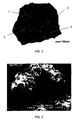
- the FIG. 1 shows a contrast image of a section of a relatively coarse polycrystalline Al 2 O 3 body with a diameter of about 900 microns.
- the dark areas reflect the pores, while the bright areas represent the individual primary aluminum oxide crystals.
- the porosity of the abrasive grain can be determined by image analysis, whereby the dark areas are compared with the bright areas. For the present example, a macroporosity of 15 to 20% by volume was determined.
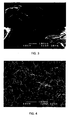
- the FIG. 2 shows a scanning electron micrograph of polycrystalline abrasive grains based on molten aluminum oxide in 150-fold magnification.
- the aluminum oxide primary crystals have a crystal size below 100 microns, wherein the crystal composite is formed as a kind of abrasive grain agglomerate with arranged between the primary crystals macropores.
- the shape of the macropores is characterized by the crystal planes of the primary crystals. Despite the macropores, the primary crystals form a relatively compact composite with each other, which shows a high grain strength.
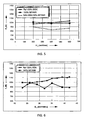
- FIG. 3 a corundum abrasive grain according to the prior art, wherein the liquid corundum was not quenched, but is slowly solidified.
- This abrasive grain is a fragment of a large primary crystal, which has arisen during the preparation of the solidified corundum block for abrasive grain. Comparing the Figures 2 and 3 with each other, which each show abrasive grains of comparable size, so only due to the different structure and a different grinding behavior can be expected.
- the microcrystalline abrasive grain of the present invention will fracture along the crystal boundaries, not only forming new cutting edges but also also pores are released, whereby the grinding process is favored overall.
- FIG. 4 shows an electron micrograph of a section of a quenched corundum plate, which has formed during the pouring of a liquid alumina melt between water-cooled metal rollers.
- the pseudo-cubic crystal form typical of the Al 2 O 3 bodies of the present invention is the primary aluminum oxide crystals to recognize, wherein the mean primary crystal size is between 30 microns and 60 microns.
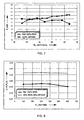
- FIGS. 5 to 8 refer to the grinding tests described below and are explained in detail in this context. The grinding tests were carried out on behalf of the applicant at the Institute for Machine Tools and Manufacturing Technology (IWF) of the Technical University of Braunschweig.
- IWF Institute for Machine Tools and Manufacturing Technology
- alumina was melted in an electric arc furnace at a voltage of 100 V.
- the liquid melt was poured at a casting speed of 30 kg / min on two counter rotating water-cooled rolls, wherein the melt poured onto the outer surface of an internally cooled cooling roll and the rotating roll in a gap formed between the two cooling rolls with a Slit width of about 1 mm was pulled.
- about 10% by weight, based on the casting quantity, of ⁇ -Al 2 O 3 crystallization nuclei having a mean particle diameter of 50 ⁇ m were injected into the casting stream.
- the quenched polycrystalline plate-shaped material thus obtained was crushed to obtain polycrystalline Al 2 O 3 bodies, which were then classified by sieving to a F60 F60 abrasive grain having an average particle size of about 260 ⁇ m.
- the grinding grain thus obtained is designated by the type designation WFAMX for the grinding technology investigations of the abrasive grain described below.
- An abrasive grit F60 obtained according to Example 1 was used for the production of ceramic bonded grinding wheels, which were then used for surface grinding / deep grinding with high infeed and low cutting speed on the material Inconel 718. Cooling was carried out with 5% HYSOL RD (Castrol), using 200 l of cooling lubricant per minute.
- a standard disc was compared with a conventional fused alumina (Alodur® WSK F60, Treibacher Schleifsch GmbH) with a disc in which 50% of the standard material had been replaced by WFAMX F60 (abrasive grain according to the invention) and a disc in which 100% of the standard material had been replaced by WFAMX.
- the normal forces F n [N] were measured as a function of the cutting volume V ' w [mm 3 / mm].
- the pattern 3 in which a mixture of 50% of the standard material WSK was used with 50% of the abrasive grain WFAMX according to the invention, shows a particularly favorable force curve of the normal force F n .
- the forces developing during the process are clearly below those of the samples 1 and 2, whereby the normal force F n is still below 900 [N] even with a cutting volume V ' w of 600 [mm 3 / mm]. In this case, the risk of a grinding burn is greatly reduced with constant removal rate, which brings enormous benefits for the user.
- a grit F60 obtained according to example 1 was used for the production of ceramic bonded grinding wheels, which were then used for surface grinding / deep grinding on the material Inconel 718.
- a standard disc was compared with a conventional fused alumina (Alodur® WSK F60, Schwarzacher Schleifsch GmbH) with a disc in which 100% of the standard material had been replaced by WFAMX F60.
- the normal forces F n [N] were measured at predetermined machining volumes V ' w of 100 [mm 3 / mm] as a function of the removal rate Q' w [mm 3 / mm • s].
- the test was carried out in this case up to the performance limit of the respective grinding wheels. The power limit is reached when grinding burns occur and is announced by increasing grinding noise (the so-called "chattering").
- the disk shows 100% WFAMX (sample 2), although at a low chip removal rate Q ' w, a relatively high value for the normal force F n , but then - almost after a short start-up phase - decreases with increasing time-wasting volume Q' w , and at a time chipping volume Q ' w of 42.5 [mm 3 / mm • s] even under 900 [N], so that with such a grinding wheel, even at high load, the risk of grinding burn is low.
- a low power consumption of the spindle indicates a high cutting ability of the disk and a cool grinding and thus a low susceptibility of the process for grinding burn.
- a grit F60 obtained according to example 1 was used for the production of ceramic bonded grinding wheels, which were then used for surface grinding / deep grinding on the material Inconel 718.
- a standard disc was compared with 100% conventional fused alumina (Alodur® WSK F60, Treibacher Schleifsch GmbH) with a disc containing 50% of the standard material replaced by WFAMX F60.
- the quotients ⁇ were measured from the tangential forces F T and the normal forces F n [N] as a function of the machining volume N ' w [mm 3 / mm].
- examples 1 to 5 refer exclusively to Inconel 718 surface grinding / deep grinding (precision grinding), this is by no means a limitation.
- This series of experiments was selected because the advantages of the Al 2 O 3 bodies according to the invention based on molten aluminum oxide as abrasive grains can be demonstrated particularly well here.
- Inconel is a highly sensitive turbine material that has been machined with high removal rates, so that the test series have a high positive significance in terms of the general usefulness of the Al 2 O 3 bodies according to the invention as abrasive grains.
- the polycrystalline Al 2 O 3 bodies according to the invention can advantageously also be used for grinding operations other than bonded or loose abrasives and in coated abrasives. They are also well suited for use in special refractory products.
Landscapes
- Chemical & Material Sciences (AREA)
- Engineering & Computer Science (AREA)
- Organic Chemistry (AREA)
- Ceramic Engineering (AREA)
- Materials Engineering (AREA)
- Physics & Mathematics (AREA)
- Structural Engineering (AREA)
- Manufacturing & Machinery (AREA)
- Plasma & Fusion (AREA)
- Inorganic Chemistry (AREA)
- Geology (AREA)
- Life Sciences & Earth Sciences (AREA)
- Thermal Sciences (AREA)
- Polishing Bodies And Polishing Tools (AREA)
- Compounds Of Alkaline-Earth Elements, Aluminum Or Rare-Earth Metals (AREA)
- Compositions Of Oxide Ceramics (AREA)
Priority Applications (2)
| Application Number | Priority Date | Filing Date | Title |
|---|---|---|---|
| SI201130594T SI2523906T1 (sl) | 2010-10-01 | 2011-08-15 | Polikristalinični Al2O3 delci na osnovi staljenega aluminijevega oksida |
| PL11757157T PL2523906T3 (pl) | 2010-10-01 | 2011-08-15 | Polikrystaliczne wyroby z Al<sub>2</sub>O<sub>3</sub> na bazie stopionego tlenku glinu |
Applications Claiming Priority (2)
| Application Number | Priority Date | Filing Date | Title |
|---|---|---|---|
| DE201010047095 DE102010047095A1 (de) | 2010-10-01 | 2010-10-01 | Polykristalline Al2O3-Körper auf Basis von geschmolzenem Aluminiumoxid |
| PCT/EP2011/004089 WO2012041421A1 (de) | 2010-10-01 | 2011-08-15 | Polykristalline al2o3-körper auf basis von geschmolzenem aluminiumoxid |
Publications (2)
| Publication Number | Publication Date |
|---|---|
| EP2523906A1 EP2523906A1 (de) | 2012-11-21 |
| EP2523906B1 true EP2523906B1 (de) | 2015-06-24 |
Family
ID=44651613
Family Applications (1)
| Application Number | Title | Priority Date | Filing Date |
|---|---|---|---|
| EP11757157.0A Active EP2523906B1 (de) | 2010-10-01 | 2011-08-15 | Polykristalline al2o3-körper auf basis von geschmolzenem aluminiumoxid |
Country Status (12)
| Country | Link |
|---|---|
| US (1) | US8834588B2 (pl) |
| EP (1) | EP2523906B1 (pl) |
| JP (1) | JP5709147B2 (pl) |
| CN (1) | CN102811951B (pl) |
| BR (1) | BR112012020152B1 (pl) |
| DE (1) | DE102010047095A1 (pl) |
| ES (1) | ES2546296T3 (pl) |
| IN (1) | IN2012DN06294A (pl) |
| PL (1) | PL2523906T3 (pl) |
| PT (1) | PT2523906E (pl) |
| SI (1) | SI2523906T1 (pl) |
| WO (1) | WO2012041421A1 (pl) |
Cited By (1)
| Publication number | Priority date | Publication date | Assignee | Title |
|---|---|---|---|---|
| DE102017130046A1 (de) | 2017-12-14 | 2019-06-19 | Imertech Sas | Agglomerat-Schleifkorn |
Families Citing this family (9)
| Publication number | Priority date | Publication date | Assignee | Title |
|---|---|---|---|---|
| DE102010047095A1 (de) | 2010-10-01 | 2012-04-05 | Center For Abrasives And Refractories Research & Development C.A.R.R.D. Gmbh | Polykristalline Al2O3-Körper auf Basis von geschmolzenem Aluminiumoxid |
| CN105102158B (zh) | 2013-04-05 | 2018-03-23 | 3M创新有限公司 | 烧结磨料颗粒、其制备方法以及包含烧结磨料颗粒的磨料制品 |
| DE102013111006B4 (de) | 2013-10-04 | 2015-10-22 | Center For Abrasives And Refractories Research & Development C.A.R.R.D. Gmbh | Polykristalline poröse Al2O3-Körper auf Basis von geschmolzenem Aluminiumoxid mit erhöhter Zähigkeit |
| DE102016203112B4 (de) | 2016-02-26 | 2019-08-29 | Heraeus Deutschland GmbH & Co. KG | Kupfer-Keramik-Verbund |
| CN109956741B (zh) * | 2019-03-11 | 2021-06-08 | 山东天汇研磨耐磨技术开发有限公司 | 一种微晶陶瓷刚玉磨料及其制造方法 |
| CN111320465B (zh) * | 2020-03-25 | 2022-01-14 | 山东大学 | 一种氧化铝基微晶陶瓷颗粒及其制备方法和应用 |
| CN113060746B (zh) * | 2021-04-14 | 2023-04-18 | 雅安百图高新材料股份有限公司 | 一种大粒径氧化铝原料制备方法及其球形氧化铝产品 |
| CN113861938B (zh) * | 2021-09-16 | 2023-03-24 | 河南建筑材料研究设计院有限责任公司 | 一种刚玉基多晶磨料及其制备方法 |
| CN115326651B (zh) * | 2022-07-20 | 2024-06-11 | 中国地质大学(武汉) | 一种页岩密闭孔隙可压裂性的测定方法 |
Family Cites Families (13)
| Publication number | Priority date | Publication date | Assignee | Title |
|---|---|---|---|---|
| US1192709A (en) | 1914-12-01 | 1916-07-25 | Carborundum Co | Crystalline fused alumina and the manufacture thereof. |
| US1524134A (en) | 1922-07-03 | 1925-01-27 | Carborundum Co | Aluminous abrasive material and method of making the same |
| DE1259762B (de) * | 1961-04-20 | 1968-01-25 | Norton Co | Verfahren und Vorrichtung zum Herstellen von feinkoernigem Aluminiumoxyd als Scheifmittel |
| DE1646490A1 (de) * | 1967-10-13 | 1971-07-15 | Dynamit Nobel Ag | Verfahren zur Herstellung von leicht zu zerkleinernden,feinkristallinen Stuecken aus geschmolzenen und wieder erstarrten Metalloxyden |
| US3646713A (en) | 1970-03-16 | 1972-03-07 | Norton Co | Method of making fragmented crystalline material |
| JPS58130157A (ja) * | 1982-01-26 | 1983-08-03 | 昭和電工株式会社 | 耐熱衝撃性に優れた耐火骨材の製造法 |
| JPH0764558B2 (ja) * | 1987-11-16 | 1995-07-12 | 昭和電工株式会社 | アルミナ質多孔性粒状物及びこの粒状物を骨材とする耐火物 |
| FR2789688B1 (fr) | 1999-02-15 | 2001-03-23 | Pem Abrasifs Refractaires | Grains abrasifs constitues d'alumine polycristalline |
| FR2838119B1 (fr) * | 2002-04-08 | 2004-05-21 | Pem Abrasifs Refractaires | Materiau refractaire a base d'alumine polycristalline |
| US20050137078A1 (en) * | 2003-12-18 | 2005-06-23 | 3M Innovative Properties Company | Alumina-yttria particles and methods of making the same |
| KR20080038179A (ko) * | 2005-08-31 | 2008-05-02 | 쿄세라 코포레이션 | 내식성 부재, 이것을 사용한 처리 장치 및 시료 처리 방법,그리고 내식성 부재의 제조 방법 |
| DE102005045180B4 (de) * | 2005-09-21 | 2007-11-15 | Center For Abrasives And Refractories Research & Development C.A.R.R.D. Gmbh | Kugelförmige Korundkörner auf Basis von geschmolzenem Aluminiumoxid sowie ein Verfahren zu ihrer Herstellung |
| DE102010047095A1 (de) | 2010-10-01 | 2012-04-05 | Center For Abrasives And Refractories Research & Development C.A.R.R.D. Gmbh | Polykristalline Al2O3-Körper auf Basis von geschmolzenem Aluminiumoxid |
-
2010
- 2010-10-01 DE DE201010047095 patent/DE102010047095A1/de not_active Withdrawn
-
2011
- 2011-08-15 CN CN201180011558.4A patent/CN102811951B/zh active Active
- 2011-08-15 JP JP2013530594A patent/JP5709147B2/ja active Active
- 2011-08-15 WO PCT/EP2011/004089 patent/WO2012041421A1/de not_active Ceased
- 2011-08-15 EP EP11757157.0A patent/EP2523906B1/de active Active
- 2011-08-15 PL PL11757157T patent/PL2523906T3/pl unknown
- 2011-08-15 US US13/641,846 patent/US8834588B2/en active Active
- 2011-08-15 ES ES11757157.0T patent/ES2546296T3/es active Active
- 2011-08-15 SI SI201130594T patent/SI2523906T1/sl unknown
- 2011-08-15 BR BR112012020152-2A patent/BR112012020152B1/pt active IP Right Grant
- 2011-08-15 PT PT117571570T patent/PT2523906E/pt unknown
-
2012
- 2012-07-17 IN IN6294DEN2012 patent/IN2012DN06294A/en unknown
Cited By (2)
| Publication number | Priority date | Publication date | Assignee | Title |
|---|---|---|---|---|
| DE102017130046A1 (de) | 2017-12-14 | 2019-06-19 | Imertech Sas | Agglomerat-Schleifkorn |
| WO2019115476A1 (en) | 2017-12-14 | 2019-06-20 | Imertech Sas | Agglomerate abrasive grain |
Also Published As
| Publication number | Publication date |
|---|---|
| IN2012DN06294A (pl) | 2015-09-25 |
| JP5709147B2 (ja) | 2015-04-30 |
| SI2523906T1 (sl) | 2015-11-30 |
| BR112012020152B1 (pt) | 2021-04-27 |
| BR112012020152A2 (pt) | 2020-08-25 |
| ES2546296T3 (es) | 2015-09-22 |
| US8834588B2 (en) | 2014-09-16 |
| PT2523906E (pt) | 2015-10-13 |
| DE102010047095A1 (de) | 2012-04-05 |
| PL2523906T3 (pl) | 2015-12-31 |
| CN102811951A (zh) | 2012-12-05 |
| JP2013544736A (ja) | 2013-12-19 |
| WO2012041421A1 (de) | 2012-04-05 |
| EP2523906A1 (de) | 2012-11-21 |
| US20130086848A1 (en) | 2013-04-11 |
| CN102811951B (zh) | 2014-10-08 |
Similar Documents
| Publication | Publication Date | Title |
|---|---|---|
| DE102010047095A1 (de) | Polykristalline Al2O3-Körper auf Basis von geschmolzenem Aluminiumoxid | |
| EP0653474B1 (de) | Verfahren zur Herstellung eines Schleifmittels | |
| EP1274665B1 (de) | MIKROKRISTALLINE ALPHA Al2O3 FORMKÖRPER, VERFAHREN ZU IHRER HERSTELLUNG SOWIE IHRE VERWENDUNG | |
| DE3876851T2 (de) | Gesinterte keramische aluminiumoxid-zirkonoxid-koerper und verfahren zur herstellung derselben. | |
| EP0248788B1 (de) | Mikrokristallines Schleifmittel und Verfahren zur Herstellung | |
| EP2013307B1 (de) | Schleifkorn auf basis von geschmolzenem kugelkorund | |
| DE2420551A1 (de) | Verfahren zur herstellung von gekoernten schleifmitteln aus erschmolzenen oder gesinterten hochfeuerfesten anorganischen hartstoffen mit hoher kornzaehigkeit | |
| DE3428252C2 (pl) | ||
| DE2916084A1 (de) | Aluminiumoxid-schleifkoerner und verfahren zu ihrer herstellung | |
| DE3219607A1 (de) | Gesintertes schleifmittel und verfahren zu seiner herstellung | |
| DE2723036A1 (de) | Schleifkorn und verfahren zu seiner herstellung | |
| DE3586807T2 (de) | Verfahren zur herstellung von tonerdekoerpern. | |
| CH619679A5 (en) | Process for producing abrasive materials | |
| EP0571865B1 (de) | Gesinterte Verbundschleifkörner, Verfahren zu ihrer Herstellung sowie deren Verwendung | |
| DE102016100196A1 (de) | Geformte Sinterschleifkörner auf Basis von Aluminiumoxid mit Anteilen an mineralogischen Phasen bestehend aus Mullit, Tialit und/oder Armalcolit und Baddeleyit und/oder Srilankit sowie ein Verfahren zu ihrer Herstellung | |
| DE10121656B4 (de) | Verfahren zur Herstellung eines verbesserten Schleifkorns | |
| AT394857B (de) | Schleifkorn auf basis von gesintertem aluminiumoxid und metallhaltigen zusaetzen und verfahren zu seiner herstellung | |
| DE102013111006B4 (de) | Polykristalline poröse Al2O3-Körper auf Basis von geschmolzenem Aluminiumoxid mit erhöhter Zähigkeit | |
| DE2227642C3 (de) | Schleifmaterial, Verfahren zu seiner Herstellung und seine Verwendung | |
| EP1339809B1 (de) | Verfahren zur herstellung von korundschleifkorn auf tonerdebasis mit erhöhter zähigkeit sowie seine verwendung in schleifmitteln | |
| DE2519568C3 (de) | Verfahren und Vorrichtung zur Herstellung von Schleifmitteln | |
| DE102017130046A1 (de) | Agglomerat-Schleifkorn | |
| DE102020116845B4 (de) | Zirkonkorund-Schleifkörner mit hohem SiO2-Anteil und Verfahren zu deren Herstellung | |
| DE3040992A1 (de) | Aluminiumoxid-schleifkorn und verfahren zu seiner herstellung | |
| DE2329896A1 (de) | Verfahren zum herstellen keramischer pulver |
Legal Events
| Date | Code | Title | Description |
|---|---|---|---|
| PUAI | Public reference made under article 153(3) epc to a published international application that has entered the european phase |
Free format text: ORIGINAL CODE: 0009012 |
|
| 17P | Request for examination filed |
Effective date: 20120716 |
|
| AK | Designated contracting states |
Kind code of ref document: A1 Designated state(s): AL AT BE BG CH CY CZ DE DK EE ES FI FR GB GR HR HU IE IS IT LI LT LU LV MC MK MT NL NO PL PT RO RS SE SI SK SM TR |
|
| DAX | Request for extension of the european patent (deleted) | ||
| GRAP | Despatch of communication of intention to grant a patent |
Free format text: ORIGINAL CODE: EPIDOSNIGR1 |
|
| INTG | Intention to grant announced |
Effective date: 20150211 |
|
| GRAS | Grant fee paid |
Free format text: ORIGINAL CODE: EPIDOSNIGR3 |
|
| GRAA | (expected) grant |
Free format text: ORIGINAL CODE: 0009210 |
|
| AK | Designated contracting states |
Kind code of ref document: B1 Designated state(s): AL AT BE BG CH CY CZ DE DK EE ES FI FR GB GR HR HU IE IS IT LI LT LU LV MC MK MT NL NO PL PT RO RS SE SI SK SM TR |
|
| REG | Reference to a national code |
Ref country code: GB Ref legal event code: FG4D Free format text: NOT ENGLISH |
|
| REG | Reference to a national code |
Ref country code: CH Ref legal event code: EP |
|
| REG | Reference to a national code |
Ref country code: AT Ref legal event code: REF Ref document number: 732795 Country of ref document: AT Kind code of ref document: T Effective date: 20150715 |
|
| REG | Reference to a national code |
Ref country code: IE Ref legal event code: FG4D Free format text: LANGUAGE OF EP DOCUMENT: GERMAN |
|
| REG | Reference to a national code |
Ref country code: DE Ref legal event code: R096 Ref document number: 502011007152 Country of ref document: DE |
|
| REG | Reference to a national code |
Ref country code: ES Ref legal event code: FG2A Ref document number: 2546296 Country of ref document: ES Kind code of ref document: T3 Effective date: 20150922 |
|
| REG | Reference to a national code |
Ref country code: CH Ref legal event code: NV Representative=s name: DR. LUSUARDI AG, CH |
|
| REG | Reference to a national code |
Ref country code: SE Ref legal event code: TRGR Ref country code: PT Ref legal event code: SC4A Free format text: AVAILABILITY OF NATIONAL TRANSLATION Effective date: 20150909 |
|
| REG | Reference to a national code |
Ref country code: NL Ref legal event code: FP |
|
| PG25 | Lapsed in a contracting state [announced via postgrant information from national office to epo] |
Ref country code: FI Free format text: LAPSE BECAUSE OF FAILURE TO SUBMIT A TRANSLATION OF THE DESCRIPTION OR TO PAY THE FEE WITHIN THE PRESCRIBED TIME-LIMIT Effective date: 20150624 Ref country code: HR Free format text: LAPSE BECAUSE OF FAILURE TO SUBMIT A TRANSLATION OF THE DESCRIPTION OR TO PAY THE FEE WITHIN THE PRESCRIBED TIME-LIMIT Effective date: 20150624 Ref country code: LT Free format text: LAPSE BECAUSE OF FAILURE TO SUBMIT A TRANSLATION OF THE DESCRIPTION OR TO PAY THE FEE WITHIN THE PRESCRIBED TIME-LIMIT Effective date: 20150624 Ref country code: NO Free format text: LAPSE BECAUSE OF FAILURE TO SUBMIT A TRANSLATION OF THE DESCRIPTION OR TO PAY THE FEE WITHIN THE PRESCRIBED TIME-LIMIT Effective date: 20150924 |
|
| REG | Reference to a national code |
Ref country code: LT Ref legal event code: MG4D |
|
| PG25 | Lapsed in a contracting state [announced via postgrant information from national office to epo] |
Ref country code: LV Free format text: LAPSE BECAUSE OF FAILURE TO SUBMIT A TRANSLATION OF THE DESCRIPTION OR TO PAY THE FEE WITHIN THE PRESCRIBED TIME-LIMIT Effective date: 20150624 Ref country code: RS Free format text: LAPSE BECAUSE OF FAILURE TO SUBMIT A TRANSLATION OF THE DESCRIPTION OR TO PAY THE FEE WITHIN THE PRESCRIBED TIME-LIMIT Effective date: 20150624 Ref country code: BG Free format text: LAPSE BECAUSE OF FAILURE TO SUBMIT A TRANSLATION OF THE DESCRIPTION OR TO PAY THE FEE WITHIN THE PRESCRIBED TIME-LIMIT Effective date: 20150924 Ref country code: GR Free format text: LAPSE BECAUSE OF FAILURE TO SUBMIT A TRANSLATION OF THE DESCRIPTION OR TO PAY THE FEE WITHIN THE PRESCRIBED TIME-LIMIT Effective date: 20150925 |
|
| REG | Reference to a national code |
Ref country code: PL Ref legal event code: T3 |
|
| PG25 | Lapsed in a contracting state [announced via postgrant information from national office to epo] |
Ref country code: EE Free format text: LAPSE BECAUSE OF FAILURE TO SUBMIT A TRANSLATION OF THE DESCRIPTION OR TO PAY THE FEE WITHIN THE PRESCRIBED TIME-LIMIT Effective date: 20150624 |
|
| PG25 | Lapsed in a contracting state [announced via postgrant information from national office to epo] |
Ref country code: SK Free format text: LAPSE BECAUSE OF FAILURE TO SUBMIT A TRANSLATION OF THE DESCRIPTION OR TO PAY THE FEE WITHIN THE PRESCRIBED TIME-LIMIT Effective date: 20150624 Ref country code: RO Free format text: LAPSE BECAUSE OF NON-PAYMENT OF DUE FEES Effective date: 20150624 Ref country code: IS Free format text: LAPSE BECAUSE OF FAILURE TO SUBMIT A TRANSLATION OF THE DESCRIPTION OR TO PAY THE FEE WITHIN THE PRESCRIBED TIME-LIMIT Effective date: 20151024 Ref country code: CZ Free format text: LAPSE BECAUSE OF FAILURE TO SUBMIT A TRANSLATION OF THE DESCRIPTION OR TO PAY THE FEE WITHIN THE PRESCRIBED TIME-LIMIT Effective date: 20150624 |
|
| REG | Reference to a national code |
Ref country code: DE Ref legal event code: R097 Ref document number: 502011007152 Country of ref document: DE |
|
| PG25 | Lapsed in a contracting state [announced via postgrant information from national office to epo] |
Ref country code: LU Free format text: LAPSE BECAUSE OF FAILURE TO SUBMIT A TRANSLATION OF THE DESCRIPTION OR TO PAY THE FEE WITHIN THE PRESCRIBED TIME-LIMIT Effective date: 20150815 Ref country code: MC Free format text: LAPSE BECAUSE OF FAILURE TO SUBMIT A TRANSLATION OF THE DESCRIPTION OR TO PAY THE FEE WITHIN THE PRESCRIBED TIME-LIMIT Effective date: 20150624 |
|
| PG25 | Lapsed in a contracting state [announced via postgrant information from national office to epo] |
Ref country code: DK Free format text: LAPSE BECAUSE OF FAILURE TO SUBMIT A TRANSLATION OF THE DESCRIPTION OR TO PAY THE FEE WITHIN THE PRESCRIBED TIME-LIMIT Effective date: 20150624 |
|
| PLBE | No opposition filed within time limit |
Free format text: ORIGINAL CODE: 0009261 |
|
| STAA | Information on the status of an ep patent application or granted ep patent |
Free format text: STATUS: NO OPPOSITION FILED WITHIN TIME LIMIT |
|
| 26N | No opposition filed |
Effective date: 20160329 |
|
| REG | Reference to a national code |
Ref country code: IE Ref legal event code: MM4A |
|
| PG25 | Lapsed in a contracting state [announced via postgrant information from national office to epo] |
Ref country code: IE Free format text: LAPSE BECAUSE OF NON-PAYMENT OF DUE FEES Effective date: 20150815 |
|
| REG | Reference to a national code |
Ref country code: FR Ref legal event code: PLFP Year of fee payment: 6 |
|
| PG25 | Lapsed in a contracting state [announced via postgrant information from national office to epo] |
Ref country code: MT Free format text: LAPSE BECAUSE OF FAILURE TO SUBMIT A TRANSLATION OF THE DESCRIPTION OR TO PAY THE FEE WITHIN THE PRESCRIBED TIME-LIMIT Effective date: 20150624 |
|
| PG25 | Lapsed in a contracting state [announced via postgrant information from national office to epo] |
Ref country code: SM Free format text: LAPSE BECAUSE OF FAILURE TO SUBMIT A TRANSLATION OF THE DESCRIPTION OR TO PAY THE FEE WITHIN THE PRESCRIBED TIME-LIMIT Effective date: 20150624 Ref country code: HU Free format text: LAPSE BECAUSE OF FAILURE TO SUBMIT A TRANSLATION OF THE DESCRIPTION OR TO PAY THE FEE WITHIN THE PRESCRIBED TIME-LIMIT; INVALID AB INITIO Effective date: 20110815 |
|
| PG25 | Lapsed in a contracting state [announced via postgrant information from national office to epo] |
Ref country code: CY Free format text: LAPSE BECAUSE OF FAILURE TO SUBMIT A TRANSLATION OF THE DESCRIPTION OR TO PAY THE FEE WITHIN THE PRESCRIBED TIME-LIMIT Effective date: 20150624 |
|
| REG | Reference to a national code |
Ref country code: FR Ref legal event code: PLFP Year of fee payment: 7 |
|
| PG25 | Lapsed in a contracting state [announced via postgrant information from national office to epo] |
Ref country code: MK Free format text: LAPSE BECAUSE OF FAILURE TO SUBMIT A TRANSLATION OF THE DESCRIPTION OR TO PAY THE FEE WITHIN THE PRESCRIBED TIME-LIMIT Effective date: 20150624 |
|
| REG | Reference to a national code |
Ref country code: FR Ref legal event code: PLFP Year of fee payment: 8 |
|
| PG25 | Lapsed in a contracting state [announced via postgrant information from national office to epo] |
Ref country code: AL Free format text: LAPSE BECAUSE OF FAILURE TO SUBMIT A TRANSLATION OF THE DESCRIPTION OR TO PAY THE FEE WITHIN THE PRESCRIBED TIME-LIMIT Effective date: 20150624 |
|
| REG | Reference to a national code |
Ref country code: GB Ref legal event code: 732E Free format text: REGISTERED BETWEEN 20190207 AND 20190213 |
|
| REG | Reference to a national code |
Ref country code: CH Ref legal event code: PUE Owner name: IMERTECH SAS, FR Free format text: FORMER OWNER: CENTER FOR ABRASIVES AND REFRACTORIES RESEARCH AND DEVELOPMENT C.A.R.R.D. GMBH, AT |
|
| REG | Reference to a national code |
Ref country code: AT Ref legal event code: PC Ref document number: 732795 Country of ref document: AT Kind code of ref document: T Owner name: IMERTECH SAS, FR Effective date: 20200123 |
|
| REG | Reference to a national code |
Ref country code: DE Ref legal event code: R082 Ref document number: 502011007152 Country of ref document: DE Representative=s name: MOELTGEN, PAUL, DIPL.-CHEM. DR. RER. NAT, DE Ref country code: DE Ref legal event code: R081 Ref document number: 502011007152 Country of ref document: DE Owner name: IMERTECH SAS, FR Free format text: FORMER OWNER: CENTER FOR ABRASIVES AND REFRACTORIES RESEARCH & DEVELOPMENT C.A.R.R.D. GMBH, VILLACH, AT |
|
| P01 | Opt-out of the competence of the unified patent court (upc) registered |
Effective date: 20230526 |
|
| PGFP | Annual fee paid to national office [announced via postgrant information from national office to epo] |
Ref country code: NL Payment date: 20250723 Year of fee payment: 15 |
|
| PGFP | Annual fee paid to national office [announced via postgrant information from national office to epo] |
Ref country code: PT Payment date: 20250725 Year of fee payment: 15 Ref country code: ES Payment date: 20250901 Year of fee payment: 15 |
|
| PGFP | Annual fee paid to national office [announced via postgrant information from national office to epo] |
Ref country code: DE Payment date: 20250724 Year of fee payment: 15 |
|
| PGFP | Annual fee paid to national office [announced via postgrant information from national office to epo] |
Ref country code: PL Payment date: 20250729 Year of fee payment: 15 Ref country code: IT Payment date: 20250723 Year of fee payment: 15 Ref country code: TR Payment date: 20250728 Year of fee payment: 15 |
|
| PGFP | Annual fee paid to national office [announced via postgrant information from national office to epo] |
Ref country code: BE Payment date: 20250723 Year of fee payment: 15 Ref country code: GB Payment date: 20250724 Year of fee payment: 15 |
|
| PGFP | Annual fee paid to national office [announced via postgrant information from national office to epo] |
Ref country code: FR Payment date: 20250723 Year of fee payment: 15 Ref country code: AT Payment date: 20250725 Year of fee payment: 15 |
|
| PGFP | Annual fee paid to national office [announced via postgrant information from national office to epo] |
Ref country code: CH Payment date: 20250901 Year of fee payment: 15 Ref country code: SE Payment date: 20250723 Year of fee payment: 15 |
|
| PGFP | Annual fee paid to national office [announced via postgrant information from national office to epo] |
Ref country code: SI Payment date: 20250731 Year of fee payment: 15 |