EP2513162B1 - Polymerization process to make low density polyethylene - Google Patents
Polymerization process to make low density polyethylene Download PDFInfo
- Publication number
- EP2513162B1 EP2513162B1 EP10795562.7A EP10795562A EP2513162B1 EP 2513162 B1 EP2513162 B1 EP 2513162B1 EP 10795562 A EP10795562 A EP 10795562A EP 2513162 B1 EP2513162 B1 EP 2513162B1
- Authority
- EP
- European Patent Office
- Prior art keywords
- zone
- cta
- reactor
- ethylene
- polymer
- Prior art date
- Legal status (The legal status is an assumption and is not a legal conclusion. Google has not performed a legal analysis and makes no representation as to the accuracy of the status listed.)
- Active
Links
Images
Classifications
-
- C—CHEMISTRY; METALLURGY
- C08—ORGANIC MACROMOLECULAR COMPOUNDS; THEIR PREPARATION OR CHEMICAL WORKING-UP; COMPOSITIONS BASED THEREON
- C08F—MACROMOLECULAR COMPOUNDS OBTAINED BY REACTIONS ONLY INVOLVING CARBON-TO-CARBON UNSATURATED BONDS
- C08F10/00—Homopolymers and copolymers of unsaturated aliphatic hydrocarbons having only one carbon-to-carbon double bond
-
- C—CHEMISTRY; METALLURGY
- C08—ORGANIC MACROMOLECULAR COMPOUNDS; THEIR PREPARATION OR CHEMICAL WORKING-UP; COMPOSITIONS BASED THEREON
- C08F—MACROMOLECULAR COMPOUNDS OBTAINED BY REACTIONS ONLY INVOLVING CARBON-TO-CARBON UNSATURATED BONDS
- C08F10/00—Homopolymers and copolymers of unsaturated aliphatic hydrocarbons having only one carbon-to-carbon double bond
- C08F10/02—Ethene
-
- C—CHEMISTRY; METALLURGY
- C08—ORGANIC MACROMOLECULAR COMPOUNDS; THEIR PREPARATION OR CHEMICAL WORKING-UP; COMPOSITIONS BASED THEREON
- C08F—MACROMOLECULAR COMPOUNDS OBTAINED BY REACTIONS ONLY INVOLVING CARBON-TO-CARBON UNSATURATED BONDS
- C08F2/00—Processes of polymerisation
-
- C—CHEMISTRY; METALLURGY
- C08—ORGANIC MACROMOLECULAR COMPOUNDS; THEIR PREPARATION OR CHEMICAL WORKING-UP; COMPOSITIONS BASED THEREON
- C08J—WORKING-UP; GENERAL PROCESSES OF COMPOUNDING; AFTER-TREATMENT NOT COVERED BY SUBCLASSES C08B, C08C, C08F, C08G or C08H
- C08J5/00—Manufacture of articles or shaped materials containing macromolecular substances
- C08J5/18—Manufacture of films or sheets
-
- C—CHEMISTRY; METALLURGY
- C08—ORGANIC MACROMOLECULAR COMPOUNDS; THEIR PREPARATION OR CHEMICAL WORKING-UP; COMPOSITIONS BASED THEREON
- C08L—COMPOSITIONS OF MACROMOLECULAR COMPOUNDS
- C08L23/00—Compositions of homopolymers or copolymers of unsaturated aliphatic hydrocarbons having only one carbon-to-carbon double bond; Compositions of derivatives of such polymers
- C08L23/02—Compositions of homopolymers or copolymers of unsaturated aliphatic hydrocarbons having only one carbon-to-carbon double bond; Compositions of derivatives of such polymers not modified by chemical after-treatment
- C08L23/04—Homopolymers or copolymers of ethene
-
- C—CHEMISTRY; METALLURGY
- C08—ORGANIC MACROMOLECULAR COMPOUNDS; THEIR PREPARATION OR CHEMICAL WORKING-UP; COMPOSITIONS BASED THEREON
- C08F—MACROMOLECULAR COMPOUNDS OBTAINED BY REACTIONS ONLY INVOLVING CARBON-TO-CARBON UNSATURATED BONDS
- C08F110/00—Homopolymers of unsaturated aliphatic hydrocarbons having only one carbon-to-carbon double bond
- C08F110/02—Ethene
Definitions
- This invention relates to ethylene-based polymers, particularly low density polyethylene (LDPE), and polymerization improvements to make LDPE.
- LDPE low density polyethylene
- the polymerization process involves autoclave reactor(s), preferably operated sequentially with a tubular reactor(s).
- polyethylene made and sold today. One type in particular is made by various suppliers and sold in large quantities. This polyethylene is called high pressure free radical polyethylene (usually called LDPE) and is usually made using a tubular reactor or an autoclave reactor or sometimes a combination. Sometimes polymer users blend LDPE with other polymers such as linear low density polyethylene (LLDPE) to try to modify properties such as flowability or processability.
- LDPE high pressure free radical polyethylene
- LLDPE linear low density polyethylene
- Rate Constants of Elementary Reaction Rates (Ref. No. 1) Reaction step Frequency factor Activation energy, cal/mole Activation volume, cm 3 /mole Propagation 5.63E+11 10,520 -19.7 LCB 1.75E+12 14,080 4.4 SCB 5.63E+12 13,030 -23.5
- the ratio between the rate of a certain reaction step and the propagation rate is of importance.
- the property temperature dependence is expressed by the ⁇ Activation energy, so for:
- the LCB frequency decreases faster than the SCB frequency with decreasing temperature. Further the lower maximum polymerization temperatures needed to lower the SCB frequency will also lower the polymer concentration (/profile) in the reactor. Since the LCB reaction rate also depends on polymer concentration, the LCB frequency will be lowered furthermore when increasing polymer density. This means that the LCB frequency is both lowered by the lower polymerization temperature as well as by the lower polymer concentration in the reactor when increasing density of LDPE.
- LCB frequency The molecular weight distribution of polyethylene is heavily affected by LCB frequency.
- High LCB frequency leads to broad MWD resins, while low LCB frequency leads to narrow MWD resins. This means that it becomes increasingly difficult and at some point impossible to produce broad MWD polyethylene resins when increasing polymer density.
- Broad MWD polyethylene is needed for a variety of extrusion applications, specifically to control the rheology in the molten state. An example is the need for low neck-in during extrusion coating.
- the invention provides a high pressure polymerization process to form an ethylene-based polymer, the process comprising the steps of:
- the invention is an ethylene-based polymer prepared by the inventive process.
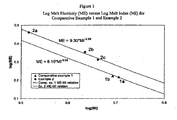
- the invention is an ethylene-based polymer having a density from 0.926 to 0.935 g/cm 3 , and a melt index greater than (>) 3 g/10 min, and a melt elasticity, in centiNewtons, greater than or equal to (8.1 x (melt index) -0.98 ).
- the invention is a composition comprising the inventive ethylene-based polymer.
- the invention is an article, e.g., a film, comprising the inventive composition.
- the invention provides a high pressure polymerization process to form an ethylene-based polymer, the process comprising the steps of:
- the process further comprises one or more steps of transferring a zone reaction product produced in an (ith -1) reaction zone to an (ith) reaction zone, where 3 ⁇ i ⁇ n, and n ⁇ 3, each zone operating at polymerization conditions, and adding an (ith) feed comprising a CTA system into the (ith) reaction zone, the CTA system of the (ith) reaction zone having a transfer activity of Zi; and with the proviso that the ratio of Z1/Zi ⁇ 1 for all i ⁇ n and Z1 ⁇ Zn.
- the process in step A the first feed comprises a CTA system have a transfer activity of Z1.
- the process in step B in which the first reactor zone product and/or the freshly injected feed comprises a CTA system resulting in the CTA system of the second reactor zone having a transfer activity Z2.
- a second feed is injected into the second reactor zone, and the second feed comprises ethylene.
- a second feed of the preceding embodiment further comprises a CTA system.
- the second feed is injected into the second reactor zone, and the second feed comprises ethylene but does not comprise a CTA system.
- the first feed of any of the preceding embodiments comprises at least one comonomer.
- the second feed of any of the preceding embodiments comprises at least one comonomer.
- the ith feed of any of the preceding embodiments further comprises ethylene.
- the ith feed of any of the preceding claims further comprises at least one comonomer.
- the at least one comonomer of any of the preceding embodiments is injected into one or more of (i) a suction to a hyper compressor, (ii) a hyper compressor discharge, and (iii) one or more autoclave or tubular reactor zones.
- the at least one comonomer of any of the preceding embodiments is acrylate, silane, vinyl ester, unsaturated carboxylic acid, and carbon monoxide.
- steps (B)(1) and (B)(2) are conducted simultaneously.
- steps (B)(1) and (B)(2) are conducted at different times.
- At least part of the first zone reaction product is transferred to a second autoclave reactor zone.
- the second autoclave reactor zone is adjacent to the first autoclave reactor zone.
- the second autoclave reactor zone is separated from the first autoclave reactor zone by one or more reactor zones.
- At least part of the first zone reaction product is transferred to a tubular reactor zone.
- the tubular reactor zone is adjacent to the first autoclave reactor zone.
- the tubular reactor zone is separated from the first autoclave reactor zone by one or more reactor zones.
- each feed to each reactor zone contains the same CTA system.
- the CTA system of each feed contains a single CTA.
- At least one of the feeds to at least one of the reactor zones contains a CTA that is different from at least one of the CTAs to the other reactor zones.
- each CTA is independently one of an olefin, an aldehyde, a ketone, an alcohol, a saturated hydrocarbon, an ether, a thiol, a phosphine, an amino, an amine, an amide, an ester, and an isocyanate.
- each CTA is independently methyl ethyl ketone (MEK), propionaldehyde, butene-1, acetone, isopropanol or propylene.
- MEK methyl ethyl ketone
- At least one CTA has a chain transfer constant Cs greater than 0.001.
- all autoclave zones are located in the same autoclave reactor.
- the autoclave zones are located in two or more different autoclave reactors.
- the autoclave zones are of about the same size.
- two or more of the autoclave zones are of different sizes.
- the polymerization conditions in each reactor zone are operated at the same temperature and same pressure.
- At least one polymerization condition in at least one reactor zone is different from the other polymerization conditions.
- each of the polymerization conditions in the reactor zones independently, comprises a temperature greater than, or equal to, 100°C, and a pressure greater than, or equal to, 100 MPa.
- each of the polymerization conditions in the reactor zones independently, comprises a temperature less than 400°C, and a pressure less than 500 MPa.
- the ratio Z1/Zi ⁇ 1 for all i ⁇ n and the ratio Z1/Zn is less than 0.95.
- the ratio Z1/Zi ⁇ 1 for all i ⁇ n and the ratio Z1/Zn is less than 0.90.
- the ratio Z1/Zi ⁇ 1 for all i ⁇ n and the ratio Z1/Zn is greater than or equal to 0.
- the ratio Z1/Zi ⁇ 1 for all i ⁇ n and the ratio Z1/Zn is greater than 0.
- the invention is a process in which the second feed is injected into the second reaction zone, and the second feed comprises a CTA system.
- the invention is a process in which the second feed is injected into the second reaction zone, and the second feed does not comprises a CTA system.
- an inventive process may comprise a combination of two or more embodiments as described herein.
- the invention is an ethylene-based polymer made by the process of the any of the preceding embodiments.
- the ethylene-based polymer is a polyethylene homopolymer.
- the ethylene-based polymer is an ethylene-based interpolymer.
- the invention is an ethylene-based polymer having a melt elasticity, in centiNewtons, of more than 8.1 x (melt index) -0.98 .
- the invention is an ethylene-based polymer having a melt elasticity, in centiNewtons, of more than 9.3 x (melt index) -0.98 .
- the invention is an ethylene-based polymer having a melt index of greater than 3.0 g/10 min.
- the invention is an ethylene-based polymer having a melt elasticity, in centiNewtons, of more than 8.1 x (melt index) -0.98 and a melt index of greater than 3.0 g/10 min.
- the invention is an ethylene-based polymer having a density from 0.926 to 0.935 g/cm 3 .
- the invention is an ethylene-based polymer having a melt elasticity, in centiNewtons, of more than 8.1 x (melt index) -0.98 and a density from 0.926 to 0.935 g/cm 3 .
- the invention is an ethylene-based polymer having a melt elasticity, in centiNewtons, of more than 8.1 x (melt index) -0.98 ), a melt index of greater than 3.0 g/10 min, and a density from 0.926 to 0.935 g/cm 3 .
- the ethylene-based polymer of any of the preceding polymer embodiments is a polyethylene homopolymer.
- the ethylene-based polymer of any of the preceding polymer embodiments is an ethylene-based interpolymer.
- the ethylene-based polymer of any of the preceding polymer embodiments is an LDPE.
- An inventive ethylene-based polymer may comprise a combination of two or more embodiments as described herein.
- the invention is a composition comprising the ethylene-based polymer of any of preceding polymer embodiments.
- the composition further comprises another ethylene-based polymer.
- An inventive composition may comprise the combination of two or more embodiments as described herein.
- the invention is an article comprising at least one component formed from a composition of any of the preceding composition embodiments.
- An inventive article may comprise the combination of two or more embodiments as described herein.
- the invention is a film comprising at least one layer formed from the composition of any of the preceding composition embodiments.
- An inventive film may comprise the combination of two or more embodiments as described herein.
- the invention is a coating comprising at least one component formed from the composition of any of the preceding composition embodiments.
- An inventive coating may comprise the combination of two or more embodiments as described herein.
- the high pressure process of the present invention to produce polyethylene homo or copolymers having the advantageous properties as found in accordance with the invention can be carried out in an autoclave reactor having at least 2 reaction zones or in a combination of an autoclave and a tubular reactor.
- the temperature in each autoclave and tubular reactor zone of the process is typically from 100 to 400, more typically from 150 to 350 and even more typically from 160 to 320, °C.
- "High pressure" as here used means that the pressure in each autoclave and tubular reactor zone of the process is at least 100 MPa, and is typically from 100 to 400, more typically from 120 to 360 and even more typically from 150 to 320, MPa.
- the high pressure values used in the process of the invention have a direct effect on the amount of chain transfer agent, for example MEK or propionaldehyde, incorporated in the polymer. The higher the reaction pressure is, the more chain transfer agent derived units are incorporated in the product.
- a combination of an autoclave comprising at least two reaction zones and a conventional tubular reactor having at least one reaction zone is used.
- a conventional tubular reactor is cooled by an external water jacket and has at least one injection point for initiator and/or monomer.
- Suitable, but not limiting, reactor lengths can be between 500 and 1500 meters.
- the autoclave reactor normally has several injection points for initiator and/or monomer.
- the particular reactor combination used allows conversion rates of above 20 percent, which is significantly higher than the conversion rates obtained for standard autoclave reactors, which allow conversion rates of about 16-18 percent, expressed as ethylene conversion, for the production of low density type of polymers.
- ethylene copolymer refers to polymers of ethylene and one or more comonomers.
- Suitable comonomers to be used in the ethylene polymers of the present invention include, but are not limited to, ethylenically unsaturated monomers and especially C 3-20 alpha.-olefins, acetylenic compounds, conjugated or nonconjugated dienes, polyenes, unsaturated carboxylic acids, carbon monoxide, vinyl ester, and C 2-6 alkyl acrylates.
- the process of the present invention is a free radical polymerization process.
- the type of free radical initiator to be used in the present process is not critical.
- Free radical initiators that are generally used for such processes are oxygen, which is usable in tubular reactors in conventional amounts of between 0.0001 and 0.01 weight percent (wt%) drawn to the weight of polymerizable monomer, and organic peroxides.
- Typical and preferred initiators are the organic peroxides such as peresters, perketals, peroxy ketones and percarbonates, di-tert-butyl peroxide, cumyl pemeodecanoate, and tert-amyl perpivalate.
- Suitable initiators include azodicarboxylic esters, azodicarboxylic dinitriles and 1,1,2,2-tetramethylethane derivatives. These organic peroxy initiators are used in conventional amounts of between 0.005 and 0.2 wt% drawn to the weight of polymerizable monomers.
- CTA Chain Transfer Agents
- Chain transfer agents or telogens are used to control the melt flow index in a polymerization process.
- Chain transfer involves the termination of growing polymer chains, thus limiting the ultimate molecular weight of the polymer material.
- Chain transfer agents are typically hydrogen atom donors that will react with a growing polymer chain and stop the polymerization reaction of the chain. These agents can be of many different types, from saturated hydrocarbons or unsaturated hydrocarbons to aldehydes, ketones or alcohols. By controlling the concentration of the selected chain transfer agent, one can control the length of polymer chains, and, hence, the molecular weight.
- the melt flow index (MFI or I 2 ) of a polymer which is related to molecular weight, is controlled in the same way.
- the chain transfer agents used in the process of this invention include, but are not limited to, aliphatic and olefinic hydrocarbons, such as pentane, hexane, cyclohexane, propene, pentene or hexane; ketones such as acetone, diethyl ketone or diamyl ketone; aldehydes such as formaldehyde or acetaldehyde; and saturated aliphatic alcohols such as methanol, ethanol, propanol or butanol.
- aliphatic and olefinic hydrocarbons such as pentane, hexane, cyclohexane, propene, pentene or hexane
- ketones such as acetone, diethyl ketone or diamyl ketone
- aldehydes such as formaldehyde or acetaldehyde
- saturated aliphatic alcohols such as methanol, ethanol,
- Preferred chain transfer agents are those with a chain transfer constant (Cs) of at least 0.001 (e.g., propane, isobutane), more preferably at least 0.01 (e.g., propylene, isopropanol, acetone, 1-butene), and even more preferably at least 0.05 (e.g., methyl ethyl ketone (MEK), propionaldehyde, tert-butanethiol).
- the Cs is calculated as described by Mortimer at 130°C and 1360 atmospheres (Ref. No. 1-3 under Table A, infra ).
- the top Cs value typically does not exceed 25, more typically it does not exceed 21.
- the amount of chain transfer agent used in the process of the present invention is from 0.03 to 10.0 percent by weight, preferably from 0.1 to 2.0 percent by weight based on the amount of monomer introduced in the reactor system.
- the manner and timing of the introduction of the CTA into the process of the invention can vary widely as long as the CTA and/or ethylene is freshly injected into at least two reaction zones.
- the CTA is fed to a down stream (2 nd and/or 3 rd and/or 4 th , etc) reaction zone along with ethylene and/or other reaction components, e.g., comonomers, initiator, additives, etc., and additionally some CTA might be fed to the first reaction zone.
- the first reaction zone is an autoclave.
- make-up CTA i.e., CTA replacement for the CTA consumed in the first reactor zone is fed together with fresh ethylene through direct injection and/or along with the injected peroxide solution.
- additional (fresh) ethylene without CTA is fed as a make up flow for ethylene consumed in the first reaction zone either to the first autoclave reaction zone and/or to one or more down stream reaction zones.
- the make-up CTA is a CTA with a Cs higher than the Cs of the CTA fed to the first reaction zone. This can increase the conversion level in reactor system.
- the CTA comprises a monomeric group, like propylene, butene-1, etc.
- the monomeric group enhances reactor conversion (it increases the consumption of the CTA).
- the CTA and/or operating conditions in the recycle sections are selected such that the CTA will condense and/or separate from the recycle ethylene resulting in less CTA recycled back to the reactor inlet.
- CTA is purged from the reactor system in a downstream process section.
- the reactor system comprises two autoclave reaction zones followed by two reaction tubular zones, and ethylene monomer and CTA are fed to both autoclave reaction zones but not to either tubular reaction zone.
- the reactor system comprises two autoclave reaction zones followed by two reaction tubular zones, and ethylene monomer and CTA are fed to both autoclave reaction zones but not to either tubular reaction zone, but initiator is fed to one or both tubular reaction zones.
- MWD polyethylene is needed for a variety of extrusion applications, specifically to control the rheology in the molten state.
- An example is the need for low neck-in during extrusion coating.
- the ethylene-based polymers of this invention have a typical density from 0.910 to 0.940, more typically from 0.915 to 0.940 and even more typically from 0.926 to 0.935, grams per cubic centimeter (g/cc or g/cm 3 ).
- the ethylene-based polymers of this invention have a typical melt index (I 2 ) from 0.1 to 100, more typically from 0.5 to 50 and even more typically from 3.0 to 20, grams per 10 minutes (g/10 min) at 190°C/2.16 kg.
- the ethylene-based polymers of this invention have a melt elasticity from 1 to 30, typically from 1.5-15, centiNewtons (cN).
- the ethylene-based polymers of this invention have two or more of these density, melt index and melt elasticity properties.
- Ethylene-based polymers include LDPE homopolymer (preferred), and high pressure copolymers include ethylene/vinyl acetate (EVA), ethylene ethyl acrylate (EEA), ethylene acrylic acid (EAA) ( ⁇ 0.926 g/cm 3 ) LDPE.
- EVA ethylene/vinyl acetate
- EAA ethylene ethyl acrylate
- EAA ethylene acrylic acid
- the inventive polymers can be blended with one or more other polymers such as, but not limited to, linear and ethylene butyl acrylate (EBA).
- Product applications include collation shrink film, label film, blown and cast film, blow molding, foam, compounding/master batch and injection molding applications etc. for both medium density ( ⁇ 0.926 g/cm 3 ) and standard density low density polyethylene (LLDPE), copolymers of ethylene with one or more alpha-olefins such as, but not limited to, propylene, butene-1, pentene-1,4-methylpentene-1, pentene-1, hexene-1 and octene-1; high density polyethylene (HDPE) such as HDPE grades HD 940-970 available from The Dow Chemical Company.
- HDPE high density polyethylene
- the amount of inventive polymer in the blend can vary widely, but typically it is from 10 to 90, from 10 to 50, or from 10 to 30, wt%, based on the weight of the polymers in the blend. If the inventive polymer has a relatively narrow MWD (e.g., below 6) then the inventive polymer typically constitutes a majority of the blend, i.e., it is LDPE-rich, and contains 50 or more wt% of the inventive polymer, based on the weight of the polymers in the blend.
- the inventive polymer has a relatively broad MWD (e.g., 6 or above), then the inventive polymer typically constitutes a minority of the blend, i.e., it is LDPE-poor, and contains less than 50 wt% of the inventive polymer, based on the weight of the polymers in the blend.
- LDPE-rich blends typically provide good optics, and/or are useful in the preparation of laminations.
- LDPE-poor blends typically exhibit good processability, and/or are useful in such applications as film blowing and extrusion coating.
- additives may be added to a composition comprising an inventive polymer.
- Suitable additives include stabilizers, fillers, such as organic or inorganic particles, including clays, talc, titanium dioxide, zeolites, powdered metals, organic or inorganic fibers, including carbon fibers, silicon nitride fibers, steel wire or mesh, and nylon or polyester cording, nano-sized particles, clays, and so forth; tackifiers, oil extenders, including paraffinic or napthelenic oils.
- other natural and synthetic polymers including other polymers that are made according to the inventive process, and polymers made by other processes, may be added to an inventive composition.
- the polymer of this invention may be employed in a variety of conventional thermoplastic fabrication processes to produce useful articles, including objects comprising at least one film layer, such as a monolayer film, or at least one layer in a multilayer film prepared by cast, blown, calendered, or extrusion coating processes; molded articles, such as blow molded, injection molded, or rotomolded articles; extrusions; fibers; foams; and woven or non-woven fabrics.
- Thermoplastic compositions comprising the ethylenic polymer include blends with other natural or synthetic materials, polymers, additives, reinforcing agents, ignition resistant additives, antioxidants, stabilizers, colorants, extenders, crosslinkers, blowing agents, and plasticizers.
- Fibers that may be prepared from the polymer of this invention, or a blend comprising a polymer of this invention include staple fibers, tow, multi-component, sheath/core, twisted, and monofilament.
- Suitable fiber forming processes include spin-bonded, melt blown techniques, as disclosed in USP 4,340,563 (Appel , et al.), 4,663,220 (Wisneski , et al.), 4,668,566 (Nohr , et al.), and 4,322,027 (Reba ), gel-spun fibers as disclosed in USP 4,413,110 (Kavesh, et al.
- the inventive polymer may be used in a variety of films, including but not limited to, extrusion coating films coated to various substrates, clarity shrink films, collation shrink films, cast stretch films, silage films, stretch hood, sealants, and diaper backsheets.
- the inventive polymer is also useful in other direct end-use applications.
- the inventive polymer is useful for wire and cable coating operations, in sheet extrusion for vacuum forming operations, and forming molded articles, including the use of injection molding, blow molding process, or rotomolding processes.
- Compositions comprising the inventive polymer can also be formed into fabricated articles using conventional polyolefin processing techniques.
- suitable applications for the inventive polymer include elastic films and fibers; soft touch goods, such as tooth brush handles and appliance handles; gaskets and profiles; adhesives (including hot melt adhesives and pressure sensitive adhesives); footwear (including shoe soles and shoe liners); auto interior parts and profiles; foam goods (both open and closed cell); impact modifiers for other thermoplastic polymers such as high density polyethylene, isotactic polypropylene, or other olefin polymers; coated fabrics; hoses; tubing; weather stripping; cap liners; flooring; and viscosity index modifiers, also known as pour point modifiers, for lubricants.
- soft touch goods such as tooth brush handles and appliance handles; gaskets and profiles; adhesives (including hot melt adhesives and pressure sensitive adhesives); footwear (including shoe soles and shoe liners); auto interior parts and profiles; foam goods (both open and closed cell); impact modifiers for other thermoplastic polymers such as high density polyethylene, isotactic polypropylene, or other olefin polymers; coated fabrics; hoses
- inventive polymer may also be crosslinked by any known means, such as the use of peroxide, electron beam, silane, azide, or other crosslinking technique.
- the inventive polymer can also be chemically modified, such as by grafting (for example by use of maleic anhydride (MAH), silanes, or other grafting agent), halogenation, amination, sulfonation, or other chemical modification.
- grafting for example by use of maleic anhydride (MAH), silanes, or other grafting agent
- halogenation for example by use of maleic anhydride (MAH), silanes, or other grafting agent
- halogenation for example by use of maleic anhydride (MAH), silanes, or other grafting agent
- amination for example by use of halogenation, amination, sulfonation, or other chemical modification.
- the numerical ranges in this disclosure are approximate, and thus may include values outside of the range unless otherwise indicated. Numerical ranges include all values from and including the lower and the upper values, in increments of one unit, provided that there is a separation of at least two units between any lower value and any higher value. As an example, if a compositional, physical or other property, such as, for example, molecular weight, viscosity, melt index, etc., is from 100 to 1,000, it is intended that all individual values, such as 100, 101, 102, etc., and sub ranges, such as 100 to 144, 155 to 170, 197 to 200, etc., are expressly enumerated.
- a compositional, physical or other property such as, for example, molecular weight, viscosity, melt index, etc.
- composition means a combination of two or more materials.
- a composition is the inventive polymer in combination with at least one other material, e.g., an additive, filler, another polymer, catalyst, etc.
- blend or "polymer blend,” as used, mean an intimate physical mixture (that is, without reaction) of two or more polymers.
- a blend may or may not be miscible (not phase separated at molecular level).
- a blend may or may not be phase separated.
- a blend may or may not contain one or more domain configurations, as determined from transmission electron spectroscopy, light scattering, x-ray scattering, and other methods known in the art.
- the blend may be effected by physically mixing the two or more polymers on the macro level (for example, melt blending resins or compounding) or the micro level (for example, simultaneous forming within the same reactor).
- polymer refers to a compound prepared by polymerizing monomers, whether of the same or a different type.
- the generic term polymer thus embraces the term homopolymer (which refers to polymers prepared from only one type of monomer with the understanding that trace amounts of impurities can be incorporated into the polymer structure), and the term "interpolymer” as defined infra .
- interpolymer refers to polymers prepared by the polymerization of at least two different types of monomers.
- the generic term interpolymer includes copolymers (which refers to polymers prepared from two different monomers), and polymers prepared from more than two different types of monomers.
- ethylene-based polymer or "ethylene polymer” refers to a polymer that comprises a majority amount of polymerized ethylene based on the weight of the polymer and, optionally, may comprise at least one comonomer.
- ethylene-based interpolymer or "ethylene interpolymer” refers to an interpolymer that comprises a majority amount of polymerized ethylene based on the weight of the interpolymer, and comprises at least one comonomer.
- reactor zone refers to a section of a reactor where a free radical polymerization reaction takes place by injecting an initiator system, which is able to decompose to radicals at the conditions within the zone.
- a reactor zone can be a separate reactor unit or a part of a larger reactor unit.
- each zone begins where fresh initiator is injected.
- zones are formed by a separation device, e.g., a baffle, preventing back mixing.
- Each reactor zone has its own initiator feed, while feeds of ethylene, comonomer, chain transfer agent and other components can be transferred from a previous reaction zone, and/or freshly injected (mixed or as separate components).
- zone reaction product refers to the ethylene-based polymer made under high-pressure conditions (e.g., a reaction pressure greater than 100 MPa) through a free radical polymerization mechanism. Due to intermolecular hydrogen transfer, existing dead polymer molecules can be reinitiated, resulting in the formation of long chain branches (LCB) on the original (linear) polymer backbone. In a reactor zone, new polymer molecules are initiated, and a part of the polymer molecules formed will be grafted on existing polymer molecules to form long chain branches. Zone reaction product is defined as the polymer present in the end of the reactor zone.
- polymerization conditions refers to process parameters under which the initiator entering the reactor zone will at least partly decompose into radicals, initiating the polymerization.
- Polymerization conditions include, for example, pressure, temperature, concentrations of reagents and polymer, residence time and distribution, influencing the molecular weight distribution and polymer structure. The influence of polymerization conditions on the polymer product is well described and modeled in S. Goto et al , Ref No. 1.
- CTA system includes a single CTA or a mixture of CTAs.
- a CTA system includes a component able to transfer a hydrogen atom to a growing polymer molecule containing a radical by which the radical is transferred to the CTA molecule, which can then initiate the start of a new polymer chain.
- CTA is also known as telogen or telomer.
- each CTA system comprises a single CTA.
- suction to a hyper compressor refers to the final compressor prior to the reactor that brings one or more feed flows to reactor pressure from a lower pressure.
- the suction to a hyper compressor is the inlet configuration of this compressor.
- hyper compressor discharge refers to the outlet configuration of the hyper compressor.
- containing is not intended to exclude the presence of any additional component, step or procedure, whether or not the same is specifically disclosed In the context of a reaction zone containing a CTA system, the term “containing” is not intended to exclude the presence of any CTA system not specifically specified.
- Density Samples for density measurement are prepared according to ASTM D1928. Samples are pressed at 190°C and 210 MPa (30,000 psi) for 3 minutes, and then at 21°C and 207 MPa for 1 minute. Measurements are made within 1 hour of sample pressing using ASTM D792, Method B.
- Melt Index Melt index, or I 2 , (grams/10 minutes) is measured in accordance with ASTM D 1238, Condition 190 °C/2.16 kg. I 10 is measured with ASTM D 1238, Condition 190 °C/10 kg pan with a mounted tension roller, and a pull roller controlled by stepper motor.
- the plastomer produces a molten polymer strand that is guided around the tension roller on the balance pan and up an over another pulley before being wound onto the pull roller.
- Pull roller speed is precisely controlled by computer.
- Melt elasticity is determined as the force on the tension roller at a specified draw down ratio (haul off speed / die exit speed).
- the technology is applicable to thermoplastic and/or thermosetting plastics.
- Melt Elasticity is measured using a DMELT system.
- the DMELT system is comprised of a commercial plastometer, a digital balance incorporating a custom weighted sample Samples for density measurement are prepared according to ASTM D 1928. Samples are pressed at 190°C and 210 MPa (30,000 psi) for 3 minutes, and then at (21°C) and 207 MPa for 1 minute. Measurements are made within one hour of sample pressing using ASTM D792, Method B.
- a molten polymer strand is extruded from a standard plastometer ( MP600 Extrusion Plastometer (Melt Indexer) System Installation & Operation Manual ( # 020011360), Tinlus Olsen, 1065 Easton Road Horsham, PA 19044-8009; Ref. No. 13.6) barrel at a constant temperature (190°C) through a standard ASTM D1238 MFR die (orifice height (8.000 ⁇ 0.025 mm) and diameter (2.0955 ⁇ 0.005 mm)) using a weighted piston.
- MP600 Extrusion Plastometer Melt Indexer
- the extrudate is pulled through a series of free spinning rollers onto a roller driven by a stepper motor ( Stepper Motor and Controller Operating Manual, Oriental Motor USA Corporation, 2570 W. 237 th Street, Torrance, CA 90505 ; Ref. No. 13.7) which is ramped over a velocity range during the analysis.
- the force of the polymer strand pulling up on the balance Excellence Plus XP Precision Balance Operating Instructions, Mettler Toledo, 1900 Polaris Parkway, Columbus, Ohio 43240 ; Ref. No. 13.8) platform mounted tension roller is recorded by the integrated control computer.
- TGPC Triple Detector Gel Permeation Chromatography
- the MALS detector is calibrated by measuring the scattering intensity of the TCB solvent. Normalization of the photodiodes is done by injecting SRM 1483, a high density polyethylene with weight-average molecular weight (Mw) of 32,100 and polydispersity of 1.11.
- a specific refractive index increment (dnldc) of -0.104 mL/mg, for polyethylene in TCB, is used.
- the conventional GPC calibration is done with 20 narrow PS standards (Polymer Laboratories Ltd.) with molecular weights in the range 580-7,500,000 g/mol.
- the value of A is determined by using HDPE Dow 53494-38-4, a linear polyethylene homopolymer with Mw of 115,000 g/mol.
- the HDPE reference material is also used to calibrate the IR detector and viscometer by assuming 100 % mass recovery and an intrinsic viscosity of 1.873 dL/g.
- LDPE solutions are prepared by dissolving the samples under gentle stirring for three hours at 160°C.
- the PS standards are dissolved under the same conditions for 30 minutes.
- the sample concentration for the 3Det-GPC experiments is 1.5 mg/mL and the polystyrene concentrations 0.2 mg/mL.
- a MALS detector measures the scattered signal from polymers or particles in a sample under different scattering angles ⁇ .
- R ⁇ is the excess Rayleigh ratio
- K is an optical constant, which is, among other things, dependent on the specific refractive index increment ( d n/ d c)
- c is the concentration of the solute
- M is the molecular weight
- R g is the radius of gyration
- ⁇ is the wavelength of the incident light.
- ASTRA 4.72 (Wyatt Technology Corp.) software is used to collect the signals from the IR detector, the viscometer, and the MALS detector. Data processing is done with in house-written Microsoft EXCEL macros.
- the calculated molecular weight, and molecular weight distribution (Mw/Mn), are obtained using a light scattering constant derived from one or more of the polyethylene standards mentioned and a refractive index concentration coefficient, dn/dc, of 0.104.
- the mass detector response and the light scattering constant should be determined from a linear standard with a molecular weight in excess of about 50,000 daltons.
- the viscometer calibration can be accomplished using the methods described by the manufacturer or alternatively by using the published values of suitable linear standards such as Standard Reference Materials (SRM) 1475a, 1482a, 1483, or 1484a.
- SRM Standard Reference Materials
- the chromatographic concentrations are assumed low enough to eliminate addressing 2 nd viral coefficient effects (concentration effects on molecular weight).
- 45° and 60° Gloss 45° and 60° gloss are measured by ASTM D-2457. Films were prepared as described in the experimental section below.
- the "reactor zone molar concentration of a CTA j in a reactor zone i ([CTA]ji)" is defined as the "total molar amount of that CTA freshly injected to reactor zones 1 to i” divided by the "total molar amount of ethylene freshly injected to reactor zones 1 to i.” This relationship is shown below in Equation A.
- Equation A j ⁇ 1, n CTA,j, is the "amount of moles of the jth CTA freshly injected to the ith reactor zone," and n eth, is the “amount of moles of ethylene freshly injected to the ith reactor zone.”
- the "transfer activity of a CTA (system) in a reactor zone i" is defined as the "sum of the reactor zone molar concentration of each CTA in the reactor zone” multiplied with its chain transfer activity constant (Cs).
- Equation C the ratio Z1/Zi is shown below in Equation C.
- Cs chain transfer constants
- Table A Cs-Values as Measured by Mortimer at 130 °C and 1360 atm in References 3 and 4 CTA Cs at 130°C and 1360 atm propane 0.0030 iso -butane 0.0072 propylene 0.0122 iso -propanol 0.0144 acetone 0.0168 1-butene 0.047 methyl ethyl ketone 0.060 propionaldehyde 0.33 tert -butanethiol 15
- Equations B and C simplify to Equations D and E, respectively.
- Z i CTA i ⁇ C s
- reactor zone 1 is A
- reactor zone 2 is A
- reactor zone 3 is T
- reactor zone 4 is T.
- CTA is injected into zones 1 and 2, only initiator is injected into zones 3 and 4, however typically some CTA is carried over into zones 3 and 4 from zones 1 and 2. No CTA is added to reactor zones 3 and 4.
- n eth 1 n eth 2
- Comparative Example 1 Make-up MEK (CTA) is equally divided over both autoclave reaction zones (1 and 2). Reactor pressure: 245 MPa (2450 bar) Autoclave (AC) residence time: 55 seconds Tubular residence time: 80 seconds
- TBPV Tert-butyl peroxyperpivalate
- TBPO tert-butyl peroxy-2-ethylhexanoate
- DTBP di-tert-butyl peroxide
- Autoclave top-zone (50% ethylene): Inlet: 37°C; control 185°C Autoclave bottom-zone (50% ethylene): Inlet: 35°C; control 185°C Tube 1 st zone control: 274°C Tube 2 nd zone control: 274°C
- Methyl ethyl ketone is used as the chain transfer agent.
- the recycled MEK (after partial conversion in the reactor, partial condensation in the low pressure recycle section and/or partial purging) is equally divided over both reactor ethylene feed streams and both AC reaction zones.
- the flesh make-up MEK (to maintain MEK concentration in order to control/vary MI) is equally divided over both AC reaction zones.
- TBPV Tert-butyl peroxyperpivalate
- TBPO tert-butyl peroxy-2-ethylhexanoate
- DTBP di-tert-butyl peroxide
- Autoclave top-zone (50% fresh ethylene): Inlet: 37°C; control 185°C Autoclave bottom-zone (50% fresh ethylene): Inlet: 35°C; control 185°C Tube 1 st zone control: 274°C Tube 2 nd zone control: 274°C
- Methyl ethyl ketone is used as chain transfer agent.
- the recycled MEK (after partial conversion in the reactor, partial condensation in the low pressure recycle section and or partial purging) is equally divided over both reactor ethylene feed streams and both AC reaction zones.
- the fresh make-up MEK (to maintain MEK concentration in order to control MI) is fed into the ethylene feed stream sent to the Autoclave bottom zone.
- Reactor pressure 200 MPa (2000 bar) Autoclave (AC) residence time: 55 seconds Tubular residence time: 80 seconds
- TBPV Tert-butyl peroxyperpivalate
- TBPO tert-butyl peroxy-2-ethylhexanoate
- DTBP di-tert-butyl peroxide
- Autoclave top-zone (50% fresh ethylene): Inlet: 40°C; control 202°C Autoclave bottom-zone (50% fresh ethylene): Inlet: 36°C; control 236°C Tube 1 st zone control: 275°C Tube 2 nd zone control: 275°C
- Propylene is used as the chain transfer agent.
- the recycled propylene (after partial conversion in the reactor, partial condensation in the low pressure recycle section and/or partial purging) is equally divided over both reactor make up ethylene feed streams and both AC reaction zones.
- the fresh make-up propylene (to maintain propylene concentration in order to control/vary MI) is equally divided over both AC reaction zones.
- Reactor pressure 200 MPa (2000 bar) Autoclave residence time: 55 seconds Tubular residence time: 80 seconds
- TBPV Tert-butyl peroxyperpivalate
- TBPO tert-butyl peroxy-2-ethylhexanoate
- DTBP di-tert-butyl peroxide
- Autoclave top-zone (50% fresh ethylene): Inlet: 40°C; control 204°C Autoclave bottom-zone (50% fresh ethylene): Inlet: 36°C; control 237°C Tube 1 st zone control: 276°C Tube 2 nd zone control: 275°C
- Propylene is used as chain transfer agent.
- the recycled propylene (after partial conversion in the reactor, partial condensation in the low pressure recycle section and or partial purging) is equally divided over both reactor make up ethylene feed streams and both AC reaction zones.
- the fresh make-up propylene (to maintain propylene concentration in order to control MI) is fed into the ethylene feed stream sent to the Autoclave bottom zone.
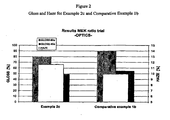
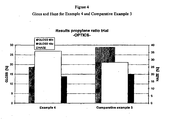
- Example 4 Rheology Results and Propylene Concentrations Sample Melt-index Melt-elasticity Propylene AC feed Zone 1 Propylene AC feed Zone 2 Z1/Z2 Z1/Zn dg/min cN Molar ppm Molar ppm 4 0.97 13.65 12350 16370 0.86 0.86 Table 5 Properties of the Example Polymers Example No. Z1/Z2 density (kg/m 3 ) Mw/Mn MI (dg/min) ME (cN) Comp. Ex. 1b 1.00 929 5.15 4.94 1.67 Example 2c 0.81 929 5.99 4.60 2.05 Comp. Ex. 3 1.00 919 9.62 1.07 13.10 Example 4 0.86 920 10.30 0.97 13.65
- Inventive film 1 was made from a sample of the polymer of Example 2c.
- Inventive film 2 was made from a sample of the polymer of Example 4.
- Comparative film 1 was made from a sample of the polymer of Comparative Example 1.
- Comparative film 2 was made from a sample of the polymer of Comparative Example 3.
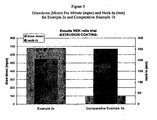
- Extrusion coating was performed on Comparative Example 1b and Example 2c.
- the melt index of Comparative Example 3 and Example 4 is too low for a good coating operation.
- Each of the coatings was formed according to the following conditions.
- the resins were extruded at a set extruder temperature of 320°C from a coat hanger type extrusion die with a nominal die gap of 0.7 mm, onto 70 g/m 2 Kraft paper in an amount of 25 g/m 2 in parts with in process addition of 40 ⁇ m (micron) aluminum sheets, using an air gap of 250 mm and varying line speeds in meters per minute, and at a line speed of 100 m/min, but with varying air gaps, utilizing a matt chill roll maintained at a temperature of 15 to 20°C.
- Inventive coating 1 was made from a sample of the polymer of Example 2c.
- Comparative coating 1 was made from a sample of the polymer of Comparative Example 1b. Coating results are shown in Table 9 below.
- Draw down is the maximum line speed attainable during stable coating.
- Neck-in is the shrinkage in the width of the web in comparison to the die width at fixed line speed (100 m/min).
- Lower neck-in and higher draw down are both very desirable.
- Lower neck-in means better dimensional stability of the web which, in turn, provides better control of the coating onto the substrate.
- Higher draw down means higher line speed which, in turn, means better productivity.
- Table 9 Extrusion Coating Properties of Samples of Comparative Example 1b and Example 2c Example No. Draw Down (mpm) Neck-In (mm) Comparative Example 1b 100 251 Example 2c 680 207
Landscapes
- Chemical & Material Sciences (AREA)
- Health & Medical Sciences (AREA)
- Chemical Kinetics & Catalysis (AREA)
- Medicinal Chemistry (AREA)
- Polymers & Plastics (AREA)
- Organic Chemistry (AREA)
- Engineering & Computer Science (AREA)
- Manufacturing & Machinery (AREA)
- Materials Engineering (AREA)
- Addition Polymer Or Copolymer, Post-Treatments, Or Chemical Modifications (AREA)
- Polymerisation Methods In General (AREA)
- Polymerization Catalysts (AREA)
Applications Claiming Priority (2)
| Application Number | Priority Date | Filing Date | Title |
|---|---|---|---|
| US64198509A | 2009-12-18 | 2009-12-18 | |
| PCT/US2010/060244 WO2011075465A1 (en) | 2009-12-18 | 2010-12-14 | Polymerization process to make low density polyethylene |
Publications (2)
| Publication Number | Publication Date |
|---|---|
| EP2513162A1 EP2513162A1 (en) | 2012-10-24 |
| EP2513162B1 true EP2513162B1 (en) | 2015-11-04 |
Family
ID=43663620
Family Applications (1)
| Application Number | Title | Priority Date | Filing Date |
|---|---|---|---|
| EP10795562.7A Active EP2513162B1 (en) | 2009-12-18 | 2010-12-14 | Polymerization process to make low density polyethylene |
Country Status (9)
| Country | Link |
|---|---|
| EP (1) | EP2513162B1 (cg-RX-API-DMAC7.html) |
| JP (1) | JP5873803B2 (cg-RX-API-DMAC7.html) |
| KR (1) | KR20120115323A (cg-RX-API-DMAC7.html) |
| CN (1) | CN102762609A (cg-RX-API-DMAC7.html) |
| BR (1) | BR112012015026B1 (cg-RX-API-DMAC7.html) |
| CA (1) | CA2784272A1 (cg-RX-API-DMAC7.html) |
| ES (1) | ES2555498T3 (cg-RX-API-DMAC7.html) |
| SG (1) | SG181754A1 (cg-RX-API-DMAC7.html) |
| WO (1) | WO2011075465A1 (cg-RX-API-DMAC7.html) |
Families Citing this family (30)
| Publication number | Priority date | Publication date | Assignee | Title |
|---|---|---|---|---|
| EP2621963B1 (en) * | 2010-09-30 | 2016-07-06 | Dow Global Technologies LLC | Polymerization process to make low density polyethylene |
| WO2012044503A1 (en) | 2010-09-30 | 2012-04-05 | Dow Global Technologies Llc | Ethylene-based interpolymers and processes to make the same |
| JP5980219B2 (ja) | 2010-10-29 | 2016-08-31 | ダウ グローバル テクノロジーズ エルエルシー | エチレン系ポリマーおよびその方法 |
| EP3002300B1 (en) * | 2011-10-19 | 2017-07-19 | Dow Global Technologies LLC | Polymerization processes with fresh ethylene distributions for preparation of low density ethylene-based polymers |
| WO2013078018A2 (en) * | 2011-11-23 | 2013-05-30 | Dow Global Technologies Llc | Low density ethylene-based polymers with broad molecular weight distributions and low extractables |
| WO2013078224A1 (en) | 2011-11-23 | 2013-05-30 | Dow Global Technologies Llc | Low density ethylene-based polymers with extracts at lower molecular weights |
| CN104136467B (zh) | 2011-12-22 | 2016-01-20 | 陶氏环球技术有限责任公司 | 具有改善的熔体强度的基于乙烯的聚合物及其方法 |
| WO2014105110A2 (en) * | 2012-12-28 | 2014-07-03 | Dow Global Technologies Llc | Method to reduce the crystallization temperature of carboxylic acid comonomer at elevated pressures, and to improve the copolymerization of the same |
| EP2992050B1 (en) | 2013-05-01 | 2018-01-03 | Dow Global Technologies LLC | Low density ethylene-based polymer compositions with good melt strength and high density |
| WO2014190041A1 (en) * | 2013-05-22 | 2014-11-27 | Dow Global Technologies Llc | Low density ethylene-based polymer compositions with high melt strength and mid-high density control |
| KR102278813B1 (ko) * | 2013-12-26 | 2021-07-21 | 다우 글로벌 테크놀로지스 엘엘씨 | 비대칭 폴리엔을 사용하여 에틸렌계 중합체를 형성하는 방법 |
| EP3161024B1 (en) * | 2014-06-27 | 2024-03-20 | Dow Global Technologies LLC | Process to prepare ethylene-based polymers using a distribution of carbon monoxide |
| MX394110B (es) * | 2014-06-27 | 2025-03-24 | Dow Global Technologies Llc | Polimeros a base de etileno que comprenden unidades derivadas de monoxido de carbono y un agente de modificacion de reologia. |
| EP3483188A1 (en) * | 2014-08-05 | 2019-05-15 | ExxonMobil Chemical Patents Inc. | Process for manufacturing ethylene polymers and using modifiers |
| CN105585765A (zh) * | 2014-10-20 | 2016-05-18 | 中国石油化工股份有限公司 | 一种用于制造高透明薄膜的低密度聚乙烯树脂及其制备方法 |
| CN105585766A (zh) * | 2014-10-20 | 2016-05-18 | 中国石油化工股份有限公司 | 一种药用薄膜用低密度聚乙烯树脂及其制备方法 |
| CN105585647A (zh) * | 2014-10-20 | 2016-05-18 | 中国石油化工股份有限公司 | 一种车饰无纺布背胶用聚乙烯专用料的制备方法 |
| WO2016077512A2 (en) * | 2014-11-13 | 2016-05-19 | Dow Global Technologies Llc | Lubricant compositions for improved high pressure free-radical polymerizations |
| EP3274404B1 (en) * | 2015-03-26 | 2020-04-22 | SABIC Global Technologies B.V. | High-pressure polymerisation process for the preparation of polyethylene |
| CN104788593B (zh) * | 2015-04-16 | 2017-03-29 | 浙江大学 | 一种生产低密度聚乙烯的方法及装置 |
| CN107750257B (zh) * | 2015-06-25 | 2021-03-30 | 陶氏环球技术有限责任公司 | 制备具有较高g′和较宽mwd的管状乙烯基聚合物的改进方法 |
| WO2017223467A1 (en) * | 2016-06-24 | 2017-12-28 | Dow Global Technologies Llc | Process for making high pressure free radical ethylene copolymers |
| EP3260473A1 (en) * | 2016-06-24 | 2017-12-27 | Dow Global Technologies LLC | High pressure, free radical polymerizations to produce ethylene-based polymers |
| US11591421B2 (en) | 2017-07-31 | 2023-02-28 | Exxonmobil Chemical Patents Inc. | Process for producing ethylene copolymers |
| KR102410623B1 (ko) | 2017-10-19 | 2022-06-17 | 주식회사 엘지화학 | 폴리에틸렌 수지의 제조 방법 |
| WO2019078561A1 (ko) * | 2017-10-19 | 2019-04-25 | 주식회사 엘지화학 | 폴리에틸렌 수지의 제조 방법 |
| CN110891986B (zh) * | 2017-11-03 | 2023-07-18 | Lg化学株式会社 | 乙烯-乙酸乙烯酯共聚物的制备方法 |
| KR102608214B1 (ko) * | 2018-12-13 | 2023-11-30 | 주식회사 엘지화학 | 저밀도 폴리에틸렌의 제조방법 |
| WO2025181065A1 (en) * | 2024-02-29 | 2025-09-04 | Basell Polyolefine Gmbh | Film with high weathering resistance |
| KR102755274B1 (ko) | 2024-07-05 | 2025-01-22 | 최병렬 | 압축기와 반응기와 촉매제 기반 에틸렌과 프로판과 고분자 재료 혼합 복합 생산 시스템 및 그 운용방법 |
Family Cites Families (17)
| Publication number | Priority date | Publication date | Assignee | Title |
|---|---|---|---|---|
| US3485706A (en) | 1968-01-18 | 1969-12-23 | Du Pont | Textile-like patterned nonwoven fabrics and their production |
| US3913698A (en) | 1974-02-01 | 1975-10-21 | Power Matic Corp | Variable speed transmission |
| DE2853069B2 (de) * | 1978-12-08 | 1981-02-12 | Ec Erdoelchemie Gmbh, 5000 Koeln | Verfahren zur Herstellung von Verbundsystemen und Hochdruckpolyethylen-Beschichtungsharz |
| US4340563A (en) | 1980-05-05 | 1982-07-20 | Kimberly-Clark Corporation | Method for forming nonwoven webs |
| US4322027A (en) | 1980-10-02 | 1982-03-30 | Crown Zellerbach Corporation | Filament draw nozzle |
| US4413110A (en) | 1981-04-30 | 1983-11-01 | Allied Corporation | High tenacity, high modulus polyethylene and polypropylene fibers and intermediates therefore |
| US4663220A (en) | 1985-07-30 | 1987-05-05 | Kimberly-Clark Corporation | Polyolefin-containing extrudable compositions and methods for their formation into elastomeric products including microfibers |
| US4668566A (en) | 1985-10-07 | 1987-05-26 | Kimberly-Clark Corporation | Multilayer nonwoven fabric made with poly-propylene and polyethylene |
| US5416129A (en) * | 1994-05-10 | 1995-05-16 | The Dow Chemical Company | Closed cell, low density ethylenic polymer foam produced with inorganic halogen-free blowing agents |
| JPH11171922A (ja) * | 1997-12-12 | 1999-06-29 | Nippon Unicar Co Ltd | 高融点低密度ポリエチレン樹脂 |
| US6407191B1 (en) | 1998-01-12 | 2002-06-18 | The Dow Chemical Company | Medium density ethylene polymers, a process to prepare these polymers and use of carbonyl group containing chain transfer agents in this process |
| US7406537B2 (en) | 2002-11-26 | 2008-07-29 | Progress Software Corporation | Dynamic subscription and message routing on a topic between publishing nodes and subscribing nodes |
| US20040158016A1 (en) * | 2003-02-06 | 2004-08-12 | Lee Chun D. | High density polyethylene and insulation compositions for wire and cable |
| BRPI0516921B1 (pt) * | 2004-11-02 | 2016-04-12 | Dow Global Technologies Inc | homopolímero ou copolímero de etileno e processo de polimerização com iniciação via radical livre |
| EP1964860B1 (en) * | 2005-12-19 | 2017-07-05 | Tosoh Corporation | Ethylene polymer, catalyst for production of ethylene polymer, and process for production of ethylene polymer |
| DE112010002188T5 (de) * | 2009-05-29 | 2012-08-30 | Sumitomo Chemical Company, Ltd. | Ethylen-α-Olefin-Copolymer und Formgegenstand |
| WO2011115192A1 (ja) * | 2010-03-15 | 2011-09-22 | 住友化学株式会社 | エチレン-α-オレフィン共重合体および成形体 |
-
2010
- 2010-12-14 EP EP10795562.7A patent/EP2513162B1/en active Active
- 2010-12-14 ES ES10795562.7T patent/ES2555498T3/es active Active
- 2010-12-14 CN CN2010800643186A patent/CN102762609A/zh active Pending
- 2010-12-14 JP JP2012544703A patent/JP5873803B2/ja active Active
- 2010-12-14 WO PCT/US2010/060244 patent/WO2011075465A1/en not_active Ceased
- 2010-12-14 SG SG2012044483A patent/SG181754A1/en unknown
- 2010-12-14 KR KR1020127018664A patent/KR20120115323A/ko not_active Withdrawn
- 2010-12-14 BR BR112012015026-0A patent/BR112012015026B1/pt active IP Right Grant
- 2010-12-14 CA CA2784272A patent/CA2784272A1/en not_active Abandoned
Also Published As
| Publication number | Publication date |
|---|---|
| BR112012015026B1 (pt) | 2019-11-05 |
| KR20120115323A (ko) | 2012-10-17 |
| SG181754A1 (en) | 2012-07-30 |
| CN102762609A (zh) | 2012-10-31 |
| EP2513162A1 (en) | 2012-10-24 |
| JP5873803B2 (ja) | 2016-03-01 |
| JP2013514440A (ja) | 2013-04-25 |
| BR112012015026A2 (pt) | 2017-07-04 |
| WO2011075465A1 (en) | 2011-06-23 |
| CA2784272A1 (en) | 2011-06-23 |
| ES2555498T3 (es) | 2016-01-04 |
Similar Documents
| Publication | Publication Date | Title |
|---|---|---|
| EP2513162B1 (en) | Polymerization process to make low density polyethylene | |
| EP2621963B1 (en) | Polymerization process to make low density polyethylene | |
| US9403928B2 (en) | Polymerization process to make low density polyethylene | |
| JP6759263B2 (ja) | 高い溶融強度を有する低密度エチレン系ポリマー | |
| EP2621968B1 (en) | Ethylene-based interpolymers and processes to make the same | |
| EP2918634B1 (en) | Low density ethylene-based polymers with broad molecular weight distributions and low extractables | |
| EP3243849A2 (en) | Polymerization processes with fresh ethylene distributions for preparation of low density ethylene-based polymers | |
| WO2014190036A1 (en) | Compositions containing low density ethylene-based polymers with high melt strength and films formed from the same | |
| EP3658592B1 (en) | Low density ethylene-based polymers for low speed extrusion coating operations |
Legal Events
| Date | Code | Title | Description |
|---|---|---|---|
| PUAI | Public reference made under article 153(3) epc to a published international application that has entered the european phase |
Free format text: ORIGINAL CODE: 0009012 |
|
| 17P | Request for examination filed |
Effective date: 20120612 |
|
| AK | Designated contracting states |
Kind code of ref document: A1 Designated state(s): AL AT BE BG CH CY CZ DE DK EE ES FI FR GB GR HR HU IE IS IT LI LT LU LV MC MK MT NL NO PL PT RO RS SE SI SK SM TR |
|
| DAX | Request for extension of the european patent (deleted) | ||
| RIC1 | Information provided on ipc code assigned before grant |
Ipc: C08F 10/02 20060101AFI20130416BHEP Ipc: C08F 110/02 20060101ALI20130416BHEP Ipc: C08F 10/00 20060101ALI20130416BHEP |
|
| GRAP | Despatch of communication of intention to grant a patent |
Free format text: ORIGINAL CODE: EPIDOSNIGR1 |
|
| INTG | Intention to grant announced |
Effective date: 20130524 |
|
| RIN1 | Information on inventor provided before grant (corrected) |
Inventor name: DEN DOELDER, CORNELIS, F.J. Inventor name: BERBEE, OTTO, J. Inventor name: NIJHOF, EGBERT Inventor name: DEMIRORS, MEHMET Inventor name: DE VRIES, SJOERD, A. |
|
| 17Q | First examination report despatched |
Effective date: 20131105 |
|
| GRAP | Despatch of communication of intention to grant a patent |
Free format text: ORIGINAL CODE: EPIDOSNIGR1 |
|
| INTG | Intention to grant announced |
Effective date: 20150409 |
|
| GRAP | Despatch of communication of intention to grant a patent |
Free format text: ORIGINAL CODE: EPIDOSNIGR1 |
|
| INTG | Intention to grant announced |
Effective date: 20150522 |
|
| GRAS | Grant fee paid |
Free format text: ORIGINAL CODE: EPIDOSNIGR3 |
|
| GRAA | (expected) grant |
Free format text: ORIGINAL CODE: 0009210 |
|
| AK | Designated contracting states |
Kind code of ref document: B1 Designated state(s): AL AT BE BG CH CY CZ DE DK EE ES FI FR GB GR HR HU IE IS IT LI LT LU LV MC MK MT NL NO PL PT RO RS SE SI SK SM TR |
|
| REG | Reference to a national code |
Ref country code: GB Ref legal event code: FG4D |
|
| REG | Reference to a national code |
Ref country code: FR Ref legal event code: PLFP Year of fee payment: 6 |
|
| REG | Reference to a national code |
Ref country code: CH Ref legal event code: EP |
|
| REG | Reference to a national code |
Ref country code: AT Ref legal event code: REF Ref document number: 759149 Country of ref document: AT Kind code of ref document: T Effective date: 20151115 |
|
| REG | Reference to a national code |
Ref country code: IE Ref legal event code: FG4D |
|
| REG | Reference to a national code |
Ref country code: DE Ref legal event code: R096 Ref document number: 602010028842 Country of ref document: DE |
|
| REG | Reference to a national code |
Ref country code: ES Ref legal event code: FG2A Ref document number: 2555498 Country of ref document: ES Kind code of ref document: T3 Effective date: 20160104 |
|
| REG | Reference to a national code |
Ref country code: NL Ref legal event code: FP |
|
| REG | Reference to a national code |
Ref country code: LT Ref legal event code: MG4D |
|
| REG | Reference to a national code |
Ref country code: AT Ref legal event code: MK05 Ref document number: 759149 Country of ref document: AT Kind code of ref document: T Effective date: 20151104 |
|
| PG25 | Lapsed in a contracting state [announced via postgrant information from national office to epo] |
Ref country code: LT Free format text: LAPSE BECAUSE OF FAILURE TO SUBMIT A TRANSLATION OF THE DESCRIPTION OR TO PAY THE FEE WITHIN THE PRESCRIBED TIME-LIMIT Effective date: 20151104 Ref country code: HR Free format text: LAPSE BECAUSE OF FAILURE TO SUBMIT A TRANSLATION OF THE DESCRIPTION OR TO PAY THE FEE WITHIN THE PRESCRIBED TIME-LIMIT Effective date: 20151104 Ref country code: IS Free format text: LAPSE BECAUSE OF FAILURE TO SUBMIT A TRANSLATION OF THE DESCRIPTION OR TO PAY THE FEE WITHIN THE PRESCRIBED TIME-LIMIT Effective date: 20160304 Ref country code: NO Free format text: LAPSE BECAUSE OF FAILURE TO SUBMIT A TRANSLATION OF THE DESCRIPTION OR TO PAY THE FEE WITHIN THE PRESCRIBED TIME-LIMIT Effective date: 20160204 |
|
| PG25 | Lapsed in a contracting state [announced via postgrant information from national office to epo] |
Ref country code: PL Free format text: LAPSE BECAUSE OF FAILURE TO SUBMIT A TRANSLATION OF THE DESCRIPTION OR TO PAY THE FEE WITHIN THE PRESCRIBED TIME-LIMIT Effective date: 20151104 Ref country code: FI Free format text: LAPSE BECAUSE OF FAILURE TO SUBMIT A TRANSLATION OF THE DESCRIPTION OR TO PAY THE FEE WITHIN THE PRESCRIBED TIME-LIMIT Effective date: 20151104 Ref country code: PT Free format text: LAPSE BECAUSE OF FAILURE TO SUBMIT A TRANSLATION OF THE DESCRIPTION OR TO PAY THE FEE WITHIN THE PRESCRIBED TIME-LIMIT Effective date: 20160304 Ref country code: GR Free format text: LAPSE BECAUSE OF FAILURE TO SUBMIT A TRANSLATION OF THE DESCRIPTION OR TO PAY THE FEE WITHIN THE PRESCRIBED TIME-LIMIT Effective date: 20160205 Ref country code: BE Free format text: LAPSE BECAUSE OF NON-PAYMENT OF DUE FEES Effective date: 20151231 Ref country code: RS Free format text: LAPSE BECAUSE OF FAILURE TO SUBMIT A TRANSLATION OF THE DESCRIPTION OR TO PAY THE FEE WITHIN THE PRESCRIBED TIME-LIMIT Effective date: 20151104 Ref country code: LV Free format text: LAPSE BECAUSE OF FAILURE TO SUBMIT A TRANSLATION OF THE DESCRIPTION OR TO PAY THE FEE WITHIN THE PRESCRIBED TIME-LIMIT Effective date: 20151104 Ref country code: SE Free format text: LAPSE BECAUSE OF FAILURE TO SUBMIT A TRANSLATION OF THE DESCRIPTION OR TO PAY THE FEE WITHIN THE PRESCRIBED TIME-LIMIT Effective date: 20151104 Ref country code: AT Free format text: LAPSE BECAUSE OF FAILURE TO SUBMIT A TRANSLATION OF THE DESCRIPTION OR TO PAY THE FEE WITHIN THE PRESCRIBED TIME-LIMIT Effective date: 20151104 |
|
| PG25 | Lapsed in a contracting state [announced via postgrant information from national office to epo] |
Ref country code: CZ Free format text: LAPSE BECAUSE OF FAILURE TO SUBMIT A TRANSLATION OF THE DESCRIPTION OR TO PAY THE FEE WITHIN THE PRESCRIBED TIME-LIMIT Effective date: 20151104 |
|
| REG | Reference to a national code |
Ref country code: CH Ref legal event code: PL |
|
| REG | Reference to a national code |
Ref country code: DE Ref legal event code: R097 Ref document number: 602010028842 Country of ref document: DE |
|
| PG25 | Lapsed in a contracting state [announced via postgrant information from national office to epo] |
Ref country code: SM Free format text: LAPSE BECAUSE OF FAILURE TO SUBMIT A TRANSLATION OF THE DESCRIPTION OR TO PAY THE FEE WITHIN THE PRESCRIBED TIME-LIMIT Effective date: 20151104 Ref country code: EE Free format text: LAPSE BECAUSE OF FAILURE TO SUBMIT A TRANSLATION OF THE DESCRIPTION OR TO PAY THE FEE WITHIN THE PRESCRIBED TIME-LIMIT Effective date: 20151104 Ref country code: DK Free format text: LAPSE BECAUSE OF FAILURE TO SUBMIT A TRANSLATION OF THE DESCRIPTION OR TO PAY THE FEE WITHIN THE PRESCRIBED TIME-LIMIT Effective date: 20151104 Ref country code: SK Free format text: LAPSE BECAUSE OF FAILURE TO SUBMIT A TRANSLATION OF THE DESCRIPTION OR TO PAY THE FEE WITHIN THE PRESCRIBED TIME-LIMIT Effective date: 20151104 Ref country code: RO Free format text: LAPSE BECAUSE OF FAILURE TO SUBMIT A TRANSLATION OF THE DESCRIPTION OR TO PAY THE FEE WITHIN THE PRESCRIBED TIME-LIMIT Effective date: 20151104 |
|
| PLBE | No opposition filed within time limit |
Free format text: ORIGINAL CODE: 0009261 |
|
| STAA | Information on the status of an ep patent application or granted ep patent |
Free format text: STATUS: NO OPPOSITION FILED WITHIN TIME LIMIT |
|
| REG | Reference to a national code |
Ref country code: IE Ref legal event code: MM4A |
|
| PG25 | Lapsed in a contracting state [announced via postgrant information from national office to epo] |
Ref country code: MC Free format text: LAPSE BECAUSE OF FAILURE TO SUBMIT A TRANSLATION OF THE DESCRIPTION OR TO PAY THE FEE WITHIN THE PRESCRIBED TIME-LIMIT Effective date: 20151104 |
|
| 26N | No opposition filed |
Effective date: 20160805 |
|
| GBPC | Gb: european patent ceased through non-payment of renewal fee |
Effective date: 20160204 |
|
| PG25 | Lapsed in a contracting state [announced via postgrant information from national office to epo] |
Ref country code: IE Free format text: LAPSE BECAUSE OF NON-PAYMENT OF DUE FEES Effective date: 20151214 Ref country code: LI Free format text: LAPSE BECAUSE OF NON-PAYMENT OF DUE FEES Effective date: 20151231 Ref country code: CH Free format text: LAPSE BECAUSE OF NON-PAYMENT OF DUE FEES Effective date: 20151231 |
|
| REG | Reference to a national code |
Ref country code: FR Ref legal event code: PLFP Year of fee payment: 7 |
|
| PG25 | Lapsed in a contracting state [announced via postgrant information from national office to epo] |
Ref country code: SI Free format text: LAPSE BECAUSE OF FAILURE TO SUBMIT A TRANSLATION OF THE DESCRIPTION OR TO PAY THE FEE WITHIN THE PRESCRIBED TIME-LIMIT Effective date: 20151104 |
|
| PG25 | Lapsed in a contracting state [announced via postgrant information from national office to epo] |
Ref country code: BE Free format text: LAPSE BECAUSE OF FAILURE TO SUBMIT A TRANSLATION OF THE DESCRIPTION OR TO PAY THE FEE WITHIN THE PRESCRIBED TIME-LIMIT Effective date: 20151104 |
|
| PG25 | Lapsed in a contracting state [announced via postgrant information from national office to epo] |
Ref country code: GB Free format text: LAPSE BECAUSE OF NON-PAYMENT OF DUE FEES Effective date: 20160204 |
|
| PG25 | Lapsed in a contracting state [announced via postgrant information from national office to epo] |
Ref country code: BG Free format text: LAPSE BECAUSE OF FAILURE TO SUBMIT A TRANSLATION OF THE DESCRIPTION OR TO PAY THE FEE WITHIN THE PRESCRIBED TIME-LIMIT Effective date: 20151104 Ref country code: HU Free format text: LAPSE BECAUSE OF FAILURE TO SUBMIT A TRANSLATION OF THE DESCRIPTION OR TO PAY THE FEE WITHIN THE PRESCRIBED TIME-LIMIT; INVALID AB INITIO Effective date: 20101214 |
|
| PG25 | Lapsed in a contracting state [announced via postgrant information from national office to epo] |
Ref country code: CY Free format text: LAPSE BECAUSE OF FAILURE TO SUBMIT A TRANSLATION OF THE DESCRIPTION OR TO PAY THE FEE WITHIN THE PRESCRIBED TIME-LIMIT Effective date: 20151104 |
|
| PG25 | Lapsed in a contracting state [announced via postgrant information from national office to epo] |
Ref country code: MT Free format text: LAPSE BECAUSE OF FAILURE TO SUBMIT A TRANSLATION OF THE DESCRIPTION OR TO PAY THE FEE WITHIN THE PRESCRIBED TIME-LIMIT Effective date: 20151104 |
|
| REG | Reference to a national code |
Ref country code: FR Ref legal event code: PLFP Year of fee payment: 8 |
|
| PG25 | Lapsed in a contracting state [announced via postgrant information from national office to epo] |
Ref country code: LU Free format text: LAPSE BECAUSE OF NON-PAYMENT OF DUE FEES Effective date: 20151214 |
|
| PG25 | Lapsed in a contracting state [announced via postgrant information from national office to epo] |
Ref country code: MK Free format text: LAPSE BECAUSE OF FAILURE TO SUBMIT A TRANSLATION OF THE DESCRIPTION OR TO PAY THE FEE WITHIN THE PRESCRIBED TIME-LIMIT Effective date: 20151104 Ref country code: TR Free format text: LAPSE BECAUSE OF FAILURE TO SUBMIT A TRANSLATION OF THE DESCRIPTION OR TO PAY THE FEE WITHIN THE PRESCRIBED TIME-LIMIT Effective date: 20151104 |
|
| PG25 | Lapsed in a contracting state [announced via postgrant information from national office to epo] |
Ref country code: AL Free format text: LAPSE BECAUSE OF FAILURE TO SUBMIT A TRANSLATION OF THE DESCRIPTION OR TO PAY THE FEE WITHIN THE PRESCRIBED TIME-LIMIT Effective date: 20151104 |
|
| P01 | Opt-out of the competence of the unified patent court (upc) registered |
Effective date: 20230525 |
|
| PGFP | Annual fee paid to national office [announced via postgrant information from national office to epo] |
Ref country code: DE Payment date: 20241001 Year of fee payment: 15 |
|
| PGFP | Annual fee paid to national office [announced via postgrant information from national office to epo] |
Ref country code: FR Payment date: 20241001 Year of fee payment: 15 |
|
| PGFP | Annual fee paid to national office [announced via postgrant information from national office to epo] |
Ref country code: IT Payment date: 20241112 Year of fee payment: 15 |
|
| PGFP | Annual fee paid to national office [announced via postgrant information from national office to epo] |
Ref country code: ES Payment date: 20250121 Year of fee payment: 15 |
|
| PGFP | Annual fee paid to national office [announced via postgrant information from national office to epo] |
Ref country code: NL Payment date: 20251006 Year of fee payment: 16 |