EP2509633B1 - Nanoparticle carrier system based on poly(dl-lactic-co-glycolic acid) (plga) for photodynamic therapy - Google Patents
Nanoparticle carrier system based on poly(dl-lactic-co-glycolic acid) (plga) for photodynamic therapy Download PDFInfo
- Publication number
- EP2509633B1 EP2509633B1 EP10836583.4A EP10836583A EP2509633B1 EP 2509633 B1 EP2509633 B1 EP 2509633B1 EP 10836583 A EP10836583 A EP 10836583A EP 2509633 B1 EP2509633 B1 EP 2509633B1
- Authority
- EP
- European Patent Office
- Prior art keywords
- plga
- photosensitizer
- nanoparticles
- nanoparticle
- photodynamic therapy
- Prior art date
- Legal status (The legal status is an assumption and is not a legal conclusion. Google has not performed a legal analysis and makes no representation as to the accuracy of the status listed.)
- Active
Links
Images

Classifications
-
- A—HUMAN NECESSITIES
- A61—MEDICAL OR VETERINARY SCIENCE; HYGIENE
- A61K—PREPARATIONS FOR MEDICAL, DENTAL OR TOILETRY PURPOSES
- A61K9/00—Medicinal preparations characterised by special physical form
- A61K9/48—Preparations in capsules, e.g. of gelatin, of chocolate
- A61K9/50—Microcapsules having a gas, liquid or semi-solid filling; Solid microparticles or pellets surrounded by a distinct coating layer, e.g. coated microspheres, coated drug crystals
- A61K9/51—Nanocapsules; Nanoparticles
- A61K9/5107—Excipients; Inactive ingredients
- A61K9/513—Organic macromolecular compounds; Dendrimers
- A61K9/5146—Organic macromolecular compounds; Dendrimers obtained otherwise than by reactions only involving carbon-to-carbon unsaturated bonds, e.g. polyethylene glycol, polyamines, polyanhydrides
- A61K9/5153—Polyesters, e.g. poly(lactide-co-glycolide)
-
- A—HUMAN NECESSITIES
- A61—MEDICAL OR VETERINARY SCIENCE; HYGIENE
- A61K—PREPARATIONS FOR MEDICAL, DENTAL OR TOILETRY PURPOSES
- A61K33/00—Medicinal preparations containing inorganic active ingredients
- A61K33/20—Elemental chlorine; Inorganic compounds releasing chlorine
-
- A—HUMAN NECESSITIES
- A61—MEDICAL OR VETERINARY SCIENCE; HYGIENE
- A61K—PREPARATIONS FOR MEDICAL, DENTAL OR TOILETRY PURPOSES
- A61K41/00—Medicinal preparations obtained by treating materials with wave energy or particle radiation ; Therapies using these preparations
- A61K41/0057—Photodynamic therapy with a photosensitizer, i.e. agent able to produce reactive oxygen species upon exposure to light or radiation, e.g. UV or visible light; photocleavage of nucleic acids with an agent
- A61K41/0071—PDT with porphyrins having exactly 20 ring atoms, i.e. based on the non-expanded tetrapyrrolic ring system, e.g. bacteriochlorin, chlorin-e6, or phthalocyanines
-
- A—HUMAN NECESSITIES
- A61—MEDICAL OR VETERINARY SCIENCE; HYGIENE
- A61K—PREPARATIONS FOR MEDICAL, DENTAL OR TOILETRY PURPOSES
- A61K47/00—Medicinal preparations characterised by the non-active ingredients used, e.g. carriers or inert additives; Targeting or modifying agents chemically bound to the active ingredient
- A61K47/06—Organic compounds, e.g. natural or synthetic hydrocarbons, polyolefins, mineral oil, petrolatum or ozokerite
- A61K47/08—Organic compounds, e.g. natural or synthetic hydrocarbons, polyolefins, mineral oil, petrolatum or ozokerite containing oxygen, e.g. ethers, acetals, ketones, quinones, aldehydes, peroxides
- A61K47/10—Alcohols; Phenols; Salts thereof, e.g. glycerol; Polyethylene glycols [PEG]; Poloxamers; PEG/POE alkyl ethers
-
- A—HUMAN NECESSITIES
- A61—MEDICAL OR VETERINARY SCIENCE; HYGIENE
- A61K—PREPARATIONS FOR MEDICAL, DENTAL OR TOILETRY PURPOSES
- A61K47/00—Medicinal preparations characterised by the non-active ingredients used, e.g. carriers or inert additives; Targeting or modifying agents chemically bound to the active ingredient
- A61K47/06—Organic compounds, e.g. natural or synthetic hydrocarbons, polyolefins, mineral oil, petrolatum or ozokerite
- A61K47/26—Carbohydrates, e.g. sugar alcohols, amino sugars, nucleic acids, mono-, di- or oligo-saccharides; Derivatives thereof, e.g. polysorbates, sorbitan fatty acid esters or glycyrrhizin
-
- A—HUMAN NECESSITIES
- A61—MEDICAL OR VETERINARY SCIENCE; HYGIENE
- A61K—PREPARATIONS FOR MEDICAL, DENTAL OR TOILETRY PURPOSES
- A61K47/00—Medicinal preparations characterised by the non-active ingredients used, e.g. carriers or inert additives; Targeting or modifying agents chemically bound to the active ingredient
- A61K47/30—Macromolecular organic or inorganic compounds, e.g. inorganic polyphosphates
- A61K47/32—Macromolecular compounds obtained by reactions only involving carbon-to-carbon unsaturated bonds, e.g. carbomers, poly(meth)acrylates, or polyvinyl pyrrolidone
-
- A—HUMAN NECESSITIES
- A61—MEDICAL OR VETERINARY SCIENCE; HYGIENE
- A61K—PREPARATIONS FOR MEDICAL, DENTAL OR TOILETRY PURPOSES
- A61K47/00—Medicinal preparations characterised by the non-active ingredients used, e.g. carriers or inert additives; Targeting or modifying agents chemically bound to the active ingredient
- A61K47/30—Macromolecular organic or inorganic compounds, e.g. inorganic polyphosphates
- A61K47/34—Macromolecular compounds obtained otherwise than by reactions only involving carbon-to-carbon unsaturated bonds, e.g. polyesters, polyamino acids, polysiloxanes, polyphosphazines, copolymers of polyalkylene glycol or poloxamers
-
- A—HUMAN NECESSITIES
- A61—MEDICAL OR VETERINARY SCIENCE; HYGIENE
- A61K—PREPARATIONS FOR MEDICAL, DENTAL OR TOILETRY PURPOSES
- A61K47/00—Medicinal preparations characterised by the non-active ingredients used, e.g. carriers or inert additives; Targeting or modifying agents chemically bound to the active ingredient
- A61K47/30—Macromolecular organic or inorganic compounds, e.g. inorganic polyphosphates
- A61K47/42—Proteins; Polypeptides; Degradation products thereof; Derivatives thereof, e.g. albumin, gelatin or zein
-
- A—HUMAN NECESSITIES
- A61—MEDICAL OR VETERINARY SCIENCE; HYGIENE
- A61K—PREPARATIONS FOR MEDICAL, DENTAL OR TOILETRY PURPOSES
- A61K9/00—Medicinal preparations characterised by special physical form
- A61K9/14—Particulate form, e.g. powders, Processes for size reducing of pure drugs or the resulting products, Pure drug nanoparticles
- A61K9/19—Particulate form, e.g. powders, Processes for size reducing of pure drugs or the resulting products, Pure drug nanoparticles lyophilised, i.e. freeze-dried, solutions or dispersions
-
- A—HUMAN NECESSITIES
- A61—MEDICAL OR VETERINARY SCIENCE; HYGIENE
- A61P—SPECIFIC THERAPEUTIC ACTIVITY OF CHEMICAL COMPOUNDS OR MEDICINAL PREPARATIONS
- A61P13/00—Drugs for disorders of the urinary system
-
- A—HUMAN NECESSITIES
- A61—MEDICAL OR VETERINARY SCIENCE; HYGIENE
- A61P—SPECIFIC THERAPEUTIC ACTIVITY OF CHEMICAL COMPOUNDS OR MEDICINAL PREPARATIONS
- A61P17/00—Drugs for dermatological disorders
-
- A—HUMAN NECESSITIES
- A61—MEDICAL OR VETERINARY SCIENCE; HYGIENE
- A61P—SPECIFIC THERAPEUTIC ACTIVITY OF CHEMICAL COMPOUNDS OR MEDICINAL PREPARATIONS
- A61P19/00—Drugs for skeletal disorders
- A61P19/02—Drugs for skeletal disorders for joint disorders, e.g. arthritis, arthrosis
-
- A—HUMAN NECESSITIES
- A61—MEDICAL OR VETERINARY SCIENCE; HYGIENE
- A61P—SPECIFIC THERAPEUTIC ACTIVITY OF CHEMICAL COMPOUNDS OR MEDICINAL PREPARATIONS
- A61P19/00—Drugs for skeletal disorders
- A61P19/04—Drugs for skeletal disorders for non-specific disorders of the connective tissue
-
- A—HUMAN NECESSITIES
- A61—MEDICAL OR VETERINARY SCIENCE; HYGIENE
- A61P—SPECIFIC THERAPEUTIC ACTIVITY OF CHEMICAL COMPOUNDS OR MEDICINAL PREPARATIONS
- A61P27/00—Drugs for disorders of the senses
- A61P27/02—Ophthalmic agents
-
- A—HUMAN NECESSITIES
- A61—MEDICAL OR VETERINARY SCIENCE; HYGIENE
- A61P—SPECIFIC THERAPEUTIC ACTIVITY OF CHEMICAL COMPOUNDS OR MEDICINAL PREPARATIONS
- A61P29/00—Non-central analgesic, antipyretic or antiinflammatory agents, e.g. antirheumatic agents; Non-steroidal antiinflammatory drugs [NSAID]
-
- A—HUMAN NECESSITIES
- A61—MEDICAL OR VETERINARY SCIENCE; HYGIENE
- A61P—SPECIFIC THERAPEUTIC ACTIVITY OF CHEMICAL COMPOUNDS OR MEDICINAL PREPARATIONS
- A61P35/00—Antineoplastic agents
Definitions
- the present invention concerns the preparation of nanoparticle formulations containing hydrophobic photosensitizers and their use in photodynamic therapy, particularly for photodynamic tumor therapy, using intravenous administration.
- Photodynamic therapy is one of the most promising new techniques now being explored for use in a variety of medical applications and particularly is a wellrecognized treatment for the destruction of tumors.
- Photodynamic therapy uses light and a photosensitizer (a dye) to achieve its desired medical effect.
- a large number of naturally occurring and synthetic dyes have been evaluated as potential photosensitizers for photodynamic therapy.
- Perhaps the most widely studied class of photosensitizers is the tetrapyrrolic macrocyclic compounds. Among them, especially porphyrins and chlorins have been tested for their PDT efficacy.
- Porphyrins are macrocyclic compounds with bridges of one carbon atom joining pyrroles to form a characteristic tetrapyrrole ring structure.
- porphyrin derivatives including chlorins containing one dihydro-pyrrole unit and bacteriochlorins containing two dihydro-pyrrole units. Both mentioned porphyrin derivatives possessing potential for PDT can either be derived from natural sources or from total synthesis.
- chlorins Compared to porphyrins, chlorins have the advantage that they possess a more favorable absorption spectrum, i.e. they have a more intense absorption in the red and near-infrared region of the electromagnetic spectrum. As light of longer wavelength penetrates deeper into the tissue it is thus possible to treat e.g. more expanded tumors, when PDT is employed for tumor therapy.
- Nanoparticles are intensively investigated as carriers for lipophilic drug substances.
- a nanoparticle formulation of the anti-cancer drug Paclitaxel based on human serum albumin (HSA) has been approved recently by regulatory authorities in Europe and the USA.
- Nanoparticles in general are solid colloidal particles, typically, ranging in size from 10nm to 1000nm. They consist of macromolecular materials in which the active ingredient is dissolved, entrapped or encapsulated, and/or to which the active principle is absorbed or attached. Many different sorts of nanoparticle material have been investigated, i.e. quantum dots, silica-based nanoparticles, photonic crystals, liposomes, nanoparticles based on different polymers of natural and synthetic origin, and metal-based nanoparticles.
- Nanoparticles in combination with photosensitizers have been investigated i.e. for many applications including imaging approaches, such as the nanoparticles, disclosed in Patent Publication N° US 2007/0148074A1 by Sadoqi et al. , comprising biodegradable polymer materials entrapping near-infrared dyes for using them in bio-imaging.
- imaging approaches such as the nanoparticles, disclosed in Patent Publication N° US 2007/0148074A1 by Sadoqi et al. , comprising biodegradable polymer materials entrapping near-infrared dyes for using them in bio-imaging.
- other nanoparticle systems combining fluorescence imaging and magnetic resonance imaging, especially in combination with metal (iron) based nanoparticles are known in the art (see Mulder et. al, Nanomed., 2007, 2, 307-324 ; Kim et.al, Nanotechnol., 2002, 13, 610-614 ; Primo et al, J. Magnet
- carrier systems for photosensitizers are nanoparticles that consist of biocompatible materials. Such carrier systems could significantly improve the treatment regimen of photodynamic therapy.
- a carrier system with such known high biocompatibility is e.g. poly(DL-lactic-co-glycolic acid) (PLGA).
- PLGA material has successfully been formulated as nanoparticles.
- PLGA-based nanoparticles as carriers for photosensitizers known in the art (see Gomes et al., Photomed. Laser Surg., 2007, 25, 428-435 ; Ricci-Junior et al., J. Microencapsul., 2006, 23, 523-538 ; Ricci-Junior et al., Int. J. Pharm., 2006, 310, 187-195 ; Saxena et al., Int. J. Pharm., 2006, 308, 200-204 ; McCarthy et al., Abstracts of Papers, 229th ACS Meeting, 2005 ; Vargas et al., Int. J.
- the PLGA-based nanoparticles used as carriers for photosensitizers are intended for a rapid release of the drug, preferably within about 60 seconds, after the nanoparticles are introduced into an environment containing serum proteins and, therefore, are not well suited for a drug transport to the target cells and tissues.
- high concentrations of polyvinyl alcohol (PVA) stabilizer in the range of about 5-20% in the aqueous phase are employed.
- nanoparticle formulations for parenteral administration require that the sterility of the formulation according to pharmacopoeial specifications can be assured.
- the problem of sterility of nanoparticle photosensitizer formulations involving PLGA is challenging because of the lability of the nanoparticle matrix material as well as the lability of the photosensitizer.
- Conventional methods of sterilization (autoclaving, use of ethylene oxide, gamma-irradiation) are incompatible with these photosensitizer formulations (see Athanasiou et. al, Biomaterials, 1996, 17, 93-102 ; Volland et. al, J. Contr. Rel., 1994, 31, 293-305 ).
- sterile filtration through membrane filters of a defined size for such chemically and thermally sensitive materials.
- Pore size for sterile filtration is usually 0.22 ⁇ m whereas nanoparticles of the present invention are in the size range between 100 and 500nm. Therefore, sterile filtration has its drawbacks and is not generally compatible with the nanoparticles that are subject of the present invention.
- the formulation can be freeze dried and later be reconstituted in an aqueous medium.
- photosensitizers of the present invention which are of the chlorin or bacteriochlorin type (i.e. tetrapyrroles carrying one or two dihydro-pyrrole units)
- photosensitizers of the present invention which are of the chlorin or bacteriochlorin type (i.e. tetrapyrroles carrying one or two dihydro-pyrrole units)
- photosensitizers of the present invention which are of the chlorin or bacteriochlorin type (i.e. tetrapyrroles carrying one or two dihydro-pyrrole units)
- such systems are especially sensitive to oxidation and photo-chemical modifications induced by the handling conditions that are often used for nanoparticle preparation (see Hongying et al., Dyes Pigm., 1999, 43, 109-117 ; Hadjur et al., J. Photochem. Photobiol.
- Compagnin, C. in Nanotechnology 2009, 20, 345101 studied the cellular uptake of mTHPC entrapped in organically modified silica nanoparticles and found that the cellular uptake is mediated by serum proteins.
- Konan-Kouakou, Y.N. et al. Journal of Controlled Release 2005, 103, 83-91 deals with in vitro and in vivo activities of verteporfin-loaded nanoparticles.
- Bourdon, O. et al. J. Photochem. Photobiol. B Biol. 2000, 55, 164 -171 present a comparative study of the cellular uptake, localization and phototoxicity of mTHPC encapsulated in suface-modified submircron oil/water carriers in HT29 tumor cells.
- the PLGA-based nanoparticles used as carriers for photosensitizers known in the art either do not address such problems as sterility and freeze-drying or if so, the investigated photosensitizers are less problematic in this respect because of their more stable chemical structure.
- Patent Publication N° WO 2006/133271 A2 discloses Photosensitizer Nanoparticle Aptamer Conjugates comprising a photosensitizer that forms the central core of the nanoparticle, a biodegradable polymer shell and a targeting aptamer (e.g. ErbB3 receptor-specific aptamer) but does not address the problem of sterility of the nanoparticle photosensitizer formulations nor the freeze-drying process required to obtain a stable nanoparticle photosensitizer formulation.
- a targeting aptamer e.g. ErbB3 receptor-specific aptamer
- present invention provides PLGA-based nanoparticle formulations and methods of preparation for photosensitizers suitable for parenteral application that can be prepared for such sensitive compounds as chlorins and bacteriochlorins.
- PLGA poly(DL-lactic-co-glycolic acid)
- the nanoparticles of the present invention are stable enough to allow freeze drying and reconstitution in an aqueous medium.
- present invention provides compositions, which are stable in storage, and a method of production of pharmaceutical based nanoparticulate formulations for clinical use in photodynamic therapy comprising a hydrophobic photosensitizer, poly(lactic-co-glycolic) acid and the stabilizing agent PVA.
- nanoparticulate formulations provide therapeutically effective amounts of photosensitizer for parenteral administration.
- tetrapyrrole derivatives can be used as photosensitizers whose efficacy and safety are enhanced by such nanoparticulate formulations.
- It also teaches the method of preparing PLGA-based nanoparticles under sterile conditions.
- PLGA-based nanoparticles have a mean particle size less than 500nm and the photosensitizer is temoporfin, 5,10,15,20-tetrakis(3-hydroxyphenyl)-chlorin ( m THPC).
- the photosensitizer 2,3-dihydroxy-5,10,15,20-tetrakis(3-hydroxyphenyl)-chlorin ( m THPD-OH) is formulated as a nanoparticle for parenteral administration.
- the formulations can be used for treating hyperplasic and neoplasic conditions, inflammatory problems, and more specifically to target tumor cells.
- the methods of preparation of the described nanoparticle systems of the present invention provide systems that enable a drug release over several hours even in the presence of serum proteins and, therefore, are suitable for a drug transport to target cells and tissues. This is in contrast with the immediate decomposition of particles and release of photosensitizers in the prior art use of PLGA nanoparticle systems. Moreover, a high variability of drug release kinetics is obtained depending on the way the excipients are used during particle preparation.
- nanoparticle formulations of photosensitizers are vital to the development of nanoparticle formulations of photosensitizers. It has now been found that such PLGA-based nanoparticle photosensitizer formulations suitable for clinical applications can be prepared by an aseptic manufacturing process.
- present invention provides methods for the production of sterile PLGA-based photosensitizer-loaded nanoparticles of a mean particle size less than 500nm, with the photosensitizers being chlorins or bacteriochlorins.
- nanoparticle pharmaceutical formulations of the present invention are stable enough to allow freeze drying and reconstitution in an aqueous medium. Therefore present invention addresses the problem of suitable nanoparticle pharmaceutical formulations of hydrophobic photosensitizers for photodynamic therapy that meet the necessities for a parenteral administration in clinical practice.
- nanoparticle photosensitizer formulations based on PLGA in PDT include dermatological disorders, ophthalmological disorders, urological disorders, arthritis and similar inflammatory diseases. More preferably, therapeutic uses of nanoparticle photosensitizer formulations based on PLGA in PDT comprise the treatment of tumor tissues, neoplasia, hyperplasia and related conditions.
- the described nanoparticle systems of PLGA-based nanoparticle formulations for chlorins and bacteriochlorins for parenteral application can be prepared in the presence of reduced amounts of stabilizers (i.e. 1.0% PVA).
- stabilizers i.e. 1.0% PVA.
- the systems enable a drug release over several hours even in the presence of serum proteins and, therefore, are suitable for transporting a drug to target cells and tissues.
- the prolonged drug release enables the attachment of drug targeting ligands to the particle surface (such as antibodies) for a more advanced transport of photosensitizer to target cells and tissues.
- the present invention is based in part upon the surprising discovery that during particle preparation excipients such as polyvinyl alcohol (PVA) can be used in a way, so that 1) the photosensitizer is attached by incorporation in the particle matrix, 2) is attached by adsorption to the particle matrix, 3) or is attached by incorporation in and adsorption to the particle matrix, resulting in a high variability of drug release kinetics.
- excipients such as polyvinyl alcohol (PVA) can be used in a way, so that 1) the photosensitizer is attached by incorporation in the particle matrix, 2) is attached by adsorption to the particle matrix, 3) or is attached by incorporation in and adsorption to the particle matrix, resulting in a high variability of drug release kinetics.
- PVA polyvinyl alcohol
- the PLGA-based nanoparticles have a mean particle size less than 500nm and the photosensitizer is temoporfin, 5,10,15,20-tetrakis(3-hydroxyphenyl)-chlorin (mTHPC).
- the PLGA-based nanoparticles have a mean particle size less than 500nm and the photosensitizer is 2,3-dihydroxy-5,10,15,20-tetrakis(3-hydroxyphenyl)-chlorin ( m THPD-OH).
- the invention provides methods to prepare formulations of photosensitizercontaining nanoparticles preferably using photosensitizers of the chlorin and bacteriochlorin type.
- the nanoparticles prepared by the methods disclosed below have a predictable size and uniformity (in size distribution).
- the nanoparticles are prepared in an aseptic manufacturing process.
- Preferred PLGA-based nanoparticles have a mean size less than 500nm.
- the term "diameter" is not intended to mean that the nanoparticles have necessarily a spherical shape. The term refers to the approximate average width of the nanoparticles.
- the PLGA-based nanoparticles can be prepared so that the photosensitizer loading can be varied in a wide concentration range (2 to 320 ⁇ g photosensitizer per mg nanoparticles).
- the PLGA-based nanoparticles can be prepared so that the photosensitizer is attached by incorporation in the particle matrix, is attached by adsorption to the particle matrix or is attached by incorporation in and adsorption to the particle matrix, resulting in a high variability of drug release kinetics.
- Drug targeting effectiveness of present nanoparticle systems may be enhanced with one or more ligands bound to PLGA-nanoparticles, maintaining the photosensitizer chemical entity by not bonding to photosensitizer molecules.
- the nanoparticles of the invention may be dehydrated for improved stability on storage.
- the preferred method of dehydration is freeze-drying or lyophilisation.
- a lyoprotectant may be used as an additive to improve the stability during the freeze-drying and during reconstitution in an aqueous medium.
- the present invention provides methods for the use of nanoparticle photosensitizer formulations based on PLGA in PDT, comprising the administration of the nanoparticles, their accumulation in the target tissue and the activation of the photosensitizer by light of a specific wavelength.
- the administration is preferably by parenteral means such as intravenous injection.
- the polymer to be used in the present invention is poly(D,L-lactide-co-glycolide) PLGA, preferably characterised by a copolymer ratio of 50:50 or 75:25.
- PLGA to be used for the preparations underlying the present invention was obtained from Boehringer Ingelheim (Resomer RG502H and Resomer RG504H).
- the photosensitizers to be used in the present invention are tetrapyrroles of the chlorin and bacteriochlorin type. Such photosensitizers can either be derived from natural sources or by total synthesis.
- the total synthesis of chlorins and bacteriochlorins can be performed by first synthesizing the porphyrin and then transferring it to a chlorine or bacteriochlorin system (e.g. R. Bonnett, R. D. White, U.-J. Winfield, M. C. Berenbaum, Hydroporphyrins of the meso-tetra(hydroxyphenyl)porphyrin series as tumor photosensitizers, Biochem. J. 1989, 261, 277-280 ).
- a chlorine or bacteriochlorin system e.g. R. Bonnett, R. D. White, U.-J. Winfield, M. C. Berenbaum, Hydroporphyrins of the meso-tetra(hydroxyphen
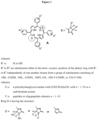
- the chlorins and bacteriochlorins to be used with the present invention have the structure depicted in Fig. 1 .
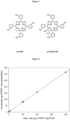
- Specifically preferred chlorins to be formulated in nanoparticles according to the present invention have the structure depicted in Fig. 2 .
- the PLGA-based nanoparticles of the present invention were prepared by an emulsion-diffusion-evaporation process using an Ultra-Turrax dispersion unit. An adsorptive binding of the photosensitizer to the particle matrix, an incorporative binding into the particle matrix and a combination of adsorptive and incorporative binding to the particle matrix can be achieved. Drug loaded nanoparticles can be freeze dried in the presence of cryoprotective agents such as glucose, trehalose, sucrose, sorbitol, mannitol and the like.
- cryoprotective agents such as glucose, trehalose, sucrose, sorbitol, mannitol and the like.
- the PLGA-based nanoparticles were prepared by an emulsion-diffusion-evaporation process using an Ultra-Turrax dispersion unit (Ultra Turrax T25 digital, IKA, Staufen, Germany).
- This organic solution was added to 10mL of a 1% polyvinyl alcohol (PVA) stabilized aqueous solution.
- PVA polyvinyl alcohol
- Ultra-Turrax dispersion unit (17,000rpm, 5min) an oil-in-water nanoemulsion was formed.
- the emulsion was added to 40mL of an aqueous PVA stabilized solution to induce the formation of nanoparticles after complete diffusion of the organic solvents into the aqueous external phase. Permanent mechanical stirring (550rpm) was maintained for 18h to allow the complete evaporation of ethyl acetate.
- the particles were purified by 5 cycles of centrifugation (16,100G; 8min) and redispersion in 1.0mL water in an ultrasonic bath (5min).
- aqueous solutions used for particle preparation were sterile and prefiltered through a membrane with a pore size of 0.22 ⁇ m (Schleicher und Schüll, Dassel, Germany). All of the equipment used was autoclaved at 121°C over 20min. All handling steps for particle preparation were performed under a laminar airflow cabinet.
- Average particle size and polydispersity were measured by photon correlation spectroscopy using Zetasizer 3000 HS A (Malvern Instruments, Malvern, UK). Nanoparticle content was determined by microgravimetry.
- Direct quantification procedure The PLGA-nanoparticles were dissolved in acetone and the solution was measured photometrically at 512nm for mTHPP to determine the content of photosensitizer. Depending upon the ratio of drug to PLGA a drug loading efficiency between 2 and 320 ⁇ g mTHPP per milligram PLGA could be achieved ( Fig. 3 ).
- Lyophilisation of the nanoparticles can be performed according to the following protocol: For the freeze drying process trehalose was added at a concentration of 3% (m/V) to the nanoparticle samples. The samples were transferred to a freeze drier and the shelf temperature was reduced from 5°C to -40°C at a rate of 1°C/min. The pressure was 0.08mbar. These parameters were held for 6h. By increasing the temperature from -40°C to -25°C at 0.5°C/min the primary drying was achieved. The pressure remained unchanged.
- PRT Pressure Rise Test
- Nanoparticles were prepared according to example 1a with the exception that m THPC was used instead of m THPP.
- m THPC was photometrically quantified at 517nm.
- a drug loading efficiency between 2 and 320 ⁇ g m THPC per milligram PLGA could be achieved.
- m THPC loaded nanoparticles were characterized as described within example 1a.
- example 1a The above described standard method (example 1a) was used to prepare empty PLGA-nanoparticles. The preparation steps were performed as described for example 1a except for the addition of the photosensitizer mTHPP.
- a PVA-stabilized m THPP solution was prepared. Therefore, 25mg m THPP was solved in 5mL ethyl acetate and afterwards 10mL of a 1% aqueous PVA solution was added. With an Ultra-Turrax dispersion unit an emulsion was prepared. The emulsion was added to 40mL PVA solution (1%). Permanent mechanical stirring (550rpm) was maintained for 18h to allow the complete evaporation of ethyl acetate.
- a volume of the PLGA-nanoparticle suspension corresponding to 10mg nanoparticles was centrifuged (16,100G; 8min) and the supernatant was discarded.
- the nanoparticles were redispersed in the PVA-stabilized m THPP solution using an ultrasonic bath (5min).
- the mixture was agitated (Thermomixer comfort, Eppendorf, Hamburg, Germany) for 18h (500rpm, 20°C) to achieve adsorption equilibrium of m THPP to the particle surface.
- the nanoparticles were purified as previously described.
- a drug loading efficiency between 2 and 80 ⁇ g m THPP (according to the standard protocol typically 20 ⁇ g) per milligram PLGA could be achieved.
- m THPP loaded (adsorbed) nanoparticles were characterized and lyophilized as described within example 1a.
- Nanoparticles were prepared according to example 1c with the exception that m THPC was used instead of m THPP. m THPC was photometrically quantified at 517nm.
- a drug loading efficiency between 2 and 80 ⁇ g m THPC (according to the standard protocol typically 20 ⁇ g) per milligram PLGA could be achieved.
- m THPC loaded (adsorbed) nanoparticles were characterized and lyophilized as described within example 1a.
- PLGA nanoparticles were prepared according to example 1a.
- the resulting nanoparticles were washed with aqueous 5% (m/V) PVA solution instead of purified water in order to displace the adsorptive bound m THPP from the nanoparticle surface. After 3 cycles of washing with PVA solution the nanoparticles were further purified by repeated centrifugation and redispersion in purified water.
- a drug loading efficiency between 15 and 80 ⁇ g m THPP (according to the standard protocol typically 50 ⁇ g) per milligram PLGA could be achieved.
- m THPP loaded (incorporated) nanoparticles were characterized and lyophilized as described within example 1a.
- Nanoparticles were prepared according to example 1e with the exception that m THPC was used instead of m THPP. m THPC was photometrically quantified at 517nm.
- a drug loading efficiency between 15 and 80 ⁇ g m THPC (according to the standard protocol typically 50 ⁇ g) per milligram PLGA could be achieved.
- m THPC loaded (incorporated) nanoparticles were characterized and lyophilized as described within example 1a.
- the cells were washed twice with PBS and the membranes were stained with Concanavalin A AlexaFluor350 (50 ⁇ g/ml; Invitrogen, Düsseldorf) for 2 min. Cells were fixed with 0.4 % paraformaldehyde for 6 min. After fixation, the cells were washed two times and embedded in Vectashield HardSet Mounting Medium (Axxora, Grünberg). The microscopy analysis was performed with an Axiovert 200 M microscope with a 510 NLO Meta device (Zeiss, Jena), a chameleon femtosecond or an argon ion laser and the LSM Image Examiner software.
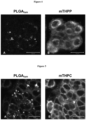
- Figures 4A and B shows the cellular uptake/adhesion and intracellular distribution of PLGA based nanoparticles with the photosensitizer 5,10,15,20-tetrakis(3-hydroxyphenyl)-porphyrin ( m THPP) studied by confocal laser scanning microscopy.
- HT29 cells were cultured on glass slides and incubated with the nanoparticles for 4 h at 37°C. The red autofluorescence of the photosensitizer mTHPP was used.
- the nanoparticles contain incorporated Lumogen Yellow (R) (green).
- Fig. 4A displays the green nanoparticles channel;
- Fig. 4B displays the red photosensitizer channel.
- Scale bar 20° ⁇ m.
- Figures 5A and B shows the cellular uptake/adhesion and intracellular distribution of PLGA based nanoparticles with the photosensitizer 5,10,10,20-tetrakis(3-hydroxyphenyl)-chlorin ( m THPC) studied by confocal laser scanning microscopy.
- HT29 cells were cultured on glass slides and incubated with the nanoparticles for 4 h at 37°C. The red autofluorescence of the photosensitizer mTHPC was used.
- the nanoparticles contain incorporated Lumogen Yellow (R) (green).
- Fig. 5A displays the green nanoparticle channel;
- Fig. 5B displays the red photosensitizer channel.
- Scale bar 20 ⁇ m.
- Intracellular uptake and photodynamic activity of m THPC photosensitizer-loaded PLGA nanoparticles The samples listed in Table 1 were tested for intracellular uptake and phototoxicity of m THPC-PLGA-nanoparticles. Table 1. Samples tested for intracellular uptake and phototoxicity of mTHPC-PLGA-Nanoparticles 1 m THPC-incorporated + adsorbed 81.46 ⁇ g/mg NP 2 m THPC-incorporated 23.52 ⁇ g/mg NP 3 m THPC-adsorbed 19.27 ⁇ g/mg NP
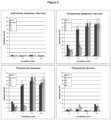
- Phototoxicity of different m THPC loaded PLGA nanoparticles on Jurkat cells after different incubation times was assessed with the Trypan blue test and apoptotic change of the cell shape.
- Experiments were performed with a 660nm LED light source, an exposure time of 120s and a light dose of 290mJ/cm 2 .
- Figure 6 shows the results of phototoxicity of 3 ⁇ M m THPC, and different m THPC loaded PLGA nanoparticles on Jurkat cells after different incubation times. Left: Rate of apoptosis, Right: Rate of necrosis. (reference cells were incubated and irradiated without photosensitizer).
- the cells were counted using a haemocytometer, washed (PBS, 400g, 3min, 2x) and the cell pellet was stored frozen overnight at -20°C to disrupt the cell membranes.
- the m THPC concentration in the ethanol extract was determined via fluorescence using a standard fluorescence series.
- the diameter of the cells was assumed to be 10 ⁇ m (3 measurements).
- All three PLGA-nanoparticles transport m THPC into the cells.
- the transport into the cells occurs in a faster way, when the m THPC is incorporated in the NPs.
Landscapes
- Health & Medical Sciences (AREA)
- Chemical & Material Sciences (AREA)
- Life Sciences & Earth Sciences (AREA)
- Medicinal Chemistry (AREA)
- General Health & Medical Sciences (AREA)
- Veterinary Medicine (AREA)
- Public Health (AREA)
- Pharmacology & Pharmacy (AREA)
- Animal Behavior & Ethology (AREA)
- Engineering & Computer Science (AREA)
- Epidemiology (AREA)
- Bioinformatics & Cheminformatics (AREA)
- General Chemical & Material Sciences (AREA)
- Chemical Kinetics & Catalysis (AREA)
- Organic Chemistry (AREA)
- Nuclear Medicine, Radiotherapy & Molecular Imaging (AREA)
- Inorganic Chemistry (AREA)
- Molecular Biology (AREA)
- Biochemistry (AREA)
- Biomedical Technology (AREA)
- Physical Education & Sports Medicine (AREA)
- Optics & Photonics (AREA)
- Nanotechnology (AREA)
- Proteomics, Peptides & Aminoacids (AREA)
- Oil, Petroleum & Natural Gas (AREA)
- Rheumatology (AREA)
- Physics & Mathematics (AREA)
- Urology & Nephrology (AREA)
- Ophthalmology & Optometry (AREA)
- Pain & Pain Management (AREA)
- Immunology (AREA)
- Orthopedic Medicine & Surgery (AREA)
- Dermatology (AREA)
- Medicinal Preparation (AREA)
- Pharmaceuticals Containing Other Organic And Inorganic Compounds (AREA)
- Medicines That Contain Protein Lipid Enzymes And Other Medicines (AREA)
Applications Claiming Priority (3)
| Application Number | Priority Date | Filing Date | Title |
|---|---|---|---|
| US28589509P | 2009-12-11 | 2009-12-11 | |
| US12/941,447 US20110275686A1 (en) | 2009-12-11 | 2010-11-08 | Nanoparticle carrier systems based on poly(dl-lactic-co-glycolic acid) (plga) for photodynamic therapy (pdt) |
| PCT/US2010/059367 WO2011071970A2 (en) | 2009-12-11 | 2010-12-08 | Nanoparticle carrier systems based on poly(dl-lactic-co-glycolic acid) (plga) for photodynamic therapy (pdt) |
Publications (4)
| Publication Number | Publication Date |
|---|---|
| EP2509633A2 EP2509633A2 (en) | 2012-10-17 |
| EP2509633A4 EP2509633A4 (en) | 2015-08-26 |
| EP2509633C0 EP2509633C0 (en) | 2025-06-18 |
| EP2509633B1 true EP2509633B1 (en) | 2025-06-18 |
Family
ID=44146154
Family Applications (1)
| Application Number | Title | Priority Date | Filing Date |
|---|---|---|---|
| EP10836583.4A Active EP2509633B1 (en) | 2009-12-11 | 2010-12-08 | Nanoparticle carrier system based on poly(dl-lactic-co-glycolic acid) (plga) for photodynamic therapy |
Country Status (7)
| Country | Link |
|---|---|
| US (1) | US20110275686A1 (enExample) |
| EP (1) | EP2509633B1 (enExample) |
| JP (1) | JP5868869B2 (enExample) |
| CN (2) | CN106913533A (enExample) |
| BR (1) | BR112012013951A2 (enExample) |
| CA (1) | CA2784005C (enExample) |
| WO (1) | WO2011071970A2 (enExample) |
Families Citing this family (18)
| Publication number | Priority date | Publication date | Assignee | Title |
|---|---|---|---|---|
| US9211283B2 (en) * | 2009-12-11 | 2015-12-15 | Biolitec Pharma Marketing Ltd | Nanoparticle carrier systems based on human serum albumin for photodynamic therapy |
| GB0922066D0 (en) | 2009-12-17 | 2010-02-03 | Univ Belfast | Modulator |
| US9517277B2 (en) | 2011-07-15 | 2016-12-13 | University Of Georgia Research Foundation, Inc. | Immune-stimulating photoactive hybrid nanoparticles |
| JP2013094135A (ja) * | 2011-11-02 | 2013-05-20 | Waseda Univ | 人工ナノ材料の安全性を評価する方法 |
| CN103169968B (zh) * | 2013-03-12 | 2014-11-26 | 中国科学院理化技术研究所 | 一种基于白蛋白的疏水二氢卟吩光敏剂纳米药物制剂、制备方法及其应用 |
| US10188601B2 (en) * | 2013-09-22 | 2019-01-29 | Brenda Laster | Continuous long-term controlled release of telomerase inhibitors |
| CN103933568B (zh) * | 2014-05-12 | 2016-03-30 | 南京师范大学 | 一种水溶性竹红菌素plga纳米粒及其制备方法 |
| US10456375B2 (en) | 2014-09-30 | 2019-10-29 | Biolitec Unternehmensbeteiligungs Ii Ag | Specifically meso-substituted porphyrins and chlorins for photodynamic therapy |
| CN106620893B (zh) | 2015-07-23 | 2021-07-30 | 爱博诺德(北京)医疗科技股份有限公司 | 用于眼部疾病光治疗的材料 |
| US10786465B2 (en) | 2015-07-27 | 2020-09-29 | The Texas A&M University System | Polymer/copolymer nanoparticles conjugated to gambogic acid |
| CN105343878B (zh) * | 2015-11-30 | 2018-10-19 | 中国人民解放军第三军医大学第三附属医院 | 还原敏感型水溶性分子靶向光敏剂及其制备方法和应用 |
| EP3210626B1 (en) | 2016-02-26 | 2024-11-27 | biolitec Holding GmbH & Co KG | Conjugates of porphyrinoid photosensitizers and glycerol-based polymers for photodynamic therapy |
| CN109481418B (zh) * | 2017-12-19 | 2022-08-19 | 深圳先进技术研究院 | 抗肿瘤纳米颗粒及其制备方法和应用 |
| EP3626268A1 (en) | 2018-09-24 | 2020-03-25 | Westfälische Wilhelms-Universität Münster | Polymer-particle light-cleavable carrier systems for photodynamic therapy |
| US20220025185A1 (en) | 2018-12-10 | 2022-01-27 | Universitat Hamburg | Specifically glyco-substituted porphyrins and chlorins for photodynamic therapy |
| JP2022524516A (ja) * | 2019-03-08 | 2022-05-06 | ノース カロライナ ステート ユニバーシティ | Cart t細胞の腫瘍浸潤および抗腫瘍活性を促進する光温熱療法 |
| CN111000804B (zh) * | 2019-12-05 | 2022-02-11 | 东南大学 | 一种甘露糖靶向的热响应铂纳米颗粒及其制备方法和应用 |
| CN117881432A (zh) * | 2021-04-07 | 2024-04-12 | 北卡罗莱纳州立大学 | 卟啉-氢卟啉化合物、包含其的组合物及其使用方法 |
Family Cites Families (10)
| Publication number | Priority date | Publication date | Assignee | Title |
|---|---|---|---|---|
| JP3372558B2 (ja) * | 1990-09-14 | 2003-02-04 | 中外製薬株式会社 | マイクロカプセル型徐放性製剤及びその製造法 |
| CA2229285A1 (en) | 1995-09-21 | 1997-03-27 | Robert Gurny | Nanoparticles in photodynamic therapy |
| JP3765338B2 (ja) * | 1995-12-15 | 2006-04-12 | 武田薬品工業株式会社 | 注射用徐放性製剤の製造法 |
| US5829448A (en) * | 1996-10-30 | 1998-11-03 | Photogen, Inc. | Method for improved selectivity in photo-activation of molecular agents |
| GB0001455D0 (en) * | 2000-01-21 | 2000-03-15 | Scotia Holdings Plc | Porphyrins and related compounds |
| WO2003092585A2 (en) * | 2002-05-02 | 2003-11-13 | Pr Pharmaceuticals, Inc. | Controlled release compositions of estradiol metabolites |
| US7455858B2 (en) | 2002-05-16 | 2008-11-25 | Qlt Inc. | Compositions and methods for delivery of photosensitive drugs |
| EP1583473A2 (en) | 2003-01-16 | 2005-10-12 | St. Johns University New York | Nanoparticle based stabilization of ir fluorescent dyes |
| US20050048109A1 (en) * | 2003-08-26 | 2005-03-03 | Ceramoptec Industries, Inc. | Non-polar photosensitizer formulations for photodynamic therapy |
| WO2006133271A2 (en) * | 2005-06-06 | 2006-12-14 | The General Hospital Corporation | Compositions and methods relating to target-specific photodynamic therapy |
-
2010
- 2010-11-08 US US12/941,447 patent/US20110275686A1/en not_active Abandoned
- 2010-12-08 CN CN201710128404.2A patent/CN106913533A/zh active Pending
- 2010-12-08 WO PCT/US2010/059367 patent/WO2011071970A2/en not_active Ceased
- 2010-12-08 BR BR112012013951A patent/BR112012013951A2/pt not_active IP Right Cessation
- 2010-12-08 CA CA2784005A patent/CA2784005C/en not_active Expired - Fee Related
- 2010-12-08 CN CN2010800629259A patent/CN102740892A/zh active Pending
- 2010-12-08 EP EP10836583.4A patent/EP2509633B1/en active Active
- 2010-12-08 JP JP2012543222A patent/JP5868869B2/ja not_active Expired - Fee Related
Non-Patent Citations (4)
| Title |
|---|
| BOURDON O ET AL: "A comparative study of the cellular uptake, localization and phototoxicity of meta-tetra(hydroxyphenyl) chlorin encapsulated in surface-modified submicronic oil/water carriers in HT29 tumor cells", JOURNAL OF PHOTOCHEMISTRY AND PHOTOBIOLOGY B: BIOLOGY, ELSEVIER SCIENCE S.A., BASEL, CH, vol. 55, no. 2-3, 1 April 2000 (2000-04-01), pages 164 - 171, XP002522470, ISSN: 1011-1344, DOI: 10.1016/S1011-1344(00)00043-9 * |
| KONAN-KOUAKOU Y N ET AL: "In vitro and in vivo activities of verteporfin-loaded nanoparticles", JOURNAL OF CONTROLLED RELEASE, ELSEVIER, AMSTERDAM, NL, vol. 103, no. 1, 2 March 2005 (2005-03-02), pages 83 - 91, XP027664436, ISSN: 0168-3659, [retrieved on 20050302] * |
| KRUEGER THORSTEN ET AL: "Experimental photodynamic therapy for malignant pleural mesothelioma with pegylated mTHPC.", LASERS IN SURGERY AND MEDICINE 2003, vol. 32, no. 1, 2003, pages 61 - 68, ISSN: 0196-8092 * |
| SEHGAL INDER ET AL: "Photoinduced cytotoxicity and biodistribution of prostate cancer cell-targeted porphyrins", JOURNAL OF MEDICINAL CHEMISTRY, AMERICAN CHEMICAL SOCIETY, US, vol. 51, no. 19, 9 October 2008 (2008-10-09), pages 6014 - 6020, XP009137593, ISSN: 0022-2623, DOI: 10.1021/JM800444C * |
Also Published As
| Publication number | Publication date |
|---|---|
| WO2011071970A2 (en) | 2011-06-16 |
| CN102740892A (zh) | 2012-10-17 |
| EP2509633A2 (en) | 2012-10-17 |
| US20110275686A1 (en) | 2011-11-10 |
| JP2013513610A (ja) | 2013-04-22 |
| BR112012013951A2 (pt) | 2018-06-05 |
| EP2509633A4 (en) | 2015-08-26 |
| JP5868869B2 (ja) | 2016-02-24 |
| EP2509633C0 (en) | 2025-06-18 |
| WO2011071970A3 (en) | 2011-11-17 |
| CA2784005A1 (en) | 2011-06-16 |
| CN106913533A (zh) | 2017-07-04 |
| CA2784005C (en) | 2018-01-02 |
Similar Documents
| Publication | Publication Date | Title |
|---|---|---|
| CA2784005C (en) | Nanoparticle carrier systems based on poly(dl-lactic-co-glycolic acid) (plga) for photodynamic therapy (pdt) | |
| Sztandera et al. | Nanocarriers in photodynamic therapy—in vitro and in vivo studies | |
| US9211283B2 (en) | Nanoparticle carrier systems based on human serum albumin for photodynamic therapy | |
| Palanikumar et al. | pH-responsive upconversion mesoporous silica nanospheres for combined multimodal diagnostic imaging and targeted photodynamic and photothermal cancer therapy | |
| Camerin et al. | The in vivo efficacy of phthalocyanine–nanoparticle conjugates for the photodynamic therapy of amelanotic melanoma | |
| Xu et al. | Nanoparticles in sonodynamic therapy: state of the art review | |
| Guan et al. | Photodynamic therapy based on nanoscale metal–organic frameworks: from material design to cancer nanotherapeutics | |
| Zhang et al. | Chlorin e6 conjugated poly (dopamine) nanospheres as PDT/PTT dual-modal therapeutic agents for enhanced cancer therapy | |
| Wang et al. | Multifunctional biodegradable polyacrylamide nanocarriers for cancer theranostics-A “see and treat” strategy | |
| CA2513759C (en) | Ceramic based nanoparticles for entrapping therapeutic agents for photodynamic therapy and method of using same | |
| US11559585B2 (en) | Conjugates of active pharmaceutical ingredients | |
| Zhang et al. | Construction and in vitro and in vivo evaluation of folic acid-modified nanostructured lipid carriers loaded with paclitaxel and chlorin e6 | |
| KR102081666B1 (ko) | 암 치료용 약학 조성물 | |
| Bœuf-Muraille et al. | Evaluation of mTHPC-loaded PLGA nanoparticles for in vitro photodynamic therapy on C6 glioma cell line | |
| Brezániová et al. | Silica-based nanoparticles are efficient delivery systems for temoporfin | |
| Leandro et al. | Evaluation of theranostic nanocarriers for near-infrared imaging and photodynamic therapy on human prostate cancer cells | |
| Gualdesi et al. | Synthesis and physicochemical properties of polyacrylamide nanoparticles as photosensitizer carriers | |
| Lee et al. | Gold-stabilized carboxymethyl dextran nanoparticles for image-guided photodynamic therapy of cancer | |
| da Silva et al. | In vitro photodynamic activity of chloro (5, 10, 15, 20-tetraphenylporphyrinato) indium (III) loaded-poly (lactide-co-glycolide) nanoparticles in LNCaP prostate tumour cells | |
| Souto et al. | Improved photodynamic action of nanoparticles loaded with indium (III) phthalocyanine on MCF-7 breast cancer cells | |
| Shabbirahmed et al. | Recent advancements in nanomaterials for photodynamic therapy of cancers | |
| Zhang | Upconversion nanoparticles for light-activated therapy | |
| Gupta et al. | Multifunctional nanotheragnostics: design, development and panoramic applications | |
| Krishnaswami et al. | Nanotechnology-Enhanced Photosensitizers: Review of Multifunctional Theranostics for Precision Medicine | |
| Taratula et al. | TaratulaOlehPharmacyNaphthalocyanine-Based. pdf |
Legal Events
| Date | Code | Title | Description |
|---|---|---|---|
| PUAI | Public reference made under article 153(3) epc to a published international application that has entered the european phase |
Free format text: ORIGINAL CODE: 0009012 |
|
| 17P | Request for examination filed |
Effective date: 20120705 |
|
| AK | Designated contracting states |
Kind code of ref document: A2 Designated state(s): AL AT BE BG CH CY CZ DE DK EE ES FI FR GB GR HR HU IE IS IT LI LT LU LV MC MK MT NL NO PL PT RO RS SE SI SK SM TR |
|
| DAX | Request for extension of the european patent (deleted) | ||
| RAP1 | Party data changed (applicant data changed or rights of an application transferred) |
Owner name: BIOLITEC PHARMA IP & INVESTMENT LTD. |
|
| A4 | Supplementary search report drawn up and despatched |
Effective date: 20150728 |
|
| RIC1 | Information provided on ipc code assigned before grant |
Ipc: A61K 9/51 20060101ALI20150722BHEP Ipc: A61P 27/02 20060101ALI20150722BHEP Ipc: A61K 33/20 20060101AFI20150722BHEP Ipc: A61P 29/00 20060101ALI20150722BHEP Ipc: A61K 41/00 20060101ALI20150722BHEP Ipc: A61P 35/00 20060101ALI20150722BHEP |
|
| RAP1 | Party data changed (applicant data changed or rights of an application transferred) |
Owner name: BIOLITEC UNTERNEHMENSBETEILIGUNGS II AG |
|
| STAA | Information on the status of an ep patent application or granted ep patent |
Free format text: STATUS: EXAMINATION IS IN PROGRESS |
|
| 17Q | First examination report despatched |
Effective date: 20170602 |
|
| REG | Reference to a national code |
Ref country code: DE Ref legal event code: R079 Free format text: PREVIOUS MAIN CLASS: A61K0047300000 Ipc: A61K0009510000 Ref country code: DE Ref legal event code: R079 Ref document number: 602010069782 Country of ref document: DE Free format text: PREVIOUS MAIN CLASS: A61K0047300000 Ipc: A61K0009510000 |
|
| GRAP | Despatch of communication of intention to grant a patent |
Free format text: ORIGINAL CODE: EPIDOSNIGR1 |
|
| STAA | Information on the status of an ep patent application or granted ep patent |
Free format text: STATUS: GRANT OF PATENT IS INTENDED |
|
| RIC1 | Information provided on ipc code assigned before grant |
Ipc: A61K 41/00 20060101ALI20241217BHEP Ipc: A61P 35/00 20060101ALI20241217BHEP Ipc: A61P 29/00 20060101ALI20241217BHEP Ipc: A61P 27/02 20060101ALI20241217BHEP Ipc: A61P 19/04 20060101ALI20241217BHEP Ipc: A61P 19/02 20060101ALI20241217BHEP Ipc: A61P 17/00 20060101ALI20241217BHEP Ipc: A61P 13/00 20060101ALI20241217BHEP Ipc: A61K 33/20 20060101ALI20241217BHEP Ipc: A61K 9/51 20060101AFI20241217BHEP |
|
| INTG | Intention to grant announced |
Effective date: 20250114 |
|
| GRAS | Grant fee paid |
Free format text: ORIGINAL CODE: EPIDOSNIGR3 |
|
| GRAA | (expected) grant |
Free format text: ORIGINAL CODE: 0009210 |
|
| STAA | Information on the status of an ep patent application or granted ep patent |
Free format text: STATUS: THE PATENT HAS BEEN GRANTED |
|
| RAP1 | Party data changed (applicant data changed or rights of an application transferred) |
Owner name: BIOLITEC HOLDING GMBH & CO KG |
|
| AK | Designated contracting states |
Kind code of ref document: B1 Designated state(s): AL AT BE BG CH CY CZ DE DK EE ES FI FR GB GR HR HU IE IS IT LI LT LU LV MC MK MT NL NO PL PT RO RS SE SI SK SM TR |
|
| REG | Reference to a national code |
Ref country code: GB Ref legal event code: FG4D |
|
| REG | Reference to a national code |
Ref country code: CH Ref legal event code: EP |
|
| REG | Reference to a national code |
Ref country code: DE Ref legal event code: R096 Ref document number: 602010069782 Country of ref document: DE |
|
| REG | Reference to a national code |
Ref country code: CH Ref legal event code: EP |
|
| REG | Reference to a national code |
Ref country code: IE Ref legal event code: FG4D |
|
| U01 | Request for unitary effect filed |
Effective date: 20250715 |
|
| U07 | Unitary effect registered |
Designated state(s): AT BE BG DE DK EE FI FR IT LT LU LV MT NL PT RO SE SI Effective date: 20250721 |
|
| PG25 | Lapsed in a contracting state [announced via postgrant information from national office to epo] |
Ref country code: GR Free format text: LAPSE BECAUSE OF FAILURE TO SUBMIT A TRANSLATION OF THE DESCRIPTION OR TO PAY THE FEE WITHIN THE PRESCRIBED TIME-LIMIT Effective date: 20250919 Ref country code: NO Free format text: LAPSE BECAUSE OF FAILURE TO SUBMIT A TRANSLATION OF THE DESCRIPTION OR TO PAY THE FEE WITHIN THE PRESCRIBED TIME-LIMIT Effective date: 20250918 |
|
| PG25 | Lapsed in a contracting state [announced via postgrant information from national office to epo] |
Ref country code: HR Free format text: LAPSE BECAUSE OF FAILURE TO SUBMIT A TRANSLATION OF THE DESCRIPTION OR TO PAY THE FEE WITHIN THE PRESCRIBED TIME-LIMIT Effective date: 20250618 |
|
| PG25 | Lapsed in a contracting state [announced via postgrant information from national office to epo] |
Ref country code: RS Free format text: LAPSE BECAUSE OF FAILURE TO SUBMIT A TRANSLATION OF THE DESCRIPTION OR TO PAY THE FEE WITHIN THE PRESCRIBED TIME-LIMIT Effective date: 20250918 |
|
| PG25 | Lapsed in a contracting state [announced via postgrant information from national office to epo] |
Ref country code: IS Free format text: LAPSE BECAUSE OF FAILURE TO SUBMIT A TRANSLATION OF THE DESCRIPTION OR TO PAY THE FEE WITHIN THE PRESCRIBED TIME-LIMIT Effective date: 20251018 |
|
| PGFP | Annual fee paid to national office [announced via postgrant information from national office to epo] |
Ref country code: GB Payment date: 20251218 Year of fee payment: 16 |
|
| PG25 | Lapsed in a contracting state [announced via postgrant information from national office to epo] |
Ref country code: SM Free format text: LAPSE BECAUSE OF FAILURE TO SUBMIT A TRANSLATION OF THE DESCRIPTION OR TO PAY THE FEE WITHIN THE PRESCRIBED TIME-LIMIT Effective date: 20250618 |
|
| PG25 | Lapsed in a contracting state [announced via postgrant information from national office to epo] |
Ref country code: CZ Free format text: LAPSE BECAUSE OF FAILURE TO SUBMIT A TRANSLATION OF THE DESCRIPTION OR TO PAY THE FEE WITHIN THE PRESCRIBED TIME-LIMIT Effective date: 20250618 |
|
| PG25 | Lapsed in a contracting state [announced via postgrant information from national office to epo] |
Ref country code: PL Free format text: LAPSE BECAUSE OF FAILURE TO SUBMIT A TRANSLATION OF THE DESCRIPTION OR TO PAY THE FEE WITHIN THE PRESCRIBED TIME-LIMIT Effective date: 20250618 |
|
| PG25 | Lapsed in a contracting state [announced via postgrant information from national office to epo] |
Ref country code: SK Free format text: LAPSE BECAUSE OF FAILURE TO SUBMIT A TRANSLATION OF THE DESCRIPTION OR TO PAY THE FEE WITHIN THE PRESCRIBED TIME-LIMIT Effective date: 20250618 |
|
| U20 | Renewal fee for the european patent with unitary effect paid |
Year of fee payment: 16 Effective date: 20251222 |
|
| PG25 | Lapsed in a contracting state [announced via postgrant information from national office to epo] |
Ref country code: ES Free format text: LAPSE BECAUSE OF FAILURE TO SUBMIT A TRANSLATION OF THE DESCRIPTION OR TO PAY THE FEE WITHIN THE PRESCRIBED TIME-LIMIT Effective date: 20250618 |
|
| PLBE | No opposition filed within time limit |
Free format text: ORIGINAL CODE: 0009261 |
|
| STAA | Information on the status of an ep patent application or granted ep patent |
Free format text: STATUS: NO OPPOSITION FILED WITHIN TIME LIMIT |
|
| REG | Reference to a national code |
Ref country code: CH Ref legal event code: L10 Free format text: ST27 STATUS EVENT CODE: U-0-0-L10-L00 (AS PROVIDED BY THE NATIONAL OFFICE) Effective date: 20260430 |
|
| 26N | No opposition filed |
Effective date: 20260319 |
|
| PG25 | Lapsed in a contracting state [announced via postgrant information from national office to epo] |
Ref country code: MC Free format text: LAPSE BECAUSE OF FAILURE TO SUBMIT A TRANSLATION OF THE DESCRIPTION OR TO PAY THE FEE WITHIN THE PRESCRIBED TIME-LIMIT Effective date: 20250618 |
|
| REG | Reference to a national code |
Ref country code: CH Ref legal event code: H13 Free format text: ST27 STATUS EVENT CODE: U-0-0-H10-H13 (AS PROVIDED BY THE NATIONAL OFFICE) Effective date: 20260723 |