EP2497924A2 - System und Verfahren zum Übergang zwischen verschiedenen Kraftstoffversorgungen für ein Verbrennungssystem - Google Patents
System und Verfahren zum Übergang zwischen verschiedenen Kraftstoffversorgungen für ein Verbrennungssystem Download PDFInfo
- Publication number
- EP2497924A2 EP2497924A2 EP12157991A EP12157991A EP2497924A2 EP 2497924 A2 EP2497924 A2 EP 2497924A2 EP 12157991 A EP12157991 A EP 12157991A EP 12157991 A EP12157991 A EP 12157991A EP 2497924 A2 EP2497924 A2 EP 2497924A2
- Authority
- EP
- European Patent Office
- Prior art keywords
- fuel
- purge
- valve
- gas
- closing
- Prior art date
- Legal status (The legal status is an assumption and is not a legal conclusion. Google has not performed a legal analysis and makes no representation as to the accuracy of the status listed.)
- Withdrawn
Links
- 239000000446 fuel Substances 0.000 title claims abstract description 529
- 238000002485 combustion reaction Methods 0.000 title claims description 66
- 238000000034 method Methods 0.000 title claims description 16
- 238000010926 purge Methods 0.000 claims abstract description 196
- 230000007704 transition Effects 0.000 claims description 28
- 230000000977 initiatory effect Effects 0.000 claims description 8
- 239000007789 gas Substances 0.000 description 117
- 238000007726 management method Methods 0.000 description 22
- 239000007788 liquid Substances 0.000 description 17
- 238000013021 overheating Methods 0.000 description 14
- 239000000047 product Substances 0.000 description 14
- 238000002347 injection Methods 0.000 description 10
- 239000007924 injection Substances 0.000 description 10
- 238000010790 dilution Methods 0.000 description 7
- 239000012895 dilution Substances 0.000 description 7
- XKRFYHLGVUSROY-UHFFFAOYSA-N Argon Chemical compound [Ar] XKRFYHLGVUSROY-UHFFFAOYSA-N 0.000 description 6
- IJGRMHOSHXDMSA-UHFFFAOYSA-N Atomic nitrogen Chemical compound N#N IJGRMHOSHXDMSA-UHFFFAOYSA-N 0.000 description 6
- CURLTUGMZLYLDI-UHFFFAOYSA-N Carbon dioxide Chemical compound O=C=O CURLTUGMZLYLDI-UHFFFAOYSA-N 0.000 description 6
- 238000010586 diagram Methods 0.000 description 6
- 239000000203 mixture Substances 0.000 description 6
- 238000004519 manufacturing process Methods 0.000 description 5
- 238000011144 upstream manufacturing Methods 0.000 description 4
- 229910052786 argon Inorganic materials 0.000 description 3
- 239000001569 carbon dioxide Substances 0.000 description 3
- 229910002092 carbon dioxide Inorganic materials 0.000 description 3
- 239000001307 helium Substances 0.000 description 3
- 229910052734 helium Inorganic materials 0.000 description 3
- SWQJXJOGLNCZEY-UHFFFAOYSA-N helium atom Chemical compound [He] SWQJXJOGLNCZEY-UHFFFAOYSA-N 0.000 description 3
- VNWKTOKETHGBQD-UHFFFAOYSA-N methane Chemical compound C VNWKTOKETHGBQD-UHFFFAOYSA-N 0.000 description 3
- 229910052757 nitrogen Inorganic materials 0.000 description 3
- 238000012546 transfer Methods 0.000 description 3
- UFHFLCQGNIYNRP-UHFFFAOYSA-N Hydrogen Chemical compound [H][H] UFHFLCQGNIYNRP-UHFFFAOYSA-N 0.000 description 2
- 230000002596 correlated effect Effects 0.000 description 2
- 230000007423 decrease Effects 0.000 description 2
- 230000003247 decreasing effect Effects 0.000 description 2
- 238000013461 design Methods 0.000 description 2
- 238000011161 development Methods 0.000 description 2
- 239000002737 fuel gas Substances 0.000 description 2
- UGFAIRIUMAVXCW-UHFFFAOYSA-N Carbon monoxide Chemical compound [O+]#[C-] UGFAIRIUMAVXCW-UHFFFAOYSA-N 0.000 description 1
- 230000000903 blocking effect Effects 0.000 description 1
- 239000006227 byproduct Substances 0.000 description 1
- 239000000571 coke Substances 0.000 description 1
- 239000000567 combustion gas Substances 0.000 description 1
- 230000001419 dependent effect Effects 0.000 description 1
- 230000000694 effects Effects 0.000 description 1
- 239000003546 flue gas Substances 0.000 description 1
- 239000001257 hydrogen Substances 0.000 description 1
- 229910052739 hydrogen Inorganic materials 0.000 description 1
- 238000012544 monitoring process Methods 0.000 description 1
- 239000003345 natural gas Substances 0.000 description 1
- 239000003921 oil Substances 0.000 description 1
- 238000012163 sequencing technique Methods 0.000 description 1
- 239000013589 supplement Substances 0.000 description 1
- 230000001502 supplementing effect Effects 0.000 description 1
Images



Classifications
-
- F—MECHANICAL ENGINEERING; LIGHTING; HEATING; WEAPONS; BLASTING
- F02—COMBUSTION ENGINES; HOT-GAS OR COMBUSTION-PRODUCT ENGINE PLANTS
- F02C—GAS-TURBINE PLANTS; AIR INTAKES FOR JET-PROPULSION PLANTS; CONTROLLING FUEL SUPPLY IN AIR-BREATHING JET-PROPULSION PLANTS
- F02C9/00—Controlling gas-turbine plants; Controlling fuel supply in air- breathing jet-propulsion plants
- F02C9/26—Control of fuel supply
- F02C9/40—Control of fuel supply specially adapted to the use of a special fuel or a plurality of fuels
-
- F—MECHANICAL ENGINEERING; LIGHTING; HEATING; WEAPONS; BLASTING
- F02—COMBUSTION ENGINES; HOT-GAS OR COMBUSTION-PRODUCT ENGINE PLANTS
- F02C—GAS-TURBINE PLANTS; AIR INTAKES FOR JET-PROPULSION PLANTS; CONTROLLING FUEL SUPPLY IN AIR-BREATHING JET-PROPULSION PLANTS
- F02C7/00—Features, components parts, details or accessories, not provided for in, or of interest apart form groups F02C1/00 - F02C6/00; Air intakes for jet-propulsion plants
- F02C7/22—Fuel supply systems
- F02C7/232—Fuel valves; Draining valves or systems
-
- F—MECHANICAL ENGINEERING; LIGHTING; HEATING; WEAPONS; BLASTING
- F05—INDEXING SCHEMES RELATING TO ENGINES OR PUMPS IN VARIOUS SUBCLASSES OF CLASSES F01-F04
- F05D—INDEXING SCHEME FOR ASPECTS RELATING TO NON-POSITIVE-DISPLACEMENT MACHINES OR ENGINES, GAS-TURBINES OR JET-PROPULSION PLANTS
- F05D2260/00—Function
- F05D2260/60—Fluid transfer
-
- F—MECHANICAL ENGINEERING; LIGHTING; HEATING; WEAPONS; BLASTING
- F05—INDEXING SCHEMES RELATING TO ENGINES OR PUMPS IN VARIOUS SUBCLASSES OF CLASSES F01-F04
- F05D—INDEXING SCHEME FOR ASPECTS RELATING TO NON-POSITIVE-DISPLACEMENT MACHINES OR ENGINES, GAS-TURBINES OR JET-PROPULSION PLANTS
- F05D2260/00—Function
- F05D2260/60—Fluid transfer
- F05D2260/602—Drainage
Definitions
- the subject matter disclosed herein relates to combustion systems with multi-fuel systems.
- gas turbine engines combust a mixture of compressed air and fuel to produce hot combustion gases.
- Certain gas turbine engines include multi-fuel systems that use, for example, both gas and liquid fuels, where the multi-fuel system allows the transfer from one fuel to the other.
- the multi-fuel system allows the transfer from one fuel to the other.
- use of the current fuel is terminated and the current fuel is discarded from the fuel piping system.
- Discarding the fuel occurs using a purge system that employs gas to displace the current fuel in the fuel piping system.
- certain sequencing of the termination of the current fuel used and the use of the purge system may result in overheating and backflow of combustion products into the fuel piping system resulting in hardware damage.
- the invention resides in a system including fuel controller.
- the fuel controller includes a purge control logic configured to control a purge sequence of mixing a purge gas with a first fuel during a first fuel shutdown or a fuel transition wherein the purge sequence is configured to open a purge valve for the purge gas before fully closing a fuel valve for the first fuel.
- the fuel controller may include a fuel transition logic configured to control a fuel transition from a first fuel to a second fuel for a combustion system.
- the invention resides in a method including transitioning a combustion system from a first fuel to a second fuel.
- the method also includes mixing a purge gas with the first fuel during the transitioning, wherein mixing includes opening a purge valve for the purge gas before fully closing a fuel valve for the first fuel.
- the present disclosure is directed to systems and methods for transitioning between fuel supplies for a combustion system (e.g., a gas turbine engine, combustion engine, gas-fired boiler, or furnace) with a multi-fuel system.
- a combustion system e.g., a gas turbine engine, combustion engine, gas-fired boiler, or furnace
- one fuel e.g., gas fuel
- another fuel e.g., liquid fuel
- Embodiments of the present disclosure provide a system that includes a fuel controller (e.g., turbine fuel controller) configured to control a fuel transition from the first fuel to the second fuel for the combustion system.
- the fuel controller includes logic (e.g., stored instructions stored on a non-transitory tangible computer readable medium) to transition between the first fuel (e.g., gas fuel) and the second fuel (e.g., liquid fuel).
- the fuel controller may include a fuel transition logic configured control the fuel transition from the first fuel to the second fuel.
- the fuel controller may include a purge control logic configured to control a purge sequence of mixing purge gas with the first fuel during the shutdown of the first fuel.
- the purge sequence may be configured to open a purge valve for the purge gas before fully closing a fuel valve for the first fuel.
- These systems are designed to allow for simultaneous termination and purging of the first fuel supply to avoid overheating within the combustion system by reducing the amount of unexpected fuel added to the combustion system after closure of the first fuel valve and to avoid backflow of combustion products into the fuel piping system by continuously maintaining a forward flow state.
- FIG. 1 is a schematic block diagram of an embodiment of a fuel management system 10 for a combustion system 12.
- the disclosed fuel management system 10 employs a fuel controller 14 (e.g., turbine fuel controller) to control the supply of fuel to the combustion system 12 (e.g., turbine engine or gas-fired boiler), in particular, the termination of one fuel supply and the transition to another fuel supply.
- the combustion system 12 may use multiple fuels, such as liquid and/or gas fuels, to feed the combustion system 12.
- a fuel injection system 16 intakes a fuel supply (e.g., liquid and/or gas fuel), mixes the fuel with air, and distributes the air-fuel mixture into the combustion system 12 in a suitable ratio for optimal combustion, emissions, fuel consumption, and power output.
- a fuel supply e.g., liquid and/or gas fuel
- the fuel management system 10 provides a flow of both a first fuel 18 and a second fuel 20 to the combustion system 12 via a first fuel line 22 and a second fuel line 24.
- each fuel 18 and 20 includes a single fuel line 22 and 24 to the fuel injection system 16; however, in other embodiments, each fuel 18 and 20 may include multiple fuel lines (e.g., 2 to 28) to the fuel injection system 16.
- the first fuel 18 includes a gas fuel and the second fuel 20 includes a liquid fuel.
- the first and second fuels 18 and 20 may be different gas fuels.
- Liquid fuel may include distillate oils, light crude, bio-liquid fuels, and other liquid fuels.
- Gas fuel may include natural gas and/or combustible gas(es) created as a byproduct of industrial processes which may or may not contain hydrogen gas. These combustible gases may be referred to as and include syngas, synthetic gas, synthetic natural gas, refinery off-gas, refinery flue gas, blast furnace gas, coke oven gas, or other combustible gases.
- Each fuel line 22 and 24 includes a respective valve 26 and 28 (e.g., fuel valves) configured to control the flow of the first and second fuels 18 and 20, respectively, to the fuel injection system 16.
- the fuel management system 10 includes a purge system 30 (e.g., dilution purge system) configured to purge the first fuel 18 from the first fuel line 22 and the fuel injection system 16 during termination of the first fuel flow.
- the purge system 30 includes a purge gas line 32 coupled to the first fuel line 22 downstream of the fuel valve 26 and upstream of the fuel injection system 16.
- the purge gas line 32 includes a valve 34 (e.g., purge valve) configured to control the flow of a purge gas 36 through the purge gas line 32 into the first fuel line 22 to purge the first fuel 18 from the fuel line 22 and the fuel injection system 16.
- the purge gas 36 may include an inert purge gas 36.
- an inert purge gas 36 may be used when the first fuel 18 has a low auto ignition temperature (e.g., fuels containing more than 5 percent hydrogen by volume) to prevent auto ignition of the fuel/purge gas mixture.
- the inert purge gas 36 may also be used with other types of gaseous fuels.
- the inert purge gas 36 may include nitrogen, carbon dioxide, argon, or helium, or in certain cases, steam.
- the purge system 30, as described may also be configured to control the flow of purge gas 36 into the second fuel line 24 to purge the second fuel 20 from the fuel line 24 and the fuel injection system 16.
- the combustion system 12 operates on the first fuel 18 (e.g., gas fuel) as the primary fuel, and selectively operates on the second fuel 20 (e.g., liquid fuel) as a secondary fuel.
- the logic may be disposed on a non-transitory tangible computer readable medium.
- the fuel controller 14 is configured to control a supply of the first fuel (e.g., gas fuel) to the combustion system 12, a supply of the second fuel (e.g., liquid fuel) to the combustion system 12, and the transition between the use of the first and second fuels 18 and 20 for the combustion system 12.
- the fuel controller 14 is coupled to the fuel valves 26 and 28 for the first and second fuels 18 and 20, respectively, and the purge valve 34.
- the fuel controller 14 is configured to open and close valves 26, 28, and 38 to control the flow of the first fuel 18, second fuel 20, and purge gas 36.
- the purge gas 36 with the first fuel 18 during the first fuel shutdown, as opposed to after the shutdown, prevents the unscheduled addition of the first fuel 18 from the fuel line 22 to the combustion system 12 subsequent to the first fuel shutdown, as is currently the common practice, thus, preventing overheating of the system 12.
- the dilution purge maintains some flow through the fuel injection system 16 to prevent backflow of combustion products into the piping system (e.g., first fuel line 22) until an air purge is established to maintain the above mentioned backflow protection.
- the purge sequence is configured to open the purge valve 34 for the purge gas 36 before fully closing the fuel valve 26 for the first fuel 18.
- the purge sequence is configured to start opening the purge valve 34 after starting to close the fuel valve 26.
- the purge sequence is configured to start opening the purge valve 34 after a specific percent closure of the fuel valve 26 ranging from approximately 60 to 90 percent closure of the valve 26.
- the start of the opening of the purge valve 34 may occur at approximately 60, 70, 80, or 90 percent closure of the fuel valve 26, or any other percent therebetween.
- the start of the opening the purge valve 34 may be based on the first fuel flow reaching a predetermined percentage of the total fuel required by the combustion system 12.
- the rate of the opening the purge valve 34 may be dependent on conditions in the combustion system 12.
- the purge sequence may be configured to increase a rate of opening of the purge valve 34 if a flame extinguishes in the combustion system 12 (e.g., gas turbine engine) to remove the backflow risk until making it acceptable to close the purge valve 34.
- the purge sequence includes a fuel valve closing duration of progressively closing the fuel valve 26 from an open position to a closed position, a purge valve opening duration of progressively opening the purge valve 34 from a closed position to an open position, and the fuel valve closing duration overlaps the purge valve opening duration.
- the purge valve opening duration completes before the fuel valve 26 reaches the closed position during the fuel valve closing duration.
- the purge valve opening duration starts after initiation of the fuel valve closing duration.
- the purge valve opening duration starts after a specific percent closure (e.g., 70 percent) closure of the fuel valve 26 during the fuel valve closing duration.
- the fuel management system 10 avoids overheating within the combustion system 12 by reducing the amount of unexpected fuel added to the combustion system 12 after closure of the first fuel valve 26 and backflow of combustion products into the fuel piping system by continuously maintaining a forward flow state.
- the combustion system 12 may include a turbine system 50 (e.g., gas turbine engine).
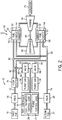
- FIG. 2 is a schematic block diagram of an embodiment of the fuel management system 10 for the turbine system 50, where the first fuel 18 is a gas fuel and the second fuel 20 is a gas fuel.
- the fuel management system 10 employs the fuel controller 14 (e.g., turbine fuel controller 14) to control the supply of fuel to the turbine system 50, in particular, the termination of one fuel supply and the transition to another fuel supply.
- the turbine system 50 may use multiple fuels, as described above (e.g., multiple gas fuels) as the heat source for the turbine system 50.
- one or more fuel nozzles 52 and 54 intake a fuel supply (e.g., gas fuel), mix the fuel with air, and distribute the air-fuel mixture into a combustor 58 (e.g., fuel combustor 60 and fuel combustor 62) in a suitable ratio for optimal combustion, emissions, fuel consumption, and power output.
- a fuel supply e.g., gas fuel
- each combustor 58 includes one or more primary fuel nozzles 52 and one or more secondary fuel nozzles 54.
- the air-fuel mixture combusts in a chamber within each combustor 58, thereby creating hot pressurized exhaust gases.
- Each combustor 58 directs the exhaust gases through a turbine 64 toward an exhaust outlet.
- the shaft 66 may be connected to various components of the turbine system 50, including a compressor 68.
- the compressor 68 also includes blades coupled to the shaft 66.
- the blades within the compressor 68 also rotate, thereby compressing air from an air intake through the compressor 68 and into the fuel nozzles 52 and 54 and/or combustors 58.
- the shaft 66 may also be connected to a load, such as an electrical generator 70 in an electrical power plant, for example.
- the load may include any suitable device capable of being powered by the rotational mechanical power output of the turbine system 50.
- the fuel management system 10 provides a flow of both the first fuel 18 (e.g., first gas fuel) and the second fuel 20 (e.g., second gas fuel) to the turbine system 50.
- each supply of fuel 18 and 20 includes a main fuel line 72 and 74, respectively.
- Each main fuel line 72 and 74 includes a respective valve 26 and 28 (e.g., fuel valves) configured to control the flow of the first and second fuels 18 and 20, respectively, to secondary fuel nozzles 54.
- the main fuel line 72 includes a flow splitter 76.
- the flow splitter 76 divides the first fuel flow into first fuel lines 80 and 82.
- the first fuel line 80 splits to divide the flow of first fuel between the primary fuel nozzles 52.
- the first fuel line 82 is coupled to the main fuel line 74 downstream of the valve 28, but upstream of where the main fuel line 86 splits to provide the first fuel 18, the second fuel 20, or a combination of both the first and second fuels 18 and 20 to the fuel nozzles 54.
- the first fuel line 80 provides first fuel 18 (e.g., first gas fuel) to primary fuel nozzles 52, while the main fuel lines 74 and 86 provide the first fuel 18, the second fuel 20, or a combination of both the first and second fuels 18 and 20 to the secondary fuel nozzles 54.
- the fuel management system 10 includes the purge system 30 (e.g., dilution purge system) configured to purge the first fuel 18 from the first fuel lines 80 and 82, the main fuel lines 74 and 86, and the fuel nozzles 52 and 54 during termination of the first fuel flow.
- the purge system 30 includes purge gas lines 88 and 90 coupled to respective first fuel lines 80 and 82 downstream of the flow splitter 76 and upstream of the fuel nozzles 52 and 54.
- Purge of lines 74, 82, 86, and 90 and secondary fuel nozzles 54 may not be required if the second fuel 20 has had sufficient time to displace the first fuel 18 in lines 74, 82, 86, and 90 and fuel nozzles 54 during a controlled transfer from the first fuel 18 or a combination of the first and second fuels 18 and 20 to the second fuel 20 only in lines 74, 82, 86, and 90 and fuel nozzles 54.
- the fuel management system 10 includes fuel controller 14 configured to control the supply of the first fuel 18 (e.g., first gas fuel) to the turbine system 50, the supply of the second fuel 20 (e.g., second gas fuel) to the turbine system 50, and the transition between the use of the first and second fuels 18 and 20 for the turbine system 50.
- the fuel controller 14 is coupled to the fuel valves 26 and 28 for the first and second fuels 18 and 20, respectively, and the purge valves 92 and 94.
- the fuel controller 14 is configured to open and close valves 26, 28, 92, and 94 to control the flow of the first fuel 18, second fuel 20, and the purge gas 36.
- the fuel controller 14 includes logic, as described above, (e.g., the fuel transition control logic 38 and the purge control logic 40) configured to control the transition from the first fuel 18 to the second fuel 20, as well as to control the purge sequence of mixing purge gas 36 with the first fuel 18 (i.e., dilution purge) during a first fuel shutdown or termination.
- the fuel controller 14 may employ the logic and control the purge system 30 for fuel lines 74, 80, 82, and 86 simultaneously or independently.
- the fuel management system 10 avoids overheating within the turbine system 50 by reducing the amount of unexpected fuel added to the turbine system 50 after closure of the first fuel valve 26 and backflow of combustion products into the fuel piping system by continuously maintaining a forward flow state.
- FIG. 3 is a schematic block diagram of an embodiment of the fuel management system 10 for the turbine system 50 where the first fuel 18 includes a gas fuel and the second fuel 20 includes a liquid fuel.
- the fuel management system 10 provides a flow of both the first fuel 18 (e.g., gas fuel) and the second fuel 20 (e.g., liquid fuel) to the turbine system 50.
- each supply of fuel 18 and 20 includes a main fuel line 72 and 74, respectively.
- Each main fuel line 72 and 74 includes a respective valve 26 and 28 (e.g., fuel valves) configured to control the flow of the first and second fuels 18 and 20, respectively, to fuel nozzles 52 and 54.
- the main fuel line 72 splits to divide the flow of the first fuel 18 to the fuel nozzles 52, while the main fuel line 74 splits to divide the flow of the second fuel 20 to the fuel nozzles 54.
- the number of fuel lines may vary (e.g., 2 to 28 fuel lines).
- the fuel management system 10 includes the purge system 30 (e.g., dilution purge system) configured to purge the first fuel 18 from the main fuel line 72 and the fuel nozzles 52 during termination of the first fuel flow.
- the purge system 30 includes purge gas line 88 coupled to the main fuel line 72 downstream of the valve 26 and upstream of the fuel nozzles 52 (and the split of the main fuel line 72).
- the purge gas line 88 includes valve 92 (e.g., purge valve) configured to control the flow of purge gas 36 (e.g., inert purge gas) through the line 88 into the fuel lines 72 and 80 to purge the first fuel 18 from the fuel lines 72 and 80 and the fuel nozzles 52.
- the inert purge gas 36 may include nitrogen, carbon dioxide, argon, or helium, or in certain cases, steam.
- the fuel management system 10 includes fuel controller 14 configured to control the supply of the first fuel 18 (e.g., gas fuel) to the turbine system 50, the supply of the second fuel 20 (e.g., liquid fuel) to the turbine system 50, and the transition between the use of the first and second fuels 18 and 20 for the turbine system 50.
- the fuel controller 14 is coupled to the fuel valves 26 and 28 for the first and second fuels 18 and 20, respectively, and the purge valve 92.
- the fuel controller 14 is configured to open and close valves 26, 28, and 92 to control the flow of the first fuel 18, second fuel 20, and the purge gas 36.
- the fuel controller 14 includes logic, as described above, (e.g., the fuel transition control logic 38 and the purge control logic 40) configured to control the transition from the first fuel 18 to the second fuel 20, as well as to control the purge sequence of mixing purge gas 36 with the first fuel 18 (i.e., dilution purge) during a first fuel shutdown or termination.
- the fuel management system 10 avoids overheating within the turbine system 50 by reducing the amount of unexpected fuel added to the turbine system 50 after closure of the first fuel valve 26 and backflow of combustion products into the fuel piping system by continuously maintaining a forward flow state.
- FIG. 4 is a graphical representation 104 of an embodiment of the purge sequence described above, illustrating an opening and closing of the first fuel valve 26 and the purge valve 34.
- the graph 104 includes a vertical axis 106 representing the valve position of the fuel valve 26 and the purge valve 34.
- a top 108 of the vertical axis 106 represents a fully opened valve position and a bottom 110 of the vertical axis 106 represents a fully closed valve position.
- the graph 104 also includes a horizontal axis 112 representing time. Time increases from left to right along the horizontal axis 112.
- the graph 104 includes a plot 114, illustrated by a solid line, representing the valve position of the first fuel valve 26 (e.g., gas fuel valve) and a plot 116, illustrated by a dashed line, representing the valve position of the purge valve 34.
- a plot 114 illustrated by a solid line
- a plot 116 illustrated by a dashed line
- the fuel valve closing duration may lasts approximately 15, 30, 45, 60, 75, 90, 105, 120, 135, 150, 175, or 180 seconds, or any time therebetween.
- the controller 14 initiates a purge valve opening duration, represented by region 132 of plot 116, of progressively opening the purge valve 36 from the closed position 122 to an open position 134.
- the purge valve opening duration 132 is shorter than the fuel valve closing duration 132, since the purge valve 34 may be smaller than the fuel valve 26.
- the purge valve opening duration 132 starts after initiation 124 of the fuel valve closing duration 126 and overlaps the fuel valve closing duration 126.
- the purge valve opening duration 132 completes (i.e., the purge valve 34 reaches a fully open position, represented by region 134 of the plot 116) during the fuel valve closing duration 126.
- the purge valve opening duration 132 may start after a certain percent closure (e.g., approximately 70 percent closure) of the fuel valve 26 during the fuel valve closing duration 126.
- the specific percent closure of the fuel valve 26 during the fuel valve closing duration to trigger the start of the purge valve opening duration may range from approximately 60 to 90 percent closure of the valve 26.
- the purge valve opening duration 132 may occur at approximately 60, 70, 80, or 90 percent closure of the fuel valve 26, or any other percent therebetween.
- FIG. 5 is a graphical representation 144 of an embodiment of a fuel flow (e.g., gas fuel flow) during the purge sequence described above.
- the graph 144 includes a vertical axis 146 representing fuel flow of first fuel 18 (e.g., gas fuel). Fuel flow increases from the bottom to the top along the vertical axis 146.
- the graph 144 also includes a horizontal axis 148 representing time. Time increases from left to right along the horizontal axis 148.
- Plot 154 illustrates the fuel flow decreasing during the fuel valve closing duration described above. Initiation of the opening of the purge valve 34, indicated by reference numeral 156, results in a small peak 158 in fuel flow at the combustion system 12. This occurs due to the purge gas 36 displacing the first fuel 18 (e.g., gas fuel) temporarily causing a greater fuel flow into the combustion system 12. While flow of the purge gas 36 increases and the fuel flow of the first fuel 18 gradually decreases, the first fuel valve 26 eventually fully closes as indicated by reference numeral 160. As illustrated, the closing 160 of the first fuel valve 26 does not cause a spike in the fuel flow rate that would result in an unexpected amount of first fuel 18 in the combustion system 12 and consequentially overheating within the engine.
- the closing 160 of the first fuel valve 26 does not cause a spike in the fuel flow rate that would result in an unexpected amount of first fuel 18 in the combustion system 12 and consequentially overheating within the engine.
- the fuel flow does not increase to a level to trigger the overtemperature alarm limit 150 and the overtemperature alarm limit 152.
- the fuel flow may spike, as indicated by peak 161 of plot 155, and trip the alarm limits 150 and 152 due to the unexpected addition of fuel to the combustion system 12 after closure of the valve 26.
- the purge sequence as described above avoids the delivery of unexpected fuel to the engine that may result in overheating and damage to equipment.
- FIG. 6 is a graphical representation 170 of an embodiment of a gas flow during the purge sequence described above.
- the graph 170 includes a vertical axis 172 representing gas flow (e.g., through a fuel nozzle) of the first fuel 18 and purge gas 36. Gas flow increases from the bottom to the top along the vertical axis 172.
- the graph 170 also includes a horizontal axis 174 representing time. Time increases from left to right along the horizontal axis 174.
- the graph 170 further includes a dashed line 176 representing the minimum gas flow rate to prevent back flow, for example, into the fuel nozzle and fuel piping system.
- the graph 170 also includes plot 177 representing the gas flow over time in the absence of the purge sequence.
- Plot 178 illustrates the gas flow decreasing during the fuel valve closing duration and the purge valve opening duration as described above.
- the gas flow Prior to initiation of the opening of the purge valve 34 as indicated by reference numeral 180, the gas flow consists entirely of the flow of the first fuel 18 (e.g., gas fuel). After opening 180 the purge valve 34, a small peak 182 in gas flow occurs due to the purge gas 36 supplementing the first fuel 18 temporarily causing a greater overall gas flow.
- the gas flow from the opening 180 of the purge valve 34 to the closing of the first fuel valve 26 e.g., gas fuel valve
- the gas flow gradually decreases until the closing 184 of the first fuel valve 26.
- the purge gas flow supplements the first fuel flow during the fuel valve closing duration to maintain the gas flow above the minimum gas flow rate, and then continues after the closing 184 of the first fuel valve 26.
- FIG. 7 is a sequence flow chart of an embodiment of a process 196 for purging the first fuel 18 (e.g., gas fuel) from the first fuel line.
- the process 196 employs the purge sequence described above to avoid overheating within the combustion system 12 and backflow of combustion products into the fuel piping system.
- the fuel controller 14, as described above, implements the process 196.
- the process 196 includes initiating a transition from the first fuel 18 (e.g., gas fuel) to the second fuel 20 (e.g., liquid fuel) (block 198). Indeed, the transition includes beginning the closing of the first fuel valve 26 (block 200).
- the controller 14 monitors the closing of the first fuel valve 26 by monitoring one or more parameters (block 202).
- the parameters monitored by the controller 14 include percent closure of the fuel valve 26, first fuel flow rate, temperature of the combustion system 12, and/or other parameters.
- the controller 14 may monitor one or more of these parameters. In particular, the controller 14 may inquire if the fuel valve closing is equal to or greater than a threshold percentage (e.g., approximately 70 percent) for closure of the fuel valve 26 (block 204).
- a threshold percentage e.g., approximately 70 percent
- the threshold percentage for closure of the fuel valve 26 may range from approximately 60 to 90 percent closure of the valve 26.
- the threshold percentage may be approximately 60, 70, 80, or 90 percent closure of the fuel valve 26, or any other percent therebetween. If the percent fuel valve closure remains below the threshold percentage, the controller 14 continues to monitor the closing of the first fuel valve 26 (block 202). However, if the percent fuel valve closure equals or surpasses the threshold percentage for closure of the fuel valve 26, then the controller 14 may also inquire if the fuel flow of the first fuel 18 falls below a desired threshold for the fuel flow (block 206). If the fuel flow remains above the fuel flow threshold, the controller 14 continues to monitor the closing of the first fuel valve (block 202). However, if the fuel flow equals or falls below the fuel flow threshold, the controller 14 begins opening the purge valve 34 to mix purge gas 36 with the first fuel 18 (block 208).
- the controller 14 gradually opens the purge valve 34 to a fully opened position (block 210).
- the rate of opening the purge valve may increase if a flame extinguishes (e.g., mechanical trip) in the combustion system 12 in order to maintain some gas flow into the system 12 and to avoid hardware damage.
- the controller 14 fully closes the fuel valve 26 for the first fuel 18.
- the process 196 enables the fuel management system 10 to avoid overheating within the combustion system 12 by reducing the amount of unexpected fuel added to the combustion system 12 after closure of the first fuel valve 26 and blocking backflow of combustion products into the fuel piping system by continuously maintaining a forward flow state.
- the disclosed embodiments may avoid overheating within the combustion system 12 by preventing unexpected first fuel flow into the system 12.
- the disclosed embodiments may avoid backflow of combustion products into the fuel piping by maintaining some forward flow through the piping. As a result, damage may be avoided to equipment due to the overheating or the backflow of combustion products.
Landscapes
- Engineering & Computer Science (AREA)
- Chemical & Material Sciences (AREA)
- Combustion & Propulsion (AREA)
- Mechanical Engineering (AREA)
- General Engineering & Computer Science (AREA)
- Feeding And Controlling Fuel (AREA)
Applications Claiming Priority (1)
| Application Number | Priority Date | Filing Date | Title |
|---|---|---|---|
| US13/042,322 US8340886B2 (en) | 2011-03-07 | 2011-03-07 | System and method for transitioning between fuel supplies for a combustion system |
Publications (1)
| Publication Number | Publication Date |
|---|---|
| EP2497924A2 true EP2497924A2 (de) | 2012-09-12 |
Family
ID=45812714
Family Applications (1)
| Application Number | Title | Priority Date | Filing Date |
|---|---|---|---|
| EP12157991A Withdrawn EP2497924A2 (de) | 2011-03-07 | 2012-03-02 | System und Verfahren zum Übergang zwischen verschiedenen Kraftstoffversorgungen für ein Verbrennungssystem |
Country Status (3)
| Country | Link |
|---|---|
| US (1) | US8340886B2 (de) |
| EP (1) | EP2497924A2 (de) |
| CN (1) | CN102678337A (de) |
Cited By (6)
| Publication number | Priority date | Publication date | Assignee | Title |
|---|---|---|---|---|
| WO2015102882A1 (en) * | 2013-12-31 | 2015-07-09 | General Electric Company | Systems and methods to maintain stability of fuel flow in gas turbine engines |
| EP2963269A1 (de) * | 2014-07-01 | 2016-01-06 | Caterpillar Motoren GmbH & Co. KG | Verfahren zur Versorgung eines Motors mit Kraftstoff |
| EP3093469A1 (de) * | 2015-05-13 | 2016-11-16 | Caterpillar Motoren GmbH & Co. KG | Kraftstoffversorgungsystem für eine brennkraftmaschine |
| EP2592250A3 (de) * | 2011-11-10 | 2017-05-10 | General Electric Company | System zum Spülen von Gasbrennstoffkreisen in einer Gasturbinenmaschine |
| EP3342990A1 (de) * | 2016-12-30 | 2018-07-04 | Ansaldo Energia Switzerland AG | Verfahren zum betreiben einer versorgungsanordnung zum fördern von brenngas und inerten medien an eine gasturbinenbrennkammer, versorgungsanordnung und gasturbine mit derartiger versorgungsanordnung |
| US12385444B2 (en) | 2019-10-30 | 2025-08-12 | Ge Infrastructure Technology Llc | System and method for operating a combustor with multiple liquid fuels |
Families Citing this family (24)
| Publication number | Priority date | Publication date | Assignee | Title |
|---|---|---|---|---|
| US8510013B2 (en) * | 2009-05-04 | 2013-08-13 | General Electric Company | Gas turbine shutdown |
| EP2818674A1 (de) | 2013-06-28 | 2014-12-31 | Caterpillar Motoren GmbH & Co. KG | Beendigung des Betriebs eines Doppelbrennstoffmotors in gasförmigem Brennstoffmodus |
| US9664125B2 (en) | 2013-08-07 | 2017-05-30 | Ford Global Technologies, Llc | Method and system for transient fuel control |
| EP2915987B1 (de) * | 2014-03-07 | 2016-12-21 | Caterpillar Motoren GmbH & Co. KG | Beurteilung der Funktionstüchtigkeit eines Einlassventils für gasförmigen Brennstoff |
| US9909499B2 (en) | 2014-04-04 | 2018-03-06 | General Electric Company | Fuel drainage and purge system and method |
| EP2975240B1 (de) | 2014-07-18 | 2019-11-13 | United Technologies Corporation | Selbstreinigendes brennstoffdüsensystem für einen gasturbinenmotor |
| JP2016048044A (ja) * | 2014-08-27 | 2016-04-07 | 川崎重工業株式会社 | ガスタービンエンジンシステム |
| EP3301278A1 (de) * | 2016-09-30 | 2018-04-04 | Siemens Aktiengesellschaft | Gasturbinenanordnung mit geregelter zapflufteinspritzung in die brennkammer, und betriebsverfahren |
| US10378447B2 (en) | 2016-09-30 | 2019-08-13 | General Electric Company | System and method for purging fuel or coolant from turbomachine |
| US11261803B2 (en) | 2020-03-05 | 2022-03-01 | General Electric Company | Method and system for fuel nozzle cleaning during engine operation |
| US11359554B2 (en) | 2020-03-05 | 2022-06-14 | General Electric Company | System and method for fuel nozzle cleaning during engine operation |
| US10968837B1 (en) * | 2020-05-14 | 2021-04-06 | Bj Energy Solutions, Llc | Systems and methods utilizing turbine compressor discharge for hydrostatic manifold purge |
| US11808219B2 (en) | 2021-04-12 | 2023-11-07 | Pratt & Whitney Canada Corp. | Fuel systems and methods for purging |
| CN113277054B (zh) * | 2021-06-29 | 2022-05-27 | 广船国际有限公司 | 一种船用甲醇供给系统 |
| US11988158B2 (en) * | 2021-07-19 | 2024-05-21 | Pratt & Whitney Canada Corp. | Multi-fuel engine for an aircraft |
| US12352218B2 (en) * | 2022-02-01 | 2025-07-08 | General Electric Company | Fuel supply system for a combustor |
| CN114508427B (zh) * | 2022-02-09 | 2024-06-11 | 烟台杰瑞石油装备技术有限公司 | 用于燃气轮机的多燃料切换装置、方法及燃气轮机 |
| CN114729600B (zh) * | 2022-02-15 | 2023-09-19 | 烟台杰瑞石油装备技术有限公司 | 双燃料动力系统及其供气吹扫方法 |
| CN114352936B (zh) * | 2022-03-14 | 2022-06-28 | 西南科技大学 | 一种可快速更换多种燃料的燃料供应装置及其使用方法 |
| US11946378B2 (en) | 2022-04-13 | 2024-04-02 | General Electric Company | Transient control of a thermal transport bus |
| US11927142B2 (en) | 2022-07-25 | 2024-03-12 | General Electric Company | Systems and methods for controlling fuel coke formation |
| US20240077038A1 (en) * | 2022-09-06 | 2024-03-07 | Vericor Power Systems Llc | Purge System for Dual-Fuel Gas Turbine Engine |
| CN116447618B (zh) * | 2023-04-18 | 2025-01-14 | 南京国电南自维美德自动化有限公司 | 一种环形燃烧室燃料流量控制方法及系统 |
| US12510031B2 (en) * | 2023-08-04 | 2025-12-30 | Air Products And Chemicals, Inc. | Apparatus and process for starting up and shutting down a feed of fuel for a turbine apparatus |
Family Cites Families (47)
| Publication number | Priority date | Publication date | Assignee | Title |
|---|---|---|---|---|
| US3686859A (en) | 1970-09-25 | 1972-08-29 | Chandler Evans Inc | Turbine engine starting circuit |
| US3878678A (en) | 1973-08-20 | 1975-04-22 | Gen Motors Corp | Gas turbine fuel system |
| US4041695A (en) | 1975-11-21 | 1977-08-16 | The Garrett Corporation | Fuel system pneumatic purge apparatus and method |
| US4157082A (en) | 1977-03-09 | 1979-06-05 | Caterpillar Tractor Co. | Self-purging fuel supply system for internal combustion engines |
| JPS6048618B2 (ja) | 1978-11-22 | 1985-10-28 | 株式会社日立製作所 | 気体燃料系統のパ−ジ系統 |
| JPS60164627A (ja) | 1984-02-06 | 1985-08-27 | Hitachi Ltd | 燃料ノズルパ−ジシステム装置 |
| US4706636A (en) | 1984-12-06 | 1987-11-17 | Davco Manufacturing Corporation | Purge and prime fuel delivery system and method |
| GB2174147B (en) | 1985-04-25 | 1989-02-01 | Rolls Royce | Improvements in or relating to the operation of gas turbine engine fuel systems |
| US5095694A (en) | 1988-02-16 | 1992-03-17 | Sundstrand Corporation | Fuel purging system for a turbine engine |
| US4984424A (en) | 1988-02-16 | 1991-01-15 | Sundstrand Corporation | Fuel injection system for a turbine engine |
| GB2219045B (en) | 1988-05-27 | 1992-06-03 | Rolls Royce Plc | Gas turbine engine fuel system |
| GB9025778D0 (en) | 1990-11-27 | 1991-01-09 | Rolls Royce Plc | Improvements in or relating to gas generators |
| US5735117A (en) | 1995-08-18 | 1998-04-07 | Fuel Systems Textron, Inc. | Staged fuel injection system with shuttle valve and fuel injector therefor |
| US5573867A (en) | 1996-01-31 | 1996-11-12 | Westinghouse Electric Corporation | Purge gas protected transportable pressurized fuel cell modules and their operation in a power plant |
| US6050081A (en) | 1997-02-12 | 2000-04-18 | Jansens Aircraft Systems Controls | Air purging fuel valve for turbine engine |
| US5966926A (en) | 1997-05-28 | 1999-10-19 | Capstone Turbine Corporation | Liquid fuel injector purge system |
| WO1999032770A1 (en) | 1997-12-20 | 1999-07-01 | Alliedsignal Inc. | Peak compressor bleed pressure storage for extended fuel nozzle purging of a microturbine power generating system |
| US6145294A (en) * | 1998-04-09 | 2000-11-14 | General Electric Co. | Liquid fuel and water injection purge system for a gas turbine |
| US6125624A (en) | 1998-04-17 | 2000-10-03 | Pratt & Whitney Canada Corp. | Anti-coking fuel injector purging device |
| EP1199453A3 (de) * | 1998-05-08 | 2003-01-22 | Mitsubishi Heavy Industries, Ltd. | Spülsystem für Brennstoffeinspritzdüsen einer Gasturbine |
| JP2000248964A (ja) | 1999-02-26 | 2000-09-12 | Honda Motor Co Ltd | ガスタービンエンジン |
| US6056004A (en) | 1999-07-02 | 2000-05-02 | Agnew; A. Patrick | Portable compression system for pipeline purging |
| WO2001016472A1 (en) | 1999-08-31 | 2001-03-08 | Coltec Industries Inc. | Manifold drain system for gas turbine |
| JP4335397B2 (ja) | 2000-02-01 | 2009-09-30 | 三菱重工業株式会社 | ガスタービン燃料ガス漲装置 |
| US6438963B1 (en) | 2000-08-31 | 2002-08-27 | General Electric Company | Liquid fuel and water injection purge systems and method for a gas turbine having a three-way purge valve |
| US6675583B2 (en) | 2000-10-04 | 2004-01-13 | Capstone Turbine Corporation | Combustion method |
| US6536217B2 (en) | 2000-12-20 | 2003-03-25 | Honeywell Power Systems Inc. | Liquid fuel reverse purge |
| US20020184884A1 (en) | 2001-06-08 | 2002-12-12 | Honeywell International, Inc. | Rapid shutdown and ecology system |
| JP2005501193A (ja) | 2001-08-27 | 2005-01-13 | エリオット・エナジー・システムズ・インコーポレイテッド | ガスタービンライトオフ方法 |
| US6792760B2 (en) | 2002-03-11 | 2004-09-21 | Alstom Technology Ltd | Method for operating a turbine |
| US6931831B2 (en) | 2002-06-18 | 2005-08-23 | Jansen's Aircraft Systems Controls, Inc. | Distributor purge valve |
| JP3915681B2 (ja) * | 2002-12-03 | 2007-05-16 | 日産自動車株式会社 | 燃料電池システム |
| US7296412B2 (en) | 2003-12-30 | 2007-11-20 | General Electric Company | Nitrogen purge for combustion turbine liquid fuel system |
| US7104070B2 (en) * | 2004-03-04 | 2006-09-12 | General Electric Company | Liquid fuel nozzle apparatus with passive water injection purge |
| US7367180B2 (en) * | 2004-03-05 | 2008-05-06 | Ford Global Technologies Llc | System and method for controlling valve timing of an engine with cylinder deactivation |
| US7000602B2 (en) | 2004-03-05 | 2006-02-21 | Ford Global Technologies, Llc | Engine system and fuel vapor purging system with cylinder deactivation |
| US7677025B2 (en) | 2005-02-01 | 2010-03-16 | Power Systems Mfg., Llc | Self-purging pilot fuel injection system |
| GB0502438D0 (en) | 2005-02-05 | 2005-03-16 | Alstom Technology Ltd | Fuel injection system and method of monitoring purging of the same |
| US7302933B2 (en) | 2005-11-30 | 2007-12-04 | Ford Global Technologies Llc | System and method for engine with fuel vapor purging |
| US7726112B2 (en) | 2006-04-24 | 2010-06-01 | Pratt & Whitney Canada Corp. | Fuel system of gas turbine engines |
| US20080034733A1 (en) | 2006-08-14 | 2008-02-14 | Miller Robert L | Fuel supply component purging system |
| US7721702B2 (en) | 2006-08-31 | 2010-05-25 | Caterpillar Inc. | Spark plug having separate housing-mounted electrode |
| US7530260B2 (en) | 2007-04-19 | 2009-05-12 | Pratt & Whitney Canada Corp. | Surge detection in a gas turbine engine |
| DE102008014744A1 (de) | 2008-03-18 | 2009-09-24 | Rolls-Royce Deutschland Ltd & Co Kg | Gasturbinenbrenner für eine Gasturbine mit Spülmechanismus für eine Brennstoffdüse |
| US8528315B2 (en) | 2008-10-30 | 2013-09-10 | General Electric Company | Air cooling apparatus for a purge valve |
| FR2938048B1 (fr) * | 2008-11-06 | 2015-03-06 | Ge Energy Products France Snc | Systeme et procede de lavage et purge a l'eau du circuit combustible liquide d'une turbine |
| US8483934B2 (en) * | 2010-07-19 | 2013-07-09 | Ford Global Technologies, Llc | Method for purging fuel vapors |
-
2011
- 2011-03-07 US US13/042,322 patent/US8340886B2/en active Active
-
2012
- 2012-03-02 EP EP12157991A patent/EP2497924A2/de not_active Withdrawn
- 2012-03-07 CN CN2012100715823A patent/CN102678337A/zh active Pending
Non-Patent Citations (1)
| Title |
|---|
| None |
Cited By (9)
| Publication number | Priority date | Publication date | Assignee | Title |
|---|---|---|---|---|
| EP2592250A3 (de) * | 2011-11-10 | 2017-05-10 | General Electric Company | System zum Spülen von Gasbrennstoffkreisen in einer Gasturbinenmaschine |
| WO2015102882A1 (en) * | 2013-12-31 | 2015-07-09 | General Electric Company | Systems and methods to maintain stability of fuel flow in gas turbine engines |
| EP2963269A1 (de) * | 2014-07-01 | 2016-01-06 | Caterpillar Motoren GmbH & Co. KG | Verfahren zur Versorgung eines Motors mit Kraftstoff |
| KR20160003563A (ko) * | 2014-07-01 | 2016-01-11 | 캐터필라 모토렌 게엠베하 운트 코. 카게 | 연료를 엔진에 공급하는 방법 |
| EP3093469A1 (de) * | 2015-05-13 | 2016-11-16 | Caterpillar Motoren GmbH & Co. KG | Kraftstoffversorgungsystem für eine brennkraftmaschine |
| US10655582B2 (en) | 2015-05-13 | 2020-05-19 | Caterpillar Motoren Gmbh & Co. Kg | Low-pressure fuel supply system |
| EP3342990A1 (de) * | 2016-12-30 | 2018-07-04 | Ansaldo Energia Switzerland AG | Verfahren zum betreiben einer versorgungsanordnung zum fördern von brenngas und inerten medien an eine gasturbinenbrennkammer, versorgungsanordnung und gasturbine mit derartiger versorgungsanordnung |
| US10584643B2 (en) | 2016-12-30 | 2020-03-10 | Ansaldo Energia Switzerland AG | Method for operating a supply assembly for supplying fuel gas and inert media to a gas turbine combustor, such supply assembly and a gas turbine comprising such supply assembly |
| US12385444B2 (en) | 2019-10-30 | 2025-08-12 | Ge Infrastructure Technology Llc | System and method for operating a combustor with multiple liquid fuels |
Also Published As
| Publication number | Publication date |
|---|---|
| US20120232768A1 (en) | 2012-09-13 |
| CN102678337A (zh) | 2012-09-19 |
| US8340886B2 (en) | 2012-12-25 |
Similar Documents
| Publication | Publication Date | Title |
|---|---|---|
| US8340886B2 (en) | System and method for transitioning between fuel supplies for a combustion system | |
| JP6190670B2 (ja) | ガスタービン燃焼システム | |
| JP4979615B2 (ja) | 燃焼器及び燃焼器の燃料供給方法 | |
| EP2592250B1 (de) | System zum Spülen von Gasbrennstoffkreisen in einer Gasturbinenmaschine | |
| US9624830B2 (en) | Gas turbine with improved part load emissions behavior | |
| US10794296B2 (en) | Gas turbine combustor and method of operating the same | |
| JP6262616B2 (ja) | ガスタービン燃焼器 | |
| US20150059348A1 (en) | System and method for controlling fuel distributions in a combustor in a gas turbine engine | |
| US9388745B2 (en) | Method for switching over a combustion device between a first fuel and a second fuel | |
| US20150184594A1 (en) | Systems and methods to maintain stability of fuel flow in gas turbine engines | |
| JP2009052560A (ja) | ガスタービン内における燃料及び空気の混合のためのシステム及び方法 | |
| JP5356340B2 (ja) | ガスタービン燃焼器の制御装置及びガスタービン燃焼器の制御方法 | |
| WO2016056180A1 (ja) | ガスタービンエンジンの燃焼器及びその運転方法 | |
| US20250172091A1 (en) | System for purging a fuel having reactive gas | |
| JP2012013077A (ja) | タービンエンジンで使用する添加剤噴射システム及びその組立方法 | |
| US9003806B2 (en) | Method of operating a combustor from a liquid fuel to a gas fuel operation | |
| EP4116554B1 (de) | Verfahren zum betreiben einer gasturbine sowie verfahren zum nachrüsten einer gasturbine | |
| EP3367000A1 (de) | Kraftstoffausgabesystem und -verfahren für eine brennkammer | |
| JP2010242653A (ja) | 混焼エンジン |
Legal Events
| Date | Code | Title | Description |
|---|---|---|---|
| PUAI | Public reference made under article 153(3) epc to a published international application that has entered the european phase |
Free format text: ORIGINAL CODE: 0009012 |
|
| AK | Designated contracting states |
Kind code of ref document: A2 Designated state(s): AL AT BE BG CH CY CZ DE DK EE ES FI FR GB GR HR HU IE IS IT LI LT LU LV MC MK MT NL NO PL PT RO RS SE SI SK SM TR |
|
| AX | Request for extension of the european patent |
Extension state: BA ME |
|
| STAA | Information on the status of an ep patent application or granted ep patent |
Free format text: STATUS: THE APPLICATION IS DEEMED TO BE WITHDRAWN |
|
| 18D | Application deemed to be withdrawn |
Effective date: 20141001 |