EP2494010B1 - Verwendung einer kraftstoffzusammensetzung - Google Patents
Verwendung einer kraftstoffzusammensetzung Download PDFInfo
- Publication number
- EP2494010B1 EP2494010B1 EP10827435.8A EP10827435A EP2494010B1 EP 2494010 B1 EP2494010 B1 EP 2494010B1 EP 10827435 A EP10827435 A EP 10827435A EP 2494010 B1 EP2494010 B1 EP 2494010B1
- Authority
- EP
- European Patent Office
- Prior art keywords
- engine
- combustion engine
- fuel composition
- fuel
- internal combustion
- Prior art date
- Legal status (The legal status is an assumption and is not a legal conclusion. Google has not performed a legal analysis and makes no representation as to the accuracy of the status listed.)
- Active
Links
Images





Classifications
-
- C—CHEMISTRY; METALLURGY
- C10—PETROLEUM, GAS OR COKE INDUSTRIES; TECHNICAL GASES CONTAINING CARBON MONOXIDE; FUELS; LUBRICANTS; PEAT
- C10L—FUELS NOT OTHERWISE PROVIDED FOR; NATURAL GAS; SYNTHETIC NATURAL GAS OBTAINED BY PROCESSES NOT COVERED BY SUBCLASSES C10G OR C10K; LIQUIFIED PETROLEUM GAS; USE OF ADDITIVES TO FUELS OR FIRES; FIRE-LIGHTERS
- C10L1/00—Liquid carbonaceous fuels
- C10L1/04—Liquid carbonaceous fuels essentially based on blends of hydrocarbons
- C10L1/06—Liquid carbonaceous fuels essentially based on blends of hydrocarbons for spark ignition
-
- C—CHEMISTRY; METALLURGY
- C10—PETROLEUM, GAS OR COKE INDUSTRIES; TECHNICAL GASES CONTAINING CARBON MONOXIDE; FUELS; LUBRICANTS; PEAT
- C10L—FUELS NOT OTHERWISE PROVIDED FOR; NATURAL GAS; SYNTHETIC NATURAL GAS OBTAINED BY PROCESSES NOT COVERED BY SUBCLASSES C10G OR C10K; LIQUIFIED PETROLEUM GAS; USE OF ADDITIVES TO FUELS OR FIRES; FIRE-LIGHTERS
- C10L1/00—Liquid carbonaceous fuels
- C10L1/04—Liquid carbonaceous fuels essentially based on blends of hydrocarbons
-
- C—CHEMISTRY; METALLURGY
- C10—PETROLEUM, GAS OR COKE INDUSTRIES; TECHNICAL GASES CONTAINING CARBON MONOXIDE; FUELS; LUBRICANTS; PEAT
- C10L—FUELS NOT OTHERWISE PROVIDED FOR; NATURAL GAS; SYNTHETIC NATURAL GAS OBTAINED BY PROCESSES NOT COVERED BY SUBCLASSES C10G OR C10K; LIQUIFIED PETROLEUM GAS; USE OF ADDITIVES TO FUELS OR FIRES; FIRE-LIGHTERS
- C10L2200/00—Components of fuel compositions
- C10L2200/04—Organic compounds
- C10L2200/0407—Specifically defined hydrocarbon fractions as obtained from, e.g. a distillation column
-
- C—CHEMISTRY; METALLURGY
- C10—PETROLEUM, GAS OR COKE INDUSTRIES; TECHNICAL GASES CONTAINING CARBON MONOXIDE; FUELS; LUBRICANTS; PEAT
- C10L—FUELS NOT OTHERWISE PROVIDED FOR; NATURAL GAS; SYNTHETIC NATURAL GAS OBTAINED BY PROCESSES NOT COVERED BY SUBCLASSES C10G OR C10K; LIQUIFIED PETROLEUM GAS; USE OF ADDITIVES TO FUELS OR FIRES; FIRE-LIGHTERS
- C10L2270/00—Specifically adapted fuels
- C10L2270/02—Specifically adapted fuels for internal combustion engines
- C10L2270/023—Specifically adapted fuels for internal combustion engines for gasoline engines
-
- F—MECHANICAL ENGINEERING; LIGHTING; HEATING; WEAPONS; BLASTING
- F02—COMBUSTION ENGINES; HOT-GAS OR COMBUSTION-PRODUCT ENGINE PLANTS
- F02D—CONTROLLING COMBUSTION ENGINES
- F02D15/00—Varying compression ratio
-
- F—MECHANICAL ENGINEERING; LIGHTING; HEATING; WEAPONS; BLASTING
- F02—COMBUSTION ENGINES; HOT-GAS OR COMBUSTION-PRODUCT ENGINE PLANTS
- F02D—CONTROLLING COMBUSTION ENGINES
- F02D19/00—Controlling engines characterised by their use of non-liquid fuels, pluralities of fuels, or non-fuel substances added to the combustible mixtures
-
- F—MECHANICAL ENGINEERING; LIGHTING; HEATING; WEAPONS; BLASTING
- F02—COMBUSTION ENGINES; HOT-GAS OR COMBUSTION-PRODUCT ENGINE PLANTS
- F02D—CONTROLLING COMBUSTION ENGINES
- F02D41/00—Electrical control of supply of combustible mixture or its constituents
- F02D41/30—Controlling fuel injection
- F02D41/38—Controlling fuel injection of the high pressure type
- F02D41/40—Controlling fuel injection of the high pressure type with means for controlling injection timing or duration
- F02D41/402—Multiple injections
- F02D41/403—Multiple injections with pilot injections
-
- F—MECHANICAL ENGINEERING; LIGHTING; HEATING; WEAPONS; BLASTING
- F02—COMBUSTION ENGINES; HOT-GAS OR COMBUSTION-PRODUCT ENGINE PLANTS
- F02M—SUPPLYING COMBUSTION ENGINES IN GENERAL WITH COMBUSTIBLE MIXTURES OR CONSTITUENTS THEREOF
- F02M26/00—Engine-pertinent apparatus for adding exhaust gases to combustion-air, main fuel or fuel-air mixture, e.g. by exhaust gas recirculation [EGR] systems
-
- Y—GENERAL TAGGING OF NEW TECHNOLOGICAL DEVELOPMENTS; GENERAL TAGGING OF CROSS-SECTIONAL TECHNOLOGIES SPANNING OVER SEVERAL SECTIONS OF THE IPC; TECHNICAL SUBJECTS COVERED BY FORMER USPC CROSS-REFERENCE ART COLLECTIONS [XRACs] AND DIGESTS
- Y02—TECHNOLOGIES OR APPLICATIONS FOR MITIGATION OR ADAPTATION AGAINST CLIMATE CHANGE
- Y02T—CLIMATE CHANGE MITIGATION TECHNOLOGIES RELATED TO TRANSPORTATION
- Y02T10/00—Road transport of goods or passengers
- Y02T10/10—Internal combustion engine [ICE] based vehicles
- Y02T10/12—Improving ICE efficiencies
Definitions
- the present invention relates to fuel compositions that yield very low soot and low NO x emissions while having high efficiencies and acceptable maximum in-cylinder pressure rise rates over a wide load range when used in an advanced combustion engine environment, especially one operating in partially-premixed combustion (PPC) mode.
- PPC partially-premixed combustion
- HCCI Homogeneous Charge Compression Ignition
- fuel is injected very early into the engine to enable a homogeneous mixture of air and fuel to be obtained prior to the start of combustion initiated through compression ignition.
- One significant drawback to that approach is that it is difficult to control the combustion process and high pressure rise; and, furthermore, heat release rates occur resulting in unacceptably high noise levels and potential engine damage.
- the operating speed-load range where acceptable performance can be obtained is very limited.
- PPC Partially Premixed Combustion
- EGR exhaust gas recirculation/recycle
- HCCI Homogeneous Charge Compression Ignition
- Partially premixed combustion has been known to potentially reduce NO x and soot for diesel engines.
- specific fuel compositions have not been developed to obtain the best synergy among the fuel mixture, partially premixed combustion and reduction in NO x and soot.
- Kalghatgi et al. proposed using high octane gasoline in PPC-type operation to lower soot levels.
- SAE papers 2006-01-3385 and 2007-01-0006 proposed using high octane gasoline in PPC-type operation to lower soot levels.
- Scania D12 heavy duty (compression ignition) CI engine with a compression ratio of 14:1 they only tested a premium gasoline with a RON of 94.7. Hydrocarbon and CO levels were relatively high.
- Manente et al. (SAE paper 2009-01-0944 ) tested a premium gasoline (RON of 98) in a Scania D12 heavy duty CI engine and obtained gross specific efficiencies up to 45%, which was at least as good as those for diesel fuel. NO x and soot were lower than for diesel fuel, however, hydrocarbon and CO levels were also high. Manente et.al state that that work "demonstrates that the best fuel for a Compression Ignition engine has to be with high Octane Number.”
- premium gasoline can provide lower NO x and soot levels than diesel fuel in PPC-type operation
- fuel having an octane number as high as premium gasoline may not be the optimal fuel that permits sufficient expansion of the speed-load operating range to enable full-time operation.
- fuel chemistry and composition may be an important parameter for optimal performance rather than octane number.
- the present invention is directed to the use of a fuel composition having a boiling range of between 95 to 440 degrees Fahrenheit (35-227°C) wherein the fuel composition has (a) a total sum of n-paraffins and naphthenes content of at least 22 volume percent and (b) a RON of 85 or less, as a fuel in an advanced combustion engine operated under partially premixed combustion conditions.
- the present invention is directed to a method of operating an internal combustion engine comprising,
- Advanced Combustion Engines are defined as engines that produce ultra low NO x or low soot or both.
- An example of an Advanced Combustion Engine is a Partially Premixed Combustion Engine.
- One embodiment of the present invention is directed to the use of fuel compositions in a partially premixed combustion mode in an advanced combustion engine, that provide: (a) a significant reduction in NO x , (b) a reduction in soot emissions, and (c) high efficiencies, especially when compared to conventional diesel fuel compositions.
- the fuel composition is a gasoline-type fuel composition that is employed in a diesel-type engine under partially premixed combustion conditions.
- reasonable maximum pressure rise rates are obtained, thus significantly expanding the range where the engine can be run under advanced combustion conditions satisfactorily.
- the fuel composition used in the invention has a RON of 85 or less and a total sum of n-paraffins and naphthenes of at least 22 volume percent. More preferred, the fuel composition has a RON of 80 or less and a total sum of n-paraffins and naphthenes of at least 22 volume percent.
- the fuels employed in the presently claimed invention were taken from a commercial refinery and in some cases n-heptane or ethanol was added. Information about typical processes and conditions for making these fuels can be found in "Petroleum Refining" by William Leffler (PennWell Corp, 2000).
- the fuel composition used in the present invention was employed in an advanced engine combustion environment.
- the advanced combustion engine is operated in a partially premixed combustion mode.
- Such combustion environments typically result in fuels that have been combusted and produce ultra low NOx emissions (e.g., less than 0.35 grams/kilowatt-hr) or produce low soot (e.g., FSN ⁇ 2) or both.
- ultra low NOx emissions e.g., less than 0.35 grams/kilowatt-hr
- low soot e.g., FSN ⁇ 2
- these fuels are employed in an engine environment as described below.
- the engine load is up to 18 bar gross indicated mean effective pressure (IMEP). More preferred, the engine load may be up to 16 bar gross IMEP.
- IMEP mean effective pressure
- the aforementioned fuel composition is employed in an internal combustion engine and at an engine load up to 18 bar gross IMEP, and the engine out NO x levels are no more than 0.35 grams/kilowatt-hr. More preferred, when the engine load is up to 18 bar gross IMEP, then the engine out NO x levels are no more than 0.3 grams/kilowatt-hr.
- the aforementioned fuel composition is employed in an internal combustion engine having a compression ratio of from about 12:1 to about 16:1. More preferred, the compression ratio is 14:1.
- the aforementioned fuel composition is employed in an internal combustion engine that has an exhaust gas recirculation rate that is less than 60 volume percent. More preferred, the exhaust gas recirculation rate is less than 55 volume percent.
- the aforementioned fuel composition is employed in an internal combustion engine that preferably has a maximum pressure rise rate of less than about 15 bar/crank angle degree (CAD). More preferred, the maximum pressure rise rate is less than about 13 bar/CAD.
- CAD bar/crank angle degree
- the engine used during the experiments was a heavy duty single cylinder compression ignition engine, Scania D12 (which may be purchased from Scania, Sweden).
- the cylinder head was flat and the piston used was shallow bowl type.
- the geometrical properties of the engine are found in Table 1.
- the engine was boosted by using compressed air from an external air line; the inlet pressure was adjusted by using a waste gate valve.
- a heater (which may be purchased from Leister Process Technologies, Sweden) placed before the inlet manifold, was used to heat up the air at the desired inlet temperature.
- Table 1 Geometrical Properties of the Scania D12 Engine Displaced volume 1966 [cm3] Stroke 154 [mm] Bore 127.5 [mm] Connecting Rod 255 [mm] Compression ratio 14.3:1 Swirl Ratio 2.9 [-]
- Exhaust gas is recycled to the internal combustion engine.
- the exhaust gas recirculation (EGR) is defined as the ratio of carbon dioxide in the intake and exhaust (i.e., [ CO 2 ] intake /[ CO 2 ] exhaust ).
- the exhaust gases were cooled down before being introduced into the intake system of the D12 engine.
- the Scania D12 engine was equipped with an early generation common rail injection system from Bosch (Bosch GmbH, Germany).
- the commercial nozzle was replaced with one that had an umbrella angle of 120°.
- the nozzle had 8 orifices, their diameter was 0.18 mm.
- the fuel flow was measured by using a gravity scale with two digits precision from Sartorius and each operative point was sampled for at least two minutes.
- the emissions were measured using a Cussons gas analysis system (which may be purchased from Cussons, England). CO and CO 2 were measured by non-dispersive infrared analyzer; O 2 was measured with a paramagnetic analyzer; and, total hydrocarbons were measured with a heated flame ionization detector. A chemiluminescent analyzer was used to measure NO x and the smoke was measured with an AVL 415 opacimeter. Each analyzer was calibrated with an appropriate calibration gas before every set of measurements.
- the seven fuels and ethanol were tested through a load sweep at 1300rpm. Five load points were selected: 5, 8, 12, 14 and 18 bar gross IMEP (indicated mean effective pressure).
- the injection strategy consisted of using one or two fuel injection points to inject the fuel or ethanol into the combustion chamber of the engine. When used, the first or pilot injection point was placed very early in the compression stroke cycle to create a homogeneous mixture while the second one was injected near top-dead center to trigger the combustion event.
- the fuel amount in the pilot injection is independent of the load and it is only a function of compression ratio, fuel reactivity, and EGR level. When used, the pilot injection always occurred at -60 top dead center (TDC).
- pilot injection was no longer beneficial and was not employed for all of the fuels, except ethanol which was still injected at the pilot point and at the second injection point.
- the pilot ratios i.e., the amount of fuel injected into the pilot injection point relative to the total amount of fuel injected
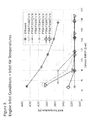
- the inlet temperature was adjusted to keep stable combustion with all the fuels throughout the load sweep.
- NO x should be maintained at less than about 0.35 g/kWh at a maximum load (i.e., 18 bar). To achieve this NO x level about 50% of EGR was used with all the fuels from 8 to 18 bar IMEP; see Figure 5 . For combustion stability reasons at 5 bar IMEP it was decided to reduce/eliminate EGR.
- a load sweep was carried out between 5 and 8 bar gross IMEP at 1300 rpm using 7 different fuels and ethanol.
- the RON of each fuel and ethanol was between 69 and 129.
- the fuels were injected into the Scania D12 engine as described hereinabove.
- the efficiency of the engine is an important parameter that is dependent upon the fuel employed in the internal combustion engine.
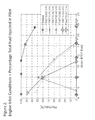
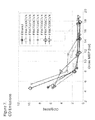
- the gross indicated efficiency as a function of load for these 7 fuels and ethanol is plotted in Figure 4 .
- efficiency is greater than 50% for all of the fuels and ethanol.
- the efficiencies are higher than those reported by Kalghatgi et.al. and Manente et.al for high octane premium gasoline.
- Figure 5 shows that even though up to 50% of EGR was used, the combustion efficiency was higher than 98% for loads higher than 5 bar IMEP.
- the gross indicated NO x emissions are shown in Figure 6 .
- 50% EGR and a compression ratio of 14.3 was employed with all the fuels and ethanol.
- these engine operating conditions resulted in very low NO x levels below 0.3 g/kWh. This NOx level was also achieved at 18 bar gross IMEP.
- NOx emissions decreased.
- Soot levels were very low ( ⁇ 1 FSN) for all of the fuels up to a load of about 12 bar IMEP, as shown in Figure 9 .
- the soot levels for the petroleum-derived fuels increased to a level between 1 and 2.1 FSN at a load of 18 bar gross IMEP. These are still fairly low levels.
- the lowest soot values at that load point were obtained for Example 2 and Example 1.
- the maximum pressure rise rate which relates to the engine acoustic noise.
- the operating ranges of previous studies are limited to moderate loads due to unacceptable levels of maximum pressure rise rate and engine noise.
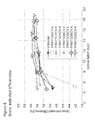
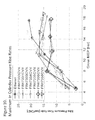
- the maximum pressure rise rates in the current study are plotted in Figure 10 as a function of load.
- the best performing fuels are the fuel of Example 3 and Example 2, and the fuel of Comparative Example 2 for which the maximum pressure rise rates do not exceed 12.5 bar/CAD.
- the poorest performing fuels were Comparative Example 5 and Comparative Example 1 with maximum pressure rise rates that exceed 20 bar/CAD.
- the maximum pressure rise rates appear to correlate with the properties of the fuels.
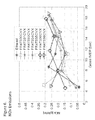
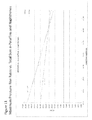
- the rates are plotted vs. the sum total of n-paraffins plus naphthenes content ( Figure 11 ) and vs. RON ( Figure 12 ) at the highest loads where the maximum pressure rise rates are the highest and of the greatest concern. Although directionally the maximum pressure rise rates are correlated with RON, a better correlation is obtained with a specific fuel composition, specifically the sum total of n-paraffins plus napthenes in the fuel.
- a fuel composition having a sum total of n-paraffins and naphthenes content of at least 22 volume percent and a RON of 93 or less resulted in engine efficiencies of from about 50% to about 60%, and moreso from 54% to 56% in loads of less than 18 gross IMEP.
- NO x emissions were no more than 0.35 g/kWh even at high 18 bar gross IMEP.
Landscapes
- Chemical & Material Sciences (AREA)
- Oil, Petroleum & Natural Gas (AREA)
- Engineering & Computer Science (AREA)
- Chemical Kinetics & Catalysis (AREA)
- General Chemical & Material Sciences (AREA)
- Organic Chemistry (AREA)
- Output Control And Ontrol Of Special Type Engine (AREA)
- Solid Fuels And Fuel-Associated Substances (AREA)
- Combustion Methods Of Internal-Combustion Engines (AREA)
- Exhaust-Gas Circulating Devices (AREA)
Claims (14)
- Verwendung einer Kraftstoffzusammensetzung mit einem Siedebereich von zwischen 95 bis 440 Grad Fahrenheit (35 bis 227°C), wobei die Kraftstoffzusammensetzung aufweist (a) eine Gesamtsumme von n-Paraffin- und Naphthengehalt von mindestens 22 Volumenprozent und (b) eine ROZ von 85 oder geringer, als Kraftstoff in einem fortschrittlichen Verbrennungsmotor, betrieben unter teilweise vorvermischten Verbrennungsbedingungen.
- Verwendung gemäß Anspruch 1, wobei der fortschrittliche Verbrennungsmotor ein Dieselmotor ist.
- Verwendung gemäß Anspruch 1, wobei die Kraftstoffzusammensetzung eine Gesamtsumme von n-Paraffin- und Naphthengehalt von mindestens 25 Volumenprozent hat.
- Verwendung gemäß Anspruch 3, wobei die Kraftstoffzusammensetzung eine Gesamtsumme von n-Paraffin- und Naphthengehalt von mindestens 30 Volumenprozent hat.
- Verwendung gemäß Anspruch 1, wobei die Kraftstoffzusammensetzung eine ROZ von 80 oder geringer hat.
- Verfahren zum Antreiben eines Verbrennungsmotors, umfassendi. Einsetzen einer Kraftstoffzusammensetzung in einem Verbrennungsmotor, wobei die Kraftstoffzusammensetzung aufweist (a) einen Siedebereich von zwischen 104 bis 401 Grad Fahrenheit (40 bis 205°C), wobei die Kraftstoffzusammensetzung aufweist (b) eine Gesamtsumme von n-Paraffin- und Naphthengehalt von 22 Volumenprozent oder mehr und (c) wobei die ROZ 85 oder geringer ist;ii. Betreiben des Verbrennungsmotors, wobei das Kompressionsverhältnis von 12:1 bis 16:1 ist und wobei der Verbrennungsmotor unter teilweise vorvermischten Verbrennungsbedingungen betrieben wird;iii. wobei die Kraftstoffzusammensetzung bei einer Ladung von bis zu Brutto 18 bar angezeigter effektiver Mitteldruck (IMEP) eingesetzt wird und der Motor-NOx-Ausstoß nicht mehr als 0,35 Gramm/Kilowattstunde ist; undiv. wobei die Abgasrückführung geringer als 60 Volumenprozent ist.
- Verfahren gemäß Anspruch 6, wobei der Verbrennungsmotor einen Bruttowirkungsgrad größer als 50% hat.
- Verfahren gemäß Anspruch 7, wobei der Verbrennungsmotor einen maximalen Druckanstieg von geringer als 17 bar/Kurbelrotationsgrad (CAD) hat.
- Verfahren gemäß Anspruch 8, wobei der maximale Druckanstieg geringer als 15 bar/CAD ist.
- Verfahren gemäß Anspruch 9, wobei der maximale Druckanstieg geringer als 13 bar/CAD ist.
- Verfahren gemäß Anspruch 6, wobei der Verbrennungsmotor betrieben wird, wobei die Abgasrückführung geringer als 55 Volumenprozent ist.
- Verfahren gemäß Anspruch 6, wobei der Motor-NOx-Ausstoß nicht mehr als 0,3 Gramm/Kilowattstunde ist.
- Verfahren gemäß Anspruch 6, wobei der Verbrennungsmotor mit einem Kompressionsverhältnis von 13:1 bis 15:1 betrieben wird.
- Verfahren gemäß Anspruch 13, wobei der Verbrennungsmotor mit einem Kompressionsverhältnis von 14:1 betrieben wird.
Applications Claiming Priority (2)
| Application Number | Priority Date | Filing Date | Title |
|---|---|---|---|
| US25681309P | 2009-10-30 | 2009-10-30 | |
| PCT/US2010/054306 WO2011053650A2 (en) | 2009-10-30 | 2010-10-27 | A fuel composition |
Publications (3)
| Publication Number | Publication Date |
|---|---|
| EP2494010A2 EP2494010A2 (de) | 2012-09-05 |
| EP2494010A4 EP2494010A4 (de) | 2012-10-17 |
| EP2494010B1 true EP2494010B1 (de) | 2015-09-02 |
Family
ID=43922971
Family Applications (1)
| Application Number | Title | Priority Date | Filing Date |
|---|---|---|---|
| EP10827435.8A Active EP2494010B1 (de) | 2009-10-30 | 2010-10-27 | Verwendung einer kraftstoffzusammensetzung |
Country Status (7)
| Country | Link |
|---|---|
| US (1) | US9376640B2 (de) |
| EP (1) | EP2494010B1 (de) |
| JP (2) | JP2013509488A (de) |
| AU (1) | AU2010313431B2 (de) |
| CA (1) | CA2777912C (de) |
| MX (1) | MX2012004809A (de) |
| WO (1) | WO2011053650A2 (de) |
Families Citing this family (10)
| Publication number | Priority date | Publication date | Assignee | Title |
|---|---|---|---|---|
| EP2494010B1 (de) * | 2009-10-30 | 2015-09-02 | Chevron U.S.A., Inc. | Verwendung einer kraftstoffzusammensetzung |
| WO2011053651A2 (en) | 2009-10-30 | 2011-05-05 | Chevron U.S.A. Inc. | A fuel composition |
| US9663739B2 (en) | 2013-05-10 | 2017-05-30 | Chevron U.S.A. Inc. | Method for increasing the maximum operating speed of an internal combustion engine operated in a low temperature combustion mode |
| US9562206B2 (en) | 2013-05-10 | 2017-02-07 | Chevron U.S.A. Inc. | Method for increasing the high load (knock) limit of an internal combustion engine operated in a low temperature combustion mode |
| US10246657B2 (en) * | 2013-12-11 | 2019-04-02 | Phillips 66 Company | Fuel blends for homogeneous charge compression ignition engines |
| FI20145854A7 (fi) | 2014-10-01 | 2016-04-02 | Upm Kymmene Corp | Polttoainekoostumus |
| US20170183576A1 (en) | 2015-12-28 | 2017-06-29 | Exxonmobil Research And Engineering Company | Bright stock and heavy neutral production from resid deasphalting |
| US10494579B2 (en) * | 2016-04-26 | 2019-12-03 | Exxonmobil Research And Engineering Company | Naphthene-containing distillate stream compositions and uses thereof |
| AU2017360490B2 (en) * | 2016-11-15 | 2021-12-23 | Exxonmobil Research And Engineering Company | Fuel compositions for controlling combustion in engines |
| WO2020068905A1 (en) * | 2018-09-25 | 2020-04-02 | Northwestern University | Stabilization of colloidal crystals engineered with nucleic acid |
Family Cites Families (15)
| Publication number | Priority date | Publication date | Assignee | Title |
|---|---|---|---|---|
| US3926779A (en) * | 1974-01-21 | 1975-12-16 | Texaco Inc | Upgrading of paraffinic gasoline blending components by cyclization with a platinum/magnesium oxide alumina matrix catalyst |
| AT404596B (de) * | 1991-02-26 | 1998-12-28 | Oemv Ag | Treibstoff für verbrennungsmotoren und verwendung von methylformiat |
| DE60223059T2 (de) * | 2001-09-18 | 2008-07-17 | Southwest Research Institute, San Antonio | Brennstoffe für homogen geladene verdichtungsgezündete maschinen |
| JP4109043B2 (ja) * | 2002-08-30 | 2008-06-25 | 新日本石油株式会社 | 予混合圧縮自己着火式エンジン用燃料 |
| JP4454247B2 (ja) * | 2003-04-14 | 2010-04-21 | コスモ石油株式会社 | 予混合圧縮自己着火エンジン用燃料油組成物 |
| JP4634103B2 (ja) * | 2004-09-10 | 2011-02-16 | Jx日鉱日石エネルギー株式会社 | 予混合圧縮自己着火方式・火花点火方式併用エンジン用燃料 |
| JP4930820B2 (ja) * | 2005-02-01 | 2012-05-16 | 出光興産株式会社 | 多段噴射式機構を有するディーゼルエンジン用燃料油組成物 |
| DE102005051002A1 (de) * | 2005-10-25 | 2007-04-26 | Robert Bosch Gmbh | Verfahren zum Betreiben einer Verbrennungskraftmaschine |
| JP4902278B2 (ja) * | 2006-03-31 | 2012-03-21 | Jx日鉱日石エネルギー株式会社 | 予混合圧縮自己着火式エンジン用燃料 |
| JP5019802B2 (ja) * | 2006-03-31 | 2012-09-05 | Jx日鉱日石エネルギー株式会社 | 予混合圧縮自己着火式エンジン用燃料 |
| JP2008031436A (ja) | 2006-07-07 | 2008-02-14 | Idemitsu Kosan Co Ltd | 圧縮着火式内燃機関用の燃料油組成物および圧縮着火式内燃機関の制御方法 |
| EP2077312A1 (de) | 2007-12-17 | 2009-07-08 | Nippon Oil Corporation | Brennstoffe für homogen geladene verdichtungsgezündete Maschinen |
| JP5342865B2 (ja) * | 2007-12-18 | 2013-11-13 | Jx日鉱日石エネルギー株式会社 | 予混合圧縮着火エンジン用燃料油組成物及びその製造方法 |
| WO2011053651A2 (en) | 2009-10-30 | 2011-05-05 | Chevron U.S.A. Inc. | A fuel composition |
| EP2494010B1 (de) * | 2009-10-30 | 2015-09-02 | Chevron U.S.A., Inc. | Verwendung einer kraftstoffzusammensetzung |
-
2010
- 2010-10-27 EP EP10827435.8A patent/EP2494010B1/de active Active
- 2010-10-27 AU AU2010313431A patent/AU2010313431B2/en not_active Ceased
- 2010-10-27 WO PCT/US2010/054306 patent/WO2011053650A2/en not_active Ceased
- 2010-10-27 CA CA2777912A patent/CA2777912C/en active Active
- 2010-10-27 JP JP2012537005A patent/JP2013509488A/ja active Pending
- 2010-10-27 MX MX2012004809A patent/MX2012004809A/es not_active Application Discontinuation
- 2010-10-27 US US12/912,906 patent/US9376640B2/en active Active
-
2015
- 2015-05-13 JP JP2015098434A patent/JP2015212384A/ja active Pending
Also Published As
| Publication number | Publication date |
|---|---|
| MX2012004809A (es) | 2012-06-14 |
| EP2494010A4 (de) | 2012-10-17 |
| CA2777912A1 (en) | 2011-05-05 |
| WO2011053650A3 (en) | 2011-09-22 |
| AU2010313431A1 (en) | 2012-05-17 |
| EP2494010A2 (de) | 2012-09-05 |
| US9376640B2 (en) | 2016-06-28 |
| AU2010313431B2 (en) | 2016-03-03 |
| CA2777912C (en) | 2018-01-02 |
| JP2015212384A (ja) | 2015-11-26 |
| US20120012087A1 (en) | 2012-01-19 |
| JP2013509488A (ja) | 2013-03-14 |
| WO2011053650A2 (en) | 2011-05-05 |
Similar Documents
| Publication | Publication Date | Title |
|---|---|---|
| EP2494010B1 (de) | Verwendung einer kraftstoffzusammensetzung | |
| Fernandes et al. | Impact of military JP-8 fuel on heavy-duty diesel engine performance and emissions | |
| De Ojeda et al. | Impact of fuel properties on diesel low temperature combustion | |
| US7131402B2 (en) | Method for controlling exhaust emissions from direct injection homogeneous charge compression ignition engines | |
| US9273600B2 (en) | Fuel composition | |
| Kitano et al. | GTL fuel impact on DI diesel emissions | |
| CA2902749C (en) | Method for increasing the high load (knock) limit of an internal combustion engine operated in a low temperature combustion mode | |
| Wang et al. | Experimental study of multiple premixed compression ignition engine fueled with heavy naphtha for high efficiency and low emissions | |
| Li et al. | Combustion and emission characteristics of polyoxymethylene dimethyl ethers (PODE)/wide distillation fuel (WDF) blends in diesel engine | |
| Han et al. | Study of low temperature combustion with neat n-butanol on a common-rail diesel engine | |
| Hurault et al. | Knock Phenomenon Investigation in SI Engine Fuelled with Ammonia-Hydrogen Mixture | |
| TASHEVA et al. | EXPLORATION COMPARISON OF CONTEMPORARY DIESEL BLENDS UNDER EFFECTIVE PERFORMANCE OF ENGINE. | |
| JP5520076B2 (ja) | 予混合圧縮自己着火式エンジン用燃料組成物 | |
| 강재구 | Combustion Optimization of Diesel and Propane Dual Fueled Engine | |
| Mathur et al. | Application and comparison of soy based biodiesel fuel to ultra low sulfur diesel fuel in a HPCR diesel engine-Part II: combustion and emissions | |
| Singh et al. | Potential of Gasoline Compression Ignition Combustion Technology for Heavy-Duty Internal Combustion Engines | |
| HK1174376A1 (en) | Engine combustion control via fuel reactivity stratification | |
| HK1174376B (en) | Engine combustion control via fuel reactivity stratification |
Legal Events
| Date | Code | Title | Description |
|---|---|---|---|
| PUAI | Public reference made under article 153(3) epc to a published international application that has entered the european phase |
Free format text: ORIGINAL CODE: 0009012 |
|
| 17P | Request for examination filed |
Effective date: 20120529 |
|
| AK | Designated contracting states |
Kind code of ref document: A2 Designated state(s): AL AT BE BG CH CY CZ DE DK EE ES FI FR GB GR HR HU IE IS IT LI LT LU LV MC MK MT NL NO PL PT RO RS SE SI SK SM TR |
|
| REG | Reference to a national code |
Ref country code: DE Ref legal event code: R079 Ref document number: 602010027268 Country of ref document: DE Free format text: PREVIOUS MAIN CLASS: C10L0001040000 Ipc: C10L0001060000 |
|
| A4 | Supplementary search report drawn up and despatched |
Effective date: 20120917 |
|
| RIC1 | Information provided on ipc code assigned before grant |
Ipc: C10L 1/06 20060101AFI20120911BHEP Ipc: C10L 1/08 20060101ALI20120911BHEP |
|
| DAX | Request for extension of the european patent (deleted) | ||
| 17Q | First examination report despatched |
Effective date: 20130911 |
|
| GRAP | Despatch of communication of intention to grant a patent |
Free format text: ORIGINAL CODE: EPIDOSNIGR1 |
|
| INTG | Intention to grant announced |
Effective date: 20150312 |
|
| GRAS | Grant fee paid |
Free format text: ORIGINAL CODE: EPIDOSNIGR3 |
|
| GRAA | (expected) grant |
Free format text: ORIGINAL CODE: 0009210 |
|
| AK | Designated contracting states |
Kind code of ref document: B1 Designated state(s): AL AT BE BG CH CY CZ DE DK EE ES FI FR GB GR HR HU IE IS IT LI LT LU LV MC MK MT NL NO PL PT RO RS SE SI SK SM TR |
|
| REG | Reference to a national code |
Ref country code: GB Ref legal event code: FG4D |
|
| REG | Reference to a national code |
Ref country code: AT Ref legal event code: REF Ref document number: 746626 Country of ref document: AT Kind code of ref document: T Effective date: 20150915 Ref country code: CH Ref legal event code: EP |
|
| REG | Reference to a national code |
Ref country code: IE Ref legal event code: FG4D |
|
| REG | Reference to a national code |
Ref country code: DE Ref legal event code: R096 Ref document number: 602010027268 Country of ref document: DE |
|
| REG | Reference to a national code |
Ref country code: AT Ref legal event code: MK05 Ref document number: 746626 Country of ref document: AT Kind code of ref document: T Effective date: 20150902 |
|
| PG25 | Lapsed in a contracting state [announced via postgrant information from national office to epo] |
Ref country code: NO Free format text: LAPSE BECAUSE OF FAILURE TO SUBMIT A TRANSLATION OF THE DESCRIPTION OR TO PAY THE FEE WITHIN THE PRESCRIBED TIME-LIMIT Effective date: 20151202 Ref country code: GR Free format text: LAPSE BECAUSE OF FAILURE TO SUBMIT A TRANSLATION OF THE DESCRIPTION OR TO PAY THE FEE WITHIN THE PRESCRIBED TIME-LIMIT Effective date: 20151203 Ref country code: LT Free format text: LAPSE BECAUSE OF FAILURE TO SUBMIT A TRANSLATION OF THE DESCRIPTION OR TO PAY THE FEE WITHIN THE PRESCRIBED TIME-LIMIT Effective date: 20150902 Ref country code: LV Free format text: LAPSE BECAUSE OF FAILURE TO SUBMIT A TRANSLATION OF THE DESCRIPTION OR TO PAY THE FEE WITHIN THE PRESCRIBED TIME-LIMIT Effective date: 20150902 Ref country code: FI Free format text: LAPSE BECAUSE OF FAILURE TO SUBMIT A TRANSLATION OF THE DESCRIPTION OR TO PAY THE FEE WITHIN THE PRESCRIBED TIME-LIMIT Effective date: 20150902 |
|
| REG | Reference to a national code |
Ref country code: LT Ref legal event code: MG4D Ref country code: NL Ref legal event code: MP Effective date: 20150902 |
|
| PG25 | Lapsed in a contracting state [announced via postgrant information from national office to epo] |
Ref country code: AT Free format text: LAPSE BECAUSE OF FAILURE TO SUBMIT A TRANSLATION OF THE DESCRIPTION OR TO PAY THE FEE WITHIN THE PRESCRIBED TIME-LIMIT Effective date: 20150902 Ref country code: RS Free format text: LAPSE BECAUSE OF FAILURE TO SUBMIT A TRANSLATION OF THE DESCRIPTION OR TO PAY THE FEE WITHIN THE PRESCRIBED TIME-LIMIT Effective date: 20150902 Ref country code: ES Free format text: LAPSE BECAUSE OF FAILURE TO SUBMIT A TRANSLATION OF THE DESCRIPTION OR TO PAY THE FEE WITHIN THE PRESCRIBED TIME-LIMIT Effective date: 20150902 Ref country code: SE Free format text: LAPSE BECAUSE OF FAILURE TO SUBMIT A TRANSLATION OF THE DESCRIPTION OR TO PAY THE FEE WITHIN THE PRESCRIBED TIME-LIMIT Effective date: 20150902 Ref country code: PL Free format text: LAPSE BECAUSE OF FAILURE TO SUBMIT A TRANSLATION OF THE DESCRIPTION OR TO PAY THE FEE WITHIN THE PRESCRIBED TIME-LIMIT Effective date: 20150902 |
|
| PG25 | Lapsed in a contracting state [announced via postgrant information from national office to epo] |
Ref country code: NL Free format text: LAPSE BECAUSE OF FAILURE TO SUBMIT A TRANSLATION OF THE DESCRIPTION OR TO PAY THE FEE WITHIN THE PRESCRIBED TIME-LIMIT Effective date: 20150902 Ref country code: SK Free format text: LAPSE BECAUSE OF FAILURE TO SUBMIT A TRANSLATION OF THE DESCRIPTION OR TO PAY THE FEE WITHIN THE PRESCRIBED TIME-LIMIT Effective date: 20150902 Ref country code: IT Free format text: LAPSE BECAUSE OF FAILURE TO SUBMIT A TRANSLATION OF THE DESCRIPTION OR TO PAY THE FEE WITHIN THE PRESCRIBED TIME-LIMIT Effective date: 20150902 Ref country code: IS Free format text: LAPSE BECAUSE OF FAILURE TO SUBMIT A TRANSLATION OF THE DESCRIPTION OR TO PAY THE FEE WITHIN THE PRESCRIBED TIME-LIMIT Effective date: 20160102 Ref country code: CZ Free format text: LAPSE BECAUSE OF FAILURE TO SUBMIT A TRANSLATION OF THE DESCRIPTION OR TO PAY THE FEE WITHIN THE PRESCRIBED TIME-LIMIT Effective date: 20150902 Ref country code: EE Free format text: LAPSE BECAUSE OF FAILURE TO SUBMIT A TRANSLATION OF THE DESCRIPTION OR TO PAY THE FEE WITHIN THE PRESCRIBED TIME-LIMIT Effective date: 20150902 |
|
| PG25 | Lapsed in a contracting state [announced via postgrant information from national office to epo] |
Ref country code: PT Free format text: LAPSE BECAUSE OF FAILURE TO SUBMIT A TRANSLATION OF THE DESCRIPTION OR TO PAY THE FEE WITHIN THE PRESCRIBED TIME-LIMIT Effective date: 20160104 Ref country code: RO Free format text: LAPSE BECAUSE OF FAILURE TO SUBMIT A TRANSLATION OF THE DESCRIPTION OR TO PAY THE FEE WITHIN THE PRESCRIBED TIME-LIMIT Effective date: 20150902 |
|
| REG | Reference to a national code |
Ref country code: CH Ref legal event code: PL |
|
| REG | Reference to a national code |
Ref country code: DE Ref legal event code: R097 Ref document number: 602010027268 Country of ref document: DE |
|
| PG25 | Lapsed in a contracting state [announced via postgrant information from national office to epo] |
Ref country code: MC Free format text: LAPSE BECAUSE OF FAILURE TO SUBMIT A TRANSLATION OF THE DESCRIPTION OR TO PAY THE FEE WITHIN THE PRESCRIBED TIME-LIMIT Effective date: 20150902 |
|
| PLBE | No opposition filed within time limit |
Free format text: ORIGINAL CODE: 0009261 |
|
| STAA | Information on the status of an ep patent application or granted ep patent |
Free format text: STATUS: NO OPPOSITION FILED WITHIN TIME LIMIT |
|
| REG | Reference to a national code |
Ref country code: IE Ref legal event code: MM4A |
|
| PG25 | Lapsed in a contracting state [announced via postgrant information from national office to epo] |
Ref country code: CH Free format text: LAPSE BECAUSE OF NON-PAYMENT OF DUE FEES Effective date: 20151031 Ref country code: LI Free format text: LAPSE BECAUSE OF NON-PAYMENT OF DUE FEES Effective date: 20151031 |
|
| REG | Reference to a national code |
Ref country code: FR Ref legal event code: ST Effective date: 20160630 |
|
| 26N | No opposition filed |
Effective date: 20160603 |
|
| PG25 | Lapsed in a contracting state [announced via postgrant information from national office to epo] |
Ref country code: DK Free format text: LAPSE BECAUSE OF FAILURE TO SUBMIT A TRANSLATION OF THE DESCRIPTION OR TO PAY THE FEE WITHIN THE PRESCRIBED TIME-LIMIT Effective date: 20150902 Ref country code: FR Free format text: LAPSE BECAUSE OF NON-PAYMENT OF DUE FEES Effective date: 20151102 Ref country code: SI Free format text: LAPSE BECAUSE OF FAILURE TO SUBMIT A TRANSLATION OF THE DESCRIPTION OR TO PAY THE FEE WITHIN THE PRESCRIBED TIME-LIMIT Effective date: 20150902 |
|
| PG25 | Lapsed in a contracting state [announced via postgrant information from national office to epo] |
Ref country code: IE Free format text: LAPSE BECAUSE OF NON-PAYMENT OF DUE FEES Effective date: 20151027 |
|
| PG25 | Lapsed in a contracting state [announced via postgrant information from national office to epo] |
Ref country code: BE Free format text: LAPSE BECAUSE OF FAILURE TO SUBMIT A TRANSLATION OF THE DESCRIPTION OR TO PAY THE FEE WITHIN THE PRESCRIBED TIME-LIMIT Effective date: 20150902 |
|
| PG25 | Lapsed in a contracting state [announced via postgrant information from national office to epo] |
Ref country code: BG Free format text: LAPSE BECAUSE OF FAILURE TO SUBMIT A TRANSLATION OF THE DESCRIPTION OR TO PAY THE FEE WITHIN THE PRESCRIBED TIME-LIMIT Effective date: 20150902 Ref country code: HU Free format text: LAPSE BECAUSE OF FAILURE TO SUBMIT A TRANSLATION OF THE DESCRIPTION OR TO PAY THE FEE WITHIN THE PRESCRIBED TIME-LIMIT; INVALID AB INITIO Effective date: 20101027 Ref country code: SM Free format text: LAPSE BECAUSE OF FAILURE TO SUBMIT A TRANSLATION OF THE DESCRIPTION OR TO PAY THE FEE WITHIN THE PRESCRIBED TIME-LIMIT Effective date: 20150902 |
|
| PG25 | Lapsed in a contracting state [announced via postgrant information from national office to epo] |
Ref country code: CY Free format text: LAPSE BECAUSE OF FAILURE TO SUBMIT A TRANSLATION OF THE DESCRIPTION OR TO PAY THE FEE WITHIN THE PRESCRIBED TIME-LIMIT Effective date: 20150902 |
|
| PG25 | Lapsed in a contracting state [announced via postgrant information from national office to epo] |
Ref country code: HR Free format text: LAPSE BECAUSE OF FAILURE TO SUBMIT A TRANSLATION OF THE DESCRIPTION OR TO PAY THE FEE WITHIN THE PRESCRIBED TIME-LIMIT Effective date: 20150902 |
|
| PG25 | Lapsed in a contracting state [announced via postgrant information from national office to epo] |
Ref country code: TR Free format text: LAPSE BECAUSE OF FAILURE TO SUBMIT A TRANSLATION OF THE DESCRIPTION OR TO PAY THE FEE WITHIN THE PRESCRIBED TIME-LIMIT Effective date: 20150902 Ref country code: MT Free format text: LAPSE BECAUSE OF FAILURE TO SUBMIT A TRANSLATION OF THE DESCRIPTION OR TO PAY THE FEE WITHIN THE PRESCRIBED TIME-LIMIT Effective date: 20150902 |
|
| PG25 | Lapsed in a contracting state [announced via postgrant information from national office to epo] |
Ref country code: LU Free format text: LAPSE BECAUSE OF NON-PAYMENT OF DUE FEES Effective date: 20151027 |
|
| PG25 | Lapsed in a contracting state [announced via postgrant information from national office to epo] |
Ref country code: MK Free format text: LAPSE BECAUSE OF FAILURE TO SUBMIT A TRANSLATION OF THE DESCRIPTION OR TO PAY THE FEE WITHIN THE PRESCRIBED TIME-LIMIT Effective date: 20150902 |
|
| PG25 | Lapsed in a contracting state [announced via postgrant information from national office to epo] |
Ref country code: AL Free format text: LAPSE BECAUSE OF FAILURE TO SUBMIT A TRANSLATION OF THE DESCRIPTION OR TO PAY THE FEE WITHIN THE PRESCRIBED TIME-LIMIT Effective date: 20150902 |
|
| REG | Reference to a national code |
Ref country code: DE Ref legal event code: R082 Ref document number: 602010027268 Country of ref document: DE Representative=s name: HL KEMPNER PATENTANWAELTE, SOLICITORS (ENGLAND, DE Ref country code: DE Ref legal event code: R082 Ref document number: 602010027268 Country of ref document: DE Representative=s name: HL KEMPNER PARTG MBB, DE Ref country code: DE Ref legal event code: R082 Ref document number: 602010027268 Country of ref document: DE Representative=s name: HL KEMPNER PATENTANWALT, RECHTSANWALT, SOLICIT, DE |
|
| P01 | Opt-out of the competence of the unified patent court (upc) registered |
Effective date: 20230524 |
|
| PGFP | Annual fee paid to national office [announced via postgrant information from national office to epo] |
Ref country code: GB Payment date: 20250904 Year of fee payment: 16 |
|
| PGFP | Annual fee paid to national office [announced via postgrant information from national office to epo] |
Ref country code: DE Payment date: 20250902 Year of fee payment: 16 |