EP2484564B1 - Verfahren und Vorrichtung für Fahrzeugsicherheit - Google Patents
Verfahren und Vorrichtung für Fahrzeugsicherheit Download PDFInfo
- Publication number
- EP2484564B1 EP2484564B1 EP20110153725 EP11153725A EP2484564B1 EP 2484564 B1 EP2484564 B1 EP 2484564B1 EP 20110153725 EP20110153725 EP 20110153725 EP 11153725 A EP11153725 A EP 11153725A EP 2484564 B1 EP2484564 B1 EP 2484564B1
- Authority
- EP
- European Patent Office
- Prior art keywords
- immobiliser
- engine control
- memory
- control unit
- items
- Prior art date
- Legal status (The legal status is an assumption and is not a legal conclusion. Google has not performed a legal analysis and makes no representation as to the accuracy of the status listed.)
- Active
Links
Images

Classifications
-
- B—PERFORMING OPERATIONS; TRANSPORTING
- B60—VEHICLES IN GENERAL
- B60R—VEHICLES, VEHICLE FITTINGS, OR VEHICLE PARTS, NOT OTHERWISE PROVIDED FOR
- B60R25/00—Fittings or systems for preventing or indicating unauthorised use or theft of vehicles
- B60R25/01—Fittings or systems for preventing or indicating unauthorised use or theft of vehicles operating on vehicle systems or fittings, e.g. on doors, seats or windscreens
- B60R25/04—Fittings or systems for preventing or indicating unauthorised use or theft of vehicles operating on vehicle systems or fittings, e.g. on doors, seats or windscreens operating on the propulsion system, e.g. engine or drive motor
Definitions
- the invention relates to methods and apparatus for vehicle security. More specifically, the invention relates to security of data stored in computing systems of the vehicle.
- Vehicles including an internal combustion engine typically include computing systems important to the effective operation of the vehicle.
- One such important system is an engine control unit (ECU).
- ECU engine control unit
- This is an electronic control unit that controls engine operation and sets various operational parameters, such as the composition of the fuel mixture, ignition timing, idle speed and valve timing and control.
- An ECU may be equipped with security functions to ensure that it is not subject to unauthorised modification - if such modification is detected, the ECU may be adapted to disallow or otherwise limit engine operation.
- security functions are provided in software in existing ECU designs, as the additional cost and complexity of secure hardware prevents this from being a commercially acceptable solution in this context.
- software security functions are open to attack by modification of ECU data, reprogramming of the ECU or by physical replacement of the ECU. This compromises the overall security of the vehicle, as these approaches can be used as a tactic in acquiring illicit control of a vehicle.
- US2009022317 discloses a system in which a reception device which has functions of an engine control unit interacts with an immobilizer key. This system is directed to prevention of attack by cloning of the immobilizer key by reading encryption keys out of nonvolatile memories. It provides the ECU with a tamperproof FeRAM memory and it provides a mechanism to enable keys to be erased from the FeRAM after use.
- the invention provides a method of securing a vehicle, comprising: providing an engine control unit, wherein one or more items of static digital data for use by the engine control unit are stored in a first memory; and providing an immobiliser, wherein the immobiliser provides a root of trust for the engine control unit and whereby the immobiliser is adapted to ensure that the one or more items stored in the first memory are protected against unauthorised modification; wherein the engine control unit is adapted not to allow operation, or to limit performance, of the vehicle unless a validation routine is performed successfully, wherein said one or more items comprise static data items used by the validation routine and wherein said static data items comprise a set of one or more public keys of a key pair or key set, wherein the public key or keys are used in the validation routine to determine whether measured values of engine control unit software correspond to values signed using one or more associated private keys.
- This approach prevents classes of activity that compromise vehicle security or modify performance by modification to or attack on the ECU.
- the immobiiser - which by its function is designed to be a relatively secure component adapted to be trusted by the user - to guarantee security of the first memory, this places the root of trust for ECU function in the immobiliser, which improves vehicle security and user confidence.
- Immobilisers are required items in many jurisdictions, and will be constructed according to sufficiently high security standards to achieve effective function and to achieve a high level of certification (for example, to reduce insurance premiums) that their use in this manner can be expected to increase the overall security of the system.
- the immobiliser comprises the first memory, wherein if an attempt to modify or remove data in the first memory is made, the immobiliser provides an immobilisation response to prevent effective function of the vehicle.
- the one or more items may be stored in an encrypted form and/or the immobiliser memory may be physically protected against modification.
- the first memory is comprised within the engine control unit, wherein the immobiliser checks the first memory to determine whether a value of the one or more items stored therein are valid, whereby if any value is not valid, the immobiliser provides an immobilisation response to prevent effective function of the vehicle.
- the first memory may be comprised within flash memory of the engine control unit.
- the one or more items may be stored in encrypted form and decrypted by interaction with the immobiliser.
- the engine control unit is adapted to restrict operation of the vehicle unless a validation routine is performed successfully, in which case the one or more items may comprise static data items used by the validation routine.
- the immobiliser can thus be used to assure the authenticity of parameters used in any type of secure validation of the ECU and its communications.
- the one or more items comprise one or more public keys of a set of asymmetric encryption keys, wherein one or more public keys are used in the validation routine to determine whether measured values of engine control unit software or data communicated to the ECU correspond to values signed by corresponding private keys. These keys may for example be in a key pair, or may be in a group signature scheme.
- the values may be a set of one or more secure hash values within the ECU used to validate software or data integrity. Alternative cryptographic solutions could be used, and relevant parameters protected under the approach described here.
- the one or more data items may comprise code for execution by a processor of the engine control unit or static values of the engine control unit or both. This may be separate from the validation scheme altogether (related to other code altogether used in operation of the engine control unit), but for the validation scheme this may also allow other significant values - such as public keys, hash values, memory range constraints, digitally signed hash values, and/or digital signatures to be retained securely.
- the invention provides an engine control system for a vehicle, comprising: an engine control unit, wherein one or more items of static digital data for use by the engine control unit are stored in a first memory; and an immobiliser, wherein the immobiliser provides a root of trust for the engine control unit and whereby the immobiliser is adapted to ensure that the one or items stored in the first memory are protected against unauthorised modification; wherein the engine control unit is adapted to restrict operation of the vehicle unless a validation routine is performed successfully, wherein said one or more items comprise static data items used by the validation routine, and wherein said static data items comprise one or more public keys of a key pair or key set, wherein the public key or keys are used in the validation routine to determine whether measured values of engine control unit software correspond to values signed using one or more associated private keys.
- the first memory is comprised within the immobiliser.
- the first memory is comprised within the engine control unit, and wherein the immobliser is adapted to check the first memory to determine whether a value of the one or more items stored therein is valid, whereby if any value is not valid, the immobiliser is further adapted to provide an immobilisation response to prevent effective function of the vehicle.
- FIG. 1 shows relevant elements of a typical vehicle system.
- the vehicle engine 1 operates under the control of an engine control unit (ECU) 2 that controls engine operation and sets various operational parameters of the engine 1.
- the ECU 2 interacts with other elements of the vehicle, linked by the vehicle's electrical system and network, and among these is the immobiliser 3.
- the immobiliser 3 is an electronic device that disables effective operation of the vehicle unless the correct token is present. This token is generally provided by a physical key 4 carried by the driver of the vehicle (the driver's vehicle key).
- the ECU 2 is generally implemented as a circuit board comprising a CPU 5 and one or more memories 6 together with other electronic components.
- Software for operation of the ECU 2 is typically stored within this memory 6 (some portion may also be present within a dedicated memory within the CPU 5 itself).
- the memory 6 comprises flash memory or EPROMs.
- the CPU 5 can therefore generally be reprogrammed by replacement of the software stored in the memory 6 (possibly also by addition of additional chips to provide specific functionality).
- An immobiliser 3 is a standard vehicle component, and in many jurisdictions the use of an immobiliser to protect against unauthorised use or theft is mandated (and in others it will determine insurance premiums). Many existing immobilisers apply cryptographic algorithms to assure the authenticity of physical components of the vehicle such as the vehicle key 4. If component authentication fails, immobilisers will disable effective function of the vehicle.
- the immobiliser 3 may take a variety of different approaches to disabling effective function of the vehicle.
- the immobiliser 3 will use one or more of these approaches as part of an immobilisation response when a trigger condition (such as an attempt to activate the vehicle without the correct token) is detected.
- the approaches taken vary depending on the specific design of immobiliser used and on the systems present within the vehicle.
- the immobiliser 3 uses portions of the ECU memory 6 and interacts with the ECU 2 to prevent operation of the engine 1, for example by the ECU 2 preventing fuel from flowing or ignition from taking place.
- embodiments of the invention involve interaction between the ECU 2 and the immobiliser 3, it should be appreciated that embodiments of the invention do not require this to occur as a part of the normal immobilisation response of the immobiliser 3 to disable effective operation of the vehicle when a trigger condition is detected.
- the interaction between the key 4 and the immobiliser 3 is typically of the following variety.
- the token within the key 4 comprises a stored value in a particular memory. On insertion into the proper place within the vehicle, the stored value is transmitted to the immobiliser 3. This may be done in one of a number of alternative ways. One way is simply for a direct electrical connection to be made between the relevant parts of the key and the immobiliser. A preferred approach is for the value to be stored in an RFID tag within the key 4. This tag is activated, and the value broadcast and sensed by or on behalf of the immobiliser 3 when the key is placed in the appropriate position in the vehicle. If the stored value is that expected by the immobiliser 3, the vehicle is allowed to operate, while otherwise, the immobilisation response is triggered.
- immobiliser 3 may use the ECU memory 6.
- the correct (and so expected) value may be stored in a dedicated area of the ECU memory 6.
- the immobiliser 3 may also access the ECU 2 and the ECU memory 6 in performing an immobilisation response, for example in preventing the ECU 2 from allowing fuel pump activation or ignition.
- the expected and hence stored values may be changed over time to increase the security of this system.
- the value may be changed between interactions by use of a rolling code system or by use of an advanced cryptographic solution such as a one-time pad.
- This may require cryptographic capability (such as a cryptographic processor and secure memory) within the immobiliser itself, or this capability may be provided in another component accessible to the immobiliser.
- FIG. 2 illustrates schematically the relationship between the immobiliser 3 and the ECU 2 in an embodiment of the invention.
- the ECU 2 uses a digital signature scheme to ensure that the software used in the ECU 2 is as provided by the manufacturer or otherwise authorised. This may be achieved by generating a digital signature of specific code and storage of this information within the ECU memory 6 on manufacture. Generation of the signature takes place using a trusted private key (such as the private key used by the manufacturer for this purpose, and not revealed to other parties) and storage of both software and digital signature enables subsequent measurement. A private key is part of a key pair whose authenticity is assured using practices deemed adequately secure for the specific scenario.
- a trusted private key such as the private key used by the manufacturer for this purpose, and not revealed to other parties
- key pair authenticity may be assured using a conventional PKI-based digital signature scheme, web of trust, or implementation of other physical protections and security protocols assuring authenticity while avoiding divulgence of the private key.
- Other embodiments may use different arrangements - for example, a group signature scheme may be used in which more than one party has signature rights over all or part of the ECU. In this case, there may not be a simple one-to-one relationship between a private key and a public key - there may be multiple private keys associated with a single public key, or multiple public keys associated with a single private key.
- One or more public keys, 21, corresponding to one or more private keys, are then stored so that they are accessible to the ECU 2, typically in a dedicated part of the ECU memory 6.
- ECU 2 Prior to acting upon requests to perform restricted operations (such as flashing an ECU or starting a vehicle) ECU 2 can use one or more public keys and digital signature validation algorithms to validate the authenticity of software and data available to ECU2 implementing the action.
- signature validation involves digital signatures stored in the ECU as shown in item 22 of figure 2 .
- a public key and digital signature validation algorithm can be used to verify that the request, software, and data received over a communication channel are authentic.
- the message rather than the ECU will typically contain the digital signature used for validation.
- the ECU 2 takes an appropriate action (which may include reducing engine performance, inhibiting ignition or fuel pump operation or otherwise limiting vehicle functionality).
- This approach may be subverted in at least two ways.
- One way is to replace the entire ECU 2. If this is done, the whole digital signature scheme will be bypassed.
- Another way is to replace one or more public keys and digital signatures with new public keys and digital signatures when ECU software is modified.
- the new public key or keys are part of unauthorised key sets, with one or more private keys in each set held by the modifier.
- the modifier uses an illicit private key to generate signatures of the modified ECU software, and these new digital signatures are recorded to replace the original signatures.
- the digital signature validation algorithm used by the ECU has not been modified and continues to operate exactly as before, it will not detect the subversion.
- Some measure of security may achieved by storing these sensitive values in a dedicated or secure memory (such as the memory of a tamperproof trusted platform module (TPM)) or with additional encryption (for example, based on a unique ECU identity number), but this adds significant expense and may not be effective against a total replacement of the ECU.
- TPM trusted platform module
- FIG 2 shows how embodiments of the invention prevent these types of subversion.
- Immobiliser 3 interacts with ECU 2 as normal, but also assumes responsibility for certain items of static data within the ECU 2 memory. In the case specifically considered here, this may involve assumption of security of the public keys 21 of the ECU digital signature validation software, and possibly also for other static values of the ECU system (such as, for example secure hash values) though other static values significant to ECU function may also be stored in this way too).
- Other static data may be protected in the same way, such as code used by the ECU in operation (this may be in normal operation of the ECU and not just in operation of the digital signature scheme).
- the immobiliser 3 has responsibility for data required for operation of the digital signature scheme, neither ECU replacement nor replacement of the digital signature scheme of the ECU when software is replaced will be effective without subversion or replacement of the immobiliser 3 as well. This may be more problematic to achieve, as because the basic function of the immobiliser is to protect the vehicle, it will generally be well protected against physical attack or other subversion.
- the immobiliser 3 By moving the root of trust from the relatively insecure ECU 2 to a security device, the immobiliser 3, the cost to an attacker of modifying critical values to subvert security measures is increased. This leads to a lower frequency of attacks and improved vehicle security.
- the amount of memory available to the immobiliser 3 and the communication path between the immobiliser 3 and the ECU 2 may determine the amount of data protected. This may also determine whether an item of data is protected by protecting the data item itself at the immobiliser (more secure, but more demanding of space) or by storing a digital signature or secure hash of the data item (possibly less secure and requires additional processing, but less demanding of memory).
- the immobiliser 3 may simply store these values in an immobiliser memory 25, and the ECU 2 obtain them from the immobiliser 3 as required either directly from the immobiliser memory 25 (provided that the ECU 2 is not able to write to this memory) or by request to an immobiliser processor 26 - attempts to obtain these values other than as approved would trigger an immobilisation response.
- the immobiliser 3 may hold a digital signature or secure hash of these values in an immobiliser memory 25, and an immobiliser processor 26 may use a validation algorithm to determine whether these values 25 correspond to those calculated from the code stored in the ECU memory 6. If validation and these values are not deemed authentic, an immobilisation response would be taken.
- This stored hash may also be a digital signature for which the immobiliser 3 holds a public key - in this way the digital signature scheme for the ECU 2 would itself be secured by a digital signature scheme.
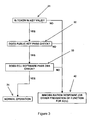
- FIG. 3 illustrates the preferred embodiment of a serial process for operation of the immobiliser 3 when the key 4 is placed in position is set out in Figure 3 .
- the immobiliser first determines 31 whether the key 4 provides a valid token, and if not it will trigger an immobilisation response 40.
- the immobiliser checks 32 the public key of the ECU digital signature scheme (and any other static values protected by the immobiliser) and again if the check fails this will trigger an immobilisation response 40.
- the ECU checks 33 software values using the ECU digital signature scheme, and if these checks fail the ECU does not allow vehicle operation (or may even itself trigger an immobilisation response) - otherwise normal vehicle function is permitted 34.
- the immobiliser serves as the root of trust for the ECU, and is used to authenticate digital assets in the form of static data values used by the ECU such as parameters of the ECU validation process.
- the ECU validation process may itself involve an authentication process, forming a tree of trust extending from the immobiliser through the ECU to additional physical and digital assets.
- the immobiliser may also be used to serve as the root of trust for other computing devices within a vehicle (such as mobile communication equipment and digital media devices) and may protect various types of digital asset (software, calibration parameters, digital media, biometrics and any other form of digitally encoded data). This requires an appropriate communication path between the other computing device and the immobiliser, and will generally also require an appropriate mechanism, such as a digital signature validation algorithm, at this computing device for checking that the digital asset has not been compromised before it is used.
- a digital signature validation algorithm such as a digital signature validation algorithm
Landscapes
- Engineering & Computer Science (AREA)
- Mechanical Engineering (AREA)
- Lock And Its Accessories (AREA)
- Storage Device Security (AREA)
Claims (10)
- Verfahren zum Sichern eines Fahrzeugs, umfassend:Bereitstellen einer Motorsteuereinheit (2), wobei ein Element oder mehrere Elemente statischer digitaler Daten zur Verwendung durch die Motorsteuereinheit (2) in einem ersten Speicher (6, 25) gespeichert werden, undBereitstellen einer Wegfahrsperre (3), wobei die Wegfahrsperre (3) eine Wurzel der Sicherheitskette für die Motorsteuereinheit (2) bereitstellt und wobei die Wegfahrsperre (3) ausgeführt ist, um sicherzustellen, dass das eine oder die mehreren in dem ersten Speicher (6, 25) gespeicherten Elemente vor unbefugter Modifikation geschützt sind,wobei die Motorsteuereinheit (2) ausgeführt ist, um den Betrieb des Fahrzeugs nicht zuzulassen oder seine Leistung nicht zu begrenzen, wenn eine Validierungsroutine nicht erfolgreich durchgeführt wird, wobei das genannte eine Element oder die genannten mehreren Elemente statische Datenelemente aufweisen, die von der Validierungsroutine verwendet werden, und wobei die genannten statischen Datenelemente einen Satz von einem oder mehreren öffentlichen Schlüssel(n) eines Schlüsselpaares oder Schlüsselsatzes aufweisen, wobei der öffentliche bzw. die öffentlichen Schlüssel in der Validierungsroutine verwendet werden, um zu ermitteln, ob Messwerte der Software der Motorsteuereinheit Werten entsprechen, die mit einem oder mehreren zugeordneten privaten Schlüssel(n) signiert wurden.
- Verfahren nach Anspruch 1, wobei die Wegfahrsperre (3) den ersten Speicher (25) aufweist, wobei die Wegfahrsperre (3), wenn versucht wird, Daten in dem ersten Speicher (25) zu modifizieren oder zu entfernen, eine Sperrreaktion zum Verhindern der effektiven Funktion des Fahrzeugs bereitstellt.
- Verfahren nach Anspruch 2, wobei das eine oder die mehreren Datenelement(e) in einer verschlüsselten Form gespeichert werden und/oder der Wegfahrsperrenspeicher (25) physisch vor Modifikation geschützt ist.
- Verfahren nach Anspruch 1, wobei sich der erste Speicher (6) in der Motorsteuereinheit (2) befindet und wobei die Wegfahrsperre (3) den ersten Speicher (6) prüft, um zu ermitteln, ob ein Wert des einen oder der mehreren in ihm gespeicherten Elements bzw. Elemente gültig ist, so dass die Wegfahrsperre (3), wenn ein Wert nicht gültig ist, eine Sperrreaktion zum Verhindern der effektiven Funktion des Fahrzeugs bereitstellt.
- Verfahren nach Anspruch 4, wobei sich der erste Speicher (6) in einem Flash-Speicher der Motorsteuereinheit (2) befindet.
- Verfahren nach Anspruch 4 oder Anspruch 5, wobei das eine Element oder die mehreren Elemente in verschlüsselter Form gespeichert werden und durch Wechselwirkung mit der Wegfahrsperre (3) entschlüsselt werden.
- Verfahren nach einem der vorhergehenden Ansprüche, wobei das genannte eine Element oder die genannten mehreren Elemente Code zur Ausführung durch einen Prozessor der Motorsteuereinheit (2) oder statische Werte der Motorsteuereinheit (2) oder beides umfassen.
- Motorsteuersystem für ein Fahrzeug, umfassend:eine Motorsteuereinheit (2), wobei ein Element oder mehrere Elemente statischer digitaler Daten zur Verwendung durch die Motorsteuereinheit (2) in einem ersten Speicher (6, 25) gespeichert werden, undeine Wegfahrsperre (3), wobei die Wegfahrsperre (3) eine Wurzel der Sicherheitskette für die Motorsteuereinheit (2) bereitstellt und wobei die Wegfahrsperre (3) ausgeführt ist, um sicherzustellen, dass das eine oder die mehreren in dem ersten Speicher (6, 25) gespeicherten Elemente vor unbefugter Modifikation geschützt sind,wobei die Motorsteuereinheit (2) ausgeführt ist, um den Betrieb des Fahrzeugs einzuschränken, wenn eine Validierungsroutine nicht erfolgreich durchgeführt wird, wobei das genannte eine Element oder die genannten mehreren Elemente statische Datenelemente aufweisen, die von der Validierungsroutine verwendet werden, und wobei die genannten statischen Datenelemente einen Satz von einem oder mehreren öffentlichen Schlüssel(n) eines Schlüsselpaares oder Schlüsselsatzes aufweisen, wobei der öffentliche bzw. die öffentlichen Schlüssel in der Validierungsroutine verwendet werden, um zu ermitteln, ob Messwerte der Software der Motorsteuereinheit Werten entsprechen, die mit einem oder mehreren zugeordneten privaten Schlüssel(n) signiert wurden.
- Motorsteuersystem nach Anspruch 8, wobei sich der erste Speicher (25) in der Wegfahrsperre (3) befindet.
- Motorsteuersystem nach Anspruch 8, wobei sich der erste Speicher (6) in der Motorsteuereinheit (2) befindet und wobei die Wegfahrsperre (3) ausgeführt ist, um den ersten Speicher (6) zu prüfen, um zu ermitteln, ob ein Wert des in ihm gespeicherten öffentlichen Schlüssels gültig ist, so dass die Wegfahrsperre (3), wenn der Wert nicht gültig ist, des Weiteren ausgeführt ist, um eine Sperrreaktion zum Verhindern der effektiven Funktion des Fahrzeugs bereitzustellen.
Priority Applications (5)
| Application Number | Priority Date | Filing Date | Title |
|---|---|---|---|
| EP20110153725 EP2484564B1 (de) | 2011-02-08 | 2011-02-08 | Verfahren und Vorrichtung für Fahrzeugsicherheit |
| ES11153725T ES2446974T3 (es) | 2011-02-08 | 2011-02-08 | Método y aparato para la seguridad de vehículos |
| CN201280008133.2A CN103338985B (zh) | 2011-02-08 | 2012-02-02 | 用于车辆安全的方法和设备 |
| JP2013552908A JP5937109B2 (ja) | 2011-02-08 | 2012-02-02 | 車両の防犯のための方法及び機関制御システム |
| PCT/EP2012/051779 WO2012107346A1 (en) | 2011-02-08 | 2012-02-02 | Method and apparatus for vehicle security |
Applications Claiming Priority (1)
| Application Number | Priority Date | Filing Date | Title |
|---|---|---|---|
| EP20110153725 EP2484564B1 (de) | 2011-02-08 | 2011-02-08 | Verfahren und Vorrichtung für Fahrzeugsicherheit |
Publications (2)
| Publication Number | Publication Date |
|---|---|
| EP2484564A1 EP2484564A1 (de) | 2012-08-08 |
| EP2484564B1 true EP2484564B1 (de) | 2014-01-15 |
Family
ID=44504410
Family Applications (1)
| Application Number | Title | Priority Date | Filing Date |
|---|---|---|---|
| EP20110153725 Active EP2484564B1 (de) | 2011-02-08 | 2011-02-08 | Verfahren und Vorrichtung für Fahrzeugsicherheit |
Country Status (5)
| Country | Link |
|---|---|
| EP (1) | EP2484564B1 (de) |
| JP (1) | JP5937109B2 (de) |
| CN (1) | CN103338985B (de) |
| ES (1) | ES2446974T3 (de) |
| WO (1) | WO2012107346A1 (de) |
Cited By (1)
| Publication number | Priority date | Publication date | Assignee | Title |
|---|---|---|---|---|
| DE102018214301A1 (de) * | 2018-08-23 | 2020-02-27 | Infineon Technologies Ag | Vorrichtung und System mit einem Vertrauensanker |
Families Citing this family (10)
| Publication number | Priority date | Publication date | Assignee | Title |
|---|---|---|---|---|
| WO2015098429A1 (ja) * | 2013-12-27 | 2015-07-02 | 日立工機株式会社 | 空気圧縮機およびその認証方法 |
| DE102014208838A1 (de) * | 2014-05-12 | 2015-11-12 | Robert Bosch Gmbh | Verfahren zum Betreiben eines Steuergeräts |
| EP3499792A4 (de) | 2016-08-10 | 2020-01-01 | KDDI Corporation | Datenbereitstellungssystem, datensicherheitsvorrichtung, datenbereitstellungsverfahren und computerprogramm |
| CN107067720B (zh) * | 2017-04-01 | 2020-10-27 | 成都信息工程大学 | 一种基于区块链的城市实时交通系统及方法 |
| CN107749845B (zh) * | 2017-10-20 | 2019-08-09 | 成都信息工程大学 | 基于区块链技术的can总线报文的抗攻击方法及系统 |
| CN109034939B (zh) * | 2018-06-12 | 2022-02-25 | 相汇网络科技(杭州)有限公司 | 一种网约车租赁及安全监控系统 |
| US11539782B2 (en) * | 2018-10-02 | 2022-12-27 | Hyundai Motor Company | Controlling can communication in a vehicle using shifting can message reference |
| EP3736716B1 (de) * | 2019-05-10 | 2021-12-22 | Aptiv Technologies Limited | Verfahren zum schutz einer elektronischen steuerungseinheit |
| US20220242419A1 (en) * | 2019-07-24 | 2022-08-04 | C2A-Sec, Ltd. | Intrusion anomaly monitoring in a vehicle environment |
| CN112947882B (zh) * | 2021-04-12 | 2022-05-17 | 上海宏英智能科技股份有限公司 | 一种车载显示器导出数据禁止修改的系统及方法 |
Family Cites Families (13)
| Publication number | Priority date | Publication date | Assignee | Title |
|---|---|---|---|---|
| JP2813962B2 (ja) * | 1994-10-28 | 1998-10-22 | 本田技研工業株式会社 | 盗難防止装置 |
| DE19850454C2 (de) * | 1998-11-02 | 2003-08-07 | Siemens Ag | Verfahren zum Betreiben eines Kraftfahrzeug-Steuersystems, und entsprechend ausgestattetes Kraftfahrzeug-Steuersystem |
| EP1439100B1 (de) * | 2003-01-17 | 2006-08-16 | Matsushita Electric Industrial Co., Ltd. | Sicherheitsvorrichtung und -system für ein Fahrzeug und Kontrollverfahren hierfür |
| JP3991927B2 (ja) * | 2003-06-12 | 2007-10-17 | 株式会社デンソー | 盗難防止システム |
| JP4720143B2 (ja) * | 2004-10-25 | 2011-07-13 | 株式会社デンソー | カードレスetc車載器および車載システム |
| JP2007239589A (ja) * | 2006-03-08 | 2007-09-20 | Tokai Rika Co Ltd | エンジン始動装置及びエンジン始動方法 |
| JP4529931B2 (ja) * | 2006-03-29 | 2010-08-25 | 株式会社デンソー | エンジン始動制御装置 |
| DE102006015212B4 (de) * | 2006-03-30 | 2017-05-04 | Bundesdruckerei Gmbh | Verfahren zum Schutz eines beweglichen Gutes, insbesondere eines Fahrzeugs, gegen unberechtigte Nutzung |
| JP2008126872A (ja) * | 2006-11-22 | 2008-06-05 | Akira Taguchi | 始動制御システム |
| JP2009018749A (ja) * | 2007-07-13 | 2009-01-29 | Tokai Rika Co Ltd | エンジン始動システム |
| JP2009027491A (ja) * | 2007-07-20 | 2009-02-05 | Seiko Epson Corp | 車両セキュリティシステム |
| JP4842907B2 (ja) * | 2007-10-04 | 2011-12-21 | 本田技研工業株式会社 | イモビライザ装置 |
| DE102009057926B4 (de) * | 2009-12-11 | 2014-04-24 | Continental Automotive Gmbh | Verfahren und Vorrichtung zum Schutz eines Fahrzeugs vor Diebstahl |
-
2011
- 2011-02-08 ES ES11153725T patent/ES2446974T3/es active Active
- 2011-02-08 EP EP20110153725 patent/EP2484564B1/de active Active
-
2012
- 2012-02-02 CN CN201280008133.2A patent/CN103338985B/zh active Active
- 2012-02-02 WO PCT/EP2012/051779 patent/WO2012107346A1/en not_active Ceased
- 2012-02-02 JP JP2013552908A patent/JP5937109B2/ja active Active
Cited By (3)
| Publication number | Priority date | Publication date | Assignee | Title |
|---|---|---|---|---|
| DE102018214301A1 (de) * | 2018-08-23 | 2020-02-27 | Infineon Technologies Ag | Vorrichtung und System mit einem Vertrauensanker |
| DE102018214301B4 (de) * | 2018-08-23 | 2020-03-26 | Infineon Technologies Ag | Vorrichtung und System mit einem Vertrauensanker |
| US11552998B2 (en) | 2018-08-23 | 2023-01-10 | Infineon Technologies Ag | Device and system with a root of trust |
Also Published As
| Publication number | Publication date |
|---|---|
| CN103338985A (zh) | 2013-10-02 |
| CN103338985B (zh) | 2015-11-25 |
| ES2446974T3 (es) | 2014-03-11 |
| EP2484564A1 (de) | 2012-08-08 |
| JP2014510660A (ja) | 2014-05-01 |
| WO2012107346A1 (en) | 2012-08-16 |
| JP5937109B2 (ja) | 2016-06-22 |
Similar Documents
| Publication | Publication Date | Title |
|---|---|---|
| EP2484564B1 (de) | Verfahren und Vorrichtung für Fahrzeugsicherheit | |
| US7500098B2 (en) | Secure mode controlled memory | |
| US8041947B2 (en) | Computer architecture for an electronic device providing SLS access to MLS file system with trusted loading and protection of program execution memory | |
| JP6422059B2 (ja) | 処理装置、車載端末装置、処理装置の起動方法、及び処理装置の起動プログラム | |
| CN111651748B (zh) | 一种车内ecu的安全访问处理系统及其方法 | |
| JP2007535015A (ja) | プロセッサの保護された資源へのアクセスに対するセキュリティ保護方法 | |
| JP6387908B2 (ja) | 認証システム | |
| US8528108B2 (en) | Protecting secret information in a programmed electronic device | |
| JP5861597B2 (ja) | 認証システムおよび認証方法 | |
| CN105892348B (zh) | 用于运行控制设备的方法 | |
| US10762177B2 (en) | Method for preventing an unauthorized operation of a motor vehicle | |
| GB2455004A (en) | Authenticating suspect code using key tables | |
| US20160055331A1 (en) | Detecting exploits against software applications | |
| Ammar et al. | Securing the on-board diagnostics port (obd-ii) in vehicles | |
| CN120162795A (zh) | 基于国密算法的车规mcu芯片安全启动方法及系统 | |
| CN118051919B (zh) | 数据处理方法、芯片、电子设备以及存储介质 | |
| JP2007535250A (ja) | 車両外部の装置の認証 | |
| Pickford et al. | Systematic risk characterisation of hardware threats to automotive systems | |
| CN111104662B (zh) | 用于对程序进行认证的方法和对应的集成电路 | |
| CN116776397A (zh) | 用于在计算单元中验证数据的方法 | |
| Weimerskirch | Secure software flashing | |
| Kurdziel et al. | An SCA security supplement compliant radio architecture | |
| Wolf | Vehicular security mechanisms | |
| Weimerskirch et al. | Introduction to Vehicular Embedded Security | |
| US20200358748A1 (en) | Method for protecting an electronic control unit |
Legal Events
| Date | Code | Title | Description |
|---|---|---|---|
| PUAI | Public reference made under article 153(3) epc to a published international application that has entered the european phase |
Free format text: ORIGINAL CODE: 0009012 |
|
| AK | Designated contracting states |
Kind code of ref document: A1 Designated state(s): AL AT BE BG CH CY CZ DE DK EE ES FI FR GB GR HR HU IE IS IT LI LT LU LV MC MK MT NL NO PL PT RO RS SE SI SK SM TR |
|
| AX | Request for extension of the european patent |
Extension state: BA ME |
|
| 17P | Request for examination filed |
Effective date: 20130208 |
|
| 17Q | First examination report despatched |
Effective date: 20130314 |
|
| GRAP | Despatch of communication of intention to grant a patent |
Free format text: ORIGINAL CODE: EPIDOSNIGR1 |
|
| INTG | Intention to grant announced |
Effective date: 20130912 |
|
| GRAS | Grant fee paid |
Free format text: ORIGINAL CODE: EPIDOSNIGR3 |
|
| GRAA | (expected) grant |
Free format text: ORIGINAL CODE: 0009210 |
|
| AK | Designated contracting states |
Kind code of ref document: B1 Designated state(s): AL AT BE BG CH CY CZ DE DK EE ES FI FR GB GR HR HU IE IS IT LI LT LU LV MC MK MT NL NO PL PT RO RS SE SI SK SM TR |
|
| AX | Request for extension of the european patent |
Extension state: BA ME |
|
| REG | Reference to a national code |
Ref country code: GB Ref legal event code: FG4D Ref country code: CH Ref legal event code: EP |
|
| REG | Reference to a national code |
Ref country code: AT Ref legal event code: REF Ref document number: 649678 Country of ref document: AT Kind code of ref document: T Effective date: 20140215 |
|
| REG | Reference to a national code |
Ref country code: IE Ref legal event code: FG4D |
|
| REG | Reference to a national code |
Ref country code: DE Ref legal event code: R096 Ref document number: 602011004647 Country of ref document: DE Effective date: 20140227 |
|
| REG | Reference to a national code |
Ref country code: ES Ref legal event code: FG2A Ref document number: 2446974 Country of ref document: ES Kind code of ref document: T3 Effective date: 20140311 |
|
| RAP2 | Party data changed (patent owner data changed or rights of a patent transferred) |
Owner name: DELPHI INTERNATIONAL OPERATIONS LUXEMBOURG S.A.R.L |
|
| REG | Reference to a national code |
Ref country code: GB Ref legal event code: 732E Free format text: REGISTERED BETWEEN 20140220 AND 20140226 |
|
| REG | Reference to a national code |
Ref country code: NL Ref legal event code: VDEP Effective date: 20140115 |
|
| PGFP | Annual fee paid to national office [announced via postgrant information from national office to epo] |
Ref country code: ES Payment date: 20140226 Year of fee payment: 4 Ref country code: IT Payment date: 20140228 Year of fee payment: 4 |
|
| REG | Reference to a national code |
Ref country code: AT Ref legal event code: MK05 Ref document number: 649678 Country of ref document: AT Kind code of ref document: T Effective date: 20140115 |
|
| REG | Reference to a national code |
Ref country code: FR Ref legal event code: TP Owner name: DELPHI INTERNATIONAL OPERATIONS LUXEMBOURG S.A, LU Effective date: 20140516 |
|
| REG | Reference to a national code |
Ref country code: LT Ref legal event code: MG4D |
|
| PG25 | Lapsed in a contracting state [announced via postgrant information from national office to epo] |
Ref country code: IS Free format text: LAPSE BECAUSE OF FAILURE TO SUBMIT A TRANSLATION OF THE DESCRIPTION OR TO PAY THE FEE WITHIN THE PRESCRIBED TIME-LIMIT Effective date: 20140515 Ref country code: NO Free format text: LAPSE BECAUSE OF FAILURE TO SUBMIT A TRANSLATION OF THE DESCRIPTION OR TO PAY THE FEE WITHIN THE PRESCRIBED TIME-LIMIT Effective date: 20140415 Ref country code: LT Free format text: LAPSE BECAUSE OF FAILURE TO SUBMIT A TRANSLATION OF THE DESCRIPTION OR TO PAY THE FEE WITHIN THE PRESCRIBED TIME-LIMIT Effective date: 20140115 |
|
| REG | Reference to a national code |
Ref country code: DE Ref legal event code: R081 Ref document number: 602011004647 Country of ref document: DE Owner name: DELPHI INTERNATIONAL OPERATIONS LUXEMBOURG S.A, LU Free format text: FORMER OWNER: DELPHI TECHNOLOGIES HOLDING S.A.R.L., BASCHARAGE, LU Effective date: 20140715 |
|
| PG25 | Lapsed in a contracting state [announced via postgrant information from national office to epo] |
Ref country code: AT Free format text: LAPSE BECAUSE OF FAILURE TO SUBMIT A TRANSLATION OF THE DESCRIPTION OR TO PAY THE FEE WITHIN THE PRESCRIBED TIME-LIMIT Effective date: 20140115 Ref country code: PT Free format text: LAPSE BECAUSE OF FAILURE TO SUBMIT A TRANSLATION OF THE DESCRIPTION OR TO PAY THE FEE WITHIN THE PRESCRIBED TIME-LIMIT Effective date: 20140515 Ref country code: NL Free format text: LAPSE BECAUSE OF FAILURE TO SUBMIT A TRANSLATION OF THE DESCRIPTION OR TO PAY THE FEE WITHIN THE PRESCRIBED TIME-LIMIT Effective date: 20140115 Ref country code: CY Free format text: LAPSE BECAUSE OF FAILURE TO SUBMIT A TRANSLATION OF THE DESCRIPTION OR TO PAY THE FEE WITHIN THE PRESCRIBED TIME-LIMIT Effective date: 20140115 Ref country code: FI Free format text: LAPSE BECAUSE OF FAILURE TO SUBMIT A TRANSLATION OF THE DESCRIPTION OR TO PAY THE FEE WITHIN THE PRESCRIBED TIME-LIMIT Effective date: 20140115 Ref country code: SE Free format text: LAPSE BECAUSE OF FAILURE TO SUBMIT A TRANSLATION OF THE DESCRIPTION OR TO PAY THE FEE WITHIN THE PRESCRIBED TIME-LIMIT Effective date: 20140115 |
|
| PG25 | Lapsed in a contracting state [announced via postgrant information from national office to epo] |
Ref country code: BE Free format text: LAPSE BECAUSE OF FAILURE TO SUBMIT A TRANSLATION OF THE DESCRIPTION OR TO PAY THE FEE WITHIN THE PRESCRIBED TIME-LIMIT Effective date: 20140115 Ref country code: RS Free format text: LAPSE BECAUSE OF FAILURE TO SUBMIT A TRANSLATION OF THE DESCRIPTION OR TO PAY THE FEE WITHIN THE PRESCRIBED TIME-LIMIT Effective date: 20140115 Ref country code: HR Free format text: LAPSE BECAUSE OF FAILURE TO SUBMIT A TRANSLATION OF THE DESCRIPTION OR TO PAY THE FEE WITHIN THE PRESCRIBED TIME-LIMIT Effective date: 20140115 Ref country code: LV Free format text: LAPSE BECAUSE OF FAILURE TO SUBMIT A TRANSLATION OF THE DESCRIPTION OR TO PAY THE FEE WITHIN THE PRESCRIBED TIME-LIMIT Effective date: 20140115 |
|
| REG | Reference to a national code |
Ref country code: CH Ref legal event code: PL |
|
| REG | Reference to a national code |
Ref country code: DE Ref legal event code: R097 Ref document number: 602011004647 Country of ref document: DE |
|
| PG25 | Lapsed in a contracting state [announced via postgrant information from national office to epo] |
Ref country code: CH Free format text: LAPSE BECAUSE OF NON-PAYMENT OF DUE FEES Effective date: 20140228 Ref country code: CZ Free format text: LAPSE BECAUSE OF FAILURE TO SUBMIT A TRANSLATION OF THE DESCRIPTION OR TO PAY THE FEE WITHIN THE PRESCRIBED TIME-LIMIT Effective date: 20140115 Ref country code: DK Free format text: LAPSE BECAUSE OF FAILURE TO SUBMIT A TRANSLATION OF THE DESCRIPTION OR TO PAY THE FEE WITHIN THE PRESCRIBED TIME-LIMIT Effective date: 20140115 Ref country code: LI Free format text: LAPSE BECAUSE OF NON-PAYMENT OF DUE FEES Effective date: 20140228 Ref country code: RO Free format text: LAPSE BECAUSE OF FAILURE TO SUBMIT A TRANSLATION OF THE DESCRIPTION OR TO PAY THE FEE WITHIN THE PRESCRIBED TIME-LIMIT Effective date: 20140115 Ref country code: EE Free format text: LAPSE BECAUSE OF FAILURE TO SUBMIT A TRANSLATION OF THE DESCRIPTION OR TO PAY THE FEE WITHIN THE PRESCRIBED TIME-LIMIT Effective date: 20140115 Ref country code: MC Free format text: LAPSE BECAUSE OF FAILURE TO SUBMIT A TRANSLATION OF THE DESCRIPTION OR TO PAY THE FEE WITHIN THE PRESCRIBED TIME-LIMIT Effective date: 20140115 |
|
| PLBE | No opposition filed within time limit |
Free format text: ORIGINAL CODE: 0009261 |
|
| STAA | Information on the status of an ep patent application or granted ep patent |
Free format text: STATUS: NO OPPOSITION FILED WITHIN TIME LIMIT |
|
| PG25 | Lapsed in a contracting state [announced via postgrant information from national office to epo] |
Ref country code: SK Free format text: LAPSE BECAUSE OF FAILURE TO SUBMIT A TRANSLATION OF THE DESCRIPTION OR TO PAY THE FEE WITHIN THE PRESCRIBED TIME-LIMIT Effective date: 20140115 Ref country code: PL Free format text: LAPSE BECAUSE OF FAILURE TO SUBMIT A TRANSLATION OF THE DESCRIPTION OR TO PAY THE FEE WITHIN THE PRESCRIBED TIME-LIMIT Effective date: 20140115 |
|
| REG | Reference to a national code |
Ref country code: IE Ref legal event code: MM4A |
|
| 26N | No opposition filed |
Effective date: 20141016 |
|
| PG25 | Lapsed in a contracting state [announced via postgrant information from national office to epo] |
Ref country code: IE Free format text: LAPSE BECAUSE OF NON-PAYMENT OF DUE FEES Effective date: 20140208 |
|
| REG | Reference to a national code |
Ref country code: DE Ref legal event code: R097 Ref document number: 602011004647 Country of ref document: DE Effective date: 20141016 |
|
| PG25 | Lapsed in a contracting state [announced via postgrant information from national office to epo] |
Ref country code: SI Free format text: LAPSE BECAUSE OF FAILURE TO SUBMIT A TRANSLATION OF THE DESCRIPTION OR TO PAY THE FEE WITHIN THE PRESCRIBED TIME-LIMIT Effective date: 20140115 |
|
| PG25 | Lapsed in a contracting state [announced via postgrant information from national office to epo] |
Ref country code: IT Free format text: LAPSE BECAUSE OF NON-PAYMENT OF DUE FEES Effective date: 20150208 |
|
| REG | Reference to a national code |
Ref country code: FR Ref legal event code: PLFP Year of fee payment: 6 |
|
| PG25 | Lapsed in a contracting state [announced via postgrant information from national office to epo] |
Ref country code: MT Free format text: LAPSE BECAUSE OF FAILURE TO SUBMIT A TRANSLATION OF THE DESCRIPTION OR TO PAY THE FEE WITHIN THE PRESCRIBED TIME-LIMIT Effective date: 20140115 |
|
| REG | Reference to a national code |
Ref country code: ES Ref legal event code: FD2A Effective date: 20160329 |
|
| PG25 | Lapsed in a contracting state [announced via postgrant information from national office to epo] |
Ref country code: SM Free format text: LAPSE BECAUSE OF FAILURE TO SUBMIT A TRANSLATION OF THE DESCRIPTION OR TO PAY THE FEE WITHIN THE PRESCRIBED TIME-LIMIT Effective date: 20140115 Ref country code: ES Free format text: LAPSE BECAUSE OF NON-PAYMENT OF DUE FEES Effective date: 20150209 |
|
| PG25 | Lapsed in a contracting state [announced via postgrant information from national office to epo] |
Ref country code: BG Free format text: LAPSE BECAUSE OF FAILURE TO SUBMIT A TRANSLATION OF THE DESCRIPTION OR TO PAY THE FEE WITHIN THE PRESCRIBED TIME-LIMIT Effective date: 20140115 Ref country code: GR Free format text: LAPSE BECAUSE OF FAILURE TO SUBMIT A TRANSLATION OF THE DESCRIPTION OR TO PAY THE FEE WITHIN THE PRESCRIBED TIME-LIMIT Effective date: 20140416 |
|
| PG25 | Lapsed in a contracting state [announced via postgrant information from national office to epo] |
Ref country code: HU Free format text: LAPSE BECAUSE OF FAILURE TO SUBMIT A TRANSLATION OF THE DESCRIPTION OR TO PAY THE FEE WITHIN THE PRESCRIBED TIME-LIMIT; INVALID AB INITIO Effective date: 20110208 Ref country code: LU Free format text: LAPSE BECAUSE OF NON-PAYMENT OF DUE FEES Effective date: 20140208 Ref country code: TR Free format text: LAPSE BECAUSE OF FAILURE TO SUBMIT A TRANSLATION OF THE DESCRIPTION OR TO PAY THE FEE WITHIN THE PRESCRIBED TIME-LIMIT Effective date: 20140115 |
|
| REG | Reference to a national code |
Ref country code: FR Ref legal event code: PLFP Year of fee payment: 7 |
|
| REG | Reference to a national code |
Ref country code: FR Ref legal event code: PLFP Year of fee payment: 8 |
|
| PG25 | Lapsed in a contracting state [announced via postgrant information from national office to epo] |
Ref country code: MK Free format text: LAPSE BECAUSE OF FAILURE TO SUBMIT A TRANSLATION OF THE DESCRIPTION OR TO PAY THE FEE WITHIN THE PRESCRIBED TIME-LIMIT Effective date: 20140115 |
|
| PG25 | Lapsed in a contracting state [announced via postgrant information from national office to epo] |
Ref country code: AL Free format text: LAPSE BECAUSE OF FAILURE TO SUBMIT A TRANSLATION OF THE DESCRIPTION OR TO PAY THE FEE WITHIN THE PRESCRIBED TIME-LIMIT Effective date: 20140115 |
|
| REG | Reference to a national code |
Ref country code: DE Ref legal event code: R081 Ref document number: 602011004647 Country of ref document: DE Owner name: DELPHI TECHNOLOGIES IP LIMITED, BB Free format text: FORMER OWNER: DELPHI INTERNATIONAL OPERATIONS LUXEMBOURG S.A R.L., BASCHARAGE, LU |
|
| REG | Reference to a national code |
Ref country code: GB Ref legal event code: 732E Free format text: REGISTERED BETWEEN 20190222 AND 20190227 |
|
| P01 | Opt-out of the competence of the unified patent court (upc) registered |
Effective date: 20230327 |
|
| REG | Reference to a national code |
Ref country code: DE Ref legal event code: R081 Ref document number: 602011004647 Country of ref document: DE Owner name: PHINIA DELPHI LUXEMBOURG SARL, LU Free format text: FORMER OWNER: DELPHI TECHNOLOGIES IP LIMITED, ST. MICHAEL, BB |
|
| PGFP | Annual fee paid to national office [announced via postgrant information from national office to epo] |
Ref country code: GB Payment date: 20260113 Year of fee payment: 16 |
|
| PGFP | Annual fee paid to national office [announced via postgrant information from national office to epo] |
Ref country code: DE Payment date: 20260115 Year of fee payment: 16 |
|
| PGFP | Annual fee paid to national office [announced via postgrant information from national office to epo] |
Ref country code: FR Payment date: 20260109 Year of fee payment: 16 |