EP2467155B1 - Multiepitop-Impfstoff für Her2/neu-assoziierten Krebs - Google Patents
Multiepitop-Impfstoff für Her2/neu-assoziierten Krebs Download PDFInfo
- Publication number
- EP2467155B1 EP2467155B1 EP10744895.3A EP10744895A EP2467155B1 EP 2467155 B1 EP2467155 B1 EP 2467155B1 EP 10744895 A EP10744895 A EP 10744895A EP 2467155 B1 EP2467155 B1 EP 2467155B1
- Authority
- EP
- European Patent Office
- Prior art keywords
- fusion peptide
- peptide
- delivery system
- seq
- fusion
- Prior art date
- Legal status (The legal status is an assumption and is not a legal conclusion. Google has not performed a legal analysis and makes no representation as to the accuracy of the status listed.)
- Active
Links
Images




Classifications
-
- A—HUMAN NECESSITIES
- A61—MEDICAL OR VETERINARY SCIENCE; HYGIENE
- A61K—PREPARATIONS FOR MEDICAL, DENTAL OR TOILETRY PURPOSES
- A61K39/00—Medicinal preparations containing antigens or antibodies
- A61K39/0005—Vertebrate antigens
- A61K39/0011—Cancer antigens
- A61K39/001102—Receptors, cell surface antigens or cell surface determinants
- A61K39/001103—Receptors for growth factors
- A61K39/001106—Her-2/neu/ErbB2, Her-3/ErbB3 or Her 4/ErbB4
-
- A—HUMAN NECESSITIES
- A61—MEDICAL OR VETERINARY SCIENCE; HYGIENE
- A61P—SPECIFIC THERAPEUTIC ACTIVITY OF CHEMICAL COMPOUNDS OR MEDICINAL PREPARATIONS
- A61P35/00—Antineoplastic agents
-
- A—HUMAN NECESSITIES
- A61—MEDICAL OR VETERINARY SCIENCE; HYGIENE
- A61P—SPECIFIC THERAPEUTIC ACTIVITY OF CHEMICAL COMPOUNDS OR MEDICINAL PREPARATIONS
- A61P37/00—Drugs for immunological or allergic disorders
- A61P37/02—Immunomodulators
- A61P37/04—Immunostimulants
-
- C—CHEMISTRY; METALLURGY
- C07—ORGANIC CHEMISTRY
- C07K—PEPTIDES
- C07K14/00—Peptides having more than 20 amino acids; Gastrins; Somatostatins; Melanotropins; Derivatives thereof
- C07K14/435—Peptides having more than 20 amino acids; Gastrins; Somatostatins; Melanotropins; Derivatives thereof from animals; from humans
- C07K14/705—Receptors; Cell surface antigens; Cell surface determinants
- C07K14/71—Receptors; Cell surface antigens; Cell surface determinants for growth factors; for growth regulators
-
- A—HUMAN NECESSITIES
- A61—MEDICAL OR VETERINARY SCIENCE; HYGIENE
- A61K—PREPARATIONS FOR MEDICAL, DENTAL OR TOILETRY PURPOSES
- A61K39/00—Medicinal preparations containing antigens or antibodies
- A61K2039/555—Medicinal preparations containing antigens or antibodies characterised by a specific combination antigen/adjuvant
- A61K2039/55511—Organic adjuvants
- A61K2039/55555—Liposomes; Vesicles, e.g. nanoparticles; Spheres, e.g. nanospheres; Polymers
-
- A—HUMAN NECESSITIES
- A61—MEDICAL OR VETERINARY SCIENCE; HYGIENE
- A61K—PREPARATIONS FOR MEDICAL, DENTAL OR TOILETRY PURPOSES
- A61K39/00—Medicinal preparations containing antigens or antibodies
- A61K2039/555—Medicinal preparations containing antigens or antibodies characterised by a specific combination antigen/adjuvant
- A61K2039/55511—Organic adjuvants
- A61K2039/55577—Saponins; Quil A; QS21; ISCOMS
-
- A—HUMAN NECESSITIES
- A61—MEDICAL OR VETERINARY SCIENCE; HYGIENE
- A61K—PREPARATIONS FOR MEDICAL, DENTAL OR TOILETRY PURPOSES
- A61K39/00—Medicinal preparations containing antigens or antibodies
- A61K2039/60—Medicinal preparations containing antigens or antibodies characteristics by the carrier linked to the antigen
- A61K2039/6031—Proteins
- A61K2039/6037—Bacterial toxins, e.g. diphteria toxoid [DT], tetanus toxoid [TT]
Definitions
- the present invention relates to fusion peptides comprising fragments of the cancer-related protein Her2/neu, methods of preparing such fusion peptides, virosomes comprising such fusion peptides, and uses of such fusion peptides and/or virosomes for the prevention, treatment and/or amelioration of a cancer characterized by expression or over-expression of the Her2/neu protein.
- the Her2/neu tumor antigen encoded by the erbB2/neu protooncogene, is a 185 kDa protein that belongs to the human epidermal growth factor receptor family. It consists of a cysteine-rich extracellular domain (ECD, from amino acids 23 to 652) with several glycosylation sites, a hydrophobic transmembrane domain (from amino acids 653 to 675) and an intracellular tyrosine kinase domain (from amino acids 676 to 1255).
- ECD cysteine-rich extracellular domain
- the Her2/neu receptor is expressed on the cell membrane of a variety of epithelial cell types and regulates aspects of cell growth and division through binding of specific growth factors. Her2/neu is expressed at low levels in many normal cells, but is over- expressed in a variety of cancers, including breast, ovarian, endometrial, gastric, pancreatic, prostate and salivary gland cancers.
- Her2/neu over-expression in tumors have made Her2/neu an attractive target for antibody-mediated immunotherapy as an adjunct to conventional chemotherapy.
- the monoclonal antibody Trastuzumab (marketed as Herceptin ® ) is only effective in breast cancer where the Her2/neu receptor is over-expressed.
- multiple infusions are required, resulting in high treatment costs.
- TAAs tumor-associated antigens
- antigens intended to elicit an immune response are sometimes combined with one or more adjuvants, e.g. conjugated or otherwise associated with one or more delivery systems.
- adjuvants e.g. conjugated or otherwise associated with one or more delivery systems.
- B or T cell response different strategies are applied.
- B cell epitopes To induce a B cell (i.e. antibody) response the antigens should be B cell epitopes.
- a B cell epitope is a part of an antigen that is recognized and bound by a B cell receptor.
- Lipids, polysaccharides and proteins/peptides may contain B cell epitopes which, upon introduction into an organism of choice, cause B cells to produce antibodies which specifically bind to the introduced epitope.
- the immunogenicity of some B cell epitopes can in some cases be increased by coupling to a suitable delivery system.
- Coupling of antigens intended to function as B cell epitopes to particles in a repetitive arrangement presumably enables cross-linking of the immunoglobulin receptors on the B cells, which is known to be an exceptionally strong activation signal.
- Repetitive arrangement can occur via fusion of the B cell epitope with a delivery system including e.g. hepatitis B core (HBc), keyhole limpet hemocyanins (KLH), tetanus toxoid (TT) and/or virosomes.
- HBc hepatitis B core
- KLH keyhole limpet hemocyanins
- TT tetanus toxoid
- virosomes e.g. hepatitis B core
- T cell help can also enhance antibody production.
- a promising approach of antitumor activity is based on the induction of tumor specific humoral immune responses; numerous antibodies directed against the extracellular domain (ECD) of Her2/neu have been generated by immunizing mice with cells expressing Her2/neu.
- ECD extracellular domain
- the biological effect of these antibodies appears epitope-specific, that is it is based on specific recognition of a short subsequence within the Her2/neu ECD. Some antibodies have no effect or even actively stimulate tumor growth.
- the monoclonal antibody (mAb) 4D5 has been shown to reduce the growth of Her2/neu expressing tumors in mice by direct and indirect mechanisms such as apoptosis, antibody-dependent cell-mediated cytotoxicity (ADCC) or complement-dependent cytotoxicity (CDC).
- Trastuzumab (Herceptin ® )
- Herceptin ® a humanized form of this antibody, termed Trastuzumab (Herceptin ® )
- Herceptin® was tested in clinical trials. Increased overall survival of patients with breast tumors overexpressing Her2/neu was observed following cytotoxic treatment plus Herceptin® as compared to chemotherapy or Trastuzumab alone.
- Herceptin® is now used as monotherapy but shows even higher efficacy in combination with cytotoxic chemotherapy.
- WO 2002/068474 ( EP 1236740 ) relates to a vaccine that comprises a peptide of 9-25 amino acids which sequence occurs in the extracellular part of the Her2/neu protein.
- WO 2007/118660 ( EP 1884788 ) describes a multi-peptide vaccine comprising a specific combination of peptides presenting different amino acid sequences as occur in the extracellular part of the Her2/neu protein.
- These peptides in these publications may be administered individually or together, in the form of multiple discrete peptides, each preferably conjugated separately to a delivery system.
- such substances should improve upon the protective effect conferred by existing immunotherapies for such cancers while avoiding the need for laborious preparation techniques.
- a fusion peptide comprising three non-contiguous B cell epitopes from the extracellular domain (ECD) of Her2/neu, or derivatives thereof which retain their quality as a B cell epitope, wherein the three non-contiguous B cell epitopes are directly linked to one another or are linked via a non-native linker peptide sequence in a single polypeptide chain, and wherein the three non-contiguous B cell epitopes have the amino acid sequence as set out in SEQ ID NO: 12, SEQ ID NO: 2 and SEQ ID NO: 3.
- the present invention provides a method of preparing a fusion peptide as above.
- the fusion peptide may be prepared by a peptide synthesis method comprising (i) sequential formation of peptide bonds linking each amino acid to its respectively neighboring amino acid and (ii) recovering said fusion peptide.
- the fusion peptide may be prepared by a recombinant method comprising (i) providing a nucleic acid comprising a nucleic acid sequence encoding a fusion peptide comprising three non-contiguous B cell epitopes from the extracellular domain (ECD) of Her2/neu, or derivatives thereof, linked to one another in a single polypeptide chain, (ii) transfecting said nucleic acid into a host cell capable of expressing said nucleic acid sequence; (iii) incubating said host cell under conditions suitable for the expression of said nucleic acid sequence; and (iv) recovering said fusion peptide.
- ECD extracellular domain
- the present invention provides a delivery system covalently and/or non-covalently associated with a fusion peptide as described above or with a fusion peptide obtainable by the above method.
- the present invention provides a fusion peptide as described above and/or a fusion peptide obtainable by the above method and/or a delivery system as described above for use as a medicament.
- the present invention provides a composition comprising a fusion peptide as described above and/or a fusion peptide obtainable by a method as described above and/or a delivery system as described above.
- the composition additionally comprises a pharmaceutically acceptable carrier and is a pharmaceutical composition.
- the composition e.g. comprising a fusion peptide as described above, may additionally comprise an immunopotentiator.
- the present invention provides a use of a fusion peptide as described above, a fusion peptide obtainable according to a method as described above, a delivery system as described above, a composition as described above and/or a pharmaceutical composition as described above for the preparation of a medicament for the prevention, treatment and/or amelioration of a cancer characterized by expression or over-expression of Her2/neu.
- the present invention provides a method of preventing, treating and/or ameliorating a cancer characterized by expression or over-expression of Her2 in a patient in need or suspected need thereof, comprising the step of administering to said patient an effective amount of a fusion peptide as described above, a fusion peptide obtainable according to a method as described above, a delivery system as described above, a composition as described above and/or a pharmaceutical composition as described above.
- one aspect of the invention provides a fusion peptide comprising three non-contiguous B cell epitopes from the extracellular domain (ECD) of Her2/neu, or derivatives thereof, linked to one another in a single polypeptide chain.
- ECD extracellular domain
- a fusion peptide comprising multiple fragments, i.e. multiple B cell epitopes, from the ECD of Her2/neu can elicit a specific protective immune response which is superior to that elicited by the respective separate single-epitope peptide fragments comprised therein.
- the magnitude of the immune response elicited by a fusion peptide comprising at least three natively non-contiguous B cell epitopes from the ECD of Her2/neu, or derivatives thereof is greater that what would be expected as the additive sum elicited by its constituent parts in isolation.
- linking at least three natively non-contiguous B cell epitopes from the ECD of Her2/neu, or derivatives thereof, into a single polypeptide chain results in an advantageous synergism, allowing one to achieve a host immunogenic response against the ECD of endogenous Her2/neu which is stronger than that achievable by administering the corresponding epitopes as single peptide fragment(s).
- the total immunogenicity elicited by the inventive fusion peptide surprisingly and advantageously exceeds the sum of its parts, so linking B cell epitopes from the ECD of Her2/neu in a fusion peptide according to the invention advantageously allows one to tap immunogenic potential in these fragments which would otherwise remain unharnessed.
- This increases the host immune stimulation and therefore efficacy of a vaccination regimen employing such fusion peptides in the prevention, treatment and/or amelioration of cancer characterized by expression or over-expression of Her2/neu, for example breast cancer.
- inventive fusion peptide allows other advantages as well.
- design of immunoprevention and/or immunotherapy for Her2/neu-expressing or Her2/neu-over-expressing cancer based on multiple epitopes/peptides has entailed administration of such peptides as discrete substances.
- This has implied certain disadvantages.
- simultaneous administration of multiple peptides within the same solution runs the risk that these peptides will aggregate with one another, thereby decreasing their intended availability to the host immune system.
- the solubility of such aggregates may decrease such that the aggregates precipitate, becoming unavailable to the host immune system.
- separate administration of such peptides in different solutions and at different time points decreases the likelihood that the immunogenic effects of such peptides may combine in an advantageous manner.
- the inventive fusion peptide elegantly overcomes the above disadvantages.
- a completely homogeneous formulation can be achieved in which only one kind of polypeptide chain is present.
- the elements of this polypeptide i.e. the epitopes of the ECD of Her2/neu which in the native ECD are non-contiguous, are the same in every peptide, and can be chosen (or chosen and modified) such that undesired intra- as well as inter-polypeptide interactions are minimized.
- a corresponding vaccine will contain only a single type of polypeptide, namely the inventive fusion peptide, the ratio of peptidic epitopes present is ultimately dictated by the ratio of these fragments in any given polypeptide molecule. This means that any desired ratio for eliciting an immunogenic response can be easily and reliably fixed at the level of fusion peptide construction and design.
- the inventive fusion peptide synergistically potentiates the immune response obtainable from Her2/neu epitopes by rendering them easily accessible to the epitope-specific host B cell.
- This elicits an efficient and predictable antibody immune response against the corresponding desired antigen which is more potent than that obtainable using separate epitopes individually, while avoiding the drawbacks of (a) complex manufacturing processes involving mixing of several intermediate products to obtain the final vaccine and (b) possible chemical interactions between different single epitope fragments which could degrade the efficacy of the resulting vaccine formulation.
- the construction of the inventive fusion peptide implies that the number of epitopes available for immune stimulation is maximized, while simultaneously minimizing the number of linkage sites required to ensure immune stimulation.
- peptide and polypeptide are used in their broadest sense to refer to a molecule of two or more amino acid residues, or amino acid analogs.
- the amino acid residues may be linked by peptide bonds, or alternatively by other bonds, e.g. ester, ether etc., but in most cases will be linked by peptide bonds.
- amino acid or amino acid residue
- amino acid analog is to be understood as a non-naturally occurring amino acid differing from its corresponding naturally occurring amino acid at one or more atoms.
- an amino acid analog of cysteine may be homocysteine.
- fusion peptide refers to a non-native peptide composed of multiple individual peptide units, in this case non-contiguous B cell epitopes of the ECD of Her2/neu, linked to one another e.g. via peptide (amide) bonds.
- the fusion peptide comprises at least three B cell epitopes of the ECD of Her2/neu linked in this way, said epitopes being non-contiguous in their native state, i.e. in the ECD of Her2/neu.
- B cell epitope refers to a part of a molecule that is recognized by a B cell receptor (antibody).
- the "B cell epitope” is one of the at least three individual natively non-contiguous epitopic fragments of the ECD of Her2/neu which are comprised in the fusion peptide.
- a "B cell epitope” is to be understood as a small subsequence of an antigen, said epitope subsequence being recognized by an antibody.
- An antigen may contain multiple B cell epitopes, and therefore may be bound by multiple distinct antibodies, but any given epitopic fragment of this antigen will be bound by only a specific antibody.
- the peptide fragments comprised in the inventive fusion peptide should be understood as each containing a single B cell epitope.
- the inventive fusion peptide may be regarded as a multi-epitope fusion peptide
- a composition e.g. a vaccine composition comprising the fusion peptide of the invention may be regarded as a multi-epitope composition or a multi-epitope vaccine composition.
- a peptide in question is a "B cell epitope" in the sense of the invention.
- a peptide in question may be identified with a high degree of accuracy as being or comprising a "B cell epitope” using established computer programs which compare the sequence of the peptide in question with a database of known sequences and/or partial sequences known to be recognized by antibodies encoded by the human or mouse germline.
- a "B cell epitope" within a given protein may be identified by computer-aided analysis using various combinations of correlates of antigenicity like surface accessibility, chain flexibility, hydropathy/hydrophilicity profiles, predicted secondary structure, etc..
- a peptide in question may be identified as being or comprising a "B cell epitope” by immunizing an animal with the peptide in question at least once, allowing an immune response to mount and then testing the serum of the animal for antibodies specifically binding to at least a part of the peptide in question.
- a more detailed description of how to determine whether or not a peptide in question is a "B cell epitope" in the sense of the present invention is provided below in Example 14.
- Table 1 sets out the sequences which are "B cell epitopes" of the extracellular domain of the Her2/neu protein in the sense of the invention.
- B cell epitope SEQ ID NO PESFDGDPASNTAPLQPGGGGGC 1 RVLQGLPREYVNARHC 2 YMPIWKFPDEEGAC 3 PESFDGDPASNTAPLQP 12 CAHYKDPPFCVARCPS 13 YGLGMEHLREVRAVTS 14 LGSGLALIHHNTHLCF 15 EVTAEDGTQRCEKCSK 16 GASCVTACPYNYLSTD 17 AAGCTGPKHSDCLACL 18 LEEITGYLYISAWPDS 19 TQRCEKCSKPCARVCY 20 GHCWGPGPTQCVNCSQ 21 MPIWKFPDEEGACQPC 22 PASNTAPLQPEQLQVF 23 PEGRYTFGASCVTACP 24 ASTQVCTGTDMKLRLP 25 ACHPCSPMCKGSRCWG 26 QDTILWKDIFHKNNQL 27 GP
- derivative refers to the result of substituting at least one amino acid in a native (i.e. naturally occurring) B cell epitope of the Her2/neu ECD with another amino acid not present at that position of Her2/neu such that the amino acid substitution remains conservative.
- Derivatives may be made in order to increase the stability of the fusion peptide in the intermediate and end products or to increase the solubility of the fusion peptide in the intermediate and end products or to increase the immunogenicity of fusion peptides. Any method for preparing derivatives can be employed, such as synthesis of derivatives or its recombinant production using a mutated nucleic acid molecule.
- a “derivative” in the sense of the present invention will retain its quality as a "B cell epitope", measured as described herein. With regard to this characteristic, then, a “derivative” denotes a “funcational derivative” in which the substitution does not, or does not completely abolish the capacity of the parent "B cell epitope” to remain a “B cell epitope”.
- the identification of additional or optimized immunostimulatory fusion peptides may also include the step of comparing the stimulation of B cells by the fusion peptide and the stimulation of B cells by the derivative as a determination of the effectiveness of the stimulation of immune effector cells by the derivative. By comparing the derivative with a known fusion peptide, peptides with increased immune cell stimulatory properties can be prepared.
- a conservative substitution refers to changing amino acid identity at a given position to replace with an amino acid of approximately equivalent size, charge and/or polarity.
- Examples of natural conservative substitutions of amino acids include the following 8 substitution groups (designated by the conventional one-letter code): (1) M, I, L, V; (2) F, Y, W; (3) K, R, H; (4) A, G; (5) S, T; (6) Q, N; (7) E, D; and (8) C, S.
- a “derivative” as used herein may also result from amino acid substitutions which are functionally equivalent. As used herein, these are to be understood as amino acid substitutions which, when effected, result in a fusion peptide which will give an identical or comparable (i.e. within 10%) ELISA reading based on serum from an animal to which the fusion peptide comprising a derivatized epitopic fragment or derivatized epitopic fragments has/have been administered, as compared to a fusion peptide without corresponding derivatizations.
- the antigenicity of a fusion peptide according to the invention may for example be determined by measuring the titer of antibodies elicited by immunization of animals by ELISA, such as described in Example 4.2.
- An analogous process can be used to assay for the functional equivalence of an amino acid substitution, conservative or otherwise.
- the immune response elicited by a fusion peptide comprising a non-derivatized, "parental" fragment is compared - using the same assay - to that elicited by a fusion peptide comprising the derivatized fragment. If the immune response elicited by the fusion peptide comprising the derivatized fragment is as strong as that elicited by the fusion peptide with the non-derivatized fragment, then the amino acid substitution is to be regarded as functionally equivalent. If the derivatized immune response is superior to the non-derivatized one, then the amino acid substitution is to be regarded as improved.
- link and " linked” includes direct linkage of two non-contiguous Her2/neu B cell epitopes via a peptide bond (i.e. the C-terminus of one Her2/neu epitope is covalently bound via a peptide bond to the N-terminal of another, natively non-contiguous epitope). Also included in the meaning of this term, as discussed further below, is the linkage of two natively non-contiguous Her2/neu epitopes via an interposed linker element.
- At least two of said B cell epitopes or derivatives thereof are linked to one another via a non-native linker peptide sequence.
- linker refers to a short polypeptide sequence interposed between any two neighboring Her2/neu epitopes or derivatives thereof within the fusion peptide. If a linker is included, it is preferably a polypeptide linker of 1-10, preferably 1, 2, 3, 4 or 5 amino acids (inclusive) of any sort (i.e. naturally or non-naturally occurring).
- the linker may also be a carbohydrate linker, e.g. 5-aminopentanoic acid. It is also possible to include one or more peptidic or polypeptidic linker(s) in the same fusion peptide together with one or more other non-peptidic or non-polypeptidic linker(s).
- linkers may be incorporated in the same fusion peptide as deemed appropriate.
- the linker will be advantageously incorporated such that its N-terminal end is bound via a peptide bond to the C-terminal end of the one fragment, and its C-terminal end via a peptide bond to the N-terminal end of the other fragment.
- the individual B cell epitopic fragments within the fusion peptide may also have one or more amino acids added to either or both ends, preferably to the C-terminal end.
- linker or spacer amino acids may be added to the N- or C-terminus of the peptides or both, to link the non-contiguous peptides and to allow for convenient coupling of the peptides to each other and/or to a delivery system such as a virosome via a lipid molecule in the virosome serving as an anchor.
- a delivery system such as a virosome via a linker
- linker-mediated coupling from the C-terminus of the fusion peptide since linker coupling from the N-terminus has in some instances been observed to negatively influence the desired immune response to be elicited.
- the terms " native " and " natural " refer to the form of a molecule as normally occurring in nature.
- the "native" sequence of the ECD of Her2/neu refers to the sequence of Her2/neu from amino acids 23-652 inclusive (underlined portion of Fig. 6 ).
- the sequence of native Her2/neu is known and is publicly available in the Swiss-Prot database under accession number P04626 (ERBB2_HUMAN) (http://www.uniprot.org/uniprot/P04626).
- a “non-native” sequence, including a "non-native linker” is any amino acid sequence not belonging to ECD of Her2/neu as set out in Fig.6 . Accordingly, a peptidic "non-native linker" does not represent an extension of either of the Her2/neu fragments which to which it connects into the adjoining native sequence of Her2/neu.
- the three non-contiguous fragments from the ECD of Her2/neu comprised in the fusion peptide of the invention are selected from the list consisting of: PEV601 (SEQ ID NO: 1), PEV602 (SEQ ID NO: 2), PEV603 (SEQ ID NO: 3), PEV611 (SEQ. ID NO: 12), SEQ ID NOs: 13-57 and derivatives thereof. None of these peptides are contiguous in native Her2/neu.
- linking any one of these three fragments with any other two in a single polypeptide chain results in a more potent immunogenic response when the resulting fusion peptide is administered to a host, than when the corresponding fragment is administered either alone as a discrete fragment, either alone or together with one or more other discrete epitopic fragment(s).
- such a fusion peptide may comprise or consist of three of the amino acid sequences chosen from the list consisting of: PEV601 or PEV611 (SEQ ID NO: 1 or SEQ ID NO: 12, respectively), PEV602 (SEQ ID NO: 2), PEV603 (SEQ ID NO: 3), and SEQ ID NOs: 13-57 and/or derivatives thereof.
- PEV11 SEQ ID NO: 12
- PEV2 SEQ ID NO: 2
- PEV3 SEQ ID NO: 3
- such a fusion peptide may for example comprise or consist of an amino acid sequence of PEV604 (SEQ ID NO: 4), PEV605 (SEQ ID NO: 5), PEV606 (SEQ ID NO: 6), PEV607 (SEQ ID NO: 7), PEV608 (SEQ ID NO: 8), PEV609 (SEQ ID NO: 9) and/or PEV610 (SEQ ID NO: 10).
- these amino acid sequences may also be concatenated two or more times in tandem repeat within the same fusion peptide and/or combined with one another within the same fusion peptide.
- Fusion peptides comprising or consisting of an amino acid sequence of PEV604 (SEQ ID NO: 4), PEV605 (SEQ ID NO: 5), PEV606 (SEQ ID NO: 6), PEV607 (SEQ ID NO: 7), PEV608 (SEQ ID NO: 8) and/or PEV610 (SEQ ID NO: 10) are preferred, with fusion peptides comprising or consisting of an amino acid sequence of PEV604 (SEQ ID NO: 4), PEV605 (SEQ ID NO: 5), PEV606 (SEQ ID NO: 6), PEV607 (SEQ ID NO: 7) and/or PEV608 (SEQ ID NO: 8) being more preferred.
- the fusion peptide comprises or consists of an amino acids sequence of PEV604 (SEQ ID NO: 4), PEV606 (SEQ ID NO: 6) and/or PEV607 (SEQ ID NO: 7).
- Table 2 summarizes selected B cell epitopes as well as various preferred embodiments of the fusion peptide (P604-P610) provided by the present invention: Table 2 Peptide / Fragment Amino acid sequence SEQ ID NO PEV601 PESFDGDPASNTAPLQPGGGGGC 1 PEV602 RVLQGLPREYVNARHC 2 PEV603 YMPIWKFPDEEGAC 3 PEV604 4 PEV605 5 PEV606 6 PEV607 7 PEV608 8 PEV609 9 PEV610 10 PEV611 PESFDGDPASNTAPLQP 12
- PEV601 comprises an additional C-terminal linker ending in Cys not comprised in PEV611.
- This C-terminal linker in PEV601 itself ends in Cys, which allows this single epitope to be coupled to delivery systems such as virosomes in performing certain of the control experiments set out herein below.
- the B cell epitope in PEV601 is present in this fusion peptide in the form of PEV611 (SEQ ID NO: 12).
- PEV611 SEQ ID NO: 12
- the present invention relates to a method of preparing the fusion peptide
- Synthetic peptides can be made by liquid-phase synthesis or solid-phase peptide synthesis (SPPS) on different solid supports (e.g. polystyrene, polyamide, or PEG).
- SPPS solid-phase peptide synthesis
- F-moc 9H- f luoren-9-yl m eth o xy c arbonyl
- t-Boc t ert- B ut o xy c arbonyl.
- custom peptides are also available from a number of industrial manufacturers, for example Bachem.
- nucleic acids encoding a polypeptide sequence of interest based on knowledge of the genetic code, possibly optimizing codons based on the nature of the host cell (e.g. microorganism) to be used in preparing, e.g. expressing and/or secreting the polypeptide.
- Suitable host cells to this end are also known in the art, and include prokaryotic cells such as e.g. E. coli and eukaryotic cells such as e.g. P. pastoris. Reference is made in this regard e.g. to the well known lab manual: " Short Protocols in Molecular Biology, 5th Edition, 2 Volume Set: A Compendium of Methods from Current Protocols in Molecular Biology", by Frederick M.
- the present invention provides a delivery system associated with a fusion peptide as described above or as obtained or obtainable by a method described above.
- a " delivery system" is to be understood as an adjuvant which is particulate, with which the fusion peptide can be associated (covalently and/or non-covalently) and which, in the event of such association, remains so associated under conditions prevailing in vivo .
- a delivery system promotes and/or effects the conveyance of the fusion peptide to its intended location in vivo, e.g. to a B cell, and thus results in a greater amount of fusion peptide reaching cells responsible for the induction of an immune response than if the fusion peptide were to be administered in a form unassociated with the delivery system.
- this covalent association takes the form of one or more covalent bonds existing between atoms of the fusion peptide and atoms of the delivery system.
- the participating atoms in the fusion peptide and the delivery system may be the same element or different elements, the important criterion for classification of the bond as a " covalent bond " being the sharing of pairs of electrons between the respective atoms, or between these atoms and other bonds existing in the fusion peptide and/or delivery system, such that the measure of attraction to repulsion between the respective atoms in the fusion peptide and the delivery system is and remains stable.
- the form of a covalent bond may vary depending on the electron orbital configuration of the participating atoms, and includes, for example, sigma-bonding, pi-bonding, metal to non-metal bonding and three-center two-electron bonding (i.e. bonds in which two electrons are shared by three atoms, such as agostic interactions between a coordinately unsaturated transition metal and a C-H bond in which two electrons from a C-H bond enter the empty d-orbital of a transition metal and are thereby shared by three atoms).
- any bond having these characteristics is to be understood as a covalent bond which covalently associates the fusion peptide to a delivery system.
- this non-covalent association will not involve the sharing of pairs of electrons (as above for covalent bonds) but, rather, involves more dispersed types of electromagnetic interactions between one or more atoms of the fusion peptide with one or more atoms of the delivery system.
- non-covalent association between the fusion peptide and a delivery system may for example be effected by hydrogen bonding (i.e. the attractive interaction between an already covalently bound H atom with another electronegative atom to which it is not covalently bound), ionic bonding (i.e. the attraction formed between two oppositely charged ions by virtue of this opposite charge), Van der Waals forces (i.e.
- the fusion peptide when the fusion peptide is non-covalently associated with a delivery system which is an emulsion (e.g. Montanide TM , discussed in greater detail hereinbelow) the non-covalent association may be effected simply by mixing the fusion peptide with the emulsion.
- an emulsion e.g. Montanide TM , discussed in greater detail hereinbelow
- the hydrophobic interactions mentioned above result in the incorporation of the fusion peptide within an oil droplet of the emulsion, with which the fusion peptide will stably remain associated as long it persists together with the emulsion in an aqueous environment.
- physical enclosure/encapsulation of the fusion peptide of the invention within the lumen of a delivery system, such as a virosome, a liposome or an ISCOM is also to be understood as a "non-covalent association" in the sense used herein.
- the delivery system can serve several purposes. First, it can shield the fusion peptide from potentially damaging and/or degradative processes in vivo which may otherwise compromise the fusion peptide's ability to elicit the desired immune response before ever reaching a suitable target, e.g. a B cell. Second, certain types of this class of particulate adjuvant are not just passive conveyors of an associated antigenic payload, but also actively promote the uptake of the fusion peptide in an immunogenically relevant manner.
- a virosome (described in greater detail below) has the potential not only to optimally present a fusion peptide according to the invention to antigen-specific B cells but also bears on its outer surface viral envelope proteins which actively recognize appropriate receptors on the outer surface of immunologically relevant cells, e.g. B cells and antigen presenting cells, and thus actively mediate uptake of the associated fusion peptide within such cells, where the desired immunogenic response is subsequently mounted.
- a delivery system may also take the form of another protein or peptide to which the fusion peptide of the invention is bound or fused.
- the delivery system does not originate from the ECD of Her2/neu, but is responsible for increasing the strength of the immune response desired therefrom.
- Known substances in this regard include e.g. tetanus toxoid (TT) polypeptide and keyhole limpet hemocyanin (KLH) polypeptide.
- TT tetanus toxoid
- KLH keyhole limpet hemocyanin
- two or more delivery systems may be effectively used in conjunction, for example a fusion of the fusion peptide according to the invention with e.g.
- TT to form one polypeptide chain, said polypeptide chain then being encapsulated in or covalently attached to a virosome, and provided in a formulation in this form.
- the fusion peptide-TT polypeptide is encapsulated in a virosome
- the fusion peptide is covalently associated with one delivery system (in this example, TT), while being non-covalently associated with another (in this example, a virosome).
- the fusion peptide-TT polypeptide is covalently attached to a virosome
- the fusion peptide is covalently associated with two different types of delivery system.
- Such combinations exemplify, in a non-limiting manner, the type of possible associations between the fusion peptide of the invention and one or more of a delivery system as set out above, such associations being encompassed within the meaning of a "delivery system which is covalently and/or non-covalently associated with a fusion peptide".
- the delivery system may for example be a virosome, a liposome, a virus-like particle (VLP), tetanus toxoid (TT), a keyhole limpet hemocyanin (KLH), an immunostimulating com plex (ISCOM), an emulsion (e.g. incomplete Freund's adjuvant (IFA), a Montanide TM , MF59 (Chiron) or IDEC-AF), hepatitis B core antigen (HBc), a nano- or microparticle (e.g. a polylactide co-glycide (PLG) microparticle), an aluminium salt, calcium phosphate, stearyl tyrosine or a viral vector.
- VLP virus-like particle
- TT tetanus toxoid
- KLH keyhole limpet hemocyanin
- ISCOM immunostimulating com plex
- IFA incomplete Freund's adjuvant
- TM Montanide TM
- ISCOMs feature a unique cage-like structure and form spontaneously in an aqueous pseudo-ternary system of phospholipid, cholesterol and quillaja saponin A (QuilA).
- Montanide TM is a mixture of oil such as mannide oleate and mineral oil and water.
- the delivery system is a virosome in which a fusion peptide as described above, or as obtained or obtainable by the above method is encapsulated, or to which a fusion peptide as described above, or as obtained or obtainable by the above method is covalently and/or non-covalently bound.
- Virosomes are an ideal way of presenting immunogenic peptides for recognition by the host immune system. Further, virosomes containing the desired ratio of one Her2/neu fragment to another can be easily and reliably prepared homogeneously, as the ratio of one fragment to another is set by the makeup of the fusion peptide in which these fragments are comprised, and does not depend on mixing of virosomes containing different Her2/neu ECD fragments.
- virosome refers to a vesicle produced by an in vitro procedure that is composed of lipids and at least one viral envelope protein.
- the lipids are either derived from a biological origin (e.g. eggs, plants, animals, cell cultures, bacteria, viruses) or produced synthetically (chemical synthesis).
- a virosome may be a reconstituted viral envelope which may be derived from a variety of viruses and which lacks the infectious nucleocapsids and the genetic material of the source virus, e.g. an immunopotentiating reconstituted influenza v irosome (IRIV).
- a virosome is a special type of lipid vesicle comprising, in its lipid membrane, at least one viral envelope protein.
- viral envelope protein refers to any protein encoded by an enveloped virus from which the virosome is partly or completely derived and which is present in the virosomal lipid membrane. Viral envelope proteins sometimes function as "viral fusion proteins", when they play a role in the fusion of viruses or virosomes with target cell membranes. Such "viral fusion proteins” should not be confused with the “fusion peptides” of the present invention.
- the former mediate the process of fusion, i.e. coalescing, of a virus (or virosome) with a target cell via an appropriate receptor on the surface of the cell, while the latter refer to a fusion, i.e. linking or connection, of at least three B cell epitopes of the ECD of Her2/neu, which in their native state are non-contiguous, into a single polypeptide chain.
- Viral envelope protein(s) may be derived from whole virus propagated in bird's eggs or cell culture (e.g. mammalian cells, vertebrate derived cells, insect cells, yeast, plant cells) or produced as recombinant proteins using methods well known to those of skill in the art, provided that the biochemical properties of the protein allow its physical embedment to a lipid membrane.
- These envelope proteins account for the virosomal functionality, including the ability of virosomes to potentiate the immunogenicity of a comprised fusion peptide.
- the virosome used in the present invention may also be a chimeric virosome, meaning that it contains viral envelope proteins from at least two different virus strains.
- virosomes have great potential in the design of systems intended to elicit an immunogenic response from a desired substance, e.g. a peptide or protein substance. Furthermore, virosome-based vaccines are expected to be safe, since virosome-based vaccines have already shown a very good safety profile in humans ( Glueck, R., Vaccine 1999, 17, 1782 ).
- the virosome may also comprise in its membrane a cationic lipid for effective lyophilisation and reconstitution.
- the utilized cationic lipid is a cationic cholesterol derivative, e.g. 3ß[N-(N',N',N'- t rimethylammonioethane)- c arbamoy] chol esterol chloride (TC-Chol).
- TC-Chol cationic cholesterol derivative
- TIRIV a TC-Chol containing virosome
- the virosome is a TIRIV or an IRIV.
- multiple types of virosomes e.g.
- both TIRIV and IRIV may be used together in different ratios as deemed expedient or necessary to e.g. adjust the reconstitutability of the lyophilized product.
- TIRIV and/or IRIV delivery systems, together with their associated fusion peptides may also be combined with one or more other non-virosomal delivery systems.
- the fusion peptides may be associated with one or more non-virosomal delivery systems, which is/are then further associated with one or more virosomal delivery systems, e.g. IRIV and/or TIRIV.
- polypeptide epitopes can be bound to the surface of a virosome, not all will result in constructs suitable for use as the active agents in Her2 vaccines.
- certain polypeptides when conjugated to the surface, result in an increased propensity of the so-conjugated virosomes to disadvantageously aggregate.
- the present inventors have found that the fusion peptides according to the invention can be bound to virosomes such as e.g. a TIRIV, and that such virosomes subsequently show superior characteristics such as stability and polydispersity.
- the polydispersity of a virosomal preparation is an indication for the homogeneity of the particle size in an aqueous solution, with lower polydispersity being associated with a greater degree of homogeneity of size over all virosomes present in the composition.
- Such virosome-coupled fusion peptides also exhibit a potentiated immune response.
- the table demonstrates that fusion of the individual epitopic peptide fragments PEV601, PEV602 and PEV603 into various fusion peptides results, among other things, in a very uniform pl value for the resulting fusion peptides as compared to the corresponding values observed for each of the constituent peptide fragments. This greatly simplifies coupling of the fusion peptides to delivery systems such as e.g. virosomes and/or TT.
- the present invention provides a fusion peptide as described above or a delivery system covalently and/or non-covalently associated with the above described fusion peptide for use as a medicament.
- the medicament is a vaccine.
- the present invention relates to a composition comprising a fusion peptide according to the invention and/or a delivery system covalently and/or non-covalently associated with a fusion peptide according to the invention.
- this composition is a pharmaceutical composition and additionally comprises a pharmaceutically acceptable carrier (e.g. excipients, diluents, etc.).
- the pharmaceutical composition is a vaccine composition.
- compositions or medicaments may comprise a delivery system with which the fusion peptide described hereinabove is covalently and/or non-covalently associated in the above manner.
- compositions or medicaments may comprise an immunopotentiator instead of or in addition to a delivery system as mentioned above.
- the term " immunopotentiator" refers to any of a class of adjuvant substances included in a composition which increase the magnitude of the immune response elicited by the fusion peptide beyond that which would be expected, either from the fusion peptide alone or from the fusion peptide associated with a delivery system as defined hereinabove in the absence of such an immunopotentiator. Many of the immunopotentiators activate the cells through interaction with their receptors, including the pathogen-recognition receptors (PRR). Unlike a delivery system, an immunopotentiator is non-particulate, and as such exists in solubilized form in solution with the fusion peptide, or with the fusion peptide as associated with a particulate delivery system.
- PRR pathogen-recognition receptors
- the immunopotentiator may be chosen from one or more of any of known substances or substance groups, such as for example a bacterial toxin (e.g. E. coli type II heat-labile enterotoxin (HLT), cholera toxin (CT)), a bacterial cell-surface lipopolysaccharide (LPS), lipid A and/or a synthetic derivative thereof, an oligopeptide (e.g. muramyl dipeptide (MDP), muramyl tripeptide and/or synthetic derivatives thereof), an alternative pathogen-associated molecular pattern (PAMP; e.g., flagellin), a lipopeptide (e.g.
- a bacterial toxin e.g. E. coli type II heat-labile enterotoxin (HLT), cholera toxin (CT)
- LPS bacterial cell-surface lipopolysaccharide
- lipid A and/or a synthetic derivative thereof lipid A and/or a synthetic derivative thereof
- MALP-2 a lipoprotein, a peptidoglycan, lipoteichoic acid (LTA), a yeast cell wall component, a glycolipid (e.g. lipoarabinomannan), viral or bacterial DNA, an oligonucleotide (e.g. CpG, etc.), double-stranded RNA, polyinosinic-polycytidylic acid (poly I:C), single-stranded viral RNA, a small molecule immune potentiator (SMIP; e.g. resiquimod, imiquimod), a cytokine (e.g.
- SMIP small molecule immune potentiator
- interleukin-2 interleukin-2
- IL-12 interleukin-12
- GM-CSF GM-CSF
- chemokine e.g. RANTES
- saponin e.g. Quils, QS-21 (SmithKline Beecham)
- SOCS siRNA suppressor of cytokine signalling small interfering RNA
- PADRE Pan DR epitope
- the present invention relates to the use of a fusion peptide according to the invention, optionally associated with a delivery system and/or together with an immunopotentiator as described above, for preparing a composition and/or a medicament for the prevention, treatment and/or amelioration of a cancer characterized by expression or over-expression of Her2.
- the composition is a pharmaceutical composition and may additionally comprise a pharmaceutically acceptable carrier.
- the pharmaceutical composition and/or medicament is a vaccine composition.
- a further aspect of the invention provides a method of preventing, treating and/or ameliorating a cancer characterized by expression or over-expression of Her2 in a patient in need or suspected need thereof, comprising the step of administering to said patient an effective amount of a fusion peptide as described above, a fusion peptide obtainable according to a method as described above and/or either of such fusion peptides covalently and/or non-covalently associated to a delivery system as described above.
- the fusion peptide can be administered either alone or in covalent and/or non-covalent association with a delivery system as described hereinabove.
- the fusion peptide may be present in a composition, a pharmaceutical composition, a vaccine composition, a medicament or a vaccine as described above, and the composition, pharmaceutical composition, vaccine composition, medicament or vaccine may additionally comprise an immunopotentiator as described above.
- the cancer characterized by expression or over-expression of Her2/neu is chosen from breast cancer, ovarian cancer, endometrial cancer, gastric cancer, pancreatic cancer, prostate cancer and salivary gland cancer.
- the cancer characterized by expression or over-expression of Her2/neu is breast cancer.
- administration refers to introducing a fusion peptide according to the invention or a fusion peptide-containing composition or medicament or vaccine composition of the invention, including those in which the fusion peptide is comprised in a virosome, into a patient's body so that the patient's immune system mounts a response to the multiple Her2 epitopes comprised in the fusion peptide.
- a "patient in need thereof” includes an individual who has been diagnosed with cancer over expressing the Her2 protein.
- a patient in need thereof encompasses individuals with an already present need as well as those in which a need is suspected or anticipated in the future.
- a medicament which " prevents " cancer will reduce the risk, ideally down to zero, to develop cancer. Furthermore, this term also refers to the prevention of re-development of cancer, e.g. following surgery of a primary tumor.
- a medicament which " treats " cancer will eliminate the disease altogether by eliminating its underlying cause so that, upon cessation of administration of the fusion peptide, the disease does not re-develop but remains in remission.
- a medicament which " ameliorates " cancer does not eliminate the underlying cause of the disease, but reduces the severity of the disease as measured by any established grading system and/or as measured by an improvement in the patient's well-being, e.g. decrease in pain and discomfort.
- An " effective amount is an amount of a pharmaceutical preparation that alone, or together with further doses according to an established dosing regimen, effects the desired prevention, treatment or amelioration as defined above.
- the term " vaccine" refers to an antigenic preparation used to engender immunity to a disease or an ability to combat disease by conferring on the immune system the ability to recognize and specifically eliminate cells associated with the disease.
- Vaccines can be prophylactic (e.g. to prevent the development of a disease not yet manifested), therapeutic (to treat or eliminate an already manifested disease) or palliative (to ameliorate an already manifested disease). The intended meanings of these terms are explained hereinabove.
- Such a vaccine comprising a fusion peptide of the present invention as the principal or partial active ingredient, can be administered in a wide variety of therapeutic/prophylactic dosage forms in the conventional vehicles for topical, mucosal, systemic, and local administration.
- compositions for parenteral administration which comprise a solution of a fusion peptide optionally in combination with one or more of a suitable immunopotentiator as described above and/or one or more of a suitable delivery system in an acceptable carrier, preferably an acceptable aqueous carrier.
- an acceptable carrier preferably an acceptable aqueous carrier.
- aqueous (pharmaceutically acceptable) carriers may be used, e.g. water, buffered water, 0.4% saline, 0.3% glycine, hyaluronic acid and the like.
- These compositions may be sterilized by conventional, well known sterilization techniques or may be sterile-filtered.
- compositions may contain pharmaceutically acceptable auxiliary substances as required to approximate physiological conditions, such as pH-adjusting and buffering agents, tonicity-adjusting agents, wetting agents and the like, for example sodium acetate, sodium lactate, sodium chloride, potassium chloride, calcium chloride, sorbitan monolaurate, triethanolamine oleate, sucrose or other carbohydrates, among many others.
- auxiliary substances as required to approximate physiological conditions, such as pH-adjusting and buffering agents, tonicity-adjusting agents, wetting agents and the like, for example sodium acetate, sodium lactate, sodium chloride, potassium chloride, calcium chloride, sorbitan monolaurate, triethanolamine oleate, sucrose or other carbohydrates, among many others.
- auxiliary substances as required to approximate physiological conditions, such as pH-adjusting and buffering agents, tonicity-adjusting agents, wetting agents and the like, for example sodium acetate, sodium lactate, sodium chloride, potassium chloride, calcium chloride, sorbitan monolaurate, triethanolamine oleate, suc
- a fusion peptide according to the present invention a delivery system as described above and/or compositions comprising said fusion peptide and/or said delivery system as described above may be used for preparing a pharmaceutical composition or medicament that can be administered in subcutaneous, intradermal, intralymphatic or topical or mucosal (nasal), or intramuscular form. All of these forms are well known to those of ordinary skill in the pharmaceutical arts.
- suitable formulations of the present invention may e.g. be administered in a single dose, which may be repeated daily, weekly or monthly.
- compounds of the present invention particularly those containing virosomes or liposomes, can be administered in intramuscular, subcutaneous, intralymphatic intranasal or intravaginal form, or via transdermal routes known to those of ordinary skill in the art.
- the dosage administration will generally be continuous rather than intermittent throughout the dosage regimen.
- the prophylactic or therapeutic medicaments of the present invention are for administration in pharmaceutically acceptable preparations.
- preparations may routinely contain pharmaceutically acceptable concentrations of salt, buffering agents, preservatives, compatible carriers (as described above) and optionally other therapeutic agents.
- the preparations of the invention are administered in effective amounts.
- An effective amount is that amount of a pharmaceutical preparation that, alone or together with further doses, stimulates the desired response.
- doses of fusion peptides ranging from 0.01 ⁇ g/kilogram to 500 ⁇ g/kilogram body weight, depending upon the mode of administration, are considered effective.
- the preferred range is believed to be between 0.1 ⁇ g/kilogram and 10 ⁇ g/kilogram body weight.
- the absolute amount will depend upon a variety of factors, including the composition selected for administration, whether the administration is in single or multiple doses, and individual patient parameters including age, physical condition, size, weight, and the stage of the disease. These factors are well known to those of ordinary skill in the art and can be routinely addressed.
- the dosage regimen utilizing the compositions of the present invention is selected in accordance with a variety of factors, including for example age, weight, and medical condition of the patient, the stage and severity of the condition to be treated, and the particular fusion peptide intended for administration.
- a physician of ordinary skill can readily determine and prescribe the effective amount of e.g. a fusion peptide-containing medicament required to prevent, treat or ameliorate the progress or severity of a malignancy.
- Optimal precision in achieving concentration of active agent with the range that yields efficacy either without toxicity or with no more than acceptable toxicity requires a regimen based on the kinetics of the agent's availability to target sites. This process involves a consideration of the distribution, equilibrium, and elimination of the active agent, e.g. the fusion peptide of the invention, and is within the ability of the skilled practitioner.
- the fusion peptide and/or delivery system described herein in detail can form the active agent and are typically administered in admixture with suitable pharmaceutical carriers such as diluents or excipients which are suitably selected with respect to the intended form of administration, e.g. oral tablets, capsules, elixirs, syrups, and the like, and consistent with conventional pharmaceutical practices.
- suitable pharmaceutical carriers such as diluents or excipients which are suitably selected with respect to the intended form of administration, e.g. oral tablets, capsules, elixirs, syrups, and the like, and consistent with conventional pharmaceutical practices.
- suitable binders, lubricants, disintegrating agents and coloring agents can also be incorporated into the mixture.
- Suitable binders include, without limitation, starch, gelatin, natural sugars such as glucose or beta-lactose, corn sweeteners, natural and synthetic gums such as acacia, tragacanth or sodium alginate, carboxymethyl cellulose, polyethylene glycol, waxes and the like.
- Lubricants used in these dosage forms include, without limitation, sodium oleate, sodium stearate, magnesium stearate, sodium benzoate, sodium acetate, sodium chloride and the like.
- Disintegrators include, without limitation, starch, methyl cellulose, agar, bentonite, xanthan gum and the like.
- sterile suspensions and solutions are desired.
- Physiological preparations which may contain suitable preservatives are employed when intramuscular or subcutaneous or intradermal administration is desired.
- subjects may receive an administration of an effective amount of a fusion peptide in a form covalently and/or non-covalently associated with one or more delivery systems such as a virosome and/or one or more additional adjuvants such as an immunopotentiator as defined above, although administration of fusion peptides by themselves is also contemplated.
- a delivery system is a liposome. Liposomes may e.g. be formed from a variety of compounds, including for example cholesterol, stearylamine, and various phosphatidylcholines.
- Initial doses of the fusion peptide of the invention or corresponding delivery systems such as e.g. a virosome can be followed by booster doses, following immunization protocols standard in the art.
- booster doses the immunostimulatory effects of e.g. the substances of the instant invention may be further increased in the same manner as described above for the initial dose, e.g. by combining a substance of the present invention with e.g. one or more adjuvants such as one or more immunopotentiators as defined hereinabove.
- Octaethyleneglycol-mono-(n-dodecyl)ether was purchased from Sigma (Buchs, Switzerland), respectively.
- Sucrose (Eur. Phar.) is purchased from Merck (Dietikon, Switzerland).
- Egg phosphatidyl choline (PC) is obtained from Lipoid (Cham, Switzerland).
- 1-Oleoyl-3-palmitoyl-rac-glycero-2-phosphoethanolamine (PE) is obtained from Bachem (Bubendorf, Switzerland).
- Bio-Beads SM2 are purchased from Bio-Rad Laboratories (Glattbrugg, Switzerland).
- N-MCC-PE 1,2-Dipalmitoyl-sn-glycero-3-phosphoethanolamine-N-[4-(p-maleimidomethyl)cyclohexane-carboxamide]
- N-MCC-PE Cholesteryl N-(trimethylammonioethyl)carbamate chloride
- TC-chol Cholesteryl N-(trimethylammonioethyl)carbamate chloride
- Montanide ISA TM 51 (a water/oil emulsion analogous to Incomplete Freund's adjuvant FA, but containing a more refined mineral oil than Incomplete Freund's adjuvant (Handbook of cancer vaccines , 2004, Eds. Michael A. Morse, Timothy M. Clay, H. Kim Lyerly; Springer-Verlag Berlin) is purchased from Seppic, France and ISCOMs AbISCO ® -100 from Isconova, Sweden
- Peptides were chemically synthesized at Bachem AG (Bubendorf, Switzerland) or at GL Biochem Ltd. (Shanghai, China) with an HPLC purity >90%. Peptides were analyzed by mass spectrometry to confirm the expected molecular mass.
- Samples to be analyzed by SDS-PAGE were mixed with the appropriate sample buffer supplied by Invitrogen (Basel, Switzerland) with or without reducing agent (Invitrogen) and incubated at 85°C for 2 minutes. 5-10 ⁇ l of the sample were applied on a polyacrylamide gel (Invitrogen, Basel, Switzerland) and run according to the manufacturer's instruction. Gels were either further analyzed by Western blot analysis and/or stained by silver using the SilverQuest Kit (Invitrogen, Basel, Switzerland) following the "fast staining" protocol supplied by the manufacturer.
- Membranes were washed 3 times for 5 minutes in PBS/0.2% Tween 20 and incubated in appropriate horseradish-peroxidase (HRP)-labeled secondary antibody diluted 1:1'000 up 1:20'000 in 0.5% Milk in PBS/0.2% Tween 20. After washing the membranes for 5 times in PBS/0.2% Tween 20, visualization was done by chemiluminescence using SuperSignal West Dura kit (Pierce, Lausanne, Switzerland) according to manufacturer's instruction.
- HRP horseradish-peroxidase
- mice Female Balb/c mice (6-8 weeks at start of experiment) were used throughout this study. Mice were housed in appropriate animal care facilities and handled according to international guidelines.
- mice were immunized subcutaneously with 1 ⁇ g HA of inactivated influenza A/H1N1 virus. Three weeks later the mice were immunized twice with vaccine formulations in a 3 week interval. Blood was collected 2 weeks after the final inoculation and sera were tested in ELISA.
- Polysorp plates (Nunc) were coated overnight at 4°C with 100 ⁇ l of a 10 ⁇ g/ml solution of the peptide-phosphatidylethanolamine conjugate PEV601 (SEQ ID NO: 1)-PE, PEV602 (SEQ ID NO: 2)-PE, or PEV603 (SEQ ID NO: 3)-PE in PBS (pH 7.4). Wells were then blocked with 5% milk powder in PBS for 2h at RT, followed by three washes with PBS containing 0.05% Tween 20. Plates were then incubated with serial dilutions of the mouse serum in PBS containing 0.05% Tween 20 and 0.5% milk powder for 2 h at 37°C.
- Fusion peptides induce higher antibody levels against a single B cell epitope than inducible by the respective B cell epitope alone
- PEV601 SEQ ID NO: 1
- PEV602 SEQ ID NO: 2
- PEV603 SEQ ID NO: 3
- PEV604 SEQ ID NO: 4
- PEV605 SEQ ID NO: 5
- PEV606 SEQ ID NO: 6
- PEV607 SEQ ID NO: 7
- PEV608 SEQ ID NO: 8
- PEV609 SEQ ID NO: 9
- PEV610 SEQ ID NO: 10
- this figure demonstrates that fusion peptides according to the invention induce higher antibody levels against a given epitope than induced by a single peptide containing only that epitope.
- the antibody levels were measured by ELISA performed on serum obtained from individual mice immunized with the substances indicated in the figure. ELISA plates were coated with PEV603 (SEQ ID NO: 3). The presence of antibody specifically binding to PEV603 in serum is expressed as absorbance (OD) at 492 nm.
- Absorbance curves obtained using sera from mice immunized with virosomes comprising fusion peptides according to the invention (comprising multiple epitopes) are solid, while the curve obtained using serum from mice immunized with the single-epitope peptide fragment PEV603 is dashed.
- the antibody response against PEV603 is higher when PEV603 is incorporated as one of several fragments in a fusion peptide on a single polypeptide chain. This indicates that fusion of a single given fragment, i.e.
- Fig. 1 are representative data for the immune response against the single epitope, i.e. single ECD fragment PEV603 (SEQ ID NO: 3), both alone and in the larger context of a fusion peptide of the invention.
- Similar experiments were performed to investigate the immune response elicited by the respective single B cell epitopes PEV601 (SEQ ID NO: 1) and PEV602 (SEQ ID NO: 2), both alone and as part of a fusion peptide of the invention.
- the data from all these experiments (at serum dilution 1:100; arrow at top left of Fig. 1 ) is shown in Fig. 2 as antibody responses relative to the immune response to the respective fragment PEV601 (SEQ ID NO: 1; Fig.
- 2A, 2B and 2B show the relative of the magnitude of the antibody response to the epitope PEV601, PEV602 and PEV603, respectively, when each respective fragment is part of fusion peptides of the invention PEV604 (SEQ ID NO: 4), PEV605 (SEQ ID NO: 5), PEV606 (SEQ ID NO: 6), PEV607 (SEQ ID NO: 7), PEV608 (SEQ ID NO: 8), PEV609 (SEQ ID NO: 9) and PEV610 (SEQ ID NO: 10).
- PEV604 SEQ ID NO: 4
- PEV605 SEQ ID NO: 5
- PEV606 SEQ ID NO: 6
- PEV607 SEQ ID NO: 7
- PEV608 SEQ ID NO: 8
- PEV609 SEQ ID NO: 9
- PEV610 SEQ ID NO: 10
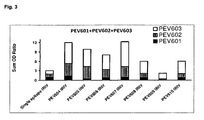
- Fig. 3 is a cumulative interpretation of the data presented in Fig. 2 .
- the data of Fig. 2 is presented as sums of normalized OD ratios attributable to each of fragments PEV601 (SEQ ID NO: 1; white), PEV602 (SEQ ID NO: 2; hatched) and PEV603 (SEQ ID NO: 3; black) depicted in Fig. 2A-C when administered alone (leftmost bar of Fig. 3 ) or together in various fusion peptides according to the invention (7 data bars to the right).
- the combination of multiple single epitope fragments into a fusion peptide according to the invention therefore results in a synergistic potentiation of the overall antibody response beyond what would be expected based on the arithmetic sum of constituent parts in any given fusion peptide.
- Fusion peptides can be coupled to (i.e. covalently associated with) various delivery systems: comparison of virosomes (IRIV) and tetanus toxoid (TT)
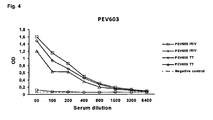
- mice were immunized subcutaneously with 1 ⁇ g HA of inactivated influenza A/H1N1 virus. Three weeks later the mice were immunized subcutaneously with PEV606 (SEQ ID NO: 6) and PEV608 (SEQ ID NO: 8), coupled to (i.e. covalently associated with) either virosomes (IRIV) or tetanus toxoid (TT) twice with a 3-weeks interval. Blood was collected 2 weeks after the final inoculation and sera were tested in ELISA.
- PEV606 SEQ ID NO: 6
- PEV608 SEQ ID NO: 8
- ELISA plates were coated with PEV603 (SEQ ID NO: 3). The presence of antibody in serum is expressed as absorbance at 492 nm. The results are shown in Fig. 4 .
- the data shown in Fig. 4 demonstrate that fusion peptides PEV606 (SEQ ID NO: 6) and PEV608 (SEQ ID NO: 8) coupled to a virosome (IRIV) delivery system induce higher antibody levels against a single peptide epitope (PEV603; SEQ ID NO: 3) comprised in the fusion peptides than when coupled to a tetanus toxoid (TT) delivery system.
- the antibody levels were measured by ELISA performed on sera obtained from mice immunized with the formulations indicated in the figure.
- Fusion peptides can be associated with various delivery systems: comparison of virosomes (IRIV), Montanide TM and ISCOM delivery systems
- mice were immunized subcutaneously with 1 ⁇ g HA of inactivated influenza A/H1N1 virus. Three weeks later the mice were immunized subcutaneously with PEV606 (SEQ ID NO: 6) and PEV608 (SEQ ID NO: 8), coupled to either virosomes (IRIV) or formulated with Montanide ISA TM 51 (Montanide ISA TM 51 is mannide oleate- and mineral oil-water emulsion) or ISCOMs twice with a 3-weeks interval. Blood was collected 2 weeks after the final inoculation and sera were tested in ELISA. The antibody levels were measured by ELISA performed on sera obtained from mice immunized with the formulations indicated in the figure.
- PEV606 SEQ ID NO: 6
- PEV608 SEQ ID NO: 8
- IRIV virosomes
- Montanide ISA TM 51 Montanide ISA TM 51 is mannide oleate- and mineral oil-water emulsion
- ELISA plates were coated with PEV603 (SEQ ID NO: 3). The presence of antibody in serum is expressed as absorbance at 492 nm. The results are shown in Fig. 5 .
- the data shown in Fig. 4 demonstrate that fusion peptides PEV604 (SEQ ID NO: 4) and PEV607 (SEQ ID NO: 7) coupled to a virosome delivery system induce higher antibody levels against a single epitope (PEV603; SEQ ID NO: 3) than corresponding fusion peptides formulated with a Montanide TM or ISCOM delivery system.
- the designated amount of the fusion peptide is provided and resuspended in 1 ml of 100 mM OEG in PBS.
- This solution is transferred to 50 mg immobilized Tris-(2-carboxyethyl) phosphine (TCEP) on Amberlite Beads (Merck Biosciences Novabiochem, Laeufelfingen, Switzerland) and incubated for 30 min at RT.
- the beads are removed and the solution is transferred to 4 mg of fresh N-MCC-PE (ca. 4.3 ⁇ mol; Genzyme Pharmaceuticals, Liestal, Switzerland) and incubated at 25°C while shaking for at least 2 h.
- N-MCC-PE ca. 4.3 ⁇ mol
- Genzyme Pharmaceuticals, Liestal, Switzerland unused maleimide groups in the phosphoethanolamine are consumed by the addition of trace amounts of Tris buffer pH 7.4.
- the solution is stored at 4°C until use.
- Vaccine composition containing fusion peptide in combination with a virosome delivery system
- Octaethyleneglycol-mono-(n-dodecyl)ether (OEG, C 12 E 8 ), was purchased from Fluka Chemie GmbH-(Buchs, Switzerland). Sucrose (Eur. Phar.) was purchased from Merck (Dietikon, Switzerland). Egg phosphatidyl choline (PC) was obtained from Lipoid (Cham, Switzerland). 1-Oleoyl-3-palmitoyl-rac-glycero-2-phosphoethanolamine was obtained from Bachem (Bubendorf, Switzerland). Bio-Beads SM2 were purchased from Bio-Rad Laboratories (Glattbrugg, Switzerland).
- Cholesterol N-(trimethylammonioethyl)carbamate chloride was purchased from Merck Eprova (Schaffhausen, Switzerland). Influenza viruses of the A/Singapore/6/86 (A/Sing) strain and other influenza A strains, propagated in the allantoic cavity of embryonated eggs ( Gerhard, W. (1976), J. Exp. Med. 144:985-995 ), were obtained from Berna Biotech AG (Bern, Switzerland) and purified as described ( Skehel, J. et al.,(1971). Virology 44:396 ). The hemagglutinin/phospholipid ratio was determined according to Böttcher ( Böttcher et al. (1961). Anal. Chim. Acta 24, 203 ), and HA-quantification after SDS-PAGE was conducted using the Coomassie extraction method as described by Ball ( Ball (1986). Anal. Biochem. 155, 23 ).
- virosome (IRIV) delivery system For the preparation of the virosome (IRIV) delivery system, a solution of purified Influenza A/Singapore hemagglutinin (4 mg) in phosphate buffered saline (PBS) was centrifuged for 30 min at 100,000 g and the pellet was dissolved in PBS (1.33 ml) containing 100 mM octaethyleneglycolmonodecylether (PBS-OEG).
- Phosphatidylcholine 32 mg; Lipoid, Ludwigshafen, Germany
- phosphatidylethanolamine 6 mg
- PBS-OEG PBS-OEG
- the phospholipids and the hemagglutinin solutions were mixed and sonicated for 1 min. This solution was centrifuged for 1 hour at 100,000 g and the supernatant was sterile-filtered. Virosomes were then formed by detergent removal using two times 1.5 g of wet SM2 Bio-Beads (BioRad, Glattbrugg, Switzerland) for 1 h each at room temperature with shaking. The virosome solution was stored at 4°C.
- Fusion peptide-IRIVs were prepared by the detergent removal method. For a final volume of 4 ml, 32 mg egg PC and 4 mg PE were dissolved in 2 ml of PBS, 100 mM OEG (PBS/OEG) and the prepared protein-PE conjugate (1 ml) was added to this mixture. 2 mg HA of inactivated influenza A/Singapore/6/86 virus was centrifuged at 100,000 g for 1 h at 4°C and the pellet was dissolved in 1 ml of PBS/OEG. The detergent-solubilized phospholipids and viruses were mixed and sonicated for 1 min. This mixture was centrifuged at 100,000 g for 1 h at 18°C and the supernatant was collected for further steps. Virosomes were then formed by detergent removal using two times 1.5 g of wet SM2 Bio-Beads for 1 h each at room temperature with shaking. The virosome solution was stored at 4°C.
- Vaccine composition containing fusion peptide in combination with lyophilized virosomes as a delivery system
- Virosomes containing TC-Chol were prepared by the detergent removal method.
- 32 mg egg PC, 8 mg OPPE and 5 mg cholesterol N-(trimethylammonioethyl)carbamate chloride (TC-chol) were dissolved in 2.6 ml of PBS, 100 mM OEG (PBS/OEG).
- 2 mg HA of inactivated A/Singapore/6/86 influenza virus or another influenza A strain was centrifuged at 100,000 g for 1 h at 4°C and the pellet is dissolved in 1 ml of PBS/OEG.
- the detergent-solubilized phospholipids and viruses were mixed with 0.4 mL of 50% (w/v) sucrose and sonicated for 1 min.
- Virosomes were formed by detergent removal using two times 1.5 g of wet SM2 Bio-Beads for 1 h each at room temperature with shaking. The freshly formed virosomes were then sterile-filtered (0.22 ⁇ m) and aliquoted in sterile glass vials. The closed vials are frozen at -70°C and then lyophilized at -40°C for 20 h and 10°C for 2 h. The closed vials were stored frozen until use.
- the protein is coupled to PE as described above and dissolved in the solution containing egg PC, PE and TC-Chol in PBS/OEG, before combining with the detergent solubilized viral HA of inactivated H1N1 influenza virus.
- the detergent-solubilized phospholipids and viruses are mixed with sucrose to a final concentration of 5% (w/v) and sonicated for 1 min. This mixture is centrifuged at 100,000 x g for 1 h at 18°C.
- Virosomes with the fusion peptide coupled to their membrane are then formed by detergent removal using two times 1.5 g of wet Bio-Beads SM2 for 1 h each at room temperature with shaking.
- the virosomes are sterile-filtered (0.22 ⁇ m) and aliquoted in sterile glass vials.
- the closed vials are frozen at -70°C and then lyophilized at -40°C for 20 h and 10°C for 2 h.
- the closed vials are stored frozen until further use.
- Reconstitution of the lyophilized TIRIVs was performed with an equal volume of sterile water.
- the vial was mixed shortly for about 10 sec on the vortex on intermediate level and stored at 4°C until use.
- Vaccine composition containing fusion peptide in combination with a Montanide TM delivery system
- Peptides were dissolved in dimethylsufoxide (DMSO) at 20 mg/ml, further diluted in PBS at 1 mg/ml and emulsified at a 1:1 ratio with Montanide ISA TM 51 (Seppic, France) to obtain a final concentration of 0.5 mg/ml.
- DMSO dimethylsufoxide
- PBS PBS
- Montanide ISA TM 51 Montanide ISA TM 51
- Vaccine composition containing fusion peptide in combination with an ISCOM delivery system
- Vaccine composition containing fusion peptide in combination with a tetanus toxoid (TT) delivery system
- Sulphosuccinimidyl-4-(N-maleimidomethyl)cyclohexane-1-carboxylate (Sulfo-SMCC; Apollo Scientific Ltd, UK) was dissolved in PBS at 5 mg/ml. Tetanus toxoid (TT; Statens Serum Institute, Denmark) was diluted with PBS at 0.5 mg/mL. 1 ml TT solution was incubated with 175 ⁇ l of the Sulfo-SMCC solution for 30 min at room temperature. 0.5 ml of this Sulfo-SMCC/TT solution was mixed with 0.5 mg peptide dissolved in 1 ml PBS and incubated for 2 hours at RT with shaking. For the final formulation PBS was added to a final volume of 2 ml.
- B cell epitopes can be predicted by computation analysis of the Her2/neu amino acid sequence using the ABCpred Prediction Server freely available at www.imtech.res.in/raghava/abcpred/, setting the threshold to 0.51 and the window length for prediction to 16.
- the ABCpred tool is for prediction of B cell epitopes in an antigen sequence using an artificial neural network described by Saha and Raghava, Proteins 65:40-48, 2006 .
Landscapes
- Health & Medical Sciences (AREA)
- Life Sciences & Earth Sciences (AREA)
- Chemical & Material Sciences (AREA)
- Immunology (AREA)
- Organic Chemistry (AREA)
- Medicinal Chemistry (AREA)
- General Health & Medical Sciences (AREA)
- Pharmacology & Pharmacy (AREA)
- Cell Biology (AREA)
- Veterinary Medicine (AREA)
- Public Health (AREA)
- Animal Behavior & Ethology (AREA)
- Molecular Biology (AREA)
- Oncology (AREA)
- Proteomics, Peptides & Aminoacids (AREA)
- Toxicology (AREA)
- Epidemiology (AREA)
- Mycology (AREA)
- Microbiology (AREA)
- Biochemistry (AREA)
- Biophysics (AREA)
- Zoology (AREA)
- Genetics & Genomics (AREA)
- Gastroenterology & Hepatology (AREA)
- Nuclear Medicine, Radiotherapy & Molecular Imaging (AREA)
- General Chemical & Material Sciences (AREA)
- Chemical Kinetics & Catalysis (AREA)
- Bioinformatics & Cheminformatics (AREA)
- Engineering & Computer Science (AREA)
- Peptides Or Proteins (AREA)
- Medicines Containing Antibodies Or Antigens For Use As Internal Diagnostic Agents (AREA)
Claims (20)
- Fusionspeptid, umfassend drei nicht zusammenhängende B-Zell-Epitope aus der extrazellulären Domäne (ECD) von Her2/neu oder Derivate davon, welche ihre Qualität als B-Zell-Epitop beibehalten, wobei die drei nicht zusammenhängenden B-Zell-Epitope direkt miteinander verknüpft sind oder über eine nicht native Linkerpeptid-Sequenz in einer einzigen Polypeptidkette verknüpft sind und wobei die drei nicht zusammenhängenden B-Zell-Epitope die in SEQ ID NO: 12, SEQ ID NO: 2 und SEQ ID NO: 3 dargelegte Aminosäuresequenz aufweisen.
- Fusionspeptid gemäß Anspruch 1, wobei die Aminosäuresequenz des Fusionspeptids eine Sequenz, ausgewählt aus einer von SEQ ID NO: 4 - 10, umfasst.
- Fusionspeptid gemäß Anspruch 2, wobei die Aminosäuresequenz des Fusionspeptids aus einer Sequenz, ausgewählt aus einer von SEQ ID NO: 4 - 10, besteht.
- Verfahren zum Herstellen eines Fusionspeptid nach einem der Ansprüche 1 - 3,I. durch ein Peptidsyntheseverfahren, umfassend(i) sequenzielle Bildung von Peptidbindungen, die jede Aminosäure mit ihrer jeweiligen benachbarten Aminosäure verknüpfen, und(ii) Gewinnen des Fusionspeptids,oderII. durch ein rekombinantes Verfahren, umfassend die folgenden Schritte:(i) Bereitstellen einer Nucleinsäure, umfassend eine Nucleinsäuresequenz, die ein Fusionspeptid gemäß einem der Ansprüche 1 - 3 kodiert;(ii) Transfizieren der Nucleinsäure in eine zum Exprimieren der Nucleinsäuresequenz fähige Wirtszelle;(iii) Inkubieren der Wirtszelle unter Bedingungen, die für die Expression der Nucleinsäuresequenz geeignet sind, und(iv) Gewinnen des Fusionspeptids.
- Abgabesystem, das kovalent und/oder nicht kovalent mit einem Fusionspeptid nach einem der Ansprüche 1 - 3 oder einem Fusionspeptid, das durch ein Verfahren nach Anspruch 4 erhalten werden kann, assoziiert ist.
- Abgabesystem nach'Anspruch 5, wobei das Abgabesystem gewählt ist aus einem Virosom, einem Liposom, einem virusartigen Partikel (VLP), Tetanustoxoid (TT), einem Schlüssellochschnecken-Hämocyanin (KLH), einem immunstimulierenden Komplex ("immunostimulating complex", ISCOM), einer Emulsion, dem Hepatitis B Core-Antigen (Hbc), einem Nano- oder Mikropartikel, einem Aluminiumsalz, Calciumphosphat, Stearyltyrosin oder einem Virusvektor; oder einer Kombination von zwei oder mehr davon.
- Abgabesystem nach Anspruch 6, wobei es sich bei dem Abgabesystem um ein Virosom handelt, in welchem das Fusionspeptid verkapselt ist oder an welches das Fusionspeptid kovalent gebunden ist.
- Abgabesystem gemäß Anspruch 7, wobei das Fusionspeptid kovalent an ein Virushüllprotein oder einen Lipidbestandteil des Virosoms gebunden ist.
- Abgabesystem gemäß Anspruch 8, wobei es sich bei dem Lipidbestandteil des Virosoms um Phosphatidylethanolamin handelt.
- Abgabesystem gemäß einem der Ansprüche 6 - 9, wobei es sich bei dem Virosom um ein IRIV oder ein TIRIV handelt.
- Fusionspeptid nach einem der Ansprüche 1 - 3, Fusionspeptid, das durch ein Verfahren gemäß Anspruch 7 erhalten werden kann, oder Abgabesystem nach einem der Ansprüche 8 - 13 zur Verwendung als Medikament.
- Zusammensetzung, umfassend ein Fusionspeptid nach einem der Ansprüche 1 - 3, ein Fusionspeptid, das durch ein Verfahren gemäß Anspruch 7 erhalten werden kann, und/oder ein Abgabesystem nach einem der Ansprüche 5 - 10.
- Zusammensetzung gemäß Anspruch 12, die zusätzlich einen Immunverstärker umfasst.
- Zusammensetzung gemäß Anspruch 13, wobei der Immunverstärker gewählt ist aus einem Bakterientoxin, einem bakteriellen Zelloberflächen-Lipopolysaccharid (LPS), Lipid A und/oder einem synthetischen Derivat davon, einem Oligopeptid, einem alternativen Pathogen-assoziierten molekularen Muster (PAMP), einem Lipopeptid, einem Lipoprotein, einem Peptidoglycan, Lipoteichonsäure (LTA), einem Hefe-Zellwandbestandteil, einem Glycolipid, Virus- oder Bakterien-DNA, einem Oligonucleotid, doppelsträngiger RNA, Polyinosin-Polycytidylsäure (Poly I:C), einzelsträngiger Virus-RNA, einem niedermolekularen Immunverstärker (SMIP), einem Cytokin, einem Chemokin, einem Saponin, einem Polyphosphazen, einer Cochleastruktur, einer kleinen interferierenden RNA für einen Suppressor der cytokinabhängigen Signaltransduktion (SOCS siRNA) oder einem Pan DR Epitop (PADRE); oder einer Kombination von zwei oder mehreren davon.
- Pharmazeutische Zusammensetzung, umfassend die Zusammensetzung gemäß einem der Ansprüche 12 - 14 und einen pharmazeutisch verträglichen Träger.
- Verwendung eines Fusionspeptids gemäß einem der Ansprüche 1 - 3, eines Fusionspeptids, das gemäß einem Verfahren gemäß Anspruch 4 erhalten werden kann, eines Abgabesystems gemäß einem der Ansprüche 5 - 10 und/oder einer Zusammensetzung nach einem der Ansprüche 12 - 15 zur Herstellung eines Medikaments zur Vorbeugung, Behandlung und/oder Linderung einer durch Expression oder Überexpression von Her2 gekennzeichneten Krebserkrankung.
- Verwendung nach Anspruch 16, wobei es sich bei der Krebserkrankung um Brustkrebs handelt.
- Fusionspeptid gemäß einem der Ansprüche 1 - 3, Fusionspeptid, das gemäß einem Verfahren gemäß Anspruch 4 erhalten werden kann, Abgabesystem gemäß einem der Ansprüche 5 - 10 und/oder Zusammensetzung gemäß einem der Ansprüche 12 - 15 zur Verwendung bei einem Verfahren zum Vorbeugen, Behandeln und/oder Lindern einer durch Expression oder Überexpression von Her2 gekennzeichneten Krebserkrankung.
- Fusionspeptid, Abgabesystem und/oder Zusammensetzung nach Anspruch 18, wobei es sich bei der Krebserkrankung um Brustkrebs handelt.
- Fusionspeptid gemäß einem der Ansprüche 1 - 3, Fusionspeptid, das gemäß einem Verfahren gemäß Anspruch 4 erhalten werden kann, oder Abgabesystem gemäß einem der Ansprüche 5 - 10 zur Verwendung als Medikament.
Priority Applications (1)
| Application Number | Priority Date | Filing Date | Title |
|---|---|---|---|
| EP10744895.3A EP2467155B1 (de) | 2009-08-18 | 2010-08-18 | Multiepitop-Impfstoff für Her2/neu-assoziierten Krebs |
Applications Claiming Priority (3)
| Application Number | Priority Date | Filing Date | Title |
|---|---|---|---|
| EP09010627A EP2292258A1 (de) | 2009-08-18 | 2009-08-18 | Multiepitop-Impfstoff für Her2/neu-assoziierten Krebs |
| EP10744895.3A EP2467155B1 (de) | 2009-08-18 | 2010-08-18 | Multiepitop-Impfstoff für Her2/neu-assoziierten Krebs |
| PCT/EP2010/005071 WO2011020604A1 (en) | 2009-08-18 | 2010-08-18 | Multiepitope vaccine for her2/neu-associated cancers |
Publications (2)
| Publication Number | Publication Date |
|---|---|
| EP2467155A1 EP2467155A1 (de) | 2012-06-27 |
| EP2467155B1 true EP2467155B1 (de) | 2015-11-11 |
Family
ID=41351530
Family Applications (2)
| Application Number | Title | Priority Date | Filing Date |
|---|---|---|---|
| EP09010627A Withdrawn EP2292258A1 (de) | 2009-08-18 | 2009-08-18 | Multiepitop-Impfstoff für Her2/neu-assoziierten Krebs |
| EP10744895.3A Active EP2467155B1 (de) | 2009-08-18 | 2010-08-18 | Multiepitop-Impfstoff für Her2/neu-assoziierten Krebs |
Family Applications Before (1)
| Application Number | Title | Priority Date | Filing Date |
|---|---|---|---|
| EP09010627A Withdrawn EP2292258A1 (de) | 2009-08-18 | 2009-08-18 | Multiepitop-Impfstoff für Her2/neu-assoziierten Krebs |
Country Status (4)
| Country | Link |
|---|---|
| US (1) | US8852604B2 (de) |
| EP (2) | EP2292258A1 (de) |
| ES (1) | ES2562157T3 (de) |
| WO (1) | WO2011020604A1 (de) |
Families Citing this family (15)
| Publication number | Priority date | Publication date | Assignee | Title |
|---|---|---|---|---|
| ITMI20112254A1 (it) * | 2011-12-13 | 2013-06-14 | Uni Degli Studi Camerino | Libreria fagica di frammenti della proteina her2 |
| EP2777711A1 (de) | 2013-03-11 | 2014-09-17 | Icon Genetics GmbH | HER2/neu-Krebsimpfstoff |
| CN104341506A (zh) * | 2013-07-30 | 2015-02-11 | 复旦大学 | 一种重组融合蛋白及其用途 |
| US11998594B2 (en) | 2014-04-02 | 2024-06-04 | Case Western Reserve University | Anti-cancer plant virus particles linked to HER2 antigens |
| WO2015153883A1 (en) * | 2014-04-02 | 2015-10-08 | Case Western Reserve University | Vaccination using plant virus particles linked to her2 antigens |
| CN104434784B (zh) * | 2014-11-15 | 2017-07-04 | 成都天台山制药有限公司 | 聚肌胞注射液药物组合物和制法 |
| DK3220913T3 (da) * | 2014-11-19 | 2021-12-13 | Kiromic Biopharma Inc | Nanopartikel-baseret vaccine, som er målrettet cancer/testikelantigener (CTA) og dennes anvendelse ved solide og hæmatologiske lidelser |
| CN104597241B (zh) * | 2015-01-30 | 2016-06-29 | 青岛海兰深生物科技有限公司 | 一种检测天然多克隆抗癌抗体的组合物、试剂盒和方法 |
| RU2726411C2 (ru) * | 2015-04-17 | 2020-07-14 | Биолайф Сайенс Клд Лимитед | Вакцинная композиция и ее применения |
| MA43362A (fr) * | 2015-05-26 | 2018-10-10 | Advaxis Inc | Immunothérapie à base de vecteurs d'administration personnalisés, et leurs utilisations |
| CA3035591A1 (en) | 2016-11-30 | 2018-06-07 | Advaxis, Inc. | Immunogenic compositions targeting recurrent cancer mutations and methods of use thereof |
| MX2019008878A (es) * | 2017-01-25 | 2020-02-13 | Ose Immunotherapeutics | Metodo para fabricar una emulsion estable para suministro de peptidos. |
| EP3576764A4 (de) | 2017-02-03 | 2020-12-16 | The Medical College of Wisconsin, Inc. | Kras-peptid-impfstoffzusammensetzungen und verfahren zur verwendung |
| WO2019116089A2 (en) | 2017-12-11 | 2019-06-20 | Medizinische Universitaet Wien | A method of producing a vaccine composition and uses thereof |
| CN109136277A (zh) * | 2018-09-30 | 2019-01-04 | 北京鼎成肽源生物技术有限公司 | 一种lrfft2细胞的构建方法 |
Family Cites Families (6)
| Publication number | Priority date | Publication date | Assignee | Title |
|---|---|---|---|---|
| JP4658423B2 (ja) * | 1999-08-03 | 2011-03-23 | ザ オハイオ ステイト ユニバーシティ | Her−2タンパク質に対する免疫反応性を増強するためのポリペプチドおよびポリヌクレオチド |
| ES2394293T3 (es) | 2001-02-28 | 2013-01-30 | Bio Life Science Forschungs- Und Entwicklungsges.M.B.H. | Vacuna contra cánceres que están asociados con el oncogén HER-2/neu |
| CN1749276A (zh) * | 2004-09-14 | 2006-03-22 | 北京迪威华宇生物技术有限公司 | 热休克蛋白65人上皮细胞生长因子受体2融合蛋白(hsp65-her2) |
| US20060275777A1 (en) * | 2005-06-03 | 2006-12-07 | Waelti Ernst R | Novel strategies for protein vaccines |
| ATE473758T1 (de) | 2006-04-13 | 2010-07-15 | Bio Life Science Forschungs & Entwicklungsgesellschaft Mbh | Her-2/neu multipeptidimpfstoff |
| DE602006014392D1 (de) | 2006-07-27 | 2010-07-01 | Hynix Semiconductor Inc | Anpassung von Betriebsparametern bei elektronischen Vorrichtungen auf Basis von Korrekturabbildungen |
-
2009
- 2009-08-18 EP EP09010627A patent/EP2292258A1/de not_active Withdrawn
-
2010
- 2010-08-18 WO PCT/EP2010/005071 patent/WO2011020604A1/en not_active Ceased
- 2010-08-18 EP EP10744895.3A patent/EP2467155B1/de active Active
- 2010-08-18 ES ES10744895.3T patent/ES2562157T3/es active Active
- 2010-08-18 US US13/389,419 patent/US8852604B2/en active Active
Also Published As
| Publication number | Publication date |
|---|---|
| US8852604B2 (en) | 2014-10-07 |
| EP2292258A1 (de) | 2011-03-09 |
| ES2562157T3 (es) | 2016-03-02 |
| WO2011020604A1 (en) | 2011-02-24 |
| US20120195962A1 (en) | 2012-08-02 |
| EP2467155A1 (de) | 2012-06-27 |
Similar Documents
| Publication | Publication Date | Title |
|---|---|---|
| US8852604B2 (en) | Multiepitope vaccine for Her2/neu-associated cancers | |
| CN104367997B (zh) | 包含非离子等渗剂的佐剂组合物 | |
| EP2755680B1 (de) | Partikelförmige impfstoffformulierungen | |
| TWI589298B (zh) | 陽離子之脂質疫苗組合物及其使用方法 | |
| CN101678091A (zh) | 冷冻干燥的抗原组合物 | |
| KR20180053599A (ko) | 보다 높은 탄수화물 항원 밀도 및 신규한 사포닌 애쥬번트를 갖는 백신 | |
| US20230263882A1 (en) | Compositions and methods for inducing an immune response against coronavirus | |
| US12280109B2 (en) | Nano-particles that contain synthetic variants of GM3 ganglioside as adjuvants in vaccines | |
| TWI583393B (zh) | 免疫原性組合物、包含其之疫苗與治療劑及其用途 | |
| EP2869828B1 (de) | Vault immuntherapie | |
| JP7082110B2 (ja) | アジュバント組成物およびこれを含むワクチン組成物並びに薬剤キット | |
| EP3283105B1 (de) | Impfstoffzusammensetzung und verwendungen davon | |
| WO2025096008A2 (en) | Improved alum-anchored immunogens | |
| Hook et al. | Immune stimulating complexes (ISCOMs) and Quil-A containing particulate formulations as vaccine delivery systems | |
| US20220332770A1 (en) | High-Density Flagellin-Displaying Virus-Like Particle As Vaccine Carrier | |
| WO2015171975A1 (en) | Use of modified banana lectin in purification of glycoproteins | |
| HK40020716A (en) | Nano-particles that contain synthetic variants of gm3 ganglioside as adjuvants in vaccines | |
| CN116507344A (zh) | 用于诱导针对冠状病毒的免疫应答的组合物和方法 | |
| HK1248536B (en) | A vaccine composition and uses thereof | |
| BR112017021981B1 (pt) | Composição de vacina e usos da mesma |
Legal Events
| Date | Code | Title | Description |
|---|---|---|---|
| PUAI | Public reference made under article 153(3) epc to a published international application that has entered the european phase |
Free format text: ORIGINAL CODE: 0009012 |
|
| 17P | Request for examination filed |
Effective date: 20120305 |
|
| AK | Designated contracting states |
Kind code of ref document: A1 Designated state(s): AL AT BE BG CH CY CZ DE DK EE ES FI FR GB GR HR HU IE IS IT LI LT LU LV MC MK MT NL NO PL PT RO SE SI SK SM TR |
|
| DAX | Request for extension of the european patent (deleted) | ||
| 17Q | First examination report despatched |
Effective date: 20141013 |
|
| RAP1 | Party data changed (applicant data changed or rights of an application transferred) |
Owner name: BIOLIFE SCIENCE QLD LIMITED |
|
| GRAP | Despatch of communication of intention to grant a patent |
Free format text: ORIGINAL CODE: EPIDOSNIGR1 |
|
| INTG | Intention to grant announced |
Effective date: 20150528 |
|
| GRAS | Grant fee paid |
Free format text: ORIGINAL CODE: EPIDOSNIGR3 |
|
| GRAA | (expected) grant |
Free format text: ORIGINAL CODE: 0009210 |
|
| AK | Designated contracting states |
Kind code of ref document: B1 Designated state(s): AL AT BE BG CH CY CZ DE DK EE ES FI FR GB GR HR HU IE IS IT LI LT LU LV MC MK MT NL NO PL PT RO SE SI SK SM TR |
|
| REG | Reference to a national code |
Ref country code: GB Ref legal event code: FG4D |
|
| REG | Reference to a national code |
Ref country code: CH Ref legal event code: EP |
|
| REG | Reference to a national code |
Ref country code: IE Ref legal event code: FG4D |
|
| REG | Reference to a national code |
Ref country code: AT Ref legal event code: REF Ref document number: 760117 Country of ref document: AT Kind code of ref document: T Effective date: 20151215 |
|
| REG | Reference to a national code |
Ref country code: DE Ref legal event code: R096 Ref document number: 602010028997 Country of ref document: DE |
|
| REG | Reference to a national code |
Ref country code: ES Ref legal event code: FG2A Ref document number: 2562157 Country of ref document: ES Kind code of ref document: T3 Effective date: 20160302 |
|
| REG | Reference to a national code |
Ref country code: LT Ref legal event code: MG4D |
|
| REG | Reference to a national code |
Ref country code: NL Ref legal event code: FP |
|
| PG25 | Lapsed in a contracting state [announced via postgrant information from national office to epo] |
Ref country code: IS Free format text: LAPSE BECAUSE OF FAILURE TO SUBMIT A TRANSLATION OF THE DESCRIPTION OR TO PAY THE FEE WITHIN THE PRESCRIBED TIME-LIMIT Effective date: 20160311 Ref country code: HR Free format text: LAPSE BECAUSE OF FAILURE TO SUBMIT A TRANSLATION OF THE DESCRIPTION OR TO PAY THE FEE WITHIN THE PRESCRIBED TIME-LIMIT Effective date: 20151111 Ref country code: LT Free format text: LAPSE BECAUSE OF FAILURE TO SUBMIT A TRANSLATION OF THE DESCRIPTION OR TO PAY THE FEE WITHIN THE PRESCRIBED TIME-LIMIT Effective date: 20151111 Ref country code: NO Free format text: LAPSE BECAUSE OF FAILURE TO SUBMIT A TRANSLATION OF THE DESCRIPTION OR TO PAY THE FEE WITHIN THE PRESCRIBED TIME-LIMIT Effective date: 20160211 |
|
| PG25 | Lapsed in a contracting state [announced via postgrant information from national office to epo] |
Ref country code: SE Free format text: LAPSE BECAUSE OF FAILURE TO SUBMIT A TRANSLATION OF THE DESCRIPTION OR TO PAY THE FEE WITHIN THE PRESCRIBED TIME-LIMIT Effective date: 20151111 Ref country code: FI Free format text: LAPSE BECAUSE OF FAILURE TO SUBMIT A TRANSLATION OF THE DESCRIPTION OR TO PAY THE FEE WITHIN THE PRESCRIBED TIME-LIMIT Effective date: 20151111 Ref country code: GR Free format text: LAPSE BECAUSE OF FAILURE TO SUBMIT A TRANSLATION OF THE DESCRIPTION OR TO PAY THE FEE WITHIN THE PRESCRIBED TIME-LIMIT Effective date: 20160212 Ref country code: LV Free format text: LAPSE BECAUSE OF FAILURE TO SUBMIT A TRANSLATION OF THE DESCRIPTION OR TO PAY THE FEE WITHIN THE PRESCRIBED TIME-LIMIT Effective date: 20151111 Ref country code: PL Free format text: LAPSE BECAUSE OF FAILURE TO SUBMIT A TRANSLATION OF THE DESCRIPTION OR TO PAY THE FEE WITHIN THE PRESCRIBED TIME-LIMIT Effective date: 20151111 Ref country code: PT Free format text: LAPSE BECAUSE OF FAILURE TO SUBMIT A TRANSLATION OF THE DESCRIPTION OR TO PAY THE FEE WITHIN THE PRESCRIBED TIME-LIMIT Effective date: 20160311 |
|
| PG25 | Lapsed in a contracting state [announced via postgrant information from national office to epo] |
Ref country code: CZ Free format text: LAPSE BECAUSE OF FAILURE TO SUBMIT A TRANSLATION OF THE DESCRIPTION OR TO PAY THE FEE WITHIN THE PRESCRIBED TIME-LIMIT Effective date: 20151111 |
|
| REG | Reference to a national code |
Ref country code: FR Ref legal event code: PLFP Year of fee payment: 7 |
|
| REG | Reference to a national code |
Ref country code: DE Ref legal event code: R097 Ref document number: 602010028997 Country of ref document: DE |
|
| PG25 | Lapsed in a contracting state [announced via postgrant information from national office to epo] |
Ref country code: SM Free format text: LAPSE BECAUSE OF FAILURE TO SUBMIT A TRANSLATION OF THE DESCRIPTION OR TO PAY THE FEE WITHIN THE PRESCRIBED TIME-LIMIT Effective date: 20151111 Ref country code: SK Free format text: LAPSE BECAUSE OF FAILURE TO SUBMIT A TRANSLATION OF THE DESCRIPTION OR TO PAY THE FEE WITHIN THE PRESCRIBED TIME-LIMIT Effective date: 20151111 Ref country code: RO Free format text: LAPSE BECAUSE OF FAILURE TO SUBMIT A TRANSLATION OF THE DESCRIPTION OR TO PAY THE FEE WITHIN THE PRESCRIBED TIME-LIMIT Effective date: 20151111 Ref country code: EE Free format text: LAPSE BECAUSE OF FAILURE TO SUBMIT A TRANSLATION OF THE DESCRIPTION OR TO PAY THE FEE WITHIN THE PRESCRIBED TIME-LIMIT Effective date: 20151111 Ref country code: DK Free format text: LAPSE BECAUSE OF FAILURE TO SUBMIT A TRANSLATION OF THE DESCRIPTION OR TO PAY THE FEE WITHIN THE PRESCRIBED TIME-LIMIT Effective date: 20151111 |
|
| PLBE | No opposition filed within time limit |
Free format text: ORIGINAL CODE: 0009261 |
|
| STAA | Information on the status of an ep patent application or granted ep patent |
Free format text: STATUS: NO OPPOSITION FILED WITHIN TIME LIMIT |
|
| 26N | No opposition filed |
Effective date: 20160812 |
|
| PG25 | Lapsed in a contracting state [announced via postgrant information from national office to epo] |
Ref country code: SI Free format text: LAPSE BECAUSE OF FAILURE TO SUBMIT A TRANSLATION OF THE DESCRIPTION OR TO PAY THE FEE WITHIN THE PRESCRIBED TIME-LIMIT Effective date: 20151111 |
|
| PG25 | Lapsed in a contracting state [announced via postgrant information from national office to epo] |
Ref country code: BE Free format text: LAPSE BECAUSE OF FAILURE TO SUBMIT A TRANSLATION OF THE DESCRIPTION OR TO PAY THE FEE WITHIN THE PRESCRIBED TIME-LIMIT Effective date: 20151111 |
|
| PG25 | Lapsed in a contracting state [announced via postgrant information from national office to epo] |
Ref country code: MC Free format text: LAPSE BECAUSE OF FAILURE TO SUBMIT A TRANSLATION OF THE DESCRIPTION OR TO PAY THE FEE WITHIN THE PRESCRIBED TIME-LIMIT Effective date: 20151111 |
|
| REG | Reference to a national code |
Ref country code: FR Ref legal event code: PLFP Year of fee payment: 8 |
|
| PG25 | Lapsed in a contracting state [announced via postgrant information from national office to epo] |
Ref country code: LU Free format text: LAPSE BECAUSE OF NON-PAYMENT OF DUE FEES Effective date: 20160818 |
|
| PG25 | Lapsed in a contracting state [announced via postgrant information from national office to epo] |
Ref country code: HU Free format text: LAPSE BECAUSE OF FAILURE TO SUBMIT A TRANSLATION OF THE DESCRIPTION OR TO PAY THE FEE WITHIN THE PRESCRIBED TIME-LIMIT; INVALID AB INITIO Effective date: 20100818 Ref country code: CY Free format text: LAPSE BECAUSE OF FAILURE TO SUBMIT A TRANSLATION OF THE DESCRIPTION OR TO PAY THE FEE WITHIN THE PRESCRIBED TIME-LIMIT Effective date: 20151111 |
|
| PG25 | Lapsed in a contracting state [announced via postgrant information from national office to epo] |
Ref country code: MT Free format text: LAPSE BECAUSE OF NON-PAYMENT OF DUE FEES Effective date: 20160831 Ref country code: TR Free format text: LAPSE BECAUSE OF FAILURE TO SUBMIT A TRANSLATION OF THE DESCRIPTION OR TO PAY THE FEE WITHIN THE PRESCRIBED TIME-LIMIT Effective date: 20151111 Ref country code: MK Free format text: LAPSE BECAUSE OF FAILURE TO SUBMIT A TRANSLATION OF THE DESCRIPTION OR TO PAY THE FEE WITHIN THE PRESCRIBED TIME-LIMIT Effective date: 20151111 |
|
| REG | Reference to a national code |
Ref country code: FR Ref legal event code: PLFP Year of fee payment: 9 |
|
| PG25 | Lapsed in a contracting state [announced via postgrant information from national office to epo] |
Ref country code: BG Free format text: LAPSE BECAUSE OF FAILURE TO SUBMIT A TRANSLATION OF THE DESCRIPTION OR TO PAY THE FEE WITHIN THE PRESCRIBED TIME-LIMIT Effective date: 20151111 |
|
| REG | Reference to a national code |
Ref country code: AT Ref legal event code: UEP Ref document number: 760117 Country of ref document: AT Kind code of ref document: T Effective date: 20151111 |
|
| PG25 | Lapsed in a contracting state [announced via postgrant information from national office to epo] |
Ref country code: AL Free format text: LAPSE BECAUSE OF FAILURE TO SUBMIT A TRANSLATION OF THE DESCRIPTION OR TO PAY THE FEE WITHIN THE PRESCRIBED TIME-LIMIT Effective date: 20151111 |
|
| P01 | Opt-out of the competence of the unified patent court (upc) registered |
Effective date: 20230510 |
|
| PGFP | Annual fee paid to national office [announced via postgrant information from national office to epo] |
Ref country code: NL Payment date: 20250821 Year of fee payment: 16 |
|
| PGFP | Annual fee paid to national office [announced via postgrant information from national office to epo] |
Ref country code: ES Payment date: 20250925 Year of fee payment: 16 |
|
| PGFP | Annual fee paid to national office [announced via postgrant information from national office to epo] |
Ref country code: DE Payment date: 20250820 Year of fee payment: 16 |
|
| PGFP | Annual fee paid to national office [announced via postgrant information from national office to epo] |
Ref country code: IT Payment date: 20250825 Year of fee payment: 16 |
|
| PGFP | Annual fee paid to national office [announced via postgrant information from national office to epo] |
Ref country code: GB Payment date: 20250821 Year of fee payment: 16 |
|
| PGFP | Annual fee paid to national office [announced via postgrant information from national office to epo] |
Ref country code: FR Payment date: 20250829 Year of fee payment: 16 Ref country code: AT Payment date: 20250821 Year of fee payment: 16 |
|
| PGFP | Annual fee paid to national office [announced via postgrant information from national office to epo] |
Ref country code: CH Payment date: 20250901 Year of fee payment: 16 |
|
| PGFP | Annual fee paid to national office [announced via postgrant information from national office to epo] |
Ref country code: IE Payment date: 20250820 Year of fee payment: 16 |