EP2461263A1 - An apparatus for dealing with a code and control method of the apparatus - Google Patents
An apparatus for dealing with a code and control method of the apparatus Download PDFInfo
- Publication number
- EP2461263A1 EP2461263A1 EP11009435A EP11009435A EP2461263A1 EP 2461263 A1 EP2461263 A1 EP 2461263A1 EP 11009435 A EP11009435 A EP 11009435A EP 11009435 A EP11009435 A EP 11009435A EP 2461263 A1 EP2461263 A1 EP 2461263A1
- Authority
- EP
- European Patent Office
- Prior art keywords
- user information
- code
- information
- information area
- latest
- Prior art date
- Legal status (The legal status is an assumption and is not a legal conclusion. Google has not performed a legal analysis and makes no representation as to the accuracy of the status listed.)
- Ceased
Links
Images


Classifications
-
- H—ELECTRICITY
- H04—ELECTRIC COMMUNICATION TECHNIQUE
- H04N—PICTORIAL COMMUNICATION, e.g. TELEVISION
- H04N1/00—Scanning, transmission or reproduction of documents or the like, e.g. facsimile transmission; Details thereof
- H04N1/32—Circuits or arrangements for control or supervision between transmitter and receiver or between image input and image output device, e.g. between a still-image camera and its memory or between a still-image camera and a printer device
- H04N1/32101—Display, printing, storage or transmission of additional information, e.g. ID code, date and time or title
- H04N1/32128—Display, printing, storage or transmission of additional information, e.g. ID code, date and time or title attached to the image data, e.g. file header, transmitted message header, information on the same page or in the same computer file as the image
- H04N1/32133—Display, printing, storage or transmission of additional information, e.g. ID code, date and time or title attached to the image data, e.g. file header, transmitted message header, information on the same page or in the same computer file as the image on the same paper sheet, e.g. a facsimile page header
-
- G—PHYSICS
- G06—COMPUTING OR CALCULATING; COUNTING
- G06F—ELECTRIC DIGITAL DATA PROCESSING
- G06F21/00—Security arrangements for protecting computers, components thereof, programs or data against unauthorised activity
- G06F21/60—Protecting data
- G06F21/606—Protecting data by securing the transmission between two devices or processes
- G06F21/608—Secure printing
-
- H—ELECTRICITY
- H04—ELECTRIC COMMUNICATION TECHNIQUE
- H04N—PICTORIAL COMMUNICATION, e.g. TELEVISION
- H04N2201/00—Indexing scheme relating to scanning, transmission or reproduction of documents or the like, and to details thereof
- H04N2201/32—Circuits or arrangements for control or supervision between transmitter and receiver or between image input and image output device, e.g. between a still-image camera and its memory or between a still-image camera and a printer device
- H04N2201/3201—Display, printing, storage or transmission of additional information, e.g. ID code, date and time or title
- H04N2201/3204—Display, printing, storage or transmission of additional information, e.g. ID code, date and time or title of data relating to a user, sender, addressee, machine or electronic recording medium
- H04N2201/3205—Display, printing, storage or transmission of additional information, e.g. ID code, date and time or title of data relating to a user, sender, addressee, machine or electronic recording medium of identification information, e.g. name or ID code
-
- H—ELECTRICITY
- H04—ELECTRIC COMMUNICATION TECHNIQUE
- H04N—PICTORIAL COMMUNICATION, e.g. TELEVISION
- H04N2201/00—Indexing scheme relating to scanning, transmission or reproduction of documents or the like, and to details thereof
- H04N2201/32—Circuits or arrangements for control or supervision between transmitter and receiver or between image input and image output device, e.g. between a still-image camera and its memory or between a still-image camera and a printer device
- H04N2201/3201—Display, printing, storage or transmission of additional information, e.g. ID code, date and time or title
- H04N2201/3269—Display, printing, storage or transmission of additional information, e.g. ID code, date and time or title of machine readable codes or marks, e.g. bar codes or glyphs
-
- H—ELECTRICITY
- H04—ELECTRIC COMMUNICATION TECHNIQUE
- H04N—PICTORIAL COMMUNICATION, e.g. TELEVISION
- H04N2201/00—Indexing scheme relating to scanning, transmission or reproduction of documents or the like, and to details thereof
- H04N2201/32—Circuits or arrangements for control or supervision between transmitter and receiver or between image input and image output device, e.g. between a still-image camera and its memory or between a still-image camera and a printer device
- H04N2201/3201—Display, printing, storage or transmission of additional information, e.g. ID code, date and time or title
- H04N2201/3271—Printing or stamping
Definitions
- the present invention relates to an apparatus and a method for processing a code related to user information.
- a security level of a paper document is lower than that of a data file.
- the technology for printing user information identifying who produced the paper document is applied. In doing so, the paper document is not to be hand out indiscriminately.
- Japanese Patent Laid-Open Application No. 2010-136098 discloses a multi functional printer (MFP) printing a code including two areas (but not three or more).
- the each area may include user information.
- One of the two areas is called the original user information area.
- the other is called the latest user information area.
- the code is generated by encoding code information including two blocks where one is called an original user information block and the other is called a latest user information block.
- the original user information block corresponds to the original user information area
- the latest user information block corresponds to the latest user information area.
- Fig. 2 represents the generated code information.
- Code information 201 is generated when A instructs printing.
- Code information 202 is generated when B instructs copying.
- Code information 203 is generated when C instructs copying.
- the MFP when the MFP prints document by the instruction of A, the MFP generates the code information 201 including user information identifying who instructs the printing (i.e. A) in the original user information block and no user information in the latest user information block. And then, the MFP generates a code by encoding the code information 201. Finally, the MFP synthesizes the code and the document, and prints the synthesized result to produce a paper document.
- the code information 201 including user information identifying who instructs the printing (i.e. A) in the original user information block and no user information in the latest user information block.
- the MFP generates a code by encoding the code information 201.
- the MFP synthesizes the code and the document, and prints the synthesized result to produce a paper document.
- the MFP When the MFP copies the paper document by the instruction of B, the MFP captures (e.g., scans) the image of the paper document, deletes the code from the captured image and generates a new code information 202 including the same user information (i.e. A) in the original user information block and user information (i.e. B) identifying who instructs the copying in the latest user information block. Thereafter, the MFP generates a new code by encoding the new code information 202. Finally, the MFP synthesizes the new code and the captured image, and prints the new synthesized result to produce a renewed paper document.
- the MFP captures (e.g., scans) the image of the paper document, deletes the code from the captured image and generates a new code information 202 including the same user information (i.e. A) in the original user information block and user information (i.e. B) identifying who instructs the copying in the latest user information block.
- the MFP generates a new code by encoding
- the MFP When the MFP copies the renewed paper document by the instruction of C, the MFP captures the image of the renewed paper document, and deletes the new code from the captured image and generates another new code information 203 including the same user information (i.e. A) in the original user information block and user information identifying who instructs copying this time (i.e. C) in the latest user information block. Thereafter, the MFP generates another new code by encoding the other new code information 203. Finally, the MFP synthesizes the other new code and the captured image, and prints the synthesized result to produce a further renewed paper document.
- the same user information i.e. A
- user information identifying who instructs copying this time i.e. C
- the MFP prints a code including the oldest user information such as A in the original user information area and the latest user information such as C in the latest user information area.
- the application does not disclose the case where the MFP copies a paper document including no information in the original user information area and also no information in the latest user information area(see the (I)'s obtained code information in Fig. 4 ).
- the application does not disclose the case where the MFP copies a paper document including no information in the original user information area but some information in the latest user information area(see the (II)'s obtained code information in Fig. 4 ).
- the present invention in its first aspect provides an apparatus as specified in claims 1 to 5.
- the present invention in its second aspect provides a method as specified in claims 6 to 10.
- the present invention in its third aspect provides a program in a memory medium as specified in claim 11.
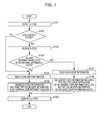
- Fig. 1 is a flowchart illustrating steps executed by an MFP in the first embodiment.
- Fig. 2 is a diagram illustrating the generated code information.
- Fig. 3 is a flowchart illustrating steps executed by an MFP in the second embodiment.
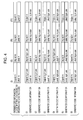
- Fig. 4 illustrates relationships between the obtained code information and the generated code information in the embodiments
- the code information generated when the (I)'s code information is obtained by decoding the detected code and the code information generated when the (II)'s code information is obtained by decoding the detected code will be understood in Fig. 4 .
- the E1 represents the generated code information in the first embodiment.
- the E2 represents the generated code information in the second embodiment.
- the E3 through E6 represents the generated code information in the third through sixth embodiment.
- the area size of a code is predetermined and therefore, the data size that the code can include is limited.
- the code can include two (but not three or more) pieces of user information.
- the code includes two areas (but not three or more).
- the each area may include user information.
- One of the two areas is called an original user information area.
- the other is called a latest user information area.
- the information in the original user information area is not modified each time a paper document is copied.
- the information in the latest user information area is modified each time a paper document is copied.
- the original user information area is sometimes called the area in which information is not modified each time a paper document is copied.
- the latest user information area is sometimes called the area in which information is modified each time a paper document is copied.
- the MFP is an apparatus comprising a scanning unit (e.g. a scanner) to capture an image and a printing unit (e.g. a printer engine). Furthermore, it may comprise a controlling unit (e.g. a CPU), a storing unit (e.g. a Hard Disk, a memory), a displaying unit (e.g. a display), an operating unit (e.g. a button, a touch panel, a keyboard or a mouse) and a network interface.
- a scanning unit e.g. a scanner
- a printing unit e.g. a printer engine
- a controlling unit e.g. a CPU
- a storing unit e.g. a Hard Disk, a memory
- a displaying unit e.g. a display
- an operating unit e.g. a button, a touch panel, a keyboard or a mouse
- the MFP may store user information specifying a log-in user by executing log-in authentification function. This function is executed by cooperation of the above mentioned units.
- log-in user information the user information specifying a log-in user is called as log-in user information.
- Fig. 1 is a flowchart illustrating steps executed after executing log-in authentification, user's instructing for copying a paper document, and capturing the paper document.
- the code information represented by the E1 is generated and printed after the code information is encoded.
- the controlling unit detects a code from the captured image.
- the controlling unit determines whether a code is detected in the captured image. If the code is not detected (NO), then the process proceeds to S104. Otherwise, the process continues to S103.
- the controlling unit decodes the detected code to obtain code information, and stores the obtained code information.
- the controlling unit determines whether user information is included in an original user information block of the obtained code information. If NO, the process continues to S105. However, if the user information is included in the original information block, the process proceeds to S107.
- the controlling unit determines that user information is not included in the original user information block when the information indicating that there is no user information is included in the original user information block. It is determined that the information indicates that there is no user information is in the block when the block contains all zeros (i.e., for an 8-bit block, "00000000").
- the controlling unit reads the stored log-in user information from the storing unit.
- the controlling unit generates code information including the read log-in user information in the original user information block.
- the controlling unit generates a code by encoding the generated code information.
- the controlling unit may determine whether user information is included in the latest user information block of the obtained code information.
- the controlling unit in S106 when it is not included, the controlling unit in S106 generates code information including the read log-in user information in the original user information block and no information in the latest user information block(see (I) of the E1) .
- the controlling unit in S106 when it is included, the controlling unit in S106 generates code information including not only the read log-in user information in the original user information block, but also the included user information (i.e. A) in the latest user information block(see (II) of the E1) .
- the controlling unit in S106 When any code is not detected(S102:No), the controlling unit in S106 generates code information including the read log-in user information in the original user information block and no information in the latest user information block.
- the controlling unit reads the stored log-in user information from the storing unit.
- the controlling unit generates code information including the included user information (i.e. A) in the original user information block and the read log-in user information in the latest user information block(see (III) and (IV) of the E1).
- the controlling unit may execute S108 by modifying information in the latest user information block of the obtained code information. In this case, the controlling unit needs to delete user information(if existed) in the latest user information block of the obtained code information before inputting the read log-in user information into the latest user information block.
- the controlling unit synthesizes the generated code and captured image, and instructs the printing unit print the synthesized result.
- the controlling unit synthesizes the generated code in the area of the detected code (if detected) of the captured image so as to delete the detected code.
- Fig. 3 is a flowchart illustrating steps executed in this embodiment after executing log-in authentification, user's instructing for copying a paper document, and capturing the paper document.
- the generated code information in the (II) case in this embodiment is different from that in the (II) case in the first embodiment (see (II) of the E1 and E2).
- the controlling unit detects a code from captured information.
- the controlling unit determines whether a code is detected. If the code is not detected (NO), the process proceeds to S305. Otherwise, the process continues to S303.
- the controlling unit decodes the detected code to obtain code information, and stores the obtained code information.
- the controlling unit determines whether user information is included in the original user information block of the obtained code information. If the information is not included (NO), the process continues to S310, if the information is included (YES), the process proceeds to S307.
- the controlling unit determines whether user information is included in the latest user information block of the obtained code information. If the user information is not included (NO), the process proceeds to S305. Otherwise, the process proceeds to S311.
- the controlling unit reads the stored log-in user information from the storing unit.
- the controlling unit generates code information including (i) the read log-in user information in the original user information block and (ii) no information in the latest user information block (see (I) of the E2). Thereafter, in S309, the controlling unit generates a code by encoding the generated code information.
- the controlling unit moves the user information which is included in the latest user information block of the obtained code information to the original user information block.
- the controlling unit reads the stored log-in user information from the storing unit.
- the controlling unit generates code information including the input user information (i.e. A) in the original user information block and the read log-in user information in the latest user information block (see (II) of the E2). Then, in S309, the controlling unit generates a code by encoding the generated code information.
- the controlling unit reads the stored log-in user information from the storing unit.
- the controlling unit generates code information including the included user information in the original user information block(i.e. A) and the read log-in user information in the latest user information block(see (III) and (IV) of the E2).
- the controlling unit synthesizes the generated code and captured information, and instructs the printing unit print the synthesized result.
- the controlling unit may synthesize the generated code in the area of the detected code (if detected) of the captured image so as to delete the detected code.
- the generated code information in the (II) case in this embodiment is different from that in the (II) case in the second embodiment. Specifically, no information is included in the original user information block in the generated code information in this embodiment.
- the controlling unit deletes the user information in the latest user information block of the obtained code information.
- the controlling unit generates code information including no information in the original user information block and the read log-in user information in the latest user information block (see (II) of the E3).
- the generated code information in the (I) case in this embodiment is different from that in the (I) case in the first embodiment. Specifically, the log-in user information is included in the latest user information block in the generated code information in this embodiment.
- the processing of the S106 in this embodiment is different from that in the first embodiment.
- the controlling unit determines whether user information is included in the latest user information block of the obtained code information. It is same with the processing of the first embodiment.
- the controlling unit in S106 may generate code information including no information in the original user information block and log-in user information in the latest user information block (see (I) of the E4). It is different from the processing of the first embodiment.
- the controlling unit in S106 may generate code information including not only the read log-in user information in the original user information block, but also the included user information (i.e. A) in the latest user information block(see (II) of the E4). It is different from the processing of the first embodiment.
- the controlling unit in S106 generates code information including the read log-in user information in the original user information block and no information in the latest user information block. It is same with the processing of the first embodiment.
- the generated code information in the (I) case in this embodiment is different from that in the (I) case in the second embodiment.
- the log-in user information is included in the latest user information block in the generated code information in this embodiment.
- the processing of the S306 in this embodiment is different from that of the second embodiment.
- the controlling unit generates code information including no user information in the original user information block and the read log-in information in the latest user information block (see (I) of the E5).
- the generated code information in the (I) case in this embodiment is different from that in the (I) case in the third embodiment.
- the log-in user information is included in the latest user information block in the generated code information in this embodiment.
- the processing of the S306 in this embodiment is different from that of the third embodiment.
- the controlling unit generates code information including no user information in the original user information block and the read log-in information in the latest user information block.
- the generated code information is different from the first embodiment through the sixth embodiment.
- a user (or preferably a system manager) can select one option among the six options before capturing.
- the operating unit receives the selection of one option, the option is stored in the storing unit. And then, the controlling unit runs the flow corresponding to the stored option. For example, when the user selects the first option, the controlling unit runs the flowchart in the Fig. 1 .
- the second embodiment is the best mode.
- the second embodiment generates a code information including this time's log-in user information in the original user information block in the (I) case.
- information in the original user information area is not modified each time a paper document is copied. Accordingly, even though the paper document is copied many times, the produced paper document includes this time's log-in user. So, when someone finds out that the produced paper document is revealed to the outside world, that someone specifies this time's log-in user. In this result, the someone can ask how this time's log-in user obtains the original paper document(i.e. the paper document including a code including no information both in the areas). By this asking, that someone may specify and blame the person who prints document which should be under lock and key(i.e. which should not be printed). As a result, members in any office stop printing important document because they don't want to be blamed.
- Mr.A is compared with this time's log-in user, Mr.A should be blamed because Mr.A may print document which should be under lock and key but this time's log-in user just copied.
- the code can include not only two (but not three or more) pieces of user information but also two (but not three or more) pieces of tracking information.
- the code includes two areas (but not three or more), the each area being capable of including user information and tracking information. One of the two areas is called the original information area. The other is called the latest information area.
- the tracking information may include printing date (or time) or MFP's name (or model number).
- the other embodiments include seven embodiments from the eighth embodiment to the fourteenth embodiment.
- the eighth embodiment corresponds to the first embodiment although these are different in the four points from (1) to (4).
- the ninth embodiment corresponds to the second embodiment although these are different in the four points from (1) to (4). The same holds true for other embodiments from the tenth embodiment to fourteenth embodiment.
- Embodiments of the present invention can also be realized by a computer of a system or apparatus that reads out and executes computer executable instructions recorded on a storage medium (e.g., non-transitory computer-readable storage medium) to perform the functions of one or more of the above-described embodiment(s) of the present invention, and by a method performed by the computer of the system or apparatus by, for example, reading out and executing the computer executable instructions from the storage medium to perform the functions of one or more of the above-described embodiment(s).
- the computer may comprise one or more of a central processing unit (CPU), micro processing unit (MPU), or other circuitry, and may include a network of separate computers or separate computer processors.
- the computer executable instructions may be provided to the computer, for example, from a network or the storage medium.
- the storage medium may include, for example, one or more of a hard disk, a random-access memory (RAM), a read only memory (ROM), a storage of distributed computing systems, an optical disk (such as a compact disc (CD), digital versatile disc (DVD), or Blu-ray Disc (BD)TM), a flash memory device, a memory card, and the like.
Landscapes
- Engineering & Computer Science (AREA)
- General Engineering & Computer Science (AREA)
- Theoretical Computer Science (AREA)
- Health & Medical Sciences (AREA)
- Signal Processing (AREA)
- Bioethics (AREA)
- General Health & Medical Sciences (AREA)
- Computer Hardware Design (AREA)
- Computer Security & Cryptography (AREA)
- Software Systems (AREA)
- Physics & Mathematics (AREA)
- General Physics & Mathematics (AREA)
- Multimedia (AREA)
- Facsimiles In General (AREA)
- Editing Of Facsimile Originals (AREA)
- Cleaning In Electrography (AREA)
Applications Claiming Priority (1)
| Application Number | Priority Date | Filing Date | Title |
|---|---|---|---|
| JP2010269399A JP5318077B2 (ja) | 2010-12-02 | 2010-12-02 | コードを扱うことができる装置、及びその制御方法 |
Publications (1)
| Publication Number | Publication Date |
|---|---|
| EP2461263A1 true EP2461263A1 (en) | 2012-06-06 |
Family
ID=45442748
Family Applications (1)
| Application Number | Title | Priority Date | Filing Date |
|---|---|---|---|
| EP11009435A Ceased EP2461263A1 (en) | 2010-12-02 | 2011-11-29 | An apparatus for dealing with a code and control method of the apparatus |
Country Status (4)
| Country | Link |
|---|---|
| US (1) | US8896851B2 (enExample) |
| EP (1) | EP2461263A1 (enExample) |
| JP (1) | JP5318077B2 (enExample) |
| CN (1) | CN102572179A (enExample) |
Cited By (1)
| Publication number | Priority date | Publication date | Assignee | Title |
|---|---|---|---|---|
| EP3067816A1 (en) * | 2015-03-13 | 2016-09-14 | Troy Group, Inc. | A computer-based system and method for adding variable security data in printing operations |
Families Citing this family (1)
| Publication number | Priority date | Publication date | Assignee | Title |
|---|---|---|---|---|
| JP7180321B2 (ja) * | 2018-11-27 | 2022-11-30 | 株式会社リコー | 画像形成装置、画像形成システム、及び画像形成方法 |
Citations (6)
| Publication number | Priority date | Publication date | Assignee | Title |
|---|---|---|---|---|
| US5467447A (en) * | 1990-07-24 | 1995-11-14 | Vogel; Peter S. | Document marking system employing context-sensitive embedded marking codes |
| US5987127A (en) * | 1992-06-30 | 1999-11-16 | Minolta Co., Ltd. | Image forming apparatus and copy management system |
| US20060001912A1 (en) * | 1999-06-08 | 2006-01-05 | Canon Kabushiki Kaisha | Image processing apparatus and method |
| EP1796368A1 (en) * | 2005-12-06 | 2007-06-13 | Océ-Technologies B.V. | Scan apparatus |
| US20080231907A1 (en) * | 2007-03-19 | 2008-09-25 | Ricoh Company, Limited | Image processing apparatus, image processing method, and computer program product |
| US20100142000A1 (en) * | 2008-12-04 | 2010-06-10 | Canon Kabushiki Kaisha | Apparatus handling codes, method for controlling the same, and program |
Family Cites Families (2)
| Publication number | Priority date | Publication date | Assignee | Title |
|---|---|---|---|---|
| JP4151724B2 (ja) * | 2006-10-04 | 2008-09-17 | 富士ゼロックス株式会社 | 画像処理装置および画像処理プログラム |
| JP2008131522A (ja) * | 2006-11-24 | 2008-06-05 | Kyocera Mita Corp | 画像処理装置、プログラムおよびコンピュータ読取可能記録媒体 |
-
2010
- 2010-12-02 JP JP2010269399A patent/JP5318077B2/ja not_active Expired - Fee Related
-
2011
- 2011-11-28 US US13/305,044 patent/US8896851B2/en active Active
- 2011-11-29 EP EP11009435A patent/EP2461263A1/en not_active Ceased
- 2011-12-02 CN CN2011104000562A patent/CN102572179A/zh active Pending
Patent Citations (7)
| Publication number | Priority date | Publication date | Assignee | Title |
|---|---|---|---|---|
| US5467447A (en) * | 1990-07-24 | 1995-11-14 | Vogel; Peter S. | Document marking system employing context-sensitive embedded marking codes |
| US5987127A (en) * | 1992-06-30 | 1999-11-16 | Minolta Co., Ltd. | Image forming apparatus and copy management system |
| US20060001912A1 (en) * | 1999-06-08 | 2006-01-05 | Canon Kabushiki Kaisha | Image processing apparatus and method |
| EP1796368A1 (en) * | 2005-12-06 | 2007-06-13 | Océ-Technologies B.V. | Scan apparatus |
| US20080231907A1 (en) * | 2007-03-19 | 2008-09-25 | Ricoh Company, Limited | Image processing apparatus, image processing method, and computer program product |
| US20100142000A1 (en) * | 2008-12-04 | 2010-06-10 | Canon Kabushiki Kaisha | Apparatus handling codes, method for controlling the same, and program |
| JP2010136098A (ja) | 2008-12-04 | 2010-06-17 | Canon Inc | コードを扱うことができる装置、その制御方法、プログラム、記憶媒体 |
Cited By (1)
| Publication number | Priority date | Publication date | Assignee | Title |
|---|---|---|---|---|
| EP3067816A1 (en) * | 2015-03-13 | 2016-09-14 | Troy Group, Inc. | A computer-based system and method for adding variable security data in printing operations |
Also Published As
| Publication number | Publication date |
|---|---|
| JP2012120028A (ja) | 2012-06-21 |
| JP5318077B2 (ja) | 2013-10-16 |
| US20120140258A1 (en) | 2012-06-07 |
| CN102572179A (zh) | 2012-07-11 |
| US8896851B2 (en) | 2014-11-25 |
Similar Documents
| Publication | Publication Date | Title |
|---|---|---|
| US9369605B2 (en) | Image processing apparatus for outputting information embedded in a code image according to version information included in the code image | |
| CN102945335B (zh) | 能够提取二维码的装置及其方法 | |
| US9143642B2 (en) | Image processing apparatus, image processing apparatus control method, and storage medium | |
| JP2009255433A (ja) | 画像処理装置 | |
| US20200053236A1 (en) | Image forming apparatus allowing voice operation, control method therefor, storage medium storing control program therefor, and image forming system | |
| US8994982B2 (en) | Image forming device, image forming method, and image forming program | |
| US20090174901A1 (en) | Image forming device, image forming method, and image forming program | |
| JP5619221B2 (ja) | 二次元コードを取り扱うことのできる装置、その制御方法、プログラム、記憶媒体 | |
| EP2418838A1 (en) | Device capable of extracting copy prohibition information and control method thereof | |
| JP4259462B2 (ja) | 画像処理装置,画像処理方法 | |
| KR20130076426A (ko) | 화상형성장치 및 화상형성장치에서 옵션 화면을 표시하는 방법 | |
| US8810864B2 (en) | Apparatus capable of controlling output using two-dimensional code, and control method and program thereof | |
| US8896851B2 (en) | Apparatus for dealing with a code and a control method of the apparatus | |
| JP2012191252A (ja) | 2次元コードを検出可能な装置 | |
| JP6323682B2 (ja) | 画像形成システム | |
| JP2019004365A (ja) | 情報処理装置 | |
| JP5164867B2 (ja) | 送信装置、送信装置の制御方法、及びプログラム | |
| JP2008289130A (ja) | コピーされた文書の電子的記憶及び再呼び出しが可能なコピー機 | |
| US20220311897A1 (en) | Image processing device, output system, terminal device, and output method | |
| CN103124320B (zh) | 打印设备及方法 | |
| JP4965996B2 (ja) | 画像処理装置、画像処理方法、画像処理プログラム並びに記憶媒体 | |
| JP2012244206A (ja) | 画像形成装置 | |
| JP2005252891A (ja) | 電子透かし情報認証システム及び画像形成装置 | |
| CN116939115A (zh) | 图像形成装置、信息处理装置、其控制方法及存储介质 | |
| JP2007088603A (ja) | 画像処理装置、画像システム及び画像処理方法 |
Legal Events
| Date | Code | Title | Description |
|---|---|---|---|
| PUAI | Public reference made under article 153(3) epc to a published international application that has entered the european phase |
Free format text: ORIGINAL CODE: 0009012 |
|
| AK | Designated contracting states |
Kind code of ref document: A1 Designated state(s): AL AT BE BG CH CY CZ DE DK EE ES FI FR GB GR HR HU IE IS IT LI LT LU LV MC MK MT NL NO PL PT RO RS SE SI SK SM TR |
|
| AX | Request for extension of the european patent |
Extension state: BA ME |
|
| 17P | Request for examination filed |
Effective date: 20121206 |
|
| 17Q | First examination report despatched |
Effective date: 20140710 |
|
| STAA | Information on the status of an ep patent application or granted ep patent |
Free format text: STATUS: THE APPLICATION HAS BEEN REFUSED |
|
| 18R | Application refused |
Effective date: 20151124 |