EP2453889B1 - Verwendung von proanthocyanidinen für die herstellung einer antihaftzubereitung - Google Patents
Verwendung von proanthocyanidinen für die herstellung einer antihaftzubereitung Download PDFInfo
- Publication number
- EP2453889B1 EP2453889B1 EP10734105.9A EP10734105A EP2453889B1 EP 2453889 B1 EP2453889 B1 EP 2453889B1 EP 10734105 A EP10734105 A EP 10734105A EP 2453889 B1 EP2453889 B1 EP 2453889B1
- Authority
- EP
- European Patent Office
- Prior art keywords
- composition
- cells
- gingivalis
- use according
- extract
- Prior art date
- Legal status (The legal status is an assumption and is not a legal conclusion. Google has not performed a legal analysis and makes no representation as to the accuracy of the status listed.)
- Active
Links
Images





Classifications
-
- A—HUMAN NECESSITIES
- A61—MEDICAL OR VETERINARY SCIENCE; HYGIENE
- A61K—PREPARATIONS FOR MEDICAL, DENTAL OR TOILETRY PURPOSES
- A61K36/00—Medicinal preparations of undetermined constitution containing material from algae, lichens, fungi or plants, or derivatives thereof, e.g. traditional herbal medicines
- A61K36/18—Magnoliophyta (angiosperms)
- A61K36/185—Magnoliopsida (dicotyledons)
- A61K36/70—Polygonaceae (Buckwheat family), e.g. spineflower or dock
-
- A—HUMAN NECESSITIES
- A61—MEDICAL OR VETERINARY SCIENCE; HYGIENE
- A61K—PREPARATIONS FOR MEDICAL, DENTAL OR TOILETRY PURPOSES
- A61K36/00—Medicinal preparations of undetermined constitution containing material from algae, lichens, fungi or plants, or derivatives thereof, e.g. traditional herbal medicines
- A61K36/18—Magnoliophyta (angiosperms)
- A61K36/185—Magnoliopsida (dicotyledons)
-
- A—HUMAN NECESSITIES
- A61—MEDICAL OR VETERINARY SCIENCE; HYGIENE
- A61K—PREPARATIONS FOR MEDICAL, DENTAL OR TOILETRY PURPOSES
- A61K31/00—Medicinal preparations containing organic active ingredients
- A61K31/02—Halogenated hydrocarbons
-
- A—HUMAN NECESSITIES
- A61—MEDICAL OR VETERINARY SCIENCE; HYGIENE
- A61K—PREPARATIONS FOR MEDICAL, DENTAL OR TOILETRY PURPOSES
- A61K31/00—Medicinal preparations containing organic active ingredients
- A61K31/04—Nitro compounds
-
- A—HUMAN NECESSITIES
- A61—MEDICAL OR VETERINARY SCIENCE; HYGIENE
- A61K—PREPARATIONS FOR MEDICAL, DENTAL OR TOILETRY PURPOSES
- A61K31/00—Medicinal preparations containing organic active ingredients
- A61K31/33—Heterocyclic compounds
- A61K31/335—Heterocyclic compounds having oxygen as the only ring hetero atom, e.g. fungichromin
- A61K31/35—Heterocyclic compounds having oxygen as the only ring hetero atom, e.g. fungichromin having six-membered rings with one oxygen as the only ring hetero atom
- A61K31/352—Heterocyclic compounds having oxygen as the only ring hetero atom, e.g. fungichromin having six-membered rings with one oxygen as the only ring hetero atom condensed with carbocyclic rings, e.g. methantheline
- A61K31/353—3,4-Dihydrobenzopyrans, e.g. chroman, catechin
-
- A—HUMAN NECESSITIES
- A61—MEDICAL OR VETERINARY SCIENCE; HYGIENE
- A61K—PREPARATIONS FOR MEDICAL, DENTAL OR TOILETRY PURPOSES
- A61K36/00—Medicinal preparations of undetermined constitution containing material from algae, lichens, fungi or plants, or derivatives thereof, e.g. traditional herbal medicines
- A61K36/18—Magnoliophyta (angiosperms)
- A61K36/185—Magnoliopsida (dicotyledons)
- A61K36/45—Ericaceae or Vacciniaceae (Heath or Blueberry family), e.g. blueberry, cranberry or bilberry
-
- A—HUMAN NECESSITIES
- A61—MEDICAL OR VETERINARY SCIENCE; HYGIENE
- A61P—SPECIFIC THERAPEUTIC ACTIVITY OF CHEMICAL COMPOUNDS OR MEDICINAL PREPARATIONS
- A61P1/00—Drugs for disorders of the alimentary tract or the digestive system
- A61P1/02—Stomatological preparations, e.g. drugs for caries, aphtae, periodontitis
-
- A—HUMAN NECESSITIES
- A61—MEDICAL OR VETERINARY SCIENCE; HYGIENE
- A61P—SPECIFIC THERAPEUTIC ACTIVITY OF CHEMICAL COMPOUNDS OR MEDICINAL PREPARATIONS
- A61P31/00—Antiinfectives, i.e. antibiotics, antiseptics, chemotherapeutics
Definitions
- the invention relates to the use of proanthocyanidins for the production of a preparation that prevents the adhesion of microorganisms on body surfaces.
- Porphyromonas gingivalis is a gram-negative, facultatively anaerobic bacterium, which is known to be the main cause of periodontitis and gingivitis, which are diseases of the periodontium, occurring in about 30% of all people in Central Europe. Furthermore, systemic infection with Pg is a risk factor for infarction.
- the strategy of Pg a normal inhabitant of the human oral flora, for aggressive and virulent attack of the gingiva has as a pre-condition the adhesion of the microbe to epithelial cells of the oral mucosa, namely the buccal mucosa and peridontium.
- This adhesion is provided by various bacterial adhesins of Pg, which are located inter alia on fimbriae of the bacterium.
- the most important relevant adhesins are on the one hand hemagglutinins, and on the other hand gingipains (Lys- and Arg-gingipain). These adhere preferentially to protein structures of the target cell.
- an antibacterial agent from mixture of plant drugs comprises Rumex acetosa L.-family, Rumicisherba, Verbena officinalis, Sambucus nigra, Primulaveris and Gentianalutea, e.g. to treat infection on topical skin and mucous membrane is described.
- the object of the present invention is therefore to provide a preparation that prevents the adhesion of at least one microorganism on a biological or biocompatible surface.
- the invention as characterized in the claims relates to the use of a preparation containing at least one proanthocyanidin from a plant Rumex acetosa, for the production of a preparation that prevents the bacterial adhesion of at least one microorganism on a biological or biocompatible surface.
- the invention relates to a composition containing at least one oligomeric or polymeric flavan-3-ol unit (proanthocyanidin) from a plant Rumexacetosa extract, for use in prevention or treatment of gingivitis, periodontitis, caries, ulcer of the oral mucosa (aphtha), or gingivostomatitis wherein the composition prevents the adhesion of at least one bacterium on mucosa, tongue, palate, gingiva, gingival pocket or tooth surface in a exposure time that does not exceed 10 minutes.
- oligomeric or polymeric flavan-3-ol unit proanthocyanidin
- Proanthocyanidins can occur in various degrees of oligomerization, very often as dimers or trimers, but also in higher oligomeric or polymeric flavan-3-ol compounds, which can be assigned to the A, B and C series, depending on the type of linkage of the interflavan bond (4 ⁇ 6 or 4 ⁇ 8 or double-bonded with an ether bridge).
- Proanthocyanidins can undergo secondary modification biosynthetically, e.g. through esterification with aromatic acids, e.g. gallic acid or p-hydroxy-benzoic acid.
- proanthocyanidins that are contained in plant extracts of Rumex acetosa as claimed as well as Rhododendron ferrugineum and/or Myrothamnus flabellifolia, and preparations therefrom, are in addition able to prevent the adhesion of microorganisms on body surfaces.
- Rumex acetosa sorrel
- Rhododendron ferrugineum the russet-leaved rhododendron
- Rhododendron ferrugineum the russet-leaved rhododendron
- the plant Myrothamnus flabellifolia a resurrection plant, belongs to the only plant genus of the family of Myrothamnaceae in the small order of the gunnera. Its natural habitat is arid southern Africa.
- the cornerstone of the invention is the fact that successful suppression of bacterial adhesion on a body surface can lead to a decrease in infection of the tissue in question. As a result, for example the symptoms of periodontitis and gingivitis can be reduced considerably.
- test extracts have an influence on the formation of a microbially produced biofilm.
- the composition according to the invention has at least one plant extract from one of the aforementioned plants.
- Said extract can preferably be an aqueous extract, an ethanolic extract, an acetone extract and/or an ethyl acetate extract.
- the extract is preferably in the form of a dry extract, before it is used for production of the preparation according to the invention.
- the composition has at least one isolated and/or enriched and/or chemically modified proanthocyanidin.
- the biological or biocompatible surface is preferably at least one surface selected from the group comprising a human or animal body surface, surface of an implant, of a prosthesis, of an epithesis, of a catheter, of a drainage tube, of a wound care article, of a hygiene article, of a contact lens and/or of a hearing aid.
- the preparation according to the invention comprises oral hygiene products such as mouth wash, a tincture, an ointment, a toothpaste, a lozenge, a gel, impregnated inserts, rapid-release and dissolving granules, powders or other solid dosage forms, chewing gums or other plastic or elastic masses, impregnated tooth cleaning aids, such as dental floss, toothbrushes and/or a rinse.
- the aforesaid wound care article is preferably a dressing.
- the aforesaid hygiene article is preferably a diaper and/or an incontinence insert.
- the aforementioned body surface is preferably at least one surface selected from the group comprising skin, mucosa, tongue, palate, gingiva, gingival pocket and/or tooth surface.
- the preparation according to the invention is a preparation for preventing the formation of and/or for dissolving bacterial coatings, biofilms and/or plaque.
- biofilm is a general term for all bacterial coatings, including the plaque known from dentistry.
- a layer of varying thickness is formed, which is stabilized in particular by bacterial polymers and adhesins.
- This layer offers bacterial organisms on the one hand protection against antibacterial measures, such as antibiotics or abrasive agents (such as toothpaste), and on the other hand it also creates microenvironments, promoting the growth of certain bacterial organisms. For example, a partially oxygen-free microenvironment may be created, which promotes the growth of obligate or facultatively anaerobic bacteria, e.g. P. gingivalis or S. mutans.
- the preparation according to the invention is able to prevent the formation of such coatings or even dissolve them.
- the preparation according to the invention is a preparation for the prevention and/or treatment of bacterially induced oral diseases and/or bacterially induced infarctions or the precursors thereof.
- bacterially induced oral diseases means hereinafter diseases such as periodontitis, gingivitis, caries, ulcers of the oral mucosae (aphthae), and gingivostomatitis.
- bacterially induced infarctions or precursors thereof means hereinafter diseases such as angina pectoris, coronary heart disease, myocardial infarction, stroke, pulmonary embolism and/or ischemic optic neuropathy. These diseases may be caused by bacterial hemagglutinin, which then - for example after proteolytic invasion of P. gingivalis pathogens into the dental epithelium of the gingiva - can lead to aggregation of erythrocytes, which in its turn can lead to the thrombogenesis.
- the preparation according to the invention comprises oral hygiene products such as mouth wash, a tincture, an ointment, a toothpaste, a lozenge, a gel, impregnated inserts, rapid-releasing and dissolving granules, powder or other solid dosage forms, chewing gums or other plastic or elastic masses, impregnated tooth cleaning aids, such as dental floss, toothbrushes and/or a rinse.
- oral hygiene products such as mouth wash, a tincture, an ointment, a toothpaste, a lozenge, a gel, impregnated inserts, rapid-releasing and dissolving granules, powder or other solid dosage forms, chewing gums or other plastic or elastic masses, impregnated tooth cleaning aids, such as dental floss, toothbrushes and/or a rinse.
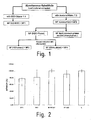
- Fig. 1 shows an extraction scheme for Myrothamnus flabelifola (MF), which also applies similarly to Rumex acetosa (RA).
- MF1/RA1 is a fraction extracted with ethanol/water 1:1.
- MF2/RA2 was instead extracted with an acetone-water mixture. In some cases the aqueous supernatant was shaken again with ethyl acetate.
- At least one plant extract can be obtained by extraction in water or an ethanol/water mixture.
- at least one plant extract was obtained by extraction comprising the following steps:
- the extracts obtained can basically be used in liquid - i.e. dissolved - form. Preferably, however, it is envisaged that these are used in dried form.
- the extracts obtained are preferably centrifuged and/or then freeze-dried.
- proanthocyanidin is a procyanidin.
- Procyanidins are proanthocyanidins that are constructed only from catechol or epicatechol units, since these procyanidins have practically no direct cytotoxicity in the field of application according to the invention.
- composition is used at a concentration that does not have antimicrobial and/or bactericidal action in an exposure time that is usually employed.
- oligomeric proanthocyanidins in particular have antioxidant effects.
- the antioxidant action of certain proanthocyanidins is 20 times stronger than vitamin C and 50 times stronger than vitamin E (Shi et al. 2003). It is also reported that at high enough dosages or exposure times, proanthocyanidins can have antibacterial action.
- the present invention expressly relates neither to antioxidant nor to antibacterial and/or bactericidal action; rather it relates exclusively to a decrease in adhesion.
- concentrations of less than 100 ⁇ g/ml.
- adhesion of P. gingivalis to KB cells on incubation with various extracts according to the invention (in particular RA2 and MF1) at a concentration of 50 ⁇ g/ml, was already reduced significantly in an incubation time of 90 min ( Fig. 3 ).
- exposure time usually employed refers to estimated exposure times with proper use of the preparations according to the invention.
- said preparations according to the invention are preferably dosage forms such as mouth wash, tinctures, ointments, toothpastes, lozenges, gels and/or rinses, for which the contact time of the active substances or active extracts with the bacteria, or with the mucosal cells, is of the order of a few minutes.
- the exposure time - i.e. the time during which the body surface to be treated or the established or colonizing microorganisms are exposed to the composition - as a rule does not exceed 10 minutes.
- the exposure time in proper use could be greater or less than this.
- mutans 250 ⁇ g/ml 10 MF4 24 h S. mutans 125 ⁇ g/ml 10 RA1, RA2, RA3 24 h
- S. mutans 250 ⁇ g/ml 11 RA4 24 h S. mutans 125 ⁇ g/ml 11 MF 1, MF2, MF3 0.5 h P. gingivalis - 12 MF4 0.5 h P. gingivalis 1000 ⁇ g/ml 12 RA1, RA2, RA3 0.5 h P. gingivalis - 13 RA4 0.5 h P. gingivalis 250 ⁇ g/ml 13 MF1, MF2, MF3 24 h P.
- the stated constituent from the group of proanthocyanidins is an oligomer and/or a polymer.
- Oligomer means, hereinafter, di-, tri- and tetrameric compounds.
- Polymer means, hereinafter, compounds with four or more monomeric units.
- the composition has at least one tetrameric or higher oligomeric proanthocyanidin.
- the aforementioned oral disease is a disease selected from the group comprising gingivitis, periodontitis, caries, ulcer of the oral mucosa (aphtha), and/or gingivostomatitis, or other periodontal diseases.
- the aforementioned microorganism is at least one bacterium.
- Porphyromonas gingivalis gram-negative, facultatively anaerobic
- Streptococcus mutans gram-positive, facultatively anaerobic
- said adhesion of at least one microorganism is provided by a bacterial adhesin.
- bacterial adhesins are as a rule proteins that enable the bacterium to adhere to structures or cells of the host. Often these adhesins are arranged on bacterial fimbriae or pili. Important adhesins are listed in the following table.
- Adhesin Organism Target structure Lys-gingipain Porphyromonas gingivalis Oral mucosal cells Arg-gingipain Porphyromonas gingivalis Oral mucosal cells Pilin Gonococci Urothelial cells Hemagglutinin Porphyromonas gingivalis Oral mucosal cells Protein F Streptococcus pyogenes Fibronectin Pertactin Bordetella pertussis Bronchial mucosal cells Adhesin P1 Streptococcus mutans Dental enamel
- an antiadhesive preparation is moreover provided that has at least one proanthocyanidin from a plant Rumex acetosa.
- the preferred embodiments described in connection with the aforementioned use are also applicable to the antiadhesive composition mentioned here.
- the drug material from Rumex acetosa L. and Myrothamnus flabellifolia Welw. was extracted, with cooling with ice and exclusion of light, with an acetone-water mixture (7:3 v/v) by vortex extraction using the Ultra-Turrax®.
- 100 g of plant material was put in 1 L of solvent and extracted for 5 minutes.
- the residue was submitted to vortex extraction again with fresh solvent mixture, for exhaustive extraction. All the resultant extracts were combined and the solvent was removed in the rotary evaporator. Then the extracts were cooled overnight to 4°C, so that a proportion of their chlorophyll content was precipitated and could be filtered off with suction.
- the remaining chlorophyll and other lipophilic constituents were removed by shaking with petroleum ether.
- 1 L of petroleum ether was added per 1 L of aqueous extract.
- the shaking operations were repeated until the petroleum ether phase was no longer colored.
- the solvent was removed from the aqueous phase in the rotary evaporator.
- the resultant raw extract (designated as RA2, or MF2 hereinafter) was freeze-dried and stored at -20°C until further use.
- RA2 The resultant raw extract (designated as RA2, or MF2 hereinafter) was freeze-dried and stored at -20°C until further use.
- a total of 2.5 kg of drug material was processed from Rumex acetosa L., and 1 kg from Myrothamnus flabellifolia Welw.
- MF1 extract For preparation of the MF1 extract, 10.2 g of shoot tips of Myrothamnus flabellifolia Welw. was pulverized using a IKA mill and, after adding 40 mL of 50% ethanol, was stirred for one hour at room temperature. Then the suspension was centrifuged at 2100 x g for 5 minutes, the supernatant was collected, the solvent was removed in a rotary evaporator and it was finally freeze-dried.
- the RA1 extract was prepared by adding 5 mL of 50% ethanol to 1 g of leaves of Rumex acetosa L., which had previously been pulverized in the IKA mill, and boiling for 30 minutes under reflux. The suspension was left to stand overnight at room temperature and then centrifuged for 10 minutes at 3166 x g. To separate residual plant material, the collected supernatant was then centrifuged again at 25 000 x g for 10 minutes. The solvent was removed from the resultant supernatant in the rotary evaporator and finally lyophilization of the extract was carried out.
- Rhododendron ferrugineum L. used for the tests were kindly supplied by Mrs. Andrea Louis, Wein University.
- aqueous extract RF H 2 O
- 30 mL of demineralized water was added to 3 g of leaf material of Rhododendron ferrugineum L. and it was treated for 5 minutes in the ultrasonic bath.
- the preparation was centrifuged for 5 minutes at 3600 x g. 10 mL of the clear supernatant was then withdrawn and freeze-dried.
- the hemagglutination assay with P . gingivalis was carried out under sterile conditions in 96-well plates with U-shaped bottoms. It was carried out using a 3-5 days old culture of P. gingivalis ATCC 33277, and freshly obtained, human EDTA-whole blood. For preparation of a 2% erythrocyte suspension, the blood was transferred to sterile 15 mL Falcon tubes and centrifuged at 4°C for 10 minutes at 1200 x g. The clear, colorless plasma supernatant was then removed and the erythrocytes that remained were washed with PBS solution. Three to five washing steps were carried out, until the supernatant was colorless and a definite sediment of erythrocytes had formed.
- an erythrocyte control series (negative control, consisting of erythrocyte suspension and PBS solution), an untreated control (positive control, consisting of erythrocyte suspension and P. gingivalis suspension), and a sample control for testing for autoagglutination by the test substance (sample control, consisting of erythrocyte suspension and test solution) were carried out together.
- the titers were read off, as the reciprocal of the dilution that still displayed hemagglutination, and were assessed in comparison with the untreated control. This evaluation was carried out both visually and by means of the MicroWin® software.
- This incubation variant was in particular carried out when test substances caused autoagglutination of the erythrocytes.
- P. gingivalis cells were first preincubated with the test solution.
- the preparations were centrifuged for 5 minutes at 6000 x g, the supernatant was discarded and the cell pellet obtained was resuspended in 300 ⁇ L PBS solution.
- Table 2 Test substance Concentration [ ⁇ g/mL] 500 100 50 1 MF1 1.7 1.6 1.4 0.5 RA2 2 - - 0 RA3 2 1 - 0 RA4 1 2 - 0
- FITC-labeling was carried out with a concentration of 50 ⁇ g/mL over a period of 30 minutes at 37°C. Then excess FITC was removed by washing twice (3600 x g, 5 minutes) with PBS. This was followed by various incubation variants (see 3.1).
- the medium of previously sown KB cells (ATCC CCL-17) was removed and the cells were washed once with PBS.
- the KB cells were incubated with test substance in FCS-free cell medium for a period of 1.5 hours. Then the KB cells were washed with PBS and FITC-labeled P. gingivalis was added in a BCR of 100:1. Incubation with the bacteria was carried out for 90 minutes at 37°C.
- KB cells (ATCC CCL-17) were incubated in FCS-free medium with test substance and FITC-labeled cells of P. gingivalis (BCR 100:1) for a period of 90 minutes.
- Table 5 Test substance Concentration [mg/mL] 0.1 0.05 0.1 MF1 85 ⁇ 3 85 ⁇ 10 93 ⁇ 10 RA2 84 ⁇ 7 - - RF RPS B2 96 ⁇ 3 - - RF H 2 O 91 ⁇ 3 - -
- Incubation was carried out for 72 hours at 37°C, changing the medium (negative control), or changing the medium with test substance, every 24 hours. After incubation for three days, the glass rods were dried for an hour at room temperature and their weight was determined. The biomass that had formed was found by subtracting the blank weight from the final weight. See also Fig. 4 .
- the KB cells were first sown in 96-well tissue culture plates (F-shape) with 1.5 x 10 4 cells/well and incubated for 24 to 48 hours at 37°C. In this time, the cells adhere to the plate surface. At approx. 70% confluence, the medium was removed and the cells were washed once with PBS solution (200 ⁇ L/well). Corresponding dilutions of the test substances in FCS-free EMEM were prepared in small Petri dishes, which were then put in the individual wells of the microtiter plate. A 12-fold determination was carried out for each substance per test series. The KB cells were incubated with the test substances for 6 and 24 hours at 37°C. As a negative control, cells were incubated with pure, FCS-free EMEM.
- MTT-reagent 2.5 mg/mL PBS
- ⁇ 490 nm
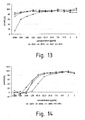
- Figs. 10 - 11 show the results for toxicity of the test substances on S. mutans after 24 hours incubation.
- Figs. 12 - 15 show the results for toxicity of the test substances on P. gingivalis after 30 minutes and 24 hours incubation.
- the KB cells were first sown in FCS-containing EMEM in 6-well plates at a concentration of 1.5 x 10 5 cells/well and were incubated for approx. 3 to 5 days to confluence of approx. 80% at 37°C.
- a liquid culture of P. gingivalis ATCC33277 with OD 660 0.05 was prepared one day before carrying out the experiment.
- the cell medium was removed and the wells of the plates were washed once with PBS solution. Then, in each well, 2 mL of FCS-free EMEM containing the dissolved test substance was added to the KB cells and incubated for two hours at 37°C. The untreated control was left in pure, FCS-free EMEM.
- the cells were detached from the bottom of the well by adding 750 ⁇ L trypsin (0.05% + 0.02% EDTA in PBS). After transfer to sterile 2 mL reaction vessels and 5-minute centrifugation at 100 x g, the cells were once again washed with 1 mL PBS and the cell pellet obtained after further centrifugation was quick-frozen in liquid nitrogen and stored at -80°C until further processing.
- the mRNA was isolated from the cell pellet using the NucleoSpin® RNA XS Kit from the company MACHERY-NAGEL, Düren, Germany.
- RA1 buffer 100 ⁇ L RA1 buffer, and 2 ⁇ L TCEP (tris(2-carboxyethyl)phosphine) were added to the cell pellet and vortexed twice for 5 seconds.
- TCEP tris(2-carboxyethyl)phosphine
- the suspension could be transferred to the NucleoSpin® filter and was centrifuged with this for 30 seconds at 11 000 x g.
- 100 ⁇ L of 70% ethanol was added to the filtrate, mixed carefully and applied to the NucleoSpin® RNA XS column.
- the membrane was dried by adding 100 ⁇ L MDB (membrane desalting buffer) and centrifugation for 30 seconds at 11 000 x g. This was followed by 15-minute DNAse digestion at room temperature by adding 3 ⁇ L rDNase and 27 ⁇ L reaction buffer for rDNase to the membrane. Next there were three washing steps, first adding 100 ⁇ L RA2 buffer to the membrane for 2 minutes to inactivate the rDNase. After centrifugation for 30 seconds at 11 000 x g, 400 ⁇ L RA3 buffer was applied to the membrane and centrifuged under the same conditions.
- MDB membrane desalting buffer
- the last washing step was carried out by adding 200 ⁇ L RA3 buffer and two-minute centrifugation at 11 000 x g.
- the NucleoSpin® RNA XS column was then put in a 1.5 mL reaction vessel and the mRNA bound to the membrane was detached by adding 25 ⁇ L of RNase free water. Elution was effected by centrifugation at 11 000 x g for 30 seconds.
- An OD 260 of 1.0 corresponds to a concentration of 40 ⁇ g/mL RNA.
- the high-capacity cDNA reverse transcription kit from the company Applied Biosystems, Foster City, USA, was used.
- Table 6 shows the temperature program for the reverse transcription (High Capacity Kit, Applied Biosystems) Table 6 25°C 10 minutes 60°C 37 minutes 85°C 5 seconds
- Table 7 shows the temperature program for real time PCR Table 7 Enzyme activation 96°C 10 minutes Denaturation 95°C 15 seconds 45 cycles Annealing/extension 60°C 60 seconds
- the primers for the gene expression analyses were obtained from Applied Biosystems, Foster City, USA and are shown in Table 8.
- Table 8 shows the assay-IDs of the primers used for gene expression analysis in KB cells, obtained from the company Applied Biosystems, Foster City, USA.
- Table 8 IL-1 ⁇ Hs01555413_m1 IL-6 Hs99999032_m1 IL-8 Hs01567913_g1 TNF ⁇ Hs00174128_m1 18s RNA Hs99999901_s1
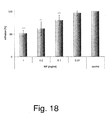
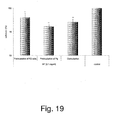
- Figs. 16 and 17 show the results of the Real Time PCR analyses
- Adherent KB cells were incubated at 37°C and 5% CO 2 in 25- or 75-cell culture bottles. Cultivation of P. gingivalis took place under anaerobic conditions (10% H 2 , 10% CO 2 , 80% N 2 ) at 37°C on special blood agar plates or in liquid culture. The anaerobic atmosphere was achieved by adding anaerobic bags (AnaeroGenTM) in an anaerobic jar, and was verified by adding a redox indicator strip (Anaerotest®).
- Vitamin-K 1 100 ⁇ L Ethanol (96%) 9.9 mL store at 4°C in the dark
- Plant material (Myro AG, Switzerland, batch Myrol) (Anke et al, 2008) was powdered. 10 g were extracted under stirring with EtOH:water (1:1 v/v) for 30 min at RT and the suspension centrifuged (10.000 ⁇ g, 10 min). The supernatant was lyophilized to yield the extract named MF. Standardisation of the extract and analytical quality control was done by ultrahigh pressure liquid chromatography (UPLC) by quantitation of the lead compounds of the extract (trigalloyl quinic acid, tetragalloyl quinic acid, tellimagrandin II) and of the proanthocyanidin content (Anke et al, 2008).
- UPLC ultrahigh pressure liquid chromatography
- P. gingivalis (ATCC 33277) was cultured under anaerobic conditions (Anaerocult, Merck, Darmstadt, Germany) at 37°C on solid sheep blood agar (per 1 L: 16 g agar, 15 g trypticase peptone, 5 g neutralised soja peptone, 5 g sodium chloride, 5 g yeast extract, 0.5 g L-cysteine, 50 ml sheep blood) enriched with 10 mg vitamin K and 5 mg hemin. For quality control purposes (identity and purity), every third passage of the bacterium was subjected to quantitative fimA gene PCR analysis.
- Bacteria used in assays were grown to late log phase, harvested and used to inoculate 20 ml of liquid media (the same as for solid medium without blood and agar) and grown overnight at 37°C. Growth was monitored by OD (660 nm) and bacteria in exponential phase were used for further experiments.
- KB cells (ATCC CCL-17), derived from a human oral epidermoid carcinoma, were kindly provided by Dr. S. Eick (University of Jena, Germany). The cells were cultured in Earl's minimum essential medium (EMEM) (Lonza, Basel, Switzerland), supplemented with 8% (v/v) heat-inactivated FCS (PAA Laboratories, Cölbe, Germany) and 50 ⁇ g/ml gentamicin (MP Biomedicals, Irvine, USA) at 5% CO 2 / 37°C. Passaging was performed twice a week to a maximum of 15 passages.
- EMEM Earl's minimum essential medium
- FCS heat-inactivated FCS
- MP Biomedicals MP Biomedicals, Irvine, USA
- KB-cells (8 ⁇ 10 5 cells) were grown to 90 % confluence in 6-well plates. The supernatant was removed, the monolayer washed with PBS and incubated in FCS- and antibiotic-free medium. Solid medium-grown P. gingivalis bacteria (3 to 5 days culture) were harvested and suspended in 0.5 M NaHCO 3 , pH 8.0. After adjusting the OD 660 to 4.0, fluorescein isothiocyanate FITC (50 ⁇ g/ml) (Sigma-Aldrich, Steinheim, Germany) was added for labelling of the bacteria followed by incubation for 30 min / 37°C.
- fluorescein isothiocyanate FITC 50 ⁇ g/ml
- EMEM antibiotic free media
- cDNA was synthesized from 1 ⁇ g of total RNA by using the High-Capacity cDNA Reverse Transcription Kit (ABI, Germany) according to the manufacturers' instructions.
- RT PCR analysis was performed by 7300 RT PCR (ABI, Germany). 2 ⁇ l (100 ng) cDNA were added to 1 ⁇ l 20 ⁇ gene expression assay (ABI, Germany) (assay ID's see Table 2), 10 ⁇ l TaqMan Universal MasterMix (2 ⁇ , w/o amperase) (ABI, Germany) and 7 ⁇ l RNase free water in an optical 96-well plate.
- Enzyme activation for 10 min at 96°C was followed by 45 cycles of denaturation for 15 sec at 95°C and annealing/extension for 60 sec at 60°C.
- mRNA levels were expressed as RQ-values, related to the C T -value of the 18S rRNA and to the control (KB cells, not pretreated with MF, only infected with P. gingivalis ).
- the pellet was resuspended in PBS (100 ⁇ l) and mixed with TE-Buffer (500 ⁇ l), 1% SDS, phenol and lysing matrix B (0,4 g) (MP Biomedicals, Irvine, USA).
- Cells were lysed by FastPrep®-24-System (MP Biomedicals, Irvine, USA) (2 ⁇ 50 sec, level 5.0) and RNA-isolation was followed by phenol-chloroform-extraction and ethanol-precipitation. Removal of DNA was performed by NucleoSpin®rDNase (Machery-Nagel, Düren, Germany) according to the manufacturer's instructions. Total RNA concentration in each sample was calculated from OD 260 .
- cDNA was synthesized from 1 ⁇ g of total RNA by using the QuantiTectReverse Transcription System (Qiagen, Hilden, Germany). RT-PCR was performed with 2 ⁇ l (100 ng) cDNA, 10 ⁇ l 2 ⁇ QuantiTect Probe PCR Master Mix (Qiagen, Hilden, Germany), 1 ⁇ l 20 ⁇ Primer Mix, 1 ⁇ l 20 ⁇ QuantiProbe Solution (sequences listed in Table 1) and 6 ⁇ l RNase free water. The oligonucleotide primers and probes (Table 1) were synthesized by Qiagen (Düsseldorf, Germany).
- PCR was performed on a 7300 Real Time PCR System (Applied Biosystems (ABI), Germany) and 7300 System Sequence Detection Software (Version 1.2.3, ABI, Germany). A total of 45 cycles were performed after 15 min at 95°C for enzyme activation. Elongation at 76°C / 30 sec, denaturation at 94°C / 15 sec, annealing at 56°C / 30 sec. mRNA levels were expressed as RQ-values, related to the C T -value of the 16S rRNA and to the untreated control.
- the microarrays were designed and synthetisized by NimbleGen ® . Each open reading frame of the complete P. gingivalis W83 genome was represented on the array. If applicable, each open reading frame was represented by thirteen 60-mer oligonucleotides, and each oligonucleotide was present in three replicates randomly located on the microarray to ensure utmost reproducibility of the hybridization process and read-out of the fluorescence signals. As negative controls served 3510 random probes spotted at various positions on the chips.
- RNA was used for cDNA synthesis.
- the cDNA labelling, microarray hybridization, and washing of the arrays was executed as recommended by the array user guide (Gene Expression Analysis v 2.0, NimbleGen ® ).
- the microarrays were stored dry and in the dark until scanning.
- Colonies of solid medium-grown P. gingivalis (3- to 5-day cultures) were harvested and suspended in PBS, pH 7.4.
- 150 ⁇ l of the bacterial suspension (OD 660 2.0) were mixed with 150 ⁇ l MF-containing solution and incubated at 37°C / 30 min.
- Bacteria were washed (6.000 ⁇ g, 5 min), resuspended and serially diluted in 96-well round bottom microtiter plates with PBS.
- a 50 ⁇ l aliquot of each dilution was mixed with 50 ⁇ l of human erythrocyte suspension (2% in PBS) and incubated for 3 h at RT.
- Assays were carried out in duplicate and were repeated at least three times in independent experiments. Evaluation was performed by using an UV reader (Sunrise, Tecan Austria GmbH, Salzburg, Austria) and MicroWin® software.
- Bacteria from liquid overnight culture were washed, resuspended in PBS and adjusted to OD 660 of 1.0. 1 ml of this suspension was mixed with 10, 50 or 100 ⁇ g/ml of MF and incubated over 1, 10 or 30 min at 37°C. Bacteria were washed, resuspended in PBS with 1 mM L-cysteine and adjusted to OD 660 of 0.26.
- the fluorescent protease substrates ⁇ N -benzoyl-L-arginine-7-amido-4-methylcoumarin and t -butyloxycarboyl-Val-Leu-Lys-7-amido-4-methylcoumarin were used to determine Arg-X and Lys-X specific activities, respectively.
- Arg-X activity was assayed in 100 ⁇ l of PBS containing 1 mM L-cysteine, 100 ⁇ M substrate and 5 ⁇ l of bacterial suspension.
- Lys-X activity was assayed in 100 ⁇ l of PBS containing 1 mM L-cysteine, 10 ⁇ M substrate and 50 ⁇ l bacterial suspension.
- KB-cells (8 ⁇ 10 5 cells, 70 % confluence) were cultured in 96-flat bottom microtiter well plates. 17 h prior to the experiment, the cells were washed with PBS and incubated in EMEM with 8% SerEx® (PAA Laboratories, Cölbe, Germany) and 50 ⁇ g/ml gentamicin. Treatment of KB cells started by washing them with 100 ⁇ l PBS per well and adding MF (100 ⁇ g/ml in EMEM) for 2 h / 37°C. Supernantants were collected in a sterile 96-well microtiter plate and the cell monolayers were washed with PBS. P.
- gingivalis grown to late exponential phase were resuspended in EMEM and added to KB cells at a BCR of 5:1 and 100:1 respectively.
- Cell culture plates were centrifuged (200 ⁇ g, 5 min) followed by incubation at 37°C / 2 h. After incubation, the culture media were collected. Cells were washed three times with 150 ⁇ l PBS/well and incubated for further 17 h at 37°C in KB cell culture medium (see above). After this incubation period, the supernatants were again collected and stored at -80°C until analyzed using Human ELISA Set IL-6 (ImmunoTools, Friesoythe, Germany) according to the manufacturer's protocol. Data are expressed as pg/ml as mean from three separate values from four independent experiments
- hemagglutinin, arginin- and lysine-gingipain activities were monitored.
- An inhibiting activity of MF against bacterial hemagglutinin was confirmed by hemagglutination assay.
- P. gingivalis were pretreated for 30 min with different concentrations of MF (1 to 1000 ⁇ g/ml) and incubated after a serial dilution together with human erythrocytes. MF-treated bacteria displayed a substantial inhibition of hemagglutination (data not shown).
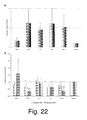
- MF inhibited Arg-gingipain in a concentration-dependent manner ( Fig. 3 ). After 1 min contact time, about 50 % inhibition was observed at 1 ⁇ g/ml. Prolonged incubation time did not further increase the anti-protease effects. MF at 50 ⁇ g/ml reduced Arg-gingipain by 20 to 30%, 100 ⁇ g/ml by about 20%. MF did also inhibit Lys-gingipain, but to a lesser extent. These findings indicate MF to be a potent gingipain inhibitor, predominantly because of its activity against Arg-gingipain.
- a transcriptome microarray was performed. P. gingivalis were treated in liquid culture for 6 h with MF (100 ⁇ g/ml). Two independent experiments were performed, and pooled RNA was used for microarray, investigating the expression of 2015 genes. The Cy3- and Cy5- labelled cDNAs from MF-exposed and not exposed P. gingivalis were hybridized to the immobilized oligonucleotides. Levels of gene expression from treated and untreated bacterial cells were compared by the ratio of fluorescence intensities (Table 3).
- transcript abundancies of 550 genes were monitored when using a threshold of 3-fold difference; judged by transcript amounts 308 genes appeared as down- and 242 genes as up-regulated.
- a listing of genes influenced by MF is provided in the Supplemental Information. Generally, the majority of influenced genes showed 3- to 4-fold changes. Drastic differences in transcript abundancies with values of ⁇ 20-fold were found for 12 genes (Tab. 3). The microarray data were in good agreement with RT-PCR results for the expression of adhesin genes in presence / absence of MF.
- the fimbrillin message was 3.5-fold increased, while the mRNA for the arginin-specific cysteine proteinase was 12.6-fold decreased (see Supplemental Information).
- Messages from 3 hemagglutination genes were less abundant (hemagglutinin-related protein: -7.4, hemagglutinin protein HagE: -12.6, hemagglutinin protein HagA: -27.6).
- mRNAs from gene clusters responsible for DNA transcription and translation control were 20- to 30-fold reduced; especially messages from transposase genes and genes encoding translation-related enzymes with influence on ribosomal activity were considerably less concentrated in the presence of MF.
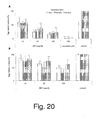
- a prominent activity of P. gingivalis infection in KB cells is the induction of cellular inflammation response.
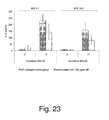
- treatment of KB cells with bacteria bacteria (bacteria cell ratio BCR 5:1) for 6 hours resulted in significant, about 5-fold increase of IL-1 ⁇ , IL-6, IL-8 and TNF ⁇ expression, while COX-2 was not influenced ( Fig. 5A ).
- MF 10 and 100 ⁇ g/ml
- the supplementary findings further support the concept that polyphenol enriched plant derived extract can strongly interfere with adhesion of P. gingivalis to epithelial KB cells under in vitro conditions and show that this is due to inhibition of Arg-gingipains and hemaglutinin.
- the polyphenol-enriched MF extract exhibits inhibition of P. gingivalis adhesion to epithelial cells, with strong influence against Arg-gingipain and less inhibition of the respective lysine-protease, indicating a certain degree of selectivity of the polyphenols. Also the hemagglutinin function is inhibited to a minor extent.
- the main target of the extract appears to be the bacterial surface, but also preincubation of KB cells with the extract led to a slightly reduced P. gingivalis attachment. This could be due to a binding of the multivalent polyphenols to surface proteins of KB cells, changing the structure of potential ligands for the bacterial binding.
- M. flabellifolia extract for clinical use is the safety issue: at higher doses the extract can exert significant decrease of KB cell vitality and toxicity against P. gingivalis.
- concentrations below 150 ⁇ g/ml only influence bacterial cell surface structures without exerting negative effects on host cell physiology. Therefore, potential clinical use of such extracts should be restricted to multiple low dose applications.
- R 1 R 2 R 3 R 4 Name (dimer) R4 2R, 3R, 4R ( ⁇ ) 2R, 3S H OH H H epicatechol-(4 ⁇ 8)-catechol (procyanidin B) R4a 2R, 3R, 4R ( ⁇ ) 2R, 3S Ac OAc Ac Ac R5 2R, 3R, 4R ( ⁇ ) 2R, 3R H OH H H epicatechol-(4 ⁇ 8)-epicatechol (procyanidin B2) R5a 2R, 3R, 4R ( ⁇ ) 2R, 3R Ac OAc Ac Ac Ac R6 2R, 3S, 4S ( ⁇ ) 2R, 3S H OH H H H catechol-(4 ⁇ 8)-catechol (procyanidin B3) R6a 2R, 3S, 4S ( ⁇ ) 2R, 3S Ac OAc Ac Ac R7 2R, 3S, 4S ( ⁇ ) 2R, 3R H OH H H catechol-(4 ⁇ 8)-epicatechol (procyani
- R 1 R 2 R 3 Name (trimer) R19 2R, 3R H H H R19a 2R, 3R Ac H Ac R20 2R, 3R H OH H epicatechol-(4 ⁇ 8)-epicatechol-(4 ⁇ 8)-epicatechol (procyanidin C1) R20a 2R, 3R Ac OAc Ac R21 2R, 3S H OH H epicatechol-(4 ⁇ 8)-epicatechol-(4 ⁇ ⁇ 8)-catechol R21a 2R, 3S Ac OAc Ac R22 2R, 3R H OH G epicatechol-3-O-gallate-(4 ⁇ 8)-epicatechol-3-O-gallate-(4 ⁇ 8)-epicatechol-3-O-gallate R22a 2R, 3R Ac OAc G Ac No Config.
Landscapes
- Health & Medical Sciences (AREA)
- Natural Medicines & Medicinal Plants (AREA)
- Life Sciences & Earth Sciences (AREA)
- Pharmacology & Pharmacy (AREA)
- Chemical & Material Sciences (AREA)
- Veterinary Medicine (AREA)
- Public Health (AREA)
- General Health & Medical Sciences (AREA)
- Medicinal Chemistry (AREA)
- Animal Behavior & Ethology (AREA)
- Epidemiology (AREA)
- Engineering & Computer Science (AREA)
- Biotechnology (AREA)
- Mycology (AREA)
- Microbiology (AREA)
- Medical Informatics (AREA)
- Botany (AREA)
- Alternative & Traditional Medicine (AREA)
- Nuclear Medicine, Radiotherapy & Molecular Imaging (AREA)
- Chemical Kinetics & Catalysis (AREA)
- General Chemical & Material Sciences (AREA)
- Organic Chemistry (AREA)
- Oncology (AREA)
- Communicable Diseases (AREA)
- Bioinformatics & Cheminformatics (AREA)
- Cosmetics (AREA)
- Pharmaceuticals Containing Other Organic And Inorganic Compounds (AREA)
Claims (12)
- Zusammensetzung aufweisend wenigstens eine oligomere oder polymere flavan-3-ol Einheit (Proanthocyanidin) aus einem Rumex acetosa Pflanzenextrakt, zur Verwendung in der Prävention oder der Behandlung von Zahnfleischentzündungen, Parodontose, Karies, Geschwüren der oralen Schleimhaut (Aphthen) oder Gingivostomatitis, wobei die Zusammensetzung die Adhäsion wenigstens eines Bakteriums auf der Schleimhaut, Zunge, Gaumen, Zahnfleisch, Zahnfleischtaschen oder Zahnoberfläche, innerhalb einer Expositionszeit, welche 10 Minuten nicht überschreitet, verhindert.
- Die Zusammensetzung für die Verwendung nach Anspruch 1, dadurch gekennzeichnet, dass die Zusammensetzung eine Konzentration an Pflanzenextrakt von ≤ 250 µg/ml, bevorzugt ≤ 150 µg/ml, besonders bevorzugt ≤100 µg/Milliliter aufweist.
- Die Zusammensetzung für die Verwendung nach Anspruch 1 oder 2, dadurch gekennzeichnet, dass die Zusammensetzung zellschützende Effekte aufweist, bevorzugt gegen entzündungszugehörige Parameter humaner Zellen, besonders bevorzugt durch die Genexpression von In-1β, IL-6, IL-8 und TNF α.
- Die Zusammensetzung für die Verwendung nach einem der vorhergehenden Ansprüche, dadurch gekennzeichnet, dass die Zusammensetzung wenigstens ein angereichertes oder chemisch modifiziertes Proanthocyanidin aufweist.
- Die Zusammensetzung für die Verwendung nach einem der vorhergehenden Ansprüche, dadurch gekennzeichnet, dass die Zusammensetzung wenigstens ein angereichertes und chemisch modifiziertes Proanthocyanidin aufweist.
- Die Zusammensetzung für die Verwendung nach einem der vorhergehenden Ansprüche, dadurch gekennzeichnet, dass besagte Zubereitung eine Zubereitung zur Prävention der Bildung oder zum Auflösen bakterieller Filme, Biofilmen oder Plaques ist.
- Die Zusammensetzung für die Verwendung nach einem der vorhergehenden Ansprüche, dadurch gekennzeichnet, dass der Rumex acetosa Pflanzenextrakt durch eine zweistufige Extraktion mit folgenden Schritten erhalten wurde:a. Extraktion in einem Aceton-Wassergemisch,b. Erhalten der wässrigen Phasec. Ausschütteln der wässrigen Phase mit Ethylacetat, undd. Erhalten der wässrigen Phase.
- Die Zusammensetzung für die Verwendung nach einem der vorhergehenden Ansprüche, dadurch gekennzeichnet, dass wenigstens ein Proanthocyanidin ein Procyanidin ist.
- Die Zusammensetzung für die Verwendung nach einem der vorhergehenden Ansprüche, dadurch gekennzeichnet, dass die Zusammensetzung wenigstens ein oligomeres und ein polymeres Proanthocyanidin aufweist.
- Die Zusammensetzung für die Verwendung nach einem der vorhergehenden Ansprüche, dadurch gekennzeichnet, dass die Zusammensetzung wenigstens ein tetrameres oder höher oligomeres Proanthocyanidin aufweist.
- Die Zusammensetzung für die Verwendung nach einem der vorhergehenden Ansprüche, dadurch gekennzeichnet, dass besagte Adhäsion des wenigstens einen Bakteriums durch ein bakterielles Adhäsin erfolgt.
- Die Zusammensetzung für die Verwendung nach einem der Ansprüche 1-11, wobei die Zusammensetzung ein Mundwasser, eine Tinktur, eine Salbe, eine Zahnpasta, eine Lutschtablette, ein Gel, imprägnierte Einsätze, schnell frei setzendes und sich auflösendes Granulat, Pulver oder andere feste Dosierungsformen, Kaugummis oder andere plastische oder elastische Massen, imprägnierte Zahnreinigungshilfen, wie beispielsweise Zahnseide, Zahnbürsten oder eine Spülung, ist.
Applications Claiming Priority (2)
| Application Number | Priority Date | Filing Date | Title |
|---|---|---|---|
| DE102009027696A DE102009027696A1 (de) | 2009-07-14 | 2009-07-14 | Verwendung von Proanthocyanidinen zur Herstellung einer antiadhäsiven Zubereitung |
| PCT/EP2010/060161 WO2011006938A1 (en) | 2009-07-14 | 2010-07-14 | Use of proanthocyanidins for production of an antiadhesive preparation |
Publications (2)
| Publication Number | Publication Date |
|---|---|
| EP2453889A1 EP2453889A1 (de) | 2012-05-23 |
| EP2453889B1 true EP2453889B1 (de) | 2015-04-08 |
Family
ID=42740357
Family Applications (1)
| Application Number | Title | Priority Date | Filing Date |
|---|---|---|---|
| EP10734105.9A Active EP2453889B1 (de) | 2009-07-14 | 2010-07-14 | Verwendung von proanthocyanidinen für die herstellung einer antihaftzubereitung |
Country Status (3)
| Country | Link |
|---|---|
| EP (1) | EP2453889B1 (de) |
| DE (1) | DE102009027696A1 (de) |
| WO (1) | WO2011006938A1 (de) |
Cited By (1)
| Publication number | Priority date | Publication date | Assignee | Title |
|---|---|---|---|---|
| WO2016196674A1 (en) * | 2015-06-01 | 2016-12-08 | Robert Caron | Biofilm control using bacillus subtilis and vaccinium macrocarpon proanthocyanidins |
Families Citing this family (6)
| Publication number | Priority date | Publication date | Assignee | Title |
|---|---|---|---|---|
| CN102579702B (zh) * | 2012-03-14 | 2015-07-08 | 山东赛克赛斯药业科技有限公司 | 一种治疗口腔溃疡的药物及其制备方法 |
| EP3226976A1 (de) | 2014-12-04 | 2017-10-11 | Mary Kay, Inc. | Topische hautpflegezusammesetzung mit trifluoroacetyl-tripeptid-2 |
| US10543158B2 (en) * | 2017-04-17 | 2020-01-28 | W Skincare, LLC | Autophagy activating complex, compositions and methods |
| CN109512710A (zh) | 2017-09-18 | 2019-03-26 | 玫琳凯有限公司 | 化妆品组合物及方法 |
| CN109588568B (zh) * | 2018-12-18 | 2022-04-08 | 南京农业大学 | 一种通过日粮添加原花青素提高母猪繁殖性能的方法 |
| CN113576980A (zh) * | 2021-08-31 | 2021-11-02 | 广东丸美生物技术股份有限公司 | 一种具有修复溃疡功效的组合物及其应用 |
Family Cites Families (8)
| Publication number | Priority date | Publication date | Assignee | Title |
|---|---|---|---|---|
| JPS59152311A (ja) * | 1983-02-18 | 1984-08-31 | Sunstar Inc | 口腔用組成物 |
| JPH0688907B2 (ja) * | 1989-09-04 | 1994-11-09 | 豊 和多田 | 皮ふ病治療剤とその製造方法 |
| AU4008800A (en) * | 1999-04-02 | 2000-10-23 | Betzdearborn Inc. | Methods for inhibiting the production of slime in aqueous systems |
| FR2819414A1 (fr) * | 2001-01-15 | 2002-07-19 | Cognis France Sa | Preparations cosmetiques et/ou pharmaceutiques comprenant des extraits de plantes dites a resurrection |
| JP5013152B2 (ja) * | 2001-02-28 | 2012-08-29 | 株式会社ビーエムジー | 蛋白質複合体形成剤 |
| JP5028605B2 (ja) * | 2004-11-22 | 2012-09-19 | 国立大学法人九州大学 | バイオフィルム形成阻害剤及び治療用器具 |
| DE102005053926B3 (de) * | 2005-11-11 | 2007-06-28 | Bionorica Ag | Verwendung eines antibakteriellen Mittels aus einer Mischung aus Pflanzendrogen oder Extrakten daraus |
| US20080306141A1 (en) * | 2007-01-10 | 2008-12-11 | Jan Glinski | Method of Extraction of Catechin Type-A Proanthocyanidins |
-
2009
- 2009-07-14 DE DE102009027696A patent/DE102009027696A1/de not_active Withdrawn
-
2010
- 2010-07-14 WO PCT/EP2010/060161 patent/WO2011006938A1/en not_active Ceased
- 2010-07-14 EP EP10734105.9A patent/EP2453889B1/de active Active
Cited By (1)
| Publication number | Priority date | Publication date | Assignee | Title |
|---|---|---|---|---|
| WO2016196674A1 (en) * | 2015-06-01 | 2016-12-08 | Robert Caron | Biofilm control using bacillus subtilis and vaccinium macrocarpon proanthocyanidins |
Also Published As
| Publication number | Publication date |
|---|---|
| EP2453889A1 (de) | 2012-05-23 |
| WO2011006938A1 (en) | 2011-01-20 |
| DE102009027696A1 (de) | 2011-02-10 |
Similar Documents
| Publication | Publication Date | Title |
|---|---|---|
| AU703158B2 (en) | Method of treating or preventing non-viral microbial infection | |
| EP2453889A1 (de) | Verwendung von proanthocyanidinen für die herstellung einer antihaftzubereitung | |
| US20010021398A1 (en) | Plant proanthocyanidin extracts | |
| KR101955636B1 (ko) | 항생제 그리고 분산제 또는 항-부착제를 포함하는 조성물 | |
| JP2005533027A (ja) | 細菌感染症の治療に有用な薬草及び薬草の組み合わせ | |
| EP3182982B1 (de) | Zusammensetzung zur behandlung und vorbeugung von harnwegsinfektionen | |
| Löhr et al. | Inhibition of in vitro adhesion and virulence of Porphyromonas gingivalis by aqueous extract and polysaccharides from Rhododendron ferrugineum L. A new way for prophylaxis of periodontitis? | |
| Kang et al. | Effects of methyl gallate and gallic acid on the production of inflammatory mediators interleukin-6 and interleukin-8 by oral epithelial cells stimulated with Fusobacterium nucleatum | |
| Xiong et al. | Antimicrobial effect of a peptide containing novel oral spray on Streptococcus mutans | |
| Octavia et al. | Garlic extract efficacy against the viability of Enterococcus faecalis (In vitro) | |
| JPH0881380A (ja) | 高分子量ポリフェノールを有効成分として含有する抗歯周病剤並びに抗歯周病性食品 | |
| Abdelkader et al. | The antibacterial activity of nanosilver coupled edible plant extracts against Streptococcus mutans, the cause of dental caries | |
| Arumuganainar et al. | An in vitro evaluation of the antibacterial efficacy of Solanum xanthocarpum extracts on bacteria from dental plaque biofilm | |
| CN118831065A (zh) | 一种具有牙周炎抗氧化应激效应的功能性纳米酶的制备方法及应用 | |
| JP2009219484A (ja) | 抗歯周病性口腔用組成物及び飲食品 | |
| KR101911753B1 (ko) | 산청목 추출물 및 산초 추출물을 포함하는 구강질환의 예방 또는 치료용 조성물 | |
| Wirata | Antibacterial activity of Sentul fruit peel extract (Sandoricum koetjape) against Streptococcus mutans and Staphylococcus aureus | |
| KR100517354B1 (ko) | 해조류 유래 올리고당, 상기 올리고당의 제조방법 및사용방법 | |
| Mahdi | Antibacterial and Antivirulence Activities of Capparis spinosa L. against Acinetobacter baumannii and Streptococcus mutans | |
| EP4640206A1 (de) | Nisin zur hemmung von biofilmen | |
| KR102953906B1 (ko) | 구강 바이오필름 분해 활성 및 구강 병원성 미생물을 억제하는 신규 유산균 및 이를 포함하는 조성물 | |
| Liu et al. | Improved mechanism of the bioactive compounds isolated from Lactobacillus plantarum TWK10-fermented soymilk in periodontal disease | |
| Islam et al. | The effect of cranberry, Strawberry and blueberry juices on the viability of cariogenic bacteria: an in vitro study | |
| KR102953898B1 (ko) | 구강 바이오필름 분해 활성 및 구강 병원성 미생물을 억제하는 신규 유산균 및 이를 포함하는 조성물 | |
| KR102914179B1 (ko) | 용암해수를 이용한 망간 슈퍼옥시드 디스뮤타아제 효소 활성을 높인 바실러스 배양건조물의 제조방법 및 이를 함유하는 근력 강화 및 근 손실 예방용 조성물 |
Legal Events
| Date | Code | Title | Description |
|---|---|---|---|
| PUAI | Public reference made under article 153(3) epc to a published international application that has entered the european phase |
Free format text: ORIGINAL CODE: 0009012 |
|
| 17P | Request for examination filed |
Effective date: 20120207 |
|
| AK | Designated contracting states |
Kind code of ref document: A1 Designated state(s): AL AT BE BG CH CY CZ DE DK EE ES FI FR GB GR HR HU IE IS IT LI LT LU LV MC MK MT NL NO PL PT RO SE SI SK SM TR |
|
| AX | Request for extension of the european patent |
Extension state: BA ME RS |
|
| 17Q | First examination report despatched |
Effective date: 20130807 |
|
| GRAP | Despatch of communication of intention to grant a patent |
Free format text: ORIGINAL CODE: EPIDOSNIGR1 |
|
| INTG | Intention to grant announced |
Effective date: 20141028 |
|
| GRAS | Grant fee paid |
Free format text: ORIGINAL CODE: EPIDOSNIGR3 |
|
| GRAA | (expected) grant |
Free format text: ORIGINAL CODE: 0009210 |
|
| RIN1 | Information on inventor provided before grant (corrected) |
Inventor name: LECHTENBERG, MATTHIAS Inventor name: LOEHR, GESINE Inventor name: PETEREIT, FRANK Inventor name: LOUIS, ANDREA Inventor name: HENSEL, ANDREAS Inventor name: BEIKLER, THOMAS |
|
| AK | Designated contracting states |
Kind code of ref document: B1 Designated state(s): AL AT BE BG CH CY CZ DE DK EE ES FI FR GB GR HR HU IE IS IT LI LT LU LV MC MK MT NL NO PL PT RO SE SI SK SM TR |
|
| AX | Request for extension of the european patent |
Extension state: BA ME RS |
|
| REG | Reference to a national code |
Ref country code: GB Ref legal event code: FG4D |
|
| REG | Reference to a national code |
Ref country code: CH Ref legal event code: EP |
|
| REG | Reference to a national code |
Ref country code: IE Ref legal event code: FG4D |
|
| REG | Reference to a national code |
Ref country code: AT Ref legal event code: REF Ref document number: 719981 Country of ref document: AT Kind code of ref document: T Effective date: 20150515 |
|
| REG | Reference to a national code |
Ref country code: DE Ref legal event code: R096 Ref document number: 602010023797 Country of ref document: DE Effective date: 20150521 |
|
| REG | Reference to a national code |
Ref country code: AT Ref legal event code: MK05 Ref document number: 719981 Country of ref document: AT Kind code of ref document: T Effective date: 20150408 |
|
| REG | Reference to a national code |
Ref country code: NL Ref legal event code: VDEP Effective date: 20150408 |
|
| REG | Reference to a national code |
Ref country code: LT Ref legal event code: MG4D |
|
| PG25 | Lapsed in a contracting state [announced via postgrant information from national office to epo] |
Ref country code: NL Free format text: LAPSE BECAUSE OF FAILURE TO SUBMIT A TRANSLATION OF THE DESCRIPTION OR TO PAY THE FEE WITHIN THE PRESCRIBED TIME-LIMIT Effective date: 20150408 |
|
| PG25 | Lapsed in a contracting state [announced via postgrant information from national office to epo] |
Ref country code: ES Free format text: LAPSE BECAUSE OF FAILURE TO SUBMIT A TRANSLATION OF THE DESCRIPTION OR TO PAY THE FEE WITHIN THE PRESCRIBED TIME-LIMIT Effective date: 20150408 Ref country code: LT Free format text: LAPSE BECAUSE OF FAILURE TO SUBMIT A TRANSLATION OF THE DESCRIPTION OR TO PAY THE FEE WITHIN THE PRESCRIBED TIME-LIMIT Effective date: 20150408 Ref country code: HR Free format text: LAPSE BECAUSE OF FAILURE TO SUBMIT A TRANSLATION OF THE DESCRIPTION OR TO PAY THE FEE WITHIN THE PRESCRIBED TIME-LIMIT Effective date: 20150408 Ref country code: FI Free format text: LAPSE BECAUSE OF FAILURE TO SUBMIT A TRANSLATION OF THE DESCRIPTION OR TO PAY THE FEE WITHIN THE PRESCRIBED TIME-LIMIT Effective date: 20150408 Ref country code: NO Free format text: LAPSE BECAUSE OF FAILURE TO SUBMIT A TRANSLATION OF THE DESCRIPTION OR TO PAY THE FEE WITHIN THE PRESCRIBED TIME-LIMIT Effective date: 20150708 Ref country code: PT Free format text: LAPSE BECAUSE OF FAILURE TO SUBMIT A TRANSLATION OF THE DESCRIPTION OR TO PAY THE FEE WITHIN THE PRESCRIBED TIME-LIMIT Effective date: 20150810 |
|
| PG25 | Lapsed in a contracting state [announced via postgrant information from national office to epo] |
Ref country code: LV Free format text: LAPSE BECAUSE OF FAILURE TO SUBMIT A TRANSLATION OF THE DESCRIPTION OR TO PAY THE FEE WITHIN THE PRESCRIBED TIME-LIMIT Effective date: 20150408 Ref country code: AT Free format text: LAPSE BECAUSE OF FAILURE TO SUBMIT A TRANSLATION OF THE DESCRIPTION OR TO PAY THE FEE WITHIN THE PRESCRIBED TIME-LIMIT Effective date: 20150408 Ref country code: IS Free format text: LAPSE BECAUSE OF FAILURE TO SUBMIT A TRANSLATION OF THE DESCRIPTION OR TO PAY THE FEE WITHIN THE PRESCRIBED TIME-LIMIT Effective date: 20150808 Ref country code: GR Free format text: LAPSE BECAUSE OF FAILURE TO SUBMIT A TRANSLATION OF THE DESCRIPTION OR TO PAY THE FEE WITHIN THE PRESCRIBED TIME-LIMIT Effective date: 20150709 |
|
| REG | Reference to a national code |
Ref country code: DE Ref legal event code: R097 Ref document number: 602010023797 Country of ref document: DE |
|
| PG25 | Lapsed in a contracting state [announced via postgrant information from national office to epo] |
Ref country code: EE Free format text: LAPSE BECAUSE OF FAILURE TO SUBMIT A TRANSLATION OF THE DESCRIPTION OR TO PAY THE FEE WITHIN THE PRESCRIBED TIME-LIMIT Effective date: 20150408 Ref country code: DK Free format text: LAPSE BECAUSE OF FAILURE TO SUBMIT A TRANSLATION OF THE DESCRIPTION OR TO PAY THE FEE WITHIN THE PRESCRIBED TIME-LIMIT Effective date: 20150408 |
|
| PLBE | No opposition filed within time limit |
Free format text: ORIGINAL CODE: 0009261 |
|
| STAA | Information on the status of an ep patent application or granted ep patent |
Free format text: STATUS: NO OPPOSITION FILED WITHIN TIME LIMIT |
|
| PG25 | Lapsed in a contracting state [announced via postgrant information from national office to epo] |
Ref country code: CZ Free format text: LAPSE BECAUSE OF FAILURE TO SUBMIT A TRANSLATION OF THE DESCRIPTION OR TO PAY THE FEE WITHIN THE PRESCRIBED TIME-LIMIT Effective date: 20150408 Ref country code: RO Free format text: LAPSE BECAUSE OF NON-PAYMENT OF DUE FEES Effective date: 20150408 Ref country code: PL Free format text: LAPSE BECAUSE OF FAILURE TO SUBMIT A TRANSLATION OF THE DESCRIPTION OR TO PAY THE FEE WITHIN THE PRESCRIBED TIME-LIMIT Effective date: 20150408 Ref country code: SK Free format text: LAPSE BECAUSE OF FAILURE TO SUBMIT A TRANSLATION OF THE DESCRIPTION OR TO PAY THE FEE WITHIN THE PRESCRIBED TIME-LIMIT Effective date: 20150408 Ref country code: MC Free format text: LAPSE BECAUSE OF FAILURE TO SUBMIT A TRANSLATION OF THE DESCRIPTION OR TO PAY THE FEE WITHIN THE PRESCRIBED TIME-LIMIT Effective date: 20150408 |
|
| REG | Reference to a national code |
Ref country code: CH Ref legal event code: PL |
|
| 26N | No opposition filed |
Effective date: 20160111 |
|
| PG25 | Lapsed in a contracting state [announced via postgrant information from national office to epo] |
Ref country code: LU Free format text: LAPSE BECAUSE OF FAILURE TO SUBMIT A TRANSLATION OF THE DESCRIPTION OR TO PAY THE FEE WITHIN THE PRESCRIBED TIME-LIMIT Effective date: 20150714 |
|
| REG | Reference to a national code |
Ref country code: IE Ref legal event code: MM4A |
|
| PG25 | Lapsed in a contracting state [announced via postgrant information from national office to epo] |
Ref country code: CH Free format text: LAPSE BECAUSE OF NON-PAYMENT OF DUE FEES Effective date: 20150731 Ref country code: IT Free format text: LAPSE BECAUSE OF FAILURE TO SUBMIT A TRANSLATION OF THE DESCRIPTION OR TO PAY THE FEE WITHIN THE PRESCRIBED TIME-LIMIT Effective date: 20150408 Ref country code: LI Free format text: LAPSE BECAUSE OF NON-PAYMENT OF DUE FEES Effective date: 20150731 |
|
| PG25 | Lapsed in a contracting state [announced via postgrant information from national office to epo] |
Ref country code: SI Free format text: LAPSE BECAUSE OF FAILURE TO SUBMIT A TRANSLATION OF THE DESCRIPTION OR TO PAY THE FEE WITHIN THE PRESCRIBED TIME-LIMIT Effective date: 20150408 |
|
| REG | Reference to a national code |
Ref country code: FR Ref legal event code: PLFP Year of fee payment: 7 |
|
| PG25 | Lapsed in a contracting state [announced via postgrant information from national office to epo] |
Ref country code: IE Free format text: LAPSE BECAUSE OF NON-PAYMENT OF DUE FEES Effective date: 20150714 |
|
| PG25 | Lapsed in a contracting state [announced via postgrant information from national office to epo] |
Ref country code: BE Free format text: LAPSE BECAUSE OF FAILURE TO SUBMIT A TRANSLATION OF THE DESCRIPTION OR TO PAY THE FEE WITHIN THE PRESCRIBED TIME-LIMIT Effective date: 20150408 |
|
| PG25 | Lapsed in a contracting state [announced via postgrant information from national office to epo] |
Ref country code: MT Free format text: LAPSE BECAUSE OF FAILURE TO SUBMIT A TRANSLATION OF THE DESCRIPTION OR TO PAY THE FEE WITHIN THE PRESCRIBED TIME-LIMIT Effective date: 20150408 |
|
| PG25 | Lapsed in a contracting state [announced via postgrant information from national office to epo] |
Ref country code: SM Free format text: LAPSE BECAUSE OF FAILURE TO SUBMIT A TRANSLATION OF THE DESCRIPTION OR TO PAY THE FEE WITHIN THE PRESCRIBED TIME-LIMIT Effective date: 20150408 Ref country code: HU Free format text: LAPSE BECAUSE OF FAILURE TO SUBMIT A TRANSLATION OF THE DESCRIPTION OR TO PAY THE FEE WITHIN THE PRESCRIBED TIME-LIMIT; INVALID AB INITIO Effective date: 20100714 Ref country code: BG Free format text: LAPSE BECAUSE OF FAILURE TO SUBMIT A TRANSLATION OF THE DESCRIPTION OR TO PAY THE FEE WITHIN THE PRESCRIBED TIME-LIMIT Effective date: 20150408 |
|
| PG25 | Lapsed in a contracting state [announced via postgrant information from national office to epo] |
Ref country code: SE Free format text: LAPSE BECAUSE OF FAILURE TO SUBMIT A TRANSLATION OF THE DESCRIPTION OR TO PAY THE FEE WITHIN THE PRESCRIBED TIME-LIMIT Effective date: 20150408 Ref country code: CY Free format text: LAPSE BECAUSE OF FAILURE TO SUBMIT A TRANSLATION OF THE DESCRIPTION OR TO PAY THE FEE WITHIN THE PRESCRIBED TIME-LIMIT Effective date: 20150408 |
|
| REG | Reference to a national code |
Ref country code: FR Ref legal event code: PLFP Year of fee payment: 8 |
|
| PG25 | Lapsed in a contracting state [announced via postgrant information from national office to epo] |
Ref country code: TR Free format text: LAPSE BECAUSE OF FAILURE TO SUBMIT A TRANSLATION OF THE DESCRIPTION OR TO PAY THE FEE WITHIN THE PRESCRIBED TIME-LIMIT Effective date: 20150408 |
|
| PG25 | Lapsed in a contracting state [announced via postgrant information from national office to epo] |
Ref country code: MK Free format text: LAPSE BECAUSE OF FAILURE TO SUBMIT A TRANSLATION OF THE DESCRIPTION OR TO PAY THE FEE WITHIN THE PRESCRIBED TIME-LIMIT Effective date: 20150408 |
|
| REG | Reference to a national code |
Ref country code: FR Ref legal event code: PLFP Year of fee payment: 9 |
|
| PG25 | Lapsed in a contracting state [announced via postgrant information from national office to epo] |
Ref country code: AL Free format text: LAPSE BECAUSE OF FAILURE TO SUBMIT A TRANSLATION OF THE DESCRIPTION OR TO PAY THE FEE WITHIN THE PRESCRIBED TIME-LIMIT Effective date: 20150408 |
|
| PGFP | Annual fee paid to national office [announced via postgrant information from national office to epo] |
Ref country code: DE Payment date: 20200729 Year of fee payment: 11 Ref country code: FR Payment date: 20200723 Year of fee payment: 11 Ref country code: GB Payment date: 20200727 Year of fee payment: 11 |
|
| REG | Reference to a national code |
Ref country code: DE Ref legal event code: R119 Ref document number: 602010023797 Country of ref document: DE |
|
| GBPC | Gb: european patent ceased through non-payment of renewal fee |
Effective date: 20210714 |
|
| PG25 | Lapsed in a contracting state [announced via postgrant information from national office to epo] |
Ref country code: GB Free format text: LAPSE BECAUSE OF NON-PAYMENT OF DUE FEES Effective date: 20210714 Ref country code: DE Free format text: LAPSE BECAUSE OF NON-PAYMENT OF DUE FEES Effective date: 20220201 |
|
| PG25 | Lapsed in a contracting state [announced via postgrant information from national office to epo] |
Ref country code: FR Free format text: LAPSE BECAUSE OF NON-PAYMENT OF DUE FEES Effective date: 20210731 |