EP2447459B1 - Isoliersteg - Google Patents
Isoliersteg Download PDFInfo
- Publication number
- EP2447459B1 EP2447459B1 EP11186403.9A EP11186403A EP2447459B1 EP 2447459 B1 EP2447459 B1 EP 2447459B1 EP 11186403 A EP11186403 A EP 11186403A EP 2447459 B1 EP2447459 B1 EP 2447459B1
- Authority
- EP
- European Patent Office
- Prior art keywords
- weight
- accordance
- insulating web
- styrene
- plastics material
- Prior art date
- Legal status (The legal status is an assumption and is not a legal conclusion. Google has not performed a legal analysis and makes no representation as to the accuracy of the status listed.)
- Active
Links
Images


Classifications
-
- E—FIXED CONSTRUCTIONS
- E06—DOORS, WINDOWS, SHUTTERS, OR ROLLER BLINDS IN GENERAL; LADDERS
- E06B—FIXED OR MOVABLE CLOSURES FOR OPENINGS IN BUILDINGS, VEHICLES, FENCES OR LIKE ENCLOSURES IN GENERAL, e.g. DOORS, WINDOWS, BLINDS, GATES
- E06B3/00—Window sashes, door leaves, or like elements for closing wall or like openings; Layout of fixed or moving closures, e.g. windows in wall or like openings; Features of rigidly-mounted outer frames relating to the mounting of wing frames
- E06B3/04—Wing frames not characterised by the manner of movement
- E06B3/263—Frames with special provision for insulation
- E06B3/26301—Frames with special provision for insulation with prefabricated insulating strips between two metal section members
- E06B3/26303—Frames with special provision for insulation with prefabricated insulating strips between two metal section members with thin strips, e.g. defining a hollow space between the metal section members
-
- C—CHEMISTRY; METALLURGY
- C08—ORGANIC MACROMOLECULAR COMPOUNDS; THEIR PREPARATION OR CHEMICAL WORKING-UP; COMPOSITIONS BASED THEREON
- C08L—COMPOSITIONS OF MACROMOLECULAR COMPOUNDS
- C08L77/00—Compositions of polyamides obtained by reactions forming a carboxylic amide link in the main chain; Compositions of derivatives of such polymers
-
- C—CHEMISTRY; METALLURGY
- C08—ORGANIC MACROMOLECULAR COMPOUNDS; THEIR PREPARATION OR CHEMICAL WORKING-UP; COMPOSITIONS BASED THEREON
- C08L—COMPOSITIONS OF MACROMOLECULAR COMPOUNDS
- C08L77/00—Compositions of polyamides obtained by reactions forming a carboxylic amide link in the main chain; Compositions of derivatives of such polymers
- C08L77/06—Polyamides derived from polyamines and polycarboxylic acids
-
- C—CHEMISTRY; METALLURGY
- C08—ORGANIC MACROMOLECULAR COMPOUNDS; THEIR PREPARATION OR CHEMICAL WORKING-UP; COMPOSITIONS BASED THEREON
- C08K—Use of inorganic or non-macromolecular organic substances as compounding ingredients
- C08K7/00—Use of ingredients characterised by shape
- C08K7/02—Fibres or whiskers
- C08K7/04—Fibres or whiskers inorganic
- C08K7/14—Glass
-
- C—CHEMISTRY; METALLURGY
- C08—ORGANIC MACROMOLECULAR COMPOUNDS; THEIR PREPARATION OR CHEMICAL WORKING-UP; COMPOSITIONS BASED THEREON
- C08L—COMPOSITIONS OF MACROMOLECULAR COMPOUNDS
- C08L25/00—Compositions of, homopolymers or copolymers of compounds having one or more unsaturated aliphatic radicals, each having only one carbon-to-carbon double bond, and at least one being terminated by an aromatic carbocyclic ring; Compositions of derivatives of such polymers
- C08L25/02—Homopolymers or copolymers of hydrocarbons
- C08L25/04—Homopolymers or copolymers of styrene
- C08L25/06—Polystyrene
-
- E—FIXED CONSTRUCTIONS
- E06—DOORS, WINDOWS, SHUTTERS, OR ROLLER BLINDS IN GENERAL; LADDERS
- E06B—FIXED OR MOVABLE CLOSURES FOR OPENINGS IN BUILDINGS, VEHICLES, FENCES OR LIKE ENCLOSURES IN GENERAL, e.g. DOORS, WINDOWS, BLINDS, GATES
- E06B3/00—Window sashes, door leaves, or like elements for closing wall or like openings; Layout of fixed or moving closures, e.g. windows in wall or like openings; Features of rigidly-mounted outer frames relating to the mounting of wing frames
- E06B3/04—Wing frames not characterised by the manner of movement
- E06B3/263—Frames with special provision for insulation
- E06B2003/26349—Details of insulating strips
- E06B2003/2635—Specific form characteristics
- E06B2003/26352—Specific form characteristics hollow
-
- E—FIXED CONSTRUCTIONS
- E06—DOORS, WINDOWS, SHUTTERS, OR ROLLER BLINDS IN GENERAL; LADDERS
- E06B—FIXED OR MOVABLE CLOSURES FOR OPENINGS IN BUILDINGS, VEHICLES, FENCES OR LIKE ENCLOSURES IN GENERAL, e.g. DOORS, WINDOWS, BLINDS, GATES
- E06B3/00—Window sashes, door leaves, or like elements for closing wall or like openings; Layout of fixed or moving closures, e.g. windows in wall or like openings; Features of rigidly-mounted outer frames relating to the mounting of wing frames
- E06B3/04—Wing frames not characterised by the manner of movement
- E06B3/263—Frames with special provision for insulation
- E06B2003/26349—Details of insulating strips
- E06B2003/26369—Specific material characteristics
- E06B2003/2637—Specific material characteristics reinforced
Definitions
- the invention relates to an insulating web, in particular for use in plastic-metal composite profiles, wherein the insulating web is made of a plastic material.
- Such insulating bars are widely used as an insulating profile in the manufacture of thermally insulated window, door and facade elements for use, they then often serve the mechanical connection of a metallic outer profile with an inner, usually also made of metal inner profile.
- the insulating profile often not only assumes the function of a component that avoids the heat conduction from outside to inside and vice versa via a direct contact of the outer and inner profile, but also assumes constructive tasks as a structural component.
- connection between the insulating web and the respective metal profile is done in most cases via a so-called roll-in composite in which a foot of the insulating bar is inserted or inserted into a receptacle of the metal profile and subsequently a force and / or positive connection is made by means of a knurl.
- the force and / or positive connection can be supplemented by an adhesive connection.
- the insulating bar is only glued to the metal profile.
- the finished composite profiles are often coated by means of powder coating. This process also makes special demands on the plastic material of the insulating bar.
- a hollow composite component is known in which the element consisting of plastic material may be made, inter alia, of syndiotactic polystyrene.
- the object of the present invention is to provide an improved insulating bar, with which the requirements outlined above can be met in the most optimal way possible.
- syndiotactic polystyrene as the first thermoplastic polymer component is achieved at the same height of the insulating web and thus the composite profile lower heat transfer values, e.g. compared to the frequently used polyamide-based webs.
- the syndiotactic polystyrene has the additional advantage over polyamide that it absorbs little moisture and thus the mechanical properties as well as the thermal conductivity remain essentially unchanged when the humidity changes.
- Suitable syndiotactic polystyrene materials are in particular from EP 0 757 064 B1 where it can be specifically referred to the material definition in paragraph [0010].
- syndiotactic polystyrenes useful in the present invention can be prepared by Ziegler-Natta catalysts or by metal ion catalysis, the latter being preferred.
- Preferred syndiotactic polystyrenes have a molecular weight Mw in the range of about 10,000 to about 5,000,000 g / mol, more preferably of about 30,000 to about 3,000,000 g / mol, even more preferably from about 50,000 to about 2,000,000 g / mol.
- the syndiotactic polystyrene is selected from those polymers having a ratio of Mw to Mn in the range of about 1 to about 10, more preferably from about 1.2 to about 6.
- the plastic material comprises the first polymer component, in particular in a proportion of about 30 to about 99% by weight, more preferably from about 30 to about 60% by weight.
- the syndiotactic polystyrene serves as the main component of the plastic material.
- the plastic material preferably comprises a second polymer component which is selected in particular from polystyrene (PS), impact-modified polystyrene (PS-I), polyphenylene ether (PPE), polyamide (PA), polycarbonate (PC), polyester carbonate (PEC), ethyl vinyl acetate (EVA ), Polyphenylene sulfide (PPS), polyolefin, polyester, especially PET and PBT, polysulfone and thermoplastic polyimide.
- PS polystyrene
- PS-I polystyrene
- PPE polyphenylene ether
- PA polyamide
- PC polycarbonate
- PC polyester carbonate
- EVA ethyl vinyl acetate
- PPS Polyphenylene sulfide
- polyolefin polyester, especially PET and PBT, polysulfone and thermoplastic polyimide.
- the invention is not limited to using only two polymer components in the plastic material of the insulating strip.
- Plastic materials containing about 70 to about 99% by weight of syndiotactic polystyrene with a content of polystyrene (PS) in the range from about 30 to about 1% by weight offer comparable mechanical, electrical, thermal and fire engineering properties at lower material costs Properties.
- PS polystyrene
- Plastic materials with a proportion of about 70 to about 99 wt.% Of syndiotactic polystyrene and about 30 to about 1 wt.% PS-I show a higher impact strength and a higher elongation at break.
- Plastic materials with a proportion of about 50 to about 99% by weight of syndiotactic polystyrene and about 50 to about 1% by weight of PPE show a higher rigidity and heat resistance.
- Plastic materials with a proportion of about 50 to about 99 wt.% Of syndiotactic polystyrene and about 50 to about 1 wt.% PA show the same heat resistance, a higher impact resistance, a higher flame retardancy and better chemical resistance. Minor disadvantages are the slightly higher thermal conductivity and the higher moisture absorption.
- polyester carbonate is suitable in a similar manner as polycarbonate and with the same mixing ratios as the second polymer component.
- Preferred mixing ratios of syndiotactic polystyrene and EVA are often about 50 to about 99 wt% PS-S and about 50 to about 1 wt% EVA, more preferably about 70 to about 99 wt% PS-S and about 30 to about 1 wt.% EVA. With the same strength values, a higher impact strength is obtained with these plastic materials, even at low temperatures, a lower gas permeation and a better coatability in the powder coating.
- Polyphenylene sulfide as a second polymer component can improve heat distortion resistance, results in generally improved strength, improved flame retardance, and improved chemical resistance.
- Preferred plastic materials contain about 50 to about 99 wt.% PS-S and about 50 to about 1 wt.% Polyphenylene sulfide, more preferably about 70 to 99 wt.% PS-S and about 30 to about 1 Weight% PPS.
- the second polymer component of the plastic material is a polyolefin, especially low density polyethylene (LDPE), linear low density polyethylene (LLDPE), high density polyethylene (HDPE) ), Polybutene-1, poly-4-methylpentene-1, polypropylene (PP), syndiotactic polypropylene and polypropylene copolymers, such as Ethylene-propylene copolymers and ethylene-octene copolymers is used.
- LDPE low density polyethylene
- LLDPE linear low density polyethylene
- HDPE high density polyethylene
- PP polypropylene
- syndiotactic polypropylene and polypropylene copolymers such as Ethylene-propylene copolymers and ethylene-octene copolymers is used.
- the proportion limits of the respective polymer components are preferably about 50 to about 99 wt.% For PS-S and about 50 to about 1 wt.% For the polyolefin, more preferably about 60 to 99 wt.% PS-S and about 40 to about 1 wt.% Polyolefin.
- PS-S with polyesters as second polymer component are suitable for those plastic materials which are optimized with respect to their coatability.
- Preferred plastic materials contain the PS-S at about 50 to about 99% by weight and the polyester at about 50 to about 1% by weight, more preferably the PS-S at about 70 to about 99% by weight. and the polyester at about 30 to about 1 wt.%.
- the plastic material may contain one or more further additives selected from reinforcing materials, fillers and pigments.
- the additives are particularly preferably selected from aramid, natural, ceramic fibers, in particular wollastonite and basalt fibers, carbon and metal fibers, glass hollow spheres, glass beads, glass particles, hollow ceramic balls, ceramic particles, mineral fillers, in particular kaolin, talc, mica, titanium dioxide, calcium carbonate, Silica and phyllosilicates, in particular in the form of nanoparticles.
- Glass fibers may be included in the plastic material at levels of from about 1 to about 50 weight percent, more preferably from about 5 to about 35 weight percent, even more preferably from about 10 to about 30 weight percent, most preferably from about 10 to about 25 weight percent.
- Typical glass fibers have fiber diameters of about 5 to about 20 microns, more preferably about 10 to about 14 microns.
- the average fiber lengths are preferably in the range of about 0.05 to about 6 mm. Long glass fibers with fiber lengths greater than 6 mm can also be used in order to achieve particularly high strength and impact resistance.
- these are preferably coated with silanes on the surface.
- the first polymer component in the form of PS-S is used to modify the properties of a second polymer component, wherein the proportion of PS-S can then be varied within a range of from about 1 to about 40% by weight ,
- the second polymer component which then functions as the main component here, is preferably selected from PPS, PPE, PA and polyester. Their proportion is preferably in the range of about 99 to about 60 wt.%.
- PPE and PET can be processed better by admixing the first polymer component within the selected limits, in which case the proportion of PS-S in the plastic material is preferably about 10% by weight or more.
- Polyolefins used as impact modifiers are, in particular, ethylene-octene copolymers.
- impact modifiers can also be used as compatibilizers, especially in modified form, since they combine both properties.
- the plastic material may comprise a flame retardant, wherein the proportion of the flame retardant is preferably about 5 to about 30 wt.%, In particular about 5 to about 25 wt.%.
- the invention also relates to metal-plastic profiles according to claim 15 and their use according to claim 16.
- FIG. 1 schematically shows the structure of a section of a metal-plastic composite profile 10 with a first metal section 12, a second metal section 14 and two interposed insulating bars 16 and 18 made of a plastic material.
- the insulating bars 16, 18 are on both sides with their baseboards 19 non-positively and / or positively connected to the metal profiles 12 and 14 and optionally glued.
- FIG. 1 shows the insulating bars 16, 18 only in schematic form.
- a detailed view of the insulating web 16 includes FIG. 2 , which will be explained in more detail below.
- the mechanical, thermal and a variety of other properties can be adapted to the particular application of the insulating strips.
- the plastic material may also include additives and / or reinforcing fibers.
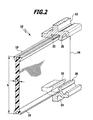
- FIG. 2 shows the insulating web 16 of the composite profile 10 in conjunction with the outer and inner profile 12, 14 in a perspective view.
- the central region is formed by a single, over the entire length of the insulating web extending web element.
- the baseboards 19 are held in the dovetail guides the adjacent metal profiles.
- the so-called hammer 20 is deformed in a knurling step and pressed against the skirting 19, which are held by a counter-bearing 22 of the metal section 12 and 14 stationary.
- FIG. 3 shows a further insulating web according to the invention in the form of a hollow profile body 30, in which between the two opposite ends to which the baseboards 32, 34 are formed, three substantially equal-sized hollow chambers 35, 36, 37 are arranged.
- the chambers are through Webs 38, 39 separated from each other and thus are so small volume that a heat transfer via convection can be essentially ruled out.
- the webs 38, 39 also improve the mechanical characteristics of the insulating 30th
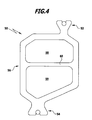
- FIG. 4 shows another possibility of forming a hollow profile in the context of an insulating web 50 according to the invention, in which the two baseboards 52, 54 are connected to each other via an asymmetrically shaped profile body 56 and held at a distance.
- the hollow profile of the insulating web 50 is divided into individual hollow chambers 58, 59 by means of a web 60, so that the volumes of the hollow chambers 58, 59 are small enough to preclude heat transport via convection to any appreciable extent.
- an improvement of the mechanical properties is achieved by the web 60.
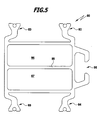
- FIG. 5 Yet another example of an insulating web 80 according to the invention given.
- the insulating web 80 which has a substantially rectangular cross-section, four foot or curl strips 82, 83 and 84, 85 are provided, which are arranged substantially at the four corners of the rectangular profile.
- the rectangular profile body is provided with two hollow chambers 86, 87, which are separated from each other via a central web 88.
- a receiving element 90 formed, which is open at the side and can be introduced into the functional parts, such as sealing elements.
- the profile height h was 34 mm and the thickness d 2 mm.
- an insulating web was made corresponding to the insulating web 16 of polyamide 66 with a content of 25 wt.% Of short glass fibers.
- the material polyamide 66 with 25 wt.% Glass fibers has a thermal conductivity at 20 ° C according to DIN EN ISO 10456 of 0.30 W / mK.
- an insulating web 16 of syndiotactic polystyrene according to the invention containing 20% by weight short glass fibers was prepared at extruder temperatures of 270 to 290 ° C. and mold temperatures of 285 to 300 ° C., available under the name Xarec WA210 from Idemitsu Chemicals Europa PK is.
- the measurement of the thermal conductivity of this material is according to DIN EN 12664 at 20 ° C 0.205 W / mK.
- the thermal conductivity of this material is up to 45 ° C, measured according to ASTM D-5930-97, 0.210 W / mK.
- an inventive insulating web 16 was made of a plastic material which comprises 25 wt.% PS-S and 55 wt.% Polyamide 66 and a glass fiber content of 20 wt.%. This material is available as Xarec NWA7020 from Idemitsu Chemicals Europa PK.
- the thermal conductivity of this material is up to 45 ° C, measured according to ASTM D-5930-97, 0.269 W / mK.
- Table 1 lists other properties of these two profiles.
- specimens used for the measurement of the properties were milled out of the insulating bars according to DIN EN ISO 527-2 with the dimensions of specimen type 1B, total length 150 mm.
- the tensile test was carried out on a Zwick testing machine (universal testing machine Zwick Z050) with a test speed of 5 mm / min.
- Examples 1 and 2 show that comparable values for modulus of elasticity and ⁇ -max are obtainable, it being possible to advantageously reduce the glass fiber content from 25% by weight (comparative example) to 20% by weight. At the same time, a significantly reduced thermal conductivity is observed in Examples 1 and 2.
Landscapes
- Chemical & Material Sciences (AREA)
- Health & Medical Sciences (AREA)
- Chemical Kinetics & Catalysis (AREA)
- Medicinal Chemistry (AREA)
- Polymers & Plastics (AREA)
- Organic Chemistry (AREA)
- Engineering & Computer Science (AREA)
- Civil Engineering (AREA)
- Structural Engineering (AREA)
- Compositions Of Macromolecular Compounds (AREA)
- Laminated Bodies (AREA)
- Insulating Bodies (AREA)
- Reinforced Plastic Materials (AREA)
Description
- Die Erfindung betrifft einen Isoliersteg, insbesondere zur Verwendung in Kunststoff-Metall-Verbundprofilen, wobei der Isoliersteg aus einem Kunststoffmaterial gefertigt ist.
- Solche Isolierstege gelangen in großem Umfang als Isolierprofil bei der Herstellung von wärmeisolierten Fenster-, Türen- und Fassadenelementen zum Einsatz, wobei sie dann häufig der mechanischen Verbindung eines metallischen Außenprofils mit einem innen liegenden, in der Regel ebenfalls aus Metall gefertigten Innenprofil dienen. Das Isolierprofil übernimmt dabei oft nicht nur die Funktion eines Bauteils, das die Wärmeleitung von außen nach innen und umgekehrt über einen direkten Kontakt von Außen- und Innenprofil vermeidet, sondern übernimmt als tragendes Bauteil auch konstruktive Aufgaben.
- Im Zuge der Verschärfung der Wärmedämmrichtlinien werden Isolierstege mit großen Bauhöhen, entsprechend einem großen Abstand zwischen den über den Isoliersteg verbundenen Metallprofilen, verlangt, wobei die mechanische Festigkeit und Belastbarkeit, insbesondere auch bei unterschiedlichen Temperaturverhältnissen, besondere Bedeutung erlangt. Dem kann zum Teil mit komplexeren Geometrien der Isolierstege Rechnung getragen werden, zum anderen Teil steigen die Anforderungen an die Eigenschaften des Kunststoffmaterials.
- Die Verbindung zwischen dem Isoliersteg und dem jeweiligen Metallprofil geschieht in den meisten Fällen über einen so genannten Einrollverbund, bei dem ein Fußteil des Isolierstegs in eine Aufnahme des Metallprofils eingeführt oder eingesetzt wird und nachfolgend ein Kraft- und/oder Formschluss mittels eines Rändels hergestellt wird. Der Kraft- und/oder Formschluss kann durch eine Klebeverbindung ergänzt werden.
- In selteneren Fällen wird der Isoliersteg mit dem Metallprofil lediglich verklebt.
- Die fertigen Verbundprofile werden häufig mittels Pulverlackierung beschichtet. Auch dieser Vorgang stellt besondere Anforderungen an das Kunststoffmaterial des Isolierstegs.
- Aus der
WO 2004/091999 A1 ist ein Hohlkammerverbundbauteil bekannt, bei dem das aus Kunststoffmaterial bestehende Element unter anderem aus syndiotaktischem Polystyrol gefertigt sein kann. - Aufgabe der vorliegenden Erfindung ist die Bereitstellung eines verbesserten Isolierstegs, mit dem die oben skizzierten Anforderungen in möglichst optimaler Weise erfüllt werden können.
- Diese Aufgabe wird durch einen Isoliersteg mit den Merkmalen des Anspruchs 1 gelöst.
- Durch die Verwendung von syndiotaktischem Polystyrol als erste thermoplastische Polymerkomponente erzielt man bei gleicher Bauhöhe des Isolierstegs und somit des Verbundprofils geringere Wärmedurchgangswerte z.B. gegenüber den häufig verwendeten Polyamid-basierten Stegen. Das syndiotaktische Polystyrol hat gegenüber Polyamid zusätzlich den Vorteil, dass es wenig Feuchtigkeit aufnimmt und damit die mechanischen Eigenschaften ebenso wie die Wärmeleitfähigkeit bei Änderung der Luftfeuchtigkeit im Wesentlichen unverändert bleiben.
- Geeignete syndiotaktische Polystyrolmaterialien sind insbesondere aus der
EP 0 757 064 B1 bekannt, wobei dort speziell auf die Materialdefinition in Absatz [0010] verwiesen werden kann. - Die für die vorliegende Erfindung geeigneten syndiotaktischen Polystyrole können mit Hilfe von Ziegler-Natta-Katalysatoren hergestellt werden oder auch durch Metallionen-Katalyse, wobei letztere bevorzugt sind.
- Bevorzugte syndiotatkische Polystyrole weisen ein Molekulargewicht Mw im Bereich von ca. 10.000 bis ca. 5.000.000 g/Mol, weiter bevorzugt von ca. 30.000 bis ca. 3.000.000 g/Mol, noch weiter bevorzugt von ca. 50.000 bis ca. 2.000.000 g/Mol auf.
- Weiter bevorzugt wird das syndiotaktische Polystyrol ausgewählt aus solchen Polymeren, die ein Verhältnis von Mw zu Mn im Bereich von ca. 1 bis ca. 10 aufweisen, weiter bevorzugt von ca. 1,2 bis ca. 6.
- Gemäß einer ersten Ausführungsform der Erfindung umfasst das Kunststoffmaterial die erste Polymerkomponente insbesondere mit einem Anteil von ca. 30 bis ca. 99 Gew.%, weiter bevorzugt von ca. 30 bis ca. 60 Gew.%. Das syndiotaktische Polystyrol dient hier als Hauptbestandteil des Kunststoffmaterials.
- Bevorzugt umfasst das Kunststoffmaterial eine zweite Polymerkomponente, welche insbesondere ausgewählt ist aus Polystyrol (PS), schlagzäh modifiziertem Polystyrol (PS-I), Polyphenylenether (PPE), Polyamid (PA), Polycarbonat (PC), Polyestercarbonat (PEC), Ethylvinylacetat (EVA), Polyphenylensulfid (PPS), Polyolefin, Polyester, insbesondere PET und PBT, Polysulfon und thermoplastischem Polyimid.
- Im Folgenden werden die Eigenschaftsänderungen diskutiert, die erzielt werden, wenn das Kunststoffmaterial eine zweite Polymerkomponente enthält, gegenüber einem Isoliersteg, der mit einem Kunststoffmaterial erhalten wird, welches nur syndiotaktisches Polystyrol als Polymerkomponente enthält. Selbstverständlich ist die Erfindung nicht darauf beschränkt, nur zwei Polymerkomponenten in dem Kunststoffmaterial des Isolierstegs zu verwenden.
- Kunststoffmaterialien mit einem Anteil von ca. 70 bis ca. 99 Gew.% syndiotaktischem Polystyrol mit einem Anteil an Polystyrol (PS) im Bereich von ca. 30 bis ca. 1 Gew.% bieten bei geringeren Materialkosten vergleichbare mechanische, elektrische, thermische und brandtechnische Eigenschaften.
- Einen besonderen Vorteil erhält man bei der Profilherstellung, da eine geringere Nachschwindung beobachtet wird. Eine etwas geringere Wärmeformbeständigkeit, eine leicht verminderte Chemikalienbeständigkeit sowie eine etwas höhere Spannungsrissempfindlichkeit kann in vielen Anwendungen toleriert werden.
- Kunststoffmaterialien mit einem Anteil von ca. 70 bis ca. 99 Gew.% an syndiotaktischem Polystyrol und ca. 30 bis ca. 1 Gew.% PS-I zeigen eine höhere Schlagzähigkeit und eine höhere Bruchdehnung.
- Kunststoffmaterialien mit einem Anteil von ca. 50 bis ca. 99 Gew.% an syndiotaktischem Polystyrol und ca. 50 bis ca. 1 Gew.% PPE zeigen eine höhere Steifigkeit und Wärmeformbeständigkeit.
- Kunststoffmaterialien mit einem Anteil von ca. 50 bis ca. 99 Gew.% an syndiotaktischem Polystyrol und ca. 50 bis ca. 1 Gew.% PA zeigen bei gleicher Wärmeformbeständigkeit eine höhere Schlagzähigkeit, eine höhere Flammwidrigkeit und eine bessere Chemikalienbeständigkeit. Geringe Nachteile liegen in der etwas höheren Wärmeleitfähigkeit sowie der höheren Feuchtigkeitsaufnahme.
- Kunststoffmaterialien mit einem Anteil von ca. 50 bis ca. 99 Gew.% an syndiotaktischem Polystyrol und ca. 50 bis ca. 1 Gew.% PC, weiter bevorzugt ca. 70 bis ca. 99 Gew.% PS-S und ca. 30 bis ca. 1 Gew.% PC zeigen eine höhere Schlagzähigkeit und eine bessere Flammwidrigkeit, während die Chemikalienbeständigkeit und die Wärmeformbeständigkeit nur geringfügig leiden.
- Auch Polyestercarbonat eignet sich in ähnlicher Weise wie Polycarbonat und mit denselben Mischungsverhältnissen als zweite Polymerkomponente.
- Bevorzugte Mischungsverhältnisse von syndiotaktischem Polystyrol und EVA betragen häufig ca. 50 bis ca. 99 Gew.% PS-S und ca. 50 bis ca. 1 Gew.% EVA, weiter bevorzugt ca. 70 bis ca. 99 Gew.% PS-S und ca. 30 bis ca. 1 Gew.% EVA. Bei gleichen Festigkeitswerten erhält man bei diesen Kunststoffmaterialien eine höhere Schlagzähigkeit, auch bei tiefen Temperaturen, eine geringere Gaspermeation sowie eine bessere Beschichtbarkeit bei der Pulverlackierung.
- Polyphenylensulfid als zweite Polymerkomponente kann die Wärmeformbeständigkeit verbessern, führt zu einer generell verbesserten Festigkeit, einer verbesserten Flammwidrigkeit sowie zu einer verbesserten Chemikalienbeständigkeit. Bevorzugte Kunststoffmaterialien enthalten ca. 50 bis ca. 99 Gew.% PS-S und ca. 50 bis ca. 1 Gew.% Polyphenylensulfid, weiter bevorzugt ca. 70 bis 99 Gew.% PS-S und ca. 30 bis ca. 1 Gew.% PPS.
- Eine höhere Zähigkeit, eine verbesserte Tieftemperaturbeständigkeit, eine verbesserte Chemikalienbeständigkeit bei etwas geringerer Wärmeformbeständigkeit werden erzielt, wenn als zweite Polymerkomponente des Kunststoffmaterials ein Polyolefin, insbesondere Polyethylen niedriger Dichte (LDPE), lineares Polyethylen mit niedriger Dichte (LLDPE), Polyethylen mit hoher Dichte (HDPE), Polybuten-1, Poly-4-methylpenten-1, Polypropylen (PP), syndiotaktisches Polypropylen und Polypropylen-Copolymere, wie z.B. Ethylen-Propylen-Copolymere und Ethylen-Octen-Copolymere, verwendet wird. Die Anteilsgrenzen der jeweiligen Polymerkomponenten betragen bevorzugt ca. 50 bis ca. 99 Gew.% für PS-S und ca. 50 bis ca. 1 Gew.% für das Polyolefin, weiter bevorzugt ca. 60 bis 99 Gew.% PS-S und ca. 40 bis ca. 1 Gew.% Polyolefin.
- PS-S mit Polyestern als zweite Polymerkomponente, insbesondere PET und PBT, eignen sich für solche Kunststoffmaterialien, die bezüglich ihrer Beschichtbarkeit optimiert sind. Bevorzugte Kunststoffmaterialien enthalten das PS-S mit ca. 50 bis ca. 99 Gew.% und den Polyester mit ca. 50 bis ca. 1 Gew.%, weiter bevorzugt das PS-S mit ca. 70 bis ca. 99 Gew.% und den Polyester mit ca. 30 bis ca. 1 Gew.%.
- Höhere Wärmeformbeständigkeiten lassen sich jeweils mit Anteilen von ca. 1 Gew.% bis ca. 40 Gew.% an Polysulfonen und/oder thermoplastischen Polyimiden als zweite Polymerkomponente erzielen. Diese zweiten Polymerkomponenten verbessern auch das Brandverhalten des Kunststoffmaterials.
- Erfindungsgemäß kann das Kunststoffmaterial ein oder mehrere weitere Additive enthalten, ausgewählt aus Verstärkungsstoffen, Füllstoffen und Pigmenten.
- Besonders bevorzugt werden die Additive ausgewählt aus Aramid-, Natur-, Keramikfasern, insbesondere Wollastonit- und Basaltfasern, Kohle- und Metallfasern, Glashohlkugeln, Glaskugeln, Glaspartikeln, Keramikhohlkugeln, Keramikpartikeln, mineralischen Füllstoffen, insbesondere Kaolin, Talkum, Glimmer, Titandioxid, Calciumcarbonat, Siliciumdioxid und Schichtsilikaten, insbesondere in Form von Nanopartikeln.
- Glasfasern können in dem Kunststoffmaterial mit Anteilen von ca. 1 bis ca. 50 Gew.% enthalten sein, weiter bevorzugt von ca. 5 bis ca. 35 Gew.%, noch weiter bevorzugt von ca. 10 bis ca. 30 Gew.%, am meisten bevorzugt ca. 10 bis ca. 25 Gew.%.
- Typische Glasfasern weisen Faserdurchmesser von ca. 5 bis ca. 20 µm auf, weiter bevorzugt ca. 10 bis ca. 14 µm. Die mittleren Faserlängen liegen bevorzugt im Bereich von ca. 0,05 bis ca. 6 mm. Auch Langglasfasern mit Faserlängen größer 6 mm können zum Einsatz gelangen, um besonders hohe Festigkeiten und Schlagzähigkeiten zu erreichen.
- Für die optimale Einbindung der Glasfasern in die Polymermatrix des Kunststoffmaterials werden diese bevorzugt mit Silanen an der Oberfläche beschichtet.
- Gemäß einer weiteren Ausführungsform der Erfindung wird die erste Polymerkomponente in Form von PS-S zur Modifikation der Eigenschaften einer zweiten Polymerkomponente verwendet, wobei der Anteil des PS-S dann in einem Bereich von ca. 1 bis ca. 40 Gew.% variiert werden kann.
- Die zweite Polymerkomponente, die hier dann als Hauptkomponente fungiert, wird bevorzugt ausgewählt aus PPS, PPE, PA und Polyester. Deren Anteil liegt bevorzugt im Bereich von ca. 99 bis ca. 60 Gew.%.
- Bei diesen Polymeren als Hauptkomponente beobachtet man eine Verminderung der Wärmeleitfähigkeit, während die anderen vorteilhaften Eigenschaften dieser Polymere weitgehend erhalten bleiben.
- PPE und PET lassen sich durch Zumischen der ersten Polymerkomponente in den gewählten Grenzen besser verarbeiten, wobei hier der Anteil des PS-S am Kunststoffmaterial vorzugsweise ca. 10 Gew.% oder mehr beträgt.
- Auch bei dieser Ausführungsform der Erfindung lassen sich vielfältig Additive einsetzen, wie dies im Zusammenhang mit der ersten Ausführungsform beschrieben wurde.
- Für beide Ausführungsformen der Erfindung eignen sich als weitere Komponenten des Kunststoffmaterials Schlagzähmodifier und Compatibilizer entsprechend den Maßgaben der Ansprüche 6 bis 10. Die Schlagzähmodifier und Compatibilizer können jeweils auch in Kombination von zwei oder mehr der genannten Spezies eingesetzt werden.
- Als Schlagzähmodifier eingesetzte Polyolefine sind insbesondere Ethylen-Octen-Copolymere.
- Manche der Schlagzähmodifier lassen sich, insbesondere in modifizierter Form, auch als Compatibilizer verwenden, da sie beide Eigenschaften in sich vereinen.
- Ferner gilt für beide Ausführungsformen der Erfindung, dass das Kunststoffmaterial ein Flammschutzmittel umfassen kann, wobei der Anteil des Flammschutzmittels bevorzugt ca. 5 bis ca. 30 Gew.%, insbesondere ca. 5 bis ca. 25 Gew.%, beträgt.
- Die Erfindung betrifft schließlich noch Metall-Kunststoffprofile gemäß Anspruch 15 sowie deren Verwendung nach Anspruch 16.
- Diese und weitere Vorteile der Erfindung werden im Folgenden anhand der Zeichnung noch näher erläutert. Es zeigen im Einzelnen:
- Figur 1a und b:
- eine ausschnittsweise Darstellung in Draufsicht auf ein Metall-Kunststoff-Verbundprofil der vorliegenden Erfindung sowie eine Schnittdarstellung hiervon;
- Figur 2:
- das Metall-Kunststoff-Verbundprofil aus
Figur 1 in perspektivischer Darstellung; - Figur 3:
- eine weitere Ausführungsform des erfindungsgemäßen Isolierstegs;
- Figur 4:
- eine weitere Ausführungsform des erfindungsgemäßen Isolierstegs; und
- Figur 5:
- eine weitere Ausführungsform des erfindungsgemäßen Isolierstegs.
-
Figur 1 zeigt schematisch den Aufbau eines Ausschnitts eines Metall-Kunststoff-Verbundprofils 10 mit einem ersten Metallprofil 12, einem zweiten Metallprofil 14 und zwei dazwischen angeordneten Isolierstegen 16 und 18 aus einem Kunststoffmaterial. - Die Isolierstege 16, 18 sind beiderseits mit ihren Fußleisten 19 kraft- und/oder formschlüssig mit den Metallprofilen 12 und 14 verbunden sowie gegebenenfalls noch verklebt.
-
Figur 1 zeigt die Isolierstege 16, 18 nur in schematischer Form. Eine ins Einzelne gehende Darstellung des Isolierstegs 16 enthältFigur 2 , die im Folgenden noch näher erläutert wird. - Aufgrund der geeigneten Auswahl des Kunststoffmaterials mit syndiotaktischem Polystyrol als erster Polymerkomponente und einer zweiten Polymerkomponente lassen sich die mechanischen, thermischen und eine Vielzahl anderer Eigenschaften auf den jeweiligen Einsatzzweck der Isolierstege anpassen.
- Das Kunststoffmaterial kann auch Additive und/oder Verstärkungsfasern umfassen.
- Andere Eigenschaften des Isolierstegs lassen sich durch die entsprechende Wahl der zweiten Polymerkomponente und deren Anteil an dem Kunststoffmaterial beeinflussen und optimieren, wie dies im Rahmen der allgemeinen Beschreibung der Erfindung weiter oben bereits ausführlich dargelegt wurde.
-
Figur 2 zeigt den Isoliersteg 16 des Verbundprofils 10 in Verbindung mit dem Außen- und Innenprofil 12, 14 in perspektivischer Darstellung. Der Mittenbereich wird durch ein einzelnes, sich über die gesamte Länge des Isolierstegs erstreckendes Stegelement gebildet. - Im montierten Zustand des Isolierstegs sind die Fußleisten 19 in den Schwalbenschwanzführungen der angrenzenden Metallprofile gehalten. Der so genannte Hammer 20 wird in einem Rändelschritt verformt und gegen die Fußleisten 19 gedrückt, die von einem Gegenlager 22 des Metallprofils 12 bzw. 14 ortsfest gehalten werden.
-
Figur 3 zeigt einen weiteren erfindungsgemäßen Isoliersteg in Form eines Hohlprofilkörpers 30, bei dem zwischen den beiden entgegen gesetzten Enden, an welche die Fußleisten 32, 34 angeformt sind, drei im Wesentlichen gleich große Hohlkammern 35, 36, 37 angeordnet sind. Die Kammern sind durch Stege 38, 39 voneinander getrennt und sind dadurch so kleinvolumig, dass ein Wärmetransport über Konvektion im Wesentlichen ausgeschlossen werden kann. Die Stege 38, 39 verbessern außerdem die mechanischen Kennwerte des Isolierstegs 30. -
Figur 4 zeigt eine andere Möglichkeit der Ausbildung eines Hohlprofils im Rahmen eines erfindungsgemäßen Isolierstegs 50, bei dem die beiden Fußleisten 52, 54 über einen asymmetrisch ausgebildeten Profilkörper 56 miteinander verbunden und auf Abstand gehalten sind. Auch hier ist das Hohlprofil des Isolierstegs 50 in einzelne Hohlkammern 58, 59 mittels eines Stegs 60 unterteilt, so dass die Volumina der Hohlkammern 58, 59 klein genug sind, um Wärmetransport über Konvektion in nennenswertem Umfang auszuschließen. Auch hier wird durch den Steg 60 eine Verbesserung der mechanischen Eigenschaften erzielt. - Schließlich sei in Form der
Figur 5 noch ein weiteres Beispiel für einen erfindungsgemäßen Isoliersteg 80 gegeben. Bei dem Isoliersteg 80, der einen im Wesentlichen quaderförmigen Querschnitt aufweist, sind vier Fuß- oder Einrollleisten 82, 83 und 84, 85 vorhanden, die im Wesentlichen an den vier Ecken des Rechteckprofils angeordnet sind. - Der Rechteckprofilkörper ist mit zwei Hohlkammern 86, 87 versehen, die über einen mittleren Steg 88 voneinander getrennt sind. In der
Figur 5 auf der rechten Seite ist an dem Isoliersteg 80 noch ein Aufnahmeelement 90 angeformt, welches seitlich offen ist und in das Funktionsteile eingebracht werden können, beispielsweise Dichtungselemente. - An einem konkreten Isoliersteg 16 des Typs wie in
Figur 2 gezeigt soll in den folgenden Beispielen der Effekt der erfindungsgemäßen Auswahl und Zusammensetzung des Kunststoffmaterials noch näher erläutert werden. Als Profilhöhe h wurden 34 mm und als Dicke d 2 mm gewählt. - Zum Vergleich der Eigenschaften der erfindungsgemäßen Isolierstege wurde ein Isoliersteg entsprechend dem Isoliersteg 16 aus Polyamid 66 mit einem Gehalt von 25 Gew.% an Kurzglasfasern gefertigt. Das Material Polyamid 66 mit 25 Gew.% Glasfasern weist eine Wärmeleitfähigkeit bei 20 °C nach DIN EN ISO 10456 von 0,30 W/mK auf.
- Weitere, an dem Isoliersteg gemessene Eigenschaften sind in der Tabelle 1 gelistet.
- Als Beispiel 1 wurde ein erfindungsgemäßer Isoliersteg 16 aus syndiotaktischem Polystyrol mit einem Gehalt an 20 Gew.% Kurzglasfasern bei Extrudertemperaturen von 270 bis 290 °C und Werkzeugtemperaturen von 285 bis 300 °C gefertigt, das unter der Bezeichnung Xarec WA210 von Idemitsu Chemicals Europa PK erhältlich ist.
- Die Messung der Wärmeleitfähigkeit dieses Materials beträgt nach DIN EN 12664 bei 20 °C 0,205 W/mK. Die Wärmeleitfähigkeit dieses Materials beträgt bis 45 °C, gemessen nach ASTM D-5930-97, 0,210 W/mK.
- Für das Beispiel 2 wurde ein erfindungsgemäßer Isoliersteg 16 aus einem Kunststoffmaterial gefertigt, welches 25 Gew.% PS-S und 55 Gew.% Polyamid 66 umfasst sowie einen Glasfaseranteil von 20 Gew.%. Dieses Material ist unter der Bezeichnung Xarec NWA7020 von Idemitsu Chemicals Europa PK erhältlich.
- Die Wärmeleitfähigkeit dieses Materials beträgt bis 45 °C, gemessen nach ASTM D-5930-97, 0,269 W/mK.
- In der Tabelle 1 sind weitere Eigenschaften dieser beiden Profile aufgelistet.
- Die für die Messung der Eigenschaften verwendeten Probekörper wurden gemäß DIN EN ISO 527-2 aus den Isolierstegen herausgefräst mit den Abmessungen des Probekörpertyps 1B, Gesamtlänge 150 mm.
- Die Messung der jeweils in der ersten Zeile pro Beispiel angegebenen Werte erfolgte bei 23 °C und 50 % relativer Feuchte. In der zweiten Zeile sind die Werte angegeben, die sich nach einer Wasserlagerung der Probekörper bei 70 °C während 2,5 h ergeben; vor der Messung wurden diese Proben noch für 24 h bei 23 °C und 50 % relativer Feuchte gelagert.
- Die Zugprüfung erfolgte an einer Zwickprüfmaschine (Universalprüfmaschine Zwick Z050) mit einer Prüfgeschwindigkeit von 5 mm/min.
- Die Charpy-Schlagzähigkeitsprüfung erfolgte gemäß ISO 179-1eU unter Verwendung eines Hammers vom Typ 2J. Es wurde ein Pendelschlagwerk Zwick/ Roell vom Typ HIT25P eingesetzt.
Tabelle 1 Beispiele Feuchte-gehalt [Gew.%] Zugversuch Schlagzähigkeit E-Modul σ-max ε-Bruch [MPa] [MPa] [%] [kJ/m2] Vergleich 0,22 6015 ±64 99,0 ±1,3 3,3 ±0,3 42,1 ±1,6 2,0 3618 ±193 59,0 ±1,5 8,3 ±0,9 ohne Bruch Beispiel 1 0,01 5991 ±255 82,5 ±3,4 2,1 ±0,1 23,6 ±1,8 0,2 5670 ±130 77,3 ±2,4 1,9 ±0,1 23,7 ±1,4 Beispiel 2 0,27 5878 ±130 110,0 ±2,5 2,3 ±0,3 31,2 ±2,5 1,43 4566 ±126 91,3 ±2,8 3,7 ±0,3 37,7 ±3,6 - Die Beispiele 1 und 2 belegen gegenüber dem Vergleichsbeispiel, dass vergleichbare Werte für den E-Modul und σ-max erhältlich sind, wobei vorteilhafterweise der Glasfasergehalt von 25 Gew.% (Vergleichsbeispiel) auf 20 Gew.% abgesenkt werden kann. Gleichzeitig wird eine wesentlich verminderte Wärmeleitfähigkeit bei den Beispielen 1 und 2 beobachtet.
- Ferner ist beachtenswert, dass diese vorteilhaften Eigenschaften auch bei Feuchteaufnahme in viel größerem Umfang erhalten bleiben als bei dem Vergleichsbeispiel.
Claims (15)
- Isoliersteg, insbesondere zur Verwendung in einem Kunststoff-Metall-Verbundprofil, wobei der Isoliersteg aus einem Kunststoffmaterial gefertigt ist, dadurch gekennzeichnet, dass das Kunststoffmaterial ein syndiotaktisches Polystyrol (PS-S) als eine erste thermoplastische Polymerkomponente sowie Glasfasern als Verstärkungsstoff umfasst.
- Isoliersteg nach Anspruch 1, dadurch gekennzeichnet, dass das Kunststoffmaterial eine zweite Polymerkomponente umfasst, ausgewählt aus Polystyrol (PS), schlagzäh modifiziertem Polystyrol (PS-I), Polyphenylenether (PPE), Polyamid (PA), Polycarbonat (PC), Polyestercarbonat (PEC), Ethylvinylacetat (EVA), Polyphenylensulfid (PPS), Polyolefin, Polyester, insbesondere PET und PBT, Polysulfon und thermoplastischem Polyimid.
- Isoliersteg nach Anspruch 1 oder 2, dadurch gekennzeichnet, dass das Kunststoffmaterial das PS-S mit einem Anteil von 30 bis 99 Gew.%, insbesondere 30 bis 60 Gew.%, enthält.
- Isoliersteg nach Anspruch 1 oder 2, dadurch gekennzeichnet, dass das Kunststoffmaterial das PS-S mit einem Anteil von 1 bis 40 Gew.% enthält und dass die zweite Polymerkomponente ausgewählt ist aus PPS, PPE, PA und Polyester, wobei der Anteil der zweiten Polymerkomponente an dem Kunststoffmaterial 99 bis 60 Gew.% beträgt.
- Isoliersteg nach einem der Ansprüche 1 bis 4, dadurch gekennzeichnet, dass das Kunststoffmaterial einen Schlagzähmodifier enthält, vorzugsweise ausgewählt aus Ethylen/Propylen/Dienkautschuk (EPDM), Ethylen-Propylen-Kautschuk (EPM), EVA, thermoplastischen Elastomeren, insbesondere Styrol-Blockcopolymeren, thermoplastischem Polyurethan (TPU), Styrol-Butadien-Kautschuk (SBR), Isopren-Kautschuk (IR), Kern/Hülle-Kautschuken, Polypropylen-Kautschuken sowie Polyolefinen, wobei die Styrol-Blockcopolymere insbesondere in Form von hydrierten Styrol-Butadien-Blockcopolymeren (SEB), Styrol-Butadien-Styrol-Blockcopolymeren (SBS), hydrierten Styrol-Butadien-Styrol-Blockcopolymeren (SEBS), hydrierten Styrol-Isopren-Butadien-Styrol-Blockcopolymeren (SEEPS), Styrol-Isopren-Blockcopolymeren (SIR), hydrierten Styrol-Isopren-Blockcopolymeren (SEP), Styrol-Isopren-Styrol-Blockcopolymeren (SIS) und hydrierten Styrol-Isopren-Styrol-Blockcopolymeren (SEPS) vorliegen.
- Isoliersteg nach Anspruch 5, dadurch gekennzeichnet, dass das Kunststoffmaterial den Schlagzähmodifier mit einem Anteil von 1 bis 30 Gew.%, insbesondere 5 bis 30 Gew.%, enthält.
- Isoliersteg nach einem der Ansprüche 1 bis 6, dadurch gekennzeichnet, dass das Kunststoffmaterial einen Compatibilizer enthält, insbesondere ausgewählt aus modifiziertem PPE, modifiziertem PS-S, modifiziertem hydriertem Styrol-Butadien-Stryrol-Blockcopolymer (SEBS), modifiziertem hydriertem Styrol-Isopren-Butadien-Styrol-Blockcopolymeren (SEEPS), modifiziertem Polyolefin, insbesondere modifiziertem PP und modifiziertem Ethylen-Octen-Copolymer, modifiziertem EPDM, wobei der Anteil des Compatibilizers am Kunststoffmaterial bevorzugt 1 bis 20 Gew.%, weiter bevorzugt 2 bis 15 Gew.% beträgt.
- Isoliersteg nach einem der Ansprüche 5 bis 7, dadurch gekennzeichnet, dass die als Schlagzähmodifizierer und/oder Compatibilizer verwendeten Polymere und Copolymere mit Anhydridgruppen, Glycidylgruppen, Epoxygruppen, Carboxylgruppen und/oder Silan modifziert sind.
- Isoliersteg nach Anspruch 8, dadurch gekennzeichnet, dass die als Schlagzähmodifizierer und/oder Compatibilizer verwendeten Polymere und Copolymere Maleinsäureanhydrid-modifiziert sind.
- Isoliersteg nach einem der Ansprüche 1 bis 9, dadurch gekennzeichnet, dass das Kunststoffmaterial ein Flammschutzmittel umfasst, wobei der Anteil des Flammschutzmittels bevorzugt 5 bis 30 Gew.%, insbesondere 5 bis 25 Gew.%, beträgt.
- Isoliersteg nach einem der Ansprüche 1 bis 10, dadurch gekennzeichnet, dass das Kunststoffmaterial ein oder mehrere weitere Additive enthält, ausgewählt aus Verstärkungsstoffen, Füllstoffen und Pigmenten.
- Isoliersteg nach Anspruch 11, dadurch gekennzeichnet, dass das eine oder die mehreren Additive ausgewählt sind aus Aramid-, Natur-, Keramikfasern, insbesondere Wollastonit- und Basaltfasern, Kohle- und Metallfasern, Glashohlkugeln, Glaskugeln, Glaspartikeln, Keramikhohlkugeln, Keramikpartikeln, mineralischen Füllstoffen, insbesondere Kaolin, Talkum, Glimmer, Titandioxid, Calciumcarbonat, Siliciumdioxid und Schichtsilikaten, insbesondere in Form von Nanopartikeln.
- Isoliersteg nach einem der Ansprüche 1 bis 12, dadurch gekennzeichnet, dass das Kunststoffmaterial Glasfasern in einem Anteil von 1 bis 50 Gew.%, bevorzugt 5 bis 30 Gew.%, weiter bevorzugt 10 bis 25 Gew.%, enthält.
- Metall-Kunststoff-Verbundprofil umfassend ein Metallprofil sowie ein daran form- und/oder kraftschlüssig gehaltenes Kunststoffprofil in Form eines Isolierstegs gemäß einem der Ansprüche 1 bis 13.
- Verwendung eines Verbundprofils gemäß Anspruch 14 zur Herstellung von Türen-, Fenster- oder Fassadenelementen.
Priority Applications (1)
| Application Number | Priority Date | Filing Date | Title |
|---|---|---|---|
| PL11186403T PL2447459T3 (pl) | 2010-10-26 | 2011-10-24 | Mostek izolacyjny |
Applications Claiming Priority (1)
| Application Number | Priority Date | Filing Date | Title |
|---|---|---|---|
| DE102010060176A DE102010060176A1 (de) | 2010-10-26 | 2010-10-26 | Isoliersteg |
Publications (2)
| Publication Number | Publication Date |
|---|---|
| EP2447459A1 EP2447459A1 (de) | 2012-05-02 |
| EP2447459B1 true EP2447459B1 (de) | 2013-07-17 |
Family
ID=44872230
Family Applications (1)
| Application Number | Title | Priority Date | Filing Date |
|---|---|---|---|
| EP11186403.9A Active EP2447459B1 (de) | 2010-10-26 | 2011-10-24 | Isoliersteg |
Country Status (7)
| Country | Link |
|---|---|
| EP (1) | EP2447459B1 (de) |
| DE (1) | DE102010060176A1 (de) |
| DK (1) | DK2447459T3 (de) |
| ES (1) | ES2431078T3 (de) |
| HR (1) | HRP20130839T1 (de) |
| PL (1) | PL2447459T3 (de) |
| RS (1) | RS52950B (de) |
Families Citing this family (7)
| Publication number | Priority date | Publication date | Assignee | Title |
|---|---|---|---|---|
| DE202012006555U1 (de) * | 2012-07-06 | 2012-08-09 | Technoform Bautec Holding Gmbh | Isoliersteg für ein Verbundprofil für Fenster-, Türen- oder Fassadenelemente und Verbundprofil für Fenster-, Türen- oder Fassadenelemente mit Isoliersteg |
| NL1041177B1 (nl) * | 2014-12-29 | 2016-10-12 | Mindow Holding B V | Kozijnsysteem, thermisch isolerend verbindingselement en flexibel afdichtprofiel. |
| DE102015003378A1 (de) * | 2015-03-17 | 2016-09-22 | Jörg Beckmann | Verfahren zum Strangpressen, Extrudieren, Spritzgießen oder 3D-Drucken eines Gegenstandes |
| CN105715146A (zh) * | 2016-02-04 | 2016-06-29 | 天津市格瑞德曼建筑装饰工程有限公司 | 保温隔热铝合金窗中柱 |
| IT201600119030A1 (it) * | 2016-11-24 | 2018-05-24 | Poliblend S P A | Elemento termoisolante per l'utilizzo in un serramento a taglio termico |
| DE102017122314A1 (de) * | 2017-09-26 | 2019-03-28 | Kraiburg Tpe Gmbh & Co. Kg | Thermoplastische Elastomerzusammensetzung auf Styrol-Blockcopolymer-Basis mit niedriger Dichte und guten mechanischen Eigenschaften |
| DE102019107468A1 (de) * | 2019-03-22 | 2020-09-24 | Kraiburg Tpe Gmbh & Co. Kg | Thermoplastische elastomerzusammensetzung mit niedriger dichte und guten mechanischen eigenschaften durch verwendung von unbeschichteten glashohlkugeln |
Family Cites Families (10)
| Publication number | Priority date | Publication date | Assignee | Title |
|---|---|---|---|---|
| WO1996016997A1 (en) | 1994-11-29 | 1996-06-06 | Idemitsu Petrochemical Co., Ltd. | Styrene polymer and molded articles |
| WO1999045547A1 (en) * | 1998-03-02 | 1999-09-10 | The Dow Chemical Company | Syndiotactic monovinylidene aromatic polymer film |
| JP2000320957A (ja) * | 1999-05-11 | 2000-11-24 | Matsushita Refrig Co Ltd | 断熱箱体 |
| DE10035649A1 (de) * | 2000-07-20 | 2002-01-31 | Bayer Ag | Fensterprofil mit verbesserter Wärmeisolation und Maßhaltigkeit |
| US6933824B2 (en) * | 2003-02-05 | 2005-08-23 | Mcgraw-Edison Company | Polymer sheet core and coil insulation for transformers |
| AU2003229583A1 (en) * | 2003-03-31 | 2004-10-25 | Pirelli And C. S.P.A. | Thermoplastic material comprising a vulcanized rubber in a subdivided form |
| DE10317217A1 (de) * | 2003-04-15 | 2004-11-04 | Bayer Ag | Hohlkammer-Verbundbauteil |
| US20080138586A1 (en) * | 2006-12-11 | 2008-06-12 | Frank Robert Mooijman | Hybrid structure and method |
| KR101484797B1 (ko) * | 2007-06-21 | 2015-01-20 | 데이진 가부시키가이샤 | 절연성 필름 |
| JP4778996B2 (ja) * | 2008-09-03 | 2011-09-21 | 日立アプライアンス株式会社 | 真空断熱材及びそれを用いた冷蔵庫 |
-
2010
- 2010-10-26 DE DE102010060176A patent/DE102010060176A1/de not_active Withdrawn
-
2011
- 2011-10-24 ES ES11186403T patent/ES2431078T3/es active Active
- 2011-10-24 DK DK11186403.9T patent/DK2447459T3/da active
- 2011-10-24 PL PL11186403T patent/PL2447459T3/pl unknown
- 2011-10-24 EP EP11186403.9A patent/EP2447459B1/de active Active
- 2011-10-24 RS RS20130360A patent/RS52950B/sr unknown
-
2013
- 2013-09-10 HR HRP20130839AT patent/HRP20130839T1/hr unknown
Also Published As
| Publication number | Publication date |
|---|---|
| PL2447459T3 (pl) | 2013-12-31 |
| RS52950B (sr) | 2014-02-28 |
| DK2447459T3 (da) | 2013-10-21 |
| EP2447459A1 (de) | 2012-05-02 |
| ES2431078T3 (es) | 2013-11-25 |
| HRP20130839T1 (hr) | 2013-10-25 |
| DE102010060176A1 (de) | 2012-04-26 |
Similar Documents
| Publication | Publication Date | Title |
|---|---|---|
| EP2447459A1 (de) | Isoliersteg | |
| EP2880093B1 (de) | Flammgeschützte polymere zusammensetzung | |
| EP2867297B2 (de) | Polymerblend umfassend propylen-basiertes elastomer und polypropylen random copolymer | |
| DE112012003096T5 (de) | Flaches Kabel und Verfahren zu dessen Herstellung | |
| DE202012104026U1 (de) | Abstandhalter für Isolierglasscheiben | |
| DE102011009359A1 (de) | Abstandshalterprofil und Isolierscheibeneinheit mit einem solchen Abstandshalterprofil | |
| DE102015122714A1 (de) | Abstandhalter für Isolierglasscheiben | |
| DE102017214080B4 (de) | Zusammensetzung von Verbindungen als Innenausstattungsmaterial für Fahrzeuge durch Verwendung von Naturfasern | |
| EP2549047A1 (de) | Abstandhalterprofil für Isolierglasscheiben | |
| DE102016115023A1 (de) | Abstandhalter für Isolierglasscheiben | |
| EP3126440A1 (de) | Biomaterialverbundwerkstoff | |
| EP3155187A1 (de) | Wärmeisolierendes abstandhalterprofil | |
| KR20190031434A (ko) | 내화 성형체 및 내화 성형체를 구비한 성형품 | |
| EP3879062B1 (de) | Dichtungsband und verfahren zu dessen herstellung | |
| DE10348548A1 (de) | Extrusionsverfahren zur Herstellung von zähmodifizierten und schichtsilikatverstärkten thermoplastischen Systemen | |
| EP4575164A1 (de) | Fenster- oder türhohlkammerprofil sowie dieses umfassende eckverbindung | |
| DE102008063960B4 (de) | Kraftfahrzeug-Fluidleitung | |
| WO2020030601A1 (de) | Adhäsive anbindung und verstärkung von glaspaketen in flügelprofilen | |
| DE202022002741U1 (de) | Kaltbiegbarer Abstandhalter mit verbesserter Steifigkeit | |
| DE4409315C2 (de) | Abstandshaltender Isolierprofilstab aus thermoplastischem Kunststoff an zweischaligen wärmedämmenden Bauelementen | |
| DE202010006284U1 (de) | Dichtungsprofil | |
| EP2440716A2 (de) | Bauelement | |
| DE102014224281A1 (de) | Biomasse enthaltende polymere Zusammensetzung und Holzoptikstruktur, die dieselbe enthält | |
| WO2005012399A1 (de) | Verfahren zur herstellung von leichtbauteilen sowie mit dem verfahren herstellbare leichtbauprofile | |
| DE60208861T2 (de) | Polyethersulfonharzzusammensetzungen mit hohem Elastizitätsmodul und verbesserter Schlagfestigkeit |
Legal Events
| Date | Code | Title | Description |
|---|---|---|---|
| PUAI | Public reference made under article 153(3) epc to a published international application that has entered the european phase |
Free format text: ORIGINAL CODE: 0009012 |
|
| AK | Designated contracting states |
Kind code of ref document: A1 Designated state(s): AL AT BE BG CH CY CZ DE DK EE ES FI FR GB GR HR HU IE IS IT LI LT LU LV MC MK MT NL NO PL PT RO RS SE SI SK SM TR |
|
| AX | Request for extension of the european patent |
Extension state: BA ME |
|
| RIN1 | Information on inventor provided before grant (corrected) |
Inventor name: LANGE, GUIDO Inventor name: GOETZ, ARMIN Inventor name: MEYER, LOTHAR Inventor name: KROHMER, CHRISTOPH Inventor name: RICHTER, FRANK Inventor name: ENSINGER, WILFRIED |
|
| 17P | Request for examination filed |
Effective date: 20121025 |
|
| RIC1 | Information provided on ipc code assigned before grant |
Ipc: C08K 7/14 20060101ALI20130124BHEP Ipc: C08L 77/04 20060101ALN20130124BHEP Ipc: E06B 3/263 20060101AFI20130124BHEP Ipc: C08L 25/06 20060101ALI20130124BHEP Ipc: E06B 1/26 20060101ALI20130124BHEP |
|
| GRAP | Despatch of communication of intention to grant a patent |
Free format text: ORIGINAL CODE: EPIDOSNIGR1 |
|
| GRAS | Grant fee paid |
Free format text: ORIGINAL CODE: EPIDOSNIGR3 |
|
| GRAA | (expected) grant |
Free format text: ORIGINAL CODE: 0009210 |
|
| AK | Designated contracting states |
Kind code of ref document: B1 Designated state(s): AL AT BE BG CH CY CZ DE DK EE ES FI FR GB GR HR HU IE IS IT LI LT LU LV MC MK MT NL NO PL PT RO RS SE SI SK SM TR |
|
| REG | Reference to a national code |
Ref country code: GB Ref legal event code: FG4D Free format text: NOT ENGLISH |
|
| REG | Reference to a national code |
Ref country code: CH Ref legal event code: EP |
|
| REG | Reference to a national code |
Ref country code: IE Ref legal event code: FG4D Free format text: LANGUAGE OF EP DOCUMENT: GERMAN |
|
| REG | Reference to a national code |
Ref country code: AT Ref legal event code: REF Ref document number: 622356 Country of ref document: AT Kind code of ref document: T Effective date: 20130815 |
|
| REG | Reference to a national code |
Ref country code: HR Ref legal event code: TUEP Ref document number: P20130839 Country of ref document: HR |
|
| REG | Reference to a national code |
Ref country code: DE Ref legal event code: R096 Ref document number: 502011001061 Country of ref document: DE Effective date: 20130912 |
|
| REG | Reference to a national code |
Ref country code: NL Ref legal event code: T3 |
|
| REG | Reference to a national code |
Ref country code: DK Ref legal event code: T3 Effective date: 20131014 Ref country code: DK Ref legal event code: T3 |
|
| REG | Reference to a national code |
Ref country code: HR Ref legal event code: T1PR Ref document number: P20130839 Country of ref document: HR |
|
| REG | Reference to a national code |
Ref country code: SE Ref legal event code: TRGR |
|
| REG | Reference to a national code |
Ref country code: ES Ref legal event code: FG2A Ref document number: 2431078 Country of ref document: ES Kind code of ref document: T3 Effective date: 20131125 |
|
| REG | Reference to a national code |
Ref country code: NO Ref legal event code: T2 Effective date: 20130717 |
|
| REG | Reference to a national code |
Ref country code: LT Ref legal event code: MG4D |
|
| REG | Reference to a national code |
Ref country code: PL Ref legal event code: T3 |
|
| PG25 | Lapsed in a contracting state [announced via postgrant information from national office to epo] |
Ref country code: PT Free format text: LAPSE BECAUSE OF FAILURE TO SUBMIT A TRANSLATION OF THE DESCRIPTION OR TO PAY THE FEE WITHIN THE PRESCRIBED TIME-LIMIT Effective date: 20131118 Ref country code: IS Free format text: LAPSE BECAUSE OF FAILURE TO SUBMIT A TRANSLATION OF THE DESCRIPTION OR TO PAY THE FEE WITHIN THE PRESCRIBED TIME-LIMIT Effective date: 20131117 Ref country code: CY Free format text: LAPSE BECAUSE OF FAILURE TO SUBMIT A TRANSLATION OF THE DESCRIPTION OR TO PAY THE FEE WITHIN THE PRESCRIBED TIME-LIMIT Effective date: 20130821 Ref country code: LT Free format text: LAPSE BECAUSE OF FAILURE TO SUBMIT A TRANSLATION OF THE DESCRIPTION OR TO PAY THE FEE WITHIN THE PRESCRIBED TIME-LIMIT Effective date: 20130717 |
|
| PG25 | Lapsed in a contracting state [announced via postgrant information from national office to epo] |
Ref country code: GR Free format text: LAPSE BECAUSE OF FAILURE TO SUBMIT A TRANSLATION OF THE DESCRIPTION OR TO PAY THE FEE WITHIN THE PRESCRIBED TIME-LIMIT Effective date: 20131018 Ref country code: SI Free format text: LAPSE BECAUSE OF FAILURE TO SUBMIT A TRANSLATION OF THE DESCRIPTION OR TO PAY THE FEE WITHIN THE PRESCRIBED TIME-LIMIT Effective date: 20130717 Ref country code: LV Free format text: LAPSE BECAUSE OF FAILURE TO SUBMIT A TRANSLATION OF THE DESCRIPTION OR TO PAY THE FEE WITHIN THE PRESCRIBED TIME-LIMIT Effective date: 20130717 Ref country code: FI Free format text: LAPSE BECAUSE OF FAILURE TO SUBMIT A TRANSLATION OF THE DESCRIPTION OR TO PAY THE FEE WITHIN THE PRESCRIBED TIME-LIMIT Effective date: 20130717 |
|
| PG25 | Lapsed in a contracting state [announced via postgrant information from national office to epo] |
Ref country code: CY Free format text: LAPSE BECAUSE OF FAILURE TO SUBMIT A TRANSLATION OF THE DESCRIPTION OR TO PAY THE FEE WITHIN THE PRESCRIBED TIME-LIMIT Effective date: 20130717 |
|
| PG25 | Lapsed in a contracting state [announced via postgrant information from national office to epo] |
Ref country code: RO Free format text: LAPSE BECAUSE OF FAILURE TO SUBMIT A TRANSLATION OF THE DESCRIPTION OR TO PAY THE FEE WITHIN THE PRESCRIBED TIME-LIMIT Effective date: 20130717 Ref country code: SK Free format text: LAPSE BECAUSE OF FAILURE TO SUBMIT A TRANSLATION OF THE DESCRIPTION OR TO PAY THE FEE WITHIN THE PRESCRIBED TIME-LIMIT Effective date: 20130717 Ref country code: EE Free format text: LAPSE BECAUSE OF FAILURE TO SUBMIT A TRANSLATION OF THE DESCRIPTION OR TO PAY THE FEE WITHIN THE PRESCRIBED TIME-LIMIT Effective date: 20130717 |
|
| PLBI | Opposition filed |
Free format text: ORIGINAL CODE: 0009260 |
|
| PLAX | Notice of opposition and request to file observation + time limit sent |
Free format text: ORIGINAL CODE: EPIDOSNOBS2 |
|
| PG25 | Lapsed in a contracting state [announced via postgrant information from national office to epo] |
Ref country code: MC Free format text: LAPSE BECAUSE OF FAILURE TO SUBMIT A TRANSLATION OF THE DESCRIPTION OR TO PAY THE FEE WITHIN THE PRESCRIBED TIME-LIMIT Effective date: 20130717 |
|
| 26 | Opposition filed |
Opponent name: TECHNOFORM BAUTEC HOLDING GMBH Effective date: 20140409 |
|
| REG | Reference to a national code |
Ref country code: DE Ref legal event code: R026 Ref document number: 502011001061 Country of ref document: DE Effective date: 20140409 |
|
| REG | Reference to a national code |
Ref country code: HR Ref legal event code: ODRP Ref document number: P20130839 Country of ref document: HR Payment date: 20140901 Year of fee payment: 4 |
|
| PLAF | Information modified related to communication of a notice of opposition and request to file observations + time limit |
Free format text: ORIGINAL CODE: EPIDOSCOBS2 |
|
| PGFP | Annual fee paid to national office [announced via postgrant information from national office to epo] |
Ref country code: TR Payment date: 20140923 Year of fee payment: 4 Ref country code: RS Payment date: 20140722 Year of fee payment: 4 Ref country code: HR Payment date: 20140901 Year of fee payment: 4 |
|
| PLBB | Reply of patent proprietor to notice(s) of opposition received |
Free format text: ORIGINAL CODE: EPIDOSNOBS3 |
|
| PGFP | Annual fee paid to national office [announced via postgrant information from national office to epo] |
Ref country code: DK Payment date: 20141010 Year of fee payment: 4 |
|
| PGFP | Annual fee paid to national office [announced via postgrant information from national office to epo] |
Ref country code: CZ Payment date: 20141006 Year of fee payment: 4 Ref country code: NO Payment date: 20141009 Year of fee payment: 4 Ref country code: IE Payment date: 20141009 Year of fee payment: 4 Ref country code: SE Payment date: 20141013 Year of fee payment: 4 |
|
| PG25 | Lapsed in a contracting state [announced via postgrant information from national office to epo] |
Ref country code: SM Free format text: LAPSE BECAUSE OF FAILURE TO SUBMIT A TRANSLATION OF THE DESCRIPTION OR TO PAY THE FEE WITHIN THE PRESCRIBED TIME-LIMIT Effective date: 20130717 |
|
| REG | Reference to a national code |
Ref country code: CH Ref legal event code: PL |
|
| REG | Reference to a national code |
Ref country code: DE Ref legal event code: R082 Ref document number: 502011001061 Country of ref document: DE Representative=s name: HOEGER, STELLRECHT & PARTNER PATENTANWAELTE MB, DE |
|
| PG25 | Lapsed in a contracting state [announced via postgrant information from national office to epo] |
Ref country code: HU Free format text: LAPSE BECAUSE OF FAILURE TO SUBMIT A TRANSLATION OF THE DESCRIPTION OR TO PAY THE FEE WITHIN THE PRESCRIBED TIME-LIMIT; INVALID AB INITIO Effective date: 20111024 Ref country code: LI Free format text: LAPSE BECAUSE OF NON-PAYMENT OF DUE FEES Effective date: 20141031 Ref country code: LU Free format text: LAPSE BECAUSE OF NON-PAYMENT OF DUE FEES Effective date: 20131024 Ref country code: BG Free format text: LAPSE BECAUSE OF FAILURE TO SUBMIT A TRANSLATION OF THE DESCRIPTION OR TO PAY THE FEE WITHIN THE PRESCRIBED TIME-LIMIT Effective date: 20130717 Ref country code: CH Free format text: LAPSE BECAUSE OF NON-PAYMENT OF DUE FEES Effective date: 20141031 Ref country code: MK Free format text: LAPSE BECAUSE OF FAILURE TO SUBMIT A TRANSLATION OF THE DESCRIPTION OR TO PAY THE FEE WITHIN THE PRESCRIBED TIME-LIMIT Effective date: 20130717 |
|
| PG25 | Lapsed in a contracting state [announced via postgrant information from national office to epo] |
Ref country code: MT Free format text: LAPSE BECAUSE OF FAILURE TO SUBMIT A TRANSLATION OF THE DESCRIPTION OR TO PAY THE FEE WITHIN THE PRESCRIBED TIME-LIMIT Effective date: 20130717 |
|
| REG | Reference to a national code |
Ref country code: FR Ref legal event code: PLFP Year of fee payment: 5 |
|
| REG | Reference to a national code |
Ref country code: HR Ref legal event code: PBON Ref document number: P20130839 Country of ref document: HR Effective date: 20151024 |
|
| REG | Reference to a national code |
Ref country code: NO Ref legal event code: MMEP |
|
| REG | Reference to a national code |
Ref country code: DK Ref legal event code: EBP Effective date: 20151031 |
|
| REG | Reference to a national code |
Ref country code: SE Ref legal event code: EUG |
|
| REG | Reference to a national code |
Ref country code: IE Ref legal event code: MM4A |
|
| PG25 | Lapsed in a contracting state [announced via postgrant information from national office to epo] |
Ref country code: CZ Free format text: LAPSE BECAUSE OF NON-PAYMENT OF DUE FEES Effective date: 20151024 Ref country code: NO Free format text: LAPSE BECAUSE OF NON-PAYMENT OF DUE FEES Effective date: 20151031 Ref country code: HR Free format text: LAPSE BECAUSE OF NON-PAYMENT OF DUE FEES Effective date: 20151024 |
|
| PG25 | Lapsed in a contracting state [announced via postgrant information from national office to epo] |
Ref country code: RS Free format text: LAPSE BECAUSE OF NON-PAYMENT OF DUE FEES Effective date: 20160427 Ref country code: SE Free format text: LAPSE BECAUSE OF NON-PAYMENT OF DUE FEES Effective date: 20151025 |
|
| PLBP | Opposition withdrawn |
Free format text: ORIGINAL CODE: 0009264 |
|
| REG | Reference to a national code |
Ref country code: FR Ref legal event code: PLFP Year of fee payment: 6 |
|
| PLBD | Termination of opposition procedure: decision despatched |
Free format text: ORIGINAL CODE: EPIDOSNOPC1 |
|
| REG | Reference to a national code |
Ref country code: DE Ref legal event code: R100 Ref document number: 502011001061 Country of ref document: DE |
|
| PG25 | Lapsed in a contracting state [announced via postgrant information from national office to epo] |
Ref country code: DK Free format text: LAPSE BECAUSE OF NON-PAYMENT OF DUE FEES Effective date: 20151031 Ref country code: IE Free format text: LAPSE BECAUSE OF NON-PAYMENT OF DUE FEES Effective date: 20151024 |
|
| PLBM | Termination of opposition procedure: date of legal effect published |
Free format text: ORIGINAL CODE: 0009276 |
|
| STAA | Information on the status of an ep patent application or granted ep patent |
Free format text: STATUS: OPPOSITION PROCEDURE CLOSED |
|
| 27C | Opposition proceedings terminated |
Effective date: 20161015 |
|
| REG | Reference to a national code |
Ref country code: FR Ref legal event code: PLFP Year of fee payment: 7 |
|
| REG | Reference to a national code |
Ref country code: FR Ref legal event code: PLFP Year of fee payment: 8 |
|
| PG25 | Lapsed in a contracting state [announced via postgrant information from national office to epo] |
Ref country code: AL Free format text: LAPSE BECAUSE OF FAILURE TO SUBMIT A TRANSLATION OF THE DESCRIPTION OR TO PAY THE FEE WITHIN THE PRESCRIBED TIME-LIMIT Effective date: 20130717 |
|
| REG | Reference to a national code |
Ref country code: DE Ref legal event code: R082 Ref document number: 502011001061 Country of ref document: DE Representative=s name: HOEGER, STELLRECHT & PARTNER PATENTANWAELTE MB, DE |
|
| PGFP | Annual fee paid to national office [announced via postgrant information from national office to epo] |
Ref country code: PL Payment date: 20190816 Year of fee payment: 9 Ref country code: BE Payment date: 20190815 Year of fee payment: 9 |
|
| PGFP | Annual fee paid to national office [announced via postgrant information from national office to epo] |
Ref country code: NL Payment date: 20191014 Year of fee payment: 9 |
|
| PGFP | Annual fee paid to national office [announced via postgrant information from national office to epo] |
Ref country code: ES Payment date: 20191104 Year of fee payment: 9 |
|
| PGFP | Annual fee paid to national office [announced via postgrant information from national office to epo] |
Ref country code: AT Payment date: 20190925 Year of fee payment: 9 |
|
| PGFP | Annual fee paid to national office [announced via postgrant information from national office to epo] |
Ref country code: GB Payment date: 20191024 Year of fee payment: 9 |
|
| REG | Reference to a national code |
Ref country code: NL Ref legal event code: MM Effective date: 20201101 |
|
| REG | Reference to a national code |
Ref country code: AT Ref legal event code: MM01 Ref document number: 622356 Country of ref document: AT Kind code of ref document: T Effective date: 20201024 |
|
| GBPC | Gb: european patent ceased through non-payment of renewal fee |
Effective date: 20201024 |
|
| REG | Reference to a national code |
Ref country code: BE Ref legal event code: MM Effective date: 20201031 |
|
| PG25 | Lapsed in a contracting state [announced via postgrant information from national office to epo] |
Ref country code: NL Free format text: LAPSE BECAUSE OF NON-PAYMENT OF DUE FEES Effective date: 20201101 |
|
| PG25 | Lapsed in a contracting state [announced via postgrant information from national office to epo] |
Ref country code: GB Free format text: LAPSE BECAUSE OF NON-PAYMENT OF DUE FEES Effective date: 20201024 Ref country code: BE Free format text: LAPSE BECAUSE OF NON-PAYMENT OF DUE FEES Effective date: 20201031 Ref country code: AT Free format text: LAPSE BECAUSE OF NON-PAYMENT OF DUE FEES Effective date: 20201024 |
|
| REG | Reference to a national code |
Ref country code: ES Ref legal event code: FD2A Effective date: 20220128 |
|
| PG25 | Lapsed in a contracting state [announced via postgrant information from national office to epo] |
Ref country code: ES Free format text: LAPSE BECAUSE OF NON-PAYMENT OF DUE FEES Effective date: 20201025 |
|
| PG25 | Lapsed in a contracting state [announced via postgrant information from national office to epo] |
Ref country code: TR Free format text: LAPSE BECAUSE OF NON-PAYMENT OF DUE FEES Effective date: 20151024 |
|
| PG25 | Lapsed in a contracting state [announced via postgrant information from national office to epo] |
Ref country code: PL Free format text: LAPSE BECAUSE OF NON-PAYMENT OF DUE FEES Effective date: 20201024 |
|
| REG | Reference to a national code |
Ref country code: DE Ref legal event code: R082 Ref document number: 502011001061 Country of ref document: DE Representative=s name: MAIWALD GMBH, DE |
|
| PGFP | Annual fee paid to national office [announced via postgrant information from national office to epo] |
Ref country code: IT Payment date: 20250922 Year of fee payment: 15 |
|
| PGFP | Annual fee paid to national office [announced via postgrant information from national office to epo] |
Ref country code: FR Payment date: 20250908 Year of fee payment: 15 |
|
| PGFP | Annual fee paid to national office [announced via postgrant information from national office to epo] |
Ref country code: DE Payment date: 20251023 Year of fee payment: 15 |