EP2425030B1 - Aluminium-silizium-druckgusslegierung für dünnwandige strukturbauteile - Google Patents
Aluminium-silizium-druckgusslegierung für dünnwandige strukturbauteile Download PDFInfo
- Publication number
- EP2425030B1 EP2425030B1 EP10716768.6A EP10716768A EP2425030B1 EP 2425030 B1 EP2425030 B1 EP 2425030B1 EP 10716768 A EP10716768 A EP 10716768A EP 2425030 B1 EP2425030 B1 EP 2425030B1
- Authority
- EP
- European Patent Office
- Prior art keywords
- aluminium
- silicon
- components
- thin
- alloy
- Prior art date
- Legal status (The legal status is an assumption and is not a legal conclusion. Google has not performed a legal analysis and makes no representation as to the accuracy of the status listed.)
- Active
Links
Images


Classifications
-
- C—CHEMISTRY; METALLURGY
- C22—METALLURGY; FERROUS OR NON-FERROUS ALLOYS; TREATMENT OF ALLOYS OR NON-FERROUS METALS
- C22C—ALLOYS
- C22C21/00—Alloys based on aluminium
- C22C21/02—Alloys based on aluminium with silicon as the next major constituent
Definitions
- Thin-walled structural components are in fulfillment of the same component functions due to the reduced use of materials, especially in the automotive sector of great importance, since they also offer a weight advantage in addition to a cost advantage by reducing the use of material in the production, which leads to a reduction in operating costs in use.
- the component function also includes corrosion resistance in automotive production.
- these requirements are difficult to meet, as it comes in particular in thin-walled components due to segregations again and again to inhomogeneities that affect the corrosion resistance.
- the object of the present invention is therefore to avoid the disadvantages described and to specify an aluminum-silicon diecasting alloy for thin-walled structural components with improved flow properties, improved solidification behavior, optimum ductility and significantly reduced tendency to heat cracks.
- the new structural component should also be corrosion-resistant and of high dimensional stability in critical areas both in the cast state and after a heat treatment has been carried out.
- the present invention relates to an aluminum-silicon die casting alloy for thin-walled structural components, which is characterized by the following contents in% by weight: silicon 11.75 to 12.1% manganese 0.60 to 0.70% magnesium 0.20 to 0.40% copper From 0.003 to 0.20%, the ratio Si / (Mg + Mn + Cu) being between 9.24 and 28.33, as well as optional titanium Max. 0.25% strontium Max. 300 ppm iron 0.05-0.35%; Balance of aluminum and production-related impurities in a quantity of max. 0.05%, total max. 0.25%.
- the invention further relates to a safety structural component made of an aluminum-silicon diecasting alloy as described above.
- This safety structural component is characterized in that in the heat-treated state T6 or T7 the yield strength Rp 0.2 > 140 MPa and the elongation A ⁇ 14%.
- the present invention further relates to the use of the abovementioned aluminum-silicon die casting alloy for the production of body structure chassis and trim components with a wall thickness of 1-5 mm, characterized by a two-stage heat treatment at 460-490 ° C for 30-120 Minutes in air and 170-240 ° C for 100 minutes to 300 minutes.
- the manganese content was limited to 0.60-0.70% and the magnesium content to 0.20-0.40%.
- the invention further relates to a security structural component made of an aluminum-silicon pressure-cast alloy as described above.
- This safety structural component is characterized in that in the heat-treated state T6 or T7 the yield strength Rp 0.2 > 140 MPa and the elongation A is 14%.
- the present invention further relates to the use of the above-mentioned aluminum-silicon die cast alloy for the production of body structure chassis and trim components with a wall thickness of 1-5 mm, characterized by a two-stage heat treatment at 460-490 ° C for 30-120 minutes Air and 170-240 ° C for 100 minutes to 300 minutes.
- the manganese content was limited to 0.60-0.70% and the magnesium content to 0.20-0.40%.
- the copper content was limited to 0.003-0.20%, whereby in the cast state already strength values Rm of more than 300 MPa could be achieved at an elongation of more than 10%. These values could also be achieved in critical areas of the structural components produced by die casting.
- the porosity values for the specimens were also determined as a function of the ratio Si / (Mg + Mn + Cu) and in FIG. 2 shown.
- a relatively small fluctuation range of +/- 0.20% within the claimed range can be recognized. Outside the range, however, porosity increased rapidly, due to the poorer flow properties of the comparative alloys tested. In particular, a higher magnesium or a higher copper content had a negative effect on the flow properties.
- the measurements of porosity were microscopically attached to the Test specimens made. The viscosity was measured with a rotary viscometer / rheometer.
- FIG. 3 the viscosity, measured on the alloys according to the invention and the comparative alloys at different temperatures (680 ° C, 700 ° C and 720 ° C) was plotted. Again, the curve shows a relatively favorable viscosity behavior within the range limit for the ratio Si / (Mg + Mn + Cu) according to the invention. At higher ratios (greater than 29) the viscosity deteriorated rapidly due to adverse ratios of the power elements. At ratios below 9, negative effects of the accompanying elements magnesium, manganese and copper were found. The viscosity is strongly influenced by the Si / (Mn + Mg + Cu) ratio. The alloying elements Si, Cu, Mn, Mg and accordingly the quantitative ratio of these elements dictates the strength of the cohesive forces of the material on which the viscosity is dependent.
- the weight losses were determined on the test specimens per area, which were found after 30 days in formic acid at room temperature of 20.degree. C. in the pH range from 2.7 to 3.
- the corrosion resistance is strongly influenced by the ratio Si / (Mn + Mg + Cu). This is also due to the presence of intermetallic phases which accelerate the chemical reactivity between the formic acid and the Al alloy.
- a preferred embodiment is a safety structural member made of an aluminum-silicon diecasting alloy as described above, wherein the silicon content is 11.75 to 12.10%, the manganese content is 0.60 to 0.70, the magnesium content is 0, 20 to 0.40% and the copper content is set to 0.003 to 0.20%.
- the structural component is characterized in that the yield strength Rp 0.2 > 140 MPa and the elongation A ⁇ 14% in the heat-treated state T6 or T7.
Landscapes
- Chemical & Material Sciences (AREA)
- Engineering & Computer Science (AREA)
- Materials Engineering (AREA)
- Mechanical Engineering (AREA)
- Metallurgy (AREA)
- Organic Chemistry (AREA)
- Extrusion Of Metal (AREA)
- Conductive Materials (AREA)
- Molds, Cores, And Manufacturing Methods Thereof (AREA)
Description
- Bei im Druckgussverfahren hergestellten Strukturbauteilen, insbesondere bei dünnwandigen Strukturbauteilen mit Wandstärken kleiner 5 mm kommt es entscheidend auf die Fliesseigenschaft und Erstarrungscharakteristik der eingesetzten Druckgusslegierung an. Dünnwandige Strukturbauteile sind bei Erfüllung gleicher Bauteilfunktionen aufgrund des verringerten Materialeinsatzes insbesondere im Automobilbereich von großer Bedeutung, da sie neben einem Kostenvorteil durch verringerten Materialeinsatz bei der Herstellung auch einen Gewichtsvorteil bieten, der zu einer Senkung der Betriebskosten im Gebrauchsfall führt.
- Zur Erfüllung der Bauteilfunktion gehört - neben den bekannten Anforderungen hinsichtlich der Festigkeit und Dehnung sowohl im Gusszustand als auch nach der Durchführung einer Wärmebehandlung - in der Automobilfertigung auch die Korrosionsbeständigkeit. Diese Anforderungen sind jedoch nur schwer zu erfüllen, da es insbesondere bei dünnwandigen Bauteilen aufgrund von Seigerungen immer wieder zu Inhomogenitäten kommt, die die Korrosionsbeständigkeit beinträchtigen.
- Ein weiteres Problem besteht bei wärmebehandelten Druckgussteilen, die für das Zusammenbauen von Karosserieteilen verwendet werden sollen und daher besonders maßhaltig sein müssen. Die Legierung AlSi10MnMg ist die zurzeit am häufigsten angewendete Druckgusslegierung für Karosserieanwendungen. Teile dieser Legierung müssen aufgrund der chemischen Zusammensetzung einer Wärmebehandlung unterzogen werden, beispielsweise einer Wärmebehandlung nach T6 oder T7. Der Wärmebehandlungsprozess verursacht Maßverzüge am Bauteil, welche über zusätzliche Prozessschritte kompensiert werden müssen.
- Aufgabe der vorliegenden Erfindung ist es daher, die beschriebenen Nachteile zu vermeiden und eine Aluminium-silizium-Druckgusslegierung für dünnwandige Strukturbauteile anzugeben mit verbesserten Fliesseigenschaften, verbessertem Erstarrungsverhalten, optimaler Duktilität und deutlich reduzierter Warmrissneigung. Das neue Strukturbauteil soll auch in kritischen Bereichen sowohl im Gusszustand als auch nach Durchführung einer Wärmebehandlung korrosionsbeständig und von hoher Maßhaltigkeit sein.
- Die Aufgabe wird durch die in den Patentansprüchen angegebenen Merkmale gelöst.
- Demnach bezieht sich die vorliegende Erfindung auf eine Aluminium-Silizium-Druckgusslegierung für dünnwandige Strukturbauteile, die durch folgende Gehalte in Gew.% gekennzeichnet ist:
Silizium 11,75 bis 12,1 % Mangan 0,60 bis 0,70 % Magnesium 0,20 bis 0,40 % Kupfer 0,003 bis 0,20 %, wobei das Verhältnis Si/(Mg+Mn+Cu) zwischen 9,24 und 28,33 liegt, Titan max. 0,25% Strontium max. 300 ppm Eisen 0,05 - 0,35%; - Die Erfindung betrifft ferner ein Sicherheits-Strukturbauteil, hergestellt aus einer Aluminium-Silizium Druckgusslegierung wie vorstehend beschrieben. Dieses Sicherheits-Strukturbauteil ist dadurch gekennzeichnet, dass im wärmebehandelten Zustand T6 oder T7 die Streckgrenze Rp0,2 > 140 MPa und die Dehnung A ≥ 14 % beträgt.
- Die vorliegende Erfindung bezieht sich ferner auf die Verwendung der oben angegebenen Aluminium-Silizium-Druckgusslegierung zur Herstellung von Karosseriestruktur-Fahrwerks- und Innenausstattungskomponenten mit einer Wandstärke von 1-5 mm, gekennzeichnet durch eine zweistufige Wärmebehandlung bei 460-490°C für 30-120 Minuten an Luft und 170-240°C für 100 Minuten bis 300 Minuten.
- Es hat sich gezeigt, dass eine hoch-siliziumhaltige Druckgusslegierung mit einem Si-Gehalt von 11,75-12,1% optimale Fliesseigenschaften und ein verbessertes Erstarrungsverhalten aufweist, wenn die Gehalte an Mangan, Magnesium und Kupfer limitiert werden.
- Da sich Silizium beim Erstarren ausdehnt, war es möglich, diesen Effekt durch die gezielte Zugabe von Silizium auszunutzen. Hierzu wurde der Mangangehalt auf 0,60-0,70% und der Magnesiumgehalt auf 0,20-0,40 % beschränkt.
- Die Erfindung betrifft ferner ein Sicherheits-Strukturbauteil, hergestellt aus einer Aluminium-Silizium Druckcrusslegierung wie vorstehend beschrieben. Dieses SicherheitsStrukturbauteil ist dadurch gekennzeichnet, dass im wärmebehandelten Zustand T6 oder T7 die Streckgrenze Rp0,2 > 140 MPa und die Dehnung A • 14 % beträgt.
- Die vorliegende Erfindung bezieht sich ferner auf die Verwendung der oben angegebenen Aluminium-Silizium-Druckgusslegierung zur Herstellung von KarosseriestrukturFahrwerks- und Innenausstattungskomponenten mit einer Wandstärke von 1-5 mm, gekennzeichnet durch eine zweistufige Wärmebehandlung bei 460-490°C für 30-120 Minuten an Luft und 170-240°C für 100 Minuten bis 300 Minuten.
- Es hat sich gezeigt, dass eine hoch-siliziumhaltige Druckgusslegierung mit einem Si-Gehalt von 11,15-12,1% optimale Fliesseigenschaften und ein verbessertes Erstarrungsverhalten aufweist, wenn die Gehalte an Mangan, Magnesium und Kupfer limitiert werden.
- Da sich Silizium beim Erstarren ausdehnt, war es möglich, diesen Effekt durch die gezielte Zugabe von Silizium auszunutzen. Hierzu wurde der Mangangehalt auf 0,60-0,70% und der Magnesiumgehalt auf 0,20-0,40 % beschränkt.
- zur Verbesserung der Korrosionsbeständigkeit war es erforderlich, einen weiteren Legierungszusatz in Betracht zu ziehen, der das Festigkeits- und Dehnungsverhalten sowohl im Gusszustand als auch nach Durchführung einer Wärmebehandlung in geeigneter weise beeinflusst. Hierzu wurde der Kupfergehalt auf 0,003-0,20 % eingeschränkt, wobei im Gusszustand bereits Festigkeitswerte Rm von über 300 MPa bei einer Dehnung von über 10% erreicht werden konnten. Diese Werte konnten auch in kritischen Bereichen der im Druckgussverfahren hergestellten Strukturbauteile erreicht werden.
- Im Folgenden wird die Erfindung anhand mehrerer Ausführungsbeispiele näher erläutert. Es zeigen:
- Tabelle 1: Messwerte für Festigkeit und Porosität Tabelle 2: Erläuterungen zu den intermetallischen Phasen Tabelle 3: Messung von Viskosität und Korrosionsverhalten
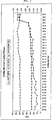
- FIG. 1
- Grafik zur Messung der Festigkeit als Funktion des erfindungsgemäßen Legierungsverhältnisses
- FIG. 2
- Grafik zur Messung der Porosität als Funktion des erfindungsgemäßen Legierungsverhältnisses
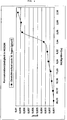
- FIG. 3
- Grafik zur Messung der Viskosität als Funktion des erfindungsgemäßen Legierungsverhältnisses
- FIG. 4
- Grafik zur Messung der Korrosionsbeständigkeit als Funktion des erfindungsgemäßen Legierungsverhältnisses
- Die Messungen der mechanischen Eigenschaften wurden an Probekörpern mit einer Wanddicke von 3 mm durchgeführt und die Werte für Rp0,2, Rm und die Bruchdehnung A nach DIN gemessen. Die gemessenen Werte wurden in einem Diagramm in Abhängigkeit von dem Si/(Mg+Mn+Cu)-Verhältnis aufgetragen (
Figur 1 ). - Bewertung: Innerhalb des erfindungsgemäßen Bereiches von 9,24 bis 28,33 ergaben sich relativ konstante Resultate für die mechanischen Eigenschaften. Erst bei einem Verhältnis kleiner 9,24 zeigte sich eine sprunghafte Änderung in den Festigkeitswerten. Die Erhöhung des Mg- und Cu-Gehaltes führte zu einer drastischen Abnahme der Bruchdehnung. Dies ist das Resultat der Verfestigung der Legierung durch die Mg- und Cu-haltigen intermetallischen Phasen (siehe Tabelle 2), die bei höheren Konzentrationen eine starke Reduzierung der Duktilität hervorrufen. Bei Konzentrationen außerhalb des angegebenen Intervalls ist der Aushärtungseffekt so groß, dass der Werkstoff seine Duktilität verliert.
- Analog zu
Figur 1 wurden auch die Porositätswerte für die Probekörper in Abhängigkeit vom Verhältnis Si/(Mg+Mn+Cu) ermittelt und inFigur 2 dargestellt. Man erkennt auch hier eine relativ geringe Schwankungsbreite von +/- 0,20% innerhalb des beanspruchten Bereiches. Außerhalb des Bereiches nahm jedoch die Porosität rapide zu, was auf die schlechteren Fließeigenschaften der untersuchten Vergleichslegierungen zurückzuführen ist. Hier wirkte sich insbesondere ein höherer Magnesium- oder ein höherer Kupfergehalt negativ auf die Fließeigenschaften aus. Die Messungen der Porosität wurden mikroskopisch an den Probekörpern vorgenommen. Die Viskosität wurde mit einem rotativen Viscosimeter/Rheometer gemessen. - In
Figur 3 wurde die Viskosität, gemessen an den erfindungsgemäßen Legierungen und den Vergleichslegierungen bei unterschiedlichen Temperaturen (680°C, 700°C und 720°C) aufgetragen. Auch hier zeigt der Kurvenverlauf ein relativ günstiges Viskositätsverhalten innerhalb der erfindungsgemäßen Bereichsgrenze für das Verhältnis Si/(Mg+Mn+Cu). Bei größeren Verhältniswerten (über 29) verschlechterte sich die Viskosität rapide aufgrund von ungünstigen Verhältnissen der Leistungselemente. Bei Verhältniswerten unter 9 zeigten sich negative Einflüsse der Begleitelemente Magnesium, Mangan und Kupfer. Die Viskosität wird stark vom Si/(Mn+Mg+Cu) Verhältnis beeinflusst. Die Legierungselemente Si, Cu, Mn, Mg und dementsprechend das quantitative Verhältnis dieser Elemente diktiert die Stärke der Kohäsionskräfte des Werkstoffes, von denen die Viskosität abhängig ist. - Für den Korrosionstest wurden die Gewichtsverluste an den Probekörpern pro Fläche bestimmt, die nach 30 Tagen in Ameisensäure bei Raumtemperatur von 20.°C im pH-Bereich von 2,7 bis 3 festgestellt wurden. Die Korrosionsbeständigkeit ist vom Verhältnis Si/(Mn+Mg+Cu) stark beeinflusst. Dies ist auch auf die Anwesenheit von intermetallischen Phasen, die die chemische Reaktivität zwischen der Ameisensäure und der Al-Legierung beschleunigen, zurückzuführen.
- Wie die Darstellung nach
Figur 4 zeigt, war der Korrosionsabtrag im erfindungsgemäßen Bereich des Legierungsverhältnisses Si/(Mg+Mn+Cu) besonders niedrig. Der Bereich oberhalb von 29 ist wegen der Si-Primärkristallisierung für Druckgussanwendungen (dünnwandige Teile) nicht interessant und unterhalb von 9 durch die erhöhten Bestandteile der Legierung an den Begleitelementen Mangan und Kupfer festgestellt. Die gemessenen Werte sind in Tabelle 3 in übersichtlicher Form zusammengefasst. - Für alle 35 Versuche wurde eine optische Analyse in Form einer Fluoreszenzanalyse zur Bestimmung der Warmrissbildung durchgeführt. Alle Probekörper aus den 30 Versuchen nach der Erfindung waren in Ordnung, das heißt es konnte keine Warmrissbildung nach der Fluoreszenzanalyse festgestellt werden. Weil im Falle von Si/(Mn+Mg+Cu) Verhältnissen, die außerhalb des beanspruchten Intervalls liegen, die Duktilität des Werkstoffes dramatisch abnimmt (siehe Bild mechanische Eigenschaften), ist die potentielle Gefahr der Entstehung von Warmrissen dementsprechend größer.
- Die 5 Vergleichsversuche (alle Versuche unterhalb des erfindungsgemäßen Legierungsverhältnisses) wurden nach der gleichen Methode bewertet, zeigten jedoch teilweise beginnende Warmrisse, sodass die Feststellung einer überragenden Eignung der erfindungsgemäßen Legierung zur Herstellung von dünnwandigen Strukturbauteilen als gerechtfertigt anzusehen ist.
- Eine bevorzugte Ausführungsform ist ein Sicherheits-Strukturbauteil, hergestellt aus einer Aluminium-Silizium Druckgusslegierung wie oben beschrieben, wobei der Siliziumgehalt auf 11,75 bis 12,10 %, der Mangangehalt auf 0,60 bis 0,70, % der Magnesiumgehalt auf 0,20 bis 0,40 % und der Kupfergehalt auf 0,003 bis 0,20 % eingestellt ist. Das Strukturbauteil zeichnet sich dadurch aus, dass die Streckgrenze Rp0,2 > 140 MPa und die Dehnung A ≥ 14 % im wärmebehandelten Zustand T6 oder T7 beträgt.
Tabelle 1 Messwerte für Festigkeit und Porosität Versuchsnr. Si [%] Mn [%] Mg [%] Cu [%] Si/Mg Si/Mn Si/Cu Si/(Mg+Mn+Cu) Rp0.2 [MPa] Rm [MPa] A [%] Lunker+Poren [%] 1 11,5 0,4 0,003 0,003 3833,33 28,75 3833,33 28,33 131,7 291,8 11,7 0,30 2 11,51 0,41 0,003 0,003 3836,67 28,07 3836,67 27,67 130,2 293,2 11,20 0,29 3 11,52 0,43 0,003 0,003 3840,00 26,79 3840,00 26,42 133,4 295,1 11,3 0,17 4 11,54 0,43 0,003 0,003 3846,67 26,84 3846,67 26,47 134,01 295,7 11,07 0,23 5 11,63 0,44 0,005 0,003 2326,00 26,43 3876,67 25,96 132,6 296,3 10,8 0,22 6 11,65 0,47 0,005 0,003 2330,00 24,79 3883,33 24,37 133,59 295,12 11,1 0.19 7 11,67 0,5 0,005 0,003 2334,00 23,34 3890,00 22,97 129,03 297,8 11,3 0,32 8 11,67 0,51 0,005 0,004 2334,00 22,88 2917,50 22,49 132,4 292,54 10,2 0,24 9 11,69 0,52 0,005 0,004 2338,00 22,48 2922,50 22,10 132,5 297,3 9,8 0,33 10 11,7 0,52 0,005 0,004 2340,00 22,50 2925,00 22,12 130,6 300,2 10,3 0,27 11 11,71 0,54 0,007 0,005 1672,86 21,69 2342,00 21,21 131,3 295,9 11,01 0,25 12 11,71 0,54 0,1 0,005 117,10 21,69 2342,00 18,16 137,12 305,7 10,02 0,35 13 11,72 0,55 0,15 0,005 78,13 21,31 2344,00 16,62 135,8 303,9 8,3 0,40 14 11,74 0,55 0,19 0,005 61,79 21,35 2348,00 15,76 137,07 305,6 8,2 0,41 15 11,74 0,56 0,19 0,005 61,79 20,96 2348,00 15,55 139,6 305,3 8,1 0,38 16 11,75 0,56 0,2 0,005 58,75 20,98 2350,00 15,36 142,6 301,3 8,1 0,39 17 11,78 0,58 0,2 0,005 58,90 20,31 2356,00 15,01 141,02 305,2 7,8 0,43 18 11,79 0,58 0,2 0.005 58,95 20,33 2358,00 15,02 140,3 298,4 7,4 0,44 19 11,86 0,59 0,21 0,005 56,48 20, 10 2372,00 14,73 138,08 300,02 8,3 0,39 20 11,86 0,61 0,21 0,005 56,48 19,44 2372,00 14,38 141,8 305,5 8,7 0,47 21 11,88 0,62 0,21 0,1 56,57 19,18 118,80 12,77 146,01 320,3 9,03 0,43 22 11,89 0,63 0,22 0,15 54,05 18,87 79,27 11,89 147,6 326,8 8,2 0,41 23 11,89 0,63 0,22 0,17 54,05 18,87 69,94 11,66 153,34 331,2 9,1 0,48 24 11,91 0,65 0,23 0,17 51,78 18,32 70,06 11,34 152,7 324,32 9,2 0,46 25 11,92 0,68 0,2 0,18 59,60 17,53 66,22 11,25 153,1 330,5 9,6 0,47 26 11,97 0,68 0,22 0,18 54,41 17,60 66,50 11,08 164,56 325,6 9,08 0,41 27 12,03 0,69 0,34 0,18 35,38 17,43 66,83 9,94 163,43 332,8 7,2 0,51 28 12,04 0,7 0,35 0,19 34,40 17,20 63,37 9,71 164,67 340,6 6,7 0,55 29 12,08 0,7 0,4 0,19 30,20 17,26 63,58 9,36 161,01 345,43 6,3 0,59 30 12,1 0,71 0,4 0,2 30,25 17,04 60,50 9,24 165,87 337,2 6,1 0,56 31 12,03 0,7 0,5 0,3 24,06 17,19 40,10 8,02 178,98 324,5 4,3 0,65 32 11,97 0,64 0,71 0,35 16,86 18,70 34,20 7,04 185,2 317,2 3,1 0,67 33 14,32 0,52 2,01 2,11 7,12 27,54 6,79 3,09 310,25 310,25 0 1,21 34 13,04 0,54 2,13 1,98 6,12 24,15 8,59 2,80 307,80 320,1 0,1 1,18 35 11,7 0,54 2 2 5,85 21,67 5,85 2,58 301,04 318,20 0,3 1,2 Tabelle 2 Intermetallische Phasen im Al-Si System Element IMP Si<12% Si>12% Mg>0.2% Fe>0.05% Eutectic Eutectic + Si Mg2Si FeSiAl5 Mn>0.1% Cr>0.1% Fe>Mg Mg>2Cu Si (FeMn)3Si2Al15 (CrFe)4Si4Al13 FeMg3Si6Al8 Cu2Mg8Si6Al5 Mg<0.2% Mg>0.2%; Cu<0.2%; Fe<Mg Cu<0.5Mg Fe>Mg Mg in Mkr Mg2Si Cu2Mg8Si6Al5 FeMg3Si6Al8 Fe<0.7% Fe>0.7% Co>0.1% Cr>0.1% Eutectic + FeSiAl5 FeSiAl5 (CoFe)2Al9 (CrFe)4Si4Al13 oder (CrFe)5Si15Al2 Mn>0.2% Mo>0.1% Ni>0.1% Mg<Fe Fe (FeMn)3Si2Al15 AlFeMo FeNiAl4 FeMg3Si6Al8 Cu<1% Cu>1%; Mn<0.2%; Fe<0.3% Cu>1%; Mg<2Cu Cu in Mkr CuAl2 Cu2Mg8Si6Al5 Tabelle 3 Korrosionsbeständigkeit und Viskosität Si/(Mg+Mn+Cu) [cP] bei 680° [cP] bei 700° η [cP] bei 720°C Gewichtverlust nach 30 Tagen [g/cm2] 28,33 1,23 1,16 1,13 0,001 22,12 1,2 1,13 1,1 0,0012 15,36 1,27 1,21 1,19 0,0015 11,25 1,31 1,27 1,21 0,0018 9,24 1,35 1,29 1,24 0,0023 8,02 1,39 1,34 1,27 0,0026 7,04 1,41 1,37 1,3 0,0035 3,09 1,72 1,63 1,52 0,0086 2,8 1,75 1,67 1,57 0,0089 2,58 1,8 1,68 1,61 0,0097
Claims (3)
- Aluminium-Silizium-Druckgusslegierung für dünnwandige Strukturbauteile, gekennzeichnet durch folgende Gehalte in Gew.%
Silizium 11,75 bis 12,1 % Mangan 0,60 bis 0,70 % Magnesium 0,20 bis 0,40 % Kupfer 0,003 bis 0,20 %, wobei das Verhältnis Si/(Mg+Mn+Cu) zwischen 9,24 und 28,33 liegt, sowie wahlweise Titan max. 0,25% Strontium max. 300 ppm Eisen 0,05 - 0,35% - Sicherheits-Strukturbauteil, hergestellt aus einer Aluminium-Silizium Druckgusslegierung nach Anspruch 1, dadurch gekennzeichnet, dass die Streckgrenze Rp0,2 > 140 MPa und die Dehnung A ≥ 14 % im wärmebehandelten Zustand T6 oder T7 beträgt.
- Verwendung einer Aluminium-Silizium- Druckgusslegierung nach Anspruch 1 zur Herstellung von Karosseriestruktur-Fahrwerks- und Innenausstattungskomponenten mit einer Wandstärke von 1-5 mm, gekenntzeichnet durch eine zweistufige Wärmebehandlung bei 460-490°C für 30-120 Minuten an Luft und 170-240°C für 100 Minuten bis 300 Minuten.
Applications Claiming Priority (2)
| Application Number | Priority Date | Filing Date | Title |
|---|---|---|---|
| DE200910019269 DE102009019269A1 (de) | 2009-04-28 | 2009-04-28 | Aluminium-Silizium-Druckgusslegierung für dünnwändige Strukturbauteile |
| PCT/EP2010/002561 WO2010124835A1 (de) | 2009-04-28 | 2010-04-27 | Aluminium-silizium-druckgusslegierung für dünnwandige strukturbauteile |
Publications (2)
| Publication Number | Publication Date |
|---|---|
| EP2425030A1 EP2425030A1 (de) | 2012-03-07 |
| EP2425030B1 true EP2425030B1 (de) | 2013-11-27 |
Family
ID=42806013
Family Applications (1)
| Application Number | Title | Priority Date | Filing Date |
|---|---|---|---|
| EP10716768.6A Active EP2425030B1 (de) | 2009-04-28 | 2010-04-27 | Aluminium-silizium-druckgusslegierung für dünnwandige strukturbauteile |
Country Status (3)
| Country | Link |
|---|---|
| EP (1) | EP2425030B1 (de) |
| DE (1) | DE102009019269A1 (de) |
| WO (1) | WO2010124835A1 (de) |
Cited By (1)
| Publication number | Priority date | Publication date | Assignee | Title |
|---|---|---|---|---|
| US12420582B2 (en) | 2020-01-14 | 2025-09-23 | Audi Ag | Method for producing a motor vehicle rim made of aluminium or an aluminium alloy for a wheel of a motor vehicle and corresponding motor vehicle rim |
Families Citing this family (6)
| Publication number | Priority date | Publication date | Assignee | Title |
|---|---|---|---|---|
| CZ2012111A3 (cs) | 2012-02-16 | 2013-08-28 | Zentiva, K.S. | Zpusob prípravy rivaroxabanu zalozený na vyuzití (S)-epichlorhydrinu |
| US9771635B2 (en) | 2012-07-10 | 2017-09-26 | GM Global Technology Operations LLC | Cast aluminum alloy for structural components |
| GB2526085A (en) * | 2014-05-12 | 2015-11-18 | Jaguar Land Rover Ltd | An alloy |
| DE102014226389A1 (de) * | 2014-12-18 | 2016-06-23 | Bayerische Motoren Werke Aktiengesellschaft | Verfahren zum zerstörungsfreien Ermitteln von Werkstoffkennwerten |
| CN110714148A (zh) * | 2019-11-21 | 2020-01-21 | 珠海市润星泰电器有限公司 | 一种高性能半固态压铸铝合金及其制备方法 |
| CN112846127B (zh) * | 2020-12-30 | 2022-07-12 | 福建省金瑞高科有限公司 | 5g基站散热壳的压铸方法及其应用的半固态压铸方法 |
Family Cites Families (14)
| Publication number | Priority date | Publication date | Assignee | Title |
|---|---|---|---|---|
| DE3724928A1 (de) * | 1987-07-28 | 1989-02-16 | Bayerische Motoren Werke Ag | Herstell-verfahren fuer leichtmetallguss-bauteile, insbesondere leichtmetallguss-raeder fuer personenkraftwagen |
| CH689143A5 (de) * | 1994-06-16 | 1998-10-30 | Rheinfelden Aluminium Gmbh | Aluminium-Silizium Druckgusslegierung mit hoher Korrosionsbestaendigkeit, insbesondere fuer Sicherheitsbauteile. |
| DE29522065U1 (de) * | 1994-06-16 | 1999-09-02 | Aluminium Rheinfelden GmbH, 79618 Rheinfelden | Druckgußlegierung |
| FR2742165B1 (fr) * | 1995-12-12 | 1998-01-30 | Pechiney Rhenalu | Procede de fabrication de bandes minces en alliage d'aluminium a haute resistance et formabilite |
| AT404844B (de) * | 1997-03-03 | 1999-03-25 | Aluminium Lend Gmbh | Druckgusslegierung |
| EP0992601A1 (de) * | 1998-10-05 | 2000-04-12 | Alusuisse Technology & Management AG | Verfahren zur Herstellung eines Bauteiles aus einer Aluminiumlegierung durch Druckgiessen |
| DE19914090A1 (de) * | 1999-03-27 | 2000-04-27 | Daimler Chrysler Ag | Funktionsträger aus Aluminiumdruckguß |
| DE10002021C2 (de) * | 1999-09-24 | 2002-10-17 | Honsel Guss Gmbh | Verfahren zur Wärmebehandlung von Strukturgußteilen aus einer dafür zu verwendenden Aluminiumlegierung |
| JP2003510463A (ja) * | 1999-09-24 | 2003-03-18 | ホンゼル グス ゲゼルシャフト ミット ベシュレンクテル ハフツング | 使用すべきアルミニュウム合金からなる構造鋳造部品の熱処理方法 |
| JP4007488B2 (ja) * | 2002-01-18 | 2007-11-14 | 日本軽金属株式会社 | ダイカスト用アルミニウム合金、ダイカスト製品の製造方法およびダイカスト製品 |
| US7666353B2 (en) * | 2003-05-02 | 2010-02-23 | Brunswick Corp | Aluminum-silicon alloy having reduced microporosity |
| JP2006183122A (ja) * | 2004-12-28 | 2006-07-13 | Denso Corp | ダイカスト用アルミニウム合金およびアルミニウム合金鋳物の製造方法 |
| EP1719820A3 (de) * | 2005-05-03 | 2006-12-27 | ALUMINIUM RHEINFELDEN GmbH | Aluminium-Gusslegierung |
| JP5076455B2 (ja) * | 2006-11-17 | 2012-11-21 | 日産自動車株式会社 | アルミニウム合金ダイカスト及びその製造方法 |
-
2009
- 2009-04-28 DE DE200910019269 patent/DE102009019269A1/de not_active Ceased
-
2010
- 2010-04-27 EP EP10716768.6A patent/EP2425030B1/de active Active
- 2010-04-27 WO PCT/EP2010/002561 patent/WO2010124835A1/de not_active Ceased
Cited By (1)
| Publication number | Priority date | Publication date | Assignee | Title |
|---|---|---|---|---|
| US12420582B2 (en) | 2020-01-14 | 2025-09-23 | Audi Ag | Method for producing a motor vehicle rim made of aluminium or an aluminium alloy for a wheel of a motor vehicle and corresponding motor vehicle rim |
Also Published As
| Publication number | Publication date |
|---|---|
| DE102009019269A1 (de) | 2010-11-11 |
| WO2010124835A1 (de) | 2010-11-04 |
| EP2425030A1 (de) | 2012-03-07 |
Similar Documents
| Publication | Publication Date | Title |
|---|---|---|
| EP2735621B1 (de) | Aluminium-Druckgusslegierung | |
| DE10352932B4 (de) | Aluminium-Gusslegierung | |
| EP2653579B1 (de) | Aluminium-Legierung | |
| EP1997924B1 (de) | Warmfeste Aluminiumlegierung | |
| EP3176275B2 (de) | Aluminium-silizium-druckgusslegierung, verfahren zur herstellung eines druckgussbauteils aus der legierung und karosseriekomponente mit einem druckgussbauteil | |
| DE102007023323B4 (de) | Verwendung einer Al-Mn-Legierung für hochwarmfeste Erzeugnisse | |
| EP0687742B1 (de) | Druckgusslegierung | |
| WO2005045080A1 (de) | Aluminiumlegierung | |
| EP2173916A2 (de) | Aluminium-gusslegierung und deren verwendung | |
| DE102016219711B4 (de) | Aluminiumlegierung zum Druckgießen und Verfahren zu ihrer Hitzebehandlung | |
| EP1757709A1 (de) | Warmfeste Aluminiumlegierung | |
| DE102014102817B4 (de) | Aluminiumlegierung, die zum Hochdruckgießen geeignet ist | |
| WO2010124835A1 (de) | Aluminium-silizium-druckgusslegierung für dünnwandige strukturbauteile | |
| DE102004007704A1 (de) | Werkstoff auf der Basis einer Aluminium-Legierung, Verfahren zu seiner Herstellung sowie Verwendung hierfür | |
| DE102011112005A1 (de) | Aluminium-Silizium-Legierung | |
| EP1719820A2 (de) | Aluminium-Gusslegierung | |
| EP2041328A1 (de) | Aluminiumlegierung und deren verwendung für ein gussbauteil insbesondere eines kraftwagens | |
| EP1917372B1 (de) | Aluminium-gusslegierungen | |
| DE112023001084T5 (de) | Aluminiumlegierungsmaterial und verfahren zu dessen herstellung | |
| EP1802781A1 (de) | Legierung auf basis von aluminium sowie formteil aus dieser legierung | |
| DE102024129880B3 (de) | Aluminiumlegierung für Strukturgussanwendungen, Verwendung der Aluminiumlegierung zum Druckgießen von Strukturbauteilen, Strukturbauteil für ein Kraftfahrzeug und Kraftfahrzeug | |
| AT404844B (de) | Druckgusslegierung | |
| EP3072984B2 (de) | Al-cu-mg-li-legierung sowie daraus hergestelltes legierungsprodukt | |
| EP4729646A1 (de) | Aluminiumlegierung für strukturgussanwendungen, verwendung der aluminiumlegierung zum druckgiessen von strukturbauteilen, strukturbauteil für ein kraftfahrzeug und kraftfahrzeug mit dem strukturbauteil | |
| EP4729645A1 (de) | Aluminiumlegierung für strukturgussanwendungen, verwendung der aluminiumlegierung zum druckgiessen von strukturbauteilen, strukturbauteil für ein kraftfahrzeug und kraftfahrzeug mit dem strukturbauteil |
Legal Events
| Date | Code | Title | Description |
|---|---|---|---|
| PUAI | Public reference made under article 153(3) epc to a published international application that has entered the european phase |
Free format text: ORIGINAL CODE: 0009012 |
|
| 17P | Request for examination filed |
Effective date: 20111021 |
|
| AK | Designated contracting states |
Kind code of ref document: A1 Designated state(s): AT BE BG CH CY CZ DE DK EE ES FI FR GB GR HR HU IE IS IT LI LT LU LV MC MK MT NL NO PL PT RO SE SI SK SM TR |
|
| DAX | Request for extension of the european patent (deleted) | ||
| GRAP | Despatch of communication of intention to grant a patent |
Free format text: ORIGINAL CODE: EPIDOSNIGR1 |
|
| INTG | Intention to grant announced |
Effective date: 20130708 |
|
| GRAS | Grant fee paid |
Free format text: ORIGINAL CODE: EPIDOSNIGR3 |
|
| GRAA | (expected) grant |
Free format text: ORIGINAL CODE: 0009210 |
|
| AK | Designated contracting states |
Kind code of ref document: B1 Designated state(s): AT BE BG CH CY CZ DE DK EE ES FI FR GB GR HR HU IE IS IT LI LT LU LV MC MK MT NL NO PL PT RO SE SI SK SM TR |
|
| REG | Reference to a national code |
Ref country code: GB Ref legal event code: FG4D Free format text: NOT ENGLISH |
|
| REG | Reference to a national code |
Ref country code: CH Ref legal event code: EP |
|
| REG | Reference to a national code |
Ref country code: AT Ref legal event code: REF Ref document number: 642762 Country of ref document: AT Kind code of ref document: T Effective date: 20131215 |
|
| REG | Reference to a national code |
Ref country code: IE Ref legal event code: FG4D Free format text: LANGUAGE OF EP DOCUMENT: GERMAN |
|
| REG | Reference to a national code |
Ref country code: DE Ref legal event code: R096 Ref document number: 502010005495 Country of ref document: DE Effective date: 20140130 |
|
| REG | Reference to a national code |
Ref country code: NL Ref legal event code: VDEP Effective date: 20131127 |
|
| REG | Reference to a national code |
Ref country code: LT Ref legal event code: MG4D |
|
| PG25 | Lapsed in a contracting state [announced via postgrant information from national office to epo] |
Ref country code: SE Free format text: LAPSE BECAUSE OF FAILURE TO SUBMIT A TRANSLATION OF THE DESCRIPTION OR TO PAY THE FEE WITHIN THE PRESCRIBED TIME-LIMIT Effective date: 20131127 Ref country code: FI Free format text: LAPSE BECAUSE OF FAILURE TO SUBMIT A TRANSLATION OF THE DESCRIPTION OR TO PAY THE FEE WITHIN THE PRESCRIBED TIME-LIMIT Effective date: 20131127 Ref country code: NL Free format text: LAPSE BECAUSE OF FAILURE TO SUBMIT A TRANSLATION OF THE DESCRIPTION OR TO PAY THE FEE WITHIN THE PRESCRIBED TIME-LIMIT Effective date: 20131127 Ref country code: NO Free format text: LAPSE BECAUSE OF FAILURE TO SUBMIT A TRANSLATION OF THE DESCRIPTION OR TO PAY THE FEE WITHIN THE PRESCRIBED TIME-LIMIT Effective date: 20140227 Ref country code: IS Free format text: LAPSE BECAUSE OF FAILURE TO SUBMIT A TRANSLATION OF THE DESCRIPTION OR TO PAY THE FEE WITHIN THE PRESCRIBED TIME-LIMIT Effective date: 20140327 Ref country code: HR Free format text: LAPSE BECAUSE OF FAILURE TO SUBMIT A TRANSLATION OF THE DESCRIPTION OR TO PAY THE FEE WITHIN THE PRESCRIBED TIME-LIMIT Effective date: 20131127 Ref country code: LT Free format text: LAPSE BECAUSE OF FAILURE TO SUBMIT A TRANSLATION OF THE DESCRIPTION OR TO PAY THE FEE WITHIN THE PRESCRIBED TIME-LIMIT Effective date: 20131127 |
|
| PG25 | Lapsed in a contracting state [announced via postgrant information from national office to epo] |
Ref country code: LV Free format text: LAPSE BECAUSE OF FAILURE TO SUBMIT A TRANSLATION OF THE DESCRIPTION OR TO PAY THE FEE WITHIN THE PRESCRIBED TIME-LIMIT Effective date: 20131127 Ref country code: ES Free format text: LAPSE BECAUSE OF FAILURE TO SUBMIT A TRANSLATION OF THE DESCRIPTION OR TO PAY THE FEE WITHIN THE PRESCRIBED TIME-LIMIT Effective date: 20131127 Ref country code: CY Free format text: LAPSE BECAUSE OF FAILURE TO SUBMIT A TRANSLATION OF THE DESCRIPTION OR TO PAY THE FEE WITHIN THE PRESCRIBED TIME-LIMIT Effective date: 20131127 |
|
| PG25 | Lapsed in a contracting state [announced via postgrant information from national office to epo] |
Ref country code: PT Free format text: LAPSE BECAUSE OF FAILURE TO SUBMIT A TRANSLATION OF THE DESCRIPTION OR TO PAY THE FEE WITHIN THE PRESCRIBED TIME-LIMIT Effective date: 20140327 |
|
| PG25 | Lapsed in a contracting state [announced via postgrant information from national office to epo] |
Ref country code: EE Free format text: LAPSE BECAUSE OF FAILURE TO SUBMIT A TRANSLATION OF THE DESCRIPTION OR TO PAY THE FEE WITHIN THE PRESCRIBED TIME-LIMIT Effective date: 20131127 |
|
| REG | Reference to a national code |
Ref country code: DE Ref legal event code: R097 Ref document number: 502010005495 Country of ref document: DE |
|
| PG25 | Lapsed in a contracting state [announced via postgrant information from national office to epo] |
Ref country code: SK Free format text: LAPSE BECAUSE OF FAILURE TO SUBMIT A TRANSLATION OF THE DESCRIPTION OR TO PAY THE FEE WITHIN THE PRESCRIBED TIME-LIMIT Effective date: 20131127 Ref country code: CZ Free format text: LAPSE BECAUSE OF FAILURE TO SUBMIT A TRANSLATION OF THE DESCRIPTION OR TO PAY THE FEE WITHIN THE PRESCRIBED TIME-LIMIT Effective date: 20131127 Ref country code: RO Free format text: LAPSE BECAUSE OF FAILURE TO SUBMIT A TRANSLATION OF THE DESCRIPTION OR TO PAY THE FEE WITHIN THE PRESCRIBED TIME-LIMIT Effective date: 20131127 Ref country code: PL Free format text: LAPSE BECAUSE OF FAILURE TO SUBMIT A TRANSLATION OF THE DESCRIPTION OR TO PAY THE FEE WITHIN THE PRESCRIBED TIME-LIMIT Effective date: 20131127 |
|
| PG25 | Lapsed in a contracting state [announced via postgrant information from national office to epo] |
Ref country code: DK Free format text: LAPSE BECAUSE OF FAILURE TO SUBMIT A TRANSLATION OF THE DESCRIPTION OR TO PAY THE FEE WITHIN THE PRESCRIBED TIME-LIMIT Effective date: 20131127 |
|
| PLBE | No opposition filed within time limit |
Free format text: ORIGINAL CODE: 0009261 |
|
| STAA | Information on the status of an ep patent application or granted ep patent |
Free format text: STATUS: NO OPPOSITION FILED WITHIN TIME LIMIT |
|
| 26N | No opposition filed |
Effective date: 20140828 |
|
| PG25 | Lapsed in a contracting state [announced via postgrant information from national office to epo] |
Ref country code: LU Free format text: LAPSE BECAUSE OF FAILURE TO SUBMIT A TRANSLATION OF THE DESCRIPTION OR TO PAY THE FEE WITHIN THE PRESCRIBED TIME-LIMIT Effective date: 20140427 Ref country code: MC Free format text: LAPSE BECAUSE OF FAILURE TO SUBMIT A TRANSLATION OF THE DESCRIPTION OR TO PAY THE FEE WITHIN THE PRESCRIBED TIME-LIMIT Effective date: 20131127 |
|
| REG | Reference to a national code |
Ref country code: CH Ref legal event code: PL |
|
| REG | Reference to a national code |
Ref country code: DE Ref legal event code: R097 Ref document number: 502010005495 Country of ref document: DE Effective date: 20140828 |
|
| REG | Reference to a national code |
Ref country code: IE Ref legal event code: MM4A |
|
| PG25 | Lapsed in a contracting state [announced via postgrant information from national office to epo] |
Ref country code: CH Free format text: LAPSE BECAUSE OF NON-PAYMENT OF DUE FEES Effective date: 20140430 Ref country code: LI Free format text: LAPSE BECAUSE OF NON-PAYMENT OF DUE FEES Effective date: 20140430 |
|
| PG25 | Lapsed in a contracting state [announced via postgrant information from national office to epo] |
Ref country code: SI Free format text: LAPSE BECAUSE OF FAILURE TO SUBMIT A TRANSLATION OF THE DESCRIPTION OR TO PAY THE FEE WITHIN THE PRESCRIBED TIME-LIMIT Effective date: 20131127 |
|
| PG25 | Lapsed in a contracting state [announced via postgrant information from national office to epo] |
Ref country code: IT Free format text: LAPSE BECAUSE OF FAILURE TO SUBMIT A TRANSLATION OF THE DESCRIPTION OR TO PAY THE FEE WITHIN THE PRESCRIBED TIME-LIMIT Effective date: 20131127 |
|
| PG25 | Lapsed in a contracting state [announced via postgrant information from national office to epo] |
Ref country code: IE Free format text: LAPSE BECAUSE OF NON-PAYMENT OF DUE FEES Effective date: 20140427 |
|
| PG25 | Lapsed in a contracting state [announced via postgrant information from national office to epo] |
Ref country code: MT Free format text: LAPSE BECAUSE OF FAILURE TO SUBMIT A TRANSLATION OF THE DESCRIPTION OR TO PAY THE FEE WITHIN THE PRESCRIBED TIME-LIMIT Effective date: 20131127 |
|
| REG | Reference to a national code |
Ref country code: FR Ref legal event code: PLFP Year of fee payment: 7 |
|
| PG25 | Lapsed in a contracting state [announced via postgrant information from national office to epo] |
Ref country code: SM Free format text: LAPSE BECAUSE OF FAILURE TO SUBMIT A TRANSLATION OF THE DESCRIPTION OR TO PAY THE FEE WITHIN THE PRESCRIBED TIME-LIMIT Effective date: 20131127 |
|
| REG | Reference to a national code |
Ref country code: AT Ref legal event code: MM01 Ref document number: 642762 Country of ref document: AT Kind code of ref document: T Effective date: 20150427 |
|
| PG25 | Lapsed in a contracting state [announced via postgrant information from national office to epo] |
Ref country code: BG Free format text: LAPSE BECAUSE OF FAILURE TO SUBMIT A TRANSLATION OF THE DESCRIPTION OR TO PAY THE FEE WITHIN THE PRESCRIBED TIME-LIMIT Effective date: 20131127 Ref country code: GR Free format text: LAPSE BECAUSE OF FAILURE TO SUBMIT A TRANSLATION OF THE DESCRIPTION OR TO PAY THE FEE WITHIN THE PRESCRIBED TIME-LIMIT Effective date: 20140228 |
|
| PG25 | Lapsed in a contracting state [announced via postgrant information from national office to epo] |
Ref country code: TR Free format text: LAPSE BECAUSE OF FAILURE TO SUBMIT A TRANSLATION OF THE DESCRIPTION OR TO PAY THE FEE WITHIN THE PRESCRIBED TIME-LIMIT Effective date: 20131127 Ref country code: BE Free format text: LAPSE BECAUSE OF FAILURE TO SUBMIT A TRANSLATION OF THE DESCRIPTION OR TO PAY THE FEE WITHIN THE PRESCRIBED TIME-LIMIT Effective date: 20140430 Ref country code: HU Free format text: LAPSE BECAUSE OF FAILURE TO SUBMIT A TRANSLATION OF THE DESCRIPTION OR TO PAY THE FEE WITHIN THE PRESCRIBED TIME-LIMIT; INVALID AB INITIO Effective date: 20100427 |
|
| PG25 | Lapsed in a contracting state [announced via postgrant information from national office to epo] |
Ref country code: AT Free format text: LAPSE BECAUSE OF NON-PAYMENT OF DUE FEES Effective date: 20150427 |
|
| REG | Reference to a national code |
Ref country code: FR Ref legal event code: PLFP Year of fee payment: 8 |
|
| REG | Reference to a national code |
Ref country code: FR Ref legal event code: PLFP Year of fee payment: 9 |
|
| REG | Reference to a national code |
Ref country code: DE Ref legal event code: R082 Ref document number: 502010005495 Country of ref document: DE Representative=s name: FLACCUS MUELLER-WOLFF, DE Ref country code: DE Ref legal event code: R081 Ref document number: 502010005495 Country of ref document: DE Owner name: AUDI AG, DE Free format text: FORMER OWNERS: AUDI AG, 85057 INGOLSTADT, DE; BELTE AG, 33129 DELBRUECK, DE Ref country code: DE Ref legal event code: R081 Ref document number: 502010005495 Country of ref document: DE Owner name: NEWALU GMBH, DE Free format text: FORMER OWNERS: AUDI AG, 85057 INGOLSTADT, DE; BELTE AG, 33129 DELBRUECK, DE |
|
| PG25 | Lapsed in a contracting state [announced via postgrant information from national office to epo] |
Ref country code: MK Free format text: LAPSE BECAUSE OF FAILURE TO SUBMIT A TRANSLATION OF THE DESCRIPTION OR TO PAY THE FEE WITHIN THE PRESCRIBED TIME-LIMIT Effective date: 20131127 |
|
| P01 | Opt-out of the competence of the unified patent court (upc) registered |
Effective date: 20230530 |
|
| PGFP | Annual fee paid to national office [announced via postgrant information from national office to epo] |
Ref country code: DE Payment date: 20250603 Year of fee payment: 16 |
|
| PGFP | Annual fee paid to national office [announced via postgrant information from national office to epo] |
Ref country code: GB Payment date: 20250429 Year of fee payment: 16 |
|
| PGFP | Annual fee paid to national office [announced via postgrant information from national office to epo] |
Ref country code: FR Payment date: 20250429 Year of fee payment: 16 |