EP2413601A1 - Verfahren zum Einfügen von Werbeinhalten in einen heruntergeladenen Videoinhalt - Google Patents
Verfahren zum Einfügen von Werbeinhalten in einen heruntergeladenen Videoinhalt Download PDFInfo
- Publication number
- EP2413601A1 EP2413601A1 EP11187176A EP11187176A EP2413601A1 EP 2413601 A1 EP2413601 A1 EP 2413601A1 EP 11187176 A EP11187176 A EP 11187176A EP 11187176 A EP11187176 A EP 11187176A EP 2413601 A1 EP2413601 A1 EP 2413601A1
- Authority
- EP
- European Patent Office
- Prior art keywords
- content
- ads
- present
- episode
- downloaded
- Prior art date
- Legal status (The legal status is an assumption and is not a legal conclusion. Google has not performed a legal analysis and makes no representation as to the accuracy of the status listed.)
- Granted
Links
- 238000000034 method Methods 0.000 title claims abstract description 70
- 230000001737 promoting effect Effects 0.000 title description 6
- 238000003780 insertion Methods 0.000 claims description 24
- 230000037431 insertion Effects 0.000 claims description 22
- 230000009471 action Effects 0.000 claims description 6
- 230000004913 activation Effects 0.000 claims description 3
- 238000004590 computer program Methods 0.000 claims 2
- 238000010586 diagram Methods 0.000 description 70
- 230000008569 process Effects 0.000 description 38
- 239000008186 active pharmaceutical agent Substances 0.000 description 27
- 230000006870 function Effects 0.000 description 22
- 230000005540 biological transmission Effects 0.000 description 7
- 230000002093 peripheral effect Effects 0.000 description 7
- 230000006855 networking Effects 0.000 description 5
- 230000001667 episodic effect Effects 0.000 description 4
- 238000007726 management method Methods 0.000 description 3
- 230000003287 optical effect Effects 0.000 description 3
- 230000004044 response Effects 0.000 description 3
- 238000012546 transfer Methods 0.000 description 3
- 102000036364 Cullin Ring E3 Ligases Human genes 0.000 description 2
- 108091007045 Cullin Ring E3 Ligases Proteins 0.000 description 2
- 238000013475 authorization Methods 0.000 description 2
- 238000004891 communication Methods 0.000 description 2
- 230000006835 compression Effects 0.000 description 2
- 238000007906 compression Methods 0.000 description 2
- 239000000835 fiber Substances 0.000 description 2
- 230000010354 integration Effects 0.000 description 2
- 230000003993 interaction Effects 0.000 description 2
- 238000004519 manufacturing process Methods 0.000 description 2
- 230000007246 mechanism Effects 0.000 description 2
- 239000013307 optical fiber Substances 0.000 description 2
- 238000012545 processing Methods 0.000 description 2
- 239000004065 semiconductor Substances 0.000 description 2
- 239000000344 soap Substances 0.000 description 2
- 244000132059 Carica parviflora Species 0.000 description 1
- 235000014653 Carica parviflora Nutrition 0.000 description 1
- 230000006978 adaptation Effects 0.000 description 1
- 230000004075 alteration Effects 0.000 description 1
- 230000008859 change Effects 0.000 description 1
- 238000006243 chemical reaction Methods 0.000 description 1
- 239000002131 composite material Substances 0.000 description 1
- 230000004048 modification Effects 0.000 description 1
- 238000012986 modification Methods 0.000 description 1
- 230000003068 static effect Effects 0.000 description 1
- 230000001360 synchronised effect Effects 0.000 description 1
Images






















Classifications
-
- H—ELECTRICITY
- H04—ELECTRIC COMMUNICATION TECHNIQUE
- H04N—PICTORIAL COMMUNICATION, e.g. TELEVISION
- H04N7/00—Television systems
- H04N7/16—Analogue secrecy systems; Analogue subscription systems
- H04N7/173—Analogue secrecy systems; Analogue subscription systems with two-way working, e.g. subscriber sending a programme selection signal
- H04N7/17309—Transmission or handling of upstream communications
- H04N7/17336—Handling of requests in head-ends
-
- H—ELECTRICITY
- H04—ELECTRIC COMMUNICATION TECHNIQUE
- H04N—PICTORIAL COMMUNICATION, e.g. TELEVISION
- H04N21/00—Selective content distribution, e.g. interactive television or video on demand [VOD]
- H04N21/20—Servers specifically adapted for the distribution of content, e.g. VOD servers; Operations thereof
- H04N21/25—Management operations performed by the server for facilitating the content distribution or administrating data related to end-users or client devices, e.g. end-user or client device authentication, learning user preferences for recommending movies
- H04N21/266—Channel or content management, e.g. generation and management of keys and entitlement messages in a conditional access system, merging a VOD unicast channel into a multicast channel
- H04N21/2668—Creating a channel for a dedicated end-user group, e.g. insertion of targeted commercials based on end-user profiles
-
- H—ELECTRICITY
- H04—ELECTRIC COMMUNICATION TECHNIQUE
- H04N—PICTORIAL COMMUNICATION, e.g. TELEVISION
- H04N21/00—Selective content distribution, e.g. interactive television or video on demand [VOD]
- H04N21/40—Client devices specifically adapted for the reception of or interaction with content, e.g. set-top-box [STB]; Operations thereof
- H04N21/43—Processing of content or additional data, e.g. demultiplexing additional data from a digital video stream; Elementary client operations, e.g. monitoring of home network or synchronising decoder's clock; Client middleware
- H04N21/433—Content storage operation, e.g. storage operation in response to a pause request, caching operations
- H04N21/4331—Caching operations, e.g. of an advertisement for later insertion during playback
-
- H—ELECTRICITY
- H04—ELECTRIC COMMUNICATION TECHNIQUE
- H04N—PICTORIAL COMMUNICATION, e.g. TELEVISION
- H04N21/00—Selective content distribution, e.g. interactive television or video on demand [VOD]
- H04N21/40—Client devices specifically adapted for the reception of or interaction with content, e.g. set-top-box [STB]; Operations thereof
- H04N21/43—Processing of content or additional data, e.g. demultiplexing additional data from a digital video stream; Elementary client operations, e.g. monitoring of home network or synchronising decoder's clock; Client middleware
- H04N21/44—Processing of video elementary streams, e.g. splicing a video clip retrieved from local storage with an incoming video stream or rendering scenes according to encoded video stream scene graphs
- H04N21/44016—Processing of video elementary streams, e.g. splicing a video clip retrieved from local storage with an incoming video stream or rendering scenes according to encoded video stream scene graphs involving splicing one content stream with another content stream, e.g. for substituting a video clip
-
- H—ELECTRICITY
- H04—ELECTRIC COMMUNICATION TECHNIQUE
- H04N—PICTORIAL COMMUNICATION, e.g. TELEVISION
- H04N21/00—Selective content distribution, e.g. interactive television or video on demand [VOD]
- H04N21/60—Network structure or processes for video distribution between server and client or between remote clients; Control signalling between clients, server and network components; Transmission of management data between server and client, e.g. sending from server to client commands for recording incoming content stream; Communication details between server and client
- H04N21/61—Network physical structure; Signal processing
- H04N21/6106—Network physical structure; Signal processing specially adapted to the downstream path of the transmission network
- H04N21/6125—Network physical structure; Signal processing specially adapted to the downstream path of the transmission network involving transmission via Internet
-
- H—ELECTRICITY
- H04—ELECTRIC COMMUNICATION TECHNIQUE
- H04N—PICTORIAL COMMUNICATION, e.g. TELEVISION
- H04N21/00—Selective content distribution, e.g. interactive television or video on demand [VOD]
- H04N21/80—Generation or processing of content or additional data by content creator independently of the distribution process; Content per se
- H04N21/81—Monomedia components thereof
- H04N21/812—Monomedia components thereof involving advertisement data
-
- H—ELECTRICITY
- H04—ELECTRIC COMMUNICATION TECHNIQUE
- H04N—PICTORIAL COMMUNICATION, e.g. TELEVISION
- H04N21/00—Selective content distribution, e.g. interactive television or video on demand [VOD]
- H04N21/80—Generation or processing of content or additional data by content creator independently of the distribution process; Content per se
- H04N21/83—Generation or processing of protective or descriptive data associated with content; Content structuring
- H04N21/84—Generation or processing of descriptive data, e.g. content descriptors
-
- H—ELECTRICITY
- H04—ELECTRIC COMMUNICATION TECHNIQUE
- H04N—PICTORIAL COMMUNICATION, e.g. TELEVISION
- H04N21/00—Selective content distribution, e.g. interactive television or video on demand [VOD]
- H04N21/80—Generation or processing of content or additional data by content creator independently of the distribution process; Content per se
- H04N21/83—Generation or processing of protective or descriptive data associated with content; Content structuring
- H04N21/845—Structuring of content, e.g. decomposing content into time segments
- H04N21/8456—Structuring of content, e.g. decomposing content into time segments by decomposing the content in the time domain, e.g. in time segments
-
- H—ELECTRICITY
- H04—ELECTRIC COMMUNICATION TECHNIQUE
- H04N—PICTORIAL COMMUNICATION, e.g. TELEVISION
- H04N9/00—Details of colour television systems
- H04N9/79—Processing of colour television signals in connection with recording
- H04N9/80—Transformation of the television signal for recording, e.g. modulation, frequency changing; Inverse transformation for playback
- H04N9/82—Transformation of the television signal for recording, e.g. modulation, frequency changing; Inverse transformation for playback the individual colour picture signal components being recorded simultaneously only
- H04N9/8205—Transformation of the television signal for recording, e.g. modulation, frequency changing; Inverse transformation for playback the individual colour picture signal components being recorded simultaneously only involving the multiplexing of an additional signal and the colour video signal
-
- H—ELECTRICITY
- H04—ELECTRIC COMMUNICATION TECHNIQUE
- H04N—PICTORIAL COMMUNICATION, e.g. TELEVISION
- H04N5/00—Details of television systems
- H04N5/76—Television signal recording
- H04N5/78—Television signal recording using magnetic recording
- H04N5/781—Television signal recording using magnetic recording on disks or drums
-
- H—ELECTRICITY
- H04—ELECTRIC COMMUNICATION TECHNIQUE
- H04N—PICTORIAL COMMUNICATION, e.g. TELEVISION
- H04N5/00—Details of television systems
- H04N5/76—Television signal recording
- H04N5/84—Television signal recording using optical recording
- H04N5/85—Television signal recording using optical recording on discs or drums
-
- H—ELECTRICITY
- H04—ELECTRIC COMMUNICATION TECHNIQUE
- H04N—PICTORIAL COMMUNICATION, e.g. TELEVISION
- H04N5/00—Details of television systems
- H04N5/76—Television signal recording
- H04N5/907—Television signal recording using static stores, e.g. storage tubes or semiconductor memories
Definitions
- This invention relates to content downloaded via the internet. More particularly, the invention relates to the inserting promotional content downloaded via the internet.
- the present invention downloads content directly into any home-networking device (e.g., TV, personal computer, BluRay product, Plasma Media Receiver, AV Receiver, etc.) and other portable devices (e.g., IPod, MP3, etc.) that has storage.
- the user of the home-network device and/or portable device may subscribe the content of a channel, a season, and any combination thereof. Since the content is downloaded via an internet connection (wired and/or wireless) and there is no requirement of a settopbox or hardware, the downloading of the content is fast.
- the present invention stands alone or incorporates with other existed features, helps make home networking simple and affordable for users.
- the present invention is an open TV system in which any TV manufacturer can be connected to the service.
- the present invention provides the certification for any TV manufacturer.
- the content Once the content is downloaded into the user device, the content may be watched without a connection to the internet.
- the content may be video content of episode content and/or advertising content. This is different from streaming because the content is already downloaded into a storage.
- any home networking devices i.e., TVs), wired or wireless, may share with the downloaded content.
- the present invention provides a broadband TV subscription service. It is opened to any manufacturer that makes service compatible products. In other words, it is an open system.
- the present invention is compatible to the configuration of a small network such as a home network, portable devices (i.e., navigation, DVDs) (see Fig. 25 ).
- the present invention not only offers network connectivity of PCs, intelligent appliances (wired and wireless devices), it also may be used to enable control and data transfer among network devices in the home and/or portable devices.
- present invention can support essentially any operating system and almost any type of physical networking media.
- the present invention includes a controller which is the main controlling engine in the present invention client application. Other different modules interact with the present invention controller.
- the Present invention interfaces with a browser, a media controller, a DRM, and GUI.
- the present invention allows a user/client to download the selected specific program(s), episodes, etc. that had (or have) been broadcasted via cable, satellite, IP, etc. (see Fig. 26 ).
- a user Once a user becomes a subscriber, he/she may browse the content on the present invention server system; make selection of which content to be downloaded via the internet to the user/client storage.
- the present invention provides consumers with unlimited access to video files. With a subscription, the client can get all the seasons of all shows, and watch what he/she wants at his/her convenient time. It also provides better value since the subscriber only pays for the channel(s) he/she wants including the feature of any TV shows.
- the present invention is compatible to any manufacturer's products with a certification.
- This invention is a method, apparatus, and system of inserting promotional content (advertisements) within downloaded content.
- the present invention provides client with features that include browsing of Ul screens (e.g., HTML pages), downloading different video files, viewing content (i.e., RSS), playback of video and audio files, file authentication for downloading, and GUI with all modules integrated into it.
- Ul screens e.g., HTML pages
- viewing content i.e., RSS
- playback of video and audio files i.e., file authentication for downloading
- GUI GUI with all modules integrated into it.
- the end user is able to browse websites for videos, purchase, download and play videos (see Fig. 26 ).
- the end user also is able to play videos stored in the local hard drive using a software platform (e.g., GTK+) based media player application with integrated browser and DRM (Digital Rights Management) support.
- the client can view the content file and advertisement stored in the storage of the client's device.
- This invention is a method that allows the download of television programs or other episodic content from the internet on a subscription or renewable rental basis.
- Renewable rental means having access to the content for download and viewing for a period of time after which the rental may be automatically renewed for an additional fee.
- the system would allow a user/client to purchase a subscription or renewable rental for a particular episodic program or content item and any episodes of what program will be made available for internet download and viewing. Additional enhancements would be to provide a mechanism for automatic download of the episodes as they become available online. Another enhancement is to allow purchase of subscription or renewable rental on a package of multiple seasons of a program, or a package of multiple programs.
- the system also allows insertion of highly targeted ads as the user/client who requested the content downloaded is known at the time of the ad insertion.
- insertion of ads is done after the content is downloaded, then the promotional content may be downloaded as well.
- An enhancement would be to only download ads which are targeted to the specific user, or to the requested content. Playback of content with ads would appear as smooth as it is today for live broadcast. Ads could be kept "fresh” by discarding outdated ads and downloading the new ads. The entire ad download and insertion process is to be completely transparent to the user/client.
- the download of contents is via internet.
- ads content is inserted at a designated time.
- the method may include providing a download of refresh ads according to the metadata of ads, and the refresh ads may be downloaded according an expiration of old ads.
- the ads may be inserted after the episode content is downloaded, and/or after the ads content is downloaded.
- the metadata of the episode content may determine mandatory ads.
- Elements of one embodiment of the invention may be implemented by hardware, software, firmware, microcode, or any combination thereof.
- the elements of the embodiment of the present invention are the program code or code segments to perform the necessary tasks.
- a code segment may represent a procedure, a function, a subprogram, a program, a routine, a subroutine, a module, a software package, a class, or any combination of instructions, data structures, or program statements.
- a code segment may be coupled to another code segment or a hardware circuit by passing and/or receiving information, data, arguments, parameters, or memory contents.
- Information, arguments, parameters, data, etc. may be passed, forwarded, or transmitted via any suitable means including memory sharing, message passing, token passing, network transmission, etc.
- the program or code segments may be stored in a processor readable medium or transmitted by a computer data signal embodied in a carrier wave, or a signal modulated by a carrier, over a transmission medium.
- the "processor readable or accessible medium” or “machine readable or accessible medium” may include any medium that can store, transmit, or transfer information. Examples of the machine accessible medium include an electronic circuit, a semiconductor memory device, a read-only memory (ROM), a flash memory, an erasable ROM (EROM), a floppy diskette, a compact disk (CD-ROM), an optical disk, a hard disk, a fiber optic medium, a radio frequency (RF) link, etc.
- ROM read-only memory
- EROM erasable ROM
- CD-ROM compact disk
- RF radio frequency
- the computer data signal may include any signal that can propagate over a transmission medium such as electronic network channels, optical fibers, air, electromagnetic, RF links, etc.
- the machine accessible medium may be embodied in an article of manufacture.
- the machine accessible medium may include data that, when accessed by a machine, cause the machine to perform the operation described in the following.
- the term "data” here refers to any type of information that is encoded for machine-readable purposes. Therefore, it may include program, code, data, file, etc.
- the program, code, etc. may be embedded in a processor of a plasma media receiver, an AV receiver, or a BluRay player product.
- the software may have several modules coupled to one another.
- a software module is coupled to another module to receive variables, parameters, arguments, pointers, etc. and/or to generate or pass results, updated variables, pointers, etc.
- a software module may also be a software driver or interface to interact with the operating system running on the platform.
- a software module may also be a hardware driver to configure, setup, initialize, send and receive data to and from a hardware device.
- an embodiment of the invention may be described as a process, which is usually depicted as a flowchart, a flow diagram, a structure diagram, or a block diagram. Although a flowchart may describe the operations as a sequential process, many of the operations can be performed in parallel or concurrently. In addition, the order of the operations may be re-arranged.
- a process is terminated when its operations are completed.
- a process may correspond to a method, a function, a procedure, a subroutine, a subprogram, etc.
- a process corresponds to a function
- its termination corresponds to a return of the function to the calling function or the main function.
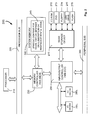
- FIG. 1 or 2 is a diagram illustrating a processor system 100 in which one embodiment of the invention can be practiced.
- the processor system 100 includes a processor 110, a processor bus 120, a memory control hub (MCH) 130, a system memory 140, an input/output control hub (ICH) 150, a peripheral bus 160, a mass storage device 170, and input/output devices 180 1 to 180 N .
- MCH memory control hub
- ICH input/output control hub
- peripheral bus 160 a mass storage device 170
- input/output devices 180 1 to 180 N may include more or less elements than these elements.
- the processor 110 represents a central processing unit of any type of architecture, such as embedded processors, mobile processors, microcontrollers, digital signal processors, super scalar computers, vector processors, single instruction multiple data (SIMD) computers, complex instruction set computers (CISC), reduced instruction set computers (RISC), very long instruction word (VLIW), or hybrid architecture.
- the central processing unit may be an embedded processor in a BluRay player product, a plasma media receiver, or an AV receiver.
- the processor bus 120 provides interface signals to allow the processor 110 to communicate with other processors or devices, e.g., the MCH 130.
- the processor bus 120 may support a uni-processor or multiprocessor configuration.
- the processor bus 120 may be parallel, sequential, pipelined, asynchronous, synchronous, or any combination thereof.
- the MCH 130 provides control and configuration of memory and input/output devices, the system memory 140, and the ICH 150.
- the MCH 130 may be integrated into a chipset that integrates multiple functionalities such as the isolated execution mode, host-to-peripheral bus interface, and memory control.
- the MCH 130 interfaces to the peripheral bus 160.
- peripheral buses such as Peripheral Component Interconnect (PCI), accelerated graphics port (AGP), Industry Standard Architecture (ISA) bus, and Universal Serial Bus (USB), etc.
- PCI Peripheral Component Interconnect
- AGP accelerated graphics port
- ISA Industry Standard Architecture
- USB Universal Serial Bus
- the system memory 140 stores system code (i.e., code to enable the insertion of promotional content within downloaded content or code to enable the downloading of episodic content for download via internet on subscription or renewable rental basis).
- the system memory 140 is typically implemented with dynamic random access memory (DRAM) or static random access memory (SRAM).
- the system memory 140 may include program code or code segments implementing one embodiment of the invention.
- the system memory includes server 145 (including in the Present invention system). Any one of the elements of the device 145 may be implemented by hardware, software, firmware, microcode, or any combination thereof.
- the system memory 140 may also include other programs or data, which are not shown, such as an operating system.
- the server 145 contains program code that, when executed by the processor 110 (or processor 210 as shown in Figure 2 ), causes the processor 110 to perform operations as described below.
- the ICH 150 has a number of functionalities that are designed to support I/O functions.
- the ICH 150 may also be integrated into a chipset together or separate from the MCH 130 to perform I/O functions.
- the ICH 150 may include a number of interface and I/O functions such as PCI bus interface to interface to the peripheral bus 160, processor interface, interrupt controller, direct memory access (DMA) controller, power management logic, timer, system management bus (SMBus), universal serial bus (USB) interface, mass storage interface, low pin count (LPC) interface, etc.
- PCI bus interface to interface to the peripheral bus 160
- processor interface interrupt controller
- DMA direct memory access
- SMB system management bus
- USB universal serial bus
- LPC low pin count
- the mass storage device 170 stores archive information such as code, programs, files, data, applications, and operating systems.
- the mass storage device 170 may include compact disk (CD) ROM 172, a digital video/versatile disk (DVD) 173, floppy drive 174, hard drive 176, flash memory 178, and any other magnetic or optic storage devices.
- the mass storage device 170 provides a mechanism to read machine-accessible media.
- the machine-accessible media may contain computer readable program code to perform tasks as described in the following.
- the I/O devices 180 1 to 180 N may include any I/O devices to perform I/O functions.
- I/O devices 180 1 to 180 N include controllers for input devices (e.g., keyboard, mouse, trackball, pointing device), wired or wireless, media cards (e.g., audio, video, and graphics), network cards, and any other peripheral controllers.
- input devices e.g., keyboard, mouse, trackball, pointing device
- media cards e.g., audio, video, and graphics
- network cards e.g., network cards, and any other peripheral controllers.
- Elements of one embodiment of the invention may be implemented by hardware, firmware, software or any combination thereof.
- the term hardware generally refers to an element having a physical structure such as electronic, electromagnetic, optical, electro-optical, mechanical, electromechanical parts, etc.
- the term software generally refers to a logical structure, a method, a procedure, a program, a routine, a process, an algorithm, a formula, a function, an expression, etc.
- firmware generally refers to a logical structure, a method, a procedure, a program, a routine, a process, an algorithm, a formula, a function, an expression, etc. that is implemented or embodied in a hardware structure (e.g., flash memory, ROM, EROM). Examples of firmware may include microcode, writable control store, and micro-programmed structure. When implemented in software or firmware, the elements of an embodiment of the present invention are essentially the code segments to perform the necessary tasks.
- the software/firmware may include the actual code to carry out the operations described in one embodiment of the invention, or code that emulates or simulates the operations.
- the program or code segments can be stored in a processor or machine accessible medium or transmitted by a computer data signal embodied in a carrier wave, or a signal modulated by a carrier, over a transmission medium.
- the "processor readable or accessible medium” or “machine readable or accessible medium” may include any medium that can store, transmit, or transfer information.
- Examples of the processor readable or machine accessible medium include an electronic circuit, a semiconductor memory device, a read-only memory (ROM), a flash memory, an erasable ROM (EROM), a floppy diskette, a compact disk (CD) ROM, an optical disk, a hard disk, a fiber optic medium, a radio frequency (RF) link, etc.
- the computer data signal may include any signal that can propagate over a transmission medium such as electronic network channels, optical fibers, air, electromagnetic, RF links, etc.
- the code segments may be downloaded via computer networks such as the Internet, Intranet, etc.
- the machine accessible medium may be embodied in an article of manufacture.
- the machine accessible medium may include data that, when accessed by a machine, causes the machine to perform the operations described in the following.
- the machine accessible medium may also include program code embedded therein.
- the program code may include machine-readable code to perform the operations described below.
- data here refers to any type of information that is encoded for machine-readable purposes. Therefore, it may include program, code, data, file, etc.
- FIG. 3 is a block diagram illustrating a present invention in which one embodiment of the present invention can be practiced.
- the present invention server system stores video content including episode contents and ad contents. It is noted that both types of contents include metadata.
- the video content includes content from multiple network providers (i.e., ABC, Disney, FOX, HBO, etc.).
- the video content further includes ads to be inserted before, during, or after the downloading of content.
- the content is downloaded to a user/client via the internet.
- the user/client subscribes a certain program(s)/episode(s) from the Present invention.
- the user/client then downloads the subscribed content into a user/client device.
- the content may be shared with other user/client devices.
- the present invention server system includes both episode content and advertisements (ads) content.
- the episode content and the ads content may be downloaded simultaneously or separately.
- the episode content includes metadata of content and the ads content includes metadata of ads. Also, they may be downloaded per the user/client choice or automatically.
- the downloaded ads content are chosen using metadata of episode content on the device.
- the ads content is inserted at a designated time during the playing of the episode content.
- the metadata of the ads content is used to refresh the ads. In other words, the new ads may be updated for viewing while the old ads may be discarded.
- FIG. 4 is a block diagram illustrating an advertisement insertion in which one embodiment of the present invention can be practiced.
- the advertising data may be categorized into two types: content based and ad based.
- content based type there are ad insertion and ad tags types.
- the ad insertion type uses a list of time-stamped insertion points and the ad tags type uses criteria such as target gender, target age group, and/or mandatory ads, etc.
- the ad tag is used as an activation, for expiration, day part, target gender, target age group, target networks, and/or target shows, etc.
- Advertising data are pre-fetched and stored on the player based upon a set of criteria matching rules.
- ads are played seamlessly at the insertion points.
- Ads may be inserted after the episode content and ads content are downloaded, when there is a playback (existing service: before downloading), and at user/client's device (existing service: at server).
- the episode content may have metadata regarding information on which ads should be shown.
- the client's device may decide ads using ads metadata.
- the user/client watches the episode with the latest ads when refresh ads use metadata of ads.
- the episode content and ads content may be downloaded separately or together at the user's chosen time or automatically.
- the ads are chosen and inserted according to the metadata of the episode content on the device.
- the ads are inserted at a designated time while the episode content is playing.
- Ads are being refreshed using the metadata of ads while old or expired ads may be discarded.
- FIG. 5 is a flowchart illustrating a process for downloading content items with metadata according to one embodiment of the invention.
- the process 500 downloads content items with metadata at step 505.
- the process scans the metadata (step 510) before checking to see whether any required ads at step 515 needs to be inserted. If there is a required ad, then at step 520, the process 500 downloads the required ads before it compiles query criteria from new content metadata at step 525.
- the process 500 queries for ads that match the criteria.
- the process downloads roster of matching ads in the order of relevance (step 535) or priority then continues with downloading ads with ad metadata listed in the roster (step 540).
- the process 500 then stores the ads in a cache at step 545 before the process is terminated.
- the downloaded content in the user/client's cache is ready for playback.
- FIG. 6 is a flowchart illustrating a process for a playback according to one embodiment of the invention.
- the process 600 starts out at step 605 by playing an episode content.
- the episode content is stored in the user/client's device.
- the device checks the metadata of the episode content (step 610) to see if there is any mandatory (obligation) ads (step 615). If yes, at step 620 the process 600 adds mandatory ads to the ads list.
- the ads list is the list of all ads that will be played. Then the process continues to check for any ads requirement (step 625). If there is ads requirement, the process 600 adds ads that meet the requirement to the ads list.
- the process 600 then continues by adding ads other than the mandatory and/or required ads to the device if the ads quota has not been met (step 635).
- the quota may be the number of ads to be inserted or the number of ads to be kept.
- the process 600 decides on the insert point of each ad (step 640).
- the process 600 continues at step 645 to start playing the episode content.
- the process 600 then checks the time period of playing to see whether it is the time of insert point (step 650). If yes, the process 300 inserts ads (step 655) and then continues to play the episode content (665). The process is terminated.
- FIG. 7 is a flowchart illustrating a process for ads refresh according to one embodiment of the invention.
- the process 700 starts out by downloading ads content to the user/client's device at step 705.
- the device checks for the expired date and/or time of each ad using one of the metadata.
- the process 700 then checks to see whether the date and/or time is the expired date and/or time (step 715). If no, the process goes back to step 710 to check for the expired date and/or time and continues from there. Otherwise, the process 700 downloads new ads and replaces the old ads at step 720. The process is then terminated.
- the present invention is a method for download video content via the internet.
- a present invention provides television program content including ads content.
- the contents include metadata.
- the TV program content is provided by cable TV, Satellite TV, IP TV, etc.
- the present invention downloads the content directly into a client/user device(s) where the device(s) has a storage.
- the content may be shared among other user/client's devices via home-networking system (e.g., for home entertainment: TV set, DVD, Blu-ray, AV receiver, HTiB, desktop PC, etc. and for mobile entertainment: portable media player, car DVD, laptop PC, etc.)
- the content may also be downloaded to a portable device such as a navigation system, portable DVD, etc.
- the content is shared among other devices as a seamless integration (see Fig.
- the content includes episode content and ads content. Both contents may be downloaded simultaneously or separately to the user/client device when the user subscribes the content from the Present invention. Each content contains metadata (i.e., metadata of content and metadata of ads). The contents may be stored in the same database or separate database at both the Present invention server system and the user device's storage.
- the ads content may be inserted automatically or at a designated time during a playback of episode content. The type of ads inserted is determined based on certain criteria of the episode content.
- the ads stored in the user/client's device may be refreshed or deleted depending on certain criteria.
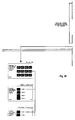
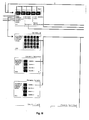
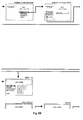
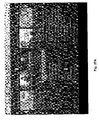
- Figure 8A is a block diagram illustrating a settings and auto login screen.
- the settings feature allows a user to select and edit the auto login and auto buy options. For example, a user can set the current account to automatically login when Present invention is started. Also, the user can set/edit on the automatically buy of the video content.
- Figure 8B is a block diagram illustrating account information.
- the account information includes, inter alia, account name, account status, current number of subscriptions, etc.
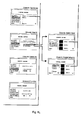
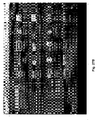
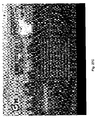
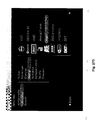
- a user can select/edit the options show on the screens as shown on Figures 8A-8P .
- a user can manage his/her favorite channels, shows, personal information, account information (i.e., payment history, summary, etc.).
- a user has an option to select featured shows, subscribed shows, favorite shows.
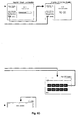
- Figure 8H is a block diagram illustrating the present invention login main screen.
- a user can select to login in using an account and password. Otherwise, a user can login as a guest or register as a registered user.
- a user can select to pay a subscription during the registration process.
- User can subscribe content per channel or season combination thereof. Once the content (i.e., episode content, ads content) is downloaded via the internet into a local storage, user can view the content without internet connection. Furthermore, the content can be shared among other networking devices.
- Ads may be inserted after the downloading of the content, in playback mode (i.e., existing service before download) or at a user's device (i.e., existing service at server).
- the episode content(s) has metadata regarding the information on which ads should be shown.
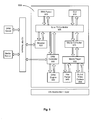
- FIG. 9 is a block diagram illustrating the present invention system architecture in which one embodiment of the invention can be practiced.
- the system 900 includes a controller 905, a parser 910 (i.e., RSS), a GUI 915, a browser 920, a media controller 925, a DRM controller 930, the media player 935, a DRM engine 940, a file parser 945, and an audio/video codecs 950.
- the system interfaces with an OS abstraction layer, and a server (i.e., DRM) and a media server via the TCPIIP network.
- the present invention controller 905 interacts with all other modules in the system as shown in Fig. 10 .
- the present invention controller is constantly aware of the state of the different modules.
- the present invention controller 905 initializes all the modules. Each module sends messages to the present invention controller on the status of the application or the action performed by a user. The present invention controller then determines the next set of actions that need to be performed. Module oriented decisions is taken by the module itself. For example, the media player itself takes aspect ratio decision.
- the browser 920 is an open source web browser having complete browsing capabilities.
- the browser 920 is embedded in the present invention GUI. This browser is capable of browsing all the based web applications (e.g., http, etc.) and also has file download capability.
- the browser 920 interacts with the media server that has web server.
- the present invention controller 905 initializes the browser, sends commands to download files and close the browser on exit.
- FIG 11 is a block diagram illustrating the function of the media controller in which one embodiment of the invention can be practiced.
- the media controller 925 is an abstraction layer above the media player.
- the media controller 925 sends the different player commands to the media player. It is a wrapper above the media player 935 so that the present invention application is independent of the media player and a different media player can be plugged in without disturbing the overall system.
- the present invention controller issues the player related commands to the media controller 925 and the media controller 925 responds to the status.
- the media player module 935 is capable of playing the video and audio data.
- the media player module may be integrated with an audio/video conversion tool (i.e., FFMpeg) module which provides the file format parsers and audio/video decoders.
- FFMpeg audio/video conversion tool
- the media player 935 parses the file for data using the file parsers, decodes the data using the decoder and then plays out the decoded data.
- the basic functionality of the controller 930 is to authenticate the download transactions.
- the key business transactions are content purchase, rental and/or subscription.
- This module may be provided by a third party.
- This client application interacts with the server (i.e., DRM server) where the authentication occurs.
- the present invention controller 905 sends the authentication data to the client (i.e., DRM client).
- the client in turn, interacts with the server.
- the response is then sent back to the present invention controller 905.
- the GUI (Graphical User Interface) 915 provides a framework of different windows to embed the browser, media player and other Ul elements.
- the GUI may be based on GTK+, which is a multi-platform toolkit for creating graphical user interfaces.
- the present invention controller 905 initializes the GUI framework.
- the GUI framework captures different mouse, key events, virtual devices or the like, and pass this information to the present invention controller 905.
- the present invention controller also sends Ul requests (e.g., hide window, show window, etc.) to the GUI.
- the independent modules like browser 920 and client 940 interact with the respective servers via TCP/IP (Transmission Control Protocol/Internet Protocol) network.
- the OS (Operating System) abstraction layer provides a set of generic system API's which is used by the independent modules. This layer interfaces with the OS and makes use of the platform specific system API's.
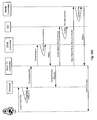
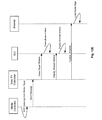
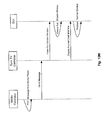
- Figure 12A is a block diagram illustrating the sequence of the present invention client launch in which one embodiment of the invention can be practiced.
- the sequence of present invention client launch is as follows:
- FIG. 12B is a block diagram illustrating the sequence of the HTML (Hypertext Markup Language) browsing in which one embodiment of the invention can be practiced.
- HTML Hypertext Markup Language
- the browser is loaded with the home page and is ready for browsing.
- Figure 12C is a block diagram illustrating the sequence of the media file selection in which one embodiment of the invention can be practiced.
- the sequence of media file selection is as follows:
- the HTML page with links to video files is available in the browser.
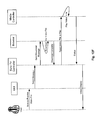
- Figure 12D is a block diagram illustrating the sequence of the media file playback in which one embodiment of the invention can be practiced.
- One example of the sequence of media file playback is as follows:
- Media file is being played in the media window of the GUI.
- Figure 12E is a block diagram illustrating the sequence of the media file playback completion in which one embodiment of the invention can be practiced.
- One example of the sequence of media playback completion is as follows:
- Figure 12F is a block diagram illustrating the sequence of the preview media file in which one embodiment of the invention can be practiced.
- One example of the sequence of the preview of media file is as follows:
- FIG. 12G is a block diagram illustrating the sequence of the RSS (Really Simple Syndication) link selection in which one embodiment of the invention can be practiced.
- RSS Really Simple Syndication
- Figure 12H is a block diagram illustrating the sequence of the selection of list widget selection in which one embodiment of the invention can be practiced.
- One example of the selection of list widget selection is as follows:
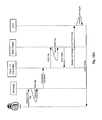
- Figure 12I is a block diagram illustrating the sequence of the library mode in which one embodiment of the invention can be practiced.
- One example of a sequence of library mode is as follows:
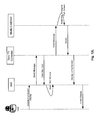
- Figure 12J is a block diagram illustrating the media playback in library mode in which one embodiment of the invention can be practiced.
- One example of the sequence of media playback in library mode is as follows:
- Figure 12K is a block diagram illustrating the sequence of the video completion in library mode in which one embodiment of the invention can be practiced.
- One example of a sequence of media playback completion in library mode is as follows:
- Figure 12L is a block diagram illustrating a sequence of full screen video display in which one embodiment of the invention can be practiced.
- One example of the sequence of full screen video display is as follows:
- Figure 12M is a block diagram illustrating the sequence of the full screen completion in which one embodiment of the invention can be practiced.
- sequence of a full screen video completion is as follows:
- FIG 13 is a block diagram illustrating a browser interface in which one embodiment of the present invention can be practiced. This section addresses the browser module and its interface with the present invention media controller.
- the browser module provides all the functionalities for browsing HTTP content and the like. It also has the capabilities to download files.
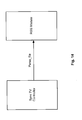
- FIG 14 is a block diagram illustrating a RSS module interface in which one embodiment of the present invention can be practiced. This section addresses the RSS module and its interface with the present invention media controller.
- the RSS module is capable of parsing an RSS file and creating a data structure with the parsed data.
- FIG 15 is a block diagram illustrating media controller interfaces in which one embodiment of the present invention can be practiced. This section explains the interfaces exposed by the media controller that can be called by the present invention controller.
- Media controller is a thin adaptation layer that sits on top of the media player and provides all the functionalities of the media player as interfaces.
- the media controller interacts with present invention controller and the media player.
- the media player in turn interacts with the file parsers and decoders.
- the file parser interacts with the other file parsers (e.g. MP4).
- the media codecs interacts with the video decoder (e.g.
- the media controller also includes APis.
- the following API's are the interface API's between the media player and present invention controller.
- FIG 16 is a block diagram of the GUI interface illustrating the different components of the main GUI window in which one embodiment of the present invention can be practiced.
- the present invention application GUI is based on the GTK library.
- GTK+ is a multi platform toolkit for creating graphical user interfaces.
- the user interaction happens in the main present invention application and is captured as GTK based events.
- the different components that form the main present invention GUI windows are:
- FIG 17 is a block diagram illustrating a framework window in which one embodiment of the invention can be practiced.
- the framework window is the root window. All the other windows are child windows of this window. The parent child relationship between the different windows is as shown.
- Create-GUI - This API is called by the present invention controller to create the main present invention GUI window and display the window. This function creates all the main windows using the different widget pointers sent as parameters. Examples of parameters and their functions are shown below:
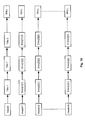
- FIG 18 is a block diagram illustrating data structure that is used to store the RSS file parsed data in which one embodiment of the present invention can be practiced.
- the figure shows one linked list holds the title details of the RSS data.
- Another array of linked lists holds the entries of the RSS data.
- Embedded Meta Data the meta data are embedded in both the content files and ads files.
- the meta data defines the relationship between the content files and ads files (i.e., new meta data defines which ads to be changed, replaced, etc.)
- FIG 19 shows a block diagram illustrating advertising data in which one embodiment in which one embodiment of the present invention can be practiced.
- the ads are pre-fetched and stored on a player based on a set of criteria matching rules.
- the new ads may be video files (e.g., MP4 video files).
- ad tags may be time-stamped (e.g., day part), target gender, target age group, target network, etc.
- the TV shows may be a video file (e.g., MP4 video file).
- the TV show may have network ID and ad tags (e.g., target gender, target age group, etc.)
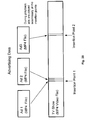
- FIG 20 shows a block diagram illustrating ads insertion in which one embodiment of the present invention can be practiced.
- Ads are inserted in the TV show (i.e., MP4 video file) at various insertion points (e.g., insertion point 1). During playback ads are played seamlessly at the insertion points.
- Figure 21 shows a sample screen illustrating storefront browsing in which one embodiment of the present invention can be practiced.
- the storefront access interface includes storefront browsing (i.e., CE-HTML as defined in CEA-2014, HTTP GET and POST methods), episode browsing (e.g., RSS via HTTP GET), and content download (e.g., HTTP GET to retrieve torrent files and BitTorrent protocol to retrieve content).
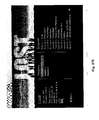
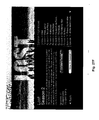
- Figures 27A-F show some samples of the storefront screens.
- FIG. 22 shows a sample screen illustrating episode display in which one embodiment of the present invention can be practiced.
- each RSS feed represents one season of a show.
- Each ⁇ item> tag in the RSS feed data represents one episode of the season.
- the backend service interface provides interface of search TV shows and podcasts, open EPG (electronic program guide) based, and data queries.
- the search TV shows and podcasts have backend service TLS certificate.
- the open EPG based is CEA-2033 compliant, has direct access scenario, has GET capabilities and GET data and has extensions for present invention.
- the data queries may be a template queries, has robust search capabilities by network, show title, description, credits, date, etc., and includes episode data available via RSS.
- the open EPG extensions includes additional tags in query results such as present invention categories, RSS feed URL, additional image URLs and handling seasons.
- the transaction interface includes account setup via SOAP (??) (e.g., soap action "create_account", transactions via HTTP GET (i.e., action URL (including product + transaction type), and has player TLS certification.
- SOAP soap action "create_account”
- HTTP GET i.e., action URL (including product + transaction type)
- the transaction types may be a purchase type (e.g., pay for download immediately), subscribe type (e.g., set payment and request for download) and no transaction type (e.g., download only), which requires pre-existing subscription.
- the elements used to create an account for an account setup may be one or combination of any of user names, password, account name, first and last names of subscriber, billing address, phone, email address, credit card number including expiration date, name on card, type of card (e.g., Visa, Master Card, American Express, etc.) and the medium to send the statement to (i.e., via fax, email, or land address).
- FIG 23 shows a block diagram illustrating a transaction flow in which one embodiment of the present invention can be practiced.
- the transaction flow is between the client (i.e., subscriber) and the service provider (i.e., Present invention).
- the service provider side receives an input from the client side a purchase or a subscription (e.g., via HTTP GET).
- the service provider side then sends a response (may be with XML data) to the client side.
- the response may include a transaction result or error information (i.e., "no account”).
- the client sends a request torrent file to the service provider side.
- the service provider side sends "get torrent" files and begins retrieval to the client side.
- the present invention uses Bit Torrent Protocol in which present invention manages the trackers.
- the downloading of content includes downloading video files and ads video files. It also includes secure data support such as meta information file extension (e.g., DRM-protected content key and rights, secure peer ID, etc.). Peers are authenticated with each other and file is reassembled with DRM data.
- Figure 24 is a block diagram illustrating a download example in which one embodiment of the present invention can be practiced.
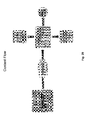
- the client e.g., subscriber
- provider e.g., present invention
- the provider side includes plurality of peers.
- the communication between the two sides shows on figure also shows assemble chunks w/DRM data.
- Figure 29 shows a block diagram illustrating the content flow in which one embodiment of the invention can be practiced.
- the video file(s) (episodes and/or advertisements) are downloaded from present invention to a storage of an authorized player via a medium (e.g., internet).
- the downloaded video files on the authorized player may be shared among other devices (e.g., DTCP-IP player, disc., portable player, etc.
- Figure 30 shows a list of sample of the present invention contents.
- the present invention includes open standards:
- Present invention may impose some TV content restrictions such as the number of home players (e.g., PCs, TVs, Blu-ray players, etc) can be used per account.
- the device may get authorization via Present invention.
- There may be a restriction via playback, not copy, etc.
- the present invention may filter all transactions and authorizations.
- Other restrictions may be applied to the burn content to disc. (e.g., one "copy never" DVD burn per item) and subscriber may have to convert subscription to purchase.
- the number of portable and/or car devices for playback and/or download of content from an authorized player may be restricted also.
- the portable devices may not browse storefront, but only when they are in sync with home players.
- the output restrictions may include:
- a client may buy subscription per channel, per program series or any combination thereof.
- the subscriber may then download and view any episode of any season including commercials/ads.
- the downloaded files or subscribed content may be downloaded or used during subscription.
- the content is disabled when subscription is cancelled or expired.
- the present invention pay subscriber fee (e.g., fixed monthly) to content owner.
- the advertisement spots are dynamically inserted by the player and can occupied up to a certain (e.g., 20%) of the playback time.
- the ad inventory is downloaded and cached on player with matching content meta data. Expired ads may be replaced with new ads.
- a sell-through may include a purchase of individual TV episodes or season bundles with or without commercials.
- the subscription content may be up-sold to full purchase. Some purchased content may allow one-time DVD burn.
Landscapes
- Engineering & Computer Science (AREA)
- Multimedia (AREA)
- Signal Processing (AREA)
- Databases & Information Systems (AREA)
- Business, Economics & Management (AREA)
- Marketing (AREA)
- Information Transfer Between Computers (AREA)
- Two-Way Televisions, Distribution Of Moving Picture Or The Like (AREA)
Applications Claiming Priority (3)
| Application Number | Priority Date | Filing Date | Title |
|---|---|---|---|
| US88357607P | 2007-01-05 | 2007-01-05 | |
| US11/957,660 US20080114861A1 (en) | 2007-01-05 | 2007-12-17 | Method of inserting promotional content within downloaded video content |
| EP08713428A EP2116054A2 (de) | 2007-01-05 | 2008-01-03 | Verfahren zum einfügen von werbeinhalten in einen heruntergeladenen videoinhalt |
Related Parent Applications (2)
| Application Number | Title | Priority Date | Filing Date |
|---|---|---|---|
| EP08713428.4 Division | 2008-01-03 | ||
| EP08713428A Division EP2116054A2 (de) | 2007-01-05 | 2008-01-03 | Verfahren zum einfügen von werbeinhalten in einen heruntergeladenen videoinhalt |
Publications (2)
| Publication Number | Publication Date |
|---|---|
| EP2413601A1 true EP2413601A1 (de) | 2012-02-01 |
| EP2413601B1 EP2413601B1 (de) | 2014-12-03 |
Family
ID=39370486
Family Applications (2)
| Application Number | Title | Priority Date | Filing Date |
|---|---|---|---|
| EP11187176.0A Active EP2413601B1 (de) | 2007-01-05 | 2008-01-03 | Verfahren zum Einfügen von Werbeinhalten in einen heruntergeladenen Videoinhalt |
| EP08713428A Ceased EP2116054A2 (de) | 2007-01-05 | 2008-01-03 | Verfahren zum einfügen von werbeinhalten in einen heruntergeladenen videoinhalt |
Family Applications After (1)
| Application Number | Title | Priority Date | Filing Date |
|---|---|---|---|
| EP08713428A Ceased EP2116054A2 (de) | 2007-01-05 | 2008-01-03 | Verfahren zum einfügen von werbeinhalten in einen heruntergeladenen videoinhalt |
Country Status (7)
| Country | Link |
|---|---|
| US (1) | US20080114861A1 (de) |
| EP (2) | EP2413601B1 (de) |
| JP (1) | JP2010516108A (de) |
| CN (1) | CN101682734B (de) |
| AU (1) | AU2008205213B2 (de) |
| CA (1) | CA2674346C (de) |
| WO (1) | WO2008086070A2 (de) |
Families Citing this family (72)
| Publication number | Priority date | Publication date | Assignee | Title |
|---|---|---|---|---|
| US8574074B2 (en) | 2005-09-30 | 2013-11-05 | Sony Computer Entertainment America Llc | Advertising impression determination |
| US8751310B2 (en) | 2005-09-30 | 2014-06-10 | Sony Computer Entertainment America Llc | Monitoring advertisement impressions |
| US8763157B2 (en) | 2004-08-23 | 2014-06-24 | Sony Computer Entertainment America Llc | Statutory license restricted digital media playback on portable devices |
| US20070118425A1 (en) | 2005-10-25 | 2007-05-24 | Podbridge, Inc. | User device agent for asynchronous advertising in time and space shifted media network |
| US8676900B2 (en) | 2005-10-25 | 2014-03-18 | Sony Computer Entertainment America Llc | Asynchronous advertising placement based on metadata |
| US10657538B2 (en) | 2005-10-25 | 2020-05-19 | Sony Interactive Entertainment LLC | Resolution of advertising rules |
| US11004089B2 (en) | 2005-10-25 | 2021-05-11 | Sony Interactive Entertainment LLC | Associating media content files with advertisements |
| CN101438526B (zh) | 2006-05-05 | 2013-03-13 | 美国索尼电脑娱乐公司 | 广告旋转 |
| US9071729B2 (en) * | 2007-01-09 | 2015-06-30 | Cox Communications, Inc. | Providing user communication |
| US9135334B2 (en) * | 2007-01-23 | 2015-09-15 | Cox Communications, Inc. | Providing a social network |
| US20090049473A1 (en) * | 2007-01-23 | 2009-02-19 | Cox Communications, Inc. | Providing a Video User Interface |
| US7698263B2 (en) * | 2007-01-23 | 2010-04-13 | Cox Communications, Inc. | Providing a lateral search |
| US20090313664A1 (en) * | 2007-01-23 | 2009-12-17 | Cox Communications, Inc. | Providing a Video User Interface |
| US20090063994A1 (en) * | 2007-01-23 | 2009-03-05 | Cox Communications, Inc. | Providing a Content Mark |
| US8869191B2 (en) | 2007-01-23 | 2014-10-21 | Cox Communications, Inc. | Providing a media guide including parental information |
| US8789102B2 (en) * | 2007-01-23 | 2014-07-22 | Cox Communications, Inc. | Providing a customized user interface |
| US8806532B2 (en) | 2007-01-23 | 2014-08-12 | Cox Communications, Inc. | Providing a user interface |
| US20090037423A1 (en) * | 2007-07-31 | 2009-02-05 | Cisco Technology, Inc. | Conducting transactions of electronic files |
| JP4998197B2 (ja) * | 2007-10-15 | 2012-08-15 | ソニー株式会社 | コンテンツ取得装置、プログラム、コンテンツ取得方法、およびコンテンツ取得システム |
| WO2009096684A2 (ko) | 2008-01-29 | 2009-08-06 | Samsung Electronics Co,. Ltd. | 버디를 위한 컨텐츠 레코딩 제어 방법 및 그 장치 |
| US20090193455A1 (en) * | 2008-01-29 | 2009-07-30 | Samsung Electronics Co., Ltd. | Information storage medium and method for providing additional contents based on trigger, and digital broadcast reception apparatus |
| US8973028B2 (en) * | 2008-01-29 | 2015-03-03 | Samsung Electronics Co., Ltd. | Information storage medium storing metadata and method of providing additional contents, and digital broadcast reception apparatus |
| US8769558B2 (en) * | 2008-02-12 | 2014-07-01 | Sony Computer Entertainment America Llc | Discovery and analytics for episodic downloaded media |
| EP2271393B1 (de) * | 2008-03-28 | 2015-06-17 | St. Jude Medical AB | Nahthülse |
| WO2009126879A2 (en) * | 2008-04-10 | 2009-10-15 | Leo Burnett Company, Inc. | Portable promotional content and interface apparatus |
| US8266248B2 (en) * | 2008-04-11 | 2012-09-11 | Nokia Corporation | Use of network composition descriptors for determining product compatibility |
| US8359612B2 (en) | 2008-08-13 | 2013-01-22 | Tivo Inc. | Content distribution system using transportable memory devices |
| CN101662647B (zh) * | 2008-08-26 | 2014-02-12 | 松下电器产业株式会社 | 终端设备、音/视频系统及其方法 |
| KR101014788B1 (ko) * | 2008-12-11 | 2011-02-14 | 삼성전자주식회사 | 서비스에 이용되는 개인정보를 안전하게 전송하기 위한 모바일 시스템, 서비스 시스템 및 서비스 제공 방법 |
| WO2010073530A1 (ja) * | 2008-12-26 | 2010-07-01 | 日本電気株式会社 | ダウンロードシステム、情報処理端末、管理装置、それに用いる方法およびプログラム |
| US20100235878A1 (en) * | 2009-03-13 | 2010-09-16 | Creative Technology Ltd. | Method and system for file distribution |
| US9124631B2 (en) * | 2009-05-08 | 2015-09-01 | Google Inc. | Content syndication in web-based media via ad tagging |
| GB2472264B (en) * | 2009-07-31 | 2014-12-17 | British Sky Broadcasting Ltd | Media substitution system |
| US8763090B2 (en) | 2009-08-11 | 2014-06-24 | Sony Computer Entertainment America Llc | Management of ancillary content delivery and presentation |
| US8369686B2 (en) * | 2009-09-30 | 2013-02-05 | Microsoft Corporation | Intelligent overlay for video advertising |
| US8973049B2 (en) * | 2009-12-04 | 2015-03-03 | Cox Communications, Inc. | Content recommendations |
| US8832749B2 (en) * | 2010-02-12 | 2014-09-09 | Cox Communications, Inc. | Personalizing TV content |
| EP2362649A1 (de) * | 2010-02-16 | 2011-08-31 | Axel Springer Digital TV Guide GmbH | Adaptive Platzierung von Zusatzmedien in Empfehlersystemen |
| US20110251896A1 (en) * | 2010-04-09 | 2011-10-13 | Affine Systems, Inc. | Systems and methods for matching an advertisement to a video |
| US9167302B2 (en) | 2010-08-26 | 2015-10-20 | Cox Communications, Inc. | Playlist bookmarking |
| US8364013B2 (en) | 2010-08-26 | 2013-01-29 | Cox Communications, Inc. | Content bookmarking |
| US8789117B2 (en) | 2010-08-26 | 2014-07-22 | Cox Communications, Inc. | Content library |
| US20120072524A1 (en) * | 2010-09-20 | 2012-03-22 | Cisco Technology, Inc. | System and method for recording data in a network environment |
| CN102137291B (zh) * | 2010-09-25 | 2013-11-06 | 华为技术有限公司 | 一种广告选择方法及一种互联网协议电视iptv平台 |
| US9058391B2 (en) | 2011-03-14 | 2015-06-16 | Slangwho, Inc. | System and method for transmitting a feed related to a first user to a second user |
| US8560453B2 (en) | 2011-06-30 | 2013-10-15 | Intel Corporation | Method and apparatus for dynamic, real-time ad insertion based on meta-data within a hardware based root of trust |
| CN102340694B (zh) * | 2011-10-27 | 2014-11-05 | Tcl集团股份有限公司 | 智能电视及智能电视广告实现方法和系统 |
| US20130318193A1 (en) * | 2012-05-24 | 2013-11-28 | Ari Koli | Method and apparatus for managing content and associated information sourced from multiple platforms |
| UA102154U (uk) * | 2012-08-03 | 2015-10-26 | Багатофункціональна система представлення кінцевому користувачу мультимедійного вмісту оптимальної якості | |
| WO2014028070A1 (en) | 2012-08-17 | 2014-02-20 | Flextronics Ap, Llc | Channel changer for intelligent television |
| US11368760B2 (en) | 2012-08-17 | 2022-06-21 | Flextronics Ap, Llc | Applications generating statistics for user behavior |
| US9203813B2 (en) * | 2013-03-15 | 2015-12-01 | Panasonic Intellectual Property Management Co., Ltd. | Content distribution method, content distribution system, source device, and sink device |
| US8718445B1 (en) | 2013-09-03 | 2014-05-06 | Penthera Partners, Inc. | Commercials on mobile devices |
| CN103702176B (zh) * | 2013-12-09 | 2017-02-15 | 乐视致新电子科技(天津)有限公司 | 一种基于hls协议的视频下载方法及其装置 |
| US20150208354A1 (en) * | 2014-01-23 | 2015-07-23 | Nvidia Corporation | System and method for extending battery life of a mobile device providing content wirelessly to a remote display |
| CN104615355A (zh) * | 2014-03-19 | 2015-05-13 | 腾讯科技(北京)有限公司 | 多媒体数据的展示控制方法及装置 |
| US20150325268A1 (en) * | 2014-05-12 | 2015-11-12 | Penthera Partners, Inc. | Downloading videos with commercials to mobile devices |
| JP2015225677A (ja) * | 2014-05-26 | 2015-12-14 | 船井電機株式会社 | コンテンツ再生装置および広告データ配信システム |
| US9961373B2 (en) * | 2014-06-27 | 2018-05-01 | Panasonic Avionics Corporation | Vehicle entertainment system |
| CN104159132B (zh) * | 2014-08-22 | 2018-11-20 | 华为软件技术有限公司 | 视频定制化服务的实现方法及装置 |
| CN104717566A (zh) * | 2015-04-06 | 2015-06-17 | 丁铁梅 | 一种视频展示方法和设备 |
| CN105007537A (zh) * | 2015-07-28 | 2015-10-28 | Tcl集团股份有限公司 | 一种智能电视开机动画控制方法及系统 |
| US10638179B2 (en) | 2015-08-06 | 2020-04-28 | At&T Intellectual Property I, L.P. | Content insertion in streaming media content |
| WO2017113049A1 (zh) * | 2015-12-28 | 2017-07-06 | 王晓光 | 一种视频广告的图像传输方法及系统 |
| US10348832B2 (en) * | 2016-07-29 | 2019-07-09 | Panasonic Avionics Corporation | Methods and systems for sharing content on a transportation vehicle |
| US11166085B2 (en) * | 2017-04-26 | 2021-11-02 | Google Llc | Generating media content playlists including interstitials combined with media content items |
| US10582229B2 (en) * | 2018-02-23 | 2020-03-03 | Rovi Guides, Inc. | Systems and methods for managing recorded media assets through advertisement insertion |
| US11792491B2 (en) | 2020-09-30 | 2023-10-17 | Snap Inc. | Inserting ads into a video within a messaging system |
| US11694444B2 (en) | 2020-09-30 | 2023-07-04 | Snap Inc. | Setting ad breakpoints in a video within a messaging system |
| US11856255B2 (en) | 2020-09-30 | 2023-12-26 | Snap Inc. | Selecting ads for a video within a messaging system |
| KR102948326B1 (ko) * | 2020-11-13 | 2026-04-03 | 삼성전자주식회사 | 광고 정보를 제공하는 전자 장치 및 그의 제어 방법 |
| US11202130B1 (en) * | 2021-01-07 | 2021-12-14 | International Business Machines Corporation | Offline video presentation |
Citations (7)
| Publication number | Priority date | Publication date | Assignee | Title |
|---|---|---|---|---|
| US20020083443A1 (en) * | 2000-08-31 | 2002-06-27 | Eldering Charles A. | Advertisement distribution system for distributing targeted advertisements in television systems |
| US20020092019A1 (en) * | 2000-09-08 | 2002-07-11 | Dwight Marcus | Method and apparatus for creation, distribution, assembly and verification of media |
| US20030097657A1 (en) * | 2000-09-14 | 2003-05-22 | Yiming Zhou | Method and system for delivery of targeted programming |
| US20030149975A1 (en) * | 2002-02-05 | 2003-08-07 | Charles Eldering | Targeted advertising in on demand programming |
| US20040221308A1 (en) * | 2003-01-07 | 2004-11-04 | Cuttner Craig D. | Integrated media viewing environment |
| WO2005086865A2 (en) * | 2004-03-09 | 2005-09-22 | Schiller Jay B | Digital ad insertion for video-on-demand |
| US20060287915A1 (en) * | 2005-01-12 | 2006-12-21 | Boulet Daniel A | Scheduling content insertion opportunities in a broadcast network |
Family Cites Families (14)
| Publication number | Priority date | Publication date | Assignee | Title |
|---|---|---|---|---|
| US20030101092A1 (en) * | 1998-05-27 | 2003-05-29 | William Fuller | Method for software distribution and compensation with replenishable advertisements |
| JP2001256150A (ja) * | 2000-03-14 | 2001-09-21 | Sanyo Electric Co Ltd | コンテンツ情報及び広告情報の送受信システム |
| JP2001285743A (ja) * | 2000-04-03 | 2001-10-12 | Nec Corp | インターネットtv及びインターネットtvを使用した広告方法 |
| JP2003018486A (ja) * | 2001-06-28 | 2003-01-17 | Toshiba Corp | デジタル放送システムとその放送局及び放送受信装置 |
| JP2003018517A (ja) * | 2001-07-05 | 2003-01-17 | Hitachi Ltd | 放送番組録画予約システム、これに用いる装置並びに放送番組録画予約方法 |
| JP4005820B2 (ja) * | 2002-02-21 | 2007-11-14 | 株式会社東芝 | 電子商品流通システム、電子商品流通方法及びプログラム |
| JP2003316689A (ja) * | 2002-04-22 | 2003-11-07 | Ryoin Co Ltd | 広告装置及び広告方法 |
| US20050055718A1 (en) * | 2003-09-05 | 2005-03-10 | Stone Christopher J. | Peer-to-peer architecture for sharing video on demand content |
| JP2005156996A (ja) * | 2003-11-26 | 2005-06-16 | Pioneer Electronic Corp | 情報記録再生端末装置、広告情報配信サーバ、広告情報配信システム、広告情報配信方法、コンテンツデータ再生プログラム、広告情報配信プログラム及び情報記録媒体 |
| JP2005197944A (ja) * | 2004-01-06 | 2005-07-21 | Toppan Printing Co Ltd | 情報表示支援装置およびプログラム |
| US7716248B2 (en) * | 2005-05-18 | 2010-05-11 | Yume Inc. | Method and system to enable dynamic modification of metadata in content |
| US20070094363A1 (en) * | 2005-10-25 | 2007-04-26 | Podbridge, Inc. | Configuration for ad and content delivery in time and space shifted media network |
| US8566865B2 (en) * | 2006-03-07 | 2013-10-22 | Sony Computer Entertainment America Llc | Dynamic insertion of cinematic stage props in program content |
| US20080010117A1 (en) * | 2006-06-14 | 2008-01-10 | Microsoft Corporation | Dynamic advertisement insertion in a download service |
-
2007
- 2007-12-17 US US11/957,660 patent/US20080114861A1/en not_active Abandoned
-
2008
- 2008-01-03 EP EP11187176.0A patent/EP2413601B1/de active Active
- 2008-01-03 JP JP2009544965A patent/JP2010516108A/ja active Pending
- 2008-01-03 AU AU2008205213A patent/AU2008205213B2/en active Active
- 2008-01-03 CA CA2674346A patent/CA2674346C/en active Active
- 2008-01-03 WO PCT/US2008/050070 patent/WO2008086070A2/en not_active Ceased
- 2008-01-03 EP EP08713428A patent/EP2116054A2/de not_active Ceased
- 2008-01-03 CN CN200880007166.9A patent/CN101682734B/zh not_active Expired - Fee Related
Patent Citations (7)
| Publication number | Priority date | Publication date | Assignee | Title |
|---|---|---|---|---|
| US20020083443A1 (en) * | 2000-08-31 | 2002-06-27 | Eldering Charles A. | Advertisement distribution system for distributing targeted advertisements in television systems |
| US20020092019A1 (en) * | 2000-09-08 | 2002-07-11 | Dwight Marcus | Method and apparatus for creation, distribution, assembly and verification of media |
| US20030097657A1 (en) * | 2000-09-14 | 2003-05-22 | Yiming Zhou | Method and system for delivery of targeted programming |
| US20030149975A1 (en) * | 2002-02-05 | 2003-08-07 | Charles Eldering | Targeted advertising in on demand programming |
| US20040221308A1 (en) * | 2003-01-07 | 2004-11-04 | Cuttner Craig D. | Integrated media viewing environment |
| WO2005086865A2 (en) * | 2004-03-09 | 2005-09-22 | Schiller Jay B | Digital ad insertion for video-on-demand |
| US20060287915A1 (en) * | 2005-01-12 | 2006-12-21 | Boulet Daniel A | Scheduling content insertion opportunities in a broadcast network |
Also Published As
| Publication number | Publication date |
|---|---|
| CA2674346C (en) | 2016-04-19 |
| CN101682734B (zh) | 2012-07-04 |
| US20080114861A1 (en) | 2008-05-15 |
| CA2674346A1 (en) | 2008-07-17 |
| AU2008205213B2 (en) | 2011-09-08 |
| EP2413601B1 (de) | 2014-12-03 |
| JP2010516108A (ja) | 2010-05-13 |
| EP2116054A2 (de) | 2009-11-11 |
| CN101682734A (zh) | 2010-03-24 |
| AU2008205213A1 (en) | 2008-07-17 |
| WO2008086070A2 (en) | 2008-07-17 |
| WO2008086070A3 (en) | 2008-09-04 |
Similar Documents
| Publication | Publication Date | Title |
|---|---|---|
| EP2413601B1 (de) | Verfahren zum Einfügen von Werbeinhalten in einen heruntergeladenen Videoinhalt | |
| US11924518B2 (en) | Methods and systems of facilitating sharing of information among service providers | |
| KR101774039B1 (ko) | 온라인 소셜 네트워크에 대한 자동적 미디어 자산 업데이트 | |
| US20140006951A1 (en) | Content provision | |
| US20110246471A1 (en) | Retrieving video annotation metadata using a p2p network | |
| US20120284744A1 (en) | Automated playlist generation | |
| CA2659042A1 (en) | Systems and methods for interaction prompt initiated video advertising | |
| JP2010503915A (ja) | ピアツーピア・メディア配布システムおよび方法 | |
| US20060159366A1 (en) | System for rapid delivery of digital content via the internet | |
| US20150012416A1 (en) | Systems and methods for selecting transaction conditions based on environmental factors | |
| JP2013520720A (ja) | インターネット上でコンテンツを発行するためのシステムおよび方法 | |
| CN102802040A (zh) | 第二显示装置与社交网络馈送的交互 | |
| US20140245334A1 (en) | Personal videos aggregation | |
| AU2003234144A1 (en) | Supporting common interactive television functionality through presentation engine syntax | |
| US20120173754A1 (en) | System and method for interfacing content playback devices with network sites to supplement content playback | |
| US20250267329A1 (en) | Methods and systems for displaying content during a loading event | |
| US9774913B1 (en) | Methods and systems of recommending media assets to users viewing over-the-top content | |
| KR101700040B1 (ko) | 이미지 기반 동영상 콘텐츠 제공 방법 및 그 시스템 | |
| US20160165203A1 (en) | Method and System for Delivery of Content Over Communication Networks | |
| US20160150257A1 (en) | Systems and methods for creating and broadcasting a channel to one or more device | |
| EP1377058A2 (de) | E-Kommerz-Erleichterung für Rundfunkdienste | |
| WO2022060587A1 (en) | Providing alternative advertising content | |
| HK1061327A (en) | E-commerce facilitation for broadcast services |
Legal Events
| Date | Code | Title | Description |
|---|---|---|---|
| AC | Divisional application: reference to earlier application |
Ref document number: 2116054 Country of ref document: EP Kind code of ref document: P |
|
| AK | Designated contracting states |
Kind code of ref document: A1 Designated state(s): AT BE BG CH CY CZ DE DK EE ES FI FR GB GR HR HU IE IS IT LI LT LU LV MC MT NL NO PL PT RO SE SI SK TR |
|
| PUAI | Public reference made under article 153(3) epc to a published international application that has entered the european phase |
Free format text: ORIGINAL CODE: 0009012 |
|
| 17P | Request for examination filed |
Effective date: 20120713 |
|
| 17Q | First examination report despatched |
Effective date: 20120814 |
|
| REG | Reference to a national code |
Ref country code: DE Ref legal event code: R079 Ref document number: 602008035746 Country of ref document: DE Free format text: PREVIOUS MAIN CLASS: H04N0007173000 Ipc: H04N0021845000 |
|
| GRAP | Despatch of communication of intention to grant a patent |
Free format text: ORIGINAL CODE: EPIDOSNIGR1 |
|
| RIC1 | Information provided on ipc code assigned before grant |
Ipc: H04N 5/85 20060101ALI20140521BHEP Ipc: H04N 21/81 20110101ALI20140521BHEP Ipc: H04N 21/2668 20110101ALI20140521BHEP Ipc: H04N 21/44 20110101ALI20140521BHEP Ipc: H04N 21/84 20110101ALI20140521BHEP Ipc: H04N 21/61 20110101ALI20140521BHEP Ipc: H04N 9/82 20060101ALI20140521BHEP Ipc: H04N 21/433 20110101ALI20140521BHEP Ipc: H04N 5/907 20060101ALI20140521BHEP Ipc: H04N 21/845 20110101AFI20140521BHEP Ipc: H04N 5/781 20060101ALI20140521BHEP |
|
| INTG | Intention to grant announced |
Effective date: 20140613 |
|
| GRAS | Grant fee paid |
Free format text: ORIGINAL CODE: EPIDOSNIGR3 |
|
| GRAA | (expected) grant |
Free format text: ORIGINAL CODE: 0009210 |
|
| RAP1 | Party data changed (applicant data changed or rights of an application transferred) |
Owner name: SYNE ACQUISITION CORPORATION |
|
| AC | Divisional application: reference to earlier application |
Ref document number: 2116054 Country of ref document: EP Kind code of ref document: P |
|
| AK | Designated contracting states |
Kind code of ref document: B1 Designated state(s): AT BE BG CH CY CZ DE DK EE ES FI FR GB GR HR HU IE IS IT LI LT LU LV MC MT NL NO PL PT RO SE SI SK TR |
|
| REG | Reference to a national code |
Ref country code: GB Ref legal event code: FG4D |
|
| REG | Reference to a national code |
Ref country code: AT Ref legal event code: REF Ref document number: 699974 Country of ref document: AT Kind code of ref document: T Effective date: 20141215 Ref country code: CH Ref legal event code: EP |
|
| REG | Reference to a national code |
Ref country code: IE Ref legal event code: FG4D |
|
| REG | Reference to a national code |
Ref country code: NL Ref legal event code: T3 |
|
| REG | Reference to a national code |
Ref country code: DE Ref legal event code: R096 Ref document number: 602008035746 Country of ref document: DE Effective date: 20150115 |
|
| REG | Reference to a national code |
Ref country code: AT Ref legal event code: MK05 Ref document number: 699974 Country of ref document: AT Kind code of ref document: T Effective date: 20141203 |
|
| PG25 | Lapsed in a contracting state [announced via postgrant information from national office to epo] |
Ref country code: LT Free format text: LAPSE BECAUSE OF FAILURE TO SUBMIT A TRANSLATION OF THE DESCRIPTION OR TO PAY THE FEE WITHIN THE PRESCRIBED TIME-LIMIT Effective date: 20141203 Ref country code: ES Free format text: LAPSE BECAUSE OF FAILURE TO SUBMIT A TRANSLATION OF THE DESCRIPTION OR TO PAY THE FEE WITHIN THE PRESCRIBED TIME-LIMIT Effective date: 20141203 Ref country code: FI Free format text: LAPSE BECAUSE OF FAILURE TO SUBMIT A TRANSLATION OF THE DESCRIPTION OR TO PAY THE FEE WITHIN THE PRESCRIBED TIME-LIMIT Effective date: 20141203 Ref country code: NO Free format text: LAPSE BECAUSE OF FAILURE TO SUBMIT A TRANSLATION OF THE DESCRIPTION OR TO PAY THE FEE WITHIN THE PRESCRIBED TIME-LIMIT Effective date: 20150303 |
|
| REG | Reference to a national code |
Ref country code: LT Ref legal event code: MG4D |
|
| PG25 | Lapsed in a contracting state [announced via postgrant information from national office to epo] |
Ref country code: AT Free format text: LAPSE BECAUSE OF FAILURE TO SUBMIT A TRANSLATION OF THE DESCRIPTION OR TO PAY THE FEE WITHIN THE PRESCRIBED TIME-LIMIT Effective date: 20141203 Ref country code: GR Free format text: LAPSE BECAUSE OF FAILURE TO SUBMIT A TRANSLATION OF THE DESCRIPTION OR TO PAY THE FEE WITHIN THE PRESCRIBED TIME-LIMIT Effective date: 20150304 Ref country code: SE Free format text: LAPSE BECAUSE OF FAILURE TO SUBMIT A TRANSLATION OF THE DESCRIPTION OR TO PAY THE FEE WITHIN THE PRESCRIBED TIME-LIMIT Effective date: 20141203 Ref country code: CY Free format text: LAPSE BECAUSE OF FAILURE TO SUBMIT A TRANSLATION OF THE DESCRIPTION OR TO PAY THE FEE WITHIN THE PRESCRIBED TIME-LIMIT Effective date: 20141203 Ref country code: HR Free format text: LAPSE BECAUSE OF FAILURE TO SUBMIT A TRANSLATION OF THE DESCRIPTION OR TO PAY THE FEE WITHIN THE PRESCRIBED TIME-LIMIT Effective date: 20141203 Ref country code: LV Free format text: LAPSE BECAUSE OF FAILURE TO SUBMIT A TRANSLATION OF THE DESCRIPTION OR TO PAY THE FEE WITHIN THE PRESCRIBED TIME-LIMIT Effective date: 20141203 |
|
| PG25 | Lapsed in a contracting state [announced via postgrant information from national office to epo] |
Ref country code: CZ Free format text: LAPSE BECAUSE OF FAILURE TO SUBMIT A TRANSLATION OF THE DESCRIPTION OR TO PAY THE FEE WITHIN THE PRESCRIBED TIME-LIMIT Effective date: 20141203 Ref country code: SK Free format text: LAPSE BECAUSE OF FAILURE TO SUBMIT A TRANSLATION OF THE DESCRIPTION OR TO PAY THE FEE WITHIN THE PRESCRIBED TIME-LIMIT Effective date: 20141203 Ref country code: RO Free format text: LAPSE BECAUSE OF FAILURE TO SUBMIT A TRANSLATION OF THE DESCRIPTION OR TO PAY THE FEE WITHIN THE PRESCRIBED TIME-LIMIT Effective date: 20141203 Ref country code: PT Free format text: LAPSE BECAUSE OF FAILURE TO SUBMIT A TRANSLATION OF THE DESCRIPTION OR TO PAY THE FEE WITHIN THE PRESCRIBED TIME-LIMIT Effective date: 20150403 Ref country code: EE Free format text: LAPSE BECAUSE OF FAILURE TO SUBMIT A TRANSLATION OF THE DESCRIPTION OR TO PAY THE FEE WITHIN THE PRESCRIBED TIME-LIMIT Effective date: 20141203 |
|
| REG | Reference to a national code |
Ref country code: CH Ref legal event code: PL |
|
| PG25 | Lapsed in a contracting state [announced via postgrant information from national office to epo] |
Ref country code: IS Free format text: LAPSE BECAUSE OF FAILURE TO SUBMIT A TRANSLATION OF THE DESCRIPTION OR TO PAY THE FEE WITHIN THE PRESCRIBED TIME-LIMIT Effective date: 20150403 Ref country code: PL Free format text: LAPSE BECAUSE OF FAILURE TO SUBMIT A TRANSLATION OF THE DESCRIPTION OR TO PAY THE FEE WITHIN THE PRESCRIBED TIME-LIMIT Effective date: 20141203 Ref country code: LU Free format text: LAPSE BECAUSE OF FAILURE TO SUBMIT A TRANSLATION OF THE DESCRIPTION OR TO PAY THE FEE WITHIN THE PRESCRIBED TIME-LIMIT Effective date: 20150103 |
|
| REG | Reference to a national code |
Ref country code: DE Ref legal event code: R097 Ref document number: 602008035746 Country of ref document: DE |
|
| PG25 | Lapsed in a contracting state [announced via postgrant information from national office to epo] |
Ref country code: MC Free format text: LAPSE BECAUSE OF FAILURE TO SUBMIT A TRANSLATION OF THE DESCRIPTION OR TO PAY THE FEE WITHIN THE PRESCRIBED TIME-LIMIT Effective date: 20141203 |
|
| PLBE | No opposition filed within time limit |
Free format text: ORIGINAL CODE: 0009261 |
|
| STAA | Information on the status of an ep patent application or granted ep patent |
Free format text: STATUS: NO OPPOSITION FILED WITHIN TIME LIMIT |
|
| PG25 | Lapsed in a contracting state [announced via postgrant information from national office to epo] |
Ref country code: DK Free format text: LAPSE BECAUSE OF FAILURE TO SUBMIT A TRANSLATION OF THE DESCRIPTION OR TO PAY THE FEE WITHIN THE PRESCRIBED TIME-LIMIT Effective date: 20141203 Ref country code: LI Free format text: LAPSE BECAUSE OF NON-PAYMENT OF DUE FEES Effective date: 20150131 Ref country code: CH Free format text: LAPSE BECAUSE OF NON-PAYMENT OF DUE FEES Effective date: 20150131 |
|
| REG | Reference to a national code |
Ref country code: IE Ref legal event code: MM4A |
|
| 26N | No opposition filed |
Effective date: 20150904 |
|
| PG25 | Lapsed in a contracting state [announced via postgrant information from national office to epo] |
Ref country code: IT Free format text: LAPSE BECAUSE OF FAILURE TO SUBMIT A TRANSLATION OF THE DESCRIPTION OR TO PAY THE FEE WITHIN THE PRESCRIBED TIME-LIMIT Effective date: 20141203 |
|
| REG | Reference to a national code |
Ref country code: FR Ref legal event code: PLFP Year of fee payment: 9 |
|
| PG25 | Lapsed in a contracting state [announced via postgrant information from national office to epo] |
Ref country code: IE Free format text: LAPSE BECAUSE OF NON-PAYMENT OF DUE FEES Effective date: 20150103 |
|
| PG25 | Lapsed in a contracting state [announced via postgrant information from national office to epo] |
Ref country code: SI Free format text: LAPSE BECAUSE OF FAILURE TO SUBMIT A TRANSLATION OF THE DESCRIPTION OR TO PAY THE FEE WITHIN THE PRESCRIBED TIME-LIMIT Effective date: 20141203 |
|
| PG25 | Lapsed in a contracting state [announced via postgrant information from national office to epo] |
Ref country code: BE Free format text: LAPSE BECAUSE OF FAILURE TO SUBMIT A TRANSLATION OF THE DESCRIPTION OR TO PAY THE FEE WITHIN THE PRESCRIBED TIME-LIMIT Effective date: 20141203 |
|
| PG25 | Lapsed in a contracting state [announced via postgrant information from national office to epo] |
Ref country code: MT Free format text: LAPSE BECAUSE OF FAILURE TO SUBMIT A TRANSLATION OF THE DESCRIPTION OR TO PAY THE FEE WITHIN THE PRESCRIBED TIME-LIMIT Effective date: 20141203 |
|
| REG | Reference to a national code |
Ref country code: FR Ref legal event code: PLFP Year of fee payment: 10 |
|
| PG25 | Lapsed in a contracting state [announced via postgrant information from national office to epo] |
Ref country code: HU Free format text: LAPSE BECAUSE OF FAILURE TO SUBMIT A TRANSLATION OF THE DESCRIPTION OR TO PAY THE FEE WITHIN THE PRESCRIBED TIME-LIMIT; INVALID AB INITIO Effective date: 20080103 Ref country code: BG Free format text: LAPSE BECAUSE OF FAILURE TO SUBMIT A TRANSLATION OF THE DESCRIPTION OR TO PAY THE FEE WITHIN THE PRESCRIBED TIME-LIMIT Effective date: 20141203 |
|
| PG25 | Lapsed in a contracting state [announced via postgrant information from national office to epo] |
Ref country code: TR Free format text: LAPSE BECAUSE OF FAILURE TO SUBMIT A TRANSLATION OF THE DESCRIPTION OR TO PAY THE FEE WITHIN THE PRESCRIBED TIME-LIMIT Effective date: 20141203 |
|
| REG | Reference to a national code |
Ref country code: FR Ref legal event code: PLFP Year of fee payment: 11 |
|
| PGFP | Annual fee paid to national office [announced via postgrant information from national office to epo] |
Ref country code: NL Payment date: 20190126 Year of fee payment: 12 |
|
| REG | Reference to a national code |
Ref country code: NL Ref legal event code: MM Effective date: 20200201 |
|
| PG25 | Lapsed in a contracting state [announced via postgrant information from national office to epo] |
Ref country code: NL Free format text: LAPSE BECAUSE OF NON-PAYMENT OF DUE FEES Effective date: 20200201 Ref country code: FR Free format text: LAPSE BECAUSE OF NON-PAYMENT OF DUE FEES Effective date: 20200131 |
|
| PGFP | Annual fee paid to national office [announced via postgrant information from national office to epo] |
Ref country code: DE Payment date: 20250129 Year of fee payment: 18 |
|
| PGFP | Annual fee paid to national office [announced via postgrant information from national office to epo] |
Ref country code: GB Payment date: 20250127 Year of fee payment: 18 |