EP2395571B1 - Eine organische Vorrichtung umfassend ein organisches halbleitendes Material - Google Patents
Eine organische Vorrichtung umfassend ein organisches halbleitendes Material Download PDFInfo
- Publication number
- EP2395571B1 EP2395571B1 EP10165537.1A EP10165537A EP2395571B1 EP 2395571 B1 EP2395571 B1 EP 2395571B1 EP 10165537 A EP10165537 A EP 10165537A EP 2395571 B1 EP2395571 B1 EP 2395571B1
- Authority
- EP
- European Patent Office
- Prior art keywords
- organic
- electronic device
- doped
- layer
- organic electronic
- Prior art date
- Legal status (The legal status is an assumption and is not a legal conclusion. Google has not performed a legal analysis and makes no representation as to the accuracy of the status listed.)
- Active
Links
Images
Classifications
-
- H—ELECTRICITY
- H10—SEMICONDUCTOR DEVICES; ELECTRIC SOLID-STATE DEVICES NOT OTHERWISE PROVIDED FOR
- H10K—ORGANIC ELECTRIC SOLID-STATE DEVICES
- H10K85/00—Organic materials used in the body or electrodes of devices covered by this subclass
- H10K85/60—Organic compounds having low molecular weight
- H10K85/615—Polycyclic condensed aromatic hydrocarbons, e.g. anthracene
- H10K85/622—Polycyclic condensed aromatic hydrocarbons, e.g. anthracene containing four rings, e.g. pyrene
-
- H—ELECTRICITY
- H10—SEMICONDUCTOR DEVICES; ELECTRIC SOLID-STATE DEVICES NOT OTHERWISE PROVIDED FOR
- H10K—ORGANIC ELECTRIC SOLID-STATE DEVICES
- H10K50/00—Organic light-emitting devices
- H10K50/10—OLEDs or polymer light-emitting diodes [PLED]
- H10K50/11—OLEDs or polymer light-emitting diodes [PLED] characterised by the electroluminescent [EL] layers
-
- H—ELECTRICITY
- H10—SEMICONDUCTOR DEVICES; ELECTRIC SOLID-STATE DEVICES NOT OTHERWISE PROVIDED FOR
- H10K—ORGANIC ELECTRIC SOLID-STATE DEVICES
- H10K50/00—Organic light-emitting devices
- H10K50/10—OLEDs or polymer light-emitting diodes [PLED]
- H10K50/11—OLEDs or polymer light-emitting diodes [PLED] characterised by the electroluminescent [EL] layers
- H10K50/12—OLEDs or polymer light-emitting diodes [PLED] characterised by the electroluminescent [EL] layers comprising dopants
- H10K50/121—OLEDs or polymer light-emitting diodes [PLED] characterised by the electroluminescent [EL] layers comprising dopants for assisting energy transfer, e.g. sensitization
-
- H—ELECTRICITY
- H10—SEMICONDUCTOR DEVICES; ELECTRIC SOLID-STATE DEVICES NOT OTHERWISE PROVIDED FOR
- H10K—ORGANIC ELECTRIC SOLID-STATE DEVICES
- H10K50/00—Organic light-emitting devices
- H10K50/10—OLEDs or polymer light-emitting diodes [PLED]
- H10K50/14—Carrier transporting layers
-
- H—ELECTRICITY
- H10—SEMICONDUCTOR DEVICES; ELECTRIC SOLID-STATE DEVICES NOT OTHERWISE PROVIDED FOR
- H10K—ORGANIC ELECTRIC SOLID-STATE DEVICES
- H10K71/00—Manufacture or treatment specially adapted for the organic devices covered by this subclass
- H10K71/30—Doping active layers, e.g. electron transporting layers
-
- H—ELECTRICITY
- H10—SEMICONDUCTOR DEVICES; ELECTRIC SOLID-STATE DEVICES NOT OTHERWISE PROVIDED FOR
- H10K—ORGANIC ELECTRIC SOLID-STATE DEVICES
- H10K85/00—Organic materials used in the body or electrodes of devices covered by this subclass
- H10K85/60—Organic compounds having low molecular weight
- H10K85/649—Aromatic compounds comprising a hetero atom
- H10K85/656—Aromatic compounds comprising a hetero atom comprising two or more different heteroatoms per ring
-
- H—ELECTRICITY
- H10—SEMICONDUCTOR DEVICES; ELECTRIC SOLID-STATE DEVICES NOT OTHERWISE PROVIDED FOR
- H10K—ORGANIC ELECTRIC SOLID-STATE DEVICES
- H10K85/00—Organic materials used in the body or electrodes of devices covered by this subclass
- H10K85/60—Organic compounds having low molecular weight
- H10K85/649—Aromatic compounds comprising a hetero atom
- H10K85/657—Polycyclic condensed heteroaromatic hydrocarbons
- H10K85/6572—Polycyclic condensed heteroaromatic hydrocarbons comprising only nitrogen in the heteroaromatic polycondensed ring system, e.g. phenanthroline or carbazole
-
- H—ELECTRICITY
- H10—SEMICONDUCTOR DEVICES; ELECTRIC SOLID-STATE DEVICES NOT OTHERWISE PROVIDED FOR
- H10K—ORGANIC ELECTRIC SOLID-STATE DEVICES
- H10K50/00—Organic light-emitting devices
- H10K50/10—OLEDs or polymer light-emitting diodes [PLED]
- H10K50/14—Carrier transporting layers
- H10K50/15—Hole transporting layers
- H10K50/155—Hole transporting layers comprising dopants
-
- H—ELECTRICITY
- H10—SEMICONDUCTOR DEVICES; ELECTRIC SOLID-STATE DEVICES NOT OTHERWISE PROVIDED FOR
- H10K—ORGANIC ELECTRIC SOLID-STATE DEVICES
- H10K50/00—Organic light-emitting devices
- H10K50/10—OLEDs or polymer light-emitting diodes [PLED]
- H10K50/14—Carrier transporting layers
- H10K50/16—Electron transporting layers
- H10K50/165—Electron transporting layers comprising dopants
-
- Y—GENERAL TAGGING OF NEW TECHNOLOGICAL DEVELOPMENTS; GENERAL TAGGING OF CROSS-SECTIONAL TECHNOLOGIES SPANNING OVER SEVERAL SECTIONS OF THE IPC; TECHNICAL SUBJECTS COVERED BY FORMER USPC CROSS-REFERENCE ART COLLECTIONS [XRACs] AND DIGESTS
- Y10—TECHNICAL SUBJECTS COVERED BY FORMER USPC
- Y10S—TECHNICAL SUBJECTS COVERED BY FORMER USPC CROSS-REFERENCE ART COLLECTIONS [XRACs] AND DIGESTS
- Y10S428/00—Stock material or miscellaneous articles
- Y10S428/917—Electroluminescent
Definitions
- the present invention relates to an organic semiconducting layer, preferably an organic electronic device, comprising an organic semiconducting material.
- Organic semiconductors can be used to fabricate simple electronic components e.g. resistors, diodes, field effect transistors, and also optoelectronic components like organic light emitting devices (e.g. OLED), and many others.
- OLED organic light emitting devices
- Conjugated organic compounds can be small molecules, for instance monomers, or oligomers, polymers, copolymers, copolymers of conjugated and non-conjugated blocks, completely or partially cross-linked layers, aggregate structures, or brush like structures.
- Organic electronic semiconductors can also be used in organic electronic devices, and in organic-inorganic hybrid devices.
- Typical organic semiconducting compounds may have a gap that is still high enough so that the compounds are optically active.
- Organic field effect transistors are explained, for example, in US7026643 , US2005146262 and US2008230776 .
- the resistance of a semiconductive layer that is contacted by two electrodes (source and drain) can be controlled by the voltage that is applied to the gate.
- the gate is displaced on an insulator that is displaced parallel in contact to the semiconductive layer.
- Various geometries can be used, such as bottom gate (on the substrate), top gate (on the opposite side of the semiconductive layer relative to the substrate) or on both sides.
- Many different arrangements of layers can be used such as bipolar layers, injection layer, insulating layer between electrode and semiconductive layer to lower the off current, etc.
- OTFTs organic thin-film transistors
- Transparent circuits such as transparent OTFTs require that the high mobility organic material also comprises a wide electronic band gap; the electric injection of holes and / or electrons must be still provided.
- OLEDs require transparent transport layers, with high conductivity. The transparency is necessary in those opto-electric devices to avoid non desired absorption of the light. These so called “window” materials can be used as transport layers, exciton or charge blocking layers. The thickness of the layers made with the window materials is used to adjust the micro cavity of the OLEDs in such a way that the outcoupled emission of the OLED is a maximum.
- the non-optically active layers of all kinds of semiconductor devices can be exchanged for window materials in order to fabricate fully transparent components and circuits (e.g US20060033115 ). The functionality and nomenclature of the layers are typical as used in the field. Further explanation can be found in US2006244370 .
- Electronic devices also need high stability towards temperature, meaning that the intrinsic properties of the amorphous organic semiconducting materials, such as triphenyl amine derivatives, or phenantronine derivatives, must include a high glass transition temperature (Tg) and high temperature stability in the device.
- Tg glass transition temperature
- the performance characteristics of (opto)electronic multilayered components are determined by the ability of the layers to transport the charge carriers, amongst others.
- the ohmic losses in the charge transport layers during operation are associated with their conductivity.
- the conductivity directly influences the operating voltage required and also determines the thermal load of the component.
- a bending of the band in the vicinity of a metal contact results which simplifies the injection of charge carriers and can therefore reduce the contact resistance.
- doped charge-carrier transport layers p-doping of the hole transport layer by admixture of acceptor-like molecules, n-doping of the electron transport layer by admixture of donor-like molecules
- US2008203406 and US 5,093,698 The use of doped charge-carrier transport layers (p-doping of the hole transport layer by admixture of acceptor-like molecules, n-doping of the electron transport layer by admixture of donor-like molecules) in organic light-emitting diodes is described in US2008203406 and US 5,093,698 .
- US2008227979 discloses in detail the doping of organic transport materials, also called matrix, with inorganic and with organic dopants. Basically, an effective electronic transfer occurs from the dopant to the matrix increasing the Fermi level of the matrix.
- the LUMO energy level of the dopant must be more negative than the HOMO energy level of the matrix or at least slightly more positive, not more than 0.5 eV, to the HOMO energy level of the matrix.
- the HOMO energy level of the dopant must be more positive than the LUMO energy level of the matrix or at least slightly more negative, not lower than 0.5 eV, to the LUMO energy level of the matrix. It is furthermore desired that the energy level difference for energy transfer from dopant to matrix is smaller than +0.3 eV.
- CuPc copperphthalocyanine
- F4TCNQ tetrafluoro-tetracyanoquinonedimethane
- ZnPc zincphthalocyanine
- HOMO -5.2 eV
- a-NPD N,N'-Bis(naphthalen-1-yl)-N,N-bis(phenyl)-benzidine
- Typical examples of doped electron transport materials are: fullerene C60 doped with acridine orange base (AOB); perylene-3,4,9,10-tetracarboxylic-3,4,9,10-dianhydride (PTCDA) doped with leuco crystal violet; 2,9 - di (phenanthren-9-yl) - 4,7 - diphenyl - 1,10 - phenanthroline doped with tetrakis ( 1,3,4,6,7,8 - hexahydro - 2H - pyrimido [ 1,2 - a] pyrimidinato) ditungsten (II) (W(hpp) 4 ); naphthalene tetracarboxylic acid di-anhydride (NTCDA) doped with 3,6-bis-(dimethyl amino)-acridine; NTCDA doped with bis(ethylene-dithio) tetrathiafulvalene (BEDT-TTF).
- ETM electron transport materials
- EMH emitter host
- an object of the present invention to provide a semiconducting layer, preferably an organic electronic device, comprising a specific class of functional materials which can be utilized as organic semiconducting materials to overcome the drawbacks of the prior art.
- an organic electronic device shall be provided comprising transparent organic semiconducting materials which are additionally thermally stable and/or dopable. Further, the organic electronic device shall comprise semiconducting materials which can be synthesized without any difficulties.
- Organic electronic device comprising an organic semiconducting material comprising at least one compound according to the following formula (I):
- Ar and R 1-4 are independently selected from C 6 -C 20 -aryl and C 5 -C 20 -heteroaryl.
- heteroaryl is a C5-C20 condensed ring structure in which one or two C are substituted by N or S.
- R 5 is H and combines with Ar to a moiety selected from
- Ar is selected from
- the device is an electronic, optoelectronic or electroluminescent device having an electronically functionally effective region, wherein the electronically effective region comprises at least one compound according to formula (I) as defined above.
- the device has a layered structure and at least one layer comprises at least one compound according to formula (I) as defined above.
- the organic semiconducting material is doped by an n-dopant.
- the device with a layered structure has at least two layers of the organic semiconducting material comprising a compound of formula (I), one n-doped and the other undoped. Preferably both layers are in direct contact.
- the organic semiconducting material may be doped by an organic n-dopant which dopant has HOMO energy level which is more positive than -3.3 eV.
- the device may be preferably an organic light-emitting diode, a field-effect transistor, a sensor, a photodetector, an organic thin-film transistor, an organic integrated circuit, an organic light-emitting transistor, a light-emitting electrochemical cell or an organic laser diode. It was found out that the organic semiconducting materials comprising a compound of formula (I) are especially suitable to be used in electron transport layers in OLEDs.
- Ar can be selected from a number of differently substituted or unsubstituted C 6 -C 20 -aryl or C 5 -C 20 -heteroaryl.
- Suitable substituents may be for example halogen, such as Br, Aryl, such as pyrene, or CF 3 .
- An organic n-dopant can be, for example, selected from the dopants as disclosed in EP 2002492 A1 , US 2007252140 or US 2009212280 .
- an organic electronic device comprising an organic semiconducting material comprising at least one organic matrix material which is optionally doped with at least one dopant, wherein the matrix material comprises a compound according to formula (1).
- the compounds can be used in electron transport layers, which might be optionally doped.
- the compounds can be also used in light-emitting diodes in interlayers such as hole blocking layers.
- the compounds are preferably used in the electron transport layer and not as main compound of the emitter layer, preferably they are not used in the emitter layer at all.
- a window semiconducting organic material is provided for the device that can be electrically doped achieving a high conductivity while it remains highly transparent in the visible spectra and has a high thermal stability.
- an organic field-effect transistor comprising at least one compound according to formula (I) for use in a transport layer, in other words, in the semiconducting channel layer.
- An organic field effect transistor may also comprise at least one compound as disclosed as electronically inert buffer layer, when no charge is injected due to high potential barrier.
- An organic field effect transistor may also comprise at least one compound as disclosed as doped injection layer.
- the compounds used in this invention according to formula (I) can be used in OLEDs in electron transport layers as a neat layer, or as a doped layer in combination with a redox dopant.
- the compounds can also be used in mixture with other electron transport materials, with other hole transport materials or with other functional materials such as emitter dopants.
- the compounds can be used as hole blocking layers. Advantageous effects are seen over the prior art since the materials have a higher glass transition temperature compared to materials described in the prior art, such as in DE 10 2007 012 794 or EP 07 400 033.2 (not published yet).
- the use of the compounds according to formula (I) provides high thermal stability, especially due to high glass transition temperature, a good LUMO position for organic light-emitting devices, good dopability, conductivity and charge carrier mobility, high transparency, and easy synthesis. Further, preparation of these compounds can be conducted in a very cost-effective manner. Finally, it can be pointed out that the synthesis of such compounds offers a high flexibility to change independently the R and X, Ar 1 or Ar 2 groups which opens access to more complex compounds and therefore to different physical/chemical properties resulting in a fine tuning thereof.
- HOMO highest occupied molecular orbital energy level
- LUMO lowest unoccupied molecular orbital energy level
- IP ionization potentials
- UPS ultraviolet photo spectroscopy
- IPES inverted photo electron spectroscopy
- EA electron affinity
- IPES inverted photo electron spectroscopy
- EA electron affinity
- Electrochemical measurements in solution are an alternative to the determination of solid state oxidation (Eox) and reduction (Ered) potential.
- An adequate method is for example the cyclo-voltammetry.
- Hole transport layers including the respective blockers, mostly have HOMO in the range from -4.5 to -5.5 eV (below the vacuum level) and LUMO in the range of -1.5 eV to -3 eV.
- the HOMO levels of the emitter materials are in the range of -5 eV to -6.5 eV, and the LUMO in the range from -2 to -3 eV.
- Electron transport materials, including their respective blockers have their HOMO in a range of -5.5 eV to -6.8 eV and LUMO in the range of -2.3 eV to -3.3 eV.
- the work function of the contact materials is around -4 to -5 eV for the anode and -3 to -4.5 eV for the cathode.
- the dopant donor is a molecule or a neutral radical or combination thereof with a HOMO energy level (ionization potential in solid state) more positive than -3.3 eV, preferably more positive than -2.8 eV, more preferably more positive than -2.6 eV.
- the HOMO of the donor can be estimated by cyclo-voltammetric measurements.
- An alternative way to measure the reduction potential is to measure the cation of the donor salt.
- the donor has to exhibit an oxidation potential that is smaller than or equal to -1.5 V vs Fc / Fc+ (Ferrum/Ferrocenium redox-pair), preferably smaller than -1.5 V, more preferably smaller than or equal to approximately -2.0 V, even more preferably smaller than or equal to -2.2 V.
- the molar mass of the donor is in a range between 100 and 2000 g/mol, preferably in a range from 200 and 1000 g / mol.
- the molar doping concentration is in the range of 1:10000 (dopant molecule : matrix molecule) and 1:2, preferably between 1:100 and 1:5, more preferably between 1:100 and 1:10. In individual cases doping concentrations larger than 1:2 are applied, e.g.
- the donor can be created by a precursor during the layer forming (deposition) process or during a subsequent process of layer formation (see DE 10307125.3 ).
- the above given value of the HOMO level of the donor refers to the resulting molecule or molecule radical.
- a dopant acceptor is a molecule or a neutral radical or combination thereof with a LUMO level more negative than -4.5 eV, preferably more negative than -4.8 eV, more preferably more negative than -5.04 eV.
- the LUMO of the acceptor can be estimated by cyclo-voltammetric measurements.
- the acceptor has to exhibit a reduction potential that is larger than or equal to approximately -0.3 V vs Fc / Fc+ Ferrocene/Ferrocenium redox-pair), preferably larger than or equal to 0.0 V, preferably larger than or equal to 0.24 V.
- the molar mass of the aceptor is preferably in the range of 100 to 2000 g / mol, more preferably between 200 and 1000 g / mol, and even more preferably between 300 g/mol and 2000 g/mol.
- the molar doping concentration is in the range of 1:10000 (dopant molecule : matrix molecule) and 1:2, preferably between 1:100 and 1:5, more preferably between 1:100 and 1:10. In individual cases doping concentrations larger than 1:2 are applied, e.g. if large conductivities are required.
- the acceptor can be created by a precursor during the layer forming (deposition) process or during a subsequent process of layer formation.
- the above given value of the LUMO level of the acceptor refers to the resulting molecule or molecule radical.
- doping electrical doping as explained above.
- This doping can also be called redox-doping or charge transfer doping. It is known that the doping increases the density of charge carriers of a semiconducting matrix towards the charge carrier density of the undoped matrix.
- An electrically doped semiconductor layer also has an increased effective mobility in comparison with the undoped semiconductor matrix.
- the conductivity can be, for example, measured by the so-called 2-point or 4-point-method.
- contacts of a conductive material such as gold or indium-tin-oxide
- the thin film to be examined is applied onto the substrate, so that the contacts are covered by the thin film.
- the current is measured. From the geometry of the contacts and the thickness of the sample the resistance and therefore the conductivity of the thin film material can be determined.
- the four point or two point method give the same conductivity values for doped layers since the doped layers grant a good ohmic contact.
- the temperature stability can also be measured with that method in which the (undoped or doped) layer is heated stepwise, and after a waiting period, the conductivity is measured.
- the maximum temperature which can be applied to the layer without loosing the desired semiconducting properties, is then the temperature just before the conductivity breaks down.
- a doped layer can be heated on the substrate with two electrodes, as disclosed above, in steps of 1°C, wherein after each step there is a waiting period of 10 seconds. Then the conductivity is measured.
- the conductivity changes with temperature and breaks down abruptly at a particular temperature.
- the temperature stability is therefore the temperature up to which the conductivity does not break down abruptly.
- the measurement is performed in vacuum.
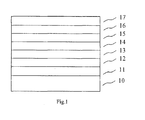
- Fig. 1 shows a cross section of a typical exemplary small molecule OLED.
- the organic electronic device of the present invention may be an organic light emitting diode.
- Fig. 1 shows a typical layer structure of an organic light emitting diode.
- the layers are disposed on a substrate (10) in the following order: anode (11), p-doped hole transport layer (12), electron blocking layer (13), emission layer (14), hole blocking layer (15), n-electron transport layer (16), and cathode (17).
- Two or more layers can collapse into a smaller number of layers if properties can be combined.
- Inverted structure and multiple stacked OLEDs are also well known in the field.
- the emission layer is usually composed by an emitter matrix material and an emitter dopant; this layer can be also composed by several other layers to generate light with a broad spectrum combining several emitters, for example, to generate white light.
- R's in the above general synthesis scheme shall stand for R 1-4 according to formula (I).
- Ar shall in this general synthesis scheme be understood to stand for the moiety "Ar-R 5 " according to formual (I).
- Second step Synthesis of 7-phenyl-5,6,8,9-tetrahydrodihenzo[c,h]acridine (2). All manipulations were carried out under argon.
- Second step Synthesis of 7-(4-bromophenyl)-5,6,8,9-tetrahydrodibenzo[c,h]acridine (5). All manipulations were carried out under argon.
- Second step Synthesis of 7-(3-bromophenyl)-5,6,8,9-tetrahydrodibenzo[c,b]acridine (9). All manipulations were carried out under argon.
- the conductivity of a doped layer consisting of material of structure 18 in table 1 doped with 5% of W(hpp)4 was measured at room temperature and was 3x10 -7 S/cm.
- the conductivity of a doped layer consisting of material of structure 3 in table 1 doped with 5% of W(hpp)4 was measured at room temperature and was 1.2x10 -5 S/cm.
- the conductivity of a doped layer consisting of material of structure 2 in table 1 doped with 5% of W(hpp)4 was measured at room temperature and was 9.95x10 -6 S/cm.
- An OLED was fabricated with the following procedure: A glass substrate coated with ITO (90 nm thick, pre-patterned) was cleaned in organic solvents in conventional ultra-sound. Afterwards the substrate was treated with ozone plasma for 5 minutes. After the cleaning, the substrate was transferred to vacuum. The organic layers were deposited in high vacuum (base pressure lower than 10 -3 Pa) by conventional VTE (Vacuum thermal evaporation). The deposited area was defined by a shadow mask, keeping some area of the ITO surface free so that an electrical contact for the measurements could (later on) be established.
- the organic layer sequence over the ITO layer is: 50 nm thick NPD layer doped with F4TCNQ; 10 nm thick non-doped NPD layer, 20 nm blue emitter host layer doped with a fluorescent emitter; 10 nm ETL (structure 4), 60 nm ETL (structure 4) doped with W(hpp) 4 (5% in weight).
- a 100 nm aluminum layer was deposited as cathode.
- the OLED reached 1000 cd/m 2 at 3.59 V.
- An OLED was fabricated with the following procedure: A glass substrate coated with ITO (90 nm thick, pre-patterned) was cleaned in organic solvents in conventional ultra-sound. Afterwards the substrate was treated with ozone plasma for 5 minutes. After the cleaning, the substrate was transferred to vacuum. The organic layers were deposited in high vacuum (base pressure lower than 10 -3 Pa) by conventional VTE (Vacuum thermal evaporation). The deposited area was defined by a shadow mask, keeping some area of the ITO surface free so that an electrical contact for the measurements could (later on) be established.
- the organic layer sequence over the ITO layer is: 50 nm thick NPD layer doped with F4TCNQ; 10 nm thick non-doped NPD layer, 20 nm blue emitter host layer doped with a fluorescent emitter; 10 nm ETL (structure Ib), 60 nm ETL (structure 1b) doped with W(hpp) 4 (5% in weight).
- a 100 nm aluminum layer was deposited as cathode.
- the OLED reached 1000 cd/m 2 at 4.25 V.
Landscapes
- Physics & Mathematics (AREA)
- Engineering & Computer Science (AREA)
- Spectroscopy & Molecular Physics (AREA)
- Chemical & Material Sciences (AREA)
- Materials Engineering (AREA)
- Optics & Photonics (AREA)
- Manufacturing & Machinery (AREA)
- Electroluminescent Light Sources (AREA)
- Other In-Based Heterocyclic Compounds (AREA)
- Plural Heterocyclic Compounds (AREA)
Claims (9)
- Organische elektronische Vorrichtung umfassend ein organisches Halbleitermaterial, das mindestens eine Verbindung nach der folgenden Formel (I) umfasst:
 wobei R1-4 unabhängig ausgewählt sind aus H, Halogen, CN, substituiertem oder unsubstituiertem C1-C20-Alkyl oder Heteroalkyl, C6-C20-Aryl oder C5-C20-Heteroaryl, C1-C20-Alkoxy oder C6-C20-Aryloxy,Ar ausgewählt ist aus substituiertem oder unsubstituiertem C6-C20o-Aryl oder C5-C20-Heteroaryl, undR5 ausgewählt ist aus substituiertem oder unsubstituiertem C6-C20-Aryl oder C5-C20-Heteroaryl, H oder
- Organische elektronische Vorrichtung nach Anspruch 1, wobei Ar und R1-4 unabhängig ausgewählt sind aus C6-C20-Aryl und C5-C20-Heteroaryl.
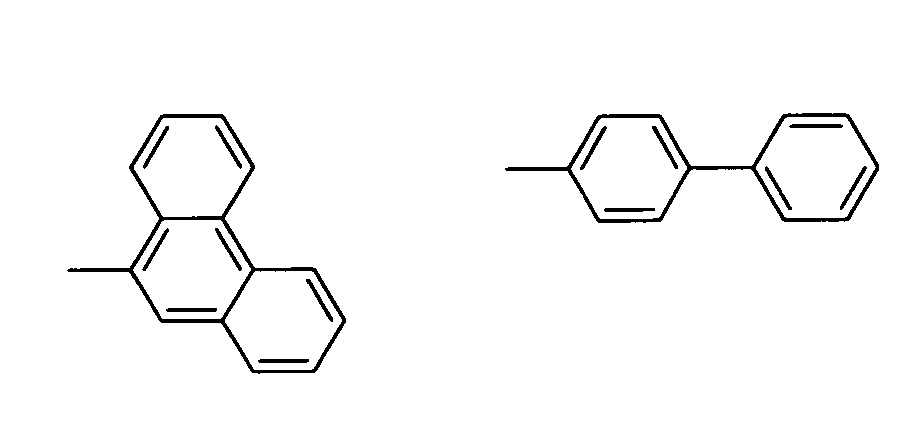
- Organische elektronische Vorrichtung nach Anspruch 1 oder 2, wobei R5 H ist und mit Ar kombiniert ist zu einem Rest ausgewählt aus




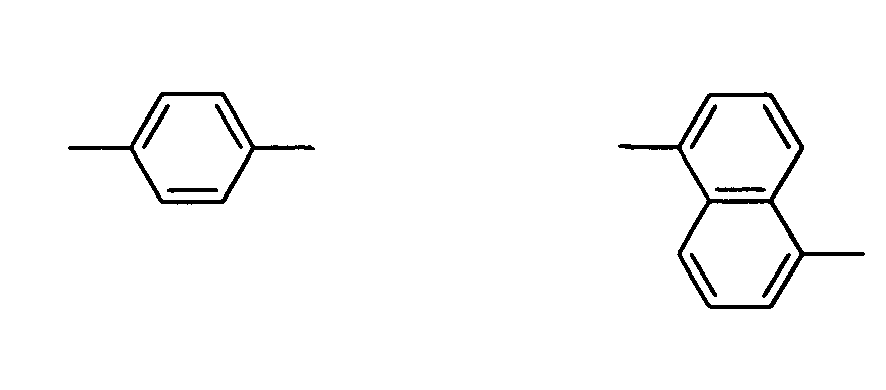
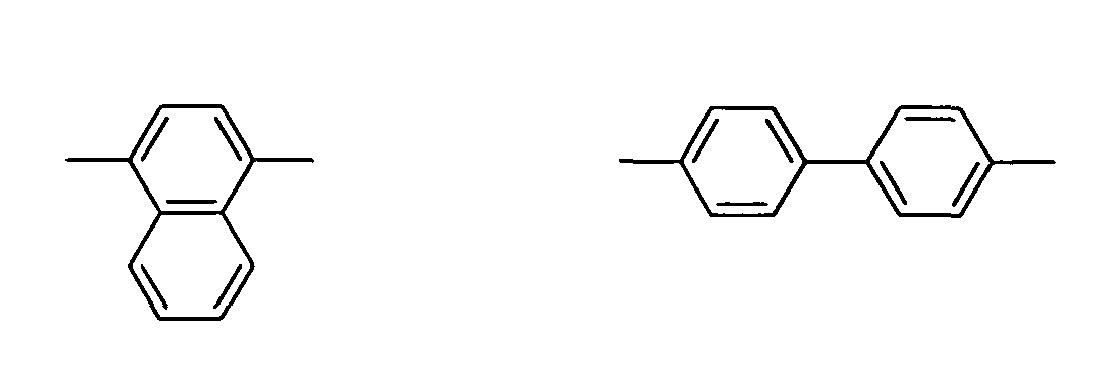
- Organische elektronische Vorrichtung nach einem der vorangehenden Ansprüche, wobei Ar ausgewählt ist aus



- Organische elektronische Vorrichtung nach einem der vorangehenden Ansprüche, wobei die Vorrichtung eine geschichtete Struktur aufweist und mindestens eine Schicht mindestens eine Verbindung nach Formel (I), wie definiert in Anspruch 1, umfasst.
- Organische elektronische Vorrichtung nach einem der vorangehenden Ansprüche, wobei das organische Halbleitermaterial durch einen n-Dotanden dotiert ist.
- Organische elektronische Vorrichtung nach Anspruch 6, wobei das organische Halbleitermaterial durch einen organischen n-Dotanden dotiert ist, wobei der Dotand ein HOMO-Energieniveau hat, welches positiver als -3,3 eV ist.
- Organische elektronische Vorrichtung nach Anspruch 1, wobei die Vorrichtung eine elektronische, optoelektronische oder Elektrolumineszenzvorrichtung mit einer elektronischen funktionellen effektive Region ist, wobei die elektronische effektive Region mindestens eine Verbindung nach Formel (I), wie definiert in Anspruch 1, umfasst.
- Organische elektronische Vorrichtung nach einem der vorangehenden Ansprüche, wobei die Vorrichtung eine organische lichtemittierende Diode, ein Feldeffekttransistor, ein Sensor, ein Photodetektor, ein organischer Dünnfilmtransistor, ein organischer integrierter Schaltkreis, ein organischer lichtemittierender Transistor, eine lichtemittierende elektrochemische Zelle oder eine organische Laserdiode ist.
Priority Applications (8)
| Application Number | Priority Date | Filing Date | Title |
|---|---|---|---|
| EP10165537.1A EP2395571B1 (de) | 2010-06-10 | 2010-06-10 | Eine organische Vorrichtung umfassend ein organisches halbleitendes Material |
| JP2013513579A JP6014027B2 (ja) | 2010-06-10 | 2011-06-08 | 有機半導体材料を含んでいる電子デバイス |
| KR1020137000597A KR101866330B1 (ko) | 2010-06-10 | 2011-06-08 | 유기 반도전성 물질을 포함한 전자 디바이스 |
| CN201180028541.XA CN102986050B (zh) | 2010-06-10 | 2011-06-08 | 包含有机半导体材料的电子器件 |
| PCT/EP2011/002807 WO2011154131A1 (en) | 2010-06-10 | 2011-06-08 | Electronic device comprising an organic semiconducting material |
| US13/699,532 US9040175B2 (en) | 2010-06-10 | 2011-06-08 | Electronic device comprising an organic semiconducting material |
| US15/605,237 USRE48156E1 (en) | 2010-06-10 | 2011-06-08 | Electronic device comprising an organic semiconducting material |
| JP2016160075A JP6343311B2 (ja) | 2010-06-10 | 2016-08-17 | 有機半導体材料を含んでいる電子デバイス |
Applications Claiming Priority (1)
| Application Number | Priority Date | Filing Date | Title |
|---|---|---|---|
| EP10165537.1A EP2395571B1 (de) | 2010-06-10 | 2010-06-10 | Eine organische Vorrichtung umfassend ein organisches halbleitendes Material |
Publications (2)
| Publication Number | Publication Date |
|---|---|
| EP2395571A1 EP2395571A1 (de) | 2011-12-14 |
| EP2395571B1 true EP2395571B1 (de) | 2013-12-04 |
Family
ID=42470887
Family Applications (1)
| Application Number | Title | Priority Date | Filing Date |
|---|---|---|---|
| EP10165537.1A Active EP2395571B1 (de) | 2010-06-10 | 2010-06-10 | Eine organische Vorrichtung umfassend ein organisches halbleitendes Material |
Country Status (6)
| Country | Link |
|---|---|
| US (2) | USRE48156E1 (de) |
| EP (1) | EP2395571B1 (de) |
| JP (2) | JP6014027B2 (de) |
| KR (1) | KR101866330B1 (de) |
| CN (1) | CN102986050B (de) |
| WO (1) | WO2011154131A1 (de) |
Families Citing this family (54)
| Publication number | Priority date | Publication date | Assignee | Title |
|---|---|---|---|---|
| JP6170501B2 (ja) * | 2011-11-30 | 2017-07-26 | ノヴァレッド ゲーエムベーハー | ディスプレイ |
| TWI566449B (zh) | 2011-11-30 | 2017-01-11 | 諾瓦發光二極體有限公司 | 有機電子裝置及其用途 |
| US10374165B2 (en) | 2011-11-30 | 2019-08-06 | Novaled Gmbh | Organic electronic device |
| CN103420910A (zh) * | 2012-07-26 | 2013-12-04 | 烟台万润精细化工股份有限公司 | 一种电子传输性蓝色发光材料及其应用 |
| DE102012109777A1 (de) | 2012-10-15 | 2014-04-17 | Heliatek Gmbh | Verfahren zum Bedrucken optoelektronischer Bauelemente mit Stromsammelschienen |
| KR20140055452A (ko) * | 2012-10-31 | 2014-05-09 | 삼성디스플레이 주식회사 | 유기 발광 소자 |
| KR20150014778A (ko) * | 2013-07-30 | 2015-02-09 | 삼성디스플레이 주식회사 | 유기 발광 소자 |
| CN103539737B (zh) * | 2013-10-23 | 2017-03-08 | Tcl集团股份有限公司 | 一种氮杂菲并芴类衍生物、制备方法及电致荧光发光器件 |
| KR102164046B1 (ko) * | 2013-12-03 | 2020-10-12 | 덕산네오룩스 주식회사 | 유기전기 소자용 화합물, 이를 이용한 유기전기소자 및 그 전자 장치 |
| ES2673573T3 (es) | 2013-12-23 | 2018-06-22 | Novaled Gmbh | Material semiconductor con dopaje N que comprende una matriz de óxido de fosfina y un metal dopante |
| KR102230191B1 (ko) | 2014-05-14 | 2021-03-22 | 삼성디스플레이 주식회사 | 유기 발광 소자 |
| KR102308903B1 (ko) | 2014-06-17 | 2021-10-06 | 삼성디스플레이 주식회사 | 유기 발광 소자 |
| EP2963696A1 (de) | 2014-07-04 | 2016-01-06 | Novaled GmbH | Organische Leuchtdiode (OLED) mit einem Elektronentransportschichtstapel mit unterschiedlichen Lithiumverbindungen |
| EP2999019B1 (de) | 2014-09-19 | 2019-06-12 | Novaled GmbH | Organische Leuchtdiode (OLED) mit einem Elektronentransportschichtstapel mit unterschiedlichen Lithiumverbindungen und elementarem Metall |
| EP3002801B1 (de) | 2014-09-30 | 2018-07-18 | Novaled GmbH | Organische elektronische Vorrichtung |
| EP3002796A1 (de) | 2014-10-01 | 2016-04-06 | Novaled GmbH | Organische lichtemittierende Diode mit einer Elektronentransportschicht mit einer Dreikomponenten-Mischung aus einer Matrix-Verbindung und zwei Lithium-Verbindungen |
| KR101659292B1 (ko) | 2014-11-28 | 2016-09-23 | (주)더블유에스 | 포스포릴기가 결합된 플루오란텐 유도체 및 이를 포함한 유기 전계발광 소자 |
| EP3035400B1 (de) | 2014-12-17 | 2019-10-23 | Novaled GmbH | Organische Leuchtdiode mit Elektronentransportschichten mit unterschiedlichen Matrixverbindungen |
| EP3093288A1 (de) | 2015-05-12 | 2016-11-16 | Novaled GmbH | Organische leuchtdiode mit verschiedenen matrixverbindungen in der ersten und der zweiten elektronentransportschicht |
| KR102364221B1 (ko) | 2015-03-23 | 2022-02-18 | 삼성디스플레이 주식회사 | 축합환 화합물 및 이를 포함한 유기 발광 소자 |
| EP3109916B1 (de) | 2015-06-23 | 2021-08-25 | Novaled GmbH | Organische lichtemittierende vorrichtung mit polarer matrix, metalldotierstoff und silber-kathode |
| EP3109915B1 (de) | 2015-06-23 | 2021-07-21 | Novaled GmbH | Organische lichtemittierende vorrichtung mit polarer matrix und metalldotiermittel |
| US20180182960A1 (en) | 2015-06-23 | 2018-06-28 | Novaled Gmbh | Organic Light Emitting Device Comprising Polar Matrix and Metal Dopant |
| EP3109919B1 (de) | 2015-06-23 | 2021-06-23 | Novaled GmbH | N-dotiertes halbleitermaterial mit polarer matrix und einem metalldotiermittel |
| KR102491872B1 (ko) | 2015-07-31 | 2023-01-27 | 삼성디스플레이 주식회사 | 축합환 화합물 및 이를 포함한 유기 발광 소자 |
| EP3133664A1 (de) | 2015-08-18 | 2017-02-22 | Novaled GmbH | Mit metallamiden dotierte triarylamindickschicht zur verwendung als lochinjektionsschicht für eine organische leuchtdiode (oled) |
| EP4084108B1 (de) | 2015-08-18 | 2025-11-12 | Novaled GmbH | Metallamide zur verwendung als lochinjektionsschicht für eine organische leuchtdiode (oled) |
| EP3147958B1 (de) | 2015-09-28 | 2019-10-23 | Novaled GmbH | Organische elektrolumineszente vorrichtungen mit boranverbindungen |
| EP3147961A1 (de) * | 2015-09-28 | 2017-03-29 | Novaled GmbH | Organisches elektrolumineszenzelement |
| KR102494453B1 (ko) * | 2015-10-05 | 2023-02-02 | 삼성디스플레이 주식회사 | 유기 전계 발광 소자 및 이를 포함하는 표시 장치 |
| KR102458684B1 (ko) | 2015-10-08 | 2022-10-26 | 삼성디스플레이 주식회사 | 유기 발광 소자 |
| EP3171418B1 (de) | 2015-11-23 | 2024-12-11 | Novaled GmbH | Organische halbleiterschicht mit phosphinoxidverbindungen |
| EP3182478B1 (de) | 2015-12-18 | 2018-11-28 | Novaled GmbH | Elektroneninjektionsschicht für eine organische leuchtdiode (oled) |
| EP3208861A1 (de) | 2016-02-19 | 2017-08-23 | Novaled GmbH | Elektronentransportschicht mit einer matrixverbindungsmischung für eine organische leuchtdiode (oled) |
| KR102547685B1 (ko) | 2016-02-22 | 2023-06-27 | 삼성디스플레이 주식회사 | 유기 발광 소자 |
| EP3232490B1 (de) | 2016-04-12 | 2021-03-17 | Novaled GmbH | Organische lichtemittierende diode mit einer organischen halbleiterschicht |
| EP3252837B1 (de) | 2016-05-30 | 2021-05-05 | Novaled GmbH | Organische lichtemittierende diode mit einer organischen halbleiterschicht |
| EP3252841B1 (de) | 2016-05-30 | 2026-04-01 | Novaled GmbH | Organische lichtemittierende diode mit einer organischen halbleiterschicht |
| EP3291319B1 (de) | 2016-08-30 | 2019-01-23 | Novaled GmbH | Verfahren zur herstellung einer organischen halbleiterschicht |
| EP3312171B1 (de) * | 2016-10-24 | 2019-07-31 | Novaled GmbH | Verbindung für elektronische vorrichtung sowie elektronische vorrichtung und anzeigevorrichtung |
| EP3312899B1 (de) * | 2016-10-24 | 2021-04-07 | Novaled GmbH | Elektronentransportschichtstapel für eine organische lichtemittierende diode |
| EP3312896B1 (de) | 2016-10-24 | 2021-03-31 | Novaled GmbH | Organische elektrolumineszezvorrichtung mit einer redox-dotierten elektronentransportschicht und hilfselektronentransportschicht |
| EP3312895B1 (de) | 2016-10-24 | 2021-07-28 | Novaled GmbH | Organisches halbleitermaterial mit einem elektrischen n-dotierstoff sowie elektronentransportmatrix und elektronische vorrichtung mit dem halbleitermaterial |
| EP3355378B1 (de) | 2017-01-30 | 2022-12-28 | Novaled GmbH | Elektrolumineszente vorrichtung mit einer definierten schichtanordnung aus einer lichtemittierenden schicht, einer lochtransportschicht und einer elektronentransportschicht |
| JP7082984B2 (ja) * | 2017-02-20 | 2022-06-09 | ノヴァレッド ゲーエムベーハー | 電子半導体デバイスおよびその電子半導体デバイスの製造方法および化合物 |
| EP3369729B1 (de) * | 2017-03-02 | 2022-01-12 | Novaled GmbH | Kondensierte 9-phenyl-acridin- derivate zur verwendung in einer elektronischen vorrichtung und anzeigevorrichtung |
| CN106816552B (zh) * | 2017-03-03 | 2019-07-12 | 上海天马有机发光显示技术有限公司 | 一种oled显示面板及含有其的电子设备 |
| EP3406617B1 (de) | 2017-05-23 | 2021-03-24 | Novaled GmbH | Verwendung von phosphinoxidverbindungen in einer halbleitenden schicht in einer elektronischen vorrichtung |
| EP3410510B1 (de) | 2017-06-02 | 2021-10-20 | Novaled GmbH | Organische elektronische vorrichtung und verfahren zur herstellung der organischen elektronischen vorrichtung |
| EP3556753B1 (de) * | 2018-04-18 | 2023-10-11 | Novaled GmbH | Verbindung und organische halbleitende schicht, organische elektronische vorrichtung, anzeigevorrichtung und beleuchtungsvorrichtung damit |
| WO2019218276A1 (en) * | 2018-05-16 | 2019-11-21 | Merck Patent Gmbh | Organic semiconductors |
| KR102783339B1 (ko) | 2018-06-12 | 2025-03-20 | 삼성디스플레이 주식회사 | 헤테로시클릭 화합물 및 이를 포함한 유기 발광 소자 |
| EP3653619A1 (de) * | 2018-11-16 | 2020-05-20 | Novaled GmbH | Verbindung, organische elektronische vorrichtung damit sowie anzeigevorrichtung und beleuchtungsvorrichtung damit |
| US20220216428A1 (en) | 2019-04-15 | 2022-07-07 | Novaled Gmbh | See addendum |
Family Cites Families (22)
| Publication number | Priority date | Publication date | Assignee | Title |
|---|---|---|---|---|
| US4356429A (en) | 1980-07-17 | 1982-10-26 | Eastman Kodak Company | Organic electroluminescent cell |
| US5093698A (en) | 1991-02-12 | 1992-03-03 | Kabushiki Kaisha Toshiba | Organic electroluminescent device |
| US6853083B1 (en) | 1995-03-24 | 2005-02-08 | Semiconductor Energy Laboratory Co., Ltd. | Thin film transfer, organic electroluminescence display device and manufacturing method of the same |
| JP3778649B2 (ja) * | 1997-03-27 | 2006-05-24 | 三井化学株式会社 | 有機電界発光素子 |
| US7026643B2 (en) | 2001-05-04 | 2006-04-11 | International Business Machines Corporation | Organic n-channel semiconductor device of N,N' 3,4,9,10 perylene tetracarboxylic diimide |
| DE10207859A1 (de) | 2002-02-20 | 2003-09-04 | Univ Dresden Tech | Dotiertes organisches Halbleitermaterial sowie Verfahren zu dessen Herstellung |
| DE10215210B4 (de) | 2002-03-28 | 2006-07-13 | Novaled Gmbh | Transparentes, thermisch stabiles lichtemittierendes Bauelement mit organischen Schichten |
| TW556446B (en) * | 2002-09-11 | 2003-10-01 | Opto Tech Corp | Organic light-emitting device and the manufacturing method thereof |
| DE102004010954A1 (de) | 2004-03-03 | 2005-10-06 | Novaled Gmbh | Verwendung eines Metallkomplexes als n-Dotand für ein organisches halbleitendes Matrixmaterial, organisches Halbleitermaterial und elektronisches Bauteil |
| JP2008509565A (ja) * | 2004-08-13 | 2008-03-27 | ノヴァレッド・アクチエンゲゼルシャフト | 発光成分用積層体 |
| DE502005002342D1 (de) | 2005-03-15 | 2008-02-07 | Novaled Ag | Lichtemittierendes Bauelement |
| AT501688B1 (de) | 2005-04-08 | 2008-02-15 | Keba Ag | Verfahren sowie vorrichtung zur sicheren, verwechslungsfreien und ausschliesslichen zuordnung der befehlsgewalt einer bedienperson zu einer steuerbaren technischen einrichtung |
| US20060244370A1 (en) | 2005-05-02 | 2006-11-02 | Eastman Kodak Company | Light-emitting layer spacing in tandem OLED devices |
| EP1804309B1 (de) | 2005-12-23 | 2008-07-23 | Novaled AG | Elektronische Vorrichtung mit einer Schichtenstruktur von organischen Schichten |
| EP1837926B1 (de) | 2006-03-21 | 2008-05-07 | Novaled AG | Heterocyclisches Radikal oder Diradikal, deren Dimere, Oligomere, Polymere, Dispiroverbindungen und Polycyclen, deren Verwendung, organisches halbleitendes Material sowie elektronisches Bauelement |
| EP1837927A1 (de) | 2006-03-22 | 2007-09-26 | Novaled AG | Verwendung von heterocyclischen Radikalen zur Dotierung von organischen Halbleitern |
| DE102006053644A1 (de) * | 2006-11-14 | 2008-06-12 | Siemens Ag | Neuartiges hochleitfähiges organisches Ladungsträgertransportmaterial |
| US8795855B2 (en) | 2007-01-30 | 2014-08-05 | Global Oled Technology Llc | OLEDs having high efficiency and excellent lifetime |
| DE102007012794B3 (de) | 2007-03-16 | 2008-06-19 | Novaled Ag | Pyrido[3,2-h]chinazoline und/oder deren 5,6-Dihydroderivate, deren Herstellungsverfahren und diese enthaltendes dotiertes organisches Halbleitermaterial |
| JP5180498B2 (ja) | 2007-03-20 | 2013-04-10 | 三洋電機株式会社 | 有機半導体材料及びそれを用いた有機トランジスタ |
| CN103601609B (zh) | 2007-08-08 | 2017-07-28 | 通用显示公司 | 在磷光性发光二极管中的单苯并[9,10]菲生色团 |
| EP2072517B1 (de) | 2007-12-21 | 2015-01-21 | Novaled GmbH | Asymmetrische Phenanthroline, deren Herstellungsverfahren und diese enthaltendes dotiertes organisches Halbleitermaterial |
-
2010
- 2010-06-10 EP EP10165537.1A patent/EP2395571B1/de active Active
-
2011
- 2011-06-08 KR KR1020137000597A patent/KR101866330B1/ko active Active
- 2011-06-08 JP JP2013513579A patent/JP6014027B2/ja active Active
- 2011-06-08 WO PCT/EP2011/002807 patent/WO2011154131A1/en not_active Ceased
- 2011-06-08 US US15/605,237 patent/USRE48156E1/en active Active
- 2011-06-08 US US13/699,532 patent/US9040175B2/en not_active Ceased
- 2011-06-08 CN CN201180028541.XA patent/CN102986050B/zh active Active
-
2016
- 2016-08-17 JP JP2016160075A patent/JP6343311B2/ja active Active
Also Published As
| Publication number | Publication date |
|---|---|
| JP2013534047A (ja) | 2013-08-29 |
| US9040175B2 (en) | 2015-05-26 |
| USRE48156E1 (en) | 2020-08-11 |
| EP2395571A1 (de) | 2011-12-14 |
| US20130200341A1 (en) | 2013-08-08 |
| CN102986050B (zh) | 2015-10-07 |
| KR101866330B1 (ko) | 2018-06-11 |
| JP2017025072A (ja) | 2017-02-02 |
| CN102986050A (zh) | 2013-03-20 |
| JP6343311B2 (ja) | 2018-06-13 |
| WO2011154131A1 (en) | 2011-12-15 |
| JP6014027B2 (ja) | 2016-10-25 |
| KR20130119413A (ko) | 2013-10-31 |
Similar Documents
| Publication | Publication Date | Title |
|---|---|---|
| EP2395571A1 (de) | Eine organische Vorrichtung umfassend ein organisches halbleitendes Material | |
| EP2312663B1 (de) | Organische elektronische Vorrichtung mit einem organischen Halbleitermaterial | |
| EP2246862A1 (de) | Organische elektronische Vorrichtung mit einem organischen Halbleitermaterial | |
| EP2504871B1 (de) | Elektronisches bauteil mit einem organischen halbleitermaterial | |
| EP2194055B1 (de) | Verbrückte Pyridochinazolin- oder Phenathronlin-Verbindungen und organisches Halbleitermaterial mit dieser Verbindung | |
| EP2463927B1 (de) | Material für eine organische elektronische Vorrichtung und organische elektronische Vorrichtung | |
| KR101995047B1 (ko) | 유기 전자 디바이스 | |
| EP2834321B1 (de) | Verwendung einer halbleiterverbindung in einer organischen lichtemittierenden vorrichtung | |
| KR101891224B1 (ko) | 유기 전자 장치를 위한 화합물 및 유기 전자 장치 | |
| CN102317406B (zh) | 杂环化合物及其在电子和光电子结构元件中的应用 | |
| TWI584513B (zh) | 顯示器 | |
| EP2811000B1 (de) | Organische elektronische Vorrichtung | |
| CN106459748B (zh) | N-氟烷基取代的二溴萘二酰亚胺及其用作半导体的用途 | |
| KR101715219B1 (ko) | 퀴녹살린 화합물 및 반도체 재료 | |
| WO2010063609A2 (en) | Hole injection material |
Legal Events
| Date | Code | Title | Description |
|---|---|---|---|
| AK | Designated contracting states |
Kind code of ref document: A1 Designated state(s): AL AT BE BG CH CY CZ DE DK EE ES FI FR GB GR HR HU IE IS IT LI LT LU LV MC MK MT NL NO PL PT RO SE SI SK SM TR |
|
| AX | Request for extension of the european patent |
Extension state: BA ME RS |
|
| PUAI | Public reference made under article 153(3) epc to a published international application that has entered the european phase |
Free format text: ORIGINAL CODE: 0009012 |
|
| 17P | Request for examination filed |
Effective date: 20120606 |
|
| GRAP | Despatch of communication of intention to grant a patent |
Free format text: ORIGINAL CODE: EPIDOSNIGR1 |
|
| INTG | Intention to grant announced |
Effective date: 20130627 |
|
| GRAS | Grant fee paid |
Free format text: ORIGINAL CODE: EPIDOSNIGR3 |
|
| GRAA | (expected) grant |
Free format text: ORIGINAL CODE: 0009210 |
|
| AK | Designated contracting states |
Kind code of ref document: B1 Designated state(s): AL AT BE BG CH CY CZ DE DK EE ES FI FR GB GR HR HU IE IS IT LI LT LU LV MC MK MT NL NO PL PT RO SE SI SK SM TR |
|
| REG | Reference to a national code |
Ref country code: GB Ref legal event code: FG4D |
|
| RIN1 | Information on inventor provided before grant (corrected) |
Inventor name: PRETSCH, RAMONA Inventor name: FADHEL, OMRANE |
|
| REG | Reference to a national code |
Ref country code: CH Ref legal event code: EP |
|
| REG | Reference to a national code |
Ref country code: IE Ref legal event code: FG4D Ref country code: AT Ref legal event code: REF Ref document number: 643835 Country of ref document: AT Kind code of ref document: T Effective date: 20140115 |
|
| REG | Reference to a national code |
Ref country code: DE Ref legal event code: R096 Ref document number: 602010012143 Country of ref document: DE Effective date: 20140130 |
|
| REG | Reference to a national code |
Ref country code: NL Ref legal event code: VDEP Effective date: 20131204 |
|
| REG | Reference to a national code |
Ref country code: AT Ref legal event code: MK05 Ref document number: 643835 Country of ref document: AT Kind code of ref document: T Effective date: 20131204 |
|
| PG25 | Lapsed in a contracting state [announced via postgrant information from national office to epo] |
Ref country code: SE Free format text: LAPSE BECAUSE OF FAILURE TO SUBMIT A TRANSLATION OF THE DESCRIPTION OR TO PAY THE FEE WITHIN THE PRESCRIBED TIME-LIMIT Effective date: 20131204 Ref country code: FI Free format text: LAPSE BECAUSE OF FAILURE TO SUBMIT A TRANSLATION OF THE DESCRIPTION OR TO PAY THE FEE WITHIN THE PRESCRIBED TIME-LIMIT Effective date: 20131204 Ref country code: HR Free format text: LAPSE BECAUSE OF FAILURE TO SUBMIT A TRANSLATION OF THE DESCRIPTION OR TO PAY THE FEE WITHIN THE PRESCRIBED TIME-LIMIT Effective date: 20131204 Ref country code: NO Free format text: LAPSE BECAUSE OF FAILURE TO SUBMIT A TRANSLATION OF THE DESCRIPTION OR TO PAY THE FEE WITHIN THE PRESCRIBED TIME-LIMIT Effective date: 20140304 Ref country code: LT Free format text: LAPSE BECAUSE OF FAILURE TO SUBMIT A TRANSLATION OF THE DESCRIPTION OR TO PAY THE FEE WITHIN THE PRESCRIBED TIME-LIMIT Effective date: 20131204 Ref country code: NL Free format text: LAPSE BECAUSE OF FAILURE TO SUBMIT A TRANSLATION OF THE DESCRIPTION OR TO PAY THE FEE WITHIN THE PRESCRIBED TIME-LIMIT Effective date: 20131204 |
|
| REG | Reference to a national code |
Ref country code: LT Ref legal event code: MG4D |
|
| PG25 | Lapsed in a contracting state [announced via postgrant information from national office to epo] |
Ref country code: LV Free format text: LAPSE BECAUSE OF FAILURE TO SUBMIT A TRANSLATION OF THE DESCRIPTION OR TO PAY THE FEE WITHIN THE PRESCRIBED TIME-LIMIT Effective date: 20131204 Ref country code: CY Free format text: LAPSE BECAUSE OF FAILURE TO SUBMIT A TRANSLATION OF THE DESCRIPTION OR TO PAY THE FEE WITHIN THE PRESCRIBED TIME-LIMIT Effective date: 20131204 Ref country code: AT Free format text: LAPSE BECAUSE OF FAILURE TO SUBMIT A TRANSLATION OF THE DESCRIPTION OR TO PAY THE FEE WITHIN THE PRESCRIBED TIME-LIMIT Effective date: 20131204 |
|
| PG25 | Lapsed in a contracting state [announced via postgrant information from national office to epo] |
Ref country code: IS Free format text: LAPSE BECAUSE OF FAILURE TO SUBMIT A TRANSLATION OF THE DESCRIPTION OR TO PAY THE FEE WITHIN THE PRESCRIBED TIME-LIMIT Effective date: 20140404 Ref country code: EE Free format text: LAPSE BECAUSE OF FAILURE TO SUBMIT A TRANSLATION OF THE DESCRIPTION OR TO PAY THE FEE WITHIN THE PRESCRIBED TIME-LIMIT Effective date: 20131204 Ref country code: BE Free format text: LAPSE BECAUSE OF FAILURE TO SUBMIT A TRANSLATION OF THE DESCRIPTION OR TO PAY THE FEE WITHIN THE PRESCRIBED TIME-LIMIT Effective date: 20131204 |
|
| PG25 | Lapsed in a contracting state [announced via postgrant information from national office to epo] |
Ref country code: ES Free format text: LAPSE BECAUSE OF FAILURE TO SUBMIT A TRANSLATION OF THE DESCRIPTION OR TO PAY THE FEE WITHIN THE PRESCRIBED TIME-LIMIT Effective date: 20131204 Ref country code: RO Free format text: LAPSE BECAUSE OF FAILURE TO SUBMIT A TRANSLATION OF THE DESCRIPTION OR TO PAY THE FEE WITHIN THE PRESCRIBED TIME-LIMIT Effective date: 20131204 Ref country code: PT Free format text: LAPSE BECAUSE OF FAILURE TO SUBMIT A TRANSLATION OF THE DESCRIPTION OR TO PAY THE FEE WITHIN THE PRESCRIBED TIME-LIMIT Effective date: 20140404 Ref country code: PL Free format text: LAPSE BECAUSE OF FAILURE TO SUBMIT A TRANSLATION OF THE DESCRIPTION OR TO PAY THE FEE WITHIN THE PRESCRIBED TIME-LIMIT Effective date: 20131204 Ref country code: SK Free format text: LAPSE BECAUSE OF FAILURE TO SUBMIT A TRANSLATION OF THE DESCRIPTION OR TO PAY THE FEE WITHIN THE PRESCRIBED TIME-LIMIT Effective date: 20131204 Ref country code: CZ Free format text: LAPSE BECAUSE OF FAILURE TO SUBMIT A TRANSLATION OF THE DESCRIPTION OR TO PAY THE FEE WITHIN THE PRESCRIBED TIME-LIMIT Effective date: 20131204 |
|
| REG | Reference to a national code |
Ref country code: DE Ref legal event code: R097 Ref document number: 602010012143 Country of ref document: DE |
|
| PLBE | No opposition filed within time limit |
Free format text: ORIGINAL CODE: 0009261 |
|
| STAA | Information on the status of an ep patent application or granted ep patent |
Free format text: STATUS: NO OPPOSITION FILED WITHIN TIME LIMIT |
|
| PG25 | Lapsed in a contracting state [announced via postgrant information from national office to epo] |
Ref country code: DK Free format text: LAPSE BECAUSE OF FAILURE TO SUBMIT A TRANSLATION OF THE DESCRIPTION OR TO PAY THE FEE WITHIN THE PRESCRIBED TIME-LIMIT Effective date: 20131204 |
|
| 26N | No opposition filed |
Effective date: 20140905 |
|
| REG | Reference to a national code |
Ref country code: DE Ref legal event code: R097 Ref document number: 602010012143 Country of ref document: DE Effective date: 20140905 |
|
| PG25 | Lapsed in a contracting state [announced via postgrant information from national office to epo] |
Ref country code: LU Free format text: LAPSE BECAUSE OF FAILURE TO SUBMIT A TRANSLATION OF THE DESCRIPTION OR TO PAY THE FEE WITHIN THE PRESCRIBED TIME-LIMIT Effective date: 20140610 Ref country code: MC Free format text: LAPSE BECAUSE OF FAILURE TO SUBMIT A TRANSLATION OF THE DESCRIPTION OR TO PAY THE FEE WITHIN THE PRESCRIBED TIME-LIMIT Effective date: 20131204 |
|
| REG | Reference to a national code |
Ref country code: CH Ref legal event code: PL |
|
| PG25 | Lapsed in a contracting state [announced via postgrant information from national office to epo] |
Ref country code: SI Free format text: LAPSE BECAUSE OF FAILURE TO SUBMIT A TRANSLATION OF THE DESCRIPTION OR TO PAY THE FEE WITHIN THE PRESCRIBED TIME-LIMIT Effective date: 20131204 |
|
| REG | Reference to a national code |
Ref country code: IE Ref legal event code: MM4A |
|
| PG25 | Lapsed in a contracting state [announced via postgrant information from national office to epo] |
Ref country code: IE Free format text: LAPSE BECAUSE OF NON-PAYMENT OF DUE FEES Effective date: 20140610 Ref country code: CH Free format text: LAPSE BECAUSE OF NON-PAYMENT OF DUE FEES Effective date: 20140630 Ref country code: IT Free format text: LAPSE BECAUSE OF FAILURE TO SUBMIT A TRANSLATION OF THE DESCRIPTION OR TO PAY THE FEE WITHIN THE PRESCRIBED TIME-LIMIT Effective date: 20131204 Ref country code: LI Free format text: LAPSE BECAUSE OF NON-PAYMENT OF DUE FEES Effective date: 20140630 |
|
| PG25 | Lapsed in a contracting state [announced via postgrant information from national office to epo] |
Ref country code: MT Free format text: LAPSE BECAUSE OF FAILURE TO SUBMIT A TRANSLATION OF THE DESCRIPTION OR TO PAY THE FEE WITHIN THE PRESCRIBED TIME-LIMIT Effective date: 20131204 |
|
| PG25 | Lapsed in a contracting state [announced via postgrant information from national office to epo] |
Ref country code: SM Free format text: LAPSE BECAUSE OF FAILURE TO SUBMIT A TRANSLATION OF THE DESCRIPTION OR TO PAY THE FEE WITHIN THE PRESCRIBED TIME-LIMIT Effective date: 20131204 |
|
| REG | Reference to a national code |
Ref country code: FR Ref legal event code: PLFP Year of fee payment: 7 |
|
| PG25 | Lapsed in a contracting state [announced via postgrant information from national office to epo] |
Ref country code: BG Free format text: LAPSE BECAUSE OF FAILURE TO SUBMIT A TRANSLATION OF THE DESCRIPTION OR TO PAY THE FEE WITHIN THE PRESCRIBED TIME-LIMIT Effective date: 20131204 Ref country code: GR Free format text: LAPSE BECAUSE OF FAILURE TO SUBMIT A TRANSLATION OF THE DESCRIPTION OR TO PAY THE FEE WITHIN THE PRESCRIBED TIME-LIMIT Effective date: 20140305 |
|
| PG25 | Lapsed in a contracting state [announced via postgrant information from national office to epo] |
Ref country code: HU Free format text: LAPSE BECAUSE OF FAILURE TO SUBMIT A TRANSLATION OF THE DESCRIPTION OR TO PAY THE FEE WITHIN THE PRESCRIBED TIME-LIMIT; INVALID AB INITIO Effective date: 20100610 Ref country code: TR Free format text: LAPSE BECAUSE OF FAILURE TO SUBMIT A TRANSLATION OF THE DESCRIPTION OR TO PAY THE FEE WITHIN THE PRESCRIBED TIME-LIMIT Effective date: 20131204 |
|
| REG | Reference to a national code |
Ref country code: FR Ref legal event code: PLFP Year of fee payment: 8 |
|
| REG | Reference to a national code |
Ref country code: FR Ref legal event code: PLFP Year of fee payment: 9 |
|
| PG25 | Lapsed in a contracting state [announced via postgrant information from national office to epo] |
Ref country code: MK Free format text: LAPSE BECAUSE OF FAILURE TO SUBMIT A TRANSLATION OF THE DESCRIPTION OR TO PAY THE FEE WITHIN THE PRESCRIBED TIME-LIMIT Effective date: 20131204 |
|
| PG25 | Lapsed in a contracting state [announced via postgrant information from national office to epo] |
Ref country code: AL Free format text: LAPSE BECAUSE OF FAILURE TO SUBMIT A TRANSLATION OF THE DESCRIPTION OR TO PAY THE FEE WITHIN THE PRESCRIBED TIME-LIMIT Effective date: 20131204 |
|
| REG | Reference to a national code |
Ref country code: DE Ref legal event code: R079 Ref document number: 602010012143 Country of ref document: DE Free format text: PREVIOUS MAIN CLASS: H01L0051000000 Ipc: H10K0099000000 |
|
| REG | Reference to a national code |
Ref country code: FR Ref legal event code: PLFP Year of fee payment: 14 |
|
| P01 | Opt-out of the competence of the unified patent court (upc) registered |
Effective date: 20230515 |
|
| PGFP | Annual fee paid to national office [announced via postgrant information from national office to epo] |
Ref country code: DE Payment date: 20250402 Year of fee payment: 16 |
|
| PGFP | Annual fee paid to national office [announced via postgrant information from national office to epo] |
Ref country code: GB Payment date: 20250401 Year of fee payment: 16 |
|
| PGFP | Annual fee paid to national office [announced via postgrant information from national office to epo] |
Ref country code: FR Payment date: 20250401 Year of fee payment: 16 |