EP2391925B1 - Electrophotographic photosensitive member, process cartridge, and electrophotographic apparatus - Google Patents
Electrophotographic photosensitive member, process cartridge, and electrophotographic apparatus Download PDFInfo
- Publication number
- EP2391925B1 EP2391925B1 EP10735973.9A EP10735973A EP2391925B1 EP 2391925 B1 EP2391925 B1 EP 2391925B1 EP 10735973 A EP10735973 A EP 10735973A EP 2391925 B1 EP2391925 B1 EP 2391925B1
- Authority
- EP
- European Patent Office
- Prior art keywords
- sing
- group
- repeating structural
- formula
- structural unit
- Prior art date
- Legal status (The legal status is an assumption and is not a legal conclusion. Google has not performed a legal analysis and makes no representation as to the accuracy of the status listed.)
- Active
Links
- 238000000034 method Methods 0.000 title claims description 47
- 230000008569 process Effects 0.000 title claims description 20
- 229920001577 copolymer Polymers 0.000 claims description 120
- 125000000217 alkyl group Chemical group 0.000 claims description 61
- 125000003118 aryl group Chemical group 0.000 claims description 49
- 125000004093 cyano group Chemical group *C#N 0.000 claims description 47
- 125000000449 nitro group Chemical group [O-][N+](*)=O 0.000 claims description 42
- 125000005843 halogen group Chemical group 0.000 claims description 34
- 125000004435 hydrogen atom Chemical group [H]* 0.000 claims description 29
- 229910052757 nitrogen Inorganic materials 0.000 claims description 29
- 125000004433 nitrogen atom Chemical group N* 0.000 claims description 24
- -1 dicyanomethylene group Chemical group 0.000 claims description 23
- 125000000732 arylene group Chemical group 0.000 claims description 22
- 125000003178 carboxy group Chemical group [H]OC(*)=O 0.000 claims description 22
- 125000002521 alkyl halide group Chemical group 0.000 claims description 19
- 125000002947 alkylene group Chemical group 0.000 claims description 17
- 230000005525 hole transport Effects 0.000 claims description 15
- 238000012546 transfer Methods 0.000 claims description 13
- 229910052799 carbon Inorganic materials 0.000 claims description 12
- RTZKZFJDLAIYFH-UHFFFAOYSA-N Diethyl ether Chemical compound CCOCC RTZKZFJDLAIYFH-UHFFFAOYSA-N 0.000 claims description 8
- 125000004430 oxygen atom Chemical group O* 0.000 claims description 7
- 150000007942 carboxylates Chemical group 0.000 claims description 6
- 238000004140 cleaning Methods 0.000 claims description 6
- 239000004202 carbamide Substances 0.000 claims description 5
- 125000000753 cycloalkyl group Chemical group 0.000 claims description 5
- 150000003949 imides Chemical class 0.000 claims description 5
- JOYRKODLDBILNP-UHFFFAOYSA-N Ethyl urethane Chemical compound CCOC(N)=O JOYRKODLDBILNP-UHFFFAOYSA-N 0.000 claims description 4
- XSQUKJJJFZCRTK-UHFFFAOYSA-N Urea Chemical compound NC(N)=O XSQUKJJJFZCRTK-UHFFFAOYSA-N 0.000 claims description 4
- 125000000472 sulfonyl group Chemical group *S(*)(=O)=O 0.000 claims description 3
- 125000004432 carbon atom Chemical group C* 0.000 claims 4
- 239000010410 layer Substances 0.000 description 144
- 150000001875 compounds Chemical class 0.000 description 63
- 125000000524 functional group Chemical group 0.000 description 56
- 239000000463 material Substances 0.000 description 37
- 239000011248 coating agent Substances 0.000 description 23
- 238000000576 coating method Methods 0.000 description 23
- 239000012530 fluid Substances 0.000 description 21
- 239000000049 pigment Substances 0.000 description 20
- 238000001308 synthesis method Methods 0.000 description 20
- 239000013078 crystal Substances 0.000 description 19
- 238000006243 chemical reaction Methods 0.000 description 17
- 238000011156 evaluation Methods 0.000 description 17
- IEQIEDJGQAUEQZ-UHFFFAOYSA-N phthalocyanine Chemical compound N1C(N=C2C3=CC=CC=C3C(N=C3C4=CC=CC=C4C(=N4)N3)=N2)=C(C=CC=C2)C2=C1N=C1C2=CC=CC=C2C4=N1 IEQIEDJGQAUEQZ-UHFFFAOYSA-N 0.000 description 15
- 239000000126 substance Substances 0.000 description 15
- 229920005989 resin Polymers 0.000 description 14
- 239000011347 resin Substances 0.000 description 14
- 239000002245 particle Substances 0.000 description 13
- 230000015572 biosynthetic process Effects 0.000 description 11
- CSCPPACGZOOCGX-UHFFFAOYSA-N Acetone Chemical compound CC(C)=O CSCPPACGZOOCGX-UHFFFAOYSA-N 0.000 description 10
- IJGRMHOSHXDMSA-UHFFFAOYSA-N Atomic nitrogen Chemical compound N#N IJGRMHOSHXDMSA-UHFFFAOYSA-N 0.000 description 10
- XEKOWRVHYACXOJ-UHFFFAOYSA-N Ethyl acetate Chemical compound CCOC(C)=O XEKOWRVHYACXOJ-UHFFFAOYSA-N 0.000 description 9
- OKKJLVBELUTLKV-UHFFFAOYSA-N Methanol Chemical compound OC OKKJLVBELUTLKV-UHFFFAOYSA-N 0.000 description 9
- YXFVVABEGXRONW-UHFFFAOYSA-N Toluene Chemical compound CC1=CC=CC=C1 YXFVVABEGXRONW-UHFFFAOYSA-N 0.000 description 9
- 239000011230 binding agent Substances 0.000 description 9
- 239000003153 chemical reaction reagent Substances 0.000 description 9
- 229920000642 polymer Polymers 0.000 description 9
- 239000002243 precursor Substances 0.000 description 9
- 239000000047 product Substances 0.000 description 9
- 238000003786 synthesis reaction Methods 0.000 description 9
- KDLHZDBZIXYQEI-UHFFFAOYSA-N Palladium Chemical compound [Pd] KDLHZDBZIXYQEI-UHFFFAOYSA-N 0.000 description 8
- 150000001721 carbon Chemical group 0.000 description 8
- 239000002994 raw material Substances 0.000 description 8
- 238000010992 reflux Methods 0.000 description 8
- XOLBLPGZBRYERU-UHFFFAOYSA-N tin dioxide Chemical compound O=[Sn]=O XOLBLPGZBRYERU-UHFFFAOYSA-N 0.000 description 7
- 238000001914 filtration Methods 0.000 description 6
- 239000011241 protective layer Substances 0.000 description 6
- 238000002441 X-ray diffraction Methods 0.000 description 5
- 229910052782 aluminium Inorganic materials 0.000 description 5
- XAGFODPZIPBFFR-UHFFFAOYSA-N aluminium Chemical compound [Al] XAGFODPZIPBFFR-UHFFFAOYSA-N 0.000 description 5
- 239000012298 atmosphere Substances 0.000 description 5
- 239000006185 dispersion Substances 0.000 description 5
- 239000002612 dispersion medium Substances 0.000 description 5
- 239000010408 film Substances 0.000 description 5
- PRMHOXAMWFXGCO-UHFFFAOYSA-M molport-000-691-708 Chemical compound N1=C(C2=CC=CC=C2C2=NC=3C4=CC=CC=C4C(=N4)N=3)N2[Ga](Cl)N2C4=C(C=CC=C3)C3=C2N=C2C3=CC=CC=C3C1=N2 PRMHOXAMWFXGCO-UHFFFAOYSA-M 0.000 description 5
- YTVNOVQHSGMMOV-UHFFFAOYSA-N naphthalenetetracarboxylic dianhydride Chemical compound C1=CC(C(=O)OC2=O)=C3C2=CC=C2C(=O)OC(=O)C1=C32 YTVNOVQHSGMMOV-UHFFFAOYSA-N 0.000 description 5
- CSHWQDPOILHKBI-UHFFFAOYSA-N peryrene Natural products C1=CC(C2=CC=CC=3C2=C2C=CC=3)=C3C2=CC=CC3=C1 CSHWQDPOILHKBI-UHFFFAOYSA-N 0.000 description 5
- 229920006122 polyamide resin Polymers 0.000 description 5
- 239000002244 precipitate Substances 0.000 description 5
- HIXDQWDOVZUNNA-UHFFFAOYSA-N 2-(3,4-dimethoxyphenyl)-5-hydroxy-7-methoxychromen-4-one Chemical compound C=1C(OC)=CC(O)=C(C(C=2)=O)C=1OC=2C1=CC=C(OC)C(OC)=C1 HIXDQWDOVZUNNA-UHFFFAOYSA-N 0.000 description 4
- UYEMGAFJOZZIFP-UHFFFAOYSA-N 3,5-dihydroxybenzoic acid Chemical compound OC(=O)C1=CC(O)=CC(O)=C1 UYEMGAFJOZZIFP-UHFFFAOYSA-N 0.000 description 4
- FXHOOIRPVKKKFG-UHFFFAOYSA-N N,N-Dimethylacetamide Chemical compound CN(C)C(C)=O FXHOOIRPVKKKFG-UHFFFAOYSA-N 0.000 description 4
- WYURNTSHIVDZCO-UHFFFAOYSA-N Tetrahydrofuran Chemical compound C1CCOC1 WYURNTSHIVDZCO-UHFFFAOYSA-N 0.000 description 4
- GWEVSGVZZGPLCZ-UHFFFAOYSA-N Titan oxide Chemical compound O=[Ti]=O GWEVSGVZZGPLCZ-UHFFFAOYSA-N 0.000 description 4
- 125000003277 amino group Chemical group 0.000 description 4
- 239000003054 catalyst Substances 0.000 description 4
- 230000000052 comparative effect Effects 0.000 description 4
- 230000007547 defect Effects 0.000 description 4
- 239000011521 glass Substances 0.000 description 4
- CUONGYYJJVDODC-UHFFFAOYSA-N malononitrile Chemical compound N#CCC#N CUONGYYJJVDODC-UHFFFAOYSA-N 0.000 description 4
- 229910052763 palladium Inorganic materials 0.000 description 4
- NFHFRUOZVGFOOS-UHFFFAOYSA-N palladium;triphenylphosphane Chemical compound [Pd].C1=CC=CC=C1P(C=1C=CC=CC=1)C1=CC=CC=C1.C1=CC=CC=C1P(C=1C=CC=CC=1)C1=CC=CC=C1.C1=CC=CC=C1P(C=1C=CC=CC=1)C1=CC=CC=C1.C1=CC=CC=C1P(C=1C=CC=CC=1)C1=CC=CC=C1 NFHFRUOZVGFOOS-UHFFFAOYSA-N 0.000 description 4
- 229920000515 polycarbonate Polymers 0.000 description 4
- 239000004417 polycarbonate Substances 0.000 description 4
- 229920000728 polyester Polymers 0.000 description 4
- 229920002635 polyurethane Polymers 0.000 description 4
- 239000004814 polyurethane Substances 0.000 description 4
- 238000002360 preparation method Methods 0.000 description 4
- 239000000523 sample Substances 0.000 description 4
- 239000007787 solid Substances 0.000 description 4
- 238000005406 washing Methods 0.000 description 4
- UENRXLSRMCSUSN-UHFFFAOYSA-N 3,5-diaminobenzoic acid Chemical compound NC1=CC(N)=CC(C(O)=O)=C1 UENRXLSRMCSUSN-UHFFFAOYSA-N 0.000 description 3
- WFOVEDJTASPCIR-UHFFFAOYSA-N 3-[(4-methyl-5-pyridin-4-yl-1,2,4-triazol-3-yl)methylamino]-n-[[2-(trifluoromethyl)phenyl]methyl]benzamide Chemical compound N=1N=C(C=2C=CN=CC=2)N(C)C=1CNC(C=1)=CC=CC=1C(=O)NCC1=CC=CC=C1C(F)(F)F WFOVEDJTASPCIR-UHFFFAOYSA-N 0.000 description 3
- 239000004793 Polystyrene Substances 0.000 description 3
- VYPSYNLAJGMNEJ-UHFFFAOYSA-N Silicium dioxide Chemical compound O=[Si]=O VYPSYNLAJGMNEJ-UHFFFAOYSA-N 0.000 description 3
- ZMANZCXQSJIPKH-UHFFFAOYSA-N Triethylamine Chemical compound CCN(CC)CC ZMANZCXQSJIPKH-UHFFFAOYSA-N 0.000 description 3
- DHKHKXVYLBGOIT-UHFFFAOYSA-N acetaldehyde Diethyl Acetal Natural products CCOC(C)OCC DHKHKXVYLBGOIT-UHFFFAOYSA-N 0.000 description 3
- 150000001241 acetals Chemical class 0.000 description 3
- 150000001448 anilines Chemical class 0.000 description 3
- 239000011324 bead Substances 0.000 description 3
- 238000012790 confirmation Methods 0.000 description 3
- 238000006880 cross-coupling reaction Methods 0.000 description 3
- 125000000664 diazo group Chemical group [N-]=[N+]=[*] 0.000 description 3
- 230000000694 effects Effects 0.000 description 3
- 150000004820 halides Chemical class 0.000 description 3
- 125000002887 hydroxy group Chemical group [H]O* 0.000 description 3
- IQPQWNKOIGAROB-UHFFFAOYSA-N isocyanate group Chemical group [N-]=C=O IQPQWNKOIGAROB-UHFFFAOYSA-N 0.000 description 3
- 229910052751 metal Inorganic materials 0.000 description 3
- 239000002184 metal Substances 0.000 description 3
- 125000002080 perylenyl group Chemical group C1(=CC=C2C=CC=C3C4=CC=CC5=CC=CC(C1=C23)=C45)* 0.000 description 3
- 239000005011 phenolic resin Substances 0.000 description 3
- CLYVDMAATCIVBF-UHFFFAOYSA-N pigment red 224 Chemical class C=12C3=CC=C(C(OC4=O)=O)C2=C4C=CC=1C1=CC=C2C(=O)OC(=O)C4=CC=C3C1=C42 CLYVDMAATCIVBF-UHFFFAOYSA-N 0.000 description 3
- 229920001230 polyarylate Polymers 0.000 description 3
- 229920002223 polystyrene Polymers 0.000 description 3
- 239000004576 sand Substances 0.000 description 3
- 239000002356 single layer Substances 0.000 description 3
- 125000001424 substituent group Chemical group 0.000 description 3
- 239000000758 substrate Substances 0.000 description 3
- 229920002554 vinyl polymer Polymers 0.000 description 3
- QPFMBZIOSGYJDE-UHFFFAOYSA-N 1,1,2,2-tetrachloroethane Chemical compound ClC(Cl)C(Cl)Cl QPFMBZIOSGYJDE-UHFFFAOYSA-N 0.000 description 2
- AZQWKYJCGOJGHM-UHFFFAOYSA-N 1,4-benzoquinone Chemical compound O=C1C=CC(=O)C=C1 AZQWKYJCGOJGHM-UHFFFAOYSA-N 0.000 description 2
- ALQLPWJFHRMHIU-UHFFFAOYSA-N 1,4-diisocyanatobenzene Chemical compound O=C=NC1=CC=C(N=C=O)C=C1 ALQLPWJFHRMHIU-UHFFFAOYSA-N 0.000 description 2
- CBCKQZAAMUWICA-UHFFFAOYSA-N 1,4-phenylenediamine Chemical compound NC1=CC=C(N)C=C1 CBCKQZAAMUWICA-UHFFFAOYSA-N 0.000 description 2
- NSMJMUQZRGZMQC-UHFFFAOYSA-N 2-naphthalen-1-yl-1H-imidazo[4,5-f][1,10]phenanthroline Chemical compound C12=CC=CN=C2C2=NC=CC=C2C2=C1NC(C=1C3=CC=CC=C3C=CC=1)=N2 NSMJMUQZRGZMQC-UHFFFAOYSA-N 0.000 description 2
- XWQVQSXLXAXOPJ-QNGMFEMESA-N 4-[[[6-[5-chloro-2-[[4-[[(2r)-1-methoxypropan-2-yl]amino]cyclohexyl]amino]pyridin-4-yl]pyridin-2-yl]amino]methyl]oxane-4-carbonitrile Chemical compound C1CC(N[C@H](C)COC)CCC1NC1=CC(C=2N=C(NCC3(CCOCC3)C#N)C=CC=2)=C(Cl)C=N1 XWQVQSXLXAXOPJ-QNGMFEMESA-N 0.000 description 2
- HEDRZPFGACZZDS-UHFFFAOYSA-N Chloroform Chemical compound ClC(Cl)Cl HEDRZPFGACZZDS-UHFFFAOYSA-N 0.000 description 2
- IAZDPXIOMUYVGZ-UHFFFAOYSA-N Dimethylsulphoxide Chemical compound CS(C)=O IAZDPXIOMUYVGZ-UHFFFAOYSA-N 0.000 description 2
- LFQSCWFLJHTTHZ-UHFFFAOYSA-N Ethanol Chemical compound CCO LFQSCWFLJHTTHZ-UHFFFAOYSA-N 0.000 description 2
- 235000000177 Indigofera tinctoria Nutrition 0.000 description 2
- XEEYBQQBJWHFJM-UHFFFAOYSA-N Iron Chemical compound [Fe] XEEYBQQBJWHFJM-UHFFFAOYSA-N 0.000 description 2
- LRHPLDYGYMQRHN-UHFFFAOYSA-N N-Butanol Chemical compound CCCCO LRHPLDYGYMQRHN-UHFFFAOYSA-N 0.000 description 2
- 238000005481 NMR spectroscopy Methods 0.000 description 2
- PXHVJJICTQNCMI-UHFFFAOYSA-N Nickel Chemical compound [Ni] PXHVJJICTQNCMI-UHFFFAOYSA-N 0.000 description 2
- CDBYLPFSWZWCQE-UHFFFAOYSA-L Sodium Carbonate Chemical compound [Na+].[Na+].[O-]C([O-])=O CDBYLPFSWZWCQE-UHFFFAOYSA-L 0.000 description 2
- PPBRXRYQALVLMV-UHFFFAOYSA-N Styrene Chemical compound C=CC1=CC=CC=C1 PPBRXRYQALVLMV-UHFFFAOYSA-N 0.000 description 2
- AFPRJLBZLPBTPZ-UHFFFAOYSA-N acenaphthoquinone Chemical class C1=CC(C(C2=O)=O)=C3C2=CC=CC3=C1 AFPRJLBZLPBTPZ-UHFFFAOYSA-N 0.000 description 2
- 239000002253 acid Substances 0.000 description 2
- PYKYMHQGRFAEBM-UHFFFAOYSA-N anthraquinone Natural products CCC(=O)c1c(O)c2C(=O)C3C(C=CC=C3O)C(=O)c2cc1CC(=O)OC PYKYMHQGRFAEBM-UHFFFAOYSA-N 0.000 description 2
- 150000004056 anthraquinones Chemical class 0.000 description 2
- QVGXLLKOCUKJST-UHFFFAOYSA-N atomic oxygen Chemical compound [O] QVGXLLKOCUKJST-UHFFFAOYSA-N 0.000 description 2
- 230000004888 barrier function Effects 0.000 description 2
- WPYMKLBDIGXBTP-UHFFFAOYSA-N benzoic acid Chemical compound OC(=O)C1=CC=CC=C1 WPYMKLBDIGXBTP-UHFFFAOYSA-N 0.000 description 2
- MVPPADPHJFYWMZ-UHFFFAOYSA-N chlorobenzene Chemical compound ClC1=CC=CC=C1 MVPPADPHJFYWMZ-UHFFFAOYSA-N 0.000 description 2
- 238000010276 construction Methods 0.000 description 2
- 239000010949 copper Substances 0.000 description 2
- JHIVVAPYMSGYDF-UHFFFAOYSA-N cyclohexanone Chemical compound O=C1CCCCC1 JHIVVAPYMSGYDF-UHFFFAOYSA-N 0.000 description 2
- 230000002950 deficient Effects 0.000 description 2
- 150000004985 diamines Chemical class 0.000 description 2
- 238000003618 dip coating Methods 0.000 description 2
- 238000009826 distribution Methods 0.000 description 2
- 238000001035 drying Methods 0.000 description 2
- 150000008376 fluorenones Chemical class 0.000 description 2
- 239000000499 gel Substances 0.000 description 2
- PCHJSUWPFVWCPO-UHFFFAOYSA-N gold Chemical compound [Au] PCHJSUWPFVWCPO-UHFFFAOYSA-N 0.000 description 2
- 229910052737 gold Inorganic materials 0.000 description 2
- 239000010931 gold Substances 0.000 description 2
- 229940097275 indigo Drugs 0.000 description 2
- COHYTHOBJLSHDF-UHFFFAOYSA-N indigo powder Natural products N1C2=CC=CC=C2C(=O)C1=C1C(=O)C2=CC=CC=C2N1 COHYTHOBJLSHDF-UHFFFAOYSA-N 0.000 description 2
- 239000007788 liquid Substances 0.000 description 2
- 239000004973 liquid crystal related substance Substances 0.000 description 2
- 239000012046 mixed solvent Substances 0.000 description 2
- 239000001301 oxygen Substances 0.000 description 2
- 229910052760 oxygen Inorganic materials 0.000 description 2
- 230000002093 peripheral effect Effects 0.000 description 2
- 125000001792 phenanthrenyl group Chemical class C1(=CC=CC=2C3=CC=CC=C3C=CC12)* 0.000 description 2
- 229920002492 poly(sulfone) Polymers 0.000 description 2
- 239000000843 powder Substances 0.000 description 2
- 238000001953 recrystallisation Methods 0.000 description 2
- 238000004062 sedimentation Methods 0.000 description 2
- 239000002904 solvent Substances 0.000 description 2
- 125000005649 substituted arylene group Chemical group 0.000 description 2
- YLQBMQCUIZJEEH-UHFFFAOYSA-N tetrahydrofuran Natural products C=1C=COC=1 YLQBMQCUIZJEEH-UHFFFAOYSA-N 0.000 description 2
- XLYOFNOQVPJJNP-UHFFFAOYSA-N water Substances O XLYOFNOQVPJJNP-UHFFFAOYSA-N 0.000 description 2
- CVISDVLTGPAQGC-UHFFFAOYSA-N (3-hydroxyphenoxy)boronic acid Chemical compound OB(O)OC1=CC=CC(O)=C1 CVISDVLTGPAQGC-UHFFFAOYSA-N 0.000 description 1
- MIZLGWKEZAPEFJ-UHFFFAOYSA-N 1,1,2-trifluoroethene Chemical group FC=C(F)F MIZLGWKEZAPEFJ-UHFFFAOYSA-N 0.000 description 1
- BQCIDUSAKPWEOX-UHFFFAOYSA-N 1,1-Difluoroethene Chemical compound FC(F)=C BQCIDUSAKPWEOX-UHFFFAOYSA-N 0.000 description 1
- RTTZISZSHSCFRH-UHFFFAOYSA-N 1,3-bis(isocyanatomethyl)benzene Chemical compound O=C=NCC1=CC=CC(CN=C=O)=C1 RTTZISZSHSCFRH-UHFFFAOYSA-N 0.000 description 1
- LHENQXAPVKABON-UHFFFAOYSA-N 1-methoxypropan-1-ol Chemical compound CCC(O)OC LHENQXAPVKABON-UHFFFAOYSA-N 0.000 description 1
- 238000001644 13C nuclear magnetic resonance spectroscopy Methods 0.000 description 1
- 238000005160 1H NMR spectroscopy Methods 0.000 description 1
- MXRYOTOIQDYBGV-UHFFFAOYSA-N 1h-imidazole;perylene Chemical group C1=CNC=N1.C1=CC(C2=CC=CC=3C2=C2C=CC=3)=C3C2=CC=CC3=C1 MXRYOTOIQDYBGV-UHFFFAOYSA-N 0.000 description 1
- XQGDNRFLRLSUFQ-UHFFFAOYSA-N 2H-pyranthren-1-one Chemical class C1=C(C2=C3C4=C56)C=CC3=CC5=C3C=CC=CC3=CC6=CC=C4C=C2C2=C1C(=O)CC=C2 XQGDNRFLRLSUFQ-UHFFFAOYSA-N 0.000 description 1
- NEJBAEPRBQFDSG-UHFFFAOYSA-N 3,4-diaminophenanthrene-1,2-dione Chemical compound C1=CC=C2C(C(N)=C(C(C3=O)=O)N)=C3C=CC2=C1 NEJBAEPRBQFDSG-UHFFFAOYSA-N 0.000 description 1
- PLIKAWJENQZMHA-UHFFFAOYSA-N 4-aminophenol Chemical compound NC1=CC=C(O)C=C1 PLIKAWJENQZMHA-UHFFFAOYSA-N 0.000 description 1
- KMZHACXPEITVSG-UHFFFAOYSA-N 5,6-dibromonaphthalene-1,2,3,4-tetracarboxylic acid Chemical compound BrC1=C(Br)C=CC2=C(C(O)=O)C(C(=O)O)=C(C(O)=O)C(C(O)=O)=C21 KMZHACXPEITVSG-UHFFFAOYSA-N 0.000 description 1
- RZVHIXYEVGDQDX-UHFFFAOYSA-N 9,10-anthraquinone Chemical compound C1=CC=C2C(=O)C3=CC=CC=C3C(=O)C2=C1 RZVHIXYEVGDQDX-UHFFFAOYSA-N 0.000 description 1
- NIXOWILDQLNWCW-UHFFFAOYSA-M Acrylate Chemical compound [O-]C(=O)C=C NIXOWILDQLNWCW-UHFFFAOYSA-M 0.000 description 1
- 229910000838 Al alloy Inorganic materials 0.000 description 1
- 239000005711 Benzoic acid Substances 0.000 description 1
- XMWRBQBLMFGWIX-UHFFFAOYSA-N C60 fullerene Chemical compound C12=C3C(C4=C56)=C7C8=C5C5=C9C%10=C6C6=C4C1=C1C4=C6C6=C%10C%10=C9C9=C%11C5=C8C5=C8C7=C3C3=C7C2=C1C1=C2C4=C6C4=C%10C6=C9C9=C%11C5=C5C8=C3C3=C7C1=C1C2=C4C6=C2C9=C5C3=C12 XMWRBQBLMFGWIX-UHFFFAOYSA-N 0.000 description 1
- RYGMFSIKBFXOCR-UHFFFAOYSA-N Copper Chemical compound [Cu] RYGMFSIKBFXOCR-UHFFFAOYSA-N 0.000 description 1
- 239000004971 Cross linker Substances 0.000 description 1
- 238000005033 Fourier transform infrared spectroscopy Methods 0.000 description 1
- 229920000877 Melamine resin Polymers 0.000 description 1
- CERQOIWHTDAKMF-UHFFFAOYSA-M Methacrylate Chemical compound CC(=C)C([O-])=O CERQOIWHTDAKMF-UHFFFAOYSA-M 0.000 description 1
- 229920004552 POLYLITE® Polymers 0.000 description 1
- 239000004642 Polyimide Substances 0.000 description 1
- 239000004721 Polyphenylene oxide Substances 0.000 description 1
- 239000004372 Polyvinyl alcohol Substances 0.000 description 1
- XUIMIQQOPSSXEZ-UHFFFAOYSA-N Silicon Chemical compound [Si] XUIMIQQOPSSXEZ-UHFFFAOYSA-N 0.000 description 1
- BQCADISMDOOEFD-UHFFFAOYSA-N Silver Chemical compound [Ag] BQCADISMDOOEFD-UHFFFAOYSA-N 0.000 description 1
- PMZURENOXWZQFD-UHFFFAOYSA-L Sodium Sulfate Chemical compound [Na+].[Na+].[O-]S([O-])(=O)=O PMZURENOXWZQFD-UHFFFAOYSA-L 0.000 description 1
- PJANXHGTPQOBST-VAWYXSNFSA-N Stilbene Natural products C=1C=CC=CC=1/C=C/C1=CC=CC=C1 PJANXHGTPQOBST-VAWYXSNFSA-N 0.000 description 1
- ZTWQZJLUUZHJGS-UHFFFAOYSA-N Vat Yellow 4 Chemical class C12=CC=CC=C2C(=O)C2=CC=C3C4=CC=CC=C4C(=O)C4=C3C2=C1C=C4 ZTWQZJLUUZHJGS-UHFFFAOYSA-N 0.000 description 1
- XTXRWKRVRITETP-UHFFFAOYSA-N Vinyl acetate Chemical compound CC(=O)OC=C XTXRWKRVRITETP-UHFFFAOYSA-N 0.000 description 1
- BZHJMEDXRYGGRV-UHFFFAOYSA-N Vinyl chloride Chemical compound ClC=C BZHJMEDXRYGGRV-UHFFFAOYSA-N 0.000 description 1
- 238000010521 absorption reaction Methods 0.000 description 1
- GTDPSWPPOUPBNX-UHFFFAOYSA-N ac1mqpva Chemical compound CC12C(=O)OC(=O)C1(C)C1(C)C2(C)C(=O)OC1=O GTDPSWPPOUPBNX-UHFFFAOYSA-N 0.000 description 1
- 125000004018 acid anhydride group Chemical group 0.000 description 1
- 239000000654 additive Substances 0.000 description 1
- 230000000996 additive effect Effects 0.000 description 1
- 239000012790 adhesive layer Substances 0.000 description 1
- 229910045601 alloy Inorganic materials 0.000 description 1
- 239000000956 alloy Substances 0.000 description 1
- 238000004458 analytical method Methods 0.000 description 1
- 238000007743 anodising Methods 0.000 description 1
- PGEHNUUBUQTUJB-UHFFFAOYSA-N anthanthrone Chemical compound C1=CC=C2C(=O)C3=CC=C4C=CC=C5C(=O)C6=CC=C1C2=C6C3=C54 PGEHNUUBUQTUJB-UHFFFAOYSA-N 0.000 description 1
- HFACYLZERDEVSX-UHFFFAOYSA-N benzidine Chemical class C1=CC(N)=CC=C1C1=CC=C(N)C=C1 HFACYLZERDEVSX-UHFFFAOYSA-N 0.000 description 1
- 235000010233 benzoic acid Nutrition 0.000 description 1
- 238000005422 blasting Methods 0.000 description 1
- 229920001400 block copolymer Polymers 0.000 description 1
- KGBXLFKZBHKPEV-UHFFFAOYSA-N boric acid Chemical class OB(O)O KGBXLFKZBHKPEV-UHFFFAOYSA-N 0.000 description 1
- 125000005619 boric acid group Chemical group 0.000 description 1
- 244000309464 bull Species 0.000 description 1
- 238000011088 calibration curve Methods 0.000 description 1
- 239000006229 carbon black Substances 0.000 description 1
- 239000012461 cellulose resin Substances 0.000 description 1
- 239000003795 chemical substances by application Substances 0.000 description 1
- 229920006026 co-polymeric resin Polymers 0.000 description 1
- 230000001427 coherent effect Effects 0.000 description 1
- 238000009833 condensation Methods 0.000 description 1
- 230000005494 condensation Effects 0.000 description 1
- 239000004020 conductor Substances 0.000 description 1
- 239000000470 constituent Substances 0.000 description 1
- 229910052802 copper Inorganic materials 0.000 description 1
- 238000005859 coupling reaction Methods 0.000 description 1
- 239000003431 cross linking reagent Substances 0.000 description 1
- 238000007766 curtain coating Methods 0.000 description 1
- 238000005520 cutting process Methods 0.000 description 1
- 238000011161 development Methods 0.000 description 1
- 125000006159 dianhydride group Chemical group 0.000 description 1
- NKDDWNXOKDWJAK-UHFFFAOYSA-N dimethoxymethane Chemical compound COCOC NKDDWNXOKDWJAK-UHFFFAOYSA-N 0.000 description 1
- 239000012153 distilled water Substances 0.000 description 1
- 230000008030 elimination Effects 0.000 description 1
- 238000003379 elimination reaction Methods 0.000 description 1
- 239000003822 epoxy resin Substances 0.000 description 1
- ANSXAPJVJOKRDJ-UHFFFAOYSA-N furo[3,4-f][2]benzofuran-1,3,5,7-tetrone Chemical compound C1=C2C(=O)OC(=O)C2=CC2=C1C(=O)OC2=O ANSXAPJVJOKRDJ-UHFFFAOYSA-N 0.000 description 1
- 238000005227 gel permeation chromatography Methods 0.000 description 1
- LNEPOXFFQSENCJ-UHFFFAOYSA-N haloperidol Chemical compound C1CC(O)(C=2C=CC(Cl)=CC=2)CCN1CCCC(=O)C1=CC=C(F)C=C1 LNEPOXFFQSENCJ-UHFFFAOYSA-N 0.000 description 1
- 238000010438 heat treatment Methods 0.000 description 1
- 150000002391 heterocyclic compounds Chemical class 0.000 description 1
- 239000012535 impurity Substances 0.000 description 1
- 229910003437 indium oxide Inorganic materials 0.000 description 1
- PJXISJQVUVHSOJ-UHFFFAOYSA-N indium(iii) oxide Chemical compound [O-2].[O-2].[O-2].[In+3].[In+3] PJXISJQVUVHSOJ-UHFFFAOYSA-N 0.000 description 1
- 239000010954 inorganic particle Substances 0.000 description 1
- 229910052742 iron Inorganic materials 0.000 description 1
- 239000012948 isocyanate Substances 0.000 description 1
- 150000002513 isocyanates Chemical class 0.000 description 1
- BSIHWSXXPBAGTC-UHFFFAOYSA-N isoviolanthrone Chemical class C12=CC=CC=C2C(=O)C2=CC=C3C(C4=C56)=CC=C5C5=CC=CC=C5C(=O)C6=CC=C4C4=C3C2=C1C=C4 BSIHWSXXPBAGTC-UHFFFAOYSA-N 0.000 description 1
- 239000000314 lubricant Substances 0.000 description 1
- 238000004949 mass spectrometry Methods 0.000 description 1
- 238000001840 matrix-assisted laser desorption--ionisation time-of-flight mass spectrometry Methods 0.000 description 1
- 229910044991 metal oxide Inorganic materials 0.000 description 1
- 150000004706 metal oxides Chemical class 0.000 description 1
- NYGZLYXAPMMJTE-UHFFFAOYSA-M metanil yellow Chemical group [Na+].[O-]S(=O)(=O)C1=CC=CC(N=NC=2C=CC(NC=3C=CC=CC=3)=CC=2)=C1 NYGZLYXAPMMJTE-UHFFFAOYSA-M 0.000 description 1
- 239000000203 mixture Substances 0.000 description 1
- 238000012986 modification Methods 0.000 description 1
- 230000004048 modification Effects 0.000 description 1
- 229910052759 nickel Inorganic materials 0.000 description 1
- 239000011146 organic particle Substances 0.000 description 1
- 239000012074 organic phase Substances 0.000 description 1
- 150000002989 phenols Chemical class 0.000 description 1
- INAAIJLSXJJHOZ-UHFFFAOYSA-N pibenzimol Chemical class C1CN(C)CCN1C1=CC=C(N=C(N2)C=3C=C4NC(=NC4=CC=3)C=3C=CC(O)=CC=3)C2=C1 INAAIJLSXJJHOZ-UHFFFAOYSA-N 0.000 description 1
- 229920002037 poly(vinyl butyral) polymer Polymers 0.000 description 1
- 125000003367 polycyclic group Chemical group 0.000 description 1
- 229920000647 polyepoxide Polymers 0.000 description 1
- 229920001721 polyimide Polymers 0.000 description 1
- 238000006116 polymerization reaction Methods 0.000 description 1
- 230000000379 polymerizing effect Effects 0.000 description 1
- 229920000193 polymethacrylate Polymers 0.000 description 1
- 229920006380 polyphenylene oxide Polymers 0.000 description 1
- 229920002451 polyvinyl alcohol Polymers 0.000 description 1
- 238000007639 printing Methods 0.000 description 1
- 230000005855 radiation Effects 0.000 description 1
- 238000005070 sampling Methods 0.000 description 1
- 239000004065 semiconductor Substances 0.000 description 1
- 230000035945 sensitivity Effects 0.000 description 1
- 238000010898 silica gel chromatography Methods 0.000 description 1
- 239000010703 silicon Substances 0.000 description 1
- 229910052710 silicon Inorganic materials 0.000 description 1
- 229910052709 silver Inorganic materials 0.000 description 1
- 239000004332 silver Substances 0.000 description 1
- 229910000029 sodium carbonate Inorganic materials 0.000 description 1
- 230000003595 spectral effect Effects 0.000 description 1
- 238000004528 spin coating Methods 0.000 description 1
- 238000005507 spraying Methods 0.000 description 1
- 235000021286 stilbenes Nutrition 0.000 description 1
- 125000005504 styryl group Chemical group 0.000 description 1
- 125000005156 substituted alkylene group Chemical group 0.000 description 1
- 239000002344 surface layer Substances 0.000 description 1
- 230000001360 synchronised effect Effects 0.000 description 1
- 230000002194 synthesizing effect Effects 0.000 description 1
- NLDYACGHTUPAQU-UHFFFAOYSA-N tetracyanoethylene Chemical compound N#CC(C#N)=C(C#N)C#N NLDYACGHTUPAQU-UHFFFAOYSA-N 0.000 description 1
- 229920005992 thermoplastic resin Polymers 0.000 description 1
- 239000010409 thin film Substances 0.000 description 1
- JOUDBUYBGJYFFP-FOCLMDBBSA-N thioindigo Chemical class S\1C2=CC=CC=C2C(=O)C/1=C1/C(=O)C2=CC=CC=C2S1 JOUDBUYBGJYFFP-FOCLMDBBSA-N 0.000 description 1
- 229910001887 tin oxide Inorganic materials 0.000 description 1
- 125000005259 triarylamine group Chemical group 0.000 description 1
- ODHXBMXNKOYIBV-UHFFFAOYSA-N triphenylamine Chemical class C1=CC=CC=C1N(C=1C=CC=CC=1)C1=CC=CC=C1 ODHXBMXNKOYIBV-UHFFFAOYSA-N 0.000 description 1
- 125000000391 vinyl group Chemical group [H]C([*])=C([H])[H] 0.000 description 1
- YKSGNOMLAIJTLT-UHFFFAOYSA-N violanthrone Chemical class C12=C3C4=CC=C2C2=CC=CC=C2C(=O)C1=CC=C3C1=CC=C2C(=O)C3=CC=CC=C3C3=CC=C4C1=C32 YKSGNOMLAIJTLT-UHFFFAOYSA-N 0.000 description 1
- 238000004804 winding Methods 0.000 description 1
Images


Classifications
-
- G—PHYSICS
- G03—PHOTOGRAPHY; CINEMATOGRAPHY; ANALOGOUS TECHNIQUES USING WAVES OTHER THAN OPTICAL WAVES; ELECTROGRAPHY; HOLOGRAPHY
- G03G—ELECTROGRAPHY; ELECTROPHOTOGRAPHY; MAGNETOGRAPHY
- G03G5/00—Recording members for original recording by exposure, e.g. to light, to heat, to electrons; Manufacture thereof; Selection of materials therefor
- G03G5/02—Charge-receiving layers
- G03G5/04—Photoconductive layers; Charge-generation layers or charge-transporting layers; Additives therefor; Binders therefor
- G03G5/06—Photoconductive layers; Charge-generation layers or charge-transporting layers; Additives therefor; Binders therefor characterised by the photoconductive material being organic
- G03G5/07—Polymeric photoconductive materials
-
- G—PHYSICS
- G03—PHOTOGRAPHY; CINEMATOGRAPHY; ANALOGOUS TECHNIQUES USING WAVES OTHER THAN OPTICAL WAVES; ELECTROGRAPHY; HOLOGRAPHY
- G03G—ELECTROGRAPHY; ELECTROPHOTOGRAPHY; MAGNETOGRAPHY
- G03G5/00—Recording members for original recording by exposure, e.g. to light, to heat, to electrons; Manufacture thereof; Selection of materials therefor
- G03G5/02—Charge-receiving layers
- G03G5/04—Photoconductive layers; Charge-generation layers or charge-transporting layers; Additives therefor; Binders therefor
- G03G5/05—Organic bonding materials; Methods for coating a substrate with a photoconductive layer; Inert supplements for use in photoconductive layers
- G03G5/0528—Macromolecular bonding materials
- G03G5/0557—Macromolecular bonding materials obtained otherwise than by reactions only involving carbon-to-carbon unsatured bonds
- G03G5/0575—Other polycondensates comprising nitrogen atoms with or without oxygen atoms in the main chain
-
- G—PHYSICS
- G03—PHOTOGRAPHY; CINEMATOGRAPHY; ANALOGOUS TECHNIQUES USING WAVES OTHER THAN OPTICAL WAVES; ELECTROGRAPHY; HOLOGRAPHY
- G03G—ELECTROGRAPHY; ELECTROPHOTOGRAPHY; MAGNETOGRAPHY
- G03G5/00—Recording members for original recording by exposure, e.g. to light, to heat, to electrons; Manufacture thereof; Selection of materials therefor
- G03G5/02—Charge-receiving layers
- G03G5/04—Photoconductive layers; Charge-generation layers or charge-transporting layers; Additives therefor; Binders therefor
- G03G5/05—Organic bonding materials; Methods for coating a substrate with a photoconductive layer; Inert supplements for use in photoconductive layers
- G03G5/0528—Macromolecular bonding materials
- G03G5/0557—Macromolecular bonding materials obtained otherwise than by reactions only involving carbon-to-carbon unsatured bonds
- G03G5/0571—Polyamides; Polyimides
-
- G—PHYSICS
- G03—PHOTOGRAPHY; CINEMATOGRAPHY; ANALOGOUS TECHNIQUES USING WAVES OTHER THAN OPTICAL WAVES; ELECTROGRAPHY; HOLOGRAPHY
- G03G—ELECTROGRAPHY; ELECTROPHOTOGRAPHY; MAGNETOGRAPHY
- G03G5/00—Recording members for original recording by exposure, e.g. to light, to heat, to electrons; Manufacture thereof; Selection of materials therefor
- G03G5/02—Charge-receiving layers
- G03G5/04—Photoconductive layers; Charge-generation layers or charge-transporting layers; Additives therefor; Binders therefor
- G03G5/06—Photoconductive layers; Charge-generation layers or charge-transporting layers; Additives therefor; Binders therefor characterised by the photoconductive material being organic
-
- G—PHYSICS
- G03—PHOTOGRAPHY; CINEMATOGRAPHY; ANALOGOUS TECHNIQUES USING WAVES OTHER THAN OPTICAL WAVES; ELECTROGRAPHY; HOLOGRAPHY
- G03G—ELECTROGRAPHY; ELECTROPHOTOGRAPHY; MAGNETOGRAPHY
- G03G5/00—Recording members for original recording by exposure, e.g. to light, to heat, to electrons; Manufacture thereof; Selection of materials therefor
- G03G5/02—Charge-receiving layers
- G03G5/04—Photoconductive layers; Charge-generation layers or charge-transporting layers; Additives therefor; Binders therefor
- G03G5/06—Photoconductive layers; Charge-generation layers or charge-transporting layers; Additives therefor; Binders therefor characterised by the photoconductive material being organic
- G03G5/07—Polymeric photoconductive materials
- G03G5/071—Polymeric photoconductive materials obtained by reactions only involving carbon-to-carbon unsaturated bonds
- G03G5/072—Polymeric photoconductive materials obtained by reactions only involving carbon-to-carbon unsaturated bonds comprising pending monoamine groups
-
- G—PHYSICS
- G03—PHOTOGRAPHY; CINEMATOGRAPHY; ANALOGOUS TECHNIQUES USING WAVES OTHER THAN OPTICAL WAVES; ELECTROGRAPHY; HOLOGRAPHY
- G03G—ELECTROGRAPHY; ELECTROPHOTOGRAPHY; MAGNETOGRAPHY
- G03G5/00—Recording members for original recording by exposure, e.g. to light, to heat, to electrons; Manufacture thereof; Selection of materials therefor
- G03G5/14—Inert intermediate or cover layers for charge-receiving layers
Definitions
- This invention relates to an electrophotographic photosensitive member, and a process cartridge and an electrophotographic apparatus which have the electrophotographic photosensitive member.
- Photosensitive layers of electrophotographic photosensitive members used in electrophotographic apparatus are known to include a single-layer type photosensitive layer and a multi-layer type photosensitive layer.
- the electrophotographic photosensitive members are also roughly grouped into a positive-chargeable electrophotographic photosensitive member and a negative-chargeable electrophotographic photosensitive member, depending on the polarity of electric charges produced when their surfaces are electrostatically charged.
- a negative-chargeable electrophotographic photosensitive member having a multi-layer type photosensitive layer is commonly used.
- the negative-chargeable electrophotographic photosensitive member having a multi-layer type photosensitive layer commonly has on a support a charge generation layer containing a charge-generating material such as an azo pigment or a phthalocyanine pigment and a hole transport layer containing a hole-transporting material such as a hydrazone compound, a triarylamine compound or a stilbene compound which are in this order from the support side.
- a charge generation layer containing a charge-generating material such as an azo pigment or a phthalocyanine pigment
- a hole transport layer containing a hole-transporting material such as a hydrazone compound, a triarylamine compound or a stilbene compound which are in this order from the support side.
- the photosensitive layer in particular, the charge generation layer in the case of the multi-layer type photosensitive layer
- the photosensitive layer charge generation layer
- any defects shape-related defects such as scratches or material-related defects such as impurities
- electrophotographic photosensitive members are provided with a layer called an intermediate layer (also called a subbing layer) between the photosensitive layer and the support.
- an intermediate layer also called a subbing layer
- US5521044 discloses an electrophotosensitive material that is formed by providing a photosensitive layer containing a bis-azo pigment expressed in formula (1): (1) wherein A 1 , A 2 , R 1 and n are as defined, as a charge generating material, and a diamine compound expressed in formula (2): p and q k, I, m and o are as defined, as a charge-trasferring material, on a conductive substrate.
- a charge generating material a perylene pigment, anthanthrone pigment, X-type metal-free phthalocyanine pigment, imidazoleperylene pigment or perylene bis-azo pigment are preferable used together with the bis-azo pigment.
- photosensitive material is excellent in sensitivity and durability.
- US2007/0042283 discloses an electrophotographic photosensitive member comprising a substrate, a barrier layer and charge generation layer.
- Said barrier layer comprises a crosslinker, a crosslinkable condensation polymer having covalently bonded as repeating units in the polymer chain, aromatic tetracarbonylbisimide groups.
- US 6228546 B1 discloses an electrophotographic photosensitive member comprising a substrate and a photosensitive layer formed thereon.
- Said photosensitive layer contains a polymer having a repeating unit as defined in claim 1 with A is A-8, Z 1 , Z 2 , W 1 are each single bonds; E 1 is W 1 -B 1 -W 1 and B 1 is a divalent alkylene group.
- the prior art document is silent about the claimed repeating units (2) or (3).
- the positive ghost is a phenomenon that, where areas exposed to light appear as halftone images on the next-time round of an electrophotographic photosensitive member in the course of formation of images on a sheet, only the areas exposed to light come high in image density.
- an object of the present invention is to provide an electrophotographic photosensitive member that can reproduce good images with less positive ghost, and a process cartridge and an electrophotographic apparatus which have such an electrophotographic photosensitive member.
- the present inventors have made extensive studies in order to provide an electrophotographic photosensitive member that can succeed at a high level in lessening the positive ghost. As the result, they have discovered that a copolymer having a specific structure may be incorporated in the photosensitive layer of the electrophotographic photosensitive member and this enables the electrophotographic photosensitive member to succeed at a high level in lessening the positive ghost.
- the present invention is an electrophotographic photosensitive member having a support and a photosensitive layer formed on the support, wherein the photosensitive layer contains a copolymer having a repeating structural unit represented by the following formula (1) and a repeating structural unit represented by the following formula (2), or a copolymer having a repeating structural unit represented by the following formula (1) and a repeating structural unit represented by the following formula (3): ( ⁇ Z 1 -A-Z 2 -E 1 ) ⁇ (1) ( ⁇ Z 3 -A-Z 4 -W 2 -B 2 -W 2 ) ⁇ (2) ( ⁇ Z 5 -B 3 -Z 6 -E 4 ) ⁇ (3) where, in the formulas (1), (2) and (3);
- the present invention is also a process cartridge which integrally supports the above electrophotographic photosensitive member and at least one device selected from the group consisting of a charging device, a developing device, a transfer device and a cleaning device, and is detachably mountable to the main body of an electrophotographic apparatus.
- the present invention is still also an electrophotographic apparatus comprising the above electrophotographic photosensitive member, a charging device, an exposure device, a developing device and a transfer device.
- it can provide an electrophotographic photosensitive member that can succeed at a high level in lessening the positive ghost, and a process cartridge and an electrophotographic apparatus which have such an electrophotographic photosensitive member.
- the copolymer used in the present invention is a copolymer with a structure wherein structures having electron transport behavior and structures other than those are alternately present, and is a copolymer containing carboxyl groups.
- the structures having electron transport behavior are present without being unevenly distributed and also the carboxyl groups mutually act with one another whereby probably the structures having electron transport behavior in the copolymer can take proper arrangement in a layer formed of such a copolymer and hence a superior effect of lessening positive ghost can be obtained.
- the electrophotographic photosensitive member has a support and a photosensitive layer formed on the support.
- any support may be used as long as it has conductivity (a conductive support). It may include, e.g., a support made of a metal such as aluminum, nickel, copper, gold or iron, or an alloy of any of these; and an insulating support made of polyester, polyimide or glass and on which a thin film of a metal such as aluminum, silver or gold or of a conductive material such as indium oxide or tin oxide has been formed.
- a conductive support may include, e.g., a support made of a metal such as aluminum, nickel, copper, gold or iron, or an alloy of any of these; and an insulating support made of polyester, polyimide or glass and on which a thin film of a metal such as aluminum, silver or gold or of a conductive material such as indium oxide or tin oxide has been formed.
- the support may have a surface having been treated by electrochemical treatment such as anodizing or by wet honing, blasting or cutting, in order to improve its electrical properties and prevent any interference fringes questioned when irradiated with coherent light such as semiconductor laser light.
- a multi-layer type photosensitive layer has a charge generation layer containing a charge-generating material and a charge transport layer containing a charge-transporting material.
- the charge-transporting material includes a hole-transporting material and an electron-transporting material, where a charge transport layer containing the hole-transporting material is called a hole transport layer and a charge transport layer containing the electron-transporting material is called an electron transport layer.
- the multi-layer type photosensitive layer may be made to have a plurality of charge transport layers.
- a single-layer type photosensitive layer is a layer incorporated with the charge-generating material and the charge-transporting material in the same layer.
- the copolymer used in the present invention is incorporated in the electron transport layer of a multi-layer type photosensitive layer having on the support the electron transport layer, the charge generation layer and the hole transport layer which are layered in this order from the support side.
- the photosensitive layer is described below taking the case of the multi-layer type photosensitive layer of a negative-chargeable electrophotographic photosensitive member.
- the charge generation layer contains a charge-generating material, and optionally contains a binder resin and other component(s).
- the charge-generating material may include, e.g., azo pigments such as monoazo pigments, bisazo pigments and trisazo pigments; perylene pigments such as perylene acid anhydrides and perylene acid imides; anthraquinone or polycyclic quinone pigments such as anthraquinone derivatives, anthanthronederivatives, dibenzpyrenequinone derivatives, pyranthrone derivatives, violanthrone derivatives and isoviolanthrone derivatives; indigo pigments such as indigo derivatives and thioindigo derivatives; phthalocyanine pigments such as metal phthalocyanines and metal-free phthalocyanine; and perynone pigments such as bisbenzimidazole derivatives.
- azo pigments and phthalocyanine pigments are preferred.
- oxytitanium phthalocyanine, chlorogallium phthalocyanine and hydroxygallium phthalocyanine are preferred.
- oxytitanium phthalocyanine preferred are oxytitanium phthalocyanine crystals with a crystal form having strong peaks at Bragg angles (2 ⁇ 0.2°) of 9.0°, 14.2°, 23.9° and 27.1°, and oxytitanium phthalocyanine crystals with a crystal form having strong peaks at Bragg angles (2 ⁇ 0.2°) of 9.5°, 9.7°, 11.7°, 15.0°, 23.5°, 24.1° and 27.3°, all in CuK ⁇ characteristic X-ray diffraction.
- chlorogallium phthalocyanine preferred are chlorogallium phthalocyanine crystals with a crystal form having strong peaks at Bragg angles (2 ⁇ 0.2°) of 7.4°, 16.6°, 25.5° and 28.2°, chlorogallium phthalocyanine crystals with a crystal form having strong peaks at Bragg angles (2 ⁇ 0.2°) of 6.8°, 17.3°, 23.6° and 26.9°, and chlorogallium phthalocyanine crystals with a crystal form having strong peaks at Bragg angles (2 ⁇ 0.2°) of 8.7°, 9.2°, 17.6°, 24.0°, 27.4° and 28.8°, all in CuK ⁇ characteristic X-ray diffraction.
- hydroxygallium phthalocyanine preferred are hydroxygallium phthalocyanine crystals with a crystal form having strong peaks at Bragg angles (2 ⁇ 0.2°) of 7.3°, 24.9° and 28.1°, and hydroxygallium phthalocyanine crystals with a crystal form having strong peaks at Bragg angles (2 ⁇ 0.2°) of 7.5°, 9.9°, 12.5°, 16.3°, 18.6°, 25.1° and 28.3°, all in CuK ⁇ characteristic X-ray diffraction.
- the Bragg angles in CuK ⁇ characteristic X-ray diffraction of the crystal form of the phthalocyanine crystals are measured under the following conditions.
- Measuring instrument Full-automatic X-ray diffractometer (trade name: MXP18; manufactured by Mach Science Co.
- X-ray tube Cu; Tube voltage: 50 kV; Tube current: 300 mA; Scanning method: 2 ⁇ / ⁇ scan; Scanning speed: 2°/min.; Sampling interval: 0.020°; Start angle (2 ⁇ ): 5°; Stop angle (2 ⁇ ): 40°; Divergent slit: 0.5°; Scattering slit: 0.5°; and Receiving slit: 0.3 mm.
- a concave monochromator is used.
- the binder resin used in the charge generation layer may include, e.g., polymers, and copolymers, of vinyl compounds such as styrene, vinyl acetate, vinyl chloride, acrylate, methacrylate, vinylidene fluoride and trifluoroethylene, polyvinyl alcohol, polyvinyl acetal, polycarbonate, polyester, polysulfone, polyphenylene oxide, polyurethane, cellulose resins, phenol resins, melamine resins, silicon resins and epoxy resins.
- polyester, polycarbonate and polyvinyl acetal are preferred. In particular, polyvinyl acetal is much preferred.
- the hole-transporting material may include, e.g., polycyclic aromatic compounds, heterocyclic compounds, hydrazone compounds, styryl compounds, benzidine compounds, triarylamine compounds and triphenylamine compounds, or polymers having in the backbone chain or side chain a group derived from any of these compounds.
- the binder resin used in the hole transport layer may include, e.g., polyester, polycarbonate, polymethacrylate, polyarylate, polysulfone and polystyrene. Of these, polycarbonate and polyarylate are particularly preferred. Any of these may also preferably have as molecular weight a weight average molecular weight (Mw) ranging from 10,000 to 300,000.
- Mw weight average molecular weight
- the hole-transporting material and the binder resin may preferably be in a proportion (hole-transporting material/binder resin) of from 10/5 to 5/10, and much preferably from 10/8 to 6/10.
- a surface protective layer may further be formed on the hole transport layer.
- the surface protective layer contains conductive particles or a charge-transporting material and a binder resin.
- the surface protective layer may further contain an additive such as a lubricant.
- the binder resin itself of the surface protective layer may have conductivity and/or charge transport properties. In such a case, the surface protective layer need not contain the conductive particles and/or the charge-transporting material.
- the binder resin of the surface protective layer may be either of a curable resin capable of curing by heat, light, radiations or the like and a non-curable thermoplastic resin.
- An electron transport layer is formed between the charge generation layer and the support.
- the electron generation layer is constituted of a single layer or a plurality of layers. In the case when the electron generation layer is in plurality, at least one layer of the layers contains the above copolymer.
- an adhesive layer for improving adherence or a layer for improving electrical properties, which is other than the electron generation layer containing the copolymer, such as a conductive layer formed of a resin with a metal oxide or conductive particles such as carbon black dispersed therein may be formed between the charge generation layer and the support.
- the copolymer for the photosensitive layer used in the present invention, is a copolymer having a repeating structural unit represented by the following formula (1) and a repeating structural unit represented by the following formula (2), or a copolymer having a repeating structural unit represented by the following formula (1) and a repeating structural unit represented by the following formula (3): ( ⁇ Z 1 -A-Z 2 -E) ⁇ (1) ( ⁇ Z 3 -A-Z 4 -W 2 -B 2 -W 2 ) ⁇ (2) ( ⁇ Z 5 -B 3 -Z 6 -E 4 ) ⁇ (3) where, in the formulas (1), (2) and (3);
- the electron transport layer may preferably contain the above copolymer in an amount of from 80% by mass to 100% by mass based on the total mass of the electron transport layer.
- the electron transport layer may contain, besides the copolymer, a resin of various types, a cross-linking agent, organic particles, inorganic particles, a leveling agent and so forth in order to optimize film forming properties and electrical properties. These, however, may preferably be in a content of less than 50% by mass, and much preferably less than 20% by mass, based on the total mass of the electron transport layer.
- the respective repeating structural units may be in any proportion selected as desired.
- the repeating structural unit represented by the formula (1) may preferably be in a proportion of from 50 mol% to 99 mol%, and much preferably from 70 mol% to 99 mol%, based on all the repeating structural units in the copolymer.
- the repeating structural unit represented by the formula (2) may preferably be in a proportion of from 1 mol% to 30 mol% based on all the repeating structural units in the copolymer.
- the repeating structural unit represented by the formula (1) and the repeating structural unit represented by the formula (2) in total may preferably be in a proportion of from 70 mol% to 100 mol% based on all the repeating structural units in the copolymer.
- the repeating structural unit represented by the formula (3) may preferably be in a proportion of from 1 mol% to 30 mol% based on all the repeating structural units in the copolymer.
- the repeating structural unit represented by the formula (1) and the repeating structural unit represented by the formula (3) in total may also preferably be in a proportion of from 70 mol% to 100 mol% based on all the repeating structural units in the copolymer.
- the formulas (1), (2) and (3) are the same as the groups (structures) given in Tables 1 to 16C in terms of the right-to-left direction.
- the groups of -NHCOO- as W 1 and W 3 are arranged in the direction such that the N's are bound to the B 1 and B 4 , respectively.
- Table 1 shows specific examples (Exemplary Compounds) of the copolymer having the repeating structural unit represented by the formula (1) and the repeating structural unit represented by the formula (2).
- Tables 2A and 2B show specific examples (Exemplary Compounds) of the copolymer having the repeating structural unit represented by the formula (1) and the repeating structural unit represented by the formula (3).
- Table 2C shows specific examples (Exemplary Compounds) of the copolymer having the repeating structural unit represented by the formula (1) and the repeating structural unit represented by the formula (2).
- Tables 4A and 4B show specific examples (Exemplary Compounds) of the copolymer having the repeating structural unit represented by the formula (1) and the repeating structural unit represented by the formula (3).
- Table 4C shows specific examples (Exemplary Compounds) of the copolymer having the repeating structural unit represented by the formula (1) and the repeating structural unit represented by the formula (2).
- Tables 6A, 6B, 6C and 6D show specific examples (Exemplary Compounds) of the copolymer having the repeating structural unit represented by the formula (1) and the repeating structural unit represented by the formula (3).
- Tables 8A, 8B, 8C and 8D show specific examples (Exemplary Compounds) of the copolymer having the repeating structural unit represented by the formula (1) and the repeating structural unit represented by the formula (3).
- Tables 10A, 10B and 10C show specific examples (Exemplary Compounds) of the copolymer having the repeating structural unit represented by the formula (1) and the repeating structural unit represented by the formula (3).
- Tables 12A, 12B and 12C show specific examples (Exemplary Compounds) of the copolymer having the repeating structural unit represented by the formula (1) and the repeating structural unit represented by the formula (3).
- Tables 14A, 14B and 14C show specific examples (Exemplary Compounds) of the copolymer having the repeating structural unit represented by the formula (1) and the repeating structural unit represented by the formula (3).
- Tables 16A, 16B and 16C show specific examples (Exemplary Compounds) of the copolymer having the repeating structural unit represented by the formula (1) and the repeating structural unit represented by the formula (3).
- Table 1 A B 1 B 2 W 1 W 2 Z 1 Z 2 Z 3 Z 4 101 sing. sing. sing. sing. sing. sing. sing. 102 sing. sing. sing. sing. sing. sing. 103 sing. sing. sing. sing. sing. sing. sing. 104 sing. sing. sing. sing. sing. sing. sing. sing. sing. 105 sing. sing. sing. sing. sing. sing. sing. 106 ---(CH 2 ) 6 -- sing. sing. sing. sing. sing. sing. sing. 107 sing. sing. sing. sing. sing. sing. 108 sing. sing. sing. sing. sing.
- sing. sing. 109 sing. sing. sing. sing. sing. sing. 110 sing. sing. sing. sing. sing. sing. 111 sing. sing. sing. sing. sing. sing. 112 sing. sing. sing. sing. sing. sing. 113 sing. sing. sing. sing. sing. sing. 114 sing. sing. sing. sing. sing. sing. sing. sing. 115 sing. sing. sing. sing. sing. sing. 116 sing. sing. sing. sing. sing. sing. 117 sing. sing. 118 sing. sing. ---(CH 2 ) 6 -- ---(CH 2 ) 6 -- 119 sing. sing. sing. sing. sing. 120 sing. sing. sing. sing. sing. sing. sing.
- Table 2A A E 1 B 3 E 4 Z 1 Z 2 Z 5 Z 6 121 122 sing. sing. 123 sing. sing. 124 sing. sing. Table 2C A B 1 B 2 W 1 W 2 Z 1 Z 2 Z 3 Z 4 131 sing. sing. sing. sing. sing. sing. sing. 132 sing. sing. sing. sing. sing. sing. 133 sing. sing. sing. sing. sing. 134 sing. sing. sing. sing. sing. sing. 135 sing. sing. sing. sing. sing. sing. 136 sing. sing. sing. sing. sing. sing. sing. 137 sing. sing. sing. sing. sing. sing. 138 sing. sing. sing. sing. sing. sing. sing. 139 sing. sing. sing. sing. sing. sing. sing. 140 sing. sing. sing. sing. sing.
- Table 7 A B 1 B 2 W 1 W 2 Z 1 Z 2 Z 3 Z 4 401 sing. sing. sing. sing. sing. sing. 402 sing. sing. sing. sing. sing. 403 sing. sing. sing. sing. sing. sing. 404 sing. sing. sing. sing. sing. sing. sing. sing. sing. sing.
- Table 8A A E 1 B 3 E 4 Z 1 Z 2 Z 5 Z 6 405 sing. sing.
- Table 8B A B 1 B 3 B 4 W 1 W 3 Z 1 Z 2 Z 5 Z 6 406 sing. sing. sing. sing. 407 sing. sing. 408 sing. sing. 409 sing. sing. 410 sing. sing.
- Table 8C A E 1 B 3 E 4 Z 1 Z 2 Z 5 Z 6 411 sing. sing. 412 sing. sing. 413 sing. sing.
- Table 9 A B 1 B 2 W 1 W 2 Z 1 Z 2 Z 3 Z 4 501 sing. sing. sing. sing. sing. sing. 502 sing. sing. sing. sing. sing. sing. 503 sing. sing. sing. sing. sing. sing. 504 sing. sing. sing. sing. sing. sing. sing. sing. sing.
- Table 10A A E 1 B 3 E 4 Z 1 Z 2 Z 5 Z 6 505 sing. sing. sing. sing. 506 sing. sing. sing. sing. 507 sing. sing. sing. sing. sing. sing. sing.
- Table 10B A B 1 B 3 B 4 W 1 W 3 Z 1 Z 2 Z 5 Z 6 508 sing. sing. sing. sing. 509 sing. sing. 510 sing. sing. sing. 511 sing. sing. 512 sing. sing.
- Table 11 A B 1 B 2 W 1 W 2 Z 1 Z 2 Z 3 Z 4 601 sing. sing. sing. sing. sing. sing. 602 sing. sing. sing. sing. sing. sing. 603 sing. sing. sing. sing. sing. sing. 604 sing. sing. sing. sing. sing. sing. sing. sing. sing.
- Table 12A A E 1 B 3 E 4 Z 1 Z 2 Z 5 Z 6 605 sing. sing. sing. sing. sing. 606 sing. sing. sing. sing. sing. sing. sing.
- Table 12B A B 1 B 3 B 4 W 1 W 3 Z 1 Z 2 Z 5 Z 6 607 sing. sing. 608 sing. sing. sing. 609 sing. sing. sing. 610 sing. sing. sing. 611 sing. sing.
- Table 13 A B 1 B 2 W 1 W 2 Z 1 Z 2 Z 3 Z 4 701 sing. sing. sing.
- Table 15 A B 1 B 2 W 1 W 2 Z 1 Z 2 Z 3 Z 4 801 sing. sing. sing. sing. 802 sing. sing. sing. sing. sing. sing. 803 sing. sing. sing. sing. sing. sing. sing.
- Table 16A A E 1 B 3 E 4 Z 1 Z 2 Z 5 Z 6 805 sing. sing. sing. sing. 806 sing. sing. sing. sing. sing.
- Table 16B A B 1 B 3 B 4 W 1 W 3 Z 1 Z 2 Z 5 Z 6 807 sing. sing. 808 sing. sing. sing. 809 sing. sing. 810
- the copolymer used in the present invention may preferably have a molecular weight in the range of, but not particularly limited to, from 5,000 to 15,000 in weight average molecular weight (Mw).
- the copolymer used in the present invention may also be synthesized through, but not particularly limited to, e.g., the following reaction process, in order to form the bonds or linkages of W 1 to W 3 in the formulas (1) to (3).
- the copolymer may be formed by, e.g., allowing a compound having a hydroxyl group to react with a compound having an isocyanate group ("The Foundation and Application of Polyurethane", CMC Publishing Co., Ltd., p.3, 1986 ). In the present invention, however, the reaction is by no means limited to this reaction.
- the copolymer may be formed by allowing a compound having an amino group to react with a compound having an isocyanate group ("The Synthesis and Reaction of High Polymers (2)", Kyoritu Shuppan Co., Ltd., p.326, 1991 ). In the present invention, however, the reaction is by no means limited to this reaction.
- the copolymer may be formed by allowing a compound having an acid dianhydride group to react with a compound having an amino group (" The Dictionary of High Polymers", Maruzen Co., Ltd., p.1101, 1994 ). In the present invention, however, the reaction is by no means limited to this reaction.
- the copolymer may be formed by, e.g., coupling reaction carried out using a urea compound and a boric acid derivative as raw materials, under basic conditions and making use of a palladium catalyst, e.g., tetrakis(triphenylphosphine)palladium ( Angew. Chem. Int. Ed.2005, 44, 4442 ).
- a palladium catalyst e.g., tetrakis(triphenylphosphine)palladium ( Angew. Chem. Int. Ed.2005, 44, 4442 ).
- the single bonds are known to be produced by other various reactions, and in the present invention the reaction is by no means limited to this reaction.
- the copolymer used in the present invention may be synthesized by mutually polymerizing the compounds having the above polymerizable functional groups.
- the copolymer is synthesized in this way, it is necessary to first obtain a compound having a polymerizable functional group such as an amino group, a hydroxyl group, an isocyanate group, a halogen group, a boric acid group or an acid anhydride group and also having a skeleton corresponding to any of the above formulas (A-1) to (A-8). Then, it is necessary, using such a compound, to carry out polymerization reaction that forms the bonds or linkages represented by W 1 to W 3 .
- a polymerizable functional group such as an amino group, a hydroxyl group, an isocyanate group, a halogen group, a boric acid group or an acid anhydride group
- Derivatives having the (A-1) structure as a main skeleton may be synthesized by using a synthesis method disclosed in, e.g., U.S. Patent No. 4,442,193 , No. 4,992,349 or No. 5,468,583 , or Chemistry of Materials, Vol.19, No.11, pp.2703-2705, 2007 ).
- naphthalenetetracarboxylic dianhydride may be synthesized by the reaction of a naphthalenetetracarboxylic dianhydride with a monoamine derivative; the both being commercially available from, e.g., Tokyo Chemical Industry Co., Ltd., Sigma-Aldrich Japan Co. or Johnson Matthey Japan Incorporated as a reagent.
- the compound have the polymerizable functional group, available are, e.g., a method in which a skeleton corresponding to the formula (A-1) of what has been synthesized by the above synthesis method is synthesized and thereafter the polymerizable functional group is introduced, and besides a method which makes.use of a naphthalenetetracarboxylic dianhydride derivative, or a monoamine derivative, having the polymerizable functional group or a functional group which can be a precursor of the polymerizable functional group, or having a functional group which can combine with other compound having the polymerizable functional group.
- a method is also available in which a naphthalenetetracarboxylic dianhydride derivative is allowed to react with a diamine derivative to produce a polymer directly.
- Z 1 to Z 6 and W 1 to W 3 in the formulas (1) to (3) are single bonds.
- Derivatives having the (A-2) structure as a main skeleton may be synthesized by using a synthesis method disclosed in, e.g., Journal of the American Chemical Society, Vol.129, No.49, pp.15259-78, 2007 , and may be synthesized by the reaction of a perylenetetracarboxylic dianhydride derivative with a monoamine derivative; the both being commercially available from, e.g., Tokyo Chemical Industry Co., Ltd., Sigma-Aldrich Japan Co. or Johnson Matthey Japan Incorporated as a reagent.
- the compound have the polymerizable functional group, available are, e.g., a method in which a skeleton corresponding to the formula (A-2) of what has been synthesized by the above synthesis method is synthesized and thereafter the polymerizable functional group is introduced, and besides a method which makes use of a perylenetetracarboxylic dianhydride derivative, or a monoamine derivative, having the polymerizable functional group or a functional group which can be a precursor of the polymerizable functional group, or having a functional group which can combine with other compound having the polymerizable functional group.
- a perylenetetracarboxylic dianhydride derivative or a monoamine derivative
- a method is also available in which a perylenetetracarboxylic dianhydride derivative is allowed to react with a diamine derivative to produce a polymer directly.
- Z 1 to Z 6 and W 1 to W 3 in the formulas (1) to (3) are single bonds.
- Some derivatives having the (A-3) structure as a main skeleton are commercially available from, e.g., Tokyo Chemical Industry Co., Ltd., Sigma-Aldrich Japan Co. or Johnson Matthey Japan Incorporated as reagents. Then, these may also be synthesized, using a commercially available phenanthrene derivative or phenanthroline derivative as a material, by a synthesis method disclosed in Bull. Chem. Soc., Jpn., Vol.65, pp.116-1011, 1992 , Chem. Educator No.
- a dicyanomethylene group may also be introduced by the reaction with malononitrile.
- the compound have the polymerizable functional group, available are, e.g., a method in which a skeleton corresponding to the formula (A-3) of what has been synthesized by the above synthesis method is synthesized and thereafter the polymerizable functional group is introduced, and besides a method in which a structure having the polymerizable functional group or a functional group which can be a precursor of the polymerizable functional group is introduced (e.g., a process carried out by cross-coupling reaction making use of a palladium catalyst, using a halide of a phenanthrene derivative or phenanthroline derivative as a material).
- Some derivatives having the (A-4) structure as a main skeleton are commercially available from, e.g., Tokyo Chemical Industry Co., Ltd., Sigma-Aldrich Japan Co. or Johnson Matthey Japan Incorporated as reagents. Then, these may also be synthesized, using a commercially available acenaphthenequinone derivative as a material, by a synthesis method disclosed in Tetrahedron Letters, 43(16), pp.2911-2944, 2002 , or Tetrahedron Letters, 44(10), pp.2087-2091, 2003 .
- a dicyanometylene group may also be introduced by the reaction with malononitrile.
- the compound have the polymerizable functional group, available are, e.g., a method in which a skeleton corresponding to the formula (A-4) of what has been synthesized by the above synthesis method is synthesized and thereafter the polymerizable functional group is introduced, and besides a method in which a structure having the polymerizable functional group or a functional group which can be a precursor of the polymerizable functional group is introduced (e.g., a process carried out by cross-coupling reaction making use of a palladium catalyst, using a halide of an acenaphthenequinone derivative as a material).
- a method in which a skeleton corresponding to the formula (A-4) of what has been synthesized by the above synthesis method is synthesized and thereafter the polymerizable functional group is introduced e.g., a method in which a skeleton corresponding to the formula (A-4) of what has been synthesized by the above synthesis method is synthesized and thereafter
- Some derivatives having the (A-5) structure as a main skeleton are commercially available from, e.g., Tokyo Chemical Industry Co., Ltd., Sigma-Aldrich Japan Co. or Johnson Matthey Japan Incorporated as reagents. Then, these may also be synthesized, using a commercially available compound as a material, by a synthesis method disclosed in Synthesis, Vo.5, pp.388-389, 1988 .
- a dicyanometylene group may also be introduced by the reaction with malononitrile.
- the compound have the polymerizable functional group, available are, e.g., a method in which a skeleton corresponding to the formula (A-5) of what has been synthesized by the above synthesis method is synthesized and thereafter the polymerizable functional group is introduced, and besides a method in which a structure having the polymerizable functional group or a functional group which can be a precursor of the polymerizable functional group is introduced (e.g., a process carried out by cross-coupling reaction making use of a palladium catalyst, using a halide of an anthraquinone derivative as a material).
- a method in which a skeleton corresponding to the formula (A-5) of what has been synthesized by the above synthesis method is synthesized and thereafter the polymerizable functional group is introduced e.g., a method in which a skeleton corresponding to the formula (A-5) of what has been synthesized by the above synthesis method is synthesized and thereafter the polymerizable
- Derivatives having the (A-6) structure as a main skeleton may be synthesized by using a synthesis method disclosed in U.S. Patent No. 4,562,132 , using a fluorenone derivative and malononitrile; the former being commercially available from, e.g., Tokyo Chemical Industry Co., Ltd., Sigma-Aldrich Japan Co. or Johnson Matthey Japan Incorporated as a reagent.
- the compound have the polymerizable functional group, available are, e.g., a method in which a skeleton corresponding to the formula (A-6) of what has been synthesized by the above synthesis method is synthesized and thereafter the polymerizable functional group is introduced, and besides a method in which a structure having the polymerizable functional group or a functional group which can be a precursor of the polymerizable functional group is introduced.
- Derivatives having the (A-7) structure as a main skeleton may be synthesized by using a synthesis method disclosed in Japanese Patent Application Laid-open No. H05-279582 or No. H07-70038 , using a fluorenone derivative and an aniline derivative; the both being commercially available from, e.g., Tokyo Chemical Industry Co., Ltd., Sigma-Aldrich Japan Co. or Johnson Matthey Japan Incorporated as a reagent.
- the compound have the polymerizable functional group, available are, e.g., a method in which a skeleton corresponding to the formula (A-7) of what has been synthesized by the above synthesis method is synthesized and thereafter the polymerizable functional group is introduced, and besides a method in which a structure having the polymerizable functional group or a functional group which can be a precursor of the polymerizable functional group is introduced and a method which makes use of, as the above aniline derivative, an aniline derivative having the polymerizable functional group or a functional group which can be a precursor of the polymerizable functional group, or having a functional group which can combine with other compound having the polymerizable functional group.
- Derivatives having the (A-8) structure as a main skeleton may be synthesized by using a synthesis method disclosed in Japanese Patent Application Laid-open No. H01-206349 or PPCI/Japan Hardcopy '98 Papers, p.207, 1988 , and may be synthesized by using as a raw material a phenol derivative commercially available from, e.g., Tokyo Chemical Industry Co., Ltd. or Sigma-Aldrich Japan Co. as a reagent.
- the compound have the polymerizable functional group, available are, e.g., a method in which a skeleton corresponding to the formula (A-8) of what has been synthesized by the above synthesis method is synthesized and thereafter the polymerizable functional group is introduced, and besides a method in which a structure having the polymerizable functional group or a functional group which can be a precursor of the polymerizable functional group is introduced.
- Derivatives having as main skeletons the structures according to B 1 to B 4 are commercially available from, e.g., Tokyo Chemical Industry Co., Ltd. or Sigma-Aldrich Japan Co. as reagents. These may also be synthesized by introducing the polymerizable functional group into commercially available compounds.
- Such commercially available products may include, e.g., as commercially available products of isocyanate-containing compounds, TAKENATE and COSMONATE, available from Mitsui Takeda Chemicals, Inc.; DURANATE, available from Asahi Chemical Industry Co., Ltd.; and NIPPOLAN, available from Nippon Polyurethane Industry Co., Ltd.
- As commercially available products of amino group-containing compounds they may include POLYMENT, available from Nippon Shokubai Co., Ltd.; and "2100 Series", available from Three Bond Co., Ltd.
- TAKELAC available from Mitsui Chemicals Polyurethane, Inc.
- POLYLITE available from DIC Corporation.
- B 2 and B 3 are each required to have a carboxyl group. Accordingly, in order to incorporate such a structure into the copolymer, a method is available in which a compound having a structure containing the carboxyl group is further polymerized into the derivatives having as main skeletons the B 2 and B 3 structures each having the polymerizable functional group, or a compound having a structure containing a functional group which can be derived into the carboxyl group after being polymerized, such as a carboxylate group.
- copolymer and so forth used in the present invention were confirmed by the following methods.
- methods for forming the layers that constitute the electrophotographic photosensitive member such as the charge generation layer, the hole transport layer and the electron transport layer
- methods for forming the layers that constitute the electrophotographic photosensitive member such as the charge generation layer, the hole transport layer and the electron transport layer
- coating fluids prepared by dissolving or dispersing materials making up the respective layers are coated to form the layers.
- Methods for coating may include, e.g., dip coating, spray coating, curtain coating and spin coating. From the viewpoint of efficiency and productivity, dip coating is preferred.
- the process cartridge of the present invention is a process cartridge which integrally supports the electrophotographic photosensitive member of the present invention and at least one device selected from the group consisting of a charging device, a developing device, a transfer device and a cleaning device, and is detachably mountable to the main body of an electrophotographic apparatus.
- the electrophotographic apparatus of the present invention is an electrophotographic apparatus comprising the electrophotographic photosensitive member of the present invention, a charging device, an exposure device, a developing device and a transfer device.
- Fig. 1 schematically illustrates the construction of an electrophotographic apparatus provided with a process cartridge having the electrophotographic photosensitive member of the present invention.
- reference numeral 1 denotes a drum-shaped electrophotographic photosensitive member of the present invention, which is rotatingly driven around an axis 2 in the direction of an arrow at a stated peripheral speed.
- the electrophotographic photosensitive member 1 is, in the course of its rotation, uniformly electrostatically charged on its surface (peripheral surface) to a positive or negative, given potential through a charging device 3 (e.g., a contact primary charging device or a non-contact primary charging device).
- the electrophotographic photosensitive member thus charged is then exposed to exposure light 4 (e.g., laser light) emitted from an exposure device (not shown) for slit exposure or laser beam scanning exposure. In this way, electrostatic latent images are successively formed on the surface of the electrophotographic photosensitive member 1.
- exposure light 4 e.g., laser light
- the electrostatic latent images thus formed are then developed with a toner held in a developing device 5 (which may be either of a contact type and a non-contact type).
- the toner images thus formed are successively transferred through a transfer device 6 to a transfer material 7 (e.g., paper) fed from a paper feed section (not shown) to the part between the electrophotographic photosensitive member 1 and the transfer device 6 (e.g., a transfer charging assembly) in the manner synchronized with the rotation of the electrophotographic photosensitive member 1.
- a transfer material 7 e.g., paper
- the transfer material 7 to which the toner images have been transferred is separated from the surface of the electrophotographic photosensitive member, is guided into a fixing device 8, where the toner images are fixed, and is then put out of the apparatus as a duplicate (a copy).
- the surface of the electrophotographic photosensitive member 1 from which the toner images have been transferred is brought to removal of transfer residual toner through a cleaning device 9.
- the electrophotographic photosensitive member is cleaned on its surface, and is further subjected to charge elimination by pre-exposure light emitted from a pre-exposure device (not shown), and then repeatedly used for the formation of images.
- the charging device 3 may be either of a scorotron charging assembly and a corotron charging assembly, which utilizes corona discharge.
- a contact charging device may also be used which makes use of, e.g., a roller-shaped, blade-shaped or brush-shaped charging member.
- the above electrophotographic photosensitive member 1 and at least one device selected from the constituents such as the charging device 3, the developing device 5, the transfer device 6 and the cleaning device 9 may be so set up as to be integrally joined as a process cartridge.
- This process cartridge may be so set up as to be detachably mountable to the main body of an electrophotographic apparatus such as a copying machine or a laser beam printer.
- At least one device of the charging device 3, the developing device 5 and the cleaning device 9 may integrally be supported together with the electrophotographic photosensitive member 1 to form a cartridge to set up a process cartridge 10 detachably mountable to the main body of the electrophotographic apparatus through a guide such as rails 11 and 12 provided in the main body of the electrophotographic apparatus.
- the exposure light 4 is light reflected from, or transmitted through, an original; or light irradiated by the scanning of a laser beam, the driving of an LED array or the driving of a liquid crystal shutter array according to signals obtained by reading an original through a sensor and converting the information into signals.
- the electrophotographic photosensitive member in the present invention is adaptable to electrophotographic apparatus in general, such as copying machines, laser beam printers, LED printers, and liquid-crystal shutter printers. It may further be widely applicable to display, recording, light printing, platemaking, facsimile and the like equipment to which electrophotographic techniques have been applied.
- the molecular weight of each copolymer having been synthesized was measured by GPC (measured with a gel permeation chromatograph "HLC-8120", manufactured by Tosoh Corporation, and calculated in terms of polystyrene).
- electrophotographic photosensitive members were produced and evaluated as shown below.
- An aluminum cylinder (JIS A 3003, aluminum alloy) of 260.5 mm in length and 30 mm in diameter was used as a support (a conductive support).
- the oxygen deficient SnO 2 coated TiO 2 particles in this conductive layer coating fluid were 0.33 ⁇ m in average particle diameter (measured by centrifugal sedimentation at a number of revolutions of 5,000 rpm, using a particle size distribution meter CAPA700 (trade name), manufactured by Horiba Ltd., and using tetrahydrofuran as a dispersion medium).
- This conductive layer coating fluid was dip-coated on the support, and the wet coating formed was dried and cured by heating, at 145°C for 30 minutes to form a conductive layer of 16 ⁇ m in layer thickness.
- the particle diameter of the copolymer was also measured by centrifugal sedimentation at a number of revolutions of 7,000 rpm, using the particle size distribution meter CAPA700 (trade name), manufactured by Horiba Ltd., and using methanol as a dispersion medium. Results obtained are also shown in Table 17.
- This electron transport layer coating fluid was dip-coated on the conductive layer, and this was heated at 120°C for 10 minutes to make the dispersion medium evaporate and at the same time make the particles of the copolymer agglomerate (make them dry) to form an electron transport layer of 1.0 ⁇ m in layer thickness.
- This charge generation layer coating fluid was dip-coated on the electron transport layer, and this was dried at 95°C for 10 minutes to form a charge generation layer of 0.18 ⁇ m in layer thickness.
- This hole transport layer coating fluid was dip-coated on the charge generation layer, and this was dried at 120°C for 40 minutes to form a hole transport layer of 18 ⁇ m in layer thickness.
- an electrophotographic photosensitive member was produced the hole transport layer of which was a surface layer.
- the layer thickness of the conductive layer, electron transport layer and hole transport layer each was determined in the following way: Using a sample prepared by winding an aluminum sheet on an aluminum cylinder having the same size as the above support and forming thereon, under the same conditions as the above, films corresponding to the conductive layer, electron transport layer and hole transport layer, the layer thickness of each layer at six spots at the middle portion of the sample was measured with a dial gauge (2109FH, manufactured by Mitutoyo Corporation, and an average of the values thus obtained was calculated.
- a sample prepared by forming in the same way as the above a film corresponding to the charge generation layer was cut out at its middle portion by 100 mm ⁇ 50 mm in area, and the film at that area was wiped off with acetone, where the layer thickness was calculated from the weights measured before and after the film was wiped off (calculated at a density of 1.3 g/cm 3 ).
- the electrophotographic photosensitive member produced was set in a laser beam printer LBP-2510, manufactured by CA°NON INC. in an environment of 23°C and 50% RH, and its surface potential and images having been reproduced were evaluated. Details are as set out below.
- a process cartridge for cyan color of the above laser beam printer LBP-2510 was converted to attach a potential probe (Model 6000B-8, manufactured by Trek Japan Corporation) to the position of development, and the potential at the middle portion of the electrophotographic photosensitive member (photosensitive drum) was measured with a surface potentiometer (Model 1344, manufactured by Trek Japan Corporation) to evaluate the surface potential.
- the amount of light was so set that dark-area potential was -500 V and light-area potential was -100 V.
- the amount of light that was the same as that for bringing the light-area potential to -100 V in this Example 1 was used as the amount of light in evaluating the light-area potential.
- the electrophotographic photosensitive member produced was set in the process cartridge for cyan color of the laser beam printer LBP-2510. This process cartridge was set at the station of the cyan process cartridge, and images were reproduced. On that occasion, the amount of light was so set that dark-area potential was -500 V and light-area potential was -100 V.
- the ghost images are those in which square images in solid were reproduced at the leading head area of image as shown in FIG. 2 and thereafter a halftone image was formed in a one-dot "Keima" pattern as shown in FIG. 3 .
- the ghost images were evaluated by measuring the difference in density between the image density of the one-dot "Keima" pattern and the image density of ghost areas.
- the difference in density was measured at 10 spots in ghost images on one sheet by using a spectral densitometer (trade name: X-Rite 504/508, manufactured by X-Rite Ltd.). This operation was conducted for all the ghost images on the 10 sheets, and an average of values at 100 spots was calculated. The results are shown in Table 17. Images higher in density at the ghost areas are positive ghost images.
- This difference in density means that, the smaller the value is, the less the positive ghost images have been made to occur.
- Electrophotographic photosensitive members were produced in the same way as in Example 1 except that the copolymer used in the electron transport layer was changed for the copolymers shown respectively in Table 17. Evaluation was made in the same way. The results are shown in Table 17.
- An electrophotographic photosensitive member was produced in the same way as in Example 1 except that the copolymer used in the electron transport layer was changed for the copolymer shown in Table 17 and that 10 parts by mass of a polyamide resin (TORESIN EF30T, available from Nagase ChemteX Corporation) was further added when the electron transport layer coating fluid was prepared. Evaluation was made in the same way. The results are shown in Table 17.
- Electrophotographic photosensitive members were produced in the same way as in Example 1 except that the copolymer used in the electron transport layer was changed for the copolymers shown respectively in Table 17. Evaluation was made in the same way. The results are shown in Table 17.
- An electrophotographic photosensitive member was produced in the same way as in Example 1 except that the copolymer used in the electron transport layer was changed for the copolymer shown in Table 17 and that 10 parts by mass of a polyamide resin (TORESIN EF30T, available from Nagase ChemteX Corporation) was further added when the electron transport layer coating fluid was prepared. Evaluation was made in the same way. The results are shown in Table 17.
- Electrophotographic photosensitive members were produced in the same way as in Example 1 except that the copolymer used in the electron transport layer was changed for the copolymers shown respectively in Table 17. Evaluation was made in the same way. The results are shown in Table 17.
- Electrophotographic photosensitive members were produced in the same way as in Example 1 except that the copolymer used in the electron transport layer was changed for the copolymers shown respectively in Table 17 and that, in Examples 28, 29 and 30, 10 parts by mass, 13.3 parts by mass and 40 parts by mass, respectively, of a polyamide resin (TORESIN EF30T, available from Nagase ChemteX Corporation) was further added when the electron transport layer coating fluids were prepared. Evaluation was made in the same way. The results are shown in Table 17.
- Electrophotographic photosensitive members were produced in the same way as in Example 1 except that the copolymer used in the electron transport layer was changed for the copolymers shown respectively in Table 17. Evaluation was made in the same way. The results are shown in Table 17.
- An electrophotographic photosensitive member was produced in the same way as in Example 1 except that the copolymer used in the electron transport layer was changed for the copolymer shown in Table 17 and that 10 parts by mass of a phenol resin (PLYOPHEN J-325; available from Dainippon Ink & Chemicals, Incorporated) was further added when the electron transport layer coating fluid was prepared. Evaluation was made in the same way. The results are shown in Table 17.
- Electrophotographic photosensitive members were produced in the same way as in Example 1 except that the copolymer used in the electron transport layer was changed for the copolymers shown respectively in Table 17. Evaluation was made in the same way. The results are shown in Table 17.
- Electrophotographic photosensitive members were produced in the same way as in Example 1 except that the copolymer used in the electron transport layer was changed for the copolymers shown respectively in Table 17 and that, in Examples 52, 53 and 54, 10 parts by mass, 13.3 parts by mass and 40 parts by mass, respectively, of a polyamide resin (TORESIN EF30T, available from Nagase ChemteX Corporation) was further added when the electron transport layer coating fluids were prepared. Evaluation was made in the same way. The results are shown in Table 17.
- Electrophotographic photosensitive members were produced in the same way as in Example 1 except that the copolymer used in the electron transport layer was changed for the copolymers shown respectively in Table 17. Evaluation was made in the same way. The results are shown in Table 17.
- An electrophotographic photosensitive member was produced in the same way as in Example 1 except that, in place of the electron transport layer, a coating fluid composed of 40 parts by mass of a polyamide resin (TORESIN EF30T, available from Nagase ChemteX Corporation), 300 parts by mass of n-butanol and 500 parts by mass of methanol was prepared and this was coated, followed by drying at 120°C for 10 minutes to form an intermediate layer of 0.8 ⁇ m in layer thickness. Evaluation was made in the same way. The results are shown in Table 18.
- a coating fluid composed of 40 parts by mass of a polyamide resin (TORESIN EF30T, available from Nagase ChemteX Corporation), 300 parts by mass of n-butanol and 500 parts by mass of methanol was prepared and this was coated, followed by drying at 120°C for 10 minutes to form an intermediate layer of 0.8 ⁇ m in layer thickness. Evaluation was made in the same way. The results are shown in Table 18.
- An electrophotographic photosensitive member was produced in the same way as in Example 1 except that the electron transport layer was formed using, in place of the copolymer used in the present invention, a block copolymer represented by the following structural formula (I-1) (Japanese Patent Application Laid-open No. 2001-83726 ). Evaluation was made in the same way. The results are shown in Table 18.
- An electrophotographic photosensitive member was produced in the same way as in Example 1 except that the electron transport layer was formed using, in place of the copolymer used in the present invention, a compound represented by the following structural formula (Japanese Patent Application Laid-open No. 2003-345044 ). Evaluation was made in the same way. The results are shown in Table 18.
Landscapes
- Physics & Mathematics (AREA)
- General Physics & Mathematics (AREA)
- Chemical & Material Sciences (AREA)
- Chemical Kinetics & Catalysis (AREA)
- Spectroscopy & Molecular Physics (AREA)
- Photoreceptors In Electrophotography (AREA)
- Discharging, Photosensitive Material Shape In Electrophotography (AREA)
Description
- This invention relates to an electrophotographic photosensitive member, and a process cartridge and an electrophotographic apparatus which have the electrophotographic photosensitive member.
- Photosensitive layers of electrophotographic photosensitive members used in electrophotographic apparatus are known to include a single-layer type photosensitive layer and a multi-layer type photosensitive layer. The electrophotographic photosensitive members are also roughly grouped into a positive-chargeable electrophotographic photosensitive member and a negative-chargeable electrophotographic photosensitive member, depending on the polarity of electric charges produced when their surfaces are electrostatically charged. Of these, a negative-chargeable electrophotographic photosensitive member having a multi-layer type photosensitive layer is commonly used.
- The negative-chargeable electrophotographic photosensitive member having a multi-layer type photosensitive layer commonly has on a support a charge generation layer containing a charge-generating material such as an azo pigment or a phthalocyanine pigment and a hole transport layer containing a hole-transporting material such as a hydrazone compound, a triarylamine compound or a stilbene compound which are in this order from the support side.
- However, where the photosensitive layer (in particular, the charge generation layer in the case of the multi-layer type photosensitive layer) is directly provided on the support, it may often come about that the photosensitive layer (charge generation layer) comes to peel or that any defects (shape-related defects such as scratches or material-related defects such as impurities) of the surface of the support are directly reflected on images to cause problems such as black dot-like image defects and blank areas.
- To resolve these problems, most electrophotographic photosensitive members are provided with a layer called an intermediate layer (also called a subbing layer) between the photosensitive layer and the support.
- However, such electrophotographic photosensitive members are seen in some cases to become poor in electrophotographic performance as being presumably due to the intermediate layer. Accordingly, it has conventionally been attempted to improve properties of the intermediate layer by using various means, e.g., by incorporating the intermediate layer of the negative-chargeable electrophotographic photosensitive member with an electron-transporting material to make the intermediate layer into an electron-transport layer (Japanese Patent Applications Laid-open No.
2001-83726 2003-345044 -
US5521044 discloses an electrophotosensitive material that is formed by providing a photosensitive layer containing a bis-azo pigment expressed in formula (1): (1) wherein A1, A2, R1 and n are as defined, as a charge generating material, and a diamine compound expressed in formula (2): p and q k, I, m and o are as defined, as a charge-trasferring material, on a conductive substrate. As a charge generating material, a perylene pigment, anthanthrone pigment, X-type metal-free phthalocyanine pigment, imidazoleperylene pigment or perylene bis-azo pigment are preferable used together with the bis-azo pigment. Thus, photosensitive material is excellent in sensitivity and durability. -
US2007/0042283 discloses an electrophotographic photosensitive member comprising a substrate, a barrier layer and charge generation layer. Said barrier layer comprises a crosslinker, a crosslinkable condensation polymer having covalently bonded as repeating units in the polymer chain, aromatic tetracarbonylbisimide groups. -
US 6228546 B1 discloses an electrophotographic photosensitive member comprising a substrate and a photosensitive layer formed thereon. Said photosensitive layer contains a polymer having a repeating unit as defined in claim 1 with A is A-8, Z1, Z2 , W1 are each single bonds; E1 is W1 -B1 -W1 and B1 is a divalent alkylene group. The prior art document is silent about the claimed repeating units (2) or (3). - In recent years, there is a steady increase in a demand for the quality of electrophotographic images. For example, the tolerance limit for positive ghost has become remarkably severer. The positive ghost is a phenomenon that, where areas exposed to light appear as halftone images on the next-time round of an electrophotographic photosensitive member in the course of formation of images on a sheet, only the areas exposed to light come high in image density.
- In this regard, it has not been the case that the above background art has attained a satisfactory level about how to lessen the positive ghost.
- Accordingly, an object of the present invention is to provide an electrophotographic photosensitive member that can reproduce good images with less positive ghost, and a process cartridge and an electrophotographic apparatus which have such an electrophotographic photosensitive member.
- The present inventors have made extensive studies in order to provide an electrophotographic photosensitive member that can succeed at a high level in lessening the positive ghost. As the result, they have discovered that a copolymer having a specific structure may be incorporated in the photosensitive layer of the electrophotographic photosensitive member and this enables the electrophotographic photosensitive member to succeed at a high level in lessening the positive ghost.
- More specifically, the present invention is an electrophotographic photosensitive member having a support and a photosensitive layer formed on the support, wherein
the photosensitive layer contains a copolymer having a repeating structural unit represented by the following formula (1) and a repeating structural unit represented by the following formula (2), or a copolymer having a repeating structural unit represented by the following formula (1) and a repeating structural unit represented by the following formula (3):
(̵Z1-A-Z2-E1)̵ (1)
(̵Z3-A-Z4-W2-B2-W2)̵ (2)
(̵Z5-B3-Z6-E4)̵ (3)
where, in the formulas (1), (2) and (3); - Z1 to Z6 each independently represent a single bond, an alkylene group, an arylene group, or an arylene group substituted with an alkyl group;
- E1 represents a divalent group represented by -W1-B1-W1-, or a divalent group represented by the following formula (E11):

- E4 represents a divalent group represented by -W3-B4-W3-, or a divalent group represented by the following formula (E41):

- W1 to W3 each independently represent a single bond, a urethane linkage, a urea linkage or an imide linkage;
- A represents a divalent group represented by any of the following formulas (A-1) to (A-8):


- R101 to R104 each independently represent a hydrogen atom, an aryl group, an aryl group substituted with a halogen atom, nitro group, cyano group, alkyl group or alkyl halide group, an alkyl group, or a cyano group, or represent a bonding or linking site; and R105 and R106 each independently represent a hydrogen atom, an aryl group, an aryl group substituted with an alkyl group or halogen atom, or an alkyl group, or represent a bonding site; provided that any two of R101 to R106 are bonding sites;
- R201 to R208 each independently represent a hydrogen atom, an aryl group, an aryl group substituted with a halogen atom, nitro group, cyano group, alkyl group or alkyl halide group, an alkyl group, or a cyano group, or represent a bonding site; and R209 and R210 each independently represent a hydrogen atom, an aryl group, an aryl group substituted with an alkyl group or halogen atom, or an alkyl group, or represent a bonding site; provided that any two of R201 to R210 are bonding sites;
- R301 to R308 each independently represent a hydrogen atom, an aryl group, an aryl group substituted with a halogen atom, nitro group, cyano group, alkyl group or alkyl halide group, an alkyl group, a cyano group, or a nitro group, or represent a bonding site; R309 represents an oxygen atom or a dicyanomethylene group; and R310 and R311 each independently represent a carbon atom or a nitrogen atom, and, in the case of the nitrogen atom, R304 and R305 are not present; provided that any two of R301 to R308 are bonding sites;
- R401 to R406 each independently represent a hydrogen atom, an aryl group, an aryl group substituted with a halogen atom, nitro group, cyano group, alkyl group or alkyl halide group, an alkyl group, a cyano group, or a nitro group, or represent a bonding site; and R407 represents an oxygen atom or a dicyanomethylene group; provided that any two of R401 to R406 are bonding sites;
- R501 to R508 each independently represent a hydrogen atom, an aryl group, an aryl group substituted with a halogen atom, nitro group, cyano group, alkyl group or alkyl halide group, an alkyl group, a cyano group, or a nitro group, or represent a bonding site; R509 and R510 each independently represent an oxygen atom or a dicyanomethylene group; and R511 and R512 each independently represent a carbon atom or a nitrogen atom, and, in the case of the nitrogen atom, R501 and R505 are not present; provided that any two of R501 to R508 are bonding sites;
- R601 to R608 each independently represent a hydrogen atom, an aryl group, an aryl group substituted with a halogen atom, nitro group, cyano group, alkyl group or alkyl halide group, an alkyl group, a cyano group, a nitro group, or a carboxylate group, or represent a bonding site; R610 and R611 each independently represent a carbon atom or a nitrogen atom, and, in the case of the nitrogen atom, R604 and R605 are not present; and R609 represents a dicyanomethylene group; provided that any two of R601 to R608 are bonding sites;
- R701 to R713 each independently represent a hydrogen atom, an aryl group, an aryl group substituted with a halogen atom, nitro group, cyano group, alkyl group or alkyl halide group, an alkyl group, a cyano group, a nitro group, or a carboxylate group, or represent a bonding site; R714 and R715 each independently represent a carbon atom or a nitrogen atom, and, in the case of the nitrogen atom, R704 and R705 are not present; provided that any two of R701 to R713 are bonding sites; and
- R801 to R808 each independently represent a hydrogen atom, an aryl group, an aryl group substituted with a halogen atom, nitro group, cyano group, alkyl group or alkyl halide group, an alkyl group, a cyano group, or a nitro group, or represent a bonding site; provided that any two of R801 to R808 are bonding sites;
- B1 and B4 each independently represent an arylene group, an alkylene group, an alkarylene group, an arylene group substituted with an alkyl group, halogen atom, cyano group or nitro group, an alkylene group substituted with a halogen atom, cyano group or nitro group, an alkarylene group substituted with an alkyl group, halogen atom, cyano group or nitro group, an arylene group interrupted by an ether or sulfonyl, or an alkylene group interrupted by an ether; and
- B2 and B3 each independently represent an arylene group substituted with a carboxyl group only, an arylene group substituted with a carboxyl group and an alkyl group only, or an alkylene group substituted with a carboxyl group only.
- The present invention is also a process cartridge which integrally supports the above electrophotographic photosensitive member and at least one device selected from the group consisting of a charging device, a developing device, a transfer device and a cleaning device, and is detachably mountable to the main body of an electrophotographic apparatus.
- The present invention is still also an electrophotographic apparatus comprising the above electrophotographic photosensitive member, a charging device, an exposure device, a developing device and a transfer device.
- According to the present invention, it can provide an electrophotographic photosensitive member that can succeed at a high level in lessening the positive ghost, and a process cartridge and an electrophotographic apparatus which have such an electrophotographic photosensitive member.
- The reason why the electrophotographic photosensitive member having the photosensitive layer containing the above copolymer (copolymer resin) is superior in the effect of lessening positive ghost is unclear, and the present inventors presume it as stated below.
- That is, the copolymer used in the present invention is a copolymer with a structure wherein structures having electron transport behavior and structures other than those are alternately present, and is a copolymer containing carboxyl groups. What the present inventors presume is that, in such a copolymer, the structures having electron transport behavior are present without being unevenly distributed and also the carboxyl groups mutually act with one another whereby probably the structures having electron transport behavior in the copolymer can take proper arrangement in a layer formed of such a copolymer and hence a superior effect of lessening positive ghost can be obtained.
- Further features of the present invention will become apparent from the following description of exemplary embodiments with reference to the attached drawings.
-
-
FIG. 1 is a view showing schematically the construction of an electrophotographic apparatus having a process cartridge provided with the electrophotographic photosensitive member of the present invention. -
FIG. 2 is a view to illustrate ghost images (a print for evaluation on ghost). -
FIG. 3 is a view to illustrate an image of one-dot "Keima" pattern (the "Keima" patter is similar to knight's move pattern). - The present invention is described below in detail.
- In general, the electrophotographic photosensitive member has a support and a photosensitive layer formed on the support.
- As the support, any support may be used as long as it has conductivity (a conductive support). It may include, e.g., a support made of a metal such as aluminum, nickel, copper, gold or iron, or an alloy of any of these; and an insulating support made of polyester, polyimide or glass and on which a thin film of a metal such as aluminum, silver or gold or of a conductive material such as indium oxide or tin oxide has been formed.
- The support may have a surface having been treated by electrochemical treatment such as anodizing or by wet honing, blasting or cutting, in order to improve its electrical properties and prevent any interference fringes questioned when irradiated with coherent light such as semiconductor laser light.
- A multi-layer type photosensitive layer has a charge generation layer containing a charge-generating material and a charge transport layer containing a charge-transporting material. The charge-transporting material includes a hole-transporting material and an electron-transporting material, where a charge transport layer containing the hole-transporting material is called a hole transport layer and a charge transport layer containing the electron-transporting material is called an electron transport layer. The multi-layer type photosensitive layer may be made to have a plurality of charge transport layers.
- A single-layer type photosensitive layer is a layer incorporated with the charge-generating material and the charge-transporting material in the same layer.
- It is preferable for the copolymer used in the present invention to be incorporated in the electron transport layer of a multi-layer type photosensitive layer having on the support the electron transport layer, the charge generation layer and the hole transport layer which are layered in this order from the support side.
- The photosensitive layer is described below taking the case of the multi-layer type photosensitive layer of a negative-chargeable electrophotographic photosensitive member.
- The charge generation layer contains a charge-generating material, and optionally contains a binder resin and other component(s).
- The charge-generating material may include, e.g., azo pigments such as monoazo pigments, bisazo pigments and trisazo pigments; perylene pigments such as perylene acid anhydrides and perylene acid imides; anthraquinone or polycyclic quinone pigments such as anthraquinone derivatives, anthanthronederivatives, dibenzpyrenequinone derivatives, pyranthrone derivatives, violanthrone derivatives and isoviolanthrone derivatives; indigo pigments such as indigo derivatives and thioindigo derivatives; phthalocyanine pigments such as metal phthalocyanines and metal-free phthalocyanine; and perynone pigments such as bisbenzimidazole derivatives. Of these, azo pigments and phthalocyanine pigments are preferred. In particular, oxytitanium phthalocyanine, chlorogallium phthalocyanine and hydroxygallium phthalocyanine are preferred.
- As the oxytitanium phthalocyanine, preferred are oxytitanium phthalocyanine crystals with a crystal form having strong peaks at Bragg angles (2θ±0.2°) of 9.0°, 14.2°, 23.9° and 27.1°, and oxytitanium phthalocyanine crystals with a crystal form having strong peaks at Bragg angles (2θ±0.2°) of 9.5°, 9.7°, 11.7°, 15.0°, 23.5°, 24.1° and 27.3°, all in CuKα characteristic X-ray diffraction.
- As the chlorogallium phthalocyanine, preferred are chlorogallium phthalocyanine crystals with a crystal form having strong peaks at Bragg angles (2θ±0.2°) of 7.4°, 16.6°, 25.5° and 28.2°, chlorogallium phthalocyanine crystals with a crystal form having strong peaks at Bragg angles (2θ±0.2°) of 6.8°, 17.3°, 23.6° and 26.9°, and chlorogallium phthalocyanine crystals with a crystal form having strong peaks at Bragg angles (2θ±0.2°) of 8.7°, 9.2°, 17.6°, 24.0°, 27.4° and 28.8°, all in CuKα characteristic X-ray diffraction.
- As the hydroxygallium phthalocyanine, preferred are hydroxygallium phthalocyanine crystals with a crystal form having strong peaks at Bragg angles (2θ±0.2°) of 7.3°, 24.9° and 28.1°, and hydroxygallium phthalocyanine crystals with a crystal form having strong peaks at Bragg angles (2θ±0.2°) of 7.5°, 9.9°, 12.5°, 16.3°, 18.6°, 25.1° and 28.3°, all in CuKα characteristic X-ray diffraction.
- In the present invention, the Bragg angles in CuKα characteristic X-ray diffraction of the crystal form of the phthalocyanine crystals are measured under the following conditions.
Measuring instrument: Full-automatic X-ray diffractometer (trade name: MXP18; manufactured by Mach Science Co. X-ray tube: Cu; Tube voltage: 50 kV; Tube current: 300 mA; Scanning method: 2θ/θ scan; Scanning speed: 2°/min.; Sampling interval: 0.020°; Start angle (2θ): 5°; Stop angle (2θ): 40°; Divergent slit: 0.5°; Scattering slit: 0.5°; and Receiving slit: 0.3 mm. A concave monochromator is used. - The binder resin used in the charge generation layer may include, e.g., polymers, and copolymers, of vinyl compounds such as styrene, vinyl acetate, vinyl chloride, acrylate, methacrylate, vinylidene fluoride and trifluoroethylene, polyvinyl alcohol, polyvinyl acetal, polycarbonate, polyester, polysulfone, polyphenylene oxide, polyurethane, cellulose resins, phenol resins, melamine resins, silicon resins and epoxy resins. Of these, polyester, polycarbonate and polyvinyl acetal are preferred. In particular, polyvinyl acetal is much preferred.
- The hole-transporting material may include, e.g., polycyclic aromatic compounds, heterocyclic compounds, hydrazone compounds, styryl compounds, benzidine compounds, triarylamine compounds and triphenylamine compounds, or polymers having in the backbone chain or side chain a group derived from any of these compounds.
- The binder resin used in the hole transport layer may include, e.g., polyester, polycarbonate, polymethacrylate, polyarylate, polysulfone and polystyrene. Of these, polycarbonate and polyarylate are particularly preferred. Any of these may also preferably have as molecular weight a weight average molecular weight (Mw) ranging from 10,000 to 300,000.
- In the hole transport layer, the hole-transporting material and the binder resin may preferably be in a proportion (hole-transporting material/binder resin) of from 10/5 to 5/10, and much preferably from 10/8 to 6/10.
- In the case of the negative-chargeable electrophotographic photosensitive member, a surface protective layer may further be formed on the hole transport layer. The surface protective layer contains conductive particles or a charge-transporting material and a binder resin. The surface protective layer may further contain an additive such as a lubricant. The binder resin itself of the surface protective layer may have conductivity and/or charge transport properties. In such a case, the surface protective layer need not contain the conductive particles and/or the charge-transporting material. The binder resin of the surface protective layer may be either of a curable resin capable of curing by heat, light, radiations or the like and a non-curable thermoplastic resin.
- An electron transport layer is formed between the charge generation layer and the support. The electron generation layer is constituted of a single layer or a plurality of layers. In the case when the electron generation layer is in plurality, at least one layer of the layers contains the above copolymer. Also, an adhesive layer for improving adherence or a layer for improving electrical properties, which is other than the electron generation layer containing the copolymer, such as a conductive layer formed of a resin with a metal oxide or conductive particles such as carbon black dispersed therein may be formed between the charge generation layer and the support.
- The copolymer for the photosensitive layer, used in the present invention, is a copolymer having a repeating structural unit represented by the following formula (1) and a repeating structural unit represented by the following formula (2), or a copolymer having a repeating structural unit represented by the following formula (1) and a repeating structural unit represented by the following formula (3):
(̵Z1-A-Z2-E)̵ (1)
(̵Z3-A-Z4-W2-B2-W2)̵ (2)
(̵Z5-B3-Z6-E4)̵ (3)
where, in the formulas (1), (2) and (3); - Z1 to Z6 each independently represent a single bond, an alkylene group, an arylene group, or an arylene group substituted with an alkyl group;
- E1 represents a divalent group represented by -W1-B1-W1-, or a divalent group represented by the following formula (E11):

- E4 represents a divalent group represented by -W3-B4-W3-, or a divalent group represented by the following formula (E41):

- W1 to W3 each independently represent a single bond, a urethane linkage, a urea linkage or an imide linkage;
- A represents a divalent group represented by any of the following formulas (A-1) to (A-8):


- R101 to R104 each independently represent a hydrogen atom, an aryl group, an aryl group substituted with a halogen atom, nitro group, cyano group, alkyl group or alkyl halide group, an alkyl group, or a cyano group, or represent a bonding site; and R105 and R106 each independently represent a hydrogen atom, an aryl group, an aryl group substituted with an alkyl group or halogen atom, or an alkyl group, or represent a bonding site; provided that any two of R101 to R106 are bonding sites;
- R201 to R208 each independently represent a hydrogen atom, an aryl group, an aryl group substituted with a halogen atom, nitro group, cyano group, alkyl group or alkyl halide group, an alkyl group, or a cyano group, or represent a bonding site; and R209 and R210 each independently represent a hydrogen atom, an aryl group, an aryl group substituted with an alkyl group or halogen atom, or an alkyl group, or represent a bonding site; provided that any two of R201 to R210 are bonding sites;
- R301 to R308 each independently represent a hydrogen atom, an aryl group, an aryl group substituted with a halogen atom, nitro group, cyano group, alkyl group or alkyl halide group, an alkyl group, a cyano group, or a nitro group, or represent a bonding site; R309 represents an oxygen atom or a dicyanomethylene group; and R310 and R311 each independently represent a carbon atom or a nitrogen atom, and, in the case of the nitrogen atom, R304 and R305 are not present; provided that any two of R301 to R308 are bonding sites;
- R401 to R406 each independently represent a hydrogen atom, an aryl group, an aryl group substituted with a halogen atom, nitro group, cyano group, alkyl group or alkyl halide group, an alkyl group, a cyano group, or a nitro group, or represent a bonding site; and R407 represents an oxygen atom or a dicyanomethylene group; provided that any two of R401 to R406 are bonding sites;
- R501 to R508 each independently represent a hydrogen atom, an aryl group, an aryl group substituted with a halogen atom, nitro group, cyano group, alkyl group or alkyl halide group, an alkyl group, a cyano group, or a nitro group, or represent a bonding site; R509 and R510 each independently represent an oxygen atom or a dicyanomethylene group; and R511 and R512 each independently represent a carbon atom or a nitrogen atom, and, in the case of the nitrogen atom, R501 and R505 are not present; provided that any two of R501 to R508 are bonding sites;
- R601 to R608 each independently represent a hydrogen atom, an aryl group, an aryl group substituted with a halogen atom, nitro group, cyano group, alkyl group or alkyl halide group, an alkyl group, a cyano group, a nitro group, or a carboxylate group, or represent a bonding site; R610 and R611 each independently represent a carbon atom or a nitrogen atom, and, in the case of the nitrogen atom, R604 and R605 are not present; and R609 represents a dicyanomethylene group; provided that any two of R601 to R608 are bonding sites;
- R701 to R713 each independently represent a hydrogen atom, an aryl group, an aryl group substituted with a halogen atom, nitro group, cyano group, alkyl group or alkyl halide group, an alkyl group, a cyano group, a nitro group, or a carboxylate group, or represent a bonding site; R714 and R715 each independently represent a carbon atom or a nitrogen atom, and, in the case of the nitrogen atom, R704 and R705 are not present; provided that any two of R701 to R713 are bonding sites; and
- R801 to R808 each independently represent a hydrogen atom, an aryl group, an aryl group substituted with a halogen atom, nitro group, cyano group, alkyl group or alkyl halide group, an alkyl group, a cyano group, or a nitro group, or represent a bonding site; provided that any two of R801 to R808 are bonding sites;
- in the formulas (1), (2) and (3);
- B1 and B4 each independently represent an arylene group, an alkylene group, an alkarylene group (i.e., a divalent group having both an arylene moiety and an alkylene moiety), an arylene group substituted with an alkyl group, halogen atom, cyano group or nitro group, an alkylene group substituted with a halogen atom, cyano group or nitro group, an alkarylene group substituted with an alkyl group, halogen atom, cyano group or nitro group, an arylene group interrupted by an ether or sulfonyl, or an alkylene group interrupted by an ether; and
- B2 and B3 each independently represent an arylene group substituted with a carboxyl group only, an arylene group substituted with a carboxyl group and an alkyl group only, or an alkylene group substituted with a carboxyl group only. In other words, B2 and B3 each independently represent a substituted arylene group whose substituent(s) is/are a carboxyl group, a substituted arylene group whose substituents are a carboxyl group and an alkyl group, or a substituted alkylene group whose substituent(s) is/are a carboxyl group.
- The electron transport layer may preferably contain the above copolymer in an amount of from 80% by mass to 100% by mass based on the total mass of the electron transport layer.
- The electron transport layer may contain, besides the copolymer, a resin of various types, a cross-linking agent, organic particles, inorganic particles, a leveling agent and so forth in order to optimize film forming properties and electrical properties. These, however, may preferably be in a content of less than 50% by mass, and much preferably less than 20% by mass, based on the total mass of the electron transport layer.
- In the above copolymer, the respective repeating structural units may be in any proportion selected as desired. The repeating structural unit represented by the formula (1) may preferably be in a proportion of from 50 mol% to 99 mol%, and much preferably from 70 mol% to 99 mol%, based on all the repeating structural units in the copolymer.
- In the case when the copolymer is a copolymer having the repeating structural unit represented by the formula (1) and the repeating structural unit represented by the formula (2), the repeating structural unit represented by the formula (2) may preferably be in a proportion of from 1 mol% to 30 mol% based on all the repeating structural units in the copolymer. The repeating structural unit represented by the formula (1) and the repeating structural unit represented by the formula (2) in total may preferably be in a proportion of from 70 mol% to 100 mol% based on all the repeating structural units in the copolymer.
- In the case when the copolymer is a copolymer having the repeating structural unit represented by the formula (1) and the repeating structural unit represented by the formula (3), too, the repeating structural unit represented by the formula (3) may preferably be in a proportion of from 1 mol% to 30 mol% based on all the repeating structural units in the copolymer. The repeating structural unit represented by the formula (1) and the repeating structural unit represented by the formula (3) in total may also preferably be in a proportion of from 70 mol% to 100 mol% based on all the repeating structural units in the copolymer.
- Specific examples of the copolymer used in the present invention are shown below, by which, however, the present invention is by no means limited.
- In the following Tables 1 to 16C, bonding sites are shown by dotted lines. Where the linkage is a single bond, it is shown as "sing.".
- The formulas (1), (2) and (3) are the same as the groups (structures) given in Tables 1 to 16C in terms of the right-to-left direction. As to the Exemplary Compounds 125-127, 209-211, 308-310, 322-357, 407, 408, 414-444, 509, 510, 513-549, 607-609, 612-646, 707-709, 712-745, 807-809 and 812-844, the groups of -NHCOO- as W1 and W3 are arranged in the direction such that the N's are bound to the B1 and B4, respectively.
- Table 1 (given later) shows specific examples (Exemplary Compounds) of the copolymer having the repeating structural unit represented by the formula (1) and the repeating structural unit represented by the formula (2).
- Tables 2A and 2B (given later) show specific examples (Exemplary Compounds) of the copolymer having the repeating structural unit represented by the formula (1) and the repeating structural unit represented by the formula (3). Table 2C (given later) shows specific examples (Exemplary Compounds) of the copolymer having the repeating structural unit represented by the formula (1) and the repeating structural unit represented by the formula (2).
- Table 3 (given later) shows specific examples (Exemplary Compounds) of the copolymer having the repeating structural unit represented by the formula (1) and the repeating structural unit represented by the formula (2).
- Tables 4A and 4B (given later) show specific examples (Exemplary Compounds) of the copolymer having the repeating structural unit represented by the formula (1) and the repeating structural unit represented by the formula (3). Table 4C (given later) shows specific examples (Exemplary Compounds) of the copolymer having the repeating structural unit represented by the formula (1) and the repeating structural unit represented by the formula (2).
- Table 5 (given later) shows specific examples (Exemplary Compounds) of the copolymer having the repeating structural unit represented by the formula (1) and the repeating structural unit represented by the formula (2).
- Tables 6A, 6B, 6C and 6D (given later) show specific examples (Exemplary Compounds) of the copolymer having the repeating structural unit represented by the formula (1) and the repeating structural unit represented by the formula (3).
- Table 7 (given later) shows specific examples (Exemplary Compounds) of the copolymer having the repeating structural unit represented by the formula (1) and the repeating structural unit represented by the formula (2).
- Tables 8A, 8B, 8C and 8D (given later) show specific examples (Exemplary Compounds) of the copolymer having the repeating structural unit represented by the formula (1) and the repeating structural unit represented by the formula (3).
- Table 9 (given later) shows specific examples (Exemplary Compounds) of the copolymer having the repeating structural unit represented by the formula (1) and the repeating structural unit represented by the formula (2).
- Tables 10A, 10B and 10C (given later) show specific examples (Exemplary Compounds) of the copolymer having the repeating structural unit represented by the formula (1) and the repeating structural unit represented by the formula (3).
- Table 11 (given later) shows specific examples (Exemplary Compounds) of the copolymer having the repeating structural unit represented by the formula (1) and the repeating structural unit represented by the formula (2).
- Tables 12A, 12B and 12C (given later) show specific examples (Exemplary Compounds) of the copolymer having the repeating structural unit represented by the formula (1) and the repeating structural unit represented by the formula (3).
- Table 13 (given later) shows specific examples (Exemplary Compounds) of the copolymer having the repeating structural unit represented by the formula (1) and the repeating structural unit represented by the formula (2).
- Tables 14A, 14B and 14C (given later) show specific examples (Exemplary Compounds) of the copolymer having the repeating structural unit represented by the formula (1) and the repeating structural unit represented by the formula (3).
- Table 15 (given later) shows specific examples (Exemplary Compounds) of the copolymer having the repeating structural unit represented by the formula (1) and the repeating structural unit represented by the formula (2).
- Tables 16A, 16B and 16C (given below) show specific examples (Exemplary Compounds) of the copolymer having the repeating structural unit represented by the formula (1) and the repeating structural unit represented by the formula (3).
Table 1 A B1 B2 W1 W2 Z1 Z2 Z3 Z4 101 


sing. sing. sing. sing. sing. sing. 102 

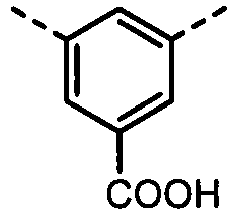
sing. sing. sing. sing. sing. sing. 103 


sing. sing. sing. sing. sing. sing. 104 


sing. sing. sing. sing. sing. sing. 105 


sing. sing. sing. sing. sing. sing. 106 
---(CH2)6-- 
sing. sing. sing. sing. sing. sing. 107 


sing. sing. sing. sing. sing. sing. 108 


sing. sing. sing. sing. sing. sing. 109 


sing. sing. sing. sing. sing. sing. 110 


sing. sing. sing. sing. sing. sing. 111 


sing. sing. sing. sing. sing. sing. 112 

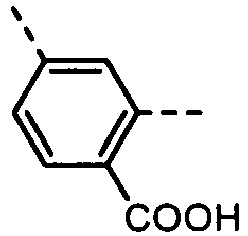
sing. sing. sing. sing. sing. sing. 113 


sing. sing. sing. sing. sing. sing. 114 
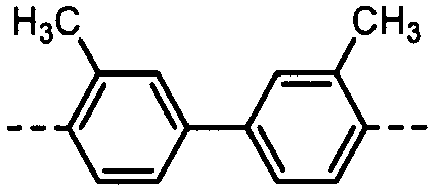
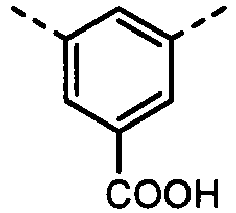
sing. sing. sing. sing. sing. sing. 115 


sing. sing. sing. sing. sing. sing. 116 


sing. sing. sing. sing. sing. sing. 117 
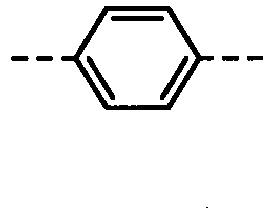

sing. sing. 


118 


sing. sing. ---(CH2)6-- 
---(CH2)6-- 
119 


sing. sing. sing. sing. sing. sing. 120 


sing. sing. sing. sing. sing. sing. Table 2A A E1 B3 E4 Z1 Z2 Z5 Z6 121 


122 

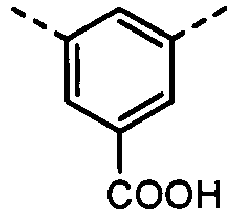


sing. sing. 123 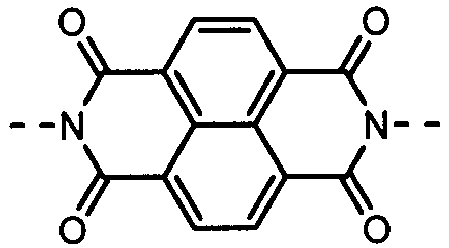


sing. sing. 124 

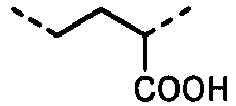


sing. sing. 

Table 2C A B1 B2 W1 W2 Z1 Z2 Z3 Z4 131 

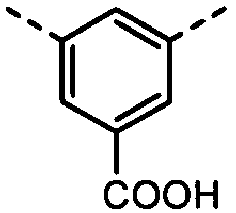
sing. sing. sing. sing. sing. sing. 132 

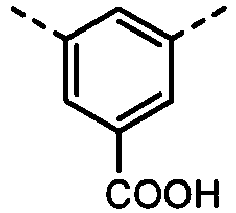
sing. sing. sing. sing. sing. sing. 133 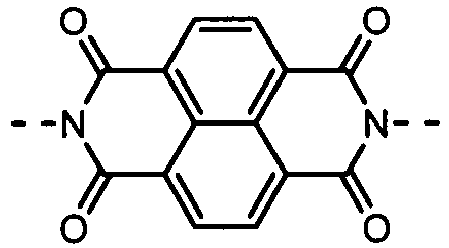


sing. sing. sing. sing. sing. sing. 134 


sing. sing. sing. sing. sing. sing. 135 


sing. sing. sing. sing. sing. sing. 136 


sing. sing. sing. sing. sing. sing. 137 


sing. sing. sing. sing. sing. sing. 138 


sing. sing. sing. sing. sing. sing. 139 


sing. sing. sing. sing. sing. sing. 140 


sing. sing. sing. sing. sing. sing. 141 


sing. sing. sing. sing. sing. sing. 142 


sing. sing. sing. sing. sing. sing. 143 


sing. sing. sing. sing. sing. sing. 144 


sing. sing. sing. sing. sing. sing. 145 


sing. sing. sing. sing. sing. sing. 146 


sing. sing. sing. sing. sing. sing. 147 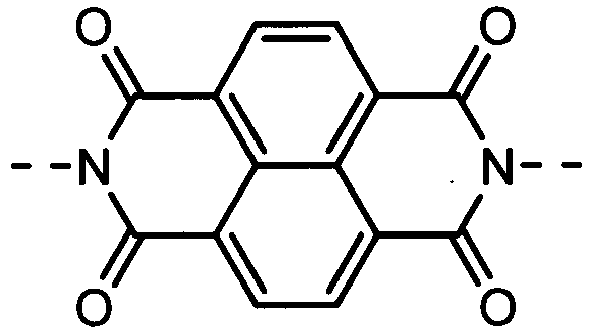
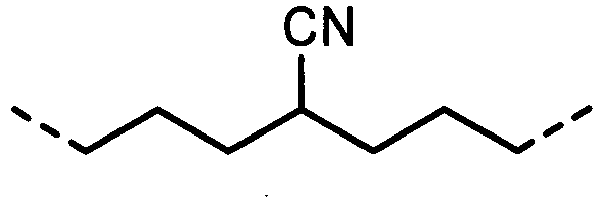

sing. sing. sing. sing. sing. sing. 148 


sing. sing. sing. sing. sing. sing. 149 


sing. sing. sing. sing. sing. sing. 150 


sing. sing. sing. sing. sing. sing. 151 


sing. sing. sing. sing. sing. sing. 152 


sing. sing. sing. sing. sing. sing. 153 


sing. sing. sing. sing. sing. sing. 154 


sing. sing. sing. sing. sing. sing. 155 
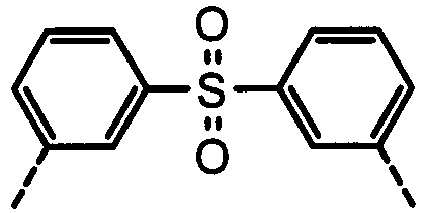

sing. sing. sing. sing. sing. sing. 156 


sing. sing. sing. sing. sing. sing. 157 
--(CH2)2-- 
sing. sing. sing. sing. sing. sing. 158 
--(CH2)16-- 
sing. sing. sing. sing. sing. sing. 159 
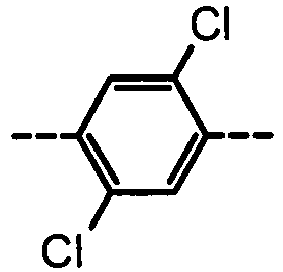

sing. sing. sing. sing. sing. sing. 160 
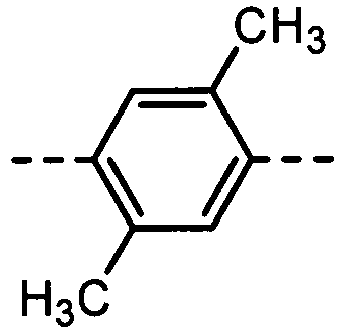

sing. sing. sing. sing. sing. sing. 161 
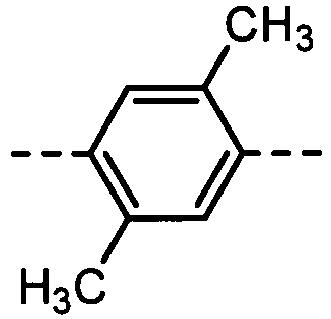

sing. sing. sing. sing. sing. sing. 162 


sing. sing. sing. sing. sing. sing. 163 


sing. sing. sing. sing. sing. sing. 164 
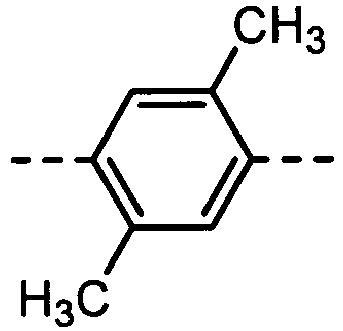

sing. sing. sing. sing. sing. sing. Table 3 A B1 B2 W1 W2 Z1 Z2 Z3 Z4 201 
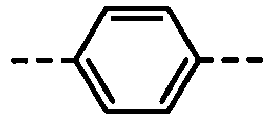

sing. sing. sing. sing. sing. sing. 202 


sing. sing. sing. sing. sing. sing. 203 


sing. sing. sing. sing. sing. sing. 204 


sing. sing. sing. sing. sing. sing. 205 


sing. sing. ---(CH2)6-- 
---(CH2)6-- 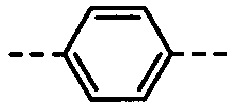


Table 4C A B1 B2 W1 W2 Z1 Z2 Z3 Z4 212 


sing. sing. sing. sing. sing. sing. 213 


sing. sing. sing. sing. sing. sing. 214 


sing. sing. sing. sing. sing. sing. 215 


sing. sing. sing. sing. sing. sing. 216 


sing. sing. sing. sing. sing. sing. 217 


sing. sing. sing. sing. sing. sing. 218 


sing. sing. sing. sing. sing. sing. 219 


sing. sing. sing. sing. sing. sing. 220 


sing. sing. sing. sing. sing. sing. 221 


sing. sing. sing. sing. sing. sing. 222 


sing. sing. sing. sing. sing. sing. 223 


sing. sing. sing. sing. sing. sing. 224 


sing. sing. sing. sing. sing. sing. 225 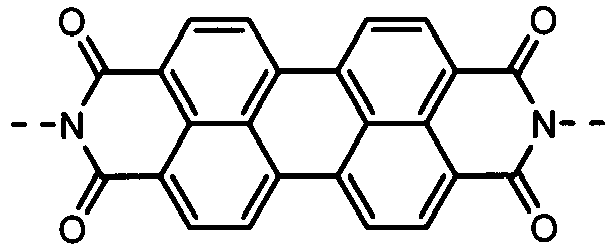


sing. sing. sing. sing. sing. sing. 226 
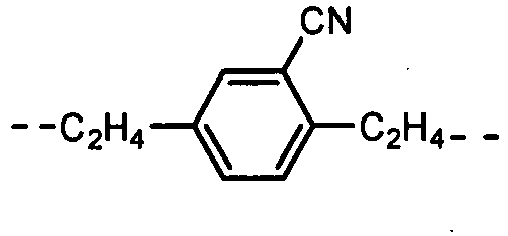
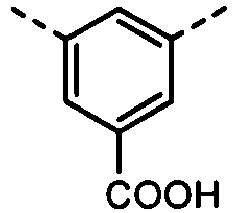
sing. sing. sing. sing. sing. sing. 227 


sing. sing. sing. sing. sing. sing. 228 


sing. sing. sing. sing. sing. sing. 229 


sing. sing. sing. sing. sing. sing. 230 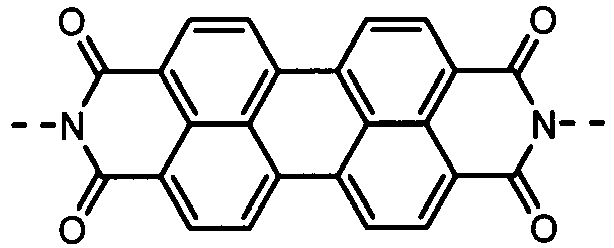


sing. sing. sing. sing. sing. sing. 231 


sing. sing. sing. sing. sing. sing. 232 


sing. sing. sing. sing. sing. sing. 233 


sing. sing. sing. sing. sing. sing. 234 
- -C2H4-O-C2H4-- 
sing. sing. sing. sing. sing. sing. 235 


sing. sing. sing. sing. sing. sing. 236 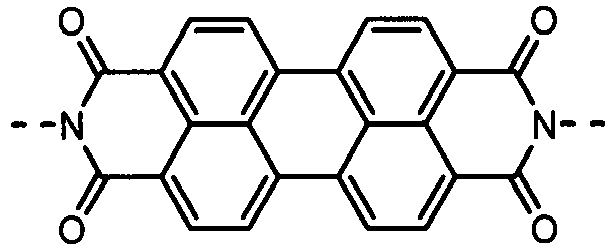


sing. sing. sing. sing. sing. sing. 237 


sing. sing. sing. sing. sing. sing. 238 


sing. sing. sing. sing. sing. sing. 239 


sing. sing. sing. sing. sing. sing. 240 


sing. sing. sing. sing. sing. sing. 241 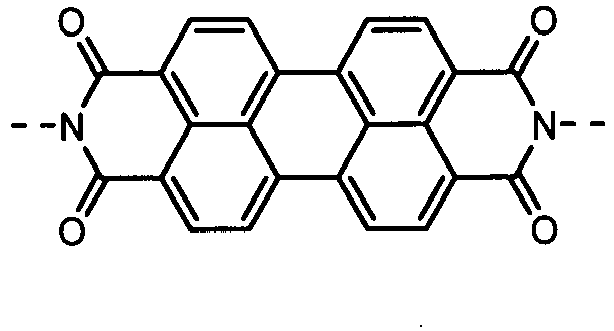


sing. sing. sing. sing. sing. sing. 242 
--(CH2)2-- 
sing. sing. sing. sing. sing. sing. 243 
--(CH2)16-- 
sing. sing. sing. sing. sing. sing. 244 


sing. sing. sing. sing. sing. sing. 245 


sing. sing. sing. sing. sing. sing. Table 5 A B1 B2 W1 W2 Z1 Z2 Z3 Z4 301 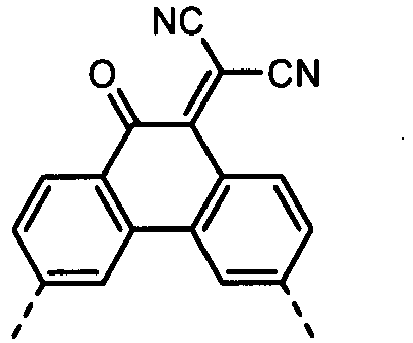


sing. sing. sing. sing. sing. sing. 302 


sing. sing. sing. sing. sing. sing. 303 


sing. sing. sing. sing. sing. sing. 


Table 6C A E1 B3 E4 Z1 Z2 Z5 Z6 314 


sing. sing. sing. sing. 315 


sing. sing. sing. sing. 316 
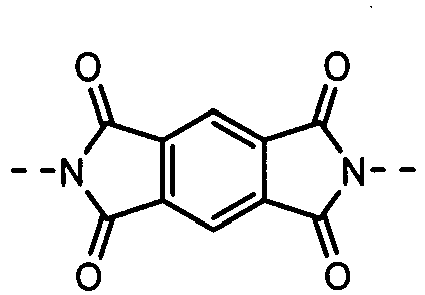

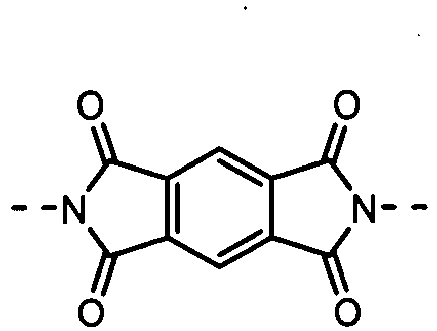
sing. sing. sing. sing. 317 


sing. sing. sing. sing. 318 


sing. sing. sing. sing. 319 


sing. sing. sing. sing. 320 


sing. sing. sing. sing. 321 

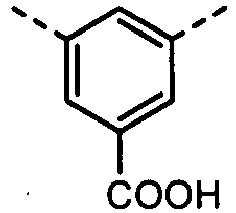

sing. sing. sing. sing. 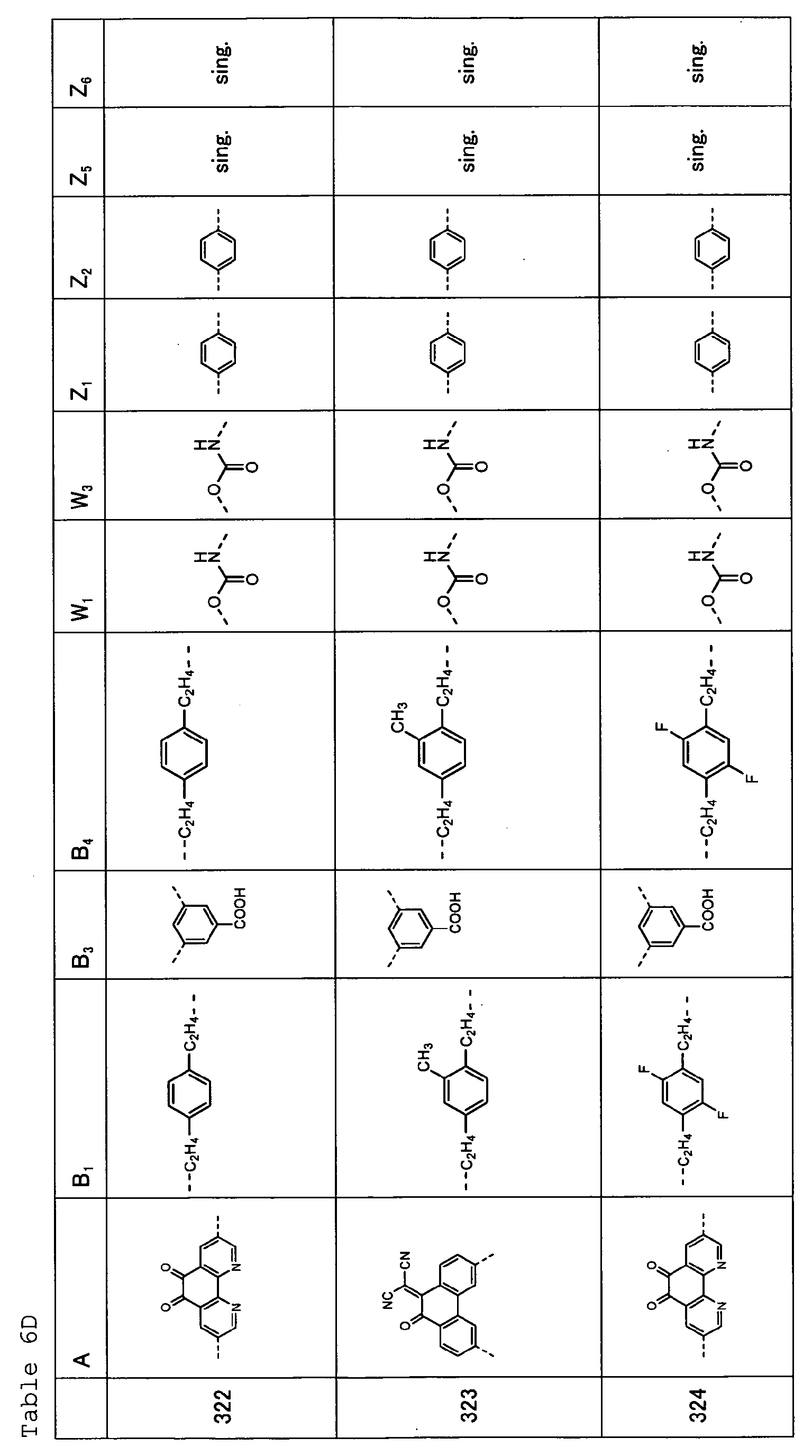


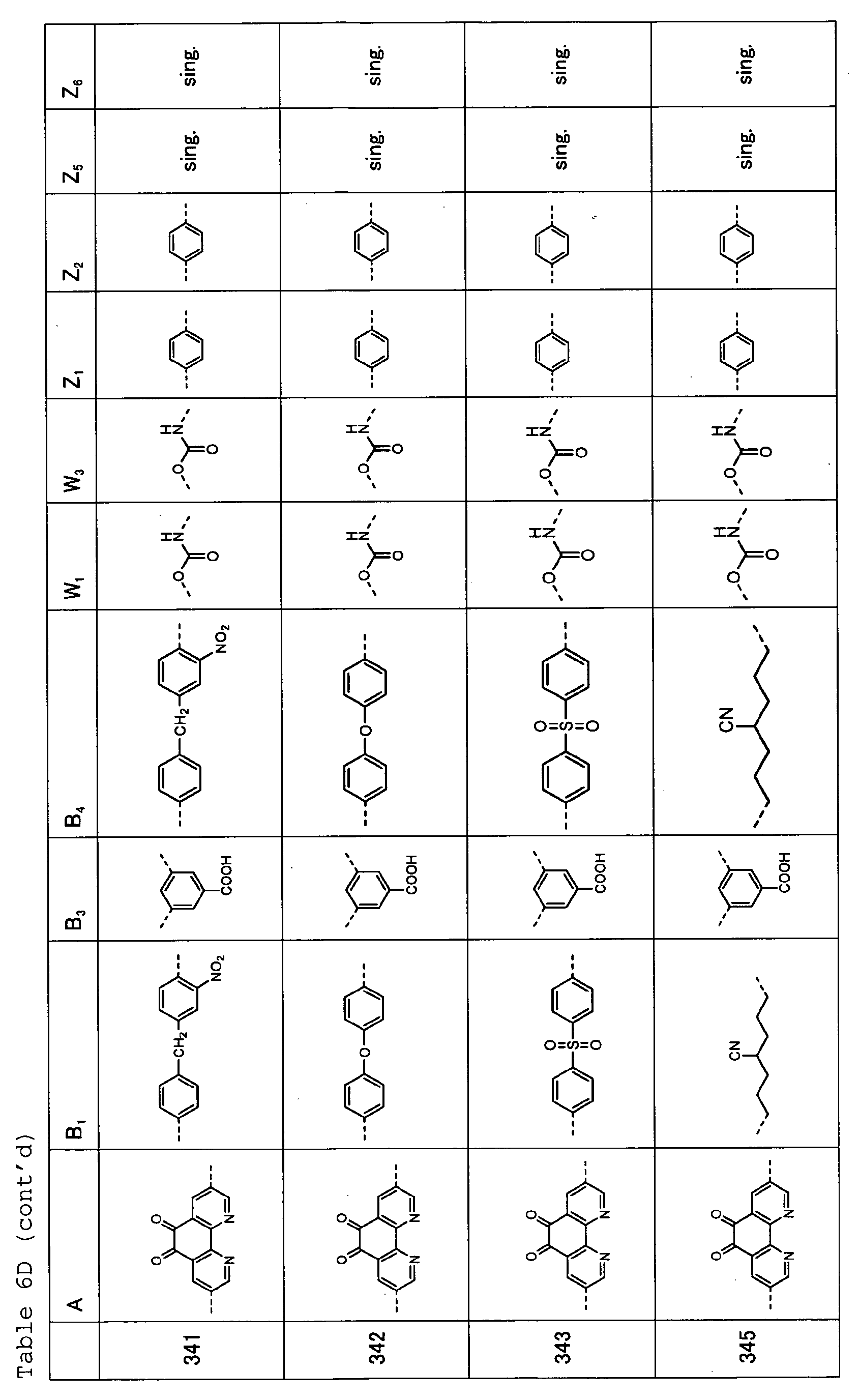


Table 7 A B1 B2 W1 W2 Z1 Z2 Z3 Z4 401 


sing. sing. sing. sing. sing. sing. 402 


sing. sing. sing. sing. sing. sing. 403 


sing. sing. sing. sing. sing. sing. 404 


sing. sing. sing. sing. sing. sing. Table 8A A E1 B3 E4 Z1 Z2 Z5 Z6 405 


sing. sing. Table 8B A B1 B3 B4 W1 W3 Z1 Z2 Z5 Z6 406 


sing. sing. 

sing. sing. 407 
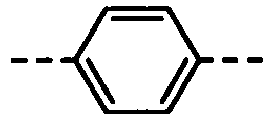


sing. sing. 408 


sing. sing. 409 


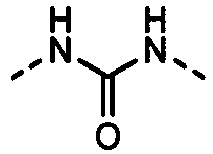


sing. sing. 410 


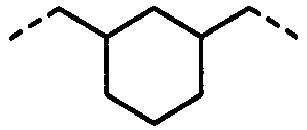
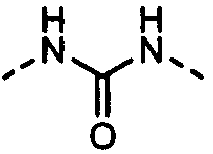


sing. sing. Table 8C A E1 B3 E4 Z1 Z2 Z5 Z6 411 

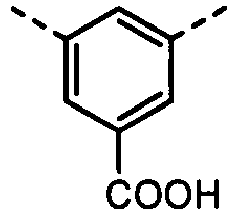

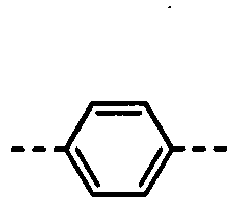

sing. sing. 412 


sing. sing. 413 
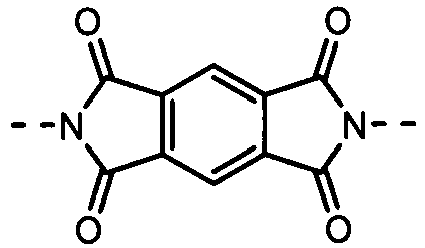


sing. sing. 

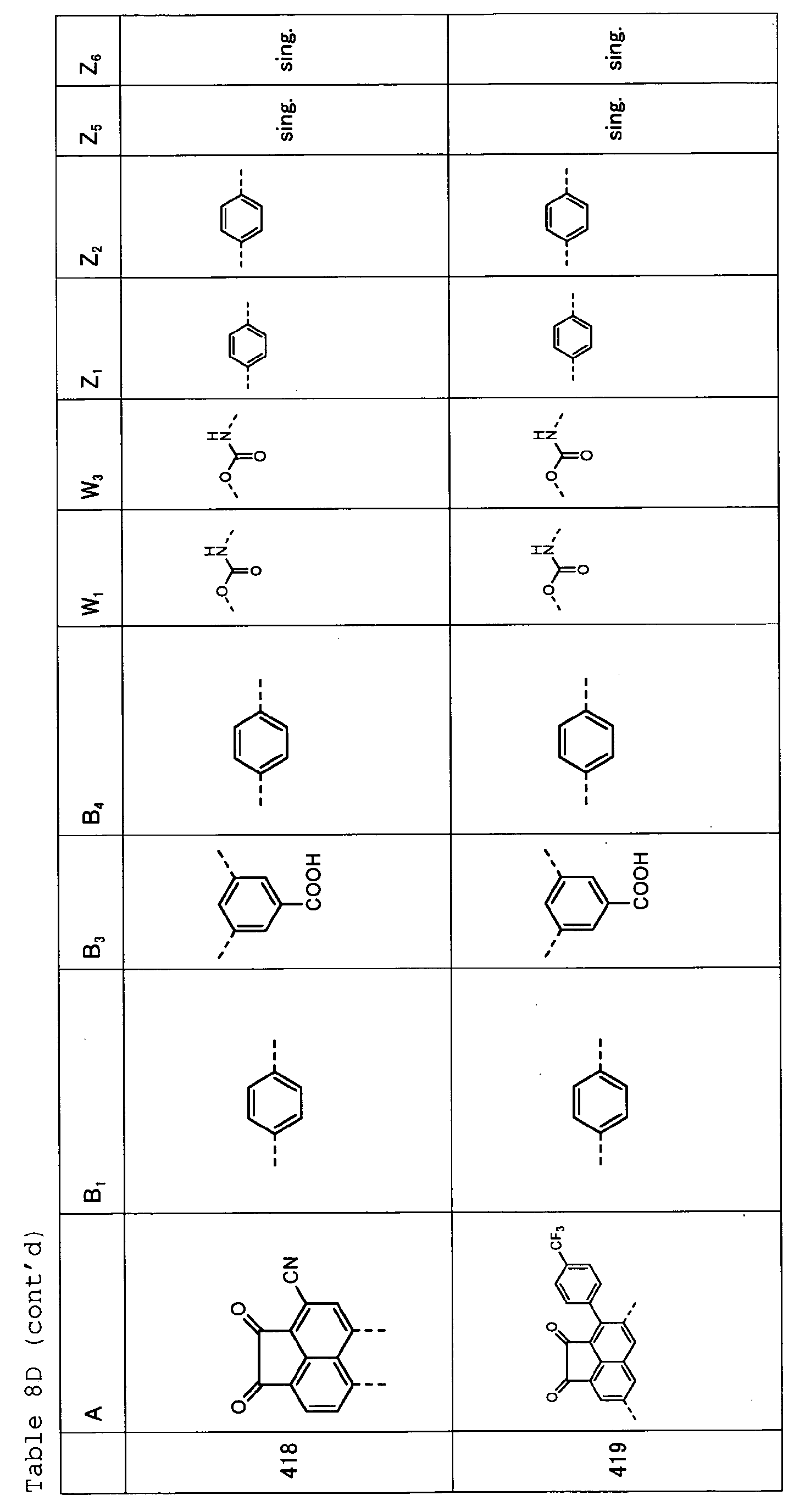


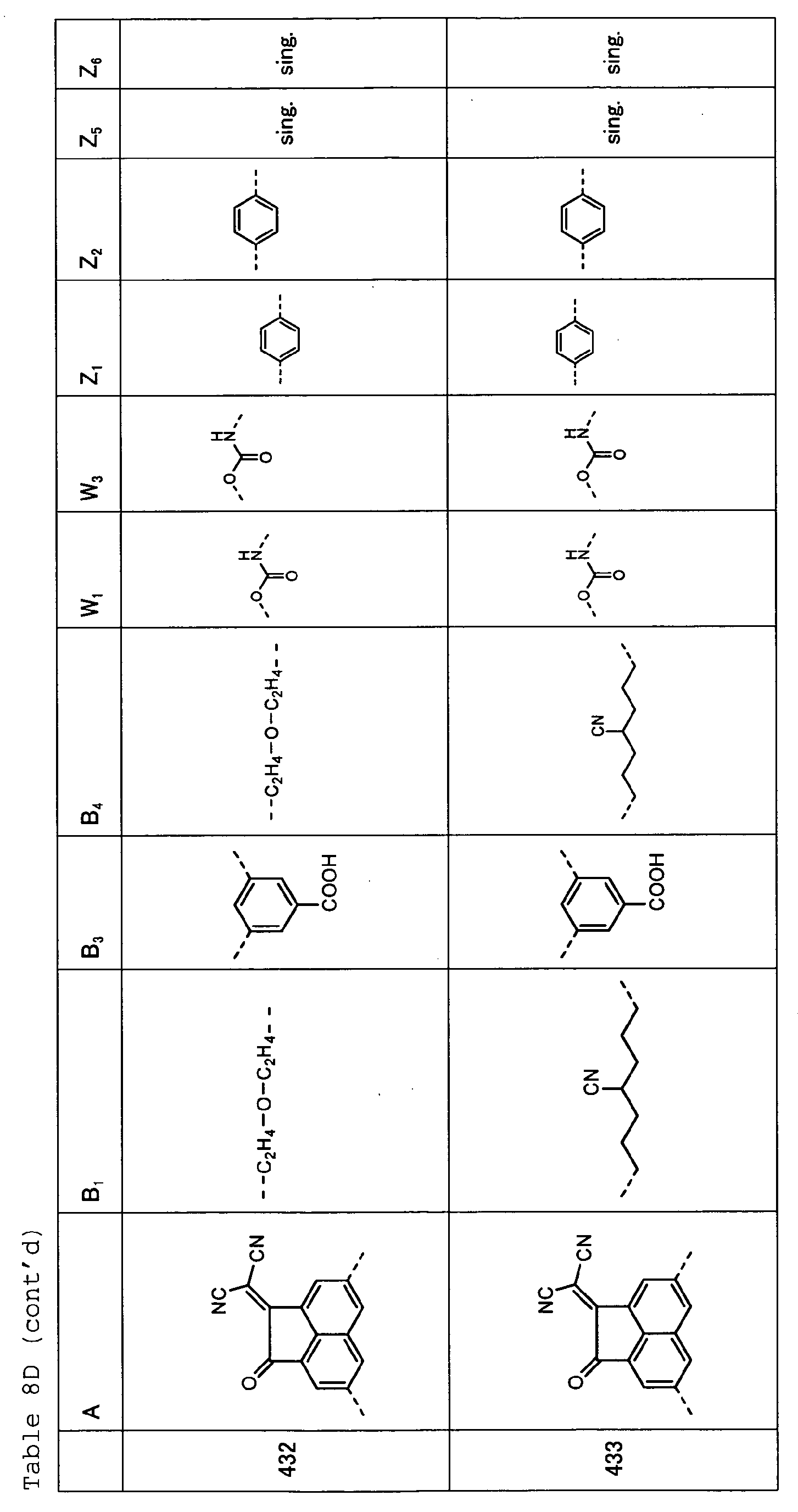
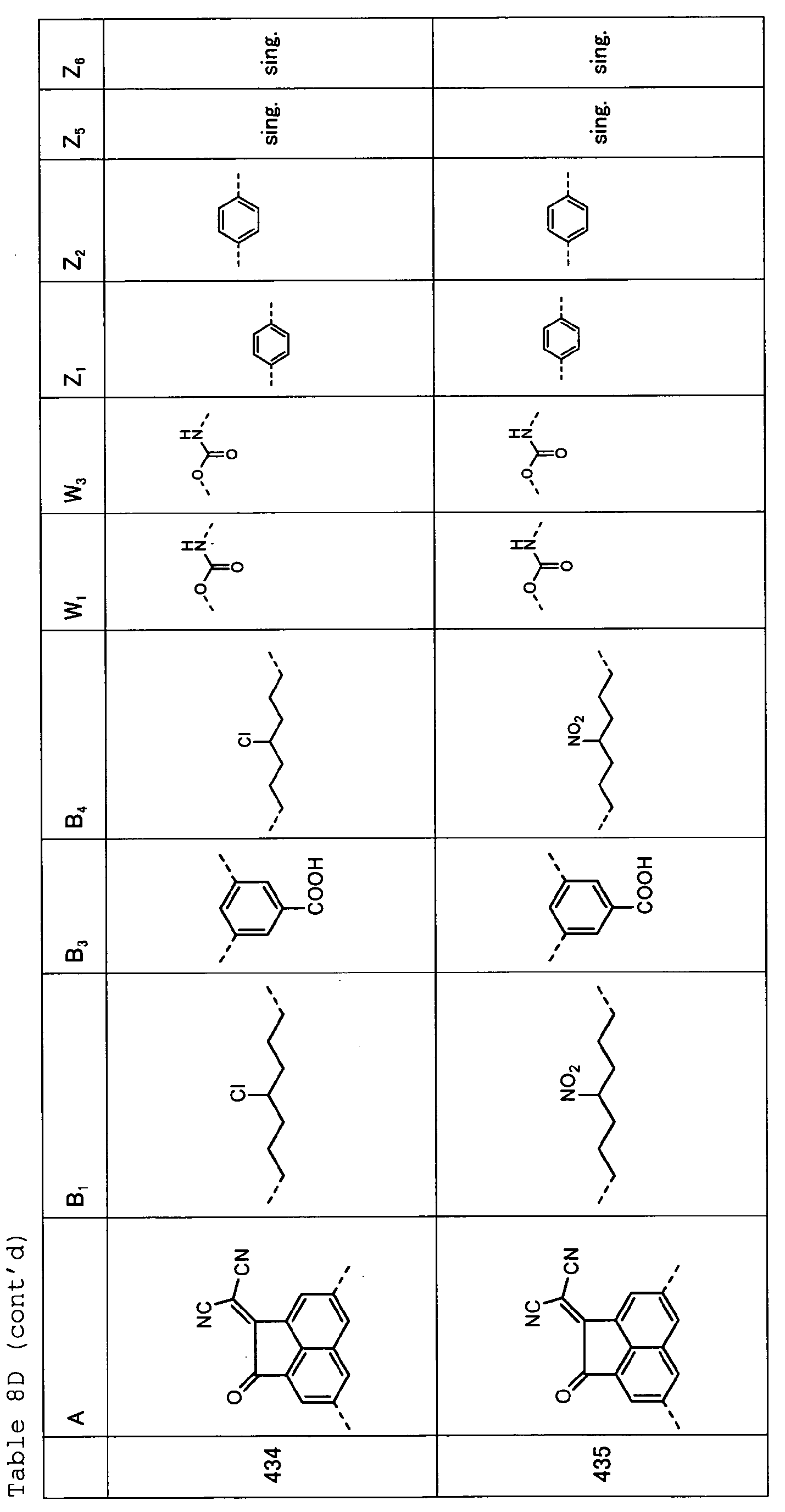


Table 9 A B1 B2 W1 W2 Z1 Z2 Z3 Z4 501 


sing. sing. sing. sing. sing. sing. 502 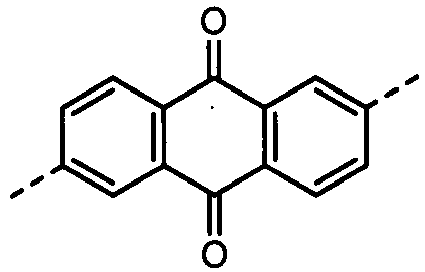


sing. sing. sing. sing. sing. sing. 503 


sing. sing. sing. sing. sing. sing. 504 
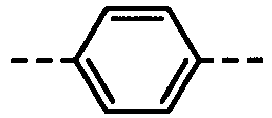

sing. sing. sing. sing. sing. sing. Table 10A A E1 B3 E4 Z1 Z2 Z5 Z6 505 


sing. sing. sing. sing. 506 

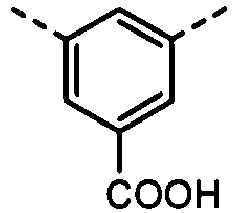

sing. sing. sing. sing. 507 
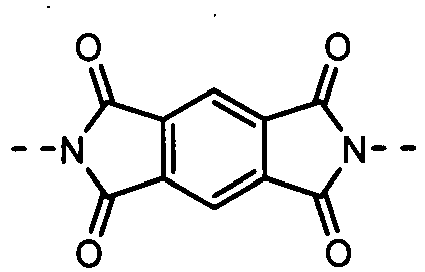


sing. sing. sing. sing. Table 10B A B1 B3 B4 W1 W3 Z1 Z2 Z5 Z6 508 


sing. sing. 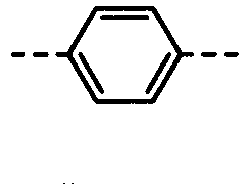

sing. sing. 509 


sing. sing. 510 


sing. sing. 511 


sing. sing. 512 


sing. sing. 


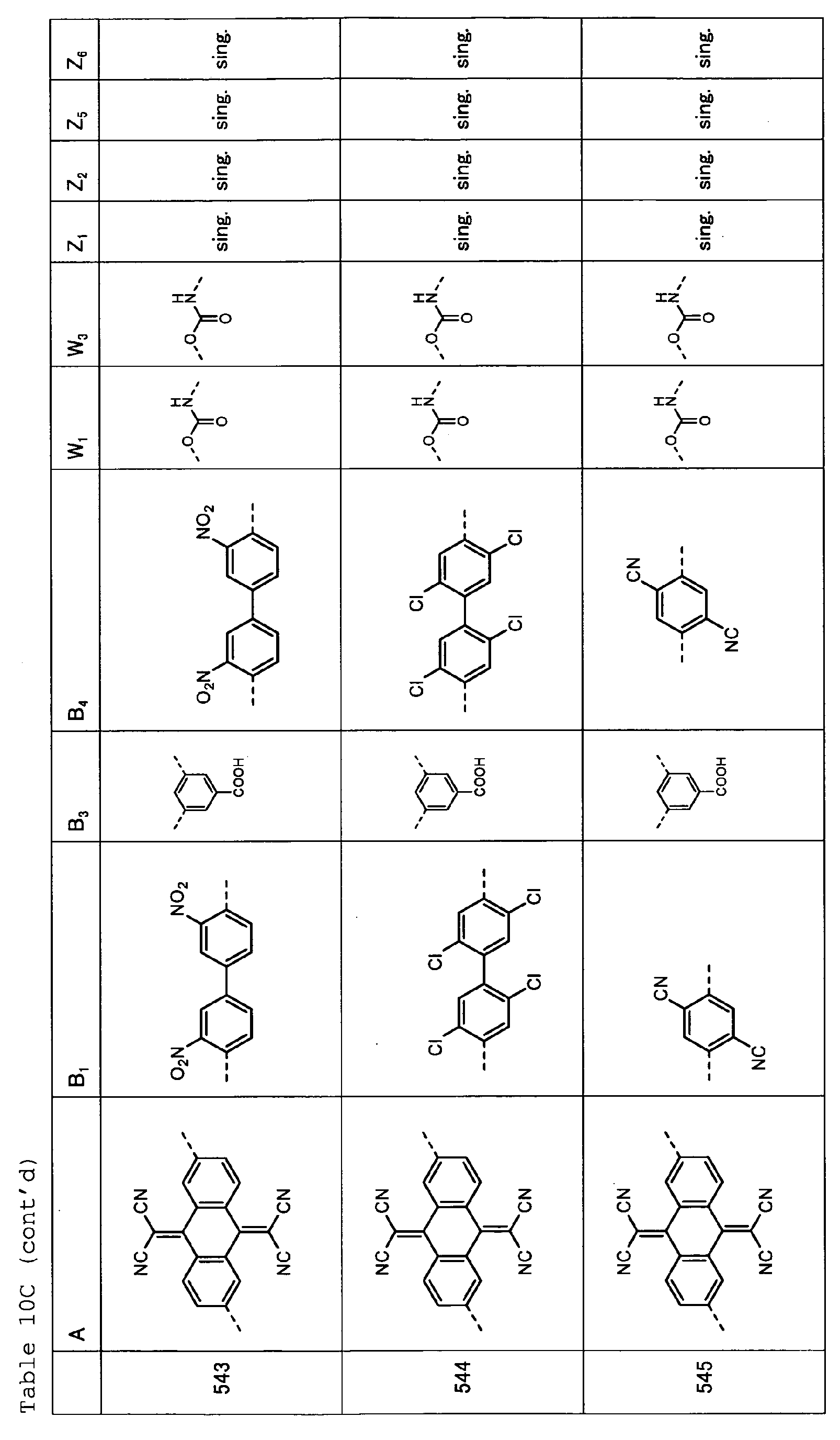


Table 11 A B1 B2 W1 W2 Z1 Z2 Z3 Z4 601 


sing. sing. sing. sing. sing. sing. 602 


sing. sing. sing. sing. sing. sing. 603 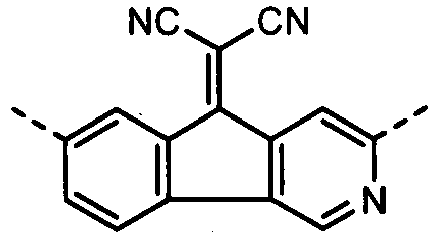


sing. sing. sing. sing. sing. sing. 604 


sing. sing. sing. sing. sing. sing. Table 12A A E1 B3 E4 Z1 Z2 Z5 Z6 605 


sing. sing. sing. sing. 606 


sing. sing. sing. sing. Table 12B A B1 B3 B4 W1 W3 Z1 Z2 Z5 Z6 607 


sing. sing. 608 
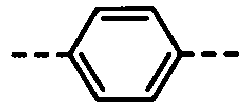


sing. sing. 609 

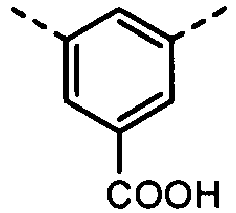


sing. sing. 610 


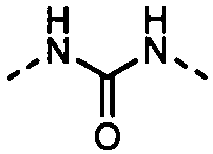
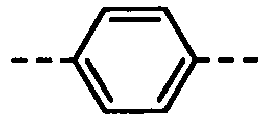

sing. sing. 611 


sing. sing. 


Table 13 A B1 B2 W1 W2 Z1 Z2 Z3 Z4 701 


sing. sing. sing. sing. sing. sing. 702 


sing. sing. sing. sing. sing. sing. 703 


sing. sing. sing. sing. sing. sing. A B1 B2 W1 W2 Z1 Z2 z3 Z4 704 


sing. sing. sing. sing. sing. sing. Table 14A A E1 B3 E4 Z1 Z2 Z5 Z6 705 


sing. sing. sing. sing. 706 


sing. sing. sing. sing. Table 14B A B1 B3 B4 W1 W3 Z1 Z2 Z5 z6 707 


sing. sing. 708 


sing. sing. 709 


sing. sing. 710 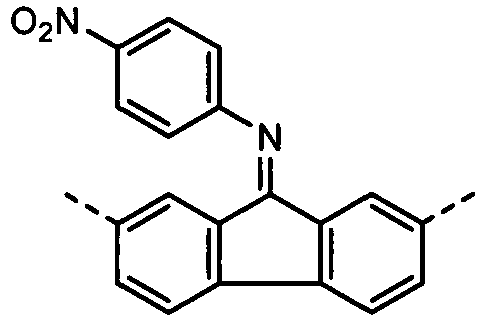


sing. sing. A B1 B3 B4 W1 W3 Z1 Z2 Z5 Z6 711 


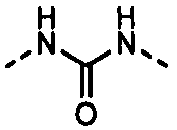


sing. sing. 


Table 15 A B1 B2 W1 W2 Z1 Z2 Z3 Z4 801 


sing. sing. sing. sing. sing. sing. 802 
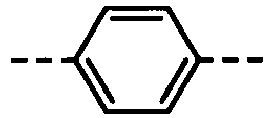
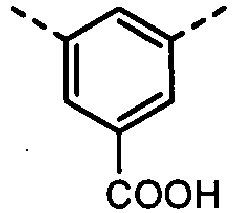
sing. sing. sing. sing. sing. sing. 803 


sing. sing. sing. sing. sing. sing. Table 16A A E1 B3 E4 Z1 Z2 Z5 Z6 805 

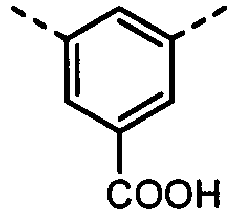

sing. sing. sing. sing. 806 


sing. sing. sing. sing. Table 16B A B1 B3 B4 W1 W3 Z1 Z2 Z5 Z6 807 


sing. sing. 808 


sing. sing. 809 

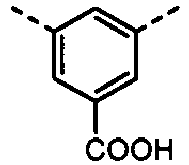


sing. sing. 810 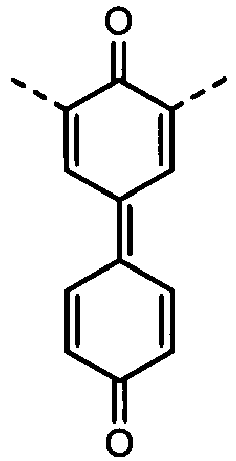


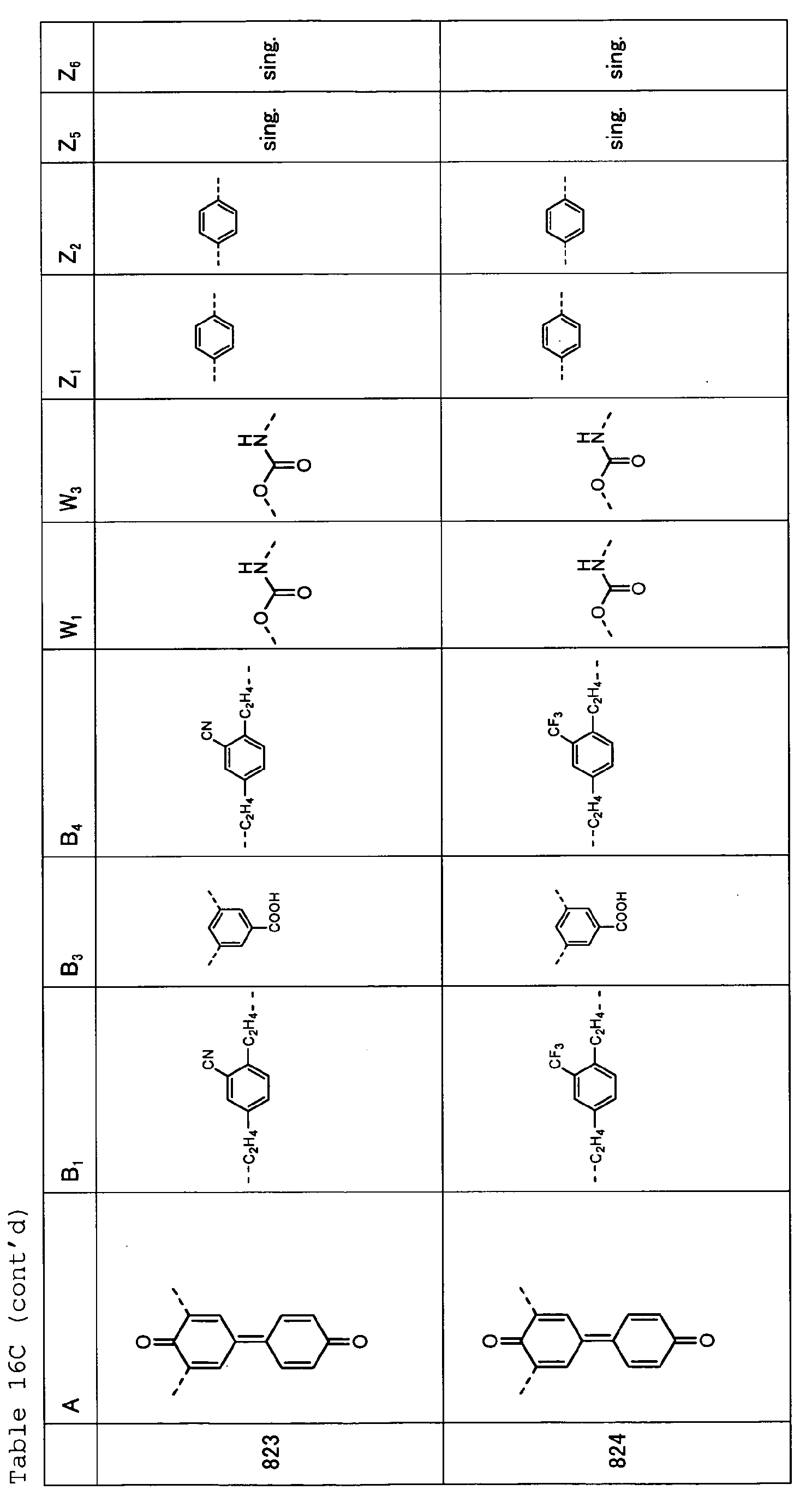


- The copolymer used in the present invention may preferably have a molecular weight in the range of, but not particularly limited to, from 5,000 to 15,000 in weight average molecular weight (Mw). The copolymer used in the present invention may also be synthesized through, but not particularly limited to, e.g., the following reaction process, in order to form the bonds or linkages of W1 to W3 in the formulas (1) to (3).
- Where the linkages of W1 to W3 are urethane linkages, the copolymer may be formed by, e.g., allowing a compound having a hydroxyl group to react with a compound having an isocyanate group ("The Foundation and Application of Polyurethane", CMC Publishing Co., Ltd., p.3, 1986). In the present invention, however, the reaction is by no means limited to this reaction.
- Where the linkages of W1 to W3 are urea linkages, the copolymer may be formed by allowing a compound having an amino group to react with a compound having an isocyanate group ("The Synthesis and Reaction of High Polymers (2)", Kyoritu Shuppan Co., Ltd., p.326, 1991). In the present invention, however, the reaction is by no means limited to this reaction.
- Where the linkages of W1 to W3 are imide linkages, the copolymer may be formed by allowing a compound having an acid dianhydride group to react with a compound having an amino group ("The Dictionary of High Polymers", Maruzen Co., Ltd., p.1101, 1994). In the present invention, however, the reaction is by no means limited to this reaction.
- Where the linkages of W1 to W3 are single bonds, the copolymer may be formed by, e.g., coupling reaction carried out using a urea compound and a boric acid derivative as raw materials, under basic conditions and making use of a palladium catalyst, e.g., tetrakis(triphenylphosphine)palladium (Angew. Chem. Int. Ed.2005, 44, 4442). The single bonds, however, are known to be produced by other various reactions, and in the present invention the reaction is by no means limited to this reaction.
- The copolymer used in the present invention may be synthesized by mutually polymerizing the compounds having the above polymerizable functional groups. Where the copolymer is synthesized in this way, it is necessary to first obtain a compound having a polymerizable functional group such as an amino group, a hydroxyl group, an isocyanate group, a halogen group, a boric acid group or an acid anhydride group and also having a skeleton corresponding to any of the above formulas (A-1) to (A-8). Then, it is necessary, using such a compound, to carry out polymerization reaction that forms the bonds or linkages represented by W1 to W3.
- Derivatives having the (A-1) structure as a main skeleton (which refers to compounds having the polymerizable functional group and also having the skeleton corresponding to the formula (A-1); the same applies alike hereinafter) may be synthesized by using a synthesis method disclosed in, e.g.,
U.S. Patent No. 4,442,193 , No.4,992,349 or No.5,468,583 , or Chemistry of Materials, Vol.19, No.11, pp.2703-2705, 2007). These may be synthesized by the reaction of a naphthalenetetracarboxylic dianhydride with a monoamine derivative; the both being commercially available from, e.g., Tokyo Chemical Industry Co., Ltd., Sigma-Aldrich Japan Co. or Johnson Matthey Japan Incorporated as a reagent. - To make the compound have the polymerizable functional group, available are, e.g., a method in which a skeleton corresponding to the formula (A-1) of what has been synthesized by the above synthesis method is synthesized and thereafter the polymerizable functional group is introduced, and besides a method which makes.use of a naphthalenetetracarboxylic dianhydride derivative, or a monoamine derivative, having the polymerizable functional group or a functional group which can be a precursor of the polymerizable functional group, or having a functional group which can combine with other compound having the polymerizable functional group.
- A method is also available in which a naphthalenetetracarboxylic dianhydride derivative is allowed to react with a diamine derivative to produce a polymer directly. In this case, Z1 to Z6 and W1 to W3 in the formulas (1) to (3) are single bonds.
- Derivatives having the (A-2) structure as a main skeleton may be synthesized by using a synthesis method disclosed in, e.g., Journal of the American Chemical Society, Vol.129, No.49, pp.15259-78, 2007, and may be synthesized by the reaction of a perylenetetracarboxylic dianhydride derivative with a monoamine derivative; the both being commercially available from, e.g., Tokyo Chemical Industry Co., Ltd., Sigma-Aldrich Japan Co. or Johnson Matthey Japan Incorporated as a reagent.
- To make the compound have the polymerizable functional group, available are, e.g., a method in which a skeleton corresponding to the formula (A-2) of what has been synthesized by the above synthesis method is synthesized and thereafter the polymerizable functional group is introduced, and besides a method which makes use of a perylenetetracarboxylic dianhydride derivative, or a monoamine derivative, having the polymerizable functional group or a functional group which can be a precursor of the polymerizable functional group, or having a functional group which can combine with other compound having the polymerizable functional group.
- A method is also available in which a perylenetetracarboxylic dianhydride derivative is allowed to react with a diamine derivative to produce a polymer directly. In this case, Z1 to Z6 and W1 to W3 in the formulas (1) to (3) are single bonds.
- Some derivatives having the (A-3) structure as a main skeleton are commercially available from, e.g., Tokyo Chemical Industry Co., Ltd., Sigma-Aldrich Japan Co. or Johnson Matthey Japan Incorporated as reagents. Then, these may also be synthesized, using a commercially available phenanthrene derivative or phenanthroline derivative as a material, by a synthesis method disclosed in Bull. Chem. Soc., Jpn., Vol.65, pp.116-1011, 1992, Chem. Educator No. 6, pp.227-234, 2001, Journal of Synthetic Organic Chemistry, Japan, Vol.15, pp.29-32, 1957, or Journal of Synthetic Organic Chemistry, Japan, Vol.15, pp.32-34, 1957. A dicyanomethylene group may also be introduced by the reaction with malononitrile.
- To make the compound have the polymerizable functional group, available are, e.g., a method in which a skeleton corresponding to the formula (A-3) of what has been synthesized by the above synthesis method is synthesized and thereafter the polymerizable functional group is introduced, and besides a method in which a structure having the polymerizable functional group or a functional group which can be a precursor of the polymerizable functional group is introduced (e.g., a process carried out by cross-coupling reaction making use of a palladium catalyst, using a halide of a phenanthrene derivative or phenanthroline derivative as a material).
- Some derivatives having the (A-4) structure as a main skeleton are commercially available from, e.g., Tokyo Chemical Industry Co., Ltd., Sigma-Aldrich Japan Co. or Johnson Matthey Japan Incorporated as reagents. Then, these may also be synthesized, using a commercially available acenaphthenequinone derivative as a material, by a synthesis method disclosed in Tetrahedron Letters, 43(16), pp.2911-2944, 2002, or Tetrahedron Letters, 44(10), pp.2087-2091, 2003. A dicyanometylene group may also be introduced by the reaction with malononitrile.
- To make the compound have the polymerizable functional group, available are, e.g., a method in which a skeleton corresponding to the formula (A-4) of what has been synthesized by the above synthesis method is synthesized and thereafter the polymerizable functional group is introduced, and besides a method in which a structure having the polymerizable functional group or a functional group which can be a precursor of the polymerizable functional group is introduced (e.g., a process carried out by cross-coupling reaction making use of a palladium catalyst, using a halide of an acenaphthenequinone derivative as a material).
- Some derivatives having the (A-5) structure as a main skeleton are commercially available from, e.g., Tokyo Chemical Industry Co., Ltd., Sigma-Aldrich Japan Co. or Johnson Matthey Japan Incorporated as reagents. Then, these may also be synthesized, using a commercially available compound as a material, by a synthesis method disclosed in Synthesis, Vo.5, pp.388-389, 1988. A dicyanometylene group may also be introduced by the reaction with malononitrile.
- To make the compound have the polymerizable functional group, available are, e.g., a method in which a skeleton corresponding to the formula (A-5) of what has been synthesized by the above synthesis method is synthesized and thereafter the polymerizable functional group is introduced, and besides a method in which a structure having the polymerizable functional group or a functional group which can be a precursor of the polymerizable functional group is introduced (e.g., a process carried out by cross-coupling reaction making use of a palladium catalyst, using a halide of an anthraquinone derivative as a material).
- Derivatives having the (A-6) structure as a main skeleton may be synthesized by using a synthesis method disclosed in
U.S. Patent No. 4,562,132 , using a fluorenone derivative and malononitrile; the former being commercially available from, e.g., Tokyo Chemical Industry Co., Ltd., Sigma-Aldrich Japan Co. or Johnson Matthey Japan Incorporated as a reagent. - To make the compound have the polymerizable functional group, available are, e.g., a method in which a skeleton corresponding to the formula (A-6) of what has been synthesized by the above synthesis method is synthesized and thereafter the polymerizable functional group is introduced, and besides a method in which a structure having the polymerizable functional group or a functional group which can be a precursor of the polymerizable functional group is introduced.
- Derivatives having the (A-7) structure as a main skeleton may be synthesized by using a synthesis method disclosed in Japanese Patent Application Laid-open No.
H05-279582 H07-70038 - To make the compound have the polymerizable functional group, available are, e.g., a method in which a skeleton corresponding to the formula (A-7) of what has been synthesized by the above synthesis method is synthesized and thereafter the polymerizable functional group is introduced, and besides a method in which a structure having the polymerizable functional group or a functional group which can be a precursor of the polymerizable functional group is introduced and a method which makes use of, as the above aniline derivative, an aniline derivative having the polymerizable functional group or a functional group which can be a precursor of the polymerizable functional group, or having a functional group which can combine with other compound having the polymerizable functional group.
- Derivatives having the (A-8) structure as a main skeleton may be synthesized by using a synthesis method disclosed in Japanese Patent Application Laid-open No.
H01-206349 - To make the compound have the polymerizable functional group, available are, e.g., a method in which a skeleton corresponding to the formula (A-8) of what has been synthesized by the above synthesis method is synthesized and thereafter the polymerizable functional group is introduced, and besides a method in which a structure having the polymerizable functional group or a functional group which can be a precursor of the polymerizable functional group is introduced.
- Derivatives having as main skeletons the structures according to B1 to B4 (which refer to those into which the above polymerizable functional group has been introduced at the sites of bonding of the B1 to B4 divalent groups to the Z's; the B1 to B4 are hereinafter also "B's" collectively) are commercially available from, e.g., Tokyo Chemical Industry Co., Ltd. or Sigma-Aldrich Japan Co. as reagents. These may also be synthesized by introducing the polymerizable functional group into commercially available compounds. Such commercially available products may include, e.g., as commercially available products of isocyanate-containing compounds, TAKENATE and COSMONATE, available from Mitsui Takeda Chemicals, Inc.; DURANATE, available from Asahi Chemical Industry Co., Ltd.; and NIPPOLAN, available from Nippon Polyurethane Industry Co., Ltd. As commercially available products of amino group-containing compounds, they may include POLYMENT, available from Nippon Shokubai Co., Ltd.; and "2100 Series", available from Three Bond Co., Ltd. Also, as commercially available products of hydroxyl group-containing compounds, they may include TAKELAC, available from Mitsui Chemicals Polyurethane, Inc.; and POLYLITE, available from DIC Corporation.
- Of the B's, B2 and B3 are each required to have a carboxyl group. Accordingly, in order to incorporate such a structure into the copolymer, a method is available in which a compound having a structure containing the carboxyl group is further polymerized into the derivatives having as main skeletons the B2 and B3 structures each having the polymerizable functional group, or a compound having a structure containing a functional group which can be derived into the carboxyl group after being polymerized, such as a carboxylate group.
- The copolymer and so forth used in the present invention were confirmed by the following methods.
- Raw materials were confirmed by mass spectrometry. Using a mass spectrometer (MALDI-TOF MS; ultraflex, manufactured by Bruker Daltonics Corp.), molecular weight was measured under conditions of accelerating voltage: 20 kV; mode: reflector; and molecular-weight standard molecule: C60 fullerene. Confirmation was made by peak top values obtained.
- Its structures were confirmed by NMR. The structures were confirmed by 1H-NMR and 13C-NMR analysis (FT-NMR: JNM-EX400 Model, manufactured by JEOL Ltd.) at 120°C in 1,1,2,2-tetrachloroethane (d2) or dimethyl sulfoxide (d6). For the quantitative determination of carboxyl group content, the content of carboxyl groups in the copolymer was also quantitatively determined by using FT-IR, and preparing a calibration curve based on absorption of carboxyl groups, using samples in which benzoic acid was added to KBr powder in different amounts by using a KBr-tab method.
- As methods for forming the layers that constitute the electrophotographic photosensitive member, such as the charge generation layer, the hole transport layer and the electron transport layer, methods are preferable in which coating fluids prepared by dissolving or dispersing materials making up the respective layers are coated to form the layers. Methods for coating may include, e.g., dip coating, spray coating, curtain coating and spin coating. From the viewpoint of efficiency and productivity, dip coating is preferred.
- The process cartridge of the present invention is a process cartridge which integrally supports the electrophotographic photosensitive member of the present invention and at least one device selected from the group consisting of a charging device, a developing device, a transfer device and a cleaning device, and is detachably mountable to the main body of an electrophotographic apparatus.
- The electrophotographic apparatus of the present invention is an electrophotographic apparatus comprising the electrophotographic photosensitive member of the present invention, a charging device, an exposure device, a developing device and a transfer device.
-
Fig. 1 schematically illustrates the construction of an electrophotographic apparatus provided with a process cartridge having the electrophotographic photosensitive member of the present invention. - In
Fig. 1 , reference numeral 1 denotes a drum-shaped electrophotographic photosensitive member of the present invention, which is rotatingly driven around anaxis 2 in the direction of an arrow at a stated peripheral speed. The electrophotographic photosensitive member 1 is, in the course of its rotation, uniformly electrostatically charged on its surface (peripheral surface) to a positive or negative, given potential through a charging device 3 (e.g., a contact primary charging device or a non-contact primary charging device). The electrophotographic photosensitive member thus charged is then exposed to exposure light 4 (e.g., laser light) emitted from an exposure device (not shown) for slit exposure or laser beam scanning exposure. In this way, electrostatic latent images are successively formed on the surface of the electrophotographic photosensitive member 1. - The electrostatic latent images thus formed are then developed with a toner held in a developing device 5 (which may be either of a contact type and a non-contact type). The toner images thus formed are successively transferred through a
transfer device 6 to a transfer material 7 (e.g., paper) fed from a paper feed section (not shown) to the part between the electrophotographic photosensitive member 1 and the transfer device 6 (e.g., a transfer charging assembly) in the manner synchronized with the rotation of the electrophotographic photosensitive member 1. - The
transfer material 7 to which the toner images have been transferred is separated from the surface of the electrophotographic photosensitive member, is guided into a fixing device 8, where the toner images are fixed, and is then put out of the apparatus as a duplicate (a copy). - The surface of the electrophotographic photosensitive member 1 from which the toner images have been transferred is brought to removal of transfer residual toner through a cleaning device 9. Thus the electrophotographic photosensitive member is cleaned on its surface, and is further subjected to charge elimination by pre-exposure light emitted from a pre-exposure device (not shown), and then repeatedly used for the formation of images.
- The charging
device 3 may be either of a scorotron charging assembly and a corotron charging assembly, which utilizes corona discharge. A contact charging device may also be used which makes use of, e.g., a roller-shaped, blade-shaped or brush-shaped charging member. - In the present invention, the above electrophotographic photosensitive member 1 and at least one device selected from the constituents such as the
charging device 3, the developing device 5, thetransfer device 6 and the cleaning device 9 may be so set up as to be integrally joined as a process cartridge. This process cartridge may be so set up as to be detachably mountable to the main body of an electrophotographic apparatus such as a copying machine or a laser beam printer. - For example, at least one device of the
charging device 3, the developing device 5 and the cleaning device 9 may integrally be supported together with the electrophotographic photosensitive member 1 to form a cartridge to set up aprocess cartridge 10 detachably mountable to the main body of the electrophotographic apparatus through a guide such asrails 11 and 12 provided in the main body of the electrophotographic apparatus. - In the case when the electrophotographic apparatus is a copying machine or a printer, the
exposure light 4 is light reflected from, or transmitted through, an original; or light irradiated by the scanning of a laser beam, the driving of an LED array or the driving of a liquid crystal shutter array according to signals obtained by reading an original through a sensor and converting the information into signals. - The electrophotographic photosensitive member in the present invention is adaptable to electrophotographic apparatus in general, such as copying machines, laser beam printers, LED printers, and liquid-crystal shutter printers. It may further be widely applicable to display, recording, light printing, platemaking, facsimile and the like equipment to which electrophotographic techniques have been applied.
- The present invention is described below in greater detail by giving specific working examples. Note, however, that the present invention is by no means limited to these.
- Synthesis examples of the copolymer to be incorporated in the photosensitive layer of the electrophotographic photosensitive member of the present invention are given first. Note, however, that the synthesis of the copolymer used in the present invention is by no means limited to the following compounds and synthesis methods.
- Herein, the molecular weight of each copolymer having been synthesized was measured by GPC (measured with a gel permeation chromatograph "HLC-8120", manufactured by Tosoh Corporation, and calculated in terms of polystyrene).
- To 200 parts by mass of dimethylacetamide, 5.4 parts by mass of naphthalenetetracarboxylic dianhydride, 2.1 parts by mass of 1,4-phenylenediamine and 0.15 part by mass of 3,5-diaminobenzoic acid were added in an atmosphere of nitrogen, and these were stirred at room temperature for 1 hour. After these raw materials became dissolved, reflux was carried out for 8 hours, and the precipitate formed was separated by filtration, followed by washing with acetone to obtain 6.2 parts by mass of an object copolymer (Exemplary Compound 101). The product obtained stood particulate.
- To 200 parts by mass of dimethylacetamide, 8.2 parts by mass of dibromonaphthalenetetracarboxylic dianhydride synthesized by the synthesis method described in Chemistry of Materials, Vol.19, No.11, pp.2703-2705 (2007), 2.1 parts by mass of 1,4-phenylenediamine and 0.15 part by mass of 3,5-diaminobenzoic acid were added in an atmosphere of nitrogen, and these were stirred at room temperature for 1 hour. After these raw materials became dissolved, reflux was carried out for 8 hours, and the precipitate formed was separated by filtration, followed by washing with acetone to obtain 7.5 parts by mass of an object copolymer (Exemplary Compound 102). The product obtained stood particulate.
- To 200 parts by mass of dimethylacetamide, 5.4 parts by mass of naphthalenetetracarboxylic dianhydride and 4.4 parts by mass of 4-hydroxyaniline were added in an atmosphere of nitrogen, and these were stirred at room temperature for 1 hour. After these raw materials became dissolved, reflux was carried out for 8 hours, and the precipitate formed was separated by filtration, followed by recrystallization with ethyl acetate to obtain 5.0 parts by mass of a compound represented by the following structural formula.

- To 4.3 parts by mass of the compound represented by the above structural formula, 1.6 parts by mass of 1,4-phenylene diisocyanate and 0.08 part by mass of 3,5-dihydroxybenzoic acid were added, and reflux was carried out for 8 hours in toluene, and the precipitate formed was separated by filtration, followed by washing with acetone to obtain 3.6 parts by mass of an object copolymer (Exemplary Compound 125). The product obtained stood particulate.
- To 20 parts by mass of diaminophenanthrenequinone synthesized by the synthesis method described in Journal of Synthetic Organic Chemistry, Japan, Vol.15, pp.29-32 (1957) and Journal of Synthetic Organic Chemistry, Japan, Vol.15, pp.32-34 (1957), 8 parts by mass of dicyanomethylene malononitrile was added, and reflux was carried out for 12 hours in tetrahydrofuran. After being left to cool, the purple crystals precipitated were separated by filtration, followed by recrystallization with ethyl acetate to obtain 4.8 parts by mass of a compound represented by the following structural formula.

- To 200 parts by mass of dimethylacetamide, 4.5 parts by mass of the compound represented by the above structural formula, 0.15 part by mass of 3,5-diaminobenzoic acid and 4.4 parts by mass of pyromellitic anhydride were added in an atmosphere of nitrogen, and these were stirred at room temperature for 1 hour. After these raw materials became dissolved, reflux was carried out for 8 hours, and the precipitate formed was separated by filtration, followed by washing with acetone to obtain 5.2 parts by mass of an object copolymer (Exemplary Compound 304). The product obtained stood particulate.
- To a mixed solvent of 100 parts by mass of toluene and 50 parts by mass of ethanol, 2.8 parts by mass of 3-hydroxyphenylboric acid and 7.4 parts by mass of 3,6-dibromo-9,10-phenathrenedion synthesized by the synthesis method described in Chem. Educator No. 6, pp.227-234 (2001) were added in an atmosphere of nitrogen. To the mixture obtained, 100 parts by mass of an aqueous 20% sodium carbonate solution was dropwise added, and thereafter 0.55 part by mass of tetrakis(triphenylphosphine)palladium (0) was added, followed by reflux for 2 hours. After the reaction, the organic phase was extracted with chloroform, and then washed with water, followed by drying with anhydrous sodium sulfate. The solvent was removed under reduced pressure, and thereafter the residue formed was purified by silica gel chromatography to obtain 5.2 parts by mass of a compound represented by the following structural formula.

- To 3.7 parts by mass of the compound represented by the above structural formula, 1.6 parts by mass of 1,4-phenylene diisocyanate and 0.08 part by mass of 3,5-dihydroxybenzoic acid were added, and reflux was carried out for 12 hours in 100 parts by mass of toluene to obtain 2.2 parts by mass of an object copolymer (Exemplary Compound 310). The product obtained stood particulate.
- Next, electrophotographic photosensitive members were produced and evaluated as shown below.
- An aluminum cylinder (JIS A 3003, aluminum alloy) of 260.5 mm in length and 30 mm in diameter was used as a support (a conductive support).
- Next, 50 parts by mass of oxygen deficient SnO2 coated TiO2 particles (powder resistivity: 120 Ω·cm; coverage of SnO2 in mass percentage: 40%) as conductive particles, 40 parts by mass of phenol resin (PLYOPHEN J-325; available from Dainippon Ink & Chemicals, Incorporated; resin solid content: 60%) as a binder resin and 40 parts of methoxypropanol as a solvent (a dispersion medium) were subjected to dispersion for 3 hours by means of a sand mill making use of glass beads of 1 mm in diameter, to prepare a conductive layer coating fluid (a liquid dispersion).
- The oxygen deficient SnO2 coated TiO2 particles in this conductive layer coating fluid were 0.33 µm in average particle diameter (measured by centrifugal sedimentation at a number of revolutions of 5,000 rpm, using a particle size distribution meter CAPA700 (trade name), manufactured by Horiba Ltd., and using tetrahydrofuran as a dispersion medium).
- This conductive layer coating fluid was dip-coated on the support, and the wet coating formed was dried and cured by heating, at 145°C for 30 minutes to form a conductive layer of 16 µm in layer thickness.
- Next, to 40 parts by mass of particles of the copolymer of Exemplary Compound 101 (the proportion of carboxyl group-containing moiety in this copolymer and its molecular weight were as shown in Table 17), 300 parts by mass of distilled water as a dispersion medium, 500 parts by mass of methanol and 8 parts by mass of triethylamine were added, and these were subjected to dispersion for 2 hours by means of a sand mill making use of glass beads of 1 mm in diameter, to prepare an electron transport layer coating fluid (a liquid dispersion).
- Before and after this electron transport layer coating fluid was prepared, the particle diameter of the copolymer was also measured by centrifugal sedimentation at a number of revolutions of 7,000 rpm, using the particle size distribution meter CAPA700 (trade name), manufactured by Horiba Ltd., and using methanol as a dispersion medium. Results obtained are also shown in Table 17.
- This electron transport layer coating fluid was dip-coated on the conductive layer, and this was heated at 120°C for 10 minutes to make the dispersion medium evaporate and at the same time make the particles of the copolymer agglomerate (make them dry) to form an electron transport layer of 1.0 µm in layer thickness.
- Next, 10 parts by mass of hydroxygallium phthalocyanine crystals with a crystal form having strong peaks at Bragg angles (20±0.2°) of 7.5°, 9.9°, 12.5°, 16.3°, 18.6°, 25.1° and 28.3° in CuKα characteristic X-ray diffraction, 5 parts by mass of polyvinyl butyral (trade name: S-LEC BX-1, available from Sekisui Chemical Co., Ltd.) and 260 parts by mass of cyclohexanone were subjected to dispersion for 1.5 hours by means of a sand mill making use of glass beads of 1 mm in diameter. Next, 240 parts of ethyl acetate was added to this to prepare a charge generation layer coating fluid.
- This charge generation layer coating fluid was dip-coated on the electron transport layer, and this was dried at 95°C for 10 minutes to form a charge generation layer of 0.18 µm in layer thickness.
- Next, 7 parts by mass of an amine compound (a hole transporting material) represented by the following structural formula:


- This hole transport layer coating fluid was dip-coated on the charge generation layer, and this was dried at 120°C for 40 minutes to form a hole transport layer of 18 µm in layer thickness.
- Thus, an electrophotographic photosensitive member was produced the hole transport layer of which was a surface layer.
- The layer thickness of the conductive layer, electron transport layer and hole transport layer each was determined in the following way: Using a sample prepared by winding an aluminum sheet on an aluminum cylinder having the same size as the above support and forming thereon, under the same conditions as the above, films corresponding to the conductive layer, electron transport layer and hole transport layer, the layer thickness of each layer at six spots at the middle portion of the sample was measured with a dial gauge (2109FH, manufactured by Mitutoyo Corporation, and an average of the values thus obtained was calculated.
- To determine the layer thickness of the charge generation layer, a sample prepared by forming in the same way as the above a film corresponding to the charge generation layer was cut out at its middle portion by 100 mm × 50 mm in area, and the film at that area was wiped off with acetone, where the layer thickness was calculated from the weights measured before and after the film was wiped off (calculated at a density of 1.3 g/cm3).
- The electrophotographic photosensitive member produced was set in a laser beam printer LBP-2510, manufactured by CA°NON INC. in an environment of 23°C and 50% RH, and its surface potential and images having been reproduced were evaluated. Details are as set out below.
- A process cartridge for cyan color of the above laser beam printer LBP-2510 was converted to attach a potential probe (Model 6000B-8, manufactured by Trek Japan Corporation) to the position of development, and the potential at the middle portion of the electrophotographic photosensitive member (photosensitive drum) was measured with a surface potentiometer (Model 1344, manufactured by Trek Japan Corporation) to evaluate the surface potential. The amount of light was so set that dark-area potential was -500 V and light-area potential was -100 V. Incidentally, in other Examples each, the amount of light that was the same as that for bringing the light-area potential to -100 V in this Example 1 was used as the amount of light in evaluating the light-area potential.
- The electrophotographic photosensitive member produced was set in the process cartridge for cyan color of the laser beam printer LBP-2510. This process cartridge was set at the station of the cyan process cartridge, and images were reproduced. On that occasion, the amount of light was so set that dark-area potential was -500 V and light-area potential was -100 V.
- First, using A4-size plain paper, full-color images (character images of 1% in print percentage for each color) were reproduced on 3,000 sheets of paper.
- Thereafter, images were continuously reproduced in the order of solid white image (1 sheet), ghost image (5 sheets), solid black image (1 sheet) and ghost image (5 sheets).
- The ghost images are those in which square images in solid were reproduced at the leading head area of image as shown in
FIG. 2 and thereafter a halftone image was formed in a one-dot "Keima" pattern as shown inFIG. 3 . - The ghost images were evaluated by measuring the difference in density between the image density of the one-dot "Keima" pattern and the image density of ghost areas. The difference in density was measured at 10 spots in ghost images on one sheet by using a spectral densitometer (trade name: X-Rite 504/508, manufactured by X-Rite Ltd.). This operation was conducted for all the ghost images on the 10 sheets, and an average of values at 100 spots was calculated. The results are shown in Table 17. Images higher in density at the ghost areas are positive ghost images. This difference in density (Macbeth density difference) means that, the smaller the value is, the less the positive ghost images have been made to occur.
- Electrophotographic photosensitive members were produced in the same way as in Example 1 except that the copolymer used in the electron transport layer was changed for the copolymers shown respectively in Table 17. Evaluation was made in the same way. The results are shown in Table 17.
- An electrophotographic photosensitive member was produced in the same way as in Example 1 except that the copolymer used in the electron transport layer was changed for the copolymer shown in Table 17 and that 10 parts by mass of a polyamide resin (TORESIN EF30T, available from Nagase ChemteX Corporation) was further added when the electron transport layer coating fluid was prepared. Evaluation was made in the same way. The results are shown in Table 17.
- Electrophotographic photosensitive members were produced in the same way as in Example 1 except that the copolymer used in the electron transport layer was changed for the copolymers shown respectively in Table 17. Evaluation was made in the same way. The results are shown in Table 17.
- An electrophotographic photosensitive member was produced in the same way as in Example 1 except that the copolymer used in the electron transport layer was changed for the copolymer shown in Table 17 and that 10 parts by mass of a polyamide resin (TORESIN EF30T, available from Nagase ChemteX Corporation) was further added when the electron transport layer coating fluid was prepared. Evaluation was made in the same way. The results are shown in Table 17.
- Electrophotographic photosensitive members were produced in the same way as in Example 1 except that the copolymer used in the electron transport layer was changed for the copolymers shown respectively in Table 17. Evaluation was made in the same way. The results are shown in Table 17.
- Electrophotographic photosensitive members were produced in the same way as in Example 1 except that the copolymer used in the electron transport layer was changed for the copolymers shown respectively in Table 17 and that, in Examples 28, 29 and 30, 10 parts by mass, 13.3 parts by mass and 40 parts by mass, respectively, of a polyamide resin (TORESIN EF30T, available from Nagase ChemteX Corporation) was further added when the electron transport layer coating fluids were prepared. Evaluation was made in the same way. The results are shown in Table 17.
- Electrophotographic photosensitive members were produced in the same way as in Example 1 except that the copolymer used in the electron transport layer was changed for the copolymers shown respectively in Table 17. Evaluation was made in the same way. The results are shown in Table 17.
- An electrophotographic photosensitive member was produced in the same way as in Example 1 except that the copolymer used in the electron transport layer was changed for the copolymer shown in Table 17 and that 10 parts by mass of a phenol resin (PLYOPHEN J-325; available from Dainippon Ink & Chemicals, Incorporated) was further added when the electron transport layer coating fluid was prepared. Evaluation was made in the same way. The results are shown in Table 17.
- Electrophotographic photosensitive members were produced in the same way as in Example 1 except that the copolymer used in the electron transport layer was changed for the copolymers shown respectively in Table 17. Evaluation was made in the same way. The results are shown in Table 17.
- Electrophotographic photosensitive members were produced in the same way as in Example 1 except that the copolymer used in the electron transport layer was changed for the copolymers shown respectively in Table 17 and that, in Examples 52, 53 and 54, 10 parts by mass, 13.3 parts by mass and 40 parts by mass, respectively, of a polyamide resin (TORESIN EF30T, available from Nagase ChemteX Corporation) was further added when the electron transport layer coating fluids were prepared. Evaluation was made in the same way. The results are shown in Table 17.
- Electrophotographic photosensitive members were produced in the same way as in Example 1 except that the copolymer used in the electron transport layer was changed for the copolymers shown respectively in Table 17. Evaluation was made in the same way. The results are shown in Table 17.
- An electrophotographic photosensitive member was produced in the same way as in Example 1 except that, in place of the electron transport layer, a coating fluid composed of 40 parts by mass of a polyamide resin (TORESIN EF30T, available from Nagase ChemteX Corporation), 300 parts by mass of n-butanol and 500 parts by mass of methanol was prepared and this was coated, followed by drying at 120°C for 10 minutes to form an intermediate layer of 0.8 µm in layer thickness. Evaluation was made in the same way. The results are shown in Table 18.
- An electrophotographic photosensitive member was produced in the same way as in Example 1 except that the electron transport layer was formed using, in place of the copolymer used in the present invention, a block copolymer represented by the following structural formula (I-1) (Japanese Patent Application Laid-open No.
2001-83726 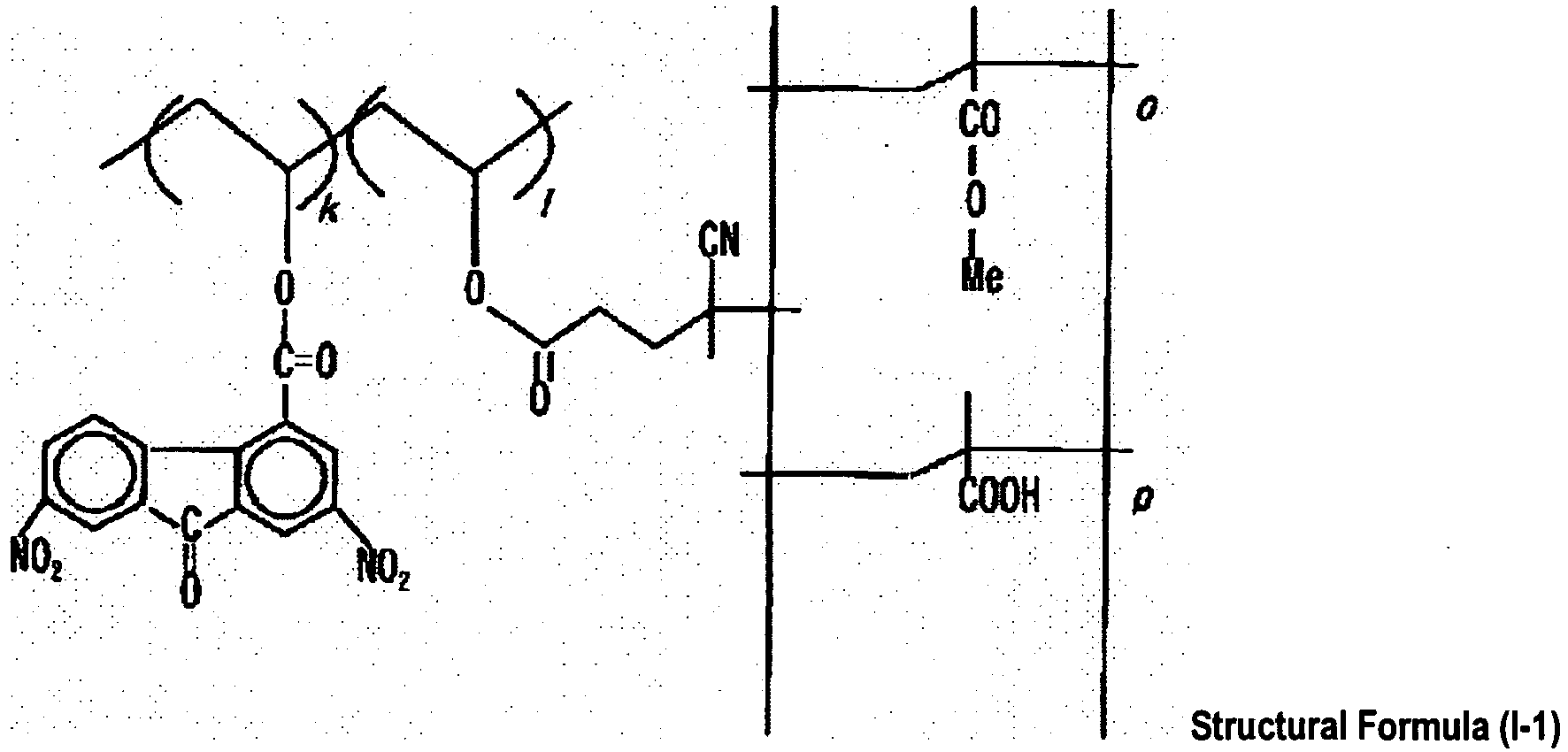
- An electrophotographic photosensitive member was produced in the same way as in Example 1 except that the electron transport layer was formed using, in place of the copolymer used in the present invention, a compound represented by the following structural formula (Japanese Patent Application Laid-open No.
2003-345044 
Table 17 Example Copolymer Macbeth density difference Vl (-V) Exemplary Compound Proportion of carboxyl group= containing moiety (B2 or B3) (mol%) Molecular weight (Mw) Particle diameter Before preparation of coating fluid (µm) After preparation of coating fluid (µm) 1 101 5 10,000 3.5 0.3 0.021 100 2 102 5 8,000 4.0 0.3 0.022 105 3 105 5 5,000 4.1 0.3 0.023 100 4 123 5 12,000 5.2 0.4 0.024 120 5 128 5 15,000 3.8 0.3 0.024 130 6 125 5 11,000 4.5 0.3 0.025 140 7 101 0.4 10,000 2.9 1.2 0.036 100 8 101 1 9,000 2.9 0.8 0.025 100 9 101 30 10,000 3.0 0.4 0.024 110 10 101 35 12,000 3.2 0.4 0.024 135 11 101 50 15,000 2.0 0.3 0.025 140 12 101 80 13,000 2.0 0.3 0.022 110 13 101 5 10,000 3.5 0.3 0.024 135 14 101 5 10,000 3.5 0.3 0.025 145 15 202 5 13,000 8.6 0.3 0.026 100 16 207 5 12,000 7.2 0.3 0.027 120 17 208 5 8,000 5.9 0.3 0.028 130 18 209 5 7,000 7.2 0.3 0.029 140 19 202 5 12,000 6.8 0.3 0.026 110 20 307 5 6,000 4.9 0.3 0.021 100 21 307 5 14,000 8.2 0.4 0.022 100 22 307 5 13,000 6.9 0.5 0.022 105 23 304 5 8,000 4.1 0.3 0.023 125 24 311 5 6,000 5.4 0.3 0.024 130 25 310 5 10,000 3.9 0.4 0.025 140 26 307 1 11,000 5.6 0.8 0.025 100 27 307 30 6,000 2.8 0.3 0.025 110 28 307 5 12,000 3.8 0.5 0.024 110 29 307 5 12,000 3.8 0.3 0.024 135 30 307 5 14,000 8.4 0.3 0.025 140 31 304 30 9,000 7.5 0.3 0.024 125 32 311 30 10,000 5.6 0.3 0.025 135 33 310 30 12,000 8.2 0.4 0.025 145 34 406 5 12,000 8.2 0.3 0.026 100 35 405 5 8,000 5.4 0.4 0.027 120 36 410 5 7,000 7.1 0.4 0.028 135 37 407 5 12,000 9.0 0.3 0.029 140 38 406 5 6,000 8.5 0.3 0.026 110 39 508 5 6,000 4.6 0.3 0.031 105 40 506 5 13,000 7.2 0.7 0.032 120 41 512 5 8,000 8.2 0.3 0.033 130 42 510 5 6,000 8.1 0.4 0.034 140 43 508 1 10,000 6.9 0.3 0.032 100 44 508 30 11,000 6.2 0.3 0.033 110 45 506 30 6,000 8.1 0.3 0.033 125 46 512 30 10,000 5.5 0.3 0.033 135 47 510 30 12,000 4.9 0.4 0.035 145 48 607 5 11,000 7.1 0.5 0.040 105 49 605 5 9,000 7.9 0.3 0.041 120 50 611 5 5,000 4.2 0.3 0.042 130 51 609 5 12,000 7.1 0.3 0.043 140 52 605 5 12,000 5.0 0.3 0.041 125 53 605 5 8,000 6.5 0.4 0.041 140 54 605 5 7,000 3.9 0.3 0.042 145 55 702 5 12,000 4.7 0.5 0.040 100 56 705 5 6,000 6.8 0.3 0.041 125 57 711 5 14,000 7.1 0.3 0.042 135 58 708 5 10,000 4.9 0.3 0.043 140 59 708 1 8,000 4.2 0.3 0.043 140 60 708 30 6,000 8.4 0.3 0.045 145 61 807 5 10,000 7.6 0.3 0.036 100 62 805 5 11,000 8.8 0.4 0.037 125 63 810 5 8,000 6.4 0.4 0.038 130 64 808 5 13,000 7.7 0.3 0.039 140 65 808 1 11,000 5.6 0.3 0.039 140 66 808 30 6,000 9.9 0.3 0.039 145 67 120 5 8,000 6.5 0.4 0.022 100 68 131 5 8,000 8.1 0.3 0.024 110 69 132 5 7,000 6.2 0.4 0.025 105 70 133 5 6,000 4.9 0.3 0.022 105 71 139 5 8,000 7.1 0.3 0.022 100 72 140 5 14,000 7.9 0.5 0.024 105 73 141 5 13,000 4.2 0.3 0.023 110 74 144 5 8,000 7.2 0.6 0.022 100 75 145 5 6,000 8.0 0.3 0.025 100 76 146 5 6,000 6.5 0.3 0.021 105 77 148 5 10,000 3.5 0.7 0.022 100 78 150 5 6,000 4.7 0.3 0.025 105 79 151 5 11,000 6.2 0.3 0.021 105 80 153 5 12,000 7.1 0.3 0.022 110 81 154 5 5,000 4.9 0.4 0.023 110 82 155 5 6,000 8.2 0.3 0.023 105 83 156 5 8,000 6.3 0.3 0.023 105 84 157 5 5,000 7.5 0.3 0.025 100 85 158 5 6,000 7.9 0.5 0.025 110 86 159 5 8,000 5.9 0.4 0.022 110 87 160 5 7,000 8.2 0.5 0.024 110 88 162 5 5,000 4.9 0.4 0.025 105 89 164 5 8,000 5.5 0.5 0.025 105 90 210 5 6,000 8.2 0.3 0.026 100 91 212 5 10,000 8.2 0.4 0.027 110 92 213 5 11,000 7.6 0.3 0.030 105 93 214 5 12,000 8.8 0.3 0.026 110 94 215 5 8,000 8.2 0.3 0.028 110 95 216 5 7,000 6.2 0.3 0.028 100 96 217 5 5,000 8.1 0.5 0.029 100 97 219 5 8,000 5.5 0.3 0.026 100 98 220 5 14,000 6.9 0.3 0.027 100 99 228 5 10,000 7.1 0.3 0.026 105 100 229 5 8,000 8.9 0.3 0.029 110 101 230 5 6,000 4.2 0.3 0.030 110 102 233 5 10,000 8.5 0.3 0.026 105 103 234 5 11,000 5.0 0.3 0.026 100 104 238 5 6,000 6.0 0.3 0.027 100 105 239 5 11,000 3.9 0.3 0.028 105 106 240 5 8,000 5.5 0.4 0.027 105 107 242 5 10,000 9.6 0.4 0.027 105 108 243 5 6,000 8.2 0.3 0.026 110 109 244 5 5,000 6.8 0.3 0.028 105 110 245 5 5,000 7.7 0.3 0.028 110 111 314 5 9,000 8.7 0.4 0.021 120 112 315 5 9,000 6.8 0.3 0.022 120 113 322 5 9,000 7.2 0.3 0.024 140 114 327 5 10,000 8.2 0.3 0.021 145 115 328 5 12,000 4.5 0.3 0.024 140 116 339 5 12,000 8.0 0.5 0.023 140 117 342 5 8,000 7.6 0.3 0.023 140 118 343 5 7,000 8.8 0.3 0.022 145 119 344 5 12,000 6.2 0.3 0.022 145 120 349 5 6,000 8.2 0.3 0.025 145 121 350 5 14,000 8.1 0.3 0.022 140 122 352 5 13,000 5.5 0.4 0.021 150 123 354 5 10,000 6.0 0.3 0.023 145 124 355 5 10,000 8.0 0.3 0.022 145 125 356 5 8,000 7.6 0.4 0.023 140 126 357 5 7,000 6.7 0.4 0.022 145 127 411 5 6,000 7.1 0.3 0.026 120 128 421 5 10,000 7.9 0.3 0.027 145 129 422 5 11,000 7.2 0.3 0.027 140 130 425 5 6,000 7.2 0.3 0.029 140 131 426 5 12,000 5.5 0.3 0.026 145 132 427 5 12,000 8.5 0.3 0.029 145 133 431 5 14,000 3.9 0.3 0.030 150 134 432 5 9,000 4.7 0.4 0.027 140 135 437 5 10,000 6.0 0.3 0.027 145 136 438 5 12,000 7.1 0.3 0.028 145 137 440 5 12,000 4.2 0.3 0.030 140 138 441 5 10,000 7.8 0.3 0.030 145 139 442 5 9,000 8.0 0.3 0.029 145 140 443 5 8,000 8.2 0.3 0.029 140 141 513 5 9,000 8.4 0.3 0.031 135 142 514 5 12,000 7.6 0.3 0.035 140 143 515 5 6,000 6.8 0.3 0.032 145 144 516 5 14,000 7.4 0.3 0.032 145 145 517 5 13,000 6.2 0.3 0.033 135 146 518 5 8,000 8.1 0.3 0.034 135 147 519 5 6,000 5.5 0.3 0.035 135 148 521 5 10,000 8.5 0.3 0.031 140 149 522 5 9,000 7.1 0.3 0.033 140 150 524 5 6,000 7.9 0.5 0.032 140 151 525 5 15,000 8.2 0.3 0.033 135 152 531 5 10,000 7.1 0.3 0.033 145 153 532 5 14,000 6.0 0.4 0.035 140 154 533 5 9,000 6.2 0.3 0.030 140 155 534 5 8,000 8.5 0.3 0.032 140 156 536 5 9,000 4.7 0.3 0.031 145 157 537 5 12,000 6.2 0.3 0.032 145 158 538 5 8,000 6.1 0.3 0.032 140 159 542 5 7,000 4.9 0.2 0.035 135 160 543 5 10,000 4.2 0.3 0.034 135 161 544 5 6,000 8.4 0.3 0.034 140 162 545 5 14,000 7.5 0.3 0.030 145 163 546 5 10,000 6.8 0.5 0.032 145 164 547 5 8,000 6.2 0.3 0.033 145 165 548 5 11,000 5.9 0.3 0.034 140 166 549 5 7,000 8.2 0.3 0.033 135 167 613 5 7,000 8.2 0.3 0.040 145 168 614 5 10,000 8.1 0.3 0.042 140 169 615 5 5,000 5.5 0.3 0.041 140 170 616 5 15,000 5.9 0.3 0.043 145 171 617 5 12,000 7.1 0.3 0.040 145 172 620 5 11,000 5.5 0.3 0.041 145 173 621 5 11,000 7.9 0.3 0.045 135 174 622 5 14,000 4.2 0.3 0.043 140 175 628 5 8,000 7.0 0.3 0.043 140 176 629 5 7,000 5.0 0.3 0.042 145 177 630 5 11,000 8.5 0.3 0.044 135 178 633 5 12,000 3.9 0.3 0.044 145 179 634 5 9,000 4.0 0.3 0.041 135 180 640 5 7,000 6.8 0.3 0.045 140 181 641 5 10,000 6.2 0.3 0.042 140 182 643 5 6,000 4.9 0.3 0.043 140 183 644 5 10,000 5.3 0.4 0.042 135 184 645 5 9,000 5.4 0.3 0.043 140 185 646 5 8,000 5.9 0.3 0.042 140 186 713 5 11,000 8.4 0.3 0.040 140 187 714 5 8,000 6.6 0.3 0.045 145 188 715 5 6,000 8.8 0.3 0.045 145 189 716 5 10,000 6.4 0.3 0.045 140 190 717 5 11,000 6.2 0.3 0.042 140 191 718 5 6,000 8.1 0.3 0.041 140 192 719 5 12,000 5.5 0.3 0.043 150 193 720 5 10,000 8.2 0.4 0.042 145 194 726 5 8,000 8.2 0.3 0.041 145 195 727 5 8,000 8.5 0.3 0.041 140 196 728 5 9,000 7.9 0.3 0.040 140 197 730 5 10,000 6.2 0.3 0.044 140 198 731 5 10,000 8.2 0.3 0.045 145 199 732 5 8,000 5.0 0.3 0.042 145 200 733 5 8,000 6.5 0.3 0.043 140 201 738 5 7,000 3.0 0.3 0.041 140 202 739 5 10,000 4.7 0.3 0.040 145 203 740 5 6,000 8.8 0.3 0.045 145 204 741 5 14,000 7.1 0.3 0.044 140 205 742 5 10,000 7.2 0.3 0.044 140 206 743 5 10,000 5.5 0.3 0.045 140 207 744 5 9,000 6.4 0.3 0.043 145 208 812 5 8,000 4.2 0.3 0.039 140 209 813 5 7,000 8.4 0.3 0.037 150 210 814 5 13,000 8.0 0.3 0.039 140 Before preparation of coating fluid (µm) After preparation of coating fluid (µm) 211 815 5 11,000 6.8 0.3 0.036 140 212 816 5 8,000 6.4 0.3 0.036 150 213 817 5 8,000 6.2 0.3 0.036 145 214 818 5 12,000 8.1 0.3 0.039 145 215 819 5 12,000 8.5 0.3 0.038 150 216 820 5 9,000 4.7 0.3 0.037 150 217 825 5 10,000 6.1 0.3 0.037 140 218 826 5 10,000 7.9 0.3 0.038 150 219 827 5 12,000 4.2 0.3 0.039 140 220 830 5 6,000 7.2 0.3 0.037 140 221 831 5 7,000 8.5 0.3 0.039 150 222 832 5 12,000 6.5 0.3 0.036 145 223 837 5 6,000 3.7 0.3 0.039 140 224 838 5 12,000 6.7 0.3 0.037 145 225 840 5 12,000 6.8 0.3 0.037 140 226 841 5 10,000 7.2 0.4 0.038 140 227 842 5 8,000 5.2 0.4 0.038 140 228 843 5 7,000 8.4 0.3 0.037 145 229 844 5 9,000 6.4 0.3 0.037 145 Table 18 Comparative Example Macbeth density difference Vl (-V) 1 0.070 165 2 0.085 170 3 0.070 130 - While the present invention has been described with reference to exemplary embodiments, it is to be understood that the invention is not limited to the disclosed exemplary embodiments. The scope of the following claims is to be accorded the broadest interpretation so as to encompass all such modifications and equivalent structures and functions.
Claims (11)
- An electrophotographic photosensitive member comprising a support and a photosensitive layer formed on the support, wherein
the photosensitive layer contains a copolymer having a repeating structural unit represented by the following formula (1) and a repeating structural unit represented by the following formula (2) or (3) :
(̵Z1-A-Z2-E1)̵ (1)
(̵Z3-A-Z4-W2-B2-W2)̵ (2)
(̵Z5-B3-Z6-E4)̵ (3)
where, in the formulas (1), (2) and (3);Z1 to Z6 each independently represent a single bond, an alkylene group, an arylene group, or an arylene group substituted with an alkyl group;E1 and E4 each represent a divalent group represented by-W1-B1-W1- and -W3-B4-W3-, respectively, or a divalent group represented by the following formula (E11) and (E41), respectively: wherein X1 and X4 each independently represent a tetravalent group formed by removing four hydrogen atoms from a cyclic hydrocarbon;W1 to W3 each independently represent a single bond, a urethane linkage, a urea linkage or an imide linkage;A represents a divalent group represented by any of the following formulas (A-1) to (A-8):
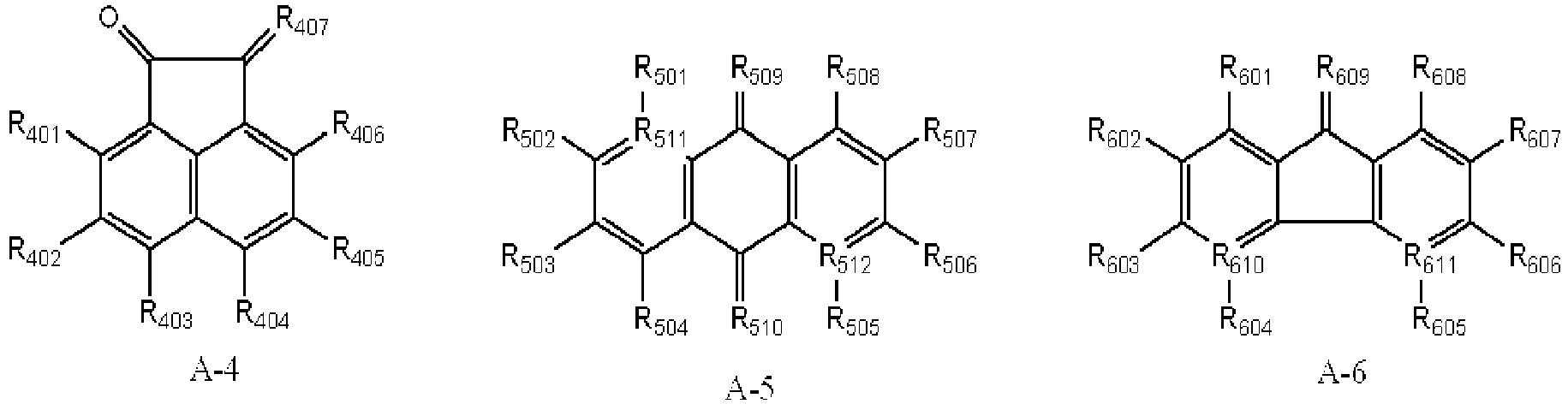
 R101 to R104 and R201 to R208 each independently represent a hydrogen atom, an aryl group, an aryl group substituted with a halogen atom, nitro group, cyano group, alkyl group or alkyl halide group, an alkyl group, or a cyano group, or represent a bonding site; and R105, R106, R209 and R210 each independently represent a hydrogen atom, an aryl group, an aryl group substituted with an alkyl group or halogen atom, or an alkyl group, or represent a bonding site; provided that any two of R101 to R106 are bonding sites;and provided that any two of R201 to R210 are bonding sites;R301 to R308, R401 to R406, R501 to R508, and R801 to R808 each independently represent a hydrogen atom, an aryl group, an aryl group substituted with a halogen atom, nitro group, cyano group, alkyl group or alkyl halide group, an alkyl group, a cyano group, or a nitro group, or represent a bonding site; R309, R407, R509, and R510 each independently represent an oxygen atom or a dicyanomethylene group; and R310 and R311 each independently represent a carbon atom or a nitrogen atom, and, in the case of the nitrogen atom, R304 and R305 are not present; provided that any two of R301 to R308 are bonding sites;and provided that any two of R401 to R406 are bonding sites;and provided that any two of R801 to R808 are bonding sites;and R511 and R512 each independently represent a carbon atom or a nitrogen atom, and, in the case of the nitrogen atom, R501 and R505 are not present; provided that any two of R501 to R508 are bonding sites;R601 to R608 and R701 to R713 each independently represent a hydrogen atom, an aryl group, an aryl group substituted with a halogen atom, nitro group, cyano group, alkyl group or alkyl halide group, an alkyl group, a cyano group, a nitro group, or a carboxylate group, or represent a bonding site; R610 and R611 each independently represent a carbon atom or a nitrogen atom, and, in the case of the nitrogen atom, R604 and R605 are not present; and R609 represents a dicyanomethylene group; provided that any two of R601 to R608 are bonding sites;R714 and R715 each independently represent a carbon atom or a nitrogen atom, and, in the case of the nitrogen atom, R704 and R705 are not present; provided that any two of R701 to R713 are bonding sites; andB1 and B4 each independently represent an arylene group, an alkylene group, an alkarylene group, an arylene group substituted with an alkyl group, halogen atom, cyano group or nitro group, an alkylene group substituted with a halogen atom, cyano group or nitro group, an alkarylene group substituted with an alkyl group, halogen atom, cyano group or nitro group, an arylene group interrupted by an ether or sulfonyl, or an alkylene group interrupted by an ether; andB2 and B3 each independently represent an arylene group substituted with a carboxyl group only, an arylene group substituted with a carboxyl group and an alkyl group only, or an alkylene group substituted with a carboxyl group only.
 - The electrophotographic photosensitive member according to claim 1, wherein the photosensitive layer is a photosensitive layer having an electron transport layer, a charge generation layer and a hole transport layer which are layered in this order from the support side, and the electron transport layer contains the copolymer having a repeating structural unit represented by the formula (1) and a repeating structural unit represented by the formula (2) or the copolymer having a repeating structural unit represented by the formula (1) and a repeating structural unit represented by the formula (3).
- The electrophotographic photosensitive member according to claim 1 or 2, wherein the photosensitive layer is a photosensitive layer having an electron transport layer, a charge generation layer and a hole transport layer which are layered in this order from the support side, and the electron transport layer contains the copolymer having a repeating structural unit represented by the formula (1) and a repeating structural unit represented by the formula (2) or the copolymer having a repeating structural unit represented by the formula (1) and a repeating structural unit represented by the formula (3), in an amount of from 80% by mass to 100% by mass based on the total mass of the electron transport layer.
- The electrophotographic photosensitive member according to claim 1, 2 or 3, wherein the photosensitive layer contains the copolymer having a repeating structural unit represented by the formula (1) and a repeating structural unit represented by the formula (2), and the repeating structural unit represented by the formula (1) is in a proportion of from 50 mol% to 99 mol% based on all the repeating structural units in the copolymer.
- The electrophotographic photosensitive member according to claim 1, 2 or 3, wherein the photosensitive layer contains the copolymer having a repeating structural unit represented by the formula (1) and a repeating structural unit represented by the formula (2), and the repeating structural unit represented by the formula (1) is in a proportion of from 70 mol% to 99 mol% based on all the repeating structural units in the copolymer.
- The electrophotographic photosensitive member according to claim 1, 2, 3, 4 or 5, wherein the photosensitive layer contains the copolymer having a repeating structural unit represented by the formula (1) and a repeating structural unit represented by the formula (2), and the repeating structural unit represented by the formula (2) is in a proportion of from 1 mol% to 30 mol% based on all the repeating structural units in the copolymer.
- The electrophotographic photosensitive member according to claim 1, 2 or 3, wherein the photosensitive layer contains the copolymer having a repeating structural unit represented by the formula (1) and a repeating structural unit represented by the formula (3), and the repeating structural unit represented by the formula (1) is in a proportion of from 50 mol% to 99 mol% based on all the repeating structural units in the copolymer.
- The electrophotographic photosensitive member according to claim 1, 2 or 3, wherein the photosensitive layer contains the copolymer having a repeating structural unit represented by the formula (1) and a repeating structural unit represented by the formula (3), and the repeating structural unit represented by the formula (1) is in a proportion of from 70 mol% to 99 mol% based on all the repeating structural units in the copolymer.
- The electrophotographic photosensitive member according to claim 1, 2, 3, 7 or 8, wherein the photosensitive layer contains the copolymer having a repeating structural unit represented by the formula (1) and a repeating structural unit represented by the formula (3), and the repeating structural unit represented by the formula (3) is in a proportion of from 1 mol% to 30 mol% based on all the repeating structural units in the copolymer.
- A process cartridge which integrally supports the electrophotographic photosensitive member according to any one of claims 1 to 9 and at least one device selected from the group consisting of a charging device, a developing device, a transfer device and a cleaning device, and is detachably mountable to the main body of an electrophotographic apparatus.
- An electrophotographic apparatus comprising the electrophotographic photosensitive member according to any one of claims 1 to 9, a charging device, an exposure device, a developing device and a transfer device.
Applications Claiming Priority (3)
| Application Number | Priority Date | Filing Date | Title |
|---|---|---|---|
| JP2009019744 | 2009-01-30 | ||
| JP2010017706A JP4594444B2 (en) | 2009-01-30 | 2010-01-29 | Electrophotographic photosensitive member, process cartridge, and electrophotographic apparatus |
| PCT/JP2010/051657 WO2010087520A1 (en) | 2009-01-30 | 2010-01-29 | Electrophotographic photosensitive member, process cartridge, and electrophotographic apparatus |
Publications (3)
| Publication Number | Publication Date |
|---|---|
| EP2391925A1 EP2391925A1 (en) | 2011-12-07 |
| EP2391925A4 EP2391925A4 (en) | 2012-02-29 |
| EP2391925B1 true EP2391925B1 (en) | 2018-09-19 |
Family
ID=42395764
Family Applications (1)
| Application Number | Title | Priority Date | Filing Date |
|---|---|---|---|
| EP10735973.9A Active EP2391925B1 (en) | 2009-01-30 | 2010-01-29 | Electrophotographic photosensitive member, process cartridge, and electrophotographic apparatus |
Country Status (6)
| Country | Link |
|---|---|
| US (1) | US8465889B2 (en) |
| EP (1) | EP2391925B1 (en) |
| JP (1) | JP4594444B2 (en) |
| KR (1) | KR101288657B1 (en) |
| CN (1) | CN102301285B (en) |
| WO (1) | WO2010087520A1 (en) |
Families Citing this family (47)
| Publication number | Priority date | Publication date | Assignee | Title |
|---|---|---|---|---|
| JP5479031B2 (en) * | 2009-11-02 | 2014-04-23 | キヤノン株式会社 | Method for producing electrophotographic photosensitive member and electrophotographic photosensitive member |
| JP4940370B2 (en) | 2010-06-29 | 2012-05-30 | キヤノン株式会社 | Electrophotographic photosensitive member, process cartridge, and electrophotographic apparatus |
| JP4958995B2 (en) | 2010-08-27 | 2012-06-20 | キヤノン株式会社 | Electrophotographic photosensitive member, process cartridge, and electrophotographic apparatus |
| KR101599578B1 (en) | 2012-06-29 | 2016-03-03 | 캐논 가부시끼가이샤 | Electrophotographic photosensitive member, process cartridge, and electrophotographic apparatus |
| US9029054B2 (en) | 2012-06-29 | 2015-05-12 | Canon Kabushiki Kaisha | Electrophotographic photosensitive member, process cartridge, and electrophotographic apparatus |
| US9063505B2 (en) | 2012-06-29 | 2015-06-23 | Canon Kabushiki Kaisha | Electrophotographic photosensitive member, process cartridge, and electrophotographic apparatus |
| US9145383B2 (en) | 2012-08-10 | 2015-09-29 | Hallstar Innovations Corp. | Compositions, apparatus, systems, and methods for resolving electronic excited states |
| WO2014025370A1 (en) | 2012-08-10 | 2014-02-13 | Hallstar Innovations Corp. | Tricyclic energy quencher compounds for reducing singlet oxygen generation |
| JP6408887B2 (en) * | 2013-12-26 | 2018-10-17 | キヤノン株式会社 | Electrophotographic photosensitive member, process cartridge, and electrophotographic apparatus |
| JP2015143831A (en) * | 2013-12-26 | 2015-08-06 | キヤノン株式会社 | Electrophotographic photoreceptor, process cartridge, and electrophotographic device |
| JP6456126B2 (en) * | 2013-12-26 | 2019-01-23 | キヤノン株式会社 | Method for producing electrophotographic photosensitive member |
| JP6468825B2 (en) * | 2013-12-26 | 2019-02-13 | キヤノン株式会社 | Electrophotographic photosensitive member, process cartridge, electrophotographic apparatus, and imide compound |
| JP6463104B2 (en) * | 2013-12-26 | 2019-01-30 | キヤノン株式会社 | Electrophotographic photosensitive member, process cartridge, and electrophotographic apparatus |
| US9274442B2 (en) | 2014-03-27 | 2016-03-01 | Canon Kabushiki Kaisha | Electrophotographic image forming apparatus having charge transport layer with matrix-domain structure and charging member having concavity and protrusion |
| US9594318B2 (en) | 2014-09-04 | 2017-03-14 | Canon Kabushiki Kaisha | Electrophotographic photosensitive member, process cartridge, and electrophotographic apparatus |
| US9760030B2 (en) * | 2014-10-24 | 2017-09-12 | Canon Kabushiki Kaisha | Electrophotographic photosensitive member, process cartridge, and electrophotographic apparatus |
| US9772568B2 (en) | 2015-03-30 | 2017-09-26 | Canon Kabushiki Kaisha | Electrophotographic photosensitive member, process cartridge, and electrophotographic apparatus |
| US9864285B2 (en) | 2015-06-25 | 2018-01-09 | Canon Kabushiki Kaisha | Electrophotographic photosensitive member, process cartridge, and electrophotographic apparatus |
| US9811011B2 (en) | 2015-06-25 | 2017-11-07 | Canon Kabushiki Kaisha | Electrophotographic photosensitive member, process cartridge, and electrophotographic apparatus |
| JP6579824B2 (en) | 2015-06-25 | 2019-09-25 | キヤノン株式会社 | Electrophotographic photosensitive member, process cartridge, and electrophotographic apparatus |
| US9851648B2 (en) | 2015-06-25 | 2017-12-26 | Canon Kabushiki Kaisha | Electrophotographic photosensitive member, process cartridge and electrophotographic apparatus |
| JP6702844B2 (en) | 2015-12-14 | 2020-06-03 | キヤノン株式会社 | Electrophotographic photoreceptor, electrophotographic apparatus and process cartridge |
| JP6669400B2 (en) | 2016-04-14 | 2020-03-18 | キヤノン株式会社 | Electrophotographic photoreceptor, manufacturing method thereof, process cartridge and electrophotographic apparatus |
| JP6815758B2 (en) | 2016-06-15 | 2021-01-20 | キヤノン株式会社 | Electrophotographic photosensitive member, manufacturing method of electrophotographic photosensitive member, electrophotographic apparatus and process cartridge having the electrophotographic photosensitive member. |
| JP6912934B2 (en) | 2017-05-12 | 2021-08-04 | キヤノン株式会社 | Manufacturing method of electrophotographic photosensitive member, electrophotographic photosensitive member, process cartridge and electrophotographic apparatus |
| JP6842992B2 (en) | 2017-05-22 | 2021-03-17 | キヤノン株式会社 | Manufacturing method of electrophotographic photosensitive member, electrophotographic apparatus, process cartridge and electrophotographic photosensitive member |
| JP7060923B2 (en) | 2017-05-25 | 2022-04-27 | キヤノン株式会社 | Electrophotographic photosensitive members, process cartridges and electrophotographic equipment |
| JP6949620B2 (en) | 2017-08-18 | 2021-10-13 | キヤノン株式会社 | Electrophotographic photosensitive member, electrophotographic apparatus and process cartridge having the electrophotographic photosensitive member |
| JP6887928B2 (en) | 2017-09-27 | 2021-06-16 | キヤノン株式会社 | Electrophotographic photosensitive member, its manufacturing method, process cartridge and electrophotographic apparatus |
| CN109755416B (en) * | 2017-11-02 | 2019-12-20 | 广东阿格蕾雅光电材料有限公司 | Organic electroluminescent device containing carbazole and pyridine construction unit material |
| JP7034829B2 (en) | 2018-05-23 | 2022-03-14 | キヤノン株式会社 | Electrophotographic photosensitive member, its manufacturing method, process cartridge and electrophotographic image forming apparatus |
| JP7129238B2 (en) | 2018-06-22 | 2022-09-01 | キヤノン株式会社 | Electrophotographic photoreceptor, electrophotographic apparatus, process cartridge, and electrophotographic photoreceptor manufacturing method |
| TWI843741B (en) | 2018-08-07 | 2024-06-01 | 美商杜邦電子股份有限公司 | Polymers for use in electronic devices |
| JP7269111B2 (en) | 2019-06-25 | 2023-05-08 | キヤノン株式会社 | Electrophotographic photoreceptor, process cartridge and electrophotographic apparatus |
| JP7353824B2 (en) | 2019-06-25 | 2023-10-02 | キヤノン株式会社 | Electrophotographic photoreceptors, process cartridges, and electrophotographic devices |
| US11126097B2 (en) | 2019-06-25 | 2021-09-21 | Canon Kabushiki Kaisha | Electrophotographic photosensitive member, process cartridge, and electrophotographic apparatus |
| JP7305458B2 (en) | 2019-06-25 | 2023-07-10 | キヤノン株式会社 | Electrophotographic photoreceptor, process cartridge and electrophotographic apparatus |
| JP7475940B2 (en) | 2020-04-13 | 2024-04-30 | キヤノン株式会社 | Electrophotographic photoreceptor, process cartridge and electrophotographic device |
| JP7475941B2 (en) | 2020-04-13 | 2024-04-30 | キヤノン株式会社 | Electrophotographic photoreceptor, process cartridge and electrophotographic device |
| JP7752992B2 (en) | 2021-08-06 | 2025-10-14 | キヤノン株式会社 | electrophotographic device |
| JP7691305B2 (en) | 2021-08-06 | 2025-06-11 | キヤノン株式会社 | Electrophotographic photoreceptor, process cartridge and electrophotographic device |
| JP7752991B2 (en) | 2021-08-06 | 2025-10-14 | キヤノン株式会社 | electrophotographic device |
| US12393130B2 (en) | 2021-09-15 | 2025-08-19 | Canon Kabushiki Kaisha | Electrophotographic photosensitive member, process cartridge, and electrophotographic apparatus |
| JP7773330B2 (en) | 2021-09-15 | 2025-11-19 | キヤノン株式会社 | Electrophotographic photoreceptor, process cartridge and electrophotographic device |
| US12429785B2 (en) | 2021-10-08 | 2025-09-30 | Canon Kabushiki Kaisha | Electrophotographic photosensitive member, process cartridge, and electrophotographic apparatus |
| JP2023131675A (en) | 2022-03-09 | 2023-09-22 | キヤノン株式会社 | electrophotographic equipment |
| JP2024152031A (en) * | 2023-04-13 | 2024-10-25 | キヤノン株式会社 | Electrophotographic photoreceptor, process cartridge and electrophotographic device |
Citations (1)
| Publication number | Priority date | Publication date | Assignee | Title |
|---|---|---|---|---|
| US20070042282A1 (en) * | 2005-08-19 | 2007-02-22 | Eastman Kodak Company | Condensation polymer photoconductive elements |
Family Cites Families (73)
| Publication number | Priority date | Publication date | Assignee | Title |
|---|---|---|---|---|
| US4442193A (en) | 1983-02-22 | 1984-04-10 | Eastman Kodak Company | Photoconductive compositions and elements containing naphthalene bis-dicarboximide compounds |
| US4562132A (en) | 1984-11-19 | 1985-12-31 | Xerox Corporation | Photoresponsive imaging members containing electron transport overcoatings |
| US4892800A (en) | 1986-09-24 | 1990-01-09 | Canon Kabushiki Kaisha | Photosensitive member having a photoconductive layer comprising a carbonic film for use in electrophotography |
| US4882257A (en) | 1987-05-27 | 1989-11-21 | Canon Kabushiki Kaisha | Electrophotographic device |
| JP2718048B2 (en) | 1988-02-15 | 1998-02-25 | 株式会社ブリヂストン | Charge transport agent for electrophotographic photosensitive member and electrophotographic photosensitive member |
| JPH01230053A (en) | 1988-03-10 | 1989-09-13 | Konica Corp | Electrophotographic sensitive body containing compound having hindered phenol structure |
| US4992349A (en) | 1989-11-06 | 1991-02-12 | Eastman Kodak Company | Cyclic bis-dicarboximide charge transport compounds for electrophotography |
| JP2805376B2 (en) | 1990-04-09 | 1998-09-30 | キヤノン株式会社 | Organic electronic materials |
| EP0460558B1 (en) | 1990-06-04 | 1996-02-07 | Canon Kabushiki Kaisha | Electrophotographic photosensitive member |
| DE69113529T2 (en) | 1990-07-02 | 1996-04-11 | Canon Kk | Element for imaging. |
| DE69131033T2 (en) | 1990-07-10 | 1999-11-18 | Canon K.K., Tokio/Tokyo | Photosensitive electrophotographic element |
| JP2790382B2 (en) | 1991-02-27 | 1998-08-27 | キヤノン株式会社 | Image holding member, electrophotographic apparatus equipped with the same, and facsimile |
| US5422210A (en) | 1991-03-18 | 1995-06-06 | Canon Kabushiki Kaisha | Electrophotographic photosensitive member and electrophotographic apparatus, device unit and facsimile machine using the same |
| US5385797A (en) | 1991-09-24 | 1995-01-31 | Canon Kabushiki Kaisha | Electrophotographic photosensitive member, and electrophotographic apparatus, device unit, and facsimile machine employing the same |
| EP0801331A3 (en) | 1992-01-22 | 1997-11-05 | Mita Industrial Co. Ltd. | Electrophotosensitive material |
| JP2587748B2 (en) | 1992-02-07 | 1997-03-05 | 株式会社巴川製紙所 | Fluorenone derivative and laminated electrophotographic photosensitive member using the same |
| US5455135A (en) | 1992-12-18 | 1995-10-03 | Canon Kabushiki Kaisha | Electrophotographic photosensitive member with overlayer and electrophotographic apparatus employing same |
| EP0606074B1 (en) | 1993-01-06 | 1999-10-06 | Canon Kabushiki Kaisha | Electrophotographic photosensitive member, electrophotographic apparatus using same and device unit using same |
| JP3083047B2 (en) * | 1993-06-30 | 2000-09-04 | キヤノン株式会社 | Electrophotographic photoreceptor, process cartridge having the electrophotographic photoreceptor, and electrophotographic apparatus |
| JP3083049B2 (en) * | 1993-06-30 | 2000-09-04 | キヤノン株式会社 | Electrophotographic photoreceptor, process cartridge having the electrophotographic photoreceptor, and electrophotographic apparatus |
| JPH0770038A (en) | 1993-08-31 | 1995-03-14 | Ricoh Co Ltd | Fluorene compound and electrophotographic photoreceptor using the same |
| TW287263B (en) | 1994-06-22 | 1996-10-01 | Canon Kk | |
| EP0690352B1 (en) | 1994-06-22 | 2002-03-27 | Canon Kabushiki Kaisha | Electrophotographic apparatus |
| DE69512575T2 (en) | 1994-07-06 | 2000-05-04 | Canon K.K., Tokio/Tokyo | Electrographic device and imaging process |
| JPH0830007A (en) | 1994-07-20 | 1996-02-02 | Fuji Xerox Co Ltd | Electrophotographic photoreceptor and electrophotographic method using the same |
| US5629117A (en) * | 1994-10-21 | 1997-05-13 | Mita Industrial Co., Ltd. | Electrophotosensitive material |
| DE69511223T2 (en) | 1994-12-07 | 2000-01-05 | Canon K.K., Tokio/Tokyo | Electrophotographic photosensitive member and electrophotographic apparatus |
| US5468583A (en) | 1994-12-28 | 1995-11-21 | Eastman Kodak Company | Cyclic bis-dicarboximide electron transport compounds for electrophotography |
| US5604061A (en) | 1994-12-28 | 1997-02-18 | Canon Kabushiki Kaisha | Electrophotographic photosensitive member, process cartridge including same and electrophotographic apparatus |
| EP0740216A3 (en) | 1995-04-24 | 1997-10-22 | Canon Kk | Polymer, electrophotographic photosensitive member and electroluminescence device using the polymer, process cartridge and electrophotographic apparatus using the electrophotographic photosensitive member |
| DE69609786T2 (en) | 1995-09-01 | 2001-03-08 | Canon K.K., Tokio/Tokyo | Electrophotographic apparatus and process cassette |
| US5693443A (en) | 1995-11-24 | 1997-12-02 | Canon Kabushiki Kaisha | Electrophotographic photosensitive member, and process cartridge and electrophotographic apparatus having the same |
| US6110628A (en) | 1997-08-01 | 2000-08-29 | Canon Kabushiki Kaisha | Electrophotographic photosensitive member, process cartridge, and electrophotographic apparatus |
| SG77657A1 (en) | 1997-10-31 | 2001-01-16 | Canon Kk | Electrophotographic photosensitive member and process cartridge and electrophotographic apparatus having the electrophotographic photosensitive member |
| US6228546B1 (en) | 1997-11-19 | 2001-05-08 | Canon Kabushiki Kaisha | Polymer, electrophotographic photosensitive member containing the polymer, process cartridge and electrophotographic apparatus having the electrophotographic photosensitive member |
| JPH11184127A (en) | 1997-12-24 | 1999-07-09 | Canon Inc | Electrophotographic photoreceptor, process cartridge and electrophotographic apparatus |
| DE69927534T2 (en) | 1998-01-07 | 2006-07-06 | Canon K.K. | Electrophotographic photosensitive member, process for its preparation, process cartridge and electrophotographic apparatus incorporating this member |
| US6180303B1 (en) | 1998-06-12 | 2001-01-30 | Canon Kabushiki Kaisha | Electrophotographic photosensitive member, process cartridge and electrophotographic apparatus, and process for producing the same photosensitive member |
| DE69927567T2 (en) | 1998-11-13 | 2006-06-14 | Canon Kk | Electrophotographic photosensitive member, process cartridge and electrophotographic apparatus |
| US6432603B1 (en) | 1998-11-27 | 2002-08-13 | Canon Kabushiki Kaisha | Process for producing electrophotographic photosensitive member |
| JP2000162806A (en) | 1998-11-30 | 2000-06-16 | Canon Inc | Electrophotographic photosensitive member, method for manufacturing the photosensitive member, process cartridge, and electrophotographic apparatus |
| EP1006414B1 (en) | 1998-12-01 | 2005-05-11 | Canon Kabushiki Kaisha | Electrophotographic photosensitive member, process cartridge, and electrophotographic apparatus |
| US6372397B1 (en) | 1999-01-06 | 2002-04-16 | Canon Kabushiki Kaisha | Electrophotographic photosensitive member, process cartridge and electrophotographic apparatus |
| EP1039349B1 (en) | 1999-03-19 | 2004-06-02 | Canon Kabushiki Kaisha | Electrophotographic photosensitive member, process cartridge, and electrophotographic apparatus |
| JP2001083726A (en) | 1999-09-13 | 2001-03-30 | Fuji Xerox Co Ltd | Electrophotographic photoreceptor, its manufacturing method and electrophotographic apparatus |
| JP3809396B2 (en) | 2002-05-10 | 2006-08-16 | キヤノン株式会社 | Electrophotographic photosensitive member, process cartridge, and electrophotographic apparatus |
| JP3809398B2 (en) | 2002-05-28 | 2006-08-16 | キヤノン株式会社 | Electrophotographic photosensitive member, process cartridge having the electrophotographic photosensitive member, and electrophotographic apparatus |
| JP2004093809A (en) * | 2002-08-30 | 2004-03-25 | Canon Inc | Electrophotographic photoreceptor |
| JP2004093807A (en) * | 2002-08-30 | 2004-03-25 | Canon Inc | Electrophotographic photoreceptor, process cartridge and electrophotographic apparatus |
| KR100514753B1 (en) * | 2003-07-03 | 2005-09-14 | 삼성전자주식회사 | Naphtalene tetracarboxylic diimide based polymer, electrophotographic photoreceptor containing the same, electrophotographic catridge, electrophotographic drum and electrophotographic apparatus comprising the same |
| EP1503248B1 (en) | 2003-07-25 | 2011-11-23 | Canon Kabushiki Kaisha | Electrophotographic photosensitive member, process cartridge, and electrophotographic apparatus |
| US6946226B2 (en) | 2003-08-22 | 2005-09-20 | Xerox Corporation | Photoconductive imaging members |
| JP4445375B2 (en) | 2003-12-19 | 2010-04-07 | 株式会社リコー | Intermediate transfer member and film forming liquid composition thereof |
| JP4405970B2 (en) | 2003-12-26 | 2010-01-27 | キヤノン株式会社 | Electrophotographic photosensitive member, process cartridge, and electrophotographic apparatus |
| FR2867777A1 (en) * | 2004-03-19 | 2005-09-23 | Univ Provence Aix Marseille 1 | PROCESS FOR PREPARING DERIVATIVES OF DIIMIDE TETRACARBOXYL PERYLENE |
| KR100828250B1 (en) | 2004-03-26 | 2008-05-07 | 캐논 가부시끼가이샤 | Electrophotography photosensitive body, method for producing electrophotography photosensitive body, process cartridge and electrophotograph |
| JP4027407B2 (en) | 2004-03-26 | 2007-12-26 | キヤノン株式会社 | Electrophotographic photosensitive member, method for manufacturing electrophotographic photosensitive member, process cartridge, and electrophotographic apparatus |
| US7232633B2 (en) * | 2004-08-09 | 2007-06-19 | Xerox Corporation | Imaging member having inorganic material filler surface grafted with charge transport moiety |
| KR100667787B1 (en) * | 2004-12-31 | 2007-01-11 | 삼성전자주식회사 | Electrophotographic photosensitive member comprising naphthalene tetracarboxylic acid diimide derivative and electrophotographic image forming apparatus employing the same |
| JP4411232B2 (en) * | 2005-03-11 | 2010-02-10 | キヤノン株式会社 | Method for producing electrophotographic photosensitive member |
| JP4702950B2 (en) | 2005-03-28 | 2011-06-15 | キヤノン株式会社 | Electrophotographic photosensitive member, process cartridge and electrophotographic apparatus, and method for manufacturing electrophotographic photosensitive member |
| US7396622B2 (en) | 2005-06-23 | 2008-07-08 | Canon Kabushiki Kaisha | Electrophotographic photosensitive member, process cartridge, and electrophotographic apparatus |
| CN101004561B (en) | 2005-09-15 | 2010-10-13 | 株式会社理光 | Electrophotographic photoreceptor, image forming device using the same, process cartridge, and image forming method |
| JP2007148293A (en) * | 2005-11-30 | 2007-06-14 | Canon Inc | Electrophotographic photosensitive member, process cartridge, and electrophotographic apparatus |
| JP4183267B2 (en) | 2006-01-31 | 2008-11-19 | キヤノン株式会社 | Electrophotographic photosensitive member, process cartridge, and electrophotographic apparatus |
| JP4059518B2 (en) | 2006-01-31 | 2008-03-12 | キヤノン株式会社 | Method for producing electrophotographic photosensitive member |
| JP4101278B2 (en) | 2006-01-31 | 2008-06-18 | キヤノン株式会社 | Electrophotographic photosensitive member, process cartridge, and electrophotographic apparatus |
| JP4194631B2 (en) | 2006-01-31 | 2008-12-10 | キヤノン株式会社 | Image forming method and electrophotographic apparatus using the image forming method |
| JP4101279B2 (en) | 2006-01-31 | 2008-06-18 | キヤノン株式会社 | Electrophotographic photosensitive member, process cartridge, and electrophotographic apparatus |
| US7964328B2 (en) | 2007-07-30 | 2011-06-21 | Eastman Kodak Company | Condensation polymer photoconductive elements |
| JP5361665B2 (en) | 2009-11-02 | 2013-12-04 | キヤノン株式会社 | Electrophotographic photosensitive member, process cartridge, and electrophotographic apparatus |
| JP5430353B2 (en) | 2009-11-02 | 2014-02-26 | キヤノン株式会社 | Electrophotographic photosensitive member, process cartridge, and electrophotographic apparatus |
| JP5430352B2 (en) | 2009-11-02 | 2014-02-26 | キヤノン株式会社 | Electrophotographic photosensitive member, process cartridge, and electrophotographic apparatus |
-
2010
- 2010-01-29 WO PCT/JP2010/051657 patent/WO2010087520A1/en not_active Ceased
- 2010-01-29 EP EP10735973.9A patent/EP2391925B1/en active Active
- 2010-01-29 US US13/143,052 patent/US8465889B2/en active Active
- 2010-01-29 JP JP2010017706A patent/JP4594444B2/en active Active
- 2010-01-29 CN CN2010800061683A patent/CN102301285B/en not_active Expired - Fee Related
- 2010-01-29 KR KR1020117019420A patent/KR101288657B1/en not_active Expired - Fee Related
Patent Citations (1)
| Publication number | Priority date | Publication date | Assignee | Title |
|---|---|---|---|---|
| US20070042282A1 (en) * | 2005-08-19 | 2007-02-22 | Eastman Kodak Company | Condensation polymer photoconductive elements |
Also Published As
| Publication number | Publication date |
|---|---|
| US8465889B2 (en) | 2013-06-18 |
| KR20110108402A (en) | 2011-10-05 |
| JP4594444B2 (en) | 2010-12-08 |
| WO2010087520A1 (en) | 2010-08-05 |
| EP2391925A1 (en) | 2011-12-07 |
| KR101288657B1 (en) | 2013-07-22 |
| EP2391925A4 (en) | 2012-02-29 |
| CN102301285A (en) | 2011-12-28 |
| US20110268472A1 (en) | 2011-11-03 |
| JP2010198014A (en) | 2010-09-09 |
| CN102301285B (en) | 2013-11-27 |
Similar Documents
| Publication | Publication Date | Title |
|---|---|---|
| EP2391925B1 (en) | Electrophotographic photosensitive member, process cartridge, and electrophotographic apparatus | |
| KR101414340B1 (en) | Electrophotographic photosensitive member, process cartridge, and electrophotographic apparatus | |
| JP6423697B2 (en) | Electrophotographic photosensitive member, method for manufacturing electrophotographic photosensitive member, process cartridge, and electrophotographic apparatus | |
| JP6508948B2 (en) | Electrophotographic photosensitive member, method of manufacturing electrophotographic photosensitive member, process cartridge and electrophotographic apparatus | |
| EP1394617B1 (en) | Electrophotographic Photosensitive Member, Process Cartridge and Electrophotographic Apparatus | |
| JP6732551B2 (en) | Electrophotographic photoreceptor, process cartridge and electrophotographic apparatus | |
| JP5826212B2 (en) | Method for producing electrophotographic photosensitive member | |
| KR101594216B1 (en) | Electrophotographic photosensitive member, process cartridge, and electrophotographic apparatus | |
| KR20150076107A (en) | Electrophotographic photosensitive member, process cartridge, electrophotographic apparatus, and imide compound | |
| JP2014029480A (en) | Electrophotographic photoreceptor, method for producing electrophotographic photoreceptor, process cartridge, and electrophotographic apparatus | |
| JP5784074B2 (en) | Electrophotographic photosensitive member, process cartridge, and electrophotographic apparatus | |
| KR101599581B1 (en) | Electrophotographic photosensitive member, process cartridge, and electrophotographic apparatus | |
| JP5832478B2 (en) | Electrophotographic photosensitive member, process cartridge, and electrophotographic apparatus | |
| JP2015222410A (en) | Electrophotographic device | |
| JP2015210447A (en) | Electrophotographic photosensitive member, process cartridge, and electrophotographic apparatus | |
| JP6664235B2 (en) | Electrophotographic photoreceptor, process cartridge and electrophotographic apparatus | |
| KR101671056B1 (en) | Electrophotographic photosensitive member, process cartridge, electrophotographic apparatus, and imide compound | |
| JP6700714B2 (en) | Electrophotographic photoreceptor, process cartridge, electrophotographic apparatus and imide compound | |
| JP5258411B2 (en) | Electrophotographic photosensitive member, process cartridge, and electrophotographic apparatus | |
| JP2015210446A (en) | Electrophotographic photoreceptor, process cartridge, and electrophotographic device |
Legal Events
| Date | Code | Title | Description |
|---|---|---|---|
| PUAI | Public reference made under article 153(3) epc to a published international application that has entered the european phase |
Free format text: ORIGINAL CODE: 0009012 |
|
| 17P | Request for examination filed |
Effective date: 20110830 |
|
| AK | Designated contracting states |
Kind code of ref document: A1 Designated state(s): AT BE BG CH CY CZ DE DK EE ES FI FR GB GR HR HU IE IS IT LI LT LU LV MC MK MT NL NO PL PT RO SE SI SK SM TR |
|
| A4 | Supplementary search report drawn up and despatched |
Effective date: 20120201 |
|
| RIC1 | Information provided on ipc code assigned before grant |
Ipc: G03G 5/05 20060101ALI20120126BHEP Ipc: G03G 5/07 20060101AFI20120126BHEP Ipc: G03G 5/00 20060101ALI20120126BHEP Ipc: G03G 5/06 20060101ALI20120126BHEP Ipc: G03G 5/14 20060101ALI20120126BHEP |
|
| DAX | Request for extension of the european patent (deleted) | ||
| GRAP | Despatch of communication of intention to grant a patent |
Free format text: ORIGINAL CODE: EPIDOSNIGR1 |
|
| STAA | Information on the status of an ep patent application or granted ep patent |
Free format text: STATUS: GRANT OF PATENT IS INTENDED |
|
| INTG | Intention to grant announced |
Effective date: 20180404 |
|
| GRAS | Grant fee paid |
Free format text: ORIGINAL CODE: EPIDOSNIGR3 |
|
| GRAA | (expected) grant |
Free format text: ORIGINAL CODE: 0009210 |
|
| STAA | Information on the status of an ep patent application or granted ep patent |
Free format text: STATUS: THE PATENT HAS BEEN GRANTED |
|
| AK | Designated contracting states |
Kind code of ref document: B1 Designated state(s): AT BE BG CH CY CZ DE DK EE ES FI FR GB GR HR HU IE IS IT LI LT LU LV MC MK MT NL NO PL PT RO SE SI SK SM TR |
|
| REG | Reference to a national code |
Ref country code: GB Ref legal event code: FG4D |
|
| REG | Reference to a national code |
Ref country code: CH Ref legal event code: EP |
|
| REG | Reference to a national code |
Ref country code: AT Ref legal event code: REF Ref document number: 1043942 Country of ref document: AT Kind code of ref document: T Effective date: 20181015 |
|
| REG | Reference to a national code |
Ref country code: IE Ref legal event code: FG4D |
|
| REG | Reference to a national code |
Ref country code: DE Ref legal event code: R096 Ref document number: 602010053696 Country of ref document: DE |
|
| REG | Reference to a national code |
Ref country code: NL Ref legal event code: MP Effective date: 20180919 |
|
| PG25 | Lapsed in a contracting state [announced via postgrant information from national office to epo] |
Ref country code: SE Free format text: LAPSE BECAUSE OF FAILURE TO SUBMIT A TRANSLATION OF THE DESCRIPTION OR TO PAY THE FEE WITHIN THE PRESCRIBED TIME-LIMIT Effective date: 20180919 Ref country code: FI Free format text: LAPSE BECAUSE OF FAILURE TO SUBMIT A TRANSLATION OF THE DESCRIPTION OR TO PAY THE FEE WITHIN THE PRESCRIBED TIME-LIMIT Effective date: 20180919 Ref country code: NO Free format text: LAPSE BECAUSE OF FAILURE TO SUBMIT A TRANSLATION OF THE DESCRIPTION OR TO PAY THE FEE WITHIN THE PRESCRIBED TIME-LIMIT Effective date: 20181219 Ref country code: BG Free format text: LAPSE BECAUSE OF FAILURE TO SUBMIT A TRANSLATION OF THE DESCRIPTION OR TO PAY THE FEE WITHIN THE PRESCRIBED TIME-LIMIT Effective date: 20181219 Ref country code: LT Free format text: LAPSE BECAUSE OF FAILURE TO SUBMIT A TRANSLATION OF THE DESCRIPTION OR TO PAY THE FEE WITHIN THE PRESCRIBED TIME-LIMIT Effective date: 20180919 Ref country code: GR Free format text: LAPSE BECAUSE OF FAILURE TO SUBMIT A TRANSLATION OF THE DESCRIPTION OR TO PAY THE FEE WITHIN THE PRESCRIBED TIME-LIMIT Effective date: 20181220 |
|
| REG | Reference to a national code |
Ref country code: LT Ref legal event code: MG4D |
|
| PG25 | Lapsed in a contracting state [announced via postgrant information from national office to epo] |
Ref country code: HR Free format text: LAPSE BECAUSE OF FAILURE TO SUBMIT A TRANSLATION OF THE DESCRIPTION OR TO PAY THE FEE WITHIN THE PRESCRIBED TIME-LIMIT Effective date: 20180919 Ref country code: LV Free format text: LAPSE BECAUSE OF FAILURE TO SUBMIT A TRANSLATION OF THE DESCRIPTION OR TO PAY THE FEE WITHIN THE PRESCRIBED TIME-LIMIT Effective date: 20180919 |
|
| REG | Reference to a national code |
Ref country code: AT Ref legal event code: MK05 Ref document number: 1043942 Country of ref document: AT Kind code of ref document: T Effective date: 20180919 |
|
| PG25 | Lapsed in a contracting state [announced via postgrant information from national office to epo] |
Ref country code: CZ Free format text: LAPSE BECAUSE OF FAILURE TO SUBMIT A TRANSLATION OF THE DESCRIPTION OR TO PAY THE FEE WITHIN THE PRESCRIBED TIME-LIMIT Effective date: 20180919 Ref country code: RO Free format text: LAPSE BECAUSE OF FAILURE TO SUBMIT A TRANSLATION OF THE DESCRIPTION OR TO PAY THE FEE WITHIN THE PRESCRIBED TIME-LIMIT Effective date: 20180919 Ref country code: ES Free format text: LAPSE BECAUSE OF FAILURE TO SUBMIT A TRANSLATION OF THE DESCRIPTION OR TO PAY THE FEE WITHIN THE PRESCRIBED TIME-LIMIT Effective date: 20180919 Ref country code: IS Free format text: LAPSE BECAUSE OF FAILURE TO SUBMIT A TRANSLATION OF THE DESCRIPTION OR TO PAY THE FEE WITHIN THE PRESCRIBED TIME-LIMIT Effective date: 20190119 Ref country code: PL Free format text: LAPSE BECAUSE OF FAILURE TO SUBMIT A TRANSLATION OF THE DESCRIPTION OR TO PAY THE FEE WITHIN THE PRESCRIBED TIME-LIMIT Effective date: 20180919 Ref country code: EE Free format text: LAPSE BECAUSE OF FAILURE TO SUBMIT A TRANSLATION OF THE DESCRIPTION OR TO PAY THE FEE WITHIN THE PRESCRIBED TIME-LIMIT Effective date: 20180919 Ref country code: NL Free format text: LAPSE BECAUSE OF FAILURE TO SUBMIT A TRANSLATION OF THE DESCRIPTION OR TO PAY THE FEE WITHIN THE PRESCRIBED TIME-LIMIT Effective date: 20180919 Ref country code: IT Free format text: LAPSE BECAUSE OF FAILURE TO SUBMIT A TRANSLATION OF THE DESCRIPTION OR TO PAY THE FEE WITHIN THE PRESCRIBED TIME-LIMIT Effective date: 20180919 Ref country code: AT Free format text: LAPSE BECAUSE OF FAILURE TO SUBMIT A TRANSLATION OF THE DESCRIPTION OR TO PAY THE FEE WITHIN THE PRESCRIBED TIME-LIMIT Effective date: 20180919 |
|
| PG25 | Lapsed in a contracting state [announced via postgrant information from national office to epo] |
Ref country code: SM Free format text: LAPSE BECAUSE OF FAILURE TO SUBMIT A TRANSLATION OF THE DESCRIPTION OR TO PAY THE FEE WITHIN THE PRESCRIBED TIME-LIMIT Effective date: 20180919 Ref country code: SK Free format text: LAPSE BECAUSE OF FAILURE TO SUBMIT A TRANSLATION OF THE DESCRIPTION OR TO PAY THE FEE WITHIN THE PRESCRIBED TIME-LIMIT Effective date: 20180919 Ref country code: PT Free format text: LAPSE BECAUSE OF FAILURE TO SUBMIT A TRANSLATION OF THE DESCRIPTION OR TO PAY THE FEE WITHIN THE PRESCRIBED TIME-LIMIT Effective date: 20190119 |
|
| REG | Reference to a national code |
Ref country code: DE Ref legal event code: R097 Ref document number: 602010053696 Country of ref document: DE |
|
| PLBE | No opposition filed within time limit |
Free format text: ORIGINAL CODE: 0009261 |
|
| STAA | Information on the status of an ep patent application or granted ep patent |
Free format text: STATUS: NO OPPOSITION FILED WITHIN TIME LIMIT |
|
| PG25 | Lapsed in a contracting state [announced via postgrant information from national office to epo] |
Ref country code: DK Free format text: LAPSE BECAUSE OF FAILURE TO SUBMIT A TRANSLATION OF THE DESCRIPTION OR TO PAY THE FEE WITHIN THE PRESCRIBED TIME-LIMIT Effective date: 20180919 |
|
| 26N | No opposition filed |
Effective date: 20190620 |
|
| PG25 | Lapsed in a contracting state [announced via postgrant information from national office to epo] |
Ref country code: MC Free format text: LAPSE BECAUSE OF FAILURE TO SUBMIT A TRANSLATION OF THE DESCRIPTION OR TO PAY THE FEE WITHIN THE PRESCRIBED TIME-LIMIT Effective date: 20180919 |
|
| REG | Reference to a national code |
Ref country code: CH Ref legal event code: PL |
|
| GBPC | Gb: european patent ceased through non-payment of renewal fee |
Effective date: 20190129 |
|
| PG25 | Lapsed in a contracting state [announced via postgrant information from national office to epo] |
Ref country code: LU Free format text: LAPSE BECAUSE OF NON-PAYMENT OF DUE FEES Effective date: 20190129 |
|
| REG | Reference to a national code |
Ref country code: BE Ref legal event code: MM Effective date: 20190131 |
|
| REG | Reference to a national code |
Ref country code: IE Ref legal event code: MM4A |
|
| PG25 | Lapsed in a contracting state [announced via postgrant information from national office to epo] |
Ref country code: FR Free format text: LAPSE BECAUSE OF NON-PAYMENT OF DUE FEES Effective date: 20190131 Ref country code: SI Free format text: LAPSE BECAUSE OF FAILURE TO SUBMIT A TRANSLATION OF THE DESCRIPTION OR TO PAY THE FEE WITHIN THE PRESCRIBED TIME-LIMIT Effective date: 20180919 |
|
| PG25 | Lapsed in a contracting state [announced via postgrant information from national office to epo] |
Ref country code: BE Free format text: LAPSE BECAUSE OF NON-PAYMENT OF DUE FEES Effective date: 20190131 |
|
| PG25 | Lapsed in a contracting state [announced via postgrant information from national office to epo] |
Ref country code: LI Free format text: LAPSE BECAUSE OF NON-PAYMENT OF DUE FEES Effective date: 20190131 Ref country code: CH Free format text: LAPSE BECAUSE OF NON-PAYMENT OF DUE FEES Effective date: 20190131 Ref country code: GB Free format text: LAPSE BECAUSE OF NON-PAYMENT OF DUE FEES Effective date: 20190129 |
|
| PG25 | Lapsed in a contracting state [announced via postgrant information from national office to epo] |
Ref country code: IE Free format text: LAPSE BECAUSE OF NON-PAYMENT OF DUE FEES Effective date: 20190129 |
|
| PG25 | Lapsed in a contracting state [announced via postgrant information from national office to epo] |
Ref country code: TR Free format text: LAPSE BECAUSE OF FAILURE TO SUBMIT A TRANSLATION OF THE DESCRIPTION OR TO PAY THE FEE WITHIN THE PRESCRIBED TIME-LIMIT Effective date: 20180919 |
|
| PG25 | Lapsed in a contracting state [announced via postgrant information from national office to epo] |
Ref country code: MT Free format text: LAPSE BECAUSE OF NON-PAYMENT OF DUE FEES Effective date: 20190129 |
|
| PG25 | Lapsed in a contracting state [announced via postgrant information from national office to epo] |
Ref country code: CY Free format text: LAPSE BECAUSE OF FAILURE TO SUBMIT A TRANSLATION OF THE DESCRIPTION OR TO PAY THE FEE WITHIN THE PRESCRIBED TIME-LIMIT Effective date: 20180919 |
|
| PG25 | Lapsed in a contracting state [announced via postgrant information from national office to epo] |
Ref country code: HU Free format text: LAPSE BECAUSE OF FAILURE TO SUBMIT A TRANSLATION OF THE DESCRIPTION OR TO PAY THE FEE WITHIN THE PRESCRIBED TIME-LIMIT; INVALID AB INITIO Effective date: 20100129 |
|
| PG25 | Lapsed in a contracting state [announced via postgrant information from national office to epo] |
Ref country code: MK Free format text: LAPSE BECAUSE OF FAILURE TO SUBMIT A TRANSLATION OF THE DESCRIPTION OR TO PAY THE FEE WITHIN THE PRESCRIBED TIME-LIMIT Effective date: 20180919 |
|
| PGFP | Annual fee paid to national office [announced via postgrant information from national office to epo] |
Ref country code: DE Payment date: 20241218 Year of fee payment: 16 |