EP2358642B1 - Verfahren zur reduktion der konzentration von aminen und deren salzen - Google Patents
Verfahren zur reduktion der konzentration von aminen und deren salzen Download PDFInfo
- Publication number
- EP2358642B1 EP2358642B1 EP09756716.8A EP09756716A EP2358642B1 EP 2358642 B1 EP2358642 B1 EP 2358642B1 EP 09756716 A EP09756716 A EP 09756716A EP 2358642 B1 EP2358642 B1 EP 2358642B1
- Authority
- EP
- European Patent Office
- Prior art keywords
- concentration
- clinoptilolite
- solution
- amines
- distilled water
- Prior art date
- Legal status (The legal status is an assumption and is not a legal conclusion. Google has not performed a legal analysis and makes no representation as to the accuracy of the status listed.)
- Active
Links
Images
Classifications
-
- A—HUMAN NECESSITIES
- A61—MEDICAL OR VETERINARY SCIENCE; HYGIENE
- A61K—PREPARATIONS FOR MEDICAL, DENTAL OR TOILETRY PURPOSES
- A61K33/00—Medicinal preparations containing inorganic active ingredients
-
- C—CHEMISTRY; METALLURGY
- C02—TREATMENT OF WATER, WASTE WATER, SEWAGE, OR SLUDGE
- C02F—TREATMENT OF WATER, WASTE WATER, SEWAGE, OR SLUDGE
- C02F1/00—Treatment of water, waste water, or sewage
- C02F1/28—Treatment of water, waste water, or sewage by sorption
- C02F1/281—Treatment of water, waste water, or sewage by sorption using inorganic sorbents
-
- C—CHEMISTRY; METALLURGY
- C02—TREATMENT OF WATER, WASTE WATER, SEWAGE, OR SLUDGE
- C02F—TREATMENT OF WATER, WASTE WATER, SEWAGE, OR SLUDGE
- C02F1/00—Treatment of water, waste water, or sewage
- C02F1/42—Treatment of water, waste water, or sewage by ion-exchange
-
- C—CHEMISTRY; METALLURGY
- C02—TREATMENT OF WATER, WASTE WATER, SEWAGE, OR SLUDGE
- C02F—TREATMENT OF WATER, WASTE WATER, SEWAGE, OR SLUDGE
- C02F2101/00—Nature of the contaminant
- C02F2101/10—Inorganic compounds
- C02F2101/16—Nitrogen compounds, e.g. ammonia
Definitions
- the invention relates to clinoptilolite or mixtures containing clinoptilolite, wherein the clinoptilolite or the mixtures containing klinoptilolith are mechanically modified and activated by comminution of the particles for use as a medical device for receiving and discharging amines and / or their salts from the digestive tract or the skin area of humans and humans Animal.
- Amines are structurally derived from ammonia, wherein one, two or three hydrogen atoms of the ammonia may be substituted by identical or different organic radicals. Amines and their salts have been known to the chemist for a long time and are used in a variety of ways in the laboratory and for technical synthesis processes. Amines are also contained in the human or animal organism.
- azo dyes This class of dyes is found almost everywhere in the human habitat, from labeling of technical equipment to packaging of products to the coloring of food, sometimes by trace, sometimes in larger quantities.
- Other amine sources are cooking, baking, frying, grilling and deep frying operations that are commonly used to prepare food. These are mainly thermal processes.
- the amines are formed by reacting amino acids with carbohydrates, fats and other substances in the heat. But also plants and their ingredients contain significant amounts of amines. Here is the large group of alkaloids, the addictive and intoxicant as well as the mushroom poisons called.
- Digestion is another important source of amines in the human or animal body: Under the anaerobic conditions of the intestine, proteins are broken down into smaller peptide sequences under the influence of bacterial acylases and finally into amino acids, which are then normally absorbed via the intestine and utilized in the organism. A portion of these amino acids is but further reduced cleaved or under the influence of formed by many bacteria ferment amino acid decarboxylase in carbon dioxide and amine over other stages. In the literature one summarizes such amines expediently together under the collective name "biogenic amines" together.
- amines Another important source of amine is microbial activity: All foods produced by the use of microorganisms contain amines. These include, for example, cheese, wine, sauerkraut, beer as well as dairy products such as yogurt and kefir. But also in the storage of meat, fish, sausage, poultry and game arise amines. The proportion of amines usually increases sharply when food is superimposed, inedible or spoiled. In addition to the increasing microbiological burden, this is initially an issue tolerable amine concentration into a body loading or toxic amine concentration. If you want to avoid unnecessary amounts of polluting, bacterial amines, you should always prepare food freshly produced and consume.
- the fermentation system monoamine oxidase or diamine oxidase is used.
- the 2- (4'-imidazolyl) -ethylamine is stored in mast cells, basophilic granulocytes and nerve cells. From the mast cells and the basophilic granulocytes 2- (4'-imidazolyl) -ethylamine can be released very quickly if necessary. This is the case, for example, with allergic reactions or mechanical injuries.
- the physiological action of 2- (4'-imidazolyl) -ethylamine is a vasodilatation of the small vessels, characterized by erythema, increased vascular permeability, and contraction of smooth muscle in the bronchi, intestine, uterus, and large vessels.
- 2- (4'-imidazolyl) -ethylamine The most important function of the body's own 2- (4'-imidazolyl) -ethylamine is its involvement in the defense of exogenous substances and its pathological involvement in the symptoms of allergies and asthma. Also, 2- (4'-imidazolyl) ethylamine is a mediator substance in inflammation and burns. Here, 2- (4'-imidazolyl) ethylamine causes itching and pain, contraction of smooth muscle in the bronchi and the large blood vessels. Increased permeability of the vessel walls leads to hives. 2- (4'-imidazolyl) -ethylamine also leads to the release of adrenaline.
- the body tries to prevent absorption of 2- (4'-imidazolyl) ethylamine from the intestine by a high activity of the enzyme mono-use or diamine oxidase and by a complete decomposition of 2- (4'-imidazolyl) -ethylamine.
- Two other amines that may be produced by microbial activity in the intestine during digestive processes are 2-phenyl-ethylamine and 2- (4'-hydroxyphenyl) -ethylamine. If it comes to the absorption of 2-phenyl-ethylamine, the blood sugar level rises. At the same time, 2-phenyl-ethylamine is also an amphetamine derivative, and thus an addictive amine, leads to an increased appetite and can promote type II diabetes over time by increasing blood sugar levels. Usually it occurs in greater quantities in chocolate, the human body can produce it under certain conditions. It is produced in the intestine by bacterial degradation of the amino acid phenylalanine.
- the 2- (4'-hydroxyphenyl) ethylamine greatly increases blood pressure by stimulating the sympathetic nervous system. Systolic blood pressures of 250 to 300 millimeters of mercury are not uncommon due to the action of 2- (4'-hydroxyphenyl) ethylamine. The dangers to health are easy to imagine and are usually summarized by the term hypertonic crisis.
- 2- (4'-hydroxyphenyl) ethylamine is formed from the amino acid tyrosine, in turn, by bacterial degradation under the influence of decarboxylases.
- dimethylamine a secondary amine. It arises in relatively big Amount in muscle tissue and passes through the consumption mainly of fish directly into the intestine and / or arises partly due to bacterial degradation during digestion, often through the intermediate sarcosine also as a result of transmethylation reactions, for example of methionine. Increased concentrations of dimethylamine impair neurophysiological functions. Especially in persons with impaired renal function and in older age, this situation is significant. In addition to its antihypertensive properties, dimethylamine has the ability to react with nitrite, which is produced by microbial reduction from nitrate of drinking water or consumed vegetables in the intestine.
- dimethylnitrosamine a substance that is considered strong, is formed carcinogenic substance belongs to the group of nitrosamines. The majority of these nitrosamines have the property to produce tumors in animal experiments. Thus, dimethylamine was suspected as early as 30 to 40 years ago to act as a precursor to the dangerous dimethylnitrosamine as a potential precancerous in the human and animal body.
- dimethylamine by means of aminooxidases of the intestinal mucosa is not possible, so that the entire amount of dimethylamine, which is located in the intestine or there arises, is absorbed and distributed through the bloodstream throughout the body.
- dimethylamine becomes part of the urine of healthy people and can be eliminated from the body in this way. It can best be detected and determined by gas chromatography, 1 H NMR spectroscopy or photometrically in urine.
- the degradation of methylated arginine produces the major amount of dimethylamine.
- the healthy person excretes on average about 17.5 milligrams of dimethylamine per day via the urine, men 21.2 milligrams more than women excrete an average of 13.5 milligrams.
- pyrrolidine Another important secondary amine is pyrrolidine. It can be caused by bacterial decarboxylation of the amino acid proline. Proline is an amino acid component of protein. In analogy to dimethylamine, pyrrolidine with nitrites forms nitrosopyrrolidine, a likewise highly carcinogenic compound. In some organisms the pyrrolidine was found.
- a number of other cancer-causing amines arise in the gut under the highly reductive conditions during digestion.
- from the group of azo dyes form by cleavage of the azo group aromatic amines, such as benzidine, aniline and naphthylamine, in substance or in the form of substituted derivatives.
- aromatic amines such as benzidine, aniline and naphthylamine
- the azo dyes which are chemically accessible from these substances may until today be produced and traded internationally.
- the chemical industry in Germany has voluntarily renounced the production of some of these potentially hazardous azo dyes for several years.
- imports of finished products may qualify for all possible azo dyes in the internal market, unless there are similar, if possible, voluntary production restrictions in the producing and producing countries.
- the intestine In analogy to the intestine, it can naturally also enter the body via the skin for the absorption of substances, in particular of amines: Minor injuries, insect bites, abrasions, but also more severe injuries can be colonized by infectious germs.
- the wounds ignite and some microorganisms are able to release amines, especially the 2- (4'-imidazolyl) ethylamine, even in this environment. Hives are often the immediate result.
- the activity of the amine-degrading oxidases is comparatively lower in the area of the skin than in the intestinal mucosa.
- the microorganisms are able to additionally produce toxins that are in the surrounding, healthy Can penetrate tissue and thus destroy the tissue and lead to lysis.
- the lysed tissue in turn serves the microorganisms for their further development and propagation as a basis.
- the wound continues to grow.
- the infection is increasing.
- such infections are caused by Staphylococcus aureus, a bacterium that is commonly found on the skin or in the nose of humans.
- Many species of Staphylococcus aureus are now resistant to antibiotics.
- the result of this resistance is that treatment with one antibiotic or several antibiotics in combination has little or no effect and that the bacteria in the wound can continue to multiply unhindered.
- the wounds continue to develop in this way and penetrate ever deeper into the tissue, until finally clinically an effective antibiotic is found. If there is no effective antibiotic or if such is not found in time, those affected usually die of sepsis.
- the disulfidic cystamine also a biogenic amine, has the property to inhibit blood clotting and in higher concentrations to completely abolish blood clotting. Attempts were made in the 1960's to use this property for the development of new platelet aggregation inhibitors, however, these attempts failed due to skin abscess formation and resulting lung problems.
- the cystamine also leads to loss of appetite, drowsiness, increased salivation and lowers the blood glucose level.
- a number of diseases are associated with spontaneous bleeding, for example of the intestine or other mucous membranes.
- Frequent spontaneous bleeding of mucous membranes for example in the intestine, nose and lungs, may have an infectious origin. Is it after infections to release cystamine in high concentration and / or man has disease-related monoamine or Diaminoxidaseschwownen With regard to cystamine in the affected tissues, spontaneous bleeding or bleeding into the tissue can occur through local suppression of blood coagulation. Very heavy bleeding of the mucous membranes occurs in the hemorrhagic fever, which is sporadically sporadic in the tropics. Lassa fever, Ebola fever and dengue fever are explicitly mentioned. But even related nosocomial infections play an ever-increasing, not to be underestimated role and require in the treatment of the highest hygienic safety measures.
- amines have the ability to affect the metabolism and therefore the health of humans and animals.
- Of essential importance in this context is the recognition that when reducing the enzyme activity of monoamine and diamine oxidase or in the formation of large amounts of amines it in the gut or through the skin to an uncontrolled uptake of a number of amines in the human or animal body can come. Then it can come to the health consequences described above.
- a number of amines are not or hardly degraded in the intestine, others are even produced in the intestine during digestion. Hence, the task is to develop a method that succeeds in reducing the intake of amines via the intestine and the skin.
- the ammonium uptake on the zeolite occurs by exchange with Na + , Ca 2+ and K + ions. Although easier exchange for both hydrogen and ammonium ions can be observed for Na + ions, the importance of Ca 2+ ions increases with zeolite saturation by NH 4 + ions.
- the maximum sorption capacity of clinoptilolite against NH 4 + ions obtained under dynamic conditions is significantly higher than the sorption capacity measured under static conditions. Ammonium removal improved with the use of finer clinoptilolite fractions up to 0.35 mm.
- the US 2008/044548 A1 describes an animal feed composition consisting essentially of a cation exchanger and of an acidogenic material wherein the cation exchanger is admixed in an amount of up to about 2.5% by weight.
- An animal fed with this composition secretes a product which has ammonium ions bound to the cation exchanger.
- Convenient cation exchangers also include clinoptilolite, which contains a significant amount of exchangeable calcium and magnesium.
- the US 2005/106267 A1 describes the medical use of natural zeolites for the treatment, prevention and alleviation of damage from concentrations of ammonia, mecaptans, heavy metals and other toxins due to ingestion in humans and animals.
- the US 2005/0031708 A1 describes a zeolite as a powder in a mixture with various vitamins, which mixture is for detoxification of the human body and the zeolite has an average particle size of 1 to 2000 microns, preferably over 500 microns.
- the zeolite material is used to reduce absorbed, bacterial or metabolically produced toxins.
- the mixture is used in connection with alcohol poisoning.
- the WO 2008/064249 A describes a method and composition primarily for the removal of ammonium salts from drinking water using a natural zeolite.
- the natural zeolite material is first loaded with a sufficient amount of a transition metal to stabilize the zeolite.
- Secondary and tertiary amines can also be removed by the method described.
- the object of the invention is in particular to provide a possibility for the production of a pharmaceutical agent for the effective reduction of the concentrations of certain amines in the intestine and on the skin.
- the solution of the object underlying the invention consists in clinoptilolite or mixtures containing klinoptilolith, wherein the clinoptilolite or the mixtures containing klinoptilolith are mechanically modified and activated by comminution of the particles, for use as a medical device for receiving and discharging one or more amines and / or their salts which occur in aqueous solution or aqueous suspension in the digestive tract or the skin area of humans and animals and which belong to a group of amines consisting of 2-phenyl-ethylamine, 2- (4'-hydroxyphenyl) -ethylamine, benzidine, aniline, 2 - (4'-imidazolyl) ethylamine and tryptamine.
- the basis for this use, but not the subject of the invention, is a process for reducing the concentration of amines and their salts, where the amines have the general chemical formula I R 1 R 2 R 3 N and salts thereof the formula II R 1 R 2 R 3 NH , in which the amines and their salts are present in aqueous solution or aqueous suspension and are brought into contact with clinoptilolite or clinoptilolite-containing mixtures.
- the naturally occurring zeolite clinoptilolite is used.
- Clinoptilolites are hydrated aluminosilicates (zeolites) having a gross formula (Ca, K 2 , Na 2 , Mg) 4 Al 8 Si 40 O 96 * 24 H 2 O.
- the natural occurrence consists of 84 percent pure clinoptilolite.
- the further mineralogical composition is supplemented by: • Cristobalite: 8 percent; • feldspar: 3 to 4 percent; • Illit: 4 percent; • Quartz: Traces; and • carbonate minerals.
- the mineral is composed of the following oxides: • SiO 2 65 to 71.3 percent; • Al 2 O 3 11.5 to 13.1 percent; • CaO 2.7 to 5.2 percent; • K 2 O 2.2 to 3.4 percent; • Fe 2 O 3 0.7 to 1.9 percent; • MgO 0.6 to 1.2 percent; • Na 2 O 0.2 to 1.3 percent and • TiO 2 0.1 to 0.3 percent.
- the clinoptilolite is gray-green in color and odorless.
- the basic skeleton of the clinoptilolite crystal lattice consists of SiO 2 tetrahedra and Al 2 O 3 .
- the ratio of silicon to aluminum in the case of clinoptilolite is 4: 1.
- the crystal structures formed by oxygen bridges give rise to pores and channels.
- the surface of the clinoptilolith is quite extraordinary, because in the interior of the crystal lattice connected in all three spatial directions Cavities exist.
- the exchange of tetravalent silicon atoms with trivalent aluminum atoms produces a cation exchange capacity. This exchange causes a negative charge surplus.
- the negative charges of the silicon / aluminum tetrahedra are compensated in the interior by mobile, embedded in the cavities positive ions of alkali and alkaline earth elements (Ca, K, Na, Mg) and by larger amounts of stored water.
- a characteristic feature of zeolites is the selective exchangeability of bound ions for others (selectivity: Cs + > Pb 2+ > NH 4 + > Cu 2+ > Hg 2+ > Cd 2+ > Ni 2+ > Co 2+ , NH 4 + > K + > Mg 2+ > Ca 2+ ). Its ion exchange capacity is 1.2 to 1.5 moles per kg.
- Ca 2+ and Mg 2+ are the most dominant exchangeable cations of the zeolite. They can be replaced by other elements, such as harmful elements such as lead, mercury and other heavy metals, as well as by the ammonium.
- these molecules also include the abovementioned amines of the formula I and salts of protonated amines of the formula II.
- the abovementioned process is particularly suitable for reducing the concentration of amines and their salts in which the three radicals R 1 , R 2 and R 3 of the formulas I and II are not more than two hydrogen atoms and not more than three identical or different alkyl, alkenyl, aryl, aralkyl, polyaryl or heterocyclic radicals, which in turn are represented by identical or different radicals, such as alkyl, halogen, NH 2 -, acyl-NH-, aryl-NH-, heterocyclyl, -OH, -SH and its oxidation products, -S-CH 3 , -CO-NH 2 , -O-CH 3 , may be substituted.
- the method is applied to solutions or suspensions in which the compounds of general formula I and formula II in the aqueous solution or the suspension in water by reaction with acid or by deprotonation in water in chemical equilibrium with each other:
- clinoptilolite or the mixtures containing clinoptilolite are mechanically modified and activated by comminution of the particles before they are brought into contact with the amines and / or their salts.
- the particles of clinoptilolite after comminution have a particle size of 2 to 16 ⁇ m, zeta potentials of 20 to 26 mV and a specific surface area of 30 to 60 m 2 / g.
- a preferred field of application of the method comprises the preparation of food and the preparation of Foods to reduce the concentration of amines having the general chemical formula I and / or their salts of formula II in food or food.
- the reduction of the concentration of amines with the general chemical formula I and / or their salts of the formula II can be done by clinoptilolite or a clinoptilolite mixture is added before eating, for example, in the production or consumption of food.
- the effect of such a medical product is based, on the one hand, on the fact that clinoptilolite is added to or brought into contact with the chyme of humans and animals by its ingestion.
- Chyme is understood to mean that mixture which, in the stomach, is produced from the ingested food under the influence of digestive secretions, for example, saliva and gastric juice. Since the chyme is always hydrous, there is a binding of the amines to the clinoptilolite. Slightly bound ions, such as calcium or magnesium, are released into the chyme of digestion. This process can also be referred to as ion exchange.
- the clinoptilolite is a calcium aluminosilicate.
- the clinoptilolite is not absorbed after ingestion via the intestine or the skin. Corresponding blood levels of clinoptilolite are not detectable.
- the effect of clinoptilolite is thus overall in the Binding of amines or their salts of the intestine, which arise during digestion or were already contained in the chyme, to clinoptilolite and the subsequent excretion via the stool. Absence of resorption was demonstrated by experiments with technetium-99. No radiation could be detected in the organs caused by the resorption of clinoptilolite particles bound to Technetium-99.
- clinoptilolite relieves the burden on the organism of amines, which arise mainly during the digestion or interaction of microorganisms with bodily tissue.
- a number of amines have a relatively high binding capacity for clinoptilolite. This is partly significantly increased compared to ammonium or heavy metal ions.
- the clinoptilolite can be activated and modified beforehand by corresponding mechanical processes, the particles of the clinoptilolite preferably being comminuted in such a way that they have a particle size of 2 to 16 ⁇ m, zeta potentials of 20 to 26 mV and a specific surface of 30 to 60 m 2 / g.
- the clinoptilolite When applied to the skin, the clinoptilolite dries and finally eventually falls off together with the scab.
- clinoptilolite relieves the body of amines in the intestine and / or on the skin when used appropriately.
- dimethylamine which is part of the urine of healthy people and which can be caused by bacterial degradation from creatine
- dimethylamine plays the role of a precancer.
- the nitrite formation takes place likewise by involvement of bacteria. Bacteria of the intestine reduce nitrate to nitrite.
- Nitrate is also produced by the metabolism of nitric oxide, which the body uses to adjust its blood pressure. Although it is possible to reduce the nitrate intake by nitrate-free or low-nitrate drinking water, the nitric oxide formation can not be influenced so far, so that the possible influence on the precancerous effect from the side nitrate / nitrite appears limited.
- dimethyl ammonium to clinoptilolite is exceptionally high, surprisingly much stronger than, for example, the binding of ammonium to clinoptilolite.
- This new insight opens up the possibility of actively intervening in the process of precancerous carcinogenesis, ie the development of cancer, by using clinoptilolite.
- Dimethylamine is according to previous findings at the same time quantitatively the main pre-carcinogenic in the human body.
- the present idea can be used for the development of medical devices, with the aim to relieve the body with dimethylamine / dimethylammonium, which is not the subject of the invention, and to prevent the development of cancer by influencing the precancerous.
- the 1, 2-dimethylhydrazine which can be used for animal experimental triggering of colon cancer, is surprisingly in its concentration by binding to the Klinoptilolith reduced, which is not the subject of the invention. This removes clinoptilolite from the chyme both carcinogenic and pre-carcinogenic substances.
- Nettle secretions released by the body are an excellent breeding ground for the development of bacterial pathogens, so that the infection within the wound is significantly increased.
- MRSA methicillin-resistant Staphylococcus aureus pathogens
- this situation is significant because in the case of MRSA infections compared to conventional antibiotics resistance occur that make treatment very difficult or even completely impossible can do.
- the mechanism involving 2- (4'-imidazolyl) ethylamine release, secretion of armpit secretion, and enhancement of infection may be employed covers, are surprisingly broken.
- the MRSA germs and other 2- (4'-imidazolyl) -ethylamine-releasing bacteria thus have no advantage over the genetically "normal" Staphylococcus aureus bacteria and other non-2- (4'-imidazolyl) -ethylamine-forming germs they could use for the infection and its propagation within the wound.
- An immune-deficient organism gains control relatively quickly the wound healing. It can start the healing process. Introduced applications on animals were successful.
- the concentration of 2- (4'-hydroxyphenyl) -ethylammonium is determined. From this, the lowering of the concentration of 2- (4'-hydroxyphenyl) -ethylammonium is determined.
- This solution is mixed with 500 mg clinoptilolite material with a clinoptilolite content of 80 percent and stirred at 20 ° C for 3 hours.
- This solution is mixed with 50 mg clinoptilolite material with a clinoptilolite content of 89 percent and stirred at 20 ° C for 7 hours.
- This solution is mixed with 50 mg of technical clinoptilolite and stirred at 37 ° C for 27 hours.
- This solution is mixed with 500 mg clinoptilolite material and stirred at 20 ° C for 6 hours.
- This solution is mixed with 500 mg clinoptilolite material and stirred at 20 ° C for 90 minutes.
- This solution is mixed with 50 mg clinoptilolite material and stirred at 20 ° C for 90 minutes.
- This solution is mixed with 50 mg clinoptilolite material with a clinoptilolite content of 55 percent and stirred at 37 ° C for 17 minutes.
- This solution is mixed with 500 mg clinoptilolite material and stirred at 20 ° C for 30 minutes.
- This solution is mixed with 500 mg coarsely crushed clinoptilolite material with a content of 42 percent and stirred at 20 ° C for 1 hour.
- tryptamine hydrochloride 13.3 mg tryptamine hydrochloride are dissolved in distilled water to 25.0 ml. 0.500 ml of this solution are diluted with distilled water so that the concentration of tryptamine cation is 40.0 mg / l.
- This solution is mixed with 500 mg finely pulverized clinoptilolite and stirred at 19 ° C for 1.5 hours.
- This solution is mixed with 500 mg of clinoptilolite, with a content of 82 percent, and stirred at 21 ° C for 19 hours.
- This solution is mixed with 500 mg clinoptilolite and stirred at 20 ° C for 1.5 hours.
- tryptamine hydrochloride 13.3 mg tryptamine hydrochloride are dissolved in distilled water to 25.0 ml. 0.500 ml of this solution are diluted with distilled water so that the concentration of tryptamine cation is 40.0 mg / l.
- This solution is mixed with 50 mg finely pulverized clinoptilolite and stirred at 19 ° C for 1.5 hours.
- This solution is mixed with 500 mg clinoptilolite and stirred at 20 ° C for 3 hours.
- tryptamine hydrochloride 18.5 mg tryptamine hydrochloride are dissolved in distilled water to 25.0 ml. 0.500 ml of this solution is diluted with distilled water so that the concentration of tryptamine cation is 20.0 mg / l.
- This solution is mixed with 50 mg finely pulverized clinoptilolite and stirred at 19 ° C for 1.5 hours.
- tryptamine hydrochloride 20.5 mg are dissolved in distilled water to 20.0 ml. 0.500 ml of this solution is diluted with distilled water so that the concentration of tryptamine cation is 10.0 mg / l.
- This solution is mixed with 50 mg clinoptilolite and stirred at 37 ° C for 6 hours.
- This solution is mixed with 500 mg clinoptilolite and stirred at 20 ° C for 90 minutes.
- This solution is mixed with 100 mg clinoptilolite and stirred at 20 ° C for 30 minutes.
- This solution is mixed with 75 mg clinoptilolite and stirred at 20 ° C for 40 minutes.
- Such a solution is mixed with 100 mg clinoptilolite and shaken at 20 ° C for 30 minutes.
- aniline 9.5 mg are weighed into a 50 ml volumetric flask. After dilution with distilled water, add the required equivalent amount pure hydrochloric acid and refills up to the mark. Dilute 0.500 ml of the solution to a concentration of anilinium of 40 mg / l and add an aliquot of this solution with 0.5 g clinoptilolite labeled MANC and stir the mixture for 120 minutes at room temperature.
- benzidine dihydrochloride 17.65 mg are weighed in a 50 ml volumetric flask. Dilute distilled water and make up to the mark. Subsequently, 0.500 ml of the solution are diluted to give a concentration of benzidinium dication of 40 mg / l, and the solution is treated with 0.5 g clinoptilolite and the mixture is stirred for 90 minutes at room temperature.
Landscapes
- Health & Medical Sciences (AREA)
- Chemical & Material Sciences (AREA)
- Inorganic Chemistry (AREA)
- Medicinal Chemistry (AREA)
- Pharmacology & Pharmacy (AREA)
- Epidemiology (AREA)
- Life Sciences & Earth Sciences (AREA)
- Animal Behavior & Ethology (AREA)
- General Health & Medical Sciences (AREA)
- Public Health (AREA)
- Veterinary Medicine (AREA)
- Pharmaceuticals Containing Other Organic And Inorganic Compounds (AREA)
Description
- Die Erfindung betrifft Klinoptilolith oder klinoptilolithhaltige Gemische, wobei das Klinoptilolith oder die klinoptilolithhaltigen Gemische durch Zerkleinerung der Teilchen mechanisch modifiziert und aktiviert sind, zur Verwendung als Medizinprodukt zur Aufnahme und zur Ausleitung von Aminen und/oder deren Salzen aus dem Verdauungstrakt oder dem Hautbereich von Mensch und Tier. Amine leiten sich strukturell von Ammoniak ab, wobei ein, zwei oder drei Wasserstoffatome des Ammoniaks durch gleiche oder verschiedene organische Reste substituiert sein können. Amine und deren Salze sind dem Chemiker seit langer Zeit bekannt und werden in vielfältiger Weise im Laboratorium sowie für technische Syntheseprozesse genutzt. Amine sind ebenfalls im menschlichen oder tierischen Organismus enthalten. Sie dienen in unterschiedlicher Weise als Steuer- und als Regulationssubstanzen für eine zum heutigen Zeitpunkt kaum noch überschaubare Zahl biologischer Vorgänge. Eine Einteilung in schädliche, den Körper eher belastende oder gar harmlose Substanzen kann aus diesem Grunde nicht getroffen werden und ist weder zweckmäßig noch sinnvoll. Man muss im Grunde jede einzelne Substanz sowie deren biologische Wirkung konkret bestimmen und in den für den Organismus relevanten Konzentrationen betrachten, um hinreichend verlässliche Aussagen über schädliche oder eher unschädliche Wirkungen einer bestimmten Konzentration treffen zu können. Des Weiteren gelangt eine permanent steigende Anzahl von Aminen, die als arzneilich wirksame Substanzen beispielweise in Form von blutdrucksenkenden Substanzen in pharmazeutischen Produkten verabreicht werden, oder in Form von Pflanzenschutzmitteln oder deren Rückständen spurenweise oder als Verunreinigung von Nahrungsmitteln in den menschlichen Körper. Eine industrielle, chemische Weiterverarbeitung von Aminen führt unter anderem zur Synthese von Azofarbstoffen: Man findet diese Klasse von Farbstoffen fast überall im menschlichen Lebensraum, angefangen von Beschriftungen technischer Anlagen über die Verpackung von Produkten bis hin zum Anfärben von Lebensmitteln, manchmal spurenweise, manchmal in größerer Menge. Andere Aminquellen stellen Koch-, Back-, Brat-, Grill- und Frittiervorgänge dar, die üblicherweise zur Zubereitung von Speisen genutzt werden. Hier handelt es sich vor allem um thermische Vorgänge. Die Amine werden gebildet durch Umsetzung von Aminosäuren mit Kohlenhydraten, Fetten und weiteren Stoffen in der Hitze. Aber auch Pflanzen sowie deren Inhaltsstoffe enthalten bedeutende Mengen an Aminen. Hier sei die große Gruppe der Alkaloide, der Sucht- und Rauschmittel sowie der Pilzgifte genannt.
- Eine weitere bedeutende Quelle für Amine im menschlichen oder tierischen Körper stellt die Verdauung dar: Eiweiße werden unter den anaeroben Bedingungen des Darms unter dem Einfluss bakterieller Acylasen in kleinere Peptidsequenzen und schließlich zu Aminosäuren aufgespalten, die anschließend normalerweise via Darm resorbiert und im Organismus verwertet werden. Ein Teil dieser Aminosäuren wird aber unter dem Einfluss des von vielen Bakterien gebildeten Ferments Aminosäuredecarboxylase in Kohlendioxid und Amin gespalten oder über andere Stufen weiter abgebaut. In der Fachliteratur fasst man derartige Amine zweckmäßig unter der Sammelbezeichnung "biogene Amine" zusammen.
- Eine weitere bedeutende Aminquelle ist die mikrobielle Aktivität: Alle Lebensmittel, die durch Einsatz von Mikroorganismen erzeugt beziehungsweise hergestellt worden sind, enthalten Amine. Hierzu zählen beispielsweise Käse, Wein, Sauerkraut, Bier aber auch Milchprodukte wie Jogurt und Kefir. Aber auch bei der Lagerung von Fleisch, Fisch, Wurst, Geflügel und Wild entstehen Amine. Der Anteil an Aminen steigt für gewöhnlich stark an, sofern Lebensmittel überlagert, ungenießbar oder verdorben sind. Hier geht neben der zunehmenden mikrobiologischen Belastung eine anfangs tolerierbare Aminkonzentration in eine den Körper belastende oder toxische Aminkonzentration über. Will man überflüssige Mengen belastender, bakterieller Amine vermeiden, sollte man Lebensmittel stets frisch erzeugt zubereiten und auch verzehren. Kritisch wird die Situation jedoch, sofern die betreffenden bakteriellen Amine im menschlichen oder tierischen Organismus eine bestimmte, spezifische regelnde Körperfunktion, zum Beispiel die eines Gewebshormons, ausüben. In diesen Fällen ist der Organismus gezwungen, das betreffende, im Speisebrei enthaltene Amin chemisch vollständig zu verändern, damit es nicht durch Resorption über die Darmschleimhaut in den Körper aufgenommen wird. Es käme sonst zu unkontrollierbaren Reaktionen, der Organismus verlöre in den betroffenen Geweben die biochemische Handlungsinitiative. Hierzu dient das Fermentsystem Monoaminoxidase beziehungsweise Diaminoxidase. Die hinreichend hohe Aktivität dieses Fermentsystems in der Darmschleimhaut, das eine große Zahl von hauptsächlich primären Aminen mittels Wasserstoffperoxid durch oxidative Deaminierung zur betreffenden Carbonylverbindung und Ammoniak abzubauen in der Lage ist, ermöglicht höheren Organismen, vorzugsweise sich vor biogenen Aminen zu schützen. Diese Reaktion ist eine oxidative Deaminierung unter Ammoniak-Abspaltung. Sie ist die Umkehrung der reduktiven Aminierung, die unter der Bezeichnung Leukart-Wallach-Reaktion in der Chemie seit etwa 100 Jahren bekannt ist. Durch Alterungsvorgänge, Enzymdefekte, durch krankhafte Veränderungen der Darmschleimhaut, durch eine Vielzahl sich im Verkehr befindender aminooxidasehemmender Medikamente sowie bestimmter bei der Lebensmittelherstellung zugelassener Hilfs- und Konservierungsstoffe kann es bei Mensch und Tier zur Reduktion der Diamino- beziehungsweise Aminooxidaseaktivität, in seltenen Fällen sogar zum nahezu vollständigen Verlust der Diamino- beziehungsweise Aminooxidaseaktivität in Teilbereichen des Darms kommen. Die Betroffenen erkranken zum Beispiel im Falle der Aufnahme unkontrollierter Mengen von 2-(4'-Imidazolyl)-ethylamin, welches im menschlichen Körper als Gewebshormon sowie als Neurotransmitter wirkt, an schweren Darmentzündungen oder an multipler Lebensmittelunverträglichkeit. Der Krankheitsverlauf erstreckt sich zum Teil über Jahre, manchmal Jahrzehnte, und ist durch die besondere Schwere der Erkrankung für die Betroffenen auch mit einer starken psychischen Belastung verbunden. Die Anzahl der Erkrankten hat sich in den letzten dreißig Jahren stark erhöht. Die häufiger vorkommende leichtere Form der Erkrankung bleibt zumeist in seiner Ursache unerkannt und führt in Abständen immer wieder zu zum Teil schmerzhaften und recht unangenehmen Verdauungsproblemen. Im menschlichen und im tierischen Körper spielt 2-(4'-Imidazolyl)-ethylamin eine zentrale Rolle bei allergischen Reaktionen und ist an der Abwehr körperfremder Stoffe und von Mikroorganismen über das Immunsystem beteiligt. Sowohl im Gastrointestinaltrakt bei der Regulation der Magensäureproduktion als auch im Zentralnervensystem bei der Regulation des Schlaf-Wach-Rhythmus ist 2-(4'-Imidazolyl)-ethylamin eine sehr wichtige Substanz. Das 2-(4'-Imidazolyl)-ethylamin wird in Mastzellen, basophilen Granulozyten und in Nerverzellen gespeichert. Aus den Mastzellen und den basophilen Granulozyten kann 2-(4'-Imidazolyl)-ethylamin im Bedarfsfall sehr schnell freigesetzt werden. Dies ist zum Beispiel bei allergischen Reaktionen oder mechanischen Verletzungen der Fall. Die physiologische Wirkung von 2-(4'-Imidazolyl)-ethylamin besteht in einer Gefäßerweiterung der kleinen Gefäße, die sich durch Hautrötungen, Erhöhung der Gefäßpermeabilität und Kontraktion der glatten Muskulatur in Bronchien, Darm, Uterus und den großen Gefäßen äußert. Die unerwünschten Wirkungen bei allergischen Reaktionen bestehen in Kopfschmerzen, laufender Nase, Atemwegsbeschwerden bis hin zu Asthma, Hautreaktionen wie Juckreiz und Quaddel-Bildung. Auch wird die Herzfunktion durch 2-(4'-Imidazolyl)-ethylamin beeinflusst. Es kann Tachykardie auftreten oder es kann zu Extrasystolen kommen. Der Blutdruck fällt deutlich. Die Auswirkungen auf den Magen-Darmtrakt besteht im Auftreten weicher Stühle und von Durchfall.
- Die wichtigste Funktion des körpereigenen 2-(4'-Imidazolyl)-ethylamins besteht in seiner Beteiligung an der Abwehr körperfremder Stoffe und seiner pathologischen Beteiligung an der Symptomatik von Allergien und Asthma. Ebenfalls ist 2-(4'-Imidazolyl)-ethylamin eine Mediatorsubstanz bei Entzündungen und Verbrennungen. Hierbei führt 2-(4'-Imidazolyl)-ethylamin zu Juckreiz und Schmerz, Kontraktion der glatten Muskulatur in den Bronchien und den großen Blutgefäßen. Eine gesteigerte Permeabilität der Gefäßwände führt zur Nesselsucht. 2-(4'-Imidazolyl)-ethylamin führt weiterhin zur Freisetzung von Adrenalin. Eine Resorption von 2-(4'-Imidazolyl)-ethylamin aus dem Darm versucht der Körper durch eine hohe Aktivität des Enzyms Monobeziehungsweise Diaminoxidase und durch einen möglichst vollständigen Abbau von 2-(4'-Imidazolyl)-ethylamin zu verhindern.
- Zwei weitere Amine, die durch mikrobielle Aktivität im Darm während der Verdauungsvorgänge entstehen können, sind 2-Phenyl-ethylamin und 2-(4'-Hydroxyphenyl)-ethylamin. Kommt es zur Resorption von 2-Phenyl-ethylamin, so steigt der Blutzuckerspiegel an. 2-Phenyl-ethylamin ist gleichzeitig auch ein Amphetaminderivat und somit ein Amin, das süchtig macht, zu gesteigertem Appetit führt und mit der Zeit durch die andauernde Steigerung des Blutzuckerspiegels den Typ II-Diabetes befördern kann. Üblicherweise kommt es in größerer Menge in Schokolade vor, der menschliche Körper kann es unter bestimmten Bedingungen selbst produzieren. Es entsteht im Darm durch bakteriellem Abbau der Aminosäure Phenylalanin. Das 2-(4'-Hydroxyphenyl)-ethylamin steigert durch Anregung des Sympatikus den Blutdruck sehr stark. Systolische Blutdruckwerte von 250 bis 300 Millimeter Quecksilbersäule sind durch die Wirkung von 2-(4'-Hydroxyphenyl)-ethylamin keine Seltenheit. Die Gefahren für die Gesundheit sind leicht vorstellbar und werden meist unter der Bezeichnung hypertone Krise zusammengefasst. 2-(4'-Hydroxyphenyl)-ethylamin entsteht aus der Aminosäure Thyrosin wiederum durch den bakteriellen Abbau unter dem Einfluss von Decarboxylasen.
- Ein weiteres, sehr bedeutendes, biologisch wirksames Amin ist das Dimethylamin, ein sekundäres Amin. Es entsteht in verhältnismäßig großer Menge im Muskelgewebe und gelangt durch den Verzehr hauptsächlich von Fisch unmittelbar in den Darm und/oder entsteht teilweise durch bakteriellen Abbau während der Verdauung häufig über die Zwischenstufe Sarkosin auch infolge von Transmethylierungsreaktionen, zum Beispiel des Methionins. Gesteigerte Konzentrationen an Dimethylamin beeinträchtigen neurophysiologische Funktionen. Besonders bei Personen mit eingeschränkter Nierenfunktion und im höheren Lebensalter ist dieser Sachverhalt bedeutsam. Neben seiner blutdrucksenkenden Eigenschaft besitzt Dimethylamin die Fähigkeit, mit Nitrit, welches durch mikrobielle Reduktion aus Nitrat des Trinkwassers oder verzehrtem Gemüse im Darm entsteht, zu reagieren. Bei dieser Reaktion, die bei pH-Werten um pH 5,0 durch chemische Reaktion spontan und durch eine große Zahl von Bakterien-Spezies selbst bei einem annähernd neutralen pH um pH 7,2 katalysiert wird, entsteht Dimethylnitrosamin, eine Substanz, die als stark krebserregende Substanz zur Gruppe der Nitrosamine zählt. Der überwiegende Teil dieser Nitrosamine hat die Eigenschaft, im Tierexperiment Tumoren zu erzeugen. Somit geriet Dimethylamin bereits vor 30 bis 40 Jahren in Verdacht, als Vorstufe für das gefährliche Dimethylnitrosamin als ein potentielles Präkanzerogen im menschlichen und tierischen Körper zu wirken. Der Abbau von Dimethylamin mittels Aminooxidasen der Darmschleimhaut ist nicht möglich, so dass die gesamte Menge an Dimethylamin, die sich im Darm befindet oder dort entsteht, resorbiert und über die Blutbahn im ganzen Körper verteilt wird. Durch die Aktivität der Nieren wird Dimethylamin zum Bestandteil des Urins gesunder Menschen und kann auf diese Weise aus dem Körper ausgeschieden werden. Es lässt sich am günstigsten mittels Gaschromatographie, 1H-NMR-Spektroskopie oder photometrisch im Urin nachweisen und bestimmen. Durch den Abbau von methyliertem Arginin entsteht die Hauptmenge Dimethylamin. Der gesunde Mensch scheidet pro Tag über den Urin durchschnittlich etwa 17,5 Milligramm Dimethylamin aus, Männer mit 21,2 Milligramm mehr als Frauen, die durchschnittlich 13,5 Milligramm ausscheiden.
- Ein weiteres, bedeutendes sekundäres Amin ist das Pyrrolidin. Es kann durch bakterielle Decarboxylierung der Aminosäure Prolin entstehen. Prolin ist als Aminosäure Bestandteil des Eiweißes. In Analogie zu Dimethylamin entsteht aus Pyrrolidin mit Nitrit Nitrosopyrrolidin, eine ebenfalls stark krebserregende Verbindung. In einigen Organismen wurde das Pyrrolidin gefunden.
- Eine Reihe weiterer Krebs auslösender Amine entsteht im Darm unter den stark reduktiven Bedingungen während der Verdauung. Vor allem aus der Gruppe der Azofarbstoffe bilden sich durch Spaltung der Azogruppe aromatische Amine, wie Benzidin, Anilin und Naphthylamin, in Substanz oder in Form substituierter Abkömmlinge. Für eine Reihe dieser aromatischen Amine besteht inzwischen ein generelles Herstellungs- und Verwendungsverbot. Die aus diesen Stoffen chemisch zugänglichen Azofarbstoffe dürfen bis zum heutigen Tage international hergestellt und auch gehandelt werden. Auf die Herstellung eines Teils dieser potentiell gefährlichen Azofarbstoffe hat die chemische Industrie in Deutschland seit einigen Jahren freiwillig verzichtet. Über Importe von Fertigerzeugnissen können jedoch alle in Frage kommenden Azofarbstoffe auf den Binnenmarkt gelangen, sofern in den Herstellungs- und Erzeugerländern nicht ähnliche, nach Möglichkeit freiwillige Herstellungsbeschränkungen bestehen.
- In Analogie zum Darm kann es natürlich auch über die Haut zur Aufnahme von Stoffen, insbesondere von Aminen, in den Körper kommen:
Geringe Verletzungen, Insektenstiche, Schürfwunden, aber auch stärkere Verletzungen können durch infektiöse Keime besiedelt sein. Die Wunden entzünden sich und manche Mikroorganismen sind in der Lage, auch in dieser Umgebung Amine, insbesondere das 2-(4'-Imidazolyl)-ethylamin, freizusetzen. Nesselsucht ist häufig die unmittelbare Folge. Die Aktivität der aminabbauenden Oxidasen ist im Bereich der Haut vergleichsweise geringer als in der Darmschleimhaut. Teilweise sind die Mikroorganismen in der Lage, zusätzlich noch Giftstoffe zu produzieren, die in das umgebende, gesunde Gewebe eindringen können und auf diese Weise das Gewebe zerstören und zur Lyse führen. Das lysierte Gewebe seinerseits dient den Mikroorganismen für deren weitere Entwicklung und Vermehrung als Grundlage. Die Wunde vergrößert sich weiter. Die Infektion nimmt zu. In vielen Fällen werden derartige Infektionen durch Staphylococcus aureus, einem Bakterium, das auf der Haut oder in der Nase des Menschen üblicherweise anzutreffen ist, hervorgerufen. Viele Spezies von Staphylococcus aureus sind gegenüber Antibiotika inzwischen resistent. Die Resistenz hat zur Folge, dass eine Behandlung mit einem Antibiotikum oder mehreren Antibiotika in Kombination wenig oder nicht mehr anschlägt und die Bakterien in der Wunde sich ungehindert weiter vermehren können. Die Wunden entwickeln sich auf diese Weise immer weiter und dringen immer tiefer ins Gewebe ein, bis schließlich klinisch ein wirksames Antibiotikum gefunden ist. Existiert kein wirksames Antibiotikum oder wird ein solches nicht rechtzeitig gefunden, versterben die Betroffenen zumeist an eintretender Sepsis. - Das disulfidische Cystamin, ebenfalls ein biogenes Amin, hat die Eigenschaft, die Blutgerinnung zu hemmen und in höherer Konzentration die Blutgerinnung vollständig außer Kraft zu setzen. In den 1960er Jahren gab es Bestrebungen, diese Eigenschaft für die Entwicklung von neuen Thrombozytenaggregationshemmern zu nutzen, jedoch scheiterten diese Versuche aufgrund der Hautabzessbildung und wegen sich ergebender Lungenprobleme. Das Cystamin führt darüber hinaus zu Appetitlosigkeit, Schläfrigkeit, erhöhtem Speichelfluss und senkt den Glucosespiegel des Blutes.
- Eine Reihe von Erkrankungen ist verbunden mit spontanen Blutungen, zum Beispiel des Darms oder anderer Schleimhäute. Häufig auftretende spontane Blutungen von Schleimhäuten, zum Beispiel in Darm, Nase und Lunge, können einen infektiösen Ursprung haben. Kommt es nach Infektionen zur Freisetzung von Cystamin in hoher Konzentration und/oder hat der Mensch krankheitsbedingte Monoamin- beziehungsweise Diaminoxidaseschwächen bezüglich Cystamin in den betroffenen Geweben, können spontane Blutungen oder Einblutungen ins Gewebe durch lokale Außerkraftsetzung der Blutgerinnung auftreten. Sehr starke Blutungen der Schleimhäute treten bei den in den Tropen sporadisch immer wieder aufflackernden hämorrhagischen Fiebern auf. Lassafieber, Ebolafieber und Denguefieber seien ausdrücklich genannt. Aber auch diesbezügliche nosokominale Infektionen spielen eine immer weiter zunehmende, nicht zu unterschätzende Rolle und erfordern bei der Behandlung allerhöchste hygienische Sicherheitsmaßnahmen.
- Tryptamin hat die Eigenschaft, wenn es in die Blutbahn über die oben bereits beschriebenen Wege gelangen kann, bei den Betroffenen Alpträume auszulösen. Dies ist nicht verwunderlich, denn Tryptamin ist dem LSD = Lysergsäurediethylamid strukturell nahestehend. Trypramin ist nicht selten natürlicher Bestandteil schwerer Rotweine und auch manchmal in guten Lagerweinen zu finden.
- Wie aus den bisherigen Ausführungen hervorgeht, haben Amine die Fähigkeit, den Stoffwechsel und damit die Gesundheit von Mensch und Tier zu beeinflussen. Von wesentlicher Bedeutung ist in diesem Zusammenhang die Erkenntnis, dass bei Reduktion der Enzymaktivität der Monoamin- und Diaminoxidase oder bei der Entstehung großer Mengen von Aminen es im Darm oder über die Haut zu einer unkontrollierten Aufnahme einer ganzen Reihe von Aminen in den menschlichen oder tierischen Körper kommen kann. Dann kann es zu den oben beschriebenen Folgen für die Gesundheit kommen. Eine Reihe von Aminen wird im Darm nicht oder kaum abgebaut, andere werden im Darm bei der Verdauung sogar erst erzeugt. Hieraus ergibt sich die Aufgabenstellung, ein Verfahren zu entwickeln, mit dem es gelingt, die Aufnahme von Aminen über den Darm und über die Haut zu reduzieren.
- Aus dem Stand der Technik sind Verfahren zur Entfernung von anorganischen Ammoniumsalzen bekannt. Die
US 7,108,784 B1 beschreibt ein System für die Entfernung von Ammoniumionen (NH4 +) aus einem wässigen Medium, das unter anderem eine Ammoniumabsorptionseinheit mit einem Anteil an natürlichem Zeolith, der das wässrige Medium kontaktiert, sowie eine Ammoniumelutionseinheit für das Eluieren des Ammoniums aus dem Zeolith mit einer gesättigten Kochsalzlösung umfasst. Als bevorzugtes natürliches Zeolith wird Klinoptilolith verwendet. - Aus der Druckschrift SPRYNSKYY M ET AL: "Ammonium sorption from aqueous solutions by the natural zeolite Transcarpathian clinoptilolithe studied under dynamic conditions", JOURNAL OF COLLOID AND INTERFACE SCIENCE, ACADEMIC PRESS, NEW YORK, NY, US, Bd. 284, Nr. 2, 15. April 2005 (2005-04-15), Seiten 408-415, XP004787391, ISSN: 0021-9797, ist eine Studie der Ammoniumionen-Aufnahme aus synthetischen wässrigen Lösungen bekannt, die mittels roher und vorbehandelter Formen von natürlichem Klinoptilolith unter dynamischen Bedingungen stattfindet. Die Ammonium-Aufnahme am Zeolith erfolgt durch den Austausch mit Na+-, Ca2+- und K+-Ionen. Obwohl bei Na+-Ionen ein leichterer Austausch sowohl für Wasserstoffals auch für Ammonium-Ionen beobachtet werden kann, steigt die Bedeutung von Ca2+-Ionen mit der Zeolith-Sättigung durch NH4 +-Ionen. Die maximale Sorptionskapazität des Klinoptiloliths gegenüber NH4 +-Ionen, die unter dynamischen Bedingungen erhalten wird, ist wesentlich höher als die Sorptionskapazität, die unter statischen Bedingungen gemessen wurde. Die Ammoniumentfernung verbesserte sich mit der Nutzung von feineren Klinoptilolith-Fraktionen bis zu 0,35 mm. Wasserstoff-Ionen verdrängten austauschbare Kationen des Klinoptiloliths in destilliertem Wasser (NatriumIonen) und in Salzsäure (Natrium-, Kalium- und Calcium-Ionen) und zerstörten im letzteren Fall die Zeolithgerüststruktur. Die Vorbehandlung des Klinoptiloliths zeigte die besondere Bedeutung des lonenaustauschmechanismus. So konnte der Vorteil einer vorherigen Behandlung des Klinoptiloliths mit Natriumchlorid gezeigt werden, wobei sich die Ammoniumentfernung gegenüber anderen Techniken verbesserte.
- Die
US 2008/044548 A1 beschreibt eine Tierfutterzusammensetzung, die im Wesentlichen aus einem Kationenaustauscher und aus einem acidogenen Material besteht, wobei der Kationenaustauscher in einer Menge von bis etwa 2,5 Gewichtsprozent beigemischt wird. Ein mit dieser Zusammensetzung gefüttertes Tier scheidet ein Produkt aus, welches Ammoniumionen aufweist, die am Kationenaustauscher gebunden sind. Zu den geeigneten Kationenaustauschern zählt auch Klinoptilolith, das einen erheblichen Anteil an austauschbarem Kalzium und Magnesium enthält. - Die
US 2005/106267 A1 beschreibt die medizinische Anwendung von natürlichen Zeolithen für die Behandlung, Vorbeugung und Linderung von Schädigungen durch Konzentrationen von Ammoniak, Mecaptanen, Schwermetallen und anderen Giftstoffen infolge oraler Aufnahme bei Menschen und Tieren. - Die
US 2005/0031708 A1 beschreibt einen Zeolith als ein Pulver in einem Gemisch mit verschiedenen Vitaminen, wobei das Gemisch zur Entgiftung des menschlichen Körpers vorgesehen ist und der Zeolith eine durchschnittliche Partikelgröße von 1 bis 2000 Mikrometer aufweist, bevorzugt über 500 Mikrometer. Das Zeolithmaterial dient der Reduzierung von aufgenommenen, bakteriell oder metabolisch entstehenden Giftstoffen. Insbesondere findet das Gemisch Anwendung im Zusammenhang mit einer Alkoholvergiftung. - Die
WO 2008/064249 A beschreibt ein Verfahren und eine Zusammensetzung vorrangig für die Entfernung von Ammoniumsalzen aus Trinkwasser unter Nutzung eines natürlichen Zeoliths. Dafür wird das natürliche Zeolithmaterial zunächst mit einer ausreichenden Menge von einem Übergangsmetall beladen, um den Zeolith zu stabilisieren. Unter bestimmten, nicht näher erläuterten Bedingungen können laut derWO 2008/064249 A mit der beschriebenen Methode auch sekundäre und tertiäre Amine entfernt werden. - Die Aufgabe der Erfindung besteht insbesondere darin, eine Möglichkeit zur Herstellung eines pharmazeutischen Mittels für die wirksame Reduktion der Konzentrationen von bestimmten Aminen im Darm und auf der Haut bereitzustellen.
- Die Lösung der der Erfindung zugrunde liegenden Aufgabe besteht in Klinoptilolith oder klinoptilolithhaltigen Gemischen, wobei das Klinoptilolith oder die klinoptilolithhaltigen Gemische durch Zerkleinerung der Teilchen mechanisch modifiziert und aktiviert sind, zur Verwendung als Medizinprodukt zur Aufnahme und Ausleitung von einem oder mehreren Aminen und/oder deren Salzen, die in wässriger Lösung oder wässriger Suspension im Verdauungstrakt oder dem Hautbereich von Mensch und Tier vorkommen und die einer Gruppe von Aminen angehören, die aus 2-Phenyl-ethylamin, 2-(4'-Hydroxyphenyl)-ethylamin, Benzidin, Anilin, 2-(4'-Imidazolyl)-ethylamin und Tryptamin besteht.
- Grundlage für diese Verwendung, jedoch nicht Gegenstand der Erfindung, ist ein Verfahren zur Reduktion der Konzentration von Aminen und deren Salzen, wobei die Amine die allgemeine chemische Formel I R1R2R3N und deren Salze die Formel II R1R2R3N-H aufweisen, bei dem die Amine und deren Salze in wässriger Lösung oder wässriger Suspension vorliegen und mit Klinoptilolith oder klinoptilolithhaltigen Gemischen in Kontakt gebracht werden. Erfindungsgemäß wird der natürlich vorkommende Zeolith Klinoptilolith verwendet. Klinoptilolithe sind hydratisierte Alumosilicate (Zeolithe) mit einer Bruttoformel (Ca, K2, Na2, Mg)4Al8Si40O96 ∗ 24 H2O.
- Die natürlichen Vorkommen bestehen zu 84 Prozent aus reinem Klinoptilolith. Die weitere mineralogische Zusammensetzung wird ergänzt durch:
• Cristobalit: 8 Prozent; • Feldspat: 3 bis 4 Prozent; • Illit: 4 Prozent; • Quarz: Spuren; und • Carbonatminerale. - Chemisch ist das Mineral aus den folgenden Oxiden zusammengesetzt:
• SiO2 65 bis 71,3 Prozent; • Al2O3 11,5 bis 13,1 Prozent; • CaO 2,7 bis 5,2 Prozent; • K2O 2,2 bis 3,4 Prozent; • Fe2O3 0,7 bis 1,9 Prozent; • MgO 0,6 bis 1,2 Prozent; • Na2O 0,2 bis 1,3 Prozent und • TiO2 0,1 bis 0,3 Prozent. - Folgende physikalische Daten wurden ermittelt:
Erweichungstemperatur: 1260 °C; Schmelztemperatur: 1340 °C; Dichte: 2,2 bis 2,5 g/cm3; Druckfestigkeit: 33 Mpa; Porösität: 32 bis 40 Prozent; Porendurchmesser: 0,4 nm und Mohssche Härte: 2,5 bis 3,5. - Der Klinoptilolith ist grau-grün gefärbt und geruchlos. Das Grundskelett des Klinoptilolith-Kristallgitters besteht aus SiO2-Tetraedern und Al2O3. Das Verhältnis von Silizium zu Aluminium liegt beim Klinoptilolith bei 4:1. Die über Sauerstoffbrücken gebildeten Kristallstrukturen lassen Poren und Kanäle entstehen. Die Oberfläche des Klinoptiloliths ist ganz außergewöhnlich groß, da im Inneren des Kristallgitters in allen drei Raumrichtungen verbundene Hohlräume existieren. Durch den Austausch von vierwertigen Siliziumatomen durch dreiwertige Aluminiumatome entsteht eine Kationenaustauschkapazität. Dieser Austausch bewirkt einen negativen Ladungsüberschuss. Die negativen Ladungen der Silizium/Aluminium-Tetraeder werden im Inneren durch bewegliche, in den Hohlräumen eingelagerte positive Ionen der Alkali- und Erdalkalielemente (Ca, K, Na, Mg) sowie durch größere Mengen eingelagerten Wassers kompensiert. Ein charakteristisches Merkmal der Zeolithe ist die selektive Austauschfähigkeit der gebundenen Ionen gegen andere (Selektivität: Cs+>Pb2+>NH4 +>Cu2+>Hg2+>Cd2+>Ni2+>Co2+, NH4 +>K+>Mg2+>Ca2+). Seine lonenaustauscherkapazität beträgt 1,2 bis 1,5 mol pro kg. Ca2+ und Mg2+ sind dabei die dominantesten austauschbaren Kationen des Zeoliths. Sie können durch andere Elemente ausgetauscht werden, wie zum Beispiel durch schädliche Elemente, wie Blei, Quecksilber und andere Schwermetalle, sowie durch das Ammonium.
- Auch kleineren und mittleren Molekülen gelingt es, in diese Hohlräume über die Kanäle einzudringen und die vorhandenen, beweglichen Ionen aus ihren Positionen zu verdrängen. Zu diesen Molekülen zählen überraschenderweise auch die zuvor erwähnten Amine der Formel I und Salze protonierter Amine der Formel II. Besonders geeignet ist das oben genannte Verfahren für die Reduktion der Konzentration von Aminen und deren Salzen, bei denen die drei Reste R1, R2 und R3 der Formeln I und II maximal zwei Wasserstoffatome und maximal drei gleiche oder verschiedene Alkyl-, Alkenyl-, Aryl-, Aralkyl-, Polyaryl- oder heterocyclische Reste sind, die ihrerseits durch gleiche oder verschiedene Reste, wie Alkyl-, Halogen-, NH2-, Acyl-NH-, Aryl-NH-, Heterocyclyl-, -OH, -SH und dessen Oxidationsprodukte, -S-CH3, -CO-NH2, -O-CH3, substituiert sein können. Vorzugsweise erfolgt die Anwendung des Verfahrens auf solche Lösungen oder Suspensionen, bei denen sich die Verbindungen der allgemeinen Formel I und der Formel II in der wässrigen Lösung oder der Suspension in Wasser durch Umsetzung mit Säure oder durch Deprotonierung in Wasser im chemischen Gleichgewicht miteinander befinden:

- Zum besseren Verständnis des Vorganges sollte hinzugefügt werden, dass alle Amine in wässriger Lösung durch Umsetzung mit Wasser sich in Salze umwandeln und je nach pH-Wert mehr in der Aminform oder mehr in der Salzform vorliegen. Es handelt sich um eine Gleichgewichtsreaktion. Bei pH 6 bis pH 7 liegen die meisten leicht wasserlöslichen Amine vorzugsweise bereits zum größten Teil in der Salzform vor. Wenn in der vorliegenden Erfindung von Amin gesprochen wird, ist im Folgenden selbstverständlich immer auch das entsprechend korrespondierende Salz des Amins gemeint, welches in das Kristallgitter des Klinoptiloliths hauptsächlich eingebaut werden kann.
- Erfindungsgemäß werden Klinoptilolith oder die klinoptilolithhaltigen Gemische vor dem Zusammenbringen mit den Aminen und/oder deren Salzen durch Zerkleinerung der Teilchen mechanisch modifiziert und aktiviert. In einer bevorzugten Ausführungsform der Erfindung weisen die Partikel des Klinoptilolith nach der Zerkleinerung eine Partikelgröße von 2 bis 16 µm, Zetapotenziale von 20 bis 26 mV und eine spezifische Oberfläche von 30 bis 60 m2/g auf.
- Ein bevorzugtes Anwendungsgebiet des Verfahrens, welches nicht Teil der Erfindung ist, umfasst die Zubereitung von Speisen und die Herstellung von Lebensmitteln, um die Konzentration an Aminen mit der allgemeinen chemischen Formel I und/oder deren Salzen der Formel II in den Speisen oder Lebensmitteln zu reduzieren. Die Reduktion der Konzentration an Aminen mit der allgemeinen chemischen Formel I und/oder deren Salzen der Formel II kann geschehen, indem schon vor der Speiseneinnahme, zum Beispiel bei der Herstellung oder dem Verzehr der Lebensmittel, Klinoptilolith oder ein Klinoptilolithgemisch zugesetzt wird.
- Möglich ist jedoch auch die separate Einnahme von Klinoptilolith in definierter Menge zu einem bestimmten Zeitpunkt, gegebenenfalls im Gemisch mit anderen Stoffen. Daher ergibt sich die Möglichkeit der Verwendung von Klinoptilolith oder klinoptilolithhaltigen Gemischen zur Herstellung von Medizinprodukten zur Aufnahme und Ausleitung von Aminen mit der allgemeinen chemischen Formel I R1R2R3N und/oder deren Salzen der Formel II R1R2R3N-H, die in wässriger Lösung oder wässriger Suspension im Verdauungstrakt oder dem Hautbereich von Mensch und Tier vorkommen. Gemäß der Konzeption der Erfindung beruht die Wirkung eines solchen Medizinproduktes einerseits darauf, dass durch dessen Einnahme dem Speisebrei von Mensch und Tier Klinoptilolith zugesetzt beziehungsweise dieser damit in Kontakt gebracht wird. Unter Speisebrei wird jenes Gemisch verstanden, das im Magen unter der Einwirkung von Verdauungssekreten, zum Beispiel Speichel und Magensaft, aus den aufgenommenen Speisen entsteht. Da der Speisebrei stets wasserhaltig ist, kommt es zu einer Bindung der Amine an das Klinoptilolith. Schwach gebundene Ionen, wie das Calcium oder das Magnesium, werden dabei an den Speisebrei der Verdauung abgegeben. Dieser Vorgang kann auch als lonenaustausch bezeichnet werden. Beim Klinoptilolith handelt es sich um ein Calciumaluminiumsilicat.
- Andererseits wird das Klinoptilolith nach Einnahme über den Darm oder die Haut nicht resorbiert. Entsprechende Blutspiegel von Klinoptilolith sind nicht nachzuweisen. Die Wirkung von Klinoptilolith besteht somit insgesamt in der Bindung von Aminen beziehungsweise deren Salzen des Darms, die bei der Verdauung entstehen oder bereits im Speisebrei enthalten waren, an Klinoptilolith und die anschließende Ausscheidung über den Stuhl. Das Fehlen einer Resorption wurde durch Versuche mit Technetium-99 nachgewiesen. Es konnte keine Strahlung in den Organen nachgewiesen werden, die durch eine Resorption von Klinoptilolith-Partikeln, mit denen Technetium-99 fest gebunden war, hervorgerufen worden wäre. Durch die erfindungsgemäße Anwendung von Klinoptilolith wird der Organismus von Aminen, die hauptsächlich während der Verdauung oder der Wechselwirkung von Mikroorganismen mit körperlichem Gewebe entstehen, entlastet. Eine Reihe von Aminen haben ein relativ hohes Bindungsvermögen für Klinoptilolith. Dieses ist zum Teil deutlich gesteigert gegenüber Ammonium oder Schwermetallionen. Wie bereits erwähnt, kann das Klinoptilolith durch entsprechende mechanische Verfahren zuvor aktiviert und modifiziert sein, wobei die Partikel des Klinoptilolith vorzugsweise in der Weise zerkleinert werden, dass sie eine Partikelgröße von 2 bis 16 µm, Zetapotenziale von 20 bis 26 mV und eine spezifische Oberfläche von 30 bis 60 m2/g aufweisen. Bei Anwendung auf der Haut trocknet das Klinoptilolith und fällt schließlich gegebenenfalls gemeinsam mit dem Schorf ab. Zusammenfassend lässt sich feststellen, dass bei entsprechender Anwendung Klinoptilolith den Körper im Darm und/oder auf der Haut von Aminen entlastet.
- Im Falle von Dimethylamin, das Bestandteil des Urins gesunder Menschen ist und welches durch bakteriellen Abbau aus Kreatin entstehen kann, kommt es durch die Anwendung von Klinoptlolith zu einer Entlastung von einem Stoff im menschlichen und tierischen Körper, der mit Nitrit unter physiologischen Bedingungen und sogar ohne Einflussnahme von Enzymen zu Dimethylnitrosamin reagiert. Diese Reaktion vollzieht sich auch in vitro bei pH-Werten um pH 5 spontan und wird bei pH-Werten um pH 7 durch sehr viele Bakterien auch enzymatisch katalysiert. Dimethylamin spielt aus diesem Grunde die Rolle eines Präkanzerogens. Die Nitritbildung vollzieht sich gleichfalls durch Beteiligung von Bakterien. Bakterien des Darms reduzieren Nitrat zu Nitrit. Nitrat entsteht aber auch durch die Verstoffwechselung von Stickstoffmonoxid, das der Körper zur Einstellung des Blutdrucks selbst herstellt. Es besteht zwar die Möglichkeit, die Nitrataufnahme durch nitratfreies oder nitratarmes Trinkwasser zu reduzieren, die Stickstoffmonoxidbildung lässt sich bisher jedoch nicht beeinflussen, so dass die mögliche Einflussnahme auf die Präkanzerogenese von der Seite Nitrat/Nitrit begrenzt erscheint.
- Die Bindung von Dimethylammonium an Klinoptilolith ist außergewöhnlich hoch, überraschenderweise deutlich stärker als etwa die Bindung von Ammonium an Klinoptilolith. Diese neue Erkenntnis eröffnet die Möglichkeit, in den Prozess der Präkanzerogenese, also der Krebsentstehung, durch Verwendung von Klinoptilolith aktiv einzugreifen. Dimethylamin ist nach bisherigen Erkenntnissen gleichzeitig mengenmäßig das Hauptpräkanzerogen im menschlichen Körper. Die vorliegende Idee kann zur Entwicklung von Medizinprodukten genutzt werden, mit dem Ziel, den Körper mit Dimethylamin/Dimethylammonium zu entlasten, was allerdings nicht Gegenstand der Erfindung ist, und die Entstehung von Krebs durch die Beeinflussung der Präkanzerogenese zu verhindern. Andere potentielle Päkanzerogene, die auch mit Nitrit Nitrosamine bilden, werden durch Klinoptilolith überraschenderweise ebenfalls gebunden. Hierzu zählen Pyrrolidin, β-Hydroxypyrrolidin und Piperidin beziehungsweise deren Salze, was allerdings ebenfalls nicht Gegenstand der Erfindung ist. Die beiden erstgenannten Amine können sich durch Decarboxylierung der Aminosäuren Prolin und Hydroxyprolin bilden. Die Entstehung von Piperidin ist bislang nicht geklärt. Auch im Tierexperiment bekannte, Krebs auslösende Stoffe, wie aromatische Amine, werden erfindungsgemäß durch Klinoptilolith gebunden und so aus dem Speisebrei des Darms entfernt. Hierzu zählen die aromatischen Amine Benzidin und Anilin. Aber auch das 1, 2-Dimethylhydrazin, welches zur tierexperimentellen Auslösung von Colonkrebs benutzt werden kann, wird in seiner Konzentration überraschenderweise durch Bindung an das Klinoptilolith reduziert, was allerdings nicht Gegenstand der Erfindung ist. Damit entfernt Klinoptilolith aus dem Speisebrei sowohl kanzerogene als auch präkanzerogene Stoffe.
- Die Reduktion der Konzentration des primären Amins 2-(4'-Imidazolyl)-ethylamin durch Kontakt mit Klinoptilolith im Speisenbrei des Darms sowie auf der Haut und innerhalb von Wunden ist von besonderer Bedeutung, da dieser Stoff im Organismus ein wichtiges Gewebshormon darstellt. Nach bakteriellen Infektionen wird von einer Reihe von Keimen die Decarboxylierung der Aminosäure Histidin genutzt, um innerhalb einer Wunde große Mengen an 2-(4'-Imidazolyl)-ethylamin zu erzeugen. Diese Mengen überfordern die üblichen oxidativen Abbaureaktionen von 2-(4'-Imidazolyl)-ethylamin stark. Es kommt zur intensiven Nesselsucht innerhalb der Wunde. Das vom Körper abgegebene Nesselsekret ist für die Entwicklung bakterieller Erreger ein ausgezeichneter Nährboden, so dass die Infektion innerhalb der Wunde sich deutlich verstärkt. Besonders bei Infektionen mit Methicillin-resistenten Staphylococcus aureus-Erregern, die im Folgenden mit der die Abkürzung MRSA bezeichnet werden, ist dieser Sachverhalt bedeutsam, da im Falle von MRSA-Infektionen gegenüber üblichen Antibiotika Resistenzen auftreten, die eine Behandlung sehr erschweren oder gar völlig unmöglich machen können. Indem die gereinigte Wunde mehrfach mit Klinoptilolith oder mit einem Gemisch aus Klinoptilolith und Wasser versetzt und anschließend steril verbunden wird, kann der Mechanismus, der die 2-(4'-Imidazolyl)-ethylamin-Freisetzung, die Bildung von Sesselsekret und die Verstärkung der Infektion umfasst, überraschenderweise durchbrochen werden. Die MRSA-Keime und andere 2-(4'-Imidazolyl)-ethylamin-freisetzende Keime haben somit gegenüber den genetisch "normalen" Staphylococcus aureus-Bakterien und anderen nicht 2-(4'-Imidazolyl)-ethylamin-bildenden Keimen keinen Vorteil mehr, den sie bei der Infektion und ihrer Vermehrung innerhalb der Wunde für sich nutzen könnten. Ein Organismus ohne Immundefizite gewinnt relativ schnell die Kontrolle über die Wundheilung. Es kann die Ausheilung beginnen. Eingeleitete Anwendungen an Tieren waren erfolgreich.
- Die Reduktion der Konzentration von Cystamin, welches in Form von Bis-(2-aminoethyl)-disulfid-dihydrochlorid vorliegen kann, gelingt ebenfalls mit Klinoptilolith, was allerdings nicht Gegenstand der Erfindung ist. Klinoptilolithaltiges Material mit einem entsprechenden hygienischen Standard ist auch aufgrund der Reduktion der Konzentration von Cystamin, welches, wie bereits erwähnt, einer Blutgerinnung entgegenwirkt, in der Lage, kleinere Blutungen und Schürfwunden sehr rasch zu stoppen. Das Klinoptilolith verbindet sich mit dem sich bildenden Schorf und fällt nach Heilung mit diesem gemeinsam schließlich ab. Die sichtbare Heilungsgeschwindigkeit steigt deutlich an.
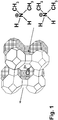
- Weitere Einzelheiten, Merkmale und Vorteile der Erfindung ergeben sich aus der Zeichnung und der nachfolgenden Beschreibung von Ausführungsbeispielen:
Es zeigt: - Fig. 1:
- eine schematische Darstellung des lonenaustauschs an Klinoptilolith.
- 62,9 mg 2-(4'-Hydroxyphenyl)-ethylamin-hydrochlorid werden zu 50,0 ml in destilliertem Wasser gelöst. 0,500 ml dieser Lösung werden mit destilliertem Wasser so verdünnt, dass die Konzentration an 2-(4'-Hydroxyphenyl)-ethylammonium schließlich 40,0 mg/l beträgt. Diese Lösung versetzt man mit 500 mg Klinoptilolith und rührt bei 20 °C 3,5 Stunden.
- Nach Zentrifugation der Reaktionslösung und Klarfiltration des Überstandes wird die Konzentration an 2-(4'-Hydroxyphenyl)-ethylammonium bestimmt. Ergebnis: Die Konzentration an 2-(4'-Hydroxyphenyl)-ethylammonium wurde um 35,2 Prozent erniedrigt.
- 62,9 mg 2-(4'-Hydroxyphenyl)-ethylamin-hydrochlorid werden zu 50,0 ml in destilliertem Wasser gelöst. 0,500 ml dieser Lösung werden mit destilliertem Wasser so verdünnt, dass die Konzentration an 2-(4'-Hydroxyphenyl)-ethylammonium schließlich 40,0 mg/l beträgt. Diese Lösung versetzt man mit 50 mg Klinoptilolith und rührt bei 20 °C 7 Stunden.
- Nach Zentrifugation der Reaktionslösung und Klarfiltration des Überstandes wird die Konzentration an 2-(4'-Hydroxyphenyl)-ethylammonium bestimmt. Daraus wird die Erniedrigung der Konzentration an 2-(4'-Hydroxyphenyl)-ethylammonium ermittelt.
- Ergebnis: Die Konzentration an 2-(4'-Hydroxyphenyl)-ethylammonium wurde um 13,2 erniedrigt.
- 71,0 mg 2-(4'-Hydroxyphenyl)-ethylamin-hydrochlorid werden zu 50,0 ml in destilliertem Wasser gelöst. 0,500 ml dieser Lösung werden mit destilliertem Wasser so verdünnt, dass die Konzentration an 2-(4'-Hydroxyphenyl)-ethylammonium schließlich 40,0 mg/l beträgt. Diese Lösung versetzt man mit 100 mg Klinoptilolith-Material mit einem Gehalt von 44 Prozent und rührt bei 37 °C 35 Stunden.
- Nach Zentrifugation der Reaktionslösung und Klarfilterung des Überstandes wird die Erniedrigung der Konzentration an 2-(4'-Hydroxyphenyl)-ethylammonium bestimmt.
- Ergebnis: Die Konzentration an 2-(4'-Hydroxyphenyl)-ethylammonium wurde um 11,8 Prozent erniedrigt.
- 45,3 mg 2-(4'-Hydroxyphenyl)-ethylamin-hydrochlorid werden zu 50,0 ml in destilliertem Wasser gelöst. 0,500 ml dieser Lösung werden mit destilliertem Wasser so verdünnt, dass die Konzentration an 2-(4'-Hydroxyphenyl)-ethylammonium schließlich 40,0 mg/l beträgt. Diese Lösung versetzt man mit 500 mg Klinoptilolith, welches zuvor in der Labormühle sehr fein gemahlen wurde, und rührt bei 37 °C 17 Stunden.
- Nach Zentrifugation der Reaktionslösung und Klarfiltration des Überstandes wird die Erniedrigung der Konzentration an 2-(4'-Hydroxyphenyl)-ethylammonium bestimmt.
- Ergebnis: Die Konzentration an 2-(4'-Hydroxyphenyl)-ethylammonium wurde um 38,0 Prozent erniedrigt.
- 62,9 mg 2-(4'-Hydroxyphenyl)-ethylamin-hydrochlorid werden zu 50,0 ml in destilliertem Wasser gelöst. 0,500 ml dieser Lösung werden mit destilliertem Wasser so verdünnt, dass die Konzentration an 2-(4'-Hydroxyphenyl)-ethylammonium schließlich 20,0 mg/l beträgt. Diese Lösung versetzt man mit 500 mg Klinoptilolith-Material mit einem Klinoptilolith-Gehalt von 55 Prozent und rührt bei 20 °C 7 Stunden.
- Nach Zentrifugation der Reaktionslösung und Klarfiltration des Überstandes wird die Konzentration an 2-(4'-Hydroxyphenyl)-ethylammonium bestimmt. Ergebnis: Die Konzentration an 2-(4'-Hydroxyphenyl)-ethylammonium wurde um 52,7 Prozent erniedrigt.
- 55,7 mg 2-(4'-Hydroxyphenyl)-ethylamin-hydrochlorid werden zu 50,0 ml in destilliertem Wasser gelöst. 0,500 ml dieser Lösung werden mit destilliertem Wasser so verdünnt, dass die Konzentration an 2-(4'-Hydroxyphenyl)-ethylammonium schließlich 20,0 mg/l beträgt. Diese Lösung versetzt man mit 500 mg Klinoptilolith-Material, Klinoptilolith-Gehalt 55 Prozent, schüttelt die Lösung durch und lässt diese über Nacht stehen.
- Nach Zentrifugation der Reaktionslösung und Klarfiltration des Überstandes wird die Konzentration an 2-(4'-Hydroxyphenyl)-ethylammonium bestimmt. Ergebnis: Die Konzentration an 2-(4'-Hydroxyphenyl)-ethylammonium wurde um 29,1 Prozent erniedrigt.
- 18,2 mg 1,2-Dimethylhydrazin-dihydrochlorid werden zu 50,0 ml in destilliertem Wasser gelöst.
- 0,500 ml dieser Lösung werden mit destilliertem Wasser so verdünnt, dass die Konzentration an 1,2-Dimethylhydrazinium-Dikation schließlich 40,0 mg/l beträgt.
- Diese Lösung versetzt man mit 500 mg Klinoptilolith-Material mit einem Klinoptilolith-Gehalt von 80 Prozent und rührt bei 20 °C 3 Stunden.
- Nach Zentrifugation der Reaktionslösung und Klarfiltration des Überstandes wird die Konzentration des 1,2-Dimethylhydrazinium-Dikations bestimmt. Ergebnis: Die Konzentration an 1,2-Dimethylhydrazinium-Dikation wurde um 87,9 Prozent erniedrigt.
- 18,2 mg 1,2-Dimethylhydrazin-dihydrochlorid werden zu 50,0 ml in destilliertem Wasser gelöst.
- 0,500 ml dieser Lösung werden mit destilliertem Wasser so verdünnt, dass die Konzentration an 1,2-Dimethylhydrazinium-Dikation schließlich 40,0 mg/l beträgt.
- Diese Lösung versetzt man mit 50 mg Klinoptilolith-Material mit einem Klinoptilolith-Gehalt von 89 Prozent und rührt bei 20 °C 7 Stunden.
- Nach Zentrifugation der Reaktionslösung und Klarfiltration des Überstandes wird die Konzentration des 1,2-Dimethylhydrazinium-Dikations bestimmt. Ergebnis: Die Konzentration an 1,2-Dimethylhydrazinium-Dikation wurde um 28,5 Prozent erniedrigt.
- 18,2 mg 1,2-Dimethylhydrazin-dihydrochlorid werden zu 50,0 ml in destilliertem Wasser gelöst.
- 0,500 ml dieser Lösung werden mit destilliertem Wasser so verdünnt, dass die Konzentration an 1,2-Dimethylhydrazinium-Dikation schließlich 10,0 mg/l beträgt.
- Diese Lösung versetzt man mit 50 mg technischem Klinoptilolith und rührt bei 37 °C 27 Stunden.
- Nach Zentrifugation der Reaktionslösung und Klarfiltration des Überstandes wird die Konzentration des 1,2-Dimethylhydrazinium-Dikations bestimmt. Ergebnis: Die Konzentration an 1,2-Dimethylhydrazinium-Dikation wurde um 48,5 Prozent erniedrigt.
- 18,2 mg 1,2-Dimethylhydrazin-dihydrochlorid werden zu 50,0 ml in destilliertem Wasser gelöst.
- 0,500 ml dieser Lösung werden mit destilliertem Wasser so verdünnt, dass die Konzentration an 1,2-Dimethylhydrazinium-Dikation schließlich 10,0 mg/l beträgt.
- Diese Lösung versetzt man mit 500 mg Klinoptilolith-Material und rührt bei 20 °C 6 Stunden.
- Nach Zentrifugation der Reaktionslösung und Klarfiltration des Überstandes wird die Konzentration des 1,2-Dimethylhydrazinium-Dikations bestimmt. Ergebnis: Die Konzentration an 1,2-Dimethylhydrazinium-Dikation wurde um >98 Prozent erniedrigt.
- 19,0 mg Bis-(2-aminoethyl)-disulfid-dihydrochlorid werden zu 15,0 ml in destilliertem Wasser gelöst.
- 0,500 ml dieser Lösung werden mit destilliertem Wasser so verdünnt, dass die Konzentration an Bis-(2-ammonium-ethyl)-disulfid-Dikation schließlich 40,0 mg/l beträgt.
- Diese Lösung versetzt man mit 500 mg Klinoptilolith-Material und rührt bei 20 °C 90 Minuten.
- Nach Zentrifugation der Reaktionslösung und Klarfiltration des Überstandes wird die Konzentration an Bis-(2-ammonium-ethyl)-disulfid-Dikation bestimmt. Ergebnis: Die Konzentration an Bis-(2-ammonium-ethyl)-disulfid-Dikation wurde um >99 Prozent erniedrigt.
- 19,0 mg Bis-(2-aminoethyl)-disulfid-dihydrochlorid werden zu 15,0 ml in destilliertem Wasser gelöst.
- 0,500 ml dieser Lösung werden mit destilliertem Wasser so verdünnt, dass die Konzentration an Bis-(2-ammonium-ethyl)-disulfid-Dikation schließlich 40,0 mg/l beträgt.
- Diese Lösung versetzt man mit 50 mg Klinoptilolith-Material und rührt bei 20 °C 90 Minuten.
- Nach Zentrifugation der Reaktionslösung und Klarfiltration des Überstandes wird die Konzentration an Bis-(2-ammonium-ethyl)-disulfid-Dikation bestimmt. Ergebnis: Die Konzentration an Bis-(2-ammonium-ethyl)-disulfid-Dikation wurde um 80,6 Prozent erniedrigt.
- 19,0 mg Bis-(2-aminoethyl)-disulfid-dihydrochlorid werden zu 15,0 ml in destilliertem Wasser gelöst.
- 0,500 ml dieser Lösung werden mit destilliertem Wasser so verdünnt, dass die Konzentration an Bis-(2-ammonium-ethyl)-disulfid-Dikation schließlich 40,0 mg/l beträgt.
- Diese Lösung versetzt man mit 50 mg Klinoptilolith-Material mit einem Klinoptilolith-Gehalt von 55 Prozent und rührt bei 37 °C 17 Minuten.
- Nach Zentrifugation der Reaktionslösung und Klarfiltration des Überstandes wird die Konzentration an Bis-(2-ammonium-ethyl)-disulfid-Dikation bestimmt. Ergebnis: Die Konzentration des Bis-(2-ammonium-ethyl)-disulfid-Dikations wurde um 92,5 Prozent erniedrigt.
- 19,0 mg Bis-(2-aminoethyl)-disulfid-dihydrochlorid werden zu 15,0 ml in destilliertem Wasser gelöst.
- 0,500 ml dieser Lösung werden mit destilliertem Wasser so verdünnt, dass die Konzentration an Bis-(2-ammonium-ethyl)-disulfid-Dikation schließlich 10,0 mg/l beträgt.
- In diese Lösung streut man über einen Pulvertrichter 50 mg Klinoptilolith, verschließt den Pulvertrichter, schüttelt alles gut durch und lässt diesen bei 20 °C über Nacht stehen.
- Nach Zentrifugation der Reaktionslösung und Klarfiltration des Überstandes wird die Konzentration an Cystamin-Dikation bestimmt.
- Ergebnis: Die Konzentration des Cystamin-Dikations wurde um 94,0 Prozent erniedrigt.
- 19,0 mg Bis-(2-amino-ethyl)-disulfid-dihydrochlorid werden zu 15,0 ml in destilliertem Wasser gelöst.
- 0,500 ml dieser Lösung werden mit destilliertem Wasser so verdünnt, dass die Konzentration an Bis-(2-ammonium-ethyl)-disulfid-Dikation schließlich 20,0 mg/l beträgt.
- Diese Lösung versetzt man mit 500 mg Klinoptilolith-Material und rührt bei 20 °C 30 Minuten.
- Nach Zentrifugation der Reaktionslösung und Klarfiltration des Überstandes wird die Konzentration an Bis-(2-ammonium-ethyl)-disulfid-Dikation bestimmt. Ergebnis: Die Konzentration des Bis-(2-ammonium-ethyl)-disulfid-Dikations wurde um >99 Prozent erniedrigt.
- 15,6 mg Dimethylamin-hydrochlorid werden zu 10,0 ml in destilliertem Wasser gelöst. Beispielhaft ist in
Fig. 1 schematisch der Austausch von Ca2+ eines Zeoliths mit einem Dimethylammoniumionen dargestellt. - 0,500 ml dieser Lösung werden mit destilliertem Wasser so verdünnt, dass die Konzentration an Dimethylammonium-Kation schließlich 40,0 mg/l beträgt. Diese Lösung versetzt man mit 500 mg Klinoptilolith-Material und rührt bei 20 °C 30 Minuten.
- Nach Zentrifugation der Reaktionslösung und Klarfiltration des Überstandes wird die Konzentration an Dimethylammonium bestimmt.
- Ergebnis: Die Konzentration von Dimethylammonium wurde um >96,2 Prozent erniedrigt.
- 15,6 mg Dimethylamin-hydrochlorid werden zu 10,0 ml in destilliertem Wasser gelöst.
- 0,500 ml dieser Lösung werden mit destilliertem Wasser so verdünnt, dass die Konzentration an Dimethylammonium-Kation schließlich 10,0 mg/l beträgt. Diese Lösung versetzt man mit 500 mg Klinoptilolith-Material und rührt bei 20 °C 90 Minuten.
- Nach Zentrifugation der Reaktionslösung und Klarfiltration des Überstandes wird die Konzentration an Dimethylammonium bestimmt.
- Ergebnis: Die Konzentration von Dimethylammonium wurde um >99 Prozent erniedrigt.
- 15,6 mg Dimethylamin-hydrochlorid werden zu 10,0 ml in destilliertem Wasser gelöst.
- 0,500 ml dieser Lösung werden mit destilliertem Wasser so verdünnt, dass die Konzentration an Dimethylammonium-Kation schließlich 20,0 mg/l beträgt. Diese Lösung versetzt man mit 500 mg Klinoptilolith-Material und rührt bei 37 °C 19 Stunden.
- Nach Zentrifugation der Reaktionslösung und Klarfiltration des Überstandes wird die Konzentration an Dimethylammonium bestimmt.
- Ergebnis: Die Konzentration an Dimethylammonium wurde um >99 Prozent erniedrigt.
- 13,5 mg 2-(4'-Imidazolyl)-ethylamin-dihydrochlorid werden in destilliertem Wasser zu 10,0 ml gelöst. 0,500 ml dieser Lösung werden mit destilliertem Wasser so verdünnt, dass die Konzentration an 2-(4'-Imidazolyl)-ethylammonium-Dikation schließlich 10,0 mg/l beträgt.
- Diese Lösung versetzt man mit 500 mg grob zerkleinertem Klinoptilolith-Material mit einem Gehalt von 42 Prozent und rührt bei 20 °C 1 Stunde.
- Nach Zentrifugation der Reaktionslösung und Klarfiltration des Überstandes wird die Konzentration an 2-(4'-Imidazolyl)-ethylammonium-Dikation bestimmt. Ergebnis: Die Erniedrigung der Konzentration des 2-(4'-Imidazolyl)-ethylammonium-Dikations beträgt 92 Prozent.
- 13,3 mg Tryptamin-hydrochlorid werden in destilliertem Wasser zu 25,0 ml gelöst. 0,500 ml dieser Lösung werden mit destilliertem Wasser so verdünnt, dass die Konzentration an Tryptamin-Kation 40,0 mg/l beträgt.
- Diese Lösung versetzt man mit 500 mg fein pulverisiertem Klinoptilolith und rührt bei 19 °C 1,5 Stunden.
- Nach Zentrifugation der Reaktionslösung und Klarfiltration des Überstandes wird die Konzentration an Tryptamin-Kation bestimmt.
- Ergebnis: Die Konzentration an Tryptamin-Kation wurde um 79,5 Prozent erniedrigt.
- 13,5 mg 2-(4'Imidazolyl)-ethylamin-dihydrochlorid werden in destilliertem Wasser zu 10,0 ml gelöst. 0,500 ml dieser Lösung werden mit destilliertem Wasser so verdünnt, dass die Konzentration an 2-(4'-Imidazolyl)-ethylammonium-Dikation schließlich 40,0 mg/l beträgt.
- Diese Lösung versetzt man mit 500 mg Klinoptilolith, mit einem Gehalt von 82 Prozent, und rührt bei 21 °C 19 Stunden.
- Nach Zentrifugation der Reaktionslösung und Klarfiltration des Überstandes wird die Konzentration an 2-(4'-Imidazolyl)-ethylammonium-Dikation bestimmt. Ergebnis: Die Konzentration an 2-(4'-Imidazolyl)-ethylammonium-Dikation wurde um 84,6 Prozent erniedrigt.
- 13,5 mg 2-(4'-Imidazolyl)-ethylamin-dihydrochlorid werden in destilliertem Wasser zu 10,0 ml gelöst. 0,500 ml dieser Lösung werden mit destilliertem Wasser so verdünnt, dass die Konzentration an 2-(4'-Imidazolyl)-ethylammonium-Dikation schließlich 40,0 mg/l beträgt.
- Diese Lösung versetzt man mit 500 mg Klinoptilolith und rührt bei 20 °C 1,5 Stunden.
- Nach Zentrifugation der Reaktionslösung und Klarfiltration des Überstandes wird die Konzentration an 2-(4'-Imidazolyl)-ethylammonium-Dikation bestimmt. Ergebnis: Die Konzentration an 2-(4'-Imidazolyl)-ethylammonium-Dikation wurde um 96,7 Prozent erniedrigt.
- 13,3 mg Tryptamin-hydrochlorid werden in destilliertem Wasser zu 25,0 ml gelöst. 0,500 ml dieser Lösung werden mit destilliertem Wasser so verdünnt, dass die Konzentration an Tryptamin-Kation 40,0 mg/l beträgt.
- Diese Lösung versetzt man mit 50 mg fein pulverisiertem Klinoptilolith und rührt bei 19 °C 1,5 Stunden.
- Nach Zentrifugation der Reaktionslösung und Klarfiltration des Überstandes wird die Konzentration an Tryptamin-Kation bestimmt.
- Ergebnis: Die Konzentration an Tryptamin-Kation wurde um 55,8 Prozent erniedrigt.
- 13,5 mg 2-(4'-Imidazolyl)-ethylamin-dihydrochlorid werden in destilliertem Wasser zu 10,0 ml gelöst. 0,500 ml dieser Lösung werden mit destilliertem Wasser so verdünnt, dass die Konzentration an 2-(4'-Imidazolyl)-ethylammonium-Dikation schließlich 20,0 mg/l beträgt.
- Diese Lösung versetzt man mit 500 mg Klinoptilolith und rührt bei 20 °C 3 Stunden.
- Nach Zentrifugation der Reaktionslösung und Klarfiltration des Überstandes wird die Konzentration an 2-(4'-Imidazolyl)-ethylammonium-Dikation bestimmt. Ergebnis: Die Konzentration an 2-(4'-Imidazolyl)-ethylammonium-Dikation wurde um 97,5 Prozent erniedrigt.
- 18,5 mg Tryptamin-hydrochlorid werden in destilliertem Wasser zu 25,0 ml gelöst. 0,500 ml dieser Lösung werden mit destilliertem Wasser so verdünnt, dass die Konzentration an Tryptamin-Kation 20,0 mg/l beträgt.
- Diese Lösung versetzt man mit 50 mg fein pulverisiertem Klinoptilolith und rührt bei 19 °C 1,5 Stunden.
- Nach Zentrifugation der Reaktionslösung und Klarfiltration des Überstandes wird die Konzentration an Tryptamin-Kation bestimmt.
- Ergebnis: Die Konzentration an Tryptamin-Kation wurde um 72,5 Prozent erniedrigt.
- 20,5 mg Tryptamin-hydrochlorid werden in destilliertem Wasser zu 20,0 ml gelöst. 0,500 ml dieser Lösung werden mit destilliertem Wasser so verdünnt, dass die Konzentration an Tryptamin-Kation 10,0 mg/l beträgt.
- Diese Lösung versetzt man mit 50 mg Klinoptilolith und rührt bei 37 °C 6 Stunden.
- Nach Zentrifugation der Reaktionslösung und Klarfiltration des Überstandes wird die Konzentration an Tryptamin-Kation bestimmt.
- Ergebnis: Die Konzentration an Tryptamin-Kation wurde um 89,9 Prozent erniedrigt.
- 89,5 mg Dimethylamin-hydrochlorid werden zu 50,0 ml in destilliertem Wasser gelöst.
- 0,500 ml dieser Lösung werden mit destilliertem Wasser so verdünnt, dass die Konzentration an Dimethylammonium-Kation schließlich 40,0 mg/l beträgt. Diese Lösung versetzt man mit 50 mg Klinoptilolith und rührt bei 20 °C 90 Minuten.
- Nach Zentrifugation der Reaktionslösung und Klarfiltration des Überstandes wird die Konzentration an Dimethylammonium bestimmt.
- Ergebnis: Die Konzentration von Dimethylammonium wurde um 32,9 Prozent erniedrigt.
- 54,4 mg 2-Phenylethylamin-hydrochlorid werden zu 50,0 ml in destilliertem Wasser gelöst.
- 0,500 ml dieser Lösung werden mit destilliertem Wasser so verdünnt, dass die Konzentration an Dimethylammonium-Kation schließlich 40,0 mg/l beträgt. Diese Lösung versetzt man mit 50 mg Klinoptilolith und rührt bei 20 °C 90 Minuten.
- Nach Zentrifugation der Reaktionslösung und Klarfiltration des Überstandes wird die Konzentration an 2-Phenylethyl-ammonium bestimmt.
- Ergebnis: Die Konzentration von 2-Phenylethyl-ammonium wurde um 13,5 Prozent erniedrigt.
- 54,4 mg 2-Phenylethylamin-hydrochlorid werden zu 50,0 ml in destilliertem Wasser gelöst.
- 0,500 ml dieser Lösung werden mit destilliertem Wasser so verdünnt, dass die Konzentration an 2-Phenylethyl-ammonium-Kation schließlich 40,0 mg/l beträgt.
- Diese Lösung versetzt man mit 500 mg Klinoptilolith und rührt bei 20 °C 90 Minuten.
- Nach Zentrifugation der Reaktionslösung und Klarfiltration des Überstandes wird die Konzentration an 2-Phenylethyl-ammonium bestimmt.
- Ergebnis: Die Konzentration von 2-Phenylethyl-ammonium wurde um 75,2 Prozent erniedrigt.
- 13,5 mg 2-(4'-Imidazolyl)-ethylamin-dihydrochlorid werden in destilliertem Wasser zu 10,0 ml gelöst. 0,500 ml dieser Lösung werden mit destilliertem Wasser so verdünnt, dass die Konzentration an 2-(4'-Imidazolyl)-ethylammonium-dichlorid schließlich 30,0 mg/l beträgt.
- Diese Lösung versetzt man mit 100 mg Klinoptilolith und rührt bei 20 °C 30 Minuten.
- Nach Zentrifugation der Reaktionslösung und Klarfiltration des Überstandes wird die Konzentration an 2-(4'-Imidazolyl)-ethylammonium-Dikation bestimmt. Ergebnis: Die Konzentration an 2-(4'-Imidazolyl)-ethylammonium-Dikation wurde um >99 Prozent erniedrigt.
- 52,8 mg 2-(4'-Imidazolyl)-ethylamin-dihydrochlorid werden in destilliertem Wasser zu 50,0 ml gelöst. 0,500 ml dieser Lösung werden mit destilliertem Wasser so verdünnt, dass die Konzentration an 2-(4'-Imidazolyl)-ethylammonium-dichlorid schließlich 30,0 mg/l beträgt.
- Diese Lösung versetzt man mit 75 mg Klinoptilolith und rührt bei 20 °C 40 Minuten.
- Nach Zentrifugation der Reaktionslösung und Klarfiltration des Überstandes wird die Konzentration an 2-(4'-Imidazolyl)-ethylammonium-Dikation bestimmt. Ergebnis: Die Konzentration an 2-(4'-Imidazolyl)-ethylammonium-Dikation wurde um 91,7 Prozent erniedrigt.
- 13,5 mg 2-(4'-Imidazolyl)-ethylamin-dihydrochlorid werden in destilliertem Wasser zu 10,0 ml gelöst. 0,500 ml dieser Lösung werden mit destilliertem Wasser so verdünnt, dass die Konzentration an 2-(4'-Imidazolyl)-ethylammonium-dichlorid schließlich 30,0 mg/l beträgt.
- Eine derartige Lösung versetzt man mit 100 mg Klinoptilolith und schüttelt diese bei 20 °C 30 Minuten.
- Nach Zentrifugation der Reaktionslösung und Klarfiltration des Überstandes wird die Konzentration an 2-(4'-Imidazolyl)-ethylammonium-Dikation bestimmt. Ergebnis: Die Konzentration an 2-(4'-Imidazolyl)-ethylammonium-Dikation wurde um >99 Prozent erniedrigt.
- In einem 50 ml-Maßkolben werden 114,5 mg Pyrrolidin eingewogen. Man gibt nach Verdünnung mit destilliertem Wasser 116 mg Essigsäure zu und füllt bis zur Marke auf.
- Man verdünnt 0,800 ml der Lösung so, dass eine Konzentration von Pyrrolidinium von 40 mg/l entsteht.
- 12,5 ml der Lösung werden mit 0,5 g Klinoptilolith mit der Bezeichnung MANC versetzt und die Mischung wird 90 Minuten bei Zimmertemperatur geschüttelt. Nach Zentrifugation der Reaktionslösung und Klarfiltration des Überstandes wird die Konzentration an Pyrrolidinium bestimmt.
- Ergebnis: Die Konzentration an Pyrrolidinium wurde um 76,9 Prozent erniedrigt.
- In einem 50 ml-Maßkolben werden 9,5 mg Anilin eingewogen. Man gibt nach Verdünnung mit destilliertem Wasser die erforderliche äquivalente Menge an reinster Salzsäure zu und füllt bis zur Marke auf. Man verdünnt 0,500 ml der Lösung so, dass eine Konzentration von Anilinium von 40 mg/l entsteht und versetzt einen aliquoten Teil dieser Lösung mit 0,5 g Klinoptilolith mit der Bezeichnung MANC und rührt die Mischung 120 Minuten bei Zimmertemperatur.
- Nach sorgfältiger Abtrennung der Reaktionslösung und Klarfiltration des Überstandes wird die Konzentration an Anilin bestimmt.
- Ergebnis: Die Konzentration an Anilinium wurde um 49 Prozent erniedrigt.
- In einem 50 ml-Maßkolben werden 17,65 mg Benzidin-dihydrochlorid eingewogen. Man gibt nach Verdünnung destilliertes Wasser zu und füllt bis zur Marke auf. Anschließend verdünnt man 0,500 ml der Lösung so, dass eine Konzentration von Benzidinium-Dikation von 40 mg/l entsteht und versetzt die Lösung mit 0,5 g Klinoptilolith und rührt die Mischung 90 Minuten bei Zimmertemperatur.
- Nach sorgfältiger Abtrennung der Reaktionslösung und Klarfiltration des Überstandes wird die Konzentration an Benzidin bestimmt.
- Ergebnis: Die Konzentration an Benzidin wurde um 98,4 Prozent erniedrigt.
Claims (2)
- Klinoptilolith oder klinoptilolithhaltige Gemische, wobei das Klinoptilolith oder die klinoptilolithhaltigen Gemische durch Zerkleinerung der Teilchen mechanisch modifiziert und aktiviert sind, zur Verwendung als Medizinprodukt zur Aufnahme und Ausleitung von einem oder mehreren Aminen und/oder deren Salzen, die in wässriger Lösung oder wässriger Suspension im Verdauungstrakt oder dem Hautbereich von Mensch und Tier vorkommen und die einer Gruppe von Aminen angehören, die aus 2-Phenyl-ethylamin, 2-(4'-Hydroxyphenyl)-ethylamin, Benzidin, Anilin, 2-(4'-Imidazolyl)-ethylamin und Tryptamin besteht.
- Klinoptilolith oder klinoptilolithhaltige Gemische zur Verwendung nach Anspruch 1, dadurch gekennzeichnet, dass die Partikel des Klinoptilolith nach der Zerkleinerung eine Partikelgröße von 2 bis 16 µm, Zetapotenziale von 20 bis 26 mV und eine spezifische Oberfläche von 30 bis 60 m2/g aufweisen.
Applications Claiming Priority (3)
| Application Number | Priority Date | Filing Date | Title |
|---|---|---|---|
| DE102008043959 | 2008-11-21 | ||
| DE102008043967 | 2008-11-21 | ||
| PCT/EP2009/065221 WO2010057849A1 (de) | 2008-11-21 | 2009-11-16 | Verfahren zur reduktion der konzentration von aminen und deren salzen |
Publications (3)
| Publication Number | Publication Date |
|---|---|
| EP2358642A1 EP2358642A1 (de) | 2011-08-24 |
| EP2358642B1 true EP2358642B1 (de) | 2019-06-19 |
| EP2358642B2 EP2358642B2 (de) | 2022-12-07 |
Family
ID=41467234
Family Applications (1)
| Application Number | Title | Priority Date | Filing Date |
|---|---|---|---|
| EP09756716.8A Active EP2358642B2 (de) | 2008-11-21 | 2009-11-16 | Klinoptilolith oder klinoptilolithhaltige gemische |
Country Status (3)
| Country | Link |
|---|---|
| US (1) | US8951549B2 (de) |
| EP (1) | EP2358642B2 (de) |
| WO (1) | WO2010057849A1 (de) |
Families Citing this family (6)
| Publication number | Priority date | Publication date | Assignee | Title |
|---|---|---|---|---|
| IT1401589B1 (it) * | 2010-08-03 | 2013-07-26 | Ecobase Gmbh | Zeoliti ad azione neuroprotettiva. |
| HRP20160297T1 (hr) * | 2011-09-23 | 2016-05-06 | Froximun Ag | Klinoptilolit za uporabu za uklanjanje cezijevih iona |
| US10240358B2 (en) * | 2013-03-18 | 2019-03-26 | R&R Regester Enterprises, Inc. | Water treatment and purification system and methods thereof |
| EP3167890A1 (de) * | 2015-11-12 | 2017-05-17 | Glock Health, Science and Research GmbH | Behandlung von vaginitis |
| FR3073399B1 (fr) * | 2017-11-10 | 2020-07-17 | Manon Haulet | Procede cosmetique de sechage de cheveux |
| WO2025232973A1 (de) | 2024-05-08 | 2025-11-13 | Froximun Ag | Klinoptilolith oder klinoptilolith enthaltendes mineralstoffgemisch zur verwendung als mineralische wundabdeckung |
Citations (5)
| Publication number | Priority date | Publication date | Assignee | Title |
|---|---|---|---|---|
| EP0003914A2 (de) | 1978-02-27 | 1979-09-05 | Purdue Research Foundation | Zusammensetzung für Dialyse |
| EP1316530A1 (de) | 1999-04-26 | 2003-06-04 | Tihomir Lelas | Mikronisierte Zoelithe zur Verwendung als pharmazeutisches Mittel |
| EP1369121A1 (de) | 2002-06-07 | 2003-12-10 | Geomedical S.r.l. | Entgiftende mineralische Zubereitungen, die Zeolite mit hoher Kationaustausch-Kapazität enthalten |
| US20050106267A1 (en) | 2003-10-20 | 2005-05-19 | Framework Therapeutics, Llc | Zeolite molecular sieves for the removal of toxins |
| EP1942914B1 (de) | 2005-11-04 | 2010-01-20 | Hubert Danz | Verwendung eines aktivierten zeolithen als pharmazeutisches mittel für die reduzierung giftiger stoffe |
Family Cites Families (7)
| Publication number | Priority date | Publication date | Assignee | Title |
|---|---|---|---|---|
| US4380669A (en) * | 1981-04-08 | 1983-04-19 | Mobil Oil Corporation | Process for synthesizing aniline |
| US7108784B1 (en) | 2001-09-26 | 2006-09-19 | Wrt International Llc | Apparatus for removal and destruction of ammonia from an aqueous medium |
| AT413484B (de) * | 2002-02-26 | 2006-03-15 | Hraschan Jakob | Verwendung von zeolithen zur senkung der anteile von lactaten im menschlichen und tierischen organismus |
| US20050031708A1 (en) | 2003-08-06 | 2005-02-10 | Portney Micah S. | Composition comprising a zeolite compound for treatment of diseases |
| US20080044548A1 (en) | 2003-09-04 | 2008-02-21 | Hale Edward C Iii | Animal feed and methods for reducing ammonia and phosphorus levels in manure |
| RU2379944C2 (ru) * | 2005-05-11 | 2010-01-27 | Хилл`С Пет Ньютришн, Инк. | Улучшающая вкус композиция для кормления собак, способ ее получения, продукт способа, набор, способ усиления вкуса корма для собак и способ увеличения приема или частоты приема корма |
| US8663479B2 (en) | 2006-11-20 | 2014-03-04 | Wrt International Llc | Method for removing cationic contaminants from water using natural zeolite underloaded with transition metal ions to limit leakage of intrinsic arsenic therefrom |
-
2009
- 2009-11-16 US US13/130,735 patent/US8951549B2/en active Active
- 2009-11-16 EP EP09756716.8A patent/EP2358642B2/de active Active
- 2009-11-16 WO PCT/EP2009/065221 patent/WO2010057849A1/de not_active Ceased
Patent Citations (5)
| Publication number | Priority date | Publication date | Assignee | Title |
|---|---|---|---|---|
| EP0003914A2 (de) | 1978-02-27 | 1979-09-05 | Purdue Research Foundation | Zusammensetzung für Dialyse |
| EP1316530A1 (de) | 1999-04-26 | 2003-06-04 | Tihomir Lelas | Mikronisierte Zoelithe zur Verwendung als pharmazeutisches Mittel |
| EP1369121A1 (de) | 2002-06-07 | 2003-12-10 | Geomedical S.r.l. | Entgiftende mineralische Zubereitungen, die Zeolite mit hoher Kationaustausch-Kapazität enthalten |
| US20050106267A1 (en) | 2003-10-20 | 2005-05-19 | Framework Therapeutics, Llc | Zeolite molecular sieves for the removal of toxins |
| EP1942914B1 (de) | 2005-11-04 | 2010-01-20 | Hubert Danz | Verwendung eines aktivierten zeolithen als pharmazeutisches mittel für die reduzierung giftiger stoffe |
Also Published As
| Publication number | Publication date |
|---|---|
| WO2010057849A1 (de) | 2010-05-27 |
| US8951549B2 (en) | 2015-02-10 |
| EP2358642B2 (de) | 2022-12-07 |
| US20110229588A1 (en) | 2011-09-22 |
| EP2358642A1 (de) | 2011-08-24 |
Similar Documents
| Publication | Publication Date | Title |
|---|---|---|
| DE69012268T2 (de) | Mittel zur Hemmung der alpha-Amylase Aktivität. | |
| AT402692B (de) | Antigeschwulstmittel und verfahren zu ihrer herstellung | |
| EP0786945B1 (de) | Futtermittelzusatz zur inaktivierung von mykotoxinen | |
| EP2790527B1 (de) | Zusatzstoff für selen-haltige futtermittel | |
| EP2358642B2 (de) | Klinoptilolith oder klinoptilolithhaltige gemische | |
| WO2010149596A1 (de) | Zusammensetzung zur behandlung von degenerativen gelenkerkrankungen | |
| DD146893A1 (de) | Verfahren zur herstellung von cyclodextrin-kamillen-inklusionskomplexen | |
| DE69802559T2 (de) | Konzentrate natuerlicher farbstoffe sowie antimikrobieller naehrstoff pflanzlichen ursprungs | |
| DE102016014603A1 (de) | Synthetisches Ayahuasca | |
| DE10043937B4 (de) | Herstellung einer dreiwertigen Chromkomplexverbindung und eines selbige enthaltenden Milchprodukts | |
| DE3490279T1 (de) | Kosmetische Mittel zur Gesundheits- und Körperpflege | |
| DE10060750A1 (de) | Nahrungsergänzungsprodukt zur Darmaktivierung | |
| DE3050077C2 (de) | ||
| DE69100954T2 (de) | Lagerstabile orale Glucosaminsulfat-Dosisformen und Verfahren zu deren Herstellung. | |
| DE60104977T2 (de) | Glucosamin enthaltende Neutrophil-Funktionshemmer | |
| DE4133889C2 (de) | Zubereitungsform von BTI- und/oder BS-endotoxinen | |
| DE10260263A1 (de) | Verwendung von Tetrahydrobiopterinderivaten zur Behandlung und Ernährung von Patienten mit Aminosäurestoffwechselstörungen | |
| EP1429795B1 (de) | Verfahren zur herstellung von extrakten aus pelargonium sidoides und/oder pelargonium reniforme | |
| DE69101847T2 (de) | Zubereitung für die Verhütung oder die Behandlung von Hypertriglyceridämie. | |
| DE60037197T2 (de) | Verwendung funktioneller oraler präparate | |
| EP0194466A2 (de) | Kombination zur antimikrobiellen und antioxidativen Stabilisierung von Externa und Körperpflegemitteln | |
| JP2001302530A (ja) | 還元型抗酸化物質及びその製造方法 | |
| DE2830424C3 (de) | alpha -Glucosidase-Inhibitoren | |
| EP2515663A1 (de) | Verbesserte pökelhilfsstoffe | |
| EP3694516B1 (de) | Biologisch abbaubare chinolon-antibiotika |
Legal Events
| Date | Code | Title | Description |
|---|---|---|---|
| PUAI | Public reference made under article 153(3) epc to a published international application that has entered the european phase |
Free format text: ORIGINAL CODE: 0009012 |
|
| 17P | Request for examination filed |
Effective date: 20110620 |
|
| AK | Designated contracting states |
Kind code of ref document: A1 Designated state(s): AT BE BG CH CY CZ DE DK EE ES FI FR GB GR HR HU IE IS IT LI LT LU LV MC MK MT NL NO PL PT RO SE SI SK SM TR |
|
| DAX | Request for extension of the european patent (deleted) | ||
| 17Q | First examination report despatched |
Effective date: 20130107 |
|
| REG | Reference to a national code |
Ref country code: DE Ref legal event code: R079 Ref document number: 502009015835 Country of ref document: DE Free format text: PREVIOUS MAIN CLASS: C02F0001280000 Ipc: C02F0001420000 |
|
| RIC1 | Information provided on ipc code assigned before grant |
Ipc: C02F 101/16 20060101ALI20181126BHEP Ipc: C02F 1/42 20060101AFI20181126BHEP Ipc: A61K 33/00 20060101ALI20181126BHEP Ipc: C02F 1/28 20060101ALI20181126BHEP |
|
| GRAP | Despatch of communication of intention to grant a patent |
Free format text: ORIGINAL CODE: EPIDOSNIGR1 |
|
| STAA | Information on the status of an ep patent application or granted ep patent |
Free format text: STATUS: GRANT OF PATENT IS INTENDED |
|
| INTG | Intention to grant announced |
Effective date: 20190104 |
|
| GRAS | Grant fee paid |
Free format text: ORIGINAL CODE: EPIDOSNIGR3 |
|
| GRAA | (expected) grant |
Free format text: ORIGINAL CODE: 0009210 |
|
| STAA | Information on the status of an ep patent application or granted ep patent |
Free format text: STATUS: THE PATENT HAS BEEN GRANTED |
|
| AK | Designated contracting states |
Kind code of ref document: B1 Designated state(s): AT BE BG CH CY CZ DE DK EE ES FI FR GB GR HR HU IE IS IT LI LT LU LV MC MK MT NL NO PL PT RO SE SI SK SM TR |
|
| REG | Reference to a national code |
Ref country code: GB Ref legal event code: FG4D Free format text: NOT ENGLISH |
|
| REG | Reference to a national code |
Ref country code: CH Ref legal event code: EP |
|
| REG | Reference to a national code |
Ref country code: IE Ref legal event code: FG4D Free format text: LANGUAGE OF EP DOCUMENT: GERMAN |
|
| REG | Reference to a national code |
Ref country code: DE Ref legal event code: R096 Ref document number: 502009015835 Country of ref document: DE |
|
| REG | Reference to a national code |
Ref country code: AT Ref legal event code: REF Ref document number: 1145278 Country of ref document: AT Kind code of ref document: T Effective date: 20190715 |
|
| REG | Reference to a national code |
Ref country code: NL Ref legal event code: FP |
|
| PG25 | Lapsed in a contracting state [announced via postgrant information from national office to epo] |
Ref country code: HR Free format text: LAPSE BECAUSE OF FAILURE TO SUBMIT A TRANSLATION OF THE DESCRIPTION OR TO PAY THE FEE WITHIN THE PRESCRIBED TIME-LIMIT Effective date: 20190619 Ref country code: FI Free format text: LAPSE BECAUSE OF FAILURE TO SUBMIT A TRANSLATION OF THE DESCRIPTION OR TO PAY THE FEE WITHIN THE PRESCRIBED TIME-LIMIT Effective date: 20190619 Ref country code: LT Free format text: LAPSE BECAUSE OF FAILURE TO SUBMIT A TRANSLATION OF THE DESCRIPTION OR TO PAY THE FEE WITHIN THE PRESCRIBED TIME-LIMIT Effective date: 20190619 Ref country code: NO Free format text: LAPSE BECAUSE OF FAILURE TO SUBMIT A TRANSLATION OF THE DESCRIPTION OR TO PAY THE FEE WITHIN THE PRESCRIBED TIME-LIMIT Effective date: 20190919 Ref country code: SE Free format text: LAPSE BECAUSE OF FAILURE TO SUBMIT A TRANSLATION OF THE DESCRIPTION OR TO PAY THE FEE WITHIN THE PRESCRIBED TIME-LIMIT Effective date: 20190619 |
|
| REG | Reference to a national code |
Ref country code: LT Ref legal event code: MG4D |
|
| PG25 | Lapsed in a contracting state [announced via postgrant information from national office to epo] |
Ref country code: BG Free format text: LAPSE BECAUSE OF FAILURE TO SUBMIT A TRANSLATION OF THE DESCRIPTION OR TO PAY THE FEE WITHIN THE PRESCRIBED TIME-LIMIT Effective date: 20190919 Ref country code: LV Free format text: LAPSE BECAUSE OF FAILURE TO SUBMIT A TRANSLATION OF THE DESCRIPTION OR TO PAY THE FEE WITHIN THE PRESCRIBED TIME-LIMIT Effective date: 20190619 Ref country code: GR Free format text: LAPSE BECAUSE OF FAILURE TO SUBMIT A TRANSLATION OF THE DESCRIPTION OR TO PAY THE FEE WITHIN THE PRESCRIBED TIME-LIMIT Effective date: 20190920 |
|
| PG25 | Lapsed in a contracting state [announced via postgrant information from national office to epo] |
Ref country code: PT Free format text: LAPSE BECAUSE OF FAILURE TO SUBMIT A TRANSLATION OF THE DESCRIPTION OR TO PAY THE FEE WITHIN THE PRESCRIBED TIME-LIMIT Effective date: 20191021 Ref country code: EE Free format text: LAPSE BECAUSE OF FAILURE TO SUBMIT A TRANSLATION OF THE DESCRIPTION OR TO PAY THE FEE WITHIN THE PRESCRIBED TIME-LIMIT Effective date: 20190619 Ref country code: RO Free format text: LAPSE BECAUSE OF FAILURE TO SUBMIT A TRANSLATION OF THE DESCRIPTION OR TO PAY THE FEE WITHIN THE PRESCRIBED TIME-LIMIT Effective date: 20190619 Ref country code: CZ Free format text: LAPSE BECAUSE OF FAILURE TO SUBMIT A TRANSLATION OF THE DESCRIPTION OR TO PAY THE FEE WITHIN THE PRESCRIBED TIME-LIMIT Effective date: 20190619 Ref country code: SK Free format text: LAPSE BECAUSE OF FAILURE TO SUBMIT A TRANSLATION OF THE DESCRIPTION OR TO PAY THE FEE WITHIN THE PRESCRIBED TIME-LIMIT Effective date: 20190619 |
|
| PG25 | Lapsed in a contracting state [announced via postgrant information from national office to epo] |
Ref country code: SM Free format text: LAPSE BECAUSE OF FAILURE TO SUBMIT A TRANSLATION OF THE DESCRIPTION OR TO PAY THE FEE WITHIN THE PRESCRIBED TIME-LIMIT Effective date: 20190619 Ref country code: IT Free format text: LAPSE BECAUSE OF FAILURE TO SUBMIT A TRANSLATION OF THE DESCRIPTION OR TO PAY THE FEE WITHIN THE PRESCRIBED TIME-LIMIT Effective date: 20190619 Ref country code: IS Free format text: LAPSE BECAUSE OF FAILURE TO SUBMIT A TRANSLATION OF THE DESCRIPTION OR TO PAY THE FEE WITHIN THE PRESCRIBED TIME-LIMIT Effective date: 20191019 Ref country code: ES Free format text: LAPSE BECAUSE OF FAILURE TO SUBMIT A TRANSLATION OF THE DESCRIPTION OR TO PAY THE FEE WITHIN THE PRESCRIBED TIME-LIMIT Effective date: 20190619 |
|
| REG | Reference to a national code |
Ref country code: DE Ref legal event code: R026 Ref document number: 502009015835 Country of ref document: DE |
|
| PLBI | Opposition filed |
Free format text: ORIGINAL CODE: 0009260 |
|
| PG25 | Lapsed in a contracting state [announced via postgrant information from national office to epo] |
Ref country code: TR Free format text: LAPSE BECAUSE OF FAILURE TO SUBMIT A TRANSLATION OF THE DESCRIPTION OR TO PAY THE FEE WITHIN THE PRESCRIBED TIME-LIMIT Effective date: 20190619 |
|
| 26 | Opposition filed |
Opponent name: GLOCK HEALTH, SCIENCE AND RESEARCH GMBH Effective date: 20200316 |
|
| PG25 | Lapsed in a contracting state [announced via postgrant information from national office to epo] |
Ref country code: DK Free format text: LAPSE BECAUSE OF FAILURE TO SUBMIT A TRANSLATION OF THE DESCRIPTION OR TO PAY THE FEE WITHIN THE PRESCRIBED TIME-LIMIT Effective date: 20190619 Ref country code: PL Free format text: LAPSE BECAUSE OF FAILURE TO SUBMIT A TRANSLATION OF THE DESCRIPTION OR TO PAY THE FEE WITHIN THE PRESCRIBED TIME-LIMIT Effective date: 20190619 |
|
| PG25 | Lapsed in a contracting state [announced via postgrant information from national office to epo] |
Ref country code: IS Free format text: LAPSE BECAUSE OF FAILURE TO SUBMIT A TRANSLATION OF THE DESCRIPTION OR TO PAY THE FEE WITHIN THE PRESCRIBED TIME-LIMIT Effective date: 20200224 |
|
| PLAX | Notice of opposition and request to file observation + time limit sent |
Free format text: ORIGINAL CODE: EPIDOSNOBS2 |
|
| PG2D | Information on lapse in contracting state deleted |
Ref country code: IS |
|
| PG25 | Lapsed in a contracting state [announced via postgrant information from national office to epo] |
Ref country code: LU Free format text: LAPSE BECAUSE OF NON-PAYMENT OF DUE FEES Effective date: 20191116 Ref country code: MC Free format text: LAPSE BECAUSE OF FAILURE TO SUBMIT A TRANSLATION OF THE DESCRIPTION OR TO PAY THE FEE WITHIN THE PRESCRIBED TIME-LIMIT Effective date: 20190619 |
|
| REG | Reference to a national code |
Ref country code: BE Ref legal event code: MM Effective date: 20191130 |
|
| PG25 | Lapsed in a contracting state [announced via postgrant information from national office to epo] |
Ref country code: SI Free format text: LAPSE BECAUSE OF FAILURE TO SUBMIT A TRANSLATION OF THE DESCRIPTION OR TO PAY THE FEE WITHIN THE PRESCRIBED TIME-LIMIT Effective date: 20190619 |
|
| PLBB | Reply of patent proprietor to notice(s) of opposition received |
Free format text: ORIGINAL CODE: EPIDOSNOBS3 |
|
| PG25 | Lapsed in a contracting state [announced via postgrant information from national office to epo] |
Ref country code: IE Free format text: LAPSE BECAUSE OF NON-PAYMENT OF DUE FEES Effective date: 20191116 |
|
| PG25 | Lapsed in a contracting state [announced via postgrant information from national office to epo] |
Ref country code: BE Free format text: LAPSE BECAUSE OF NON-PAYMENT OF DUE FEES Effective date: 20191130 |
|
| PG25 | Lapsed in a contracting state [announced via postgrant information from national office to epo] |
Ref country code: CY Free format text: LAPSE BECAUSE OF FAILURE TO SUBMIT A TRANSLATION OF THE DESCRIPTION OR TO PAY THE FEE WITHIN THE PRESCRIBED TIME-LIMIT Effective date: 20190619 |
|
| PG25 | Lapsed in a contracting state [announced via postgrant information from national office to epo] |
Ref country code: HU Free format text: LAPSE BECAUSE OF FAILURE TO SUBMIT A TRANSLATION OF THE DESCRIPTION OR TO PAY THE FEE WITHIN THE PRESCRIBED TIME-LIMIT; INVALID AB INITIO Effective date: 20091116 Ref country code: MT Free format text: LAPSE BECAUSE OF FAILURE TO SUBMIT A TRANSLATION OF THE DESCRIPTION OR TO PAY THE FEE WITHIN THE PRESCRIBED TIME-LIMIT Effective date: 20190619 |
|
| PG25 | Lapsed in a contracting state [announced via postgrant information from national office to epo] |
Ref country code: MK Free format text: LAPSE BECAUSE OF FAILURE TO SUBMIT A TRANSLATION OF THE DESCRIPTION OR TO PAY THE FEE WITHIN THE PRESCRIBED TIME-LIMIT Effective date: 20190619 |
|
| REG | Reference to a national code |
Ref country code: CH Ref legal event code: PK Free format text: TITEL |
|
| PUAH | Patent maintained in amended form |
Free format text: ORIGINAL CODE: 0009272 |
|
| STAA | Information on the status of an ep patent application or granted ep patent |
Free format text: STATUS: PATENT MAINTAINED AS AMENDED |
|
| 27A | Patent maintained in amended form |
Effective date: 20221207 |
|
| AK | Designated contracting states |
Kind code of ref document: B2 Designated state(s): AT BE BG CH CY CZ DE DK EE ES FI FR GB GR HR HU IE IS IT LI LT LU LV MC MK MT NL NO PL PT RO SE SI SK SM TR |
|
| REG | Reference to a national code |
Ref country code: DE Ref legal event code: R102 Ref document number: 502009015835 Country of ref document: DE |
|
| REG | Reference to a national code |
Ref country code: NL Ref legal event code: FP |
|
| REG | Reference to a national code |
Ref country code: CH Ref legal event code: U11 Free format text: ST27 STATUS EVENT CODE: U-0-0-U10-U11 (AS PROVIDED BY THE NATIONAL OFFICE) Effective date: 20251201 |
|
| PGFP | Annual fee paid to national office [announced via postgrant information from national office to epo] |
Ref country code: NL Payment date: 20251127 Year of fee payment: 17 |
|
| PGFP | Annual fee paid to national office [announced via postgrant information from national office to epo] |
Ref country code: DE Payment date: 20251121 Year of fee payment: 17 |
|
| PGFP | Annual fee paid to national office [announced via postgrant information from national office to epo] |
Ref country code: GB Payment date: 20251127 Year of fee payment: 17 |
|
| PGFP | Annual fee paid to national office [announced via postgrant information from national office to epo] |
Ref country code: AT Payment date: 20251124 Year of fee payment: 17 |
|
| PGFP | Annual fee paid to national office [announced via postgrant information from national office to epo] |
Ref country code: FR Payment date: 20251120 Year of fee payment: 17 |
|
| PGFP | Annual fee paid to national office [announced via postgrant information from national office to epo] |
Ref country code: CH Payment date: 20251201 Year of fee payment: 17 |