EP2350128B1 - Methods for producing antibodies from plasma cells - Google Patents
Methods for producing antibodies from plasma cells Download PDFInfo
- Publication number
- EP2350128B1 EP2350128B1 EP09804310.2A EP09804310A EP2350128B1 EP 2350128 B1 EP2350128 B1 EP 2350128B1 EP 09804310 A EP09804310 A EP 09804310A EP 2350128 B1 EP2350128 B1 EP 2350128B1
- Authority
- EP
- European Patent Office
- Prior art keywords
- antibody
- plasma cells
- cells
- plasma
- antibodies
- Prior art date
- Legal status (The legal status is an assumption and is not a legal conclusion. Google has not performed a legal analysis and makes no representation as to the accuracy of the status listed.)
- Active
Links
Images




Classifications
-
- C—CHEMISTRY; METALLURGY
- C07—ORGANIC CHEMISTRY
- C07K—PEPTIDES
- C07K16/00—Immunoglobulins [IG], e.g. monoclonal or polyclonal antibodies
-
- A—HUMAN NECESSITIES
- A61—MEDICAL OR VETERINARY SCIENCE; HYGIENE
- A61K—PREPARATIONS FOR MEDICAL, DENTAL OR TOILETRY PURPOSES
- A61K39/00—Medicinal preparations containing antigens or antibodies
- A61K39/395—Antibodies; Immunoglobulins; Immune serum, e.g. antilymphocytic serum
-
- A—HUMAN NECESSITIES
- A61—MEDICAL OR VETERINARY SCIENCE; HYGIENE
- A61P—SPECIFIC THERAPEUTIC ACTIVITY OF CHEMICAL COMPOUNDS OR MEDICINAL PREPARATIONS
- A61P31/00—Antiinfectives, i.e. antibiotics, antiseptics, chemotherapeutics
- A61P31/04—Antibacterial agents
-
- A—HUMAN NECESSITIES
- A61—MEDICAL OR VETERINARY SCIENCE; HYGIENE
- A61P—SPECIFIC THERAPEUTIC ACTIVITY OF CHEMICAL COMPOUNDS OR MEDICINAL PREPARATIONS
- A61P37/00—Drugs for immunological or allergic disorders
-
- A—HUMAN NECESSITIES
- A61—MEDICAL OR VETERINARY SCIENCE; HYGIENE
- A61P—SPECIFIC THERAPEUTIC ACTIVITY OF CHEMICAL COMPOUNDS OR MEDICINAL PREPARATIONS
- A61P37/00—Drugs for immunological or allergic disorders
- A61P37/02—Immunomodulators
- A61P37/06—Immunosuppressants, e.g. drugs for graft rejection
-
- A—HUMAN NECESSITIES
- A61—MEDICAL OR VETERINARY SCIENCE; HYGIENE
- A61P—SPECIFIC THERAPEUTIC ACTIVITY OF CHEMICAL COMPOUNDS OR MEDICINAL PREPARATIONS
- A61P37/00—Drugs for immunological or allergic disorders
- A61P37/08—Antiallergic agents
-
- C—CHEMISTRY; METALLURGY
- C07—ORGANIC CHEMISTRY
- C07K—PEPTIDES
- C07K16/00—Immunoglobulins [IG], e.g. monoclonal or polyclonal antibodies
- C07K16/08—Immunoglobulins [IG], e.g. monoclonal or polyclonal antibodies against material from viruses
- C07K16/10—RNA viruses
- C07K16/108—Orthomyxoviridae (F), e.g. influenza virus
-
- C—CHEMISTRY; METALLURGY
- C07—ORGANIC CHEMISTRY
- C07K—PEPTIDES
- C07K16/00—Immunoglobulins [IG], e.g. monoclonal or polyclonal antibodies
- C07K16/12—Immunoglobulins [IG], e.g. monoclonal or polyclonal antibodies against material from bacteria
- C07K16/1267—Gram-positive bacteria
- C07K16/1282—Clostridium (G)
-
- C—CHEMISTRY; METALLURGY
- C07—ORGANIC CHEMISTRY
- C07K—PEPTIDES
- C07K16/00—Immunoglobulins [IG], e.g. monoclonal or polyclonal antibodies
- C07K16/18—Immunoglobulins [IG], e.g. monoclonal or polyclonal antibodies against material from animals or humans
-
- C—CHEMISTRY; METALLURGY
- C12—BIOCHEMISTRY; BEER; SPIRITS; WINE; VINEGAR; MICROBIOLOGY; ENZYMOLOGY; MUTATION OR GENETIC ENGINEERING
- C12N—MICROORGANISMS OR ENZYMES; COMPOSITIONS THEREOF; PROPAGATING, PRESERVING, OR MAINTAINING MICROORGANISMS; MUTATION OR GENETIC ENGINEERING; CULTURE MEDIA
- C12N5/00—Undifferentiated human, animal or plant cells, e.g. cell lines; Tissues; Cultivation or maintenance thereof; Culture media therefor
- C12N5/06—Animal cells or tissues; Human cells or tissues
- C12N5/0602—Vertebrate cells
- C12N5/0634—Cells from the blood or the immune system
- C12N5/0635—B lymphocytes
-
- C—CHEMISTRY; METALLURGY
- C07—ORGANIC CHEMISTRY
- C07K—PEPTIDES
- C07K2317/00—Immunoglobulins specific features
- C07K2317/20—Immunoglobulins specific features characterized by taxonomic origin
- C07K2317/21—Immunoglobulins specific features characterized by taxonomic origin from primates, e.g. man
-
- C—CHEMISTRY; METALLURGY
- C12—BIOCHEMISTRY; BEER; SPIRITS; WINE; VINEGAR; MICROBIOLOGY; ENZYMOLOGY; MUTATION OR GENETIC ENGINEERING
- C12N—MICROORGANISMS OR ENZYMES; COMPOSITIONS THEREOF; PROPAGATING, PRESERVING, OR MAINTAINING MICROORGANISMS; MUTATION OR GENETIC ENGINEERING; CULTURE MEDIA
- C12N2502/00—Coculture with; Conditioned medium produced by
- C12N2502/13—Coculture with; Conditioned medium produced by connective tissue cells; generic mesenchyme cells, e.g. so-called "embryonic fibroblasts"
- C12N2502/1394—Bone marrow stromal cells; whole marrow
Definitions
- Plasma cells are terminally differentiated, non-proliferating cells, which secrete antibodies at very high rate (thousands of molecules per second corresponding to about 30-50 pg per cell per day).
- Minges Wols et al. ( Minges Wols et al., The J. of Immunology 2002, 169: 4213-4221 ) describe the role of bone marrow-derived stromal cells in the maintenance of plasma cell longevity. The authors assume in their study that bone marrow plasma cells are not intrinsically long-lived, but rather that plasma cells contact and modify bone marrow stromal cells to provide survival factors.
- Plasma cell survival was also found to be mediated by synergistic effects of cytokines and adhesion-dependent signals ( Cassese et al., The Journal of Immunology, 2003, 171: 1684-1690 ).
- the isolation of antibodies, for example monoclonal antibodies, from plasma cells relies on cloning and expression of the immunoglobulin genes. This can be done using phage display libraries of scrambled VH and VL genes isolated from plasma cells, or, by isolation of paired VH and VL genes from single plasma cells using single cell PCR.
- the immunoglobulin genes need to be cloned and expressed in a recombinant form in order to determine specificity and functional properties of the encoded antibody. This method is cumbersome, expensive, time-consuming, not adaptable to high-throughput and inefficient at retrieving rare antibodies that are produced by a minor fraction of the total repertoire of plasma cells.
- the invention is based, in part, on the discovery of an efficient and high-throughput method of producing antibodies from plasma cells that enables characterization of the antibodies without relying on cloning and expression of the immunoglobulin genes.
- the antibodies produced using the present invention can be characterized by performing multiple screens, including binding, functional and/or neutralization assays.
- the invention provides a method for the identification of rare antibodies produced by plasma cells.
- the invention provides a method of producing an antibody from plasma cells comprising culturing the plasma cells in limited numbers.
- the invention provides a method of producing a monoclonal antibody from plasma cells comprising culturing the plasma cells in single cell cultures.
- the methods of the invention may further comprise characterisation of the antibodies or antibody fragments. Characterization of the antibodies or antibody fragments include, but are not limited to, performing functional assays to determine the function of the antibody or antibody fragment, binding assays to determine the binding specificity of the antibody or antibody fragment or the epitope recognized by the antibody or antibody fragment, and/or neutralization assays to determine the ability of the antibody or antibody fragment to neutralize a toxin or a pathogen.
- the invention provides a method of producing an antibody or an antibody fragment.
- the method comprises culturing a limited number of plasma cells, identifying cultures producing an antibody with a desired characteristic, isolating nucleic acid encoding the antibody produced, and expressing the nucleic acid in a host cell.
- the invention provides an isolated antibody or an antibody fragment produced by a method of the invention
- the invention is based on the discovery of an efficient and high-throughput method of producing antibodies from plasma cells that enables characterization of the antibodies without relying on cloning and expression of the immunoglobulin genes.
- the invention provides a method of producing an antibody from plasma cells comprising culturing the plasma cells in limited numbers.
- the antibodies produced using the present invention can be characterized conveniently with multiple screens, including binding, functional and/or neutralization assays, and that can even be performed in situ, i.e., in the wells in which the plasma cells were cultured.
- plasma cell includes all primary antibody secreting cells (ASCs) that are found in peripheral blood, bone marrow, tissues or body fluids, or are generated in vitro from B cells. Recently generated plasma cells are referred to as "plasma blasts.” Naturally generated plasma blasts are generally found in blood, particularly peripheral blood. Plasma blasts can also be generated in vitro, by stimulating B cells with a variety of stimuli including polyclonal activators such as TLR agonists.
- ASCs primary antibody secreting cells
- plasma blasts Naturally generated plasma blasts are generally found in blood, particularly peripheral blood. Plasma blasts can also be generated in vitro, by stimulating B cells with a variety of stimuli including polyclonal activators such as TLR agonists.
- the term “plasma cell” or “plasma cells” shall be considered to include both “plasma cells,” “plasma blasts” and ASCs.
- any number of plasma cells can be cultured in the culture medium to produce and identify an antibody of desired characteristic.
- the number of plasma cells that can be cultured is limited by the technology available to clone and express the multiple VH and VL gene sequences and combination thereof present in the polyclonal cell culture.
- "limited number of plasma cells” refers to a number of plasma cells that is about 100 or less, e.g., 90 or less, 80 or less, 70 or less, 60 or less, 50 or less, 45 or less, 40 or less, 35 or less, 30 or less, 25 or less, 20 or less, 17 or less, 15 or less, 12 or less, 10 or less, 9 or less, 8 or less, 7 or less, 6 or less, 5 or less, 4 or less, 3 or less, 2 or less, or 1..
- the invention provides a method of producing an antibody from plasma cells comprising culturing the plasma cells at low concentration of plasma cells per culture.
- a low concentration of plasma cells per culture generally comprises about 1 to about 10, or about 1 to about 15, or about 1 to about 20, or about 1 to about 25, or about 1 to about 30, or about 1 to about 40, or about 1 to about 50, or about 1 to about 60, or about 1 to about 70, or about 1 to about 80, or about 1 to about 90, or about 1 to about 100 cells per culture.
- the invention provides a method of producing an antibody from plasma cells comprising culturing the plasma cells, wherein the plasma cells have been diluted to a low concentration of cells per culture.
- the invention provides a method of producing an antibody from plasma cells comprising culturing reduced numbers of plasma cells.
- the number of plasma cells isolated, for example, from a biological source, can be reduced as described below.
- reduced number of plasma cells is used interchangeably with “limited number of plasma cells” as described above.
- cultures comprising a limited or reduced number of plasma cells can be achieved by single cell deposition using a cell sorter or by diluting a suspension of plasma cells with enough culture medium such that 1, 2, 3 or more cells, for example 5, 10, 15, 20, 25, 30, 40, 50, 60, 70, 80, 90 or 100 cells are present per well of a microtiter culture plate.
- a single plasma cell is cultured. Given the monoclonal nature of the antibodies produced by a single plasma cell, culturing plasma cells in single cell culture would produce a monoclonal antibody population. Thus, in one embodiment, the invention provides a method of producing a monoclonal antibody from plasma cells comprising culturing the plasma cells in single cell cultures.
- a “single cell culture” is used interchangeably with “culturing a single plasma cell” and relates to a culture comprising, on average, a single plasma cell.
- a multi-well plate e.g., a 96-well, a 384-well plate or a 1536-well plate
- most of the wells will contain a single plasma cell, some will contain no plasma cells and some others will contain more than one plasma cell.
- the plasma cells can be cultured in cultures where there is, on average, less than 1 cell per well, e.g., 0.8 cells/well, 0.6 cells/well, 0.5 cells/well, 0.3 cells/well or 0.1 cells/well. Techniques of obtaining a single cell in la culture are similar to those described above, except that now an average of 1 or less than 1 cells is present per well of a microtiter culture plate.
- the invention further provides a method of producing an antibody or an antibody fragment.
- the method comprises culturing a limited number of plasma cells according to any method of the invention, identifying cultures producing an antibody with a desired characteristic, isolating nucleic acid encoding the antibody produced, and expressing the nucleic acid in a host cell.
- the invention provides a method of producing antibodies by culturing plasma cells, including, but not limited to, a single plasma cell, in a culture medium that comprises an exogenous component or components that prolongs survival of the cultured plasma cells.
- the survival of the cultured plasma cells is prolonged for sufficient time such that the antibody is produced in quantities needed for characterization of the antibody, i.e., the culture medium contains sufficient antibodies that it can be used for screening assays, including, but not limited to, binding assays, neutralization assays or other assays that determine the function, or otherwise characterize the antibodies.
- the cultures containing an antibody of the desired specificity can be then isolated and the immunoglobulin genes can be amplified, sequenced and expressed to produce a monoclonal antibody.
- the survival of the plasma cells may be prolonged for a short term or a long term.
- short term refers to a period of at least two days, to about 9 days, i.e., 2, 3, 4, 5, 6, 7, 8, or about 9 days.
- long term refers to a period of at least ten days, e.g., 10, 15, 20, 25, 30, 35, 40, 45, 50, 60, 70, 80, 90, 100, 110, 120, 130, 140, or about 150 days.
- prolonging the survival of the plasma cells for a short term may not produce as many antibodies as that produced when the survival of the plasma cells is prolonged for a long term
- prolonging the survival of the plasma cells for a short term, as described herein is easier, quicker and more economical and is particularly useful for screening the antibodies in assays that are sensitive.
- Prolonging the survival of the plasma cells for a long term is particularly suitable in those circumstances where characterization of antibodies requires multiple screening assays or assays of low sensitivity.
- the exogenous component present in the culture medium prolongs survival of the cultured plasma cells for a short term. In another embodiment, the exogenous component prolongs survival of the cultured plasma cells for a long term.
- the exogenous component can be one or more ligands for a receptor expressed by the plasma cell or one or more non-plasma-cells.
- ligands for a receptor expressed by the plasma cells useful for prolonging survival of the cultured plasma cells include, but are not limited to, cytokines, chemokines and other ligands.
- the ligand is IL-5, IL-6, stromal cell-derived factor-1 (SDF-1), TNF- ⁇ , or a ligand for CD44, e.g., ialuronic acid.
- the exogenous component comprises one or more ligands selected from the group consisting of IL-5, IL-6, stromal cell-derived factor-1 (SDF-1), TNF- ⁇ , ligands for CD44, e.g., ialuronic acid, and combinations thereof and is useful for prolonging survival of the cultured plasma cells for a short term or a long term.
- ligands for CD44 e.g., ialuronic acid, and combinations thereof and is useful for prolonging survival of the cultured plasma cells for a short term or a long term.
- non-plasma cells useful for prolonging survival of the cultured plasma cells include, but are not limited to, mesenchymal stromal cells, fibroblasts or osteoclasts.
- the non-plasma cells are mesenchymal stromal cells, fibroblasts or osteoclasts, and are useful for prolonging survival of the cultured plasma cells for a short term or a long term.
- the non-plasma cells are mesenchymal stromal cells and are useful for prolonging survival of the cultured plasma cells for a short term or a long term.
- the mesenchymal stromal cells can be mammalian mesenchymal stromal cells, including, but not limited to, human mesenchymal stromal cells.
- the mesenchymal stromal cells may, optionally, be immortalised prior to use in the culture.
- the plasma cells are cultured, for example, in a single cell culture, for about 3 to about 7 or about 5 to about 9 days in culture in the presence of one or more ligands for a receptor expressed by the plasma cell.
- the plasma cells are cultured, for example, in a single cell culture, for about 5 to 7, or about 10, or about 15, or about 20, or about 25, or about 30, or about 35, or about 40, or about 45, or more than 50 days in culture in the presence of one or more types of non-plasma-cells.
- the plasma cells are cultured, for example, in a single cell culture, for about 5-7, or about 10, or about 15, or about 20, or about 25, or about 30, or about 35, or about 40, or about 45, or more than 50 days in culture in the presence of mesenchymal stromal cells.
- the plasma cells are cultured, for example, in a single cell culture, for about 5-7, or about 10, or about 15, or about 20, or about 25, or about 30, or about 35 or about 40, or about 45 or about 50, or about 55 or about 60, or about 65, or more than 70 days in culture in the presence of one or more types of non-plasma cells and one or more ligands for a receptor expressed by the plasma cell.
- the plating efficiency of the cultured cells may be at least about 30%, in another embodiment the plating efficiency may be at least about 40%, in another embodiment the plating efficiency may be at least about 50%, in another embodiment the plating efficiency may be at least about 55%, in another embodiment the plating efficiency may be at least about 60% or more.
- plaque efficiency relates to the percentage of plasma cells that survive long enough to produce detectable amounts of antibody in the supernatant.
- the plasma cells that are cultured can be obtained from any desired species.
- the plasma cells are mouse, rat, rabbit, camel, or monkey plasma cells.
- the cultured plasma cells are human plasma cells and the antibodies produced are human antibodies.
- human monoclonal antibodies are produced by culturing human plasma cells in single cell cultures.
- Plasma cells for example human plasma cells may be isolated from the peripheral blood of a human. These human plasma cells may be referred to as "peripheral blood plasma cells” or "circulating plasma cells.” Plasma cells, for example human plasma cells may also be isolated from the bone marrow, tissues or from body fluids, including but not limited to synovial fluid, cerebrospinal fluid and exudates, of a human.
- tissue is intended to cover any tissue present within the human body, and may include cardiac tissue, nervous tissue, muscular tissue, epithelium, connective tissue and lymphoid organs such as thymus, spleen and lymph nodes.
- Plasma cells are generally characterised by the expression of CD 138, and optionally by the additional expression of CD27, CD38, CD9, CD44 and MHC class II molecules.
- the cells may be isolated from peripheral blood, tissues, bone marrow or body fluids according to the expression of CD138. Surface markers such as CD27, CD38, CD9, CD44 and MHC class II molecules may also be used in addition to CD138 to improve the isolation procedure and to identify plasma cell subsets ( Arce et al., 2004, J Leukoc Biol, 75:1022-1028 ).
- the plasma cells may be isolated using magnetic micro-beads.
- the plasma cells may be isolated using magnetic micro-beads which are coated with immobilised anti-CD 138 antibodies.
- enrichment of the plasma cells using magnetic micro-beads may be followed by cell sorting.
- the plasma cells may be isolated from the peripheral blood of a human donor following vaccination.
- Vaccination refers to the administration of any antigen capable of inducing an immune response.
- the vaccine may be any vaccine now known, or later available to one of skill in the art and includes, but is not limited to, tetanus toxoid, influenza, yellow fever, tetanus-diphtheria, hepatitis B, small pox and cancer vaccines.
- the vaccination may be a booster vaccination.
- the plasma cells may be isolated from the donor 4, 5, 6, 7, 8, 9, 10 or more days after the vaccination.
- the plasma cells may be isolated from a donor that is responding to a known pathogen.
- the plasma cells may be isolated from a donor that is responding to an unknown pathogen.
- the plasma cells may be isolated from a donor with an allergy.
- the plasma cells may be isolated from a donor under steady state conditions.
- the plasma cells may be isolated from a donor with an autoimmune disease.
- the plasma cells may be generated in vitro by the stimulation of B cells.
- This stimulation may be performed by any method known in the art including polyclonal or antigen-specific stimulation of naive or memory B cells ( Bemasconi et al, 2002, Science, 298:2199-2202 ).
- the method of the present invention may be used to culture plasma cells secreting any antibodies of any isotype.
- the plasma cells may be IgG plasma cells, in another embodiment the plasma cells may be IgA plasma cells, in another embodiment the plasma cells may be IgM plasma cells, in another embodiment the plasma cells may be IgD plasma cells, and in a further embodiment the plasma cell may be IgE plasma cells.
- the isolated population of plasma cells may be a mixed population of plasma cells comprising two or more isotypes.
- the isolated human plasma cells may be counted using an enzyme linked immunosorbent spot (ELISPOT) assay ( Bernasconi et al, 2002, Science, 298:2199-2202 ).
- ELISPOT enzyme linked immunosorbent spot
- This assay works by visualising a product secreted by the cell of interest, whereby each spot produced by the assay represents a single cell.
- the human plasma cells may be seeded as single cell by limiting dilution or by single cell deposition. In one aspect the human plasma cells may be seeded as single cells in the presence of mesenchymal stromal cells. In another embodiment, the human plasma cells may be seeded as a polyclonal culture. The plasma cells may be seeded as a polyclonal cell culture in the presence of mesenchymal stromal cells. The polyclonal human plasma cell culture may, alternatively, be separated into single cell culture using limiting dilution. In another aspect the polyclonal human plasma cell culture may be separated into single cell culture using single cell deposition.
- Mesenchymal stromal cells are fibroblast-like cells, but have a greater differentiation potential than fibroblasts, and are capable of differentiating into osteoblasts, chondrocytes and fat cells.
- Mesenchymal stromal cells are found as heterologous populations, and form the supportive structure of the tissue in which they reside. In the bone marrow, mesenchymal stromal cells are required for growth and differentiation of hematopoietic cells and for maintenance of leukemic cells.
- Primary mesenchymal stromal cells can be isolated in appropriate media and cultured for several passages however only for a limited time before undergoing senescence. Transduction with telomerase reverse transcriptase (TERT) has been used to immortalize mesenchymal stromal cells that expand indefinitely in vitro while maintaining their physiological growth rate and functional characteristic.
- TERT telomerase reverse transcriptase
- the mesenchymal stromal cells used in the cultures may be bone marrow-derived mesenchymal stromal cells.
- the mesenchymal stromal cells may be mammalian mesenchymal stromal cells, e.g., human mesenchymal stromal cells.
- Mesenchymal stromal cells for use in the methods of the invention may be isolated from adherent bone marrow cells by culture in an appropriate media. This media may contain hydrocortisone.
- Mesenchymal stromal cells may also be derived from other tissues.
- mesenchymal stromal cells may be immortalised prior to use in the methods of the invention.
- immortalised means that the mesenchymal stromal cells have improved proliferative capacity while maintaining all the characteristics that make them capable of sustaining plasma cells, including the capacity to undergo contact dependent inhibition of growth.
- the mesenchymal stromal cells may survive for at least about 1 week after having reached confluence.
- the immortalised mesenchymal stromal cells may survive for at least about 2 weeks after having reached confluence, or for at least about 3 weeks after having reached confluence, or for at least about 4 weeks or more after having reached confluence.
- the mesenchymal stromal cells may be immortalised by any means known in the art.
- the mesenchymal stromal cells are immortalised by transduction with the telomerase reverse transcriptase gene.
- the mesenchymal stromal cells may be immortalised by transduction with the TERT gene according to the method described in Mihara et al., 2003 Br J Haematol 120: 846-849 .
- the invention provides a method of producing an antibody or an antibody fragment.
- the method comprises culturing a limited number of plasma cells, identifying cultures producing an antibody with a desired characteristic, isolating nucleic acid encoding the antibody produced, and expressing the nucleic acid in a host cell.
- fragment and “antibody fragment” are used interchangeably to refer to any fragment of an antibody of the present invention.
- the antibody fragment retains the antigen-binding activity of the antibody.
- an antibody fragment may comprise 10, 20, 30, 40, 50,60, 70, 80, 90, 100,150, 200, 300, 400, 500, 600, 700, 800, 900 or 1000 or more consecutive amino acids.
- Exemplary antibody fragments may comprise one or more of Fc, Fab, Fab', F(ab') 2 , Fv, scFv fragments, the heavy chain, the light chain, the hinge region, the antigen binding site, single chain antibodies or any portion thereof.
- nucleic acid encompasses all forms of nucleic acid, including but not limited to genomic DNA, cDNA, and mRNA.
- Cloning and heterologous expression of the antibody or antibody fragment can be performed using conventional techniques of molecular biology and recombinant DNA, which are within the skill of the art ( Wrammert et al., 2008 Nature 453, 667-671 & Meijer et al., 2006 J Mol Biol 358, 764-772 ). Such techniques are explained fully in the literature, for example in Sambrook, 1989 Molecular Cloning; A Laboratory Manual, Second Editi on. For retrieval of VH/VL sequences and expression the method of Tiller et al., J Immunol Methods 2008 329:112-124 , can be used.
- the antibody is expressed using an appropriate vector or virus in a eukaryotic cell.
- the eukaryotic cell may be a CHO, 293T, 293 F, or a yeast cell.
- the antibody is expressed using an appropriate vector or phage in a prokaryotic cell.
- the prokaryotic cell may be a bacterial cell, e.g., an E.coli cell.
- the heterologous expression system may be a cell free system.
- the antibodies and antibody fragments produced by the methods of the invention can easily be isolated using well established methodologies ( Coligan et al Eds Current Protocol in Immunology 1: 2.7 ).
- the antibodies or antibody fragments, including the monoclonal antibodies or antibody fragments, of the invention may be isolated from the culture supernatant by centrifugation or by affinity chromatography.
- the antibodies or antibody fragments may be isolated according to their binding specificity.
- the antibodies may be isolated by being applied to a solid support comprising appropriate immobilised antigen.
- the antibodies may be isolated using an anti-IgG, -IgE, -IgA, -IgD or -IgM antibody, which may, in some instances, be immobilised.
- Plasma secreting Ig or specific antibodies can be isolated with an immunoaffinity method. Firstly, the secreted product may be captured onto the surface of the secretory cell, using appropriate covalently bound capturing reagents. Then the captured products may be revealed using a fluorescently labelled secondary antibody or antigen ( Manz et al., 1998 Int Immunol 10, 1703-1711 ).
- Plasma cells do not express surface immunoglobulin, and therefore cannot be selected according to isotype or antigen specificity. Antibodies produced by a plasma cell must therefore be isolated in order to be characterised.
- the second method involves the isolation of circulating plasma cells after a booster immunization followed by recovery of Ig genes from individual plasma cells using single cell PCR ( Wrammert et al., 2008 Nature 453,667-671 & Meijer et al., 2006 J Mol Biol 358, 764-772 ).
- This method is based on the fact that 6-8 days after a booster immunization a sizeable fraction of circulating plasma cells are specific for the immunizing antigen.
- This approach however requires extensive gene cloning and expression work to be performed before the antibody specificity can be assessed, and is therefore not very practical when the plasma cell response is directed against multiple antigens, such as complex pathogens. Development of a long-term culture system for human plasma cells is therefore particularly useful in order to retrieve enough antibody to perform in vitro binding assays, functional assays and further antibody characterisation, in order to be able to select the plasma cells that produce antibodies of interest.
- Alternative methods to isolate antibodies from plasma cells or other antibody secreting cells are based on micromanipulation and include a first step wherein cells are plated in semisolid media ( Harriman WD et al J Immunol Methods 341; 135-145 2009 ) or in microarray chips ( Jin A et al Nat Medicine 15; 1088 2009 ) and the secreted antibodies are detected in situ using fluorescent probes. Once identified, the plasma cell is retrieved by micromanipulation and the VH and VL genes are amplified and sequenced. These methods, which are based on short term culture and local detection of secreted antibody, require special equipment for micromanipulation of antibody secreting cells and are not suitable to test the antibodies for functional properties such as virus or toxin neutralization.
- the methods of the present invention are not based on, nor do they require, any micromanipulation and allow the antibody that is produced to be screened in multiple assays, including, but not limited to, binding assays, functional assays and/or neutralization assays.
- the invention provides a method of producing an antibody from plasma cells comprising culturing the plasma cells in limited numbers and characterizing the antibodies, wherein the method does not comprise micromanipulation to retrieve the antibody secreting plasma cells.
- the invention includes the characterisation of the antibody or antibody fragment isolated by the methods of the invention.
- antibody characterisation may comprise determining the binding specificity of the antibody or antibody fragment.
- the antibody characterisation may comprise determining the epitope recognised by the antibody or antibody fragment.
- the binding specificity of an isolated antibody or antibody fragment and/or the epitope recognised by the antibody or antibody fragment may be determined by any means known in the art.
- the binding specificity and/or recognised epitope may be determined by labelling the isolated antibody or antibody fragment, presenting the labelled antibody or antibody fragment to an antigen library, and detecting the labelled antibody or antibody fragment bound to its cognate antigen.
- the labelled antibody or antibody fragment may be applied to a purification column containing immobilised antigen molecules, and the presence or absence of the labelled antibody or antibody fragments on the column may be used as an indication of antibody specificity and/or recognised epitope.
- a purification column containing immobilised antigen molecules
- the presence or absence of the labelled antibody or antibody fragments on the column may be used as an indication of antibody specificity and/or recognised epitope.
- the single cell culture method of the invention provides a single plasma cell producing a specific antibody from which the nucleic acid encoding the antibody can easily be isolated using well established methodologies ( Wrammert et al., 2008 Nature 453, 667-671 & Meijer et al., 2006 J Mol Biol 358, 764-772 ).
- the antibody characterisation may involve sequencing the nucleic acid encoding the antibody or antibody fragment. Nucleic acid sequencing may be performed by any method known in the art. In one embodiment, nucleic acid sequencing may be performed using the chain termination, wherein radioactive, fluorescent or other dyes may be used. In another aspect nucleic acid sequencing may be performed using an automated sequencing method.
- the characterisation may involve sequencing the antibody protein.
- the antibody protein may be sequenced by any method known in the art.
- the antibody protein may be sequenced by N-terminal analysis, C-terminal analysis or Edman degradation.
- N-terminal analysis may comprise: i) reacting the protein with a reagent which will selectively label the amino terminal amino acid; ii) hydrolysing the protein; and iii) determining the amino terminal amino acid by chromatography and comparison with standards.
- any labelling reagent may be used, including but not limited to Sanger's reagent, dansyl derivatives such as dansyl chloride, and phenylisothiocyanate.
- C-terminal analysis may comprise incubating the protein with a carboxypeptidase and taking samples at regular intervals to produce a plot of amino acid concentration versus time.
- the invention also includes chemically synthesising a binding protein based on the identified antibody sequence.
- Chemical synthesis may be performed according to any method known in the art. In one embodiment, chemical synthesis may be performed by attaching the carboxy group of an amino acid to an insoluble solid support, and reacting the amino group of the immobilised antibody with the carboxy group of the next antibody in the sequence. This method can then be repeated until the required amino acid sequence has been produced, at which stage the complete protein may be cleaved from the solid support, and allowed or induced to adopt the correct protein fold.
- the invention provides an antibody or antibody fragment produced by any of the methods of the invention for use in therapy, for example, for use in the treatment of allergy, infectious conditions or diseases, cancer and autoimmune conditions or diseases.
- allergy includes all forms of hypersensitivity reaction caused by a non-parasitic antigen, including but not limited to allergic dermatitis, allergic rhinitis, angioedema, anaphylaxis, aspirin sensitivity, asthma, atopic dermatitis, bird allergy, canary allergy, cat allergy, chemical sensitivity, chicken allergy, conjunctivitis, chronic fatigue, contact dermatitis, cosmetic allergy, cows milk allergy, dermatitis, dog allergy, drug reaction, duck allergy, dust allergy, dust mite allergy, eczema, goose allergy, grass allergy, hayfever, headaches, heart irregularity, hives, hyperactivity in children, hypoglycaemia, respiratory and contact allergens, lactose intolerance, migraine headaches, milk allergy, mite allergy, nettle rash, parrot allergy, parakeet allergy, perennial rhinitis, pigeon allergy, pollen allergy, rhinitis, rhus tree allergy, salicylate sensitivity, sinus
- infectious diseases includes any clinically evident disease resulting from the presence of a pathogenic microbial agent, including but not limited to viruses, bacteria, protozoa, parasites and fungi.
- infectious diseases includes but is not limited to AIDS, AIDS related complex, chickenpox, common cold, cytomegalovirus infection, colorado tick fever, dengue fever, ebola hemorrhagic fever, hand, foot and mouth disease, hepatitis, herpes simplex, herpes zoster, HPV, influenza (flu), lassa fever, measles, marburg hemorrhagic fever, infectious mononucleosis, mumps, norovirus, poliomyelitis, progressive multifocal leukencephalopathy, rabies, rubella, SARS, smallpox (variola), viral encephalitis, viral gastroenteritis, viral meningitis, viral pneumonia, west nile disease, yellow fever, anthrax, bacterial
- autoimmune disease includes all forms of disease wherein the immune system reacts to a self antigen, including but not limited to rheumatoid arthritis, type 1 diabetes mellitus, hashimoto's thyroiditis, graves' disease, scleroderma, coeliac disease, crohn's disease, ulcerative colitis, sjogren's syndrome, multiple sclerosis, guillain-barre syndrome, goodpasture's syndrome, addison's disease, allegedlyer's granulomatosis, primary biliary sclerosis, sclerosing cholangitis, autoimmune hepatitis, rheumatoid arthritis, autoimmune thyroid diseases, systemic lupus erythematosus, psoriasis, psoriatic arthritis, sympathetic ophthalmitis, autoimmune neuropathies, autoimmune oophoritis, autoimmune orchitis, autoimmune lymphoproliferative syndrome, antiphospholipid syndrome, lupus
- the invention also provides an antibody or an antibody fragment produced by any of the methods of the invention for use in the manufacture of a medicament for the treatment of allergy, infectious condition or disease and autoimmune condition or disease.
- the invention also includes formulating an antibody or antibody fragment produced by any of the methods of the invention, or a nucleic acid encoding such an antibody or antibody fragment into a pharmaceutically acceptable composition.
- the pharmaceutical composition may comprise one or more of the isolated antibodies or antibody fragments produced by any of the methods of the invention.
- the pharmaceutical composition may comprise 2, 3, 4, 5, or more of the isolated antibodies or antibody fragments produced by any of the methods of the invention.
- a pharmaceutical composition may also contain a pharmaceutically acceptable carrier to allow administration.
- the carrier should not itself induce the production of antibodies harmful to the individual receiving the composition and should not be toxic.
- Suitable carriers may include large, slowly metabolised macromolecules such as proteins, polypeptides, liposomes, polysaccharides, polylactic acids, polyglycolic acids, polymeric amino acids, amino acid copolymers and inactive virus particles.
- pharmaceutically acceptable salts may be used, for example mineral acid salts, such as hydrochlorides, hydrobromides, phosphates and sulphates, salts of organic acids, such as acetates, propionates, malonates and benzoates.
- mineral acid salts such as hydrochlorides, hydrobromides, phosphates and sulphates
- salts of organic acids such as acetates, propionates, malonates and benzoates.
- the pharmaceutical composition may also contain liquids such as water, saline, glycerol and ethanol.
- auxiliary substances such as wetting or emulsifying agents or pH buffering substances, may be present in the composition, and may enable the pharmaceutical compositions to be formulated as tablets, pills, dragees, capsules, liquids, gels, syrups, slurries and suspensions, for ingestion by the patient.
- the pharmaceutical composition may be administered by any number of routes including, but not limited to, oral, intravenous, intramuscular, intra-arterial, intramedullary, intraperitoneal, intrathecal, intraventricular, transdermal, transcutaneous, topical, subcutaneous, intranasal, enteral, sublingual, intravaginal or rectal routes.
- routes including, but not limited to, oral, intravenous, intramuscular, intra-arterial, intramedullary, intraperitoneal, intrathecal, intraventricular, transdermal, transcutaneous, topical, subcutaneous, intranasal, enteral, sublingual, intravaginal or rectal routes.
- the pharmaceutical composition may have a pH between 5.5 and 8.5, in some embodiments between 6 and 8, and in further embodiments about 7.
- the pH may be maintained by the use of a buffer.
- the composition may be sterile and/or pyrogen free.
- the composition may be isotonic with respect to humans.
- an isolated antibody or antibody fragment produced by any of the methods of the invention may be combined with a diagnostic excipient to form a diagnostic reagent.
- the diagnostic reagent may comprise one or more of the isolated antibodies or antibody fragments produced by any of the methods of the invention.
- the diagnostic reagent may comprise 2, 3, 4, 5, or more of the isolated antibodies or antibody fragments produced by any of the methods of the invention.
- the diagnostic excipient may comprise a pharmaceutically acceptable carrier to allow administration of the diagnostic reagent to the patient.
- the carrier should not itself induce the production of antibodies harmful to the individual receiving the composition and should not be toxic.
- Suitable carriers may include large, slowly metabolised macromolecules such as proteins, polypeptides, liposomes, polysaccharides, polylactic acids, polyglycolic acids, polymeric amino acids, amino acid copolymers and inactive virus particles.
- pharmaceutically acceptable salts may be used, for example mineral acid salts, such as hydrochlorides, hydrobromides, phosphates and sulphates, alts of organic acids, such as acetate, propionates, malonates and benzoates.
- mineral acid salts such as hydrochlorides, hydrobromides, phosphates and sulphates, alts of organic acids, such as acetate, propionates, malonates and benzoates.
- the pharmaceutical reagent may also contain liquids such as water, saline, glycerol and ethanol. Additionally, auxiliary substances, such as wetting or emulsifying agents or pH buffering substances, may be present.
- the diagnostic reagent may be used in diagnosis in vivo, in vitro or ex vivo.
- the diagnostic reagent may be administered by any number of routes including, but not limited to, oral, intravenous, intramuscular, intra-arterial, intramedullary, intraperitoneal, intrathecal, intraventricular, transdermal, transcutaneous, topical, subcutaneous, intranasal, enteral, sublingual, intravaginal or rectal routes.
- Diagnostic reagents may have a pH between 5.5 and 8.5, in some embodiments between 6 and 8, and in further embodiments about 7.
- the pH may be maintained by the use of a buffer.
- the composition may be sterile and/or pyrogen free.
- the diagnostic reagent may be isotonic with respect to humans.
- the diagnostic reagent may include labelling the antibody.
- the label may be selected from a fluorescent label, a radio label, a hapten and a biological label, including an enzymic label.
- the diagnostic reagent may be used to ascertain the presence or absence of a particular antigen. This information can be extrapolated to determine the presence or absence of a particular pathogen, and therefore of a particular disorder or disease.
- the disease may be an allergy, an infectious condition or disease or an autoimmune condition or disease.
- Information achieved using the diagnostic reagent may be used to determine an appropriate course of treatment for a particular patient.
- the diagnostic reagent may be used to determine the presence or absence of allergens.
- allergen includes any non-parasitic antigen capable of stimulating a hypersensitivity reaction in an individual, including but not limited to cats, fur, dander, cockroach calyx , wool, dust mites, dust mite excretion, penicillin, sulfonamides, salicylates, anaesthetics including local anaesthetics, celery, celeriac, corn, maize, wheat, eggs, albumen, fruit, pumpkin, legumes, beans, peas, nuts, peanuts, soybeans, milk, seafood, sesame, soy, tree nuts, pecans, almonds, insect stings, bee sting venom, wasp sting venom, mosquito stings, mould spores, latex, metal, plant pollens, grass including ryegrass and timothy-grass, weeds including ragweed, plantago, nettle, artemisia vulgaris, chenopodium album and sorrel, and trees, including birch,
- the invention also includes a method of immobilising an isolated antibody or antibody fragment produced by any of the methods of the invention, onto a solid support.
- solid support includes both solid and semi-solid supports, and encompasses any support upon which can be used to immobilise the isolated antibody or antibody fragment.
- the solid support may include, a gel, mesh, bead including glass spheres or magnetic beads, column, tube, well of a microtitre plate, or plastic sheet.
- the immobilised antibody or antibody fragment produced by any of the methods of the invention may be used in protein purification. In one embodiment, the immobilised antibody may be used in immunoaffinity chromatography.
- a solution comprising the protein of interest may be applied to a solid support comprising the immobilised antibodies or antibody fragments produced by any of the methods of the invention, and which are known to have specificity for the protein of interest.
- the antibody or antibody fragments may, for example, be immobilised on beads, that can, in some embodiments, be held within a column.
- composition comprising X may consist exclusively of X or may include something additional e.g. X + Y.
- disease as used herein is intended to be generally synonymous, and is used interchangeably with, the terms “disorder” and “condition” (as in medical condition), in that all reflect an abnormal condition of the human or animal body or of one of its parts that impairs normal functioning, is typically manifested by distinguishing signs and symptoms, and causes the human or animal to have a reduced duration or quality of life.
- treatment of a patient is intended to include prevention and prophylaxis as well as therapy.
- patient means all mammals including humans. Generally, the patient is a human.
- Example 1 Plasma cells in mesenchymal stromal cell culture
- tissue culture flasks were pre-coated with FCS for 1 hour. Bone marrow cells were allowed to adhere overnight in complete IMDM medium supplemented with 30% FCS and 10 -8 M Dexamethasone. The non adherent cells were washed out and the adherent cells were cultured in complete DMEM-10% FCS. Three out of the seven lines tested supported survival of human plasma cells, but stopped proliferating after a few passages.
- mesenchymal stromal cells immortalized by transduction with the telomerase reverse transcriptase gene were used. These cells were those isolated by Mihara et al. (Br J Haematol 2003, 120, 846-849 ).
- Peripheral blood mononuclear cells were stained with PE-labelled anti-CD138 monoclonal antibody, enriched using anti-PE micro beads (Miltenyi) and further purified by cell sorting to isolate CD138-positive cells.
- the number of IgG-secreting plasma cells recovered was determined using an isotype-specific ELISPOT. Different numbers of CD138-positive cells were seeded on mesenchymal stromal cell monolayer in 96-well culture plates with RPMI 1640 supplemented with 10% fetal calf serum (Hyclone), non essential amino acids, pyruvate and glutamax (GIBCO). Based on ELISPOT performed at the time of plating, the culture represented in Figure 1 contained seven IgG-secreting cells.
- the daily rate of IgG production per culture and the estimated daily rate of IgG production per plasma cell were determined. As shown in Figure 1 , the amount of IgG produced by a culture population of the present invention of approximately 7 cells increased as a linear function of the time of culture over 50 days, consistent with a rate of production of 676 pg/day and an estimated production of 96 pg/cell/day..
- Plasma cells from peripheral blood or bone marrow were isolated using PE-conjugated anti-CD138 antibody followed by anti-PE microbeads and cell sorting and were seeded on mesenchymal stromal cell monolayers at 0.5 cells/well in 96-well plates. IgG containing cultures were monitored for a period of 22-23 days by regular sampling. Medium was exchanged on day 16. The rate of IgG production in monoclonal cultures was constant, ranging from 72 to 134 pg/cell/day over the entire period of culture ( Figure 2a , peripheral blood derived (4 cultures); Figure 2b , bone marrow derived (5 cultures)).
- the plating efficiency of blood and bone marrow plasma cells ranged from 30% to 65% (data not shown).
- plasma cells retrieved from polyclonal cultures could be re-plated in single cell cultures where they maintained constant rate of Ig secretion (data not shown).
- the linear accumulation of IgG is consistent with preservation of individual cells secreting IgG at a constantly high rate. IgG production by cultured plasma cells was not affected by irradiation at a level that completely abolished proliferation and differentiation of memory B cells stimulated by TLR agonists (data not shown).
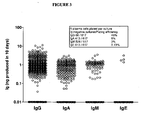
- Peripheral blood CD138-positive cells producing IgG, IgA, IgM and IgE were isolated from a healthy donor and plated at 5 cells/well in 384-well plates containing mesenchymal stromal cell monolayers in 617 replicate cultures. The day 10 culture supernatants were tested for the presence of IgG, IgA, IgM and IgE using isotype-specific ELISA. The total amount of the four isotypes was measured in the culture supernatants (see Figure 3 ).
- the median value of productivity for IgG, IgA, IgM and IgE plasma cells was 860, 770, 1100 and 1800 pg in 10 days, i.e., 86, 77, 110 and 180 pg/cell /day, respectively.
- Peripheral blood derived human plasma cells were isolated from seven donors according to CD138 expression and seeded at 1 or 25 cells/well. The number of IgG-, IgA- and IgM-antibody secreting cells at the beginning of cultures was calculated by isotype specific ELISPOT. Plating efficiency was calculated on IgG-, IgA- and IgM-antibody secreting cells according to Poisson distribution analysis and ranged from 50% to 74% for IgG, from 31% to 78% for IgA and from 0 to 26% for IgM (see Figure 4 ). In addition, plasma cells retrieved from polyclonal cultures could be re-plated in single cell cultures where they maintained constant rate of Ig secretion (data not shown).
- Plasma cells were isolated from peripheral blood of an allergic individual and plated at 1 cell/well on hMSC-TERT monolayers in ten 384-well microplates. Five culture supernatants scored positive for IgE production. The IgE-positive cultures were subjected to RT-PCR and two paired VHNL genes were retrieved and sequenced (Table 1). The V genes were cloned into expression vectors for expression of a light chain (kappa or lambda) or of a human IgGI or IgE heavy chain according to the method described in Wardemann et al., (Science 301, 1374-1377, 2003 ). The IgG or IgE antibodies were produced by transient transfection of 293T cells.
- Example 7 Isolation of antigen-specific monoclonal antibodies from Plasma cells cultured in the presence of mesenchymal stromal cells
- Plasma cells were isolated from peripheral blood of a donor 7 days after booster vaccination with tetanus toxoid (TT) and seeded in clonal conditions on MSC-TERT monolayers in 384 well microplates. The day 10 culture supernatants were analysed for the presence of total IgG (ng/culture) as well as TT-specific IgG antibodies (OD405) and monoclonal cultures producing TT-specific antibodies were identified (see Figure 5 ). This example illustrates the possibility of identifying large numbers of antigen-specific plasma cells following a booster immunization.
- TT tetanus toxoid
- Example 8 Isolation of a potent and broadly reactive influenza A neutralizing antibody from plasma cells cultured in the presence of IL-6
- CD138-positive cells from a donor immunized 7 days before with a seasonal influenza vaccine were seeded in sixteen 384 well-plates at 0.5 cells/well in the presence of 10 ng/ml IL-6.
- the culture supernatants were tested in three parallel ELISAs using as antigens recombinant H5 or H9 baculovirus-derived recombinant hemagglutinins (HA) and the irrelevant antigen tetanus toxoid (TT).
- V genes of FI6 and FI28 were cloned into expression vectors and recombinant antibodies were produced by transfecting 293T cells. Their specificity was investigated by ELISA using a panel of recombinant HAs belonging to different subtypes ( Table 2 ).
- FI6 bound all influenza A HA subtypes tested including group 1 (H1, H5 and H9) and group 2 (H3 and H7), while did not bind HA from influenza B.
- FI28 bound only to the group 1 HAs. Table 2.
- FI6 and FI28 were tested for their capacity to neutralize group 1 and group 2 influenza A subtypes using pseudoviruses as well as infectious viruses.
- FI6 neutralized all pseudoviruses tested, including six H5 isolates belonging to the antigenically divergent clades 0, 1, 2.1, 2.2 and 2.3, and two H7 avian isolates ( Table 3 ).
- FI6 neutralized all infectious viruses tested, including two H3N2 viruses and four H1N1 viruses spanning a 70 year period up to the recent pandemic swine-origin H1N1 isolate A/Cal/04/09 ( Table 4 ).
- the method detailed above delivers 50 ⁇ l of monoclonal antibody at approximately 8-16 ng/ml in 5-10 days. This volume and antibody concentration are sufficient to perform multiple assays. These assays comprise not only binding assays such as ELISA (that can be performed in a standard shallow 384 plate format using 5 ⁇ l), but also functional assays, such as pseudotyped neutralization, which are in the range of sensitivity (see Table 3). Importantly, the ability to perform multiple parallel assays is essential to rapidly identify rare plasma cells that secrete antibodies capable of binding to multiple antigen variants.
- Example 9 Isolation of a tetanus toxoid-specific monoclonal antibody from cultured plasma cells isolated from peripheral blood ten years after vaccination
- CD138+ HLA-DR+ CD62L+ plasma cells were isolated by cell sorting from the peripheral blood of a donor 10 years after tetanus-toxoid (TT) vaccination.
- TT tetanus-toxoid
- a total of 1,700 cells were seeded at 0.5 cells/well in 384-well microplates and cell culture supernatants were screened at day 7 by ELISA for the presence of tetanus-toxoid-specific IgG antibodies.
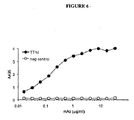
- One tetanus toxoid-specific culture was identified and on day 8 VH/VL genes were retrieved by RT-PCR and sequenced (see Table 5). The genes were cloned into expression vectors and the recombinant antibody (TT14) was produced by transient transfection of 293T cells.
Landscapes
- Health & Medical Sciences (AREA)
- Chemical & Material Sciences (AREA)
- Life Sciences & Earth Sciences (AREA)
- Organic Chemistry (AREA)
- Immunology (AREA)
- Engineering & Computer Science (AREA)
- General Health & Medical Sciences (AREA)
- Medicinal Chemistry (AREA)
- Genetics & Genomics (AREA)
- Bioinformatics & Cheminformatics (AREA)
- Biochemistry (AREA)
- Biomedical Technology (AREA)
- Molecular Biology (AREA)
- Proteomics, Peptides & Aminoacids (AREA)
- Biophysics (AREA)
- Veterinary Medicine (AREA)
- Pharmacology & Pharmacy (AREA)
- Animal Behavior & Ethology (AREA)
- Public Health (AREA)
- Chemical Kinetics & Catalysis (AREA)
- General Chemical & Material Sciences (AREA)
- Nuclear Medicine, Radiotherapy & Molecular Imaging (AREA)
- Biotechnology (AREA)
- Zoology (AREA)
- Wood Science & Technology (AREA)
- Virology (AREA)
- Microbiology (AREA)
- General Engineering & Computer Science (AREA)
- Cell Biology (AREA)
- Hematology (AREA)
- Pulmonology (AREA)
- Communicable Diseases (AREA)
- Transplantation (AREA)
- Oncology (AREA)
- Epidemiology (AREA)
- Mycology (AREA)
- Preparation Of Compounds By Using Micro-Organisms (AREA)
- Peptides Or Proteins (AREA)
- Micro-Organisms Or Cultivation Processes Thereof (AREA)
- Medicines Containing Antibodies Or Antigens For Use As Internal Diagnostic Agents (AREA)
Priority Applications (2)
| Application Number | Priority Date | Filing Date | Title |
|---|---|---|---|
| PL09804310T PL2350128T3 (pl) | 2008-10-22 | 2009-10-22 | Sposoby wytwarzania przeciwciał z komórek plazmatycznych |
| EP14003359.8A EP2848630A1 (en) | 2008-10-22 | 2009-10-22 | Methods for producing antibodies from plasma cells |
Applications Claiming Priority (5)
| Application Number | Priority Date | Filing Date | Title |
|---|---|---|---|
| GB0819376A GB0819376D0 (en) | 2008-10-22 | 2008-10-22 | Method for culturing human plasma cells |
| US18158209P | 2009-05-27 | 2009-05-27 | |
| PCT/IB2009/006616 WO2010010466A2 (en) | 2008-07-25 | 2009-07-27 | Neutralizing anti-influenza a virus antibodies and uses thereof |
| US12/509,731 US9340603B2 (en) | 2008-07-25 | 2009-07-27 | Neutralizing anti-influenza A virus antibodies and uses thereof |
| PCT/IB2009/007375 WO2010046775A2 (en) | 2008-10-22 | 2009-10-22 | Methods for producing antibodies from plasma cells |
Related Child Applications (1)
| Application Number | Title | Priority Date | Filing Date |
|---|---|---|---|
| EP14003359.8A Division EP2848630A1 (en) | 2008-10-22 | 2009-10-22 | Methods for producing antibodies from plasma cells |
Publications (2)
| Publication Number | Publication Date |
|---|---|
| EP2350128A2 EP2350128A2 (en) | 2011-08-03 |
| EP2350128B1 true EP2350128B1 (en) | 2014-10-01 |
Family
ID=41796120
Family Applications (2)
| Application Number | Title | Priority Date | Filing Date |
|---|---|---|---|
| EP09804310.2A Active EP2350128B1 (en) | 2008-10-22 | 2009-10-22 | Methods for producing antibodies from plasma cells |
| EP14003359.8A Withdrawn EP2848630A1 (en) | 2008-10-22 | 2009-10-22 | Methods for producing antibodies from plasma cells |
Family Applications After (1)
| Application Number | Title | Priority Date | Filing Date |
|---|---|---|---|
| EP14003359.8A Withdrawn EP2848630A1 (en) | 2008-10-22 | 2009-10-22 | Methods for producing antibodies from plasma cells |
Country Status (18)
| Country | Link |
|---|---|
| US (1) | US9347043B2 (pl) |
| EP (2) | EP2350128B1 (pl) |
| JP (1) | JP5837820B2 (pl) |
| KR (1) | KR101606608B1 (pl) |
| CN (1) | CN102282170B (pl) |
| AU (1) | AU2009306010B2 (pl) |
| BR (1) | BRPI0914092B1 (pl) |
| CA (1) | CA2740138C (pl) |
| CL (1) | CL2011000797A1 (pl) |
| DK (1) | DK2350128T3 (pl) |
| EA (1) | EA024586B1 (pl) |
| ES (1) | ES2525346T3 (pl) |
| IL (1) | IL212121A (pl) |
| MX (1) | MX2011003855A (pl) |
| NZ (1) | NZ592036A (pl) |
| PL (1) | PL2350128T3 (pl) |
| WO (1) | WO2010046775A2 (pl) |
| ZA (1) | ZA201102387B (pl) |
Families Citing this family (40)
| Publication number | Priority date | Publication date | Assignee | Title |
|---|---|---|---|---|
| US20110212106A1 (en) | 2010-01-20 | 2011-09-01 | Institute For Research In Bioscience | Hiv-1 neutralizing antibodies and uses thereof |
| SI2400298T1 (sl) * | 2010-05-28 | 2013-11-29 | F. Hoffmann-La Roche Ag | Postopek kultivacije posamezne B-celice in izdelava specifičnih protiteles |
| US10087408B2 (en) | 2010-07-07 | 2018-10-02 | The University Of British Columbia | System and method for microfluidic cell culture |
| US20130115606A1 (en) | 2010-07-07 | 2013-05-09 | The University Of British Columbia | System and method for microfluidic cell culture |
| US9188593B2 (en) | 2010-07-16 | 2015-11-17 | The University Of British Columbia | Methods for assaying cellular binding interactions |
| JP5963746B2 (ja) * | 2011-03-30 | 2016-08-03 | 国立大学法人富山大学 | 形質細胞または形質芽細胞の選択方法、目的抗原特異的な抗体の製造方法、新規モノクローナル抗体 |
| AU2011373387B2 (en) | 2011-07-18 | 2017-06-29 | Institute For Research In Biomedicine | Neutralizing anti-influenza A virus antibodies and uses thereof |
| CN104350069B (zh) | 2012-03-20 | 2017-12-01 | 胡默波斯生物医学公司 | 中和rsv、mpv和pvm的抗体和其应用 |
| US9969794B2 (en) | 2012-05-10 | 2018-05-15 | Visterra, Inc. | HA binding agents |
| WO2016075546A2 (en) | 2014-11-14 | 2016-05-19 | Antonio Lanzavecchia | Antibodies that neutralize ebola virus and uses thereof |
| SI3220947T1 (sl) | 2014-11-18 | 2021-02-26 | Humabs Biomed S.A. | Protitelesa, ki močno nevtralizirajo virus stekline in druge lisaviruse in njihove uporabe |
| WO2016207402A1 (en) | 2015-06-26 | 2016-12-29 | Institute For Research In Biomedicine | Proteins comprising a mutated lair-1 fragment and uses thereof |
| WO2017059878A1 (en) | 2015-10-07 | 2017-04-13 | Humabs Biomed Sa | Antibodies that potently neutralize hepatitis b virus and uses thereof |
| EP3374390A1 (en) | 2015-11-13 | 2018-09-19 | Visterra, Inc. | Compositions and methods for treating and preventing influenza |
| AU2017222564A1 (en) | 2016-02-24 | 2018-09-06 | Visterra, Inc. | Formulations of antibody molecules to influenza virus |
| CN105950552A (zh) * | 2016-05-26 | 2016-09-21 | 宁波艾科生物科技有限公司 | 一种分泌抗原特异性抗体浆细胞的分离方法 |
| WO2018010789A1 (en) * | 2016-07-13 | 2018-01-18 | Humabs Biomed Sa | Novel antibodies specifically binding to zika virus epitopes and uses thereof |
| WO2018193063A2 (en) | 2017-04-19 | 2018-10-25 | Institute For Research In Biomedicine | Novel malaria vaccines and antibodies binding to plasmodium sporozoites |
| WO2019024979A1 (en) | 2017-07-31 | 2019-02-07 | Institute For Research In Biomedicine | FUNCTIONAL DOMAIN ANTIBODIES IN THE ELBOW REGION |
| JP6622825B2 (ja) * | 2018-01-25 | 2019-12-18 | インスティテュート・フォー・リサーチ・イン・バイオメディシンInstitute For Research In Biomedicine | A型インフルエンザウイルス中和抗体及びその使用法 |
| FI3898668T3 (fi) | 2018-12-19 | 2023-11-28 | Humabs Biomed Sa | B-hepatiittivirusta neutraloivia vasta-aineita ja niiden käyttöjä |
| US11230593B2 (en) | 2019-03-25 | 2022-01-25 | Visterra, Inc. | Compositions and methods for treating and preventing influenza |
| WO2020221451A1 (en) | 2019-04-30 | 2020-11-05 | Humabs Biomed Sa | Antibodies binding to plasmodium circumsporozoite protein and uses thereof |
| WO2020221450A1 (en) | 2019-04-30 | 2020-11-05 | Humabs Biomed Sa | Antibodies and methods for treatment of influenza a infection |
| EP3757127A1 (en) | 2019-06-28 | 2020-12-30 | Institute for Research in Biomedicine | Deimmunized antibodies binding to alpha-4 integrin and uses thereof |
| CA3152511A1 (en) | 2019-08-29 | 2021-03-04 | Vir Biotechnology, Inc. | Antibody compositions and methods for treating hepatitis b virus infection |
| IL290752B2 (en) | 2019-08-29 | 2026-02-01 | Vir Biotechnology Inc | Preparations and methods for treating influenza a infection |
| WO2021050989A1 (en) | 2019-09-13 | 2021-03-18 | Duke University | Zika antibodies and their use |
| JP2020048568A (ja) * | 2019-11-22 | 2020-04-02 | インスティテュート・フォー・リサーチ・イン・バイオメディシンInstitute For Research In Biomedicine | A型インフルエンザウイルス中和抗体及びその使用法 |
| PH12022553569A1 (en) | 2020-06-24 | 2023-04-12 | Humabs Biomed Sa | Engineered hepatitis b virus neutralizing antibodies and uses thereof |
| AR124266A1 (es) | 2020-12-08 | 2023-03-01 | Vir Biotechnology Inc | Anticuerpos y métodos para el tratamiento de infección por gripe a |
| WO2022122704A1 (en) | 2020-12-08 | 2022-06-16 | Humabs Biomed Sa | Antibodies binding to f-protein of metapneumovirus and uses thereof |
| JP2024504167A (ja) | 2021-01-26 | 2024-01-30 | ヴィア・バイオテクノロジー・インコーポレイテッド | B型肝炎ウイルス感染を処置するための抗体組成物および方法 |
| WO2022161597A1 (en) | 2021-01-26 | 2022-08-04 | Eth Zurich | Method for rapid identification of cross-reactive and/or rare antibodies |
| WO2022161598A1 (en) | 2021-01-26 | 2022-08-04 | Eth Zurich | Antibodies broadly targeting coronaviruses and uses thereof |
| WO2022162012A2 (en) | 2021-01-26 | 2022-08-04 | Eth Zurich | Antibodies broadly targeting coronaviruses and uses thereof |
| WO2022162009A1 (en) | 2021-01-26 | 2022-08-04 | Eth Zurich | Method for rapid identification of cross-reactive and/or rare antibodies |
| CN118139879A (zh) | 2021-09-07 | 2024-06-04 | 生物医学研究院 | 结合破伤风毒素的抗体及其用途 |
| CN114350606A (zh) * | 2022-01-05 | 2022-04-15 | 上海药明生物医药有限公司 | 一种富集大鼠浆细胞及建立浆细胞杂交瘤的方法 |
| TW202411246A (zh) | 2022-05-23 | 2024-03-16 | 美商維爾生物科技股份有限公司 | 經工程化之b型肝炎病毒中和抗體及其用途 |
Family Cites Families (10)
| Publication number | Priority date | Publication date | Assignee | Title |
|---|---|---|---|---|
| ES2176484T3 (es) | 1995-08-18 | 2002-12-01 | Morphosys Ag | Bancos de proteinas/(poli)peptidos. |
| US7368256B2 (en) * | 2001-08-10 | 2008-05-06 | United States Of America As Represented By The Secretary Of The Department Of Health And Human Services, Centers For Disease Control And Prevention | Antibodies against Stachybotrys chartarum and methods for their use |
| NZ542784A (en) | 2002-08-19 | 2008-07-31 | Astrazeneca Ab | Antibodies directed to monocyte chemo-attractant protein-1 (MCP-1) and uses thereof |
| CN1838968A (zh) * | 2003-08-08 | 2006-09-27 | 艾伯吉尼斯公司 | 针对甲状旁腺激素(pth)之抗体和其用途 |
| US7318925B2 (en) * | 2003-08-08 | 2008-01-15 | Amgen Fremont, Inc. | Methods of use for antibodies against parathyroid hormone |
| WO2007134327A2 (en) | 2006-05-15 | 2007-11-22 | Sea Lane Biotechnologies, Llc. | Neutralizing antibodies to influenza viruses |
| EP2450377A1 (en) | 2006-09-07 | 2012-05-09 | Crucell Holland B.V. | Human binding molecules capable of neutralizing influenza virus H5N1 and uses thereof |
| AU2007325872B2 (en) | 2006-11-08 | 2012-12-13 | Macrogenics West, Inc. | TES7 and antibodies that bind thereto |
| WO2008110937A2 (en) | 2007-03-13 | 2008-09-18 | Humabs Llc | Antibodies against h5n1 strains of influenza a virus |
| WO2010003240A1 (en) * | 2008-07-08 | 2010-01-14 | The Royal Institution For The Advancement Of Learning/Mcgill University | Gmcsf and truncated ccl2 conjugates and methods and uses thereof |
-
2009
- 2009-10-22 PL PL09804310T patent/PL2350128T3/pl unknown
- 2009-10-22 AU AU2009306010A patent/AU2009306010B2/en not_active Ceased
- 2009-10-22 EP EP09804310.2A patent/EP2350128B1/en active Active
- 2009-10-22 ES ES09804310.2T patent/ES2525346T3/es active Active
- 2009-10-22 BR BRPI0914092-1A patent/BRPI0914092B1/pt not_active IP Right Cessation
- 2009-10-22 JP JP2011532738A patent/JP5837820B2/ja active Active
- 2009-10-22 CA CA2740138A patent/CA2740138C/en active Active
- 2009-10-22 MX MX2011003855A patent/MX2011003855A/es active IP Right Grant
- 2009-10-22 WO PCT/IB2009/007375 patent/WO2010046775A2/en not_active Ceased
- 2009-10-22 DK DK09804310.2T patent/DK2350128T3/da active
- 2009-10-22 KR KR1020117008167A patent/KR101606608B1/ko not_active Expired - Fee Related
- 2009-10-22 EP EP14003359.8A patent/EP2848630A1/en not_active Withdrawn
- 2009-10-22 NZ NZ592036A patent/NZ592036A/xx not_active IP Right Cessation
- 2009-10-22 CN CN200980142313.8A patent/CN102282170B/zh active Active
- 2009-10-22 EA EA201100668A patent/EA024586B1/ru active IP Right Revival
- 2009-10-22 US US12/604,240 patent/US9347043B2/en active Active
-
2011
- 2011-03-31 ZA ZA2011/02387A patent/ZA201102387B/en unknown
- 2011-04-04 IL IL212121A patent/IL212121A/en active IP Right Grant
- 2011-04-11 CL CL2011000797A patent/CL2011000797A1/es unknown
Also Published As
| Publication number | Publication date |
|---|---|
| CN102282170B (zh) | 2015-04-08 |
| IL212121A0 (en) | 2011-06-30 |
| JP2012506251A (ja) | 2012-03-15 |
| AU2009306010A1 (en) | 2010-04-29 |
| ES2525346T3 (es) | 2014-12-22 |
| AU2009306010B2 (en) | 2015-12-24 |
| ZA201102387B (en) | 2012-09-26 |
| MX2011003855A (es) | 2011-12-16 |
| JP5837820B2 (ja) | 2015-12-24 |
| EP2350128A2 (en) | 2011-08-03 |
| US9347043B2 (en) | 2016-05-24 |
| HK1164899A1 (en) | 2012-09-28 |
| BRPI0914092A2 (pt) | 2015-10-27 |
| EA201100668A1 (ru) | 2012-06-29 |
| KR101606608B1 (ko) | 2016-03-25 |
| CL2011000797A1 (es) | 2012-03-16 |
| CN102282170A (zh) | 2011-12-14 |
| EP2848630A1 (en) | 2015-03-18 |
| KR20110073506A (ko) | 2011-06-29 |
| WO2010046775A3 (en) | 2010-06-17 |
| US20100145031A1 (en) | 2010-06-10 |
| CA2740138A1 (en) | 2010-04-29 |
| EA024586B1 (ru) | 2016-10-31 |
| WO2010046775A2 (en) | 2010-04-29 |
| CA2740138C (en) | 2017-01-10 |
| IL212121A (en) | 2016-03-31 |
| DK2350128T3 (da) | 2014-12-01 |
| BRPI0914092B1 (pt) | 2021-08-31 |
| PL2350128T3 (pl) | 2015-03-31 |
| NZ592036A (en) | 2012-12-21 |
Similar Documents
| Publication | Publication Date | Title |
|---|---|---|
| EP2350128B1 (en) | Methods for producing antibodies from plasma cells | |
| Guthmiller et al. | An efficient method to generate monoclonal antibodies from human B cells | |
| US10899833B2 (en) | Human antibody specific for interleukin-1 alpha | |
| EP2724157B1 (en) | Method for screening cells | |
| EP3717632B1 (en) | B-cell cultivation method | |
| KR20150084831A (ko) | 항원-특이적 형질모세포의 풍부화 | |
| HK1164899B (en) | Methods for producing antibodies from plasma cells | |
| WO2022162009A1 (en) | Method for rapid identification of cross-reactive and/or rare antibodies | |
| WO2022161597A1 (en) | Method for rapid identification of cross-reactive and/or rare antibodies | |
| HK40038118A (en) | Il-1 alpha abs and methods of use |
Legal Events
| Date | Code | Title | Description |
|---|---|---|---|
| PUAI | Public reference made under article 153(3) epc to a published international application that has entered the european phase |
Free format text: ORIGINAL CODE: 0009012 |
|
| 17P | Request for examination filed |
Effective date: 20110421 |
|
| AK | Designated contracting states |
Kind code of ref document: A2 Designated state(s): AT BE BG CH CY CZ DE DK EE ES FI FR GB GR HR HU IE IS IT LI LT LU LV MC MK MT NL NO PL PT RO SE SI SK SM TR |
|
| DAX | Request for extension of the european patent (deleted) | ||
| 17Q | First examination report despatched |
Effective date: 20130724 |
|
| GRAP | Despatch of communication of intention to grant a patent |
Free format text: ORIGINAL CODE: EPIDOSNIGR1 |
|
| RIN1 | Information on inventor provided before grant (corrected) |
Inventor name: JARROSSAY, DAVID Inventor name: LANZAVECCHIA, ANTONIO |
|
| INTG | Intention to grant announced |
Effective date: 20140203 |
|
| GRAP | Despatch of communication of intention to grant a patent |
Free format text: ORIGINAL CODE: EPIDOSNIGR1 |
|
| INTG | Intention to grant announced |
Effective date: 20140523 |
|
| GRAS | Grant fee paid |
Free format text: ORIGINAL CODE: EPIDOSNIGR3 |
|
| GRAA | (expected) grant |
Free format text: ORIGINAL CODE: 0009210 |
|
| RAP1 | Party data changed (applicant data changed or rights of an application transferred) |
Owner name: INSTITUTE FOR RESEARCH IN BIOMEDICINE |
|
| AK | Designated contracting states |
Kind code of ref document: B1 Designated state(s): AT BE BG CH CY CZ DE DK EE ES FI FR GB GR HR HU IE IS IT LI LT LU LV MC MK MT NL NO PL PT RO SE SI SK SM TR |
|
| REG | Reference to a national code |
Ref country code: GB Ref legal event code: FG4D |
|
| REG | Reference to a national code |
Ref country code: AT Ref legal event code: REF Ref document number: 689521 Country of ref document: AT Kind code of ref document: T Effective date: 20141015 Ref country code: CH Ref legal event code: EP |
|
| REG | Reference to a national code |
Ref country code: IE Ref legal event code: FG4D |
|
| REG | Reference to a national code |
Ref country code: DE Ref legal event code: R096 Ref document number: 602009026996 Country of ref document: DE Effective date: 20141113 |
|
| REG | Reference to a national code |
Ref country code: CH Ref legal event code: NV Representative=s name: RIEDERER HASLER AND PARTNER PATENTANWAELTE AG, LI |
|
| REG | Reference to a national code |
Ref country code: DK Ref legal event code: T3 Effective date: 20141128 |
|
| REG | Reference to a national code |
Ref country code: SE Ref legal event code: TRGR |
|
| REG | Reference to a national code |
Ref country code: NL Ref legal event code: T3 |
|
| REG | Reference to a national code |
Ref country code: ES Ref legal event code: FG2A Ref document number: 2525346 Country of ref document: ES Kind code of ref document: T3 Effective date: 20141222 |
|
| REG | Reference to a national code |
Ref country code: LT Ref legal event code: MG4D |
|
| REG | Reference to a national code |
Ref country code: PL Ref legal event code: T3 |
|
| PG25 | Lapsed in a contracting state [announced via postgrant information from national office to epo] |
Ref country code: CZ Free format text: LAPSE BECAUSE OF FAILURE TO SUBMIT A TRANSLATION OF THE DESCRIPTION OR TO PAY THE FEE WITHIN THE PRESCRIBED TIME-LIMIT Effective date: 20141001 Ref country code: FI Free format text: LAPSE BECAUSE OF FAILURE TO SUBMIT A TRANSLATION OF THE DESCRIPTION OR TO PAY THE FEE WITHIN THE PRESCRIBED TIME-LIMIT Effective date: 20141001 Ref country code: PT Free format text: LAPSE BECAUSE OF FAILURE TO SUBMIT A TRANSLATION OF THE DESCRIPTION OR TO PAY THE FEE WITHIN THE PRESCRIBED TIME-LIMIT Effective date: 20150202 Ref country code: LT Free format text: LAPSE BECAUSE OF FAILURE TO SUBMIT A TRANSLATION OF THE DESCRIPTION OR TO PAY THE FEE WITHIN THE PRESCRIBED TIME-LIMIT Effective date: 20141001 Ref country code: NO Free format text: LAPSE BECAUSE OF FAILURE TO SUBMIT A TRANSLATION OF THE DESCRIPTION OR TO PAY THE FEE WITHIN THE PRESCRIBED TIME-LIMIT Effective date: 20150101 Ref country code: IS Free format text: LAPSE BECAUSE OF FAILURE TO SUBMIT A TRANSLATION OF THE DESCRIPTION OR TO PAY THE FEE WITHIN THE PRESCRIBED TIME-LIMIT Effective date: 20150201 |
|
| PG25 | Lapsed in a contracting state [announced via postgrant information from national office to epo] |
Ref country code: GR Free format text: LAPSE BECAUSE OF FAILURE TO SUBMIT A TRANSLATION OF THE DESCRIPTION OR TO PAY THE FEE WITHIN THE PRESCRIBED TIME-LIMIT Effective date: 20150102 Ref country code: LV Free format text: LAPSE BECAUSE OF FAILURE TO SUBMIT A TRANSLATION OF THE DESCRIPTION OR TO PAY THE FEE WITHIN THE PRESCRIBED TIME-LIMIT Effective date: 20141001 Ref country code: CY Free format text: LAPSE BECAUSE OF FAILURE TO SUBMIT A TRANSLATION OF THE DESCRIPTION OR TO PAY THE FEE WITHIN THE PRESCRIBED TIME-LIMIT Effective date: 20141001 Ref country code: HR Free format text: LAPSE BECAUSE OF FAILURE TO SUBMIT A TRANSLATION OF THE DESCRIPTION OR TO PAY THE FEE WITHIN THE PRESCRIBED TIME-LIMIT Effective date: 20141001 |
|
| PG25 | Lapsed in a contracting state [announced via postgrant information from national office to epo] |
Ref country code: MC Free format text: LAPSE BECAUSE OF FAILURE TO SUBMIT A TRANSLATION OF THE DESCRIPTION OR TO PAY THE FEE WITHIN THE PRESCRIBED TIME-LIMIT Effective date: 20141001 |
|
| REG | Reference to a national code |
Ref country code: DE Ref legal event code: R097 Ref document number: 602009026996 Country of ref document: DE |
|
| PG25 | Lapsed in a contracting state [announced via postgrant information from national office to epo] |
Ref country code: RO Free format text: LAPSE BECAUSE OF FAILURE TO SUBMIT A TRANSLATION OF THE DESCRIPTION OR TO PAY THE FEE WITHIN THE PRESCRIBED TIME-LIMIT Effective date: 20141001 Ref country code: EE Free format text: LAPSE BECAUSE OF FAILURE TO SUBMIT A TRANSLATION OF THE DESCRIPTION OR TO PAY THE FEE WITHIN THE PRESCRIBED TIME-LIMIT Effective date: 20141001 Ref country code: SK Free format text: LAPSE BECAUSE OF FAILURE TO SUBMIT A TRANSLATION OF THE DESCRIPTION OR TO PAY THE FEE WITHIN THE PRESCRIBED TIME-LIMIT Effective date: 20141001 |
|
| PLBE | No opposition filed within time limit |
Free format text: ORIGINAL CODE: 0009261 |
|
| STAA | Information on the status of an ep patent application or granted ep patent |
Free format text: STATUS: NO OPPOSITION FILED WITHIN TIME LIMIT |
|
| 26N | No opposition filed |
Effective date: 20150702 |
|
| REG | Reference to a national code |
Ref country code: FR Ref legal event code: PLFP Year of fee payment: 7 |
|
| REG | Reference to a national code |
Ref country code: AT Ref legal event code: UEP Ref document number: 689521 Country of ref document: AT Kind code of ref document: T Effective date: 20141001 |
|
| PG25 | Lapsed in a contracting state [announced via postgrant information from national office to epo] |
Ref country code: SI Free format text: LAPSE BECAUSE OF FAILURE TO SUBMIT A TRANSLATION OF THE DESCRIPTION OR TO PAY THE FEE WITHIN THE PRESCRIBED TIME-LIMIT Effective date: 20141001 |
|
| PG25 | Lapsed in a contracting state [announced via postgrant information from national office to epo] |
Ref country code: SM Free format text: LAPSE BECAUSE OF FAILURE TO SUBMIT A TRANSLATION OF THE DESCRIPTION OR TO PAY THE FEE WITHIN THE PRESCRIBED TIME-LIMIT Effective date: 20141001 |
|
| PG25 | Lapsed in a contracting state [announced via postgrant information from national office to epo] |
Ref country code: BG Free format text: LAPSE BECAUSE OF FAILURE TO SUBMIT A TRANSLATION OF THE DESCRIPTION OR TO PAY THE FEE WITHIN THE PRESCRIBED TIME-LIMIT Effective date: 20141001 |
|
| PG25 | Lapsed in a contracting state [announced via postgrant information from national office to epo] |
Ref country code: HU Free format text: LAPSE BECAUSE OF FAILURE TO SUBMIT A TRANSLATION OF THE DESCRIPTION OR TO PAY THE FEE WITHIN THE PRESCRIBED TIME-LIMIT; INVALID AB INITIO Effective date: 20091022 Ref country code: LU Free format text: LAPSE BECAUSE OF NON-PAYMENT OF DUE FEES Effective date: 20141022 Ref country code: TR Free format text: LAPSE BECAUSE OF FAILURE TO SUBMIT A TRANSLATION OF THE DESCRIPTION OR TO PAY THE FEE WITHIN THE PRESCRIBED TIME-LIMIT Effective date: 20141001 Ref country code: MT Free format text: LAPSE BECAUSE OF FAILURE TO SUBMIT A TRANSLATION OF THE DESCRIPTION OR TO PAY THE FEE WITHIN THE PRESCRIBED TIME-LIMIT Effective date: 20141001 |
|
| REG | Reference to a national code |
Ref country code: FR Ref legal event code: PLFP Year of fee payment: 8 |
|
| REG | Reference to a national code |
Ref country code: FR Ref legal event code: PLFP Year of fee payment: 9 |
|
| PG25 | Lapsed in a contracting state [announced via postgrant information from national office to epo] |
Ref country code: MK Free format text: LAPSE BECAUSE OF FAILURE TO SUBMIT A TRANSLATION OF THE DESCRIPTION OR TO PAY THE FEE WITHIN THE PRESCRIBED TIME-LIMIT Effective date: 20141001 |
|
| REG | Reference to a national code |
Ref country code: FR Ref legal event code: PLFP Year of fee payment: 10 |
|
| P01 | Opt-out of the competence of the unified patent court (upc) registered |
Effective date: 20230526 |
|
| PGFP | Annual fee paid to national office [announced via postgrant information from national office to epo] |
Ref country code: NL Payment date: 20231023 Year of fee payment: 15 |
|
| PGFP | Annual fee paid to national office [announced via postgrant information from national office to epo] |
Ref country code: ES Payment date: 20231117 Year of fee payment: 15 |
|
| PGFP | Annual fee paid to national office [announced via postgrant information from national office to epo] |
Ref country code: SE Payment date: 20231025 Year of fee payment: 15 Ref country code: IT Payment date: 20231031 Year of fee payment: 15 Ref country code: DK Payment date: 20231025 Year of fee payment: 15 Ref country code: AT Payment date: 20231019 Year of fee payment: 15 |
|
| PGFP | Annual fee paid to national office [announced via postgrant information from national office to epo] |
Ref country code: PL Payment date: 20231006 Year of fee payment: 15 |
|
| REG | Reference to a national code |
Ref country code: DK Ref legal event code: EBP Effective date: 20241031 |
|
| REG | Reference to a national code |
Ref country code: SE Ref legal event code: EUG |
|
| REG | Reference to a national code |
Ref country code: NL Ref legal event code: MM Effective date: 20241101 |
|
| REG | Reference to a national code |
Ref country code: AT Ref legal event code: MM01 Ref document number: 689521 Country of ref document: AT Kind code of ref document: T Effective date: 20241022 |
|
| PG25 | Lapsed in a contracting state [announced via postgrant information from national office to epo] |
Ref country code: NL Free format text: LAPSE BECAUSE OF NON-PAYMENT OF DUE FEES Effective date: 20241101 |
|
| PG25 | Lapsed in a contracting state [announced via postgrant information from national office to epo] |
Ref country code: AT Free format text: LAPSE BECAUSE OF NON-PAYMENT OF DUE FEES Effective date: 20241022 |
|
| PG25 | Lapsed in a contracting state [announced via postgrant information from national office to epo] |
Ref country code: DK Free format text: LAPSE BECAUSE OF NON-PAYMENT OF DUE FEES Effective date: 20241031 |
|
| PG25 | Lapsed in a contracting state [announced via postgrant information from national office to epo] |
Ref country code: SE Free format text: LAPSE BECAUSE OF NON-PAYMENT OF DUE FEES Effective date: 20241023 Ref country code: IT Free format text: LAPSE BECAUSE OF NON-PAYMENT OF DUE FEES Effective date: 20241022 |
|
| REG | Reference to a national code |
Ref country code: CH Ref legal event code: U11 Free format text: ST27 STATUS EVENT CODE: U-0-0-U10-U11 (AS PROVIDED BY THE NATIONAL OFFICE) Effective date: 20251101 |
|
| REG | Reference to a national code |
Ref country code: ES Ref legal event code: FD2A Effective date: 20251203 |
|
| PGFP | Annual fee paid to national office [announced via postgrant information from national office to epo] |
Ref country code: DE Payment date: 20251029 Year of fee payment: 17 |
|
| PGFP | Annual fee paid to national office [announced via postgrant information from national office to epo] |
Ref country code: GB Payment date: 20251027 Year of fee payment: 17 |
|
| PGFP | Annual fee paid to national office [announced via postgrant information from national office to epo] |
Ref country code: FR Payment date: 20251027 Year of fee payment: 17 |
|
| PGFP | Annual fee paid to national office [announced via postgrant information from national office to epo] |
Ref country code: BE Payment date: 20251027 Year of fee payment: 17 |
|
| PGFP | Annual fee paid to national office [announced via postgrant information from national office to epo] |
Ref country code: CH Payment date: 20251101 Year of fee payment: 17 |
|
| PGFP | Annual fee paid to national office [announced via postgrant information from national office to epo] |
Ref country code: IE Payment date: 20251027 Year of fee payment: 17 |
|
| PG25 | Lapsed in a contracting state [announced via postgrant information from national office to epo] |
Ref country code: ES Free format text: LAPSE BECAUSE OF NON-PAYMENT OF DUE FEES Effective date: 20241023 |
|
| PG25 | Lapsed in a contracting state [announced via postgrant information from national office to epo] |
Ref country code: PL Free format text: LAPSE BECAUSE OF NON-PAYMENT OF DUE FEES Effective date: 20241022 |