EP2340267B1 - Neue copolymere mit polaren und nichtpolaren olefinblöcken - Google Patents
Neue copolymere mit polaren und nichtpolaren olefinblöcken Download PDFInfo
- Publication number
- EP2340267B1 EP2340267B1 EP09760216.3A EP09760216A EP2340267B1 EP 2340267 B1 EP2340267 B1 EP 2340267B1 EP 09760216 A EP09760216 A EP 09760216A EP 2340267 B1 EP2340267 B1 EP 2340267B1
- Authority
- EP
- European Patent Office
- Prior art keywords
- polar
- polar monomer
- ethylene
- complex
- organometallic complex
- Prior art date
- Legal status (The legal status is an assumption and is not a legal conclusion. Google has not performed a legal analysis and makes no representation as to the accuracy of the status listed.)
- Not-in-force
Links
- YESXBMPPKWJXKJ-BVCMIHEYSA-N CCOC(/C(/PCCC1)=C(\c2ccccc2)/OCC1/C(/P(c1ccccc1)(c1ccccc1)c1ccccc1)=C/c1ccccc1)=O Chemical compound CCOC(/C(/PCCC1)=C(\c2ccccc2)/OCC1/C(/P(c1ccccc1)(c1ccccc1)c1ccccc1)=C/c1ccccc1)=O YESXBMPPKWJXKJ-BVCMIHEYSA-N 0.000 description 1
Images
Classifications
-
- C—CHEMISTRY; METALLURGY
- C08—ORGANIC MACROMOLECULAR COMPOUNDS; THEIR PREPARATION OR CHEMICAL WORKING-UP; COMPOSITIONS BASED THEREON
- C08F—MACROMOLECULAR COMPOUNDS OBTAINED BY REACTIONS ONLY INVOLVING CARBON-TO-CARBON UNSATURATED BONDS
- C08F210/00—Copolymers of unsaturated aliphatic hydrocarbons having only one carbon-to-carbon double bond
- C08F210/02—Ethene
-
- C—CHEMISTRY; METALLURGY
- C08—ORGANIC MACROMOLECULAR COMPOUNDS; THEIR PREPARATION OR CHEMICAL WORKING-UP; COMPOSITIONS BASED THEREON
- C08F—MACROMOLECULAR COMPOUNDS OBTAINED BY REACTIONS ONLY INVOLVING CARBON-TO-CARBON UNSATURATED BONDS
- C08F297/00—Macromolecular compounds obtained by successively polymerising different monomer systems using a catalyst of the ionic or coordination type without deactivating the intermediate polymer
-
- C—CHEMISTRY; METALLURGY
- C08—ORGANIC MACROMOLECULAR COMPOUNDS; THEIR PREPARATION OR CHEMICAL WORKING-UP; COMPOSITIONS BASED THEREON
- C08F—MACROMOLECULAR COMPOUNDS OBTAINED BY REACTIONS ONLY INVOLVING CARBON-TO-CARBON UNSATURATED BONDS
- C08F297/00—Macromolecular compounds obtained by successively polymerising different monomer systems using a catalyst of the ionic or coordination type without deactivating the intermediate polymer
- C08F297/02—Macromolecular compounds obtained by successively polymerising different monomer systems using a catalyst of the ionic or coordination type without deactivating the intermediate polymer using a catalyst of the anionic type
-
- C—CHEMISTRY; METALLURGY
- C08—ORGANIC MACROMOLECULAR COMPOUNDS; THEIR PREPARATION OR CHEMICAL WORKING-UP; COMPOSITIONS BASED THEREON
- C08F—MACROMOLECULAR COMPOUNDS OBTAINED BY REACTIONS ONLY INVOLVING CARBON-TO-CARBON UNSATURATED BONDS
- C08F297/00—Macromolecular compounds obtained by successively polymerising different monomer systems using a catalyst of the ionic or coordination type without deactivating the intermediate polymer
- C08F297/06—Macromolecular compounds obtained by successively polymerising different monomer systems using a catalyst of the ionic or coordination type without deactivating the intermediate polymer using a catalyst of the coordination type
- C08F297/08—Macromolecular compounds obtained by successively polymerising different monomer systems using a catalyst of the ionic or coordination type without deactivating the intermediate polymer using a catalyst of the coordination type polymerising mono-olefins
-
- C—CHEMISTRY; METALLURGY
- C08—ORGANIC MACROMOLECULAR COMPOUNDS; THEIR PREPARATION OR CHEMICAL WORKING-UP; COMPOSITIONS BASED THEREON
- C08F—MACROMOLECULAR COMPOUNDS OBTAINED BY REACTIONS ONLY INVOLVING CARBON-TO-CARBON UNSATURATED BONDS
- C08F4/00—Polymerisation catalysts
- C08F4/42—Metals; Metal hydrides; Metallo-organic compounds; Use thereof as catalyst precursors
- C08F4/72—Metals; Metal hydrides; Metallo-organic compounds; Use thereof as catalyst precursors selected from metals not provided for in group C08F4/44
- C08F4/80—Metals; Metal hydrides; Metallo-organic compounds; Use thereof as catalyst precursors selected from metals not provided for in group C08F4/44 selected from iron group metals or platinum group metals
-
- C—CHEMISTRY; METALLURGY
- C08—ORGANIC MACROMOLECULAR COMPOUNDS; THEIR PREPARATION OR CHEMICAL WORKING-UP; COMPOSITIONS BASED THEREON
- C08L—COMPOSITIONS OF MACROMOLECULAR COMPOUNDS
- C08L53/00—Compositions of block copolymers containing at least one sequence of a polymer obtained by reactions only involving carbon-to-carbon unsaturated bonds; Compositions of derivatives of such polymers
Definitions
- the present invention relates to polar and apolar olefin block copolymers having a polar monomer content ranging from 0.1% to 99.9% molar.
- the invention also relates to a process for obtaining block copolymers of olefins and vinyl polar monomers, said process using a monocomponent catalyst system formed of an organometallic complex based on a Group VIII to X metal.
- apolar chains such as polyolefins
- apolar olefin units within polar polymer chains (especially (meth) acrylic polymers) would improve their mechanical properties, flexibility and resistance to chemicals.
- the effectiveness of the copolymerization of polar and apolar olefins is limited by the difference in reactivity of the comonomers: the apolar olefins are generally polymerized by catalysis, while the polar monomers are polymerized by radical or ionic polymerization.
- two strategies catalytic or radical have therefore been envisaged.
- the copolymers obtained have either a very predominant incorporation of methyl methacrylate (between 61 and 82 mol%) but with low molar masses (less than 30 000 g / mol) and a high polymolecularity index (greater than 30). with a Ni (II) complex; or a very low incorporation of methyl methacrylate (between 3 and 7 mol%) for copolymers of high molar masses (between 49,000 and 290,000 g / mol) with a complex of Ni (0).
- organometallic catalysts of less oxophilic metals of group X (Ni, Pd), without protection of the polar function by an alkyaluminium ( Mecking S, Coordination Chemistry Reviews 2000, 203, 325-35 ; Johnson LK et al, Chemical Reviews 2000, 100, 1169-1203 ; Boffa LS and Novak BM, Chem. Rev. 2000, 100, 1479-1493 ).
- nickel and palladium systems are limited to incorporations of polar monomer of maximum 15 mol% as they lead to copolymers whose polyethylene part is rich in ramifications (about 100 branches per 1000 C) and whose polar function is always inserted at the end of ramifications of the polymer .
- These systems can be used without a cocatalyst, but can only copolymerize a small number of polar monomers such as functionalized acrylates or norbornenes.
- the second strategy used for the copolymerization of polar and apolar olefins uses radical chemistry.
- these are industrial processes which make it possible, for example, to obtain copolymers of ethylene and vinyl acetate (ethylene vinyl acetate or EVA, ethylene vinyl acetate copolymer or EVA).
- EVA ethylene vinyl acetate copolymer
- these methods do not make it possible to obtain controlled microstructure of the polymers; in the polymers obtained by radical polymerization, the comonomers are distributed randomly in the polymer chain which has branches; the Polymerization conditions are restrictive, in terms of temperature (up to 350 °) and pressure (up to 3000 bar).
- MMA / ethylene and MMA / 1-hexene copolymers are obtained from the radical initiator AIBN in the presence of the comonomers ( Nagel M. et al, Macromolecules 2005, 38, 7262-7265 ; Liu SS and Sen AM, Journal of Polymer Science: Part A: Polymer Chemistry, Vol. 42, 6175-6192 2004 ) .
- MMA / 1-octene and methyl acrylate (MA) / 1-octene copolymers were obtained in the presence of an ATRP type atom transfer radical polymerization (ATRP) copper system.
- ATRP ATRP type atom transfer radical polymerization
- MA / hexene and MA / norbornene copolymers were obtained by radical polymerization from a palladium complex ( Tian G. et al, Macromolecules 2001, 34, 7656-7663 ).
- the present invention proposes to overcome the aforementioned drawbacks of the copolymerization techniques of polar and apolar monomers.
- the object of the present invention is to provide a process for the copolymerization of polar monomers and apolar monomers in the presence of a given monocomponent catalytic system, leading to the production of block copolymers containing both one or more monomer blocks.
- polar and one or more blocks of apolar monomer, especially ethylene are examples of polar monomers and apolar monomers.
- the invention relates to polar and apolar olefin block copolymers containing both polar olefin blocks (blocks) and apolar olefin blocks (blocks), said block copolymers being obtained by the aforementioned method.
- the invention relates to the use of a catalytic system formed of an organometallic complex of formula: (where Met, R, L, L 'and Y have the same meaning as above) for the block copolymerization of at least one apolar monomer including ethylene and at least one polar monomer without addition of cocatalyst.
- the present invention sets up a monocomponent neutral catalyst system based on metals of groups VIII to X, used under conditions of mild temperature and pressure allowing the synthesis of copolymers. multiblocks of olefins and polar monomers, without control of the length of the different blocks of polar and apolar olefins.
- olefin is meant an unsaturated hydrocarbon which comprises at least one terminal double covalent bond between two carbon atoms. Olefins are apolar compounds. The olefins used in the context of the invention are ethylene, propylene, higher ⁇ -olefins, norbornene and its derivatives, styrene derivatives in the case where the associated comonomer is not ethylene, propylene or an ⁇ -olefin.
- the polar monomer is selected from the group: methyl acrylate, methyl methacrylate, butyl acrylate, butyl methacrylate, styrene.
- the metal is selected from the group: iron, cobalt, nickel, palladium and platinum.
- said metal is nickel, and the organometallic complex will have one of the following structures:
- the invention relates to polar and apolar olefin block copolymers containing both polar olefin blocks (blocks) and apolar olefin blocks (blocks), said block copolymers being obtained by the aforementioned method.
- the said copolymers have molecular weights in the range of from 10 3 to 10 6 g / mol, and comprising chained units (blocks) of each of the said comonomers.
- the molar levels of each of the comonomers may range from 0.1% to 99.9%.
- the part of the copolymer containing the unit chains of at least one apolar olefin may be linear or carrying branches containing from 1 to 20 C.
- the polymolecularity index Ip of the block copolymer obtained by the process according to the invention varies. from 1 to 6.
- the invention relates to the use of a catalytic system formed of an organometallic complex of formula: (where Met, R, L, L 'and Y have the same meaning as above) for the block copolymerization of at least one apolar monomer including ethylene and at least one polar monomer.
- This complex can be used to obtain a block copolymer of at least one apolar olefin and at least one polar olefin.
- said organometallic complex is active in the medium without the addition of a cocatalyst.
- the monocomponent system used is capable of polymerizing ethylene catalytically, which is known. Surprisingly and originally, the same system is capable of homo- and copolymerizing different polar monomers free radical (Examples 1 to 3). In addition, this system is capable in the presence of ethylene and polar monomers of co- and terpolymerize said comonomers (Examples 4 to 12), thus leading to brand new block copolymers. These co- and terpolymers have compositions ranging from 0.1 to 99.9 mol% in each of the comonomers. In addition, the activities reported in the present invention are greater than or equal to the activities (measured in g of polymer / mole of metal / hour) described in the literature for the most active systems.
- microstructure of the homo- and copolymers obtained in the following examples was determined by 1 H NMR and 13 C NMR techniques.
- a BRUKER DRX 400 spectrometer at frequencies of 400 MHz was used for this purpose.
- the thermal properties were measured by DSC (Differential Scanning Calorimetry) on a Setaram DSC 131.
- the temperature program used corresponds to a temperature rise of -120 ° C to 150 ° C at the speed of 10 ° C / min.
- the molar masses in number (Mn) and the polymolecularity index (IP) were determined by steric exclusion chromatography using the apparatus and the analysis conditions described in the following tables T1 and T2, with polystyrene standards. or PMMA.
- the molar masses of polyethylenes and ethylene / polar monomers (semi-crystalline) are expressed in true masses, using a universal calibration technique thanks to a double detection (refractometer and viscometer).
- the molar masses of the polar homopolymers and the amorphous polar ethylene / polar monomers are expressed in polystyrene equivalents (when the copolymer contains styrene) or poly (methyl methacrylate) (when the copolymer contains a (meth) acrylic monomer) using a detection. to the refractometer.
- Example 1 to 3 the copolymerization of the comonomers was carried out in bulk in the comonomers in different proportions of said comonomers.
- the organometallic complex and optionally triphenylphosphine are dissolved in said comonomers.
- the polymerization temperature is set by a thermostated bath in which is immersed the glass flask containing the reagents as defined above. After a reaction time, the polymerization is stopped by cooling and the polymer is obtained by precipitation in methanol. After drying, a mass m of polymer characteristic of the mass yield (g) of the reaction is obtained.
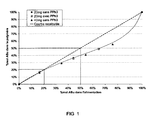
- the value of the reactivity ratios of two comonomers is a primordial mechanistic information since it makes it possible to identify the polymerization mechanism used.
- a * and B * being the active species associated with the monomers A and B respectively.
- the same reactivity is considered for all the active species A * and B * respectively, whatever the length of the chain which substitutes the active species.
- Each active species A * and B * can react with the two monomers present A and B, according to the speed constants k AA and k BB for the homopolymerizations and k AB and k BA for the copolymerizations.
- the copolymerizations were also carried out with two other pairs of polar monomers mentioned above (MMA being methyl methacrylate).
- the copolymerizations made it possible to access the reactivity ratios of the comonomer pairs, using the least squares method.
- the copolymerizations are carried out in a stirred reactor of 160 ml. x mg of catalyst (and triphenylphosphine if appropriate) are dissolved in 50 ml of polar monomer and an ethylene pressure is applied to the solution. The temperature and ethylene pressure are kept constant throughout the polymerization. After a reaction time, the polymerization is stopped by cooling and degassing the reactor, the polymer being obtained by precipitation in methanol. After drying, a mass m of polymer characteristic of the mass yield (g) of the reaction is obtained.
- Examples 4-9 use type A catalyst.
- MMA is considered according to the protons of -OMe and ethylene according to the protons of CH 2 minus CH 2 and CH 3 those of MMA. testing 1 2 3 4 5 6 7 8 9 10 Tf ° C (Tg ° C) 112.3 122.4 125.5 130.4 No. (109) (113) (106) (104) No. Table VI shows the thermal properties of the ethylene / MMA copolymers containing between 66% and 95.5 mol% of ethylene, with little or no melting point, thus showing the absence of homopolyethylene. The polymer still contains ethylene, we are indeed in the presence of copolymer.
- 13 C NMR allows the signals corresponding to ethylene and MMA to be identified and signals to be distinguished (at 21.9 / 22.6 / 23.5 / 32.8 / 33.5 / 34.8 ppm ), attributed to the alternations between the ethylene and MMA units in the copolymer. These signals are of low intensity, reflecting the block (and not alternating or statistical) character of the copolymer.
- the DSC shows that the lengths of polyethylene blocks are insufficient to lead to a significant melting phenomenon.
Landscapes
- Chemical & Material Sciences (AREA)
- Organic Chemistry (AREA)
- Health & Medical Sciences (AREA)
- Chemical Kinetics & Catalysis (AREA)
- Medicinal Chemistry (AREA)
- Polymers & Plastics (AREA)
- Inorganic Chemistry (AREA)
- Engineering & Computer Science (AREA)
- Materials Engineering (AREA)
- Graft Or Block Polymers (AREA)
- Transition And Organic Metals Composition Catalysts For Addition Polymerization (AREA)
- Addition Polymer Or Copolymer, Post-Treatments, Or Chemical Modifications (AREA)
- Polymerization Catalysts (AREA)
Claims (18)
- Verfahren zur Herstellung von Blockcopolymeren aus mindestens einem apolaren Monomer, insbesondere Ethylen, und mindestens einem polaren Monomer, wobei die Copolymerisation in Gegenwart eines Katalysatorsystems aus einem metallorganischen Komplex der Formel:
 a. Met für ein Metall der Gruppen VIII, IX und X steht,b. Y für ein das Metall oxidierendes Ligandenmolekül steht und aus Heteroatomgruppen auf Basis von C, H und mindestens einem aus 0, S, P und N ausgewählten Atom und vorzugsweise vom Phenoxy-Typ besteht,c. L für ein komplexierendes Molekül aus Heteroatomgruppen auf Basis von C, H und mindestens einem aus 0, S, P und N ausgewählten Atom und vorzugsweise vom Imin- oder Ylid-Typ steht,d. L' für ein einzähniges elektronenspendendes komplexierendes Molekül wie ein Phosphin oder Pyridin, vorzugsweise ein Phosphin und noch weiter bevorzugt Triphenylphosphin, steht,e. R für eine Kohlenwasserstoffgruppe vom Alkyl-oder Alkylaryl-Typ mit 1 bis 20 C-Atomen oder vom Cycloalkyl- oder Phenyl-Typ mit 6 bis 20 C-Atomen, vorzugsweise eine Methyl- oder Phenylgruppe, steht, ohne Zugabe von Cokatalysator durchgeführt wird, wobei das Verfahren zur Bildung eines Blockcopolymers führt, das die folgenden Beziehungen erfüllt:

∑p-a>1 (in jeder Polymerkette) worin: "p-a" für eine Bindung zwischen einem polaren Monomer (p) und einem apolaren Monomer (a) steht; "p-p" für eine Bindung zwischen zwei polaren Monomeren steht; "a-a" für eine Bindung zwischen zwei apolaren Monomeren steht. - Verfahren nach Anspruch 1, bei dem das Metall aus der Gruppe Eisen, Cobalt, Nickel, Palladium und Platin ausgewählt ist.
- Verfahren nach einem der Ansprüche 1 und 2, bei dem Y und L über eine kovalente Bindung verknüpft sind.
- Verfahren nach einem der Ansprüche 1 bis 3, bei dem das polare Monomer aus der Gruppe der ungesättigten Carbonsäuren wie Acrylsäure, Methacrylsäure und Derivaten davon; der ungesättigten Carbonsäureester wie Butylacrylat und Methylmethacrylat; der Styrolderivate wie Styrol oder α-Methylstyrol, die bei Kombination mit einem α-Olefin, Ethylen oder Propylen als polares Monomer betrachtet werden; den Acrylamiden und Methacrylamiden wie Acrylamid, Methacrylamid und Derivaten davon; Acrylnitril und Derivaten davon ausgewählt wird und vorzugsweise Methylacrylat, Methylmethacrylat, Butylmethacrylat, Styrol oder Butylacrylat ist.
- Verfahren nach einem der Ansprüche 2 bis 4, bei dem es sich bei dem metallorganischen Komplex um einen Nickelkomplexe handelt.
- Verfahren nach Anspruch 5, bei dem es sich bei dem metallorganischen Komplex um einen Salicylaldimin-Komplex der folgenden Struktur handelt:

- Verfahren nach Anspruch 5, bei dem es sich bei dem metallorganischen Komplex um einen Phosphino-Enolat-Komplex der folgenden Struktur handelt:

- Verfahren nach einem der Ansprüche 1 bis 7, bei dem bei Durchführung der Polymerisation in Lösung die apolaren Monomere in flüssigem oder gasförmigem Zustand in Gegenwart des metallorganischen Komplexes in einem inerten Kohlenwasserstofflösungsmittel mit den polaren Monomeren in flüssigem Zustand reagieren.
- Verfahren nach einem der Ansprüche 1 bis 7, bei dem bei Durchführung der Polymerisation in Masse die apolaren Monomere in flüssigem oder gasförmigem Zustand in Gegenwart des metallorganischen Komplexes mit den polaren Monomeren in flüssigem Zustand reagieren.
- Verfahren nach einem der vorhergehenden Ansprüche, bei dem man die Polymerisation zwischen -100°C und 250°C, vorzugsweise zwischen 20°C und 250°C, und unter einem Druck zwischen Normaldruck und 300 bar durchführt.
- Verfahren nach einem der vorhergehenden Ansprüche, bei dem das zahlenmittlere Molekulargewicht des erhaltenen Blockcopolymers 103 bis 106 g/mol beträgt.
- Verfahren nach einem der vorhergehenden Ansprüche, umfassend einen Schritt der Zugabe einer LewisBase, vorzugsweise von Triphenylphosphin, zum Reaktionsmedium.
- Blockcopolymere, die durch das Verfahren nach einem der Ansprüche 1 bis 12 erhältlich sind, umfassend einen oder mehrere Blöcke aus polarem Monomer und einen oder mehrere Blöcke aus apolarem Monomer, insbesondere Ethylen.
- Blockcopolymere nach Anspruch 13, wobei das polare Monomer aus der Gruppe Methylacrylat, Methylmethacrylat, Butylacrylat, Butylmethacrylat und Styrol ausgewählt ist.
- Blockcopolymere nach einem der Ansprüche 13 und 14, wobei die molaren Gehalte jedes der Comonomere von 0,1% bis 99,9% variieren.
- Verwendung eines Katalysatorsystems aus einem metallorganischen Komplex der Formel:
 a. Met für ein Metall der Gruppen VIII, IX und X steht,b. Y für ein das Metall oxidierendes Ligandenmolekül steht und aus Heteroatomgruppen auf Basis von C, H und mindestens einem aus 0, S, P und N ausgewählten Atom und vorzugsweise vom Phenoxy-Typ besteht,c. L für ein komplexierendes Molekül aus Heteroatomgruppen auf Basis von C, H und mindestens einem aus 0, S, P und N ausgewählten Atom und vorzugsweise vom Imin- oder Ylid-Typ steht,d. L' für ein einzähniges elektronenspendendes komplexierendes Molekül wie ein Phosphin oder Pyridin, vorzugsweise ein Phosphin und noch weiter bevorzugt Triphenylphosphin, steht,e. R für eine Kohlenwasserstoffgruppe vom Alkyl-oder Alkylaryl-Typ mit 1 bis 20 C-Atomen oder vom Cycloalkyl- oder Phenyl-Typ mit 6 bis 20 C-Atomen, vorzugsweise eine Methyl- oder Phenylgruppe, steht,zur Blockcopolymerisation von mindestens einem apolaren Monomer, insbesondere Ethylen, und mindestens einem polaren Monomer ohne Zugabe von Cokatalysator, die die folgenden Beziehungen erfüllt:

∑p-a>1 (in jeder Polymerkette) worin: "p-a" für eine Bindung zwischen einem polaren Monomer (p) und einem apolaren Monomer (a) steht; "p-p" für eine Bindung zwischen zwei polaren Monomeren steht; "a-a" für eine Bindung zwischen zwei apolaren Monomeren steht. - Verwendung nach Anspruch 16, wobei es sich bei dem metallorganischen Komplex um einen Salicylaldimin-Komplex der folgenden Struktur handelt:

- Verwendung nach Anspruch 16, wobei es sich bei dem metallorganischen Komplex um einen Phosphino-Enolat-Komplex der folgenden Struktur handelt:

Priority Applications (1)
| Application Number | Priority Date | Filing Date | Title |
|---|---|---|---|
| PL09760216T PL2340267T3 (pl) | 2008-10-27 | 2009-10-27 | Nowe kopolimery z polarnymi i niepolarnymi blokami olefin |
Applications Claiming Priority (2)
| Application Number | Priority Date | Filing Date | Title |
|---|---|---|---|
| FR0857293A FR2937643B1 (fr) | 2008-10-27 | 2008-10-27 | Nouveaux copolymeres a blocs d'olefines polaires et apolaires |
| PCT/FR2009/052058 WO2010049633A1 (fr) | 2008-10-27 | 2009-10-27 | Nouveaux copolymeres a blocs d'olefines polaires et apolaires |
Publications (2)
| Publication Number | Publication Date |
|---|---|
| EP2340267A1 EP2340267A1 (de) | 2011-07-06 |
| EP2340267B1 true EP2340267B1 (de) | 2014-12-03 |
Family
ID=40642473
Family Applications (1)
| Application Number | Title | Priority Date | Filing Date |
|---|---|---|---|
| EP09760216.3A Not-in-force EP2340267B1 (de) | 2008-10-27 | 2009-10-27 | Neue copolymere mit polaren und nichtpolaren olefinblöcken |
Country Status (9)
| Country | Link |
|---|---|
| US (1) | US8796403B2 (de) |
| EP (1) | EP2340267B1 (de) |
| JP (1) | JP5345693B2 (de) |
| KR (1) | KR20110101127A (de) |
| CN (1) | CN102264784B (de) |
| ES (1) | ES2531525T3 (de) |
| FR (1) | FR2937643B1 (de) |
| PL (1) | PL2340267T3 (de) |
| WO (1) | WO2010049633A1 (de) |
Families Citing this family (1)
| Publication number | Priority date | Publication date | Assignee | Title |
|---|---|---|---|---|
| FR2983860A1 (fr) | 2011-12-09 | 2013-06-14 | Centre Nat Rech Scient | Procede de synthese de copolymeres a blocs comprenant des monomeres vinyliques polaires et apolaires |
Family Cites Families (18)
| Publication number | Priority date | Publication date | Assignee | Title |
|---|---|---|---|---|
| US4698403A (en) * | 1985-10-15 | 1987-10-06 | E. I. Du Pont De Nemours And Company | Nickel-catalyzed copolymerization of ethylene |
| US5880241A (en) | 1995-01-24 | 1999-03-09 | E. I. Du Pont De Nemours And Company | Olefin polymers |
| ATE187190T1 (de) * | 1995-06-15 | 1999-12-15 | Raychem Ltd | Gele hergestellt aus triblockkopolymeren |
| US6410664B1 (en) | 1997-03-24 | 2002-06-25 | Cryovac, Inc. | Catalyst compositions and processes for olefin polymers and copolymers |
| US6417303B1 (en) | 1997-12-16 | 2002-07-09 | Exxonmobil Research And Engineering Company | Substantially linear copolymers |
| US6506704B1 (en) * | 1999-03-23 | 2003-01-14 | Cryovac, Inc. | Olefin polymerization catalysts and processes for making and using same |
| WO2001092348A2 (en) | 2000-05-31 | 2001-12-06 | E.I. Du Pont De Nemours And Company | Polymerization of olefins |
| AU2001275070B2 (en) | 2000-05-31 | 2005-11-10 | E.I. Du Pont De Nemours And Company | Catalysts for olefin polymerization |
| US6479425B1 (en) | 2000-08-18 | 2002-11-12 | Exxonmobile Research And Engineering Company | Late transition metal complexes, their use as catalysts and polymers therefrom |
| US6777510B1 (en) | 2000-09-12 | 2004-08-17 | California Institute Of Technology | Internal Lewis acid single site catalyst family for polymerization of polar monomers |
| US6710007B2 (en) | 2001-01-26 | 2004-03-23 | E. I. Du Pont De Nemours And Company | Polymerization of olefinic compounds |
| DE10240577A1 (de) * | 2002-08-29 | 2004-03-11 | Basf Ag | Verfahren zur Herstellung wässriger Polymerisatdispersionen |
| US7754839B2 (en) | 2003-03-03 | 2010-07-13 | The Regents Of The University Of California | Quasi-living metal catalyst for ethylene homo-polymerization and co-polymerization with 5-norbornen -2-yl acetate |
| US7087687B2 (en) * | 2003-08-21 | 2006-08-08 | Rohm And Haas Company | Catalytic composition and its preparation and use for preparing polymers from ethylenically unsaturated monomers |
| US7435701B2 (en) * | 2005-05-27 | 2008-10-14 | Rohm And Haas Company | Catalytic composition and its preparation and use for preparing polymers from ethylenically unsaturated monomers |
| US7635739B2 (en) * | 2005-08-31 | 2009-12-22 | Rohm And Haas Company | Substantially linear polymers and methods of making and using same |
| JP2009067924A (ja) * | 2007-09-14 | 2009-04-02 | Sumitomo Chemical Co Ltd | オレフィン/(メタ)アクリル酸エステルブロック共重合体及びその製造方法 |
| EP2303903B1 (de) * | 2008-06-19 | 2016-11-16 | The Regents of the University of California | Aktivierung von pd(ii)- und ni(ii)-komplexen durch ton |
-
2008
- 2008-10-27 FR FR0857293A patent/FR2937643B1/fr not_active Expired - Fee Related
-
2009
- 2009-10-27 KR KR1020117009534A patent/KR20110101127A/ko not_active Ceased
- 2009-10-27 PL PL09760216T patent/PL2340267T3/pl unknown
- 2009-10-27 WO PCT/FR2009/052058 patent/WO2010049633A1/fr not_active Ceased
- 2009-10-27 EP EP09760216.3A patent/EP2340267B1/de not_active Not-in-force
- 2009-10-27 US US13/126,369 patent/US8796403B2/en not_active Expired - Fee Related
- 2009-10-27 ES ES09760216.3T patent/ES2531525T3/es active Active
- 2009-10-27 CN CN200980152634.6A patent/CN102264784B/zh not_active Expired - Fee Related
- 2009-10-27 JP JP2011532698A patent/JP5345693B2/ja not_active Expired - Fee Related
Also Published As
| Publication number | Publication date |
|---|---|
| JP2012506920A (ja) | 2012-03-22 |
| WO2010049633A1 (fr) | 2010-05-06 |
| US8796403B2 (en) | 2014-08-05 |
| KR20110101127A (ko) | 2011-09-15 |
| US20110301295A1 (en) | 2011-12-08 |
| FR2937643A1 (fr) | 2010-04-30 |
| ES2531525T3 (es) | 2015-03-16 |
| PL2340267T3 (pl) | 2015-07-31 |
| JP5345693B2 (ja) | 2013-11-20 |
| FR2937643B1 (fr) | 2011-10-14 |
| EP2340267A1 (de) | 2011-07-06 |
| CN102264784B (zh) | 2014-05-07 |
| CN102264784A (zh) | 2011-11-30 |
Similar Documents
| Publication | Publication Date | Title |
|---|---|---|
| CA2074133C (fr) | Systeme d'amorcage pour la polymerisation anionique des monomeres (meth) acryliques | |
| US11414541B2 (en) | Block copolymer composition | |
| Lutz et al. | Preparation and characterization of graft terpolymers with controlled molecular structure | |
| CN101218271A (zh) | 制备基于(甲基)丙烯酸酯的aba三嵌段共聚物的方法 | |
| EP0603935A1 (de) | Verfahren zur Herstellung einer Ethylenpolymer-Zusammensetzung, Ethylenpolymer-Zusammensetzung und ihre Verwendung | |
| EP0824111A1 (de) | Verfahren zur radikalisch kontrollierten Polymerisation oder Co-Polymerisation von (Meth)Acryl-Monomeren und Vinyl-Monomeren und so hergestellte (Co-)Polymere | |
| EP4251667B1 (de) | Ethylenreiches dien-triblockpolymer mit statistischem block und zwei endständigen polyethylenblöcken | |
| Ihara et al. | Polymerization of various alkyl diazoacetates initiated with (N-heterocyclic carbene) Pd/borate systems | |
| CN104884561A (zh) | 具有硅烷接枝的烯烃嵌段共聚物的压敏粘着剂组合物 | |
| WO2010049633A1 (fr) | Nouveaux copolymeres a blocs d'olefines polaires et apolaires | |
| US6495646B1 (en) | Polyolefins with new structures | |
| Zheng et al. | Synthesis of core-crosslinked star polymers via organocatalyzed living radical polymerization | |
| JP2006519914A (ja) | エチレン単独重合及び5−ノルボルネン−2−イルアセテートとの共重合のための準リビング金属触媒 | |
| Yan-Ming et al. | Atom transfer radical copolymerization of styrene and poly (THF) macromer | |
| JP3096417B2 (ja) | ブロック共重合体およびその製造方法 | |
| EP3310587B1 (de) | Thermoplastisches elastomercopolymer aus dienkautschuk/polypropylen, zusammensetzungen damit und herstellungsverfahren | |
| Hurduc et al. | Synthesis and characterization of star and brush grafted polysiloxanes, obtained by atom transfer radical polymerization | |
| WO1995025137A1 (fr) | Polymeres du propylene et procede pour leur obtention | |
| WO2013083783A2 (fr) | Procédé de synthèse de copolymères à blocs comprenant des monomères vinyliques polaires et apolaires | |
| EP0668297B1 (de) | Lebende statistische (Meth)acrylatcopolymere, daraus hergestellte Copolymere und Verfahren zur Herstellung dieser Copolymeren durch anionische Polymerisation | |
| JP3319780B2 (ja) | 末端変性ポリオレフィン | |
| JP2958099B2 (ja) | シリコーン超薄膜の製造方法 | |
| CN115702178B (zh) | 用于通过atrp制备烯烃-丙烯酸酯嵌段共聚物的方法 | |
| Grishin et al. | Tricarbonylchromium complexes of styrenes in radical copolymerization | |
| JP3322703B2 (ja) | 末端修飾ポリオレフィン |
Legal Events
| Date | Code | Title | Description |
|---|---|---|---|
| PUAI | Public reference made under article 153(3) epc to a published international application that has entered the european phase |
Free format text: ORIGINAL CODE: 0009012 |
|
| 17P | Request for examination filed |
Effective date: 20110412 |
|
| AK | Designated contracting states |
Kind code of ref document: A1 Designated state(s): AT BE BG CH CY CZ DE DK EE ES FI FR GB GR HR HU IE IS IT LI LT LU LV MC MK MT NL NO PL PT RO SE SI SK SM TR |
|
| AX | Request for extension of the european patent |
Extension state: AL BA RS |
|
| DAX | Request for extension of the european patent (deleted) | ||
| REG | Reference to a national code |
Ref country code: DE Ref legal event code: R079 Ref document number: 602009028127 Country of ref document: DE Free format text: PREVIOUS MAIN CLASS: C08F0297000000 Ipc: C08F0297080000 |
|
| RIC1 | Information provided on ipc code assigned before grant |
Ipc: C08F 4/80 20060101ALI20140409BHEP Ipc: C08F 210/02 20060101ALI20140409BHEP Ipc: C08F 297/08 20060101AFI20140409BHEP |
|
| GRAP | Despatch of communication of intention to grant a patent |
Free format text: ORIGINAL CODE: EPIDOSNIGR1 |
|
| INTG | Intention to grant announced |
Effective date: 20140701 |
|
| RAP1 | Party data changed (applicant data changed or rights of an application transferred) |
Owner name: ARKEMA FRANCE Owner name: ECOLE SUPERIEURE DE CHIMIE PHYSIQUE ELECTRONIQUE D Owner name: CENTRE NATIONAL DE LA RECHERCHE SCIENTIFIQUE |
|
| GRAS | Grant fee paid |
Free format text: ORIGINAL CODE: EPIDOSNIGR3 |
|
| GRAA | (expected) grant |
Free format text: ORIGINAL CODE: 0009210 |
|
| AK | Designated contracting states |
Kind code of ref document: B1 Designated state(s): AT BE BG CH CY CZ DE DK EE ES FI FR GB GR HR HU IE IS IT LI LT LU LV MC MK MT NL NO PL PT RO SE SI SK SM TR |
|
| REG | Reference to a national code |
Ref country code: GB Ref legal event code: FG4D Free format text: NOT ENGLISH |
|
| REG | Reference to a national code |
Ref country code: AT Ref legal event code: REF Ref document number: 699334 Country of ref document: AT Kind code of ref document: T Effective date: 20141215 Ref country code: CH Ref legal event code: EP |
|
| REG | Reference to a national code |
Ref country code: IE Ref legal event code: FG4D Free format text: LANGUAGE OF EP DOCUMENT: FRENCH |
|
| REG | Reference to a national code |
Ref country code: DE Ref legal event code: R096 Ref document number: 602009028127 Country of ref document: DE Effective date: 20150115 |
|
| REG | Reference to a national code |
Ref country code: ES Ref legal event code: FG2A Ref document number: 2531525 Country of ref document: ES Kind code of ref document: T3 Effective date: 20150316 |
|
| REG | Reference to a national code |
Ref country code: NL Ref legal event code: VDEP Effective date: 20141203 |
|
| REG | Reference to a national code |
Ref country code: AT Ref legal event code: MK05 Ref document number: 699334 Country of ref document: AT Kind code of ref document: T Effective date: 20141203 |
|
| PG25 | Lapsed in a contracting state [announced via postgrant information from national office to epo] |
Ref country code: FI Free format text: LAPSE BECAUSE OF FAILURE TO SUBMIT A TRANSLATION OF THE DESCRIPTION OR TO PAY THE FEE WITHIN THE PRESCRIBED TIME-LIMIT Effective date: 20141203 Ref country code: NO Free format text: LAPSE BECAUSE OF FAILURE TO SUBMIT A TRANSLATION OF THE DESCRIPTION OR TO PAY THE FEE WITHIN THE PRESCRIBED TIME-LIMIT Effective date: 20150303 Ref country code: NL Free format text: LAPSE BECAUSE OF FAILURE TO SUBMIT A TRANSLATION OF THE DESCRIPTION OR TO PAY THE FEE WITHIN THE PRESCRIBED TIME-LIMIT Effective date: 20141203 Ref country code: LT Free format text: LAPSE BECAUSE OF FAILURE TO SUBMIT A TRANSLATION OF THE DESCRIPTION OR TO PAY THE FEE WITHIN THE PRESCRIBED TIME-LIMIT Effective date: 20141203 |
|
| REG | Reference to a national code |
Ref country code: LT Ref legal event code: MG4D |
|
| PG25 | Lapsed in a contracting state [announced via postgrant information from national office to epo] |
Ref country code: HR Free format text: LAPSE BECAUSE OF FAILURE TO SUBMIT A TRANSLATION OF THE DESCRIPTION OR TO PAY THE FEE WITHIN THE PRESCRIBED TIME-LIMIT Effective date: 20141203 Ref country code: AT Free format text: LAPSE BECAUSE OF FAILURE TO SUBMIT A TRANSLATION OF THE DESCRIPTION OR TO PAY THE FEE WITHIN THE PRESCRIBED TIME-LIMIT Effective date: 20141203 Ref country code: GR Free format text: LAPSE BECAUSE OF FAILURE TO SUBMIT A TRANSLATION OF THE DESCRIPTION OR TO PAY THE FEE WITHIN THE PRESCRIBED TIME-LIMIT Effective date: 20150304 Ref country code: LV Free format text: LAPSE BECAUSE OF FAILURE TO SUBMIT A TRANSLATION OF THE DESCRIPTION OR TO PAY THE FEE WITHIN THE PRESCRIBED TIME-LIMIT Effective date: 20141203 Ref country code: SE Free format text: LAPSE BECAUSE OF FAILURE TO SUBMIT A TRANSLATION OF THE DESCRIPTION OR TO PAY THE FEE WITHIN THE PRESCRIBED TIME-LIMIT Effective date: 20141203 Ref country code: CY Free format text: LAPSE BECAUSE OF FAILURE TO SUBMIT A TRANSLATION OF THE DESCRIPTION OR TO PAY THE FEE WITHIN THE PRESCRIBED TIME-LIMIT Effective date: 20141203 |
|
| PG25 | Lapsed in a contracting state [announced via postgrant information from national office to epo] |
Ref country code: CZ Free format text: LAPSE BECAUSE OF FAILURE TO SUBMIT A TRANSLATION OF THE DESCRIPTION OR TO PAY THE FEE WITHIN THE PRESCRIBED TIME-LIMIT Effective date: 20141203 Ref country code: RO Free format text: LAPSE BECAUSE OF FAILURE TO SUBMIT A TRANSLATION OF THE DESCRIPTION OR TO PAY THE FEE WITHIN THE PRESCRIBED TIME-LIMIT Effective date: 20141203 Ref country code: SK Free format text: LAPSE BECAUSE OF FAILURE TO SUBMIT A TRANSLATION OF THE DESCRIPTION OR TO PAY THE FEE WITHIN THE PRESCRIBED TIME-LIMIT Effective date: 20141203 Ref country code: EE Free format text: LAPSE BECAUSE OF FAILURE TO SUBMIT A TRANSLATION OF THE DESCRIPTION OR TO PAY THE FEE WITHIN THE PRESCRIBED TIME-LIMIT Effective date: 20141203 Ref country code: PT Free format text: LAPSE BECAUSE OF FAILURE TO SUBMIT A TRANSLATION OF THE DESCRIPTION OR TO PAY THE FEE WITHIN THE PRESCRIBED TIME-LIMIT Effective date: 20150403 |
|
| REG | Reference to a national code |
Ref country code: PL Ref legal event code: T3 |
|
| PG25 | Lapsed in a contracting state [announced via postgrant information from national office to epo] |
Ref country code: IS Free format text: LAPSE BECAUSE OF FAILURE TO SUBMIT A TRANSLATION OF THE DESCRIPTION OR TO PAY THE FEE WITHIN THE PRESCRIBED TIME-LIMIT Effective date: 20150403 |
|
| REG | Reference to a national code |
Ref country code: DE Ref legal event code: R097 Ref document number: 602009028127 Country of ref document: DE |
|
| REG | Reference to a national code |
Ref country code: FR Ref legal event code: PLFP Year of fee payment: 7 |
|
| PLBE | No opposition filed within time limit |
Free format text: ORIGINAL CODE: 0009261 |
|
| STAA | Information on the status of an ep patent application or granted ep patent |
Free format text: STATUS: NO OPPOSITION FILED WITHIN TIME LIMIT |
|
| PG25 | Lapsed in a contracting state [announced via postgrant information from national office to epo] |
Ref country code: DK Free format text: LAPSE BECAUSE OF FAILURE TO SUBMIT A TRANSLATION OF THE DESCRIPTION OR TO PAY THE FEE WITHIN THE PRESCRIBED TIME-LIMIT Effective date: 20141203 |
|
| 26N | No opposition filed |
Effective date: 20150904 |
|
| PG25 | Lapsed in a contracting state [announced via postgrant information from national office to epo] |
Ref country code: SI Free format text: LAPSE BECAUSE OF FAILURE TO SUBMIT A TRANSLATION OF THE DESCRIPTION OR TO PAY THE FEE WITHIN THE PRESCRIBED TIME-LIMIT Effective date: 20141203 |
|
| PG25 | Lapsed in a contracting state [announced via postgrant information from national office to epo] |
Ref country code: LU Free format text: LAPSE BECAUSE OF FAILURE TO SUBMIT A TRANSLATION OF THE DESCRIPTION OR TO PAY THE FEE WITHIN THE PRESCRIBED TIME-LIMIT Effective date: 20151027 |
|
| REG | Reference to a national code |
Ref country code: CH Ref legal event code: PL |
|
| PG25 | Lapsed in a contracting state [announced via postgrant information from national office to epo] |
Ref country code: MC Free format text: LAPSE BECAUSE OF FAILURE TO SUBMIT A TRANSLATION OF THE DESCRIPTION OR TO PAY THE FEE WITHIN THE PRESCRIBED TIME-LIMIT Effective date: 20141203 |
|
| REG | Reference to a national code |
Ref country code: IE Ref legal event code: MM4A |
|
| PG25 | Lapsed in a contracting state [announced via postgrant information from national office to epo] |
Ref country code: CH Free format text: LAPSE BECAUSE OF NON-PAYMENT OF DUE FEES Effective date: 20151031 Ref country code: LI Free format text: LAPSE BECAUSE OF NON-PAYMENT OF DUE FEES Effective date: 20151031 |
|
| REG | Reference to a national code |
Ref country code: FR Ref legal event code: PLFP Year of fee payment: 8 |
|
| PG25 | Lapsed in a contracting state [announced via postgrant information from national office to epo] |
Ref country code: IE Free format text: LAPSE BECAUSE OF NON-PAYMENT OF DUE FEES Effective date: 20151027 |
|
| PG25 | Lapsed in a contracting state [announced via postgrant information from national office to epo] |
Ref country code: SM Free format text: LAPSE BECAUSE OF FAILURE TO SUBMIT A TRANSLATION OF THE DESCRIPTION OR TO PAY THE FEE WITHIN THE PRESCRIBED TIME-LIMIT Effective date: 20141203 Ref country code: BG Free format text: LAPSE BECAUSE OF FAILURE TO SUBMIT A TRANSLATION OF THE DESCRIPTION OR TO PAY THE FEE WITHIN THE PRESCRIBED TIME-LIMIT Effective date: 20141203 Ref country code: HU Free format text: LAPSE BECAUSE OF FAILURE TO SUBMIT A TRANSLATION OF THE DESCRIPTION OR TO PAY THE FEE WITHIN THE PRESCRIBED TIME-LIMIT; INVALID AB INITIO Effective date: 20091027 |
|
| PG25 | Lapsed in a contracting state [announced via postgrant information from national office to epo] |
Ref country code: TR Free format text: LAPSE BECAUSE OF FAILURE TO SUBMIT A TRANSLATION OF THE DESCRIPTION OR TO PAY THE FEE WITHIN THE PRESCRIBED TIME-LIMIT Effective date: 20141203 Ref country code: MT Free format text: LAPSE BECAUSE OF FAILURE TO SUBMIT A TRANSLATION OF THE DESCRIPTION OR TO PAY THE FEE WITHIN THE PRESCRIBED TIME-LIMIT Effective date: 20141203 |
|
| REG | Reference to a national code |
Ref country code: FR Ref legal event code: PLFP Year of fee payment: 9 |
|
| PG25 | Lapsed in a contracting state [announced via postgrant information from national office to epo] |
Ref country code: MK Free format text: LAPSE BECAUSE OF FAILURE TO SUBMIT A TRANSLATION OF THE DESCRIPTION OR TO PAY THE FEE WITHIN THE PRESCRIBED TIME-LIMIT Effective date: 20141203 |
|
| REG | Reference to a national code |
Ref country code: FR Ref legal event code: PLFP Year of fee payment: 10 |
|
| PGFP | Annual fee paid to national office [announced via postgrant information from national office to epo] |
Ref country code: FR Payment date: 20200914 Year of fee payment: 12 |
|
| PGFP | Annual fee paid to national office [announced via postgrant information from national office to epo] |
Ref country code: BE Payment date: 20200916 Year of fee payment: 12 Ref country code: PL Payment date: 20200915 Year of fee payment: 12 |
|
| PGFP | Annual fee paid to national office [announced via postgrant information from national office to epo] |
Ref country code: DE Payment date: 20201013 Year of fee payment: 12 Ref country code: IT Payment date: 20200911 Year of fee payment: 12 Ref country code: GB Payment date: 20201014 Year of fee payment: 12 Ref country code: ES Payment date: 20201104 Year of fee payment: 12 |
|
| REG | Reference to a national code |
Ref country code: DE Ref legal event code: R119 Ref document number: 602009028127 Country of ref document: DE |
|
| REG | Reference to a national code |
Ref country code: BE Ref legal event code: MM Effective date: 20211031 |
|
| GBPC | Gb: european patent ceased through non-payment of renewal fee |
Effective date: 20211027 |
|
| PG25 | Lapsed in a contracting state [announced via postgrant information from national office to epo] |
Ref country code: GB Free format text: LAPSE BECAUSE OF NON-PAYMENT OF DUE FEES Effective date: 20211027 Ref country code: DE Free format text: LAPSE BECAUSE OF NON-PAYMENT OF DUE FEES Effective date: 20220503 Ref country code: BE Free format text: LAPSE BECAUSE OF NON-PAYMENT OF DUE FEES Effective date: 20211031 |
|
| PG25 | Lapsed in a contracting state [announced via postgrant information from national office to epo] |
Ref country code: FR Free format text: LAPSE BECAUSE OF NON-PAYMENT OF DUE FEES Effective date: 20211031 |
|
| PG25 | Lapsed in a contracting state [announced via postgrant information from national office to epo] |
Ref country code: IT Free format text: LAPSE BECAUSE OF NON-PAYMENT OF DUE FEES Effective date: 20211027 |
|
| REG | Reference to a national code |
Ref country code: ES Ref legal event code: FD2A Effective date: 20230221 |
|
| PG25 | Lapsed in a contracting state [announced via postgrant information from national office to epo] |
Ref country code: ES Free format text: LAPSE BECAUSE OF NON-PAYMENT OF DUE FEES Effective date: 20211028 |
|
| PG25 | Lapsed in a contracting state [announced via postgrant information from national office to epo] |
Ref country code: PL Free format text: LAPSE BECAUSE OF NON-PAYMENT OF DUE FEES Effective date: 20211027 |