EP2331969B1 - Erkennung hiv-verwandter proteine im urin - Google Patents
Erkennung hiv-verwandter proteine im urin Download PDFInfo
- Publication number
- EP2331969B1 EP2331969B1 EP09819705.6A EP09819705A EP2331969B1 EP 2331969 B1 EP2331969 B1 EP 2331969B1 EP 09819705 A EP09819705 A EP 09819705A EP 2331969 B1 EP2331969 B1 EP 2331969B1
- Authority
- EP
- European Patent Office
- Prior art keywords
- hiv
- mammal
- exosomes
- urine
- associated biomarker
- Prior art date
- Legal status (The legal status is an assumption and is not a legal conclusion. Google has not performed a legal analysis and makes no representation as to the accuracy of the status listed.)
- Active
Links
Images



Classifications
-
- G—PHYSICS
- G01—MEASURING; TESTING
- G01N—INVESTIGATING OR ANALYSING MATERIALS BY DETERMINING THEIR CHEMICAL OR PHYSICAL PROPERTIES
- G01N33/00—Investigating or analysing materials by specific methods not covered by groups G01N1/00 - G01N31/00
- G01N33/48—Biological material, e.g. blood, urine; Haemocytometers
- G01N33/50—Chemical analysis of biological material, e.g. blood, urine; Testing involving biospecific ligand binding methods; Immunological testing
- G01N33/53—Immunoassay; Biospecific binding assay; Materials therefor
- G01N33/569—Immunoassay; Biospecific binding assay; Materials therefor for microorganisms, e.g. protozoa, bacteria, viruses
- G01N33/56983—Viruses
- G01N33/56988—HIV or HTLV
-
- G—PHYSICS
- G01—MEASURING; TESTING
- G01N—INVESTIGATING OR ANALYSING MATERIALS BY DETERMINING THEIR CHEMICAL OR PHYSICAL PROPERTIES
- G01N33/00—Investigating or analysing materials by specific methods not covered by groups G01N1/00 - G01N31/00
- G01N33/48—Biological material, e.g. blood, urine; Haemocytometers
- G01N33/50—Chemical analysis of biological material, e.g. blood, urine; Testing involving biospecific ligand binding methods; Immunological testing
- G01N33/53—Immunoassay; Biospecific binding assay; Materials therefor
- G01N33/569—Immunoassay; Biospecific binding assay; Materials therefor for microorganisms, e.g. protozoa, bacteria, viruses
-
- G—PHYSICS
- G01—MEASURING; TESTING
- G01N—INVESTIGATING OR ANALYSING MATERIALS BY DETERMINING THEIR CHEMICAL OR PHYSICAL PROPERTIES
- G01N33/00—Investigating or analysing materials by specific methods not covered by groups G01N1/00 - G01N31/00
- G01N33/48—Biological material, e.g. blood, urine; Haemocytometers
- G01N33/483—Physical analysis of biological material
- G01N33/487—Physical analysis of biological material of liquid biological material
- G01N33/493—Physical analysis of biological material of liquid biological material urine
-
- G—PHYSICS
- G01—MEASURING; TESTING
- G01N—INVESTIGATING OR ANALYSING MATERIALS BY DETERMINING THEIR CHEMICAL OR PHYSICAL PROPERTIES
- G01N33/00—Investigating or analysing materials by specific methods not covered by groups G01N1/00 - G01N31/00
- G01N33/48—Biological material, e.g. blood, urine; Haemocytometers
- G01N33/50—Chemical analysis of biological material, e.g. blood, urine; Testing involving biospecific ligand binding methods; Immunological testing
- G01N33/68—Chemical analysis of biological material, e.g. blood, urine; Testing involving biospecific ligand binding methods; Immunological testing involving proteins, peptides or amino acids
- G01N33/6893—Chemical analysis of biological material, e.g. blood, urine; Testing involving biospecific ligand binding methods; Immunological testing involving proteins, peptides or amino acids related to diseases not provided for elsewhere
-
- C—CHEMISTRY; METALLURGY
- C07—ORGANIC CHEMISTRY
- C07K—PEPTIDES
- C07K14/00—Peptides having more than 20 amino acids; Gastrins; Somatostatins; Melanotropins; Derivatives thereof
- C07K14/005—Peptides having more than 20 amino acids; Gastrins; Somatostatins; Melanotropins; Derivatives thereof from viruses
-
- C07K16/1143—
-
- C07K16/1145—
-
- C07K16/1147—
-
- C—CHEMISTRY; METALLURGY
- C12—BIOCHEMISTRY; BEER; SPIRITS; WINE; VINEGAR; MICROBIOLOGY; ENZYMOLOGY; MUTATION OR GENETIC ENGINEERING
- C12N—MICROORGANISMS OR ENZYMES; COMPOSITIONS THEREOF; PROPAGATING, PRESERVING, OR MAINTAINING MICROORGANISMS; MUTATION OR GENETIC ENGINEERING; CULTURE MEDIA
- C12N2740/00—Reverse transcribing RNA viruses
- C12N2740/00011—Details
- C12N2740/10011—Retroviridae
- C12N2740/16011—Human Immunodeficiency Virus, HIV
- C12N2740/16111—Human Immunodeficiency Virus, HIV concerning HIV env
-
- C—CHEMISTRY; METALLURGY
- C12—BIOCHEMISTRY; BEER; SPIRITS; WINE; VINEGAR; MICROBIOLOGY; ENZYMOLOGY; MUTATION OR GENETIC ENGINEERING
- C12N—MICROORGANISMS OR ENZYMES; COMPOSITIONS THEREOF; PROPAGATING, PRESERVING, OR MAINTAINING MICROORGANISMS; MUTATION OR GENETIC ENGINEERING; CULTURE MEDIA
- C12N2740/00—Reverse transcribing RNA viruses
- C12N2740/00011—Details
- C12N2740/10011—Retroviridae
- C12N2740/16011—Human Immunodeficiency Virus, HIV
- C12N2740/16211—Human Immunodeficiency Virus, HIV concerning HIV gagpol
-
- C—CHEMISTRY; METALLURGY
- C12—BIOCHEMISTRY; BEER; SPIRITS; WINE; VINEGAR; MICROBIOLOGY; ENZYMOLOGY; MUTATION OR GENETIC ENGINEERING
- C12N—MICROORGANISMS OR ENZYMES; COMPOSITIONS THEREOF; PROPAGATING, PRESERVING, OR MAINTAINING MICROORGANISMS; MUTATION OR GENETIC ENGINEERING; CULTURE MEDIA
- C12N2740/00—Reverse transcribing RNA viruses
- C12N2740/00011—Details
- C12N2740/10011—Retroviridae
- C12N2740/16011—Human Immunodeficiency Virus, HIV
- C12N2740/16311—Human Immunodeficiency Virus, HIV concerning HIV regulatory proteins
-
- G—PHYSICS
- G01—MEASURING; TESTING
- G01N—INVESTIGATING OR ANALYSING MATERIALS BY DETERMINING THEIR CHEMICAL OR PHYSICAL PROPERTIES
- G01N1/00—Sampling; Preparing specimens for investigation
- G01N1/28—Preparing specimens for investigation including physical details of (bio-)chemical methods covered elsewhere, e.g. G01N33/50, C12Q
- G01N1/40—Concentrating samples
-
- G—PHYSICS
- G01—MEASURING; TESTING
- G01N—INVESTIGATING OR ANALYSING MATERIALS BY DETERMINING THEIR CHEMICAL OR PHYSICAL PROPERTIES
- G01N2333/00—Assays involving biological materials from specific organisms or of a specific nature
- G01N2333/005—Assays involving biological materials from specific organisms or of a specific nature from viruses
- G01N2333/08—RNA viruses
- G01N2333/15—Retroviridae, e.g. bovine leukaemia virus, feline leukaemia virus, feline leukaemia virus, human T-cell leukaemia-lymphoma virus
- G01N2333/155—Lentiviridae, e.g. visna-maedi virus, equine infectious virus, FIV, SIV
- G01N2333/16—HIV-1, HIV-2
-
- G—PHYSICS
- G01—MEASURING; TESTING
- G01N—INVESTIGATING OR ANALYSING MATERIALS BY DETERMINING THEIR CHEMICAL OR PHYSICAL PROPERTIES
- G01N2333/00—Assays involving biological materials from specific organisms or of a specific nature
- G01N2333/005—Assays involving biological materials from specific organisms or of a specific nature from viruses
- G01N2333/08—RNA viruses
- G01N2333/15—Retroviridae, e.g. bovine leukaemia virus, feline leukaemia virus, feline leukaemia virus, human T-cell leukaemia-lymphoma virus
- G01N2333/155—Lentiviridae, e.g. visna-maedi virus, equine infectious virus, FIV, SIV
- G01N2333/16—HIV-1, HIV-2
- G01N2333/161—HIV-1, HIV-2 gag-pol, e.g. p55, p24/25, p17/18, p.7, p6, p66/68, p51/52, p31/34, p32, p40
-
- G—PHYSICS
- G01—MEASURING; TESTING
- G01N—INVESTIGATING OR ANALYSING MATERIALS BY DETERMINING THEIR CHEMICAL OR PHYSICAL PROPERTIES
- G01N2333/00—Assays involving biological materials from specific organisms or of a specific nature
- G01N2333/005—Assays involving biological materials from specific organisms or of a specific nature from viruses
- G01N2333/08—RNA viruses
- G01N2333/15—Retroviridae, e.g. bovine leukaemia virus, feline leukaemia virus, feline leukaemia virus, human T-cell leukaemia-lymphoma virus
- G01N2333/155—Lentiviridae, e.g. visna-maedi virus, equine infectious virus, FIV, SIV
- G01N2333/16—HIV-1, HIV-2
- G01N2333/162—HIV-1, HIV-2 env, e.g. gp160, gp110/120, gp41, V3, peptid T, DC4-Binding site
-
- G—PHYSICS
- G01—MEASURING; TESTING
- G01N—INVESTIGATING OR ANALYSING MATERIALS BY DETERMINING THEIR CHEMICAL OR PHYSICAL PROPERTIES
- G01N2333/00—Assays involving biological materials from specific organisms or of a specific nature
- G01N2333/005—Assays involving biological materials from specific organisms or of a specific nature from viruses
- G01N2333/08—RNA viruses
- G01N2333/15—Retroviridae, e.g. bovine leukaemia virus, feline leukaemia virus, feline leukaemia virus, human T-cell leukaemia-lymphoma virus
- G01N2333/155—Lentiviridae, e.g. visna-maedi virus, equine infectious virus, FIV, SIV
- G01N2333/16—HIV-1, HIV-2
- G01N2333/163—Regulatory proteins, e.g. tat, nef, rev, vif, vpu, vpr, vpt, vpx
-
- G—PHYSICS
- G01—MEASURING; TESTING
- G01N—INVESTIGATING OR ANALYSING MATERIALS BY DETERMINING THEIR CHEMICAL OR PHYSICAL PROPERTIES
- G01N2800/00—Detection or diagnosis of diseases
- G01N2800/34—Genitourinary disorders
- G01N2800/347—Renal failures; Glomerular diseases; Tubulointerstitial diseases, e.g. nephritic syndrome, glomerulonephritis; Renovascular diseases, e.g. renal artery occlusion, nephropathy
-
- G—PHYSICS
- G01—MEASURING; TESTING
- G01N—INVESTIGATING OR ANALYSING MATERIALS BY DETERMINING THEIR CHEMICAL OR PHYSICAL PROPERTIES
- G01N2800/00—Detection or diagnosis of diseases
- G01N2800/56—Staging of a disease; Further complications associated with the disease
Definitions
- the present invention generally relates to methods for diagnosis and, in particular, to methods for detecting HIV infection, diagnosing HIV or HIV-associated diseases using biomarkers in the urine.
- HIV tests are generally performed on serum or plasma.
- the detection of a HIV antibody is presumptive evidence of HIV-1 infection, and is typically confirmed by the Western blot procedure. Detection of virus by p24 antigen determination or detection of viral RNA by RT-PCR is also used to determine the amount of virus in circulation.
- CD4/CD8 T cell ratios and other immune function tests are often used to monitor immune status and progression to AIDS. More recently, HIV tests using saliva or epithelia cells in the mouth have also been developed. However, currently there is no test available to measure antigen or antibody in urine. The detection of HIV proteins in the urine may provide a more rapid method to detect HIV infection or progression of disease, particularly renal complications.
- HIV-Associated Nephropathy a renal disease that disproportionately afflicts people of African descent, is characterized by kidney hypertrophy and rapid progression and stage renal disease. HIVAN is caused by direct infection of the renal cells with the HIV-1 virus and leads to renal damage through the viral gene products. It could also be caused by changes in the release of cytokines during HIV infection. The etiology of HIVAN is still unknown. It is estimated that 90% of HIVAN sufferers are people of African descent, suggesting a genetic predisposition to the disease ( Wyatt, C.M., Klotman, P.E. HIV-Associated Nephropathy in the Era of Antiretroviral Therapy. American Journal of Medicine Review 2007 ).
- Renal biopsies of patients showing focal segmental glomerulosclerosis with tubular dilation and inflammation, microcystic tubules, degenerating glomerular capillaries in conjunction with marked proteinuria is diagnostic for HIVAN ( supra ) .
- This method is an invasive procedure and is sometimes rejected by patients because of its invasiveness. Therefore, there exists a need for diagnostic test from HIV or an HIV associated disease that is reliable, rapid, cost-effective and less invasive.
- US6048685 discloses the molecular cloning and characterization of novel human immunodeficiency virus type 2 and its gene products, and their use in in vitro diagnostic methods and kits for the detection of HIV-2-specific antisera.
- One aspect of the present invention relates to a method for detecting HIV-infection in a mammal.
- the method contains the steps of isolating exosomes from a urine sample of said mammal and detecting a HIV- associated biomarker from said isolated exosomes.
- the method further comprises the step of determining whether the mammal is infected by HIV- based on the presence or absence of HN-associated biomarkers in the isolated exosomes.
- the exosomes are isolated by centrifugation.
- the exosomes are isolated by filtration.
- the exosomes are detected by one or more techniques selected from the group consisting of: electrophoresis, Western blot, HPLC, FPLC, MS and protein sequencing.
- the exosomes are detected by SELDI-TOF-MS and LC-MS/MS.
- the HIV-associated biomarker is selected from the group consisting of Nef, HIV envelope gp120, HIV protease, Vif, Gag-Pol, Gag, Pol, p24, Rev, reverse transcriptase (RT), Tat, p1, p17, Vpu, Vpr, gp41 and DNA polymerase.
- the HIV-associated biomarker is Nef, HIV protease, Vif, Pol or Gag.
- the HIV-associated biomarker is Nef.
- the mammal is a human, monkey, gorilla or baboon.
- the mammal is a human.
- Another aspect of the present invention relates to a method for diagnosing HIV-associated disease in a mammal.
- the method contains the steps of isolating exosomes from a urine sample of said mammal and detecting a HIV-associated biomarker from said isolated exosomes.
- Said HIV-associated disease is HIV-associated nephropathy.
- the method further comprises the step of determining whether the mammal is suffering from HIV-associated nephropathy based on the presence or absence of said HIV-associated biomarker in the isolated exosomes.
- the mammal is a human, monkey, gorilla or baboon.
- the mammal is a human.
- Another aspect of the present invention relates to a method for monitoring the progress of HIV infection in a mammal.
- the method contains the steps of isolating exosomes from a urine sample of the mammal and detecting said a HIV-associated biomarker from said isolated exosomes.
- the method further comprises the step of determining the progress of HIV infection in said mammal based on the presence or absence of said HIV-associated biomarker in the isolated exosomes.
- Another aspect of the present invention relates to a method for monitoring the progress of HIV-associated nephropathy in a mammal.
- the method contains the steps of isolating exosomes from a urine sample from the mammal and detecting said a HIV-associated biomarker from said isolated exosomes.
- the method further comprises the step of determining the progress of HIV-associated nephropathy in said mammal based on the presence or absence of said HIV-associated biomarker in the isolated exosomes.
- Another aspect of the present invention relates to a method for monitoring the effectiveness of treatment to a mammal with an anti-HIV agent.
- the method optionally includes the steps of determining a HIV-associated biomarker profile in urine exosomes in the urine sample obtained from a mammal prior to administration of an agent; determining a HIV-associated biomarker profile in urine exosomes in a one or more post-administration urine samples of said mammal; comparing the HIV-associated biomarker profile in the pre-administration sample with the HIV-associated biomarker profile in the post administration sample or samples; and determining the effectiveness of the agent.
- the method further contains the step of altering the administration of the agent to said mammal.
- kits for detecting HIV infection or monitoring the progress of HIV infection in a mammal contains one or more reagents for preparing exosomes sample for detection and at least one HIV-associated biomarker as a standard.
- the exosomes are detected by Western blot.
- the kit further includes a label.
- the kit further includes a label with instruction.
- kits for diagnosing a HIV-associated disease or monitoring the progress of a HIV-associated disease in a mammal contains one or more reagents for preparing exosomes sample for detection and at least one HIV-associated biomarker as a standard.
- Said HIV-associated disease is HIV-associated nephropathy.
- the HIV-associated biomarker is selected from the group consisting of Nef, HIV envelope gp120, HIV- protease, Vif, Gag-Pol, Gag, Pol, p24, Rev, reverse transcriptase (RT), Tat, pi1 p17, Vpu, Vpr, gp41 and DNA polymerase.
- the HIV-associated biomarker is Nef, HIV protease, Vif, Pol, or Gag.
- the HIV-associated biomarker is Nef.
- an embodiment of the method 100 includes the steps of: isolating (110) exosomes from a urine sample of a mammal and detecting (120) the presence of an HIV-associated biomarker from the isolated exosomes.
- the method further comprises the step of determining (130) whether the mammal is infected with HIV based on the presence or absence of HIV-associated biomarkers in the isolated exosomes.
- Exosomes are 50-90 nm vesicles secreted by a wide range of mammalian cell types. First discovered in maturing mammalian reticulocytes, they were shown to be a mechanism for selective removal of many plasma membrane proteins. An exosome is created intracellularly when a segment of the cell membrane spontaneously invaginates and is endocytosed. The internalized segment is broken into smaller vesicles that are subsequently expelled from the cell. The latter stage occurs when the late endosome, containing many small vesicles, fuses with the cell membrane, triggering the release of the vesicles from the cell. The vesicles (once released are called exosomes) consist of a lipid raft embedded with ligands common to the original cell membrane.
- exosomal protein composition varies with the cell of origin, most exosomes contain the soluble protein Hsc 70.
- Certain immune cells such as dendritic cells and B cells, secrete exosomes that many scientists believe play a functional role in mediating adaptive immune responses to pathogens and tumors. It has been reported that immature dendritic cell-derived exosomes can mediate HIV trans infection ( Wiley RD et al., Proc Natl Acad Sci U. S. A. 2006 January 17; 103(3): 738-743 ).
- the isolating step 110 can be accomplished by centrifugation or filtration.
- exosomes in a urine sample are sedimented by centrifugation.
- the sedimented exosomes are washed and resuspended at a proper concentration for further analysis.
- the urine sample is centrifuged at 100,000 x g or above for 10-120 minutes to sediment the exosomes.
- the urine sample is centrifuged at 100,000 x g for 60-120 minutes to sediment the exosomes.
- the exosomes in the urine sample are precipitated by a two-step centrifugation process that includes a low g force centrifugation to remove calls and other large particles in the urine and a high g force centrifugation to precipitate the exosomes.
- the urine sample is first centrifuged at 5,000-25,000 x g for 5-30 minutes. The supernatant is then transferred to another tube and is centrifuged again at 100,000 x g or above for 30-120 minutes to sediment the exosomes.
- the urine sample is first centrifuged at 20,000-22,000 x g for 10-20 minutes. The supernatant is then transferred to another tube and is centrifuged again at 100,000 x g for 30-90 minutes to sediment the exosomes. The sedimented exosomes are then resuspended in a liquid medium for further analysis.
- the liquid medium can be isotonic, hypotonic, or hypertonic.
- the liquid medium contains a buffer and/or at least one salt or a combination of salts.
- Buffers can maintain pH within a particular range, for example, between 1 and 12, and are also referred to as pH stabilizing agents. More typically, pH will range within about pH 5.0 to about pH 12.0.
- a particular example of a pH stabilizing agent is a zwitterion.
- pH stabilizing agents include Tris (hydroxymethyl) aminomethane hydrochloride (TRIS), N-(2-hydroxyethyl)piperazine-N'-2-ethanesulfonic acid (HEPES), 3-(N-morpholino) propanesulfonic acid (MOPS), 2-(N-morpholino) ethanesulfonic acid (MES), N-tris[hydroxymethyl]methyl-2-aminoethanesulfonic acid (TES), N-[carboxymethyl]-2-aminoethanesulfonic acid (ACES), N-[2-acetamido]-2-iminodiacetic acid (ADA), N,N-bis[2-hydroxyethyl]-2-aminoethanesulfonic acid (BES), N-[2-hydroxyethyl]piperazine-N'-[2-hydroxypropoanesulfonic acid] (HEPPSO), N-tris[hydroxymethyl]methylglycine (TRICINE), N,N-bis[
- pH stabilizing agents include potassium chloride, citric acid, potassium hydrogenphthalate, boric acid, potassium dihydrogenphosphate, diethanolamine, sodium citrate, sodium dihydrogenphosphate, sodium acetate, sodium carbonate, sodium tetraborate, cacodylic acid, imidazole, 2-Amino-2-methyl-1-propanediol, tricine, Gly-Gly, bicine, and a phosphate buffer (e.g., sodium phosphate or sodium-potassium phosphate, among others).
- a phosphate buffer e.g., sodium phosphate or sodium-potassium phosphate, among others.
- Buffers or pH stabilizing agents are typically used in a range of about 0.1 mM to about 500 mM, in a range of about 0.5 mM to about 100 mM, in a range of about 0.5 mM to about 50 mM, in a range of about 1 mM to about 25 mM, or in a range of about 1 mM to about 10 mM. More particularly, buffers can have a concentration of about (i.e., within 10% of) 1 mM, 2 mM, 5 mM, 10 mM, 15 mM, 20 mM, 25 mM, 30 mM, 40 mM, or 50 mM.
- the liquid medium may further contain a chelating agent.
- Chelating agents typically form multiple bonds with metal ions, and are multidentate ligands that can sequester metals. Metal sequestration can in turn reduce or prevent microbial growth or degradation of biomolecules (e.g., peptide or nucleic acid), which in turn can improve preservation of biomolecules absorbed to a substrate.
- chelating agents include EDTA (Ethylenediamine-tetraacetic acid), EGTA (Ethyleneglycol-O,O'-bis(2-aminoethyl)-N,N,N',N'-tetraacetic acid), GEDTA (Glycoletherdiaminetetraacetic acid), HEDTA (N-(2-Hydroxyethyl)ethylenediamine-N,N',N'-triacetic acid), NTA (Nitrilotriacetic acid), Salicylic acid, Triethanolamine and porphines.
- EDTA Ethylenediamine-tetraacetic acid
- EGTA Ethyleneglycol-O,O'-bis(2-aminoethyl)-N,N,N',N'-tetraacetic acid
- GEDTA Glycoletherdiaminetetraacetic acid
- HEDTA N-(2-Hydroxyethyl)ethylene
- Typical concentrations of chelating agents are in a range of about 0.1 mM to about 100 mM, in a range of about 0.5 mM to about 50 mM, or in a range of about 1 mM to about 10 mM.
- the liquid medium may also contain a denaturing agent.
- Denaturing agents and detergents typically form a chemical bridge between hydrophobic and hydrophilic environments, which in turn disrupt or diminish the hydrophobic forces required to maintain native protein structure.
- Particular non-limiting chemical classes of denaturing agents and detergents include anionic surfactants, nonionic surfactants, cationic surfactants and ampholytic surfactants.
- detergents include guanidinium thiocyanate, SDS, Sodium lauryl sulfate, NP40, triton X-100, Tween, Sodium cholate, Sodium deoxycholate, Benzethonium chloride, CTAB (Cetyltrimethylammonium bromide), Hexadecyltrimethylammonium bromide, and N,N-Dimethyldecylamine-N-oxide.
- CTAB Cetyltrimethylammonium bromide
- Hexadecyltrimethylammonium bromide Hexadecyltrimethylammonium bromide
- N,N-Dimethyldecylamine-N-oxide N,N-Dimethyldecylamine-N-oxide.
- the liquid medium may further contain a denaturing agent.
- Reducing agents and antioxidants typically inhibit microbial growth and reduce biomolecule oxidation.
- Particular non-limiting classes of such agents include free radical scavenging agents.
- Specific non-limiting examples of reducing agents and anti-oxidants include DTT (dithiothreitol), dithioerythritol, urea, uric acid, 2-mercaptoethanol, dysteine, vitamin E, vitamin C, dithionite, thioglycolic acid and pyrosulfite.
- the liquid medium may further contain a preservative or stabilizing agent.
- Preservatives or stabilizing agents can be used if it is desired to inhibit or delay degradation of an HIV-associated biomarker.
- Specific non-limiting examples of preservatives and stabilizing agents include sodium azide and polyethylene glycol (PEG). Typical concentrations of preservatives and stabilizing agents range from about 0.05% to about 1%.
- the liquid medium may further contain a protease inhibitor.
- protease inhibitors inhibit peptide degradation.
- Particular non-limiting classes of protease inhibitors include reversible or irreversible inhibitors of substrate (e.g., peptide) binding to the protease.
- Particular non-limiting classes of protease inhibitors include serine and cysteine protease inhibitors.
- protease inhibitors include PMSF, PMSF Plus, APMSF, antithrombin III, Amastatin, Antipain, aprotinin, Bestatin, Benzamidine, Chymostatin, calpain inhibitor I and II, E-64,3,4-dichloroisocoumarin, DFP, Elastatinal, Leupeptin, Pepstatin, 1,10-Phenanthroline, Phosphoramidon, TIMP-2, TLCK, TPCK, trypsin inhibitor (soybean or chicken egg white), hirustasin, alpha-2-macroglobulin, 4-(2-aminoethyl)-benzenesulfonyl fluoride hydrochloride (AEBSF) and Kunitz-type protease inhibitors.
- AEBSF 4-(2-aminoethyl)-benzenesulfonyl fluoride hydrochloride
- exosomes in a urine sample are collected by passing the urine sample through a filter having a pore size that is smaller than the average size of exosomes. The exosomes are then removed from the filter and resuspended at a proper concentration for further analysis.
- exosomes in the urine samples are collected using centrifuge filters with a molecular weight cutoff of 500 kd-50 kd. In one embodiment, exosomes in the urine samples are collected using centrifuge filters with a molecular weight cutoff of 100 kd.
- the detecting step 120 can be performed using any technology that is capable of identifying a HIV-associated biomarker.
- HIV-associated biomarker refers to proteins or fragments of proteins that are associated with HIV- infection, the progress of HIV infection, and HIV-related diseases such as HIV-associated nephropathy.
- the HIV-associated biomarker is selected from the group consisting of Nef, HIV envelope gp120, HIV protease, Vif, Gag-Pol, Gag, Pol, p24, Rev, reverse transcriptase (RT), Tat, p1, p17, Vpu, Vpr, gp41 and DNA polymerase.
- a number of technologies can be used to identify a HIV-associated biomarker. Examples of such technologies include, but are not limited to, electrophoresis such as one-dimensional and two-dimensional gel analysis, Western blot, ELISA, HPLC, FPLC, mass spectrometry, protein sequencing, antibody array and combinations thereof.
- the biomarkers are identified by Western blot. In another embodiment, the biomarkers are identified by Surface Enhanced Laser Desorption/Ionization Time of Flight Mass Spectrometry (SELDI-TOF-MS) and LC-MS/MS.
- the determining step is carried out by comparing the HIV-associated biomarker profile in a urine sample to HIV-associated biomarker profiles stored in a database. A diagnosis is made based on the result of the comparison.
- a HIV-associated biomarker profile may contain from zero to multiple HIV-associated biomarkers. For example, the HIV-associated biomarker profile of a healthy mammal may contain no HIV-associated biomarkers. On the other hand, the HIV-associated biomarker profile of a patient with HIVAN may contain a plurality of HIV-associated biomarkers.
- the method 100 is used to monitor the progress of HIV infection in the mammal.
- pertinent information from the medical record of the mammal may also be used in the determining step 130 to make a diagnosis.
- the method 100 is used for diagnosing HIV-associated nephropathy in a mammal.
- the genetic background and pertinent information from the medical record of the mammal may also be used in the determining step 130 to make a diagnosis.
- the method 100 may also be used to monitor the progress of HIV-associated nephropathy in the mammal.
- the method 100 is used to monitor effects during clinical trials of HIV-treatment.
- the HIV-associated biomarker profile in urine exosomes can be used as a readout, indicative of the physiological response of a mammal to the treatment.
- a mammal is a human, monkey, gorilla or baboon.
- the mammal is a human.
- Another aspect of the present invention provides a method for monitoring the effectiveness of treatment of a mammal with an anti-HIV agent.
- the method includes the steps of: detecting the HIV-associated biomarker profile in urine exosomes in the sample obtained from a mammal prior to administration of the agent; detecting the HIV-associated biomarker profile in urine exosomes in one or more post-administration samples obtained from the mammal; comparing the HIV-associated biomarker profile in the pre-administration sample with the HIV-associated biomarker profile in the post administration sample or samples.
- the method further comprises the step of determining the effectiveness of the agent and optionally altering the administration of the agent to the mammal.
- the HIV-associated biomarker profile may be used as an indicator of the effectiveness of an agent, even in the absence of an observable phenotypic response.
- kits for detecting HIV infection or monitoring the progress of HIV infection in a mammal contains one or more reagents for preparing exosomes sample for detection and at least one HIV-associated biomarker as a standard.
- the exosomes can be detected by Western blot.
- kits for diagnosing a HIV-associated disease or monitoring the progress of a HIV-associated disease in a mammal contains one or more reagents for preparing exosomes sample for detection and at least one HIV-associated biomarker as a standard.
- the HIV-associated disease is HIV-associated nephropathy.
- the HIV-associated biomarker is selected from the group consisting of Nef, HIV envelope gp120, HIV protease, Vif, Gag-Pol, Gag, Pol, p24, Rev, reverse transcriptase (RT), Tat, p1, p17, Vpu, Vpr, gp41 and DNA polymerase.
- kits described above typically include a label or packaging insert including a description of the components or instructions for use.
- Exemplary instructions include, instructions for collecting a urine sample, for harvesting exosomes from the urine, and for detecting an HIV-associated biomarker.
- the kits described above may additionally include a liquid suitable for resuspending the exosomes isolated from the urine sample.
- the kits described above may contain a container for collecting a urine sample and/or a centrifuge filter for isolating exosomes from the urine sample.
- HIV+ patients at various stages of disease, were recruited for this study from four clinical sites in the Atlanta metropolitan area. Only those patients on dialysis were excluded from this study. All samples were collected in accordance with protocols approved by the Institutional Review Board and the Human Subjects Research Committee at Morehouse School of Medicine, and informed consent was obtained from all patients and healthy volunteers according to the guidelines instituted by the Institutional Review Board. Patients were divided into five groups: African American patients with HIV (AA HIV+), white patients with HIV (White HIV+), patients with HIVAN (HIVAN), African American patients with no HIV- but FSGS, and healthy controls. Pertinent information was also collected from the medical record of the patients.
- Urine samples were collected from patients during routine clinical visits. Clinical data were obtained from the medical record of the patients. Urine was collected in sterile containers and transported back to the laboratory. Urinalysis was performed on each specimen using a Multistix 10 SG Reagent Strip (Bayer Corporation, Elkhart, IN) and the albumin to creatine ratio determined by a Siemens Clinitek Microalbumin dipstick (Bayer Corp.). The strips were read on a Siemens Clinitek Status instrument (Bayer Corp.). Samples were centrifuged at 2,000 x g for 10 minutes to remove whole cells and sediment. The remaining urine samples were aliquoted into 4 ml volumes and stored at -80°C until they were analyzed.
- SPA matrix solution
- detector sensitivity 10 high mass 300Kda, optimized from 3Kda to 50 Kda.
- the data acquisition method was set to automatic laser adjustment and peaks were auto identified from 3Kda and 50Kda.
- ThermoFinnigan Collected exosomes were analyzed by LC/MS using an LTQ mass spectrometer (ThermoFinnigan).
- the pelleted exosomes were first extracted with 2 D gel loading buffer (Q-biosciences) made fresh the day of analysis.
- the solubilized pellet was then precipitated using four volumes of ice-cold (-20°C) acetone and incubated overnight at -20°C.
- the precipitate was collected by centrifugation at 19,200 x g.
- the pellet was dried and redissolved into 50mM ammonium bicarbonate (AmBIC).
- the protein solution was first reduced using 2 ⁇ l of a 500 mM stock of DTT (Q biosciences, single use) at 56°C for 30 minutes.
- the solution was then alkylated by adding 2 ⁇ l of a 1M stock of iodacetic acid (IAA; Q-biosciences, single use) and incubating at room temperature for 30 minutes in the dark.
- IAA iodacetic acid
- a fresh vial of trypsin Promega Gold mass spec grade
- Ten microliters of the diluted trypsin was then added to the reaction and it was incubated at 37°C for 4 hours with shaking. Then 50ul of 0.5% formic acid was added and the mixture was either directly analyzed or stored at -20°C for analysis.
- the gels were stained using Gel Code Blue (Pierce, Inc.) or the proteins were transferred to PVDF membrane (Immobilon-P, Millipore Corp, Billerica, MA) for western blot analysis.
- the SNAP ID system (Millipore, Corp) was used for the western blot analysis for the presence of either HIV Nef or HIV proteins. HIV Nef identification was performed using a monoclonal mouse anti-HIV Nef monoclonal antibody (1:1500, Chemicon Int., CA) and a secondary antibody, goat anti-mouse IgG (H+L) peroxidase conjugated antibody (1:15,000, Jackson Immunoresearch, West Grove, PA).
- HIV proteins were detected using pooled human HIV+ serum (1:15,000) as the primary antibody and a goat anti-human IgG (H+L) peroxidase conjugated antibody (1:15,000, Jackson Immunoresearch).
- the membrane was incubated with a chemiluminescent substrate (SuperSignal West Femto Maximum, Pierce, Inc.) and exposed to X-ray film (CL-Xposure, Kodak) and developed.
- EXAMPLE 2 ISOLATION OF URINARY VESICLES. ULTRACENTRIFUGATION VERSUS ULTRAFILTRATION:
- Vesicles from the urine of six (6) different HIV+ patients were isolated by ultracentrifugation or ultrafiltration to determine which of the two methods yielded the greatest amount of protein.
- the ultrafiltration method consistently isolated more protein, 2930 ⁇ g (median), than the ultracentrifugation method, 591 ⁇ g (median).
- EXAMPLE 3 SELDI-TOF-MS SPECTRUM OF URINARY EXOSOMES FROM PATIENTS
- Urinary exosomes from patients of various groups are analyzed by SELDI-TOF-MS. The results are confirmed by LC-MS/MS. Spectrum of SELDI-TOF-MS from representative patients is shown in Figures 2-6 . Table 1 summarizes proteins that were detected by SELDI-MS and confirmed by LC-MS/MS in different test groups.
- Table 1 Proteins detected in urine samples by SELDI-MS Patient MW Protein HIVAN 10,585 HIV envelope gp; HIV Protease 23,546 HIV envelope gp; HIV Nef; HIV Vif 33,464 HIV protein gp; mu A03009B12Rik Protein 45,632 HIV envelope gp; HIV pol protein 66,587 HIV envelope gp; HIV Nef; PgD synthase 78,942 Unknown AA HIV 23,684 HIV envelope gp; HIV Nef; PgD synthase 83,256 Unknown FSGS 66,533 Unknown White HIV 23,935
- Table 2 summarizes the urine protein profiles in individual patient.
- Urine protein profiles in individual patient ID Diagnosis Race CD4 VL Nef Gag Pol Protease Rev RT Tat Vif p1 p24 p17 poly 22 HIVAN AA X X X X X X X X X 27 HIV/ AIDS AA 134 ⁇ 50 X 28 HIV/ AIDS AA 134 19,800 X X X X X 30 HIV/ AIDS AA ⁇ 20 >10,000 X X X X X X X X X 41 HIV AA 440 29,187 X X 46 HIV AA 689 ⁇ 50 X X X X 62 HIV AA 232 ⁇ 50 X 63 HIV/ AIDS AA 83 2,023 X 70 HIV AA 990 ⁇ 50 X 104 HIV AA 313 77 X 111 HIV/ AIDS AA 182 ⁇ 50 X X 112 HIV AA 584
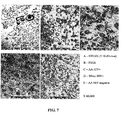
- TEM was used to visualize the patients' vesicles from urine. Exosomes were isolated from 4 ml of urine, fixed and embedded for TEM. The figure shows distribution of vesicles in: A) HIVAN; B) focal segmental glomerusclerosis; C) AA HIV+; and D) white HIV+; E) AA HIV negative. HIVAN, FSGS and AA HIV+ patients clearly have a higher population of vesicles compared to white HIV+ patients and AA normal patients.
- the SELDI-TOF-MS peaks of AA HIV+ patients exhibited exceedingly similar protein patterns to those of HIVAN patients and slightly similar patterns to FSGS patients, suggesting that the AA HIV+ patients whose peaks were similar to those of HIVAN may be predisposed to developing HIVAN.
- the baseline protein value (30- 2000 mg/dl) for the FSGS patients and AA HIV+ patients was in the same range. Similar to the protein values for HIVANb, but unlike FSGS patients, the proteins detected in AA HIV + patients were analogous to those of HIVAN patients. This underscores the significance that HIV infection, with or without the presence of renal disease, is still largely responsible for development of HIVAN; and a prior condition of renal insufficiency before HIV infection is not a necessary prerequisite for the development of HIVAN.
- Urinary vesicle samples from fourteen (14) HIV+ AA and nine (9) HIV+ white patients were isolated using ultrafiltration and analyzed for the presence of HIV Nef and other HIV proteins using western blot analysis. All the HIV+ AA samples were positive for HIV Nef by western blot, although HIV Nef was not detected in sample 41 by mass spectrometry ( Figure 8 ). This discrepancy could be caused by the isolation method utilized for the mass spectrometry analysis, which was ultracentrifugation, and yields less protein. HIV Nef was only identified in four (4) HIV+ white patients while mass spectrometry identified three (3) samples without HIV Nef. All HIV+ patients had detectable HIV proteins by western blots, but had varying kinds and amounts ( Figure 8 ).
Landscapes
- Health & Medical Sciences (AREA)
- Life Sciences & Earth Sciences (AREA)
- Engineering & Computer Science (AREA)
- Biomedical Technology (AREA)
- Immunology (AREA)
- Urology & Nephrology (AREA)
- Chemical & Material Sciences (AREA)
- Hematology (AREA)
- Molecular Biology (AREA)
- Physics & Mathematics (AREA)
- Food Science & Technology (AREA)
- Medicinal Chemistry (AREA)
- Analytical Chemistry (AREA)
- Biochemistry (AREA)
- General Health & Medical Sciences (AREA)
- General Physics & Mathematics (AREA)
- Pathology (AREA)
- Virology (AREA)
- Biotechnology (AREA)
- Cell Biology (AREA)
- Microbiology (AREA)
- Tropical Medicine & Parasitology (AREA)
- Biophysics (AREA)
- Proteomics, Peptides & Aminoacids (AREA)
- AIDS & HIV (AREA)
- Investigating Or Analysing Biological Materials (AREA)
- Measuring Or Testing Involving Enzymes Or Micro-Organisms (AREA)
Claims (7)
- Verfahren zum Nachweis von HIV-Infektion bei einem Säuger, zur Diagnose von HIV-assoziierter Nephropathie bei einem Säuger, zur Überwachung des Fortschreitens von HIV-Infektion bei einem Säuger, zur Überwachung des Fortschreitens von HIVassoziierter Nephropathie bei einem Säuger oder zur Überwachung der Wirksamkeit der Behandlung mit einem Anti-HIV-Mittel bei einem Säuger, das Folgendes umfasst:Isolieren von Exosomen aus einer Urinprobe des genannten Säugers;Nachweisen eines HIV-assoziierten Biomarkers aus den isolierten Exosomen undBestimmen der Gegenwart oder Abwesenheit des HIV-assoziierten Biomarkers in den genannten isolierten Exosomen,worin der genannte HIV-assoziierte Biomarker ein HIV-Protein ist, das aus der Gruppe ausgewählt ist, die aus Folgenden besteht: Nef, HIV envelope gp120, HIV-Protease, Vif, Gag-Pol, Gag, Pol, p24, Rev, reverser Transkriptase (RT), Tat, p1, p17, Vpu, Vpr, gp41 und DNA-Polymerase.
- Verfahren nach Anspruch 1, worin die genannten Exosomen durch Folgendes isoliert werden:A. Zentrifugation durch:a) Zentrifugieren der genannten Urinprobe bei 100 000 x g oder darüber für 15-120 Minuten, für 30-90 Minuten oder für 60 Minuten;b) Zentrifugieren der genannten Urinprobe bei 5 000-25 000 x g für 5-30 Minuten, Überführen des Überstands in ein anderes Röhrchen und Zentrifugieren des überführten Überstands bei 100 000 x g oder darüber für 15-120 Minuten; oderc) Zentrifugieren der genannten Urinprobe bei 20 000-22 000 x g für 15 Minuten, Überführen des Überstands in ein anderes Röhrchen und Zentrifugieren des überführten Überstands bei 100 000 x g für 30-90 Minuten; oderB. Filtration unter Verwendung von Zentrifugenfiltern mit einer Molekulargewichtsgrenze von etwa 500 kDa bis etwa 50 kDa.
- Verfahren nach Anspruch 2, worin das Verfahren für Folgendes vorgesehen ist:zur Diagnose einer HIV-assoziierten Nephropathie bei einem Säuger, zur Überwachung des Fortschreitens von HIV-Infektion bei einem Säuger oder zur Überwachung des Fortschreitens von HIV-assoziierter Nephropathie bei einem Säuger, und worin die Zentrifugation eine Ultrazentrifugation ist.
- Verfahren nach Anspruch 1, worin der genannte HIV-assoziierte Biomarker durch eine oder mehrere Techniken nachgewisen wird, die aus der Gruppe ausgewählt sind, die aus Folgenden besteht: Elektrophorese, Western Blot, HPLC, FPLC, Massenspektrometrie (MS), SELDI-TOF-MS, LC-MS/MS und Proteinsequenzierung.
- Verfahren nach Anspruch 1, worin der genannte Säuger ein Mensch, Affe, Gorilla oder Pavian ist.
- Verfahren nach Anspruch 1, worin der genannte Nachweis eines HIV-assoziierten Biomarkers durch ELISA erfolgt.
- Verfahren nach Anspruch 1, worin das Verfahren zur Überwachung der Wirksamkeit der Behandlung mit einem Anti-HIV-Mittel bei einem Säuger vorgesehen ist und worin das Verfahren weiter die folgenden Schritte umfasst:a) Bestimmen eines Profils eines HIV-assoziierten Biomarkers in Urin-Exosomen in einer oder mehreren Urinproben, die von einem Säuger vor der Verabreichung des genannten Anti-HIV-Mittels erhalten wurden;b) Bestimmen eines Profils eines HIV-assoziierten Biomarkers in Urin-Exosomen in einer oder mehreren Urinproben des genannten Säugers nach der Verabreichung;c) Vergleichen des Profils des HIV-assoziierten Biomarkers in der/den vor der Verabreichung erhaltenen Probe oder Proben mit dem Profil des HIV-assoziierten Biomarkers in der/den nach der Verabreichung erhaltenen Probe oder Proben; undd) Bestimmen der Wirksamkeit des genannten Anti-HIV-Mittels.
Applications Claiming Priority (3)
| Application Number | Priority Date | Filing Date | Title |
|---|---|---|---|
| US10294108P | 2008-10-06 | 2008-10-06 | |
| US12/572,652 US10545149B2 (en) | 2008-10-06 | 2009-10-02 | Detection of HIV-related proteins in urine |
| PCT/US2009/059500 WO2010042425A2 (en) | 2008-10-06 | 2009-10-05 | Detection of hiv-related proteins in urine |
Publications (3)
| Publication Number | Publication Date |
|---|---|
| EP2331969A2 EP2331969A2 (de) | 2011-06-15 |
| EP2331969A4 EP2331969A4 (de) | 2012-05-16 |
| EP2331969B1 true EP2331969B1 (de) | 2014-11-26 |
Family
ID=42076105
Family Applications (1)
| Application Number | Title | Priority Date | Filing Date |
|---|---|---|---|
| EP09819705.6A Active EP2331969B1 (de) | 2008-10-06 | 2009-10-05 | Erkennung hiv-verwandter proteine im urin |
Country Status (7)
| Country | Link |
|---|---|
| US (3) | US10545149B2 (de) |
| EP (1) | EP2331969B1 (de) |
| CN (2) | CN106383227B (de) |
| AP (1) | AP2011005665A0 (de) |
| AU (2) | AU2009302612B2 (de) |
| CA (1) | CA2738666C (de) |
| WO (1) | WO2010042425A2 (de) |
Families Citing this family (22)
| Publication number | Priority date | Publication date | Assignee | Title |
|---|---|---|---|---|
| CN102308004A (zh) * | 2008-10-30 | 2012-01-04 | 卡里斯生命科学卢森堡控股有限责任公司 | 评价rna图案的方法 |
| CN107254538A (zh) * | 2008-11-12 | 2017-10-17 | 卡里斯生命科学瑞士控股有限责任公司 | 使用外来体来确定表现型的方法和系统 |
| WO2011109440A1 (en) | 2010-03-01 | 2011-09-09 | Caris Life Sciences Luxembourg Holdings | Biomarkers for theranostics |
| US9469876B2 (en) | 2010-04-06 | 2016-10-18 | Caris Life Sciences Switzerland Holdings Gmbh | Circulating biomarkers for metastatic prostate cancer |
| CA2806211A1 (en) * | 2010-07-22 | 2012-01-26 | Georgetown University | Mass spectrometric methods for quantifying npy 1-36 and npy 3-36 |
| CN102323281B (zh) * | 2011-08-22 | 2013-09-18 | 爱威科技股份有限公司 | 液体性质检测方法和系统 |
| DK3391899T3 (da) | 2011-12-14 | 2020-08-24 | Univ Arkansas | Afgivelse af terapeutiske midler ved hjælp af et kollagenbindende protein |
| EP2943585B1 (de) * | 2013-01-09 | 2018-07-11 | Friedrich-Alexander-Universität Erlangen-Nürnberg | Verfahren für in-vitro-nachweis und überwachung einer erkrankung durch messung der erkrankungsassoziierten proteaseaktivität in extrazellulären vesikeln |
| AU2014244618A1 (en) | 2013-03-13 | 2015-10-08 | University Of Miami | Method for isolation and purification of microvesicles from cell culture supernatants and biological fluids |
| WO2014191480A1 (en) * | 2013-05-28 | 2014-12-04 | INSERM (Institut National de la Santé et de la Recherche Médicale) | Use of urinary hiv nucleic acids to diagnose and monitor hiv-associated nephropathy (hivan) |
| CN103468642A (zh) * | 2013-09-23 | 2013-12-25 | 山西大学 | 一种分离细胞培养基中外泌体的方法 |
| KR20160075692A (ko) * | 2013-10-24 | 2016-06-29 | 에이전시 포 사이언스, 테크놀로지 앤드 리서치 | 저분자량 유기 양쪽성 이온들로의 엑소좀 회수 |
| FR3014198B1 (fr) * | 2013-12-03 | 2017-03-03 | Biomerieux Sa | Procede d'isolement d'exosomes |
| EP3517959B1 (de) * | 2014-01-21 | 2021-05-05 | Morehouse School of Medicine | Exosomen-vermittelter nachweis von hepatitis-c-infektionen |
| CN103900890A (zh) * | 2014-03-07 | 2014-07-02 | 南方医科大学第三附属医院 | 一种采用纳米膜浓缩法提取尿微囊泡的方法 |
| CN105505854B (zh) * | 2016-01-14 | 2019-07-12 | 上海市第六人民医院 | 来源于人尿液细胞的外泌体的获取方法与应用 |
| CN107153023A (zh) * | 2016-03-02 | 2017-09-12 | 上海润腾生物科技有限公司 | 一种分离尿液中外泌体的方法 |
| EP3527980B1 (de) * | 2016-10-13 | 2022-03-02 | H.U. Group Research Institute G.K. | Verfahren zur rückgewinnung von extrazellulären vesikeln |
| CN108333263A (zh) * | 2017-01-20 | 2018-07-27 | 北京蛋白质组研究中心 | 一种尿蛋白制备方法及尿蛋白质组的检测方法 |
| CN106929467B (zh) * | 2017-02-16 | 2021-05-18 | 上海交通大学 | 一种分离高纯度尿液外泌体的方法和试剂盒 |
| JP7045527B2 (ja) * | 2018-09-20 | 2022-03-31 | ティーエイエムアイアールエヌエイ・ゲーエムベーハー | 肝機能障害の予測のためのマイクロrnaシグネチャ |
| CN114397388B (zh) * | 2022-01-11 | 2024-03-19 | 杭州昱鼎生物科技有限公司 | 一种基于peg沉淀法与sec柱法相结合的尿液外泌体提取试剂盒及应用 |
Family Cites Families (22)
| Publication number | Priority date | Publication date | Assignee | Title |
|---|---|---|---|---|
| US5364933A (en) * | 1986-03-03 | 1994-11-15 | Institut Pasteur | Methods of immunopurification of antigens of human immunodeficiency virus type 2 (HIV-2) |
| US5580739A (en) * | 1986-01-22 | 1996-12-03 | Institut Pasteur | Peptides of human immunodeficiency virus type 2 (HIV-2) and in vitro diagnostic methods and kits employing the peptides for the detection of HIV-2 |
| US5830641A (en) * | 1986-01-22 | 1998-11-03 | Institut Pasteur | In vitro diagnostic assays for the detection of HIV-1 or HIV-2 employing viral-specific antigens and antibodies |
| US5208321A (en) * | 1988-06-09 | 1993-05-04 | Institut Pasteur | HIV-2 transmembrane glycoprotein homodimer (GP 80) |
| ATE423856T1 (de) * | 1989-06-02 | 2009-03-15 | Pasteur Institut | Nukleotid-sequenzen von hiv-1, hiv-2 und siv retrovirusgenomen, ihre verwendung zur amplifizierung von pol-sequenzen dieser retroviren und zur in vitro diagnostik von diesen viren verursachten infektionen |
| ATE126600T1 (de) * | 1989-06-02 | 1995-09-15 | Abbott Lab | Standard-reagenzien zur quantifizierung von hiv p24. |
| US5256561A (en) * | 1991-12-20 | 1993-10-26 | Abbott Laboratories | Monoclonal antibody to HIV-2 and uses thereof |
| US5462852A (en) * | 1992-10-28 | 1995-10-31 | The Government Of The United States Of America, As Represented By The Secretary, Dhhs | HIV Nucleocapsid protein capture assay and method of use |
| US6261764B1 (en) * | 1997-09-22 | 2001-07-17 | Chiron Corporation | Buffers for stabilizing antigens |
| US20060252075A1 (en) * | 1998-08-21 | 2006-11-09 | Neovacs | Method for monitoring anti-HIV treatment in HIV infected individuals |
| US20040106136A1 (en) * | 1999-01-25 | 2004-06-03 | Musc Foundation For Research Development | Method for testing drug susceptibility of HIV |
| US6383740B2 (en) * | 1999-07-30 | 2002-05-07 | Bioergonomics, Inc. | Methods for simultaneously detecting both members of a binding pair |
| GB9927320D0 (en) * | 1999-11-18 | 2000-01-12 | Chiron Spa | Exosome separation |
| US20040241176A1 (en) * | 2000-04-27 | 2004-12-02 | Ap Cells. Inc. | Method of producing membrane vesicles |
| US7211659B2 (en) * | 2001-07-05 | 2007-05-01 | Chiron Corporation | Polynucleotides encoding antigenic HIV type C polypeptides, polypeptides and uses thereof |
| US20070087982A1 (en) * | 2003-07-11 | 2007-04-19 | Nelson Jay A | Methods of treatment and diagnosis using modulators of virus-induced cellular gene sequences |
| EP1748789B1 (de) * | 2003-11-05 | 2010-12-29 | Institut de Recherche pour le Développement ( IRD) | IL-22 zur Verhinderung von Infektionskrankheiten |
| JP2008501336A (ja) * | 2004-06-02 | 2008-01-24 | ソースフアーム・インコーポレイテツド | Rnaを含有する微小胞およびそのための方法 |
| EP1993600B1 (de) | 2006-03-09 | 2019-04-24 | Aethlon Medical, Inc. | Extrakorporale entfernung von mikrovesikulären teilchen |
| US8357296B2 (en) * | 2007-09-24 | 2013-01-22 | Emd Millipore Corporation | Centrifugal filter |
| US8617806B2 (en) * | 2008-01-25 | 2013-12-31 | Hansabiomed Ou | Method to measure and characterize microvesicles in the human body fluids |
| CN107254538A (zh) * | 2008-11-12 | 2017-10-17 | 卡里斯生命科学瑞士控股有限责任公司 | 使用外来体来确定表现型的方法和系统 |
-
2009
- 2009-10-02 US US12/572,652 patent/US10545149B2/en active Active
- 2009-10-05 AU AU2009302612A patent/AU2009302612B2/en active Active
- 2009-10-05 AP AP2011005665A patent/AP2011005665A0/xx unknown
- 2009-10-05 CN CN201610701916.9A patent/CN106383227B/zh not_active Expired - Fee Related
- 2009-10-05 CA CA2738666A patent/CA2738666C/en active Active
- 2009-10-05 EP EP09819705.6A patent/EP2331969B1/de active Active
- 2009-10-05 WO PCT/US2009/059500 patent/WO2010042425A2/en not_active Ceased
- 2009-10-05 CN CN200980139248.3A patent/CN102171574B/zh not_active Expired - Fee Related
-
2012
- 2012-01-11 US US13/348,389 patent/US9541554B2/en active Active
- 2012-01-11 US US13/348,406 patent/US9581596B2/en active Active
-
2016
- 2016-10-11 AU AU2016244203A patent/AU2016244203B2/en active Active
Also Published As
| Publication number | Publication date |
|---|---|
| AU2009302612A1 (en) | 2010-04-15 |
| AU2009302612B2 (en) | 2016-07-14 |
| CA2738666C (en) | 2018-05-15 |
| CN102171574B (zh) | 2016-09-21 |
| CA2738666A1 (en) | 2010-04-15 |
| AP2011005665A0 (en) | 2011-04-30 |
| CN106383227B (zh) | 2019-02-01 |
| WO2010042425A3 (en) | 2010-07-22 |
| US20100086956A1 (en) | 2010-04-08 |
| EP2331969A2 (de) | 2011-06-15 |
| US9541554B2 (en) | 2017-01-10 |
| EP2331969A4 (de) | 2012-05-16 |
| AU2016244203B2 (en) | 2018-06-21 |
| US10545149B2 (en) | 2020-01-28 |
| AU2016244203A1 (en) | 2016-11-03 |
| WO2010042425A2 (en) | 2010-04-15 |
| US9581596B2 (en) | 2017-02-28 |
| US20120208175A1 (en) | 2012-08-16 |
| CN102171574A (zh) | 2011-08-31 |
| US20120214151A1 (en) | 2012-08-23 |
| CN106383227A (zh) | 2017-02-08 |
Similar Documents
| Publication | Publication Date | Title |
|---|---|---|
| EP2331969B1 (de) | Erkennung hiv-verwandter proteine im urin | |
| US12517129B2 (en) | Exosome-mediated diagnosis of hepatitis virus infections and diseases | |
| Werion et al. | SARS-CoV-2 causes a specific dysfunction of the kidney proximal tubule | |
| US20110207120A1 (en) | Wnt1 as a renal damage biomarker | |
| EP4027143A1 (de) | Verfahren zum detektieren einer teilchenförmigen substanz unter verwendung von immunchromatografie und kit für dasselbe | |
| Tong et al. | Monitoring the progress of BK virus associated nephropathy in renal transplant recipients | |
| EP3279660B1 (de) | Konservierungslösung für hämproteine und verfahren zur stabilisierung von hämproteinen | |
| HK1231172A (en) | Detection of hiv-related proteins in urine | |
| HK1231172A1 (en) | Detection of hiv-related proteins in urine | |
| HK1231172B (zh) | 尿液中hiv相关蛋白的检测 | |
| JP6751080B2 (ja) | 尿中ポドサイト数を推定する方法 | |
| Praseeda et al. | Review on Diabetic Nephropathy and the Biomarkers for Its Early Detection | |
| US20220003765A1 (en) | Kit and Method | |
| Gijsen et al. | Urinary NGAL levels early after pediatric kidney and liver transplantation: a pilot study | |
| JPH11211724A (ja) | 切迫早産妊婦または頚管無力症妊婦の頚管粘液の鑑別法 |
Legal Events
| Date | Code | Title | Description |
|---|---|---|---|
| PUAI | Public reference made under article 153(3) epc to a published international application that has entered the european phase |
Free format text: ORIGINAL CODE: 0009012 |
|
| 17P | Request for examination filed |
Effective date: 20110406 |
|
| AK | Designated contracting states |
Kind code of ref document: A2 Designated state(s): AT BE BG CH CY CZ DE DK EE ES FI FR GB GR HR HU IE IS IT LI LT LU LV MC MK MT NL NO PL PT RO SE SI SK SM TR |
|
| AX | Request for extension of the european patent |
Extension state: AL BA RS |
|
| RIN1 | Information on inventor provided before grant (corrected) |
Inventor name: DOHERTY, AKINS Inventor name: NEWMAN, GALE, W. Inventor name: POWELL, MIKE Inventor name: MITCHELL-ALI, CLAUDETTE Inventor name: OBIALO, CHAMBERLAIN Inventor name: KHAN, MAFUZ Inventor name: BASHIR, KHALID |
|
| DAX | Request for extension of the european patent (deleted) | ||
| RIC1 | Information provided on ipc code assigned before grant |
Ipc: G01N 33/569 20060101ALI20120404BHEP Ipc: G01N 33/68 20060101AFI20120404BHEP Ipc: G01N 33/493 20060101ALI20120404BHEP |
|
| A4 | Supplementary search report drawn up and despatched |
Effective date: 20120417 |
|
| 17Q | First examination report despatched |
Effective date: 20131007 |
|
| RIC1 | Information provided on ipc code assigned before grant |
Ipc: G01N 33/569 20060101ALI20140225BHEP Ipc: G01N 1/40 20060101ALN20140225BHEP Ipc: G01N 33/493 20060101ALI20140225BHEP Ipc: G01N 33/68 20060101AFI20140225BHEP |
|
| GRAP | Despatch of communication of intention to grant a patent |
Free format text: ORIGINAL CODE: EPIDOSNIGR1 |
|
| INTG | Intention to grant announced |
Effective date: 20140804 |
|
| GRAS | Grant fee paid |
Free format text: ORIGINAL CODE: EPIDOSNIGR3 |
|
| GRAA | (expected) grant |
Free format text: ORIGINAL CODE: 0009210 |
|
| AK | Designated contracting states |
Kind code of ref document: B1 Designated state(s): AT BE BG CH CY CZ DE DK EE ES FI FR GB GR HR HU IE IS IT LI LT LU LV MC MK MT NL NO PL PT RO SE SI SK SM TR |
|
| REG | Reference to a national code |
Ref country code: GB Ref legal event code: FG4D |
|
| REG | Reference to a national code |
Ref country code: CH Ref legal event code: EP |
|
| REG | Reference to a national code |
Ref country code: AT Ref legal event code: REF Ref document number: 698492 Country of ref document: AT Kind code of ref document: T Effective date: 20141215 |
|
| REG | Reference to a national code |
Ref country code: IE Ref legal event code: FG4D |
|
| REG | Reference to a national code |
Ref country code: DE Ref legal event code: R096 Ref document number: 602009028029 Country of ref document: DE Effective date: 20150108 |
|
| REG | Reference to a national code |
Ref country code: CH Ref legal event code: NV Representative=s name: ISLER AND PEDRAZZINI AG, CH |
|
| REG | Reference to a national code |
Ref country code: NL Ref legal event code: VDEP Effective date: 20141126 |
|
| REG | Reference to a national code |
Ref country code: AT Ref legal event code: MK05 Ref document number: 698492 Country of ref document: AT Kind code of ref document: T Effective date: 20141126 |
|
| REG | Reference to a national code |
Ref country code: LT Ref legal event code: MG4D |
|
| PG25 | Lapsed in a contracting state [announced via postgrant information from national office to epo] |
Ref country code: NO Free format text: LAPSE BECAUSE OF FAILURE TO SUBMIT A TRANSLATION OF THE DESCRIPTION OR TO PAY THE FEE WITHIN THE PRESCRIBED TIME-LIMIT Effective date: 20150226 Ref country code: FI Free format text: LAPSE BECAUSE OF FAILURE TO SUBMIT A TRANSLATION OF THE DESCRIPTION OR TO PAY THE FEE WITHIN THE PRESCRIBED TIME-LIMIT Effective date: 20141126 Ref country code: LT Free format text: LAPSE BECAUSE OF FAILURE TO SUBMIT A TRANSLATION OF THE DESCRIPTION OR TO PAY THE FEE WITHIN THE PRESCRIBED TIME-LIMIT Effective date: 20141126 Ref country code: NL Free format text: LAPSE BECAUSE OF FAILURE TO SUBMIT A TRANSLATION OF THE DESCRIPTION OR TO PAY THE FEE WITHIN THE PRESCRIBED TIME-LIMIT Effective date: 20141126 Ref country code: ES Free format text: LAPSE BECAUSE OF FAILURE TO SUBMIT A TRANSLATION OF THE DESCRIPTION OR TO PAY THE FEE WITHIN THE PRESCRIBED TIME-LIMIT Effective date: 20141126 Ref country code: IS Free format text: LAPSE BECAUSE OF FAILURE TO SUBMIT A TRANSLATION OF THE DESCRIPTION OR TO PAY THE FEE WITHIN THE PRESCRIBED TIME-LIMIT Effective date: 20150326 Ref country code: PT Free format text: LAPSE BECAUSE OF FAILURE TO SUBMIT A TRANSLATION OF THE DESCRIPTION OR TO PAY THE FEE WITHIN THE PRESCRIBED TIME-LIMIT Effective date: 20150326 |
|
| PG25 | Lapsed in a contracting state [announced via postgrant information from national office to epo] |
Ref country code: HR Free format text: LAPSE BECAUSE OF FAILURE TO SUBMIT A TRANSLATION OF THE DESCRIPTION OR TO PAY THE FEE WITHIN THE PRESCRIBED TIME-LIMIT Effective date: 20141126 Ref country code: LV Free format text: LAPSE BECAUSE OF FAILURE TO SUBMIT A TRANSLATION OF THE DESCRIPTION OR TO PAY THE FEE WITHIN THE PRESCRIBED TIME-LIMIT Effective date: 20141126 Ref country code: AT Free format text: LAPSE BECAUSE OF FAILURE TO SUBMIT A TRANSLATION OF THE DESCRIPTION OR TO PAY THE FEE WITHIN THE PRESCRIBED TIME-LIMIT Effective date: 20141126 Ref country code: GR Free format text: LAPSE BECAUSE OF FAILURE TO SUBMIT A TRANSLATION OF THE DESCRIPTION OR TO PAY THE FEE WITHIN THE PRESCRIBED TIME-LIMIT Effective date: 20150227 Ref country code: CY Free format text: LAPSE BECAUSE OF FAILURE TO SUBMIT A TRANSLATION OF THE DESCRIPTION OR TO PAY THE FEE WITHIN THE PRESCRIBED TIME-LIMIT Effective date: 20141126 Ref country code: SE Free format text: LAPSE BECAUSE OF FAILURE TO SUBMIT A TRANSLATION OF THE DESCRIPTION OR TO PAY THE FEE WITHIN THE PRESCRIBED TIME-LIMIT Effective date: 20141126 |
|
| PG25 | Lapsed in a contracting state [announced via postgrant information from national office to epo] |
Ref country code: EE Free format text: LAPSE BECAUSE OF FAILURE TO SUBMIT A TRANSLATION OF THE DESCRIPTION OR TO PAY THE FEE WITHIN THE PRESCRIBED TIME-LIMIT Effective date: 20141126 Ref country code: DK Free format text: LAPSE BECAUSE OF FAILURE TO SUBMIT A TRANSLATION OF THE DESCRIPTION OR TO PAY THE FEE WITHIN THE PRESCRIBED TIME-LIMIT Effective date: 20141126 Ref country code: SK Free format text: LAPSE BECAUSE OF FAILURE TO SUBMIT A TRANSLATION OF THE DESCRIPTION OR TO PAY THE FEE WITHIN THE PRESCRIBED TIME-LIMIT Effective date: 20141126 Ref country code: CZ Free format text: LAPSE BECAUSE OF FAILURE TO SUBMIT A TRANSLATION OF THE DESCRIPTION OR TO PAY THE FEE WITHIN THE PRESCRIBED TIME-LIMIT Effective date: 20141126 Ref country code: RO Free format text: LAPSE BECAUSE OF FAILURE TO SUBMIT A TRANSLATION OF THE DESCRIPTION OR TO PAY THE FEE WITHIN THE PRESCRIBED TIME-LIMIT Effective date: 20141126 |
|
| REG | Reference to a national code |
Ref country code: DE Ref legal event code: R097 Ref document number: 602009028029 Country of ref document: DE |
|
| PG25 | Lapsed in a contracting state [announced via postgrant information from national office to epo] |
Ref country code: PL Free format text: LAPSE BECAUSE OF FAILURE TO SUBMIT A TRANSLATION OF THE DESCRIPTION OR TO PAY THE FEE WITHIN THE PRESCRIBED TIME-LIMIT Effective date: 20141126 |
|
| PLBE | No opposition filed within time limit |
Free format text: ORIGINAL CODE: 0009261 |
|
| STAA | Information on the status of an ep patent application or granted ep patent |
Free format text: STATUS: NO OPPOSITION FILED WITHIN TIME LIMIT |
|
| 26N | No opposition filed |
Effective date: 20150827 |
|
| PG25 | Lapsed in a contracting state [announced via postgrant information from national office to epo] |
Ref country code: IT Free format text: LAPSE BECAUSE OF FAILURE TO SUBMIT A TRANSLATION OF THE DESCRIPTION OR TO PAY THE FEE WITHIN THE PRESCRIBED TIME-LIMIT Effective date: 20141126 |
|
| PG25 | Lapsed in a contracting state [announced via postgrant information from national office to epo] |
Ref country code: SI Free format text: LAPSE BECAUSE OF FAILURE TO SUBMIT A TRANSLATION OF THE DESCRIPTION OR TO PAY THE FEE WITHIN THE PRESCRIBED TIME-LIMIT Effective date: 20141126 |
|
| PG25 | Lapsed in a contracting state [announced via postgrant information from national office to epo] |
Ref country code: LU Free format text: LAPSE BECAUSE OF FAILURE TO SUBMIT A TRANSLATION OF THE DESCRIPTION OR TO PAY THE FEE WITHIN THE PRESCRIBED TIME-LIMIT Effective date: 20151005 |
|
| PG25 | Lapsed in a contracting state [announced via postgrant information from national office to epo] |
Ref country code: MC Free format text: LAPSE BECAUSE OF FAILURE TO SUBMIT A TRANSLATION OF THE DESCRIPTION OR TO PAY THE FEE WITHIN THE PRESCRIBED TIME-LIMIT Effective date: 20141126 |
|
| REG | Reference to a national code |
Ref country code: IE Ref legal event code: MM4A |
|
| REG | Reference to a national code |
Ref country code: FR Ref legal event code: PLFP Year of fee payment: 8 |
|
| PG25 | Lapsed in a contracting state [announced via postgrant information from national office to epo] |
Ref country code: IE Free format text: LAPSE BECAUSE OF NON-PAYMENT OF DUE FEES Effective date: 20151005 |
|
| PG25 | Lapsed in a contracting state [announced via postgrant information from national office to epo] |
Ref country code: BG Free format text: LAPSE BECAUSE OF FAILURE TO SUBMIT A TRANSLATION OF THE DESCRIPTION OR TO PAY THE FEE WITHIN THE PRESCRIBED TIME-LIMIT Effective date: 20141126 Ref country code: SM Free format text: LAPSE BECAUSE OF FAILURE TO SUBMIT A TRANSLATION OF THE DESCRIPTION OR TO PAY THE FEE WITHIN THE PRESCRIBED TIME-LIMIT Effective date: 20141126 Ref country code: HU Free format text: LAPSE BECAUSE OF FAILURE TO SUBMIT A TRANSLATION OF THE DESCRIPTION OR TO PAY THE FEE WITHIN THE PRESCRIBED TIME-LIMIT; INVALID AB INITIO Effective date: 20091005 |
|
| PG25 | Lapsed in a contracting state [announced via postgrant information from national office to epo] |
Ref country code: TR Free format text: LAPSE BECAUSE OF FAILURE TO SUBMIT A TRANSLATION OF THE DESCRIPTION OR TO PAY THE FEE WITHIN THE PRESCRIBED TIME-LIMIT Effective date: 20141126 Ref country code: MT Free format text: LAPSE BECAUSE OF FAILURE TO SUBMIT A TRANSLATION OF THE DESCRIPTION OR TO PAY THE FEE WITHIN THE PRESCRIBED TIME-LIMIT Effective date: 20141126 |
|
| REG | Reference to a national code |
Ref country code: FR Ref legal event code: PLFP Year of fee payment: 9 |
|
| PG25 | Lapsed in a contracting state [announced via postgrant information from national office to epo] |
Ref country code: BE Free format text: LAPSE BECAUSE OF FAILURE TO SUBMIT A TRANSLATION OF THE DESCRIPTION OR TO PAY THE FEE WITHIN THE PRESCRIBED TIME-LIMIT Effective date: 20141126 |
|
| PG25 | Lapsed in a contracting state [announced via postgrant information from national office to epo] |
Ref country code: MK Free format text: LAPSE BECAUSE OF FAILURE TO SUBMIT A TRANSLATION OF THE DESCRIPTION OR TO PAY THE FEE WITHIN THE PRESCRIBED TIME-LIMIT Effective date: 20141126 |
|
| REG | Reference to a national code |
Ref country code: FR Ref legal event code: PLFP Year of fee payment: 10 |
|
| P01 | Opt-out of the competence of the unified patent court (upc) registered |
Effective date: 20230523 |
|
| REG | Reference to a national code |
Ref country code: CH Ref legal event code: U11 Free format text: ST27 STATUS EVENT CODE: U-0-0-U10-U11 (AS PROVIDED BY THE NATIONAL OFFICE) Effective date: 20251101 |
|
| PGFP | Annual fee paid to national office [announced via postgrant information from national office to epo] |
Ref country code: DE Payment date: 20251020 Year of fee payment: 17 |
|
| PGFP | Annual fee paid to national office [announced via postgrant information from national office to epo] |
Ref country code: GB Payment date: 20251029 Year of fee payment: 17 |
|
| PGFP | Annual fee paid to national office [announced via postgrant information from national office to epo] |
Ref country code: FR Payment date: 20251023 Year of fee payment: 17 |
|
| PGFP | Annual fee paid to national office [announced via postgrant information from national office to epo] |
Ref country code: CH Payment date: 20251101 Year of fee payment: 17 |