EP2324127B1 - Method of using foxo3a polymorphisms and haplotypes to predict and promote healthy aging and longevity - Google Patents
Method of using foxo3a polymorphisms and haplotypes to predict and promote healthy aging and longevity Download PDFInfo
- Publication number
- EP2324127B1 EP2324127B1 EP09807138.4A EP09807138A EP2324127B1 EP 2324127 B1 EP2324127 B1 EP 2324127B1 EP 09807138 A EP09807138 A EP 09807138A EP 2324127 B1 EP2324127 B1 EP 2324127B1
- Authority
- EP
- European Patent Office
- Prior art keywords
- allele
- nucleic acid
- acid sequence
- seq
- foxo3a
- Prior art date
- Legal status (The legal status is an assumption and is not a legal conclusion. Google has not performed a legal analysis and makes no representation as to the accuracy of the status listed.)
- Active
Links
Images
Classifications
-
- C—CHEMISTRY; METALLURGY
- C12—BIOCHEMISTRY; BEER; SPIRITS; WINE; VINEGAR; MICROBIOLOGY; ENZYMOLOGY; MUTATION OR GENETIC ENGINEERING
- C12Q—MEASURING OR TESTING PROCESSES INVOLVING ENZYMES, NUCLEIC ACIDS OR MICROORGANISMS; COMPOSITIONS OR TEST PAPERS THEREFOR; PROCESSES OF PREPARING SUCH COMPOSITIONS; CONDITION-RESPONSIVE CONTROL IN MICROBIOLOGICAL OR ENZYMOLOGICAL PROCESSES
- C12Q1/00—Measuring or testing processes involving enzymes, nucleic acids or microorganisms; Compositions therefor; Processes of preparing such compositions
- C12Q1/68—Measuring or testing processes involving enzymes, nucleic acids or microorganisms; Compositions therefor; Processes of preparing such compositions involving nucleic acids
- C12Q1/6876—Nucleic acid products used in the analysis of nucleic acids, e.g. primers or probes
- C12Q1/6883—Nucleic acid products used in the analysis of nucleic acids, e.g. primers or probes for diseases caused by alterations of genetic material
-
- C—CHEMISTRY; METALLURGY
- C12—BIOCHEMISTRY; BEER; SPIRITS; WINE; VINEGAR; MICROBIOLOGY; ENZYMOLOGY; MUTATION OR GENETIC ENGINEERING
- C12Q—MEASURING OR TESTING PROCESSES INVOLVING ENZYMES, NUCLEIC ACIDS OR MICROORGANISMS; COMPOSITIONS OR TEST PAPERS THEREFOR; PROCESSES OF PREPARING SUCH COMPOSITIONS; CONDITION-RESPONSIVE CONTROL IN MICROBIOLOGICAL OR ENZYMOLOGICAL PROCESSES
- C12Q1/00—Measuring or testing processes involving enzymes, nucleic acids or microorganisms; Compositions therefor; Processes of preparing such compositions
- C12Q1/68—Measuring or testing processes involving enzymes, nucleic acids or microorganisms; Compositions therefor; Processes of preparing such compositions involving nucleic acids
- C12Q1/6876—Nucleic acid products used in the analysis of nucleic acids, e.g. primers or probes
-
- G—PHYSICS
- G01—MEASURING; TESTING
- G01N—INVESTIGATING OR ANALYSING MATERIALS BY DETERMINING THEIR CHEMICAL OR PHYSICAL PROPERTIES
- G01N33/00—Investigating or analysing materials by specific methods not covered by groups G01N1/00 - G01N31/00
- G01N33/15—Medicinal preparations ; Physical properties thereof, e.g. dissolubility
-
- C—CHEMISTRY; METALLURGY
- C12—BIOCHEMISTRY; BEER; SPIRITS; WINE; VINEGAR; MICROBIOLOGY; ENZYMOLOGY; MUTATION OR GENETIC ENGINEERING
- C12Q—MEASURING OR TESTING PROCESSES INVOLVING ENZYMES, NUCLEIC ACIDS OR MICROORGANISMS; COMPOSITIONS OR TEST PAPERS THEREFOR; PROCESSES OF PREPARING SUCH COMPOSITIONS; CONDITION-RESPONSIVE CONTROL IN MICROBIOLOGICAL OR ENZYMOLOGICAL PROCESSES
- C12Q2535/00—Reactions characterised by the assay type for determining the identity of a nucleotide base or a sequence of oligonucleotides
- C12Q2535/125—Allele specific primer extension
-
- C—CHEMISTRY; METALLURGY
- C12—BIOCHEMISTRY; BEER; SPIRITS; WINE; VINEGAR; MICROBIOLOGY; ENZYMOLOGY; MUTATION OR GENETIC ENGINEERING
- C12Q—MEASURING OR TESTING PROCESSES INVOLVING ENZYMES, NUCLEIC ACIDS OR MICROORGANISMS; COMPOSITIONS OR TEST PAPERS THEREFOR; PROCESSES OF PREPARING SUCH COMPOSITIONS; CONDITION-RESPONSIVE CONTROL IN MICROBIOLOGICAL OR ENZYMOLOGICAL PROCESSES
- C12Q2600/00—Oligonucleotides characterized by their use
- C12Q2600/106—Pharmacogenomics, i.e. genetic variability in individual responses to drugs and drug metabolism
-
- C—CHEMISTRY; METALLURGY
- C12—BIOCHEMISTRY; BEER; SPIRITS; WINE; VINEGAR; MICROBIOLOGY; ENZYMOLOGY; MUTATION OR GENETIC ENGINEERING
- C12Q—MEASURING OR TESTING PROCESSES INVOLVING ENZYMES, NUCLEIC ACIDS OR MICROORGANISMS; COMPOSITIONS OR TEST PAPERS THEREFOR; PROCESSES OF PREPARING SUCH COMPOSITIONS; CONDITION-RESPONSIVE CONTROL IN MICROBIOLOGICAL OR ENZYMOLOGICAL PROCESSES
- C12Q2600/00—Oligonucleotides characterized by their use
- C12Q2600/156—Polymorphic or mutational markers
-
- C—CHEMISTRY; METALLURGY
- C12—BIOCHEMISTRY; BEER; SPIRITS; WINE; VINEGAR; MICROBIOLOGY; ENZYMOLOGY; MUTATION OR GENETIC ENGINEERING
- C12Q—MEASURING OR TESTING PROCESSES INVOLVING ENZYMES, NUCLEIC ACIDS OR MICROORGANISMS; COMPOSITIONS OR TEST PAPERS THEREFOR; PROCESSES OF PREPARING SUCH COMPOSITIONS; CONDITION-RESPONSIVE CONTROL IN MICROBIOLOGICAL OR ENZYMOLOGICAL PROCESSES
- C12Q2600/00—Oligonucleotides characterized by their use
- C12Q2600/158—Expression markers
-
- C—CHEMISTRY; METALLURGY
- C12—BIOCHEMISTRY; BEER; SPIRITS; WINE; VINEGAR; MICROBIOLOGY; ENZYMOLOGY; MUTATION OR GENETIC ENGINEERING
- C12Q—MEASURING OR TESTING PROCESSES INVOLVING ENZYMES, NUCLEIC ACIDS OR MICROORGANISMS; COMPOSITIONS OR TEST PAPERS THEREFOR; PROCESSES OF PREPARING SUCH COMPOSITIONS; CONDITION-RESPONSIVE CONTROL IN MICROBIOLOGICAL OR ENZYMOLOGICAL PROCESSES
- C12Q2600/00—Oligonucleotides characterized by their use
- C12Q2600/172—Haplotypes
Definitions
- the invention relates to a method of using FOX03A polymorphisms and haplotypes in diagnostics to predict or in planning treatments and interventions to promote healthy aging and longevity.
- the FOXO3A gene belongs to the forkhead family of transcription factors which are characterized by a distinct forkhead domain. This gene likely functions as a trigger for apoptosis through expression of genes necessary for cell death. Translocation of this gene with the MLL gene is associated with secondary acute leukemia. Alternatively spliced transcript variants encoding the same protein have been observed.
- the FOXO3A gene is one of the human homologs of DAF-16, a gene that has been described to extend lifespan in the model organisms C. elegans ( Murphy CT (2006) The search for DAF-16/FOXO transcriptional targets: approaches and discoveries. Exp Gerontol 41:910-921 ) and D. melanogaster. ( Giannakou ME et al. (2007) Dynamics of the action of dFOXO on adult mortality in Drosophila. Aging Cell 6:429-438 ).
- the FOXO3A gene is located on human chromosome 6q21, from position 108,987,719 to 109112664 (NCBI ver. 36), is composed of four (4) exons that can be alternately expressed, which results in the same protein (variant #1 is described by file NM_001455.3; variant #2 is described by file NM_201559.2.
- the FOXO3A protein is composed of 673 amino acids and is 71,277 Da in size.
- the amino acid sequence of FOXO3A, as defined by the file "NP_963853" at the NCBI is identified as SEQ ID No. 1 and is the following:
- FOXO3A interacts with YWHAB/14-3-3-beta and YWHAZ/14-3-3-zeta, UniProt: the Universal Protein Resource (www.uniprot.org), which is required for cytosolic sequestration.
- STK4 the Universal Protein Resource
- the subcellular location of FOXO3A is in the cytoplasm, and cytosol. It translocates to the nucleus upon oxidative stress and in the absence of survival factors.
- survival factors such as IGF-1
- FOXO3A is phosphorylated on Thr-32 and Ser-253 by AKT1/PKB.
- This phosphorylated form then interacts with 14-3-3 proteins and is retained in the cytoplasm. Survival factor withdrawal induces dephosphorylation and promotes translocation to the nucleus where the dephosphorylated protein induces transcription of target genes and triggers apoptosis.
- AKT1/PKB doesn't appear to phosphorylate Ser-315 directly, it may activate other kinases that trigger phosphorylation at this residue.
- FOXO3A is phosphorylated by STK4 on Ser-209 upon oxidative stress, which leads to dissociation from YWHAB/14-3-3-beta and nuclear translocation.
- SIRT1 a Sir2 homolog "SIRT1" influences several downstream transcription events affecting lifespan, including the cellular response to stress. SIRT1 accomplishes this by regulating the FOXO (Forkhead box transcription) factors, a family of proteins that function as sensors in the IIS pathway and are also regulators of longevity in several mammals. 17
- mice with a fat-specific insulin receptor knockout have reduced fat mass, protection against age-related obesity and have extended longevity.
- FIRKO fat-specific insulin receptor knockout
- 21 Many other mutations in the IIS pathway appear to impact longevity in mice. These include mutations in the IGF-1 receptor, 22 IRS-1, 22 IRS-2, 23 PAPP-A, 24 and the Ames Dwarf mouse mutation. 22
- DAF-16 abnormal DAuer Formation-16
- JNK Jun-N-K terminal Kinase
- the human homologue of DAF-16 includes four FOXOs: FOXO1, FOXO3A, FOXO4 and FOXO6. Therefore, it is plausible to hypothesize that common, natural variation in the form of single nucleotide polymorphisms (SNPs) in FOXO and related genes might influence human longevity.
- FOXO3 is synonymous with "FOXO3A” since FOXO3B is a pseudo-gene on chromosome 17.
- FOXO may provide a potential branch-point or bridge between insulin signaling, free radicals and human aging/longevity.
- the invention provides compositions and methods for detecting the FOXO3A "GCC" haplotype (e.g. a FOXO3A haplotype associated with an increased longevity, defined herein as the likelihood of a human subject living an additional 15 or more years) as further defined in the claims.
- the detected FOXO3A haplotypes are associated with either an increased likelihood or a decreased likelihood of living longer, however the invention necessarily encompasses materials and methods for detecting a FOXO3A haplotype associated with neither an increased nor a decreased likelihood of living longer and/or minimizing risk for age-associated diseases (e.g. a "normal” or "wt" genotype).
- Age-associated diseases refers to coronary heart disease (CHD), also known as coronary artery diseases, stroke, cancer, chronic obstructive pulmonary disease (COPD) or other chronic lung disease, Parkinson's disease, diabetes, obesity, dementia (and general cognitive function), frailty (ability to walk) or other age-related disease or physical and or cognitive impairment. There may also be an association with obesity in humans.
- CHD coronary heart disease
- COPD chronic obstructive pulmonary disease
- Parkinson's disease diabetes
- obesity dementia (and general cognitive function)
- frailty ability to walk
- age-related disease or physical and or cognitive impairment.
- the "GCC” haplotype encompasses tens of kilobases of DNA. Other SNPs in this region demonstrate linkage disequilibrium with the three SNPs described herein. It is anticipated that additional SNPs will be identified within this GCC haplotype that also have an association with longevity and healthy aging, and may be useful of predicting age-associated diseases.
- the "GCC haplotype” can serve as a surrogate for other types of alteration of DNA, either within or adjacent to the FOXO3A gene, that is ultimately found to be the "functional variant” that leads to the prediction of exceptional longevity and/or healthy aging.
- LOC100130966 is similar to SMT3 suppressor of mif two 3 homolog 2 has been identified to lie within exon 2 of the FOXO3A gene, which is within the "GCC” haplotype.
- the DNA sequence for LOC100130966 is described by the GenBank accession ID# "XM_001725519” and the predicted amino acid sequence of LOC100130966 is described by GenBank file "XP_0017255.71".
- Haplotype analysis may be used to potentially predict which patients would benefit by aggressive wellness or disease prevention/treatment interventions. Haplotype analysis may be provided in a kit form. Risk calculators could use such information for purposes of assessing likelihood of disease, disability or death or determining how many years of survival or disease-free survival a person has. Such information would be important to patients, health insurance companies, long term care insurance companies and physicians or other health care providers in order to provide some guidance as to the patient's long-term needs. Pharmaceuticals could be developed that modify the action of the FOXO3A gene, modify the cellular location of the FOXO3A protein and/or its interactions with other proteins, or modify the amount or type of protein produced by the gene in order to impact health or diseases related to aging.
- mice Homologous sequences in mice may be associated with premature ovarian failure.
- HHP Honolulu Heart Program
- HAS Honolulu Asia Aging Study
- HHP cohort recruitment, design, and procedures have been outlined in detail elsewhere. 62 Briefly, at the time of study enrollment (1965-1968), participants were aged 45 to 68 years (mean age, 54 years). From the commencement of the HHP, information on the development of incident coronary heart disease and stroke, as well as mortality from all causes, has been obtained by monitoring obituaries in local newspapers (English and Japanese) and through surveillance of hospital discharge records. 61 A follow-up survey in the 1991-1993 examination found that only 5 men could not be traced for mortality information. 63
- cases longevity phenotype
- “cases” longevity phenotype) were defined as all HHP participants who had survived to at least the upper 1% of the 1910 U.S. birth cohort specific survival (minimum 95 years of age) from the time of recruitment. 65,66 A total of 213 individuals who had survived to at least 95 years of age, as of August 2007, were studied. 176 of these individuals had died (mean death age 97.5; SD 2.1; range of 95-106 years) and 37 individuals were still alive (mean age 98.7, SD 2.1; range 97-106 years).
- the controls consisted of 402 individuals from the HHP/HAAS cohort who died near the mean death age for the 1910 U.S. birth cohort specific survival for middle-aged men (approximately 77 years of age). In order to achieve a case: control ratio of approximately 1:2, we sampled the HHP/HAAS study population for controls who died up to the age of 81 years. The mean age at death for our control population was 78.5 years (SD 1.8, range 73-81 years). This is slightly higher that of the U.S. male population, but consistent with the high average life expectancy of Japanese-American men in Hawaii, which was 3.5 years longer than white males at last report. 67 All cases and controls were ethnic Japanese whose families came mainly from Central-West Japan. 61,62
- SNPs were chosen from each of five candidate genes. We chose genes that have well-described influences on aging pathways in model organisms. All genes were chosen based on hypothetical links to the IIS pathway and potential links to energy homeostasis, glucose and/or lipid metabolism, see Figure 1 . SNPs were chosen based on their minor allele frequencies reported in the HapMap or JSNP database (snp.ims.u-tokyo.ac.jp).
- Total cellular DNA was isolated using the PureGene system (Gentra Systems, Inc.) quantified using PicoGreen staining (Molecular Probes, Eugene, OR) and SNPs from candidate genes genotyped using allelic discrimination assays.
- Taq Man ® (Applied Biosystems, Inc.) reagents were purchased from ABI and SNPs were chosen with a frequency ⁇ ⁇ 0.1 in the Japanese population (http://www.ncbi.nlm.nih.gov/projects/SNP/).
- PCR was amplified under standard conditions using Taq Gold (Perkin-Elmer, Corp) and detection of PCR products with Taq Man ® assay, using a 6-FAM-labeled FRET probe for one allele and a VIC-labeled probe for the other allele, using minor groove binding (MGB) quenchers to enhance detection of assays.
- PCR products were measured with the ABI Prism 7000 Sequence Detection System.
- Genotype data were managed through an integrated database system (MS Excel, Microsoft, Inc). All positive controls on each genotyping plate were also evaluated for consistency. Positive markers were tested for deviation from Hardy-Weinberg equilibrium. Call rates exceeded 98%.
- SEQ ID No. 3 The DNA Sequence of SNP rs13217795 (“FOXO3A2") is identified as SEQ ID No. 3 is:
- SEQ ID No. 4 The DNA Sequence of SNP rs2802292 (“FOXO3A3") identified as SEQ ID No. 4 is:
- GCC haplotype can be described using SNPs rs2764264, rs13217795, and rs2802292 and is the allele that contains the following combination of genotypes: rs2764264 rs13217795 rs2802292 "C” "C” "G”
- the "GCC haplotype" can be described using SNPs rs2802292, rs2764264, and rs13217795 according to NCBI nomenclature, and is the allele that contains the following combination of genotypes: SNP ID # rs2802292 rs2764264 rs13217795 SNP Variable Name from Table 3 FOXO3A3 FOXO3A1 FOXO3A2 Chromosome 6 Nucleotide position 109015211 109041154 109080791 SNP Allele "G” "C” "C”
- FOXO3A genotype was significantly associated with plasma insulin levels as well as CHD, cancer and Type 2 diabetes prevalence. This is consistent with a known role for FOXO as a mediator of the effects of insulin and insulin-like growth factors on diverse physiological functions, including cell proliferation, apoptosis and metabolism. 17,54 Genetic studies in C. elegans and Drosophila. have shown that FOXO proteins are ancient targets of insulin-like signaling that regulate metabolism and longevity. Additional work in mammalian cells has shown that FOXO proteins are the targets of protein kinases, influence cell cycle progression, and regulate resistance to oxidative stress in vitro . 54 In vivo studies have shown that FOXO modifies hepatic glucose output in response to insulin and mediates other metabolic actions. 54 This strengthens the evidence that FOXO proteins may mediate insulin effects on metabolism and influence longevity in humans.
- FOXO3A a potential role of FOXO3A in human health, aging and longevity.
- An important downstream mechanism whereby FOXO3A might influence human aging is through modification of oxidative stress- a long held theory of how we age, 33 although we have no direct evidence for this in the current study.
- FOXO genes are the closest human homologues of C. elegans DAF-16, which protects cells from oxidative stress, this is a plausible mechanism of action for modification of human aging. 17 In C.
- DAF-16 increases the expression of manganese superoxide dismutase (SOD2), which converts superoxide to less damaging hydrogen peroxide and is a potent endogenous protector against free radicals, 55 among other "anti-aging" effects.
- SOD2 manganese superoxide dismutase
- In vivo studies show that oxidative lesions in DNA, proteins and other tissues accumulate with age and feeding calorically restricted diets (a potent insulin sensitizer) to rodents 56 and humans 57 mitigates this damage.
- the candidate genes selected for analysis were chosen a priori based on hypothesis-driven criteria. That is, studies of models organisms of aging employing various methods, particularly knockouts, have shown that the IIS pathway is important for aging and longevity. And many functions appear to be evolutionarily conserved.
- the findings are strong, highly significant, and include several adjacent SNPs in the FOXO3A gene.
- the findings are biologically plausible and support the prior findings in animal models of aging and also support the limited prior human studies.
- the case-control associations with longevity were detected using a nested case-control analysis with a high event rate (deaths) during a long period of follow-up.
- the HHP cohort is a highly homogenous cohort and there was no population stratification detected in our study participants.
- a possible drawback is that since the cases and controls had an average age difference of 11 years we cannot exclude birth cohort as a confounder. But this is unlikely since there was a maximum 19-year difference in birth years between participants. Also, sub analyses revealed no differences in education and occupation (data not shown) between cases and controls. Moreover, it was the participants who were older at baseline who were more likely to have lived to 95-plus years and thus obtain the longevity phenotype. Most cohort effects show health advantages for younger cohorts. Another possible drawback is that this study was conducted in only one population and thus should be replicated in other populations in order to assess its generalizability.
- SNPs single nucleotide polymorphisms
- SNPs single nucleotide polymorphisms
- SNPs are major contributors to genetic variation, comprising some 80% of all known polymorphisms, and their density in the human genome is estimated to be on average 1 per 1,000 base pairs. SNPs are most frequently biallelic --occurring in only two different forms (although up to four different forms of an SNP, corresponding to the four different nucleotide bases occurring in DNA, are theoretically possible).
- SNPs are mutationally more stable than other polymorphisms, making them suitable for association studies in which linkage disequilibrium between markers and an unknown variant is used to map disease-causing mutations.
- SNPs typically have only two alleles, they can be genotyped by a simple plus/minus assay rather than a length measurement, making them more amenable to automation.
- the single base polymorphism can be detected by using a specialized exonuclease-resistant nucleotide, as disclosed, e.g., in Mundy, C. R. (U.S. Pat. No. 4,656,127 ).
- a primer complementary to the allelic sequence immediately 3' to the polymorphic site is permitted to hybridize to a target molecule obtained from a particular animal or human. If the polymorphic site on the target molecule contains a nucleotide that is complementary to the particular exonuclease-resistant nucleotide derivative present, then that derivative will be incorporated onto the end of the hybridized primer.
- a solution-based method is used for determining the identity of the nucleotide of a polymorphic site.
- Cohen, D. et al. (French Patent 2,650,840 ; PCT Appln. No. WO91/02087 ).
- a primer is employed that is complementary to allelic sequences immediately 3' to a polymorphic site. The method determines the identity of the nucleotide of that site using labeled dideoxynucleotide derivatives, which, if complementary to the nucleotide of the polymorphic site will become incorporated onto the terminus of the primer.
- GBA TM Genetic Bit Analysis
- Goelet, P. et al. PCT Appln. No. 92/15712
- the method of Goelet, P. et al. uses mixtures of labeled terminators and a primer that is complementary to the sequence 3' to a polymorphic site.
- the labeled terminator that is incorporated is thus determined by, and complementary to, the nucleotide present in the polymorphic site of the target molecule being evaluated.
- the method of Goelet, P. et al. is preferably a heterogeneous phase assay, in which the primer or the target molecule is immobilized to a solid phase.
- RNA is initially isolated from available tissue and reverse-transcribed, and the segment of interest is amplified by PCR. The products of reverse transcription PCR are then used as a template for nested PCR amplification with a primer that contains an RNA polymerase promoter and a sequence for initiating eukaryotic translation.
- the unique motifs incorporated into the primer permit sequential in vitro transcription and translation of the PCR products.
- the appearance of truncated polypeptides signals the presence of a mutation that causes premature termination of translation.
- DNA as opposed to RNA is used as a PCR template when the target region of interest is derived from a single exon.
- the DNA sample is obtained from a bodily fluid, e.g, blood, obtained by known techniques (e.g. venipuncture) or saliva.
- nucleic acid tests can be performed on dry samples (e.g. hair or skin).
- the cells or tissues that may be utilized must express an FOXO3A gene.
- Diagnostic procedures may also be performed in situ directly upon tissue sections (fixed and/or frozen) of patient tissue obtained from biopsies or resections, such that no nucleic acid purification is necessary.
- Nucleic acid reagents may be used as probes and/or primers for such in situ procedures (see, for example, Nuovo, G. J., 1992, PCR in situ hybridization: protocols and applications, Raven Press, N.Y .).
- Fingerprint profiles may be generated, for example, by utilizing a differential display procedure, Northern analysis and/or RT-PCR.
- a preferred detection method is allele specific hybridization using probes overlapping a region of at least one allele of an FOXO3A haplotype and having about 5, 10, 20, 25, or 30 nucleotides around the mutation or polymorphic region.
- several probes capable of hybridizing specifically to other allelic variants are attached to a solid phase support, e.g., a "chip" (which can hold up to about 250,000 oligonucleotides).
- Oligonucleotides can be bound to a solid support by a variety of processes, including lithography. Mutation detection analysis using these chips comprising oligonucleotides, also termed "DNA probe arrays" is described e.g., in Cronin et al.
- a chip comprises all the allelic variants of at least one polymorphic region of a gene.
- the solid phase support is then contacted with a test nucleic acid and hybridization to the specific probes is detected. Accordingly, the identity of numerous allelic variants of one or more genes can be identified in a simple hybridization experiment.
- Amplification techniques are known to those of skill in the art and include, but are not limited to cloning, polymerase chain reaction (PCR), polymerase chain reaction of specific alleles (ASA), ligase chain reaction (LCR), nested polymerase chain reaction, self sustained sequence replication ( Guatelli, J. C. et al., 1990, Proc. Natl. Acad. Sci. USA 87:1874-1878 ), transcriptional amplification system ( Kwoh, D. Y. et al., 1989, Proc. Natl. Acad. Sci. USA 86:1173-1177 ), and Q-Beta Replicase ( Lizardi, P. M. et al., 1988, Bio/Technology 6:1197 ).
- Amplification products may be assayed in a variety of ways, including size analysis, restriction digestion followed by size analysis, detecting specific tagged oligonucleotide primers in the reaction products, allele-specific oligonucleotide (ASO) hybridization, allele specific 5' exonuclease detection, sequencing, hybridization, and the like.
- ASO allele-specific oligonucleotide
- PCR based detection means can include multiplex amplification of a plurality of markers simultaneously. For example, it is well known in the art to select PCR primers to generate PCR products that do not overlap in size and can be analyzed simultaneously. Alternatively, it is possible to amplify different markers with primers that are differentially labeled and thus can each be differentially detected. Of course, hybridization based detection means allow the differential detection of multiple PCR products in a sample. Other techniques are known in the art to allow multiplex analyses of a plurality of markers.
- the method includes the steps of (i) collecting a sample of cells from a patient (from saliva, cheek swab, blood or other body fluid or component), (ii) isolating nucleic acid (e.g., genomic, mRNA or both) from the cells of the sample, (iii) contacting the nucleic acid sample with one or more primers which specifically hybridize 5' and 3' to at least one allele of an FOXO3A haplotype under conditions such that hybridization and amplification of the allele occurs, and (iv) detecting the amplification product.
- nucleic acid e.g., genomic, mRNA or both
- the allele of an FOXO3A haplotype is identified by alterations in restriction enzyme cleavage patterns.
- sample and control DNA is isolated, amplified (optionally), digested with one or more restriction endonucleases, and fragment length sizes are determined by gel electrophoresis.
- any of a variety of sequencing reactions known in the art can be used to directly sequence the allele.
- Exemplary sequencing reactions include those based on techniques developed by Maxim and Gilbert ((1977) Proc. Natl Acad Sci USA 74:560 ) or Sanger ( Sanger et al (1977) Proc. Nat. Acad. Sci USA 74:5463 ).
- any of a variety of automated sequencing procedures may be utilized when performing the subject assays (see, for example Biotechniques (1995) 19:448 ), including sequencing by mass spectrometry (see, for example PCT publication WO 94/16101 ; Cohen et al. (1996) Adv Chromatogr 36:127-162 ; and Griffin et al.
- protection from cleavage agents can be used to detect mismatched bases in RNA/RNA or RNA/DNA or DNA/DNA heteroduplexes ( Myers, et al. (1985) Science 230:1242 ).
- cleavage agents such as a nuclease, hydroxylamine or osmium tetroxide and with piperidine
- cleavage agents such as a nuclease, hydroxylamine or osmium tetroxide and with piperidine
- RNA/DNA duplexes can be treated with RNase and DNA/DNA hybrids treated with S1 nuclease to enzymatically digest the mismatched regions.
- either DNA/DNA or RNA/DNA duplexes can be treated with hydroxylamine or osmium tetroxide and with piperidine in order to digest mismatched regions. After digestion of the mismatched regions, the resulting material is then separated by size on denaturing polyacrylamide gels to determine the site of mutation. See, for example, Cotton et al (1988) Proc. Natl Acad Sci USA 85:4397 ; and Saleeba et al (1 992) Methods Enzymol. 217:286-295 .
- the control DNA or RNA can be labeled for detection.
- the mismatch cleavage reaction employs one or more proteins that recognize mismatched base pairs in double-stranded DNA (so called "DNA mismatch repair" enzymes).
- DNA mismatch repair enzymes
- the mutY enzyme of E. coli cleaves A at G/A mismatches and the thymidine DNA glycosylase from HeLa cells cleaves T at G/T mismatches ( Hsu et al. (1994) Carcinogenesis 15:1657-1662 ).
- a probe based on an allele of an FOXO3A locus haplotype is hybridized to a cDNA or other DNA product from a test cell(s).
- the duplex is treated with a DNA mismatch repair enzyme, and the cleavage products, if any, can be detected from electrophoresis protocols or the like See, for example, U.S. Pat. No. 5,459,039 .
- alterations in electrophoretic mobility will be used to identify an FOXO3A locus allele.
- single strand conformation polymorphism SSCP
- SSCP single strand conformation polymorphism
- the secondary structure of single-stranded nucleic acids varies according to sequence, the resulting alteration in electrophoretic mobility enables the detection of even a single base change.
- the DNA fragments may be labeled or detected with labeled probes.
- the sensitivity of the assay may be enhanced by using RNA (rather than DNA), in which the secondary structure is more sensitive to a change in sequence.
- the subject method utilizes heteroduplex analysis to separate double stranded heteroduplex molecules on the basis of changes in electrophoretic mobility ( Keen et al. (1991) Trends Genet 7:5 ).
- the movement of alleles in polyacrylamide gels containing a gradient of denaturant is assayed using denaturing gradient gel electrophoresis (DGGE) ( Myers et al. (1985) Nature 313:495 ).
- DGGE denaturing gradient gel electrophoresis
- DNA will be modified to insure that it does not completely denature, for example by adding a GC clamp of approximately 40 bp of high-melting GC-rich DNA by PCR.
- a temperature gradient is used in place of a denaturing agent gradient to identify differences in the mobility of control and sample DNA ( Rosenbaum and Reissner (1987) Biophys Chem 265:12753 ).
- oligonucleotide primers may be prepared in which the known mutation or nucleotide difference (e.g., in allelic variants) is placed centrally and then hybridized to target DNA under conditions which permit hybridization only if a perfect match is found ( Saiki et al. (1986) Nature 324:163 ); Saiki et al (1989) Proc. Natl Acad. Sci USA 86:6230 ).
- Such allele specific oligonucleotide hybridization techniques may be used to test one mutation or polymorphic region per reaction when oligonucleotides are hybridized to PCR amplified target DNA or a number of different mutations or polymorphic regions when the oligonucleotides are attached to the hybridizing membrane and hybridized with labelled target DNA.
- the allele specific amplification technology which depends on selective PCR amplification, may be used in conjunction with the instant invention.
- Oligonucleotides used as primers for specific amplification may carry the mutation or polymorphic region of interest in the center of the molecule (so that amplification depends on differential hybridization) ( Gibbs et al (1989) Nucleic Acids Res. 17:2437-2448 ) or at the extreme 3' end of one primer where, under appropriate conditions, mismatch can prevent, or reduce polymerase extension ( Prossner (1993) Tibtech 11:238 .
- amplification may also be performed using Taq ligase for amplification ( Barany (1991) Proc. Natl. Acad. Sci USA 88:189 ). In such cases, ligation will occur only if there is a perfect match at the 3' end of the 5' sequence making it possible to detect the presence of a known mutation at a specific site by looking for the presence or absence of amplification.
- identification of the allelic variant is carried out using an oligonucleotide ligation assay (OLA), as described, e.g., in U.S. Pat. No. 4,998,617 and in Landegren, U. et al. ((1988) Science 241:1077-1080 ).
- OLA oligonucleotide ligation assay
- the OLA protocol uses two oligonucleotides which are designed to be capable of hybridizing to abutting sequences of a single strand of a target.
- One of the oligonucleotides is linked to a separation marker, e.g., biotinylated, and the other is detectably labeled.
- oligonucleotides will hybridize such that their termini abut, and create a ligation substrate. Ligation then permits the labeled oligonucleotide to be recovered using avidin, or another biotin ligand.
- Nickerson, D. A. et al. have described a nucleic acid detection assay that combines attributes of PCR and OLA ( Nickerson, D. A. et al. (1990) Proc. Natl. Acad. Sci. USA 87:8923-27 ). In this method, PCR is used to achieve the exponential amplification of target DNA, which is then detected using OLA.
- U.S. Pat. No. 5,593,826 discloses an OLA using an oligonucleotide having 3'-amino group and a 5'-phosphorylated oligonucleotide to form a conjugate having a phosphoramidate linkage.
- OLA OLA combined with PCR permits typing of two alleles in a single microtiter well. By marking each of the allele-specific primers with a unique hapten, i.e.
- each OLA reaction can be detected by using hapten specific antibodies that are labeled with different enzyme reporters, alkaline phosphatase or horseradish peroxidase.
- This system permits the detection of the two alleles using a high throughput format that leads to the production of two different colors.
- kits for detecting a likelihood for long life or the need for wellness or diagnostic intervention in the near future may contain one or more oligonucleotides, including 5' and 3' oligonucleotides that hybridize 5' and 3' to at least one allele of a FOXO3A locus haplotype.
- PCR amplification oligonucleotides should hybridize between 25 and 2500 base pairs apart, preferably between about 100 and about 500 bases apart, in order to produce a PCR product of convenient size for subsequent analysis.
- Particularly preferred primers include nucleotide sequences described in SEQ IDs Nos. 2 - 9. Suitable primers for the detection of a human polymorphism in these genes can be readily designed using this sequence information and standard techniques known in the art for the design and optimization of primers sequences. Optimal design of such primer sequences can be achieved, for example, by the use of commercially available primer selection programs such as Primer 2.1, Primer 3 or GeneFisher.
- Oligonucleotides used for this purpose included forward outer ("rs2802292_FO”), 5'-GAAACTGAGGCTAACAGCTGGGTCTGGCCC-3' identified as SEQ ID No. 5; reverse outer (“rs2802292_RO”), 5'-AGCTGATGCTCCTCAACGAAACCACCTTAC-3' identified as SEQ ID No.
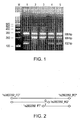
- the G-type primers When amplicons generated in this way are resolved in an agarose gel, the G-type primers can be shown to have generated a 186-bp product, whereas the T-type primers give a 132-bp product.
- the outside primers generate a 288-bp product that must be present in every reaction in order to guarantee the reaction has proceeded accurately.
- Figure 1 gives the results of an ARMS -PCR assay to detect the FOXO3A G/T variants using the primers and conditions described above.
- Track 1 shows a subject homozygous for the "T" allele (132 bp); tracks 2 and 3 show subjects who are homozygous for the "G” allele (186 bp); and tracks 4 and 5 show subjects who are heterozygous for the "T” and "G” alleles (132 + 186 bp) and M is the 100 bp DNA ladder (Invitrogen, Paisley, United Kingdom).
- Figure 2 shows a schematic outline of the assay.
- Primers “rs2802292_FO” and “rs2802292_RO” flank the polymorphic locus rs2802292 and should generate a control 288-bp band in all cases.
- Primers “rs2802292_FO” and “rs2802292 RG” generate a 186-bp G-specific product and primers "rs2802292_FT” and "rs2802292_RO” generate a 132-bp T-specific product.
- oligonucleotides may be any of a variety of natural and/or synthetic compositions such as synthetic oligonucleotides, restriction fragments, cDNAs, synthetic peptide nucleic acids (PNAs), and the like.
- the assay kit and method may also employ labeled oligonucleotides to allow ease of identification in the assays. Examples of labels which may be employed include radio-labels, enzymes, fluorescent compounds, streptavidin, avidin, biotin, magnetic moieties, metal binding moieties, antigen or antibody moieties, and the like.
- the kit may, optionally, also include DNA sampling means.
- DNA sampling means are well known to one of-skill in the art and can include, but not be limited to substrates, such as filter papers, the AmpliCard TM ( University of Sheffield, Sheffield, England S10 2J F; Tallow, J W, et al., J of Invest. Dermatol.
- DNA purification reagents such as Nucleon TM kits, lysis buffers, proteinase solutions and the like
- PCR reagents such as reaction buffers, thermostable polymerase, dNTPs, and the like
- allele detection means such as the Hinfl restriction enzyme, allele specific oligonucleotides, degenerate oligonucleotide primers for nested PCR from dried blood.
- Knowledge of the particular alleles described in this invention can be used to examine differences in cell behavior in cell cultures and tissue systems and measure the response of the cells to chemicals or biological agents that are added to the cell or tissue culture systems. Differences in cell behavior and responses can be compared between the genotypes in order to identify drugs or other pharmacologic agents that may be implemented in the desire to improve health or extend lifespan or to test new compounds for toxicity or potential effects on genes or gene expression.
- the ability to target populations expected to show the highest clinical benefit, based on genetic profile can enable: 1) the repositioning of already marketed drugs; 2) the rescue of drug candidates whose clinical development has been discontinued as a result of safety or efficacy limitations, which are patient subgroup-specific; and 3) an accelerated and less costly development for candidate therapeutics and more optimal drug labeling (e.g. since measuring the effect of various doses of an agent on the causative mutation is useful for optimizing effective dose).
- the treatment of an individual with a particular therapeutic agent can be monitored by measuring the level of expression for a gene associated with longevity.
- the level of expression can be measured by determining protein (e.g. FOXO3A), mRNA and/or transcriptional level.
- the therapeutic regimen can then be maintained or adjusted (increased or decreased in dose).
- the effectiveness of treating a subject with an agent comprises the steps of: (i) obtaining a pre-administration sample from a subject prior to administration of the agent; (ii) detecting the level or amount of a protein, mRNA or genomic DNA in the pre-administration sample; (iii) obtaining one or more post-administration samples from the subject after administration of the therapeutic agent; (iv) detecting the level of expression or activity of the protein, mRNA or genomic DNA in the post-administration sample; (v) comparing the level of expression or activity of the protein, mRNA or genomic DNA in the pre-administration sample with the corresponding protein, mRNA or genomic DNA in the post-administration sample, respectively; and (vi) altering the administration of the agent to the subject accordingly.
- Cells of a subject may also be obtained before and after administration of a therapeutic to detect the level of expression of genes other than a FOXO3A gene to verify that the therapeutic does not increase or decrease the expression of genes which could be deleterious. This can be done, e.g., by using the method of transcriptional profiling.
- mRNA from cells exposed in vivo to a therapeutic and mRNA from the same type of cells that were not exposed to the therapeutic could be reverse transcribed and hybridized to a chip containing DNA from numerous genes, to thereby compare the expression of genes in cells treated and not treated with the therapeutic.
- the "GCC” haplotype can be used in risk calculators to aid in the prediction of death and age-associated diseases (heart disease, stroke, cancer, COPD or other chronic lung disease, Parkinson disease, and diabetes and dementia) and future physical function (ability to walk, cognitive function). This information is of interest to the public, physicians, health care companies and insurance companies. Examples of known risk calculators include the system and method disclosed in Perls, U.S. Patent Application Publication No. US 2007/0118398 A1, published on May 24, 2007 . Risk calculators can be provided in for example, a physician's office, as a handheld or online.
- An individual, health-care professional, insurance company, health care organization interested in predicting how long someone will live may enter his/her genotype into a computer and obtains a risk score for aging-related disease, number of healthy years of life left, and number of total remaining years of life.
- a physician or health professional may advise the patient on healthy living or risk reduction for the above diseases and death, particularly for persons with the less protective versions of the FOX03A gene.
- Some exemplary options include: advice concerning food choices (e.g. red wine, soy products, and other foods that contain compounds that may affect the activity of the FOXO3A gene) or intensive risk factor modification such as weight loss or increased physical activity.
- FOXO3A and in particular the GCC haplotype as predictors of healthy aging and longevity provides a probable source of useful biologics and targets for pharmaceutical screens and testing.
- Means of taking the gene product may include ingestion, injection, transdermal administration:and other methods well known in the pharmaceutical arts.
- Compounds can be screened to find those that affect the type, activity, or the amount of the gene product produced by FOXO3A, in particular, the GCC haplotype.
- Subject refers to human and non-human animals.
- non-human animals includes all vertebrates, e.g., mammals, such as non-human primates (particularly higher primates), farm mammals such as horses, cows, bison, buffalo, goats, pigs and sheep, chicken, ducks and geese, companion animals such as dogs, cats, rabbits, guinea pigs, rodents, and reptiles, and laboratory animals.
- the subject is human.
- the subject is an experimental animal or transgenic animal suitable as a disease model.
- Methods of modulating and treatment are well known to those skilled in the art as set forth in Geesaman metal., U.S. Patent Application Publication No. US 2007/0105109 A1, published on May 10, 2007 .
Landscapes
- Chemical & Material Sciences (AREA)
- Life Sciences & Earth Sciences (AREA)
- Health & Medical Sciences (AREA)
- Organic Chemistry (AREA)
- Proteomics, Peptides & Aminoacids (AREA)
- Engineering & Computer Science (AREA)
- Analytical Chemistry (AREA)
- Zoology (AREA)
- Wood Science & Technology (AREA)
- Genetics & Genomics (AREA)
- Biochemistry (AREA)
- Molecular Biology (AREA)
- General Health & Medical Sciences (AREA)
- Physics & Mathematics (AREA)
- Immunology (AREA)
- Bioinformatics & Cheminformatics (AREA)
- Biophysics (AREA)
- General Engineering & Computer Science (AREA)
- Biotechnology (AREA)
- Microbiology (AREA)
- Pathology (AREA)
- General Physics & Mathematics (AREA)
- Pharmacology & Pharmacy (AREA)
- Food Science & Technology (AREA)
- Medicinal Chemistry (AREA)
- Measuring Or Testing Involving Enzymes Or Micro-Organisms (AREA)
Applications Claiming Priority (2)
| Application Number | Priority Date | Filing Date | Title |
|---|---|---|---|
| US8772208P | 2008-08-10 | 2008-08-10 | |
| PCT/US2009/053307 WO2010019519A2 (en) | 2008-08-10 | 2009-08-10 | Method of using foxo3a polymorphisms and haplotypes to predict and promote healthy aging and longevity |
Publications (3)
| Publication Number | Publication Date |
|---|---|
| EP2324127A2 EP2324127A2 (en) | 2011-05-25 |
| EP2324127A4 EP2324127A4 (en) | 2012-06-13 |
| EP2324127B1 true EP2324127B1 (en) | 2015-01-21 |
Family
ID=41669598
Family Applications (1)
| Application Number | Title | Priority Date | Filing Date |
|---|---|---|---|
| EP09807138.4A Active EP2324127B1 (en) | 2008-08-10 | 2009-08-10 | Method of using foxo3a polymorphisms and haplotypes to predict and promote healthy aging and longevity |
Country Status (9)
| Country | Link |
|---|---|
| US (3) | US20110212447A1 (enExample) |
| EP (1) | EP2324127B1 (enExample) |
| JP (1) | JP5814119B2 (enExample) |
| KR (2) | KR20160102081A (enExample) |
| CN (1) | CN102177255B (enExample) |
| AU (1) | AU2009282172B2 (enExample) |
| CA (1) | CA2733597C (enExample) |
| DK (1) | DK2324127T3 (enExample) |
| WO (1) | WO2010019519A2 (enExample) |
Cited By (1)
| Publication number | Priority date | Publication date | Assignee | Title |
|---|---|---|---|---|
| WO2018209222A1 (en) * | 2017-05-12 | 2018-11-15 | Massachusetts Institute Of Technology | Systems and methods for crowdsourcing, analyzing, and/or matching personal data |
Families Citing this family (9)
| Publication number | Priority date | Publication date | Assignee | Title |
|---|---|---|---|---|
| KR20160102081A (ko) * | 2008-08-10 | 2016-08-26 | 쿠아키니 메디컬 센터 | 건강한 노화 및 장수를 예측하고 증진하기 위하여 foxo3a 다형성 및 일배체형을 사용하는 방법 |
| US8990135B2 (en) * | 2010-06-15 | 2015-03-24 | The Regents Of The University Of Michigan | Personalized health risk assessment for critical care |
| CN103233001B (zh) * | 2012-06-25 | 2016-11-02 | 西北农林科技大学 | 秦川牛FoxO1基因单核苷酸多态性分子标记的检测方法与应用 |
| KR102017562B1 (ko) * | 2013-03-13 | 2019-09-03 | (주)아모레퍼시픽 | 미백 효능 물질의 스크리닝 방법 |
| WO2017062751A1 (en) * | 2015-10-08 | 2017-04-13 | The Regents Of The University Of California | Compounds and methods for promoting stress resistance |
| WO2018183353A1 (en) * | 2017-03-27 | 2018-10-04 | Cardax Pharma, Inc. | Small molecule compounds to support healthy human aging |
| WO2019156591A1 (en) * | 2018-02-12 | 2019-08-15 | Limited Liability Company "Gero" | Methods and systems for prediction of frailty background |
| CN111235250A (zh) * | 2020-03-31 | 2020-06-05 | 中国科学院昆明动物研究所 | 与健康老龄相关的关键通路及其外周血dna甲基化位点标志物和应用 |
| CN115466321B (zh) * | 2022-09-23 | 2024-03-22 | 南方医科大学珠江医院 | FOXO3a-DRI肽段、其药物组合物及应用 |
Family Cites Families (29)
| Publication number | Priority date | Publication date | Assignee | Title |
|---|---|---|---|---|
| GB8311018D0 (en) | 1983-04-22 | 1983-05-25 | Amersham Int Plc | Detecting mutations in dna |
| US4998617A (en) | 1986-09-15 | 1991-03-12 | Laura Lupton Inc | Facial cosmetic liquid make up kit |
| US5459039A (en) | 1989-05-12 | 1995-10-17 | Duke University | Methods for mapping genetic mutations |
| FR2650840B1 (fr) | 1989-08-11 | 1991-11-29 | Bertin & Cie | Procede rapide de detection et/ou d'identification d'une seule base sur une sequence d'acide nucleique, et ses applications |
| US6004744A (en) | 1991-03-05 | 1999-12-21 | Molecular Tool, Inc. | Method for determining nucleotide identity through extension of immobilized primer |
| ATE267877T1 (de) | 1993-01-07 | 2004-06-15 | Sequenom Inc | Dns - sequenzierung durch massenspektronomie |
| US5593826A (en) | 1993-03-22 | 1997-01-14 | Perkin-Elmer Corporation, Applied Biosystems, Inc. | Enzymatic ligation of 3'amino-substituted oligonucleotides |
| US5747282A (en) | 1994-08-12 | 1998-05-05 | Myraid Genetics, Inc. | 17Q-linked breast and ovarian cancer susceptibility gene |
| US5709999A (en) | 1994-08-12 | 1998-01-20 | Myriad Genetics Inc. | Linked breast and ovarian cancer susceptibility gene |
| US5710001A (en) | 1994-08-12 | 1998-01-20 | Myriad Genetics, Inc. | 17q-linked breast and ovarian cancer susceptibility gene |
| US5753441A (en) | 1994-08-12 | 1998-05-19 | Myriad Genetics, Inc. | 170-linked breast and ovarian cancer susceptibility gene |
| US5693473A (en) | 1994-08-12 | 1997-12-02 | Myriad Genetics, Inc. | Linked breast and ovarian cancer susceptibility gene |
| EP0699754B2 (en) | 1994-08-12 | 2009-08-12 | The University of Utah Research Foundation | Method for diagnosing a predisposition for breast and ovarian cancer |
| US5837495A (en) | 1994-10-13 | 1998-11-17 | Applied Research Systems Ars Holding N.V. | DNA encoding interleukin-1 antagonist |
| CA2239733C (en) | 1995-12-18 | 2001-04-03 | Myriad Genetics, Inc. | Chromosome 13-linked breast cancer susceptibility gene |
| US6673546B2 (en) | 2000-08-11 | 2004-01-06 | The Children's Medical Center Corporation | Genetic loci indicative of propensity for longevity and methods for identifying propensity for age-related disease |
| US20040121407A1 (en) | 2002-09-06 | 2004-06-24 | Elixir Pharmaceuticals, Inc. | Regulation of the growth hormone/IGF-1 axis |
| EP1413584B1 (en) | 2002-10-21 | 2005-03-02 | AXXAM S.r.l. | Photoprotein with improved bioluminescence |
| US7932049B2 (en) | 2002-12-23 | 2011-04-26 | University Of Massachusetts | Methods of identifying longevity modulators and therapeutic methods of use thereof |
| DE10311769A1 (de) | 2003-03-18 | 2004-09-30 | Bayer Healthcare Ag | Testmethoden zur Bestimmung der intrazellulären Konzentration zyklischer Nukleotide |
| US20070105109A1 (en) | 2003-07-02 | 2007-05-10 | Geesaman Bard J | Sirt1 and genetic disorders |
| WO2005007687A1 (en) | 2003-07-09 | 2005-01-27 | Dana-Farber Cancer Institute, Inc | Compositions and methods for modulating ovarian follicular initiation |
| JP2005168463A (ja) | 2003-12-15 | 2005-06-30 | Chisso Corp | カルシウム結合型発光蛋白質の保存方法等 |
| US20060069049A1 (en) | 2003-12-29 | 2006-03-30 | President And Fellows Of Harvard College | Methods and reagents related to foxo |
| CA2569079A1 (en) * | 2004-06-03 | 2005-12-15 | The Johns Hopkins University | Methods of screening for cell proliferation or neoplastic disorders |
| US7622271B2 (en) | 2004-07-26 | 2009-11-24 | University Of Washington | Identification of aging genes through large-scale analysis |
| US20070118398A1 (en) * | 2005-11-18 | 2007-05-24 | Flicker Technologies, Llc | System and method for estimating life expectancy and providing customized advice for improving life expectancy |
| JP5292569B2 (ja) * | 2006-11-10 | 2013-09-18 | 国立大学法人名古屋大学 | 抗老化転写因子活性化剤及びその利用 |
| KR20160102081A (ko) * | 2008-08-10 | 2016-08-26 | 쿠아키니 메디컬 센터 | 건강한 노화 및 장수를 예측하고 증진하기 위하여 foxo3a 다형성 및 일배체형을 사용하는 방법 |
-
2009
- 2009-08-10 KR KR1020167022020A patent/KR20160102081A/ko not_active Abandoned
- 2009-08-10 US US13/058,179 patent/US20110212447A1/en not_active Abandoned
- 2009-08-10 DK DK09807138T patent/DK2324127T3/en active
- 2009-08-10 KR KR1020117005559A patent/KR101649541B1/ko active Active
- 2009-08-10 CN CN200980140170.7A patent/CN102177255B/zh active Active
- 2009-08-10 EP EP09807138.4A patent/EP2324127B1/en active Active
- 2009-08-10 WO PCT/US2009/053307 patent/WO2010019519A2/en not_active Ceased
- 2009-08-10 JP JP2011523071A patent/JP5814119B2/ja active Active
- 2009-08-10 AU AU2009282172A patent/AU2009282172B2/en active Active
- 2009-08-10 CA CA2733597A patent/CA2733597C/en active Active
-
2013
- 2013-03-15 US US13/831,775 patent/US20130295566A1/en not_active Abandoned
-
2015
- 2015-08-10 US US14/822,873 patent/US12534761B2/en active Active
Cited By (2)
| Publication number | Priority date | Publication date | Assignee | Title |
|---|---|---|---|---|
| WO2018209222A1 (en) * | 2017-05-12 | 2018-11-15 | Massachusetts Institute Of Technology | Systems and methods for crowdsourcing, analyzing, and/or matching personal data |
| US11593512B2 (en) | 2017-05-12 | 2023-02-28 | Massachusetts Institute Of Technology | Systems and methods for crowdsourcing, analyzing, and/or matching personal data |
Also Published As
| Publication number | Publication date |
|---|---|
| CA2733597C (en) | 2019-02-26 |
| HK1158271A1 (en) | 2012-07-13 |
| CN102177255A (zh) | 2011-09-07 |
| US20130295566A1 (en) | 2013-11-07 |
| WO2010019519A3 (en) | 2010-05-27 |
| US20110212447A1 (en) | 2011-09-01 |
| JP2011530312A (ja) | 2011-12-22 |
| AU2009282172B2 (en) | 2016-06-02 |
| EP2324127A4 (en) | 2012-06-13 |
| DK2324127T3 (en) | 2015-04-27 |
| US20150337383A1 (en) | 2015-11-26 |
| AU2009282172A1 (en) | 2010-02-18 |
| KR20160102081A (ko) | 2016-08-26 |
| CA2733597A1 (en) | 2010-02-18 |
| EP2324127A2 (en) | 2011-05-25 |
| KR101649541B1 (ko) | 2016-08-19 |
| JP5814119B2 (ja) | 2015-11-17 |
| WO2010019519A2 (en) | 2010-02-18 |
| US12534761B2 (en) | 2026-01-27 |
| KR20110057147A (ko) | 2011-05-31 |
| CN102177255B (zh) | 2015-12-16 |
Similar Documents
| Publication | Publication Date | Title |
|---|---|---|
| US12534761B2 (en) | Method of using FOXO3A polymorphisms and haplotypes to predict and promote healthy aging and longevity | |
| JP5651585B2 (ja) | 体重管理のための遺伝子マーカーとその使用方法 | |
| WO2013043554A1 (en) | Methods for creating recommended dietary regime | |
| EP2283156A2 (en) | Detecting genetic predisposition to osteoarthritis associated conditions | |
| KR20170063977A (ko) | 유방암 발생 위험의 평가 방법 | |
| EP2304052A2 (en) | Detecting genetic predisposition to osteoarthritis associated conditions | |
| AU2010215061B2 (en) | Assay for determining epigenetic profiles of markers of Fragile X alleles | |
| US20230084402A1 (en) | Biomarkers for Risk Prediction of Parkinson's Disease | |
| Lorenz et al. | Candidate gene analysis of the succinic semialdehyde dehydrogenase gene (ALDH5A1) in patients with idiopathic generalized epilepsy and photosensitivity | |
| HK1158271B (en) | Method of using foxo3a polymorphisms and haplotypes to predict and promote healthy aging and longevity | |
| US10731219B1 (en) | Method for preventing progression to metabolic syndrome | |
| Sidiropoulou et al. | Impact of vitamin D receptor gene variants on psoriasis vulgaris susceptibility and clinical phenotype in a Greek population | |
| US8236497B2 (en) | Methods of diagnosing cardiovascular disease | |
| US20100184839A1 (en) | Allelic polymorphism associated with diabetes | |
| Khodyrev et al. | The analysis of association between type 2 diabetes and polymorphic markers in the CDKAL1 gene and in the HHEX/IDE locus | |
| Hansen et al. | The Rhesus Monkey: A Nonhuman Primate Model For T2DM-Associated Gene Screening. J Diabetes Metab 2: 150. doi: 10.4172/2155-6156.1000150 Page 2 of 7 Volume 2• Issue 7• 1000150 J Diabetes Metab ISSN: 2155-6156 JDM, an open access journal nucleotide and amino acid levels; c) 89 percent of the rhesus monkey genes are syngenically aligned with the corresponding human genes; and d) an extraordinary amount of physiological similarity exists between rhesus monkeys and humans [13] | |
| US7618779B2 (en) | Chromosome 1p36 polymorphisms and low bone mineral density | |
| WO2011004345A1 (en) | Upstream binding protein 1 polymorphisms and their use for prognosing or diagnosing arterial blood pressure |
Legal Events
| Date | Code | Title | Description |
|---|---|---|---|
| PUAI | Public reference made under article 153(3) epc to a published international application that has entered the european phase |
Free format text: ORIGINAL CODE: 0009012 |
|
| 17P | Request for examination filed |
Effective date: 20110309 |
|
| AK | Designated contracting states |
Kind code of ref document: A2 Designated state(s): AT BE BG CH CY CZ DE DK EE ES FI FR GB GR HR HU IE IS IT LI LT LU LV MC MK MT NL NO PL PT RO SE SI SK SM TR |
|
| AX | Request for extension of the european patent |
Extension state: AL BA RS |
|
| DAX | Request for extension of the european patent (deleted) | ||
| RIC1 | Information provided on ipc code assigned before grant |
Ipc: C12Q 1/68 20060101AFI20120427BHEP Ipc: G01N 33/15 20060101ALI20120427BHEP |
|
| A4 | Supplementary search report drawn up and despatched |
Effective date: 20120510 |
|
| REG | Reference to a national code |
Ref country code: HK Ref legal event code: DE Ref document number: 1158271 Country of ref document: HK |
|
| RIN1 | Information on inventor provided before grant (corrected) |
Inventor name: DONLON, TIMOTHY, ATCHISON Inventor name: WILLCOX, BRADLEY, JOHN Inventor name: CURB, J., DAVID |
|
| 17Q | First examination report despatched |
Effective date: 20130424 |
|
| GRAP | Despatch of communication of intention to grant a patent |
Free format text: ORIGINAL CODE: EPIDOSNIGR1 |
|
| INTG | Intention to grant announced |
Effective date: 20140822 |
|
| GRAS | Grant fee paid |
Free format text: ORIGINAL CODE: EPIDOSNIGR3 |
|
| GRAA | (expected) grant |
Free format text: ORIGINAL CODE: 0009210 |
|
| AK | Designated contracting states |
Kind code of ref document: B1 Designated state(s): AT BE BG CH CY CZ DE DK EE ES FI FR GB GR HR HU IE IS IT LI LT LU LV MC MK MT NL NO PL PT RO SE SI SK SM TR |
|
| REG | Reference to a national code |
Ref country code: GB Ref legal event code: FG4D |
|
| REG | Reference to a national code |
Ref country code: CH Ref legal event code: EP |
|
| REG | Reference to a national code |
Ref country code: IE Ref legal event code: FG4D |
|
| REG | Reference to a national code |
Ref country code: DE Ref legal event code: R096 Ref document number: 602009029144 Country of ref document: DE Effective date: 20150312 |
|
| REG | Reference to a national code |
Ref country code: AT Ref legal event code: REF Ref document number: 709237 Country of ref document: AT Kind code of ref document: T Effective date: 20150315 |
|
| REG | Reference to a national code |
Ref country code: DK Ref legal event code: T3 Effective date: 20150421 |
|
| REG | Reference to a national code |
Ref country code: SE Ref legal event code: TRGR |
|
| REG | Reference to a national code |
Ref country code: CH Ref legal event code: NV Representative=s name: RIEDERER HASLER AND PARTNER PATENTANWAELTE AG, LI |
|
| REG | Reference to a national code |
Ref country code: AT Ref legal event code: MK05 Ref document number: 709237 Country of ref document: AT Kind code of ref document: T Effective date: 20150121 |
|
| REG | Reference to a national code |
Ref country code: LT Ref legal event code: MG4D |
|
| REG | Reference to a national code |
Ref country code: NO Ref legal event code: T2 Effective date: 20150121 |
|
| PG25 | Lapsed in a contracting state [announced via postgrant information from national office to epo] |
Ref country code: ES Free format text: LAPSE BECAUSE OF FAILURE TO SUBMIT A TRANSLATION OF THE DESCRIPTION OR TO PAY THE FEE WITHIN THE PRESCRIBED TIME-LIMIT Effective date: 20150121 Ref country code: BG Free format text: LAPSE BECAUSE OF FAILURE TO SUBMIT A TRANSLATION OF THE DESCRIPTION OR TO PAY THE FEE WITHIN THE PRESCRIBED TIME-LIMIT Effective date: 20150421 Ref country code: LT Free format text: LAPSE BECAUSE OF FAILURE TO SUBMIT A TRANSLATION OF THE DESCRIPTION OR TO PAY THE FEE WITHIN THE PRESCRIBED TIME-LIMIT Effective date: 20150121 Ref country code: HR Free format text: LAPSE BECAUSE OF FAILURE TO SUBMIT A TRANSLATION OF THE DESCRIPTION OR TO PAY THE FEE WITHIN THE PRESCRIBED TIME-LIMIT Effective date: 20150121 |
|
| REG | Reference to a national code |
Ref country code: HK Ref legal event code: GR Ref document number: 1158271 Country of ref document: HK |
|
| PG25 | Lapsed in a contracting state [announced via postgrant information from national office to epo] |
Ref country code: PL Free format text: LAPSE BECAUSE OF FAILURE TO SUBMIT A TRANSLATION OF THE DESCRIPTION OR TO PAY THE FEE WITHIN THE PRESCRIBED TIME-LIMIT Effective date: 20150121 Ref country code: GR Free format text: LAPSE BECAUSE OF FAILURE TO SUBMIT A TRANSLATION OF THE DESCRIPTION OR TO PAY THE FEE WITHIN THE PRESCRIBED TIME-LIMIT Effective date: 20150422 Ref country code: LV Free format text: LAPSE BECAUSE OF FAILURE TO SUBMIT A TRANSLATION OF THE DESCRIPTION OR TO PAY THE FEE WITHIN THE PRESCRIBED TIME-LIMIT Effective date: 20150121 Ref country code: AT Free format text: LAPSE BECAUSE OF FAILURE TO SUBMIT A TRANSLATION OF THE DESCRIPTION OR TO PAY THE FEE WITHIN THE PRESCRIBED TIME-LIMIT Effective date: 20150121 |
|
| REG | Reference to a national code |
Ref country code: DE Ref legal event code: R097 Ref document number: 602009029144 Country of ref document: DE |
|
| PG25 | Lapsed in a contracting state [announced via postgrant information from national office to epo] |
Ref country code: EE Free format text: LAPSE BECAUSE OF FAILURE TO SUBMIT A TRANSLATION OF THE DESCRIPTION OR TO PAY THE FEE WITHIN THE PRESCRIBED TIME-LIMIT Effective date: 20150121 Ref country code: RO Free format text: LAPSE BECAUSE OF FAILURE TO SUBMIT A TRANSLATION OF THE DESCRIPTION OR TO PAY THE FEE WITHIN THE PRESCRIBED TIME-LIMIT Effective date: 20150121 Ref country code: SK Free format text: LAPSE BECAUSE OF FAILURE TO SUBMIT A TRANSLATION OF THE DESCRIPTION OR TO PAY THE FEE WITHIN THE PRESCRIBED TIME-LIMIT Effective date: 20150121 Ref country code: CZ Free format text: LAPSE BECAUSE OF FAILURE TO SUBMIT A TRANSLATION OF THE DESCRIPTION OR TO PAY THE FEE WITHIN THE PRESCRIBED TIME-LIMIT Effective date: 20150121 |
|
| PLBE | No opposition filed within time limit |
Free format text: ORIGINAL CODE: 0009261 |
|
| STAA | Information on the status of an ep patent application or granted ep patent |
Free format text: STATUS: NO OPPOSITION FILED WITHIN TIME LIMIT |
|
| 26N | No opposition filed |
Effective date: 20151022 |
|
| PG25 | Lapsed in a contracting state [announced via postgrant information from national office to epo] |
Ref country code: IT Free format text: LAPSE BECAUSE OF FAILURE TO SUBMIT A TRANSLATION OF THE DESCRIPTION OR TO PAY THE FEE WITHIN THE PRESCRIBED TIME-LIMIT Effective date: 20150121 |
|
| PG25 | Lapsed in a contracting state [announced via postgrant information from national office to epo] |
Ref country code: SI Free format text: LAPSE BECAUSE OF FAILURE TO SUBMIT A TRANSLATION OF THE DESCRIPTION OR TO PAY THE FEE WITHIN THE PRESCRIBED TIME-LIMIT Effective date: 20150121 |
|
| PG25 | Lapsed in a contracting state [announced via postgrant information from national office to epo] |
Ref country code: LU Free format text: LAPSE BECAUSE OF FAILURE TO SUBMIT A TRANSLATION OF THE DESCRIPTION OR TO PAY THE FEE WITHIN THE PRESCRIBED TIME-LIMIT Effective date: 20150810 Ref country code: MC Free format text: LAPSE BECAUSE OF FAILURE TO SUBMIT A TRANSLATION OF THE DESCRIPTION OR TO PAY THE FEE WITHIN THE PRESCRIBED TIME-LIMIT Effective date: 20150121 |
|
| REG | Reference to a national code |
Ref country code: FR Ref legal event code: PLFP Year of fee payment: 8 |
|
| PG25 | Lapsed in a contracting state [announced via postgrant information from national office to epo] |
Ref country code: MT Free format text: LAPSE BECAUSE OF FAILURE TO SUBMIT A TRANSLATION OF THE DESCRIPTION OR TO PAY THE FEE WITHIN THE PRESCRIBED TIME-LIMIT Effective date: 20150121 |
|
| PG25 | Lapsed in a contracting state [announced via postgrant information from national office to epo] |
Ref country code: HU Free format text: LAPSE BECAUSE OF FAILURE TO SUBMIT A TRANSLATION OF THE DESCRIPTION OR TO PAY THE FEE WITHIN THE PRESCRIBED TIME-LIMIT; INVALID AB INITIO Effective date: 20090810 Ref country code: SM Free format text: LAPSE BECAUSE OF FAILURE TO SUBMIT A TRANSLATION OF THE DESCRIPTION OR TO PAY THE FEE WITHIN THE PRESCRIBED TIME-LIMIT Effective date: 20150121 |
|
| PG25 | Lapsed in a contracting state [announced via postgrant information from national office to epo] |
Ref country code: CY Free format text: LAPSE BECAUSE OF FAILURE TO SUBMIT A TRANSLATION OF THE DESCRIPTION OR TO PAY THE FEE WITHIN THE PRESCRIBED TIME-LIMIT Effective date: 20150121 |
|
| REG | Reference to a national code |
Ref country code: FR Ref legal event code: PLFP Year of fee payment: 9 |
|
| PG25 | Lapsed in a contracting state [announced via postgrant information from national office to epo] |
Ref country code: TR Free format text: LAPSE BECAUSE OF FAILURE TO SUBMIT A TRANSLATION OF THE DESCRIPTION OR TO PAY THE FEE WITHIN THE PRESCRIBED TIME-LIMIT Effective date: 20150121 |
|
| PG25 | Lapsed in a contracting state [announced via postgrant information from national office to epo] |
Ref country code: MK Free format text: LAPSE BECAUSE OF FAILURE TO SUBMIT A TRANSLATION OF THE DESCRIPTION OR TO PAY THE FEE WITHIN THE PRESCRIBED TIME-LIMIT Effective date: 20150121 Ref country code: PT Free format text: LAPSE BECAUSE OF FAILURE TO SUBMIT A TRANSLATION OF THE DESCRIPTION OR TO PAY THE FEE WITHIN THE PRESCRIBED TIME-LIMIT Effective date: 20150121 |
|
| REG | Reference to a national code |
Ref country code: FR Ref legal event code: PLFP Year of fee payment: 10 |
|
| PGFP | Annual fee paid to national office [announced via postgrant information from national office to epo] |
Ref country code: NL Payment date: 20250728 Year of fee payment: 17 |
|
| PGFP | Annual fee paid to national office [announced via postgrant information from national office to epo] |
Ref country code: FI Payment date: 20250728 Year of fee payment: 17 |
|
| PGFP | Annual fee paid to national office [announced via postgrant information from national office to epo] |
Ref country code: DK Payment date: 20250728 Year of fee payment: 17 Ref country code: DE Payment date: 20250728 Year of fee payment: 17 |
|
| PGFP | Annual fee paid to national office [announced via postgrant information from national office to epo] |
Ref country code: NO Payment date: 20250729 Year of fee payment: 17 |
|
| PGFP | Annual fee paid to national office [announced via postgrant information from national office to epo] |
Ref country code: BE Payment date: 20250728 Year of fee payment: 17 Ref country code: GB Payment date: 20250728 Year of fee payment: 17 |
|
| PGFP | Annual fee paid to national office [announced via postgrant information from national office to epo] |
Ref country code: FR Payment date: 20250725 Year of fee payment: 17 |
|
| PGFP | Annual fee paid to national office [announced via postgrant information from national office to epo] |
Ref country code: CH Payment date: 20250901 Year of fee payment: 17 Ref country code: SE Payment date: 20250729 Year of fee payment: 17 |
|
| PGFP | Annual fee paid to national office [announced via postgrant information from national office to epo] |
Ref country code: IE Payment date: 20250728 Year of fee payment: 17 |
|
| PGFP | Annual fee paid to national office [announced via postgrant information from national office to epo] |
Ref country code: IS Payment date: 20250811 Year of fee payment: 17 |