EP2300581B1 - Schmierstoffzusammensetzung auf der basis natürlicher und nachwachsender rohstoffe - Google Patents
Schmierstoffzusammensetzung auf der basis natürlicher und nachwachsender rohstoffe Download PDFInfo
- Publication number
- EP2300581B1 EP2300581B1 EP09761465A EP09761465A EP2300581B1 EP 2300581 B1 EP2300581 B1 EP 2300581B1 EP 09761465 A EP09761465 A EP 09761465A EP 09761465 A EP09761465 A EP 09761465A EP 2300581 B1 EP2300581 B1 EP 2300581B1
- Authority
- EP
- European Patent Office
- Prior art keywords
- oil
- tert
- group
- oils
- lubricant compound
- Prior art date
- Legal status (The legal status is an assumption and is not a legal conclusion. Google has not performed a legal analysis and makes no representation as to the accuracy of the status listed.)
- Active
Links
Images


Classifications
-
- C—CHEMISTRY; METALLURGY
- C10—PETROLEUM, GAS OR COKE INDUSTRIES; TECHNICAL GASES CONTAINING CARBON MONOXIDE; FUELS; LUBRICANTS; PEAT
- C10M—LUBRICATING COMPOSITIONS; USE OF CHEMICAL SUBSTANCES EITHER ALONE OR AS LUBRICATING INGREDIENTS IN A LUBRICATING COMPOSITION
- C10M169/00—Lubricating compositions characterised by containing as components a mixture of at least two types of ingredient selected from base-materials, thickeners or additives, covered by the preceding groups, each of these compounds being essential
- C10M169/04—Mixtures of base-materials and additives
-
- C—CHEMISTRY; METALLURGY
- C10—PETROLEUM, GAS OR COKE INDUSTRIES; TECHNICAL GASES CONTAINING CARBON MONOXIDE; FUELS; LUBRICANTS; PEAT
- C10M—LUBRICATING COMPOSITIONS; USE OF CHEMICAL SUBSTANCES EITHER ALONE OR AS LUBRICATING INGREDIENTS IN A LUBRICATING COMPOSITION
- C10M177/00—Special methods of preparation of lubricating compositions; Chemical modification by after-treatment of components or of the whole of a lubricating composition, not covered by other classes
-
- C—CHEMISTRY; METALLURGY
- C10—PETROLEUM, GAS OR COKE INDUSTRIES; TECHNICAL GASES CONTAINING CARBON MONOXIDE; FUELS; LUBRICANTS; PEAT
- C10M—LUBRICATING COMPOSITIONS; USE OF CHEMICAL SUBSTANCES EITHER ALONE OR AS LUBRICATING INGREDIENTS IN A LUBRICATING COMPOSITION
- C10M2201/00—Inorganic compounds or elements as ingredients in lubricant compositions
- C10M2201/04—Elements
- C10M2201/041—Carbon; Graphite; Carbon black
-
- C—CHEMISTRY; METALLURGY
- C10—PETROLEUM, GAS OR COKE INDUSTRIES; TECHNICAL GASES CONTAINING CARBON MONOXIDE; FUELS; LUBRICANTS; PEAT
- C10M—LUBRICATING COMPOSITIONS; USE OF CHEMICAL SUBSTANCES EITHER ALONE OR AS LUBRICATING INGREDIENTS IN A LUBRICATING COMPOSITION
- C10M2201/00—Inorganic compounds or elements as ingredients in lubricant compositions
- C10M2201/06—Metal compounds
- C10M2201/061—Carbides; Hydrides; Nitrides
-
- C—CHEMISTRY; METALLURGY
- C10—PETROLEUM, GAS OR COKE INDUSTRIES; TECHNICAL GASES CONTAINING CARBON MONOXIDE; FUELS; LUBRICANTS; PEAT
- C10M—LUBRICATING COMPOSITIONS; USE OF CHEMICAL SUBSTANCES EITHER ALONE OR AS LUBRICATING INGREDIENTS IN A LUBRICATING COMPOSITION
- C10M2201/00—Inorganic compounds or elements as ingredients in lubricant compositions
- C10M2201/06—Metal compounds
- C10M2201/065—Sulfides; Selenides; Tellurides
-
- C—CHEMISTRY; METALLURGY
- C10—PETROLEUM, GAS OR COKE INDUSTRIES; TECHNICAL GASES CONTAINING CARBON MONOXIDE; FUELS; LUBRICANTS; PEAT
- C10M—LUBRICATING COMPOSITIONS; USE OF CHEMICAL SUBSTANCES EITHER ALONE OR AS LUBRICATING INGREDIENTS IN A LUBRICATING COMPOSITION
- C10M2201/00—Inorganic compounds or elements as ingredients in lubricant compositions
- C10M2201/06—Metal compounds
- C10M2201/065—Sulfides; Selenides; Tellurides
- C10M2201/066—Molybdenum sulfide
-
- C—CHEMISTRY; METALLURGY
- C10—PETROLEUM, GAS OR COKE INDUSTRIES; TECHNICAL GASES CONTAINING CARBON MONOXIDE; FUELS; LUBRICANTS; PEAT
- C10M—LUBRICATING COMPOSITIONS; USE OF CHEMICAL SUBSTANCES EITHER ALONE OR AS LUBRICATING INGREDIENTS IN A LUBRICATING COMPOSITION
- C10M2201/00—Inorganic compounds or elements as ingredients in lubricant compositions
- C10M2201/08—Inorganic acids or salts thereof
- C10M2201/084—Inorganic acids or salts thereof containing sulfur, selenium or tellurium
-
- C—CHEMISTRY; METALLURGY
- C10—PETROLEUM, GAS OR COKE INDUSTRIES; TECHNICAL GASES CONTAINING CARBON MONOXIDE; FUELS; LUBRICANTS; PEAT
- C10M—LUBRICATING COMPOSITIONS; USE OF CHEMICAL SUBSTANCES EITHER ALONE OR AS LUBRICATING INGREDIENTS IN A LUBRICATING COMPOSITION
- C10M2201/00—Inorganic compounds or elements as ingredients in lubricant compositions
- C10M2201/085—Phosphorus oxides, acids or salts
-
- C—CHEMISTRY; METALLURGY
- C10—PETROLEUM, GAS OR COKE INDUSTRIES; TECHNICAL GASES CONTAINING CARBON MONOXIDE; FUELS; LUBRICANTS; PEAT
- C10M—LUBRICATING COMPOSITIONS; USE OF CHEMICAL SUBSTANCES EITHER ALONE OR AS LUBRICATING INGREDIENTS IN A LUBRICATING COMPOSITION
- C10M2201/00—Inorganic compounds or elements as ingredients in lubricant compositions
- C10M2201/087—Boron oxides, acids or salts
-
- C—CHEMISTRY; METALLURGY
- C10—PETROLEUM, GAS OR COKE INDUSTRIES; TECHNICAL GASES CONTAINING CARBON MONOXIDE; FUELS; LUBRICANTS; PEAT
- C10M—LUBRICATING COMPOSITIONS; USE OF CHEMICAL SUBSTANCES EITHER ALONE OR AS LUBRICATING INGREDIENTS IN A LUBRICATING COMPOSITION
- C10M2201/00—Inorganic compounds or elements as ingredients in lubricant compositions
- C10M2201/10—Compounds containing silicon
- C10M2201/102—Silicates
- C10M2201/1026—Silicates used as thickening agents
-
- C—CHEMISTRY; METALLURGY
- C10—PETROLEUM, GAS OR COKE INDUSTRIES; TECHNICAL GASES CONTAINING CARBON MONOXIDE; FUELS; LUBRICANTS; PEAT
- C10M—LUBRICATING COMPOSITIONS; USE OF CHEMICAL SUBSTANCES EITHER ALONE OR AS LUBRICATING INGREDIENTS IN A LUBRICATING COMPOSITION
- C10M2201/00—Inorganic compounds or elements as ingredients in lubricant compositions
- C10M2201/10—Compounds containing silicon
- C10M2201/102—Silicates
- C10M2201/103—Clays; Mica; Zeolites
- C10M2201/1036—Clays; Mica; Zeolites used as thickening agents
-
- C—CHEMISTRY; METALLURGY
- C10—PETROLEUM, GAS OR COKE INDUSTRIES; TECHNICAL GASES CONTAINING CARBON MONOXIDE; FUELS; LUBRICANTS; PEAT
- C10M—LUBRICATING COMPOSITIONS; USE OF CHEMICAL SUBSTANCES EITHER ALONE OR AS LUBRICATING INGREDIENTS IN A LUBRICATING COMPOSITION
- C10M2203/00—Organic non-macromolecular hydrocarbon compounds and hydrocarbon fractions as ingredients in lubricant compositions
- C10M2203/06—Well-defined aromatic compounds
-
- C—CHEMISTRY; METALLURGY
- C10—PETROLEUM, GAS OR COKE INDUSTRIES; TECHNICAL GASES CONTAINING CARBON MONOXIDE; FUELS; LUBRICANTS; PEAT
- C10M—LUBRICATING COMPOSITIONS; USE OF CHEMICAL SUBSTANCES EITHER ALONE OR AS LUBRICATING INGREDIENTS IN A LUBRICATING COMPOSITION
- C10M2203/00—Organic non-macromolecular hydrocarbon compounds and hydrocarbon fractions as ingredients in lubricant compositions
- C10M2203/10—Petroleum or coal fractions, e.g. tars, solvents, bitumen
- C10M2203/102—Aliphatic fractions
-
- C—CHEMISTRY; METALLURGY
- C10—PETROLEUM, GAS OR COKE INDUSTRIES; TECHNICAL GASES CONTAINING CARBON MONOXIDE; FUELS; LUBRICANTS; PEAT
- C10M—LUBRICATING COMPOSITIONS; USE OF CHEMICAL SUBSTANCES EITHER ALONE OR AS LUBRICATING INGREDIENTS IN A LUBRICATING COMPOSITION
- C10M2203/00—Organic non-macromolecular hydrocarbon compounds and hydrocarbon fractions as ingredients in lubricant compositions
- C10M2203/10—Petroleum or coal fractions, e.g. tars, solvents, bitumen
- C10M2203/106—Naphthenic fractions
-
- C—CHEMISTRY; METALLURGY
- C10—PETROLEUM, GAS OR COKE INDUSTRIES; TECHNICAL GASES CONTAINING CARBON MONOXIDE; FUELS; LUBRICANTS; PEAT
- C10M—LUBRICATING COMPOSITIONS; USE OF CHEMICAL SUBSTANCES EITHER ALONE OR AS LUBRICATING INGREDIENTS IN A LUBRICATING COMPOSITION
- C10M2205/00—Organic macromolecular hydrocarbon compounds or fractions, whether or not modified by oxidation as ingredients in lubricant compositions
- C10M2205/02—Organic macromolecular hydrocarbon compounds or fractions, whether or not modified by oxidation as ingredients in lubricant compositions containing acyclic monomers
- C10M2205/022—Ethene
-
- C—CHEMISTRY; METALLURGY
- C10—PETROLEUM, GAS OR COKE INDUSTRIES; TECHNICAL GASES CONTAINING CARBON MONOXIDE; FUELS; LUBRICANTS; PEAT
- C10M—LUBRICATING COMPOSITIONS; USE OF CHEMICAL SUBSTANCES EITHER ALONE OR AS LUBRICATING INGREDIENTS IN A LUBRICATING COMPOSITION
- C10M2205/00—Organic macromolecular hydrocarbon compounds or fractions, whether or not modified by oxidation as ingredients in lubricant compositions
- C10M2205/02—Organic macromolecular hydrocarbon compounds or fractions, whether or not modified by oxidation as ingredients in lubricant compositions containing acyclic monomers
- C10M2205/028—Organic macromolecular hydrocarbon compounds or fractions, whether or not modified by oxidation as ingredients in lubricant compositions containing acyclic monomers containing aliphatic monomers having more than four carbon atoms
-
- C—CHEMISTRY; METALLURGY
- C10—PETROLEUM, GAS OR COKE INDUSTRIES; TECHNICAL GASES CONTAINING CARBON MONOXIDE; FUELS; LUBRICANTS; PEAT
- C10M—LUBRICATING COMPOSITIONS; USE OF CHEMICAL SUBSTANCES EITHER ALONE OR AS LUBRICATING INGREDIENTS IN A LUBRICATING COMPOSITION
- C10M2207/00—Organic non-macromolecular hydrocarbon compounds containing hydrogen, carbon and oxygen as ingredients in lubricant compositions
- C10M2207/02—Hydroxy compounds
- C10M2207/023—Hydroxy compounds having hydroxy groups bound to carbon atoms of six-membered aromatic rings
- C10M2207/026—Hydroxy compounds having hydroxy groups bound to carbon atoms of six-membered aromatic rings with tertiary alkyl groups
-
- C—CHEMISTRY; METALLURGY
- C10—PETROLEUM, GAS OR COKE INDUSTRIES; TECHNICAL GASES CONTAINING CARBON MONOXIDE; FUELS; LUBRICANTS; PEAT
- C10M—LUBRICATING COMPOSITIONS; USE OF CHEMICAL SUBSTANCES EITHER ALONE OR AS LUBRICATING INGREDIENTS IN A LUBRICATING COMPOSITION
- C10M2207/00—Organic non-macromolecular hydrocarbon compounds containing hydrogen, carbon and oxygen as ingredients in lubricant compositions
- C10M2207/10—Carboxylix acids; Neutral salts thereof
- C10M2207/106—Carboxylix acids; Neutral salts thereof used as thickening agents
-
- C—CHEMISTRY; METALLURGY
- C10—PETROLEUM, GAS OR COKE INDUSTRIES; TECHNICAL GASES CONTAINING CARBON MONOXIDE; FUELS; LUBRICANTS; PEAT
- C10M—LUBRICATING COMPOSITIONS; USE OF CHEMICAL SUBSTANCES EITHER ALONE OR AS LUBRICATING INGREDIENTS IN A LUBRICATING COMPOSITION
- C10M2207/00—Organic non-macromolecular hydrocarbon compounds containing hydrogen, carbon and oxygen as ingredients in lubricant compositions
- C10M2207/10—Carboxylix acids; Neutral salts thereof
- C10M2207/12—Carboxylix acids; Neutral salts thereof having carboxyl groups bound to acyclic or cycloaliphatic carbon atoms
- C10M2207/125—Carboxylix acids; Neutral salts thereof having carboxyl groups bound to acyclic or cycloaliphatic carbon atoms having hydrocarbon chains of eight up to twenty-nine carbon atoms, i.e. fatty acids
- C10M2207/1256—Carboxylix acids; Neutral salts thereof having carboxyl groups bound to acyclic or cycloaliphatic carbon atoms having hydrocarbon chains of eight up to twenty-nine carbon atoms, i.e. fatty acids used as thickening agent
-
- C—CHEMISTRY; METALLURGY
- C10—PETROLEUM, GAS OR COKE INDUSTRIES; TECHNICAL GASES CONTAINING CARBON MONOXIDE; FUELS; LUBRICANTS; PEAT
- C10M—LUBRICATING COMPOSITIONS; USE OF CHEMICAL SUBSTANCES EITHER ALONE OR AS LUBRICATING INGREDIENTS IN A LUBRICATING COMPOSITION
- C10M2207/00—Organic non-macromolecular hydrocarbon compounds containing hydrogen, carbon and oxygen as ingredients in lubricant compositions
- C10M2207/10—Carboxylix acids; Neutral salts thereof
- C10M2207/22—Acids obtained from polymerised unsaturated acids
- C10M2207/226—Acids obtained from polymerised unsaturated acids used as thickening agents
-
- C—CHEMISTRY; METALLURGY
- C10—PETROLEUM, GAS OR COKE INDUSTRIES; TECHNICAL GASES CONTAINING CARBON MONOXIDE; FUELS; LUBRICANTS; PEAT
- C10M—LUBRICATING COMPOSITIONS; USE OF CHEMICAL SUBSTANCES EITHER ALONE OR AS LUBRICATING INGREDIENTS IN A LUBRICATING COMPOSITION
- C10M2207/00—Organic non-macromolecular hydrocarbon compounds containing hydrogen, carbon and oxygen as ingredients in lubricant compositions
- C10M2207/28—Esters
- C10M2207/286—Esters of polymerised unsaturated acids
- C10M2207/2865—Esters of polymerised unsaturated acids used as base material
-
- C—CHEMISTRY; METALLURGY
- C10—PETROLEUM, GAS OR COKE INDUSTRIES; TECHNICAL GASES CONTAINING CARBON MONOXIDE; FUELS; LUBRICANTS; PEAT
- C10M—LUBRICATING COMPOSITIONS; USE OF CHEMICAL SUBSTANCES EITHER ALONE OR AS LUBRICATING INGREDIENTS IN A LUBRICATING COMPOSITION
- C10M2207/00—Organic non-macromolecular hydrocarbon compounds containing hydrogen, carbon and oxygen as ingredients in lubricant compositions
- C10M2207/28—Esters
- C10M2207/287—Partial esters
- C10M2207/288—Partial esters containing free carboxyl groups
-
- C—CHEMISTRY; METALLURGY
- C10—PETROLEUM, GAS OR COKE INDUSTRIES; TECHNICAL GASES CONTAINING CARBON MONOXIDE; FUELS; LUBRICANTS; PEAT
- C10M—LUBRICATING COMPOSITIONS; USE OF CHEMICAL SUBSTANCES EITHER ALONE OR AS LUBRICATING INGREDIENTS IN A LUBRICATING COMPOSITION
- C10M2207/00—Organic non-macromolecular hydrocarbon compounds containing hydrogen, carbon and oxygen as ingredients in lubricant compositions
- C10M2207/40—Fatty vegetable or animal oils
- C10M2207/401—Fatty vegetable or animal oils used as base material
-
- C—CHEMISTRY; METALLURGY
- C10—PETROLEUM, GAS OR COKE INDUSTRIES; TECHNICAL GASES CONTAINING CARBON MONOXIDE; FUELS; LUBRICANTS; PEAT
- C10M—LUBRICATING COMPOSITIONS; USE OF CHEMICAL SUBSTANCES EITHER ALONE OR AS LUBRICATING INGREDIENTS IN A LUBRICATING COMPOSITION
- C10M2209/00—Organic macromolecular compounds containing oxygen as ingredients in lubricant compositions
- C10M2209/10—Macromolecular compoundss obtained otherwise than by reactions only involving carbon-to-carbon unsaturated bonds
- C10M2209/103—Polyethers, i.e. containing di- or higher polyoxyalkylene groups
-
- C—CHEMISTRY; METALLURGY
- C10—PETROLEUM, GAS OR COKE INDUSTRIES; TECHNICAL GASES CONTAINING CARBON MONOXIDE; FUELS; LUBRICANTS; PEAT
- C10M—LUBRICATING COMPOSITIONS; USE OF CHEMICAL SUBSTANCES EITHER ALONE OR AS LUBRICATING INGREDIENTS IN A LUBRICATING COMPOSITION
- C10M2213/00—Organic macromolecular compounds containing halogen as ingredients in lubricant compositions
- C10M2213/06—Perfluoro polymers
- C10M2213/062—Polytetrafluoroethylene [PTFE]
- C10M2213/0626—Polytetrafluoroethylene [PTFE] used as thickening agents
-
- C—CHEMISTRY; METALLURGY
- C10—PETROLEUM, GAS OR COKE INDUSTRIES; TECHNICAL GASES CONTAINING CARBON MONOXIDE; FUELS; LUBRICANTS; PEAT
- C10M—LUBRICATING COMPOSITIONS; USE OF CHEMICAL SUBSTANCES EITHER ALONE OR AS LUBRICATING INGREDIENTS IN A LUBRICATING COMPOSITION
- C10M2215/00—Organic non-macromolecular compounds containing nitrogen as ingredients in lubricant Compositions
- C10M2215/02—Amines, e.g. polyalkylene polyamines; Quaternary amines
- C10M2215/06—Amines, e.g. polyalkylene polyamines; Quaternary amines having amino groups bound to carbon atoms of six-membered aromatic rings
- C10M2215/064—Di- and triaryl amines
-
- C—CHEMISTRY; METALLURGY
- C10—PETROLEUM, GAS OR COKE INDUSTRIES; TECHNICAL GASES CONTAINING CARBON MONOXIDE; FUELS; LUBRICANTS; PEAT
- C10M—LUBRICATING COMPOSITIONS; USE OF CHEMICAL SUBSTANCES EITHER ALONE OR AS LUBRICATING INGREDIENTS IN A LUBRICATING COMPOSITION
- C10M2215/00—Organic non-macromolecular compounds containing nitrogen as ingredients in lubricant Compositions
- C10M2215/02—Amines, e.g. polyalkylene polyamines; Quaternary amines
- C10M2215/06—Amines, e.g. polyalkylene polyamines; Quaternary amines having amino groups bound to carbon atoms of six-membered aromatic rings
- C10M2215/064—Di- and triaryl amines
- C10M2215/065—Phenyl-Naphthyl amines
-
- C—CHEMISTRY; METALLURGY
- C10—PETROLEUM, GAS OR COKE INDUSTRIES; TECHNICAL GASES CONTAINING CARBON MONOXIDE; FUELS; LUBRICANTS; PEAT
- C10M—LUBRICATING COMPOSITIONS; USE OF CHEMICAL SUBSTANCES EITHER ALONE OR AS LUBRICATING INGREDIENTS IN A LUBRICATING COMPOSITION
- C10M2215/00—Organic non-macromolecular compounds containing nitrogen as ingredients in lubricant Compositions
- C10M2215/10—Amides of carbonic or haloformic acids
- C10M2215/102—Ureas; Semicarbazides; Allophanates
-
- C—CHEMISTRY; METALLURGY
- C10—PETROLEUM, GAS OR COKE INDUSTRIES; TECHNICAL GASES CONTAINING CARBON MONOXIDE; FUELS; LUBRICANTS; PEAT
- C10M—LUBRICATING COMPOSITIONS; USE OF CHEMICAL SUBSTANCES EITHER ALONE OR AS LUBRICATING INGREDIENTS IN A LUBRICATING COMPOSITION
- C10M2215/00—Organic non-macromolecular compounds containing nitrogen as ingredients in lubricant Compositions
- C10M2215/22—Heterocyclic nitrogen compounds
- C10M2215/221—Six-membered rings containing nitrogen and carbon only
-
- C—CHEMISTRY; METALLURGY
- C10—PETROLEUM, GAS OR COKE INDUSTRIES; TECHNICAL GASES CONTAINING CARBON MONOXIDE; FUELS; LUBRICANTS; PEAT
- C10M—LUBRICATING COMPOSITIONS; USE OF CHEMICAL SUBSTANCES EITHER ALONE OR AS LUBRICATING INGREDIENTS IN A LUBRICATING COMPOSITION
- C10M2215/00—Organic non-macromolecular compounds containing nitrogen as ingredients in lubricant Compositions
- C10M2215/22—Heterocyclic nitrogen compounds
- C10M2215/223—Five-membered rings containing nitrogen and carbon only
-
- C—CHEMISTRY; METALLURGY
- C10—PETROLEUM, GAS OR COKE INDUSTRIES; TECHNICAL GASES CONTAINING CARBON MONOXIDE; FUELS; LUBRICANTS; PEAT
- C10M—LUBRICATING COMPOSITIONS; USE OF CHEMICAL SUBSTANCES EITHER ALONE OR AS LUBRICATING INGREDIENTS IN A LUBRICATING COMPOSITION
- C10M2217/00—Organic macromolecular compounds containing nitrogen as ingredients in lubricant compositions
- C10M2217/04—Macromolecular compounds from nitrogen-containing monomers obtained otherwise than by reactions only involving carbon-to-carbon unsaturated bonds
- C10M2217/044—Polyamides
- C10M2217/0446—Polyamides used as thickening agents
-
- C—CHEMISTRY; METALLURGY
- C10—PETROLEUM, GAS OR COKE INDUSTRIES; TECHNICAL GASES CONTAINING CARBON MONOXIDE; FUELS; LUBRICANTS; PEAT
- C10M—LUBRICATING COMPOSITIONS; USE OF CHEMICAL SUBSTANCES EITHER ALONE OR AS LUBRICATING INGREDIENTS IN A LUBRICATING COMPOSITION
- C10M2217/00—Organic macromolecular compounds containing nitrogen as ingredients in lubricant compositions
- C10M2217/04—Macromolecular compounds from nitrogen-containing monomers obtained otherwise than by reactions only involving carbon-to-carbon unsaturated bonds
- C10M2217/045—Polyureas; Polyurethanes
- C10M2217/0456—Polyureas; Polyurethanes used as thickening agents
-
- C—CHEMISTRY; METALLURGY
- C10—PETROLEUM, GAS OR COKE INDUSTRIES; TECHNICAL GASES CONTAINING CARBON MONOXIDE; FUELS; LUBRICANTS; PEAT
- C10M—LUBRICATING COMPOSITIONS; USE OF CHEMICAL SUBSTANCES EITHER ALONE OR AS LUBRICATING INGREDIENTS IN A LUBRICATING COMPOSITION
- C10M2219/00—Organic non-macromolecular compounds containing sulfur, selenium or tellurium as ingredients in lubricant compositions
- C10M2219/02—Sulfur-containing compounds obtained by sulfurisation with sulfur or sulfur-containing compounds
- C10M2219/024—Sulfur-containing compounds obtained by sulfurisation with sulfur or sulfur-containing compounds of esters, e.g. fats
-
- C—CHEMISTRY; METALLURGY
- C10—PETROLEUM, GAS OR COKE INDUSTRIES; TECHNICAL GASES CONTAINING CARBON MONOXIDE; FUELS; LUBRICANTS; PEAT
- C10M—LUBRICATING COMPOSITIONS; USE OF CHEMICAL SUBSTANCES EITHER ALONE OR AS LUBRICATING INGREDIENTS IN A LUBRICATING COMPOSITION
- C10M2219/00—Organic non-macromolecular compounds containing sulfur, selenium or tellurium as ingredients in lubricant compositions
- C10M2219/04—Organic non-macromolecular compounds containing sulfur, selenium or tellurium as ingredients in lubricant compositions containing sulfur-to-oxygen bonds, i.e. sulfones, sulfoxides
- C10M2219/044—Sulfonic acids, Derivatives thereof, e.g. neutral salts
-
- C—CHEMISTRY; METALLURGY
- C10—PETROLEUM, GAS OR COKE INDUSTRIES; TECHNICAL GASES CONTAINING CARBON MONOXIDE; FUELS; LUBRICANTS; PEAT
- C10M—LUBRICATING COMPOSITIONS; USE OF CHEMICAL SUBSTANCES EITHER ALONE OR AS LUBRICATING INGREDIENTS IN A LUBRICATING COMPOSITION
- C10M2219/00—Organic non-macromolecular compounds containing sulfur, selenium or tellurium as ingredients in lubricant compositions
- C10M2219/04—Organic non-macromolecular compounds containing sulfur, selenium or tellurium as ingredients in lubricant compositions containing sulfur-to-oxygen bonds, i.e. sulfones, sulfoxides
- C10M2219/044—Sulfonic acids, Derivatives thereof, e.g. neutral salts
- C10M2219/0445—Sulfonic acids, Derivatives thereof, e.g. neutral salts used as thickening agents
-
- C—CHEMISTRY; METALLURGY
- C10—PETROLEUM, GAS OR COKE INDUSTRIES; TECHNICAL GASES CONTAINING CARBON MONOXIDE; FUELS; LUBRICANTS; PEAT
- C10M—LUBRICATING COMPOSITIONS; USE OF CHEMICAL SUBSTANCES EITHER ALONE OR AS LUBRICATING INGREDIENTS IN A LUBRICATING COMPOSITION
- C10M2219/00—Organic non-macromolecular compounds containing sulfur, selenium or tellurium as ingredients in lubricant compositions
- C10M2219/06—Thio-acids; Thiocyanates; Derivatives thereof
- C10M2219/062—Thio-acids; Thiocyanates; Derivatives thereof having carbon-to-sulfur double bonds
- C10M2219/066—Thiocarbamic type compounds
-
- C—CHEMISTRY; METALLURGY
- C10—PETROLEUM, GAS OR COKE INDUSTRIES; TECHNICAL GASES CONTAINING CARBON MONOXIDE; FUELS; LUBRICANTS; PEAT
- C10M—LUBRICATING COMPOSITIONS; USE OF CHEMICAL SUBSTANCES EITHER ALONE OR AS LUBRICATING INGREDIENTS IN A LUBRICATING COMPOSITION
- C10M2219/00—Organic non-macromolecular compounds containing sulfur, selenium or tellurium as ingredients in lubricant compositions
- C10M2219/06—Thio-acids; Thiocyanates; Derivatives thereof
- C10M2219/062—Thio-acids; Thiocyanates; Derivatives thereof having carbon-to-sulfur double bonds
- C10M2219/066—Thiocarbamic type compounds
- C10M2219/068—Thiocarbamate metal salts
-
- C—CHEMISTRY; METALLURGY
- C10—PETROLEUM, GAS OR COKE INDUSTRIES; TECHNICAL GASES CONTAINING CARBON MONOXIDE; FUELS; LUBRICANTS; PEAT
- C10M—LUBRICATING COMPOSITIONS; USE OF CHEMICAL SUBSTANCES EITHER ALONE OR AS LUBRICATING INGREDIENTS IN A LUBRICATING COMPOSITION
- C10M2219/00—Organic non-macromolecular compounds containing sulfur, selenium or tellurium as ingredients in lubricant compositions
- C10M2219/10—Heterocyclic compounds containing sulfur, selenium or tellurium compounds in the ring
- C10M2219/104—Heterocyclic compounds containing sulfur, selenium or tellurium compounds in the ring containing sulfur and carbon with nitrogen or oxygen in the ring
- C10M2219/106—Thiadiazoles
-
- C—CHEMISTRY; METALLURGY
- C10—PETROLEUM, GAS OR COKE INDUSTRIES; TECHNICAL GASES CONTAINING CARBON MONOXIDE; FUELS; LUBRICANTS; PEAT
- C10M—LUBRICATING COMPOSITIONS; USE OF CHEMICAL SUBSTANCES EITHER ALONE OR AS LUBRICATING INGREDIENTS IN A LUBRICATING COMPOSITION
- C10M2223/00—Organic non-macromolecular compounds containing phosphorus as ingredients in lubricant compositions
- C10M2223/02—Organic non-macromolecular compounds containing phosphorus as ingredients in lubricant compositions having no phosphorus-to-carbon bonds
- C10M2223/04—Phosphate esters
- C10M2223/041—Triaryl phosphates
-
- C—CHEMISTRY; METALLURGY
- C10—PETROLEUM, GAS OR COKE INDUSTRIES; TECHNICAL GASES CONTAINING CARBON MONOXIDE; FUELS; LUBRICANTS; PEAT
- C10M—LUBRICATING COMPOSITIONS; USE OF CHEMICAL SUBSTANCES EITHER ALONE OR AS LUBRICATING INGREDIENTS IN A LUBRICATING COMPOSITION
- C10M2223/00—Organic non-macromolecular compounds containing phosphorus as ingredients in lubricant compositions
- C10M2223/02—Organic non-macromolecular compounds containing phosphorus as ingredients in lubricant compositions having no phosphorus-to-carbon bonds
- C10M2223/04—Phosphate esters
- C10M2223/043—Ammonium or amine salts thereof
-
- C—CHEMISTRY; METALLURGY
- C10—PETROLEUM, GAS OR COKE INDUSTRIES; TECHNICAL GASES CONTAINING CARBON MONOXIDE; FUELS; LUBRICANTS; PEAT
- C10M—LUBRICATING COMPOSITIONS; USE OF CHEMICAL SUBSTANCES EITHER ALONE OR AS LUBRICATING INGREDIENTS IN A LUBRICATING COMPOSITION
- C10M2223/00—Organic non-macromolecular compounds containing phosphorus as ingredients in lubricant compositions
- C10M2223/02—Organic non-macromolecular compounds containing phosphorus as ingredients in lubricant compositions having no phosphorus-to-carbon bonds
- C10M2223/04—Phosphate esters
- C10M2223/045—Metal containing thio derivatives
-
- C—CHEMISTRY; METALLURGY
- C10—PETROLEUM, GAS OR COKE INDUSTRIES; TECHNICAL GASES CONTAINING CARBON MONOXIDE; FUELS; LUBRICANTS; PEAT
- C10M—LUBRICATING COMPOSITIONS; USE OF CHEMICAL SUBSTANCES EITHER ALONE OR AS LUBRICATING INGREDIENTS IN A LUBRICATING COMPOSITION
- C10M2223/00—Organic non-macromolecular compounds containing phosphorus as ingredients in lubricant compositions
- C10M2223/02—Organic non-macromolecular compounds containing phosphorus as ingredients in lubricant compositions having no phosphorus-to-carbon bonds
- C10M2223/04—Phosphate esters
- C10M2223/047—Thioderivatives not containing metallic elements
-
- C—CHEMISTRY; METALLURGY
- C10—PETROLEUM, GAS OR COKE INDUSTRIES; TECHNICAL GASES CONTAINING CARBON MONOXIDE; FUELS; LUBRICANTS; PEAT
- C10N—INDEXING SCHEME ASSOCIATED WITH SUBCLASS C10M RELATING TO LUBRICATING COMPOSITIONS
- C10N2030/00—Specified physical or chemical properties which is improved by the additive characterising the lubricating composition, e.g. multifunctional additives
- C10N2030/06—Oiliness; Film-strength; Anti-wear; Resistance to extreme pressure
-
- C—CHEMISTRY; METALLURGY
- C10—PETROLEUM, GAS OR COKE INDUSTRIES; TECHNICAL GASES CONTAINING CARBON MONOXIDE; FUELS; LUBRICANTS; PEAT
- C10N—INDEXING SCHEME ASSOCIATED WITH SUBCLASS C10M RELATING TO LUBRICATING COMPOSITIONS
- C10N2030/00—Specified physical or chemical properties which is improved by the additive characterising the lubricating composition, e.g. multifunctional additives
- C10N2030/64—Environmental friendly compositions
-
- C—CHEMISTRY; METALLURGY
- C10—PETROLEUM, GAS OR COKE INDUSTRIES; TECHNICAL GASES CONTAINING CARBON MONOXIDE; FUELS; LUBRICANTS; PEAT
- C10N—INDEXING SCHEME ASSOCIATED WITH SUBCLASS C10M RELATING TO LUBRICATING COMPOSITIONS
- C10N2040/00—Specified use or application for which the lubricating composition is intended
- C10N2040/02—Bearings
-
- C—CHEMISTRY; METALLURGY
- C10—PETROLEUM, GAS OR COKE INDUSTRIES; TECHNICAL GASES CONTAINING CARBON MONOXIDE; FUELS; LUBRICANTS; PEAT
- C10N—INDEXING SCHEME ASSOCIATED WITH SUBCLASS C10M RELATING TO LUBRICATING COMPOSITIONS
- C10N2040/00—Specified use or application for which the lubricating composition is intended
- C10N2040/04—Oil-bath; Gear-boxes; Automatic transmissions; Traction drives
-
- C—CHEMISTRY; METALLURGY
- C10—PETROLEUM, GAS OR COKE INDUSTRIES; TECHNICAL GASES CONTAINING CARBON MONOXIDE; FUELS; LUBRICANTS; PEAT
- C10N—INDEXING SCHEME ASSOCIATED WITH SUBCLASS C10M RELATING TO LUBRICATING COMPOSITIONS
- C10N2040/00—Specified use or application for which the lubricating composition is intended
- C10N2040/38—Conveyors or chain belts
-
- C—CHEMISTRY; METALLURGY
- C10—PETROLEUM, GAS OR COKE INDUSTRIES; TECHNICAL GASES CONTAINING CARBON MONOXIDE; FUELS; LUBRICANTS; PEAT
- C10N—INDEXING SCHEME ASSOCIATED WITH SUBCLASS C10M RELATING TO LUBRICATING COMPOSITIONS
- C10N2050/00—Form in which the lubricant is applied to the material being lubricated
- C10N2050/10—Form in which the lubricant is applied to the material being lubricated semi-solid; greasy
-
- C—CHEMISTRY; METALLURGY
- C10—PETROLEUM, GAS OR COKE INDUSTRIES; TECHNICAL GASES CONTAINING CARBON MONOXIDE; FUELS; LUBRICANTS; PEAT
- C10N—INDEXING SCHEME ASSOCIATED WITH SUBCLASS C10M RELATING TO LUBRICATING COMPOSITIONS
- C10N2070/00—Specific manufacturing methods for lubricant compositions
Definitions
- the invention relates to a lubricant composition based on modified, natural and renewable raw materials whose viscosity is adjustable depending on the application.
- the invention relates to biodegradable lubricant compositions.
- An object of the present invention is to provide a lubricant composition based on triglyceride-based native, renewable oils to which viscosity can be adjusted according to the desired application.
- Another object of the present invention is to provide a lubricating composition containing the modified native oils which can be used at extreme temperatures in high and low temperatures Low temperature range has good tribological properties and good resistance to oxidation.
- a lubricant composition in which native oils based on triglycerides are reacted with peroxides and the unsaturated fractions of the fatty acids are linked together by means of a radical addition reaction. This reaction alters the viscosity of the modified oil.
- the viscosity can be adjusted to the desired value as a function of the peroxide / oil ratio and thus adapted to the requirements of the particular application.
- the lubricant composition can be used as fluid grease of NLGI grades 000, 00 and as fluid grease for central lubrication systems and in the context of gear lubrication and as so-called soft grease in plain bearings, rolling bearings and water pumps of NGLI grades 1 to 4 or so-called Tough greases of NLGI grades 5 and 6 can be used as sealing or block greases.
- the basis for the lubricant compositions of the present invention is a process for changing the viscosity of a triglyceride-based native oil, wherein the native oil is reacted with a peroxide compound at a temperature of 165 ° C to 190 ° C for 3 to 5 hours followed by the unsaturated double bonds be linked by radical addition reaction. Subsequently, the by-products formed during the polymerization are removed under high vacuum. The viscosity-modified oils produced in this way can then be further processed in situ for the production of lubricants. Depending on the desired viscosity of the oil to be produced, 4.8% to 10.3% of the corresponding peroxide compound is used for the reaction of the native oil with the peroxide compound.
- an oil is obtained with a viscosity of 100 to 1250 mm 2 / sec.
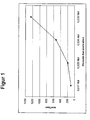
- the Fig. 1 shows the dependence of the viscosity on the peroxide concentration. Due to the different amounts of peroxide compound, therefore, a highly viscous oil as well as a low-viscosity oil can be produced reproducibly in a simple manner.
- the peroxides used can be both aromatic and aliphatic peroxide compounds.
- the peroxide compound is selected from the group consisting of 1,3-bis (tert-butylperoxyisopropyl) benzene, 1,4-bis (tert-butylperoxyisopropyl) benzene, dicumyl peroxide, tert-butylcumyl peroxide, 2,5-dimethyl-2,5 -di- (tert-butylperoxy) hexane, n-butyl-4,4'-di (tert-butylperoxy) valerate, 1,1'-di (tert-butylperoxy) -3,3,5-trimethylcyclohexane, 2 , 5-dimethyl-2,5-di- (tert-butylperoxy) hexane.
- Particularly preferred are aliphatic peroxide compounds, e.g. 2,5-dimethyl-2,5-d
- oils having a high proportion of unsaturated components are particularly suitable.
- vegetable oils with a high proportion of oleic acid are suitable.
- olive oil which has an oleic acid content of 65 to 85%.
- vegetable oils having an oleic acid content of at least 60% may also be genetically modified to increase the oleic acid content.
- the native oils are selected from the group consisting of high oleic safflower oil, high oleic corn oil, high oleic rapeseed oil, high oleic sunflower oil, high oleic soybean oil, high oleic linseed oil, high oleic peanut oil, "Lesquerella” oil high oleic acid content, high oleic palm oil, high oleic acid castor oil, high oleic acid linseed oil or high oleic olive oil, and mixtures of the foregoing oils.
- the modified oils thus obtained which have a higher viscosity compared to the starting oils, are inexpensive and reproducible in terms of their tribological properties, their oxidation resistance and their range of application at temperatures from -30 ° C to 180 ° C. Compared to mineral oils they have the advantage that they are biodegradable and are available indefinitely.
- the unsaturated fatty acids are wholly or partly linked to one another by the reaction with peroxide via a radical addition reaction by utilizing the unsaturated components in the oils.
- the degree of polymerization of the modified oil is dependent on the ratio of the oil to the peroxide. Another influence on the degree of polymerization, the reaction temperature and the reaction time.
- the modified oils thus obtained have a greatly improved behavior at low temperatures, but can also be used at high temperatures and have a very high VI, which is> 210. In addition, they have very good tribological properties and excellent oxidation resistance.
- the lubricant compositions based on native modified oils of the present invention have polar properties and can be applied as thin adhesive films on metallic surface, whereby an excellent lubricating effect is achieved.
- this lubricating film can not be easily detached from the metal surface, which extends the scope of the lubricants according to the invention still on hydraulic applications.
- their crosslinked structure makes them more stable to thermal and mechanical stresses than the linear hydrocarbon compositions.
- the highly viscous oils based on renewable resources are also suitable to replace the so-called “Brightstock”, which is used as a base component in many lubricants, in whole or in part.
- the modified triglyceride-based modified oil-based lubricant compositions have the advantages of being made from renewable raw materials, starting materials biodegradable and non-toxic, having high flash points, being thermally stable and having excellent low temperature performance. Added to this is an improved adhesion to metallic surfaces.
- the kinematic viscosity of renewable and natural oils is, as described below, according to the intended use of the lubricant composition in a range of 100 to 1250 mm 2 / sec at 40 ° C.
- Such a composition is usually used as fluid grease.
- the thickener of the lubricant composition is selected from the group consisting of urea, aluminum complex soaps, metal soaps of the elements of the 1st and 2nd main group of the periodic table, metal complex soaps of the elements of the 1st and 2nd main group of the Periodic Table, bentonite, sulfonate, silicate , Polyimide or PTFE or a mixture of the aforementioned thickeners.
- the solid lubricant is selected from the group consisting of graphite, boron nitride, MoS 2 , WS 2 , SnS SnS 2 or Bi 2 S 3 or a mixture of the aforementioned solid lubricants.
- the additive or additive mixture is selected from the group consisting of butylhydroxytoluene, dialkyldiphenylamines, alkylated phenyl-alpha-naphthylamines, polymeric trimethyldihydroquinoline, sulfurized fatty acid esters, diphenyl cresyl phosphate, amine neutralized phosphates, alkylated and non-alkylated triaryl phosphates, alkylated and non-alkylated triarylthiophosphates, zinc dialkyldithiophosphates, Carbamates, thiocarbamates, zinc dithiocarbamates, dimercapto thiadiazole, succinic acid half esters, calcium sulfonates, benzotriazole derivatives, K-pentaborates, Na thiosulfates and Na pyrophosphates.
- the base oil component of the lubricant composition is selected from the group consisting of paraffinic and naphthenic mineral oils, synthetic hydrocarbons, poly-alpha olefin (PAO), poly-internal olefin (PIO), ethylene-propylene copolymers, Group III oils, synthetic esters , Polyalkylene glycols or alkylaromatics and mixtures thereof.
- PAO poly-alpha olefin
- PIO poly-internal olefin
- ethylene-propylene copolymers Group III oils
- synthetic esters Polyalkylene glycols or alkylaromatics and mixtures thereof.
- the oil is reacted with the peroxide before use and then the appropriate additives, such as thickeners, such as silicates, sulfonates, polyimides, metal soaps, metal soap complexes, ureas and bentonites are introduced in situ into the previously polymerized oil.
- the polymerized oils can also be mixed with other base oil components such as Paraffin-based and naphthenic mineral oils, synthetic hydrocarbons (poly-alpha-olefin, poly-internal olefin, ethylene-propylene copolymers), Group III oils, synthetic esters, polyalkylene glycols (PAG) and alkylaromatics are blended in lubricant formulations.
- Conventional anti-wear additives and solid lubricant additives such as triaryl phosphates, triaryl thiophosphates, zinc dialkyldithiophosphates, carbamates, thiocarbamates, zinc dithiocarbamates, MoS 2 , graphite, boron nitride, PTFE, Na thiosulfates, Na pyrophosphates, etc. can be used here.
- the antioxidants used are usually phenolic and amine antioxidants, preferably using polymerized trimethyldihydroquinoline or sulfurized fatty acid esters.
- the lubricant compositions according to the invention can advantageously be mixed in a so-called one-pot reaction quickly and reproducibly shortly before use.
- lubricant composition as transmission oils for a worm gear is described below.
- suitable phosphorus and sulfur based additives as well as butylhydroxytoluene, dialkyldiphenylamine, diphenylcresol phosphate, amine neutralized phosphate, succinic acid half ester and triazole derivative, a high oleic acid polymerized sunflower oil oil based on the ISO VG 460 standard is developed.
- the proportion of the abovementioned additive mixture is about 6%.
- the lubricant composition is tested on a worm gear test stand for 300 hours.
- the modified sunflower oil has an efficiency of between 70 to 80% and thus achieves the efficiency of conventional poly-alpha-olefin and polyalkylene glycol based gear oils.
- the lubricant composition according to the invention far exceeds the conventional gear oils.
- the very low abrasion over the period of 300 h and the very quickly adjusting hydrodynamic lubrication illustrate the good lubricating properties of such a native gear oil.
- a urea grease of NLGI Class 1 was developed.
- This antifriction bearing grease contains 52% by weight of ISO VG 460 polymerized modified high oleic sunflower oil, 38.3% by weight of mineral oil (bright stock), and 6.59% by weight of thickener and 3.05% by weight of an additive mixture consisting of Zn-dialkyldithiophosphate sulphurised fatty acid ester, benzotriazole and antioxidant for thermal stabilization.
- a colorless, biodegradable gear lubricant is a composition consisting of a modified sunflower oil to which a calcium soap has been added as thickening agent having a viscosity of 700 mm 2 / sec at 40 ° C. This grease composition was compared with a mineral oil based grease composition and an aluminum soap thickener which also contained graphite as a solid lubricant.
- the grease composition according to the present invention based on a biodegradable modified sunflower oil gives equal, if not better, results than a standard fluid grease.
- it is biodegradable and colorless, i.
- a solid lubricant such as graphite can be omitted. So it can meet the customer demands for non-black fats as possible.
- modified triglyceride-based native oils is use in an application kit containing 70 to 90% by weight modified sunflower oil polymer having a kinematic viscosity in the range of 100 to 1250 mm 2 / sec at 40 ° C, especially in the range of 350 to 550 mm 2 / sec at 40 ° C and 30 to 10 wt .-% of a lithium-based soap, wherein the ingredients are mixed together just prior to use, and thus an NLGI grade grease is obtained between 0 and 2, and wherein the lithium based soap is prepared by direct saponification of modified sunflower polymerizate by LiOH x H 2 O in the 1: 1 molar ratio is produced.
- a kit can be used for example in plain bearings.
Landscapes
- Chemical & Material Sciences (AREA)
- Chemical Kinetics & Catalysis (AREA)
- General Chemical & Material Sciences (AREA)
- Oil, Petroleum & Natural Gas (AREA)
- Organic Chemistry (AREA)
- Lubricants (AREA)
Description
- Die Erfindung betrifft eine Schmierstoffzusammensetzung auf der Basis modifizierter, natürlicher und nachwachsender Rohstoffe, deren Viskosität je nach Anwendung einstellbar ist. Insbesondere betrifft die Erfindung biologisch abbaubare Schmierstoffzusammensetzungen.
- Aus
EPO968262 - Aus der
DE 103 29 761 A1 ist bekannt, natürliche und nachwachsende Öle mittels ionisierender Strahlung zu modifizieren. Dabei erfolgt die Einwirkung der ionisierenden Strahlung in mehreren Einwirkungszeitabschnitten, wobei zwischen diesen Behandlungsschritten jeweils Ruhepausen vorgesehen sind. Diese Modifizierungsreaktion wird unter Zugabe von Startinitiatoren, wie chemischkatalytischen Zusätzen, komplexen chemischen Verbindungen und/oder organischen Beschleunigern durchgeführt. Es ist außerdem bekannt, daß das Ausmaß der Modifizierung der zu behandelnden Öle durch die ionisierenden Strahlung durch die Dosierung, die Temperatur, die Dosisleistung, durch Sauerstoff sowie der Wirkung von Initiatoren oder Inhibitoren beeinflußt wird. Nachteilig an den bekannten Modifizierungsverfahren ist jedoch, daß diese nicht in großtechnischem Maßstab durchgeführt werden können und in der Regel zu nicht vollständig reproduzierbaren Ergebnissen führen. - So beschreibt die
US 4 327 030 A ein Verfahren zur Veränderung von nativen Ölen auf Triglyceridbasis, wobei diese bei einer Temperatur von 100 bis 200 °C mit Peroxid umgesetzt werden. Die polymerisierten mehrfach ungesättigten Fettsäureester werden im verbleibenden Rückstand abgetrennt und entsorgt. Das Verfahren dient dazu, den Gehalt an Linolsäure zu reduzieren, um den Gehalt an Ölsäure zu erhöhen. Man erhält somit ein Öl mit höherem Ölsäureanteil. - Darüber hinaus werden die natürliche Oxidation von Pflanzenölen beschrieben. Prinzipiell wird auf die gute Schmiereigenschaft natürlicher Triglyceride hingewiesen. Diese ist jedoch stark eingeschränkt, da diese Öle auf Grund ihres hohen Doppelbindungsanteils stark zur Oxidation neigen und somit ihre Anwendungsgebiete stark eingeschränkt sind. Außerdem können oxidative Rückstände zum Ausfallen von Bauteilen, z.B. Wälzlagern bedingt durch Verschleiß führen.
- Um die Oxidationsbeständigkeit dieser Öle zu verbessern, wurde vorgeschlagen, diese mit phenolischen und aromatischen Amin-Antioxidantien zu versetzen oder öllösliche Kupferverbindungen zuzugeben.
- Durch die immer weitere Verknappung von Erdöl, dessen Mineralölbestandteile als Grundstoffe für die Herstellung von Schmiermittelzusammensetzungen nach wie vor Anwendung finden, wird es erforderlich sein, diese Mineralölbestandteile durch nachwachsende Rohstoffe in Zukunft ersetzen zu können. Die Verwendung von nativen Ölen auf der Basis von natürlichen und nachwachsenden Rohstoffen als Schmiermittel wird jedoch durch ihre geringe Viskosität auf wenige Anwendungsbereiche eingeschränkt.
- Eine Aufgabe der vorliegenden Erfindung ist die Bereitstellung einer Schmierstoffzusammensetzung auf der Basis von nativen, nachwachsenden Ölen auf Triglycerid-Basis, denen Viskosität entsprechend der gewünschten Anwendung eingestellt werden kann. Eine weitere Aufgabe der vorliegenden Erfindung ist die Bereitstellung einer Schmiermittelzusammensetzung, die das modifizierte native Öle enthält und die bei extremen Temperaturen im Hoch- und Tieftemperaturbereich gute tribologische Eigenschaften und eine gute Beständigkeit gegenüber Oxidation aufweist.
- Diese Aufgabe wird durch eine Schmierstoffzusammensetzung gelöst, bei dem native Öle, die auf Triglyceriden basieren, mit Peroxiden umgesetzt werden und mittels einer radikalischen Additionsreaktion die ungesättigten Anteile der Fettsäuren miteinander verknüpft werden. Durch diese Umsetzung wird die Viskosität des modifizierten Öls verändert. Die Viskosität kann in Abhängigkeit des Peroxid/Öl-Verhältnisses auf den gewünschten Wert eingestellt werden und so an die Anforderungen der jeweiligen Anwendung angepaßt werden. Je nach Viskosität des modifizierten Öls kann die Schmierstoffzusammensetzung als Fließfett der NLGI-Klassen 000, 00 und als Fließfett für Zentralschmieranlagen und im Rahmen von Getriebeschmierung sowie als sogenanntes weiches Fett in Gleitlagern, Wälzlagern und für Wasserpumpen der NGLI-Klassen 1 bis 4 oder als sogenannte härtere Fette der NLGI-Klassen 5 und 6 als Dicht- oder Blockfette eingesetzt werden.
- Grundlage für die Schmierstoffzusammensetzungen der vorliegenden Erfindung ist ein Verfahren zur Veränderung der Viskosität eines nativen Öls auf Triglyceridbasis, wobei das native Öl mit einer Peroxidverbindung bei einer Temperatur von 165°C bis 190°C für 3 bis 5 Stunden umgesetzt wird und anschließend die ungesättigten Doppelbindungen durch radikalische Additionsreaktion verknüpft werden. Anschließend werden die bei der Polyermerisation entstandenen Nebenprodukte im Hochvakuum entfernt. Die so hergestellten viskositätsveränderten Öle können dann in situ zur Herstellung von Schmierstoffen weiterverarbeitet werden. Für die Umsetzung des nativen Öls mit der Peroxidverbindung werden je nach gewünschter Viskosität des herzustellenden Öls 4,8% bis 10,3% der entsprechenden Peroxidverbindung eingesetzt. Dabei wird ein Öl mit einer Viskosität von 100 bis 1250 mm2/sec erhalten. Die
Fig. 1 zeigt die Abhängigkeit der Viskosität von der Peroxid-Konzentration. Durch die unterschiedlichen Mengen an Peroxidverbindung kann also ein hochviskoses Öl ebenso wie ein niedrig viskoses Öl in einfacher Weise reproduzierbar hergestellt werden. - Die verwendeten Peroxide können sowohl aromatische als auch aliphatische Peroxidverbindungen sein. Vorzugsweise wird die Peroxidverbindung ausgewählt aus der Gruppe bestehend aus 1,3-Bis(tert-butylperoxyisopropyl)benzol, 1,4-Bis(tert-butylperoxyisopropyl)benzol, Dicumylperoxid, tert.-Butylcumylperoxid, 2,5-Dimethyl-2,5-di-(tert-butylperoxy)hexan, n-Butyl-4,4'-di(tert.-butylperoxy)valerate, 1,1'-di-(tert-Butylperoxy)-3,3,5-trimethylcyclohexan, 2,5-Dimethyl-2,5-di-(tert-butylperoxy)hexan. Besonders bevorzugt sind alphatische Peroxidverbindungen, wie z.B. 2,5-Dimethyl-2,5-di-(tert-butylperoxy)hexan oder Di-tert.-Butylperoxid.
- Für die Umsetzung mit den oben erwähnten Peroxiden und anschließender radikalischer Additionsreaktion eignen sich insbesondere Öle mit einen hohen Anteil an ungesättigten Komponenten, die einfach oder mehrfach ungesättigt sein können. Insbesondere eignen sich Pflanzenöle mit einem hohen Ölsäureanteil. Als natürliches nicht genetisch modifiziertes Öl eignet sich insbesondere Olivenöl, das einen Ölsäuregehalt von 65 bis 85 % aufweist. Weiterhin bevorzugt sind Pflanzenöle mit einem Ölsäuregehalt von mindestens 60%. Diese können auch genetisch modifiziert sein, um den Ölsäuregehalt zu erhöhen. Die nativen Öle werden ausgewählt aus der Gruppe bestehend aus Safloröl mit hohem Ölsäuregehalt, Maisöl mit hohem Ölsäuregehalt, Rapsöl mit hohem Ölsäuregehalt, Sonnenblumenöl mit hohem Ölsäuregehalt, Sojabohnenöl mit hohem Ölsäuregehalt, Leinsamenöl mit hohem Ölsäuregehalt, Erdnußöl mit hohem Ölsäuregehalt, "Lesquerella"-Öl mit hohem Ölsäuregehalt, Palmöl mit hohem Ölsäuregehalt, Rizinusöl mit hohem Ölsäureanteil, Leinöl mit hohem Ölsäureanteil oder Olivenöl mit hohem Ölsäureanteil sowie Mischungen aus den vorgenannten Ölen.
- Die so erhaltenen modifizierten Öle, die verglichen mit den Ausgangsölen eine höhere Viskosität aufweisen, sind hinsichtlich ihrer tribologischen Eigenschaften, ihrer Oxidationsbeständigkeit und ihrem Anwendungsbereich bei Temperaturen von -30°C bis 180°C kostengünstig und in reproduzierbarer Weise herstellbar. Gegenüber Mineralölen haben sie den Vorteil, daß sie biologisch abbaubar sind und zeitlich unbegrenzt zur Verfügung stehen.
- Wie bereits oben ausgeführt, werden unter Ausnutzung der ungesättigten Komponenten in den Ölen durch die Umsetzung mit Peroxid über eine radikalische Additionsreaktion die ungesättigten Fettsäuren ganz oder teilweise miteinander verknüpft. Bei diesem Verfahren ist der Polymerisationsgrad des modifizierten Öls abhängig vom Verhältnis des Öls zum Peroxid. Eine weiteren Einfluß auf das Maß der Polymerisation haben auch die Reaktionstemperatur und die Reaktionsdauer. Die so erhaltenen modifizierten Öle haben ein stark verbessertes Verhalten bei tiefen Temperaturen, können aber auch bei hohen Temperaturen eingesetzt werden und weisen einen sehr hohen VI auf, der bei > 210 liegt. Darüber hinaus weisen sie sehr gute tribologische Eigenschaften und eine ausgezeichnete Oxidationsbeständigkeit auf.
- Die Schmierstoffzusammensetzungen auf der Basis von nativen modifizierten Ölen der vorliegenden Erfindung haben polare Eigenschaften und können als dünne Haftfilme auf metallischen Oberfläche aufgetragen werden, wodurch eine ausgezeichnete Schmierwirkung erreicht wird. Im Gegensatz zu den Schmierstoffen auf Mineralöl- oder Kohlenwasserstoffbasis kann dieser Schmierfilm nicht leicht von der Metalloberfläche abgelöst werden, was den Anwendungsbereich der erfindungsgemäßen Schmierstoffe noch auf hydraulische Anwendungen erweitert. Sie sind insbesondere durch ihre vernetzte Struktur gegenüber thermischen und mechanischen Belastungen stabiler als die linearen Kohlenwasserstoffzusammensetzungen.
- Die hoch viskosen Öle auf Basis nachwachsender Rohstoffe sind auch geeignet, den sogenannten "Brightstock", welcher als Basiskomponente in vielen Schmierstoffen zu Einsatz kommt, ganz oder teilweise zu ersetzen.
- Die Schmierstoffzusammensetzungen mit modifizierten, nativen Ölen auf Triglycerid-Basis haben zusammengefaßt die Vorteile, daß sie aus emeuerbaren Rohstoffen hergestellt werden, die Ausgangsmaterialien biologisch abbaubar und nicht toxisch sind, hohe Flammpunkte besitzen, thermisch stabil sind und ein ausgezeichnetes Tieftemperaturverhalten haben. Hinzu kommt noch ein verbessertes Haftvermögen auf metallischen Oberflächen.
- Die kinematische Viskosität von nachwachsenden und natürlichen Ölen liegt, wie nachfolgend beschrieben, entsprechend der vorgesehenen Verwendung der Schmierstoffzusammensetzung in einem Bereich von 100 bis 1250 mm2/sec bei 40°C.
- Die mit dem modifizierten nativen Öl hergestellte Schmierstoffzusammensetzung umfaßt
- (a) 50 bis 90 Gewichts-% eines modifizierten, nativen Öls auf Triglyceridbasis mit einen hohen Ölsäureanteil ausgewählt aus der Gruppe bestehend aus Sonnenblumenöl, Rapsöl, Rizinusöl, Leinöl, Maisöl, Safloröl, Sojabohnenöl, Leinsamenöl, Erdnußöl, "Lesquerella"-Öl, Palmöl, Olivenöl oder Mischungen aus den vorgenannten Ölen, wobei das native Öl mit einem Peroxid umsetzt wird und die ungesättigten Doppelbindungen durch radikalische Additionsreaktion verknüpft werden, und
- (b) 5 bis 10 Gewichts-% Additive oder Additivgemische,
wobei die Viskosität des modifizierten nativen Öl im Bereich von 100 bis 1250 mm2/sec. liegt. - (c) 5 bis 30 Gewichts-% Verdickungsmittel enthalten.
- Eine solche Zusammensetzung wird in der Regel als Fließfett verwendet.
- Wenn die Schmierstoffzusammensetzung neben den Komponenten (a) bis (c) auch noch
- (d) 5 bis 10 Gewichts-% Festschmierstoffe enthält,
- Wie bereits oben beschrieben, ist es möglich, einen Teil des sogenannten "Brightstock" durch das modifizierte, native Öl zu ersetzen. Bei einer derartigen Schmierstoffzusammensetzung sind zusätzlich zu den Komponenten (a) bis (d)
- (e) 5 bis 45 Gewichts-% einer weiteren Grundölkomponente oder mehrerer Grundölkomponenten enthalten.
- Das Verdickungsmittel der Schmierstoffzusammensetzung wird ausgewählt aus der Gruppe bestehend aus Harnstoff, Aluminiumkomplexseifen, Metall-Einfachseifen der Elemente der 1. und 2. Hauptgruppe des Periodensystems, Metall-Komplexseifen der Elemente der 1. und 2. Hauptgruppe des Periodensystems, Bentonit, Sulfonat, Silikat, Polyimid oder PTFE oder einer Mischung der vorgenannten Verdickungsmittel.
- Der Festschmierstoff wird ausgewählt aus der Gruppe bestehend aus Graphit, Bornitrid, MoS2, WS2, SnS SnS2 oder Bi2S3 oder einer Mischung der vorgenannten Festschmierstoffe.
- Das Additiv oder Additivgemisch wird ausgewählt aus der Gruppe bestehend aus Butylhydroxytoluol, Dialkyldiphenylamine, alkylierte Phenyl- alpha-Naphthylamine, polymeres Trimethyldihydrochinolin, geschwefelte Fettsäureester, Diphenylkresylphosphat, Amin neutralisierte Phosphate, alkylierte und nicht alkylierte Triarylphosphate, alkylierte und nicht alkylierte Triarylthiophosphate, Zink-dialkyldithiophosphate, Carbamate, Thiocarbamate, Zink-dithiocarbamate, Dimercapto-Thiadiazol, Bernsteinsäurehalbester, Calcium-Sulfonate, Benzotriazol-Derivate, K-Pentaborate, Na-Thiosulfate und Na-Pyrophosphate.
- Die Grundölkomponente der Schmierstoffzusammensetzung wird ausgewählt aus der Gruppe bestehend aus paraffinbasischen und naphtenbasischen Mineralölen, synthetischen Kohlenwasserstoffen, Poly-alpha-Olefin (PAO), Poly-internal-olefin (PIO), Ethylen-Propylen-Copolymere, Gruppe III-Öle, synthetischen Estern, Polyalkylenglykolen oder Alkylaromaten sowie deren Mischungen.
- Besonders vorteilhaft ist es, daß das Öl mit dem Peroxid vor der Anwendung umgesetzt wird und dann die entsprechenden Zusätze, wie Verdickungsmittel, wie Silikate, Sulfonate, Polyimide, Metallseifen, Metallseifenkomplexe, Harnstoffe und Bentonite in situ in das zuvor polymerisierte Öl eingebracht werden. Die polymerisierten Öle können auch mit anderen Grundölkomponenten wie, paraffinbasischen und naphtenbasischen Mineralölen, synthetischen Kohlenwasserstoffen (Poly-alpha-Olefin, Poly-internal-olefin, Ethylen-Propylen-Copolymere), Gruppe III-Öle, synthetischen Estern, Polyalkylenglykolen (PAG) und Alkylaromaten in Schmierstoffformulierungen abgemischt werden. Übliche Verschleißschutzadditive und Festschmierstoffzusätze wie Triarylphosphate, Triarylthiophosphate, Zink-dialkyldithiophosphate, Carbamate, Thiocarbamate, Zink-dithiocarbamate, MoS2, Graphit, Bornitrid, PTFE, Na-Thiosulfate, Na-Pyrophosphate usw. können hier zum Einsatz kommen. Als Antioxidaten dienen üblicherweise phenolische und aminische Antioxidaten, wobei bevorzugt polymerisiertes Trimethyldihydrochinolin oder geschwefelte Fettsäureester verwendet werden.
- Die erfindungsgemäßen Schmierstoffzusammensetzungen können vorteilhafterweise in einer sogenannten Eintopfreaktion schnell und reproduzierbar kurz vor der Anwendung gemischt werden.
- Nachfolgend wird die Verwendung der erfindungsgemäßen Schmierstoffzusammensetzung als Getriebeöle für ein Schneckengetriebe beschrieben. Zusammen mit geeigneten Additiven auf Phosphor- und Schwefelbasis sowie Butylhydroxytoluol, Dialkyldiphenylamin, Diphenylkresolphosphat, Aminneutralisiertes Phosphat, Bernsteinsäurehalbester und Triazol-Derivat wird ein auf der ISO VG 460 Norm basierendes polymerisiertes Sonnenblumenöl mit hohem Ölsäureanteil entwickelt. Der Anteil an der vorstehend genannten Additivmischung beträgt ca. 6%. Die Schmierstoffzusammensetzung wird auf einem Schneckengetriebeprüfstand 300 Stunden getestet. Diese Untersuchung ergab, daß das modifizierte Sonnenblumenöl einen Wirkungsgrad hat, der zwischen 70 bis 80% liegt und somit den Wirkungsgrad von herkömmlichen Getriebenölen auf Poly-alpha-Olefin- und Polyalkylenglykol-Basis erreicht. Im Hinblick auf die Verschleißreduzierung und den schnellen Aufbau eines hydrodynamischen Schmierfilmes an der Reibstelle übertrifft die erfindungsgemäße Schmiermittelzusammensetzung die herkömmlichen Getriebeöle bei weitem. Die in
Figur 2 gezeigten Ergebnisse, welche auf dem Schneckengetriebeprüfstand ermittelt wurden, verdeutlichen dies. - Insbesondere der sehr geringe Abrieb über die Laufzeit von 300 h und die sich sehr schnell einstellende hydrodynamische Schmierung verdeutlichen die guten Schmiereigenschaften eines solchen nativen Getriebeöls.
- Als weiteres Beispiel der erfindungsgemäßen Schmiermittelzusammensetzung wurde ein Harnstofffett der NLGI Klasse 1 entwickelt. Dieses Wälzlagerfett enthält 52 Gew.% ISO VG 460 polymerisiertes modifiziertes Sonnenblumenöl mit hohem Ölsäureanteil, 38,3 Gew.% Mineralöl (Brightstock), sowie 6,59 Gew.% Verdicker und 3,05 Gew.% einer Additivmischung bestehend aus Zn-dialkyldithiophosphat, geschwefeltem Fettsäureester, Benzotriazol und Antioxidant zur thermischen Stabilisierung. Mit diesem Fettkonzept ist es möglicht auf der FE9 Prüfmaschine bei 140°C L 50 Werte von > 100h zu erreichen.
Figur 3 zeigt die Prüfbedingungen und Ergebnisse des FE9-Tests. - Aus den in
Fig. 4 gezeigten Ergebnissen wird deutlich, daß bereits ab einem Brightstock-Gehalt von <20% eine signifikante Laufzeitverlängerung möglich ist und das modifizierte Sonnenblumenöl durch geeignete Additive thermisch stabilisiert werden kann. - Ein Beispiel für ein farbloses, biologisch abbaubares Getriebefließfett ist eine Zusammensetzung bestehend aus einem modifizierten Sonnenblumenöl, dem als Verdickungsmittel eine Calciumseife zugegeben wurde, daß eine Viskosität von 700 mm2/sec bei 40°C aufweist. Diese Schmierfettzusammensetzung wurde mit einer Schmierfettzusammensetzung auf Mineralölbasis und einer Aluminumseife als Verdickungsmittel verglichen, das darüber hinaus noch Graphit als Festschmierstoff enthielt.
Tabelle 1 Methodenname/Morm Bedingungen Parameter Standard-Fließfett Biologisch abbaubares Fließfert Chemischer Aufbau Grundöl(e) Mineralöl Sonnenblumenol polymerisiert Verdicker Alumiunlumseife Calciumseife Grundolviskositat kin Visk 40 Grad (mm2/s) 700 700 FZG Schadenskraftstufen; Dauertest 30 h Schadenskraftstufe Verschleiß nach 30 h > 12 < 0,2 mg/kwh > 12 0,05 mg/kwh Konuspenetration i.A.a. DIN ISO 2137 Anzahl Doppeltakte 60 Eindringtiefe (0,1 mm) 370 372 Prüftemperatur. 25 °C Konus: Viertelkonus Optische Beurteilung Farbe schwarz mit Graphit hell beige ohne Graphit Struktur keine Lufteinschlüsse homogen, kurzzügig Aussehen keine Lufteinschlüsse keine Lufteinschlusse Emcor Medium: Entionisiertes H2O Korrsionsgrad 2 2.3 Beurteilung LV LV Schmierfahigkeit / Haftvermogen bei tiefen Temperaturen AA 558 Teil 1; 2; 3; 4; 5 Kühlzeit: 18 h Temperatur: -20 °C Bewertung keine Risse oder Abplatzen keine Risse oder Abplatzen Temperatur: -20 °C VKA-Dauerverschleiß Verfahren: 400 N Kalottenduchmesser (mm) 0,78 0,47 VKA-Dauerverschleiß Verfahren: 1000(E 1min) N Kalottenduchmesser (mm) 0,66 0.44 VKA Gutkrafl (N) 6500 0000 Schweißkraft (N) 7000 8500 Wasserbestandigkeit Prüftemperatur. 40 °C Bewertungsstufe 0 0 - Wie in Tabelle 1 gezeigt, führt die Schmierfettzusammensetzung gemäß der vorliegenden Erfindung, die auf einem biologisch abbaubaren modifizierten Sonnenblumenöl basiert, zu gleiche, wenn nicht besseren Ergebnisse als ein Standard-Fließfett. Darüber hinaus ist sie biologisch abbaubar und farblos, d.h. auf einen Festschmierstoff wie Graphit kann verzichtet werden. Es kann also den Kundenforderungen nach möglichst nicht schwarzen Fetten nachgekommen werden.
- Eine weitere Verwendung der modifizierten nativen Öle auf Triglyceridbasis ist die Verwendung in einem Anwendungskit enthaltend 70 bis 90 Gew.-% modifiziertes Sonnenblumenöl-Polymerisat mit einer kinematischen Viskosität im Bereich von 100 bis 1250 mm2/sec bei 40°C, insbesondere im Bereich von 350 bis 550 mm2/sec bei 40°C und 30 bis 10 Gew.-% einer Seife auf Lithiumbasis, wobei die Bestandteile direkt vor der Anwendung miteinander gemischt werden und so ein Fett der NLGI-Klasse zwischen 0 und 2 erhalten wird, und wobei die Seife auf Lithiumbasis durch Direktverseifung von modifiziertem Sonnenblumen-Pölymerisat durch LiOH x H20 im Molverhältnis 1:1 hergestellt wird. Ein derartiger Kit kann beispielsweise in Gleitlagern eingesetzt werden.
Claims (9)
- Schmierstoffzusammensetzung umfassend(a) 50 bis 90 Gewichts-% eines modifizierten, nativen Öls auf Triglyceridbasis mit einen Ölsäureanteil von mindestens 60% ausgewählt aus der Gruppe bestehend aus Sonnenblumenöl, Rapsöl, Rizinusöl, Leinöl, Maisöl, Safloröl, Sojabohnenöl, Leinsamenöl, Erdnußöl, "Lesquerella"-ÖI, Palmöl, Olivenöl oder Mischungen aus den vorgenannten Ölen, wobei das native Öl mit einem Peroxid umsetzt wird und die ungesättigten Doppelbindungen durch radikalische Additionsreaktion verknüpft werden, und(b) 5 bis 10 Gewichts-% Additive oder Additivgemische,(c) 5 bis 30 Gewichts-% Verdickungsmittelwobei die kinematische Viskosität des modifizierten nativen Öls im Bereich von 100 bis 1250 mm2/sec. bei 40°C liegt.
- Schmierstoffzusammensetzung nach Anspruch 1, des weiteren enthaltend (d) 5 bis 10 Gewichts-% Festschmierstoffe.
- Schmierstoffzusammensetzung nach einem der vorherigen Ansprüche, bei der 5 bis 45 Gewichts-% des nativen, modifizierten Öls durch eine weitere Grundölkomponente oder mehrere Grundölkomponenten ersetzt werden.
- Schmierstoffzusammensetzung nach einem der vorherigen Ansprüche, bei der das Verdickungsmittel ausgewählt wird aus der Gruppe bestehend aus Harnstoff, Aluminiumkomplexseifen, Metall-Einfachseifen der Elemente der 1. und 2. Hauptgruppe des Periodensystems, Metall-Komplexseifen der Elemente der 1. und 2. Hauptgruppe des Periodensystems, Bentonit, Sulfonat, Silikat, Polyimid oder PTFE oder einer Mischung der vorgenannten Verdickungsmittel.
- Schmierstoffszusammensetzung nach einem der vorherigen Ansprüche 2 oder 3, bei der der Festschmierstoff ausgewählt wird aus der Gruppe bestehend aus Graphit, Bornitrid, MoS2, WS2, SnS, SnS2 oder Bi2S3 oder einer Mischung der vorgenannten Festschmierstoffe.
- Schmierstoffzusammensetzung nach einem der vorherigen Ansprüche, bei der das Additiv oder Additivgemisch ausgewählt wird aus der Gruppe bestehend aus Butylhydroxytoluol, Dialkyldiphenylamine, alkylierte Phenyl-alpha-Naphthylamine, polymeres Trimethyldihydrochinolin, geschwefelte Fettsäureester, Diphenylkresylphosphat, Amin neutralisierte Phosphate, alkylierte und nicht alkylierte Triarylphosphate, alkylierte und nicht alkylierte Triarylthiophosphate, Zink-dialkyldithiophosphate, Carbamate, Thiocarbamate, Zink-dithiocarbamate, Dimercapto-Thiadiazol, Bernsteinsäurehalbester, Calcium-Sulfonate, Benzotriazol-Derivate, K-Pentaborate, Na-Thiosulfate, Na-Pyrophosphate.
- Schmierstoffzusammensetzung nach einem der vorherigen Ansprüche 3 bis 6, bei der die Grundölkomponente ausgewählt aus der Gruppe bestehend aus paraffinbasischen und naphtenbasischen Mineralölen, synthetischen Kohlenwasserstoffen, Poly-alpha-Olefin, Poly internal Olefin, Ethylen-Propylen-Copolymere, Gruppe III-Öle, synthetischen Estern, Polyalkylenglykolen oder Alkylaromaten sowie deren Mischungen.
- Schmierfettzusammensetzung nach einem der vorherigen Ansprüche, bei der das native Öl mit einem aromatischen oder aliphatischen Peroxid ausgewählt wird aus der Gruppe bestehend aus 1,3-Bis(tert-butylperoxyisopropyl)benzol, 1,4-Bis(tert-butylperoxyisopropyl)-benzol, Dicumylperoxid, tert.-Butylcumylperoxid, 2,5-Dimethyl-2,5-di-(tert-butylperoxy)hexan, n-Butyl-4,4'-di(tert-butylperoxy)valerat, 1,1'-Di(tert-butylperoxy)-3,3,5-trimethylcyclohexan oder 2,5-Dimethyl-2,5-di(tert.-butylperoxy)hexan oder Di-tert.-Butylperoxid umgesetzt wird.
- Verwendung der Schmierstoffzusammensetzung nach einem der vorherigen Ansprüche als Getriebeöl, zur Ölschmierung von Kegelrad- und Stirnradgetrieben, als Wälzlagerfett zur Schmierung von Laufrollenlagern in Stranggießanlagen und Transportrollenlagern in Durchlauföfen oder als Getriebefließfett zur offenen Zahnkrankschmierung an Drehrohröfen, Rohrmühlen, Trommeln und Mischern in der Zement-, Kalk-, Gips-, Minen- und Chemieindustrie.
Priority Applications (1)
| Application Number | Priority Date | Filing Date | Title |
|---|---|---|---|
| SI200930342T SI2300581T1 (sl) | 2008-06-13 | 2009-06-09 | Sestavek za mazanje na osnovi naravnih in obnovljivih surovin |
Applications Claiming Priority (3)
| Application Number | Priority Date | Filing Date | Title |
|---|---|---|---|
| DE102008028339 | 2008-06-13 | ||
| DE102009022593A DE102009022593A1 (de) | 2008-06-13 | 2009-05-26 | Schmierstoffzusammensetzung auf der Basis natürlicher und nachwachsender Rohstoffe |
| PCT/EP2009/004147 WO2009149902A1 (de) | 2008-06-13 | 2009-06-09 | Schmierstoffzusammensetzung auf der basis natürlicher und nachwachsender rohstoffe |
Publications (2)
| Publication Number | Publication Date |
|---|---|
| EP2300581A1 EP2300581A1 (de) | 2011-03-30 |
| EP2300581B1 true EP2300581B1 (de) | 2012-06-27 |
Family
ID=41317955
Family Applications (1)
| Application Number | Title | Priority Date | Filing Date |
|---|---|---|---|
| EP09761465A Active EP2300581B1 (de) | 2008-06-13 | 2009-06-09 | Schmierstoffzusammensetzung auf der basis natürlicher und nachwachsender rohstoffe |
Country Status (14)
| Country | Link |
|---|---|
| US (1) | US8455411B2 (de) |
| EP (1) | EP2300581B1 (de) |
| JP (1) | JP5631305B2 (de) |
| CN (1) | CN102066536B (de) |
| AU (1) | AU2009256887B2 (de) |
| BR (1) | BRPI0913418B1 (de) |
| CA (1) | CA2727157C (de) |
| DE (1) | DE102009022593A1 (de) |
| DK (1) | DK2300581T3 (de) |
| ES (1) | ES2389475T3 (de) |
| MX (1) | MX2010013119A (de) |
| PT (1) | PT2300581E (de) |
| SI (1) | SI2300581T1 (de) |
| WO (1) | WO2009149902A1 (de) |
Families Citing this family (33)
| Publication number | Priority date | Publication date | Assignee | Title |
|---|---|---|---|---|
| JP5764298B2 (ja) * | 2010-03-31 | 2015-08-19 | 出光興産株式会社 | 難燃性能を有する生分解性潤滑油組成物 |
| DE102010040469B3 (de) * | 2010-09-09 | 2012-01-12 | Federal-Mogul Wiesbaden Gmbh | Schichtverbundwerkstoff für Gleitelemente, Verfahren zu dessen Herstellung und Verwendung |
| WO2013037456A1 (de) * | 2011-09-15 | 2013-03-21 | Klüber Lubrication München Se & Co. Kg | Hochtemperaturfett |
| CN104136825A (zh) * | 2012-01-02 | 2014-11-05 | Skf公司 | 再润滑机械元件的方法和系统 |
| CN104081072A (zh) * | 2012-01-02 | 2014-10-01 | Skf公司 | 润滑的机械元件和用于该润滑的方法 |
| WO2013103308A1 (en) * | 2012-01-02 | 2013-07-11 | Aktiebolaget Skf | Grease & method for applying grease |
| CN102627997A (zh) * | 2012-03-21 | 2012-08-08 | 苏州惠丰润滑油有限公司 | 高温极压膨润土润滑脂 |
| CN103016538B (zh) * | 2012-12-12 | 2015-11-25 | 西安交通大学 | 一种提高高速球轴承用TiNi合金的超润滑方法 |
| KR101936440B1 (ko) * | 2013-04-09 | 2019-01-08 | 에스케이이노베이션 주식회사 | 탄화수소의 알킬화 반응에 의한 윤활기유의 제조방법 |
| CN103694969A (zh) * | 2013-12-31 | 2014-04-02 | 中国海洋石油总公司 | 一种油基润滑剂及其应用 |
| MX389096B (es) * | 2014-09-19 | 2025-03-20 | Vanderbilt Chemicals Llc | Composiciones de lubricante industrial a base de polialquilenglicol. |
| RU2717349C2 (ru) * | 2015-02-06 | 2020-03-23 | Шелл Интернэшнл Рисерч Маатсхаппий Б.В. | Смазочная композиция |
| JP6646379B2 (ja) * | 2015-08-10 | 2020-02-14 | Ntn株式会社 | グリース組成物およびグリース封入転がり軸受 |
| EP3135640B1 (de) * | 2015-08-26 | 2020-03-18 | Socabelec S.A. | Einfettung von vorformen beim herstellungsverfahren von produkten aus hohlglas |
| BR112018002095B1 (pt) * | 2015-08-31 | 2020-11-24 | Fraunhofer-Gesellschaft Zur Forderung Der Angewandten Forschung E.V. | mistura lubrificante, e, uso de uma mistura lubrificante |
| WO2017079016A1 (en) * | 2015-11-06 | 2017-05-11 | The Lubrizol Corporation | Lubricant with high pyrophosphate level |
| JP2019510036A (ja) | 2016-03-31 | 2019-04-11 | ゴジョ・インダストリーズ・インコーポレイテッド | プロバイオティクス/プレバイオティクス有効成分を含む清浄剤組成物 |
| EP3435765A1 (de) | 2016-03-31 | 2019-02-06 | Gojo Industries, Inc. | Desinfektionszusammensetzung zur stimulation von antimikrobiellen peptiden |
| US10806769B2 (en) | 2016-03-31 | 2020-10-20 | Gojo Industries, Inc. | Antimicrobial peptide stimulating cleansing composition |
| US11564879B2 (en) | 2016-11-23 | 2023-01-31 | Gojo Industries, Inc. | Sanitizer composition with probiotic/prebiotic active ingredient |
| CN107254362B (zh) * | 2017-07-06 | 2020-10-16 | 厦门蓝之博环保科技有限公司 | 一种从餐厨垃圾中分离油脂、重整油脂制备润滑油的方法 |
| CN107987943A (zh) * | 2017-11-24 | 2018-05-04 | 无锡盛雅生物科技有限公司佛山分公司 | 一种食品机械用润滑剂及其制备方法 |
| EP3569680A1 (de) * | 2018-05-17 | 2019-11-20 | Biotronik Ag | Schmiermittel, insbesondere zur verwendung in einem direkten oder indirekten rohrförmigen aufprallextrusionsverfahren, insbesondere zur herstellung von magnesiumlegierungsrohren |
| DE102018006661A1 (de) | 2018-08-23 | 2020-02-27 | Klüber Lubrication München Se & Co. Kg | Schmiermittelzusammensetzung |
| CN109135691A (zh) * | 2018-09-07 | 2019-01-04 | 中石化石油工程技术服务有限公司 | 钻井液用润滑剂组合物及其制备方法和水基钻井液及其应用 |
| CN109337746B (zh) * | 2018-11-23 | 2022-02-15 | 东莞市唯纳孚润滑科技有限公司 | 一种行星减速机润滑脂的制备方法 |
| CN109280574A (zh) * | 2018-11-27 | 2019-01-29 | 徐州市恩矿新材料有限公司 | 一种可生物降解的耐磨材料的配方 |
| CN109851851B (zh) * | 2018-12-21 | 2020-09-22 | 厦门市金汤橡塑有限公司 | 2,2,4-三甲基-1,2-二氢化喹啉聚合体作为硫化橡胶降粘剂的应用 |
| CN111040846A (zh) * | 2019-12-09 | 2020-04-21 | 安徽中天石化股份有限公司 | 一种环境友好型长寿命润滑脂及其生产工艺 |
| CN111073738B (zh) * | 2019-12-09 | 2022-03-29 | 安徽中天石化股份有限公司 | 一种可生物降解润滑油及其制备工艺 |
| DE102020102645A1 (de) | 2020-02-03 | 2021-08-05 | Klüber Lubrication München Se & Co. Kg | Tribologisches System |
| CN117795040A (zh) * | 2021-08-03 | 2024-03-29 | 朗盛德国有限责任公司 | 新添加剂混合物 |
| CN115960667B (zh) * | 2021-10-12 | 2024-06-07 | 中国石油天然气股份有限公司 | 一种超长寿命驱动桥润滑油组合物及其制备方法 |
Family Cites Families (18)
| Publication number | Priority date | Publication date | Assignee | Title |
|---|---|---|---|---|
| JPS4937087B1 (de) * | 1968-12-26 | 1974-10-05 | ||
| US4327030A (en) | 1981-02-13 | 1982-04-27 | Emery Industries, Inc. | Process for reducing the polyunsaturates content in mixtures of unsaturated fatty acids and/or fatty acid esters |
| JPH01250476A (ja) * | 1988-03-30 | 1989-10-05 | Sanyo Chem Ind Ltd | 繊維用処理剤 |
| EP0530328B1 (de) * | 1990-10-12 | 1998-12-16 | International Lubricants, Inc. | Telomerisierte speiseöle als schmiermittelzusätze |
| JPH0586389A (ja) * | 1991-09-27 | 1993-04-06 | Showa Shell Sekiyu Kk | 生分解性グリース組成物 |
| US5454965A (en) * | 1993-08-18 | 1995-10-03 | International Lubricants, Inc. | Telomerized triglyceride oil product |
| JPH08209160A (ja) * | 1995-01-31 | 1996-08-13 | Ito Seiyu Kk | 潤滑性組成物 |
| GB9704261D0 (en) * | 1997-02-28 | 1997-04-16 | Castrol Ltd | Open gear lubricants |
| JP3993377B2 (ja) * | 1999-10-27 | 2007-10-17 | Ntn株式会社 | 転がり軸受 |
| US6576298B2 (en) * | 2000-09-07 | 2003-06-10 | Ecolab Inc. | Lubricant qualified for contact with a composition suitable for human consumption including a food, a conveyor lubrication method and an apparatus using droplets or a spray of liquid lubricant |
| JP2002195277A (ja) * | 2000-10-19 | 2002-07-10 | Nsk Ltd | 転がり軸受 |
| JP4832656B2 (ja) * | 2001-03-30 | 2011-12-07 | 協同油脂株式会社 | オンラインロール研削特性に優れる熱間圧延油組成物及び熱間圧延方法 |
| US7842746B2 (en) * | 2002-05-02 | 2010-11-30 | Archer-Daniels-Midland Company | Hydrogenated and partially hydrogenated heat-bodied oils and uses thereof |
| JP2004168844A (ja) * | 2002-11-19 | 2004-06-17 | Nisshin Steel Co Ltd | 水性冷間圧延油組成物 |
| CN1823154B (zh) * | 2003-05-30 | 2014-03-26 | 可再生润滑油有限公司 | 改良的食品级润滑剂 |
| US20040241309A1 (en) * | 2003-05-30 | 2004-12-02 | Renewable Lubricants. | Food-grade-lubricant |
| DE10329761A1 (de) | 2003-07-02 | 2005-01-27 | Fraunhofer-Gesellschaft zur Förderung der angewandten Forschung e.V. | Verfahren zur Modifizierung natürlicher und nachwachsender Öle mittels ionisierender Strahlung |
| FR2873712B1 (fr) * | 2004-07-30 | 2006-11-24 | Christol Grease Soc Par Action | Procede de fabrication d'une graisse lubrifiante a partir d'huile, notamment d'huile de tournesol et graisse obtenue |
-
2009
- 2009-05-26 DE DE102009022593A patent/DE102009022593A1/de not_active Withdrawn
- 2009-06-09 SI SI200930342T patent/SI2300581T1/sl unknown
- 2009-06-09 JP JP2011512887A patent/JP5631305B2/ja active Active
- 2009-06-09 AU AU2009256887A patent/AU2009256887B2/en active Active
- 2009-06-09 WO PCT/EP2009/004147 patent/WO2009149902A1/de not_active Ceased
- 2009-06-09 DK DK09761465.5T patent/DK2300581T3/da active
- 2009-06-09 ES ES09761465T patent/ES2389475T3/es active Active
- 2009-06-09 US US12/737,144 patent/US8455411B2/en active Active
- 2009-06-09 PT PT09761465T patent/PT2300581E/pt unknown
- 2009-06-09 EP EP09761465A patent/EP2300581B1/de active Active
- 2009-06-09 CN CN2009801220203A patent/CN102066536B/zh active Active
- 2009-06-09 CA CA2727157A patent/CA2727157C/en active Active
- 2009-06-09 BR BRPI0913418-2A patent/BRPI0913418B1/pt not_active IP Right Cessation
- 2009-06-09 MX MX2010013119A patent/MX2010013119A/es active IP Right Grant
Also Published As
| Publication number | Publication date |
|---|---|
| US20110124537A1 (en) | 2011-05-26 |
| MX2010013119A (es) | 2011-04-11 |
| SI2300581T1 (sl) | 2012-11-30 |
| CA2727157C (en) | 2014-03-04 |
| DK2300581T3 (da) | 2012-10-01 |
| HK1157811A1 (en) | 2012-07-06 |
| US8455411B2 (en) | 2013-06-04 |
| PT2300581E (pt) | 2012-10-03 |
| WO2009149902A1 (de) | 2009-12-17 |
| AU2009256887A1 (en) | 2009-12-17 |
| EP2300581A1 (de) | 2011-03-30 |
| BRPI0913418B1 (pt) | 2017-12-12 |
| CN102066536A (zh) | 2011-05-18 |
| JP2011522933A (ja) | 2011-08-04 |
| AU2009256887B2 (en) | 2013-10-10 |
| BRPI0913418A2 (pt) | 2015-11-24 |
| DE102009022593A1 (de) | 2009-12-17 |
| CN102066536B (zh) | 2013-07-24 |
| JP5631305B2 (ja) | 2014-11-26 |
| ES2389475T3 (es) | 2012-10-26 |
| CA2727157A1 (en) | 2009-12-17 |
Similar Documents
| Publication | Publication Date | Title |
|---|---|---|
| WO2009149902A1 (de) | Schmierstoffzusammensetzung auf der basis natürlicher und nachwachsender rohstoffe | |
| DE69615654T2 (de) | Hydraulische ölzusammensetzung | |
| CN103339243B (zh) | 润滑脂组合物 | |
| DE112017003959B4 (de) | Schmierfettzusammensetzung und deren Verwendung | |
| EP3372660B1 (de) | Hochtemperaturschmierstoffe | |
| DE10084148B4 (de) | Schmierfettzusammensetzung für Gleichlaufgelenke | |
| DE3876432T2 (de) | Hydraulische fluessigkeiten. | |
| DE112019006758T5 (de) | Schwefel-basiertes Extremdruckmittel und Metallbearbeitungsfluid | |
| EP4143281B1 (de) | Schmierstoffzusammensetzung und deren verwendung | |
| EP3959296A1 (de) | Schmierfette umfassend metallseifen und metallkomplexseifen auf basis von r-10- hydroxyoctadecansäure | |
| KR102858436B1 (ko) | 고점도 폴리아크릴레이트 베이스 유체 | |
| DE102022111794B3 (de) | Basisöl und Schmierfluidzusammensetzung enthaltend das Basisöl | |
| DE102020117671B4 (de) | Schmierstellen aufweisend eine Polyharnstoff-Schmierfett-Zusammensetzung und eine Dichtung umfassend ein Dichtmaterial aus fluorierten Elastomeren und die Verwendung der Polyharnstoff-Schmierfett-Zusammensetzung für eine Schmierstelle umfassend eine derartige Dichtung | |
| DE112019005587T5 (de) | Schmierölzusammensetzung | |
| WO2025011910A1 (de) | Phthalimidverbindungen als basisöl für schmierstoffzusammensetzungen | |
| DE102023113449A1 (de) | Schmierfett | |
| HK1157811B (en) | Lubricant composition based on natural and renewable raw materials | |
| DE102020008047A1 (de) | Polyharnstoff-Schmierfette enthaltend Carbonate und deren Verwendung | |
| DE2647375A1 (de) | Schmierstoffkonzentrat auf wasserbasis | |
| DE1064666B (de) | Schmieroel |
Legal Events
| Date | Code | Title | Description |
|---|---|---|---|
| PUAI | Public reference made under article 153(3) epc to a published international application that has entered the european phase |
Free format text: ORIGINAL CODE: 0009012 |
|
| 17P | Request for examination filed |
Effective date: 20101122 |
|
| AK | Designated contracting states |
Kind code of ref document: A1 Designated state(s): AT BE BG CH CY CZ DE DK EE ES FI FR GB GR HR HU IE IS IT LI LT LU LV MC MK MT NL NO PL PT RO SE SI SK TR |
|
| AX | Request for extension of the european patent |
Extension state: AL BA RS |
|
| RIN1 | Information on inventor provided before grant (corrected) |
Inventor name: SCHMIDT-AMELUNXEN, MARTIN Inventor name: KILTHAU, THOMAS Inventor name: ZIRKEL, SARAH |
|
| 17Q | First examination report despatched |
Effective date: 20110718 |
|
| DAX | Request for extension of the european patent (deleted) | ||
| GRAP | Despatch of communication of intention to grant a patent |
Free format text: ORIGINAL CODE: EPIDOSNIGR1 |
|
| GRAS | Grant fee paid |
Free format text: ORIGINAL CODE: EPIDOSNIGR3 |
|
| GRAA | (expected) grant |
Free format text: ORIGINAL CODE: 0009210 |
|
| AK | Designated contracting states |
Kind code of ref document: B1 Designated state(s): AT BE BG CH CY CZ DE DK EE ES FI FR GB GR HR HU IE IS IT LI LT LU LV MC MK MT NL NO PL PT RO SE SI SK TR |
|
| REG | Reference to a national code |
Ref country code: GB Ref legal event code: FG4D Free format text: NOT ENGLISH |
|
| REG | Reference to a national code |
Ref country code: CH Ref legal event code: EP |
|
| REG | Reference to a national code |
Ref country code: AT Ref legal event code: REF Ref document number: 564242 Country of ref document: AT Kind code of ref document: T Effective date: 20120715 |
|
| REG | Reference to a national code |
Ref country code: IE Ref legal event code: FG4D Free format text: LANGUAGE OF EP DOCUMENT: GERMAN |
|
| REG | Reference to a national code |
Ref country code: CH Ref legal event code: NV Representative=s name: ROTTMANN, ZIMMERMANN + PARTNER AG |
|
| REG | Reference to a national code |
Ref country code: DE Ref legal event code: R096 Ref document number: 502009003940 Country of ref document: DE Effective date: 20120823 |
|
| REG | Reference to a national code |
Ref country code: DK Ref legal event code: T3 |
|
| REG | Reference to a national code |
Ref country code: SE Ref legal event code: TRGR |
|
| REG | Reference to a national code |
Ref country code: PT Ref legal event code: SC4A Free format text: AVAILABILITY OF NATIONAL TRANSLATION Effective date: 20120926 |
|
| REG | Reference to a national code |
Ref country code: ES Ref legal event code: FG2A Ref document number: 2389475 Country of ref document: ES Kind code of ref document: T3 Effective date: 20121026 |
|
| PG25 | Lapsed in a contracting state [announced via postgrant information from national office to epo] |
Ref country code: LT Free format text: LAPSE BECAUSE OF FAILURE TO SUBMIT A TRANSLATION OF THE DESCRIPTION OR TO PAY THE FEE WITHIN THE PRESCRIBED TIME-LIMIT Effective date: 20120627 |
|
| REG | Reference to a national code |
Ref country code: NL Ref legal event code: T3 |
|
| REG | Reference to a national code |
Ref country code: NO Ref legal event code: T2 Effective date: 20120627 |
|
| REG | Reference to a national code |
Ref country code: LT Ref legal event code: MG4D Effective date: 20120627 |
|
| PG25 | Lapsed in a contracting state [announced via postgrant information from national office to epo] |
Ref country code: HR Free format text: LAPSE BECAUSE OF FAILURE TO SUBMIT A TRANSLATION OF THE DESCRIPTION OR TO PAY THE FEE WITHIN THE PRESCRIBED TIME-LIMIT Effective date: 20120627 Ref country code: GR Free format text: LAPSE BECAUSE OF FAILURE TO SUBMIT A TRANSLATION OF THE DESCRIPTION OR TO PAY THE FEE WITHIN THE PRESCRIBED TIME-LIMIT Effective date: 20120928 Ref country code: LV Free format text: LAPSE BECAUSE OF FAILURE TO SUBMIT A TRANSLATION OF THE DESCRIPTION OR TO PAY THE FEE WITHIN THE PRESCRIBED TIME-LIMIT Effective date: 20120627 |
|
| PG25 | Lapsed in a contracting state [announced via postgrant information from national office to epo] |
Ref country code: SK Free format text: LAPSE BECAUSE OF FAILURE TO SUBMIT A TRANSLATION OF THE DESCRIPTION OR TO PAY THE FEE WITHIN THE PRESCRIBED TIME-LIMIT Effective date: 20120627 Ref country code: IS Free format text: LAPSE BECAUSE OF FAILURE TO SUBMIT A TRANSLATION OF THE DESCRIPTION OR TO PAY THE FEE WITHIN THE PRESCRIBED TIME-LIMIT Effective date: 20121027 Ref country code: RO Free format text: LAPSE BECAUSE OF FAILURE TO SUBMIT A TRANSLATION OF THE DESCRIPTION OR TO PAY THE FEE WITHIN THE PRESCRIBED TIME-LIMIT Effective date: 20120627 Ref country code: CY Free format text: LAPSE BECAUSE OF FAILURE TO SUBMIT A TRANSLATION OF THE DESCRIPTION OR TO PAY THE FEE WITHIN THE PRESCRIBED TIME-LIMIT Effective date: 20120627 Ref country code: CZ Free format text: LAPSE BECAUSE OF FAILURE TO SUBMIT A TRANSLATION OF THE DESCRIPTION OR TO PAY THE FEE WITHIN THE PRESCRIBED TIME-LIMIT Effective date: 20120627 Ref country code: EE Free format text: LAPSE BECAUSE OF FAILURE TO SUBMIT A TRANSLATION OF THE DESCRIPTION OR TO PAY THE FEE WITHIN THE PRESCRIBED TIME-LIMIT Effective date: 20120627 |
|
| PG25 | Lapsed in a contracting state [announced via postgrant information from national office to epo] |
Ref country code: PL Free format text: LAPSE BECAUSE OF FAILURE TO SUBMIT A TRANSLATION OF THE DESCRIPTION OR TO PAY THE FEE WITHIN THE PRESCRIBED TIME-LIMIT Effective date: 20120627 |
|
| PLBE | No opposition filed within time limit |
Free format text: ORIGINAL CODE: 0009261 |
|
| STAA | Information on the status of an ep patent application or granted ep patent |
Free format text: STATUS: NO OPPOSITION FILED WITHIN TIME LIMIT |
|
| 26N | No opposition filed |
Effective date: 20130328 |
|
| REG | Reference to a national code |
Ref country code: DE Ref legal event code: R097 Ref document number: 502009003940 Country of ref document: DE Effective date: 20130328 |
|
| PG25 | Lapsed in a contracting state [announced via postgrant information from national office to epo] |
Ref country code: BG Free format text: LAPSE BECAUSE OF FAILURE TO SUBMIT A TRANSLATION OF THE DESCRIPTION OR TO PAY THE FEE WITHIN THE PRESCRIBED TIME-LIMIT Effective date: 20120927 |
|
| PG25 | Lapsed in a contracting state [announced via postgrant information from national office to epo] |
Ref country code: MC Free format text: LAPSE BECAUSE OF FAILURE TO SUBMIT A TRANSLATION OF THE DESCRIPTION OR TO PAY THE FEE WITHIN THE PRESCRIBED TIME-LIMIT Effective date: 20120627 |
|
| REG | Reference to a national code |
Ref country code: IE Ref legal event code: MM4A |
|
| PG25 | Lapsed in a contracting state [announced via postgrant information from national office to epo] |
Ref country code: IE Free format text: LAPSE BECAUSE OF NON-PAYMENT OF DUE FEES Effective date: 20130609 |
|
| PG25 | Lapsed in a contracting state [announced via postgrant information from national office to epo] |
Ref country code: MT Free format text: LAPSE BECAUSE OF FAILURE TO SUBMIT A TRANSLATION OF THE DESCRIPTION OR TO PAY THE FEE WITHIN THE PRESCRIBED TIME-LIMIT Effective date: 20120627 |
|
| PG25 | Lapsed in a contracting state [announced via postgrant information from national office to epo] |
Ref country code: MK Free format text: LAPSE BECAUSE OF FAILURE TO SUBMIT A TRANSLATION OF THE DESCRIPTION OR TO PAY THE FEE WITHIN THE PRESCRIBED TIME-LIMIT Effective date: 20120627 Ref country code: LU Free format text: LAPSE BECAUSE OF NON-PAYMENT OF DUE FEES Effective date: 20130609 Ref country code: HU Free format text: LAPSE BECAUSE OF FAILURE TO SUBMIT A TRANSLATION OF THE DESCRIPTION OR TO PAY THE FEE WITHIN THE PRESCRIBED TIME-LIMIT; INVALID AB INITIO Effective date: 20090609 |
|
| REG | Reference to a national code |
Ref country code: AT Ref legal event code: MM01 Ref document number: 564242 Country of ref document: AT Kind code of ref document: T Effective date: 20140609 |
|
| PG25 | Lapsed in a contracting state [announced via postgrant information from national office to epo] |
Ref country code: AT Free format text: LAPSE BECAUSE OF NON-PAYMENT OF DUE FEES Effective date: 20140609 |
|
| REG | Reference to a national code |
Ref country code: FR Ref legal event code: PLFP Year of fee payment: 8 |
|
| REG | Reference to a national code |
Ref country code: CH Ref legal event code: PCAR Free format text: NEW ADDRESS: GARTENSTRASSE 28 A, 5400 BADEN (CH) |
|
| REG | Reference to a national code |
Ref country code: FR Ref legal event code: PLFP Year of fee payment: 9 |
|
| REG | Reference to a national code |
Ref country code: FR Ref legal event code: PLFP Year of fee payment: 10 |
|
| PGFP | Annual fee paid to national office [announced via postgrant information from national office to epo] |
Ref country code: SI Payment date: 20190530 Year of fee payment: 11 |
|
| PGFP | Annual fee paid to national office [announced via postgrant information from national office to epo] |
Ref country code: CH Payment date: 20190624 Year of fee payment: 11 |
|
| PG25 | Lapsed in a contracting state [announced via postgrant information from national office to epo] |
Ref country code: PT Free format text: LAPSE BECAUSE OF NON-PAYMENT OF DUE FEES Effective date: 20201209 |
|
| REG | Reference to a national code |
Ref country code: CH Ref legal event code: PL |
|
| PG25 | Lapsed in a contracting state [announced via postgrant information from national office to epo] |
Ref country code: PT Free format text: LAPSE BECAUSE OF NON-PAYMENT OF DUE FEES Effective date: 20210113 Ref country code: CH Free format text: LAPSE BECAUSE OF NON-PAYMENT OF DUE FEES Effective date: 20200630 Ref country code: LI Free format text: LAPSE BECAUSE OF NON-PAYMENT OF DUE FEES Effective date: 20200630 |
|
| PG25 | Lapsed in a contracting state [announced via postgrant information from national office to epo] |
Ref country code: SI Free format text: LAPSE BECAUSE OF NON-PAYMENT OF DUE FEES Effective date: 20200610 |
|
| REG | Reference to a national code |
Ref country code: SI Ref legal event code: KO00 Effective date: 20210811 |
|
| PG25 | Lapsed in a contracting state [announced via postgrant information from national office to epo] |
Ref country code: TR Free format text: LAPSE BECAUSE OF NON-PAYMENT OF DUE FEES Effective date: 20200609 |
|
| P01 | Opt-out of the competence of the unified patent court (upc) registered |
Effective date: 20230509 |
|
| REG | Reference to a national code |
Ref country code: DE Ref legal event code: R082 Ref document number: 502009003940 Country of ref document: DE Representative=s name: PUSCHMANN BORCHERT KAISER KLETTNER PATENTANWAE, DE Ref country code: DE Ref legal event code: R082 Ref document number: 502009003940 Country of ref document: DE Representative=s name: PATCARE PATENTANWAELTE PARTNERSCHAFT MBB, DE |
|
| PGFP | Annual fee paid to national office [announced via postgrant information from national office to epo] |
Ref country code: GB Payment date: 20240625 Year of fee payment: 16 |
|
| PGFP | Annual fee paid to national office [announced via postgrant information from national office to epo] |
Ref country code: DK Payment date: 20240625 Year of fee payment: 16 |
|
| PGFP | Annual fee paid to national office [announced via postgrant information from national office to epo] |
Ref country code: FR Payment date: 20240626 Year of fee payment: 16 |
|
| PGFP | Annual fee paid to national office [announced via postgrant information from national office to epo] |
Ref country code: SE Payment date: 20240626 Year of fee payment: 16 |
|
| PGFP | Annual fee paid to national office [announced via postgrant information from national office to epo] |
Ref country code: IT Payment date: 20240627 Year of fee payment: 16 |
|
| PGFP | Annual fee paid to national office [announced via postgrant information from national office to epo] |
Ref country code: ES Payment date: 20240701 Year of fee payment: 16 |
|
| PGFP | Annual fee paid to national office [announced via postgrant information from national office to epo] |
Ref country code: FI Payment date: 20250624 Year of fee payment: 17 |
|
| PGFP | Annual fee paid to national office [announced via postgrant information from national office to epo] |
Ref country code: DE Payment date: 20250626 Year of fee payment: 17 |
|
| PGFP | Annual fee paid to national office [announced via postgrant information from national office to epo] |
Ref country code: NO Payment date: 20250617 Year of fee payment: 17 |
|
| PGFP | Annual fee paid to national office [announced via postgrant information from national office to epo] |
Ref country code: NL Payment date: 20250624 Year of fee payment: 17 Ref country code: BE Payment date: 20250624 Year of fee payment: 17 |
|
| REG | Reference to a national code |
Ref country code: DK Ref legal event code: EBP Effective date: 20250630 |
|
| REG | Reference to a national code |
Ref country code: SE Ref legal event code: EUG |
|
| GBPC | Gb: european patent ceased through non-payment of renewal fee |
Effective date: 20250609 |
|
| PG25 | Lapsed in a contracting state [announced via postgrant information from national office to epo] |
Ref country code: GB Free format text: LAPSE BECAUSE OF NON-PAYMENT OF DUE FEES Effective date: 20250609 |
|
| PG25 | Lapsed in a contracting state [announced via postgrant information from national office to epo] |
Ref country code: IT Free format text: LAPSE BECAUSE OF NON-PAYMENT OF DUE FEES Effective date: 20250609 |
|
| PG25 | Lapsed in a contracting state [announced via postgrant information from national office to epo] |
Ref country code: FR Free format text: LAPSE BECAUSE OF NON-PAYMENT OF DUE FEES Effective date: 20250630 |