EP2298661A1 - Zweiteilige Verpackung aus Kunststoff - Google Patents
Zweiteilige Verpackung aus Kunststoff Download PDFInfo
- Publication number
- EP2298661A1 EP2298661A1 EP10008418A EP10008418A EP2298661A1 EP 2298661 A1 EP2298661 A1 EP 2298661A1 EP 10008418 A EP10008418 A EP 10008418A EP 10008418 A EP10008418 A EP 10008418A EP 2298661 A1 EP2298661 A1 EP 2298661A1
- Authority
- EP
- European Patent Office
- Prior art keywords
- edge
- packaging according
- packaging
- handle
- centering surfaces
- Prior art date
- Legal status (The legal status is an assumption and is not a legal conclusion. Google has not performed a legal analysis and makes no representation as to the accuracy of the status listed.)
- Granted
Links
- 238000004806 packaging method and process Methods 0.000 title claims abstract description 29
- 229920003023 plastic Polymers 0.000 title claims description 6
- 230000002093 peripheral effect Effects 0.000 claims description 5
- 235000015895 biscuits Nutrition 0.000 claims description 3
- 210000001331 nose Anatomy 0.000 claims 2
- 230000000284 resting effect Effects 0.000 abstract 1
- 238000000034 method Methods 0.000 description 5
- 239000000463 material Substances 0.000 description 4
- 238000011161 development Methods 0.000 description 2
- 230000018109 developmental process Effects 0.000 description 2
- 235000009508 confectionery Nutrition 0.000 description 1
- 238000012937 correction Methods 0.000 description 1
- 230000001419 dependent effect Effects 0.000 description 1
- 238000013461 design Methods 0.000 description 1
- 238000001514 detection method Methods 0.000 description 1
- 230000001627 detrimental effect Effects 0.000 description 1
- 238000000605 extraction Methods 0.000 description 1
- 230000002349 favourable effect Effects 0.000 description 1
- 230000007257 malfunction Effects 0.000 description 1
- 238000004519 manufacturing process Methods 0.000 description 1
- 238000011328 necessary treatment Methods 0.000 description 1
- 239000005022 packaging material Substances 0.000 description 1
- 238000012858 packaging process Methods 0.000 description 1
- 238000009516 primary packaging Methods 0.000 description 1
- 238000009517 secondary packaging Methods 0.000 description 1
- 238000012549 training Methods 0.000 description 1
Images


Classifications
-
- B—PERFORMING OPERATIONS; TRANSPORTING
- B65—CONVEYING; PACKING; STORING; HANDLING THIN OR FILAMENTARY MATERIAL
- B65D—CONTAINERS FOR STORAGE OR TRANSPORT OF ARTICLES OR MATERIALS, e.g. BAGS, BARRELS, BOTTLES, BOXES, CANS, CARTONS, CRATES, DRUMS, JARS, TANKS, HOPPERS, FORWARDING CONTAINERS; ACCESSORIES, CLOSURES, OR FITTINGS THEREFOR; PACKAGING ELEMENTS; PACKAGES
- B65D43/00—Lids or covers for rigid or semi-rigid containers
- B65D43/02—Removable lids or covers
- B65D43/0202—Removable lids or covers without integral tamper element
- B65D43/0214—Removable lids or covers without integral tamper element secured only by friction or gravity
- B65D43/0222—Removable lids or covers without integral tamper element secured only by friction or gravity only on the outside, or a part turned to the outside, of the mouth of the container
-
- B—PERFORMING OPERATIONS; TRANSPORTING
- B65—CONVEYING; PACKING; STORING; HANDLING THIN OR FILAMENTARY MATERIAL
- B65D—CONTAINERS FOR STORAGE OR TRANSPORT OF ARTICLES OR MATERIALS, e.g. BAGS, BARRELS, BOTTLES, BOXES, CANS, CARTONS, CRATES, DRUMS, JARS, TANKS, HOPPERS, FORWARDING CONTAINERS; ACCESSORIES, CLOSURES, OR FITTINGS THEREFOR; PACKAGING ELEMENTS; PACKAGES
- B65D85/00—Containers, packaging elements or packages, specially adapted for particular articles or materials
- B65D85/30—Containers, packaging elements or packages, specially adapted for particular articles or materials for articles particularly sensitive to damage by shock or pressure
- B65D85/36—Containers, packaging elements or packages, specially adapted for particular articles or materials for articles particularly sensitive to damage by shock or pressure for bakery products, e.g. biscuits
-
- B—PERFORMING OPERATIONS; TRANSPORTING
- B65—CONVEYING; PACKING; STORING; HANDLING THIN OR FILAMENTARY MATERIAL
- B65D—CONTAINERS FOR STORAGE OR TRANSPORT OF ARTICLES OR MATERIALS, e.g. BAGS, BARRELS, BOTTLES, BOXES, CANS, CARTONS, CRATES, DRUMS, JARS, TANKS, HOPPERS, FORWARDING CONTAINERS; ACCESSORIES, CLOSURES, OR FITTINGS THEREFOR; PACKAGING ELEMENTS; PACKAGES
- B65D2543/00—Lids or covers essentially for box-like containers
- B65D2543/00009—Details of lids or covers for rigid or semi-rigid containers
- B65D2543/00342—Central part of the lid
- B65D2543/00351—Dome-like
- B65D2543/00361—Dome-like placed on a tray like container
Definitions
- the invention relates to a two-part packaging made of plastic, in particular for biscuits, consisting of a bottom receiving the packaging material, which has a lower base and a higher, outwardly directed, substantially peripheral edge, and a hood-shaped upper part with a the edge of Lower part overlapping and seated in the closed position edge with locally inwardly projecting locking lugs to form edge clip connections.
- Two-part plastic packaging of the type mentioned are known in many forms and for a wide variety of packaging goods. They have the advantage that their upper part and lower part can each be produced inexpensively as a simply shaped individual item and stored in a space-saving manner.
- the upper part and lower part have to be recorded and brought together to the other, which is done by hand, with the aim is to place the upper part evenly on the upper part, then close it with pressure far enough to the lower part until the locking lugs form the upper part with the edge of the lower part clip connections.
- the items of known packaging with the hitherto usual material thicknesses can also be closed only with relatively high contact pressure, which also can not easily apply evenly to all provided clip connections, so that the closing process is not without problems and a special attention to be directed got to.
- the clip connections are often activated one after the other, with the connections already made to keep their shape, while elsewhere top and bottom must first be approximated and compressed, which requires at least partial deformations.
- the dilemma shows the dilemma that the desired and required in one place form stiffness elsewhere is detrimental and vice versa.
- the basic idea of the invention is an optimal positioning of lower part and upper part, before they are joined together via the clip connections.
- the positioning is simplified and improved such that a loose lowering or settling of the upper part above the lower part is already sufficient for the correct and accurate assignment. In this case, no additional pressure needs to be exercised, but rather it is possible that the upper part already reaches the desired closed position as a result of its own weight and thus acts quasi self-centering.
- a packer does not have to act on the positioning by hand, whereby the positioning process is significantly disconnected from the closing process. It is also not necessary that To increase dead weight. On the contrary, it has even been shown that the material thickness can be chosen quite lower than before.
- sliding and centering surfaces are provided in the corner areas in a package with angular plan.
- locking lugs are arranged in the region of the sliding and centering surfaces.
- a tab-shaped extension joins as a handle on the edge of the lower part.
- edge of the upper part in the region of the handle is widened in about its length, wherein a recess is provided directly above the handle of the lower part.
- the upper part is designed as a deep-drawn part of transparent plastic.
- the lower part is more compliant with its edge than the upper part with its locking lugs.
- the edge of the lower part is formed stepwise in cross section with at least one step.
- the step-shaped edge closes outwards with a narrow, horizontal edge strip.
- lower part and upper part are dimensioned so that after the loose fitting of the upper part on the lower part, the locking lugs of the upper part are supported on the horizontal edge strip of the lower part.
- the locking lugs are essentially formed of two slopes, of which the top projecting from top to bottom and the bottom from bottom to top inside the shell.
- the last-mentioned embodiments in which the edge of the lower part is formed in stages, are characterized by the fact that the respective packaging can be securely closed even with little contact pressure.
- the stage design causes the upper part can lower without major resistance to the lower part to the closed position, with the last take over the locking lugs of the upper centering function.
- the locking lugs need to push on the narrow edge strip on the lower part, whereupon they dodge downwards and inwards and take their old position again after lowering the locking lugs.
- edge strip can dodge down more easily, it is not so easy to deform upwards, because a move up against the gradual training, ie their resistance to deformation. Thus, despite a low contact pressure for closing a high extraction force for opening may be required. This makes it possible to make a packaging according to the invention safe and durable.
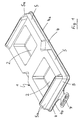
- Fig. 1 to 3 has the lower part 1 of a package according to the invention a, seen in plan view, approximately rectangular base body with two square recesses 2 for receiving a packaged goods (not shown). These may be, for example, two loose biscuits, for which then the packaging is used as primary packaging.
- the depressions 2 close on the bottom side with a base 3 from.
- the lower part 1 also has a peripheral edge 4, which extends above the base 3.
- the edge 4 is here stepped and terminates outwards with a narrow horizontal edge strip 4a.
- the lower part 1 is further formed on its edge 4 upwards, in such a way that from the edge 4 with increasing height increasingly inwardly retracted sliding and centering 5 for a loose and uniform placement of an upper part 6 (see. Fig. 4 and 5 ) on the edge 4 of the lower part 1.
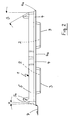
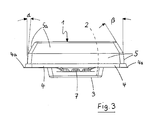
- the sliding and centering surfaces 5 extend in the present embodiment continuously along the longitudinal as well as narrow sides (front, back). Their inclination inwards (angle ⁇ ) is less than 10 ° with respect to the vertical.
- a second section 5a which has a greater inclination relative to the vertical (angle .beta.), Adjoins the said sliding and centering surfaces 5, namely over 30.degree.,
- the end regions of this section (cf. Fig. 3 ) are similarly chamfered or inclined, so that even the sections 5a, so to speak, provide for a first or coarse alignment, and further centering then takes place via the sliding and centering surfaces 5.
- the lower part 1 has a handle 7, which starts from the edge 4 and presents itself as a tongue-shaped extension.
- the lower part 1 can be grasped in order to release it later from a closed packaging.
- the handle 7 interrupts the peripheral edge here insofar as it is no longer overlapped in this area of the top.
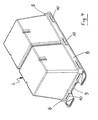
- the upper part 6 has an edge 8, which engages over the edge 4 of the lower part 1 and also settles on it.
- the edge 8 is widened at the side of the handle 7 and has a recess 9, which allows free access to the handle 7.
- the upper part 6 has, moreover, at its edge 8 inwardly directed locking lugs 10, which are formed from bevels 10 a, of which the upper project from top to bottom and the lower from bottom to top into the interior of the upper part 6.
- the locking lugs 10 are below the edge 4, more precisely below the edge strip 4a, the lower part 1, wherein the locking lugs 10 form releasable clip connections with the edges 4 / edge strips 4a.
- a package according to the invention comes with relatively low material thicknesses. It can be composed quickly, easily and safely from the upper part and lower part to fit exactly as well as close and is otherwise easy and inexpensive to manufacture.
Landscapes
- Engineering & Computer Science (AREA)
- Mechanical Engineering (AREA)
- Packages (AREA)
Abstract
Description
- Die Erfindung betrifft eine zweiteilige Verpackung aus Kunststoff, insbesondere für Gebäckstücke, bestehend aus einem das Verpackungsgut aufnehmenden Unterteil, welches über eine untere Standfläche und einen höher liegenden, nach außen gerichteten, im Wesentlichen umlaufenden Rand verfügt, sowie einem haubenförmigen Oberteil mit einem den Rand des Unterteils übergreifenden und in Schließposition darauf aufsitzenden Rand mit stellenweise nach innen vorstehenden Rastnasen zur Bildung von randseitigen Clipverbindungen.
- Zweiteilige Verpackungen aus Kunststoff der genannten Art sind in vielfältiger Form und für die unterschiedlichsten Verpackungsgüter bekannt. Sie besitzen den Vorteil, dass ihr Oberteil und Unterteil jeweils als einfach geformtes Einzelteil preiswert hergestellt und platzsparend bevorratet werden können. Schwierigkeiten bereitet aber mitunter das passgenaue Zusammenführen und einwandfreie Verschließen von Unterteil und Oberteil. Dazu müssen nämlich Oberteil und Unterteil zum einen erfasst und zum anderen zusammengebracht werden, was in der Regel von Hand erfolgt, wobei angestrebt wird, das Oberteil gleichmäßig auf dem Oberteil zu platzieren, um es danach mit Druck soweit an das Unterteil anzunähern, bis die Rastnasen des Oberteils mit dem Rand des Unterteils Clipverbindungen bilden.
- Bereits das Erfassen und Umsetzen der Einzelteile ist von Deformationen begleitet, die man durch eine gewisse Wand- oder Materialstärke einzuschränken versucht. Kommt es beim Zusammensetzen der Einzelteile nicht direkt zu einem passgenauen Sitz, sind Korrekturen erforderlich, welche meist unter einem gewissen Anpressdruck der Einzelteile vorgenommen werden, wodurch es auch zu einem Verhaken und noch stärkeren Deformationen kommen kann. Mitunter helfen nur mehrere Justierversuche weiter.
- Schließlich lassen sich die Einzelteile bekannter Verpackungen mit den bis jetzt üblichen Materialstärken auch nur mit relativ hohem Anpressdruck verschließen, welcher sich zudem nicht so leicht gleichmäßig auf alle vorgesehenen Clipverbindungen aufbringen lässt, so dass auch der Verschließvorgang nicht unproblematisch ist und ein besonderes Augenmerk darauf gerichtet werden muss.
- So werden in der Praxis die Clipverbindungen oft nacheinander aktiviert, wobei die bereits zustande gekommenen Verbindungen ihre Form halten sollen, während an anderer Stelle Oberteil und Unterteil erst noch einander angenähert und zusammengedrückt werden müssen, was zumindest partielle Verformungen verlangt. Hier zeigt sich dann das Dilemma, dass die an einer Stelle gewünschte und benötige Formsteifigkeit an anderer Stelle abträglich ist und umgekehrt.
- Somit hängt das Zusammenfügen und Verschließen von Oberteil und Unterteil von verschiedenen Einflussgrößen ab, die zu einem Teil in der Verpackung selbst begründet sind, im Übrigen aber auch in nicht unbeträchtlichem Maße in der Geschicklichkeit und Übung der Menschen, die den jeweiligen Verpackungsvorgang erledigen sollen. Da sich mit steigendem Wohlstand ein enormer Bedarf an Verpackungen ergeben hat, welcher sogar noch weiter anwachsen dürfte, besteht ein großen Bedürfnis, Verpackungen zu schaffen, welche sich möglichst unproblematisch handhaben lassen und eine ausreichende Störungsfreiheit und Prozesssicherheit beinhalten, um notwendige Behandlungsschritte auch maschinell und letztlich automatisch erledigen zu können.
- Hier setzt die Erfindung an. Sie will eine Verpackung der eingangs genannten Art dahingehend verbessern, dass sie sich schnell, leicht und sicher aus Oberteil und Unterteil passgenau zusammensetzen wie auch verschließen lässt; dabei soll die Verpackung einfach und preiswert herstellbar sein.
- Gelöst wird diese komplexe Aufgabe nach dem Vorschlag der Erfindung mit den kennzeichnenden Merkmalen von Anspruch 1. Vorteilhafte Weiterbildungen geben die Unteransprüche 2 bis 11 an.
- Wie ersichtlich, gilt der Grundgedanke der Erfindung einer optimalen Positionierung von Unterteil und Oberteil, bevor diese über die Clipverbindungen zusammengeschlossen werden. Das Positionieren vereinfacht und verbessert sich derart, dass ein loses Ablassen oder Absetzen des Oberteils über dem Unterteil bereits für die richtige und genaue Zuordnung ausreicht. Dabei braucht kein zusätzlicher Druck ausgeübt zu werden, vielmehr ist es möglich, dass das Oberteil bereits infolge seines Eigengewichts in die gewünschte Schließposition gelangt und damit quasi selbstzentrierend wirkt.
- Anders als bisher braucht also ein Verpacker nicht von Hand auf die Positionierung einzuwirken, wodurch der Positioniervorgang deutlich vom Verschließvorgang abgekoppelt wird. Es ist auch nicht erforderlich, das Eigengewicht zu erhöhen. Ganz im Gegenteil hat sich sogar gezeigt, dass die Materialstärke durchaus geringer als bisher gewählt werden kann.
- Infolge einer gleichmäßigen Positionierung wird auch der Schließvorgang erheblich begünstigt. Es reicht nämlich jetzt ein geringerer Druck aus, die Clipverbindungen herzustellen. Auch kann ein geringerer Druck selbst bei einer geringen Wandstärke des Oberteils noch wirksam auf die Verbindungsstellen übertragen werden, weshalb ein Andruck auf das Oberteil im mittleren Bereich ausreicht, um alle peripheren Verbindungsstellen unter Druck zu setzen und zu schließen. Dies kann auch mittels eines leichten Schlages erreicht werden.
- Vorteilhaft sind bei einer Verpackung mit eckigem Grundriss Gleit- und Zentrierflächen in den Eckbereichen vorgesehen.
- Zweckmäßigerweise sind im Bereich der Gleit- und Zentrierflächen Rastnasen angeordnet.
- Nach einem weiteren Vorschlag schließt sich an den Rand des Unterteils eine laschenförmige Verlängerung als Handhabe an.
- Bei einer Weiterbildung ist der Rand des Oberteils im Bereich der Handhabe in etwa auf dessen Länge verbreitert, wobei eine Ausnehmung unmittelbar über der Handhabe des Unterteils vorgesehen ist.
- Vorteilhaft ist das Oberteil als Tiefziehteil aus transparentem Kunststoff ausgebildet.
- Zweckmäßigerweise ist das Unterteil mit seinem Rand nachgiebiger als das Oberteil mit seinen Rastnasen.
- In weiterer Ausgestaltung des Erfindungsgedankens ist der Rand des Unterteils im Querschnitt stufenförmig mit mindestens einer Stufe ausgebildet.
- Nach einem weiteren Vorschlag schließt der stufenförmige Rand nach außen mit einem schmalen, horizontalen Randstreifen ab.
- Vorteilhaft sind Unterteil und Oberteil so bemessen, dass nach dem losen Aufsetzen des Oberteils auf das Unterteil sich die Rastnasen des Oberteils auf dem horizontalen Randstreifen des Unterteils abstützen.
- Zweckmäßigerweise sind die Rastnasen im Wesentlichen aus zwei Schrägen gebildet, von denen die obere von oben nach unten und die untere von unten nach oben ins Innere des Oberteils vorspringen.
- Die zuletzt erwähnten Ausführungsformen, bei denen der Rand des Unterteils stufig ausgebildet ist, zeichnen sich dadurch aus, dass die jeweilige Verpackung sich bereits mit geringem Anpressdruck sicher verschließen lässt. So bewirkt die stufige Ausbildung, dass sich das Oberteil ohne größere Widerstände auf das Unterteil bis in Schließposition absenken lässt, wobei zuletzt die Rastnasen des Oberteils Zentrierfunktion übernehmen. Um von dieser günstigen Schließposition zu Clipverbindungen zu gelangen, brauchen sich lediglich die Rastnasen noch über den schmalen Randstreifen am Unterteil zu schieben, worauf diese kurz nach unten und innen ausweichen und nach dem Absenken der Rastnasen wieder ihre alte Lage einnehmen.
- Während der Randstreifen nach unten leichter ausweichen kann, ist er nach oben nicht so einfach zu verformen, weil sich eine Bewegung nach oben gegen die stufige Ausbildung, d. h. deren Verformungswiderstände richtet. So kann also trotz einer geringen Anpresskraft für das Verschließen eine hohe Ausziehkraft für das Öffnen erforderlich werden. Damit lässt sich eine erfindungsgemäße Verpackung auch sicher und dauerhaft gestalten.
- Weitere Einzelheiten und Vorteile werden nachstehend in Verbindung mit der Zeichnung für ein bevorzugtes Ausführungsbeispiel beschrieben. Darin zeigen:
- Fig. 1
- das Unterteil einer erfindungsgemäßen Verpackung in perspektivischer Ansicht;
- Fig. 2
- den Gegenstand von
Fig. 1 in Seitenansicht; - Fig. 3
- den Gegenstand von
Fig. 1 in Vorderansicht; - Fig. 4
- das Oberteil einer erfindungsgemäßen Verpackung in perspektivischer Ansicht;
- Fig. 5
- die komplette erfindungsgemäße Verpackung mit den Gegenständen von
Fig. 1 undFig. 4 in Seitenansicht und - Fig. 6
- ein vergrößertes Detail von
Fig. 5 , nämlich den Randbereich der Verpackung mit Handhabe. - Nach den
Fig. 1 bis 3 besitzt das Unterteil 1 einer erfindungsgemäßen Verpackung einen, in Draufsicht gesehen, etwa rechteckigen Grundkörper mit zwei quadratischen Vertiefungen 2 zur Aufnahme eines Verpackungsgutes (nicht dargestellt). Dabei kann es sich beispielsweise um zwei lose Gebäckstücke handeln, für die dann die Verpackung als Primärverpackung zum Einsatz kommt. - Ebenso gut könnten in die Vertiefungen 2 auch bereits zu einer Verpackungseinheit zusammengefasste kleinere Verpackungsgüter, wie Süßigkeiten, eingestellt werden, für die dann eine erfindungsgemäße Verpackung als Sekundärverpackung benutzt würde.
- Die Vertiefungen 2 schließen bodenseitig mit einer Standfläche 3 ab. Das Unterteil 1 verfügt ferner über einen umlaufenden Rand 4, welcher oberhalb der Standfläche 3 verläuft. Der Rand 4 ist hier stufig ausgebildet und schließt nach außen mit einem schmalen horizontalen Randstreifen 4a ab.
- Erfindungsgemäß ist das Unterteil 1 über seinen Rand 4 nach oben weiter ausgeformt, und zwar so, dass sich vom Rand 4 mit steigender Höhe immer stärker nach innen eingezogene Gleit- und Zentrierflächen 5 für ein loses und gleichmäßiges Aufsetzen eines Oberteils 6 (vgl.
Fig. 4 und5 ) auf den Rand 4 des Unterteils 1 ergeben. Die Gleit- und Zentrierflächen 5 erstrecken sich im vorliegenden Ausführungsbeispiel fortlaufend entlang den Längs- wie auch Schmalseiten (Vorderseite, Rückseite). Ihre Neigung nach innen hin (Winkel α) beträgt weniger als 10 ° gegenüber der Vertikalen. - Entlang der Schmalseiten schließt sich an die genannten Gleit- und Zentrierflächen 5 noch ein zweiter Abschnitt 5a an, welcher eine größere Neigung gegenüber der Vertikalen (Winkel β) aufweist, nämlich über 30 °, wobei die Endbereiche dieses Abschnittes (vgl.
Fig. 3 ) ähnlich abgeschrägt oder geneigt sind, so dass bereits die Abschnitte 5a sozusagen für eine erste oder grobe Ausrichtung sorgen und eine weitergehende Zentrierung anschließend über die Gleit- und Zentrierflächen 5 erfolgt. - Im Übrigen verfügt das Unterteil 1 über eine Handhabe 7, welche vom Rand 4 ausgeht und sich als eine laschenförmige Verlängerung darstellt. Darüber lässt sich das Unterteil 1 insbesondere erfassen, um es später von einer geschlossenen Verpackung wieder zu lösen. Die Handhabe 7 unterbricht den umlaufenden Rand hier insoweit, als er in diesem Bereich nicht mehr vom Oberteil übergriffen wird.
- Wie die
Fig. 4 und5 erkennen lassen, verfügt das Oberteil 6 über einen Rand 8, welcher den Rand 4 des Unterteils 1 übergreift und sich darauf auch absetzt. Der Rand 8 ist an der Seite der Handhabe 7 verbreitert und weist eine Ausnehmung 9 auf, welche einen freien Zugriff auf die Handhabe 7 erlaubt. - Das Oberteil 6 weist im Übrigen an seinem Rand 8 nach innen gerichtete Rastnasen 10 auf, welche aus Schrägen 10 a gebildet sind, von denen die obere von oben nach unten und die untere von unten nach oben ins Innere des Oberteils 6 vorspringen.
- Im geschlossenen Zustand der Verpackung befinden sich die Rastnasen 10 unterhalb des Randes 4, genauer gesagt unterhalb des Randstreifens 4a, des Unterteils 1, wobei die Rastnasen 10 mit den Rändern 4/Randstreifen 4a lösbare Clipverbindungen bilden.
- Die vorstehend beschriebenen Verhältnisse sind in
Fig. 6 noch in einer vergrößerten Detaildarstellung weiter veranschaulicht. - Eine erfindungsgemäße Verpackung kommt mit relativ geringen Materialstärken aus. Sie lässt sich schnell, leicht und sicher aus Oberteil und Unterteil passgenau zusammensetzen wie auch verschließen und ist im Übrigen einfach und preiswert herzustellen.
-
- 1
- Unterteil
- 2
- Vertiefung
- 3
- Standfläche
- 4
- Rand (des Unterteils)
- 4a
- Randstreifen
- 5
- Gleit- und Zentrierfläche
- 5a
- zweiter Abschnitt (der Gleit- und Zentrierfläche)
- 6
- Oberteil
- 7
- Handhabe
- 8
- Rand (des Oberteils)
- 9
- Ausnehmung
- 10
- Rastnase
- 10a
- Schräge
- α
- Neigung, Winkel
- β
- Neigung, Winkel
Claims (11)
- Zweiteilige Verpackung aus Kunststoff, insbesondere für Gebäckstücke, bestehend aus einem das Verpackungsgut aufnehmenden Unterteil, welches über eine untere Standfläche und einen höher liegenden, nach außen gerichteten, im Wesentlichen umlaufenden Rand verfügt, sowie einem haubenförmigen Oberteil mit einem den Rand des Unterteils übergreifenden und in Schließposition darauf aufsitzenden Rand mit stellenweise nach innen vorspringenden Rastnasen zur Bildung von randseitigen Clipverbindungen, dadurch gekennzeichnet, dass das Unterteil (1) mindestens stellenweise derart über seinen Rand (4) nach oben ausgeformt ist, dass sich vom Rand (4) mit steigender Höhe immer stärker nach innen eingezogene Gleit- und Zentrierflächen (5) für ein loses und gleichmäßiges Aufsetzen des Oberteils (6) auf den Rand (4) des Unterteils (1) ergeben.
- Verpackung nach Anspruch 1, dadurch gekennzeichnet, dass bei einer Verpackung mit eckigem Grundriss Gleit- und Zentrierflächen (5) in den Eckbereichen vorgesehen sind.
- Verpackung nach Anspruch 2, dadurch gekennzeichnet, dass im Bereich der Gleit- und Zentrierflächen (5) Rastnasen (10) angeordnet sind.
- Verpackung nach Anspruch 1 bis 3, dadurch gekennzeichnet, dass sich an den Rand (4) des Unterteils (1) eine laschenförmige Verlängerung als Handhabe (7) anschließt.
- Verpackung nach Anspruch 4, dadurch gekennzeichnet, dass der Rand (8) des Oberteils (6) im Bereich der Handhabe (7) in etwa auf dessen Länge verbreitert ist, wobei eine Ausnehmung (9) unmittelbar über der Handhabe (7) des Unterteils (1) vorgesehen ist.
- Verpackung nach einem der Ansprüche 1 bis 5, dadurch gekennzeichnet, dass das Oberteil (6) als Tiefziehteil aus transparentem Kunststoff ausgebildet ist.
- Verpackung nach einem der Ansprüche 1 bis 6, dadurch gekennzeichnet, dass das Unterteil (1) mit seinem Rand (4) nachgiebiger als das Oberteil (6) mit seinen Rastnasen (10) ist.
- Verpackung nach einem der Ansprüche 1 bis 7, dadurch gekennzeichnet, dass der Rand (4) des Unterteils (1) im Querschnitt stufenförmig mit mindestens einer Stufe ausgebildet ist.
- Verpackung nach Anspruch 8, dadurch gekennzeichnet, dass der stufenförmige Rand (4) nach außen mit einem schmalen horizontalen Randstreifen (4a) abschließt.
- Verpackung nach Anspruch 9, dadurch gekennzeichnet, dass Unterteil (1) und Oberteil (6) so bemessen sind, dass nach dem losen Aufsetzen des Oberteils (6) auf das Unterteil (1) sich die Rastnasen (10) des Oberteils (6) auf dem horizontalen Randstreifen (4a) des Unterteils (1) abstützen.
- Verpackung nach einem der Ansprüche 1 bis 10, dadurch gekennzeichnet, dass die Rastnasen (10) jeweils im Wesentlichen aus zwei Schrägen (10a) gebildet sind, von denen die obere von oben nach unten und die untere von unten nach oben ins Innere des Oberteils (6) vorspringen.
Applications Claiming Priority (1)
| Application Number | Priority Date | Filing Date | Title |
|---|---|---|---|
| DE200910042131 DE102009042131A1 (de) | 2009-09-18 | 2009-09-18 | Zweiteilige Verpackung aus Kunststoff |
Publications (2)
| Publication Number | Publication Date |
|---|---|
| EP2298661A1 true EP2298661A1 (de) | 2011-03-23 |
| EP2298661B1 EP2298661B1 (de) | 2017-05-03 |
Family
ID=43035002
Family Applications (1)
| Application Number | Title | Priority Date | Filing Date |
|---|---|---|---|
| EP10008418.5A Not-in-force EP2298661B1 (de) | 2009-09-18 | 2010-08-12 | Zweiteilige Verpackung aus Kunststoff |
Country Status (2)
| Country | Link |
|---|---|
| EP (1) | EP2298661B1 (de) |
| DE (1) | DE102009042131A1 (de) |
Citations (4)
| Publication number | Priority date | Publication date | Assignee | Title |
|---|---|---|---|---|
| EP0226882A2 (de) * | 1985-12-03 | 1987-07-01 | Gizeh-Werk Gmbh | Behältnis, insbesondere für Lebensmittel |
| WO1998052835A1 (en) * | 1997-05-22 | 1998-11-26 | Soremartec S.A. | Packaging for food products |
| US20060180646A1 (en) * | 2003-10-20 | 2006-08-17 | Fort James Corporation | Lidded paperboard container |
| FR2928903A1 (fr) * | 2008-03-21 | 2009-09-25 | Tartefrais Soc Par Actions Sim | Emballage pour aliments |
-
2009
- 2009-09-18 DE DE200910042131 patent/DE102009042131A1/de not_active Withdrawn
-
2010
- 2010-08-12 EP EP10008418.5A patent/EP2298661B1/de not_active Not-in-force
Patent Citations (5)
| Publication number | Priority date | Publication date | Assignee | Title |
|---|---|---|---|---|
| EP0226882A2 (de) * | 1985-12-03 | 1987-07-01 | Gizeh-Werk Gmbh | Behältnis, insbesondere für Lebensmittel |
| US4750614A (en) * | 1985-12-03 | 1988-06-14 | Nestec S.A. | Container especially for foods |
| WO1998052835A1 (en) * | 1997-05-22 | 1998-11-26 | Soremartec S.A. | Packaging for food products |
| US20060180646A1 (en) * | 2003-10-20 | 2006-08-17 | Fort James Corporation | Lidded paperboard container |
| FR2928903A1 (fr) * | 2008-03-21 | 2009-09-25 | Tartefrais Soc Par Actions Sim | Emballage pour aliments |
Also Published As
| Publication number | Publication date |
|---|---|
| DE102009042131A1 (de) | 2011-03-24 |
| EP2298661B1 (de) | 2017-05-03 |
Similar Documents
| Publication | Publication Date | Title |
|---|---|---|
| EP2270291B1 (de) | Satz aus Bauplatten mit einer Einrichtung zum Verriegeln zweier dieser Bauplatten | |
| DE102007032885A1 (de) | Paneel, insbesondere Bodenpaneel und Einrichtung zum Verriegeln miteinander verbundener Paneele | |
| EP2251184B1 (de) | Verfahren zur Herstellung eines Transport- und Lagermittels sowie ein zur Durchführung des Verfahrens ausgebildetes Transport- und Lagermittel | |
| DE102014102464A1 (de) | Eckverbinder zum Verbinden mindestens zweier senkrecht zueinander angeordneter Rahmenprofile eines Rahmengestells | |
| DE20116771U1 (de) | Behälter mit einem Becher und einem darauf aufgesetzten Deckel sowie Thermoformwerkzeug zur Herstellung des Deckels | |
| DE102004005381A1 (de) | Behälteranordnung und Verfahren zur Herstellung dieser Anordnung | |
| DE102010038968A1 (de) | Regal mit Traversen | |
| EP2449944A2 (de) | Haushaltsgerät | |
| DE2908977A1 (de) | Kunststoff-blindniet | |
| EP2597398A2 (de) | Modulrahmen für ein Fotovoltaik- oder Solarmodul | |
| DE69602844T2 (de) | Gerüst und verfahren zur montage | |
| EP2551438A2 (de) | Steckverbinder | |
| EP2298661B1 (de) | Zweiteilige Verpackung aus Kunststoff | |
| DE102014113714A1 (de) | Möbelscharnier | |
| DE102015103036A1 (de) | Bistabiles Verschlusselement | |
| DE102014207322A1 (de) | Stoßverbindungsanordnung, Fenster-/Türrahmen oder Fenster-/Türflügelrahmen sowie Rahmenprofilelement | |
| WO2010081636A1 (de) | Geschirrspülmaschine mit einem kastenförmigen spülbehälter und mit einem basisträger | |
| EP2631189B1 (de) | Faltschachtel | |
| EP2138666A2 (de) | Ausfachungsrahmen für Gebäudefassaden | |
| DE102005035529B4 (de) | Schaltgabel | |
| EP2689949B1 (de) | Verfahren zur Anordnung eines Elastomerprofils an der Stirnseite einer Tür oder eines Türportals eines öffentlichen Personenverkehrsmittels | |
| DE102018102488A1 (de) | Anordnung zur Positionierung eines Flachteils an einem Schaltschrankrahmengestell sowie ein entsprechendes Verfahren | |
| DE3418530A1 (de) | Vorrichtung zum verstopfen von behaeltern mit einem hals | |
| DE3704042C2 (de) | ||
| DE102015105853A1 (de) | Vorrichtung zur Ausrichtung zweier Profilelemente eines Tragwerks |
Legal Events
| Date | Code | Title | Description |
|---|---|---|---|
| PUAI | Public reference made under article 153(3) epc to a published international application that has entered the european phase |
Free format text: ORIGINAL CODE: 0009012 |
|
| AK | Designated contracting states |
Kind code of ref document: A1 Designated state(s): AL AT BE BG CH CY CZ DE DK EE ES FI FR GB GR HR HU IE IS IT LI LT LU LV MC MK MT NL NO PL PT RO SE SI SK SM TR |
|
| AX | Request for extension of the european patent |
Extension state: BA ME RS |
|
| 17P | Request for examination filed |
Effective date: 20110922 |
|
| 17Q | First examination report despatched |
Effective date: 20140120 |
|
| GRAP | Despatch of communication of intention to grant a patent |
Free format text: ORIGINAL CODE: EPIDOSNIGR1 |
|
| STAA | Information on the status of an ep patent application or granted ep patent |
Free format text: STATUS: GRANT OF PATENT IS INTENDED |
|
| INTG | Intention to grant announced |
Effective date: 20161128 |
|
| GRAS | Grant fee paid |
Free format text: ORIGINAL CODE: EPIDOSNIGR3 |
|
| GRAJ | Information related to disapproval of communication of intention to grant by the applicant or resumption of examination proceedings by the epo deleted |
Free format text: ORIGINAL CODE: EPIDOSDIGR1 |
|
| GRAL | Information related to payment of fee for publishing/printing deleted |
Free format text: ORIGINAL CODE: EPIDOSDIGR3 |
|
| STAA | Information on the status of an ep patent application or granted ep patent |
Free format text: STATUS: EXAMINATION IS IN PROGRESS |
|
| GRAP | Despatch of communication of intention to grant a patent |
Free format text: ORIGINAL CODE: EPIDOSNIGR1 |
|
| STAA | Information on the status of an ep patent application or granted ep patent |
Free format text: STATUS: GRANT OF PATENT IS INTENDED |
|
| INTC | Intention to grant announced (deleted) | ||
| GRAA | (expected) grant |
Free format text: ORIGINAL CODE: 0009210 |
|
| STAA | Information on the status of an ep patent application or granted ep patent |
Free format text: STATUS: THE PATENT HAS BEEN GRANTED |
|
| INTG | Intention to grant announced |
Effective date: 20170317 |
|
| AK | Designated contracting states |
Kind code of ref document: B1 Designated state(s): AL AT BE BG CH CY CZ DE DK EE ES FI FR GB GR HR HU IE IS IT LI LT LU LV MC MK MT NL NO PL PT RO SE SI SK SM TR |
|
| REG | Reference to a national code |
Ref country code: GB Ref legal event code: FG4D Free format text: NOT ENGLISH |
|
| REG | Reference to a national code |
Ref country code: AT Ref legal event code: REF Ref document number: 889690 Country of ref document: AT Kind code of ref document: T Effective date: 20170515 Ref country code: CH Ref legal event code: EP |
|
| REG | Reference to a national code |
Ref country code: IE Ref legal event code: FG4D Free format text: LANGUAGE OF EP DOCUMENT: GERMAN |
|
| REG | Reference to a national code |
Ref country code: DE Ref legal event code: R096 Ref document number: 502010013533 Country of ref document: DE |
|
| REG | Reference to a national code |
Ref country code: NL Ref legal event code: MP Effective date: 20170503 |
|
| REG | Reference to a national code |
Ref country code: LT Ref legal event code: MG4D |
|
| PG25 | Lapsed in a contracting state [announced via postgrant information from national office to epo] |
Ref country code: FI Free format text: LAPSE BECAUSE OF FAILURE TO SUBMIT A TRANSLATION OF THE DESCRIPTION OR TO PAY THE FEE WITHIN THE PRESCRIBED TIME-LIMIT Effective date: 20170503 Ref country code: GR Free format text: LAPSE BECAUSE OF FAILURE TO SUBMIT A TRANSLATION OF THE DESCRIPTION OR TO PAY THE FEE WITHIN THE PRESCRIBED TIME-LIMIT Effective date: 20170804 Ref country code: LT Free format text: LAPSE BECAUSE OF FAILURE TO SUBMIT A TRANSLATION OF THE DESCRIPTION OR TO PAY THE FEE WITHIN THE PRESCRIBED TIME-LIMIT Effective date: 20170503 Ref country code: NO Free format text: LAPSE BECAUSE OF FAILURE TO SUBMIT A TRANSLATION OF THE DESCRIPTION OR TO PAY THE FEE WITHIN THE PRESCRIBED TIME-LIMIT Effective date: 20170803 Ref country code: HR Free format text: LAPSE BECAUSE OF FAILURE TO SUBMIT A TRANSLATION OF THE DESCRIPTION OR TO PAY THE FEE WITHIN THE PRESCRIBED TIME-LIMIT Effective date: 20170503 Ref country code: ES Free format text: LAPSE BECAUSE OF FAILURE TO SUBMIT A TRANSLATION OF THE DESCRIPTION OR TO PAY THE FEE WITHIN THE PRESCRIBED TIME-LIMIT Effective date: 20170503 |
|
| PG25 | Lapsed in a contracting state [announced via postgrant information from national office to epo] |
Ref country code: IS Free format text: LAPSE BECAUSE OF FAILURE TO SUBMIT A TRANSLATION OF THE DESCRIPTION OR TO PAY THE FEE WITHIN THE PRESCRIBED TIME-LIMIT Effective date: 20170903 Ref country code: NL Free format text: LAPSE BECAUSE OF FAILURE TO SUBMIT A TRANSLATION OF THE DESCRIPTION OR TO PAY THE FEE WITHIN THE PRESCRIBED TIME-LIMIT Effective date: 20170503 Ref country code: LV Free format text: LAPSE BECAUSE OF FAILURE TO SUBMIT A TRANSLATION OF THE DESCRIPTION OR TO PAY THE FEE WITHIN THE PRESCRIBED TIME-LIMIT Effective date: 20170503 Ref country code: PL Free format text: LAPSE BECAUSE OF FAILURE TO SUBMIT A TRANSLATION OF THE DESCRIPTION OR TO PAY THE FEE WITHIN THE PRESCRIBED TIME-LIMIT Effective date: 20170503 Ref country code: SE Free format text: LAPSE BECAUSE OF FAILURE TO SUBMIT A TRANSLATION OF THE DESCRIPTION OR TO PAY THE FEE WITHIN THE PRESCRIBED TIME-LIMIT Effective date: 20170503 Ref country code: BG Free format text: LAPSE BECAUSE OF FAILURE TO SUBMIT A TRANSLATION OF THE DESCRIPTION OR TO PAY THE FEE WITHIN THE PRESCRIBED TIME-LIMIT Effective date: 20170803 |
|
| PG25 | Lapsed in a contracting state [announced via postgrant information from national office to epo] |
Ref country code: CZ Free format text: LAPSE BECAUSE OF FAILURE TO SUBMIT A TRANSLATION OF THE DESCRIPTION OR TO PAY THE FEE WITHIN THE PRESCRIBED TIME-LIMIT Effective date: 20170503 Ref country code: SK Free format text: LAPSE BECAUSE OF FAILURE TO SUBMIT A TRANSLATION OF THE DESCRIPTION OR TO PAY THE FEE WITHIN THE PRESCRIBED TIME-LIMIT Effective date: 20170503 Ref country code: DK Free format text: LAPSE BECAUSE OF FAILURE TO SUBMIT A TRANSLATION OF THE DESCRIPTION OR TO PAY THE FEE WITHIN THE PRESCRIBED TIME-LIMIT Effective date: 20170503 Ref country code: EE Free format text: LAPSE BECAUSE OF FAILURE TO SUBMIT A TRANSLATION OF THE DESCRIPTION OR TO PAY THE FEE WITHIN THE PRESCRIBED TIME-LIMIT Effective date: 20170503 Ref country code: RO Free format text: LAPSE BECAUSE OF FAILURE TO SUBMIT A TRANSLATION OF THE DESCRIPTION OR TO PAY THE FEE WITHIN THE PRESCRIBED TIME-LIMIT Effective date: 20170503 |
|
| REG | Reference to a national code |
Ref country code: DE Ref legal event code: R097 Ref document number: 502010013533 Country of ref document: DE |
|
| PG25 | Lapsed in a contracting state [announced via postgrant information from national office to epo] |
Ref country code: SM Free format text: LAPSE BECAUSE OF FAILURE TO SUBMIT A TRANSLATION OF THE DESCRIPTION OR TO PAY THE FEE WITHIN THE PRESCRIBED TIME-LIMIT Effective date: 20170503 Ref country code: IT Free format text: LAPSE BECAUSE OF FAILURE TO SUBMIT A TRANSLATION OF THE DESCRIPTION OR TO PAY THE FEE WITHIN THE PRESCRIBED TIME-LIMIT Effective date: 20170503 |
|
| REG | Reference to a national code |
Ref country code: DE Ref legal event code: R119 Ref document number: 502010013533 Country of ref document: DE |
|
| PLBE | No opposition filed within time limit |
Free format text: ORIGINAL CODE: 0009261 |
|
| STAA | Information on the status of an ep patent application or granted ep patent |
Free format text: STATUS: NO OPPOSITION FILED WITHIN TIME LIMIT |
|
| PG25 | Lapsed in a contracting state [announced via postgrant information from national office to epo] |
Ref country code: MC Free format text: LAPSE BECAUSE OF FAILURE TO SUBMIT A TRANSLATION OF THE DESCRIPTION OR TO PAY THE FEE WITHIN THE PRESCRIBED TIME-LIMIT Effective date: 20170503 |
|
| 26N | No opposition filed |
Effective date: 20180206 |
|
| GBPC | Gb: european patent ceased through non-payment of renewal fee |
Effective date: 20170812 |
|
| REG | Reference to a national code |
Ref country code: FR Ref legal event code: ST Effective date: 20180430 |
|
| REG | Reference to a national code |
Ref country code: IE Ref legal event code: MM4A |
|
| PG25 | Lapsed in a contracting state [announced via postgrant information from national office to epo] |
Ref country code: SI Free format text: LAPSE BECAUSE OF FAILURE TO SUBMIT A TRANSLATION OF THE DESCRIPTION OR TO PAY THE FEE WITHIN THE PRESCRIBED TIME-LIMIT Effective date: 20170503 |
|
| REG | Reference to a national code |
Ref country code: BE Ref legal event code: MM Effective date: 20170831 |
|
| PG25 | Lapsed in a contracting state [announced via postgrant information from national office to epo] |
Ref country code: LU Free format text: LAPSE BECAUSE OF NON-PAYMENT OF DUE FEES Effective date: 20170812 |
|
| PG25 | Lapsed in a contracting state [announced via postgrant information from national office to epo] |
Ref country code: DE Free format text: LAPSE BECAUSE OF NON-PAYMENT OF DUE FEES Effective date: 20180301 Ref country code: GB Free format text: LAPSE BECAUSE OF NON-PAYMENT OF DUE FEES Effective date: 20170812 Ref country code: IE Free format text: LAPSE BECAUSE OF NON-PAYMENT OF DUE FEES Effective date: 20170812 |
|
| PG25 | Lapsed in a contracting state [announced via postgrant information from national office to epo] |
Ref country code: BE Free format text: LAPSE BECAUSE OF NON-PAYMENT OF DUE FEES Effective date: 20170831 Ref country code: FR Free format text: LAPSE BECAUSE OF NON-PAYMENT OF DUE FEES Effective date: 20170831 |
|
| PG25 | Lapsed in a contracting state [announced via postgrant information from national office to epo] |
Ref country code: MT Free format text: LAPSE BECAUSE OF FAILURE TO SUBMIT A TRANSLATION OF THE DESCRIPTION OR TO PAY THE FEE WITHIN THE PRESCRIBED TIME-LIMIT Effective date: 20170503 |
|
| REG | Reference to a national code |
Ref country code: AT Ref legal event code: MM01 Ref document number: 889690 Country of ref document: AT Kind code of ref document: T Effective date: 20170812 |
|
| PG25 | Lapsed in a contracting state [announced via postgrant information from national office to epo] |
Ref country code: AT Free format text: LAPSE BECAUSE OF NON-PAYMENT OF DUE FEES Effective date: 20170812 |
|
| PG25 | Lapsed in a contracting state [announced via postgrant information from national office to epo] |
Ref country code: HU Free format text: LAPSE BECAUSE OF FAILURE TO SUBMIT A TRANSLATION OF THE DESCRIPTION OR TO PAY THE FEE WITHIN THE PRESCRIBED TIME-LIMIT; INVALID AB INITIO Effective date: 20100812 |
|
| PG25 | Lapsed in a contracting state [announced via postgrant information from national office to epo] |
Ref country code: CY Free format text: LAPSE BECAUSE OF NON-PAYMENT OF DUE FEES Effective date: 20170503 |
|
| PG25 | Lapsed in a contracting state [announced via postgrant information from national office to epo] |
Ref country code: MK Free format text: LAPSE BECAUSE OF FAILURE TO SUBMIT A TRANSLATION OF THE DESCRIPTION OR TO PAY THE FEE WITHIN THE PRESCRIBED TIME-LIMIT Effective date: 20170503 |
|
| PGFP | Annual fee paid to national office [announced via postgrant information from national office to epo] |
Ref country code: CH Payment date: 20190723 Year of fee payment: 10 |
|
| PG25 | Lapsed in a contracting state [announced via postgrant information from national office to epo] |
Ref country code: TR Free format text: LAPSE BECAUSE OF FAILURE TO SUBMIT A TRANSLATION OF THE DESCRIPTION OR TO PAY THE FEE WITHIN THE PRESCRIBED TIME-LIMIT Effective date: 20170503 |
|
| PG25 | Lapsed in a contracting state [announced via postgrant information from national office to epo] |
Ref country code: PT Free format text: LAPSE BECAUSE OF FAILURE TO SUBMIT A TRANSLATION OF THE DESCRIPTION OR TO PAY THE FEE WITHIN THE PRESCRIBED TIME-LIMIT Effective date: 20170503 |
|
| PG25 | Lapsed in a contracting state [announced via postgrant information from national office to epo] |
Ref country code: AL Free format text: LAPSE BECAUSE OF FAILURE TO SUBMIT A TRANSLATION OF THE DESCRIPTION OR TO PAY THE FEE WITHIN THE PRESCRIBED TIME-LIMIT Effective date: 20170503 |
|
| REG | Reference to a national code |
Ref country code: CH Ref legal event code: PL |
|
| PG25 | Lapsed in a contracting state [announced via postgrant information from national office to epo] |
Ref country code: CH Free format text: LAPSE BECAUSE OF NON-PAYMENT OF DUE FEES Effective date: 20200831 Ref country code: LI Free format text: LAPSE BECAUSE OF NON-PAYMENT OF DUE FEES Effective date: 20200831 |