EP2292616A1 - Neue polymorphe Form und die amorphe Form von 5-Chlor-N-({(5S)-2-oxo-3-[4-(3-oxo-4-morpholinyl)-phenyl]-1,3-oxazolidin-5-yl}-methyl)-2-thiophencarboxamid - Google Patents
Neue polymorphe Form und die amorphe Form von 5-Chlor-N-({(5S)-2-oxo-3-[4-(3-oxo-4-morpholinyl)-phenyl]-1,3-oxazolidin-5-yl}-methyl)-2-thiophencarboxamid Download PDFInfo
- Publication number
- EP2292616A1 EP2292616A1 EP10177691A EP10177691A EP2292616A1 EP 2292616 A1 EP2292616 A1 EP 2292616A1 EP 10177691 A EP10177691 A EP 10177691A EP 10177691 A EP10177691 A EP 10177691A EP 2292616 A1 EP2292616 A1 EP 2292616A1
- Authority
- EP
- European Patent Office
- Prior art keywords
- modification
- compound
- formula
- amorphous form
- oxo
- Prior art date
- Legal status (The legal status is an assumption and is not a legal conclusion. Google has not performed a legal analysis and makes no representation as to the accuracy of the status listed.)
- Withdrawn
Links
- KGFYHTZWPPHNLQ-AWEZNQCLSA-N rivaroxaban Chemical compound S1C(Cl)=CC=C1C(=O)NC[C@@H]1OC(=O)N(C=2C=CC(=CC=2)N2C(COCC2)=O)C1 KGFYHTZWPPHNLQ-AWEZNQCLSA-N 0.000 title abstract description 24
- 230000004048 modification Effects 0.000 claims abstract description 104
- 238000012986 modification Methods 0.000 claims abstract description 104
- 239000002904 solvent Substances 0.000 claims abstract description 20
- 238000000034 method Methods 0.000 claims abstract description 13
- 239000012442 inert solvent Substances 0.000 claims abstract description 11
- 238000001816 cooling Methods 0.000 claims abstract description 10
- 239000000725 suspension Substances 0.000 claims abstract description 7
- 238000006243 chemical reaction Methods 0.000 claims abstract description 6
- 238000002844 melting Methods 0.000 claims abstract description 6
- 230000008018 melting Effects 0.000 claims abstract description 6
- 150000001875 compounds Chemical class 0.000 claims description 115
- 238000002360 preparation method Methods 0.000 claims description 18
- 208000037265 diseases, disorders, signs and symptoms Diseases 0.000 claims description 16
- 238000011282 treatment Methods 0.000 claims description 14
- 238000011321 prophylaxis Methods 0.000 claims description 13
- 201000010099 disease Diseases 0.000 claims description 12
- 239000004480 active ingredient Substances 0.000 claims description 11
- 239000003814 drug Substances 0.000 claims description 10
- 230000008569 process Effects 0.000 claims description 7
- 230000009424 thromboembolic effect Effects 0.000 claims description 7
- 239000008194 pharmaceutical composition Substances 0.000 claims description 5
- 208000001435 Thromboembolism Diseases 0.000 claims description 4
- 230000002429 anti-coagulating effect Effects 0.000 claims description 4
- 230000023555 blood coagulation Effects 0.000 claims description 3
- 238000001704 evaporation Methods 0.000 claims description 3
- 230000008020 evaporation Effects 0.000 claims description 3
- 238000000338 in vitro Methods 0.000 claims description 3
- 238000004519 manufacturing process Methods 0.000 claims description 3
- 231100000252 nontoxic Toxicity 0.000 claims description 3
- 230000003000 nontoxic effect Effects 0.000 claims description 3
- 239000000546 pharmaceutical excipient Substances 0.000 claims description 3
- 230000002265 prevention Effects 0.000 claims description 2
- 241001465754 Metazoa Species 0.000 claims 1
- 239000003146 anticoagulant agent Substances 0.000 abstract description 4
- 229940127219 anticoagulant drug Drugs 0.000 abstract description 3
- 230000002537 thrombolytic effect Effects 0.000 abstract description 3
- PGOHTUIFYSHAQG-LJSDBVFPSA-N (2S)-6-amino-2-[[(2S)-5-amino-2-[[(2S)-2-[[(2S)-2-[[(2S)-2-[[(2S)-4-amino-2-[[(2S)-2-[[(2S)-2-[[(2S)-2-[[(2S)-2-[[(2S)-5-amino-2-[[(2S)-5-amino-2-[[(2S)-2-[[(2S)-2-[[(2S)-2-[[(2S,3R)-2-[[(2S)-5-amino-2-[[(2S)-2-[[(2S)-2-[[(2S,3R)-2-[[(2S)-2-[[(2S)-2-[[(2S)-2-[[(2S)-2-[[(2S)-5-amino-2-[[(2S)-1-[(2S,3R)-2-[[(2S)-2-[[(2S)-2-[[(2R)-2-[[(2S)-2-[[(2S)-2-[[2-[[(2S)-2-[[(2S)-2-[[(2S)-2-[[(2S)-1-[(2S)-2-[[(2S)-2-[[(2S)-2-[[(2S)-2-amino-4-methylsulfanylbutanoyl]amino]-3-(1H-indol-3-yl)propanoyl]amino]-5-carbamimidamidopentanoyl]amino]propanoyl]pyrrolidine-2-carbonyl]amino]-3-methylbutanoyl]amino]-4-methylpentanoyl]amino]-4-methylpentanoyl]amino]acetyl]amino]-3-hydroxypropanoyl]amino]-4-methylpentanoyl]amino]-3-sulfanylpropanoyl]amino]-4-methylsulfanylbutanoyl]amino]-5-carbamimidamidopentanoyl]amino]-3-hydroxybutanoyl]pyrrolidine-2-carbonyl]amino]-5-oxopentanoyl]amino]-3-hydroxypropanoyl]amino]-3-hydroxypropanoyl]amino]-3-(1H-imidazol-5-yl)propanoyl]amino]-4-methylpentanoyl]amino]-3-hydroxybutanoyl]amino]-3-(1H-indol-3-yl)propanoyl]amino]-5-carbamimidamidopentanoyl]amino]-5-oxopentanoyl]amino]-3-hydroxybutanoyl]amino]-3-hydroxypropanoyl]amino]-3-carboxypropanoyl]amino]-3-hydroxypropanoyl]amino]-5-oxopentanoyl]amino]-5-oxopentanoyl]amino]-3-phenylpropanoyl]amino]-5-carbamimidamidopentanoyl]amino]-3-methylbutanoyl]amino]-4-methylpentanoyl]amino]-4-oxobutanoyl]amino]-5-carbamimidamidopentanoyl]amino]-3-(1H-indol-3-yl)propanoyl]amino]-4-carboxybutanoyl]amino]-5-oxopentanoyl]amino]hexanoic acid Chemical compound CSCC[C@H](N)C(=O)N[C@@H](Cc1c[nH]c2ccccc12)C(=O)N[C@@H](CCCNC(N)=N)C(=O)N[C@@H](C)C(=O)N1CCC[C@H]1C(=O)N[C@@H](C(C)C)C(=O)N[C@@H](CC(C)C)C(=O)N[C@@H](CC(C)C)C(=O)NCC(=O)N[C@@H](CO)C(=O)N[C@@H](CC(C)C)C(=O)N[C@@H](CS)C(=O)N[C@@H](CCSC)C(=O)N[C@@H](CCCNC(N)=N)C(=O)N[C@@H]([C@@H](C)O)C(=O)N1CCC[C@H]1C(=O)N[C@@H](CCC(N)=O)C(=O)N[C@@H](CO)C(=O)N[C@@H](CO)C(=O)N[C@@H](Cc1cnc[nH]1)C(=O)N[C@@H](CC(C)C)C(=O)N[C@@H]([C@@H](C)O)C(=O)N[C@@H](Cc1c[nH]c2ccccc12)C(=O)N[C@@H](CCCNC(N)=N)C(=O)N[C@@H](CCC(N)=O)C(=O)N[C@@H]([C@@H](C)O)C(=O)N[C@@H](CO)C(=O)N[C@@H](CC(O)=O)C(=O)N[C@@H](CO)C(=O)N[C@@H](CCC(N)=O)C(=O)N[C@@H](CCC(N)=O)C(=O)N[C@@H](Cc1ccccc1)C(=O)N[C@@H](CCCNC(N)=N)C(=O)N[C@@H](C(C)C)C(=O)N[C@@H](CC(C)C)C(=O)N[C@@H](CC(N)=O)C(=O)N[C@@H](CCCNC(N)=N)C(=O)N[C@@H](Cc1c[nH]c2ccccc12)C(=O)N[C@@H](CCC(O)=O)C(=O)N[C@@H](CCC(N)=O)C(=O)N[C@@H](CCCCN)C(O)=O PGOHTUIFYSHAQG-LJSDBVFPSA-N 0.000 abstract description 2
- 230000001376 precipitating effect Effects 0.000 abstract description 2
- 238000003756 stirring Methods 0.000 abstract description 2
- 229960001148 rivaroxaban Drugs 0.000 abstract 2
- 230000003257 anti-anginal effect Effects 0.000 abstract 1
- 230000003110 anti-inflammatory effect Effects 0.000 abstract 1
- 230000003356 anti-rheumatic effect Effects 0.000 abstract 1
- 239000003435 antirheumatic agent Substances 0.000 abstract 1
- 230000001966 cerebroprotective effect Effects 0.000 abstract 1
- 239000000824 cytostatic agent Substances 0.000 abstract 1
- 230000001085 cytostatic effect Effects 0.000 abstract 1
- 230000000694 effects Effects 0.000 abstract 1
- 230000010534 mechanism of action Effects 0.000 abstract 1
- 230000017570 negative regulation of blood coagulation Effects 0.000 abstract 1
- 230000000324 neuroprotective effect Effects 0.000 abstract 1
- 230000001777 nootropic effect Effects 0.000 abstract 1
- SECXISVLQFMRJM-UHFFFAOYSA-N N-Methylpyrrolidone Chemical compound CN1CCCC1=O SECXISVLQFMRJM-UHFFFAOYSA-N 0.000 description 37
- WYURNTSHIVDZCO-UHFFFAOYSA-N Tetrahydrofuran Chemical compound C1CCOC1 WYURNTSHIVDZCO-UHFFFAOYSA-N 0.000 description 32
- CSCPPACGZOOCGX-UHFFFAOYSA-N Acetone Chemical compound CC(C)=O CSCPPACGZOOCGX-UHFFFAOYSA-N 0.000 description 18
- IMNFDUFMRHMDMM-UHFFFAOYSA-N N-Heptane Chemical compound CCCCCCC IMNFDUFMRHMDMM-UHFFFAOYSA-N 0.000 description 18
- 239000012453 solvate Substances 0.000 description 14
- 239000000243 solution Substances 0.000 description 13
- LFQSCWFLJHTTHZ-UHFFFAOYSA-N Ethanol Chemical compound CCO LFQSCWFLJHTTHZ-UHFFFAOYSA-N 0.000 description 12
- YXFVVABEGXRONW-UHFFFAOYSA-N Toluene Chemical compound CC1=CC=CC=C1 YXFVVABEGXRONW-UHFFFAOYSA-N 0.000 description 12
- 239000003112 inhibitor Substances 0.000 description 9
- 238000002441 X-ray diffraction Methods 0.000 description 8
- XLYOFNOQVPJJNP-UHFFFAOYSA-N water Substances O XLYOFNOQVPJJNP-UHFFFAOYSA-N 0.000 description 8
- 238000001228 spectrum Methods 0.000 description 7
- YLQBMQCUIZJEEH-UHFFFAOYSA-N tetrahydrofuran Natural products C=1C=COC=1 YLQBMQCUIZJEEH-UHFFFAOYSA-N 0.000 description 7
- AMQJEAYHLZJPGS-UHFFFAOYSA-N N-Pentanol Chemical compound CCCCCO AMQJEAYHLZJPGS-UHFFFAOYSA-N 0.000 description 6
- 239000000203 mixture Substances 0.000 description 6
- 239000000126 substance Substances 0.000 description 5
- 239000013078 crystal Substances 0.000 description 4
- 239000000843 powder Substances 0.000 description 4
- 230000035939 shock Effects 0.000 description 4
- 238000002411 thermogravimetry Methods 0.000 description 4
- RYHBNJHYFVUHQT-UHFFFAOYSA-N 1,4-Dioxane Chemical compound C1COCCO1 RYHBNJHYFVUHQT-UHFFFAOYSA-N 0.000 description 3
- WEVYAHXRMPXWCK-UHFFFAOYSA-N Acetonitrile Chemical compound CC#N WEVYAHXRMPXWCK-UHFFFAOYSA-N 0.000 description 3
- 102000005862 Angiotensin II Human genes 0.000 description 3
- 101800000733 Angiotensin-2 Proteins 0.000 description 3
- XEKOWRVHYACXOJ-UHFFFAOYSA-N Ethyl acetate Chemical compound CCOC(C)=O XEKOWRVHYACXOJ-UHFFFAOYSA-N 0.000 description 3
- OKKJLVBELUTLKV-UHFFFAOYSA-N Methanol Chemical compound OC OKKJLVBELUTLKV-UHFFFAOYSA-N 0.000 description 3
- 102000004270 Peptidyl-Dipeptidase A Human genes 0.000 description 3
- 108090000882 Peptidyl-Dipeptidase A Proteins 0.000 description 3
- 238000001069 Raman spectroscopy Methods 0.000 description 3
- 238000001237 Raman spectrum Methods 0.000 description 3
- ZMANZCXQSJIPKH-UHFFFAOYSA-N Triethylamine Chemical compound CCN(CC)CC ZMANZCXQSJIPKH-UHFFFAOYSA-N 0.000 description 3
- 229950006323 angiotensin ii Drugs 0.000 description 3
- 239000005557 antagonist Substances 0.000 description 3
- 229940127218 antiplatelet drug Drugs 0.000 description 3
- 239000008280 blood Substances 0.000 description 3
- 210000004369 blood Anatomy 0.000 description 3
- 230000037396 body weight Effects 0.000 description 3
- 239000002775 capsule Substances 0.000 description 3
- ZOOGRGPOEVQQDX-KHLHZJAASA-N cyclic guanosine monophosphate Chemical compound C([C@H]1O2)O[P@](O)(=O)O[C@@H]1[C@H](O)[C@H]2N1C(N=C(NC2=O)N)=C2N=C1 ZOOGRGPOEVQQDX-KHLHZJAASA-N 0.000 description 3
- 238000001035 drying Methods 0.000 description 3
- -1 for example Chemical class 0.000 description 3
- 238000007911 parenteral administration Methods 0.000 description 3
- 239000000106 platelet aggregation inhibitor Substances 0.000 description 3
- 239000003826 tablet Substances 0.000 description 3
- 230000009466 transformation Effects 0.000 description 3
- CABVTRNMFUVUDM-VRHQGPGLSA-N (3S)-3-hydroxy-3-methylglutaryl-CoA Chemical compound O[C@@H]1[C@H](OP(O)(O)=O)[C@@H](COP(O)(=O)OP(O)(=O)OCC(C)(C)[C@@H](O)C(=O)NCCC(=O)NCCSC(=O)C[C@@](O)(CC(O)=O)C)O[C@H]1N1C2=NC=NC(N)=C2N=C1 CABVTRNMFUVUDM-VRHQGPGLSA-N 0.000 description 2
- UUUHXMGGBIUAPW-UHFFFAOYSA-N 1-[1-[2-[[5-amino-2-[[1-[5-(diaminomethylideneamino)-2-[[1-[3-(1h-indol-3-yl)-2-[(5-oxopyrrolidine-2-carbonyl)amino]propanoyl]pyrrolidine-2-carbonyl]amino]pentanoyl]pyrrolidine-2-carbonyl]amino]-5-oxopentanoyl]amino]-3-methylpentanoyl]pyrrolidine-2-carbon Chemical compound C1CCC(C(=O)N2C(CCC2)C(O)=O)N1C(=O)C(C(C)CC)NC(=O)C(CCC(N)=O)NC(=O)C1CCCN1C(=O)C(CCCN=C(N)N)NC(=O)C1CCCN1C(=O)C(CC=1C2=CC=CC=C2NC=1)NC(=O)C1CCC(=O)N1 UUUHXMGGBIUAPW-UHFFFAOYSA-N 0.000 description 2
- NGNBDVOYPDDBFK-UHFFFAOYSA-N 2-[2,4-di(pentan-2-yl)phenoxy]acetyl chloride Chemical compound CCCC(C)C1=CC=C(OCC(Cl)=O)C(C(C)CCC)=C1 NGNBDVOYPDDBFK-UHFFFAOYSA-N 0.000 description 2
- 206010002383 Angina Pectoris Diseases 0.000 description 2
- XDTMQSROBMDMFD-UHFFFAOYSA-N Cyclohexane Chemical compound C1CCCCC1 XDTMQSROBMDMFD-UHFFFAOYSA-N 0.000 description 2
- RGSFGYAAUTVSQA-UHFFFAOYSA-N Cyclopentane Chemical compound C1CCCC1 RGSFGYAAUTVSQA-UHFFFAOYSA-N 0.000 description 2
- 206010051055 Deep vein thrombosis Diseases 0.000 description 2
- 108010074860 Factor Xa Proteins 0.000 description 2
- CZGUSIXMZVURDU-JZXHSEFVSA-N Ile(5)-angiotensin II Chemical compound C([C@@H](C(=O)N[C@@H]([C@@H](C)CC)C(=O)N[C@@H](CC=1NC=NC=1)C(=O)N1[C@@H](CCC1)C(=O)N[C@@H](CC=1C=CC=CC=1)C([O-])=O)NC(=O)[C@@H](NC(=O)[C@H](CCCNC(N)=[NH2+])NC(=O)[C@@H]([NH3+])CC([O-])=O)C(C)C)C1=CC=C(O)C=C1 CZGUSIXMZVURDU-JZXHSEFVSA-N 0.000 description 2
- KFZMGEQAYNKOFK-UHFFFAOYSA-N Isopropanol Chemical compound CC(C)O KFZMGEQAYNKOFK-UHFFFAOYSA-N 0.000 description 2
- LRHPLDYGYMQRHN-UHFFFAOYSA-N N-Butanol Chemical compound CCCCO LRHPLDYGYMQRHN-UHFFFAOYSA-N 0.000 description 2
- OFBQJSOFQDEBGM-UHFFFAOYSA-N Pentane Chemical compound CCCCC OFBQJSOFQDEBGM-UHFFFAOYSA-N 0.000 description 2
- 208000030831 Peripheral arterial occlusive disease Diseases 0.000 description 2
- 208000010378 Pulmonary Embolism Diseases 0.000 description 2
- 206010038563 Reocclusion Diseases 0.000 description 2
- 208000006011 Stroke Diseases 0.000 description 2
- 208000032109 Transient ischaemic attack Diseases 0.000 description 2
- 208000007814 Unstable Angina Diseases 0.000 description 2
- 206010047249 Venous thrombosis Diseases 0.000 description 2
- 239000013543 active substance Substances 0.000 description 2
- 238000002399 angioplasty Methods 0.000 description 2
- 239000012472 biological sample Substances 0.000 description 2
- BTANRVKWQNVYAZ-UHFFFAOYSA-N butan-2-ol Chemical compound CCC(C)O BTANRVKWQNVYAZ-UHFFFAOYSA-N 0.000 description 2
- 238000000576 coating method Methods 0.000 description 2
- 238000002425 crystallisation Methods 0.000 description 2
- 230000008025 crystallization Effects 0.000 description 2
- 208000035475 disorder Diseases 0.000 description 2
- 229940079593 drug Drugs 0.000 description 2
- 230000009477 glass transition Effects 0.000 description 2
- 210000003709 heart valve Anatomy 0.000 description 2
- 238000010438 heat treatment Methods 0.000 description 2
- 239000007943 implant Substances 0.000 description 2
- 238000002329 infrared spectrum Methods 0.000 description 2
- ZXEKIIBDNHEJCQ-UHFFFAOYSA-N isobutanol Chemical compound CC(C)CO ZXEKIIBDNHEJCQ-UHFFFAOYSA-N 0.000 description 2
- 239000007788 liquid Substances 0.000 description 2
- 239000000155 melt Substances 0.000 description 2
- VLKZOEOYAKHREP-UHFFFAOYSA-N n-Hexane Chemical compound CCCCCC VLKZOEOYAKHREP-UHFFFAOYSA-N 0.000 description 2
- 239000002244 precipitate Substances 0.000 description 2
- 239000000047 product Substances 0.000 description 2
- BDERNNFJNOPAEC-UHFFFAOYSA-N propan-1-ol Chemical compound CCCO BDERNNFJNOPAEC-UHFFFAOYSA-N 0.000 description 2
- 238000010992 reflux Methods 0.000 description 2
- FYSNRJHAOHDILO-UHFFFAOYSA-N thionyl chloride Chemical compound ClS(Cl)=O FYSNRJHAOHDILO-UHFFFAOYSA-N 0.000 description 2
- 201000010875 transient cerebral ischemia Diseases 0.000 description 2
- 235000012431 wafers Nutrition 0.000 description 2
- BXEAAHIHFFIMIE-UHFFFAOYSA-N 3-chlorothiophene-2-carboxylic acid Chemical compound OC(=O)C=1SC=CC=1Cl BXEAAHIHFFIMIE-UHFFFAOYSA-N 0.000 description 1
- 102000009027 Albumins Human genes 0.000 description 1
- 108010088751 Albumins Proteins 0.000 description 1
- GUBGYTABKSRVRQ-XLOQQCSPSA-N Alpha-Lactose Chemical compound O[C@@H]1[C@@H](O)[C@@H](O)[C@@H](CO)O[C@H]1O[C@@H]1[C@@H](CO)O[C@H](O)[C@H](O)[C@H]1O GUBGYTABKSRVRQ-XLOQQCSPSA-N 0.000 description 1
- 208000024827 Alzheimer disease Diseases 0.000 description 1
- 206010002388 Angina unstable Diseases 0.000 description 1
- CIWBSHSKHKDKBQ-JLAZNSOCSA-N Ascorbic acid Natural products OC[C@H](O)[C@H]1OC(=O)C(O)=C1O CIWBSHSKHKDKBQ-JLAZNSOCSA-N 0.000 description 1
- 206010003658 Atrial Fibrillation Diseases 0.000 description 1
- 201000006474 Brain Ischemia Diseases 0.000 description 1
- 229940127291 Calcium channel antagonist Drugs 0.000 description 1
- 102100035023 Carboxypeptidase B2 Human genes 0.000 description 1
- 108090000201 Carboxypeptidase B2 Proteins 0.000 description 1
- FBPFZTCFMRRESA-KVTDHHQDSA-N D-Mannitol Chemical compound OC[C@@H](O)[C@@H](O)[C@H](O)[C@H](O)CO FBPFZTCFMRRESA-KVTDHHQDSA-N 0.000 description 1
- 208000007342 Diabetic Nephropathies Diseases 0.000 description 1
- 206010012689 Diabetic retinopathy Diseases 0.000 description 1
- 206010014498 Embolic stroke Diseases 0.000 description 1
- 208000005189 Embolism Diseases 0.000 description 1
- 206010014522 Embolism venous Diseases 0.000 description 1
- 108090000288 Glycoproteins Proteins 0.000 description 1
- 102000003886 Glycoproteins Human genes 0.000 description 1
- VEXZGXHMUGYJMC-UHFFFAOYSA-N Hydrochloric acid Chemical compound Cl VEXZGXHMUGYJMC-UHFFFAOYSA-N 0.000 description 1
- 206010061216 Infarction Diseases 0.000 description 1
- GUBGYTABKSRVRQ-QKKXKWKRSA-N Lactose Natural products OC[C@H]1O[C@@H](O[C@H]2[C@H](O)[C@@H](O)C(O)O[C@@H]2CO)[C@H](O)[C@@H](O)[C@H]1O GUBGYTABKSRVRQ-QKKXKWKRSA-N 0.000 description 1
- 229930195725 Mannitol Natural products 0.000 description 1
- 206010027476 Metastases Diseases 0.000 description 1
- 229920000168 Microcrystalline cellulose Polymers 0.000 description 1
- 206010028980 Neoplasm Diseases 0.000 description 1
- 108010001014 Plasminogen Activators Proteins 0.000 description 1
- 102000001938 Plasminogen Activators Human genes 0.000 description 1
- 102000010752 Plasminogen Inactivators Human genes 0.000 description 1
- 108010077971 Plasminogen Inactivators Proteins 0.000 description 1
- 206010038548 Renal vein thrombosis Diseases 0.000 description 1
- 208000025747 Rheumatic disease Diseases 0.000 description 1
- DBMJMQXJHONAFJ-UHFFFAOYSA-M Sodium laurylsulphate Chemical compound [Na+].CCCCCCCCCCCCOS([O-])(=O)=O DBMJMQXJHONAFJ-UHFFFAOYSA-M 0.000 description 1
- 102000007637 Soluble Guanylyl Cyclase Human genes 0.000 description 1
- 108010007205 Soluble Guanylyl Cyclase Proteins 0.000 description 1
- 208000007718 Stable Angina Diseases 0.000 description 1
- 108090000190 Thrombin Proteins 0.000 description 1
- 206010043647 Thrombotic Stroke Diseases 0.000 description 1
- RQFCJASXJCIDSX-GIMIYPNGSA-N [(2s,3r,4s,5s)-5-(2-amino-6-oxo-3h-purin-9-yl)-3,4-dihydroxyoxolan-2-yl]methyl dihydrogen phosphate Chemical compound C1=2NC(N)=NC(=O)C=2N=CN1[C@H]1O[C@@H](COP(O)(O)=O)[C@H](O)[C@@H]1O RQFCJASXJCIDSX-GIMIYPNGSA-N 0.000 description 1
- 238000010521 absorption reaction Methods 0.000 description 1
- 230000001154 acute effect Effects 0.000 description 1
- 206010000891 acute myocardial infarction Diseases 0.000 description 1
- 239000002671 adjuvant Substances 0.000 description 1
- 239000000443 aerosol Substances 0.000 description 1
- 206010064930 age-related macular degeneration Diseases 0.000 description 1
- 150000001298 alcohols Chemical class 0.000 description 1
- 150000001335 aliphatic alkanes Chemical class 0.000 description 1
- 108020004102 alpha-1 Adrenergic Receptor Proteins 0.000 description 1
- 102000015009 alpha1-adrenergic receptor activity proteins Human genes 0.000 description 1
- 239000003524 antilipemic agent Substances 0.000 description 1
- 239000003963 antioxidant agent Substances 0.000 description 1
- 235000006708 antioxidants Nutrition 0.000 description 1
- 239000007900 aqueous suspension Substances 0.000 description 1
- 206010003119 arrhythmia Diseases 0.000 description 1
- 229960005070 ascorbic acid Drugs 0.000 description 1
- 235000010323 ascorbic acid Nutrition 0.000 description 1
- 239000011668 ascorbic acid Substances 0.000 description 1
- 230000003143 atherosclerotic effect Effects 0.000 description 1
- 102000015005 beta-adrenergic receptor activity proteins Human genes 0.000 description 1
- 108040006818 beta-adrenergic receptor activity proteins Proteins 0.000 description 1
- 239000011230 binding agent Substances 0.000 description 1
- 230000005540 biological transmission Effects 0.000 description 1
- 239000006189 buccal tablet Substances 0.000 description 1
- 239000000480 calcium channel blocker Substances 0.000 description 1
- 230000000747 cardiac effect Effects 0.000 description 1
- 230000001269 cardiogenic effect Effects 0.000 description 1
- 238000013194 cardioversion Methods 0.000 description 1
- 239000012876 carrier material Substances 0.000 description 1
- 239000003795 chemical substances by application Substances 0.000 description 1
- 238000002512 chemotherapy Methods 0.000 description 1
- 238000004140 cleaning Methods 0.000 description 1
- KNHUKKLJHYUCFP-UHFFFAOYSA-N clofibrate Chemical compound CCOC(=O)C(C)(C)OC1=CC=C(Cl)C=C1 KNHUKKLJHYUCFP-UHFFFAOYSA-N 0.000 description 1
- 230000015271 coagulation Effects 0.000 description 1
- 238000005345 coagulation Methods 0.000 description 1
- 239000011248 coating agent Substances 0.000 description 1
- 239000003218 coronary vasodilator agent Substances 0.000 description 1
- 239000006071 cream Substances 0.000 description 1
- 230000003111 delayed effect Effects 0.000 description 1
- 208000033679 diabetic kidney disease Diseases 0.000 description 1
- 238000000113 differential scanning calorimetry Methods 0.000 description 1
- 238000010790 dilution Methods 0.000 description 1
- 239000012895 dilution Substances 0.000 description 1
- 239000002270 dispersing agent Substances 0.000 description 1
- 208000009190 disseminated intravascular coagulation Diseases 0.000 description 1
- 239000002934 diuretic Substances 0.000 description 1
- 229940030606 diuretics Drugs 0.000 description 1
- 239000008298 dragée Substances 0.000 description 1
- 239000000975 dye Substances 0.000 description 1
- 230000002500 effect on skin Effects 0.000 description 1
- 239000003995 emulsifying agent Substances 0.000 description 1
- 230000002708 enhancing effect Effects 0.000 description 1
- 238000001413 far-infrared spectroscopy Methods 0.000 description 1
- 239000002319 fibrinogen receptor antagonist Substances 0.000 description 1
- 230000020764 fibrinolysis Effects 0.000 description 1
- 229940049370 fibrinolysis inhibitor Drugs 0.000 description 1
- 230000003480 fibrinolytic effect Effects 0.000 description 1
- 239000010408 film Substances 0.000 description 1
- 238000001914 filtration Methods 0.000 description 1
- 239000000796 flavoring agent Substances 0.000 description 1
- 235000019634 flavors Nutrition 0.000 description 1
- 239000006260 foam Substances 0.000 description 1
- 239000007903 gelatin capsule Substances 0.000 description 1
- 239000008187 granular material Substances 0.000 description 1
- 239000003119 guanylate cyclase activator Substances 0.000 description 1
- 238000001631 haemodialysis Methods 0.000 description 1
- 208000018578 heart valve disease Diseases 0.000 description 1
- 230000000322 hemodialysis Effects 0.000 description 1
- 208000007475 hemolytic anemia Diseases 0.000 description 1
- 239000002874 hemostatic agent Substances 0.000 description 1
- DMEGYFMYUHOHGS-UHFFFAOYSA-N heptamethylene Natural products C1CCCCCC1 DMEGYFMYUHOHGS-UHFFFAOYSA-N 0.000 description 1
- 238000001727 in vivo Methods 0.000 description 1
- 230000007574 infarction Effects 0.000 description 1
- 208000027866 inflammatory disease Diseases 0.000 description 1
- 238000001802 infusion Methods 0.000 description 1
- 238000002347 injection Methods 0.000 description 1
- 239000007924 injection Substances 0.000 description 1
- 239000001023 inorganic pigment Substances 0.000 description 1
- 201000004332 intermediate coronary syndrome Diseases 0.000 description 1
- UQSXHKLRYXJYBZ-UHFFFAOYSA-N iron oxide Inorganic materials [Fe]=O UQSXHKLRYXJYBZ-UHFFFAOYSA-N 0.000 description 1
- 235000013980 iron oxide Nutrition 0.000 description 1
- VBMVTYDPPZVILR-UHFFFAOYSA-N iron(2+);oxygen(2-) Chemical class [O-2].[Fe+2] VBMVTYDPPZVILR-UHFFFAOYSA-N 0.000 description 1
- 208000028867 ischemia Diseases 0.000 description 1
- 150000002576 ketones Chemical class 0.000 description 1
- TYQCGQRIZGCHNB-JLAZNSOCSA-N l-ascorbic acid Chemical compound OC[C@H](O)[C@H]1OC(O)=C(O)C1=O TYQCGQRIZGCHNB-JLAZNSOCSA-N 0.000 description 1
- 239000008101 lactose Substances 0.000 description 1
- 239000006193 liquid solution Substances 0.000 description 1
- 239000006210 lotion Substances 0.000 description 1
- 208000002780 macular degeneration Diseases 0.000 description 1
- 239000000594 mannitol Substances 0.000 description 1
- 235000010355 mannitol Nutrition 0.000 description 1
- 230000009401 metastasis Effects 0.000 description 1
- 206010062198 microangiopathy Diseases 0.000 description 1
- 235000019813 microcrystalline cellulose Nutrition 0.000 description 1
- 239000008108 microcrystalline cellulose Substances 0.000 description 1
- 229940016286 microcrystalline cellulose Drugs 0.000 description 1
- 239000008267 milk Substances 0.000 description 1
- 210000004080 milk Anatomy 0.000 description 1
- 235000013336 milk Nutrition 0.000 description 1
- 238000002156 mixing Methods 0.000 description 1
- 210000000214 mouth Anatomy 0.000 description 1
- 208000010125 myocardial infarction Diseases 0.000 description 1
- 229920005615 natural polymer Polymers 0.000 description 1
- 239000002674 ointment Substances 0.000 description 1
- 239000006072 paste Substances 0.000 description 1
- 239000008188 pellet Substances 0.000 description 1
- 230000002085 persistent effect Effects 0.000 description 1
- 229940127126 plasminogen activator Drugs 0.000 description 1
- 239000002797 plasminogen activator inhibitor Substances 0.000 description 1
- 229920001223 polyethylene glycol Polymers 0.000 description 1
- 239000001267 polyvinylpyrrolidone Substances 0.000 description 1
- 229920000036 polyvinylpyrrolidone Polymers 0.000 description 1
- 235000013855 polyvinylpyrrolidone Nutrition 0.000 description 1
- 238000004321 preservation Methods 0.000 description 1
- 230000002685 pulmonary effect Effects 0.000 description 1
- 238000001959 radiotherapy Methods 0.000 description 1
- 239000002464 receptor antagonist Substances 0.000 description 1
- 229940044551 receptor antagonist Drugs 0.000 description 1
- 230000011514 reflex Effects 0.000 description 1
- 238000004611 spectroscopical analysis Methods 0.000 description 1
- 239000003381 stabilizer Substances 0.000 description 1
- 239000006190 sub-lingual tablet Substances 0.000 description 1
- 239000000829 suppository Substances 0.000 description 1
- 238000001356 surgical procedure Methods 0.000 description 1
- 229920001059 synthetic polymer Polymers 0.000 description 1
- 230000009885 systemic effect Effects 0.000 description 1
- 239000008399 tap water Substances 0.000 description 1
- 235000020679 tap water Nutrition 0.000 description 1
- 230000001225 therapeutic effect Effects 0.000 description 1
- 238000001757 thermogravimetry curve Methods 0.000 description 1
- 229960004072 thrombin Drugs 0.000 description 1
- 229960000103 thrombolytic agent Drugs 0.000 description 1
- 230000001732 thrombotic effect Effects 0.000 description 1
- 230000004614 tumor growth Effects 0.000 description 1
- 208000019553 vascular disease Diseases 0.000 description 1
- 239000003071 vasodilator agent Substances 0.000 description 1
- 208000004043 venous thromboembolism Diseases 0.000 description 1
- 239000000080 wetting agent Substances 0.000 description 1
Images




Classifications
-
- C—CHEMISTRY; METALLURGY
- C07—ORGANIC CHEMISTRY
- C07D—HETEROCYCLIC COMPOUNDS
- C07D413/00—Heterocyclic compounds containing two or more hetero rings, at least one ring having nitrogen and oxygen atoms as the only ring hetero atoms
- C07D413/14—Heterocyclic compounds containing two or more hetero rings, at least one ring having nitrogen and oxygen atoms as the only ring hetero atoms containing three or more hetero rings
-
- A—HUMAN NECESSITIES
- A61—MEDICAL OR VETERINARY SCIENCE; HYGIENE
- A61P—SPECIFIC THERAPEUTIC ACTIVITY OF CHEMICAL COMPOUNDS OR MEDICINAL PREPARATIONS
- A61P7/00—Drugs for disorders of the blood or the extracellular fluid
- A61P7/02—Antithrombotic agents; Anticoagulants; Platelet aggregation inhibitors
Definitions
- the present invention relates to a new polymorphic form and the amorphous form of 5-chloro-N - ( ⁇ (5 S) -2-oxo-3- [4- (3-oxo-4-morpholinyl) phenyl] -1, 3-oxazolidin-5-yl ⁇ -methyl) -2-thiophenecarboxamide, process for their preparation, medicaments containing them and their use in the control of diseases.
- the compound of formula (I) is a low molecular weight, orally applicable inhibitor of the blood coagulation factor Xa, which can be used for the prophylaxis, secondary prophylaxis and / or treatment of various thromboembolic diseases (see WO 01/47919 the disclosure of which is hereby incorporated by reference), in particular cardiac infarction, angina pectoris (including unstable angina), reocclusions and restenoses following angioplasty or aortocoronary bypass, stroke, transient ischemic attacks, peripheral arterial occlusive diseases, pulmonary embolisms or deep venous thrombosis.
- various thromboembolic diseases see WO 01/47919 the disclosure of which is hereby incorporated by reference
- cardiac infarction angina pectoris (including unstable angina)
- reocclusions and restenoses following angioplasty or aortocoronary bypass stroke
- transient ischemic attacks peripheral arterial occlusive diseases
- the compound of formula (I) can be as in WO 01/47949 and WO 2004/060887 described described.
- the compound of the formula (I) is obtained in a crystal modification, which is referred to below as modification I.
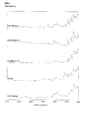
- Modification I has a melting point of 230 ° C and a characteristic X-ray diffractogram, IR spectrum, Raman spectrum, FIR spectrum and NIR spectrum (Tab. 1-6, Fig. 1-6 ). It has now been found that modification I has a lower solubility by a factor of 4 compared to modification II.
- the compound of formula (I) in the modification II melts at about 203 ° C or has a transformation point of about 195 ° C
- the compound of formula (I) in the modification III has a transformation point from about 127 ° C.
- the hydrate contains about 4% water
- the NMP solvate contains 18.5% N-methylpyrrolidone
- the inclusion compound with THF about 5-7% tetrahydrofuran.
- the present invention provides the compound of the formula (I) in the modification II.
- the use according to the invention of the compound of the formula (I) in the modification II ensures that a higher solubility in comparison to the known modification is achieved.
- Modification II of the compound of the formula (I) has a clearly distinguishable X-ray diffractogram, IR spectrum, NIR spectrum, FIR spectrum and Raman as compared to modification I, modification III, the hydrate form, the NMP solvate and the inclusion compound with THF. Spectrum ( Fig. 2-6 ).
- the compound of formula (I) in the modification II melts at 203 ° C or changes at about 195 ° C and is thus clearly distinguishable from modification I (melting point 230 ° C) and modification III (transformation point about 127 ° C) ,
- the hydrate of the compound of formula (I), the NMP solvate of the compound of formula (I) and the inclusion compound with THF of the compound of formula (I) show mass losses in the thermogravimetric analysis (TGA) of FIG %, 18.5% and 5-7% respectively ( Fig. 1 ).
- the present invention furthermore relates to the compound of the formula (I) in amorphous form.
- the use according to the invention of the compound of the formula (I) in the amorphous form ensures that maximum bioavailability is achieved.
- the amorphous form of the compound of the formula (I) has a characteristic X-ray diffractogram, NIR spectrum, FIR spectrum and Raman spectrum ( Fig. 8-12 ).
- the compound of formula (I) in the amorphous form has a glass transition temperature of about 83 ° C (DSC, Fig. 7 ).
- a pharmaceutical formulation mainly contains the compound of the formula (I) in the modification II or in the amorphous form and no major proportions of another form such as another modification or a solvate of the compound of the formula (I).
- the medicament preferably contains more than 90% by weight, particularly preferably more than 95% by weight of the compound of the formula (I) in the modification II or in the amorphous form based on the total amount of the compound of the formula (I).
- Another object of the present invention is the use of the compound of formula (I) in the modification II or in the amorphous form for the treatment and / or prophylaxis of diseases, preferably thromboembolic disorders and / or thromboembolic complications.
- thromboembolic disorders include, in particular, diseases such as myocardial infarction with ST segment elevation (STEMI) and without ST segment elevation (non-STEMI), stable angina pectoris, unstable angina pectoris, reocclusions and restenoses Coronary interventions such as angioplasty or aortocoronary bypass, peripheral arterial occlusive diseases, pulmonary embolism, deep venous thrombosis and renal vein thrombosis, transient ischemic attacks and thrombotic and thromboembolic stroke.
- diseases such as myocardial infarction with ST segment elevation (STEMI) and without ST segment elevation (non-STEMI)
- stable angina pectoris such as myocardial infarction with ST segment elevation (STEMI) and without ST segment elevation (non-STEMI)
- unstable angina pectoris unstable angina pectoris
- reocclusions and restenoses
- Coronary interventions such as angioplasty or aortocoronary bypass, peripheral
- the compound of the invention is therefore also useful in the prevention and treatment of cardiogenic thromboembolisms, such as brain ischemia, stroke and systemic thromboembolism and ischaemia, in patients with acute, intermittent or persistent cardiac arrhythmias, such as atrial fibrillation, and those undergoing cardioversion , in patients with valvular heart disease or with artificial heart valves.
- cardiogenic thromboembolisms such as brain ischemia, stroke and systemic thromboembolism and ischaemia
- acute, intermittent or persistent cardiac arrhythmias such as atrial fibrillation, and those undergoing cardioversion
- the compound of the invention is suitable for the treatment of disseminated intravascular coagulation (DIC).
- DIC disseminated intravascular coagulation
- Thromboembolic complications also occur in microangiopathic hemolytic anemias, extracorporeal blood circuits such as hemodialysis, and heart valve prostheses.
- the compound of the invention is also for the prophylaxis and / or treatment of atherosclerotic vascular diseases and inflammatory diseases such as rheumatic diseases of the musculoskeletal into consideration, as well as for the prophylaxis and / or treatment of Alzheimer's disease.
- the compound of the present invention can inhibit tumor growth and metastasis, microangiopathies, age-related macular degeneration, diabetic retinopathy, diabetic nephropathy, and other microvascular diseases, and prevent and treat thromboembolic complications such as venous thromboembolism in tumor patients, especially those undergo major surgery or chemo- or radiotherapy.
- the compound of the invention can also be used ex vivo to prevent coagulation, eg for the preservation of blood and plasma products, for cleaning / pretreatment of catheters and other medical aids and devices, for Coating artificial surfaces of in vivo or ex vivo applied medical devices and equipment or biological samples containing factor Xa.
- Another object of the present invention is the use of the compound of the invention for the treatment and / or prophylaxis of diseases, in particular the aforementioned diseases.
- Another object of the present invention is the use of the compound of the invention for the manufacture of a medicament for the treatment and / or prophylaxis of diseases, in particular the aforementioned diseases.
- Another object of the present invention is a method for the treatment and / or prophylaxis of diseases, in particular the aforementioned diseases, using an anticoagulatory effective amount of the compound of the invention.
- Another object of the present invention is a method for preventing blood coagulation in vitro, especially in blood or biological samples containing factor Xa, which is characterized in that an anticoagulatory effective amount of the compound of the invention is added.
- Another object of the present invention are pharmaceutical compositions containing the compound of the invention, usually together with one or more inert, non-toxic, pharmaceutically suitable excipients, and their use for the purposes mentioned above.
- the compound of the invention may act systemically and / or locally.
- they may be applied in a suitable manner, e.g. oral, parenteral, pulmonary, nasal, sublingual, lingual, buccal, rectal, dermal, transdermal, conjunctival, otic or as an implant or stent.
- the compound according to the invention can be administered in suitable administration forms.
- the invention according to the invention rapidly and / or modified donating application forms containing the compound of formula (I) in the modification II or in the amorphous form, such.
- Tablets uncoated or coated tablets, for example with enteric or delayed-release or insoluble coatings which control the release of the compound of the invention
- tablets or films / wafers rapidly breaking down in the oral cavity, films / lyophilisates
- capsules e.g. Soft gelatin capsules
- dragees granules, pellets, powders, suspensions or aerosols.
- Parenteral administration can be accomplished by bypassing a resorption step (e.g., intravenously, intraarterially, intracardially, intraspinal, or intralumbar) or by resorting to absorption (e.g., intramuscularly, subcutaneously, intracutaneously, percutaneously, or intraperitoneally).
- a resorption step e.g., intravenously, intraarterially, intracardially, intraspinal, or intralumbar
- absorption e.g., intramuscularly, subcutaneously, intracutaneously, percutaneously, or intraperitoneally.
- parenteral administration are suitable as application forms u.a. Injection and infusion preparations in the form of suspensions, lyophilisates or sterile powders.
- Inhalation medicaments including powder inhalers, nebulizers
- lingual, sublingual or buccal tablets films / wafers or capsules
- suppositories ear or ophthalmic preparations
- vaginal capsules aqueous suspensions (lotions, shaking mixtures)
- lipophilic suspensions ointments
- creams transdermal therapeutic systems (eg patches)
- milk pastes, foams, powder, implants or stents.
- the compound of the invention can be converted into the mentioned application forms. This can be done in a conventional manner by mixing with inert, non-toxic, pharmaceutically suitable excipients.
- These adjuvants include, among others.
- Carrier materials for example microcrystalline cellulose, lactose, mannitol
- solvents for example liquid polyethylene glycols
- emulsifiers and dispersants or wetting agents for example sodium dodecyl sulfate, polyoxysorbitanoleate
- binders for example polyvinylpyrrolidone
- synthetic and natural polymers for example albumin
- stabilizers for example antioxidants such as ascorbic acid
- dyes eg, inorganic pigments such as iron oxides
- flavor and / or odor remedies include, among others.
- Carrier materials for example microcrystalline cellulose, lactose, mannitol
- solvents for example liquid polyethylene glycols
- emulsifiers and dispersants or wetting agents for example sodium
- the dosage is about 0.01 to 100 mg / kg, preferably about 0.01 to 20 mg / kg and most preferably 0.1 to 10 mg / kg of body weight.
- the invention further provides a process for preparing the compound of the formula (I) in the modification II by dissolving the compound of the formula (I) in the modification I in an inert solvent and the active ingredient by adding a precipitant at a temperature between 0 ° C and 80 ° C, preferably from 20 to 25 ° C, is precipitated. The precipitate is isolated and dried. This gives the compound of formula (I) in the modification II.
- the invention likewise provides a process for the preparation of the compound of the formula (I) in the modification II in which the compound of the formula (I) in the modification I is dissolved in an inert solvent and, preferably at elevated temperature, in particular at a temperature of 30 ° C to the reflux temperature of the solvent, until complete evaporation of the solvent and crystallization of the active ingredient is stored. This gives the compound of formula (I) in the modification II.
- the invention likewise provides a process for the preparation of the compound of the formula (I) in the modification II by suspending the compound of the formula (I) in the amorphous form in an anhydrous inert solvent and until the desired Degree of conversion, especially to quantitative conversion, is stirred or shaken in the modification II. The resulting crystals are isolated and dried. This gives the compound of formula (I) in the modification II.
- Suitable inert solvents are lower alcohols, such as, for example, methanol, ethanol, n-propanol, isopropanol, n-butanol, sec-butanol, isobutanol, 1-pentanol, or ketones, such as acetone, or alkanes, such as n-pentane or cyclopentane , n-hexane, cyclohexane, or tetrahydrofuran, or acetonitrile, or toluene, or ethyl acetate, or 1,4-dioxane, or mixtures of said solvents, or mixtures of said solvents with water.
- lower alcohols such as, for example, methanol, ethanol, n-propanol, isopropanol, n-butanol, sec-butanol, isobutanol, 1-pentanol, or ketones, such as acetone
- Suitable precipitating agents are inert, anhydrous solvents in which the active ingredient is sparingly soluble, such as.
- n-heptane cyclohexane or toluene.
- Preference is given to n-heptane.
- the compound of formula (I) is prepared in the modification II by dissolving the compound of formula (I) in the modification I in acetone or tetrahydrofuran and the active ingredient by adding n-heptane at a temperature between 0 and 80 ° C. , preferably at a temperature of 20 to 25 ° C, is precipitated. The precipitate is isolated and dried. This gives the compound of formula (I) in the modification II.
- the compound of formula (I) is prepared in the modification II by dissolving the compound of formula (I) in the modification I in 1,4-dioxane and at elevated temperature, in particular at a temperature of 30 ° C to to the reflux temperature of the solvent, for example 50 ° C, until complete evaporation of the solvent and crystallization of the active ingredient is stored. This gives the compound of formula (I) in the modification II.
- the compound of formula (I) is prepared in the modification II by suspending the compound of formula (I) in the amorphous form in an inert anhydrous solvent and until the desired degree of conversion to the modification II at a temperature of 20 stirred or shaken to 25 ° C. The resulting crystals are isolated and dried to give the compound of formula (I) in the modification II.
- Another object of the invention is a process for the preparation of the compound of formula (I) in the amorphous form, in which the compound of formula (I) is melted through in a crystalline form and then rapidly cooled. This gives the compound of formula (I) in the amorphous form.
- the compound of formula (I) is prepared in the amorphous form by reacting the compound of formula (I) in a crystalline form at a temperature of at least 230 ° C, especially at a temperature of 240 to 250 ° C, melted and then cooled quickly. This gives the compound of formula (I) in the amorphous form.
- modification I Of the crystalline forms modification I, II and III, preference is given to using modification I or II, in particular modification I.
- the temperature of the compound (I) is preferably brought to or near the room temperature, for example, to a temperature of about 15 to 30 ° C, especially about 20 to 25 ° C.
- the rapid cooling preferably takes place within a few seconds, for example within about 5 seconds.
- shock cooling is preferably used.
- the compound of the formula (I) in the modification III can be prepared by dissolving the compound of the formula (I) in the modification I in an inert solvent, for example acetone. The solution is mixed with water and allowed to stand at room temperature until the solvent has completely evaporated. This gives the compound of formula (I) in the modification III.
- an inert solvent for example acetone
- the hydrate of the compound of the formula (I) can be prepared by dissolving the compound of the formula (I) in the modification I in ethanol: water (1: 1). The solution is stored at a temperature of about -20 ° C until the solvent has evaporated. This gives the hydrate of the compound of formula (I).
- the NMP solvate of the compound of the formula (I) can be prepared by suspending the compound of the formula (I) in the modification I in 1-methyl-2-pyrrolidone and stirring it at room temperature. After 2 days, it is filtered and the product is dried. This gives the NMP solvate of the compound of the formula (I) with an NMP content of 18.5 percent by weight.
- the inclusion compound with THF of the compound of the formula (I) can be prepared by dissolving the compound of the formula (I) in the modification I in tetrahydrofuran. The solution is stored at room temperature until the solvent has evaporated. This gives the inclusion compound with THF of the compound of formula (I).
- thermograms were obtained using a differential scanning calorimeter DSC 7 or Pyris-1 and Thermogravimetric Analyzer TGA 7 from Perkin-Elmer.
- the X-ray diffractograms were registered in a Stoe transmission diffractometer.
- the IR, FIR, NIR and Raman spectra were recorded with Fourier IR spectrometers IFS 66v (IR, FIR), IFS 28 / N (NIR) and RFS 100 (Raman) from Bruker.
- Example 6 Preparation of inclusion compound with THF of 5-chloro-N - ( ⁇ (5 S) -2-oxo-3- [4- (3-oxo-4-morpholinyl) phenyl] -1,3-oxazolidin 5-yl ⁇ -methyl) -2-thiophenecarboxamide
Landscapes
- Chemical & Material Sciences (AREA)
- Organic Chemistry (AREA)
- Health & Medical Sciences (AREA)
- Engineering & Computer Science (AREA)
- Bioinformatics & Cheminformatics (AREA)
- Diabetes (AREA)
- Hematology (AREA)
- Chemical Kinetics & Catalysis (AREA)
- General Chemical & Material Sciences (AREA)
- Medicinal Chemistry (AREA)
- Nuclear Medicine, Radiotherapy & Molecular Imaging (AREA)
- Pharmacology & Pharmacy (AREA)
- Life Sciences & Earth Sciences (AREA)
- Animal Behavior & Ethology (AREA)
- General Health & Medical Sciences (AREA)
- Public Health (AREA)
- Veterinary Medicine (AREA)
- Pharmaceuticals Containing Other Organic And Inorganic Compounds (AREA)
Abstract
Description
- Die vorliegende Erfindung betrifft eine neue polymorphe Form und die amorphe Form von 5-Chlor-N-({(5S)-2-oxo-3-[4-(3-oxo-4-morpholinyl)-phenyl]-1,3-oxazolidin-5-yl}-methyl)-2-thiophen-carboxamid, Verfahren zu deren Herstellung, diese enthaltende Arzneimittel sowie deren Verwendung bei der Bekämpfung von Krankheiten.
- Die Verbindung 5-Chlor-N-({(5S)-2-oxo-3-[4-(3-oxo-4-morpholinyl)-phenyl]-1,3-oxazolidin-5-yl}-methyl)-2-thiophencarboxamid ist aus
WO 01/47949 WO 2004/060887 bekannt und entspricht der Formel (I):
- Die Verbindung der Formel (I) ist ein niedermolekularer, oral applizierbarer Inhibitor des Blutgerinnungsfaktors Xa, der zur Prophylaxe, Sekundärprophylaxe und/oder Behandlung von verschiedenen thromboembolischen Erkrankungen eingesetzt werden kann (siehe hierzu
WO 01/47919 - Die Verbindung der Formel (I) lässt sich wie in
WO 01/47949 WO 2004/060887 beschrieben herstellen. Dabei wird die Verbindung der Formel (I) in einer Kristallmodifikation erhalten, die im Folgenden als Modifikation I bezeichnet wird. Modifikation I hat einen Schmelzpunkt von 230°C und ein charakteristisches Röntgendiffraktogramm, IR-Spektrum, Raman-Spektrum, FIR-Spektrum und NIR-Spektrum (Tab. 1-6,Abb. 1-6 ). Es wurde nun gefunden, dass Modifikation I im Vergleich zur Modifikation II eine um den Faktor 4 geringere Löslichkeit aufweist. - Überraschenderweise wurden zwei weitere Modifikationen, ein Hydrat, ein NMP-Solvat und eine Einschlussverbindung mit THF der Verbindung der Formel (I) gefunden. Die Verbindung der Formel (I) in der Modifikation II schmilzt bei etwa 203 °C bzw. hat einen Umwandlungspunkt von etwa 195°C, die Verbindung der Formel (I) in der Modifikation III hat einen Umwandlungspunkt von etwa 127°C. Das Hydrat enthält etwa 4 % Wasser, das NMP-Solvat enthält 18,5 % N-Methylpyrrolidon und die Einschlussverbindung mit THF etwa 5-7 % Tetrahydrofuran.
- Gegenstand der vorliegenden Erfindung ist die Verbindung der Formel (I) in der Modifikation II. Durch den erfindungsgemäßen Einsatz der Verbindung der Formel (I) in der Modifikation II wird sichergestellt, dass eine im Vergleich zur bekannten Modifikation höhere Löslichkeit erreicht wird.
- Modifikation II der Verbindung der Formel (I) hat im Vergleich zu Modifikation I, Modifikation III, der Hydratform, dem NMP-Solvat und der Einschlussverbindung mit THF ein klar unterscheidbares Röntgendiffraktogramm, IR-Spektrum, NIR-Spektrum, FIR-Spektrum und Raman-Spektrum (
Abb. 2-6 ). Die Verbindung der Formel (I) in der Modifikation II schmilzt bei 203°C bzw. wandelt sich bei etwa 195°C um und ist damit klar unterscheidbar von Modifikation I (Schmelzpunkt 230°C) und Modifikation III (Umwandlungspunkt etwa 127°C). Im Gegensatz zu diesen lösungsmittelfreien Formen weisen das Hydrat der Verbindung der Formel (I), das NMP-Solvat der Verbindung der Formel (I) und die Einschlussverbindung mit THF der Verbindung der Formel (I) Masseverluste bei der thermogravimetrischen Analyse (TGA) von 4 %, 18,5 % bzw. 5-7 % auf (Abb. 1 ). - Es ist allgemein bekannt, dass kristalline polymorphe Formen eine schlechtere Wasserlöslichkeit aufweisen als die amorphe Form. Dies führt zu einer geringeren Bioverfügbarkeit im Vergleich zur amorphen Form.
- Gegenstand der vorliegenden Erfindung ist weiterhin die Verbindung der Formel (I) in amorpher Form. Durch den erfindungsgemäßen Einsatz der Verbindung der Formel (I) in der amorphen Form wird sichergestellt, dass eine maximale Bioverfügbarkeit erreicht wird.
- Die amorphe Form der Verbindung der Formel (I) hat ein charakteristisches Röntgendiffraktogramm, NIR-Spektrum, FIR-Spektrum und Raman-Spektrum (
Abb. 8-12 ). Die Verbindung der Formel (I) in der amorphen Form hat eine Glasumwandlungstemperatur von etwa 83°C (DSC,Abb. 7 ). - Die erfindungsgemäße Verbindung der Formel (I) in der Modifikation II oder in der amorphen Form wird in pharmazeutischen Formulierungen in hoher Reinheit eingesetzt. Aus Stabilitätsgründen enthält eine pharmazeutische Formulierung hauptsächlich die Verbindung der Formel (I) in der Modifikation II oder in der amorphen Form und keine größeren Anteile einer anderen Form wie beispielsweise einer anderen Modifikation oder eines Solvates der Verbindung der Formel (I). Bevorzugt enthält das Arzneimittel mehr als 90 Gewichtsprozente, besonders bevorzugt mehr als 95 Gewichtsprozente der Verbindung der Formel (I) in der Modifikation II oder in der amorphen Form bezogen auf die Gesamtmenge der enthaltenen Verbindung der Formel (I). Weiterer Gegenstand der vorliegenden Erfindung ist der Einsatz der Verbindung der Formel (I) in der Modifikation II oder in der amorphen Form zur Behandlung und/oder Prophylaxe von Erkrankungen, vorzugsweise von thromboembolischen Erkrankungen und/oder thromboembolischen Komplikationen.
- Zu den "thromboembolischen Erkrankungen" im Sinne der vorliegenden Erfindung zählen insbesondere Erkrankungen wie Herzinfarkt mit ST-Segment-Erhöhung (STEMI) und ohne ST-Segment-Erhöhung (non-STEMI), stabile Angina Pectoris, instabile Angina Pectoris, Reokklusionen und Restenosen nach Koronarinterventionen wie Angioplastie oder aortokoronarem Bypass, periphere arterielle Verschlusskrankheiten, Lungenembolien, tiefe venöse Thrombosen und Nierenvenenthrombosen, transitorische ischämische Attacken sowie thrombotischer und thromboembolischer Hirnschlag.
- Die erfindungsgemäße Verbindung eignet sich daher auch zur Prävention und Behandlung von kardiogenen Thromboembolien, wie beispielsweise Hirn-Ischämien, Schlaganfall und systemischen Thromboembolien und Ischämien, bei Patienten mit akuten, intermittierenden oder persistierenden Herzarrhythmien, wie beispielsweise Vorhofflimmern, und solchen, die sich einer Kardioversion unterziehen, ferner bei Patienten mit Herzklappen-Erkrankungen oder mit künstlichen Herzklappen. Darüber hinaus ist die erfindungsgemäße Verbindung zur Behandlung der disseminierten intravasalen Gerinnung (DIC) geeignet.
- Thromboembolische Komplikationen treten ferner auf bei mikroangiopathischen hämolytischen Anämien, extrakorporalen Blutkreisläufen, wie Hämodialyse, sowie Herzklappenprothesen.
- Außerdem kommt die erfindungsgemäße Verbindung auch für die Prophylaxe und/oder Behandlung von atherosklerotischen Gefäßerkrankungen und entzündlichen Erkrankungen wie rheumatische Erkrankungen des Bewegungsapparats in Betracht, darüber hinaus ebenso für die Prophylaxe und/oder Behandlung der Alzheimer'schen Erkrankung. Außerdem kann die erfindungsgemäße Verbindung zur Inhibition des Tumorwachstums und der Metastasenbildung, bei Mikroangiopathien, altersbedingter Makula-Degeneration, diabetischer Retinopathie, diabetischer Nephropathie und anderen mikrovaskulären Erkrankungen sowie zur Prävention und Behandlung thromboembolischer Komplikationen, wie beispielsweise venöser Thromboembolien, bei Tumorpatienten, insbesondere solchen, die sich größeren chirurgischen Eingriffen oder einer Chemo- oder Radiotherapie unterziehen, eingesetzt werden.
- Die erfindungsgemäße Verbindung kann darüber hinaus auch zur Verhinderung von Koagulation ex vivo eingesetzt werden, z.B. zur Konservierung von Blut- und Plasmaprodukten, zur Reinigung/Vorbehandlung von Kathetern und anderen medizinischen Hilfsmitteln und Geräten, zur Beschichtung künstlicher Oberflächen von in vivo oder ex vivo eingesetzten medizinischen Hilfsmitteln und Geräten oder bei biologischen Proben, die Faktor Xa enthalten.
- Weiterer Gegenstand der vorliegenden Erfindung ist die Verwendung der erfindungsgemäßen Verbindung zur Behandlung und/oder Prophylaxe von Erkrankungen, insbesondere der zuvor genannten Erkrankungen.
- Weiterer Gegenstand der vorliegenden Erfindung ist die Verwendung der erfindungsgemäßen Verbindung zur Herstellung eines Arzneimittels zur Behandlung und/oder Prophylaxe von Erkrankungen, insbesondere der zuvor genannten Erkrankungen.
- Weiterer Gegenstand der vorliegenden Erfindung ist ein Verfahren zur Behandlung und/oder Prophylaxe von Erkrankungen, insbesondere der zuvor genannten Erkrankungen, unter Verwendung einer antikoagulatorisch wirksamen Menge der erfindungsgemäßen Verbindung.
- Weiterer Gegenstand der vorliegenden Erfindung ist ein Verfahren zur Verhinderung der Blutkoagulation in vitro, insbesondere bei Blutkonserven oder biologischen Proben, die Faktor Xa enthalten, das dadurch gekennzeichnet ist, dass eine antikoagulatorisch wirksame Menge der erfindungsgemäßen Verbindung zugegeben wird.
- Weiterer Gegenstand der vorliegenden Erfindung sind Arzneimittel, enthaltend die erfindungsgemäße Verbindung und einen oder mehrere weitere Wirkstoffe, insbesondere zur Behandlung und/oder Prophylaxe der zuvor genannten Erkrankungen. Als geeignete Kombinationswirkstoffe seien beispielhaft und vorzugsweise genannt:
- Lipidsenker, insbesondere HMG-CoA-(3-Hydroxy-3-methylglutaryl-Coenzym A)-Reduktase-Inhibitoren;
- Koronartherapeutika/Vasodilatatoren, insbesondere ACE-(Angiotensin-Converting-Enzyme)-Inhibitoren; AII-(Angiotensin II)-Rezeptor-Antagonisten; β-Adrenozeptor-Antagonisten; alpha-1-Adrenozeptor-Antagonisten; Diuretika; Calciumkanal-Blocker; Substanzen, die eine Erhöhung von cyclischem Guanosinmonophosphat (cGMP) bewirken, wie beispielsweise Stimulatoren der löslichen Guanylatcyclase;
- Plasminogen-Aktivatoren (Thrombolytika/Fibrinolytika) und die Thrombolyse/Fibrinolyse steigernde Verbindungen wie Inhibitoren des Plasminogen-Aktivator-Inhibitors (PAI-Inhibitoren) oder Inhibitoren des Thrombin-aktivierten Fibrinolyse-Inhibitors (TAFI-Inhibitoren);
- antikoagulatorisch wirksame Substanzen (Antikoagulantien);
- plättchenaggregationshemmende Substanzen (Plättchenaggregationshemmer, Thrombozytenaggregationshemmer);
- sowie Fibrinogen-Rezeptor-Antagonisten (Glycoprotein-IIb/IIIa-Antagonisten).
- Weiterer Gegenstand der vorliegenden Erfindung sind Arzneimittel, die die erfindungsgemäße Verbindung, üblicherweise zusammen mit einem oder mehreren inerten, nichttoxischen, pharmazeutisch geeigneten Hilfsstoffen enthalten, sowie deren Verwendung zu den zuvor genannten Zwecken.
- Die erfindungsgemäße Verbindung kann systemisch und/oder lokal wirken. Zu diesem Zweck können sie auf geeignete Weise appliziert werden, wie z.B. oral, parenteral, pulmonal, nasal, sublingual, lingual, buccal, rectal, dermal, transdermal, conjunctival, otisch oder als Implantat bzw. Stent.
- Für diese Applikationswege kann die erfindungsgemäße Verbindung in geeigneten Applikationsformen verabreicht werden.
- Für die orale Applikation eignen sich nach dem Stand der Technik funktionierende, die erfindungsgemäß Verbindung schnell und/oder modifiziert abgebende Applikationsformen, die die Verbindung der Formel (I) in der Modifikation II oder in der amorphen Form enthalten, wie z.B. Tabletten (nicht-überzogene oder überzogene Tabletten, beispielsweise mit magensaftresistenten oder sich verzögert auflösenden oder unlöslichen Überzügen, die die Freisetzung der erfindungsgemäßen Verbindung kontrollieren), in der Mundhöhle schnell zerfallende Tabletten oder Filme/Oblaten, Filme/Lyophylisate, Kapseln (beispielsweise Hart- oder Weichgelatinekapseln), Dragees, Granulate, Pellets, Pulver, Suspensionen oder Aerosole.
- Die parenterale Applikation kann unter Umgehung eines Resorptionsschrittes geschehen (z.B. intravenös, intraarteriell, intrakardial, intraspinal oder intralumbal) oder unter Einschaltung einer Resorption (z.B. intramuskulär, subcutan, intracutan, percutan oder intraperitoneal). Für die parenterale Applikation eignen sich als Applikationsformen u.a. Injektions- und Infusionszubereitungen in Form von Suspensionen, Lyophilisaten oder sterilen Pulvern.
- Für die sonstigen Applikationswege eignen sich z.B. Inhalationsarzneiformen (u.a. Pulverinhalatoren, Nebulizer), lingual, sublingual oder buccal zu applizierende Tabletten, Filme/Oblaten oder Kapseln, Suppositorien, Ohren- oder Augenpräparationen, Vaginalkapseln, wässrige Suspensionen (Lotionen, Schüttelmixturen), lipophile Suspensionen, Salben, Cremes, transdermale therapeutische Systeme (z.B. Pflaster), Milch, Pasten, Schäume, Streupuder, Implantate oder Stents.
- Bevorzugt sind die orale oder parenterale Applikation, insbesondere die orale Applikation.
- Die erfindungsgemäße Verbindung kann in die angeführten Applikationsformen überführt werden. Dies kann in an sich bekannter Weise durch Mischen mit inerten, nichttoxischen, pharmazeutisch geeigneten Hilfsstoffen geschehen. Zu diesen Hilfsstoffen zählen u.a. Trägerstoffe (beispielsweise mikrokristalline Cellulose, Lactose, Mannitol), Lösungsmittel (z.B. flüssige Polyethylenglycole), Emulgatoren und Dispergier- oder Netzmittel (beispielsweise Natriumdodecylsulfat, Polyoxysorbitanoleat), Bindemittel (beispielsweise Polyvinylpyrrolidon), synthetische und natürliche Polymere (beispielsweise Albumin), Stabilisatoren (z.B. Antioxidantien wie beispielsweise Ascorbinsäure), Farbstoffe (z.B. anorganische Pigmente wie beispielsweise Eisenoxide) und Geschmacks- und/oder Geruchskorrigentien.
- Im Allgemeinen hat es sich als vorteilhaft erwiesen, bei parenteraler Applikation Mengen von etwa 0.001 bis 1 mg/kg, vorzugsweise etwa 0.01 bis 0.5 mg/kg Körpergewicht zur Erzielung wirksamer Ergebnisse zu verabreichen. Bei oraler Applikation beträgt die Dosierung etwa 0.01 bis 100 mg/kg, vorzugsweise etwa 0.01 bis 20 mg/kg und ganz besonders bevorzugt 0.1 bis 10 mg/kg Körpergewicht.
- Trotzdem kann es gegebenenfalls erforderlich sein, von den genannten Mengen abzuweichen, und zwar in Abhängigkeit von Körpergewicht, Applikationsweg, individuellem Verhalten gegenüber dem Wirkstoff, Art der Zubereitung und Zeitpunkt bzw. Intervall, zu welchem die Applikation erfolgt. So kann es in einigen Fällen ausreichend sein, mit weniger als der vorgenannten Mindestmenge auszukommen, während in anderen Fällen die genannte obere Grenze überschritten werden muss. Im Falle der Applikation größerer Mengen kann es empfehlenswert sein, diese in mehreren Einzelgaben über den Tag zu verteilen.
- Weiterer Gegenstand der Erfindung ist ein Verfahren zur Herstellung der Verbindung der Formel (I) in der Modifikation II, indem die Verbindung der Formel (I) in der Modifikation I in einem inerten Lösungsmittel gelöst und der Wirkstoff durch Zugabe eines Fällungsmittels bei einer Temperatur zwischen 0°C und 80°C, bevorzugt von 20 bis 25°C, gefällt wird. Der Niederschlag wird isoliert und getrocknet. Man erhält so die Verbindung der Formel (I) in der Modifikation II.
- Ebenfalls Gegenstand der Erfindung ist ein Verfahren zur Herstellung der Verbindung der Formel (I) in der Modifikation II, indem die Verbindung der Formel (I) in der Modifikation I in einem inerten Lösungsmittel gelöst und, bevorzugt bei erhöhter Temperatur, insbesondere bei einer Temperatur von 30°C bis zur Rückflusstemperatur des Lösungsmittels, bis zum vollständigen Verdampfen des Lösungsmittels und Auskristallisieren des Wirkstoffs gelagert wird. Man erhält so die Verbindung der Formel (I) in der Modifikation II.
- Ebenfalls Gegenstand der Erfindung ist ein Verfahren zur Herstellung der Verbindung der Formel (I) in der Modifikation II, indem die Verbindung der Formel (I) in der amorphen Form in einem wasserfreien inerten Lösungsmittel suspendiert und bis zum Erreichen des gewünschten Umwandlungsgrads, insbesondere bis zur quantitativen Umwandlung, in die Modifikation II gerührt oder geschüttelt wird. Das erhaltene Kristallisat wird isoliert und getrocknet. Man erhält so die Verbindung der Formel (I) in der Modifikation II.
- Als inerte Lösungsmittel eignen sich niedere Alkohole wie beispielsweise Methanol, Ethanol, n-Propanol, iso-Propanol, n-Butanol, sec-Butanol, iso-Butanol, 1-Pentanol, oder Ketone wie Aceton, oder Alkane wie n-Pentan, Cyclopentan, n-Hexan, Cyclohexan, oder Tetrahydrofuran, oder Acetonitril, oder Toluol, oder Ethylacetat, oder 1,4-Dioxan, oder Gemische der genannten Lösungsmittel, oder Gemische der genannten Lösungsmittel mit Wasser. Bevorzugt sind Aceton, Tetrahydrofuran, 1-Pentanol oder Gemische der genannten Lösungsmittel. Als Fällungsmittel eignen sich inerte, wasserfreie Lösungsmittel, in denen der Wirkstoff schwer löslich ist, wie z. B. n-Heptan, Cyclohexan oder Toluol. Bevorzugt ist n-Heptan.
- Bevorzugt wird die Verbindung der Formel (I) in der Modifikation II hergestellt, indem die Verbindung der Formel (I) in der Modifikation I in Aceton oder Tetrahydrofuran gelöst und der Wirkstoff durch Zugabe von n-Heptan bei einer Temperatur zwischen 0 und 80°C, bevorzugt bei einer Temperatur von 20 bis 25°C, gefällt wird. Der Niederschlag wird isoliert und getrocknet. Man erhält so die Verbindung der Formel (I) in der Modifikation II.
- Ebenfalls bevorzugt wird die Verbindung der Formel (I) in der Modifikation II hergestellt, indem die Verbindung der Formel (I) in der Modifikation I in 1,4-Dioxan gelöst wird und bei erhöhter Temperatur, insbesondere bei einer Temperatur von 30°C bis zur Rückflusstemperatur des Lösungsmittels, beispielsweise 50°C, bis zum vollständigen Verdampfen des Lösungsmittels und Auskristallisieren des Wirkstoffs gelagert wird. Man erhält so die Verbindung der Formel (I) in der Modifikation II.
- Ebenfalls bevorzugt wird die Verbindung der Formel (I) in der Modifikation II hergestellt, indem die Verbindung der Formel (I) in der amorphen Form in einem inerten wasserfreien Lösungsmittel suspendiert und bis zum Erreichen des gewünschten Umwandlungsgrads in die Modifikation II bei einer Temperatur von 20 bis 25°C gerührt oder geschüttelt wird. Das erhaltene Kristallisat wird isoliert und getrocknet Man erhält so die Verbindung der Formel (I) in der Modifikation II.
- Weiterer Gegenstand der Erfindung ist ein Verfahren zur Herstellung der Verbindung der Formel (I) in der amorphen Form, in dem die Verbindung der Formel (I) in einer kristallinen Form durchgeschmolzen und anschließend schnell abgekühlt wird. Man erhält so die Verbindung der Formel (I) in der amorphen Form.
- Bevorzugt wird die Verbindung der Formel (I) in der amorphen Form hergestellt, indem die Verbindung der Formel (I) in einer kristallinen Form bei einer Temperatur von mindestens 230°C, insbesondere bei einer Temperatur von 240 bis 250°C, durchgeschmolzen und anschließend schnell abgekühlt wird. Man erhält so die Verbindung der Formel (I) in der amorphen Form.
- Von den kristallinen Formen Modifikation I, II und III werden dabei vorzugsweise Modifikation I oder II eingesetzt, insbesondere Modifikation I.
- Durch das schnelle Abkühlen wird die Temperatur der Verbindung (I) vorzugsweise auf oder in die Nähe der Raumtemperatur gebracht, beispielsweise auf eine Temperatur von etwa 15 bis 30°C, insbesondere von etwa 20 bis 25°C. Das schnelle Abkühlen erfolgt vorzugsweise innerhalb weniger Sekunden, beispielsweise innerhalb von etwa 5 Sekunden. Zum schnellen Abkühlen wird vorzugsweise Schockkühlung eingesetzt.
- Die Verbindung der Formel (I) in der Modifikation III kann hergestellt werden, indem die Verbindung der Formel (I) in der Modifikation I in einem inerten Lösungsmittel, beispielsweise Aceton, gelöst wird. Die Lösung wird mit Wasser versetzt und bei Raumtemperatur stehengelassen, bis das Lösungsmittel vollständig verdunstet ist. Man erhält so die Verbindung der Formel (I) in der Modifikation III.
- Das Hydrat der Verbindung der Formel (I) kann hergestellt werden, indem die Verbindung der Formel (I) in der Modifikation I in Ethanol:Wasser (1:1) gelöst wird. Die Lösung wird bei einer Temperatur von etwa -20°C gelagert, bis das Lösungsmittel verdunstet ist. Man erhält so das Hydrat der Verbindung der Formel (I).
- Das NMP-Solvat der Verbindung der Formel (I) kann hergestellt werden, indem die Verbindung der Formel (I) in der Modifikation I in 1-Methyl-2-Pyrrolidon suspendiert und bei Raumtemperatur gerührt wird. Nach 2 Tagen wird filtriert und das Produkt getrocknet. Man erhält so das NMP-Solvat der Verbindung der Formel (I) mit einem NMP-Anteil von 18,5 Gewichtsprozenten.
- Die Einschlussverbindung mit THF der Verbindung der Formel (I) kann hergestellt werden, indem die Verbindung der Formel (I) in der Modifikation I in Tetrahydrofuran gelöst wird. Die Lösung wird bei Raumtemperatur gelagert, bis das Lösungsmittel verdunstet ist. Man erhält so die Einschlussverbindung mit THF der Verbindung der Formel (I).
- Die Prozentangaben in den folgenden Tests und Beispielen sind, sofern nicht anders angegeben, Gewichtsprozente; Teile sind Gewichtsteile. Lösungsmittelverhältnisse, Verdünnungsverhältnisse und Konzentrationsangaben von flüssig/flüssig-Lösungen beziehen sich jeweils auf das Volumen.
- Die Thermogramme wurden unter Verwendung eines Differential Scanning Calorimeters DSC 7 bzw. Pyris-1 und Thermogravimetric Analyser TGA 7 der Fa. Perkin-Elmer erhalten. Die Röntgendiffraktogramme wurden in einem Stoe-Transmissionsdiffraktometer registriert. Die IR-, FIR-, NIR- und Raman-Spektren wurden mit Fourier-IR-Spektrometern IFS 66v (IR, FIR), IFS 28/N (NIR) und RFS 100 (Raman) der Fa. Bruker aufgenommen.
- Die Herstellung der Modifikation I der Titelverbindung ist in
WO 01/47949 WO 2004/060887 beschrieben. - 208 g Chlorthiophencarbonsäure wurden in 1100 ml Toluol suspendiert und auf 75 bis 80°C erhitzt. Bei dieser Temperatur wurden innerhalb von 2 h 112 ml Thionylchlorid zugetropft. Die entstandene Reaktionslösung wurde bis zum Ende der Gasentwicklung weitere 2 h nachgerührt. Dabei wurde die Innentemperatur in 5°-Schritten auf 100-110°C erhöht. Das Gemisch wurde abgekühlt und die Lösung des Säurechlorids am Rotationsverdampfer eingeengt.
- 350 g Oxamin-Hydrochlorid wurden in 2450 ml NMP suspendiert, mit 385 ml Triethylamin versetzt und 15 min gerührt. Das Gemisch wurde auf 10°C gekühlt, mit der Lösung aus dem Säurechlorid und 70 ml Toluol versetzt und gerührt. Zu der Suspension wurden 350 ml Leitungswasser gegeben und auf 82°C erhitzt. Nach Filtration wurde der Wirkstoff mit 3,5 Wasser gefällt und 2 h nachgerührt. Trocknung bei 70°C im Vakuum.
- Ca. 200 mg 5-Chlor-N-({(5S)-2-oxo-3-[4-(3-oxo-4-morpholinyl)-phenyl]-1,3-oxazolidin-5-yl}-methyl)-2-thiophencarboxamid in der Modifikation I wurden in ca. 80 ml Tetrahydrofuran heiß gelöst. Die Lösung wurde filtriert und halbiert. Eine Hälfte wurde bei Raumtemperatur mit n-Heptan versetzt, bis der Wirkstoffausfiel. Der Rückstand wurde abfiltriert und bei Raumtemperatur getrocknet. Er wurde röntgendiffraktometrisch untersucht und entsprach der Titelverbindung in der Modifikation II.
- Ca. 200 mg 5-Chlor-N-({(5S)-2-oxo-3-[4-(3-oxo-4-morpholinyl)-phenyl]-1,3-oxazolidin-5-yl}-methyl)-2-thiophencarboxamid in der Modifikation I wurden in ca. 40 ml 1-Pentanol heiß gelöst. Die Lösung wurde filtriert und halbiert. Ein Hälfte wurde mit n-Heptan versetzt, bis der Wirkstoffausfiel. Der Rückstand wurde abfiltriert und bei Raumtemperatur getrocknet. Er wurde röntgendiffraktometrisch untersucht und entsprach der Titelverbindung in der Modifikation II.
- Ca. 200 mg 5-Chlor-N-({(5S)-2-oxo-3-[4-(3-oxo-4-morpholinyl)-phenyl]-1,3-oxazolidin-5-yl}-methyl)-2-thiophencarboxamid in der Modifikation I wurden in ca. 40 ml 1,4-Dioxan heiß gelöst. Die Lösung wurde filtriert und halbiert. Eine Hälfte wurde bei 50°C im Trockenschrank gelagert, bis das Lösungsmittel verdampft war. Der Rückstand wurde röntgendiffraktometrisch untersucht und entsprach der Titelverbindung in der Modifikation II.
- Ca. 50 mg 5-Chlor-N-({(5S)-2-oxo-3-[4-(3-oxo-4-morpholinyl)-phenyl]-1,3-oxazolidin-5-yl}-methyl)-2-thiophencarboxamid in der amorphen Form, hergestellt durch Durchschmelzen auf der Kofler-Heizbank bei ca. 240°C und anschließende Schockkühlung auf Raumtemperatur, wurden in ca. 2 ml Ethanol suspendiert und 0,5 h bei 25°C gerührt. Das Kristallisat wurde isoliert und getrocknet. Der Rückstand wurde röntgendiffraktometrisch untersucht und entsprach der Titelverbindung in der Modifikation II.
- Ca. 100 mg 5-Chlor-N-({(5S)-2-oxo-3-[4-(3-oxo-4-morpholinyl)-phenyl]-1,3-oxazolidin-5-yl}-methyl)-2-thiophencarboxamid in der Modifikation I wurden in ca. 50 ml Aceton heiß gelöst. Die Lösung wurde filtriert und im Eisbad mit n-Heptan versetzt, bis der Wirkstoff ausfiel. Der Rückstand wurde abfiltriert und bei Raumtemperatur getrocknet. Er wurde röntgendiffraktometrisch untersucht und entsprach der Titelverbindung in der Modifikation II.
- Ca. 120 mg 5-Chlor-N-({(5S)-2-oxo-3-[4-(3-oxo-4-morpholinyl)-phenyl]-1,3-oxazolidin-5-yl}-methyl)-2-thiophencarboxamid in der Modifikation I wurden in ca. 50 ml Aceton heiß gelöst. Die Lösung wurde filtriert, mit ca. 50 ml Wasser versetzt und bei Raumtemperatuar stehengelassen, bis das Lösungsmittel verdunstet war. Der Rückstand wurde thermoanalytisch untersucht und entsprach der Titelverbindung in der Modifikation III.
- Ca. 400 mg 5-Chlor-N-({(5S)-2-oxo-3-[4-(3-oxo-4-morpholinyl)-phenyl]-1,3-oxazolidin-5-yl}-methyl)-2-thiophencarboxamid in der Modifikation I wurden in ca. 60 ml Ethanol:Wasser (1:1) heiß gelöst und filtriert. Ein Teil der Lösung wurde im Gefrierschrank bei einer Temperatur von etwa -20°C gelagert, bis das Lösungsmittel verdunstet war. Der Rückstand entsprach dem Hydrat der Titelverbindung.
- Ca. 3,5 g von 5-Chlor-N-({(5S)-2-oxo-3-[4-(3-oxo-4-morpholinyl)-phenyl]-1,3-oxazolidin-5-yl}-methyl)-2-thiophencarboxamid in der Modifikation I wurden in 10 ml 1-Methyl-2-pyrrolidon suspendiert und bei Raumtemperatur gerührt. Nach einigen Stunden wurden noch ca. 20 ml NMP zugegeben. Nach zwei Tagen wurde die Suspension abgesaugt und der Rückstand bei Raumtemperatur getrocknet. Der Rückstand wurde thermoanalytisch untersucht und entsprach dem NMP-Solvat der Titelverbindung mit einem NMP-Anteil von 18,5 Gewichtsprozenten.
- Ca. 400 mg 5-Chlor-N-({(5S)-2-oxo-3-[4-(3-oxo-4-morpholinyl)-phenyl]-1,3-oxazolidin-5-yl}-methyl)-2-thiophencarboxamid in der Modifikation I wurden in ca. 50 ml Tetrahydrofuran heiß gelöst und filtriert. Ein Teil der Lösung wurde bei Raumtemperatur gelagert, bis das Lösungsmittel verdunstet war. Der Rückstand wurdee thermoanalytisch untersucht und entsprach der Einschlussverbindung mit THF der Titelverbindung.

Tab. 2: Röntgendiffraktometrie Reflexe Modifikation I
[2 Theta]Modifikation II
[2 Theta]Modifikation III
[2 Theta]Hydrat
[2 Theta]NMP-Solvat
[2 Theta]ESV mit THF
[2 Theta]8,9 12,8 11,7 3,6 4,8 9,0 12,0 17,7 16,5 14,3 5,8 12,0 14,3 18,1 17,5 16,4 7,3 14,3 16,5 18,4 19,1 16,6 10,9 14,7 17,4 19,0 19,6 17,5 14,5 16,5 18,1 19,9 19,8 19,3 15,2 16,8 19,5 20,8 23,1 19,6 15,7 17,5 19,9 21,6 23,2 19,9 16,0 19,6 21,7 22,1 23,8 20,2 17,6 19,9 22,5 22,9 24,3 21,7 17,9 21,7 23,4 24,1 28,1 22,5 20,0 22,5 24,1 26,1 28,2 24,2 20,6 23,4 24,5 26,4 31,2 25,6 21,3 24,5 24,7 26,6 25,8 21,8 24,7 25,6 27,2 28,8 22,3 25,2 26,4 27,5 29,5 22,7 25,6 26,7 28,8 31,8 23,1 26,4 30,0 29,8 32,7 23,3 26,7 30,1 31,0 23,5 28,7 31,8 31,6 24,0 30,1 32,9 24,7 31,0 24,9 31,8 25,2 26,0 26,5 26,9 28,0 28,8 29,2 29,5 29,8 Tab. 3: IR-Spektroskopie Peakmaxima Modifikation II
[cm-1]]Modifikation II
[cm-1]Modifikatio III
[cm-1]Hydrat
[cm-1]NMP-Solvat
[cm-1]564 552 515 708 497 686 598 546 755 547 708 692 596 776 562 746 713 611 820 708 757 725 644 920 749 830 756 688 992 819 846 809 709 1054 838 920 825 748 1089 921 991 833 755 1120 987 1011 924 776 1146 1065 1056 994 812 1221 1088 1077 1067 816 1289 1123 1120 1085 842 1312 1143 1146 1097 864 1324 1162 1163 1121 921 1340 1225 1219 1146 992 1349 1242 1286 1232 1016 1413 1260 1307 1285 1054 1429 1292 1323 1310 1089 1469 1302 1341 1328 1121 1485 1315 1374 1345 1148 1518 1330 1411 1415 1161 1555 1354 1429 1431 1224 1630 1387 1470 1473 1261 1668 1414 1486 1523 1288 1738 1421 1517 1554 1313 2873 1430 1546 1631 1325 3341 1471 1605 1648 1348 1517 1646 1663 1380 1566 1669 1723 1412 1636 1737 1745 1429 1665 2867 3341 1473 1755 2895 1518 2887 2936 1553 2928 2976 1629 2948 3354 1668 2983 1741 3045 2878 3085 3080 3247 3340 Tab. 4: Raman-Spektroskopie Peakmaxima Modifikation I
[cm-1]Modifikation II
[cm-1]Modifikation III
[cm-1]Hydrat
[cm-1]NMP-Solvat
[cm-1]84 86 85 85 85 111 184 112 111 105 642 276 165 132 119 672 345 671 642 485 687 485 712 672 671 745 643 743 711 710 779 672 778 744 743 792 716 793 778 776 1083 742 996 793 800 1099 778 1093 922 1193 1232 800 1288 1073 1229 1280 864 1322 1083 1233 1307 925 1428 1097 1242 1325 995 1442 1231 1259 1343 1086 1475 1301 1282 1428 1119 1555 1325 1313 1473 1149 1610 1428 1319 1485 1196 1626 1473 1328 1548 1227 1663 1485 1412 1605 1248 1669 1548 1433 1638 1282 1723 1605 1473 1664 1310 2881 1638 1608 1722 1330 2992 1722 1629 2899 1432 3020 2885 1660 2944 1474 3098 2898 1763 2983 1556 2944 2844 3074 1608 2983 2889 1631 3074 2931 1648 2946 1722 2984 2885 3075 2938 3096 2989 3077 3091 Tab. 5: FIR-Spektroskopie Peakmaxima Modifikation I
[cm-1]Modifikation II
[cm-1]Hydrat
[cm-1]NMP-Solvat
[cm-1]82 83 83 84 97 96 96 126 138 126 126 137 169 146 134 169 179 159 138 190 210 190 156 209 226 213 168 237 247 244 179 282 272 279 226 297 283 293 247 308 298 304 271 317 303 344 298 344 350 363 304 353 394 401 349 400 417 416 394 413 438 437 408 417 458 456 417 432 475 484 438 459 484 455 471 472 485 484 498 Tab. 6: NIR-Spektroskopie Peakmaxima Modifikation I
[cm-1]Modifikation I
[cm-1]Modifikation I
[cm-1]Hydrat
[cm-1]NMP-Solvat
[cm-1]4082 4086 4080 4083 4040 4142 4228 4218 4228 4084 4170 4418 4329 4305 4213 4228 4457 4398 4384 4382 4299 4634 4606 4631 4552 4376 4905 4891 4905 4638 4429 5846 5066 5145 4830 4479 5911 6022 5760 5815 4633 6026 6072 5833 6091 4791 6081 5889 7213 4877 6582 6023 8527 4907 6076 5081 6555 5760 6868 5885 6002 6441 6564 8473 8833 - Ca. 50 mg 5-Chlor-N-({(5S)-2-oxo-3-[4-(3-oxo-4-morpholinyl)-phenyl]-1,3-oxazolidin-5-yl}-methyl)-2-thiophencarboxamid in der Modifikation I wurden auf der Kofler-Heizbank bei ca. 240°C durchgeschmolzen und anschließend durch Schockkühlung auf Raumtemperatur gebracht. Der Wirkstoff wurde röntgendiffraktometrisch untersucht und lag in der amorphen Form vor.
- Ca. 3 g 5-Chlor-N-({(5S)-2-oxo-3-[4-(3-oxo-4-morpholinyl)-phenyl]-1,3-oxazolidin-5-yl}-methyl)-2-thiophencarboxamid in der Modifikation I wurden im Trockenschrank bei ca. 250°C durchgeschmolzen und anschließend durch Schockkühlung auf Raumtemperatur gebracht. Der Wirkstoff wurde röntgendiffraktometrisch untersucht und lag in der amorphen Form vor.
- Tab. 7: Differential Scanning Calorimetry und Thermogravimetrie (amorphe Form)
Glasumwandlungstemperatur: ca.83°CTab. 8: Spektroskopie (amorphe Form) Peakmaxima IR
[cm-1]Raman
[cm-1]FIR
[cm-1]NIR
[cm-1]467 486 91 4006 512 642 97 4081 550 673 137 4224 595 711 169 4307 613 742 246 4403 643 781 272 4634 689 923 297 4875 709 965 248 5193 725 1016 393 5865 750 1078 416 6017 810 1126 438 6073 834 1224 456 6696 864 1243 474 7028 921 1290 474 8452 995 1326 8873 1015 1428 1026 1479 1058 1548 1083 1607 1126 1642 1161 2158 1222 2975 1288 3090 1312 1325 1380 1407 1428 1480 1516 1549 1607 1647 1753 2126 2869 2933 2967 3084 3317
Claims (14)
- Verbindung der Formel (I)

- Verfahren zur Herstellung der Verbindung der Formel (I) in der Modifikation II, dadurch gekennzeichnet, dass die Verbindung der Formel (I) in der Modifikation I in einem inerten Lösungsmittel gelöst und die Verbindung durch Zugabe eines Fällungsmittels gefällt wird.
- Verfahren zur Herstellung der Verbindung der Formel (I) in der Modifikation II, dadurch gekennzeichnet, dass die Verbindung der Formel (I) in der Modifikation I in einem inerten Lösungsmittel gelöst und die Lösung bei erhöhter Temperatur bis zum vollständigen Verdampfen des Lösungsmittels gelagert wird.
- Verfahren zur Herstellung der Verbindung der Formel (I) in der Modifikation II, dadurch gekennzeichnet, dass die Verbindung der Formel (I) in der amorphen Form in einem wasserfreien inerten Lösungsmittel suspendiert und die Suspension bis zur quantitativen Umwandlung in die Modifikation II gerührt oder geschüttelt wird.
- Verfahren zur Herstellung der Verbindung der Formel (I) in der amorphen Form, dadurch gekennzeichnet, dass man die Verbindung der Formel (I) in einer kristallinen Form vollständig durchschmilzt und anschließend schnell abkühlt.
- Verbindung der Formel (I) in der amorphen Form erhältlich, indem man die Verbindung der Formel (I) in einer kristallinen Form vollständig durchschmilzt und schnell abkühlt.
- Verbindung der Formel (I) in der Modifikation II oder in der amorphen Form zur Behandlung und/oder Prophylaxe von Krankheiten.
- Verwendung der Verbindung der Formel (I) in der Modifikation II oder in der amorphen Form zur Herstellung eines Arzneimittels zur Behandlung und/oder Prophylaxe von thromboembolischen Erkrankungen.
- Verwendung der Verbindung der Formel (I) in der Modifikation II oder in der amorphen Form zur Verhinderung der Blutkoagulation in vitro.
- Arzneimittel enthaltend die Verbindung der Formel (I) in der Modifikation II oder in der amorphen Form in Kombination mit einem inerten, nicht-toxischen, pharmazeutisch geeigneten Hilfsstoff.
- Arzneimittel enthaltend die Verbindung der Formel (I) in der Modifikation II oder in der amorphen Form in Kombination mit einem weiteren Wirkstoff.
- Arzneimittel nach Anspruch 10 oder 11 zur Behandlung und/oder Prophylaxe von thromboembolischen Erkrankungen.
- Verfahren zur Behandlung und/oder Prophylaxe von thromboembolischen Erkrankungen bei Menschen und Tieren unter Verwendung einer antikoagulatorisch wirksamen Menge der Verbindung der Formel (I) in der Modifikation II oder in der amorphen Form oder eines Arzneimittels, wie in einem der Ansprüche 10 bis 12 definiert.
- Verfahren zur Verhinderung der Blutkoagulation in vitro, dadurch gekennzeichnet, dass eine antikoagulatorisch wirksame Menge der Verbindung der Formel (I) in der Modifikation II oder in der amorphen Form zugegeben wird.
Applications Claiming Priority (2)
| Application Number | Priority Date | Filing Date | Title |
|---|---|---|---|
| DE102005047564A DE102005047564A1 (de) | 2005-10-04 | 2005-10-04 | Amorphe Form von 5-Chlor-N-({(5S)2-oxo-3-[4-(3-oxo-4-morpholinyl)-phenyl]-1,3-oxazolidin-5-yl)-methyl)-2-thiophencarboxamid |
| EP06792210A EP1934208B1 (de) | 2005-10-04 | 2006-09-22 | Neue polymorphe form von 5-chlor-n-({ ( 5s )-2-0x0-3-[4-( 3-oxo-4-morpholinyl)-phenyl]-1,3-oxazolidin-5-yl} -methyl)-2-thiophencarboxamid |
Related Parent Applications (1)
| Application Number | Title | Priority Date | Filing Date |
|---|---|---|---|
| EP06792210.4 Division | 2006-09-22 |
Publications (1)
| Publication Number | Publication Date |
|---|---|
| EP2292616A1 true EP2292616A1 (de) | 2011-03-09 |
Family
ID=38037479
Family Applications (1)
| Application Number | Title | Priority Date | Filing Date |
|---|---|---|---|
| EP10177691A Withdrawn EP2292616A1 (de) | 2005-10-04 | 2006-09-22 | Neue polymorphe Form und die amorphe Form von 5-Chlor-N-({(5S)-2-oxo-3-[4-(3-oxo-4-morpholinyl)-phenyl]-1,3-oxazolidin-5-yl}-methyl)-2-thiophencarboxamid |
Country Status (5)
| Country | Link |
|---|---|
| EP (1) | EP2292616A1 (de) |
| CN (1) | CN101282968B (de) |
| DE (1) | DE102005047564A1 (de) |
| ES (1) | ES2362009T3 (de) |
| ZA (1) | ZA200802871B (de) |
Families Citing this family (10)
| Publication number | Priority date | Publication date | Assignee | Title |
|---|---|---|---|---|
| WO2009023233A1 (en) * | 2007-08-14 | 2009-02-19 | Concert Pharmaceuticals, Inc. | Substituted oxazolidinone derivatives |
| US7816355B1 (en) * | 2009-04-28 | 2010-10-19 | Apotex Pharmachem Inc | Processes for the preparation of rivaroxaban and intermediates thereof |
| CN104650058A (zh) * | 2013-11-23 | 2015-05-27 | 天津市汉康医药生物技术有限公司 | 利伐沙班一水合物化合物 |
| CN104211693B (zh) * | 2014-08-07 | 2017-02-22 | 成都百裕制药股份有限公司 | 一种利伐沙班晶型及其制备方法与用途 |
| CN105367563A (zh) * | 2014-08-20 | 2016-03-02 | 中国医学科学院药物研究所 | 利伐沙班晶iv型物质及制备方法和其组合物与用途 |
| CN105503849B (zh) * | 2014-09-26 | 2019-10-08 | 重庆华邦胜凯制药有限公司 | 一种制备小粒度利伐沙班原料药的方法 |
| CN105232488B (zh) * | 2015-10-15 | 2021-05-04 | 上海凌凯医药科技有限公司 | 一种含有利伐沙班的固体药物组合物 |
| CN105440028B (zh) * | 2015-12-07 | 2018-03-13 | 石家庄康贺威药业有限公司 | 一种利伐沙班化合物及其制备方法 |
| CN108456203A (zh) * | 2017-02-20 | 2018-08-28 | 江苏天士力帝益药业有限公司 | 一种利伐沙班的精制方法 |
| CN110655516B (zh) * | 2018-06-29 | 2023-10-20 | 鲁南制药集团股份有限公司 | 一种抗凝血药物的晶型 |
Citations (5)
| Publication number | Priority date | Publication date | Assignee | Title |
|---|---|---|---|---|
| WO2001047919A1 (de) | 1999-12-24 | 2001-07-05 | Bayer Aktiengesellschaft | Substituierte oxazolidinone und ihre verwendung im gebiet der blutgerinnung |
| WO2001047949A1 (en) * | 1999-12-28 | 2001-07-05 | Ajinomoto Co., Inc. | Aspartame derivative crystals |
| DE10129725A1 (de) * | 2001-06-20 | 2003-01-02 | Bayer Ag | Kombinationstherapie substituierter Oxazolidinone |
| WO2004060887A1 (de) | 2003-01-07 | 2004-07-22 | Bayer Healthcare Ag | Verfahren zur herstellung von 5-chlor-n-({5s)-2-oxo-3-[4-(3-oxo-4-morpholinyl)-phenyl]-1,3-oxazolidin-5-yl}-methyl)-2-thiophencarboxamid |
| WO2005068456A1 (de) * | 2004-01-15 | 2005-07-28 | Bayer Healthcare Ag | Herstellverfahren |
-
2005
- 2005-10-04 DE DE102005047564A patent/DE102005047564A1/de not_active Withdrawn
-
2006
- 2006-09-22 EP EP10177691A patent/EP2292616A1/de not_active Withdrawn
- 2006-09-22 CN CN2006800370765A patent/CN101282968B/zh not_active Expired - Fee Related
- 2006-09-22 ES ES06792210T patent/ES2362009T3/es active Active
-
2008
- 2008-04-02 ZA ZA200802871A patent/ZA200802871B/xx unknown
Patent Citations (5)
| Publication number | Priority date | Publication date | Assignee | Title |
|---|---|---|---|---|
| WO2001047919A1 (de) | 1999-12-24 | 2001-07-05 | Bayer Aktiengesellschaft | Substituierte oxazolidinone und ihre verwendung im gebiet der blutgerinnung |
| WO2001047949A1 (en) * | 1999-12-28 | 2001-07-05 | Ajinomoto Co., Inc. | Aspartame derivative crystals |
| DE10129725A1 (de) * | 2001-06-20 | 2003-01-02 | Bayer Ag | Kombinationstherapie substituierter Oxazolidinone |
| WO2004060887A1 (de) | 2003-01-07 | 2004-07-22 | Bayer Healthcare Ag | Verfahren zur herstellung von 5-chlor-n-({5s)-2-oxo-3-[4-(3-oxo-4-morpholinyl)-phenyl]-1,3-oxazolidin-5-yl}-methyl)-2-thiophencarboxamid |
| WO2005068456A1 (de) * | 2004-01-15 | 2005-07-28 | Bayer Healthcare Ag | Herstellverfahren |
Non-Patent Citations (3)
| Title |
|---|
| CAIRA M R: "CRYSTALLINE POLYMORPHISM OF ORGANIC COMPOUNDS", TOPICS IN CURRENT CHEMISTRY, SPRINGER, BERLIN, DE, vol. 198, 1998, pages 163 - 208, XP001156954, ISSN: 0340-1022 * |
| HANCOCK B C ET AL: "CHARACTERISTICS AND SIGNIFICANCE OF THE AMORPHOUS STATE IN PHARMACEUTICAL SYSTEMS", JOURNAL OF PHARMACEUTICAL SCIENCES, AMERICAN PHARMACEUTICAL ASSOCIATION. WASHINGTON, US, vol. 86, no. 1, January 1997 (1997-01-01), pages 1 - 12, XP000929450, ISSN: 0022-3549 * |
| ROEHRIG, S. ET AL.: "Discovery of the Novel Antithrombotic Agent 5-Chloro-N-(((5S)-2-oxo-3-[4-(3-oxomorpholin-4-yl)phenyl]-1,3-oxazolidin-5-yl)methyl)thiophene-2-carboxamide (BAY 59-7939): An Oral, Direct Factor Xa Inhibitor", J. MED. CHEM., vol. 48, 22 September 2005 (2005-09-22), pages 5900 - 5908, XP002418821 * |
Also Published As
| Publication number | Publication date |
|---|---|
| DE102005047564A1 (de) | 2007-05-31 |
| ZA200802871B (en) | 2009-10-28 |
| CN101282968A (zh) | 2008-10-08 |
| ES2362009T3 (es) | 2011-06-27 |
| CN101282968B (zh) | 2013-04-24 |
Similar Documents
| Publication | Publication Date | Title |
|---|---|---|
| EP1934208B1 (de) | Neue polymorphe form von 5-chlor-n-({ ( 5s )-2-0x0-3-[4-( 3-oxo-4-morpholinyl)-phenyl]-1,3-oxazolidin-5-yl} -methyl)-2-thiophencarboxamid | |
| EP2288606B1 (de) | Neue cokristall-verbindung von rivaroxaban und malonsäure | |
| EP2029546B1 (de) | Aryl-substituierte heterozyklen und ihre verwendung | |
| EP2292616A1 (de) | Neue polymorphe Form und die amorphe Form von 5-Chlor-N-({(5S)-2-oxo-3-[4-(3-oxo-4-morpholinyl)-phenyl]-1,3-oxazolidin-5-yl}-methyl)-2-thiophencarboxamid | |
| EP2084154A1 (de) | Aminoacyl-prodrug derivate und arzneimittel zur behandlung von thromboembolischen erkrankungen | |
| DE102004058062A1 (de) | Cyclische Iminocarbamate und ihre Verwendung | |
| DE102005047563A1 (de) | Neue polymorphe Form von 5-Chlor-N-{(5S)-2-oxo-3-[4-(3-oxo-4-morpholinyl)-phenyl]-1,3-oxazolidin-5-yl)-methyl)-2-thiophencarboxamid | |
| EP1945634B1 (de) | Phenylen-bis-oxazolidin-derivate und ihre verwendung als antikoagulantien | |
| WO2010075930A1 (de) | Modifikation i der 4-({4-carboxybutyl)[2-(2-{[4-(2-phenylethyl)benzyl]oxy}phenyl)ethyl]-amino}methyl)benzoesäure | |
| DE102005018690A1 (de) | Imino-oxazolidine und ihre Verwendung | |
| HK1125103B (en) | Polymorphous form and the amorphous form of 5-chloro-n-({ (5s)-2-oxo-3-[4-(3-oxo-4-morpholinyl)-phenyl]-1,3-oxazolidine-5-yl}-methyl)-2-thiophene carboxamide | |
| DE102008062688A1 (de) | Monohydrat der 4-({(4-Carboxybutyl)[2-(2-{[4-(2-phenylethyl)benzyl]oxy}phenyl)ethyl]-amino}methyl)benzoesäure |
Legal Events
| Date | Code | Title | Description |
|---|---|---|---|
| PUAI | Public reference made under article 153(3) epc to a published international application that has entered the european phase |
Free format text: ORIGINAL CODE: 0009012 |
|
| AC | Divisional application: reference to earlier application |
Ref document number: 1934208 Country of ref document: EP Kind code of ref document: P |
|
| AK | Designated contracting states |
Kind code of ref document: A1 Designated state(s): AT BE BG CH CY CZ DE DK EE ES FI FR GB GR HU IE IS IT LI LT LU LV MC NL PL PT RO SE SI SK TR |
|
| AX | Request for extension of the european patent |
Extension state: AL BA HR MK RS |
|
| RAP1 | Party data changed (applicant data changed or rights of an application transferred) |
Owner name: BAYER PHARMA AKTIENGESELLSCHAFT |
|
| STAA | Information on the status of an ep patent application or granted ep patent |
Free format text: STATUS: THE APPLICATION IS DEEMED TO BE WITHDRAWN |
|
| 18D | Application deemed to be withdrawn |
Effective date: 20110910 |