EP2271908B1 - Procédé et dispositif pour reconnaître un état d'une machine à examiner générant du bruit - Google Patents
Procédé et dispositif pour reconnaître un état d'une machine à examiner générant du bruit Download PDFInfo
- Publication number
- EP2271908B1 EP2271908B1 EP09738167A EP09738167A EP2271908B1 EP 2271908 B1 EP2271908 B1 EP 2271908B1 EP 09738167 A EP09738167 A EP 09738167A EP 09738167 A EP09738167 A EP 09738167A EP 2271908 B1 EP2271908 B1 EP 2271908B1
- Authority
- EP
- European Patent Office
- Prior art keywords
- noise
- classification model
- investigated
- acoustic
- statistical
- Prior art date
- Legal status (The legal status is an assumption and is not a legal conclusion. Google has not performed a legal analysis and makes no representation as to the accuracy of the status listed.)
- Not-in-force
Links
Images
Classifications
-
- G—PHYSICS
- G01—MEASURING; TESTING
- G01M—TESTING STATIC OR DYNAMIC BALANCE OF MACHINES OR STRUCTURES; TESTING OF STRUCTURES OR APPARATUS, NOT OTHERWISE PROVIDED FOR
- G01M15/00—Testing of engines
- G01M15/04—Testing internal-combustion engines
- G01M15/12—Testing internal-combustion engines by monitoring vibrations
-
- G—PHYSICS
- G06—COMPUTING OR CALCULATING; COUNTING
- G06N—COMPUTING ARRANGEMENTS BASED ON SPECIFIC COMPUTATIONAL MODELS
- G06N99/00—Subject matter not provided for in other groups of this subclass
Definitions
- the invention relates to a method and a device for detecting a state of a noise-generating machine to be examined, which emits body or airborne sound.
- Machines perform movements in the course of which vibration signals, in particular acoustic vibration signals, are generated.
- the vibration signals generated by a machine, a system or an electromechanical device allow a conclusion to their respective current state, which can change, for example due to wear and tear. For example, after several years of use, a machine or machine will produce different vibration signals due to signs of wear than directly after manufacture.
- chemical equipment can also cause noise signals, for example due to gas bubbles in containers or pipes. Due to the aging or wear of equipment, machinery or equipment, the generated vibration signals, in particular the acoustic emissions change.
- the vibration signals generated by a machine, a system or a device depend on the type of construction, in particular the acoustic noise signals.
- machines, equipment or devices have different product types or models within a product group.
- a company can produce water or heating pumps in different variants whose generated noise signal is different.
- the manufactured articles have manufacturing tolerances, so that different products or articles can emit different noise signals due to manufacturing tolerances.
- aging or load influences as well as manufacturing tolerances also affect the room characteristics of the environment in which the device or the system is located emitted by the device or the system noise signals or acoustic emissions.
- a plurality of recordings are made on a manufactured prototype in order to generate a model of the respective sound generating machine or system.
- a large number of recordings in particular sound recordings, are carried out, which take various factors into account. For example, acoustic sound signals emitted by a prototype are recorded under different weather conditions and under different loads at different times. In order to take into account various factors, a large number of images must be taken.
- the model generation based on the prototype is the more complex the more different variants of the product are available.
- a statistical model or a physical model of the object or product is generated, which can then be used for the classification of a noise signal, which is released from a manufactured product after commissioning during operation. Due to the classification of the noise signal, an operating state of a product can be monitored, so that occurring fault conditions and thus the need for maintenance work are detected.
- a disadvantage of the conventional procedure is that the sound signals or acoustic emissions emitted by a manufactured product also differ from the noise signals of the prototype in a normal or error-free state, or deviate from this.
- the manufactured product which may be, for example, a machine, device or equipment, is in a different environment than the prototype when recording the training data.
- the useful signal that is the acoustic emissions of the examining object, ambient noise superimposed as interference signal.
- the training data may be recorded on a prototype in a low reverberation room while the subject being examined, such as a manufacturing machine, is located in a factory building that strongly reflects acoustic signals.
- the product to be examined or the system to be examined may have a different acoustic emission spectrum than the prototype.
- the invention provides a method for detecting a condition of a sound-generating object to be examined, wherein a basic statistical classification model of acoustic features generated for at least one reference object is automatically adapted individually based on acoustic characteristics of a noise generated by the subject under investigation and on the basis of the adapted statistical classification model a classification of the state of the sound-generating object to be examined takes place.
- the sound generating object may be any machine or equipment, such as a chemical plant.
- the reference object is formed by a prototype of the object to be examined.
- the noise-generating object to be examined has at least one motor-driven noise-generating module.
- the adaptation of the statistical classification model takes place during the commissioning of the object to be examined, at regular maintenance intervals or when an acoustic environment of the object to be examined changes.
- the basic statistical classification model of acoustic features is generated on the basis of a plurality of acoustic sound recordings made on the reference subject under different conditions or at different times.
- the generated basic statistical classification model is stored in a memory.
- the stored basic classification model is automatically adapted on the basis of a number of acoustic sound recordings made on the object to be examined generating noise and buffered as an adapted statistical classification model.
- the acoustic sound recordings are made by means of acoustic Tonierêt that detect airborne or solid-borne sound.
- the statistical classification model is adapted for the entire noise-generating article or for modules of the sound-generating article.
- the acoustic sound pickups are attached to the sound-generating object to be examined or are guided past the sound-generating object to be examined.
- an adapted statistical classification model is calculated in each case for differently adjustable positions of the acoustic sound pickup past the object to be examined.
- an adapted statistical classification model is calculated for the adjustable positions of the acoustic acoustic pickup.
- the adjustable positions of the passing acoustic sound pickup correspond to the spatial arrangement of different modules of the sound-generating object to be examined.
- the invention further provides a device for detecting a state of a sound-generating object to be examined, wherein a basic statistical classification model of acoustic features generated for at least one reference object is automatically adapted individually by a data processing unit on the basis of acoustic characteristics of a noise generated by the object to be examined, wherein the data processing unit classifies the state of the sound-generating object to be examined on the basis of the adapted statistical classification model.
- this has at least one acoustic Tonaufêt for detection a body or airborne sound generated by the sound-generating object to be examined.
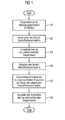
- FIG. 1 can recognize in the method according to the invention in a step S1 first made by Tonauf choirn or sensors sound recordings on a reference object of the sound-generating object to be examined.
- the reference item may be a prototype of the item.
- the object is for example a machine or a device which generates noise during operation.
- the noise signal may be an airborne sound signal or a structure-borne noise signal.
- the object under investigation can also be a plant, for example a chemical plant, which causes noise during a chemical production process, for example inside tank equipment or pipes.
- the noise or vibration signal is recorded or recorded with sound pickups.
- These Tonaufsacrificing have microphones or other vibration sensors, in particular acceleration sensors on.
- the Tonauflutter commentary or vibration sensors convert the noise or vibration signal into an electrical signal.
- the sound recordings on the reference object or on the prototype are preferably made at different times under different environmental conditions.
- step S2 based on the sound recordings, features m of the sound signal or oscillation signal are extracted.
- Possible features are, for example, the amplitude or the volume of the sound or noise signal. Further possible features are spectral features of the noise signal and their temporal modulations. Further, for example, features of the modulation spectrum can be used.
- a feature vector M can be determined in each case. Typically, 10-500 features m of the noise signal are considered.
- the number N of shots on the reference object is set depending on the object under consideration. Usually, N> 100 sound recordings of the reference subject are evaluated.
- a basic classification model is generated in step S2 by means of an algorithm.
- the model generation can take place for example by means of Expectation Maximization (EM) or GMM, by means of a Support Vector Machine (SVM), by means of Self Organizing Maps (SOM) or by means of neural networks.
- EM Expectation Maximization
- SVM Support Vector Machine
- SOM Self Organizing Maps
- acoustic airborne or structure-borne noise signals are recorded or recorded by means of sound pickups on the object to be examined.
- the im Step S2 generated basic statistical classification model of acoustic features m is automatically adapted in step S3 on the basis of acoustic characteristics m, the noise signal recorded in step S3.
- the basic classification model has at least one statistical parameter P for each feature m. These statistical parameters P include, for example, an average ⁇ or a variance ⁇ 2 .
- the features m can be based on a Gaussian distribution, wherein for each feature m based on the sound recordings of the reference object an average value ⁇ and a variance ⁇ 2 of the distribution is given.
- step S1 sound recordings are made on different reference objects or prototypes, and an average value ⁇ is calculated with respect to each feature m.
- the feature m is the volume of the detected sound signal
- the mean ⁇ of the volume and a variance ⁇ 2 of the volume are given as statistical parameters P for the feature of the volume in the basic classification model.
- An adaptation of the basic classification model then takes place in step S4 on the basis of the sound recording carried out on the object to be examined in step S3, in that the statistical parameters P are adapted accordingly for each feature m of the basic classification model.
- the sound recording at the object to be examined in step S3 and the adaptation of the basic classification model in step S4 can be carried out in a possible embodiment of the method according to the invention during the commissioning of the object to be examined.
- the sound recording in step S3 and the adaptation in step S4 takes place at regular maintenance intervals, for example once a day.
- the sound recording takes place in step S3 and the adaptation of the basic classification model in step S4 in a change of an acoustic environment of the object to be examined, for example, when the object is placed in another room.
- the sound recording and the adaptation can be made on demand, for example after carrying out a maintenance work on the object to be examined or if a user considers an investigation to be necessary.
- a classification of the state of the sound-generating object to be examined is carried out on the basis of the adapted statistical classification model.
- This state classification can be done on the basis of all or some of the features m of the adapted basic classification model. For example, a sound-producing object to be examined may be classified as faulty if the feature volume exceeds an adjustable threshold.
- step S6 the classified state of the object to be examined is output and, if necessary, necessary measures are then initiated.
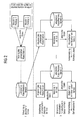
- FIG. 2 shows a diagram illustrating a possible embodiment of the method according to the invention for detecting a state of a sound-generating object to be examined.
- the object shown is a machine that provides acoustic data.
- recordings are made on n prototypes of the machine and a universal statistical basic classification model is generated on the basis of the training data.
- This universal basic classification model is stored in a memory or a database.
- This general classification model preferably has the essential properties of a normal state and / or possible errors or maintenance conditions of the object or the machine. This is followed by an adaptation of the universal basic classification model for the various manufactured machines.
- various machines are examined in the field. Each machine provides an acoustic noise signal or acoustic data, which are used for individual adaptation of the stored universal classification model.
- an associated adaptive classification model is created for each machine, which can be temporarily stored in a memory.
- a classification algorithm a classification of the state of the respective noise-generating machine to be examined is then carried out on the basis of the adapted statistical classification model in order to detect an operating state or to generate an error message.
- FIG. 2 how to get out FIG. 2 can recognize, the considerable effort to generate a classification model based on at least one prototype is operated only once.
- the subsequent adaptation of the basic statistical classification model formed can be done with a relatively low computational effort in a short time or in real time.
- the adaptation of the stored basic classification model for the respective object to be examined can be automated with changed computing conditions in the field without the need for a corresponding expert or expert Professional must be on site.
- comparatively few additional acoustic data or sound recordings on the respective machine or on the respective object are required for the adaptation of the statistical basic classification model.
- the method according to the invention provides for a two-stage approach, namely first the formation of a universal statistical basic classification model and a subsequent adaptation of this classification model for the respective object to be examined in the field.
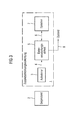
- FIG. 3 shows an embodiment of an inventive device 1 for detecting a state of a sound-generating object to be examined.
- the object 2 to be examined is, for example, a device or a machine.
- the device 1 has at least one pickup 3 for detecting a body or airborne sound signal generated by the sound-generating object 2 to be examined.
- the pickup 3 detects the emitted by the object 2 vibration signal.
- the pickup 3 is, for example, an acoustic pickup for detecting an airborne sound signal, that is, a microphone.
- the pickup 3 is mounted directly on the object 2 and detects structure-borne noise or vibrations of the object 2.
- a pickup 3 may be, for example, an acceleration sensor.
- the pickup 3 converts the sound or vibration signal into an electrical signal and outputs it via a line 4 to a data processing unit 5.
- the data processing unit 5 is, for example, a microprocessor in which a program is executed.
- the data processing unit 5 is connected via lines 6 to a memory 7 in which the generated basic classification model is stored.
- the data processing unit 5 receives the basic classification model via an interface.
- the data processing unit 5 adapts the basic classification model of acoustic features based on acoustic characteristics m of a noise generated by the object 2 to be examined. On the basis of the adapted statistical classification model, the state of the sound-generating object 2 to be examined is classified by the data processing unit 5 by means of a classification algorithm. This condition is reported via output lines 8.
- the pickup 3 and the data processing unit 5 are integrated in one component. This device can be attached to any object 2.
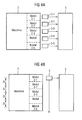
- FIGS. 4A, 4B show further embodiments of the device 1 according to the invention for detecting a state of a sound-generating object to be examined 2.
- the noise-generating object 2 is a machine or a device comprising a plurality of similar machine modules 2-1, 2-2 to 2-k having.
- An example of such a machine 2 is a letter sorting machine that has a plurality of segments or bins having the same design.
- the various segments or modules of Briefsortierstrom 2 may be exposed to a different load and therefore have a different wear.
- Such Briefsortieranlagen can be in different acoustic environments.
- an associated transducer 3 is attached to each module of the machine 2, which is provided for monitoring the operating state of the respective module based on the output from the module noise signal.
- the data processing unit 5 then performs for each module 2-i of the machine 2, the steps S3-S6 of in FIG. 1 through the sequence shown.
- a pickup 3 is not provided for each module 2-i of the machine 2, but instead a pickup, for example a pickup, passes linearly past the machine 2 and delivers the detected noise signal to the data processing unit 5, for example via an air interface.
- a pickup for example a pickup, passes linearly past the machine 2 and delivers the detected noise signal to the data processing unit 5, for example via an air interface.
- an adapted statistical classification model can be calculated by the data processing unit 5 for the different positions of the acoustic sound pickup 3 guided past the object 2 to be examined. For example, in a letter sorting system, the distance ⁇ between the various segments or sorting compartments is known.
- the various adjustable positions of the passed acoustic sound pickup 3 correspond to the spatial arrangement of the various modules 2-i of the sound-generating letter sorting system 2 to be examined.
- an adapted classification model for the entire Briefsortierstrom 2 is created in the field of a universal classification model of a prototype. In an alternative embodiment generates an adapted classification model for each compartment or for each segment 2-i of Briefsortierstrom 2.
- the acoustic monitoring of the various modules 2-i can be done by vibration sensors or microphones.
- the vibration sensors are mounted directly on the housing and detect a structure-borne noise.
- the microphones can have a specific directional characteristic in one possible embodiment.
- the distance of the microphones or the pickup 3 to the object 2 to be examined may vary between a few millimeters and several meters.
- the acoustic monitoring is carried out by means of only one sound pickup 3 which is automatically or manually bypassed for locating a fault on the letter sorting system 2.
- a plurality of acoustic sensors 3 are provided, which each observe a part of the system or of the object 2 to be examined.
- the adaptation can be carried out by moving the sound sensor 3 to different characteristic positions of the installation and recording acoustic data there.
- the recorded acoustic data is used to generate the adapted statistical classification model.
- a sound pickup 3 can record data and calculate a separate adapted model for itself.
- This adapted model can be stored locally or alternatively centrally in the sensor or acoustic pickup.
- the sound pickup 3 can be moved to different positions of the letter sorter system 2 and record there the acoustic data on site.
- the sound pickup 3 can calculate an adapted classification model for the respective position of the sound pickup 3 or from a number of comparable positions For example, for machine segments or modules of the same type, calculate adaptive classification models.
- the one or more pickups 3 is brought into a "Classification" operating state and an error detection activated. If necessary, the adaptation can be repeated at any time, for example when components or entire modules are replaced or when room acoustics change.
- a model already adapted during the commissioning of the letter sorting installation 2 can be used, depending on whether the acoustic spatial situation has changed or not.
- the method according to the invention for detecting a state of a sound-generating object 2 to be examined is suitable for any objects, such as for monitoring motors, pumps, automation systems or chemical plants.
Landscapes
- Engineering & Computer Science (AREA)
- Physics & Mathematics (AREA)
- General Physics & Mathematics (AREA)
- Theoretical Computer Science (AREA)
- Combustion & Propulsion (AREA)
- Chemical & Material Sciences (AREA)
- General Engineering & Computer Science (AREA)
- Software Systems (AREA)
- Mathematical Physics (AREA)
- Computing Systems (AREA)
- Measurement Of Mechanical Vibrations Or Ultrasonic Waves (AREA)
- Soundproofing, Sound Blocking, And Sound Damping (AREA)
- Testing Of Devices, Machine Parts, Or Other Structures Thereof (AREA)
- Control Of Electric Motors In General (AREA)
Claims (16)
- Procédé pour reconnaître un état d'un objet (2) à examiner qui génère du bruit, un modèle statistique de classification de base de caractéristiques acoustiques généré pour au moins un objet de référence étant adapté automatiquement sur la base de caractéristiques acoustiques (m) d'un bruit généré par l'objet (2) à examiner, caractérisé en ce que le modèle de classification de base est adapté individuellement et une classification de l'état de l'objet (2) à examiner qui génère du bruit s'effectue sur la base du modèle statistique de classification adapté individuellement.
- Procédé selon la revendication 1, l'objet de référence étant constitué par un prototype de l'objet (2) à examiner.
- Procédé selon la revendication 1, l'objet (2) à examiner qui génère du bruit comportant au moins un module générateur de bruit.
- Procédé selon la revendication 1, l'adaptation du modèle statistique de classification étant effectuée lors de la mise en service de l'objet (2) à examiner, à intervalles de maintenance réguliers ou en cas de modification d'un environnement acoustique de l'objet (2) à examiner.
- Procédé selon la revendication 1, le modèle statistique de classification de base de caractéristiques acoustiques étant généré sur la base d'une pluralité d'enregistrements de sons acoustiques qui sont effectués au niveau de l'objet de référence dans des conditions différentes ou à des instants différents.
- Procédé selon la revendication 5, le modèle statistique de classification de base généré étant stocké dans une mémoire (7).
- Procédé selon la revendication 6, le modèle de classification de base stocké étant adapté automatiquement sur la base d'un nombre d'enregistrements de sons acoustiques qui sont effectués au niveau de l'objet (2) à examiner qui génère du bruit et étant stocké temporairement en tant que modèle statistique de classification adapté.
- Procédé selon la revendication 5 ou 7, les enregistrements de sons acoustiques étant effectués au moyen de capteurs de sons acoustiques (3) qui détectent le bruit aérien ou le bruit de structure.
- Procédé selon la revendication 1, le modèle statistique de classification étant adapté pour l'ensemble de l'objet (2) qui génère du bruit ou pour des modules dudit objet générateur de bruit.
- Procédé selon la revendication 8, les capteurs de sons acoustiques étant montés sur l'objet (2) à examiner qui génère du bruit ou étant passés à côté de l'objet à examiner qui génère du bruit.
- Procédé selon la revendication 10, respectivement un modèle statistique de classification adapté étant calculé pour différentes positions réglables du capteur de sons acoustiques passé à côté de l'objet (2) à examiner.
- Procédé selon la revendication 11, les positions réglables du capteur de sons acoustiques (3) passé à côté correspondant à l'agencement dans l'espace de différents modules de l'objet (2) à examiner qui génère du bruit.
- Dispositif pour reconnaître un état d'un objet à examiner qui génère du bruit, comprenant une unité de traitement de données qui est réalisée de manière à adapter automatiquement, sur la base de caractéristiques acoustiques (m) d'un bruit généré par l'objet (2) à examiner, un modèle statistique de classification de base de caractéristiques acoustiques généré pour au moins un objet de référence, l'unité de traitement de données (5) étant réalisée pour classer l'état de l'objet (2) à examiner qui génère du bruit sur la base du modèle statistique de classification adapté, le dispositif étant caractérisé en ce que l'unité de traitement de données est réalisée pour adapter individuellement le modèle statistique de classification de base et en ce que l'unité de traitement de données est réalisée pour classer, sur la base du modèle statistique de classification adapté individuellement, l'état de l'objet (2) à examiner qui génère du bruit.
- Dispositif selon la revendication 13, avec au moins un capteur de sons acoustiques (3) pour détecter un bruit aérien ou de structure généré par l'objet (2) à examiner qui génère du bruit.
- Programme informatique avec des commandes de programme pour exécuter le procédé selon la revendication 1 à 12.
- Support de données pour stocker le programme informatique selon la revendication 15.
Applications Claiming Priority (2)
| Application Number | Priority Date | Filing Date | Title |
|---|---|---|---|
| DE102008021362A DE102008021362B3 (de) | 2008-04-29 | 2008-04-29 | Verfahren und Vorrichtung zum Erkennen eines Zustandes einer zu untersuchenden geräuscherzeugenden Maschine |
| PCT/EP2009/055165 WO2009133123A1 (fr) | 2008-04-29 | 2009-04-29 | Procédé et dispositif pour reconnaître un état d'une machine à examiner générant du bruit |
Publications (2)
| Publication Number | Publication Date |
|---|---|
| EP2271908A1 EP2271908A1 (fr) | 2011-01-12 |
| EP2271908B1 true EP2271908B1 (fr) | 2011-11-30 |
Family
ID=40691029
Family Applications (1)
| Application Number | Title | Priority Date | Filing Date |
|---|---|---|---|
| EP09738167A Not-in-force EP2271908B1 (fr) | 2008-04-29 | 2009-04-29 | Procédé et dispositif pour reconnaître un état d'une machine à examiner générant du bruit |
Country Status (9)
| Country | Link |
|---|---|
| US (1) | US9714884B2 (fr) |
| EP (1) | EP2271908B1 (fr) |
| CN (1) | CN102016535B (fr) |
| AT (1) | ATE535794T1 (fr) |
| BR (1) | BRPI0911440A2 (fr) |
| DE (1) | DE102008021362B3 (fr) |
| MX (1) | MX2010011772A (fr) |
| RU (1) | RU2494364C2 (fr) |
| WO (1) | WO2009133123A1 (fr) |
Families Citing this family (11)
| Publication number | Priority date | Publication date | Assignee | Title |
|---|---|---|---|---|
| DE102008021362B3 (de) | 2008-04-29 | 2009-07-02 | Siemens Aktiengesellschaft | Verfahren und Vorrichtung zum Erkennen eines Zustandes einer zu untersuchenden geräuscherzeugenden Maschine |
| DE102008046285A1 (de) | 2008-09-08 | 2010-03-25 | Siemens Aktiengesellschaft | Vorrichtung zur Analyse von Atmungsgeräuschen |
| DE102008046286B4 (de) | 2008-09-08 | 2010-04-29 | Siemens Aktiengesellschaft | Ortungseinheit zur Anbringung an einem bewegbaren Objekt |
| CN102811386B (zh) * | 2011-06-01 | 2017-05-24 | 中兴通讯股份有限公司 | 一种录音装置、媒体服务器及录音方法、系统 |
| DE102014207784A1 (de) * | 2014-04-25 | 2015-10-29 | Robert Bosch Gmbh | Verfahren zur Symptomerkennung von Fehlfunktionen eines Elektrowerkzeugs |
| CN104111109B (zh) * | 2014-07-21 | 2015-09-02 | 石家庄铁道大学 | 一种基于不同阶次统计量及支持向量机的机械振动状态识别方法 |
| CN108597057A (zh) * | 2018-04-28 | 2018-09-28 | 济南浪潮高新科技投资发展有限公司 | 一种基于噪音深度学习的无人机故障预测诊断系统及方法 |
| US10773665B2 (en) * | 2018-10-16 | 2020-09-15 | Cnh Industrial America Llc | System and method for detecting a damage condition associated with an agricultural machine |
| CN110686899B (zh) * | 2019-09-21 | 2021-01-29 | 天津大学 | 一种内燃机噪声源识别方法 |
| CN113489514B (zh) * | 2021-07-05 | 2022-07-26 | 国网湖南省电力有限公司 | 基于自组织映射神经网络的电力线通信噪声识别方法及装置 |
| CN113696839B (zh) * | 2021-10-29 | 2021-12-28 | 南京易砼科技有限公司 | 一种混凝土泵送车辆的泵送状态检测方法和装置 |
Family Cites Families (11)
| Publication number | Priority date | Publication date | Assignee | Title |
|---|---|---|---|---|
| DE29611558U1 (de) | 1996-07-05 | 1997-08-07 | Siemens AG, 80333 München | Vorrichtung zur Erfassung von analogen Meßsignalen für die akustische Diagnose von Prüflingen |
| DK1088211T3 (da) | 1998-04-17 | 2003-10-20 | Siemens Ag | Akustisk diagnosesystem og -fremgangsmåde |
| DE19914533A1 (de) * | 1999-03-31 | 2000-11-02 | Bayerische Motoren Werke Ag | Vibrationsakustisches Diagnosesystem |
| US20010044719A1 (en) * | 1999-07-02 | 2001-11-22 | Mitsubishi Electric Research Laboratories, Inc. | Method and system for recognizing, indexing, and searching acoustic signals |
| DE10100522B4 (de) | 2001-01-08 | 2013-03-28 | Deere & Company | Überwachungseinrichtung zur Überwachung der Funktion einer Arbeitsmaschine |
| DE102004006848A1 (de) * | 2004-02-12 | 2005-09-01 | Deere & Company, Moline | Verfahren und Überwachungssystem zur Überwachung des Zustands von Arbeitsmaschinen |
| DE102004012911A1 (de) * | 2004-03-17 | 2005-10-06 | Daimlerchrysler Ag | Verfahren zur Bewertung eines Betriebsgeräusches eines Kraftfahrzeugmotors |
| CN1320372C (zh) * | 2004-11-25 | 2007-06-06 | 上海交通大学 | 基于小波域的水声噪声的检测与识别方法 |
| US8744844B2 (en) * | 2007-07-06 | 2014-06-03 | Audience, Inc. | System and method for adaptive intelligent noise suppression |
| DE102008021362B3 (de) | 2008-04-29 | 2009-07-02 | Siemens Aktiengesellschaft | Verfahren und Vorrichtung zum Erkennen eines Zustandes einer zu untersuchenden geräuscherzeugenden Maschine |
| EP2133866B1 (fr) * | 2008-06-13 | 2016-02-17 | Harman Becker Automotive Systems GmbH | Système de contrôle de bruit adaptatif |
-
2008
- 2008-04-29 DE DE102008021362A patent/DE102008021362B3/de not_active Expired - Fee Related
-
2009
- 2009-04-29 MX MX2010011772A patent/MX2010011772A/es active IP Right Grant
- 2009-04-29 WO PCT/EP2009/055165 patent/WO2009133123A1/fr not_active Ceased
- 2009-04-29 AT AT09738167T patent/ATE535794T1/de active
- 2009-04-29 RU RU2010148369/28A patent/RU2494364C2/ru not_active IP Right Cessation
- 2009-04-29 EP EP09738167A patent/EP2271908B1/fr not_active Not-in-force
- 2009-04-29 CN CN2009801147528A patent/CN102016535B/zh not_active Expired - Fee Related
- 2009-04-29 BR BRPI0911440A patent/BRPI0911440A2/pt not_active IP Right Cessation
- 2009-04-29 US US12/736,675 patent/US9714884B2/en not_active Expired - Fee Related
Also Published As
| Publication number | Publication date |
|---|---|
| RU2010148369A (ru) | 2012-06-10 |
| US9714884B2 (en) | 2017-07-25 |
| MX2010011772A (es) | 2010-12-21 |
| EP2271908A1 (fr) | 2011-01-12 |
| RU2494364C2 (ru) | 2013-09-27 |
| CN102016535B (zh) | 2012-10-03 |
| WO2009133123A1 (fr) | 2009-11-05 |
| BRPI0911440A2 (pt) | 2015-10-06 |
| DE102008021362B3 (de) | 2009-07-02 |
| CN102016535A (zh) | 2011-04-13 |
| US20110047107A1 (en) | 2011-02-24 |
| ATE535794T1 (de) | 2011-12-15 |
| WO2009133123A4 (fr) | 2009-12-17 |
Similar Documents
| Publication | Publication Date | Title |
|---|---|---|
| DE102008021362B3 (de) | Verfahren und Vorrichtung zum Erkennen eines Zustandes einer zu untersuchenden geräuscherzeugenden Maschine | |
| EP2277039B9 (fr) | Procédé et dispositif de classement de processus produisant des sons | |
| DE69732569T2 (de) | System zur erkennung von störungen von elektromotoren | |
| DE102019113830A1 (de) | Informationsverarbeitungsverfahren, Informationsverarbeitungsgerät und Programm | |
| KR102265298B1 (ko) | 머신러닝에 의해 생성된 가상 데이터를 이용한 고장 진단 방법 및 장치 | |
| DE102017009471A1 (de) | Humankollaboratives robotersystem mit verbesserter genauigkeit der erfassung einer äusseren kraft durch maschinelles lernen | |
| DE102019115237A1 (de) | Verfahren und vorrichtung zum überwachen eines fahrzeugseitigen maschinenlagers | |
| DE102014012184A1 (de) | Vorrichtung und Verfahren zur automatischen Erkennung und Klassifizierung von akustischen Signalen in einem Überwachungsbereich | |
| DE102018133533A1 (de) | Überprüfungssystem und Verfahren zum Überprüfen von Arbeitsabläufen | |
| DE102017009273B4 (de) | Maschinenlernvorrichtung und Maschinenlernverfahren zum Lernen einer Korrelation zwischen Versandkontrollinformationen und Betriebsalarminformationen für ein Objekt | |
| DE102017127098A1 (de) | Gerät und verfahren zum annehmen eines anormalitätsauftretens für teleskopabdeckung | |
| DE102023128247A1 (de) | Systeme und Verfahren zum Überwachen von Antriebseinheitslagern | |
| DE102022203238A1 (de) | Verfahren zur Betriebspunktklassifizierung durch Schallsignale | |
| DE102011114058B4 (de) | Verfahren und Vorrichtung zur akustischen Beurteilung eines Bauteils | |
| Patel et al. | Fault diagnostics of rolling bearing based on improve time and frequency domain features using artificial neural networks | |
| DE102021102712A1 (de) | Verfahren und System zur akustischen Diagnose eines Kraftfahrzeugs anhand von Betriebsgeräuschen | |
| EP4105900A1 (fr) | Procédé de détermination et/ou de vérification de l'état d'un système de porte, dispositif de détermination de l'état, système, produit-programme informatique | |
| DE102020134555A1 (de) | Vorrichtung zum lokalisieren von geräusch in einem lenksystem | |
| DE102021209414A1 (de) | Diagnose eines Kraftfahrzeuges in Fahrzuständen durch Audioanalyse | |
| DE102020109580A1 (de) | Verfahren zur überwachung einer energieerzeugungsanlage und/oder zur lokalisierung von komponenten der energieerzeugungsanlage | |
| DE102022200285B3 (de) | Verfahren und Vorrichtung zum Bereitstellen eines datenbasierten Systemmodells und zum Überprüfen eines Trainingszustands des Systemmodells | |
| DE102019220310B3 (de) | Verfahren zur Erfassung von statisch mit einem Kraftfahrzeug in Kontakt stehenden Objekten und Kraftfahrzeug | |
| DE102022126455A1 (de) | System und verfahren für die verarbeitung eines audioeingangssignals | |
| DE102020209255A1 (de) | Pneumatisches System und Verfahren | |
| DE102020206545A1 (de) | Erkennen eines akustischen Sirenensignals |
Legal Events
| Date | Code | Title | Description |
|---|---|---|---|
| PUAI | Public reference made under article 153(3) epc to a published international application that has entered the european phase |
Free format text: ORIGINAL CODE: 0009012 |
|
| 17P | Request for examination filed |
Effective date: 20100928 |
|
| AK | Designated contracting states |
Kind code of ref document: A1 Designated state(s): AT BE BG CH CY CZ DE DK EE ES FI FR GB GR HR HU IE IS IT LI LT LU LV MC MK MT NL NO PL PT RO SE SI SK TR |
|
| AX | Request for extension of the european patent |
Extension state: AL BA RS |
|
| GRAP | Despatch of communication of intention to grant a patent |
Free format text: ORIGINAL CODE: EPIDOSNIGR1 |
|
| DAX | Request for extension of the european patent (deleted) | ||
| GRAS | Grant fee paid |
Free format text: ORIGINAL CODE: EPIDOSNIGR3 |
|
| GRAA | (expected) grant |
Free format text: ORIGINAL CODE: 0009210 |
|
| AK | Designated contracting states |
Kind code of ref document: B1 Designated state(s): AT BE BG CH CY CZ DE DK EE ES FI FR GB GR HR HU IE IS IT LI LT LU LV MC MK MT NL NO PL PT RO SE SI SK TR |
|
| REG | Reference to a national code |
Ref country code: GB Ref legal event code: FG4D Free format text: NOT ENGLISH Ref country code: CH Ref legal event code: EP |
|
| REG | Reference to a national code |
Ref country code: IE Ref legal event code: FG4D Free format text: LANGUAGE OF EP DOCUMENT: GERMAN |
|
| REG | Reference to a national code |
Ref country code: DE Ref legal event code: R096 Ref document number: 502009002076 Country of ref document: DE Effective date: 20120209 |
|
| REG | Reference to a national code |
Ref country code: NL Ref legal event code: VDEP Effective date: 20111130 |
|
| REG | Reference to a national code |
Ref country code: NO Ref legal event code: T2 Effective date: 20111130 |
|
| LTIE | Lt: invalidation of european patent or patent extension |
Effective date: 20111130 |
|
| PG25 | Lapsed in a contracting state [announced via postgrant information from national office to epo] |
Ref country code: LT Free format text: LAPSE BECAUSE OF FAILURE TO SUBMIT A TRANSLATION OF THE DESCRIPTION OR TO PAY THE FEE WITHIN THE PRESCRIBED TIME-LIMIT Effective date: 20111130 Ref country code: IS Free format text: LAPSE BECAUSE OF FAILURE TO SUBMIT A TRANSLATION OF THE DESCRIPTION OR TO PAY THE FEE WITHIN THE PRESCRIBED TIME-LIMIT Effective date: 20120330 |
|
| PG25 | Lapsed in a contracting state [announced via postgrant information from national office to epo] |
Ref country code: HR Free format text: LAPSE BECAUSE OF FAILURE TO SUBMIT A TRANSLATION OF THE DESCRIPTION OR TO PAY THE FEE WITHIN THE PRESCRIBED TIME-LIMIT Effective date: 20111130 Ref country code: LV Free format text: LAPSE BECAUSE OF FAILURE TO SUBMIT A TRANSLATION OF THE DESCRIPTION OR TO PAY THE FEE WITHIN THE PRESCRIBED TIME-LIMIT Effective date: 20111130 Ref country code: PT Free format text: LAPSE BECAUSE OF FAILURE TO SUBMIT A TRANSLATION OF THE DESCRIPTION OR TO PAY THE FEE WITHIN THE PRESCRIBED TIME-LIMIT Effective date: 20120330 Ref country code: SI Free format text: LAPSE BECAUSE OF FAILURE TO SUBMIT A TRANSLATION OF THE DESCRIPTION OR TO PAY THE FEE WITHIN THE PRESCRIBED TIME-LIMIT Effective date: 20111130 Ref country code: SE Free format text: LAPSE BECAUSE OF FAILURE TO SUBMIT A TRANSLATION OF THE DESCRIPTION OR TO PAY THE FEE WITHIN THE PRESCRIBED TIME-LIMIT Effective date: 20111130 Ref country code: GR Free format text: LAPSE BECAUSE OF FAILURE TO SUBMIT A TRANSLATION OF THE DESCRIPTION OR TO PAY THE FEE WITHIN THE PRESCRIBED TIME-LIMIT Effective date: 20120301 Ref country code: NL Free format text: LAPSE BECAUSE OF FAILURE TO SUBMIT A TRANSLATION OF THE DESCRIPTION OR TO PAY THE FEE WITHIN THE PRESCRIBED TIME-LIMIT Effective date: 20111130 |
|
| REG | Reference to a national code |
Ref country code: IE Ref legal event code: FD4D |
|
| PG25 | Lapsed in a contracting state [announced via postgrant information from national office to epo] |
Ref country code: CY Free format text: LAPSE BECAUSE OF FAILURE TO SUBMIT A TRANSLATION OF THE DESCRIPTION OR TO PAY THE FEE WITHIN THE PRESCRIBED TIME-LIMIT Effective date: 20111130 |
|
| PG25 | Lapsed in a contracting state [announced via postgrant information from national office to epo] |
Ref country code: BG Free format text: LAPSE BECAUSE OF FAILURE TO SUBMIT A TRANSLATION OF THE DESCRIPTION OR TO PAY THE FEE WITHIN THE PRESCRIBED TIME-LIMIT Effective date: 20120229 Ref country code: EE Free format text: LAPSE BECAUSE OF FAILURE TO SUBMIT A TRANSLATION OF THE DESCRIPTION OR TO PAY THE FEE WITHIN THE PRESCRIBED TIME-LIMIT Effective date: 20111130 Ref country code: CZ Free format text: LAPSE BECAUSE OF FAILURE TO SUBMIT A TRANSLATION OF THE DESCRIPTION OR TO PAY THE FEE WITHIN THE PRESCRIBED TIME-LIMIT Effective date: 20111130 Ref country code: IE Free format text: LAPSE BECAUSE OF FAILURE TO SUBMIT A TRANSLATION OF THE DESCRIPTION OR TO PAY THE FEE WITHIN THE PRESCRIBED TIME-LIMIT Effective date: 20111130 Ref country code: SK Free format text: LAPSE BECAUSE OF FAILURE TO SUBMIT A TRANSLATION OF THE DESCRIPTION OR TO PAY THE FEE WITHIN THE PRESCRIBED TIME-LIMIT Effective date: 20111130 Ref country code: DK Free format text: LAPSE BECAUSE OF FAILURE TO SUBMIT A TRANSLATION OF THE DESCRIPTION OR TO PAY THE FEE WITHIN THE PRESCRIBED TIME-LIMIT Effective date: 20111130 |
|
| PG25 | Lapsed in a contracting state [announced via postgrant information from national office to epo] |
Ref country code: RO Free format text: LAPSE BECAUSE OF FAILURE TO SUBMIT A TRANSLATION OF THE DESCRIPTION OR TO PAY THE FEE WITHIN THE PRESCRIBED TIME-LIMIT Effective date: 20111130 Ref country code: PL Free format text: LAPSE BECAUSE OF FAILURE TO SUBMIT A TRANSLATION OF THE DESCRIPTION OR TO PAY THE FEE WITHIN THE PRESCRIBED TIME-LIMIT Effective date: 20111130 |
|
| PLBE | No opposition filed within time limit |
Free format text: ORIGINAL CODE: 0009261 |
|
| STAA | Information on the status of an ep patent application or granted ep patent |
Free format text: STATUS: NO OPPOSITION FILED WITHIN TIME LIMIT |
|
| BERE | Be: lapsed |
Owner name: SIEMENS A.G. Effective date: 20120430 |
|
| 26N | No opposition filed |
Effective date: 20120831 |
|
| PG25 | Lapsed in a contracting state [announced via postgrant information from national office to epo] |
Ref country code: MC Free format text: LAPSE BECAUSE OF NON-PAYMENT OF DUE FEES Effective date: 20120430 |
|
| REG | Reference to a national code |
Ref country code: DE Ref legal event code: R097 Ref document number: 502009002076 Country of ref document: DE Effective date: 20120831 |
|
| PG25 | Lapsed in a contracting state [announced via postgrant information from national office to epo] |
Ref country code: BE Free format text: LAPSE BECAUSE OF NON-PAYMENT OF DUE FEES Effective date: 20120430 |
|
| PG25 | Lapsed in a contracting state [announced via postgrant information from national office to epo] |
Ref country code: MK Free format text: LAPSE BECAUSE OF FAILURE TO SUBMIT A TRANSLATION OF THE DESCRIPTION OR TO PAY THE FEE WITHIN THE PRESCRIBED TIME-LIMIT Effective date: 20111130 |
|
| PG25 | Lapsed in a contracting state [announced via postgrant information from national office to epo] |
Ref country code: ES Free format text: LAPSE BECAUSE OF FAILURE TO SUBMIT A TRANSLATION OF THE DESCRIPTION OR TO PAY THE FEE WITHIN THE PRESCRIBED TIME-LIMIT Effective date: 20120311 |
|
| PG25 | Lapsed in a contracting state [announced via postgrant information from national office to epo] |
Ref country code: FI Free format text: LAPSE BECAUSE OF FAILURE TO SUBMIT A TRANSLATION OF THE DESCRIPTION OR TO PAY THE FEE WITHIN THE PRESCRIBED TIME-LIMIT Effective date: 20111130 |
|
| PG25 | Lapsed in a contracting state [announced via postgrant information from national office to epo] |
Ref country code: MT Free format text: LAPSE BECAUSE OF FAILURE TO SUBMIT A TRANSLATION OF THE DESCRIPTION OR TO PAY THE FEE WITHIN THE PRESCRIBED TIME-LIMIT Effective date: 20111130 |
|
| REG | Reference to a national code |
Ref country code: CH Ref legal event code: PL |
|
| PG25 | Lapsed in a contracting state [announced via postgrant information from national office to epo] |
Ref country code: LI Free format text: LAPSE BECAUSE OF NON-PAYMENT OF DUE FEES Effective date: 20130430 Ref country code: CH Free format text: LAPSE BECAUSE OF NON-PAYMENT OF DUE FEES Effective date: 20130430 |
|
| PG25 | Lapsed in a contracting state [announced via postgrant information from national office to epo] |
Ref country code: TR Free format text: LAPSE BECAUSE OF FAILURE TO SUBMIT A TRANSLATION OF THE DESCRIPTION OR TO PAY THE FEE WITHIN THE PRESCRIBED TIME-LIMIT Effective date: 20111130 |
|
| PG25 | Lapsed in a contracting state [announced via postgrant information from national office to epo] |
Ref country code: LU Free format text: LAPSE BECAUSE OF NON-PAYMENT OF DUE FEES Effective date: 20120429 |
|
| PG25 | Lapsed in a contracting state [announced via postgrant information from national office to epo] |
Ref country code: HU Free format text: LAPSE BECAUSE OF FAILURE TO SUBMIT A TRANSLATION OF THE DESCRIPTION OR TO PAY THE FEE WITHIN THE PRESCRIBED TIME-LIMIT Effective date: 20090429 |
|
| REG | Reference to a national code |
Ref country code: FR Ref legal event code: PLFP Year of fee payment: 8 |
|
| REG | Reference to a national code |
Ref country code: FR Ref legal event code: PLFP Year of fee payment: 9 |
|
| REG | Reference to a national code |
Ref country code: FR Ref legal event code: PLFP Year of fee payment: 10 |
|
| PGFP | Annual fee paid to national office [announced via postgrant information from national office to epo] |
Ref country code: NO Payment date: 20190411 Year of fee payment: 11 Ref country code: DE Payment date: 20190617 Year of fee payment: 11 Ref country code: IT Payment date: 20190423 Year of fee payment: 11 |
|
| PGFP | Annual fee paid to national office [announced via postgrant information from national office to epo] |
Ref country code: FR Payment date: 20190425 Year of fee payment: 11 |
|
| PGFP | Annual fee paid to national office [announced via postgrant information from national office to epo] |
Ref country code: AT Payment date: 20190307 Year of fee payment: 11 Ref country code: GB Payment date: 20190402 Year of fee payment: 11 |
|
| REG | Reference to a national code |
Ref country code: DE Ref legal event code: R119 Ref document number: 502009002076 Country of ref document: DE |
|
| REG | Reference to a national code |
Ref country code: NO Ref legal event code: MMEP |
|
| REG | Reference to a national code |
Ref country code: AT Ref legal event code: MM01 Ref document number: 535794 Country of ref document: AT Kind code of ref document: T Effective date: 20200429 |
|
| PG25 | Lapsed in a contracting state [announced via postgrant information from national office to epo] |
Ref country code: NO Free format text: LAPSE BECAUSE OF NON-PAYMENT OF DUE FEES Effective date: 20200430 Ref country code: DE Free format text: LAPSE BECAUSE OF NON-PAYMENT OF DUE FEES Effective date: 20201103 Ref country code: AT Free format text: LAPSE BECAUSE OF NON-PAYMENT OF DUE FEES Effective date: 20200429 Ref country code: FR Free format text: LAPSE BECAUSE OF NON-PAYMENT OF DUE FEES Effective date: 20200430 |
|
| GBPC | Gb: european patent ceased through non-payment of renewal fee |
Effective date: 20200429 |
|
| PG25 | Lapsed in a contracting state [announced via postgrant information from national office to epo] |
Ref country code: GB Free format text: LAPSE BECAUSE OF NON-PAYMENT OF DUE FEES Effective date: 20200429 |
|
| PG25 | Lapsed in a contracting state [announced via postgrant information from national office to epo] |
Ref country code: IT Free format text: LAPSE BECAUSE OF NON-PAYMENT OF DUE FEES Effective date: 20200429 |