EP2269788B1 - Rekombiniertes bambusschnittmaterial und herstellungsverfahren dafür - Google Patents
Rekombiniertes bambusschnittmaterial und herstellungsverfahren dafür Download PDFInfo
- Publication number
- EP2269788B1 EP2269788B1 EP20080800590 EP08800590A EP2269788B1 EP 2269788 B1 EP2269788 B1 EP 2269788B1 EP 20080800590 EP20080800590 EP 20080800590 EP 08800590 A EP08800590 A EP 08800590A EP 2269788 B1 EP2269788 B1 EP 2269788B1
- Authority
- EP
- European Patent Office
- Prior art keywords
- bamboo
- scrimber
- strips
- bamboo strips
- adhesive
- Prior art date
- Legal status (The legal status is an assumption and is not a legal conclusion. Google has not performed a legal analysis and makes no representation as to the accuracy of the status listed.)
- Active
Links
Images



Classifications
-
- B—PERFORMING OPERATIONS; TRANSPORTING
- B27—WORKING OR PRESERVING WOOD OR SIMILAR MATERIAL; NAILING OR STAPLING MACHINES IN GENERAL
- B27N—MANUFACTURE BY DRY PROCESSES OF ARTICLES, WITH OR WITHOUT ORGANIC BINDING AGENTS, MADE FROM PARTICLES OR FIBRES CONSISTING OF WOOD OR OTHER LIGNOCELLULOSIC OR LIKE ORGANIC MATERIAL
- B27N3/00—Manufacture of substantially flat articles, e.g. boards, from particles or fibres
- B27N3/04—Manufacture of substantially flat articles, e.g. boards, from particles or fibres from fibres
-
- Y—GENERAL TAGGING OF NEW TECHNOLOGICAL DEVELOPMENTS; GENERAL TAGGING OF CROSS-SECTIONAL TECHNOLOGIES SPANNING OVER SEVERAL SECTIONS OF THE IPC; TECHNICAL SUBJECTS COVERED BY FORMER USPC CROSS-REFERENCE ART COLLECTIONS [XRACs] AND DIGESTS
- Y10—TECHNICAL SUBJECTS COVERED BY FORMER USPC
- Y10T—TECHNICAL SUBJECTS COVERED BY FORMER US CLASSIFICATION
- Y10T156/00—Adhesive bonding and miscellaneous chemical manufacture
- Y10T156/10—Methods of surface bonding and/or assembly therefor
- Y10T156/1052—Methods of surface bonding and/or assembly therefor with cutting, punching, tearing or severing
- Y10T156/1056—Perforating lamina
-
- Y—GENERAL TAGGING OF NEW TECHNOLOGICAL DEVELOPMENTS; GENERAL TAGGING OF CROSS-SECTIONAL TECHNOLOGIES SPANNING OVER SEVERAL SECTIONS OF THE IPC; TECHNICAL SUBJECTS COVERED BY FORMER USPC CROSS-REFERENCE ART COLLECTIONS [XRACs] AND DIGESTS
- Y10—TECHNICAL SUBJECTS COVERED BY FORMER USPC
- Y10T—TECHNICAL SUBJECTS COVERED BY FORMER US CLASSIFICATION
- Y10T156/00—Adhesive bonding and miscellaneous chemical manufacture
- Y10T156/10—Methods of surface bonding and/or assembly therefor
- Y10T156/1052—Methods of surface bonding and/or assembly therefor with cutting, punching, tearing or severing
- Y10T156/1062—Prior to assembly
-
- Y—GENERAL TAGGING OF NEW TECHNOLOGICAL DEVELOPMENTS; GENERAL TAGGING OF CROSS-SECTIONAL TECHNOLOGIES SPANNING OVER SEVERAL SECTIONS OF THE IPC; TECHNICAL SUBJECTS COVERED BY FORMER USPC CROSS-REFERENCE ART COLLECTIONS [XRACs] AND DIGESTS
- Y10—TECHNICAL SUBJECTS COVERED BY FORMER USPC
- Y10T—TECHNICAL SUBJECTS COVERED BY FORMER US CLASSIFICATION
- Y10T156/00—Adhesive bonding and miscellaneous chemical manufacture
- Y10T156/10—Methods of surface bonding and/or assembly therefor
- Y10T156/1052—Methods of surface bonding and/or assembly therefor with cutting, punching, tearing or severing
- Y10T156/1062—Prior to assembly
- Y10T156/1064—Partial cutting [e.g., grooving or incising]
-
- Y—GENERAL TAGGING OF NEW TECHNOLOGICAL DEVELOPMENTS; GENERAL TAGGING OF CROSS-SECTIONAL TECHNOLOGIES SPANNING OVER SEVERAL SECTIONS OF THE IPC; TECHNICAL SUBJECTS COVERED BY FORMER USPC CROSS-REFERENCE ART COLLECTIONS [XRACs] AND DIGESTS
- Y10—TECHNICAL SUBJECTS COVERED BY FORMER USPC
- Y10T—TECHNICAL SUBJECTS COVERED BY FORMER US CLASSIFICATION
- Y10T428/00—Stock material or miscellaneous articles
- Y10T428/24—Structurally defined web or sheet [e.g., overall dimension, etc.]
- Y10T428/24273—Structurally defined web or sheet [e.g., overall dimension, etc.] including aperture
- Y10T428/24298—Noncircular aperture [e.g., slit, diamond, rectangular, etc.]
- Y10T428/24314—Slit or elongated
-
- Y—GENERAL TAGGING OF NEW TECHNOLOGICAL DEVELOPMENTS; GENERAL TAGGING OF CROSS-SECTIONAL TECHNOLOGIES SPANNING OVER SEVERAL SECTIONS OF THE IPC; TECHNICAL SUBJECTS COVERED BY FORMER USPC CROSS-REFERENCE ART COLLECTIONS [XRACs] AND DIGESTS
- Y10—TECHNICAL SUBJECTS COVERED BY FORMER USPC
- Y10T—TECHNICAL SUBJECTS COVERED BY FORMER US CLASSIFICATION
- Y10T428/00—Stock material or miscellaneous articles
- Y10T428/24—Structurally defined web or sheet [e.g., overall dimension, etc.]
- Y10T428/24273—Structurally defined web or sheet [e.g., overall dimension, etc.] including aperture
- Y10T428/24322—Composite web or sheet
-
- Y—GENERAL TAGGING OF NEW TECHNOLOGICAL DEVELOPMENTS; GENERAL TAGGING OF CROSS-SECTIONAL TECHNOLOGIES SPANNING OVER SEVERAL SECTIONS OF THE IPC; TECHNICAL SUBJECTS COVERED BY FORMER USPC CROSS-REFERENCE ART COLLECTIONS [XRACs] AND DIGESTS
- Y10—TECHNICAL SUBJECTS COVERED BY FORMER USPC
- Y10T—TECHNICAL SUBJECTS COVERED BY FORMER US CLASSIFICATION
- Y10T428/00—Stock material or miscellaneous articles
- Y10T428/31504—Composite [nonstructural laminate]
- Y10T428/31971—Of carbohydrate
- Y10T428/31975—Of cellulosic next to another carbohydrate
- Y10T428/31978—Cellulosic next to another cellulosic
-
- Y—GENERAL TAGGING OF NEW TECHNOLOGICAL DEVELOPMENTS; GENERAL TAGGING OF CROSS-SECTIONAL TECHNOLOGIES SPANNING OVER SEVERAL SECTIONS OF THE IPC; TECHNICAL SUBJECTS COVERED BY FORMER USPC CROSS-REFERENCE ART COLLECTIONS [XRACs] AND DIGESTS
- Y10—TECHNICAL SUBJECTS COVERED BY FORMER USPC
- Y10T—TECHNICAL SUBJECTS COVERED BY FORMER US CLASSIFICATION
- Y10T428/00—Stock material or miscellaneous articles
- Y10T428/31504—Composite [nonstructural laminate]
- Y10T428/31971—Of carbohydrate
- Y10T428/31975—Of cellulosic next to another carbohydrate
- Y10T428/31978—Cellulosic next to another cellulosic
- Y10T428/31982—Wood or paper
Definitions
- the present invention generally relates to a bamboo product and a manufacturing method thereof, more particularly to a bamboo scrimber according to claim 10 and a manufacturing method according to claims 1 and 8 thereof.
- the bamboo scrimber (generally also referred to as strand woven bamboo or recombined bamboo in the art) is generally made by cutting a bamboo into bamboo tubes, splitting the bamboo tubes, forming the split bamboo into bamboo strips (also referred to as bamboo sliver) or strands (also referred to as bamboo filament), drying the bamboo strands or strips, dipping the bamboo strands or strips into an adhesive, assembling the adhesive-impregnated bamboo strands or strips in a longitudinal direction, and hot pressing the assembled bamboo strands or strips.
- the bamboo scrimber has a high density and a high strength, so that the bamboo scrimber has been widely used in recent years.
- the bamboo is manufactured into bamboo strands, then the bamboo strands are dried, dipped into an adhesive, placed into a mold, and high pressure pressed and cured to form a bamboo product.
- it is required to manufacture the bamboo into strands, so that the process is complex, time and labor consumption and cost thereof are high.
- the US Patent 5972467 discloses a pressure forming process for pressure-formed bamboo products, in which the bamboo is split into bamboo sliver pieces and each bamboo sliver piece is broken into a plurality of extrafine bamboo strands, the extrafine bamboo strands are pressed into the bamboo product.
- the bamboo is manufactured into bamboo strips, the bamboo strips are dried, dipped into an adhesive, placed into a mold, and high pressure pressed and cured to form a bamboo product.
- the bamboo strips have large thickness and width, and high rigidity, when arranging the bamboo strips, bridging between the bamboo strips may not be avoided, so that the bamboo strips may not contact with each other sufficiently and softened during pressing. Therefore, the density of the bamboo product is not uniform and the surfaces of the bamboo product are rough.
- the present invention is directed to solve at least one of the problems exiting in the prior art.
- a bamboo scrimber which has advantages of low water absorption, high size stability, and good biological durability, and is especially suitable for outdoor environments.
- the bamboo scrimber according to claim 10 is made by pressure pressing bamboo strips impregnated with an adhesive, in which the bamboo strips are modified through heat treatment, each bamboo strip is formed with a plurality of slots penetrating therethrough in a thickness direction of the bamboo strip, and a longitudinal direction of the plurality of slots is consistent with that of fibers of the bamboo strips.
- the bamboo strips are in a state of disorder in a cross section of the bamboo scrimber and arranged parallelly along the longitudinal direction of the fibers.
- the bamboo strips are modified by pyrolysing at least a part of hemicelluloses therein.
- a dry weight ratio of the bamboo strips to the adhesive is about 20: 1 to about 10: 1.
- each bamboo strip has a thickness of about 1.0 mm-4.5 mm.
- the adhesive is a water soluble resin.
- the water soluble resin is one selected from a group comprising phenolic resin, resorcinol modified phenolic resin and melamine modified phenolic resin.
- a manufacturing method of a bamboo scrimber which is simple in process and the bamboo scrimber made by the method has low water absorption, high size stability, and good biological durability.
- the manufacturing method of the bamboo scrimber according to claim 1 comprises steps of: preparing bamboo strips from a bamboo; forming a plurality of slots in each bamboo strip, in which the plurality of slots penetrate through the bamboo strip in a thickness direction of the bamboo strip and a longitudinal direction of the plurality of slots is consistent with that of fibers of the bamboo strips; modifying the bamboo strips formed with the slots through heat treatment; dipping the modified bamboo strips into an adhesive and drying the adhesive-impregnated bamboo strips; and cold pressing and then drying or hot pressing the bamboo strips in a mold until the adhesive is cured so as to form the bamboo scrimber.
- bamboo strips are arranged in a state of disorder in a cross section of the mold and arranged parallelly along the longitudinal direction of the fibers in the mold.
- the hot pressing is performed at a temperature of about 120°C-150°C under a pressure of about 7 MPa-9 MPa.
- the cold pressing is performed under a pressure of about 45 MPa-70 MPa and the drying after cold pressing is performed at a temperature of about 100°C-140°C.
- the heat treating comprises: heating the bamboo strips to absolute dryness; pyrolysing at least a part of hemicelluloses in the absolutely dried bamboo strips; and cooling the bamboo strips in which at least a part of hemicelluloses has been pyrolysed.
- the heat treating further comprises adjusting a moisture content of the cooled bamboo strips by using saturated steam.
- heating the bamboo strips to absolute dryness is performed at a temperature of about 100°C-130°C
- pyrolysing at least a part of hemicelluloses in the absolutely dried bamboo strips is performed at a temperature of about 150°C-220°C
- the bamboo strips in which at least a part of hemicelluloses has been pyrolysed are cooled to a temperature lower than about 90°C.
- a manufacturing method of a bamboo scrimber comprising steps of: preparing bamboo strips from a bamboo; forming a plurality of slots in each bamboo strip, in which the plurality of slots penetrate through the bamboo strip in a thickness direction of the bamboo strip and a longitudinal direction of the plurality of slots is consistent with that of fibers of the bamboo strips; dipping the bamboo strips into an adhesive and drying the adhesive-impregnated bamboo strips; cold pressing and then drying or hot pressing the bamboo strips in a mold until the adhesive is cured so as to form the bamboo scrimber; and modifying the bamboo scrimber through heat treatment in which at least a part of the hemi-cellulose has been pyrolysed.
- the heat-treating comprises: heating the bamboo strips to absolute dryness at a temperature of about 100°C-130°C; pyrolysing at least a part of hemicelluloses in the absolutely dried bamboo strips at a temperature of about 150°C-220°C; and cooling the bamboo strips in which at least a part of hemicelluloses has been pyrolysed to a temperature lower than about 90°C and then adjusting a moisture content of the cooled bamboo strips using saturated steam.
- each bamboo strip is formed with a plurality of slots penetrating therethrough in a thickness direction thereof, for example, each bamboo strip may be broken into a plurality of smaller bamboo strips connected with each other by rolling with toothed rolls, thus increasing the surface area of the bamboo strip to be impregnated with the adhesive, increasing the adhesive content, reducing rigidity of the bamboo strip, and avoiding non-uniform density and rough surfaces of the bamboo scrimber due to insufficient contact and insufficient softening of the bamboo strips when pressed.
- each bamboo strip is formed with the plurality of slots, the thickness of the bamboo strip may be selected in a very wide range, for example, about 1.0 mm to about 4.5 mm, so that the source of bamboo for making the bamboo scrimber may be wide, and the process for forming the bamboo scrimber into the bamboo strips is simple.
- the bamboo strips are modified through heat treatment.
- most hemicelluloses or nearly all the hemicelluloses in the bamboo strips may be degraded mainly through pyrolysis, but celluloses and lignins in the bamboo strips are hardly pyrolysed, and the moisture content of the bamboo strips may be adjusted.
- the physical and mechanical properties of the bamboo strips may be changed permanently due to change of the chemical composition. For example, the equilibrium moisture content may be reduced by about 30%-50%, thus improving the dry shrinkage and wet-swelling properties.
- the size stability may be enhanced, and the hygroscopicity may be significantly reduced. Even if the bamboo scrimber is used in outdoor environments, it may not crack or deform. Because most hemicelluloses or nearly all the hemicelluloses are pyrolysed, various decay fungi lose the nutritive materials that they depend on for survival, thus achieving the purpose of anticorrosion and increasing the biological durability of the bamboo scrimber. Although the modulus of rupture of the bamboo scrimber is reduced by about 10%-30%, the strength of the bamboo scrimber is still high enough, with a density of not less than 1.0 g/cm 3 . Any chemical substance is not added during the heat treatment, so that the bamboo scrimber may not pollute soils and water when used in outdoor environments, and is environment-friendly.
- the bamboo scrimber made of the bamboo strips which are modified through heat treatment may have enhanced biological durability, weathering resistance, size stability and safety, and may be environment-friendly, thus being suitable for outdoor floors, outdoor furniture, outdoor buildings, park facilities, steam bath house facilities, etc.
- the bamboo strips are arranged in a state of disorder in a cross section of the bamboo scrimber.
- the phase "in a state of disorder” refers to that the bamboo strips are not orderly arranged layer by layer in the cross section of the bamboo scrimber, that is, the bamboo strips are overlapped partially and no complete layer of bamboo strip will be formed in the cross section of the bamboo scrimber. Therefore, the bamboo scrimber has no obvious interlayer boundary and the texture is more uniform, thus avoiding interlayer cracking.
- the dry weight ratio of the bamboo strips to the adhesive is about 20: 1 to about 10: 1, so that the bamboo strips have a good connectivity, and the bamboo scrimber has a more uniform density.
- the bamboo scrimber has a more uniform density and a good surface quality.
- the bamboo strips are modified through heat treated at a high temperature.
- the bamboo strips are heated to absolute dryness and the absolutely dried bamboo strips are pyrolysed, so that most hemicelluloses or nearly all the hemicelluloses in the bamboo strips are pyrolysed, but celluloses and lignins in the bamboo strips are hardly pyrolysed; and the bamboo strips in which most hemicelluloses or nearly all the hemicelluloses have been pyrolysed are cooled and the moisture content thereof are adjusted. Therefore, the bamboo scrimber may have increased biological durability, weathering resistance, size stability and safety, and may be environment-friendly, so that the bamboo scrimber is especially suitable for outdoor environments.
- the bamboo scrimber may be modified.
- the bamboo scrimber may also have increased biological durability, weathering resistance, size stability and safety, and may be environment-friendly, so that the bamboo scrimber is especially suitable for outdoor environments.
- a bamboo scrimber according to an embodiment of the present invention will be described below.
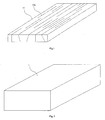
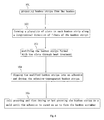
- a bamboo scrimber 1 is made by bamboo strips (also referred to as bamboo sliver) 10.
- the bamboo strips 10 are manufactured from a bamboo such as Mao bamboo.
- Each bamboo strip 10 is formed with a plurality of slots 10a penetrating therethrough in a thickness direction of the bamboo strip 10.
- the plurality of slots 10a may be continuous or discontinuous in the longitudinal direction (i.e., the longitudinal direction of fibers of the bamboo strips 10) thereof.
- the surface area of the bamboo strip 10 and thus the impregnated adhesive content may be increased, so that the rigidity of the bamboo strip 10 may be reduced, and it is possible to avoid insufficient contact and softening of the bamboo strip 10 when pressed, and the bamboo scrimber made by pressing the bamboo strips 10 has a uniform density and smooth surfaces.
- each bamboo strip 10 is formed with a plurality of slots 10a, the thickness of bamboo strip 10 may vary in a very wide range, for example, about 1.0 mm to about 4.5 mm.
- the bamboo strips 10 are modified through heat treatment. Particularly, the bamboo strips 10 are first heated at about 100°C-130°C to absolute dryness.
- absolute dryness does not refer to that the bamboo strips contain no water, but refers to that water content in the bamboo strips is very small, so that the subsequent hemicelluloses pyrolysing will not be affected.
- most hemicelluloses or nearly all the hemicelluloses in the bamboo strips 10 are pyrolysed at about 150°C-220°C. After hemicelluloses pyrolysing, the bamboo strips 10 are cooled to 90°C, and the moisture content of the bamboo strips 10 are adjusted by saturated steam.
- the bamboo scrimber 1 formed by the bamboo strips 10 has advantages of low water absorption, high size stability, and good biological durability.
- the longitudinal direction of the plurality of slots 10a is consistent with that of fibers of the bamboo strips 10.
- the plurality of slots 10a are formed along the longitudinal direction of the bamboo strips 10 and penetrate through the bamboo strip 10 in the thickness direction.
- the bamboo strips 10 are arranged in state of disorder and parallelly along the longitudinal direction of the fibers in a mold 2 comprising a lower half mold 2a and an upper half mold 2b, so that the bamboo strips 10 are overlapped partially in a cross section of the bamboo scrimber 1, that is to say, the bamboo strips 10 are not arranged layer by layer in the mold 2.
- the longitudinal direction of the fibers of the bamboo strips are consistent, that is to say, the bamboo strips 10 are arranged parallelly along the longitudinal direction of the fibers. Therefore, when closing the mold 2, the bamboo strips 10 contact with each other more easily, so that the texture of bamboo scrimber 1 is more uniform, thus decreasing possibility of interlayer cracking of the bamboo scrimber 1.
- the bamboo strips 10 are pressure pressed after being impregnated with an adhesive.
- the adhesive may be a water soluble resin such as phenolic resin, resorcinol modified phenolic resin or melamine modified phenolic resin.
- the dry weight ratio of the bamboo strips to the adhesive is about 20: 1 to about 10: 1.
- each bamboo strip 10 is formed with the plurality of slots 10a, thus increasing the impregnated adhesive content.
- the bamboo strips 10 are modified through heat treatment, so that the bamboo scrimber 1 may have more uniform density, smoother surfaces, and better size stability.
- the bamboo scrimber 1 may not crack, deform, or degum, be not easily corroded by decay fungi and mycetes, have an increased biological durability, and be environment-friendly, so that it is especially suitable for outdoor environments in which temperature and humidity may be changed dramatically and there are ultraviolet radiations (an anti-ultraviolet coating may be formed on the surfaces of the bamboo scrimber 1 in order to use in outdoor environments).
- the bamboo scrimber 1 may be widely used for outdoor floors, outdoor furniture, outdoor buildings, park facilities, steam bath house facilities, etc.
- the manufacturing method comprises the following steps:
- the bamboo strips are subjected to multi-stage treatment in the high-temperature heat treatment furnace or the heat treatment tank: the bamboo strips are heated at about 100°C-130°C to absolute dryness; then most hemicelluloses or nearly all the hemicelluloses in the bamboo strips are pyrolysed at about 150°C-220°C; after hemicelluloses pyrolysing, the bamboo strips are cooled to about 90°C, and the moisture content of the bamboo strips are adjusted by using saturated steam.
- the treatment is intended to modify the bamboo strips.
- most hemicelluloses or nearly all the hemicelluloses in the bamboo strips may be degraded mainly through pyrolysis, but celluloses and lignins in the bamboo strips may be hardly pyrolysed, thus improving the dry shrinkage and wet-swelling properties, the size stability, the biological durability and the anticorrosion property of the bamboo scrimber, and significantly reducing the hygroscopicity of the bamboo scrimber.
- Step 104 the modified bamboo strips are dipped into an adhesive tank, then dried.
- the bamboo strips are dipped in the adhesive for 5-20 minutes, then taken out of the adhesive tank, hanged to remove the excess adhesive, and placed in the air for aging or put in a drying kiln to dry at a low temperature, for example, lower than about 80°C,to a moisture content of not higher than about 20%.
- the adhesive is, for example, phenolic resin, resorcinol modified phenolic resin, melamine modified phenolic resin, or any other water soluble resin with similar properties. During use, the adhesive is diluted to have a solid content of about 15%-30%.
- Step 105 after weighing according to the required density, the bamboo strips are arranged and placed in the lower half mold 2a.
- the bamboo strips are parallelly arranged along the longitudinal direction of the bamboo strips, but in a state of disorder (see Fig.5 ), that is, in the cross section of the lower half mold 2a, the bamboo strips are overlapped partially and not arranged layer by layer.
- the lower half mold 2a is then moved into a pressure forming machine with an upper half mold 2b mounted thereon.
- the bamboo strips in the mold 2 are hot pressed or cold pressed. If the hot pressing process is used, the temperature is controlled to about 120-150°C, and the pressure F is controlled to about 7-9 MPa. If the cold pressing process is used, the pressure is controlled to about 45-70 MPa.
- the pressure is maintained and the bamboo strips as well as the mold 2 are moved out of the pressure forming machine, then moved into a drying room, and dried at about 100-140°C until the adhesive is cured, thus forming a bamboo scrimber.
- the bamboo scrimber may be stacked at the room temperature.
- the bamboo scrimber formed by hot pressing are piled up, then weights are placed on the stacked bamboo scrimber.
- the bamboo scrimber may be subject to the subsequent process.
- the bamboo scrimber may be stacked at room temperature for more than about 10 days.
- the bamboo scrimber may be subject to other treatments. For example, an anti-ultraviolet coating may be formed on the surfaces of the bamboo scrimber.
- the bamboo strip may be dipped into an adhesive and then dried without being heat treated. Then the bamboo strips are hot or cold pressed to form the bamboo scrimber. Finally, the bamboo scrimber is modified through heat treatment.
- the manufacturing method according to this embodiment of the present invention has the same effect as the method shown in Fig. 6 .
- a manufacturing method of a bamboo scrimber according to Example 1 comprises the following steps:
- the temperature in the high-temperature heat treatment furnace was in a range of about 150°C-180°C, all the hemicelluloses in the bamboo strips may be pyrolysed, but the pyrolysing rates were different at different temperatures.
- the temperature was increased rapidly to about 180°C and maintained for 3 hours, and then decreased, so that the hemicelluloses in the bamboo strips were mainly pyrolysed at about 180°C.
- the steam inlet and the steam outlet were closed, then saturated steam was inputted to the high-temperature heat treatment furnace and the bamboo strips are maintained in the saturated steam for 3 hours to adjust the moisture content of the bamboo strips (Step 203c). Finally, the steam inlet, the steam outlet and the door were opened. When the temperature in the high-temperature heat treatment furnace is decreased to a temperature lower than about 50°C, the bamboo strips were taken out.
- Step 204 the heat treated bamboo strips were dipped into an adhesive, then the impregnated bamboo strips were dried.
- phenolic resin was diluted to have a solid content of about 24%.
- the bamboo strips were dipped into the adhesive for 10 minutes to obtain an adhesive content of about 7% (i.e. the dry weight ratio of the resin to the bamboo strips).
- the bamboo strips were dried at a low temperature, for example, lower than about 70°C, to a moisture content of about 15%.
- Step 205 the dried bamboo strips were arranged and placed in the mold 2 and hot pressed. Particularly, the amount of the bamboo strips were calculated and then the bamboo strips were weighed based on the density of about 1.0 g/cm 3 , and the bamboo strips were arranged along the longitudinal direction of the bamboo strips in the lower half mold 2a of a rectangular mold 2 with the bamboo strips being in a state of disorder in the cross section of the lower half mold 2a, that is the bamboo strips are not arranged layer by layer (see Fig. 5 ), then moved into a hot pressure forming machine having an upper half mold 2b. The upper half mold 2b and the lower half mold 2a were closed.
- the size and the physical and mechanical properties of the bamboo scrimber were as follows.
- the bamboo scrimber in order to release the internal stress of the bamboo scrimber, the bamboo scrimber may be stacked as described above.
- a manufacturing method of a bamboo scrimber according to Example 2 comprises the following steps:
- the manufacturing method of the bamboo scrimber according to Example 3 is substantially similar to that according to Example 1, except that the cross section of the mold is T-shaped. And the physical and mechanical properties of the bamboo scrimber according to Example 3 are also the same as those according to Example 1.
- the manufacturing method of the bamboo scrimber according to Example 4 differs from that according to Example 1 in that the cross section of the mold 2 is circular, and the mold filling and hot pressing step, the amount of the bamboo strips were calculated and the bamboo strips are weighed based on the density of about 1.05 g/cm 3 , and the bamboo strips were arranged along an identical direction and in a state of disorder in the cross section of the mold 2; the bamboo strips are arranged in the lower half mold 2a of a semicircular mold, then moved to a hot pressure forming machine having a semicircular upper half mold 2b; when the temperature reached about 60-70°C, the mold 2 was closed with a highest pressure of about 7.5 MPa; at the same time, steam was inputted in the hot pressure forming machine to increase the temperature; when the temperature was increased to about 130°C, a timer was started; if the bamboo scrimber was designed to have a diameter of about 50 mm, after being maintained at about 7.5 MPa for 10 minutes, the highest pressure was decreased to about 4.5
- Example 4 Other steps in Example 4 and the physical and mechanical properties of the bamboo scrimber in Example 4 are the same as those in Example 1 respectively.
- a manufacturing method of a bamboo scrimber according to Example 5 comprises the following steps:
- the size and the physical and mechanical properties of the bamboo scrimber are as follows.
- a manufacturing method of a bamboo scrimber according to Example 6 comprises the following steps:
- the bamboo strips were not heat treated to be modified, instead, the formed bamboo scrimber was modified.
- the manufacturing method of the bamboo scrimber according to Example 6 has the same effect as those according to Examples 1-5.
Landscapes
- Life Sciences & Earth Sciences (AREA)
- Engineering & Computer Science (AREA)
- Manufacturing & Machinery (AREA)
- Wood Science & Technology (AREA)
- Forests & Forestry (AREA)
- Chemical And Physical Treatments For Wood And The Like (AREA)
- Veneer Processing And Manufacture Of Plywood (AREA)
- Laminated Bodies (AREA)
Claims (15)
- Ein Herstellungsverfahren eines Bambus-Scrimbers (1), das folgende Schritte aufweist:Herstellen von Bambusstreifen (10) aus einem Bambus;Bilden einer Mehrzahl von Schlitzen in jedem Bambusstreifen (10), wobei die Mehrzahl von Schlitzen den Bambusstreifen (10) in einer Dickenrichtung des Bambusstreifens (10) durchdringen und eine Längsrichtung der Mehrzahl von Schlitzen mit der von Fasern der Bambusstreifen (10) in Einklang steht;Modifizieren der mit den Schlitzen gebildeten Bambusstreifen (10) durch eine Hitzebehandlung, um zumindest einen Teil von Hemicellulosen darin zu pyrolysieren;Eintauchen der modifizierten Bambusstreifen (10) in einen Klebstoff und Trocknen der mit dem Klebstoff imprägnierten Bambusstreifen (10); undKaltpressen und anschließendes Trocknen oder Heißpressen der Bambusstreifen (10) in einer Form, bis der Klebstoff gehärtet ist, um den Bambus-Scrimber (1) zu bilden.
- Das Herstellungsverfahren gemäß Anspruch 1, bei dem die Bambusstreifen (10) in einem Querschnitt der Form in einem unordentlichen Zustand angeordnet werden und entlang der Längsrichtung der Fasern in der Form parallel angeordnet werden.
- Das Herstellungsverfahren gemäß Anspruch 1, bei dem das Heißpressen bei einer Temperatur von etwa 120°C bis 150°C unter einem Druck von etwa 7 MPa bis 9 MPa durchgeführt wird.
- Das Herstellungsverfahren gemäß Anspruch 1, bei dem das Kaltpressen unter einem Druck von etwa 45 MPa bis 70 MPa durchgeführt wird und das Trocknen nach dem Kaltpressen bei einer Temperatur von etwa 100°C bis 140°C durchgeführt wird.
- Das Herstellungsverfahren gemäß Anspruch 1, bei dem die Hitzebehandlung folgende Schritte aufweist:Erhitzen der Bambusstreifen (10) bis zur absoluten Trockenheit;Pyrolysieren zumindest eines Teils von Hemicellulosen bei den absolut getrockneten Bambusstreifen (10); undAbkühlen der Bambusstreifen (10), bei denen zumindest ein Teil von Hemicellulosen pyrolysiert wurde.
- Das Herstellungsverfahren gemäß Anspruch 5, bei dem die Hitzebehandlung ferner ein Anpassen eines Feuchtigkeitsgehalts der abgekühlten Bambusstreifen (10) durch Verwendung von Sattdampf aufweist.
- Das Herstellungsverfahren gemäß Anspruch 5, bei dem das Erhitzen der Bambusstreifen (10) bis zur absoluten Trockenheit bei einer Temperatur von etwa 100°C bis 130°C durchgeführt wird; das Pyrolysieren zumindest eines Teils von Hemicellulosen bei den absolut getrockneten Bambusstreifen (10) bei einer Temperatur von etwa 150°C bis 220°C durchgeführt wird; und die Bambusstreifen (10), bei denen zumindest ein Teil von Hemicellulosen pyrolysiert wurde, auf eine Temperatur von weniger als etwa 90°C abgekühlt werden.
- Ein Herstellungsverfahren eines Bambus-Scrimbers (1), das folgende Schritte aufweist:Herstellen von Bambusstreifen (10) aus einem Bambus;Bilden einer Mehrzahl von Schlitzen in jedem Bambusstreifen (10), wobei die Mehrzahl von Schlitzen den Bambusstreifen (10) in einer Dickenrichtung des Bambusstreifens (10) durchdringen und eine Längsrichtung der Mehrzahl von Schlitzen mit der von Fasern der Bambusstreifen (10) in Einklang steht;Eintauchen der Bambusstreifen (10) in einen Klebstoff und Trocknen der mit dem Klebstoff imprägnierten Bambusstreifen (10);Kaltpressen und anschließendes Trocknen oder Heißpressen der Bambusstreifen (10) in einer Form, bis der Klebstoff gehärtet ist, um den Bambus-Scrimber (1) zu bilden; undModifizieren des Bambus-Scrimbers (1) durch eine Hitzebehandlung, um zumindest einen Teil von Hemicellulosen darin zu pyrolysieren.
- Das Herstellungsverfahren gemäß Anspruch 8, bei dem die Hitzebehandlung folgende Schritte aufweist:Erhitzen des Bambus-Scrimbers (1) bis zur absoluten Trockenheit bei einer Temperatur von etwa 100°C bis 130°C;Pyrolysieren zumindest eines Teils von Hemicellulosen bei dem absolut getrockneten Bambus-Scrimber (1) (1) bei einer Temperatur von etwa 150°C bis 220°C; undAbkühlen des Bambus-Scrimbers (1), bei dem zumindest ein Teil von Hemicellulosen pyrolysiert wurde, auf eine Temperatur von weniger als etwa 90°C, und anschließendes Anpassen eines Feuchtigkeitsgehalts des abgekühlten Bambus-Scrimbers (1) unter Verwendung von Sattdampf.
- Ein Bambus-Scrimber (1), der anhand eines Verfahrens gemäß einem der Ansprüche 1 bis 9 hergestellt wurde.
- Der Bambus-Scrimber (1) gemäß Anspruch 10, bei dem die Bambusstreifen (10) in einem Querschnitt des Bambus-Scrimbers (1) in einem unordentlichen Zustand vorliegen und entlang der Längsrichtung der Fasern parallel angeordnet sind.
- Der Bambus-Scrimber (1) gemäß Anspruch 10, bei dem ein Trockengewichtsverhältnis der Bambusstreifen (10) zu dem Klebstoff etwa 20:1 bis etwa 10:1 beträgt.
- Der Bambus-Scrimber (1) gemäß Anspruch 10, bei dem jeder Bambusstreifen (10) eine Dicke von etwa 1,0 mm bis 4,5 mm aufweist.
- Der Bambus-Scrimber (1) gemäß Anspruch 10, bei dem der Klebstoff ein wasserlösliches Harz ist.
- Der Bambus-Scrimber (1) gemäß Anspruch 10, bei dem das wasserlösliche Harz eines ist, das aus einer Gruppe ausgewählt ist, die Phenolharz, mit Resorcinol modifiziertes Phenolharz und mit Melamin modifiziertes Phenolharz aufweist.
Applications Claiming Priority (2)
| Application Number | Priority Date | Filing Date | Title |
|---|---|---|---|
| CNB2008100937644A CN100572009C (zh) | 2008-04-18 | 2008-04-18 | 竹重组型材及其制造方法 |
| PCT/CN2008/001596 WO2009127092A1 (zh) | 2008-04-18 | 2008-09-09 | 竹重组型材及其制造方法 |
Publications (4)
| Publication Number | Publication Date |
|---|---|
| EP2269788A1 EP2269788A1 (de) | 2011-01-05 |
| EP2269788A4 EP2269788A4 (de) | 2011-10-05 |
| EP2269788B1 true EP2269788B1 (de) | 2014-10-08 |
| EP2269788B8 EP2269788B8 (de) | 2015-02-18 |
Family
ID=39960428
Family Applications (1)
| Application Number | Title | Priority Date | Filing Date |
|---|---|---|---|
| EP20080800590 Active EP2269788B8 (de) | 2008-04-18 | 2008-09-09 | Rekombiniertes bambusschnittmaterial und herstellungsverfahren dafür |
Country Status (8)
| Country | Link |
|---|---|
| US (1) | US8709578B2 (de) |
| EP (1) | EP2269788B8 (de) |
| CN (1) | CN100572009C (de) |
| AU (1) | AU2008355033B2 (de) |
| ES (1) | ES2527945T3 (de) |
| MY (1) | MY152318A (de) |
| RU (1) | RU2446940C1 (de) |
| WO (1) | WO2009127092A1 (de) |
Families Citing this family (37)
| Publication number | Priority date | Publication date | Assignee | Title |
|---|---|---|---|---|
| EP2397289A4 (de) * | 2009-02-13 | 2012-10-17 | Res Inst Wood Ind Caf | Künstliche bambusplatte und herstellungsverfahren dafür |
| US8541085B2 (en) * | 2009-08-18 | 2013-09-24 | Us Floors, Inc. | Bamboo composite board and beam product |
| CN102310450A (zh) * | 2010-07-06 | 2012-01-11 | 北新建材(集团)有限公司 | 一种竹材定向刨花板及其制造方法 |
| US8733409B2 (en) * | 2010-10-19 | 2014-05-27 | Composite Technology International Inc. | Process to manufacture frame using renewable wood product(s) |
| FR2967088B1 (fr) * | 2010-11-04 | 2013-06-21 | Lineazen | Procede de fabrication de systemes constructifs integres multifonction et systemes constructifs associes a partir de bandes de bambou, procede de fabrication de bandes de bambou. |
| CN102275200B (zh) * | 2011-06-22 | 2015-07-29 | 浙江永裕竹业股份有限公司 | 一种竹材纤维复合型材的制造方法 |
| CN103286842A (zh) * | 2012-03-05 | 2013-09-11 | 北新建材集团有限公司 | 重组竹的制备方法 |
| CN102528893A (zh) * | 2012-03-09 | 2012-07-04 | 江西康替龙竹业有限公司 | 一种环保型竹重组材料的制备方法 |
| CN102658579A (zh) * | 2012-05-21 | 2012-09-12 | 福建省永林竹业有限公司 | 一种大长度竹重组材板生产方法 |
| CN103056950A (zh) * | 2012-12-11 | 2013-04-24 | 广西融水县鑫源木业制品有限公司 | 大型竹制家具加工制作方法 |
| CN103148334B (zh) * | 2013-03-13 | 2016-01-13 | 国际竹藤中心 | 一种整张化竹束单板及超长竹束单板层积材 |
| CN103350441A (zh) * | 2013-07-30 | 2013-10-16 | 重庆金典林业股份有限公司 | 一种针对于小径级竹材重组竹的加工方法 |
| CA2873565C (en) * | 2013-12-31 | 2018-03-06 | Armstrong World Industries, Inc. | Hybrid flooring product |
| CN104139442B (zh) * | 2014-06-21 | 2016-02-10 | 安徽至信竹业科技有限公司 | 一种重竹本色地板的制作工艺 |
| CN104139443B (zh) * | 2014-06-21 | 2016-02-10 | 安徽至信竹业科技有限公司 | 一种重竹炭化地板的制作工艺 |
| CN104441097B (zh) * | 2014-11-18 | 2017-02-08 | 福建农林大学 | 一种冻融循环法生产功能竹材人造板的工艺 |
| CN104875249A (zh) * | 2015-05-11 | 2015-09-02 | 浙江永裕竹业股份有限公司 | 一种高品质重组竹的制造方法 |
| CN104875251A (zh) * | 2015-05-11 | 2015-09-02 | 浙江永裕竹业股份有限公司 | 一种制造重组竹的方法 |
| CN105058547B (zh) * | 2015-07-07 | 2018-10-16 | 中国林业科学研究院木材工业研究所 | 一种喷蒸辅助重组材快速成型方法 |
| CN105178557B (zh) * | 2015-09-17 | 2017-06-30 | 浙江永裕竹业股份有限公司 | 一种重组竹地板及其制造方法 |
| US9976304B2 (en) * | 2015-10-13 | 2018-05-22 | City University Of Hong Kong | Composite material based panel |
| CN106272742A (zh) * | 2016-08-01 | 2017-01-04 | 北京林业大学 | 一种人造板及其制备方法 |
| CN106584629B (zh) * | 2016-12-12 | 2019-01-11 | 安吉奇辰竹业有限公司 | 一种重组竹的制造工艺 |
| CH713300B1 (de) * | 2016-12-29 | 2020-09-30 | Relish Brothers Ag | Gitarre mit Griffbrett aus hochdichtem Bambus. |
| CN108145826A (zh) * | 2018-01-30 | 2018-06-12 | 江西鼎宏生物科技有限公司 | 利用竹子制作铁单木的方法 |
| US11148318B2 (en) * | 2018-02-26 | 2021-10-19 | Yuan Wang | Method for manufacturing reconstituted bamboo lumber for outdoor bamboo flooring |
| CN108748469A (zh) * | 2018-06-22 | 2018-11-06 | 福建农林大学 | 一种弯曲小径竹篱笆标准件的加工方法 |
| CN109291178B (zh) * | 2018-11-11 | 2019-09-03 | 福建金竹竹业有限公司 | 一种重组竹型材及其生产工艺 |
| CN109279141B (zh) * | 2018-11-13 | 2023-07-07 | 北京物资学院 | 一种托盘及其模具和生产方法 |
| CN110271076A (zh) * | 2019-07-18 | 2019-09-24 | 湖北崇高交通科技有限公司 | 一种竹纤维复合材料的生产工艺 |
| CN110549455A (zh) * | 2019-09-02 | 2019-12-10 | 中南林业科技大学 | 一种芦苇复合材及其制造方法 |
| EP4096887B1 (de) | 2020-01-31 | 2024-03-06 | African Bamboo B.V. | Verfahren zur herstellung einer bambus-scrimber-platte, und bambus-scrimber-platte |
| GB202020124D0 (en) | 2020-12-18 | 2021-02-03 | Court Of Edinburgh Napier Univ | Bamboo construction element |
| CN113290650B (zh) * | 2021-05-17 | 2022-08-02 | 中南林业科技大学 | 一种高强竹质复合重组材及其制造方法 |
| CN115008559A (zh) * | 2022-06-27 | 2022-09-06 | 广东木森态新材料科技有限公司 | 一种热压高含水率胶合板的工艺方法 |
| DE202023104079U1 (de) | 2022-08-09 | 2023-09-26 | Marcus Gulich | Verwendung eines pyrolysierten Bambusmaterials zur Herstellung eines Saiteninstrumentenbauteils |
| US20250144841A1 (en) * | 2023-11-06 | 2025-05-08 | Trinity International Industries, L.L.C. | Methods for repurposing used chopsticks and articles made from the same |
Family Cites Families (27)
| Publication number | Priority date | Publication date | Assignee | Title |
|---|---|---|---|---|
| SU39955A1 (ru) * | 1934-01-07 | 1934-11-30 | Д.С. Рыбаков | Приспособление дл строгани бамбука |
| US4318433A (en) * | 1980-05-27 | 1982-03-09 | Webster Wood Preserving Company | Incisor roll |
| CA1329755C (en) * | 1988-05-18 | 1994-05-24 | Robin David Sealey | Method and apparatus for use in producing reconsolidated wood products |
| US5306539A (en) * | 1988-08-05 | 1994-04-26 | Masonite Corporation | Scored fiberboard having improved moldability |
| US5505238A (en) * | 1994-02-14 | 1996-04-09 | The Forestry And Forest Products Research Institute | Apparatus for composite wood product manufacturing |
| CN1053411C (zh) | 1996-12-17 | 2000-06-14 | 江西明发竹业有限公司 | 实竹集成材料的制造方法 |
| WO1999044796A1 (en) | 1998-03-05 | 1999-09-10 | Japan Blower Ind. Co., Ltd. | Bamboo plate manufacturing method, bamboo plate continuous cutting device, and bamboo plate obtained from these method and device |
| US5972467A (en) * | 1998-07-23 | 1999-10-26 | Washo; Kenji | Pressure forming process for pressure-formed bamboo products |
| AU3071000A (en) * | 1999-03-17 | 2000-10-04 | Handay Sendayung | A method for producing sheet or board of bamboo trees fibers |
| CN1136085C (zh) * | 2000-03-08 | 2004-01-28 | 赵仁杰 | 径向竹篾帘复合板的制造方法 |
| CN1101303C (zh) | 2000-07-25 | 2003-02-12 | 水田新雄 | 竹叠层件的制造方法 |
| US6546980B2 (en) * | 2001-06-26 | 2003-04-15 | Feng-Yuan Chen | Method of fabricating bamboo slats for bamboo blinds |
| CN1401464A (zh) * | 2001-08-16 | 2003-03-12 | 许雪慧 | 以竹材成型帘叶片的制造方法 |
| CN1250395C (zh) | 2003-06-18 | 2006-04-12 | 中国林业科学研究院木材工业研究所 | 建筑结构用竹材型材的制造方法 |
| KR100553523B1 (ko) * | 2004-04-06 | 2006-02-20 | 장금식 | 열처리에 의한 대나무 채색 방법 및 그 방법에 의해제조된 대나무 제품 |
| CN1278828C (zh) | 2004-09-17 | 2006-10-11 | 中国林业科学研究院木材工业研究所 | 竹层积材地板或甲板的生产方法 |
| FR2883788B1 (fr) * | 2005-04-04 | 2011-08-19 | Edmond Pierre Picard | Procede de traitement thermique de bois, installation pour la mise en oeuvre du procede, et du bois traite thermiquement |
| CN1718385A (zh) * | 2005-05-30 | 2006-01-11 | 汤钧 | 一种竹材层积板的制造方法 |
| CN2825280Y (zh) * | 2005-05-30 | 2006-10-11 | 汤钧 | 一种竹材层积板 |
| JP2007131746A (ja) * | 2005-11-10 | 2007-05-31 | Charcoal:Kk | 竹の乾留方法 |
| CN100496910C (zh) * | 2006-06-21 | 2009-06-10 | 杭州大庄地板有限公司 | 一种防裂竹制板材的生产工艺 |
| CN200960684Y (zh) | 2006-09-29 | 2007-10-17 | 杭州大庄地板有限公司 | 一种竹层级板材 |
| CN100389014C (zh) | 2006-10-25 | 2008-05-21 | 赵斌 | 竹蔑纵向分层侧立压制的竹板材的制作方法 |
| CN1970259B (zh) * | 2006-12-04 | 2010-05-26 | 杭州大庄地板有限公司 | 竹材板的生产方法 |
| CN100443275C (zh) | 2007-01-05 | 2008-12-17 | 南京林业大学 | 一种竹篾积成材的制造方法 |
| CN100491093C (zh) * | 2007-07-17 | 2009-05-27 | 无锡市森大竹木业有限公司 | 原生态竹材板的制作方法 |
| CN100575019C (zh) * | 2007-10-30 | 2009-12-30 | 杭州大庄地板有限公司 | 一种竹层积材生产方法 |
-
2008
- 2008-04-18 CN CNB2008100937644A patent/CN100572009C/zh active Active
- 2008-09-09 MY MYPI2010004676A patent/MY152318A/en unknown
- 2008-09-09 US US12/934,868 patent/US8709578B2/en active Active
- 2008-09-09 ES ES08800590.5T patent/ES2527945T3/es active Active
- 2008-09-09 WO PCT/CN2008/001596 patent/WO2009127092A1/zh not_active Ceased
- 2008-09-09 EP EP20080800590 patent/EP2269788B8/de active Active
- 2008-09-09 RU RU2010146715/13A patent/RU2446940C1/ru active
- 2008-09-09 AU AU2008355033A patent/AU2008355033B2/en active Active
Also Published As
| Publication number | Publication date |
|---|---|
| CN101259631A (zh) | 2008-09-10 |
| ES2527945T3 (es) | 2015-02-02 |
| MY152318A (en) | 2014-09-15 |
| AU2008355033A1 (en) | 2009-10-22 |
| EP2269788A4 (de) | 2011-10-05 |
| EP2269788A1 (de) | 2011-01-05 |
| AU2008355033B2 (en) | 2013-01-10 |
| EP2269788B8 (de) | 2015-02-18 |
| WO2009127092A1 (zh) | 2009-10-22 |
| US8709578B2 (en) | 2014-04-29 |
| US20110027529A1 (en) | 2011-02-03 |
| RU2446940C1 (ru) | 2012-04-10 |
| CN100572009C (zh) | 2009-12-23 |
Similar Documents
| Publication | Publication Date | Title |
|---|---|---|
| AU2008355033B2 (en) | A recombined bamboo section material and its manufacturing method | |
| US5049334A (en) | Post-press heat treatment process for improving the dimensional stability of a waferboard panel | |
| CN105252620B (zh) | 一种竹材油热浸渍处理工艺 | |
| CN101623887B (zh) | 一种木材的处理方法及由该方法制备的木材 | |
| CN105178557B (zh) | 一种重组竹地板及其制造方法 | |
| CN105171888B (zh) | 一种重组竹型材的制备方法 | |
| WO2014019458A1 (zh) | 阻燃防腐纤维竹制基材及其制备工艺 | |
| US10526797B2 (en) | Composite bamboo floor and manufacturing method thereof | |
| CN103496024A (zh) | 重组竹板材生产工艺 | |
| CN115648378B (zh) | 一种竹材定向刨花板的铺装热压排潮方法 | |
| CN102922583B (zh) | 一种压缩阻燃型材 | |
| CN111002408A (zh) | 一种防开裂的重组竹制造方法 | |
| CN108638277B (zh) | 一种具有稳定耐久性木质结构材的制备方法及木质结构材 | |
| CN106863512B (zh) | 户外用木材重组材的制备方法 | |
| CN105196395B (zh) | 一种户外重竹地板制造工艺 | |
| US7404422B2 (en) | Viscoelastic thermal compression of wood | |
| CN103072173A (zh) | 一种白千层纤维板及其制备方法 | |
| US20100180987A1 (en) | Methods for Enhancing Hardness and Dimensional Stability of a Wood Element and Wood Product Having Enhanced Hardness | |
| EP1824660B1 (de) | Verfahren zu Verformung einer duromeren Kunststoffplatte | |
| EP4048493B1 (de) | Verfahren zur herstellung eines pressholzartikels | |
| CN108312274A (zh) | 一种木质陶瓷复合材料的制备方法 | |
| CN211729577U (zh) | 一种软木板材密实化处理系统 | |
| US11148318B2 (en) | Method for manufacturing reconstituted bamboo lumber for outdoor bamboo flooring | |
| CN102941609A (zh) | 一种压缩型材的制备方法 | |
| CN111015858A (zh) | 一种基于热解油酚醛树脂的新型防霉重组竹及其制备方法 |
Legal Events
| Date | Code | Title | Description |
|---|---|---|---|
| PUAI | Public reference made under article 153(3) epc to a published international application that has entered the european phase |
Free format text: ORIGINAL CODE: 0009012 |
|
| 17P | Request for examination filed |
Effective date: 20101018 |
|
| AK | Designated contracting states |
Kind code of ref document: A1 Designated state(s): AT BE BG CH CY CZ DE DK EE ES FI FR GB GR HR HU IE IS IT LI LT LU LV MC MT NL NO PL PT RO SE SI SK TR |
|
| AX | Request for extension of the european patent |
Extension state: AL BA MK RS |
|
| RAP1 | Party data changed (applicant data changed or rights of an application transferred) |
Owner name: DASSO INDUSTRIAL GROUP CO., LTD. |
|
| RIN1 | Information on inventor provided before grant (corrected) |
Inventor name: LIU, HONGZHENG Inventor name: XU, BIN Inventor name: LIN, HAI Inventor name: JIANG, SHENXUE Inventor name: XU, XUFENG Inventor name: ZHANG, QISHENG Inventor name: HE, WEN |
|
| DAX | Request for extension of the european patent (deleted) | ||
| A4 | Supplementary search report drawn up and despatched |
Effective date: 20110907 |
|
| RIC1 | Information provided on ipc code assigned before grant |
Ipc: B27N 3/08 20060101ALI20110901BHEP Ipc: B27N 3/04 20060101AFI20110901BHEP Ipc: B27N 1/00 20060101ALI20110901BHEP |
|
| 17Q | First examination report despatched |
Effective date: 20121010 |
|
| GRAP | Despatch of communication of intention to grant a patent |
Free format text: ORIGINAL CODE: EPIDOSNIGR1 |
|
| INTG | Intention to grant announced |
Effective date: 20140415 |
|
| GRAS | Grant fee paid |
Free format text: ORIGINAL CODE: EPIDOSNIGR3 |
|
| GRAA | (expected) grant |
Free format text: ORIGINAL CODE: 0009210 |
|
| AK | Designated contracting states |
Kind code of ref document: B1 Designated state(s): AT BE BG CH CY CZ DE DK EE ES FI FR GB GR HR HU IE IS IT LI LT LU LV MC MT NL NO PL PT RO SE SI SK TR |
|
| REG | Reference to a national code |
Ref country code: GB Ref legal event code: FG4D |
|
| REG | Reference to a national code |
Ref country code: AT Ref legal event code: REF Ref document number: 690337 Country of ref document: AT Kind code of ref document: T Effective date: 20141015 Ref country code: CH Ref legal event code: EP |
|
| REG | Reference to a national code |
Ref country code: IE Ref legal event code: FG4D |
|
| REG | Reference to a national code |
Ref country code: DE Ref legal event code: R096 Ref document number: 602008034810 Country of ref document: DE Effective date: 20141120 |
|
| RAP2 | Party data changed (patent owner data changed or rights of a patent transferred) |
Owner name: HANGZHOU DASSO BAMBOO TECHNOLOGY CO., LTD. |
|
| REG | Reference to a national code |
Ref country code: CH Ref legal event code: NV Representative=s name: BOVARD AG, CH |
|
| REG | Reference to a national code |
Ref country code: SE Ref legal event code: TRGR |
|
| REG | Reference to a national code |
Ref country code: NL Ref legal event code: T3 |
|
| REG | Reference to a national code |
Ref country code: ES Ref legal event code: FG2A Ref document number: 2527945 Country of ref document: ES Kind code of ref document: T3 Effective date: 20150202 |
|
| REG | Reference to a national code |
Ref country code: LT Ref legal event code: MG4D |
|
| PG25 | Lapsed in a contracting state [announced via postgrant information from national office to epo] |
Ref country code: IS Free format text: LAPSE BECAUSE OF FAILURE TO SUBMIT A TRANSLATION OF THE DESCRIPTION OR TO PAY THE FEE WITHIN THE PRESCRIBED TIME-LIMIT Effective date: 20150208 Ref country code: LT Free format text: LAPSE BECAUSE OF FAILURE TO SUBMIT A TRANSLATION OF THE DESCRIPTION OR TO PAY THE FEE WITHIN THE PRESCRIBED TIME-LIMIT Effective date: 20141008 Ref country code: NO Free format text: LAPSE BECAUSE OF FAILURE TO SUBMIT A TRANSLATION OF THE DESCRIPTION OR TO PAY THE FEE WITHIN THE PRESCRIBED TIME-LIMIT Effective date: 20150108 Ref country code: PT Free format text: LAPSE BECAUSE OF FAILURE TO SUBMIT A TRANSLATION OF THE DESCRIPTION OR TO PAY THE FEE WITHIN THE PRESCRIBED TIME-LIMIT Effective date: 20150209 Ref country code: FI Free format text: LAPSE BECAUSE OF FAILURE TO SUBMIT A TRANSLATION OF THE DESCRIPTION OR TO PAY THE FEE WITHIN THE PRESCRIBED TIME-LIMIT Effective date: 20141008 |
|
| PG25 | Lapsed in a contracting state [announced via postgrant information from national office to epo] |
Ref country code: LV Free format text: LAPSE BECAUSE OF FAILURE TO SUBMIT A TRANSLATION OF THE DESCRIPTION OR TO PAY THE FEE WITHIN THE PRESCRIBED TIME-LIMIT Effective date: 20141008 Ref country code: CY Free format text: LAPSE BECAUSE OF FAILURE TO SUBMIT A TRANSLATION OF THE DESCRIPTION OR TO PAY THE FEE WITHIN THE PRESCRIBED TIME-LIMIT Effective date: 20141008 Ref country code: GR Free format text: LAPSE BECAUSE OF FAILURE TO SUBMIT A TRANSLATION OF THE DESCRIPTION OR TO PAY THE FEE WITHIN THE PRESCRIBED TIME-LIMIT Effective date: 20150109 Ref country code: HR Free format text: LAPSE BECAUSE OF FAILURE TO SUBMIT A TRANSLATION OF THE DESCRIPTION OR TO PAY THE FEE WITHIN THE PRESCRIBED TIME-LIMIT Effective date: 20141008 Ref country code: PL Free format text: LAPSE BECAUSE OF FAILURE TO SUBMIT A TRANSLATION OF THE DESCRIPTION OR TO PAY THE FEE WITHIN THE PRESCRIBED TIME-LIMIT Effective date: 20141008 |
|
| REG | Reference to a national code |
Ref country code: DE Ref legal event code: R097 Ref document number: 602008034810 Country of ref document: DE |
|
| PG25 | Lapsed in a contracting state [announced via postgrant information from national office to epo] |
Ref country code: DK Free format text: LAPSE BECAUSE OF FAILURE TO SUBMIT A TRANSLATION OF THE DESCRIPTION OR TO PAY THE FEE WITHIN THE PRESCRIBED TIME-LIMIT Effective date: 20141008 Ref country code: RO Free format text: LAPSE BECAUSE OF FAILURE TO SUBMIT A TRANSLATION OF THE DESCRIPTION OR TO PAY THE FEE WITHIN THE PRESCRIBED TIME-LIMIT Effective date: 20141008 Ref country code: EE Free format text: LAPSE BECAUSE OF FAILURE TO SUBMIT A TRANSLATION OF THE DESCRIPTION OR TO PAY THE FEE WITHIN THE PRESCRIBED TIME-LIMIT Effective date: 20141008 Ref country code: SK Free format text: LAPSE BECAUSE OF FAILURE TO SUBMIT A TRANSLATION OF THE DESCRIPTION OR TO PAY THE FEE WITHIN THE PRESCRIBED TIME-LIMIT Effective date: 20141008 Ref country code: CZ Free format text: LAPSE BECAUSE OF FAILURE TO SUBMIT A TRANSLATION OF THE DESCRIPTION OR TO PAY THE FEE WITHIN THE PRESCRIBED TIME-LIMIT Effective date: 20141008 |
|
| PLBE | No opposition filed within time limit |
Free format text: ORIGINAL CODE: 0009261 |
|
| STAA | Information on the status of an ep patent application or granted ep patent |
Free format text: STATUS: NO OPPOSITION FILED WITHIN TIME LIMIT |
|
| 26N | No opposition filed |
Effective date: 20150709 |
|
| REG | Reference to a national code |
Ref country code: FR Ref legal event code: PLFP Year of fee payment: 8 |
|
| PG25 | Lapsed in a contracting state [announced via postgrant information from national office to epo] |
Ref country code: SI Free format text: LAPSE BECAUSE OF FAILURE TO SUBMIT A TRANSLATION OF THE DESCRIPTION OR TO PAY THE FEE WITHIN THE PRESCRIBED TIME-LIMIT Effective date: 20141008 |
|
| PG25 | Lapsed in a contracting state [announced via postgrant information from national office to epo] |
Ref country code: LU Free format text: LAPSE BECAUSE OF FAILURE TO SUBMIT A TRANSLATION OF THE DESCRIPTION OR TO PAY THE FEE WITHIN THE PRESCRIBED TIME-LIMIT Effective date: 20150909 Ref country code: MC Free format text: LAPSE BECAUSE OF FAILURE TO SUBMIT A TRANSLATION OF THE DESCRIPTION OR TO PAY THE FEE WITHIN THE PRESCRIBED TIME-LIMIT Effective date: 20141008 |
|
| REG | Reference to a national code |
Ref country code: AT Ref legal event code: UEP Ref document number: 690337 Country of ref document: AT Kind code of ref document: T Effective date: 20141008 |
|
| REG | Reference to a national code |
Ref country code: IE Ref legal event code: MM4A |
|
| PG25 | Lapsed in a contracting state [announced via postgrant information from national office to epo] |
Ref country code: IE Free format text: LAPSE BECAUSE OF NON-PAYMENT OF DUE FEES Effective date: 20150909 |
|
| REG | Reference to a national code |
Ref country code: FR Ref legal event code: PLFP Year of fee payment: 9 |
|
| PG25 | Lapsed in a contracting state [announced via postgrant information from national office to epo] |
Ref country code: MT Free format text: LAPSE BECAUSE OF FAILURE TO SUBMIT A TRANSLATION OF THE DESCRIPTION OR TO PAY THE FEE WITHIN THE PRESCRIBED TIME-LIMIT Effective date: 20141008 |
|
| PG25 | Lapsed in a contracting state [announced via postgrant information from national office to epo] |
Ref country code: HU Free format text: LAPSE BECAUSE OF FAILURE TO SUBMIT A TRANSLATION OF THE DESCRIPTION OR TO PAY THE FEE WITHIN THE PRESCRIBED TIME-LIMIT; INVALID AB INITIO Effective date: 20080909 Ref country code: BG Free format text: LAPSE BECAUSE OF FAILURE TO SUBMIT A TRANSLATION OF THE DESCRIPTION OR TO PAY THE FEE WITHIN THE PRESCRIBED TIME-LIMIT Effective date: 20141008 |
|
| PG25 | Lapsed in a contracting state [announced via postgrant information from national office to epo] |
Ref country code: TR Free format text: LAPSE BECAUSE OF FAILURE TO SUBMIT A TRANSLATION OF THE DESCRIPTION OR TO PAY THE FEE WITHIN THE PRESCRIBED TIME-LIMIT Effective date: 20141008 |
|
| REG | Reference to a national code |
Ref country code: FR Ref legal event code: PLFP Year of fee payment: 10 |
|
| REG | Reference to a national code |
Ref country code: FR Ref legal event code: PLFP Year of fee payment: 11 |
|
| REG | Reference to a national code |
Ref country code: DE Ref legal event code: R081 Ref document number: 602008034810 Country of ref document: DE Owner name: DASSO INTERNATIONAL INC., NEW YORK, US Free format text: FORMER OWNER: HANGZHOU DASSO BAMBOO TECHNOLOGY CO., LTD., HANGZHOU, ZHEJIANG, CN Ref country code: DE Ref legal event code: R082 Ref document number: 602008034810 Country of ref document: DE Representative=s name: SCHOPPE, ZIMMERMANN, STOECKELER, ZINKLER, SCHE, DE |
|
| REG | Reference to a national code |
Ref country code: ES Ref legal event code: PC2A Owner name: DASSO INTERNATIONAL INC. Effective date: 20201006 |
|
| REG | Reference to a national code |
Ref country code: CH Ref legal event code: PUE Owner name: DASSO INTERNATIONAL INC., US Free format text: FORMER OWNER: HANGZHOU DASSO BAMBOO TECHNOLOGY CO., LTD., CN |
|
| REG | Reference to a national code |
Ref country code: GB Ref legal event code: 732E Free format text: REGISTERED BETWEEN 20201001 AND 20201007 |
|
| REG | Reference to a national code |
Ref country code: NL Ref legal event code: PD Owner name: DASSO INTERNATIONAL INC.; US Free format text: DETAILS ASSIGNMENT: CHANGE OF OWNER(S), ASSIGNMENT; FORMER OWNER NAME: HANGZHOU DASSO BAMBOO TECHNOLOGY CO., LTD Effective date: 20210217 |
|
| REG | Reference to a national code |
Ref country code: AT Ref legal event code: PC Ref document number: 690337 Country of ref document: AT Kind code of ref document: T Owner name: DASSO INTERNATIONAL INC., US Effective date: 20210407 |
|
| REG | Reference to a national code |
Ref country code: BE Ref legal event code: PD Owner name: DASSO INTERNATIONAL INC.; US Free format text: DETAILS ASSIGNMENT: CHANGE OF OWNER(S), ASSIGNMENT; FORMER OWNER NAME: HANGZHOU DASSO BAMBOO TECHNOLOGY CO., LTD. Effective date: 20210903 |
|
| PGFP | Annual fee paid to national office [announced via postgrant information from national office to epo] |
Ref country code: NL Payment date: 20250826 Year of fee payment: 18 |
|
| REG | Reference to a national code |
Ref country code: CH Ref legal event code: U11 Free format text: ST27 STATUS EVENT CODE: U-0-0-U10-U11 (AS PROVIDED BY THE NATIONAL OFFICE) Effective date: 20251001 |
|
| PGFP | Annual fee paid to national office [announced via postgrant information from national office to epo] |
Ref country code: DE Payment date: 20250819 Year of fee payment: 18 |
|
| PGFP | Annual fee paid to national office [announced via postgrant information from national office to epo] |
Ref country code: IT Payment date: 20250827 Year of fee payment: 18 |
|
| PGFP | Annual fee paid to national office [announced via postgrant information from national office to epo] |
Ref country code: BE Payment date: 20250825 Year of fee payment: 18 Ref country code: GB Payment date: 20250821 Year of fee payment: 18 |
|
| PGFP | Annual fee paid to national office [announced via postgrant information from national office to epo] |
Ref country code: FR Payment date: 20250821 Year of fee payment: 18 Ref country code: AT Payment date: 20250827 Year of fee payment: 18 |
|
| PGFP | Annual fee paid to national office [announced via postgrant information from national office to epo] |
Ref country code: SE Payment date: 20250827 Year of fee payment: 18 |
|
| PGFP | Annual fee paid to national office [announced via postgrant information from national office to epo] |
Ref country code: CH Payment date: 20251001 Year of fee payment: 18 |
|
| PGFP | Annual fee paid to national office [announced via postgrant information from national office to epo] |
Ref country code: ES Payment date: 20251017 Year of fee payment: 18 |