EP2260140B1 - Verwendung von polyamino- und/oder polyammonium-polysiloxan-copolymer-verbindungen - Google Patents
Verwendung von polyamino- und/oder polyammonium-polysiloxan-copolymer-verbindungen Download PDFInfo
- Publication number
- EP2260140B1 EP2260140B1 EP09722275.6A EP09722275A EP2260140B1 EP 2260140 B1 EP2260140 B1 EP 2260140B1 EP 09722275 A EP09722275 A EP 09722275A EP 2260140 B1 EP2260140 B1 EP 2260140B1
- Authority
- EP
- European Patent Office
- Prior art keywords
- polysiloxane
- residue
- groups
- group
- polyamino
- Prior art date
- Legal status (The legal status is an assumption and is not a legal conclusion. Google has not performed a legal analysis and makes no representation as to the accuracy of the status listed.)
- Active
Links
- 0 CN(*)*[N+](C)(C)* Chemical compound CN(*)*[N+](C)(C)* 0.000 description 2
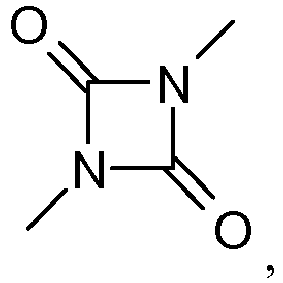
- XEFDXVWNHLICRX-UHFFFAOYSA-N CN(C(N1C)=O)C1=O Chemical compound CN(C(N1C)=O)C1=O XEFDXVWNHLICRX-UHFFFAOYSA-N 0.000 description 1
Classifications
-
- C—CHEMISTRY; METALLURGY
- C08—ORGANIC MACROMOLECULAR COMPOUNDS; THEIR PREPARATION OR CHEMICAL WORKING-UP; COMPOSITIONS BASED THEREON
- C08G—MACROMOLECULAR COMPOUNDS OBTAINED OTHERWISE THAN BY REACTIONS ONLY INVOLVING UNSATURATED CARBON-TO-CARBON BONDS
- C08G77/00—Macromolecular compounds obtained by reactions forming a linkage containing silicon with or without sulfur, nitrogen, oxygen or carbon in the main chain of the macromolecule
- C08G77/42—Block-or graft-polymers containing polysiloxane sequences
- C08G77/46—Block-or graft-polymers containing polysiloxane sequences containing polyether sequences
-
- C—CHEMISTRY; METALLURGY
- C08—ORGANIC MACROMOLECULAR COMPOUNDS; THEIR PREPARATION OR CHEMICAL WORKING-UP; COMPOSITIONS BASED THEREON
- C08G—MACROMOLECULAR COMPOUNDS OBTAINED OTHERWISE THAN BY REACTIONS ONLY INVOLVING UNSATURATED CARBON-TO-CARBON BONDS
- C08G77/00—Macromolecular compounds obtained by reactions forming a linkage containing silicon with or without sulfur, nitrogen, oxygen or carbon in the main chain of the macromolecule
- C08G77/04—Polysiloxanes
- C08G77/38—Polysiloxanes modified by chemical after-treatment
- C08G77/382—Polysiloxanes modified by chemical after-treatment containing atoms other than carbon, hydrogen, oxygen or silicon
- C08G77/388—Polysiloxanes modified by chemical after-treatment containing atoms other than carbon, hydrogen, oxygen or silicon containing nitrogen
-
- D—TEXTILES; PAPER
- D06—TREATMENT OF TEXTILES OR THE LIKE; LAUNDERING; FLEXIBLE MATERIALS NOT OTHERWISE PROVIDED FOR
- D06M—TREATMENT, NOT PROVIDED FOR ELSEWHERE IN CLASS D06, OF FIBRES, THREADS, YARNS, FABRICS, FEATHERS OR FIBROUS GOODS MADE FROM SUCH MATERIALS
- D06M15/00—Treating fibres, threads, yarns, fabrics, or fibrous goods made from such materials, with macromolecular compounds; Such treatment combined with mechanical treatment
- D06M15/19—Treating fibres, threads, yarns, fabrics, or fibrous goods made from such materials, with macromolecular compounds; Such treatment combined with mechanical treatment with synthetic macromolecular compounds
- D06M15/37—Macromolecular compounds obtained otherwise than by reactions only involving carbon-to-carbon unsaturated bonds
- D06M15/643—Macromolecular compounds obtained otherwise than by reactions only involving carbon-to-carbon unsaturated bonds containing silicon in the main chain
- D06M15/6436—Macromolecular compounds obtained otherwise than by reactions only involving carbon-to-carbon unsaturated bonds containing silicon in the main chain containing amino groups
Definitions
- the invention relates to the use of polyamino-polysiloxane copolymer compounds and / or polyammonium-polysiloxane copolymer compounds or aqueous emulsions thereof for the initial finishing of fibrous materials.
- Amino-containing polysiloxanes are known as textile plasticizers (US Pat. EP 441 530 ).
- polysiloxane quats quaternary ammonium group-containing polysiloxanes.
- polysiloxane quats quaternary ammonium group-containing polysiloxanes.
- the reaction of ⁇ , ⁇ -diepoxides with tertiary amines in the presence of acids is known, it provides ⁇ , ⁇ -diquatäre siloxanes, which can be used for hair care purposes ( DE-A 37 19 086 ).
- aromatic imidazolinium derivatives are also claimed.
- a reduction in hair washability can be achieved when the ⁇ , ⁇ diepoxides are reacted with di-tertiary amines in the presence of acids to form long chain polyquaternary polysiloxanes ( EP-A-282720 ). Aromatic quaternary ammonium structures are not disclosed.
- Such polyquaternary imidazolinium derivatives are disclosed in US 6,240,929 treated. These cationic compounds should have a further increased compatibility with the anionic surfactants present in cosmetic formulations.
- hair washout refers to the brief attack of primarily water and very mild, non-irritating skin surfactants, while wash resistant, hydrophilic softeners for textiles have to withstand the attack of concentrated surfactant solutions having high fat and soil release properties.
- wash resistant, hydrophilic softeners for textiles have to withstand the attack of concentrated surfactant solutions having high fat and soil release properties.
- that modern detergents contain strong alkaline complexing agents, oxidative bleaches and complex enzyme systems and the fibers are often exposed to exposure for hours at elevated temperatures.
- the hydrophilicity should be increased.
- Branched alkylene oxide-modified polysiloxane quats have been synthesized from ⁇ , ⁇ -OH-terminated polysiloxanes and trialkoxysilanes by condensation.
- the quaternary ammonium structure is introduced via the silane, the quaternary nitrogen atom being substituted by alkylene oxide units ( US 5,602,224 ).
- Disadvantage of this solution is the less flexible coupling of quat content and degree of branching.
- polyquaternary polysiloxane block copolymers are claimed as advanced plasticizers which allow softening of textiles during finishing and, alternatively, during the washing process from detergent formulations.
- the US 2002/0103094 A deals with the use of said silicone materials in fabric care formulations.
- WO 02/10259 and US 2002/0103094 A disclose materials in which the quat groups are present partially or fully separated from the alkylene oxide units. These alkylene oxide units are incorporated into the block copolymer as ⁇ , ⁇ -difunctional units.
- Branched polyquaternary polysiloxane block copolymers are described as permanent fabric softening agents.
- trifunctional alkylene oxide structures which are separated from the quat groups can be incorporated as branching units. Due to their cross-linked nature, these trifunctional alkylene oxides can be introduced only to a limited extent.
- Reactively functionalized branched polyquaternary polysiloxane block copolymers as permanent fabric softening agents are disclosed in US Pat WO 2004/090007 described.
- Polyquaternary polysiloxane block copolymers having pendant polyether groups are disclosed in U.S. Pat WO 2006/103075 described as permanent fabric softeners.
- Octopus-type polyquaternary polysiloxane block copolymers as permanent fabric softening agents are disclosed in U.S. Pat WO 2007/014930 described.
- WO 2004/041912 and WO 2004/042136 relate to linear polyamino and / or polyammonium polysiloxane copolymers and their use in cosmetic formulations, in detergents or for the surface treatment of substrates.
- DE 102 14 290 A1 relates to the use of silicone quats in cosmetic formulations for the treatment of keratin-containing substrates.
- polyquaternized siloxane block copolymers for the original finishing of textiles and other natural and synthetic fibrous materials such as e.g.
- a silicone-typical softness, improved elasticity and reduced crease tendency is given increased hydrophilicity.
- the group R in the definition of Q is preferably selected from the groups R 2 .
- the hydrophilicity, softness, achieved in combination with the adjustment of the chain length of the polydiorganosiloxane residue can be achieved with the textile original equipment according to the invention and optimize the grip of the fibrous materials for an excellent balance.
- the molar ratio of v1 to v2 in mol% in the range of 5 to 95 mol%. If the molar ratio of v1 / v2 is ⁇ 5%, then the hydrophilicity of the polyamino and / or polyammonium-polysiloxane copolymer compounds used according to the invention be reduced. If the molar ratio of v1 / v2 is> 95%, the hydrophilicity of the polyamino and / or polyammonium-polysiloxane copolymer compounds used in the present invention may be high, but there is a fear of lowering the substantivity and softening the softness.
- the ratio of V 2 to V 11 corresponding to w to v1 in mol% is of particular importance in textile original equipment.
- the molar ratio of the groups V 2 to V 11 corresponding to w to v1 in mol% of 50 to 99.9, more preferably 80 to 99, more preferably 85 to 97, in each case mol% based on the sum of w and v1.
- the polyamino and / or polyammonium-polysiloxane copolymer compounds used according to the invention generally have on average at least two, more preferably at least three repeat units of the formula (I).
- V 2 represents a group of the formula -V 2 * -Z 2 -V 2 * - in which Z 2 is as defined above and V 2 * represents a divalent straight-chain, cyclic or branched, saturated, unsaturated or aromatic hydrocarbon radical having up to 40 carbon atoms which may optionally have one or more groups selected from -O-, -CONH- , -CONR 2 -, wherein R 2 is as defined above, -C (O) - and -C (S) - may contain, and the radical V 2 * may optionally be substituted by one or more hydroxyl groups.
- the preferably linear polysiloxane copolymer used in the present invention may have the following repeating units: - [V 2 * -Z 2 -V 2 * -Q] - preferably together with - [V 1 -Q] -.
- Y is preferably selected from H or straight-chain, cyclic, branched C 1 to C 22 -alkyl, alkenyl, alkynyl, fluoro (C 1 -C 10 ) -alkyl and C 6 -C 5 -alkyl 10 aryl radicals selected.
- V 2 * is preferably a divalent straight-chain, cyclic or branched, saturated, unsaturated or aromatic hydrocarbon radical having up to 16 carbon atoms and one or more groups selected from -O-, -CONH-, -CONR 2 - wherein R 2 as defined above, -C (O) -, -C (S) - and may be substituted with one or more hydroxyl groups. Even more preferably, -V 2 * - is selected from groups of the formulas:
- the polyamino and / or polyammonium-polysiloxane copolymer compounds according to the invention contain at least one (poly) -alkylene oxide-free unit V 12 and at least one (poly) -alkylene oxide-containing unit V 11 .
- V 11 More preferred variants of V 11 are structures of the formula: -CH 2 C (O) O- [CH 2 CH 2 O] q - [CH 2 CH (CH 3 ) O] r -C (O) CH 2 -, -CH 2 CH 2 C (O) O- [CH 2 CH 2 O] q - [CH 2 CH (CH 3 ) O] r -C (O) CH 2 CH 2 -, -CH 2 CH 2 CH 2 C (O) O- [CH 2 CH 2 O] q - [CH 2 CH (CH 3 ) O] r -C (O) CH 2 CH 2 CH 2 -,
- the polyamino and / or polyammonium-polysiloxane copolymer compounds used according to the invention can be prepared, in particular, by a process in which diamines are reacted with amine-reactive compounds, such as epoxy- and / or haloalkyl-functional compounds, the reacted compounds comprising at least one ( Poly) alkylene oxide radical, at least one polydiorganosiloxane radical and at least one radical which leads to the formation of a radical V 12 which contains no (poly) alkylene oxide radical.
- amine-reactive compounds such as epoxy- and / or haloalkyl-functional compounds
- the polysiloxane copolymer compounds used in the present invention may be those having amino functions and may be those having ammonium functions.
- the polysiloxane copolymer compounds used in accordance with the invention are preferably polyammonium-polysiloxane copolymer compounds. These are preferably obtained by quaternizing reaction of di-tertiary diamines with quaternizing or alkylating compounds, in particular epoxy- and / or haloalkyl-functional compounds.
- Examples of neutralizing anions resulting from the ammonium groups are: halide ions, especially chloride and bromide, alkyl sulfates, especially methosulfate, carboxylates, especially acetate, propionate, octanoate, decanoate, dodecanoate, tetradecanoate, hexadecanoate, octadecanoate, oleate, sulfonates, especially toluenesulfonate.
- the non-neutralizing anion for the quaternized compounds is also the OH - anion into consideration.
- ion exchange other anions can be introduced. These include, for example, organic anions, such as polyether carboxylates and polyether sulfates.
- the ratio of the groups V 11 , V 12 and V 2 in the compounds according to the invention can be controlled.
- Suitable monomers introducing V 11 or V 12 are, for example, alpha, omega-diamines, such as alkylenediamines or diaminopolyethers. They are reacted for example with amino-reactive V 2 -containing monomers such as diepoxy-polysiloxane compounds, dihaloalkyl polysiloxane. Alternatively, V 11 or V 12 may also be introduced via dihaloalkyl compounds, diepoxide compounds, or mixed group compounds reacted with amino functional monomers which introduce group V 2 or further groups V 11 or V 12 .
- the polysiloxanes of the general formula (I) used according to the invention may optionally also contain branching units V 3 . It acts it is useful to V 3 is a trivalent or higher, straight-chain, cyclic or branched, saturated, unsaturated or aromatic hydrocarbon radical having up to 1000 carbon atoms, optionally one or more groups selected from -O-, -CONH -, - CONR 2 -, wherein R 2 is as defined above, -C (O) -, -C (S) -, -Z 1 -, which is as defined above, -Z 2 - which is as defined above, and Z 3 , wherein Z 3 is a tri- or higher organopolysiloxane unit may contain.
- the branching unit V 3 may be silicone-free. Examples of these include: wherein a, b and c may be the same or different and from 1 to 40, q + r ⁇ 0, wherein the arrangement of the ethylene and propylene oxide units may be random or block-like and the attachment to Q via ethylene and propylene oxide units via a carbon atom can take place.
- Z 3 -containing branching unit V 3 is, for example:
- the polysiloxanes used in the invention may contain units R O, which are preferably linked by appropriate alkylation of primary, secondary or tertiary monoamino-functionalized polyalkylene oxides with reactive functionalized Siloxanvorme in the polymer.
- units R O which are preferably linked by appropriate alkylation of primary, secondary or tertiary monoamino-functionalized polyalkylene oxides with reactive functionalized Siloxanvorme in the polymer.
- the monoprimary functionalized Jeffamine® M series (Huntsman Corp.) are used.
- Monofunctionally bonded hydrophilic elements R O can be introduced into the polysiloxane copolymers used according to the invention in order to increase the hydrophilicity in a targeted manner.
- reactive units into the copolymer backbone.
- reactive groups include groups of the following formulas: and wherein 'a' is an integer of 0 to 2 and R and R 'may be the same or different and each represents an organic residue.
- the reactive groups mentioned can be introduced according to the invention via units corresponding to V or Q, as in US Pat PCT / EP 2004/050472 described in more detail.
- the invention further relates to the use of aqueous emulsions containing at least one polyamino-polysiloxane copolymer compounds and / or polyammonium-polysiloxane copolymer compounds as defined above for the initial finishing of fibrous materials.
- aqueous emulsions are prepared by dispersing the polyamino-polysiloxane copolymer compounds and / or polyammonium-polysiloxane copolymer compounds or optionally alcoholic solutions in water with conventional emulsifying equipment such as rotor-stator mixers, simple stirrers and mixing nozzles and Gaulin emulsifying machines optionally in the presence of one or more surfactants.
- concentrates are first prepared, which are then diluted to the preferred use concentrations.
- Concentration ranges of the concentrates are for example: component concentrations Polyamino and / or polyammonium-polysiloxane copolymer compounds 10 to 40% by weight emulsifiers 0.5 to 20% by weight Water and optionally organic solvents rest
- Concentration ranges of the application emulsions are for example: component concentrations Polyamino and / or polyammonium polysiloxane copolymer compounds 1 to 10% by weight emulsifiers 0.05 to 5% by weight Water and optionally organic solvents rest
- Applicable surfactants include:
- silicone-free, preferably cationic or nonionic surfactants are silicone-free, preferably cationic or nonionic surfactants.
- anionic surfactants is possible in principle, but less preferred.
- the preferred cationic surfactants are at least one member selected from non-polymerized organic quaternary ammonium compounds.
- hydrocarbon-group-containing quaternary ammonium salts or amine salts where the hydrocarbon groups may preferably contain from 8 to 28 carbon atoms.
- nonionic surfactants include alkoxylated alcohols, ethylene oxide (EO) propylene oxide (PO) block polymers, polyhydroxy fatty acid amides, alkyl polysaccharides, and the like.
- the non-aqueous vehicles which may be present in the emulsions in addition to water, are, for example, organic solvents, preferably water-soluble organic solvents alone and / or mixtures thereof also with water.
- organic solvents include monoalcohols, diols, polyols such as glycerine, glycol, polyethers such as polyalkylene glycols such as polyethylene glycols and mixtures thereof, also with water.
- mixtures of solvents in particular mixtures of lower aliphatic alcohols, such as ethanol, propanol, butanol, isopropanol, and / or diols, such as 1,2-propanediol or 1,3-propanediol; or mixtures thereof with glycerin.
- Suitable alcohols include in particular C 1 -C 4 -alcohols.
- Preference is given to 1,2-propanediol and water.
- the aqueous emulsion formulations may also contain other adjuvants in the amounts customary for these adjuvants.
- Usual aids in the context of the invention are, inter alia, leveling agents, wetting agents, glossy finishing agents, fiber-protecting agents, slip-resistance agents and other auxiliaries according to the prior art.
- leveling agents wetting agents
- glossy finishing agents glossy finishing agents
- fiber-protecting agents slip-resistance agents
- other auxiliaries according to the prior art.
- buffer systems can be incorporated to set an optimum pH during the finish.
- the invention further relates to the inventive use of compositions containing at least one polyamino and / or Polyammonium-polysiloxane copolymer compounds with at least one other polydiorganosiloxane compound other than these.
- polydiorganosiloxane compounds other than the polyamino and / or polyammonium-polysiloxane copolymer compounds those compounds which do not carry amino and ammonium functions, such as PDMS oils, are particularly suitable.
- a method of initially finishing fiber materials comprising treating the fiber materials with at least one polyamino and / or polyammonium-polysiloxane copolymer compound as defined above or a composition as defined above or an aqueous emulsion thereof is described.
- the finishing process can be carried out in particular by the continuous process (padding or lisseuse process) or by the exhaustion process (jet process).
- Examples of technological parameters to be followed in these finishing processes include: • Continuity (eg Foulard, Lisseuse) Equipment Temperature: room temperature Drying temperature: 75-105 ° C in a convection oven or 10-60 sec on a tenter at 150 ° C, especially 30-45 sec Time in convection oven: 10-20 minutes • exhaust (eg jet, winch) Equipment Temperature: 30-60 ° C, preferably 35-50 ° C and especially 35-45 ° C.
- polyamino and / or polyammonium-polysiloxane copolymer compounds used according to the invention or their compositions or their aqueous emulsions are outstandingly suitable as fabric softeners in the finishing of textile fabrics, in particular those of cotton or blends of cotton with polyester, polyamide, polyacrylonitrile, wool and silk.
- Textile fabrics are preferably understood to mean woven fabrics, knitted fabrics, knitted fabrics and nonwovens. Particularly advantageous has been the use for the equipment of cotton or cotton-containing textiles, which have been pretreated with anionic whiteners, proved by the jet process.
- the invention further relates to the use of the compounds according to the invention for the initial finishing and treatment of textiles and other natural and synthetic fibrous materials, including paper, hair and wool.
- esters are obtained from HOCH 2 CH 2 OCH 2 CH 2 OH by reaction with chloroacetic acid chloride: ClCH 2 C (O) O [CH 2 CH 2 O] 2 C (O) CH 2 Cl
- the polymers have the following structural elements With example w x y z 2 65 2 0.9 0.1 3 41 2 0.9 0.1
- microemulsions of polymers 2 and 3 are diluted to 2%.
- cotton terry cloth is equipped at 40 ° C for 30 minutes with the microemulsions in the extraction process.
- the amount of polymer used is 2 mg of block copolymer / 1 g of cotton terry and 10 mg of block copolymer / 1 g of cotton terry.
- the finished terry cloth flaps are dried at 130 ° C for 10 minutes and divided into two parts. From the first part of the terry cloth rags the first touch and the hydrophilicity are determined after 1 day storage at 40% humidity. The determination of the hydrophilicity is repeated after 7 days.
- the second part of the terry cloth is subjected to 3 washing cycles in the presence of a reference detergent based on anionic surfactants (40 ° C., 30 minutes, 0.1 g / l wfk Ecolabel Reference Detergent Light Duty (wfk Institute for Angewandte Anlagen GmbH Fichtenhain 11 D-47807 Krefeld), rinse with tap water for 5 minutes after each wash) and then stored for 1 day at 40% humidity. Also from terrycloths after 3 washing cycles we define touch and hydrophilicity. The following results were achieved: 2 mg block copolymer / 1 g cotton terry Microemuls.
Landscapes
- Chemical & Material Sciences (AREA)
- Chemical Kinetics & Catalysis (AREA)
- Health & Medical Sciences (AREA)
- Medicinal Chemistry (AREA)
- Polymers & Plastics (AREA)
- Organic Chemistry (AREA)
- General Chemical & Material Sciences (AREA)
- Engineering & Computer Science (AREA)
- Textile Engineering (AREA)
- Silicon Polymers (AREA)
- Treatments For Attaching Organic Compounds To Fibrous Goods (AREA)
Description
- Die Erfindung betrifft die Verwendung von Polyamino-Polysiloxan-Copolymer-Verbindungen und/oder Polyammonium-Polysiloxan-Copolymer-Verbindungen oder wässrigen Emulsionen davon zur Erstausrüstung von faserartigen Materialien.
- Aminogruppen enthaltende Polysiloxane sind als textile Weichmacher bekannt (
EP 441 530 - Es ist weiterhin bekannt, α,ω-epoxymodifizierte Siloxane mit α,ω-amino-funktionalisierten Alkylenoxiden umzusetzen, und diese Produkte als hydrophile Weichmacher einzusetzen (
US 5,807,956 ,US 5,981,681 ). In Weiterentwicklung diesen Gedankens sind Blockcopolymere vorgeschlagen worden, in denen α,ω-epoxymodifizierten Siloxane und α,ω-epoxymodifizierte Polyether über primäre Alkylamine als Kettenverlängerer miteinander verbunden werden.(US 6,475,568 ). Als Vorteile dieser Verbindungen werden eine höhere Weichheit und Fähigkeit zur Substratbenetzung genannt.
Aminosiloxane mit Ethylenoxid-/Propylenoxideinheiten in den Seitenketten sind ebenfalls beschrieben worden (US 5,591,880 ,US 5,650,529 ). - Eine gesteigerte Substantivität wird von Polysiloxanquats ("Polysiloxanquats" = quaternäre Ammoniumgruppen-enthaltende Polysiloxane) erwartet. Die Reaktion von α,ω-Diepoxiden mit tertiären Aminen in Gegenwart von Säuren ist bekannt, sie liefert α,ω-diquartäre Siloxane, welche zu Haarpflegezwecken eingesetzt werden können (
DE-A 37 19 086 ). Neben tetraalkyl-substituierten quartären Ammoniumstrukturen werden auch aromatische Imidazoliniumderivate beansprucht. - Eine Verringerung der Auswaschbarkeit aus Haaren kann erzielt werden, wenn die α,ω-Diepoxide mit di-tertiären Aminen in Gegenwart von Säuren zu langkettigen polyquaternären Polysiloxanen umgesetzt werden (
EP-A-282720 - Derartige polyquaternäre Imidazoliniumderivate werden in
US 6,240,929 behandelt. Diese kationischen Verbindungen sollen eine weiter erhöhte Kompatibilität gegenüber den in kosmetischen Formulierungen vorhandenen anionischen Tensiden besitzen. Allerdings bezieht sich die Auswaschbeständigkeit aus Haaren auf den kurzzeitigen Angriff von vornehmlich Wasser und sehr milden, die Haut nicht irritierenden Tensiden, während waschbeständige, hydrophile Weichmacher für Textilien dem Angriff konzentrierter Tensidlösungen mit hohem Fett- und Schmutzlösevermögen zu widerstehen haben. Erschwerend kommt hinzu, daß moderne Waschmittel stark alkalische Komplexbildner, oxidativ wirkende Bleichmittel und komplexe Enzymsysteme enthalten und die Fasern der Einwirkung oftmals über Stunden bei erhöhten Temperaturen ausgesetzt sind. - Durch Einführung von Alkylenoxidgruppen zusätzlich zu den quaternären Ammoniumstrukturen soll die Hydrophilie gesteigert werden.
- Streng kammartige, d. h. in den Seitengruppen der Siloxaneinheiten alkylenoxidmodifizierte Polysiloxanquats sind ebenfalls beschrieben worden. Die Hydroxylgruppen von kammartig substituierten Polyethersiloxanen werden mit Epichlorhydrin (
US 5,098,979 ) oder Chloressigsäure (US 5,153,294 ,US 5,166,297 ) in die entsprechenden Chlorderivate überführt. Anschließend erfolgt eine Quaternierung mit tertiären Aminen. Nachteil der Lösungen gemäßUS 5,098,979 ,US 5,153,294 undUS 5,166,297 ist, daß die Quatgruppen durch die Alkylenoxideinheiten weit von der Hauptkette beabstandet positioniert sind, wodurch die Substantivität des Gesamtmoleküls geschwächt wird. - Verzweigte alkylenoxid-modifizierte Polysiloxanquats sind aus α,ω-OH-terminierten Polysiloxanen und Trialkoxysilanen durch Kondensation synthetisiert worden. Die quartäre Ammoniumstruktur wird über das Silan eingebracht, wobei das quartäre Stickstoffatom durch Alkylenoxideinheiten substituiert ist (
US 5,602,224 ). Nachteil dieser Lösung ist die wenig flexible Kopplung von Quatgehalt und Verzweigungsgrad. - In
US 6,242,554 werden α,ω-difunktionelle Siloxanderivate beschrieben, die jeweils über eine separate quartäre Ammonium- und Alkylenoxideinheit verfügen. Diese monoquaternären Verbindungen sich allerdings nicht hinreichend substantiv. - In den
WO 02/10257 WO 02/10259 US 2002/0103094 A behandelt die Verwendung der genannten Siliconmaterialien in Textilpflegeformulierungen. DieWO 02/10257 WO 02/10259 US 2002/0103094 A offenbaren Materialien, in denen die Quatgruppen anteilig oder vollständig separiert von den Alkylenoxideinheiten vorliegen. Diese Alkylenoxideinheiten werden als α,ω-difunktionelle Einheiten in das Blockcopolymer eingebaut. - In
WO 03/78504 - Reaktiv funktionalisierte verzweigte polyquaternäre Polysiloxanblock-copolymere als permanente Textilweichmacher werden in
WO 2004/090007 beschrieben. - Polyquaternäre Polysiloxanblock-copolymere mit Polyetherseitengruppen werden in
WO 2006/103075 als permanente Textilweichmacher beschrieben. - Octopusartige polyquaternäre Polysiloxanblock-copolymere als permanente Textilweichmacher werden in
WO 2007/014930 beschrieben. -
WO 2004/041912 undWO 2004/042136 betreffen lineare Polyamino- und/oder Polyammonium-Polysiloxancopolymere und deren Verwendung in kosmetischen Formulierungen, in Waschmitteln oder zur Oberflächenbehandlung von Substraten.DE 102 14 290 A1 betrifft die Verwendung von Silikonquats in kosmetischen Formulierungen zur Behandlung keratinhaltiger Substrate. - Ausgehend von diesem Stand der Technik ist eine weitere Verbesserung der Hydrophilie der siliconbasierten Blockcopolymeren ohne Preisgabe der erreichbaren Weichheit der behandelten Fasern, insbesondere bei gleichbleibender oder verbesserter Substantivität (Haftung der Siloxansysteme/moleküle auf der Faser), der Flexibilität bei der Formulierung der Siloxansysteme/zusammensetzungen und der Darreichungsform insbesondere in Richtung auf eine Verringerung der notwendigen Einsatzmengen und der Materialkosten sehr wünschenswert.
- Es ist somit eine Aufgabe der Erfindung die Verwendung polyquaternierter Siloxan-blockcopolymere zur Erstausrüstung von Textilien und anderen natürlichen und synthetischen faserartigen Materialien wie z.B. Papierfasern, Wolle und Haare bereitzustellen, womit derartigen Materialien bzw. Substraten, bevorzugt Textilmaterialien, eine silicontypische Weichheit, eine verbesserte Elastizität und verringerte Knitterneigung bei gesteigerter Hydrophilie verliehen wird.
- Es ist eine weitere Aufgabe der Erfindung, eine neue Verwendung der erfindungsgemäßen Substanzen als Bestandteil von Systemen zur textilen Erstausrüstung oder Ausrüstung anderer faserartiger Substrate bereitzustellen.
- Es wurde überraschend gefunden, dass die vorstehend beschriebenen Aufgabenstellungen gelöst werden können durch die Verwendung von Polyamino-Polysiloxan-Copolymer-Verbindungen und/oder Polyammonium-Polysiloxan-Copolymer-Verbindungen wie in den Ansprüchen definiert
zur Erstausrüstung von Fasermaterialien. - Die Gruppe R in der Definition von Q wird bevorzugt ausgewählt aus den Gruppen R2.
- Bevorzugte Ausführungsformen von Q sind:
- Für Reste der Formel

- eine quaternierte Imidazoleinheit der Struktur

- eine quaternierte Pyrazoleinheit der Struktur

- Für Reste der Formel

- eine zweifach quaternierte Piperazineinheit der Struktur

- Für Reste der Formel

- eine monoquaternierte Piperazineinheit der Struktur

- eine monoquaternierte Piperazineinheit der Struktur

- Für Reste der Formel
-N+R2-
ein Rest der Formel -N'R2-, worin R einen einwertigen, geradkettigen, cyclischen oder verzweigten, gesättigten Kohlenwasserstoffrest mit bis zu 20 Kohlenstoffatomen darstellt, der eine oder mehrere Gruppen ausgewählt aus
-O-,
-NH-,
-C(O)-
und
-C(S)-
enthalten kann, und der gegebenenfalls durch eine oder mehrere Hydroxylgruppen substituiert sein kann, und - eine zweifach quaternierte Einheit der Struktur

- eine monoquaternierte Einheit der Struktur

- eine zweifach quaternierte Einheit der Struktur

- und eine monoquaternierte Einheit der Struktur

- Für Reste der Formel
-NR-
- eine monoquaternierte Einheit der Struktur

- eine monoquaternierte Einheit der Struktur

- t von 2 bis 10 ist,
- R wie oben definiert, bevorzugt R2 ist, R2 wie oben definiert ist, und die Bedeutung von R2 von der Bedeutung der obigen Gruppe R2 gleich oder verschieden sein kann,
- R3 die Bedeutung von R2 aufweist, wobei R2 und R3 gleich oder verschieden sein können, oder
- R2 und R3 gemeinsam mit dem positiv geladenen Stickstoffatom einen fünf- bis siebengliedrigen Heterocyclus bilden können, der gegebenenfalls zusätzlich ein oder mehrere Stickstoff-, Sauerstoff- und/oder Schwefelatome aufweisen kann,
- R5, R6, R7 gleich oder verschieden sein können und aus der Gruppe ausgewählt werden, die besteht aus: H, Halogen, Hydroxylgruppe, Nitrogruppe, Cyanogruppe, Thiolgruppe, Carboxylgruppe, Alkylgruppe, Monohydroxyalkylgruppe, Polyhydroxyalkylgruppe, Thioalkylgruppe, Cyanoalkylgruppe, Alkoxygruppe, Acylgruppe, Acetyloxygruppe, Cycloalkylgruppe, Arylgruppe, Alkylarylgruppe, und Gruppen des Typs -NHRW, in denen RW H, Alkylgruppe, Monohydroxyalkylgruppe, Polyhydroxyalkylgruppe, Acetylgruppe oder eine Ureidogruppe bedeuten, und jeweils zwei der benachbarten Reste R5, R6 und R7 mit den sie an den Heterocyclus bindenden Kohlenstoffatomen aromatische Fünfbis Siebenringe bilden können, und
- R8 die Bedeutung von R2 aufweist, wobei R8 und R2 gleich oder verschieden sein können.
- Im Falle, dass Q einen dreiwertigen Rest der Formeln


- In einer bevorzugten Ausführungsform der Erfindung weisen die Polyamino- und/oder Polyammonium-Polysiloxan-Copolymer-Verbindungen die Formel (II) auf:

- worin Q und V2 wie zuvor definiert sind,
- V1 ausgewählt wird aus mindestens einer Gruppe V11 und mindestens einer Gruppe V12, und das Verhältnis von w zu v von 0,05 bis 10 beträgt.
- Bevorzugter beträgt das Verhältnis von w zu v = 0,1 bis 5 noch bevorzugter 0,3 bis 2.
- Durch Einstellen des Verhältnisses der Gruppe V2, welche den vergleichsweise langkettigen Polydiorganosiloxanrest aufweist, und der Gruppe V1, welche keinen langkettigen Polydiorganosiloxanrest aufweist, lässt sich in Kombination mit der Einstellung der Kettenlänge des Polydiorganosiloxanrestes die mit der erfindungsgemäßen textilen Erstausrüstung erreichte die Hydrophilie, Weichheit und Griff der faserartigen Materialien im Sinne einer hervorragenden Balance optimieren.
- Zusätzlich kann eine weitere Optimierung im Hinblick auf die textile Erstausrüstung durch die Verwendung polyalkylenoxid-haltiger Reste V11 und nicht-polyalkylenoxid-haltiger Resten V12 erfolgen Bei Verwendung besagter Reste V11 und V12 ergeben sich insbesondere Polyamino- und/oder Polyammonium-Polysiloxan-Copolymer-Verbindungen der Formel (III):

- Die Erfinder der vorliegenden Erfindung fanden des weiteren, dass dem Verhältnis von V2 zu V11 entsprechend w zu v1 in mol-% eine besondere Bedeutung bei der textilen Erstausrüstung zukommt. Bevorzugt beträgt das molare Verhältnis der Gruppen V2 zu V11 entsprechend w zu v1 in mol-% von 50 bis 99,9, bevorzugter 80 bis 99 noch bevorzugter 85 bis 97, jeweils mol-% bezogen auf die Summe von w und v1.
Die erfindungsgemäß verwendeten Polyamino- und/oder Polyammonium-Polysiloxan-Copolymer-Verbindungen weisen im allgemeinen im Mittel mindestens zwei, bevorzugter mindestens drei Wiederholungseinheiten der Formel (I) auf. - In einer bevorzugten Ausführungsform der Polysiloxanverbindungen der Formel (I) stellt V2 eine Gruppe der Formel
-V2*-Z2-V2*-
dar, worin Z2 wie oben definiert ist und V2* einen zweiwertigen geradkettigen, cyclischen oder verzweigten, gesättigten, ungesättigten oder aromatischen Kohlenwasserstoffrest mit bis zu 40 Kohlenstoffatomen darstellt, der gegebenenfalls eine oder mehrere Gruppen, ausgewählt aus -O-, -CONH-, -CONR2-, worin R2 wie oben definiert ist, -C(O)- und -C(S)- enthalten kann, und der Rest V2* gegebenenfalls durch eine oder mehrere Hydroxylgruppen substituiert sein kann. - In der vorstehend erwähnten Ausführungsform kann das erfindungsgemäße verwendete, bevorzugt lineare Polysiloxancopolymer die folgenden Wiederholungseinheiten aufweisen:
-[V2*-Z2-V2*-Q]-
bevorzugt zusammen mit -[V1-Q]-. - In einer weiteren bevorzugten Ausführungsform der Polysiloxan-Verbindungen der Formel (I) wird die Gruppe Q ausgewählt aus:

-X-E-Y (IV),
- worin X eine Einfachbindung oder einen zweiwertigen, geradkettigen, verzweigten oder cyclischen Kohlenwasserstoffrest mit bis zu 20 Kohlenstoffatomen darstellt, der gegebenenfalls Stickstoff und/oder Sauerstoff enthalten kann, und X über ein Kohlenstoffatom mit dem Stickstoffatom von Q verbunden ist,
- E einen Polyalkylenoxidrest der Formel
-[(CaH2a)O]y-
- worin a = 2 bis 4 ist, und
- y = 2 bis 10000 ist, bevorzugt ist y= 1-2,
- der über ein Kohlenstoffatom mit der Gruppe X und über ein Sauerstoffatom mit der Gruppe Y verbunden ist,
- Y Wasserstoff oder einen einwertigen, geradkettigen, verzweigten oder cyclischen, gesättigten, ungesättigen oder aromatischen Kohlenwasserstoffrest mit bis zu 24 Kohlenstoffatomen darstellt, der Sauerstoff und/oder Stickstoff und/oder Halogen enthalten kann und über ein Kohlenstoffatom mit der Gruppe E verbunden ist.
- Bevorzugt ist RO eine Gruppe der Formel (III), in der -E- eine Gruppe der Formel (V) darstellt:

v = 1 bis 200, bevorzugt 1-2,
w = 0 bis 200, bevorzugt =0,
v+w ≥ 1. - In der Gruppe der Formel (IV) wird weiterhin Y bevorzugt aus H oder geradkettigen, cyclischen, verzweigten C1 bis C22-Alkyl-, Alkenyl-, Alkinyl-, Fluor(C1-C10)alkyl- und C6-C10-Arylresten ausgewählt.
- Besonders bevorzugt steht

- V2* steht bevorzugt für einen zweiwertigen geradkettigen, cyclischen oder verzweigten, gesättigten, ungesättigten oder aromatischen Kohlenwasserstoffrest mit bis zu 16 Kohlenstoffatomen, der eine oder mehrere Gruppen, ausgewählt aus -O-, -CONH-, -CONR2-, worin R2 wie oben definiert ist,, -C(O)-, -C(S)- enthalten kann und mit einer oder mehreren Hydroxylgruppen substituiert sein kann. Noch bevorzugter wird -V2*- ausgewählt aus Gruppen der Formeln:


- Die erfindungsgemäßen Polyamino- und/oder Polyammonium-Polysiloxan-Copolymer-Verbindungen enthalten mindestens eine (poly)alkylenoxid-freie Einheit V12 und mindestens eine (poly)alkylenoxid-haltige Einheit V11.
- Der Ausdruck (poly)alkylenoxid-haltig bedeutet, dass der Rest V11 wenigstens eine Alkylenethergruppe oder Poly(alkylenether)-Gruppe enthält. Die Alkylethergruppe kann dabei auch Teil einer Estergruppe sein, wie zum Beispiel in der Gruppe der Formel:
- -(CH2)uC(O)O-R9-O-C(O)(CH2)u-, wo die Alkylethergruppe durch die Gruppe -R9-O- oder -O-R9- gebildet wird.
- V12 wird daher bevorzugt ausgewählt aus zweiwertigen, geradkettigen, cyclischen oder verzweigten, gesättigten, ungesättigten oder aromatischen Kohlenwasserstoffresten mit bis zu 100 Kohlenstoffatomen, die gegebenenfalls eine oder mehrere Gruppen, ausgewählt aus
- -Z1- enthalten können, worin
-Z1- eine Gruppe der Formel
- R1 wie oben definiert ist, wobei die Gruppen R1 in den Gruppen V12 und V2 gleich oder verschieden sein können, und
- n2 = 0 bis 19 bedeutet, und
-Si(OR)3-a(R')a
substituiert sein kann, worin a eine ganze Zahl von 0 bis 2 ist und R und R' gleich oder verschieden voneinander sein können und jeweils einen organischen Rest darstellen. - V12 steht noch bevorzugter für
- ▪ -R9-, worin R9 einen zweiwertigen, gesättigten oder einfach oder mehrfach ungesättigten, geradkettigen oder verzweigten Kohlenwasserstoffrest mit zwei bis 25 Kohlenstoffatomen darstellt,
- ▪
-(CH2)uC(O)O-[(CH2CH2O)q-(CH2CH(CH3)O)r]-C(O)(CH2)u-
- ▪
-(CH2)uC(O)O-R9-O-C(O)(CH2)u-,
worin R9 wie zuvor definiert ist, - ▪
-[CH2CH2O]q-[CH2CH(CH3)O]r-CH2CH2-,
- ▪
-CH(CH3)CH2O[CH2CH2O]q-[CH2CH(CH3)O]r-CH2CH(CH3),
- ▪
-CH2CH(OH)CH2OCH2CH(OH)CH2OCH2CH(OH)CH2-
und - ▪
CH2CH(OH)CH2O-[CH2CH2O]q-[CH2CH(CH3)O]r-CH2CH(OH)CH2-
worin- u von 1 bis 3 ist,
- q und r von 0 bis 5, bevorzugt von 0 bis 3, und
- q + r > 0 ist.
- Bevorzugtere Varianten von V11 sind Strukturen der Formel:
-CH2C(O)O-[CH2CH2O]q-[CH2CH(CH3)O]r-C(O)CH2-,
-CH2CH2C(O)O-[CH2CH2O]q-[CH2CH(CH3)O]r-C(O)CH2CH2-,
-CH2CH2CH2C(O)O-[CH2CH2O]q-[CH2CH(CH3)O]r-C(O)CH2CH2CH2-,
- Noch bevorzugtere Varianten von V11 sind Strukturen der Formel:
-CH2C(O)O-[CH2CH2O]q-[CH2CH(CH3)O]r-C(O)CH2-,
worin r = 0 ist und q = 1 bis 3, bevorzugt 1 oder 2 und am meisten bevorzugt 2 ist.
V12 ist bevorzugt:
-[CH2]o-
mit o = 2 bis 8, bevorzugter o = 2 bis 6, am meisten bevorzugt = 6. - Besonders bevorzugt werden erfindungsgemäß Polyamino- und/oder Polyammonium-Polysiloxan-Copolymer-Verbindungen der Formel (III) verwendet:

- v1 > 0,
- v2 > 0,
- w > 0,
- w : v (= v1 + v2), entsprechend dem molaren Verhältnis von V2 zu V1 von 0,3 bis 2,
- molares Verhältnis von v1 zu v2 in mol-% von 5 bis 95 mol-%,
- molares Verhältnis von V2 zu V11 entsprechend w zu v1 in mol-% von 80 bis 99 noch bevorzugter 85 bis 97, jeweils bezogen auf die Summe von w und v1, d.h. also ein molares Verhältnis w : v1 wie 80 bis 99 : 20 bis 1, noch bevorzugter 85 bis 97 : 15 bis 3
- V11 ist bevorzugt eine Gruppe der Formel -CH2C(O)O-[CH2CH2O]q-C(O)CH2-, worin q 1 oder 2 ist,
- V12 ist eine Gruppe der Formel -[CH2]o-, worin o = 2 bis 6, bevorzugter o = 6 ist,
- V2 ist eine Gruppe V2*-Z2-V2*- mit V2* =


- V2* = zweiwertiger gesättigter Kohlenwasserstoffrest mit 1 bis 10 Kohlenstoffatomen darstellt, und
- -Z2- einen Rest der Formel

- R1 C1 bis C22-Alkyl, bevorzugt Methyl ist, und
- n1 = 22 bis 50, noch bevorzugter 24 bis 48 bedeutet.
- Die erfindungsgemäß verwendeten Polyamino- und/oder Polyammonium-Polysiloxan-Copolymer-Verbindungen können insbesondere durch ein Verfahren hergestellt werden, in dem Diamine mit aminreaktiven Verbindungen, wie epoxy- und/oder Halogenalkyl-funktionelle Verbindungen umgesetzt werden, wobei die umgesetzten Verbindungen mindestens einen (Poly)alkylenoxid-Rest, mindestens einen Polydiorganosiloxan-Rest und mindestens einen Rest, der zur Bildung eines Rest V12, der keinen (Poly)alkylenoxid-Rest enthält, führt.
- Bei den erfindungsgemäß verwendeten Polysiloxan-Copolymer-Verbindungen kann es sich um solche handeln, die Aminofunktionen aufweisen und es kann sich um solche handeln, die Ammoniumfunktionen aufweisen. Bevorzugt handelt es sich bei den erfindungsgemäß verwendeten Polysiloxan-Copolymer-Verbindungen um Polyammonium-Polysiloxan-Copolymer-Verbindungen. Diese werden vorzugsweise durch quaternisierende Umsetzung di-tertiärer Diamine mit quaternisierenden bzw. alkylierenden Verbindungen, wie insbesondere Epoxy- und/oder Halogenalkyl-funktionellen Verbindungen erhalten.
- Als die aus den Ammoniumgruppen resultierenden positiven Ladungen neutralisierende Anionen können beispielsweise vorhanden sein: Halogenidionen, speziell Chlorid und Bromid, Alkylsulfate, speziell Methosulfat, Carboxylate, speziell Acetat, Propionat, Octanoat, Decanoat, Dodecanoat, Tetradecanoat, Hexadecanoat, Octadecanoat, Oleat, Sulfonate, speziell Toluensulfonat. Als nicht neutralisierendes Anion für die quaternierten Verbindungen kommt auch das OH--Anion in Betracht. Durch Ionenaustausch können auch andere Anionen eingeführt werden. Zu nennen sind beispielsweise organische Anionen, wie Polyethercarboxylate und Polyethersulfate.
- Bevorzugt handelt es sich bei den erfindungsgemäß verwendeten Polyammonium-Polysil-oxan-Copolymer-Verbindungen um solche, die beispielsweise durch ein Verfahren hergestellt werden, worin
- a) Ein Diamin, welches eine (Poly)alkylenoxidgruppe enthält, sowie ein Diamin, das keine (Poly)alkylenoxidgruppe enthält, mit amino-reaktiven Polysiloxan-enthaltenden Verbindungen umgesetzt werden, und
- b) Ein Diamin, welches keine (Poly)alkylenoxidgruppe enthält, mit einer amino-reaktiven Polysiloxan-enthaltenden Verbindung und einer amino-reaktiven (Poly)alkylenoxid-Verbindung umgesetzt werden.
- Durch geeignete Auswahl der Stöchiometrie der Ausgangsverbindungen lässt sich das Verhältnis der Gruppen V11, V12 und V2 in den erfindungsgemäßen Verbindungen steuern.
- Geeignete V11 bzw. V12 einführende Monomere sind beispielsweise alpha, omega-Diamine, wie Alkylendiamine oder Diaminopolyether. Diese werden beispielsweise mit amino-reaktiven V2-enthaltenden Monomeren umgesetzt, wie beispielsweise Diepoxy-Polysiloxan-Verbindungen, Dihalogenalkyl-Polysiloxanverbindungen.
Alternativ können V11 oder V12 auch über Dihalogenalkyl-Verbindungen, Diepoxid-Verbindungen oder Verbindungen mit gemischten Gruppen eingeführt werden, die mit aminofunktionellen Monomeren umgesetzt werden, die die Gruppe V2 oder weitere Gruppen V11 oder V12 einführen. - Zur Herstellung kann beispielsweise auf die
WO 02/10257 - Die erfindungsgemäß verwendeten Polysiloxane der allgemeinen Formel (I) können gegebenenfalls auch Verzweigungseinheiten V3 enthalten. Dabei handelt es sich zweckmäßig um V3 einen drei- oder höherwertigen, geradkettigen, cyclischen oder verzweigten, gesättigten, ungesättigten oder aromatischen Kohlenwasserstoffrest mit bis zu 1000 Kohlenstoffatomen darstellt, der gegebenenfalls eine oder mehrere Gruppen, ausgewählt aus -O-, -CONH-,-CONR2-, worin R2 wie oben definiert ist, -C(O)-, -C(S)-, -Z1-, das wie oben definiert ist, -Z2- das wie oben definiert ist, und Z3, worin Z3 eine drei- oder höherwertige Organopolysiloxaneinheit ist, enthalten kann. Die Verzweigungseinheit V3 kann silikonfrei sein. Beispiele hiervon schließen ein:


- Die Verzweigungseinheit V3 kann eine drei- oder höherwertige Organopolysiloxaneinheit enthalten, wie zum Beispiel:


- Ein Beispiel einer Z3-enthaltenden Verzweigungseinheit V3 ist zum Beispiel:

- Die erfindungsgemäß verwendeten Polysiloxane können Einheiten RO enthalten, die bevorzugt durch geeignete Alkylierungsreaktionen von primär, sekundär oder tertiär monoamino-funktionalisierten Polyalkylenoxiden mit reaktiv funktionali-sierten Siloxanvorstufen in das Polymer eingebunden werden. Bevorzugt werden die monoprimär funktionalisierten Jeffamine® der M-Serie (Huntsman Corp.) eingesetzt.
- Monofunktionell angebundene hydrophile Elemente RO können in die erfindungsgemäß verwendeten Polysiloxancopolymere eingeführt werden, um gezielt die Hydrophilie zu steigern.
- Dies führt sowohl zu einer gesteigerten Hydrophilie der erfindungsgemäß verwendeten Polysiloxancopolymere selbst, so dass beispielsweise stabilere Emulsionen in Wasser entstehen, als auch zu einer Erhöhung der Hydrophilie der mit den erfindungsgemäß verwendeten Polysiloxancopolymere behandelten Substrate, was beispielsweise zu einer verbesserten Feuchtigkeitsaufnahme führt.
- Es liegt weiterhin im Rahmen der Erfindung, reaktive Einheiten in die Copolymerhauptkette einzuführen. Solche reaktive Gruppen schließen Gruppen der folgenden Formeln ein:

PCT/EP 2004/050472 - Die erfindungsgemäß verwendeten Polyamino- und/oder Polyammonium-Polysiloxan-Copolymer-Verbindungen können bei 25 °C fest oder flüssig sein. Für den Fall, dass sie bei 25 °C flüssig sind, liegen die Viskositäten der genannten Polysiloxane bevorzugt zwischen 500 bis 50.000.000 mPa.s bei 25 °C, bevorzugt 1000 bis 2.500.000 mPa.s bei 25 °C und bei einem Schergeschwindigkeitsgefälle von D= 1 s-1.
- Die Erfindung betrifft weiterhin die Verwendung wässriger Emulsionen, die mindestens eine Polyamino-Polysiloxan-Copolymer-Verbindungen und/oder Polyammonium-Polysiloxan-Copolymer-Verbindungen wie vorstehend definiert enthalten, zur Erstausrüstung von Fasermaterialien. Derartige wässrige Emulsionen werden hergestellt durch Dispergieren der Polyamino-Polysiloxan-Copolymer-Verbindungen und/oder Polyammonium-Polysiloxan-Copolymer-Verbindungen oder gegebenenfalls alkoholischen Lösungen in Wasser mit üblichen Emulgierapparaturen, wie Rotor-Stator-Mischer, einfache Rührer und Mischdüsen und Gaulin-Emulgiermaschinen, gegebenenfalls in Anwesenheit eines oder mehrerer oberflächenaktiven Mitteln. Bevorzugt werden zunächst Konzentrate hergestellt, welche dann auf die bevorzugten Anwendungskonzentrationen verdünnt werden. Konzentrationbereiche der Konzentrate liegen beispielsweise bei:
Bestandteil Konzentrationen Polyamino- und/oder Poly-ammonium-Polysiloxan-Copolymer- Verbindungen 10 bis 40 Gew.-% Emulgatoren 0,5 bis 20 Gew.-% Wasser und gegebenenfalls organische Lösungsmitteln Rest - Konzentrationbereiche der Anwendungsemulsionen liegen beispielsweise bei:
Bestandteil Konzentrationen Polyamino- und/oder Poly-ammonium-Polysiloxan-Copolymer-Verbindungen 1 bis 10 Gew.-% Emulgatoren 0,05 bis 5 Gew.-% Wasser und gegebenenfalls organische Lösungsmitteln Rest - Anwendbare oberflächenaktive Substanzen schließen ein:
- Bevorzugt silikonfreie, bevorzugt kationische oder nichtionische Tenside. Die Anwendung anionischer Tenside ist prinzipiell möglich, jedoch weniger bevorzugt. Bei den bevorzugten kationischen Tensiden handelt es sich um mindestens einen Bestandteil, der aus nicht-polymerisierten, organischen, quaternären Ammonium-Verbindungen ausgewählt wird. Bevorzugt handelt es sich um kohlenwasserstoffgruppenhaltige quaternäre Ammoniumsalzen oder Aminsalze, wobei die Kohlenwasserstoffgruppen bevorzugt 8 bis 28 Kohlenstoffatome enthalten können. Beispiele nichtionischer Tenside schließen ein: alkoxylierte Alkohole, Ethylenoxid (EO)-Propylenoxid (PO)-Blockpolymere, Polyhydroxyfettsäureamide, Alkylpolysaccharide und dergleichen.
- Bei den nicht-wässrigen Trägersubstanzen, die zusätzlich zu Wasser in den Emulsionen vorhanden sein können handelt es sich beispielsweise um organische Lösungsmittel, bevorzugt wasserlösliche organische Lösungsmittel allein und/oder Mischungen davon auch mit Wasser. Bevorzugte organische Lösungsmittel schließen ein: Monoalkohole, Diole, Polyole, wie Glycerin, Glykol, Polyether, wie Polyalkylenglykole, wie Polyethylenglykole und Mischungen davon, auch mit Wasser. Besonders bevorzugt sind Mischungen von Lösungsmitteln, insbesondere Mischungen von niederen aliphatischen Alkoholen, wie Ethanol, Propanol, Butanol, Isopropanol, und/oder Diole, wie 1,2-Propandiol oder 1,3-Propandiol; oder Mischungen davon mit Glycerin. Geeignete Alkohole schließen insbesondere C1-C4-Alkohole ein. Bevorzugt ist 1,2-Propandiol und Wasser.
Die wässrigen Emulsions-Formulierungen können auch noch weitere Hilfsmittel in den für diese Hilfsmittel üblichen Mengen enthalten. Übliche Hilfsmittel im Sinne der Erfindung sind u.a. Egalisiermittel, Netzmittel, Glanzausrüstungsmittel, Faserschutzmittel, Schiebefestmittel und weitere Hilfsmittel nach Stand der Technik sein. Eine gute Übersicht der erfindungsgemäßen Hilfsmittel findet sich in Chwala/Anger, Handbuch der Textilhilfsmittel, Verlag Chemie, Weinhein 1977. Darüber hinaus können Puffersysteme zur Einstellung eines optimalen pH-Wertes während der Ausrüstung eingearbeitet werden. - Die Erfindung betrifft des weiteren die erfindungsgemäße Verwendung von Zusammensetzungen enthaltend mindestens eine Polyamino- und/oder Polyammonium-Polysiloxan-Copolymer-Verbindungen mit mindestens einer weiteren davon verschiedenen Polydiorganosiloxan-Verbindung. Als von den Polyamino- und/oder Polyammo-nium-Polysiloxan-Copolymer-Verbindungen verschiedene Polydiorganosiloxan-Verbindungen kommen insbesondere solche Verbindungen in Betracht, die keine Amino- und Ammoniumfunktionen tragen, wie PDMS-Öle.
- Ein Verfahren zur Erstausrüstung von Fasermaterialien, welches die Behandlung der Fasermaterialien mit mindestens einer Polyamino- und/oder Polyammonium-Polysiloxan-Copolymer-Verbindung, wie vorstehend definiert oder einer Zusammensetzung wie vorstehend definiert, oder einer wässrigen Emulsion davon umfasst, wird beschrieben. Das Ausrüstungs-Verfahren kann insbesondere nach dem Kontinue-Verfahren (Foulard- oder Lisseuse- Verfahren) oder nach dem Ausziehverfahren (Jet-Verfahren) durchgeführt werden. Beispiele für bei diesen Ausrüstungsverfahrenen einzuhaltenden technologischen Parameter schließen ein:
• Kontinue (z.B. Foulard, Lisseuse)Ausrüstungstemperatur: Raumtemperatur Trocknungstemperatur: 75-105 °C im Umlufttrockenschrank oder 10-60 sec auf dem Spannrahmen bei 150 °C, besonders 30-45 sec Zeit im Umlufttrockenschrank: 10-20 Minuten
• Ausziehverfahren (z.B. Jet, Haspelkufe)Ausrüstungstemperatur: 30-60 °C, bevorzugt 35-50 °C und speziell 35-45 °C Aufheizrate: 2-4 °C/Minute Ausrüstungszeit: 15-25 Minuten Flottenverhältnis: 1:5 bis 1:50, besonders 1:10 bis 1:30 Trocknungstemperatur 75-105 °C im Umlufttrockenschrank oder 10-60 sec auf dem Spannrahmen bei 150 °C, besonders 30-45 sec Zeit im Umlufttrockenschrank: 10-20 Minuten - Die erfindungsgemäßen verwendeten Polyamino- und/oder Polyammonium-Polysiloxan-Copolymer-Verbindungen oder deren Zusammensetzungen oder deren wässrige Emulsionen eignen sich hervorragend als Textilweichmacher bei der Ausrüstung von textilen Flächengebilden, insbesondere solchen aus Baumwolle oder Mischungen von Baumwolle mit Polyester, Polyamid, Polyacrylnitril, Wolle und Seide. Unter textilen Flächengebilden sind bevorzugt Gewebe, Gewirke, Maschenware und Vliese zu verstehen. Als besonders vorteilhaft hat sich die Verwendung für die Ausrüstung von Baumwolle oder baumwollhaltigen Textilien, die mit anionischen Weißtönern vorbehandelt wurden, nach dem Jet-Verfahren erwiesen.
- Die Erfindung betrifft weiterhin die Verwendung der erfindungsgemäßen Verbindungen zur Erstausrüstung und Behandlung von Textilien und anderen natürlichen und synthetischen faserartigen Materialien, einschließlich Papier, Haaren und Wolle.
- Die Erfindung und die mit ihr erzielten Wirkungen werden durch die folgenden Beispiele veranschaulicht.
- In Analogie zu Beispiel 11 der
WO 02/10257
ClCH2C(O)O[CH2CH2O]2C(O)CH2Cl
- In einem 21 Dreihalskolben werden
800 g (0,1566 mol) eines Siloxanepoxides der Struktur
62,7 g (03132 mol) Dodecansäure
24,9 g deionisiertes Wasser und
74,8 g Dipropylenglykolmonomethylether
miteinander gemischt und für 9 Stunden auf 100 °C erhitzt.
Es wird eine viskose, klare, braune Polymerlösung erhalten. - 1000 g (0,297mol) eines Siloxanepoxides der Struktur

118,8 g (0,593 mol) Dodecansäure
39,5 g deionisiertes Wasser und
92,1 g Dipropylenglykol
miteinander gemischt und für 9 Stunden auf 100 °C erhitzt.
Es wird eine viskose, ganz leicht trübe, braune Polymerlösung erhalten. - Die Polymeren verfügen über die folgenden Strukturelemente


Beispiel w x y z 2 65 2 0,9 0,1 3 41 2 0,9 0,1 - Herstellung von Microemulsionen, Textilausrüstung, Waschversuche
Die Polymeren gemäß Beispielen 2 und 3 werden in 20 %-ig siliconaktive Microemulsionen der folgenden Zusammensetzung überführt: - 22,2 % Polymer gemäß Beispiel 2
- 3,8 % Emulgator Imbentin T 060
- 2,2 % Emulgator Imbentin T 120
- 71,8 % Wasser
und - 22,2 % Polymer gemäß Beispiel 3
- 4,2 % Emulgator Imbentin T 060
- 8,8 % Emulgator Imbentin T 120
- 64,8 % Wasser
- Die Microemulsionen der Polymeren 2 und 3 werden auf 2 % verdünnt.
Anschließend wird Baumwoll-Frottee bei 40 °C für 30 Minuten mit den Microemulsionen im Auszugsverfahren ausgrüstet. Die Polymereinsatzmenge beträgt 2 mg Blockcopolymer/1 g Baumwoll-Frottee und 10 mg Blockcopolymer/1 g Baumwoll-Frottee. Anschließend werden die ausgerüsteten Frotteelappen bei 130 °C für 10 Minuten getrocknet und in zwei Teile geteilt. Vom ersten Teil der Frotteelappen wird nach 1 Tag Lagerung bei 40 % Luftfeuchtigkeit der Erstgriff und die Hydrophilie bestimmt. Die Bestimmung der Hydrophilie wird nach 7 Tagen wiederholt.
Der zweite Teil der Frotteelappen wird 3 Waschzyklen in Gegenwart eines auf anionischen Tensiden beruhenden Referenzwaschmittels unterworfen (40 °C, 30 Minuten, 0,1 g/l wfk-Ecolabel Reference Detergent Light Duty (wfk-Institut für Angewandte Forschung GmbH Fichtenhain 11 D-47807 Krefeld), nach jeder Wäsche 5 Minuten mit Leitungswasser spülen) und anschließend 1 Tag bei 40 % Luftfeuchtigkeit gelagert. Auch von den Frotteelappen nach 3 Waschzyklen wir der Griff und die Hydrophilie bestimmt.
Es wurden folgende Ergebnisse erzielt:2 mg Blockcopolymer/1 g Baumwoll-Frottee Microemuls. von Beispiel Griff nach Ausrüstung* Hydrophilie nach Ausrüstung (s)** Griff nach 3 Wäschen* Hydrophilie nach 3 Wäschen (s)** 1 Tag 7 Tage 1 Tag 3 1,75 2 4 1,53 1 2 1,25 2 5 1,47 1 10mg Blockcopolymer/1g Baumwoll-Frottee Microemuls. von Beispiel Griff nach Ausrüstung* Hydrophilie nach Ausrüstung (s)** Griff nach 3 Wäschen* Hydrophilie nach 3 Wäschen (s)** 1 Tag 7 Tage 1 Tag 3 1,54 3 5 1,65 3 2 1,46 3 15 1,35 3 *Der Griff wird 'Head to Head' ermittelt. Der bessere Lappen erhält 2 Punkte der schlechtere Lappen 1 Punkt. Es werden die Ergebnisse von 5 Versuchslappen, bewertet von 4 Personen, gemittelt.
**Auf einen ausgerüsteten Frotteelappen werden 10 Wassertropfen (50 µl) aufgesetzt, die Zeiten bis zum Einsinken in Sekunden gemessen und der Mittelwert gebildet. - Die Daten zeigen, daß das erfindungsgemäße Blockcopolymer gemäß Beispiel 3 einen gegenüber dem nicht erfindungsgemäßen Blockcopolymer gemäß Beispiel 2 besseren Erstgriff bereits bei niedriger Konzentration (2 mg/g Texil) hat. Bei höheren Konzentrationen (10 mg/g Textil) kann das nicht erfindungsgemäße Blockcopolymer 2 hinsichtlich des Erstgriffs aufholen; allerdings verschlechtert sich unter diesen Bedingungen für Beispiel 2 die Hydrophilie nach Ausrüstung signifikant.
Claims (14)
- Verwendung von Polyamino-Polysiloxan-Copolymer-Verbindungen und/oder Polyammonium-Polysiloxan-Copolymer-Verbindungen, welche Einheiten der Formel (I) aufweisen:
-[Q-V]- (I)
worin Q aus der Gruppe ausgewählt wird, die besteht aus:
-NR-,
-N+R2-
einem gesättigten oder ungesättigten diaminofunktionellen Heterocyclus der Formeln:


 worin R jeweils Wasserstoff oder einen einwertigen organischen Rest darstellt,wobei Q nicht an ein Carbonylkohlenstoffatom bindet,V aus der Gruppe ausgewählt wird, die aus V11, V12, V2 und V3 besteht, worinV2 ausgewählt wird aus zweiwertigen, geradkettigen, cyclischen oder verzweigten, gesättigten, ungesättigten oder aromatischen Kohlenwasserstoffresten mit bis zu 1000 Kohlenstoffatomen (wobei die Kohlenstoffatome des unten definierten Polysiloxanrestes Z2 nicht mitgezählt werden), die gegebenenfalls eine oder mehrere Gruppen, ausgewählt aus
-O-,
-CONH-,


-CONR2-,
worin R2 Wasserstoff, einen einwertigen, geradkettigen, cyclischen oder verzweigten, gesättigten, ungesättigten oder aromatischen Kohlenwasserstoffrest mit bis zu 100 Kohlenstoffatomen darstellt, der eine oder mehrere Gruppen ausgewählt aus
-O-,
-NH-,
-C(O)-
und
-C(S)-
enthalten kann, und der gegebenenfalls durch eine oder mehrere Substituenten, ausgewählt aus der Gruppe, die besteht aus:einer Hydroxylgruppe,einer gegebenenfalls substituierten, bevorzugt ein oder mehrere Stickstoffatome enthaltenden heterocyclischen Gruppe, Amino,Alkylamino,Dialkylamino,Ammonium,Polyetherresten undPolyetheresterresten substituiert sein kann,wobei, wenn mehrere Gruppen -CONR2 vorliegen, diese gleich oder verschieden sein können,
-C(O)-
und
-C(S)-
enthalten kann, und der Rest V2 gegebenenfalls durch eine oder mehrere Hydroxylgruppen und/oder durch
-Si(OR)3-a(R')a
substituiert sein kann, worin a eine ganze Zahl von 0 bis 2 ist und R und R' gleich oder verschieden voneinander sein können und jeweils einen organischen Rest darstellen, und
der Rest V2 mindestens eine Gruppe -Z2- der Formel R1 gleich oder verschieden sein kann und aus der Gruppe ausgewählt wird, die besteht aus:
C1 bis C22-Alkyl,
Fluor(C1-Cl0)alkyl, C6-C10-Aryl und
-W-Si(OR)3-(R')a,
worinR, R' und a wie oben definiert sind, undWist-O- oderein zweiwertiger, geradkettiger, cyclischer oder verzweigter, gesättigter, ungesättigter oder aromatischer Kohlenwasserstoffrest mit bis zu 100 Kohlenstoffatomen, der eine oder mehrere Gruppengegebenenfalls durch Hydroxygruppen substituiert sein kann, und
-C(O) -,
-O-,
-NH-,
und
-S-
enthalten kann, undn1 = 20 bis 52 bedeutet,V11 ausgewählt wird aus zweiwertigen, geradkettigen, cyclischen oder verzweigten, gesättigten, ungesättigten oder aromatischen Kohlenwasserstoffresten mit bis zu 1000 Kohlenstoffatomen, die gegebenenfalls eine oder mehrere Gruppen, ausgewählt aus
-O-,
-CONH-,

-CONR2-,
worin R2 wie oben definiert ist, wobei die Gruppen R2 in den Gruppen V11 und V2 gleich oder verschieden sein können,
-C(O)-,
-C(S)-
und
-Z1-
enthalten können, worin
-Z1- eine Gruppe der Formel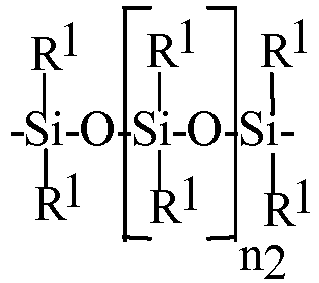 R1 wie oben definiert ist, wobei die Gruppen R1 in den Gruppen V11 und V2 gleich oder verschieden sein können, undn2 = 0 bis 19 bedeutet, undder Rest V11 gegebenenfalls durch eine oder mehrere Hydroxylgruppen und/oder durch
-Si(OR)3-a(R')a
substituiert sein kann, worin a eine ganze Zahl von 0 bis 2 ist und R und R' gleich oder verschieden voneinander sein können und jeweils einen organischen Rest darstellen,mit der Maßgabe, dass der Rest V11 (Poly)alkylenoxid-Einheiten aufweist,V12 ausgewählt wird aus zweiwertigen, geradkettigen, cyclischen oder verzweigten, gesättigten, ungesättigten oder aromatischen Kohlenwasserstoffresten mit bis zu 1000 Kohlenstoffatomen, die gegebenenfalls eine oder mehrere Gruppen, ausgewählt aus
-O-,
-CONH-,


-CONR2-,
worin R2 wie oben definiert ist, wobei die Gruppen R2 in den Gruppen V12 und V2 gleich oder verschieden sein können,
-C(O)-,
-C(S)-
und
-Z1-
enthalten können, worin
-Z1- eine Gruppe der Formel R1 wie oben definiert ist, wobei die Gruppen R1 in den Gruppen V12 und V2 gleich oder verschieden sein können, undn2 = 0 bis 19 bedeutet, undder Rest V12 gegebenenfalls durch eine oder mehrere Hydroxylgruppen und/oder durch
-Si(OR)3-a(R')a
substituiert sein kann, worin a eine ganze Zahl von 0 bis 2 ist und R und R' gleich oder verschieden voneinander sein können und jeweils einen organischen Rest darstellen,mit der Maßgabe, dass der Rest V12 keine (Poly)alkylenoxid-Einheiten aufweist,
undV3 einen drei- oder höherwertigen, geradkettigen, cyclischen oder verzweigten, gesättigten, ungesättigten oder aromatischen Kohlenwasserstoffrest mit bis zu 1000 Kohlenstoffatomen darstellt, der gegebenenfalls eine oder mehrere Gruppen, ausgewählt aus
-O-,
-CONH-,


-CONR2-,
worin R2 wie oben definiert ist,
-C(O)-,
-C(S)-,
-Z1-,
das wie oben definiert ist,
-Z2- das wie oben definiert ist, und
Z3, worin Z3 eine drei- oder höherwertige Organopolysiloxaneinheit ist,
enthalten kann, undder gegebenenfalls durch eine oder mehrere Hydroxylgruppen und/oder durch
-Si(OR)3-a(R')a
substituiert sein kann, worin a eine ganze Zahl von 0 bis 2 ist und R und R' gleich oder verschieden voneinander sein können und jeweils einen organischen Rest darstellen,mit der Maßgabe,- dass die Polyamino- und/oder Polyammonium-Polysiloxan-Copolymer-Verbindungen mindestens einen Rest V11 und mindestens einen Rest V12 enthalten,- dass die genannte Polyamino- und/oder Polyammonium-Polysiloxan-Copolymer-Verbindungen mindestens eine Gruppe -Z1-, -Z2- oder Z3 enthalten,- V Wiederholungseinheiten der Formel V11, V12 und V2 umfasst, und- dass die drei- und vierwertigen Reste Q entweder der Verzweigung der aus Q und V gebildeten Hauptkette dienen, so dass die Valenzen, die nicht der Bindung in der Hauptkette dienen, weitere aus -[Q-V]-Einheiten gebildete Verzweigungen tragen, oder die drei- und vierwertigen Reste Q sättigen sich mit Resten V3 innerhalb einer linearen Hauptkette ohne Bildung einer Verzweigung ab, undund worin die aus Ammoniumgruppen resultierenden positiven Ladungen durch organische oder anorganische Säureanionen neutralisiert sind,zur Erstausrüstung von Fasermaterialien. - Verwendung nach Anspruch 1, worin die Polyamino-Polysiloxan-Copolymer-Verbindungen und/oder Polyammonium-Polysiloxan-Copolymer-Verbindungen die Formel (II) aufweisen:
 worin Q und V2 wie zuvor definiert sind,V1 ausgewählt wird aus mindestens einer Gruppe V11 und mindestens einer Gruppe V12, und das Verhältnis von w zu v von 0,05 bis 10 beträgt.
 - Verwendung nach einem der Ansprüche 1 bis 2, worin die Polyamino-Polysiloxan-Copolymer-Verbindungen und/oder Polyammonium-Polysiloxan-Copolymer-Verbindungen die Formel (III) aufweisen:

- Verwendung nach Anspruch 3, worin das molare Verhältnis von v1 zu v2 in mol-% zwischen 0 und 100 liegt.
- Verwendung nach einem der Ansprüche 3 bis 4, worin das molare Verhältnis von w zu v1 in mol-% von 80 bis 99 bezogen auf die Summe von w und v1 beträgt.
- Verwendung nach einem der Ansprüche 1 bis 5, dadurch gekennzeichnet, dass Polyamino-Polysiloxan-Copolymer-Verbindungen und/oder Polyammonium-Polysiloxan-Copolymer-Verbindungen im Mittel mindestens zwei Wiederholungseinheiten der Formel (I) aufweisen.
- Verwendung der Polyamino-Polysiloxan-Copolymer-Verbindungen und/oder Polyammonium-Polysiloxan-Copolymer-Verbindungen nach einem der Ansprüche 1 bis 6, dadurch gekennzeichnet, daß die Gruppe V2 eine Gruppe der Formel
-V2*-Z2-V2*-
ist, worin Z2 wie oben definiert ist und V2* einen zweiwertigen geradkettigen, cyclischen oder verzweigten, gesättigten, ungesättigten oder aromatischen Kohlenwasserstoffrest mit bis zu 40 Kohlenstoffatomen darstellt, der gegebenenfalls eine oder mehrere Gruppen, ausgewählt aus -O-, -CONH-, -CONR2-, worin R2 wie oben definiert ist, -C(O)- und -C(S)-enthalten kann, und der Rest V2* gegebenenfalls durch eine oder mehrere Hydroxylgruppen substituiert sein kann. - Verwendung der Polyamino-Polysiloxan-Copolymer-Verbindungen und/oder Polyammonium-Polysiloxan-Copolymer-Verbindungen nach einem der Ansprüche 1 bis 7, dadurch gekennzeichnet, dass V12 ausgewählt wird aus zweiwertigen, geradkettigen, cyclischen oder verzweigten, gesättigten, ungesättigten oder aromatischen Kohlenwasserstoffresten mit bis zu 100 Kohlenstoffatomen, die gegebenenfalls eine oder mehrere Gruppen, ausgewählt aus-Z1- enthalten können, worin
-Z1- eine Gruppe der Formel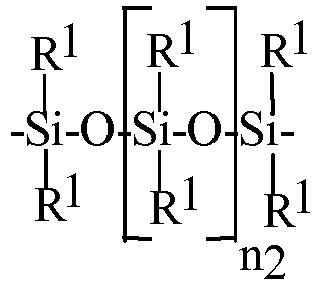 R1 wie oben definiert ist, wobei die Gruppen R1 in den Gruppen V12 und V2 gleich oder verschieden sein können, undn2 = 0 bis 19 bedeutet, undder Rest V12 gegebenenfalls durch eine oder mehrere Hydroxylgruppen und/oder durch
-Si(OR)3-a(R')a
substituiert sein kann, worin a eine ganze Zahl von 0 bis 2 ist und R und R' gleich oder verschieden voneinander sein können und jeweils einen organischen Rest darstellen. - Verwendung der Polyamino-Polysiloxan-Copolymer-Verbindungen und/oder Polyammonium-Polysiloxan-Copolymer-Verbindungen nach einem der Ansprüche 1 bis 8, dadurch gekennzeichnet, daß die Gruppe V12 ein Rest - R9- ist, worin R9 einen zweiwertigen, gesättigten oder einfach oder mehrfach ungesättigten, geradkettigen oder verzweigten Kohlenwasserstoffrest mit zwei bis 25 Kohlenstoffatomen darstellt.
- Verwendung der Polyamino-Polysiloxan-Copolymer-Verbindungen und/oder Polyammonium-Polysiloxan-Copolymer-Verbindungen nach einem der Ansprüche 1 bis 9, dadurch gekennzeichnet, daß die Gruppe V11 ausgewählt wird aus▪
-(CH2)uC(O)O-[(CH2CH2O)q-(CH2CH(CH3)O)r]-C(O)(CH2)u-
▪
-(CH2)uC(O)O-R9-O-C(O)(CH2)u-,
worin R9 wie zuvor definiert ist,▪
-[CH2CH2O]q-[CH2CH(CH3)O]r-CH2CH2-,
▪
-CH(CH3)CH2O[CH2CH2O]q-[CH2CH(CH3)O]r-CH2CH(CH3)-
▪
-CH2CH(OH)CH2OCH2CH(OH)CH2OCH2CH(OH)CH2- und
▪
-CH2CH(OH)CH2O-[CH2CH2O]q-[CH2CH(CH3)r-CH2CH(OH)CH2-
worinu von 1 bis 3 ist,q und r von 0 bis 5, bevorzugt von 0 bis 3, undq + r > 0 ist. - Verwendung der Polyamino-Polysiloxan-Copolymer-Verbindung und/oder Polyammonium-Polysiloxan-Copolymer-Verbindungen nach einem der Ansprüche 1 bis 10, dadurch gekennzeichnet, daß die Gruppe V11 ausgewählt wird aus
-(CH2)C(O)O-[(CH2CH2O)q]-C(O)(CH2)-
worin q =1 oder 2 ist. - Verwendung der Polyamino-Polysiloxan-Copolymer-Verbindungen und/oder Polyammonium-Polysiloxan-Copolymer-Verbindungen nach einem der Ansprüche 1 bis 11, worin die Fasermaterialien ausgewählt werden aus natürlichen und synthetischen faserartigen Materialien, einschließlich Cellulose, Wolle, Baumwolle, Seide und Synthesefasern.
- Verwendung von Zusammensetzungen enthaltend mindestens eine Polyamino-Polysiloxan-Copolymer-Verbindung und/oder Polyammonium-Polysiloxan-Copolymer-Verbindung wie in einem der Ansprüche 1 bis 11 definiert, in Kombination mit mindestens einer weiteren davon verschiedenen Polydiorganosiloxan-Verbindung.
- Verwendung einer wässrigen Emulsion, enthaltend mindestens eine Polyamino- und/oder Polyammonium-Polysiloxan-Copolymer-Verbindungen, wie in einem der Ansprüche 1 bis 11 definiert, sowie gegebenenfalls ein oder mehrere Tenside sowie gegebenenfalls ein oder mehrere stickstofffreie Polysiloxanverbindungen zur Erstausrüstung von Fasermaterialien.
Applications Claiming Priority (2)
| Application Number | Priority Date | Filing Date | Title |
|---|---|---|---|
| DE102008014761A DE102008014761A1 (de) | 2008-03-18 | 2008-03-18 | Verwendung von Polyamino- und/oder Polyammonium-Polysiloxan-Copolymer-Verbindungen |
| PCT/EP2009/052595 WO2009115412A1 (de) | 2008-03-18 | 2009-03-05 | Verwendung von polyamino- und/oder polyammonium-polysiloxan-copolymer-verbindungen |
Publications (2)
| Publication Number | Publication Date |
|---|---|
| EP2260140A1 EP2260140A1 (de) | 2010-12-15 |
| EP2260140B1 true EP2260140B1 (de) | 2017-12-06 |
Family
ID=40675116
Family Applications (1)
| Application Number | Title | Priority Date | Filing Date |
|---|---|---|---|
| EP09722275.6A Active EP2260140B1 (de) | 2008-03-18 | 2009-03-05 | Verwendung von polyamino- und/oder polyammonium-polysiloxan-copolymer-verbindungen |
Country Status (6)
| Country | Link |
|---|---|
| US (1) | US8377326B2 (de) |
| EP (1) | EP2260140B1 (de) |
| CN (1) | CN102037180B (de) |
| BR (1) | BRPI0909665B1 (de) |
| DE (1) | DE102008014761A1 (de) |
| WO (1) | WO2009115412A1 (de) |
Families Citing this family (5)
| Publication number | Priority date | Publication date | Assignee | Title |
|---|---|---|---|---|
| IN2014MN01905A (de) * | 2012-03-29 | 2015-07-10 | Momentive Performance Mat Inc | |
| IN2014MN01877A (de) * | 2012-03-29 | 2015-07-03 | Momentive Performance Mat Inc | |
| CN104508012B (zh) * | 2012-07-27 | 2017-05-24 | 宝洁公司 | 有机聚硅氧烷聚合物 |
| CN106835717B (zh) * | 2017-03-07 | 2019-02-19 | 清远市宏图助剂有限公司 | 一种棉织物增深增艳有机硅整理剂及其制备方法 |
| EP3501488B1 (de) | 2017-12-21 | 2021-04-14 | Momentive Performance Materials GmbH | Wässrige silikonpolymerzusammensetzungen |
Family Cites Families (27)
| Publication number | Priority date | Publication date | Assignee | Title |
|---|---|---|---|---|
| DE3705121A1 (de) | 1987-02-18 | 1988-09-01 | Goldschmidt Ag Th | Polyquaternaere polysiloxan-polymere, deren herstellung und verwendung in kosmetischen zubereitungen |
| DE3719086C1 (de) | 1987-06-06 | 1988-10-27 | Goldschmidt Ag Th | Diquartaere Polysiloxane,deren Herstellung und Verwendung in kosmetischen Zubereitungen |
| GB9002715D0 (en) | 1990-02-07 | 1990-04-04 | Dow Corning | Method of treating fibrous materials |
| US5098979A (en) | 1991-03-25 | 1992-03-24 | Siltech Inc. | Novel silicone quaternary compounds |
| US5153294A (en) | 1991-03-25 | 1992-10-06 | Siltech Inc. | Silicone ester quaternary compounds |
| US5166297A (en) | 1991-03-25 | 1992-11-24 | Siltech Inc. | Silicone ester quaternary compounds |
| AU726675B2 (en) | 1996-03-04 | 2000-11-16 | General Electric Company | Silicone aminopolyalkyleneoxide block copolymers |
| US5602224A (en) | 1996-03-19 | 1997-02-11 | Siltech Inc. | Silicone alkyl quats |
| US5650529A (en) | 1996-05-06 | 1997-07-22 | Siltech Inc. | Silicone ester amino compounds |
| US5591880A (en) | 1996-05-06 | 1997-01-07 | Siltech Inc. | Silicone ester amino compounds |
| FR2777010B1 (fr) | 1998-04-01 | 2000-06-16 | Oreal | Polymeres silicies de polyammonium quaternaire heterocyclique et leur utilisation dans les compositions cosmetiques |
| EP1000959B1 (de) | 1998-11-14 | 2003-04-16 | Goldschmidt AG | Polyetherquatfunktionelle Polysiloxane |
| US7041767B2 (en) | 2000-07-27 | 2006-05-09 | Ge Bayer Silicones Gmbh & Co. Kg | Polysiloxane polymers, method for their production and the use thereof |
| CA2423285C (en) | 2000-07-27 | 2009-12-22 | Ge Bayer Silicones Gmbh & Co. Kg | Polyammonium-polysiloxane compounds, methods for the production and use thereof |
| US6903061B2 (en) | 2000-08-28 | 2005-06-07 | The Procter & Gamble Company | Fabric care and perfume compositions and systems comprising cationic silicones and methods employing same |
| US6475568B1 (en) | 2001-05-15 | 2002-11-05 | Crompton Corporation | Block, non-(AB)n silicone polyalkyleneoxide copolymers with tertiary amino links |
| JP4801322B2 (ja) | 2002-03-20 | 2011-10-26 | モーメンテイブ・パーフオーマンス・マテリアルズ・ゲゼルシヤフト・ミツト・ベシユレンクテル・ハフツング | 分枝ポリオルガノシロキサン重合体 |
| DE10214290A1 (de) | 2002-03-28 | 2003-10-09 | Ge Bayer Silicones Gmbh & Co | Herstellung und Verwendung quartäre Polysiloxane enthaltender Formulierungen |
| DE10221521A1 (de) * | 2002-05-14 | 2003-12-04 | Ge Bayer Silicones Gmbh & Co | Formulierungen von Silikonweichmachern für die textile Ausrüstung |
| MXPA05004762A (es) * | 2002-11-04 | 2005-08-03 | Ge Bayer Silicones Gmbh & Co | Copolimeros de poliamino y/o poliamonio polisiloxano i lineales. |
| ATE395458T1 (de) * | 2002-11-04 | 2008-05-15 | Momentive Performance Mat Inc | Lineare polyamino- und/oder polyammonium- polysiloxancopolymere ii |
| DE10316662A1 (de) | 2003-04-11 | 2004-11-11 | Ge Bayer Silicones Gmbh & Co. Kg | Reaktive Amino- und/oder Ammonium-Polysiloxanverbindungen |
| DE10320631A1 (de) * | 2003-05-08 | 2004-12-09 | Wacker-Chemie Gmbh | Polyalkoxyreste aufweisende Organosiliciumverbindungen |
| US7897716B2 (en) * | 2003-05-14 | 2011-03-01 | Momentive Performance Materials Gmbh | Polyorganosiloxane compositions for the treatment of substrates |
| DE102005014311A1 (de) * | 2005-03-30 | 2006-10-12 | Ge Bayer Silicones Gmbh & Co. Kg | Polyamino- und/oder Polyammonium-Polysiloxan-Colpolymer-Verbindungen mit kammartig angeordneten Polyalkylenonideinheiten |
| DE102005036602A1 (de) | 2005-08-01 | 2007-02-08 | Ge Bayer Silicones Gmbh & Co. Kg | Polyammonium-Polysiloxancopolymere |
| US20090118421A1 (en) * | 2007-11-02 | 2009-05-07 | Momentive Performance Materials Inc. | Copolymer of epoxy compounds and amino silanes |
-
2008
- 2008-03-18 DE DE102008014761A patent/DE102008014761A1/de not_active Ceased
-
2009
- 2009-03-05 EP EP09722275.6A patent/EP2260140B1/de active Active
- 2009-03-05 WO PCT/EP2009/052595 patent/WO2009115412A1/de not_active Ceased
- 2009-03-05 US US12/922,857 patent/US8377326B2/en active Active
- 2009-03-05 BR BRPI0909665-5A patent/BRPI0909665B1/pt active IP Right Grant
- 2009-03-05 CN CN200980117985.3A patent/CN102037180B/zh active Active
Also Published As
| Publication number | Publication date |
|---|---|
| CN102037180B (zh) | 2014-09-10 |
| US8377326B2 (en) | 2013-02-19 |
| BRPI0909665A2 (pt) | 2016-09-27 |
| DE102008014761A1 (de) | 2009-12-10 |
| BRPI0909665B1 (pt) | 2021-03-09 |
| WO2009115412A1 (de) | 2009-09-24 |
| US20110037012A1 (en) | 2011-02-17 |
| CN102037180A (zh) | 2011-04-27 |
| EP2260140A1 (de) | 2010-12-15 |
Similar Documents
| Publication | Publication Date | Title |
|---|---|---|
| EP1869108B1 (de) | Polyamino- und/oder polyammonium-polysiloxan-copolymer-verbindungen mit kammartig angeordneten polyalkylenoxideinheiten | |
| EP1887023B1 (de) | Neuartige Polysiloxane mit quaternären Ammoniumgruppen, Verfahren zu deren Herstellung und deren Verwendung als Textilweichmacher | |
| DE10036533B4 (de) | Verwendung von polyquarternären Polysiloxanen als waschbeständige hydrophile Weichmacher | |
| EP1627008B1 (de) | Reaktive amino- und/oder ammonium-polysiloxanverbindungen | |
| EP1565512B1 (de) | Lineare polyamino- und/oder polyammonium-polysiloxancopolymere i | |
| EP1487904A1 (de) | Verzweigte polyorganosiloxanpolymere | |
| EP0339179B1 (de) | Zubereitung zum Ausrüsten von Textilfasern oder aus Textilfasern bestehenden Produkten | |
| EP1563136A1 (de) | Lineare polyamino- und/oder polyammonium-polysiloxancopolymere ii | |
| DE3539714A1 (de) | Organosiloxan-oxyalkylen-copolymer, verfahren zu seiner herstellung und dessen verwendung in beschichtungsmitteln | |
| EP1560973A2 (de) | Formulierungen zur oberflächenbehandlung von substraten | |
| EP1975193B1 (de) | Polysiloxan und Textilhilfsmittel enthaltend ein Polysiloxan | |
| EP3303453B1 (de) | Polyurethan-organopolysiloxane | |
| EP1506336B1 (de) | Formulierungen von silikonweichmachern für die textile ausrüstung | |
| WO2009115412A1 (de) | Verwendung von polyamino- und/oder polyammonium-polysiloxan-copolymer-verbindungen | |
| EP1625180B1 (de) | Polyorganosiloxan-zusammensetzungen zur behandlung von substraten | |
| EP1448648B1 (de) | Polysiloxan und textilhilfsmittel enthaltend ein polysiloxan | |
| EP1076078B1 (de) | Silikonhaltige Zusammensetzungen für die Behandlung von Wollematerialien | |
| EP1595910B1 (de) | Derivatisierte, permanent quaternierte Stickstoffatome aufweisende, geradkettige oder verzweigte aminofunktionelle Organopolysiloxane | |
| EP1561770B1 (de) | Verzweigte Polyorganosiloxane mit quarternären Ammoniumgruppen | |
| DE102008014762A1 (de) | Verwendung von Polyamino- und/oder Polyammonium-Polysiloxan-Copolymer-Verbindungen | |
| DE102005014312A1 (de) | Zusammensetzung enhaltend Polyamino- und/oder Polyammonium-Polysiloxan-Verbindungen auf einem Substrat | |
| WO2008000828A1 (de) | Verfahren zur herstellung von cellulosefasern mit verringerter kristallinität | |
| DE10066215B4 (de) | Verwendung von polyquarternären Polysiloxanen als waschbeständige hydrophile Weichmacher von Textilien |
Legal Events
| Date | Code | Title | Description |
|---|---|---|---|
| PUAI | Public reference made under article 153(3) epc to a published international application that has entered the european phase |
Free format text: ORIGINAL CODE: 0009012 |
|
| 17P | Request for examination filed |
Effective date: 20101008 |
|
| AK | Designated contracting states |
Kind code of ref document: A1 Designated state(s): AT BE BG CH CY CZ DE DK EE ES FI FR GB GR HR HU IE IS IT LI LT LU LV MC MK MT NL NO PL PT RO SE SI SK TR |
|
| AX | Request for extension of the european patent |
Extension state: AL BA RS |
|
| DAX | Request for extension of the european patent (deleted) | ||
| 17Q | First examination report despatched |
Effective date: 20160511 |
|
| REG | Reference to a national code |
Ref country code: DE Ref legal event code: R079 Ref document number: 502009014577 Country of ref document: DE Free format text: PREVIOUS MAIN CLASS: D06M0015610000 Ipc: C08G0077388000 |
|
| GRAP | Despatch of communication of intention to grant a patent |
Free format text: ORIGINAL CODE: EPIDOSNIGR1 |
|
| RIC1 | Information provided on ipc code assigned before grant |
Ipc: D06M 15/643 20060101ALI20170509BHEP Ipc: C08G 77/388 20060101AFI20170509BHEP Ipc: C08G 77/54 20060101ALI20170509BHEP Ipc: D06M 15/647 20060101ALI20170509BHEP Ipc: D06M 15/61 20060101ALI20170509BHEP Ipc: C08G 77/46 20060101ALI20170509BHEP |
|
| INTG | Intention to grant announced |
Effective date: 20170609 |
|
| GRAJ | Information related to disapproval of communication of intention to grant by the applicant or resumption of examination proceedings by the epo deleted |
Free format text: ORIGINAL CODE: EPIDOSDIGR1 |
|
| GRAR | Information related to intention to grant a patent recorded |
Free format text: ORIGINAL CODE: EPIDOSNIGR71 |
|
| GRAS | Grant fee paid |
Free format text: ORIGINAL CODE: EPIDOSNIGR3 |
|
| GRAA | (expected) grant |
Free format text: ORIGINAL CODE: 0009210 |
|
| INTC | Intention to grant announced (deleted) | ||
| AK | Designated contracting states |
Kind code of ref document: B1 Designated state(s): AT BE BG CH CY CZ DE DK EE ES FI FR GB GR HR HU IE IS IT LI LT LU LV MC MK MT NL NO PL PT RO SE SI SK TR |
|
| INTG | Intention to grant announced |
Effective date: 20171027 |
|
| REG | Reference to a national code |
Ref country code: GB Ref legal event code: FG4D Free format text: NOT ENGLISH |
|
| REG | Reference to a national code |
Ref country code: AT Ref legal event code: REF Ref document number: 952319 Country of ref document: AT Kind code of ref document: T Effective date: 20171215 Ref country code: CH Ref legal event code: EP |
|
| REG | Reference to a national code |
Ref country code: IE Ref legal event code: FG4D Free format text: LANGUAGE OF EP DOCUMENT: GERMAN |
|
| REG | Reference to a national code |
Ref country code: DE Ref legal event code: R096 Ref document number: 502009014577 Country of ref document: DE |
|
| REG | Reference to a national code |
Ref country code: FR Ref legal event code: PLFP Year of fee payment: 10 |
|
| REG | Reference to a national code |
Ref country code: NL Ref legal event code: MP Effective date: 20171206 |
|
| REG | Reference to a national code |
Ref country code: LT Ref legal event code: MG4D |
|
| PG25 | Lapsed in a contracting state [announced via postgrant information from national office to epo] |
Ref country code: SE Free format text: LAPSE BECAUSE OF FAILURE TO SUBMIT A TRANSLATION OF THE DESCRIPTION OR TO PAY THE FEE WITHIN THE PRESCRIBED TIME-LIMIT Effective date: 20171206 Ref country code: NO Free format text: LAPSE BECAUSE OF FAILURE TO SUBMIT A TRANSLATION OF THE DESCRIPTION OR TO PAY THE FEE WITHIN THE PRESCRIBED TIME-LIMIT Effective date: 20180306 Ref country code: FI Free format text: LAPSE BECAUSE OF FAILURE TO SUBMIT A TRANSLATION OF THE DESCRIPTION OR TO PAY THE FEE WITHIN THE PRESCRIBED TIME-LIMIT Effective date: 20171206 Ref country code: LT Free format text: LAPSE BECAUSE OF FAILURE TO SUBMIT A TRANSLATION OF THE DESCRIPTION OR TO PAY THE FEE WITHIN THE PRESCRIBED TIME-LIMIT Effective date: 20171206 Ref country code: ES Free format text: LAPSE BECAUSE OF FAILURE TO SUBMIT A TRANSLATION OF THE DESCRIPTION OR TO PAY THE FEE WITHIN THE PRESCRIBED TIME-LIMIT Effective date: 20171206 |
|
| PG25 | Lapsed in a contracting state [announced via postgrant information from national office to epo] |
Ref country code: HR Free format text: LAPSE BECAUSE OF FAILURE TO SUBMIT A TRANSLATION OF THE DESCRIPTION OR TO PAY THE FEE WITHIN THE PRESCRIBED TIME-LIMIT Effective date: 20171206 Ref country code: LV Free format text: LAPSE BECAUSE OF FAILURE TO SUBMIT A TRANSLATION OF THE DESCRIPTION OR TO PAY THE FEE WITHIN THE PRESCRIBED TIME-LIMIT Effective date: 20171206 Ref country code: BG Free format text: LAPSE BECAUSE OF FAILURE TO SUBMIT A TRANSLATION OF THE DESCRIPTION OR TO PAY THE FEE WITHIN THE PRESCRIBED TIME-LIMIT Effective date: 20180306 Ref country code: GR Free format text: LAPSE BECAUSE OF FAILURE TO SUBMIT A TRANSLATION OF THE DESCRIPTION OR TO PAY THE FEE WITHIN THE PRESCRIBED TIME-LIMIT Effective date: 20180307 |
|
| PG25 | Lapsed in a contracting state [announced via postgrant information from national office to epo] |
Ref country code: NL Free format text: LAPSE BECAUSE OF FAILURE TO SUBMIT A TRANSLATION OF THE DESCRIPTION OR TO PAY THE FEE WITHIN THE PRESCRIBED TIME-LIMIT Effective date: 20171206 |
|
| PG25 | Lapsed in a contracting state [announced via postgrant information from national office to epo] |
Ref country code: EE Free format text: LAPSE BECAUSE OF FAILURE TO SUBMIT A TRANSLATION OF THE DESCRIPTION OR TO PAY THE FEE WITHIN THE PRESCRIBED TIME-LIMIT Effective date: 20171206 Ref country code: CZ Free format text: LAPSE BECAUSE OF FAILURE TO SUBMIT A TRANSLATION OF THE DESCRIPTION OR TO PAY THE FEE WITHIN THE PRESCRIBED TIME-LIMIT Effective date: 20171206 Ref country code: SK Free format text: LAPSE BECAUSE OF FAILURE TO SUBMIT A TRANSLATION OF THE DESCRIPTION OR TO PAY THE FEE WITHIN THE PRESCRIBED TIME-LIMIT Effective date: 20171206 |
|
| PG25 | Lapsed in a contracting state [announced via postgrant information from national office to epo] |
Ref country code: PL Free format text: LAPSE BECAUSE OF FAILURE TO SUBMIT A TRANSLATION OF THE DESCRIPTION OR TO PAY THE FEE WITHIN THE PRESCRIBED TIME-LIMIT Effective date: 20171206 Ref country code: RO Free format text: LAPSE BECAUSE OF FAILURE TO SUBMIT A TRANSLATION OF THE DESCRIPTION OR TO PAY THE FEE WITHIN THE PRESCRIBED TIME-LIMIT Effective date: 20171206 Ref country code: IT Free format text: LAPSE BECAUSE OF FAILURE TO SUBMIT A TRANSLATION OF THE DESCRIPTION OR TO PAY THE FEE WITHIN THE PRESCRIBED TIME-LIMIT Effective date: 20171206 |
|
| REG | Reference to a national code |
Ref country code: DE Ref legal event code: R097 Ref document number: 502009014577 Country of ref document: DE |
|
| PG25 | Lapsed in a contracting state [announced via postgrant information from national office to epo] |
Ref country code: MT Free format text: LAPSE BECAUSE OF FAILURE TO SUBMIT A TRANSLATION OF THE DESCRIPTION OR TO PAY THE FEE WITHIN THE PRESCRIBED TIME-LIMIT Effective date: 20171206 |
|
| PLBE | No opposition filed within time limit |
Free format text: ORIGINAL CODE: 0009261 |
|
| STAA | Information on the status of an ep patent application or granted ep patent |
Free format text: STATUS: NO OPPOSITION FILED WITHIN TIME LIMIT |
|
| REG | Reference to a national code |
Ref country code: CH Ref legal event code: PL |
|
| 26N | No opposition filed |
Effective date: 20180907 |
|
| GBPC | Gb: european patent ceased through non-payment of renewal fee |
Effective date: 20180306 |
|
| PG25 | Lapsed in a contracting state [announced via postgrant information from national office to epo] |
Ref country code: SI Free format text: LAPSE BECAUSE OF FAILURE TO SUBMIT A TRANSLATION OF THE DESCRIPTION OR TO PAY THE FEE WITHIN THE PRESCRIBED TIME-LIMIT Effective date: 20171206 Ref country code: MC Free format text: LAPSE BECAUSE OF FAILURE TO SUBMIT A TRANSLATION OF THE DESCRIPTION OR TO PAY THE FEE WITHIN THE PRESCRIBED TIME-LIMIT Effective date: 20171206 Ref country code: DK Free format text: LAPSE BECAUSE OF FAILURE TO SUBMIT A TRANSLATION OF THE DESCRIPTION OR TO PAY THE FEE WITHIN THE PRESCRIBED TIME-LIMIT Effective date: 20171206 |
|
| REG | Reference to a national code |
Ref country code: BE Ref legal event code: MM Effective date: 20180331 |
|
| REG | Reference to a national code |
Ref country code: IE Ref legal event code: MM4A |
|
| PG25 | Lapsed in a contracting state [announced via postgrant information from national office to epo] |
Ref country code: LU Free format text: LAPSE BECAUSE OF NON-PAYMENT OF DUE FEES Effective date: 20180305 |
|
| PG25 | Lapsed in a contracting state [announced via postgrant information from national office to epo] |
Ref country code: IE Free format text: LAPSE BECAUSE OF NON-PAYMENT OF DUE FEES Effective date: 20180305 |
|
| PG25 | Lapsed in a contracting state [announced via postgrant information from national office to epo] |
Ref country code: GB Free format text: LAPSE BECAUSE OF NON-PAYMENT OF DUE FEES Effective date: 20180306 Ref country code: CH Free format text: LAPSE BECAUSE OF NON-PAYMENT OF DUE FEES Effective date: 20180331 Ref country code: LI Free format text: LAPSE BECAUSE OF NON-PAYMENT OF DUE FEES Effective date: 20180331 Ref country code: BE Free format text: LAPSE BECAUSE OF NON-PAYMENT OF DUE FEES Effective date: 20180331 |
|
| REG | Reference to a national code |
Ref country code: AT Ref legal event code: MM01 Ref document number: 952319 Country of ref document: AT Kind code of ref document: T Effective date: 20180305 |
|
| PG25 | Lapsed in a contracting state [announced via postgrant information from national office to epo] |
Ref country code: AT Free format text: LAPSE BECAUSE OF NON-PAYMENT OF DUE FEES Effective date: 20180305 |
|
| PG25 | Lapsed in a contracting state [announced via postgrant information from national office to epo] |
Ref country code: TR Free format text: LAPSE BECAUSE OF FAILURE TO SUBMIT A TRANSLATION OF THE DESCRIPTION OR TO PAY THE FEE WITHIN THE PRESCRIBED TIME-LIMIT Effective date: 20171206 |
|
| PG25 | Lapsed in a contracting state [announced via postgrant information from national office to epo] |
Ref country code: PT Free format text: LAPSE BECAUSE OF FAILURE TO SUBMIT A TRANSLATION OF THE DESCRIPTION OR TO PAY THE FEE WITHIN THE PRESCRIBED TIME-LIMIT Effective date: 20171206 Ref country code: HU Free format text: LAPSE BECAUSE OF FAILURE TO SUBMIT A TRANSLATION OF THE DESCRIPTION OR TO PAY THE FEE WITHIN THE PRESCRIBED TIME-LIMIT; INVALID AB INITIO Effective date: 20090305 |
|
| PG25 | Lapsed in a contracting state [announced via postgrant information from national office to epo] |
Ref country code: MK Free format text: LAPSE BECAUSE OF NON-PAYMENT OF DUE FEES Effective date: 20171206 Ref country code: CY Free format text: LAPSE BECAUSE OF FAILURE TO SUBMIT A TRANSLATION OF THE DESCRIPTION OR TO PAY THE FEE WITHIN THE PRESCRIBED TIME-LIMIT Effective date: 20171206 |
|
| PG25 | Lapsed in a contracting state [announced via postgrant information from national office to epo] |
Ref country code: IS Free format text: LAPSE BECAUSE OF FAILURE TO SUBMIT A TRANSLATION OF THE DESCRIPTION OR TO PAY THE FEE WITHIN THE PRESCRIBED TIME-LIMIT Effective date: 20180406 |
|
| P01 | Opt-out of the competence of the unified patent court (upc) registered |
Effective date: 20230513 |
|
| PGFP | Annual fee paid to national office [announced via postgrant information from national office to epo] |
Ref country code: DE Payment date: 20260320 Year of fee payment: 18 |
|
| PGFP | Annual fee paid to national office [announced via postgrant information from national office to epo] |
Ref country code: FR Payment date: 20260323 Year of fee payment: 18 |