EP2243530A1 - Verfahren zur Trennung aromatischer Verbindungen - Google Patents
Verfahren zur Trennung aromatischer Verbindungen Download PDFInfo
- Publication number
- EP2243530A1 EP2243530A1 EP09158388A EP09158388A EP2243530A1 EP 2243530 A1 EP2243530 A1 EP 2243530A1 EP 09158388 A EP09158388 A EP 09158388A EP 09158388 A EP09158388 A EP 09158388A EP 2243530 A1 EP2243530 A1 EP 2243530A1
- Authority
- EP
- European Patent Office
- Prior art keywords
- ionic liquids
- aromatic compounds
- mixtures
- separation
- phosphate
- Prior art date
- Legal status (The legal status is an assumption and is not a legal conclusion. Google has not performed a legal analysis and makes no representation as to the accuracy of the status listed.)
- Withdrawn
Links
- 150000001491 aromatic compounds Chemical class 0.000 title claims abstract description 16
- 238000000034 method Methods 0.000 title claims description 20
- 239000000203 mixture Substances 0.000 claims abstract description 29
- 239000002608 ionic liquid Substances 0.000 claims abstract description 18
- 238000000926 separation method Methods 0.000 claims description 30
- -1 2-ethylhexyl Chemical group 0.000 claims description 28
- 150000001875 compounds Chemical class 0.000 claims description 11
- IJGRMHOSHXDMSA-UHFFFAOYSA-N Atomic nitrogen Chemical compound N#N IJGRMHOSHXDMSA-UHFFFAOYSA-N 0.000 claims description 8
- 125000003118 aryl group Chemical group 0.000 claims description 6
- 229910019142 PO4 Inorganic materials 0.000 claims description 5
- 229910052757 nitrogen Inorganic materials 0.000 claims description 5
- 238000010992 reflux Methods 0.000 claims description 5
- 125000000217 alkyl group Chemical group 0.000 claims description 4
- 150000001768 cations Chemical class 0.000 claims description 4
- NBIIXXVUZAFLBC-UHFFFAOYSA-K phosphate Chemical compound [O-]P([O-])([O-])=O NBIIXXVUZAFLBC-UHFFFAOYSA-K 0.000 claims description 4
- 239000010452 phosphate Substances 0.000 claims description 4
- 125000006710 (C2-C12) alkenyl group Chemical group 0.000 claims description 3
- 125000006737 (C6-C20) arylalkyl group Chemical group 0.000 claims description 3
- NILDVBKEQHKFLO-UHFFFAOYSA-M 1,3-diethylimidazol-1-ium;diethyl phosphate Chemical compound CCOP([O-])(=O)OCC.CCN1C=C[N+](CC)=C1 NILDVBKEQHKFLO-UHFFFAOYSA-M 0.000 claims description 3
- 125000001495 ethyl group Chemical group [H]C([H])([H])C([H])([H])* 0.000 claims description 3
- 229910052739 hydrogen Inorganic materials 0.000 claims description 3
- 239000001257 hydrogen Substances 0.000 claims description 3
- 125000004435 hydrogen atom Chemical class [H]* 0.000 claims description 3
- 125000002496 methyl group Chemical group [H]C([H])([H])* 0.000 claims description 3
- 125000004108 n-butyl group Chemical group [H]C([H])([H])C([H])([H])C([H])([H])C([H])([H])* 0.000 claims description 3
- 125000001280 n-hexyl group Chemical group C(CCCCC)* 0.000 claims description 3
- 125000004123 n-propyl group Chemical group [H]C([H])([H])C([H])([H])C([H])([H])* 0.000 claims description 3
- GSGLHYXFTXGIAQ-UHFFFAOYSA-M 1,3-dimethylimidazol-1-ium;dimethyl phosphate Chemical compound COP([O-])(=O)OC.CN1C=C[N+](C)=C1 GSGLHYXFTXGIAQ-UHFFFAOYSA-M 0.000 claims description 2
- OAICVXFJPJFONN-UHFFFAOYSA-N Phosphorus Chemical compound [P] OAICVXFJPJFONN-UHFFFAOYSA-N 0.000 claims description 2
- HQWOEDCLDNFWEV-UHFFFAOYSA-M diethyl phosphate;1-ethyl-3-methylimidazol-3-ium Chemical compound CC[N+]=1C=CN(C)C=1.CCOP([O-])(=O)OCC HQWOEDCLDNFWEV-UHFFFAOYSA-M 0.000 claims description 2
- WTKUDOCGUOSPGV-UHFFFAOYSA-M dimethyl phosphate;1-ethyl-3-methylimidazol-3-ium Chemical compound COP([O-])(=O)OC.CC[N+]=1C=CN(C)C=1 WTKUDOCGUOSPGV-UHFFFAOYSA-M 0.000 claims description 2
- 238000007700 distillative separation Methods 0.000 claims description 2
- 229910052698 phosphorus Inorganic materials 0.000 claims description 2
- 239000011574 phosphorus Substances 0.000 claims description 2
- 125000004450 alkenylene group Chemical group 0.000 claims 1
- 125000002947 alkylene group Chemical group 0.000 claims 1
- OCJBOOLMMGQPQU-UHFFFAOYSA-N 1,4-dichlorobenzene Chemical compound ClC1=CC=C(Cl)C=C1 OCJBOOLMMGQPQU-UHFFFAOYSA-N 0.000 description 10
- 125000004432 carbon atom Chemical group C* 0.000 description 8
- 239000000126 substance Substances 0.000 description 8
- ZPQOPVIELGIULI-UHFFFAOYSA-N 1,3-dichlorobenzene Chemical compound ClC1=CC=CC(Cl)=C1 ZPQOPVIELGIULI-UHFFFAOYSA-N 0.000 description 7
- AKCRQHGQIJBRMN-UHFFFAOYSA-N 2-chloroaniline Chemical compound NC1=CC=CC=C1Cl AKCRQHGQIJBRMN-UHFFFAOYSA-N 0.000 description 3
- NPDACUSDTOMAMK-UHFFFAOYSA-N 4-Chlorotoluene Chemical compound CC1=CC=C(Cl)C=C1 NPDACUSDTOMAMK-UHFFFAOYSA-N 0.000 description 3
- 239000003795 chemical substances by application Substances 0.000 description 3
- 229940117389 dichlorobenzene Drugs 0.000 description 3
- 238000004821 distillation Methods 0.000 description 3
- 235000021317 phosphate Nutrition 0.000 description 3
- RYMMNSVHOKXTNN-UHFFFAOYSA-N 1,3-dichloro-5-methylbenzene Chemical compound CC1=CC(Cl)=CC(Cl)=C1 RYMMNSVHOKXTNN-UHFFFAOYSA-N 0.000 description 2
- OSOUNOBYRMOXQQ-UHFFFAOYSA-N 1-chloro-3-methylbenzene Chemical compound CC1=CC=CC(Cl)=C1 OSOUNOBYRMOXQQ-UHFFFAOYSA-N 0.000 description 2
- KMAQZIILEGKYQZ-UHFFFAOYSA-N 1-chloro-3-nitrobenzene Chemical compound [O-][N+](=O)C1=CC=CC(Cl)=C1 KMAQZIILEGKYQZ-UHFFFAOYSA-N 0.000 description 2
- PNPCRKVUWYDDST-UHFFFAOYSA-N 3-chloroaniline Chemical compound NC1=CC=CC(Cl)=C1 PNPCRKVUWYDDST-UHFFFAOYSA-N 0.000 description 2
- JJYPMNFTHPTTDI-UHFFFAOYSA-N 3-methylaniline Chemical compound CC1=CC=CC(N)=C1 JJYPMNFTHPTTDI-UHFFFAOYSA-N 0.000 description 2
- 125000003542 3-methylbutan-2-yl group Chemical group [H]C([H])([H])C([H])(*)C([H])(C([H])([H])[H])C([H])([H])[H] 0.000 description 2
- QZYHIOPPLUPUJF-UHFFFAOYSA-N 3-nitrotoluene Chemical compound CC1=CC=CC([N+]([O-])=O)=C1 QZYHIOPPLUPUJF-UHFFFAOYSA-N 0.000 description 2
- CZGCEKJOLUNIFY-UHFFFAOYSA-N 4-Chloronitrobenzene Chemical compound [O-][N+](=O)C1=CC=C(Cl)C=C1 CZGCEKJOLUNIFY-UHFFFAOYSA-N 0.000 description 2
- QSNSCYSYFYORTR-UHFFFAOYSA-N 4-chloroaniline Chemical compound NC1=CC=C(Cl)C=C1 QSNSCYSYFYORTR-UHFFFAOYSA-N 0.000 description 2
- ZPTVNYMJQHSSEA-UHFFFAOYSA-N 4-nitrotoluene Chemical compound CC1=CC=C([N+]([O-])=O)C=C1 ZPTVNYMJQHSSEA-UHFFFAOYSA-N 0.000 description 2
- YNQLUTRBYVCPMQ-UHFFFAOYSA-N Ethylbenzene Chemical compound CCC1=CC=CC=C1 YNQLUTRBYVCPMQ-UHFFFAOYSA-N 0.000 description 2
- CTQNGGLPUBDAKN-UHFFFAOYSA-N O-Xylene Chemical compound CC1=CC=CC=C1C CTQNGGLPUBDAKN-UHFFFAOYSA-N 0.000 description 2
- URLKBWYHVLBVBO-UHFFFAOYSA-N Para-Xylene Chemical group CC1=CC=C(C)C=C1 URLKBWYHVLBVBO-UHFFFAOYSA-N 0.000 description 2
- NBIIXXVUZAFLBC-UHFFFAOYSA-N Phosphoric acid Chemical compound OP(O)(O)=O NBIIXXVUZAFLBC-UHFFFAOYSA-N 0.000 description 2
- PPBRXRYQALVLMV-UHFFFAOYSA-N Styrene Chemical compound C=CC1=CC=CC=C1 PPBRXRYQALVLMV-UHFFFAOYSA-N 0.000 description 2
- NINIDFKCEFEMDL-UHFFFAOYSA-N Sulfur Chemical group [S] NINIDFKCEFEMDL-UHFFFAOYSA-N 0.000 description 2
- QVGXLLKOCUKJST-UHFFFAOYSA-N atomic oxygen Chemical group [O] QVGXLLKOCUKJST-UHFFFAOYSA-N 0.000 description 2
- 229910052799 carbon Inorganic materials 0.000 description 2
- 238000000605 extraction Methods 0.000 description 2
- 125000005842 heteroatom Chemical group 0.000 description 2
- 239000007788 liquid Substances 0.000 description 2
- 239000007791 liquid phase Substances 0.000 description 2
- RLSSMJSEOOYNOY-UHFFFAOYSA-N m-cresol Chemical compound CC1=CC=CC(O)=C1 RLSSMJSEOOYNOY-UHFFFAOYSA-N 0.000 description 2
- IVSZLXZYQVIEFR-UHFFFAOYSA-N m-xylene Chemical compound CC1=CC=CC(C)=C1 IVSZLXZYQVIEFR-UHFFFAOYSA-N 0.000 description 2
- 238000002844 melting Methods 0.000 description 2
- 230000008018 melting Effects 0.000 description 2
- QJGQUHMNIGDVPM-UHFFFAOYSA-N nitrogen group Chemical group [N] QJGQUHMNIGDVPM-UHFFFAOYSA-N 0.000 description 2
- QWVGKYWNOKOFNN-UHFFFAOYSA-N o-cresol Chemical compound CC1=CC=CC=C1O QWVGKYWNOKOFNN-UHFFFAOYSA-N 0.000 description 2
- RNVCVTLRINQCPJ-UHFFFAOYSA-N o-toluidine Chemical compound CC1=CC=CC=C1N RNVCVTLRINQCPJ-UHFFFAOYSA-N 0.000 description 2
- 229910052760 oxygen Chemical group 0.000 description 2
- 239000001301 oxygen Chemical group 0.000 description 2
- IWDCLRJOBJJRNH-UHFFFAOYSA-N p-cresol Chemical compound CC1=CC=C(O)C=C1 IWDCLRJOBJJRNH-UHFFFAOYSA-N 0.000 description 2
- RZXMPPFPUUCRFN-UHFFFAOYSA-N p-toluidine Chemical compound CC1=CC=C(N)C=C1 RZXMPPFPUUCRFN-UHFFFAOYSA-N 0.000 description 2
- 125000001997 phenyl group Chemical group [H]C1=C([H])C([H])=C(*)C([H])=C1[H] 0.000 description 2
- 125000001424 substituent group Chemical group 0.000 description 2
- HXJUTPCZVOIRIF-UHFFFAOYSA-N sulfolane Chemical compound O=S1(=O)CCCC1 HXJUTPCZVOIRIF-UHFFFAOYSA-N 0.000 description 2
- 229910052717 sulfur Inorganic materials 0.000 description 2
- 239000011593 sulfur Chemical group 0.000 description 2
- 125000004642 (C1-C12) alkoxy group Chemical group 0.000 description 1
- 125000004641 (C1-C12) haloalkyl group Chemical group 0.000 description 1
- 125000005919 1,2,2-trimethylpropyl group Chemical group 0.000 description 1
- RFFLAFLAYFXFSW-UHFFFAOYSA-N 1,2-dichlorobenzene Chemical compound ClC1=CC=CC=C1Cl RFFLAFLAYFXFSW-UHFFFAOYSA-N 0.000 description 1
- 125000005918 1,2-dimethylbutyl group Chemical group 0.000 description 1
- XKEFYDZQGKAQCN-UHFFFAOYSA-N 1,3,5-trichlorobenzene Chemical compound ClC1=CC(Cl)=CC(Cl)=C1 XKEFYDZQGKAQCN-UHFFFAOYSA-N 0.000 description 1
- RNABGKOKSBUFHW-UHFFFAOYSA-N 1,3-dichloro-5-nitrobenzene Chemical compound [O-][N+](=O)C1=CC(Cl)=CC(Cl)=C1 RNABGKOKSBUFHW-UHFFFAOYSA-N 0.000 description 1
- 125000004973 1-butenyl group Chemical group C(=CCC)* 0.000 description 1
- IBSQPLPBRSHTTG-UHFFFAOYSA-N 1-chloro-2-methylbenzene Chemical compound CC1=CC=CC=C1Cl IBSQPLPBRSHTTG-UHFFFAOYSA-N 0.000 description 1
- BFCFYVKQTRLZHA-UHFFFAOYSA-N 1-chloro-2-nitrobenzene Chemical compound [O-][N+](=O)C1=CC=CC=C1Cl BFCFYVKQTRLZHA-UHFFFAOYSA-N 0.000 description 1
- 125000006218 1-ethylbutyl group Chemical group [H]C([H])([H])C([H])([H])C([H])([H])C([H])(*)C([H])([H])C([H])([H])[H] 0.000 description 1
- 125000006039 1-hexenyl group Chemical group 0.000 description 1
- UBEIKVUMDBCCRW-UHFFFAOYSA-N 1-nitro-4-(trifluoromethoxy)benzene Chemical compound [O-][N+](=O)C1=CC=C(OC(F)(F)F)C=C1 UBEIKVUMDBCCRW-UHFFFAOYSA-N 0.000 description 1
- 125000006023 1-pentenyl group Chemical group 0.000 description 1
- 125000006017 1-propenyl group Chemical group 0.000 description 1
- DKRLLDSSTFSIEU-UHFFFAOYSA-N 2,3-diethyl-1h-imidazol-3-ium;diethyl phosphate Chemical compound CCOP([O-])(=O)OCC.CC[NH+]1C=CN=C1CC DKRLLDSSTFSIEU-UHFFFAOYSA-N 0.000 description 1
- 125000004974 2-butenyl group Chemical group C(C=CC)* 0.000 description 1
- 125000006176 2-ethylbutyl group Chemical group [H]C([H])([H])C([H])([H])C([H])(C([H])([H])*)C([H])([H])C([H])([H])[H] 0.000 description 1
- 125000006026 2-methyl-1-butenyl group Chemical group 0.000 description 1
- 125000006029 2-methyl-2-butenyl group Chemical group 0.000 description 1
- 125000004493 2-methylbut-1-yl group Chemical group CC(C*)CC 0.000 description 1
- 125000005916 2-methylpentyl group Chemical group 0.000 description 1
- PLAZTCDQAHEYBI-UHFFFAOYSA-N 2-nitrotoluene Chemical compound CC1=CC=CC=C1[N+]([O-])=O PLAZTCDQAHEYBI-UHFFFAOYSA-N 0.000 description 1
- 125000006024 2-pentenyl group Chemical group 0.000 description 1
- RUIFULUFLANOCI-UHFFFAOYSA-N 3,5-Dinitrotoluene Chemical compound CC1=CC([N+]([O-])=O)=CC([N+]([O-])=O)=C1 RUIFULUFLANOCI-UHFFFAOYSA-N 0.000 description 1
- UQRLKWGPEVNVHT-UHFFFAOYSA-N 3,5-dichloroaniline Chemical compound NC1=CC(Cl)=CC(Cl)=C1 UQRLKWGPEVNVHT-UHFFFAOYSA-N 0.000 description 1
- 125000005917 3-methylpentyl group Chemical group 0.000 description 1
- ZAMOUSCENKQFHK-UHFFFAOYSA-N Chlorine atom Chemical compound [Cl] ZAMOUSCENKQFHK-UHFFFAOYSA-N 0.000 description 1
- PXGOKWXKJXAPGV-UHFFFAOYSA-N Fluorine Chemical compound FF PXGOKWXKJXAPGV-UHFFFAOYSA-N 0.000 description 1
- RAXXELZNTBOGNW-UHFFFAOYSA-O Imidazolium Chemical compound C1=C[NH+]=CN1 RAXXELZNTBOGNW-UHFFFAOYSA-O 0.000 description 1
- AFBPFSWMIHJQDM-UHFFFAOYSA-N N-methyl-N-phenylamine Natural products CNC1=CC=CC=C1 AFBPFSWMIHJQDM-UHFFFAOYSA-N 0.000 description 1
- JUJWROOIHBZHMG-UHFFFAOYSA-N Pyridine Chemical compound C1=CC=NC=C1 JUJWROOIHBZHMG-UHFFFAOYSA-N 0.000 description 1
- 125000005073 adamantyl group Chemical group C12(CC3CC(CC(C1)C3)C2)* 0.000 description 1
- 239000000654 additive Substances 0.000 description 1
- 230000000996 additive effect Effects 0.000 description 1
- 150000007824 aliphatic compounds Chemical class 0.000 description 1
- 125000002178 anthracenyl group Chemical group C1(=CC=CC2=CC3=CC=CC=C3C=C12)* 0.000 description 1
- 125000000499 benzofuranyl group Chemical group O1C(=CC2=C1C=CC=C2)* 0.000 description 1
- 125000001797 benzyl group Chemical group [H]C1=C([H])C([H])=C(C([H])=C1[H])C([H])([H])* 0.000 description 1
- 230000015572 biosynthetic process Effects 0.000 description 1
- 238000009835 boiling Methods 0.000 description 1
- 239000000460 chlorine Substances 0.000 description 1
- 229910052801 chlorine Inorganic materials 0.000 description 1
- MVPPADPHJFYWMZ-UHFFFAOYSA-N chlorobenzene Chemical compound ClC1=CC=CC=C1 MVPPADPHJFYWMZ-UHFFFAOYSA-N 0.000 description 1
- 238000009833 condensation Methods 0.000 description 1
- 230000005494 condensation Effects 0.000 description 1
- 125000004122 cyclic group Chemical group 0.000 description 1
- 125000000113 cyclohexyl group Chemical group [H]C1([H])C([H])([H])C([H])([H])C([H])(*)C([H])([H])C1([H])[H] 0.000 description 1
- 125000001511 cyclopentyl group Chemical group [H]C1([H])C([H])([H])C([H])([H])C([H])(*)C1([H])[H] 0.000 description 1
- 238000005265 energy consumption Methods 0.000 description 1
- 238000000895 extractive distillation Methods 0.000 description 1
- 125000003983 fluorenyl group Chemical group C1(=CC=CC=2C3=CC=CC=C3CC12)* 0.000 description 1
- 239000011737 fluorine Substances 0.000 description 1
- 229910052731 fluorine Inorganic materials 0.000 description 1
- 229910001385 heavy metal Inorganic materials 0.000 description 1
- 238000011835 investigation Methods 0.000 description 1
- JEIPFZHSYJVQDO-UHFFFAOYSA-N iron(III) oxide Inorganic materials O=[Fe]O[Fe]=O JEIPFZHSYJVQDO-UHFFFAOYSA-N 0.000 description 1
- 125000004491 isohexyl group Chemical group C(CCC(C)C)* 0.000 description 1
- 125000001972 isopentyl group Chemical group [H]C([H])([H])C([H])(C([H])([H])[H])C([H])([H])C([H])([H])* 0.000 description 1
- 125000000555 isopropenyl group Chemical group [H]\C([H])=C(\*)C([H])([H])[H] 0.000 description 1
- 125000001449 isopropyl group Chemical group [H]C([H])([H])C([H])(*)C([H])([H])[H] 0.000 description 1
- 238000005259 measurement Methods 0.000 description 1
- 150000002736 metal compounds Chemical class 0.000 description 1
- AFVFQIVMOAPDHO-UHFFFAOYSA-M methanesulfonate group Chemical class CS(=O)(=O)[O-] AFVFQIVMOAPDHO-UHFFFAOYSA-M 0.000 description 1
- 238000010327 methods by industry Methods 0.000 description 1
- 125000003136 n-heptyl group Chemical group [H]C([H])([H])C([H])([H])C([H])([H])C([H])([H])C([H])([H])C([H])([H])C([H])([H])* 0.000 description 1
- 125000000740 n-pentyl group Chemical group [H]C([H])([H])C([H])([H])C([H])([H])C([H])([H])C([H])([H])* 0.000 description 1
- 125000001624 naphthyl group Chemical group 0.000 description 1
- 125000001971 neopentyl group Chemical group [H]C([*])([H])C(C([H])([H])[H])(C([H])([H])[H])C([H])([H])[H] 0.000 description 1
- 125000002971 oxazolyl group Chemical group 0.000 description 1
- MPQXHAGKBWFSNV-UHFFFAOYSA-N oxidophosphanium Chemical class [PH3]=O MPQXHAGKBWFSNV-UHFFFAOYSA-N 0.000 description 1
- 125000003538 pentan-3-yl group Chemical group [H]C([H])([H])C([H])([H])C([H])(*)C([H])([H])C([H])([H])[H] 0.000 description 1
- 125000001792 phenanthrenyl group Chemical group C1(=CC=CC=2C3=CC=CC=C3C=CC12)* 0.000 description 1
- 238000002360 preparation method Methods 0.000 description 1
- 125000004076 pyridyl group Chemical group 0.000 description 1
- 125000002943 quinolinyl group Chemical group N1=C(C=CC2=CC=CC=C12)* 0.000 description 1
- 238000011084 recovery Methods 0.000 description 1
- 125000002914 sec-butyl group Chemical group [H]C([H])([H])C([H])([H])C([H])(*)C([H])([H])[H] 0.000 description 1
- 125000003548 sec-pentyl group Chemical group [H]C([H])([H])C([H])([H])C([H])([H])C([H])(*)C([H])([H])[H] 0.000 description 1
- 230000009834 selective interaction Effects 0.000 description 1
- 238000003786 synthesis reaction Methods 0.000 description 1
- 125000004213 tert-butoxy group Chemical group [H]C([H])([H])C(O*)(C([H])([H])[H])C([H])([H])[H] 0.000 description 1
- 125000000999 tert-butyl group Chemical group [H]C([H])([H])C(*)(C([H])([H])[H])C([H])([H])[H] 0.000 description 1
- 125000001973 tert-pentyl group Chemical group [H]C([H])([H])C([H])([H])C(*)(C([H])([H])[H])C([H])([H])[H] 0.000 description 1
- 238000005979 thermal decomposition reaction Methods 0.000 description 1
- DQWPFSLDHJDLRL-UHFFFAOYSA-N triethyl phosphate Chemical compound CCOP(=O)(OCC)OCC DQWPFSLDHJDLRL-UHFFFAOYSA-N 0.000 description 1
- 239000012808 vapor phase Substances 0.000 description 1
- 125000000391 vinyl group Chemical group [H]C([*])=C([H])[H] 0.000 description 1
- 229920002554 vinyl polymer Polymers 0.000 description 1
Classifications
-
- C—CHEMISTRY; METALLURGY
- C07—ORGANIC CHEMISTRY
- C07B—GENERAL METHODS OF ORGANIC CHEMISTRY; APPARATUS THEREFOR
- C07B63/00—Purification; Separation; Stabilisation; Use of additives
-
- B—PERFORMING OPERATIONS; TRANSPORTING
- B01—PHYSICAL OR CHEMICAL PROCESSES OR APPARATUS IN GENERAL
- B01D—SEPARATION
- B01D3/00—Distillation or related exchange processes in which liquids are contacted with gaseous media, e.g. stripping
- B01D3/34—Distillation or related exchange processes in which liquids are contacted with gaseous media, e.g. stripping with one or more auxiliary substances
- B01D3/40—Extractive distillation
-
- C—CHEMISTRY; METALLURGY
- C07—ORGANIC CHEMISTRY
- C07C—ACYCLIC OR CARBOCYCLIC COMPOUNDS
- C07C17/00—Preparation of halogenated hydrocarbons
- C07C17/38—Separation; Purification; Stabilisation; Use of additives
- C07C17/383—Separation; Purification; Stabilisation; Use of additives by distillation
- C07C17/386—Separation; Purification; Stabilisation; Use of additives by distillation with auxiliary compounds
Definitions
- the invention relates to a process for the distillative separation of mixtures using ionic liquids as extractant.
- Rectification is a widely used method in the art of separating mixtures of substances.
- the required effort for the separation of a substance mixture in the rectification is represented by the so-called separation factor ⁇ , the ratio of the distribution coefficients of the components involved in the vapor phase and in the liquid phase.
- separation factor ⁇ the ratio of the distribution coefficients of the components involved in the vapor phase and in the liquid phase.
- EP 1 372 807 A describes the use of ionic liquids such as imidazolium tetrafluoroborates, hexafluorophosphates, trifluoromethylsulfonylimides and methanesulfonates for the separation of aliphatic compounds.
- the object was to provide a method with which aromatic compounds having good separation factors can be separated efficiently.
- ionic liquid in the context of the invention means a compound which has at least one positive and one negative charge, but overall is charge-neutral, and is liquid under the rectification conditions, preferably has a melting point below 200 ° C, particularly preferably a melting point of less than 100 ° C.
- Preferred compounds of the formula (I) are those of the formula (Ia) in the R 1 and R 2 and R 3 and R 4 are each independently hydrogen, C 1 -C 12 alkyl, C 5 -C 14 aryl, C 6 -C 20 arylalkyl, C 2 -C 12 alkenyl or C 2 -C 12 -alkylene or R 1 and R 2 or R 3 and R 4 together are C 2 -C 12 -alkylene or C 2 -C 12 -alkenylene.
- C 1 -C 12 -alkyl or C 2 -C 12 -alkylene or C 2 -C 12 -alkenylene is in each case independently a straight-chain, wholly or partially cyclic, branched or unbranched C 1 -C 12 -alkyl or C 2 -C 12 -alkylene or C 2 -C 12 alkenylene radical, where the radicals mentioned may be further substituted by C 1 -C 4 alkoxy radicals.
- C 1 -C 12 -alkyl is, for example, methyl, ethyl, n-propyl, isopropyl, n-butyl, sec-butyl and tert-butyl, n-pentyl, 1-methylbutyl, 2-methylbutyl, 3 Methylbutyl, neo-pentyl, 1-ethylpropyl, cyclohexyl, cyclo-pentyl, n-hexyl, 1,1-dimethylpropyl, 1,2-dimethylpropyl, 1,2-dimethylpropyl, 1-methylpentyl, 2-methylpentyl, 3 Methylpentyl, 4-methylpentyl, 1,1-dimethylbutyl, 1,2-dimethylbutyl, 1,3-dimethylbutyl, 2,2-dimethylbutyl, 2,3-dimethylbutyl, 3,3-dimethylbutyl, 1-ethyl
- C 1 -C 4 -alkoxy is, for example, methoxy, ethoxy, 2-methoxyethoxy, n-propoxy, isopropoxy, n-butoxy, sec-butoxy or tert-butoxy.
- C 2 -C 12 alkenyl is, for example, vinyl, 1-propenyl, iso-propenyl, 1-butenyl, 2-butenyl, 1-pentenyl, 2-pentenyl, 2-methyl-1-butenyl, 2-methyl-2 butenyl, 3-methyl-1-buteny, 1-hexenyl, 1-heptenyl, 1-octenyl or 2-octenyl.
- C 5 -C 14 -aryl is in each case independently a heteroaromatic radical having 5 to 14 skeletal carbon atoms in which none, one, two or three skeletal carbon atoms per cycle, throughout the molecule at least one skeleton carbon atom, by heteroatoms selected from the group consisting of nitrogen, sulfur or oxygen, but preferably for a carbocyclic aromatic radical having 6 to 14 skeleton carbon atoms.
- carbocyclic aromatic radicals having 6 to 14 skeleton carbon atoms are, for example, phenyl, naphthyl, phenanthrenyl, anthracenyl or Fluorenyl, heteroaromatic radicals having 5 to 14 skeleton carbon atoms in which none, one, two or three skeletal carbon atoms per cycle, in the entire molecule at least one skeleton carbon atom, by heteroatoms selected from the group consisting of nitrogen, sulfur or oxygen, may be substituted, for example, pyridinyl, Oxazolyl, benzofuranyl, dibenzofuran-yl or quinolinyl.
- carbocyclic aromatic radical or heteroaromatic radical may be substituted with up to five identical or different substituents per cycle, which are selected from the group chlorine, fluorine, C 1 -C 12 alkyl, C 1 -C 12 haloalkyl and C 1 -C 12 alkoxy.
- C 5 -C 14 -aryl is phenyl
- C 6 -C 20 -arylalkyl is preferably benzyl.
- Another object of the invention is the use of ionic liquids, in particular such compounds of formulas (I) and (Ia) for the separation of mixtures containing substantially aromatic compounds.
- the radicals R 1, R 2, R 3 and R 4 each independently of one another or each identically represent a radical from the series comprising methyl, ethyl, n-propyl, n-butyl, n-hexyl , 2-ethylhexyl or n-octyl.
- Particularly preferred compounds of formulas (I) and (Ia) are 1,3-dimethylimidazolium dimethyl phosphate, 1-ethyl-3-methylimidazolium dimethyl phosphate, 1,3-diethyl-imidazolium diethyl phosphate, 1-ethyl-3-methylimidazolium diethyl phosphate.
- aromatic compounds in the context of the invention encompasses all compounds containing aromatic radicals which are at least 99% thermally undecomposed at any temperature of 250 ° C. or less and at any pressure of more than 0.1 hPa, preferably more than 0.5 hPa can be.
- Suitable mixtures containing essentially aromatic compounds are, in particular, mixtures which contain substantially positional isomers of multiply substituted aromatic compounds, for example mixtures which essentially comprise: o-, m- and p-dichlorobenzene; o-, m- and p-cresol; o-, m- and p-xylene; o-, m- and p-chlorotoluene; o-, m- and p-nitrotoluene; o-, m- and p-nitrochlorobenzene; o-, m- and p-chloroaniline; o-, m- and p-toluidine; o-, m- and p-trifluoromethoxynitrobenzene, 1,2,3-, 1,2,4 and 1,3,5-trichlorobenzene; 2,3-, 2,4-, 2,5-, 2,6-, 3,4- and 3,5-dichlorotoluene;
- mixtures of aromatic compounds which essentially contain substituents in the m- and p-positions are preferred.
- Particular preference is given to mixtures which essentially contain p-dichlorobenzene.
- the respective ratio of the components to be separated in the starting mixture is in principle not limited.
- the term "substantially” is intended to mean that the proportion of other components beyond the aromatic components to be separated or over the two aromatic components to be separated is from 0 to 20, preferably from 0 to 10,% by weight and more preferably from 0 to 5 wt .-% may be.
- the process according to the invention is particularly preferably suitable for separating m- and p-dichlorobenzene.
- the process according to the invention is carried out so that the mixture to be separated fed into the extractive distillation is first brought to or has a temperature which, depending on the selected column pressure, is between 20 and 150.degree. C. and preferably between 80 and 120.degree , In a preferred embodiment, the bottom temperature in the rectification column is 180 ° C or less, more preferably 130 ° C or less.
- the separation is carried out in a rectification column, wherein the pressure at the top of the column in general and depending on the mixture to be separated, for example, in the range of 5 to 500 hPa and may preferably be 5 to 200 hPa.
- the pressure difference between column bottom and column head can be, for example, 0 to 200, preferably 0 to 100 hPa.
- the number of theoretical plates can be, for example, 5 to 1000, preferably 20 to 200.
- the weight ratio of reflux to distillate removal can be, for example, 0.5: 1 to 20: 1, more preferably 2: 1 to 8: 1.
- the weight ratio of ionic liquids or the compounds of the formulas (I) or (Ia) to the amount of the substance mixture to be separated, which is supplied to the rectification column for example, 2: 1 to 40: 1, preferably 2: 1 to 8: 1 be.
- the separation by distillation is carried out in two stages without reflux.
- the remaining product is largely separated in the first separation stage at a pressure in the range of 5 to 200 hPa and preferably 5 to 50 hPa, wherein the term "largely" here more than 90% separation, preferably more than 95 % separation is to be understood.
- a further separation then takes place at a lower pressure than in the first separation stage, for example 1 to 20 hPa and preferably 1 to 5 hPa. Condensation of the product vapors expediently takes place after a pressure increase to, for example, 5 to 200 hPa and preferably 5 to 50 hPa instead.
- the particular advantage of the process according to the invention is that mixtures of aromatic compounds can be separated from one another in an efficient manner such that the individual components can be obtained with high purities.
- the specific energy consumption can be significantly reduced and the dimensions of the separation apparatus used, ie the necessary apparatus volume per required separation stage, reduce significantly.
- the pressure at the top of the column was 100 hPa and in the bottom of the column 140 hPa.
- the extractant left the column bottom at a temperature of 158 ° C.
- the bottom stream contained more than 99% by weight of the p-dichlorobenzene used and less than 50% by weight of the m-dichlorobenzene used.
- High purity target product with a content of more than 99% by weight of m-dichlorobenzene was taken from the top stream of the column, the reflux ratio (reflux rate / distillate) being 6: 1.
Landscapes
- Chemical & Material Sciences (AREA)
- Organic Chemistry (AREA)
- Chemical Kinetics & Catalysis (AREA)
- Organic Low-Molecular-Weight Compounds And Preparation Thereof (AREA)
Abstract
Die Erfindung betrifft ein Verfahren zur destillativen Trennung von Stoffgemischen unter Einsatz von ionischen Flüssigkeiten als Extraktionsmittel.
Description
- Die Erfindung betrifft ein Verfahren zur destillativen Trennung von Stoffgemischen unter Einsatz von ionischen Flüssigkeiten als Extraktionsmittel.
- Die Rektifikation ist eine in der Technik verbreitet angewandte Methode um Stoffgemische voneinander zu trennen. Der erforderliche Aufwand für die Trennung eines Stoffgemisches bei der Rektifikation wird durch den sogenannten Trennfaktor α, dem Verhältnis der Verteilungskoeffizienten der beteiligten Komponenten in der dampfförmigen Phase und in der Flüssigphase wiedergegeben. Je höher der Abstand des Trennfaktors vom Wert eins ist, desto wirtschaftlicher lässt sich in der Regel das Stoffgemisch trennen.
- Viele Stoffgemische, deren Komponenten nur geringe Siedepunktsunterschiede aufweisen oder gar Azeotrope bilden, sind durch konventionelle Rektifikation nur schwer bzw. gar nicht trennbar. Dies trifft beispielsweise auf die Trennung von Stellungsisomeren mehrfach substituierter Verbindungen, wie insbesondere von Stellungsisomeren mehrfach substituierter aromatischer Verbindungen zu. In solchen Fällen wird dem zu trennenden Stoffgemisch typischerweise ein Zusatzstoff, ein sogenannter Entrainer zugesetzt, der über selektive Wechselwirkungen mit den Komponenten des Stoffgemisches das Dampf-Flüssig-Phasengleichgewicht in der Art beeinflusst, dass höhere Trennfaktoren erreicht werden, als ohne Zusatz der Entrainer. Typischerweise sinkt dadurch der Energie- bzw. Kostenaufwand für die Trennung des eingesetzten Stoffgemisches bzw. eine Trennung wird überhaupt erst möglich. In jüngster Zeit sind auch ionische Flüssigkeiten als Entrainer Gegenstand von Untersuchungen geworden (siehe auch
DE 10136614 A ,DE 10154052 A und Chem. Ing. Tech. 2003, 75, 1148-1149). - Aus der Literatur ist eine Vielzahl von Entrainern für die Trennung von aromatischen Verbindungen bekannt.
- So beschreibt
DE 10251191 A die Verwendung von Alkyl- und Alkylenphosphaten sowie Phosphinoxiden zur Trennung von Gemischen, enthaltend m- und p-Dichlorbenzol, wobei Trennfaktoren von bis zu 1,23 erreicht werden. Weiterhin werden andere, allerdings weniger geeignete Entrainer offenbart. -
EP 1 372 807 A beschreibt die Verwendung von ionischen Flüssigkeiten wie beispielsweise Imidazolium-tetrafluoroboraten, -hexafluorophosphaten, trifluormethylsulfonylimiden und Methansulfonaten für die Trennung von aliphatischen Verbindungen. - Vor dem Hintergrund des vorstehend genannten Standes der Technik bestand die Aufgabe, ein Verfahren bereitzustellen, mit dem aromatische Verbindungen mit guten Trennfaktoren effizient getrennt werden können.
- Gegenstand der Erfindung ist nun ein Verfahren zur Trennung von Mischungen aromatischer Verbindungen mittels extraktiver Rektifikation, das dadurch gekennzeichnet ist, dass die Rektifikation in Gegenwart von ionischen Flüssigkeiten, bevorzugt in Gegenwart von ionischen Flüssigkeiten, deren Kation Stickstoff oder Phosphor enthält; besonders bevorzugt in Gegenwart von ionischen Flüssigkeiten, deren Kation einen Stickstoff enthaltenden Heterocyclus umfasst und ganz besonders bevorzugt in Gegenwart einer oder mehrere Verbindungen der Formel (I) durchgeführt wird,
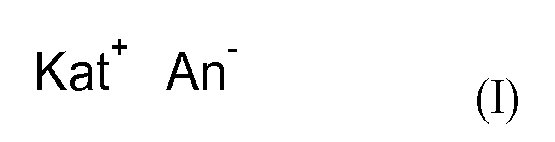
in der - Kat+
- für einen substituierten, Stickstoff enthaltenden Heterocyclus, bevorzugt für ein Pyridinium- oder Imidazolium-Kation steht und
- An-
- für Phosphat oder ein organisches Phosphat steht.
- Der Begriff ionische Flüssigkeit bedeutet im Rahmen der Erfindung eine Verbindung, die mindestens eine positive und eine negative Ladung aufweist, insgesamt jedoch ladungsneutral ist, und unter den Rektifikationsbedingungen flüssig ist, bevorzugt einen Schmelzpunkt unter 200°C aufweist, besonders bevorzugt einen Schmelzpunkt von unter 100°C.
- Bevorzugte Verbindungen der Formel (I) sind solche der Formel (Ia)

R1 und R2 sowie R3 und R4 jeweils unabhängig voneinander für Wasserstoff, C1-C12-Alkyl-, C5-C14-Aryl, C6-C20-Arylalkyl-, C2-C12-Alkenyl oder C2-C12-Alkylen stehen oder R1 und R2 bzw. R3 und R4 zusammen für C2-C12-Alkylen oder C2-C12-Alkenylen stehen. - C1-C12-Alkyl beziehungsweise C2-C12-Alkylen beziehungsweise C2-C12-Alkenylen bedeutet jeweils unabhängig einen geradkettigen, ganz oder teilweise cyclischen, verzweigten oder unverzweigten C1-C12-Alkyl- beziehungsweise C2-C12-Alkylen- beziehungsweise C2-C12-Alkenylen-Rest, wobei die genannten Reste gegebenenfalls weiterhin durch C1-C4-Alkoxyreste substituiert sein können.
- Gleiches gilt für den nichtaromatischen Teil eines C6-C20-Arylalkyl-Restes.
- C1-C12-Alkyl steht beispielsweise für Methyl, Ethyl, n-Propyl, iso-Propyl, n-Butyl, sec.-Butyl und tert.-Butyl, n-Pentyl, 1-Methylbutyl, 2-Methylbutyl, 3-Methylbutyl, neo-Pentyl, 1-Ethylpropyl, cyclo-Hexyl, cyclo-Pentyl, n-Hexyl, 1,1-Dimethylpropyl, 1,2-Dimethylpropyl, 1,2-Dimethylpropyl, 1-Methylpentyl, 2-Methylpentyl, 3-Methylpentyl, 4-Methylpentyl, 1,1-Dimethylbutyl, 1,2-Dimethylbutyl, 1,3-Dimethylbutyl, 2,2-Dimethylbutyl, 2,3-Dimethylbutyl, 3,3-Dimethylbutyl, 1-Ethylbutyl, 2-Ethylbutyl, 1,1,2-Trimethylpropyl, 1,2,2-Trimethylpropyl, 1-Ethyl-1-methylpropyl, 1-Ethyl-2-methylpropyl, 1-Ethyl-2-methylpropyl, n-Heptyl, n-Octyl, 2-Ethylhexyl, Adamantyl, die isomeren Menthyle, n-Nonyl, n-Decyl oder n-Dodecyl.
- C1-C4-Alkoxy steht beispielsweise für Methoxy, Ethoxy, 2-Methoxyethoxy, n-Propoxy, iso-Propoxy, n-Butoxy, sec.-Butoxy oder tert.-Butoxy.
- C2-C12-Alkenyl steht beispielsweise für Vinyl, 1-Propenyl, iso-Propenyl, 1-Butenyl, 2-Butenyl, 1-Pentenyl, 2-Pentenyl, 2-Methyl-1-butenyl, 2-Methyl-2-butenyl, 3-Methyl-1-buteny, 1-Hexenyl, 1-Heptenyl, 1-Octenyl oder 2-Octenyl.
- C5-C14-Aryl bedeutet jeweils unabhängig einen heteroaromatischen Rest mit 5 bis 14 Gerüstkohlenstoffatomen, in denen keines, ein, zwei oder drei Gerüstkohlenstoffatome pro Cyclus, im gesamten Molekül mindestens jedoch ein Gerüstkohlenstoffatom, durch Heteroatome, ausgewählt aus der Gruppe Stickstoff, Schwefel oder Sauerstoff, substituiert sein können, vorzugsweise jedoch für einen carbocyclischen aromatischen Rest mit 6 bis 14 Gerüstkohlenstoffatomen.
- Bevorzugte Beispiele für carbocyclische aromatische Reste mit 6 bis 14 Gerüstkohlenstoffatomen sind zum Beispiel Phenyl, Naphtyl, Phenanthrenyl, Anthracenyl oder Fluorenyl, heteroaromatische Reste mit 5 bis 14 Gerüstkohlenstoffatomen in denen keines, ein, zwei oder drei Gerüstkohlenstoffatome pro Cyclus, im gesamten Molekül mindestens jedoch ein Gerüstkohlenstoffatom, durch Heteroatome, ausgewählt aus der Gruppe Stickstoff, Schwefel oder Sauerstoff, substituiert sein können sind beispielsweise Pyridinyl, Oxazolyl, Benzofuranyl, Dibenzofuran-yl oder Chinolinyl.
- Weiterhin kann der carbocyclische aromatische Rest oder heteroaromatische Rest mit bis zu fünf gleichen oder verschiedenen Substituenten pro Cyclus substituiert sein, die ausgewählt sind aus der Gruppe Chlor, Fluor, C1-C12-Alkyl, C1-C12-Halogenalkyl und C1-C12-Alkoxy.
- Besonders bevorzugt steht C5-C14-Aryl für Phenyl.
- Gleiches gilt für den aromatischen Teil eines C6-C20-Arylalkyl-Restes. Bevorzugt steht C6-C20-Arylalkyl für Benzyl.
- Weiterer Gegenstand der Erfindung ist die Verwendung von ionischen Flüssigkeiten, wie insbesondere solchen Verbindungen der Formeln (I) und (Ia) zur Trennung von Mischungen enthaltend im Wesentlichen aromatische Verbindungen.
- Besonders bevorzugt stehen in der Formel (Ia) die Reste R1, R2, R3 und R4 jeweils unabhängig voneinander oder jeweils identisch für einen Rest aus der Reihe: Methyl, Ethyl, n-Propyl, n-Butyl, n-Hexyl, 2-Ethylhexyl oder n-Octyl.
- Besonders bevorzugte Verbindungen der Formeln (I) und (Ia) sind 1,3-Dimethylimidazolium-dimethylphosphat, 1-Ethyl-3-methylimidazolium-dimethylphosphat, 1,3-Diethyl-imidazoliumdiethylphosphat, 1-Ethyl-3-methylimidazolium-diethylphosphat.
- Die Verbindungen der Formeln (I) bzw. (Ia) und ihre Herstellung sind grundsätzlich bekannt und beispielsweise in Ionic Liquids in Synthesis, ISBN 3-527-31239-0 und 978-3-527-31239-9 offenbart.
- Der Begriff aromatische Verbindungen umfasst im Sinne der Erfindung alle Verbindungen enthaltend aromatische Reste, die zu mindestens 99 % thermisch unzersetzt bei irgendeiner Temperatur von 250°C oder weniger und irgendeinem Druck von mehr als 0,1 hPa, bevorzugt mehr als 0,5 hPa destilliert werden können.
- Als Mischungen enthaltend im Wesentlichen aromatische Verbindungen eignen sich insbesondere Mischungen, die im wesentlichen Stellungsisomere mehrfach substituierter aromatischer Verbindungen enthalten, wie beispielsweise Mischungen, die im Wesentlichen enthalten: o-, m- und p-Dichlorbenzol; o-, m- und p-Kresol; o-, m- und p-Xylol; o-, m- und p-Chlortoluol; o-, m- und p-Nitrotoluol; o-, m- und p-Nitrochlorbenzol; o-, m- und p-Chloranilin; o-, m- und p-Toluidin; o-, m- und p-Trifluormethoxynitrobenzol, 1,2,3-, 1,2,4 und 1,3,5-Trichlorbenzol; 2,3-, 2,4-, 2,5-, 2,6-, 3,4- und 3,5-Dichlortoluol; 2,3-, 2,4-, 2,5-, 2,6-, 3,4- und 3,5-Dichlornitrobenzol; 2,3-, 2,4-, 2,5-, 2,6-, 3,4- und 3,5-Dichloranilin; 2,3-, 2,4-, 2,5-, 2,6-, 3,4- und 3,5-Dinitrotoluol oder Styrol und Ethylbenzol.
- Bevorzugt sind Mischungen aromatischer Verbindungen, die im Wesentlichen Substituenten in m- und p-Stellung enthalten. Besonders bevorzugt sind Mischungen, die im Wesentlichen mund p-Dichlorbenzol enthalten.
- Das jeweilige Verhältnis der zu trennenden Komponenten im Ausgangsgemisch ist dabei prinzipiell nicht begrenzt. Der Begriff "im Wesentlichen" soll im Sinne der Erfindungen bedeuten, dass der Anteil sonstiger Komponenten über die zu trennenden aromatischen Komponenten oder über die zwei zu trennenden aromatischen Komponenten hinaus 0 bis 20, bevorzugt 0 bis 10 Gew.-% und besonders bevorzugt 0 bis 5 Gew.-% betragen kann.
- Besonders bevorzugt eignet sich das erfindungsgemäße Verfahren zur Trennung von m- und p-Dichlorbenzol.
- Im Allgemeinen wird das erfindungsgemäße Verfahren so durchgeführt, dass die in die Extraktivdestillation eingespeiste, zu trennende Mischung zunächst auf eine Temperatur gebracht wird oder diese aufweist, die in Abhängigkeit vom gewählten Kolonnendruck zwischen 20 und 150°C und vorzugsweise zwischen 80 und 120°C liegt. In einer bevorzugten Ausführungsform liegt die Sumpftemperatur in der Rektifikationskolonne bei 180°C oder weniger, besonders bevorzugt bei 130°C oder weniger.
- In einer bevorzugten Ausführungsform wird die Trennung in einer Rektifikationskolonne durchgeführt, wobei der Druck am Kolonnenkopf im allgemeinen und abhängig vom zu trennenden Gemisch beispielsweise im Bereich von 5 bis 500 hPa liegt und bevorzugt 5 bis 200 hPa betragen kann.
- Die Druckdifferenz zwischen Kolonnensumpf und Kolonnenkopf kann beispielsweise 0 bis 200, bevorzugt 0 bis 100 hPa betragen.
- Die Anzahl der theoretischer Trennstufen kann beispielsweise 5 bis 1000, vorzugsweise 20 bis 200 betragen.
- Das Gewichtsverhältnis von Rücklauf zu Destillatentnahme kann beispielsweise 0,5:1 bis 20:1, besonders bevorzugt 2:1 bis 8:1 betragen.
- Das Gewichtsverhältnis von ionischen Flüssigkeiten bzw. der Verbindungen der Formeln (I) bzw. (Ia) zur Menge des zu trennenden Stoffgemisches, das der Rektifikationskolonne zugeführt wird, kann beispielsweise 2:1 bis 40:1, bevorzugt 2:1 bis 8:1 betragen.
- Zur Rückgewinnung der ionischen Flüssigkeiten bzw. der Verbindungen der Formeln (I) und (Ia) zum späteren erneuten Einsatz in der Extraktivrektifikation erfolgt zum Beispiel durch destillative Abtrennung vom restlichen Produkt. Vorzugsweise erfolgt die destillative Abtrennung in zwei Trennstufen ohne Rücklauf. Dabei wird in der ersten Trennstufe bei einem Druck im Bereich von 5 bis 200 hPa und bevorzugt 5 bis 50 hPa das restliche Produkt weitestgehend abgetrennt, wobei unter dem Begriff "weitestgehend" hierbei eine mehr als 90%-ige Abtrennung, vorzugsweise eine mehr als 95%-ige Abtrennung zu verstehen ist. In einer zweiten Trennstufe erfolgt danach eine weitere Abtrennung bei einem niedrigeren Druck als in der ersten Trennstufe von beispielsweise 1 bis 20 hPa und bevorzugt 1 bis 5 hPa. Die Kondensation der Produktbrüden findet zweckmäßigerweise nach einer Druckanhebung auf beispielsweise 5 bis 200 hPa und bevorzugt 5 bis 50 hPa statt.
- Der besondere Vorteil des erfindungsgemäßen Verfahrens ist, dass in effizienter Weise Mischungen aromatischer Verbindungen derart voneinander getrennt werden können, dass die einzelnen Komponenten mit hohen Reinheiten erhalten werden können.
- Dabei kann der spezifische Energieverbrauch deutlich gesenkt werden und die Abmaße der verwendeten Trennapparate, d.h. das notwendige Apparatevolumen je erforderliche Trennstufe, reduzieren sich erheblich.
- Daten zur Wirksamkeit der erfindungsgemäßen Extraktionsmittel sind in nachfolgender Tabelle zusammengestellt. Diese Trennfaktoren wurden bei 120°C nach der Headspacemethode gemessen (siehe auch Verfahrenstechnik 1974, 8, 12, 343-347)
- Die Messungen wurden bei einer Konzentration in der Flüssigkeit von 10 Mol-% m-Dichlorbenzol, 10 Mol-% p-Dichlorbenzol und 80 Mol-% Extraktionsmittel ausgeführt. Zum Vergleich der Wirksamkeit dieser Extraktionsmittel sind auch die entsprechenden Messwerte der bekannten Extraktionsmittel Triethylphosphat und Sulfolan in die Tabelle aufgenommen worden.
Extraktionsmittel Trennfaktor 1,3-Diethylimidazolium-diethylphosphat 1,34 1,3-Ethylmethylimidazolium-dimethylphosphat 1,31 1,3-Dimethylimidazolium-dimethylphosphat 1,29 1,3-Ethlymethylimidazolium-diethylphosphat 1,27 Stand der Technik: Triethylphosphat 1,23 Sulfolan 1,14 - Die Prüfungen zeigen, dass die erfindungsgemäßen Extraktionsmittel im Vergleich zum Stand der Technik deutlich überlegen sind.
- Weitere Untersuchungen haben gezeigt, dass die erfindungsgemäßen Extraktionsmittel eine hohe thermische Stabilität zeigen auch in Gegenwart von die thermische Zersetzung stark katalysierenden Substanzen, wie Rost und anderen Schwermetallverbindungen, was einerseits für einen sicheren Betrieb der Trennanlagen von erheblicher Bedeutung ist und andererseits eine lange und verlustfreie Verwendung des Trennmittels garantiert.
- Eine Extraktionskolonne mit 100 theoretischen Trennstufen wurde mit dem zu trennenden Gemisch bestehend aus 58 Gew.-% m-Dichlorbenzol und 38 Gew.-% p-Dichlorbenzol mit einer Temperatur von 100°C und dem Extraktionsmittel 1,3-Diethylimidazolium-diethylphosphat mit einer Temperatur von 60°C gespeist. Dabei wurde der Entrainer oberhalb des Dichlorbenzol-Gemisches eingespeist. Das Verhältnis von Dichlorbenzol zu Entrainer lag bei 1:5.
- Der Druck am Kolonnenkopf betrugt 100 hPa und im Kolonnensumpf 140 hPa. Das Extraktionsmittel verliess den Kolonnensumpf mit einer Temperatur von 158°C. Im Sumpfstrom waren mehr als 99 Gew.-% des eingesetzten p-Dichlorbenzol und weniger als 50 Gew.-% des eingesetzten m-Dichlorbenzol enthalten. Im Kopfstrom der Kolonne wurde hochreines Zielprodukt mit einem Gehalt von mehr als 99 Gew.-% m-Dichlorbenzol entnommen, wobei das Rücklaufverhältnis (Rückflussmenge/Destillat) bei 6:1 lag.
Claims (12)
- Verfahren zur Trennung von Mischungen aromatischer Verbindungen mittels extraktiver Rektifikation, dadurch gekennzeichnet, dass die Rektifikation in Gegenwart von ionischen Flüssigkeiten durchgeführt wird.
- Verfahren nach Anspruch 1, dadurch gekennzeichnet dass als ionische Flüssigkeiten solche eingesetzt werden, deren Kation Stickstoff oder Phosphor enthält.
- Verfahren nach Anspruch 1 oder 2, dadurch gekennzeichnet dass als ionische Flüssigkeiten solche eingesetzt werden, deren Kation einen Stickstoff enthaltenden Heterocyclus umfasst.
- Verfahren nach einem der Ansprüche 1 bis 3, dadurch gekennzeichnet dass als ionische Flüssigkeiten solche der Formel (I) eingesetzt werden,
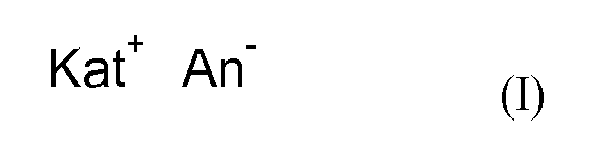
in derKat+ für einen substituierten, Stickstoff enthaltenden Heterocyclus steht undAn- für Phosphat oder ein organisches Phosphat steht. - Verfahren nach einem der Ansprüche 1 bis 4, dadurch gekennzeichnet dass als ionische Flüssigkeiten solche der Formel (Ia) eingesetzt werden,

R1 und R2 sowie R3 und R4 jeweils unabhängig voneinander für Wasserstoff, C1-C12-Alkyl-, C5-C14-Aryl, C6-C20-Arylalkyl-, C2-C12-Alkenyl oder C2-C12-Aklen stehen oder R1 und R2 bzw. R3 und R4 zusammen für C2-C12-Alkylen oder C2-C12-Alkenylen stehen. - Verfahren nach Anspruch 5, dadurch gekennzeichnet, dass in der Formel (Ia) die Reste R1, R2, R3 und R4 jeweils unabhängig voneinander oder jeweils identisch für einen Rest aus der Reihe: Wasserstoff, Methyl, Ethyl, n-Propyl, n-Butyl, n-Hexyl, 2-Ethylhexyl oder n-Octyl stehen.
- Verfahren nach Anspruch 6" dadurch gekennzeichnet, dass die Verbindungen der Formel (Ia) ausgewählt sind aus der Gruppe: 1,3-Dimethylimidazolium-dimethylphosphat, 1-Ethyl-3-methylimidazolium-dimethylphosphat, 1,3-Diethylimidazolium-diethylphosphat und 1-Ethyl-3-methylimidazolium-diethylphosphat.
- Verfahren nach einem der Ansprüche 1 bis 7, dadurch gekennzeichnet, dass als Mischungen aromatischer Verbindungen Mischungen verwendet werden, die im wesentlichen Stellungsisomere mehrfach substituierter aromatischer Verbindungen enthalten.
- Verfahren nach einem der Ansprüche 1 bis 8, dadurch gekennzeichnet, dass die Sumpftemperatur in der extraktiven Rektifikation 180°C oder weniger beträgt.
- Verfahren nach einem der Ansprüche 1 bis 9, dadurch gekennzeichnet, dass die Anzahl der theoretischer Trennstufen bei der extraktiven Rektifikation 5 bis 1000 beträgt.
- Verfahren nach einem der Ansprüche 1 bis 10, dadurch gekennzeichnet, dass das Gewichtsverhältnis von Rücklauf zu Destillatentnahme bei der extraktiven Rektifikation 0,5:1 bis 20:1 beträgt.
- Verwendung von ionischen Flüssigkeiten zur destillativen Trennung von Mischungen enthaltend im Wesentlichen aromatische Verbindungen.
Priority Applications (4)
| Application Number | Priority Date | Filing Date | Title |
|---|---|---|---|
| EP09158388A EP2243530A1 (de) | 2009-04-21 | 2009-04-21 | Verfahren zur Trennung aromatischer Verbindungen |
| EP10714019.6A EP2421623B1 (de) | 2009-04-21 | 2010-04-21 | Verfahren zur trennung aromatischer verbindungen |
| CN201080017556.1A CN102405084B (zh) | 2009-04-21 | 2010-04-21 | 用于分离芳香族化合物的方法 |
| PCT/EP2010/055297 WO2010122073A1 (de) | 2009-04-21 | 2010-04-21 | Verfahren zur trennung aromatischer verbindungen |
Applications Claiming Priority (1)
| Application Number | Priority Date | Filing Date | Title |
|---|---|---|---|
| EP09158388A EP2243530A1 (de) | 2009-04-21 | 2009-04-21 | Verfahren zur Trennung aromatischer Verbindungen |
Publications (1)
| Publication Number | Publication Date |
|---|---|
| EP2243530A1 true EP2243530A1 (de) | 2010-10-27 |
Family
ID=40957829
Family Applications (2)
| Application Number | Title | Priority Date | Filing Date |
|---|---|---|---|
| EP09158388A Withdrawn EP2243530A1 (de) | 2009-04-21 | 2009-04-21 | Verfahren zur Trennung aromatischer Verbindungen |
| EP10714019.6A Active EP2421623B1 (de) | 2009-04-21 | 2010-04-21 | Verfahren zur trennung aromatischer verbindungen |
Family Applications After (1)
| Application Number | Title | Priority Date | Filing Date |
|---|---|---|---|
| EP10714019.6A Active EP2421623B1 (de) | 2009-04-21 | 2010-04-21 | Verfahren zur trennung aromatischer verbindungen |
Country Status (3)
| Country | Link |
|---|---|
| EP (2) | EP2243530A1 (de) |
| CN (1) | CN102405084B (de) |
| WO (1) | WO2010122073A1 (de) |
Families Citing this family (6)
| Publication number | Priority date | Publication date | Assignee | Title |
|---|---|---|---|---|
| CN108003915B (zh) * | 2016-10-28 | 2020-05-19 | 中国石油化工股份有限公司 | 一种抽提分离柴油馏分中芳烃和烷烃的复合溶剂和方法 |
| CN108018067B (zh) * | 2016-10-28 | 2020-05-19 | 中国石油化工股份有限公司 | 一种抽提分离柴油馏分中芳烃和烷烃的复合溶剂和方法 |
| CN107673435B (zh) * | 2017-10-20 | 2021-01-12 | 南京大学金陵学院 | 一种利用羟基功能化离子液体萃取芳香化合物的方法 |
| CN110845338B (zh) * | 2018-08-21 | 2022-09-06 | 中国石油化工股份有限公司 | 采用复合离子液体萃取分离2,5-二氯硝基苯的方法 |
| CN114174254A (zh) * | 2019-08-02 | 2022-03-11 | 巴斯夫欧洲公司 | 芳香化学品的纯化 |
| CN113713427A (zh) * | 2021-07-28 | 2021-11-30 | 常州大学 | 一种从烷烃中将芳烃抽提分离的方法 |
Citations (9)
| Publication number | Priority date | Publication date | Assignee | Title |
|---|---|---|---|---|
| WO2002030878A1 (en) * | 2000-10-10 | 2002-04-18 | The Queen's University Of Belfast | Aromatic sulfonation reactions |
| WO2002074718A2 (de) * | 2001-03-20 | 2002-09-26 | Basf Aktiengesellschaft | Ionische flüssigkeiten als selektive zusatzstoffe für die trennung engsiedender oder azeotroper gemische |
| DE10136614A1 (de) | 2001-07-17 | 2003-02-06 | Basf Ag | Ionische Flüssigkeiten als selektive Zusatzstoffe für die Trennung engsiedender oder azeotroper Gemische |
| US20030125599A1 (en) * | 2001-12-31 | 2003-07-03 | Boudreau Laura C. | Separation of dienes from olefins using ionic liquids |
| DE10154052A1 (de) | 2001-11-02 | 2003-07-10 | Carl V Ossietzky Uni Oldenburg | Einsatz ionischer Flüssigkeiten als selektive Lösungsmittel für die Trennung aromatischer Kohlenwasserstoffe von nichtaromatischen Kohlenwasserstoffen durch extraktive Rektifikation und Extraktion |
| DE10251191A1 (de) | 2002-11-04 | 2004-05-13 | Bayer Ag | Verfahren zur Trennung von m- und p-Dichlorbenzol enthaltenden Gemischen |
| WO2005019137A1 (de) * | 2003-07-21 | 2005-03-03 | Basf Aktiengesellschaft | Verfahren zur extraktion von verunreinigungen mit ionischen flüssigkeiten |
| EP1854786A1 (de) * | 2006-09-04 | 2007-11-14 | BP p.l.c. | Ionische Flüssigkeiten und deren Verwendung in Extraktionsprozessen |
| DE102007041416A1 (de) * | 2007-08-31 | 2009-03-05 | Basf Se | Destillation ionischer Flüssigkeiten |
Family Cites Families (6)
| Publication number | Priority date | Publication date | Assignee | Title |
|---|---|---|---|---|
| DE10336556A1 (de) * | 2003-08-05 | 2005-03-10 | Basf Ag | Destillatives Verfahren zur Trennung von engsiedenden oder azeotropen Gemischen unter Verwendung von ionischen Flüssigkeiten |
| DE10336555A1 (de) * | 2003-08-05 | 2005-02-24 | Basf Ag | Recycling von lonischen Flüssigkeiten bei der Extraktiv-Destillation |
| EP1676614A1 (de) * | 2004-12-30 | 2006-07-05 | DSM IP Assets B.V. | Kontinuierliches Verfahren zur Enantiomerenanreicherung und Trennung von Enantiomeren durch Zentrifugaltrennung |
| DE102005013030A1 (de) * | 2005-03-22 | 2006-09-28 | Bayer Technology Services Gmbh | Verfahren zur destillativen Reinigung schwerflüchtiger Fluide |
| CN100378048C (zh) * | 2005-08-31 | 2008-04-02 | 中国石油化工股份有限公司 | 一种萃取精馏分离芳烃的方法及萃取精馏装置 |
| CN101265152B (zh) * | 2007-03-16 | 2013-06-05 | 中国石油大学(北京) | 一种离子液体作为萃取精馏分离苯和环己烷的溶剂的应用 |
-
2009
- 2009-04-21 EP EP09158388A patent/EP2243530A1/de not_active Withdrawn
-
2010
- 2010-04-21 EP EP10714019.6A patent/EP2421623B1/de active Active
- 2010-04-21 CN CN201080017556.1A patent/CN102405084B/zh active Active
- 2010-04-21 WO PCT/EP2010/055297 patent/WO2010122073A1/de not_active Ceased
Patent Citations (10)
| Publication number | Priority date | Publication date | Assignee | Title |
|---|---|---|---|---|
| WO2002030878A1 (en) * | 2000-10-10 | 2002-04-18 | The Queen's University Of Belfast | Aromatic sulfonation reactions |
| WO2002074718A2 (de) * | 2001-03-20 | 2002-09-26 | Basf Aktiengesellschaft | Ionische flüssigkeiten als selektive zusatzstoffe für die trennung engsiedender oder azeotroper gemische |
| EP1372807A2 (de) | 2001-03-20 | 2004-01-02 | Basf Aktiengesellschaft | Ionische flüssigkeiten als selektive zusatzstoffe für die trennung engsiedender oder azeotroper gemische |
| DE10136614A1 (de) | 2001-07-17 | 2003-02-06 | Basf Ag | Ionische Flüssigkeiten als selektive Zusatzstoffe für die Trennung engsiedender oder azeotroper Gemische |
| DE10154052A1 (de) | 2001-11-02 | 2003-07-10 | Carl V Ossietzky Uni Oldenburg | Einsatz ionischer Flüssigkeiten als selektive Lösungsmittel für die Trennung aromatischer Kohlenwasserstoffe von nichtaromatischen Kohlenwasserstoffen durch extraktive Rektifikation und Extraktion |
| US20030125599A1 (en) * | 2001-12-31 | 2003-07-03 | Boudreau Laura C. | Separation of dienes from olefins using ionic liquids |
| DE10251191A1 (de) | 2002-11-04 | 2004-05-13 | Bayer Ag | Verfahren zur Trennung von m- und p-Dichlorbenzol enthaltenden Gemischen |
| WO2005019137A1 (de) * | 2003-07-21 | 2005-03-03 | Basf Aktiengesellschaft | Verfahren zur extraktion von verunreinigungen mit ionischen flüssigkeiten |
| EP1854786A1 (de) * | 2006-09-04 | 2007-11-14 | BP p.l.c. | Ionische Flüssigkeiten und deren Verwendung in Extraktionsprozessen |
| DE102007041416A1 (de) * | 2007-08-31 | 2009-03-05 | Basf Se | Destillation ionischer Flüssigkeiten |
Non-Patent Citations (4)
| Title |
|---|
| CHEM. ING. TECH., vol. 75, 2003, pages 1148 - 1149 |
| IONIC LIQUIDS IN SYNTHESIS |
| KATO R ET AL: "Activity coefficients at infinite dilution of various solutes in the ionic liquids [MMIM]<+>[CH3SO4]<->, [MMIM]<+>[CH3OC2H4SO4]<->, [MMIM]<+>[(CH3)2PO4]<->, [C5H5NC2H5]<+>[(CF3SO2)2N]<-> and [C5H5NH]<+>[C2H5OC2H4OSO3]<->", FLUID PHASE EQUILIBRIA, ELSEVIER, vol. 226, 10 December 2004 (2004-12-10), pages 37 - 44, XP004917574, ISSN: 0378-3812 * |
| VERFAHRENSTECHNIK, vol. 8, no. 12, 1974, pages 343 - 347 |
Also Published As
| Publication number | Publication date |
|---|---|
| CN102405084B (zh) | 2015-09-30 |
| EP2421623B1 (de) | 2016-11-02 |
| WO2010122073A1 (de) | 2010-10-28 |
| CN102405084A (zh) | 2012-04-04 |
| EP2421623A1 (de) | 2012-02-29 |
Similar Documents
| Publication | Publication Date | Title |
|---|---|---|
| EP2421623B1 (de) | Verfahren zur trennung aromatischer verbindungen | |
| EP2655310A1 (de) | Verfahren zur herstellung von ameisensäure durch umsetzung von kohlendioxid mit wasserstoff | |
| EP3374347B1 (de) | Verfahren zur wiederaufarbeitung von alkansulfonsäure | |
| EP2706056B1 (de) | Verfahren zur Herstellung und Aufarbeitung eines Triacetonamin-haltigen Reaktionsgemisches | |
| EP2588439A1 (de) | Verfahren zur herstellung von ameisensäure durch umsetzung von kohlendioxid mit wasserstoff | |
| EP0019699B1 (de) | Verfahren zur Gewinnung von gasförmigem Chlorwasserstoff aus verdünnter wässriger Salzsäure | |
| EP1521737A1 (de) | Verfahren zur r ckf hrung einer lewis-s ure | |
| DE69124306T2 (de) | Herstellung von Acetaminophen | |
| DE69317820T2 (de) | Verfahren zur Herstellung hochreiner Monoalkylphosphine | |
| EP0718260B1 (de) | Verfahren zur Aufarbeitung von komplexen Aminhydrofluoriden | |
| DE2334901A1 (de) | Verfahren zur extraktion von metallen | |
| DE1935363A1 (de) | Verfahren zur Gewinnung von Anilin aus Phenol-Anilin-Gemischen | |
| DE2348738C3 (de) | N-Alkylierung aromatischer Amine | |
| EP1212273B1 (de) | Verfahren zur reinigung von carbonsäurechloriden | |
| WO2021001424A1 (de) | Verfahren zur reinigung von anilin | |
| DE3244522A1 (de) | Verfahren zur herstellung von nicotinsaeureamid | |
| EP2450334B1 (de) | Verfahren zur Trennung von isomeren Mentholverbindungen | |
| DE102005052444A1 (de) | Verfahren zur Herstellung hochreiner Zirkonium-, Hafnium-, Tantal- und Niobalkoxide | |
| DE69806759T2 (de) | Verfahren zur herstellung von pentafluorethan | |
| EP0003570A1 (de) | Verfahren zur kontinuierlichen Aufarbeitung von bei der Phosgenierung von Monoaminen anfallenden Lösungen | |
| EP0475137A1 (de) | Verfahren zur Herstellung von Carbonsäurechloriden | |
| EP0292674A2 (de) | Verfahren zur Herstellung von Propinol | |
| EP0110411B1 (de) | Verfahren zur Durchführung von organischen Kondensationsreaktionen | |
| DE2244238A1 (de) | Verfahren zur herstellung von iminen | |
| AT361456B (de) | Verfahren zur abtrennung von aromatischen kohlenwasserstoffen aus kohlenwasserstoffge- mischen durch fluessig-fluessig-extraktion und/oder extraktivdestillation |
Legal Events
| Date | Code | Title | Description |
|---|---|---|---|
| PUAI | Public reference made under article 153(3) epc to a published international application that has entered the european phase |
Free format text: ORIGINAL CODE: 0009012 |
|
| AK | Designated contracting states |
Kind code of ref document: A1 Designated state(s): AT BE BG CH CY CZ DE DK EE ES FI FR GB GR HR HU IE IS IT LI LT LU LV MC MK MT NL NO PL PT RO SE SI SK TR |
|
| AX | Request for extension of the european patent |
Extension state: AL BA RS |
|
| 17P | Request for examination filed |
Effective date: 20110427 |
|
| 17Q | First examination report despatched |
Effective date: 20110620 |
|
| STAA | Information on the status of an ep patent application or granted ep patent |
Free format text: STATUS: THE APPLICATION HAS BEEN WITHDRAWN |
|
| 18W | Application withdrawn |
Effective date: 20111018 |