EP2201953A1 - Verwendung von ribavirin bei blutgerinnungsstörungen - Google Patents
Verwendung von ribavirin bei blutgerinnungsstörungen Download PDFInfo
- Publication number
- EP2201953A1 EP2201953A1 EP08828257A EP08828257A EP2201953A1 EP 2201953 A1 EP2201953 A1 EP 2201953A1 EP 08828257 A EP08828257 A EP 08828257A EP 08828257 A EP08828257 A EP 08828257A EP 2201953 A1 EP2201953 A1 EP 2201953A1
- Authority
- EP
- European Patent Office
- Prior art keywords
- blood coagulation
- pharmaceutical agent
- ribavirin
- interferon
- coagulation factor
- Prior art date
- Legal status (The legal status is an assumption and is not a legal conclusion. Google has not performed a legal analysis and makes no representation as to the accuracy of the status listed.)
- Withdrawn
Links
Images


Classifications
-
- G—PHYSICS
- G01—MEASURING; TESTING
- G01N—INVESTIGATING OR ANALYSING MATERIALS BY DETERMINING THEIR CHEMICAL OR PHYSICAL PROPERTIES
- G01N33/00—Investigating or analysing materials by specific methods not covered by groups G01N1/00 - G01N31/00
- G01N33/48—Biological material, e.g. blood, urine; Haemocytometers
- G01N33/50—Chemical analysis of biological material, e.g. blood, urine; Testing involving biospecific ligand binding methods; Immunological testing
- G01N33/5005—Chemical analysis of biological material, e.g. blood, urine; Testing involving biospecific ligand binding methods; Immunological testing involving human or animal cells
- G01N33/5008—Chemical analysis of biological material, e.g. blood, urine; Testing involving biospecific ligand binding methods; Immunological testing involving human or animal cells for testing or evaluating the effect of chemical or biological compounds, e.g. drugs, cosmetics
- G01N33/5044—Chemical analysis of biological material, e.g. blood, urine; Testing involving biospecific ligand binding methods; Immunological testing involving human or animal cells for testing or evaluating the effect of chemical or biological compounds, e.g. drugs, cosmetics involving specific cell types
- G01N33/5067—Liver cells
-
- A—HUMAN NECESSITIES
- A61—MEDICAL OR VETERINARY SCIENCE; HYGIENE
- A61K—PREPARATIONS FOR MEDICAL, DENTAL OR TOILETRY PURPOSES
- A61K31/00—Medicinal preparations containing organic active ingredients
- A61K31/70—Carbohydrates; Sugars; Derivatives thereof
- A61K31/7042—Compounds having saccharide radicals and heterocyclic rings
- A61K31/7052—Compounds having saccharide radicals and heterocyclic rings having nitrogen as a ring hetero atom, e.g. nucleosides, nucleotides
- A61K31/7056—Compounds having saccharide radicals and heterocyclic rings having nitrogen as a ring hetero atom, e.g. nucleosides, nucleotides containing five-membered rings with nitrogen as a ring hetero atom
-
- A—HUMAN NECESSITIES
- A61—MEDICAL OR VETERINARY SCIENCE; HYGIENE
- A61K—PREPARATIONS FOR MEDICAL, DENTAL OR TOILETRY PURPOSES
- A61K38/00—Medicinal preparations containing peptides
- A61K38/16—Peptides having more than 20 amino acids; Gastrins; Somatostatins; Melanotropins; Derivatives thereof
- A61K38/17—Peptides having more than 20 amino acids; Gastrins; Somatostatins; Melanotropins; Derivatives thereof from animals; from humans
- A61K38/19—Cytokines; Lymphokines; Interferons
- A61K38/21—Interferons [IFN]
-
- A—HUMAN NECESSITIES
- A61—MEDICAL OR VETERINARY SCIENCE; HYGIENE
- A61P—SPECIFIC THERAPEUTIC ACTIVITY OF CHEMICAL COMPOUNDS OR MEDICINAL PREPARATIONS
- A61P31/00—Antiinfectives, i.e. antibiotics, antiseptics, chemotherapeutics
- A61P31/12—Antivirals
-
- A—HUMAN NECESSITIES
- A61—MEDICAL OR VETERINARY SCIENCE; HYGIENE
- A61P—SPECIFIC THERAPEUTIC ACTIVITY OF CHEMICAL COMPOUNDS OR MEDICINAL PREPARATIONS
- A61P7/00—Drugs for disorders of the blood or the extracellular fluid
- A61P7/04—Antihaemorrhagics; Procoagulants; Haemostatic agents; Antifibrinolytic agents
-
- G—PHYSICS
- G01—MEASURING; TESTING
- G01N—INVESTIGATING OR ANALYSING MATERIALS BY DETERMINING THEIR CHEMICAL OR PHYSICAL PROPERTIES
- G01N33/00—Investigating or analysing materials by specific methods not covered by groups G01N1/00 - G01N31/00
- G01N33/48—Biological material, e.g. blood, urine; Haemocytometers
- G01N33/50—Chemical analysis of biological material, e.g. blood, urine; Testing involving biospecific ligand binding methods; Immunological testing
- G01N33/86—Chemical analysis of biological material, e.g. blood, urine; Testing involving biospecific ligand binding methods; Immunological testing involving blood coagulating time or factors, or their receptors
Definitions
- the present teaching relates to the use of ribavirin in blood coagulation disorders. More specifically, the teaching relates to a pharmaceutical agent having a prothrombin time shortening activity or an INR elevating activity, and the use thereof.
- Blood coagulation factors include blood coagulation factors I to XIII, the von Willebrand factor, and the Fitzgerald factor. Many of these coagulation factors, including factors I, II, V, VIII, and IX to XIII, are produced in the liver. When such blood coagulation factors are congenitally deficient or the levels thereof in the blood are low due to some acquired effect, this leads to the onset of a blood coagulation disorder.
- Blood coagulation disorder refers herein to a blood disease which causes anomalies in the hemostatic system and/or coagulation system and manifests a bleeding tendency.
- Typical examples of blood coagulation disorders include hemophilia A which is characterized by a deficiency of blood coagulation factor VIII, and hemophilia B which is characterized by a deficiency of blood coagulation factor IX.
- the treatment of blood coagulation disorders generally involves carrying out replenishment therapy to replenish the deficient coagulation factors.
- Non-Patent Document 1 It has been reported that ribavirin and interferon, both known as antiviral agents which are nucleoside derivatives, increase the amount of coagulation factor VII in blood when administered to hemophilia patients (Non-Patent Document 1). Although factor VII is not a coagulation factor that is deficient in hemophilia A and hemophilia B, by administering factor VII, fibrin can be fibrosed without involving the activation of factors VIII and IX in the blood coagulation cascade. Factor VII administration is thus called a "bypass" therapy. Moreover, when ribavirin and interferon are administered to hemophilia patients who have contracted the hepatitis C virus, the level of von Willebrand factor in the blood is known to increase (Non-Patent Document 2).
- the method used to treat blood coagulation disorders in inhibitor carriers generally involves administering activated blood coagulation factor VII in order to increase the hemostatic effects due to extrinsic blood coagulation.
- activated blood coagulation factor VII as the main active ingredient, and the administration of a combination of activated blood coagulation factor VII and blood coagulation factor X have also been disclosed (Patent Documents 1 and 2).
- a novel treatment could be provided as an alternative to replenishment therapy for congenital or acquired deficiencies of these other blood coagulation factors.
- a therapy effective for ameliorating conditions in which the prothrombin time is prolonged or conditions in which the international normalized ratio (INR) is elevated could also be provided.
- a novel drug to prevent or stop bleeding during a surgical procedure or when bleeding occurs due to an external injury or a disease other than a blood coagulation disorder, such as a cerebral hemorrhage could additionally be provided.
- replenishment therapy in spite of all its drawbacks, the only therapy currently available for ameliorating bleeding tendencies and preventing bleeding in blood coagulation disorders is replenishment therapy. Moreover, because replenishment therapy in an inhibitor carrier includes the possibility that additional antibodies will develop, this has been a treatment mode to be avoided where at all possible. Yet, in spite of this, new pharmaceutical agents which are effective in inhibitor carriers and can be used in place of coagulation factor replenishment have not been provided to date.
- an object of the teaching is to provide a drug which is effective for diseases or symptoms related to blood coagulation factors and can be used instead of the external replenishment of blood coagulation factors.
- Another object of the teaching is to provide a drug effective for ameliorating conditions in which the prothrombin time is prolonged or conditions in which the international normalized ratio (INR) is elevated.
- Yet another object of the teaching is to provide a non-replenishment pharmaceutical agent which is effective for the amelioration or replenishment of blood coagulation factor II, V, and VIII deficiencies.
- Another object of the teaching is to provide a pharmaceutical agent which is capable of ameliorating bleeding tendencies and preventing bleeding in blood coagulation disorder patients who carry inhibitors, without the external replenishment of blood coagulation factors.
- the inventors have learned that when ribavirin is administered alone in hemophilia patients, there is a tendency for the patient's serum during the period of administration to undergo a shortening in the prothrombin time (for the PT% to rise) and a decline in the INR. They have also learned that when ribavirin and interferon are administered for the purpose of treating chronic hepatitis C in patients who have hemophilia and chronic hepatitis C, there is a tendency for the patient's serum during such administration to undergo a shortening in the prothrombin time and a decline in the INR.
- the teaching provides a pharmaceutical agent which includes ribavirin or a derivative thereof as an active ingredient, the pharmaceutical agent ameliorating, preventing or treating a condition in which a prothrombin time is prolonged or a condition in which an international normalized ratio (INR) is elevated.
- This pharmaceutical agent may be obtained in a form in which ribavirin or a derivative thereof is combined with interferon.
- the pharmaceutical agent may be used in particular to ameliorate, prevent or treat a condition in association with liver disease in which the prothrombin time condition is prolonged or the INR is elevated.
- the pharmaceutical agent may be one which ameliorates, prevents or treats a condition for replenishment of one or more selected from a group consisting of blood coagulation factor II, blood coagulation factor V and blood coagulation factor VIII is effective.
- the pharmaceutical agent may be used to ameliorate, prevent or treat a condition for which replenishment of blood coagulation factor II and/or blood coagulation factor V is effective.
- This pharmaceutical agent may be used to stop bleeding and may be used in particular to prevent or stop bleeding during a surgical procedure or when the bleeding occurs due to an external injury or a disease other than a blood coagulation disorder, inclusive of cerebral hemorrhage.
- the present teaching also provides a pharmaceutical agent for ameliorating, preventing or treating a condition wherein, during administration of a drug, the prothrombin time is prolonged or the international normalized ratio (INR) is elevated, the pharmaceutical agent including ribavirin or a derivative thereof.
- This pharmaceutical agent may include also interferon.
- This pharmaceutical agent may further include any selected from among selective serotonin reuptake inhibitors and selective serotonin/noradrenaline reuptake inhibitors.
- the present teaching additionally provides a pharmaceutical composition for ameliorating bleeding tendencies in hemophilia patients and other patients who regularly use blood coagulants, which composition includes ribavirin or a derivative thereof.
- the teaching further provides a method of screening pharmaceutical compounds for ameliorating, preventing or treating a disease or condition related to a blood coagulation factor, the method including: a step of culturing mammalian hepatocytes in the presence of a test compound; a step of detecting an amount of production of one or more selected from the group consisting of blood coagulation factor II, blood coagulation factor V and blood coagulation factor VIII produced by the hepatocytes cultured in the culturing step; and a step of selecting a test compound which exhibits a high amount of production when production of the blood coagulation factor obtained in the detection step is compared with production of the same blood coagulation factor in the absence of the test compound.
- the culturing step may be a step of culturing the hepatocytes in the presence of the test compound and interferon.
- the test compound may be a nucleoside derivative, and may even be a ribavirin derivative.
- the inventors have also discovered that, surprisingly, when ribavirin and interferon are administered for the treatment of chronic hepatitis C in patients who have hemophilia and chronic hepatitis C and who develop inhibitors in response to the administration of deficient coagulation factors, there is an effect which enables the bleeding tendency of inhibitor carriers to be ameliorated during the period of administration.
- the ability to ameliorate the bleeding tendencies of blood coagulation disorders in inhibitor carriers by administering ribavirin and interferon was entirely unanticipated.
- the blood coagulation disorder ameliorating effects were manifested more distinctly in inhibitor carriers than in inhibitor non-carriers.
- ribavirin by itself activates blood coagulation factor VII promoters, boosting the production of factor VII. Based on these findings, the present teaching may provide the following.
- the teaching provides a pharmaceutical agent for ameliorating a bleeding tendency and preventing bleeding in a blood coagulation disorder patient who carries an antibody to a blood coagulation factor, which agent includes ribavirin or a derivative thereof as an active ingredient.
- the teaching also provides a pharmaceutical agent which is obtained by combining also interferon as an another ingredient.
- This combination pharmaceutical agent may be a kit composed of both a drug containing ribavirin or a derivative thereof and a drug containing interferon.
- ribavirin or a derivative thereof may be administered by an oral route of administration, and interferon may be administered by one or more route of administration selected from a group consisting of intravenous, subcutaneous and intramuscular administration.
- the pharmaceutical agent of the teaching may be one wherein blood collected from the patient during administration of the pharmaceutical agent has a coagulation factor VII activity of at least 75% but not more than 140%.
- the pharmaceutical agent of the teaching may be adapted for use in a carrier of an antibody to blood coagulation factor VIII or IX.
- the present teaching relates to a pharmaceutical agent for ameliorating, preventing or treating diseases or symptoms associated with blood coagulation factors, and a method of screening for such agents.
- the inventive pharmaceutical agent for ameliorating, preventing or treating a condition in which the prothrombin time is prolonged or a condition in which the international normalized ratio (INR) is elevated which agent includes ribavirin or a derivative thereof, or is a combination of ribavirin or a derivative thereof with interferon, is able to ameliorate, prevent or treat a condition in which the prothrombin (PT) time is prolonged or a condition in which the international normalized ratio (INR) is elevated.
- the pharmaceutical agent of the teaching is an agent which promotes shortening of the prothrombin time or promotes a decline in the INR.
- a condition in which the PT time is prolonged or a condition in which the INR is elevated signifies here a disorder in the extrinsic and common blood coagulation systems.
- the pharmaceutical agent of the teaching is able to increase the levels of factor II and factor V, which are common blood coagulation factors.
- the inventive agent is effective for ameliorating the above conditions for which replenish these blood coagulation factors that arise due to, for example, congenital or acquired deficiencies or deficits in these blood coagulation factors, is effective.
- the pharmaceutical agent of the teaching can also increase the level of blood coagulation factor VII, and is thus capable of even more affectively ameliorating the above conditions.
- the inventive pharmaceutical agent includes ribavirin or a derivative thereof and, through concomitant use at the time of drug administration, is able to ameliorate a condition in which the PT time is prolonged or a condition in which the international normalized ratio (INR) is elevated during such drug administration.
- the administration of interferon or the like has the side effects of lowering the platelet level and increasing the bleeding tendency, but such a bleeding tendency can be ameliorated by the concomitant use of the inventive pharmaceutical agent.
- the present teaching also relates to a pharmaceutical agent which ameliorates bleeding tendencies or prevents bleeding in blood coagulation disorder patients who carry antibodies for blood coagulation factors.
- a pharmaceutical agent which ameliorates bleeding tendencies or prevents bleeding in blood coagulation disorder patients who carry antibodies for blood coagulation factors.
- the pharmaceutical agent of the teaching either includes ribavirin or a derivative thereof as an active ingredient, or includes ribavirin or a derivative thereof in combination with interferon as an another active ingredient.
- the activator of the present teaching includes ribavirin or a derivative thereof.
- Ribavirin (1- ⁇ -D-ribofuranosyl-1,2,4-triazole-3-carboxamide) has formula (1) below. In this teaching, preferred use may be made of ribavirin.
- ribavirin derivatives include those in which the hydrogens of the hydroxyl groups at positions 2, 3 and 5 on ribose in the ribavirin of Formula (1) are substituted, and those in which the hydrogens on the 1,2,4-triazole group are substituted.
- Examples of other ribavirin derivatives include 1-( ⁇ -D-ribofuranosyl)-1, 2 ,4-triazole disclosed in Japanese Patent Application Laid-open No. S50-154253 , the nucleoside derivatives of 1,2, 4-triazole-3-carboxamide disclosed in Japanese Patent Application Laid-open No. S50-29720 , and the 1, 2, 4-triazole nucleosides disclosed in Japanese Patent Application Laid-open No. S53-124271 . Additional examples include the various types of ribavirin derivatives disclosed in Japanese Translation of PCT Application No. 2002-527522 .
- Still further ribavirin derivatives include viramidine ( Antimicrobial Agents and Chemotherapy, 1872-1875 (May 2004 )), the ribavirin-related compound AICAR (5-amino-1- ⁇ -D-ribofuranosylimidazole-4-carboxamide ( Virus Research 107, 165-171 (2005 )), and 5-ethynyl-1- ⁇ -D-ribofuranosylimidazole-4-carboxamide (EICAR).
- Yet other ribavirin derivatives include those shown below ( J. Med. Chem. 35, 3231-3238 (1992 )).
- the ribavirin derivatives preferably have antiviral properties to various types of viruses, and more preferably have anti-viral activities against viruses for respiratory infections such as influenza, hemorrhagic fever with renal syndrome, herpes infections, Lassa fever, measles, AIDS (HIV infections), hepatitis C and hepatitis B.
- Anti-viral activities against viruses can be measured by suitable methods known for the target virus.
- Preparations in solid form of ribavirin or a derivative thereof include powders, tablets, dispersed granules, capsules, cachets and suppositories. Powders and tablets may contain from about 5% to about 95% of active ingredient. Suitable solid carriers are known in the field; examples include magnesium carbonate, magnesium stearate, talc, sugar and lactose. Tablets, powders, cachets and capsules may be used as suitable solid dosage forms for oral administration. Examples of pharmaceutically acceptable carriers and methods of manufacturing various compositions are cited in Remington's Pharmaceutical Sciences, 18th edition, edited by A. Gennaro, (Eaton, Pennsylvania: Mack Publishing Co., 1990 ).
- Preparations in liquid form include solutions, suspensions and emulsions. Examples that may be cited include aqueous or aqueous-polycthylene glycol solutions for parenteral injection. Preparations in solid form may be converted to liquid preparations just prior to use for the sake of oral administration. Parenteral forms for intravenous, intramuscular or hypodermic injection are generally in the form of a sterile solution, and may include a tonicity agent (salt or glucose) and a buffer. An opacifier may be included in oral solutions, suspensions and emulsions. Preparations in liquid form encompass also solutions of nasal administration.
- aerosol preparations suitable for inhalation encompass both solutions and solids in powder form; in such dosage forms, combination with a pharmaceutically acceptable medium such as inert compressed air (e.g., nitrogen) is also possible.
- a pharmaceutically acceptable medium such as inert compressed air (e.g., nitrogen) is also possible.
- ribavirin or a derivative thereof is intended to further encompass preparations in solid form, which preparations are converted just prior to use into a preparation in liquid form for oral or parenteral administration.
- Such liquid forms encompass solutions, suspensions and emulsions.
- Ribavirin or a derivative thereof may be delivered percutaneously.
- Percutaneous compositions may take the form of a cream, lotion, aerosol and/or emulsion, and may be included for this purpose within a matrix or reservoir-type percutaneous patch such as has hitherto been used in the field to which the teaching pertains.
- Ribavirin or a derivative thereof is preferably in a single-dose form.
- the preparation can be divided into unit doses of a suitable size which contain a suitable amount (e.g., an amount effective for achieving the desired purpose) of the active ingredient.
- ribavirin may be administered in an adult patient from one to several times daily at a daily dose within a range of preferably from about 1 mg/kg to about 200 mg/kg, more preferably from about 1 mg/kg to about 100 mg/kg, and even more preferably from about 2 mg/kg to about 40 mg/kg.
- determinations of the suitable method of administration and dose for specific circumstances may be carried out by a person of ordinary skill in the art.
- Interferon- ⁇ may be used as the interferon.
- Interferon- ⁇ refers to a family of very homogenous, species-specific proteins which inhibit virus replication and cell growth, and regulate immune reactions.
- Preferred, non-limiting, examples of interferon- ⁇ that may be used include recombinant interferon- ⁇ -2b such as Intron-A interferon available from Schering Corporation (Kenilworth, N.J.), recombinant interferon- ⁇ -2a such as Roferon interferon available from Hoffmann-LaRoche (Nutley, N.J.), recombinant interferon- ⁇ -2c such as Berofor alpha 2 interferon available from Boehringer Ingelheim Pharmaceutical. Inc.
- interferon- ⁇ -n1 which refers to purified mixtures of natural ⁇ -interferon such as Sumiferon available from Sumitomo (Japan), the interferon- ⁇ -n1 (INS) available as Wellferon from Glaxo-Wellcome Ltd. (London, Great Britain), the consensus ⁇ interferons mentioned in US Patent Nos. 4,897,471 and 4,695,623 (particularly Examples 7, 8 and 9 therein), and specific products available from Amgen, Inc. (Newbury Park, CA).
- interferon- ⁇ -n3 and interferon- ⁇ -2a or - ⁇ -2b are natural ⁇ interferon mixtures manufactured by Interferon Sciences and available under the trade name Alferon from Purdue Frederick Co. (Norwalk, CT).
- interferon- ⁇ -2b is the most widely approved worldwide for the treatment of chronic hepatitis C infections. Hence, the use of interferon- ⁇ -2b is most preferred.
- the manufacture of interferon- ⁇ -2b is described in US Patent No. 4,530,901 .
- interferon it is preferable for the interferon to be suitably modified.
- the form of modification is not limited, a polyethylene glycol-modified conjugate of interferon- ⁇ is preferred.
- a polyethylene glycol-modified conjugate of interferon- ⁇ -2b is more preferred, and PEG 12000 -interferon- ⁇ -2b is even more preferred.
- this compound use may be made of a conjugate of the type manufactured in accordance with International Patent Publication No. WO95/13090 , which is a conjugate having urethane linkages between the amino groups on interferon- ⁇ -2a or -2b and polyethylene glycol having an average molecular weight of 12,000.
- interferon As with the above-described manufactured form of the ribavirin or the derivative thereof, interferon may be used as a preparation in any of various solid forms or liquid forms.
- the effective dose of interferon may be suitably set according to the type of disease targeted, the type of interferon used, the age, body weight and symptoms of the patient, the dosage form, and the type and dose of ribavirin or derivative thereof with which the interferon is combined.
- administration may be carried from once to several times per week at a weekly dose within a range of from 0.1 ⁇ g/kg to about 100 ⁇ g/kg, and at a daily dose within a range of preferably from about 0.1 ⁇ g/kg to about 10 ⁇ g/kg, and more preferably from about 0.1 ⁇ g/kg to about 3.0 ⁇ g/kg.
- determinations of the suitable method of administration and dose for specific circumstances may be carried out by a person of ordinary skill in the art.
- the present pharmaceutical agent may be in a form wherein both are administered at the same time as a combination drug containing ribavirin or a derivative thereof and interferon in admixture, although a dosage form other than a combination drug is preferred. That is, the present pharmaceutical agent is preferably in the form of a kit composed of both a drug containing ribavirin or a derivative thereof and a drug containing interferon.
- the ribavirin or derivative thereof and the interferon may be administered at the same time or concomitantly, or may be administered at a fixed interval therebetween.
- the form in which both are administered at the same time or concomitantly is preferred, and the form in which both are administered concomitantly is more preferred.
- parenteral administration is preferred because oral administration is not effective. Therefore, it is preferable to combine interferon with ribavirin or a derivative thereof in a parenteral dosage form, and more preferable to combine interferon with ribavirin or a derivative thereof in an intravenous, subcutaneous or intramuscular injection form.
- the dosage form of ribavirin or a derivative thereof at this time may be orally administered as, for example, capsules, tablets or a liquid preparation, or may be parenterally administered via the nasal cavity as an aerosol- Oral administration is preferred.
- periods in which ribavirin or a derivative thereof and interferon are used concomitantly may be set as appropriate by the therapist.
- the pharmaceutical agent of the present teaching constituted as described above is useful, first of all, for ameliorating, preventing or treating a condition in which the prothrombin time is prolonged or a condition in which the INR is elevated. That is, the drug is able to ameliorate, prevent or treat extrinsic and shared impairment of the blood coagulating system. Examples of such impairment include congenital or acquire blood diseases that give rise to various types of anomalies in the hemostatic and/or blood coagulation systems.
- Typical examples include blood coagulation system disorders such as congenital or acquired hemophilia A or hemophilia B, von Willebrand disease, disseminated intravascular coagulation (DIC) and vitamin K deficiency; blood platelet disorders such as Glanzmann's thrombasthenia, thrombocytopenia, platelet abnormal function, thrombotic thrombocytopenic purpura (TTP), hemolytic uremic syndrome (HUS), idiopathic thrombocytopenic purpura (TTP), Kasabach-Marritt syndrome and Henoch-Schönlein purpura (HSP); as well as aplastic anemia, leukemia, pernicious anemia, sideroblastic anemia, Wiskott-Aldrich syndrome, chronic myeloproliferative disease, afibrinogenemia, antithrombin III deficiency, protein C deficiency, protein S deficiency, antiphospholipid antibody syndrome (APS) and dysfibrinogenemia.
- hemorrhagic disease due to thrombocytopenia and decreased coagulation factors associated with HIV virus infection or due to thrombocytopenia and decreased coagulation factors associated with hepatopathy such as liver dysfunction, hepatitis or cirrhosis of the liver resulting from other viral infections, various hepatitis viruses and other causes.
- the pharmaceutical agent of the present teaching is effective for ameliorating prolonged PT time conditions or elevated INR conditions associated with virus infections or liver disease.
- this pharmaceutical agent is a combination of ribavirin and interferon
- therapeutic effects against virus infections may appear due to the antiviral activity of the ribavirin and the virus proliferation inhibiting and other effects of interferon.
- a combination of ribavirin and interferon is effective against chronic hepatitis due to the hepatitis C virus, for example, therapeutic effects for hepatitis may also appear.
- virus infections and diseases include influenza virus infections, parainfluenza virus infections, RS virus (RSV) infections (e.g., RSV bronchiolitis and RSV pneumonia, especially RSV infections in small children and infants, and RSV pneumonia in patients with preexisting cardiopulmonary disease), measles virus infections, Lassa fever virus infections, Korean hemorrhagic fever infections, hepatitis B virus (HBV) infections, Crimean-Congo hemorrhagic fever and HCV infections and HIV infections, encephalitis infections or Saint Louis encephalitis triggered by West Nile virus or Kunjin virus, and virus infections observed in patients having immunological disorders.
- RSV RS virus
- RSV RS virus
- measles virus infections e.g., Lassa fever virus infections, Korean hemorrhagic fever infections, hepatitis B virus (HBV) infections, Crimean-Congo hemorrhagic fever and HCV infections and HIV infections
- the pharmaceutical agent of the teaching may be used for ameliorating, preventing or treating a condition for which the replenishment of one or more selected from the group consisting of blood coagulation factor II, blood coagulation factor V and blood coagulation factor VIII is effective.
- the pharmaceutical agent of the teaching can increase the levels of all of these coagulation factors, and therefore is effective for ameliorating conditions for which replenishment of two or three of these coagulation factors at the same time is effective.
- the pharmaceutical agent of the teaching increases the level of blood coagulation factor II, and therefore is effective for ameliorating, preventing or treating conditions for which blood coagulation factor II replenishment is effective.
- Examples of such conditions include congenital blood coagulation factor II deficiency and acquired blood coagulation factor II deficiency.
- blood coagulation factor deficiency refers to a deficiency or deficit in a specific blood coagulation factor.
- Acquired blood coagulation factor II deficiency arise from vitamin K deficiency, liver disease and the use of anticoagulants.
- a deficiency of blood coagulation factor 11 also exhibits the symptoms of a prolongation in the PT time and an elevation in INR.
- the pharmaceutical agent of the teaching increases the level of blood coagulation factor V, and therefore is effective for ameliorating, preventing or treating conditions for which blood coagulation factor V replenishment is effective. Examples of such conditions include congenital blood coagulation factor V deficiency. A deficiency of blood coagulation factor V also exhibits the symptoms of a prolongation in the PT time and an elevation in INR.
- the pharmaceutical agent of the teaching is able to increase the levels of both blood coagulation factor II and factor V, it is effective for ameliorating, preventing or treating conditions for which the replenishment of both these factors is effective.
- the pharmaceutical agent of the teaching increases blood coagulation factor VIII, it is effective for ameliorating, preventing or treating bleeding and the like in hemophilia A, wherein factor VIII is congenitally deficient, and is also able to promote activation of the blood coagulation system by blood coagulation factors II and V.
- the pharmaceutical agent of the teaching is able to increase the level of blood coagulation factor VII, which is an extrinsic coagulation factor, it is capable of effectively ameliorating, preventing or treating a prolonged PT time or elevated INR condition.
- the pharmaceutical agent of the teaching can be used to stop bleeding in various situations.
- it can be used to prevent hemostasis during a surgical procedure, or to prevent or stop bleeding that occurs due to an external injury or due to a disease other than a blood coagulation disorder, such as a cerebral hemorrhage.
- the patients in which this drug will be administered are patients which have any of the above impairments or in which there is a possibility of such impairments arising. By administration in such patients, any of the above impairments may be ameliorated, prevented or treated.
- a pharmaceutical agent obtained by combining ribavirin or a derivative thereof with interferon as the active ingredient is useful as a pharmaceutical agent capable of exhibiting the effects of each (an antiviral activity boosting effect, and a bleeding tendency improving effect along with an antiviral effect).
- the pharmaceutical agent of the teaching is preferably administered in such a way that the PT% of specimens (plasma) collected from a patient during the period of administration is at least 10% but not more than 200%. At a PT% below 10%, a sufficient PT% improving effect cannot be obtained.
- the PT% is more preferably at least 20% but not more than 150%. It is preferable for the pharmaceutical agent of the teaching to be administered so that the INR of specimens (plasma) collected from the patient during the period of administration is at least 0.1 but not more than 5. At above 5, a sufficient INR improvement effect cannot be obtained.
- the INR is more preferably at least 0.7 but not more than 3.0.
- the present teaching can provide a pharmaceutical agent containing ribavirin or a derivative thereof, which agent ameliorates, prevents or treats bleeding tendencies such as PT time prolongation that arise as side effects of the administration of drugs such as interferon.
- a pharmaceutical agent composed of ribavirin or a derivative thereof alone or in combination with interferon
- ribavirin or a derivative thereof may be utilized as a pharmaceutical agent for ameliorating bleeding tendencies such as PT time prolongation that arise as side effects during the administration of interferon and various other drugs.
- SSRI selective serotonin reuptake inhibitor
- pharmaceutical agents containing ribavirin or a derivative thereof can be utilized as anti-side effect medications for increased bleeding tendencies (as a side effect) during the administration of, in addition to SSRIs, antidepressants such as serotoninnoradrenaline reuptake inhibitors (SNRI).
- antidepressants such as serotoninnoradrenaline reuptake inhibitors (SNRI).
- SNRI serotoninnoradrenaline reuptake inhibitors
- PEG-modified interferon is known to increase the bleeding tendencies.
- ribavirin or a derivative thereof can be used to prevent bleeding during the administration of interferon together with these antidepressants.
- SSRIs include fluvoxamine, paroxetine, proxetine and sertraline.
- SNRIs include milnacipran and venlafexine.
- the dose of ribavirin or a derivative thereof relative to the dose of the drug is not subject to any particular limitation.
- the dose ofribavirin or a derivative thereof relative to the dose of interferon in the already described pharmaceutical agent which is a combination of ribavirin or a derivative thereof with interferon may be used here as the dose in which ribavirin or a derivative thereof is used with respect to the dose of interferon, or may be suitably modified.
- the effective dose of ribavirin or a derivative thereof can be set by a person of ordinary skill in the art based on, for example, the body weight, age, gender, degree of bleeding tendencies and serum PT time and INR of the patient.
- the administration of ribavirin as an anti-side effect medication during interferon administration is preferably carried out in such a way that specimens (plasma) collected from the patient during the period of interferon administration have a PT% of at least 10% but not more than 200% and an INR of at least 0.1 but not more than 5.0.
- the pharmaceutical agent of the teaching can ameliorate bleeding tendencies or prevent bleeding in blood coagulation disorder patients who carry antibodies to blood coagulation factors.
- the blood coagulation disorders are exemplified by the various diseases that have already been mentioned.
- the pharmaceutical agent of the teaching is intended for use in patients who have a blood coagulation disorder, which patients are preferably inhibitor carriers who develop antibodies to the blood coagulation factors to be replenished.
- the target patients are more preferably inhibitor carriers who develop antibodies to blood coagulation factor VIII or IX, and even more preferably inhibitor carriers who develop antibodies to blood coagulation factor VIII.
- Therapy involving the administration of deficient coagulation factors fails to achieve sufficient ameliorative effects in inhibitor carriers, whereas the inventive pharmaceutical agent is able to reduce bleeding tendencies without the external replenishment of a blood coagulant.
- this pharmaceutical agent may be used in inhibitor non-carriers, although use in inhibitor carriers is especially preferred.
- Inhibitor carriers in which this teaching is employed may have diseases which differ from blood coagulation disorders, such as virus infections.
- inventive pharmaceutical agent is a combination of ribavirin and interferon
- therapeutic effects against virus infections can be manifested through the antiviral activity of ribavirin and the virus proliferation-inhibiting effect of interferon. Therefore, in cases where the inhibitor carrier has contracted a virus infection, by using this pharmaceutical agent, treatment for the virus infection can be carried out while at the same time ameliorating and preventing bleeding tendencies due to a blood coagulation disorder.
- virus infections and diseases include influenza virus infections, parainfluenza virus infections, RS virus (RSV) infections (e.g., RSV bronchiolitis and RSV pneumonia, especially RSV infections in small children and infants, and RSV pneumonia in patients with preexisting cardiopulmonary disease), measles virus infections, Lassa fever virus infections, Korean hcmorrhagic fever infections, hepatitis B virus (HBV) infections, Crimean-Congo hemorrhagic fever and HCV infections and HIV infections, encephalitis infections or Saint Louis encephalitis triggered by West Nile virus or Kunjin virus, and virus infections observed in patients having immunological disorders.
- RSV RS virus
- RSV RS virus
- RSV bronchiolitis and RSV pneumonia, especially RSV infections in small children and infants, and RSV pneumonia in patients with preexisting cardiopulmonary disease
- measles virus infections e.g., Lassa fever virus infections, Korean hcmorrhagic fever infections, hepatitis B
- This pharmaceutical agent can promote the production of coagulation factor VII in the blood of a blood coagulation disorder patient who carries inhibitors. That is, as will be apparent from the subsequently described working examples, when ribavirin or a derivative thereof and interferon are administered in an inhibitor carrier, the rise in the level of coagulation factor VII within the blood is consistent with the bleeding ameliorating and preventing effects in the inhibitor carrier. In addition, ribavirin was found to activate the blood coagulation factor VII promoter in hepatocytes and thereby increase the production of factor VII.
- a pharmaceutical agent obtained by combining ribavirin or a derivative thereof and interferon as the active ingredients is useful as a pharmaceutical agent capable of exhibiting the effects of each of these active ingredients (an antiviral activity boosting effect, and a bleeding tendency ameliorating effect along with an antiviral effect).
- the pharmaceutical agent of the teaching promotes the production of coagulation factor VII. Therefore, this pharmaceutical agent makes it possible to provide a novel treatment method which avoids the replenishment of coagulant in blood coagulation disorder patients requiring coagulation factor VII replenishment.
- the present pharmaceutical agent can be advantageously used in place of replenishment therapy that uses coagulants.
- the coagulation factor VII activity in blood collected from the patient following administration of the inventive pharmaceutical agent is at least 40% but not more than 160%.
- a coagulation factor VII activity of less than 40% a sufficient bleeding tendency ameliorating effect or preventing effect cannot be obtained in inhibitor carriers.
- a coagulation factor VII activity in excess of 160% there is a risk of thrombus formation, etc. on account of the high coagulation activity.
- the coagulation factor VII activity in the blood is more preferably at least 75% but not more than 140%.
- the screening method of the present teaching includes the steps of culturing mammalian hepatocytes in the presence of a test compound; detecting an amount of production of one or more selected from among various blood coagulation factors produced by the hepatocytes cultured in the culturing step; and selecting a test compound which exhibits a high amount of production when production of the blood coagulation factor obtained in the detection step is compared with production of the same blood coagulation factor in the absence of the test compound.
- the screening method of the teaching enables pharmaceutical compounds containing "seed” compounds and "lead” compounds for ameliorating, preventing or treating a prolonged PT time condition or an elevated INR condition to be obtained.
- the test compound used in the culturing step is not subject to any particular limitation, although this may be a nucleoside derivative.
- a ribavirin derivative may preferably be used as the nucleoside derivative.
- the test compound may be of only one type, or may be of two or more types. When two or more test compounds are used, it is preferable to use as the other test compound a type of compound which differs from nucleoside derivatives.
- interferon may be used as the other test compound.
- the method of quantitatively determining the blood coagulation factor in the blood coagulation factor production amount detection step is not subject to any particular limitation. Use may be made of a known technique.
- the blood coagulation factors serving as the analytcs may be one or more selected from the group consisting of factor II, factor V and factor VII, and may be one or more selected from the group consisting of factor II, factor V, factor VII and factor VIII. Of these, it is preferable for the analytes to be the following extrinsic and common coagulation factors: factor II, factor V, and factor VII. Coagulation factors other than these, such as factor I, factor III, factor IV, factor IX, factor X and factor XI, may also serve as the analytes.
- test compounds having the potential to be pharmaceutical compounds may be selected using as a guide the coagulation factors that served as the analyzes in the detection step.
- Ribavirin (available under the trade name Rebetol from, Schering-Plough KK) was used as the nucleoside derivative in the present teaching, and PEG interferon ⁇ -2b (available under the trade name Pegintron from Schering-Plough KK) was used as the interferon.
- the ribavirin was an oral preparation, and the PEG interferon ⁇ -2b was a subcutaneous injection.
- Blood coagulation factors II, V, VII and VIII in plasma were measured in some of the patients shown in Table 1 (7 of the female non-blood coagulation disorder patients, 10 of the male non-blood coagulation disorder patients, and 11 of the male blood coagulation disorder patients (9 with hemophilia and 2 with von Willebrand disease).
- the measurement methods used were the PT method (factor II activity, factor V activity, factor VII activity and factor X activity) and the APTT method (factor VIII activity). The results are presented in Table 3.
- the platelets decrease and the bleeding tendency increase.
- tendencies opposite to a bleeding tendency were found to appear.
- the PT% during treatment was significantly elevated compared with before treatment, and the INR during treatment was significantly lower compared with before treatment.
- This example is a case in which ribavirin alone was administered in a hemophilia A patient.
- Patient A 29-year-old male, HTV positive, with chronic hepatitis C (type 2b, 5000 KIU/mL before treatment), and having undergone virus eradication (sustained virologic response, or "SVR") with interferon + ribavirin treatment), after a fixed period of time following confirmation ofSVR, was given 600 mg/day of ribavirin alone.
- the dose of coagulant averaged 3,167 units/month before treatment, and decreased to an average of 2,000 units/month after treatment.
- the dose of coagulant used in a case where ribavirin alone was administered to a hemophilia A patient was evaluated.
- Patient B 36-year-old male with chronic hepatitis C (type 1 a, 280 KIU/mL before treatment), and having undergone virus eradication (SVR) with interferon + ribavirin treatment), after a fixed period of time following confirmation of SVR, was given 600 mg/day of ribavirin alone.
- the dose of coagulant averaged 9,333 units/month before treatment with ribavirin alone, and decreased to an average of 3,333 units/month after treatment.
- the PT% and INR were evaluated in a case where 2T (10 mg)/day of an SSRI (trade name, Paxil) was administered as an antidepressant during the concomitant administration of interferon and ribavirin.
- the patient (57-year-old female; type 2a chronic hepatitis C, 188 KIU/mL before start of treatment; depression; Sjögren syndrome) was given 400 mg/day of ribavirin and 60 ⁇ g/week ofPegintron for 24 weeks.
- the PT% and INR before the start of treatment were respectively 114.7% and 0.94.
- the PT% and INR were respectively 131.1% and 0.89. Hence, clear improvements occurred in both values.
- the patient experienced no fever, exacerbation of the depression or bleeding symptoms.
- This 722 bp promoter DNA fragment was subcloned by a TA cloning process in the (+) direction at the EcoRV site of pBluescript II KS(+), following which a plasmid having DNA which codes for luciferase protein under the operation of this promoter was constructed with the Hind III fragment using a luciferase cDNA sequence-carrying plasmid (pGVB2U from pGL3-Basic available from Promega; supplied by Professor Kokame of the National Cardiovascular Center ( Kokame et al., JBC 276, 9166-9205 (2001 ))).
- This plasmid and the ⁇ -galactosidase expression vector pSV- ⁇ -galactosidase plasmid were transfected by the calcium sedimentation method into cultured human hepatocytes (HepG2 cells), thereby obtaining transformed cultured human hepatocytes in a transient expression system.
- the ⁇ -gal activity was determined by reaction with 2x Assay Buffer (Promega), and measurement of the light absorbance. Analysis of the relative rise in luciferase activity, as corrected by the measured ⁇ -gal activity, showed a 1.6-fold rise in luciferase activity in a medium containing 50 ⁇ g/mL of ribavirin compared with ribavirin-free medium; in a medium containing 150 ⁇ g/mL of ribavirin, the relative rise in luciferase activity was 3.6-fold.
- ribavirin was found to act on blood coagulation factor VII promoters in hepatocytes, causing the production of factor VII to be increased.
- Ribavirin (available under the trade name Rebetol from, Schering-Plough KK) was used as the nucleoside derivative in the present teaching, and PEG interferon ⁇ -2b (available under the trade name Pegintron from Schering-Plough KK) was used as the interferon.
- the ribavirin was an oral preparation, and the PEG interferon ⁇ -2b was a subcutaneous injection.
- Age Type of hemophilia Severity HCV-RNA level (KIU/mL) Genotype Ribavirin dose (mg/d) HCV eradication Inhibitor presence HIV infection state 1 24 A severe 3,400 1 800 no yes N 2 35 B severe 1,100 4a 800 yes no P 3 43 A severe 991 1b 800 yes no N 4 41 A severe 2,860 1a 600 yes no N 5 34 A severe 15.4 1b 600 yes no N 6 36 A severe 941 1a 600 - no N 7 22 A severe 2,360 1b 800 - no N
- HCV-RNA level was measured with an Amplicor HCV Assay, version 2 (Roche) at the start of administration.
- the genotype of the HCV virus was determined from the base sequence of the 5'-UTR region thereof.
- HCV eradication was indicated as "yes" when HCV-RNA viruses were not detected for 24 weeks following the end of administration.
- the HIV infection state was determined by the HIV antibodies using a particle agglutination assay kit (Fujirebio Inc.).
- the amount and frequency of use of coagulation factor preparation was evaluated from the records of the patients themselves.
- the amount of coagulation factor preparation used (average values) before, during and after the end of the administration described above in seven patients with severe hemophilia in Table 1 was compared.
- the coagulation factor preparations used were as follows: a coagulation factor VII preparation was used in Patient No. 1, a coagulation factor IX preparation was used in Patient No. 2, and coagulation factor VIII preparations were used in Patient Nos. 3 to 7. Significant differences at P ⁇ 0.05 were determined by a t-test (paired). In addition, interviews were carried out on the patient's daily lives. The results are presented in Table 6 and FIG. 3 . Table 6 Patient No.
- Age Type of hemophilia Inhibitor presence Amount of coagulation factor preparation used (U/month) Before administration During administration After administration 1 24 A yes 4,250.0 0.0 2,000.0 2 35 B no 1,666.7 909.1 1,166.7 3 43 A no 2,000.0 1,182.0 666.7 4 41 A no 9,666.7 9,666.7 11,166.7 5 34 A no 7,166.7 4,636.5 10,833.3 6 36 A no 4,333.3 4,200.0 -- 7 22 A no 4,333.3 3,000.0 --
- the amount of coagulation factor preparation used during the period of administration is shown as the average value for 48 weeks of administration in Patient Nos. 1 to 6, and is shown as the average value for four months of administration in Patient No. 7. Also, the amount of coagulation factor preparation (average value) following the period of administration is shown as the average value for six months following administration in Patent Nos. 2 to 5, and is shown as the average value for five months following administration in Patent No. 1.
- the average amount of coagulation factor preparation used in the six months prior to the period of combined administration was 4,861.1 U (standard deviation, 3,077.6), the average amount of use during the period of administration was 3,932.4 U (standard deviation, 3,194.5), and the average amount of use in the six months following the end of administration was 5,958.4 U (standard deviation, 5,826.7).
- the average monthly amount of use during the period of administration was significantly lower than the amount of use prior to the period of administration (P ⁇ 0.05).
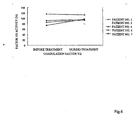
- the factor VII activity in the patient's serum was measured. Measurement was carried out using plasma collected within one week prior to the start of ribavirin and interferon administration, and using plasma collected four weeks after the start of administration. The results are presented in Table 7and FIG. 4 .
- Table 7 Patient No. Factor VII (before administration) Factor VII (during administration) 1 91 95 2 77 78 3 - - 4 85 93 5 - - 6 115 112 7 73 96
- SEQ ID NOS: 1 and 2 primers
Landscapes
- Health & Medical Sciences (AREA)
- Life Sciences & Earth Sciences (AREA)
- Engineering & Computer Science (AREA)
- Chemical & Material Sciences (AREA)
- Immunology (AREA)
- Hematology (AREA)
- Molecular Biology (AREA)
- Medicinal Chemistry (AREA)
- Biomedical Technology (AREA)
- General Health & Medical Sciences (AREA)
- Urology & Nephrology (AREA)
- Cell Biology (AREA)
- Pharmacology & Pharmacy (AREA)
- Animal Behavior & Ethology (AREA)
- Public Health (AREA)
- Veterinary Medicine (AREA)
- Bioinformatics & Cheminformatics (AREA)
- Pathology (AREA)
- Biochemistry (AREA)
- Gastroenterology & Hepatology (AREA)
- Biotechnology (AREA)
- General Physics & Mathematics (AREA)
- Epidemiology (AREA)
- Microbiology (AREA)
- Analytical Chemistry (AREA)
- Food Science & Technology (AREA)
- Physics & Mathematics (AREA)
- Zoology (AREA)
- General Chemical & Material Sciences (AREA)
- Nuclear Medicine, Radiotherapy & Molecular Imaging (AREA)
- Chemical Kinetics & Catalysis (AREA)
- Organic Chemistry (AREA)
- Toxicology (AREA)
- Tropical Medicine & Parasitology (AREA)
- Proteomics, Peptides & Aminoacids (AREA)
- Diabetes (AREA)
- Oncology (AREA)
- Communicable Diseases (AREA)
- Virology (AREA)
- Pharmaceuticals Containing Other Organic And Inorganic Compounds (AREA)
Applications Claiming Priority (3)
| Application Number | Priority Date | Filing Date | Title |
|---|---|---|---|
| JP2007220450 | 2007-08-27 | ||
| JP2007220449 | 2007-08-27 | ||
| PCT/JP2008/065338 WO2009028573A1 (ja) | 2007-08-27 | 2008-08-27 | 血液凝固障害におけるリバビリンの利用 |
Publications (2)
| Publication Number | Publication Date |
|---|---|
| EP2201953A1 true EP2201953A1 (de) | 2010-06-30 |
| EP2201953A4 EP2201953A4 (de) | 2011-08-03 |
Family
ID=40387290
Family Applications (1)
| Application Number | Title | Priority Date | Filing Date |
|---|---|---|---|
| EP08828257A Withdrawn EP2201953A4 (de) | 2007-08-27 | 2008-08-27 | Verwendung von ribavirin bei blutgerinnungsstörungen |
Country Status (4)
| Country | Link |
|---|---|
| US (1) | US20110117054A1 (de) |
| EP (1) | EP2201953A4 (de) |
| JP (1) | JPWO2009028573A1 (de) |
| WO (1) | WO2009028573A1 (de) |
Families Citing this family (1)
| Publication number | Priority date | Publication date | Assignee | Title |
|---|---|---|---|---|
| EP3505186B1 (de) * | 2010-07-30 | 2022-01-12 | Takeda Pharmaceutical Company Limited | Nukleophile katalysatoren für oxim-verbindung |
Family Cites Families (14)
| Publication number | Priority date | Publication date | Assignee | Title |
|---|---|---|---|---|
| US3798209A (en) | 1971-06-01 | 1974-03-19 | Icn Pharmaceuticals | 1,2,4-triazole nucleosides |
| AR205339A1 (es) | 1973-03-12 | 1976-04-30 | Icn Pharmaceuticals | Sintesis de 1,2,4-triazolo-3-carboxamidas utiles como agentes antivirales |
| GB1482736A (en) | 1974-03-18 | 1977-08-10 | Icn Pharmaceuticals | 1-(beta-d-ribofuranosyl)-1,2,4-triazole acid derivatives |
| US4530901A (en) | 1980-01-08 | 1985-07-23 | Biogen N.V. | Recombinant DNA molecules and their use in producing human interferon-like polypeptides |
| US6936694B1 (en) | 1982-05-06 | 2005-08-30 | Intermune, Inc. | Manufacture and expression of large structural genes |
| ATE322547T1 (de) * | 1993-06-10 | 2006-04-15 | Genetic Therapy Inc | Adenovirale vektoren für die behandlung der hämophilie |
| HUT75533A (en) | 1993-11-10 | 1997-05-28 | Schering Corp | Improved interferon polymer conjugates |
| ES2229820T3 (es) | 1998-10-16 | 2005-04-16 | Schering Corporation | Terapia de combinacion ribavirina-interferon alfa para erradicar el hcv-rna detectable en pacientes con infeccion por hepatitis c cronica. |
| JP4676585B2 (ja) * | 1999-12-24 | 2011-04-27 | 一般財団法人化学及血清療法研究所 | 血液凝固異常に基づく疾患の治療・予防用医薬組成物 |
| JP4035562B2 (ja) * | 2001-01-31 | 2008-01-23 | 国立大学法人富山大学 | ガレクチン−3誘導能を利用した物質のスクリーニング方法、肝の状態の診断方法およびこれらの方法を利用したキット |
| JP2005118005A (ja) * | 2003-10-20 | 2005-05-12 | Shinshu Univ | 肝臓集積性細胞 |
| JP2007055899A (ja) | 2003-10-27 | 2007-03-08 | Chemo Sero Therapeut Res Inst | 血液凝固第x因子を主剤とする血液凝固異常に基づく疾患の治療・予防用医薬組成物 |
| CA2614639C (en) * | 2006-02-28 | 2013-11-12 | National University Corporation Nagoya University | Pharmaceutical composition for treatment of blood clotting disorder |
| US20110045535A1 (en) * | 2007-08-27 | 2011-02-24 | National University Corporation Nagoya University | Activator for Blood Coagulation Factor VII Promoter and Utilization of the Same |
-
2008
- 2008-08-27 EP EP08828257A patent/EP2201953A4/de not_active Withdrawn
- 2008-08-27 US US12/733,396 patent/US20110117054A1/en not_active Abandoned
- 2008-08-27 WO PCT/JP2008/065338 patent/WO2009028573A1/ja not_active Ceased
- 2008-08-27 JP JP2009530160A patent/JPWO2009028573A1/ja active Pending
Also Published As
| Publication number | Publication date |
|---|---|
| WO2009028573A1 (ja) | 2009-03-05 |
| JPWO2009028573A1 (ja) | 2010-12-09 |
| US20110117054A1 (en) | 2011-05-19 |
| EP2201953A4 (de) | 2011-08-03 |
Similar Documents
| Publication | Publication Date | Title |
|---|---|---|
| CN102159245B (zh) | Hcv ns3蛋白酶抑制剂与干扰素和利巴韦林的组合 | |
| KR100309059B1 (ko) | 인터페론을함유하는치료학적배합물 | |
| EP1976516B1 (de) | Behandlung von viraler hepatitis | |
| RU2128056C1 (ru) | Способы и препараты для лечения заболеваний интерфероном, характеризующиеся сниженными побочными эффектами | |
| DE60018273T2 (de) | Pegyliertes interferon alpha in kombination mit einem ccr5 antagonisten für eine hiv-therapie | |
| US6849254B1 (en) | HCV combination therapy | |
| JP2013508425A (ja) | Bi201335、インターフェロンアルファおよびリバビリンを含むhcvの併用療法のための投薬処置計画 | |
| US20150190480A1 (en) | Combination products for treating cancer | |
| EP0525917A2 (de) | Verbesserung der mit unkontrolliertem Tumorzellen- und Viruswachstumszyklus verbundenen metabolischen Störungen durch DS-RNS | |
| EP1772155A1 (de) | Arzneimittel zur Behandlung von Vogelgrippe | |
| EP2201953A1 (de) | Verwendung von ribavirin bei blutgerinnungsstörungen | |
| EP2535057A2 (de) | Zusammensetzung zur behandlung von infektions- und tumorerkrankungen | |
| JP2010529984A (ja) | 癌を治療するためのインターフェロンアルファ逐次レジメン | |
| CA2614639C (en) | Pharmaceutical composition for treatment of blood clotting disorder | |
| MX2008016166A (es) | Agente profilactico o terapeutico para enfermedad viral. | |
| US20110045535A1 (en) | Activator for Blood Coagulation Factor VII Promoter and Utilization of the Same | |
| WO2005123113A2 (en) | Interferon compositions and methods of use thereof | |
| Allavena et al. | IFN-β Partially Counteracts Inhibition of Natural Killer Activity Induced by Some Antitumor Agents | |
| Prochwicz et al. | Current views on the use of interferons in the treatment of polycythaemia vera (RCD code: VIII) | |
| KR20010024044A (ko) | 만성씨형간염의치료에서동시적으로,개별적으로또는연속적으로사용하기위한,아이에프엔-알파와아만타딘이조합되어사용되는약제 | |
| AU728894B2 (en) | Double stranded RNA correction of aberrant metabolic pathways associated with uncontrolled tumor cell and virus growth cycles | |
| Dev et al. | Current standard of care in hepatitis C virus infection | |
| EP2450051A1 (de) | Medizinischer wirkstoff und verfahren zur behandlung von hartnäckiger chronischer hepatitis c | |
| HK1123733B (en) | Viral hepatitis treatment |
Legal Events
| Date | Code | Title | Description |
|---|---|---|---|
| PUAI | Public reference made under article 153(3) epc to a published international application that has entered the european phase |
Free format text: ORIGINAL CODE: 0009012 |
|
| 17P | Request for examination filed |
Effective date: 20100329 |
|
| AK | Designated contracting states |
Kind code of ref document: A1 Designated state(s): AT BE BG CH CY CZ DE DK EE ES FI FR GB GR HR HU IE IS IT LI LT LU LV MC MT NL NO PL PT RO SE SI SK TR |
|
| AX | Request for extension of the european patent |
Extension state: AL BA MK RS |
|
| DAX | Request for extension of the european patent (deleted) | ||
| A4 | Supplementary search report drawn up and despatched |
Effective date: 20110704 |
|
| RIC1 | Information provided on ipc code assigned before grant |
Ipc: A61P 31/12 20060101ALI20110628BHEP Ipc: A61P 7/04 20060101ALI20110628BHEP Ipc: A61K 38/21 20060101ALI20110628BHEP Ipc: A61K 31/7056 20060101AFI20110628BHEP |
|
| RIC1 | Information provided on ipc code assigned before grant |
Ipc: A61P 31/12 20060101ALI20110810BHEP Ipc: A61P 7/04 20060101ALI20110810BHEP Ipc: A61K 38/21 20060101ALI20110810BHEP Ipc: A61K 31/7056 20060101AFI20110810BHEP |
|
| STAA | Information on the status of an ep patent application or granted ep patent |
Free format text: STATUS: THE APPLICATION IS DEEMED TO BE WITHDRAWN |
|
| 18D | Application deemed to be withdrawn |
Effective date: 20120201 |