EP2184339A1 - Riechstoffmischungen enthaltend Isolongifolanol und Moschus - Google Patents
Riechstoffmischungen enthaltend Isolongifolanol und Moschus Download PDFInfo
- Publication number
- EP2184339A1 EP2184339A1 EP09173455A EP09173455A EP2184339A1 EP 2184339 A1 EP2184339 A1 EP 2184339A1 EP 09173455 A EP09173455 A EP 09173455A EP 09173455 A EP09173455 A EP 09173455A EP 2184339 A1 EP2184339 A1 EP 2184339A1
- Authority
- EP
- European Patent Office
- Prior art keywords
- component
- musk
- fragrance
- fragrances
- perfume
- Prior art date
- Legal status (The legal status is an assumption and is not a legal conclusion. Google has not performed a legal analysis and makes no representation as to the accuracy of the status listed.)
- Granted
Links
Classifications
-
- C—CHEMISTRY; METALLURGY
- C11—ANIMAL OR VEGETABLE OILS, FATS, FATTY SUBSTANCES OR WAXES; FATTY ACIDS THEREFROM; DETERGENTS; CANDLES
- C11B—PRODUCING, e.g. BY PRESSING RAW MATERIALS OR BY EXTRACTION FROM WASTE MATERIALS, REFINING OR PRESERVING FATS, FATTY SUBSTANCES, e.g. LANOLIN, FATTY OILS OR WAXES; ESSENTIAL OILS; PERFUMES
- C11B9/00—Essential oils; Perfumes
- C11B9/0042—Essential oils; Perfumes compounds containing condensed hydrocarbon rings
-
- C—CHEMISTRY; METALLURGY
- C11—ANIMAL OR VEGETABLE OILS, FATS, FATTY SUBSTANCES OR WAXES; FATTY ACIDS THEREFROM; DETERGENTS; CANDLES
- C11B—PRODUCING, e.g. BY PRESSING RAW MATERIALS OR BY EXTRACTION FROM WASTE MATERIALS, REFINING OR PRESERVING FATS, FATTY SUBSTANCES, e.g. LANOLIN, FATTY OILS OR WAXES; ESSENTIAL OILS; PERFUMES
- C11B9/00—Essential oils; Perfumes
- C11B9/0026—Essential oils; Perfumes compounds containing an alicyclic ring not condensed with another ring
- C11B9/0034—Essential oils; Perfumes compounds containing an alicyclic ring not condensed with another ring the ring containing six carbon atoms
-
- C—CHEMISTRY; METALLURGY
- C11—ANIMAL OR VEGETABLE OILS, FATS, FATTY SUBSTANCES OR WAXES; FATTY ACIDS THEREFROM; DETERGENTS; CANDLES
- C11B—PRODUCING, e.g. BY PRESSING RAW MATERIALS OR BY EXTRACTION FROM WASTE MATERIALS, REFINING OR PRESERVING FATS, FATTY SUBSTANCES, e.g. LANOLIN, FATTY OILS OR WAXES; ESSENTIAL OILS; PERFUMES
- C11B9/00—Essential oils; Perfumes
- C11B9/0026—Essential oils; Perfumes compounds containing an alicyclic ring not condensed with another ring
- C11B9/0038—Essential oils; Perfumes compounds containing an alicyclic ring not condensed with another ring the ring containing more than six carbon atoms
-
- C—CHEMISTRY; METALLURGY
- C11—ANIMAL OR VEGETABLE OILS, FATS, FATTY SUBSTANCES OR WAXES; FATTY ACIDS THEREFROM; DETERGENTS; CANDLES
- C11B—PRODUCING, e.g. BY PRESSING RAW MATERIALS OR BY EXTRACTION FROM WASTE MATERIALS, REFINING OR PRESERVING FATS, FATTY SUBSTANCES, e.g. LANOLIN, FATTY OILS OR WAXES; ESSENTIAL OILS; PERFUMES
- C11B9/00—Essential oils; Perfumes
- C11B9/0069—Heterocyclic compounds
- C11B9/0073—Heterocyclic compounds containing only O or S as heteroatoms
- C11B9/008—Heterocyclic compounds containing only O or S as heteroatoms the hetero rings containing six atoms
-
- C—CHEMISTRY; METALLURGY
- C11—ANIMAL OR VEGETABLE OILS, FATS, FATTY SUBSTANCES OR WAXES; FATTY ACIDS THEREFROM; DETERGENTS; CANDLES
- C11B—PRODUCING, e.g. BY PRESSING RAW MATERIALS OR BY EXTRACTION FROM WASTE MATERIALS, REFINING OR PRESERVING FATS, FATTY SUBSTANCES, e.g. LANOLIN, FATTY OILS OR WAXES; ESSENTIAL OILS; PERFUMES
- C11B9/00—Essential oils; Perfumes
- C11B9/0069—Heterocyclic compounds
- C11B9/0073—Heterocyclic compounds containing only O or S as heteroatoms
- C11B9/0084—Heterocyclic compounds containing only O or S as heteroatoms the hetero rings containing more than six atoms
Definitions
- the present invention furthermore relates to perfumed products containing such fragrance mixtures according to the invention, in particular perfume oils, and to a process for the preparation of the fragrance mixtures and perfume oils according to the invention.
- EP 1 215 189 a preparation process for compound (A) (isolongifolanol) is described, as well as its odor properties.
- Compound (A) is characterized as a fragrance with wood and patchouli notes, which also have kampfherige, amber and green aspects.
- compound (A) is suitable for incorporation in woody and spicy compositions and for the reproduction of natural patchouli oils.
- musk fragrances are also mentioned without mentioning certain proportions or certain odor effects when combined with them.
- the only perfume oil specified there contains isolongifolenol (not compound (A) ) and the macrocyclic musk fragrance (Globalid®) in a ratio of 400: 2.
- JP 58-022450 B4 and JP 60-010007 B4 compound (A) is known.
- the compound is obtained in the process described therein with a content of 5% by hydrogenation of isolongifolene oxide in a multicomponent mixture.
- perfume oils and perfumed products containing one or more musk fragrances are known to those skilled in the art of perfumery, see for example EP 1 552 814 ,
- Component (a) of a perfume mixture according to the invention is a perfume mixture according to the invention:
- Compound (A) (isolongifolanol; IUPAC name: 2,2,7,7-tetramethyltricyclo [6.2.1.0 1,6 ] undecan-6-ol) of the structural formula given above is known from the literature and can be prepared, for example, as described in US Pat EP 1 215 189 (see above).
- the musk fragrance (s) of ingredient (b) are fragrances that have a musk odor. Such fragrances are known to the person skilled in the art, since "musk” represents a very important odor direction in perfumery.
- the mass ratio of the total amount of musk fragrances, ie of component (b), to compound (A) (component (a)), ie the total weight ratio of (b): (a), is greater than or equal to 1: 1, preferably 1: 1 to 50: 1, more preferably 25: 1 to 1: 1, more preferably 4: 3 to 20: 1, most preferably 4: 3 to 15: 1.
- the total weight ratio of component (b): component (a) is 2: 1 to 12: 1, especially 2: 1 to 10: 1, and in many further preferred embodiments 5: 2 to 8: 1.
- the musk fragrance (s) of component (b) are preferably selected from the group of macrocyclic musk fragrances, nitro musk fragrances (aromatic musk fragrances with nitro group (s)), polycyclic musk fragrances and / or alicyclic musk fragrances.
- Fragrance mixtures preferred according to the invention contain two, three or more different musk fragrances as constituent (b), wherein each of the musk fragrances, independently of the other musk fragrances, is preferably selected from the group of macrocyclic musk fragrances, nitro musk fragrances (aromatic musk fragrances with nitro group ( n)), the polycyclic musk fragrances and / or the alicyclic musk fragrances.
- the musk fragrance or musk fragrances are preferably selected from the following Table 1: ⁇ u> Table 1: ⁇ / u> TYPE Product / Brand Name Name / CAS name MACRO EXALTENON 4-cyclopentadecen-1-one (4Z) -; 4-Cyclopentadecen-1-one MACRO Civeton 9-Cycloheptadecen-1-one, (9Z) - MACRO CYCLOHEXADECANOLIDE, DIHYDROAMBRETTOLIDE Oxacycloheptadecan-2-one, ⁇ -hexadecanolide MACRO Ethylene Dodecanedioate 1,4-Dioxacyclohexadecane-5,16-dione MACRO GLOBALIDE® Oxacyclohexadecen-2-one; 15 Pentadec- (11/12) -enolide MACRO Ethylene 1,4-D
- component (b) are polycyclic and / or macrocyclic musk fragrances, macrocyclic musk fragrances in particular having been found to be particularly advantageous in the context of the invention, which in turn are preferably selected from the group consisting of macrocyclic C 14 -C 18 ketones and macrocyclic C 14 -C 18 lactones, wherein the ketone or lactone has a ring size of 15 to 17 ring atoms and no, one or two oxygen atoms in the ring.
- perfume mixtures according to the invention whose component (b) comprises or is selected from: 3-methylcyclopentadecenone (Muscenone), 15-pentadec (11/12) -enolide (Globalide) ®, ethylene brassylate, oxacyclohexadecan-2-one (Macrolide ®), cyclohexadecanone (Isomuscone®), 8-cyclohexadecanone (Globanone®), (7/8) - cyclohexadecanone (Aurelione®) and mixtures thereof.
- component (b) comprises or is selected from: 3-methylcyclopentadecenone (Muscenone), 15-pentadec (11/12) -enolide (Globalide) ®, ethylene brassylate, oxacyclohexadecan-2-one (Macrolide ®), cyclohexadecanone (Isomuscone®), 8-cyclohexadecanone (G
- component (b) is selected from the group consisting of 15-pentadec (11/12) -enolide (Globalide®), ethylene brassylate and oxacyclohexadecan-2-one (Macrolide®) and mixtures thereof.
- the animal character of the musk fragrances is particularly enhanced by the addition of compound (A) with preferably one, two, three, four, five, six, seven, eight, nine, ten or more other fragrances which are preferably part of a fragrance mixture according to the invention , preferably a preferred perfume oil according to the invention, are, harmonized and rounded.
- fragrances of the fund (the base notes) of a preferred fragrance mixture according to the invention preferably a preferred perfume oil according to the invention, since there harmonization and rounding creates a harmonious, elegant and creamy and thus very valuable odor impression.
- Preferred background notes in this context are the fragrances described below as component (c).
- Optional component (c) of a perfume mixture according to the invention is:
- a fragrance mixture according to the invention preferably an inventive perfume oil, in addition to the components (a) and (b) contains as a further constituent
- (C) one, 2, 3, 4, 5 or more fragrances having a molecular weight of greater than or equal to 190 g / mol, which are not compound (A) (component (a)) and not part of component (b).
- fragrances having a molecular weight ⁇ 190 g / mol which may be part of optional component (c) are known to the person skilled in the art and can be found, for example, in US Pat S. Arctander, Perfume and Flavor Materials, Vol. I and II, Montclair, NJ, 1969, self-published or H. Surburg, J. Panten, "Common Fragrance and Flavor Materials", 5th. Ed., Wiley-VCH, Weinheim 2006 ,
- the perfume ingredient (s) of component (c) of a perfume mixture according to the invention have a molecular weight of greater than or equal to 190 g / mol, preferably a molecular weight of greater than or equal to 195 g / mol.
- the fragrances of component (c) are to be regarded as the base notes of a fragrance mixture according to the invention or a perfume oil according to the invention.
- Fragrance mixtures according to the invention in particular perfume oils according to the invention, comprising compound (A), one or more musk fragrances (component (b)) and component (c) of the base notes show the harmonization and rounding already described above, whereby an elegant, creamy and thus very valuable odor impression is produced , This applies in particular to the fond notes which are preferably defined below and in particular for the explicitly mentioned.
- the molecular weight of the fragrances of component (c) is preferably 200 to 300 g / mol, more preferably 200 to 280 g / mol, particularly preferably 200 to 265 g / mol, and most preferably 200 to 245 g / mol, since such Fragrances in combination with ingredient (a), especially with the fragrances of ingredients (a) and (b), the particular odor effects of the present invention are most and most clearly achieved.
- Fragrance mixtures according to the invention comprising compound (A), one or more musk fragrances (constituent (b)) and (c) (i) 2,3,8,8-tetramethyl-1,2,3,4,5, 6,7,8-octahydro-2-naphthalenyl methyl ketone and / or 1- [1,2,3,4,6,7,8,8a-octahydro-1,2,8,8-tetramethylnaphthalen-2-yl] ethanone , in particular in the proportions given below, in addition to the harmonization and rounding creates a classic vetiver effect that makes the entire composition appear more valuable.
- vetiver effect the expert (perfumer) understands the following: the smell is pronounced of vetiver oil, which is characterized by a precious dry woody odor with grassy and rooty aspects.
- Component (c) (ii) can be present as a cis or trans isomer or as a mixture of these isomers.
- Preferred in the context of the present invention is a content of cis-methyldihydrojasmonate of more than 30 wt.%, More preferably more than 60 wt.%, Particularly preferably more than 75 wt.%, In some cases even more than 90% by weight, based in each case on the total amount of methyldihydrojasmonate.
- Methyldihydrojasmonat is commercially available in different isomer mixtures, for example under the name Hedione®, Hedione® HC).
- perfume oils according to the invention in particular perfume oils according to the invention, comprising compound (A), one or more musk fragrances (component (b)) and (c) (ii) methyl dihydrojasmonate, in particular in the proportions given below, in addition to the harmonization and rounding create a "fleur d ' Orange effect "and uniquely emphasize the transparency of Methyl Dihydrojasmonat, which makes the entire composition appear more valuable.
- transparency of a fragrance composition the person skilled in the art (perfumer) understands that the odor of a fragrance mixture or a perfume oil has an aqueous and ozone clarity.
- a further preferred embodiment relates to a fragrance mixture according to the invention, preferably a perfume oil according to the invention, in which the mass ratio of the total amount of component (c) (i) is 2,3,8,8-tetramethyl-1,2,3,4,5,6, 7,8-octahydro-2-naphthalenyl methyl ketone and 1- [1,2,3,4,6,7,8,8a-octahydro-1,2,8,8-tetramethylnaphthalen-2-yl] ethanone to give compound (A ) (Component (a)) is greater than or equal to 1: 1, preferably 4: 3 to 10: 1, more preferably 2: 1 to 8: 1.
- a further preferred embodiment relates to a fragrance mixture according to the invention, preferably a perfume oil according to the invention, in which the mass ratio of the total amount of component (c) (ii) methyl dihydrojasmonate to compound (A) (component (a)) is greater than or equal to 1: 1, preferably 2 : 1 to 15: 1, more preferably 3: 1 to 10: 1.
- a fragrance mixture according to the invention preferably an inventive perfume oil, in addition to the components (a) and (b) and optionally (c) contains as a further constituent
- a fragrance mixture according to the invention preferably a perfume oil according to the invention contains a sensory (odoriferous) effective amount of the component (d), preferably in an amount sufficient to impart a fruity note to a fragrance mixture according to the invention, preferably a perfume oil according to the invention.
- Fragrance mixtures according to the invention in particular perfume oils according to the invention, comprising compound (A), one or more musk fragrances (constituent (b)) and one or more fruity fragrances (constituent (d)) show the above-described odor effects, whereby a more harmonious and complex and thus very valuable smell impression arises. This applies in particular to the following preferred defined and in particular for the explicitly mentioned fruity fragrances.
- a fragrance mixture according to the invention preferably a perfume oil according to the invention, contains constituent (c) and constituent (d) in addition to components (a) and (b).
- a perfume oil according to the invention or a perfumed product according to the invention contains a constituent (d) which simultaneously fulfills the criteria of constituent (c), this is regarded, in particular for quantitative considerations, as constituent (c) and assigned thereto.
- fruity fragrances which may be part of the optional ingredient (d) are known to the person skilled in the art and can be found, for example, in US Pat S. Arctander, Perfume and Flavor Materials, Vol. I and II, Montclair, NJ, 1969, self-published or H. Surburg, J. Panten, "Common Fragrance and Flavor Materials", 5th. Ed., Wiley-VCH, Weinheim 2006 ,
- the fruity fragrance (s) of ingredient (d) is selected from the group of fragrances in Table 2 below.
- Table 2 ⁇ / u> preferred fruity fragrances of ingredient (d) substance fruit note structure 2-Methyl-butyric acid ethyl ester (ethyl 2-methylbutyrate) Apple 4- (p-hydroxyphenyl) -2-butanone raspberry Ethyl-3-methyl-3-phenylglycidate strawberry Butyric acid isoamyl ester (isoamyl butyrate) banana Acetic acid isoamyl ester (isoamyl acetate) banana N-butyl acetate (butyl acetate) Apple Butyric acid ethyl ester (ethyl butyrate) pineapple 3-Methyl-butyric acid ethyl ester (ethylisovalerate) blueberries N-hexanoic acid ethyl ester (ethyl caproate) pineapple n
- the fruity fragrances of ingredient (d) may be of natural or synthetic origin. In the case of a natural origin, they may be part of a corresponding essential oil or may have been enriched or isolated from such.
- D-limonene is used in a preferred embodiment according to the invention in the form of orange oil, lemon oil, lime oil, bergamot oil, tangerine oil or grapefruit oil.
- red-fragrant fragrances are used as ingredient (d), the preferred red-fragrant fragrances preferably having an odor of strawberry, raspberry, blackberry, redcurrant, Blueberry (Cassis), elderberry, cherry, red grape (grape) and / or plum have.
- the preferred embodiments and / or mass ratios referred to constituents (a), (b), (c) and (d) are set simultaneously.
- compound (A) together with the musk fragrance (s) of ingredient (b) advantageously emphasizes certain odoriferous aspects of these fragrances in combination with other fragrances.
- Fragrance compositions according to the invention can be used in liquid form, undiluted or diluted with a solvent for perfuming or aromatization.
- solvents for this purpose are ethanol, glycerol, 1,2-propylene glycol, 1,2-butylene glycol, dipropylene glycol, diethyl phthalate, triethyl citrate, isopropyl myristate and triacetin.
- fragrance mixtures according to the invention in particular perfume oils, can be adsorbed on a carrier which ensures both a fine distribution of the fragrances contained therein in the product and a controlled release during use.
- Such supports may include porous inorganic materials such as light sulphate, silica gels, zeolites, gypsum, clays, clay granules, aerated concrete, etc., or organic materials such as woods, cellulosic based substances, sugars, dextrins (eg maltodextrin). or plastics such as PVC, polyvinyl acetates or polyurethanes.
- the combination of composition according to the invention and carrier represents an exemplary article according to the invention.
- Fragrance mixtures according to the invention in particular perfume oils, can also be microencapsulated, spray-dried, present as inclusion complexes or as extrusion products (ie products according to the invention) and in this form, for example.
- compositions modified in this way can be further optimized by so-called “coating” with suitable materials with a view to a more targeted release of fragrance, to which end preferably wax-like plastics, such as e.g. Polyvinyl alcohol can be used.
- suitable materials such as e.g. Polyvinyl alcohol can be used.
- the resulting products in turn represent products according to the invention.
- the microencapsulation of the fragrance mixtures according to the invention can be carried out, for example, by the so-called coacervation method with the aid of capsule materials, e.g. made of polyurethane-like substances or soft gelatin.
- the spray-dried fragrance or flavoring compositions can be prepared, for example, by spray-drying a fragrance mixture according to the invention, preferably a perfume oil, containing emulsion or dispersion, wherein as carriers modified starches, proteins, dextrin and vegetable gums can be used.
- Inclusion complexes can be e.g.
- Extrusion products may be prepared by fusing a fragrance mixture according to the invention, preferably a perfume oil according to the invention, with a suitable waxy substance and by extrusion with subsequent solidification, if appropriate in a suitable solvent, e.g. Isopropanol.
- Fragrance mixtures according to the invention preferably perfume oils according to the invention, can preferably be used as such, in concentrated form, in solutions or in modified form as described above for the preparation of perfumed products according to the invention.
- Preferred perfumed products according to the invention comprise a perfume mixture according to the invention, preferably a perfume oil according to the invention, in a sensorially effective amount.
- the proportion of a fragrance mixture according to the invention, preferably of a perfume oil according to the invention, in perfumed products according to the invention is preferably 0.01 to 10% by weight, preferably 0.1 to 5% by weight and particularly preferably 0.25 to 3% by weight. in each case based on the total mass of the perfumed product.
- Preferred perfumed products according to the invention are detergents and cleaners, hygiene or care products, in particular in the field of body and hair care, cosmetics and household.
- Preferred perfumed products of the present invention are selected from the following list: Perfume Extracts, Eau de perfumes, Eau de Toilettes, Shaving Waters, Eau de Colognes, Pre-shave Products, Splash Colognes and Perfumed Freshener Wipes, Acid, Alkaline, and Neutral Detergents, such as e.g.
- Skin creams and lotions face creams and lotions, sunscreen creams and lotions, after-sun creams and lotions, hand creams and lotions, foot creams and lotions, depilatory creams and lotions, after-shave creams and lotions, Skin tanning creams and lotions, skin lightening creams and lotions, hair care products such as hair sprays, hair gels, hair lotions, hair conditioners, permanent and semipermanent hair dyes, hair styling agents such as cold waving and hair straightening, hair lotions, hair creams and lotions, deodorants and antiperspirants such as Underarm sprays, roll-ons, deodorants, deodorants, decorative cosmetics, e.g. Eyeshadows, nail polishes, make-ups, lipsticks, mascara and candles, lamp oils, incense sticks, insecticides and repellents.
- hair care products such as hair sprays, hair gels, hair lotions, hair conditioners, permanent and semipermanent hair dyes
- hair styling agents such as cold wa
- Dipropylene glycol DPG
- diethyl phthalate DEP
- triethyl citrate TEC
- isopropyl myristate IPM
- nat. natural
- macrocyclic musk fragrance component (b) of the fragrance mixture of the invention (MACRO)
- polycyclic musk fragrance component (b) of the perfume mixture (POLY) according to the invention)
- alicyclic musk fragrance constituent (b) of the perfume mixture according to the invention
- HEDIONE® HC / 30 contains at least 30% by weight of the cis isomer and about 70% by weight of the trans isomer of methyl dihydrojasmonate.
- Perfume oil example P1 AMBRETTOLID (MACRO) 10.00 10.00 AMBROXIDE 10% in IPM 10.00 10.00 benzyl 20.00 20.00 benzyl 15.00 15.00 BERGAMOT OIL, bergaptenamide 60,00 60,00 CALONE® 1951 10% in DPG 15.00 15.00 COUMARIN 5.00 5.00 CYCLOGALBANAT® 10% in DPG 10.00 10.00 ALPHA -DAMASCON 1% in DPG 20.00 20.00 dihydromyrcenol 10.00 10.00 ethyl linalool 75.00 75.00 ETHYLLINALYLACETAT 50,00 50,00 ETHYLMALTOL 1% in DEP 10.00 10.00 ETHYLENE BRASSYLATE (MACRO) 80,00 80,00 Florosa 40,00 40,00 Geranylacetat 10.00 10.00 HEDIONE® HC / 30 35,00 35,00 HEDIONE® 210.00 210.00 HELIONAL® 15.00 15.00 HELVETOLIDE® (ALICYC
- perfume oils P1, P2, P3, P4, P5, P6, P7 and P8, respectively, from the above perfume oil examples P1 to P8 were each incorporated separately into the following formulations.
Landscapes
- Chemical & Material Sciences (AREA)
- Life Sciences & Earth Sciences (AREA)
- Engineering & Computer Science (AREA)
- Chemical Kinetics & Catalysis (AREA)
- Oil, Petroleum & Natural Gas (AREA)
- Wood Science & Technology (AREA)
- Organic Chemistry (AREA)
- Fats And Perfumes (AREA)
- Cosmetics (AREA)
Abstract
Description
- Die vorliegende Erfindung betrifft Riechstoffmischungen, insbesondere Parfümöle, umfassend
- (a) Verbindung (A) (Isolongifolanol)

- (b) mindestens einen Moschusriechstoff
- Ferner betrifft die vorliegende Erfindung parfümierte Produkte enthaltend solche erfindungsgemäßen Riechstoffmischungen, insbesondere Parfümöle, sowie ein Verfahren zur Herstellung der erfindungsgemäßen Riechstoffmischungen und Parfümöle.
- In
EP 1 215 189 ist ein Herstellverfahren für Verbindung (A) (Isolongifolanol) beschrieben, ebenso wie ihre geruchlichen Eigenschaften. Verbindung (A) wird dort als Riechstoff mit Holz- und Patchouli-Noten charakterisiert, der daneben kampherige, ambrierte sowie grüne Aspekte aufweist. Ferner ist inEP 1 215 189 ausgeführt, dass sich Verbindung (A) zur Einarbeitung in holzige und würzige Kompositionen eignet sowie zur Nachstellung natürlicher Patchouli-Öle. In einer allgemeinen Auflistung zahlreicher Riechstoffe sind unter anderem auch Moschusriechstoffe genannt, ohne dass dabei auf bestimmte Mengenverhältnisse oder bestimmte geruchliche Effekte bei Kombination mit diesen eingegangen wird. Das einzige dort konkret angegebene Parfümöl enthält Isolongifolenol (nicht Verbindung (A)) und den macrocyclischen Moschusriechstoff (Globalid®) im Verhältnis 400 : 2. - Aus
JP 58-022450 B4 JP 60-010007 B4 - In J. Agric. Food. Chem. 1994, 42, 138-142 ist die Umsetzung von Isolongifolenoxid mit Lithiumaluminiumhydrid beschrieben. Auf diese Weise wurden geringe Mengen (<100 mg) an Verbindung (A) erhalten.
- In Indian Perfumer 2005, 49(4), 453-455 wird Verbindung (A) als Bestandteil des ätherischen Öls (essential oil) von Cyperus rotundus L. - Knollen beschrieben. Dieses ätherische Öl enhält keine Moschusriechstoffe.
- Parfümöle und parfümierte Produkte enthaltend einen oder mehrere Moschusriechstoffe sind dem Fachmann auf dem Gebiet der Parfümerie bekannt, siehe beispielsweise
EP 1 552 814 . - Moschusriechstoffe sind dem Fachmann bekannt und spielen in der Parfümerie eine sehr wichtige Rolle. Es besteht immer wieder Bedarf in der Parfümerie, bestimmte geruchliche Aspekte eines Riechstoffs oder einer Riechstoffmischung zu betonen (hervorzuheben), im Falle der Moschusriechstoffe gilt dies insbesondere für deren erogenen, maskulinen und animalischen Geruchscharakter.
- Gelöst wird diese Aufgabe durch eine erfindungsgemäße Riechstoffmischung, vorzugsweise durch ein Parfümöl, umfassend
- (a) Verbindung (A)

- (b) mindestens einen Moschusriechstoff,
wobei
das Massenverhältnis der Gesamtmenge an Moschusriechstoffen des Bestandteils (b) zu Verbindung (A) (Bestandteil (a)) größer oder gleich 1 : 1 ist, bevorzugt 1 : 1 bis 50 : 1 beträgt. - Verbindung (A) (Isolongifolanol; IUPAC-Name: 2,2,7,7-Tetramethyltricyclo[6.2.1.01,6]undecan-6-ol) der oben angegebenen Strukturformel ist literaturbekannt und kann beispielsweise hergestellt werden wie beschrieben in
EP 1 215 189 (siehe oben). - Der oder die Moschusriechstoffe des Bestandteils (b) sind Riechstoffe, die einen Moschusgeruch aufweisen. Solche Riechstoffe sind dem Fachmann bekannt, da "Moschus" (musk) eine sehr wichtige Geruchsrichtung in der Parfümerie darstellt.
- Erfindungsgemäß ist das Massenverhältnis der Gesamtmenge an Moschusriechstoffen, also des Bestandteils (b), zu Verbindung (A) (Bestandteil (a)), d.h. das Gesamtgewichtsverhältnis von (b) : (a), größer oder gleich 1:1, bevorzugt beträgt es 1 : 1 bis 50 : 1, weiter bevorzugt 25 : 1 bis 1 : 1, besonders bevorzugt 4 : 3 bis 20 : 1, ganz besonders bevorzugt 4 : 3 bis 15 : 1. Am meisten bevorzugt beträgt das Gesamtgewichtsverhältnis von Bestandteil (b) : Bestandteil (a) 2 : 1 bis 12 : 1, insbesondere 2 : 1 bis 10 : 1, wobei es in vielen weiter bevorzugten Ausgestaltungen 5 : 2 bis 8 : 1 beträgt.
- Erfindungsgemäße Mischungen enthaltend Verbindung (A) und einen oder mehrere Moschusriechstoffe, insbesondere solche aus nachfolgender Tabelle 1, bei denen das Massenverhältnis der Gesamtmenge an Moschusriechstoffen (b) zu Verbindung (A) größer oder gleich 1 ist, betonen (hervorheben) den erogenen, maskulinen und animalischen Geruchscharakter, der allen Moschusverbindungen eigen ist.
- Der oder die Moschusriechstoffe des Bestandteils (b) sind vorzugsweise gewählt aus der Gruppe der macrocyclischen Moschusriechstoffe, der Nitro-Moschusriechstoffe (aromatische Moschusriechstoffe mit Nitrogruppe(n)), der polycyclischen Moschusriechstoffe und/oder der alicyclischen Moschusriechstoffe.
- Erfindungsgemäß bevorzugte Riechstoffmischungen, vorzugsweise Parfümöle, enthalten zwei, drei oder mehr verschiedene Moschusriechstoffe als Bestandteil (b), wobei jeder der Moschusriechstoffe unabhängig von den übrigen Moschusriechstoffen vorzugsweise gewählt ist aus der Gruppe der macrocyclischen Moschusriechstoffe, der Nitro-Moschusriechstoffe (aromatische Moschusriechstoffe mit Nitrogruppe(n)), der polycyclischen Moschusriechstoffe und/oder der alicyclischen Moschusriechstoffe.
- Bevorzugt werden der oder die Moschusriechstoffe im Rahmen der vorliegenden Erfindung gewählt aus nachfolgender Tabelle 1:
Tabelle 1: TYP Produkt / Markenname Name / CAS-Name MACRO EXALTENON 4-Cyclopentadecen-1-one (4Z)- ; 4-Cyclopentadecen-1-on MACRO CIVETON 9-Cycloheptadecen-1-on, (9Z)- MACRO CYCLOHEXADECANOLID, DIHYDROAMBRETTOLID Oxacycloheptadecan-2-on, ω-Hexadecanolid MACRO ETHYLENDODECANDIOAT 1,4-Dioxacyclohexadecane-5,16-dion MACRO GLOBALIDE® Oxacyclohexadecen-2-on; 15-Pentadec-(11/12)-enolid MACRO ETHYLENBRASSYLAT 1,4-Dioxacycloheptadecane-5,17-dion MACRO MUSCON 3-Methy-cyclopentadecanon MACRO AMBRETTOLID Oxacycloheptadec-10-en-2-on MACRO MUSCENON 3-Methyl-cyclopentadecenon MACRO VELVIONE®, AMBRETONE 5-Cyclohexadecen-1-on MACRO AURELIONE® 7/8-Cyclohexadecen-1-on MACRO GLOBANONE® 8-Cyclohexadecen-1-on MACRO ISOMUSCONE® Cyclohexadecanon MACRO EXALTOLID, MACROLIDE® Oxacyclohexadecan-2-on MACRO COSMONE® 3-Methyl-(5E/Z)-cyclotetradecen-1-on POLY TRASEOLIDE® 1-[2,3-Dihydro-1,1,2,6-tetramethyl-3-(1-methylethyl)-1H-inden-5- yl]-ethanon POLY PHANTOLIDE® 1-(2,3-Dihydro-1,1,2,3,3,6-hexamethyl-1H-inden-5-yl)-ethanon POLY TONALIDE® 1-(5,6,7,8-Tetrahydro-3,5,5,6,8,8-hexamethyl-2-naphthalenyl)-ethanon POLY CRYSOLIDE 1-[6-(1,1-Dimethylethyl)-2,3-dihydro-1,1-dimethyl-1H-inden-4-yl]-ethanon POLY CHROMANOLIDE® Tetradecansäure, 1-methylethyl ester; Cyclopenta[g]-2-benzopyran, 1,3,4,6,7,8-hexahydro-4,6,6,7,8,8-hexamethyl- POLY GALAXOLIDE® Cyclopenta[g]-2-benzopyran, 1,3,4,6,7,8-hexahydro-4,6,6,7,8,8-hexamethyl- ALICYC HELVETOLIDE® 1-Propanol, 2-[1-(3,3-dimethylcyclohexyl)ethoxy]-2-methyl-, 1-propanoat NITRO MOSKENE 2,3-Dihydro-1,1,3,3,5-pentamethyl-4,6-dinitro-1H-Inden NITRO MUSKTIBETENE 1-(1,1-Dimethylethyl)-3,4,5-trimethyl-2,6-dinitrobenzol NITRO ORINOX 1-[4-(1,1-Dimethylethyl)-2,6-dimethylphenyl]-ethanon NITRO MUSK XYLOL 1-(1,1-Dimethylethyl)-3,5-dimethyl-2,4,6-trinitrobenzol NITRO MUSK KETONE 1-[4-(1,1-Dimethylethyl)-2,6-dimethyl-3,5-dinitrophenyl]-ethanon NITRO MUSK ALPHA 1,3-Dibromo-2-methoxy-4-methyl-5-nitrobenzol MACRO = macrocyclische Moschusriechstoffe
NITRO = Nitro-Mochusriechstoffe
POLY = polycyclische Mochusriechstoffe
ALICYC = alicyclischer Mochusriechstoff - Weiter bevorzugt als Teil des Bestandteils (b) sind polycyclische und/oder macrocyclische Moschusriechstoffe, wobei sich insbesondere macrocyclische Moschusriechstoffe als besonders vorteilhaft im Sinne der Erfindung gezeigt haben, welche wiederum vorzugsweise gewählt sind aus der Gruppe bestehend aus macrocyclischen C14-C18-Ketonen und macrocyclischen C14-C18-Lactonen, wobei das Keton bzw. Lacton eine Ringgröße von 15 bis 17 Ringatomen und kein, ein oder zwei Sauerstoffatome im Ring aufweist.
- Am meisten bevorzugt sind erfindungsgemäße Riechstoffmischungen, deren Bestandteil (b) umfasst oder aisgewählt ist aus: 3-Methylcyclopentadecenon (Muscenon), 15-Pentadec-(11/12)-enolid (Globalide)®, Ethylenbrassylat, Oxacyclohexadecan-2-on (Macrolide®), Cyclohexadecanon (Isomuscone®), 8-Cyclohexadecanon (Globanone®), (7/8)- Cyclohexadecanon (Aurelione®) und deren Mischungen.
- In einer bevorzugten Ausführungsform wird Bestandteil (b) gewählt aus der Gruppe bestehend aus 15-Pentadec-(11/12)-enolid (Globalide®), Ethylenbrassylat und Oxacyclohexadecan-2-on (Macrolide®) und deren Mischungen.
- Ein erfindungsgemäßes Verfahren zum Betonen (Hervorheben) des erogenen, maskulinen und/oder animalischen Geruchseindrucks einer oder mehrerer Moschusverbindungen umfasst den folgenden Schritt:
- Vermischen einer oder mehrerer Moschusverbindungen, vorzugsweise gewählt aus den oben bevorzugt genannten Verbindungen des Bestandteils (b), mit einer Menge an Verbindung (A), die ausreicht, den erogenen, maskulinen und/oder animalischen Geruchseindruck einer, mehrerer oder sämtlicher der Moschusverbindungen des Bestandteils (b) zu betonen.
- Der animalische Charakter der Moschusriechstoffe wird durch den Zusatz von Verbindung (A) in besonderer Weise mit den vorzugsweise ein, zwei, drei, vier, fünf, sechs, sieben, acht, neun, zehn oder mehr weiteren Riechstoffen, die vorzugsweise Bestandteil einer erfindungsgemäßen Riechstoffmischung, vorzugsweise eines erfindungsgemäß bevorzugten Parfümöls, sind, harmonisiert und abgerundet.
- Dadurch entsteht ein harmonischer, eleganter und wertvoller bzw. ein harmonischer und komplexer Geruchseindruck.
- Dies gilt insbesondere für die vorzugsweise vorhandenen weiteren Riechstoffe des Fonds (der Fondnoten) einer erfindungsgemäß bevorzugten Riechstoffmischung, vorzugsweise eines erfindungsgemäß bevorzugten Parfümöls, da dort durch die Harmonisierung und Abrundung ein harmonischer, eleganter und cremiger und somit sehr wertvoller Geruchseindruck entsteht. Bevorzugte Fondnoten in diesem Zusammenhang sind die unten als Bestandteil (c) beschriebenen Riechstoffe.
- Ferner gilt dieser Effekt insbesondere für die vorzugsweise vorhandenen weiteren fruchtigen Riechstoffe einer erfindungsgemäß bevorzugten Riechstoffmischung, vorzugsweise eines erfindungsgemäß bevorzugten Parfümöls, da dort durch die Harmonisierung und Abrundung ein harmonischer und komplexer und somit sehr wertvoller Geruchseindruck entsteht. Bevorzugte fruchtige Riechstoffe in diesem Zusammenhang sind die unten als Bestandteil (d) beschriebenen Riechstoffe.
- Vorzugsweise enthält eine erfindungsgemäße Riechstoffmischung, vorzugsweise ein erfindungsgemäßes Parfümöl, zusätzlich zu den Bestandteilen (a) und (b) als einen weiteren Bestandteil
- (c) einen, 2, 3, 4, 5 oder mehr Riechstoffe mit einem Molgewicht von größer oder gleich 190 g/mol, welche nicht Verbindung (A) (Bestandteil (a)) und nicht Teil des Bestandteils (b) sind.
- Beispiele für Riechstoffe mit einem Molgewicht ≥ 190 g/mol, die Teil des optionalen Bestandteils (c) sein können, sind dem Fachmann bekannt und beispielsweise zu finden in S. Arctander, Perfume and Flavor Materials, Vol. I und II, Montclair, N. J., 1969, Selbstverlag oder H. Surburg, J. Panten, "Common Fragrance and Flavor Materials", 5th. Ed., Wiley-VCH, Weinheim 2006.
- Der oder die Riechstoffe des Bestandteils (c) einer erfindungsgemäßen Riechstoffmischung weisen ein Molgewicht von größer oder gleich 190 g/mol auf, vorzugsweise ein Molgewicht von größer oder gleich 195 g/mol.
- Die Riechstoffe des Bestandteils (c) sind als Fondnoten einer erfindungsgemäßen Riechstoffmischung bzw. eines erfindungsgemäßen Parfümöls, anzusehen.
- Erfindungsgemäße Riechstoffmischungen, insbesondere erfindungsgemäße Parfümöle, umfassend Verbindung (A), einen oder mehrere Moschusriechstoffe (Bestandteil (b)) sowie Bestandteil (c) der Fondnoten zeigen die oben bereits beschriebene Harmonisierung und Abrundung, wodurch ein eleganter, cremiger und somit sehr wertvoller Geruchseindruck entsteht. Dies gilt insbesondere für die nachfolgend bevorzugt definierten und insbesondere für die explizit genannten Fondnoten.
- Das Molgewicht der Riechstoffe des Bestandteils (c) beträgt bevorzugt 200 bis 300 g/mol, weiter bevorzugt 200 bis 280 g/mol, besonders bevorzugt 200 bis 265 g/mol, und am meisten bevorzugt 200 bis 245 g/mol, da mit solchen Riechstoffen in Kombination mit Bestandteil (a), insbesondere mit den Riechstoffen der Bestandteile (a) und (b), die besonderen geruchlichen Effekte der vorliegenden Erfindung am stärksten und deutlichsten erreicht werden.
- Bevorzugte erfindungsgemäße Riechstoffmischungen, vorzugsweise erfindungsgemäße Parfümöle, sind solche, in denen Bestandteil (c) einen, zwei, drei oder mehr Riechstoffe aus der Gruppe enthält bestehend aus (in Klammern sind die Molgewichte (MW) und ggf. übliche Marken- bzw. Produktnamen angegeben):
alpha-n-Amylzimtaldehyd (MW = 202,30), alpha-iso-Amylzimtaldehyd (MW = 202,30), alpha-n-Hexylzimtaldehyd (MW = 216,32), alpha-iso-Hexylzimtaldehyd (MW = 216,32), Benzylsalicylat (MW = 228,25), cis-3-Hexenylsalicylat (MW = 220,27), Isoamylsalicylat (MW = 208,26), Hexylsalicylat (MW = 222,28), 2-Methyl-3-(4-tert-butylphenyl)propanal (MW = 204,31; Lilial®), 2,3,8,8-Tetramethyl-1,2,3,4,5,6,7,8-octahydro-2-naphthalenylmethylketon (MW = 234,38, Iso E Super®), 1-[1,2,3,4,6,7,8,8a-octahydro-1,2,8,8-tetramethylnaphtalen-2-yl]ethanon (MW - 234,38, Iso E Super®), Methyldihydrojasmonat (MW = 226,32, Hedione®), Linalylacetat (MW = 196,29), Ethyllinalylacetat (MW = 210,31), Nerolidol (MW = 222,37), Farnesol (MW = 222,37), Cedrylmethylether (MW = 236,40, Cedramber), Cedrylmethylketon (MW = 246,39), Cedrylacetat (MW = 264,41), (4aR,5R,7aS,9R)-Octahydro-2,2,5,8,8,9a-hexamethyl-4H-4a,9-methanoazuleno(5,6-d)-1,3-dioxol) (MW = 278,44, Ambrocenide®), 1',1',5',5'-Tetramethylhexahydro-spiro[1.3-dioxolan-2.8'(5'H)-2H-2.4a]methanonaphthalin (MW = 264,41, Ysamber® K), 2-Methyl-4-(2,2,3-trimethyl-3-cyclopenten-1-yl)butanol (MW = 196,34, Brahmanol), 5-(2,2,3-Trimethyl-3-cyclopenten-1-yl)-3-methylpentan-2-ol (MW = 210,36, Sandalore®), 2-Ethyl-4-(2,2,3-trimethyl-3-cyclopenten-1-yl)-2-buten-1-ol (MW = 208,35, Sandranol®), 3-Methyl-5-(2,2,3-trimethyl-3-cyclopenten-1-yl)-4-penten-2-ol (MW = 208,35, Ebanol®), 3,3-Dimethyl-5-(2,2,3-trimethyl-3-cyclopenten-1-yl)-4-penten-2-ol (MW = 222,37, Polysantol®), 3-Isocamphylcyclohexanol (MW = 236,40, Sandel 80®),1-(2,2,6-Trimethylcyclohexyl)hexan-3-ol (MW = 226,41, Timberol®), Cyclododecylmethylether (MW = 198,35, Palisandin), (Ethoxymethoxy)cyclododecan (MW = 242,41, Boisambrene forte®), 1-Methyl-4-(4-methyl-3-penten-1-yl)-3-cyclohexencarboxaldehyd (MW = 206,33, Precyclemone B®), 4-(4-Hydroxy-4-methylpentyl)-3-cyclohexencarboxaldehyd (MW = 210,32, Lyral®), 2-Methyl-4-(2,2,6-trimethyl-1-cyclohexen-1-yl)-2-butenal (MW = 206,33, Boronal), Decahydro-betanaphthylacetat (MW = 196,29), 4,7-Methano-3a,4,5,6,7,7a-hexahydro-5(-6)-indenylacetat (MW = 192,26, Herbaflorat®), Allyl-3-cyclohexylpropionat (MW = 196,29), Allylcyclohexyloxyacetat (MW = 198,26, Isoananat®), Citraldiethylacetal (MW = 226,36), Benzylbenzoat (MW = 212,25), Benzylcinnamat (MW = 238,29), 3a,6,6,9a-Tetramethyldodecahydronaphtho[2,1-b]furan (MW = 236,40, Ambroxid®), alpha-Iron (MW = 206,33), beta-Iron (MW = 206,33), alpha-n-Methylionon (MW = 206,33), beta-n-Methylionon (MW = 206,33), alpha-Isomethylionon (MW = 206,33), beta-Isomethylionon (MW = 206,33) und Allylionon (MW 232,35). - Besonders bevorzugte erfindungsgemäße Riechstoffmischungen, vorzugsweise erfindungsgemäße Parfümöle, sind solche, in denen Bestandteil (c)
- (c) (i) 2,3,8,8-Tetramethyl-1,2,3,4,5,6,7,8-octahydro-2-naphthalenylmethylketon und/oder 1-[1,2,3,4,6,7,8,8a-octahydro-1,2,8,8-tetramethylnaphtalen-2-yl]ethanon
und/oder - (c) (ii) Methyldihydrojasmonat
ist oder enthält.
Mischungen enthaltend beide Verbindungen des Bestandteils (c) (i) sind z.B. unter dem Namen Iso E Super® bekannt und kommerziell erhältlich. - Erfindungsgemäße Riechstoffmischungen, insbesondere erfindungsgemäße Parfümöle, umfassend Verbindung (A), einen oder mehrere Moschusriechstoffe (Bestandteil (b)) sowie (c) (i) 2,3,8,8-Tetramethyl-1,2,3,4,5,6,7,8-octahydro-2-naphthalenylmethylketon und/oder 1-[1,2,3,4,6,7,8,8a-octahydro-1,2,8,8-tetramethylnaphtalen-2-yl]ethanon, insbesondere in den nachfolgend angegebenen Massenverhältnissen, erzeugt neben der Harmonisierung und Abrundung einen klassischen Vetiver-Effekt, der die gesamte Komposition wertvoller erscheinen lässt. Unter "Vetiver-Effekt" versteht der Fachmann (Parfümeur) das Folgende: der Geruch erinnert an Vetiveröl, welches sich durch einen kostbaren trocken holzigen Geruch mit grasigen und wurzeligen Aspekten auszeichnet.
- Bestandteil (c) (ii) kann als cis- oder trans- Isomer oder als Gemisch dieser Isomere vorliegen. Bevorzugt im Rahmen der vorliegenden Erfindung ist ein Gehalt an cis-Methyldihydrojasmonat von mehr als 30 Gew.-%, weiter bevorzugt mehr als 60 Gew.-%, besonders bevorzugt von mehr als 75 Gew.-%, in manchen Fällen sogar von mehr als 90 Gew.-%, jeweils bezogen auf die Gesamtmenge an Methyldihydrojasmonat. Methyldihydrojasmonat ist in unterschiedlichen Isomeren mischungen kommerziell erhältlich, beispielsweise unter dem Namen Hedione®, Hedione® HC).
- Erfindungsgemäße Riechstoffmischungen, insbesondere erfindungsgemäße Parfümöle, umfassend Verbindung (A), einen oder mehrere Moschusriechstoffe (Bestandteil (b)) sowie (c) (ii) Methyldihydrojasmonat, insbesondere in den nachfolgend angegebenen Massenverhältnissen, erzeugen neben der Harmonisierung und Abrundung einen "Fleur d'Orange - Effekt" und betonen in einzigartiger Weise die Transparenz von Methyldihydrojasmonat, der die gesamte Komposition wertvoller erscheinen lässt.
- Unter einem "Fleur d'Orange - Effekt" versteht der Fachmann (Parfümeur) das Folgende: der Geruch erinnert an natürliches "Fleur d'Orange", welches sich durch einen betörenden floralen Geruch von weißen Blüten und Aspekten von frischen Orangen auszeichnet.
- Unter "Transparenz" einer Duftkomposition versteht der Fachmann (Parfümeur), dass der Geruch einer Riechstoffmischung oder eines Parfümöls eine wässrige und ozonige Klarheit aufweist.
- Eine weitere bevorzugte Ausführungsform betrifft eine erfindungsgemäße Riechstoffmischung, vorzugsweise ein erfindungsgemäßes Parfümöl, in dem das Massenverhältnis der Gesamtmenge an Bestandteil (c) (i) 2,3,8,8-Tetramethyl-1,2,3,4,5,6,7,8-octahydro-2-naphthalenylmethylketon und 1-[1,2,3,4,6,7,8,8a-octahydro-1,2,8,8-tetramethylnaphtalen-2-yl]ethanon zu Verbindung (A) (Bestandteil (a)) größer oder gleich 1 : 1 ist, bevorzugt 4 : 3 bis 10 : 1, besonders bevorzugt 2 : 1 bis 8 : 1 beträgt.
- Eine weitere bevorzugte Ausführungsform betrifft eine erfindungsgemäße Riechstoffmischung, vorzugsweise ein erfindungsgemäßes Parfümöl, in dem das Massenverhältnis der Gesamtmenge an Bestandteil (c) (ii) Methyldihydrojasmonat zu Verbindung (A) (Bestandteil (a)) größer oder gleich 1 : 1 ist, bevorzugt 2 : 1 bis 15 : 1, besonders bevorzugt 3 : 1 bis 10 : 1 beträgt.
- Vorzugsweise enthält eine erfindungsgemäße Riechstoffmischung, vorzugsweise ein erfindungsgemäßes Parfümöl, zusätzlich zu den Bestandteilen (a) und (b) sowie gegebenenfalls (c) als einen weiteren Bestandteil
- (d) einen, 2, 3 oder mehr fruchtige Riechstoffe, vorzugsweise gewählt aus der Gruppe der in der nachfolgenden Tabelle 2 aufgeführten Riechstoffe, wobei der oder die fruchtigen Riechstoffe nicht Teil der Bestandteile (a) und (b) und nicht Bestandteil des optionalen Bestandteils (c) sind.
- Vorzugsweise enthält eine erfindungsgemäße Riechstoffmischung, vorzugsweise ein erfindungsgemäßes Parfümöl eine sensorisch (geruchlich) wirksame Menge des Bestandteils (d), bevorzugt in einer Menge, die ausreicht, einer erfindungsgemäßen Riechstoffmischung, vorzugsweise einem erfindungsgemäßen Parfümöl, eine fruchtige Note zu verleihen.
- Erfindungsgemäße Riechstoffmischungen, insbesondere erfindungsgemäße Parfümöle, umfassend Verbindung (A), einen oder mehrere Moschusriechstoffe (Bestandteil (b)) sowie einen oder mehrere fruchtigen Riechstoffe (Bestandteil (d)) zeigen die oben bereits beschriebenen geruchlichen Effekte, wodurch ein harmonischer und komplexer und somit sehr wertvoller Geruchseindruck entsteht. Dies gilt insbesondere für die nachfolgend bevorzugt definierten und insbesondere für die explizit genannten fruchtigen Riechstoffe.
- In einer bevorzugten Ausführungsform enthält eine erfindungsgemäße Riechstoffmischung, vorzugsweise ein erfindungsgemäßes Parfümöl, neben den Bestandteilen (a) und (b) den Bestandteil (c) sowie den Bestandteil (d).
- Sofern eine erfindungsgemäße Riechstoffmischung, ein erfindungsgemäßes Parfümöl oder ein erfindungsgemäßes parfümiertes Produkt einen Bestandteil (d) enthalten, der gleichzeitig auch die Kriterien des Bestandteil (c) erfüllt, wird dieser, insbesondere für quantitative Betrachtungen, als Bestandteil (c) angesehen und diesem zugeordnet.
- Beispiele für fruchtige Riechstoffe, die Teil des optionalen Bestandteils (d) sein können, sind dem Fachmann bekannt und beispielsweise zu finden in S. Arctander, Perfume and Flavor Materials, Vol. I und II, Montclair, N. J., 1969, Selbstverlag oder H. Surburg, J. Panten, "Common Fragrance and Flavor Materials", 5th. Ed., Wiley-VCH, Weinheim 2006.
- Vorzugsweise werden der oder die fruchtigen Riechstoffe des Bestandteils (d) gewählt aus der Gruppe der Riechstoffe der nachfolgenden Tabelle 2.
Tabelle 2: bevorzugte fruchtige Riechstoffe des Bestandteils (d) Substanz Fruchtnote Struktur 2-Methyl-buttersäureethylester (Ethyl-2-methylbutyrat) Apfel 
4-(p-Hydroxyphenyl)-2-butanon Himbeere 
Ethyl-3-methyl-3-phenylglycidat Erdbeere 
Buttersäu reisoamylester (Isoamylbutyrat) Banane 
Essigsäureisoamylester (Isoamylacetat) Banane 
Essigsäure-n-butylester (Butylacetat) Apfel 
Buttersäureethylester (Ethylbutyrat) Ananas 
3-Methyl-buttersäureethylester (Ethylisovalerat) Blaubeeren 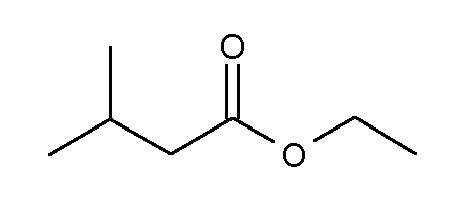
n-Hexansäureethylester (Ethylcaproat) Ananas 
n-Hexansäureallylester (2-Propenylhexanoat) Ananas 
Ethyl-2-trans-4-cis-decadienoat Birne 
1,1-Dimethoxy-2,2,5-trimethyl-4-hexan Grapefruit 
2,6-Dimethyl-5-hepten-1-al Melone 
Gamma-Undecalacton Pfirsich 
Gamma-Nonalacton Kokosnuss 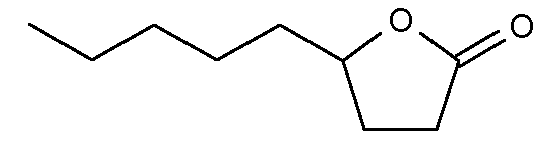
D-Limonen Citrus (z.B. Orange, Citrone) 
Vanillin Vanille, süß 
Ethylvanillin Vanille, süß 
Maltol Karamel, süß 
Ethylmaltol Karamel, sehr süß 
- Die fruchtigen Riechstoffe des Bestandteils (d) können natürlichen oder synthetischen Ursprungs sein. Im Falle eines natürlichen Ursprungs können sie Teil eines entsprechenden ätherischen Öls sein oer aus einem solchen angereicht bzw. isoliert worden sein. So wird beispielsweise D-Limonen in einer erfindungsgemäß bevorzugten Ausgestaltung in Form von Orangenöl, Citronenöl, Limettenöl, Bergamotteöl, Mandarinenöl oder Grapefruitöl eingesetzt.
- In einer bevorzugten Ausführungsform der vorliegenden Erfindung werden rotfruchtige Riechstoffe als Bestandteil (d) eingesetzt, wobei die bevorzugten rotfruchtigen Riechstoffe vorzugsweise einen Geruch von Erdbeere, Himbeere, Brombeere, roter Johannisbeere, Heidelbeere (Cassis), Holunderbeere, Kirsche, roter Traube (Weinbeere) und/oder Pflaume aufweisen.
- Bevorzugt ist eine erfindungsgemäße Riechstoffmischung, ein erfindungsgemäßes Parfümöl oder ein erfindungsgemäßes Produkt, vorzugsweise in einer der vorstehend als bevorzugt angegebenen Ausgestaltungen, für die oder für das gilt:
- das Massenverhältnis der Gesamtmenge an Moschusriechstoffen des Bestandteils (b) zu Bestandteil (a) ist größer oder gleich 1 : 1, bevorzugt beträgt es 1 : 1 bis 50 : 1, weiter bevorzugt 25 : 1 bis 1 : 1, besonders bevorzugt 4 : 3 bis 20 : 1, ganz besonders bevorzugt 4 : 3 bis 15 : 1, am meisten bevorzugt 2 : 1 bis 12 : 1, insbesondere 2 : 1 bis 10 : 1, wobei es in weiter bevorzugten Ausgestaltungen 5 : 2 bis 8 : 1 beträgt,
und/oder - das Massenverhältnis der Gesamtmenge an Bestandteil (c) (i) 2,3,8,8-Tetramethyl-1,2,3,4,5,6,7,8-octahydro-2-naphthalenylmethylketon und 1-[1,2,3,4,6,7,8,8a-octahydro-1,2,8,8-tetramethylnaphtalen-2-yl]ethanon zu Verbindung (A) (Bestandteil (a)) ist größer oder gleich 1 : 1 und beträgt bevorzugt 4 : 3 bis 10 : 1, besonders bevorzugt 2 : 1 bis 8 : 1,
und/oder - das Massenverhältnis der Gesamtmenge an Bestandteil (c) (ii) Methyldihydrojasmonat zu Verbindung (A) (Bestandteil (a)) ist größer oder gleich 1 : 1 und beträgt bevorzugt 2 : 1 bis 15 : 1, besonders bevorzugt 3 : 1 bis 10 : 1,
und/oder - es ist eine sensorisch (geruchlich) wirksame Menge des Bestandteils (d), vorzugsweise gewählt aus den in Tabelle 2 genannten fruchtigen Riechstoffen, enthalten, bevorzugt in einer Menge, die ausreicht, der Riechstoffmischung, dem Parfümöl oder dem Produkt eine fruchtige Note zu verleihen,
jeweils bezogen auf die gesamte Riechstoffmischung bzw. das gesamte Parfümöl oder Produkt. - Vorzugsweise sind die zu den Bestandteilen (a), (b), (c) und (d) genannten bevorzugten Ausgestaltungen und/oder Massenverhältnisse gleichzeitig eingestellt.
- Mit Blick auf das oben Gesagte kann also festgehalten werden, dass Verbindung (A) zusammen mit dem oder den Moschusriechstoffen des Bestandteils (b) in vorteilhafter Weise in Kombination mit anderen Riechstoffen bestimmte geruchliche Aspekte dieser Riechstoffe betont (hervorhebt).
- Ein erfindungsgemäßes Verfahren zum Betonen eines Geruchs mit einer holzigen, Vetiver-, cremigen, erdigen, frischen, würzigen, moosigen, (rot)fruchtigen, transparenten und/oder Fleur d'Orange - Note umfasst den folgenden Schritt:
- Vermischen von
- (i) einem oder mehreren Riechstoffen, vorzugsweise gewählt aus den oben bevorzugt genannten Verbindungen der Bestandteile (c) und/oder (d), mit einer, mehrerer oder sämtlichen der Noten holzig, Vetiver, cremig, erdig, frisch, würzig, moosig, (rot)fruchtig, transparent und/oder Fleur d'Orange,
und - (ii) einem oder mehreren Moschusriechstoffen des Bestandteils (b), vorzugsweise gewählt aus den oben als bevorzugt bezeichneten Moschusriechstoffen des Bestandteils (b),
- (i) einem oder mehreren Riechstoffen, vorzugsweise gewählt aus den oben bevorzugt genannten Verbindungen der Bestandteile (c) und/oder (d), mit einer, mehrerer oder sämtlichen der Noten holzig, Vetiver, cremig, erdig, frisch, würzig, moosig, (rot)fruchtig, transparent und/oder Fleur d'Orange,
- mit einer Menge an Verbindung (A) (Bestandteil (a)), die ausreicht, den Geruchseindruck des bzw. der Riechstoffe, die eine, mehrere oder sämtliche der Noten holzig, Vetiver, cremig, erdig, frisch, würzig, moosig, (rot)fruchtig, Transparenz und/oder Fleur d'Orange verursachen, zu betonen
oder- (ii) einer erfindungsgemäßen Riechstoffmischung, vorzugsweise einem erfindungsgemäßen Parfümöl, vorzugsweise in einer der oben als bevorzugt bezeichneten Ausgestaltungen, in einer Menge, die ausreicht, den Geruchseindruck des bzw. der Riechstoffe, die eine, mehrere oder sämtliche der Noten holzig, Vetiver, cremig, erdig, frisch, würzig, moosig, (rot)fruchtig, Transparenz und/oder Fleur d'Orange verursachen, zu betonen,
- Für die erfindungsgemäßen Verfahren gelten die obigen Angaben zu bevorzugten erfindungsgemäßen Riechstoffmischungen, Parfümölen und Produkten entsprechend.
- Erfindungsgemäße Riechstoffkompositionen (Riechstoffmischungen), vorzugsweise erfindungsgemäße Parfümöle, können in flüssiger Form, unverdünnt oder mit einem Lösungsmittel verdünnt zur Parfümierung oder Aromatisierung eingesetzt werden. Geeignete Lösungsmittel hierfür sind insbesondere Ethanol, Glycerin, 1,2-Propylenglycol, 1,2-Butylenglycol, Dipropylenglycol, Diethylphtalat, Triethylcitrat, Isopropylmyristat und Triacetin.
- Stoffe, mit denen erfindungsgemäße Riechstoffmischungen, insbesondere Parfümöle, kombiniert werden können, sind:
- Konservierungsmittel, vorzugsweise die in
US 2006/0089413 genannten, Abrasiva, Antiakne-Mittel und Mittel zu Sebumreduktion, vorzugsweise die inWO 2008/046791 genannten, Mittel gegen Hautalterung, vorzugsweise die inWO 2005/123101 genannten, antibakterielle Mittel, Anticellulitis-Mittel, Antischuppen-Mittel, vorzugsweise die inWO 2008/046795 genannten, entzündungshemmende Mittel, irritationsverhindernde Mittel, Antiirritantien (antiinflammatorische, irritationshemmende und irritationsverhindernde Mittel), vorzugsweise die inWO 2007/042472 undUS 2006/0089413 genannten, antimikrobielle Mittel, vorzugsweise die inWO 2005/123101 genannten, Antioxidantien, vorzugsweise die inWO 2005/123101 genannten, Adstringentien, antiseptische Mittel, Antistatika, Binder, Puffer, Trägermaterialien, vorzugsweise die inWO 2005/123101 genannten, Chelatbildnder, vorzugsweise die inWO 2005/123101 genannten, Zellstimulantien, reinigende Mittel, pflegende Mittel, Enthaarungsmittel, oberflächenaktive Substanzen, deodorierende Mittel und Antiperspirantien, vorzugsweise die inWO 2005/123101 genannten, Weichmacher, Emulgatoren, vorzugsweise die inWO 2005/123101 genannten, Enzyme, ätherische Öle, vorzugsweise die inUS 2008/0070825 genannten, Insektenrepellentien, vorzugsweise die inWO 2005/123101 genannten, Fasern, Filmbildner, Fixateure, Schaumbildner, Schaumstabilisatoren, Substanzen zum Verhindern des Schäumens, Schaumbooster, Fungizide, gelierende Mittel und gelbildende Mittel, vorzugsweise die inWO 2005/123101 genannten, Haarpflegemittel, Haarverformungsmittel, Haarglättungsmittel, Feuchtigkeitsregulatoren (feuchtigkeitsspendende, anfeuchtende und/oder feuchthaltende Substanzen), vorzugsweise die inWO 2005/123101 genannten, Osmolyte, vorzugsweise die inWO 2005/123101 genannten, kompatible Solute, vorzugsweise die inWO 01/76572 WO 02/15686 WO 2008/046676 genannten, Pulver, Proteine und Proteinhydrolysate, vorzugsweise die inWO 2005/123101 undWO 2008/046676 genannten, rückfettende Mittel, abschleifende Mittel, hautberuhigende Mittel, hautreinigende Mittel, hautpflegende Mittel, hautheilende Mittel (skin repair agents), vorzugsweise enthaltend Cholesterin und/oder Fettsäuren und/oder Ceramide und/oder Pseudoceramide, dabei bevorzugt die inWO 2006/053912 genannten, Hautaufhellungsmittel, vorzugsweise die inWO 2007/110415 genannten, hautschützende Mittel, hauterweichende Mittel, hautkühlende Mittel, vorzugsweise die inWO 2005/123101 genannten, hautwärmende Mittel, vorzugsweise die inWO 2005/123101 genannten, Stabilisatoren, UV-absorbierende Mittel und UV-Filter, vorzugsweise die inWO 2005/123101 genannten, Benzyliden-beta-dicarbonylverbindungen, vorzugsweise die inWO 2005/107692 genannten, alpha-Benzoylzimtsäurenitrile, vorzugsweise die inWO 2006/015954 genannten, AhR-Rezeptor-Antagonisten, vorzugsweise die inWO 2007/128723 undWO 2007/060256 genannten, Waschmittel, Weichspüler, suspendierende Mittel, Hautbräunungsmittel, vorzugsweise die inWO 2006/045760 genannten, Verdickungsmittel, Vitamine, vorzugsweise die inWO 2005/123101 genannten, Öle, Wachse und Fette, vorzugsweise die inWO 2005/123101 genannten, Phospholipide, vorzugsweise die inWO 2005/123101 genannten, Fettsäuren (gesättigte Fettsäuren, ein- oder mehrfach ungesättigte Fettsäuren, α-Hydroxysäuren, Polyhydroxyfettsäuren), vorzugsweise die inWO 2005/123101 genannten, Verflüssiger, Farbstoffe und farbschützende Mittel sowie Pigmente, vorzugsweise die inWO 2005/123101 genannten, Antikorrosiva, Aromen und Geschmackstoffe sowie weitere zusätzliche Riechstoffe, vorzugsweise die in S. Arctander, Perfume and Flavor Chemicals, Eigenverlag, Montclair, N.J., 1969 und Surburg, Panten, Common Fragrance and Flavor Materials, 5th Edition, Wiley-VCH, Weinheim 2006 aufgeführten, insbesondere die inUS 2008/0070825 explizit genannten weiteren Riechstoffe, die nicht bereits Teil der Bestandteile (a) und (b) sowie gegebenenfalls (c) und/oder (d) einer erfindungsgemäßen Riechstoffmischung oder eines erfindungsgemäßen Parfümöls sind, Alkohole und Polyole, vorzugsweise die inWO 2005/123101 genannten, Tenside, vorzugsweise die inWO 2005/123101 genannten, tierische Extrakte, Hefeextrakte, Extrakte von Algen oder Mikroalgen, Elektrolyte, Verflüssiger, organische Lösungsmittel, vorzugsweise die inWO 2005/123101 genannten, oder Silikone und Silikonderivate, vorzugsweise die inWO 2008/046676 genannten. - Des weiteren können erfindungsgemäße Riechstoffmischungen, insbesondere Parfümöle, an einem Trägerstoff adsorbiert sein, der sowohl für eine feine Verteilung der darin enthaltenen Riechstoffe im Produkt als auch für eine kontrollierte Freisetzung bei der Anwendung sorgt. Derartige Träger können poröse anorganische Materialien wie Leichtsulfat, Kieselgele, Zeolithe, Gipse, Tone, Tongranulate, Gasbeton usw. oder organische Materialien wie Hölzer, Cellulose-basierende Stoffe, Zucker, Dextrine (z.B. Maltodextrin) oder Kunststoffe wie PVC, Polyvinylacetate oder Polyurethane sein. Die Kombination aus erfindungsgemäßer Komposition und Trägerstoff stellt einen beispielhaften erfindungsgemäßen Artikel dar.
- Erfindungsgemäße Riechstoffmischungen, insbesondere Parfümöle können auch mikroverkapselt, sprühgetrocknet, als Einschluss-Komplexe oder als Extrusions-Produkte (d. h. erfindungsgemäße Produkte) vorliegen und in dieser Form z. B. einem zu parfümierenden Produkt hinzugefügt werden.
- Gegebenenfalls können die Eigenschaften der derart modifizierten Kompositionen durch sog. "Coaten" mit geeigneten Materialien im Hinblick auf eine gezieltere Duftfreisetzung weiter optimiert werden, wozu vorzugsweise wachsartige Kunststoffe wie z.B. Polyvinylalkohol verwendet werden. Die resultierenden Produkte stellen wiederum erfindungsgemäße Produkte dar.
- Die Mikroverkapselung der erfindungsgemäßen Riechstoffmischungen, vorzugsweise der erfindungsgemäßen Parfümöle, kann beispielsweise durch das sogenannte Koazervationsverfahren mit Hilfe von Kapselmaterialien z.B. aus polyurethanartigen Stoffen oder Weichgelatine, erfolgen. Die sprühgetrockneten Riech- oder Aromastoffkompositionen können beispielsweise durch Sprühtrocknung einer die erfindungsgemäße Riechstoffmischung, vorzugsweise ein Parfümöl, enthaltenden Emulsion, bzw. Dispersion hergestellt werden, wobei als Trägerstoffe modifizierte Stärken, Proteine, Dextrin und pflanzliche Gummen verwendet werden können. Einschluss-Komplexe können z.B. durch Eintragen von Dispersionen der erfindungsgemäßen Riechstoffmischung, vorzugsweise einem erfindungsgemäßen Parfümöl, und Cyclodextrinen oder Harnstoffderivaten in ein geeignetes Lösungsmittel, z.B. Wasser, hergestellt werden. Extrusions-Produkte können durch Verschmelzen einer erfindungsgemäßen Riechstoffmischung, vorzugsweise eines erfindungsgemäßen Parfümöls, mit einem geeigneten wachsartigen Stoff und durch Extrusion mit nachfolgender Erstarrung, ggf. in einem geeigneten Lösungsmittel, z.B. Isopropanol, erhalten werden.
- Erfindungsgemäße Riechstoffmischungen, vorzugsweise erfindungsgemäße Parfümöle, können vorzugsweise als solche, in konzentrierter Form, in Lösungen oder in oben beschriebener modifizierter Form verwendet werden für die Herstellung von erfindungsgemäßen parfümierten Produkten.
- Bevorzugte erfindungsgemäße parfümierte Produkte enthalten eine erfindungsgemäße Riechstoffmischungen, vorzugsweise ein erfindungsgemäßes Parfümöl, in einer sensorisch wirksamen Menge.
- Der Anteil einer erfindungsgemäßen Riechstoffmischung, vorzugsweise eines erfindungsgemäßen Parfümöls, in erfindungsgemäßen parfümierten Produkten beträgt vorzugsweise 0,01 bis 10 Gew.-%, bevorzugt 0,1 bis 5 Gew.-% und besonders bevorzugt 0,25 bis 3 Gew.-%, jeweils bezogen auf die Gesamtmasse des parfümierten Produktes.
- Bevorzugte erfindungsgemäße parfümierte Produkte sind Wasch- und Reinigungsmittel, Hygiene- oder Pflegeprodukte, insbesondere im Bereich der Körper- und Haarpflege, der Kosmetik und des Haushalts.
- Bevorzugte erfindungsgemäße parfümierte Produkte sind gewählt aus folgender Liste: Parfüm-Extraits, Eau de Parfums, Eau de Toilettes, Rasierwässer, Eau de Colognes, Pre-shave-Produkte, Splash-Colognes und parfümierte Erfrischungstücher, saure, alkalische und neutrale Reinigungsmittel, wie z.B. Fußbodenreiniger, Fensterglasreiniger, Geschirrspülmittel, Bad- und Sanitärreiniger, Scheuermilch, feste und flüssige WC-Reiniger, pulver- und schaumförmige Teppichreiniger, Textilerfrischer, Bügelhilfen, flüssige Waschmittel, pulverförmige Waschmittel, Wäschevorbehandlungsmittel wie Bleichmittel, Einweichmittel und Fleckenentferner, Wäscheweichspüler, Waschseifen, Waschtabletten, Desinfektionsmittel, Oberflächendesinfektionsmittel, Luftverbesserer in flüssiger, gelartiger oder auf einem festen Träger aufgebrachter Form, Aerosolsprays, Wachse und Polituren wie Möbelpolituren, Fußbodenwachse, Schuhcremes, Körperpflegemittel wie z.B. feste und flüssige Seifen, Duschgele, Shampoos, Rasierseifen, Rasierschäume, Badeöle, kosmetische Emulsionen vom Öl-in-Wasser-, vom Wasser-in-Öl- und vom Wasser-in-Öl-in-Wasser-Typ wie z.B. Hautcremes- und -lotionen, Gesichtscremes und -lotionen, Sonnenschutzcremes-und -lotionen, After-sun-cremes und -lotionen, Handcremes und - lotionen, Fußcremes und -lotionen, Enthaarungscremes und -lotionen, After-shave-Cremes und -lotionen, Hautbräunungscremes und -lotionen, Hautaufhellungscremes und -lotionen, Haarpflegeprodukte wie Haarsprays, Haargele, festigende Haarlotionen, Haarspülungen, permanente und semipermanente Haarfärbemittel, Haarverformungsmittel wie Kaltwellen und Haarglättungsmittel, Haarwässer, Haarcremes und -lotionen, Deodorantien und Antiperspirantien wie z.B. Achselsprays, Roll-ons, Deosticks, Deocremes, Produkte der dekorativen Kosmetik wie z.B. Lidschatten, Nagellacke, Makeups, Lippenstifte, Mascara sowie Kerzen, Lampenöle, Räucherstäbchen, Insektizide und Repellentien.
- Besonders bevorzugte erfindungsgemäße parfümierte Produkte sind gewählt aus folgender Liste:
- Eau de Parfums, Eau de Toilettes, Rasierwässer (After-shave), Eau de Colognes, Pre-shave-Produkte, Splash-Colognes;
- saure, alkalische und neutrale Reinigungsmittel, insbesondere im Haushaltsbereich, vorzugsweise Fußbodenreiniger, Fensterglasreiniger, Geschirrspülmittel, Bad- und Sanitärreiniger, Scheuermilch, feste und flüssige WC-Reiniger, pulver- und schaumförmige Teppichreiniger, flüssige Waschmittel, pulverförmige Waschmittel, Wäscheweichspüler, Oberflächendesinfektionsmittel, insbesondere für harte Oberflächen (hard surface cleaner);
- Körperpflegemittel, vorzugsweise feste und flüssige Seifen, Duschgele, Shampoos, Rasierseifen, Rasierschäume;
- kosmetische Emulsionen vom Öl-in-Wasser-, vom Wasser-in-Öl- und vom Wasser-in-Öl-in-Wasser-Typ, vorzugsweise Hautcremes- und -lotionen, Gesichtscremes und - lotionen, Sonnenschutzcremes-und -lotionen, After-sun-cremes und -lotionen, Handcremes und -lotionen, Fußcremes und -lotionen, Enthaarungscremes und -lotionen, After-shave-Cremes und -lotionen, Hautbräunungscremes und -lotionen, Hautaufhellungscremes und -lotionen;
- Haarpflegeprodukte, vorzugsweise Haarsprays, Haargele, festigende Haarlotionen, Haarspülungen, permanente und semipermanente Haarfärbemittel, Haarwässer, Haarcremes und -lotionen;
- Deodorantien und Antiperspirantien, vorzugsweise Achselsprays, Roll-ons (vorzugsweise als alkoholische oder nicht-alkoholische Lösung, als Gel oder (Micro)Emulsion), Deosticks (Deo-stifte), Deocremes.
- Die folgenden Beispiele erläutern die Erfindung; sofern nicht anders angegeben beziehen sich Anteile und Prozente auf das Gewicht.
- Dipropylenglycol (DPG), Diethylphthalat (DEP), Triethylcitrat (TEC), Isopropylmyristat (IPM); nat. = natürlich; macrocyclischer Moschusriechstoff (Bestandteil (b) der erfindungsgemäßen Riechstoffmischung (MACRO)); polycyclischer Moschusriechstoff (Bestandteil (b) der erfindungsgemäßen Riechstoffmischung (POLY)).alicyclischer Moschusriechstoff (Bestandteil (b) der erfindungsgemäßen Riechstoffmischung (ALICYC));
- HEDIONE® HC/30 enthält mindestens 30 Gew.-% des cis-Isomers und knapp 70 Gew.-% des trans-Isomers von Methyldihydrojasmonat.
- Für Erläuterungen der Produktnamen der Riechstoffe siehe z.B. S. Arctander, Perfume and Flavor Materials, Vol. I und II, Montclair, N. J., 1969, Selbstverlag oder H. Surburg, J. Panten, "Common Fragrance and Flavor Materials", 5th. Ed., Wiley-VCH, Weinheim 2006.
-
Parfümöl-Beispiel P1: AMBRETTOLID (MACRO) 10,00 10,00 AMBROXID 10% in IPM 10,00 10,00 BENZYLACETAT 20,00 20,00 BENZYLSALICYLAT 15,00 15,00 BERGAMOTTEÖL,bergaptenfrei 60,00 60,00 CALONE® 1951 10% in DPG 15,00 15,00 COUMARIN 5,00 5,00 CYCLOGALBANAT® 10% in DPG 10,00 10,00 ALPHA -DAMASCON 1% in DPG 20,00 20,00 DIHYDROMYRCENOL 10,00 10,00 ETHYLLINALOOL 75,00 75,00 ETHYLLINALYLACETAT 50,00 50,00 ETHYLMALTOL 1% in DEP 10,00 10,00 ETHYLENBRASSYLAT (MACRO) 80,00 80,00 FLOROSA 40,00 40,00 GERANYLACETAT 10,00 10,00 HEDIONE® HC/30 35,00 35,00 HEDIONE® 210,00 210,00 HELIONAL® 15,00 15,00 HELVETOLIDE® (ALICYC) 30,00 30,00 HEXENYLSALICYLAT CIS-3 20,00 20,00 ISO E SUPER® 40,00 40,00 LEAFOVERT® 10% in DEP 10,00 10,00 LILIAL® 80,00 80,00 LYRAL® 20,00 20,00 MANDARINENÖL 10,00 10,00 STYRALYLACETAT 5,00 5,00 SYMROSE® 15,00 15,00 VANILLIN 10% in DEP 20,00 20,00 DIPROPYLENGLYCOL (DPG) 50,00 20,00 VERBINDUNG (A) - 30,00 TOTAL: 1.000,00 1.000,00 - Der Zusatz von 3% der Verbindung (A) zu dieser Floriental-Citrus-Moschus Komposition bewirkt eine spürbare Harmonisierung der Fondnoten, so dass die gesamte Komposition eleganter und wertvoller erscheint.
Parfümöl-Beispiel P2: AMAROCIT® 10,00 10,00 AMBROCENIDE® 10% in DPG 5,00 5,00 AMBROXID 15,00 15,00 AURELIONE® (7/8-Cyclohexadecenon) (MACRO) 70,00 70,00 BERGAMOTTEÖL, bergaptenfrei 90,00 90,00 CALONE® 1951 10% in DPG 20,00 20,00 KÜMMELÖL (CARAWAY OIL) 10,00 10,00 CITRAL 20,00 20,00 COUMARIN 10,00 10,00 ALPHA-DAMASCON 1 % in DPG 15,00 15,00 DIHYDROMYRCENOL 70,00 70,00 ESTRAGONÖL 10,00 10,00 ETHYLLINALOOL 100,00 100,00 ETHYLLINALYLACETAT 90,00 90,00 EUGENOL 10,00 10,00 EVERNYL® 5,00 5,00 FRUCTATE® 5,00 5,00 GERANIUMÖL 5,00 5,00 HEDIONE® HC/30 100,00 100,00 HELIONAL® 10,00 10,00 INDOL 10% in DPG 5,00 5,00 ISO E SUPER® 100,00 100,00 KEPHALIS® 5,00 5,00 LAVENDELÖL 40,00 40,00 CITRONENÖL 80,00 80,00 LILIAL® 30,00 30,00 MANDARINENÖL 20,00 20,00 MUSCENON (MACRO) 5,00 5,00 SANDRANOL® 10,00 10,00 VANILLIN 10% in DPG 5,00 5,00 DIPROPYLENGLYCOL 30,00 10,00 VERBINDUNG (A) - 20,00 TOTAL: 1.000,00 1.000,00 - Der Zusatz von 2% der Verbindung (A) bewirkt im Zusammenspiel mit Iso E Super® einen sehr wertvollen holzig-klassischen Vetiver-Effekt, der die gesamte Komposition wertvoller erscheinen lässt. Zusätzlich findet eine deutliche Harmonisierung der Fondnoten statt, so dass die Gesamtkomposition eleganter erscheint.
Parfümöl-Beispiel P3: ALDEHYD C10 (n-Decanal) 10% in DPG 20,00 20,00 ALDEHYD C11 (n-Undecanal) 10% in DPG 5,00 5,00 ALDEHYD C12 (n-Dodecanal) 10% in DPG 15,00 15,00 AMBRETTOLID (MACRO) 5,00 5,00 AMBROCENIDE® 1% in DPG 20,00 20,00 AURELIONE® (MACRO) 30,00 30,00 BENZYLACETAT 30,00 30,00 CITRONELLOL 15,00 15,00 ETHYLVANILLIN 1% in DPG 20,00 20,00 ETHYLENBRASSYLAT (MACRO) 70,00 70,00 FRUCTATE® 10% in DPG 20,00 20,00 GERANYLACETAT 10,00 10,00 GLOBALIDE® (MACRO) 30,00 30,00 HEDIONE® 30,00 30,00 ALPHA-HEXYLZIMTALDEHYD 90,00 90,00 INDOL 10% in DPG 5,00 5,00 ISO E SUPER® 120,00 120,00 KEPHALIS® 5,00 5,00 LINALOOL 150,00 150,00 LINALYLACETAT 60,00 60,00 BETA-METHYLNAPHTYLKETON 5,00 5,00 NEROLIDOL 20,00 20,00 NEROLIONE 10% in DPG 20,00 20,00 ORANGENÖL BRASILIANISCH 100,00 100,00 PHENYLETHYLACETAT 5,00 5,00 PHENYLETHYLALKOHOL 30,00 30,00 TERPINEOL 20,00 20,00 DIPROPYLENGLYCOL 50,00 20,00 VERBINDUNG (A) - 30,00 TOTAL: 1.000,00 1.000,00 - Der Zusatz von 3% der Verbindung (A) betont die erogenen und animalischen Aspekte dieser Komposition, die damit einhergehende Harmonisierung der Fondnoten lässt die gesamte Komposition eleganter, cremiger und somit deutlich wertvoller erscheinen.
Parfümöl-Beispiel P4: ALLYLAMYLGLYCOLAT 10,00 10,00 BERGAMOTTEÖL 100,00 100,00 CALONE® 1951 10% in DPG 30,00 30,00 CASSIS BASE 10,00 10,00 GEWÜRZNELKENÖL 5,00 5,00 ALPHA-DAMASCON 1% in DPG 20,00 20,00 DIHYDROMYRCENOL 60,00 60,00 ETHYLENEBRASSYLAT (MACRO) 20,00 20,00 FARENAL® 1 % in DPG 20,00 20,00 FLORALOZONE® 10,00 10,00 GLOBALIDE® (MACRO) 20,00 20,00 HEDIONE® HC/30 10,00 10,00 HEDIONE® 200,00 200,00 ALPHA-HEXYLZIMTALDEHYD 100,00 100,00 HEXYLSALICYLAT 20,00 20,00 ISO E SUPER® 70,00 70,00 KEPHALIS 5,00 5,00 LAVANDINÖL GROSSO NAT. 20,00 20,00 LEAFOVERT® 10% in DPG 20,00 20,00 LIGUSTRAL 10% in DPG 10,00 10,00 LILIAL® 45,00 45,00 LINALOOL 60,00 60,00 LINALYLACETAT 50,00 50,00 MANDARINALDEHYD 10% in TEC 5,00 5,00 ORANGENÖL BRASILIANISCH 25,00 25,00 POLYSANTOL® 5,00 5,00 TERPINEOL 20,00 20,00 DIPROPYLENGLYCOL 30,00 - VERBINDUNG (A) - 30,00 TOTAL: 1.000,00 1.000,00 - Der Zusatz von 3% der Verbindung (A) betont in einzigartiger Weise in Kombination mit den Moschusriechstoffen und Methyldihydrojasmonat die Transparenz der Komposition, weiterhin werden die Fondnoten in der Art und Weise harmonisiert, dass die gesamte Komposition erogener und maskuliner erscheint und insgesamt wirkt die Gesamtkomposition wertvoller.
Parfümöl-Beispiel P5: Florazon 15,00 15,00 Cyclogalbanat® 15,00 15,00 Bergamotteöl 135,00 135,00 Mandarinenöl 50,00 50,00 Claritone® 100,00 100,00 Oxanthia 5% in DPG 5,00 5,00 Amarocit® 10,00 10,00 Pfefferminzöl 5,00 5,00 Artemisiaöl 5,00 5,00 Macisöl 5,00 5,00 Lilial® 50,00 50,00 Calone® 1951 10% in DPG 25,00 25,00 Geraniumöl 10,00 10,00 Hedione® 240,00 240,00 Hexenylsalicylat cis-3 15,00 15,00 Parmanyl® 5,00 5,00 Beta-Ionon 25,00 25,00 Zedernholzöl (Cedarwood oil) 30,00 30,00 Iso E Super® 80,00 80,00 Vetival® 40,00 40,00 Vetikolacetat® 5,00 5,00 Sandranol® 75,00 75,00 Ysamber® K 10,00 10,00 Globalide® (MACRO) 25,00 25,00 Dipropylenglycol 20,00 15,00 Verbindung (A) - 5,00 TOTAL: 1.000,00 1.000,00 - Der Zusatz von 0,5% der Verbindung (A) betont die erdigen und holzigen Aspekte in einzigartiger Form in Kombination mit den Moschusriechstoffen und Iso E Super®. Darüber hinaus werden die frischen und würzigen Aspekte stärker hervorgehoben.
Parfümöl-Beispiel P6: Leafovert® 10% in IPM 10,00 10,00 Bergamotteöl 50,00 50,00 Orangenöl 40,00 40,00 Oxanthia 10% in DPG 5,00 5,00 Öl von schwarzem Pfeffer 10% in DPG 20,00 20,00 Campher 10% in DPG 5,00 5,00 Gamma-Decalacton 10% in DPG 15,00 15,00 Gamma-Undecalacton 10% in DPG 5,00 5,00 Lilial® 60,00 60,00 Helional 25,00 25,00 Linalool 80,00 80,00 Geraniumöl 10% in DPG 10,00 10,00 Citronellol 20,00 20,00 Geraniol 15,00 15,00 Isodamascon® 10% in DPG 20,00 20,00 Hedione® 120,00 120,00 Alpha-Hexylzimtaldehyd 40,00 40,00 Vanillin 15,00 15,00 Coumarone® 5,00 5,00 Iso E Super® 240,00 240,00 Patchouliöl nat. 25,00 25,00 Sandalore 10,00 10,00 Labdanum Absolue 10% in DPG 5,00 5,00 Ysamber® K 5,00 5,00 Macrolide® Supra (MACRO) 25,00 25,00 Globalide® (MACRO) 45,00 45,00 Cyclohexadecanon (MACRO) 15,00 15,00 Ethylenbrassylat (MACRO) 45,00 45,00 Indole 10% in DPG 5,00 5,00 Dipropylenglycol 20,00 10,00 Verbindung (A) - 10,00 TOTAL: 1.000,00 1.000,00 - Der Zusatz von 1,0% der Verbindung (A) betont sehr schön die moosigen Aspekte der der Komposition, insbesondere das Zusammenspiel der Moschusriechstoffe mit Hedione®, wodurch die Komposition harmonischer und wertvoller wirkt.
Parfümöl-Beispiel P7: Styralylacetat 10,00 10,00 Linalylacetat 40,00 40,00 Mandaril 10% in DPG 5,00 5,00 Orangenöl 60,00 60,00 Oxanthia 5% in DPG 5,00 5,00 Gamma-Decalacton 5,00 5,00 Ethyl-3-methyl-3-phenylglycidat 5,00 5,00 Frambinon® 5,00 5,00 Himbeer-Base 5,00 5,00 Lilial® 80,00 80,00 Calone® 1951 10% in DPG 20,00 20,00 Majantol® 80,00 80,00 Linalool 60,00 60,00 Phenylethylalkohol 20,00 20,00 Citronellol 20,00 20,00 Geraniol 5,00 5,00 Benzylacetat 30,00 30,00 Hedione® 150,00 150,00 Alpha-Hexylzimtaldehyd 150,00 150,00 Benzylsalicylat 60,00 60,00 Amylsalicylat (n- und iso-) 40,00 40,00 Beta-Ionon 20,00 20,00 Eugenol 5,00 5,00 Ethylvanillin 10% in DPG 10,00 10,00 Zimtalkohol 5,00 5,00 Iso E Super® 40,00 40,00 Galaxolide® 50% in DEP (4,6,6,7,8,8-Hexamethyl-1,3,4,6,7,8-hexahydrocyclopenta[g]benzopyran) (POLY) 25,00 25,00 Globalide® (MACRO) 20,00 20,00 Dipropylenglycol 20,00 15,00 Verbindung (A) - 5,00 TOTAL: 1.000,00 1.000,00 - Der Zusatz von 0,5% der Verbindung (A) betont die rotbeerige Fruchtigkeit der Komposition und lässt die gesamte Komposition harmonischer und komplexer erscheinen.
Parfümöl-Beispiel P8: Limonenal 10% in DPG 6,00 6,00 Profarnesal 10% in DPG 4,00 4,00 Hexenylbutyrat cis-3 2,00 2,00 Mintonat® 3,00 3,00 Linalylacetat 120,00 120,00 Citronenöl 20,00 20,00 Citrylal 2,00 2,00 Gamma-Nonalacton 15,00 15,00 Frambinon® 2,00 2,00 Himbeer-Base 20,00 20,00 Filbertone 1 % in DPG 1,00 1,00 Acetylmethylcarbinol, nat. 10% in DPG 7,00 7,00 Lilax Soft 20,00 20,00 Linalool 30,00 30,00 Terpinenol 80,00 80,00 Phenylethylalkohol 20,00 20,00 Geraniol 40,00 40,00 Nerol 70,00 70,00 Citronellol 30,00 30,00 Benzylacetat 10,00 10,00 Alpha-Amylzimtaldehyd 60,00 60,00 Hedione® 130,00 130,00 Beta-Ionon 10,00 10,00 Agrumex® HC 80,00 80,00 Oryclon® 68,00 68,00 Zedernholzöl (Cedarwood oil) 2,00 2,00 Vertofix® 120,00 120,00 Macrolide® (MACRO) 20,00 20,00 Triethylcitrat 8,00 5,00 Verbindung (A) - 3,00 TOTAL: 1.000,00 1.000,00 - Der Zusatz von 0,3% der Verbindung (A) betont die rotbeerige Fruchtigkeit der Komposition, insbesondere in Richtung Brombeere und Holunder. Weiterhin erscheint die gesamte Komposition harmonischer und komplexer.
- Die Parfümöle P1, P2, P3, P4, P5, P6, P7 bzw. P8 aus den obigen Parfümöl-Beispielen P1 bis P8 wurden jeweils separat in die nachfolgenden Formulierungen eingearbeitet.
- Die oben bei dem jeweiligen Parfümöl beschriebenen geruchlichen Effekte wurden jeweils auch in den nachfolgenden Formulierungen beobachtet.
-
Material Chemischer Name Funktion Gew.-% Gew.-% Natrium Metasili-cat Pentahydrat Sodium Metasilicate Pentahydrate Ad 100 Ad 100 Natriumhydrogen-carbonat Sodium hydrogen carbonate Alkali 15,0 15,0 Natrium-percarbonat Sodium carbonate peroxyhydrate Bleichmittel 15,0 15,0 Peractive AC Blue TAED/Na-Carboxymethylcellulose Aktivator 5,00 5,00 Genapol OA-080 Oxoalkohol C14-15, 8EO Nichtionisches Tensid 3,00 3,00 Texapon K12 Pulver Sodium Lauryl Sul-phate C12 Anionisches Tensid 7,00 7,00 Tinopal CBS-X Aufheller 0,50 0,50 Savinase 6.0 T, Type W Protease Enzym 0,40 0,40 Termamyl 120 T Alpha-Amylase Enzym 0,30 0,30 Natriumsulfat Sodium Sulphate Füllstoff 5,50 5,50 Parfumöl P1, P2, P3, P4, P5, P6, P7 bzw. P8 Parfum (Fragrance) 0,30 0,50 Beispiel F2 - Allzweckreiniger Material Chemischer Name Funktion Gew.-% Gew.-% Entionisiertes Wasser Water Lösungsmittel Ad 100 Ad 100 Mergal K9N 5-Chloro-2-methyl-3-(2H)-isothiazolone und 2-methyl-3-(2H)-isothiazolone Konservierungsmittel 0,1 0,1 Trinatriumcitrat Tri Sodium Citrate Komplexbildner 3,0 3,0 Dihydrat Dihydrate Zetesol NL-2 Fatty alcohol C12-14-sulfate, Sodium Anionisches Tensid 30,0 30,0 Imbentin C/125/055 Fatty alcohol C12-C15, 8E0 Nichtionisches Tensid 5,0 5,0 Ethanol Ethanol Lösungsmittel 2,0 2,0 Parfumöl P1, P2, P3, P4, P5, P6, P7 bzw. P8 Parfum (Fragrance) 0,3 0,5 Beispiel F3 - Shampoo Material INCI-Name Gew.-% Gew.-% Entionisiertes Wasser Water Ad 100 Ad 100 Plantacare PS 10 Sodium Laureth Sulfate, Lauryl Glucoside 20,0 20,0 Euperlan PK 771 Glycol Distearate, Sodium Lauryl Sulfate, Cocamide MEA, Laureth-10 6,0 6,0 Dragocid Liquid Phenoxyethanol, Methylparaben, Ethylparaben, Butylparaben, Propylparaben, Isobutylparaben 0,5 0,5 Natrium Chlorid Sodium Chloride 1,4 1,4 Citronensäure Monohydrat kristallin Citric Acid 0,1 0,1 Parfumöl P1, P2, P3, P4, P5, P6, P7 bzw. P8 Parfum (Fragrance) 0,5 0,8 Beispiel F4 - Duschgel Material INCI-Name Gew.-% Gew.-% Entionisiertes Wasser Wasser Ad 100 Ad 100 Plantacare PS 10 Sodium Laureth Sulfate, Lauryl Glucoside 20,0 20,0 Dragocid Liquid Phenoxyethanol, Methylparaben, Ethylparaben, Butylparaben, Propylparaben, Isobutylparaben 0,5 0,5 Natriumchlorid Sodium Chloride 1,4 1,4 Citronensäure Monohydrat kristallin Citric Acid 1,3 1,3 Parfumöl P1, P2, P3, P4, P5, P6, P7 bzw. P8 Parfum (Fragrance) 0,5 0,7 7 Beispiel F5 - Weichspüler Material Chemischer Name Funktion Gew.-% Gew.-% Entionisiertes Wasser Wasser Lösungsmittel Ad 100 Ad 100 Rewoquat WE 18 Dialkylesterammonium-ethosulfate Kationisches Tensid 16,6 16,6 Mergal K9N 5-Chloro-2-methyl-3-(2H)-isothiazolone und 2-methyl-3-(2H)-isothiazolone Konservierungs-mittel 0,10 0,10 Dow Corning 1520 Antifoam Polydimethyl-siloxane Entschäumer 0,30 0,30 Magnesium Chlorid 1%ige Lösung Magnesium Chlorid Lösung Konsistenzgeber 10,00 10,00 Parfumöl P1, P2, P3, P4, P5, P6, P7 bzw. P8 Fragrance 0,55 0,75 Beispiel F6 - Eau de Cologne / Eau de Toilette Inhaltsstoffe Gew.-% Gew.-% Parfumöl P1, P2, P3, P4, P5, P6, P7 bzw. P8 5 10 Ethanol Ad 100 Ad 100 Wasser 18 10 Beispiel F7 - Aerosol-Pumpsprav Inhaltsstoffe Gew.-% Gew.-% Parfumöl P1, P2, P3, P4, P5, P6, P7 bzw. P8 1,0 1,5 Ethanol Ad 100 Ad 100 Wasser 5,0 8,0 Alpha-Tocopherol 0,20 0,20 Hydroxypropylcellulose 0,20 - Rosmarinextrakt, in Ethanol löslich 0,22 - Cetylalkohol 1,00 0,50 Beispiel F8 - Shampoo Inhaltsstoffe Gew.-% Gew.-% Gew.-% Natriumlaurylethersulfat (z.B. Texapon NSO, Fa. Cognis Deutschland GmbH) 12 12 12 Cocamidopropylbetain (z.B. Dehyton K, Fa. Cognis Deutschland GmbH) 2 2 2 Natriumchlorid 1,4 1,4 1,4 Citronensäure 1,3 1,3 1,3 Phenoxyethanol, Methyl-, Ethyl-, Butyl-und Propylparaben 0,5 0,5 0,5 Parfumöl P1, P2, P3, P4, P5, P6, P7 bzw. P8 0,3 0,5 0,7 Wasser Ad 100 Ad 100 Ad 100 Beispiel F9 - Waschpulver Inhaltsstoffe Gew.-% Gew.-% Gew.-% Lineares Na-Alkylbenzolsulfonat 8,8 8,8 8,8 Ethoxylierter Fettalkohol C12-18 (7 EO) 4,7 4,7 4,7 Na-Seife 3,2 3,2 3,2 Entschäumer DOW CORNING(R) 2-4248S POWDERED ANTIFOAM, Silikonöl auf Zeolith als Trägermaterial 3,9 3,9 3,9 Zeolith 4A Ad 100 Ad 100 Ad 100 Na-Carbonat 11,6 11,6 11,6 Na-Salz eines Copolymers aus Acryl- und Malein-säure (Sokalan CP5) 2,4 2,4 2,4 Na-Silicat 3,0 3,0 3,0 Carboxymethylcellulose 1,2 1,2 1,2 Dequest 2066([[(Phosphonomethyl)imino]bis[(ethylennitrilo)bis (methylen)]]tetrakis-phosphonsäure, Natriumsalz) 2,8 2,8 2,8 Optischer Aufheller 0,2 0,2 0,2 Na-Sulfat 6,5 6,5 6,5 Protease 0,4 0,4 0,4 Natriumperborat tetrahydrat 21,7 21,7 21,7 Parfumöl P1, P2, P3, P4, P5, P6, P7 bzw. P8 0,25 0,35 0,5 EDTA 1,0 1,0 1,0 Beispiel F10 - Flüssigwaschmittel Inhaltsstoffe Gew.-% Entionisiertes Wasser 39,9 Optischer Aufheller 0,10 Kokos Fettsäuren (C12-C18) 7,5 Kaliumhydroxid 50%ige Lösung 4,3 Propan-1,2-diol 5,00 Fettalkohole C12-C15, 8 EO 12,0 Na-Salz sekundärer Alkylsulfonate (C13-C17) 17,0 Triethanolamin 2,0 Trinatriumcitrat Dihydrat 5,0 Dequest 2066([[(Phosphonomethyl)imino]bis[(ethylennitrilo)bis (methylen)]]tetrakis-phosphonsäure, Natriumsalz) 3,0 Ethanol 3,0 Enzyme 0,7 Parfumöl P1, P2, P3, P4, P5, P6, P7 bzw. P8 0,5 Beispiel F11 - Flüssigwaschmittel Konzentrat Inhaltsstoffe Gew.-% Entionisiertes Wasser 13,4 Kokos Fettsäuren (C12-C18) 10,0 Fettalkohole C12-C15, 8 EO 26,0 Na-Salz sekundärer Alkylsulfonate (C13-C17) 26,5 Triethanolamin 8,5 Na-Salz von Fettalkoholsulfaten C12-C14 3,0 Ethanol 5,5 Harnstoff 4,5 Enzyme 0,9 Citronensäure 1,0 Parfumöl P1, P2, P3, P4, P5, P6, P7 bzw. P8 0,7
das Massenverhältnis der Gesamtmenge des oder der Moschusriechstoffe des Bestandteils (b) zu Verbindung (A) (Bestandteil (a)) größer oder gleich 1 : 1 ist.
Claims (15)
- Riechstoffmischung, vorzugsweise Parfümöl, umfassend(a) Verbindung (A)
 (b) mindestens einen Moschusriechstoff,
wobei
das Massenverhältnis der Gesamtmenge an Moschusriechstoffen des Bestandteils (b) zu Verbindung (A) (Bestandteil (a)) größer oder gleich 1 : 1 ist, bevorzugt 1 : 1 bis 50 : 1 beträgt. - Riechstoffmischung, vorzugsweise Parfümöl, nach Anspruch 1, wobei der oder die Moschusriechstoffe des Bestandteils (b) gewählt sind aus der Gruppe der macrocyclischen Moschusriechstoffe, der Nitro-Moschusriechstoffe, der polycyclischen Moschusriechstoffe und/oder der alicyclischen Moschusriechstoffe.
- Riechstoffmischung, vorzugsweise Parfümöl, nach Anspruch 1 oder 2, enthaltend zwei, drei oder mehr verschiedene Moschusriechstoffe als Bestandteil (b).
- Riechstoffmischung, vorzugsweise Parfümöl, nach einem der vorhergehenden Ansprüche, wobei das Massenverhältnis der Gesamtmenge an Moschusriechstoffen des Bestandteils (b) zu Verbindung (A) (Bestandteil (a)) 25 : 1 bis 1 : 1, bevorzugt 4 : 3 bis 15 : 1, besonders bevorzugt 2 : 1 bis 10 : 1 beträgt.
- Riechstoffmischung, vorzugsweise Parfümöl, nach einem der vorhergehenden Ansprüche, enthaltend zusätzlich(c) einen, 2, 3, 4, 5 oder mehr Riechstoffe mit einem Molgewicht von größer oder gleich 190 g/mol, welche nicht Verbindung (A) (Bestandteil (a)) und nicht Teil des Bestandteils (b) sind
und/oder(d) einen, 2, 3, oder mehr fruchtige Riechstoffe, vorzugsweise gewählt aus der Gruppe der in der Tabelle 2 aufgeführten Riechstoffe, wobei der oder die fruchtigen Riechstoff(e) nicht Teil des Bestandteils (a) und (b) ist bzw. sind. - Riechstoffmischung, vorzugsweise Parfümöl, nach einem der vorhergehenden Ansprüche, wobei Bestandteil (c)
(c) (i) 2,3,8,8-Tetramethyl-1,2,3,4,5,6,7,8-octahydro-2-naphthalenylmethylketon und/oder 1-[1,2,3,4,6,7,8,8a-octahydro-1,2,8,8-tetramethylnaphtalen-2-yl]ethanon
und/oder
(c) (ii) Methyldihydrojasmonat
ist oder enthält. - Riechstoffmischung, vorzugsweise Parfümöl, nach Anspruch 6, wobei das Massenverhältnis der Gesamtmenge an Bestandteil (c) (i) 2,3,8,8-Tetramethyl-1,2,3,4,5,6,7,8-octahydro-2-naphthalenylmethylketon und 1-[1,2,3,4,6,7,8,8a-octahydro-1,2,8,8-tetramethylnaphtalen-2-yl]ethanon zu Verbindung (A) (Bestandteil (a)) größer oder gleich 1 : 1 ist, bevorzugt 4 : 3 bis 10 : 1, besonders bevorzugt 2 : 1 bis 8 : 1 beträgt.
- Riechstoffmischung, vorzugsweise Parfümöl, nach Anspruch 6 oder 7, wobei das Massenverhältnis der Gesamtmenge an Bestandteil (c) (ii) Methyldihydrojasmonat zu Verbindung (A) (Bestandteil (a)) größer oder gleich 1 : 1 ist, vorzugweise 2 : 1 bis 15 : 1 und besonders bevorzugt 3 : 1 bis 10 : 1 beträgt.
- Riechstoffmischung, vorzugsweise Parfümöl, nach einem der vorhergehenden Ansprüche, wobei Bestandteil
(b) einen oder mehrere macrocyclische Moschusriechstoffe enthält, vorzugsweise gewählt aus der Gruppe bestehend aus macrocyclischen C14-C18-Ketonen und macrocyclischen C14-C18-Lactonen, wobei das Keton bzw. Lacton eine Ringgröße von 15 bis 17 Ringatomen und kein, ein oder zwei Sauerstoffatome im Ring aufweist. - Riechstoffmischung, vorzugsweise Parfümöl, nach einem der vorhergehenden Ansprüche, wobei Bestandteil
(b) 15-Pentadec-(11/12)-enolid, Ethylenbrassylat und/oder Oxacyclohexadecan-2-on ist oder enthält. - Verfahren zur Herstellung einer Riechstoffmischung oder eines Parfümöls nach einem der vorhergehenden Ansprüche, gekennzeichnet durch folgenden Schritt:- Mischen der Bestandteile (a) und (b) sowie gegebenenfalls Bestandteil (c) und/oder Bestandteil (d).
- Verfahren zum Betonen des erogenen, maskulinen und/oder animalischen Geruchseindrucks einer oder mehrerer Moschusverbindungen, umfassend den folgenden Schritt:- Vermischen einer oder mehrerer Moschusverbindungen mit einer Menge an Verbindung (A), wie in Anspruch 1 definiert, die ausreicht, den erogenen, maskulinen und/oder animalischen Geruchseindruck einer, mehrerer oder sämtlicher der Moschusverbindungen zu betonen.
- Verfahren zum Betonen eines Geruchs mit einer holzigen, Vetiver-, cremigen, erdigen, frischen, würzigen, moosigen, (rot)fruchtigen, transparenten und/oder Fleur d'Orange - Note, umfassend den folgenden Schritt:- Vermischen von(i) einem oder mehreren Riechstoffen mit einer, mehrerer oder sämtlichen der Noten holzig, Vetiver, cremig, erdig, frisch, würzig, moosig, (rot)fruchtig, transparent und/oder Fleur d'Orange,
und(ii) einem oder mehreren Moschusriechstoffen, vorzugsweise wie in Anspruch 2 oder 9 als Bestandteil (b) definiert,- mit einer Menge an Verbindung (A) (Bestandteil (a)), die ausreicht, den Geruchseindruck des bzw. der Riechstoffe, die eine, mehrere oder sämtliche der Noten holzig, Vetiver, cremig, erdig, frisch, würzig, moosig, (rot)fruchtig, Transparenz und/oder Fleur d'Orange verursachen, zu betonen,
oder(ii) einer Riechstoffmischung, vorzugsweise einem Parfümöl, gemäß einem der Ansprüche 1 bis 4, in einer Menge, die ausreicht, den Geruchseindruck des bzw. der Riechstoffe, die eine, mehrere oder sämtliche der Noten holzig, Vetiver, cremig, erdig, frisch, würzig, moosig, (rot)fruchtig, Transparenz und/oder Fleur d'Orange verursachen, zu betonen, - Parfümiertes Produkt enthaltend eine Riechstoffmischung, vorzugsweise ein Parfümöl, nach einem der Ansprüche 1 bis 10, vorzugsweise in einer sensorisch wirksamen Menge.
- Parfümiertes Produkt nach Anspruch 14, ausgewählt aus der Gruppe bestehend aus Wasch- und Reinigungsmitteln, Hygiene- oder Pflegeprodukten, insbesondere im Bereich der Körper- und Haarpflege, der Kosmetik und des Haushalts.
Priority Applications (3)
| Application Number | Priority Date | Filing Date | Title |
|---|---|---|---|
| AT09173455T ATE537244T1 (de) | 2009-10-19 | 2009-10-19 | Riechstoffmischungen enthaltend isolongifolanol und moschus |
| EP09173455A EP2184339B1 (de) | 2009-10-19 | 2009-10-19 | Riechstoffmischungen enthaltend Isolongifolanol und Moschus |
| US12/907,725 US20110092604A1 (en) | 2009-10-19 | 2010-10-19 | Fragrance substance mixtures comprising isolongifolanol and musk |
Applications Claiming Priority (1)
| Application Number | Priority Date | Filing Date | Title |
|---|---|---|---|
| EP09173455A EP2184339B1 (de) | 2009-10-19 | 2009-10-19 | Riechstoffmischungen enthaltend Isolongifolanol und Moschus |
Publications (2)
| Publication Number | Publication Date |
|---|---|
| EP2184339A1 true EP2184339A1 (de) | 2010-05-12 |
| EP2184339B1 EP2184339B1 (de) | 2011-12-14 |
Family
ID=41785724
Family Applications (1)
| Application Number | Title | Priority Date | Filing Date |
|---|---|---|---|
| EP09173455A Active EP2184339B1 (de) | 2009-10-19 | 2009-10-19 | Riechstoffmischungen enthaltend Isolongifolanol und Moschus |
Country Status (3)
| Country | Link |
|---|---|
| US (1) | US20110092604A1 (de) |
| EP (1) | EP2184339B1 (de) |
| AT (1) | ATE537244T1 (de) |
Cited By (4)
| Publication number | Priority date | Publication date | Assignee | Title |
|---|---|---|---|---|
| EP2568035A1 (de) * | 2011-09-09 | 2013-03-13 | Symrise AG | Riechstoffmischungen enthaltend bestimmte Isolongifolenylmethylether |
| WO2017004282A1 (en) * | 2015-06-29 | 2017-01-05 | Takasago Internation Corporation (Usa) | Musk compositions and methods of use thereof |
| EP2662434B1 (de) | 2012-05-10 | 2018-03-21 | Symrise AG | Verwendung bestimmter Verbindungen zum Verstärken von Gerüchen |
| CN110090665A (zh) * | 2018-01-31 | 2019-08-06 | 中国科学院大连化学物理研究所 | 一种多孔性固体酸催化剂及其在乙酸苏合香酯合成中的应用 |
Families Citing this family (5)
| Publication number | Priority date | Publication date | Assignee | Title |
|---|---|---|---|---|
| KR102061209B1 (ko) * | 2013-08-28 | 2019-12-31 | (주)더페이스샵 | 비대칭의 극성 오일을 포함하는 향수 조성물 |
| EP3294347A1 (de) * | 2015-05-13 | 2018-03-21 | Givaudan SA | Verbesserungen an oder im zusammenhang mit organischen verbindungen |
| GB201909221D0 (en) * | 2019-06-27 | 2019-08-14 | Givaudan Sa | Improvements in or relating to organic compounds |
| WO2023224604A1 (en) * | 2022-05-17 | 2023-11-23 | Symrise Ag | Fragrance compositions and products conveying a positive mood |
| AU2024281198A1 (en) * | 2023-05-31 | 2025-11-27 | Chemosensoryx Biosciences S.A. | Lightening compositions and use of compounds as depigmenting agents |
Citations (22)
| Publication number | Priority date | Publication date | Assignee | Title |
|---|---|---|---|---|
| JPS5822450B2 (ja) | 1976-09-09 | 1983-05-09 | 高砂香料工業株式会社 | イソロンギホラン−3−オ−ル |
| JPS6010007B2 (ja) | 1982-10-14 | 1985-03-14 | 高砂香料工業株式会社 | 香料組成物 |
| WO2001076572A2 (de) | 2000-04-12 | 2001-10-18 | bitop Aktiengesellschaft für biotechnische Optimierung | Verwendung von kompatiblen soluten als substanzen mit radikalfangenden eigenschaften |
| WO2002015686A1 (en) | 2000-08-21 | 2002-02-28 | Welin Berger John Henrik Guy | Disposable trap |
| EP1215189A1 (de) | 2000-12-14 | 2002-06-19 | Haarmann & Reimer Gmbh | Verfahren zur Herstellung von Isolongifolanol |
| US20030166974A1 (en) * | 2000-08-03 | 2003-09-04 | Examiner Rosalynd Keys In Group | Isolongifolenyl ethers, their preparation and their use |
| EP1552814A1 (de) | 2002-08-09 | 2005-07-13 | Kao Corporation | Duftzusammensetzung |
| WO2005107692A1 (de) | 2004-05-03 | 2005-11-17 | Symrise Gmbh & Co. Kg | BENZYLIDEN-β-DICARBONYLVERBINDUNGEN ALS NEUE UV-ABSORBER |
| WO2005123101A1 (en) | 2004-06-18 | 2005-12-29 | Symrise Gmbh & Co. Kg | Blackberry extract |
| WO2006015954A1 (de) | 2004-08-07 | 2006-02-16 | Symrise Gmbh & Co. Kg | Alpha-benzoyl-zimtsäurenitrile als neue uv-absorber |
| US20060089413A1 (en) | 2002-11-25 | 2006-04-27 | Symrise Gmbh & Co. Kg | Anthranilic acid amides and derivatives thereof as cosmetic and pharmaceutical agents |
| WO2006045760A1 (en) | 2004-10-25 | 2006-05-04 | Symrise Gmbh & Co. Kg | Use of glycosylated flavanones for the browning of skin or hair |
| WO2006053912A1 (en) | 2004-11-22 | 2006-05-26 | Symrise Gmbh & Co. Kg | Formulations comprising ceramides and/or pseudoceramides and (alpha-)bisabolol for combating skin damage |
| WO2007042472A1 (en) | 2005-10-14 | 2007-04-19 | Symrise Gmbh & Co. Kg | Synergistic mixtures of bisabolol and ginger extract |
| WO2007060256A2 (de) | 2005-11-28 | 2007-05-31 | Symrise Gmbh & Co. Kg | Ahr-mediatoren |
| WO2007110415A2 (en) | 2006-03-27 | 2007-10-04 | Symrise Gmbh & Co. Kg | Use of diacetyl trimers and cosmetic or therapeutic formulations containing these compounds |
| WO2007128723A1 (en) | 2006-05-03 | 2007-11-15 | Symrise Gmbh & Co. Kg | Ah receptor antagonists |
| US20080070825A1 (en) | 2006-09-16 | 2008-03-20 | Symrise Gmbh & Co. Kg | 2-Methyl-2-alkenyl-substituted 1,3-dioxanes as odoriferous substances |
| WO2008046676A1 (de) | 2006-10-20 | 2008-04-24 | Henkel Ag & Co. Kgaa | Kosmetisches mittel enthaltend purin und/oder ein purinderivat und taurin |
| WO2008046791A1 (en) | 2006-10-20 | 2008-04-24 | Symrise Gmbh & Co. Kg | Use of 1,2-decanediol for sebum reduction and cosmetic and/or dermatological formulations comprising 1,2-decanediol |
| WO2008046795A1 (en) | 2006-10-20 | 2008-04-24 | Symrise Gmbh & Co. Kg | Use of c10-c14-alkanediols in the preparation of a composition for the prophylaxis and/or treatment of malassezia-induced dandruff formation and compositions comprising c10-c14-alkanediols |
| EP1923389A1 (de) * | 2006-11-03 | 2008-05-21 | Symrise GmbH & Co. KG | 2-Isopropyl-5-methyloxepan und dessen Verwendung als Riechstoff |
Family Cites Families (1)
| Publication number | Priority date | Publication date | Assignee | Title |
|---|---|---|---|---|
| JP4589967B2 (ja) * | 2005-06-29 | 2010-12-01 | 花王株式会社 | 香料組成物 |
-
2009
- 2009-10-19 AT AT09173455T patent/ATE537244T1/de active
- 2009-10-19 EP EP09173455A patent/EP2184339B1/de active Active
-
2010
- 2010-10-19 US US12/907,725 patent/US20110092604A1/en not_active Abandoned
Patent Citations (22)
| Publication number | Priority date | Publication date | Assignee | Title |
|---|---|---|---|---|
| JPS5822450B2 (ja) | 1976-09-09 | 1983-05-09 | 高砂香料工業株式会社 | イソロンギホラン−3−オ−ル |
| JPS6010007B2 (ja) | 1982-10-14 | 1985-03-14 | 高砂香料工業株式会社 | 香料組成物 |
| WO2001076572A2 (de) | 2000-04-12 | 2001-10-18 | bitop Aktiengesellschaft für biotechnische Optimierung | Verwendung von kompatiblen soluten als substanzen mit radikalfangenden eigenschaften |
| US20030166974A1 (en) * | 2000-08-03 | 2003-09-04 | Examiner Rosalynd Keys In Group | Isolongifolenyl ethers, their preparation and their use |
| WO2002015686A1 (en) | 2000-08-21 | 2002-02-28 | Welin Berger John Henrik Guy | Disposable trap |
| EP1215189A1 (de) | 2000-12-14 | 2002-06-19 | Haarmann & Reimer Gmbh | Verfahren zur Herstellung von Isolongifolanol |
| EP1552814A1 (de) | 2002-08-09 | 2005-07-13 | Kao Corporation | Duftzusammensetzung |
| US20060089413A1 (en) | 2002-11-25 | 2006-04-27 | Symrise Gmbh & Co. Kg | Anthranilic acid amides and derivatives thereof as cosmetic and pharmaceutical agents |
| WO2005107692A1 (de) | 2004-05-03 | 2005-11-17 | Symrise Gmbh & Co. Kg | BENZYLIDEN-β-DICARBONYLVERBINDUNGEN ALS NEUE UV-ABSORBER |
| WO2005123101A1 (en) | 2004-06-18 | 2005-12-29 | Symrise Gmbh & Co. Kg | Blackberry extract |
| WO2006015954A1 (de) | 2004-08-07 | 2006-02-16 | Symrise Gmbh & Co. Kg | Alpha-benzoyl-zimtsäurenitrile als neue uv-absorber |
| WO2006045760A1 (en) | 2004-10-25 | 2006-05-04 | Symrise Gmbh & Co. Kg | Use of glycosylated flavanones for the browning of skin or hair |
| WO2006053912A1 (en) | 2004-11-22 | 2006-05-26 | Symrise Gmbh & Co. Kg | Formulations comprising ceramides and/or pseudoceramides and (alpha-)bisabolol for combating skin damage |
| WO2007042472A1 (en) | 2005-10-14 | 2007-04-19 | Symrise Gmbh & Co. Kg | Synergistic mixtures of bisabolol and ginger extract |
| WO2007060256A2 (de) | 2005-11-28 | 2007-05-31 | Symrise Gmbh & Co. Kg | Ahr-mediatoren |
| WO2007110415A2 (en) | 2006-03-27 | 2007-10-04 | Symrise Gmbh & Co. Kg | Use of diacetyl trimers and cosmetic or therapeutic formulations containing these compounds |
| WO2007128723A1 (en) | 2006-05-03 | 2007-11-15 | Symrise Gmbh & Co. Kg | Ah receptor antagonists |
| US20080070825A1 (en) | 2006-09-16 | 2008-03-20 | Symrise Gmbh & Co. Kg | 2-Methyl-2-alkenyl-substituted 1,3-dioxanes as odoriferous substances |
| WO2008046676A1 (de) | 2006-10-20 | 2008-04-24 | Henkel Ag & Co. Kgaa | Kosmetisches mittel enthaltend purin und/oder ein purinderivat und taurin |
| WO2008046791A1 (en) | 2006-10-20 | 2008-04-24 | Symrise Gmbh & Co. Kg | Use of 1,2-decanediol for sebum reduction and cosmetic and/or dermatological formulations comprising 1,2-decanediol |
| WO2008046795A1 (en) | 2006-10-20 | 2008-04-24 | Symrise Gmbh & Co. Kg | Use of c10-c14-alkanediols in the preparation of a composition for the prophylaxis and/or treatment of malassezia-induced dandruff formation and compositions comprising c10-c14-alkanediols |
| EP1923389A1 (de) * | 2006-11-03 | 2008-05-21 | Symrise GmbH & Co. KG | 2-Isopropyl-5-methyloxepan und dessen Verwendung als Riechstoff |
Non-Patent Citations (8)
| Title |
|---|
| H. SURBURG; J. PANTEN: "Common Fragrance and Flavor Materials", 2006, WILEY-VCH |
| INDIAN PERFUMER, vol. 49, no. 4, 2005, pages 453 - 455 |
| J. AGRIC. FOOD. CHEM., vol. 42, 1994, pages 138 - 142 |
| S. ARCTANDER, PERFUME: "and Flavor Materials", 1969, SELBSTVERLAG |
| S. ARCTANDER: "Perfume and Flavor Chemicals", 1969, EIGENVERLAG |
| S. ARCTANDER: "Perfume and Flavor Materials", 1969, SELBSTVERLAG |
| S. ARCTANDER: "Perfume and Flavor Materials", vol. I, 1969, SELBSTVERLAG |
| SURBURG; PANTEN: "Common Fragrance and Flavor Materials", 2006, WILEY-VCH |
Cited By (8)
| Publication number | Priority date | Publication date | Assignee | Title |
|---|---|---|---|---|
| EP2568035A1 (de) * | 2011-09-09 | 2013-03-13 | Symrise AG | Riechstoffmischungen enthaltend bestimmte Isolongifolenylmethylether |
| EP2662434B1 (de) | 2012-05-10 | 2018-03-21 | Symrise AG | Verwendung bestimmter Verbindungen zum Verstärken von Gerüchen |
| WO2017004282A1 (en) * | 2015-06-29 | 2017-01-05 | Takasago Internation Corporation (Usa) | Musk compositions and methods of use thereof |
| WO2017004281A1 (en) * | 2015-06-29 | 2017-01-05 | Takasago International Corporation (Usa) | Musk composition and methods of use thereof |
| US10988706B2 (en) | 2015-06-29 | 2021-04-27 | Takasago International Corporation | Musk compositions and methods of use thereof |
| EP3313361B1 (de) | 2015-06-29 | 2023-09-13 | Takasago International Corporation | Moschuszusammensetzungen und methoden zu deren anwendung |
| US11820961B2 (en) | 2015-06-29 | 2023-11-21 | Takasago International Corporation | Musk compositions and methods of use thereof |
| CN110090665A (zh) * | 2018-01-31 | 2019-08-06 | 中国科学院大连化学物理研究所 | 一种多孔性固体酸催化剂及其在乙酸苏合香酯合成中的应用 |
Also Published As
| Publication number | Publication date |
|---|---|
| US20110092604A1 (en) | 2011-04-21 |
| ATE537244T1 (de) | 2011-12-15 |
| EP2184339B1 (de) | 2011-12-14 |
Similar Documents
| Publication | Publication Date | Title |
|---|---|---|
| EP2184339B1 (de) | Riechstoffmischungen enthaltend Isolongifolanol und Moschus | |
| EP2568035B1 (de) | Riechstoffmischungen enthaltend bestimmte Isolongifolenylmethylether | |
| EP2803666B1 (de) | Cyclische Acetale und Ketale sowie deren Verwendung als Riechstoff | |
| EP2177598B1 (de) | Verwendung von Isomeren von Bicyclo[2.2.1]hept-5-en-2-Carbonsäure, Ethylester in Parfumzusammensetzungen, sowie Parfumzusammensetzungen | |
| EP2474301B1 (de) | Riechstoffmischungen enthaltend Cyclopent-2-Enyl-Essigsäureethylester | |
| EP2287158B1 (de) | Ambra-Riechstoff auf Basis von 9-Methanoazuleno(5,6-d)-1,3-dioxolen | |
| EP3624762B1 (de) | Duftzusammensetzungen | |
| US10920170B2 (en) | Fragrance mixtures containing tricyclo[5.2.1.0]-decane-8-ethyl ether | |
| EP3826986B1 (de) | Neue riechstoffe mit rosengeruch | |
| EP4045490B1 (de) | Neue aromatische monothioketale als riechstoffe | |
| EP3612620A1 (de) | 4-ethyl-octen-2/3-nitril als riechstoff | |
| EP3448843B1 (de) | Aryl-beta-diketone und deren verwendung als duftstoffe | |
| EP3658655B1 (de) | Organische verbindungen | |
| EP3723709B1 (de) | Riechstoffmischungen enthaltend 8,8-dimethyl-6,10-dioxaspiro[4,5]decan | |
| US11426339B2 (en) | Organic compounds | |
| WO2025056147A1 (en) | Organic compounds | |
| US20110097297A1 (en) | Isomers of bicyclo[2.2.1]hept-5-ene-2-carboxylic acid, ethyl ester and their use in perfume compositions |
Legal Events
| Date | Code | Title | Description |
|---|---|---|---|
| PUAI | Public reference made under article 153(3) epc to a published international application that has entered the european phase |
Free format text: ORIGINAL CODE: 0009012 |
|
| AK | Designated contracting states |
Kind code of ref document: A1 Designated state(s): AT BE BG CH CY CZ DE DK EE ES FI FR GB GR HR HU IE IS IT LI LT LU LV MC MK MT NL NO PL PT RO SE SI SK SM TR |
|
| AX | Request for extension of the european patent |
Extension state: AL BA RS |
|
| 17P | Request for examination filed |
Effective date: 20101112 |
|
| RAP1 | Party data changed (applicant data changed or rights of an application transferred) |
Owner name: SYMRISE AG |
|
| 17Q | First examination report despatched |
Effective date: 20101202 |
|
| GRAP | Despatch of communication of intention to grant a patent |
Free format text: ORIGINAL CODE: EPIDOSNIGR1 |
|
| RIC1 | Information provided on ipc code assigned before grant |
Ipc: C11B 9/00 20060101AFI20110329BHEP |
|
| GRAC | Information related to communication of intention to grant a patent modified |
Free format text: ORIGINAL CODE: EPIDOSCIGR1 |
|
| GRAC | Information related to communication of intention to grant a patent modified |
Free format text: ORIGINAL CODE: EPIDOSCIGR1 |
|
| RIN1 | Information on inventor provided before grant (corrected) |
Inventor name: WOEHRLE, INGO, DR. Inventor name: EH, MARCUS, DR. Inventor name: VAN DIJK, MARINUS CORNELIUS |
|
| GRAS | Grant fee paid |
Free format text: ORIGINAL CODE: EPIDOSNIGR3 |
|
| GRAA | (expected) grant |
Free format text: ORIGINAL CODE: 0009210 |
|
| AK | Designated contracting states |
Kind code of ref document: B1 Designated state(s): AT BE BG CH CY CZ DE DK EE ES FI FR GB GR HR HU IE IS IT LI LT LU LV MC MK MT NL NO PL PT RO SE SI SK SM TR |
|
| REG | Reference to a national code |
Ref country code: GB Ref legal event code: FG4D Free format text: NOT ENGLISH |
|
| REG | Reference to a national code |
Ref country code: CH Ref legal event code: EP |
|
| REG | Reference to a national code |
Ref country code: IE Ref legal event code: FG4D |
|
| REG | Reference to a national code |
Ref country code: DE Ref legal event code: R096 Ref document number: 502009002189 Country of ref document: DE Effective date: 20120209 |
|
| REG | Reference to a national code |
Ref country code: NL Ref legal event code: VDEP Effective date: 20111214 |
|
| PG25 | Lapsed in a contracting state [announced via postgrant information from national office to epo] |
Ref country code: LT Free format text: LAPSE BECAUSE OF FAILURE TO SUBMIT A TRANSLATION OF THE DESCRIPTION OR TO PAY THE FEE WITHIN THE PRESCRIBED TIME-LIMIT Effective date: 20111214 Ref country code: NO Free format text: LAPSE BECAUSE OF FAILURE TO SUBMIT A TRANSLATION OF THE DESCRIPTION OR TO PAY THE FEE WITHIN THE PRESCRIBED TIME-LIMIT Effective date: 20120314 |
|
| LTIE | Lt: invalidation of european patent or patent extension |
Effective date: 20111214 |
|
| PG25 | Lapsed in a contracting state [announced via postgrant information from national office to epo] |
Ref country code: NL Free format text: LAPSE BECAUSE OF FAILURE TO SUBMIT A TRANSLATION OF THE DESCRIPTION OR TO PAY THE FEE WITHIN THE PRESCRIBED TIME-LIMIT Effective date: 20111214 Ref country code: SI Free format text: LAPSE BECAUSE OF FAILURE TO SUBMIT A TRANSLATION OF THE DESCRIPTION OR TO PAY THE FEE WITHIN THE PRESCRIBED TIME-LIMIT Effective date: 20111214 Ref country code: HR Free format text: LAPSE BECAUSE OF FAILURE TO SUBMIT A TRANSLATION OF THE DESCRIPTION OR TO PAY THE FEE WITHIN THE PRESCRIBED TIME-LIMIT Effective date: 20111214 Ref country code: LV Free format text: LAPSE BECAUSE OF FAILURE TO SUBMIT A TRANSLATION OF THE DESCRIPTION OR TO PAY THE FEE WITHIN THE PRESCRIBED TIME-LIMIT Effective date: 20111214 Ref country code: SE Free format text: LAPSE BECAUSE OF FAILURE TO SUBMIT A TRANSLATION OF THE DESCRIPTION OR TO PAY THE FEE WITHIN THE PRESCRIBED TIME-LIMIT Effective date: 20111214 Ref country code: GR Free format text: LAPSE BECAUSE OF FAILURE TO SUBMIT A TRANSLATION OF THE DESCRIPTION OR TO PAY THE FEE WITHIN THE PRESCRIBED TIME-LIMIT Effective date: 20120315 |
|
| PG25 | Lapsed in a contracting state [announced via postgrant information from national office to epo] |
Ref country code: CY Free format text: LAPSE BECAUSE OF FAILURE TO SUBMIT A TRANSLATION OF THE DESCRIPTION OR TO PAY THE FEE WITHIN THE PRESCRIBED TIME-LIMIT Effective date: 20111214 |
|
| REG | Reference to a national code |
Ref country code: IE Ref legal event code: FD4D |
|
| PG25 | Lapsed in a contracting state [announced via postgrant information from national office to epo] |
Ref country code: BG Free format text: LAPSE BECAUSE OF FAILURE TO SUBMIT A TRANSLATION OF THE DESCRIPTION OR TO PAY THE FEE WITHIN THE PRESCRIBED TIME-LIMIT Effective date: 20120314 Ref country code: SK Free format text: LAPSE BECAUSE OF FAILURE TO SUBMIT A TRANSLATION OF THE DESCRIPTION OR TO PAY THE FEE WITHIN THE PRESCRIBED TIME-LIMIT Effective date: 20111214 Ref country code: EE Free format text: LAPSE BECAUSE OF FAILURE TO SUBMIT A TRANSLATION OF THE DESCRIPTION OR TO PAY THE FEE WITHIN THE PRESCRIBED TIME-LIMIT Effective date: 20111214 Ref country code: IS Free format text: LAPSE BECAUSE OF FAILURE TO SUBMIT A TRANSLATION OF THE DESCRIPTION OR TO PAY THE FEE WITHIN THE PRESCRIBED TIME-LIMIT Effective date: 20120414 Ref country code: IE Free format text: LAPSE BECAUSE OF FAILURE TO SUBMIT A TRANSLATION OF THE DESCRIPTION OR TO PAY THE FEE WITHIN THE PRESCRIBED TIME-LIMIT Effective date: 20111214 Ref country code: CZ Free format text: LAPSE BECAUSE OF FAILURE TO SUBMIT A TRANSLATION OF THE DESCRIPTION OR TO PAY THE FEE WITHIN THE PRESCRIBED TIME-LIMIT Effective date: 20111214 |
|
| PG25 | Lapsed in a contracting state [announced via postgrant information from national office to epo] |
Ref country code: RO Free format text: LAPSE BECAUSE OF FAILURE TO SUBMIT A TRANSLATION OF THE DESCRIPTION OR TO PAY THE FEE WITHIN THE PRESCRIBED TIME-LIMIT Effective date: 20111214 Ref country code: PT Free format text: LAPSE BECAUSE OF FAILURE TO SUBMIT A TRANSLATION OF THE DESCRIPTION OR TO PAY THE FEE WITHIN THE PRESCRIBED TIME-LIMIT Effective date: 20120416 Ref country code: PL Free format text: LAPSE BECAUSE OF FAILURE TO SUBMIT A TRANSLATION OF THE DESCRIPTION OR TO PAY THE FEE WITHIN THE PRESCRIBED TIME-LIMIT Effective date: 20111214 |
|
| PLBE | No opposition filed within time limit |
Free format text: ORIGINAL CODE: 0009261 |
|
| STAA | Information on the status of an ep patent application or granted ep patent |
Free format text: STATUS: NO OPPOSITION FILED WITHIN TIME LIMIT |
|
| PG25 | Lapsed in a contracting state [announced via postgrant information from national office to epo] |
Ref country code: DK Free format text: LAPSE BECAUSE OF FAILURE TO SUBMIT A TRANSLATION OF THE DESCRIPTION OR TO PAY THE FEE WITHIN THE PRESCRIBED TIME-LIMIT Effective date: 20111214 |
|
| 26N | No opposition filed |
Effective date: 20120917 |
|
| PG25 | Lapsed in a contracting state [announced via postgrant information from national office to epo] |
Ref country code: IT Free format text: LAPSE BECAUSE OF FAILURE TO SUBMIT A TRANSLATION OF THE DESCRIPTION OR TO PAY THE FEE WITHIN THE PRESCRIBED TIME-LIMIT Effective date: 20111214 |
|
| REG | Reference to a national code |
Ref country code: DE Ref legal event code: R097 Ref document number: 502009002189 Country of ref document: DE Effective date: 20120917 |
|
| PGFP | Annual fee paid to national office [announced via postgrant information from national office to epo] |
Ref country code: FR Payment date: 20121113 Year of fee payment: 4 |
|
| BERE | Be: lapsed |
Owner name: SYMRISE A.G. Effective date: 20121031 |
|
| PG25 | Lapsed in a contracting state [announced via postgrant information from national office to epo] |
Ref country code: ES Free format text: LAPSE BECAUSE OF FAILURE TO SUBMIT A TRANSLATION OF THE DESCRIPTION OR TO PAY THE FEE WITHIN THE PRESCRIBED TIME-LIMIT Effective date: 20120325 |
|
| PG25 | Lapsed in a contracting state [announced via postgrant information from national office to epo] |
Ref country code: MC Free format text: LAPSE BECAUSE OF NON-PAYMENT OF DUE FEES Effective date: 20121031 |
|
| PG25 | Lapsed in a contracting state [announced via postgrant information from national office to epo] |
Ref country code: FI Free format text: LAPSE BECAUSE OF FAILURE TO SUBMIT A TRANSLATION OF THE DESCRIPTION OR TO PAY THE FEE WITHIN THE PRESCRIBED TIME-LIMIT Effective date: 20111214 |
|
| PG25 | Lapsed in a contracting state [announced via postgrant information from national office to epo] |
Ref country code: BE Free format text: LAPSE BECAUSE OF NON-PAYMENT OF DUE FEES Effective date: 20121031 |
|
| PG25 | Lapsed in a contracting state [announced via postgrant information from national office to epo] |
Ref country code: MT Free format text: LAPSE BECAUSE OF FAILURE TO SUBMIT A TRANSLATION OF THE DESCRIPTION OR TO PAY THE FEE WITHIN THE PRESCRIBED TIME-LIMIT Effective date: 20111214 |
|
| PG25 | Lapsed in a contracting state [announced via postgrant information from national office to epo] |
Ref country code: TR Free format text: LAPSE BECAUSE OF FAILURE TO SUBMIT A TRANSLATION OF THE DESCRIPTION OR TO PAY THE FEE WITHIN THE PRESCRIBED TIME-LIMIT Effective date: 20111214 |
|
| PG25 | Lapsed in a contracting state [announced via postgrant information from national office to epo] |
Ref country code: LU Free format text: LAPSE BECAUSE OF NON-PAYMENT OF DUE FEES Effective date: 20121019 Ref country code: SM Free format text: LAPSE BECAUSE OF FAILURE TO SUBMIT A TRANSLATION OF THE DESCRIPTION OR TO PAY THE FEE WITHIN THE PRESCRIBED TIME-LIMIT Effective date: 20111214 |
|
| REG | Reference to a national code |
Ref country code: CH Ref legal event code: PL |
|
| GBPC | Gb: european patent ceased through non-payment of renewal fee |
Effective date: 20131019 |
|
| REG | Reference to a national code |
Ref country code: DE Ref legal event code: R082 Ref document number: 502009002189 Country of ref document: DE Representative=s name: FABRY, BERND, DIPL.-CHEM. DR. RER. NAT., DE |
|
| PG25 | Lapsed in a contracting state [announced via postgrant information from national office to epo] |
Ref country code: GB Free format text: LAPSE BECAUSE OF NON-PAYMENT OF DUE FEES Effective date: 20131019 Ref country code: CH Free format text: LAPSE BECAUSE OF NON-PAYMENT OF DUE FEES Effective date: 20131031 Ref country code: HU Free format text: LAPSE BECAUSE OF FAILURE TO SUBMIT A TRANSLATION OF THE DESCRIPTION OR TO PAY THE FEE WITHIN THE PRESCRIBED TIME-LIMIT Effective date: 20091019 Ref country code: LI Free format text: LAPSE BECAUSE OF NON-PAYMENT OF DUE FEES Effective date: 20131031 |
|
| REG | Reference to a national code |
Ref country code: FR Ref legal event code: ST Effective date: 20140630 |
|
| PG25 | Lapsed in a contracting state [announced via postgrant information from national office to epo] |
Ref country code: FR Free format text: LAPSE BECAUSE OF NON-PAYMENT OF DUE FEES Effective date: 20131031 |
|
| REG | Reference to a national code |
Ref country code: DE Ref legal event code: R082 Ref document number: 502009002189 Country of ref document: DE Representative=s name: FABRY, BERND, DIPL.-CHEM. DR. RER. NAT., DE |
|
| PG25 | Lapsed in a contracting state [announced via postgrant information from national office to epo] |
Ref country code: MK Free format text: LAPSE BECAUSE OF FAILURE TO SUBMIT A TRANSLATION OF THE DESCRIPTION OR TO PAY THE FEE WITHIN THE PRESCRIBED TIME-LIMIT Effective date: 20111214 |
|
| REG | Reference to a national code |
Ref country code: AT Ref legal event code: MM01 Ref document number: 537244 Country of ref document: AT Kind code of ref document: T Effective date: 20141019 |
|
| PG25 | Lapsed in a contracting state [announced via postgrant information from national office to epo] |
Ref country code: AT Free format text: LAPSE BECAUSE OF NON-PAYMENT OF DUE FEES Effective date: 20141019 |
|
| PGFP | Annual fee paid to national office [announced via postgrant information from national office to epo] |
Ref country code: DE Payment date: 20251020 Year of fee payment: 17 |