EP2182002B1 - Neuartige Verbindungen für elektronisches Material und organische elektronische Vorrichtung damit - Google Patents
Neuartige Verbindungen für elektronisches Material und organische elektronische Vorrichtung damit Download PDFInfo
- Publication number
- EP2182002B1 EP2182002B1 EP09250947A EP09250947A EP2182002B1 EP 2182002 B1 EP2182002 B1 EP 2182002B1 EP 09250947 A EP09250947 A EP 09250947A EP 09250947 A EP09250947 A EP 09250947A EP 2182002 B1 EP2182002 B1 EP 2182002B1
- Authority
- EP
- European Patent Office
- Prior art keywords
- alkyl
- arylsilyl
- tri
- aryl
- heteroaryl
- Prior art date
- Legal status (The legal status is an assumption and is not a legal conclusion. Google has not performed a legal analysis and makes no representation as to the accuracy of the status listed.)
- Expired - Fee Related
Links
- 0 C*(ClC)ClC=C Chemical compound C*(ClC)ClC=C 0.000 description 17
- UKAPSXIENBAVNQ-UHFFFAOYSA-N CC(C(N[U]#C)OC)/C(/N)=[O]\C Chemical compound CC(C(N[U]#C)OC)/C(/N)=[O]\C UKAPSXIENBAVNQ-UHFFFAOYSA-N 0.000 description 1
- KVDUHUWYEBXZLQ-UHFFFAOYSA-N CC1(C)c2cc(C)c(C)cc2-c2ccccc12 Chemical compound CC1(C)c2cc(C)c(C)cc2-c2ccccc12 KVDUHUWYEBXZLQ-UHFFFAOYSA-N 0.000 description 1
- IIMVHSYNBHYAEK-UHFFFAOYSA-N CO/C(/[N]#C)=C\C(\[N]#C)=[O]/C Chemical compound CO/C(/[N]#C)=C\C(\[N]#C)=[O]/C IIMVHSYNBHYAEK-UHFFFAOYSA-N 0.000 description 1
Images

Classifications
-
- C—CHEMISTRY; METALLURGY
- C09—DYES; PAINTS; POLISHES; NATURAL RESINS; ADHESIVES; COMPOSITIONS NOT OTHERWISE PROVIDED FOR; APPLICATIONS OF MATERIALS NOT OTHERWISE PROVIDED FOR
- C09K—MATERIALS FOR MISCELLANEOUS APPLICATIONS, NOT PROVIDED FOR ELSEWHERE
- C09K11/00—Luminescent materials, e.g. electroluminescent or chemiluminescent
- C09K11/06—Luminescent materials, e.g. electroluminescent or chemiluminescent containing organic luminescent materials
-
- C—CHEMISTRY; METALLURGY
- C07—ORGANIC CHEMISTRY
- C07F—ACYCLIC, CARBOCYCLIC OR HETEROCYCLIC COMPOUNDS CONTAINING ELEMENTS OTHER THAN CARBON, HYDROGEN, HALOGEN, OXYGEN, NITROGEN, SULFUR, SELENIUM OR TELLURIUM
- C07F15/00—Compounds containing elements of Groups 8, 9, 10 or 18 of the Periodic Table
- C07F15/0006—Compounds containing elements of Groups 8, 9, 10 or 18 of the Periodic Table compounds of the platinum group
- C07F15/0033—Iridium compounds
-
- H—ELECTRICITY
- H10—SEMICONDUCTOR DEVICES; ELECTRIC SOLID-STATE DEVICES NOT OTHERWISE PROVIDED FOR
- H10K—ORGANIC ELECTRIC SOLID-STATE DEVICES
- H10K50/00—Organic light-emitting devices
-
- H—ELECTRICITY
- H10—SEMICONDUCTOR DEVICES; ELECTRIC SOLID-STATE DEVICES NOT OTHERWISE PROVIDED FOR
- H10K—ORGANIC ELECTRIC SOLID-STATE DEVICES
- H10K85/00—Organic materials used in the body or electrodes of devices covered by this subclass
- H10K85/30—Coordination compounds
- H10K85/341—Transition metal complexes, e.g. Ru(II)polypyridine complexes
- H10K85/342—Transition metal complexes, e.g. Ru(II)polypyridine complexes comprising iridium
-
- C—CHEMISTRY; METALLURGY
- C09—DYES; PAINTS; POLISHES; NATURAL RESINS; ADHESIVES; COMPOSITIONS NOT OTHERWISE PROVIDED FOR; APPLICATIONS OF MATERIALS NOT OTHERWISE PROVIDED FOR
- C09K—MATERIALS FOR MISCELLANEOUS APPLICATIONS, NOT PROVIDED FOR ELSEWHERE
- C09K2211/00—Chemical nature of organic luminescent or tenebrescent compounds
- C09K2211/18—Metal complexes
- C09K2211/185—Metal complexes of the platinum group, i.e. Os, Ir, Pt, Ru, Rh or Pd
-
- Y—GENERAL TAGGING OF NEW TECHNOLOGICAL DEVELOPMENTS; GENERAL TAGGING OF CROSS-SECTIONAL TECHNOLOGIES SPANNING OVER SEVERAL SECTIONS OF THE IPC; TECHNICAL SUBJECTS COVERED BY FORMER USPC CROSS-REFERENCE ART COLLECTIONS [XRACs] AND DIGESTS
- Y02—TECHNOLOGIES OR APPLICATIONS FOR MITIGATION OR ADAPTATION AGAINST CLIMATE CHANGE
- Y02E—REDUCTION OF GREENHOUSE GAS [GHG] EMISSIONS, RELATED TO ENERGY GENERATION, TRANSMISSION OR DISTRIBUTION
- Y02E10/00—Energy generation through renewable energy sources
- Y02E10/50—Photovoltaic [PV] energy
- Y02E10/549—Organic PV cells
Definitions
- the present invention relates to novel compounds for electronic material, and organic electronic devices comprising the same. More specifically, the invention relates to novel compounds for electronic material having high efficiency, and organic electronic devices employing the compounds as phosphorescent dopant for forming an electroluminescent layer.
- OLED organic light-emitting diode
- iridium (III) complexes have been widely known as phosphorescent material, including (acac)Ir(btp) 2 , Ir(ppy) 3 and Firpic, as the red, green and blue one, respectively.
- phosphorescent material including (acac)Ir(btp) 2 , Ir(ppy) 3 and Firpic, as the red, green and blue one, respectively.
- a lot of phosphorescent materials have been recently investigated in Japan, Europe and America.
- the red materials having no significant problem of lifetime, have tendency of easy commercialization if they have good color purity or luminous efficiency.
- the above-mentioned iridium complexes are those having noticeable viability of commercialization due to their excellent color purity and luminous efficiency.
- Patent documents WO2008/109824 A2 and CN 101077971 A disclose iridium complexes that are used in electronic devices.
- the iridium complex is still construed as a material which is merely applicable to small displays (thereby having limitation to be applied to medium to large sized OLED panels) because they cannot provide pure red color and high luminous efficiency at the same time, while higher levels of EL properties than those of known materials are practically required for an OLED panel of medium to large size.
- the object of the invention is to provide novel compounds for electronic material having the backbone to give more excellent electroluminescent properties as compared to those of conventional phosphorescent materials, with overcoming disadvantages of them.
- Another object of the invention is to provide novel compounds for electronic material which are applicable to OLED panels of medium to large size, and organic electronic devices comprising the same.
- Still another object of the invention is to provide organic solar cells comprising the novel compounds for electronic material.
- the present invention relates to novel compounds for electronic material, and organic electronic devices comprising the same.
- the novel compounds for electronic material according to the invention are represented by Chemical Formula (1): wherein, L represents an organic ligand; R 1 and R 2 , or R 3 and R 4 are independently linked via (C3-C12)alkylene or (C3-C12)alkenylene to form at least one fused ring(s), and the substituents which do not form a fused ring are independently substituted by hydrogen, deuterium, halogen, (C1-C60)alkyl, (C6-C60)aryl, (C4-C60)heteroaryl, 5- or 6-membered heterocycloalkyl containing one or more heteroatom (s) selected from N, O and S, (C3-C60)cycloalkyl, tri(C1-C60)alkylsilyl, di(C1-C60)alkyl(C6-C60)arylsilyl, tri(C6
- Fig. 1 illustrates a cross-sectional view of an OLED of the present invention comprising a Glass 1, Transparent electrode 2, Hole injecting layer 3, Hole transport layer 4, Electroluminescent layer 5, Electron transport layer 6, Electron injecting layer 7 and A1 cathode 8.
- alkyl and other substituents containing “alkyl” moiety includes linear and branched species.
- aryl means an organic radical derived from aromatic hydrocarbon via elimination of one hydrogen atom.
- Each ring suitably comprises a monocyclic or fused ring system containing from 4 to 7, preferably from 5 to 6 cyclic atoms.
- Specific examples include phenyl, naphthyl, biphenyl, anthryl, indenyl, fluorenyl, phenanthryl, triphenylenyl, pyrenyl, perylenyl, chrysenyl, naphthacenyl and fluoranthenyl, but they are not restricted thereto.
- heteroaryl described herein means an aryl group containing from 1 to 4 heteroatom(s) selected from N, O and S for the aromatic cyclic backbone atoms, and carbon atom(s) for remaining aromatic cyclic backbone atoms.
- the heteroaryl may be 5- or 6-membered monocyclic heteroaryl or a polycyclic heteroaryl which is fused with one or more benzene ring(s), and may be partially saturated.
- the heteroaryl groups may include divalent aryl groups of which the heteroatoms are oxidized or quarternized to form N-oxides, quaternary salts, or the like.
- monocyclic heteroaryl groups such as furyl, thiophenyl, pyrrolyl, imidazolyl, pyrazolyl, thiazolyl, thiadiazolyl, isothiazolyl, isoxazolyl, oxazolyl, oxadiazolyl, triazinyl, tetrazinyl, triazolyl, tetrazolyl, furazanyl, pyridyl, pyrazinyl, pyrimidinyl, pyridazinyl; polycyclic heteroaryl groups such as benzofuranyl, benzothiophenyl, isobenzofuranyl, benzimidazolyl, benzothiazolyl, benzoisothiazolyl, benzoisoxazolyl, benzoxazolyl, isoindolyl, indolyl, indazolyl, benzothiadiazolyl, quinolyl, isoquinolyl,
- the naphthyl mentioned herein may be 1-naphthyl or 2-naphthyl; the anthryl may be 1-anthryl, 2-anthryl or 9-anthryl; and the fluorenyl may be 1-fluorenyl, 2-fluorenyl, 3-fluorenyl, 4-fluorenyl or 9-fluorenyl.
- the substituents comprising "(C1-C60)alkyl” moiety described herein may contain 1 to 60 carbon atoms, 1 to 20 carbon atoms, or 1 to 10 carbon atoms.
- the substituents comprising "(C6-C60)aryl” moiety may contain 6 to 60 carbon atoms, 6 to 20 carbon atoms, or 6 to 12 carbon atoms.
- the substituents comprising "(C3-C60)heteroaryl” moiety may contain 3 to 60 carbon atoms, 4 to 20 carbon atoms, or 4 to 12 carbon atoms.
- the substituents comprising "(C3-C60)cycloalkyl” moiety may contain 3 to 60 carbon atoms, 3 to 20 carbon atoms, or 3 to 7 carbon atoms.
- the substituents comprising "(C2-C60)alkenyl or alkynyl” moiety may contain 2 to 60 carbon atoms, 2 to 20 carbon atoms, or 2 to 10 carbon atoms.
- novel compounds for electronic material according to the invention are represented by Chemical Formula (2) or (3): wherein, L, R 1 , R 2 , R 3 , R 4 , R 5 , R 6 , R 7 , R 8 and n are defined as in Chemical Formula (1); R 11 through R 14 independently represent hydrogen, deuterium, halogen, (C1-C60)alkyl, (C6-C60)aryl, (C4-C60)heteroaryl, a 5- or 6-membered heterocycloalkyl containing one or more heteroatom(s) selected from N, O and S, (C3-C60)cycloalkyl, tri(C1-C60)alkylsilyl, di(C1-C60)alkyl(C6-C60)arylsilyl, tri(C6-C60)arylsilyl, adamantyl, (C7-C60)bicycloalkyl, (C2-C60)alkenyl, (C2-C60)alkyn
- the alicyclic ring, or the monocyclic or polycyclic aromatic ring formed from R 7 and R 8 by linkage via (C3-C12)alkylene or (C3-C12)alkenylene with or without a fused ring may be naphthalene, anthracene, fluorene, indene or phenanthrene, without restriction.
- the compound within the square bracket ([]) in Chemical Formula (1) according to the present invention serves as a primary ligand of iridium, and L serves as a subsidiary ligand.
- the organic compounds for electronic material according to the present invention can be exemplified by compounds represented by one of Chemical Formulas (4) to (13): wherein, L, R 1 , R 2 , R 3 , R 4 , R 5 , R 6 , R 7 and n are defined as in Chemical Formula (1); R 11 , R 12 , R 13 and R 14 are defined as in Chemical Formula (2) or (3); R 21 through R 25 , R 31 through R 38 , and R 41 through R 45 independently represent hydrogen, deuterium, halogen, (C1-C60)alkyl, (C6-C60)aryl, (C4-C60)heteroaryl, 5- or 6-membered heterocycloalkyl containing one or more heteroatom(s) selected from N, O and S, (C3-C60)cycloalkyl, tri(C1-C60)alkylsilyl, di(C1-C60)alkyl(C6-C60)arylsilyl, tri(C6-C60)
- R 1 through R 8 independently represent hydrogen, deuterium, methyl, ethyl, n-propyl, i-propyl, n-butyl, i-butyl, t-butyl, n-pentyl, i-pentyl, n-hexyl, n-heptyl, n-octyl, 2-ethylhexyl, n-nonyl, decyl, dodecyl, hexadecyl, fluoro, cyano, methoxy, ethoxy, n-propoxy, i-propoxy, n-butoxy, i-butoxy, t-butoxy, n-pentoxy, n-hexyloxy, n-heptoxy, cyclopropyl, cyclobutyl, cyclopentyl, cyclohexyl, cycloheptyl, cyclooctyl, cycl
- the organic compounds for electronic material according to the present invention can be specifically exemplified by the following compounds, but they are not restricted thereto: wherein, L, R 1 , R 2 , R 3 , R 4 , R 5 , R 6 , R 7 , R 11 , R 12 , R 13 , R 14 and n are defined as in Chemical Formula (2) or (3); R 46 and R 47 independently represent hydrogen, deuterium, halogen, (C1-C60)alkyl, (C6-C60)aryl, (C4-C60)heteroaryl, 5- or 6-membered heterocycloalkyl containing one or more heteroatom(s) selected from N, O and S, (C3-C60)cycloalkyl, tri(C1-C60)alkylsjlyl, di(C1-C60)alkyl(C6-C60)arylsilyl, tri(C6-C60)arylsilyl, adamantyl, (C7-C60)
- the subsidiary ligands (L) of the organic compounds for electronic material according to the present invention include the following structures: wherein, R 51 through R 63 independently represent hydrogen, deuterium, halogen, (C1-C60)alkyl, (C6-C60)aryl, (C4-C60)heteroaryl, 5- or 6-membered heterocycloalkyl containing one or more heteroatom(s) selected from N, O and S, (C3-C60)cycloalkyl, tri(C1-C60)alkylsilyl, di(C1-C60)alkyl(C6-C60)arylsilyl, tri(C6-C60)arylsilyl, adamantyl, (C7-C60)bicycloalkyl, (C2-C60)alkenyl, (C2-C60)alkynyl, cyano, (C1-C60)alkylamino, (C6-C60)arylamino, (C6-
- the subsidiary ligands (L) of the organic compounds for electronic material according to the present invention can be exemplified by the following structures, but they are not restricted thereto:
- preferable solvent is alcohol or a mixed solvent of alcohol/water, such as 2-ethoxyethanol, and 2-ethoxyethanol/water mixtures.
- the isolated diiridium dimer is then heated with a primary ligand compound in organic solvent to provide an organic phosphorescent iridium compound having the ratio of primary ligand: subsidiary ligand of 1:2 as the final product.
- the reaction is carried out with AgCF 3 SO 3 , Na 2 CO 3 or NaOH being admixed with organic solvent such as 2-ethoxyethanol and 2-methoxyethylether.
- preferable solvent is alcohol or a mixed solvent of alcohol/water, such as 2-ethoxyethanol, and 2-ethoxyethanol/water mixtures.
- the isolated diiridium dimer is then heated with the subsidiary ligand compound (L-H) in organic solvent to provide an organic phosphorescent iridium compound having the ratio of primary ligand: subsidiary ligand of 2:1 as the final product.
- the molar ratio of the primary ligand compound to the subsidiary ligand (L) in the final product is determined by appropriate molar ratio of the reactant depending on the composition.
- the reaction may be carried out with AgCF 3 SO 3 , Na 2 CO 3 or NaOH being admixed with organic solvent such as 2-ethoxyethanol, 2-methoxyethylether and 1,2-dichloroethane.
- the compounds employed as a primary ligand in the present invention can be prepared, without limitation, according to the process illustrated by Reaction Scheme (4), on the basis of conventional processes. wherein, R 1 through R 8 are defined as in Chemical Formula (1).
- the present invention also provides organic solar cells, which comprises one or more organic compound(s) for electronic material represented by Chemical Formula (1).
- the present invention also provides an organic electronic device which is comprised of a first electrode; a second electrode; and at least one organic layer(s) interposed between the first electrode and the second electrode; wherein the organic layer comprises one or more organic compound(s) for electronic material represented by Chemical Formula (1).
- the organic electronic device is characterized in that the organic layer comprises an electroluminescent region, which comprises one or more organic compound(s) for electronic material represented by Chemical Formula (1) as electroluminescent dopant in an amount of 0.01 to 10% by weight, and one or more host(s).
- electroluminescent region which comprises one or more organic compound(s) for electronic material represented by Chemical Formula (1) as electroluminescent dopant in an amount of 0.01 to 10% by weight, and one or more host(s).
- the host to be applied to the organic electronic device according to the invention is not particularly restricted, but may be exemplified by 1,3,5-tricarbazolylbenzene, polyvinylcarbazole, m-biscarbazolylphenyl, 4,4'4"-tri(N-carbazolyl)triphenylamine, 1,3,5-tri(2-carbazolylphenyl)benzene, 1,3,5-tris(2-carbazolyl-5-methoxyphenyl)benzene, bis(4-carbazolylphenyl)silane or the compounds represented by one of Chemical Formulas (14) to (17).
- R 91 through R 94 independently represent hydrogen, deuterium, halogen, (C1-C60)alkyl, (C6-C60)aryl, (C4-C60)heteroaryl, 5- or 6-membered heterocycloalkyl containing one or more heteroatom(s) selected from N, O and S, (C3-C60)cycloalkyl, tri(C1-C60)alkylsilyl, di(C1-C60)alkyl(C6-C60)arylsilyl, tri(C6-C60)arylsilyl, adamantyl, (C7-C60)bicycloalkyl, (C2-C60)alkenyl, (C2-C60)alkynyl, cyano, (C1-C60)alkylamino, (C6-C60)arylamino, (C6-C60)ar(C1-C60)alkyl, (C1-C60)al
- the ligands L 1 and L 2 are independently selected from the following structures; wherein, M 1 represents a bivalent or trivalent metal; y is 0 when M 1 is a bivalent metal, while y is 1 when M 1 is a trivalent metal; Q is (C6-C60)aryloxy or tri(C6-C60)arylsilyl, and the aryloxy or triarylsilyl of Q may be further substituted by (C1-C60)alkyl or (C6-C60)aryl; X is O, S or Se; ring A represents oxazole, thiazole, imidazole, oxadiazole, thiadiazole, benzoxazole, benzothiazole, benzimidazole, pyridine or quinoline; ring B represents pyridine or quinoline which may be further substituted by (C1-C60)alkyl, or phenyl or naphthyl with or without (C1-C60
- the ligands, L 1 and L 2 are independently selected from the following structures: wherein, X represents O, S or Se; R 101 through R 104 independently represent hydrogen, deuterium, halogen, (C1-C60)alkyl, (C6-C60)aryl, (C4-C60)heteroaryl, 5- or 6-membered heterocycloalkyl containing one or more heteroatom(s) selected from N, O and S, (C3-C60)cycloalkyl, tri(C1-C60)alkylsilyl, di(C1-C60)alkyl(C6-C60)arylsilyl, tri(C6-C60)arylsilyl, adamantyl, (C7-C60)bicycloalkyl, (C2-C60)alkenyl, (C2-C60)alkynyl, cyano, (C1-C60)alkylamino, (C6-C60)arylamino, (C
- M 1 is a bivalent metal selected from Be, Zn, Mg, Cu and Ni, or a trivalent metal selected from A1, Ga, In and B, and Q is selected from the following structures.
- the compounds of Chemical Formula (14) may be specifically exemplified by the compounds represented by the following structures, but they are not restricted thereto.
- the compounds represented by one of Chemical Formulas (15) to (17) may be specifically exemplified by the compounds having one of the following structures, but they are not restricted thereto.
- the electroluminescent layer means the layer where electroluminescence occurs, and it may be a single layer or a multi-layer consisting of two or more layers laminated.
- a mixture of host-dopant is used according to the constitution of the present invention, noticeable improvement in device life as well as in luminous efficiency may be confirmed.
- the organic electronic device may further comprise one or more compound(s) selected from a group consisting of arylamine compounds and styrylarylamine compounds, as well as the organic compound for electronic material represented by Chemical Formula (1).
- the arylamine or styrylarylamine compounds include the compounds represented by Chemical Formula (18), but they are not restricted thereto: wherein, Ar 11 and Ar 12 independently represent (C1-C60)alkyl, (C6-C60)aryl, (C4-C60)heteroaryl, (C6-C60)arylamino, (C1-C60)alkylamino, 5- or 6-membered heterocycloalkyl containing one or more heteroatom(s) selected from N, O and S, or (C3-C60)cycloalkyl, or Ar 11 and Ar 12 may be linked via (C3-C60)alkylene or (C3-C60)alkenylene with or without a fused ring to form an alicyclic ring,
- arylamine compounds and styrylarylamine compounds may be more specifically exemplified by the following compounds, but are not restricted thereto.
- the organic layer may further comprise one or more metal(s) selected from a group consisting of organometals of Group 1, Group 2, 4 th period and 5 th period transition metals, lanthanide metals and d-transition elements in the Periodic Table of Elements, as well as the organic compounds for electronic material represented by Chemical Formula (1).
- the organic layer may comprise a charge generating layer in addition to the electroluminescent layer.
- the present invention can realize an organic electronic device having a pixel structure of independent light-emitting mode, which comprises an organic electronic device containing the compound of Chemical Formula (1) as a sub-pixel and one or more sub-pixel(s) comprising one or more compound(s) selected from a group consisting of arylamine compounds and styrylarylamine compounds, patterned in parallel at the same time.
- the organic electronic device may comprise, in addition to the organic compound for electronic material, organic or organometallic compound(s) with green or blue electroluminescence, which can be exemplified the compounds represented by one of Chemical Formulas (19) to (23).
- Ar 101 and Ar 102 independently represent (C1-C60)alkyl, (C6-C60)aryl, (C4-C60)heteroaryl, (C6-C60)arylamino, (C1-C60)alkylamino, 5- or 6-membered heterocycloalkyl containing one or more heteroatom(s) selected from N, O and S, or (C3-C60)cycloalkyl, or Ar 101 and Ar 102 may be linked via (C3-C60)alkylene or (C3-C60)alkenylene with or without a fused ring to form an alicyclic ring, or a monocyclic or polycyclic aromatic ring; when h is 1, Ar 103 represents (C6-C60) aryl, (C4-C60)heteroaryl, or a substituent represented by one of the following structural formulas: when h is 2, Ar 103 represents (C6-C60)arylene, (C4-C60)arylene,
- R 301 through R 304 independently represents hydrogen, deuterium, halogen, (C1-C60)alkyl, (C6-C60)aryl, (C4-C60)heteroaryl, 5- or 6-membered heterocycloalkyl containing one or more heteroatom(s) selected from N, O and S, (C3-C60)cycloalkyl, tri(C1-C60)alkylsilyl, di(C1-C60)alkyl(C6-C60)arylsilyl, tri(C6-C60)arylsilyl, adamantyl, (C7-C60)bicycloalkyl, (C2-C60)alkenyl, (C2-C60)alkynyl, cyano, (C1-C60)alkylamino, (C6-C60)arylamino, (C6-C60)ar(C1-C60)alkyl, (C1-C60)al
- L 11 represents (C6-C60)arylene or (C4-C60)heteroarylene
- L 12 represents anthracenylene
- Ar 301 through Ar 304 are independently selected from hydrogen, deuterium, (C1-C60)alkyl, (C1-C60)alkoxy, halogen, (C4-C60)heteroaryl, (C5-C60)cycloalkyl and (C6-C60)aryl: the cycloalkyl, aryl or heteroaryl of Ar 301 through Ar 304 may be further substituted by one or more substituent(s) selected from a group consisting of (C6-C60)aryl or (C4-C60)heteroaryl with or without one or more substituent(s) selected from a group consisting of (C1-C60)alkyl with or without halogen substituent(s), (C1-C60)alkoxy, (C3-C60)cycloalkyl
- the compounds represented by Chemical Formula (22) or (23) can be exemplified by anthracene derivatives or benz[a]anthracene derivatives represented by one of Chemical Formulas (24) to (26):
- R 311 and R 312 independently represent (C6-C60) aryl, (C4-C60)heteroaryl, 5- or 6-membered heterocycloalkyl containing one or more heteroatom(s) selected from N, O and S, or (C3-C60) cycloalkyl; the aryl or heteroaryl of R 311 and R 312 may be further substituted by one or more substituent(s) selected from a group consisting of deuterium, (C1-C60)alkyl, halo(C1-C60)alkyl, (C1-C60)alkoxy, (C3-C60)cycloalkyl, (C6-C60)aryl, (C4-C60)heteroaryl, halogen, cyano, tri(C1-C60)alkylsilyl, di(C1-C60)alkyl(C6-C60)arylsilyl and tri(C6-C
- organic compounds and organometallic compounds with green or blue electroluminescence can be more specifically exemplified by the following compounds, but they are not restricted thereto.
- an organic electronic device it is preferable to place one or more layer(s) (herein-below, referred to as the "surface layer") selected from chalcogenide layers, metal halide layers and metal oxide layers, on the inner surface of at least one side of the pair of electrodes.
- the surface layer selected from chalcogenide layers, metal halide layers and metal oxide layers.
- a chalcogenide layer of silicon and aluminum metal including oxides
- a metal halide layer or a metal oxide layer on the cathode surface of the EL medium layer.
- Examples of chalcogenides preferably include SiO x (1 ⁇ X ⁇ 2), AlO x (1 ⁇ X ⁇ 1.5), SiON, SiAlON, or the like.
- Examples of metal halides preferably include LiF, MgF 2 , CaF 2 , fluorides of rare earth metal, or the like.
- Examples of metal oxides preferably include Cs 2 O, Li 2 O, MgO, SrO, BaO, CaO, or the like.
- an organic electronic device it is also preferable to arrange, on at least one surface of the pair of electrodes thus manufactured, a mixed region of electron transport compound and a reductive dopant, or a mixed region of a hole transport compound with an oxidative dopant. Accordingly, the electron transport compound is reduced to an anion, so that injection and transportation of electrons from the mixed region to an EL medium are facilitated. In addition, since the hole transport compound is oxidized to form a cation, injection and transportation of holes from the mixed region to an EL medium are facilitated.
- Preferable oxidative dopants include various Lewis acids and acceptor compounds.
- Preferable reductive dopants include alkali metals, alkali metal compounds, alkaline earth metals, rare-earth metals, and mixtures thereof.
- the compounds for electronic material according to the invention have the backbone to provide higher electroluminescent properties and better thermal stability with higher quantum efficiency and lowered operation voltage than those of conventional phosphorescent material.
- applying the compounds for electronic material according to the invention to OLED panels would provide one step forward development of medium or large sized OLED's.
- organic solar cells employing those compounds as a material of high efficiency would exhibit far better properties as compared to those employing conventional materials.
- the present invention is further described with respect to the representative compounds of the invention, by describing the organic compounds for electronic material, the processes for preparing the same, and luminescent properties of the device manufactured therefrom in the Examples below, which are provided for illustration of the embodiments only but are not intended to limit the scope of the invention by any means.
- a reaction vessel was charged with 2-aminonaphthalen-1-aldehyde (5.0 g, 29.2 mmol), 1-acetonaphthalene (4.1 mL, 35.1 mmol), potassium hydroxide (3.3 g, 58.4 mmol) and ethanol (100 mL), and the mixture was stirred under reflux in the presence of argon atmosphere.
- the reaction was completed, the reaction mixture was cooled to room temperature, and an excess amount of aqueous ammonium hydroxide solution was added thereto.
- the mixture was extracted with chloromethane, and the extract was filtered under reduced pressure. Purification via column chromatography gave Compound (A) (4.8 g, 64%).
- An OLED device was manufactured by using a compound for electronic material according to the invention.
- an ITO substrate was equipped in a substrate folder of a vacuum vapor-deposit device, and 4,4',4"-tris(N,N-(2-naphthyl)-phenylamino)triphenylamine (2-TNATA) was placed in a cell of the vacuum vapor-deposit device, which was then ventilated up to 10 -6 torr of vacuum in the chamber. Electric current was applied to the cell to evaporate 2-TNATA, thereby providing vapor-deposit of a hole injecting layer (3) having 60 nm thickness on the ITO substrate.
- NPB N,N'-bis( ⁇ -naphthyl)-N,N'-diphenyl-4,4'-diamine
- CBP 4,4'-N,N'-dicarbazole-biphenyl
- a compound for electronic material e.g., Compound 2
- the two substances were evaporated at different rates to carry out doping, thereby vapor-depositing an electroluminescent layer (5) with 30 nm thickness on the hole transport layer.
- the suitable doping concentration is 4 to 10% by weight on the basis of CBP.
- a hole injecting layer and a hole transport layer were formed according to the procedure of Example 1, and an electroluminescent layer was vapor-deposited as follows.
- H-5 an electroluminescent host material according to the present invention
- Compound 52 a compound for electronic material according to the present invention
- the two substances were evaporated at different rates to carry out doping, thereby vapor-depositing an electroluminescent layer (5) with 30 nm thickness on the hole transport layer.
- the suitable doping concentration is 4 to 10% by weight on the basis of the host.
- a hole blocking layer, an electron transport layer and an electron injecting layer were vapor-deposited according to the same procedure as in Example 1, and then A1 cathode was vapor-deposited with a thickness of 150 nm by using another vacuum vapor-deposit device to manufacture an OLED.
- a hole injecting layer, a hole transport layer and an electroluminescent layer were formed according to the same procedure as in Example 2, and then an electron transport layer and an electron injecting layer were vapor-deposited. Thereafter, Al cathode was vapor-deposited with a thickness of 150 nm by using another vacuum vapor-deposit device to manufacture an OLED.
- the complexes having high synthetic yield were purified by vacuum sublimation at 1.33 ⁇ 10 -9 bar (10 -6 torr and used as a dopant for an electroluminescent layer of an OLED.
- external quantum efficiency of OLED's was measured at 10 mA/cm 2 .
- Table 6 Various properties of the compounds according to the invention are shown in Table 6.
- Example 1 Compound 46 showed good properties in voltage and external quantum efficiency; in Example 2, Compound 52; and in Example 3, Compound (1745) showed good properties in voltage and external quantum efficiency.
Landscapes
- Chemical & Material Sciences (AREA)
- Organic Chemistry (AREA)
- Engineering & Computer Science (AREA)
- Materials Engineering (AREA)
- Physics & Mathematics (AREA)
- Optics & Photonics (AREA)
- Crystallography & Structural Chemistry (AREA)
- Inorganic Chemistry (AREA)
- Electroluminescent Light Sources (AREA)
- Heterocyclic Carbon Compounds Containing A Hetero Ring Having Oxygen Or Sulfur (AREA)
- Photovoltaic Devices (AREA)
Claims (9)
- Organische Verbindung für ein elektronisches Material, dargestellt durch die chemische Formel (1):

R1 und R2, oder R3 und R4 unabhängig über (C3-C12)Alkylen oder (C3-C12)Alkenylen unter Bildung mindestens eines kondensierten Rings verknüpft sind und die Substituenten, die keinen kondensierten Ring bilden, unabhängig substituiert sind durch Wasserstoff, Deuterium, Halogen, (C1-C60)Alkyl, (C6-C60)Aryl, (C4-C60)Heteroaryl, 5- oder 6-gliedriges Heterocycloalkyl, das ein oder mehrere Heteroatom(e), ausgewählt aus N, O und S, enthält, (C3-C60)Cycloalkyl, Tri(C1-C60)alkylsilyl, Di(C1-C60)alkyl(C6-C60)arylsilyl, Tri(C6-C60)arylsilyl, Adamantyl, (C7-C60)Bicycloalkyl, (C2-C60)Alkenyl, (C2-C60)Alkinyl, Cyano, (C1-C60)Alkylamino, (C6-C60)Arylamino, (C6-C60)Ar(C1-C60)alkyl, (C1-C60)Alkyloxy, (C1-C60)Alkylthio, (C6-C60)Aryloxy, (C6-C60)Arylthio, (C1-C60)Alkoxycarbonyl, (C1-C60)Alkylcarbonyl, (C6-C60)Arylcarbonyl, Carboxyl, Nitro oder Hydroxyl;
der kondensierte Ring, gebildet durch Verknüpfung von R1 und R2, oder R3 und R4 über (C3-C12)Alkylen oder (C3-C12)Alkenylen, oder das Alkyl, Alkenyl, Alkinyl, Cycloalkyl, Heterocycloalkyl, Aryl, Heteroaryl, Arylsilyl, Alkylsilyl, Alkylamino oder Arylamino von anderen Substituenten, die nicht einen kondensierten Ring bilden, weiter substituiert sein können durch einen oder mehrere Substituenten, ausgewählt aus Deuterium, Halogen, (C1-C60)Alkyl, (C6-C60)Aryl, (C4-C60)Heteroaryl, 5- oder 6-gliedrigem Heterocycloalkyl, das ein oder mehrere Heteroatom(e), ausgewählt aus N, O und S, enthält, (C3-C60)Cycloalkyl, Tri(C1-C60)alkylsilyl, Di(C1-C60)alkyl(C6-C60)arylsilyl, Tri(C6-C60)arylsilyl, Adamantyl, (C7-C60)Bicycloalkyl, (C2-C60)Alkenyl, (C2-C60)Alkinyl, Cyano, (C1-C60)Alkylamino, (C6-C60)Arylamino, (C6-C60)Ar(C1-C60)alkyl, (C1-C60)Alkyloxy, (C1-C60)Alkylthio, (C6-C60)Aryloxy, (C6-C60)Arylthio, (C1-C60)Alkoxycarbonyl, (C1-C60)Alkylcarbonyl, (C6-C60)Arylcarbonyl, Carboxyl, Nitro oder Hydroxyl;
R5 und R6 unabhängig Wasserstoff, Deuterium, Halogen, (C1-C60)Alkyl, (C6-C60)Aryl, (C4-C60)Heteroaryl, 5- oder 6-gliedriges Heterocycloalkyl, das ein oder mehrere Heteroatom(e), ausgewählt aus N, O und S, enthält, (C3-C60)Cycloalkyl, Tri(C1-C60)alkylsilyl, Di(C1-C60)alkyl(C6-C60)arylsilyl, Tri(C6-C60)arylsilyl, Adamantyl, (C7-C60)Bicycloalkyl, (C2-C60)Alkenyl, (C2-C60)Alkinyl, Cyano, (C1-C60)Alkylamino, (C6-C60)Arylamino, (C5-C60)Ar(C1-C60)alkyl, (C1-C60)Alkyloxy, (C1-C60)Alkylthio, (C6-C60)Aryloxy, (C6-C60)Arylthio, (C1-C60)Alkoxycarbonyl, (C1-C60)Alkylcarbonyl, (C6-C60)Arylcarbonyl, Carboxyl, Nitro oder Hydroxyl darstellen;
R7 und R8 unabhängig Wasserstoff, Deuterium, Halogen, (C1-C60)Alkyl, (C6-C60)Aryl, (C4-C60)Heteroaryl, 5- oder 6-gliedriges Heterocycloalkyl, das ein oder mehrere Heteroatom(e), ausgewählt aus N, O und S, enthält, (C3-C60)Cycloalkyl, Tri(C1-C60)alkylsilyl, Di(C1-C60)alkyl(C6-C60)arylsilyl, Tri(C6-C60)arylsilyl, Adamantyl, (C7-C60)Bicycloalkyl, (C2-C60)Alkenyl, (C2-C60)Alkinyl, Cyano, (C1-C60)Alkylamino, (C6-C60)Arylamino, (C6-C60)Ar(C1-C60)alkyl, (C1-C60)Alkyloxy, (C1-C60)Alkylthio, (C6-C60)Aryloxy, (C6-C60)Arylthio, (C1-C60)Alkoxycarbonyl, (C1-C60)Alkylcarbonyl, (C6-C60)Arylcarbonyl, Carboxyl, Nitro oder Hydroxyl darstellen, oder R7 und R8 über (C3-C60)Alkylen oder (C3-C60)Alkenylen unter Bildung eines alicyclischen Rings, oder eines monocyclischen oder polycyclischen aromatischen Rings, mit oder ohne einen kondensierten Ring verknüpft sein können;
das Alkyl, Alkenyl, Alkinyl, Cycloalkyl, Heterocycloalkyl, Aryl, Heteroaryl, Arylsilyl, Alkylsilyl, Alkylamino, Arylamino von R5, R6, R7 und R8, oder der alicyclische Ring, oder der monocyclische oder polycyclische aromatische Ring, der daraus durch Verknüpfung über (C3-C60)Alkylen oder (C3-C60)Alkenylen, mit oder ohne einen kondensierten Ring, gebildet ist, weiter substituiert sein können durch einen oder mehrere Substituenten, ausgewählt aus Deuterium, Halogen, (C1-C50)Alkyl, Halo(C1-C60)alkyl, (C6-C60)Aryl, (C4-C60)Heteroaryl, 5-oder 6-gliedrigem Heterocycloalkyl, das ein oder mehrere Heteroatom(e), ausgewählt aus N, O und S, enthält, (C3-C60)Cycloalkyl, Tri(C1-C60)alkylsilyl, Di(C1-C60)alkyl(C6-C60)arylsilyl, Tri(C6-C60)arylsilyl, Adamantyl, (C7-C60)Bicycloalkyl, (C2-C60)Alkenyl, (C2-C60)Alkinyl, Cyano, (C1-C60)Alkylamino, (C6-C60)Arylamino, (C6-C60)Ar(C1-C60)alkyl, (C1-C60)Alkyloxy, (C1-C60)Alkylthio, (C6-C60)Aryloxy, (C6-C60)Arylthio, (C1-C60)Alkoxycarbonyl, (C1-C60)Alkylcarbonyl, (C6-C60)Arylcarbonyl, Carboxyl, Nitro oder Hydroxyl; und
n eine ganze Zahl von 1 bis 3 ist;
mit der Massgabe, dass, wenn der Ring, gebildet aus R3 und R4 von

- Organische Verbindung für ein elektronisches Material nach Anspruch 1, das ausgewählt ist aus den Verbindungen, dargestellt durch die chemische Formel (2) oder (3):


das Alkyl, Alkenyl, Alkinyl, Cycloalkyl, Heterocycloalkyl, Aryl, Heteroaryl, Arylsilyl, Alkylsilyl, Alkylamino oder Arylamino von R11 bis R14 weiter substituiert sein können durch einen oder mehrere Substituenten, ausgewählt aus Deuterium, Halogen, (C1-C60)Alkyl, (C6-C60)Aryl, (C4-C60)Heteroaryl, einem 5- oder 6-gliedrigem Heterocycloalkyl, das ein oder mehrere Heteroatom(e), ausgewählt aus N, O und S, enthält, (C3-C60)Cycloalkyl, Tri(C1-C60)alkylsilyl, Di(C1-C60)alkyl(C6-C60)arylsilyl, Tri(C6-C60)arylsilyl, Adamantyl, (C7-C60)Bicycloalkyl, (C2-C60)Alkenyl, (C2-C60)Alkinyl, Cyano, (C1-C60)Alkylamino, (C6-C60)Arylamino, (C6-C60)Ar(C1-C60)alkyl, (C1-C60)Alkyloxy, (C1-C60)Alkylthio, (C6-C60)Aryloxy, (C6-C60)Arylthio, (C1-C60)Alkoxycarbonyl, (C1-C60)Alkylcarbonyl, (C6-C60)Arylcarbonyl, Carboxyl, Nitro und Hydroxyl. - Organische Verbindung für ein elektronisches Material nach Anspruch 1 oder 2, wobei der Ligand L ausgewählt ist aus den folgenden Strukturen:


das Alkyl, Alkenyl, Alkinyl, Cycloalkyl, Heterocycloalkyl, Aryl, Heteroaryl, Arylsilyl, Alkylsilyl, Alkylamino oder Arylamino von R51 bis R63, oder der alicyclische Ring, oder der monocyclische oder polycyclische aromatische Ring, der daraus durch Verknüpfung zu einem benachbarten Substituenten über (C3-C60)Alkylen oder (C3-C60)Alkenylen, mit oder ohne einen kondensierten Ring, gebildet ist, weiter substituiert sein können durch einen oder mehrere Substituenten, ausgewählt aus Deuterium, Halogen, (C1-C60)Alkyl, (C6-C60)Aryl, (C4-C60)Heteroaryl, 5- oder 6-gliedrigem Heterocycloalkyl, das ein oder mehrere Heteroatom(e), ausgewählt aus N, O und S, enthält, (C3-C60)Cycloalkyl, Tri(C1-C60)alkylsilyl, Di(C1-C60)alkyl(C6-C60)arylsilyl, Tri(C6-C60)arylsilyl, Adamantyl, (C7-C60)Bicycloalkyl, (C2-C60)Alkenyl, (C2-C60)Alkinyl, Cyano, (C1-C60)Alkylamino, (C6-C60)Arylamino, (C6-C60)Ar(C1-C60)alkyl, (C1-C60)Alkyloxy, (C1-C60)Alkylthio, (C6-C60)Aryloxy, (C6-C60)Arylthio, (C1-C60)Alkoxycarbonyl, (C1-C60)Alkylcarbonyl, (C6-C60)Arylcarbonyl, Carboxyl, Nitro und Hydroxyl. - Organische Solarzelle, die eine organische Verbindung für ein elektronisches Material, dargestellt durch die chemische Formel (1) umfasst:

R1 und R2, oder R3 und R4 unabhängig über (C3-C12)Alkylen oder (C3-C12)Alkenylen unter Bildung mindestens eines kondensierten Rings verknüpft sind und die Substituenten, die keinen kondensierten Ring bilden, unabhängig substituiert sind durch Wasserstoff, Deuterium, Halogen, (C1-C60)Alkyl, (C6-C60)Aryl, (C4-C60)Heteroaryl, 5- oder 6-gliedriges Heterocycloalkyl, das ein oder mehrere Heteroatom(e), ausgewählt aus N, O und S, enthält, (C3-C60)Cycloalkyl, Tri(C1-C60)alkylsilyl, Di(C1-C60)alkyl(C6-C60)arylsilyl, Tri(C6-C60)arylsilyl, Adamantyl, (C7-C60)Bicycloalkyl, (C2-C60)Alkenyl, (C2-C60)Alkinyl, Cyano, (C1-C60)Alkylamino, (C6-C60)Arylamino, (C6-C60)Ar(C1-C60)alkyl, (C1-C60)Alkyloxy, (C1-C60)Alkylthio, (C6-C60)Aryloxy, (C6-C60)Arylthio, (C1-C60)Alkoxycarbonyl, (C1-C60)Alkylcarbonyl, (C6-C60)Arylcarbonyl, Carboxyl, Nitro oder Hydroxyl;
der kondensierte Ring, gebildet durch Verknüpfung von R1 und R2, oder R3 und R4 über (C3-C12)Alkylen oder (C3-C12)Alkenylen, oder das Alkyl, Alkenyl, Alkinyl, Cycloalkyl, Heterocycloalkyl, Aryl, Heteroaryl, Arylsilyl, Alkylsilyl, Alkylamino oder Arylamino von anderen Substituenten, die nicht einen kondensierten Ring bilden, weiter substituiert sein können durch einen oder mehrere Substituenten, ausgewählt aus Deuterium, Halogen, (C1-C60)Alkyl, (C6-C60)Aryl, (C4-C60)Heteroaryl, 5- oder 6-gliedrigem Heterocycloalkyl, das ein oder mehrere Heteroatom(e), ausgewählt aus N, O und S, enthält, (C3-C60)Cycloalkyl, Tri(C1-C60)alkylsilyl, Di(C1-C60)alkyl(C6-C60)arylsilyl, Tri(C6-C60)arylsilyl, Adamantyl, (C7-C60)Bicycloalkyl, (C2-C60)Alkenyl, (C2-C60)Alkinyl, Cyano, (C1-C60)Alkylamino, (C6-C60)Arylamino, (C6-C60)Ar(C1-C60)alkyl, (C1-C60)Alkyloxy, (C1-C60)Alkylthio, (C6-C60)Aryloxy, (C6-C60)Arylthio, (C1-C60)Alkoxycarbonyl, (C1-C60)Alkylcarbonyl, (C6-C60)Arylcarbonyl, Carboxyl, Nitro oder Hydroxyl;
R5 oder R6 unabhängig Wasserstoff, Deuterium, Halogen, (C1-C60)Alkyl, (C6-C60)Aryl, (C4-C60)Heteroaryl, 5- oder 6-gliedriges Heterocycloalkyl, das ein oder mehrere Heteroatom(e), ausgewählt aus N, O und S, enthält, (C3-C60)Cycloalkyl, Tri(C1-C60)alkylsilyl, Di(C1-C60)alkyl(C6-C60)arylsilyl, Tri(C6-C60)arylsilyl, Adamantyl, (C7-C60)Bicycloalkyl, (C2-C60)Alkenyl, (C2-C60)Alkinyl, Cyano, (C1-C60)Alkylamino, (C6-C60)Arylamino, (C6-C60)Ar(C1-C60)alkyl, (C1-C60)Alkyloxy, (C1-C60)Alkylthio, (C6-C60)Aryloxy, (C6-C60)Arylthio, (C1-C60)Alkoxycarbonyl, (C1-C60)Alkylcarbonyl, (C6-C60)Arylcarbonyl, Carboxyl, Nitro oder Hydroxyl darstellen;
R7 und R8 unabhängig Wasserstoff, Deuterium, Halogen, (C1-C60)Alkyl, (C6-C60)Aryl, (C4-C60)Heteroaryl, 5- oder 6-gliedriges Heterocycloalkyl, das ein oder mehrere Heteroatom(e), ausgewählt aus N, O und S, enthält, (C3-C60)Cycloalkyl, Tri(C1-C60)alkylsilyl, Di(C1-C60)alkyl(C6-C60)arylsilyl, Tri(C6-C60)arylsilyl, Adamantyl, (C7-C60)Bicycloalkyl, (C2-C60)Alkenyl, (C2-C60)Alkinyl, Cyano, (C1-C60)Alkylamino, (C6-C60)Arylamino, (C6-C60)Ar(C1-C60)alkyl, (C1-C60)Alkyloxy, (C1-C60)Alkylthio, (C6-C60)Aryloxy, (C6-C60)Arylthio, (C1-C60)Alkoxycarbonyl, (C1-C60)Alkylcarbonyl, (C6-C60)Arylcarbonyl, Carboxyl, Nitro oder Hydroxyl darstellen, oder R7 und R8 über (C3-C60)Alkylen oder (C3-C60)Alkenylen unter Bindung eines alicyclischen Rings, oder eines monocyclischen oder polycyclischen aromatischen Rings, mit oder ohne einen kondensierten Ring, verknüpft sein können;
das Alkyl, Alkenyl, Alkinyl, Cycloalkyl, Heterocycloalkyl, Aryl, Heteroaryl, Arylsilyl, Alkylsilyl, Alkylamino, Arylamino von R5, -R6, R7 und R8, oder der alicyclische Ring, oder der monocyclische oder polycyclische aromatische Ring, der daraus durch Verknüpfung über (C3-C60)Alkylen oder (C3-C60)Alkenylen, mit oder ohne einen kondensierten Ring, gebildet ist, weiter substituiert sein können durch einen oder mehrere Substituenten, ausgewählt aus Deuterium, Halogen, (C1-C60)Alkyl, Halo(C1-C60)alkyl, (C6-C60)Aryl, (C4-C60)Heteroaryl, 5-oder 6-gliedrigem Heterocycloalkyl, das ein oder mehrere Heteroatom(e), ausgewählt aus N, O und S, enthält, (C3-C60)Cycloalkyl, Tri(C1-C60)alkylsilyl, Di(C1-C60)alkyl(C6-C60)arylsilyl, Tri(C6-C60)arylsilyl, Adamantyl, (C7-C60)Bicycloalkyl, (C2-C60)Alkenyl, (C2-C60)Alkinyl, Cyano, (C1-C60)Alkylamino, (C6-C60)Arylamino, (C6-C60)Ar(C1-C60)alkyl, (C1-C60)Alkyloxy, (C1-C60)Alkylthio, (C6-C60)Aryloxy, (C6-C60)Arylthio, (C1-C60)Alkoxycarbonyl, (C1-C60)Alkylcarbonyl, (C6-C60)Arylcarbonyl, Carboxyl, Nitro und Hydroxyl; und
n eine ganze Zahl von 1 bis 3 ist;
mit der Massgabe, dass, wenn der Ring, gebildet aus R3 und R4 von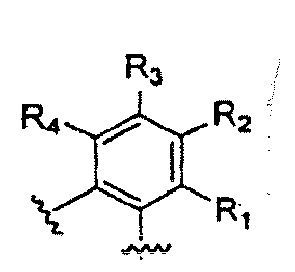

- Organische elektronische Vorrichtung, die eine erste Elektrode, eine zweite Elektrode und mindestens eine organische Schicht, die zwischen der ersten Elektrode und der zweiten Elektrode angeordnet ist;
wobei die organische Schicht einen elektrolumineszenten Bereich umfasst, und der elektrolumineszente Bereich (eine) organische Verbindung(en) für ein elektronisches Material dargestellt durch die chemische Formel (1) umfasst:
R1 und R2, oder R3 und R4 unabhängig über (C3-C12)Alkylen oder (C3-C12)Alkenylen unter Bildung mindestens eines kondensierten Rings verknüpft sind und die Substituenten, die keinen kondensierten Ring bilden, unabhängig substituiert sind durch Wasserstoff, Deuterium, Halogen, (C1-C60)Alkyl, (C6-C60)Aryl, (C4-C60)Heteroaryl, 5- oder 6-gliedriges Heterocycloalkyl, das ein oder mehrere Heteroatom(e), ausgewählt aus N, O und S, enthält, (C3-C60)Cycloalkyl, Tri(C1-C60)alkylsilyl, Di(C1-C60)alkyl(C6-C60)arylsilyl, Tri(C6-C60)arylsilyl, Adamantyl, (C7-C60)Bicycloalkyl, (C2-C60)Alkenyl, (C2-C60)Alkinyl, Cyano, (C1-C60)Alkylamino, (C6-C60)Arylamino, (C6-C60)Ar(C1-C60)alkyl, (C1-C60)Alkyloxy, (C1-C60)Alkylthio, (C6-C60)Aryloxy, (C6-C60)Arylthio, (C1-C60)Alkoxycarbonyl, (C1-C60)Alkylcarbonyl, (C6-C60)Arylcarbonyl, Carboxyl, Nitro oder Hydroxyl;
der kondensierte Ring, gebildet durch Verknüpfung von R1 und R2, oder R3 und R4 über (C3-C12)Alkylen oder (C3-C12)Alkenylen, oder das Alkyl, Alkenyl, Alkinyl, Cycloalkyl, Heterocycloalkyl, Aryl, Heteroaryl, Arylsilyl, Alkylsilyl, Alkylamino oder Arylamino von anderen Substituenten, die nicht einen kondensierten Ring bilden, weiter substituiert sein können durch einen oder mehrere Substituenten, ausgewählt aus Deuterium, Halogen, (C1-C60)Alkyl, (C6-C60)Aryl, (C4-C60)Heteroaryl, 5- oder 6-gliedrigem Heterocycloalkyl, das ein oder mehrere Heteroatom(e), ausgewählt aus N, O und S, enthält, (C3-C60)Cycloalkyl, Tri(C1-C60)alkylsilyl, Di(C1-C60)alkyl(C6-C60)arylsilyl, Tri(C6-C60)arylsilyl, Adamantyl, (C7-C60)Bicycloalkyl, (C2-C60)Alkenyl, (C2-C60)Alkinyl, Cyano, (C1-C60)Alkylamino, (C6-C60)Arylamino, (C6-C60)Ar(C1-C60)alkyl, (C1-C60)Alkyloxy, (C1-C60)Alkylthio, (C6-C60)Aryloxy, (C6-C60)Arylthio, (C1-C60)Alkoxycarbonyl, (C1-C60)Alkylcarbonyl, (C6-C60)Arylcarbonyl, Carboxyl, Nitro oder Hydroxyl;
R5 oder R6 unabhängig Wasserstoff, Deuterium, Halogen, (C1-C60)Alkyl, (C6-C60)Aryl, (C4-C60)Heteroaryl, 5- oder 6-gliedriges Heterocycloalkyl, das ein oder mehrere Heteroatom(e), ausgewählt aus N, O und S, enthält, (C3-C60)Cycloalkyl, Tri(C1-C60)alkylsilyl, Di(C1-C60)alkyl(C6-C60)arylsilyl, Tri(C6-C60)arylsilyl, Adamantyl, (C7-C60)Bicycloalkyl, (C2-C60)Alkenyl, (C2-C60)Alkinyl, Cyano, (C1-C60)Alkylamino, (C6-C60)Arylamino, (C6-C60)Ar(C1-C60)alkyl, (C1-C60)Alkyloxy, (C1-C60)Alkylthio, (C6-C60)Aryloxy, (C6-C60)Arylthio, (C1-C60)Alkoxycarbonyl, (C1-C60)Alkylcarbonyl, (C6-C60)Arylcarbonyl, Carboxyl, Nitro oder Hydroxyl darstellen;
R7 und R8 unabhängig Wasserstoff, Deuterium, Halogen, (C1-C60)Alkyl, (C6-C60)Aryl, (C4-C60)Heteroaryl, 5- oder 6-gliedriges Heterocycloalkyl, das ein oder mehrere Heteroatom(e), ausgewählt aus N, O und S, enthält, (C3-C60)Cycloalkyl, Tri(C1-C60)alkylsilyl, Di(C1-C60)alkyl(C6-C60)arylsilyl, Tri(C6-C60)arylsilyl, Adamantyl, (C7-C60)Bicycloalkyl, (C2-C60)Alkenyl, (C2-C60)Alkinyl, Cyano, (C1-C60)Alkylamino, (C6-C60)Arylamino, (C6-C60)Ar(C1-C60)alkyl, (C1-C60)Alkyloxy, (C1-C60)Alkylthio, (C6-C60)Aryloxy, (C6-C60)Arylthio, (C1-C60)Alkoxycarbonyl, (C1-C60)Alkylcarbonyl, (C6-C60)Arylcarbonyl, Carboxyl, Nitro oder Hydroxyl darstellen, oder R7 und R8 über (C3-C60)Alkylen oder (C3-C60)Alkenylen unter Bildung eines alicyclischen Rings, oder eines monocyclischen oder polycyclischen aromatischen Rings, mit oder ohne einen kondensierten Ring, verknüpft sein können;
das Alkyl, Alkenyl, Alkinyl, Cycloalkyl, Heterocycloalkyl, Aryl, Heteroaryl, Arylsilyl, Alkylsilyl, Alkylamino, Arylamino von R5, R6, R7 und R8, oder der alicyclische Ring, oder der monocyclische oder polycyclische aromatische Ring, der daraus durch Verknüpfung über (C3-C60)Alkylen oder (C3-C60)Alkenylen, mit oder ohne einen kondensierten Ring, gebildet ist, weiter substituiert sein können durch einen oder mehrere Substituenten, ausgewählt aus Deuterium, Halogen, (C1-C60)Alkyl, Halo(C1-C60)alkyl, (C6-C60)Aryl, (C4-C60)Heteroaryl, 5-oder 6-gliedrigem Heterocycloalkyl, das ein oder mehrere Heteroatom(e), ausgewählt aus N, O und S, enthält, (C3-C60)Cycloalkyl, Tri(C1-C60)alkylsilyl, Di(C1-C60)alkyl(C6-C60)arylsilyl, Tri(C6-C60)arylsilyl, Adamantyl, (C7-C60)Bicycloalkyl, (C2-C60)Alkenyl, (C2-C60)Alkinyl, Cyano, (C1-C60)Alkylamino, (C6-C60)Arylamino, (C6-C60)Ar(C1-C60)alkyl, (C1-C60)Alkyloxy, (C1-C60)Alkylthio, (C6-C60)Aryloxy, (C6-C60)Arylthio, (C1-C60)Alkoxycarbonyl, (C1-C60)Alkylcarbonyl, (C6-C60)Arylcarbonyl, Carboxyl, Nitro und Hydroxyl; und
n eine ganze Zahl von 1 bis 3 ist;
mit der Massgabe, dass, wenn der Ring, gebildet aus R3 und R4 von

und einen oder mehrere Wirte, ausgewählt aus 1,3,5-Tricarbazolylbenzol, Polyvinylcarbazol, m-Biscarbazolylphenyl, 4,4',4"-Tri(N-carbazolyl)triphenylamin, 1,3,5-Tri(2-carbazolylphenyl)benzol, 1,3,5-Tris(2-carbazolyl-5-methoxyphenyl)-benzol, Bis(4-carbazolylphenyl)silan, oder ein oder mehrere Wirte, dargestellt durch eine der chemischen Formeln (14) bis (17), umfasst:
das Alkyl, Alkenyl, Alkinyl, Cycloalkyl, Heterocycloalkyl, Aryl, Heteroaryl, Arylsilyl, Alkylsilyl, Alkylamino, Arylamino von R91 bis R94, und der alicyclische Ring, oder der monocyclische oder polycyclische aromatische Ring, der daraus durch Verknüpfung zu einem benachbarten Substituenten über (C3-C60)Alkylen oder (C3-C60)Alkenylen, mit oder ohne einen kondensierten Ring, gebildet ist, weiter substituiert sein können durch einen oder mehrere Substituenten, ausgewählt aus Deuterium, Halogen, (C1-C60)Alkyl, (C6-C60)Aryl, (C4-C60)Heteroaryl, einem 5- oder 6-gliedrigem Heterocycloalkyl, das ein oder mehrere Heteroatom(e), ausgewählt aus N, O und S, enthält, (C3-C60)Cycloalkyl, Tri(C1-C60)alkylsilyl, Di(C1-C60)alkyl(C6-C60)arylsilyl, Tri(C6-C60)arylsilyl, Adamantyl, (C7-C60)Bicycloalkyl, (C2-C60)Alkenyl, (C2-C60)Alkinyl, Cyano, (C1-C60)Alkylamino, (C6-C60)Arylamino, (C6-C60)Ar(C1-C60)alkyl, (C1-C60)Alkyloxy, (C1-C60)Alkylthio, (C6-C60)Aryloxy, (C6-C60)Arylthio, (C1-C60)Alkoxycarbonyl, (C1-C60)Alkylcarbonyl, (C6-C60)Arylcarbonyl, Carboxyl, Nitro und Hydroxyl;

L1L2M1(Q)y Chemische Formel 17
wobei die Liganden L1 und L2 unabhängig ausgewählt sind aus den folgenden Strukturen;
y 0 ist, wenn M1 ein zweiwertiges Metall ist, während y 1 ist, wenn M1 ein dreiwertiges Metall ist;
Q (C6-C60)Aryloxy oder Tri(C6-C60)arylsilyl ist, und das Aryloxy oder Triarylsilyl von Q weiter substituiert sein kann durch (C1-C60)Alkyl oder (C6-C60)Aryl; X O, S oder Se ist;
Ring A Oxazol, Thiazol, Imidazol, Oxadiazol, Thiadiazol, Benzoxazol, Benzothiazol, Benzimidazol, Pyridin oder Chinolin darstellt;
Ring B Pyridin oder Chinolin darstellt, die weiter substituiert sein können durch (C1-C60)Alkyl oder Phenyl oder Naphthyl mit oder ohne (C1-C60)Alkyl-Substituent(en);
R101 bis R104 unabhängig Wasserstoff, Deuterium, Halogen, (C1-C60)Alkyl, (C6-C60)Aryl, (C4-C60)Heteroaryl, ein 5- oder 6-gliedriges Heterocycloalkyl, das ein oder mehrere Heteroatom(e), ausgewählt aus N, O und S, enthält, (C3-C60)Cycloalkyl, Tri(C1-C60)alkylsilyl, Di(C1-C60)alkyl(C6-C60)arylsilyl, Tri(C6-C60)arylsilyl, Adamantyl, (C7-C60)Bicycloalkyl, (C2-C60)Alkenyl, (C2-C60)Alkinyl, Cyano, (C1-C60)Alkylamino, (C6-C60)Arylamino, (C6-C60)Ar(C1-C60)alkyl, (C1-C60)Alkyloxy, (C1-C60)Alkylthio, (C6-C60)Aryloxy, (C6-C60)Arylthio, (C1-C60)Alkoxycarbonyl, (C1-C60)Alkylcarbonyl, (C6-C60)Arylcarbonyl, Carboxyl, Nitro oder Hydroxyl darstellen; oder jedes von R101 bis R104 zu einem benachbarten Substituenten über (C3-C60)Alkylen oder (C3-C60)Alkenylen unter Bildung eines alicyclischen Rings, oder eines monocyclischen oder polycyclischen aromatischen Rings, mit oder ohne einen kundensierten Ring, verknüpft sein kann; und
Ring A oder das Alkyl, Alkenyl, Alkinyl, Cycloalkyl, Heterocycloalkyl, Aryl, Heteroaryl, Arylsilyl, Alkylsilyl, Alkylamino oder Arylamine von R101 bis R104, und der alicyclische Ring, oder der monocyclische oder polycyclische aromatische Ring, der daraus durch Verknüpfung zu einem benachbarten Substituenten über (C3-C60)Alkylen oder (C3-C60)Alkenylen, mit oder ohne einen kondensierten Ring, gebildet ist, weiter substituiert sein können durch einen oder mehrere Substituenten, ausgewählt aus Deuterium, Halogen, (C1-C60)Alkyl, (C6-C60)Aryl, (C4-C60)Heteroaryl, einem 5- oder 6-gliedrigem Heterocycloalkyl, das ein oder mehrere Heteroatom(e), ausgewählt aus N, O und S, enthält, (C3-C60)Cycloalkyl, Tri(C1-C60)alkylsilyl, Di(C1-C60)alkyl(C6-C60)arylsilyl, Tri(C6-C60)arylsilyl, Adamantyl, (C7-C60)Bicycloalkyl, (C2-C60)Alkenyl, (C2-C60)Alkinyl, Cyano, (C1-C60)Alkylamino, (C6-C60)Arylamino, (C6-C60)Ar(C1-C60)alkyl, (C1-C60)Alkyloxy, (C1-C60)Alkylthio, (C6-C60)Aryloxy, (C6-C60)Arylthio, (C1-C60)Alkoxycarbonyl, (C1-C60)Alkylcarbonyl, (C6-C60)Arylcarbonyl, Carboxyl, Nitro und Hydroxyl. - Organische elektronische Vorrichtung nach Anspruch 5, wobei die organische Schicht eine oder mehrere Verbindung(en) umfasst, ausgewählt aus einer Gruppe, bestehend aus Arylamin-Verbindungen und Styrylarylamin-Verbindungen, oder einem oder mehreren Metall(en), ausgewählt aus einer Gruppe, bestehend aus Organometallen der Gruppe 1, Gruppe 2, Übergangsmetallen der vierten Periode und fünften Periode, Lanthanoidenmetalle und d-Übergangselementen im Periodensystem der Elemente.
- Organische elektronische Vorrichtung nach Anspruch 5, welche eine organische Verbindung oder organometallische Verbindung mit grüner oder blauer Elektrolumineszenz zusätzlich zu der organischen Verbindung für elektronisches Material umfasst.
- Organische elektronische Vorrichtung nach Anspruch 5, wobei die organische Schicht eine elektrolumineszente Schicht und eine ladungserzeugende Schicht umfasst.
- Organische elektronische Vorrichtung nach Anspruch 5, wobei ein gemischter Bereich aus reduzierendem Dotierstoff und organischer Substanz, oder ein gemischter Bereich aus oxidierenden Dotierstoff und organischer Substanz auf der Innenfläche von einer oder beiden Elektrode(n) des Elektrodenpaars angeordnet ist.
Applications Claiming Priority (1)
| Application Number | Priority Date | Filing Date | Title |
|---|---|---|---|
| KR1020080106370A KR20100047466A (ko) | 2008-10-29 | 2008-10-29 | 신규한 전자재료용 화합물 및 이를 포함하는 유기 전자 소자 |
Publications (2)
| Publication Number | Publication Date |
|---|---|
| EP2182002A1 EP2182002A1 (de) | 2010-05-05 |
| EP2182002B1 true EP2182002B1 (de) | 2012-07-04 |
Family
ID=41504097
Family Applications (1)
| Application Number | Title | Priority Date | Filing Date |
|---|---|---|---|
| EP09250947A Expired - Fee Related EP2182002B1 (de) | 2008-10-29 | 2009-03-30 | Neuartige Verbindungen für elektronisches Material und organische elektronische Vorrichtung damit |
Country Status (5)
| Country | Link |
|---|---|
| EP (1) | EP2182002B1 (de) |
| JP (1) | JP2013509390A (de) |
| KR (1) | KR20100047466A (de) |
| CN (1) | CN102264864A (de) |
| WO (1) | WO2011051749A1 (de) |
Cited By (2)
| Publication number | Priority date | Publication date | Assignee | Title |
|---|---|---|---|---|
| US10629829B2 (en) | 2015-03-13 | 2020-04-21 | Samsung Electronics Co., Ltd. | Organometallic compound and organic light-emitting device including the same |
| US12291540B2 (en) | 2019-03-29 | 2025-05-06 | Samsung Electronics Co., Ltd. | Organometallic compound, organic light-emitting device including the same, and electronic apparatus including the organic light-emitting device |
Families Citing this family (40)
| Publication number | Priority date | Publication date | Assignee | Title |
|---|---|---|---|---|
| US9289759B2 (en) * | 2011-09-13 | 2016-03-22 | Rutgers, The State University Of New Jersey | Iridium catalyst complexes and C—H bond activated products therefrom |
| US10340471B2 (en) | 2011-09-30 | 2019-07-02 | Udc Ireland Limited | Organic electroluminescent element and novel iridium complex |
| JP6189431B2 (ja) * | 2012-07-04 | 2017-08-30 | サムスン エスディアイ カンパニー, リミテッドSamsung Sdi Co., Ltd. | 有機光電子素子用化合物、これを含む有機発光素子および前記有機発光素子を含む表示装置 |
| CN103113413B (zh) * | 2013-02-07 | 2016-03-02 | 合肥京东方光电科技有限公司 | 双环铱配合物及制备方法、有机电致发光器件及制备方法 |
| CN103992342B (zh) * | 2013-02-16 | 2016-07-06 | 清华大学 | 金属铝配合物及其在有机发光器件中的应用 |
| KR20150094127A (ko) * | 2014-02-10 | 2015-08-19 | 롬엔드하스전자재료코리아유한회사 | 유기 전계 발광 소자 |
| KR101533035B1 (ko) * | 2014-06-23 | 2015-07-01 | 성균관대학교산학협력단 | 유기 발광 화합물, 이의 제조 방법, 및 이를 포함하는 유기 전계 발광 소자 |
| US9397302B2 (en) | 2014-10-08 | 2016-07-19 | Universal Display Corporation | Organic electroluminescent materials and devices |
| US10854826B2 (en) | 2014-10-08 | 2020-12-01 | Universal Display Corporation | Organic electroluminescent compounds, compositions and devices |
| US9484541B2 (en) | 2014-10-20 | 2016-11-01 | Universal Display Corporation | Organic electroluminescent materials and devices |
| US10636978B2 (en) | 2014-12-30 | 2020-04-28 | Universal Display Corporation | Organic electroluminescent materials and devices |
| US10253252B2 (en) | 2014-12-30 | 2019-04-09 | Universal Display Corporation | Organic electroluminescent materials and devices |
| US10276799B2 (en) | 2015-01-23 | 2019-04-30 | Taiyuan University Of Technology | White-light hyperbranched conjugated polymer, method for preparing the same and it's use |
| GB201511300D0 (en) * | 2015-06-26 | 2015-08-12 | Cambridge Display Tech Ltd | Metal complex and organic light-emitting device |
| US11672167B2 (en) | 2015-03-13 | 2023-06-06 | Samsung Electronics Co., Ltd. | Organometallic compound and organic light-emitting device including the same |
| US10153441B2 (en) | 2015-03-30 | 2018-12-11 | Industrial Technology Research Institute | Organic metal compound, organic light-emitting device, and lighting device employing the same |
| US10276809B2 (en) | 2016-04-05 | 2019-04-30 | Universal Display Corporation | Organic electroluminescent materials and devices |
| US10957866B2 (en) * | 2016-06-30 | 2021-03-23 | Universal Display Corporation | Organic electroluminescent materials and devices |
| KR101838693B1 (ko) * | 2016-07-06 | 2018-03-14 | 희성소재(주) | 헤테로고리 화합물 및 이를 이용한 유기 발광 소자 |
| US11780865B2 (en) | 2017-01-09 | 2023-10-10 | Universal Display Corporation | Organic electroluminescent materials and devices |
| KR102395780B1 (ko) | 2017-03-23 | 2022-05-09 | 삼성전자주식회사 | 유기금속 화합물, 이를 포함한 유기 발광 소자 |
| CN108690083A (zh) * | 2017-04-06 | 2018-10-23 | 北京鼎材科技有限公司 | 化合物及其有机电致发光器件 |
| KR102768709B1 (ko) * | 2017-11-17 | 2025-02-18 | 가부시키가이샤 한도오따이 에네루기 켄큐쇼 | 유기 화합물, 발광 소자, 발광 장치, 전자 기기, 및 조명 장치 |
| TWI650325B (zh) * | 2017-12-11 | 2019-02-11 | 輔仁大學學校財團法人輔仁大學 | 有機金屬銥錯合物及其簡易合成方法和用途 |
| CN108690092A (zh) * | 2018-07-16 | 2018-10-23 | 烟台显华光电材料研究院有限公司 | 一类用作磷光材料的过渡金属配合物、其制备方法及应用 |
| CN109206458A (zh) * | 2018-09-04 | 2019-01-15 | 宇瑞(上海)化学有限公司 | 红色磷光化合物和使用该化合物的有机发光二极管器件 |
| CN109232656A (zh) * | 2018-09-04 | 2019-01-18 | 宇瑞(上海)化学有限公司 | 红色磷光化合物和使用该化合物的有机电致发光器件 |
| CN109384817A (zh) * | 2018-09-04 | 2019-02-26 | 宇瑞(上海)化学有限公司 | 红色磷光化合物和使用该化合物的有机电致发光器件 |
| CN109485678A (zh) * | 2018-09-04 | 2019-03-19 | 宇瑞(上海)化学有限公司 | 红色磷光化合物和使用该化合物的有机电致发光器件 |
| CN109206457A (zh) * | 2018-09-04 | 2019-01-15 | 宇瑞(上海)化学有限公司 | 红色磷光化合物和使用该化合物的有机电致发光器件 |
| CN109206456A (zh) * | 2018-09-04 | 2019-01-15 | 宇瑞(上海)化学有限公司 | 红色磷光化合物和使用该化合物的有机发光二极管器件 |
| KR102675779B1 (ko) * | 2018-09-19 | 2024-06-18 | 삼성전자주식회사 | 유기금속 화합물, 이를 포함한 유기 발광 소자 및 이를 포함한 진단용 조성물 |
| EP3715352B1 (de) * | 2019-03-29 | 2025-07-30 | Samsung Electronics Co., Ltd. | Organometallische verbindung, organische lichtemittierende vorrichtung damit und elektronische vorrichtung mit der organischen lichtemittierenden vorrichtung |
| KR102820517B1 (ko) | 2019-10-17 | 2025-06-13 | 삼성전자주식회사 | 유기금속 화합물, 이를 포함한 유기 발광 소자 및 이를 포함한 진단용 조성물 |
| US12063850B2 (en) * | 2019-12-24 | 2024-08-13 | Samsung Electronics Co., Ltd. | Organometallic compound, organic light-emitting device including the same and electronic apparatus including the organic light-emitting device |
| CN113087745B (zh) * | 2020-01-08 | 2023-04-18 | 北京夏禾科技有限公司 | 一种含硅取代的金属配合物 |
| CN111825722B (zh) * | 2020-07-03 | 2023-06-09 | 北京印刷学院 | 饱和红色发光的芴基苯喹啉铱配合物 |
| US12435102B2 (en) | 2020-10-02 | 2025-10-07 | Universal Display Corporation | Organic electroluminescent materials and devices |
| CN113201028B (zh) * | 2021-05-24 | 2022-12-09 | 南京邮电大学 | 基于甲氧基调控的宽谱带黄色磷光2-苯基喹啉铱(iii)配合物及其制备方法和应用 |
| CN114560891B (zh) * | 2022-03-25 | 2024-06-28 | 中国科学院长春应用化学研究所 | 一种含有稠并吲哚和喹啉结构的铱配合物及电致发光器件 |
Family Cites Families (5)
| Publication number | Priority date | Publication date | Assignee | Title |
|---|---|---|---|---|
| JP2006121032A (ja) * | 2004-09-27 | 2006-05-11 | Fuji Photo Film Co Ltd | 有機電界発光素子 |
| CN101077971B (zh) * | 2006-05-25 | 2010-08-11 | 清华大学 | 一种有机电致磷光发光材料及其应用 |
| TWI510598B (zh) * | 2007-03-08 | 2015-12-01 | Universal Display Corp | 磷光材料 |
| KR100910153B1 (ko) * | 2007-11-20 | 2009-07-30 | (주)그라쎌 | 신규한 적색 인광 화합물 및 이를 발광재료로서 채용하고있는 유기발광소자 |
| KR100966885B1 (ko) * | 2008-02-29 | 2010-06-30 | 다우어드밴스드디스플레이머티리얼 유한회사 | 신규한 유기 발광 화합물 및 이를 발광재료로서 채용하고있는 유기 전계 발광 소자 |
-
2008
- 2008-10-29 KR KR1020080106370A patent/KR20100047466A/ko not_active Ceased
-
2009
- 2009-03-30 EP EP09250947A patent/EP2182002B1/de not_active Expired - Fee Related
- 2009-10-29 JP JP2012535943A patent/JP2013509390A/ja active Pending
- 2009-10-29 WO PCT/IB2009/007466 patent/WO2011051749A1/en not_active Ceased
- 2009-10-29 CN CN2009801538377A patent/CN102264864A/zh active Pending
Cited By (2)
| Publication number | Priority date | Publication date | Assignee | Title |
|---|---|---|---|---|
| US10629829B2 (en) | 2015-03-13 | 2020-04-21 | Samsung Electronics Co., Ltd. | Organometallic compound and organic light-emitting device including the same |
| US12291540B2 (en) | 2019-03-29 | 2025-05-06 | Samsung Electronics Co., Ltd. | Organometallic compound, organic light-emitting device including the same, and electronic apparatus including the organic light-emitting device |
Also Published As
| Publication number | Publication date |
|---|---|
| CN102264864A (zh) | 2011-11-30 |
| KR20100047466A (ko) | 2010-05-10 |
| JP2013509390A (ja) | 2013-03-14 |
| EP2182002A1 (de) | 2010-05-05 |
| WO2011051749A1 (en) | 2011-05-05 |
Similar Documents
| Publication | Publication Date | Title |
|---|---|---|
| EP2182002B1 (de) | Neuartige Verbindungen für elektronisches Material und organische elektronische Vorrichtung damit | |
| EP2066150B1 (de) | Neuartige rote elektrolumineszente Verbindungen und organische elektrolumineszente Vorrichtung damit | |
| EP2062958B1 (de) | Neue organische Elektrolumineszenzverbindungen und organische Elektrolumineszenzvorrichtung damit | |
| EP2085450A1 (de) | Neue elektrolumineszente, organische Verbindungen und ein elektrolumineszentes Gerät mit denselben | |
| EP2098532A1 (de) | Neue organische Elektrolumineszenzverbindungen und organische Elektrolumineszenzvorrichtung | |
| KR100946409B1 (ko) | 신규한 유기 발광 화합물 및 이를 발광재료로서 채용하고있는 유기 전계 발광 소자 | |
| EP2062959A2 (de) | Neuartige rote elektrolumineszente Verbindungen und organische elektrolumineszente Vorrichtung damit | |
| EP2058322A2 (de) | Neuartige rote Elektrolumineszenzverbindungen und organische Elektrolumineszenzvorrichtung damit | |
| JP5554914B2 (ja) | 新規な有機エレクトロルミネセント化合物及びこれを使用する有機エレクトロルミネセントデバイス | |
| EP2141214A2 (de) | Neue organische Elektrolumineszenzverbindungen und organische Elektrolumineszenzvorrichtung damit | |
| EP2055709A2 (de) | Neuartige rote elektrolumineszente Verbindungen und organische elektrolumineszente Vorrichtung damit | |
| EP2147962A1 (de) | Azaanthrazen-Derivate und organische Elektrolumineszenzvorrichtung damit | |
| EP2202224A1 (de) | Neuartige organometallische Verbindungen für Elektrolumineszenz und organische Elektrolumineszenzvorrichtung damit | |
| EP2281863A2 (de) | Fluoren-Derivate und organische Elektrolumineszenzvorrichtung damit | |
| WO2010050778A1 (en) | Novel compounds for organic electronic material and organic electronic device using the same | |
| EP2107095A1 (de) | Neue organische Elektrolumineszenzverbindungen und organische Elektrolumineszenzvorrichtung damit | |
| WO2011014039A1 (en) | Novel organic electroluminescent compounds and organic electroluminescent device using the same | |
| EP2060579A1 (de) | Neuartige rote elektrolumineszente Verbindungen und organische elektrolumineszente Vorrichtung damit |
Legal Events
| Date | Code | Title | Description |
|---|---|---|---|
| PUAI | Public reference made under article 153(3) epc to a published international application that has entered the european phase |
Free format text: ORIGINAL CODE: 0009012 |
|
| 17P | Request for examination filed |
Effective date: 20090330 |
|
| AK | Designated contracting states |
Kind code of ref document: A1 Designated state(s): AT BE BG CH CY CZ DE DK EE ES FI FR GB GR HR HU IE IS IT LI LT LU LV MC MK MT NL NO PL PT RO SE SI SK TR |
|
| AX | Request for extension of the european patent |
Extension state: AL BA RS |
|
| 17Q | First examination report despatched |
Effective date: 20100719 |
|
| AKX | Designation fees paid |
Designated state(s): DE FR GB |
|
| GRAP | Despatch of communication of intention to grant a patent |
Free format text: ORIGINAL CODE: EPIDOSNIGR1 |
|
| GRAS | Grant fee paid |
Free format text: ORIGINAL CODE: EPIDOSNIGR3 |
|
| GRAA | (expected) grant |
Free format text: ORIGINAL CODE: 0009210 |
|
| AK | Designated contracting states |
Kind code of ref document: B1 Designated state(s): DE FR GB |
|
| REG | Reference to a national code |
Ref country code: GB Ref legal event code: FG4D |
|
| REG | Reference to a national code |
Ref country code: DE Ref legal event code: R096 Ref document number: 602009008025 Country of ref document: DE Effective date: 20120830 |
|
| RAP2 | Party data changed (patent owner data changed or rights of a patent transferred) |
Owner name: ROHM AND HAAS ELECTRONIC MATERIALS KOREA LTD. |
|
| REG | Reference to a national code |
Ref country code: DE Ref legal event code: R082 Ref document number: 602009008025 Country of ref document: DE Representative=s name: MURGITROYD & COMPANY, DE |
|
| REG | Reference to a national code |
Ref country code: DE Ref legal event code: R081 Ref document number: 602009008025 Country of ref document: DE Owner name: ROHM AND HAAS ELECTRONIC MATERIALS KOREA LTD.,, KR Free format text: FORMER OWNER: GRACEL DISPLAY INC., SEOUL 133-833, KR Effective date: 20121203 Ref country code: DE Ref legal event code: R082 Ref document number: 602009008025 Country of ref document: DE Representative=s name: MURGITROYD & COMPANY, DE Effective date: 20121203 Ref country code: DE Ref legal event code: R081 Ref document number: 602009008025 Country of ref document: DE Owner name: ROHM AND HAAS ELECTRONIC MATERIALS KOREA LTD., KR Free format text: FORMER OWNER: GRACEL DISPLAY INC., SEOUL 133-833, KR Effective date: 20121203 |
|
| PLBE | No opposition filed within time limit |
Free format text: ORIGINAL CODE: 0009261 |
|
| STAA | Information on the status of an ep patent application or granted ep patent |
Free format text: STATUS: NO OPPOSITION FILED WITHIN TIME LIMIT |
|
| 26N | No opposition filed |
Effective date: 20130405 |
|
| REG | Reference to a national code |
Ref country code: DE Ref legal event code: R097 Ref document number: 602009008025 Country of ref document: DE Effective date: 20130405 |
|
| REG | Reference to a national code |
Ref country code: FR Ref legal event code: PLFP Year of fee payment: 7 |
|
| PGFP | Annual fee paid to national office [announced via postgrant information from national office to epo] |
Ref country code: DE Payment date: 20150324 Year of fee payment: 7 |
|
| PGFP | Annual fee paid to national office [announced via postgrant information from national office to epo] |
Ref country code: FR Payment date: 20150309 Year of fee payment: 7 Ref country code: GB Payment date: 20150325 Year of fee payment: 7 |
|
| REG | Reference to a national code |
Ref country code: DE Ref legal event code: R119 Ref document number: 602009008025 Country of ref document: DE |
|
| GBPC | Gb: european patent ceased through non-payment of renewal fee |
Effective date: 20160330 |
|
| REG | Reference to a national code |
Ref country code: FR Ref legal event code: ST Effective date: 20161130 |
|
| PG25 | Lapsed in a contracting state [announced via postgrant information from national office to epo] |
Ref country code: FR Free format text: LAPSE BECAUSE OF NON-PAYMENT OF DUE FEES Effective date: 20160331 Ref country code: DE Free format text: LAPSE BECAUSE OF NON-PAYMENT OF DUE FEES Effective date: 20161001 Ref country code: GB Free format text: LAPSE BECAUSE OF NON-PAYMENT OF DUE FEES Effective date: 20160330 |