EP2179643A2 - Method of producing double low restorer lines of Brassica napus having a good agronomic value - Google Patents
Method of producing double low restorer lines of Brassica napus having a good agronomic value Download PDFInfo
- Publication number
- EP2179643A2 EP2179643A2 EP09175998A EP09175998A EP2179643A2 EP 2179643 A2 EP2179643 A2 EP 2179643A2 EP 09175998 A EP09175998 A EP 09175998A EP 09175998 A EP09175998 A EP 09175998A EP 2179643 A2 EP2179643 A2 EP 2179643A2
- Authority
- EP
- European Patent Office
- Prior art keywords
- marker
- boljon
- pgiint
- pgiol
- radish
- Prior art date
- Legal status (The legal status is an assumption and is not a legal conclusion. Google has not performed a legal analysis and makes no representation as to the accuracy of the status listed.)
- Granted
Links
Images











Classifications
-
- A—HUMAN NECESSITIES
- A01—AGRICULTURE; FORESTRY; ANIMAL HUSBANDRY; HUNTING; TRAPPING; FISHING
- A01H—NEW PLANTS OR NON-TRANSGENIC PROCESSES FOR OBTAINING THEM; PLANT REPRODUCTION BY TISSUE CULTURE TECHNIQUES
- A01H1/00—Processes for modifying genotypes ; Plants characterised by associated natural traits
- A01H1/02—Methods or apparatus for hybridisation; Artificial pollination ; Fertility
- A01H1/022—Genic fertility modification, e.g. apomixis
-
- A—HUMAN NECESSITIES
- A01—AGRICULTURE; FORESTRY; ANIMAL HUSBANDRY; HUNTING; TRAPPING; FISHING
- A01H—NEW PLANTS OR NON-TRANSGENIC PROCESSES FOR OBTAINING THEM; PLANT REPRODUCTION BY TISSUE CULTURE TECHNIQUES
- A01H1/00—Processes for modifying genotypes ; Plants characterised by associated natural traits
- A01H1/06—Processes for producing mutations, e.g. treatment with chemicals or with radiation
-
- A—HUMAN NECESSITIES
- A01—AGRICULTURE; FORESTRY; ANIMAL HUSBANDRY; HUNTING; TRAPPING; FISHING
- A01H—NEW PLANTS OR NON-TRANSGENIC PROCESSES FOR OBTAINING THEM; PLANT REPRODUCTION BY TISSUE CULTURE TECHNIQUES
- A01H5/00—Angiosperms, i.e. flowering plants, characterised by their plant parts; Angiosperms characterised otherwise than by their botanic taxonomy
- A01H5/10—Seeds
-
- A—HUMAN NECESSITIES
- A01—AGRICULTURE; FORESTRY; ANIMAL HUSBANDRY; HUNTING; TRAPPING; FISHING
- A01H—NEW PLANTS OR NON-TRANSGENIC PROCESSES FOR OBTAINING THEM; PLANT REPRODUCTION BY TISSUE CULTURE TECHNIQUES
- A01H6/00—Angiosperms, i.e. flowering plants, characterised by their botanic taxonomy
- A01H6/20—Brassicaceae, e.g. canola, broccoli or rucola
- A01H6/202—Brassica napus [canola]
-
- C—CHEMISTRY; METALLURGY
- C12—BIOCHEMISTRY; BEER; SPIRITS; WINE; VINEGAR; MICROBIOLOGY; ENZYMOLOGY; MUTATION OR GENETIC ENGINEERING
- C12Q—MEASURING OR TESTING PROCESSES INVOLVING ENZYMES, NUCLEIC ACIDS OR MICROORGANISMS; COMPOSITIONS OR TEST PAPERS THEREFOR; PROCESSES OF PREPARING SUCH COMPOSITIONS; CONDITION-RESPONSIVE CONTROL IN MICROBIOLOGICAL OR ENZYMOLOGICAL PROCESSES
- C12Q1/00—Measuring or testing processes involving enzymes, nucleic acids or microorganisms; Compositions therefor; Processes of preparing such compositions
- C12Q1/68—Measuring or testing processes involving enzymes, nucleic acids or microorganisms; Compositions therefor; Processes of preparing such compositions involving nucleic acids
- C12Q1/6876—Nucleic acid products used in the analysis of nucleic acids, e.g. primers or probes
- C12Q1/6888—Nucleic acid products used in the analysis of nucleic acids, e.g. primers or probes for detection or identification of organisms
- C12Q1/6895—Nucleic acid products used in the analysis of nucleic acids, e.g. primers or probes for detection or identification of organisms for plants, fungi or algae
Definitions
- the invention relates to a method of producing a double low restorer lines of Brassica napus for Ogura cytoplasmic male sterility (cms) presenting a radish introgression carrying the Rfo restorer genes deleted of the radish Pgi-2 allele and recombined with the Pgi-2 gene from Brassica oleracea, and having a good agronomic value characterized by female fertility, a good transmission rate of Rfo and a high vegetative vigour.
- the invention relates also to a method of forming Brassica napus hybrid seed and progeny thereof and to the use of markers for selection.
- the inventors thus assigned themselves the objective of providing a new improved double low restorer line with a good agronomic value.
- This objective is obtained by a new method of producing a recombined double low restorer line for the Ogu-INRA cms in rapeseed.
- a first object of the present invention relates to a method of producing double low restorer lines of Brassica napus for Ogura cms presenting radis introgression carrying the Rfo restorer gene deleted of the radish Pgi-2 allele and recombined with the Pgi-2 gene from Brassica oleracea, and having a good agronomic value characterised by female fertility, a good transmission rate of Rfo and a high vegetative vigour, said method including the step of:
- the irradiation dose in step b) is 65 Gray during 6 mn.
- the double low cms line of spring Brassica napus of step a) is R211.
- R211 is an INRA spring restorer line.
- Drakkar is a French spring registered variety.
- Wesroona is an Australian spring registered variety.
- the testing in step d) is performed with the combination of five markers selected from PGIol, PGIUNT, PGIint, BolJon and CP418.
- Another object of the present invention relates to double low restorer lines of Brassica napus for Ogura cms presenting a Rfo insertion deleted of the radish Pgi-2 allele and recombined with the Pgi-2 gene from Brassica oleracea, and having a good agronomic value characterised by female fertility, a good transmission rate of Rfo and a high vegetative vigour.
- the double low restorer lines present a unique combination of five markers selected from PGIol, PGIUNT, PGIint, BolJon and CP418.
- Another object of the present invention relates to Brassica napus hybrid plants and progeny thereof obtained though the steps of:
- Another object of the present invention relates to seeds of Brassica plant obtained from the methods according to the present invention.
- Still another object of the invention relates to seeds of Brassica napus deposited in NCIMB Limited, 23 St Machar Drive, Aberdeen, Scotland, AB24 3RY, UK, on July 4, 2003, under the reference number NCIMB41183.
- Another object of the present invention relates to the use of at least four markers PGIol, PGIint, BolJon and CP418, or any portion of them comprising at least one polymorphic site, for characterising recombined restorer lines of Brassica napus for Ogura cms presenting a Rfo insertion deleted of the radish Pgi-2 allele and recombined with the Pgi-2 gene from Brassica oleracea, and having a good agronomic value characterised by female fertility, a good transmission rate of Rfo and a high vegetative vigour.
- the combination is of five markers PGIol, PGIUNT, PGIint, BolJon and CP418.
- the expression "any portion of them comprising at least one polymorphic site” means any part of the sequence showing at least a difference between the B. oleracea type sequence and B. rapa type sequence.
- Such markers are represented in the following figures and sequence listing for the R2000 line, a double low restorer lines of Brassica napus for cms according to the present invention.
- the present invention relates to:
- Another object of the present invention relates to the PGIol, PGIUNT, PGIint, BolJon and CP418 markers whose sequences follow:
- Genotypes The 'R211' line with a deleted radish insertion was crossed to the spring low glucosinolates (GLS) rapeseed 'Drakkar' to produce a F1 progeny ('R211*Dk').
- the spring low GLS cms line 'Wesroona' (australian origin) was used for following crosses.
- Gamma ray irradiation Whole flowering plants were treated with gamma rays from a Co60 source in a controlled area. Subletal dose fo 65 Gray was applied before meioses.
- Testcrosses and F2 production Irradiated plants were transferred in an insectproof greenhouse after removing flower buds larger than 2 mm. The irradiated F1 progeny was used to handpollinate the cms 'Wesroona' line. The restored derived F1' plants were allowed to produce F2 families harvested individually and precisely sown in a field assay along with non irradiated controls ( Fig. 1 ).
- Phenotypic selection Three visual criteria were scored (on a 1 to 5 scale) over 2 years in field assays, on 1200 F2 offsprings plus 44 controls (82 330 quoted plants):
- Ionising irradiation is known to induce chromosomal rearrangements by double strand breaks followed by aberrant rejoining of the ends.
- Gamma-ray irradiation was used on a heterozygous F1 derived from the 'R211' line to induce chromosome breaks, just before meiosis, aiming at a recombination of the deleted radish introgression in the rapeseed genome.
- Glucosinolate analysis confirmed its low content.
- PGI isoenzyme analysis 'R2000' progeny expressed the rapeseed Pgi-2 allele from B. oleracea genome, originally lost in 'R211'.
- the 'R211' parental line showed no amplification, while the spring tested lines showed a 248bp band.
- Its DNA sequence is homologous to the PGI-2 sequences from the Crop Net UK DB in Brassica species and from previous work in our group (named SGAP sequences) (Localisation of the primers SG PGI chou, Fig. 4 ).
- the Pgi-2 gene is present in the R2000 homozygote, which is not the case for the parental homozygous R211.
- DNA sequence of the band confirmed the homology with the known Arabidopsis and Brassica Pgi-2 sequence.
- Control genotypes Drakkar, Pactol, and, Samourai, Darmor had the same pattern on the gel. Sequence of this common band allowed to confirm their high homology as they were quasi similar except one base substitution.
- the homozygous 'R2000' family has recovered the PGIol band of the Brassica oleracea type. It was distinct from the known restorer of the Samourai group.
- PGIUNT marker A second reverse primer, PGIint L, was designed further down the Pgi-2 sequence, to amplify as well conserved and as variable regions of the gene. When used with the PGIol U primer, it amplifies a 980bp band only in Brassica genomes. R211 didn't show any band. The homozygous 'R2000' showed the PGIUNT band as in the Drakkar parent.
- the homozygous 'R2000' didn't show the radish PGIint band, as in the deleted 'R211' parental line, but showed one Brassica band, homologous to the B. oleracea one.
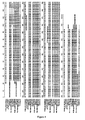
- Electrophoresis of PGIint marker is represented in figure 9 .
- a PGI segment of about 490bp is known.
- Example III Selection of marker in a region close to Rfo
- the target SG129 sequence was ortholog of a clone (AC011OOO, at the locus F16P17) in Arabidopsis thaliana. This clone overlapped an Arabidopsis adjacent contig clone (AC07190).
- a new recombined low GLS restorer line has been selected with a good female fertility.
- the poor value of line 'R211' allowed selection in the field for a rare recombination event and characterisation the 'R2000' family.
- the homozygous 'R2000' presents a unique combination of the PGIol, PGIUNT, PGIint and BolJon markers when compared with the rapeseed restorer analysed yet:
- PGIinT marker showed that the homozygous restored rapeseed lines, RRH1 and R113 presented the European radish band plus one Brassica band, homologous to B. rapa genome.
- 'R2000' shows no radish band, lost as in its parental deleted line R211, but showed one Brassica band homologous to B. oleracea.
- the ortholog PGIint sequence in its B. rapa genome is not amplified with this marker in R211 and Drakkar genetic background.
- PGIol marker and PGIUNT marker sequences in restored lines RRH1 and R113 were homologous to the B. rapa cv Asko one.
- PGIUNT sequence is homologous to B. oleracea.
- the ortholog PGIUnt sequence in its B. rapa genome is not amplified with this marker in R211 and Drakkar genetic background.
- BolJon marker showed that the homozygous restored rapeseed lines, including 'R211' presented the European radish band plus only the B. rapa one. 'R2000' shows the two bands of 'R211' plus the recovered B. oleracea BolJon band.
- CP418 marker showed that 'R2000' recovered this conserved B. oleracea segment.
Landscapes
- Life Sciences & Earth Sciences (AREA)
- Health & Medical Sciences (AREA)
- Chemical & Material Sciences (AREA)
- Botany (AREA)
- Environmental Sciences (AREA)
- Genetics & Genomics (AREA)
- Developmental Biology & Embryology (AREA)
- Engineering & Computer Science (AREA)
- Organic Chemistry (AREA)
- General Health & Medical Sciences (AREA)
- Analytical Chemistry (AREA)
- Proteomics, Peptides & Aminoacids (AREA)
- Biotechnology (AREA)
- Physiology (AREA)
- Molecular Biology (AREA)
- Zoology (AREA)
- Wood Science & Technology (AREA)
- Physics & Mathematics (AREA)
- Microbiology (AREA)
- Immunology (AREA)
- Biophysics (AREA)
- Biochemistry (AREA)
- Bioinformatics & Cheminformatics (AREA)
- General Engineering & Computer Science (AREA)
- Mycology (AREA)
- Natural Medicines & Medicinal Plants (AREA)
- Breeding Of Plants And Reproduction By Means Of Culturing (AREA)
- Measuring Or Testing Involving Enzymes Or Micro-Organisms (AREA)
Abstract
Description
- The invention relates to a method of producing a double low restorer lines of Brassica napus for Ogura cytoplasmic male sterility (cms) presenting a radish introgression carrying the Rfo restorer genes deleted of the radish Pgi-2 allele and recombined with the Pgi-2 gene from Brassica oleracea, and having a good agronomic value characterized by female fertility, a good transmission rate of Rfo and a high vegetative vigour. The invention relates also to a method of forming Brassica napus hybrid seed and progeny thereof and to the use of markers for selection.
- Breeding restorer lines for the Ogu-INRA Cytoplasmic Male Sterility (cms) system in rapeseed (Brassica napus L.) has been a major objective during the past few years. Extensive backcross and pedigree breeding were necessary to improve their female fertility and to get double low restorer lines. The so-called « double low » varieties are those low in erucic acid in the oil and low in glucosinolates in the solid meal remaining after oil extraction. However some difficulties can still be encountered in breeding these lines (introgression rearrangements, possible linkage with negative traits) due to the large size of the radish introgression.
- The inventors thus assigned themselves the objective of providing a new improved double low restorer line with a good agronomic value.
- This objective is obtained by a new method of producing a recombined double low restorer line for the Ogu-INRA cms in rapeseed.
- A first object of the present invention relates to a method of producing double low restorer lines of Brassica napus for Ogura cms presenting radis introgression carrying the Rfo restorer gene deleted of the radish Pgi-2 allele and recombined with the Pgi-2 gene from Brassica oleracea, and having a good agronomic value characterised by female fertility, a good transmission rate of Rfo and a high vegetative vigour, said method including the step of:
- a) crossing double low cms lines of spring Brassica napus comprising a deleted radish insertion with the double low line of spring Drakkar for forming heterozygous restored plants of Brassica napus,
- b) irradiating before meiosis the heterozygous restored plants obtained in step a) with gamma ray irradiation,
- c) crossing pollen from flowers obtained in step b) with the cms double low spring Wesroona line,
- d) testing the progeny for vigour, female fertility and transmission rate of the cms gene,
- e) selecting progeny lines.
- According to one advantageous form of embodiment of the method of the present invention, the irradiation dose in step b) is 65 Gray during 6 mn.
- According to one advantageous form of embodiment of the method according to the present invention, the double low cms line of spring Brassica napus of step a) is R211.
- R211 is an INRA spring restorer line.
- Drakkar is a French spring registered variety.
- Wesroona is an Australian spring registered variety.
- According to one advantageous form of embodiment of the method according to the present invention, the testing in step d) is performed with the combination of five markers selected from PGIol, PGIUNT, PGIint, BolJon and CP418.
- Another object of the present invention relates to double low restorer lines of Brassica napus for Ogura cms presenting a Rfo insertion deleted of the radish Pgi-2 allele and recombined with the Pgi-2 gene from Brassica oleracea, and having a good agronomic value characterised by female fertility, a good transmission rate of Rfo and a high vegetative vigour.
- According to one advantageous form of embodiment, the double low restorer lines present a unique combination of five markers selected from PGIol, PGIUNT, PGIint, BolJon and CP418.
- Another object of the present invention relates to Brassica napus hybrid plants and progeny thereof obtained though the steps of:
- a) providing a restorer line produced according to the previous disclosed method of the invention and bred to be homozygous,
- b) using said restorer line in a hybrid production field as the pollinator,
- c) using cms sterile plants in a hybrid production field as the hybrid seed producing plant, and
- d) harvesting the hybrid seed from the male sterile plant.
- Another object of the present invention relates to seeds of Brassica plant obtained from the methods according to the present invention.
- Still another object of the invention relates to seeds of Brassica napus deposited in NCIMB Limited, 23 St Machar Drive, Aberdeen, Scotland, AB24 3RY, UK, on July 4, 2003, under the reference number NCIMB41183.
- Another object of the present invention relates to the use of at least four markers PGIol, PGIint, BolJon and CP418, or any portion of them comprising at least one polymorphic site, for characterising recombined restorer lines of Brassica napus for Ogura cms presenting a Rfo insertion deleted of the radish Pgi-2 allele and recombined with the Pgi-2 gene from Brassica oleracea, and having a good agronomic value characterised by female fertility, a good transmission rate of Rfo and a high vegetative vigour.
- In a preferred embodiment, the combination is of five markers PGIol, PGIUNT, PGIint, BolJon and CP418.
- In the present invention, the expression "any portion of them comprising at least one polymorphic site" means any part of the sequence showing at least a difference between the B. oleracea type sequence and B. rapa type sequence.
- Such markers are represented in the following figures and sequence listing for the R2000 line, a double low restorer lines of Brassica napus for cms according to the present invention.
- According to one advantageous form of embodiment, the present invention relates to:
- The marker PGIol which is amplified using the primers: PGIol U and PGIol L
(PGIol U: 5'TCATTTGATTGTTGCGCCTG3';
PGIol L: 5'TGTACATCAGACCCGGTAGAAAA3') - The marker PGIint which is amplified using the primers: PGIint U and PGIint L
(PGIint U: 5'CAGCACTAATCTTGCGGTATG3';
PGIint L: 5'CAATAACCCTAAAAGCACCTG3') - The marker PGIUNT which is amplified using the primers: PGIol U and PGIint L:
(PGIol U: 5'TCATTTGATTGTTGCGCCTG3';
PGIint L: 5'CAATAACCCTAAAAGCACCTG3') - The marker BolJon which is amplified using the primers: BolJon U and BolJon L:
(BolJon U: 5'GATCCGATTCTTCTCCTGTTG3';
BolJon L: 5'GCCTACTCCTCAAATCACTCT3') - The marker CP418 which is amplified using the primers: SG129 U and pCP418 L:
(SG129 U: cf. Giancola et al., 2003 Theor Appl. Genet. (in press )
pCP418 L: 5'AATTTCTCCATCACAAGGACC3') - Another object of the present invention relates to the PGIol, PGIUNT, PGIint, BolJon and CP418 markers whose sequences follow:
- PGIol R2000 marker:

- PGIUNT R2000 marker:

- PGIint R2000 marker:


- BolJon R2000 marker:

- CP418L R2000 marker:

- Sam and Darm has a 75bp band.
- Drak, R211.Dk and R2000 showed a 70pb one (
Acrylamide 15%). - 8 was similar to Samourai (75bp); mix with Drakkar (70pb) it allowed the visualisation of the two bands.
- PGIUNT band (about 980bp) is present in B. oleracea, B. rapa cv Asko, maintainer and restored lines except in 'R211'.
- There is no amplification in radish and Arabidopsis.
- In various Brassica genotypes only one band was amplified. Size band are similar but sequences are different.
- It should be understood, however, that the examples are given solely by way of illustration of the object of the invention, of which they in no way constitute a limitation.
- Genotypes: The 'R211' line with a deleted radish insertion was crossed to the spring low glucosinolates (GLS) rapeseed 'Drakkar' to produce a F1 progeny ('R211*Dk'). The spring low GLS cms line 'Wesroona' (australian origin) was used for following crosses. Were used as control in molecular analyses: Winter restored lines derived from 'Samourai' carrying the complete ('RRH1') or incomplete ('R113') introgression as well as European radish line7, Asiatic restored radish D81, hybrid Brasica napus* wild radish, Brassica oleracea, and B. rapa cv Asko, Arabidopsis thaliana.
- Gamma ray irradiation: Whole flowering plants were treated with gamma rays from a Co60 source in a controlled area. Subletal dose fo 65 Gray was applied before meioses.
- Testcrosses and F2 production: Irradiated plants were transferred in an insectproof greenhouse after removing flower buds larger than 2 mm. The irradiated F1 progeny was used to handpollinate the cms 'Wesroona' line. The restored derived F1' plants were allowed to produce F2 families harvested individually and precisely sown in a field assay along with non irradiated controls (
Fig. 1 ). - Phenotypic selection: Three visual criteria were scored (on a 1 to 5 scale) over 2 years in field assays, on 1200 F2 offsprings plus 44 controls (82 330 quoted plants):
- 1-Vegetative vigour,
- 2- Normality of the ratio of fertile /sterile plants in the F2 segregation, and
- 3- Female fertility (pod development and seed set).
- Advanced selfed generations of the selected families were obtained either in field or greenhouse and produced homozygous lines (F4) for further analysis.
- Isozyme analysis was performed as in Delourme R. and Eber F. 1992. Theor Appl Genet 85: 222-228, marker development from Fourmann M. et al. 2002. Theor Appl. Genet. 105:1196-1206. PCR products are validated by sequencing. Alignments were made using Blast Ncbi and Uk Crop Net Brassica DB and the Multialin software INRA Toulouse.
- We choose one low GLS spring homozygous restorer line, 'R211', already exhibiting deletions in the introgression (Delourme R. and Eber F. 1992. Theor Appl Genet 85: 222-228. Delourme R. et al. 1998. Theor Appl Genet 97: 129-134. Delourme R. et al. 1999. 10th Int. Rapeseed Congress, Canberra). Several molecular markers are missing on either side of Rfo, such as spATCHIA (Fourmann M. et al. 2002. Theor Appl. Genet. 105:1196-1206), spSG91 (Giancola S. et al. 2003 Theor Appl. Genet. (in press )). 'R211' lost the isozyme expression of the Pgi-2 allele of the radish gene but also the one of Pgi-2 allele of B. oleracea genome (1,2). Moreover, the homozygous 'R211' shows linked negative traits such as low vigour and very poor seed set. We hypothesised that these plant lack a rapeseed chromosomal segment. The fertile ratio in F2 progenies derived from this material is lower than expected (64% instead of 75%). We initiated the program from this 'R211' line and tried to force recombination between the Rfo carrying introgression from this deleted line and the rapeseed homologous chromosome from a double low B. napus line.
- Ionising irradiation is known to induce chromosomal rearrangements by double strand breaks followed by aberrant rejoining of the ends. Gamma-ray irradiation was used on a heterozygous F1 derived from the 'R211' line to induce chromosome breaks, just before meiosis, aiming at a recombination of the deleted radish introgression in the rapeseed genome.
- Very few families were at the best score for the three criteria out of 1200 F2 families tested.
- Only one, 'R2000', proved to produce a normal ratio of fertile plants per selfed progeny with a stable recovery of good agronomic traits such as a good female fertility, with a normal seed set compared to 'R211' (
Figs. 2 and3 ). This family was obtained from a 6 mn irradiation treatment at a dose flow of 65 Gray per hour. - Glucosinolate analysis confirmed its low content.
- In
figure 2 (Seed set on 'R211' and 'R2000') R2000 showed normal inflorescences, with a normal looking architecture. - In
figure 3 (Number of seeds per pod), we observe: - on the best 'R2000' F4 families in self pollination (Selfings) and in testcrosses,
- on 'Pactol' cms line on rapeseed and 'R211' controls.
- PGI isoenzyme analysis: 'R2000' progeny expressed the rapeseed Pgi-2 allele from B. oleracea genome, originally lost in 'R211'.
- Three PCR markers were defined to characterise the R2000 family compared to the known restorer rapeseed RRH1 and R113.
- 1) PGIol marker was developed from the BrassicaDB sequences to be specific to the Brassica genome. There is no amplification in radish nor in Arabidopsis th., but only in Brassica, with one 248 bp band.
- 2) PGIint marker amplified a longer part of the Pgi-2 gene, allowing clear distinction between the various tested species Brassica, Raphanus and Arabidopsis. The species B. rapa and B. oleracea were not distinguished by the band size on agarose gel, but by their PGINT band sequence.
- 3) PGIUnt marker, a combination of the PGI ol U and PGI int L primers. This marker had the specificity of the PGIol marker but amplifying a longer part as for PGIint one.
- With the PGIol primers, the 'R211' parental line showed no amplification, while the spring tested lines showed a 248bp band. Its DNA sequence is homologous to the PGI-2 sequences from the Crop Net UK DB in Brassica species and from previous work in our group (named SGAP sequences) (Localisation of the primers SG PGI chou,
Fig. 4 ). - It was ortholog of the clone MJB21-12, on the chromosome V, (34543bp) in Arabidopsis (NCBI DB).
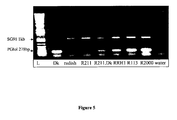
- PGIol plus SG34 to set an Homozygocity test:
- The combined use of two sets of primers in a mix PCR, PGIol marking the Pgi-2 gene absent in the homozygote restored plant and SG34 (from S. Giancola et al., Giancola S. et al., 2003 Theor Appl. Genet. (in press )), a very close marker to the Rfo gene, was set up to discriminate homozygous from heterozygous plant among the fertile plants segregating in F2 progenies derived from 'R211'. In place of using SG34, it is possible to use any other marker close to or in the Rfo gene.
- Only one family R2000 showed no difference between homozygote and heterozygote offsprings:
- The Pgi-2 gene is present in the R2000 homozygote, which is not the case for the parental homozygous R211.
- In
figure 5 (PGIol and SG34 PCR markers): - The homozygous 'R2000' family has recovered the PGIol band.
- DNA sequence of the band confirmed the homology with the known Arabidopsis and Brassica Pgi-2 sequence. Control genotypes (Drakkar, Pactol, and, Samourai, Darmor) had the same pattern on the gel. Sequence of this common band allowed to confirm their high homology as they were quasi similar except one base substitution.
- The homozygous 'R2000' family has recovered the PGIol band of the Brassica oleracea type. It was distinct from the known restorer of the Samourai group.
- This amplified part of the Pgi-2 is very conserved and hardly any differences were shown among the various genotypes. A longer part of Pgi-2 gene was investigated.
- PGIUNT marker: A second reverse primer, PGIint L, was designed further down the Pgi-2 sequence, to amplify as well conserved and as variable regions of the gene. When used with the PGIol U primer, it amplifies a 980bp band only in Brassica genomes. R211 didn't show any band. The homozygous 'R2000' showed the PGIUNT band as in the Drakkar parent.
- In
figure 8 (PGIUNT marker): - PGIint marker amplified a segment of PGIUNT. The upper primer PGIint allows the amplification in all tested species, allowing a clear distinction between Arabidopsis, Radish and Brassica. B. rapa and B. oleracea were not distinguished by the band size on agarose gel, but by their PGIint sequence. All tested restored genotypes, but the 'R211' line, exhibited the European radish band and one Brassica band, homologous to the B. rapa one.
- The homozygous 'R2000' didn't show the radish PGIint band, as in the deleted 'R211' parental line, but showed one Brassica band, homologous to the B. oleracea one.
- Electrophoresis of PGIint marker is represented in
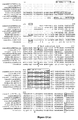
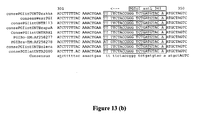
figure 9 . - Comparison of the PGI sequences from the data bases.
- A PGI segment of about 490bp is known.
- Sequences of a segment of about 490bp from different genotypes (B. oleracea, B. rapa, B. napus) have been studied in our laboratory group and some sequences were given to Brassica Crop Net DB: EMAF25875 to 25788 by M. Fouramnn (4) These sequences are very conserved.
- Comparison between PGI sequences we have obtained from the tested genotypes of B. oleracea and B. rapa species, showed that they were distinct by 21 base substitutions. Theses substitutions allowed to distinguish PGIint sequences from the other tested genotypes of rapeseed, homologous to either B. rapa cv Asko (RRH1 and R113) or B. oleracea (Drakkar, R211*DK but also R2000).
- Markers surrounding the Rfo gene in the radish insertion were determined in order to facilitate the Rfo gene cloning (Desloires S. et al., 2003 EMBO reports 4, 6:588-594). One of these, the SG129 PCR marker was located very close to Rfo (Giancola S. et al., 2003 Theor Appl. Genet. (in press)): it co-amplified distinct bands in B. oleracea and B. rapa genomes of B. napus, but the radish band was very difficult to see on an agarose gel.
- The target SG129 sequence was ortholog of a clone (AC011OOO, at the locus F16P17) in Arabidopsis thaliana. This clone overlapped an Arabidopsis adjacent contig clone (AC07190).
- From the Brassica Crop Net DB, we found one B. oleracea clone, (EMBH448336, 764bp) blasting with the beginning of the A011000, and a second B. oleracea clone (EMBH53971), distant from about 300bp on the Arabidopsis map, that blasted with the end of AC07190.
- We designed a new PCR marker, BolJon, between the two B. oleracea clones. We verified that it allowed amplification of a specific PCR bands in the different genotypes compared here.
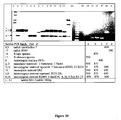
- In
figures 16 (electrophoresis gel of BolJon PCR products): - In Arabidopsis, a BolJon 815bp band was amplified, homologue to the overlapping segment of the contigs.
- In Brassiceae diploid species, BolJon marker showed distinct bands: one of 950bp in B. oleracea and one of 870bp in B. rapa. It showed that the two B. oleracea clones (EMBH53971 and EMBH448336) are in sequence continuity in Brassica genome as it is for the ortholog sequences in Arabidopsis.
- In B. napus, these two bands are co-amplified in the maintainer lines, Samourai or Drakkar.
- In radish line7, one BolJon band was amplified of about 630 bp long. The band of the restored radish cmsRd81 was slightly smaller.
- In all the restored rapeseed lines, one of the BolJon bands was of the same size as the radish line7. BolJon is a marker of the radish introgression.
- The homozygous restored rapeseed lines, 'RRH1', 'R113' and also 'R211', only showed the B. rapa band and the 630bp radish band bp suggesting the B. oleracea ortholog of the target gene is absent or has been modified when the radish segment of chromosome was inserted into the rapeseed B. oleracea constitutive genome.
- 'R2000' homozygote plants showed radish PCR BolJon, plus the two Brassica BolJon bands, again having recovered the B. oleracea one, lost in 'R211' and other restorer lines.
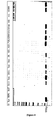
- We designed a primer, pCP418L, specific of the B. oleracea genome in the tested species. With the SG129U primer it amplified only one PCR band (670bp) in the B.oleracea species (
Figs. 17 ). - There was no amplification in B.rapa, in radish, nor in Arabidopsis, but there was a clear CP418 band in B. napus maintainer lines. Its sequence was strictly homologous to the EMBH448336 sequence. This marker was in a very conserved DNA sequence allowing no polymorphism between genotypes except by presence / absence.
- In RRH1, R113 and in R211 there was no CP418 band, indicating as previously that the B.oleracea ortholog of the target gene is absent or has been modified following the radish insertion.
- 'R2000' homozygote plants showed CP418 band, again having recovered the specific B. oleracea one.
- In the present invention, a new recombined low GLS restorer line has been selected with a good female fertility. The poor value of line 'R211' allowed selection in the field for a rare recombination event and characterisation the 'R2000' family.
- The homozygous 'R2000' presents a unique combination of the PGIol, PGIUNT, PGIint and BolJon markers when compared with the rapeseed restorer analysed yet: PGIinT marker showed that the homozygous restored rapeseed lines, RRH1 and R113 presented the European radish band plus one Brassica band, homologous to B. rapa genome. 'R2000' shows no radish band, lost as in its parental deleted line R211, but showed one Brassica band homologous to B. oleracea. The ortholog PGIint sequence in its B. rapa genome is not amplified with this marker in R211 and Drakkar genetic background.
- PGIol marker and PGIUNT marker sequences in restored lines RRH1 and R113 were homologous to the B. rapa cv Asko one. In 'R2000', PGIUNT sequence is homologous to B. oleracea. The ortholog PGIUnt sequence in its B. rapa genome is not amplified with this marker in R211 and Drakkar genetic background.
- BolJon marker showed that the homozygous restored rapeseed lines, including 'R211' presented the European radish band plus only the B. rapa one. 'R2000' shows the two bands of 'R211' plus the recovered B. oleracea BolJon band.
- CP418 marker showed that 'R2000' recovered this conserved B. oleracea segment.
- Our hypothesis is that a recombination event took place in the pollen mother cell which gave rise to 'R2000' plants. The deleted radish introgression was then integrated to the normal homologous chromosome segment, carrying the B. oleracea type Pgi-2 gene and BolJon target sequence, characterised by these markers, probably from the Drakkar '00' genome present in the irradiated heterozygous 'R211*DK'.
- The pattern observed for BolJon suggests that the recombination event resulted in a particular duplicated region, one from radish and one B. oleracea, in the 'R2000' family.


| Dra | Drakkar |
| Rel-15-1, E38, R15 | R2000 |
| Hete, Hel, R211.Drakkar | heterozygous R211 *Drakkar |
| Darm | Darmor |
| Bol: | Brassica oleracea |
| Bra, B.rap: | Brassica rapa |
| GCPA18-A19, Wes, Aust: | Wesroona |
| Sam, SamlPGIolSunt5 | Samourai |
| RRH1, ba2c | RRH1 |
| rav, N.WR | Hybrid Brassica napus*wild Radish |
-
-
-
| PGIol: | - primer PGIol U (named in SGAP: BnPGIch 1 U) |
| - primer PGIol L (named in SGAP: Bn PGIch 1 L) | |
| PGIint: | - primer PGIint U |
| - primer PGIint L (is out side the sequence). |
-
-
In that figure:
In that figure:
In that figure PGIint of
-
-
In that figure, the CP418 band (of about 670bp) is specific to the B. oleracea genome. It is present in B. ol, B. napus (Samourai, Drakkar, Pactol and the herterozygous R2111*Dk). It is absent from the restored rapeseed (RRH, R113 and R211). It is present in the homozygous R2000.
-
-
-
-
-
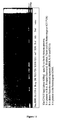
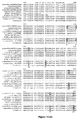
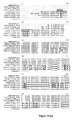
From the point 836bp, AC07190-AC11000 and GCPATpBOJ sequences are no longer closely homologous to the Brassica sequences.
The radish and B. rapa (GCPconsen RsRf BOJ and BR) sequences are still closely homologous to the B. napus one, from 858bp point to the 900bp and 981 points respectively.
In radish, only partial homology is found on the Brassica sequence further down.
In B. rapa species cv Asko, the left of its BolJon sequence can be aligned again, after a 78bp deletion, with those of B. oleracea and B. rapa in B. napus from the 1057bp point to the BolJon L primer.
-
- Figure 18 illustrates the BolJon primers localisation on the mipsAtl62850 gene and overlapping area of AC007190 and AC011000 Arabidopsis th clones. Alignment with the Arabidopsis BolJon PCR product (740bp) is presented.
Claims (12)
- A method of producing double low restorer lines of Brassica napus for Ogura cytoplasmic male sterility (cms) presenting radish introgression carrying the Rfo restorer gene deleted of the radish Pgi-2 allele and recombined with the Pgi-2 gene from Brassica oleracea, and having a good agronomic value characterised by female fertility, a good transmission rate of Rfo and a high vegetative vigour, said method including the step of:a) crossing double low cms lines of spring Brassica napus comprising a deleted radish insertion on either side of Rfo, such as spATCHIA, SPSG91, and lost the isozyme expression of the Pgi-2 allele of the radish genome and of Pgi-2 allele of B. oleracea genome, with the double low line of spring Drakkar for forming heterozygous restored plants of Brassica napus,b) irradiating before meiosis the heterozygous restored plants obtained in step a) with gamma ray irradiation,c) crossing pollen from flowers obtained in step b) with the cms double low spring Wesroona line,d) testing the progeny for vigour, female fertility and transmission rate of the cms gene,e) selecting progeny lines.
- A method according to claim 1, wherein the irradiation dose in step b) is 65 Gray during 6 mn.
- A method according to claim 1 wherein the double low cms line of spring Brassica napus of step a) is R211.
- A method according to claim 1 wherein the testing is performed with the combination of five markers selected from PGIol, PGIint, BolJon and CP418, said markers having the following sequences:PGIol marker:

 PGIint marker:
 BolJon marker:
 CP418 marker:
- A method according to claim 1 wherein the testing is performed with the combination of five markers selected from PGIol, PGIUNT, PGIint, BolJon and CP418, said markers having the following sequences:PGIol marker:
 PGIUNT marker:
 PGIint marker:
 BolJon marker:
 CP418 marker:
- A method according to one of claims 1 to 5, wherein the testing is performed with at least the CP418 and the BolJon marker having the following sequences:CP418 marker:
 BolJon marker:
- A method according to one of claims 1 to 5, wherein the testing is performed with at least the BolJon marker having the following sequence:BolJon marker:and wherein the BolJon marker exhibits a radish band, a Brassica oleracea band and a Brassica rapa band in homozygote of said restorer line.
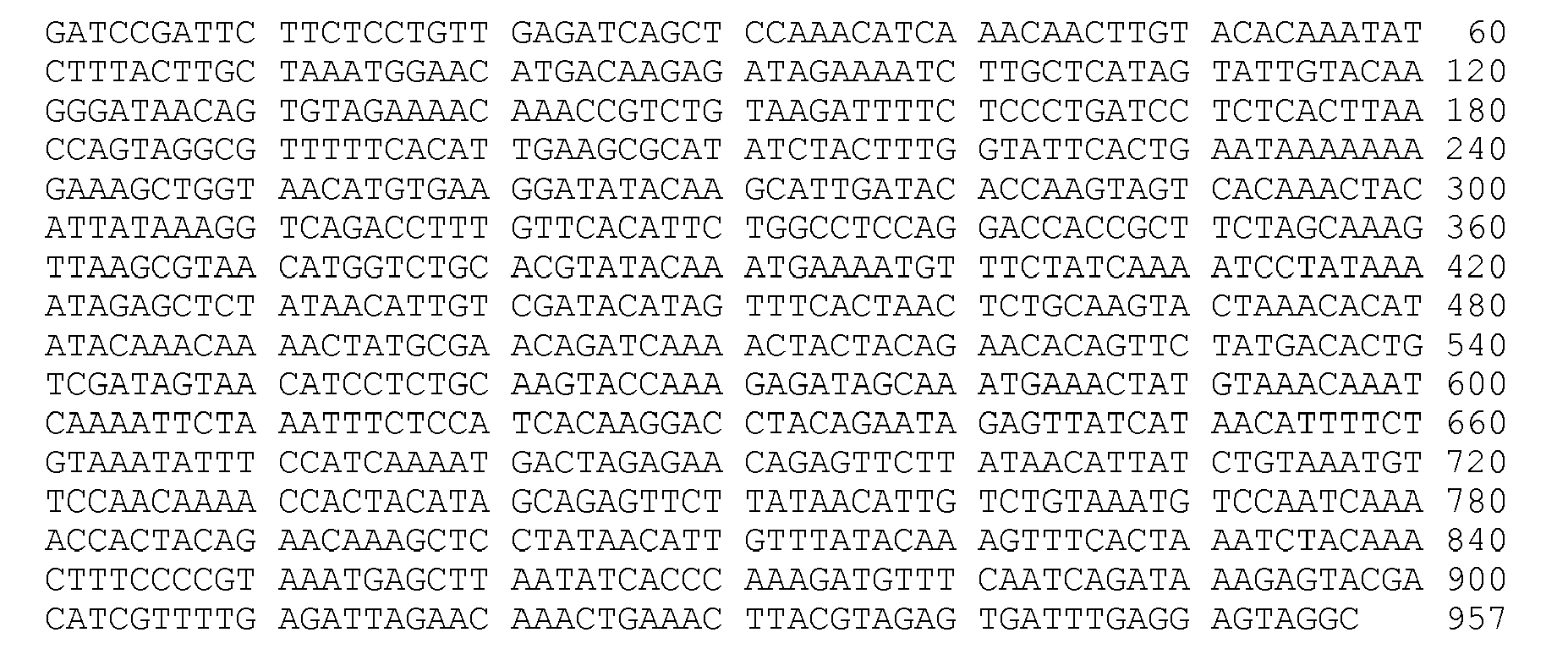
- Use of at least the least the BolJon marker having the following sequence:BolJon marker:and wherein it is observed that the BolJon marker exhibits a radish band, a Brassica oleracea band and a Brassica rapa band in homozygote of said restorer line, for characterising recombined restorer lines of Brassica napus for Ogura cms presenting a Rfo insertion deleted of the radish Pgi-2 allele and recombined with the Pgi-2 gene from Brassica oleracea, and having a good agronomic value characterised by female fertility, a good transmission rate of Rfo and a high vegetative vigour.

- Use of the combination of at least the four markers PGIol, PGIint, BolJon and CP418, for characterising recombined restorer lines of Brassica napus for Ogura cms presenting a Rfo insertion deleted of the radish Pgi-2 allele and recombined with the Pgi-2 gene from Brassica oleracea, and having a good agronomic value characterised by female fertility, a good transmission rate of Rfo and a high vegetative vigour, said markers having the following sequences:PGIol marker:
 PGIint marker:
 BolJon marker:
 CP418 marker:

- Use according to claim 9 wherein the combination is of five markers PGIol, PGIUNT, PGIint, BolJon and CP418, PGIUNT markers having the following sequences:PGIUNT marker:

- Use according to one of claims 8 to 10, wherein:- the marker PGIol is amplified using the primers: PGIol U and PGIol L
(PGIol U: 5'TCATTTGATTGTTGCGCCTG3';
PGIol L: 5'TGTACATCAGACCCGGTAGAAAA3');- the marker PGIint is amplified using the primers: PGIint U and PGIint L
(PGIint U: 5'CAGCACTAATCTTGCGGTATG3';
PGIint L: 5'CAATAACCCTAAAAGCACCTG3');- the marker PGIUNT is amplified using the primers: PGIol U and PGIint L:
(PGIol U: 5'TCATTTGATTGTTGCGCCTG3';
PGIint L: 5'CAATAACCCTAAAAGCACCTG3');- the marker BolJon is amplified using the primers: BolJon U and BolJon L:
(BolJon U: 5'GATCCGATTCTTCTCCTGTTG3';
BolJon L: 5'GCCTACTCCTCAAATCACTCT3');- the marker CP418 is amplified using the primers: SG129 U and pCP418 L:
(SG129 U: cf. Giancola et al. (5)
pCP418 L : 5'AATTTCTCCATCACAAGGACC3'). - Use according to one of claims 9 to 11, wherein it is observed that the BolJon marker exhibits a radish band, a Brassica oleracea band and a Brassica rapa band in homozygote of said restorer line, for characterising recombined restorer lines of Brassica napus for Ogura cms presenting a Rfo insertion deleted of the radish Pgi-2 allele and recombined with the Pgi-2 gene from Brassica oleracea, and having a good agronomic value characterised by female fertility, a good transmission rate of Rfo and a high vegetative vigour.
Priority Applications (6)
| Application Number | Priority Date | Filing Date | Title |
|---|---|---|---|
| PL09175998T PL2179643T3 (en) | 2003-07-04 | 2004-07-05 | Method of producing double low restorer lines of Brassica napus having a good agronomic value |
| EP10183322.6A EP2298066B1 (en) | 2003-07-04 | 2004-07-05 | Markers for use in producing double low restorer lines of Brassica napus having a good agronomic value |
| SI200431953T SI2179643T1 (en) | 2003-07-04 | 2004-07-05 | Method of producing double low restorer lines of Brassica napus having a good agronomic value |
| DK10183322.6T DK2298066T3 (en) | 2003-07-04 | 2004-07-05 | Markers for use in the production of double-layer restorers-lines of Brassica napus, which have a good agronomic value |
| EP09175998A EP2179643B1 (en) | 2003-07-04 | 2004-07-05 | Method of producing double low restorer lines of Brassica napus having a good agronomic value |
| PL10183322T PL2298066T3 (en) | 2003-07-04 | 2004-07-05 | Markers for use in producing double low restorer lines of Brassica napus having a good agronomic value |
Applications Claiming Priority (4)
| Application Number | Priority Date | Filing Date | Title |
|---|---|---|---|
| EP03291677 | 2003-07-04 | ||
| EP03293057A EP1493328A1 (en) | 2003-07-04 | 2003-12-08 | Method of producing double low restorer lines of brassica napus having a good agronomic value |
| EP04744142A EP1641336A2 (en) | 2003-07-04 | 2004-07-05 | Method of producing double low restorer lines of brassica napus having a good agronomic value |
| EP09175998A EP2179643B1 (en) | 2003-07-04 | 2004-07-05 | Method of producing double low restorer lines of Brassica napus having a good agronomic value |
Related Parent Applications (2)
| Application Number | Title | Priority Date | Filing Date |
|---|---|---|---|
| EP04744142A Division EP1641336A2 (en) | 2003-07-04 | 2004-07-05 | Method of producing double low restorer lines of brassica napus having a good agronomic value |
| EP04744142.3 Division | 2004-07-05 |
Related Child Applications (2)
| Application Number | Title | Priority Date | Filing Date |
|---|---|---|---|
| EP10183322.6A Division EP2298066B1 (en) | 2003-07-04 | 2004-07-05 | Markers for use in producing double low restorer lines of Brassica napus having a good agronomic value |
| EP10183322.6A Division-Into EP2298066B1 (en) | 2003-07-04 | 2004-07-05 | Markers for use in producing double low restorer lines of Brassica napus having a good agronomic value |
Publications (3)
| Publication Number | Publication Date |
|---|---|
| EP2179643A2 true EP2179643A2 (en) | 2010-04-28 |
| EP2179643A3 EP2179643A3 (en) | 2010-07-21 |
| EP2179643B1 EP2179643B1 (en) | 2012-10-17 |
Family
ID=33436133
Family Applications (4)
| Application Number | Title | Priority Date | Filing Date |
|---|---|---|---|
| EP03293057A Withdrawn EP1493328A1 (en) | 2003-07-04 | 2003-12-08 | Method of producing double low restorer lines of brassica napus having a good agronomic value |
| EP09175998A Expired - Lifetime EP2179643B1 (en) | 2003-07-04 | 2004-07-05 | Method of producing double low restorer lines of Brassica napus having a good agronomic value |
| EP10183322.6A Expired - Lifetime EP2298066B1 (en) | 2003-07-04 | 2004-07-05 | Markers for use in producing double low restorer lines of Brassica napus having a good agronomic value |
| EP04744142A Ceased EP1641336A2 (en) | 2003-07-04 | 2004-07-05 | Method of producing double low restorer lines of brassica napus having a good agronomic value |
Family Applications Before (1)
| Application Number | Title | Priority Date | Filing Date |
|---|---|---|---|
| EP03293057A Withdrawn EP1493328A1 (en) | 2003-07-04 | 2003-12-08 | Method of producing double low restorer lines of brassica napus having a good agronomic value |
Family Applications After (2)
| Application Number | Title | Priority Date | Filing Date |
|---|---|---|---|
| EP10183322.6A Expired - Lifetime EP2298066B1 (en) | 2003-07-04 | 2004-07-05 | Markers for use in producing double low restorer lines of Brassica napus having a good agronomic value |
| EP04744142A Ceased EP1641336A2 (en) | 2003-07-04 | 2004-07-05 | Method of producing double low restorer lines of brassica napus having a good agronomic value |
Country Status (13)
| Country | Link |
|---|---|
| US (2) | US7812217B2 (en) |
| EP (4) | EP1493328A1 (en) |
| CN (1) | CN1816276B (en) |
| AU (2) | AU2004253363A1 (en) |
| CA (1) | CA2531051C (en) |
| CY (1) | CY1116159T1 (en) |
| DK (2) | DK2179643T3 (en) |
| ES (2) | ES2532641T3 (en) |
| PL (2) | PL2298066T3 (en) |
| PT (2) | PT2179643E (en) |
| RU (1) | RU2373698C2 (en) |
| SI (2) | SI2179643T1 (en) |
| WO (1) | WO2005002324A2 (en) |
Cited By (1)
| Publication number | Priority date | Publication date | Assignee | Title |
|---|---|---|---|---|
| CN107593426A (en) * | 2017-09-27 | 2018-01-19 | 上海市农业科学院 | A kind of selection of brassica napus dominant nucleic sterility restoring line |
Families Citing this family (192)
| Publication number | Priority date | Publication date | Assignee | Title |
|---|---|---|---|---|
| CL2007003743A1 (en) | 2006-12-22 | 2008-07-11 | Bayer Cropscience Ag | COMPOSITION THAT INCLUDES FENAMIDONA AND AN INSECTICIDE COMPOUND; AND METHOD TO CONTROL FITOPATOGENOS CULTURES AND INSECTS FACING OR PREVENTIVELY. |
| CL2007003744A1 (en) | 2006-12-22 | 2008-07-11 | Bayer Cropscience Ag | COMPOSITION THAT INCLUDES A 2-PYRIDILMETILBENZAMIDE DERIVATIVE AND AN INSECTICIDE COMPOUND; AND METHOD TO CONTROL FITOPATOGENOS CULTURES AND INSECTS FACING OR PREVENTIVELY. |
| EP1969934A1 (en) * | 2007-03-12 | 2008-09-17 | Bayer CropScience AG | 4-cycloalkyl or 4-aryl substituted phenoxy phenylamidines and their use as fungicides |
| EP1969931A1 (en) * | 2007-03-12 | 2008-09-17 | Bayer CropScience Aktiengesellschaft | Fluoroalkyl phenylamidines and their use as fungicides |
| EP1969930A1 (en) | 2007-03-12 | 2008-09-17 | Bayer CropScience AG | Phenoxy phenylamidines and their use as fungicides |
| WO2008110279A1 (en) | 2007-03-12 | 2008-09-18 | Bayer Cropscience Ag | Dihalophenoxyphenylamidines and use thereof as fungicides |
| EP1969929A1 (en) | 2007-03-12 | 2008-09-17 | Bayer CropScience AG | Substituted phenylamidines and their use as fungicides |
| BRPI0808798A2 (en) | 2007-03-12 | 2014-10-07 | Bayer Cropscience Ag | 3,5-DISSUBSTITUTED PHENOXYPHENYLAMIDINS AND THEIR USE AS FUNGICIDES |
| US8168567B2 (en) | 2007-04-19 | 2012-05-01 | Bayer Cropscience Ag | Thiadiazolyl oxyphenyl amidines and the use thereof as a fungicide |
| RU2366705C2 (en) * | 2007-05-21 | 2009-09-10 | Государственное научное учреждение Всероссийский научно-исследовательский и проектно-технологический институт рапса | Method for preparing colza (brassica napus l) fertility restorer |
| EP2016821A1 (en) | 2007-06-13 | 2009-01-21 | Syngeta Participations AG | New hybrid system for Brassica napus |
| DE102007045955A1 (en) | 2007-09-26 | 2009-04-09 | Bayer Cropscience Ag | Active agent combination, useful e.g. for combating animal pests and treating seeds of transgenic plants, comprises substituted amino-furan-2-one compound and at least one compound e.g. diazinon, isoxathion, carbofuran or aldicarb |
| DE102007045919B4 (en) | 2007-09-26 | 2018-07-05 | Bayer Intellectual Property Gmbh | Drug combinations with insecticidal and acaricidal properties |
| DE102007045953B4 (en) | 2007-09-26 | 2018-07-05 | Bayer Intellectual Property Gmbh | Drug combinations with insecticidal and acaricidal properties |
| DE102007045956A1 (en) | 2007-09-26 | 2009-04-09 | Bayer Cropscience Ag | Combination of active ingredients with insecticidal and acaricidal properties |
| DE102007045920B4 (en) | 2007-09-26 | 2018-07-05 | Bayer Intellectual Property Gmbh | Synergistic drug combinations |
| DE102007045957A1 (en) | 2007-09-26 | 2009-04-09 | Bayer Cropscience Ag | Active agent combination, useful e.g. for combating animal pests e.g. insects and treating seeds of transgenic plants, comprises substituted amino-furan-2-one compound and at least one compound e.g. benzoyl urea, buprofezin and cyromazine |
| DE102007045922A1 (en) | 2007-09-26 | 2009-04-02 | Bayer Cropscience Ag | Drug combinations with insecticidal and acaricidal properties |
| EP2090168A1 (en) | 2008-02-12 | 2009-08-19 | Bayer CropScience AG | Method for improving plant growth |
| EP2072506A1 (en) | 2007-12-21 | 2009-06-24 | Bayer CropScience AG | Thiazolyloxyphenylamidine or thiadiazolyloxyphenylamidine und its use as fungicide |
| WO2009100178A2 (en) * | 2008-02-06 | 2009-08-13 | Pioneer Hi-Bred International, Inc. | New brassica ogura restorer lines with shortened raphanus fragment (srf) |
| EP2168434A1 (en) | 2008-08-02 | 2010-03-31 | Bayer CropScience AG | Use of azols to increase resistance of plants of parts of plants to abiotic stress |
| US20110190365A1 (en) | 2008-08-14 | 2011-08-04 | Bayer Crop Science Ag | Insecticidal 4-phenyl-1H-pyrazoles |
| DE102008041695A1 (en) | 2008-08-29 | 2010-03-04 | Bayer Cropscience Ag | Methods for improving plant growth |
| EP2201838A1 (en) | 2008-12-05 | 2010-06-30 | Bayer CropScience AG | Active ingredient-beneficial organism combinations with insecticide and acaricide properties |
| EP2198709A1 (en) | 2008-12-19 | 2010-06-23 | Bayer CropScience AG | Method for treating resistant animal pests |
| EP2204094A1 (en) | 2008-12-29 | 2010-07-07 | Bayer CropScience AG | Method for improved utilization of the production potential of transgenic plants Introduction |
| EP2039770A2 (en) | 2009-01-06 | 2009-03-25 | Bayer CropScience AG | Method for improved utilization of the production potential of transgenic plants |
| EP2039772A2 (en) | 2009-01-06 | 2009-03-25 | Bayer CropScience AG | Method for improved utilization of the production potential of transgenic plants introduction |
| EP2039771A2 (en) | 2009-01-06 | 2009-03-25 | Bayer CropScience AG | Method for improved utilization of the production potential of transgenic plants |
| BRPI1006916A8 (en) | 2009-01-19 | 2016-05-03 | Bayer Cropscience Ag | CYCLIC DIONES AND THEIR USE AS INSECTICIDES, ACARICIDES AND/OR FUNGICIDES |
| EP2227951A1 (en) | 2009-01-23 | 2010-09-15 | Bayer CropScience AG | Application of enaminocarbonyl compounds for combating viruses transmitted by insects |
| EP2391608B8 (en) | 2009-01-28 | 2013-04-10 | Bayer Intellectual Property GmbH | Fungicide n-cycloalkyl-n-bicyclicmethylene-carboxamide derivatives |
| AR075126A1 (en) | 2009-01-29 | 2011-03-09 | Bayer Cropscience Ag | METHOD FOR THE BEST USE OF THE TRANSGENIC PLANTS PRODUCTION POTENTIAL |
| EP2218717A1 (en) | 2009-02-17 | 2010-08-18 | Bayer CropScience AG | Fungicidal N-((HET)Arylethyl)thiocarboxamide derivatives |
| EP2398770B1 (en) | 2009-02-17 | 2016-12-28 | Bayer Intellectual Property GmbH | Fungicidal n-(phenylcycloalkyl)carboxamide, n-(benzylcycloalkyl)carboxamide and thiocarboxamide derivatives |
| TW201031331A (en) | 2009-02-19 | 2010-09-01 | Bayer Cropscience Ag | Pesticide composition comprising a tetrazolyloxime derivative and a fungicide or an insecticide active substance |
| DE102009001469A1 (en) | 2009-03-11 | 2009-09-24 | Bayer Cropscience Ag | Improving utilization of productive potential of transgenic plant by controlling e.g. animal pest, and/or by improving plant health, comprises treating the transgenic plant with active agent composition comprising prothioconazole |
| DE102009001681A1 (en) | 2009-03-20 | 2010-09-23 | Bayer Cropscience Ag | Improving utilization of production potential of a transgenic plant by controlling animal pests, phytopathogenic fungi, microorganisms and/or improving plant health, comprises treating plant with a drug composition comprising iprovalicarb |
| DE102009001732A1 (en) | 2009-03-23 | 2010-09-30 | Bayer Cropscience Ag | Improving the production potential of transgenic plant, by combating e.g. animal pests and/or microorganism, and/or increasing plant health, comprises treating the plants with active agent composition comprising trifloxystrobin |
| DE102009001728A1 (en) | 2009-03-23 | 2010-09-30 | Bayer Cropscience Ag | Improving the production potential of transgenic plant, by combating e.g. animal pests and/or microorganism, and/or increasing plant health, comprises treating the plants with active agent composition comprising fluoxastrobin |
| DE102009001730A1 (en) | 2009-03-23 | 2010-09-30 | Bayer Cropscience Ag | Improving utilization of production potential of a transgenic plant by controlling animal pests, phytopathogenic fungi and/or microorganisms and/or the plant health, comprises treating plant with a drug composition comprising spiroxamine |
| US8828906B2 (en) | 2009-03-25 | 2014-09-09 | Bayer Cropscience Ag | Active compound combinations having insecticidal and acaricidal properties |
| UA104887C2 (en) | 2009-03-25 | 2014-03-25 | Баєр Кропсаєнс Аг | Synergic combinations of active ingredients |
| MX2011009372A (en) | 2009-03-25 | 2011-09-27 | Bayer Cropscience Ag | Active ingredient combinations having insecticidal and acaricidal properties. |
| US8846568B2 (en) | 2009-03-25 | 2014-09-30 | Bayer Cropscience Ag | Active compound combinations having insecticidal and acaricidal properties |
| MX2011009916A (en) | 2009-03-25 | 2011-10-06 | Bayer Cropscience Ag | Active ingredient combinations having insecticidal and acaricidal properties. |
| EP2232995A1 (en) | 2009-03-25 | 2010-09-29 | Bayer CropScience AG | Method for improved utilisation of the production potential of transgenic plants |
| EP2239331A1 (en) | 2009-04-07 | 2010-10-13 | Bayer CropScience AG | Method for improved utilization of the production potential of transgenic plants |
| WO2010127797A2 (en) | 2009-05-06 | 2010-11-11 | Bayer Cropscience Ag | Cyclopentanedione compounds and their use as insecticides, acaricides and/or fungicides |
| EP2251331A1 (en) | 2009-05-15 | 2010-11-17 | Bayer CropScience AG | Fungicide pyrazole carboxamides derivatives |
| AR076839A1 (en) | 2009-05-15 | 2011-07-13 | Bayer Cropscience Ag | FUNGICIDE DERIVATIVES OF PIRAZOL CARBOXAMIDAS |
| EP2255626A1 (en) | 2009-05-27 | 2010-12-01 | Bayer CropScience AG | Use of succinate dehydrogenase inhibitors to increase resistance of plants or parts of plants to abiotic stress |
| PL2437595T3 (en) | 2009-06-02 | 2019-05-31 | Bayer Cropscience Ag | Use of fluopyram for controlling sclerotinia ssp |
| CN104430378A (en) | 2009-07-16 | 2015-03-25 | 拜尔农作物科学股份公司 | Synergistic active substance combinations containing phenyl triazoles |
| FR2948533A1 (en) * | 2009-08-03 | 2011-02-04 | Limagrain Verneuil Holding | OGURA CYTOPLASMIC MALE STERILITE BRASSICA RESTAURANT PLANT, PROCESS FOR PRODUCTION AND USE THEREOF |
| WO2011015524A2 (en) | 2009-08-03 | 2011-02-10 | Bayer Cropscience Ag | Fungicide heterocycles derivatives |
| EP2292094A1 (en) | 2009-09-02 | 2011-03-09 | Bayer CropScience AG | Active compound combinations |
| EP2343280A1 (en) | 2009-12-10 | 2011-07-13 | Bayer CropScience AG | Fungicide quinoline derivatives |
| CN102725282B (en) | 2009-12-28 | 2015-12-16 | 拜尔农科股份公司 | Fungicide hydroximoyl-tetrazole derivatives |
| US9000012B2 (en) | 2009-12-28 | 2015-04-07 | Bayer Cropscience Ag | Fungicide hydroximoyl-heterocycles derivatives |
| TW201138624A (en) | 2009-12-28 | 2011-11-16 | Bayer Cropscience Ag | Fungicide hydroximoyl-tetrazole derivatives |
| EA022553B1 (en) | 2010-01-22 | 2016-01-29 | Байер Интеллектуэль Проперти Гмбх | Use of biologically active ingredient combination, kit and composition comprising biologically active ingredient combination for controlling animal pests and method for improving utilization of production potential of transgenic plant |
| EP2353387A1 (en) | 2010-02-05 | 2011-08-10 | Bayer CropScience AG | Use of succinate dehydrogenase (SDH) inhibitors in the treatment of plant types in the sweet grass family |
| JP2013521255A (en) | 2010-03-04 | 2013-06-10 | バイエル・インテレクチュアル・プロパティ・ゲゼルシャフト・ミット・ベシュレンクテル・ハフツング | Fluoroalkyl-substituted 2-amidobenzimidazoles and their use to enhance stress tolerance in plants |
| JP2013522274A (en) | 2010-03-18 | 2013-06-13 | バイエル・インテレクチユアル・プロパテイー・ゲー・エム・ベー・ハー | Arylsulfonamides and hetarylsulfonamides as activators against abiotic plant stress |
| WO2011124554A2 (en) | 2010-04-06 | 2011-10-13 | Bayer Cropscience Ag | Use of 4-phenylbutyric acid and/or the salts thereof for enhancing the stress tolerance of plants |
| CA2795838A1 (en) | 2010-04-09 | 2011-10-13 | Bayer Intellectual Property Gmbh | Use of derivatives of the(1-cyanocyclopropyl)phenylphosphinic acid, the esters thereof and/or the salts thereof for enhancing the tolerance of plants to abiotic stress |
| EP2377397A1 (en) | 2010-04-14 | 2011-10-19 | Bayer CropScience AG | Use of fungicidal agents for controlling mycoses in palm trees |
| WO2011134911A2 (en) | 2010-04-28 | 2011-11-03 | Bayer Cropscience Ag | Fungicide hydroximoyl-tetrazole derivatives |
| WO2011134913A1 (en) | 2010-04-28 | 2011-11-03 | Bayer Cropscience Ag | Fungicide hydroximoyl-heterocycles derivatives |
| JP2013525400A (en) | 2010-04-28 | 2013-06-20 | バイエル・クロップサイエンス・アーゲー | Fungicide hydroxymoyl-heterocyclic derivative |
| ES2533026T3 (en) | 2010-06-03 | 2015-04-07 | Bayer Intellectual Property Gmbh | N - [(het) arylalkyl)] pyrazole (thio) carboxamides and their hetero substituted analogs |
| UA110703C2 (en) | 2010-06-03 | 2016-02-10 | Байєр Кропсайнс Аг | Fungicidal n-[(trisubstitutedsilyl)methyl]carboxamide |
| WO2011151370A1 (en) | 2010-06-03 | 2011-12-08 | Bayer Cropscience Ag | N-[(het)arylalkyl)] pyrazole (thio)carboxamides and their heterosubstituted analogues |
| UA111593C2 (en) | 2010-07-07 | 2016-05-25 | Баєр Інтеллекчуел Проперті Гмбх | ANTRANILIC ACID AMIDES IN COMBINATION WITH FUNGICIDES |
| AR082286A1 (en) | 2010-07-20 | 2012-11-28 | Bayer Cropscience Ag | BENZOCICLOALQUENOS AS ANTIFUNGIC AGENTS |
| CN103118541A (en) | 2010-07-20 | 2013-05-22 | 拜耳知识产权有限责任公司 | Anthranilamide derivatives are applied by irrigation, soil mixing, water treatment, drip application, injection into soil, stems or flowers, in hydroponic systems by treating planting holes or by dipping, floating or seed box application or by treatment Use of seeds to control insects and spider mites, and to increase the stress tolerance of plants to abiotic stress |
| RU2013114710A (en) | 2010-09-03 | 2014-10-10 | Байер Интеллектуэль Проперти Гмбх | Substituted Condensed Pyrimidinones and Dihydropyrimidinones |
| EP2460406A1 (en) | 2010-12-01 | 2012-06-06 | Bayer CropScience AG | Use of fluopyram for controlling nematodes in nematode resistant crops |
| CN103298341B (en) | 2010-09-22 | 2016-06-08 | 拜耳知识产权有限责任公司 | Use of active ingredients for controlling nematodes in nematode-resistant crops |
| BR112013008446B1 (en) | 2010-10-07 | 2018-06-12 | Bayer Cropscience Ag | '' COMPOSITION AND METHOD FOR CONTROLING PHYTOPATHOGENIC FUNGALS OR DAMAGING INSECTS OF PLANTS, CROPS OR SEEDS '' |
| BR112013009590B8 (en) | 2010-10-21 | 2019-03-19 | Bayer Ip Gmbh | compound, fungicidal composition and method |
| US9084424B2 (en) | 2010-10-21 | 2015-07-21 | Bayer Intellectual Property Gmbh | N-benzyl heterocyclic carboxamides |
| CA2815117A1 (en) | 2010-11-02 | 2012-05-10 | Bayer Intellectual Property Gmbh | N-hetarylmethyl pyrazolylcarboxamides |
| BR112013012081A2 (en) | 2010-11-15 | 2016-07-19 | Bayer Ip Gmbh | 5-halopyrazole (thio) carboxamides |
| MX2013005407A (en) | 2010-11-15 | 2013-07-03 | Bayer Ip Gmbh | 5-halogenopyrazolecarboxamides. |
| EP2640706B1 (en) | 2010-11-15 | 2017-03-01 | Bayer Intellectual Property GmbH | N-aryl pyrazole(thio)carboxamides |
| AP3519A (en) | 2010-12-01 | 2016-01-11 | Bayer Ip Gmbh | Use of fluopyram for controlling nematodes in crops and for increasing yield |
| EP2460407A1 (en) | 2010-12-01 | 2012-06-06 | Bayer CropScience AG | Agent combinations comprising pyridylethyl benzamides and other agents |
| EP2474542A1 (en) | 2010-12-29 | 2012-07-11 | Bayer CropScience AG | Fungicide hydroximoyl-tetrazole derivatives |
| EP2658853A1 (en) | 2010-12-29 | 2013-11-06 | Bayer Intellectual Property GmbH | Fungicide hydroximoyl-tetrazole derivatives |
| EP2471363A1 (en) | 2010-12-30 | 2012-07-04 | Bayer CropScience AG | Use of aryl-, heteroaryl- and benzylsulfonamide carboxylic acids, -carboxylic acid esters, -carboxylic acid amides and -carbonitriles and/or its salts for increasing stress tolerance in plants |
| EP2494867A1 (en) | 2011-03-01 | 2012-09-05 | Bayer CropScience AG | Halogen-substituted compounds in combination with fungicides |
| WO2012120105A1 (en) | 2011-03-10 | 2012-09-13 | Bayer Cropscience Ag | Use of lipochito-oligosaccharide compounds for safeguarding seed safety of treated seeds |
| BR112013023502A2 (en) | 2011-03-14 | 2016-08-02 | Bayer Ip Gmbh | compound (i), fungicidal composition, method for the control of crop phytopathogenic fungi, use of the compounds of formula (i) and process for producing the compositions |
| JP2014512358A (en) | 2011-04-08 | 2014-05-22 | バイエル・インテレクチユアル・プロパテイー・ゲー・エム・ベー・ハー | Fungicide hydroxymoyl-tetrazole derivative |
| AR090010A1 (en) | 2011-04-15 | 2014-10-15 | Bayer Cropscience Ag | 5- (CICLOHEX-2-EN-1-IL) -PENTA-2,4-DIENOS AND 5- (CICLOHEX-2-EN-1-IL) -PENT-2-EN-4-INOS REPLACED AS ACTIVE PRINCIPLES AGAINST THE ABIOTIC STRESS OF PLANTS, USES AND TREATMENT METHODS |
| AR085568A1 (en) | 2011-04-15 | 2013-10-09 | Bayer Cropscience Ag | 5- (BICYCLE [4.1.0] HEPT-3-EN-2-IL) -PENTA-2,4-DIENOS AND 5- (BICYCLE [4.1.0] HEPT-3-EN-2-IL) -PENT- 2-IN-4-INOS REPLACED AS ACTIVE PRINCIPLES AGAINST ABIOTIC STRESS OF PLANTS |
| AR085585A1 (en) | 2011-04-15 | 2013-10-09 | Bayer Cropscience Ag | VINIL- AND ALQUINILCICLOHEXANOLES SUBSTITUTED AS ACTIVE PRINCIPLES AGAINST STRIPS ABIOTIQUE OF PLANTS |
| EP2511255A1 (en) | 2011-04-15 | 2012-10-17 | Bayer CropScience AG | Substituted prop-2-in-1-ol and prop-2-en-1-ol derivatives |
| EA029682B1 (en) | 2011-04-22 | 2018-04-30 | Байер Интеллекчуал Проперти Гмбх | Active compound combinations comprising a (thio)carboxamide derivative and a fungicidal compound |
| US9173395B2 (en) | 2011-07-04 | 2015-11-03 | Bayer Intellectual Property Gmbh | Use of substituted isoquinolinones, isoquinolindiones, isoquinolintriones and dihydroisoquinolinones or in each case salts thereof as active agents against abiotic stress in plants |
| US9265252B2 (en) | 2011-08-10 | 2016-02-23 | Bayer Intellectual Property Gmbh | Active compound combinations comprising specific tetramic acid derivatives |
| US20140206726A1 (en) | 2011-08-22 | 2014-07-24 | Juergen Benting | Fungicide hydroximoyl-tetrazole derivatives |
| EP2561759A1 (en) | 2011-08-26 | 2013-02-27 | Bayer Cropscience AG | Fluoroalkyl-substituted 2-amidobenzimidazoles and their effect on plant growth |
| EP2753177A1 (en) | 2011-09-09 | 2014-07-16 | Bayer Intellectual Property GmbH | Acyl-homoserine lactone derivatives for improving plant yield |
| JP6002225B2 (en) | 2011-09-12 | 2016-10-05 | バイエル・インテレクチュアル・プロパティ・ゲゼルシャフト・ミット・ベシュレンクテル・ハフツングBayer Intellectual Property GmbH | Bactericidal 4-substituted-3- {phenyl [(heterocyclylmethoxy) imino] methyl} -1,2,4-oxadiazol-5 (4H) -one derivatives |
| MX362112B (en) | 2011-09-16 | 2019-01-07 | Bayer Ip Gmbh | Use of phenylpyrazolin-3-carboxylates for improving plant yield. |
| CN103929956B (en) | 2011-09-16 | 2017-02-22 | 拜耳知识产权有限责任公司 | Use of acylsulfonamides for improving plant yield |
| EP2755484A1 (en) | 2011-09-16 | 2014-07-23 | Bayer Intellectual Property GmbH | Use of 5-phenyl- or 5-benzyl-2 isoxazoline-3 carboxylates for improving plant yield |
| US9226505B2 (en) | 2011-09-23 | 2016-01-05 | Bayer Intellectual Property Gmbh | 4-substituted 1-phenylpyrazole-3-carboxylic acid derivatives as agents against abiotic plant stress |
| WO2013050410A1 (en) | 2011-10-04 | 2013-04-11 | Bayer Intellectual Property Gmbh | RNAi FOR THE CONTROL OF FUNGI AND OOMYCETES BY INHIBITING SACCHAROPINE DEHYDROGENASE GENE |
| WO2013050324A1 (en) | 2011-10-06 | 2013-04-11 | Bayer Intellectual Property Gmbh | Combination, containing 4-phenylbutyric acid (4-pba) or a salt thereof (component (a)) and one or more selected additional agronomically active compounds (component(s) (b)), that reduces abiotic plant stress |
| CN103958531B (en) | 2011-11-21 | 2016-12-28 | 拜耳知识产权有限责任公司 | Antifungal N [(trisubstituted silicyl) methyl] carboxamide derivative |
| CA2857438A1 (en) | 2011-11-30 | 2013-06-06 | Bayer Intellectual Property Gmbh | Fungicidal n-bicycloalkyl and n-tricycloalkyl (thio)carboxamide derivatives |
| IN2014CN04325A (en) | 2011-12-19 | 2015-09-04 | Bayer Cropscience Ag | |
| US9556158B2 (en) | 2011-12-29 | 2017-01-31 | Bayer Intellectual Property Gmbh | Fungicidal 3-[(pyridin-2-ylmethoxyimino)(phenyl)methyl]-2-substituted-1,2,4-oxadiazol-5(2H)-one derivatives |
| JP5976837B2 (en) | 2011-12-29 | 2016-08-24 | バイエル・インテレクチュアル・プロパティ・ゲゼルシャフト・ミット・ベシュレンクテル・ハフツングBayer Intellectual Property GmbH | Bactericidal 3-[(1,3-thiazol-4-ylmethoxyimino) (phenyl) methyl] -2-substituted-1,2,4-oxadiazol-5 (2H) -one derivatives |
| HUE036328T2 (en) | 2012-02-22 | 2018-06-28 | Bayer Cropscience Ag | Use of fluopyram for controlling wood diseases in grape |
| CA2865300C (en) | 2012-02-27 | 2021-02-16 | Bayer Intellectual Property Gmbh | Active compound combinations containing a thiazoylisoxazoline and a fungicide |
| WO2013139949A1 (en) | 2012-03-23 | 2013-09-26 | Bayer Intellectual Property Gmbh | Compositions comprising a strigolactame compound for enhanced plant growth and yield |
| EP2836489B1 (en) | 2012-04-12 | 2016-06-29 | Bayer Cropscience AG | N-acyl-2-(cyclo) alkylpyrrolidines and piperidines useful as fungicides |
| JP6109295B2 (en) | 2012-04-20 | 2017-04-05 | バイエル・クロップサイエンス・アクチェンゲゼルシャフト | N-cycloalkyl-N-[(heterocyclylphenyl) methylene]-(thio) carboxamide derivatives |
| JP2015516396A (en) | 2012-04-20 | 2015-06-11 | バイエル・クロップサイエンス・アーゲーBayer Cropscience Ag | N-cycloalkyl-N-[(trisubstituted silylphenyl) methylene]-(thio) carboxamide derivatives |
| EP2662363A1 (en) | 2012-05-09 | 2013-11-13 | Bayer CropScience AG | 5-Halogenopyrazole biphenylcarboxamides |
| EP2662364A1 (en) | 2012-05-09 | 2013-11-13 | Bayer CropScience AG | Pyrazole tetrahydronaphthyl carboxamides |
| EP2662362A1 (en) | 2012-05-09 | 2013-11-13 | Bayer CropScience AG | Pyrazole indanyl carboxamides |
| EP2662361A1 (en) | 2012-05-09 | 2013-11-13 | Bayer CropScience AG | Pyrazol indanyl carboxamides |
| EP2662370A1 (en) | 2012-05-09 | 2013-11-13 | Bayer CropScience AG | 5-Halogenopyrazole benzofuranyl carboxamides |
| JP6262208B2 (en) | 2012-05-09 | 2018-01-17 | バイエル・クロップサイエンス・アクチェンゲゼルシャフト | Pyrazole indanyl carboxamides |
| CN104364236B (en) | 2012-05-09 | 2018-01-16 | 拜尔农作物科学股份公司 | 5 halo-pyrazole dihydro indenyl formamides |
| EP2662360A1 (en) | 2012-05-09 | 2013-11-13 | Bayer CropScience AG | 5-Halogenopyrazole indanyl carboxamides |
| AR091104A1 (en) | 2012-05-22 | 2015-01-14 | Bayer Cropscience Ag | COMBINATIONS OF ACTIVE COMPOUNDS THAT INCLUDE A LIPO-CHYTOOLIGOSACARIDE DERIVATIVE AND A NEMATICIDE, INSECTICIDE OR FUNGICIDE COMPOUND |
| AU2013289301A1 (en) | 2012-07-11 | 2015-01-22 | Bayer Cropscience Ag | Use of fungicidal combinations for increasing the tolerance of a plant towards abiotic stress |
| CN104780764A (en) | 2012-09-05 | 2015-07-15 | 拜尔农作物科学股份公司 | Use of substituted 2-amidobenzimidazoles, 2-amidobenzoxazoles and 2-amidobenzothiazoles or salts thereof as active substances against abiotic plant stress |
| EP2908642B1 (en) | 2012-10-19 | 2022-02-23 | Bayer Cropscience AG | Method for enhancing tolerance to abiotic stress in plants by using carboxamide or thiocarboxamide derivatives |
| UA114648C2 (en) | 2012-10-19 | 2017-07-10 | Байєр Кропсайнс Аг | Method for treating plants against fungi resistant to fungicides using carboxamide or thiocarboxamide derivatives |
| WO2014060518A1 (en) | 2012-10-19 | 2014-04-24 | Bayer Cropscience Ag | Method of plant growth promotion using carboxamide derivatives |
| EA026839B1 (en) | 2012-10-19 | 2017-05-31 | Байер Кропсайенс Аг | Active compound combinations comprising carboxamide compounds |
| EP2735231A1 (en) | 2012-11-23 | 2014-05-28 | Bayer CropScience AG | Active compound combinations |
| WO2014082950A1 (en) | 2012-11-30 | 2014-06-05 | Bayer Cropscience Ag | Ternary fungicidal mixtures |
| WO2014083088A2 (en) | 2012-11-30 | 2014-06-05 | Bayer Cropscience Ag | Binary fungicidal mixtures |
| CN104837351A (en) | 2012-11-30 | 2015-08-12 | 拜耳作物科学股份公司 | Binary fungicidal or pesticidal mixture |
| CA2892712A1 (en) | 2012-11-30 | 2014-06-05 | Bayer Cropscience Ag | Ternary fungicidal and pesticidal mixtures |
| UA117819C2 (en) | 2012-11-30 | 2018-10-10 | Байєр Кропсайєнс Акцієнгезелльшафт | Binary pesticidal and fungicidal mixtures |
| EP2740720A1 (en) | 2012-12-05 | 2014-06-11 | Bayer CropScience AG | Substituted bicyclic and tricyclic pent-2-en-4-inic acid derivatives and their use for enhancing the stress tolerance in plants |
| WO2014086751A1 (en) | 2012-12-05 | 2014-06-12 | Bayer Cropscience Ag | Use of substituted 1-(aryl ethynyl)-, 1-(heteroaryl ethynyl)-, 1-(heterocyclyl ethynyl)- and 1-(cyloalkenyl ethynyl)-cyclohexanols as active agents against abiotic plant stress |
| EP2740356A1 (en) | 2012-12-05 | 2014-06-11 | Bayer CropScience AG | Substituted (2Z)-5(1-Hydroxycyclohexyl)pent-2-en-4-inic acid derivatives |
| AR093909A1 (en) | 2012-12-12 | 2015-06-24 | Bayer Cropscience Ag | USE OF ACTIVE INGREDIENTS TO CONTROL NEMATODES IN CULTURES RESISTANT TO NEMATODES |
| AR093996A1 (en) | 2012-12-18 | 2015-07-01 | Bayer Cropscience Ag | BACTERICIDAL COMBINATIONS AND BINARY FUNGICIDES |
| EP2935218A1 (en) | 2012-12-19 | 2015-10-28 | Bayer CropScience AG | Difluoromethyl-nicotinic- tetrahydronaphtyl carboxamides |
| WO2014135608A1 (en) | 2013-03-07 | 2014-09-12 | Bayer Cropscience Ag | Fungicidal 3-{phenyl[(heterocyclylmethoxy)imino]methyl}-heterocycle derivatives |
| CN105308032B (en) | 2013-04-12 | 2017-05-24 | 拜耳作物科学股份公司 | Novel triazole derivatives |
| JP2016522800A (en) | 2013-04-12 | 2016-08-04 | バイエル・クロップサイエンス・アクチェンゲゼルシャフト | New triazoline thione derivatives |
| US9554573B2 (en) | 2013-04-19 | 2017-01-31 | Bayer Cropscience Aktiengesellschaft | Binary insecticidal or pesticidal mixture |
| WO2014170345A2 (en) | 2013-04-19 | 2014-10-23 | Bayer Cropscience Ag | Method for improved utilization of the production potential of transgenic plants |
| WO2014177514A1 (en) | 2013-04-30 | 2014-11-06 | Bayer Cropscience Ag | Nematicidal n-substituted phenethylcarboxamides |
| TW201507722A (en) | 2013-04-30 | 2015-03-01 | Bayer Cropscience Ag | N-(2-halogen-2-phenethyl)carboxamides as nematicides and endoparasiticides |
| US9770022B2 (en) | 2013-06-26 | 2017-09-26 | Bayer Cropscience Ag | N-cycloalkyl-N-[(bicyclylphenyl)methylene]-(thio)carboxamide derivatives |
| CA2917559A1 (en) | 2013-07-09 | 2015-01-15 | Bayer Cropscience Aktiengesellschaft | Use of selected pyridone carboxamides or salts thereof as active substances against abiotic plant stress |
| EP2837287A1 (en) | 2013-08-15 | 2015-02-18 | Bayer CropScience AG | Use of prothioconazole for increasing root growth of Brassicaceae |
| WO2015032692A1 (en) | 2013-09-03 | 2015-03-12 | Bayer Cropscience Ag | Use of fungicidal agents for controlling chalara fraxinea on ash trees |
| RU2685723C1 (en) | 2013-12-05 | 2019-04-23 | Байер Кропсайенс Акциенгезелльшафт | N-cycloalkyl-n-{[2-(1-substituted cycloalkyl)phenyl]methylene}-(thio)carboxamide derivatives |
| EP3077377B1 (en) | 2013-12-05 | 2020-01-22 | Bayer CropScience Aktiengesellschaft | N-cycloalkyl-n-{[2-(1-substitutedcycloalkyl)phenyl]methylene}-(thio)carboxamide derivatives |
| EP2865265A1 (en) | 2014-02-13 | 2015-04-29 | Bayer CropScience AG | Active compound combinations comprising phenylamidine compounds and biological control agents |
| EP2865267A1 (en) | 2014-02-13 | 2015-04-29 | Bayer CropScience AG | Active compound combinations comprising phenylamidine compounds and biological control agents |
| AR101214A1 (en) | 2014-07-22 | 2016-11-30 | Bayer Cropscience Ag | CIANO-CICLOALQUILPENTA-2,4-DIENOS, CIANO-CICLOALQUILPENT-2-EN-4-INAS, CIANO-HETEROCICLILPENTA-2,4-DIENOS AND CYANO-HETEROCICLILPENT-2-EN-4-INAS REPLACED AS ACTIVE PRINCIPLES PLANTS ABIOTIC |
| AR103024A1 (en) | 2014-12-18 | 2017-04-12 | Bayer Cropscience Ag | SELECTED PYRIDONCARBOXAMIDS OR ITS SALTS AS ACTIVE SUBSTANCES AGAINST ABIOTIC PLANTS STRESS |
| US10214510B2 (en) | 2015-04-13 | 2019-02-26 | Bayer Cropscience Aktiengesellschaft | N-cycloalkyl-N-(biheterocyclylethylene)-(thio)carboxamide derivatives |
| CN105830906B (en) * | 2015-12-15 | 2019-01-08 | 山东省农作物种质资源中心 | A kind of Ogura type radish male sterile cytoplasm and its selection |
| AU2017247937A1 (en) | 2016-04-06 | 2018-10-04 | Bayer Cropscience Aktiengesellschaft | Combination of nuclear polyhedrosis virus and diamides |
| US20190159451A1 (en) | 2016-07-29 | 2019-05-30 | Bayer Cropscience Aktiengesellschaft | Active compound combinations and methods to protect the propagation material of plants |
| CN106613898A (en) * | 2016-09-21 | 2017-05-10 | 韶关学院 | Breeding method of Wuta-tsai cytoplasmic male sterile line and maintainer line |
| EP3515907A1 (en) | 2016-09-22 | 2019-07-31 | Bayer CropScience Aktiengesellschaft | Novel triazole derivatives |
| WO2018054829A1 (en) | 2016-09-22 | 2018-03-29 | Bayer Cropscience Aktiengesellschaft | Novel triazole derivatives and their use as fungicides |
| EP3531833A2 (en) | 2016-10-26 | 2019-09-04 | Bayer CropScience Aktiengesellschaft | Use of pyraziflumid for controlling sclerotinia spp in seed treatment applications |
| CA3046145A1 (en) | 2016-12-08 | 2018-06-14 | Bayer Cropscience Aktiengesellschaft | Use of insecticides for controlling wireworms |
| EP3332645A1 (en) | 2016-12-12 | 2018-06-13 | Bayer Cropscience AG | Use of substituted pyrimidine diones or their salts as agents to combat abiotic plant stress |
| WO2018108627A1 (en) | 2016-12-12 | 2018-06-21 | Bayer Cropscience Aktiengesellschaft | Use of substituted indolinylmethyl sulfonamides, or the salts thereof for increasing the stress tolerance of plants |
| CN106967803B (en) * | 2017-03-21 | 2020-09-29 | 北京市农林科学院 | High-throughput molecular marker for detecting fertility restorer gene of radish Ogura-CMS (fertility restorer gene) and application of high-throughput molecular marker |
| WO2019025153A1 (en) | 2017-07-31 | 2019-02-07 | Bayer Cropscience Aktiengesellschaft | USE OF SUBSTITUTED N-SULFONYL-N'-ARYLDIAMINOALKANES AND N-SULFONYL-N'-HETEROARYL DIAMINOALKANES OR THEIR SALTS TO INCREASE STRESSTOLERANCE IN PLANTS |
| JP2021525774A (en) | 2018-06-04 | 2021-09-27 | バイエル アクチェンゲゼルシャフトBayer Aktiengesellschaft | Herbicidal active bicyclic benzoylpyrazole |
| EA202190389A1 (en) | 2018-07-26 | 2021-06-16 | Байер Акциенгезельшафт | APPLICATION OF FLUOPYRAM SUCCINATE DEHYDROGENASE INHIBITOR TO CONTROL ROOT ROT AND / OR FUSARIUM ROT CAUSED BY RHIZOCTONIA SOLANI, BRUSHARIUM SPECIES AND PYTHIUM SPP. SPECIES |
| EP3852531A1 (en) | 2018-09-17 | 2021-07-28 | Bayer Aktiengesellschaft | Use of the succinate dehydrogenase inhibitor fluopyram for controlling claviceps purpurea and reducing sclerotia in cereals |
| BR112021004865A2 (en) | 2018-09-17 | 2021-06-01 | Bayer Aktiengesellschaft | use of the fungicide isoflucypram to control claviceps purpurea and reduce sclerotia in cereals |
| CN112259164B (en) * | 2020-10-28 | 2022-07-05 | 湖南省作物研究所 | Development method of competitive INDEL molecular marker for co-separation of radish cytoplasmic sterility restorer line |
| CA3201992A1 (en) | 2020-12-21 | 2022-06-30 | Thi Ninh Thuan NGUYEN | Brassica napus plants comprising an improved fertility restorer |
| CN113355453B (en) * | 2021-08-09 | 2021-10-29 | 华智生物技术有限公司 | Cabbage type rape radish cytoplasm sterility restoring geneRfoSNP molecular marker and application thereof |
| CN116042889B (en) * | 2022-09-29 | 2023-08-29 | 安徽科技学院 | Molecular marker linked with main effect QTL locus of flowering phase of brassica napus and application thereof |
| CN117016384A (en) * | 2022-12-06 | 2023-11-10 | 湘湖实验室(农业浙江省实验室) | A breeding method for cabbage-type extra-dwarf colored rapeseed |
| CN116287382B (en) * | 2023-01-17 | 2025-01-10 | 安徽科技学院 | C06 chromosome major QTL locus related to flowering time of brassica napus, inDel molecular marker and application |
Family Cites Families (2)
| Publication number | Priority date | Publication date | Assignee | Title |
|---|---|---|---|---|
| SU1092771A1 (en) * | 1982-07-05 | 1985-04-23 | Всесоюзный Ордена Трудового Красного Знамени Научно-Исследовательский Институт Кукурузы | Method of selecting analogs recovering fertility of corn lines |
| CA2193938A1 (en) * | 1996-12-24 | 1998-06-24 | David G. Charne | Oilseed brassica containing an improved fertility restorer gene for ogura cytoplasmic male sterility |
-
2003
- 2003-12-08 EP EP03293057A patent/EP1493328A1/en not_active Withdrawn
-
2004
- 2004-07-05 AU AU2004253363A patent/AU2004253363A1/en not_active Abandoned
- 2004-07-05 DK DK09175998.5T patent/DK2179643T3/en active
- 2004-07-05 EP EP09175998A patent/EP2179643B1/en not_active Expired - Lifetime
- 2004-07-05 SI SI200431953T patent/SI2179643T1/en unknown
- 2004-07-05 ES ES10183322.6T patent/ES2532641T3/en not_active Expired - Lifetime
- 2004-07-05 EP EP10183322.6A patent/EP2298066B1/en not_active Expired - Lifetime
- 2004-07-05 PT PT91759985T patent/PT2179643E/en unknown
- 2004-07-05 EP EP04744142A patent/EP1641336A2/en not_active Ceased
- 2004-07-05 RU RU2006103259/13A patent/RU2373698C2/en active
- 2004-07-05 ES ES09175998T patent/ES2394990T3/en not_active Expired - Lifetime
- 2004-07-05 US US10/563,277 patent/US7812217B2/en active Active
- 2004-07-05 PL PL10183322T patent/PL2298066T3/en unknown
- 2004-07-05 DK DK10183322.6T patent/DK2298066T3/en active
- 2004-07-05 WO PCT/IB2004/002491 patent/WO2005002324A2/en not_active Ceased
- 2004-07-05 PL PL09175998T patent/PL2179643T3/en unknown
- 2004-07-05 PT PT101833226T patent/PT2298066E/en unknown
- 2004-07-05 CN CN2004800190566A patent/CN1816276B/en not_active Expired - Lifetime
- 2004-07-05 CA CA2531051A patent/CA2531051C/en not_active Expired - Lifetime
- 2004-07-05 SI SI200432233T patent/SI2298066T1/en unknown
-
2010
- 2010-01-22 AU AU2010200255A patent/AU2010200255B2/en not_active Expired
- 2010-06-15 US US12/815,921 patent/US8097776B2/en not_active Expired - Lifetime
-
2015
- 2015-03-27 CY CY20151100306T patent/CY1116159T1/en unknown
Non-Patent Citations (8)
| Title |
|---|
| DELOURME R. ET AL., LOTH INT. RAPESEED CONGRESS, 1999 |
| DELOURME R. ET AL., THEOR APPL GENET, vol. 97, 1998, pages 129 - 134 |
| DELOURME R.; EBER F., THEOR APPL GENET, vol. 85, 1992, pages 222 - 228 |
| DESLOIRES S. ET AL., EMBO REPORTS 4, no. 6, 2003, pages 588 - 594 |
| FOURMANN M. ET AL., THEOR APPL. GENET., vol. 105, 2002, pages 1196 - 1206 |
| GIANCOLA ET AL., THEOR APPL. GENET., 2003 |
| GIANCOLA S. ET AL., THEOR APPL. GENET., 2003 |
| S. GIANCOLA; GIANCOLA S. ET AL., THEOR APPL. GENET., 2003 |
Cited By (2)
| Publication number | Priority date | Publication date | Assignee | Title |
|---|---|---|---|---|
| CN107593426A (en) * | 2017-09-27 | 2018-01-19 | 上海市农业科学院 | A kind of selection of brassica napus dominant nucleic sterility restoring line |
| CN107593426B (en) * | 2017-09-27 | 2019-12-10 | 上海市农业科学院 | A Breeding Method for a Restorer Line of Dominant Genic Sterility in Brassica napus |
Also Published As
Similar Documents
| Publication | Publication Date | Title |
|---|---|---|
| EP2179643B1 (en) | Method of producing double low restorer lines of Brassica napus having a good agronomic value | |
| US12035667B2 (en) | Corn plants with improved disease resistance | |
| US11032986B2 (en) | Methods of creating drought tolerant corn plants using markers linked to cold shock domain-containing proteins and compositions thereof | |
| US20240093224A1 (en) | Maize plants with improved disease resistance | |
| CA2982495A1 (en) | Methods and compositions for producing brachytic corn plants | |
| Nieto‐Lopez et al. | Russian wheat aphid resistance in barley: inheritance and linked molecular markers | |
| EP2393349B1 (en) | Xanthomonas campestris pv. campestris resistant brassica plant and preparation thereof | |
| US20260117246A1 (en) | Resistance to cucumber green mottle mosaic virus in cucumis sativus | |
| Haritha et al. | Yield traits and associated marker segregation in elite introgression lines derived from O. sativa× O. nivara | |
| Kim | Identification of hypervariable chloroplast intergenic sequences in onion (Allium cepa L.) and their use in analysing the origins of male-sterile onion cytotypes | |
| JP2008504801A (en) | A method for producing a double low content recovery line of Brassica napus with high agricultural value | |
| HK1094409B (en) | Method of producing double low restorer lines of brassica napus having a good agronomic value | |
| Primard-Brisset et al. | A new recombined double low restorer line for the Ogu-INRA cms in rapeseed | |
| BR122023016715B1 (en) | METHODS FOR SELECTING A BRACHYTIC CORN PLANT OR SEED |
Legal Events
| Date | Code | Title | Description |
|---|---|---|---|
| PUAI | Public reference made under article 153(3) epc to a published international application that has entered the european phase |
Free format text: ORIGINAL CODE: 0009012 |
|
| AC | Divisional application: reference to earlier application |
Ref document number: 1641336 Country of ref document: EP Kind code of ref document: P |
|
| AK | Designated contracting states |
Kind code of ref document: A2 Designated state(s): AT BE BG CH CY CZ DE DK EE ES FI FR GB GR HU IE IT LI LU MC NL PL PT RO SE SI SK TR |
|
| PUAL | Search report despatched |
Free format text: ORIGINAL CODE: 0009013 |
|
| AK | Designated contracting states |
Kind code of ref document: A3 Designated state(s): AT BE BG CH CY CZ DE DK EE ES FI FR GB GR HU IE IT LI LU MC NL PL PT RO SE SI SK TR |
|
| 17P | Request for examination filed |
Effective date: 20110120 |
|
| 17Q | First examination report despatched |
Effective date: 20110714 |
|
| GRAP | Despatch of communication of intention to grant a patent |
Free format text: ORIGINAL CODE: EPIDOSNIGR1 |
|
| GRAS | Grant fee paid |
Free format text: ORIGINAL CODE: EPIDOSNIGR3 |
|
| GRAA | (expected) grant |
Free format text: ORIGINAL CODE: 0009210 |
|
| AC | Divisional application: reference to earlier application |
Ref document number: 1641336 Country of ref document: EP Kind code of ref document: P |
|
| AK | Designated contracting states |
Kind code of ref document: B1 Designated state(s): AT BE BG CH CY CZ DE DK EE ES FI FR GB GR HU IE IT LI LU MC NL PL PT RO SE SI SK TR |
|
| REG | Reference to a national code |
Ref country code: GB Ref legal event code: FG4D |
|
| REG | Reference to a national code |
Ref country code: CH Ref legal event code: EP |
|
| REG | Reference to a national code |
Ref country code: IE Ref legal event code: FG4D |
|
| REG | Reference to a national code |
Ref country code: AT Ref legal event code: REF Ref document number: 579458 Country of ref document: AT Kind code of ref document: T Effective date: 20121115 |
|
| REG | Reference to a national code |
Ref country code: CH Ref legal event code: NV Representative=s name: MICHELI AND CIE SA, CH |
|
| REG | Reference to a national code |
Ref country code: DE Ref legal event code: R096 Ref document number: 602004039745 Country of ref document: DE Effective date: 20121213 |
|
| REG | Reference to a national code |
Ref country code: NL Ref legal event code: T3 Ref country code: RO Ref legal event code: EPE |
|
| REG | Reference to a national code |
Ref country code: SE Ref legal event code: TRGR |
|
| REG | Reference to a national code |
Ref country code: DK Ref legal event code: T3 |
|
| REG | Reference to a national code |
Ref country code: PT Ref legal event code: SC4A Free format text: AVAILABILITY OF NATIONAL TRANSLATION Effective date: 20121228 |
|
| REG | Reference to a national code |
Ref country code: DE Ref legal event code: R082 Ref document number: 602004039745 Country of ref document: DE Representative=s name: KILIAN KILIAN & PARTNER MBB PATENTANWAELTE, DE Ref country code: DE Ref legal event code: R082 Ref document number: 602004039745 Country of ref document: DE Representative=s name: KILIAN KILIAN & PARTNER, DE |
|
| REG | Reference to a national code |
Ref country code: ES Ref legal event code: FG2A Ref document number: 2394990 Country of ref document: ES Kind code of ref document: T3 Effective date: 20130207 |
|
| REG | Reference to a national code |
Ref country code: PL Ref legal event code: T3 Ref country code: GR Ref legal event code: EP Ref document number: 20120402838 Country of ref document: GR Effective date: 20130205 |
|
| REG | Reference to a national code |
Ref country code: SK Ref legal event code: T3 Ref document number: E 13217 Country of ref document: SK |
|
| REG | Reference to a national code |
Ref country code: EE Ref legal event code: FG4A Ref document number: E007482 Country of ref document: EE Effective date: 20130107 |
|
| PLBE | No opposition filed within time limit |
Free format text: ORIGINAL CODE: 0009261 |
|
| STAA | Information on the status of an ep patent application or granted ep patent |
Free format text: STATUS: NO OPPOSITION FILED WITHIN TIME LIMIT |
|
| 26N | No opposition filed |
Effective date: 20130718 |
|
| REG | Reference to a national code |
Ref country code: HU Ref legal event code: AG4A Ref document number: E016974 Country of ref document: HU |
|
| REG | Reference to a national code |
Ref country code: DE Ref legal event code: R097 Ref document number: 602004039745 Country of ref document: DE Effective date: 20130718 |
|
| PG25 | Lapsed in a contracting state [announced via postgrant information from national office to epo] |
Ref country code: CY Free format text: LAPSE BECAUSE OF FAILURE TO SUBMIT A TRANSLATION OF THE DESCRIPTION OR TO PAY THE FEE WITHIN THE PRESCRIBED TIME-LIMIT Effective date: 20121017 |
|
| PG25 | Lapsed in a contracting state [announced via postgrant information from national office to epo] |
Ref country code: MC Free format text: LAPSE BECAUSE OF FAILURE TO SUBMIT A TRANSLATION OF THE DESCRIPTION OR TO PAY THE FEE WITHIN THE PRESCRIBED TIME-LIMIT Effective date: 20121017 |
|
| REG | Reference to a national code |
Ref country code: HU Ref legal event code: AG4B Ref document number: E016974 Country of ref document: HU |
|
| REG | Reference to a national code |
Ref country code: FR Ref legal event code: PLFP Year of fee payment: 13 |
|
| REG | Reference to a national code |
Ref country code: FR Ref legal event code: PLFP Year of fee payment: 14 |
|
| REG | Reference to a national code |
Ref country code: FR Ref legal event code: PLFP Year of fee payment: 15 |
|
| REG | Reference to a national code |
Ref country code: CH Ref legal event code: PFUS Owner name: INSTITUT NATIONAL DE RECHERCHE POUR L'AGRICULT, FR Free format text: FORMER OWNER: INSTITUT NATIONAL DE LA RECHERCHE AGRONOMIQUE, FR |
|
| REG | Reference to a national code |
Ref country code: DE Ref legal event code: R082 Ref document number: 602004039745 Country of ref document: DE Representative=s name: KILIAN KILIAN & PARTNER MBB PATENTANWAELTE, DE Ref country code: DE Ref legal event code: R081 Ref document number: 602004039745 Country of ref document: DE Owner name: INSTITUT NATIONAL DE RECHERCHE POUR L'AGRICULT, FR Free format text: FORMER OWNER: INSTITUT NATIONAL DE LA RECHERCHE AGRONOMIQUE, PARIS, FR |
|
| REG | Reference to a national code |
Ref country code: ES Ref legal event code: PC2A Owner name: INSTITUT NATIONAL DE RECHERCHE POUR L'AGRICULTURE, L'ALIMENTATION ET L'ENVIRONNEMENT Effective date: 20210223 |
|
| REG | Reference to a national code |
Ref country code: FI Ref legal event code: PCE Owner name: INSTITUT NATIONAL DE RECHERCHE POUR L'AGRICULTURE, L'ALIMENTATION ET L'ENVIRONNEMENT (INRAE) |
|
| REG | Reference to a national code |
Ref country code: AT Ref legal event code: HC Ref document number: 579458 Country of ref document: AT Kind code of ref document: T Owner name: INSTITUT NATIONAL DE RECHERCHE POUR L'AGRICULT, FR Effective date: 20210217 |
|
| REG | Reference to a national code |
Ref country code: HU Ref legal event code: HC9C Owner name: INSTITUT NATIONAL DE RECHERCHE POUR L'AGRICULT, FR Free format text: FORMER OWNER(S): INSTITUTE NATIONAL DE LA RECHERCHE AGRONOMIQUE, FR |
|
| REG | Reference to a national code |
Ref country code: BE Ref legal event code: HC Owner name: INSTITUT NATIONAL DE RECHERCHE POUR L'AGRICULTURE, L'ALIMENTATION ET L'ENVIRONNEMENT; FR Free format text: DETAILS ASSIGNMENT: CHANGE OF OWNER(S), CHANGE OF OWNER(S) NAME Effective date: 20210118 |
|
| REG | Reference to a national code |
Ref country code: LU Ref legal event code: HC Owner name: INSTITUT NATIONAL DE RECHERCHE POUR L'AGRICULTURE, L'ALIMENTATION ET L'ENVIRONNEMENT; FR Effective date: 20210506 |
|
| REG | Reference to a national code |
Ref country code: EE Ref legal event code: HC1A Ref document number: E007482 Country of ref document: EE |
|
| REG | Reference to a national code |
Ref country code: NL Ref legal event code: HC Owner name: INSTITUT NATIONAL DE RECHERCHE POUR L'AGRICULTURE, L'ALIMENTATION ET L'ENVIRONNEMENT; FR Free format text: DETAILS ASSIGNMENT: CHANGE OF OWNER(S), CHANGE OF OWNER(S) NAME; FORMER OWNER NAME: INSTITUT NATIONAL DE LA RECHERCHE AGRONOMIQUE Effective date: 20201217 |
|
| REG | Reference to a national code |
Ref country code: SI Ref legal event code: SP73 Owner name: INSTITUT NATIONAL DE RECHERCHE POUR I AGRICULT; FR Effective date: 20210916 |
|
| REG | Reference to a national code |
Ref country code: SK Ref legal event code: TC4A Ref document number: E 13217 Country of ref document: SK Owner name: INSTITUT NATIONAL DE RECHERCHE POUR L'AGRICULTURE, L'ALIMENTATION ET L'ENVIRONNEMENT, PARIS, FR; REGISTRATION DATE: 25.10.2021 Effective date: 20211025 |
|
| PGFP | Annual fee paid to national office [announced via postgrant information from national office to epo] |
Ref country code: PT Payment date: 20220628 Year of fee payment: 19 |
|
| PGFP | Annual fee paid to national office [announced via postgrant information from national office to epo] |
Ref country code: NL Payment date: 20220720 Year of fee payment: 19 |
|
| PGFP | Annual fee paid to national office [announced via postgrant information from national office to epo] |
Ref country code: IT Payment date: 20220729 Year of fee payment: 19 Ref country code: IE Payment date: 20220720 Year of fee payment: 19 Ref country code: FI Payment date: 20220719 Year of fee payment: 19 Ref country code: ES Payment date: 20220819 Year of fee payment: 19 Ref country code: EE Payment date: 20220719 Year of fee payment: 19 Ref country code: BG Payment date: 20220719 Year of fee payment: 19 Ref country code: AT Payment date: 20220718 Year of fee payment: 19 |
|
| PGFP | Annual fee paid to national office [announced via postgrant information from national office to epo] |
Ref country code: GR Payment date: 20220719 Year of fee payment: 19 Ref country code: BE Payment date: 20220720 Year of fee payment: 19 |
|
| PGFP | Annual fee paid to national office [announced via postgrant information from national office to epo] |
Ref country code: CH Payment date: 20220728 Year of fee payment: 19 |
|
| P01 | Opt-out of the competence of the unified patent court (upc) registered |
Effective date: 20230518 |
|
| PGFP | Annual fee paid to national office [announced via postgrant information from national office to epo] |
Ref country code: TR Payment date: 20230626 Year of fee payment: 20 Ref country code: LU Payment date: 20230731 Year of fee payment: 20 |
|
| PGFP | Annual fee paid to national office [announced via postgrant information from national office to epo] |
Ref country code: RO Payment date: 20230901 Year of fee payment: 20 Ref country code: GB Payment date: 20230824 Year of fee payment: 20 Ref country code: CZ Payment date: 20230802 Year of fee payment: 20 |
|
| PGFP | Annual fee paid to national office [announced via postgrant information from national office to epo] |
Ref country code: SK Payment date: 20230905 Year of fee payment: 20 Ref country code: SI Payment date: 20230825 Year of fee payment: 20 Ref country code: SE Payment date: 20230724 Year of fee payment: 20 Ref country code: PL Payment date: 20230828 Year of fee payment: 20 Ref country code: HU Payment date: 20230901 Year of fee payment: 20 Ref country code: FR Payment date: 20230720 Year of fee payment: 20 Ref country code: DK Payment date: 20230731 Year of fee payment: 20 Ref country code: DE Payment date: 20230720 Year of fee payment: 20 |
|
| REG | Reference to a national code |
Ref country code: EE Ref legal event code: MM4A Ref document number: E007482 Country of ref document: EE Effective date: 20230731 |
|
| REG | Reference to a national code |
Ref country code: CH Ref legal event code: PL |
|
| REG | Reference to a national code |
Ref country code: NL Ref legal event code: MM Effective date: 20230801 |
|
| REG | Reference to a national code |
Ref country code: AT Ref legal event code: MM01 Ref document number: 579458 Country of ref document: AT Kind code of ref document: T Effective date: 20230705 |
|
| REG | Reference to a national code |
Ref country code: BE Ref legal event code: MM Effective date: 20230731 |
|
| PG25 | Lapsed in a contracting state [announced via postgrant information from national office to epo] |
Ref country code: GR Free format text: LAPSE BECAUSE OF NON-PAYMENT OF DUE FEES Effective date: 20240207 |
|
| PG25 | Lapsed in a contracting state [announced via postgrant information from national office to epo] |
Ref country code: NL Free format text: LAPSE BECAUSE OF NON-PAYMENT OF DUE FEES Effective date: 20230801 |
|
| PG25 | Lapsed in a contracting state [announced via postgrant information from national office to epo] |
Ref country code: AT Free format text: LAPSE BECAUSE OF NON-PAYMENT OF DUE FEES Effective date: 20230705 |
|
| REG | Reference to a national code |
Ref country code: IE Ref legal event code: MM4A |
|
| PG25 | Lapsed in a contracting state [announced via postgrant information from national office to epo] |
Ref country code: NL Free format text: LAPSE BECAUSE OF NON-PAYMENT OF DUE FEES Effective date: 20230801 Ref country code: GR Free format text: LAPSE BECAUSE OF NON-PAYMENT OF DUE FEES Effective date: 20240207 Ref country code: FI Free format text: LAPSE BECAUSE OF NON-PAYMENT OF DUE FEES Effective date: 20230705 Ref country code: EE Free format text: LAPSE BECAUSE OF NON-PAYMENT OF DUE FEES Effective date: 20230731 Ref country code: BG Free format text: LAPSE BECAUSE OF NON-PAYMENT OF DUE FEES Effective date: 20240131 Ref country code: AT Free format text: LAPSE BECAUSE OF NON-PAYMENT OF DUE FEES Effective date: 20230705 Ref country code: CH Free format text: LAPSE BECAUSE OF NON-PAYMENT OF DUE FEES Effective date: 20230731 Ref country code: PT Free format text: LAPSE BECAUSE OF NON-PAYMENT OF DUE FEES Effective date: 20240105 |
|
| PG25 | Lapsed in a contracting state [announced via postgrant information from national office to epo] |
Ref country code: BE Free format text: LAPSE BECAUSE OF NON-PAYMENT OF DUE FEES Effective date: 20230731 |
|
| PG25 | Lapsed in a contracting state [announced via postgrant information from national office to epo] |
Ref country code: IE Free format text: LAPSE BECAUSE OF NON-PAYMENT OF DUE FEES Effective date: 20230705 |
|
| REG | Reference to a national code |
Ref country code: DK Ref legal event code: EUP Expiry date: 20240705 |
|
| PG25 | Lapsed in a contracting state [announced via postgrant information from national office to epo] |
Ref country code: CZ Free format text: LAPSE BECAUSE OF EXPIRATION OF PROTECTION Effective date: 20240705 |
|
| REG | Reference to a national code |
Ref country code: GB Ref legal event code: PE20 Expiry date: 20240704 Ref country code: SK Ref legal event code: MK4A Ref document number: E 13217 Country of ref document: SK Expiry date: 20240705 |
|
| PG25 | Lapsed in a contracting state [announced via postgrant information from national office to epo] |
Ref country code: IT Free format text: LAPSE BECAUSE OF NON-PAYMENT OF DUE FEES Effective date: 20230705 Ref country code: IE Free format text: LAPSE BECAUSE OF NON-PAYMENT OF DUE FEES Effective date: 20230705 Ref country code: CZ Free format text: LAPSE BECAUSE OF EXPIRATION OF PROTECTION Effective date: 20240705 Ref country code: SI Free format text: LAPSE BECAUSE OF EXPIRATION OF PROTECTION Effective date: 20240706 |
|
| REG | Reference to a national code |
Ref country code: ES Ref legal event code: FD2A Effective date: 20240827 |
|
| REG | Reference to a national code |
Ref country code: SE Ref legal event code: EUG |
|
| PG25 | Lapsed in a contracting state [announced via postgrant information from national office to epo] |
Ref country code: PT Free format text: LAPSE BECAUSE OF EXPIRATION OF PROTECTION Effective date: 20240716 Ref country code: GB Free format text: LAPSE BECAUSE OF EXPIRATION OF PROTECTION Effective date: 20240704 |
|
| PG25 | Lapsed in a contracting state [announced via postgrant information from national office to epo] |
Ref country code: ES Free format text: LAPSE BECAUSE OF NON-PAYMENT OF DUE FEES Effective date: 20230706 |
|
| PG25 | Lapsed in a contracting state [announced via postgrant information from national office to epo] |
Ref country code: SK Free format text: LAPSE BECAUSE OF EXPIRATION OF PROTECTION Effective date: 20240705 |
|
| PG25 | Lapsed in a contracting state [announced via postgrant information from national office to epo] |
Ref country code: SK Free format text: LAPSE BECAUSE OF EXPIRATION OF PROTECTION Effective date: 20240705 Ref country code: PT Free format text: LAPSE BECAUSE OF EXPIRATION OF PROTECTION Effective date: 20240716 Ref country code: GB Free format text: LAPSE BECAUSE OF EXPIRATION OF PROTECTION Effective date: 20240704 Ref country code: ES Free format text: LAPSE BECAUSE OF NON-PAYMENT OF DUE FEES Effective date: 20230706 |
|
| PG25 | Lapsed in a contracting state [announced via postgrant information from national office to epo] |
Ref country code: PT Free format text: LAPSE BECAUSE OF NON-PAYMENT OF DUE FEES Effective date: 20230705 |