EP2162550B1 - Peripherical tissue sample containing cells expressing the 5htr2c and/or adars as markers of the alteration of the mechanism of the 5htr2c mrna editing and its applications - Google Patents
Peripherical tissue sample containing cells expressing the 5htr2c and/or adars as markers of the alteration of the mechanism of the 5htr2c mrna editing and its applications Download PDFInfo
- Publication number
- EP2162550B1 EP2162550B1 EP08761038.2A EP08761038A EP2162550B1 EP 2162550 B1 EP2162550 B1 EP 2162550B1 EP 08761038 A EP08761038 A EP 08761038A EP 2162550 B1 EP2162550 B1 EP 2162550B1
- Authority
- EP
- European Patent Office
- Prior art keywords
- mrna
- editing
- 5htr2c
- sample
- adars
- Prior art date
- Legal status (The legal status is an assumption and is not a legal conclusion. Google has not performed a legal analysis and makes no representation as to the accuracy of the status listed.)
- Not-in-force
Links
- 108020004999 messenger RNA Proteins 0.000 title claims description 169
- 230000004075 alteration Effects 0.000 title claims description 41
- 230000007246 mechanism Effects 0.000 title claims description 29
- 101000761348 Homo sapiens 5-hydroxytryptamine receptor 2C Proteins 0.000 claims description 143
- 102100024959 5-hydroxytryptamine receptor 2C Human genes 0.000 claims description 135
- 101000865408 Homo sapiens Double-stranded RNA-specific adenosine deaminase Proteins 0.000 claims description 131
- 102100029791 Double-stranded RNA-specific adenosine deaminase Human genes 0.000 claims description 125
- 238000000034 method Methods 0.000 claims description 100
- 239000000523 sample Substances 0.000 claims description 99
- 210000004027 cell Anatomy 0.000 claims description 98
- 210000003491 skin Anatomy 0.000 claims description 67
- 108010029485 Protein Isoforms Proteins 0.000 claims description 65
- 102000001708 Protein Isoforms Human genes 0.000 claims description 65
- 230000017156 mRNA modification Effects 0.000 claims description 60
- 210000004556 brain Anatomy 0.000 claims description 49
- 239000008280 blood Substances 0.000 claims description 44
- 230000014509 gene expression Effects 0.000 claims description 44
- 210000004369 blood Anatomy 0.000 claims description 41
- 210000004927 skin cell Anatomy 0.000 claims description 40
- 230000007170 pathology Effects 0.000 claims description 39
- 101000742223 Homo sapiens Double-stranded RNA-specific editase 1 Proteins 0.000 claims description 38
- 102100038191 Double-stranded RNA-specific editase 1 Human genes 0.000 claims description 33
- 241000124008 Mammalia Species 0.000 claims description 33
- 239000012472 biological sample Substances 0.000 claims description 33
- 108090000623 proteins and genes Proteins 0.000 claims description 32
- 238000011282 treatment Methods 0.000 claims description 31
- 230000003321 amplification Effects 0.000 claims description 22
- 238000003199 nucleic acid amplification method Methods 0.000 claims description 22
- 238000000338 in vitro Methods 0.000 claims description 20
- 108091032973 (ribonucleotides)n+m Proteins 0.000 claims description 17
- 102000004169 proteins and genes Human genes 0.000 claims description 17
- 102000040650 (ribonucleotides)n+m Human genes 0.000 claims description 16
- 230000000694 effects Effects 0.000 claims description 16
- 238000012408 PCR amplification Methods 0.000 claims description 15
- 108020004635 Complementary DNA Proteins 0.000 claims description 13
- 239000012634 fragment Substances 0.000 claims description 13
- 230000009543 pathological alteration Effects 0.000 claims description 13
- 229940079593 drug Drugs 0.000 claims description 12
- 239000003814 drug Substances 0.000 claims description 12
- 230000001419 dependent effect Effects 0.000 claims description 11
- 238000010839 reverse transcription Methods 0.000 claims description 11
- 206010010144 Completed suicide Diseases 0.000 claims description 10
- 102000039446 nucleic acids Human genes 0.000 claims description 10
- 108020004707 nucleic acids Proteins 0.000 claims description 10
- 150000007523 nucleic acids Chemical class 0.000 claims description 10
- 238000000605 extraction Methods 0.000 claims description 9
- 238000005251 capillar electrophoresis Methods 0.000 claims description 8
- 239000003795 chemical substances by application Substances 0.000 claims description 8
- 238000000746 purification Methods 0.000 claims description 8
- 238000000926 separation method Methods 0.000 claims description 8
- 230000000994 depressogenic effect Effects 0.000 claims description 7
- 230000001747 exhibiting effect Effects 0.000 claims description 6
- 230000004048 modification Effects 0.000 claims description 6
- 238000012986 modification Methods 0.000 claims description 6
- 239000000284 extract Substances 0.000 claims description 5
- 230000002265 prevention Effects 0.000 claims description 5
- 102000044898 human ADARB1 Human genes 0.000 claims description 4
- 238000001727 in vivo Methods 0.000 claims description 4
- 238000011002 quantification Methods 0.000 claims description 4
- 201000000980 schizophrenia Diseases 0.000 claims description 4
- 230000002159 abnormal effect Effects 0.000 claims description 3
- 230000004634 feeding behavior Effects 0.000 claims description 3
- 208000020016 psychiatric disease Diseases 0.000 claims description 3
- 238000001816 cooling Methods 0.000 claims description 2
- 238000010494 dissociation reaction Methods 0.000 claims description 2
- 230000005593 dissociations Effects 0.000 claims description 2
- 238000010438 heat treatment Methods 0.000 claims description 2
- 101000829171 Hypocrea virens (strain Gv29-8 / FGSC 10586) Effector TSP1 Proteins 0.000 claims 2
- 239000013068 control sample Substances 0.000 claims 2
- 101100468236 Mus musculus Adarb1 gene Proteins 0.000 claims 1
- 108700007949 mouse ADAR2 Proteins 0.000 claims 1
- 108020004414 DNA Proteins 0.000 description 93
- 210000001519 tissue Anatomy 0.000 description 68
- 102000006902 5-HT2C Serotonin Receptor Human genes 0.000 description 50
- 108010072553 5-HT2C Serotonin Receptor Proteins 0.000 description 49
- 241000699666 Mus <mouse, genus> Species 0.000 description 39
- 239000000047 product Substances 0.000 description 32
- 239000002299 complementary DNA Substances 0.000 description 31
- 239000003550 marker Substances 0.000 description 16
- 102000004190 Enzymes Human genes 0.000 description 14
- 108090000790 Enzymes Proteins 0.000 description 14
- 210000000601 blood cell Anatomy 0.000 description 13
- 238000004458 analytical method Methods 0.000 description 12
- 210000005013 brain tissue Anatomy 0.000 description 11
- 238000010357 RNA editing Methods 0.000 description 10
- 230000026279 RNA modification Effects 0.000 description 10
- 210000003169 central nervous system Anatomy 0.000 description 10
- 230000000875 corresponding effect Effects 0.000 description 10
- 230000008569 process Effects 0.000 description 10
- 101001024630 Drosophila melanogaster RNA cytidine acetyltransferase Proteins 0.000 description 9
- 101000652705 Drosophila melanogaster Transcription initiation factor TFIID subunit 4 Proteins 0.000 description 9
- 101000873927 Homo sapiens Squamous cell carcinoma antigen recognized by T-cells 3 Proteins 0.000 description 9
- 108010050904 Interferons Proteins 0.000 description 9
- 102000014150 Interferons Human genes 0.000 description 9
- 101000996915 Saccharomyces cerevisiae (strain ATCC 204508 / S288c) Nucleoporin NSP1 Proteins 0.000 description 9
- 102100035748 Squamous cell carcinoma antigen recognized by T-cells 3 Human genes 0.000 description 9
- 229940079322 interferon Drugs 0.000 description 9
- 102100022596 Tyrosine-protein kinase ABL1 Human genes 0.000 description 8
- 101710098624 Tyrosine-protein kinase ABL1 Proteins 0.000 description 8
- 238000007857 nested PCR Methods 0.000 description 8
- 102000005962 receptors Human genes 0.000 description 8
- 108020003175 receptors Proteins 0.000 description 8
- 101100296682 Arabidopsis thaliana PCR10 gene Proteins 0.000 description 7
- 101100519165 Arabidopsis thaliana PCR9 gene Proteins 0.000 description 7
- 239000011543 agarose gel Substances 0.000 description 7
- 230000033228 biological regulation Effects 0.000 description 7
- 108010047761 Interferon-alpha Proteins 0.000 description 6
- 102000006992 Interferon-alpha Human genes 0.000 description 6
- 241000699670 Mus sp. Species 0.000 description 6
- 239000003153 chemical reaction reagent Substances 0.000 description 6
- 230000001575 pathological effect Effects 0.000 description 6
- 210000002442 prefrontal cortex Anatomy 0.000 description 6
- 238000003757 reverse transcription PCR Methods 0.000 description 6
- 239000000758 substrate Substances 0.000 description 6
- 102000040125 5-hydroxytryptamine receptor family Human genes 0.000 description 5
- 108091032151 5-hydroxytryptamine receptor family Proteins 0.000 description 5
- 101100519158 Arabidopsis thaliana PCR2 gene Proteins 0.000 description 5
- 102000053602 DNA Human genes 0.000 description 5
- 241001529936 Murinae Species 0.000 description 5
- 230000009471 action Effects 0.000 description 5
- OIRDTQYFTABQOQ-KQYNXXCUSA-N adenosine group Chemical group [C@@H]1([C@H](O)[C@H](O)[C@@H](CO)O1)N1C=NC=2C(N)=NC=NC12 OIRDTQYFTABQOQ-KQYNXXCUSA-N 0.000 description 5
- 238000006243 chemical reaction Methods 0.000 description 5
- 238000002474 experimental method Methods 0.000 description 5
- 239000008188 pellet Substances 0.000 description 5
- 230000002093 peripheral effect Effects 0.000 description 5
- 230000000284 resting effect Effects 0.000 description 5
- 238000010200 validation analysis Methods 0.000 description 5
- MGRVRXRGTBOSHW-UHFFFAOYSA-N (aminomethyl)phosphonic acid Chemical compound NCP(O)(O)=O MGRVRXRGTBOSHW-UHFFFAOYSA-N 0.000 description 4
- 102000055025 Adenosine deaminases Human genes 0.000 description 4
- 108091006027 G proteins Proteins 0.000 description 4
- 102000030782 GTP binding Human genes 0.000 description 4
- 108091000058 GTP-Binding Proteins 0.000 description 4
- 102000018899 Glutamate Receptors Human genes 0.000 description 4
- 108010027915 Glutamate Receptors Proteins 0.000 description 4
- 102100024228 High affinity cAMP-specific and IBMX-insensitive 3',5'-cyclic phosphodiesterase 8A Human genes 0.000 description 4
- 101001117261 Homo sapiens High affinity cAMP-specific and IBMX-insensitive 3',5'-cyclic phosphodiesterase 8A Proteins 0.000 description 4
- 101150102573 PCR1 gene Proteins 0.000 description 4
- 150000001413 amino acids Chemical group 0.000 description 4
- 230000015572 biosynthetic process Effects 0.000 description 4
- 238000005119 centrifugation Methods 0.000 description 4
- 150000001875 compounds Chemical class 0.000 description 4
- 238000001962 electrophoresis Methods 0.000 description 4
- 102000043770 human ADAR Human genes 0.000 description 4
- 230000001939 inductive effect Effects 0.000 description 4
- 229960003786 inosine Drugs 0.000 description 4
- 210000000265 leukocyte Anatomy 0.000 description 4
- 239000002609 medium Substances 0.000 description 4
- 230000008726 multistep metabolic pathway Effects 0.000 description 4
- BASFCYQUMIYNBI-UHFFFAOYSA-N platinum Chemical compound [Pt] BASFCYQUMIYNBI-UHFFFAOYSA-N 0.000 description 4
- 239000013641 positive control Substances 0.000 description 4
- QZAYGJVTTNCVMB-UHFFFAOYSA-N serotonin Chemical compound C1=C(O)C=C2C(CCN)=CNC2=C1 QZAYGJVTTNCVMB-UHFFFAOYSA-N 0.000 description 4
- 239000008174 sterile solution Substances 0.000 description 4
- 101100519160 Arabidopsis thaliana PCR4 gene Proteins 0.000 description 3
- PEDCQBHIVMGVHV-UHFFFAOYSA-N Glycerine Chemical compound OCC(O)CO PEDCQBHIVMGVHV-UHFFFAOYSA-N 0.000 description 3
- 229930010555 Inosine Natural products 0.000 description 3
- UGQMRVRMYYASKQ-KQYNXXCUSA-N Inosine Chemical compound O[C@@H]1[C@H](O)[C@@H](CO)O[C@H]1N1C2=NC=NC(O)=C2N=C1 UGQMRVRMYYASKQ-KQYNXXCUSA-N 0.000 description 3
- 108010044467 Isoenzymes Proteins 0.000 description 3
- 108020004682 Single-Stranded DNA Proteins 0.000 description 3
- 230000009615 deamination Effects 0.000 description 3
- 238000006481 deamination reaction Methods 0.000 description 3
- 210000004207 dermis Anatomy 0.000 description 3
- 238000010790 dilution Methods 0.000 description 3
- 239000012895 dilution Substances 0.000 description 3
- 210000000744 eyelid Anatomy 0.000 description 3
- 230000002068 genetic effect Effects 0.000 description 3
- 210000004326 gyrus cinguli Anatomy 0.000 description 3
- 210000003780 hair follicle Anatomy 0.000 description 3
- 230000003834 intracellular effect Effects 0.000 description 3
- 210000002510 keratinocyte Anatomy 0.000 description 3
- 210000004698 lymphocyte Anatomy 0.000 description 3
- 230000014759 maintenance of location Effects 0.000 description 3
- 210000002752 melanocyte Anatomy 0.000 description 3
- 230000005012 migration Effects 0.000 description 3
- 238000013508 migration Methods 0.000 description 3
- 239000002773 nucleotide Substances 0.000 description 3
- 125000003729 nucleotide group Chemical group 0.000 description 3
- 230000002295 serotoninergic effect Effects 0.000 description 3
- 238000003786 synthesis reaction Methods 0.000 description 3
- 101710169336 5'-deoxyadenosine deaminase Proteins 0.000 description 2
- 108700040115 Adenosine deaminases Proteins 0.000 description 2
- 208000020925 Bipolar disease Diseases 0.000 description 2
- ZHNUHDYFZUAESO-UHFFFAOYSA-N Formamide Chemical compound NC=O ZHNUHDYFZUAESO-UHFFFAOYSA-N 0.000 description 2
- 101150112014 Gapdh gene Proteins 0.000 description 2
- 101000799160 Homo sapiens tRNA-specific adenosine deaminase 1 Proteins 0.000 description 2
- 102100034343 Integrase Human genes 0.000 description 2
- QIVBCDIJIAJPQS-VIFPVBQESA-N L-tryptophane Chemical compound C1=CC=C2C(C[C@H](N)C(O)=O)=CNC2=C1 QIVBCDIJIAJPQS-VIFPVBQESA-N 0.000 description 2
- 206010028980 Neoplasm Diseases 0.000 description 2
- ISWSIDIOOBJBQZ-UHFFFAOYSA-N Phenol Chemical compound OC1=CC=CC=C1 ISWSIDIOOBJBQZ-UHFFFAOYSA-N 0.000 description 2
- 108010092799 RNA-directed DNA polymerase Proteins 0.000 description 2
- 239000012980 RPMI-1640 medium Substances 0.000 description 2
- 210000001744 T-lymphocyte Anatomy 0.000 description 2
- 239000000935 antidepressant agent Substances 0.000 description 2
- 229940005513 antidepressants Drugs 0.000 description 2
- 239000000090 biomarker Substances 0.000 description 2
- 238000001574 biopsy Methods 0.000 description 2
- 230000003925 brain function Effects 0.000 description 2
- 238000004364 calculation method Methods 0.000 description 2
- 230000000295 complement effect Effects 0.000 description 2
- 230000002596 correlated effect Effects 0.000 description 2
- 238000010168 coupling process Methods 0.000 description 2
- 238000005859 coupling reaction Methods 0.000 description 2
- 238000001514 detection method Methods 0.000 description 2
- 210000002615 epidermis Anatomy 0.000 description 2
- 210000002950 fibroblast Anatomy 0.000 description 2
- 230000006870 function Effects 0.000 description 2
- 208000005017 glioblastoma Diseases 0.000 description 2
- 239000007924 injection Substances 0.000 description 2
- 238000002347 injection Methods 0.000 description 2
- 238000011835 investigation Methods 0.000 description 2
- 239000000203 mixture Substances 0.000 description 2
- 239000013642 negative control Substances 0.000 description 2
- 210000002569 neuron Anatomy 0.000 description 2
- 230000007310 pathophysiology Effects 0.000 description 2
- 210000003819 peripheral blood mononuclear cell Anatomy 0.000 description 2
- 210000002826 placenta Anatomy 0.000 description 2
- 230000003169 placental effect Effects 0.000 description 2
- 229910052697 platinum Inorganic materials 0.000 description 2
- 230000002360 prefrontal effect Effects 0.000 description 2
- 238000004445 quantitative analysis Methods 0.000 description 2
- 230000001105 regulatory effect Effects 0.000 description 2
- 229940076279 serotonin Drugs 0.000 description 2
- 239000000243 solution Substances 0.000 description 2
- 238000007619 statistical method Methods 0.000 description 2
- 238000006467 substitution reaction Methods 0.000 description 2
- 102100034113 tRNA-specific adenosine deaminase 1 Human genes 0.000 description 2
- 230000001225 therapeutic effect Effects 0.000 description 2
- 230000032258 transport Effects 0.000 description 2
- 238000001262 western blot Methods 0.000 description 2
- PCTMTFRHKVHKIS-BMFZQQSSSA-N (1s,3r,4e,6e,8e,10e,12e,14e,16e,18s,19r,20r,21s,25r,27r,30r,31r,33s,35r,37s,38r)-3-[(2r,3s,4s,5s,6r)-4-amino-3,5-dihydroxy-6-methyloxan-2-yl]oxy-19,25,27,30,31,33,35,37-octahydroxy-18,20,21-trimethyl-23-oxo-22,39-dioxabicyclo[33.3.1]nonatriaconta-4,6,8,10 Chemical compound C1C=C2C[C@@H](OS(O)(=O)=O)CC[C@]2(C)[C@@H]2[C@@H]1[C@@H]1CC[C@H]([C@H](C)CCCC(C)C)[C@@]1(C)CC2.O[C@H]1[C@@H](N)[C@H](O)[C@@H](C)O[C@H]1O[C@H]1/C=C/C=C/C=C/C=C/C=C/C=C/C=C/[C@H](C)[C@@H](O)[C@@H](C)[C@H](C)OC(=O)C[C@H](O)C[C@H](O)CC[C@@H](O)[C@H](O)C[C@H](O)C[C@](O)(C[C@H](O)[C@H]2C(O)=O)O[C@H]2C1 PCTMTFRHKVHKIS-BMFZQQSSSA-N 0.000 description 1
- NHBKXEKEPDILRR-UHFFFAOYSA-N 2,3-bis(butanoylsulfanyl)propyl butanoate Chemical compound CCCC(=O)OCC(SC(=O)CCC)CSC(=O)CCC NHBKXEKEPDILRR-UHFFFAOYSA-N 0.000 description 1
- 229940116892 5 Hydroxytryptamine 2B receptor antagonist Drugs 0.000 description 1
- 102100024956 5-hydroxytryptamine receptor 2B Human genes 0.000 description 1
- 101710138092 5-hydroxytryptamine receptor 2B Proteins 0.000 description 1
- 108010005456 AMPA 4 glutamate receptor ionotropic Proteins 0.000 description 1
- 108090000078 AMPA Receptors Proteins 0.000 description 1
- 102000003678 AMPA Receptors Human genes 0.000 description 1
- 229920000936 Agarose Polymers 0.000 description 1
- 102100024222 B-lymphocyte antigen CD19 Human genes 0.000 description 1
- 238000011725 BALB/c mouse Methods 0.000 description 1
- 239000002126 C01EB10 - Adenosine Substances 0.000 description 1
- 238000011740 C57BL/6 mouse Methods 0.000 description 1
- 210000001266 CD8-positive T-lymphocyte Anatomy 0.000 description 1
- CURLTUGMZLYLDI-UHFFFAOYSA-N Carbon dioxide Chemical compound O=C=O CURLTUGMZLYLDI-UHFFFAOYSA-N 0.000 description 1
- 208000005623 Carcinogenesis Diseases 0.000 description 1
- 108020004705 Codon Proteins 0.000 description 1
- 208000028698 Cognitive impairment Diseases 0.000 description 1
- 206010010904 Convulsion Diseases 0.000 description 1
- 108010014303 DNA-directed DNA polymerase Proteins 0.000 description 1
- 102000016928 DNA-directed DNA polymerase Human genes 0.000 description 1
- 102000007260 Deoxyribonuclease I Human genes 0.000 description 1
- 108010008532 Deoxyribonuclease I Proteins 0.000 description 1
- 102000016911 Deoxyribonucleases Human genes 0.000 description 1
- 108010053770 Deoxyribonucleases Proteins 0.000 description 1
- 208000020401 Depressive disease Diseases 0.000 description 1
- 102100024692 Double-stranded RNA-specific editase B2 Human genes 0.000 description 1
- KCXVZYZYPLLWCC-UHFFFAOYSA-N EDTA Chemical compound OC(=O)CN(CC(O)=O)CCN(CC(O)=O)CC(O)=O KCXVZYZYPLLWCC-UHFFFAOYSA-N 0.000 description 1
- 241000206602 Eukaryota Species 0.000 description 1
- 102100030668 Glutamate receptor 4 Human genes 0.000 description 1
- 102100031181 Glyceraldehyde-3-phosphate dehydrogenase Human genes 0.000 description 1
- 208000005176 Hepatitis C Diseases 0.000 description 1
- 206010019799 Hepatitis viral Diseases 0.000 description 1
- 101000980825 Homo sapiens B-lymphocyte antigen CD19 Proteins 0.000 description 1
- 101100005713 Homo sapiens CD4 gene Proteins 0.000 description 1
- 101000686486 Homo sapiens Double-stranded RNA-specific editase B2 Proteins 0.000 description 1
- 101000946889 Homo sapiens Monocyte differentiation antigen CD14 Proteins 0.000 description 1
- 101150013372 Htr2c gene Proteins 0.000 description 1
- 206010061218 Inflammation Diseases 0.000 description 1
- 108010078049 Interferon alpha-2 Proteins 0.000 description 1
- 102100039350 Interferon alpha-7 Human genes 0.000 description 1
- 108090000862 Ion Channels Proteins 0.000 description 1
- 102000004310 Ion Channels Human genes 0.000 description 1
- YJPIGAIKUZMOQA-UHFFFAOYSA-N Melatonin Natural products COC1=CC=C2N(C(C)=O)C=C(CCN)C2=C1 YJPIGAIKUZMOQA-UHFFFAOYSA-N 0.000 description 1
- 241001465754 Metazoa Species 0.000 description 1
- 102100035877 Monocyte differentiation antigen CD14 Human genes 0.000 description 1
- 208000019022 Mood disease Diseases 0.000 description 1
- MVAWJSIDNICKHF-UHFFFAOYSA-N N-acetylserotonin Chemical compound C1=C(O)C=C2C(CCNC(=O)C)=CNC2=C1 MVAWJSIDNICKHF-UHFFFAOYSA-N 0.000 description 1
- 108091028043 Nucleic acid sequence Proteins 0.000 description 1
- 108091034117 Oligonucleotide Proteins 0.000 description 1
- 108090001050 Phosphoric Diester Hydrolases Proteins 0.000 description 1
- 102000004861 Phosphoric Diester Hydrolases Human genes 0.000 description 1
- 239000004793 Polystyrene Substances 0.000 description 1
- 241001237728 Precis Species 0.000 description 1
- 230000021839 RNA stabilization Effects 0.000 description 1
- FAPWRFPIFSIZLT-UHFFFAOYSA-M Sodium chloride Chemical compound [Na+].[Cl-] FAPWRFPIFSIZLT-UHFFFAOYSA-M 0.000 description 1
- 238000002105 Southern blotting Methods 0.000 description 1
- 108010006785 Taq Polymerase Proteins 0.000 description 1
- 208000036142 Viral infection Diseases 0.000 description 1
- 238000002835 absorbance Methods 0.000 description 1
- 239000012190 activator Substances 0.000 description 1
- 239000000654 additive Substances 0.000 description 1
- 230000000996 additive effect Effects 0.000 description 1
- 229960005305 adenosine Drugs 0.000 description 1
- 150000003838 adenosines Chemical class 0.000 description 1
- 125000000539 amino acid group Chemical group 0.000 description 1
- 238000000540 analysis of variance Methods 0.000 description 1
- 238000010171 animal model Methods 0.000 description 1
- 230000003579 anti-obesity Effects 0.000 description 1
- 230000000840 anti-viral effect Effects 0.000 description 1
- 239000000164 antipsychotic agent Substances 0.000 description 1
- 229940005529 antipsychotics Drugs 0.000 description 1
- 239000008346 aqueous phase Substances 0.000 description 1
- 238000003556 assay Methods 0.000 description 1
- 239000003855 balanced salt solution Substances 0.000 description 1
- 230000004888 barrier function Effects 0.000 description 1
- 210000004227 basal ganglia Anatomy 0.000 description 1
- 230000008901 benefit Effects 0.000 description 1
- 230000010221 calcium permeability Effects 0.000 description 1
- 230000036952 cancer formation Effects 0.000 description 1
- 235000011089 carbon dioxide Nutrition 0.000 description 1
- 231100000504 carcinogenesis Toxicity 0.000 description 1
- 230000015556 catabolic process Effects 0.000 description 1
- 230000008859 change Effects 0.000 description 1
- 210000002987 choroid plexus Anatomy 0.000 description 1
- 230000001684 chronic effect Effects 0.000 description 1
- 231100000749 chronicity Toxicity 0.000 description 1
- 238000010367 cloning Methods 0.000 description 1
- 208000010877 cognitive disease Diseases 0.000 description 1
- 238000011109 contamination Methods 0.000 description 1
- 230000036461 convulsion Effects 0.000 description 1
- 230000008878 coupling Effects 0.000 description 1
- 230000009089 cytolysis Effects 0.000 description 1
- 230000007423 decrease Effects 0.000 description 1
- 238000006731 degradation reaction Methods 0.000 description 1
- 230000003831 deregulation Effects 0.000 description 1
- 238000000586 desensitisation Methods 0.000 description 1
- 230000029087 digestion Effects 0.000 description 1
- 208000037265 diseases, disorders, signs and symptoms Diseases 0.000 description 1
- 208000035475 disorder Diseases 0.000 description 1
- 230000004064 dysfunction Effects 0.000 description 1
- 230000008482 dysregulation Effects 0.000 description 1
- 230000002500 effect on skin Effects 0.000 description 1
- 230000009144 enzymatic modification Effects 0.000 description 1
- 206010015037 epilepsy Diseases 0.000 description 1
- 238000011156 evaluation Methods 0.000 description 1
- 238000010195 expression analysis Methods 0.000 description 1
- 239000012997 ficoll-paque Substances 0.000 description 1
- 239000000499 gel Substances 0.000 description 1
- 108020004445 glyceraldehyde-3-phosphate dehydrogenase Proteins 0.000 description 1
- 239000001963 growth medium Substances 0.000 description 1
- 238000003306 harvesting Methods 0.000 description 1
- 210000003016 hypothalamus Anatomy 0.000 description 1
- 230000002163 immunogen Effects 0.000 description 1
- 238000010348 incorporation Methods 0.000 description 1
- 230000006698 induction Effects 0.000 description 1
- 230000010189 intracellular transport Effects 0.000 description 1
- 239000007928 intraperitoneal injection Substances 0.000 description 1
- 238000011813 knockout mouse model Methods 0.000 description 1
- 238000002372 labelling Methods 0.000 description 1
- 210000001821 langerhans cell Anatomy 0.000 description 1
- 230000002197 limbic effect Effects 0.000 description 1
- 206010025135 lupus erythematosus Diseases 0.000 description 1
- 239000006166 lysate Substances 0.000 description 1
- 208000024714 major depressive disease Diseases 0.000 description 1
- 230000036210 malignancy Effects 0.000 description 1
- 239000000463 material Substances 0.000 description 1
- 238000005259 measurement Methods 0.000 description 1
- 201000001441 melanoma Diseases 0.000 description 1
- DRLFMBDRBRZALE-UHFFFAOYSA-N melatonin Chemical compound COC1=CC=C2NC=C(CCNC(C)=O)C2=C1 DRLFMBDRBRZALE-UHFFFAOYSA-N 0.000 description 1
- 229960003987 melatonin Drugs 0.000 description 1
- 230000001193 melatoninergic effect Effects 0.000 description 1
- 230000037353 metabolic pathway Effects 0.000 description 1
- 230000003278 mimic effect Effects 0.000 description 1
- 210000005087 mononuclear cell Anatomy 0.000 description 1
- 230000036651 mood Effects 0.000 description 1
- 230000001423 neocortical effect Effects 0.000 description 1
- 230000004770 neurodegeneration Effects 0.000 description 1
- 208000015122 neurodegenerative disease Diseases 0.000 description 1
- 238000010606 normalization Methods 0.000 description 1
- 210000000056 organ Anatomy 0.000 description 1
- 239000012074 organic phase Substances 0.000 description 1
- 230000008520 organization Effects 0.000 description 1
- 230000001717 pathogenic effect Effects 0.000 description 1
- 230000035778 pathophysiological process Effects 0.000 description 1
- 230000037361 pathway Effects 0.000 description 1
- 210000005259 peripheral blood Anatomy 0.000 description 1
- 239000011886 peripheral blood Substances 0.000 description 1
- 239000013612 plasmid Substances 0.000 description 1
- 229920000642 polymer Polymers 0.000 description 1
- 229920002223 polystyrene Polymers 0.000 description 1
- 230000001124 posttranscriptional effect Effects 0.000 description 1
- 125000002924 primary amino group Chemical group [H]N([H])* 0.000 description 1
- 238000012545 processing Methods 0.000 description 1
- 210000004129 prosencephalon Anatomy 0.000 description 1
- 238000004451 qualitative analysis Methods 0.000 description 1
- 230000009257 reactivity Effects 0.000 description 1
- 230000004044 response Effects 0.000 description 1
- 102200065564 rs6318 Human genes 0.000 description 1
- 210000003296 saliva Anatomy 0.000 description 1
- 230000009291 secondary effect Effects 0.000 description 1
- 238000012163 sequencing technique Methods 0.000 description 1
- 238000004088 simulation Methods 0.000 description 1
- 230000007958 sleep Effects 0.000 description 1
- 210000000952 spleen Anatomy 0.000 description 1
- 230000002269 spontaneous effect Effects 0.000 description 1
- 230000006641 stabilisation Effects 0.000 description 1
- 238000011105 stabilization Methods 0.000 description 1
- 239000006228 supernatant Substances 0.000 description 1
- 208000024891 symptom Diseases 0.000 description 1
- 201000000596 systemic lupus erythematosus Diseases 0.000 description 1
- 238000012360 testing method Methods 0.000 description 1
- 238000002560 therapeutic procedure Methods 0.000 description 1
- 238000013518 transcription Methods 0.000 description 1
- 230000035897 transcription Effects 0.000 description 1
- 238000013519 translation Methods 0.000 description 1
- 229960004799 tryptophan Drugs 0.000 description 1
- 210000002700 urine Anatomy 0.000 description 1
- 210000001215 vagina Anatomy 0.000 description 1
- 238000012418 validation experiment Methods 0.000 description 1
- 201000001862 viral hepatitis Diseases 0.000 description 1
- 230000002618 waking effect Effects 0.000 description 1
- 238000005406 washing Methods 0.000 description 1
- XLYOFNOQVPJJNP-UHFFFAOYSA-N water Substances O XLYOFNOQVPJJNP-UHFFFAOYSA-N 0.000 description 1
Images


Classifications
-
- C—CHEMISTRY; METALLURGY
- C12—BIOCHEMISTRY; BEER; SPIRITS; WINE; VINEGAR; MICROBIOLOGY; ENZYMOLOGY; MUTATION OR GENETIC ENGINEERING
- C12Q—MEASURING OR TESTING PROCESSES INVOLVING ENZYMES, NUCLEIC ACIDS OR MICROORGANISMS; COMPOSITIONS OR TEST PAPERS THEREFOR; PROCESSES OF PREPARING SUCH COMPOSITIONS; CONDITION-RESPONSIVE CONTROL IN MICROBIOLOGICAL OR ENZYMOLOGICAL PROCESSES
- C12Q1/00—Measuring or testing processes involving enzymes, nucleic acids or microorganisms; Compositions therefor; Processes of preparing such compositions
- C12Q1/68—Measuring or testing processes involving enzymes, nucleic acids or microorganisms; Compositions therefor; Processes of preparing such compositions involving nucleic acids
- C12Q1/6876—Nucleic acid products used in the analysis of nucleic acids, e.g. primers or probes
- C12Q1/6883—Nucleic acid products used in the analysis of nucleic acids, e.g. primers or probes for diseases caused by alterations of genetic material
-
- G—PHYSICS
- G01—MEASURING; TESTING
- G01N—INVESTIGATING OR ANALYSING MATERIALS BY DETERMINING THEIR CHEMICAL OR PHYSICAL PROPERTIES
- G01N33/00—Investigating or analysing materials by specific methods not covered by groups G01N1/00 - G01N31/00
- G01N33/48—Biological material, e.g. blood, urine; Haemocytometers
- G01N33/50—Chemical analysis of biological material, e.g. blood, urine; Testing involving biospecific ligand binding methods; Immunological testing
- G01N33/68—Chemical analysis of biological material, e.g. blood, urine; Testing involving biospecific ligand binding methods; Immunological testing involving proteins, peptides or amino acids
- G01N33/6893—Chemical analysis of biological material, e.g. blood, urine; Testing involving biospecific ligand binding methods; Immunological testing involving proteins, peptides or amino acids related to diseases not provided for elsewhere
- G01N33/6896—Neurological disorders, e.g. Alzheimer's disease
-
- G—PHYSICS
- G01—MEASURING; TESTING
- G01N—INVESTIGATING OR ANALYSING MATERIALS BY DETERMINING THEIR CHEMICAL OR PHYSICAL PROPERTIES
- G01N33/00—Investigating or analysing materials by specific methods not covered by groups G01N1/00 - G01N31/00
- G01N33/48—Biological material, e.g. blood, urine; Haemocytometers
- G01N33/50—Chemical analysis of biological material, e.g. blood, urine; Testing involving biospecific ligand binding methods; Immunological testing
- G01N33/94—Chemical analysis of biological material, e.g. blood, urine; Testing involving biospecific ligand binding methods; Immunological testing involving narcotics or drugs or pharmaceuticals, neurotransmitters or associated receptors
- G01N33/9406—Neurotransmitters
- G01N33/942—Serotonin, i.e. 5-hydroxy-tryptamine
-
- C—CHEMISTRY; METALLURGY
- C12—BIOCHEMISTRY; BEER; SPIRITS; WINE; VINEGAR; MICROBIOLOGY; ENZYMOLOGY; MUTATION OR GENETIC ENGINEERING
- C12Q—MEASURING OR TESTING PROCESSES INVOLVING ENZYMES, NUCLEIC ACIDS OR MICROORGANISMS; COMPOSITIONS OR TEST PAPERS THEREFOR; PROCESSES OF PREPARING SUCH COMPOSITIONS; CONDITION-RESPONSIVE CONTROL IN MICROBIOLOGICAL OR ENZYMOLOGICAL PROCESSES
- C12Q2600/00—Oligonucleotides characterized by their use
- C12Q2600/136—Screening for pharmacological compounds
-
- C—CHEMISTRY; METALLURGY
- C12—BIOCHEMISTRY; BEER; SPIRITS; WINE; VINEGAR; MICROBIOLOGY; ENZYMOLOGY; MUTATION OR GENETIC ENGINEERING
- C12Q—MEASURING OR TESTING PROCESSES INVOLVING ENZYMES, NUCLEIC ACIDS OR MICROORGANISMS; COMPOSITIONS OR TEST PAPERS THEREFOR; PROCESSES OF PREPARING SUCH COMPOSITIONS; CONDITION-RESPONSIVE CONTROL IN MICROBIOLOGICAL OR ENZYMOLOGICAL PROCESSES
- C12Q2600/00—Oligonucleotides characterized by their use
- C12Q2600/158—Expression markers
Definitions
- the present invention relates to an in vitro method for predicting a pathology related to an alteration of the mechanism of the mRNA editing of ADAR dependent A to I mRNA editing, particularly the serotonin 2C receptor (5HTR2C), in a patient from a peripherical tissue sample containing cells expressing said mRNA, such as the 5HTR2C mRNA, and/or adenosine deaminases acting on RNA (ADARs), such as skin tissue sample.
- 5HTR2C serotonin 2C receptor
- the present invention further comprises the use of a method according to the invention for identifying if an agent is capable of in vivo modifying the editing of the 5HTR2C mRNA in brain tissue or to control the efficiency of a drug intended to prevent or to treat a pathology related to an alteration of the mechanism of the 5HTR2C mRNA editing brain tissue, these methods comprising the implementation of said peripherical tissue markers.
- the present invention relates to such methods wherein the 5HTR2C mRNA editing rate or profile, when it is necessary, is determined by a single strand conformation polymorphism (SSCP) method after amplification by a PCR, preferably by a nested PCR, of the specific mRNA fragment containing the edition sites, making it possible, under given analytical conditions, to obtain the editing rate and/or profile of this edited 5HTR2C mRNA from said peripherical tissue.
- SSCP single strand conformation polymorphism
- 5HTR2C serotonin 2C receptor
- a functional allelic polymorphism (Cys23Ser) of 5HTR2C is associated with depression and bipolar disorder ( Lerer et al., 2001, Mol. Psychiatry, 6:579-585 ).
- mice lacking the 5HT2C serotonin receptor exhibit spontaneous convulsions, cognitive impairment and abnormal control of feeding behavior ( Tecott et al., 1995, Nature, 374:542-546 ). These animals are also hyper responsive to repeated stress ( Chou-green et al., 2003, Physiol.
- RNA expression of the 5-HT2C serotonin receptor is down-regulated ( Iwamoto et al., 2004, Mol. Psychiatry, 9:406-416 ; Castensson et al., 2003, Biol. Psychiatry, 54:1212-1221 ).
- RNA editing of 5HTR2C is also thought to be involved in the pathophysiology of mental disorders and the action of antidepressants ( Seeburg, 2002, Neuron, 35:17-20 ).
- Five adenosine residues are edited in a region coding for the second intracellular loop of the 5HTR2C and can lead to amino-acid substitutions at three different positions of the receptor sequence.
- the combinational substitution of these amino residues generates up to 24 different 5HTR2C protein isoforms with different G-coupling efficiencies ( Price et al., 2001, J. Biol. Chem., 276:44663-44668 ).
- mice when compared with C57BL/6 and 129sv inbred strains, the BALB/c strain exhibits a different basal forebrain neocortical 5HTR2C pre-mRNA editing pattern that may underlie their difference in stress reactivity. Moreover, the BALB/c mice exhibit stress-induced changes in 5HTR2C pre-mRNA editing resembling those detected in brains of depressed suicide victims ( Englander et al., 2005, J. Neurosci., 25:648-651 ).
- 5HTR2C is mainly expressed in the brain, particularly in choroid plexus, prefrontal cortex, limbic areas, basal ganglia and hypothalamus ( Tohda et al., 1996, Neurosci. Res., 24:189-193 ; Julius et al., 1988, 241:558-564; Pasqualetti et al., 1999, Neuroscience, 92:601-611 ).
- This brain specific pattern of expression restricts investigations of potential links existing between 5HTR2C RNA editing and psychiatric condition to post-mortem studies.
- Slominski and co-workers have shown that human skin and cultured skin-derived cells have the capability to transform L-tryptophan to serotonin and to metabolize serotonin to N-acetyl-serotonin and melatonin ( Slominski et al., 2002, FASEB J., 16:896-898 ). They have further tested by nested RT-PCR the expression of genes encoding the receptors of this cutaneous serotoninergic/melatoninergic metabolic pathway. Whole human skin and normal and pathological cultured skin cells predominantly express genes encoding the 5-HT2B and 5HT7 isoforms of the serotonin receptor. The expression of other serotonin receptors isoforms is less prevalent and 5HTR2C rarely detected ( Slominski et al., 2003, J. Cell. Phys., 196:144-153 ).
- RNA editing that convert adenosine residues to inosine.
- the process of RNA editing is a widespread phenomenon in eukaryotes that leads to posttranscriptional base changes in mRNA.
- RNA editing In mammals, a growing number of genes have been identified that undergo a type of RNA editing that is characterized by site-selective adenosine-to-inosine modification.
- A-to-I editing substrates are the brain-specific transcripts coding for the glutamate receptors AMPA type (such as GluR2 and GluR4) and G-protein-coupled serotonin receptors (such as 5HTR2C).
- AMPA type such as GluR2 and GluR4
- G-protein-coupled serotonin receptors such as 5HTR2C.
- GluR-B GluR subunit B
- GluR-B a single editing position (the Q/R-site) controls the Ca2+-permeability of the ion channel, whereas another position (the R/G-site) regulates the desensitization kinetics of the receptor. This property of AMPA receptors is critical for normal brain function.
- RNA editing activity may influence the progression of pathophysiological processes, such as neurodegenerative diseases or tumorigenesis (epilepsie cognitif, tumors, sleep waking, mood disorders eating ( Maas S et al. (1996) J. Biol. Chem 271, 12221-26 ; Sergeeva OA et al. (2007) Cell Mol Neurobiol. 27:669-680 .
- pathophysiological processes such as neurodegenerative diseases or tumorigenesis (epilepsie cognitif, tumors, sleep waking, mood disorders eating ( Maas S et al. (1996) J. Biol. Chem 271, 12221-26 ; Sergeeva OA et al. (2007) Cell Mol Neurobiol. 27:669-680 .
- ADAR A-to-I editing substrate which has been identified at the level of T cells as an isoenzyme of phosphodiesterases, is the phospodiesterase 8A1. 6 to 7 sites of editing have been identified and could be modulated in pathological state (lupus erythematosus) and after drug action (interferon alpha).
- ADAR1 A-to-I editing enzymes, termed ADAR1, ADAR2, ADAR3 and ADAT1, have been cloned from mammals.
- ADAR1 isoforms and ADAR2 are widely expressed in a variety of cells and tissues with the highest expression in the brain and spleen and are the essential ADARs involved in 5HTR2C mRNA editing (ADAR 3 was identified solely in the brain and its deaminase activity has not yet been established and ADAT1 targets tRNA).
- 5HTR2C mRNA is edited at five closely spaced adenosine residues (termed A, B, C, D and E editing sites) allowing the generation of 32 different mRNA variants and 24 different protein isoforms of the receptor ranging from the unedited Ile156-Asn158-Ile160 (INI) isoform to the fully edited Val156-Gly158-Val160 (VGV) isoform.
- ADAR1 alone is involved in the A and B editing sites, both ADAR1 and ADAR2 in the E and C editing sites, and ADAR2 alone in the D editing site ( Dracheva et al., Molecular Psychiatry, 2007, 1-10 ).
- interferon-alpha interferon-alpha
- IFN-alpha interferon-alpha
- RNA editing in human glioblastoma cell lines has been observed ( Yang et al., Beyond the Identification of Transcribed Sequences: Functional, Evolutionary and Expression Analysis, 12th International Workshop, October 25-28, 2002 , Washington, DC, Intracellular Trafficking of A Few Inflammation-Inducible ADAR1 Isoform).
- the present invention relates to the use of or to a method implementing a biological sample consisting of peripherical tissues containing cells for evaluating the pathological alteration of the ADAR dependent A to I mRNA editing of the 5HTR2C in the brain , wherein said peripherical tissue containing cells is a mammal skin sample.
- the present invention also relates to the use of or to a method implementing a single biological sample or two different biological samples selected from the group of biological sample consisting of peripherical tissues containing cells for evaluating the pathological alteration of a the ADAR dependent A to I mRNA mRNA editing of the 5HTR2C in the brain
- the present invention also relates to the use or to a method implementing as a single or an associated reporter sample for evaluating the pathological alteration of said mRNA editing in the brain, of:
- said edited mRNA whose editing is an ADAR dependent A to I mRNA editing is a mRNA selected from the group consisting of the mRNA coding for a glutamate receptor AMPA type, for a G-protein-coupled serotonin receptor and for the PDEA8.
- the evaluation of the pathological alteration of the mRNA editing in the brain is determining by:
- said mRNA having an ADAR dependent A to I mRNA editing is the 5HTR2C mRNA.
- the inventors have found that the measure of changes in ADARs expression at the periphery (such in skin and optionally in blood) could predict important alteration of editing in the brain.
- the inventors have demonstrated for example that the determination of the 5HTR2C mRNA editing and/or the determination of the ADARs activities expressed in peripherical tissue containing cells expressing the 5HTR2C and/or ADARs, such as skin and optionally in a blood tissue sample, can be used as reporter markers of the alteration of the mechanism of the 5HTR2C mRNA editing in the brain tissue and thus, for evaluating the pathological alteration of the multistep-metabolic pathway of the serotinergic system expressed in the CNS.
- the essential ADARs responsible of the editing of the mammal 5HTR2C which are the two ADAR1 isoforms (named hereinafter "ADAR1-150” and “ADAR1-110” for ADAR1-150 kD protein and ADAR1-110 kD protein) and ADAR2, are all expressed in sufficient quantity in said peripherical tissue containing cells, particularly in skin sample and in blood sample white cells, in order to be qualitatively and/or quantitatively analysed and to use this peripherical tissue containing cells and the ADARs as a reporter sample and marker for evaluating the pathological alteration of the multistep-metabolic pathway of the serotinergic system expressed in the CNS.
- the determination of an altered or normal expression of the ADARs enzymes alone or in association with the determination of the 5HTR2C mRNA editing rate or profile of the edited forms of the 5HTR2C mRNA, in one or more peripherical tissue samples containing cells, such as in skin and optionally in blood tissue sample containing cells, can be used as reporter sample(s) and markers:
- peripheral tissue containing cells
- tissue other than brain tissue which is preferably easy to collect, such as in general biopsy of organ or tissue easy to collect, skin sample, whole blood sample, urine sample, saliva sample, internal cheek tissue sample, vagina or internal cheek exfoliative cytology or smear.
- Skin and optionally blood sample containing cells is the preferred peripherical tissue sample implementing in the present invention.
- ADARs expression can be analysed in the same type of cells as the cells used for the determination of the 5HTR2C mRNA editing, for example in skin cells sample), or that the ADARs expression can be analysed in one type of cells, for example blood cells sample, and the determination of the 5HTR2C mRNA editing is carried out in another type of cells, for example in skin cells sample.
- Each marker can be used also alone whether the determination of this marker is sufficient to correlate its expression in a peripherical tissue samples containing cells, such as in skin and optionally in blood tissue sample containing cells, with the editing rate or profile of the 5HTR2C mRNA in brain tissue.
- the determination of the 5HTR2C mRNA editing rate or profile of the edited forms of the 5HTR2C mRNA or the determination of an altered or normal expression of the ADARs in skin tissue sample containing cells expressing the 5HTR2C mRNA and ADARs can be also alone as a reporter marker of the alteration of the mechanism of the 5HTR2C mRNA editing in the brain whether the correlation obtained is sufficient with the single marker used.
- the cells of the PeriphericalPeripherical tissue expressing the 5HTR2C mRNA and/or ADARs for evaluating and selected such compounds can be cells lines or recombinant cell lines wherein the expression of the 5HTR2C mRNA and/or ADARs have been altered in order, for example, to mimic pathological expression of this 5HTR2C mRNA and/or ADARs. Skin or optionally blood recombinant cells or cell lines can be particularly used for this aspect.
- the present invention comprises the use of one PeriphericalPeripherical tissue expressing the 5HTR2C mRNA and/or ADARs, such as skin sample (skin cells or tissue, or biopsy) from a mammal, preferably a human, a mouse or a rat, as a single or associated reporter sample for evaluating the pathological alteration of the 5HTR2C mRNA editing system expressed in the CNS, such in brain.
- skin sample skin cells or tissue, or biopsy
- a mammal preferably a human, a mouse or a rat
- the present invention comprises the use of one pheripherical tissue expressing the 5HTR2C mRNA and/or ADARs, such as skin sample from a mammal, preferably a human, a mouse or a rat, as a single or associated reporter sample for evaluating the pathological alteration of the 5HTR2C mRNA editing system expressed in the CNS, such in brain, by:
- the present invention comprises the use of a second peripherical tissue sample, such as whole blood sample from a mammal, preferably a human, a mouse or a rat blood sample, more preferably white cells, as a single or associated reporter sample for evaluating the pathological alteration of the 5HTR2C mRNA editing system expressed in the CNS, such in brain.
- a second peripherical tissue sample such as whole blood sample from a mammal, preferably a human, a mouse or a rat blood sample, more preferably white cells
- the present invention comprises the use of said second peripherical tissue, such as whole blood sample from a mammal, preferably a human, a mouse or a rat peripherical tissue sample, preferably white cells, as a single or associated reporter sample for evaluating the pathological alteration of the 5HTR2C mRNA editing system expressed in the CNS, such in brain, by:
- the present invention is directed to the use of a method according to the invention for identifying in vitro whether a patient presents a pathology or is at risk to develop a pathology related to an alteration of the mechanism of the mRNA editing of the 5HTR2C, wherein this method comprising the following steps of:
- said pathology is selected from the group consisting of mental disorders, schizophrenia, depression, depressed suicide or abnormal feeding behaviour.
- the invention relates to the use of a method according to the invention for determining in vitro whether a pathology exhibited by a patient is related to an alteration of the mechanism of the mRNA editing of the 5HTR2C, wherein this method comprising the following steps of:
- the present invention is directed to:
- said edited mRNA is a mRNA selected from the group consisting of the mRNA coding for a glutamate receptor AMPA type, for a G-protein-coupled serotonin receptor and for the PDEA8.
- the invention is directed to the use of a method according to the invention for identifying in vitro an agent that modulates in vivo the editing of the 5HTR2C mRNA in a mammal, comprising the following steps of:
- the invention also comprises the use of a method according to the invention for identifying in vitro an agent that modulates the editing of the 5HTR2C mRNA in a mammal, comprising the following steps of:
- the invention also comprises the implementation of these above methods to detect alterations of the editing processes of regulation induced by a treatment such as antidepressants, antipsychotics, anti-obesity, anti-viral infection, ... treatments which have been identified to present a significant action on brain editing regulation and trigger identified risks such as suicide, resistance to treatment, induced chronicity.
- a treatment such as antidepressants, antipsychotics, anti-obesity, anti-viral infection, ... treatments which have been identified to present a significant action on brain editing regulation and trigger identified risks such as suicide, resistance to treatment, induced chronicity.
- the invention comprises the use of a method according to the invention for determining in vitro in a mammal the efficiency of a drug used for the prevention or for the treatment of a pathology related to an alteration of the mechanism of the mRNA editing of the 5HTR2C, comprising the following steps of:
- the present invention relates to the use of a method according to the invention to determining if a patient responds or does not respond to a treatment of a pathology resulting or provoking by the alteration of the mechanism of the mRNA editing of the 5HTR2C, further comprising a steps of:
- Such a method allows to avoid to extend needlessly the period of treatment with a drug if it can be thus possible to determine rapidly that the patient does not respond to that drug, or to continue the treatment if the patient responds to that drug.
- Editing is the mechanism by which information contained in the gene is modified after transcription.
- the general term "mRNA editing" includes the modification of the sequence of these mRNAs which results in a change, in terms of nature or number, in the amino acids incorporated into the protein during translation, it no longer being possible for the sequence of the protein to be deduced from that of the gene which directs its synthesis.
- the pre-messenger RNA of 5HTR2C can undergo a specific enzymatic modification of certain adenosines (A), in the portion of what will become the definitive mRNA which directs the incorporation of the amino acids located in the second intracellular loop of 5HTR2C.
- A adenosines
- the distal part of the fifth exon and the proximal part of the fifth intron of the primary transcript are capable of forming a stem-loop structure potentially recognized by two enzymes, ADAR1 and ADAR2 (double-stranded RNA-dependent adenosine deaminase), which make it possible to edit the pre messengerger RNA before it is spliced.
- This editing is produced by deamination of As, which are then converted to inosine (I).
- I inosine
- the reverse transcriptase incorporates dCs opposite the Is, instead of dTs which should normally have been incorporated opposite the As. Consequently, during the synthesis of the second strand which results in the formation of the double-stranded cDNA, a dG is introduced opposite each dC incorporated into the first strand. Sequencing of the double-stranded cDNA thus obtained makes it possible to observe the replacement of the dAs with dGs, due to the initial deamination of the As to Is in the mRNA which underwent the editing.
- the determination of an alteration of the mechanism of the mRNA editing of the 5HTR2C by the control of the editing rate in skin sample is also significant of an alteration of the multistep-metabolic pathway of the serotoninergic system expressed in the skin and which could be used as a reporter of the serotoninergic system expressed in brain.
- the present invention also comprised a method to control the alteration of the acting mechanism of proteins which are involved in the mRNA editing of the 5HTR2C, such as the ADAR1 and/or ADAR2 enzymes, by determining the edition rate of this 5HTR2C mRNA from a peripherical tissue containing cells, such as skin sampleor optionally blood sample, by the method for determining the editing rate(s) of the edited or unedited forms of said 5HTR2C mRNA as implemented or described in the above methods according to the present invention.
- a method to control the alteration of the acting mechanism of proteins which are involved in the mRNA editing of the 5HTR2C such as the ADAR1 and/or ADAR2 enzymes
- the present invention is directed to the use of peripheral markers of the editing process to diagnose and follow the general alterations of its regulation with a predictable implication in pathologies which alter brain and/or peripheral functions.
- the principal goal is, as a non exclusive example, to reach a new capacity to predict and orientate the therapy in patients for whom an alteration of the editing regulation has been suggested to participate to their pathology (e.g. as in depression and suicide) either after convergent post-mortem observations or indirect clinical evidence (e.g. as depressive state induced by interferon treatment) (See particularly Example 1 for the strategy implemented for that goal).
- RNA is intended to denote, in the present description, any RNA sequence in which at least one adenosine has been deaminated to inosine by an adenosine deaminase.
- Editing rate it is intended to designate the percentage of each of the edited and unedited forms of the mRNA which may comprise at least one editing site, relative to the total amount of the edited or unedited mRNA forms present in said same sample.
- Editing sites A B EC D 1 5HTR2C-0 ATACGTAATCCTATT SEQ ID No. 1 I-N-I 2 5HTR2C-A ITACGTAATCCTATT SEQ ID No. 2 V-N-I 3 5HTR2C-B ATICGTAATCCTATT SEQ ID No. 3 M-N-I 4 5HTR2C-C ATACGTAITCCTATT SEQ ID No.
- V-N-V 19 5HTR2C-ABE ITICGTIATCCTATT SEQ ID No. 19
- V-D-I 20 5HTR2C-ACD ITACGTAITCCTITT SEQ ID No. 20
- V-S-V 21 5HTR2C-ACE ITACGTIITCCTATT SEQ ID No. 21
- V-G-I 22 5HTR2C-ADE ITACGTIATCCTITT SEQ ID No. 22
- V-D-V 23 5HTR2C-BCD ATICGTAITCCTITT SEQ ID No. 23
- M-S-V 24 5HTR2C-BCE ATICGTIITCCTATT SEQ ID No.
- the patient or the mammal is human, a mouse or a rat, preferably a human.
- the skin cells are selected from the group consisted of keratinocytes, melanocytes, fibroblasts, Langerhans cells and Merkels cells, and the skin tissue is selected from the group consisted of epidermis and dermis.
- the keratinocytes can be from human immortalized cells, such as HaCaT cells line, or the melanocytes are from human immortalized cells or melanoma.
- the keratinocytes are from neonatal for skin, dermis or hair follicles, melanocytes are from epidermis or from hair follicles, and fibroblasts are from dermis or papillary hair follicles.
- the skin cells, cultured skin-derived cells or skin tissue are from eyelid or auricular skin.
- the edition sites of said 5HTR2C mRNA are selected from the nucleotides localized in position 1, 3, 7, 8 and 13 of the human 5HTR2C mRNA fragment having the sequence 5'-AUA CGU AAU CCU AUU-3' (SEQ ID No. 33).
- the editing rate is determined for at least 1, preferably 2, 3, 4, 5, 6, 7, 8, 9, 10, 11, 12, 13, 14, 15, 16, 17, 18, 19, 20, 2, 22, 23, 24, 25, 26, 27, 28, 29, 30 or 32 of the edited and unedited forms of the human 5HTR2C mRNA.
- the editing rate is determined for all the edited and unedited forms of said 5HTR2C mRNA (32 forms).
- the editing rate for each edited and unedited form of said 5HTR2C mRNA is determined by a method which comprises the following steps:
- the editing rate for each edited and unedited form of said 5HTR2C mRNA is determined by a method which comprises the following steps:
- the oligonucleotidic primer specific of the 5HTR2C gene has the sequence 5'-TTCGTCCCTCAGTCCAATCAC-3' (SEQ ID No. 34).
- the PCR amplification step is a nested type PCR comprising two rounds of PCR, and wherein the first round of PCR is carried out by a set of primers which results to a PCR nucleic acid product having a length comprised between 200 bp and 300 bp, preferably between 225 bp and 275 bp, more preferably between 240 bp and 260 bp, 250 bp is the most preferred.
- the PCR amplification step is a nested type PCR comprising two rounds of PCR, and wherein the second round of PCR is carried out by a set of primers which results to a final PCR nucleic acid product having a length comprised between 90 bp and 160 bp, preferably between 100 bp and 140 bp, more preferably between 110 bp and 140 bp.
- a final PCR product having a sequence length between 110 bp and 138 bp is the most preferred.
- the PCR amplification step is a nested type PCR comprising two rounds of PCR, and wherein the first round of PCR is carried out by the following set of primers:
- the two followed set of primers used for amplifying by nested PCR all the isoforms of the human edited and unedited human 5HTR2C mRNA are included in the present invention, preferably, the set of primers used for the second of PCR:
- the primers used in the PCR amplification step if there is one round of PCR, or used in the second round if it is a nested type PCR having two round of PCR, are preferably labelled, more preferably labelled with fluorophores, such as C6-FAM (MWG) or VIC (Applied Biosystem).
- the editing rate for each edited and unedited form of said 5HTR2C mRNA is determined by an SSCP method capable of providing the editing profile for each of the edited and unedited separate forms of said mRNA, said SSCP method being characterized in that it comprises after the steps A), B) and C) the following steps:
- the obtaining of the electrophoretic migration profile of the various single-stranded DNAs corresponding to the various edited form of the 5HTR2C cDNA fragment containing the five edition sites is referred to here as the "editing profile”.
- control or standard editing rates or editing profiles of the 5HTR2C mRNA used in step c) of claims 1 to 4 for determining the risk of pathology, the associated pathology to the alteration of the 5HTR2C mRNA editing or the effect of the tested agent are characteristic editing rates or profiles obtained for each of the edited and unedited separate forms of said mRNA with the same method and under the same given conditions used for the tested biological sample.
- the quality and/or quantity of each edited and unedited separate form present in the biological sample to be tested can be evaluated by comparison with the edition rates or profiles of known qualitative and/or quantitative mixtures of each of these edited and unedited forms, obtained with the same method, such as the SCCP method described above, and under the same conditions used for the tested biological sample.
- the present invention is directed to an isolated nucleic acid wherein this nucleic acid:
- the isolated nucleic acid according to the invention is labelled, preferably with a fluorophore.
- the present invention comprises the use of said nucleic acid according to the invention as a primer or a probe, preferably as a primer in a PCR amplification method, more preferably in a nested PCR as a second primer.
- the present invention relates to a kit for the determination of a mammal 5HTR2C mRNA editing rate or profile, preferably in human, in rat or in mouse, more preferably in human, wherein said kit contains a nucleic acid according to the invention.
- the cells which are selected for determining in association the nature and/or the quantity of the expressed ADARs are blood white cells or leucocytes or originated from the buffy coat of a whole blood sample obtained after centrifugation.
- the ADAR expression products are ADAR1, isoforms 150 and/or 110, and the ADAR2 gene expression products, preferably the expression products of the mouse, rat or human gene encoding the ADAR1, isoforms 150-kD and/or 110-kD protein, and the ADAR2 protein. Human is the most preferred.
- ADAR1 mRNA nucleic sequence encoding the protein isoforms 150 kD and110 kD, and the ADAR2 mRNA nucleic sequence encoding the ADAR2 protein, and its amino acid sequence are well known from the skilled person for the human, mouse or rat.
- the ADAR expression products are the ADAR mRNAs.
- step b) the determination of the ADAR mRNA is carried out by a method which comprises the following steps:
- the pair of primers specific for the ADAR mRNA PCR amplification are selected from the group consisting of:
- the ADAR expression products are the ADAR proteins.
- the determination of the ADAR proteins is carried out by a method which comprises the following steps:
- Western blotting or Elisa method can be used for analysing or quantifying specific protein expression in biological sample. Such methods are well known from the skilled man.
- the blots can be detected using antibodies specifically directed against different specific regions or epitope of mouse, human or rat ADAR1-150 or ADAR1-110, and ADAR2 protein. These antibodies can be polyclonal or monoclonal antibodies and are labelled if necessary. Such antibodies can be developed in laboratory using recombinant ADAR protein or fragment thereof as immunogen.
- Table 1 Level of expression of SHT2cR and editing enzymes.
- SHT2cR Session Inactivation of SHT2cR
- ADARs 1 and 2 the editing activity of ADARs 1 and 2 and can complete the investigation of the general state of regulation of the editing of this receptor in the brain samples.
- the samples are rapidly extracted with special care for allowing the possibility to execute the determination of the levels of expression of mRNA, the editing profiles and the determination of proteins markers by western blotting from the same tissue or cell sample.
- the table 2 summarizes the preferred processes used for the determination of level of expression of the used biomarkers.
- Table 2 5-HT2cR (mouse) 5-HT2cR (Hum) ADAR1 p110 (mouse) ADAR1 p150 (mouse) ADAR2 (mouse) ADAR1 p110 (Hum) ADAR1 p150 (Hum) ADAR2 (Hum) RNA polyA+ or Total polyA+ or Total Total Total Total Total Total Total DNAase digestion Yes Yes Yes Yes Yes Yes Yes Yes Yes Yes RT primer 5-HT2cR-oligo6-RT 5-HT2cR-oligo6-RT oligo(dT)20 oligo(dT)20 oligo(dT)20 oligo(dT)20 oligo(dT)20 oligo(dT)20 oligo(dT)20 oligo(dT)20 RNAaseH treatment Yes Yes Yes Yes Yes Yes Yes Yes Yes Yes Yes PCR1 PCR9/PCR10 PCR
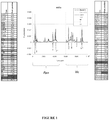
- EXAMPLE 2 Obtention of the complete editing profile from one sample of brain tissue (figure 1)
- DNase I Invitrogen
- RNAse I-treated RNAs (10 ⁇ l) was performed using 15 units of ThermoScript reverse transcriptase (ThermoScript RT-PCR System, Invitrogen) and Oligo(dT) primers at a final concentration of 2.5 ⁇ M.
- a first PCR reaction (final volume 25 ⁇ l) resulting in a 250 bp fragment, was then carried out on 1 ⁇ l of the reverse transcription products with 0.2 unit of Platinum Taq DNA polymerase (ThermoScript RT-PCR system, Invitrogen) and specific primers (forward primer: 5'-TGTCCCTAGCCATTGCTGATATGC-3' (SEQ ID No. 35) and reverse primer: 5'-GCAATCTTCATGATGGCCTTAGTC-3' (SEQ ID No. 36); final concentration of each 0.2 ⁇ M) located on exon IV and exon V of the Human 5-HT2cR cDNA, respectively.
- Platinum Taq DNA polymerase ThermoScript RT-PCR system, Invitrogen
- specific primers forward primer: 5'-TGTCCCTAGCCATTGCTGATATGC-3' (SEQ ID No. 35) and reverse primer: 5'-GCAATCTTCATGATGGCCTTAGTC-3' (SEQ ID No. 36
- the PCR was brought to its final point after 35 cycles (15s at 95°C; 30s at 60°C; 20s at 72°C), and a final elongation step of 2 min at 72°C. Aliquots of the amplification products were used to check the product on a 2% agarose analytic gel.
- the VIC-labelled reverse primer hybridizes to a complementary sequence of the 5-HT2c receptor identical in human, mouse and rat.
- the sequence of the FAM-labelled foward primer was designed to be as close as possible to that of the mouse. More precisely, T residues in positions 5 and 6 of the human oligonucleotide sequence (positions 1133 and 1134 of human reference U49516) were changed into G and C, respectively.
- the amplified fragment is 127 bp-long.
- RT-PCR after an initial denaturing step of 5 min at 94°C, the amplification reaction was brought to an end with 35 cycles (15s at 94°C; 30s at 55°C; 20s at 68°C) and a final elongation step of 2 min at 68°C.
- quality of the 127 bp-long amplified fragments were assessed on a 2% agarose gel before subsequent analysis in a 3100 Avant Genetic Analyser (Applied Biosystem).
- Fluorescent PCR products corresponding to standard isoforms (1 ⁇ l of a 1/100 dilution in DEPC treated water) and samples (1 ⁇ l of a 1/30 dilution) diluted in 11 ⁇ l of deionized formamide were added to a mixture of ROX labelled migration standards (MWG-BIOTECH, AG) (0.5 ⁇ l each) covering the whole range of the electrophoregram retention times.
- ROX labelled migration standards MWG-BIOTECH, AG
- Non-denaturing CE was carried out in an ABI PRISM 3100 -Avant Genetic Analyser (Applied Biosystems) through 80 cm-long capillaries filled with 7% "POP Conformational Analysis Polymer” (Applied Biosystems), 1X TBE and without glycerol. After a pre-run performed at 15 kV for 3 min, samples were injected for 15s at 2 kV, and electrophoresis was run for 105 min at 15 kV at a controlled temperature of 20°C. Under these conditions, each of the thirty-two possible isoforms were clearly resolved as a result of the single ssDNA conformation obtained with either the FAM-labelled or the VIC-labelled strand. The different retention times were used for unambiguous identification of the isoforms.
- the Electrophoretic Signal was then processed using an in-house software. First, the time basis of electrophoretic profiles of each sample was adjusted using the ROX-labelled strands of the migration standards. This allowed FAM- and VIC-labeled strands to precisely deconvolute the standards and samples signals in a unique time basis. Background was then adjusted and subtracted and then total area under each signal normalized.
- This method gives the proportion of each expressed mRNA isoform expressed as the percentage of the total of 5-HT2c receptor present in the extract.
- the main advantage of this processing is to give a complete quantitative estimation of the distribution of the expressed of SHT2cR isoforms (editing profile) in a given concentration of 5HT2cR mRNA. This is obtained from one single assay and allows to easily determine the characteristics of this profile in a given situation. With this technique it has been possible to demonstrate in a group of 6 depressed patients having committed suicide a specific signature which characterized the depressed group of patients. This signature gives interesting information about the dysregulation of editing process occurring in the dorsal prefrontal regions of the brain and strongly support the interest to explore the steady state of editing enzymes in skin and blood samples of depressed patients.
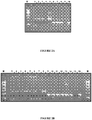
- Figure 2 represents a typical control of RTPCRs performed after extraction of polyA+ RNAs from Human (A) or Mouse (B) skin samples.
- ADAR1 and ADAR 2 isoforms were found expressed in the skin samples of Mouse and Human Skin.
- the figure 3 shows an example of control of the RT/PCR identification of ADAR1 150, ADAR 1 110 and ADAR 2 in experiments performed after extraction of Mouse total blood or skin RNAs.
- a volume of 5 ml allows to isolate enough total RNA for reverse transcription reactions.
- Blood samples (5ml) are collected into heparinized tubes. The following steps of the protocol must be immediately carried out under sterile conditions. Dilute the anticoagulated sample material with an equal volume of 0.9% NaCl sterile solution, or 1X PBS sterile solution, or RPMI 1640 sterile culture medium. Separation medium (eg Ficoll-Paque Plus, GE Healthcare Bio-Sciences AB, ref.: 17-1440-02 or 17-1440-03) must be warmed-up to room temperature just before use and protected from light.
- Separation medium eg Ficoll-Paque Plus, GE Healthcare Bio-Sciences AB, ref.: 17-1440-02 or 17-1440-03
- RNAlater RNA stabilization Reagent Qiagen, ref.: 76104 or 76106. If the submerged pellets are stored at 2-8°C, the lymphocytes/PBMCs gene expresion profile can be stabilized up to 4 weeks at this temperature. If transporting samples in RNA later reagent, ensure that the pellets always remain submerged in the reagent. Either keep the tubes upright during transport or fill the tubes completely with the stabilization solution. During transport tubes can be kept in a polystyrene box filled with blue ice packs.
- figure 4 An example of validation is given on figure 4 in which is presented the control of the RTPCR products of editing enzymes in human brain, skin and CD4 and CD8 blood cells, samples.
- EXAMPLE 5 Analysis of the isoforms of the 5-HT2c receptor in post mortem suicide-depressed patients brain samples compared with patient controls samples
- the analytical process illustrated in figure 1 allows analysis of all isoforms of the 5-HT2c receptor in post mortem brain samples.
- a study of 6 patient controls and carefully-selected suicide-depressed patients showed that: (1) specific brain regions show a specific pattern of distribution of the edited and non-edited 5-HT2CR isoforms, and (2) this distribution pattern is significantly altered in the human anterior cingulate cortex and dorsal prefrontal cortex, which are involved in the pathophysiology of major depression.
- These changes in the isoform signature are illustrated in table 3, which shows the effects observed in the anterior cingulate cortex.
- this technique can measure dynamic changes in isoform prevalence in both directions-increases or decreases compared to controls, providing insight into the potential enzyme dysfunction underlying the changes.
- ADAR I activity which specifically edits the A and B sites and, with less specificity, the C site
- ADAR I activity is up-regulated.
- Table 4 Analysis of the alteration of the editing profile of 5-HT2cR mRNA after interferon treatment. In each individual, the total profile of editing was measured as the proportion of each edited isoforms in the total specific mRNA of the receptor. Presented results are the mean ⁇ SEM of controls and interferon treated mice killed at 8 Hours after injection. P values were calculated from Student test. Are thus presented : the sum of the edited isoforms found increased in the interferon treated goup, the proportion of the A,B,C,D and E sites found edited in this group of isoforms and the relative proportion of mRNA represented by the isoforms of this group which is exclusively the result of a specific action of ADAR1.
Landscapes
- Health & Medical Sciences (AREA)
- Life Sciences & Earth Sciences (AREA)
- Engineering & Computer Science (AREA)
- Chemical & Material Sciences (AREA)
- Molecular Biology (AREA)
- Biomedical Technology (AREA)
- Immunology (AREA)
- Hematology (AREA)
- Proteomics, Peptides & Aminoacids (AREA)
- Analytical Chemistry (AREA)
- Urology & Nephrology (AREA)
- General Health & Medical Sciences (AREA)
- Physics & Mathematics (AREA)
- Biotechnology (AREA)
- Microbiology (AREA)
- Organic Chemistry (AREA)
- Pathology (AREA)
- Biochemistry (AREA)
- Zoology (AREA)
- Genetics & Genomics (AREA)
- Bioinformatics & Cheminformatics (AREA)
- General Physics & Mathematics (AREA)
- Wood Science & Technology (AREA)
- Cell Biology (AREA)
- Medicinal Chemistry (AREA)
- Food Science & Technology (AREA)
- General Engineering & Computer Science (AREA)
- Biophysics (AREA)
- Pharmacology & Pharmacy (AREA)
- Neurology (AREA)
- Neurosurgery (AREA)
- Measuring Or Testing Involving Enzymes Or Micro-Organisms (AREA)
- Enzymes And Modification Thereof (AREA)
Priority Applications (1)
| Application Number | Priority Date | Filing Date | Title |
|---|---|---|---|
| EP17185202.3A EP3272881B9 (en) | 2007-06-13 | 2008-06-13 | Peripherical tissue sample containing cells expressing the 5htr2c and/or adars as markers of the alteration of the mechanism of the 5htr2c mrna editing and its applications |
Applications Claiming Priority (3)
| Application Number | Priority Date | Filing Date | Title |
|---|---|---|---|
| US94368507P | 2007-06-13 | 2007-06-13 | |
| US2323908P | 2008-01-24 | 2008-01-24 | |
| PCT/EP2008/057519 WO2008152146A1 (en) | 2007-06-13 | 2008-06-13 | Peripherical tissue sample containing cells expressing the 5htr2c and/or adars as markers of the alteration of the mechanism of the 5htr2c mrna editing and its applications |
Related Child Applications (1)
| Application Number | Title | Priority Date | Filing Date |
|---|---|---|---|
| EP17185202.3A Division EP3272881B9 (en) | 2007-06-13 | 2008-06-13 | Peripherical tissue sample containing cells expressing the 5htr2c and/or adars as markers of the alteration of the mechanism of the 5htr2c mrna editing and its applications |
Publications (2)
| Publication Number | Publication Date |
|---|---|
| EP2162550A1 EP2162550A1 (en) | 2010-03-17 |
| EP2162550B1 true EP2162550B1 (en) | 2017-08-09 |
Family
ID=39776384
Family Applications (2)
| Application Number | Title | Priority Date | Filing Date |
|---|---|---|---|
| EP08761038.2A Not-in-force EP2162550B1 (en) | 2007-06-13 | 2008-06-13 | Peripherical tissue sample containing cells expressing the 5htr2c and/or adars as markers of the alteration of the mechanism of the 5htr2c mrna editing and its applications |
| EP17185202.3A Active EP3272881B9 (en) | 2007-06-13 | 2008-06-13 | Peripherical tissue sample containing cells expressing the 5htr2c and/or adars as markers of the alteration of the mechanism of the 5htr2c mrna editing and its applications |
Family Applications After (1)
| Application Number | Title | Priority Date | Filing Date |
|---|---|---|---|
| EP17185202.3A Active EP3272881B9 (en) | 2007-06-13 | 2008-06-13 | Peripherical tissue sample containing cells expressing the 5htr2c and/or adars as markers of the alteration of the mechanism of the 5htr2c mrna editing and its applications |
Country Status (6)
| Country | Link |
|---|---|
| EP (2) | EP2162550B1 (enExample) |
| JP (1) | JP5661458B2 (enExample) |
| CN (1) | CN101743322B (enExample) |
| CA (1) | CA2690909C (enExample) |
| ES (2) | ES2952748T3 (enExample) |
| WO (1) | WO2008152146A1 (enExample) |
Families Citing this family (9)
| Publication number | Priority date | Publication date | Assignee | Title |
|---|---|---|---|---|
| EP2202321A1 (en) | 2008-12-17 | 2010-06-30 | Biocortech | Evaluation of the potential risk of drug induced mood disturbance and suicide:use of a dedicated platform |
| US11873531B2 (en) * | 2010-06-24 | 2024-01-16 | Alcediag | Editing profiling of PDE8A pre-mRNA: use as specific biomarker of ADARs activities in human tissues to diagnose and to predict and assess therapeutic efficacy and/or efficiency or potential drug side effects |
| WO2011161253A1 (en) * | 2010-06-24 | 2011-12-29 | Biocortech | Editing profiling of pde8a pre -mrna : use as specific biomarker of adars activities in human tissues to diagnose and to predict and assess therapeutic efficacy and/or efficiency or potential drug side effects |
| CN102146119A (zh) * | 2011-01-17 | 2011-08-10 | 山东大学齐鲁医院 | 一种小鼠表皮总蛋白的提取方法 |
| JP7227006B2 (ja) * | 2016-03-11 | 2023-02-21 | アルスディアグ | 活性化合物によって誘発される特定の効果を選択するための、rna編集に基づくアルゴリズム及びインビトロの方法 |
| US12084719B2 (en) * | 2016-07-28 | 2024-09-10 | Alcediag | RNA editing as biomarkers for mood disorders test |
| CN110352244B (zh) * | 2016-09-01 | 2023-03-21 | ProQR治疗上市公司Ⅱ | 化学修饰的编辑rna的单链寡核苷酸 |
| EP3819387A1 (en) * | 2019-11-08 | 2021-05-12 | Alcediag | Differential diagnosis of bipolar disorder and unipolar depression by blood rna editing biomarkers |
| EP3819386A1 (en) * | 2019-11-08 | 2021-05-12 | Alcediag | Diagnosing of mood disorders using blood rna editing biomarkers |
Family Cites Families (5)
| Publication number | Priority date | Publication date | Assignee | Title |
|---|---|---|---|---|
| US5763174A (en) * | 1994-02-17 | 1998-06-09 | The Wistar Institute Of Anatomy & Biology | RNA editing enzyme and methods of use thereof |
| FR2842827B1 (fr) * | 2002-07-26 | 2004-10-22 | Biocortech | NOUVELLE METHODE D'ANALYSE D'ACIDE NUCLEIQUE ET SON UTILISATION POUR EVALUER LE DEGRE D'EDITION DE L'ARNm DU RECEPTEUR 5-HT2c |
| WO2005087949A1 (en) * | 2004-03-12 | 2005-09-22 | Compugen Ltd. | Systematic mapping of adenosine to inosine editing sites in the human transcriptome |
| GB0420873D0 (en) * | 2004-09-20 | 2004-10-20 | Curidium Ltd | Methods of diagnosis |
| US20100008921A1 (en) * | 2005-06-16 | 2010-01-14 | Evotec Neurosciences Gmbh | Diagnostic and Therapeutic Target Adarb2 Proteins for Neurodegenerative Diseases |
-
2008
- 2008-06-13 ES ES17185202T patent/ES2952748T3/es active Active
- 2008-06-13 CN CN200880019753.XA patent/CN101743322B/zh active Active
- 2008-06-13 JP JP2010511663A patent/JP5661458B2/ja active Active
- 2008-06-13 EP EP08761038.2A patent/EP2162550B1/en not_active Not-in-force
- 2008-06-13 EP EP17185202.3A patent/EP3272881B9/en active Active
- 2008-06-13 ES ES08761038.2T patent/ES2646592T3/es active Active
- 2008-06-13 WO PCT/EP2008/057519 patent/WO2008152146A1/en not_active Ceased
- 2008-06-13 CA CA2690909A patent/CA2690909C/en active Active
Non-Patent Citations (3)
| Title |
|---|
| ANDRZEJ SLOMINSKI ET AL: "Functional activity of serotoninergic and melatoninergic systems expressed in the skin", JOURNAL OF CELLULAR PHYSIOLOGY, vol. 196, no. 1, 20 May 2003 (2003-05-20), pages 144 - 153, XP055048966, ISSN: 0021-9541, DOI: 10.1002/jcp.10287 * |
| CHARLES M.A. ET AL: "Build an algorithm based on the following Development of an Array-Comparative Genomic Hybridization (aCGH)-Based Algorithm to Assist Renal Tumor Subtyping in Needle Biopsies and Resected Specimens Departments of b Surgery, c Interventional Radiology and Image Guided Therapies, d Medicine, and e Path", INTERNET ARTICLE, 13 February 2013 (2013-02-13), XP055112982, Retrieved from the Internet <URL:http://www.cgifhact.com/wp-content/uploads/2013/12/AMP-2013-poster-UroGenRA.pdf> [retrieved on 20140409] * |
| GAN Z. ET AL: "RNA Editing by ADAR2 Is Metabolically Regulated in Pancreatic Islets and beta-Cells", JOURNAL OF BIOLOGICAL CHEMISTRY, vol. 281, no. 44, 6 September 2006 (2006-09-06), pages 33386 - 33394, XP055048994, ISSN: 0021-9258, DOI: 10.1074/jbc.M604484200 * |
Also Published As
| Publication number | Publication date |
|---|---|
| EP3272881B1 (en) | 2023-06-07 |
| WO2008152146A1 (en) | 2008-12-18 |
| CA2690909C (en) | 2022-01-18 |
| JP2010528672A (ja) | 2010-08-26 |
| ES2952748T3 (es) | 2023-11-03 |
| CA2690909A1 (en) | 2008-12-18 |
| CN101743322A (zh) | 2010-06-16 |
| ES2646592T3 (es) | 2017-12-14 |
| EP2162550A1 (en) | 2010-03-17 |
| EP3272881C0 (en) | 2023-06-07 |
| EP3272881A1 (en) | 2018-01-24 |
| CN101743322B (zh) | 2014-12-24 |
| EP3272881B9 (en) | 2023-10-04 |
| JP5661458B2 (ja) | 2015-01-28 |
Similar Documents
| Publication | Publication Date | Title |
|---|---|---|
| EP2162550B1 (en) | Peripherical tissue sample containing cells expressing the 5htr2c and/or adars as markers of the alteration of the mechanism of the 5htr2c mrna editing and its applications | |
| Dracheva et al. | Increased serotonin 2C receptor mRNA editing: a possible risk factor for suicide | |
| Lim et al. | Allelic expression of serotonin transporter (SERT) mRNA in human pons: lack of correlation with the polymorphism SERTLPR | |
| JP5846372B2 (ja) | Dravet症候群の発症可能性の判定方法およびその利用 | |
| US10851420B2 (en) | Editing profiling of PDE8A pre-mRNA: use as specific biomarker of ADARs activities in human tissues to diagnose and to predict and assess therapeutic efficacy and/or efficiency or potential drug side effects | |
| US20100184058A1 (en) | Peripherical tissue sample containing cells expressing the 5htr2c and/or adars as markers of the alteration of the mechanism of the 5htr2c mrna editing and its applications | |
| JP6644731B2 (ja) | 気分障害および自殺を誘発する、薬剤の潜在的なリスクの評価:専用プラットフォームの使用 | |
| Ide et al. | Genetic association analyses of PHOX2B and ASCL1 in neuropsychiatric disorders: evidence for association of ASCL1 with Parkinson’s disease | |
| JP2009131247A (ja) | 脳炎または脳症の罹患リスク判定データの取得方法およびその利用、並びに熱性けいれんのてんかんへの移行リスク判定データの取得方法およびその利用 | |
| Wu et al. | c. 835-5T> G variant in SMN1 gene causes transcript exclusion of exon 7 and spinal muscular atrophy | |
| US20150056622A1 (en) | Editing profiling of pde8a pre -mrna: use as specific biomarker of adars activities in human tissues to diagnose and to predict and assess therapeutic efficacy and/or efficiency or potential drug side effects | |
| US11873531B2 (en) | Editing profiling of PDE8A pre-mRNA: use as specific biomarker of ADARs activities in human tissues to diagnose and to predict and assess therapeutic efficacy and/or efficiency or potential drug side effects | |
| WO2009125851A1 (ja) | 糖尿病患者のフェニルアラニン誘導体系薬物有効性検出方法 | |
| JP4393148B2 (ja) | 末梢型ベンゾジアゼピン受容体遺伝子解析によるストレス感受性の判断方法 | |
| JP2003219886A (ja) | プロテイン1遺伝子の一塩基多型を含む核酸およびそれを用いたプロテイン1関連疾患の診断方法 | |
| JPWO2004031386A1 (ja) | アトピー性皮膚炎の検査方法 |
Legal Events
| Date | Code | Title | Description |
|---|---|---|---|
| PUAI | Public reference made under article 153(3) epc to a published international application that has entered the european phase |
Free format text: ORIGINAL CODE: 0009012 |
|
| 17P | Request for examination filed |
Effective date: 20100113 |
|
| AK | Designated contracting states |
Kind code of ref document: A1 Designated state(s): AT BE BG CH CY CZ DE DK EE ES FI FR GB GR HR HU IE IS IT LI LT LU LV MC MT NL NO PL PT RO SE SI SK TR |
|
| AX | Request for extension of the european patent |
Extension state: AL BA MK RS |
|
| 17Q | First examination report despatched |
Effective date: 20100407 |
|
| RIN1 | Information on inventor provided before grant (corrected) |
Inventor name: PUJOL, JEAN-FRANCOIS Inventor name: VINCENT, LAURENT Inventor name: CAVAREC, LAURENT Inventor name: MANN, JOHN Inventor name: WEISSMANN, DINAH |
|
| DAX | Request for extension of the european patent (deleted) | ||
| RAP1 | Party data changed (applicant data changed or rights of an application transferred) |
Owner name: MARCO POLO PHARMACEUTICALS |
|
| RAP1 | Party data changed (applicant data changed or rights of an application transferred) |
Owner name: ALCEDIAG |
|
| GRAP | Despatch of communication of intention to grant a patent |
Free format text: ORIGINAL CODE: EPIDOSNIGR1 |
|
| INTG | Intention to grant announced |
Effective date: 20160928 |
|
| STAA | Information on the status of an ep patent application or granted ep patent |
Free format text: STATUS: GRANT OF PATENT IS INTENDED |
|
| GRAS | Grant fee paid |
Free format text: ORIGINAL CODE: EPIDOSNIGR3 |
|
| GRAA | (expected) grant |
Free format text: ORIGINAL CODE: 0009210 |
|
| STAA | Information on the status of an ep patent application or granted ep patent |
Free format text: STATUS: THE PATENT HAS BEEN GRANTED |
|
| AK | Designated contracting states |
Kind code of ref document: B1 Designated state(s): AT BE BG CH CY CZ DE DK EE ES FI FR GB GR HR HU IE IS IT LI LT LU LV MC MT NL NO PL PT RO SE SI SK TR |
|
| REG | Reference to a national code |
Ref country code: GB Ref legal event code: FG4D |
|
| REG | Reference to a national code |
Ref country code: CH Ref legal event code: EP Ref country code: AT Ref legal event code: REF Ref document number: 916911 Country of ref document: AT Kind code of ref document: T Effective date: 20170815 |
|
| REG | Reference to a national code |
Ref country code: IE Ref legal event code: FG4D |
|
| REG | Reference to a national code |
Ref country code: DE Ref legal event code: R096 Ref document number: 602008051530 Country of ref document: DE |
|
| REG | Reference to a national code |
Ref country code: CH Ref legal event code: NV Representative=s name: RENTSCH PARTNER AG, CH |
|
| REG | Reference to a national code |
Ref country code: SE Ref legal event code: TRGR |
|
| REG | Reference to a national code |
Ref country code: NL Ref legal event code: FP |
|
| REG | Reference to a national code |
Ref country code: ES Ref legal event code: FG2A Ref document number: 2646592 Country of ref document: ES Kind code of ref document: T3 Effective date: 20171214 |
|
| REG | Reference to a national code |
Ref country code: LT Ref legal event code: MG4D |
|
| REG | Reference to a national code |
Ref country code: AT Ref legal event code: MK05 Ref document number: 916911 Country of ref document: AT Kind code of ref document: T Effective date: 20170809 |
|
| PG25 | Lapsed in a contracting state [announced via postgrant information from national office to epo] |
Ref country code: AT Free format text: LAPSE BECAUSE OF FAILURE TO SUBMIT A TRANSLATION OF THE DESCRIPTION OR TO PAY THE FEE WITHIN THE PRESCRIBED TIME-LIMIT Effective date: 20170809 Ref country code: FI Free format text: LAPSE BECAUSE OF FAILURE TO SUBMIT A TRANSLATION OF THE DESCRIPTION OR TO PAY THE FEE WITHIN THE PRESCRIBED TIME-LIMIT Effective date: 20170809 Ref country code: NO Free format text: LAPSE BECAUSE OF FAILURE TO SUBMIT A TRANSLATION OF THE DESCRIPTION OR TO PAY THE FEE WITHIN THE PRESCRIBED TIME-LIMIT Effective date: 20171109 Ref country code: HR Free format text: LAPSE BECAUSE OF FAILURE TO SUBMIT A TRANSLATION OF THE DESCRIPTION OR TO PAY THE FEE WITHIN THE PRESCRIBED TIME-LIMIT Effective date: 20170809 Ref country code: LT Free format text: LAPSE BECAUSE OF FAILURE TO SUBMIT A TRANSLATION OF THE DESCRIPTION OR TO PAY THE FEE WITHIN THE PRESCRIBED TIME-LIMIT Effective date: 20170809 |
|
| PG25 | Lapsed in a contracting state [announced via postgrant information from national office to epo] |
Ref country code: LV Free format text: LAPSE BECAUSE OF FAILURE TO SUBMIT A TRANSLATION OF THE DESCRIPTION OR TO PAY THE FEE WITHIN THE PRESCRIBED TIME-LIMIT Effective date: 20170809 Ref country code: BG Free format text: LAPSE BECAUSE OF FAILURE TO SUBMIT A TRANSLATION OF THE DESCRIPTION OR TO PAY THE FEE WITHIN THE PRESCRIBED TIME-LIMIT Effective date: 20171109 Ref country code: PL Free format text: LAPSE BECAUSE OF FAILURE TO SUBMIT A TRANSLATION OF THE DESCRIPTION OR TO PAY THE FEE WITHIN THE PRESCRIBED TIME-LIMIT Effective date: 20170809 Ref country code: GR Free format text: LAPSE BECAUSE OF FAILURE TO SUBMIT A TRANSLATION OF THE DESCRIPTION OR TO PAY THE FEE WITHIN THE PRESCRIBED TIME-LIMIT Effective date: 20171110 Ref country code: IS Free format text: LAPSE BECAUSE OF FAILURE TO SUBMIT A TRANSLATION OF THE DESCRIPTION OR TO PAY THE FEE WITHIN THE PRESCRIBED TIME-LIMIT Effective date: 20171209 |
|
| PG25 | Lapsed in a contracting state [announced via postgrant information from national office to epo] |
Ref country code: CZ Free format text: LAPSE BECAUSE OF FAILURE TO SUBMIT A TRANSLATION OF THE DESCRIPTION OR TO PAY THE FEE WITHIN THE PRESCRIBED TIME-LIMIT Effective date: 20170809 Ref country code: RO Free format text: LAPSE BECAUSE OF FAILURE TO SUBMIT A TRANSLATION OF THE DESCRIPTION OR TO PAY THE FEE WITHIN THE PRESCRIBED TIME-LIMIT Effective date: 20170809 Ref country code: DK Free format text: LAPSE BECAUSE OF FAILURE TO SUBMIT A TRANSLATION OF THE DESCRIPTION OR TO PAY THE FEE WITHIN THE PRESCRIBED TIME-LIMIT Effective date: 20170809 |
|
| REG | Reference to a national code |
Ref country code: DE Ref legal event code: R097 Ref document number: 602008051530 Country of ref document: DE |
|
| PG25 | Lapsed in a contracting state [announced via postgrant information from national office to epo] |
Ref country code: SK Free format text: LAPSE BECAUSE OF FAILURE TO SUBMIT A TRANSLATION OF THE DESCRIPTION OR TO PAY THE FEE WITHIN THE PRESCRIBED TIME-LIMIT Effective date: 20170809 Ref country code: EE Free format text: LAPSE BECAUSE OF FAILURE TO SUBMIT A TRANSLATION OF THE DESCRIPTION OR TO PAY THE FEE WITHIN THE PRESCRIBED TIME-LIMIT Effective date: 20170809 |
|
| PLBE | No opposition filed within time limit |
Free format text: ORIGINAL CODE: 0009261 |
|
| STAA | Information on the status of an ep patent application or granted ep patent |
Free format text: STATUS: NO OPPOSITION FILED WITHIN TIME LIMIT |
|
| REG | Reference to a national code |
Ref country code: FR Ref legal event code: PLFP Year of fee payment: 11 |
|
| 26N | No opposition filed |
Effective date: 20180511 |
|
| PG25 | Lapsed in a contracting state [announced via postgrant information from national office to epo] |
Ref country code: SI Free format text: LAPSE BECAUSE OF FAILURE TO SUBMIT A TRANSLATION OF THE DESCRIPTION OR TO PAY THE FEE WITHIN THE PRESCRIBED TIME-LIMIT Effective date: 20170809 |
|
| PG25 | Lapsed in a contracting state [announced via postgrant information from national office to epo] |
Ref country code: MT Free format text: LAPSE BECAUSE OF NON-PAYMENT OF DUE FEES Effective date: 20180613 |
|
| PG25 | Lapsed in a contracting state [announced via postgrant information from national office to epo] |
Ref country code: TR Free format text: LAPSE BECAUSE OF FAILURE TO SUBMIT A TRANSLATION OF THE DESCRIPTION OR TO PAY THE FEE WITHIN THE PRESCRIBED TIME-LIMIT Effective date: 20170809 |
|
| PG25 | Lapsed in a contracting state [announced via postgrant information from national office to epo] |
Ref country code: PT Free format text: LAPSE BECAUSE OF FAILURE TO SUBMIT A TRANSLATION OF THE DESCRIPTION OR TO PAY THE FEE WITHIN THE PRESCRIBED TIME-LIMIT Effective date: 20170809 Ref country code: HU Free format text: LAPSE BECAUSE OF FAILURE TO SUBMIT A TRANSLATION OF THE DESCRIPTION OR TO PAY THE FEE WITHIN THE PRESCRIBED TIME-LIMIT; INVALID AB INITIO Effective date: 20080613 |
|
| PG25 | Lapsed in a contracting state [announced via postgrant information from national office to epo] |
Ref country code: CY Free format text: LAPSE BECAUSE OF FAILURE TO SUBMIT A TRANSLATION OF THE DESCRIPTION OR TO PAY THE FEE WITHIN THE PRESCRIBED TIME-LIMIT Effective date: 20170809 |
|
| PGFP | Annual fee paid to national office [announced via postgrant information from national office to epo] |
Ref country code: FR Payment date: 20210630 Year of fee payment: 14 Ref country code: MC Payment date: 20210609 Year of fee payment: 14 Ref country code: NL Payment date: 20210611 Year of fee payment: 14 Ref country code: IT Payment date: 20210607 Year of fee payment: 14 Ref country code: LU Payment date: 20210611 Year of fee payment: 14 Ref country code: DE Payment date: 20210608 Year of fee payment: 14 |
|
| PGFP | Annual fee paid to national office [announced via postgrant information from national office to epo] |
Ref country code: CH Payment date: 20210614 Year of fee payment: 14 Ref country code: GB Payment date: 20210610 Year of fee payment: 14 Ref country code: SE Payment date: 20210616 Year of fee payment: 14 Ref country code: IE Payment date: 20210608 Year of fee payment: 14 Ref country code: BE Payment date: 20210607 Year of fee payment: 14 |
|
| PGFP | Annual fee paid to national office [announced via postgrant information from national office to epo] |
Ref country code: ES Payment date: 20210716 Year of fee payment: 14 |
|
| REG | Reference to a national code |
Ref country code: DE Ref legal event code: R119 Ref document number: 602008051530 Country of ref document: DE |
|
| PG25 | Lapsed in a contracting state [announced via postgrant information from national office to epo] |
Ref country code: MC Free format text: LAPSE BECAUSE OF NON-PAYMENT OF DUE FEES Effective date: 20220630 |
|
| REG | Reference to a national code |
Ref country code: CH Ref legal event code: PL Ref country code: SE Ref legal event code: EUG |
|
| REG | Reference to a national code |
Ref country code: NL Ref legal event code: MM Effective date: 20220701 |
|
| REG | Reference to a national code |
Ref country code: BE Ref legal event code: MM Effective date: 20220630 |
|
| GBPC | Gb: european patent ceased through non-payment of renewal fee |
Effective date: 20220613 |
|
| PG25 | Lapsed in a contracting state [announced via postgrant information from national office to epo] |
Ref country code: NL Free format text: LAPSE BECAUSE OF NON-PAYMENT OF DUE FEES Effective date: 20220701 |
|
| PG25 | Lapsed in a contracting state [announced via postgrant information from national office to epo] |
Ref country code: SE Free format text: LAPSE BECAUSE OF NON-PAYMENT OF DUE FEES Effective date: 20220614 Ref country code: LU Free format text: LAPSE BECAUSE OF NON-PAYMENT OF DUE FEES Effective date: 20220613 Ref country code: LI Free format text: LAPSE BECAUSE OF NON-PAYMENT OF DUE FEES Effective date: 20220630 Ref country code: IE Free format text: LAPSE BECAUSE OF NON-PAYMENT OF DUE FEES Effective date: 20220613 Ref country code: FR Free format text: LAPSE BECAUSE OF NON-PAYMENT OF DUE FEES Effective date: 20220630 Ref country code: CH Free format text: LAPSE BECAUSE OF NON-PAYMENT OF DUE FEES Effective date: 20220630 |
|
| PG25 | Lapsed in a contracting state [announced via postgrant information from national office to epo] |
Ref country code: GB Free format text: LAPSE BECAUSE OF NON-PAYMENT OF DUE FEES Effective date: 20220613 Ref country code: DE Free format text: LAPSE BECAUSE OF NON-PAYMENT OF DUE FEES Effective date: 20230103 Ref country code: BE Free format text: LAPSE BECAUSE OF NON-PAYMENT OF DUE FEES Effective date: 20220630 |
|
| REG | Reference to a national code |
Ref country code: ES Ref legal event code: FD2A Effective date: 20230728 |
|
| PG25 | Lapsed in a contracting state [announced via postgrant information from national office to epo] |
Ref country code: IT Free format text: LAPSE BECAUSE OF NON-PAYMENT OF DUE FEES Effective date: 20220613 |
|
| PG25 | Lapsed in a contracting state [announced via postgrant information from national office to epo] |
Ref country code: ES Free format text: LAPSE BECAUSE OF NON-PAYMENT OF DUE FEES Effective date: 20220614 |