EP2149335B1 - Biologische Informationsmessvorrichtung und Verfahren - Google Patents
Biologische Informationsmessvorrichtung und Verfahren Download PDFInfo
- Publication number
- EP2149335B1 EP2149335B1 EP09009431.9A EP09009431A EP2149335B1 EP 2149335 B1 EP2149335 B1 EP 2149335B1 EP 09009431 A EP09009431 A EP 09009431A EP 2149335 B1 EP2149335 B1 EP 2149335B1
- Authority
- EP
- European Patent Office
- Prior art keywords
- correlation value
- biological information
- unit
- electromagnetic wave
- living body
- Prior art date
- Legal status (The legal status is an assumption and is not a legal conclusion. Google has not performed a legal analysis and makes no representation as to the accuracy of the status listed.)
- Not-in-force
Links
Images



Classifications
-
- A—HUMAN NECESSITIES
- A61—MEDICAL OR VETERINARY SCIENCE; HYGIENE
- A61B—DIAGNOSIS; SURGERY; IDENTIFICATION
- A61B5/00—Measuring for diagnostic purposes; Identification of persons
- A61B5/02—Detecting, measuring or recording for evaluating the cardiovascular system, e.g. pulse, heart rate, blood pressure or blood flow
- A61B5/021—Measuring pressure in heart or blood vessels
-
- A—HUMAN NECESSITIES
- A61—MEDICAL OR VETERINARY SCIENCE; HYGIENE
- A61B—DIAGNOSIS; SURGERY; IDENTIFICATION
- A61B5/00—Measuring for diagnostic purposes; Identification of persons
- A61B5/0059—Measuring for diagnostic purposes; Identification of persons using light, e.g. diagnosis by transillumination, diascopy, fluorescence
-
- A—HUMAN NECESSITIES
- A61—MEDICAL OR VETERINARY SCIENCE; HYGIENE
- A61B—DIAGNOSIS; SURGERY; IDENTIFICATION
- A61B5/00—Measuring for diagnostic purposes; Identification of persons
- A61B5/0093—Detecting, measuring or recording by applying one single type of energy and measuring its conversion into another type of energy
- A61B5/0097—Detecting, measuring or recording by applying one single type of energy and measuring its conversion into another type of energy by applying acoustic waves and detecting light, i.e. acousto-optic measurements
-
- A—HUMAN NECESSITIES
- A61—MEDICAL OR VETERINARY SCIENCE; HYGIENE
- A61B—DIAGNOSIS; SURGERY; IDENTIFICATION
- A61B8/00—Diagnosis using ultrasonic, sonic or infrasonic waves
-
- A—HUMAN NECESSITIES
- A61—MEDICAL OR VETERINARY SCIENCE; HYGIENE
- A61B—DIAGNOSIS; SURGERY; IDENTIFICATION
- A61B5/00—Measuring for diagnostic purposes; Identification of persons
- A61B5/02—Detecting, measuring or recording for evaluating the cardiovascular system, e.g. pulse, heart rate, blood pressure or blood flow
- A61B5/024—Measuring pulse rate or heart rate
Definitions
- Embodiments of the present invention relate to a biological information measurement apparatus and a biological information measurement method.
- biological information Information on a living body such as pulsation and blood pressure (hereinafter referred to as "biological information”) is measured conventionally by attaching a measurement apparatus such as a sphygmomanometer cuff onto a living body.
- a measurement apparatus such as a sphygmomanometer cuff
- the method of measuring biological information of a subject with a measurement apparatus attached onto a living body sometimes may not accurately measure the biological information because the subject (such as a patient) is aware of the presence of the attached measurement apparatus.
- a number of contactless biological information measurement apparatuses that measure biological information without needing to be attached to a living body (see for example Japanese Patent Laid-Open No. 2005-270570 , No. 2001-187032 , and No. 7-241288 ) have been proposed.
- a contactless blood-pressure measurement apparatus has been proposed that applies an electromagnetic wave to a living body and detects the electromagnetic wave (reflected wave) scattered from the surface of the living body to measure the blood pressure.
- a contactless blood-pressure measurement apparatus has been proposed that applies an ultrasound to a living body to measure the blood pressure by determining blood flow using Doppler ultrasound.
- the biological information measurement apparatuses described above have a problem that the apparatuses may not accurately measure biological information in some situations.
- an electromagnetic wave and ultrasound applied to a living body by the biological information measurement apparatuses and the waves reflected by the living body and received by the biological information measurement apparatuses may vary under the influence of the ambient environment such as movement by the subject and obstacles around the subject. Therefore, there is the problem that biological information may not be accurately measured by the biological information measurement apparatuses described above under the influence of the ambient environment.
- the technique disclosed herein has been devised in order to address the problem described above and an object of the disclosure is to provide a biological information measurement apparatus and a biological information measurement method capable of accurately measuring biological information.
- a biological information measurement apparatus includes an electromagnetic wave applying unit configured to apply, to a living body, a first electromagnetic wave and a second electromagnetic wave having a frequency different from a frequency of the first electromagnetic wave; a reflected wave receiver configured to receive a first reflected wave corresponding to the first electromagnetic wave and a second reflected wave corresponding to the second electromagnetic wave; a correlation value calculating unit calculating a correlation value between the first and second reflected waves; a correlation value evaluating unit configured to determine whether the correlation value satisfies a given condition; and a biological information measuring unit configured to measure biological information based on the first or second reflected wave when the correlation value evaluating unit determines that the correlation value satisfies the given condition.
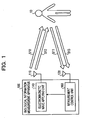
- FIG. 1 is a diagram illustrating an overview of a biological information measurement apparatus according to a first embodiment
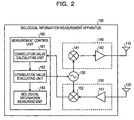
- FIG. 2 is a diagram illustrating a configuration of the biological information measurement apparatus according to the first embodiment
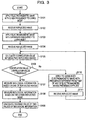
- FIG. 3 is a flowchart of a biological information measurement process performed by the biological information measurement apparatus according to the first embodiment
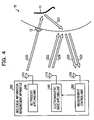
- FIG. 4 is a diagram illustrating an overview of a biological information measurement apparatus according to a second embodiment
- FIG. 5 is a diagram illustrating a configuration of the biological information measurement apparatus according to the second embodiment
- FIG. 6 is a diagram illustrating an example of a correlation value storage
- FIG. 7 is a flowchart of a biological information measurement process performed by the biological information measurement apparatus according to the second embodiment.
- FIG. 8 is a diagram illustrating an example of a reflected wave.
- the biological information measurement apparatus 100 applies two electromagnetic waves with different frequencies to a living body and receives the electromagnetic waves reflected back from the living body.
- the biological information measurement apparatus 100 calculates a correlation value between the two reflected waves received and determines whether the calculated correlation value is greater than a given threshold value (hereinafter referred to as the "correlation value threshold"). If the calculated correlation value is greater than the correlation value threshold, the biological information measurement apparatus 100 measures biological information (for example the pulsation) based on the reflected waves.
- An electromagnetic wave applied to a living body by the biological information measurement apparatus 100 and the reflected electromagnetic wave with a certain frequency may be affected by the ambient environment. However, whether an electromagnetic wave and reflected waves are being affected by the ambient environment may not be determined by measuring biological information based on only one reflected wave. In medical practice, accurate measurement of biological information such as pulsation is desired because the biological information is used by a doctor as a criterion for diagnosis.
- the biological information measurement apparatus 100 makes use of the fact that electromagnetic waves with different frequencies are less likely to be equally affected by an ambient environment.
- the biological information measurement apparatus 100 applies two electromagnetic waves with different frequencies to a living body and calculates a correlation value between the two reflected waves with the different frequencies. If the correlation value is greater than a correlation value threshold, the waveforms of the two reflected waves are similar to each other and therefore it is likely that the waves are not being affected by the ambient environment. For example, if one of the two frequencies is susceptible to the ambient environment, the correlation value will be small. If both of the frequencies are susceptible to the ambient environment, the possibility of both of the frequencies being exactly equally affected by the ambient environment is low and therefore the correlation value will be small. Therefore, if the correlation value between the two reflected waves is greater than the correlation value threshold, the biological information measurement apparatus 100 determines that electromagnetic waves and reflected waves are not being significantly affected by the ambient environment and then measures the biological information based on the reflected waves.
- FIG. 1 is a diagram illustrating an overview of the biological information measurement apparatus 100 according to a first embodiment. An example of the biological information measurement apparatus 100 that measures pulsation as biological information will be described in a first embodiment. As illustrated in FIG. 1 , the biological information measurement apparatus 100 includes antennas 110 and 120, an electromagnetic wave applying unit 140, and a measurement control unit 160.
- the electromagnetic wave applying unit 140 of the biological information measurement apparatus 100 applies an electromagnetic wave with a given frequency to the subject 10 through the antenna 110 (step S10). Then, the biological information measurement apparatus 100 receives the applied electromagnetic wave reflected back from the subject 10 through the antenna 120 (step S11).
- the electromagnetic wave applying unit 140 then applies an electromagnetic wave with a frequency different from that of the electromagnetic wave applied at step S10 to the subject 10 (step S12) and receives the electromagnetic wave reflected back from the subject 10 (step S13). Then, the measurement control unit 160 of the biological information measurement apparatus 100 calculates a correlation value between the two reflected waves received. If the calculated correlation value is greater than a correlation value threshold, the measurement control unit 160 measures the pulsation based on the reflected waves.
- a pulsation measurement method based on reflected waves will be described. Because a living body is oscillating due to its pulsation, air at the surface of the living body is vibrating. Accordingly, when an electromagnetic wave is applied onto the surface of the living body, the electromagnetic wave is analog-modulated by the frequency of the vibration of air.
- the biological information measurement apparatus 100 receives the analog-modulated reflected wave and extracts the frequency of the vibration of air from the reflected wave to measure the pulsation.
- the difference in frequency between the two electromagnetic waves applied by the electromagnetic wave applying unit 140 is preferably large. This is because if the difference in frequency is small, the electromagnetic waves and the reflected waves may be similarly affected by the ambient environment and the correlation value between the reflected waves may be large even though they are affected by the ambient environment.
- the biological information measurement apparatus 100 applies two electromagnetic waves with different frequencies to a living body and, if a correlation value between the electromagnetic waves reflected back from the living body is larger than a correlation value threshold, measures the pulsation. Therefore, the pulsation may be accurately measured.
- FIG. 2 illustrates a configuration of the biological information measurement apparatus 100 according to the first embodiment.
- the biological information measurement apparatus 100 includes antennas 110 and 120, a signal generator 130, an electromagnetic wave applying unit 140, a reflected wave receiver 150, and a measurement control unit 160.
- the antenna 110 is used for transmitting electromagnetic waves to a living body and the antenna 120 is used for receiving the applied electromagnetic waves reflected back from the living body.
- the signal generator 130 generates a signal and outputs the signal to mixers 141 and 152, which will be described later.
- the electromagnetic wave applying unit 140 is a functional unit that generates electromagnetic waves to be applied to a living body and includes the mixer 141 and an amplifier 142.
- the mixer 141 uses a signal input from the signal generator 130 to generate an electromagnetic wave having a given frequency and outputs the generated electromagnetic wave to the amplifier 142.
- the amplifier 142 is a power amplifier (PA) which amplifies an electromagnetic wave input from the mixer 141 and transmits the amplified electromagnetic wave to the outside of the biological information measurement apparatus 100 through the antenna 110.
- PA power amplifier
- the signal generator 130 When the biological information measurement apparatus 100 measures biological information of a subject for the first time, the signal generator 130 outputs two signals with different frequencies to the mixer 141 and the electromagnetic wave applying unit 140 into which the signals are input applies two electromagnetic waves with the different frequencies to a living body. For example, the signal generator 130 outputs a signal with a frequency f1 to the mixer 141 and the electromagnetic wave applying unit 140 applies an electromagnetic wave with the frequency f1 to the living body. Then, the signal generator 130 outputs a signal with a frequency f2 different from the frequency f1 to the mixer 141 and the electromagnetic wave applying unit 140 applies an electromagnetic wave with the frequency f2 to the living body.
- the reflected wave receiver 150 is a functional unit that receives an applied electromagnetic wave reflected back from a living body and includes a low noise amplifier 151 and the mixer 152.
- the low noise amplifier 151 is an amplifying circuit with a low noise factor and amplifies a reflected wave received through the antenna 120 and outputs the amplified reflected wave to the mixer 152.
- the mixer 152 uses a signal input from the signal generator 130 to convert the frequency of a reflected wave input from the low noise amplifier 151, and outputs the reflected wave with the changed frequency to a correlation value calculating unit 161, which will be described later.
- the electromagnetic wave applying unit 140 applies two electromagnetic waves with different frequencies to the living body.
- the reflected wave receiver 150 sequentially receives the two electromagnetic waves reflected back from the living body. In the example described above, the reflected wave receiver 150 receives the reflected electromagnetic wave with the frequency f1 and the reflected electromagnetic wave with the frequency f2 in this order.
- the measurement control unit 160 is a controller that performs measurement of biological information and includes a correlation value calculating unit 161, a correlation value evaluating unit 162, and a biological information measuring unit 163.
- the correlation value calculating unit 161 is a processing unit that calculates a correlation value between two reflected waves input from the reflected wave receiver 150. In particular, whenever a reflected wave is input from the reflected wave receiver 150, the correlation value calculating unit 161 stores variations in the signal level of the reflected wave with time in a given storage unit (such as a memory). Then, the correlation value calculating unit 161 calculates a correlation value between the two reflected waves stored in the given storage unit.
- the correlation value evaluating unit 162 is a processing unit that determines whether the correlation value calculated by the correlation value calculating unit 161 satisfies a given condition, for example, whether the correlation value is greater than a correlation value threshold. In particular, the correlation value evaluating unit 162 determines whether the correlation value is greater than a correlation value threshold stored in the given storage unit and, if the correlation value is greater than the correlation value threshold, informs the biological information measuring unit 163 of the fact. On the other hand, if the correlation value is less than or equal to the correlation value threshold, the correlation value evaluating unit 162 directs the signal generator 130 to output a signal with a frequency different from the frequency of any of the previously output signals to the mixer 141. In response to the direction, the signal generator 130 outputs, to the mixer 141, a signal with the frequency different from the frequency of any of the signals previously output.
- the electromagnetic wave applying unit 140 applies an electromagnetic wave with a frequency f1 and an electromagnetic wave with a frequency f2 to a living body, as in the example described above, and the reflected wave receiver 150 receives the reflected wave with the frequency f1 and the reflected wave with the frequency f2. If the correlation value between the reflected waves with the frequencies f1 and f2 is less than or equal to the correlation value threshold, the correlation value evaluating unit 162 directs the signal generator 130 to output a signal with a frequency different from the frequencies f1 and f2 to the mixer 141.
- the signal generator 130 In response to the direction, the signal generator 130 outputs a signal with a frequency f3, for example, to the mixer 141 to cause the electromagnetic wave applying unit 140 to apply an electromagnetic wave with the different frequency f3 to the living body.
- the reflected wave receiver 150 receives the wave with the frequency f3 reflected back from the living body and the correlation value calculating unit 161 calculates the correlation value between the reflected waves with the frequencies f2 and f3. Then the correlation value evaluating unit 162 determines whether the calculated correlation value is greater than the correlation value threshold. The correlation value evaluating unit 162 continues changing the frequency to be applied to the living body until the correlation value between two reflected waves exceeds the correlation value threshold.
- the biological information measurement apparatus 100 may accurately measure biological information based on an electromagnetic wave and a reflected wave with a frequency less susceptible to the ambient environment.
- the biological information measuring unit 163 is a processing unit that measures biological information from two reflected waves when the correlation value evaluating unit 162 determines that the correlation value is greater than the correlation value threshold. In particular, the biological information measuring unit 163 measures pulsation based on one of the two reflected waves. Similarly, the biological information measuring unit 163 measures pulsation based on the other of the two reflected waves. Then the biological information measuring unit 163 calculates the average value of the two measured pulsation values. Since the biological information measuring unit 163 calculates the average value of two pulsation values in this way, the pulsation may be accurately measured even if one of the reflected waves is affected slightly by the ambient environment.
- the biological information measuring unit 163 may measure pulsation based on only one of two reflected waves. This is because the pulsation values measured from the two reflected waves will be approximately equal to each other if the correlation value between the two reflected waves is large. This may reduce the processing load on the biological information measurement apparatus 100.
- the biological information measuring unit 163 may display the measured pulsation value on a display unit, store the measured pulsation value in a storage unit, or send the measured pulsation value to another apparatus.
- FIG. 3 is a flowchart of a biological information measurement process by the biological information measurement apparatus 100 according to the first embodiment.
- the electromagnetic wave applying unit 140 of the biological information measurement apparatus 100 first applies an electromagnetic wave with a given frequency to a living body (step S101).
- the reflected wave receiver 150 receives the electromagnetic wave reflected back from the living body (step S102), demodulates the received reflected wave, and outputs the demodulated wave to the correlation value calculating unit 161.
- the correlation value calculating unit 161 stores variations in the signal level of the input reflected wave over time in a storage unit.
- the electromagnetic wave applying unit 140 applies an electromagnetic wave with a frequency different from that of the electromagnetic wave applied at step S101 (step S103).
- the reflected wave receiver 150 receives the electromagnetic wave reflected back from the living body (step S104), demodulates the received reflected wave, and outputs the demodulated reflected wave to the correlation value calculating unit 161.
- the correlation value calculating unit 161 stores variations in the signal level of the input reflected wave over time in the storage unit.
- the correlation value calculating unit 161 calculates the correlation value between the two reflected waves stored in the storage unit (step S105).
- the correlation value calculating unit 161 calculates the correlation value between the last and second last reflected waves stored among the reflected waves stored in the storage unit.
- the correlation value evaluating unit 162 determines whether or not the correlation value calculated by the correlation value calculating unit 161 is greater than a correlation value threshold. If the correlation value evaluating unit 162 determines that the correlation value is greater than the correlation value threshold (YES at step S106), the biological information measuring unit 163 measures biological information based on one of the two reflected waves (step S107) and also measures the biological information based on the other reflected wave (step S108). The biological information measuring unit 163 calculates the average value of the two measured values of biological information (step S109).
- the electromagnetic wave applying unit 140 applies an electromagnetic wave with a frequency different from those of the electromagnetic waves previously applied (step S110). Then the reflected wave receiver 150 receives the electromagnetic wave reflected back from the living body (step S111) and outputs the reflected wave to the correlation value calculating unit 161.
- the correlation value calculating unit 161 stores variations in the signal level of the input reflected wave over time in the storage unit.
- the correlation value calculating unit 161 calculates the correlation value between the last and second last reflected wave stored among the reflected waves stored in the storage unit (step S105). That is, the correlation value calculating unit 161 calculates the correlation value between the reflected wave received at step S104 and the reflected wave received at step S111.
- the correlation value evaluating unit 162 determines whether or not the calculated correlation value is greater than the correlation value threshold.
- the biological information measurement apparatus 100 repeats the process sequence of steps S105, S106, S110, and S111 described above until the correlation value between two reflected waves exceeds the correlation value threshold (YES at step S106).
- the biological information measurement apparatus 100 applies two electromagnetic waves with different frequencies to a living body and, if the correlation value between the electromagnetic waves reflected back from the living body is greater than the correlation value threshold, measures biological information based on the reflected waves. Therefore, the biological information measurement apparatus 100 is capable of accurately measuring the biological information.
- the biological information measurement apparatus 100 may accurately measure biological information based on an electromagnetic wave and reflected electromagnetic wave with a frequency less susceptible to the ambient environment.
- the biological information measurement apparatus is applicable to measurement of other biological information such as blood pressure as well.
- An exemplary biological information measurement apparatus that measures blood pressure will be described in a second embodiment.
- the biological information measurement apparatus applies two electromagnetic waves with different frequencies to a living body and receives the electromagnetic waves reflected back from the living body while applying ultrasound to the living body.
- the biological information measurement apparatus calculates a correlation value between the two reflected waves received and determines whether the calculated correlation value is greater than a given correlation value threshold. If the calculated correlation value is greater than the given correlation value threshold, the biological information measurement apparatus measures blood pressure based on the reflected waves.
- FIG. 4 is a diagram illustrating an overview of the biological information measurement apparatus 200 according to the second embodiment.
- the biological information measurement apparatus 200 includes antennas 110, 120, and 210, an electromagnetic wave applying unit 140, an ultrasound applying unit 240, and a measurement control unit 260.
- the ultrasound applying unit 240 of the biological information measurement apparatus 200 applies ultrasound with a given frequency to the subject 10 through the antenna 210 (step S20).
- the ultrasound is applied to the subject 10 because electromagnetic waves do not reach a blood vessel 11 inside an organ of the subject 10 whereas ultrasound reaches the blood vessel 11 in the organ. It is desirable that a matching layer 12 of an appropriate material be applied to the surface of the body of the subject 10 in order to facilitate transmission of the ultrasound into the organ.
- the ultrasound transmitted to the blood vessel 11 is reflected back (step S21).
- a Doppler effect is caused by the velocity of blood flow in the blood vessel 11, which causes a difference between the frequency of the ultrasound transmitted to the blood vessel 11 and the frequency of the reflected ultrasound.
- the difference in frequency causes a beat and air at the surface of the living body vibrates at the frequency of the beat.
- the electromagnetic wave applying unit 140 applies an electromagnetic wave with a given frequency to the subject 10 (step S22) and receives the electromagnetic wave reflected back from the subject 10 through the antenna 120 (step S23).
- the electromagnetic wave applying unit 140 then applies an electromagnetic wave with a frequency different from that of the electromagnetic wave applied at step S22 (step S24) and receives the electromagnetic wave reflected back from the subject 10 (step S25).
- the measurement control unit 260 of the biological information measurement apparatus 200 calculates the correlation value between the two received reflected waves. If the calculated correlation value is greater than the correlation value threshold, the measurement control unit 260 measures the blood pressure based on the reflected waves. A method for measuring the blood pressure from the reflected waves will be described later.
- the biological information measurement apparatus 200 applies two electromagnetic waves with different frequencies to a living body while applying ultrasound to the living body and, if the correlation value between the electromagnetic waves reflected back from the living body is greater than the correlation value threshold, measures the blood pressure. Therefore the biological information measurement apparatus 200 may accurately measure the blood pressure.
- FIG. 5 illustrates a configuration of the biological information measurement apparatus 200 according to the second embodiment.
- the biological information measurement apparatus 200 includes an antenna 210, an ultrasound applying unit 240, and a correlation value storage 270 in addition to the components of the biological information measurement apparatus 100 illustrated in FIG. 2 .
- the biological information measurement apparatus 200 includes a measurement control unit 260 in place of the measurement control unit 160 of the biological information measurement apparatus 100 illustrated in FIG. 2 .
- the antenna 210 is used for transmitting ultrasound to a living body.
- the ultrasound applying unit 240 is a functional unit that generates ultrasound to be applied to a living body and includes an ultrasound generator 241.
- the ultrasound generator 241 generates ultrasound and transmits the ultrasound to the outside of the biological information measurement apparatus 200 through the antenna 210.
- the correlation value storage unit 270 is a storage unit updated by a correlation value calculating unit 261, which will be described later, and stores a correlation value in association with the frequencies of electromagnetic waves applied to a subject 10 to calculate the correlation value.
- FIG. 6 illustrates an example of the correlation value storage unit 270.
- the correlation value storage unit 270 includes columns such as "Correlation value”, "Frequency #1", and "Frequency #2".
- the first row of the correlation value storage 270 illustrated in FIG. 6 indicates that the correlation value between a reflected electromagnetic wave with a frequency f1 and a reflected electromagnetic wave with a frequency f2 is 0.7.
- the second row of the correlation value storage 270 illustrated in FIG. 6 indicates that the correlation value between the reflected electromagnetic wave with the frequency f2 and a reflected electromagnetic wave with a frequency f3 is 0.8.
- the measurement control unit 260 includes a correlation value calculating unit 261, a correlation value evaluating unit 262, a calculation count checking unit 264, and a biological information measuring unit 263.
- the correlation value calculating unit 261 is a processing unit that calculates the correlation value between two reflected waves input from the reflected wave receiver 150.
- the correlation value calculating unit 261 stores the calculated correlation value and the frequencies of the electromagnetic waves applied to the subject 10 to calculate the correlation value in the correlation value storage unit 270.
- the correlation value calculating unit 261 has calculated a correlation value of 0.6 between reflected electromagnetic wave with a frequency f5 and a reflected electromagnetic wave with a frequency f6.
- the correlation value calculating unit 261 stores "f5" in the Frequency #1 column and "f6" in the Frequency #2" column in association with the correlation value "0.6" as illustrated in the fourth row of the correlation value storage unit 270 illustrated in FIG. 6 .
- the correlation value evaluating unit 262 is a processing unit that determines whether the correlation value calculated by the correlation value calculating unit 261 is greater than a correlation value threshold. In particular, if the correlation value is greater than the correlation value threshold, the correlation value evaluating unit 262 informs the biological information measuring unit 263 of the fact. On the other hand, if the correlation value is less than or equal to the correlation value threshold, the correlation value evaluating unit 262 informs the calculation count checking unit 264 of the fact.
- the calculation count checking unit 264 is a processing unit that counts correlation value calculations performed by the correlation value calculating unit 261 (hereinafter referred to as the "calculation count”) and determines whether the calculation count is greater than a given threshold value (hereinafter referred to as the “calculation count threshold"). In particular, if the correlation value evaluating unit 262 determines that the correlation value is less than or equal to the correlation value threshold, the calculation count checking unit 264 determines whether or not the calculation count is greater than the calculation count threshold.
- the calculation count checking unit 264 directs the ultrasound generator 241 to apply, to the living body, ultrasound with a frequency different from that of ultrasound previously applied to the living body. In response to the direction, the ultrasound generator 241 applies, to the living body, ultrasound with a frequency different from that of ultrasound previously applied to the living body.
- the calculation count checking unit 264 obtains a combination of frequencies #1 and #2 stored in association with the largest correlation value from the correlation value storage unit 270.
- the calculation count checking unit 264 directs the signal generator 130 to output signals with the two frequencies obtained. In response to the direction, the signal generator 130 outputs the signals with the two frequencies indicated by the calculation count checking unit 264 to the mixer 141 in sequence.
- the electromagnetic wave applying unit 140 applies electromagnetic waves with the frequencies input from the mixer 141 to the living body.
- the calculation count checking unit 264 directs the signal generator 130 to output a signal with a frequency different from those of the previously output signals to the mixer 141. In response to the direction, the signal generator 130 outputs a signal with a frequency different from those of the previously output signals to the mixer 141. Then the electromagnetic wave applying unit 140 applies an electromagnetic wave with the frequency input from the mixer 141 to the living body.
- the correlation value calculating unit 261 calculates the correlation value between the reflected electromagnetic waves with the frequencies f1 and f2 and stores information in the correlation value storage unit 270 as illustrated in the first row in the correlation value storage unit 270 in FIG. 6 .
- the correlation value evaluating unit 262 determines that the correlation value is less than or equal to the correlation value threshold.
- the calculation count is "2". Since the calculation count is less than the calculation count threshold "5", the calculation count checking unit 264 directs the signal generator 130 to output a signal with a frequency different from the frequencies f1 and f2 to the mixer 141. In response to the direction, the signal generator 130 outputs a signal with a frequency f3, for example, to the mixer 141 and the electromagnetic wave applying unit 140 applies an electromagnetic wave with the frequency f3 to the living body.
- the correlation value calculating unit 261 calculates the correlation value between the reflected waves with the frequencies f2 and f3 and stores information in the correlation value storage unit 270 as illustrated in the second row of the correlation value storage 270 illustrated in FIG. 6 . It is assumed here that the correlation value evaluating unit 262 then determines that the correlation value is less than or equal to the correlation value threshold. Here, the calculation count is "3". Since the calculation count is less than the calculation count threshold "5", the calculation count checking unit 264 directs the signal generator 130 to output signals with the frequencies f1, f2, and f3 to the mixer 141.
- the electromagnetic wave applying unit 140 applies an electromagnetic wave with a frequency f4, for example, to the living body.
- the calculation count checking unit 264 directs the ultrasound generator 241 to apply to the living body ultrasound with a frequency different from those of the ultrasounds previously applied to the living body. In response to the direction, the ultrasound generator 241 applies to the living body ultrasound with a frequency different from those of the ultrasounds previously applied to the living body.
- the calculation count checking unit 264 obtains from the correlation value storage unit 270 a combination of the frequencies #1 and #2 stored in association with the largest correlation value stored.
- the correlation value storage unit 270 contains the information illustrated in FIG. 6 in the example described above
- the calculation count checking unit 264 obtains the frequencies #1 "f2" and #2 "f3" associated with the correlation value "0.8" from the correlation value storage unit 270.
- the calculation count checking unit 264 then directs the signal generator 130 to output signals with the frequencies f1 and f2 obtained. Consequently, the electromagnetic wave applying unit 140 applies electromagnetic waves with the frequencies f2 and f3 in sequence to the living body.
- the biological information measuring unit 263 is a processing unit that measures blood pressure from two reflected waves if the correlation value evaluating unit 262 determines that the correlation value is greater than the correlation value threshold. In particular, the biological information measuring unit 263 measures blood pressure based on one of the two reflected waves and then measures blood pressure based on the other reflected wave. The biological information measuring unit 263 then calculates the average value of the two measured blood pressures.
- a blood pressure measurement method by the biological information measuring unit 263 will be described more specifically below.
- application of ultrasound to a living body causes air at the surface of the living body to vibrate at the frequency of a beat.
- An electromagnetic wave applied while the air is vibrating is reflected back as a wave analog-modulated with the frequency of the beat.
- the "fluid (blood) density” in Equation (2) is an unknown quantity but is an approximately constant value consistent from person to person. Accordingly, a fixed value is assigned to the term “fluid (blood) density” in Equation (2).
- the biological information measurement apparatus 200 may store the blood density of each subject beforehand and change the value to assign to the "fluid (blood) density” in Equation (2) according to the subject under measurement.
- the biological information measuring unit 263 may use the dynamic pressure of blood flow obtained according to Equation (2) to obtain the blood pressure according to the following equation.
- blood pressure lateral pressure of blood flow + dynamic pressure of blood flow
- the biological information measuring unit 263 may obtain the blood pressure from only the dynamic pressure of blood flow if the lateral pressure of blood flow of the subject is significantly smaller than the dynamic pressure of the blood flow.
- the biological information measurement apparatus 200 may store the ratio between the lateral pressure and the dynamic pressure of blood flow of each subject beforehand and may multiply the dynamic pressure of blood flow of each subject by the ratio to obtain the lateral pressure of blood flow of the subject. In this way, the biological information measuring unit 263 measures blood pressure.
- fd 2 ⁇ fs ⁇ v / c
- Equation (5) is the speed of sound in the living body (approximately 1530 m/s).
- e is the angle between the irradiation direction of ultrasound and the direction of the blood flow (the direction of the blood vessel).
- the beat component "fd" directly affects the velocity of blood flow. That is, if there is an error in the measurement of "fd", the velocity of blood flow may not accurately be measured. Especially, the dynamic pressure of blood flow is affected by the square of an error because the dynamic pressure of blood flow is calculated by using the square of the blood flow velocity. Therefore, the biological information measurement apparatus 200 according to the second embodiment determines whether the correlation value between two reflected waves is greater than the correlation value threshold to accurately obtain the waveforms of the reflected waves, thereby measuring biological information accurately.
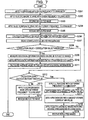
- FIG. 7 is a flowchart of a biological information measurement process by the biological information measurement apparatus 200 according to the second embodiment. As illustrated in FIG. 7 , first the ultrasound applying unit 240 of the biological information measurement apparatus 200 applies ultrasound with a given frequency to a living body (step S201).
- the electromagnetic wave applying unit 140 applies an electromagnetic wave with a given frequency to the living body (step S202).
- the reflected wave receiver 150 receives the electromagnetic wave reflected back from the living body (step S203), demodulates the received reflected wave, and then outputs the demodulated reflected wave to the correlation value calculating unit 261.
- the correlation value calculating unit 261 stores variations in the signal level of the input reflected wave over time in a given storage unit.
- the electromagnetic wave applying unit 140 applies an electromagnetic wave with a frequency different from the frequency of the electromagnetic wave applied at step S202 to the living body (step S204).
- the reflected wave receiver 150 receives the electromagnetic wave reflected back from the living body (step S205), demodulates the received reflected wave, and then outputs the demodulated reflected wave to the correlation value calculating unit 261.
- the correlation value calculating unit 261 stores variations in the signal level of the input reflected wave over time in the given storage unit.
- the correlation value calculating unit 261 calculates the correlation value between the last and second last reflected wave stored among the reflected waves stored in the given storage unit (step S206).
- the correlation value calculating unit 261 stores the calculated correlation value and the frequencies of the electromagnetic waves applied to the subject 10 to calculate the correlation value in the correlation value storage unit 270 (step S207).
- the correlation value evaluating unit 262 determines whether the correlation value calculated by the correlation value calculating unit 261 is greater than a correlation value threshold. If the correlation value evaluating unit 262 determines that the correlation value calculated is greater than the correlation value threshold (YES at step S208), the biological information measuring unit 263 measures the biological information based on one of the two reflected waves (step S209) and also measures the biological information based on the other reflected wave (step S210). The biological information measuring unit 263 calculates the average value of the two measured values of biological information (step S211).
- the calculation count checking unit 264 determines whether or not the calculation count is greater than a calculation count threshold. If the calculation count checking unit 264 determines that the calculation count is less than or equal to the calculation count threshold (NO at step S212), the electromagnetic wave applying unit 140 applies, to the living body, an electromagnetic wave with a frequency different from those of electromagnetic waves previously applied (step S213).
- the reflected wave receiver 150 receives the electromagnetic wave reflected back from the living body (step S214), demodulates the received reflected wave, and outputs the demodulated reflected wave to the correlation value calculating unit 261.
- the correlation value calculating unit 261 stores variations in the signal level of the reflected wave received from the reflected wave receiver 150 over time in the given storage unit.
- the correlation value calculating unit 261 then calculates the correlation value between the last and second last reflected waves stored among the reflected waves stored in the given storage unit (step S206).
- the correlation value calculating unit 261 stores the calculated correlation value and the frequencies of the electromagnetic waves applied to the subject 10 to calculate the correlation value in the correlation value storage unit 270 (step S207).
- the correlation value evaluating unit 262 determines whether the calculated correlation value is greater than the correlation value threshold.
- the ultrasound applying unit 240 applies ultrasound with a frequency different from that of ultrasound previously applied to the living body (step S215). Then the calculation count checking unit 264 updates the calculation count internally managed to the initial value (step S216) and obtains a combination of the frequencies #1 and #2 stored in association with the largest correlation value from the correlation value storage unit 270 (step S217).
- the electromagnetic wave applying unit 140 applies an electromagnetic wave with the frequency obtained by the calculation count checking unit 264 (step S218).
- the reflected wave receiver 150 receives the electromagnetic waves applied to the living body at step S218 and reflected back from the living body (step S219), demodulates the received reflected wave, and outputs the demodulated wave to the correlation value calculating unit 261.
- the reflected wave receiver 150 receives the second electromagnetic wave applied by the electromagnetic wave applying unit 140 and reflected back.
- the biological information measurement apparatus 200 repeats the sequence of steps S206 through S208 and S212 through S219 until the correlation value between two reflected waves exceeds the correlation value threshold (YES at step S208).
- the biological information measurement apparatus 200 applies two electromagnetic waves with different frequencies to a living body while applying ultrasound to the living body and, if the correlation value between the electromagnetic waves reflected back from the living body is greater than the correlation value threshold, measures biological information based on the reflected waves. Therefore, the biological information measurement apparatus 200 may accurately measure blood pressure.
- the biological information measurement apparatus 200 may apply ultrasound with a frequency insusceptible to ambient environment even if the ultrasound applied to the living body has been affected by the ambient environment.
- the biological information measurement apparatus 200 When the biological information measurement apparatus 200 according to the second embodiment has changed the frequency of ultrasound to be applied to a living body, the biological information measurement apparatus 200 applies electromagnetic waves with frequencies at which the largest correlation value has been obtained before the change of the frequency to the living body. Therefore, the frequencies of the electromagnetic waves at which the correlation value exceeds the correlation value threshold may be efficiently used.
- the biological information measuring units 163 and 263 in the first and second embodiments may apply a Fast-Fourier-Transform (FFT) to reflected waves to filter out signal components unnecessary for measuring biological information and then measure the biological information.
- FFT Fast-Fourier-Transform
- FIG. 8 illustrates an example of a reflected wave. Portion P3 of the signal illustrated in FIG. 8 is required for measuring biological information.
- the reflected wave includes a signal portion that appears due to the Doppler effect of the running velocity when a subject is running such as portion P1 of the signal in FIG. 8 , and a signal portion that appears due to the Doppler effect of movement of the body (a limb) of the subject such as portion P2 in FIG. 8 .
- the biological information measuring units 163 and 263 apply a FFT to the reflected wave to extract only the signal portion P3 required for measuring biological information and then measure the biological information.
- the biological information measurement apparatus may be effectively applied to the measurement of the biological information of a subject running in a gym or outdoors, for example.
- the biological information measurement apparatuses of the first and second embodiment are capable of measuring other biological information such as a heartbeat.
- the biological information measurement apparatuses are capable of measuring biological information of an animal other than humans as well.
- first and second embodiments have been described with respect to examples in which determination is made as to whether the correlation value between two reflected waves is greater than a correlation value threshold, a correlation value among more than two reflected waves may be calculated and determination may be made as to whether the correlation value is greater than a correlation value threshold.
- the biological information measurement apparatus is capable of accurately measuring biological information.
Landscapes
- Health & Medical Sciences (AREA)
- Life Sciences & Earth Sciences (AREA)
- Physics & Mathematics (AREA)
- Molecular Biology (AREA)
- Animal Behavior & Ethology (AREA)
- Veterinary Medicine (AREA)
- Biophysics (AREA)
- Pathology (AREA)
- Engineering & Computer Science (AREA)
- Biomedical Technology (AREA)
- Heart & Thoracic Surgery (AREA)
- Medical Informatics (AREA)
- Public Health (AREA)
- Surgery (AREA)
- General Health & Medical Sciences (AREA)
- Cardiology (AREA)
- Physiology (AREA)
- Vascular Medicine (AREA)
- Nuclear Medicine, Radiotherapy & Molecular Imaging (AREA)
- Radiology & Medical Imaging (AREA)
- Acoustics & Sound (AREA)
- Measuring Pulse, Heart Rate, Blood Pressure Or Blood Flow (AREA)
- Measurement And Recording Of Electrical Phenomena And Electrical Characteristics Of The Living Body (AREA)
- Ultra Sonic Daignosis Equipment (AREA)
Claims (14)
- Biologische Informationsmessvorrichtung (100) umfassend:eine Appliziereinheit für elektromagnetische Wellen (140), die konfiguriert ist, um auf einen lebenden Körper eine erste elektromagnetische Welle und eine zweite elektromagnetische Welle, die eine andere Frequenz als die erste elektromagnetische Welle aufweist, zu applizieren;einen Empfänger für reflektierte Wellen, der für das Empfangen einer ersten reflektierten Welle, die zur ersten elektromagnetischen Welle gehört, und einer zweiten reflektierten Welle, die zur zweiten elektromagnetischen Welle gehört, konfiguriert ist;eine Korrelationswert-Berechnungseinheit (161), die zum Berechnen eines Korrelationswerts zwischen den ersten und zweiten reflektierten Wellen konfiguriert;eine Korrelationswert-Auswertungseinheit (162), die konfiguriert ist, um zu bestimmen, ob der Korrelationswert eine vorgegebene Bedingung erfüllt; undeine biologische Informationsmesseinheit (163), die zum Messen biologischer Informationen konfiguriert ist, die auf mindestens einer der ersten und zweiten reflektierten Wellen basieren, wenn die Korrelationswert-Auswertungseinheit feststellt, dass der Korrelationswert die gegebene Bedingung erfüllt.
- Biologische Informationsmessvorrichtung nach Anspruch 1, wobei
die Korrelationswert-Auswertungseinheit zum Bestimmen ausgelegt ist, ob der Korrelationswert größer als ein gegebener Korrelationsschwellwert ist, und
die biologische Informationsmesseinheit zum Messen der biologischen Informationen ausgelegt ist, wenn die Korrelationswert-Auswertungseinheit feststellt, dass der Korrelationswert größer als der Korrelationsschwellwert ist. - Biologische Informationsmessvorrichtung nach Anspruch 1 oder 2, wobei
die Appliziereinheit für elektromagnetische Wellen auf den lebenden Körper eine dritte elektromagnetische Welle appliziert, die eine Frequenz aufweist, welche von den Frequenzen der ersten und zweiten elektromagnetischen Wellen abweicht, sobald die Korrelationswert-Auswertungseinheit feststellt, dass der Korrelationswert nicht die gegebene Bedingung erfüllt,
der Empfänger von reflektierten Wellen eine dritte reflektierte Welle empfängt, die zur dritten elektromagnetischen Welle gehört,
die Korrelationswert-Berechnungseinheit einen weiteren Korrelationswert zwischen den zweiten und dritten reflektierten Wellen berechnet,
die Korrelationswert-Auswertungseinheit feststellt, ob der weitere Korrelationswert die gegebene Bedingung erfüllt, und
sobald die Korrelationswert-Auswertungseinheit feststellt, dass der weitere Korrelationswert die gegebene Bedingung erfüllt, die biologische Informationsmesseinheit die biologischen Informationen auf Grundlage von mindestens einer der zweiten und dritten reflektierten Wellen misst. - Biologische Informationsmessvorrichtung nach Anspruch 3, wobei
sobald die Korrelationswert-Auswertungseinheit feststellt, dass der Korrelationswert geringer als oder gleich dem Korrelationsschwellwert ist, die Appliziereinheit für elektromagnetische Wellen auf den lebenden Körper die dritte elektromagnetische Welle appliziert,
die Korrelationswert-Auswertungseinheit feststellt, ob der weitere Korrelationswert größer als der gegebene Korrelationsschwellwert ist, und
sobald die Korrelationswert-Auswertungseinheit feststellt, dass der weitere Korrelationswert größer als der Korrelationsschwellwert ist, die biologische Informationsmesseinheit die biologischen Informationen misst. - Biologische Informationsmessvorrichtung nach einem der Ansprüche 1 bis 4, wobei
die biologische Informationsmesseinheit als biologische Information den Durchschnittswert der gemessenen biologischen Information misst, der auf jeder der zwei reflektierten Wellen basiert, die zum Berechnen des Korrelationswerts genutzt wurden. - Biologische Informationsmessvorrichtung nach einem der Ansprüche 1 bis 5, ferner umfassend:eine Appliziereinheit für Ultraschall (200), die konfiguriert ist, um auf den lebenden Körper Ultraschall zu applizieren, wobeidie Appliziereinheit für elektromagnetische Wellen zum Applizieren der elektromagnetischen Wellen auf den lebenden Körper ausgelegt ist, während die Appliziereinheit für Ultraschall auf den lebenden Körper Ultraschall appliziert.
- Biologische Informationsmessvorrichtung nach Anspruch 6, ferner umfassend:eine Berechnungszählungs-Prüfeinheit (264), die dazu ausgelegt ist, Korrelationswertberechnungen zu zählen, welche von der Korrelationswert-Berechnungseinheit durchgeführt werden, und zu bestimmen, ob die Berechnungszählung größer als ein gegebener Berechnungszählungsschwellwert ist; wobeidie Korrelationswert-Berechnungseinheit den Korrelationswert berechnet und in einer Korrelationswert-Speichereinheit den errechneten Korrelationswert und Frequenzen der zwei elektromagnetischen Wellen, die zum errechneten Korrelationswert gehören, speichert,die Appliziereinheit für Ultraschall eine Ultraschallfrequenz ändert, die auf den lebenden Körper angewendet wird, wenn die Berechnungszählungs-Prüfeinheit feststellt, dass die Berechungszählung größer als der Berechnungszählungsschwellwert ist, unddie Appliziereinheit für elektromagnetische Wellen Frequenzen erreicht, die mit dem größten Korrelationswert der Korrelationswert-Speichereinheit übereinstimmen und zwei elektromagnetische Wellen anwendet, die die erhaltenen Frequenzen des lebenden Körpers aufweisen, sobald die Berechnungszählungs-Prüfeinheit feststellt, dass die Berechnungszählung größer als der Berechnungszählungsschwellwert ist.
- Biologisches Informationsmessverfahren, das in einer biologischen Informationsmessvorrichtung benutzt wird, umfassend:Anwenden einer ersten elektromagnetischen Welle auf einen lebenden Körper;Erhalten einer ersten reflektierten Welle, die zur ersten elektromagnetischen Welle gehört;Anwenden einer zweiten elektromagnetischen Welle auf den lebenden Körper, die eine Frequenz aufweist, welche sich von der Frequenz der ersten elektromagnetischen Welle unterscheidet;Erhalten einer zweiten reflektierten Welle, die zur zweiten elektromagnetischen Welle gehört;Berechnen eines Korrelationswerts zwischen der ersten und zweiten reflektierten Welle;Bestimmen, ob der Korrelationswert eine gegebene Bedingung erfüllt; undMessen biologischer Informationen, die auf mindestens einer der ersten und zweiten reflektierten Welle basieren, wenn die Auswertung feststellt, dass der Korrelationswert eine gegebene Bedingung erfüllt.
- Biologisches Informationsmessverfahren nach Anspruch 8, wobei
die Auswertung das Auswerten, ob der Korrelationswert größer als ein gegebener Korrelationsschwellwert ist, umfasst, und
die Messung das Messen der biologischen Informationen umfasst, wenn die Auswertung feststellt, dass der Korrelationswert größer als der Korrelationsschwellwert ist. - Biologisches Informationsmessverfahren nach Anspruch 8 oder 9, umfassend:Anwenden einer dritten elektromagnetischen Welle auf den lebenden Körper, die eine Frequenz aufweist, welche anders als die Frequenzen der ersten und zweiten elektromagnetischen Wellen ist, wenn die Auswertung feststellt, dass der Korrelationswert nicht die gegebene Bedingung erfüllt,Erhalten einer dritten reflektierten Welle, die zur dritten elektromagnetischen Welle gehört,Berechnen eines weiteren Korrelationswerts zwischen der zweiten und dritten reflektierten Welle,Bestimmen, ob der weitere Korrelationswert die gegebene Bedingung erfüllt, undMessen der biologischen Information, die auf mindestens einer der zweiten und dritten reflektierten Welle basiert, wenn die Auswertung feststellt, dass der weitere Korrelationswert die gegebene Bedingung erfüllt.
- Biologisches Informationsmessverfahren nach Anspruch 10, wobei
die Anwendung das Anwenden einer dritten elektromagnetischen Welle auf den lebenden Körper umfasst, wenn die Auswertung feststellt, dass der Korrelationswert geringer oder gleich dem Korrelationsschwellwert ist,
die Auswertung umfasst, ob der weitere Korrelationswert größer als der gegebene Korrelationsschwellwert ist, und
die Messung das Messen der biologischen Informationen umfasst, wenn die Auswertung feststellt, dass der weitere Korrelationswert größer als der Korrelationsschwellwert ist. - Biologisches Informationsmessverfahren nach einem der Ansprüche 8 bis 11, wobei
die biologische Informationsmesseinheit als biologische Informationen den Durchschnittswert der gemessenen biologischen Information misst, der auf jeder der zwei reflektierten Wellen basiert, die zum Berechnen des Korrelationswerts genutzt wurden. - Biologisches Informationsmessverfahren nach einem der Ansprüche 8 bis 12, ferner umfassend:Anwenden von Ultraschall auf den lebenden Körper; wobeidie Anwendung das Anwenden der elektromagnetischen Wellen auf den lebenden Körper umfasst, während Ultraschall auf den lebenden Körper angewendet wird.
- Biologisches Informationsmessverfahren nach Anspruch 13, ferner umfassend:Zählen von Korrelationswertberechnungen;Bestimmen, ob die Berechnungszählung größer als ein gegebener Berechnungszählungsschwellwert ist;Speichern des berechneten Korrelationswerts und der Frequenzen der zwei elektromagnetischen Wellen, die zum errechneten Korrelationswert gehören, in einer Korrelationswert-Speichereinheit;Ändern einer Ultraschallfrequenz, die auf den lebenden Körper angewendet werden soll, wenn die Auswertung feststellt, dass die Berechnungszählung größer als der Berechnungszählungsschwellwert ist;Erhalten von Frequenzen, die dem höchsten Korrelationswert der Korrelationswert-Speichereinheit entsprechen; undAnwenden von zwei elektromagnetischen Wellen auf den lebenden Körper, die die erhaltenen Frequenzen aufweisen, wenn die Auswertung feststellt, dass die Berechnungszählung größer als der Berechnungszählungsschwellwert ist.
Applications Claiming Priority (1)
| Application Number | Priority Date | Filing Date | Title |
|---|---|---|---|
| JP2008196794A JP5245618B2 (ja) | 2008-07-30 | 2008-07-30 | 生体情報測定装置および生体情報測定方法 |
Publications (2)
| Publication Number | Publication Date |
|---|---|
| EP2149335A1 EP2149335A1 (de) | 2010-02-03 |
| EP2149335B1 true EP2149335B1 (de) | 2014-12-24 |
Family
ID=41139323
Family Applications (1)
| Application Number | Title | Priority Date | Filing Date |
|---|---|---|---|
| EP09009431.9A Not-in-force EP2149335B1 (de) | 2008-07-30 | 2009-07-21 | Biologische Informationsmessvorrichtung und Verfahren |
Country Status (3)
| Country | Link |
|---|---|
| US (1) | US8679017B2 (de) |
| EP (1) | EP2149335B1 (de) |
| JP (1) | JP5245618B2 (de) |
Families Citing this family (5)
| Publication number | Priority date | Publication date | Assignee | Title |
|---|---|---|---|---|
| JP2013031502A (ja) * | 2011-08-01 | 2013-02-14 | Sony Corp | 情報処理装置、情報処理方法、プログラム及び情報処理システム |
| JP6401639B2 (ja) * | 2015-03-23 | 2018-10-10 | 国立大学法人九州工業大学 | 生体信号センサ |
| JP6660615B2 (ja) * | 2016-01-29 | 2020-03-11 | パナソニックIpマネジメント株式会社 | 見守り装置及び見守りシステム |
| CN111657906B (zh) * | 2020-06-29 | 2023-05-09 | 深圳数联天下智能科技有限公司 | 心率的计算方法、装置、计算设备及心率的检测装置 |
| JP7788138B2 (ja) * | 2021-09-07 | 2025-12-18 | 慶應義塾 | 生体情報検出システム、プログラム、及び、生体情報検出方法 |
Family Cites Families (19)
| Publication number | Priority date | Publication date | Assignee | Title |
|---|---|---|---|---|
| US4714341A (en) * | 1984-02-23 | 1987-12-22 | Minolta Camera Kabushiki Kaisha | Multi-wavelength oximeter having a means for disregarding a poor signal |
| US4807630A (en) * | 1987-10-09 | 1989-02-28 | Advanced Medical Systems, Inc. | Apparatus and method for use in pulse oximeters |
| MX9702434A (es) * | 1991-03-07 | 1998-05-31 | Masimo Corp | Aparato de procesamiento de señales. |
| US6987994B1 (en) * | 1991-09-03 | 2006-01-17 | Datex-Ohmeda, Inc. | Pulse oximetry SpO2 determination |
| US5833602A (en) * | 1993-09-20 | 1998-11-10 | Osemwota; Omoigui | Process of continuous noninvasive hemometry |
| JPH07241288A (ja) | 1994-03-04 | 1995-09-19 | Hitachi Ltd | 超音波装置 |
| US5590662A (en) * | 1995-02-15 | 1997-01-07 | Johnson & Johnson Medical, Inc. | Detection of oscillometric blood pressure complexes using correlation |
| DE69704264T2 (de) * | 1997-04-12 | 2001-06-28 | Agilent Technologies, Inc. | Verfahren und Vorrichtung zur nichtinvasiven Bestimmung der Konzentration einer Komponente |
| US6527729B1 (en) * | 1999-11-10 | 2003-03-04 | Pacesetter, Inc. | Method for monitoring patient using acoustic sensor |
| JP4505093B2 (ja) | 1999-12-28 | 2010-07-14 | 株式会社 タウザー研究所 | 血圧測定装置 |
| KR100381875B1 (ko) * | 2000-07-08 | 2003-04-26 | 주식회사 메디슨 | 도플러 효과를 이용하여 혈류 속도를 측정하기 위한초음파 진단 장치 및 방법 |
| JP4542258B2 (ja) * | 2000-12-21 | 2010-09-08 | アロカ株式会社 | 超音波診断装置 |
| US6510329B2 (en) * | 2001-01-24 | 2003-01-21 | Datex-Ohmeda, Inc. | Detection of sensor off conditions in a pulse oximeter |
| JP4217646B2 (ja) * | 2004-03-26 | 2009-02-04 | キヤノン株式会社 | 認証方法及び認証装置 |
| JP4620959B2 (ja) * | 2004-03-26 | 2011-01-26 | キヤノン株式会社 | 生体情報モニタ装置 |
| JP4469746B2 (ja) * | 2005-03-29 | 2010-05-26 | 株式会社東芝 | 心拍計測装置及び心拍計測装置の作動方法 |
| WO2006124603A2 (en) * | 2005-05-12 | 2006-11-23 | The Trustees Of Columbia University In The City Of New York | System and method for electromechanical wave imaging of body structures |
| JP2007061439A (ja) * | 2005-08-31 | 2007-03-15 | Toshiba Corp | 生体情報測定装置および生体情報計測方法 |
| ATE493064T1 (de) * | 2007-02-28 | 2011-01-15 | Medtronic Inc | Implantierbares gewebeperfusions-messsystem |
-
2008
- 2008-07-30 JP JP2008196794A patent/JP5245618B2/ja not_active Expired - Fee Related
-
2009
- 2009-07-21 EP EP09009431.9A patent/EP2149335B1/de not_active Not-in-force
- 2009-07-23 US US12/507,966 patent/US8679017B2/en not_active Expired - Fee Related
Also Published As
| Publication number | Publication date |
|---|---|
| EP2149335A1 (de) | 2010-02-03 |
| JP2010029543A (ja) | 2010-02-12 |
| JP5245618B2 (ja) | 2013-07-24 |
| US20100030066A1 (en) | 2010-02-04 |
| US8679017B2 (en) | 2014-03-25 |
Similar Documents
| Publication | Publication Date | Title |
|---|---|---|
| JP6321090B2 (ja) | 哺乳動物の心血管の量を判定する方法およびシステム | |
| KR101398948B1 (ko) | 진폭―위상 변조된 초음파를 이용한 점탄성 측정 | |
| JP6761866B2 (ja) | 弾性の検出方法及び機器 | |
| EP2149335B1 (de) | Biologische Informationsmessvorrichtung und Verfahren | |
| US4819753A (en) | Functional evaluation device capable of evaluating an artificial device by the use of acoustic emission | |
| CN103815888B (zh) | 生物信号测量装置以及生物信号测量方法 | |
| KR101571500B1 (ko) | 펄스 신호의 대역폭을 이용한 생체 신호 측정 장치, 및 그를 포함하는 사용자 모니터링 시스템 | |
| US20140296709A1 (en) | System and method for non-invasive determination of tissue wall viscoelasticity using ultrasound vibrometry | |
| KR102346873B1 (ko) | 피검자의 맥파를 측정하기 위한 시스템 및 방법 | |
| US20160095572A1 (en) | System and Method for Non-Invasive Blood Pressure Measurement | |
| US20230043552A1 (en) | Constitutive equation for non-invasive blood pressure measurement systems and methods | |
| US20160058409A1 (en) | Ultrasonic blood pressure measurement apparatus and blood pressure measurement method | |
| JP2016123424A (ja) | 血圧測定システムおよび血行パラメータ決定方法 | |
| EP4039173A1 (de) | Kardiovaskuläres überwachungssystem | |
| US20190053779A1 (en) | Non-invasive blood pressure measurement devices, systems and methods | |
| US9125615B2 (en) | System and method for non-invasive measurement of carpal tunnel pressure | |
| JP2004216006A (ja) | 超音波振動感知センサを用いた人の状態判別装置及びこれを利用した人の状態判別方法 | |
| US20110046517A1 (en) | Method and system for monitoring skeletal defects | |
| US11957436B2 (en) | Living body internal temperature measuring device | |
| Pereira et al. | Characterization of a double probe for local pulse wave velocity assessment | |
| JP7000981B2 (ja) | 物体検知装置 | |
| RU2362487C2 (ru) | Способ неинвазивного измерения скорости распространения акустических колебаний в эластичной ткани | |
| WO2017108864A1 (en) | A system and a method for estimation of arterial blood gas | |
| Zhang et al. | Wearable water content sensor based on ultrasound and magnetic sensing | |
| US12585013B2 (en) | Displacement detection device and method |
Legal Events
| Date | Code | Title | Description |
|---|---|---|---|
| PUAI | Public reference made under article 153(3) epc to a published international application that has entered the european phase |
Free format text: ORIGINAL CODE: 0009012 |
|
| 17P | Request for examination filed |
Effective date: 20091217 |
|
| AK | Designated contracting states |
Kind code of ref document: A1 Designated state(s): AT BE BG CH CY CZ DE DK EE ES FI FR GB GR HR HU IE IS IT LI LT LU LV MC MK MT NL NO PL PT RO SE SI SK SM TR |
|
| AX | Request for extension of the european patent |
Extension state: AL BA RS |
|
| GRAP | Despatch of communication of intention to grant a patent |
Free format text: ORIGINAL CODE: EPIDOSNIGR1 |
|
| INTG | Intention to grant announced |
Effective date: 20140813 |
|
| RIN1 | Information on inventor provided before grant (corrected) |
Inventor name: IDA, ICHIROU |
|
| GRAS | Grant fee paid |
Free format text: ORIGINAL CODE: EPIDOSNIGR3 |
|
| GRAA | (expected) grant |
Free format text: ORIGINAL CODE: 0009210 |
|
| AK | Designated contracting states |
Kind code of ref document: B1 Designated state(s): AT BE BG CH CY CZ DE DK EE ES FI FR GB GR HR HU IE IS IT LI LT LU LV MC MK MT NL NO PL PT RO SE SI SK SM TR |
|
| REG | Reference to a national code |
Ref country code: GB Ref legal event code: FG4D |
|
| REG | Reference to a national code |
Ref country code: CH Ref legal event code: EP |
|
| REG | Reference to a national code |
Ref country code: IE Ref legal event code: FG4D |
|
| REG | Reference to a national code |
Ref country code: AT Ref legal event code: REF Ref document number: 702701 Country of ref document: AT Kind code of ref document: T Effective date: 20150115 |
|
| REG | Reference to a national code |
Ref country code: DE Ref legal event code: R096 Ref document number: 602009028498 Country of ref document: DE Effective date: 20150219 |
|
| REG | Reference to a national code |
Ref country code: NL Ref legal event code: VDEP Effective date: 20141224 |
|
| PG25 | Lapsed in a contracting state [announced via postgrant information from national office to epo] |
Ref country code: FI Free format text: LAPSE BECAUSE OF FAILURE TO SUBMIT A TRANSLATION OF THE DESCRIPTION OR TO PAY THE FEE WITHIN THE PRESCRIBED TIME-LIMIT Effective date: 20141224 Ref country code: NO Free format text: LAPSE BECAUSE OF FAILURE TO SUBMIT A TRANSLATION OF THE DESCRIPTION OR TO PAY THE FEE WITHIN THE PRESCRIBED TIME-LIMIT Effective date: 20150324 Ref country code: LT Free format text: LAPSE BECAUSE OF FAILURE TO SUBMIT A TRANSLATION OF THE DESCRIPTION OR TO PAY THE FEE WITHIN THE PRESCRIBED TIME-LIMIT Effective date: 20141224 |
|
| REG | Reference to a national code |
Ref country code: LT Ref legal event code: MG4D |
|
| PG25 | Lapsed in a contracting state [announced via postgrant information from national office to epo] |
Ref country code: LV Free format text: LAPSE BECAUSE OF FAILURE TO SUBMIT A TRANSLATION OF THE DESCRIPTION OR TO PAY THE FEE WITHIN THE PRESCRIBED TIME-LIMIT Effective date: 20141224 Ref country code: HR Free format text: LAPSE BECAUSE OF FAILURE TO SUBMIT A TRANSLATION OF THE DESCRIPTION OR TO PAY THE FEE WITHIN THE PRESCRIBED TIME-LIMIT Effective date: 20141224 Ref country code: SE Free format text: LAPSE BECAUSE OF FAILURE TO SUBMIT A TRANSLATION OF THE DESCRIPTION OR TO PAY THE FEE WITHIN THE PRESCRIBED TIME-LIMIT Effective date: 20141224 Ref country code: GR Free format text: LAPSE BECAUSE OF FAILURE TO SUBMIT A TRANSLATION OF THE DESCRIPTION OR TO PAY THE FEE WITHIN THE PRESCRIBED TIME-LIMIT Effective date: 20150325 |
|
| REG | Reference to a national code |
Ref country code: AT Ref legal event code: MK05 Ref document number: 702701 Country of ref document: AT Kind code of ref document: T Effective date: 20141224 |
|
| PG25 | Lapsed in a contracting state [announced via postgrant information from national office to epo] |
Ref country code: NL Free format text: LAPSE BECAUSE OF FAILURE TO SUBMIT A TRANSLATION OF THE DESCRIPTION OR TO PAY THE FEE WITHIN THE PRESCRIBED TIME-LIMIT Effective date: 20141224 |
|
| PG25 | Lapsed in a contracting state [announced via postgrant information from national office to epo] |
Ref country code: CZ Free format text: LAPSE BECAUSE OF FAILURE TO SUBMIT A TRANSLATION OF THE DESCRIPTION OR TO PAY THE FEE WITHIN THE PRESCRIBED TIME-LIMIT Effective date: 20141224 Ref country code: SK Free format text: LAPSE BECAUSE OF FAILURE TO SUBMIT A TRANSLATION OF THE DESCRIPTION OR TO PAY THE FEE WITHIN THE PRESCRIBED TIME-LIMIT Effective date: 20141224 Ref country code: RO Free format text: LAPSE BECAUSE OF FAILURE TO SUBMIT A TRANSLATION OF THE DESCRIPTION OR TO PAY THE FEE WITHIN THE PRESCRIBED TIME-LIMIT Effective date: 20141224 Ref country code: ES Free format text: LAPSE BECAUSE OF FAILURE TO SUBMIT A TRANSLATION OF THE DESCRIPTION OR TO PAY THE FEE WITHIN THE PRESCRIBED TIME-LIMIT Effective date: 20141224 Ref country code: EE Free format text: LAPSE BECAUSE OF FAILURE TO SUBMIT A TRANSLATION OF THE DESCRIPTION OR TO PAY THE FEE WITHIN THE PRESCRIBED TIME-LIMIT Effective date: 20141224 |
|
| PG25 | Lapsed in a contracting state [announced via postgrant information from national office to epo] |
Ref country code: AT Free format text: LAPSE BECAUSE OF FAILURE TO SUBMIT A TRANSLATION OF THE DESCRIPTION OR TO PAY THE FEE WITHIN THE PRESCRIBED TIME-LIMIT Effective date: 20141224 Ref country code: PL Free format text: LAPSE BECAUSE OF FAILURE TO SUBMIT A TRANSLATION OF THE DESCRIPTION OR TO PAY THE FEE WITHIN THE PRESCRIBED TIME-LIMIT Effective date: 20141224 Ref country code: IS Free format text: LAPSE BECAUSE OF FAILURE TO SUBMIT A TRANSLATION OF THE DESCRIPTION OR TO PAY THE FEE WITHIN THE PRESCRIBED TIME-LIMIT Effective date: 20150424 |
|
| REG | Reference to a national code |
Ref country code: DE Ref legal event code: R097 Ref document number: 602009028498 Country of ref document: DE |
|
| PG25 | Lapsed in a contracting state [announced via postgrant information from national office to epo] |
Ref country code: DK Free format text: LAPSE BECAUSE OF FAILURE TO SUBMIT A TRANSLATION OF THE DESCRIPTION OR TO PAY THE FEE WITHIN THE PRESCRIBED TIME-LIMIT Effective date: 20141224 |
|
| PLBE | No opposition filed within time limit |
Free format text: ORIGINAL CODE: 0009261 |
|
| STAA | Information on the status of an ep patent application or granted ep patent |
Free format text: STATUS: NO OPPOSITION FILED WITHIN TIME LIMIT |
|
| 26N | No opposition filed |
Effective date: 20150925 |
|
| PG25 | Lapsed in a contracting state [announced via postgrant information from national office to epo] |
Ref country code: IT Free format text: LAPSE BECAUSE OF FAILURE TO SUBMIT A TRANSLATION OF THE DESCRIPTION OR TO PAY THE FEE WITHIN THE PRESCRIBED TIME-LIMIT Effective date: 20141224 |
|
| PG25 | Lapsed in a contracting state [announced via postgrant information from national office to epo] |
Ref country code: SI Free format text: LAPSE BECAUSE OF FAILURE TO SUBMIT A TRANSLATION OF THE DESCRIPTION OR TO PAY THE FEE WITHIN THE PRESCRIBED TIME-LIMIT Effective date: 20141224 Ref country code: MC Free format text: LAPSE BECAUSE OF FAILURE TO SUBMIT A TRANSLATION OF THE DESCRIPTION OR TO PAY THE FEE WITHIN THE PRESCRIBED TIME-LIMIT Effective date: 20141224 |
|
| REG | Reference to a national code |
Ref country code: CH Ref legal event code: PL |
|
| PG25 | Lapsed in a contracting state [announced via postgrant information from national office to epo] |
Ref country code: LU Free format text: LAPSE BECAUSE OF FAILURE TO SUBMIT A TRANSLATION OF THE DESCRIPTION OR TO PAY THE FEE WITHIN THE PRESCRIBED TIME-LIMIT Effective date: 20150721 |
|
| REG | Reference to a national code |
Ref country code: IE Ref legal event code: MM4A |
|
| PG25 | Lapsed in a contracting state [announced via postgrant information from national office to epo] |
Ref country code: CH Free format text: LAPSE BECAUSE OF NON-PAYMENT OF DUE FEES Effective date: 20150731 Ref country code: LI Free format text: LAPSE BECAUSE OF NON-PAYMENT OF DUE FEES Effective date: 20150731 |
|
| PG25 | Lapsed in a contracting state [announced via postgrant information from national office to epo] |
Ref country code: BE Free format text: LAPSE BECAUSE OF FAILURE TO SUBMIT A TRANSLATION OF THE DESCRIPTION OR TO PAY THE FEE WITHIN THE PRESCRIBED TIME-LIMIT Effective date: 20141224 |
|
| REG | Reference to a national code |
Ref country code: FR Ref legal event code: PLFP Year of fee payment: 8 |
|
| PG25 | Lapsed in a contracting state [announced via postgrant information from national office to epo] |
Ref country code: IE Free format text: LAPSE BECAUSE OF NON-PAYMENT OF DUE FEES Effective date: 20150721 |
|
| PG25 | Lapsed in a contracting state [announced via postgrant information from national office to epo] |
Ref country code: MT Free format text: LAPSE BECAUSE OF FAILURE TO SUBMIT A TRANSLATION OF THE DESCRIPTION OR TO PAY THE FEE WITHIN THE PRESCRIBED TIME-LIMIT Effective date: 20141224 |
|
| PG25 | Lapsed in a contracting state [announced via postgrant information from national office to epo] |
Ref country code: HU Free format text: LAPSE BECAUSE OF FAILURE TO SUBMIT A TRANSLATION OF THE DESCRIPTION OR TO PAY THE FEE WITHIN THE PRESCRIBED TIME-LIMIT; INVALID AB INITIO Effective date: 20090721 Ref country code: SM Free format text: LAPSE BECAUSE OF FAILURE TO SUBMIT A TRANSLATION OF THE DESCRIPTION OR TO PAY THE FEE WITHIN THE PRESCRIBED TIME-LIMIT Effective date: 20141224 Ref country code: BG Free format text: LAPSE BECAUSE OF FAILURE TO SUBMIT A TRANSLATION OF THE DESCRIPTION OR TO PAY THE FEE WITHIN THE PRESCRIBED TIME-LIMIT Effective date: 20141224 |
|
| REG | Reference to a national code |
Ref country code: FR Ref legal event code: PLFP Year of fee payment: 9 |
|
| PG25 | Lapsed in a contracting state [announced via postgrant information from national office to epo] |
Ref country code: CY Free format text: LAPSE BECAUSE OF FAILURE TO SUBMIT A TRANSLATION OF THE DESCRIPTION OR TO PAY THE FEE WITHIN THE PRESCRIBED TIME-LIMIT Effective date: 20141224 |
|
| PGFP | Annual fee paid to national office [announced via postgrant information from national office to epo] |
Ref country code: FR Payment date: 20170613 Year of fee payment: 9 |
|
| PG25 | Lapsed in a contracting state [announced via postgrant information from national office to epo] |
Ref country code: TR Free format text: LAPSE BECAUSE OF FAILURE TO SUBMIT A TRANSLATION OF THE DESCRIPTION OR TO PAY THE FEE WITHIN THE PRESCRIBED TIME-LIMIT Effective date: 20141224 |
|
| PGFP | Annual fee paid to national office [announced via postgrant information from national office to epo] |
Ref country code: DE Payment date: 20170719 Year of fee payment: 9 Ref country code: GB Payment date: 20170719 Year of fee payment: 9 |
|
| PG25 | Lapsed in a contracting state [announced via postgrant information from national office to epo] |
Ref country code: MK Free format text: LAPSE BECAUSE OF FAILURE TO SUBMIT A TRANSLATION OF THE DESCRIPTION OR TO PAY THE FEE WITHIN THE PRESCRIBED TIME-LIMIT Effective date: 20141224 |
|
| PG25 | Lapsed in a contracting state [announced via postgrant information from national office to epo] |
Ref country code: PT Free format text: LAPSE BECAUSE OF FAILURE TO SUBMIT A TRANSLATION OF THE DESCRIPTION OR TO PAY THE FEE WITHIN THE PRESCRIBED TIME-LIMIT Effective date: 20141224 |
|
| REG | Reference to a national code |
Ref country code: DE Ref legal event code: R119 Ref document number: 602009028498 Country of ref document: DE |
|
| GBPC | Gb: european patent ceased through non-payment of renewal fee |
Effective date: 20180721 |
|
| PG25 | Lapsed in a contracting state [announced via postgrant information from national office to epo] |
Ref country code: GB Free format text: LAPSE BECAUSE OF NON-PAYMENT OF DUE FEES Effective date: 20180721 Ref country code: DE Free format text: LAPSE BECAUSE OF NON-PAYMENT OF DUE FEES Effective date: 20190201 Ref country code: FR Free format text: LAPSE BECAUSE OF NON-PAYMENT OF DUE FEES Effective date: 20180731 |