EP2139239B1 - Videokodierungsverfahren in unkomprimiertem Modus und Vorrichtung zur Umsetzung dieses Verfahrens - Google Patents
Videokodierungsverfahren in unkomprimiertem Modus und Vorrichtung zur Umsetzung dieses Verfahrens Download PDFInfo
- Publication number
- EP2139239B1 EP2139239B1 EP09163067A EP09163067A EP2139239B1 EP 2139239 B1 EP2139239 B1 EP 2139239B1 EP 09163067 A EP09163067 A EP 09163067A EP 09163067 A EP09163067 A EP 09163067A EP 2139239 B1 EP2139239 B1 EP 2139239B1
- Authority
- EP
- European Patent Office
- Prior art keywords
- mode
- compression
- macroblock
- encoder
- video
- Prior art date
- Legal status (The legal status is an assumption and is not a legal conclusion. Google has not performed a legal analysis and makes no representation as to the accuracy of the status listed.)
- Not-in-force
Links
- 238000000034 method Methods 0.000 title claims abstract description 41
- 230000006835 compression Effects 0.000 claims abstract description 55
- 238000007906 compression Methods 0.000 claims abstract description 55
- 230000004913 activation Effects 0.000 claims abstract description 14
- 230000006870 function Effects 0.000 claims description 9
- 238000011002 quantification Methods 0.000 claims description 4
- 238000001514 detection method Methods 0.000 claims description 2
- 230000007246 mechanism Effects 0.000 claims description 2
- 230000009466 transformation Effects 0.000 claims description 2
- 230000009849 deactivation Effects 0.000 claims 1
- 238000013139 quantization Methods 0.000 description 12
- 230000005540 biological transmission Effects 0.000 description 5
- 238000010586 diagram Methods 0.000 description 4
- 230000008569 process Effects 0.000 description 4
- 230000001427 coherent effect Effects 0.000 description 3
- 230000002123 temporal effect Effects 0.000 description 3
- 239000013598 vector Substances 0.000 description 3
- 230000003213 activating effect Effects 0.000 description 2
- 230000008901 benefit Effects 0.000 description 2
- 230000008859 change Effects 0.000 description 2
- 230000004907 flux Effects 0.000 description 2
- 230000011664 signaling Effects 0.000 description 2
- 101100536354 Drosophila melanogaster tant gene Proteins 0.000 description 1
- 239000000470 constituent Substances 0.000 description 1
- 238000006073 displacement reaction Methods 0.000 description 1
- 229940082150 encore Drugs 0.000 description 1
- 238000001914 filtration Methods 0.000 description 1
- 230000014509 gene expression Effects 0.000 description 1
- 230000000644 propagated effect Effects 0.000 description 1
- 238000009877 rendering Methods 0.000 description 1
- 238000000926 separation method Methods 0.000 description 1
- 230000001360 synchronised effect Effects 0.000 description 1
- 230000001960 triggered effect Effects 0.000 description 1
- 238000012795 verification Methods 0.000 description 1
- 230000000007 visual effect Effects 0.000 description 1
Images
Classifications
-
- H—ELECTRICITY
- H04—ELECTRIC COMMUNICATION TECHNIQUE
- H04N—PICTORIAL COMMUNICATION, e.g. TELEVISION
- H04N19/00—Methods or arrangements for coding, decoding, compressing or decompressing digital video signals
- H04N19/42—Methods or arrangements for coding, decoding, compressing or decompressing digital video signals characterised by implementation details or hardware specially adapted for video compression or decompression, e.g. dedicated software implementation
- H04N19/436—Methods or arrangements for coding, decoding, compressing or decompressing digital video signals characterised by implementation details or hardware specially adapted for video compression or decompression, e.g. dedicated software implementation using parallelised computational arrangements
-
- H—ELECTRICITY
- H04—ELECTRIC COMMUNICATION TECHNIQUE
- H04N—PICTORIAL COMMUNICATION, e.g. TELEVISION
- H04N19/00—Methods or arrangements for coding, decoding, compressing or decompressing digital video signals
- H04N19/10—Methods or arrangements for coding, decoding, compressing or decompressing digital video signals using adaptive coding
- H04N19/102—Methods or arrangements for coding, decoding, compressing or decompressing digital video signals using adaptive coding characterised by the element, parameter or selection affected or controlled by the adaptive coding
- H04N19/103—Selection of coding mode or of prediction mode
-
- H—ELECTRICITY
- H04—ELECTRIC COMMUNICATION TECHNIQUE
- H04N—PICTORIAL COMMUNICATION, e.g. TELEVISION
- H04N19/00—Methods or arrangements for coding, decoding, compressing or decompressing digital video signals
- H04N19/10—Methods or arrangements for coding, decoding, compressing or decompressing digital video signals using adaptive coding
- H04N19/102—Methods or arrangements for coding, decoding, compressing or decompressing digital video signals using adaptive coding characterised by the element, parameter or selection affected or controlled by the adaptive coding
- H04N19/12—Selection from among a plurality of transforms or standards, e.g. selection between discrete cosine transform [DCT] and sub-band transform or selection between H.263 and H.264
-
- H—ELECTRICITY
- H04—ELECTRIC COMMUNICATION TECHNIQUE
- H04N—PICTORIAL COMMUNICATION, e.g. TELEVISION
- H04N19/00—Methods or arrangements for coding, decoding, compressing or decompressing digital video signals
- H04N19/10—Methods or arrangements for coding, decoding, compressing or decompressing digital video signals using adaptive coding
- H04N19/134—Methods or arrangements for coding, decoding, compressing or decompressing digital video signals using adaptive coding characterised by the element, parameter or criterion affecting or controlling the adaptive coding
- H04N19/146—Data rate or code amount at the encoder output
- H04N19/15—Data rate or code amount at the encoder output by monitoring actual compressed data size at the memory before deciding storage at the transmission buffer
-
- H—ELECTRICITY
- H04—ELECTRIC COMMUNICATION TECHNIQUE
- H04N—PICTORIAL COMMUNICATION, e.g. TELEVISION
- H04N19/00—Methods or arrangements for coding, decoding, compressing or decompressing digital video signals
- H04N19/10—Methods or arrangements for coding, decoding, compressing or decompressing digital video signals using adaptive coding
- H04N19/169—Methods or arrangements for coding, decoding, compressing or decompressing digital video signals using adaptive coding characterised by the coding unit, i.e. the structural portion or semantic portion of the video signal being the object or the subject of the adaptive coding
- H04N19/17—Methods or arrangements for coding, decoding, compressing or decompressing digital video signals using adaptive coding characterised by the coding unit, i.e. the structural portion or semantic portion of the video signal being the object or the subject of the adaptive coding the unit being an image region, e.g. an object
- H04N19/176—Methods or arrangements for coding, decoding, compressing or decompressing digital video signals using adaptive coding characterised by the coding unit, i.e. the structural portion or semantic portion of the video signal being the object or the subject of the adaptive coding the unit being an image region, e.g. an object the region being a block, e.g. a macroblock
-
- H—ELECTRICITY
- H04—ELECTRIC COMMUNICATION TECHNIQUE
- H04N—PICTORIAL COMMUNICATION, e.g. TELEVISION
- H04N19/00—Methods or arrangements for coding, decoding, compressing or decompressing digital video signals
- H04N19/46—Embedding additional information in the video signal during the compression process
-
- H—ELECTRICITY
- H04—ELECTRIC COMMUNICATION TECHNIQUE
- H04N—PICTORIAL COMMUNICATION, e.g. TELEVISION
- H04N19/00—Methods or arrangements for coding, decoding, compressing or decompressing digital video signals
- H04N19/60—Methods or arrangements for coding, decoding, compressing or decompressing digital video signals using transform coding
- H04N19/61—Methods or arrangements for coding, decoding, compressing or decompressing digital video signals using transform coding in combination with predictive coding
Definitions
- the invention relates to a method and a video coding device and applies in particular to the fields of video transmission, analysis, decoding and transcoding.
- a video sequence has by its very nature a significant statistical redundancy in both the temporal and spatial domains.
- the desire to use more and more efficiently the bandwidth of the transmission media on which these sequences pass and the objectives of reducing the cost of storage have raised the question of video compression very early on.
- Conventional video compression techniques can usually be divided into two stages. The first aims to reduce the spatial redundancy and for that to compress a still image.
- the image is first divided into blocks of pixels (4x4 or 8x8 according to, for example, the MPEG-1/2/4 standards), a passage in the frequency domain and then a quantization to approximate or delete the high frequencies at which the eye is less sensitive, and finally the quantized data are encoded entropically.
- the second aims to reduce temporal redundancy.
- This technique makes it possible to predict an image from one or more other reference image (s) previously decoded (s) within the same sequence (motion prediction).
- This technique consists of searching in these reference images the block that best corresponds to the one to be predicted, and only a motion estimation vector corresponding to the displacement of the block between the two images is preserved, as well as a residual error allowing to refine the rendering. visual..
- a macroblock is compressed by being processed first by the encoding loop and then by the entropy encoder. In a conventional system, these two steps can be considered independent.
- the limit value imposed by the standard for use in fallback mode is set to the value for which an encoder stops reducing the bit rate and where it becomes more interesting to transmit the source directly.
- a macroblock is represented on 3072 bits.
- the H.264 standard defines a maximum number of bits, or 3200 bits, beyond which the use of the I_PCM encoding mode is required.
- the number of bits necessary for the coding of an uncompressed macroblock corresponds to the bits necessary for the transmission of the luminance and chrominance samples, ie the 3072 bits previously mentioned as well as the bits necessary for the transmission of the mode information (mb_type and mb_skip_flag, for example).
- the decision to use this coding mode as well as the implementation of the I_PCM mode, when considering the fallback mode, is at the entropy encoder level. This verifies after the processing of each macroblock by the encoding loop and entropy coding the number of bits generated. If this number is greater than the 3200 bit limit, the generated bits are removed from the final bit stream, the coding contexts are restored, i.e. the entropy coder returns to a previous state in which it is found at the beginning of the macroblock, and the source samples are sent in the bit stream.
- a control signal called 'I_PCM_control' is activated and is propagated to the functional blocks of the encoding loop, that is to say to the prediction blocks (intra and inter). , of reconstruction and possibly to other blocks of the encoder according to the choice of implementation.
- the coding of a macroblock depends on the coding of its neighbors. For example, in the case of the H.264 standard, there is a spatial dependence of the current macroblock vis-à-vis the macroblock on the left and the macroblock located above it. Ideally, the coding of these macroblocks must be completed before the current macroblock can be processed.
- the current macroblock may be processed before the treatment of adjacent blocks is completed. For example, if the left block is being entropic coded, the processing of the encoding loop (transform, quantization, ...) can be applied in parallel to the current block.
- a pipeline encoder architecture can thus be realized.
- the uncompressed mode is implemented in the fallback mode, since the choice of mode activation or not is made at the entropy coder; it is not possible to predict how adjacent blocks will be encoded before their processing by the entropy encoder is complete. In this case, it is necessary to wait for the result of the entropy encoding and the processing of the encoding loop and the entropy coder can no longer be parallelized.
- the coding mode of a macroblock is only known late, as is the case when the uncompressed mode is chosen by the entropy coder, many functional blocks can not start the processing of the next macroblock before the arrival. of this information. Indeed, during a late change of coding mode, the contextual information of the current macroblock become inconsistent.
- One of the “pipelines” of the encoding loop begins at the level of the prediction operator, then passes through the operators of transform, quantization, inverse quantization and inverse transform, reconstruction and intra prediction to return to the operator level. prediction.
- Another "pipeline” starts at the output of the quantization operator and performs all the entropy encoding operations which comprise, among other things, operations of binarization, arithmetic coding and coding choice of the macroblock in compressed or uncompressed mode. .
- the encoding loop and the entropy coder can perform their operations in parallel, the two pipelines do not have the same depth and are not synchronized, the processing of the current macroblock by the encoding loop can not begin before the end of the previous macroblock processing, while the entropy coder can begin the current macroblock processing before having completed the previous macroblock processing.
- the entropic coder chooses the uncompressed mode, taking into account this new coding mode by the "pipeline" of the encoding loop causes the appearance of inconsistent data at the output of the encoding loop.
- This inconsistency arises for example from taking into account, during the coding of the current macroblock according to an uncompressed macroblock, a macroblock reconstructed according to the encoding loop which is different from the uncompressed macroblock present in the bit stream.
- the consequence is that distortions are introduced into the video sequence when the uncompressed mode is used. In other words, distortions are introduced when the internal state of the decoder is not consistent with the internal state of the video encoder.
- An object of the invention is in particular to overcome the aforementioned drawbacks.
- a variant of this method is characterized in that following the activation of the uncompressed mode, the detection of the return of the stability of the encoding loop is indicated to the entropic coder by means of a control signal, said signal being set to an active state when all the functional blocks of the encoding loop affected by the activation of the uncompressed mode have returned to a stable state.
- a variant of this method is characterized in that, following the activation of the uncompressed mode, the return of the stability of the encoding loop is deduced by the entropic coder using a parameter indicating the restoration time, the value of said parameter to be determined so that the elements of the encoding loop have time to return to a stable state during this period.
- a variant of this method is characterized in that the video encoder follows the specifications of the H.264 standard.
- a variant of this method is characterized in that the efficiency of the compression is verified by comparing the number of bits after compression of the current macroblock to a threshold value.
- a variant of this method is characterized in that following the activation of the uncompressed mode, the state of the entropy coder is restored, that is to say that the entropic coder returns to the previous state in which it occurs. found at the beginning of the processing of the macroblock for which the uncompressed mode was triggered.
- the invention has the particular advantage of allowing the operations of the encoding loop and the entropy coder to be executed in parallel when the uncompressed forced mode is activated and thus to reduce the execution time of the operations.
- the invention allows the constituent functional blocks of the encoding loop of the video encoder to return to a stable state before resuming the compression of the macroblocks and thus to avoid unwanted distortions in the video stream.
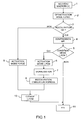
- the figure 1 presented by a diagram an example of implementation of the method according to the invention.
- the method according to the invention processes a macroblock compressed video stream by macroblock.
- a macroblock represents part of an image of a video stream. This part of the image includes a block of pixels.
- a macroblock can represent 16x16 pixels of an image.
- the macroblock processed at a given instant by the method is called in the current macroblock or macroblock description being processed, the two expressions having the same meaning.
- the method according to the invention is composed of steps to be applied for each macroblock of the video stream to be compressed.
- the method makes it possible firstly to detect whether the compression is effective for the macroblock being processed.
- a second step if the compression is not considered effective, the signal samples of the macroblock being processed are transmitted without being compressed.
- the transmission of the following macroblocks is then forced in uncompressed mode so that the encoding loop converges to a stable state and the compression of the macroblocks can resume without distortions being introduced artificially into the images of the video sequence to be transmitted.
- the function blocks of the encoding loop perform a context restoration, the context of a macroblock consisting of all the saved information that is used for coding subsequent macroblocks.
- a video encoder typically consists of an encoding loop and an entropy encoder.
- the notations introduced take into account the terminology specific to the H.264 standard.
- the uncompressed mode is designated as the I_PCM mode.
- the method according to the invention may be considered outside the scope of the H.264 standard.
- the method according to the invention is executed at the level of the entropic coder for each macroblock processed by the video coder.
- the method is executed as soon as a new macroblock is detected at the input of the entropy encoder. Forced mode is disabled by default 2 by setting, for example, a Boolean variable called ⁇ mode_I_PCM forced 'to' 0 '.
- the stability of the functional blocks impacted by the I_PCM mode is then verified.
- the functional blocks are considered to be in a stable or coherent state when they do not introduce distortion when resuming compression in normal mode.
- the state of the blocks is not stable, it means that the I_PCM mode has been activated recently for one of the macroblocks previously processed and that the context restoration for the functional blocks of the encoding loop is not completed.
- the forced I_PCM mode is activated 9.
- the ⁇ mode_I_PCM forced 'variable is set to' 1 ', the macroblock being processed is transmitted without compression 10 and the execution of the process ends 11.
- the forced mode allows that the video encoder functional blocks regain a stable state.
- This restoration phase consists of putting the information of the macroblocks back into a coherent state. During this period, it is useless to resume re-encoding operations (prediction, transformation, quantization, inverse transform, inverse quantization, reconstruction, etc.).
- the macroblock being processed is compressed 4 by the entropy encoder. The effectiveness of the compression is then verified 5.
- the encoder works in 4: 2: 0 format on 8 bits and the macroblock after being compressed occupies more than 3200 bits, the use of I_PCM mode is enabled.
- the variable 'mode_I_PCM_forced' is set to ⁇ 1 '6.
- the function blocks of the encoder loop of the video encoder must then be configured accordingly. For this, a signaling is set up 7.
- the bits generated after compression are then removed from the bit stream and the coding contexts of the entropy coder are restored 8, that is to say that the entropy coder returns to the state in which he was at the beginning of macroblock.
- the macroblock being processed is then transmitted without compression and the execution of the process is terminated.
- the macroblock is transmitted compressed at the output of the coder and the execution of the method ends 11.
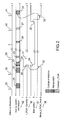
- the figure 2 shows an example of time diagrams illustrating the sequence of operations performed by a device according to the invention. Said diagrams make it possible to follow the state of the entropic coder 42, and the state of the control signals used by the device, namely the signal I_PCM_Control 36 indicating the activation of the I_PCM mode, the signal Cod_state 37 indicating whether the video coder is in a stable state and the signal Mode_I_PCM_forced 38 indicating the activation of the forced I_PCM mode.
- the figure shows that the uncompressed mode, ie the I_PCM mode in the case of the H.264 standard, is treated by the method according to the invention as a computer exception comprising a restoration period following the occurrence of this exception.
- the entropic encoder compresses the macroblock 21. If the compression is judged to be effective, the compressed stream is presented at the output of the video encoder. The operation is repeated for the next macroblock 35. The entropy encoder compresses the input stream. The process again checks the effectiveness of the compression. In the example of the figure 2 , the compression of the second macroblock is considered ineffective. It is decided to switch to I_PCM mode. For this, an 'I_PCM_Control' signaling signal 36 is activated 28 in order to configure the functional blocks of the coding loop of the video coder. These are usually the functional blocks of the encoding loop whose coding depends on the state of the neighboring blocks (intra and inter predictions, reconstruction, entropy coding) and possibly other blocks depending on the implementation choices.
- the forced mode is then activated and for this a binary signal ⁇ Mode_I_PCM forced '38 to indicate the change of mode takes the value' 1 '30.
- the entropic coder is waiting for end of restoration of the encoding loop. During this wait, the I_PCM mode is systematically used for the entropic coding of the macroblocks.
- the generated compressed stream 22 is removed from the output stream of the video encoder, the state of the entropy coder is restored 23 as before the coding of this macroblock 35.
- the state of the encoding loop becomes unstable and the signal ' Encoder_status' goes from '1' to '0' accordingly 29.
- the macroblock currently being processed is transmitted at the output of the video encoder after I_PCM coding without having been compressed.
- the next macroblock 39 is processed after verification of the stability of the encoding loop, that is to say that the video encoder is waiting for the restoration of the loop.
- the entropy encoder uses the I_PCM mode to mask them.
- the I_PCM mode is an intra-mode insensitive to the context of the neighbors unlike other modes of coding. At the end of the operation of restoring the encoding loop, the information sent to the entropy encoder is again coherent.
- the signal 'Encoder_status' 37 is at '0' indicating that the stability condition of the coding loop is not fulfilled.
- the forced I_PCM mode is thus maintained and the signal 'Mode_I_PCM_forced' 38 remains at ⁇ 1 '.
- the signal 'I_PCM_Contrcom' 36 returns to '0' 31.
- the 'Encoder state' signal 37 remains at '0', the mode Forced I_PCM remains enabled and therefore the signal 'Mode_I_PCM_forced' 38 remains at '1'.
- the macroblocks are transmitted without having been compressed 25, 26, 27.
- the functional blocks constituting the coding loop return to a stable state and the 'Encoder_state' signal 37 takes the value '1' 32.
- the stability state of the coding loop is detected and the forced I_PCM mode is deactivated.
- the signal 'Mode_I_PCM_forced' then resumes the value '0' 33 and the current macroblock is compressed normally 34 by the entropic coder.
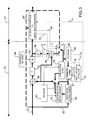
- the figure 3 illustrates an example of a video coding device implementing the method according to the invention. It consists of two main functional elements. The first is the encoding loop 50 and the second the entropic encoder 51.
- the principle of the coding loop 50 is well known to those skilled in the art.
- a block 52 taking as input the samples of the source after compensation 55, said block realizing a transform for changing from time to frequency domain.
- This transform may be for example an integer transform as specified in the H.264 standard.
- the result of the transform is then quantized 53; this operation destroys information that is not visible to the human eye and reduces the amount of information to be transmitted.
- This operation is configured according to, for example, the target rate to be guaranteed at the output of the video encoder.
- the signal after quantization 53 is reconstructed using a local decoder performing the inverse quantization 56, inverse transform 57 and reconstruction 58 operations. When the uncompressed mode is not used, the macroblock after reconstruction is used.
- a decision functional block 65 allows to configure and activate intra prediction 59 and / or motion compensation 64.
- the second part of the video coder 51 is composed in particular of a functional block performing the entropy coding 66.
- this functional block 66 comprises decision means for triggering the uncompressed mode and forcing it as described in the examples of figures 1 and 2 .
- the signals 'I_PCM_Control' 69 and 'Mode_I_PCM_forced' 70 as introduced previously are used to parameterize the coding loop 50 and particularly the choice of the input 68 of the encoding loop. This choice is made between the source signal 67 and the signal resulting from the reconstruction 58.
- the source signal 67 is used directly by the blocks involved in the motion compensation and the intra prediction. 59, 60, 61, 62, 64 in place of the signal resulting from the reconstruction 58.
- the encoder goes into forced mode until the encoding loop 50 has returned to a stable state.
- This state of stability can be indicated to the entropic encoder 66 using for example a signal 'Encoder_Status' 71 as introduced previously.
- This signal 71 is generated for example by means of a functional block 72 of the coding loop 50, said function block taking signals 73, 74, 75 informing it of the stability of each of the blocks of the loop. 50.
- the stability signals 73, 74, 75 are generated by the filter blocks 62, frame memory 61 and filtering 60, but other configurations are possible depending on the implementation chosen.
- each of the blocks increments a time counter and compares it with a time value of its own which, when said value is reached, ensures that said block is returned to a state of stable. This return to stability is then indicated to the stability check function block 72.
- the stability check function block 72 decides the overall stability of the system when the set of input signals 73, 74, 75 indicates that the encoding loop, as a whole, has returned to a stable state. In this case, the coherence between the internal state of the decoder and the internal state of the encoder is guaranteed.
- a possible alternative is to set a time period value and consider that after activating the uncompressed mode, the coding loop returned to a stable state at the end of this period.
Landscapes
- Engineering & Computer Science (AREA)
- Multimedia (AREA)
- Signal Processing (AREA)
- Computing Systems (AREA)
- Theoretical Computer Science (AREA)
- Physics & Mathematics (AREA)
- Discrete Mathematics (AREA)
- General Physics & Mathematics (AREA)
- Compression Or Coding Systems Of Tv Signals (AREA)
- Compression, Expansion, Code Conversion, And Decoders (AREA)
Claims (7)
- Videocodierverfahren, ausgeführt von einem Videocodierer, der einen Mechanismus umfasst, der die Aktivierung oder Desaktivierung der Kompression von Makroblöcken des zu codierenden Videostroms in Abhängigkeit von der Wirksamkeit der Kompression zulässt und in wenigstens zwei Modi arbeitet, einem ersten normalen Codiermodus und einem zweiten unkomprimierten Modus, wobei das Verfahren dadurch gekennzeichnet ist, dass:- der bearbeitete Makroblock im normalen Codiermodus von einer Codierschaltung (4) und dann von einem Entropiecodierer komprimiert wird, wobei die Kompression dann als wirksam (5) angesehen wird, wenn die von dem komprimierten Makroblock eingenommene Größe erheblich geringer ist als die von dem unkomprimierten Makroblock eingenommene Größe;- der unkomprimierte Modus aktiviert (6) wird, falls die Kompression des bearbeiteten Makroblocks nicht wirksam ist, wobei der unkomprimierte Modus durch die Tatsache gekennzeichnet ist, dass die Abtastwerte der dem bearbeiteten Makroblock entsprechenden Videoquelle ohne Kompression am Ausgang des Codierers (10) übertragen werden, wobei die Abtastwerte als Vorhersagereferenzen von der Codierschaltung verwendet werden, wobei der unkomprimierte Modus nach der Aktivierung gehalten (9) wird, solange die Betriebselemente der Codierschaltung nicht in einen stabilen Zustand zurückgekehrt sind, das heißt solange die Betriebselemente dazu neigen, bei Wiederaufnahme des normalen Codiermodus Verzerrungen zu verursachen, wobei die Verzerrungen Inkohärenzen zwischen dem internen Zustand des Videocodierers und dem internen Zustand eines Decoders zum Decodieren des codierten Videostroms verursachen.
- Verfahren nach Anspruch 1, dadurch gekennzeichnet, dass nach der Aktivierung des unkomprimierten Modus die Erkennung der Wiederherstellung der Stabilität der Codierschaltung dem Entropiecodierer mittels eines Steuersignals (7, 71) angezeigt wird, wobei das Signal in einen aktiven Zustand gesetzt wird, wenn alle durch die Aktivierung des unkomprimierten Modus betroffenen Funktionsblöcke der Codierschaltung in einen stabilen Zustand (73, 74, 75) zurückgekehrt sind.
- Verfahren nach Anspruch 1, dadurch gekennzeichnet, dass nach der Aktivierung des unkomprimierten Modus die Wiederherstellung der Stabilität der Codierschaltung von dem Entropiecodierer mittels eines Parameters abgeleitet wird, der eine Wiederherstellungszeit anzeigt, wobei der Wert des Parameters so ermittelt werden muss, dass die Elemente der Codierschaltung genügend Zeit haben, um während dieser Periode in einen stabilen Zustand zurückzukehren.
- Verfahren nach einem der vorherigen Ansprüche, dadurch gekennzeichnet, dass der Videocodierer die Spezifikationen der Norm H.264 erfüllt.
- Verfahren nach einem der vorherigen Ansprüche, dadurch gekennzeichnet, dass die Wirksamkeit der Kompression durch Vergleichen der Anzahl von Bits nach der Kompression des aktuellen Makroblocks mit einem Schwellenwert geprüft (5) wird.
- Verfahren nach einem der vorherigen Ansprüche, dadurch gekennzeichnet, dass nach der Aktivierung des unkomprimierten Modus der Zustand des Entropiecodierers wiederhergestellt wird, das heißt der Entropiecodierer kehrt in den vorherigen Zustand zurück, in dem er sich zu Beginn der Bearbeitung des Makroblocks befand, für den der unkomprimierte Modus gestartet wurde.
- Videocodiervorrichtung zum Ausführen des Verfahrens nach einem der Ansprüche 1 bis 4, dadurch gekennzeichnet, dass sie wenigstens Folgendes umfasst:- eine Codierschaltung (50), mit der die Makroblöcke durch Anwenden wenigstens der Schritte Transformation (52), Quantifikation (53), Intraprädiktion (59) und Bewegungskompensation (64) auf das eingehende Signal (67) komprimiert werden können;- einen Entropiecodierer (51, 66), der im normalen Codiermodus eine Kompression des Informationsflusses am Ausgang der Codierschaltung durchführt und Mittel zum Prüfen der Wirksamkeit der Kompression, Mittel zum Fällen einer Entscheidung über die Benutzung des unkomprimierten Modus, Mittel zum Konfigurieren der Codierschaltung der Vorrichtung und Mittel zum Prüfen der Stabilität der Schaltung umfasst.
Applications Claiming Priority (1)
| Application Number | Priority Date | Filing Date | Title |
|---|---|---|---|
| FR0854135A FR2932940A1 (fr) | 2008-06-23 | 2008-06-23 | Procede de codage video avec mode non compresse et dispositif mettant en oeuvre le procede. |
Publications (3)
| Publication Number | Publication Date |
|---|---|
| EP2139239A2 EP2139239A2 (de) | 2009-12-30 |
| EP2139239A3 EP2139239A3 (de) | 2010-03-17 |
| EP2139239B1 true EP2139239B1 (de) | 2011-09-28 |
Family
ID=40297662
Family Applications (1)
| Application Number | Title | Priority Date | Filing Date |
|---|---|---|---|
| EP09163067A Not-in-force EP2139239B1 (de) | 2008-06-23 | 2009-06-18 | Videokodierungsverfahren in unkomprimiertem Modus und Vorrichtung zur Umsetzung dieses Verfahrens |
Country Status (4)
| Country | Link |
|---|---|
| US (1) | US20090316780A1 (de) |
| EP (1) | EP2139239B1 (de) |
| AT (1) | ATE526789T1 (de) |
| FR (1) | FR2932940A1 (de) |
Families Citing this family (4)
| Publication number | Priority date | Publication date | Assignee | Title |
|---|---|---|---|---|
| JP2009290498A (ja) * | 2008-05-29 | 2009-12-10 | Renesas Technology Corp | 画像符号化装置及び画像符号化方法 |
| CN104041040B (zh) * | 2011-06-30 | 2018-03-06 | 华为技术有限公司 | 用于无损视频编码的预测残差编码 |
| JP6196117B2 (ja) * | 2013-10-08 | 2017-09-13 | 株式会社東芝 | 画像符号化装置及び画像復号装置 |
| US10255337B2 (en) * | 2015-03-31 | 2019-04-09 | Change Healthcare Holdings, Llc | Health care information system and method for transforming health care data with a transformation pipeline |
Family Cites Families (10)
| Publication number | Priority date | Publication date | Assignee | Title |
|---|---|---|---|---|
| US7688895B2 (en) * | 2003-07-22 | 2010-03-30 | Lsi Corporation | Method and/or circuit for binary arithmetic decoding decisions before termination |
| US20060126744A1 (en) * | 2004-12-10 | 2006-06-15 | Liang Peng | Two pass architecture for H.264 CABAC decoding process |
| US7983335B2 (en) * | 2005-11-02 | 2011-07-19 | Broadcom Corporation | AVC I—PCM data handling and inverse transform in a video decoder |
| JP2007166039A (ja) * | 2005-12-09 | 2007-06-28 | Matsushita Electric Ind Co Ltd | 画像符号化装置 |
| JP4555257B2 (ja) * | 2006-06-06 | 2010-09-29 | パナソニック株式会社 | 画像符号化装置 |
| JP4584871B2 (ja) * | 2006-06-09 | 2010-11-24 | パナソニック株式会社 | 画像符号化記録装置および画像符号化記録方法 |
| JP2008042497A (ja) * | 2006-08-04 | 2008-02-21 | Seiko Epson Corp | デコード装置、情報再生装置及び電子機器 |
| US8477847B2 (en) * | 2007-12-17 | 2013-07-02 | Vixs Systems, Inc. | Motion compensation module with fast intra pulse code modulation mode decisions and methods for use therewith |
| US9225996B2 (en) * | 2007-12-19 | 2015-12-29 | Vixs Systems, Inc. | Motion refinement engine with flexible direction processing and methods for use therewith |
| US8681861B2 (en) * | 2008-05-01 | 2014-03-25 | Nvidia Corporation | Multistandard hardware video encoder |
-
2008
- 2008-06-23 FR FR0854135A patent/FR2932940A1/fr active Pending
-
2009
- 2009-06-18 EP EP09163067A patent/EP2139239B1/de not_active Not-in-force
- 2009-06-18 AT AT09163067T patent/ATE526789T1/de not_active IP Right Cessation
- 2009-06-23 US US12/456,799 patent/US20090316780A1/en not_active Abandoned
Also Published As
| Publication number | Publication date |
|---|---|
| EP2139239A2 (de) | 2009-12-30 |
| EP2139239A3 (de) | 2010-03-17 |
| FR2932940A1 (fr) | 2009-12-25 |
| ATE526789T1 (de) | 2011-10-15 |
| US20090316780A1 (en) | 2009-12-24 |
Similar Documents
| Publication | Publication Date | Title |
|---|---|---|
| EP2981088B1 (de) | Aufzeichnungsmedium zur speicherung von kodierten bilddaten | |
| EP2777269B1 (de) | Verfahren zur codierung und decodierung von bildern, codierungs- und decodierungsvorrichtung sowie entsprechende computerprogramme | |
| FR2977111A1 (fr) | Procede de codage et decodage d'images, dispositif de codage et decodage et programmes d'ordinateur correspondants | |
| EP4630970A1 (de) | Verfahren und vorrichtung zur codierung und decodierung von bildern | |
| EP2139239A2 (de) | Videokodierungsverfahren in unkomprimiertem Modus und Vorrichtung zur Umsetzung dieses Verfahrens | |
| US20090316788A1 (en) | Video coding method with non-compressed mode and device implementing the method | |
| EP2932714B1 (de) | Verfahren zur codierung und decodierung von bildern, codierungs- und decodierungsvorrichtung und entsprechende computerprogramme | |
| FR2900004A1 (fr) | Procede et dispositif de decodage arithmetique | |
| WO2018002474A1 (fr) | Procédé de codage intra d'une image numérique et procédé de décodage correspondant | |
| EP3632103B1 (de) | Verfahren und vorrichtungen zur kodierung und dekodierung eines datenstroms, der für mindestens ein bild repräsentativ ist | |
| EP2144445A2 (de) | Videokodierungsverfahren in unkomprimiertem Modus und Vorrichtung zur Umsetzung dieses Verfahrens | |
| EP3918798A1 (de) | Verfahren und vorrichtung zur codierung und decodierung von daten im zusammenhang mit einer videosequenz | |
| WO2017129880A1 (fr) | Procédé de codage et décodage de données, dispositif de codage et décodage de données et programmes d'ordinateur correspondants | |
| FR2975856A1 (fr) | Procede de codage et de decodage d'images, dispositif de codage et de decodage d'images et programmes d'ordinateur correspondants | |
| EP2084910A1 (de) | Verfahren und einrichtung zur optimierung der komprimierung eines videostroms | |
| EP3456045B1 (de) | Verfahren und vorrichtungen zur kodierung/dekodierung eines datenstroms zur darstellung von mindestens einem bild | |
| KR20200073079A (ko) | 기계 학습 기반으로 파라미터를 학습하는 영상 처리 장치 및 동작 방법 | |
| WO2024260629A1 (fr) | Procédé et dispositif de codage et décodage de séquences d'images | |
| WO2026003293A1 (fr) | Procédé et dispositif de codage et décodage d'un signal | |
| WO2025261758A1 (fr) | Procédés de codage et de décodage, dispositifs et programme d'ordinateur correspondants | |
| FR3143246A1 (fr) | Procédé et dispositif de codage et décodage d’images. | |
| WO2026003294A1 (fr) | Procédé et dispositif de codage et décodage d'un signal | |
| WO2026003354A1 (fr) | Procédé et dispositif de codage et décodage d'un signal | |
| WO2024121107A1 (fr) | Procédé et dispositif de codage et décodage d'images. | |
| FR3030975A1 (fr) | Procede de codage d'une image numerique, procede de decodage, dispositifs, terminal d'utilisateur et programmes d'ordinateurs associes |
Legal Events
| Date | Code | Title | Description |
|---|---|---|---|
| PUAI | Public reference made under article 153(3) epc to a published international application that has entered the european phase |
Free format text: ORIGINAL CODE: 0009012 |
|
| AK | Designated contracting states |
Kind code of ref document: A2 Designated state(s): AT BE BG CH CY CZ DE DK EE ES FI FR GB GR HR HU IE IS IT LI LT LU LV MC MK MT NL NO PL PT RO SE SI SK TR |
|
| PUAL | Search report despatched |
Free format text: ORIGINAL CODE: 0009013 |
|
| RAP1 | Party data changed (applicant data changed or rights of an application transferred) |
Owner name: THOMSON LICENSING |
|
| AK | Designated contracting states |
Kind code of ref document: A3 Designated state(s): AT BE BG CH CY CZ DE DK EE ES FI FR GB GR HR HU IE IS IT LI LT LU LV MC MK MT NL NO PL PT RO SE SI SK TR |
|
| AX | Request for extension of the european patent |
Extension state: AL BA RS |
|
| 17P | Request for examination filed |
Effective date: 20100811 |
|
| 17Q | First examination report despatched |
Effective date: 20100907 |
|
| GRAP | Despatch of communication of intention to grant a patent |
Free format text: ORIGINAL CODE: EPIDOSNIGR1 |
|
| GRAS | Grant fee paid |
Free format text: ORIGINAL CODE: EPIDOSNIGR3 |
|
| GRAA | (expected) grant |
Free format text: ORIGINAL CODE: 0009210 |
|
| AK | Designated contracting states |
Kind code of ref document: B1 Designated state(s): AT BE BG CH CY CZ DE DK EE ES FI FR GB GR HR HU IE IS IT LI LT LU LV MC MK MT NL NO PL PT RO SE SI SK TR |
|
| REG | Reference to a national code |
Ref country code: GB Ref legal event code: FG4D Free format text: NOT ENGLISH |
|
| REG | Reference to a national code |
Ref country code: CH Ref legal event code: EP |
|
| REG | Reference to a national code |
Ref country code: IE Ref legal event code: FG4D |
|
| REG | Reference to a national code |
Ref country code: DE Ref legal event code: R096 Ref document number: 602009002781 Country of ref document: DE Effective date: 20111201 |
|
| REG | Reference to a national code |
Ref country code: NL Ref legal event code: T3 |
|
| PG25 | Lapsed in a contracting state [announced via postgrant information from national office to epo] |
Ref country code: SE Free format text: LAPSE BECAUSE OF FAILURE TO SUBMIT A TRANSLATION OF THE DESCRIPTION OR TO PAY THE FEE WITHIN THE PRESCRIBED TIME-LIMIT Effective date: 20110928 Ref country code: NO Free format text: LAPSE BECAUSE OF FAILURE TO SUBMIT A TRANSLATION OF THE DESCRIPTION OR TO PAY THE FEE WITHIN THE PRESCRIBED TIME-LIMIT Effective date: 20111228 Ref country code: HR Free format text: LAPSE BECAUSE OF FAILURE TO SUBMIT A TRANSLATION OF THE DESCRIPTION OR TO PAY THE FEE WITHIN THE PRESCRIBED TIME-LIMIT Effective date: 20110928 Ref country code: FI Free format text: LAPSE BECAUSE OF FAILURE TO SUBMIT A TRANSLATION OF THE DESCRIPTION OR TO PAY THE FEE WITHIN THE PRESCRIBED TIME-LIMIT Effective date: 20110928 Ref country code: LT Free format text: LAPSE BECAUSE OF FAILURE TO SUBMIT A TRANSLATION OF THE DESCRIPTION OR TO PAY THE FEE WITHIN THE PRESCRIBED TIME-LIMIT Effective date: 20110928 |
|
| LTIE | Lt: invalidation of european patent or patent extension |
Effective date: 20110928 |
|
| PG25 | Lapsed in a contracting state [announced via postgrant information from national office to epo] |
Ref country code: GR Free format text: LAPSE BECAUSE OF FAILURE TO SUBMIT A TRANSLATION OF THE DESCRIPTION OR TO PAY THE FEE WITHIN THE PRESCRIBED TIME-LIMIT Effective date: 20111229 Ref country code: AT Free format text: LAPSE BECAUSE OF FAILURE TO SUBMIT A TRANSLATION OF THE DESCRIPTION OR TO PAY THE FEE WITHIN THE PRESCRIBED TIME-LIMIT Effective date: 20110928 Ref country code: LV Free format text: LAPSE BECAUSE OF FAILURE TO SUBMIT A TRANSLATION OF THE DESCRIPTION OR TO PAY THE FEE WITHIN THE PRESCRIBED TIME-LIMIT Effective date: 20110928 Ref country code: CY Free format text: LAPSE BECAUSE OF FAILURE TO SUBMIT A TRANSLATION OF THE DESCRIPTION OR TO PAY THE FEE WITHIN THE PRESCRIBED TIME-LIMIT Effective date: 20110928 Ref country code: SI Free format text: LAPSE BECAUSE OF FAILURE TO SUBMIT A TRANSLATION OF THE DESCRIPTION OR TO PAY THE FEE WITHIN THE PRESCRIBED TIME-LIMIT Effective date: 20110928 |
|
| REG | Reference to a national code |
Ref country code: AT Ref legal event code: MK05 Ref document number: 526789 Country of ref document: AT Kind code of ref document: T Effective date: 20110928 |
|
| REG | Reference to a national code |
Ref country code: IE Ref legal event code: FD4D |
|
| PG25 | Lapsed in a contracting state [announced via postgrant information from national office to epo] |
Ref country code: IS Free format text: LAPSE BECAUSE OF FAILURE TO SUBMIT A TRANSLATION OF THE DESCRIPTION OR TO PAY THE FEE WITHIN THE PRESCRIBED TIME-LIMIT Effective date: 20120128 Ref country code: SK Free format text: LAPSE BECAUSE OF FAILURE TO SUBMIT A TRANSLATION OF THE DESCRIPTION OR TO PAY THE FEE WITHIN THE PRESCRIBED TIME-LIMIT Effective date: 20110928 Ref country code: CZ Free format text: LAPSE BECAUSE OF FAILURE TO SUBMIT A TRANSLATION OF THE DESCRIPTION OR TO PAY THE FEE WITHIN THE PRESCRIBED TIME-LIMIT Effective date: 20110928 |
|
| PG25 | Lapsed in a contracting state [announced via postgrant information from national office to epo] |
Ref country code: EE Free format text: LAPSE BECAUSE OF FAILURE TO SUBMIT A TRANSLATION OF THE DESCRIPTION OR TO PAY THE FEE WITHIN THE PRESCRIBED TIME-LIMIT Effective date: 20110928 Ref country code: RO Free format text: LAPSE BECAUSE OF FAILURE TO SUBMIT A TRANSLATION OF THE DESCRIPTION OR TO PAY THE FEE WITHIN THE PRESCRIBED TIME-LIMIT Effective date: 20110928 Ref country code: PT Free format text: LAPSE BECAUSE OF FAILURE TO SUBMIT A TRANSLATION OF THE DESCRIPTION OR TO PAY THE FEE WITHIN THE PRESCRIBED TIME-LIMIT Effective date: 20120130 |
|
| RAP2 | Party data changed (patent owner data changed or rights of a patent transferred) |
Owner name: FRANCE BREVETS |
|
| PG25 | Lapsed in a contracting state [announced via postgrant information from national office to epo] |
Ref country code: IE Free format text: LAPSE BECAUSE OF FAILURE TO SUBMIT A TRANSLATION OF THE DESCRIPTION OR TO PAY THE FEE WITHIN THE PRESCRIBED TIME-LIMIT Effective date: 20110928 Ref country code: DK Free format text: LAPSE BECAUSE OF FAILURE TO SUBMIT A TRANSLATION OF THE DESCRIPTION OR TO PAY THE FEE WITHIN THE PRESCRIBED TIME-LIMIT Effective date: 20110928 |
|
| PLBE | No opposition filed within time limit |
Free format text: ORIGINAL CODE: 0009261 |
|
| STAA | Information on the status of an ep patent application or granted ep patent |
Free format text: STATUS: NO OPPOSITION FILED WITHIN TIME LIMIT |
|
| PG25 | Lapsed in a contracting state [announced via postgrant information from national office to epo] |
Ref country code: PL Free format text: LAPSE BECAUSE OF FAILURE TO SUBMIT A TRANSLATION OF THE DESCRIPTION OR TO PAY THE FEE WITHIN THE PRESCRIBED TIME-LIMIT Effective date: 20110928 |
|
| 26N | No opposition filed |
Effective date: 20120629 |
|
| REG | Reference to a national code |
Ref country code: DE Ref legal event code: R097 Ref document number: 602009002781 Country of ref document: DE Effective date: 20120629 |
|
| BERE | Be: lapsed |
Owner name: THOMSON LICENSING Effective date: 20120630 |
|
| PG25 | Lapsed in a contracting state [announced via postgrant information from national office to epo] |
Ref country code: MC Free format text: LAPSE BECAUSE OF NON-PAYMENT OF DUE FEES Effective date: 20120630 |
|
| PG25 | Lapsed in a contracting state [announced via postgrant information from national office to epo] |
Ref country code: MK Free format text: LAPSE BECAUSE OF FAILURE TO SUBMIT A TRANSLATION OF THE DESCRIPTION OR TO PAY THE FEE WITHIN THE PRESCRIBED TIME-LIMIT Effective date: 20110928 |
|
| PG25 | Lapsed in a contracting state [announced via postgrant information from national office to epo] |
Ref country code: ES Free format text: LAPSE BECAUSE OF FAILURE TO SUBMIT A TRANSLATION OF THE DESCRIPTION OR TO PAY THE FEE WITHIN THE PRESCRIBED TIME-LIMIT Effective date: 20120108 Ref country code: BE Free format text: LAPSE BECAUSE OF NON-PAYMENT OF DUE FEES Effective date: 20120630 |
|
| PG25 | Lapsed in a contracting state [announced via postgrant information from national office to epo] |
Ref country code: BG Free format text: LAPSE BECAUSE OF FAILURE TO SUBMIT A TRANSLATION OF THE DESCRIPTION OR TO PAY THE FEE WITHIN THE PRESCRIBED TIME-LIMIT Effective date: 20111228 |
|
| PG25 | Lapsed in a contracting state [announced via postgrant information from national office to epo] |
Ref country code: MT Free format text: LAPSE BECAUSE OF FAILURE TO SUBMIT A TRANSLATION OF THE DESCRIPTION OR TO PAY THE FEE WITHIN THE PRESCRIBED TIME-LIMIT Effective date: 20110928 |
|
| PGFP | Annual fee paid to national office [announced via postgrant information from national office to epo] |
Ref country code: IT Payment date: 20130620 Year of fee payment: 5 |
|
| REG | Reference to a national code |
Ref country code: CH Ref legal event code: PL |
|
| PG25 | Lapsed in a contracting state [announced via postgrant information from national office to epo] |
Ref country code: LI Free format text: LAPSE BECAUSE OF NON-PAYMENT OF DUE FEES Effective date: 20130630 Ref country code: CH Free format text: LAPSE BECAUSE OF NON-PAYMENT OF DUE FEES Effective date: 20130630 Ref country code: TR Free format text: LAPSE BECAUSE OF FAILURE TO SUBMIT A TRANSLATION OF THE DESCRIPTION OR TO PAY THE FEE WITHIN THE PRESCRIBED TIME-LIMIT Effective date: 20110928 |
|
| PG25 | Lapsed in a contracting state [announced via postgrant information from national office to epo] |
Ref country code: LU Free format text: LAPSE BECAUSE OF NON-PAYMENT OF DUE FEES Effective date: 20120618 |
|
| PG25 | Lapsed in a contracting state [announced via postgrant information from national office to epo] |
Ref country code: HU Free format text: LAPSE BECAUSE OF FAILURE TO SUBMIT A TRANSLATION OF THE DESCRIPTION OR TO PAY THE FEE WITHIN THE PRESCRIBED TIME-LIMIT Effective date: 20090618 |
|
| PGFP | Annual fee paid to national office [announced via postgrant information from national office to epo] |
Ref country code: GB Payment date: 20140618 Year of fee payment: 6 |
|
| PGFP | Annual fee paid to national office [announced via postgrant information from national office to epo] |
Ref country code: DE Payment date: 20140611 Year of fee payment: 6 |
|
| PGFP | Annual fee paid to national office [announced via postgrant information from national office to epo] |
Ref country code: NL Payment date: 20140610 Year of fee payment: 6 |
|
| PGFP | Annual fee paid to national office [announced via postgrant information from national office to epo] |
Ref country code: FR Payment date: 20140609 Year of fee payment: 6 |
|
| PG25 | Lapsed in a contracting state [announced via postgrant information from national office to epo] |
Ref country code: IT Free format text: LAPSE BECAUSE OF NON-PAYMENT OF DUE FEES Effective date: 20140618 |
|
| REG | Reference to a national code |
Ref country code: DE Ref legal event code: R119 Ref document number: 602009002781 Country of ref document: DE |
|
| GBPC | Gb: european patent ceased through non-payment of renewal fee |
Effective date: 20150618 |
|
| REG | Reference to a national code |
Ref country code: NL Ref legal event code: MM Effective date: 20150701 |
|
| REG | Reference to a national code |
Ref country code: FR Ref legal event code: ST Effective date: 20160229 |
|
| PG25 | Lapsed in a contracting state [announced via postgrant information from national office to epo] |
Ref country code: GB Free format text: LAPSE BECAUSE OF NON-PAYMENT OF DUE FEES Effective date: 20150618 Ref country code: NL Free format text: LAPSE BECAUSE OF NON-PAYMENT OF DUE FEES Effective date: 20150701 Ref country code: DE Free format text: LAPSE BECAUSE OF NON-PAYMENT OF DUE FEES Effective date: 20160101 |
|
| PG25 | Lapsed in a contracting state [announced via postgrant information from national office to epo] |
Ref country code: FR Free format text: LAPSE BECAUSE OF NON-PAYMENT OF DUE FEES Effective date: 20150630 |