EP2144445A2 - Videokodierungsverfahren in unkomprimiertem Modus und Vorrichtung zur Umsetzung dieses Verfahrens - Google Patents
Videokodierungsverfahren in unkomprimiertem Modus und Vorrichtung zur Umsetzung dieses Verfahrens Download PDFInfo
- Publication number
- EP2144445A2 EP2144445A2 EP09163052A EP09163052A EP2144445A2 EP 2144445 A2 EP2144445 A2 EP 2144445A2 EP 09163052 A EP09163052 A EP 09163052A EP 09163052 A EP09163052 A EP 09163052A EP 2144445 A2 EP2144445 A2 EP 2144445A2
- Authority
- EP
- European Patent Office
- Prior art keywords
- compression
- macroblock
- mode
- video
- encoding
- Prior art date
- Legal status (The legal status is an assumption and is not a legal conclusion. Google has not performed a legal analysis and makes no representation as to the accuracy of the status listed.)
- Withdrawn
Links
- 238000000034 method Methods 0.000 title claims abstract description 36
- 230000006835 compression Effects 0.000 claims abstract description 53
- 238000007906 compression Methods 0.000 claims abstract description 53
- 238000013139 quantization Methods 0.000 claims description 12
- 238000007796 conventional method Methods 0.000 claims description 2
- 230000007246 mechanism Effects 0.000 claims description 2
- 230000005540 biological transmission Effects 0.000 description 4
- 230000006870 function Effects 0.000 description 3
- 230000008569 process Effects 0.000 description 3
- 238000011002 quantification Methods 0.000 description 3
- 230000002123 temporal effect Effects 0.000 description 3
- 239000013598 vector Substances 0.000 description 3
- 230000008901 benefit Effects 0.000 description 2
- 230000004907 flux Effects 0.000 description 2
- 230000003213 activating effect Effects 0.000 description 1
- 230000004913 activation Effects 0.000 description 1
- 230000008859 change Effects 0.000 description 1
- 230000006837 decompression Effects 0.000 description 1
- 238000010586 diagram Methods 0.000 description 1
- 238000006073 displacement reaction Methods 0.000 description 1
- 230000014509 gene expression Effects 0.000 description 1
- 239000003550 marker Substances 0.000 description 1
- 230000000644 propagated effect Effects 0.000 description 1
- 238000009877 rendering Methods 0.000 description 1
- 238000000926 separation method Methods 0.000 description 1
- 230000011664 signaling Effects 0.000 description 1
- 230000001360 synchronised effect Effects 0.000 description 1
- 230000000007 visual effect Effects 0.000 description 1
Images

Classifications
-
- H—ELECTRICITY
- H04—ELECTRIC COMMUNICATION TECHNIQUE
- H04N—PICTORIAL COMMUNICATION, e.g. TELEVISION
- H04N19/00—Methods or arrangements for coding, decoding, compressing or decompressing digital video signals
- H04N19/90—Methods or arrangements for coding, decoding, compressing or decompressing digital video signals using coding techniques not provided for in groups H04N19/10-H04N19/85, e.g. fractals
-
- H—ELECTRICITY
- H04—ELECTRIC COMMUNICATION TECHNIQUE
- H04N—PICTORIAL COMMUNICATION, e.g. TELEVISION
- H04N19/00—Methods or arrangements for coding, decoding, compressing or decompressing digital video signals
- H04N19/10—Methods or arrangements for coding, decoding, compressing or decompressing digital video signals using adaptive coding
- H04N19/102—Methods or arrangements for coding, decoding, compressing or decompressing digital video signals using adaptive coding characterised by the element, parameter or selection affected or controlled by the adaptive coding
- H04N19/12—Selection from among a plurality of transforms or standards, e.g. selection between discrete cosine transform [DCT] and sub-band transform or selection between H.263 and H.264
-
- H—ELECTRICITY
- H04—ELECTRIC COMMUNICATION TECHNIQUE
- H04N—PICTORIAL COMMUNICATION, e.g. TELEVISION
- H04N19/00—Methods or arrangements for coding, decoding, compressing or decompressing digital video signals
- H04N19/10—Methods or arrangements for coding, decoding, compressing or decompressing digital video signals using adaptive coding
- H04N19/134—Methods or arrangements for coding, decoding, compressing or decompressing digital video signals using adaptive coding characterised by the element, parameter or criterion affecting or controlling the adaptive coding
- H04N19/146—Data rate or code amount at the encoder output
- H04N19/15—Data rate or code amount at the encoder output by monitoring actual compressed data size at the memory before deciding storage at the transmission buffer
-
- H—ELECTRICITY
- H04—ELECTRIC COMMUNICATION TECHNIQUE
- H04N—PICTORIAL COMMUNICATION, e.g. TELEVISION
- H04N19/00—Methods or arrangements for coding, decoding, compressing or decompressing digital video signals
- H04N19/10—Methods or arrangements for coding, decoding, compressing or decompressing digital video signals using adaptive coding
- H04N19/169—Methods or arrangements for coding, decoding, compressing or decompressing digital video signals using adaptive coding characterised by the coding unit, i.e. the structural portion or semantic portion of the video signal being the object or the subject of the adaptive coding
- H04N19/17—Methods or arrangements for coding, decoding, compressing or decompressing digital video signals using adaptive coding characterised by the coding unit, i.e. the structural portion or semantic portion of the video signal being the object or the subject of the adaptive coding the unit being an image region, e.g. an object
- H04N19/176—Methods or arrangements for coding, decoding, compressing or decompressing digital video signals using adaptive coding characterised by the coding unit, i.e. the structural portion or semantic portion of the video signal being the object or the subject of the adaptive coding the unit being an image region, e.g. an object the region being a block, e.g. a macroblock
-
- H—ELECTRICITY
- H04—ELECTRIC COMMUNICATION TECHNIQUE
- H04N—PICTORIAL COMMUNICATION, e.g. TELEVISION
- H04N19/00—Methods or arrangements for coding, decoding, compressing or decompressing digital video signals
- H04N19/42—Methods or arrangements for coding, decoding, compressing or decompressing digital video signals characterised by implementation details or hardware specially adapted for video compression or decompression, e.g. dedicated software implementation
- H04N19/436—Methods or arrangements for coding, decoding, compressing or decompressing digital video signals characterised by implementation details or hardware specially adapted for video compression or decompression, e.g. dedicated software implementation using parallelised computational arrangements
-
- H—ELECTRICITY
- H04—ELECTRIC COMMUNICATION TECHNIQUE
- H04N—PICTORIAL COMMUNICATION, e.g. TELEVISION
- H04N19/00—Methods or arrangements for coding, decoding, compressing or decompressing digital video signals
- H04N19/46—Embedding additional information in the video signal during the compression process
-
- H—ELECTRICITY
- H04—ELECTRIC COMMUNICATION TECHNIQUE
- H04N—PICTORIAL COMMUNICATION, e.g. TELEVISION
- H04N19/00—Methods or arrangements for coding, decoding, compressing or decompressing digital video signals
- H04N19/60—Methods or arrangements for coding, decoding, compressing or decompressing digital video signals using transform coding
- H04N19/61—Methods or arrangements for coding, decoding, compressing or decompressing digital video signals using transform coding in combination with predictive coding
Definitions
- the invention relates to a method and a video coding device and applies in particular to the fields of video transmission, analysis, decoding and transcoding.
- a video sequence has by its very nature a significant statistical redundancy in both the temporal and spatial domains.
- the desire to use more and more efficiently the bandwidth of the transmission media on which these sequences pass and the objectives of reducing the cost of storage have raised the question of video compression very early on.
- Conventional video compression techniques can usually be divided into two stages. The first aims to reduce the spatial redundancy and for that to compress a still image.
- the image is first divided into blocks of pixels (4x4 or 8x8 according to, for example, the MPEG-1/2/4 standards), a passage in the frequency domain and then a quantization to approximate or delete the high frequencies at which the eye is less sensitive, and finally the quantized data are encoded entropically.
- the second aims to reduce temporal redundancy.
- This technique makes it possible to predict an image from one or more other reference image (s) previously decoded (s) within the same sequence (motion estimation).
- This technique consists of searching in these reference images the block that best corresponds to the one to be predicted, and only a motion estimation vector corresponding to the displacement of the block between the two images is preserved, as well as a residual error allowing to refine the rendering. visual.
- a macroblock is compressed by being processed first by the encoding loop and then by the entropy encoder. In a conventional system, these two steps can be considered independent.
- the limit value imposed by the standard for use in fallback mode is set to the value for which an encoder stops reducing the bit rate and where it becomes more interesting to transmit the source directly.
- a macroblock is represented on 3072 bits.
- the H.264 standard defines a maximum number of bits, or 3200 bits, beyond which the use of the I_PCM encoding mode is required.
- the number of bits necessary for the coding of an uncompressed macroblock corresponds to the bits necessary for the transmission of the luminance and chrominance samples, ie the 3072 bits previously mentioned as well as the bits necessary for the transmission of the mode information (mb_type and mb_skip_flag, for example).
- the decision to use this coding mode as well as the implementation of the I_PCM mode, when considering the fallback mode, is at the entropy encoder level. This verifies after the processing of each macroblock by the encoding loop and entropy coding the number of bits generated. If this number is greater than the limit of 3200 bits, the generated bits are removed from the final bit stream, the coding contexts are restored, ie the entropy coder returns to a previous state in which it occurs. found at the beginning of the macroblock, and the source samples are sent in the bit stream.
- a control signal called 'I_PCM_control' is activated and is propagated for example to the functional blocks of the encoding loop carrying out the predictions (intra and inter), to the block carrying out the reconstruction and possibly to other blocks of the encoder according to the choice of implementation.
- the coding of a macroblock depends on the coding of its neighbors. For example, in the case of the H.264 standard, there is a spatial dependence of the current macroblock vis-à-vis the macroblock on the left and the macroblock located above it. Ideally, the coding of these macroblocks must be completed before the current macroblock can be processed.
- the current macroblock can be processed before processing of adjacent blocks is completed. For example, if the left block is being entropic coded, the processing of the encoding loop (transform, quantization, ...) can be applied in parallel to the current block.
- a pipeline encoder architecture can thus be realized.
- the uncompressed mode is implemented in the fallback mode, since the choice of mode activation or not is made at the entropy coder; it is not possible to predict how adjacent blocks will be encoded before their processing by the entropy encoder is complete. In this case, it is necessary to wait for the result of the entropy coding and the processing of the encoding loop and the entropy coder can no longer be parallelized.
- the coding mode of a macroblock is only known late, as is the case when the uncompressed mode is chosen by the entropy coder, many functional blocks can not start the processing of the next macroblock before the arrival. of this information. Indeed, during a late change of coding mode, the contextual information of the current macroblock become inconsistent.
- the "pipeline” of the encoding loop begins at the level of the prediction operator, then passes through the operators of transform, quantization, inverse quantization and inverse transform, reconstruction and intra prediction to return to the level of the prediction operator .
- Another "pipeline” starts at the output of the quantization operator and performs all the entropy encoding operations which comprise, among other things, operations of binarization, arithmetic coding and coding choice of the macroblock in compressed or uncompressed mode. .
- the encoding loop and the entropy coder can perform their operations in parallel, the two pipelines do not have the same depth and are not synchronized, the processing of the current macroblock by the encoding loop can not begin before the end of the previous macroblock processing, while the entropy coder can begin the current macroblock processing before having completed the previous macroblock processing.
- the entropic coder chooses the uncompressed mode, the taking into account of this new coding mode by the "pipeline" of the encoding loop causes the appearance of inconsistent data at the output of the encoding loop.
- This inconsistency arises for example from taking into account, when encoding the current macroblock according to an uncompressed macroblock, a macroblock reconstructed according to the encoding loop that is different from the uncompressed macroblock present in the bit stream.
- the consequence is that distortions are introduced into the video sequence when the uncompressed mode is used.
- An object of the invention is in particular to overcome the aforementioned drawbacks.
- a variant of this method is characterized in that the efficiency of the compression is verified by comparing the number of bits after compression of the current macroblock to a threshold value.
- a variant of this method is characterized in that the video encoder follows the specifications of the H.264 standard.
- a variant of this method is characterized in that when the uncompressed mode is activated, the spatial prediction of an intra macroblock from an inter-neighbor macroblock is allowed.
- the invention has the particular advantage of allowing the operations of the encoding loop and the entropy coder to be executed in parallel when the uncompressed mode is supported and thus to reduce the execution time of the operations.
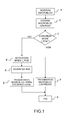
- the method according to the invention is composed of steps to be applied for each macroblock of the video stream to be compressed.
- the method makes it possible firstly to detect whether the compression is effective for the macroblock being processed.
- a second step if the compression is not considered efficient, the samples of the macroblock being processed from the output of the local decoder are transmitted uncompressed.
- Local decoding is typically performed by the encoding loop of the video encoder to maintain at the encoder the internal state of the video decoder. Otherwise, if the compression is considered efficient, the compressed macroblock is transmitted at the output of the video encoder.
- a video encoder typically consists of an encoding loop and an entropy encoder.
- the notations introduced take into account the terminology specific to the H.264 standard.
- the uncompressed mode is designated as the I_PCM mode.
- the method according to the invention may be considered outside the scope of the H.264 standard.
- the method according to the invention is executed at the level of the entropic coder for each macroblock processed by the video coder.
- the method is executed as soon as a new macroblock is detected at the input of the encoder.
- the method of the invention processes a macroblock macroblock compressed video stream.
- a macroblock represents part of an image of a video stream. This part of the image includes a block of pixels. For example, a macroblock can represent 16x16 pixels of an image.
- the macroblock processed at a given instant by the method is called current macroblock or macroblock being processed, the two expressions having the same meaning.
- the macroblock currently being processed is compressed 2 by the encoding loop and then by the entropy encoder. The effectiveness of the compression is then verified 3.
- the encoder works in 4: 2: 0 format on 8 bits and the macroblock after being compressed occupies more than 3200 bits, the use of the I_PCM mode is activated.
- the video coder's encoding loop will have to be configured accordingly. For this, signaling is implemented. 5.
- the bits generated after compression are then removed from the output bit stream of the video encoder.
- the functional block of the intra-prediction encoding loop is configured so that it can use intra macroblocks and inter macroblocks for its predictions. For an H.264 compliant video encoder, the constrained_intra_pred_flag flag is disabled for this.
- the spatial prediction of an intra macroblock from an inter-neighbor macroblock is prohibited and in this case the inter-neighbor macroblock is considered as unavailable. This then takes a default value, for example 128. If subsequently this inter macroblock switches to I_PCM mode, the prediction over the value 128 will not be correct.
- the I_PCM mode is considered an intra mode by the H.264 standard. The late choice of the I_PCM mode amounts to switching the coding mode of the current macroblock from an intra mode or from an inter mode to an intra mode.
- the macroblock currently being processed is then transmitted uncompressed after being processed by the local decoder of the encoding loop.
- the execution of the process ends 8.
- the macroblock is transmitted compressed 7 at the output of the coder and the execution of the method ends 8.
- the figure 2 illustrates an example of a video coding device implementing the method according to the invention. It consists of two main functional elements. The first is the encoding loop 20 and the second the entropic coder 21.
- the principle of the coding loop 20 is part of the state of the art in video compression.
- a block 22 taking input of the samples of the source after compensation 25, said block realizing a transform for passing from time to frequency domain.
- This transform may be for example an integer transform as specified in the H.264 standard.
- the result of the transform is then quantized 23; this operation destroys information that is not visible to the human eye and reduces the amount of information to be transmitted.
- This operation is configured according to, for example, the target rate to be guaranteed at the output of the video encoder.
- the signal after quantization 23 is reconstructed using a local decoder 39 performing inverse quantization 26, inverse transform 27 and reconstruction 28 operations.
- the macroblock after reconstruction is used by a set of functional blocks performing the intra prediction 29 and the loop filter 30.
- the reconstructed blocks are stored by the frame memory 31 in order to perform the motion estimation 32 between the input signal of the video encoder 33 and said
- the result of motion estimation 32 typically a motion estimation vector, is used for motion compensation 34 for the purpose of creating a prediction.
- a decision functional block 35 makes it possible to configure and activate intra-prediction 29 and / or motion compensation 34.
- the second part of the video coder 21 is composed in particular of a functional block performing the entropy coding 36.
- this functional block 36 comprises decision means for triggering the uncompressed mode as described in the example of FIG. the figures 1 .
- the coding block 36 decides to activate the uncompressed mode, the samples of the current macroblock after decompression by the local decoder 39 are sent to the input of the entropy coder 36 and then to be transmitted uncompressed at the output of the video coder.
- the encoding loop is configured for this purpose by using a signal 40 for configuring one or more elements of the encoding loop according to the chosen implementation.
- This example of a device implementing the method according to the invention makes it possible to process in parallel the operations of the encoding loop and the entropy coder when the uncompressed mode is supported by the video coder while ensuring that the stream of bits in Video encoder output remains syntactically and semantically compliant.
Landscapes
- Engineering & Computer Science (AREA)
- Multimedia (AREA)
- Signal Processing (AREA)
- Physics & Mathematics (AREA)
- Discrete Mathematics (AREA)
- General Physics & Mathematics (AREA)
- Computing Systems (AREA)
- Theoretical Computer Science (AREA)
- Compression Or Coding Systems Of Tv Signals (AREA)
- Compression, Expansion, Code Conversion, And Decoders (AREA)
Applications Claiming Priority (1)
| Application Number | Priority Date | Filing Date | Title |
|---|---|---|---|
| FR0854134A FR2932939A1 (fr) | 2008-06-23 | 2008-06-23 | Procede de codage video avec mode non compresse et dispositif mettant en oeuvre le procede. |
Publications (2)
| Publication Number | Publication Date |
|---|---|
| EP2144445A2 true EP2144445A2 (de) | 2010-01-13 |
| EP2144445A3 EP2144445A3 (de) | 2010-03-17 |
Family
ID=40289172
Family Applications (1)
| Application Number | Title | Priority Date | Filing Date |
|---|---|---|---|
| EP09163052A Withdrawn EP2144445A3 (de) | 2008-06-23 | 2009-06-18 | Videokodierungsverfahren in unkomprimiertem Modus und Vorrichtung zur Umsetzung dieses Verfahrens |
Country Status (2)
| Country | Link |
|---|---|
| EP (1) | EP2144445A3 (de) |
| FR (1) | FR2932939A1 (de) |
Family Cites Families (3)
| Publication number | Priority date | Publication date | Assignee | Title |
|---|---|---|---|---|
| US7688895B2 (en) * | 2003-07-22 | 2010-03-30 | Lsi Corporation | Method and/or circuit for binary arithmetic decoding decisions before termination |
| US7983335B2 (en) * | 2005-11-02 | 2011-07-19 | Broadcom Corporation | AVC I—PCM data handling and inverse transform in a video decoder |
| JP2007166039A (ja) * | 2005-12-09 | 2007-06-28 | Matsushita Electric Ind Co Ltd | 画像符号化装置 |
-
2008
- 2008-06-23 FR FR0854134A patent/FR2932939A1/fr active Pending
-
2009
- 2009-06-18 EP EP09163052A patent/EP2144445A3/de not_active Withdrawn
Also Published As
| Publication number | Publication date |
|---|---|
| FR2932939A1 (fr) | 2009-12-25 |
| EP2144445A3 (de) | 2010-03-17 |
Similar Documents
| Publication | Publication Date | Title |
|---|---|---|
| EP2981088B1 (de) | Aufzeichnungsmedium zur speicherung von kodierten bilddaten | |
| EP2777269B1 (de) | Verfahren zur codierung und decodierung von bildern, codierungs- und decodierungsvorrichtung sowie entsprechende computerprogramme | |
| FR2977111A1 (fr) | Procede de codage et decodage d'images, dispositif de codage et decodage et programmes d'ordinateur correspondants | |
| EP2139239B1 (de) | Videokodierungsverfahren in unkomprimiertem Modus und Vorrichtung zur Umsetzung dieses Verfahrens | |
| EP4630970A1 (de) | Verfahren und vorrichtung zur codierung und decodierung von bildern | |
| EP2932714B1 (de) | Verfahren zur codierung und decodierung von bildern, codierungs- und decodierungsvorrichtung und entsprechende computerprogramme | |
| US20090316788A1 (en) | Video coding method with non-compressed mode and device implementing the method | |
| FR2900004A1 (fr) | Procede et dispositif de decodage arithmetique | |
| EP2144445A2 (de) | Videokodierungsverfahren in unkomprimiertem Modus und Vorrichtung zur Umsetzung dieses Verfahrens | |
| WO2017129880A1 (fr) | Procédé de codage et décodage de données, dispositif de codage et décodage de données et programmes d'ordinateur correspondants | |
| EP3918798A1 (de) | Verfahren und vorrichtung zur codierung und decodierung von daten im zusammenhang mit einer videosequenz | |
| EP2084910A1 (de) | Verfahren und einrichtung zur optimierung der komprimierung eines videostroms | |
| WO2024260629A1 (fr) | Procédé et dispositif de codage et décodage de séquences d'images | |
| WO2025261760A1 (fr) | Procédés de codage et de décodage, dispositifs et programme d'ordinateur correspondants | |
| FR3030975A1 (fr) | Procede de codage d'une image numerique, procede de decodage, dispositifs, terminal d'utilisateur et programmes d'ordinateurs associes |
Legal Events
| Date | Code | Title | Description |
|---|---|---|---|
| PUAI | Public reference made under article 153(3) epc to a published international application that has entered the european phase |
Free format text: ORIGINAL CODE: 0009012 |
|
| AK | Designated contracting states |
Kind code of ref document: A2 Designated state(s): AT BE BG CH CY CZ DE DK EE ES FI FR GB GR HR HU IE IS IT LI LT LU LV MC MK MT NL NO PL PT RO SE SI SK TR |
|
| PUAL | Search report despatched |
Free format text: ORIGINAL CODE: 0009013 |
|
| RAP1 | Party data changed (applicant data changed or rights of an application transferred) |
Owner name: THOMSON LICENSING |
|
| AK | Designated contracting states |
Kind code of ref document: A3 Designated state(s): AT BE BG CH CY CZ DE DK EE ES FI FR GB GR HR HU IE IS IT LI LT LU LV MC MK MT NL NO PL PT RO SE SI SK TR |
|
| AX | Request for extension of the european patent |
Extension state: AL BA RS |
|
| 17P | Request for examination filed |
Effective date: 20100811 |
|
| 17Q | First examination report despatched |
Effective date: 20100907 |
|
| RAP1 | Party data changed (applicant data changed or rights of an application transferred) |
Owner name: FRANCE BREVETS |
|
| STAA | Information on the status of an ep patent application or granted ep patent |
Free format text: STATUS: THE APPLICATION IS DEEMED TO BE WITHDRAWN |
|
| 18D | Application deemed to be withdrawn |
Effective date: 20160105 |