EP2122474B1 - Optimized interrupt delivery in a virtualized environment - Google Patents
Optimized interrupt delivery in a virtualized environment Download PDFInfo
- Publication number
- EP2122474B1 EP2122474B1 EP07864330.1A EP07864330A EP2122474B1 EP 2122474 B1 EP2122474 B1 EP 2122474B1 EP 07864330 A EP07864330 A EP 07864330A EP 2122474 B1 EP2122474 B1 EP 2122474B1
- Authority
- EP
- European Patent Office
- Prior art keywords
- interrupt
- message
- virtualized
- inter
- processor
- Prior art date
- Legal status (The legal status is an assumption and is not a legal conclusion. Google has not performed a legal analysis and makes no representation as to the accuracy of the status listed.)
- Active
Links
Images



Classifications
-
- G—PHYSICS
- G06—COMPUTING OR CALCULATING; COUNTING
- G06F—ELECTRIC DIGITAL DATA PROCESSING
- G06F13/00—Interconnection of, or transfer of information or other signals between, memories, input/output devices or central processing units
- G06F13/14—Handling requests for interconnection or transfer
- G06F13/20—Handling requests for interconnection or transfer for access to input/output bus
- G06F13/24—Handling requests for interconnection or transfer for access to input/output bus using interrupt
-
- G—PHYSICS
- G06—COMPUTING OR CALCULATING; COUNTING
- G06F—ELECTRIC DIGITAL DATA PROCESSING
- G06F9/00—Arrangements for program control, e.g. control units
- G06F9/06—Arrangements for program control, e.g. control units using stored programs, i.e. using an internal store of processing equipment to receive or retain programs
- G06F9/44—Arrangements for executing specific programs
- G06F9/455—Emulation; Interpretation; Software simulation, e.g. virtualisation or emulation of application or operating system execution engines
- G06F9/45533—Hypervisors; Virtual machine monitors
-
- G—PHYSICS
- G06—COMPUTING OR CALCULATING; COUNTING
- G06F—ELECTRIC DIGITAL DATA PROCESSING
- G06F9/00—Arrangements for program control, e.g. control units
- G06F9/06—Arrangements for program control, e.g. control units using stored programs, i.e. using an internal store of processing equipment to receive or retain programs
- G06F9/46—Multiprogramming arrangements
- G06F9/48—Program initiating; Program switching, e.g. by interrupt
- G06F9/4806—Task transfer initiation or dispatching
- G06F9/4812—Task transfer initiation or dispatching by interrupt, e.g. masked
Definitions
- a virtual machine is a software construct or the like operating on a computing device or the like (e.g., a host) for the purpose of providing an emulated machine or system.
- the VM is an application or the like, and may be employed on the host to instantiate a use application or the like while at the same time isolating such use application from such host device or from other applications on such host.
- the host can accommodate a plurality of deployed VMs, each VM performing some predetermined function by way of resources available from the host.
- each VM as hosted on a computing device is for all intents and purposes a computing machine, although in virtual form, and thus represents itself as such both to the use application thereof and to the outside world.
- the VM and/or a use application thereof can and in fact do issue hardware requests for hardware resources of the VM, even though the VM might not in reality have such hardware resources.
- such hardware requests are intercepted or otherwise redirected toward the host, and such host services such hardware requests based on the hardware resources thereof, typically with the requesting VM and/or use application thereof being none the wiser.
- a host deploys each VM thereof in a separate partition, address space, processing area, and/or the like.
- Such host may include a virtualization layer with a virtual machine monitor ("VMM") or the like that acts as an overseer application or 'hypervisor', where the virtualization layer oversees and/or otherwise manages supervisory aspects of each VM of the host, and acts as a possible link between each VM and the outside world.
- the VMM may be a separate application running in its own address space or may be integrated more closely with the host operating system, either directly or as an operating system extension of some sort, such as a device driver.
- the VMM of the host may intercept or otherwise redirect hardware requests that originate from each VM of the host and/or a use application thereof, and may at least assist in servicing the requests, again with the requesting VM and/or use application thereof being none the wiser.
- processors in a multiprocessor virtual machine environment may operate in a guest mode or in a VMM mode.
- a processor uses virtual machine definitions to manage the virtual machine's guest operating system and applications, translating arguments and managing system resources without intervention from the VMM.
- the guest operating system or applications may need system resources that must be managed by the VMM.
- the VMM may be required for error handling, system faults, or interrupt handling. In these situations, the processor operates in a VMM mode.
- Modem processing systems include support for interrupts, which allow processors to be notified of external events. For example, when a user presses a key on a keyboard or a network packet arrives over the wire, a corresponding interrupt is generated and sent to a processor.
- an interrupt causes a processor to stop what it's doing, record its current execution location so it can resume execution after servicing the interrupt, and then execute a specified interrupt service routine.
- Computing systems may comprise one or more interrupt controllers that direct and arbitrate the flow of interrupts in the system.
- the interrupt controller logic may be embodied in a discrete hardware component, may be integrated into a processor, or may be virtualized.
- the interrupt controller is responsible for, among other things, determining the priority of interrupts and for directing interrupts to appropriate processors in a multi-processor environment.
- processors and interrupt controllers may be virtualized. This is generally accomplished through a combination of software, such as a virtual machine monitor, and virtualization assists provided by hardware.
- an interrupt controller is notified via and end-of-interrupt (EOI) command. It tells the interrupt controller that other interrupts whose delivery may have been deferred while a previous interrupt was being handled may now be delivered.
- An EOI command is typically delivered to an interrupt controller though an I/O port or a memory-mapped I/O access, such as a read from or write to a register.
- processing an EOI command may consume tens or hundreds of cycles.
- processing an EOI command may consume thousands of cycles.
- Some virtual machine monitors use interrupts as a basis for inter-partition messaging. If software running within one partition needs to communicate with software running within a second partition on the same physical machine, it is able to do so through the use of inter-partition messages. When a message is sent by one processor, the virtual machine monitor may send an interrupt to the processor that is the intended recipient of the message, causing the recipient processor's interrupt service routine to process the message and respond to its contents.
- US 2005/080965 A1 relates to controlling hardware interrupt acknowledgement in a virtual machine system.
- An interrupt may need to be handled by a currently-operating virtual machine, a virtual machine monitor or a virtual machine that is not currently operating. If the interrupt is to be handled by the currently-operating virtual machine, control remains with this virtual machine, and the interrupt is delivered to this virtual machine if it is ready to receive interrupts. If the interrupt is not to be handled by the currently-operating virtual machine, control is transferred to the virtual machine monitor. The transfer of control from guest software to the virtual machine monitor is referred to as virtual machine exit. In one example, performance is improved and functionality of the virtual machine monitor is simplified.
- interrupts are blocked following every virtual machine exit.
- the virtual machine monitor in order to determine the vector of the interrupt, the virtual machine monitor has to unblock interrupts.
- the processor then acknowledges the interrupt at the interrupt controller, retrieves the interrupt identifier, searches a redirection structure in the instruction set architecture of the Intel Pentium 4 for an entry associated with the interrupt, extracts from this entry a descriptor of a handler associated with this interrupt and jumps to the beginning of the appropriate virtual machine monitor handler code using the descriptor.
- the virtual machine monitor can then handle the interrupt appropriately since it can identify the interrupt source based on which handler was invoked by the processor.
- a virtual machine monitor may perform a series of accesses to the interrupt controller to determine the interrupt vector and to acknowledge the interrupt.
- US 2005/102671 A1 relates to the use of virtual machine queues to communicate between and among virtual machines.
- Intel: "8259A Programmable Interrupt Controller (8259A18259A-2)" Datasheet Intel, 1 December 1988, vol. doc. 8259A relates to the programmable interrupt controller 8259A of Intel.
- the Intel 8259A programmable interrupt controller handles up to eight vectored priority interrupts for the CPU. It is cascadable for up to 64 vectored priority interrupts without additional circuitry.
- the 8259A is designed to minimize the software and realtime overhead in handling multi-level priority interrupts.
- a guest operating system may program certain interrupt sources as "automatic end-of-interrupt” ("auto-EOI").
- auto-EOI automatic end-of-interrupt
- a virtualized interrupt controller clears the bit in an interrupt service register corresponding to a delivered interrupt without waiting for an explicit end-of-interrupt (“EOI") command.
- EOI end-of-interrupt
- the auto-EOI interrupt may not block the delivery of other interrupts.
- Interrupts may be used to implement inter-partition communication.
- an interrupt service routine of the guest operating system reads the message from a specified message slot and performs an action based on the message type and payload.
- the guest operating system can eliminate some of the overhead incurred in processing inter-partition messages by sending an explicit end-of-message ("EOM") command upon completion of message processing only if another message is queued for the same message slot.
- EOM end-of-message
- the computational cost of an EOM command is roughly equivalent to the computational cost of an EOI, but the EOM is sent only in the rare case that an additional message is queued. This can significantly reduce the average cost of interrupt processing for inter-partition communications.
- Interrupts can have various priorities. Generally, a higher priority interrupt can interrupt processing of a lower priority interrupt, but not vice versa.
- a guest operating system In a virtualized environment, it is possible for a guest operating system to issue an EOI command for an interrupt that is not the highest priority in-service interrupt.
- a mechanism is described herein whereby a virtualized interrupt controller checks whether an incoming EOI command corresponds to the highest priority in-service interrupt. If not, the virtualized interrupt controller adds the interrupt vector for the incoming EOI command to the set of interrupts that need to be EOIed at a later time. If the incoming EOI command does correspond to the highest priority in-service interrupt, the virtualized interrupt controller not only processes the EOI command for the corresponding interrupt but also for all other interrupts that were previously marked for later EOIs.
- the various techniques described herein may be implemented in connection with hardware or software or, where appropriate, with a combination of both.
- the methods and apparatus, or certain aspects or portions thereof may take the form of program code (e.g., instructions) embodied in tangible media, such as floppy diskettes, CD-ROMs, hard drives, or any other machine-readable storage medium wherein, when the program code is loaded into and executed by a machine, such as a computer, the machine becomes an apparatus for practicing the invention.
- the computing device In the case of program code execution on programmable computers, the computing device generally includes a processor, a storage medium readable by the processor (including volatile and non-volatile memory and/or storage elements), at least one input device, and at least one output device.
- One or more programs that may implement or utilize the processes described in connection with the invention, e.g., through the use of an API, reusable controls, or the like.
- Such programs are preferably implemented in a high level procedural or object oriented programming language to communicate with a computer system.
- the program(s) can be implemented in assembly or machine language, if desired.
- the language may be a compiled or interpreted language, and combined with hardware implementations.
- exemplary embodiments may refer to utilizing aspects of the invention in the context of one or more stand-alone computer systems, the invention is not so limited, but rather may be implemented in connection with any computing environment, such as a network or distributed computing environment. Still further, aspects of the invention may be implemented in or across a plurality of processing chips or devices, and storage may similarly be effected across a plurality of devices. Such devices might include personal computers, network servers, handheld devices, supercomputers, or computers integrated into other systems such as automobiles and airplanes.
- Interrupts are used in modem computing systems for a variety of purposes including, by way of examples, to notify processors of external events and to facilitate communication between processors of a multiprocessor system.
- an interrupt interrupts normal processing and temporarily diverts flow of control to an interrupt service routine ("ISR").
- ISR interrupt service routine
- activities of a computing system can trigger interrupts. Some examples are pressing a key on a keyboard, receiving a network packet, and writing to or reading from a disk.
- Inter-processor interrupts are a type of interrupt by which one processor may interrupt another processor in multiprocessor environment. IPIs may be used as a basis for inter-processor messaging.
- Interrupt controllers typically comprise one or more interrupt controllers that direct and arbitrate the flow of interrupts in a system.
- Interrupt controllers are responsible for prioritizing incoming interrupts and directing them to the appropriate processor in multiprocessor systems.
- Interrupt controllers may be realized in hardware and as such may be a discrete component or may be integrated with processors.
- Interrupt controllers may also be virtualized. This is typically accomplished through a combination of software and virtualization assists provided by hardware. The software may be a part of a virtual machine monitor that performs the same basic functions as a physical interrupt controller.
- each interrupt source has a specified interrupt priority. As one example, these priorities could be numbered 0 to 255 with 255 being the top priority and 0 the lowest. Higher priority interrupts are allowed to interrupt an interrupt service routine that is processing a lower priority interrupt, but lower priority interrupts are not allowed to interrupt higher priority interrupts.
- the processor on which it was running typically issues an EOI command, signaling to the interrupt controller that processing of the interrupt is complete and that lower priority interrupts that were deferred can now be delivered.
- the EOI command is implemented in software that performs the same operations as a physical interrupt controller would in response to the EOI command. This typically involves intercepting accesses to an EOI port or register and invoking a software handler. The combination of intercept and software handler typically require thousands or tens of thousands of cycles to handle an EOI command, adding significant overhead to the operation of interrupt service routines in a virtualized environment.
- EOI commands can be skipped in many cases, significantly reducing the virtualization overhead related to interrupt delivery.
- an end of message EOI need only be sent when a second message is already queued for slot containing a just-processed message.
- a physical interrupt can be selectively EOIed irrespective of whether it is the highest priority in-service interrupt.
- Virtualization provides a mechanism for increasing flexibility while enhancing security and reliability.
- Processors, memory, and I/O devices are examples of subsystems that can be virtualized.
- a virtual interface and virtual resources available through the virtual interface are mapped onto the interface and resources of a real system on which the virtualization is implemented.
- Virtualization can be applied not only to subsystems, but to an entire machine.
- a virtual machine's architecture is implemented in a layer of software on a real machine.
- computer systems generally comprise one or more layers of software running on a foundational layer of hardware. This layering is done for reasons of abstraction. By defining the interface for a given layer of software, that layer can be implemented differently by other layers above it. In a well-designed computer system, each layer only knows about (and only relies upon) the immediate layer beneath it. This allows a layer or a "stack" (multiple adjoining layers) to be replaced without negatively impacting the layers above said layer or stack.
- software applications upper layers
- lower layers typically rely on lower levels of the operating system (lower layers) to write files to some form of permanent storage, and these applications do not need to understand the difference between writing data to a floppy disk, a hard drive, or a network folder. If this lower layer is replaced with new operating system components for writing files, the operation of the upper layer software applications remains unaffected.
- VM virtual machine
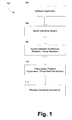
- FIG. 1 is a diagram representing the logical layering of the hardware and software architecture for a virtualized environment in a computer system.
- a virtualization program 110 runs directly or indirectly on the physical hardware architecture 112.
- the virtualization program 110 may be (a) a virtual machine monitor that runs alongside a host operating system or (b) a host operating system with a hypervisor component, where the hypervisor component performs the virtualization.
- the term virtual machine monitor is used as a general term for any of the various types of virtualization programs.
- the virtualization program 110 virtualizes a guest hardware architecture 108 (shown as dashed lines to illustrate the fact that this component is a partition or a "virtual machine"), that is, hardware that does not actually exist but is instead virtualized by the virtualizing program 110.
- a guest operating system 106 executes on the guest hardware architecture 108, and a software application 104 can run on the guest operating system 106.
- the software application 104 can run in a computer system 102 even if the software application 104 is designed to run on an operating system that is generally incompatible with a host operating system and the hardware architecture 112.
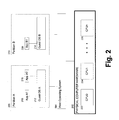
- FIG. 2 illustrates a virtualized computing system comprising a host operating system (host OS) software layer 204 running directly above physical computer hardware 202, where the host OS 204 provides access to the resources of the physical computer hardware 202 by exposing interfaces to partitions A 208 and B 210 for the use by operating systems A and B, 212 and 214, respectively.
- the host OS 204 may go unnoticed by operating system layers 212 and 214 running above it.
- the host OS 204 may be a specially designed operating system with native virtualization capabilities or, alternately, it may be a standard operating system with an incorporated hypervisor component for performing the virtualization (not shown).
- partition A 208 which may be, for example, a virtualized Intel 386 processor
- partition B 210 which may be, for example, a virtualized version of one of the Motorola 680X0 family of processors.
- guest OSs guest operating systems
- a 212 and B 214 are guest operating systems
- Running on top of guest OS A 212 are two applications, application A1 216 and application A2 218, and running on top of guest OS B 214 is application B1 220.
- partition A 208 and partition B 214 are virtualized computer hardware representations that exist only as software constructions. They are made possible due to the execution of specialized virtualization software(s) that not only presents partition A 208 and partition B 210 to Guest OS A 212 and Guest OS B 214, respectively, but which also performs all of the software steps necessary for Guest OS A 212 and Guest OS B 214 to indirectly interact with the real physical computer hardware 202.
- the physical computer hardware 202 may comprise a single central processing unit (CPU) 222, as in a uniprocessor environment, or multiple CPUs 222, 224, 226 as in a multiprocessor environment.
- CPU central processing unit
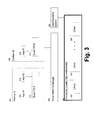
- FIG 3 illustrates an alternative virtualized computing system where the virtualization is performed by a VMM 304 running alongside the host operating system 306.
- the VMM 304 may be an application running above the host operating system 306 and interacting with the computer hardware 302 only through the host operating system 306.
- the VMM 304 may instead comprise a partially independent software system that on some levels interacts indirectly with the computer hardware 302 via the host operating system 306, but on other levels the VMM 304 interacts directly with the computer hardware 302 (similar to the way the host operating system interacts directly with the computer hardware).
- the VMM 304 may comprise a fully independent software system that on all levels interacts directly with the computer hardware 302 (similar to the way the host operating system interacts directly with the computer hardware) without utilizing the host operating system 306 (although still interacting with the host operating system 306 in order to coordinate use of the computer hardware 302 and avoid conflicts and the like).
- two partitions, A 308 and B 310 lie conceptually above the VMM 304.
- guest OSs guest operating systems
- Running on top of guest OS A 312 are two applications, application A1 316 and application A2 318, and running on top of guest OS B 314 is application B1 320.
- the physical computer hardware 302 may comprise a single central processing unit (CPU) 322, as in a uniprocessor environment, or multiple CPUs 322, 324, 326 as in a multiprocessor environment.
- CPU central processing unit
- FIG 4 illustrates another alternative virtualized computing system where the virtualization is performed by a hypervisor 404.
- the hypervisor 404 comprises an independent software system that may interact directly with the computer hardware 402 without using a host operating system.
- the physical computer hardware 402 may comprise a single central processing unit (CPU) 422, as in a uniprocessor environment, or multiple CPUs 422, 424, 426 as in a multiprocessor environment.
- CPU central processing unit
- two partitions, A 408 and B 410 lie conceptually above the VMM 404.
- guest OSs guest operating systems
- Running on top of guest OS A 412 are two applications, application A1 416 and application A2 418, and running on top of guest OS B 414 is application B1 420.
- Guest OS A 412 provides host OS services.
- the physical computer hardware 402 may comprise a single central processing unit (CPU) 422, as in a uniprocessor environment, or multiple CPUs 422, 424, 426 as in a multiprocessor environment.
- FIG. 5 is a block diagram of an illustrative example of a portion of a multiprocessor computing system having an interrupt controller. Any number of devices 502, 504, 506, 508 may serve as sources of interrupt requests. Devices 502, 504, 506, 508 may be physical devices, such as, for example, keyboards, disk drives, network cards, or may be virtualized devices. Interrupt requests may also be generated by any of the processors 510, 512, 514.
- An interrupt controller 516 arbitrates and directs the processing of interrupt requests.
- the interrupt controller 516 may be a physical device, such as a programmable interrupt controller ("PIC") or an advanced programmable interrupt controller ("APIC").
- PIC programmable interrupt controller
- APIC advanced programmable interrupt controller
- the interrupt controller 516 may be virtualized, in which case its functions are performed by software, such as a software handler within a VMM.
- interrupt controllers track requested and in-service interrupt requests. This is often done through the use of two bit vectors where each bit represents an individual interrupt source.
- One bit vector is called the interrupt request register 518, and a second is called the interrupt service register 520.
- an interrupt controller 516 receives a request for an interrupt, it sets a corresponding bit in the interrupt request register 518.
- the interrupt controller 516 delivers an interrupt to a processor 510, 512, or 514, it clears a corresponding bit in the interrupt request register 518 and sets a corresponding bit in the interrupt service register 520.
- the interrupt controller 516 receives an EOI, it knows that the corresponding interrupt is no longer being serviced, and so clears the corresponding bit in the interrupt service register 520.
- the interrupt controller interrupts the interrupt service routine of the lower-priority in-service interrupt.
- Interrupt requests can be generated by a wide variety of sources. Sources may include, by way of examples and not for purposes of limitation, keyboards, mice, sound cards, modems, communications ports, timing devices, and software instructions.
- IRQ interrupt request
- Sources may include, by way of examples and not for purposes of limitation, keyboards, mice, sound cards, modems, communications ports, timing devices, and software instructions.
- a level-triggered interrupt a device wishing to signal an interrupt drives a voltage on an interrupt request line to a predetermined level defined as “active” and holds it there until the interrupt has been serviced.
- an interrupt request is signaled by a level transition on an interrupt request line wherein a device wishing to signal an interrupt drives a pulse onto the interrupt request line and then returns the line to its quiescent state.
- an interrupt controller detects the IRQ 604, it determines whether the IRQ has a higher priority than any currently in-service interrupts 606, possibly by examining the interrupt service register 520 ( Figure 5 ). If a higher priority interrupt is in-service when the IRQ is detected, then the interrupt controller flags a corresponding bit in the interrupt request register 608 so as to record the pending request. If the requested interrupt has a higher priority than any in-service interrupt, then the interrupt controller flags a corresponding bit in the interrupt service register 610 and signals an appropriate processor to run a corresponding interrupt service routine 612.
- the processor may indicate to the interrupting device that the interrupt is handled 616, typically by writing to or reading from an I/O port or memory-mapped register.
- the processor signals the interrupt controller that the interrupt has been handled by sending an EOI command 618, typically delivered through an I/O port or a memory-mapped-I/O access such as a read from or write to a register.
- the interrupt controller processes the EOI command and clears the corresponding flag in the interrupt service register 620.
- the EOI command tells the interrupt controller that a lower-priority interrupt that had been deferred can now be delivered.
- Processing an EOI command may take tens or hundreds of cycles for a physical interrupt controller or even thousands of cycles for a virtualized interrupt controller.
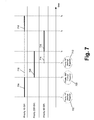
- Figure 7 describes an example that illustrates the general concept of interrupt priority and is not intended to be limiting.
- an interrupt source of priority 10 requests an interrupt 702.
- the interrupt controller interrupts the processor which invokes an interrupt service routine 704 associated with the interrupt source.
- an interrupt source of priority 200 requests an interrupt 706 destined for the same processor.
- the interrupt controller interrupts the processor again, and the ISR 708 for the priority 200 interrupt begins executing while the ISR for the priority 10 interrupt is suspended 710.
- a third interrupt source at priority 50 requests an interrupt 712 at time t 3 , before the priority 200 ISR 708 completes.
- the interrupt controller will defer delivery 714 of this interrupt until the processor has completed execution of the priority 200 ISR at time t 4 .
- the priority 50 ISR will be invoked 716 after the priority 200 ISR 708 completes.
- execution of the priority 10 ISR resumes 718 and is completed at time t 6 .
- processors and interrupt controllers may be virtualized. This is done through a combination of software (for example, a VMM) and virtualization assists provided by hardware.
- the EOI command is emulated by the VMM. This is done by intercepting accesses to an EOI port or register. The intercept invokes a software handler within the VMM that performs the same functions as a physical interrupt controller in response to the EOI.
- the combination of the intercept and the software handler can require thousands or tens of thousands of cycles. This adds significant overhead to the ISR when executing within a virtualized environment.
- Interrupts can be generated from a variety of sources, including, by way of examples and not limitation, physical hardware devices, a partition emulating a hardware device, a partition wishing to post a message or signal an event to another partition, or the VMM wishing to signal a partition.
- the VMM typically issues an EOI command to a physical interrupt controller after an interrupt has been accepted. For level-triggered interrupts it is generally not safe to issue an EOI command until the ISR in the guest operating system has run and issued an EOI command to the virtual interrupt controller.
- Certain physical interrupt controllers like the APIC allow only the highest-priority in-service interrupt to be EOIed.
- the VMM may need to selectively EOI an interrupt which is not the highest-priority in-service interrupt.
- the VMM accepts the first interrupt and redirects it to the guest operating system. Before the ISR in the guest has issued an EOI command, the second interrupt arrives. Subsequently the guest operating system issues an EOI command for the first interrupt. In this situation the VMM cannot EOI the first interrupt since a higher priority interrupt is already in-service and issuing an EOI command to the physical interrupt controller will EOI the higher priority interrupt.
- a guest operating system is allowed to program some interrupt sources as "auto-EOI.”
- auto-EOI When an interrupt source is marked as auto-EOI, the traditional interrupt prioritization behavior is modified.
- An auto-EOI interrupt does not block the delivery of other interrupts.
- an auto-EOI interrupt behaves similarly to a lowest-priority interrupt in that any other interrupt, including other auto-EOI interrupts, are allowed to interrupt the execution of its associated ISR.
- an auto-EOI interrupt When an auto-EOI interrupt is delivered, the bit associated with the auto-EOI interrupt in the interrupt service register is immediately cleared. Effectively, the virtualized interrupt controller automatically generates an EOI at the time the auto-EOI interrupt is delivered.
- an auto-EOI interrupt it is desirable that the interrupt source moderate itself by not requesting subsequent interrupts until it knows the previous interrupt was handled. Otherwise, each succeeding interrupt would interrupt the previous ISR, potentially overflowing the processor's stack.
- the auto-EOI property is specified in a virtual register associated with a synthetic interrupt source (SINT).
- SINT synthetic interrupt source
- the format of the virtual register is as follows: Bits Description Attributes 63:18 RsvdP (value should be preserved) Read/write 17 Auto-EOI Read/write Set if an implicit EOI should be performed upon interrupt delivery 16 Set if the SINT is masked Read/write 15:8 RsvdP (value should be preserved) Read/write 7:0 Vector Read/write
- the Auto-EOI flag indicates that an implicit EOI should be performed by the VMM when an interrupt is delivered to the virtual processor.
- the VMM will automatically clear the corresponding flag in the in-service register of the virtual interrupt controller. If the guest enables this behavior, then it must not perform an explicit EOI in its interrupt service routine.
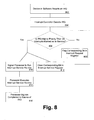
- Figure 8 depicts the life cycle of an auto-EOI interrupt request according to the disclosure herein.
- a device or software begins the process by asserting an IRQ 802.
- an interrupt controller detects the IRQ 804
- a virtualized interrupt controller allows a VMM to selectively EOI physical interrupts when the physical interrupt controller does not support such functionality. This may be accomplished by maintaining a list of pending EOIs, i.e., interrupts that need to be EOIed at a later time. For example, when a guest operating system issues an EOI command, the VMM may check whether the interrupt being EOIed is indeed the highest priority in-service interrupt in the physical interrupt controller. If not, the VMM simply adds the interrupt to the list of pending EOIs. If, on the other hand, the interrupt being EOIed is the highest priority in-service interrupt, the VMM not only EOIs the current interrupt, but also EOIs other interrupts on the list of pending EOIs.
- VMMs use interrupts as the basis for inter-partition messaging.
- a partition is an isolation boundary enforced by a VMM and is the "container" for a virtual machine. If software running within one partition needs to communicate with software running within a second partition on the same machine, it is able to do so through the use of inter-partition messages. These messages typically contain small payloads. For example, in the case of one known hypervisor, they message payload may comprise up to 240 bytes plus a 16-byte header. When a message is sent, it is queued by the hypervisor until a virtual processor associated with the destination partition is ready to execute. At that time, the hypervisor may deliver an interrupt to that virtual processor. This causes a corresponding ISR to be invoked.
- the ISR is responsible for reading the message and reacting to its contents. As described above, the ISR generally must "EOI" the interrupt after the interrupt has been serviced. In this case, the EOI would be sent after the message has been read. Inter-partition messaging must be as fast as possible. The traditional EOI mechanism adds an undesirable overhead, using possibly tens of thousands of cycles to notify the virtualized interrupt controller that the message has been read and that subsequent messages and lower priority pending interrupts can be delivered.
- a message slot is provided for each SINT and the layout of a message is defined by the data structures described in Table 1 below. TABLE 1
- FIG. 9 is a flow chart depicting an embodiment of inter-processor message handling in accordance with the disclosure herein.
- a sending processor posts an inter-processor message 902 corresponding to a specified SINT which has been designated as auto-EOI.
- the VMM appends the message to a message queue 904 and determines whether the message slot corresponding to the specified SINT is empty 906. If a previous message is still present in the message slot, the VMM sets the Message Pending bit in the header of the message in the slot 908. If the message slot is empty, the VMM copies the message to the message slot 910 and sends an interrupt associated with the specified SINT to the receiving processor 912.
- a guest OS running on the receiving processor When a guest OS running on the receiving processor receives an interrupt associated with a SINT, its ISR reads the message from the corresponding message slot and performs an action based on the message type and payload 914. When processing of the message is completed, the ISR clears the message type 916. For example, in accordance with the data structures defined in Table 1, the ISR may clear the message type by writing a specified value to HV_MESSAGE_TYPE. The ISR then examines the Message Pending bit of the just-processed message 918. If the Message Pending bit is not set, meaning that no further message is queued for the message slot, no further action is required by the ISR 920. This should be the case most often. In particular, there is no need for the ISR to send an EOI command, thus avoiding considerable computational overhead.
- EOM end-of-message
Landscapes
- Engineering & Computer Science (AREA)
- Theoretical Computer Science (AREA)
- Software Systems (AREA)
- Physics & Mathematics (AREA)
- General Engineering & Computer Science (AREA)
- General Physics & Mathematics (AREA)
- Bus Control (AREA)
- Multi Processors (AREA)
- Debugging And Monitoring (AREA)
Applications Claiming Priority (2)
| Application Number | Priority Date | Filing Date | Title |
|---|---|---|---|
| US11/635,455 US7533207B2 (en) | 2006-12-06 | 2006-12-06 | Optimized interrupt delivery in a virtualized environment |
| PCT/US2007/084522 WO2008070410A1 (en) | 2006-12-06 | 2007-11-13 | Optimized interrupt delivery in a virtualized environment |
Publications (3)
| Publication Number | Publication Date |
|---|---|
| EP2122474A1 EP2122474A1 (en) | 2009-11-25 |
| EP2122474A4 EP2122474A4 (en) | 2010-06-30 |
| EP2122474B1 true EP2122474B1 (en) | 2015-07-15 |
Family
ID=39492588
Family Applications (1)
| Application Number | Title | Priority Date | Filing Date |
|---|---|---|---|
| EP07864330.1A Active EP2122474B1 (en) | 2006-12-06 | 2007-11-13 | Optimized interrupt delivery in a virtualized environment |
Country Status (6)
| Country | Link |
|---|---|
| US (1) | US7533207B2 (enExample) |
| EP (1) | EP2122474B1 (enExample) |
| JP (1) | JP4882005B2 (enExample) |
| KR (1) | KR101514088B1 (enExample) |
| CN (1) | CN101553792B (enExample) |
| WO (1) | WO2008070410A1 (enExample) |
Families Citing this family (33)
| Publication number | Priority date | Publication date | Assignee | Title |
|---|---|---|---|---|
| US7562173B2 (en) * | 2007-03-23 | 2009-07-14 | Intel Corporation | Handling shared interrupts in bios under a virtualization technology environment |
| JP4864817B2 (ja) | 2007-06-22 | 2012-02-01 | 株式会社日立製作所 | 仮想化プログラム及び仮想計算機システム |
| US8612973B2 (en) * | 2007-09-26 | 2013-12-17 | Hewlett-Packard Development Company, L.P. | Method and system for handling interrupts within computer system during hardware resource migration |
| US8032680B2 (en) * | 2008-06-27 | 2011-10-04 | Microsoft Corporation | Lazy handling of end of interrupt messages in a virtualized environment |
| GB2462258B (en) * | 2008-07-28 | 2012-02-08 | Advanced Risc Mach Ltd | Interrupt control for virtual processing apparatus |
| US20100174841A1 (en) * | 2008-12-31 | 2010-07-08 | Zohar Bogin | Providing multiple virtual device controllers by redirecting an interrupt from a physical device controller |
| KR101242661B1 (ko) * | 2009-12-11 | 2013-03-12 | 한국전자통신연구원 | 컴퓨터 시스템에서 인터럽트 컨트롤러의 가상화 장치 및 방법 |
| US8312195B2 (en) * | 2010-02-18 | 2012-11-13 | Red Hat, Inc. | Managing interrupts using a preferred binding between a device generating interrupts and a CPU |
| US8806481B2 (en) * | 2010-08-31 | 2014-08-12 | Hewlett-Packard Development Company, L.P. | Providing temporary exclusive hardware access to virtual machine while performing user authentication |
| US9043562B2 (en) | 2011-04-20 | 2015-05-26 | Microsoft Technology Licensing, Llc | Virtual machine trigger |
| US8972642B2 (en) * | 2011-10-04 | 2015-03-03 | Qualcomm Incorporated | Low latency two-level interrupt controller interface to multi-threaded processor |
| EP3244307A1 (en) * | 2012-03-29 | 2017-11-15 | INTEL Corporation | Architecture and method for managing interrupts in a virtualized environment |
| US9229884B2 (en) * | 2012-04-30 | 2016-01-05 | Freescale Semiconductor, Inc. | Virtualized instruction extensions for system partitioning |
| US9152587B2 (en) | 2012-05-31 | 2015-10-06 | Freescale Semiconductor, Inc. | Virtualized interrupt delay mechanism |
| US9442870B2 (en) | 2012-08-09 | 2016-09-13 | Freescale Semiconductor, Inc. | Interrupt priority management using partition-based priority blocking processor registers |
| US9436626B2 (en) | 2012-08-09 | 2016-09-06 | Freescale Semiconductor, Inc. | Processor interrupt interface with interrupt partitioning and virtualization enhancements |
| US9075789B2 (en) * | 2012-12-11 | 2015-07-07 | General Dynamics C4 Systems, Inc. | Methods and apparatus for interleaving priorities of a plurality of virtual processors |
| US9063918B2 (en) | 2013-02-15 | 2015-06-23 | International Business Machines Corporation | Determining a virtual interrupt source number from a physical interrupt source number |
| US9836418B2 (en) | 2013-03-13 | 2017-12-05 | Dornerworks, Ltd. | System and method for deterministic time partitioning of asynchronous tasks in a computing environment |
| JP6029550B2 (ja) * | 2013-07-19 | 2016-11-24 | 株式会社日立製作所 | 計算機の制御方法及び計算機 |
| WO2015097839A1 (ja) * | 2013-12-27 | 2015-07-02 | 株式会社日立製作所 | 優先度割込み対応リアルタイムハイパバイザ |
| US9665509B2 (en) * | 2014-08-20 | 2017-05-30 | Xilinx, Inc. | Mechanism for inter-processor interrupts in a heterogeneous multiprocessor system |
| US9772868B2 (en) | 2014-09-16 | 2017-09-26 | Industrial Technology Research Institute | Method and system for handling interrupts in a virtualized environment |
| US9697029B2 (en) | 2014-10-30 | 2017-07-04 | Red Hat Israel, Ltd. | Guest idle based VM request completion processing |
| US9727500B2 (en) * | 2014-11-19 | 2017-08-08 | Nxp Usa, Inc. | Message filtering in a data processing system |
| US9697151B2 (en) * | 2014-11-19 | 2017-07-04 | Nxp Usa, Inc. | Message filtering in a data processing system |
| US9965412B2 (en) * | 2015-10-08 | 2018-05-08 | Samsung Electronics Co., Ltd. | Method for application-aware interrupts management |
| US10248595B2 (en) * | 2017-08-10 | 2019-04-02 | Infineon Technologies Ag | Virtual machine monitor interrupt support for computer processing unit (CPU) |
| US11036541B2 (en) * | 2017-09-19 | 2021-06-15 | Microsoft Technology Licensing, Llc | Interrupt management for a hypervisor |
| WO2019127191A1 (zh) * | 2017-12-28 | 2019-07-04 | 深圳前海达闼云端智能科技有限公司 | 一种多操作系统共享文件系统的方法、装置和电子设备 |
| WO2020165666A1 (en) * | 2019-02-14 | 2020-08-20 | International Business Machines Corporation | Directed interrupt virtualization with blocking indicator |
| US20240211229A1 (en) * | 2021-04-20 | 2024-06-27 | Electroknox Corporation | Devices, systems, and methods for developing vehicle architecture-agnostic software |
| CN116795567B (zh) * | 2023-06-27 | 2026-08-11 | 北京计算机技术及应用研究所 | 一种支持优先级的虚拟机间实时通信方法 |
Family Cites Families (30)
| Publication number | Priority date | Publication date | Assignee | Title |
|---|---|---|---|---|
| US4975836A (en) | 1984-12-19 | 1990-12-04 | Hitachi, Ltd. | Virtual computer system |
| JPS61206043A (ja) | 1985-03-11 | 1986-09-12 | Hitachi Ltd | 仮想計算機システムにおける割込制御方法 |
| JPH0193830A (ja) * | 1987-10-05 | 1989-04-12 | Nec Corp | 仮想計算機システムにおける割り込み制御方式 |
| JPH01191234A (ja) * | 1988-01-26 | 1989-08-01 | Fujitsu Ltd | 仮想計算機間通信方式 |
| JPH0365734A (ja) * | 1989-08-04 | 1991-03-20 | Fujitsu Ltd | 仮想計算機システムにおけるvm間通信方式 |
| JPH0540643A (ja) * | 1991-08-06 | 1993-02-19 | Nec Corp | 複数os同時動作時のh/w割込み制御方式 |
| WO1993009494A1 (en) | 1991-10-28 | 1993-05-13 | Digital Equipment Corporation | Fault-tolerant computer processing using a shadow virtual processor |
| JP2988139B2 (ja) * | 1992-09-01 | 1999-12-06 | 日本電気株式会社 | 割込み制御装置 |
| JP2765411B2 (ja) | 1992-11-30 | 1998-06-18 | 株式会社日立製作所 | 仮想計算機方式 |
| US5872982A (en) * | 1994-12-28 | 1999-02-16 | Compaq Computer Corporation | Reducing the elapsed time period between an interrupt acknowledge and an interrupt vector |
| JP3442932B2 (ja) * | 1995-09-29 | 2003-09-02 | インターナショナル・ビジネス・マシーンズ・コーポレーション | 情報処理システム |
| US6412035B1 (en) * | 1997-02-03 | 2002-06-25 | Real Time, Inc. | Apparatus and method for decreasing the response times of interrupt service routines |
| US6240483B1 (en) * | 1997-11-14 | 2001-05-29 | Agere Systems Guardian Corp. | System for memory based interrupt queue in a memory of a multiprocessor system |
| US6496847B1 (en) | 1998-05-15 | 2002-12-17 | Vmware, Inc. | System and method for virtualizing computer systems |
| US7103529B2 (en) | 2001-09-27 | 2006-09-05 | Intel Corporation | Method for providing system integrity and legacy environment emulation |
| US20030229794A1 (en) | 2002-06-07 | 2003-12-11 | Sutton James A. | System and method for protection against untrusted system management code by redirecting a system management interrupt and creating a virtual machine container |
| US20040117532A1 (en) | 2002-12-11 | 2004-06-17 | Bennett Steven M. | Mechanism for controlling external interrupts in a virtual machine system |
| WO2004114132A1 (ja) * | 2003-06-20 | 2004-12-29 | Fujitsu Limited | 割り込み制御方法、割り込み制御装置及び割り込み制御プログラム |
| US7287197B2 (en) | 2003-09-15 | 2007-10-23 | Intel Corporation | Vectoring an interrupt or exception upon resuming operation of a virtual machine |
| US7177967B2 (en) | 2003-09-30 | 2007-02-13 | Intel Corporation | Chipset support for managing hardware interrupts in a virtual machine system |
| US7237051B2 (en) | 2003-09-30 | 2007-06-26 | Intel Corporation | Mechanism to control hardware interrupt acknowledgement in a virtual machine system |
| US7784060B2 (en) * | 2003-11-06 | 2010-08-24 | Intel Corporation | Efficient virtual machine communication via virtual machine queues |
| US7139857B2 (en) * | 2003-11-12 | 2006-11-21 | Standard Microsystems Corporation | Method and apparatus for handling interrupts |
| CN1312588C (zh) * | 2004-04-02 | 2007-04-25 | 清华大学 | 基于目标机上的ejtag部件的交叉调试器实现方法 |
| US20050246453A1 (en) | 2004-04-30 | 2005-11-03 | Microsoft Corporation | Providing direct access to hardware from a virtual environment |
| US7209994B1 (en) * | 2004-05-11 | 2007-04-24 | Advanced Micro Devices, Inc. | Processor that maintains virtual interrupt state and injects virtual interrupts into virtual machine guests |
| US7849327B2 (en) * | 2005-01-19 | 2010-12-07 | Leung Hin L | Technique to virtualize processor input/output resources |
| US20060184713A1 (en) * | 2005-02-16 | 2006-08-17 | Hob Gmbh & Co. Kg | Method for operating a virtual machine computer system running guest operating systems on a central processing means virtualized by a host system having register stack engine functionality |
| US20060200616A1 (en) * | 2005-03-02 | 2006-09-07 | Richard Maliszewski | Mechanism for managing resources shared among virtual machines |
| US8286162B2 (en) * | 2005-12-30 | 2012-10-09 | Intel Corporation | Delivering interrupts directly to a virtual processor |
-
2006
- 2006-12-06 US US11/635,455 patent/US7533207B2/en active Active
-
2007
- 2007-11-13 KR KR1020097013858A patent/KR101514088B1/ko not_active Expired - Fee Related
- 2007-11-13 CN CN2007800452399A patent/CN101553792B/zh not_active Expired - Fee Related
- 2007-11-13 WO PCT/US2007/084522 patent/WO2008070410A1/en not_active Ceased
- 2007-11-13 JP JP2009540365A patent/JP4882005B2/ja not_active Expired - Fee Related
- 2007-11-13 EP EP07864330.1A patent/EP2122474B1/en active Active
Also Published As
| Publication number | Publication date |
|---|---|
| US7533207B2 (en) | 2009-05-12 |
| KR20090095634A (ko) | 2009-09-09 |
| CN101553792A (zh) | 2009-10-07 |
| US20080141277A1 (en) | 2008-06-12 |
| EP2122474A1 (en) | 2009-11-25 |
| EP2122474A4 (en) | 2010-06-30 |
| JP2010512577A (ja) | 2010-04-22 |
| JP4882005B2 (ja) | 2012-02-22 |
| CN101553792B (zh) | 2013-11-27 |
| WO2008070410A1 (en) | 2008-06-12 |
| KR101514088B1 (ko) | 2015-04-21 |
Similar Documents
| Publication | Publication Date | Title |
|---|---|---|
| US7533207B2 (en) | Optimized interrupt delivery in a virtualized environment | |
| US8392623B2 (en) | Guest/hypervisor interrupt coalescing for storage adapter virtual function in guest passthrough mode | |
| US9552216B2 (en) | Pass-through network interface controller configured to support latency sensitive virtual machines | |
| US6961941B1 (en) | Computer configuration for resource management in systems including a virtual machine | |
| US7249211B2 (en) | System and method for interrupt handling | |
| US9804904B2 (en) | High-performance virtual machine networking | |
| US7757231B2 (en) | System and method to deprivilege components of a virtual machine monitor | |
| CN102207886B (zh) | 虚拟机快速仿真辅助 | |
| EP1804164A1 (en) | Delivering interrupts directly to a virtual processor | |
| KR20070115883A (ko) | 컴퓨터 시스템에서의 보강된 인터럽트 제어 방법, 이를구현하는 시스템, 명령어를 포함하는 컴퓨터-판독가능 매체및 하드웨어 제어 장치 | |
| JP2013516021A (ja) | プロセッサコアのハイパーバイザ離隔 | |
| US9424211B2 (en) | Providing multiple virtual device controllers by redirecting an interrupt from a physical device controller | |
| US11586567B2 (en) | Techniques for virtualizing PF-VF mailbox communication in SR-IOV devices |
Legal Events
| Date | Code | Title | Description |
|---|---|---|---|
| PUAI | Public reference made under article 153(3) epc to a published international application that has entered the european phase |
Free format text: ORIGINAL CODE: 0009012 |
|
| 17P | Request for examination filed |
Effective date: 20090702 |
|
| AK | Designated contracting states |
Kind code of ref document: A1 Designated state(s): AT BE BG CH CY CZ DE DK EE ES FI FR GB GR HU IE IS IT LI LT LU LV MC MT NL PL PT RO SE SI SK TR |
|
| DAX | Request for extension of the european patent (deleted) | ||
| A4 | Supplementary search report drawn up and despatched |
Effective date: 20100528 |
|
| 17Q | First examination report despatched |
Effective date: 20110627 |
|
| RIC1 | Information provided on ipc code assigned before grant |
Ipc: G06F 9/455 20060101ALI20141217BHEP Ipc: G06F 13/24 20060101AFI20141217BHEP |
|
| GRAP | Despatch of communication of intention to grant a patent |
Free format text: ORIGINAL CODE: EPIDOSNIGR1 |
|
| INTG | Intention to grant announced |
Effective date: 20150202 |
|
| RAP1 | Party data changed (applicant data changed or rights of an application transferred) |
Owner name: MICROSOFT TECHNOLOGY LICENSING, LLC |
|
| GRAS | Grant fee paid |
Free format text: ORIGINAL CODE: EPIDOSNIGR3 |
|
| GRAA | (expected) grant |
Free format text: ORIGINAL CODE: 0009210 |
|
| AK | Designated contracting states |
Kind code of ref document: B1 Designated state(s): AT BE BG CH CY CZ DE DK EE ES FI FR GB GR HU IE IS IT LI LT LU LV MC MT NL PL PT RO SE SI SK TR |
|
| REG | Reference to a national code |
Ref country code: CH Ref legal event code: EP Ref country code: GB Ref legal event code: FG4D |
|
| REG | Reference to a national code |
Ref country code: IE Ref legal event code: FG4D |
|
| REG | Reference to a national code |
Ref country code: AT Ref legal event code: REF Ref document number: 737121 Country of ref document: AT Kind code of ref document: T Effective date: 20150815 |
|
| REG | Reference to a national code |
Ref country code: DE Ref legal event code: R096 Ref document number: 602007042199 Country of ref document: DE |
|
| REG | Reference to a national code |
Ref country code: FR Ref legal event code: PLFP Year of fee payment: 9 |
|
| REG | Reference to a national code |
Ref country code: AT Ref legal event code: MK05 Ref document number: 737121 Country of ref document: AT Kind code of ref document: T Effective date: 20150715 |
|
| REG | Reference to a national code |
Ref country code: NL Ref legal event code: MP Effective date: 20150715 |
|
| REG | Reference to a national code |
Ref country code: LT Ref legal event code: MG4D |
|
| PG25 | Lapsed in a contracting state [announced via postgrant information from national office to epo] |
Ref country code: LT Free format text: LAPSE BECAUSE OF FAILURE TO SUBMIT A TRANSLATION OF THE DESCRIPTION OR TO PAY THE FEE WITHIN THE PRESCRIBED TIME-LIMIT Effective date: 20150715 Ref country code: GR Free format text: LAPSE BECAUSE OF FAILURE TO SUBMIT A TRANSLATION OF THE DESCRIPTION OR TO PAY THE FEE WITHIN THE PRESCRIBED TIME-LIMIT Effective date: 20151016 Ref country code: LV Free format text: LAPSE BECAUSE OF FAILURE TO SUBMIT A TRANSLATION OF THE DESCRIPTION OR TO PAY THE FEE WITHIN THE PRESCRIBED TIME-LIMIT Effective date: 20150715 Ref country code: FI Free format text: LAPSE BECAUSE OF FAILURE TO SUBMIT A TRANSLATION OF THE DESCRIPTION OR TO PAY THE FEE WITHIN THE PRESCRIBED TIME-LIMIT Effective date: 20150715 |
|
| PG25 | Lapsed in a contracting state [announced via postgrant information from national office to epo] |
Ref country code: PT Free format text: LAPSE BECAUSE OF FAILURE TO SUBMIT A TRANSLATION OF THE DESCRIPTION OR TO PAY THE FEE WITHIN THE PRESCRIBED TIME-LIMIT Effective date: 20151116 Ref country code: AT Free format text: LAPSE BECAUSE OF FAILURE TO SUBMIT A TRANSLATION OF THE DESCRIPTION OR TO PAY THE FEE WITHIN THE PRESCRIBED TIME-LIMIT Effective date: 20150715 Ref country code: ES Free format text: LAPSE BECAUSE OF FAILURE TO SUBMIT A TRANSLATION OF THE DESCRIPTION OR TO PAY THE FEE WITHIN THE PRESCRIBED TIME-LIMIT Effective date: 20150715 Ref country code: SE Free format text: LAPSE BECAUSE OF FAILURE TO SUBMIT A TRANSLATION OF THE DESCRIPTION OR TO PAY THE FEE WITHIN THE PRESCRIBED TIME-LIMIT Effective date: 20150715 Ref country code: PL Free format text: LAPSE BECAUSE OF FAILURE TO SUBMIT A TRANSLATION OF THE DESCRIPTION OR TO PAY THE FEE WITHIN THE PRESCRIBED TIME-LIMIT Effective date: 20150715 |
|
| REG | Reference to a national code |
Ref country code: DE Ref legal event code: R097 Ref document number: 602007042199 Country of ref document: DE |
|
| PG25 | Lapsed in a contracting state [announced via postgrant information from national office to epo] |
Ref country code: IT Free format text: LAPSE BECAUSE OF FAILURE TO SUBMIT A TRANSLATION OF THE DESCRIPTION OR TO PAY THE FEE WITHIN THE PRESCRIBED TIME-LIMIT Effective date: 20150715 Ref country code: SK Free format text: LAPSE BECAUSE OF FAILURE TO SUBMIT A TRANSLATION OF THE DESCRIPTION OR TO PAY THE FEE WITHIN THE PRESCRIBED TIME-LIMIT Effective date: 20150715 Ref country code: EE Free format text: LAPSE BECAUSE OF FAILURE TO SUBMIT A TRANSLATION OF THE DESCRIPTION OR TO PAY THE FEE WITHIN THE PRESCRIBED TIME-LIMIT Effective date: 20150715 Ref country code: DK Free format text: LAPSE BECAUSE OF FAILURE TO SUBMIT A TRANSLATION OF THE DESCRIPTION OR TO PAY THE FEE WITHIN THE PRESCRIBED TIME-LIMIT Effective date: 20150715 Ref country code: CZ Free format text: LAPSE BECAUSE OF FAILURE TO SUBMIT A TRANSLATION OF THE DESCRIPTION OR TO PAY THE FEE WITHIN THE PRESCRIBED TIME-LIMIT Effective date: 20150715 |
|
| PLBE | No opposition filed within time limit |
Free format text: ORIGINAL CODE: 0009261 |
|
| STAA | Information on the status of an ep patent application or granted ep patent |
Free format text: STATUS: NO OPPOSITION FILED WITHIN TIME LIMIT |
|
| PG25 | Lapsed in a contracting state [announced via postgrant information from national office to epo] |
Ref country code: RO Free format text: LAPSE BECAUSE OF FAILURE TO SUBMIT A TRANSLATION OF THE DESCRIPTION OR TO PAY THE FEE WITHIN THE PRESCRIBED TIME-LIMIT Effective date: 20150715 |
|
| 26N | No opposition filed |
Effective date: 20160418 |
|
| PG25 | Lapsed in a contracting state [announced via postgrant information from national office to epo] |
Ref country code: LU Free format text: LAPSE BECAUSE OF FAILURE TO SUBMIT A TRANSLATION OF THE DESCRIPTION OR TO PAY THE FEE WITHIN THE PRESCRIBED TIME-LIMIT Effective date: 20151113 Ref country code: IS Free format text: LAPSE BECAUSE OF FAILURE TO SUBMIT A TRANSLATION OF THE DESCRIPTION OR TO PAY THE FEE WITHIN THE PRESCRIBED TIME-LIMIT Effective date: 20150715 Ref country code: MC Free format text: LAPSE BECAUSE OF FAILURE TO SUBMIT A TRANSLATION OF THE DESCRIPTION OR TO PAY THE FEE WITHIN THE PRESCRIBED TIME-LIMIT Effective date: 20150715 |
|
| REG | Reference to a national code |
Ref country code: CH Ref legal event code: PL |
|
| PG25 | Lapsed in a contracting state [announced via postgrant information from national office to epo] |
Ref country code: LI Free format text: LAPSE BECAUSE OF NON-PAYMENT OF DUE FEES Effective date: 20151130 Ref country code: CH Free format text: LAPSE BECAUSE OF NON-PAYMENT OF DUE FEES Effective date: 20151130 |
|
| REG | Reference to a national code |
Ref country code: IE Ref legal event code: MM4A |
|
| PG25 | Lapsed in a contracting state [announced via postgrant information from national office to epo] |
Ref country code: SI Free format text: LAPSE BECAUSE OF FAILURE TO SUBMIT A TRANSLATION OF THE DESCRIPTION OR TO PAY THE FEE WITHIN THE PRESCRIBED TIME-LIMIT Effective date: 20150715 |
|
| REG | Reference to a national code |
Ref country code: FR Ref legal event code: PLFP Year of fee payment: 10 |
|
| PG25 | Lapsed in a contracting state [announced via postgrant information from national office to epo] |
Ref country code: IE Free format text: LAPSE BECAUSE OF NON-PAYMENT OF DUE FEES Effective date: 20151113 |
|
| PG25 | Lapsed in a contracting state [announced via postgrant information from national office to epo] |
Ref country code: BE Free format text: LAPSE BECAUSE OF FAILURE TO SUBMIT A TRANSLATION OF THE DESCRIPTION OR TO PAY THE FEE WITHIN THE PRESCRIBED TIME-LIMIT Effective date: 20150715 |
|
| PG25 | Lapsed in a contracting state [announced via postgrant information from national office to epo] |
Ref country code: HU Free format text: LAPSE BECAUSE OF FAILURE TO SUBMIT A TRANSLATION OF THE DESCRIPTION OR TO PAY THE FEE WITHIN THE PRESCRIBED TIME-LIMIT; INVALID AB INITIO Effective date: 20071113 Ref country code: BG Free format text: LAPSE BECAUSE OF FAILURE TO SUBMIT A TRANSLATION OF THE DESCRIPTION OR TO PAY THE FEE WITHIN THE PRESCRIBED TIME-LIMIT Effective date: 20150715 |
|
| PG25 | Lapsed in a contracting state [announced via postgrant information from national office to epo] |
Ref country code: NL Free format text: LAPSE BECAUSE OF FAILURE TO SUBMIT A TRANSLATION OF THE DESCRIPTION OR TO PAY THE FEE WITHIN THE PRESCRIBED TIME-LIMIT Effective date: 20150715 Ref country code: CY Free format text: LAPSE BECAUSE OF FAILURE TO SUBMIT A TRANSLATION OF THE DESCRIPTION OR TO PAY THE FEE WITHIN THE PRESCRIBED TIME-LIMIT Effective date: 20150715 |
|
| PG25 | Lapsed in a contracting state [announced via postgrant information from national office to epo] |
Ref country code: TR Free format text: LAPSE BECAUSE OF FAILURE TO SUBMIT A TRANSLATION OF THE DESCRIPTION OR TO PAY THE FEE WITHIN THE PRESCRIBED TIME-LIMIT Effective date: 20150715 Ref country code: MT Free format text: LAPSE BECAUSE OF FAILURE TO SUBMIT A TRANSLATION OF THE DESCRIPTION OR TO PAY THE FEE WITHIN THE PRESCRIBED TIME-LIMIT Effective date: 20150715 |
|
| REG | Reference to a national code |
Ref country code: FR Ref legal event code: PLFP Year of fee payment: 11 |
|
| REG | Reference to a national code |
Ref country code: FR Ref legal event code: PLFP Year of fee payment: 12 |
|
| P01 | Opt-out of the competence of the unified patent court (upc) registered |
Effective date: 20230501 |
|
| PGFP | Annual fee paid to national office [announced via postgrant information from national office to epo] |
Ref country code: FR Payment date: 20231020 Year of fee payment: 17 |
|
| PG25 | Lapsed in a contracting state [announced via postgrant information from national office to epo] |
Ref country code: FR Free format text: LAPSE BECAUSE OF NON-PAYMENT OF DUE FEES Effective date: 20241130 |
|
| PGFP | Annual fee paid to national office [announced via postgrant information from national office to epo] |
Ref country code: DE Payment date: 20251022 Year of fee payment: 19 |
|
| PGFP | Annual fee paid to national office [announced via postgrant information from national office to epo] |
Ref country code: GB Payment date: 20251022 Year of fee payment: 19 |