EP2121963B1 - Verfahren zur Identifikation eines von einer klinischen Probe isolierten Stamms auf Spezies- oder Subspezies-Ebene - Google Patents
Verfahren zur Identifikation eines von einer klinischen Probe isolierten Stamms auf Spezies- oder Subspezies-Ebene Download PDFInfo
- Publication number
- EP2121963B1 EP2121963B1 EP08737565.5A EP08737565A EP2121963B1 EP 2121963 B1 EP2121963 B1 EP 2121963B1 EP 08737565 A EP08737565 A EP 08737565A EP 2121963 B1 EP2121963 B1 EP 2121963B1
- Authority
- EP
- European Patent Office
- Prior art keywords
- cip
- strain
- peaks
- maldi
- tof
- Prior art date
- Legal status (The legal status is an assumption and is not a legal conclusion. Google has not performed a legal analysis and makes no representation as to the accuracy of the status listed.)
- Revoked
Links
Images




Classifications
-
- G—PHYSICS
- G01—MEASURING; TESTING
- G01N—INVESTIGATING OR ANALYSING MATERIALS BY DETERMINING THEIR CHEMICAL OR PHYSICAL PROPERTIES
- G01N33/00—Investigating or analysing materials by specific methods not covered by groups G01N1/00 - G01N31/00
- G01N33/48—Biological material, e.g. blood, urine; Haemocytometers
- G01N33/50—Chemical analysis of biological material, e.g. blood, urine; Testing involving biospecific ligand binding methods; Immunological testing
- G01N33/68—Chemical analysis of biological material, e.g. blood, urine; Testing involving biospecific ligand binding methods; Immunological testing involving proteins, peptides or amino acids
- G01N33/6803—General methods of protein analysis not limited to specific proteins or families of proteins
- G01N33/6848—Methods of protein analysis involving mass spectrometry
- G01N33/6851—Methods of protein analysis involving laser desorption ionisation mass spectrometry
-
- C—CHEMISTRY; METALLURGY
- C12—BIOCHEMISTRY; BEER; SPIRITS; WINE; VINEGAR; MICROBIOLOGY; ENZYMOLOGY; MUTATION OR GENETIC ENGINEERING
- C12Q—MEASURING OR TESTING PROCESSES INVOLVING ENZYMES, NUCLEIC ACIDS OR MICROORGANISMS; COMPOSITIONS OR TEST PAPERS THEREFOR; PROCESSES OF PREPARING SUCH COMPOSITIONS; CONDITION-RESPONSIVE CONTROL IN MICROBIOLOGICAL OR ENZYMOLOGICAL PROCESSES
- C12Q1/00—Measuring or testing processes involving enzymes, nucleic acids or microorganisms; Compositions therefor; Processes of preparing such compositions
- C12Q1/02—Measuring or testing processes involving enzymes, nucleic acids or microorganisms; Compositions therefor; Processes of preparing such compositions involving viable microorganisms
- C12Q1/04—Determining presence or kind of microorganism; Use of selective media for testing antibiotics or bacteriocides; Compositions containing a chemical indicator therefor
-
- C—CHEMISTRY; METALLURGY
- C12—BIOCHEMISTRY; BEER; SPIRITS; WINE; VINEGAR; MICROBIOLOGY; ENZYMOLOGY; MUTATION OR GENETIC ENGINEERING
- C12Q—MEASURING OR TESTING PROCESSES INVOLVING ENZYMES, NUCLEIC ACIDS OR MICROORGANISMS; COMPOSITIONS OR TEST PAPERS THEREFOR; PROCESSES OF PREPARING SUCH COMPOSITIONS; CONDITION-RESPONSIVE CONTROL IN MICROBIOLOGICAL OR ENZYMOLOGICAL PROCESSES
- C12Q1/00—Measuring or testing processes involving enzymes, nucleic acids or microorganisms; Compositions therefor; Processes of preparing such compositions
- C12Q1/02—Measuring or testing processes involving enzymes, nucleic acids or microorganisms; Compositions therefor; Processes of preparing such compositions involving viable microorganisms
- C12Q1/04—Determining presence or kind of microorganism; Use of selective media for testing antibiotics or bacteriocides; Compositions containing a chemical indicator therefor
- C12Q1/14—Streptococcus; Staphylococcus
Definitions
- the invention relates to a method for a precise and rapid identification at the species level and/or at the sub-species level of a clinical isolate by using Matrix assisted Laser Desorption lonisation Time-Of-Flight Mass Spectrometry (MALDI-TOF-MS).
- MALDI-TOF-MS Matrix assisted Laser Desorption lonisation Time-Of-Flight Mass Spectrometry
- MALDI-TOF-MS is a technique used to examine the profile of proteins detected directly from intact bacterial cell surface.
- MALDI-TOF-MS has already been used for characterization of bacteria.
- the various components identified in a spectra only a few are present in a large population of germs of a given genospecies, the other are either isolate specific or vary upon growth conditions (media, temperature of incubation,..) and cannot be used to identify the species or sub-species of a bacteria, and more generally of a germ.
- the inventors have found that such problems could be overcome (i) by performing a phenotypic analysis of the germ to be identified prior to the MALDI-TOF-MS analysis, and (ii) by carrying out the MALDI-TOF-MS analysis under specific conditions particularly concerning the choice of the matrix solution and reference data bases.
- the invention thus relates to a method for identifying at a species and/or sub-species level a strain isolated from a clinical sample using MALDI-TOF-MS analysis comprising a step of classifying the strain in a group before performing the MALDI-TOF-MS analysis wherein said MALDI-TOF-MS analysis comprises the step of comparing the spectrum profile of the strain to be identified with a reference database containing the characteristic MALDI-TOF-MS spectra of strains representative of the genospecies of the group of germs to which belongs said strain to be identified, said database containing for each representative strain, the peaks having, compared to the peak with the highest intensity arbitrary set up to 1, a relative intensity higher than 0.05, more particularly higher than 0.1, as far as they are present in at least 2 sub-cultures, preferably 5 or even 10 or more.
- Said method can comprise the step of retaining in the spectrum of the tested strain the peaks having, compared to the peak with the highest intensity arbitrary set up to 1, a relative intensity higher than 0.05, more particularly higher than 0.1.
- the classification step is based on the growth conditions and/or the characteristic of colonies and/or morphology of the bacteria upon microscopic examination and/or the gram stain and/or simple phenotypic tests.
- the MALDI-TOF-MS technique is carried out on whole intact cells or on protein extracts obtained after lysis or corresponding to a fraction of the cellular components (cell wall, cytoplasm..). This technique is ideally performed on an isolated colony of the strain to be identified, obtained from a clinical sample cultured on an appropriate growth medium and incubated at an appropriate temperature.
- a matrix medium is added to the isolated colonies before performing the MALDI-TOF-MS technique.
- suitable matrix media comprise benzoic acid derivatives, such as hydroxyl benzoic acid, particularly 2,5-dihydroxybenzoic acid (DHB).
- benzoic acid derivatives such as hydroxyl benzoic acid, particularly 2,5-dihydroxybenzoic acid (DHB).
- Each spectrum is the sum of at least 400 laser shots, preferably more than 1 000, and even more than 2 000, from different regions of the well containing the strain to be analyzed, said spectrum being analyzed in a range of m/z from 500 to 50 000, and more preferably between 500 and 20 000, and more preferably between 2000 and 20000
- the profiles are then compared using a software which chooses the best match between the tested strain and the selected peaks of said reference database obtained by analyzing one or several reference strains specific of a given genospecies or genosubspecies.
- Each strain being a representative of one genospecies or genosuspecies of the group under study, so that the set of strains corresponds to the relevant genospecies or genosubspecies of one group of germs.
- the spectrum of each reference strain is recorded using the MALDI-TOF-MS technique.
- the peak with the highest intensity is arbitrarily set up to 1, and all the other peaks have a value corresponding to the relative intensity of this highest peak.
- the peaks with a relative intensity above 0,05 or more particularly above 0.1 present are retained, as far as they are present in at least 2 sub-cultures, preferably 5 or even 10 or more. These peaks are the selected peaks.
- the software chooses the best match between the tested strain and the database, taking into account a possible error of the m/z value.
- the range of the error is arbitrary set up to +/-20 or more preferably to +/-10.
- the presence and absence of peaks are considered as fingerprints for a particular isolate.
- Said method is a powerful tool for the fast identification of a germ, allowing to use it in the routine diagnosis of the laboratory.
- the requirement of expensive equipment is compensated by the very simple protocol, which requires minimum hands-on time. It is particularly appropriate for reference laboratories or hospitals receiving a high volume of samples.
- the high resolution of the MALDI-TOF-MS method as performed according to the invention makes it possible for example to obtain characteristic spectral fingerprints for each species and even sub-species of a given germ.
- said method is used for identifying germs selected from the group comprising bacteria, yeasts, molds at the species and/or sub-species level.
- the invention relates to the identification of species and/or sub-species of coagulase-negative Staphyloccocci (CNS in short).
- the differentiation at the subspecies level is more accurate, for example for the subspecies of Staphyloccocci, with MALDI-TOF-MS than with SodA method, as it was shown that SodA gene does not well differentiate between the subspecies S . capitis, S . hominis, S . saprophyticus and S . schleiferi.
- the invention relates to the identification of species or subspecies of non fermenting Gram negative bacilli.
- Said reference peaks correspond to major, conserved peaks with a relative intensity above 0.05, more particularly above 0.1.
- Such databases are advantageously obtained for each group of germs by using a set of strains, each strain being the representative of one genospecies of the group under study, so that the set of strains corresponds to the relevant genospecies of one group of germs.
- the spectrum of each strain of such group is recorded using the MALDI-TOF-MS technique.
- Each strain is the representative of a genospecies of this group of germs, and is further designated as reference strain.
- the peak with the highest intensity is arbitrarily set up to 1, all the other peaks have a value corresponding to the relative intensity of this highest peak.
- the major peaks are retained, such peaks having a relative intensity of at least above 0.05, more particularly above 0.1.
- the peaks with a relative intensity above 0,05 or more particularly above 0.1 present in all sets of data obtained for a given reference strain are then retained, as far as they are present in at least 2 sub-cultures, preferably 5 or even 10 or more.
- the set of peaks thus obtained is specific of a genospecies for a given growth condition (medium and duration), and with respect to the characteristics of a given spectrometer.
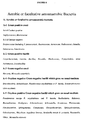
- the selected strains used to establish the MALDI-TOF-MS databases are given in Table 1 Table 1 species Strain Staphylococcus aureus CIP 7625 Micrococcus luteus CIP 103664 M. lentus CIP 103430 S. epidermidis CIP 103563 S. warneri CIP 103960 S. xylosus CIP 8166 S. intermedius CIP 8177 S. haemolyticus CIP 81.56 S. saprophyticus subsp saprophyticus CIP 104064 S. saprophyticus subsp bovis CIP 105260T S. lugdunensis CIP 103642 S. hominis subsp hominis CIP 102642 S.
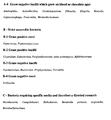
- strains belonging to the Micrococcacae family are given in Table 2.
- Table 2 Species Strain S. aureus 68 clinical isolates M. luteus CIP A270 S. epidermidis 81 clinical isolates S. warneri CIP 106511 CIP 8165 6 clinical isolates S. xylosus CIP 103720 CIP 104065 S. intermedius CIP 81.60 S. haemolyticus CIP 104114 13 clinical isolates S. satprophyticus subsp saprophyticus CIP 76.125T CIP 103545 S. saprophyticus subsp bovis CIP 105262 CIP 105261 S. saprophyticus spp * 6 clinical isolates S.
- CNS isolates One hundred and sixteen clinical coagulase negative Staphylococci (CNS) isolates were also studied : 74 strains isolated from blood cultures, 25 strains isolated from children mediastinitis (skin, mediastinal liquid, electrodes), 12 strains isolated from bone infections (Hôpital Necker-Enfantscorps, Paris; Hôpital Raymond Poincaré, Garches, France), and 5 strains isolated from urinary tract infections. In addition, 68 clinical strains of Staphylococcus aureus isolated from miscelleanous infections were analyzed.
- CNS The clinical strains of CNS were differentiated from S. aureus strains by conventional phenotypic tests including Slidex latex agglutination test (bioMérieux, Marcy l'Etoile, France) and DNAse test. Tube coagulase tests were performed in case of discordance between the two latest techniques.
- the precise identification of the CNS was obtained by sequencing an internal fragment of the SodA gene as previously described. Briefly, extraction of genomic DNA from pure cultures of CNS was performed with Quiagene kit (Courtaboeuf, France).
- Partial SodA gene was amplified and the amplicons obtained were sequenced using ABI Big Dye Terminator v1.1 cycle sequencing ready reaction kit (Applied Biosystems, Foster City, CA, USA) as previously described by Poyart et al. 2001, J. Clin. Microbiol. 39:4296-4301 .
- the nucleotidic sequences were sent to the GenBank database for species assignment.
- the strains were grown on Mu ⁇ ller Hinton agar or Columbia agar +5% horse blood (bioMérieux), incubated 24 or 48 H at 37°C.
- a isolated colony was harvested in 100 ⁇ l of sterile water; 1 ⁇ l of this mixture was deposited on a target plate (Bruker Daltonics, Bremen, Germany) in 3 replicates and allowed to dry at room temperature.
- One ⁇ l of absolute ethanol was then added in each well, and 1 ⁇ l of the matrix solution DHB (2.5 dihydroxybenzoic acid 50 mg/ml, acetonitrile 30%, trifluoroacetic acid 0.1%). After drying, 1 ⁇ l of the matrix solution DHB was added.
- Strains listed in table 1 are those arbitrary selected as being representative of the genospecies.
- the databases were designated 1 through 4, respectively: they were obtained using bacterial cultures on Mu ⁇ ller Hinton 24H (database1), Mu ⁇ ller Hinton 48H (database2), columbia horse blood medium 24H (database 3), columbia horse blood medium 24H (database 4).
- the standard deviation of the m/z value for each of the conserved peak was never above 7.
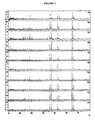
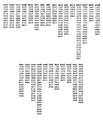
- the m/z value of the peaks with a relative intensity above 0.1 and present in all 10 sets of data for each growth condition are reported on Figure 3 .
- Table 3 Number of peaks for each database * database 1 database 2 database 3 database 4 database 1 database 2 database 3 database 4 S. aureus 11 11 (8) 7 (2) 8 (4) S. intermedius 10 12 (9) 7 (6) 6 (5) S.
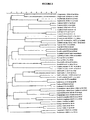
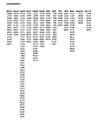
- Table 3 shows for each selected strain and each database the number of peaks that have been retained. Whereas for a strain, some peaks were conserved regardless of the medium or the time of culture, other peaks either disappeared or appeared upon changing culture conditions. However, for a given medium and time of culture, the set of peaks was strain specific as showed on dendrograms ( Figure 2 ).
- MALDI-TOF MS was performed using bacteria grown on Mu ⁇ ller Hinton for 24 hours at 37°C.
- the strains used are the isolates listed table 2.
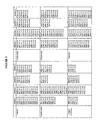
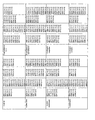
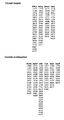
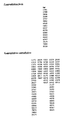
- the tested strain had always the best match with the strain belonging to the same genospecies of the database. All data are reported on Figure 4 and Figure 5 .
- Table 4 Species Number of strains database 1 database 2 database 3 database 4 S. aureus 68 9,6/11 8,7/11 4,5/7 4,7/8 S. capitis capitis 1 8/8 14/14 4/4 6/6 S. capitis urealyticus 1 7/7 7/9 6/6 4/4 S. caprae 2 5/5 8/12 6/6 5/6 S. cohni urealyticus 2 6/6 9/12 7/7 6,5/8 S. epidermidis 81 3,2/4 5,1/11 2,2/4 3,4/6 S. haemolyticus 14 3,4/5 5,4/10 3,3/4 4,8/8 S. hominis hominis 6 5,6/8 * 5,7 /9 3,5/4 3,6/5 S.
- Table 4 shows for each genospecies the average number of peaks that were conserved between the tested strains and each of the four databases.
- the first step was to build a complete database for all species belonging to the group of non fermenting Gram negative bacilli recovered in human. This database was then validated to identify using MALDI-TOF MS all the clinical non fermenting Gram negative bacilli that have been recovered from Cystic fibrosis (CF) patients in a one year period.
- CF Cystic fibrosis
- the reference strains used to engineer the MALDI-TOF MS database belonged to 52 species of non fermenting Gram negative bacilli that can possibly be recovered from patients. These strains are listed Table 4. Table 4 Species Reference strain Species Reference strain Pseudomonas aeruginosa CIP 76.110 Inquilinus limosus CIP 108342 T Pseudomonas fluorescens CIP 69.13 T Pandoraea apista CIP 106627 T Pseudomonas mosselii CIP 104061 Bordetella avium CIP 103348 T Pseudomonas putida CIP 52.191 T Bordetella bronchiseptica CIP 55.110 T Pseudomonas stutzeri CIP 103022 T Bordetella hinzii CIP 104527 T Pseudomonas mendocina CIP 75.21 T Alcaligenes faecalis subsp.
- MALDI-TOF-MS The strains were grown on Mueller-Hinton agar and incubated for 24h at 37°C. Most of the isolates grew after 24h but some strains that didn't grow after 24h were further incubated for 48h or 72h. An isolated colony was harvested in 100 ⁇ l of sterile water; 1 ⁇ l of this mixture was deposited on a target plate (Bruker Daltonics, Bremen, Germany) in three replicates and allowed to dry at room temperature. One microliter of absolute ethanol was then added in each well, and the mixture allowed to dry.
- Table 5 shows for 8 species the values of peaks that have been retained for the database.
- MALDI-TOF-MS analysis was performed on a panel of 400 P. aeruginosa strains and on all remaining non P. aeruginosa strains. For each isolate, all m/z values of the spectrum were considered. For each strain, all peaks were retained regardless of their intensity and were then compared with that of the database using the BGP-database software. This software chooses the best match between the tested strain and the database, taking into account a possible error of the m/z value. This value was set up to . The strain was identified as belonging to the genospecies of the strain of the database giving the best match. The results are given in Table 6 below which shows the matches obtained for a P. aeruginosa strain provided by the BGP software.
- Table 7 shows the identification obtained for all clinical strains, compared to the second choice of species identification.
- Table 7 Strains (number) Patients (number) Species identified by conventional technics Comparison with the reference strain Difference of % of common peaks with respective reference strains between the first and the second choice of species Reference strain Mean % of common peaks 400 100 P. aeruginosa P. aeruginosa 86 (ext : 23-100) 35 (ext : 2-67) 54 11 A. xylosoxydans subsp. xylosoxydans A. xylosoxydans subsp. xylosoxydans 91 (ext : 73-100) 75 (ext: 1-5) (2 nd choice: mostly A. piechaudii or A.
- cepacia sensu stricto were correctly identified as B. cenocepacia. ** All strains but one (identified as R. picketti ) were correctly identified as R. mannitolilytica. ***: this percentage is the same as that obtained with B. gladioli pathovar. cocovenenans
- MALDI-TOF-MS correctly identified 100% of P. aeruginosa, 100 % of A. xylosoxydans and 100% of S. maltophilia strains.
- MS identified A. xylosoxydans clinical strains at the subspecies level.
- MS analysis correctly identified 11 BCC strains as B. cenospacia.
- B. cenospacia For the remaining 3 BCC strains, there was no differentiation between B. cenocepacia and B. cepacia sensu stricto. It should pointed out that the 9 R. mannitolilytica strains except one (identified by MS as R. picketti ) were correctly identified by MS.
- MALDI-TOF-MS enables very rapid bacterial identification while conventionnal biochemical identification by API 20NE often requires more than 24h-48h with frequent misidentifications.
- MALDI-TOF-MS strains identification is therefore a very interesting method for characterization of Gram negative bacilli species and will help understanding their clinical relevance and distribution.
Landscapes
- Life Sciences & Earth Sciences (AREA)
- Health & Medical Sciences (AREA)
- Engineering & Computer Science (AREA)
- Chemical & Material Sciences (AREA)
- Molecular Biology (AREA)
- Physics & Mathematics (AREA)
- Organic Chemistry (AREA)
- Bioinformatics & Cheminformatics (AREA)
- Proteomics, Peptides & Aminoacids (AREA)
- Immunology (AREA)
- Zoology (AREA)
- Wood Science & Technology (AREA)
- Bioinformatics & Computational Biology (AREA)
- Biochemistry (AREA)
- General Health & Medical Sciences (AREA)
- Biotechnology (AREA)
- Biophysics (AREA)
- Analytical Chemistry (AREA)
- Microbiology (AREA)
- Biomedical Technology (AREA)
- Hematology (AREA)
- Urology & Nephrology (AREA)
- Spectroscopy & Molecular Physics (AREA)
- General Engineering & Computer Science (AREA)
- Genetics & Genomics (AREA)
- Toxicology (AREA)
- Optics & Photonics (AREA)
- Cell Biology (AREA)
- Food Science & Technology (AREA)
- Medicinal Chemistry (AREA)
- General Physics & Mathematics (AREA)
- Pathology (AREA)
- Measuring Or Testing Involving Enzymes Or Micro-Organisms (AREA)
- Other Investigation Or Analysis Of Materials By Electrical Means (AREA)
Claims (17)
- Verfahren zum Identifizieren eines aus einer klinischen Probe isolierten Stammes auf dem Spezies- und/oder Subspezies-Niveau unter Verwendung einer MALDI-TOF-MS-Analyse, umfassend einen Schritt des Klassifizierens des Keims in eine Gruppe, bevor man die MALDI-TOF-MS-Analyse durchführt, wobei die Analyse den Schritt des Vergleichens des Spektrumprofils des zu identifizierenden Stamms mit einer Referenzdatenbank umfasst, die die charakteristischen MALDI-TOF-MS-Spektren von Stämmen enthält, die repräsentativ für die Genospezies der Gruppe von Keimen sind, zu der der zu identifizierende Stamm gehört, wobei die Datenbank für jeden repräsentativen Stamm Peaks enthält, die im Vergleich zu dem Peak mit der höchsten Intensität, die willkürlich auf 1 gesetzt wird, eine relative Intensität von mehr als 0,05 aufweisen, soweit sie in wenigstens 2 Subkulturen vorhanden sind.
- Verfahren gemäß Anspruch 1, wobei die Datenbank für jeden repräsentativen Stamm Peaks enthält, die im Vergleich zu dem Peak mit der höchsten Intensität, die willkürlich auf 1 gesetzt wird, eine relative Intensität von mehr als 0,1 aufweisen.
- Verfahren gemäß einem der Ansprüche 1 oder 2, wobei der Klassifizierungsschritt auf den Wachstumsbedingungen und/oder den Merkmalen von Kolonien und/oder der Morphologie der Bakterien bei mikroskopischer Untersuchung und/oder der Gram-Färbung und/oder einfachen Phänotyptests beruht.
- Verfahren gemäß einem der Ansprüche 1 bis 3, umfassend das Durchführen der MALDI-TOF-MS-Technik mit ganzen intakten Zellen oder mit Proteinextrakten, die nach einer Lyse erhalten werden oder einer Fraktion der Zellbestandteile entsprechen.
- Verfahren gemäß einem der Ansprüche 1 bis 4, umfassend das Hinzufügen eines Benzoesäure-Derivats als Matrixmedium zu den isolierten Kolonien, bevor man die MALDI-TOF-MS-Analyse durchführt, wobei das Derivat aus der Gruppe ausgewählt ist, die DHB umfasst.
- Verfahren gemäß einem der Ansprüche 1 bis 5, wobei jedes Spektrum die Summe von wenigstens 400 Laserbeschüssen, vorzugsweise mehr als 1000, besonders bevorzugt mehr als 2000, ist, die aus verschiedenen Bereichen des Wells stammen, der den zu analysierenden Stamm enthält, wobei das Spektrum in einem Bereich zwischen m/z 500 und 50 000 analysiert wird.
- Verfahren gemäß Anspruch 6, umfassend die Verwendung von wenigstens 1000 Laserbeschüssen.
- Verfahren gemäß Anspruch 7, umfassend die Verwendung von wenigstens 2000 Laserbeschüssen.
- Verfahren gemäß einem der Ansprüche 6 bis 8, wobei das Spektrum in einem m/z-Bereich zwischen 500 und 20 000 analysiert wird.
- Verfahren gemäß Anspruch 9, wobei das Spektrum in einem m/z-Bereich zwischen 2000 und 20 000 analysiert wird.
- Verfahren gemäß einem der Ansprüche 1 bis 10, wobei der zu identifizierende Stamm aus der Gruppe ausgewählt ist, die Bakterien umfasst.
- Verfahren gemäß Anspruch 11, wobei es sich bei den Bakterien um einen Coagulase-negativen Staphylococcus handelt.
- Verfahren gemäß Anspruch 11, wobei es sich bei den Bakterien um einen nichtfermentierenden Gram-negativen Bacillus handelt.
- Verfahren gemäß einem der Ansprüche 1 bis 10, wobei der zu identifizierende Stamm aus der Gruppe ausgewählt ist, die Hefen umfasst.
- Verfahren gemäß einem der Ansprüche 1 bis 10, wobei der zu identifizierende Stamm aus der Gruppe ausgewählt ist, die Schimmelpilze umfasst.
- Verfahren gemäß einem der Ansprüche 1 bis 15, umfassend das Behalten von Peaks, die im Vergleich zu dem Peak mit der höchsten Intensität, die willkürlich auf 1 gesetzt wird, eine relative Intensität von mehr als 0,05 aufweisen, im Spektrum des getesteten Stamms.
- Verfahren gemäß Anspruch 16, umfassend das Behalten von Peaks, die eine relative Intensität von mehr als 0,1 aufweisen.
Priority Applications (2)
| Application Number | Priority Date | Filing Date | Title |
|---|---|---|---|
| EP08737565.5A EP2121963B1 (de) | 2007-01-08 | 2008-01-08 | Verfahren zur Identifikation eines von einer klinischen Probe isolierten Stamms auf Spezies- oder Subspezies-Ebene |
| PL08737565T PL2121963T3 (pl) | 2007-01-08 | 2008-01-08 | Sposób identyfikacji szczepu wyizolowanego z próbki klinicznej na poziomie gatunku i / lub podgatunku |
Applications Claiming Priority (3)
| Application Number | Priority Date | Filing Date | Title |
|---|---|---|---|
| EP07290019A EP1942194A1 (de) | 2007-01-08 | 2007-01-08 | Verfahren zur Identifizierung eines aus einer klinischen Probe isolierten Keims |
| EP08737565.5A EP2121963B1 (de) | 2007-01-08 | 2008-01-08 | Verfahren zur Identifikation eines von einer klinischen Probe isolierten Stamms auf Spezies- oder Subspezies-Ebene |
| PCT/IB2008/001058 WO2008084409A2 (en) | 2007-01-08 | 2008-01-08 | Means for identifying a strain isolated from a clinical sample at the species and/or subspecies level |
Publications (2)
| Publication Number | Publication Date |
|---|---|
| EP2121963A2 EP2121963A2 (de) | 2009-11-25 |
| EP2121963B1 true EP2121963B1 (de) | 2014-04-09 |
Family
ID=37885774
Family Applications (2)
| Application Number | Title | Priority Date | Filing Date |
|---|---|---|---|
| EP07290019A Withdrawn EP1942194A1 (de) | 2007-01-08 | 2007-01-08 | Verfahren zur Identifizierung eines aus einer klinischen Probe isolierten Keims |
| EP08737565.5A Revoked EP2121963B1 (de) | 2007-01-08 | 2008-01-08 | Verfahren zur Identifikation eines von einer klinischen Probe isolierten Stamms auf Spezies- oder Subspezies-Ebene |
Family Applications Before (1)
| Application Number | Title | Priority Date | Filing Date |
|---|---|---|---|
| EP07290019A Withdrawn EP1942194A1 (de) | 2007-01-08 | 2007-01-08 | Verfahren zur Identifizierung eines aus einer klinischen Probe isolierten Keims |
Country Status (11)
| Country | Link |
|---|---|
| US (1) | US8155892B2 (de) |
| EP (2) | EP1942194A1 (de) |
| JP (1) | JP5646176B2 (de) |
| CN (2) | CN101680020A (de) |
| AU (1) | AU2008204257B2 (de) |
| CA (1) | CA2674648C (de) |
| DK (1) | DK2121963T3 (de) |
| ES (1) | ES2477499T3 (de) |
| PL (1) | PL2121963T3 (de) |
| PT (1) | PT2121963E (de) |
| WO (1) | WO2008084409A2 (de) |
Families Citing this family (21)
| Publication number | Priority date | Publication date | Assignee | Title |
|---|---|---|---|---|
| EP2157599A1 (de) * | 2008-08-21 | 2010-02-24 | Nederlandse Organisatie voor toegepast- natuurwetenschappelijk onderzoek TNO | Verfahren und Vorrichtung zur Identifikation biologischer Materialien |
| JP5515139B2 (ja) * | 2008-10-21 | 2014-06-11 | 国立大学法人名古屋大学 | 多剤耐性緑膿菌スクリーニング培地 |
| GB0902033D0 (en) | 2009-02-06 | 2009-03-11 | B V | Rapid detection of bacteria using mass spectrometric analysis |
| FR2942806B1 (fr) | 2009-03-03 | 2011-09-02 | Assist Publ Hopitaux De Paris | Procede d'identification de germes en milieu liquide |
| US8603769B2 (en) * | 2011-10-07 | 2013-12-10 | Becton, Dickinson And Company | Method for direct and rapid identification of microorganisms and antimicrobial susceptibility testing from positive blood cultures |
| JP5750676B2 (ja) * | 2011-10-18 | 2015-07-22 | 株式会社島津製作所 | 細胞識別装置及びプログラム |
| FR2982367B1 (fr) * | 2011-11-08 | 2013-12-27 | Biomerieux Sa | Procede de detection de l'hemolysine delta de staphylococcus aureus par spectrometrie de masse directement a partir d'une population bacterienne |
| EP2600385A1 (de) | 2011-12-02 | 2013-06-05 | bioMérieux, Inc. | Verfahren zur Identifizierung von Mikroorganismen durch Massenspektrometrie |
| US10519482B2 (en) | 2012-02-29 | 2019-12-31 | Becton, Dickinson And Company | Formulations and process for isolating viable microorganisms from positive blood cultures |
| ES2821376T3 (es) | 2012-03-30 | 2021-04-26 | Bd Kiestra Bv | Selección automática de microorganismos e identificación usando MALDI |
| US20130309716A1 (en) * | 2012-05-17 | 2013-11-21 | Biomerieux Inc. | Methods For Inactiviation And/or Extraction of A Fungus Test Sample For Characterization And/or Identification Using Mass Spectrometry |
| PL223203B1 (pl) | 2012-08-31 | 2016-10-31 | Wrocławskie Centrum Badań Eit + Spółka Z Ograniczoną | Sposób identyfikacji chemotypów lipopolisacharydowych bakterii Gram-ujemnych z zastosowaniem metody MALDI-TOF MS |
| KR101390878B1 (ko) * | 2013-07-16 | 2014-04-30 | 국방과학연구소 | 인-시츄 말디-토프 질량분석기를 이용한 포자를 형성하는 바실러스 균의 동정 방법 및 분석시스템 |
| GB201317837D0 (en) | 2013-10-09 | 2013-11-20 | Kratos Analytical Ltd | Microbial analysis |
| US9663824B2 (en) | 2013-10-10 | 2017-05-30 | Wake Forest University Health Sciences | Compositions and methods for epigenetic regulation of long chain polyunsaturated fatty acid production |
| JP6238069B2 (ja) * | 2014-03-20 | 2017-11-29 | 株式会社島津製作所 | 微生物の識別方法 |
| CN106199003A (zh) * | 2016-07-21 | 2016-12-07 | 郑州安图生物工程股份有限公司 | 基于飞行时间质谱原理的微生物肽质量指纹图谱库的构建方法 |
| CN107064286B (zh) * | 2017-01-16 | 2018-07-20 | 常州市疾病预防控制中心 | 革兰氏阳性及阴性菌质谱检测试剂盒及快速鉴定的方法 |
| CN110361537A (zh) * | 2019-07-08 | 2019-10-22 | 邵阳学院 | 一种检测病原微生物的方法 |
| CN110501414B (zh) * | 2019-08-24 | 2022-03-11 | 中国人民解放军陆军特色医学中心 | 一种vim型和spm型金属酶铜绿假单胞菌的识别模型、构建方法及应用 |
| CN112646904B (zh) * | 2020-12-14 | 2023-07-25 | 深圳市计量质量检测研究院 | 唐菖蒲伯克霍尔德氏菌及米酵菌酸产毒株的检测方法、检测用荧光pcr引物和探针 |
Family Cites Families (10)
| Publication number | Priority date | Publication date | Assignee | Title |
|---|---|---|---|---|
| US6177266B1 (en) * | 1996-04-29 | 2001-01-23 | The United States Of America As Represented By The Secretary Of The Army | Rapid identification of bacteria by mass spectrometry |
| GB9617852D0 (en) * | 1996-08-27 | 1996-10-09 | Univ Manchester Metropolitan | Micro-organism identification |
| US7020559B1 (en) * | 1998-11-17 | 2006-03-28 | University Of Maryland | Methods for identifying and classifying organisms by mass spectrometry and database searching |
| US6455280B1 (en) * | 1998-12-22 | 2002-09-24 | Genset S.A. | Methods and compositions for inhibiting neoplastic cell growth |
| CA2368672A1 (en) * | 1999-03-24 | 2000-09-28 | Genset S.A. | Genomic sequence of the purh gene and purh-related biallelic markers |
| CA2415224A1 (en) * | 2000-05-31 | 2001-12-06 | John S. Morgan | Methods for using mass spectrometry to identify and classify filamentous fungi, yeasts, molds and pollen |
| DE10038694C2 (de) * | 2000-07-28 | 2003-09-25 | Anagnostec Ges Fuer Analytisch | Verfahren zur Identifizierung von Mikroorganismen mittels MALDI-TOF-MS |
| US20020192676A1 (en) * | 2001-06-18 | 2002-12-19 | Madonna Angelo J. | Method for determining if a type of bacteria is present in a mixture |
| ATE493751T1 (de) * | 2004-04-14 | 2011-01-15 | Dh Technologies Dev Pte Ltd | Identifikation modifizierter peptide durch massenspektrometrie |
| DE102005002672B4 (de) * | 2005-01-13 | 2009-02-26 | Universität Leipzig | Verfahren zur schnellen Differenzierung von Mikroorganismen auf Subspezies-Ebene mittels MALDI-TOF MS |
-
2007
- 2007-01-08 EP EP07290019A patent/EP1942194A1/de not_active Withdrawn
-
2008
- 2008-01-08 ES ES08737565.5T patent/ES2477499T3/es active Active
- 2008-01-08 JP JP2009545255A patent/JP5646176B2/ja not_active Expired - Fee Related
- 2008-01-08 AU AU2008204257A patent/AU2008204257B2/en not_active Ceased
- 2008-01-08 PL PL08737565T patent/PL2121963T3/pl unknown
- 2008-01-08 DK DK08737565.5T patent/DK2121963T3/da active
- 2008-01-08 CN CN200880005614A patent/CN101680020A/zh active Pending
- 2008-01-08 CN CN201610274558.8A patent/CN106399450A/zh active Pending
- 2008-01-08 EP EP08737565.5A patent/EP2121963B1/de not_active Revoked
- 2008-01-08 CA CA2674648A patent/CA2674648C/en not_active Expired - Fee Related
- 2008-01-08 WO PCT/IB2008/001058 patent/WO2008084409A2/en not_active Ceased
- 2008-01-08 PT PT87375655T patent/PT2121963E/pt unknown
-
2009
- 2009-07-08 US US12/458,353 patent/US8155892B2/en not_active Expired - Fee Related
Also Published As
| Publication number | Publication date |
|---|---|
| US20100116980A1 (en) | 2010-05-13 |
| PT2121963E (pt) | 2014-07-18 |
| US8155892B2 (en) | 2012-04-10 |
| AU2008204257B2 (en) | 2014-05-29 |
| AU2008204257A1 (en) | 2008-07-17 |
| CA2674648A1 (en) | 2008-07-17 |
| ES2477499T3 (es) | 2014-07-17 |
| EP2121963A2 (de) | 2009-11-25 |
| JP2010515915A (ja) | 2010-05-13 |
| JP5646176B2 (ja) | 2014-12-24 |
| WO2008084409A3 (en) | 2008-10-30 |
| WO2008084409A2 (en) | 2008-07-17 |
| EP1942194A1 (de) | 2008-07-09 |
| DK2121963T3 (da) | 2014-07-07 |
| PL2121963T3 (pl) | 2014-09-30 |
| CA2674648C (en) | 2018-07-10 |
| CN101680020A (zh) | 2010-03-24 |
| CN106399450A (zh) | 2017-02-15 |
Similar Documents
| Publication | Publication Date | Title |
|---|---|---|
| EP2121963B1 (de) | Verfahren zur Identifikation eines von einer klinischen Probe isolierten Stamms auf Spezies- oder Subspezies-Ebene | |
| Hou et al. | Current status of MALDI-TOF mass spectrometry in clinical microbiology | |
| Welker et al. | An update on the routine application of MALDI-TOF MS in clinical microbiology | |
| Richter et al. | Identification of Enterobacteriaceae by matrix-assisted laser desorption/ionization time-of-flight mass spectrometry using the VITEK MS system | |
| Wattal et al. | Matrix-assisted laser desorption ionization time of flight mass spectrometry (MALDI-TOF MS) for rapid identification of micro-organisms in the routine clinical microbiology laboratory | |
| Carbonnelle et al. | Rapid identification of Staphylococci isolated in clinical microbiology laboratories by matrix-assisted laser desorption ionization-time of flight mass spectrometry | |
| Carbonnelle et al. | Robustness of two MALDI-TOF mass spectrometry systems for bacterial identification | |
| Carbonnelle et al. | MALDI-TOF mass spectrometry tools for bacterial identification in clinical microbiology laboratory | |
| Coltella et al. | Advancement in the routine identification of anaerobic bacteria by MALDI-TOF mass spectrometry | |
| EP2354796B1 (de) | Mehrstufige Suche für Mikrobenmassenspektren in Bezugsbibliotheken | |
| US20110318776A1 (en) | Method for identifying germs in a liquid medium | |
| CN112863601B (zh) | 病原微生物耐药基因归属模型及其建立方法和应用 | |
| CN112779343A (zh) | 一种病原微生物药敏检测方法 | |
| Oros et al. | Identification of pathogens from native urine samples by MALDI-TOF/TOF tandem mass spectrometry | |
| Sibińska et al. | Comparison of the Bruker Microflex LT and Zybio EXS2600 MALDI TOF MS systems for the identification of clinical microorganisms | |
| US20100203576A1 (en) | Process for determination of microorganisms' resistance to antibiotics | |
| WO2022057943A1 (zh) | 一种基于maldi-tof ms的蜡样芽胞杆菌和苏云金芽胞杆菌快速鉴定方法 | |
| Velichko et al. | Classification and identification tasks in microbiology: mass spectrometric methods coming to the aid | |
| Opota et al. | Applications of MALDI‐TOF Mass Spectrometry in Clinical Diagnostic Microbiology | |
| CN115678958A (zh) | 一种快速鉴定耐碳青霉烯肺炎克雷伯杆菌的方法 | |
| Prajapati et al. | Assessment of Vitek 2 system and MALDI-TOF MS for identification of lactose-fermenting bacteria: Comparing with whole-genome sequencing-As a gold standard | |
| Kumar et al. | MALDI-TOF MS: A Rapid Way to Identify Bacteria | |
| Brunelli et al. | Use of Maldi-Tof Mass spectrometry in direct microorganism identification in clinical laboratories | |
| Ma et al. | Evaluation of MALDI-TOF systems (autof MS 1000) in identification of pharmaceutical environmental bacteria | |
| Mehwish et al. | PERFORMANCE OF THE VITEK MS MATRIX-ASSISTED LASER DESORPTION IONIZATION-TIME OF FLIGHT MASS SPECTROMETRY SYSTEM FOR RAPID IDENTIFICATION OF CLINICAL MICROBIOLOGY ISOLATES |
Legal Events
| Date | Code | Title | Description |
|---|---|---|---|
| PUAI | Public reference made under article 153(3) epc to a published international application that has entered the european phase |
Free format text: ORIGINAL CODE: 0009012 |
|
| 17P | Request for examination filed |
Effective date: 20090721 |
|
| AK | Designated contracting states |
Kind code of ref document: A2 Designated state(s): AT BE BG CH CY CZ DE DK EE ES FI FR GB GR HR HU IE IS IT LI LT LU LV MC MT NL NO PL PT RO SE SI SK TR |
|
| DAX | Request for extension of the european patent (deleted) | ||
| 17Q | First examination report despatched |
Effective date: 20100420 |
|
| RIC1 | Information provided on ipc code assigned before grant |
Ipc: G01N 33/68 20060101ALI20130724BHEP Ipc: C12Q 1/04 20060101AFI20130724BHEP |
|
| GRAP | Despatch of communication of intention to grant a patent |
Free format text: ORIGINAL CODE: EPIDOSNIGR1 |
|
| INTG | Intention to grant announced |
Effective date: 20131119 |
|
| RIN1 | Information on inventor provided before grant (corrected) |
Inventor name: DEGAND, NICOLAS Inventor name: NASSIF, XAVIER Inventor name: BERETTI, JEAN-LUC Inventor name: FERRONI, AGNES Inventor name: BOUGNOUX, MARIE ELISABETH Inventor name: CARBONNELLE, ETIENNE |
|
| GRAS | Grant fee paid |
Free format text: ORIGINAL CODE: EPIDOSNIGR3 |
|
| GRAA | (expected) grant |
Free format text: ORIGINAL CODE: 0009210 |
|
| AK | Designated contracting states |
Kind code of ref document: B1 Designated state(s): AT BE BG CH CY CZ DE DK EE ES FI FR GB GR HR HU IE IS IT LI LT LU LV MC MT NL NO PL PT RO SE SI SK TR |
|
| REG | Reference to a national code |
Ref country code: GB Ref legal event code: FG4D |
|
| REG | Reference to a national code |
Ref country code: AT Ref legal event code: REF Ref document number: 661402 Country of ref document: AT Kind code of ref document: T Effective date: 20140415 Ref country code: CH Ref legal event code: EP |
|
| REG | Reference to a national code |
Ref country code: IE Ref legal event code: FG4D |
|
| REG | Reference to a national code |
Ref country code: DE Ref legal event code: R096 Ref document number: 602008031399 Country of ref document: DE Effective date: 20140522 |
|
| REG | Reference to a national code |
Ref country code: DK Ref legal event code: T3 Effective date: 20140701 |
|
| REG | Reference to a national code |
Ref country code: NL Ref legal event code: T3 |
|
| REG | Reference to a national code |
Ref country code: CH Ref legal event code: NV Representative=s name: ISLER AND PEDRAZZINI AG, CH |
|
| REG | Reference to a national code |
Ref country code: ES Ref legal event code: FG2A Ref document number: 2477499 Country of ref document: ES Kind code of ref document: T3 Effective date: 20140717 |
|
| REG | Reference to a national code |
Ref country code: PT Ref legal event code: SC4A Free format text: AVAILABILITY OF NATIONAL TRANSLATION Effective date: 20140708 |
|
| REG | Reference to a national code |
Ref country code: SE Ref legal event code: TRGR |
|
| REG | Reference to a national code |
Ref country code: AT Ref legal event code: MK05 Ref document number: 661402 Country of ref document: AT Kind code of ref document: T Effective date: 20140409 |
|
| REG | Reference to a national code |
Ref country code: LT Ref legal event code: MG4D |
|
| REG | Reference to a national code |
Ref country code: PL Ref legal event code: T3 |
|
| PG25 | Lapsed in a contracting state [announced via postgrant information from national office to epo] |
Ref country code: BG Free format text: LAPSE BECAUSE OF FAILURE TO SUBMIT A TRANSLATION OF THE DESCRIPTION OR TO PAY THE FEE WITHIN THE PRESCRIBED TIME-LIMIT Effective date: 20140709 Ref country code: NO Free format text: LAPSE BECAUSE OF FAILURE TO SUBMIT A TRANSLATION OF THE DESCRIPTION OR TO PAY THE FEE WITHIN THE PRESCRIBED TIME-LIMIT Effective date: 20140709 Ref country code: FI Free format text: LAPSE BECAUSE OF FAILURE TO SUBMIT A TRANSLATION OF THE DESCRIPTION OR TO PAY THE FEE WITHIN THE PRESCRIBED TIME-LIMIT Effective date: 20140409 Ref country code: IS Free format text: LAPSE BECAUSE OF FAILURE TO SUBMIT A TRANSLATION OF THE DESCRIPTION OR TO PAY THE FEE WITHIN THE PRESCRIBED TIME-LIMIT Effective date: 20140809 Ref country code: GR Free format text: LAPSE BECAUSE OF FAILURE TO SUBMIT A TRANSLATION OF THE DESCRIPTION OR TO PAY THE FEE WITHIN THE PRESCRIBED TIME-LIMIT Effective date: 20140710 Ref country code: LT Free format text: LAPSE BECAUSE OF FAILURE TO SUBMIT A TRANSLATION OF THE DESCRIPTION OR TO PAY THE FEE WITHIN THE PRESCRIBED TIME-LIMIT Effective date: 20140409 |
|
| PG25 | Lapsed in a contracting state [announced via postgrant information from national office to epo] |
Ref country code: LV Free format text: LAPSE BECAUSE OF FAILURE TO SUBMIT A TRANSLATION OF THE DESCRIPTION OR TO PAY THE FEE WITHIN THE PRESCRIBED TIME-LIMIT Effective date: 20140409 Ref country code: HR Free format text: LAPSE BECAUSE OF FAILURE TO SUBMIT A TRANSLATION OF THE DESCRIPTION OR TO PAY THE FEE WITHIN THE PRESCRIBED TIME-LIMIT Effective date: 20140409 Ref country code: AT Free format text: LAPSE BECAUSE OF FAILURE TO SUBMIT A TRANSLATION OF THE DESCRIPTION OR TO PAY THE FEE WITHIN THE PRESCRIBED TIME-LIMIT Effective date: 20140409 |
|
| REG | Reference to a national code |
Ref country code: DE Ref legal event code: R026 Ref document number: 602008031399 Country of ref document: DE |
|
| PLBI | Opposition filed |
Free format text: ORIGINAL CODE: 0009260 |
|
| PG25 | Lapsed in a contracting state [announced via postgrant information from national office to epo] |
Ref country code: CZ Free format text: LAPSE BECAUSE OF FAILURE TO SUBMIT A TRANSLATION OF THE DESCRIPTION OR TO PAY THE FEE WITHIN THE PRESCRIBED TIME-LIMIT Effective date: 20140409 Ref country code: EE Free format text: LAPSE BECAUSE OF FAILURE TO SUBMIT A TRANSLATION OF THE DESCRIPTION OR TO PAY THE FEE WITHIN THE PRESCRIBED TIME-LIMIT Effective date: 20140409 Ref country code: RO Free format text: LAPSE BECAUSE OF FAILURE TO SUBMIT A TRANSLATION OF THE DESCRIPTION OR TO PAY THE FEE WITHIN THE PRESCRIBED TIME-LIMIT Effective date: 20140409 Ref country code: SK Free format text: LAPSE BECAUSE OF FAILURE TO SUBMIT A TRANSLATION OF THE DESCRIPTION OR TO PAY THE FEE WITHIN THE PRESCRIBED TIME-LIMIT Effective date: 20140409 |
|
| PLAX | Notice of opposition and request to file observation + time limit sent |
Free format text: ORIGINAL CODE: EPIDOSNOBS2 |
|
| 26 | Opposition filed |
Opponent name: CABINET LAURENT & CHARRAS Effective date: 20150109 |
|
| REG | Reference to a national code |
Ref country code: DE Ref legal event code: R026 Ref document number: 602008031399 Country of ref document: DE Effective date: 20150109 |
|
| PLAF | Information modified related to communication of a notice of opposition and request to file observations + time limit |
Free format text: ORIGINAL CODE: EPIDOSCOBS2 |
|
| REG | Reference to a national code |
Ref country code: FR Ref legal event code: CL Name of requester: ANDROMAS SAS, FR Effective date: 20150427 |
|
| PG25 | Lapsed in a contracting state [announced via postgrant information from national office to epo] |
Ref country code: SI Free format text: LAPSE BECAUSE OF FAILURE TO SUBMIT A TRANSLATION OF THE DESCRIPTION OR TO PAY THE FEE WITHIN THE PRESCRIBED TIME-LIMIT Effective date: 20140409 |
|
| PLBB | Reply of patent proprietor to notice(s) of opposition received |
Free format text: ORIGINAL CODE: EPIDOSNOBS3 |
|
| PG25 | Lapsed in a contracting state [announced via postgrant information from national office to epo] |
Ref country code: LU Free format text: LAPSE BECAUSE OF FAILURE TO SUBMIT A TRANSLATION OF THE DESCRIPTION OR TO PAY THE FEE WITHIN THE PRESCRIBED TIME-LIMIT Effective date: 20150108 |
|
| PG25 | Lapsed in a contracting state [announced via postgrant information from national office to epo] |
Ref country code: MC Free format text: LAPSE BECAUSE OF FAILURE TO SUBMIT A TRANSLATION OF THE DESCRIPTION OR TO PAY THE FEE WITHIN THE PRESCRIBED TIME-LIMIT Effective date: 20140409 |
|
| REG | Reference to a national code |
Ref country code: IE Ref legal event code: MM4A |
|
| REG | Reference to a national code |
Ref country code: FR Ref legal event code: PLFP Year of fee payment: 9 |
|
| PG25 | Lapsed in a contracting state [announced via postgrant information from national office to epo] |
Ref country code: IE Free format text: LAPSE BECAUSE OF NON-PAYMENT OF DUE FEES Effective date: 20150108 |
|
| PGFP | Annual fee paid to national office [announced via postgrant information from national office to epo] |
Ref country code: GB Payment date: 20151230 Year of fee payment: 9 |
|
| PGFP | Annual fee paid to national office [announced via postgrant information from national office to epo] |
Ref country code: NL Payment date: 20160120 Year of fee payment: 9 |
|
| PGFP | Annual fee paid to national office [announced via postgrant information from national office to epo] |
Ref country code: ES Payment date: 20151230 Year of fee payment: 9 Ref country code: DE Payment date: 20160120 Year of fee payment: 9 Ref country code: CH Payment date: 20160120 Year of fee payment: 9 Ref country code: DK Payment date: 20160120 Year of fee payment: 9 Ref country code: IT Payment date: 20160118 Year of fee payment: 9 |
|
| PGFP | Annual fee paid to national office [announced via postgrant information from national office to epo] |
Ref country code: BE Payment date: 20160120 Year of fee payment: 9 Ref country code: PT Payment date: 20160104 Year of fee payment: 9 Ref country code: PL Payment date: 20160104 Year of fee payment: 9 Ref country code: SE Payment date: 20160120 Year of fee payment: 9 Ref country code: FR Payment date: 20160121 Year of fee payment: 9 |
|
| REG | Reference to a national code |
Ref country code: DE Ref legal event code: R064 Ref document number: 602008031399 Country of ref document: DE Ref country code: DE Ref legal event code: R103 Ref document number: 602008031399 Country of ref document: DE |
|
| PG25 | Lapsed in a contracting state [announced via postgrant information from national office to epo] |
Ref country code: MT Free format text: LAPSE BECAUSE OF FAILURE TO SUBMIT A TRANSLATION OF THE DESCRIPTION OR TO PAY THE FEE WITHIN THE PRESCRIBED TIME-LIMIT Effective date: 20140409 |
|
| RDAF | Communication despatched that patent is revoked |
Free format text: ORIGINAL CODE: EPIDOSNREV1 |
|
| STAA | Information on the status of an ep patent application or granted ep patent |
Free format text: STATUS: THE PATENT HAS BEEN GRANTED |
|
| RDAG | Patent revoked |
Free format text: ORIGINAL CODE: 0009271 |
|
| REG | Reference to a national code |
Ref country code: CH Ref legal event code: PLX |
|
| 27W | Patent revoked |
Effective date: 20161202 |
|
| GBPR | Gb: patent revoked under art. 102 of the ep convention designating the uk as contracting state |
Effective date: 20161202 |
|
| PG25 | Lapsed in a contracting state [announced via postgrant information from national office to epo] |
Ref country code: HU Free format text: LAPSE BECAUSE OF FAILURE TO SUBMIT A TRANSLATION OF THE DESCRIPTION OR TO PAY THE FEE WITHIN THE PRESCRIBED TIME-LIMIT; INVALID AB INITIO Effective date: 20080108 |
|
| PG25 | Lapsed in a contracting state [announced via postgrant information from national office to epo] |
Ref country code: LI Free format text: LAPSE BECAUSE OF THE APPLICANT RENOUNCES Effective date: 20140409 Ref country code: CH Free format text: LAPSE BECAUSE OF THE APPLICANT RENOUNCES Effective date: 20140409 |
|
| REG | Reference to a national code |
Ref country code: SE Ref legal event code: ECNC |
|
| STAA | Information on the status of an ep patent application or granted ep patent |
Free format text: STATUS: PATENT REVOKED |
|
| PG25 | Lapsed in a contracting state [announced via postgrant information from national office to epo] |
Ref country code: CY Free format text: LAPSE BECAUSE OF FAILURE TO SUBMIT A TRANSLATION OF THE DESCRIPTION OR TO PAY THE FEE WITHIN THE PRESCRIBED TIME-LIMIT Effective date: 20140409 |
|
| PG25 | Lapsed in a contracting state [announced via postgrant information from national office to epo] |
Ref country code: TR Free format text: LAPSE BECAUSE OF FAILURE TO SUBMIT A TRANSLATION OF THE DESCRIPTION OR TO PAY THE FEE WITHIN THE PRESCRIBED TIME-LIMIT Effective date: 20140409 |