EP2103213A1 - Antibacterial agent and bactericidal agent - Google Patents
Antibacterial agent and bactericidal agent Download PDFInfo
- Publication number
- EP2103213A1 EP2103213A1 EP07859998A EP07859998A EP2103213A1 EP 2103213 A1 EP2103213 A1 EP 2103213A1 EP 07859998 A EP07859998 A EP 07859998A EP 07859998 A EP07859998 A EP 07859998A EP 2103213 A1 EP2103213 A1 EP 2103213A1
- Authority
- EP
- European Patent Office
- Prior art keywords
- agent
- antimicrobial agents
- microbicidal
- antimicrobial
- agents
- Prior art date
- Legal status (The legal status is an assumption and is not a legal conclusion. Google has not performed a legal analysis and makes no representation as to the accuracy of the status listed.)
- Withdrawn
Links
- 239000003242 anti bacterial agent Substances 0.000 title 1
- 239000003899 bactericide agent Substances 0.000 title 1
- 239000004599 antimicrobial Substances 0.000 claims abstract description 32
- 150000001875 compounds Chemical class 0.000 claims abstract description 25
- 239000002855 microbicide agent Substances 0.000 claims abstract description 14
- 229910052783 alkali metal Inorganic materials 0.000 claims abstract description 13
- 150000001340 alkali metals Chemical group 0.000 claims abstract description 7
- 238000011081 inoculation Methods 0.000 description 20
- 239000007864 aqueous solution Substances 0.000 description 14
- XLYOFNOQVPJJNP-UHFFFAOYSA-N water Chemical compound O XLYOFNOQVPJJNP-UHFFFAOYSA-N 0.000 description 12
- -1 ester compound Chemical class 0.000 description 9
- 235000002639 sodium chloride Nutrition 0.000 description 9
- 229920001817 Agar Polymers 0.000 description 8
- 239000008272 agar Substances 0.000 description 8
- 230000000845 anti-microbial effect Effects 0.000 description 8
- 239000012085 test solution Substances 0.000 description 8
- 241000588724 Escherichia coli Species 0.000 description 7
- 241001354013 Salmonella enterica subsp. enterica serovar Enteritidis Species 0.000 description 6
- HEMHJVSKTPXQMS-UHFFFAOYSA-M Sodium hydroxide Chemical compound [OH-].[Na+] HEMHJVSKTPXQMS-UHFFFAOYSA-M 0.000 description 6
- 241000201788 Staphylococcus aureus subsp. aureus Species 0.000 description 6
- 239000002609 medium Substances 0.000 description 6
- BDAGIHXWWSANSR-UHFFFAOYSA-N methanoic acid Natural products OC=O BDAGIHXWWSANSR-UHFFFAOYSA-N 0.000 description 6
- 230000003641 microbiacidal effect Effects 0.000 description 6
- 241000894006 Bacteria Species 0.000 description 5
- 230000000052 comparative effect Effects 0.000 description 5
- 238000000034 method Methods 0.000 description 5
- WPYMKLBDIGXBTP-UHFFFAOYSA-N benzoic acid Chemical compound OC(=O)C1=CC=CC=C1 WPYMKLBDIGXBTP-UHFFFAOYSA-N 0.000 description 4
- 238000003113 dilution method Methods 0.000 description 4
- 239000003814 drug Substances 0.000 description 4
- 229940079593 drug Drugs 0.000 description 4
- 238000004519 manufacturing process Methods 0.000 description 4
- 239000008363 phosphate buffer Substances 0.000 description 4
- KSEBMYQBYZTDHS-HWKANZROSA-M (E)-Ferulic acid Natural products COC1=CC(\C=C\C([O-])=O)=CC=C1O KSEBMYQBYZTDHS-HWKANZROSA-M 0.000 description 3
- OSWFIVFLDKOXQC-UHFFFAOYSA-N 4-(3-methoxyphenyl)aniline Chemical compound COC1=CC=CC(C=2C=CC(N)=CC=2)=C1 OSWFIVFLDKOXQC-UHFFFAOYSA-N 0.000 description 3
- KSEBMYQBYZTDHS-HWKANZROSA-N ferulic acid Chemical compound COC1=CC(\C=C\C(O)=O)=CC=C1O KSEBMYQBYZTDHS-HWKANZROSA-N 0.000 description 3
- 229940114124 ferulic acid Drugs 0.000 description 3
- KSEBMYQBYZTDHS-UHFFFAOYSA-N ferulic acid Natural products COC1=CC(C=CC(O)=O)=CC=C1O KSEBMYQBYZTDHS-UHFFFAOYSA-N 0.000 description 3
- 235000001785 ferulic acid Nutrition 0.000 description 3
- 235000019253 formic acid Nutrition 0.000 description 3
- 238000002360 preparation method Methods 0.000 description 3
- YQUVCSBJEUQKSH-UHFFFAOYSA-N protochatechuic acid Natural products OC(=O)C1=CC=C(O)C(O)=C1 YQUVCSBJEUQKSH-UHFFFAOYSA-N 0.000 description 3
- 235000011121 sodium hydroxide Nutrition 0.000 description 3
- 239000000243 solution Substances 0.000 description 3
- 238000003860 storage Methods 0.000 description 3
- QURCVMIEKCOAJU-UHFFFAOYSA-N trans-isoferulic acid Natural products COC1=CC=C(C=CC(O)=O)C=C1O QURCVMIEKCOAJU-UHFFFAOYSA-N 0.000 description 3
- GBVKIUSFVYOQEA-UHFFFAOYSA-N 2-[3-[bis(2-hydroxyethyl)amino]propyl-octadecylamino]ethanol;hexadecan-1-amine;dihydrofluoride Chemical compound F.F.CCCCCCCCCCCCCCCCN.CCCCCCCCCCCCCCCCCCN(CCO)CCCN(CCO)CCO GBVKIUSFVYOQEA-UHFFFAOYSA-N 0.000 description 2
- FJKROLUGYXJWQN-UHFFFAOYSA-N 4-hydroxybenzoic acid Chemical compound OC(=O)C1=CC=C(O)C=C1 FJKROLUGYXJWQN-UHFFFAOYSA-N 0.000 description 2
- 240000002066 Amorpha fruticosa Species 0.000 description 2
- 235000004047 Amorpha fruticosa Nutrition 0.000 description 2
- 239000005711 Benzoic acid Substances 0.000 description 2
- 241000207199 Citrus Species 0.000 description 2
- 241000192125 Firmicutes Species 0.000 description 2
- FAPWRFPIFSIZLT-UHFFFAOYSA-M Sodium chloride Chemical compound [Na+].[Cl-] FAPWRFPIFSIZLT-UHFFFAOYSA-M 0.000 description 2
- 230000002421 anti-septic effect Effects 0.000 description 2
- 229940064004 antiseptic throat preparations Drugs 0.000 description 2
- 235000010233 benzoic acid Nutrition 0.000 description 2
- 235000020971 citrus fruits Nutrition 0.000 description 2
- 239000002537 cosmetic Substances 0.000 description 2
- 238000010790 dilution Methods 0.000 description 2
- 239000012895 dilution Substances 0.000 description 2
- XBDQKXXYIPTUBI-UHFFFAOYSA-N dimethylselenoniopropionate Natural products CCC(O)=O XBDQKXXYIPTUBI-UHFFFAOYSA-N 0.000 description 2
- 235000013305 food Nutrition 0.000 description 2
- LNTHITQWFMADLM-UHFFFAOYSA-N gallic acid Chemical compound OC(=O)C1=CC(O)=C(O)C(O)=C1 LNTHITQWFMADLM-UHFFFAOYSA-N 0.000 description 2
- 239000002054 inoculum Substances 0.000 description 2
- 239000000463 material Substances 0.000 description 2
- 239000000203 mixture Substances 0.000 description 2
- 238000006386 neutralization reaction Methods 0.000 description 2
- 239000000843 powder Substances 0.000 description 2
- 239000002994 raw material Substances 0.000 description 2
- YGSDEFSMJLZEOE-UHFFFAOYSA-N salicylic acid Chemical compound OC(=O)C1=CC=CC=C1O YGSDEFSMJLZEOE-UHFFFAOYSA-N 0.000 description 2
- 150000003839 salts Chemical class 0.000 description 2
- 239000008223 sterile water Substances 0.000 description 2
- JMSVCTWVEWCHDZ-UHFFFAOYSA-N syringic acid Chemical compound COC1=CC(C(O)=O)=CC(OC)=C1O JMSVCTWVEWCHDZ-UHFFFAOYSA-N 0.000 description 2
- 239000006150 trypticase soy agar Substances 0.000 description 2
- 244000063299 Bacillus subtilis Species 0.000 description 1
- 235000014469 Bacillus subtilis Nutrition 0.000 description 1
- 235000005979 Citrus limon Nutrition 0.000 description 1
- 244000131522 Citrus pyriformis Species 0.000 description 1
- 241000196324 Embryophyta Species 0.000 description 1
- 241000220485 Fabaceae Species 0.000 description 1
- DGAQECJNVWCQMB-PUAWFVPOSA-M Ilexoside XXIX Chemical compound C[C@@H]1CC[C@@]2(CC[C@@]3(C(=CC[C@H]4[C@]3(CC[C@@H]5[C@@]4(CC[C@@H](C5(C)C)OS(=O)(=O)[O-])C)C)[C@@H]2[C@]1(C)O)C)C(=O)O[C@H]6[C@@H]([C@H]([C@@H]([C@H](O6)CO)O)O)O.[Na+] DGAQECJNVWCQMB-PUAWFVPOSA-M 0.000 description 1
- WHXSMMKQMYFTQS-UHFFFAOYSA-N Lithium Chemical compound [Li] WHXSMMKQMYFTQS-UHFFFAOYSA-N 0.000 description 1
- 240000007594 Oryza sativa Species 0.000 description 1
- 235000007164 Oryza sativa Nutrition 0.000 description 1
- ZLMJMSJWJFRBEC-UHFFFAOYSA-N Potassium Chemical compound [K] ZLMJMSJWJFRBEC-UHFFFAOYSA-N 0.000 description 1
- 241000589776 Pseudomonas putida Species 0.000 description 1
- 240000004808 Saccharomyces cerevisiae Species 0.000 description 1
- 241000607142 Salmonella Species 0.000 description 1
- 241001138501 Salmonella enterica Species 0.000 description 1
- 241000607768 Shigella Species 0.000 description 1
- 241000191940 Staphylococcus Species 0.000 description 1
- 241000191967 Staphylococcus aureus Species 0.000 description 1
- 241000194017 Streptococcus Species 0.000 description 1
- XEFQLINVKFYRCS-UHFFFAOYSA-N Triclosan Chemical compound OC1=CC(Cl)=CC=C1OC1=CC=C(Cl)C=C1Cl XEFQLINVKFYRCS-UHFFFAOYSA-N 0.000 description 1
- 241000607479 Yersinia pestis Species 0.000 description 1
- 239000000654 additive Substances 0.000 description 1
- 230000000996 additive effect Effects 0.000 description 1
- 150000001447 alkali salts Chemical class 0.000 description 1
- 230000001580 bacterial effect Effects 0.000 description 1
- 229960004365 benzoic acid Drugs 0.000 description 1
- 230000015572 biosynthetic process Effects 0.000 description 1
- 239000000919 ceramic Substances 0.000 description 1
- 239000012141 concentrate Substances 0.000 description 1
- 150000003983 crown ethers Chemical class 0.000 description 1
- 230000000694 effects Effects 0.000 description 1
- BEFDCLMNVWHSGT-UHFFFAOYSA-N ethenylcyclopentane Chemical compound C=CC1CCCC1 BEFDCLMNVWHSGT-UHFFFAOYSA-N 0.000 description 1
- 230000001747 exhibiting effect Effects 0.000 description 1
- 238000000855 fermentation Methods 0.000 description 1
- 230000004151 fermentation Effects 0.000 description 1
- 238000012262 fermentative production Methods 0.000 description 1
- 229940074391 gallic acid Drugs 0.000 description 1
- 235000004515 gallic acid Nutrition 0.000 description 1
- 230000005764 inhibitory process Effects 0.000 description 1
- 238000011835 investigation Methods 0.000 description 1
- 229910052744 lithium Inorganic materials 0.000 description 1
- 230000000813 microbial effect Effects 0.000 description 1
- 235000016709 nutrition Nutrition 0.000 description 1
- 230000035764 nutrition Effects 0.000 description 1
- 239000003960 organic solvent Substances 0.000 description 1
- 239000003208 petroleum Substances 0.000 description 1
- 239000013612 plasmid Substances 0.000 description 1
- 231100000614 poison Toxicity 0.000 description 1
- 229910052700 potassium Inorganic materials 0.000 description 1
- 239000011591 potassium Substances 0.000 description 1
- 235000019260 propionic acid Nutrition 0.000 description 1
- IUVKMZGDUIUOCP-BTNSXGMBSA-N quinbolone Chemical compound O([C@H]1CC[C@H]2[C@H]3[C@@H]([C@]4(C=CC(=O)C=C4CC3)C)CC[C@@]21C)C1=CCCC1 IUVKMZGDUIUOCP-BTNSXGMBSA-N 0.000 description 1
- 235000009566 rice Nutrition 0.000 description 1
- 229960004889 salicylic acid Drugs 0.000 description 1
- 229910052709 silver Inorganic materials 0.000 description 1
- 239000004332 silver Substances 0.000 description 1
- 229910052708 sodium Inorganic materials 0.000 description 1
- 239000011734 sodium Substances 0.000 description 1
- 239000011780 sodium chloride Substances 0.000 description 1
- 238000000638 solvent extraction Methods 0.000 description 1
- 235000010199 sorbic acid Nutrition 0.000 description 1
- 239000004334 sorbic acid Substances 0.000 description 1
- 229940075582 sorbic acid Drugs 0.000 description 1
- 239000007858 starting material Substances 0.000 description 1
- 238000004659 sterilization and disinfection Methods 0.000 description 1
- 239000011550 stock solution Substances 0.000 description 1
- 239000000126 substance Substances 0.000 description 1
- 238000003786 synthesis reaction Methods 0.000 description 1
- KCDXJAYRVLXPFO-UHFFFAOYSA-N syringaldehyde Chemical compound COC1=CC(C=O)=CC(OC)=C1O KCDXJAYRVLXPFO-UHFFFAOYSA-N 0.000 description 1
- COBXDAOIDYGHGK-UHFFFAOYSA-N syringaldehyde Natural products COC1=CC=C(C=O)C(OC)=C1O COBXDAOIDYGHGK-UHFFFAOYSA-N 0.000 description 1
- YIBXWXOYFGZLRU-UHFFFAOYSA-N syringic aldehyde Natural products CC12CCC(C3(CCC(=O)C(C)(C)C3CC=3)C)C=3C1(C)CCC2C1COC(C)(C)C(O)C(O)C1 YIBXWXOYFGZLRU-UHFFFAOYSA-N 0.000 description 1
- 239000001648 tannin Substances 0.000 description 1
- 235000018553 tannin Nutrition 0.000 description 1
- 229920001864 tannin Polymers 0.000 description 1
- 231100000331 toxic Toxicity 0.000 description 1
- 230000002588 toxic effect Effects 0.000 description 1
- 239000003440 toxic substance Substances 0.000 description 1
- 229960003500 triclosan Drugs 0.000 description 1
- WKOLLVMJNQIZCI-UHFFFAOYSA-N vanillic acid Chemical compound COC1=CC(C(O)=O)=CC=C1O WKOLLVMJNQIZCI-UHFFFAOYSA-N 0.000 description 1
- TUUBOHWZSQXCSW-UHFFFAOYSA-N vanillic acid Natural products COC1=CC(O)=CC(C(O)=O)=C1 TUUBOHWZSQXCSW-UHFFFAOYSA-N 0.000 description 1
- MWOOGOJBHIARFG-UHFFFAOYSA-N vanillin Chemical compound COC1=CC(C=O)=CC=C1O MWOOGOJBHIARFG-UHFFFAOYSA-N 0.000 description 1
- 235000012141 vanillin Nutrition 0.000 description 1
- FGQOOHJZONJGDT-UHFFFAOYSA-N vanillin Natural products COC1=CC(O)=CC(C=O)=C1 FGQOOHJZONJGDT-UHFFFAOYSA-N 0.000 description 1
- 239000000341 volatile oil Substances 0.000 description 1
Classifications
-
- A—HUMAN NECESSITIES
- A61—MEDICAL OR VETERINARY SCIENCE; HYGIENE
- A61K—PREPARATIONS FOR MEDICAL, DENTAL OR TOILETRY PURPOSES
- A61K31/00—Medicinal preparations containing organic active ingredients
- A61K31/33—Heterocyclic compounds
- A61K31/335—Heterocyclic compounds having oxygen as the only ring hetero atom, e.g. fungichromin
- A61K31/35—Heterocyclic compounds having oxygen as the only ring hetero atom, e.g. fungichromin having six-membered rings with one oxygen as the only ring hetero atom
- A61K31/351—Heterocyclic compounds having oxygen as the only ring hetero atom, e.g. fungichromin having six-membered rings with one oxygen as the only ring hetero atom not condensed with another ring
-
- A—HUMAN NECESSITIES
- A01—AGRICULTURE; FORESTRY; ANIMAL HUSBANDRY; HUNTING; TRAPPING; FISHING
- A01N—PRESERVATION OF BODIES OF HUMANS OR ANIMALS OR PLANTS OR PARTS THEREOF; BIOCIDES, e.g. AS DISINFECTANTS, AS PESTICIDES OR AS HERBICIDES; PEST REPELLANTS OR ATTRACTANTS; PLANT GROWTH REGULATORS
- A01N43/00—Biocides, pest repellants or attractants, or plant growth regulators containing heterocyclic compounds
- A01N43/02—Biocides, pest repellants or attractants, or plant growth regulators containing heterocyclic compounds having rings with one or more oxygen or sulfur atoms as the only ring hetero atoms
- A01N43/04—Biocides, pest repellants or attractants, or plant growth regulators containing heterocyclic compounds having rings with one or more oxygen or sulfur atoms as the only ring hetero atoms with one hetero atom
- A01N43/14—Biocides, pest repellants or attractants, or plant growth regulators containing heterocyclic compounds having rings with one or more oxygen or sulfur atoms as the only ring hetero atoms with one hetero atom six-membered rings
- A01N43/16—Biocides, pest repellants or attractants, or plant growth regulators containing heterocyclic compounds having rings with one or more oxygen or sulfur atoms as the only ring hetero atoms with one hetero atom six-membered rings with oxygen as the ring hetero atom
-
- A—HUMAN NECESSITIES
- A23—FOODS OR FOODSTUFFS; TREATMENT THEREOF, NOT COVERED BY OTHER CLASSES
- A23B—PRESERVATION OF FOODS, FOODSTUFFS OR NON-ALCOHOLIC BEVERAGES; CHEMICAL RIPENING OF FRUIT OR VEGETABLES
- A23B2/00—Preservation of foods or foodstuffs, in general
- A23B2/70—Preservation of foods or foodstuffs, in general by treatment with chemicals
- A23B2/725—Preservation of foods or foodstuffs, in general by treatment with chemicals in the form of liquids or solids
- A23B2/729—Organic compounds; Microorganisms; Enzymes
- A23B2/771—Organic compounds containing hetero rings
-
- A—HUMAN NECESSITIES
- A61—MEDICAL OR VETERINARY SCIENCE; HYGIENE
- A61P—SPECIFIC THERAPEUTIC ACTIVITY OF CHEMICAL COMPOUNDS OR MEDICINAL PREPARATIONS
- A61P31/00—Antiinfectives, i.e. antibiotics, antiseptics, chemotherapeutics
- A61P31/02—Local antiseptics
-
- A—HUMAN NECESSITIES
- A61—MEDICAL OR VETERINARY SCIENCE; HYGIENE
- A61P—SPECIFIC THERAPEUTIC ACTIVITY OF CHEMICAL COMPOUNDS OR MEDICINAL PREPARATIONS
- A61P31/00—Antiinfectives, i.e. antibiotics, antiseptics, chemotherapeutics
- A61P31/04—Antibacterial agents
-
- Y—GENERAL TAGGING OF NEW TECHNOLOGICAL DEVELOPMENTS; GENERAL TAGGING OF CROSS-SECTIONAL TECHNOLOGIES SPANNING OVER SEVERAL SECTIONS OF THE IPC; TECHNICAL SUBJECTS COVERED BY FORMER USPC CROSS-REFERENCE ART COLLECTIONS [XRACs] AND DIGESTS
- Y02—TECHNOLOGIES OR APPLICATIONS FOR MITIGATION OR ADAPTATION AGAINST CLIMATE CHANGE
- Y02A—TECHNOLOGIES FOR ADAPTATION TO CLIMATE CHANGE
- Y02A50/00—TECHNOLOGIES FOR ADAPTATION TO CLIMATE CHANGE in human health protection, e.g. against extreme weather
- Y02A50/30—Against vector-borne diseases, e.g. mosquito-borne, fly-borne, tick-borne or waterborne diseases whose impact is exacerbated by climate change
Definitions
- the present invention relates to an antimicrobial agent and a microbicidal agent, having a good antimicrobial activity and a good microbicidal activity, and exhibiting high safety with little impact on the environment.
- antimicrobial agents An enormous number of antimicrobial agents have been developed so far, and are used in all fields.
- the antimicrobial agents are classified roughly into inorganic antimicrobial agents such as silver or ceramics, and organic antimicrobial agents such as sorbic acid, benzoic acid, or salts thereof.
- the organic antimicrobial agents are produced using petroleum naphtha, as raw materials. Paraben, benzoic acid, salicylic acid, triclosan, and others are known as organic antimicrobial agents in the fields of cosmetics or food.
- Many of antimicrobial agents and antiseptics have problems with safety, and presently subjects to which the antimicrobial agents and antiseptics are allowed to be added, and the additive amounts thereof are limited.
- BIO-Add An antimicrobial agent referred to as BIO-Add, which is used for producing animal feed, in order to inhibit unwanted microbes, such as bacteria (for example, Salmonella ), yeasts, or molds, contains formic acid of 68%.
- bacteria for example, Salmonella
- yeasts for example, yeasts
- molds contains formic acid of 68%.
- formic acid per se is highly toxic and has problems with safety.
- Natural antimicrobial agents with high safety are known, but also have problems that there are not many natural antimicrobial agents.
- wasabi-thiol, etc. is expensive.
- the impact on the environment when the antimicrobial agents are discharged into nature also must be considered.
- antimicrobial agents derived from citrus are known (Japanese Unexamined Patent Publication (Kokai) No. 8-317782 ).
- Such citrus-derived antimicrobial agents contain, as an active component, a compound obtained by purifying the residue which is a concentrate of essential oil obtained from a squeezed lemon peel.
- a compound obtained by purifying the residue which is a concentrate of essential oil obtained from a squeezed lemon peel.
- the manufacturing method becomes complicated and expensive.
- An antimicrobial agent described in Japanese Unexamined Patent Publication (Kokai) No. 2002-161075 is produced from, as a raw material, gallic acid derived from tannin similar to the present invention, and synthesis thereof requires organic solvents, and highly toxic substances, such as a crown ether.
- an ester compound of ferulic acid produced from a natural ferulic acid, as an active component is disclosed (Japanese Unexamined Patent Publication (Kokai) No. 2002-161004 ), but ferulic acid derived from rice bran, per se, is expensive and the safety of the ester compound thereof has not been confirmed.
- An object of the present invention is to solve the above problems, and to provide antimicrobial agents and microbicidal agents, with high safety and little impact on the environment.
- PDC 2H-pyran-2-on-4,6-dicarbonic acid
- I alkali metal salts thereof represented by the following formula (I)
- the present invention provides antimicrobial agents comprising, as an active component, compounds represented by formula (I): [wherein, R 1 and R 2 each independently represent H or an alkali metal atom.]
- microbicidal agents comprising, as an active component, compounds represented by formula (I): [wherein, R 1 and R 2 each independently represent H or an alkali metal atom.]
- PDC or alkali metal salts thereof have a good antimicrobial activity and microbicidal activity.
- PDC or alkali metal salts thereof which are derived from nature, are industrially useful as the components of antimicrobial agents and microbicidal agents which have high safety with little impact on the environment.
- Antimicrobial agents and microbicidal agents of the present invention comprise, as an active component, PDC or alkali metal salts thereof.
- an alkali metal atom lithium, sodium, potassium, and others can be used.
- the method for producing PDC is not limited to a specific method, and, for example, a method for cultivating cells transformed by introducing pKTVLABC which is a plasmid carrying out fermentative production of PDC, into Pseudomonas putida PpY1100, using vanillin, syringaldehyde, vanillic acid, syringic acid, or protocatechuic acid, as starting materials (Japanese Kokai No. 2005-278549 ), can be used.
- Alkali metal salts of PDC by the method of production described in Japanese Unexamined Patent Publication (Kokai) No. 2005-278549 , can be obtained at high-purity and good yield in the presence of a salt, such as sodium chloride, in a microbial fermentation broth containing PDC.
- a salt such as sodium chloride
- the amount of alkali metal salts of PDC represented by formula (I) in the antimicrobial agents and microbicidal agents of the present invention is usually 0.1 to 20 % by weight, preferably 0.1 to 10 % by weight, more preferably 0.1 to 5 % by weight.
- Antimicrobial agents and microbicidal agents of the present invention have a good antimicrobial activity and microbicidal activity against various bacteria, which can be, for example, gram-positive bacteria, such as Staphylococcus aureus , Bacillus subtilis , coagulase-negative Staphylococcus , Streptococcus , or Eenterococcus ; gram-negative bacteria, such as Escherichia coli , Shigella , Salmonella enterica , or Yersinia pestis .
- bacteria can be, for example, gram-positive bacteria, such as Staphylococcus aureus , Bacillus subtilis , coagulase-negative Staphylococcus , Streptococcus , or Eenterococcus ; gram-negative bacteria, such as Escherichia coli , Shigella , Salmonella enterica , or Yersinia pestis .
- Antimicrobial agents and microbicidal agents of the present invention can be added into foods, drinks, cosmetics, oral care products, drugs, quasi drugs, and others, in order to, for example, provide a microbicidal effect on skin, that is, decolonization and disinfection by application to the body surface, or an antimicrobial effect, that is, inhibition of undesirable bacterial growth on the surface of teeth and in the mouth.
- a microbicidal effect on skin that is, decolonization and disinfection by application to the body surface
- an antimicrobial effect that is, inhibition of undesirable bacterial growth on the surface of teeth and in the mouth.
- PDC was prepared by the methods according to Japanese Unexamined Patent Publication (Kokai) No. 2005-278549 .
- test compound 1 g was weighed and adjusted to 10 mL in volume by adding sterile purified water defined in Japanese Pharmacopoeia (manufactured by NIPPON SHINYAKU CO.,LTD, autoclaving treatment).
- inocula were prepared by suspending the cultured stains in sterile purified water and adjusting the turbidity so as to correspond with No.1 MacFarland. Using agar plates, the concentrations of the inocula were measured according to the agar plate mixed dilution method (Table 1). Table 1 Inoculum strain Concentration (cfu/mL) Staphylococcus aureus subsp. aureus 14 x 10 7 Escherichia coli 37 x 10 7 Salmonella Enteritidis 22 x 10 7
- antimicrobial agents and microbicidal agents of the present invention inhibit the growth of the bacteria even at the lowest concentration of 0.1 % by weight.
- PDC was prepared by the methods according to Japanese Unexamined Patent Publication (Kokai) No. 2005-278549 .
- test compound 2 g was weighed and adjusted to 10 mL in volume by adding sterile purified water defined in Japanese Pharmacopoeia (manufactured by NIPPON SHINYAKU CO., LTD, autoclaving treatment).
- Bio-Add composition: formic acid 68%, propionic acid 20%, water 12%, Form: aqueous solution, Storage condition: room temperature, manufactured by Trouw Nutrition International).
- Staphylococcus aureus subsp. aureus (NBRC 13276) Escherichia coli (NBRC 3972) Salmonella Enteritidis (NBRC 3313) Texts in parentheses represent the standard strain number.
- inocula were prepared by suspending the stains in sterile purified water and adjusting the turbidity so as to correspond with No.1 MacFarland. Using agar plate, the concentrations of the inocula were measured according to the agar plate mixed dilution method (Table 3). Table 3 Inoculum strain Concentration (cfu/mL) Staphylococcus aureus subsp. aureus 20 x 10 7 Escherichia coli 26 x 10 7 Salmonella Enteritidis 46 x 10 7
- test solution 0.5 mL was added to 4.5 mL of sterile sodium hydrate solution at the concentration of 0.25 mol/L (sodium hydrate; manufactured by Wako Pure Chemical Industries, Ltd.), and mixed. Then, 45 mL of a sterile phosphate buffer (Pro-media MV2-1000, manufactured by ELMEX) was immediately added and mixed.
- test solution 0.5 mL was added to 4.5 mL of sterile sodium hydrate solution at the concentration of 2.0 mol/L, and mixed. Then, 45 mL of a sterile phosphate buffer was immediately added and mixed.
- test solution 0.5 mL was added to 49.5 mL of a sterile phosphate buffer and mixed.
- antimicrobial agents and microbicidal agents of the present invention exhibited an antimicrobial activity and a microbicidal activity to the same extent as the comparative compound, BIO-Add.
- PDC or alkali salts thereof are used for the manufacturing of antimicrobial agents and microbicidal agents, which have high safety and little impact on the environment.
Landscapes
- Life Sciences & Earth Sciences (AREA)
- Health & Medical Sciences (AREA)
- Engineering & Computer Science (AREA)
- Chemical & Material Sciences (AREA)
- General Health & Medical Sciences (AREA)
- Wood Science & Technology (AREA)
- Public Health (AREA)
- Zoology (AREA)
- Medicinal Chemistry (AREA)
- Pharmacology & Pharmacy (AREA)
- Veterinary Medicine (AREA)
- Animal Behavior & Ethology (AREA)
- Plant Pathology (AREA)
- Communicable Diseases (AREA)
- General Chemical & Material Sciences (AREA)
- Epidemiology (AREA)
- Agronomy & Crop Science (AREA)
- Pest Control & Pesticides (AREA)
- Organic Chemistry (AREA)
- Oncology (AREA)
- Dentistry (AREA)
- Chemical Kinetics & Catalysis (AREA)
- Nuclear Medicine, Radiotherapy & Molecular Imaging (AREA)
- Environmental Sciences (AREA)
- Food Science & Technology (AREA)
- Polymers & Plastics (AREA)
- Agricultural Chemicals And Associated Chemicals (AREA)
- Food Preservation Except Freezing, Refrigeration, And Drying (AREA)
- Pyrane Compounds (AREA)
- Pharmaceuticals Containing Other Organic And Inorganic Compounds (AREA)
- Acyclic And Carbocyclic Compounds In Medicinal Compositions (AREA)
Abstract
An antimicrobial agent comprising, as an active component, compounds represented by the following formula (I):

[wherein, R1 and R2 each independently represent H or an alkali metal atom.]; and a microbicidal agent comprising, as an active component, compounds represented by formula (I):
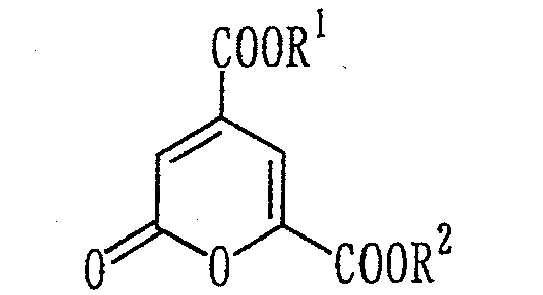
[wherein, R1 and R2 each independently represent H or an alkali metal atom.],
wherein they have high safety and little impact on the environment.
wherein they have high safety and little impact on the environment.
Description
- The present invention relates to an antimicrobial agent and a microbicidal agent, having a good antimicrobial activity and a good microbicidal activity, and exhibiting high safety with little impact on the environment.
- An enormous number of antimicrobial agents have been developed so far, and are used in all fields. The antimicrobial agents are classified roughly into inorganic antimicrobial agents such as silver or ceramics, and organic antimicrobial agents such as sorbic acid, benzoic acid, or salts thereof. The organic antimicrobial agents are produced using petroleum naphtha, as raw materials. Paraben, benzoic acid, salicylic acid, triclosan, and others are known as organic antimicrobial agents in the fields of cosmetics or food. Many of antimicrobial agents and antiseptics have problems with safety, and presently subjects to which the antimicrobial agents and antiseptics are allowed to be added, and the additive amounts thereof are limited.
- An antimicrobial agent referred to as BIO-Add, which is used for producing animal feed, in order to inhibit unwanted microbes, such as bacteria (for example, Salmonella), yeasts, or molds, contains formic acid of 68%. However, formic acid per se is highly toxic and has problems with safety.
- Natural antimicrobial agents with high safety are known, but also have problems that there are not many natural antimicrobial agents. In addition, for example, wasabi-thiol, etc., is expensive. The impact on the environment when the antimicrobial agents are discharged into nature, also must be considered.
- As natural antimicrobial agents, antimicrobial agents derived from citrus are known (Japanese Unexamined Patent Publication (Kokai) No.
8-317782 - An antimicrobial agent containing an extract from false indigo of Pea family is disclosed (Japanese Unexamined Patent Publication (Kokai) No.
2004-256437 - An antimicrobial agent described in Japanese Unexamined Patent Publication (Kokai) No.
2002-161075 - Further, an ester compound of ferulic acid produced from a natural ferulic acid, as an active component, is disclosed (Japanese Unexamined Patent Publication (Kokai) No.
2002-161004 - An object of the present invention is to solve the above problems, and to provide antimicrobial agents and microbicidal agents, with high safety and little impact on the environment.
- As the result of earnest investigation to attain the above-described object, the present inventors have found that 2H-pyran-2-on-4,6-dicarbonic acid (hereinafter referred to as "PDC") or alkali metal salts thereof represented by the following formula (I), have an antimicrobial activity and a microbicidal activity on Gram-negative bacteria and Gram-positive bacteria, and have accomplished the present invention.
- That is, the present invention provides antimicrobial agents comprising, as an active component, compounds represented by formula (I):

- The present invention also provides microbicidal agents comprising, as an active component, compounds represented by formula (I):

- According to the present invention, PDC or alkali metal salts thereof have a good antimicrobial activity and microbicidal activity.
- Therefore, PDC or alkali metal salts thereof, which are derived from nature, are industrially useful as the components of antimicrobial agents and microbicidal agents which have high safety with little impact on the environment.
- Antimicrobial agents and microbicidal agents of the present invention comprise, as an active component, PDC or alkali metal salts thereof. As an alkali metal atom, lithium, sodium, potassium, and others can be used. The method for producing PDC is not limited to a specific method, and, for example, a method for cultivating cells transformed by introducing pKTVLABC which is a plasmid carrying out fermentative production of PDC, into Pseudomonas putida PpY1100, using vanillin, syringaldehyde, vanillic acid, syringic acid, or protocatechuic acid, as starting materials (Japanese Kokai No.
2005-278549 2005-278549 - The amount of alkali metal salts of PDC represented by formula (I) in the antimicrobial agents and microbicidal agents of the present invention, is usually 0.1 to 20 % by weight, preferably 0.1 to 10 % by weight, more preferably 0.1 to 5 % by weight.
- Antimicrobial agents and microbicidal agents of the present invention, have a good antimicrobial activity and microbicidal activity against various bacteria, which can be, for example, gram-positive bacteria, such as Staphylococcus aureus, Bacillus subtilis, coagulase-negative Staphylococcus, Streptococcus, or Eenterococcus; gram-negative bacteria, such as Escherichia coli, Shigella, Salmonella enterica, or Yersinia pestis.
- Antimicrobial agents and microbicidal agents of the present invention, can be added into foods, drinks, cosmetics, oral care products, drugs, quasi drugs, and others, in order to, for example, provide a microbicidal effect on skin, that is, decolonization and disinfection by application to the body surface, or an antimicrobial effect, that is, inhibition of undesirable bacterial growth on the surface of teeth and in the mouth. In the preparation of oral care products, drugs, and others in which antimicrobial agents and microbicidal agents of the present invention are added, it is possible to blend components commonly used for oral care products and drugs within a range which does not impair the effects of the present invention.
- The invention will be explained below with reference to the examples, but the invention is not limited thereto.
- PDC (R=H in formula (I)) (Purity: 99 %, Form:
powder, Storage condition: room temperature) - PDC was prepared by the methods according to Japanese Unexamined Patent Publication (Kokai) No.
2005-278549 - 1 g of the test compound was weighed and adjusted to 10 mL in volume by adding sterile purified water defined in Japanese Pharmacopoeia (manufactured by NIPPON SHINYAKU CO.,LTD, autoclaving treatment).
- 10 % aqueous solution was diluted ten-fold with sterile purified water.
- 10 % aqueous solution was diluted 100-fold with sterile purified water.
- Staphylococcus aureus subsp. aureus (NBRC 13276) Escherichia coli (NBRC 3972) Salmonella Enteritidis (NBRC 3313)
- Texts in parentheses represent the standard strain number.
- Trypticase-Soy agar (SCD medium, manufactured by Japan BIOMERIEUX)
- Sterile NE dish (manufactured by Eiken kizai Co., Ltd.)
- After said strains were cultured in SCD agar medium at 35 ± 2°C for 18 to 24 hours, inocula were prepared by suspending the cultured stains in sterile purified water and adjusting the turbidity so as to correspond with No.1 MacFarland. Using agar plates, the concentrations of the inocula were measured according to the agar plate mixed dilution method (Table 1).
Table 1 Inoculum strain Concentration (cfu/mL) Staphylococcus aureus subsp. aureus 14 x 107 Escherichia coli 37 x 107 Salmonella Enteritidis 22 x 107 - 3 mL of each of the 10 %, 1.0 % and 0.1 % aqueous solutions of the test compound, and of sterile purified water (control) were prepared (n=1). 0.03 mL of said inocula was inoculated into each of the test solutions at room temperature. Immediately after, 15 minutes after, and 180 minutes after the inoculations, 0.5 mL of each of the test solutions was added to 49.5 mL of a sterile phosphate buffer (Pro-media MV2-1000, manufactured by ELMEX), and mixed. A ten fold dilution series of each of the mixtures was constructed. Then, the number of the viable cells therein were measured, and then it was converted to the number of viable cells per 1 mL of the test solutions or control. The number of viable cell was measured according to "Viable cell count; the agar plate mixed dilution method in the Japanese Pharmacopoeia, 14th revised edition". The results are shown in Table 2.
Table 2 (cfu/mL) Staphylococcus aureus subsp. aureus Escherichia coli Salmonella Enteritidis Measured immediately after inoculation Measured 15 min. after inoculation Measured 180 min. after inoculation Measured immediately after inoculation Measured 15 min. after inoculation Measured 180 min. after inoculation Measured immediately after inoculation Measured 15 min. after inoculation Measured 180 min. after inoculation 10 % of aqueous solution of the test compound < 100 < 100 < 100 < 100 < 100 < 100 < 100 < 100 < 100 1.0 % of aqueous solution of the test compound 5,000 < 100 < 100 < 100 < 100 < 100 < 100 < 100 < 100 0.1% of aqueous solution of the test compound 11,000 < 100 <100 10,000 < 100 < 100 12,000 < 100 < 100 Control sterile purified water 27,000 27,000 22,000 18,000 12,000 19,000 13,000 15,000 14,000 - As is obvious from Table 2, it has been shown that antimicrobial agents and microbicidal agents of the present invention inhibit the growth of the bacteria even at the lowest concentration of 0.1 % by weight.
- PDC (R=H in formula (I)) (Purity: 99 %, Form: powder, Storage condition: room temperature)
- PDC was prepared by the methods according to Japanese Unexamined Patent Publication (Kokai) No.
2005-278549 - 2 g of the test compound was weighed and adjusted to 10 mL in volume by adding sterile purified water defined in Japanese Pharmacopoeia (manufactured by NIPPON SHINYAKU CO., LTD, autoclaving treatment).
- Bio-Add (composition: formic acid 68%, propionic acid 20%, water 12%, Form: aqueous solution, Storage condition: room temperature, manufactured by Trouw Nutrition International).
- Staphylococcus aureus subsp. aureus (NBRC 13276) Escherichia coli (NBRC 3972) Salmonella Enteritidis (NBRC 3313) Texts in parentheses represent the standard strain number.
- Trypticase-Soy agar (SCD medium, manufactured by Japan BIOMERIEUX)
SCDLP Broth (manufactured by Eiken Chemical Co., Ltd.) - Sterile NE dish (manufactured by Eiken kizai Co., Ltd.)
- After said strains were cultured in SCD agar medium at 35 ± 2°C for 18 to 24 hours, inocula were prepared by suspending the stains in sterile purified water and adjusting the turbidity so as to correspond with No.1 MacFarland. Using agar plate, the concentrations of the inocula were measured according to the agar plate mixed dilution method (Table 3).
Table 3 Inoculum strain Concentration (cfu/mL) Staphylococcus aureus subsp. aureus 20 x 107 Escherichia coli 26 x 107 Salmonella Enteritidis 46 x 107 - 3 mL of each of 20 % aqueous solution of the test compound, a stock solution of a comparative compound and sterile water, (control) was prepared (n=1). 0.03 mL of said inocula was inoculated into each of the test solutions at a room temperature. Immediately after, 15 minutes after and 180 minutes after the inoculations, neutralization was performed under the following conditions.
- 0.5 mL of the test solution was added to 4.5 mL of sterile sodium hydrate solution at the concentration of 0.25 mol/L (sodium hydrate; manufactured by Wako Pure Chemical Industries, Ltd.), and mixed. Then, 45 mL of a sterile phosphate buffer (Pro-media MV2-1000, manufactured by ELMEX) was immediately added and mixed.
- 0.5 mL of the test solution was added to 4.5 mL of sterile sodium hydrate solution at the concentration of 2.0 mol/L, and mixed. Then, 45 mL of a sterile phosphate buffer was immediately added and mixed. Sterile water (control):
- 0.5 mL of the test solution was added to 49.5 mL of a sterile phosphate buffer and mixed.
- A ten-fold dilution series of each of the neutralization solution was prepared. Then, the number of the viable cells therein was measured and it was converted to the number of viable cells per 1 mL of the test solutions or control. The number of viable cell was measured according to "Viable cell count; the agar plate mixed dilution method in the Japanese Pharmacopoeia, 14th revised edition". The results are shown in Table 4.
Table 4 (cfu/mL) Staphylococcus aureus subsp. aureus Escherichia coli Salmonella Enteritidis Measured immediately after inoculation Measured 15 min. after inoculation Measured 180 min. after inoculation Measured immediately after inoculation Measured 15 min. after inoculation Measured 180 min. after inoculation Measured immediately after inoculation Measured 15 min. after inoculation Measured 180 min. after inoculation 20 % of aqueous solution of the test compound < 100 < 100 < 100 < 100 < 100 < 100 < 100 < 100 < 100 Comparative compound < 100 < 100 < 100 < 100 < 100 < 100 < 100 < 100 < 100 Control sterile purified water 1,500,000 1,300,000 1,200,000 1,900,000 1,500,000 1,400,000 4,100,000 3,300,000 3,200,000 - As is obvious from Table 4, antimicrobial agents and microbicidal agents of the present invention exhibited an antimicrobial activity and a microbicidal activity to the same extent as the comparative compound, BIO-Add.
- PDC or alkali salts thereof are used for the manufacturing of antimicrobial agents and microbicidal agents, which have high safety and little impact on the environment.
Claims (2)
- An antimicrobial agent comprising, as an active component, compounds represented by formula (I):

- A microbicidal agent comprising, as an active component, compounds represented by formula (I):
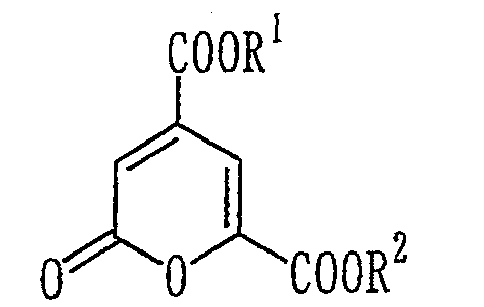
Applications Claiming Priority (2)
| Application Number | Priority Date | Filing Date | Title |
|---|---|---|---|
| JP2006346299 | 2006-12-22 | ||
| PCT/JP2007/074769 WO2008078723A1 (en) | 2006-12-22 | 2007-12-18 | Antibacterial agent and bactericidal agent |
Publications (1)
| Publication Number | Publication Date |
|---|---|
| EP2103213A1 true EP2103213A1 (en) | 2009-09-23 |
Family
ID=39562512
Family Applications (1)
| Application Number | Title | Priority Date | Filing Date |
|---|---|---|---|
| EP07859998A Withdrawn EP2103213A1 (en) | 2006-12-22 | 2007-12-18 | Antibacterial agent and bactericidal agent |
Country Status (5)
| Country | Link |
|---|---|
| US (1) | US20100004469A1 (en) |
| EP (1) | EP2103213A1 (en) |
| JP (1) | JP5084748B2 (en) |
| CN (1) | CN101568257A (en) |
| WO (1) | WO2008078723A1 (en) |
Families Citing this family (6)
| Publication number | Priority date | Publication date | Assignee | Title |
|---|---|---|---|---|
| JP5035554B2 (en) * | 2008-03-26 | 2012-09-26 | 株式会社J−ケミカル | Antibacterial and antibacterial agents |
| WO2009151146A1 (en) * | 2008-06-12 | 2009-12-17 | 株式会社豊田自動織機 | Antibacterial agent and bactericide |
| US10016380B2 (en) | 2013-05-01 | 2018-07-10 | Lanny Leo Johnson | Antimicrobials and methods of use thereof |
| US10398664B2 (en) | 2013-05-01 | 2019-09-03 | Lanny Leo Johnson | Methods of diagnosing and treating infected implants |
| US9498413B2 (en) | 2013-05-01 | 2016-11-22 | Lanny Leo Johnson | Antimicrobials and methods of use thereof for wound healing |
| JP6507345B2 (en) * | 2015-03-09 | 2019-05-08 | 一般財団法人杉山産業化学研究所 | Composition for antiviral |
Family Cites Families (11)
| Publication number | Priority date | Publication date | Assignee | Title |
|---|---|---|---|---|
| JP3571111B2 (en) | 1995-05-23 | 2004-09-29 | 株式会社ポッカコーポレーション | Antimicrobial agent |
| EP1024695B1 (en) * | 1997-07-21 | 2005-06-22 | Horace G. Cutler | Fungicide comprising 4-methyl-6-pentyl-2h-pyran-2-one |
| WO1999054376A1 (en) * | 1998-04-20 | 1999-10-28 | Cosmo Research Institute | Polyester and process for producing the same |
| US6340739B1 (en) * | 1998-04-20 | 2002-01-22 | Cosmo Research Institute | Polyamide and process for producing the same |
| JP3850557B2 (en) * | 1998-07-17 | 2006-11-29 | 株式会社コスモ総合研究所 | Novel gene and transformed cell carrying the gene |
| JP2002161075A (en) | 2000-11-27 | 2002-06-04 | Wakayama Prefecture | Gallic acid derivative, method for producing gallic acid derivative and antibacterial agent |
| JP2002161004A (en) | 2000-11-28 | 2002-06-04 | Wakayama Prefecture | Antibacterial agent containing ferulic acid ester as active ingredient |
| JP2004203783A (en) * | 2002-12-25 | 2004-07-22 | Marine Biotechnol Inst Co Ltd | Antibacterial compound and method for producing the same |
| JP2004256437A (en) | 2003-02-26 | 2004-09-16 | Sakamoto Bio:Kk | Antibacterial agent and antibacterial composition |
| JP2004292440A (en) * | 2003-03-10 | 2004-10-21 | Sumitomo Chem Co Ltd | Antibacterial agent and antibacterial method |
| JP4658244B2 (en) | 2004-03-30 | 2011-03-23 | 義博 片山 | Gene for producing 2-pyrone-4,6-dicarboxylic acid by fermentation, plasmid containing said gene, transformant containing said plasmid, and method for producing 2-pyrone-4,6-dicarboxylic acid |
-
2007
- 2007-12-18 US US12/519,396 patent/US20100004469A1/en not_active Abandoned
- 2007-12-18 EP EP07859998A patent/EP2103213A1/en not_active Withdrawn
- 2007-12-18 CN CNA2007800479796A patent/CN101568257A/en active Pending
- 2007-12-18 JP JP2008551102A patent/JP5084748B2/en not_active Expired - Fee Related
- 2007-12-18 WO PCT/JP2007/074769 patent/WO2008078723A1/en not_active Ceased
Non-Patent Citations (1)
| Title |
|---|
| See references of WO2008078723A1 * |
Also Published As
| Publication number | Publication date |
|---|---|
| US20100004469A1 (en) | 2010-01-07 |
| JPWO2008078723A1 (en) | 2010-04-22 |
| WO2008078723A1 (en) | 2008-07-03 |
| JP5084748B2 (en) | 2012-11-28 |
| CN101568257A (en) | 2009-10-28 |
Similar Documents
| Publication | Publication Date | Title |
|---|---|---|
| US20100004469A1 (en) | Antimicrobial agents and microbicidal agents | |
| US6759544B2 (en) | Antimicrobially active acesulfame complexes, process for their preparation and their use | |
| CN115768517B (en) | Antimicrobial agent for non-human animals | |
| MX2013008151A (en) | Process for the manufacture of improved benzethonium chloride-diallyl disulphide oxide modified complex, the obtained complex and uses thereof. | |
| JP5398709B2 (en) | Antibacterial and bactericidal agents | |
| JP2010180137A (en) | Antimicrobial agent | |
| CN111820240A (en) | Antibacterial and disinfectant additive based on nano metal wires and preparation method thereof | |
| CN110313488B (en) | Mildew-proof adhesive and preparation method and application thereof | |
| JP5035554B2 (en) | Antibacterial and antibacterial agents | |
| JP7153969B1 (en) | antibacterial agent | |
| KR20110061311A (en) | Antimicrobial composition using low molecular silver-alginate and preparation method thereof, and biopesticide formulation using same | |
| EP2120960A2 (en) | NOVEL ß-LACTAM ANTIBIOTICS, METHOD FOR THE PRODUCTION THEREOF, AND USE THEREOF | |
| CN115089504A (en) | Novel cosmetic compositions, process for their preparation and their use | |
| KR102527468B1 (en) | Method for producing kenaf electro-analysised water extract with increased antimicrobial activity and use thereof | |
| Villhauer | Novel CloSYS® Oral Rinse: Comparison of Bactericidal Activity | |
| KR102717109B1 (en) | antibacterial composition for cosmetic products with Zinc Oxide | |
| CN110235899B (en) | New food preservative and its preparation method and application | |
| KR102442766B1 (en) | Antibacterial composition containing a mixed extract of mulberry fruit and leaves as an active ingredient | |
| JP4594159B2 (en) | Edible sanitizer and method for producing edible sanitizer | |
| JP2011006346A (en) | Antibacterial agent | |
| CN117945863A (en) | Chemical product antiseptic medicament and preparation method thereof | |
| KR20110011387A (en) | Natural antimicrobial composition comprising a brown reaction product produced by the myal reaction of protamine enzymatic digestion and glucose as an active ingredient and a method for preparing the same | |
| Bello et al. | Syntheses and Biological Activity of Some Derivatives of C‐9154 Antibiotic | |
| JP2018070504A (en) | Antibacterial agent | |
| US20160130630A1 (en) | Method for detecting campylobacter |
Legal Events
| Date | Code | Title | Description |
|---|---|---|---|
| PUAI | Public reference made under article 153(3) epc to a published international application that has entered the european phase |
Free format text: ORIGINAL CODE: 0009012 |
|
| 17P | Request for examination filed |
Effective date: 20090622 |
|
| AK | Designated contracting states |
Kind code of ref document: A1 Designated state(s): AT BE BG CH CY CZ DE DK EE ES FI FR GB GR HU IE IS IT LI LT LU LV MC MT NL PL PT RO SE SI SK TR |
|
| AX | Request for extension of the european patent |
Extension state: AL BA HR MK RS |
|
| STAA | Information on the status of an ep patent application or granted ep patent |
Free format text: STATUS: THE APPLICATION HAS BEEN WITHDRAWN |
|
| 18W | Application withdrawn |
Effective date: 20111229 |