EP2072575B1 - Polypropylenzusammensetzung mit einer vernetzbaren dispergierten Phase mit Nanofüllstoffe enthaltenden Silanolgruppen - Google Patents
Polypropylenzusammensetzung mit einer vernetzbaren dispergierten Phase mit Nanofüllstoffe enthaltenden Silanolgruppen Download PDFInfo
- Publication number
- EP2072575B1 EP2072575B1 EP07024963A EP07024963A EP2072575B1 EP 2072575 B1 EP2072575 B1 EP 2072575B1 EP 07024963 A EP07024963 A EP 07024963A EP 07024963 A EP07024963 A EP 07024963A EP 2072575 B1 EP2072575 B1 EP 2072575B1
- Authority
- EP
- European Patent Office
- Prior art keywords
- polypropylene composition
- polypropylene
- composition according
- copolymer
- homo
- Prior art date
- Legal status (The legal status is an assumption and is not a legal conclusion. Google has not performed a legal analysis and makes no representation as to the accuracy of the status listed.)
- Active
Links
- -1 Polypropylene Polymers 0.000 title claims abstract description 103
- 239000000203 mixture Substances 0.000 title claims abstract description 83
- 229920001155 polypropylene Polymers 0.000 title claims abstract description 83
- 239000004743 Polypropylene Substances 0.000 title claims abstract description 82
- 125000005372 silanol group Chemical group 0.000 title claims abstract description 11
- 229920001577 copolymer Polymers 0.000 claims abstract description 33
- 239000011159 matrix material Substances 0.000 claims abstract description 28
- 239000000463 material Substances 0.000 claims abstract description 27
- XUIMIQQOPSSXEZ-UHFFFAOYSA-N Silicon Chemical compound [Si] XUIMIQQOPSSXEZ-UHFFFAOYSA-N 0.000 claims abstract description 26
- 239000011256 inorganic filler Substances 0.000 claims abstract description 19
- 229910003475 inorganic filler Inorganic materials 0.000 claims abstract description 19
- 150000001336 alkenes Chemical class 0.000 claims abstract description 9
- JRZJOMJEPLMPRA-UHFFFAOYSA-N olefin Natural products CCCCCCCC=C JRZJOMJEPLMPRA-UHFFFAOYSA-N 0.000 claims abstract description 9
- 239000002243 precursor Substances 0.000 claims abstract description 9
- 229910052710 silicon Inorganic materials 0.000 claims abstract description 7
- 239000010703 silicon Substances 0.000 claims abstract description 7
- 238000004519 manufacturing process Methods 0.000 claims abstract description 4
- 229920000098 polyolefin Polymers 0.000 claims description 29
- 239000003054 catalyst Substances 0.000 claims description 26
- 238000012360 testing method Methods 0.000 claims description 16
- VYPSYNLAJGMNEJ-UHFFFAOYSA-N Silicium dioxide Chemical compound O=[Si]=O VYPSYNLAJGMNEJ-UHFFFAOYSA-N 0.000 claims description 15
- SCPYDCQAZCOKTP-UHFFFAOYSA-N silanol Chemical compound [SiH3]O SCPYDCQAZCOKTP-UHFFFAOYSA-N 0.000 claims description 15
- 238000009833 condensation Methods 0.000 claims description 14
- 230000005494 condensation Effects 0.000 claims description 14
- 238000000034 method Methods 0.000 claims description 11
- 229920005606 polypropylene copolymer Polymers 0.000 claims description 11
- CTQNGGLPUBDAKN-UHFFFAOYSA-N O-Xylene Chemical compound CC1=CC=CC=C1C CTQNGGLPUBDAKN-UHFFFAOYSA-N 0.000 claims description 8
- 230000015556 catabolic process Effects 0.000 claims description 8
- 229920001198 elastomeric copolymer Polymers 0.000 claims description 8
- 239000008096 xylene Substances 0.000 claims description 8
- VGGSQFUCUMXWEO-UHFFFAOYSA-N Ethene Chemical compound C=C VGGSQFUCUMXWEO-UHFFFAOYSA-N 0.000 claims description 7
- 239000005977 Ethylene Substances 0.000 claims description 7
- 239000002245 particle Substances 0.000 claims description 6
- 239000000377 silicon dioxide Substances 0.000 claims description 6
- 230000002378 acidificating effect Effects 0.000 claims description 5
- 238000009413 insulation Methods 0.000 claims description 5
- HQQADJVZYDDRJT-UHFFFAOYSA-N ethene;prop-1-ene Chemical group C=C.CC=C HQQADJVZYDDRJT-UHFFFAOYSA-N 0.000 claims description 3
- 229920000642 polymer Polymers 0.000 description 20
- 239000000945 filler Substances 0.000 description 16
- QQONPFPTGQHPMA-UHFFFAOYSA-N propylene Natural products CC=C QQONPFPTGQHPMA-UHFFFAOYSA-N 0.000 description 13
- 125000000217 alkyl group Chemical group 0.000 description 12
- 150000001875 compounds Chemical class 0.000 description 12
- 239000010410 layer Substances 0.000 description 12
- 125000003118 aryl group Chemical group 0.000 description 11
- 125000004432 carbon atom Chemical group C* 0.000 description 11
- 239000004020 conductor Substances 0.000 description 10
- 125000004805 propylene group Chemical group [H]C([H])([H])C([H])([*:1])C([H])([H])[*:2] 0.000 description 10
- 238000004132 cross linking Methods 0.000 description 9
- 229920000573 polyethylene Polymers 0.000 description 8
- 239000004698 Polyethylene Substances 0.000 description 7
- UHOVQNZJYSORNB-UHFFFAOYSA-N monobenzene Natural products C1=CC=CC=C1 UHOVQNZJYSORNB-UHFFFAOYSA-N 0.000 description 7
- 229910002016 Aerosil® 200 Inorganic materials 0.000 description 6
- LSNNMFCWUKXFEE-UHFFFAOYSA-M Bisulfite Chemical compound OS([O-])=O LSNNMFCWUKXFEE-UHFFFAOYSA-M 0.000 description 6
- 125000001183 hydrocarbyl group Chemical group 0.000 description 6
- 239000007789 gas Substances 0.000 description 5
- 239000012764 mineral filler Substances 0.000 description 5
- 238000002156 mixing Methods 0.000 description 5
- 239000000178 monomer Substances 0.000 description 5
- 150000003377 silicon compounds Chemical class 0.000 description 5
- 229910002020 Aerosil® OX 50 Inorganic materials 0.000 description 4
- 239000004594 Masterbatch (MB) Substances 0.000 description 4
- CERQOIWHTDAKMF-UHFFFAOYSA-N Methacrylic acid Chemical compound CC(=C)C(O)=O CERQOIWHTDAKMF-UHFFFAOYSA-N 0.000 description 4
- 238000006243 chemical reaction Methods 0.000 description 4
- 230000000052 comparative effect Effects 0.000 description 4
- 239000000155 melt Substances 0.000 description 4
- 125000001997 phenyl group Chemical group [H]C1=C([H])C([H])=C(*)C([H])=C1[H] 0.000 description 4
- 239000000523 sample Substances 0.000 description 4
- 239000000243 solution Substances 0.000 description 4
- QTBSBXVTEAMEQO-UHFFFAOYSA-N Acetic acid Chemical compound CC(O)=O QTBSBXVTEAMEQO-UHFFFAOYSA-N 0.000 description 3
- NIXOWILDQLNWCW-UHFFFAOYSA-M Acrylate Chemical compound [O-]C(=O)C=C NIXOWILDQLNWCW-UHFFFAOYSA-M 0.000 description 3
- UKLDJPRMSDWDSL-UHFFFAOYSA-L [dibutyl(dodecanoyloxy)stannyl] dodecanoate Chemical compound CCCCCCCCCCCC(=O)O[Sn](CCCC)(CCCC)OC(=O)CCCCCCCCCCC UKLDJPRMSDWDSL-UHFFFAOYSA-L 0.000 description 3
- 239000002253 acid Substances 0.000 description 3
- KRKNYBCHXYNGOX-UHFFFAOYSA-N citric acid Chemical compound OC(=O)CC(O)(C(O)=O)CC(O)=O KRKNYBCHXYNGOX-UHFFFAOYSA-N 0.000 description 3
- 238000007906 compression Methods 0.000 description 3
- 230000006835 compression Effects 0.000 description 3
- 239000012975 dibutyltin dilaurate Substances 0.000 description 3
- 150000002148 esters Chemical class 0.000 description 3
- 229910052500 inorganic mineral Inorganic materials 0.000 description 3
- 239000012774 insulation material Substances 0.000 description 3
- 125000002496 methyl group Chemical group [H]C([H])([H])* 0.000 description 3
- 125000001624 naphthyl group Chemical group 0.000 description 3
- 229920005672 polyolefin resin Polymers 0.000 description 3
- 230000002787 reinforcement Effects 0.000 description 3
- 238000009864 tensile test Methods 0.000 description 3
- VXNZUUAINFGPBY-UHFFFAOYSA-N 1-Butene Chemical compound CCC=C VXNZUUAINFGPBY-UHFFFAOYSA-N 0.000 description 2
- KWKAKUADMBZCLK-UHFFFAOYSA-N 1-octene Chemical compound CCCCCCC=C KWKAKUADMBZCLK-UHFFFAOYSA-N 0.000 description 2
- WSSSPWUEQFSQQG-UHFFFAOYSA-N 4-methyl-1-pentene Chemical compound CC(C)CC=C WSSSPWUEQFSQQG-UHFFFAOYSA-N 0.000 description 2
- NIXOWILDQLNWCW-UHFFFAOYSA-N Acrylic acid Chemical class OC(=O)C=C NIXOWILDQLNWCW-UHFFFAOYSA-N 0.000 description 2
- IJGRMHOSHXDMSA-UHFFFAOYSA-N Atomic nitrogen Chemical compound N#N IJGRMHOSHXDMSA-UHFFFAOYSA-N 0.000 description 2
- OKTJSMMVPCPJKN-UHFFFAOYSA-N Carbon Chemical compound [C] OKTJSMMVPCPJKN-UHFFFAOYSA-N 0.000 description 2
- RYGMFSIKBFXOCR-UHFFFAOYSA-N Copper Chemical compound [Cu] RYGMFSIKBFXOCR-UHFFFAOYSA-N 0.000 description 2
- 239000004593 Epoxy Substances 0.000 description 2
- VZCYOOQTPOCHFL-OWOJBTEDSA-N Fumaric acid Chemical compound OC(=O)\C=C\C(O)=O VZCYOOQTPOCHFL-OWOJBTEDSA-N 0.000 description 2
- VEXZGXHMUGYJMC-UHFFFAOYSA-N Hydrochloric acid Chemical compound Cl VEXZGXHMUGYJMC-UHFFFAOYSA-N 0.000 description 2
- XEEYBQQBJWHFJM-UHFFFAOYSA-N Iron Chemical compound [Fe] XEEYBQQBJWHFJM-UHFFFAOYSA-N 0.000 description 2
- BAPJBEWLBFYGME-UHFFFAOYSA-N Methyl acrylate Chemical compound COC(=O)C=C BAPJBEWLBFYGME-UHFFFAOYSA-N 0.000 description 2
- UFWIBTONFRDIAS-UHFFFAOYSA-N Naphthalene Chemical compound C1=CC=CC2=CC=CC=C21 UFWIBTONFRDIAS-UHFFFAOYSA-N 0.000 description 2
- PXHVJJICTQNCMI-UHFFFAOYSA-N Nickel Chemical compound [Ni] PXHVJJICTQNCMI-UHFFFAOYSA-N 0.000 description 2
- URLKBWYHVLBVBO-UHFFFAOYSA-N Para-Xylene Chemical group CC1=CC=C(C)C=C1 URLKBWYHVLBVBO-UHFFFAOYSA-N 0.000 description 2
- PPBRXRYQALVLMV-UHFFFAOYSA-N Styrene Chemical compound C=CC1=CC=CC=C1 PPBRXRYQALVLMV-UHFFFAOYSA-N 0.000 description 2
- ATJFFYVFTNAWJD-UHFFFAOYSA-N Tin Chemical compound [Sn] ATJFFYVFTNAWJD-UHFFFAOYSA-N 0.000 description 2
- XTXRWKRVRITETP-UHFFFAOYSA-N Vinyl acetate Chemical compound CC(=O)OC=C XTXRWKRVRITETP-UHFFFAOYSA-N 0.000 description 2
- HCHKCACWOHOZIP-UHFFFAOYSA-N Zinc Chemical compound [Zn] HCHKCACWOHOZIP-UHFFFAOYSA-N 0.000 description 2
- 150000008064 anhydrides Chemical class 0.000 description 2
- MWPLVEDNUUSJAV-UHFFFAOYSA-N anthracene Chemical compound C1=CC=CC2=CC3=CC=CC=C3C=C21 MWPLVEDNUUSJAV-UHFFFAOYSA-N 0.000 description 2
- 238000013459 approach Methods 0.000 description 2
- CQEYYJKEWSMYFG-UHFFFAOYSA-N butyl acrylate Chemical compound CCCCOC(=O)C=C CQEYYJKEWSMYFG-UHFFFAOYSA-N 0.000 description 2
- 229910052799 carbon Inorganic materials 0.000 description 2
- 150000001735 carboxylic acids Chemical class 0.000 description 2
- 229910052681 coesite Inorganic materials 0.000 description 2
- 239000010949 copper Substances 0.000 description 2
- 229910052802 copper Inorganic materials 0.000 description 2
- 229910052906 cristobalite Inorganic materials 0.000 description 2
- POULHZVOKOAJMA-UHFFFAOYSA-N dodecanoic acid Chemical compound CCCCCCCCCCCC(O)=O POULHZVOKOAJMA-UHFFFAOYSA-N 0.000 description 2
- 238000005516 engineering process Methods 0.000 description 2
- 125000001495 ethyl group Chemical group [H]C([H])([H])C([H])([H])* 0.000 description 2
- 239000011521 glass Substances 0.000 description 2
- 239000003365 glass fiber Substances 0.000 description 2
- 229920001112 grafted polyolefin Polymers 0.000 description 2
- 230000007062 hydrolysis Effects 0.000 description 2
- 238000006460 hydrolysis reaction Methods 0.000 description 2
- 238000002347 injection Methods 0.000 description 2
- 239000007924 injection Substances 0.000 description 2
- 238000012986 modification Methods 0.000 description 2
- 230000004048 modification Effects 0.000 description 2
- 239000011164 primary particle Substances 0.000 description 2
- 125000001436 propyl group Chemical group [H]C([*])([H])C([H])([H])C([H])([H])[H] 0.000 description 2
- 229910052814 silicon oxide Inorganic materials 0.000 description 2
- 229910052682 stishovite Inorganic materials 0.000 description 2
- 229920002725 thermoplastic elastomer Polymers 0.000 description 2
- 239000011135 tin Substances 0.000 description 2
- 229910052718 tin Inorganic materials 0.000 description 2
- VZCYOOQTPOCHFL-UHFFFAOYSA-N trans-butenedioic acid Natural products OC(=O)C=CC(O)=O VZCYOOQTPOCHFL-UHFFFAOYSA-N 0.000 description 2
- 229910052905 tridymite Inorganic materials 0.000 description 2
- 125000000391 vinyl group Chemical group [H]C([*])=C([H])[H] 0.000 description 2
- XLYOFNOQVPJJNP-UHFFFAOYSA-N water Substances O XLYOFNOQVPJJNP-UHFFFAOYSA-N 0.000 description 2
- 238000003466 welding Methods 0.000 description 2
- 229910052725 zinc Inorganic materials 0.000 description 2
- 239000011701 zinc Substances 0.000 description 2
- 239000004711 α-olefin Substances 0.000 description 2
- MZQKADNPDLDGJD-UHFFFAOYSA-N 2,3,4,5-tetrapropylbenzenesulfonic acid Chemical compound CCCC1=CC(S(O)(=O)=O)=C(CCC)C(CCC)=C1CCC MZQKADNPDLDGJD-UHFFFAOYSA-N 0.000 description 1
- SMZOUWXMTYCWNB-UHFFFAOYSA-N 2-(2-methoxy-5-methylphenyl)ethanamine Chemical compound COC1=CC=C(C)C=C1CCN SMZOUWXMTYCWNB-UHFFFAOYSA-N 0.000 description 1
- WBIQQQGBSDOWNP-UHFFFAOYSA-N 2-dodecylbenzenesulfonic acid Chemical compound CCCCCCCCCCCCC1=CC=CC=C1S(O)(=O)=O WBIQQQGBSDOWNP-UHFFFAOYSA-N 0.000 description 1
- 125000003903 2-propenyl group Chemical group [H]C([*])([H])C([H])=C([H])[H] 0.000 description 1
- HRPVXLWXLXDGHG-UHFFFAOYSA-N Acrylamide Chemical compound NC(=O)C=C HRPVXLWXLXDGHG-UHFFFAOYSA-N 0.000 description 1
- NLHHRLWOUZZQLW-UHFFFAOYSA-N Acrylonitrile Chemical compound C=CC#N NLHHRLWOUZZQLW-UHFFFAOYSA-N 0.000 description 1
- SNRUBQQJIBEYMU-UHFFFAOYSA-N Dodecane Natural products CCCCCCCCCCCC SNRUBQQJIBEYMU-UHFFFAOYSA-N 0.000 description 1
- 239000004150 EU approved colour Substances 0.000 description 1
- JIGUQPWFLRLWPJ-UHFFFAOYSA-N Ethyl acrylate Chemical compound CCOC(=O)C=C JIGUQPWFLRLWPJ-UHFFFAOYSA-N 0.000 description 1
- 239000002841 Lewis acid Substances 0.000 description 1
- OFOBLEOULBTSOW-UHFFFAOYSA-N Propanedioic acid Natural products OC(=O)CC(O)=O OFOBLEOULBTSOW-UHFFFAOYSA-N 0.000 description 1
- 229910006069 SO3H Inorganic materials 0.000 description 1
- 239000006087 Silane Coupling Agent Substances 0.000 description 1
- 235000021355 Stearic acid Nutrition 0.000 description 1
- QAOWNCQODCNURD-UHFFFAOYSA-N Sulfuric acid Chemical compound OS(O)(=O)=O QAOWNCQODCNURD-UHFFFAOYSA-N 0.000 description 1
- QYKIQEUNHZKYBP-UHFFFAOYSA-N Vinyl ether Chemical compound C=COC=C QYKIQEUNHZKYBP-UHFFFAOYSA-N 0.000 description 1
- NOZAQBYNLKNDRT-UHFFFAOYSA-N [diacetyloxy(ethenyl)silyl] acetate Chemical compound CC(=O)O[Si](OC(C)=O)(OC(C)=O)C=C NOZAQBYNLKNDRT-UHFFFAOYSA-N 0.000 description 1
- RMKZLFMHXZAGTM-UHFFFAOYSA-N [dimethoxy(propyl)silyl]oxymethyl prop-2-enoate Chemical compound CCC[Si](OC)(OC)OCOC(=O)C=C RMKZLFMHXZAGTM-UHFFFAOYSA-N 0.000 description 1
- XQBCVRSTVUHIGH-UHFFFAOYSA-L [dodecanoyloxy(dioctyl)stannyl] dodecanoate Chemical compound CCCCCCCCCCCC(=O)O[Sn](CCCCCCCC)(CCCCCCCC)OC(=O)CCCCCCCCCCC XQBCVRSTVUHIGH-UHFFFAOYSA-L 0.000 description 1
- 125000002777 acetyl group Chemical group [H]C([H])([H])C(*)=O 0.000 description 1
- 150000008065 acid anhydrides Chemical class 0.000 description 1
- 239000003377 acid catalyst Substances 0.000 description 1
- 150000007513 acids Chemical class 0.000 description 1
- 150000001252 acrylic acid derivatives Chemical class 0.000 description 1
- 239000013543 active substance Substances 0.000 description 1
- 239000000654 additive Substances 0.000 description 1
- 230000002411 adverse Effects 0.000 description 1
- 238000013019 agitation Methods 0.000 description 1
- 150000001298 alcohols Chemical class 0.000 description 1
- 125000001931 aliphatic group Chemical group 0.000 description 1
- 125000003282 alkyl amino group Chemical group 0.000 description 1
- 125000002947 alkylene group Chemical group 0.000 description 1
- 239000004411 aluminium Substances 0.000 description 1
- 229910052782 aluminium Inorganic materials 0.000 description 1
- XAGFODPZIPBFFR-UHFFFAOYSA-N aluminium Chemical compound [Al] XAGFODPZIPBFFR-UHFFFAOYSA-N 0.000 description 1
- 125000001769 aryl amino group Chemical group 0.000 description 1
- 238000004380 ashing Methods 0.000 description 1
- 125000004429 atom Chemical group 0.000 description 1
- 150000001555 benzenes Chemical class 0.000 description 1
- 238000009835 boiling Methods 0.000 description 1
- 210000000988 bone and bone Anatomy 0.000 description 1
- SQHOHKQMTHROSF-UHFFFAOYSA-N but-1-en-2-ylbenzene Chemical compound CCC(=C)C1=CC=CC=C1 SQHOHKQMTHROSF-UHFFFAOYSA-N 0.000 description 1
- 125000004369 butenyl group Chemical group C(=CCC)* 0.000 description 1
- 125000000484 butyl group Chemical group [H]C([*])([H])C([H])([H])C([H])([H])C([H])([H])[H] 0.000 description 1
- 125000003178 carboxy group Chemical group [H]OC(*)=O 0.000 description 1
- 150000007942 carboxylates Chemical class 0.000 description 1
- 238000012412 chemical coupling Methods 0.000 description 1
- 238000007385 chemical modification Methods 0.000 description 1
- 239000003795 chemical substances by application Substances 0.000 description 1
- 239000011248 coating agent Substances 0.000 description 1
- 238000000576 coating method Methods 0.000 description 1
- 239000010941 cobalt Substances 0.000 description 1
- 229910017052 cobalt Inorganic materials 0.000 description 1
- GUTLYIVDDKVIGB-UHFFFAOYSA-N cobalt atom Chemical compound [Co] GUTLYIVDDKVIGB-UHFFFAOYSA-N 0.000 description 1
- 239000002131 composite material Substances 0.000 description 1
- 239000000805 composite resin Substances 0.000 description 1
- 238000006482 condensation reaction Methods 0.000 description 1
- 125000002704 decyl group Chemical group [H]C([H])([H])C([H])([H])C([H])([H])C([H])([H])C([H])([H])C([H])([H])C([H])([H])C([H])([H])C([H])([H])C([H])([H])* 0.000 description 1
- 230000000916 dilatatory effect Effects 0.000 description 1
- 125000003438 dodecyl group Chemical group [H]C([H])([H])C([H])([H])C([H])([H])C([H])([H])C([H])([H])C([H])([H])C([H])([H])C([H])([H])C([H])([H])C([H])([H])C([H])([H])C([H])([H])* 0.000 description 1
- 229940060296 dodecylbenzenesulfonic acid Drugs 0.000 description 1
- 229920001971 elastomer Polymers 0.000 description 1
- NHOGGUYTANYCGQ-UHFFFAOYSA-N ethenoxybenzene Chemical compound C=COC1=CC=CC=C1 NHOGGUYTANYCGQ-UHFFFAOYSA-N 0.000 description 1
- YCUBDDIKWLELPD-UHFFFAOYSA-N ethenyl 2,2-dimethylpropanoate Chemical compound CC(C)(C)C(=O)OC=C YCUBDDIKWLELPD-UHFFFAOYSA-N 0.000 description 1
- FWDBOZPQNFPOLF-UHFFFAOYSA-N ethenyl(triethoxy)silane Chemical compound CCO[Si](OCC)(OCC)C=C FWDBOZPQNFPOLF-UHFFFAOYSA-N 0.000 description 1
- NKSJNEHGWDZZQF-UHFFFAOYSA-N ethenyl(trimethoxy)silane Chemical compound CO[Si](OC)(OC)C=C NKSJNEHGWDZZQF-UHFFFAOYSA-N 0.000 description 1
- GCSJLQSCSDMKTP-UHFFFAOYSA-N ethenyl(trimethyl)silane Chemical compound C[Si](C)(C)C=C GCSJLQSCSDMKTP-UHFFFAOYSA-N 0.000 description 1
- XSCFNOMFYIWSOB-UHFFFAOYSA-N ethenyl-bis(2-methoxyethoxy)silane Chemical compound COCCO[SiH](C=C)OCCOC XSCFNOMFYIWSOB-UHFFFAOYSA-N 0.000 description 1
- 238000004299 exfoliation Methods 0.000 description 1
- 239000000835 fiber Substances 0.000 description 1
- 239000004088 foaming agent Substances 0.000 description 1
- 239000001530 fumaric acid Substances 0.000 description 1
- 239000003517 fume Substances 0.000 description 1
- 229910021485 fumed silica Inorganic materials 0.000 description 1
- 125000000524 functional group Chemical group 0.000 description 1
- 238000005469 granulation Methods 0.000 description 1
- 230000003179 granulation Effects 0.000 description 1
- 229920001903 high density polyethylene Polymers 0.000 description 1
- 239000004700 high-density polyethylene Substances 0.000 description 1
- 239000007970 homogeneous dispersion Substances 0.000 description 1
- 229920001519 homopolymer Polymers 0.000 description 1
- 235000011167 hydrochloric acid Nutrition 0.000 description 1
- 229910002011 hydrophilic fumed silica Inorganic materials 0.000 description 1
- 238000009863 impact test Methods 0.000 description 1
- 239000011810 insulating material Substances 0.000 description 1
- 239000012212 insulator Substances 0.000 description 1
- 239000011229 interlayer Substances 0.000 description 1
- 229910052742 iron Inorganic materials 0.000 description 1
- 125000000555 isopropenyl group Chemical group [H]\C([H])=C(\*)C([H])([H])[H] 0.000 description 1
- 238000004898 kneading Methods 0.000 description 1
- 239000011133 lead Substances 0.000 description 1
- 150000007517 lewis acids Chemical class 0.000 description 1
- 229920000092 linear low density polyethylene Polymers 0.000 description 1
- 239000004707 linear low-density polyethylene Substances 0.000 description 1
- 229920001684 low density polyethylene Polymers 0.000 description 1
- 239000004702 low-density polyethylene Substances 0.000 description 1
- 239000000314 lubricant Substances 0.000 description 1
- VZCYOOQTPOCHFL-UPHRSURJSA-N maleic acid Chemical compound OC(=O)\C=C/C(O)=O VZCYOOQTPOCHFL-UPHRSURJSA-N 0.000 description 1
- 239000011976 maleic acid Substances 0.000 description 1
- 238000010128 melt processing Methods 0.000 description 1
- 229910052751 metal Inorganic materials 0.000 description 1
- 239000002184 metal Substances 0.000 description 1
- 229910021645 metal ion Inorganic materials 0.000 description 1
- 239000012968 metallocene catalyst Substances 0.000 description 1
- XJRBAMWJDBPFIM-UHFFFAOYSA-N methyl vinyl ether Chemical compound COC=C XJRBAMWJDBPFIM-UHFFFAOYSA-N 0.000 description 1
- 239000002557 mineral fiber Substances 0.000 description 1
- 150000007522 mineralic acids Chemical class 0.000 description 1
- 239000003607 modifier Substances 0.000 description 1
- 150000002763 monocarboxylic acids Chemical class 0.000 description 1
- 238000000465 moulding Methods 0.000 description 1
- VLKZOEOYAKHREP-UHFFFAOYSA-N n-Hexane Chemical compound CCCCCC VLKZOEOYAKHREP-UHFFFAOYSA-N 0.000 description 1
- TVMXDCGIABBOFY-UHFFFAOYSA-N n-Octanol Natural products CCCCCCCC TVMXDCGIABBOFY-UHFFFAOYSA-N 0.000 description 1
- 239000002114 nanocomposite Substances 0.000 description 1
- PSZYNBSKGUBXEH-UHFFFAOYSA-N naphthalene-1-sulfonic acid Chemical group C1=CC=C2C(S(=O)(=O)O)=CC=CC2=C1 PSZYNBSKGUBXEH-UHFFFAOYSA-N 0.000 description 1
- 229910052759 nickel Inorganic materials 0.000 description 1
- 229910052757 nitrogen Inorganic materials 0.000 description 1
- QIQXTHQIDYTFRH-UHFFFAOYSA-N octadecanoic acid Chemical compound CCCCCCCCCCCCCCCCCC(O)=O QIQXTHQIDYTFRH-UHFFFAOYSA-N 0.000 description 1
- OQCDKBAXFALNLD-UHFFFAOYSA-N octadecanoic acid Natural products CCCCCCCC(C)CCCCCCCCC(O)=O OQCDKBAXFALNLD-UHFFFAOYSA-N 0.000 description 1
- 239000003921 oil Substances 0.000 description 1
- 229940006093 opthalmologic coloring agent diagnostic Drugs 0.000 description 1
- 150000007524 organic acids Chemical class 0.000 description 1
- 235000005985 organic acids Nutrition 0.000 description 1
- 150000007530 organic bases Chemical class 0.000 description 1
- 125000000962 organic group Chemical group 0.000 description 1
- 150000002902 organometallic compounds Chemical class 0.000 description 1
- 150000003961 organosilicon compounds Chemical class 0.000 description 1
- 239000008188 pellet Substances 0.000 description 1
- 230000035515 penetration Effects 0.000 description 1
- PNJWIWWMYCMZRO-UHFFFAOYSA-N pent‐4‐en‐2‐one Natural products CC(=O)CC=C PNJWIWWMYCMZRO-UHFFFAOYSA-N 0.000 description 1
- 229910052615 phyllosilicate Inorganic materials 0.000 description 1
- 229920001384 propylene homopolymer Polymers 0.000 description 1
- 125000006239 protecting group Chemical group 0.000 description 1
- 238000007348 radical reaction Methods 0.000 description 1
- 229920005604 random copolymer Polymers 0.000 description 1
- 229920005989 resin Polymers 0.000 description 1
- 239000011347 resin Substances 0.000 description 1
- 150000003839 salts Chemical class 0.000 description 1
- 229920006126 semicrystalline polymer Polymers 0.000 description 1
- 230000035939 shock Effects 0.000 description 1
- FZHAPNGMFPVSLP-UHFFFAOYSA-N silanamine Chemical compound [SiH3]N FZHAPNGMFPVSLP-UHFFFAOYSA-N 0.000 description 1
- 229910000077 silane Inorganic materials 0.000 description 1
- 239000002002 slurry Substances 0.000 description 1
- 239000007787 solid Substances 0.000 description 1
- 238000001179 sorption measurement Methods 0.000 description 1
- 230000003019 stabilising effect Effects 0.000 description 1
- 239000003381 stabilizer Substances 0.000 description 1
- 239000008117 stearic acid Substances 0.000 description 1
- 230000000707 stereoselective effect Effects 0.000 description 1
- 239000000126 substance Substances 0.000 description 1
- 125000003107 substituted aryl group Chemical group 0.000 description 1
- 150000003459 sulfonic acid esters Chemical class 0.000 description 1
- 150000003460 sulfonic acids Chemical class 0.000 description 1
- 239000001117 sulphuric acid Substances 0.000 description 1
- 235000011149 sulphuric acid Nutrition 0.000 description 1
- 229920001897 terpolymer Polymers 0.000 description 1
- 229920001169 thermoplastic Polymers 0.000 description 1
- 239000004416 thermosoftening plastic Substances 0.000 description 1
- 229920001567 vinyl ester resin Polymers 0.000 description 1
- 229920002554 vinyl polymer Polymers 0.000 description 1
Images
Classifications
-
- C—CHEMISTRY; METALLURGY
- C08—ORGANIC MACROMOLECULAR COMPOUNDS; THEIR PREPARATION OR CHEMICAL WORKING-UP; COMPOSITIONS BASED THEREON
- C08L—COMPOSITIONS OF MACROMOLECULAR COMPOUNDS
- C08L51/00—Compositions of graft polymers in which the grafted component is obtained by reactions only involving carbon-to-carbon unsaturated bonds; Compositions of derivatives of such polymers
-
- C—CHEMISTRY; METALLURGY
- C08—ORGANIC MACROMOLECULAR COMPOUNDS; THEIR PREPARATION OR CHEMICAL WORKING-UP; COMPOSITIONS BASED THEREON
- C08L—COMPOSITIONS OF MACROMOLECULAR COMPOUNDS
- C08L23/00—Compositions of homopolymers or copolymers of unsaturated aliphatic hydrocarbons having only one carbon-to-carbon double bond; Compositions of derivatives of such polymers
- C08L23/02—Compositions of homopolymers or copolymers of unsaturated aliphatic hydrocarbons having only one carbon-to-carbon double bond; Compositions of derivatives of such polymers not modified by chemical after-treatment
- C08L23/04—Homopolymers or copolymers of ethene
-
- C—CHEMISTRY; METALLURGY
- C08—ORGANIC MACROMOLECULAR COMPOUNDS; THEIR PREPARATION OR CHEMICAL WORKING-UP; COMPOSITIONS BASED THEREON
- C08L—COMPOSITIONS OF MACROMOLECULAR COMPOUNDS
- C08L23/00—Compositions of homopolymers or copolymers of unsaturated aliphatic hydrocarbons having only one carbon-to-carbon double bond; Compositions of derivatives of such polymers
- C08L23/02—Compositions of homopolymers or copolymers of unsaturated aliphatic hydrocarbons having only one carbon-to-carbon double bond; Compositions of derivatives of such polymers not modified by chemical after-treatment
- C08L23/10—Homopolymers or copolymers of propene
-
- C—CHEMISTRY; METALLURGY
- C08—ORGANIC MACROMOLECULAR COMPOUNDS; THEIR PREPARATION OR CHEMICAL WORKING-UP; COMPOSITIONS BASED THEREON
- C08L—COMPOSITIONS OF MACROMOLECULAR COMPOUNDS
- C08L51/00—Compositions of graft polymers in which the grafted component is obtained by reactions only involving carbon-to-carbon unsaturated bonds; Compositions of derivatives of such polymers
- C08L51/06—Compositions of graft polymers in which the grafted component is obtained by reactions only involving carbon-to-carbon unsaturated bonds; Compositions of derivatives of such polymers grafted on to homopolymers or copolymers of aliphatic hydrocarbons containing only one carbon-to-carbon double bond
-
- C—CHEMISTRY; METALLURGY
- C08—ORGANIC MACROMOLECULAR COMPOUNDS; THEIR PREPARATION OR CHEMICAL WORKING-UP; COMPOSITIONS BASED THEREON
- C08L—COMPOSITIONS OF MACROMOLECULAR COMPOUNDS
- C08L2207/00—Properties characterising the ingredient of the composition
- C08L2207/02—Heterophasic composition
-
- C—CHEMISTRY; METALLURGY
- C08—ORGANIC MACROMOLECULAR COMPOUNDS; THEIR PREPARATION OR CHEMICAL WORKING-UP; COMPOSITIONS BASED THEREON
- C08L—COMPOSITIONS OF MACROMOLECULAR COMPOUNDS
- C08L23/00—Compositions of homopolymers or copolymers of unsaturated aliphatic hydrocarbons having only one carbon-to-carbon double bond; Compositions of derivatives of such polymers
- C08L23/02—Compositions of homopolymers or copolymers of unsaturated aliphatic hydrocarbons having only one carbon-to-carbon double bond; Compositions of derivatives of such polymers not modified by chemical after-treatment
- C08L23/04—Homopolymers or copolymers of ethene
- C08L23/08—Copolymers of ethene
- C08L23/0807—Copolymers of ethene with unsaturated hydrocarbons only containing four or more carbon atoms
- C08L23/0815—Copolymers of ethene with unsaturated hydrocarbons only containing four or more carbon atoms with aliphatic 1-olefins containing one carbon-to-carbon double bond
Definitions
- the present invention relates to a polypropylene composition with improved impact properties and electrical performance comprising a polypropylene homo- or copolymer as matrix phase and a silanol groups containing nanofiller strongly imbedded into a phase dispersed in said matrix phase and to the use of such a polypropylene composition as insulating material in wire and cable application.
- the demands of the insulator material especially in an electrical power system are very high regarding mechanical and electrical properties. Key issues are flexibility, high impact resistance, heat deformation resistance, thermal expansion, creep, and electrical properties. It is well known to incorporate non-polymer reinforcement materials like mineral fillers, glass, or mineral fibers into polypropylene compositions as modifiers. However, when using such mineral fillers the mechanical performance of such polypropylene compositions is often limited due to a low adhesion between the polymeric matrix and the filler. Especially the toughness, impact strength and elongation at break is severely lowered in such applications whereas the stiffness is increased. Further is has been shown that silica particles which have a poor affinity to the polymer matrix show bad electrical behaviour.
- JP-A-2138353 discloses a polymer composition comprising a propylene homopolymer or an ethylene-propylene copolymer, a silane coupling agent and an inorganic filler.
- Cross-linkable polypropylene compositions are disclosed in EP 1 834 987 A1 showing good impact properties but still having a high stiffness.
- Dispersed nanocomposites based on a thermoplastic elastomer copolyetherester (Hytrel) matrix filled with fume silica are known from Aso, O. et al., The influence of surface modification on the structure and properties of a nanosilica filled thermoplastic elastomer, Composite Science and Technology 67 (2007), 2854-2863 showing even higher stiffness.
- the present invention resides in the finding that the impact strength of a polypropylene matrix can be highly improved by introducing a dispersed phase which comprises an inorganic mineral filler with a specific surface (BET) of at least 30 m 2 /g containing on its surface silanol groups or precursors thereof that is chemically bonded to polymer chains of a hydrolysable silicon group-containing polyolefin in order to improve the adhesion between filler and polymer. It has further surprisingly be found that the introduction of such a dispersed phase into a polypropylene matrix does not adversely affect the electrical properties of the polypropylene composition and does not increase its stiffness.
- BET specific surface
- the present invention therefore relates to a polypropylene composition
- a polypropylene composition comprising
- polyolefin denotes an olefin homo- or copolymer or a mixture of such olefin homo- or copolymers.
- polypropylene denotes a propylene homo- or copolymer or a mixture of such propylene homo- or copolymers.
- such a polypropylene composition shows improved mechanical properties, as can be seen in an improved impact strength at low temperatures, accompanied by improved electrical performance, especially superior AC breakdown strength, whereas the tensile properties are not affected.
- the hydrolysable silicon-group containing polyolefin (B) may form a matrix in which the particulate filler is dispersed.
- the polyolefin (B) contained in or forming the base resin an ethylene or propylene homo- or copolymer may be used.
- the inorganic filler material (C) is present in an amount of 0.5 to 10.0 wt% of the total amount of the polypropylene composition.
- the inorganic filler material (C) has an average particle size of 5 to 60 nm.
- filler (C) is substantially encapsulated by the hydrolysable silicon-group containing polyolefin (B).
- the adhesion between filler and polyolefin is guaranteed and the homogeneity of the total composition is improved.
- the polypropylene composition comprises a matrix phase comprising a polypropylene homo- or copolymer (A) and a phase dispersed which is distributed in said matrix phase and comprises polyolefin (B) having hydrolysable silicon containing groups.
- the inorganic filler material (C) is present only in the dispersed phase.
- the matrix phase is present in an amount of 50 to 98 wt%, more preferably 60 to 97 wt%, most preferably 75 to 96 wt% of the total amount of the polypropylene composition.
- the propylene homo- or copolymer (A) may be produced by single- or multistage process polymerisation of propylene or propylene and alphaolefin and/or ethylene such as bulk polymerisation, gas phase polymerisation, slurry polymerisation, solution polymerisation or combinations thereof using conventional catalysts.
- a homo- or copolymer can be made either in loop reactors or in a combination of loop and gas phase reactors. Those processes are well known to one skilled in the art.
- a suitable catalyst for the polymerisation of the propylene polymer is any stereospecific catalyst for propylene polymerisation which is capable of polymerising and copolymerising propylene and comonomers at a temperature of 40 to 110 °C and at a pressure from 10 to 100 bar.
- Ziegler Natta catalysts as well as metallocene catalysts are suitable catalysts.
- the polypropylene homo- or copolymer (A) is a heterophasic polypropylene copolymer preferably comprising an elastomeric copolymer. It is further preferred that the elastomeric copolymer comprises an ethylene-propylene elastomeric copolymer. This elastomeric copolymer is preferably present in an amount of 10 to 40 wt%, more preferably 15 to 35 wt%, most preferably 20 to 30 wt% of the total amount of the polypropylene homo- or copolymer (A).
- the polypropylene homo- or copolymer (A) is preferably preset in an amount of 80 to 100 wt%, more preferably in an amount of 90 to 100 wt% of the total amount of the matrix phase.
- the polypropylene composition according to the present invention has a weight ratio of polypropylene homo- or copolymer (A) to the polyolefin (B) from 98:2 to 50:50, more preferably 97:3 to 60:40.
- such a polypropylene composition preferably has a weight ratio of propylene homo- or copolymer matrix (A) to the dispersed phase of 98:2 to 55:45, more preferably from 97:3 to 70:30, even more preferably from 96:4 to 75:25.
- the hydrolysable silicon-containing groups can be introduced e.g. by grafting the silicon compound into the polyolefin or by copolymerisation of the olefin monomers and silicon groups containing monomers. Such techniques are known e.g. from US 4,413,066 , US 4,297,310 , US 4,351,876 , US 4,397,981 , US 4,446,283 and US 4,456,704 .
- the copolymerisation is preferably carried out with an unsaturated silicon compound represented by the formula R 1 SiR 2 q Y 3-q (I) wherein R 1 is an ethylenically unsaturated hydrocarbyl, hydrocarbyloxy or (meth)acryloxy hydrocarbyl group, R 2 is an aliphatic saturated hydrocarbyl group, Y which may be the same or different, is a hydrolysable organic group and q is 0, 1 or 2.
- unsaturated silicon compound examples include those wherein R 1 is vinyl, allyl, isopropenyl, butenyl, cyclohexanyl or gamma-(meth)acryloxy propyl; Y is methoxy, ethoxy, formyloxy, acetoxy, propionyloxy or an alkyl-or arylamino group; and R 2 , if present, is a methyl, ethyl, propyl, decyl or phenyl group.
- the most preferred compounds are vinyl trimethoxysilane, vinyl bismethoxyethoxysilane, vinyl triethoxysilane, gamma-(meth)acryloxypropyltrimethoxysilane, gamma(meth)acryloxypropyltriethoxysilane, and vinyl triacetoxysilane.
- the copolymerisation of the olefin and the unsaturated silane compound may be carried out under any suitable conditions resulting in the copolymerisation of the two monomers.
- the copolymerisation may be implemented in the presence of one or more other comonomers which can be copolymerised with the two monomers.
- comonomers include (a) vinyl carboxylate esters, such as vinyl acetate and vinyl pivalate, (b) alpha-olefins, such as propene, 1-butene, 1-hexane, 1-octene and 4-methyl-1-pentene, (c) (meth)acrylates, such as methyl(meth)acrylate, ethyl(meth)acrylate and butyl(meth)-acrylate, (d) olefinically unsaturated carboxylic acids, such as (meth)acrylic acid, maleic acid and fumaric acid, (e) (meth)acrylic acid derivativs, such as (meth)acrylonitrile and (meth)acrylic amide, (f) vinyl ether, such as vinyl methyl ether and vinyl phenyl ether, and (g) aromatic vinyl
- vinyl esters of monocarboxylic acids having 1-4 carbon atoms such as vinyl acetate
- (meth)acrylate of alcohols having 1-4 carbon atoms such as methyl(meth)-acrylate
- Especially preferred comonomers are butyl acrylate, ethyl acrylate and methyl acrylate.
- the term "(meth)acrylic acid” is intended to embrace both acrylic acid and methacrylic acid.
- the comonomer content of the copolymer may amount to 70 wt% of the copolymer, preferably about 0.5 to 35 wt%, most preferably about 1 to 30 wt%.
- the grafted polyolefin (B) may be produced e.g. by any of the two methods described in US 3,646,155 and US 4,117,195 , respectively.
- the silicon group containing polyolefin (B) preferably comprises 0.1 to about 10.0 wt% of the silicon compound, more preferably 0.5 to 7.0 wt%, most preferably 1.0 to 4.0 wt%, based on the total polyolefin (B).
- the silanol content can be adjusted by blending the grafted or copolymerised polyolefin with a non-modified polyolefin.
- the silicon groups are introduced in the polyolefin (B) by polymerisation, as described above, it is preferred that the silicon group containing polyolefin (B) has a density of 900 to 940 kg/m 3 , more preferred of 910 to 935 kg/m 3 , most preferred of 915 to 930 kg/m 3 .
- the silicon-grafted polyolefin (B) has a density of 920 to 960 kg/m 3 , more preferred of 925 to 955 kg/m 3 , most preferred of 930 to 950 kg/m 3 .
- the used polyolefin (B) preferably is an ethylene homo- or copolymer, as a high density polyethylene, low density polyethylene, linear low density polyethylene or their like.
- the polypropylene composition according to the present invention preferably comprises a silanol condensation catalyst capable of cross-linking the hydrolysable silicon group-containing polyolefin (B) and the inorganic filler material (C) containing on its surface silanol groups or precursors thereof.
- the cross-linking reaction may be preferably carried out at a temperature of not more than 40 °C, more preferably not more than 30 °C, even more preferred at about room temperature.
- the cross-linking reaction may but need not be conducted in the presence of moisture.
- the cross-linking reaction may preferably be carried out by any known silanol condensation catalyst.
- Conventional catalysts are for example tin-organic compounds such as dibutyl tin dilaurate (DBTDL) and dioctyl-tin-dilaurat (DOTL). It is further known that the cross-linking process advantageously is carried out in the presence of acidic silanol condensation catalysts. In contrast to the conventional tin-organic catalysts the acidic catalysts allow cross-linking to quickly take place already at room temperature.
- acidic silanol condensation catalysts are disclosed for example in WO 95/17463 .
- the acidic silanol condensation catalyst is typically selected from the group comprising Lewis acids, inorganic acids such as sulphuric acid and hydrochloric acid, and organic acids such as citric acid, stearic acid, acetic acid, sulfonic acid and alkanoic acids as dodecanoic acid, organic bases, carboxylic acids and organometallic compound including organic titanates and complexes or carboxylates of lead, cobalt, iron, nickel, zinc and tin or a precursor of any of the compounds mentioned.
- Lewis acids such as sulphuric acid and hydrochloric acid
- organic acids such as citric acid, stearic acid, acetic acid, sulfonic acid and alkanoic acids as dodecanoic acid, organic bases, carboxylic acids and organometallic compound including organic titanates and complexes or carboxylates of lead, cobalt, iron, nickel, zinc and tin or a precursor of any of the compounds mentioned.
- the aromatic organic sulfonic acid comprises the structural element: Ar(SO 3 H) x (III) with Ar being an aryl group which may be substituted or non-substituted, and x being at least 1.
- the organic aromatic sulfonic acid silanol condensation catalyst may comprise the structural unit according to formula (III) one or several times, e.g. two or three times.
- two structural units according to formula (III) may be linked to each other via a bridging group such as an alkylene group.
- Ar is a aryl group which is substituted with at least one C 4 - to C 30 -hydrocarbyl group, more preferably C 4 - to C 30 -alkyl group.
- Aryl group Ar preferably is a phenyl group, a naphthalene group or an aromatic group comprising three fused rings such as phenantrene and anthracene.
- x is 1, 2 or 3, and more preferably x is 1 or 2.
- the compound used as organic aromatic sulfonic acid silanol condensation catalyst has from 10 to 200 C-atoms, more preferably from 14 to 100 C-atoms.
- Ar is a hydrocarbyl substituted aryl group and the total compound containing 14 to 28 carbon atoms
- the Ar group is a hydrocarbyl substituted benzene or naphthalene ring, the hydrocarbyl radical or radicals containing 8 to 20 carbon atoms in the benzene case and 4 to 18 atoms in the naphthalene case.
- the hydrocarbyl radical is an alkyl substituent having 10 to 18 carbon atoms and still more preferred that the alkyl substituent contains 12 carbon atoms and is selected from dodecyl and tetrapropyl. Due to commercial availability it is most preferred that the aryl group is a benzene substituted group with an alkyl substituent containing 12 carbon atoms.
- the currently most preferred compounds are dodecyl benzene sulfonic acid and tetrapropyl benzene sulfonic acid.
- the silanol condensation catalyst may also be precursor of the sulfonic acid compound, including all its preferred embodiments mentioned, i.e. a compound that is converted by hydrolysis to such a compound.
- a precursor is for example the acid anhydride of a sulfonic acid compound, or a sulfonic acid that has been provided with a hydrolysable protective group, as e.g. an acetyl group, which can be removed by hydrolysis.
- the sulfonic acid catalyst is selected from those as described in EP 1 309 631 and EP 1 309 632 , namely
- the silanol condensation catalyst is present in an amount of 0.0001 to 6.0 wt%, more preferably of 0.001 to 2.0 wt%, and most preferably 0.02 to 0.5 wt%. It may also be used in an amount of from 0.05 to 1.0 wt%.
- the cross-linkable polyolefin (B) comprises, still more preferably consists of, a polyethylene containing hydrolysable silicon groups.
- the hydrolysable silicon groups may be introduced into the polyolefin by copolymerisation of e.g. ethylene monomers with silicon group containing comonomers or by grafting, i.e. by chemical modification of the polymer by addition of silicon groups mostly in a radical reaction. Both techniques are well known in the art.
- inorganic filler material (C) any type of silanol group-containing inorganic mineral filler may be used. However, it is preferred to use a particulate or plate-like filler which is a silica.
- the inorganic filler material (C) preferably has an average particle size of 5 to 60 nm, more preferably 7 to 55 nm, still more preferably 10 to 50 nm most preferably 12 to 42 nm.
- the inorganic filler material (C) has a specific surface (BET) of 30 to 300 m 2 /g, preferably 35 to 250 m 2 /g, still more preferably 38 to 225 m 2 /g, and most preferably 40 to 200 m 2 /g, determined according to ISO 9277:1995.
- BET specific surface
- the inorganic filler material (C) is preferably present in an amount of 0.5 to 10.0 wt%, more preferably 1.0 to 7.5 wt%, still more preferably 1.5 to 6.0 wt%, most preferably 2.0 to 5.0 wt% of the total amount of the polypropylene composition.
- the inventive polypropylene compositions include an inorganic mineral filler with silanol groups on their surfaces. Instead a group hydrolysable to such a silanol group may be present on the surface of the filler. Such groups are referred herein as "precursors" of silanol groups. These may be coupled by a suitable condensation reaction to hydrolysable silicon groups on the polymer chains of polyolefin (A), preferably with the use of a suitable silanol condensation catalyst as specified above. The reaction may but need not be conducted in the presence of moisture. However, it is preferred that the composition is subjected to the presence of moisture.
- polypropylene composition according to the invention may further contain various additives, such as miscible thermoplastics, further stabilizers, lubricants, fillers, colouring agents and foaming agents, which can be added before during or after the blending step (i) to the composition.
- additives such as miscible thermoplastics, further stabilizers, lubricants, fillers, colouring agents and foaming agents, which can be added before during or after the blending step (i) to the composition.
- Such a cross-linked polypropylene composition according to the invention is obtainable by a process comprising the steps of:
- the selective cross-linking of the polyolefin phase allows stabilising of the phase morphology of the polypropylenes composition.
- the resulting polypropylene compositions according to the present invention are additional characterised by good hot wire deformation (HWT) performance, a low ash content, good relative permittivity at 20°C whereas the tensile properties are not increased.
- HWT hot wire deformation
- the reinforced polyolefin compositions according to the present invention show highly improved mechanical properties such as Charpy notched impact strength accompanied by good properties for tensile modulus, tensile strain at break and hot wire deformation (HWT) and a low ash content. It was further surprisingly found that the inventive polypropylene compositions showed a significantly improved AC breakdown strength together with good relative permittivity.
- the reinforced polypropylene compositions according to the present invention preferably have an impact strength at +23°C of at least 30 kJ/m 2 , more preferably 40 kJ/m 2 , most preferably 45 kJ/m 2 , and at -20°C of at least 3.0 kJ/m 2 , more preferably 3.2 kJ/m 2 , most preferably 3.5 kJ/m 2 in a Charpy notched impact strength test.
- inventive polypropylene compositions preferably have a tensile modulus of at least 300 MPa, more preferably at least 350 MPa, most preferably at least 370 MPa and a tensile strain at break of at least 300 %, more preferably at least 400 %, still more preferably at least 500 %, most preferably at least 540 %.
- polypropylene compositions according to the invention have an AC breakdown strength of at least 70 kV/mm, preferably 73 kV/mm, most preferably 75 kV/mm.
- the amount of xylene cold solubles is higher than the amount of inorganic filler material (C) within the polypropylene composition.
- inventive polypropylene compositions can be used for the production of an article, preferably in wire and cable applications, more preferably as an insulating layer of a wire or cable.
- the present invention is further dedicated to such an article comprising such a polypropylene composition, preferably to a wire or cable, more preferably multi-layered cables like electric power cables most preferably to an insulating layer of a wire or cable.
- a typical electric power cable generally comprises one or more conductors in a cable core that is surrounded by several layers of polymeric materials including an inner semiconducting layer, followed by an insulating layer, and then an outer semiconducting layer. These layers are normally cross-linked. To these layers, further layers may be added, such as a metallic tape or wire shield, and finally a jacketing layer.
- the layers of the cable are based on different types of polymers.
- the inventive polypropylene composition is preferably used for the production of the insulating layer of an electric power cable.
- the melt flow rate is determined according to ISO 1133 and is indicated in g/10 min.
- the MFR is an indication of the flowability, and hence the processability, of the polymer. The higher the melt flow rate, the lower the viscosity of the polymer.
- the MFR 2 of polypropylene is determined at a temperature of 230 °C and a load of 2.16 kg
- the MFR 5 of polyethylene is measured at a temperature 190 °C and a load of 5 kg
- the MFR 2 of polyethylene at a temperature 190 °C and a load of 2.16 kg.
- the content of xylene hot insolubles is determined by extracting 1 g of finely cut polymer sample with 500 ml xylene in a Soxleth extractor for 48 hours at the boiling temperature. The remaining solid amount is dried at 90 °C and weighed for determining the insolubles amount.
- the solution from the first 100 ml vessel is evaporated in nitrogen flow and the residue is dried under vacuum at 90 °C until constant weight is reached.
- the specific surface area BET is determined according to ISO 9277:1995. N 2 is used as adsorption gas.
- the impact strength is determined as Charpy Impact Strength according to ISO 179 1 eA at +23°C and at -20 °C on injection moulded specimens of 80x10x4 mm 3 .
- E-modulus Tensile modulus
- the density is measured according to ISO 1183.
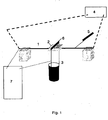
- This test is performed to demonstrate the resistance of a cable material to short heat load situations similar to the short circuit test of standard in IEC811-3-1.
- a copper conductor with 1.5 mm 2 cross section area and 210 mm length (1) is used in combination with a compression moulded plate of the insulation material (2).
- the conductor is mounted in between two supports and connected to a direct current (DC) welding generator (4) (see Fig. 1 ), all kept initially at ambient temperature (+23°C).
- DC direct current
- the insulation material (polymer) is compression moulded into a plate of 1.25 mm thickness, from which square specimen of 20 x 20 mm are cut and placed between the conductor and the same knife setup (6) as in IEC811-3-1, which knife setup is loaded with 121 g (3), calculated from the thickness of insulation in IEC811-3-1.
- the angle between knife blade and conductor is set to 90°.
- a control circuit (7) between the conductor and the knife is set up to indicate this contact with a beep signal.
- the DC welding generator is started simultaneously with a timer of a precision better than 1 second. Both time and temperature of the beep signal, i.e. the penetration of the knife through the insulation material, are noted. To improve the precision, five repetitions of the test are performed for each type of material and an arithmetical average for both time and temperature is calculated.
- FIG. 1 A scheme of the HWT test is shown is Fig. 1 .
- the 50 Hz relative permittivity and the dissipation factor are measured according to an internal method that relates to ASTM D150-1995 (Instrument: TETTEX 2914, electrode pressure: 6 N/cm 2 , test voltage: 500 V) on 3 mm compression moulded plaques at room temperature (20°C).
- the AC breakdown strength is measured according to an internal method that relates to IEC 60243 PT1 (1988) (electrodes according to IEC 60243 PT1 (1988), frequency: 50 Hz, plate dimensions: 50 ⁇ 5 mm x 50 ⁇ 5 mm x 0.3 ⁇ 0.05 mm, insulation oil: Shell Diala, voltage ramp: 2 kV / s beginning from 0 kV, limiting current: 5 mA).
- Ash content is determined according to ISO 3451/1-1981 by igniting and ashing a sample of 5 g in pellet form in a muffle furnace up to 900°C and is expressed in weight%.
- the components - propylene homo- or copolymer, inorganic filler material and polyethylene-vinylsilane-copolymer or grafting product and the catalyst master batch (Borealis polyethylene CAT-MB50 with dibutyltin dilaurate as catalytically active substance), were combined in a twin screw extruder (PRISM TSE24, L/D ratio 40) with two high intensity mixing segments at temperatures between 190 and 220°C at a through put of 10 kg/h and a screw speed of 50 rpm.
- the material was extruded to two circular dies of 3 mm diameter into water base with a residence time of at least 30 sec for solidifying the melt standard, which was consequently granulated.
- the resulting compound was stored at an ambient temperature of +23 ⁇ 2 °C and normal humidity (50 ⁇ 5%).
- Silicon group containing polymer
- High-pressure low density ethylene terpolymer (LE4481) with a vinyltrimethylsilane content of 1.75 wt% and a butylacrylate content of about 17 wt% for cable insulation with an MFR (190°C/2.16 kg) of 5 g / 10 min, and a density of 927 kg/m 3 , distributed by Borealis Polyolefine GmbH.
- Homo/Random/Block polypropylene copolymer (homopolymer produced in a first loop rector, the propylene/ethylene random copolymer produced in a downstream first gas phase reactor, the ethylene/propylene rubber produced in a second gas phase reactor) with a C2/C3 ratio of 460 mol/kmol, a content of xylene cold solubles of 28 wt% and a MFR (230°C/2.16 kg) of 3.5 g/10 min.
- Aerosil ® 200
- BET specific surface area
- Aerosil ® OX50
- BET specific surface area
- 89.75 wt% polypropylene copolymer as matrix phase is used together with 5 wt% silicon group containing polymer, 5 wt% Aerosil ® 200, and 0.25 wt% catalyst masterbatch CAT-MB50.
- polypropylene copolymer as matrix phase 95.75 wt% polypropylene copolymer as matrix phase is used together with 2 wt% silicon group containing polymer, 2 wt% Aerosil ® OX50, and 0.25 wt% catalyst masterbatch CAT-MB50.
- polypropylene copolymer as matrix phase is used together with 2 wt% silicon group containing polymer, 5 wt% Aerosil ® 200, and 0.25 wt% catalyst masterbatch CAT-MB50.
- Table 1 Filler Amount Filler Amount PE-SiOX Tensile Modulus Tensile Strain at break Charpy NIS +23°C Charpy NIS -20°C HWT AC breakdown strength Relative permittivity 20°C Ash XHU [wt%] [wt%] [Mpa] [%] [kJ/m 2 ] [kJ/m 2 ] [°C] [kV/mm] [-] [%] [%] [%] Comp1 --- 0 0 465 500 61 2.0 159 75.8 2.13 - - Comp2 Aerosil200 5 0 528 560 40 2.0 203 80.0.
Landscapes
- Chemical & Material Sciences (AREA)
- Health & Medical Sciences (AREA)
- Chemical Kinetics & Catalysis (AREA)
- Medicinal Chemistry (AREA)
- Polymers & Plastics (AREA)
- Organic Chemistry (AREA)
- Compositions Of Macromolecular Compounds (AREA)
Claims (27)
- Polypropylenzusammensetzung, umfassend:- eine Matrixphase, die ein Polypropylenhomo- oder -copolymer (A) umfaßt; und- eine in dieser Matrixphase dispergierte Phase, die ein Olefinhomo- oder -copolymer (B) mit hydrolysierbaren siliciumhaltigen Gruppen und einen anorganischen Füllstoff (C) enthält, der auf seiner Oberfläche Silanolgruppen oder Vorläufer davon enthält und eine spezifische Oberfläche BET von 30 bis 300 m2/g aufweist, und zwar gemäß ISO 9277:1995 bestimmt.
- Polypropylenzusammensetzung nach Anspruch 1, wobei der anorganische Füllstoff (C) in einer Menge von 0,5 bis 10 Gew.-% der Gesamtmenge der Polypropylenzusammensetzung vorliegt.
- Polypropylenzusammensetzung nach einem der vorstehenden Ansprüche, wobei der anorganische Füllstoff (C) eine mittlere Partikelgröße von 5 bis 60 nm aufweist.
- Polypropylenzusammensetzung nach einem der vorstehenden Ansprüche, wobei die Zusammensetzung ferner einen Silanolkondensationskatalysator umfaßt.
- Polypropylenzusammensetzung nach einem der vorstehenden Ansprüche, wobei der Silanolkondensationskatalysator aus organischen Zinnverbindungen oder sauren Silanolkondensationskatalysatoren ausgewählt ist.
- Polypropylenzusammensetzung nach einem der vorstehenden Ansprüche, wobei die Matrixphase in einer Menge bis 50 bis 98 Gew.-% der Gesamtmenge der Polypropylenzusammensetzung vorliegt.
- Polypropylenzusammensetzung nach einem der vorstehenden Ansprüche, wobei das Polypropylenhomo- oder -copolymer (A) ein Polypropylencopolymer mit verschiedenen Phasen ist, das ein elastomeres Copolymer umfaßt.
- Polypropylenzusammensetzung nach Anspruch 7, wobei das elastomere Copolymer ein elastomeres Ethylen-Propylen-Copolymer umfaßt.
- Polypropylenzusammensetzung nach Anspruch 7 oder 8, wobei das elastomere Copolymer in einer Menge von 10 bis 40 Gew.-% der Gesamtmenge des Polypropylenhomo- oder -copolymers (A) vorliegt.
- Polypropylenzusammensetzung nach einem der vorstehenden Ansprüche, wobei das Polypropylenhomo- oder -copolymer (A) in einer Menge von 80 bis 100 Gew.-% der Gesamtmenge der Matrixphase vorliegt.
- Polypropylenzusammensetzung nach einem der vorstehenden Ansprüche, wobei die Polypropylenzusammensetzung ein Gewichtsverhältnis zwischen dem Polypropylenhomo- oder -copolymer (A) und dem Polyolefin (B) von 98:2 bis 50:50 aufweist.
- Polypropylenzusammensetzung nach einem der vorstehenden Ansprüche, wobei das hydrolysierbare Siliciumgruppen enthaltende Olefinhomo- oder -copolymer (B) ein Ethylenhomo- oder -copolymer ist.
- Polypropylenzusammensetzung nach einem der vorstehenden Ansprüche, wobei in dem hydrolysierbare Siliciumgruppen enthaltenden Olefinhomo- oder -copolymer (B) die siliciumhaltigen Gruppen in einer Menge von 0,1 bis 10,0 Gew.-% der Komponente (B) vorliegen.
- Polypropylenzusammensetzung nach einem der vorstehenden Ansprüche, wobei der anorganische Füllstoff (C) Siliciumdioxid ist.
- Polypropylenzusammensetzung nach einem der vorstehenden Ansprüche, wobei der anorganische Füllstoff (C) in einer Menge von 1,0 bis 7,5 Gew.-% der Gesamtmenge der Polypropylenzusammensetzung vorliegt.
- Polypropylenzusammensetzung nach einem der vorstehenden Ansprüche, wobei die Zusammensetzung mit Feuchtigkeit in Kontakt gebracht worden ist.
- Polypropylenzusammensetzung nach einem der vorstehenden Ansprüche, wobei die Zusammensetzung einen Zugmodul von mindestens 300 MPa aufweist, und zwar gemäß ISO 527-3 gemessen.
- Polypropylenzusammensetzung nach einem der vorstehenden Ansprüche, wobei die Zusammensetzung eine Reißfestigkeit von mindestens 300 % aufweist, und zwar gemäß ISO 527-3 gemessen.
- Polypropylenzusammensetzung nach einem der vorstehenden Ansprüche, wobei die Zusammensetzung bei einem Charpy-Kerbschlagzähigkeitstest gemäß ISO 179 1eA eine Kerbschlagzähigkeit bei +23°C von mindestens 30 kJ/m2 aufweist.
- Polypropylenzusammensetzung nach einem der vorstehenden Ansprüche, wobei die Zusammensetzung bei einem Charpy-Kerbschlagzähigkeitstest gemäß ISO 179 1eA eine Kerbschlagzähigkeit bei -20°C von mindestens 3,0 kJ/m2 aufweist.
- Polypropylenzusammensetzung nach einem der vorstehenden Ansprüche, wobei die Zusammensetzung eine Wechselstrom-Durchschlagsfestigkeit von mindestens 70 kV/mm aufweist, und zwar gemäß einem internen Verfahren gemessen, das sich auf IEC 60243 PT1 (1988) bezieht.
- Polypropylenzusammensetzung nach einem der vorstehenden Ansprüche, wobei die Menge der in Xylol kaltlöslichen Bestandteile größer als die Menge des anorganischen Füllstoffs (C) innerhalb der Polypropylenzusammensetzung ist.
- Gegenstand, der Polypropylenzusammensetzung nach den Ansprüchen 1 bis 22 umfaßt.
- Gegenstand nach Anspruch 23, wobei der Gegenstand ein Draht oder Kabel ist.
- Gegenstand nach Anspruch 23 oder 24, wobei der Gegenstand eine Isolationsschicht eines Drahts oder Kabels ist.
- Verwendung einer Polypropylenzusammensetzung nach den Ansprüchen 1 bis 22 für die Herstellung eines Gegenstandes.
- Verwendung nach Anspruch 26, wobei der Gegenstand eine isolierende Schicht eines Drahts oder Kabels ist.
Priority Applications (6)
| Application Number | Priority Date | Filing Date | Title |
|---|---|---|---|
| EP07024963A EP2072575B1 (de) | 2007-12-21 | 2007-12-21 | Polypropylenzusammensetzung mit einer vernetzbaren dispergierten Phase mit Nanofüllstoffe enthaltenden Silanolgruppen |
| DE602007002200T DE602007002200D1 (de) | 2007-12-21 | 2007-12-21 | Polypropylenzusammensetzung mit einer vernetzbaren dispergierten Phase mit Nanofüllstoffe enthaltenden Silanolgruppen |
| AT07024963T ATE440904T1 (de) | 2007-12-21 | 2007-12-21 | Polypropylenzusammensetzung mit einer vernetzbaren dispergierten phase mit nanofüllstoffe enthaltenden silanolgruppen |
| PCT/EP2008/010443 WO2009080208A1 (en) | 2007-12-21 | 2008-12-09 | Polypropylene composition comprising a cross-linkable dispersed phase comprising silanol groups containing nanofillers |
| US12/809,914 US20100267900A1 (en) | 2007-12-21 | 2008-12-09 | Polypropylene composition comprising a cross-linkable dispersed phase comprising silanol groups containing nanofillers |
| CN2008801217367A CN101903458B (zh) | 2007-12-21 | 2008-12-09 | 包含含有带硅烷醇基的纳米填料的可交联的分散相的聚丙烯组合物 |
Applications Claiming Priority (1)
| Application Number | Priority Date | Filing Date | Title |
|---|---|---|---|
| EP07024963A EP2072575B1 (de) | 2007-12-21 | 2007-12-21 | Polypropylenzusammensetzung mit einer vernetzbaren dispergierten Phase mit Nanofüllstoffe enthaltenden Silanolgruppen |
Publications (2)
| Publication Number | Publication Date |
|---|---|
| EP2072575A1 EP2072575A1 (de) | 2009-06-24 |
| EP2072575B1 true EP2072575B1 (de) | 2009-08-26 |
Family
ID=39365600
Family Applications (1)
| Application Number | Title | Priority Date | Filing Date |
|---|---|---|---|
| EP07024963A Active EP2072575B1 (de) | 2007-12-21 | 2007-12-21 | Polypropylenzusammensetzung mit einer vernetzbaren dispergierten Phase mit Nanofüllstoffe enthaltenden Silanolgruppen |
Country Status (6)
| Country | Link |
|---|---|
| US (1) | US20100267900A1 (de) |
| EP (1) | EP2072575B1 (de) |
| CN (1) | CN101903458B (de) |
| AT (1) | ATE440904T1 (de) |
| DE (1) | DE602007002200D1 (de) |
| WO (1) | WO2009080208A1 (de) |
Families Citing this family (11)
| Publication number | Priority date | Publication date | Assignee | Title |
|---|---|---|---|---|
| DE602006013672D1 (de) * | 2006-12-29 | 2010-05-27 | Borealis Tech Oy | Polyolefinzusammensetzung mit silikonhaltigem Füllstoff |
| EP1942131B1 (de) * | 2006-12-29 | 2009-10-21 | Borealis Technology Oy | Antiblockmittel mit vernetzbarem silicon-enthaltenden Polyolefin |
| BRPI0904397A2 (pt) | 2009-10-07 | 2011-06-14 | Braskem Sa | processo via extrusço para preparar uma composiÇço polimÉrica hÍbrida, composiÇço polimÉrica hÍbrida e artigo |
| CN102822257B (zh) * | 2010-01-29 | 2014-03-12 | 普睿司曼股份公司 | 能量电缆 |
| KR20170139696A (ko) * | 2010-11-25 | 2017-12-19 | 프리즈미안 에스피에이 | 전압 안정화 열가소성 전기 절연층을 가진 에너지 케이블 |
| PL3088459T3 (pl) * | 2015-04-27 | 2021-08-02 | Borealis Ag | Kompozyt polipropylenowy |
| WO2018085241A1 (en) * | 2016-11-02 | 2018-05-11 | Dow Global Technologies Llc | Semi-crystalline polyolefin-based additive masterbatch composition |
| MX2019004498A (es) * | 2016-11-02 | 2019-08-05 | Dow Global Technologies Llc | Composicion de mezcla madre aditiva a base de poliolefina semicristalina. |
| CA3065881A1 (en) * | 2017-06-26 | 2019-01-03 | Borealis Ag | Polypropylene composition with excellent surface appearance |
| SE545383C2 (en) * | 2021-04-06 | 2023-07-25 | Nexam Chemical Ab | Process of recycled polypropylene |
| CN113845734B (zh) * | 2021-10-22 | 2023-09-19 | 万华化学(宁波)有限公司 | 一种高压用热塑性聚丙烯电缆绝缘料及其制备方法 |
Family Cites Families (19)
| Publication number | Priority date | Publication date | Assignee | Title |
|---|---|---|---|---|
| BE794718Q (fr) | 1968-12-20 | 1973-05-16 | Dow Corning Ltd | Procede de reticulation d'olefines |
| GB1526398A (en) | 1974-12-06 | 1978-09-27 | Maillefer Sa | Manufacture of extruded products |
| US4189550A (en) * | 1975-01-31 | 1980-02-19 | Deutsche Gold- Und Silber-Scheindeanstalt Vormals Roessler | Antistatic agents for thermoplastic synthetic resins |
| US4413066A (en) | 1978-07-05 | 1983-11-01 | Mitsubishi Petrochemical Company, Ltd. | Crosslinkable polyethylene resin compositions |
| JPS5566809A (en) | 1978-11-13 | 1980-05-20 | Mitsubishi Petrochemical Co | Method of manufacturing crosslinked polyethylene resinncoated wire |
| JPS5693542A (en) | 1979-12-27 | 1981-07-29 | Mitsubishi Petrochemical Co | Bridged polyethylene resin laminated film or sheet |
| JPS5695940A (en) | 1979-12-28 | 1981-08-03 | Mitsubishi Petrochem Co Ltd | Ethylene polymer composition |
| JPS57207632A (en) | 1981-06-16 | 1982-12-20 | Mitsubishi Petrochem Co Ltd | Crosslinkable polyethylene resin composition |
| JPS5861129A (ja) | 1981-10-08 | 1983-04-12 | Sekisui Plastics Co Ltd | 発泡体の製造法 |
| JPH0657777B2 (ja) * | 1988-03-31 | 1994-08-03 | 信越化学工業株式会社 | ゴム組成物 |
| JPH02138353A (ja) | 1988-11-18 | 1990-05-28 | Showa Denko Kk | プロピレン系重合体組成物 |
| SE502171C2 (sv) | 1993-12-20 | 1995-09-04 | Borealis Holding As | Polyetenkompatibla sulfonsyror som silanförnätningskatalysatorer |
| US5929129A (en) * | 1994-09-19 | 1999-07-27 | Sentinel Products Corp. | Crosslinked foamable compositions of silane-grafted, essentially linear polyolefins blended with polypropylene |
| US5910523A (en) | 1997-12-01 | 1999-06-08 | Hudson; Steven David | Polyolefin nanocomposites |
| CA2290318C (en) * | 1999-11-24 | 2009-02-03 | Shaw Industries Limited | Crosslinked compositions containing silane-grafted polyolefins and polypropylene |
| US6395837B1 (en) | 2000-08-03 | 2002-05-28 | King Industries, Inc. | Alkylated aryl disulfonic acid catalysts for crosslinking polyethylene |
| US6794453B2 (en) * | 2000-11-06 | 2004-09-21 | Shawcor Ltd. | Crosslinked, predominantly polypropylene-based compositions |
| JP2004051722A (ja) | 2002-07-18 | 2004-02-19 | Idemitsu Petrochem Co Ltd | ポリオレフィン系複合樹脂組成物 |
| EP1834987B1 (de) * | 2006-03-15 | 2015-08-12 | Borealis Technology Oy | Verfahren zur Herstellung einer Polypropylenzusammensetzung mit selektiver vernetzbarer dispergierter Phase. |
-
2007
- 2007-12-21 EP EP07024963A patent/EP2072575B1/de active Active
- 2007-12-21 AT AT07024963T patent/ATE440904T1/de not_active IP Right Cessation
- 2007-12-21 DE DE602007002200T patent/DE602007002200D1/de active Active
-
2008
- 2008-12-09 WO PCT/EP2008/010443 patent/WO2009080208A1/en not_active Ceased
- 2008-12-09 CN CN2008801217367A patent/CN101903458B/zh active Active
- 2008-12-09 US US12/809,914 patent/US20100267900A1/en not_active Abandoned
Also Published As
| Publication number | Publication date |
|---|---|
| CN101903458A (zh) | 2010-12-01 |
| US20100267900A1 (en) | 2010-10-21 |
| ATE440904T1 (de) | 2009-09-15 |
| EP2072575A1 (de) | 2009-06-24 |
| DE602007002200D1 (de) | 2009-10-08 |
| WO2009080208A1 (en) | 2009-07-02 |
| CN101903458B (zh) | 2013-05-01 |
Similar Documents
| Publication | Publication Date | Title |
|---|---|---|
| EP2072575B1 (de) | Polypropylenzusammensetzung mit einer vernetzbaren dispergierten Phase mit Nanofüllstoffe enthaltenden Silanolgruppen | |
| JP4902093B2 (ja) | 半導電性シールド組成物 | |
| KR101732860B1 (ko) | 워터 트리-내성, trxlpe-형 케이블 피복의 제조 방법 | |
| KR101847326B1 (ko) | 중합체 블렌드 | |
| KR101357170B1 (ko) | 개선된 기계적 특성을 갖는 난연성 폴리머 조성물 | |
| CN107406659A (zh) | 电线包覆材料组合物、绝缘电线和线束 | |
| CN101679672A (zh) | 耐应力/热裂化的电缆护套材料 | |
| KR20140117448A (ko) | 열가소성 반도전성 조성물 | |
| US6706791B2 (en) | Cable semiconductive shield compositions | |
| CN102971368A (zh) | 新组合物及其应用 | |
| CN101842439A (zh) | 用于导线和电缆用途的硅烷官能化聚烯烃组合物、其产品以及其制备方法 | |
| JP5331900B2 (ja) | エチレン−ビニルシランコポリマーの湿分硬化用触媒系 | |
| EP3339366A1 (de) | Vernetzbare polyolefinzusammensetzung | |
| US20010014709A1 (en) | Cable semiconductive shield compositions | |
| EP3589681B1 (de) | Flammhemmende, feuchtigkeitshärtende draht- und kabelkonstruktionen mit verbesserter glanzschlagleistung | |
| US8450416B2 (en) | Flexible polypropylene with high impact strength | |
| EP2083047A1 (de) | Teilweise vernetzte Polypropylenzusammensetzung mit einem sauren Silanol-Kondensationskatalysator | |
| EP1834987A1 (de) | Polypropylenzusammensetzung mit selektiver vernetzbarer dispergierter Phase. | |
| EP1939246B1 (de) | Polyolefinzusammensetzung mit silikonhaltigem Füllstoff | |
| WO2025187386A1 (ja) | 液状シラングラフトオレフィン組成物及びそのシラン架橋硬化物、並びにこれらの製造方法 | |
| EP3902872A1 (de) | Feste vernetzte polyolefinzusammensetzungen für draht- und kabelbeschichtung |
Legal Events
| Date | Code | Title | Description |
|---|---|---|---|
| GRAP | Despatch of communication of intention to grant a patent |
Free format text: ORIGINAL CODE: EPIDOSNIGR1 |
|
| GRAS | Grant fee paid |
Free format text: ORIGINAL CODE: EPIDOSNIGR3 |
|
| PUAI | Public reference made under article 153(3) epc to a published international application that has entered the european phase |
Free format text: ORIGINAL CODE: 0009012 |
|
| 17P | Request for examination filed |
Effective date: 20071221 |
|
| AK | Designated contracting states |
Kind code of ref document: A1 Designated state(s): AT BE BG CH CY CZ DE DK EE ES FI FR GB GR HU IE IS IT LI LT LU LV MC MT NL PL PT RO SE SI SK TR |
|
| AX | Request for extension of the european patent |
Extension state: AL BA HR MK RS |
|
| GRAA | (expected) grant |
Free format text: ORIGINAL CODE: 0009210 |
|
| AK | Designated contracting states |
Kind code of ref document: B1 Designated state(s): AT BE BG CH CY CZ DE DK EE ES FI FR GB GR HU IE IS IT LI LT LU LV MC MT NL PL PT RO SE SI SK TR |
|
| REG | Reference to a national code |
Ref country code: GB Ref legal event code: FG4D |
|
| REG | Reference to a national code |
Ref country code: CH Ref legal event code: EP |
|
| REG | Reference to a national code |
Ref country code: IE Ref legal event code: FG4D |
|
| REF | Corresponds to: |
Ref document number: 602007002200 Country of ref document: DE Date of ref document: 20091008 Kind code of ref document: P |
|
| LTIE | Lt: invalidation of european patent or patent extension |
Effective date: 20090826 |
|
| PG25 | Lapsed in a contracting state [announced via postgrant information from national office to epo] |
Ref country code: SE Free format text: LAPSE BECAUSE OF FAILURE TO SUBMIT A TRANSLATION OF THE DESCRIPTION OR TO PAY THE FEE WITHIN THE PRESCRIBED TIME-LIMIT Effective date: 20090826 Ref country code: LT Free format text: LAPSE BECAUSE OF FAILURE TO SUBMIT A TRANSLATION OF THE DESCRIPTION OR TO PAY THE FEE WITHIN THE PRESCRIBED TIME-LIMIT Effective date: 20090826 Ref country code: IS Free format text: LAPSE BECAUSE OF FAILURE TO SUBMIT A TRANSLATION OF THE DESCRIPTION OR TO PAY THE FEE WITHIN THE PRESCRIBED TIME-LIMIT Effective date: 20091226 Ref country code: AT Free format text: LAPSE BECAUSE OF FAILURE TO SUBMIT A TRANSLATION OF THE DESCRIPTION OR TO PAY THE FEE WITHIN THE PRESCRIBED TIME-LIMIT Effective date: 20090826 Ref country code: FI Free format text: LAPSE BECAUSE OF FAILURE TO SUBMIT A TRANSLATION OF THE DESCRIPTION OR TO PAY THE FEE WITHIN THE PRESCRIBED TIME-LIMIT Effective date: 20090826 |
|
| NLV1 | Nl: lapsed or annulled due to failure to fulfill the requirements of art. 29p and 29m of the patents act | ||
| PG25 | Lapsed in a contracting state [announced via postgrant information from national office to epo] |
Ref country code: LV Free format text: LAPSE BECAUSE OF FAILURE TO SUBMIT A TRANSLATION OF THE DESCRIPTION OR TO PAY THE FEE WITHIN THE PRESCRIBED TIME-LIMIT Effective date: 20090826 Ref country code: PL Free format text: LAPSE BECAUSE OF FAILURE TO SUBMIT A TRANSLATION OF THE DESCRIPTION OR TO PAY THE FEE WITHIN THE PRESCRIBED TIME-LIMIT Effective date: 20090826 Ref country code: SI Free format text: LAPSE BECAUSE OF FAILURE TO SUBMIT A TRANSLATION OF THE DESCRIPTION OR TO PAY THE FEE WITHIN THE PRESCRIBED TIME-LIMIT Effective date: 20090826 Ref country code: NL Free format text: LAPSE BECAUSE OF FAILURE TO SUBMIT A TRANSLATION OF THE DESCRIPTION OR TO PAY THE FEE WITHIN THE PRESCRIBED TIME-LIMIT Effective date: 20090826 |
|
| AKX | Designation fees paid |
Designated state(s): AT BE BG CH CY CZ DE DK EE ES FI FR GB GR HU IE IS IT LI LT LU LV MC MT NL PL PT RO SE SI SK TR |
|
| PG25 | Lapsed in a contracting state [announced via postgrant information from national office to epo] |
Ref country code: BG Free format text: LAPSE BECAUSE OF FAILURE TO SUBMIT A TRANSLATION OF THE DESCRIPTION OR TO PAY THE FEE WITHIN THE PRESCRIBED TIME-LIMIT Effective date: 20091126 Ref country code: CY Free format text: LAPSE BECAUSE OF FAILURE TO SUBMIT A TRANSLATION OF THE DESCRIPTION OR TO PAY THE FEE WITHIN THE PRESCRIBED TIME-LIMIT Effective date: 20090826 Ref country code: PT Free format text: LAPSE BECAUSE OF FAILURE TO SUBMIT A TRANSLATION OF THE DESCRIPTION OR TO PAY THE FEE WITHIN THE PRESCRIBED TIME-LIMIT Effective date: 20091228 |
|
| PG25 | Lapsed in a contracting state [announced via postgrant information from national office to epo] |
Ref country code: RO Free format text: LAPSE BECAUSE OF FAILURE TO SUBMIT A TRANSLATION OF THE DESCRIPTION OR TO PAY THE FEE WITHIN THE PRESCRIBED TIME-LIMIT Effective date: 20090826 Ref country code: ES Free format text: LAPSE BECAUSE OF FAILURE TO SUBMIT A TRANSLATION OF THE DESCRIPTION OR TO PAY THE FEE WITHIN THE PRESCRIBED TIME-LIMIT Effective date: 20091207 Ref country code: DK Free format text: LAPSE BECAUSE OF FAILURE TO SUBMIT A TRANSLATION OF THE DESCRIPTION OR TO PAY THE FEE WITHIN THE PRESCRIBED TIME-LIMIT Effective date: 20090826 Ref country code: CZ Free format text: LAPSE BECAUSE OF FAILURE TO SUBMIT A TRANSLATION OF THE DESCRIPTION OR TO PAY THE FEE WITHIN THE PRESCRIBED TIME-LIMIT Effective date: 20090826 Ref country code: EE Free format text: LAPSE BECAUSE OF FAILURE TO SUBMIT A TRANSLATION OF THE DESCRIPTION OR TO PAY THE FEE WITHIN THE PRESCRIBED TIME-LIMIT Effective date: 20090826 |
|
| PG25 | Lapsed in a contracting state [announced via postgrant information from national office to epo] |
Ref country code: SK Free format text: LAPSE BECAUSE OF FAILURE TO SUBMIT A TRANSLATION OF THE DESCRIPTION OR TO PAY THE FEE WITHIN THE PRESCRIBED TIME-LIMIT Effective date: 20090826 |
|
| PG25 | Lapsed in a contracting state [announced via postgrant information from national office to epo] |
Ref country code: BE Free format text: LAPSE BECAUSE OF FAILURE TO SUBMIT A TRANSLATION OF THE DESCRIPTION OR TO PAY THE FEE WITHIN THE PRESCRIBED TIME-LIMIT Effective date: 20090826 |
|
| PLBE | No opposition filed within time limit |
Free format text: ORIGINAL CODE: 0009261 |
|
| STAA | Information on the status of an ep patent application or granted ep patent |
Free format text: STATUS: NO OPPOSITION FILED WITHIN TIME LIMIT |
|
| PG25 | Lapsed in a contracting state [announced via postgrant information from national office to epo] |
Ref country code: MC Free format text: LAPSE BECAUSE OF NON-PAYMENT OF DUE FEES Effective date: 20100701 |
|
| 26N | No opposition filed |
Effective date: 20100527 |
|
| REG | Reference to a national code |
Ref country code: FR Ref legal event code: ST Effective date: 20100831 |
|
| PG25 | Lapsed in a contracting state [announced via postgrant information from national office to epo] |
Ref country code: IE Free format text: LAPSE BECAUSE OF NON-PAYMENT OF DUE FEES Effective date: 20091221 Ref country code: FR Free format text: LAPSE BECAUSE OF NON-PAYMENT OF DUE FEES Effective date: 20091231 Ref country code: GR Free format text: LAPSE BECAUSE OF FAILURE TO SUBMIT A TRANSLATION OF THE DESCRIPTION OR TO PAY THE FEE WITHIN THE PRESCRIBED TIME-LIMIT Effective date: 20091127 |
|
| PG25 | Lapsed in a contracting state [announced via postgrant information from national office to epo] |
Ref country code: IT Free format text: LAPSE BECAUSE OF FAILURE TO SUBMIT A TRANSLATION OF THE DESCRIPTION OR TO PAY THE FEE WITHIN THE PRESCRIBED TIME-LIMIT Effective date: 20090826 |
|
| PG25 | Lapsed in a contracting state [announced via postgrant information from national office to epo] |
Ref country code: MT Free format text: LAPSE BECAUSE OF FAILURE TO SUBMIT A TRANSLATION OF THE DESCRIPTION OR TO PAY THE FEE WITHIN THE PRESCRIBED TIME-LIMIT Effective date: 20090826 Ref country code: LU Free format text: LAPSE BECAUSE OF NON-PAYMENT OF DUE FEES Effective date: 20091221 |
|
| PG25 | Lapsed in a contracting state [announced via postgrant information from national office to epo] |
Ref country code: HU Free format text: LAPSE BECAUSE OF FAILURE TO SUBMIT A TRANSLATION OF THE DESCRIPTION OR TO PAY THE FEE WITHIN THE PRESCRIBED TIME-LIMIT Effective date: 20100227 |
|
| PG25 | Lapsed in a contracting state [announced via postgrant information from national office to epo] |
Ref country code: TR Free format text: LAPSE BECAUSE OF FAILURE TO SUBMIT A TRANSLATION OF THE DESCRIPTION OR TO PAY THE FEE WITHIN THE PRESCRIBED TIME-LIMIT Effective date: 20090826 |
|
| REG | Reference to a national code |
Ref country code: CH Ref legal event code: PL |
|
| GBPC | Gb: european patent ceased through non-payment of renewal fee |
Effective date: 20111221 |
|
| PG25 | Lapsed in a contracting state [announced via postgrant information from national office to epo] |
Ref country code: LI Free format text: LAPSE BECAUSE OF NON-PAYMENT OF DUE FEES Effective date: 20111231 Ref country code: CH Free format text: LAPSE BECAUSE OF NON-PAYMENT OF DUE FEES Effective date: 20111231 Ref country code: GB Free format text: LAPSE BECAUSE OF NON-PAYMENT OF DUE FEES Effective date: 20111221 |
|
| P01 | Opt-out of the competence of the unified patent court (upc) registered |
Effective date: 20230602 |
|
| PGFP | Annual fee paid to national office [announced via postgrant information from national office to epo] |
Ref country code: DE Payment date: 20241210 Year of fee payment: 18 |