EP2068472B1 - Kommunikationssystem, basisstation dafür und kommunikationsverfahren - Google Patents
Kommunikationssystem, basisstation dafür und kommunikationsverfahren Download PDFInfo
- Publication number
- EP2068472B1 EP2068472B1 EP07807576A EP07807576A EP2068472B1 EP 2068472 B1 EP2068472 B1 EP 2068472B1 EP 07807576 A EP07807576 A EP 07807576A EP 07807576 A EP07807576 A EP 07807576A EP 2068472 B1 EP2068472 B1 EP 2068472B1
- Authority
- EP
- European Patent Office
- Prior art keywords
- communication
- subchannel
- base station
- subchannels
- terminal
- Prior art date
- Legal status (The legal status is an assumption and is not a legal conclusion. Google has not performed a legal analysis and makes no representation as to the accuracy of the status listed.)
- Not-in-force
Links
- 238000004891 communication Methods 0.000 title claims abstract description 114
- 238000000034 method Methods 0.000 title claims abstract description 25
- 230000003247 decreasing effect Effects 0.000 claims abstract description 13
- 230000005540 biological transmission Effects 0.000 abstract description 28
- 238000010586 diagram Methods 0.000 description 15
- 230000003595 spectral effect Effects 0.000 description 7
- 238000006243 chemical reaction Methods 0.000 description 5
- 239000000969 carrier Substances 0.000 description 4
- 238000004422 calculation algorithm Methods 0.000 description 3
- 238000004590 computer program Methods 0.000 description 3
- 230000007423 decrease Effects 0.000 description 3
- 238000013507 mapping Methods 0.000 description 2
- 238000001228 spectrum Methods 0.000 description 2
- 238000004364 calculation method Methods 0.000 description 1
- 230000000052 comparative effect Effects 0.000 description 1
- 230000009466 transformation Effects 0.000 description 1
Images



Classifications
-
- H—ELECTRICITY
- H04—ELECTRIC COMMUNICATION TECHNIQUE
- H04L—TRANSMISSION OF DIGITAL INFORMATION, e.g. TELEGRAPHIC COMMUNICATION
- H04L5/00—Arrangements affording multiple use of the transmission path
- H04L5/14—Two-way operation using the same type of signal, i.e. duplex
- H04L5/1469—Two-way operation using the same type of signal, i.e. duplex using time-sharing
- H04L5/1484—Two-way operation using the same type of signal, i.e. duplex using time-sharing operating bytewise
-
- H—ELECTRICITY
- H04—ELECTRIC COMMUNICATION TECHNIQUE
- H04W—WIRELESS COMMUNICATION NETWORKS
- H04W72/00—Local resource management
- H04W72/50—Allocation or scheduling criteria for wireless resources
- H04W72/56—Allocation or scheduling criteria for wireless resources based on priority criteria
- H04W72/566—Allocation or scheduling criteria for wireless resources based on priority criteria of the information or information source or recipient
-
- H—ELECTRICITY
- H04—ELECTRIC COMMUNICATION TECHNIQUE
- H04W—WIRELESS COMMUNICATION NETWORKS
- H04W72/00—Local resource management
- H04W72/04—Wireless resource allocation
-
- H—ELECTRICITY
- H04—ELECTRIC COMMUNICATION TECHNIQUE
- H04W—WIRELESS COMMUNICATION NETWORKS
- H04W72/00—Local resource management
- H04W72/04—Wireless resource allocation
- H04W72/044—Wireless resource allocation based on the type of the allocated resource
- H04W72/0453—Resources in frequency domain, e.g. a carrier in FDMA
-
- H—ELECTRICITY
- H04—ELECTRIC COMMUNICATION TECHNIQUE
- H04L—TRANSMISSION OF DIGITAL INFORMATION, e.g. TELEGRAPHIC COMMUNICATION
- H04L5/00—Arrangements affording multiple use of the transmission path
- H04L5/0001—Arrangements for dividing the transmission path
- H04L5/0003—Two-dimensional division
- H04L5/0005—Time-frequency
- H04L5/0007—Time-frequency the frequencies being orthogonal, e.g. OFDM(A) or DMT
-
- H—ELECTRICITY
- H04—ELECTRIC COMMUNICATION TECHNIQUE
- H04L—TRANSMISSION OF DIGITAL INFORMATION, e.g. TELEGRAPHIC COMMUNICATION
- H04L5/00—Arrangements affording multiple use of the transmission path
- H04L5/003—Arrangements for allocating sub-channels of the transmission path
- H04L5/0048—Allocation of pilot signals, i.e. of signals known to the receiver
-
- H—ELECTRICITY
- H04—ELECTRIC COMMUNICATION TECHNIQUE
- H04W—WIRELESS COMMUNICATION NETWORKS
- H04W72/00—Local resource management
- H04W72/50—Allocation or scheduling criteria for wireless resources
- H04W72/54—Allocation or scheduling criteria for wireless resources based on quality criteria
- H04W72/543—Allocation or scheduling criteria for wireless resources based on quality criteria based on requested quality, e.g. QoS
-
- H—ELECTRICITY
- H04—ELECTRIC COMMUNICATION TECHNIQUE
- H04W—WIRELESS COMMUNICATION NETWORKS
- H04W72/00—Local resource management
- H04W72/50—Allocation or scheduling criteria for wireless resources
- H04W72/56—Allocation or scheduling criteria for wireless resources based on priority criteria
-
- H—ELECTRICITY
- H04—ELECTRIC COMMUNICATION TECHNIQUE
- H04W—WIRELESS COMMUNICATION NETWORKS
- H04W76/00—Connection management
- H04W76/20—Manipulation of established connections
Definitions
- the present invention relates to an OFDMA communication system, base station, and communication method.
- TDMA Time Division Multiple Access
- TDD Time Division Duplex
- OFDMA Orthogonal Frequency Division Multiplexing Access
- the OFDM is a scheme for dividing a carrier to modulate data into a plurality of "subcarriers" (subdivided carriers) orthogonal to each other and distributing and transmitting a data signal in each subcarrier.
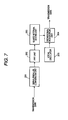
- Fig. 7 is a block diagram showing a configuration of an OFDM modulation device to be used at a transmitting side.
- Transmission data is input to the OFDM modulation device.
- the transmission data is supplied to a serial/parallel conversion unit 201 and converted into data configured from a plurality of low-speed transmission symbols. That is, a plurality of low-speed digital signals are generated by dividing transmission information.
- Parallel data is supplied to an inverse fast Fourier transform (IFFT) unit 202.
- IFFT inverse fast Fourier transform
- the parallel data is allocated to each subcarrier configuring OFDM and mapped in a frequency domain.
- each subcarrier is modulated by BPSK, QPSK, 16QAM, 64QAM, etc.
- the mapping data is transformed from frequency-domain transmission data to time-domain transmission data by performing an IFFT operation. Thereby, multicarrier modulation signals into which a plurality of subcarriers orthogonal to each other are modulated independently are generated.
- An output of the IFFT unit 202 is supplied to a guard interval adding unit 203.
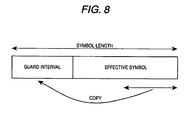
- the guard interval adding unit 203 sets a rear part of an effective symbol of transmission data as a guard interval and adds its copy to a front part of an effective symbol period for every transmission symbol.
- a base-band signal obtained by the guard interval adding unit is supplied to an orthogonal modulation unit 204.
- the orthogonal modulation unit 204 orthogonally modulates a base-band OFDM signal supplied from the guard interval adding unit 203 using a carrier signal supplied from a local oscillator 105 of the OFDM modulation device, and performs frequency conversion into an intermediate frequency (IF) signal or a radio frequency (RF) signal. That is, after frequency-converting the base-band signal into a desired transmission frequency band, the orthogonal modulation unit outputs it to a transmission path.
- IF intermediate frequency
- RF radio frequency
- Fig. 9 is a block diagram showing a configuration of an OFDM demodulation device to be used at a receiving side.
- An OFDM signal generated by the OFDM modulation device of Fig. 7 is input to the OFDM demodulation device through a predetermined transmission path.
- An OFDM reception signal input to the OFDM demodulation device is supplied to an orthogonal demodulation unit 211.
- the orthogonal demodulation unit 211 orthogonally demodulates the OFDM reception signal using a carrier signal supplied from a local oscillator 212 of the OFDM demodulation device, performs frequency conversion from an RF signal or an IF signal to a base-band signal, and obtains a base-band OFDM signal.
- the OFDM signal is supplied to a guard interval removing unit 213.
- the guard interval removing unit 213 removes a signal added by the guard interval adding unit 203 of the OFDM modulation device according to a timing signal supplied from a symbol timing synchronizing unit (not shown).
- a signal obtained by the guard interval removing unit 213 is supplied to a fast Fourier transform (FFT) unit 214.
- FFT fast Fourier transform
- The. FFT unit 214 performs transformation to frequency-domain reception data by performing an FFT operation on input time-domain reception data. De-mapping is performed in the frequency domain and parallel data is generated for each subcarrier. Here, the demodulation to the modulation of BPSK, QPSK, 16QAM, 64QAM, etc. performed for each subcarrier is performed. Parallel data obtained by the FFT unit 214 is supplied to a parallel/serial conversion unit 215 and output as reception data.
- the OFDM is a scheme for dividing a carrier into a plurality of subcarriers.
- the OFDMA is a scheme for collecting and grouping a plurality of subcarriers among subcarriers in the above-described OFDM and performing multiplex communication by allocating one or more groups to each user.
- Each group described above is called a subchannel. That is, each user performs communication using one or more subchannels allocated. According to a communication data amount, a propagation environment, etc., subchannels are adaptively increased/decreased and allocated.
- Patent Document 1 discloses a method for adaptively varying and allocating pilot carriers according to a channel environment of each subchannel. This allocation method allocates a small number of pilot carriers when the channel environment is good and allocates a large number of pilot carriers when the channel environment is bad. Thereby, the number of subchannels capable of being allocated to one user is varied.
- a base station releases an unnecessary subchannel for another user terminal when transmission data is temporarily decreased while communication of a user terminal is in process.
- the present invention has been made to solve the above-described problem, and an object of the invention is to obtain an OFDMA communication system, base station, and communication method that can continue communication without lowering the throughput of communication in a user terminal even when transmission data is decreased temporarily and then increased again while communication of the user terminal is in progress and can provide the throughput corresponding to QoS to the user terminal.
- an OFDMA communication system as defined in claim 1.
- an OFDMA base station as defined in claim 4.
- the present invention when an amount of communication data between a base station and a terminal in which communication has been established has decreased, allocation is maintained without releasing at least one of a plurality of data-free subchannels and allocation to another terminal is not performed.
- the terminal communication has increased again, the throughput corresponding to QoS can be provided to a user terminal without lowering the communication throughput.
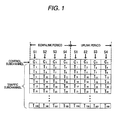
- Fig. 1 is an illustrative diagram showing an OFDMA frame configuration to be used in a communication method according to an embodiment of the present invention.
- This communication system is an OFDMA communication system for performing communication by a frame configured by a plurality of subchannels for each frequency band between a base station (CS: cell station) and a plurality of terminals (PS: personal station).
- CS base station
- PS personal station
- the frame configuration of Fig. 1 is a configuration of the case of four time slots (S1 to S4) used in a conventional PHS system.
- the vertical axis denotes the frequency axis and the horizontal axis denotes the time axis.
- both a downlink period and an uplink period are divided into 28 frequency bands with respect to the frequency axis.
- a subchannel capable of being allocated to the first frequency band is called a control subchannel and used in a control channel (CCH).
- the above-described first frequency band can be the highest frequency band or the lowest frequency band.
- the control subchannel indicates which subchannel of each time slot is used in each frequency band.
- Fig. 1 is an example of the PHS system and the number of base stations capable of being designated by control subchannels C1 to C4 is 4.
- a control channel is intermittently transmitted every 100 ms.
- traffic subchannels T1 to T108 for transmitting and receiving data are configured and a total of 108 subchannels are configured since 27 subchannels are configured in the frequency direction and 4 subchannels are configured in the time-axis direction.
- the traffic subchannels are configured by anchor subchannels and extra subchannels.
- the anchor subchannel is a subchannel used to provide each terminal with a notification indicating which user uses which subchannel or used for the base station and the terminal to negotiate whether data has been accurately exchanged in retransmission control.
- the extra subchannel is a subchannel for transmitting data to be used actually, and an arbitrary plurality of extra subchannels can be allocated to one terminal. In this case, as the number of allocated extra subchannels increases, high-speed communication is possible since a band extends.
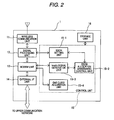
- Fig. 2 is a block diagram of a base station of a communication system according to the exemplary embodiment of the present invention.
- a base station 1 is configured by a wireless communication unit 11 for converting a signal from a later-described signal processing unit 12 connected to an antenna into an RF signal or performing conversion so that the signal processing unit 12 can process a received RF signal, the signal processing unit 12 for processing a received signal or a signal to be transmitted, a modem unit 13 for modulating or demodulating a signal, an external I/F unit 14 connected to an upper level communication network, a control unit 15 for controlling the signal processing unit 12 and the modem unit 13, and a storage unit 16 for storing QoS information, etc.
- the control unit 15 acquires a communication data amount (a communication data amount acquisition unit) and allocates subchannels according to the communication data amount (a channel allocation unit). When the communication, data amount has decreased, control is performed to maintain at least one of the allocated subchannels.
- the control unit 15 has an ESCH (extra subchannel) setting unit 15-1 for setting allocation for each terminal of an extra subchannel (ESCH) to be used by communication, an ESCH allocation maintaining control unit 15-2 for commanding the ESCH (extra subchannel) setting unit 15-1 to release an extra subchannel and commanding an invalid signal (disapproval-indicating signal) generation unit 15-3 to maintain extra subchannel allocation, by determining whether or not to start allocation maintaining of an extra subchannel without transmission data, the invalid signal (disapproval-indicating signal) generation unit 15-3 for generating an invalid signal (disapproval-indicating signal) in a V field of a PHY frame of an extra subchannel, and a QoS class acquisition unit 15-4 for acquiring information about a QoS class of the user from the storage unit 16.
- a determination as to whether or not to continue a subchannel connection is performed by a difference in the degree of occupancy of the extra subchannel (ESCH) on the basis of QoS information of the terminal.
- ESCH extra subchannel
- a QoS class included in the QoS information is a class divided according to a communication priority, and, for example, can be classified into three types of streaming, file transmission, and best effort.
- the streaming is a class in which the delay or stop of communication such as a real-time distribution of voice or video, a video-phone call, etc. is not allowed, and is set to class 1 whose priority is highest.
- the file transmission is a class that is good when a degree of band for an electronic file is secured and is set to class 2 whose priority is lower than that of the streaming.
- the best effort is a class in which QoS is not guaranteed and is set to class 3 whose priority is lowest.
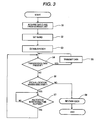
- Fig. 3 is a diagram showing an extra subchannel allocation maintaining flow in the base station of the communication system according to the exemplary embodiment of the present invention.
- Whether to release an extra subchannel without transmission data or maintain its allocation determines the number of extra subchannels to be released and the number of extra subchannels for maintaining the allocation according to the QoS class. For example, when it is classified into the above-described three types of classes (classes 1 to 3), class 1 releases no extra subchannel, class 2 releases a half of extra subchannels, and class 3 releases a quarter of extra subchannels.
- an allocation maintaining time is changed according to the QoS class. For example, when it is classified into the three types of classes (classes 1 to 3), a predetermined allocation maintaining time is allocated so that t1 > t2 > t3, where the allocation maintaining time of class 1 is t1, the allocation maintaining time of class 2 is t2, and the allocation maintaining time of class 3 is t3.
- a released subchannel is allocated to an extra subchannel without being allocated to an anchor subchannel of another terminal. This is because the anchor subchannel is not released until a communication connection is terminated, for example, even though a transmission data amount has decreased when it is allocated to the anchor subchannel of the other terminal, but there is a possibility that it may be released again in the case of the extra subchannels.
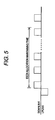
- a communication method will be described in detail using the sequence of a communication procedure between a terminal and a base station shown in Fig. 4 when QoS is considered.
- Types of subchannels (a control channel (CCH) and an anchor subchannel (ASCH) and an extra subchannel (ESCH) configuring a traffic channel (TCH)) to be communicated in a terminal (PS) and a base station (CS) are divided and shown.
- CCH control channel
- ASCH anchor subchannel
- ESCH extra subchannel
- This communication method continuously sends a signal from the base station to the terminal for a given time even when user data decreases temporarily and prevents the base station from allocating the extra subchannel (ESCH) to another terminal.
- the downlink (link from the base station to the terminal) is transmitted continuously, so that the terminal also recognizes that its extra subchannel has been allocated and the extra subchannel is not allocated to another terminal.
- Fig. 4 there are shown the communication start (terminal-base station connection) to the communication termination (terminal-base station release).
- a connection is made in the same sequence as that of an existing PHS system.
- FIG. 6 is an illustrative diagram showing a flow from the communication start (terminal-base station connection) to the communication termination (terminal-base station release) when communication is performed without considering QoS.
- a connection is made in the same sequence as that of an existing PHS system.
Landscapes
- Engineering & Computer Science (AREA)
- Signal Processing (AREA)
- Computer Networks & Wireless Communication (AREA)
- Quality & Reliability (AREA)
- Mobile Radio Communication Systems (AREA)
Claims (6)
- OFDMA-Kommunikationssystem zum Ausführen einer Datenkommunikation unter Verwendung eines oder mehrerer Unterkanäle (T1-T108) zwischen einer Basisstation (CS) und mehreren Endgeräten (PS), das umfasst:eine Kommunikationsdatenmengen-Ermittlungseinheit (15), die eine Kommunikationsdatenmenge ermittelt; undeine Kanalzuweisungseinheit (15), die die Unterkanäle (T1-T108) in Übereinstimmung mit der Kommunikationsdatenmenge zuweist,dadurch gekennzeichnet, dass dann, wenn die Kommunikationsdatenmenge abgenommen hat, die Kanalzuweisungseinheit (15) die Zuweisung wenigstens eines Unterkanals der zugewiesenen Unterkanäle (T1-T108) aufrecht erhält,wobei die Kanalzuweisungseinheit (15) ein vorgegebenes Signal unter Verwendung des Unterkanals, dessen Zuweisung aufrecht erhalten wird, sendet undwobei das vorgegebene Signal ein Genehmigungsverweigerungs-Anzeigesignal ist.
- Kommunikationssystem nach Anspruch 1,
wobei die Kanalzuweisungseinheit (15) die Anzahl von Unterkanälen (T1-T108), für die die Zuweisung aufrecht erhalten werden soll, in Übereinstimmung mit einer Priorität des Endgeräts (PS) bestimmt. - Kommunikationssystem nach Anspruch 2,
wobei die Priorität eine QoS-Klasse ist. - OFDMA-Basisstation (CS) zum Ausführen einer Datenkommunikation mit mehreren Endgeräten (PS) unter Verwendung eines oder mehrerer Unterkanäle (T1-T108), die umfasst:eine Kommunikationsdatenmengen-Ermittlungseinheit (15), um eine Kommunikationsdatenmenge für ein Endgerät (PS), in dem eine Kommunikation aufgebaut worden ist, zu ermitteln; undeine Kanalzuweisungseinheit (15), um die Unterkanäle (T1-T108) zu dem Endgerät (PS), in dem die Kommunikation aufgebaut worden ist, in Übereinstimmung mit der Kommunikationsdatenmenge zuzuweisen,dadurch gekennzeichnet, dass dann, wenn eine Kommunikationsdatenmenge für das Endgerät (PS), in dem die Kommunikation aufgebaut worden ist, abgenommen hat, die Kanalzuweisungseinheit (15) die Zuweisung wenigstens eines Unterkanals der zugewiesenen Unterkanäle (T1-T108) aufrecht erhält und die Kommunikation mit dem Endgerät (PS), in dem die Kommunikation aufgebaut worden ist, fortsetzt,wobei die Kanalzuweisungseinheit (15) ein vorgegebenes Signal unter Verwendung des Unterkanals, dessen Zuweisung aufrecht erhalten wird, sendet undwobei das vorgegebene Signal ein Genehmigungsverweigerungs-Anzeigesignal ist.
- Basisstation (CS) nach Anspruch 4,
wobei die Kanalzuweisungseinheit (15) die Anzahl von Unterkanälen (T1-T108), für die die Zuweisung aufrecht erhalten werden soll, in Übereinstimmung mit einer Priorität des Endgeräts (PS), in dem die Kommunikation aufgebaut worden ist, bestimmt. - Kanalzuweisungsverfahren in einem OFDMA-Kommunikationssystem zum Ausführen einer Datenkommunikation unter Verwendung eines oder mehrerer Unterkanäle (T1-T108) zwischen einer Basisstation (CS) und mehreren Endgeräten (PS), das umfasst:einen Kommunikationsdatenmengen-Ermittlungsschritt, um eine Kommunikationsdatenmenge zu ermitteln; undeinen Kanalzuweisungsschritt, um die Unterkanäle (T1-T108) in Übereinstimmung mit der Kommunikationsdatenmenge zuzuweisen,dadurch gekennzeichnet, dass dann, wenn die Kommunikationsdatenmenge abgenommen hat, der Kanalzuweisungsschritt die Zuweisung wenigstens eines Unterkanals der zugewiesenen Unterkanäle (T1-T108) aufrecht erhält,wobei der Kanalzuweisungsschritt ein vorgegebenes Signal unter Verwendung des Unterkanals, dessen Zuweisung aufrecht erhalten wird, sendet undwobei das vorgegebene Signal ein Genehmigungsverweigerungs-Anzeigesignal ist.
Applications Claiming Priority (2)
| Application Number | Priority Date | Filing Date | Title |
|---|---|---|---|
| JP2006254386A JP4403515B2 (ja) | 2006-09-20 | 2006-09-20 | 通信システム、その基地局及び通信方法 |
| PCT/JP2007/068207 WO2008035716A1 (en) | 2006-09-20 | 2007-09-19 | Communication system, its base station, and communication method |
Publications (3)
| Publication Number | Publication Date |
|---|---|
| EP2068472A1 EP2068472A1 (de) | 2009-06-10 |
| EP2068472A4 EP2068472A4 (de) | 2010-08-04 |
| EP2068472B1 true EP2068472B1 (de) | 2011-11-09 |
Family
ID=39200541
Family Applications (1)
| Application Number | Title | Priority Date | Filing Date |
|---|---|---|---|
| EP07807576A Not-in-force EP2068472B1 (de) | 2006-09-20 | 2007-09-19 | Kommunikationssystem, basisstation dafür und kommunikationsverfahren |
Country Status (7)
| Country | Link |
|---|---|
| US (1) | US20100034154A1 (de) |
| EP (1) | EP2068472B1 (de) |
| JP (1) | JP4403515B2 (de) |
| KR (1) | KR101153096B1 (de) |
| CN (2) | CN101518138A (de) |
| AT (1) | ATE533250T1 (de) |
| WO (1) | WO2008035716A1 (de) |
Families Citing this family (3)
| Publication number | Priority date | Publication date | Assignee | Title |
|---|---|---|---|---|
| FR2940568A1 (fr) * | 2008-12-22 | 2010-06-25 | Thomson Licensing | Procede de transmission dans un reseau sans-fil et procede de gestion de communication correspondant |
| JP6479827B2 (ja) | 2014-01-28 | 2019-03-06 | 華為技術有限公司Huawei Technologies Co.,Ltd. | データ伝送インジケーション方法、アクセスポイント、及び端末 |
| US11445401B2 (en) * | 2019-02-22 | 2022-09-13 | Mediatek Inc. | Session management in wireless communication system |
Family Cites Families (26)
| Publication number | Priority date | Publication date | Assignee | Title |
|---|---|---|---|---|
| US20020133589A1 (en) * | 1998-09-11 | 2002-09-19 | Rajugopal R. Gubbi | Dynamic bandwidth negotiation scheme for wireless computer networks |
| US6625155B1 (en) * | 1999-09-28 | 2003-09-23 | Lucent Technologies Inc. | Model-based admission control adjustment in data networks |
| FI111599B (fi) * | 2000-12-28 | 2003-08-15 | Nokia Corp | Menetelmä ja järjestelmä matkaviestintään |
| ES2186531B1 (es) * | 2001-04-19 | 2005-03-16 | Diseño De Sistemas En Silicio, S.A. | Procedimiento de acceso multiple y multiple transmision de datos para un sistema multiusuario de transmision digital de datos punto a multipunto sobre red electrica. |
| US7085249B2 (en) * | 2001-12-14 | 2006-08-01 | Nortel Networks Limited | Dynamic QoS for integrated voice and data CDMA/1XRTT networks |
| KR100790114B1 (ko) * | 2002-03-16 | 2007-12-31 | 삼성전자주식회사 | 직교주파수 분할다중 접속 시스템에서 적응적 파일럿반송파 할당 방법 및 장치 |
| US20030210665A1 (en) * | 2002-05-08 | 2003-11-13 | Matti Salmenkaita | System and method for dynamic frequency allocation for packet switched services |
| US20040066740A1 (en) * | 2002-09-30 | 2004-04-08 | Samsung Electronics Co., Ltd. | Apparatus and method for generating preamble sequence in a OFDM communication system |
| KR101050353B1 (ko) * | 2003-08-13 | 2011-07-19 | 콸콤 인코포레이티드 | 트래픽 채널들을 사용하여 사용자 데이터를 전송하기 위한방법 및 장치 |
| KR100929094B1 (ko) * | 2003-09-20 | 2009-11-30 | 삼성전자주식회사 | 직교 주파수 분할 다중 접속 방식을 사용하는 이동 통신시스템에서 동적 자원 할당 시스템 및 방법 |
| KR100651454B1 (ko) * | 2004-03-05 | 2006-11-29 | 삼성전자주식회사 | 직교 주파수 분할 다중 접속 셀룰러 통신 시스템에서 부채널 할당 방법 |
| KR100946923B1 (ko) * | 2004-03-12 | 2010-03-09 | 삼성전자주식회사 | 직교 주파수 분할 다중 방식을 사용하는 통신 시스템에서 채널 품질 정보의 송수신 장치 및 방법, 그리고 그에 따른 시스템 |
| KR100895165B1 (ko) * | 2004-07-10 | 2009-05-04 | 삼성전자주식회사 | 직교 분할 다중 접속 시스템을 위한 동적자원할당방법 |
| US8477710B2 (en) * | 2004-07-21 | 2013-07-02 | Qualcomm Incorporated | Method of providing a gap indication during a sticky assignment |
| US8432803B2 (en) * | 2004-07-21 | 2013-04-30 | Qualcomm Incorporated | Method of providing a gap indication during a sticky assignment |
| JP4592523B2 (ja) * | 2004-07-29 | 2010-12-01 | パナソニック株式会社 | 無線送信装置および無線受信装置 |
| GB2416959B (en) * | 2004-07-30 | 2009-06-17 | Kyocera Corp | Communications systems |
| KR100929103B1 (ko) * | 2004-08-17 | 2009-11-30 | 삼성전자주식회사 | 직교주파수다중분할 이동통신시스템에서 고속 순방향 패킷 데이터 서비스를 지원하기 위한 주파수 할당 장치 및 방법 |
| CN1741412B (zh) * | 2004-08-27 | 2011-06-08 | 清华大学 | 无线网络中子信道分配的方法 |
| JP4703171B2 (ja) * | 2004-11-24 | 2011-06-15 | 株式会社エヌ・ティ・ティ・ドコモ | 移動衛星通信システムおよび無線リソース割り当て装置 |
| JP2006180374A (ja) * | 2004-12-24 | 2006-07-06 | Matsushita Electric Ind Co Ltd | 基地局装置、通信端末装置及びリソース割り当て方法 |
| JP4481200B2 (ja) | 2005-03-14 | 2010-06-16 | 株式会社沖データ | 画像形成装置 |
| WO2007108077A1 (ja) * | 2006-03-17 | 2007-09-27 | Fujitsu Limited | 基地局装置、移動局装置およびサブキャリア割り当て方法 |
| JP2007274042A (ja) * | 2006-03-30 | 2007-10-18 | Fujitsu Ltd | 通信装置 |
| US8687542B2 (en) * | 2006-05-18 | 2014-04-01 | Qualcomm Incorporated | Method of improving throughput in a system including sticky assignments |
| US20080056187A1 (en) * | 2006-08-31 | 2008-03-06 | Futurewei Technologies, Inc. | System For Grouping Users To Share Time-Frequency Resources In A Wireless Communication System |
-
2006
- 2006-09-20 JP JP2006254386A patent/JP4403515B2/ja not_active Expired - Fee Related
-
2007
- 2007-09-19 US US12/442,088 patent/US20100034154A1/en not_active Abandoned
- 2007-09-19 CN CNA2007800349699A patent/CN101518138A/zh active Pending
- 2007-09-19 AT AT07807576T patent/ATE533250T1/de active
- 2007-09-19 CN CN2007800350592A patent/CN101518140B/zh not_active Expired - Fee Related
- 2007-09-19 KR KR1020097005739A patent/KR101153096B1/ko not_active Expired - Fee Related
- 2007-09-19 EP EP07807576A patent/EP2068472B1/de not_active Not-in-force
- 2007-09-19 WO PCT/JP2007/068207 patent/WO2008035716A1/ja not_active Ceased
Also Published As
| Publication number | Publication date |
|---|---|
| EP2068472A4 (de) | 2010-08-04 |
| EP2068472A1 (de) | 2009-06-10 |
| ATE533250T1 (de) | 2011-11-15 |
| KR101153096B1 (ko) | 2012-06-04 |
| US20100034154A1 (en) | 2010-02-11 |
| CN101518138A (zh) | 2009-08-26 |
| JP2008078890A (ja) | 2008-04-03 |
| CN101518140A (zh) | 2009-08-26 |
| JP4403515B2 (ja) | 2010-01-27 |
| KR20090057396A (ko) | 2009-06-05 |
| CN101518140B (zh) | 2013-08-07 |
| WO2008035716A1 (en) | 2008-03-27 |
Similar Documents
| Publication | Publication Date | Title |
|---|---|---|
| KR100973946B1 (ko) | 직교 주파수 분할 다중 접속 통신 시스템에서 밴드 적응적변조 및 코딩 서브 채널 운용을 위한 시스템 및 방법 | |
| CN108365928A (zh) | 配置信息的发送方法、控制信道资源的检测方法和装置 | |
| US8699427B2 (en) | OFDMA communication system and communication method | |
| EP1575319A2 (de) | System und Verfahren zur Steuerung eines Sicherheitskanales in einem OFDMA-Kommunikationssystem | |
| US20090325589A1 (en) | Filter Arrangement Dependent on Occupation of an Adjacent Band | |
| KR20070076299A (ko) | 통신 시스템에서 신호 송수신 장치 및 방법 | |
| US20100020754A1 (en) | OFDMA Communication System and Communication Method | |
| US8509793B2 (en) | Communication method and communication system | |
| US8675574B2 (en) | OFDMA communication system and communication method | |
| JP4818413B2 (ja) | 通信システム、その基地局及び通信方法 | |
| US20100034154A1 (en) | Communication System, Base Station, and Communication Method | |
| EP2075938B1 (de) | Kommunikationssystem, basisstation und kommunikationsverfahren | |
| JP4818208B2 (ja) | 通信システム、基地局及び通信方法 | |
| JP4463264B2 (ja) | Ofdma方式の通信システム及び通信方法 | |
| JP2008113090A (ja) | 通信システム、該通信システムに用いる基地局及び端末並びに基地局切替方法 | |
| JP4384655B2 (ja) | 通信システム、基地局及び通信方法 | |
| JP4463265B2 (ja) | Ofdma方式の通信システム及び通信方法 | |
| JP4965626B2 (ja) | Ofdma方式の通信システム及び通信方法 | |
| CN101599935A (zh) | 正交频分复用系统的载波分配方法、装置和系统 | |
| JP2008301308A (ja) | 割当方法およびそれを利用した基地局装置 |
Legal Events
| Date | Code | Title | Description |
|---|---|---|---|
| PUAI | Public reference made under article 153(3) epc to a published international application that has entered the european phase |
Free format text: ORIGINAL CODE: 0009012 |
|
| 17P | Request for examination filed |
Effective date: 20090420 |
|
| AK | Designated contracting states |
Kind code of ref document: A1 Designated state(s): AT BE BG CH CY CZ DE DK EE ES FI FR GB GR HU IE IS IT LI LT LU LV MC MT NL PL PT RO SE SI SK TR |
|
| RIN1 | Information on inventor provided before grant (corrected) |
Inventor name: TAKAMATSU, NOBUAKI Inventor name: NAKAMURA, YASUHIRO Inventor name: TANIGAWA, HIRONOBU |
|
| A4 | Supplementary search report drawn up and despatched |
Effective date: 20100706 |
|
| RIC1 | Information provided on ipc code assigned before grant |
Ipc: H04L 5/00 20060101AFI20100630BHEP Ipc: H04W 72/04 20090101ALI20100630BHEP |
|
| REG | Reference to a national code |
Ref country code: DE Ref legal event code: R079 Ref document number: 602007018655 Country of ref document: DE Free format text: PREVIOUS MAIN CLASS: H04J0011000000 Ipc: H04L0005000000 |
|
| RIC1 | Information provided on ipc code assigned before grant |
Ipc: H04W 72/04 20090101ALI20110224BHEP Ipc: H04L 5/00 20060101AFI20110224BHEP |
|
| GRAP | Despatch of communication of intention to grant a patent |
Free format text: ORIGINAL CODE: EPIDOSNIGR1 |
|
| DAX | Request for extension of the european patent (deleted) | ||
| RIN1 | Information on inventor provided before grant (corrected) |
Inventor name: TAKAMATSU, NOBUAKI Inventor name: NAKAMURA, YASUHIRO Inventor name: TANIGAWA, HIRONOBU |
|
| GRAS | Grant fee paid |
Free format text: ORIGINAL CODE: EPIDOSNIGR3 |
|
| GRAA | (expected) grant |
Free format text: ORIGINAL CODE: 0009210 |
|
| AK | Designated contracting states |
Kind code of ref document: B1 Designated state(s): AT BE BG CH CY CZ DE DK EE ES FI FR GB GR HU IE IS IT LI LT LU LV MC MT NL PL PT RO SE SI SK TR |
|
| REG | Reference to a national code |
Ref country code: GB Ref legal event code: FG4D |
|
| REG | Reference to a national code |
Ref country code: CH Ref legal event code: EP |
|
| REG | Reference to a national code |
Ref country code: IE Ref legal event code: FG4D |
|
| REG | Reference to a national code |
Ref country code: DE Ref legal event code: R096 Ref document number: 602007018655 Country of ref document: DE Effective date: 20120105 |
|
| REG | Reference to a national code |
Ref country code: NL Ref legal event code: VDEP Effective date: 20111109 |
|
| LTIE | Lt: invalidation of european patent or patent extension |
Effective date: 20111109 |
|
| PG25 | Lapsed in a contracting state [announced via postgrant information from national office to epo] |
Ref country code: LT Free format text: LAPSE BECAUSE OF FAILURE TO SUBMIT A TRANSLATION OF THE DESCRIPTION OR TO PAY THE FEE WITHIN THE PRESCRIBED TIME-LIMIT Effective date: 20111109 Ref country code: IS Free format text: LAPSE BECAUSE OF FAILURE TO SUBMIT A TRANSLATION OF THE DESCRIPTION OR TO PAY THE FEE WITHIN THE PRESCRIBED TIME-LIMIT Effective date: 20120309 |
|
| PG25 | Lapsed in a contracting state [announced via postgrant information from national office to epo] |
Ref country code: NL Free format text: LAPSE BECAUSE OF FAILURE TO SUBMIT A TRANSLATION OF THE DESCRIPTION OR TO PAY THE FEE WITHIN THE PRESCRIBED TIME-LIMIT Effective date: 20111109 Ref country code: SI Free format text: LAPSE BECAUSE OF FAILURE TO SUBMIT A TRANSLATION OF THE DESCRIPTION OR TO PAY THE FEE WITHIN THE PRESCRIBED TIME-LIMIT Effective date: 20111109 Ref country code: SE Free format text: LAPSE BECAUSE OF FAILURE TO SUBMIT A TRANSLATION OF THE DESCRIPTION OR TO PAY THE FEE WITHIN THE PRESCRIBED TIME-LIMIT Effective date: 20111109 Ref country code: GR Free format text: LAPSE BECAUSE OF FAILURE TO SUBMIT A TRANSLATION OF THE DESCRIPTION OR TO PAY THE FEE WITHIN THE PRESCRIBED TIME-LIMIT Effective date: 20120210 Ref country code: LV Free format text: LAPSE BECAUSE OF FAILURE TO SUBMIT A TRANSLATION OF THE DESCRIPTION OR TO PAY THE FEE WITHIN THE PRESCRIBED TIME-LIMIT Effective date: 20111109 Ref country code: BE Free format text: LAPSE BECAUSE OF FAILURE TO SUBMIT A TRANSLATION OF THE DESCRIPTION OR TO PAY THE FEE WITHIN THE PRESCRIBED TIME-LIMIT Effective date: 20111109 Ref country code: PT Free format text: LAPSE BECAUSE OF FAILURE TO SUBMIT A TRANSLATION OF THE DESCRIPTION OR TO PAY THE FEE WITHIN THE PRESCRIBED TIME-LIMIT Effective date: 20120309 Ref country code: PL Free format text: LAPSE BECAUSE OF FAILURE TO SUBMIT A TRANSLATION OF THE DESCRIPTION OR TO PAY THE FEE WITHIN THE PRESCRIBED TIME-LIMIT Effective date: 20111109 |
|
| PG25 | Lapsed in a contracting state [announced via postgrant information from national office to epo] |
Ref country code: CY Free format text: LAPSE BECAUSE OF FAILURE TO SUBMIT A TRANSLATION OF THE DESCRIPTION OR TO PAY THE FEE WITHIN THE PRESCRIBED TIME-LIMIT Effective date: 20111109 |
|
| PG25 | Lapsed in a contracting state [announced via postgrant information from national office to epo] |
Ref country code: SK Free format text: LAPSE BECAUSE OF FAILURE TO SUBMIT A TRANSLATION OF THE DESCRIPTION OR TO PAY THE FEE WITHIN THE PRESCRIBED TIME-LIMIT Effective date: 20111109 Ref country code: CZ Free format text: LAPSE BECAUSE OF FAILURE TO SUBMIT A TRANSLATION OF THE DESCRIPTION OR TO PAY THE FEE WITHIN THE PRESCRIBED TIME-LIMIT Effective date: 20111109 Ref country code: EE Free format text: LAPSE BECAUSE OF FAILURE TO SUBMIT A TRANSLATION OF THE DESCRIPTION OR TO PAY THE FEE WITHIN THE PRESCRIBED TIME-LIMIT Effective date: 20111109 Ref country code: BG Free format text: LAPSE BECAUSE OF FAILURE TO SUBMIT A TRANSLATION OF THE DESCRIPTION OR TO PAY THE FEE WITHIN THE PRESCRIBED TIME-LIMIT Effective date: 20120209 Ref country code: DK Free format text: LAPSE BECAUSE OF FAILURE TO SUBMIT A TRANSLATION OF THE DESCRIPTION OR TO PAY THE FEE WITHIN THE PRESCRIBED TIME-LIMIT Effective date: 20111109 |
|
| PG25 | Lapsed in a contracting state [announced via postgrant information from national office to epo] |
Ref country code: IT Free format text: LAPSE BECAUSE OF FAILURE TO SUBMIT A TRANSLATION OF THE DESCRIPTION OR TO PAY THE FEE WITHIN THE PRESCRIBED TIME-LIMIT Effective date: 20111109 Ref country code: RO Free format text: LAPSE BECAUSE OF FAILURE TO SUBMIT A TRANSLATION OF THE DESCRIPTION OR TO PAY THE FEE WITHIN THE PRESCRIBED TIME-LIMIT Effective date: 20111109 |
|
| PLBE | No opposition filed within time limit |
Free format text: ORIGINAL CODE: 0009261 |
|
| STAA | Information on the status of an ep patent application or granted ep patent |
Free format text: STATUS: NO OPPOSITION FILED WITHIN TIME LIMIT |
|
| REG | Reference to a national code |
Ref country code: AT Ref legal event code: MK05 Ref document number: 533250 Country of ref document: AT Kind code of ref document: T Effective date: 20111109 |
|
| 26N | No opposition filed |
Effective date: 20120810 |
|
| REG | Reference to a national code |
Ref country code: DE Ref legal event code: R097 Ref document number: 602007018655 Country of ref document: DE Effective date: 20120810 |
|
| PG25 | Lapsed in a contracting state [announced via postgrant information from national office to epo] |
Ref country code: AT Free format text: LAPSE BECAUSE OF FAILURE TO SUBMIT A TRANSLATION OF THE DESCRIPTION OR TO PAY THE FEE WITHIN THE PRESCRIBED TIME-LIMIT Effective date: 20111109 |
|
| PG25 | Lapsed in a contracting state [announced via postgrant information from national office to epo] |
Ref country code: MC Free format text: LAPSE BECAUSE OF NON-PAYMENT OF DUE FEES Effective date: 20120930 Ref country code: ES Free format text: LAPSE BECAUSE OF FAILURE TO SUBMIT A TRANSLATION OF THE DESCRIPTION OR TO PAY THE FEE WITHIN THE PRESCRIBED TIME-LIMIT Effective date: 20120220 |
|
| REG | Reference to a national code |
Ref country code: CH Ref legal event code: PL |
|
| REG | Reference to a national code |
Ref country code: IE Ref legal event code: MM4A |
|
| PG25 | Lapsed in a contracting state [announced via postgrant information from national office to epo] |
Ref country code: FI Free format text: LAPSE BECAUSE OF FAILURE TO SUBMIT A TRANSLATION OF THE DESCRIPTION OR TO PAY THE FEE WITHIN THE PRESCRIBED TIME-LIMIT Effective date: 20111109 |
|
| PG25 | Lapsed in a contracting state [announced via postgrant information from national office to epo] |
Ref country code: IE Free format text: LAPSE BECAUSE OF NON-PAYMENT OF DUE FEES Effective date: 20120919 Ref country code: LI Free format text: LAPSE BECAUSE OF NON-PAYMENT OF DUE FEES Effective date: 20120930 Ref country code: CH Free format text: LAPSE BECAUSE OF NON-PAYMENT OF DUE FEES Effective date: 20120930 |
|
| PG25 | Lapsed in a contracting state [announced via postgrant information from national office to epo] |
Ref country code: MT Free format text: LAPSE BECAUSE OF FAILURE TO SUBMIT A TRANSLATION OF THE DESCRIPTION OR TO PAY THE FEE WITHIN THE PRESCRIBED TIME-LIMIT Effective date: 20111109 |
|
| PG25 | Lapsed in a contracting state [announced via postgrant information from national office to epo] |
Ref country code: TR Free format text: LAPSE BECAUSE OF FAILURE TO SUBMIT A TRANSLATION OF THE DESCRIPTION OR TO PAY THE FEE WITHIN THE PRESCRIBED TIME-LIMIT Effective date: 20111109 |
|
| PG25 | Lapsed in a contracting state [announced via postgrant information from national office to epo] |
Ref country code: LU Free format text: LAPSE BECAUSE OF NON-PAYMENT OF DUE FEES Effective date: 20120919 |
|
| PG25 | Lapsed in a contracting state [announced via postgrant information from national office to epo] |
Ref country code: HU Free format text: LAPSE BECAUSE OF FAILURE TO SUBMIT A TRANSLATION OF THE DESCRIPTION OR TO PAY THE FEE WITHIN THE PRESCRIBED TIME-LIMIT Effective date: 20070919 |
|
| REG | Reference to a national code |
Ref country code: FR Ref legal event code: PLFP Year of fee payment: 9 |
|
| PGFP | Annual fee paid to national office [announced via postgrant information from national office to epo] |
Ref country code: DE Payment date: 20150916 Year of fee payment: 9 Ref country code: GB Payment date: 20150916 Year of fee payment: 9 |
|
| PGFP | Annual fee paid to national office [announced via postgrant information from national office to epo] |
Ref country code: FR Payment date: 20150811 Year of fee payment: 9 |
|
| REG | Reference to a national code |
Ref country code: DE Ref legal event code: R119 Ref document number: 602007018655 Country of ref document: DE |
|
| GBPC | Gb: european patent ceased through non-payment of renewal fee |
Effective date: 20160919 |
|
| REG | Reference to a national code |
Ref country code: FR Ref legal event code: ST Effective date: 20170531 |
|
| PG25 | Lapsed in a contracting state [announced via postgrant information from national office to epo] |
Ref country code: FR Free format text: LAPSE BECAUSE OF NON-PAYMENT OF DUE FEES Effective date: 20160930 Ref country code: DE Free format text: LAPSE BECAUSE OF NON-PAYMENT OF DUE FEES Effective date: 20170401 Ref country code: GB Free format text: LAPSE BECAUSE OF NON-PAYMENT OF DUE FEES Effective date: 20160919 |