EP2066176B1 - Improvements in and relating to plant protection - Google Patents
Improvements in and relating to plant protection Download PDFInfo
- Publication number
- EP2066176B1 EP2066176B1 EP07789018.4A EP07789018A EP2066176B1 EP 2066176 B1 EP2066176 B1 EP 2066176B1 EP 07789018 A EP07789018 A EP 07789018A EP 2066176 B1 EP2066176 B1 EP 2066176B1
- Authority
- EP
- European Patent Office
- Prior art keywords
- seed
- treatment composition
- plant
- use according
- treatment
- Prior art date
- Legal status (The legal status is an assumption and is not a legal conclusion. Google has not performed a legal analysis and makes no representation as to the accuracy of the status listed.)
- Active
Links
Images




Classifications
-
- A—HUMAN NECESSITIES
- A01—AGRICULTURE; FORESTRY; ANIMAL HUSBANDRY; HUNTING; TRAPPING; FISHING
- A01N—PRESERVATION OF BODIES OF HUMANS OR ANIMALS OR PLANTS OR PARTS THEREOF; BIOCIDES, e.g. AS DISINFECTANTS, AS PESTICIDES OR AS HERBICIDES; PEST REPELLANTS OR ATTRACTANTS; PLANT GROWTH REGULATORS
- A01N37/00—Biocides, pest repellants or attractants, or plant growth regulators containing organic compounds containing a carbon atom having three bonds to hetero atoms with at the most two bonds to halogen, e.g. carboxylic acids
- A01N37/44—Biocides, pest repellants or attractants, or plant growth regulators containing organic compounds containing a carbon atom having three bonds to hetero atoms with at the most two bonds to halogen, e.g. carboxylic acids containing at least one carboxylic group or a thio analogue, or a derivative thereof, and a nitrogen atom attached to the same carbon skeleton by a single or double bond, this nitrogen atom not being a member of a derivative or of a thio analogue of a carboxylic group, e.g. amino-carboxylic acids
-
- A—HUMAN NECESSITIES
- A01—AGRICULTURE; FORESTRY; ANIMAL HUSBANDRY; HUNTING; TRAPPING; FISHING
- A01N—PRESERVATION OF BODIES OF HUMANS OR ANIMALS OR PLANTS OR PARTS THEREOF; BIOCIDES, e.g. AS DISINFECTANTS, AS PESTICIDES OR AS HERBICIDES; PEST REPELLANTS OR ATTRACTANTS; PLANT GROWTH REGULATORS
- A01N37/00—Biocides, pest repellants or attractants, or plant growth regulators containing organic compounds containing a carbon atom having three bonds to hetero atoms with at the most two bonds to halogen, e.g. carboxylic acids
- A01N37/42—Biocides, pest repellants or attractants, or plant growth regulators containing organic compounds containing a carbon atom having three bonds to hetero atoms with at the most two bonds to halogen, e.g. carboxylic acids containing within the same carbon skeleton a carboxylic group or a thio analogue, or a derivative thereof, and a carbon atom having only two bonds to hetero atoms with at the most one bond to halogen, e.g. keto-carboxylic acids
Definitions
- the present invention relates to plant protection, in particular to use of seed treatment compositions for treating seeds, for protecting plants against pests.
- Crop diseases are caused by plant pathogenic microorganisms, (e.g. fungi, bacteria or viruses) which can infect the plant at various stages of development, from the dormant seed to the mature plant. Attack by different pathogens results in widely different diseases, from rapid and large-scale tissue death to long-term chronic infections.
- Crop pests encompass a wide range of animals, but most are invertebrates including nematodes and arthropods such as insects or mites. These pests feed on plant tissues, with different pests attacking different tissues in different ways. For example, at one extreme nematodes may suck the contents of individual root cells while large insect pests may chew away large areas of foliage.
- pests which is the term used for agents used against both pests and diseases
- pests may be treated using insecticides or nematicides, diseases treated with anti-microbial agents such as fungicides or bactericides.
- pesticides may be applied to the crop in a number of ways, including foliar sprays, soil drenches or seed treatments.
- conventional pesticides may act through direct contact with the pest or pathogen, or may be absorbed by the plant and fulfil its function when plant tissues are consumed (e.g. systemic pesticides).
- the seeds are coated with agents that are designed to inhibit or interfere directly with pathogens or pests and these are dried onto the seeds.
- agents that are designed to inhibit or interfere directly with pathogens or pests and these are dried onto the seeds.
- Such treatments are mostly aimed at providing direct protection against soil borne pathogens or pests that attack the seed, seedling or roots. In most cases, the observed protection is transient and declines as the protectant is degraded, diluted or localised in the soil and roots as growth progresses.
- a disadvantage of known pesticides is that many are also toxic to non-target species, resulting in reductions in biodiversity and even harming beneficial species such as pollinating or predatory insects. In addition there are consumer concerns related to the possible human toxicity of some known pesticides.
- IPM Integrated Pest Management
- Plants respond to a vast range of environmental stimuli. Responses include those that provide protection against pests (e.g. herbivores such as insects) and pathogens (e.g. fungi, bacteria, viruses etc). Plant responses to pest or pathogen attack are brought about by a chain of events that link the initial recognition of the stimulus to changes in cells of the plant that ultimately lead to protection.
- pests e.g. herbivores such as insects
- pathogens e.g. fungi, bacteria, viruses etc.
- Plant responses to pest or pathogen attack are brought about by a chain of events that link the initial recognition of the stimulus to changes in cells of the plant that ultimately lead to protection.
- signal transduction pathways occurring at the local site
- systemic signal(s) communicating the local events around the plant
- signal transduction pathways occurring in distant cells that are responding to the systemic signal (s).
- Plant signalling molecules play a central role in these induced responses to environmental stimuli, since they act as the intermediate molecular signals which link attack to the internal end-effect(s) within the plant.
- jasmonic acid is known to accumulate transiently following wounding or herbivore attack, and is linked to activation of wound-responsive genes.
- Another example is during the interactions of plants with pathogens, when salicylic acid is known to increase in quantity and is considered to be a central regulator of local and systemic acquired resistance (SAR) and the activation of defence-related genes associated with disease resistance.
- SAR systemic acquired resistance
- Jasmonic acid has been applied as an external foliar spray (and also as a root drench) to induce insect-pest resistance in crops such as tomato ( Solanum lycopersicum ) and grapevine.
- foliar (and root) applications of JA or its derivatives are prone to cause direct damage to the crop, by causing phytotoxicity for example, and are too expensive to be viable commercially.
- US5977060 discloses the use of the Harpin protein of Erwinia amylovora to induce hypersensitive and systemic acquired resistance responses in crops to provide disease protection against viruses as well as protection against soil borne fungi, nematodes and some insects attacking early seedling growth.
- protection provided against insects by a seed soak appears limited to aphids, i.e. sap feeding arthropods. The soak is applied prior to sowing and it appears the plant protection would actually be provided by carry over of the seed soak onto seedlings, effectively applying the protein directly to the seedlings.
- Harpin also has the disadvantage that it is the result of genetic manipulation which may greatly limit its use in many areas.
- jasmonic acid as a seed soak applied to germinating bean and melon seeds is known but only for the purpose of providing protection against fungal disease.
- Buzi et al. J. Phytopathology, Vol. 152, 2004, pages 34-42 relates to induction of resistance against soil borne-disease in melon by seed treatments with acibenzolar-S-methyl and methyl jasmonate.
- WO 2005/074710 relates to treating sprouted bean seed with compositions which may include methyl jasmonic acid.
- WO 2005/018319 relates to methods for inhibiting the growth of disease organisms, particularly fungi, bacteria and/or insects, on plant tissues by applying an auxin or a plant growth regulator (PGR), which affects the level of auxin in the plant tissue.
- PGR plant growth regulator
- JP 2003034607 relates to treatment of seed with microorganisms and an inducer, which may be jasmonic acid, to provide resistance against seed borne disease and does not concern induction of pest resistance.
- RU 2153794 relates to preparing grain for prolongued storage and protecting it against fungal spoilage, using a mixture of propionic acid and jasmonic acids to form a film on the surface of corn seed.
- ES 2 129 371 relates to a process in which corn seed can be treated with a germicidal (i.e. anti-fungal) composition including, inter alia, a low concentration of jasmonic acid as an optional additive in a film on the outside of the seed.
- a germicidal composition including, inter alia, a low concentration of jasmonic acid as an optional additive in a film on the outside of the seed.
- US 2005/0260182 relates to methods of protecting plants against attack by a plant pathogen and methods of inhibiting bacterial growth, fungal growth, viral infection, growth of parasitic organisms, and cancer cell growth using coronamycin peptide antibiotics.
- Amruthesh K.N. et al. European Journal Of Plant Pathology, 111(2), 125-137, 2005
- Zinov'eva, S. V. et al. Doklady Akademii Nauk , 347(5), 711-713, 1996 ) relate to use of unsaturated fatty acids to induce disease resistance in plants.
- WO02055480 relates to the application of coronalon and related compounds in inducing resistance to pathogens including insects.
- Coronalon is an artificial (chemically synthesised) analogue of coronatine which is an analogue of JA-amino acid conjugates, and which has similar, though not identical, biological activity to JA.
- the coronalon was applied to growing plants and thus this disclosure is little different to a JA foliar spray.
- WO0141568 discloses the use of Cis-Jasmone sprays to induce plant volatile emissions that repel insect pests and attract beneficial insects. Again, this is applied directly to growing plants.
- the present invention aims to address at least one disadvantage associated with the prior art whether discussed herein or otherwise.
- a seed treatment composition to treat a non-germinated seed in order to induce a plant resistance mechanism against one or more herbivorous invertebrate pests in a plant grown from said seed so as to restrict plant damage by said pests
- the seed treatment composition comprises a treatment agent selected from jasmonic acid (JA) or its jasmonate salts; jasmonic acid methyl ester ('methyl jasmonate') ; jasmonic acid-L-amino acid (amide-linked) conjugates; 12-oxo-phytodienoic acid; coronatine (an amide of coronafacic acid with 2-ethyl-1-aminocyclopropane carboxylic acid); coronafacoyl-L-serine and coronafacoyl-L-threonine; methyl esters of 1-oxo-indanoyl-isoleucine and 1-oxo-indanoyl
- JA jasmonic acid
- pests excludes “disease”. Specifically excluded from the term “pests” are pathogens which include fungi, bacteria and viruses. Included in the term “pests” are invertebrates including nematodes, molluscs and arthropods such as insects and mites.
- the pests are herbivorous invertebrates.
- the pests may comprise nematodes and/or molluscs and/or herbivorous arthropods.
- the pests may comprise pests which feed on foliage.
- the pests may comprise pests which feed on sap.
- the induced plant resistance mechanism may thus act to restrict plant damage by sap and/or foliage eating pests.
- the pests may comprise pests which feed on other plant parts and the induced plant resistance mechanism may act against such pests.
- the method/treatment composition may provide protection against disease, including pathogens such as fungi, bacteria and viruses, as well as against pests.
- seed treatment composition includes seed coating and seed soak compositions.
- the seed treatment composition comprises a seed soak.
- the use may thus comprise treating a seed by soaking it in seed treatment composition.
- the treatment composition comprises a treatment agent selected from jasmonic acid (JA) or : or its jasmonate salts, such as, for example, potassium or sodium jasmonate; jasmonic acid methyl ester ('methyl jasmonate') ; jasmonic acid-L-amino acid (amide-linked) conjugates, such as, for example, the conjugate with L-isoleucine or the conjugates with L-valine, L-leucine and L-phenylalanine; 12-oxo-phytodienoic acid; coronatine (an amide of coronafacic acid with 2-ethyl-1-aminocyclopropane carboxylic acid); coronafacoyl-L-serine and coronafacoyl-L-threonine; methyl esters of 1-oxo-indanoyl-isoleucine and 1-oxo-indanoyl-leucine; coronalon (2-[(6-ethyl-1
- the treatment composition comprises a treatment agent selected from the group consisting of: jasmonic acid or its jasmonate salts, such as, for example, potassium or sodium jasmonate; jasmonic acid methyl ester ('methyl jasmonate') ; jasmonic acid-L-amino acid (amide-linked) conjugates, such as, for example, the conjugate with L-isoleucine or the conjugates with L-valine, L-leucine and L-phenylalanine; 12-oxo-phytodienoic acid; coronatine (an amide of coronafacic acid with 2-ethyl-1-aminocyclopropane carboxylic acid); coronafacoyl-L-serine and coronafacoyl-L-threonine; methyl esters of 1-oxo-indanoyl-isoleucine and 1-oxo-indanoyl-leucine; coronalon (2-[(6-ethoxy)
- the treatment composition comprises a single treatment agent selected from the group consisting of: jasmonic acid or its jasmonate salts, such as, for example, potassium or sodium jasmonate; jasmonic acid methyl ester ('methyl jasmonate') ; jasmonic acid-L-amino acid (amide-linked) conjugates, such as, for example, the conjugate with L-isoleucine or the conjugates with L-valine, L-leucine and L-phenylalanine; 12-oxo-phytodienoic acid; coronatine (an amide of coronafacic acid with 2-ethyl-1-aminocyclopropane carboxylic acid); coronafacoyl-L-serine and coronafacoyl-L-threonine; methyl esters of 1-oxo-indanoyl-isoleucine and 1-oxo-indanoyl-leucine; and coronalon (2-[(6-[(6
- the treatment composition comprises jasmonic acid (JA) as a treatment agent.
- the treatment composition comprises jasmonic acid (JA) as the sole treatment agent.
- the treatment composition comprises methyl jasmonate (MeJA) as a treatment agent.
- the treatment composition may comprise methyl jasmonate (MeJA) as the sole treatment agent.
- jasmonic acid is a ubiquitous regulator of the responses to herbivore attack in plants. It is understood to form part of a long distance plant defence signalling pathway and when applied exogenously (to foliar tissues or roots) may induce defence related responses to arthropod and other pests for the purpose of reducing the damage done at the time of attack and likelihood of future attack.
- the octadecanoid pathway leading to JA biosynthesis is understood to be linked to the activation of plant defence responses.
- resistance against pests is caused by a defence mechanism that is regulated by the oxylipin pathway (also known as the jasmonate pathway or octadecanoid pathway).
- oxylipin pathway also known as the jasmonate pathway or octadecanoid pathway
- the seed treatment composition comprises an aqueous composition.
- the treatment composition may comprise a non-aqueous solvent, suitably an alcohol, for example ethanol.
- the treatment composition comprises treatment agent, for example jasmonic acid, at a concentration of at least 10 ⁇ M, for example of 1mM or more.
- the treatment composition may comprise treatment agent, for example jasmonic acid, at a concentration of between 10 ⁇ M, and 50mM, suitably of between 0.1mM and 15mM, for example of between 1mM and 5mM.
- the treatment composition may comprise treatment agent in an amount of up to 10mM.
- the treatment composition may comprise treatment agent in an amount of at least 0.1mM, for example at least: 0.5mM; 1.0mM; 1.5mM; 2.0mM; 2.5mM; 3.0mM; 3.5mM; 4.0mM; 4.5mM; 5.0mM; 6.0mM; 7.0mM; 8.0mM; 9.0mM; or 10mM.
- the treatment composition may comprise treatment agent in an amount of no greater than 15mM, for example no greater than: 14mM, 13mM, 12.5mM, 12.0mM, 11.5mM, 11.0mM, 10.5mM, 10.0mM, 9.5mM, 9.0mM, 8.0mM, 7.0mM or 6.0mM.
- the treatment composition may comprise a non aqueous solvent, suitably an alcohol, in a concentration of at least 1mM.
- the treatment composition may comprise a non aqueous solvent, suitably an alcohol, in a concentration of between 1mM and 100mM, suitably between 10mM and 100mM, for example between 30mM and 50mM.
- the treatment composition comprises water and treatment agent and suitably also a non-aqueous solvent, suitably alcohol.
- a non-aqueous solvent suitably alcohol.
- at least 95% by weight, for example at least 99% by weight of the treatment composition may consist of water, treatment agent and alcohol.
- the treatment composition consists of water, treatment agent and alcohol.
- the treatment composition may consist of water, ethanol and jasmonic acid.
- the use comprises applying seed treatment composition to a non germinated seed which may be a dormant seed.
- the use comprises applying a seed treatment composition to a seed under conditions which hinder germination.
- the seed treatment composition may be applied to a seed under conditions of low temperature and/or darkness.
- the seed treatment composition is applied to a seed at a temperature of 10°C or less, for example: 9°C, 8°C, 7°C, 6°C, 5°C or 4°C or less.
- the seed is retained at such a temperature throughout the treatment process.
- the use comprises maintaining a seed in a non germinating state during treatment by use of cold temperatures, suitably of less than 10°C but greater than the freezing point of the treatment composition.
- the use comprises placing a seed in contact with a seed treatment composition for a period of 1 hour or more, suitably for a period of at least 6 hours, for example at least 12 hours.
- the use comprises placing a seed in contact with a seed treatment composition for between 1 hour and 72 hours, suitably, for between 6 hours and 48 hours, for example around 24 hours.
- the treatment composition comprises a liquid applied to the seed, for example a seed soak.
- the treatment composition comprises jasmonic acid applied as a liquid.
- the treatment composition may be applied as a dust, powder, slurry or vapour.
- the treatment agent may for example comprise methyl jasmonate applied as a vapour.
- the treatment composition may comprise a sticking agent. If applied; as a slurry the slurry may comprise either a wettable powder, water dispersible powder or a micro encapsulation/ capsule suspensions. If applied as a liquid then a concentrate may require dilution before application to the seed. Jasmonic acid or jasmonate derived seed coatings may for example be readily applied as a liquid, but could also be applied as a dust or slurry if sufficiently diluted with a filler such as clay to avoid over application.
- the composition may be mechanically blended with the seeds to ensure uniform coverage and any moisture may be encouraged to evaporate to avoid triggering premature germination.
- Variants of the coating process may involve applying several different treatments to the seed at the same time via a formulation (where these treatments are compatible as regards their means of application) or applying several different treatments consecutively to build up a series of treatment layers in a process known as pelleting.
- One of several well known polymer or other coatings may be applied to seal the seed against dusting off and if required to also colour the seed for identification.
- the use comprises soaking a seed by partially or fully, most suitably fully, immersing a seed in a treatment composition.
- the use comprises immersing a seed in a treatment composition such that the seed is placed in contact with the composition for a period of at least 1 hour as detailed above.
- the use comprises drying a seed subsequent to the application of the treatment composition to the seed.
- the use may comprise allowing the seed to dry naturally.
- the use may comprise applying heat to dry the seed.
- drying the seed subsequent to application of treatment composition and prior to germination does not hinder the induction of plant resistance mechanisms.
- the use may comprise washing a seed subsequent to the application of the treatment composition to the seed.
- the use may comprise washing the seed with water.
- the use may comprise partially or fully, most suitably fully, immersing the seed in water.
- the use may comprise washing the seed between the step of applying the treatment composition to the seed and a step of drying the seed.
- washing the seed subsequent to application of treatment composition and prior to germination does not hinder the induction of plant resistance mechanisms.
- a treated seed can be stored for at least 24 hours prior to being sown.
- a treated seed can be stored in substantially the same manner as an untreated seed prior to use.
- a treated seed may be stored for at least 24 hours prior to germination being initiated, suitably at least 72 hours, for example a week or more.
- a treated seed may for example be stored for a month or more prior to being sown and germination initiated.
- storing the seed subsequent to application of treatment composition and prior to germination does not hinder the induction of plant resistance mechanisms.
- a treated seed may thus be stored for a week or more prior to germination being initiated without hindering the induction of plant resistance mechanisms.
- a seed treated according to the invention is of a monocotyledonous or dicotyledonous plant.
- a seed treated according to the invention is of a horticultural or agricultural crop.
- the crop may be a crop grown for commercial purposes.
- the use comprises applying a treatment composition such that resistance against pests in a plant grown from a treated seed is caused by defence mechanisms that are regulated by the oxylipin pathway (also known as the jasmonate pathway or octadecanoid pathway).
- a treatment composition such that resistance against pests in a plant grown from a treated seed is caused by defence mechanisms that are regulated by the oxylipin pathway (also known as the jasmonate pathway or octadecanoid pathway).
- the resistance mechanism is induced due to the treatment of the seed. Resistance against pests is not induced solely by carry over of the composition onto a plant germinated from the treated seed. The resistance mechanism is induced due to the treatment of the seed rather than due to carry over of treatment composition from the seed onto a germinating plant.
- a plant germinated from a seed treated according to the use may exhibit resistance to pest damage at least 1 week after germination, suitably at least 2 weeks, for example; 3; 4; 5; 6; 7 or 8 weeks or more after germination.
- a plant germinated from a seed treated according to the use may exhibit greater resistance to pest damage than an otherwise equivalent plant germinated from an untreated seed at least 1 week after germination, suitably at least 2 weeks, for example; 3; 4; 5; 6; 7 or 8 weeks or more after germination.
- a pest resistance mechanism in a plant germinated from a seed treated according to the use may act by reducing survival of a pest and/or reducing plant damage by a pest and/or reducing reproduction of a pest.
- the seed treatment composition may induce a plant resistance mechanism against one or more pests in a plant grown from said seed which restricts pest survival and/or pest numbers and/or pest growth and/or pest reproduction.
- a plant located within the proximity of a plant germinated from a seed treated according to the use may also be at reduced risk from plant damage by pests.
- production of plant volatile signalling compounds produced by a plant from a seed treated according to the invention may provide resistance against pest damage in nearby untreated plants.
- the use substantially avoids causing detrimental effects on plants, or the yield or quality of produce the plant is grown to produce, grown from the treated seed.
- the use is such that phytotoxicity in a plant grown from a treated seed is substantially avoided.
- Described herein is a seed from which a plant resistant to pest damage can be grown, wherein the seed comprises a seed treated with a seed treatment composition to induce a plant resistance mechanism against one or more pests in a plant grown from said seed so as to restrict plant damage by pests.
- the seed is a non germinated seed.
- the seed comprises a non germinating seed capable of subsequent germination.
- Described herein is is a seed treatment composition for treating a seed to induce a plant resistance mechanism against one or more pests in a plant grown from said treated seed so as to restrict plant damage by pests.
- the treatment composition comprises a treatment agent selected from jasmonic acid (JA) or its jasmonate salts, such as, for example, potassium or sodium jasmonate; jasmonic acid methyl ester ('methyl jasmonate') ; jasmonic acid-L-amino acid (amide-linked) conjugates, such as, for example, the conjugate with L-isoleucine or the conjugates with L-valine, L-leucine and L-phenylalanine; 12-oxo-phytodienoic acid; coronatine (an amide of coronafacic acid with 2-ethyl-1-aminocyclopropane carboxylic acid); coronafacoyl-L-serine and coronafacoyl-L-threonine; methyl esters of 1-oxo-indanoyl-isoleucine and 1-oxo-indanoyl-leucine; coronalon (2-[(6-ethyl-1-ox
- the treatment composition comprises a treatment agent selected from the group consisting of: jasmonic acid or its jasmonate salts, such as, for example, potassium or sodium jasmonate; jasmonic acid methyl ester ('methyl jasmonate') ; jasmonic acid-L-amino acid (amide-linked) conjugates, such as, for example, the conjugate with L-isoleucine or the conjugates with L-valine, L-leucine and L-phenylalanine; 12-oxo-phytodienoic acid; coronatine (an amide of coronafacic acid with 2-ethyl-1-aminocyclopropane carboxylic acid); coronafacoyl-L-serine and coronafacoyl-L-threonine; methyl esters of 1-oxo-indanoyl-isoleucine and 1-oxo-indanoyl-leucine; coronalon (2-[(6-ethoxy)
- the treatment composition comprises jasmonic acid (JA) as a treatment agent.
- JA jasmonic acid
- the treatment composition comprises an aqueous composition.
- the treatment composition may comprise a non-aqueous solvent, suitably an alcohol, for example ethanol.
- the treatment composition comprises water and treatment agent and suitably also a non-aqueous solvent, suitably alcohol.
- the treatment composition essentially consists of water, treatment agent and non aqueous solvent.
- the treatment composition essentially consists of water, treatment agent and alcohol.
- Described herein is a method of providing a plant with resistance to pest damage, the method comprising applying a seed treatment composition to a seed and subsequently growing a plant from said seed, wherein the treatment composition induces a plant resistance mechanism against one or more pests in said plant grown from said treated seed so as to restrict plant damage by pests.
- said plant comprises greater resistance to pests than an otherwise equivalent plant grown from untreated seed.
- a seed treatment composition to treat a seed in order to induce a plant resistance mechanism against one or more pests in a plant grown from said seed so as to restrict plant damage by pests, as described above.
- the resistance against pests is caused by a defence mechanism that is regulated by the oxylipin pathway (also known as the jasmonate pathway or octadecanoid pathway).
- oxylipin pathway also known as the jasmonate pathway or octadecanoid pathway
- a seed treatment composition as described above to treat a seed in order to induce a plant resistance mechanism against one or more pests in a plant grown from said seed in order to restrict pest survival and/or pest numbers and/or pest growth and/or pest reproduction.
- the resistance against pests is caused by a defence mechanism that is regulated by the oxylipin pathway (also known as the jasmonate pathway or octadecanoid pathway).
- oxylipin pathway also known as the jasmonate pathway or octadecanoid pathway
- a 1.5 mM JA solution was prepared by diluting the 3mM JA solution 2 fold with deionised water containing 42.8mM ethanol.
- a variety of other concentrations were prepared for Example 9 according to the method above with quantities modified appropriately.
- MeJA solution was prepared using substantially the same method as described above but using MeJA in place of JA.
- MeJA solution 269mg of MeJA was dissolved in 1ml of ethanol and made up to a volume of 400ml with deionised water to give a solution of 3mM MeJA in 42.8mM Ethanol.
- Tomato, pepper, maize and wheat seeds were treated with 3mM JA or 1.5mM JA solutions or with 3mM methyl jasmonate (MeJA) or with deionised water containing 42.8mM ethanol (control) by full submersion of up to 40 seeds in a Petri dish of solution wrapped in foil for a period of 24 hours at 4°C in a fridge.
- a temperature of 4°C was used both to prevent degradation of the jasmonic acid solutions and to prevent germination of the seeds.
- the seeds were then removed from the treatment solution and washed in 1 litre of deionised water for 5 minutes to remove the JA or MeJA coating the outside of the seeds.
- Tomato seeds were sown in rockwool blocks and grown on peat-based compost in glass houses at 12°C-28°C under artificial light on a 16 hour light and 8 hour dark cycle for 48, 56 or 70 days.
- Pepper seeds were sown in peat-based compost and grown in unheated glass houses under ambient conditions in the summer.
- Tomato plants were then challenged with Tetranychus urticae (two-spotted spider mite) which were allowed to feed for 9 days, Manduca sexta (tobacco hornworm) caterpillars which were allowed to feed for 4 days or Myzus persicae (aphid), which were allowed to feed for 10 or 12 days. In each case these organisms were restricted to the plant on which they had originally been placed. Pepper plants were challenged with Myzus persicae (aphid), which were allowed to feed for 2 weeks. Maize and wheat plants were challenged with Spodoptera exempta caterpillars which were allowed to feed for 2 days (maize) or 3 days (wheat).
- Tetranychus urticae was measured by means of counting the number of live and dead mites on each plant and the number of mite eggs present using a dissecting microscope.
- the effect of Myzus persicae on plants was determined by counting the aphid population on each plant under a dissecting microscope at x10 magnification.
- the effect of Manduca sexta or Spodoptera exempta on plants was determined by measurement of the leaf area eaten, measured using a leaf area meter.
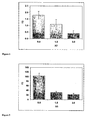
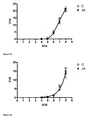
- Fig. 2 shows the effects of JA seed treatments on spider mite populations, in which the legends are as follows:
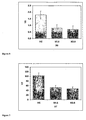
- Fig. 3 shows the effects of JA seed treatments on egg production by spider mite populations, in which the legends are as follows:
- Seeds of a UK commercial F1 hybrid tomato variety (cv. Carousel) were treated with 1.5 mM jasmonic acid (JA), and plants grown in conditions appropriate to this crop (as described under Example 1).
- JA jasmonic acid
- Eight weeks after seed treatment plants grown from treated seed were challenged with a leaf chewing herbivore by placing two third instar caterpillars of the moth Manduca sexta (tobacco hornworm) on the fifth leaf. Caterpillars were allowed to feed on the plants for four days and the area of grazed leaves was then measured. The leaf area remaining after grazing was significantly higher in plants grown from seed treated with JA than controls ( Figure 4 ).
- Fig. 4 shows the effects of JA seed treatments on grazing by Manduca sexta caterpillars, in which the legends are as follows:
- Fig. 5 shows the effects of JA seed treatments on Myzus persicae populations in sweet pepper (Capsicum annuum), in which the legends are as follows:
- Fig. 6 shows the effects of JA seed treatments on spider mite populations in nearby untreated plants, in which the legends are as follows:
- Fig 7 shows the effects of JA seed treatments on spider mite reproduction in nearby untreated plants, in which the legends are as follows:
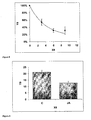
- Seeds of a UK commercial F1 hybrid tomato variety (cv. Carousel) were treated with 3.0mM jasmonic acid (JA) and 42.8mM ethanol in deionised H 2 O for a period of 24 hours at 4°C in the dark. Those seeds were then removed from solution and washed in deionised H 2 O only to remove the JA coating the outside of the seed, and plants grown in conditions appropriate to this crop (as described under the Overview). Ten weeks after sowing, plants were challenged with the aphid Myzus persicae. Aphids were allowed to feed on the plants for twelve days and the aphid population compared with control plants.
- JA jasmonic acid
- Fig. 8 shows the effects of JA seed treatments on Myzus persicae populations in tomato (Solanum lycopersicum cv "Carousel”), in which the legends are as follows:
- Seeds of maize cv. Earligold were treated with 1.5 mM jasmonic acid (JA), and plants grown in the glasshouse (as described under Example 1).
- JA jasmonic acid
- plants were challenged with a leaf chewing herbivore by placing two caterpillars of the moth Spodoptera exempta on a fully expanded leaf. Caterpillars were allowed to feed on the plants for 2 days and the area of grazed leaves was then measured. The leaf area consumed by caterpillars was 38% lower in plants grown from seed treated with JA than controls (significant at p ⁇ 0.05).
- Fig. 9 shows the effects of JA seed treatments on grazing by Spodoptera exempta caterpillars on maize, in which the legends are as follows:
- Seeds of the commercial wheat variety (cv. Einstein) were treated with 1.5 mM jasmonic acid (JA), and plants grown in the glasshouse (as described under Example 1). 7 weeks after seed treatment, plants were challenged with a leaf chewing herbivore by placing two caterpillars of the moth Spodoptera exempta on each plant. Caterpillars were allowed to feed on the plants for 3 days and the area of grazed leaves was then measured. The leaf area consumed by caterpillars was 60% lower in plants grown from seed treated with JA than controls (significant at p ⁇ 0.01, Figure 10 ). Control seeds were treated with the appropriate ethanol solution but were kept close to plants grown from JA treated seed. The illustrated data are means of 10 replicates +/- standard error of the mean.
- Fig. 10 shows the effects of JA seed treatments on grazing by Spodoptera exempta caterpillars on wheat, in which the legends are as follows:
- Seeds of a UK commercial F1 hybrid tomato variety (cv. Carousel) were treated with 3.0mM jasmonic acid (JA) and 42.8mM ethanol in deionised H 2 O for a period of 24 hours at 4°C in the dark.
- JA 3.0mM jasmonic acid
- JA 3.0mM jasmonic acid
- 42.8mM ethanol in deionised H 2 O for a period of 24 hours at 4°C in the dark.
- those seeds were then removed from solution and washed in deionised H 2 O only to remove the JA coating the outside of the seed, but unlike previous examples the treated seed were then dried and stored dry in a refrigerator at 4°C for two months before sowing.
- sowing plants were grown in conditions appropriate to this crop (as described under the Overview). Ten weeks after sowing, plants were challenged with the aphid Myzus persicae.
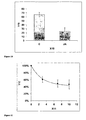
- Aphids were allowed to feed on the plants for ten days and the aphid population compared with control plants. There was a significant (p ⁇ 0.05) reduction in the aphid population on plants grown from seed treated with JA ( Figure 11 ). Control seeds were treated with the appropriate ethanol solution but were kept close to plants grown from JA treated seed. The illustrated data are means of 15 replicates +/- standard error of the mean.
- Fig. 11 shows the effects of JA seed treatments on Myzus persicae populations in tomato (Solanum lycopersicum cv "Carousel") when treated seed was sown after two months storage, in which the legends are as follows:
- Fig. 13 shows the effects of JA seed treatments on plant height of tomato (Solanum lycopersicum cv "Carousel”) at each weekly harvest, in which the legends are as follows:
- Fig. 14 shows the effects of JA seed treatments on number of fruit per plant of tomato (Solanum lycopersicum cv "Carousel”) at each weekly harvest, in which the legends are as follows:
- Fig. 15 shows the effects of JA seed treatments on fruit dry weight from tomato (Solanum lycopersicum cv "Carousel”) at each weekly harvest, in which the legends are as follows:
- Seeds of a UK commercial F1 hybrid tomato variety (cv. Carousel) were treated with 3.0mM methyl jasmonate (MeJA) and 42.8mM ethanol in deionised H 2 O for a period of 24 hours at 4°C in the dark. Those seeds were then removed from solution and washed in deionised H 2 O only to remove the MeJA coating the outside of the seed, and plants grown in conditions appropriate to this crop (as described under the Overview).
- Ten weeks after seed treatment plants grown from treated seed were challenged with the aphid Myzus persicae. Aphids were allowed to feed on the plants for twelve days and the aphid population was measured at intervals over this period.
- Fig. 16 shows the effects of MeJA seed treatments on Myzus persicae populations in tomato ( Solanum lycopersicum cv "Carousel”), in which the legends are as follows:
- Table 1 shows the tested time periods after which tomato (Solanum lycopersicum cv "Carousel"), sweet pepper (Capsicum annuum, cv Biscayne), maize (cv. Earligold) and wheat (cv. Einstein) plants grown from seed treated with jasmonic acid or methyl jasmonate were challenged with various pests and found to exhibit pest resistance.
- tomato Solanum lycopersicum cv "Carousel”
- sweet pepper Capsicum annuum, cv Biscayne
- maize cv. Earligold
- wheat cv. Einstein
- a treatment composition comprising a plant signalling chemical (treatment agent) to a seed to induce the natural resistance mechanisms of the plant, for example those acting against pests so as to reduce the survival, feeding or reproduction of pests, crop damage may be reduced.
- a plant signalling chemical treatment agent
- Given the mode of action of the treatment composition it is believed preferred embodiments may have a major role within IPM approaches and/or in reducing levels of use of pesticides.
- Preferred embodiments of the invention may provide effective protection to subsequent plants against herbivorous arthropods and other pests. Such protection may be effective over an extended time period. Surprisingly, treatment of non-germinating seed may be effective which may allow the seed to be stored for significant periods between treatment and sowing. Beneficially problems of phytotoxicity may be avoided.
Landscapes
- Life Sciences & Earth Sciences (AREA)
- Agronomy & Crop Science (AREA)
- Pest Control & Pesticides (AREA)
- Plant Pathology (AREA)
- Health & Medical Sciences (AREA)
- Engineering & Computer Science (AREA)
- Dentistry (AREA)
- General Health & Medical Sciences (AREA)
- Wood Science & Technology (AREA)
- Zoology (AREA)
- Environmental Sciences (AREA)
- Pretreatment Of Seeds And Plants (AREA)
- Agricultural Chemicals And Associated Chemicals (AREA)
Priority Applications (1)
| Application Number | Priority Date | Filing Date | Title |
|---|---|---|---|
| PL07789018T PL2066176T3 (pl) | 2006-07-13 | 2007-07-12 | Ulepszenia w i związane z ochroną roślin |
Applications Claiming Priority (2)
| Application Number | Priority Date | Filing Date | Title |
|---|---|---|---|
| GBGB0613901.8A GB0613901D0 (en) | 2006-07-13 | 2006-07-13 | Improvements in and relating to plant protection |
| PCT/GB2007/002611 WO2008007100A2 (en) | 2006-07-13 | 2007-07-12 | Improvements in and relating to plant protection |
Related Child Applications (1)
| Application Number | Title | Priority Date | Filing Date |
|---|---|---|---|
| EP13164512.9 Division-Into | 2013-04-19 |
Publications (2)
| Publication Number | Publication Date |
|---|---|
| EP2066176A2 EP2066176A2 (en) | 2009-06-10 |
| EP2066176B1 true EP2066176B1 (en) | 2013-05-29 |
Family
ID=36955562
Family Applications (1)
| Application Number | Title | Priority Date | Filing Date |
|---|---|---|---|
| EP07789018.4A Active EP2066176B1 (en) | 2006-07-13 | 2007-07-12 | Improvements in and relating to plant protection |
Country Status (15)
| Country | Link |
|---|---|
| US (2) | US8115053B2 (pl) |
| EP (1) | EP2066176B1 (pl) |
| JP (1) | JP5322931B2 (pl) |
| KR (1) | KR101368546B1 (pl) |
| AU (1) | AU2007274083B2 (pl) |
| BR (1) | BRPI0714050B1 (pl) |
| CA (1) | CA2657057C (pl) |
| DK (1) | DK2066176T3 (pl) |
| ES (1) | ES2423012T3 (pl) |
| GB (1) | GB0613901D0 (pl) |
| MX (1) | MX304248B (pl) |
| NZ (1) | NZ574108A (pl) |
| PL (1) | PL2066176T3 (pl) |
| PT (1) | PT2066176E (pl) |
| WO (1) | WO2008007100A2 (pl) |
Families Citing this family (46)
| Publication number | Priority date | Publication date | Assignee | Title |
|---|---|---|---|---|
| US8097712B2 (en) | 2007-11-07 | 2012-01-17 | Beelogics Inc. | Compositions for conferring tolerance to viral disease in social insects, and the use thereof |
| US8563839B2 (en) | 2008-05-06 | 2013-10-22 | New Biology, Inc. | Methods of reducing leaf senescence using methyl dihydrojasmonate |
| US8962584B2 (en) | 2009-10-14 | 2015-02-24 | Yissum Research Development Company Of The Hebrew University Of Jerusalem, Ltd. | Compositions for controlling Varroa mites in bees |
| CN102822350B (zh) | 2010-03-08 | 2015-05-06 | 孟山都技术公司 | 用于植物基因调控的多核苷酸分子 |
| AU2012308686B2 (en) | 2011-09-13 | 2018-05-10 | Monsanto Technology Llc | Methods and compositions for weed control |
| US10760086B2 (en) | 2011-09-13 | 2020-09-01 | Monsanto Technology Llc | Methods and compositions for weed control |
| EP2755988B1 (en) | 2011-09-13 | 2018-08-22 | Monsanto Technology LLC | Methods and compositions for weed control |
| WO2013040033A1 (en) | 2011-09-13 | 2013-03-21 | Monsanto Technology Llc | Methods and compositions for weed control |
| US10829828B2 (en) | 2011-09-13 | 2020-11-10 | Monsanto Technology Llc | Methods and compositions for weed control |
| CA2848689A1 (en) | 2011-09-13 | 2013-03-21 | Monsanto Technology Llc | Methods and compositions for weed control targeting pds |
| US10806146B2 (en) | 2011-09-13 | 2020-10-20 | Monsanto Technology Llc | Methods and compositions for weed control |
| US9840715B1 (en) | 2011-09-13 | 2017-12-12 | Monsanto Technology Llc | Methods and compositions for delaying senescence and improving disease tolerance and yield in plants |
| US9920326B1 (en) | 2011-09-14 | 2018-03-20 | Monsanto Technology Llc | Methods and compositions for increasing invertase activity in plants |
| US11224223B2 (en) | 2012-05-02 | 2022-01-18 | Bedoukian Research, Inc. | Feeding deterrence of pests such as Hemiptera, Lepidoptera and Coleoptera |
| US9924718B2 (en) | 2013-04-30 | 2018-03-27 | Bedoukian Research, Inc. | Control and repellency of biting flies, house flies, ticks, ants, fleas, biting midges, cockroaches, spiders and stink bugs |
| US10111429B2 (en) | 2012-05-02 | 2018-10-30 | Bedoukian Research, Inc. | Feeding deterrence in agricultural pests such as hemiptera, lepidoptera and coleoptera |
| EP2846636B1 (en) * | 2012-05-02 | 2022-10-26 | Bedoukian Research, Inc. | Control and repellency of biting flies, house flies, ticks, ants, fleas, biting midges, cockroaches, spiders and stink bugs |
| US10240161B2 (en) * | 2012-05-24 | 2019-03-26 | A.B. Seeds Ltd. | Compositions and methods for silencing gene expression |
| US10077451B2 (en) | 2012-10-18 | 2018-09-18 | Monsanto Technology Llc | Methods and compositions for plant pest control |
| CA2896762A1 (en) * | 2013-01-01 | 2014-07-10 | A.B. Seeds Ltd. | Methods of introducing dsrna to plant seeds for modulating gene expression |
| US10683505B2 (en) | 2013-01-01 | 2020-06-16 | Monsanto Technology Llc | Methods of introducing dsRNA to plant seeds for modulating gene expression |
| US10000767B2 (en) | 2013-01-28 | 2018-06-19 | Monsanto Technology Llc | Methods and compositions for plant pest control |
| AU2014249015B2 (en) | 2013-03-13 | 2020-04-16 | Monsanto Technology Llc | Methods and compositions for weed control |
| CA2905104A1 (en) | 2013-03-13 | 2014-10-09 | Monsanto Technology Llc | Control of lolium species by topical application of herbicidal composition comprising dsrna |
| US20140283211A1 (en) | 2013-03-14 | 2014-09-18 | Monsanto Technology Llc | Methods and Compositions for Plant Pest Control |
| US10568328B2 (en) | 2013-03-15 | 2020-02-25 | Monsanto Technology Llc | Methods and compositions for weed control |
| US9850496B2 (en) | 2013-07-19 | 2017-12-26 | Monsanto Technology Llc | Compositions and methods for controlling Leptinotarsa |
| PL3030663T3 (pl) | 2013-07-19 | 2020-04-30 | Monsanto Technology Llc | Kompozycje i sposoby kontroli leptinotarsa |
| WO2015021311A2 (en) * | 2013-08-07 | 2015-02-12 | New Biology, Inc. | Abiotic and biotic stress tolerance peptides and polynucleotides and compositions and methods comprising them |
| PL3066200T3 (pl) | 2013-11-04 | 2025-03-31 | Greenlight Biosciences, Inc. | Kompozycje i sposoby do zwalczania inwazji pasożytów i szkodników stawonogów |
| UA119253C2 (uk) | 2013-12-10 | 2019-05-27 | Біолоджикс, Інк. | Спосіб боротьби із вірусом у кліща varroa та у бджіл |
| US20150230462A1 (en) * | 2014-01-15 | 2015-08-20 | New Biology, Inc. | Methods for improving germination and stress tolerance characteristics with jasmonates |
| AR099092A1 (es) | 2014-01-15 | 2016-06-29 | Monsanto Technology Llc | Métodos y composiciones para el control de malezas utilizando polinucleótidos epsps |
| EP3420809A1 (en) | 2014-04-01 | 2019-01-02 | Monsanto Technology LLC | Compositions and methods for controlling insect pests |
| CN106795515B (zh) | 2014-06-23 | 2021-06-08 | 孟山都技术公司 | 用于经由rna干扰调控基因表达的组合物和方法 |
| EP3161138A4 (en) | 2014-06-25 | 2017-12-06 | Monsanto Technology LLC | Methods and compositions for delivering nucleic acids to plant cells and regulating gene expression |
| AR101348A1 (es) | 2014-07-29 | 2016-12-14 | Monsanto Technology Llc | Composiciones y métodos para el control de pestes por insectos |
| UA124255C2 (uk) | 2015-01-22 | 2021-08-18 | Монсанто Текнолоджі Елелсі | Інсектицидна композиція та спосіб боротьби з leptinotarsa |
| UY36703A (es) | 2015-06-02 | 2016-12-30 | Monsanto Technology Llc | Composiciones y métodos para la administración de un polinucleótido en una planta |
| WO2016196782A1 (en) | 2015-06-03 | 2016-12-08 | Monsanto Technology Llc | Methods and compositions for introducing nucleic acids into plants |
| CN108391481B (zh) * | 2018-03-19 | 2021-10-15 | 山东农业大学 | 一种利用植物激素茉莉酸甲酯促使作物种子萌发的方法 |
| CN110771620A (zh) * | 2019-11-04 | 2020-02-11 | 成都新朝阳作物科学有限公司 | 冠菌素在诱导农作物幼苗防御斜纹夜蛾中的应用 |
| KR102517405B1 (ko) * | 2021-08-06 | 2023-04-03 | 씨제이제일제당 (주) | 아미노산을 포함하는 농약 약해 경감용 조성물 |
| CN115281079A (zh) * | 2022-08-31 | 2022-11-04 | 内蒙古自治区农牧业科学院 | 一种马铃薯实生种子ems诱变方法 |
| CN116267975B (zh) * | 2023-03-15 | 2025-01-07 | 沈阳农业大学 | 茉莉酸抑制剂dieca在促进植物幼苗生长发育中的用途 |
| CN116508447A (zh) * | 2023-05-23 | 2023-08-01 | 云南省烟草农业科学研究院 | 一种通过制作种子包衣提高烟草黑胫病抗性的方法 |
Family Cites Families (24)
| Publication number | Priority date | Publication date | Assignee | Title |
|---|---|---|---|---|
| JP3386489B2 (ja) * | 1992-05-29 | 2003-03-17 | 大日本製薬株式会社 | ファイトアレキシンの誘導剤 |
| CA2157038C (en) | 1993-02-26 | 2005-04-12 | Yasuo Kamuro | Plant growth promoter |
| ES2176686T3 (es) | 1996-02-28 | 2002-12-01 | Nippon Zeon Co | Regulador del crecimiento para plantas de cultivo y procedimiento para la regulacion del crecimiento de plantas de cultivo. |
| GB9613753D0 (en) * | 1996-07-01 | 1996-09-04 | Broekaert Willem F | Plant protection method |
| RU2092049C1 (ru) | 1996-09-30 | 1997-10-10 | Анатолий Иванович Кульнев | Композиция для химической защиты растений |
| US6235974B1 (en) | 1996-12-05 | 2001-05-22 | Cornell Research Foundation, Inc. | Hypersensitive response induced resistance in plants by seed treatment with a hypersensitive response elicitor |
| US5977060A (en) * | 1997-02-28 | 1999-11-02 | Cornell Research Foundation, Inc. | Insect control with a hypersensitive response elicitor |
| US6201023B1 (en) * | 1997-06-10 | 2001-03-13 | Agrogene Ltd. | Methods and compositions to protect crops against plant parasitic nematodes |
| US6333302B1 (en) | 1997-09-03 | 2001-12-25 | Cornell Research Foundation, Inc. | Use of hypersensitive response elicitor protein or polypeptide from Clavibacter michiganensis for disease resistance, growth enhancement and insect control |
| US6281168B1 (en) * | 1999-01-19 | 2001-08-28 | American Cyanamid Co. | Herbicidal compositions and method of safening herbicides using benzothiazole derivatives |
| RU2153794C1 (ru) | 1999-07-09 | 2000-08-10 | Кубанский государственный технологический университет | Способ подготовки зерна к хранению |
| AU6346699A (en) * | 1999-10-25 | 2001-05-08 | Giten Groupe S.A. | Method for stimulating the natural defences of plants |
| AU2836601A (en) | 1999-11-17 | 2001-05-30 | Plant Research International B.V. | Use of lignosulphonates for plant protection |
| MXPA02007773A (es) | 2000-02-11 | 2004-09-10 | Valent Usa Corp | Induccion de resistencia sistematica de difenil eter en plantas. |
| JP2004525884A (ja) | 2001-01-16 | 2004-08-26 | マックス−プランク−ゲゼルシャフト・ツア・フェルデルング・デア・ヴィッセンシャフテン・エー・ファオ | コロナチンの生物活性の模倣体としての6−置換インダノイルアミノ酸複合体 |
| JP4833448B2 (ja) * | 2001-07-17 | 2011-12-07 | 株式会社テイエス植物研究所 | 植物病害防除方法 |
| US6743752B2 (en) * | 2003-03-28 | 2004-06-01 | Northern Quinoa Corporation | Method of protecting plants from bacterial diseases |
| US20070142227A1 (en) | 2003-05-30 | 2007-06-21 | Rajamannan A H J | Systemic inducer composition for plants |
| US8252722B2 (en) | 2003-08-22 | 2012-08-28 | Stoller Enterprises, Inc. | Controlling plant pathogens and pests with applied or induced auxins |
| JP2005074710A (ja) | 2003-08-29 | 2005-03-24 | Jfe Steel Kk | 樹脂ペレット製造装置 |
| WO2005074710A1 (en) * | 2004-02-06 | 2005-08-18 | Konkuk University Industrial Coorperation Corp | Sprouted bean containing high concentration of isoflavone and the preparing method thereof |
| US7387888B2 (en) * | 2004-02-24 | 2008-06-17 | Montana State University | Coronamycins |
| FR2868253B1 (fr) * | 2004-03-30 | 2006-07-21 | Cie Financiere Et De Participa | Utilisation des ulvanes comme activateurs des reactions de defense des plantes et de resistance contre des contraintes biotiques ou abiotiques |
| WO2007074165A1 (en) | 2005-12-28 | 2007-07-05 | Universidad Tecnica Federico Santa Maria (Usm) | Jasmonic acid, the derivates and mixtures thereof for treating plagues |
-
2006
- 2006-07-13 GB GBGB0613901.8A patent/GB0613901D0/en not_active Ceased
-
2007
- 2007-07-12 DK DK07789018.4T patent/DK2066176T3/da active
- 2007-07-12 PL PL07789018T patent/PL2066176T3/pl unknown
- 2007-07-12 WO PCT/GB2007/002611 patent/WO2008007100A2/en not_active Ceased
- 2007-07-12 BR BRPI0714050A patent/BRPI0714050B1/pt active IP Right Grant
- 2007-07-12 AU AU2007274083A patent/AU2007274083B2/en active Active
- 2007-07-12 JP JP2009518961A patent/JP5322931B2/ja active Active
- 2007-07-12 ES ES07789018T patent/ES2423012T3/es active Active
- 2007-07-12 MX MX2009000421A patent/MX304248B/es active IP Right Grant
- 2007-07-12 US US12/373,646 patent/US8115053B2/en active Active
- 2007-07-12 EP EP07789018.4A patent/EP2066176B1/en active Active
- 2007-07-12 NZ NZ574108A patent/NZ574108A/en unknown
- 2007-07-12 KR KR1020097001978A patent/KR101368546B1/ko active Active
- 2007-07-12 PT PT77890184T patent/PT2066176E/pt unknown
- 2007-07-12 CA CA2657057A patent/CA2657057C/en active Active
-
2012
- 2012-01-12 US US13/349,080 patent/US8507756B2/en active Active
Also Published As
| Publication number | Publication date |
|---|---|
| BRPI0714050B1 (pt) | 2017-05-02 |
| AU2007274083B2 (en) | 2012-12-20 |
| KR20090029280A (ko) | 2009-03-20 |
| NZ574108A (en) | 2012-04-27 |
| CA2657057A1 (en) | 2008-01-17 |
| US20100005551A1 (en) | 2010-01-07 |
| PL2066176T3 (pl) | 2013-10-31 |
| CA2657057C (en) | 2013-09-17 |
| WO2008007100A3 (en) | 2008-10-02 |
| PT2066176E (pt) | 2013-08-28 |
| MX2009000421A (es) | 2009-01-29 |
| JP2009542789A (ja) | 2009-12-03 |
| US8507756B2 (en) | 2013-08-13 |
| KR101368546B1 (ko) | 2014-02-27 |
| US8115053B2 (en) | 2012-02-14 |
| US20120131700A1 (en) | 2012-05-24 |
| MX304248B (es) | 2012-10-12 |
| BRPI0714050A2 (pt) | 2012-12-18 |
| AU2007274083A1 (en) | 2008-01-17 |
| DK2066176T3 (da) | 2013-08-05 |
| JP5322931B2 (ja) | 2013-10-23 |
| WO2008007100A2 (en) | 2008-01-17 |
| ES2423012T3 (es) | 2013-09-17 |
| EP2066176A2 (en) | 2009-06-10 |
| GB0613901D0 (en) | 2006-08-23 |
Similar Documents
| Publication | Publication Date | Title |
|---|---|---|
| EP2066176B1 (en) | Improvements in and relating to plant protection | |
| JP5452022B2 (ja) | 植物生長調整剤及びその利用 | |
| CN104412979B (zh) | 褪黑素的新用途 | |
| PT1945035E (pt) | Utilização de prolinas para melhorar o crescimento e/ou o rendimento | |
| US12108766B2 (en) | Use of a structural polypeptide for plant coating | |
| AU2009271680A1 (en) | Methods to increase crop yield | |
| CN114885633B (zh) | 一种促进花生种子低温胁迫下发芽的方法 | |
| JP5635692B2 (ja) | 水稲の機械的移植のトレー育苗用発根剤及びその使用方法 | |
| CN116897931B (zh) | 乙酸叶醇酯在提高作物抗性和产量及促进作物生长中的应用 | |
| CN105028424A (zh) | 一种粘虫和钩翅蛾引诱剂及其在荞麦盐碱地种植中的应用 | |
| RU2789765C2 (ru) | Применение структурного полипептида для покрытия растений | |
| CN111990138A (zh) | 一种利用昆虫病原线虫降低稻田害虫基数的方法 | |
| CN102342276B (zh) | 芳氧羧酸及其衍生物在控制作物害虫中的应用 | |
| CN106962366B (zh) | N,n’-亚甲基双(2-氨基-5-巯基-1,3,4-噻二唑)控制作物害虫的应用 | |
| WO2024071065A1 (ja) | 植物種子被覆用組成物 | |
| WO2025127025A1 (ja) | L-メチオニンを含む線虫防除用組成物および線虫の防除方法 | |
| BR102023004692A2 (pt) | Agente biológico para a prevenção e tratamento de doenças foliares em plantas, que são causadas por fungos biotróficos ou hemibiotróficos | |
| BR112021002079B1 (pt) | Uso de um hidrogel de polipeptídeo de seda de aranha recombinante, método de revestimento de planta ou semente de planta, e planta ou semente de planta revestida | |
| CN106069389A (zh) | 一种诱集法防治越冬代水稻二化螟的方法 |
Legal Events
| Date | Code | Title | Description |
|---|---|---|---|
| PUAI | Public reference made under article 153(3) epc to a published international application that has entered the european phase |
Free format text: ORIGINAL CODE: 0009012 |
|
| 17P | Request for examination filed |
Effective date: 20090210 |
|
| AK | Designated contracting states |
Kind code of ref document: A2 Designated state(s): AT BE BG CH CY CZ DE DK EE ES FI FR GB GR HU IE IS IT LI LT LU LV MC MT NL PL PT RO SE SI SK TR |
|
| AX | Request for extension of the european patent |
Extension state: AL BA HR MK RS |
|
| DAX | Request for extension of the european patent (deleted) | ||
| 17Q | First examination report despatched |
Effective date: 20110830 |
|
| GRAP | Despatch of communication of intention to grant a patent |
Free format text: ORIGINAL CODE: EPIDOSNIGR1 |
|
| GRAS | Grant fee paid |
Free format text: ORIGINAL CODE: EPIDOSNIGR3 |
|
| GRAA | (expected) grant |
Free format text: ORIGINAL CODE: 0009210 |
|
| AK | Designated contracting states |
Kind code of ref document: B1 Designated state(s): AT BE BG CH CY CZ DE DK EE ES FI FR GB GR HU IE IS IT LI LT LU LV MC MT NL PL PT RO SE SI SK TR |
|
| REG | Reference to a national code |
Ref country code: GB Ref legal event code: FG4D |
|
| REG | Reference to a national code |
Ref country code: CH Ref legal event code: EP |
|
| REG | Reference to a national code |
Ref country code: AT Ref legal event code: REF Ref document number: 613790 Country of ref document: AT Kind code of ref document: T Effective date: 20130615 |
|
| REG | Reference to a national code |
Ref country code: IE Ref legal event code: FG4D |
|
| REG | Reference to a national code |
Ref country code: DE Ref legal event code: R096 Ref document number: 602007030775 Country of ref document: DE Effective date: 20130725 |
|
| REG | Reference to a national code |
Ref country code: DK Ref legal event code: T3 |
|
| REG | Reference to a national code |
Ref country code: RO Ref legal event code: EPE |
|
| REG | Reference to a national code |
Ref country code: PT Ref legal event code: SC4A Free format text: AVAILABILITY OF NATIONAL TRANSLATION Effective date: 20130821 |
|
| REG | Reference to a national code |
Ref country code: ES Ref legal event code: FG2A Ref document number: 2423012 Country of ref document: ES Kind code of ref document: T3 Effective date: 20130917 |
|
| REG | Reference to a national code |
Ref country code: NL Ref legal event code: T3 |
|
| REG | Reference to a national code |
Ref country code: GR Ref legal event code: EP Ref document number: 20130401606 Country of ref document: GR Effective date: 20130920 |
|
| REG | Reference to a national code |
Ref country code: LT Ref legal event code: MG4D |
|
| PG25 | Lapsed in a contracting state [announced via postgrant information from national office to epo] |
Ref country code: SE Free format text: LAPSE BECAUSE OF FAILURE TO SUBMIT A TRANSLATION OF THE DESCRIPTION OR TO PAY THE FEE WITHIN THE PRESCRIBED TIME-LIMIT Effective date: 20130529 Ref country code: LT Free format text: LAPSE BECAUSE OF FAILURE TO SUBMIT A TRANSLATION OF THE DESCRIPTION OR TO PAY THE FEE WITHIN THE PRESCRIBED TIME-LIMIT Effective date: 20130529 Ref country code: SI Free format text: LAPSE BECAUSE OF FAILURE TO SUBMIT A TRANSLATION OF THE DESCRIPTION OR TO PAY THE FEE WITHIN THE PRESCRIBED TIME-LIMIT Effective date: 20130529 Ref country code: IS Free format text: LAPSE BECAUSE OF FAILURE TO SUBMIT A TRANSLATION OF THE DESCRIPTION OR TO PAY THE FEE WITHIN THE PRESCRIBED TIME-LIMIT Effective date: 20130929 Ref country code: FI Free format text: LAPSE BECAUSE OF FAILURE TO SUBMIT A TRANSLATION OF THE DESCRIPTION OR TO PAY THE FEE WITHIN THE PRESCRIBED TIME-LIMIT Effective date: 20130529 |
|
| REG | Reference to a national code |
Ref country code: PL Ref legal event code: T3 |
|
| PG25 | Lapsed in a contracting state [announced via postgrant information from national office to epo] |
Ref country code: LV Free format text: LAPSE BECAUSE OF FAILURE TO SUBMIT A TRANSLATION OF THE DESCRIPTION OR TO PAY THE FEE WITHIN THE PRESCRIBED TIME-LIMIT Effective date: 20130529 |
|
| PG25 | Lapsed in a contracting state [announced via postgrant information from national office to epo] |
Ref country code: CZ Free format text: LAPSE BECAUSE OF FAILURE TO SUBMIT A TRANSLATION OF THE DESCRIPTION OR TO PAY THE FEE WITHIN THE PRESCRIBED TIME-LIMIT Effective date: 20130529 Ref country code: SK Free format text: LAPSE BECAUSE OF FAILURE TO SUBMIT A TRANSLATION OF THE DESCRIPTION OR TO PAY THE FEE WITHIN THE PRESCRIBED TIME-LIMIT Effective date: 20130529 Ref country code: EE Free format text: LAPSE BECAUSE OF FAILURE TO SUBMIT A TRANSLATION OF THE DESCRIPTION OR TO PAY THE FEE WITHIN THE PRESCRIBED TIME-LIMIT Effective date: 20130529 |
|
| PG25 | Lapsed in a contracting state [announced via postgrant information from national office to epo] |
Ref country code: MC Free format text: LAPSE BECAUSE OF FAILURE TO SUBMIT A TRANSLATION OF THE DESCRIPTION OR TO PAY THE FEE WITHIN THE PRESCRIBED TIME-LIMIT Effective date: 20130529 |
|
| REG | Reference to a national code |
Ref country code: HU Ref legal event code: AG4A |
|
| PLBE | No opposition filed within time limit |
Free format text: ORIGINAL CODE: 0009261 |
|
| STAA | Information on the status of an ep patent application or granted ep patent |
Free format text: STATUS: NO OPPOSITION FILED WITHIN TIME LIMIT |
|
| 26N | No opposition filed |
Effective date: 20140303 |
|
| REG | Reference to a national code |
Ref country code: DE Ref legal event code: R097 Ref document number: 602007030775 Country of ref document: DE Effective date: 20140303 |
|
| PG25 | Lapsed in a contracting state [announced via postgrant information from national office to epo] |
Ref country code: MT Free format text: LAPSE BECAUSE OF FAILURE TO SUBMIT A TRANSLATION OF THE DESCRIPTION OR TO PAY THE FEE WITHIN THE PRESCRIBED TIME-LIMIT Effective date: 20130529 Ref country code: CY Free format text: LAPSE BECAUSE OF FAILURE TO SUBMIT A TRANSLATION OF THE DESCRIPTION OR TO PAY THE FEE WITHIN THE PRESCRIBED TIME-LIMIT Effective date: 20130529 |
|
| PG25 | Lapsed in a contracting state [announced via postgrant information from national office to epo] |
Ref country code: LU Free format text: LAPSE BECAUSE OF NON-PAYMENT OF DUE FEES Effective date: 20130712 |
|
| REG | Reference to a national code |
Ref country code: FR Ref legal event code: PLFP Year of fee payment: 10 |
|
| REG | Reference to a national code |
Ref country code: FR Ref legal event code: PLFP Year of fee payment: 11 |
|
| REG | Reference to a national code |
Ref country code: FR Ref legal event code: PLFP Year of fee payment: 12 |
|
| PGFP | Annual fee paid to national office [announced via postgrant information from national office to epo] |
Ref country code: PT Payment date: 20250624 Year of fee payment: 19 |
|
| PGFP | Annual fee paid to national office [announced via postgrant information from national office to epo] |
Ref country code: NL Payment date: 20250723 Year of fee payment: 19 |
|
| PGFP | Annual fee paid to national office [announced via postgrant information from national office to epo] |
Ref country code: HU Payment date: 20250703 Year of fee payment: 19 |
|
| PGFP | Annual fee paid to national office [announced via postgrant information from national office to epo] |
Ref country code: ES Payment date: 20250819 Year of fee payment: 19 |
|
| PGFP | Annual fee paid to national office [announced via postgrant information from national office to epo] |
Ref country code: DK Payment date: 20250723 Year of fee payment: 19 Ref country code: DE Payment date: 20250722 Year of fee payment: 19 |
|
| PGFP | Annual fee paid to national office [announced via postgrant information from national office to epo] |
Ref country code: GR Payment date: 20250721 Year of fee payment: 19 |
|
| PGFP | Annual fee paid to national office [announced via postgrant information from national office to epo] |
Ref country code: PL Payment date: 20250701 Year of fee payment: 19 Ref country code: IT Payment date: 20250731 Year of fee payment: 19 Ref country code: TR Payment date: 20250704 Year of fee payment: 19 |
|
| PGFP | Annual fee paid to national office [announced via postgrant information from national office to epo] |
Ref country code: BE Payment date: 20250722 Year of fee payment: 19 Ref country code: GB Payment date: 20250724 Year of fee payment: 19 Ref country code: BG Payment date: 20250718 Year of fee payment: 19 |
|
| PGFP | Annual fee paid to national office [announced via postgrant information from national office to epo] |
Ref country code: FR Payment date: 20250722 Year of fee payment: 19 Ref country code: AT Payment date: 20250721 Year of fee payment: 19 |
|
| PGFP | Annual fee paid to national office [announced via postgrant information from national office to epo] |
Ref country code: CH Payment date: 20250801 Year of fee payment: 19 |
|
| PGFP | Annual fee paid to national office [announced via postgrant information from national office to epo] |
Ref country code: IE Payment date: 20250723 Year of fee payment: 19 |
|
| PGFP | Annual fee paid to national office [announced via postgrant information from national office to epo] |
Ref country code: RO Payment date: 20250709 Year of fee payment: 19 |