EP1995326A1 - Zweistufige verfahren zur untersuchung von nukleinsäure durch verwendung ein und derselben probe - Google Patents
Zweistufige verfahren zur untersuchung von nukleinsäure durch verwendung ein und derselben probe Download PDFInfo
- Publication number
- EP1995326A1 EP1995326A1 EP06840372A EP06840372A EP1995326A1 EP 1995326 A1 EP1995326 A1 EP 1995326A1 EP 06840372 A EP06840372 A EP 06840372A EP 06840372 A EP06840372 A EP 06840372A EP 1995326 A1 EP1995326 A1 EP 1995326A1
- Authority
- EP
- European Patent Office
- Prior art keywords
- nucleic acid
- dna
- interest
- sequence
- sample nucleic
- Prior art date
- Legal status (The legal status is an assumption and is not a legal conclusion. Google has not performed a legal analysis and makes no representation as to the accuracy of the status listed.)
- Granted
Links
Images




Classifications
-
- C—CHEMISTRY; METALLURGY
- C12—BIOCHEMISTRY; BEER; SPIRITS; WINE; VINEGAR; MICROBIOLOGY; ENZYMOLOGY; MUTATION OR GENETIC ENGINEERING
- C12Q—MEASURING OR TESTING PROCESSES INVOLVING ENZYMES, NUCLEIC ACIDS OR MICROORGANISMS; COMPOSITIONS OR TEST PAPERS THEREFOR; PROCESSES OF PREPARING SUCH COMPOSITIONS; CONDITION-RESPONSIVE CONTROL IN MICROBIOLOGICAL OR ENZYMOLOGICAL PROCESSES
- C12Q1/00—Measuring or testing processes involving enzymes, nucleic acids or microorganisms; Compositions therefor; Processes of preparing such compositions
- C12Q1/68—Measuring or testing processes involving enzymes, nucleic acids or microorganisms; Compositions therefor; Processes of preparing such compositions involving nucleic acids
-
- Y—GENERAL TAGGING OF NEW TECHNOLOGICAL DEVELOPMENTS; GENERAL TAGGING OF CROSS-SECTIONAL TECHNOLOGIES SPANNING OVER SEVERAL SECTIONS OF THE IPC; TECHNICAL SUBJECTS COVERED BY FORMER USPC CROSS-REFERENCE ART COLLECTIONS [XRACs] AND DIGESTS
- Y10—TECHNICAL SUBJECTS COVERED BY FORMER USPC
- Y10T—TECHNICAL SUBJECTS COVERED BY FORMER US CLASSIFICATION
- Y10T436/00—Chemistry: analytical and immunological testing
- Y10T436/14—Heterocyclic carbon compound [i.e., O, S, N, Se, Te, as only ring hetero atom]
- Y10T436/142222—Hetero-O [e.g., ascorbic acid, etc.]
- Y10T436/143333—Saccharide [e.g., DNA, etc.]
Definitions
- the present invention relates to a method of testing whether a sequence of interest is contained in a sample nucleic acid.
- the nucleotide sequences of DNA possessed by an organism differ from each other by individual, species, habitat, and so forth. Therefore, by using the method of the present invention, it is possible to discriminate the individual, species, habitat, etc. of an organism. Recently, putting false labels on foods or mixing of genetically modified products have become issues. The method of the present invention is also applicable to judgment of such false labels or mixing.
- tuna may be classified into bluefin tuna ( Thunnus thynnus ) grown in the Pacific Ocean, bluefin tuna grown in the Atlantic Ocean, Southern bluefin tuna ( Thunnus maccoyii ), big-eyed tuna ( Thunnus obesus ) , Humphead thryssa ( Thunnus albacares ), albacore ( Thunnus alalunga ) and so forth.
- PCR-RFLP polymerase chain reaction-restriction fragment length polymorphism
- This technique comprises amplifying a sample DNA by PCR (see, for example, Non-Patent Document No. 3); digesting the DNA at sites of the nucleotide sequence occurring specifically in a species, lineage or individual; and making judgment.
- This method discriminate the species, lineage or individual of interest from the region of DNA amplified, the type of the restriction enzyme for digesting the DNA, the number of DNA fragments resulting from the digestion and the length of each DNA fragment. For example, when the tuna of interest is bluefin tuna grown in the Pacific Ocean, the ATCO region of mitochondrial DNA is selected as a sample DNA.
- the above-described technique of PCR-RFLP is a discrimination method using differences in the number of DNA fragments resulting from the digestion with a restriction enzyme and in the lengths of the individual DNA fragments. Specifically, when all the digested DNA fragments have been separated by electrophoresis, the separated individual DNA fragments appear as bands. At this time, the number of bands appearing is the number of DNA fragments; and the distance of migration of each band is the length of the relevant DNA fragment. Electrophoresis is a method of separation utilizing the effect that shorter DNA fragment migrate rapidly while longer DNA fragment migrate slowly. The lengths of DNA fragments can be determined from their distances of migration.
- electrophoresis is not capable of sufficiently separating DNA fragments when a plurality of digested DNA fragments have similar lengths. Even when two DNA fragments are present, they appear as one band.
- two DNA fragments of 255 base length and 254 base length are only detected as one broad band when they were electrophoresed a distance of about 4 cm on 3% (w/v) agarose gel.
- PCR-RFLP is performed under conditions which generate DNA fragments of similar lengths, the number of DNA fragments may be judged erroneously.
- the technique of PCR-RFLP is not highly reliable and unsuitable for important tests.
- the most reliable testing technique is testing by reading the nucleotide sequence of sample DNA (for example, see Sambrook, J. & Russell, D.W., Chapter 12 DNA Sequencing in Molecular Cloning: A laboratory manual, 3rd Ed. 2001, pp. 12.1-12.120 ).
- this method requires high cost and can be performed only in special laboratories provided with special equipment and skilled technicians. Thus, this method is not suitable for ordinary, frequent tests.
- the present invention has been made in view of these problems conventional tourniquets have. It is an object of the present invention to provide a more efficient testing method using DNA.
- the present inventors have found that it is possible to perform a highly reliable test with low cost by dividing the test into two states of a simple test and a close examination when testing whether or not a sequence of interest is contained in a sample nucleic acid.
- the present invention has been achieved based on this finding.
- the present invention provides the following (1) to (12).
- the present invention produces the effects as described below.
- a simple test is capable of retaining a sample nucleic acid in a state that allows reading of the nucleotide sequence thereof as described in the method of (8) above, it is possible to recycle the sample nucleic acid used in a simple test of the first stage to a close examination of the second stage which reads the nucleotide sequence of the sample nucleic acid. Therefore, it is possible to secure eventually a highly reliable test and, at the same time, it is possible to provide a highly reliable test means with fewer mistakes during the test process (such as confusion of test samples). It is also possible to reduce the amount of nucleic acid used in the test by recycling.
- a testing method in which a sample nucleic acid is divided into two aliquots in advance, and one is used in a simple test and the other in a close examination as described in the method of (9) above, it is possible to secure the sample for the close examination even when the simple test of the first stage disrupts the sample nucleic acid. Further, it is also possible to reduce mistakes such as confusion of test samples by retaining the divided aliquots on the same device.
- the first testing method of the invention is a method of testing whether a sequence of interest is contained in a sample nucleic acid or not, comprising performing a simple test on the sample nucleic acid and performing a close examination on the same sample nucleic acid when it has been judged that the sequence of interest is contained therein or when it has been judged that the sequence of interest is not contained therein.
- the second testing method of the invention is a method of testing whether a sequence of interest is contained in a sample nucleic acid in more than a specific amount or not, comprising performing a simple quantitative test on the sample nucleic acid and performing a close examination on the same sample nucleic acid when it has been judged that the sequence of interest is contained in more than the specific amount.
- Sequences of interest to be tested are not particularly limited. Since the testing methods of the present invention are used in judging the species of organisms or judging genetically modified organisms, sequences occurring specifically in the species, habitats or individuals of organisms or sequences occurring specifically in genetically modified organisms may be used as sequences of interest to be tested. Information about such specific sequences is widely known. For example, information about sequences specific to species or habitats of tuna fishes is disclosed in Non-Patent Document No. 3 (this document is available for download from the website of IAA Center for Food Quality, Labeling and Consumer Servicces ( ⁇ URL:http: //www.cfqlcs.gojp/technical_information/hinpyou/pdf/maguro_manual.pdf> ).
- sequences to be tested include not only DNA sequences but also RNA sequences.
- the method of simple test is not particularly limited. However, when a nucleic acid that has been judged to contain or not to contain a sequence of interest by a simple test is recovered and used in a close examination, a method which does not disrupt the sample nucleic acid is preferable. When a sample nucleic acid is divided into two aliquots and one is used in a simple test and the other in a close examination, either a method which disrupts the sample nucleic acid or a method which does not disrupt the sample nucleic acid may be used as a simple test.
- methods which disrupt a sample nucleic acid include, but are not limited to, RFLP method, PCR-RFLP method, AFLP method, Southern blotting, chemical cleavage of mismatch (CCM) and methods using nuclease.
- methods which do not disrupt a sample nucleic acid include, but are not limited to, methods using hybridization in solution, real time PCR, primer extension method, sequencing method, random amplified polymorphic DNA method, TaqMan assay and Invader assay.
- the method of recovering nucleic acid is not particularly limited.
- a method used in which a sample nucleic acid is tagged in advance and the sample nucleic acid is recovered using the tag after a simple test Alternatively, a method may be used in which a sample nucleic acid is recovered after a simple test using a physicochemical difference between the sample nucleic acid and other substance.
- Specific examples of recovering methods using a physicochemical difference include use of columns, electrophoresis and extraction with organic solvents.
- the device for a simple test of the first stage may be made into a microchip using the microfluidics technology or the like. This enables automatic testing with a small-sized instrument. Further, a sample nucleic acid to be recovered after the simple test can be retained sealed in the microchip and delivered to the place of a close examination of the second stage easily and safely. In the close examination, the sample nucleic acid can be recovered from this microchip and used.
- the method of close examination is not particularly limited.
- a testing method of reading the nucleotide sequence of a sample nucleic acid is used.
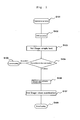
- Fig. 1 illustrates a flow of the testing method of the invention where a simple test which does not disrupt a sample nucleic acid is employed, and the sample nucleic acid used in the simple test is recovered.
- Fig. 2 illustrates a flow of the testing method of the invention where a simple test which disrupts a sample nucleic acid is employed.
- S201 DNA containing a sample nucleic acid is extracted
- S203 the sample DNA is divided into aliquots and stored on the same device in advance
- S204 a simple test of the first stage is performed using one aliquot thereof
- S205 The results of the simple test are judged (S205).
- S206 When no problem is found, the testing is finished (S206).
- an aliquot of the sample nucleic acid stored for the second stage is used (S207) to perform a close examination of the second stage (S208). The results are judged and the testing is finished (S209).
- the present invention As described above, according to the preferred embodiments of the present invention, it becomes possible to perform a two-step testing. As a first stage, a simple test which does not require special equipment or skilled technicians and can be done easily and at low cost is performed. Then, when a problem is found in the results, a highly reliable close examination of the second stage is performed using the same sample DNA recycled. Thus, it is possible to provide a testing much more reliable than conventional testing. As a close examination of the second stage, the present invention employs a method of reading the nucleotide sequence of DNA which is currently the most reliable method. By employing this method, it is possible to provide ultimately the most reliable results even when the results of the simple test at the first stage have some problem.
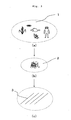
- Fig. 3 illustrates a flow of preparation of a sample DNA from an organism to be tested.
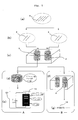
- Fig. 4 illustrates a flow of testing where a sample DNA used in test A of the first stage is recovered and recycled to test B of the second stage.
- nucleic acid from an organism to be tested 2 as shown in (b) is extracted by known techniques (see, for example, Sambrook J & Russell DW, Chapter 6 Preparation and analysis of eukaryotic genomic DNA, in Molecular Cloning: A laboratory manual. 3rd Ed. 2001, pp.
- the organism to be tested may be other than those illustrated in this Figure.
- the resultant DNA is partially amplified and/or reverse-transcribed, if necessary, to thereby obtain a necessary amount of sample DNA 3 as shown in (c). It is an object of the testing method of the present invention to identify whether or not this sample DNA 3 contains a nucleotide sequence of interest 4 as shown in (a) in Fig. 4.
- magnetic beads 5 are attached to one end of sample DNA 3 prior to testing to thereby prepare bead-bound sample DNA 6.
- a group of bead-bound sample DNA molecules 7 with this structure is used in a two-step testing. By these operations, it is possible to purify and recover this group of molecules alone from contaminants by means of magnetic attraction after test A of the first stage, and to recycle to test B of the second stage.
- a fluorescently labeled probe 10 is prepared by attaching a fluorescent dye 8 to an end of a probe DNA 9 that has a complementary nucleotide sequence to nucleotide sequence of interest 4, as shown in (c) in Fig. 4 . Then, a group of molecules of this fluorescently labeled probe 11 in solution and the group of bead-bound sample DNA molecules 7 in solution are put in a reaction vessel and mixed therein. It should be noted here that the number of molecules in the group of fluorescently labeled probe 11 should be excessive to the number of molecules in the group of bead-bound sample DNA 7.
- reaction vessel After heating, reaction vessel is gradually cooled and retained at an appropriate temperature.
- double strand formation 13 it is possible to indirectly attach the fluorescent dye 8 to nucleotide sequence of interest 4.
- By detecting the fluorescence emitted by the fluorescent dye it is possible to detect the presence of nucleotide sequence of interest 4 in the reaction solution.
- a magnetic pipette 14 is used to attract and fix the magnetic beads in the reaction solution.
- the reaction solution after simple test A of the first stage contains the bead-bound sample DNA 6 and the fluorescently labeled probe 10 (forming a double strand with nucleotide sequence of interest 4 within sample DNA 6).
- the fluorescently labeled probe 10 becomes a contaminant that inhibits close examination B of the second stage, it is necessary to purify and recover the bead-bound sample DNA 6 alone prior to the close examination.
- reaction vessel containing the reaction solution is heated to dissociate hydrogen bonds forming the double strand by heat denaturation, followed by recovery of the bead-bound sample DNA 6 alone from the reaction solution with a magnetic pipette 14 as shown in (h).
- a magnetic pipette 14 as shown in (h).
- the bead-bound sample DNA is suspended in a solution for reading the nucleotide sequence thereof and recycled to close examination B of the second stage, in which the nucleotide sequence thereof is read by known methods (for example, see Sambrook J. et al. mentioned above). Then, the presence of nucleotide sequence 15 corresponding to nucleotide sequence of interest 4 in sample DNA 3 is detected (j).
- a preferred embodiment for carrying out a method where simple test A of the first stage disrupts a sample DNA will be described below.
- the sample DNA are divided into aliquots for test A of the first stage and close examination B of the second stage in advance and stored on the same device.
- Fig. 5 illustrates a flow of two-step testing using a sample DNA stored in aliquots when PCR-RFLP method involving DNA disruption is used as simple test A of the first stage.
- a necessary amount of sample DNA 3 is obtained in the same manner as in the above-described case where sample DNA is recycled, according to Fig. 3 which illustrates a flow of preparation of sample DNA from an organism to be tested.
- This DNA is used as a starting material for testing ( Fig. 5, (a) ).
- this DNA is divided into two aliquots, one for simple test A of the first stage and the other for close examination B of the second stage. These aliquots are stored at place (A) and place (B), respectively, on the same device as shown in (c).
- a restriction enzyme is added to the aliquot of sample DNA 3 stored at place (A) for simple test A of the first stage.
- sample DNA 3 is digested into a long DNA fragment 16, a medium-length DNA fragment 17, and a short DNA fragment 18.
- a solution containing these DNA fragments is applied to an electrophoresis gel 19 to perform electrophoresis using an electrophoresis apparatus 20.
- three DNA fragments are separated on the gel, which is stained with a dye capable of staining nucleic acid.
- sample DNA 3 used in the PCR-RFLP test of the first stage was digested into a long DNA fragment 16, a medium-length DNA fragment 17, and a short DNA fragment 18 in the test, it is impossible to read the nucleotide sequence of the DNA in close examination B of the second stage even when those DNA fragments are recovered. Then, the aliquot of the sample DNA stored at place (B) for close examination B of the second stage as shown in (c) is used for reading the nucleotide sequence by known methods (for example, see Sambrook J. et al. mentioned above). Thus, the presence of nucleotide sequence 15 corresponding to nucleotide sequence of interest 4 in sample DNA 3 is detected (g).
- the simple test of the first stage is not limited to those described in the embodiments of the present invention. Any technique capable of identifying one or a plurality of specific nucleotide sequences of DNA may be used.
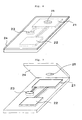
- Fig. 6 illustrates a device which may be used when a simple test included in the two-step testing method as described above is performed using the microfluidics technique.
- DNA extraction unit 21, detector unit 22 and DNA storage unit 23 are engraved in a flat board; and these units are connected with thin grooves.
- Lid 24, which is also a flat board, is placed upon this device. Lid 24 has hole 25 for feeding samples which would come above the DNA extraction unit.
- a sample e.g., a piece of tuna meat
- DNA is extracted from the sample in DNA extraction unit 21 and then delivered to detector unit 22 through a thin groove, in which detection by a simple test is performed.
- an aliquot of the extracted DNA is also delivered to DNA storage unit 23 through another thin groove and stored therein, simultaneously with the delivery of another aliquot to detector unit 22.
- this device as a whole may be delivered to the place of close examination.
- lid 24 is opened as shown in Fig: 7 and the DNA retained in DNA storage unit 23 and/or detector unit 22 is recovered and used in the close examination.
- the present invention is not limited to the embodiments described above and may take various other constitutions without departing from the gist of the present invention.
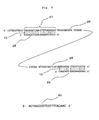
- nucleotide sequence of interest (i) 27 as shown in Fig. 8 was examined by the testing method of the invention.
- a fluorescently labeled probe was used which was prepared by labeling a probe DNA having probe nucleotide sequence 28 completely complementary to the nucleotide sequence of interest (i) 27 with a fluorescent dye Cy5, as shown in Fig. 8 .
- a sequence primer was used which had sequence primer nucleotide sequence 29 completely complementary to a part of nucleotide sequence 26 of the sample DNA, as shown in Fig. 8 .
- results of detection of fluorescence by hybridization were obtained.
- the fluorescence intensity of this suspension was clearly greater than the fluorescence intensity of a suspension of bead-bound sample DNA 6 alone.
- the fluorescence intensity of this suspension was clearly greater than the fluorescence intensity when similar hybridization was performed using a negative control probe which does not have a complementary nucleotide sequence to the sample DNA but has negative control probe nucleotide sequence 30 of the same length as that of the probe DNA, and is labeled with Cy5 at its 5' end.
- the suspension was heated at 94°C for 2 minutes and then ice-cooled for 5 minutes to thereby dissociate the double strand ( Fig. 4, (g) ).
- magnetic beads in the solution were recovered with a magnetic micropipette PickPen, and released and agitated in 50 ⁇ l of distilled water placed in a separate tube to thereby wash bead-bound sample DNA 6. This washing was repeated three times to remove dissociated probe DNA.
- a sequencing reaction was performed with the recovered bead-bound sample DNA 6 and a sequence primer having sequence primer nucleotide sequence 29 using BigDye Terminator v1.1 Cycle Sequencing Kit (ABI) according to the Kit's protocol. Then, sample DNA 6 was sequenced using ABI PRISMR 310 Genetic Analyzer.
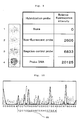
- nucleotide sequence of interest (i) 27 was detected in a part of the resultant nucleotide sequence as shown in Fig. 10 .
- the nucleotide sequence of interest can be detected by the technique in which sample DNA 3 used in the simple test is recovered and recycled to the close examination.
- nucleotide sequence of interest (ii) 31 present in nucleotide sequence 26 of sample DNA was examined by the testing method of the invention.
- Real time PCR was used as a simple test of the first stage, and the reading of the nucleotide sequence of DNA was used as a close examination of the second stage.
- real time PCR is a testing method that does not disrupt sample DNA, the sample DNA was not recovered after testing because an extremely small amount of sample DNA is sufficient for this method.
- the sample DNA was divided into two aliquots in advance, one of which was used in the real time PCR of the first stage and the other was used in the reading of nucleotide sequence in the second stage.
- RT primer [1] having nucleotide sequence 32 completely homologous to a 5' terminal region of nucleotide sequence of interest (ii) 31 and the other is RT primer [2] having nucleotide sequence 33 completely complementary to a 3' terminal region of nucleotide sequence of interest (ii) 31.
- sequence primer For the reading of the nucleotide sequence of DNA (i.e., a close examination of the second stage), a sequence primer was used which has sequence primer nucleotide sequence 29 completely complementary to a 3' terminal region of nucleotide sequence 26 of the sample DNA and 5 bases shorter than nucleotide sequence 33 of RT primer [2], as shown in Fig. 11 .
- a solution of DNA which has nucleotide sequence 26 of sample DNA and is biotinylated at its 5' end was divided into two portions ( Fig. 5, (b) ) and poured into separate tubes (A) and (B) of 8-serial PCR tubes [Optical Tubes (8 Tubes/Strip), cat #4316567; ABI], sealed tightly with caps [ABI PRISM Optical Cap, 8 caps/strips(Flat), cat #4323032; ABI] and stored ( Fig. 5, (c) ).
- a sequencing reaction was performed with 2 pmol of sample DNA having nucleotide sequence 26 dispensed into tube (B) in advance and a sequence primer having sequence primer nucleotide sequence 29 using BigDye Terminator v1.1 Cycle Sequencing Kit (cat #4337449; ABI) according to the Kit's protocol. Then, sample DNA was sequenced using ABI PRISMR 310 Genetic Analyzer.
- nucleotide sequence 34 which is completely complementary to nucleotide sequence of interest (i) 31 was detected in a part of the resultant nucleotide sequence.
- nucleotide sequence of interest can be detected.
- the presence or absence of the nucleotide sequences of interest is judged by performing real time PCR reactions on these sequences simultaneously in one reaction vessel and examining whether or not amplification of DNA is detected.
- a close examination of the second stage is performed and the type of the nucleotide sequence of interest present in the sample is identified.
- the simple test only detects the presence or absence of nucleotide sequences of interest. Therefore, the fluorescence dye used in a plurality of real time PCR reactions may be either single or plural.
Landscapes
- Chemical & Material Sciences (AREA)
- Organic Chemistry (AREA)
- Life Sciences & Earth Sciences (AREA)
- Zoology (AREA)
- Wood Science & Technology (AREA)
- Proteomics, Peptides & Aminoacids (AREA)
- Health & Medical Sciences (AREA)
- Engineering & Computer Science (AREA)
- Microbiology (AREA)
- Immunology (AREA)
- Physics & Mathematics (AREA)
- Molecular Biology (AREA)
- Biotechnology (AREA)
- Biophysics (AREA)
- Analytical Chemistry (AREA)
- Biochemistry (AREA)
- Bioinformatics & Cheminformatics (AREA)
- General Engineering & Computer Science (AREA)
- General Health & Medical Sciences (AREA)
- Genetics & Genomics (AREA)
- Measuring Or Testing Involving Enzymes Or Micro-Organisms (AREA)
Applications Claiming Priority (2)
| Application Number | Priority Date | Filing Date | Title |
|---|---|---|---|
| JP2006072581A JP5601746B2 (ja) | 2006-03-16 | 2006-03-16 | 同一の試料を用いた二段階核酸検査方法 |
| PCT/JP2006/325982 WO2007108193A1 (ja) | 2006-03-16 | 2006-12-26 | 同一の試料を用いた二段階核酸検査方法 |
Publications (3)
| Publication Number | Publication Date |
|---|---|
| EP1995326A1 true EP1995326A1 (de) | 2008-11-26 |
| EP1995326A4 EP1995326A4 (de) | 2010-05-05 |
| EP1995326B1 EP1995326B1 (de) | 2013-10-16 |
Family
ID=38522230
Family Applications (1)
| Application Number | Title | Priority Date | Filing Date |
|---|---|---|---|
| EP06840372.4A Not-in-force EP1995326B1 (de) | 2006-03-16 | 2006-12-26 | Zweistufige verfahren zur untersuchung von nukleinsäure durch verwendung ein und derselben probe |
Country Status (5)
| Country | Link |
|---|---|
| US (1) | US20090053820A1 (de) |
| EP (1) | EP1995326B1 (de) |
| JP (1) | JP5601746B2 (de) |
| CN (1) | CN101528944A (de) |
| WO (1) | WO2007108193A1 (de) |
Family Cites Families (14)
| Publication number | Priority date | Publication date | Assignee | Title |
|---|---|---|---|---|
| CA2002076A1 (en) * | 1988-11-21 | 1990-05-21 | Brent A. Burdick | Diagnostic kit and method using a solid phase capture means for detecting nucleic acids |
| ATE282717T1 (de) * | 1998-04-30 | 2004-12-15 | Max Planck Gesellschaft | Neuartiges verfahren zur identifizierung von klonen mit einer gewünschten biologischen eigenschaft, ausgehend von einer expressionsgenbank |
| WO2000044935A2 (en) * | 1999-01-29 | 2000-08-03 | Bavarian Nordic Research Institute A/S | Multiplex real-time pcr |
| JP3502906B2 (ja) * | 1999-09-03 | 2004-03-02 | 独立行政法人食品総合研究所 | 遺伝子組換えトウモロコシ及びこれを含む加工食品からの組換え遺伝子の検知方法 |
| JP4693198B2 (ja) * | 1999-09-09 | 2011-06-01 | 横河電機株式会社 | バイオチップ |
| JP3600891B2 (ja) | 2001-04-24 | 2004-12-15 | 財団法人理工学振興会 | Sine法による動物種判別方法 |
| JP2002345498A (ja) | 2001-05-28 | 2002-12-03 | Fisheries Research Agency | 日本産サバ属の種判別方法 |
| JP2005526522A (ja) * | 2002-05-20 | 2005-09-08 | ノースロップ グラマン コーポレーション | 点源生物学的物質検出システム |
| JP4497846B2 (ja) * | 2002-06-07 | 2010-07-07 | 三菱化学メディエンス株式会社 | ヒトアデノウイルスの検出法 |
| US20100136523A1 (en) * | 2002-10-11 | 2010-06-03 | Keim Paul S | Molecular signature and assay for fluoroquinoline resistance in bacillus anthracis |
| US7745115B2 (en) * | 2003-04-02 | 2010-06-29 | New York University | Method for the surveillance for biological, chemical and radiological agents |
| US20040229211A1 (en) * | 2003-05-13 | 2004-11-18 | Yeung Wah Hin Alex | Sensitive diagnostic testing methodology using multiplex real time PCR with one dye (MOD) and its use as in severe acute respiratory syndrome (SARS) |
| EP1582599A1 (de) * | 2004-03-31 | 2005-10-05 | Takara Bio Inc. | Verfahren zur Mikroperlenreinigung |
| JP2006072581A (ja) | 2004-08-31 | 2006-03-16 | Sharp Corp | 共同購入システム、並びに、それに用いる共同購入サービスサーバおよび端末 |
-
2006
- 2006-03-16 JP JP2006072581A patent/JP5601746B2/ja not_active Expired - Lifetime
- 2006-12-26 WO PCT/JP2006/325982 patent/WO2007108193A1/ja not_active Ceased
- 2006-12-26 US US11/662,597 patent/US20090053820A1/en not_active Abandoned
- 2006-12-26 EP EP06840372.4A patent/EP1995326B1/de not_active Not-in-force
- 2006-12-26 CN CNA2006800007201A patent/CN101528944A/zh active Pending
Also Published As
| Publication number | Publication date |
|---|---|
| EP1995326A4 (de) | 2010-05-05 |
| WO2007108193A1 (ja) | 2007-09-27 |
| JP5601746B2 (ja) | 2014-10-08 |
| JP2007244291A (ja) | 2007-09-27 |
| EP1995326B1 (de) | 2013-10-16 |
| US20090053820A1 (en) | 2009-02-26 |
| CN101528944A (zh) | 2009-09-09 |
Similar Documents
| Publication | Publication Date | Title |
|---|---|---|
| US6153389A (en) | DNA additives as a mechanism for unambiguously marking biological samples | |
| CA2251793C (en) | Multiplex amplification of short tandem repeat loci | |
| US20080318801A1 (en) | Method and kit for evaluating rna quality | |
| US20120183965A1 (en) | Nucleic acid detection | |
| Mori et al. | Current issues for mammalian species identification in forensic science: a review | |
| Schouten et al. | Multiplex ligation-dependent probe amplification (MLPA) for prenatal diagnosis of common aneuploidies | |
| JP3752466B2 (ja) | 遺伝子検査方法 | |
| JP2002027993A (ja) | 特定の核酸を検出定量するための等長プライマー伸長法およびキット | |
| US12565676B2 (en) | Systems and methods for separating decoded arrays | |
| CN112575094B (zh) | 一种用于鉴定大口黑鲈北方亚种、佛罗里达亚种及其杂交种的InDel标记及其应用 | |
| EP1995326B1 (de) | Zweistufige verfahren zur untersuchung von nukleinsäure durch verwendung ein und derselben probe | |
| Li et al. | Microchip electrophoresis of tagged probes incorporated with one-colored ddNTP for analyzing single-nucleotide polymorphisms | |
| Naaum et al. | An introduction to DNA-based tools for seafood identification | |
| KR101817107B1 (ko) | 실시간 중합효소연쇄반응을 이용하는 참홍어의 동정 방법 | |
| US20060078881A1 (en) | Method and kit for detection of mutations in mitochondrial dna | |
| Sinha et al. | Species detection using probe technology | |
| CN114686572B (zh) | 一种实时荧光核酸恒温扩增检测试剂合格性检测方法 | |
| KR20140106188A (ko) | 한우육 동일성 검사와 품질평가용 바이오 마커 및 이의 용도 | |
| Pejenaute et al. | Measurement of telomere length | |
| CN109312397A (zh) | Penta E基因座多态性人体鉴定 | |
| Applewhite et al. | Species identification using other tools | |
| Schouten et al. | MLPA for prenatal diagnosis of commonly occurring aneuploidies | |
| KR20110041668A (ko) | 돼지의 단일뉴클레오타이드다형성 마커 및 이를 이용한 국내산 돈육의 원산지 판별방법 | |
| Ruiz-García et al. | Isoschizomers and amplified fragment length polymorphism for the detection of specific cytosine methylation changes | |
| KR970007025B1 (ko) | 잡종화에 의한 대립연쇄반복 dna의 동정방법 |
Legal Events
| Date | Code | Title | Description |
|---|---|---|---|
| PUAI | Public reference made under article 153(3) epc to a published international application that has entered the european phase |
Free format text: ORIGINAL CODE: 0009012 |
|
| 17P | Request for examination filed |
Effective date: 20070316 |
|
| AK | Designated contracting states |
Kind code of ref document: A1 Designated state(s): AT BE BG CH CY CZ DE DK EE ES FI FR GB GR HU IE IS IT LI LT LU LV MC NL PL PT RO SE SI SK TR |
|
| A4 | Supplementary search report drawn up and despatched |
Effective date: 20100407 |
|
| 17Q | First examination report despatched |
Effective date: 20101117 |
|
| DAX | Request for extension of the european patent (deleted) | ||
| GRAP | Despatch of communication of intention to grant a patent |
Free format text: ORIGINAL CODE: EPIDOSNIGR1 |
|
| INTG | Intention to grant announced |
Effective date: 20130620 |
|
| GRAS | Grant fee paid |
Free format text: ORIGINAL CODE: EPIDOSNIGR3 |
|
| GRAA | (expected) grant |
Free format text: ORIGINAL CODE: 0009210 |
|
| AK | Designated contracting states |
Kind code of ref document: B1 Designated state(s): AT BE BG CH CY CZ DE DK EE ES FI FR GB GR HU IE IS IT LI LT LU LV MC NL PL PT RO SE SI SK TR |
|
| REG | Reference to a national code |
Ref country code: GB Ref legal event code: FG4D |
|
| REG | Reference to a national code |
Ref country code: CH Ref legal event code: EP |
|
| REG | Reference to a national code |
Ref country code: IE Ref legal event code: FG4D |
|
| REG | Reference to a national code |
Ref country code: AT Ref legal event code: REF Ref document number: 636559 Country of ref document: AT Kind code of ref document: T Effective date: 20131115 |
|
| REG | Reference to a national code |
Ref country code: DE Ref legal event code: R096 Ref document number: 602006038891 Country of ref document: DE Effective date: 20131212 |
|
| REG | Reference to a national code |
Ref country code: NL Ref legal event code: VDEP Effective date: 20131016 |
|
| REG | Reference to a national code |
Ref country code: AT Ref legal event code: MK05 Ref document number: 636559 Country of ref document: AT Kind code of ref document: T Effective date: 20131016 |
|
| REG | Reference to a national code |
Ref country code: LT Ref legal event code: MG4D |
|
| PG25 | Lapsed in a contracting state [announced via postgrant information from national office to epo] |
Ref country code: IS Free format text: LAPSE BECAUSE OF FAILURE TO SUBMIT A TRANSLATION OF THE DESCRIPTION OR TO PAY THE FEE WITHIN THE PRESCRIBED TIME-LIMIT Effective date: 20140216 Ref country code: BE Free format text: LAPSE BECAUSE OF FAILURE TO SUBMIT A TRANSLATION OF THE DESCRIPTION OR TO PAY THE FEE WITHIN THE PRESCRIBED TIME-LIMIT Effective date: 20131016 Ref country code: SE Free format text: LAPSE BECAUSE OF FAILURE TO SUBMIT A TRANSLATION OF THE DESCRIPTION OR TO PAY THE FEE WITHIN THE PRESCRIBED TIME-LIMIT Effective date: 20131016 Ref country code: LT Free format text: LAPSE BECAUSE OF FAILURE TO SUBMIT A TRANSLATION OF THE DESCRIPTION OR TO PAY THE FEE WITHIN THE PRESCRIBED TIME-LIMIT Effective date: 20131016 Ref country code: NL Free format text: LAPSE BECAUSE OF FAILURE TO SUBMIT A TRANSLATION OF THE DESCRIPTION OR TO PAY THE FEE WITHIN THE PRESCRIBED TIME-LIMIT Effective date: 20131016 Ref country code: FI Free format text: LAPSE BECAUSE OF FAILURE TO SUBMIT A TRANSLATION OF THE DESCRIPTION OR TO PAY THE FEE WITHIN THE PRESCRIBED TIME-LIMIT Effective date: 20131016 |
|
| PG25 | Lapsed in a contracting state [announced via postgrant information from national office to epo] |
Ref country code: LV Free format text: LAPSE BECAUSE OF FAILURE TO SUBMIT A TRANSLATION OF THE DESCRIPTION OR TO PAY THE FEE WITHIN THE PRESCRIBED TIME-LIMIT Effective date: 20131016 Ref country code: ES Free format text: LAPSE BECAUSE OF FAILURE TO SUBMIT A TRANSLATION OF THE DESCRIPTION OR TO PAY THE FEE WITHIN THE PRESCRIBED TIME-LIMIT Effective date: 20131016 Ref country code: AT Free format text: LAPSE BECAUSE OF FAILURE TO SUBMIT A TRANSLATION OF THE DESCRIPTION OR TO PAY THE FEE WITHIN THE PRESCRIBED TIME-LIMIT Effective date: 20131016 Ref country code: CY Free format text: LAPSE BECAUSE OF FAILURE TO SUBMIT A TRANSLATION OF THE DESCRIPTION OR TO PAY THE FEE WITHIN THE PRESCRIBED TIME-LIMIT Effective date: 20131016 |
|
| PG25 | Lapsed in a contracting state [announced via postgrant information from national office to epo] |
Ref country code: PT Free format text: LAPSE BECAUSE OF FAILURE TO SUBMIT A TRANSLATION OF THE DESCRIPTION OR TO PAY THE FEE WITHIN THE PRESCRIBED TIME-LIMIT Effective date: 20140217 |
|
| REG | Reference to a national code |
Ref country code: DE Ref legal event code: R097 Ref document number: 602006038891 Country of ref document: DE |
|
| PG25 | Lapsed in a contracting state [announced via postgrant information from national office to epo] |
Ref country code: EE Free format text: LAPSE BECAUSE OF FAILURE TO SUBMIT A TRANSLATION OF THE DESCRIPTION OR TO PAY THE FEE WITHIN THE PRESCRIBED TIME-LIMIT Effective date: 20131016 |
|
| REG | Reference to a national code |
Ref country code: CH Ref legal event code: PL |
|
| PLBE | No opposition filed within time limit |
Free format text: ORIGINAL CODE: 0009261 |
|
| STAA | Information on the status of an ep patent application or granted ep patent |
Free format text: STATUS: NO OPPOSITION FILED WITHIN TIME LIMIT |
|
| PG25 | Lapsed in a contracting state [announced via postgrant information from national office to epo] |
Ref country code: CZ Free format text: LAPSE BECAUSE OF FAILURE TO SUBMIT A TRANSLATION OF THE DESCRIPTION OR TO PAY THE FEE WITHIN THE PRESCRIBED TIME-LIMIT Effective date: 20131016 Ref country code: LU Free format text: LAPSE BECAUSE OF FAILURE TO SUBMIT A TRANSLATION OF THE DESCRIPTION OR TO PAY THE FEE WITHIN THE PRESCRIBED TIME-LIMIT Effective date: 20131226 Ref country code: PL Free format text: LAPSE BECAUSE OF FAILURE TO SUBMIT A TRANSLATION OF THE DESCRIPTION OR TO PAY THE FEE WITHIN THE PRESCRIBED TIME-LIMIT Effective date: 20131016 Ref country code: MC Free format text: LAPSE BECAUSE OF FAILURE TO SUBMIT A TRANSLATION OF THE DESCRIPTION OR TO PAY THE FEE WITHIN THE PRESCRIBED TIME-LIMIT Effective date: 20131016 Ref country code: SK Free format text: LAPSE BECAUSE OF FAILURE TO SUBMIT A TRANSLATION OF THE DESCRIPTION OR TO PAY THE FEE WITHIN THE PRESCRIBED TIME-LIMIT Effective date: 20131016 Ref country code: RO Free format text: LAPSE BECAUSE OF FAILURE TO SUBMIT A TRANSLATION OF THE DESCRIPTION OR TO PAY THE FEE WITHIN THE PRESCRIBED TIME-LIMIT Effective date: 20131016 Ref country code: IT Free format text: LAPSE BECAUSE OF FAILURE TO SUBMIT A TRANSLATION OF THE DESCRIPTION OR TO PAY THE FEE WITHIN THE PRESCRIBED TIME-LIMIT Effective date: 20131016 |
|
| 26N | No opposition filed |
Effective date: 20140717 |
|
| REG | Reference to a national code |
Ref country code: IE Ref legal event code: MM4A |
|
| PG25 | Lapsed in a contracting state [announced via postgrant information from national office to epo] |
Ref country code: DK Free format text: LAPSE BECAUSE OF FAILURE TO SUBMIT A TRANSLATION OF THE DESCRIPTION OR TO PAY THE FEE WITHIN THE PRESCRIBED TIME-LIMIT Effective date: 20131016 |
|
| REG | Reference to a national code |
Ref country code: DE Ref legal event code: R097 Ref document number: 602006038891 Country of ref document: DE Effective date: 20140717 |
|
| PG25 | Lapsed in a contracting state [announced via postgrant information from national office to epo] |
Ref country code: LI Free format text: LAPSE BECAUSE OF NON-PAYMENT OF DUE FEES Effective date: 20131231 Ref country code: CH Free format text: LAPSE BECAUSE OF NON-PAYMENT OF DUE FEES Effective date: 20131231 Ref country code: IE Free format text: LAPSE BECAUSE OF NON-PAYMENT OF DUE FEES Effective date: 20131226 |
|
| PG25 | Lapsed in a contracting state [announced via postgrant information from national office to epo] |
Ref country code: SI Free format text: LAPSE BECAUSE OF FAILURE TO SUBMIT A TRANSLATION OF THE DESCRIPTION OR TO PAY THE FEE WITHIN THE PRESCRIBED TIME-LIMIT Effective date: 20131016 |
|
| PG25 | Lapsed in a contracting state [announced via postgrant information from national office to epo] |
Ref country code: TR Free format text: LAPSE BECAUSE OF FAILURE TO SUBMIT A TRANSLATION OF THE DESCRIPTION OR TO PAY THE FEE WITHIN THE PRESCRIBED TIME-LIMIT Effective date: 20131016 |
|
| PG25 | Lapsed in a contracting state [announced via postgrant information from national office to epo] |
Ref country code: HU Free format text: LAPSE BECAUSE OF FAILURE TO SUBMIT A TRANSLATION OF THE DESCRIPTION OR TO PAY THE FEE WITHIN THE PRESCRIBED TIME-LIMIT; INVALID AB INITIO Effective date: 20061226 Ref country code: BG Free format text: LAPSE BECAUSE OF FAILURE TO SUBMIT A TRANSLATION OF THE DESCRIPTION OR TO PAY THE FEE WITHIN THE PRESCRIBED TIME-LIMIT Effective date: 20131016 |
|
| PG25 | Lapsed in a contracting state [announced via postgrant information from national office to epo] |
Ref country code: GR Free format text: LAPSE BECAUSE OF NON-PAYMENT OF DUE FEES Effective date: 20131016 |
|
| REG | Reference to a national code |
Ref country code: FR Ref legal event code: PLFP Year of fee payment: 10 |
|
| PG25 | Lapsed in a contracting state [announced via postgrant information from national office to epo] |
Ref country code: GR Free format text: LAPSE BECAUSE OF FAILURE TO SUBMIT A TRANSLATION OF THE DESCRIPTION OR TO PAY THE FEE WITHIN THE PRESCRIBED TIME-LIMIT Effective date: 20140117 |
|
| REG | Reference to a national code |
Ref country code: FR Ref legal event code: PLFP Year of fee payment: 11 |
|
| REG | Reference to a national code |
Ref country code: FR Ref legal event code: PLFP Year of fee payment: 12 |
|
| PGFP | Annual fee paid to national office [announced via postgrant information from national office to epo] |
Ref country code: FR Payment date: 20171221 Year of fee payment: 12 Ref country code: DE Payment date: 20171211 Year of fee payment: 12 |
|
| PGFP | Annual fee paid to national office [announced via postgrant information from national office to epo] |
Ref country code: GB Payment date: 20171221 Year of fee payment: 12 |
|
| REG | Reference to a national code |
Ref country code: DE Ref legal event code: R119 Ref document number: 602006038891 Country of ref document: DE |
|
| GBPC | Gb: european patent ceased through non-payment of renewal fee |
Effective date: 20181226 |
|
| PG25 | Lapsed in a contracting state [announced via postgrant information from national office to epo] |
Ref country code: FR Free format text: LAPSE BECAUSE OF NON-PAYMENT OF DUE FEES Effective date: 20181231 Ref country code: DE Free format text: LAPSE BECAUSE OF NON-PAYMENT OF DUE FEES Effective date: 20190702 |
|
| PG25 | Lapsed in a contracting state [announced via postgrant information from national office to epo] |
Ref country code: GB Free format text: LAPSE BECAUSE OF NON-PAYMENT OF DUE FEES Effective date: 20181226 |