EP1986175A2 - Verfahren, Schnittstelle und System zum Erhalten einer Benutzereingabe - Google Patents
Verfahren, Schnittstelle und System zum Erhalten einer Benutzereingabe Download PDFInfo
- Publication number
- EP1986175A2 EP1986175A2 EP07254696A EP07254696A EP1986175A2 EP 1986175 A2 EP1986175 A2 EP 1986175A2 EP 07254696 A EP07254696 A EP 07254696A EP 07254696 A EP07254696 A EP 07254696A EP 1986175 A2 EP1986175 A2 EP 1986175A2
- Authority
- EP
- European Patent Office
- Prior art keywords
- presentation
- subject
- description
- user input
- processing system
- Prior art date
- Legal status (The legal status is an assumption and is not a legal conclusion. Google has not performed a legal analysis and makes no representation as to the accuracy of the status listed.)
- Withdrawn
Links
Images




Classifications
-
- G—PHYSICS
- G09—EDUCATION; CRYPTOGRAPHY; DISPLAY; ADVERTISING; SEALS
- G09B—EDUCATIONAL OR DEMONSTRATION APPLIANCES; APPLIANCES FOR TEACHING, OR COMMUNICATING WITH, THE BLIND, DEAF OR MUTE; MODELS; PLANETARIA; GLOBES; MAPS; DIAGRAMS
- G09B7/00—Electrically-operated teaching apparatus or devices working with questions and answers
- G09B7/02—Electrically-operated teaching apparatus or devices working with questions and answers of the type wherein the student is expected to construct an answer to the question which is presented or wherein the machine gives an answer to the question presented by a student
-
- G—PHYSICS
- G09—EDUCATION; CRYPTOGRAPHY; DISPLAY; ADVERTISING; SEALS
- G09B—EDUCATIONAL OR DEMONSTRATION APPLIANCES; APPLIANCES FOR TEACHING, OR COMMUNICATING WITH, THE BLIND, DEAF OR MUTE; MODELS; PLANETARIA; GLOBES; MAPS; DIAGRAMS
- G09B7/00—Electrically-operated teaching apparatus or devices working with questions and answers
- G09B7/06—Electrically-operated teaching apparatus or devices working with questions and answers of the multiple-choice answer-type, i.e. where a given question is provided with a series of answers and a choice has to be made from the answers
- G09B7/08—Electrically-operated teaching apparatus or devices working with questions and answers of the multiple-choice answer-type, i.e. where a given question is provided with a series of answers and a choice has to be made from the answers characterised by modifying the teaching programme in response to a wrong answer, e.g. repeating the question, supplying further information
Definitions
- the present disclosure generally relates to a method, computerized interface and machine (e.g. computer) readable medium containing instructions, for obtaining user input, e.g. for tuition and/or presentation applications. It includes a computer-aided method and system providing a unique user interface to improve learning experiences and ease of course design, and more specifically, to a computer-aided method and system that selectively generate and present presentation modules in a unique format to assist users in associating objects and events with a specific language, such as pronunciations, words, descriptions, spelling, etc., with improved simplicity and efficiency in system resource usage.
- a specific language such as pronunciations, words, descriptions, spelling, etc.
- Computers and software programs have been widely used in assisting users in learning new languages.
- the primary steps in creating a language learning program include content creation and content presentation.
- Content presentation defines a user's language learning experience and therefore plays an important role in the language learning process.
- conventional language learning programs lack an effective approach in presenting a multimedia user interface to provide a satisfactory learning experience.
- the present invention provides a method for soliciting user input for a presentation subject, e.g. as defined by any aspect of the present invention as defined or claimed hereinbelow.
- a preferred class of such a method resides in a language instruction method.
- the present invention provides a computer interface for interacting with a user.
- the interface may for example be an interface between a user and one or more of an electronic database, an electronic presentation system, an electronic tuition system and an electronic information gathering system.
- Such an interface may include means arranged to perform machine executed steps controlled by the computer in accordance with instructions stored on a machine readable medium.
- the broad aspects of the present invention also include a machine readable medium storing instructions which when executed by a data processing system, are capable of performing a method according to any aspect(s) of the present invention.
- Reference herein to 'machine' or 'data processing system' include such a machine or system in electronic form.
- the term 'electronic' includes application in the form of electrical signals, eg at KHz, MHz or GHz frequency, optical (including infrared) signals, acoustic (including ultrasonic signals) and where any of these is capable of propagation in free space, either in radiated or in wired or guided form.
- Reference herein to 'language instruction' means instruction in the learning or practice of a foreign language, i.e. foreign in comparison with the native language of a user.
- a first aspect of the present invention now provides a computer interface for interacting with a user in order to obtain from the user, an input for a presentation subject associated with a first description of the presentation subject and a second description of the presentation subject, the interface comprising:
- a second aspect of the present invention provides a method for soliciting user input for a presentation subject associated with a first description of the presentation subject and a second description of the presentation subject, the method comprising the machine-executed steps of:
- a third aspect of the present invention provides a machine-readable medium storing instructions which, upon execution by a data processing system, controls the data processing system to perform the machine executed steps of:
- a fourth aspect of the present invention provides a machine-readable medium storing instructions which, upon execution by a data processing system, controls the data processing system to perform the machine executed steps of:
- a fifth aspect of the present invention provides a language instruction method for soliciting user input for a presentation subject associated with a first description of the presentation subject and a second description of the presentation subject, the method comprising the machine-executed steps of presenting a presentation module related to the presentation subject, wherein the presentation module includes the first description of the presentation subject and a placeholder indicating that the second description of the presentation subject is missing from the presentation module; presenting the second description of the presentation subject; receiving a user input indicating an association of the second description to presentation module related to the presentation subject; and providing feedback indicating the correctness of the association; wherein each of the first description of the presentation subject and the second description of the presentation subject is one of a textual type, a visual type and an audio type.
- a sixth aspect of the present invention provides a language instruction method for soliciting user input for a presentation subject associated with a first description of the presentation subject and a second description of the presentation subject, the method comprising the machine-executed steps of: presenting a presentation module including the first description of the presentation subject and a placeholder indicating that the second description of the presentation subject is missing from the presentation module; receiving a user input with respect to the second description of the presentation subject; comparing the user input with prestored data of the second description of the presentation subject; and providing feedback indicating the correctness of the user input with respect to the second description of the presentation subject.
- any method according to the invention preferably also comprises the steps of accessing data related to at least one presentation module related to a reference subject, wherein each of the at least one presentation module related to the reference subject includes a first description of the reference subject and a placeholder indicating that a second description of the reference subject is missing from the presentation module related to the reference subject; and presenting the at least one presentation module related to the reference subject.
- the presentation module may be related to the presentation subject is displayed together with the at least one module related to the reference subject.
- the first description of the presentation subject may be a visual representation of the presentation subject.
- a database may be provided for storing the visual representation of the presentation subject, wherein the visual representation is usable by multiple presentation modules.
- a database may be provided for storing a plurality of descriptions, wherein: each of the descriptions is one of a textual type, a visual type and an audio type; and at least one of the descriptions is usable by multiple presentation modules.
- the method may then comprise accessing the at least one description stored in the database; assembling the presentation module related to the presentation subject by using at least one of the descriptions stored in the database; accessing data related at least one reference subject; for each reference subject, assembling a presentation module related to the reference subject by using at least one of the descriptions stored in the database, wherein each of the presentation module related to the reference subject includes a first description of the reference subject and a placeholder indicating that a second description of the reference subject is missing from the presentation module related to the reference subject; and presenting the presentation module related to the at least one reference subject together with the presentation module related to the presentation subject.
- a score record may be generated, indicating the user's performance in providing the user input.
- the user input with respect to the second description is preferably a textual input entered by a user using a keyboard or a voice-to-text converter.
- the user input with respect to the second description may also be a voice input provided by a user using a microphone.
- the input with respect to the second description means include a textual input and a voice input.
- the feedback preferably indicates the correctness of the user input with respect to at least one of pronunciation, intonation and spelling.
- a score record may be produced, indicating the user's performance in providing the user input.
- the presentation subject may be a visual representation of the presentation subject.
- a database storing the visual representation of the presentation subject may be provided, wherein the visual representation is usable by multiple presentation modules.
- a database storing a plurality of descriptions may be provided, wherein each of the descriptions is one of a textual type, a visual type and an audio type; and at least one of the descriptions is usable by multiple presentation modules.
- the method may then further entail steps of accessing data related to multiple presentation subjects; accessing the at least one description stored in the database; and assembling presentation modules corresponding to the multiple presentation subjects by using the descriptions stored in the database.
- the presentation module may also be generated by accessing the at least one description stored in the database, and assembling the presentation module corresponding to the presentation subject by using at least one the descriptions stored in the database.
- the first description and the second description may be in the same language.
- the machine-readable medium may further store instructions which, upon execution by a data processing system, controls the data processing system to perform the machine-executed steps of: accessing data related to at least one presentation module related to a reference subject, wherein each of the at least one presentation module related to the reference subject includes a first description of the reference subject and a placeholder indicating that a second description of the reference subject is missing from the presentation module related to the reference subject; and presenting the at least one presentation module related to the reference subject. Further, the presentation module related to the presentation subject is preferably displayed together with the at least one module related to the reference subject.
- the first description of the presentation subject may be a visual representation of the presentation subject. Instructions may also be stored which, upon execution by a data processing system, controls the data processing system to provide a database storing the visual representation of the presentation subject, wherein the visual representation is usable by multiple presentation modules.
- the machine-readable medium may further store instructions which, upon execution by a data processing system, controls the data processing system to provide a database storing a plurality of descriptions, wherein: each of the descriptions is one of a textual type, a visual type and an audio type; and at least one of the descriptions is usable by multiple presentation modules.
- instructions which, upon execution by a data processing system, may control the data processing system to perform the steps of: accessing the at least one description stored in the database; assembling the presentation module related to the presentation subject by using at least one of the descriptions stored in the database; accessing data related at least one reference subject; for each reference subject, assembling a presentation module related to the reference subject by using at least one of the descriptions stored in the database, wherein each of the presentation module related to the reference subject includes a first description of the reference subject and a placeholder indicating that a second description of the reference subject is missing from the presentation module related to the reference subject; and presenting the presentation module related to the at least one reference subject together with the presentation module related to the presentation subject.
- Instructions which, upon execution by a data processing system, may control the data processing system to provide a score record indicating the user's performance in providing the user input.
- the user input with respect to the second description may be a textual input entered by a user using a keyboard or a voice-to-text converter.
- the voice input provided by a user may be effected using a microphone and particularly the user input with respect to the second description includes both a textual input and a voice input.
- the feedback preferably indicates the correctness of the user input with respect to at least one of pronunciation, intonation and spelling.
- the first description of the presentation subject is a visual representation of the presentation subject.
- Instructions may be provided which, upon execution by a data processing system, controls the data processing system to perform the steps of:
- Any computer interface may comprise, as hardware, an electronic communication highway for communicating information, a data processor coupled with the communication highway for processing data, a dynamic memory device coupled wit the communicating highway for storing at least information and instructions to be executed by the processor, a static memory device for storing static information and instructions for the processor, a bulk storage device coupled to the information highway for storing information and instructions, a display, a user input device and a communication interface for connection to a remote data source.
- This disclosure includes embodiments of modularized computer-aided language learning systems that address one or more needs and drawbacks existing in conventional language instruction systems. Any embodiment itself may represent an aspect of the present invention which may be claimed independently. Further, any aspect of the present invention may incorporate one or more essential, preferred or exemplified features of any one or more other aspects of the present invention.
- An exemplary language instruction method and system are configured to solicit user input for a presentation subject having an associated first description and an associated second description.
- a presentation module is described.
- the presentation module includes a first description of the presentation subject and a placeholder indicating that a second description of the presentation subject is missing from the presentation module.
- Each of the first description of the presentation subject and the second description of the presentation subject is one of a textual type, a visual type and an audio type.
- the descriptions are in the same language.
- the second description of the presentation subject is presented separately from the presentation module.
- a user input indicating an association of the second description to presentation module related to the presentation subject is received.
- Feedback is provided to indicate the correctness of the association.
- the feedback may be a score record indicating the user's performance in providing the user input.
- At least one additional presentation module is presented.
- the at least one presentation module relates to a reference subject.
- Each of the at least one presentation module includes a first description of the reference subject and a placeholder indicating that a second description of the reference subject is missing from the presentation module related to the reference subject.
- the presentation module related to the presentation subject is displayed together with the at least one module related to the reference subject.
- the first description of the presentation subject is a visual representation of the presentation subject.
- a database storing the visual representation of the presentation subject may be provided.
- the visual representation may be usable by multiple presentation modules.
- a database storing a plurality of descriptions.
- Each of the descriptions is one of a textual type, a visual type and an audio type.
- At least one of the descriptions is usable by multiple presentation modules.
- the at least one description stored in the database is used in assembling the presentation module related to the presentation subject or the presentation module related to the reference subject.
- an exemplary language instruction method and system are configured to solicit user input for a presentation subject.
- a presentation module is presented.
- the presentation module includes a first description of the presentation subject and a placeholder indicating that a second description of the presentation subject is missing from the presentation module.
- Each of the first description of the presentation subject and the second description of the presentation subject is one of a textual type, a visual type and an audio type.
- a user input with respect to the second description of the presentation subject is received.
- the user input is compared with prestored data of the second description of the presentation subject. Feedback may be provided indicating the correctness of the user input with respect to the second description of the presentation subject.
- the user input with respect to the second description is a textual input entered by a user using a keyboard or a voice-to-text converter, such as a microphone.
- the user input with respect to the second description is a voice input provided by a user using a microphone.
- the user input with respect to the second description includes a textual input and a voice input.
- the feedback indicates the correctness of the user input with respect to at least one of pronunciation, intonation and spelling.
- a score record is provided indicating the user's performance in providing the user input.
- a database storing a plurality of descriptions is provided.
- Each of the descriptions is one of a textual type, a visual type and an audio type.
- At least one of the descriptions is usable by multiple presentation modules.
- presentation modules data related to multiple presentation subjects and descriptions is accessed.
- Presentation modules corresponding to the multiple presentation subjects are assembled by using the descriptions stored in the database.
- one or more presentation modules are grouped together and displayed on one or more pages. Each page is displayed to the learner in a pre-arranged sequence.
- the concepts described in this disclosure may be implemented using a data processing system, a machine-readable medium including instruction which, upon execution by a data processing system, control the data processing system to perform specified steps, or a combination thereof.
- Figure 1 shows an exemplary presentation module
- Figure 2 shows another embodiment of exemplary presentation modules
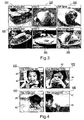
- Figure 3 illustrate exemplary presentation modules directed to the same presentation subject
- FIG. 4 shows additional examples of presentation modules
- Figure 5 shows block diagrams of exemplary variations of presentation modules that may be used to solicit user inputs
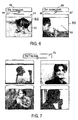
- Figure 6 are exemplary presentation modules displayed with a visual representation of a presentation subject and a placeholder suggesting that a textual description and an audio description are missing from the presentation modules;
- Figure 7 illustrates another example of a game built using presentation modules with placeholders
- FIG. 8 shows a simplified sequence of presentation modules
- Figure 9 shows exemplary data libraries storing a plurality of data modules including visual data modules, text data modules and audio data modules;
- Figure 10 is an illustration of exemplary presentation modules using data modules included in an exemplary database shown in Figure 8 ;
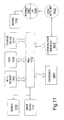
- Figure 11 is the block diagram of an exemplary data processing system upon which the concepts in this disclosure may be implemented.
- An exemplary language learning program provides a user interface utilizing a unique presentation module including modularized elements, such as visual, audio, textual descriptions, a combination of visual images and sound, etc., and/or any combinations thereof, corresponding to a presentation subject.
- a presentation subject is anything that the language learning program intends the user to learn in a specific language.
- a presentation subject may be an object, a widget, an animal, a device, a machine, an event, a situation, a scenario, a conversation, a scene, an alphabet, a concept, a performance, an action, etc.
- a presentation module is the basic construction block used for creating a unique user interface to assist the user associating the visual, textual and audio descriptions corresponding to a presentation subject.
- Various variations of the presentation module may be used to construct a user interface.
- An exemplary presentation module includes at least two a placeholder, a visual component of a presentation subject, a textual component of the presentation subject and an audio component of the presentation subject.
- Figure 1 shows an exemplary presentation module 100 for presenting a presentation subject to a user using a language learning program to learn German. In this example, the presentation subject is "a man.”
- the presentation module 100 includes a visual component 16, a textual component 12 and an audio component 14.
- the visual component 16 provides a visual representation corresponding to the presentation subject.
- the image component 16 may be a static image, a video clip, a moving picture, etc., or any combination thereof.
- the textual component 12 includes a textual description, such as one or more words, one or more sentences, etc., corresponding to or describing the presentation subject in the language that the user intends to learn.
- the visual component may include sound and/or text in addition to visual images.
- the audio component 14 of the presentation module 100 is a visual representation that allows a user to activate an audio signal generator, such as a speaker, to produce an audible description corresponding to the presentation subject or the textual component 12.
- the audio component 14 may be an icon of a speaker, an icon of a switch, a button with associated text indicating its function to play audio, etc. or any combination thereof.
- the audio component 14 is a speaker icon. When the icon is clicked, the German pronunciation corresponding to "der Mann" is played.
- the presentation of visual, audio and textual elements in the same presentation module allows easy access to different expression forms of an underlying presentation subject, and assists a user to associate the textual/audio/visual elements with the underlying presentation subject.
- an exemplary language learning program includes data corresponding to visual, audio and textual descriptions corresponding to the same or different presentation subjects.
- the data is assembled, compiled and linked to form presentation modules corresponding to the presentation subjects.
- the visual, audio and/or textual descriptions in this application are in the same language.
- presentation modules could be presented in different forms.
- a presentation module may include only two of a textual description, an audio description and a visual description of a presentation module. With the assistance of these presentation modules, users can associate the descriptions included in the presentation module with the presentation subject.
- the textual, audio and visual elements or descriptions of a presentation module, or any representations of the elements or descriptions are visually displayed in such a way that the elements or descriptions belong to that presentation module, even when a number of presentation modules are juxtaposed.
- the user should be able to infer or perceive that the items or descriptions are related to each other or associated with the same presentation module.
- the display should allow a user to infer that the textual/audio/visual elements or descriptions corresponding to a specific presentation module are more closely related to one another than possible relationships between elements or descriptions associated with other presentation modules that are displayed in the same display with that specific presentation module.
- the textual description, the visual description and the audio description associated with the same presentation module, or any visual representation thereof, such as an audio speaker button are displayed touching each other or closely clustered, or having a visual boundary enclosing or encircling the descriptions, one or more textual descriptions indicating their relationships, and/or having a graphical link connecting the descriptions, etc., or any combinations thereof.
- Some space may be provided between presentation modules on a display page.
- presentation modules may include different forms of visual, audio and/or textual descriptions corresponding to the same presentation subject.
- presentation modules may include different forms of visual, audio and/or textual descriptions corresponding to the same presentation subject.
- various forms of visual presentations or descriptions corresponding to the concept "a man” may be presented, such as a young man, an old man, a man in suit, a man in bath robe, a man standing, a man lying down, etc.
- the visual presentations or descriptions may be the same man or different men, and the format of the visual presentations or descriptions may differ, such as pictures, video clips, photos, drawings, cartoons, etc.
- various presentation modules may include variations of the audio and/or textual descriptions corresponding to the same presentation subject.
- the German pronunciation of "der Mann” may be produced by different men, women and/or children, or by the same person or different persons in different accents.
- the word “der Mann” may be displayed in different font types, sizes, colors, effects, etc.
- FIG. 2 shows four exemplary presentation modules 200, 210, 220 and 230. Both presentation modules 200 and 210 are directed to the same presentation subject "a boy,” while presentation modules 220 and 230 are related to the same presentation subject "a girl.” While the textual descriptions 21 and 23 in presentation modules 200 and 210 are the same German word “der Junge,” the visual elements 22 and 24 show pictures of two different boys. Likewise, while the textual descriptions 25 and 27 in presentation modules 220 and 230 are the same German word “der Man,” the visual elements 26 and 28 show pictures of two different girls. Each of the presentation modules 200, 210, 220 and 230 includes a speaker button which, when clicked by a user, will play the pronunciation describing the respective presentation subject or the respective textual description in each presentation module.
- FIG 3 shows additional embodiments of the use of presentation modules.
- both presentation modules 320 and 350 are directed to the same presentation subject "egg," and include the same German word “das Ei” and its pronunciation.
- presentation modules 320 and 350 include pictures of different form of eggs.
- presentations modules 310, 340 and 360 relate to the same presentation subject "sandwiches.” While the textual description "das be timese Brot" is the same in each of presentation modules 310, 340 and 360, the picture in each presentation module shows a sandwich in different form.
- Each of the presentation modules 310, 320, 330, 340, 350 and 360 includes a speaker button which, when clicked by a user, will play the pronunciation describing the respective presentation subject or corresponding to the respective textual description in each presentation module.
- multiple modules are presented to a user using a specific sequence, to allow the user to learn new words/concepts based on what he or she has learned from earlier presentation modules.
- presentation modules 200, 210, 220 and 230 may be shown to a user first, to assist the user to learn the German words “der Junge” and “das Madchen” corresponding to the concepts of "a boy” and "a girl.”
- Additional presentation modules such as presentation modules 410, 420, 430 and 440 in Figure 4 , are shown to the user subsequent to the presentation of modules 200, 210, 220 and 230, to leverage the knowledge that the user learns from modules 200, 210, 220 and 230.
- both presentation modules 410 and 420 are related to acts of a girl, and presentation modules 430 and 440 show acts of a boy.
- Each of the presentation modules 410, 420, 430 and 440 includes a speaker button which, when clicked by a user, will play the pronunciation describing the respective presentation subject or corresponding to the respective textual description in each presentation module.
- presentation module 410 In presentation module 410, a girl is eating; and in presentation module 430, a boy is eating.
- additional knowledge can be built based on these learned concepts.
- the user will associate the German word “isst” with the act of "eating,” as illustrated in the presentation modules 410 and 430.
- the user will associate the German term “trinkt” with the act “drinking,” based on the presentations of presentation modules 420 and 440.
- a presentation module may include only a visual description and/or a textual description corresponding to a presentation subject, but without one or more other descriptions corresponding to the presentation subject, such as a corresponding audio description.
- a placeholder is included in the presentation module, to allow the user to visualize that one or more descriptions, such as the audio description, is missing or not included in the presentation module.
- a placeholder is a visual indication or display that indicates an element missing from the presentation module. For instance, a placeholder could be a bordered blank area replacing the missing element in the presentation module, or displayed at a location at which the missing element should be displayed.
- the language learning program solicits or prompts the user to input the pronunciation corresponding to the underlying presentation subject.
- the solicitation or prompt may be in the form of a visual and/or audio request.
- the user may provide the missing description via a user input device, such as a microphone, a keyboard, an on-screen keyboard, a writing tablet, etc., to input the missing description into the language learning system.
- a user may input the pronunciation via a voice input device, such as a microphone.
- the language learning program and system compares the input with pre-stored data representing the correct pronunciation of the textual description or the presentation subject.
- a feedback may be provided to the user to indicate the correctness of the input.
- the feedback may include a pass/fail indication, an analysis of the voice print of the user relative to that of a native speaker, etc.
- FIG. 5 shows block diagrams of exemplary variations of presentation modules that may be used to solicit user inputs.
- Presentation module 510 is a presentation module with all visual/textual/audio description corresponding to a presentation subject.
- Presentation module 520 is a first exemplary variation in which a textual description 52 and a visual description 54 are provided, but an audio element is missing from the presentation module 520. Instead, a placeholder 50 in the form of a bordered blank area occupies the display area at which an audio description icon should have been displayed.
- Presentation module 530 is another exemplary variation of a presentation module, in which a visual description 55 and audio description 51 are provided, but a textual description is missing.
- Presentation module 540 is another exemplary variation of a presentation module, in which a textual description 57 and audio description 56 are provided, but a visual description is missing.
- a placeholder 58 is displayed in place of the missing visual description.
- an exemplary presentation module may include only two of a textual description, an audio description and a visual description of a presentation module.
- variations of this type of presentation modules could be presented with one of the descriptions included in a presentation module and a placeholder indicating that one of the descriptions is missing from the presentation module.
- the presentation modules with placeholders are used to build or create games or practice sessions to assist users of the language learning system in learning presentation subjects and their respective audio/visual/textual descriptions.
- the missing description(s) are also displayed not as part of a presentation module with a placeholder.
- a request is provided to the user to click to select or drag and drop the displayed missing description(s) to the presentation module.
- a presentation module 610 is displayed with an image 62 showing a boy eating and a placeholder 61 suggesting that a textual description and an audio description corresponding to "a boy eating" are missing from the presentation module 610.
- the German phrase "Der Junge isst" 63 and a speaker icon 64 are displayed.
- the language learning system automatically plays the pronunciation of "Der Junge isst.” If the user wishes to listen to the pronunciation again, he or she may click the speaker icon 64 and the system will re-play the pronunciation.
- An exemplary system may ask the user to click to select or drag and drop the textual description 63 and the speaker icon 64 to the placeholder 61.
- a presentation module 620 is displayed with an image 66 showing a boy drinking and a placeholder 67 suggesting that a textual description and an audio description corresponding to "a boy drinking" are missing from the presentation module 620. Above the presentation module 620, the German phrase "Der Junge trinkt" 69 and a speaker icon 68 are displayed.
- the exemplary system may ask the user to drag and drop the textual description 69 and the speaker icon 68 to the placeholder 67.
- a feedback may be provided to the user indicating whether the click-and-select or drag-and-drop operation is correct and/or other information related to the user's performance related to this operation or accumulated performance scores.
- This drag-and-drop session would help a user associating the German phrases and the pronunciations with the images or the presentation subjects.
- Figure 7 illustrates another example of a game built using presentation modules with placeholders.
- the game shown in Figure 7 intends to test a user's understanding of the German phrase corresponding to a presentation subject "a woman eating.”
- the German phrase "Die Frau isst” and a speaker icon 72 are displayed.
- four presentation modules with placeholders are displayed to a user.
- One of the presentation modules includes an image corresponding to the presentation subject ("a woman eating,” in this example).
- the other three presentation modules include images corresponding to reference subjects (in this example, "a woman drinking,” “a man eating,” and “a man drinking,” respectively), which are different from the presentation subject and provided as selection options in addition to the image corresponding to the presentation subject "a woman eating.”
- a request is provided to the user to click to select or drag and drop the displayed missing description(s) 72 to one of the presentation modules, or to select or click a presentation module corresponding to the displayed missing description(s) 72.
- a feedback is provided to the user indicating whether the drag-and-drop operation is correct and/or other information related to the user's performance related to this operation or accumulated performance scores. This game would help the user to associate the presentation subject with the phrase/pronunciation in a foreign language.
- a game may be created by displaying an image corresponding to a presentation subject, and four presentation modules are provided as selection options. Each of which includes a speaker icon and a placeholder. The speaker icon, when clicked by the user, plays a pronunciation. One of the speaker icons would play a pronunciation corresponding to the presentation subject. The user is asked to associate the displayed image with one of the pronunciations.
- presentation modules with placeholders can be created using similar approaches as discussed above.
- an exemplary presentation module includes one or more of a textual description, an audio description and a visual description corresponding to a presentation subject.
- An exemplary language learning system utilizes a unique data management approach in creating and managing data of the presentation modules, which significantly reduces demands in system resources and simplifies the process for an instructor or language program designer in designing language learning programs.
- an instructor or program designer chooses one or more presentation modules to form one or more pages to be presented to a language learner.
- Each page may include one or more presentation modules.
- the instructor or program designer may designate sizes and/or specific locations or coordinates for the presentation modules on a page.
- Presentation modules designated to be displayed in the same page may be displayed or presented all at the same time or sequentially.
- the presentation modules and the pages are displayed to the learner in a pre-arranged sequence.
- An instructor or program designer may use a software tool to design or construct pages to be presented to a language learner.
- Figure 8 illustrates a simplified example of presentation design.
- a first display page 820 and a second display page 850 are displayed to a language learner in a sequential manner defined by a course instructor or an exemplary system according to this disclosure.
- the first display page 820 includes two presentation modules 821, 822, and the second display page 850 includes two presentation modules 851, 852.
- the presentation module 821 relates to "a dog” and includes visual, textual and audio descriptions 823, 824 and 825 of "a dog.”
- the presentation module 822 presents the concept of "a cat” and includes visual, textual and audio descriptions 826, 827 and 828 corresponding to "a cat.”
- the display page 820 is output to a display first, such that a language learner is exposed to the concepts of "a dog” and "a cat.” Subsequent to the presentation of the first display page 820, the second display page 850 is displayed.
- the presentation modules 851, 852 in the display page 850 are related to the presentation subjects "a black dog” and "a black cat,” respectively, and their corresponding descriptions.
- presentation subjects and related visual, textual and/or audio descriptions are selected from a data library to form a presentation module.
- an instructor or program designer specifies how presentation modules and/or pages should be presented, such as in a specific sequence, layout of the presentation modules on one or more pages, numbers of presentation modules on each page, removing or adding a description associated with a presentation module, designating what description(s) should be omitted or missing from a presentation module, and what description(s) should be present in a presentation module, designating a type of game or presentation mode for presenting the pages, etc., or any combinations thereof.
- a presentation module may be designed to be displayed or presented with one or more corresponding visual, audio or textual descriptions removed.
- a variety of replacement items or descriptions may be provided to the learner, where they can choose replacement pieces from a set of possible solutions, or enter the replacement content themselves. It is also possible to remove only part of some descriptions.
- a presentation module may be presented with just some words removed rather than the entire text element or description. In this case, the learner would have to provide the missing text either by typing it or by speaking it.
- a presentation module may be designed to be displayed or presented with unnecessary or incorrect descriptions in one or more corresponding visual, audio or textual descriptions removed.
- a language learner may learn by removing unnecessary descriptions from each presentation module. By providing a variety of games to replace or fill the missing components, or removing unnecessary elements, a learner can learn a wide variety of language content (vocabulary, grammar, spelling, etc.) or language skills (pronunciation, reading, writing, speaking, listening, etc).
- lists of default design options are provided, to assist the course design process.
- a subsequent step would be to compose these pages into a sequence which would then serve as a course of instruction.
- the exemplary system provides data libraries storing a plurality of data modules including visual data modules, text data modules and audio data modules.
- Each data module is a self-enclosed or self-contained file or object and can be dynamically accessed and linked with other modules to form a presentation module.
- Each data module is tagged to be associated with one or more presentation subjects or attributes.
- Each text data module includes textual descriptions or phrases corresponding to one or more tagged presentation subjects. For instance, a text data module including the phrase "a big black dog” may be tagged as corresponding to the presentation subjects of "big,” “size,” “black,” “color,” “dog,” and “animal.”
- Each visual data module includes visual data, such as images, video files, etc.
- Each audio data module includes pronunciation or audio description data corresponding to one or more tagged presentation subjects.
- a data module may be tagged to be corresponding to more than one presentation subject. For instance, an image of a dog may be tagged to be corresponding to "a dog,” “an animal,” “a good friend,” etc.
- the system also includes a library storing a plurality of presentation subjects, such as "a girl,” “a boy,” “a car,” “a man eating,” etc.
- a program designer When a program designer needs to design a language learning program involving presentation modules, the designer simply selects presentation subjects that he or she wishes a user to learn from the library. Based on the selection of the presentation subjects, the system automatically selects needed modules having tags matching each presentation subject, and assembles one or more presentation modules using the selected data modules. This selection and assembly process may be performed in advance, or on the fly just before a presentation module is needed. If more than one data module has a tag matching a presentation subject, a random selection process may be performed. In one embodiment, a presentation subject may be specified to be corresponding to multiple tags.
- the presentation subject "a big black dog” may associate to tags like "big,” “size,” “black,” “color,” “dog,” and “animal.” Only those data modules with all or the highest number of matching tags will be retrieved by the system to form the presentation modules.
- a manual review of the generated presentation modules may be performed by a human being to ensure quality of the generated presentation modules, before the program is finalized or presented.
- a set of presentation modules may be grouped together logically to form an "presentation group," which designates a hierarchy for the learner, that a set of presentation modules are grouped in a sequence, or are more related than others.
- the data modules are not pretagged. Rather, each time when a program designer needs to design a program, the designer performs a manual selection from the data module libraries to specify needed data modules for each presentation module. For instance, for a presentation subject related to a dog, a designer selects and links a visual data module including an image of a white puppy, an audio data file including the pronunciation of the phrase "a dog" and the sound of a dog barking. As illustrated in Figure 10 , a program designer specifies data modules to be used to form various presentation modules 1 through X. Presentation module 1 should include visual data module 3, text data module 8 and audio data module 15; and presentation module X should include visual data module 1, text data module 28 and audio data module 1380.
- a program designer may further specify different attributes for displaying presentation modules, such as a display location, such as a vertical and horizontal coordinate, for each module on a display device, what presentation modules to be included in which display page, a sequence that the modules should be presented. For instance, a designer may specify presentation modules 1, 29 and 35 should be included in display page 3, and presentation modules 124, 9 and 21 should be included in page 25.
- presentation modules 1, 29 and 35 should be included in display page 3
- presentation modules 124, 9 and 21 should be included in page 25.
- Data related to the presentation subjects and corresponding selection and linking is stored.
- the data related to the presentation subject and selection/linking of data modules is accessed.
- the system may assemble the presentation modules in advance or on the fly.
- FIG 11 shows a block diagram of an exemplary data processing system that can be used to implement a language learning system described in this disclosure.
- the data processing system 1000 includes a bus 1002 or other communication mechanism for communicating information, and a data processor 1004 coupled with bus 1002 for processing data.
- Data processing system 1000 also includes a main memory 1006, such as a random access memory (RAM) or other dynamic storage device, coupled to bus 1002 for storing information and instructions to be executed by processor 1004.
- Main memory 1006 also may be used for storing temporary variables or other intermediate information during execution of instructions to be executed by data processor 1004.
- Data processing system 1000 further includes a read only memory (ROM) 1008 or other static storage device coupled to bus 1002 for storing static information and instructions for processor 1004.
- ROM read only memory
- a storage device 1010 such as a magnetic disk or optical disk, is provided and coupled to bus 1002 for storing information and instructions.
- the data processing system 1000 may be coupled via bus 1002 to a display 1012, such as a cathode ray tube (CRT) or liquid crystal display (LCD), for displaying information to an operator.
- a display 1012 such as a cathode ray tube (CRT) or liquid crystal display (LCD)
- An input device 1014 is coupled to bus 1002 for communicating information and command selections to processor 1004.
- cursor control 1016 is Another type of user input device, such as a mouse, a trackball, or cursor direction keys and the like for communicating direction information and command selections to processor 804 and for controlling cursor movement on display 1012.
- the data processing system 1000 is controlled in response to processor 1004 executing one or more sequences of one or more instructions contained in main memory 1006. Such instructions may be read into main memory 1006 from another machine-readable medium, such as storage device 1010. Execution of the sequences of instructions contained in main memory 1006 causes processor 1004 to perform the process steps described herein.
- main memory 1006 may be read into main memory 1006 from another machine-readable medium, such as storage device 1010. Execution of the sequences of instructions contained in main memory 1006 causes processor 1004 to perform the process steps described herein.
- hard-wired circuitry may be used in place of or in combination with software instructions to implement the disclosure. Thus, embodiments of the disclosure are not limited to any specific combination of hardware circuitry and software.
- machine readable medium refers to any medium that participates in providing instructions to processor 1004 for execution. Such a medium may take many forms, including but not limited to, non-volatile media, volatile media, and transmission media.
- Non-volatile media includes, for example, optical or magnetic disks, such as storage device 1010.
- Volatile media includes dynamic memory, such as main memory 1006.
- Transmission media includes coaxial cables, copper wire and fiber optics, including the wires that comprise bus 1002. Transmission media can also take the form of acoustic or light waves, such as those generated during radio wave and infrared data communications.
- Machine readable media include, for example, a floppy disk, a flexible disk, hard disk, magnetic tape, or any other magnetic medium, a CD-ROM, any other optical medium, punch cards, paper tape, any other physical medium with patterns of holes, a RAM, a PROM, and EPROM, a FLASH-EPROM, any other memory chip or cartridge, a carrier wave as described hereinafter, or any other medium from which a data processing system can read.
- Various forms of machine-readable media may be involved in carrying one or more sequences of one or more instructions to processor 1004 for execution.
- the instructions may initially be carried on a magnetic disk of a remote data processing system, such as a server.
- the remote data processing system can load the instructions into its dynamic memory and send the instructions over a telephone line using a modem.
- a modem local to data processing system 1000 can receive the data on the telephone line and use an infrared transmitter to convert the data to an infrared signal.
- An infrared detector can receive the data carried in the infrared signal and appropriate circuitry can place the data on bus 1002.
- Bus 1002 carries the data to main memory 1006, from which processor 1004 retrieves and executes the instructions.
- the instructions received by main memory 1006 may optionally be stored on storage device 1010 either before or after execution by processor 1004.
- Data processing system 1000 also includes a communication interface 1018 coupled to bus 1002.
- Communication interface 1018 provides a two-way data communication coupling to a network link 1020 that is connected to a local network 1022.
- communication interface 1018 may be an integrated services digital network (ISDN) card or a modem to provide a data communication connection to a corresponding type of telephone line.
- ISDN integrated services digital network
- communication interface 1018 may be a local area network (LAN) card to provide a data communication connection to a compatible LAN.
- LAN local area network
- Wireless links may also be implemented.
- communication interface 1018 sends and receives electrical, electromagnetic or optical signals that carry digital data streams representing various types of information.
- Network link 1020 typically provides data communication through one or more networks to other data devices.
- network link 1020 may provide a connection through local network 1022 to a host data processing system or to data equipment operated by an Internet Service Provider (ISP) 1026.
- ISP 1026 in turn provides data communication services through the world large packet data communication network now commonly referred to as the Internet 1027.
- Local network 1022 and Internet 1027 both use electrical, electromagnetic or optical signals that carry digital data streams.
- the signals through the various networks and the signals on network link 1020 and through communication interface 1018, which carry the digital data to and from data processing system 1000, are exemplary forms of carrier waves transporting the information.
- Data processing system 1000 can send messages and receive data, including program code, through the network(s), network link 1020 and communication interface 1018.
- a server 1030 might transmit a requested code for an application program through Internet 1027, ISP 1026, local network 1022 and communication interface 1018.
- the data processing system 1000 also has various signal input/output ports (not shown in the drawing) for connecting to and communicating with peripheral devices, such as USB port, PS/2 port, serial port, parallel port, IEEE-1394 port, infra red communication port, etc., or other proprietary ports.
- peripheral devices such as USB port, PS/2 port, serial port, parallel port, IEEE-1394 port, infra red communication port, etc., or other proprietary ports.
- the data processing system 1000 may communicate with the data processing system via such signal input/output ports.
- textual descriptions, audio descriptions and visual descriptions of a presentation subject may merge with each other.
- an element included in a presentation module may be a combination of an audio description and visual description, a combination of textual description and an audio description, or a combination of a textual description and a visual description.
- the data modules discussed earlier would store data related to the corresponding combinations.
Landscapes
- Engineering & Computer Science (AREA)
- Theoretical Computer Science (AREA)
- Business, Economics & Management (AREA)
- Physics & Mathematics (AREA)
- Educational Administration (AREA)
- Educational Technology (AREA)
- General Physics & Mathematics (AREA)
- Electrically Operated Instructional Devices (AREA)
- User Interface Of Digital Computer (AREA)
Applications Claiming Priority (1)
| Application Number | Priority Date | Filing Date | Title |
|---|---|---|---|
| US11/618,485 US20080160487A1 (en) | 2006-12-29 | 2006-12-29 | Modularized computer-aided language learning method and system |
Publications (2)
| Publication Number | Publication Date |
|---|---|
| EP1986175A2 true EP1986175A2 (de) | 2008-10-29 |
| EP1986175A3 EP1986175A3 (de) | 2009-01-07 |
Family
ID=39584490
Family Applications (1)
| Application Number | Title | Priority Date | Filing Date |
|---|---|---|---|
| EP07254696A Withdrawn EP1986175A3 (de) | 2006-12-29 | 2007-12-04 | Verfahren, Schnittstelle und System zum Erhalten einer Benutzereingabe |
Country Status (3)
| Country | Link |
|---|---|
| US (2) | US20080160487A1 (de) |
| EP (1) | EP1986175A3 (de) |
| JP (1) | JP5563190B2 (de) |
Families Citing this family (18)
| Publication number | Priority date | Publication date | Assignee | Title |
|---|---|---|---|---|
| US20090049384A1 (en) * | 2007-08-13 | 2009-02-19 | Frank Yau | Computer desktop multimedia widget applications and methods |
| US20100248194A1 (en) * | 2009-03-27 | 2010-09-30 | Adithya Renduchintala | Teaching system and method |
| US20110027762A1 (en) * | 2009-07-31 | 2011-02-03 | Gregory Keim | Method and System for Effecting Language Communications |
| US9378650B2 (en) * | 2009-09-04 | 2016-06-28 | Naomi Kadar | System and method for providing scalable educational content |
| US20110143323A1 (en) * | 2009-12-14 | 2011-06-16 | Cohen Robert A | Language training method and system |
| WO2012064997A2 (en) * | 2010-11-10 | 2012-05-18 | Daniel Roy | Language training system |
| US8740620B2 (en) | 2011-11-21 | 2014-06-03 | Age Of Learning, Inc. | Language teaching system that facilitates mentor involvement |
| US8784108B2 (en) | 2011-11-21 | 2014-07-22 | Age Of Learning, Inc. | Computer-based language immersion teaching for young learners |
| US9058751B2 (en) | 2011-11-21 | 2015-06-16 | Age Of Learning, Inc. | Language phoneme practice engine |
| US20160042661A1 (en) * | 2013-04-08 | 2016-02-11 | Seth MINKOFF | Systems and methods for teaching a target language |
| US20150031011A1 (en) * | 2013-04-29 | 2015-01-29 | LTG Exam Prep Platform, Inc. | Systems, methods, and computer-readable media for providing concept information associated with a body of text |
| WO2014205810A2 (en) * | 2013-06-28 | 2014-12-31 | Chan Shu Hung | Method and system of providing picture matching game play to learn languages |
| US10431112B2 (en) * | 2016-10-03 | 2019-10-01 | Arthur Ward | Computerized systems and methods for categorizing student responses and using them to update a student model during linguistic education |
| CN110035740B (zh) | 2016-11-02 | 2023-08-04 | 中枢疗法公司 | 稳定的水性辣椒素可注射制剂及其医学用途 |
| ES3018268T3 (en) | 2017-07-20 | 2025-05-14 | Centrexion Therapeutics Corp | Compositions and their use for treatment of pain using capsaicin |
| SG10201804661RA (en) * | 2017-08-08 | 2019-03-28 | Education Index Man Asia Pacific Pte Ltd | Language-adapted user interfaces |
| US20200043357A1 (en) * | 2017-09-28 | 2020-02-06 | Jamie Lynn Juarez | System and method of using interactive games and typing for education with an integrated applied neuroscience and applied behavior analysis approach |
| US11875698B2 (en) | 2022-05-31 | 2024-01-16 | International Business Machines Corporation | Language learning through content translation |
Family Cites Families (39)
| Publication number | Priority date | Publication date | Assignee | Title |
|---|---|---|---|---|
| US5191617A (en) * | 1987-04-20 | 1993-03-02 | Intechnica International, Inc. | Voice interactive computer system |
| US5486111A (en) * | 1992-01-30 | 1996-01-23 | Watkins; C. Kay | Foreign language teaching aid and method |
| US5302132A (en) * | 1992-04-01 | 1994-04-12 | Corder Paul R | Instructional system and method for improving communication skills |
| US5618180A (en) * | 1993-07-09 | 1997-04-08 | Nathanson; Tedd | Method of teaching using a computer |
| US5810599A (en) * | 1994-01-26 | 1998-09-22 | E-Systems, Inc. | Interactive audio-visual foreign language skills maintenance system and method |
| JPH07295466A (ja) * | 1994-03-02 | 1995-11-10 | N I S:Kk | 英会話学習方法及び学習装置 |
| US5820386A (en) * | 1994-08-18 | 1998-10-13 | Sheppard, Ii; Charles Bradford | Interactive educational apparatus and method |
| US6283760B1 (en) * | 1994-10-21 | 2001-09-04 | Carl Wakamoto | Learning and entertainment device, method and system and storage media therefor |
| US5717828A (en) * | 1995-03-15 | 1998-02-10 | Syracuse Language Systems | Speech recognition apparatus and method for learning |
| US6315572B1 (en) * | 1995-03-22 | 2001-11-13 | William M. Bancroft | Method and system for computerized authoring, learning, and evaluation |
| ATE220817T1 (de) * | 1995-12-04 | 2002-08-15 | Jared C Bernstein | Verfahren und vorrichtung zur ermittlung von kombinierten informationen aus sprachsignalen für adaptive interaktion in unterricht und prüfung |
| US7207804B2 (en) * | 1996-03-27 | 2007-04-24 | Michael Hersh | Application of multi-media technology to computer administered vocational personnel assessment |
| US6157913A (en) * | 1996-11-25 | 2000-12-05 | Bernstein; Jared C. | Method and apparatus for estimating fitness to perform tasks based on linguistic and other aspects of spoken responses in constrained interactions |
| US5978648A (en) * | 1997-03-06 | 1999-11-02 | Forte Systems, Inc. | Interactive multimedia performance assessment system and process for use by students, educators and administrators |
| US6632096B1 (en) * | 1997-05-26 | 2003-10-14 | Haruyuki Sumimoto | Method and apparatus for teaching and learning |
| US5920838A (en) * | 1997-06-02 | 1999-07-06 | Carnegie Mellon University | Reading and pronunciation tutor |
| US5927988A (en) * | 1997-12-17 | 1999-07-27 | Jenkins; William M. | Method and apparatus for training of sensory and perceptual systems in LLI subjects |
| US8202094B2 (en) * | 1998-02-18 | 2012-06-19 | Radmila Solutions, L.L.C. | System and method for training users with audible answers to spoken questions |
| US6482011B1 (en) * | 1998-04-15 | 2002-11-19 | Lg Electronics Inc. | System and method for improved learning of foreign languages using indexed database |
| US6305942B1 (en) * | 1998-11-12 | 2001-10-23 | Metalearning Systems, Inc. | Method and apparatus for increased language fluency through interactive comprehension, recognition and generation of sounds, words and sentences |
| US6669479B1 (en) * | 1999-07-06 | 2003-12-30 | Scientific Learning Corporation | Method and apparatus for improved visual presentation of objects for visual processing |
| US6299452B1 (en) * | 1999-07-09 | 2001-10-09 | Cognitive Concepts, Inc. | Diagnostic system and method for phonological awareness, phonological processing, and reading skill testing |
| US6755657B1 (en) * | 1999-11-09 | 2004-06-29 | Cognitive Concepts, Inc. | Reading and spelling skill diagnosis and training system and method |
| US6361322B1 (en) * | 2000-03-06 | 2002-03-26 | Book & Brain Consulting, Inc. | System and method for improving a user's performance on reading tests |
| US20020115048A1 (en) * | 2000-08-04 | 2002-08-22 | Meimer Erwin Karl | System and method for teaching |
| AU2434002A (en) * | 2000-09-28 | 2002-04-08 | Scientific Learning Corporation | Method and apparatus for automated training of language learning skills |
| US6632094B1 (en) * | 2000-11-10 | 2003-10-14 | Readingvillage.Com, Inc. | Technique for mentoring pre-readers and early readers |
| US20020086268A1 (en) * | 2000-12-18 | 2002-07-04 | Zeev Shpiro | Grammar instruction with spoken dialogue |
| US7632101B2 (en) * | 2001-10-05 | 2009-12-15 | Vision Works Ip Corporation | Method and apparatus for periodically questioning a user using a computer system or other device to facilitate memorization and learning of information |
| JP2003131778A (ja) * | 2001-10-29 | 2003-05-09 | Tdk Corp | 表示制御方法、表示制御プログラム及び表示制御プログラムが記録された記録媒体 |
| US20030091965A1 (en) * | 2001-11-09 | 2003-05-15 | Kuang-Shin Lin | Step-by-step english teaching method and its computer accessible recording medium |
| AU2003216361B2 (en) * | 2002-02-21 | 2007-05-24 | The Walt Disney Company | Products and methods for providing education with a virtual book |
| US20030170596A1 (en) * | 2002-03-07 | 2003-09-11 | Blank Marion S. | Literacy system |
| US7359861B2 (en) * | 2002-04-24 | 2008-04-15 | Polyglot Systems, Inc. | Inter-language translation device |
| JP2004354941A (ja) * | 2003-05-30 | 2004-12-16 | Yamaha Corp | 言語学習支援装置及び言語学習支援プログラム |
| US7524191B2 (en) * | 2003-09-02 | 2009-04-28 | Rosetta Stone Ltd. | System and method for language instruction |
| JP2005250423A (ja) * | 2004-03-08 | 2005-09-15 | Haruhiko Nitta | 語学学習システム |
| JPWO2005122106A1 (ja) * | 2004-06-07 | 2008-04-10 | 孝昭 大倉 | 学習支援システム |
| US7667120B2 (en) * | 2006-03-30 | 2010-02-23 | The Tsi Company | Training method using specific audio patterns and techniques |
-
2006
- 2006-12-29 US US11/618,485 patent/US20080160487A1/en not_active Abandoned
-
2007
- 2007-08-10 JP JP2007210319A patent/JP5563190B2/ja active Active
- 2007-12-04 EP EP07254696A patent/EP1986175A3/de not_active Withdrawn
-
2011
- 2011-07-13 US US13/181,863 patent/US20110311952A1/en not_active Abandoned
Also Published As
| Publication number | Publication date |
|---|---|
| JP2008165175A (ja) | 2008-07-17 |
| EP1986175A3 (de) | 2009-01-07 |
| US20110311952A1 (en) | 2011-12-22 |
| US20080160487A1 (en) | 2008-07-03 |
| JP5563190B2 (ja) | 2014-07-30 |
Similar Documents
| Publication | Publication Date | Title |
|---|---|---|
| EP1986175A2 (de) | Verfahren, Schnittstelle und System zum Erhalten einer Benutzereingabe | |
| WO2020215966A1 (zh) | 一种远程教学互动方法、服务器、终端以及系统 | |
| US20200175890A1 (en) | Device, method, and graphical user interface for a group reading environment | |
| US8798999B2 (en) | Dialog design tool and method | |
| WO2019174072A1 (zh) | 智能机器人培训方法、装置、计算机设备及存储介质 | |
| US20140335497A1 (en) | System, device, and method of adaptive teaching and learning | |
| CN110568984A (zh) | 在线教学方法、装置、存储介质及电子设备 | |
| JP6087333B2 (ja) | 情報提供システム、情報提供方法、及びプログラム | |
| JP6345577B2 (ja) | 情報提供システム、情報提供方法、プログラム、及びデータ構造 | |
| Oviatt et al. | Designing and Evaluating Conversational Interfaces | |
| WO2014151884A2 (en) | Device, method, and graphical user interface for a group reading environment | |
| CN111279404B (zh) | 语言流利系统 | |
| CN119537542B (zh) | 基于多智能体协作的互动问答任务处理方法及相关装置 | |
| CN112053595B (zh) | 由计算机实现的训练系统 | |
| US20060216685A1 (en) | Interactive speech enabled flash card method and system | |
| US20190026647A1 (en) | Authoring System for Subject Matter Experts (SMEs) to Develop a Computer-Based Question and Answer (QA) system for their Instructional Materials | |
| Divekar | AI enabled foreign language immersion: Technology and method to acquire foreign languages with AI in immersive virtual worlds | |
| US11657213B2 (en) | System and methods that add functionalities to presentation systems so that texts and numbers be remotely inserted, edited and deleted from mobile devices directly into slideware slide show mode (iSlidesMobile) | |
| Liu et al. | Spontaneous teacher collaboration in early primary CLIL classrooms with pupils of special educational needs (SEN): a dynamic translanguaging and trans-semiotizing perspective | |
| KR20000036950A (ko) | 영어교육 및 시험을 위한 통신 네트워크 시스템 | |
| Rodrigues et al. | Studying natural user interfaces for smart video annotation towards ubiquitous environments | |
| HK1120647A (en) | Method, interface and system for obtaining user input | |
| Choi | How users read translated web pages: occupational and purpose-based differences | |
| US20250362954A1 (en) | Browser-integrated assistant system for contextual task automation using integrated programmatic and specialized guided and constrained artificial intelligence | |
| KR102566696B1 (ko) | 영어 학습 시스템, 서버 및 방법 |
Legal Events
| Date | Code | Title | Description |
|---|---|---|---|
| PUAI | Public reference made under article 153(3) epc to a published international application that has entered the european phase |
Free format text: ORIGINAL CODE: 0009012 |
|
| AK | Designated contracting states |
Kind code of ref document: A2 Designated state(s): AT BE BG CH CY CZ DE DK EE ES FI FR GB GR HU IE IS IT LI LT LU LV MC MT NL PL PT RO SE SI SK TR |
|
| AX | Request for extension of the european patent |
Extension state: AL BA HR MK RS |
|
| PUAL | Search report despatched |
Free format text: ORIGINAL CODE: 0009013 |
|
| AK | Designated contracting states |
Kind code of ref document: A3 Designated state(s): AT BE BG CH CY CZ DE DK EE ES FI FR GB GR HU IE IS IT LI LT LU LV MC MT NL PL PT RO SE SI SK TR |
|
| AX | Request for extension of the european patent |
Extension state: AL BA HR MK RS |
|
| REG | Reference to a national code |
Ref country code: HK Ref legal event code: DE Ref document number: 1120647 Country of ref document: HK |
|
| 17P | Request for examination filed |
Effective date: 20090618 |
|
| 17Q | First examination report despatched |
Effective date: 20090715 |
|
| AKX | Designation fees paid |
Designated state(s): AT BE BG CH CY CZ DE DK EE ES FI FR GB GR HU IE IS IT LI LT LU LV MC MT NL PL PT RO SE SI SK TR |
|
| STAA | Information on the status of an ep patent application or granted ep patent |
Free format text: STATUS: THE APPLICATION HAS BEEN WITHDRAWN |
|
| 18W | Application withdrawn |
Effective date: 20140211 |
|
| REG | Reference to a national code |
Ref country code: HK Ref legal event code: WD Ref document number: 1120647 Country of ref document: HK |