EP1966350B1 - Fcc process with basic catalyst - Google Patents
Fcc process with basic catalyst Download PDFInfo
- Publication number
- EP1966350B1 EP1966350B1 EP06841616A EP06841616A EP1966350B1 EP 1966350 B1 EP1966350 B1 EP 1966350B1 EP 06841616 A EP06841616 A EP 06841616A EP 06841616 A EP06841616 A EP 06841616A EP 1966350 B1 EP1966350 B1 EP 1966350B1
- Authority
- EP
- European Patent Office
- Prior art keywords
- fcc
- catalyst
- cracking
- stage
- process according
- Prior art date
- Legal status (The legal status is an assumption and is not a legal conclusion. Google has not performed a legal analysis and makes no representation as to the accuracy of the status listed.)
- Not-in-force
Links
- 238000000034 method Methods 0.000 title claims abstract description 99
- 230000008569 process Effects 0.000 title claims abstract description 91
- 239000003054 catalyst Substances 0.000 title claims description 82
- 239000000463 material Substances 0.000 claims abstract description 75
- 239000000203 mixture Substances 0.000 claims abstract description 58
- 230000003197 catalytic effect Effects 0.000 claims abstract description 54
- 238000005336 cracking Methods 0.000 claims abstract description 43
- 239000010779 crude oil Substances 0.000 claims abstract description 6
- 238000004231 fluid catalytic cracking Methods 0.000 claims description 59
- 230000002378 acidificating effect Effects 0.000 claims description 52
- 238000006243 chemical reaction Methods 0.000 claims description 39
- 239000010457 zeolite Substances 0.000 claims description 25
- GDVKFRBCXAPAQJ-UHFFFAOYSA-A dialuminum;hexamagnesium;carbonate;hexadecahydroxide Chemical compound [OH-].[OH-].[OH-].[OH-].[OH-].[OH-].[OH-].[OH-].[OH-].[OH-].[OH-].[OH-].[OH-].[OH-].[OH-].[OH-].[Mg+2].[Mg+2].[Mg+2].[Mg+2].[Mg+2].[Mg+2].[Al+3].[Al+3].[O-]C([O-])=O GDVKFRBCXAPAQJ-UHFFFAOYSA-A 0.000 claims description 24
- 229910001701 hydrotalcite Inorganic materials 0.000 claims description 24
- 229960001545 hydrotalcite Drugs 0.000 claims description 24
- 239000003921 oil Substances 0.000 claims description 24
- 229910021536 Zeolite Inorganic materials 0.000 claims description 22
- 229910052751 metal Inorganic materials 0.000 claims description 20
- 239000002184 metal Substances 0.000 claims description 20
- 150000001875 compounds Chemical class 0.000 claims description 17
- VYPSYNLAJGMNEJ-UHFFFAOYSA-N Silicium dioxide Chemical compound O=[Si]=O VYPSYNLAJGMNEJ-UHFFFAOYSA-N 0.000 claims description 16
- HNPSIPDUKPIQMN-UHFFFAOYSA-N dioxosilane;oxo(oxoalumanyloxy)alumane Chemical compound O=[Si]=O.O=[Al]O[Al]=O HNPSIPDUKPIQMN-UHFFFAOYSA-N 0.000 claims description 15
- 230000000694 effects Effects 0.000 claims description 15
- PNEYBMLMFCGWSK-UHFFFAOYSA-N aluminium oxide Inorganic materials [O-2].[O-2].[O-2].[Al+3].[Al+3] PNEYBMLMFCGWSK-UHFFFAOYSA-N 0.000 claims description 13
- 229910052723 transition metal Inorganic materials 0.000 claims description 11
- 150000003624 transition metals Chemical class 0.000 claims description 11
- ILRRQNADMUWWFW-UHFFFAOYSA-K aluminium phosphate Chemical compound O1[Al]2OP1(=O)O2 ILRRQNADMUWWFW-UHFFFAOYSA-K 0.000 claims description 10
- 239000002019 doping agent Substances 0.000 claims description 10
- 239000000377 silicon dioxide Substances 0.000 claims description 8
- 238000004517 catalytic hydrocracking Methods 0.000 claims description 7
- GWEVSGVZZGPLCZ-UHFFFAOYSA-N Titan oxide Chemical compound O=[Ti]=O GWEVSGVZZGPLCZ-UHFFFAOYSA-N 0.000 claims description 6
- MCMNRKCIXSYSNV-UHFFFAOYSA-N Zirconium dioxide Chemical compound O=[Zr]=O MCMNRKCIXSYSNV-UHFFFAOYSA-N 0.000 claims description 6
- 239000012876 carrier material Substances 0.000 claims description 5
- 229910019142 PO4 Inorganic materials 0.000 claims description 4
- 239000000654 additive Substances 0.000 claims description 4
- 150000001768 cations Chemical class 0.000 claims description 4
- ZKATWMILCYLAPD-UHFFFAOYSA-N niobium pentoxide Chemical compound O=[Nb](=O)O[Nb](=O)=O ZKATWMILCYLAPD-UHFFFAOYSA-N 0.000 claims description 4
- RMAQACBXLXPBSY-UHFFFAOYSA-N silicic acid Chemical compound O[Si](O)(O)O RMAQACBXLXPBSY-UHFFFAOYSA-N 0.000 claims description 4
- 229910052725 zinc Inorganic materials 0.000 claims description 4
- 229910052726 zirconium Inorganic materials 0.000 claims description 4
- 229910052783 alkali metal Inorganic materials 0.000 claims description 3
- 150000001340 alkali metals Chemical class 0.000 claims description 3
- 229910052784 alkaline earth metal Inorganic materials 0.000 claims description 3
- 150000001342 alkaline earth metals Chemical class 0.000 claims description 3
- 239000002585 base Substances 0.000 claims description 3
- 229910052746 lanthanum Inorganic materials 0.000 claims description 3
- 150000002739 metals Chemical class 0.000 claims description 3
- 239000003079 shale oil Substances 0.000 claims description 3
- 239000011275 tar sand Substances 0.000 claims description 3
- 238000006555 catalytic reaction Methods 0.000 claims description 2
- 239000002131 composite material Substances 0.000 claims description 2
- 229910052761 rare earth metal Inorganic materials 0.000 claims description 2
- 150000002910 rare earth metals Chemical class 0.000 claims description 2
- RUDFQVOCFDJEEF-UHFFFAOYSA-N yttrium(III) oxide Inorganic materials [O-2].[O-2].[O-2].[Y+3].[Y+3] RUDFQVOCFDJEEF-UHFFFAOYSA-N 0.000 claims description 2
- 239000002253 acid Substances 0.000 claims 1
- 150000007513 acids Chemical class 0.000 claims 1
- XLYOFNOQVPJJNP-UHFFFAOYSA-M hydroxide Chemical compound [OH-] XLYOFNOQVPJJNP-UHFFFAOYSA-M 0.000 claims 1
- NBIIXXVUZAFLBC-UHFFFAOYSA-K phosphate Chemical compound [O-]P([O-])([O-])=O NBIIXXVUZAFLBC-UHFFFAOYSA-K 0.000 claims 1
- 239000010452 phosphate Substances 0.000 claims 1
- 238000004448 titration Methods 0.000 claims 1
- 150000003623 transition metal compounds Chemical class 0.000 claims 1
- 239000003502 gasoline Substances 0.000 description 31
- 239000000047 product Substances 0.000 description 27
- 239000000571 coke Substances 0.000 description 23
- 238000009835 boiling Methods 0.000 description 22
- 239000007789 gas Substances 0.000 description 16
- 230000015572 biosynthetic process Effects 0.000 description 11
- 229930195733 hydrocarbon Natural products 0.000 description 10
- 150000002430 hydrocarbons Chemical class 0.000 description 10
- 239000002245 particle Substances 0.000 description 10
- IJGRMHOSHXDMSA-UHFFFAOYSA-N Atomic nitrogen Chemical compound N#N IJGRMHOSHXDMSA-UHFFFAOYSA-N 0.000 description 8
- CPLXHLVBOLITMK-UHFFFAOYSA-N Magnesium oxide Chemical compound [Mg]=O CPLXHLVBOLITMK-UHFFFAOYSA-N 0.000 description 8
- OFBQJSOFQDEBGM-UHFFFAOYSA-N n-pentane Natural products CCCCC OFBQJSOFQDEBGM-UHFFFAOYSA-N 0.000 description 8
- TVMXDCGIABBOFY-UHFFFAOYSA-N octane Chemical compound CCCCCCCC TVMXDCGIABBOFY-UHFFFAOYSA-N 0.000 description 8
- PXHVJJICTQNCMI-UHFFFAOYSA-N Nickel Chemical compound [Ni] PXHVJJICTQNCMI-UHFFFAOYSA-N 0.000 description 7
- NINIDFKCEFEMDL-UHFFFAOYSA-N Sulfur Chemical compound [S] NINIDFKCEFEMDL-UHFFFAOYSA-N 0.000 description 7
- 239000003915 liquefied petroleum gas Substances 0.000 description 7
- 239000011777 magnesium Substances 0.000 description 7
- 229910052717 sulfur Inorganic materials 0.000 description 7
- 239000011593 sulfur Substances 0.000 description 7
- CIWBSHSKHKDKBQ-JLAZNSOCSA-N Ascorbic acid Chemical compound OC[C@H](O)[C@H]1OC(=O)C(O)=C1O CIWBSHSKHKDKBQ-JLAZNSOCSA-N 0.000 description 6
- 239000004927 clay Substances 0.000 description 6
- 238000010438 heat treatment Methods 0.000 description 6
- 239000001257 hydrogen Substances 0.000 description 6
- 229910052739 hydrogen Inorganic materials 0.000 description 6
- 230000007246 mechanism Effects 0.000 description 6
- 229910052720 vanadium Inorganic materials 0.000 description 6
- 150000001336 alkenes Chemical class 0.000 description 5
- 238000006356 dehydrogenation reaction Methods 0.000 description 5
- 229910052742 iron Inorganic materials 0.000 description 5
- 238000012360 testing method Methods 0.000 description 5
- 238000004227 thermal cracking Methods 0.000 description 5
- 239000004215 Carbon black (E152) Substances 0.000 description 4
- 229910007981 Si-Mg Inorganic materials 0.000 description 4
- 229910008316 Si—Mg Inorganic materials 0.000 description 4
- 125000003118 aryl group Chemical group 0.000 description 4
- 239000007795 chemical reaction product Substances 0.000 description 4
- 239000000395 magnesium oxide Substances 0.000 description 4
- 239000011159 matrix material Substances 0.000 description 4
- 229910052750 molybdenum Inorganic materials 0.000 description 4
- 229910052757 nitrogen Inorganic materials 0.000 description 4
- 229910052721 tungsten Inorganic materials 0.000 description 4
- UHOVQNZJYSORNB-UHFFFAOYSA-N Benzene Chemical compound C1=CC=CC=C1 UHOVQNZJYSORNB-UHFFFAOYSA-N 0.000 description 3
- OKTJSMMVPCPJKN-UHFFFAOYSA-N Carbon Chemical compound [C] OKTJSMMVPCPJKN-UHFFFAOYSA-N 0.000 description 3
- UFHFLCQGNIYNRP-UHFFFAOYSA-N Hydrogen Chemical compound [H][H] UFHFLCQGNIYNRP-UHFFFAOYSA-N 0.000 description 3
- -1 NO3 - Chemical class 0.000 description 3
- QQONPFPTGQHPMA-UHFFFAOYSA-N Propene Chemical compound CC=C QQONPFPTGQHPMA-UHFFFAOYSA-N 0.000 description 3
- YXFVVABEGXRONW-UHFFFAOYSA-N Toluene Chemical compound CC1=CC=CC=C1 YXFVVABEGXRONW-UHFFFAOYSA-N 0.000 description 3
- 125000000129 anionic group Chemical group 0.000 description 3
- 150000001450 anions Chemical class 0.000 description 3
- 230000009849 deactivation Effects 0.000 description 3
- 239000002283 diesel fuel Substances 0.000 description 3
- 238000004821 distillation Methods 0.000 description 3
- 238000002474 experimental method Methods 0.000 description 3
- 238000004817 gas chromatography Methods 0.000 description 3
- 150000002431 hydrogen Chemical class 0.000 description 3
- 235000012245 magnesium oxide Nutrition 0.000 description 3
- 229910021645 metal ion Inorganic materials 0.000 description 3
- 229910052759 nickel Inorganic materials 0.000 description 3
- 230000001590 oxidative effect Effects 0.000 description 3
- 235000021317 phosphate Nutrition 0.000 description 3
- 150000003013 phosphoric acid derivatives Chemical class 0.000 description 3
- 229910052698 phosphorus Inorganic materials 0.000 description 3
- 239000011343 solid material Substances 0.000 description 3
- 229910052596 spinel Chemical group 0.000 description 3
- 239000011029 spinel Chemical group 0.000 description 3
- 238000004438 BET method Methods 0.000 description 2
- ATUOYWHBWRKTHZ-UHFFFAOYSA-N Propane Chemical compound CCC ATUOYWHBWRKTHZ-UHFFFAOYSA-N 0.000 description 2
- 230000000996 additive effect Effects 0.000 description 2
- 239000007864 aqueous solution Substances 0.000 description 2
- 150000001491 aromatic compounds Chemical class 0.000 description 2
- 230000008901 benefit Effects 0.000 description 2
- 239000001273 butane Substances 0.000 description 2
- 229910052799 carbon Inorganic materials 0.000 description 2
- 238000004523 catalytic cracking Methods 0.000 description 2
- 239000000356 contaminant Substances 0.000 description 2
- 150000001924 cycloalkanes Chemical class 0.000 description 2
- 239000012530 fluid Substances 0.000 description 2
- 239000000446 fuel Substances 0.000 description 2
- 150000004679 hydroxides Chemical class 0.000 description 2
- 238000005470 impregnation Methods 0.000 description 2
- 239000011229 interlayer Substances 0.000 description 2
- NNPPMTNAJDCUHE-UHFFFAOYSA-N isobutane Chemical compound CC(C)C NNPPMTNAJDCUHE-UHFFFAOYSA-N 0.000 description 2
- VNWKTOKETHGBQD-UHFFFAOYSA-N methane Chemical compound C VNWKTOKETHGBQD-UHFFFAOYSA-N 0.000 description 2
- 229910003455 mixed metal oxide Inorganic materials 0.000 description 2
- IJDNQMDRQITEOD-UHFFFAOYSA-N n-butane Chemical compound CCCC IJDNQMDRQITEOD-UHFFFAOYSA-N 0.000 description 2
- 231100000572 poisoning Toxicity 0.000 description 2
- 230000000607 poisoning effect Effects 0.000 description 2
- 239000002244 precipitate Substances 0.000 description 2
- 150000003839 salts Chemical class 0.000 description 2
- 238000000926 separation method Methods 0.000 description 2
- 238000004088 simulation Methods 0.000 description 2
- 238000012546 transfer Methods 0.000 description 2
- GPPXJZIENCGNKB-UHFFFAOYSA-N vanadium Chemical compound [V]#[V] GPPXJZIENCGNKB-UHFFFAOYSA-N 0.000 description 2
- LDMOEFOXLIZJOW-UHFFFAOYSA-N 1-dodecanesulfonic acid Chemical compound CCCCCCCCCCCCS(O)(=O)=O LDMOEFOXLIZJOW-UHFFFAOYSA-N 0.000 description 1
- QTBSBXVTEAMEQO-UHFFFAOYSA-M Acetate Chemical compound CC([O-])=O QTBSBXVTEAMEQO-UHFFFAOYSA-M 0.000 description 1
- 239000005995 Aluminium silicate Substances 0.000 description 1
- BVKZGUZCCUSVTD-UHFFFAOYSA-L Carbonate Chemical compound [O-]C([O-])=O BVKZGUZCCUSVTD-UHFFFAOYSA-L 0.000 description 1
- OTMSDBZUPAUEDD-UHFFFAOYSA-N Ethane Chemical compound CC OTMSDBZUPAUEDD-UHFFFAOYSA-N 0.000 description 1
- VGGSQFUCUMXWEO-UHFFFAOYSA-N Ethene Chemical compound C=C VGGSQFUCUMXWEO-UHFFFAOYSA-N 0.000 description 1
- 239000002879 Lewis base Substances 0.000 description 1
- FYYHWMGAXLPEAU-UHFFFAOYSA-N Magnesium Chemical compound [Mg] FYYHWMGAXLPEAU-UHFFFAOYSA-N 0.000 description 1
- KKCBUQHMOMHUOY-UHFFFAOYSA-N Na2O Inorganic materials [O-2].[Na+].[Na+] KKCBUQHMOMHUOY-UHFFFAOYSA-N 0.000 description 1
- MUBZPKHOEPUJKR-UHFFFAOYSA-N Oxalic acid Chemical compound OC(=O)C(O)=O MUBZPKHOEPUJKR-UHFFFAOYSA-N 0.000 description 1
- OAICVXFJPJFONN-UHFFFAOYSA-N Phosphorus Chemical compound [P] OAICVXFJPJFONN-UHFFFAOYSA-N 0.000 description 1
- 235000008331 Pinus X rigitaeda Nutrition 0.000 description 1
- 235000011613 Pinus brutia Nutrition 0.000 description 1
- 241000018646 Pinus brutia Species 0.000 description 1
- 229910020489 SiO3 Inorganic materials 0.000 description 1
- 230000002411 adverse Effects 0.000 description 1
- 125000000217 alkyl group Chemical group 0.000 description 1
- 229940045714 alkyl sulfonate alkylating agent Drugs 0.000 description 1
- 150000008052 alkyl sulfonates Chemical class 0.000 description 1
- 230000029936 alkylation Effects 0.000 description 1
- 238000005804 alkylation reaction Methods 0.000 description 1
- 229910052782 aluminium Inorganic materials 0.000 description 1
- XAGFODPZIPBFFR-UHFFFAOYSA-N aluminium Chemical compound [Al] XAGFODPZIPBFFR-UHFFFAOYSA-N 0.000 description 1
- 235000012211 aluminium silicate Nutrition 0.000 description 1
- 125000002091 cationic group Chemical group 0.000 description 1
- 229910001914 chlorine tetroxide Inorganic materials 0.000 description 1
- 229910052681 coesite Inorganic materials 0.000 description 1
- 238000002485 combustion reaction Methods 0.000 description 1
- 238000001816 cooling Methods 0.000 description 1
- 229910052593 corundum Inorganic materials 0.000 description 1
- 229910052906 cristobalite Inorganic materials 0.000 description 1
- 230000003247 decreasing effect Effects 0.000 description 1
- 238000001035 drying Methods 0.000 description 1
- 238000001914 filtration Methods 0.000 description 1
- 239000000295 fuel oil Substances 0.000 description 1
- 238000010348 incorporation Methods 0.000 description 1
- JEIPFZHSYJVQDO-UHFFFAOYSA-N iron(III) oxide Inorganic materials O=[Fe]O[Fe]=O JEIPFZHSYJVQDO-UHFFFAOYSA-N 0.000 description 1
- 239000001282 iso-butane Substances 0.000 description 1
- NLYAJNPCOHFWQQ-UHFFFAOYSA-N kaolin Chemical compound O.O.O=[Al]O[Si](=O)O[Si](=O)O[Al]=O NLYAJNPCOHFWQQ-UHFFFAOYSA-N 0.000 description 1
- 229910052747 lanthanoid Inorganic materials 0.000 description 1
- 150000002602 lanthanoids Chemical class 0.000 description 1
- 150000002605 large molecules Chemical class 0.000 description 1
- 239000010410 layer Substances 0.000 description 1
- 150000007527 lewis bases Chemical class 0.000 description 1
- 239000007788 liquid Substances 0.000 description 1
- 229920002521 macromolecule Polymers 0.000 description 1
- 229910052749 magnesium Inorganic materials 0.000 description 1
- 229910000471 manganese heptoxide Inorganic materials 0.000 description 1
- 229910000000 metal hydroxide Inorganic materials 0.000 description 1
- 150000004692 metal hydroxides Chemical class 0.000 description 1
- 229910001465 mixed metal phosphate Inorganic materials 0.000 description 1
- 230000007935 neutral effect Effects 0.000 description 1
- 238000005457 optimization Methods 0.000 description 1
- VLTRZXGMWDSKGL-UHFFFAOYSA-M perchlorate Chemical compound [O-]Cl(=O)(=O)=O VLTRZXGMWDSKGL-UHFFFAOYSA-M 0.000 description 1
- 230000000737 periodic effect Effects 0.000 description 1
- 239000011574 phosphorus Substances 0.000 description 1
- 230000000704 physical effect Effects 0.000 description 1
- 238000001556 precipitation Methods 0.000 description 1
- 239000002243 precursor Substances 0.000 description 1
- 239000001294 propane Substances 0.000 description 1
- 125000004805 propylene group Chemical group [H]C([H])([H])C([H])([*:1])C([H])([H])[*:2] 0.000 description 1
- 229910001404 rare earth metal oxide Inorganic materials 0.000 description 1
- 238000004064 recycling Methods 0.000 description 1
- 230000009467 reduction Effects 0.000 description 1
- 238000007670 refining Methods 0.000 description 1
- 230000001932 seasonal effect Effects 0.000 description 1
- 239000011973 solid acid Substances 0.000 description 1
- 238000002352 steam pyrolysis Methods 0.000 description 1
- 229910052682 stishovite Inorganic materials 0.000 description 1
- 125000000383 tetramethylene group Chemical group [H]C([H])([*:1])C([H])([H])C([H])([H])C([H])([H])[*:2] 0.000 description 1
- 230000001988 toxicity Effects 0.000 description 1
- 231100000419 toxicity Toxicity 0.000 description 1
- 229910052905 tridymite Inorganic materials 0.000 description 1
- XLYOFNOQVPJJNP-UHFFFAOYSA-N water Substances O XLYOFNOQVPJJNP-UHFFFAOYSA-N 0.000 description 1
- 229910001845 yogo sapphire Inorganic materials 0.000 description 1
Images

Classifications
-
- C—CHEMISTRY; METALLURGY
- C10—PETROLEUM, GAS OR COKE INDUSTRIES; TECHNICAL GASES CONTAINING CARBON MONOXIDE; FUELS; LUBRICANTS; PEAT
- C10G—CRACKING HYDROCARBON OILS; PRODUCTION OF LIQUID HYDROCARBON MIXTURES, e.g. BY DESTRUCTIVE HYDROGENATION, OLIGOMERISATION, POLYMERISATION; RECOVERY OF HYDROCARBON OILS FROM OIL-SHALE, OIL-SAND, OR GASES; REFINING MIXTURES MAINLY CONSISTING OF HYDROCARBONS; REFORMING OF NAPHTHA; MINERAL WAXES
- C10G11/00—Catalytic cracking, in the absence of hydrogen, of hydrocarbon oils
- C10G11/02—Catalytic cracking, in the absence of hydrogen, of hydrocarbon oils characterised by the catalyst used
- C10G11/04—Oxides
-
- C—CHEMISTRY; METALLURGY
- C10—PETROLEUM, GAS OR COKE INDUSTRIES; TECHNICAL GASES CONTAINING CARBON MONOXIDE; FUELS; LUBRICANTS; PEAT
- C10G—CRACKING HYDROCARBON OILS; PRODUCTION OF LIQUID HYDROCARBON MIXTURES, e.g. BY DESTRUCTIVE HYDROGENATION, OLIGOMERISATION, POLYMERISATION; RECOVERY OF HYDROCARBON OILS FROM OIL-SHALE, OIL-SAND, OR GASES; REFINING MIXTURES MAINLY CONSISTING OF HYDROCARBONS; REFORMING OF NAPHTHA; MINERAL WAXES
- C10G51/00—Treatment of hydrocarbon oils, in the absence of hydrogen, by two or more cracking processes only
- C10G51/02—Treatment of hydrocarbon oils, in the absence of hydrogen, by two or more cracking processes only plural serial stages only
-
- B—PERFORMING OPERATIONS; TRANSPORTING
- B01—PHYSICAL OR CHEMICAL PROCESSES OR APPARATUS IN GENERAL
- B01J—CHEMICAL OR PHYSICAL PROCESSES, e.g. CATALYSIS OR COLLOID CHEMISTRY; THEIR RELEVANT APPARATUS
- B01J21/00—Catalysts comprising the elements, oxides, or hydroxides of magnesium, boron, aluminium, carbon, silicon, titanium, zirconium, or hafnium
- B01J21/16—Clays or other mineral silicates
-
- B—PERFORMING OPERATIONS; TRANSPORTING
- B01—PHYSICAL OR CHEMICAL PROCESSES OR APPARATUS IN GENERAL
- B01J—CHEMICAL OR PHYSICAL PROCESSES, e.g. CATALYSIS OR COLLOID CHEMISTRY; THEIR RELEVANT APPARATUS
- B01J23/00—Catalysts comprising metals or metal oxides or hydroxides, not provided for in group B01J21/00
- B01J23/007—Mixed salts
-
- B—PERFORMING OPERATIONS; TRANSPORTING
- B01—PHYSICAL OR CHEMICAL PROCESSES OR APPARATUS IN GENERAL
- B01J—CHEMICAL OR PHYSICAL PROCESSES, e.g. CATALYSIS OR COLLOID CHEMISTRY; THEIR RELEVANT APPARATUS
- B01J23/00—Catalysts comprising metals or metal oxides or hydroxides, not provided for in group B01J21/00
- B01J23/02—Catalysts comprising metals or metal oxides or hydroxides, not provided for in group B01J21/00 of the alkali- or alkaline earth metals or beryllium
-
- B—PERFORMING OPERATIONS; TRANSPORTING
- B01—PHYSICAL OR CHEMICAL PROCESSES OR APPARATUS IN GENERAL
- B01J—CHEMICAL OR PHYSICAL PROCESSES, e.g. CATALYSIS OR COLLOID CHEMISTRY; THEIR RELEVANT APPARATUS
- B01J27/00—Catalysts comprising the elements or compounds of halogens, sulfur, selenium, tellurium, phosphorus or nitrogen; Catalysts comprising carbon compounds
- B01J27/14—Phosphorus; Compounds thereof
- B01J27/16—Phosphorus; Compounds thereof containing oxygen, i.e. acids, anhydrides and their derivates with N, S, B or halogens without carriers or on carriers based on C, Si, Al or Zr; also salts of Si, Al and Zr
-
- B—PERFORMING OPERATIONS; TRANSPORTING
- B01—PHYSICAL OR CHEMICAL PROCESSES OR APPARATUS IN GENERAL
- B01J—CHEMICAL OR PHYSICAL PROCESSES, e.g. CATALYSIS OR COLLOID CHEMISTRY; THEIR RELEVANT APPARATUS
- B01J27/00—Catalysts comprising the elements or compounds of halogens, sulfur, selenium, tellurium, phosphorus or nitrogen; Catalysts comprising carbon compounds
- B01J27/14—Phosphorus; Compounds thereof
- B01J27/16—Phosphorus; Compounds thereof containing oxygen, i.e. acids, anhydrides and their derivates with N, S, B or halogens without carriers or on carriers based on C, Si, Al or Zr; also salts of Si, Al and Zr
- B01J27/18—Phosphorus; Compounds thereof containing oxygen, i.e. acids, anhydrides and their derivates with N, S, B or halogens without carriers or on carriers based on C, Si, Al or Zr; also salts of Si, Al and Zr with metals other than Al or Zr
- B01J27/1802—Salts or mixtures of anhydrides with compounds of other metals than V, Nb, Ta, Cr, Mo, W, Mn, Tc, Re, e.g. phosphates, thiophosphates
- B01J27/1804—Salts or mixtures of anhydrides with compounds of other metals than V, Nb, Ta, Cr, Mo, W, Mn, Tc, Re, e.g. phosphates, thiophosphates with rare earths or actinides
-
- B—PERFORMING OPERATIONS; TRANSPORTING
- B01—PHYSICAL OR CHEMICAL PROCESSES OR APPARATUS IN GENERAL
- B01J—CHEMICAL OR PHYSICAL PROCESSES, e.g. CATALYSIS OR COLLOID CHEMISTRY; THEIR RELEVANT APPARATUS
- B01J27/00—Catalysts comprising the elements or compounds of halogens, sulfur, selenium, tellurium, phosphorus or nitrogen; Catalysts comprising carbon compounds
- B01J27/14—Phosphorus; Compounds thereof
- B01J27/16—Phosphorus; Compounds thereof containing oxygen, i.e. acids, anhydrides and their derivates with N, S, B or halogens without carriers or on carriers based on C, Si, Al or Zr; also salts of Si, Al and Zr
- B01J27/18—Phosphorus; Compounds thereof containing oxygen, i.e. acids, anhydrides and their derivates with N, S, B or halogens without carriers or on carriers based on C, Si, Al or Zr; also salts of Si, Al and Zr with metals other than Al or Zr
- B01J27/1802—Salts or mixtures of anhydrides with compounds of other metals than V, Nb, Ta, Cr, Mo, W, Mn, Tc, Re, e.g. phosphates, thiophosphates
- B01J27/1808—Salts or mixtures of anhydrides with compounds of other metals than V, Nb, Ta, Cr, Mo, W, Mn, Tc, Re, e.g. phosphates, thiophosphates with zinc, cadmium or mercury
-
- B—PERFORMING OPERATIONS; TRANSPORTING
- B01—PHYSICAL OR CHEMICAL PROCESSES OR APPARATUS IN GENERAL
- B01J—CHEMICAL OR PHYSICAL PROCESSES, e.g. CATALYSIS OR COLLOID CHEMISTRY; THEIR RELEVANT APPARATUS
- B01J27/00—Catalysts comprising the elements or compounds of halogens, sulfur, selenium, tellurium, phosphorus or nitrogen; Catalysts comprising carbon compounds
- B01J27/20—Carbon compounds
- B01J27/232—Carbonates
- B01J27/236—Hydroxy carbonates
-
- B—PERFORMING OPERATIONS; TRANSPORTING
- B82—NANOTECHNOLOGY
- B82Y—SPECIFIC USES OR APPLICATIONS OF NANOSTRUCTURES; MEASUREMENT OR ANALYSIS OF NANOSTRUCTURES; MANUFACTURE OR TREATMENT OF NANOSTRUCTURES
- B82Y30/00—Nanotechnology for materials or surface science, e.g. nanocomposites
-
- C—CHEMISTRY; METALLURGY
- C10—PETROLEUM, GAS OR COKE INDUSTRIES; TECHNICAL GASES CONTAINING CARBON MONOXIDE; FUELS; LUBRICANTS; PEAT
- C10G—CRACKING HYDROCARBON OILS; PRODUCTION OF LIQUID HYDROCARBON MIXTURES, e.g. BY DESTRUCTIVE HYDROGENATION, OLIGOMERISATION, POLYMERISATION; RECOVERY OF HYDROCARBON OILS FROM OIL-SHALE, OIL-SAND, OR GASES; REFINING MIXTURES MAINLY CONSISTING OF HYDROCARBONS; REFORMING OF NAPHTHA; MINERAL WAXES
- C10G2300/00—Aspects relating to hydrocarbon processing covered by groups C10G1/00 - C10G99/00
- C10G2300/10—Feedstock materials
- C10G2300/1033—Oil well production fluids
-
- C—CHEMISTRY; METALLURGY
- C10—PETROLEUM, GAS OR COKE INDUSTRIES; TECHNICAL GASES CONTAINING CARBON MONOXIDE; FUELS; LUBRICANTS; PEAT
- C10G—CRACKING HYDROCARBON OILS; PRODUCTION OF LIQUID HYDROCARBON MIXTURES, e.g. BY DESTRUCTIVE HYDROGENATION, OLIGOMERISATION, POLYMERISATION; RECOVERY OF HYDROCARBON OILS FROM OIL-SHALE, OIL-SAND, OR GASES; REFINING MIXTURES MAINLY CONSISTING OF HYDROCARBONS; REFORMING OF NAPHTHA; MINERAL WAXES
- C10G2300/00—Aspects relating to hydrocarbon processing covered by groups C10G1/00 - C10G99/00
- C10G2300/10—Feedstock materials
- C10G2300/107—Atmospheric residues having a boiling point of at least about 538 °C
-
- C—CHEMISTRY; METALLURGY
- C10—PETROLEUM, GAS OR COKE INDUSTRIES; TECHNICAL GASES CONTAINING CARBON MONOXIDE; FUELS; LUBRICANTS; PEAT
- C10G—CRACKING HYDROCARBON OILS; PRODUCTION OF LIQUID HYDROCARBON MIXTURES, e.g. BY DESTRUCTIVE HYDROGENATION, OLIGOMERISATION, POLYMERISATION; RECOVERY OF HYDROCARBON OILS FROM OIL-SHALE, OIL-SAND, OR GASES; REFINING MIXTURES MAINLY CONSISTING OF HYDROCARBONS; REFORMING OF NAPHTHA; MINERAL WAXES
- C10G2300/00—Aspects relating to hydrocarbon processing covered by groups C10G1/00 - C10G99/00
- C10G2300/10—Feedstock materials
- C10G2300/1074—Vacuum distillates
-
- C—CHEMISTRY; METALLURGY
- C10—PETROLEUM, GAS OR COKE INDUSTRIES; TECHNICAL GASES CONTAINING CARBON MONOXIDE; FUELS; LUBRICANTS; PEAT
- C10G—CRACKING HYDROCARBON OILS; PRODUCTION OF LIQUID HYDROCARBON MIXTURES, e.g. BY DESTRUCTIVE HYDROGENATION, OLIGOMERISATION, POLYMERISATION; RECOVERY OF HYDROCARBON OILS FROM OIL-SHALE, OIL-SAND, OR GASES; REFINING MIXTURES MAINLY CONSISTING OF HYDROCARBONS; REFORMING OF NAPHTHA; MINERAL WAXES
- C10G2300/00—Aspects relating to hydrocarbon processing covered by groups C10G1/00 - C10G99/00
- C10G2300/10—Feedstock materials
- C10G2300/1077—Vacuum residues
-
- C—CHEMISTRY; METALLURGY
- C10—PETROLEUM, GAS OR COKE INDUSTRIES; TECHNICAL GASES CONTAINING CARBON MONOXIDE; FUELS; LUBRICANTS; PEAT
- C10G—CRACKING HYDROCARBON OILS; PRODUCTION OF LIQUID HYDROCARBON MIXTURES, e.g. BY DESTRUCTIVE HYDROGENATION, OLIGOMERISATION, POLYMERISATION; RECOVERY OF HYDROCARBON OILS FROM OIL-SHALE, OIL-SAND, OR GASES; REFINING MIXTURES MAINLY CONSISTING OF HYDROCARBONS; REFORMING OF NAPHTHA; MINERAL WAXES
- C10G2300/00—Aspects relating to hydrocarbon processing covered by groups C10G1/00 - C10G99/00
- C10G2300/40—Characteristics of the process deviating from typical ways of processing
- C10G2300/4093—Catalyst stripping
-
- C—CHEMISTRY; METALLURGY
- C10—PETROLEUM, GAS OR COKE INDUSTRIES; TECHNICAL GASES CONTAINING CARBON MONOXIDE; FUELS; LUBRICANTS; PEAT
- C10G—CRACKING HYDROCARBON OILS; PRODUCTION OF LIQUID HYDROCARBON MIXTURES, e.g. BY DESTRUCTIVE HYDROGENATION, OLIGOMERISATION, POLYMERISATION; RECOVERY OF HYDROCARBON OILS FROM OIL-SHALE, OIL-SAND, OR GASES; REFINING MIXTURES MAINLY CONSISTING OF HYDROCARBONS; REFORMING OF NAPHTHA; MINERAL WAXES
- C10G2400/00—Products obtained by processes covered by groups C10G9/00 - C10G69/14
- C10G2400/02—Gasoline
Definitions
- Crude oil is a complex mixture of hydrocarbons.
- crude oil is subjected to distillation processes to make a first separation by boiling point.
- One of the main fractions obtained in this process is Vacuum Gas Oil (VGO), which is commonly treated further in a cracking process, in particular a fluid catalytic cracking (FCC) process.
- VGO Vacuum Gas Oil
- FCC fluid catalytic cracking
- Other feedstocks for cracking process include hydrotreated VGO and atmospheric resid.
- Cracking is the process by which the relatively large molecules in a feedstock such as VGO are converted to lighter fractions. This may be done by heating the VGO under non-oxidizing conditions, so-called thermal tracking. If done in the presence of a catalyst, the cracking process may be carried out at a lower temperature.
- the catalyst in a standard FCC process comprises an acidic zeolite, such as Y-zeolite or a stabilized form of a Y-zeolite.
- the Y-zeolite is combined with a matrix material, which may be alumina or silica-alumina.
- the catalyst may further comprise components for improving its resistance against poisoning by metal contaminants of the feedstock, in particular nickel and vanadium. Other components may be present to capture sulfur from the feedstock.
- the actual cracking process takes place on the acidic sites of the zeolite and of the matrix.
- the gasoline fraction may have a boiling point range of from about the boiling point of nC 5 (36 °C) to about 220 °C
- the endpoint may be varied to meet specific objectives of the refining process.
- the gasoline fraction forms the basis of commercial gasoline sold as a fuel for vehicles equipped with an Otto engine.
- One of the main requirements for the gasoline fraction is that it has as high and octane number as possible.
- Straight-chain hydrocarbons have a low octane number; branched-chain hydrocarbons have a higher octane number, with the octane number further increasing with the number of alkyl groups.
- Olefins have a high octane number, and aromatics have an even higher octane number.
- the light cycle oil fraction, or LCO fraction forms the basis for fuel oil. It is the fraction having a boiling point above that of the gasoline fraction and lower than about 340 °C. Hydrotreatment is required to convert the LCO to diesel fuel.
- the quality of the LCO in terms of its nitrogen content, its sulfur content and its aromatics content, determine the rate at which the LCO fraction may be blended into the feed that will be converted to diesel fuel in the hydrotreatment process. It is important for diesel fuel to have as high a cetane number as possible. Straight-chain hydrocarbons have a high cetane number; branched-chain hydrocarbons, olefins and aromatics have very low cetane numbers.
- the product fraction having a boiling point above 340 °C is referred to as "bottoms".
- bottoms The product fraction having a boiling point above 340 °C is referred to as "bottoms".
- the composition of the product mix is adversely affected by operating at high conversion rates.
- the coke yield increases as the conversion increases.
- Coke is a term describing the formation of carbon and pre-carbon deposits onto the catalyst. Up to a point, the formation of coke is essential to the cracking process as it provides the energy for the endothermic cracking reaction.
- a high coke yield is, however, undesirable, because it results in a loss of hydrocarbon material and disruption of the heat balance as burning off of the coke produces more heat than the process requires. Under these conditions it may be necessary to release part of the produced heat, for example by providing a catalyst cooling device in the regenerator, or to operate the process in a partial combustion mode.
- HCO heavy cycle oil
- the most desirable fractions of the FCC products stream are the light olefins, the gasoline fraction, and the LCO fraction.
- the desired split between the last two is determined by the ratio between the number of diesel powered vehicles and gasoline powered vehicles, and by the seasonal demand for heating fuel.
- Lighter aromatics such as benzene and toluene, become part of the gasoline fraction of the product stream. Because of their high octane numbers, the aromatic components of gasoline might be considered desirable. However, because of a growing concern about the toxicity of aromatic compounds, it has become desirable to form a gasoline fraction that is low in aromatics content.
- the octane number of the gasoline pool of the refinery can be increased by alkylation of the butylenes and the isobutane streams from the FCC. Additional butane may be needed from other refinery processes.
- the high quality alkylate has also a desirable very low aromatics content, thereby reducing the aromatics content of the total gasoline pool.
- US 2005/0121363 discloses an FCC process wherein hydrotalcite-like compounds are used as an additive for reducing sulfur in gasoline.
- the hydrotalcite-like compounds are used in combination with an acidic zeolite, such as E-cat.
- US 3,904,550 discloses a catalyst support comprised of alumina and aluminum phosphate.
- the support is used for catalysts useful in hydrodesulfurization and hydrodenitrogenation processes.
- the support material may also be combined with acidic zeolitic materials for use in hydrocracking or catalytic cracking.
- the present disclosure describes a catalytic composition for use in an FCC process, said catalytic composition having basic sites and, optionally, acidic sites, with the proviso that, if that catalyst comprises both acidic and basic sites, the number of basic sites is significantly greater than the number of acidic sites.
- the catalytic composition is substantially free of acidic zeolite.
- the present invention is an FCC process as defined in claim 1
- Another aspect of the present invention is a two-stage cracking process as defined in claim 11.
- first stage cracking conditions are set to minimize the formation of aromatics and maximize the yield of LCO.
- second stage bottoms conversion is maximized.
- the net effect will be a high yield of low aromatics LCO.
- the process set-up is very flexible, by changing operating conditions the unit can be changed from maximum distillate mode to maximum gasoline+LPG mode.
- the catalyst used can be above mentioned conventional standard acidic zeolite, such as Y- zeolite or a stabilized form of a Y-zeolite, containing FCC catalysts.
- the Y-zeolite is combined with a matrix material, which may be alumina or silica-alumina.
- the catalyst may further comprise components for improving its resistance against poisoning by metal contaminants of the feedstock, in particular nickel and vanadium. Other components may be present to capture sulfur from the feedstock.
- This conventional catalyst is characterized by high cracking activity and promotes hydrogen transfer causing aromatic formation in the gasoline and LCO boiling range.
- the present invention is based on the discovery that a catalyst having basic sites catalyzes the cracking reaction via a radical, or one-electron, mechanism. This is similar to the mechanism as occurs in thermal cracking. The difference with thermal cracking is that the presence of a catalyst increases the rate of reaction, making it possible to operate at lower reaction temperatures as compared to thermal cracking.
- the catalytic composition comprising a basic material is substantially free of acidic zeolite.
- the term "catalytic composition” as used herein refers to the combination of catalytic materials that is contacted with an FCC feedstock in an FCC process.
- the catalytic composition may consist of one type of catalytic particles, or may be a combination of different types of particles.
- the catalytic composition may comprise particles of a main catalytic material and particles of a catalyst additive.
- the combined composition is substantially free of acidic zeolite.
- CTO catalyst-to-oil
- the traditional FCC processes use an acidic material, commonly an acidic zeolite, as the cracking catalyst.
- the acidic sites of the catalyst catalyze the cracking reaction via a two-electron mechanism. This mechanism favors the formation of high molecular weight olefins, which readily become cyclized to form cycloalkanes.
- the cycloalkanes in turn readily become dehydrogenated to form aromatic compounds.
- This dehydrogenation reaction involves hydrogen transfer to olefins in the product mixture, thereby reducing the yield of desirable compounds such as propylene.
- a catalytic composition that has, in addition to its basic catalytic sites, also acidic sites. It may even be desirable to provide acidic sites to increase the overall catalytic activity of the catalyst. If acidic sites are present, however, the number of basic sites must be greater than the number of acidic sites. Also, the acidic sites are not present in the form of acidic zeolitic material.
- a solid material may have both basic and acidic sites.
- Basic materials suitable for the catalytic compositions of the present invention are those that have more basic sites than they possess acidic sites.
- the basic materials of the present invention may be mixed with acidic materials, provided that the sum total of basic sites of the composition is greater than the sum total of acidic sites.
- Acidic zeolites as are commonly used in conventional FCC catalysts have so many strong acidic sites that, when used in even small amounts in combination with a basic material, the resulting catalyst is predominantly acidic.
- the catalytic compositions of the present invention do not contain an acidic zeolite.
- the carrier material may be acidic in nature. In many cases the basic material will cover the acidic sites of the carrier, resulting in a catalyst having the required basic character.
- Suitable carrier materials include the refractory oxides, in particular alumina, silica, silica-alumina, titania, zirconia, and mixtures thereof.
- the preferred carrier is alumina.
- Suitable compounds include the oxides, the hydroxides and the phosphates of these elements.
- a class of materials preferred as basic materials in the catalytic compositions of the present invention are mixed metal oxides, mixed metal hydroxides, and mixed metal phosphates.
- Cationic and anionic layered materials are suitable as precursors to mixed metal oxides.
- Another class of preferred basic materials for the present invention are compounds of transition metals, in particular the oxides, hydroxides and phosphates. Preferred are compounds of transition metals that do not have a strong dehydrogenation activity. Examples of suitable materials include ZrO 2 , Y 2 O 3 , and Nb 2 O 5 .
- a preferred class of materials for use as basic catalytic compositions in the present invention are anionic clays, in particular hydrotalcite-like materials.
- hydrotalcite-like anionic clays the brucite-like main layers are built up of octahedra alternating with interlayers in which water molecules and anions, more particularly carbonate ions, are distributed.
- the interlayers may contain anions such as NO 3 - , OH - , Cl - , Br - , l - , SO 4 2- , SiO 3 2- , CrO 4 2- , BO 3 2- , MnO 4 - , HGaO 3 2- , HVO 4 2- , ClO 4 - , BO 3 2- , pillaring anions such as V 10 O 28 6- , monocarboxylates such as acetate, dicarboxylates such as oxalate, alkylsulfonates such as laurylsulfonate.
- anions such as NO 3 - , OH - , Cl - , Br - , l - , SO 4 2- , SiO 3 2- , CrO 4 2- , BO 3 2- , MnO 4 - , HGaO 3 2- , HVO 4 2- , ClO 4 - , BO 3 2- , pillaring anions such as V 10 O 28
- True hydrotalcite that is hydrotalcites having magnesium as the divalent metal and alumina as the trivalent metal, is preferred for use in the present invention.
- the catalytic selectivity of a hydrotalcite-like material may be improved by subjecting the hydrotalcite to heat deactivation.
- a suitable method for heat deactivating a hydrotalcite material comprises treating the material in air or steam for several hours, for example five to 20 hours, at a temperature of from 300 to 900 °C. Heating causes the layered structure to collapse and amorphous material to be formed. Upon continued heating, a doped periclase structure is formed, in which some of the Mg 2+ sites are filled with Al 3+ . In other words, vacancies are formed, which have been found to improve the selectivity of the catalytic material.
- aluminum phosphates are acidic, their properties can be modified with metal dopants. It will be understood that the aluminum phosphates suitable for use herein are those having a basic character, either as-is, or as a result of the addition of suitable dopants.
- Suitable materials having acidic sites include silica sol, metal doped silica sol, and nano-scale composites of silica with other refractory oxides.
- Acidic zeolites are not suitable for incorporation into the catalytic materials of the present invention, because the acidic character of acidic zeolites is so strong as to easily overwhelm the basic character of the catalyst. For this reason the catalytic compositions of the present invention comprise less than 3 wt% acidic zeolite, and are preferably substantially free of acidic zeolite.
- FCC process refers to process conditions that are typical for conventional FCC processes. Specifically, the reaction temperature in the riser is less than about 600 °C, preferably less than 550 °C, more preferably less than 510 °C; the total pressure is less than 5 bar, with the hydrogen partial pressure being less than the total pressure: The conversion is less than 70%.
- the FCC feedstock may be, amongst others, VGO, hydrotreated VGO, atmospheric resid, hydrotreated vacuum resid, vacuum resid, hydrotreated vacuum resid, coker gasoil and hydrotreated coker gasoils, crude oil, shale oil, tar sand, and mixtures thereof.
- Preferred feedstocks are VGO and atmospheric resid.
- the first stage is preferably performed at low cracking temperature as then the LCO yield is maximized while its aromatics content is minimized.
- the aromatics content of the bottoms from the first stage is low and they can be easily cracked in a second stage. This can be done by recycling to the first stage, but more preferably the bottoms of the first stage are cracked in a second stage at a higher temperature than in the first stage. In this way the conversion of the FCC feed, the LCO yield and LCO cetane number are maximized.
- At least one of the two stages is carried out in an FCC reactor.
- One of the stages may be carried out in a coker, or in a hydrocracking unit.
- both stages are carried out in an FCC unit.
- the second stage is carried out in a separate reactor.
- the first stage could be carried out at a reaction temperature in the range of 460 to 500 °C, and the second stage at a reaction temperature in the range of 530 to 570 °C.
- one of the stages is a hydrocracking process, it is understood that this stage will be carried out under conditions known in the art in terms of partial hydrogen pressure, reaction temperature, contact time, etc.
- the two stages could employ the same or different catalysts.
- the advantage of using the same catalyst in both stages is that both catalysts can be stripped and regenerated in a common stripper and regenerator, which reduces the capital investment required for this process.
- the use of different catalysts in the two stages increases the flexibility of the process and allows for further optimization in terms of bottoms yield and aromatics content of the various product streams.
- hydrocarbons are stripped off the catalyst In the stripper.
- coke formed on the catalyst is burned off in the regenerator.
- Hot catalyst material is recycled into the reactor. It may be desirable to adjust the stripper temperature between 520 to 600 °C by routing some catalyst from the regenerator to the stripper.
- a further aspect of the present disclosure is the heavy cycle oil (HCO) fraction obtained with the process of this invention.
- the HCO fraction is characterized in having a low aromatics content as compared with HCO fraction obtained with a conventional FCC process.
- a further aspect of the present disclosure is the gasoline fraction obtained with the process of this invention.
- the HCO fraction is characterized in having a low aromatics content as compared with the gasoline fraction obtained with a conventional FCC process.
- the commercially available FCC catalyst was a conventional Y-zeolite catalyst with an alumina matrix.
- Composition FCC catalyst
- Hydrotalcite was prepared following the procedure described in US Patent 6,589,902 .
- the Mg to Al ratio was 4:1.
- the hydrotalcite was calcined at 600 °C for one hour.
- metal ions were impregnated into the hydrotalcite by rehydrating the calcined hydrotalcite in an aqueous solution containing a salt of the desired metal.
- Clay was kaolin clay obtained from Thiele Kaolin Company of Sandersville, GA (USA). The clay was calcined at 1000 °C
- Aluminum phosphate materials were prepared as described in US Patent 6,797,155 B1 . After precipitation at a pH in the range of 7-12, the precipitate was aged at 100 to 200 °C for up to 2 days. The precipitate was separated from the liquid by filtration, then dried, and calcined at 540 °C. As desired, the aluminum phosphate was modified by metal impregnation, as described above for hydrotalcite.
- the catalytic activity and selectivity of the various materials was in a micro-activity reactor. As feed stock Kuwait VGO was used. All test reactions were performed at a contact temperature of 500 °C.
- the reaction product was subjected to distillation.
- the light cycle oil fraction (LCO fraction) was separated and analyzed for total aromatics content using calibrated gas chromatography.
- the coke yield was determined by analyzing the CO and CO 2 contents of the effluent of the regenerator under oxidizing conditions.
- Both the clay material and the hydrotalcite material produced an LCO fraction with significantly lower aromatics content than that produced by the conventional FCC catalyst.
- Gasoline is the amount of product (in wt%) having a boiling point in the range above the boiling point of n-pentane to 221°C.
- LCO Light Cycle Oil
- Bottoms is the amount of product (in wt%) having a boiling point above 340 °C.
- Coke is the amount of coke formed on the catalyst.
- HCO heavy cycle oil
- LCO/arom is the aromatics content of the light cycle oil fraction
- HCO/arom is the aromatics content of the heavy cycle oil fraction.
- Aluminum phosphate materials prepared as described above were modified by impregnation with La, Zn, and Zr, respectively. Their properties are summarized in Table 3.
- a silica magnesia material was prepared according to example 1 of US patent 2,901,440 , with the exception that no HF was added before drying.
- the catalyst materials were tested for their cracking activities, as described in Example 1. MAT experiments were carried out at contact temperatures of 500 and 550°C.
- the LCO and HCO fractions were collected and analyzed for their aromatics content using two-dimensional gas chromatography.
- CTO is the catalyst/oil ratio.
- Dry gas is the amount of dry gas in the product stream (in wt%).
- LPG is the amount of liquefiable gas in the product stream (in wt%).
- Gasoline is the amount of product (in wt%) having a boiling point in the range above the boiling point of n-pentane to 221 °C.
- LCO Light Cycle Oil
- Bottoms is the amount of product (in wt%) having a boiling point above 340°C.
- Coke is the amount of coke formed on the catalyst.
- HCO (heavy cycle oil) is the fraction of the bottoms having a boiling point range of 340 to 496°C.
- LCO/arom is the aromatics content of the light cycle oil fraction
- HCO/arom is the aromatics content of the heavy cycle oil fraction.
- Hydrotalcite was prepared following the procedure described in US Patent 6,589,902 .
- the Mg to Al ratio was 4:1.
- the hydrotalcite was calcined at 600 °C for one hour.
- metal ions were impregnated into the hydrotalcite by rehydrating the calcined hydrotalcite in an aqueous solution containing a salt of the desired metal.
- a hydrofalcite-type Zn/Al mixed oxide was prepared using the same procedure, but replacing Mg with Zn.
- Mg/Al hydrotalcite-based catalytic compositions tend to produce lower LCO aromatics contents than Zn/Al hydrotalcite based catalytic compositions.
- Hydrotalcite materials doped with a range of metal ions were compared for coke make in the MAT.
- Materials doped with Fe, Mo, and Fe + Mo had significantly higher coke yields than materials doped with W, V, P, or Zr.
- the catalytic selectivity of HTC basic catalyst according to the present invention is evaluated in a Micro Fluid Simulation Test, the MST.
- the MST is deploys a fixed fluid bed micro-reactor which is tuned to provide realistic results in line with those from commercial FCC Units. More details can be found in " A Microscale Simulation Test for Fluid Catalytic Cracking, P. O'Connor, M.B. Hartkamp, ACS Symposium Series No. 419, 1989 . The experiments were conducted at several cracking temperatures ranging from 480 °C to 560 °C.
- Hydrotalcite was prepared following the procedure described in US Patent 6,589,902 .
- the Mg to Al ratio was 4:1.
- the hydrotalcite was calcined at 600 °C for one hour and used as catalyst in the experiments.
- the reaction products were subjected to distillation.
- the LCO and HCO fractions were collected and analyzed for their aromatics content using two-dimensional gas chromatography.
- the dry gas, LPG and gasoline fractions were analyzed by GC.
- the coke yield was determined by analyzing the CO and CO 2 contents of the effluent of the regenerator under oxidizing conditions.
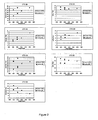
- the yield structure is shown in Figure 2
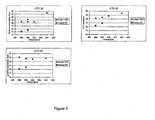
- the aromatics content of gasoline, LCO and Bottoms are shown in figure 3 .
- the comparisons are made at a CTO of 20 wt/wt.
- Temperature is the catalyst bed temperature in °C
- CTO is the catalyst/oil ratio in wt/wt.
- Dry gas is the amount of dry gas in the product stream (in wt%).
- LPG is the amount of liquefiable gas in the product stream (in wt%).
- Gasoline is the amount of product (in wt%) having a boiling point in the range above the boiling point of pentane to 221 °C.
- LCO Light Cycle Oil
- Bottoms is the amount of product (in wt%) having a boiling point above 350 °C.
- Coke is the amount of coke (in wt%) produced.
Landscapes
- Chemical & Material Sciences (AREA)
- Engineering & Computer Science (AREA)
- Organic Chemistry (AREA)
- Chemical Kinetics & Catalysis (AREA)
- Materials Engineering (AREA)
- Oil, Petroleum & Natural Gas (AREA)
- General Chemical & Material Sciences (AREA)
- Dispersion Chemistry (AREA)
- Catalysts (AREA)
- Production Of Liquid Hydrocarbon Mixture For Refining Petroleum (AREA)
Priority Applications (1)
| Application Number | Priority Date | Filing Date | Title |
|---|---|---|---|
| EP06841616A EP1966350B1 (en) | 2005-12-22 | 2006-12-22 | Fcc process with basic catalyst |
Applications Claiming Priority (3)
| Application Number | Priority Date | Filing Date | Title |
|---|---|---|---|
| EP05112841 | 2005-12-22 | ||
| EP06841616A EP1966350B1 (en) | 2005-12-22 | 2006-12-22 | Fcc process with basic catalyst |
| PCT/EP2006/070204 WO2007082629A1 (en) | 2005-12-22 | 2006-12-22 | Novel cracking catalytic compositions |
Related Child Applications (1)
| Application Number | Title | Priority Date | Filing Date |
|---|---|---|---|
| EP10005846.0 Division-Into | 2010-06-07 |
Publications (2)
| Publication Number | Publication Date |
|---|---|
| EP1966350A1 EP1966350A1 (en) | 2008-09-10 |
| EP1966350B1 true EP1966350B1 (en) | 2010-12-15 |
Family
ID=35825330
Family Applications (1)
| Application Number | Title | Priority Date | Filing Date |
|---|---|---|---|
| EP06841616A Not-in-force EP1966350B1 (en) | 2005-12-22 | 2006-12-22 | Fcc process with basic catalyst |
Country Status (11)
| Country | Link |
|---|---|
| US (2) | US20100193399A1 (enExample) |
| EP (1) | EP1966350B1 (enExample) |
| JP (1) | JP5208762B2 (enExample) |
| KR (1) | KR20080081048A (enExample) |
| CN (1) | CN101341230B (enExample) |
| AT (1) | ATE491772T1 (enExample) |
| BR (1) | BRPI0620900A2 (enExample) |
| CA (1) | CA2634526A1 (enExample) |
| DE (1) | DE602006018997D1 (enExample) |
| EA (1) | EA016228B1 (enExample) |
| WO (1) | WO2007082629A1 (enExample) |
Cited By (1)
| Publication number | Priority date | Publication date | Assignee | Title |
|---|---|---|---|---|
| CN103349960A (zh) * | 2013-07-03 | 2013-10-16 | 哈尔滨工程大学 | 以油页岩灰为原料制备具有插层结构铀吸附材料的方法 |
Families Citing this family (15)
| Publication number | Priority date | Publication date | Assignee | Title |
|---|---|---|---|---|
| CA2690284A1 (en) * | 2007-06-08 | 2008-12-11 | Elbert Arjan De Graaf | Catalytic cracking process for high diesel yield with low aromatic content and/or high propylene yield |
| CA2689370A1 (en) * | 2007-06-08 | 2008-12-11 | Albemarle Netherlands, B.V. | Low nox co oxidation promoters |
| WO2009087576A2 (en) * | 2008-01-09 | 2009-07-16 | Albemarle Netherlands B.V. | Fcc process employing basic cracking compositions |
| BRPI0800236B1 (pt) | 2008-01-24 | 2019-05-14 | Petroleo Brasileiro S.A. - Petrobras | Processo e equipamento de craqueamento catalítico fluido para a produção de destilados médios de baixa aromaticidade |
| CN101798516B (zh) * | 2009-02-09 | 2013-03-27 | 中源新能源(福建)有限公司 | 一种纳米基载体同步多效裂解催化剂及其制备方法 |
| JP6068437B2 (ja) * | 2011-04-15 | 2017-01-25 | ペトロレオ ブラジレイロ ソシエダ アノニマ − ペトロブラス | 2つの別個のコンバータを使用してディーゼルを最大限にするfcc法 |
| US20140163285A1 (en) * | 2012-12-10 | 2014-06-12 | Exxonmobil Research And Engineering Company | Catalytic cracking process for biofeeds |
| US9181500B2 (en) | 2014-03-25 | 2015-11-10 | Uop Llc | Process and apparatus for recycling cracked hydrocarbons |
| US10385279B2 (en) | 2014-03-25 | 2019-08-20 | Uop Llc | Process and apparatus for recycling cracked hydrocarbons |
| WO2016036520A1 (en) | 2014-09-01 | 2016-03-10 | Biosynthetic Technologies, Llc. | Conversion of estolide-containing feedstocks into hydrocarbon products |
| CN106609153A (zh) * | 2015-10-21 | 2017-05-03 | 中国石油天然气股份有限公司 | 一种提升管催化裂化工艺 |
| CN106609150A (zh) * | 2015-10-21 | 2017-05-03 | 中国石油天然气股份有限公司 | 一种转化催化裂化塔底重油的方法 |
| MX2017010802A (es) | 2017-08-23 | 2019-03-07 | Mexicano Inst Petrol | Proceso y catalizador zeolitico para la desintegracion catalitica de crudo ligero no convencional tipo shale/tight oil y mezclas con gasoleo de vacio. |
| CN114292665B (zh) * | 2021-12-13 | 2023-01-24 | 中国海洋石油集团有限公司 | 重质油品改质方法以及重质油品改质系统 |
| CN116286077B (zh) * | 2021-12-13 | 2025-06-03 | 中国海洋石油集团有限公司 | 原料油直接制化学品的方法 |
Family Cites Families (11)
| Publication number | Priority date | Publication date | Assignee | Title |
|---|---|---|---|---|
| US3904550A (en) * | 1973-10-19 | 1975-09-09 | Exxon Research Engineering Co | Hydrocarbon conversion catalyst comprising alumina and aluminum phosphate |
| US4093536A (en) * | 1974-04-15 | 1978-06-06 | Phillips Petroleum Company | Catalytic cracking and dehydrocyclizing of alkanes using alkaline earth oxides promoted with manganese oxide and/or rhenium oxide |
| ZA852872B (en) * | 1984-05-03 | 1986-11-26 | Mobil Oil Corp | A method of activating a crystalline aluminium phosphate and use of the activated product in hydrocarbon cracking |
| US4866019A (en) * | 1987-01-13 | 1989-09-12 | Akzo N.V. | Catalyst composition and absorbent which contain an anionic clay |
| US5422332A (en) * | 1993-07-30 | 1995-06-06 | Intercat, Inc. | Processes for reacting bastnaesite with metal oxides |
| NO317500B1 (no) * | 1998-03-13 | 2004-11-08 | Statoil Asa | Fremgangsmate og sammensetning for reduksjon av svovelinnholdet i en hydrokarbonblanding, samt anvendelse derav |
| WO2001012570A1 (en) * | 1999-08-11 | 2001-02-22 | Akzo Nobel N.V. | Attrition resistant, shaped, crystalline anionic clay-containing bodies |
| US6797155B1 (en) * | 1999-12-21 | 2004-09-28 | Exxonmobil Research & Engineering Co. | Catalytic cracking process using a modified mesoporous aluminophosphate material |
| US6447741B1 (en) * | 1999-12-21 | 2002-09-10 | Exxonmobil Oil Corporation | Thermally stable, high surface area, modified mesoporous aluminophosphate material |
| WO2004002620A1 (en) * | 2002-06-28 | 2004-01-08 | Albemarle Netherlands B.V. | Fcc catalyst for reducing the sulfur content in gasoline and diesel |
| US7431825B2 (en) * | 2003-12-05 | 2008-10-07 | Intercat, Inc. | Gasoline sulfur reduction using hydrotalcite like compounds |
-
2006
- 2006-12-22 BR BRPI0620900-9A patent/BRPI0620900A2/pt not_active IP Right Cessation
- 2006-12-22 DE DE602006018997T patent/DE602006018997D1/de active Active
- 2006-12-22 KR KR1020087017441A patent/KR20080081048A/ko not_active Ceased
- 2006-12-22 CA CA002634526A patent/CA2634526A1/en not_active Abandoned
- 2006-12-22 WO PCT/EP2006/070204 patent/WO2007082629A1/en not_active Ceased
- 2006-12-22 EA EA200870104A patent/EA016228B1/ru not_active IP Right Cessation
- 2006-12-22 CN CN2006800482987A patent/CN101341230B/zh not_active Expired - Fee Related
- 2006-12-22 JP JP2008546490A patent/JP5208762B2/ja not_active Expired - Fee Related
- 2006-12-22 AT AT06841616T patent/ATE491772T1/de not_active IP Right Cessation
- 2006-12-22 EP EP06841616A patent/EP1966350B1/en not_active Not-in-force
- 2006-12-22 US US12/158,982 patent/US20100193399A1/en not_active Abandoned
-
2012
- 2012-04-02 US US13/437,323 patent/US20120222991A1/en not_active Abandoned
Cited By (1)
| Publication number | Priority date | Publication date | Assignee | Title |
|---|---|---|---|---|
| CN103349960A (zh) * | 2013-07-03 | 2013-10-16 | 哈尔滨工程大学 | 以油页岩灰为原料制备具有插层结构铀吸附材料的方法 |
Also Published As
| Publication number | Publication date |
|---|---|
| DE602006018997D1 (de) | 2011-01-27 |
| BRPI0620900A2 (pt) | 2011-11-29 |
| US20120222991A1 (en) | 2012-09-06 |
| CA2634526A1 (en) | 2007-07-26 |
| ATE491772T1 (de) | 2011-01-15 |
| CN101341230B (zh) | 2013-02-13 |
| EA016228B1 (ru) | 2012-03-30 |
| WO2007082629A1 (en) | 2007-07-26 |
| JP5208762B2 (ja) | 2013-06-12 |
| JP2009520590A (ja) | 2009-05-28 |
| CN101341230A (zh) | 2009-01-07 |
| EA200870104A1 (ru) | 2008-12-30 |
| EP1966350A1 (en) | 2008-09-10 |
| US20100193399A1 (en) | 2010-08-05 |
| KR20080081048A (ko) | 2008-09-05 |
Similar Documents
| Publication | Publication Date | Title |
|---|---|---|
| US20120222991A1 (en) | Novel cracking catalytic compositions | |
| EP2072604B1 (en) | A process for catalytic converting hydrocarbons | |
| AU2001285090B2 (en) | Crystalline microporous oxide catalysts having increased lewis acidity and methods for the preparation thereof | |
| KR20170012371A (ko) | 유동층 접촉분해용 프레임워크 치환 제올라이트 촉매, 및 유동층 접촉분해를 위한 방법 | |
| US20090000984A1 (en) | Catalytic Cracking Process For High Diesel Yield With Low Aromatic Content And/Or High Propylene Yield | |
| Scherzer | Correlation between catalyst formulation and catalytic properties | |
| AU2001285091A1 (en) | FCC process incorporating crystalline microporous oxide catalysts having increased lewis acidity | |
| AU2001285090A1 (en) | Crystalline microporous oxide catalysts having increased lewis acidity and methods for the preparation thereof | |
| AU1727800A (en) | Catalytic cracking for olefin production | |
| US7824540B2 (en) | Process for upgrading liquid hydrocarbon feeds | |
| US20090045099A1 (en) | Catalytic Cracking And Hydroprocessing Process For High Diesel Yield With Low Aromatic Content And/Or High Propylene Yield | |
| US11111443B2 (en) | Process and zeolitic catalyst for the catalytic cracking of unconventional light crude oil type shale/tight oil and its blends with vacuum gas oil | |
| US6482313B1 (en) | FCC process incorporating crystalline microporous oxide catalysts having increased Lewis acidity | |
| EP0749781B1 (en) | Crystalline microporous oxide having increased lewis acidity and fluid catalytic cracking process using same | |
| US20080308454A1 (en) | Basic Cracking Compositions Substantially Free Of Large Pore Zeolites | |
| WO2009087576A2 (en) | Fcc process employing basic cracking compositions | |
| JP4401498B2 (ja) | 結晶性アルミノケイ酸塩及び炭化水素油の流動接触分解触媒 | |
| JPH0857328A (ja) | 接触分解用触媒体及びそれを用いる炭化水素の接触分解方法 | |
| US6673734B1 (en) | Crystalline microporous oxide catalysts having increased Lewis acidity and methods for the preparation thereof | |
| JP2011521011A (ja) | 芳香族含量の低い高ディーゼル収率及び/又は高プロピレン収率を得るための接触分解プロセス |
Legal Events
| Date | Code | Title | Description |
|---|---|---|---|
| PUAI | Public reference made under article 153(3) epc to a published international application that has entered the european phase |
Free format text: ORIGINAL CODE: 0009012 |
|
| 17P | Request for examination filed |
Effective date: 20080620 |
|
| AK | Designated contracting states |
Kind code of ref document: A1 Designated state(s): AT BE BG CH CY CZ DE DK EE ES FI FR GB GR HU IE IS IT LI LT LU LV MC NL PL PT RO SE SI SK TR |
|
| 17Q | First examination report despatched |
Effective date: 20081127 |
|
| GRAP | Despatch of communication of intention to grant a patent |
Free format text: ORIGINAL CODE: EPIDOSNIGR1 |
|
| RTI1 | Title (correction) |
Free format text: FCC PROCESS WITH BASIC CATALYST |
|
| DAX | Request for extension of the european patent (deleted) | ||
| GRAS | Grant fee paid |
Free format text: ORIGINAL CODE: EPIDOSNIGR3 |
|
| GRAA | (expected) grant |
Free format text: ORIGINAL CODE: 0009210 |
|
| AK | Designated contracting states |
Kind code of ref document: B1 Designated state(s): AT BE BG CH CY CZ DE DK EE ES FI FR GB GR HU IE IS IT LI LT LU LV MC NL PL PT RO SE SI SK TR |
|
| REG | Reference to a national code |
Ref country code: GB Ref legal event code: FG4D Ref country code: CH Ref legal event code: EP |
|
| REG | Reference to a national code |
Ref country code: IE Ref legal event code: FG4D |
|
| REF | Corresponds to: |
Ref document number: 602006018997 Country of ref document: DE Date of ref document: 20110127 Kind code of ref document: P |
|
| REG | Reference to a national code |
Ref country code: NL Ref legal event code: T3 |
|
| PG25 | Lapsed in a contracting state [announced via postgrant information from national office to epo] |
Ref country code: LT Free format text: LAPSE BECAUSE OF FAILURE TO SUBMIT A TRANSLATION OF THE DESCRIPTION OR TO PAY THE FEE WITHIN THE PRESCRIBED TIME-LIMIT Effective date: 20101215 |
|
| LTIE | Lt: invalidation of european patent or patent extension |
Effective date: 20101215 |
|
| PG25 | Lapsed in a contracting state [announced via postgrant information from national office to epo] |
Ref country code: BG Free format text: LAPSE BECAUSE OF FAILURE TO SUBMIT A TRANSLATION OF THE DESCRIPTION OR TO PAY THE FEE WITHIN THE PRESCRIBED TIME-LIMIT Effective date: 20110315 Ref country code: FI Free format text: LAPSE BECAUSE OF FAILURE TO SUBMIT A TRANSLATION OF THE DESCRIPTION OR TO PAY THE FEE WITHIN THE PRESCRIBED TIME-LIMIT Effective date: 20101215 Ref country code: SI Free format text: LAPSE BECAUSE OF FAILURE TO SUBMIT A TRANSLATION OF THE DESCRIPTION OR TO PAY THE FEE WITHIN THE PRESCRIBED TIME-LIMIT Effective date: 20101215 Ref country code: AT Free format text: LAPSE BECAUSE OF FAILURE TO SUBMIT A TRANSLATION OF THE DESCRIPTION OR TO PAY THE FEE WITHIN THE PRESCRIBED TIME-LIMIT Effective date: 20101215 Ref country code: LV Free format text: LAPSE BECAUSE OF FAILURE TO SUBMIT A TRANSLATION OF THE DESCRIPTION OR TO PAY THE FEE WITHIN THE PRESCRIBED TIME-LIMIT Effective date: 20101215 Ref country code: SE Free format text: LAPSE BECAUSE OF FAILURE TO SUBMIT A TRANSLATION OF THE DESCRIPTION OR TO PAY THE FEE WITHIN THE PRESCRIBED TIME-LIMIT Effective date: 20101215 Ref country code: CY Free format text: LAPSE BECAUSE OF FAILURE TO SUBMIT A TRANSLATION OF THE DESCRIPTION OR TO PAY THE FEE WITHIN THE PRESCRIBED TIME-LIMIT Effective date: 20101215 |
|
| PG25 | Lapsed in a contracting state [announced via postgrant information from national office to epo] |
Ref country code: IS Free format text: LAPSE BECAUSE OF FAILURE TO SUBMIT A TRANSLATION OF THE DESCRIPTION OR TO PAY THE FEE WITHIN THE PRESCRIBED TIME-LIMIT Effective date: 20110415 Ref country code: GR Free format text: LAPSE BECAUSE OF FAILURE TO SUBMIT A TRANSLATION OF THE DESCRIPTION OR TO PAY THE FEE WITHIN THE PRESCRIBED TIME-LIMIT Effective date: 20110316 Ref country code: PT Free format text: LAPSE BECAUSE OF FAILURE TO SUBMIT A TRANSLATION OF THE DESCRIPTION OR TO PAY THE FEE WITHIN THE PRESCRIBED TIME-LIMIT Effective date: 20110415 Ref country code: BE Free format text: LAPSE BECAUSE OF FAILURE TO SUBMIT A TRANSLATION OF THE DESCRIPTION OR TO PAY THE FEE WITHIN THE PRESCRIBED TIME-LIMIT Effective date: 20101215 Ref country code: CZ Free format text: LAPSE BECAUSE OF FAILURE TO SUBMIT A TRANSLATION OF THE DESCRIPTION OR TO PAY THE FEE WITHIN THE PRESCRIBED TIME-LIMIT Effective date: 20101215 Ref country code: ES Free format text: LAPSE BECAUSE OF FAILURE TO SUBMIT A TRANSLATION OF THE DESCRIPTION OR TO PAY THE FEE WITHIN THE PRESCRIBED TIME-LIMIT Effective date: 20110326 Ref country code: MC Free format text: LAPSE BECAUSE OF NON-PAYMENT OF DUE FEES Effective date: 20101231 Ref country code: EE Free format text: LAPSE BECAUSE OF FAILURE TO SUBMIT A TRANSLATION OF THE DESCRIPTION OR TO PAY THE FEE WITHIN THE PRESCRIBED TIME-LIMIT Effective date: 20101215 |
|
| REG | Reference to a national code |
Ref country code: CH Ref legal event code: PL |
|
| PG25 | Lapsed in a contracting state [announced via postgrant information from national office to epo] |
Ref country code: PL Free format text: LAPSE BECAUSE OF FAILURE TO SUBMIT A TRANSLATION OF THE DESCRIPTION OR TO PAY THE FEE WITHIN THE PRESCRIBED TIME-LIMIT Effective date: 20101215 Ref country code: SK Free format text: LAPSE BECAUSE OF FAILURE TO SUBMIT A TRANSLATION OF THE DESCRIPTION OR TO PAY THE FEE WITHIN THE PRESCRIBED TIME-LIMIT Effective date: 20101215 Ref country code: RO Free format text: LAPSE BECAUSE OF FAILURE TO SUBMIT A TRANSLATION OF THE DESCRIPTION OR TO PAY THE FEE WITHIN THE PRESCRIBED TIME-LIMIT Effective date: 20101215 |
|
| PLBE | No opposition filed within time limit |
Free format text: ORIGINAL CODE: 0009261 |
|
| STAA | Information on the status of an ep patent application or granted ep patent |
Free format text: STATUS: NO OPPOSITION FILED WITHIN TIME LIMIT |
|
| PG25 | Lapsed in a contracting state [announced via postgrant information from national office to epo] |
Ref country code: DK Free format text: LAPSE BECAUSE OF FAILURE TO SUBMIT A TRANSLATION OF THE DESCRIPTION OR TO PAY THE FEE WITHIN THE PRESCRIBED TIME-LIMIT Effective date: 20101215 Ref country code: LI Free format text: LAPSE BECAUSE OF NON-PAYMENT OF DUE FEES Effective date: 20101231 Ref country code: IE Free format text: LAPSE BECAUSE OF NON-PAYMENT OF DUE FEES Effective date: 20101222 Ref country code: CH Free format text: LAPSE BECAUSE OF NON-PAYMENT OF DUE FEES Effective date: 20101231 |
|
| 26N | No opposition filed |
Effective date: 20110916 |
|
| REG | Reference to a national code |
Ref country code: DE Ref legal event code: R097 Ref document number: 602006018997 Country of ref document: DE Effective date: 20110916 |
|
| PG25 | Lapsed in a contracting state [announced via postgrant information from national office to epo] |
Ref country code: HU Free format text: LAPSE BECAUSE OF FAILURE TO SUBMIT A TRANSLATION OF THE DESCRIPTION OR TO PAY THE FEE WITHIN THE PRESCRIBED TIME-LIMIT Effective date: 20110616 Ref country code: LU Free format text: LAPSE BECAUSE OF NON-PAYMENT OF DUE FEES Effective date: 20101222 |
|
| PG25 | Lapsed in a contracting state [announced via postgrant information from national office to epo] |
Ref country code: TR Free format text: LAPSE BECAUSE OF FAILURE TO SUBMIT A TRANSLATION OF THE DESCRIPTION OR TO PAY THE FEE WITHIN THE PRESCRIBED TIME-LIMIT Effective date: 20101215 |
|
| PGFP | Annual fee paid to national office [announced via postgrant information from national office to epo] |
Ref country code: GB Payment date: 20121227 Year of fee payment: 7 Ref country code: IT Payment date: 20121218 Year of fee payment: 7 |
|
| PGFP | Annual fee paid to national office [announced via postgrant information from national office to epo] |
Ref country code: FR Payment date: 20130110 Year of fee payment: 7 |
|
| PGFP | Annual fee paid to national office [announced via postgrant information from national office to epo] |
Ref country code: DE Payment date: 20121231 Year of fee payment: 7 |
|
| PGFP | Annual fee paid to national office [announced via postgrant information from national office to epo] |
Ref country code: NL Payment date: 20121225 Year of fee payment: 7 |
|
| REG | Reference to a national code |
Ref country code: DE Ref legal event code: R119 Ref document number: 602006018997 Country of ref document: DE |
|
| REG | Reference to a national code |
Ref country code: NL Ref legal event code: V1 Effective date: 20140701 |
|
| GBPC | Gb: european patent ceased through non-payment of renewal fee |
Effective date: 20131222 |
|
| REG | Reference to a national code |
Ref country code: DE Ref legal event code: R119 Ref document number: 602006018997 Country of ref document: DE Effective date: 20140701 |
|
| REG | Reference to a national code |
Ref country code: FR Ref legal event code: ST Effective date: 20140829 |
|
| PG25 | Lapsed in a contracting state [announced via postgrant information from national office to epo] |
Ref country code: NL Free format text: LAPSE BECAUSE OF NON-PAYMENT OF DUE FEES Effective date: 20140701 Ref country code: DE Free format text: LAPSE BECAUSE OF NON-PAYMENT OF DUE FEES Effective date: 20140701 |
|
| PG25 | Lapsed in a contracting state [announced via postgrant information from national office to epo] |
Ref country code: FR Free format text: LAPSE BECAUSE OF NON-PAYMENT OF DUE FEES Effective date: 20131231 Ref country code: GB Free format text: LAPSE BECAUSE OF NON-PAYMENT OF DUE FEES Effective date: 20131222 |
|
| PG25 | Lapsed in a contracting state [announced via postgrant information from national office to epo] |
Ref country code: IT Free format text: LAPSE BECAUSE OF NON-PAYMENT OF DUE FEES Effective date: 20131231 |
|
| PG25 | Lapsed in a contracting state [announced via postgrant information from national office to epo] |
Ref country code: IT Free format text: LAPSE BECAUSE OF NON-PAYMENT OF DUE FEES Effective date: 20131222 |