EP1964934A1 - Sample treatment solution and reagent kit for preparing sample for detecting DNA methylation - Google Patents
Sample treatment solution and reagent kit for preparing sample for detecting DNA methylation Download PDFInfo
- Publication number
- EP1964934A1 EP1964934A1 EP08152040A EP08152040A EP1964934A1 EP 1964934 A1 EP1964934 A1 EP 1964934A1 EP 08152040 A EP08152040 A EP 08152040A EP 08152040 A EP08152040 A EP 08152040A EP 1964934 A1 EP1964934 A1 EP 1964934A1
- Authority
- EP
- European Patent Office
- Prior art keywords
- sample
- dna
- treatment solution
- sample treatment
- methylation
- Prior art date
- Legal status (The legal status is an assumption and is not a legal conclusion. Google has not performed a legal analysis and makes no representation as to the accuracy of the status listed.)
- Withdrawn
Links
- 230000007067 DNA methylation Effects 0.000 title claims abstract description 51
- 239000003153 chemical reaction reagent Substances 0.000 title claims description 28
- 239000000243 solution Substances 0.000 claims abstract description 108
- 238000001514 detection method Methods 0.000 claims abstract description 47
- 239000007864 aqueous solution Substances 0.000 claims abstract description 18
- 108091005804 Peptidases Proteins 0.000 claims abstract description 17
- 239000004365 Protease Substances 0.000 claims abstract description 15
- 102100037486 Reverse transcriptase/ribonuclease H Human genes 0.000 claims abstract 4
- 239000000523 sample Substances 0.000 claims description 120
- 108020004414 DNA Proteins 0.000 claims description 74
- 238000000034 method Methods 0.000 claims description 55
- 108090000623 proteins and genes Proteins 0.000 claims description 44
- 239000003795 chemical substances by application Substances 0.000 claims description 42
- 239000012472 biological sample Substances 0.000 claims description 38
- OPTASPLRGRRNAP-UHFFFAOYSA-N cytosine Chemical class NC=1C=CNC(=O)N=1 OPTASPLRGRRNAP-UHFFFAOYSA-N 0.000 claims description 27
- 230000011987 methylation Effects 0.000 claims description 26
- 238000007069 methylation reaction Methods 0.000 claims description 26
- 238000006243 chemical reaction Methods 0.000 claims description 22
- 108091029523 CpG island Proteins 0.000 claims description 21
- 210000004027 cell Anatomy 0.000 claims description 21
- LSNNMFCWUKXFEE-UHFFFAOYSA-M Bisulfite Chemical group OS([O-])=O LSNNMFCWUKXFEE-UHFFFAOYSA-M 0.000 claims description 20
- 102000040430 polynucleotide Human genes 0.000 claims description 19
- 108091033319 polynucleotide Proteins 0.000 claims description 19
- 239000002157 polynucleotide Substances 0.000 claims description 19
- XSQUKJJJFZCRTK-UHFFFAOYSA-N Urea Chemical compound NC(N)=O XSQUKJJJFZCRTK-UHFFFAOYSA-N 0.000 claims description 17
- 230000003196 chaotropic effect Effects 0.000 claims description 13
- 238000002156 mixing Methods 0.000 claims description 13
- 239000004094 surface-active agent Substances 0.000 claims description 13
- DBMJMQXJHONAFJ-UHFFFAOYSA-M Sodium laurylsulphate Chemical compound [Na+].CCCCCCCCCCCCOS([O-])(=O)=O DBMJMQXJHONAFJ-UHFFFAOYSA-M 0.000 claims description 9
- 239000004202 carbamide Substances 0.000 claims description 9
- FVAUCKIRQBBSSJ-UHFFFAOYSA-M sodium iodide Chemical compound [Na+].[I-] FVAUCKIRQBBSSJ-UHFFFAOYSA-M 0.000 claims description 9
- 229960000789 guanidine hydrochloride Drugs 0.000 claims description 8
- PJJJBBJSCAKJQF-UHFFFAOYSA-N guanidinium chloride Chemical compound [Cl-].NC(N)=[NH2+] PJJJBBJSCAKJQF-UHFFFAOYSA-N 0.000 claims description 8
- 239000000203 mixture Substances 0.000 claims description 7
- 210000002966 serum Anatomy 0.000 claims description 7
- 210000001519 tissue Anatomy 0.000 claims description 7
- NLKNQRATVPKPDG-UHFFFAOYSA-M potassium iodide Chemical compound [K+].[I-] NLKNQRATVPKPDG-UHFFFAOYSA-M 0.000 claims description 6
- 210000004881 tumor cell Anatomy 0.000 claims description 4
- 210000003103 bodily secretion Anatomy 0.000 claims description 3
- ZJYYHGLJYGJLLN-UHFFFAOYSA-N guanidinium thiocyanate Chemical compound SC#N.NC(N)=N ZJYYHGLJYGJLLN-UHFFFAOYSA-N 0.000 claims description 3
- 210000005075 mammary gland Anatomy 0.000 claims description 3
- 229940083575 sodium dodecyl sulfate Drugs 0.000 claims description 3
- 235000009518 sodium iodide Nutrition 0.000 claims description 3
- 235000019333 sodium laurylsulphate Nutrition 0.000 claims description 3
- 229960003964 deoxycholic acid Drugs 0.000 claims description 2
- KXGVEGMKQFWNSR-LLQZFEROSA-N deoxycholic acid Chemical compound C([C@H]1CC2)[C@H](O)CC[C@]1(C)[C@@H]1[C@@H]2[C@@H]2CC[C@H]([C@@H](CCC(O)=O)C)[C@@]2(C)[C@@H](O)C1 KXGVEGMKQFWNSR-LLQZFEROSA-N 0.000 claims description 2
- NRHMKIHPTBHXPF-TUJRSCDTSA-M sodium cholate Chemical compound [Na+].C([C@H]1C[C@H]2O)[C@H](O)CC[C@]1(C)[C@@H]1[C@@H]2[C@@H]2CC[C@H]([C@@H](CCC([O-])=O)C)[C@@]2(C)[C@@H](O)C1 NRHMKIHPTBHXPF-TUJRSCDTSA-M 0.000 claims description 2
- JAJWGJBVLPIOOH-IZYKLYLVSA-M sodium taurocholate Chemical compound [Na+].C([C@H]1C[C@H]2O)[C@H](O)CC[C@]1(C)[C@@H]1[C@@H]2[C@@H]2CC[C@H]([C@@H](CCC(=O)NCCS([O-])(=O)=O)C)[C@@]2(C)[C@@H](O)C1 JAJWGJBVLPIOOH-IZYKLYLVSA-M 0.000 claims description 2
- 229940045946 sodium taurodeoxycholate Drugs 0.000 claims description 2
- 229960000776 sodium tetradecyl sulfate Drugs 0.000 claims description 2
- VGTPCRGMBIAPIM-UHFFFAOYSA-M sodium thiocyanate Chemical compound [Na+].[S-]C#N VGTPCRGMBIAPIM-UHFFFAOYSA-M 0.000 claims description 2
- YXHRQQJFKOHLAP-FVCKGWAHSA-M sodium;2-[[(4r)-4-[(3r,5r,8r,9s,10s,12s,13r,14s,17r)-3,12-dihydroxy-10,13-dimethyl-2,3,4,5,6,7,8,9,11,12,14,15,16,17-tetradecahydro-1h-cyclopenta[a]phenanthren-17-yl]pentanoyl]amino]ethanesulfonate Chemical compound [Na+].C([C@H]1CC2)[C@H](O)CC[C@]1(C)[C@@H]1[C@@H]2[C@@H]2CC[C@H]([C@@H](CCC(=O)NCCS([O-])(=O)=O)C)[C@@]2(C)[C@@H](O)C1 YXHRQQJFKOHLAP-FVCKGWAHSA-M 0.000 claims description 2
- DAJSVUQLFFJUSX-UHFFFAOYSA-M sodium;dodecane-1-sulfonate Chemical compound [Na+].CCCCCCCCCCCCS([O-])(=O)=O DAJSVUQLFFJUSX-UHFFFAOYSA-M 0.000 claims description 2
- AYFACLKQYVTXNS-UHFFFAOYSA-M sodium;tetradecane-1-sulfonate Chemical compound [Na+].CCCCCCCCCCCCCCS([O-])(=O)=O AYFACLKQYVTXNS-UHFFFAOYSA-M 0.000 claims description 2
- UPUIQOIQVMNQAP-UHFFFAOYSA-M sodium;tetradecyl sulfate Chemical compound [Na+].CCCCCCCCCCCCCCOS([O-])(=O)=O UPUIQOIQVMNQAP-UHFFFAOYSA-M 0.000 claims description 2
- HEMHJVSKTPXQMS-UHFFFAOYSA-M Sodium hydroxide Chemical compound [OH-].[Na+] HEMHJVSKTPXQMS-UHFFFAOYSA-M 0.000 description 27
- 102000035195 Peptidases Human genes 0.000 description 13
- ISAKRJDGNUQOIC-UHFFFAOYSA-N Uracil Chemical compound O=C1C=CNC(=O)N1 ISAKRJDGNUQOIC-UHFFFAOYSA-N 0.000 description 12
- 108010007005 Estrogen Receptor alpha Proteins 0.000 description 10
- 235000019419 proteases Nutrition 0.000 description 10
- 102000004169 proteins and genes Human genes 0.000 description 10
- XLYOFNOQVPJJNP-UHFFFAOYSA-N water Substances O XLYOFNOQVPJJNP-UHFFFAOYSA-N 0.000 description 9
- 108010067770 Endopeptidase K Proteins 0.000 description 8
- 238000007855 methylation-specific PCR Methods 0.000 description 7
- 102000053602 DNA Human genes 0.000 description 6
- 206010028980 Neoplasm Diseases 0.000 description 6
- 239000003814 drug Substances 0.000 description 6
- 229940079593 drug Drugs 0.000 description 6
- 230000002068 genetic effect Effects 0.000 description 6
- 239000000126 substance Substances 0.000 description 6
- 229940035893 uracil Drugs 0.000 description 6
- LRSASMSXMSNRBT-UHFFFAOYSA-N 5-methylcytosine Chemical group CC1=CNC(=O)N=C1N LRSASMSXMSNRBT-UHFFFAOYSA-N 0.000 description 5
- 102000004190 Enzymes Human genes 0.000 description 5
- 108090000790 Enzymes Proteins 0.000 description 5
- 238000003776 cleavage reaction Methods 0.000 description 5
- 229940104302 cytosine Drugs 0.000 description 5
- 239000012153 distilled water Substances 0.000 description 5
- 229940088598 enzyme Drugs 0.000 description 5
- 238000002360 preparation method Methods 0.000 description 5
- 239000000047 product Substances 0.000 description 5
- 230000007017 scission Effects 0.000 description 5
- 230000003321 amplification Effects 0.000 description 4
- 239000003945 anionic surfactant Substances 0.000 description 4
- 230000000692 anti-sense effect Effects 0.000 description 4
- 238000003199 nucleic acid amplification method Methods 0.000 description 4
- 238000010561 standard procedure Methods 0.000 description 4
- 238000013518 transcription Methods 0.000 description 4
- 230000035897 transcription Effects 0.000 description 4
- 239000000439 tumor marker Substances 0.000 description 4
- 108010014303 DNA-directed DNA polymerase Proteins 0.000 description 3
- 102000016928 DNA-directed DNA polymerase Human genes 0.000 description 3
- 102100038595 Estrogen receptor Human genes 0.000 description 3
- 108700039691 Genetic Promoter Regions Proteins 0.000 description 3
- 108091028043 Nucleic acid sequence Proteins 0.000 description 3
- 108700020796 Oncogene Proteins 0.000 description 3
- 108020004682 Single-Stranded DNA Proteins 0.000 description 3
- 108700025716 Tumor Suppressor Genes Proteins 0.000 description 3
- 102000044209 Tumor Suppressor Genes Human genes 0.000 description 3
- 239000000654 additive Substances 0.000 description 3
- 230000000996 additive effect Effects 0.000 description 3
- 238000000246 agarose gel electrophoresis Methods 0.000 description 3
- 201000011510 cancer Diseases 0.000 description 3
- 210000004748 cultured cell Anatomy 0.000 description 3
- 201000010099 disease Diseases 0.000 description 3
- 208000037265 diseases, disorders, signs and symptoms Diseases 0.000 description 3
- 230000014509 gene expression Effects 0.000 description 3
- 102000039446 nucleic acids Human genes 0.000 description 3
- 108020004707 nucleic acids Proteins 0.000 description 3
- 150000007523 nucleic acids Chemical class 0.000 description 3
- 238000011017 operating method Methods 0.000 description 3
- 108091008146 restriction endonucleases Proteins 0.000 description 3
- 206010006187 Breast cancer Diseases 0.000 description 2
- 208000026310 Breast neoplasm Diseases 0.000 description 2
- 102100025475 Carcinoembryonic antigen-related cell adhesion molecule 5 Human genes 0.000 description 2
- 241000206602 Eukaryota Species 0.000 description 2
- 241000282412 Homo Species 0.000 description 2
- 101000742859 Homo sapiens Retinoblastoma-associated protein Proteins 0.000 description 2
- 241001465754 Metazoa Species 0.000 description 2
- 108010072866 Prostate-Specific Antigen Proteins 0.000 description 2
- 102000007066 Prostate-Specific Antigen Human genes 0.000 description 2
- 101150040459 RAS gene Proteins 0.000 description 2
- 102100038042 Retinoblastoma-associated protein Human genes 0.000 description 2
- DWAQJAXMDSEUJJ-UHFFFAOYSA-M Sodium bisulfite Chemical compound [Na+].OS([O-])=O DWAQJAXMDSEUJJ-UHFFFAOYSA-M 0.000 description 2
- 102000040945 Transcription factor Human genes 0.000 description 2
- 108091023040 Transcription factor Proteins 0.000 description 2
- 239000011543 agarose gel Substances 0.000 description 2
- 238000004458 analytical method Methods 0.000 description 2
- 239000007853 buffer solution Substances 0.000 description 2
- 210000000349 chromosome Anatomy 0.000 description 2
- 230000000295 complement effect Effects 0.000 description 2
- SUYVUBYJARFZHO-RRKCRQDMSA-N dATP Chemical compound C1=NC=2C(N)=NC=NC=2N1[C@H]1C[C@H](O)[C@@H](COP(O)(=O)OP(O)(=O)OP(O)(O)=O)O1 SUYVUBYJARFZHO-RRKCRQDMSA-N 0.000 description 2
- SUYVUBYJARFZHO-UHFFFAOYSA-N dATP Natural products C1=NC=2C(N)=NC=NC=2N1C1CC(O)C(COP(O)(=O)OP(O)(=O)OP(O)(O)=O)O1 SUYVUBYJARFZHO-UHFFFAOYSA-N 0.000 description 2
- RGWHQCVHVJXOKC-SHYZEUOFSA-J dCTP(4-) Chemical compound O=C1N=C(N)C=CN1[C@@H]1O[C@H](COP([O-])(=O)OP([O-])(=O)OP([O-])([O-])=O)[C@@H](O)C1 RGWHQCVHVJXOKC-SHYZEUOFSA-J 0.000 description 2
- HAAZLUGHYHWQIW-KVQBGUIXSA-N dGTP Chemical compound C1=NC=2C(=O)NC(N)=NC=2N1[C@H]1C[C@H](O)[C@@H](COP(O)(=O)OP(O)(=O)OP(O)(O)=O)O1 HAAZLUGHYHWQIW-KVQBGUIXSA-N 0.000 description 2
- NHVNXKFIZYSCEB-XLPZGREQSA-N dTTP Chemical compound O=C1NC(=O)C(C)=CN1[C@@H]1O[C@H](COP(O)(=O)OP(O)(=O)OP(O)(O)=O)[C@@H](O)C1 NHVNXKFIZYSCEB-XLPZGREQSA-N 0.000 description 2
- 238000000354 decomposition reaction Methods 0.000 description 2
- 239000003398 denaturant Substances 0.000 description 2
- UYTPUPDQBNUYGX-UHFFFAOYSA-N guanine Chemical compound O=C1NC(N)=NC2=C1N=CN2 UYTPUPDQBNUYGX-UHFFFAOYSA-N 0.000 description 2
- 230000002209 hydrophobic effect Effects 0.000 description 2
- 239000000463 material Substances 0.000 description 2
- 230000007246 mechanism Effects 0.000 description 2
- 239000011259 mixed solution Substances 0.000 description 2
- 230000007935 neutral effect Effects 0.000 description 2
- 210000002381 plasma Anatomy 0.000 description 2
- 235000019833 protease Nutrition 0.000 description 2
- 238000000746 purification Methods 0.000 description 2
- 230000001105 regulatory effect Effects 0.000 description 2
- 235000010267 sodium hydrogen sulphite Nutrition 0.000 description 2
- 239000002904 solvent Substances 0.000 description 2
- 238000003756 stirring Methods 0.000 description 2
- RWQNBRDOKXIBIV-UHFFFAOYSA-N thymine Chemical compound CC1=CNC(=O)NC1=O RWQNBRDOKXIBIV-UHFFFAOYSA-N 0.000 description 2
- 208000006542 von Hippel-Lindau disease Diseases 0.000 description 2
- 101800000504 3C-like protease Proteins 0.000 description 1
- FWMNVWWHGCHHJJ-SKKKGAJSSA-N 4-amino-1-[(2r)-6-amino-2-[[(2r)-2-[[(2r)-2-[[(2r)-2-amino-3-phenylpropanoyl]amino]-3-phenylpropanoyl]amino]-4-methylpentanoyl]amino]hexanoyl]piperidine-4-carboxylic acid Chemical compound C([C@H](C(=O)N[C@H](CC(C)C)C(=O)N[C@H](CCCCN)C(=O)N1CCC(N)(CC1)C(O)=O)NC(=O)[C@H](N)CC=1C=CC=CC=1)C1=CC=CC=C1 FWMNVWWHGCHHJJ-SKKKGAJSSA-N 0.000 description 1
- 108700001666 APC Genes Proteins 0.000 description 1
- GFFGJBXGBJISGV-UHFFFAOYSA-N Adenine Chemical compound NC1=NC=NC2=C1N=CN2 GFFGJBXGBJISGV-UHFFFAOYSA-N 0.000 description 1
- 229930024421 Adenine Natural products 0.000 description 1
- 241000894006 Bacteria Species 0.000 description 1
- 102000000905 Cadherin Human genes 0.000 description 1
- 108050007957 Cadherin Proteins 0.000 description 1
- 101710190849 Carcinoembryonic antigen-related cell adhesion molecule 5 Proteins 0.000 description 1
- 108091030081 DNA N(4)-methylcytosine Proteins 0.000 description 1
- 238000007400 DNA extraction Methods 0.000 description 1
- 102000003844 DNA helicases Human genes 0.000 description 1
- 108090000133 DNA helicases Proteins 0.000 description 1
- 238000000018 DNA microarray Methods 0.000 description 1
- 230000004543 DNA replication Effects 0.000 description 1
- 230000007018 DNA scission Effects 0.000 description 1
- 230000006820 DNA synthesis Effects 0.000 description 1
- LFQSCWFLJHTTHZ-UHFFFAOYSA-N Ethanol Chemical compound CCO LFQSCWFLJHTTHZ-UHFFFAOYSA-N 0.000 description 1
- 201000006107 Familial adenomatous polyposis Diseases 0.000 description 1
- 108010088842 Fibrinolysin Proteins 0.000 description 1
- 238000007397 LAMP assay Methods 0.000 description 1
- 101150039798 MYC gene Proteins 0.000 description 1
- 241000124008 Mammalia Species 0.000 description 1
- 108091034117 Oligonucleotide Proteins 0.000 description 1
- 238000002944 PCR assay Methods 0.000 description 1
- 108090000526 Papain Proteins 0.000 description 1
- 108090000284 Pepsin A Proteins 0.000 description 1
- 102000057297 Pepsin A Human genes 0.000 description 1
- 108010059712 Pronase Proteins 0.000 description 1
- 101150062264 Raf gene Proteins 0.000 description 1
- 201000000582 Retinoblastoma Diseases 0.000 description 1
- 238000012300 Sequence Analysis Methods 0.000 description 1
- 238000002105 Southern blotting Methods 0.000 description 1
- 108090000787 Subtilisin Proteins 0.000 description 1
- 108010006785 Taq Polymerase Proteins 0.000 description 1
- 108090001109 Thermolysin Proteins 0.000 description 1
- 108090000631 Trypsin Proteins 0.000 description 1
- 102000004142 Trypsin Human genes 0.000 description 1
- 229960000643 adenine Drugs 0.000 description 1
- 108010027597 alpha-chymotrypsin Proteins 0.000 description 1
- 239000002280 amphoteric surfactant Substances 0.000 description 1
- 238000000137 annealing Methods 0.000 description 1
- 239000002246 antineoplastic agent Substances 0.000 description 1
- 210000004369 blood Anatomy 0.000 description 1
- 239000008280 blood Substances 0.000 description 1
- 210000001124 body fluid Anatomy 0.000 description 1
- 239000010839 body fluid Substances 0.000 description 1
- 239000000872 buffer Substances 0.000 description 1
- 239000006227 byproduct Substances 0.000 description 1
- 159000000007 calcium salts Chemical class 0.000 description 1
- 239000003093 cationic surfactant Substances 0.000 description 1
- 230000001413 cellular effect Effects 0.000 description 1
- 229940099352 cholate Drugs 0.000 description 1
- BHQCQFFYRZLCQQ-OELDTZBJSA-N cholic acid Chemical compound C([C@H]1C[C@H]2O)[C@H](O)CC[C@]1(C)[C@@H]1[C@@H]2[C@@H]2CC[C@H]([C@@H](CCC(O)=O)C)[C@@]2(C)[C@@H](O)C1 BHQCQFFYRZLCQQ-OELDTZBJSA-N 0.000 description 1
- 208000029664 classic familial adenomatous polyposis Diseases 0.000 description 1
- 230000009615 deamination Effects 0.000 description 1
- 238000006481 deamination reaction Methods 0.000 description 1
- 229940009976 deoxycholate Drugs 0.000 description 1
- 230000000368 destabilizing effect Effects 0.000 description 1
- XZTWHWHGBBCSMX-UHFFFAOYSA-J dimagnesium;phosphonato phosphate Chemical compound [Mg+2].[Mg+2].[O-]P([O-])(=O)OP([O-])([O-])=O XZTWHWHGBBCSMX-UHFFFAOYSA-J 0.000 description 1
- 230000019975 dosage compensation by inactivation of X chromosome Effects 0.000 description 1
- 230000008143 early embryonic development Effects 0.000 description 1
- 230000000694 effects Effects 0.000 description 1
- 238000001962 electrophoresis Methods 0.000 description 1
- 238000006911 enzymatic reaction Methods 0.000 description 1
- ZMMJGEGLRURXTF-UHFFFAOYSA-N ethidium bromide Chemical compound [Br-].C12=CC(N)=CC=C2C2=CC=C(N)C=C2[N+](CC)=C1C1=CC=CC=C1 ZMMJGEGLRURXTF-UHFFFAOYSA-N 0.000 description 1
- 229960005542 ethidium bromide Drugs 0.000 description 1
- 210000001723 extracellular space Anatomy 0.000 description 1
- 238000000605 extraction Methods 0.000 description 1
- 239000012634 fragment Substances 0.000 description 1
- 238000012268 genome sequencing Methods 0.000 description 1
- 238000000265 homogenisation Methods 0.000 description 1
- 230000002401 inhibitory effect Effects 0.000 description 1
- 230000000977 initiatory effect Effects 0.000 description 1
- 150000002500 ions Chemical class 0.000 description 1
- 210000001165 lymph node Anatomy 0.000 description 1
- 159000000003 magnesium salts Chemical class 0.000 description 1
- 230000003211 malignant effect Effects 0.000 description 1
- 239000002736 nonionic surfactant Substances 0.000 description 1
- 239000002773 nucleotide Substances 0.000 description 1
- 239000003960 organic solvent Substances 0.000 description 1
- 101800000607 p15 Proteins 0.000 description 1
- 108700042657 p16 Genes Proteins 0.000 description 1
- 108700025694 p53 Genes Proteins 0.000 description 1
- 229940055729 papain Drugs 0.000 description 1
- 235000019834 papain Nutrition 0.000 description 1
- 230000001575 pathological effect Effects 0.000 description 1
- 229940111202 pepsin Drugs 0.000 description 1
- 150000004713 phosphodiesters Chemical class 0.000 description 1
- 238000000053 physical method Methods 0.000 description 1
- 229940012957 plasmin Drugs 0.000 description 1
- 238000003752 polymerase chain reaction Methods 0.000 description 1
- 238000006116 polymerization reaction Methods 0.000 description 1
- XAEFZNCEHLXOMS-UHFFFAOYSA-M potassium benzoate Chemical compound [K+].[O-]C(=O)C1=CC=CC=C1 XAEFZNCEHLXOMS-UHFFFAOYSA-M 0.000 description 1
- 230000035484 reaction time Effects 0.000 description 1
- 238000011897 real-time detection Methods 0.000 description 1
- 238000011160 research Methods 0.000 description 1
- 210000003296 saliva Anatomy 0.000 description 1
- 238000005464 sample preparation method Methods 0.000 description 1
- 230000035945 sensitivity Effects 0.000 description 1
- 238000012163 sequencing technique Methods 0.000 description 1
- FHHPUSMSKHSNKW-SMOYURAASA-M sodium deoxycholate Chemical compound [Na+].C([C@H]1CC2)[C@H](O)CC[C@]1(C)[C@@H]1[C@@H]2[C@@H]2CC[C@H]([C@@H](CCC([O-])=O)C)[C@@]2(C)[C@@H](O)C1 FHHPUSMSKHSNKW-SMOYURAASA-M 0.000 description 1
- 159000000000 sodium salts Chemical class 0.000 description 1
- 238000005063 solubilization Methods 0.000 description 1
- 230000007928 solubilization Effects 0.000 description 1
- 238000000527 sonication Methods 0.000 description 1
- 230000006641 stabilisation Effects 0.000 description 1
- 238000011105 stabilization Methods 0.000 description 1
- 239000000758 substrate Substances 0.000 description 1
- -1 thermoase Proteins 0.000 description 1
- 229940113082 thymine Drugs 0.000 description 1
- 239000012588 trypsin Substances 0.000 description 1
- 238000004879 turbidimetry Methods 0.000 description 1
- 238000011144 upstream manufacturing Methods 0.000 description 1
- 210000002700 urine Anatomy 0.000 description 1
- 108700026220 vif Genes Proteins 0.000 description 1
Images

Classifications
-
- C—CHEMISTRY; METALLURGY
- C12—BIOCHEMISTRY; BEER; SPIRITS; WINE; VINEGAR; MICROBIOLOGY; ENZYMOLOGY; MUTATION OR GENETIC ENGINEERING
- C12Q—MEASURING OR TESTING PROCESSES INVOLVING ENZYMES, NUCLEIC ACIDS OR MICROORGANISMS; COMPOSITIONS OR TEST PAPERS THEREFOR; PROCESSES OF PREPARING SUCH COMPOSITIONS; CONDITION-RESPONSIVE CONTROL IN MICROBIOLOGICAL OR ENZYMOLOGICAL PROCESSES
- C12Q1/00—Measuring or testing processes involving enzymes, nucleic acids or microorganisms; Compositions therefor; Processes of preparing such compositions
- C12Q1/68—Measuring or testing processes involving enzymes, nucleic acids or microorganisms; Compositions therefor; Processes of preparing such compositions involving nucleic acids
- C12Q1/6806—Preparing nucleic acids for analysis, e.g. for polymerase chain reaction [PCR] assay
-
- C—CHEMISTRY; METALLURGY
- C12—BIOCHEMISTRY; BEER; SPIRITS; WINE; VINEGAR; MICROBIOLOGY; ENZYMOLOGY; MUTATION OR GENETIC ENGINEERING
- C12Q—MEASURING OR TESTING PROCESSES INVOLVING ENZYMES, NUCLEIC ACIDS OR MICROORGANISMS; COMPOSITIONS OR TEST PAPERS THEREFOR; PROCESSES OF PREPARING SUCH COMPOSITIONS; CONDITION-RESPONSIVE CONTROL IN MICROBIOLOGICAL OR ENZYMOLOGICAL PROCESSES
- C12Q1/00—Measuring or testing processes involving enzymes, nucleic acids or microorganisms; Compositions therefor; Processes of preparing such compositions
- C12Q1/68—Measuring or testing processes involving enzymes, nucleic acids or microorganisms; Compositions therefor; Processes of preparing such compositions involving nucleic acids
- C12Q1/6813—Hybridisation assays
- C12Q1/6827—Hybridisation assays for detection of mutation or polymorphism
Definitions
- the present invention relates to a sample treatment solution and a reagent kit, which are used in preparing a sample for detecting DNA methylation.
- the present invention also relates to a method of preparing a sample, which comprises using the sample treatment solution and the reagent kit, as well as a method of detecting DNA methylation.
- the 5th position of C (cytosine) among bases constituting DNA may be modified by methylation.
- the DNAmethylation in higher eukaryotes functions as a mechanism for inhibiting expression of genetic information. For example, when a region containing a large number of CpG of a certain gene (CpG island) is methylated, transcription of the gene is inhibited. By contrast, when the CpG island is not methylated, a transcription factor can be bound to a promoter region and gene transcription can proceed.
- DNA methylation is one of control mechanisms of gene expression and plays an important role in various physiological and pathological phenomena such as early embryonic development, tissue-specific gene expression, genomic imprinting and X chromosome inactivation which are phenomena unique to mammals, chromosome stabilization, and timing of DNA replication. Furthermore, it has been revealed that the DNA methylation is strongly involved in cancer and other diseases in recent years.
- methylation-specific PCR (Methylation specific Polymerase Chain Reaction: hereinafter referred to as "MS-PCR") is used as a method of analyzing DNA methylation ( James G. HERMAN et al., Methylation-specific PCR: A novel PCR assay for methylation status of CpG islands, Proc. Natl. Acad. Sci. USA, Vol. 93, pp.9821-9826, September 1996 ).
- a conventionally used method (hereinafter referred to as "standard method") is usually performed by the four steps: 1) Genomic DNA extraction from a biological sample (about 3 hours); 2) bisulfite treatment of the extracted genomic DNA (about 16 hours); 3) purification of the modified genomic DNA (about 1 hour); and 4) PCR (about 2 hours), which are very time-consuming (a total of about 22 hours).
- standard method is usually performed by the four steps: 1) Genomic DNA extraction from a biological sample (about 3 hours); 2) bisulfite treatment of the extracted genomic DNA (about 16 hours); 3) purification of the modified genomic DNA (about 1 hour); and 4) PCR (about 2 hours), which are very time-consuming (a total of about 22 hours).
- pretreatment of the biological sample preparation of the sample for detection
- PCR is complicated and it takes about 20 hours just to pretreat (the above steps 1 to 3).
- JP-A 2005-058217 discloses a method of detecting a methylated DNA, which comprises dissolving a very small amount of a cell sample with a solution containing a protein denaturant such as guanidine thiocyanate, sodium iodide, urea and SDS, and treating the resulting solution by the bisulfite treatment in the standard method described above.
- a protein denaturant such as guanidine thiocyanate, sodium iodide, urea and SDS
- the object of the present invention is to provide a sample treatment solution and a reagent kit, which are used for preparing a sample for DNA methylation that can achieve stable detection results in detection of DNAmethylation and can be easily pretreated, as well as a method of preparing a sample and a method of detecting DNA methylation by using the sample treatment solution and the reagent kit.
- the present inventors found that when a sample treatment solution comprising an aqueous solution containing a protease is used for a treatment of a biological sample, stable detection results of DNA methylation can be obtained, and the present invention was thereby completed.
- a sample treatment solution and a reagent kit which are used for preparing a sample for DNAmethylation that can achieve stable detection results in detection of DNA methylation and can be easily pretreated, as well as a method of preparing a sample and a method of detecting DNA methylation by using the sample treatment solution and the reagent kit.
- the sample treatment solution, the reagent kit, the method of preparing a sample and the method of detecting DNAmethylation according to the present invention are useful for detecting DNA methylation by using a biological sample containing a large amount of protein.
- the sample treatment solution, the reagent kit, the method of preparing a sample and the method of detecting DNA methylation according to the present invention are useful for detecting DNA methylation by using the rapid method.
- the method of preparing a sample for detecting DNA methylation according to the present invention can simplify the extraction of genomic DNA. Accordingly, a sample for detection of DNA methylation can be prepared in a short time. In the method of preparing a sample in this embodiment, furthermore, pretreatment can be carried out in one container. Therefore, pipetting is not necessary in pretreatment. Accordingly, a loss in a sample caused by pipetting can be reduced. As a result, detection sensitivity can be improved.
- the method of preparing a sample for detecting DNAmethylation according to the present invention can be carried out easily in a few steps. Accordingly, this method is suitable for automation with an apparatus.
- the method of preparing a sample for detecting DNA methylation in this embodiment comprises mixing a sample treatment solution comprising an aqueous solution containing a protease with a biological sample containing cells (mixing step) and adding a converting agent to the resulting mixture to convert non-methylated cytosine contained in a DNA in the mixture into another base (converting step).
- the aqueous solution is not particularly limited insofar as it contains water as a solvent, and the aqueous solution may contain an organic solvent such as alcohol.
- the protease in this embodiment is not particularly limited as long as it is a proteolytic enzyme.
- examples include thermolysin, thermoase, papain, trypsin, pronase, ⁇ -chymotrypsin, subtilisin, pepsin, plasmin and proteinase K.
- proteinase K is preferable.
- the concentration of a proteinase contained in a sample treatment solution may be suitably selected depending on the protease used and is not particularly limited.
- the concentration thereof in a sample treatment solution is preferably 0.5 to 40 mg/ml.
- the biological sample in this embodiment is not particularly limited as long as it is a sample containing cells collected from the living body.
- tissues such as lymph nodes and blood, plasma, serum, urine, saliva, a body fluid and a bodily secretion of mammary gland, collected from animals such as humans, tissues collected from animals such as humans, culturedtissuesand cultured cells.
- the biological sample is preferably serum, plasma, a biomedical tissue and a bodily secretion of mammary gland.
- the sample treatment solution in this embodiment is used for preparing a sample for detection of DNA methylation from a biological sample containing cells.
- the sample treatment solution comprises an aqueous solution containing a protease.
- a sample treatment solution comprising an aqueous solution further containing a surfactant and/or a chaotropic agent is preferable.
- Any surfactants such as an anionic surfactant, a cationic surfactant, an amphoteric surfactant, and a nonionic surfactant maybe used as long as the above-mentioned cells can be solubili zed by the surfactants.
- an anionic surfactant is particularly preferable.
- an anionic surfactant examples include sodium dodecyl sulfate (SDS), sodium tetradecyl sulfate, sodium dodecyl sulfonate, sodium tetradecyl sulfonate, sodium cholate (CHO), sodium deoxycholate (DOC), sodium taurocholate, sodium taurodeoxycholate, and the like.
- SDS sodium dodecyl sulfate
- SDS sodium tetradecyl sulfate
- sodium dodecyl sulfonate sodium tetradecyl sulfonate
- sodium cholate CHO
- DOC sodium deoxycholate
- sodium taurocholate sodium taurodeoxycholate
- the concentration of a surfactant contained in a sample treatment solution is suitably selected depending on the type of a surfactant to be used.
- the concentration of an anionic surfactant contained in a sample treatment solution is preferably 0.1 to 10 volume %, more preferably 0.5 to 5 volume %.
- the chaotropic agent is not particularly limited as long as it has a property of destabilizing a molecular structure of water and acts on a hydrophobic molecule to weaken its hydrophobic bond thereby increasing the water solubility thereof.
- chaotropic agents include guanidine thiocyanate, sodium thiocyanate, guanidine hydrochloride, sodium iodide, potassium iodide and urea. Particularly, guanidine hydrochloride and urea are preferable.
- the concentration of a chaotropic agent contained in a sample treatment solution is suitably selected depending on the type of a chaotropic agent to be used.
- the concentration of guanidine hydrochloride contained in a sample treatment solution is preferably 0.5 to 8 M, more preferably 1 to 6 M.
- the concentration of urea contained in a sample treatment solution is preferably 1 to 24 M.
- a pH of a sample treatment solution may be a pH range in which the surfactant can be dissolved.
- the pH is preferably from neutral to weak alkaline, particularly from pH 7 to 10 in order to promote decomposition of RNA in cells when the sample treatment solution is mixed with a biological sample.
- the sample treatment solution may also contain known buffer solutions.
- a pH of a sample treatment solution may be a pH range in which a protease can have an enzyme reaction.
- the pH is preferably from neutral to weak alkaline, particularly from pH 7 to 10 in order to promote decomposition of RNA in cells when the sample treatment solution is mixed with a biological sample.
- the sample treatment solution may also contain known buffer solutions.
- the mixing step in this embodiment is not particularly limited as long as a biological sample can be sufficiently mixed with a sample treatment solution, and a protein in the biological sample can react with a protease in the sample treatment solution.
- the mixing step can be carried out by stirring a biological sample and a sample treatment solution at 25 to 70°C for 5 to 120 minutes.
- An additive amount of the sample treatment solution is not particularly limited and may be suitably regulated depending on, for example, the amount of the biological sample and the concentration of a protease in the sample treatment solution. For example, 100 to 1000 ⁇ l, preferably 200 to 600 ⁇ l is desirable from the viewpoint of operability in the subsequent converting step.
- a dissolving step of dissolving a biological sample containing cells with a dissolving solution containing a surfactant and/or a chaotropic agent can also be performed before the mixing step. After the cells contained in a biological sample are thus dissolved, the mixing step can be carried out thereby suitably decomposing a protein with a protease.
- Conditions in the dissolving step are not particularly limited as long as cells can be dissolved with a surfactant and/or a chaotropic agent.
- the dissolving step can be carried out by stirring at 25 to 70°C for 5 to 120 minutes.
- An additive amount of the dissolving solution is not particularly limited and can be suitably regulated depending on, for example, the amount of a biological sample and the concentration of a surfactant and/or a chaotropic agent in the dissolving solution.
- 100 to 1000 ⁇ l, preferably 200 to 600 ⁇ l, is desirable from the viewpoint of operability in the subsequent converting step.
- a step of physically disrupting cells contained in a biological sample may be conducted.
- cell mass such as an excised tissue
- the cell mass is mixed with a sample treatment solution or a dissolving solution and then the cell mass is subjected to homogenization or the like.
- the converting step in this embodiment is not particularly limited as long as non-methylated cytosine contained in a DNA can be converted into another base by adding a converting agent to the mixture obtained by the mixing step described above. From the viewpoint of reducing the reaction time, the rapid method described above is particularly preferable.
- the converting agent converts unmethylated cytosine in DNA into different bases. Namely, it converts unmethylated cytosine into bases other than cytosine (uracil, thymine, adenine, or guanine). Bisulfite is preferably used as such converting agent. Sodium salt, potassium salt, calcium salt, magnesium salt, and the like can be used as bisulfite. When DNA is treated using any one of these converting agents, unmethylated cytosine in DNA are converted into uracil by deamination. On the other hand, the converting agents as described above have no effect on methylation cytosine in DNA, and therefore the conversion does not occur. Preferably, this converting agent is dissolved in a solvent and used as a solution.
- an additive amount is not particularly limited as long as the level is sufficient to convert unmethylated cytosine of DNA in a sample. However, it is 1 M and more, preferably 1 to 15 M, and more preferably 3 to 10 M. For example, in the case where 4 M of sodium bisulfite is added to the mixed solution, unmethylated cytosine can be converted into uracils by incubating them at 50 to 80°C for 10 to 90 minutes. As in the standard method described above, when bisulfite is used at low concentrations the conversion may be performed according to time and temperature which are sufficient to convert unmethylated cytosine.
- the converting agent is not limited to bisulfite. A converting agent which selectively converts unmethylated cytosine rather than methylation cytosine into different bases can also be used.
- the step of cleaving DNA prior to the second step.
- a step for cutting DNA may be included before the converting step.
- DNA contained in a biological sample is cleaved into the proper length to fragment the DNA, thereby converting non-methylated cytosine efficiently in the second step.
- the cleavage of DNA can be performed with a physical treatment such as sonication, a chemical treatment such as an alkaline treatment, an enzyme treatment with restriction enzymes, and the like.
- substances which can cleave DNA (cleavage agent) such as sodium hydroxide and restriction enzyme are preferably used.
- DNA when sodium hydroxide is used as a cleavage agent, DNA can be cleaved by adding 5 to 30 ⁇ l of 5 to 15N sodium hydroxide solution to the mixed solution obtained by the first step and then incubating them at 10 to 40°C for 5 to 15 minutes.
- a substance used for the alkaline treatment for example, sodium hydroxide
- an enzyme for example, restriction endonuclease
- solubilization and cleavage of a sample can be performed in a single procedure simply by mixing a biological sample and a sample treatment solution, and therefore the time required for preparation of the sample for detection (pretreatment time).
- concentration of sodium hydroxide in a sample treatment solution is preferably 0.1 to 1N, more preferably 0.2 to 0.5 N.
- DNA may be cleaved at any time prior to the addition of the converting agent.
- a step of converting a double-stranded DNA contained in a sample into a single-stranded DNA may also be carried out in this embodiment.
- the conversion of non-methylated cytosine can be efficiently carried out in the converting step.
- a DNA polymerase easily binds to a DNA so that detection of DNA methylation can be facilitated.
- the method of converting a double-stranded DNA into a single-stranded DNA includes, for example, a method of using an enzyme such as DNA helicase, a physical method of increasing the temperature of a DNA-containing solution, and a chemical method of alkali-treating a DNA with sodium hydroxide.
- an enzyme such as DNA helicase
- a physical method of increasing the temperature of a DNA-containing solution and a chemical method of alkali-treating a DNA with sodium hydroxide.
- the chemical method of alkali-treating a DNA with sodium hydroxide is preferable because DNA cleavage can also be simultaneously conducted.
- a reagent kit used in preparing a sample for detecting DNAmethylation contains a first reagent comprising the above-mentioned sample treatment solution and a second reagent containing the converting agent.
- the reagent kit in this embodiment can further contain the above dissolving solution and a cleaving agent.
- the sample treatment solution, the converting agent, the dissolving solution and the cleaving agent may be accommodated respectively in different containers. These materials other than the converting agent can be accommodated in the same container.
- the sample treatment solution and the cleaving agent may be accommodated in the same container, and the dissolving solution and the converting agent may be accommodated in another container.
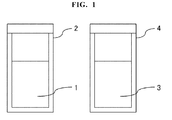
- the reagent kit in Fig. 1 comprises a first reagent and a second reagent.
- the first reagent comprising a sample treatment solution 1 is accommodated in a reagent container 2.
- the second reagent comprising a converting agent 3 is accommodated in a reagent container 4.
- the reagent kit may further comprise a reagent container for accommodating the dissolving solution and the cleaving agent.
- the method of detecting DNA methylation in a biological sample in this embodiment comprises a step (detecting step) of detecting methylation of a DNA contained in a sample for DNA methylation by using a polynucleotide hybridizing with a predetermined region of the DNA before the converting step, in addition to the above-mentioned method of preparing a sample for DNA methylation.
- methylation of a DNA is detected preferably by further using a polynucleotide hybridizing with a predetermined region of the DNA after non-methylated cytosine in the predetermined region of the DNA are converted into another base.
- the reliability of detection results can further be improved.
- Another base converted from non-methylated cytosine by the converting agent, and 5-methylcytosine residues, are present in a DNA contained in a sample prepared by the sample preparation method described above.
- the amplification and/or detection of the DNA in the sample can be carried out to determine a methylated state of the predetermined region of the DNA.
- Detection of DNA methylation is carried out by using a polynucleotide hybridizing specifically with a DNA sequence before conversion of non-methylated cytosine into another base (referred to hereinafter as non-converted sequence), and if necessary, a polynucleotide hybridizing specifically with a DNA sequence after conversion (referred to hereinafter as converted sequence).
- Methylation can be detected by nucleic acid amplification such as PCR and LAMP with said polynucleotide as a primer. Methylation may also be detected by using a DNA chip having said polynucleotide immobilized on a substrate.
- Methylation Specific PCR using a PCR primer which hybridizes specifically to DNA, which is methylated or non-methylated DNA
- MS-PCR Methylation Specific PCR
- COBRA Combin Bisulfite Restriction Analysis
- Ms-SNuPE Metal-Sensitive Single-Nucleotide Primer Extension
- the methylation may be detected by the LAMP method (See, USP No. 6410278 ) using the above-mentioned polynucleotides.
- the region to which the polynucleotide hybridizes is not methylated in the case where the amplified DNA is observed in the PCR reaction solution 1, but not observed in the PCR reaction solution 2. On the contrary, it is confirmed that the region to which the polynucleotide hybridizes is methylated in the case where the amplified DNA is observed in the PCR reaction solution 2, but not observed in the PCR reaction solution 1.
- the method of detecting the amplified DNA is not particularly limited, and it can be detected by publicly known methods.
- an agarose gel electrophoresis a real-time detection method withfluorescence-labeled probes (in this case, the above steps 4 and 5 can be performed at the same time), turbidimetry for measuring the turbid (turbidity) of by-product (magnesium pyrophosphate) in DNA synthesis, if necessary, a method of analyzing the pattern cleaved by enzymes, a method of determining a base sequence by direct sequence analysis, or the like can be used.
- a specific band is difficult to distinguish due to presence of many nonspecific amplified bands, the specific band can be confirmed by Southern blot technique using probes in the region targeted for amplification.
- the above-mentioned polynucleotide can serve as a primer and it is also DNA or RNA of a linear single-stranded oligomer which hybridizes sequence-specifically to the complementary strand of DNA of modified or non-modified type (annealing).
- the polynucleotide has the suitable sequence and sufficient length so as to provide specific and efficient initiation of polymerization reaction (primer extension) during the amplification.
- the length of a primer is not particularly limited, however, it is preferably from 5 to 50 mer, more preferably from 10 to 30 mer when it is used for PCR.
- the primer is preferable to be a single strand, however, it is also possible to use a double strand when the strand is first separated.
- the primer can be prepared using any suitable methods, for example, a phosphotriester method and a phosphodiester method in routine use, or the automated embodiments which are generally known in the art.
- the primers used are preferably designed so as to be substantially complementary to the predetermined region of a DNA and also to have a suitable content of GC. That is, the polynucleotide distinguishes particularly an untreated or unmodified DNA, a methylated DNA and a non-methylated DNA after the converting step. C will not be present in the sense primer, and G will not be present in the antisense primer, so a relatively small amount of C or G is usually contained in a sequence of the oligonucleotide primer used in the method of the present invention.
- the (methylated) genomic DNA containing 5-methylcytosine is not amplified with a polynucleotide which hybridizes the region containing uracil, resulting in no amplified products.
- the genomic DNA is amplified with a polynucleotide which hybridizes the region containing 5-methylcytosine, resulting in amplified products. Detection of the products by agarose gel electrophoresis can be performed to analyze whether the predetermined region of DNA are methylated or not.
- the CpG island of a gene is preferable. This region is a DNA sequence relevant to gene transcription.
- the CpG island is mainly located in the upstream region of the exon of the gene (promoter region) and may be located in an intron or exon.
- the case where CpG island is methylated suggests that gene transcription is repressed.
- the case where CpG island is not methylated suggests that the gene is transcribed or is in a state that can be transcribed, because a transcription factor can be bound to a promoter region.
- the gene described above is preferable to be at least one selected from the group consisting of an antioncogene, an oncogene and a gene encoding a tumor marker (hereinafter referred to as a tumor marker gene).
- an antioncogene include RB1 (Retinoblastoma 1 protein) gene, RRCA1 gene, APC (Adenomatous polyposis of the colon) gene, p53 gene, p16 gene, p15 gene, ER ⁇ (Estrogen Receptor 1) gene, E-cad (E-cadherin) gene, VHL (von Hippel-Lindau disease) gene, RASSF1A (RAS association domain family protein) gene, and the like.
- Examples of an oncogene include RAS gene, RAF gene, MYC gene, and the like.
- Examples of a tumor marker include CEA (Carcinoembryonic antigen-related cell adhesion molecule 5) gene, PSA (Prostate specific antigen) gene, CA15-3 gene, EpCAM (Epithelial cellular adhesion molecule) gene, and the like.
- the method of detecting DNA methylation in this embodiment can be used to detect methylation of CpG islands in these genes, thereby being applied to genetic examination such as prediction of the risk for affection with diseases and drug susceptibility.
- the tumor cells can be predicted to be malignant.
- the cells can be determined to be sensitive to the drugs.
- Detection of methylation of CpG island of tumor marker gene in predetermined tumor cells allows for identifying tumor types (identifying the primary focus).
- Detection of methylation of CpG islands of the above-mentioned genes using a biological sample in which the presence or absence of cancer cells is not found allows for determining whether cancer cells are present or not, thereby detecting tumors at an early stage and determining risk of being affected by tumors.
- the method of detecting DNA methylation in this embodiment can achieve stable detection results in a short time by an easy operation. Accordingly, the detection method of the present invention can be suitably used in clinical examination such as genetic examination as described above. By using the rapid and easymethod of the present invention, research on DNAmethylation can be facilitated.
- a biological sample was prepared by adding 300 ⁇ l of human serum to 1 ng of a genomic DNA derived from cultured cell MDA231 derived from human breast cancer.
- a biological sample comprising 300 ⁇ l of human serum only without containing MDA231-derived genomic DNA was used.
- Sample treatment solutions A to F shown below were prepared.
- As a control 320 ⁇ l of distilled water was used.
- methylation primer set As a primer for detection of methylation of CpG island in ER ⁇ gene, a non-converted sequence specific primer set (referred to hereinafter as methylation primer set) set forth in SEQ ID NOS: 1 and 2 below.
- Antisense primer AACAAAATACAAACCGTATCCCCG (SEQ ID NO: 2)
- Sense primer 5'-TTAGGTTAGAGGGTTATCGCGT-3' (SEQ ID NO: 3)
- Antisense primer 5'-TAACTAAAAATTCACCTACCGAC-3' (SEQ ID NO: 4)
- PCR Using the PCR reaction solution prepared for detection of methylation of CpG island in E-cad gene, PCR was carried out under the following conditions:
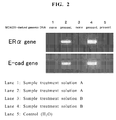
- methylated DNA The detection results of methylated DNA with the sample treatment solution A, the sample treatment solution B or the control are shown in Fig. 2 .
- the methylated DNA could be detected in both the ER ⁇ gene and E-cad gene with the sample treatment solutions A and B containing a protease proteinase K and a chaotropic ion urea or guanidine hydrochloride, but the methylated DNA could not be detected with distilled water as the control.
- the methylated DNA in the biological sample not containing the genomic DNA derived from MDA231 could not be detected with either the sample treatment solution A or B.
- Fig. 3 The detection results of methylated DNA in a biological sample containing the genomic DNA derived from MDA231 with each of the sample treatment solutions A to F or the control are shown in Fig. 3 .
- the methylated DNA could be detected in both the ER ⁇ gene and E-cad gene with the sample treatment solutions A to C containing a protease proteinase K.
- the methylated DNA could not be detected with the proteinase K-free sample treatment solutions D to F, similar to the control.
Landscapes
- Chemical & Material Sciences (AREA)
- Organic Chemistry (AREA)
- Life Sciences & Earth Sciences (AREA)
- Zoology (AREA)
- Proteomics, Peptides & Aminoacids (AREA)
- Health & Medical Sciences (AREA)
- Engineering & Computer Science (AREA)
- Wood Science & Technology (AREA)
- Analytical Chemistry (AREA)
- Microbiology (AREA)
- Physics & Mathematics (AREA)
- Molecular Biology (AREA)
- Immunology (AREA)
- Biotechnology (AREA)
- Biophysics (AREA)
- Biochemistry (AREA)
- Bioinformatics & Cheminformatics (AREA)
- General Engineering & Computer Science (AREA)
- General Health & Medical Sciences (AREA)
- Genetics & Genomics (AREA)
- Chemical Kinetics & Catalysis (AREA)
- Measuring Or Testing Involving Enzymes Or Micro-Organisms (AREA)
Applications Claiming Priority (1)
| Application Number | Priority Date | Filing Date | Title |
|---|---|---|---|
| JP2007050748A JP2008212009A (ja) | 2007-02-28 | 2007-02-28 | Dnaメチル化検出用試料の調製方法 |
Publications (1)
| Publication Number | Publication Date |
|---|---|
| EP1964934A1 true EP1964934A1 (en) | 2008-09-03 |
Family
ID=39495902
Family Applications (1)
| Application Number | Title | Priority Date | Filing Date |
|---|---|---|---|
| EP08152040A Withdrawn EP1964934A1 (en) | 2007-02-28 | 2008-02-28 | Sample treatment solution and reagent kit for preparing sample for detecting DNA methylation |
Country Status (4)
| Country | Link |
|---|---|
| US (1) | US20080206772A1 (enExample) |
| EP (1) | EP1964934A1 (enExample) |
| JP (1) | JP2008212009A (enExample) |
| CN (1) | CN101255476A (enExample) |
Families Citing this family (5)
| Publication number | Priority date | Publication date | Assignee | Title |
|---|---|---|---|---|
| JP2008136404A (ja) * | 2006-11-30 | 2008-06-19 | Sysmex Corp | Dnaメチル化検出における非メチル化シトシン変換処理後のdna量の確認方法 |
| AU2008334901A1 (en) * | 2007-12-11 | 2009-06-18 | Epigenomics Ag | Methods and nucleic acids for analyses of lung carcinoma |
| WO2013067268A1 (en) | 2011-11-03 | 2013-05-10 | Tripath Imaging, Inc. | Methods and compositions for preparing samples for immunostaining |
| CN111235227A (zh) * | 2020-03-31 | 2020-06-05 | 西安天隆科技有限公司 | 一种游离dna提取及甲基化转化方法、试剂及试剂盒 |
| MX2023001142A (es) * | 2020-07-30 | 2023-05-25 | Cambridge Epigenetix Ltd | Composiciones y metodos para analisis de acidos nucleicos. |
Citations (6)
| Publication number | Priority date | Publication date | Assignee | Title |
|---|---|---|---|---|
| WO1990001564A1 (en) * | 1988-08-09 | 1990-02-22 | Microprobe Corporation | Methods for multiple target analyses through nucleic acid hybridization |
| US6410278B1 (en) | 1998-11-09 | 2002-06-25 | Eiken Kagaku Kabushiki Kaisha | Process for synthesizing nucleic acid |
| JP2005058217A (ja) | 2003-07-31 | 2005-03-10 | Japan Science & Technology Agency | メチル化dna検出方法およびその利用法 |
| WO2005054502A1 (en) * | 2003-12-02 | 2005-06-16 | Roche Diagnostics Gmbh | Improved method for bisulfite treatment |
| EP1632578A1 (en) * | 2004-09-03 | 2006-03-08 | Roche Diagnostics GmbH | DNA decontamination method |
| US20060234252A1 (en) * | 2004-07-02 | 2006-10-19 | Applera Corporation | Methods and kits for methylation detection |
Family Cites Families (1)
| Publication number | Priority date | Publication date | Assignee | Title |
|---|---|---|---|---|
| US7718364B2 (en) * | 2003-03-25 | 2010-05-18 | John Wayne Cancer Institute | DNA markers for management of cancer |
-
2007
- 2007-02-28 JP JP2007050748A patent/JP2008212009A/ja active Pending
-
2008
- 2008-02-26 CN CNA2008100083371A patent/CN101255476A/zh active Pending
- 2008-02-27 US US12/038,493 patent/US20080206772A1/en not_active Abandoned
- 2008-02-28 EP EP08152040A patent/EP1964934A1/en not_active Withdrawn
Patent Citations (6)
| Publication number | Priority date | Publication date | Assignee | Title |
|---|---|---|---|---|
| WO1990001564A1 (en) * | 1988-08-09 | 1990-02-22 | Microprobe Corporation | Methods for multiple target analyses through nucleic acid hybridization |
| US6410278B1 (en) | 1998-11-09 | 2002-06-25 | Eiken Kagaku Kabushiki Kaisha | Process for synthesizing nucleic acid |
| JP2005058217A (ja) | 2003-07-31 | 2005-03-10 | Japan Science & Technology Agency | メチル化dna検出方法およびその利用法 |
| WO2005054502A1 (en) * | 2003-12-02 | 2005-06-16 | Roche Diagnostics Gmbh | Improved method for bisulfite treatment |
| US20060234252A1 (en) * | 2004-07-02 | 2006-10-19 | Applera Corporation | Methods and kits for methylation detection |
| EP1632578A1 (en) * | 2004-09-03 | 2006-03-08 | Roche Diagnostics GmbH | DNA decontamination method |
Non-Patent Citations (2)
| Title |
|---|
| JAMES G. HERMAN ET AL.: "Methylation-specific PCR: A novel PCR assay for methylation status of CpG islands", PROC. NATL. ACAD. SCI., vol. 93, September 1996 (1996-09-01), pages 9821 - 9826, XP055092786 |
| MASAHIKO SHIRAISHI; HIKOYA HAYATSU: "High-Speed Conversion of Cytosine to Uracil", BISULFITE GENOMIC SEQUENCING ANALYSIS OF DNAMETHYLATION, DNARESEARCH, vol. 11, 2004, pages 409 - 415, XP002545192, DOI: doi:10.1093/dnares/11.6.409 |
Also Published As
| Publication number | Publication date |
|---|---|
| CN101255476A (zh) | 2008-09-03 |
| JP2008212009A (ja) | 2008-09-18 |
| US20080206772A1 (en) | 2008-08-28 |
Similar Documents
| Publication | Publication Date | Title |
|---|---|---|
| EP1871912B1 (en) | Method for determining DNA methylation in blood or urine samples | |
| CN111183145B (zh) | 高灵敏度dna甲基化分析方法 | |
| US11486007B2 (en) | Methylated markers for colorectal cancer | |
| CN107475366B (zh) | 一种用于检测疾病的组合物及其试剂盒和用途 | |
| JP2009022268A (ja) | 前立腺がんを検出する方法 | |
| CN109952381B (zh) | 用于多重检测甲基化dna的方法 | |
| CN110719957B (zh) | 用于核酸靶向富集的方法和试剂盒 | |
| JP4435174B2 (ja) | 重亜硫酸塩処理の改良された方法 | |
| WO2014046200A1 (ja) | 子宮体癌に関する情報の取得方法、ならびに子宮体癌に関する情報を取得するためのマーカーおよびキット | |
| EP1964934A1 (en) | Sample treatment solution and reagent kit for preparing sample for detecting DNA methylation | |
| JP2006158283A (ja) | 生体試料処理液、生体試料処理液を用いた核酸増幅反応用試料調製方法及び標的核酸検出方法。 | |
| WO1998054318B1 (en) | TUMOUR SUPPRESSOR GENE DBCCR1 AT 9q32-33 | |
| EP2492356B1 (en) | Method of detecting methylated DNA in sample | |
| JP2007075114A (ja) | 遺伝子メチル化の検出 | |
| US8377657B1 (en) | Primers for analyzing methylated sequences and methods of use thereof | |
| US20130309667A1 (en) | Primers for analyzing methylated sequences and methods of use thereof | |
| WO2021091803A1 (en) | Idh mutation detection kit and method thereof | |
| CN101960020B (zh) | 甲基化胞嘧啶的检测方法 | |
| EP1903118A2 (en) | Method for confirming cytosine conversion treatment and nucleic acid molecule used therefor | |
| JP2008136404A (ja) | Dnaメチル化検出における非メチル化シトシン変換処理後のdna量の確認方法 | |
| JP4765058B2 (ja) | 核酸修飾前の検体の前処理方法 | |
| JP2009232761A (ja) | メチル化dnaの解析方法 | |
| JP4359497B2 (ja) | 核酸増幅用プライマー、核酸増幅用プライマーセット及びこれを用いた癌の検査方法 | |
| JP2007259750A (ja) | Dnaのメチル化を検出するために用いられる検出用試料の調製方法、dnaのメチル化を検出する方法、試料処理液及びキット | |
| CN114250280B (zh) | 一种用于检测基因甲基化的组合物、试剂盒、用途及其方法 |
Legal Events
| Date | Code | Title | Description |
|---|---|---|---|
| PUAI | Public reference made under article 153(3) epc to a published international application that has entered the european phase |
Free format text: ORIGINAL CODE: 0009012 |
|
| AK | Designated contracting states |
Kind code of ref document: A1 Designated state(s): AT BE BG CH CY CZ DE DK EE ES FI FR GB GR HR HU IE IS IT LI LT LU LV MC MT NL NO PL PT RO SE SI SK TR |
|
| AX | Request for extension of the european patent |
Extension state: AL BA MK RS |
|
| AKX | Designation fees paid | ||
| REG | Reference to a national code |
Ref country code: DE Ref legal event code: 8566 |
|
| STAA | Information on the status of an ep patent application or granted ep patent |
Free format text: STATUS: THE APPLICATION IS DEEMED TO BE WITHDRAWN |
|
| 18D | Application deemed to be withdrawn |
Effective date: 20090304 |