EP1963507B1 - Sirna anti myosine va et depigmentation de la peau - Google Patents
Sirna anti myosine va et depigmentation de la peau Download PDFInfo
- Publication number
- EP1963507B1 EP1963507B1 EP06830566A EP06830566A EP1963507B1 EP 1963507 B1 EP1963507 B1 EP 1963507B1 EP 06830566 A EP06830566 A EP 06830566A EP 06830566 A EP06830566 A EP 06830566A EP 1963507 B1 EP1963507 B1 EP 1963507B1
- Authority
- EP
- European Patent Office
- Prior art keywords
- sirna
- seq
- exon
- myova
- sequence
- Prior art date
- Legal status (The legal status is an assumption and is not a legal conclusion. Google has not performed a legal analysis and makes no representation as to the accuracy of the status listed.)
- Active
Links
Images





Classifications
-
- C—CHEMISTRY; METALLURGY
- C12—BIOCHEMISTRY; BEER; SPIRITS; WINE; VINEGAR; MICROBIOLOGY; ENZYMOLOGY; MUTATION OR GENETIC ENGINEERING
- C12N—MICROORGANISMS OR ENZYMES; COMPOSITIONS THEREOF; PROPAGATING, PRESERVING, OR MAINTAINING MICROORGANISMS; MUTATION OR GENETIC ENGINEERING; CULTURE MEDIA
- C12N15/00—Mutation or genetic engineering; DNA or RNA concerning genetic engineering, vectors, e.g. plasmids, or their isolation, preparation or purification; Use of hosts therefor
- C12N15/09—Recombinant DNA-technology
- C12N15/11—DNA or RNA fragments; Modified forms thereof; Non-coding nucleic acids having a biological activity
- C12N15/113—Non-coding nucleic acids modulating the expression of genes, e.g. antisense oligonucleotides; Antisense DNA or RNA; Triplex- forming oligonucleotides; Catalytic nucleic acids, e.g. ribozymes; Nucleic acids used in co-suppression or gene silencing
-
- A—HUMAN NECESSITIES
- A61—MEDICAL OR VETERINARY SCIENCE; HYGIENE
- A61K—PREPARATIONS FOR MEDICAL, DENTAL OR TOILETRY PURPOSES
- A61K31/00—Medicinal preparations containing organic active ingredients
- A61K31/70—Carbohydrates; Sugars; Derivatives thereof
- A61K31/7088—Compounds having three or more nucleosides or nucleotides
- A61K31/7105—Natural ribonucleic acids, i.e. containing only riboses attached to adenine, guanine, cytosine or uracil and having 3'-5' phosphodiester links
-
- A—HUMAN NECESSITIES
- A61—MEDICAL OR VETERINARY SCIENCE; HYGIENE
- A61P—SPECIFIC THERAPEUTIC ACTIVITY OF CHEMICAL COMPOUNDS OR MEDICINAL PREPARATIONS
- A61P17/00—Drugs for dermatological disorders
-
- C—CHEMISTRY; METALLURGY
- C07—ORGANIC CHEMISTRY
- C07H—SUGARS; DERIVATIVES THEREOF; NUCLEOSIDES; NUCLEOTIDES; NUCLEIC ACIDS
- C07H21/00—Compounds containing two or more mononucleotide units having separate phosphate or polyphosphate groups linked by saccharide radicals of nucleoside groups, e.g. nucleic acids
-
- C—CHEMISTRY; METALLURGY
- C12—BIOCHEMISTRY; BEER; SPIRITS; WINE; VINEGAR; MICROBIOLOGY; ENZYMOLOGY; MUTATION OR GENETIC ENGINEERING
- C12N—MICROORGANISMS OR ENZYMES; COMPOSITIONS THEREOF; PROPAGATING, PRESERVING, OR MAINTAINING MICROORGANISMS; MUTATION OR GENETIC ENGINEERING; CULTURE MEDIA
- C12N2310/00—Structure or type of the nucleic acid
- C12N2310/10—Type of nucleic acid
- C12N2310/14—Type of nucleic acid interfering nucleic acids [NA]
-
- C—CHEMISTRY; METALLURGY
- C12—BIOCHEMISTRY; BEER; SPIRITS; WINE; VINEGAR; MICROBIOLOGY; ENZYMOLOGY; MUTATION OR GENETIC ENGINEERING
- C12N—MICROORGANISMS OR ENZYMES; COMPOSITIONS THEREOF; PROPAGATING, PRESERVING, OR MAINTAINING MICROORGANISMS; MUTATION OR GENETIC ENGINEERING; CULTURE MEDIA
- C12N2310/00—Structure or type of the nucleic acid
- C12N2310/30—Chemical structure
- C12N2310/32—Chemical structure of the sugar
- C12N2310/323—Chemical structure of the sugar modified ring structure
- C12N2310/3231—Chemical structure of the sugar modified ring structure having an additional ring, e.g. LNA, ENA
Definitions
- the present invention relates to isolated novel siRNAs comprising a sense RNA strand and a complementary antisense RNA strand together forming an RNA duplex, wherein the sense RNA strand comprises a sequence that has at most one distinct nucleotide relative to a fragment of 14 to 30 contiguous nucleotides of the nucleotide sequence of the exon F of the gene encoding the myosin Va protein, characterized in that said fragment of 14 to 30 nucleotides contiguous with the nucleotide sequence of the exon F of the coding gene for the myosin Va protein consists of a nucleotide sequence selected from SEQ ID No. 2 and SEQ ID No. 3; as well as compositions comprising at least one such siRNA, and the use of at least one such siRNA as a cosmetic or therapeutic agent for depigmentation of the skin.
- Skin pigmentation is a complex process with many steps.
- Melanocytes which are located in the basal layer of the epidermis, may be activated by internal or external stimuli (eg, ultraviolet (UV) exposure) to produce melanin in specialized lysosome-related organelles called melanosomes.
- perinuclear melanosomes are transported along the microtubules and the actin cytoskeleton to the periphery of the melanocyte dendrites ( Lambert J et al. Cell Mol Biol (Noisy-the-great): 45: 905-18, 1999 ; Hara M et al. J Invest Dermatol .: 114: 438-43, 2000 ; Vancoillie G et al. J Invest Dermatol .: 114: 421-9, 2000 ).
- Melanosomes, which contain melanin are then transferred to adjacent keratinocytes from the ends of the dendrites by an unknown mechanism.
- Any alteration of a stage of this complex process can lead to skin pigmentation disorders.
- an increase in the number of active melanocytes, and / or an increase in melanin production, and / or an increase in the transfer of melanosomes from melanocytes to keratinocytes can lead to hyperpigmentation (or dyschromatosis) of the skin.
- hyperpigmentation can be induced by many factors, such as drugs, sun, metabolic or nutritional dysfunctions, or by genetic or autoimmune diseases. This usually involves important cosmetic and psychological consequences for the patient, who in many cases will seek appropriate treatment.
- depigmenting agents targeting the melanin synthesis pathway, including inhibiting the activity of the tyrosinase enzyme that is required for melanin synthesis.
- depigmenting agents include in particular hydroquinone and its derivatives, retinol or tretinoin, ascorbic acid and its derivatives, placental extracts, kojic acid, ferulic acid, arbutin, dihydroxybenzene derivatives ( WO 00/47045 ), derivatives of guaiacol ( WO 00/47179 ), 4- (2,3-dihydroxyphenyl) -cyclohexanol ( WO 00/56279 ), resorcinol derivatives ( WO 00/56702 ), phenolic amides ( WO 99/32077 ).
- These substances may have certain disadvantages. They may be unstable, require use at high concentrations, lack specificity as to their mode of action, or be cytotoxic factor, or cytochromethacil, or cytochro
- RNA interference Dykxhoorn DM et al. Nat Rev Mol Cell Biol .: 4: 457-67, 2003 ; Soutschek J et al. Nature: 432: 173-8, 2004 ).
- RNA interference (referred to throughout the RNAi suite) is the process by which a double-stranded RNA (dsRNA) of a given nucleic sequence gives rise to the degradation of all messenger RNAs (mRNAs) comprising said nucleic sequence, in a specific manner of said nucleic sequence.
- dsRNA double-stranded RNA
- mRNAs messenger RNAs
- the RNAi process can be achieved by using small interfering RNAs (or siRNAs).
- siRNAs are dsRNAs of less than 30 nucleotides comprising in their sense sequence a highly homologous sequence, preferably identical, to a fragment of the targeted mRNA.
- siRNAs crosses the plasma membrane, the reaction of the cell is to destroy siRNA as well as all sequences with an identical or highly homologous sequence.
- an mRNA having a fragment identical or highly homologous to the siRNA sequence will be destroyed, the expression of this gene thus being inhibited.
- antisense oligonucleotides directed against tyrosinase or TRP-1 WO 01/58918 ), or against the PKC ⁇ 1 protein gene that is involved in the process of tyrosinase phosphorylation WO 2005/073243 . It has also been proposed to use siRNAs targeting the tyrosinase gene ( WO 2005/060536 ).
- the myosin Va protein is involved in the transport of melanosomes within melanocytes ( Lambert J et al. Cell Mol Biol (Noisy-the-great): 45: 905-18, 1999 ; Lambert et al. J Invest Dermatol .: 111: 835-40, 1998 ). More specifically, the myosin Va protein has several splice variants, and the variant comprising the exon F is necessary for the transport of melanosomes ( Westbroek W et al. J Jnvest Dermatol .: 120: 465-75, 2003 ).
- the inventors have found that it is possible to synthesize siRNAs targeting the exon F of the myosin Va protein and to induce, thanks to these siRNAs, an RNAi process specific for the exon F of the myosin Va protein. They have also shown that said siRNAs are effective in inhibiting the expression of the myosin Va protein variant comprising exon F at siRNA concentrations that do not induce a decrease in cell viability and that the effect is dose-dependent . In addition, the inventors have also found that the presence of siRNAs targeting exon F of the myosin Va protein makes it possible to inhibit the transfer of melanosomes from melanocytes to keratinocytes.
- the invention thus relates to an isolated siRNA comprising a sense RNA strand and a complementary antisense RNA strand together forming an RNA duplex, the sense RNA strand comprising a sequence that has at most one distinct nucleotide relative to a fragment of 14 to 30, advantageously 15 to 29, 16 to 28, 17 to 27, 18 to 25, 18 to 23, or 18 to 21 contiguous nucleotides of the nucleotide sequence of exon F of the gene encoding the myosin protein Characterized in that said fragment of 14 to 30 nucleotides contiguous with the nucleotide sequence of the exon F of the gene encoding the myosin Va protein consists of a nucleotide sequence chosen from SEQ ID No. 2 and SEQ ID No.
- RNA sequence corresponding to the gene sequence c that is, an RNA sequence that corresponds to the gene sequence in which the Ts are replaced by U.
- the sense strand of a siRNA thus comprises either a fragment of 14 to 30, advantageously 15 to 29, 16 to 28, 17 to 27, 18 to 25, 18 to 23, or 18 to 21 contiguous nucleotides of the nucleotide sequence of the exon F of the gene encoding the myosin Va protein, ie a sequence having a distinct nucleotide with respect to such a fragment, characterized in that said fragment of 14 to 30 nucleotides contiguous with the nucleotide sequence of the exon F of the gene encoding the myosin Va protein consists of a nucleotide sequence chosen from SEQ ID No. 2 and SEQ ID No. 3.
- the RNAi process is sequence specific, and strong sequence homology is required to obtain an efficient RNAi.
- the sense RNA strand comprises a sequence identical to a fragment of 14 to 30, advantageously 15 to 29, 16 to 28, 17 to 27, or 18 to 25 contiguous nucleotides of the nucleotide sequence of exon F of the gene coding for the myosin Va protein, characterized in that said fragment of 14 to 30 nucleotides contiguous with the nucleotide sequence of the exon F of the gene encoding the myosin Va protein consists of a nucleotide sequence chosen from SEQ ID N ° 2 and SEQ ID No. 3.
- the myosin Va protein has been described in various species, in particular human, mouse and rat.
- the sequence of the human myosin Va protein is represented on the Figure 1A , the portion corresponding to exon F (SEQ ID No. 1) being underlined.
- the inventors have synthesized and tested several particular siRNAs targeting different fragments of exon F of the human myosin Va protein.
- the fragment of 14 to 30, advantageously 15 to 29, 16 to 28, 17 to 27, 18 to 25, 18 to 23, or 18 to 21 contiguous nucleotides of the nucleotide sequence of the exon F of the gene encoding the human myosin Va protein consists of a nucleotide sequence chosen from SEQ ID No. 2 and SEQ ID No. 3. The position of the three sequences SEQ ID No. 2, SEQ ID No. 3, and SEQ ID No. 4 is specified on the Figure 1B .
- the fragment of 14 to 30, advantageously 15 to 29, 16 to 28, 17 to 27, 18 to 25, 18 to 23, or 18 to 21 contiguous nucleotides of the nucleotide sequence of the exon F of the gene encoding the myosin Va protein consists of the nucleotide sequence SEQ ID No. 3.
- siRNA according to the invention is a small double-stranded RNA whose sense and antisense strands are paired by Watson-Crick type bonds, and whose sequence of the sense strand consists of or comprises a fragment of 14 to 30, advantageously 15. at 29, 16 to 28, 17 to 27, 18 to 25, 18 to 23, or 18 to 21 contiguous nucleotides of the nucleotide sequence of exon F of the myosin Va protein.
- siRNAs whose sequence is composed of 30 to 50% of guanines and cytosines are more effective than sequences with a higher proportion of guanines and cytosines.
- the siRNAs according to the invention therefore advantageously have a sequence composed of 30 to 50% of guanines and cytosines.
- siRNA according to the invention can indifferently comprise two complementary single-stranded RNA molecules, or a single single-stranded RNA molecule in which two complementary portions are paired by Watson-Crick type bonds and are linked on one side covalently by a hairpin-type structure (this is then referred to as shRNA (for short hairpin RNA), which can be considered as a sub-category of siRNA).
- shRNA short hairpin RNA
- siRNA will be understood in its broad sense including shRNA unless otherwise indicated.
- an siRNA according to the invention comprises two complementary single-stranded RNA molecules.
- a siRNA according to the invention comprises or consists of a single single-stranded RNA molecule in which two complementary portions are matched by type-linked bonds. Watson-Crick and are covalently bound on one side by a hairpin-like structure, i.e., is a shRNA.
- the sense RNA strand and / or the antisense RNA strand may also comprise at least one chemical modification at their sugar moieties, their nucleobase moieties or their internucleotide backbone .
- Such modifications may in particular make it possible to inhibit siRNA degradation by nucleases in vivo. All the chemical modifications making it possible to improve the in vivo stability and bioavailability of the siRNAs according to the invention are thus included in the scope of the invention.
- nucleobases it is possible to use modified bases, such as in particular 5-bromo-uridine, 5-iodo-uridine, N 3 -methyl-uridine, 2,6-diaminopurine (DAP), 5-methyl-2'-deoxy-kytidine, 5- (1-propynyl) -2'-deoxy-uridine (pdU), 5- (1-propynyl) -2 ' -deoxyCytidine (pdC), or bases conjugated with cholesterol.
- modified bases such as in particular 5-bromo-uridine, 5-iodo-uridine, N 3 -methyl-uridine, 2,6-diaminopurine (DAP), 5-methyl-2'-deoxy-kytidine, 5- (1-propynyl) -2'-deoxy-uridine (pdU), 5- (1-propynyl) -2 ' -deoxyCytidine (pdC), or bases conjugated with cholesterol.
- internucleotide backbone advantageous modifications include the replacement of phosphodiester groups of this backbone by phosphorothioate, methylphosphonate or phosphorodiamidate groups, or the use of a backbone composed of N- (2-aminoethyl) -glycine units linked by peptide bonds (PNA, Peptide Nucleic Acid).
- PNA Peptide Nucleic Acid
- base, sugar, backbone can of course be combined to give modified nucleic acids of the morpholino type (bases fixed on a morpholine ring and linked by phosphorodiamidate groups) or PNA (bases fixed on N- units). 2-aminoethyl) glycine linked by peptide bonds).
- siRNAs according to the invention are "isolated", which means that they are not in a natural state but have been obtained by any means involving human intervention.
- the siRNAs according to the invention may have been obtained by purification of pre-existing siRNAs, by chemical synthesis, by amplification of the desired nucleotide sequences by a polymerase chain reaction (PCR), or by recombinant synthesis.
- PCR polymerase chain reaction
- Many companies also offer bespoke siRNA synthesis, such as the companies Eurogentec, Ambion, Dharmacon, or Qiagen.
- the invention also relates to the siRNA according to the invention, as a cosmetic agent.
- cosmetic agent is meant a substance for maintaining or improving the aesthetic appearance of an external part of the human or animal body.
- the invention further relates to the siRNA according to the invention as a medicament.
- the siRNAs according to the invention are new as a medicament.
- the subject of the invention is also a composition comprising at least one siRNA according to the invention and an acceptable support.
- Acceptable medium means anything cosmetologically or pharmacologically acceptable carrier known to those skilled in the art.
- a composition according to the invention is intended for the cosmetic and / or therapeutic treatment of the skin and is therefore advantageously administered topically.
- a composition for topical application according to the invention may be formulated in any dosage form usually used for topical application, such as, for example, in the form of an aqueous solution, a white or colored cream, an ointment, a milk, lotion, gel, ointment, serum, paste, oil-in-water or water-in-oil emulsion, or foam. It can optionally be applied to the skin in the form of an aerosol. It may also be in pulverulent solid form or not, for example in the form of a stick. It can still be in the form of patches, pencils, brushes and applicators allowing a localized application on the spots of the face or hands.
- a composition according to the invention may further comprise any type of vehicle known to those skilled in the art for improving the delivery and bioavailability of siRNAs according to the invention.
- vehicles that can be used with siRNA include liposomes and peptides capable of crossing the cell membrane (called CPP for "Cell-permeable peptides").
- liposome is meant an artificial lipid vesicle whose membrane consists of one or more lipid bilayers and which has the ability to encapsulate and protect proteins or nucleic acids and to fuse with the cell membrane, thereby permitting to deliver the encapsulated product inside the cells.
- liposomes thus makes it possible to protect the siRNAs and to facilitate their penetration into the cells.
- CPP is meant peptides capable of being internalized and then reaching the cytoplasmic and / or nuclear compartments of living cells.
- CPPs include the Penetretin, Transportan, Tat, MAP and SynBl peptides.
- Particularly useful examples of CPP are amphipathic peptides derived from viruses that interact directly with the nucleic acids to be delivered to form nanoparticles capable of diffusing across the plasma membrane. Conjugation of the siRNAs according to the invention to any CPP can therefore also make it possible to protect the siRNAs and to facilitate their entry into the cells in vivo.
- a composition according to the invention may also comprise one or more active agents intended to enhance the desired effects.
- a composition according to the invention may in particular further comprise at least one other depigmenting agent.
- depigmenting agent is meant any substance that acts directly on the melanocytes by inhibiting either their activity or one of the steps of the melanin synthesis pathway, or again the transport of melanosomes to the dendrites and their transfer to the keratinocytes .
- hydroquinone and its derivatives there may be mentioned hydroquinone and its derivatives, retinol or tretinoin, ascorbic acid and its derivatives, placental extracts, the acid kojic acid, ferulic acid, arbutin, dihydroxybenzene derivatives ( WO 00/47045 ), derivatives of guaiacol ( WO00 / 47179 ), 4- (2,3-dihydroxyphenyl) -cyclohexanol ( WO 00/56279 ), resorcinol derivatives ( WO 00/56702 ), phenolic amides ( WO 99/32077 ).
- depigmenting agents that may be added to a composition according to the invention include antisense oligonucleotides or siRNAs directed against genes other than that encoding the myosin Va protein involved in a step of the melanin synthesis pathway. or in the transport of melanosomes to dendrites and their transfer to keratinocytes, such as in particular antisense oligonucleotides or siRNAs targeting tyrosinase (see WO 01/58918 and WO 2005/060536 ), the TRP-1 protein (see WO 01/58918 ) or PKC protein ⁇ 1 (see WO 2005/073243 ).
- compositions according to the invention may also contain other active substances or excipients usually used in topical compositions intended for the care of the skin, such as, for example, chemical or physical sunscreens (such as, for example, octyl methoxycinnamate, butyl-methoxydibenzoylmethane, titanium oxide and zinc oxide), anti-glycation agents and / or antioxidants, taken alone or in combination (such as, for example, tocopherol and its derivatives, ergothioneine, thiotaurine, hypotaurine, aminoguanidine, thiamine pyrophosphate, pyridoxamine, lysine, histidine, arginine, phenylalanine, pyridoxine, adenosine triphosphate), anti-inflammatory agents (such as, for example, stearylglycyrrhetinate) , soothing agents and mixtures thereof, preservatives (anti-bacterial or anti-fungal), moisturizing agents, pH modifiers
- the invention also relates to the use of at least one siRNA or a composition according to the invention as a cosmetic agent for depigmentation or whitening of the skin.
- the siRNA and the compositions according to the invention can be used as a cosmetic agent for the depigmentation or whitening of the skin, either globally to reduce the pigmentation of the skin as a whole, or at the level of hyperpigmented areas, whatever the origin of the hyperpigmentation of said zones. Such use makes it possible to homogenize the pigmentation of the skin, thereby improving its aesthetic appearance. In addition, even in the absence of hyperpigmented areas, some people may desire a lighter overall pigmentation, which can be obtained by a cosmetic use according to the invention.
- the invention furthermore relates to the use of at least one siRNA or a composition according to the invention for the manufacture of a medicament for the treatment or prevention of hyperpigmentation of the skin, in particular hyperpigmentations epidermics, melasmas and post-inflammatory hyperpigmentations.
- Hyperpigmentation can be caused by many different disorders.
- melanosis of the face and neck such as chloasma, Riehl's melanosis, Pigmented Reticulated Poikiloderma of the Face and Neck, or Acrokeratotic Hereditary Poikiloderma; ephelids; coffee-au-lait tasks; the nevi of Sutton; hyperpigmentations due to metabolic causes such as hemochromatosis, Addison's disease, Cushing's syndrome or hyperthyréose; and hyperpigmentations due to exogenous causes such as drug-induced hyperpigmentation (substances such as chlorpromazine, phenotiazines, hydantoin, inorganic arsenic, antimalarial drugs) or heavy metals (silver, gold, mercury); post-inflammatory hyperpigmentations induced after trauma, eczematous eruptions, chronic single lichen, lupus erythematosus, and dermatoses including pytyrias
- siRNA or a composition according to the invention for the manufacture of a medicament makes it possible to treat these various pathologies and to eliminate the areas of hyperpigmentation induced by these disorders. It also prevents the appearance of hyperpigmentation zones induced by these disorders.
- the present description also relates to a cosmetic treatment method for depigmentation and bleaching of the skin, comprising the topical administration of a composition according to the invention.
- the present disclosure further relates to a method of therapeutic treatment of hyperpigmentations of the skin, comprising the topical administration of a composition according to the invention.
- FIG. Figure 1A The sequence of the splice variant of human myosin Va protein including exon F (in fact includes exons ABCDEF) is shown in FIG. Figure 1A .
- exon F three siRNAs targeting the exon F of human myosin Va protein were designed and synthesized using the Eurogentec siRNA drawing and synthesis service. The portions of the exon F of which these siRNAs are specific are indicated on the Figure 1B .
- the three siRNAs were synthesized with 3 'protruding fragments of "TT" sequence, as shown in FIG. Figure 1C . These three siRNAs are called afterwards MyoVa # 1 (sense strand includes SEQ ID NO: 2), MyoVa # 2 (sense strand includes SEQ ID NO: 3), or MyoVa # 3 (sense strand includes SEQ ID NO: 4), the SEQ number ID indicated in parentheses corresponding to the sequence of the exon F fragment of the human myosin Va protein included in the siRNA sense RNA strand.
- MEHPs Primary human epidermal melanocytes
- FCS fetal calf serum
- Ultroser 5 ng / ml.
- bFGF basic fibroblast growth factor
- ET-1 10 ng / ml endothelin-1
- TC 0.33 nM cholera toxin
- IBMX isobutyl-methyl-xanthine
- TPA 12-O-tetradecanoyl phorbol-13-acetate
- the plasmid pMAX-GFP (3 ⁇ g) was used to test three different electroporation programs for melanocytes, namely the U16, U20 and U24 programs. 500,000 cells were used by electroporation.
- the NHEM-Neo Nucleofector kit (Amaxa, # VDP-1003) for normal human epidermal-Neonatal melanocytes was used for all electroporations.
- Electroporated cells in T25 flasks were evaluated alive at 24-48 hours under an Arcturus microscope (LCM) equipped with a fluorescent filter capable of detecting green fluorescence signals emitted by plasmid pMAX-GFP.
- LCD Arcturus microscope
- Electroporated cells were also cultured on glass coverslips. 24 hours after electroporation, the cells were fixed in ice-cold methanol and mounted on glass slides with mounting fluid (DAKO). Cell analysis for the expression of green fluorescence signals was made under a Zeiss fluorescence microscope.
- 500,000 MEHP cells were electroporated with the plasmid pMAX-GFP (3 ⁇ g) and the following siRNA duplexes: a positive control targeting GAPDH labeled FAM (3 ⁇ g or 2 ⁇ M, Ambion), a negative control BLOCK-iT TM Fluorescent Oligo (Invitrogen), and the MyoVa # 2 siRNA duplex (SEQ ID No. 3) specific for exon F of the myosin Va protein gene.
- the U24 program was used for electroporation and the cells were recovered 24 hours after electroporation.
- RNA level by quantitative RT-PCR in real time (QPCR). Briefly, after RNA extraction, the samples were DNase treated and cDNA was synthesized using iScript (Biorad) reverse transcriptase.
- the QPCR primers for exon F of the myosin Va protein (sense primer: 5 'CAGCCTGCAGCACGAGAGATC 3', SEQ ID NO: 5, antisense primer: 5 'TCTTAGGGTCATCTGCATATAATTCCT 3', SEQ ID NO: 6) and GAPDH were drawn using the PrimerExpress 2.0 software (Applied Biosystems) with the default Taqman parameters, modifying only the minimum size constraint of the amplicon (75 pb).
- 500,000 MEHP cells were electroporated with the Nucleofector reagent alone (MOCK), the siRNA targeting GAPDH (1 ⁇ M), a siRNA negative control, or one of the three siRNA MyoVa # 1 (SEQ ID NO: 2), MyoVa No. 2 (SEQ ID No. 3), or MyoVa No. 3 (SEQ ID No. 4) specific for exon F of the myosin Va protein gene.
- the U24 program was used for electroporation and the cells were recovered 48 hours after electroporation.
- the QPCR primers for the globular portion (GP) of the myosin Va protein (sense primer: 5 'GCAGTCAATTTGATTCCAGGATT 3', SEQ ID NO: 7, antisense primer: 5 'TGATCATCATTGAGGTAGTCAGCAT 3', SEQ ID NO: 8) were drawn. using the PrimerExpress 2.0 software (Applied Biosystems), as previously described.
- siRNA negative control and the siRNA targeting GAPDH were used at a concentration of 1 ⁇ M.
- the U24 program was used and the cells were analyzed at 48 hours after electroporation.
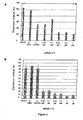
- An optimal siRNA concentration is thus around 0.5-1 ⁇ M.
- siRNA concentration was then analyzed with MyoVa # 2 siRNA (SEQ ID NO: 3). To do this, the same concentration range (0.05 to 2 ⁇ M) was tested in parallel with an MTS test (Promega Benelux) which makes it possible to determine the number of viable cells. The cells were analyzed 48 hours after electroporation by the U24 program.
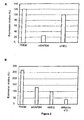
- results are represented on the Figure 5 and show that the viability of the cells is significantly reduced (approximately 20%) only for siRNA concentrations of 1 or 2 ⁇ M. Below 1 .mu.M, the viability of the cells is greater than 90%.
- siRNA does not affect the viability of MEHP cells.
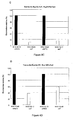
- MEHP cells electroporated with 0.5 ⁇ M of MyoVa No. 1 (SEQ ID No. 2) or MyoVa No. 2 (SEQ ID No. 3) siRNA were were analyzed by QPCR as previously described at 24, 48, 72 and 96 hours after electroporation. Cells treated with positive or negative controls (0.5 ⁇ M) were analyzed at 48 hours after electroporation.
- the results presented above clearly show that it is possible to very substantially reduce the amount of transcripts of the myosin Va protein comprising exon F by using siRNAs targeting said exon F.
- siRNAs targeting said exon F Three different siRNAs have been tested, and each of these siRNAs makes it possible to reduce the amount of transcripts of the myosin Va protein comprising exon F.
- siRNAs targeting exon F of the myosin Va protein is dose-dependent and can be achieved with maximum efficacy at a concentration that does not affect cell viability.
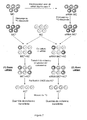
- MC Normal human melanocytes
- siRNA MC melanocytes
- MC normal human melanocytes
- MC * or siRNA MC * are cultured in medium for keratinocytes without serum and with a low calcium content (K-SFM, Gibco) with keratinocytes (KC) having undergone 1 or 2 passages in this same medium.
- MC * or siRNA MC * and KC are cultured in a ratio of 1 to 3.
- the coculture is then optionally irradiated with UV to stimulate the transfer of melanosomes from MC * or siRNA MC * to KC.
- UV irradiation with UV stimulates the transfer of melanosomes from melanocytes to keratinocytes.
- the keratinocytes are radioactive at 14 C (KC *) proportionally to the amount of melanin transferred from the MC * or siRNA MC *.
- the KC * are purified by negative selection using MACS technology (Miltenyi Biotech), using an anti-CD117 PE antibody that binds to melanocytes and anti-PE beads.
- UV irradiation makes it possible to effectively stimulate the transfer of melanin from the melanocytes to the keratinocytes.
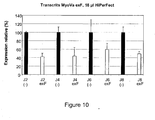
- 200,000 MEHP in 0.5 ml of medium / 6-well plate was transfected with MyoVa No. 2 siRNA (SEQ ID NO: 3) and OLOCK-iT TM Oligo Fluorescent oligonucleotide (Invitrogen) as a negative control
- 25nM or 10nM of each siRNA was used in combination with either 12 or 18 ⁇ l of HiPerFect reagent (Qiagen).
- RNA level inhibition for transcripts comprising exon F was measured by real-time quantitative PCR as previously described in Example 1.2.2.
- RNA level To correlate the inhibition observed at the RNA level with the expression at the protein level, a polyclonal antibody directed specifically against the isoforms of the myosin Va protein containing exon F was developed by Eurogentec. The reactivity and specificity of the purified antibody was tested by Western blot and immunohistochemistry analysis.
- MyoVa exF transcripts are involved in the capture of melanosomes in the subcortical actin network. Inhibition of MyoVa exF transcripts could therefore result in diminished uptake of melanosomes at the periphery of melanocyte dendrites, and possibly in perinuclear melanosome accumulation.
- the exon F specific antibody of the myosin Va protein (1/500 dilution) (see above) was used in combination with a monoclonal antibody NKI-beteb (dilution 1 / 40) against the Protein (pre) -melanosomal silver (Sanbio BV, Uden, The Netherlands).
- NKI-beteb dilution 1 / 40
- the analysis was then performed by confocal microscopy.
- Co-labeling with the anti-NKI-beteb antibody and the anti exon F antibody of the myosin Va protein shows a change in the melanosome distribution in the MEHPs transfected with MyoVa exF # 2 siRNA (SEQ ID NO: 3).
- melanosomes are mainly located in the perinuclear zone.
- the labeling for the isoforms of the myosin Va protein comprising exon F is absent or weak at the ends of the dendrites.
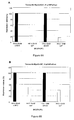
- RNA level The results at the RNA level are presented on the Figure 10 and show a reduction of 58%, 59%, 41% and 51% in the different points in time (J2, J4, J6 and J8 respectively).
- results obtained at day 8 after transfection with the MyoVa nr. 1 siRNA show, as for the MyoVa nr. 2 siRNA (SEQ ID No. 3), a perinuclear distribution of melanosomes in the MEHPs as compared with the controls. negative (data not shown).
- myoVa exF transcripts Although the inhibition of the isoforms of the myosin Va protein comprising the exon F (myoVa exF transcripts) is less effective with the MyoVa exF # 1 siRNA (SEQ ID No. 2) than with the MyoVa exF # 2 siRNA. (SEQ ID NO: 3), the expression of MyoVa exF transcripts remain significantly reduced using the MyoVa exF # 1 siRNA (SEQ ID NO: 2), both at the RNA and protein levels.
- lentiviral vectors expressing small hairpin RNA (shRNA) directed against exon F myosin Va protein were constructed.
- This double-stranded oligonucleotide was then cloned into a lentiviral vector under control of an H1 type RNApolIII promoter.
- the transduction efficiency in MEHPs was determined by FACS analysis on the basis of the presence of a GFP marker in the lentiviral vectors mentioned above.
- MI multiplicity of infection
- RNA and protein level inhibition effect 600,000 MEHPs were transduced at a MI of 10 with lentiviral vectors containing MyoVa exF # 2 shRNAs or scrambled shRNAs (negative control), respectively.
- results show, at the RNA as well as at the protein level, a strong reduction of the isoforms of the myosin Va protein comprising the exon F in the cells transduced with the lentiviral vectors containing MyoVa exF shRNAs n ° 2 with respect to the control. negative.
- MEHP were transduced with lentiviral vectors expressing MyoVa exF # 2 shRNAs. These stably transduced MEHPs were introduced with 500,000 keratinocytes in a reconstructed skin model. MEHPs stably transduced with lentiviral vectors expressing scrambled shRNAs were used as negative controls. The reconstructed skins were then irradiated or not with UV simulating the sun.
- the visual inspection of the reconstructed skin shows that no increase in pigmentation is observed after irradiation in the skin containing MEHP transduced with the lentiviral vectors expressing myoVa exF shRNAs # 2, in contrast to the skin containing transduced MEHPs. with lentiviral vectors expressing scrambled shRNAs.
- a quantitative evaluation of pigmentation by Fontana-Masson marking and digital colorimetric image analysis then allowed to confirm these observations.
Landscapes
- Health & Medical Sciences (AREA)
- Life Sciences & Earth Sciences (AREA)
- Engineering & Computer Science (AREA)
- Chemical & Material Sciences (AREA)
- Genetics & Genomics (AREA)
- Biomedical Technology (AREA)
- Molecular Biology (AREA)
- Organic Chemistry (AREA)
- Biotechnology (AREA)
- Bioinformatics & Cheminformatics (AREA)
- Biochemistry (AREA)
- General Engineering & Computer Science (AREA)
- Wood Science & Technology (AREA)
- General Health & Medical Sciences (AREA)
- Zoology (AREA)
- Microbiology (AREA)
- Physics & Mathematics (AREA)
- Plant Pathology (AREA)
- Biophysics (AREA)
- Medicinal Chemistry (AREA)
- Veterinary Medicine (AREA)
- Pharmacology & Pharmacy (AREA)
- Animal Behavior & Ethology (AREA)
- Public Health (AREA)
- Chemical Kinetics & Catalysis (AREA)
- General Chemical & Material Sciences (AREA)
- Nuclear Medicine, Radiotherapy & Molecular Imaging (AREA)
- Dermatology (AREA)
- Epidemiology (AREA)
- Pharmaceuticals Containing Other Organic And Inorganic Compounds (AREA)
- Cosmetics (AREA)
- Saccharide Compounds (AREA)
- Medicines That Contain Protein Lipid Enzymes And Other Medicines (AREA)
- Enzymes And Modification Thereof (AREA)
- Preparation Of Compounds By Using Micro-Organisms (AREA)
Priority Applications (2)
| Application Number | Priority Date | Filing Date | Title |
|---|---|---|---|
| PL06830566T PL1963507T3 (pl) | 2005-12-12 | 2006-12-12 | ANTI-siRNA miozyny VA i depigmentacja skóry |
| EP10172940A EP2264171A1 (fr) | 2005-12-12 | 2006-12-12 | siRNA anti Myosine Va et depigmentation de la peau |
Applications Claiming Priority (2)
| Application Number | Priority Date | Filing Date | Title |
|---|---|---|---|
| FR0512553A FR2894582B1 (fr) | 2005-12-12 | 2005-12-12 | Sirna anti myosine va et depigmentation de la peau |
| PCT/EP2006/069618 WO2007068704A1 (fr) | 2005-12-12 | 2006-12-12 | Sirna anti myosine va et depigmentation de la peau |
Related Child Applications (1)
| Application Number | Title | Priority Date | Filing Date |
|---|---|---|---|
| EP10172940.8 Division-Into | 2010-08-16 |
Publications (2)
| Publication Number | Publication Date |
|---|---|
| EP1963507A1 EP1963507A1 (fr) | 2008-09-03 |
| EP1963507B1 true EP1963507B1 (fr) | 2010-10-13 |
Family
ID=36617133
Family Applications (2)
| Application Number | Title | Priority Date | Filing Date |
|---|---|---|---|
| EP06830566A Active EP1963507B1 (fr) | 2005-12-12 | 2006-12-12 | Sirna anti myosine va et depigmentation de la peau |
| EP10172940A Withdrawn EP2264171A1 (fr) | 2005-12-12 | 2006-12-12 | siRNA anti Myosine Va et depigmentation de la peau |
Family Applications After (1)
| Application Number | Title | Priority Date | Filing Date |
|---|---|---|---|
| EP10172940A Withdrawn EP2264171A1 (fr) | 2005-12-12 | 2006-12-12 | siRNA anti Myosine Va et depigmentation de la peau |
Country Status (23)
| Country | Link |
|---|---|
| US (1) | US7999096B2 (pl) |
| EP (2) | EP1963507B1 (pl) |
| JP (1) | JP2009518022A (pl) |
| KR (1) | KR20080079298A (pl) |
| CN (1) | CN101326286A (pl) |
| AT (1) | ATE484585T1 (pl) |
| AU (1) | AU2006325359A1 (pl) |
| BR (1) | BRPI0619738A2 (pl) |
| CA (1) | CA2632837A1 (pl) |
| DE (1) | DE602006017586D1 (pl) |
| DK (1) | DK1963507T3 (pl) |
| ES (1) | ES2351996T3 (pl) |
| FR (1) | FR2894582B1 (pl) |
| HR (1) | HRP20100666T1 (pl) |
| IL (1) | IL191728A0 (pl) |
| MA (1) | MA30034B1 (pl) |
| NO (1) | NO20083089L (pl) |
| PL (1) | PL1963507T3 (pl) |
| PT (1) | PT1963507E (pl) |
| RU (1) | RU2008125041A (pl) |
| TN (1) | TNSN08252A1 (pl) |
| WO (1) | WO2007068704A1 (pl) |
| ZA (1) | ZA200805739B (pl) |
Families Citing this family (15)
| Publication number | Priority date | Publication date | Assignee | Title |
|---|---|---|---|---|
| JP4981381B2 (ja) * | 2006-08-04 | 2012-07-18 | 株式会社ナリス化粧品 | 美白用皮膚外用剤 |
| EP2105145A1 (en) * | 2008-03-27 | 2009-09-30 | ETH Zürich | Method for muscle-specific delivery lipid-conjugated oligonucleotides |
| WO2010029115A1 (en) * | 2008-09-10 | 2010-03-18 | L V M H Recherche | Methods useful in studying or modulating skin or hair pigmentation, plant extracts for use in compositions and cosmetic care method |
| CN102405286A (zh) | 2008-09-22 | 2012-04-04 | 阿克赛医药公司 | 减小大小的自递送RNAi化合物 |
| CN103108642B (zh) | 2010-03-24 | 2015-09-23 | 雷克西制药公司 | 皮肤与纤维化症候中的rna干扰 |
| WO2011133876A2 (en) * | 2010-04-22 | 2011-10-27 | Alnylam Pharmaceuticals, Inc. | Oligonucleotides comprising acyclic and abasic nucleosides and analogs |
| EA201400911A1 (ru) * | 2012-02-13 | 2014-11-28 | Юнилевер Н.В. | Осветляющая кожу композиция |
| CN102925443A (zh) * | 2012-11-01 | 2013-02-13 | 东北师范大学 | 靶向沉默MyoⅩ的序列制备及其载体的构建 |
| JP6836987B2 (ja) * | 2014-09-05 | 2021-03-03 | フィオ ファーマシューティカルズ コーポレーションPhio Pharmaceuticals Corp. | Tyrまたはmmp1を標的とする核酸を用いて老化および皮膚障害を処置するための方法 |
| CN105560635A (zh) * | 2015-09-17 | 2016-05-11 | 张名静 | 一种治疗黑色棘皮病的中药 |
| US12544344B2 (en) | 2017-04-19 | 2026-02-10 | Phio Pharmaceuticals Corp. | Topical delivery of nucleic acid compounds |
| BR102018001541B1 (pt) | 2018-01-24 | 2021-05-11 | Universidade Federal Do Rio Grande Do Sul | composição farmacêutica nanométrica na forma de lipossomas ou nanoemulsão que contém sequências específicas de rna de interferência |
| KR20210010362A (ko) * | 2019-07-18 | 2021-01-27 | 주식회사 올리패스코스메슈티컬즈 | 멜라노필린 안티센스 올리고뉴클레오티드 |
| EP4005602A4 (en) | 2019-07-30 | 2024-06-12 | Shionogi & Co., Ltd | NUCLEIC ACID AGENT TARGETED AGAINST MURF1 |
| WO2024179573A1 (zh) * | 2023-03-02 | 2024-09-06 | 上海拓界生物医药科技有限公司 | 靶向抑制素βE的siRNA、siRNA缀合物及其医药用途 |
Family Cites Families (8)
| Publication number | Priority date | Publication date | Assignee | Title |
|---|---|---|---|---|
| FR2772607B1 (fr) | 1997-12-19 | 2000-02-04 | Oreal | Utilisation de derives amides d'amino phenol comme agents depigmentants |
| GB9903216D0 (en) | 1999-02-13 | 1999-04-07 | Zylepsis Ltd | Preservative compounds,compositions and methods of making and using the same |
| OA11849A (en) | 1999-03-22 | 2006-03-07 | Pfizer | Resorcinol derivatives. |
| HN2000000033A (es) | 1999-03-22 | 2001-02-02 | Pfizer Prod Inc | Composicion de resorcinol |
| FR2804960B1 (fr) | 2000-02-11 | 2005-06-24 | Lvmh Rech | Nouveaux oligonucleotides et utilisation d'oligonucleotides modulant l'expression de la tyrosinase et de la tyrosinase- related-protein 1 comme agents depigmentants |
| US7504385B2 (en) * | 2003-12-17 | 2009-03-17 | Avon Products, Inc. | si-RNA-mediated gene silencing technology to inhibit tyrosinase and reduce pigmentation |
| FR2864539B1 (fr) | 2003-12-30 | 2012-10-26 | Lvmh Rech | Oligonucleotide et son utilisation pour moduler l'expression de la proteine-kinase c isoforme beta-1 comme agent de depigmentation cutanee |
| JPWO2005116204A1 (ja) * | 2004-05-11 | 2008-06-19 | 株式会社アルファジェン | Rna干渉を生じさせるポリヌクレオチド、および、これを用いた遺伝子発現抑制方法 |
-
2005
- 2005-12-12 FR FR0512553A patent/FR2894582B1/fr not_active Expired - Fee Related
-
2006
- 2006-12-12 EP EP06830566A patent/EP1963507B1/fr active Active
- 2006-12-12 CA CA002632837A patent/CA2632837A1/fr not_active Abandoned
- 2006-12-12 PL PL06830566T patent/PL1963507T3/pl unknown
- 2006-12-12 DE DE602006017586T patent/DE602006017586D1/de active Active
- 2006-12-12 US US12/086,242 patent/US7999096B2/en not_active Expired - Fee Related
- 2006-12-12 DK DK06830566.3T patent/DK1963507T3/da active
- 2006-12-12 AT AT06830566T patent/ATE484585T1/de active
- 2006-12-12 AU AU2006325359A patent/AU2006325359A1/en not_active Abandoned
- 2006-12-12 WO PCT/EP2006/069618 patent/WO2007068704A1/fr not_active Ceased
- 2006-12-12 RU RU2008125041/13A patent/RU2008125041A/ru not_active Application Discontinuation
- 2006-12-12 PT PT06830566T patent/PT1963507E/pt unknown
- 2006-12-12 JP JP2008543854A patent/JP2009518022A/ja active Pending
- 2006-12-12 BR BRPI0619738-8A patent/BRPI0619738A2/pt not_active IP Right Cessation
- 2006-12-12 KR KR1020087016595A patent/KR20080079298A/ko not_active Withdrawn
- 2006-12-12 EP EP10172940A patent/EP2264171A1/fr not_active Withdrawn
- 2006-12-12 HR HR20100666T patent/HRP20100666T1/hr unknown
- 2006-12-12 CN CNA2006800465110A patent/CN101326286A/zh active Pending
- 2006-12-12 ES ES06830566T patent/ES2351996T3/es active Active
-
2008
- 2008-05-27 IL IL191728A patent/IL191728A0/en unknown
- 2008-06-06 MA MA31010A patent/MA30034B1/fr unknown
- 2008-06-11 TN TNP2008000252A patent/TNSN08252A1/en unknown
- 2008-07-01 ZA ZA200805739A patent/ZA200805739B/xx unknown
- 2008-07-10 NO NO20083089A patent/NO20083089L/no not_active Application Discontinuation
Also Published As
| Publication number | Publication date |
|---|---|
| NO20083089L (no) | 2008-07-10 |
| BRPI0619738A2 (pt) | 2011-10-11 |
| EP1963507A1 (fr) | 2008-09-03 |
| FR2894582B1 (fr) | 2008-02-22 |
| AU2006325359A2 (en) | 2008-07-31 |
| PL1963507T3 (pl) | 2011-04-29 |
| CA2632837A1 (fr) | 2007-06-21 |
| US7999096B2 (en) | 2011-08-16 |
| RU2008125041A (ru) | 2010-01-20 |
| TNSN08252A1 (en) | 2009-10-30 |
| PT1963507E (pt) | 2010-11-24 |
| IL191728A0 (en) | 2011-08-01 |
| CN101326286A (zh) | 2008-12-17 |
| HRP20100666T1 (hr) | 2011-03-31 |
| ES2351996T3 (es) | 2011-02-14 |
| JP2009518022A (ja) | 2009-05-07 |
| MA30034B1 (fr) | 2008-12-01 |
| AU2006325359A1 (en) | 2007-06-21 |
| DK1963507T3 (da) | 2011-01-03 |
| EP2264171A1 (fr) | 2010-12-22 |
| US20090239934A1 (en) | 2009-09-24 |
| ATE484585T1 (de) | 2010-10-15 |
| ZA200805739B (en) | 2009-07-29 |
| FR2894582A1 (fr) | 2007-06-15 |
| WO2007068704A1 (fr) | 2007-06-21 |
| DE602006017586D1 (de) | 2010-11-25 |
| KR20080079298A (ko) | 2008-08-29 |
Similar Documents
| Publication | Publication Date | Title |
|---|---|---|
| Kang et al. | Up-regulation of luciferase gene expression with antisense oligonucleotides: implications and applications in functional assay development | |
| US7709456B2 (en) | Modulation of gene expression by oligomers targeted to chromosomal DNA | |
| CN102014859B (zh) | 抑制黑素生成的新组合物及其应用 | |
| EP2264171A1 (fr) | siRNA anti Myosine Va et depigmentation de la peau | |
| KR20110068061A (ko) | 티로시나제의 발현을 저해하는 siRNA 올리고뉴클레오타이드 및 이를 함유하는 화장료 조성물 | |
| ES2585829T3 (es) | Tratamiento de las enfermedades relacionadas con la proteína tumoral 63 (p63) por inhibición de transcripción antisentido natural a p63 | |
| KR102772402B1 (ko) | 멜라닌 생성을 억제하는 rna 복합체 | |
| US7973017B2 (en) | Treatment of cancer by inhibition of IGFBP's and clusterin | |
| EP3033423A1 (en) | Epigenetic regulators of frataxin | |
| CN102712925A (zh) | 通过抑制sirtuin(sirt)的天然反义转录物来治疗sirtuin(sirt)相关性疾病 | |
| KR20190096414A (ko) | 체세포를 유도된 혈관형성 세포로 재프로그래밍하기 위한 조성물 및 방법 | |
| KR20220008383A (ko) | 베타-ENaC-관련 질환을 치료하기 위한 유기 조성물 | |
| CN110536965B (zh) | 用于抑制男性型脱发靶基因表达的不对称siRNA | |
| KR20210066758A (ko) | 8-옥소구아닌을 포함하는 rna 간섭 유도 핵산, 8-옥소구아닌을 포함하는 마이크로rna와 결합하는 변형 핵산 및 이들의 이용 | |
| WO2013037065A1 (en) | Microrna inhibitors | |
| KR20260026019A (ko) | 신장 질환의 치료를 위한 조성물 및 방법 | |
| EP1699923A2 (fr) | Oligonucleotide et son utilisation pour moduler l'expression de la proteinkinase c isoforme beta-1 comme agent de depigmentation cutanee | |
| FR2930151A1 (fr) | Nouvelles compositions inhibant la melanogenese et leurs utilisations | |
| HK1121778A (en) | Anti-myosin va sirna and skin depigmentation | |
| FR2930152A1 (fr) | Nouvelles compositions inhibant la melanogenese et leurs utilisations | |
| US7723314B1 (en) | Methods and compositions for treating pachyonychia congenita | |
| HK40019905A (en) | Compositions and methods for reprogramming somatic cells into induced vasculogenic cells | |
| IE20060253A1 (en) | Methods for modulating the levels and effects of thyrotropin-releasing hormone(trh)and trh-related peptides |
Legal Events
| Date | Code | Title | Description |
|---|---|---|---|
| PUAI | Public reference made under article 153(3) epc to a published international application that has entered the european phase |
Free format text: ORIGINAL CODE: 0009012 |
|
| 17P | Request for examination filed |
Effective date: 20080617 |
|
| AK | Designated contracting states |
Kind code of ref document: A1 Designated state(s): AT BE BG CH CY CZ DE DK EE ES FI FR GB GR HU IE IS IT LI LT LU LV MC NL PL PT RO SE SI SK TR |
|
| AX | Request for extension of the european patent |
Extension state: AL BA HR MK RS |
|
| 17Q | First examination report despatched |
Effective date: 20081117 |
|
| GRAC | Information related to communication of intention to grant a patent modified |
Free format text: ORIGINAL CODE: EPIDOSCIGR1 |
|
| GRAP | Despatch of communication of intention to grant a patent |
Free format text: ORIGINAL CODE: EPIDOSNIGR1 |
|
| GRAS | Grant fee paid |
Free format text: ORIGINAL CODE: EPIDOSNIGR3 |
|
| GRAA | (expected) grant |
Free format text: ORIGINAL CODE: 0009210 |
|
| AK | Designated contracting states |
Kind code of ref document: B1 Designated state(s): AT BE BG CH CY CZ DE DK EE ES FI FR GB GR HU IE IS IT LI LT LU LV MC NL PL PT RO SE SI SK TR |
|
| AX | Request for extension of the european patent |
Extension state: AL BA HR MK RS |
|
| REG | Reference to a national code |
Ref country code: GB Ref legal event code: FG4D Free format text: NOT ENGLISH |
|
| REG | Reference to a national code |
Ref country code: CH Ref legal event code: EP |
|
| REG | Reference to a national code |
Ref country code: CH Ref legal event code: NV Representative=s name: MICHELI & CIE SA |
|
| REG | Reference to a national code |
Ref country code: IE Ref legal event code: FG4D Free format text: LANGUAGE OF EP DOCUMENT: FRENCH |
|
| REG | Reference to a national code |
Ref country code: PT Ref legal event code: SC4A Free format text: AVAILABILITY OF NATIONAL TRANSLATION Effective date: 20101117 |
|
| REF | Corresponds to: |
Ref document number: 602006017586 Country of ref document: DE Date of ref document: 20101125 Kind code of ref document: P |
|
| REG | Reference to a national code |
Ref country code: HR Ref legal event code: TUEP Ref document number: P20100666 Country of ref document: HR |
|
| REG | Reference to a national code |
Ref country code: RO Ref legal event code: EPE |
|
| REG | Reference to a national code |
Ref country code: GR Ref legal event code: EP Ref document number: 20100402627 Country of ref document: GR Ref country code: SE Ref legal event code: TRGR |
|
| REG | Reference to a national code |
Ref country code: DK Ref legal event code: T3 |
|
| PGFP | Annual fee paid to national office [announced via postgrant information from national office to epo] |
Ref country code: DK Payment date: 20101119 Year of fee payment: 5 Ref country code: EE Payment date: 20101122 Year of fee payment: 5 Ref country code: IE Payment date: 20101129 Year of fee payment: 5 Ref country code: NL Payment date: 20101116 Year of fee payment: 5 |
|
| REG | Reference to a national code |
Ref country code: NL Ref legal event code: T3 |
|
| REG | Reference to a national code |
Ref country code: ES Ref legal event code: FG2A Effective date: 20110202 |
|
| PGFP | Annual fee paid to national office [announced via postgrant information from national office to epo] |
Ref country code: CH Payment date: 20101210 Year of fee payment: 5 Ref country code: FI Payment date: 20101117 Year of fee payment: 5 Ref country code: LU Payment date: 20101123 Year of fee payment: 5 Ref country code: PT Payment date: 20101227 Year of fee payment: 5 |
|
| LTIE | Lt: invalidation of european patent or patent extension |
Effective date: 20101013 |
|
| PGFP | Annual fee paid to national office [announced via postgrant information from national office to epo] |
Ref country code: SE Payment date: 20101119 Year of fee payment: 5 Ref country code: TR Payment date: 20101209 Year of fee payment: 5 Ref country code: GR Payment date: 20101123 Year of fee payment: 5 Ref country code: GB Payment date: 20101123 Year of fee payment: 5 |
|
| REG | Reference to a national code |
Ref country code: HR Ref legal event code: T1PR Ref document number: P20100666 Country of ref document: HR |
|
| PG25 | Lapsed in a contracting state [announced via postgrant information from national office to epo] |
Ref country code: LT Free format text: LAPSE BECAUSE OF FAILURE TO SUBMIT A TRANSLATION OF THE DESCRIPTION OR TO PAY THE FEE WITHIN THE PRESCRIBED TIME-LIMIT Effective date: 20101013 |
|
| PGFP | Annual fee paid to national office [announced via postgrant information from national office to epo] |
Ref country code: HU Payment date: 20101124 Year of fee payment: 5 |
|
| REG | Reference to a national code |
Ref country code: PL Ref legal event code: T3 |
|
| REG | Reference to a national code |
Ref country code: HU Ref legal event code: AG4A Ref document number: E010111 Country of ref document: HU |
|
| PG25 | Lapsed in a contracting state [announced via postgrant information from national office to epo] |
Ref country code: SI Free format text: LAPSE BECAUSE OF FAILURE TO SUBMIT A TRANSLATION OF THE DESCRIPTION OR TO PAY THE FEE WITHIN THE PRESCRIBED TIME-LIMIT Effective date: 20101013 Ref country code: LV Free format text: LAPSE BECAUSE OF FAILURE TO SUBMIT A TRANSLATION OF THE DESCRIPTION OR TO PAY THE FEE WITHIN THE PRESCRIBED TIME-LIMIT Effective date: 20101013 Ref country code: IS Free format text: LAPSE BECAUSE OF FAILURE TO SUBMIT A TRANSLATION OF THE DESCRIPTION OR TO PAY THE FEE WITHIN THE PRESCRIBED TIME-LIMIT Effective date: 20110213 |
|
| PGFP | Annual fee paid to national office [announced via postgrant information from national office to epo] |
Ref country code: RO Payment date: 20101129 Year of fee payment: 5 Ref country code: PL Payment date: 20101207 Year of fee payment: 5 Ref country code: DE Payment date: 20101209 Year of fee payment: 5 Ref country code: IT Payment date: 20101221 Year of fee payment: 5 Ref country code: FR Payment date: 20110119 Year of fee payment: 5 Ref country code: CZ Payment date: 20101201 Year of fee payment: 5 |
|
| PGFP | Annual fee paid to national office [announced via postgrant information from national office to epo] |
Ref country code: BE Payment date: 20110117 Year of fee payment: 5 Ref country code: ES Payment date: 20101223 Year of fee payment: 5 |
|
| PG25 | Lapsed in a contracting state [announced via postgrant information from national office to epo] |
Ref country code: MC Free format text: LAPSE BECAUSE OF NON-PAYMENT OF DUE FEES Effective date: 20101231 |
|
| PLBE | No opposition filed within time limit |
Free format text: ORIGINAL CODE: 0009261 |
|
| STAA | Information on the status of an ep patent application or granted ep patent |
Free format text: STATUS: NO OPPOSITION FILED WITHIN TIME LIMIT |
|
| PG25 | Lapsed in a contracting state [announced via postgrant information from national office to epo] |
Ref country code: SK Free format text: LAPSE BECAUSE OF FAILURE TO SUBMIT A TRANSLATION OF THE DESCRIPTION OR TO PAY THE FEE WITHIN THE PRESCRIBED TIME-LIMIT Effective date: 20101013 |
|
| PGFP | Annual fee paid to national office [announced via postgrant information from national office to epo] |
Ref country code: BG Payment date: 20101117 Year of fee payment: 5 |
|
| 26N | No opposition filed |
Effective date: 20110714 |
|
| REG | Reference to a national code |
Ref country code: DE Ref legal event code: R097 Ref document number: 602006017586 Country of ref document: DE Effective date: 20110714 |
|
| REG | Reference to a national code |
Ref country code: HR Ref legal event code: PBON Ref document number: P20100666 Country of ref document: HR Effective date: 20111213 |
|
| REG | Reference to a national code |
Ref country code: PT Ref legal event code: MM4A Free format text: LAPSE DUE TO NON-PAYMENT OF FEES Effective date: 20120612 |
|
| BERE | Be: lapsed |
Owner name: PIERRE FABRE DERMO-COSMETIQUE Effective date: 20111231 |
|
| REG | Reference to a national code |
Ref country code: NL Ref legal event code: V1 Effective date: 20120701 |
|
| REG | Reference to a national code |
Ref country code: DK Ref legal event code: EBP |
|
| PG25 | Lapsed in a contracting state [announced via postgrant information from national office to epo] |
Ref country code: CZ Free format text: LAPSE BECAUSE OF NON-PAYMENT OF DUE FEES Effective date: 20111212 |
|
| REG | Reference to a national code |
Ref country code: CH Ref legal event code: PL Ref country code: SE Ref legal event code: EUG |
|
| REG | Reference to a national code |
Ref country code: EE Ref legal event code: MM4A Ref document number: E004937 Country of ref document: EE Effective date: 20111231 |
|
| GBPC | Gb: european patent ceased through non-payment of renewal fee |
Effective date: 20111212 |
|
| PG25 | Lapsed in a contracting state [announced via postgrant information from national office to epo] |
Ref country code: FI Free format text: LAPSE BECAUSE OF NON-PAYMENT OF DUE FEES Effective date: 20111212 Ref country code: CY Free format text: LAPSE BECAUSE OF FAILURE TO SUBMIT A TRANSLATION OF THE DESCRIPTION OR TO PAY THE FEE WITHIN THE PRESCRIBED TIME-LIMIT Effective date: 20101013 Ref country code: PT Free format text: LAPSE BECAUSE OF NON-PAYMENT OF DUE FEES Effective date: 20120612 |
|
| REG | Reference to a national code |
Ref country code: GR Ref legal event code: ML Ref document number: 20100402627 Country of ref document: GR Effective date: 20120704 |
|
| REG | Reference to a national code |
Ref country code: FR Ref legal event code: ST Effective date: 20120831 |
|
| REG | Reference to a national code |
Ref country code: IE Ref legal event code: MM4A |
|
| REG | Reference to a national code |
Ref country code: DE Ref legal event code: R119 Ref document number: 602006017586 Country of ref document: DE Effective date: 20120703 |
|
| PG25 | Lapsed in a contracting state [announced via postgrant information from national office to epo] |
Ref country code: LI Free format text: LAPSE BECAUSE OF NON-PAYMENT OF DUE FEES Effective date: 20111231 Ref country code: CH Free format text: LAPSE BECAUSE OF NON-PAYMENT OF DUE FEES Effective date: 20111231 Ref country code: BE Free format text: LAPSE BECAUSE OF NON-PAYMENT OF DUE FEES Effective date: 20111231 Ref country code: DE Free format text: LAPSE BECAUSE OF NON-PAYMENT OF DUE FEES Effective date: 20120703 Ref country code: SE Free format text: LAPSE BECAUSE OF NON-PAYMENT OF DUE FEES Effective date: 20111213 Ref country code: EE Free format text: LAPSE BECAUSE OF NON-PAYMENT OF DUE FEES Effective date: 20111231 Ref country code: GB Free format text: LAPSE BECAUSE OF NON-PAYMENT OF DUE FEES Effective date: 20111212 Ref country code: IE Free format text: LAPSE BECAUSE OF NON-PAYMENT OF DUE FEES Effective date: 20111212 |
|
| PG25 | Lapsed in a contracting state [announced via postgrant information from national office to epo] |
Ref country code: HU Free format text: LAPSE BECAUSE OF NON-PAYMENT OF DUE FEES Effective date: 20111213 Ref country code: IT Free format text: LAPSE BECAUSE OF NON-PAYMENT OF DUE FEES Effective date: 20111212 Ref country code: GR Free format text: LAPSE BECAUSE OF NON-PAYMENT OF DUE FEES Effective date: 20120704 |
|
| PG25 | Lapsed in a contracting state [announced via postgrant information from national office to epo] |
Ref country code: DK Free format text: LAPSE BECAUSE OF NON-PAYMENT OF DUE FEES Effective date: 20120102 Ref country code: RO Free format text: LAPSE BECAUSE OF NON-PAYMENT OF DUE FEES Effective date: 20111212 Ref country code: NL Free format text: LAPSE BECAUSE OF NON-PAYMENT OF DUE FEES Effective date: 20120701 |
|
| REG | Reference to a national code |
Ref country code: AT Ref legal event code: MM01 Ref document number: 484585 Country of ref document: AT Kind code of ref document: T Effective date: 20111212 |
|
| REG | Reference to a national code |
Ref country code: PL Ref legal event code: LAPE |
|
| PG25 | Lapsed in a contracting state [announced via postgrant information from national office to epo] |
Ref country code: FR Free format text: LAPSE BECAUSE OF NON-PAYMENT OF DUE FEES Effective date: 20120102 |
|
| PG25 | Lapsed in a contracting state [announced via postgrant information from national office to epo] |
Ref country code: PL Free format text: LAPSE BECAUSE OF NON-PAYMENT OF DUE FEES Effective date: 20111212 Ref country code: LU Free format text: LAPSE BECAUSE OF NON-PAYMENT OF DUE FEES Effective date: 20111212 |
|
| PG25 | Lapsed in a contracting state [announced via postgrant information from national office to epo] |
Ref country code: AT Free format text: LAPSE BECAUSE OF NON-PAYMENT OF DUE FEES Effective date: 20111212 |
|
| REG | Reference to a national code |
Ref country code: ES Ref legal event code: FD2A Effective date: 20130703 |
|
| PG25 | Lapsed in a contracting state [announced via postgrant information from national office to epo] |
Ref country code: ES Free format text: LAPSE BECAUSE OF NON-PAYMENT OF DUE FEES Effective date: 20111213 Ref country code: BG Free format text: LAPSE BECAUSE OF NON-PAYMENT OF DUE FEES Effective date: 20121231 |
|
| PG25 | Lapsed in a contracting state [announced via postgrant information from national office to epo] |
Ref country code: TR Free format text: LAPSE BECAUSE OF NON-PAYMENT OF DUE FEES Effective date: 20111212 |