EP1951866B1 - Delta-9 elongases and their use in making polyunsaturated fatty acids - Google Patents
Delta-9 elongases and their use in making polyunsaturated fatty acids Download PDFInfo
- Publication number
- EP1951866B1 EP1951866B1 EP06837764.7A EP06837764A EP1951866B1 EP 1951866 B1 EP1951866 B1 EP 1951866B1 EP 06837764 A EP06837764 A EP 06837764A EP 1951866 B1 EP1951866 B1 EP 1951866B1
- Authority
- EP
- European Patent Office
- Prior art keywords
- seq
- elongase
- sequence
- gene
- expression
- Prior art date
- Legal status (The legal status is an assumption and is not a legal conclusion. Google has not performed a legal analysis and makes no representation as to the accuracy of the status listed.)
- Not-in-force
Links
- 235000020777 polyunsaturated fatty acids Nutrition 0.000 title description 82
- 230000014509 gene expression Effects 0.000 claims description 131
- 238000000034 method Methods 0.000 claims description 120
- 150000007523 nucleic acids Chemical group 0.000 claims description 84
- 108090000765 processed proteins & peptides Proteins 0.000 claims description 74
- 229920001184 polypeptide Polymers 0.000 claims description 72
- 102000004196 processed proteins & peptides Human genes 0.000 claims description 72
- 240000004808 Saccharomyces cerevisiae Species 0.000 claims description 68
- 238000004519 manufacturing process Methods 0.000 claims description 61
- 239000002773 nucleotide Substances 0.000 claims description 61
- 125000003729 nucleotide group Chemical group 0.000 claims description 61
- 150000001413 amino acids Chemical class 0.000 claims description 53
- 230000000694 effects Effects 0.000 claims description 50
- 108091028043 Nucleic acid sequence Proteins 0.000 claims description 49
- 125000003275 alpha amino acid group Chemical group 0.000 claims description 42
- 241000235013 Yarrowia Species 0.000 claims description 36
- 108091033319 polynucleotide Proteins 0.000 claims description 36
- 102000040430 polynucleotide Human genes 0.000 claims description 36
- 239000002157 polynucleotide Substances 0.000 claims description 36
- 230000000295 complement effect Effects 0.000 claims description 32
- 108020004705 Codon Proteins 0.000 claims description 16
- 241000233866 Fungi Species 0.000 claims description 11
- 241000195493 Cryptophyta Species 0.000 claims description 9
- OYHQOLUKZRVURQ-HZJYTTRNSA-N Linoleic acid Chemical compound CCCCC\C=C/C\C=C/CCCCCCCC(O)=O OYHQOLUKZRVURQ-HZJYTTRNSA-N 0.000 claims description 9
- XSXIVVZCUAHUJO-AVQMFFATSA-N (11e,14e)-icosa-11,14-dienoic acid Chemical compound CCCCC\C=C\C\C=C\CCCCCCCCCC(O)=O XSXIVVZCUAHUJO-AVQMFFATSA-N 0.000 claims description 7
- 241000894006 Bacteria Species 0.000 claims description 7
- 235000021297 Eicosadienoic acid Nutrition 0.000 claims description 7
- 241000223252 Rhodotorula Species 0.000 claims description 7
- OYHQOLUKZRVURQ-IXWMQOLASA-N linoleic acid Natural products CCCCC\C=C/C\C=C\CCCCCCCC(O)=O OYHQOLUKZRVURQ-IXWMQOLASA-N 0.000 claims description 7
- 241000222120 Candida <Saccharomycetales> Species 0.000 claims description 5
- 235000020778 linoleic acid Nutrition 0.000 claims description 5
- 241001149698 Lipomyces Species 0.000 claims description 4
- 241000223230 Trichosporon Species 0.000 claims description 4
- 241001527609 Cryptococcus Species 0.000 claims description 3
- 241000233654 Oomycetes Species 0.000 claims description 2
- 241001558147 Mortierella sp. Species 0.000 claims 1
- 241000598397 Schizochytrium sp. Species 0.000 claims 1
- 241001298230 Thraustochytrium sp. Species 0.000 claims 1
- 241000490645 Yarrowia sp. Species 0.000 claims 1
- 108090000623 proteins and genes Proteins 0.000 description 299
- 108020004414 DNA Proteins 0.000 description 199
- 239000013612 plasmid Substances 0.000 description 191
- 210000004027 cell Anatomy 0.000 description 138
- 241000196324 Embryophyta Species 0.000 description 123
- 239000013615 primer Substances 0.000 description 109
- 241000235015 Yarrowia lipolytica Species 0.000 description 99
- 239000000047 product Substances 0.000 description 98
- 239000012634 fragment Substances 0.000 description 97
- 235000010469 Glycine max Nutrition 0.000 description 83
- 244000068988 Glycine max Species 0.000 description 77
- 239000000194 fatty acid Substances 0.000 description 72
- 239000002299 complementary DNA Substances 0.000 description 71
- 235000014113 dietary fatty acids Nutrition 0.000 description 71
- 229930195729 fatty acid Natural products 0.000 description 71
- 150000004665 fatty acids Chemical class 0.000 description 70
- 239000013598 vector Substances 0.000 description 65
- 239000003921 oil Substances 0.000 description 64
- 235000019198 oils Nutrition 0.000 description 64
- 102000004169 proteins and genes Human genes 0.000 description 64
- 241000195619 Euglena gracilis Species 0.000 description 62
- 235000018102 proteins Nutrition 0.000 description 62
- 108010022240 delta-8 fatty acid desaturase Proteins 0.000 description 61
- 235000014680 Saccharomyces cerevisiae Nutrition 0.000 description 60
- 108090000790 Enzymes Proteins 0.000 description 55
- 235000001014 amino acid Nutrition 0.000 description 55
- 102000004190 Enzymes Human genes 0.000 description 54
- 238000006243 chemical reaction Methods 0.000 description 54
- 241001245610 Eutreptiella Species 0.000 description 53
- 235000020660 omega-3 fatty acid Nutrition 0.000 description 51
- 238000003752 polymerase chain reaction Methods 0.000 description 49
- 229940024606 amino acid Drugs 0.000 description 48
- 235000013305 food Nutrition 0.000 description 43
- 108091032973 (ribonucleotides)n+m Proteins 0.000 description 42
- 150000002632 lipids Chemical class 0.000 description 40
- 239000013604 expression vector Substances 0.000 description 39
- 238000010276 construction Methods 0.000 description 38
- 239000000523 sample Substances 0.000 description 38
- 230000015572 biosynthetic process Effects 0.000 description 37
- 238000009396 hybridization Methods 0.000 description 37
- 239000000203 mixture Substances 0.000 description 37
- 235000020665 omega-6 fatty acid Nutrition 0.000 description 37
- 230000009466 transformation Effects 0.000 description 36
- 108020004999 messenger RNA Proteins 0.000 description 34
- 229940033080 omega-6 fatty acid Drugs 0.000 description 33
- 239000000758 substrate Substances 0.000 description 33
- 210000001519 tissue Anatomy 0.000 description 33
- 108091026890 Coding region Proteins 0.000 description 32
- 235000020673 eicosapentaenoic acid Nutrition 0.000 description 32
- 229940012843 omega-3 fatty acid Drugs 0.000 description 32
- 230000037361 pathway Effects 0.000 description 32
- 230000000813 microbial effect Effects 0.000 description 31
- 230000001105 regulatory effect Effects 0.000 description 31
- 238000013518 transcription Methods 0.000 description 29
- 230000035897 transcription Effects 0.000 description 29
- 238000004458 analytical method Methods 0.000 description 28
- 239000007788 liquid Substances 0.000 description 25
- 102000039446 nucleic acids Human genes 0.000 description 25
- 108020004707 nucleic acids Proteins 0.000 description 25
- 230000006696 biosynthetic metabolic pathway Effects 0.000 description 24
- 210000002257 embryonic structure Anatomy 0.000 description 24
- 239000002609 medium Substances 0.000 description 24
- 238000003786 synthesis reaction Methods 0.000 description 24
- XLYOFNOQVPJJNP-UHFFFAOYSA-N water Substances O XLYOFNOQVPJJNP-UHFFFAOYSA-N 0.000 description 24
- 108091034117 Oligonucleotide Proteins 0.000 description 23
- LFQSCWFLJHTTHZ-UHFFFAOYSA-N Ethanol Chemical compound CCO LFQSCWFLJHTTHZ-UHFFFAOYSA-N 0.000 description 22
- MBMBGCFOFBJSGT-KUBAVDMBSA-N all-cis-docosa-4,7,10,13,16,19-hexaenoic acid Chemical compound CC\C=C/C\C=C/C\C=C/C\C=C/C\C=C/C\C=C/CCC(O)=O MBMBGCFOFBJSGT-KUBAVDMBSA-N 0.000 description 22
- 238000013519 translation Methods 0.000 description 22
- 230000014616 translation Effects 0.000 description 22
- 108010075530 Kunitz Soybean Trypsin Inhibitor Proteins 0.000 description 21
- 239000002585 base Substances 0.000 description 21
- 235000020669 docosahexaenoic acid Nutrition 0.000 description 21
- OKTJSMMVPCPJKN-UHFFFAOYSA-N Carbon Chemical compound [C] OKTJSMMVPCPJKN-UHFFFAOYSA-N 0.000 description 20
- 241001501873 Isochrysis galbana Species 0.000 description 20
- ISAKRJDGNUQOIC-UHFFFAOYSA-N Uracil Chemical compound O=C1C=CNC(=O)N1 ISAKRJDGNUQOIC-UHFFFAOYSA-N 0.000 description 20
- HOBAELRKJCKHQD-UHFFFAOYSA-N (8Z,11Z,14Z)-8,11,14-eicosatrienoic acid Natural products CCCCCC=CCC=CCC=CCCCCCCC(O)=O HOBAELRKJCKHQD-UHFFFAOYSA-N 0.000 description 19
- 108010011713 delta-15 desaturase Proteins 0.000 description 19
- HOBAELRKJCKHQD-QNEBEIHSSA-N dihomo-γ-linolenic acid Chemical compound CCCCC\C=C/C\C=C/C\C=C/CCCCCCC(O)=O HOBAELRKJCKHQD-QNEBEIHSSA-N 0.000 description 19
- 102100034542 Acyl-CoA (8-3)-desaturase Human genes 0.000 description 18
- 108010073542 Delta-5 Fatty Acid Desaturase Proteins 0.000 description 18
- 229910052799 carbon Inorganic materials 0.000 description 18
- 230000004048 modification Effects 0.000 description 18
- 238000012986 modification Methods 0.000 description 18
- IJGRMHOSHXDMSA-UHFFFAOYSA-N Atomic nitrogen Chemical compound N#N IJGRMHOSHXDMSA-UHFFFAOYSA-N 0.000 description 17
- 230000003321 amplification Effects 0.000 description 17
- VZCCETWTMQHEPK-QNEBEIHSSA-N gamma-linolenic acid Chemical compound CCCCC\C=C/C\C=C/C\C=C/CCCCC(O)=O VZCCETWTMQHEPK-QNEBEIHSSA-N 0.000 description 17
- 238000003199 nucleic acid amplification method Methods 0.000 description 17
- 241000588724 Escherichia coli Species 0.000 description 16
- ZHNUHDYFZUAESO-UHFFFAOYSA-N Formamide Chemical compound NC=O ZHNUHDYFZUAESO-UHFFFAOYSA-N 0.000 description 16
- 101000912235 Rebecca salina Acyl-lipid (7-3)-desaturase Proteins 0.000 description 16
- 108020004511 Recombinant DNA Proteins 0.000 description 16
- 101000877236 Siganus canaliculatus Acyl-CoA Delta-4 desaturase Proteins 0.000 description 16
- 238000002955 isolation Methods 0.000 description 16
- 230000010076 replication Effects 0.000 description 16
- SEHFUALWMUWDKS-UHFFFAOYSA-N 5-fluoroorotic acid Chemical compound OC(=O)C=1NC(=O)NC(=O)C=1F SEHFUALWMUWDKS-UHFFFAOYSA-N 0.000 description 15
- DBMJMQXJHONAFJ-UHFFFAOYSA-M Sodium laurylsulphate Chemical compound [Na+].CCCCCCCCCCCCOS([O-])(=O)=O DBMJMQXJHONAFJ-UHFFFAOYSA-M 0.000 description 15
- 239000003925 fat Substances 0.000 description 15
- 235000019197 fats Nutrition 0.000 description 15
- 238000010230 functional analysis Methods 0.000 description 15
- 230000012010 growth Effects 0.000 description 15
- VLKZOEOYAKHREP-UHFFFAOYSA-N n-Hexane Chemical compound CCCCCC VLKZOEOYAKHREP-UHFFFAOYSA-N 0.000 description 15
- 235000019333 sodium laurylsulphate Nutrition 0.000 description 15
- YUFFSWGQGVEMMI-JLNKQSITSA-N (7Z,10Z,13Z,16Z,19Z)-docosapentaenoic acid Chemical compound CC\C=C/C\C=C/C\C=C/C\C=C/C\C=C/CCCCCC(O)=O YUFFSWGQGVEMMI-JLNKQSITSA-N 0.000 description 14
- 102100034544 Acyl-CoA 6-desaturase Human genes 0.000 description 14
- 108010037138 Linoleoyl-CoA Desaturase Proteins 0.000 description 14
- FAPWRFPIFSIZLT-UHFFFAOYSA-M Sodium chloride Chemical compound [Na+].[Cl-] FAPWRFPIFSIZLT-UHFFFAOYSA-M 0.000 description 14
- -1 carboxyl- Chemical group 0.000 description 14
- 235000020978 long-chain polyunsaturated fatty acids Nutrition 0.000 description 14
- 244000005700 microbiome Species 0.000 description 14
- ZQPPMHVWECSIRJ-KTKRTIGZSA-N oleic acid Chemical compound CCCCCCCC\C=C/CCCCCCCC(O)=O ZQPPMHVWECSIRJ-KTKRTIGZSA-N 0.000 description 14
- 230000014621 translational initiation Effects 0.000 description 14
- 241000907999 Mortierella alpina Species 0.000 description 13
- 230000000408 embryogenic effect Effects 0.000 description 13
- 102000000412 Annexin Human genes 0.000 description 12
- 108050008874 Annexin Proteins 0.000 description 12
- 108700010070 Codon Usage Proteins 0.000 description 12
- 101001091269 Escherichia coli Hygromycin-B 4-O-kinase Proteins 0.000 description 12
- PEDCQBHIVMGVHV-UHFFFAOYSA-N Glycerine Chemical compound OCC(O)CO PEDCQBHIVMGVHV-UHFFFAOYSA-N 0.000 description 12
- 238000012408 PCR amplification Methods 0.000 description 12
- 241000172147 Saprolegnia diclina Species 0.000 description 12
- 101001091268 Streptomyces hygroscopicus Hygromycin-B 7''-O-kinase Proteins 0.000 description 12
- 238000005984 hydrogenation reaction Methods 0.000 description 12
- 239000000543 intermediate Substances 0.000 description 12
- 238000004114 suspension culture Methods 0.000 description 12
- 230000009261 transgenic effect Effects 0.000 description 12
- 108010088751 Albumins Proteins 0.000 description 11
- 102000009027 Albumins Human genes 0.000 description 11
- 241001465754 Metazoa Species 0.000 description 11
- JLCPHMBAVCMARE-UHFFFAOYSA-N [3-[[3-[[3-[[3-[[3-[[3-[[3-[[3-[[3-[[3-[[3-[[5-(2-amino-6-oxo-1H-purin-9-yl)-3-[[3-[[3-[[3-[[3-[[3-[[5-(2-amino-6-oxo-1H-purin-9-yl)-3-[[5-(2-amino-6-oxo-1H-purin-9-yl)-3-hydroxyoxolan-2-yl]methoxy-hydroxyphosphoryl]oxyoxolan-2-yl]methoxy-hydroxyphosphoryl]oxy-5-(5-methyl-2,4-dioxopyrimidin-1-yl)oxolan-2-yl]methoxy-hydroxyphosphoryl]oxy-5-(6-aminopurin-9-yl)oxolan-2-yl]methoxy-hydroxyphosphoryl]oxy-5-(6-aminopurin-9-yl)oxolan-2-yl]methoxy-hydroxyphosphoryl]oxy-5-(6-aminopurin-9-yl)oxolan-2-yl]methoxy-hydroxyphosphoryl]oxy-5-(6-aminopurin-9-yl)oxolan-2-yl]methoxy-hydroxyphosphoryl]oxyoxolan-2-yl]methoxy-hydroxyphosphoryl]oxy-5-(5-methyl-2,4-dioxopyrimidin-1-yl)oxolan-2-yl]methoxy-hydroxyphosphoryl]oxy-5-(4-amino-2-oxopyrimidin-1-yl)oxolan-2-yl]methoxy-hydroxyphosphoryl]oxy-5-(5-methyl-2,4-dioxopyrimidin-1-yl)oxolan-2-yl]methoxy-hydroxyphosphoryl]oxy-5-(5-methyl-2,4-dioxopyrimidin-1-yl)oxolan-2-yl]methoxy-hydroxyphosphoryl]oxy-5-(6-aminopurin-9-yl)oxolan-2-yl]methoxy-hydroxyphosphoryl]oxy-5-(6-aminopurin-9-yl)oxolan-2-yl]methoxy-hydroxyphosphoryl]oxy-5-(4-amino-2-oxopyrimidin-1-yl)oxolan-2-yl]methoxy-hydroxyphosphoryl]oxy-5-(4-amino-2-oxopyrimidin-1-yl)oxolan-2-yl]methoxy-hydroxyphosphoryl]oxy-5-(4-amino-2-oxopyrimidin-1-yl)oxolan-2-yl]methoxy-hydroxyphosphoryl]oxy-5-(6-aminopurin-9-yl)oxolan-2-yl]methoxy-hydroxyphosphoryl]oxy-5-(4-amino-2-oxopyrimidin-1-yl)oxolan-2-yl]methyl [5-(6-aminopurin-9-yl)-2-(hydroxymethyl)oxolan-3-yl] hydrogen phosphate Polymers Cc1cn(C2CC(OP(O)(=O)OCC3OC(CC3OP(O)(=O)OCC3OC(CC3O)n3cnc4c3nc(N)[nH]c4=O)n3cnc4c3nc(N)[nH]c4=O)C(COP(O)(=O)OC3CC(OC3COP(O)(=O)OC3CC(OC3COP(O)(=O)OC3CC(OC3COP(O)(=O)OC3CC(OC3COP(O)(=O)OC3CC(OC3COP(O)(=O)OC3CC(OC3COP(O)(=O)OC3CC(OC3COP(O)(=O)OC3CC(OC3COP(O)(=O)OC3CC(OC3COP(O)(=O)OC3CC(OC3COP(O)(=O)OC3CC(OC3COP(O)(=O)OC3CC(OC3COP(O)(=O)OC3CC(OC3COP(O)(=O)OC3CC(OC3COP(O)(=O)OC3CC(OC3COP(O)(=O)OC3CC(OC3COP(O)(=O)OC3CC(OC3CO)n3cnc4c(N)ncnc34)n3ccc(N)nc3=O)n3cnc4c(N)ncnc34)n3ccc(N)nc3=O)n3ccc(N)nc3=O)n3ccc(N)nc3=O)n3cnc4c(N)ncnc34)n3cnc4c(N)ncnc34)n3cc(C)c(=O)[nH]c3=O)n3cc(C)c(=O)[nH]c3=O)n3ccc(N)nc3=O)n3cc(C)c(=O)[nH]c3=O)n3cnc4c3nc(N)[nH]c4=O)n3cnc4c(N)ncnc34)n3cnc4c(N)ncnc34)n3cnc4c(N)ncnc34)n3cnc4c(N)ncnc34)O2)c(=O)[nH]c1=O JLCPHMBAVCMARE-UHFFFAOYSA-N 0.000 description 11
- 238000007792 addition Methods 0.000 description 11
- 239000006227 byproduct Substances 0.000 description 11
- 230000004186 co-expression Effects 0.000 description 11
- 235000013350 formula milk Nutrition 0.000 description 11
- 230000006870 function Effects 0.000 description 11
- 235000013372 meat Nutrition 0.000 description 11
- 239000008188 pellet Substances 0.000 description 11
- 230000008569 process Effects 0.000 description 11
- 238000012545 processing Methods 0.000 description 11
- 239000000243 solution Substances 0.000 description 11
- 239000000126 substance Substances 0.000 description 11
- 238000006467 substitution reaction Methods 0.000 description 11
- WRIDQFICGBMAFQ-UHFFFAOYSA-N (E)-8-Octadecenoic acid Natural products CCCCCCCCCC=CCCCCCCC(O)=O WRIDQFICGBMAFQ-UHFFFAOYSA-N 0.000 description 10
- LQJBNNIYVWPHFW-UHFFFAOYSA-N 20:1omega9c fatty acid Natural products CCCCCCCCCCC=CCCCCCCCC(O)=O LQJBNNIYVWPHFW-UHFFFAOYSA-N 0.000 description 10
- QSBYPNXLFMSGKH-UHFFFAOYSA-N 9-Heptadecensaeure Natural products CCCCCCCC=CCCCCCCCC(O)=O QSBYPNXLFMSGKH-UHFFFAOYSA-N 0.000 description 10
- 229920001817 Agar Polymers 0.000 description 10
- 108010087894 Fatty acid desaturases Proteins 0.000 description 10
- 239000005642 Oleic acid Substances 0.000 description 10
- ZQPPMHVWECSIRJ-UHFFFAOYSA-N Oleic acid Natural products CCCCCCCCC=CCCCCCCCC(O)=O ZQPPMHVWECSIRJ-UHFFFAOYSA-N 0.000 description 10
- 108091081024 Start codon Proteins 0.000 description 10
- 239000008272 agar Substances 0.000 description 10
- 238000005119 centrifugation Methods 0.000 description 10
- 235000013351 cheese Nutrition 0.000 description 10
- 235000019387 fatty acid methyl ester Nutrition 0.000 description 10
- 230000001965 increasing effect Effects 0.000 description 10
- QXJSBBXBKPUZAA-UHFFFAOYSA-N isooleic acid Natural products CCCCCCCC=CCCCCCCCCC(O)=O QXJSBBXBKPUZAA-UHFFFAOYSA-N 0.000 description 10
- 239000007787 solid Substances 0.000 description 10
- 238000009482 thermal adhesion granulation Methods 0.000 description 10
- 238000011144 upstream manufacturing Methods 0.000 description 10
- 229940035893 uracil Drugs 0.000 description 10
- 241000024188 Andala Species 0.000 description 9
- CURLTUGMZLYLDI-UHFFFAOYSA-N Carbon dioxide Chemical compound O=C=O CURLTUGMZLYLDI-UHFFFAOYSA-N 0.000 description 9
- 230000001580 bacterial effect Effects 0.000 description 9
- 239000003550 marker Substances 0.000 description 9
- 229910052757 nitrogen Inorganic materials 0.000 description 9
- 239000002245 particle Substances 0.000 description 9
- 239000002243 precursor Substances 0.000 description 9
- 238000000746 purification Methods 0.000 description 9
- 235000012424 soybean oil Nutrition 0.000 description 9
- 239000003549 soybean oil Substances 0.000 description 9
- 108010000700 Acetolactate synthase Proteins 0.000 description 8
- YQYJSBFKSSDGFO-UHFFFAOYSA-N Epihygromycin Natural products OC1C(O)C(C(=O)C)OC1OC(C(=C1)O)=CC=C1C=C(C)C(=O)NC1C(O)C(O)C2OCOC2C1O YQYJSBFKSSDGFO-UHFFFAOYSA-N 0.000 description 8
- 241000195623 Euglenida Species 0.000 description 8
- 102100034543 Fatty acid desaturase 3 Human genes 0.000 description 8
- 241000233732 Fusarium verticillioides Species 0.000 description 8
- 239000000872 buffer Substances 0.000 description 8
- 235000013339 cereals Nutrition 0.000 description 8
- 238000010367 cloning Methods 0.000 description 8
- 230000029087 digestion Effects 0.000 description 8
- 235000019441 ethanol Nutrition 0.000 description 8
- 238000000605 extraction Methods 0.000 description 8
- 238000000855 fermentation Methods 0.000 description 8
- 230000004151 fermentation Effects 0.000 description 8
- 230000000977 initiatory effect Effects 0.000 description 8
- 230000010354 integration Effects 0.000 description 8
- 238000002844 melting Methods 0.000 description 8
- 230000008018 melting Effects 0.000 description 8
- 230000037353 metabolic pathway Effects 0.000 description 8
- 238000010369 molecular cloning Methods 0.000 description 8
- SECPZKHBENQXJG-FPLPWBNLSA-N palmitoleic acid Chemical compound CCCCCC\C=C/CCCCCCCC(O)=O SECPZKHBENQXJG-FPLPWBNLSA-N 0.000 description 8
- 238000002360 preparation method Methods 0.000 description 8
- 150000003839 salts Chemical class 0.000 description 8
- 238000012163 sequencing technique Methods 0.000 description 8
- 230000001131 transforming effect Effects 0.000 description 8
- 235000021122 unsaturated fatty acids Nutrition 0.000 description 8
- 235000015112 vegetable and seed oil Nutrition 0.000 description 8
- 102000053602 DNA Human genes 0.000 description 7
- 108700007698 Genetic Terminator Regions Proteins 0.000 description 7
- DHMQDGOQFOQNFH-UHFFFAOYSA-N Glycine Chemical compound NCC(O)=O DHMQDGOQFOQNFH-UHFFFAOYSA-N 0.000 description 7
- 239000003153 chemical reaction reagent Substances 0.000 description 7
- 239000003795 chemical substances by application Substances 0.000 description 7
- 238000012217 deletion Methods 0.000 description 7
- 230000037430 deletion Effects 0.000 description 7
- 238000005516 engineering process Methods 0.000 description 7
- IPCSVZSSVZVIGE-UHFFFAOYSA-M hexadecanoate Chemical compound CCCCCCCCCCCCCCCC([O-])=O IPCSVZSSVZVIGE-UHFFFAOYSA-M 0.000 description 7
- 210000001161 mammalian embryo Anatomy 0.000 description 7
- 235000013336 milk Nutrition 0.000 description 7
- 239000008267 milk Substances 0.000 description 7
- 210000004080 milk Anatomy 0.000 description 7
- 230000035772 mutation Effects 0.000 description 7
- 239000006014 omega-3 oil Substances 0.000 description 7
- 235000003441 saturated fatty acids Nutrition 0.000 description 7
- 239000011780 sodium chloride Substances 0.000 description 7
- 241000894007 species Species 0.000 description 7
- 230000002103 transcriptional effect Effects 0.000 description 7
- 150000004670 unsaturated fatty acids Chemical class 0.000 description 7
- 235000013343 vitamin Nutrition 0.000 description 7
- 239000011782 vitamin Substances 0.000 description 7
- 229940088594 vitamin Drugs 0.000 description 7
- 229930003231 vitamin Natural products 0.000 description 7
- LWTDZKXXJRRKDG-KXBFYZLASA-N (-)-phaseollin Chemical compound C1OC2=CC(O)=CC=C2[C@H]2[C@@H]1C1=CC=C3OC(C)(C)C=CC3=C1O2 LWTDZKXXJRRKDG-KXBFYZLASA-N 0.000 description 6
- 108020005544 Antisense RNA Proteins 0.000 description 6
- WQZGKKKJIJFFOK-GASJEMHNSA-N Glucose Natural products OC[C@H]1OC(O)[C@H](O)[C@@H](O)[C@@H]1O WQZGKKKJIJFFOK-GASJEMHNSA-N 0.000 description 6
- TWRXJAOTZQYOKJ-UHFFFAOYSA-L Magnesium chloride Chemical compound [Mg+2].[Cl-].[Cl-] TWRXJAOTZQYOKJ-UHFFFAOYSA-L 0.000 description 6
- WQDUMFSSJAZKTM-UHFFFAOYSA-N Sodium methoxide Chemical compound [Na+].[O-]C WQDUMFSSJAZKTM-UHFFFAOYSA-N 0.000 description 6
- DRTQHJPVMGBUCF-XVFCMESISA-N Uridine Chemical compound O[C@@H]1[C@H](O)[C@@H](CO)O[C@H]1N1C(=O)NC(=O)C=C1 DRTQHJPVMGBUCF-XVFCMESISA-N 0.000 description 6
- 230000009471 action Effects 0.000 description 6
- DTOSIQBPPRVQHS-PDBXOOCHSA-N alpha-linolenic acid Chemical compound CC\C=C/C\C=C/C\C=C/CCCCCCCC(O)=O DTOSIQBPPRVQHS-PDBXOOCHSA-N 0.000 description 6
- 230000004075 alteration Effects 0.000 description 6
- WQZGKKKJIJFFOK-VFUOTHLCSA-N beta-D-glucose Chemical compound OC[C@H]1O[C@@H](O)[C@H](O)[C@@H](O)[C@@H]1O WQZGKKKJIJFFOK-VFUOTHLCSA-N 0.000 description 6
- 238000010804 cDNA synthesis Methods 0.000 description 6
- 230000001413 cellular effect Effects 0.000 description 6
- 239000007795 chemical reaction product Substances 0.000 description 6
- 239000003184 complementary RNA Substances 0.000 description 6
- 235000005911 diet Nutrition 0.000 description 6
- 235000021588 free fatty acids Nutrition 0.000 description 6
- 239000008103 glucose Substances 0.000 description 6
- 235000013402 health food Nutrition 0.000 description 6
- 229920006395 saturated elastomer Polymers 0.000 description 6
- 150000004671 saturated fatty acids Chemical class 0.000 description 6
- 239000000344 soap Substances 0.000 description 6
- 230000000392 somatic effect Effects 0.000 description 6
- ATHGHQPFGPMSJY-UHFFFAOYSA-N spermidine Chemical compound NCCCCNCCCN ATHGHQPFGPMSJY-UHFFFAOYSA-N 0.000 description 6
- 102000036181 Fatty Acid Elongases Human genes 0.000 description 5
- 108010058732 Fatty Acid Elongases Proteins 0.000 description 5
- 108700026244 Open Reading Frames Proteins 0.000 description 5
- 230000000692 anti-sense effect Effects 0.000 description 5
- 238000004364 calculation method Methods 0.000 description 5
- 125000004432 carbon atom Chemical group C* 0.000 description 5
- 239000001569 carbon dioxide Substances 0.000 description 5
- 229910002092 carbon dioxide Inorganic materials 0.000 description 5
- 210000000349 chromosome Anatomy 0.000 description 5
- 239000013599 cloning vector Substances 0.000 description 5
- 230000001419 dependent effect Effects 0.000 description 5
- 238000013461 design Methods 0.000 description 5
- 230000037213 diet Effects 0.000 description 5
- 235000015872 dietary supplement Nutrition 0.000 description 5
- 239000012153 distilled water Substances 0.000 description 5
- PRHHYVQTPBEDFE-UHFFFAOYSA-N eicosatrienoic acid Natural products CCCCCC=CCC=CCCCCC=CCCCC(O)=O PRHHYVQTPBEDFE-UHFFFAOYSA-N 0.000 description 5
- 238000009472 formulation Methods 0.000 description 5
- 238000007429 general method Methods 0.000 description 5
- PCHJSUWPFVWCPO-UHFFFAOYSA-N gold Chemical compound [Au] PCHJSUWPFVWCPO-UHFFFAOYSA-N 0.000 description 5
- 239000010931 gold Substances 0.000 description 5
- 229910052737 gold Inorganic materials 0.000 description 5
- 230000007407 health benefit Effects 0.000 description 5
- 230000035800 maturation Effects 0.000 description 5
- 235000016709 nutrition Nutrition 0.000 description 5
- 238000005457 optimization Methods 0.000 description 5
- 239000011541 reaction mixture Substances 0.000 description 5
- 230000009467 reduction Effects 0.000 description 5
- 230000008929 regeneration Effects 0.000 description 5
- 238000011069 regeneration method Methods 0.000 description 5
- 239000000725 suspension Substances 0.000 description 5
- 238000005809 transesterification reaction Methods 0.000 description 5
- 230000001052 transient effect Effects 0.000 description 5
- 210000005253 yeast cell Anatomy 0.000 description 5
- 229920000936 Agarose Polymers 0.000 description 4
- 239000005496 Chlorsulfuron Substances 0.000 description 4
- 108091035707 Consensus sequence Proteins 0.000 description 4
- 239000003155 DNA primer Substances 0.000 description 4
- 108700023863 Gene Components Proteins 0.000 description 4
- 108700037728 Glycine max beta-conglycinin Proteins 0.000 description 4
- 241000282412 Homo Species 0.000 description 4
- SRBFZHDQGSBBOR-HWQSCIPKSA-N L-arabinopyranose Chemical compound O[C@H]1COC(O)[C@H](O)[C@H]1O SRBFZHDQGSBBOR-HWQSCIPKSA-N 0.000 description 4
- 241000124008 Mammalia Species 0.000 description 4
- 235000021319 Palmitoleic acid Nutrition 0.000 description 4
- 101710163504 Phaseolin Proteins 0.000 description 4
- 108010073771 Soybean Proteins Proteins 0.000 description 4
- 229930006000 Sucrose Natural products 0.000 description 4
- CZMRCDWAGMRECN-UGDNZRGBSA-N Sucrose Chemical compound O[C@H]1[C@H](O)[C@@H](CO)O[C@@]1(CO)O[C@@H]1[C@H](O)[C@@H](O)[C@H](O)[C@@H](CO)O1 CZMRCDWAGMRECN-UGDNZRGBSA-N 0.000 description 4
- 240000008042 Zea mays Species 0.000 description 4
- 235000002017 Zea mays subsp mays Nutrition 0.000 description 4
- 230000035508 accumulation Effects 0.000 description 4
- 238000009825 accumulation Methods 0.000 description 4
- 239000011543 agarose gel Substances 0.000 description 4
- 238000000246 agarose gel electrophoresis Methods 0.000 description 4
- HQPCSDADVLFHHO-LTKCOYKYSA-N all-cis-8,11,14,17-icosatetraenoic acid Chemical compound CC\C=C/C\C=C/C\C=C/C\C=C/CCCCCCC(O)=O HQPCSDADVLFHHO-LTKCOYKYSA-N 0.000 description 4
- AHANXAKGNAKFSK-PDBXOOCHSA-N all-cis-icosa-11,14,17-trienoic acid Chemical compound CC\C=C/C\C=C/C\C=C/CCCCCCCCCC(O)=O AHANXAKGNAKFSK-PDBXOOCHSA-N 0.000 description 4
- BFNBIHQBYMNNAN-UHFFFAOYSA-N ammonium sulfate Chemical compound N.N.OS(O)(=O)=O BFNBIHQBYMNNAN-UHFFFAOYSA-N 0.000 description 4
- 229910052921 ammonium sulfate Inorganic materials 0.000 description 4
- VJYIFXVZLXQVHO-UHFFFAOYSA-N chlorsulfuron Chemical compound COC1=NC(C)=NC(NC(=O)NS(=O)(=O)C=2C(=CC=CC=2)Cl)=N1 VJYIFXVZLXQVHO-UHFFFAOYSA-N 0.000 description 4
- SECPZKHBENQXJG-UHFFFAOYSA-N cis-palmitoleic acid Natural products CCCCCCC=CCCCCCCCC(O)=O SECPZKHBENQXJG-UHFFFAOYSA-N 0.000 description 4
- 238000011161 development Methods 0.000 description 4
- 230000018109 developmental process Effects 0.000 description 4
- 235000004626 essential fatty acids Nutrition 0.000 description 4
- 239000000499 gel Substances 0.000 description 4
- 230000002068 genetic effect Effects 0.000 description 4
- 239000001963 growth medium Substances 0.000 description 4
- 238000000338 in vitro Methods 0.000 description 4
- 239000004615 ingredient Substances 0.000 description 4
- 235000020667 long-chain omega-3 fatty acid Nutrition 0.000 description 4
- 229910001629 magnesium chloride Inorganic materials 0.000 description 4
- 235000013310 margarine Nutrition 0.000 description 4
- 239000012528 membrane Substances 0.000 description 4
- 238000007899 nucleic acid hybridization Methods 0.000 description 4
- 230000036961 partial effect Effects 0.000 description 4
- 150000003904 phospholipids Chemical class 0.000 description 4
- 230000008488 polyadenylation Effects 0.000 description 4
- NLKNQRATVPKPDG-UHFFFAOYSA-M potassium iodide Chemical compound [K+].[I-] NLKNQRATVPKPDG-UHFFFAOYSA-M 0.000 description 4
- 238000011160 research Methods 0.000 description 4
- 108091008146 restriction endonucleases Proteins 0.000 description 4
- 238000012552 review Methods 0.000 description 4
- 238000004904 shortening Methods 0.000 description 4
- 229940001941 soy protein Drugs 0.000 description 4
- 239000005720 sucrose Substances 0.000 description 4
- 150000003626 triacylglycerols Chemical class 0.000 description 4
- JDKIKEYFSJUYJZ-OUJQXAOTSA-N (5Z,11Z,14Z,17Z)-icosatetraenoic acid Chemical compound CC\C=C/C\C=C/C\C=C/CCCC\C=C/CCCC(O)=O JDKIKEYFSJUYJZ-OUJQXAOTSA-N 0.000 description 3
- IIZPXYDJLKNOIY-JXPKJXOSSA-N 1-palmitoyl-2-arachidonoyl-sn-glycero-3-phosphocholine Chemical compound CCCCCCCCCCCCCCCC(=O)OC[C@H](COP([O-])(=O)OCC[N+](C)(C)C)OC(=O)CCC\C=C/C\C=C/C\C=C/C\C=C/CCCCC IIZPXYDJLKNOIY-JXPKJXOSSA-N 0.000 description 3
- 239000005631 2,4-Dichlorophenoxyacetic acid Substances 0.000 description 3
- TWJNQYPJQDRXPH-UHFFFAOYSA-N 2-cyanobenzohydrazide Chemical compound NNC(=O)C1=CC=CC=C1C#N TWJNQYPJQDRXPH-UHFFFAOYSA-N 0.000 description 3
- 101150090724 3 gene Proteins 0.000 description 3
- 101150001232 ALS gene Proteins 0.000 description 3
- 102000057234 Acyl transferases Human genes 0.000 description 3
- 108700016155 Acyl transferases Proteins 0.000 description 3
- 108700028369 Alleles Proteins 0.000 description 3
- 101000980980 Arabidopsis thaliana Phosphatidate cytidylyltransferase 5, chloroplastic Proteins 0.000 description 3
- UXVMQQNJUSDDNG-UHFFFAOYSA-L Calcium chloride Chemical compound [Cl-].[Cl-].[Ca+2] UXVMQQNJUSDDNG-UHFFFAOYSA-L 0.000 description 3
- 229920000742 Cotton Polymers 0.000 description 3
- 108010014303 DNA-directed DNA polymerase Proteins 0.000 description 3
- 102000016928 DNA-directed DNA polymerase Human genes 0.000 description 3
- UXDDRFCJKNROTO-UHFFFAOYSA-N Glycerol 1,2-diacetate Chemical compound CC(=O)OCC(CO)OC(C)=O UXDDRFCJKNROTO-UHFFFAOYSA-N 0.000 description 3
- 244000299507 Gossypium hirsutum Species 0.000 description 3
- 206010020649 Hyperkeratosis Diseases 0.000 description 3
- 108091092195 Intron Proteins 0.000 description 3
- KFZMGEQAYNKOFK-UHFFFAOYSA-N Isopropanol Chemical compound CC(C)O KFZMGEQAYNKOFK-UHFFFAOYSA-N 0.000 description 3
- WHUUTDBJXJRKMK-VKHMYHEASA-N L-glutamic acid Chemical compound OC(=O)[C@@H](N)CCC(O)=O WHUUTDBJXJRKMK-VKHMYHEASA-N 0.000 description 3
- ROHFNLRQFUQHCH-YFKPBYRVSA-N L-leucine Chemical compound CC(C)C[C@H](N)C(O)=O ROHFNLRQFUQHCH-YFKPBYRVSA-N 0.000 description 3
- KDXKERNSBIXSRK-YFKPBYRVSA-N L-lysine Chemical compound NCCCC[C@H](N)C(O)=O KDXKERNSBIXSRK-YFKPBYRVSA-N 0.000 description 3
- KDXKERNSBIXSRK-UHFFFAOYSA-N Lysine Natural products NCCCCC(N)C(O)=O KDXKERNSBIXSRK-UHFFFAOYSA-N 0.000 description 3
- OKKJLVBELUTLKV-UHFFFAOYSA-N Methanol Chemical compound OC OKKJLVBELUTLKV-UHFFFAOYSA-N 0.000 description 3
- 235000021360 Myristic acid Nutrition 0.000 description 3
- TUNFSRHWOTWDNC-UHFFFAOYSA-N Myristic acid Natural products CCCCCCCCCCCCCC(O)=O TUNFSRHWOTWDNC-UHFFFAOYSA-N 0.000 description 3
- 108020004711 Nucleic Acid Probes Proteins 0.000 description 3
- 108091034057 RNA (poly(A)) Proteins 0.000 description 3
- 238000012300 Sequence Analysis Methods 0.000 description 3
- HEMHJVSKTPXQMS-UHFFFAOYSA-M Sodium hydroxide Chemical compound [OH-].[Na+] HEMHJVSKTPXQMS-UHFFFAOYSA-M 0.000 description 3
- 108700005078 Synthetic Genes Proteins 0.000 description 3
- IQFYYKKMVGJFEH-XLPZGREQSA-N Thymidine Chemical compound O=C1NC(=O)C(C)=CN1[C@@H]1O[C@H](CO)[C@@H](O)C1 IQFYYKKMVGJFEH-XLPZGREQSA-N 0.000 description 3
- 108700019146 Transgenes Proteins 0.000 description 3
- 235000016383 Zea mays subsp huehuetenangensis Nutrition 0.000 description 3
- 125000001931 aliphatic group Chemical group 0.000 description 3
- 235000020661 alpha-linolenic acid Nutrition 0.000 description 3
- 125000000539 amino acid group Chemical group 0.000 description 3
- 238000013459 approach Methods 0.000 description 3
- 238000003556 assay Methods 0.000 description 3
- 230000008901 benefit Effects 0.000 description 3
- DRTQHJPVMGBUCF-PSQAKQOGSA-N beta-L-uridine Natural products O[C@H]1[C@@H](O)[C@H](CO)O[C@@H]1N1C(=O)NC(=O)C=C1 DRTQHJPVMGBUCF-PSQAKQOGSA-N 0.000 description 3
- 230000008238 biochemical pathway Effects 0.000 description 3
- 239000001110 calcium chloride Substances 0.000 description 3
- 229910001628 calcium chloride Inorganic materials 0.000 description 3
- 238000004422 calculation algorithm Methods 0.000 description 3
- 230000002759 chromosomal effect Effects 0.000 description 3
- KRKNYBCHXYNGOX-UHFFFAOYSA-N citric acid Chemical compound OC(=O)CC(O)(C(O)=O)CC(O)=O KRKNYBCHXYNGOX-UHFFFAOYSA-N 0.000 description 3
- 150000001875 compounds Chemical class 0.000 description 3
- 235000009508 confectionery Nutrition 0.000 description 3
- 239000010779 crude oil Substances 0.000 description 3
- 238000004332 deodorization Methods 0.000 description 3
- 238000004520 electroporation Methods 0.000 description 3
- 238000002474 experimental method Methods 0.000 description 3
- 239000000284 extract Substances 0.000 description 3
- 230000002538 fungal effect Effects 0.000 description 3
- 230000004927 fusion Effects 0.000 description 3
- 239000011521 glass Substances 0.000 description 3
- IPCSVZSSVZVIGE-UHFFFAOYSA-N hexadecanoic acid Chemical compound CCCCCCCCCCCCCCCC(O)=O IPCSVZSSVZVIGE-UHFFFAOYSA-N 0.000 description 3
- 238000003780 insertion Methods 0.000 description 3
- 230000037431 insertion Effects 0.000 description 3
- 239000000787 lecithin Substances 0.000 description 3
- 229940067606 lecithin Drugs 0.000 description 3
- 235000010445 lecithin Nutrition 0.000 description 3
- 230000000670 limiting effect Effects 0.000 description 3
- 229960004488 linolenic acid Drugs 0.000 description 3
- 235000009973 maize Nutrition 0.000 description 3
- 239000000463 material Substances 0.000 description 3
- 235000013622 meat product Nutrition 0.000 description 3
- 230000002503 metabolic effect Effects 0.000 description 3
- 238000012269 metabolic engineering Methods 0.000 description 3
- 230000004060 metabolic process Effects 0.000 description 3
- 239000006151 minimal media Substances 0.000 description 3
- 238000002156 mixing Methods 0.000 description 3
- 235000021281 monounsaturated fatty acids Nutrition 0.000 description 3
- 238000002703 mutagenesis Methods 0.000 description 3
- 231100000350 mutagenesis Toxicity 0.000 description 3
- 230000001338 necrotic effect Effects 0.000 description 3
- 230000007935 neutral effect Effects 0.000 description 3
- 239000002853 nucleic acid probe Substances 0.000 description 3
- 210000000056 organ Anatomy 0.000 description 3
- 210000003463 organelle Anatomy 0.000 description 3
- 239000012071 phase Substances 0.000 description 3
- LWTDZKXXJRRKDG-UHFFFAOYSA-N phaseollin Natural products C1OC2=CC(O)=CC=C2C2C1C1=CC=C3OC(C)(C)C=CC3=C1O2 LWTDZKXXJRRKDG-UHFFFAOYSA-N 0.000 description 3
- 229920001223 polyethylene glycol Polymers 0.000 description 3
- 229920000642 polymer Polymers 0.000 description 3
- 244000144977 poultry Species 0.000 description 3
- 235000013594 poultry meat Nutrition 0.000 description 3
- 239000000843 powder Substances 0.000 description 3
- 235000020991 processed meat Nutrition 0.000 description 3
- 230000000644 propagated effect Effects 0.000 description 3
- 210000001938 protoplast Anatomy 0.000 description 3
- 238000007670 refining Methods 0.000 description 3
- 230000004044 response Effects 0.000 description 3
- 230000002441 reversible effect Effects 0.000 description 3
- 238000012216 screening Methods 0.000 description 3
- 235000011888 snacks Nutrition 0.000 description 3
- 239000001509 sodium citrate Substances 0.000 description 3
- 239000002689 soil Substances 0.000 description 3
- 229940063673 spermidine Drugs 0.000 description 3
- 239000006228 supernatant Substances 0.000 description 3
- 239000013589 supplement Substances 0.000 description 3
- 230000001629 suppression Effects 0.000 description 3
- 238000012360 testing method Methods 0.000 description 3
- 238000012546 transfer Methods 0.000 description 3
- DRTQHJPVMGBUCF-UHFFFAOYSA-N uracil arabinoside Natural products OC1C(O)C(CO)OC1N1C(=O)NC(=O)C=C1 DRTQHJPVMGBUCF-UHFFFAOYSA-N 0.000 description 3
- 229940045145 uridine Drugs 0.000 description 3
- 230000003442 weekly effect Effects 0.000 description 3
- GVJHHUAWPYXKBD-UHFFFAOYSA-N (±)-α-Tocopherol Chemical compound OC1=C(C)C(C)=C2OC(CCCC(C)CCCC(C)CCCC(C)C)(C)CCC2=C1C GVJHHUAWPYXKBD-UHFFFAOYSA-N 0.000 description 2
- OWEGMIWEEQEYGQ-UHFFFAOYSA-N 100676-05-9 Natural products OC1C(O)C(O)C(CO)OC1OCC1C(O)C(O)C(O)C(OC2C(OC(O)C(O)C2O)CO)O1 OWEGMIWEEQEYGQ-UHFFFAOYSA-N 0.000 description 2
- JKMHFZQWWAIEOD-UHFFFAOYSA-N 2-[4-(2-hydroxyethyl)piperazin-1-yl]ethanesulfonic acid Chemical compound OCC[NH+]1CCN(CCS([O-])(=O)=O)CC1 JKMHFZQWWAIEOD-UHFFFAOYSA-N 0.000 description 2
- QKNYBSVHEMOAJP-UHFFFAOYSA-N 2-amino-2-(hydroxymethyl)propane-1,3-diol;hydron;chloride Chemical compound Cl.OCC(N)(CO)CO QKNYBSVHEMOAJP-UHFFFAOYSA-N 0.000 description 2
- LODRRYMGPWQCTR-UHFFFAOYSA-N 5-fluoro-2,4-dioxo-1h-pyrimidine-6-carboxylic acid;hydrate Chemical compound O.OC(=O)C=1NC(=O)NC(=O)C=1F LODRRYMGPWQCTR-UHFFFAOYSA-N 0.000 description 2
- 241000224423 Acanthamoeba castellanii Species 0.000 description 2
- 241000589155 Agrobacterium tumefaciens Species 0.000 description 2
- 241000272517 Anseriformes Species 0.000 description 2
- 241000219194 Arabidopsis Species 0.000 description 2
- 108700002172 Arabidopsis fad3 Proteins 0.000 description 2
- 241000972773 Aulopiformes Species 0.000 description 2
- 235000007319 Avena orientalis Nutrition 0.000 description 2
- 241000283690 Bos taurus Species 0.000 description 2
- 235000011331 Brassica Nutrition 0.000 description 2
- 241000219198 Brassica Species 0.000 description 2
- 244000025254 Cannabis sativa Species 0.000 description 2
- 244000020518 Carthamus tinctorius Species 0.000 description 2
- 235000003255 Carthamus tinctorius Nutrition 0.000 description 2
- HEDRZPFGACZZDS-UHFFFAOYSA-N Chloroform Chemical compound ClC(Cl)Cl HEDRZPFGACZZDS-UHFFFAOYSA-N 0.000 description 2
- 102000012410 DNA Ligases Human genes 0.000 description 2
- 108010061982 DNA Ligases Proteins 0.000 description 2
- 108010017826 DNA Polymerase I Proteins 0.000 description 2
- 102000004594 DNA Polymerase I Human genes 0.000 description 2
- 238000007399 DNA isolation Methods 0.000 description 2
- 239000003298 DNA probe Substances 0.000 description 2
- KCXVZYZYPLLWCC-UHFFFAOYSA-N EDTA Chemical compound OC(=O)CN(CC(O)=O)CCN(CC(O)=O)CC(O)=O KCXVZYZYPLLWCC-UHFFFAOYSA-N 0.000 description 2
- 241001594957 Eutreptiella pomquetensis Species 0.000 description 2
- 241000384539 Eutreptiella sp. CCMP389 Species 0.000 description 2
- 102000009114 Fatty acid desaturases Human genes 0.000 description 2
- 241000287828 Gallus gallus Species 0.000 description 2
- 229920002148 Gellan gum Polymers 0.000 description 2
- 239000004471 Glycine Substances 0.000 description 2
- NYHBQMYGNKIUIF-UUOKFMHZSA-N Guanosine Chemical compound C1=NC=2C(=O)NC(N)=NC=2N1[C@@H]1O[C@H](CO)[C@@H](O)[C@H]1O NYHBQMYGNKIUIF-UUOKFMHZSA-N 0.000 description 2
- 239000007995 HEPES buffer Substances 0.000 description 2
- 244000020551 Helianthus annuus Species 0.000 description 2
- 235000003222 Helianthus annuus Nutrition 0.000 description 2
- 240000005979 Hordeum vulgare Species 0.000 description 2
- 235000007340 Hordeum vulgare Nutrition 0.000 description 2
- UFHFLCQGNIYNRP-UHFFFAOYSA-N Hydrogen Chemical compound [H][H] UFHFLCQGNIYNRP-UHFFFAOYSA-N 0.000 description 2
- 208000026350 Inborn Genetic disease Diseases 0.000 description 2
- 102100034343 Integrase Human genes 0.000 description 2
- XEEYBQQBJWHFJM-UHFFFAOYSA-N Iron Chemical compound [Fe] XEEYBQQBJWHFJM-UHFFFAOYSA-N 0.000 description 2
- 101710088879 Kunitz trypsin inhibitor 3 Proteins 0.000 description 2
- DCXYFEDJOCDNAF-REOHCLBHSA-N L-asparagine Chemical compound OC(=O)[C@@H](N)CC(N)=O DCXYFEDJOCDNAF-REOHCLBHSA-N 0.000 description 2
- 101710191633 Legumin A2 Proteins 0.000 description 2
- 241000208202 Linaceae Species 0.000 description 2
- 235000004431 Linum usitatissimum Nutrition 0.000 description 2
- LTYOQGRJFJAKNA-KKIMTKSISA-N Malonyl CoA Natural products S(C(=O)CC(=O)O)CCNC(=O)CCNC(=O)[C@@H](O)C(CO[P@](=O)(O[P@](=O)(OC[C@H]1[C@@H](OP(=O)(O)O)[C@@H](O)[C@@H](n2c3ncnc(N)c3nc2)O1)O)O)(C)C LTYOQGRJFJAKNA-KKIMTKSISA-N 0.000 description 2
- GUBGYTABKSRVRQ-PICCSMPSSA-N Maltose Natural products O[C@@H]1[C@@H](O)[C@H](O)[C@@H](CO)O[C@@H]1O[C@@H]1[C@@H](CO)OC(O)[C@H](O)[C@H]1O GUBGYTABKSRVRQ-PICCSMPSSA-N 0.000 description 2
- IMNFDUFMRHMDMM-UHFFFAOYSA-N N-Heptane Chemical compound CCCCCCC IMNFDUFMRHMDMM-UHFFFAOYSA-N 0.000 description 2
- 206010028980 Neoplasm Diseases 0.000 description 2
- PVNIIMVLHYAWGP-UHFFFAOYSA-N Niacin Chemical compound OC(=O)C1=CC=CN=C1 PVNIIMVLHYAWGP-UHFFFAOYSA-N 0.000 description 2
- PXHVJJICTQNCMI-UHFFFAOYSA-N Nickel Chemical compound [Ni] PXHVJJICTQNCMI-UHFFFAOYSA-N 0.000 description 2
- 108091005461 Nucleic proteins Proteins 0.000 description 2
- 229910019142 PO4 Inorganic materials 0.000 description 2
- 241000206766 Pavlova Species 0.000 description 2
- 241000206765 Pavlova lutheri Species 0.000 description 2
- 241000286209 Phasianidae Species 0.000 description 2
- ONIBWKKTOPOVIA-UHFFFAOYSA-N Proline Natural products OC(=O)C1CCCN1 ONIBWKKTOPOVIA-UHFFFAOYSA-N 0.000 description 2
- LCTONWCANYUPML-UHFFFAOYSA-N Pyruvic acid Chemical compound CC(=O)C(O)=O LCTONWCANYUPML-UHFFFAOYSA-N 0.000 description 2
- 238000002123 RNA extraction Methods 0.000 description 2
- 108010092799 RNA-directed DNA polymerase Proteins 0.000 description 2
- 241000825199 Rebecca salina Species 0.000 description 2
- 241000282849 Ruminantia Species 0.000 description 2
- 241000233673 Schizochytrium aggregatum Species 0.000 description 2
- VYPSYNLAJGMNEJ-UHFFFAOYSA-N Silicium dioxide Chemical compound O=[Si]=O VYPSYNLAJGMNEJ-UHFFFAOYSA-N 0.000 description 2
- 108020004682 Single-Stranded DNA Proteins 0.000 description 2
- 244000062793 Sorghum vulgare Species 0.000 description 2
- 229930182558 Sterol Natural products 0.000 description 2
- QAOWNCQODCNURD-UHFFFAOYSA-L Sulfate Chemical compound [O-]S([O-])(=O)=O QAOWNCQODCNURD-UHFFFAOYSA-L 0.000 description 2
- 108010006785 Taq Polymerase Proteins 0.000 description 2
- 108090000848 Ubiquitin Proteins 0.000 description 2
- 108091023045 Untranslated Region Proteins 0.000 description 2
- XSQUKJJJFZCRTK-UHFFFAOYSA-N Urea Chemical compound NC(N)=O XSQUKJJJFZCRTK-UHFFFAOYSA-N 0.000 description 2
- 239000002253 acid Substances 0.000 description 2
- 150000007513 acids Chemical class 0.000 description 2
- UDMBCSSLTHHNCD-KQYNXXCUSA-N adenosine 5'-monophosphate Chemical compound C1=NC=2C(N)=NC=NC=2N1[C@@H]1O[C@H](COP(O)(O)=O)[C@@H](O)[C@H]1O UDMBCSSLTHHNCD-KQYNXXCUSA-N 0.000 description 2
- 238000013019 agitation Methods 0.000 description 2
- 235000011130 ammonium sulphate Nutrition 0.000 description 2
- AVKUERGKIZMTKX-NJBDSQKTSA-N ampicillin Chemical compound C1([C@@H](N)C(=O)N[C@H]2[C@H]3SC([C@@H](N3C2=O)C(O)=O)(C)C)=CC=CC=C1 AVKUERGKIZMTKX-NJBDSQKTSA-N 0.000 description 2
- 229960000723 ampicillin Drugs 0.000 description 2
- 239000008346 aqueous phase Substances 0.000 description 2
- 239000007864 aqueous solution Substances 0.000 description 2
- YZXBAPSDXZZRGB-DOFZRALJSA-N arachidonic acid Chemical compound CCCCC\C=C/C\C=C/C\C=C/C\C=C/CCCC(O)=O YZXBAPSDXZZRGB-DOFZRALJSA-N 0.000 description 2
- 238000002820 assay format Methods 0.000 description 2
- QVGXLLKOCUKJST-UHFFFAOYSA-N atomic oxygen Chemical compound [O] QVGXLLKOCUKJST-UHFFFAOYSA-N 0.000 description 2
- 235000015173 baked goods and baking mixes Nutrition 0.000 description 2
- 238000002869 basic local alignment search tool Methods 0.000 description 2
- 239000011324 bead Substances 0.000 description 2
- 230000001851 biosynthetic effect Effects 0.000 description 2
- 238000004061 bleaching Methods 0.000 description 2
- 229910052796 boron Inorganic materials 0.000 description 2
- 235000014121 butter Nutrition 0.000 description 2
- 244000309466 calf Species 0.000 description 2
- 229940041514 candida albicans extract Drugs 0.000 description 2
- 150000001720 carbohydrates Chemical class 0.000 description 2
- 235000014633 carbohydrates Nutrition 0.000 description 2
- 125000003178 carboxy group Chemical group [H]OC(*)=O 0.000 description 2
- 239000003054 catalyst Substances 0.000 description 2
- 239000004464 cereal grain Substances 0.000 description 2
- 238000012512 characterization method Methods 0.000 description 2
- 235000013330 chicken meat Nutrition 0.000 description 2
- 238000009833 condensation Methods 0.000 description 2
- 230000005494 condensation Effects 0.000 description 2
- 230000001276 controlling effect Effects 0.000 description 2
- SUYVUBYJARFZHO-RRKCRQDMSA-N dATP Chemical compound C1=NC=2C(N)=NC=NC=2N1[C@H]1C[C@H](O)[C@@H](COP(O)(=O)OP(O)(=O)OP(O)(O)=O)O1 SUYVUBYJARFZHO-RRKCRQDMSA-N 0.000 description 2
- SUYVUBYJARFZHO-UHFFFAOYSA-N dATP Natural products C1=NC=2C(N)=NC=NC=2N1C1CC(O)C(COP(O)(=O)OP(O)(=O)OP(O)(O)=O)O1 SUYVUBYJARFZHO-UHFFFAOYSA-N 0.000 description 2
- RGWHQCVHVJXOKC-SHYZEUOFSA-J dCTP(4-) Chemical compound O=C1N=C(N)C=CN1[C@@H]1O[C@H](COP([O-])(=O)OP([O-])(=O)OP([O-])([O-])=O)[C@@H](O)C1 RGWHQCVHVJXOKC-SHYZEUOFSA-J 0.000 description 2
- HAAZLUGHYHWQIW-KVQBGUIXSA-N dGTP Chemical compound C1=NC=2C(=O)NC(N)=NC=2N1[C@H]1C[C@H](O)[C@@H](COP(O)(=O)OP(O)(=O)OP(O)(O)=O)O1 HAAZLUGHYHWQIW-KVQBGUIXSA-N 0.000 description 2
- NHVNXKFIZYSCEB-XLPZGREQSA-N dTTP Chemical compound O=C1NC(=O)C(C)=CN1[C@@H]1O[C@H](COP(O)(=O)OP(O)(=O)OP(O)(O)=O)[C@@H](O)C1 NHVNXKFIZYSCEB-XLPZGREQSA-N 0.000 description 2
- 235000013365 dairy product Nutrition 0.000 description 2
- 230000003247 decreasing effect Effects 0.000 description 2
- 230000000368 destabilizing effect Effects 0.000 description 2
- 150000002066 eicosanoids Chemical class 0.000 description 2
- 230000013020 embryo development Effects 0.000 description 2
- 239000003623 enhancer Substances 0.000 description 2
- 230000032050 esterification Effects 0.000 description 2
- 238000005886 esterification reaction Methods 0.000 description 2
- 210000003527 eukaryotic cell Anatomy 0.000 description 2
- 230000007717 exclusion Effects 0.000 description 2
- 239000000835 fiber Substances 0.000 description 2
- 239000012737 fresh medium Substances 0.000 description 2
- 239000005350 fused silica glass Substances 0.000 description 2
- IFYYFLINQYPWGJ-UHFFFAOYSA-N gamma-decalactone Chemical compound CCCCCCC1CCC(=O)O1 IFYYFLINQYPWGJ-UHFFFAOYSA-N 0.000 description 2
- 239000007789 gas Substances 0.000 description 2
- 238000001502 gel electrophoresis Methods 0.000 description 2
- 208000016361 genetic disease Diseases 0.000 description 2
- 238000010353 genetic engineering Methods 0.000 description 2
- 230000035784 germination Effects 0.000 description 2
- 102000006602 glyceraldehyde-3-phosphate dehydrogenase Human genes 0.000 description 2
- 108020004445 glyceraldehyde-3-phosphate dehydrogenase Proteins 0.000 description 2
- 150000004820 halides Chemical class 0.000 description 2
- XLYOFNOQVPJJNP-ZSJDYOACSA-N heavy water Substances [2H]O[2H] XLYOFNOQVPJJNP-ZSJDYOACSA-N 0.000 description 2
- 239000001307 helium Substances 0.000 description 2
- 229910052734 helium Inorganic materials 0.000 description 2
- SWQJXJOGLNCZEY-UHFFFAOYSA-N helium atom Chemical compound [He] SWQJXJOGLNCZEY-UHFFFAOYSA-N 0.000 description 2
- 235000020256 human milk Nutrition 0.000 description 2
- 239000001257 hydrogen Substances 0.000 description 2
- 229910052739 hydrogen Inorganic materials 0.000 description 2
- 230000001976 improved effect Effects 0.000 description 2
- 239000012535 impurity Substances 0.000 description 2
- 238000001727 in vivo Methods 0.000 description 2
- 238000010348 incorporation Methods 0.000 description 2
- 230000001939 inductive effect Effects 0.000 description 2
- 230000005764 inhibitory process Effects 0.000 description 2
- 229910052500 inorganic mineral Inorganic materials 0.000 description 2
- PHTQWCKDNZKARW-UHFFFAOYSA-N isoamylol Chemical compound CC(C)CCO PHTQWCKDNZKARW-UHFFFAOYSA-N 0.000 description 2
- 229930027917 kanamycin Natural products 0.000 description 2
- SBUJHOSQTJFQJX-NOAMYHISSA-N kanamycin Chemical compound O[C@@H]1[C@@H](O)[C@H](O)[C@@H](CN)O[C@@H]1O[C@H]1[C@H](O)[C@@H](O[C@@H]2[C@@H]([C@@H](N)[C@H](O)[C@@H](CO)O2)O)[C@H](N)C[C@@H]1N SBUJHOSQTJFQJX-NOAMYHISSA-N 0.000 description 2
- 229960000318 kanamycin Drugs 0.000 description 2
- 229930182823 kanamycin A Natural products 0.000 description 2
- 238000002372 labelling Methods 0.000 description 2
- 238000007834 ligase chain reaction Methods 0.000 description 2
- XIXADJRWDQXREU-UHFFFAOYSA-M lithium acetate Chemical compound [Li+].CC([O-])=O XIXADJRWDQXREU-UHFFFAOYSA-M 0.000 description 2
- 238000010841 mRNA extraction Methods 0.000 description 2
- 238000012423 maintenance Methods 0.000 description 2
- LTYOQGRJFJAKNA-DVVLENMVSA-N malonyl-CoA Chemical compound O[C@@H]1[C@H](OP(O)(O)=O)[C@@H](COP(O)(=O)OP(O)(=O)OCC(C)(C)[C@@H](O)C(=O)NCCC(=O)NCCSC(=O)CC(O)=O)O[C@H]1N1C2=NC=NC(N)=C2N=C1 LTYOQGRJFJAKNA-DVVLENMVSA-N 0.000 description 2
- 239000003264 margarine Substances 0.000 description 2
- QSHDDOUJBYECFT-UHFFFAOYSA-N mercury Chemical compound [Hg] QSHDDOUJBYECFT-UHFFFAOYSA-N 0.000 description 2
- 229910052753 mercury Inorganic materials 0.000 description 2
- 238000000520 microinjection Methods 0.000 description 2
- 235000010755 mineral Nutrition 0.000 description 2
- 239000011707 mineral Substances 0.000 description 2
- 229910052750 molybdenum Inorganic materials 0.000 description 2
- 210000004940 nucleus Anatomy 0.000 description 2
- 235000015097 nutrients Nutrition 0.000 description 2
- QIQXTHQIDYTFRH-UHFFFAOYSA-N octadecanoic acid Chemical compound CCCCCCCCCCCCCCCCCC(O)=O QIQXTHQIDYTFRH-UHFFFAOYSA-N 0.000 description 2
- CKQVRZJOMJRTOY-UHFFFAOYSA-N octadecanoic acid;propane-1,2,3-triol Chemical compound OCC(O)CO.CCCCCCCCCCCCCCCCCC(O)=O CKQVRZJOMJRTOY-UHFFFAOYSA-N 0.000 description 2
- 108010033653 omega-3 fatty acid desaturase Proteins 0.000 description 2
- 239000012074 organic phase Substances 0.000 description 2
- 230000002018 overexpression Effects 0.000 description 2
- 239000001301 oxygen Substances 0.000 description 2
- 229910052760 oxygen Inorganic materials 0.000 description 2
- 235000015927 pasta Nutrition 0.000 description 2
- 235000012162 pavlova Nutrition 0.000 description 2
- CNVZJPUDSLNTQU-SEYXRHQNSA-N petroselinic acid Chemical compound CCCCCCCCCCC\C=C/CCCCC(O)=O CNVZJPUDSLNTQU-SEYXRHQNSA-N 0.000 description 2
- 239000000825 pharmaceutical preparation Substances 0.000 description 2
- 229940127557 pharmaceutical product Drugs 0.000 description 2
- NBIIXXVUZAFLBC-UHFFFAOYSA-K phosphate Chemical compound [O-]P([O-])([O-])=O NBIIXXVUZAFLBC-UHFFFAOYSA-K 0.000 description 2
- 239000010452 phosphate Substances 0.000 description 2
- WTJKGGKOPKCXLL-RRHRGVEJSA-N phosphatidylcholine Chemical compound CCCCCCCCCCCCCCCC(=O)OC[C@H](COP([O-])(=O)OCC[N+](C)(C)C)OC(=O)CCCCCCCC=CCCCCCCCC WTJKGGKOPKCXLL-RRHRGVEJSA-N 0.000 description 2
- 229910052698 phosphorus Inorganic materials 0.000 description 2
- 230000000243 photosynthetic effect Effects 0.000 description 2
- 230000000704 physical effect Effects 0.000 description 2
- 239000000049 pigment Substances 0.000 description 2
- 239000013600 plasmid vector Substances 0.000 description 2
- 239000004033 plastic Substances 0.000 description 2
- 229920003023 plastic Polymers 0.000 description 2
- 210000002706 plastid Anatomy 0.000 description 2
- SCVFZCLFOSHCOH-UHFFFAOYSA-M potassium acetate Chemical compound [K+].CC([O-])=O SCVFZCLFOSHCOH-UHFFFAOYSA-M 0.000 description 2
- FGIUAXJPYTZDNR-UHFFFAOYSA-N potassium nitrate Chemical compound [K+].[O-][N+]([O-])=O FGIUAXJPYTZDNR-UHFFFAOYSA-N 0.000 description 2
- 235000013324 preserved food Nutrition 0.000 description 2
- 210000001236 prokaryotic cell Anatomy 0.000 description 2
- 108700012830 rat Lip2 Proteins 0.000 description 2
- 235000020989 red meat Nutrition 0.000 description 2
- 230000002829 reductive effect Effects 0.000 description 2
- 230000001172 regenerating effect Effects 0.000 description 2
- 230000003252 repetitive effect Effects 0.000 description 2
- 230000003362 replicative effect Effects 0.000 description 2
- 235000019515 salmon Nutrition 0.000 description 2
- 235000013580 sausages Nutrition 0.000 description 2
- 238000000926 separation method Methods 0.000 description 2
- NLJMYIDDQXHKNR-UHFFFAOYSA-K sodium citrate Chemical compound O.O.[Na+].[Na+].[Na+].[O-]C(=O)CC(O)(CC([O-])=O)C([O-])=O NLJMYIDDQXHKNR-UHFFFAOYSA-K 0.000 description 2
- SUKJFIGYRHOWBL-UHFFFAOYSA-N sodium hypochlorite Chemical compound [Na+].Cl[O-] SUKJFIGYRHOWBL-UHFFFAOYSA-N 0.000 description 2
- 229910001415 sodium ion Inorganic materials 0.000 description 2
- 238000000527 sonication Methods 0.000 description 2
- 230000010473 stable expression Effects 0.000 description 2
- 238000010561 standard procedure Methods 0.000 description 2
- 150000003432 sterols Chemical class 0.000 description 2
- 235000003702 sterols Nutrition 0.000 description 2
- 238000003756 stirring Methods 0.000 description 2
- 238000003860 storage Methods 0.000 description 2
- 239000011732 tocopherol Substances 0.000 description 2
- 229930003799 tocopherol Natural products 0.000 description 2
- 125000002640 tocopherol group Chemical class 0.000 description 2
- 235000019149 tocopherols Nutrition 0.000 description 2
- 230000005030 transcription termination Effects 0.000 description 2
- 238000001890 transfection Methods 0.000 description 2
- 238000000844 transformation Methods 0.000 description 2
- 238000011426 transformation method Methods 0.000 description 2
- MDTPTXSNPBAUHX-UHFFFAOYSA-M trimethylsulfanium;hydroxide Chemical compound [OH-].C[S+](C)C MDTPTXSNPBAUHX-UHFFFAOYSA-M 0.000 description 2
- DCXXMTOCNZCJGO-UHFFFAOYSA-N tristearoylglycerol Chemical compound CCCCCCCCCCCCCCCCCC(=O)OCC(OC(=O)CCCCCCCCCCCCCCCCC)COC(=O)CCCCCCCCCCCCCCCCC DCXXMTOCNZCJGO-UHFFFAOYSA-N 0.000 description 2
- 239000008158 vegetable oil Substances 0.000 description 2
- 238000005406 washing Methods 0.000 description 2
- 239000012138 yeast extract Substances 0.000 description 2
- GWHCXVQVJPWHRF-KTKRTIGZSA-N (15Z)-tetracosenoic acid Chemical compound CCCCCCCC\C=C/CCCCCCCCCCCCCC(O)=O GWHCXVQVJPWHRF-KTKRTIGZSA-N 0.000 description 1
- PRHHYVQTPBEDFE-URZBRJKDSA-N (5Z,11Z,14Z)-icosatrienoic acid Chemical compound CCCCC\C=C/C\C=C/CCCC\C=C/CCCC(O)=O PRHHYVQTPBEDFE-URZBRJKDSA-N 0.000 description 1
- TWSWSIQAPQLDBP-CGRWFSSPSA-N (7e,10e,13e,16e)-docosa-7,10,13,16-tetraenoic acid Chemical compound CCCCC\C=C\C\C=C\C\C=C\C\C=C\CCCCCC(O)=O TWSWSIQAPQLDBP-CGRWFSSPSA-N 0.000 description 1
- HVGRZDASOHMCSK-UHFFFAOYSA-N (Z,Z)-13,16-docosadienoic acid Natural products CCCCCC=CCC=CCCCCCCCCCCCC(O)=O HVGRZDASOHMCSK-UHFFFAOYSA-N 0.000 description 1
- PORPENFLTBBHSG-MGBGTMOVSA-N 1,2-dihexadecanoyl-sn-glycerol-3-phosphate Chemical compound CCCCCCCCCCCCCCCC(=O)OC[C@H](COP(O)(O)=O)OC(=O)CCCCCCCCCCCCCCC PORPENFLTBBHSG-MGBGTMOVSA-N 0.000 description 1
- WRGQSWVCFNIUNZ-GDCKJWNLSA-N 1-oleoyl-sn-glycerol 3-phosphate Chemical compound CCCCCCCC\C=C/CCCCCCCC(=O)OC[C@@H](O)COP(O)(O)=O WRGQSWVCFNIUNZ-GDCKJWNLSA-N 0.000 description 1
- OXEDXHIBHVMDST-UHFFFAOYSA-N 12Z-octadecenoic acid Natural products CCCCCC=CCCCCCCCCCCC(O)=O OXEDXHIBHVMDST-UHFFFAOYSA-N 0.000 description 1
- KHWCHTKSEGGWEX-RRKCRQDMSA-N 2'-deoxyadenosine 5'-monophosphate Chemical compound C1=NC=2C(N)=NC=NC=2N1[C@H]1C[C@H](O)[C@@H](COP(O)(O)=O)O1 KHWCHTKSEGGWEX-RRKCRQDMSA-N 0.000 description 1
- NCMVOABPESMRCP-SHYZEUOFSA-N 2'-deoxycytosine 5'-monophosphate Chemical compound O=C1N=C(N)C=CN1[C@@H]1O[C@H](COP(O)(O)=O)[C@@H](O)C1 NCMVOABPESMRCP-SHYZEUOFSA-N 0.000 description 1
- LTFMZDNNPPEQNG-KVQBGUIXSA-N 2'-deoxyguanosine 5'-monophosphate Chemical compound C1=2NC(N)=NC(=O)C=2N=CN1[C@H]1C[C@H](O)[C@@H](COP(O)(O)=O)O1 LTFMZDNNPPEQNG-KVQBGUIXSA-N 0.000 description 1
- IHPYMWDTONKSCO-UHFFFAOYSA-N 2,2'-piperazine-1,4-diylbisethanesulfonic acid Chemical compound OS(=O)(=O)CCN1CCN(CCS(O)(=O)=O)CC1 IHPYMWDTONKSCO-UHFFFAOYSA-N 0.000 description 1
- LMSDCGXQALIMLM-UHFFFAOYSA-N 2-[2-[bis(carboxymethyl)amino]ethyl-(carboxymethyl)amino]acetic acid;iron Chemical compound [Fe].OC(=O)CN(CC(O)=O)CCN(CC(O)=O)CC(O)=O LMSDCGXQALIMLM-UHFFFAOYSA-N 0.000 description 1
- KPGXRSRHYNQIFN-UHFFFAOYSA-N 2-oxoglutaric acid Chemical compound OC(=O)CCC(=O)C(O)=O KPGXRSRHYNQIFN-UHFFFAOYSA-N 0.000 description 1
- AEDORKVKMIVLBW-BLDDREHASA-N 3-oxo-3-[[(2r,3s,4s,5r,6r)-3,4,5-trihydroxy-6-[[5-hydroxy-4-(hydroxymethyl)-6-methylpyridin-3-yl]methoxy]oxan-2-yl]methoxy]propanoic acid Chemical compound OCC1=C(O)C(C)=NC=C1CO[C@H]1[C@H](O)[C@@H](O)[C@H](O)[C@@H](COC(=O)CC(O)=O)O1 AEDORKVKMIVLBW-BLDDREHASA-N 0.000 description 1
- 101710161460 3-oxoacyl-[acyl-carrier-protein] synthase Proteins 0.000 description 1
- FWMNVWWHGCHHJJ-SKKKGAJSSA-N 4-amino-1-[(2r)-6-amino-2-[[(2r)-2-[[(2r)-2-[[(2r)-2-amino-3-phenylpropanoyl]amino]-3-phenylpropanoyl]amino]-4-methylpentanoyl]amino]hexanoyl]piperidine-4-carboxylic acid Chemical compound C([C@H](C(=O)N[C@H](CC(C)C)C(=O)N[C@H](CCCCN)C(=O)N1CCC(N)(CC1)C(O)=O)NC(=O)[C@H](N)CC=1C=CC=CC=1)C1=CC=CC=C1 FWMNVWWHGCHHJJ-SKKKGAJSSA-N 0.000 description 1
- QTBSBXVTEAMEQO-UHFFFAOYSA-M Acetate Chemical compound CC([O-])=O QTBSBXVTEAMEQO-UHFFFAOYSA-M 0.000 description 1
- 101150040074 Aco2 gene Proteins 0.000 description 1
- 241000251468 Actinopterygii Species 0.000 description 1
- 102000004539 Acyl-CoA Oxidase Human genes 0.000 description 1
- 108020001558 Acyl-CoA oxidase Proteins 0.000 description 1
- 102100022089 Acyl-[acyl-carrier-protein] hydrolase Human genes 0.000 description 1
- 241000589156 Agrobacterium rhizogenes Species 0.000 description 1
- GUBGYTABKSRVRQ-XLOQQCSPSA-N Alpha-Lactose Chemical compound O[C@@H]1[C@@H](O)[C@@H](O)[C@@H](CO)O[C@H]1O[C@@H]1[C@@H](CO)O[C@H](O)[C@H](O)[C@H]1O GUBGYTABKSRVRQ-XLOQQCSPSA-N 0.000 description 1
- VHUUQVKOLVNVRT-UHFFFAOYSA-N Ammonium hydroxide Chemical compound [NH4+].[OH-] VHUUQVKOLVNVRT-UHFFFAOYSA-N 0.000 description 1
- 241000224489 Amoeba Species 0.000 description 1
- 108020000948 Antisense Oligonucleotides Proteins 0.000 description 1
- 108700021822 Arabidopsis oleosin Proteins 0.000 description 1
- 235000017060 Arachis glabrata Nutrition 0.000 description 1
- 244000105624 Arachis hypogaea Species 0.000 description 1
- 235000010777 Arachis hypogaea Nutrition 0.000 description 1
- 235000018262 Arachis monticola Nutrition 0.000 description 1
- DCXYFEDJOCDNAF-UHFFFAOYSA-N Asparagine Natural products OC(=O)C(N)CC(N)=O DCXYFEDJOCDNAF-UHFFFAOYSA-N 0.000 description 1
- 244000075850 Avena orientalis Species 0.000 description 1
- 241000701844 Bacillus virus phi29 Species 0.000 description 1
- 108010023063 Bacto-peptone Proteins 0.000 description 1
- 241000219310 Beta vulgaris subsp. vulgaris Species 0.000 description 1
- DWRXFEITVBNRMK-UHFFFAOYSA-N Beta-D-1-Arabinofuranosylthymine Natural products O=C1NC(=O)C(C)=CN1C1C(O)C(O)C(CO)O1 DWRXFEITVBNRMK-UHFFFAOYSA-N 0.000 description 1
- 239000002028 Biomass Substances 0.000 description 1
- 240000002791 Brassica napus Species 0.000 description 1
- 235000004977 Brassica sinapistrum Nutrition 0.000 description 1
- 241000220243 Brassica sp. Species 0.000 description 1
- 241000209202 Bromus secalinus Species 0.000 description 1
- 241000195940 Bryophyta Species 0.000 description 1
- 101100289888 Caenorhabditis elegans lys-5 gene Proteins 0.000 description 1
- 101100505161 Caenorhabditis elegans mel-32 gene Proteins 0.000 description 1
- 241000282472 Canis lupus familiaris Species 0.000 description 1
- 108090000489 Carboxy-Lyases Proteins 0.000 description 1
- 240000006432 Carica papaya Species 0.000 description 1
- 235000009467 Carica papaya Nutrition 0.000 description 1
- WLYGSPLCNKYESI-RSUQVHIMSA-N Carthamin Chemical compound O[C@@H]1[C@@H](O)[C@H](O)[C@@H](CO)O[C@H]1[C@@]1(O)C(O)=C(C(=O)\C=C\C=2C=CC(O)=CC=2)C(=O)C(\C=C\2C([C@](O)([C@H]3[C@@H]([C@@H](O)[C@H](O)[C@@H](CO)O3)O)C(O)=C(C(=O)\C=C\C=3C=CC(O)=CC=3)C/2=O)=O)=C1O WLYGSPLCNKYESI-RSUQVHIMSA-N 0.000 description 1
- 241000208809 Carthamus Species 0.000 description 1
- 241000701489 Cauliflower mosaic virus Species 0.000 description 1
- 240000006162 Chenopodium quinoa Species 0.000 description 1
- 229910021580 Cobalt(II) chloride Inorganic materials 0.000 description 1
- 244000060011 Cocos nucifera Species 0.000 description 1
- 235000013162 Cocos nucifera Nutrition 0.000 description 1
- 108020004635 Complementary DNA Proteins 0.000 description 1
- 108020004394 Complementary RNA Proteins 0.000 description 1
- MIKUYHXYGGJMLM-GIMIYPNGSA-N Crotonoside Natural products C1=NC2=C(N)NC(=O)N=C2N1[C@H]1O[C@@H](CO)[C@H](O)[C@@H]1O MIKUYHXYGGJMLM-GIMIYPNGSA-N 0.000 description 1
- 241000223233 Cutaneotrichosporon cutaneum Species 0.000 description 1
- 241000235646 Cyberlindnera jadinii Species 0.000 description 1
- 241001042096 Cyberlindnera tropicalis Species 0.000 description 1
- NYHBQMYGNKIUIF-UHFFFAOYSA-N D-guanosine Natural products C1=2NC(N)=NC(=O)C=2N=CN1C1OC(CO)C(O)C1O NYHBQMYGNKIUIF-UHFFFAOYSA-N 0.000 description 1
- 238000013382 DNA quantification Methods 0.000 description 1
- 238000001712 DNA sequencing Methods 0.000 description 1
- 201000004624 Dermatitis Diseases 0.000 description 1
- 235000021292 Docosatetraenoic acid Nutrition 0.000 description 1
- 244000025670 Eleusine indica Species 0.000 description 1
- 239000004386 Erythritol Substances 0.000 description 1
- UNXHWFMMPAWVPI-UHFFFAOYSA-N Erythritol Natural products OCC(O)C(O)CO UNXHWFMMPAWVPI-UHFFFAOYSA-N 0.000 description 1
- 241000195620 Euglena Species 0.000 description 1
- 101710089384 Extracellular protease Proteins 0.000 description 1
- 101150095274 FBA1 gene Proteins 0.000 description 1
- 108010039731 Fatty Acid Synthases Proteins 0.000 description 1
- 229910005390 FeSO4-7H2O Inorganic materials 0.000 description 1
- 229910005444 FeSO4—7H2O Inorganic materials 0.000 description 1
- 241000282326 Felis catus Species 0.000 description 1
- 229920001917 Ficoll Polymers 0.000 description 1
- BDAGIHXWWSANSR-UHFFFAOYSA-M Formate Chemical compound [O-]C=O BDAGIHXWWSANSR-UHFFFAOYSA-M 0.000 description 1
- 229930091371 Fructose Natural products 0.000 description 1
- 239000005715 Fructose Substances 0.000 description 1
- RFSUNEUAIZKAJO-ARQDHWQXSA-N Fructose Chemical compound OC[C@H]1O[C@](O)(CO)[C@@H](O)[C@@H]1O RFSUNEUAIZKAJO-ARQDHWQXSA-N 0.000 description 1
- 102000001390 Fructose-Bisphosphate Aldolase Human genes 0.000 description 1
- 108010068561 Fructose-Bisphosphate Aldolase Proteins 0.000 description 1
- OPGOLNDOMSBSCW-CLNHMMGSSA-N Fursultiamine hydrochloride Chemical compound Cl.C1CCOC1CSSC(\CCO)=C(/C)N(C=O)CC1=CN=C(C)N=C1N OPGOLNDOMSBSCW-CLNHMMGSSA-N 0.000 description 1
- 108010010803 Gelatin Proteins 0.000 description 1
- 108700039691 Genetic Promoter Regions Proteins 0.000 description 1
- 108010060309 Glucuronidase Proteins 0.000 description 1
- 102000053187 Glucuronidase Human genes 0.000 description 1
- 101001036905 Glycine max Beta-conglycinin beta subunit 1 Proteins 0.000 description 1
- 229930186217 Glycolipid Natural products 0.000 description 1
- 102000015779 HDL Lipoproteins Human genes 0.000 description 1
- 108010010234 HDL Lipoproteins Proteins 0.000 description 1
- 102000002812 Heat-Shock Proteins Human genes 0.000 description 1
- 108010004889 Heat-Shock Proteins Proteins 0.000 description 1
- 241000490472 Helianthus sp. Species 0.000 description 1
- 108010033040 Histones Proteins 0.000 description 1
- 101001128156 Homo sapiens Nanos homolog 3 Proteins 0.000 description 1
- 101001124309 Homo sapiens Nitric oxide synthase, endothelial Proteins 0.000 description 1
- 229930010555 Inosine Natural products 0.000 description 1
- UGQMRVRMYYASKQ-KQYNXXCUSA-N Inosine Chemical compound O[C@@H]1[C@H](O)[C@@H](CO)O[C@H]1N1C2=NC=NC(O)=C2N=C1 UGQMRVRMYYASKQ-KQYNXXCUSA-N 0.000 description 1
- 102000008070 Interferon-gamma Human genes 0.000 description 1
- 108010074328 Interferon-gamma Proteins 0.000 description 1
- 102000014150 Interferons Human genes 0.000 description 1
- 108010050904 Interferons Proteins 0.000 description 1
- 102100024319 Intestinal-type alkaline phosphatase Human genes 0.000 description 1
- 101710184243 Intestinal-type alkaline phosphatase Proteins 0.000 description 1
- 108020003285 Isocitrate lyase Proteins 0.000 description 1
- 239000007836 KH2PO4 Substances 0.000 description 1
- 241000235649 Kluyveromyces Species 0.000 description 1
- HNDVDQJCIGZPNO-YFKPBYRVSA-N L-histidine Chemical compound OC(=O)[C@@H](N)CC1=CN=CN1 HNDVDQJCIGZPNO-YFKPBYRVSA-N 0.000 description 1
- QIVBCDIJIAJPQS-VIFPVBQESA-N L-tryptophane Chemical compound C1=CC=C2C(C[C@H](N)C(O)=O)=CNC2=C1 QIVBCDIJIAJPQS-VIFPVBQESA-N 0.000 description 1
- 101150007280 LEU2 gene Proteins 0.000 description 1
- GUBGYTABKSRVRQ-QKKXKWKRSA-N Lactose Natural products OC[C@H]1O[C@@H](O[C@H]2[C@H](O)[C@@H](O)C(O)O[C@@H]2CO)[C@H](O)[C@@H](O)[C@H]1O GUBGYTABKSRVRQ-QKKXKWKRSA-N 0.000 description 1
- 108091026898 Leader sequence (mRNA) Proteins 0.000 description 1
- 101710094902 Legumin Proteins 0.000 description 1
- 241000270322 Lepidosauria Species 0.000 description 1
- ROHFNLRQFUQHCH-UHFFFAOYSA-N Leucine Natural products CC(C)CC(N)C(O)=O ROHFNLRQFUQHCH-UHFFFAOYSA-N 0.000 description 1
- 241000208204 Linum Species 0.000 description 1
- 102000004882 Lipase Human genes 0.000 description 1
- 108090001060 Lipase Proteins 0.000 description 1
- 239000004367 Lipase Substances 0.000 description 1
- WHXSMMKQMYFTQS-UHFFFAOYSA-N Lithium Chemical compound [Li] WHXSMMKQMYFTQS-UHFFFAOYSA-N 0.000 description 1
- 239000006142 Luria-Bertani Agar Substances 0.000 description 1
- 235000007688 Lycopersicon esculentum Nutrition 0.000 description 1
- 239000004472 Lysine Substances 0.000 description 1
- 208000002720 Malnutrition Diseases 0.000 description 1
- OFOBLEOULBTSOW-UHFFFAOYSA-L Malonate Chemical compound [O-]C(=O)CC([O-])=O OFOBLEOULBTSOW-UHFFFAOYSA-L 0.000 description 1
- 240000002129 Malva sylvestris Species 0.000 description 1
- 235000006770 Malva sylvestris Nutrition 0.000 description 1
- 108091027974 Mature messenger RNA Proteins 0.000 description 1
- 240000004658 Medicago sativa Species 0.000 description 1
- 235000017587 Medicago sativa ssp. sativa Nutrition 0.000 description 1
- 229910017621 MgSO4-7H2O Inorganic materials 0.000 description 1
- 108020005196 Mitochondrial DNA Proteins 0.000 description 1
- 101100005882 Mus musculus Cel gene Proteins 0.000 description 1
- 101100289046 Mus musculus Lias gene Proteins 0.000 description 1
- 108010021466 Mutant Proteins Proteins 0.000 description 1
- 102000008300 Mutant Proteins Human genes 0.000 description 1
- GXCLVBGFBYZDAG-UHFFFAOYSA-N N-[2-(1H-indol-3-yl)ethyl]-N-methylprop-2-en-1-amine Chemical compound CN(CCC1=CNC2=C1C=CC=C2)CC=C GXCLVBGFBYZDAG-UHFFFAOYSA-N 0.000 description 1
- 102100031893 Nanos homolog 3 Human genes 0.000 description 1
- 241000244206 Nematoda Species 0.000 description 1
- XJXROGWVRIJYMO-SJDLZYGOSA-N Nervonic acid Natural products O=C(O)[C@@H](/C=C/CCCCCCCC)CCCCCCCCCCCC XJXROGWVRIJYMO-SJDLZYGOSA-N 0.000 description 1
- 108020005187 Oligonucleotide Probes Proteins 0.000 description 1
- 108010055012 Orotidine-5'-phosphate decarboxylase Proteins 0.000 description 1
- 240000007594 Oryza sativa Species 0.000 description 1
- 235000007164 Oryza sativa Nutrition 0.000 description 1
- 239000007990 PIPES buffer Substances 0.000 description 1
- 235000021314 Palmitic acid Nutrition 0.000 description 1
- 241001494479 Pecora Species 0.000 description 1
- CNVZJPUDSLNTQU-UHFFFAOYSA-N Petroselaidic acid Natural products CCCCCCCCCCCC=CCCCCC(O)=O CNVZJPUDSLNTQU-UHFFFAOYSA-N 0.000 description 1
- 235000010627 Phaseolus vulgaris Nutrition 0.000 description 1
- 244000046052 Phaseolus vulgaris Species 0.000 description 1
- 241000746983 Phleum pratense Species 0.000 description 1
- 102000001107 Phosphatidate Phosphatase Human genes 0.000 description 1
- 108010069394 Phosphatidate Phosphatase Proteins 0.000 description 1
- ZYFVNVRFVHJEIU-UHFFFAOYSA-N PicoGreen Chemical compound CN(C)CCCN(CCCN(C)C)C1=CC(=CC2=[N+](C3=CC=CC=C3S2)C)C2=CC=CC=C2N1C1=CC=CC=C1 ZYFVNVRFVHJEIU-UHFFFAOYSA-N 0.000 description 1
- 241000209504 Poaceae Species 0.000 description 1
- 244000298647 Poinciana pulcherrima Species 0.000 description 1
- 229920002319 Poly(methyl acrylate) Polymers 0.000 description 1
- 241000201976 Polycarpon Species 0.000 description 1
- 239000002202 Polyethylene glycol Substances 0.000 description 1
- 108010021757 Polynucleotide 5'-Hydroxyl-Kinase Proteins 0.000 description 1
- 102000008422 Polynucleotide 5'-hydroxyl-kinase Human genes 0.000 description 1
- 201000004681 Psoriasis Diseases 0.000 description 1
- 108020004518 RNA Probes Proteins 0.000 description 1
- 239000003391 RNA probe Substances 0.000 description 1
- 239000013614 RNA sample Substances 0.000 description 1
- 101000702488 Rattus norvegicus High affinity cationic amino acid transporter 1 Proteins 0.000 description 1
- 241001149408 Rhodotorula graminis Species 0.000 description 1
- 241000221523 Rhodotorula toruloides Species 0.000 description 1
- 241000283984 Rodentia Species 0.000 description 1
- 241000235070 Saccharomyces Species 0.000 description 1
- 241000235346 Schizosaccharomyces Species 0.000 description 1
- 241000209056 Secale Species 0.000 description 1
- 235000007238 Secale cereale Nutrition 0.000 description 1
- 108010016634 Seed Storage Proteins Proteins 0.000 description 1
- 102000007562 Serum Albumin Human genes 0.000 description 1
- 108010071390 Serum Albumin Proteins 0.000 description 1
- VMHLLURERBWHNL-UHFFFAOYSA-M Sodium acetate Chemical compound [Na+].CC([O-])=O VMHLLURERBWHNL-UHFFFAOYSA-M 0.000 description 1
- 241000862632 Soja Species 0.000 description 1
- 240000003768 Solanum lycopersicum Species 0.000 description 1
- 235000011684 Sorghum saccharatum Nutrition 0.000 description 1
- 229920002472 Starch Polymers 0.000 description 1
- 235000021355 Stearic acid Nutrition 0.000 description 1
- 235000021536 Sugar beet Nutrition 0.000 description 1
- 241000282887 Suidae Species 0.000 description 1
- 241000282898 Sus scrofa Species 0.000 description 1
- 108020005038 Terminator Codon Proteins 0.000 description 1
- JZRWCGZRTZMZEH-UHFFFAOYSA-N Thiamine Natural products CC1=C(CCO)SC=[N+]1CC1=CN=C(C)N=C1N JZRWCGZRTZMZEH-UHFFFAOYSA-N 0.000 description 1
- 241001467333 Thraustochytriaceae Species 0.000 description 1
- 241000144181 Thraustochytrium aureum Species 0.000 description 1
- 108091036066 Three prime untranslated region Proteins 0.000 description 1
- 241000005601 Trisetum Species 0.000 description 1
- 235000019714 Triticale Nutrition 0.000 description 1
- 235000021307 Triticum Nutrition 0.000 description 1
- 244000098338 Triticum aestivum Species 0.000 description 1
- 101710162629 Trypsin inhibitor Proteins 0.000 description 1
- 229940122618 Trypsin inhibitor Drugs 0.000 description 1
- QIVBCDIJIAJPQS-UHFFFAOYSA-N Tryptophan Natural products C1=CC=C2C(CC(N)C(O)=O)=CNC2=C1 QIVBCDIJIAJPQS-UHFFFAOYSA-N 0.000 description 1
- KYOBSHFOBAOFBF-UHFFFAOYSA-N UMP Natural products OC1C(O)C(COP(O)(O)=O)OC1N1C(=O)NC(=O)C=C1C(O)=O KYOBSHFOBAOFBF-UHFFFAOYSA-N 0.000 description 1
- 101150050575 URA3 gene Proteins 0.000 description 1
- 102000044159 Ubiquitin Human genes 0.000 description 1
- 235000021322 Vaccenic acid Nutrition 0.000 description 1
- UWHZIFQPPBDJPM-FPLPWBNLSA-M Vaccenic acid Natural products CCCCCC\C=C/CCCCCCCCCC([O-])=O UWHZIFQPPBDJPM-FPLPWBNLSA-M 0.000 description 1
- 208000036142 Viral infection Diseases 0.000 description 1
- 241000700605 Viruses Species 0.000 description 1
- 229930003427 Vitamin E Natural products 0.000 description 1
- 239000005862 Whey Substances 0.000 description 1
- 102000007544 Whey Proteins Human genes 0.000 description 1
- 108010046377 Whey Proteins Proteins 0.000 description 1
- 235000005824 Zea mays ssp. parviglumis Nutrition 0.000 description 1
- 241000746966 Zizania Species 0.000 description 1
- 235000002636 Zizania aquatica Nutrition 0.000 description 1
- 125000002252 acyl group Chemical group 0.000 description 1
- 239000000654 additive Substances 0.000 description 1
- TWSWSIQAPQLDBP-UHFFFAOYSA-N adrenic acid Natural products CCCCCC=CCC=CCC=CCC=CCCCCCC(O)=O TWSWSIQAPQLDBP-UHFFFAOYSA-N 0.000 description 1
- 108010045649 agarase Proteins 0.000 description 1
- 150000001298 alcohols Chemical class 0.000 description 1
- 150000001335 aliphatic alkanes Chemical class 0.000 description 1
- 239000003513 alkali Substances 0.000 description 1
- JAZBEHYOTPTENJ-JLNKQSITSA-N all-cis-5,8,11,14,17-icosapentaenoic acid Chemical compound CC\C=C/C\C=C/C\C=C/C\C=C/C\C=C/CCCC(O)=O JAZBEHYOTPTENJ-JLNKQSITSA-N 0.000 description 1
- AWUCVROLDVIAJX-UHFFFAOYSA-N alpha-glycerophosphate Natural products OCC(O)COP(O)(O)=O AWUCVROLDVIAJX-UHFFFAOYSA-N 0.000 description 1
- 150000001408 amides Chemical class 0.000 description 1
- 150000001412 amines Chemical class 0.000 description 1
- 229940126575 aminoglycoside Drugs 0.000 description 1
- BIGPRXCJEDHCLP-UHFFFAOYSA-N ammonium bisulfate Chemical compound [NH4+].OS([O-])(=O)=O BIGPRXCJEDHCLP-UHFFFAOYSA-N 0.000 description 1
- 239000000908 ammonium hydroxide Substances 0.000 description 1
- 238000012197 amplification kit Methods 0.000 description 1
- 230000003698 anagen phase Effects 0.000 description 1
- 230000019552 anatomical structure morphogenesis Effects 0.000 description 1
- 125000000129 anionic group Chemical group 0.000 description 1
- 229920006318 anionic polymer Polymers 0.000 description 1
- 229940121363 anti-inflammatory agent Drugs 0.000 description 1
- 239000002260 anti-inflammatory agent Substances 0.000 description 1
- 230000003110 anti-inflammatory effect Effects 0.000 description 1
- 239000003529 anticholesteremic agent Substances 0.000 description 1
- 229940127226 anticholesterol agent Drugs 0.000 description 1
- 239000000074 antisense oligonucleotide Substances 0.000 description 1
- 238000012230 antisense oligonucleotides Methods 0.000 description 1
- 238000009360 aquaculture Methods 0.000 description 1
- 235000021342 arachidonic acid Nutrition 0.000 description 1
- 229940114079 arachidonic acid Drugs 0.000 description 1
- 125000003118 aryl group Chemical group 0.000 description 1
- 229960001230 asparagine Drugs 0.000 description 1
- 235000009582 asparagine Nutrition 0.000 description 1
- 208000006673 asthma Diseases 0.000 description 1
- 125000004429 atom Chemical group 0.000 description 1
- 208000010668 atopic eczema Diseases 0.000 description 1
- 235000015241 bacon Nutrition 0.000 description 1
- 230000010310 bacterial transformation Effects 0.000 description 1
- OGBUMNBNEWYMNJ-UHFFFAOYSA-N batilol Chemical class CCCCCCCCCCCCCCCCCCOCC(O)CO OGBUMNBNEWYMNJ-UHFFFAOYSA-N 0.000 description 1
- 235000013527 bean curd Nutrition 0.000 description 1
- 235000015278 beef Nutrition 0.000 description 1
- IQFYYKKMVGJFEH-UHFFFAOYSA-N beta-L-thymidine Natural products O=C1NC(=O)C(C)=CN1C1OC(CO)C(O)C1 IQFYYKKMVGJFEH-UHFFFAOYSA-N 0.000 description 1
- 235000013361 beverage Nutrition 0.000 description 1
- KGBXLFKZBHKPEV-UHFFFAOYSA-N boric acid Chemical compound OB(O)O KGBXLFKZBHKPEV-UHFFFAOYSA-N 0.000 description 1
- 210000004556 brain Anatomy 0.000 description 1
- 235000008429 bread Nutrition 0.000 description 1
- 235000012813 breadcrumbs Nutrition 0.000 description 1
- 235000015496 breakfast cereal Nutrition 0.000 description 1
- 239000007853 buffer solution Substances 0.000 description 1
- 210000004899 c-terminal region Anatomy 0.000 description 1
- 229960001948 caffeine Drugs 0.000 description 1
- 235000012970 cakes Nutrition 0.000 description 1
- 201000011510 cancer Diseases 0.000 description 1
- 239000002775 capsule Substances 0.000 description 1
- 239000004202 carbamide Substances 0.000 description 1
- 150000001721 carbon Chemical group 0.000 description 1
- 239000011203 carbon fibre reinforced carbon Substances 0.000 description 1
- 235000014171 carbonated beverage Nutrition 0.000 description 1
- 235000021466 carotenoid Nutrition 0.000 description 1
- 239000012159 carrier gas Substances 0.000 description 1
- 230000006652 catabolic pathway Effects 0.000 description 1
- 238000009903 catalytic hydrogenation reaction Methods 0.000 description 1
- 238000006555 catalytic reaction Methods 0.000 description 1
- 150000001768 cations Chemical class 0.000 description 1
- 239000003518 caustics Substances 0.000 description 1
- 238000004113 cell culture Methods 0.000 description 1
- 238000011072 cell harvest Methods 0.000 description 1
- 210000000170 cell membrane Anatomy 0.000 description 1
- 230000030570 cellular localization Effects 0.000 description 1
- 239000001913 cellulose Substances 0.000 description 1
- 229920002678 cellulose Polymers 0.000 description 1
- RJYSYRSELCQCSO-UHFFFAOYSA-M cesium;2,2,2-trifluoroacetate Chemical compound [Cs+].[O-]C(=O)C(F)(F)F RJYSYRSELCQCSO-UHFFFAOYSA-M 0.000 description 1
- 230000008859 change Effects 0.000 description 1
- 230000003196 chaotropic effect Effects 0.000 description 1
- 235000015218 chewing gum Nutrition 0.000 description 1
- 229930002875 chlorophyll Natural products 0.000 description 1
- 235000019804 chlorophyll Nutrition 0.000 description 1
- ATNHDLDRLWWWCB-AENOIHSZSA-M chlorophyll a Chemical compound C1([C@@H](C(=O)OC)C(=O)C2=C3C)=C2N2C3=CC(C(CC)=C3C)=[N+]4C3=CC3=C(C=C)C(C)=C5N3[Mg-2]42[N+]2=C1[C@@H](CCC(=O)OC\C=C(/C)CCC[C@H](C)CCC[C@H](C)CCCC(C)C)[C@H](C)C2=C5 ATNHDLDRLWWWCB-AENOIHSZSA-M 0.000 description 1
- 210000003763 chloroplast Anatomy 0.000 description 1
- 239000013611 chromosomal DNA Substances 0.000 description 1
- GWHCXVQVJPWHRF-UHFFFAOYSA-N cis-tetracosenoic acid Natural products CCCCCCCCC=CCCCCCCCCCCCCCC(O)=O GWHCXVQVJPWHRF-UHFFFAOYSA-N 0.000 description 1
- 229940110456 cocoa butter Drugs 0.000 description 1
- 235000019868 cocoa butter Nutrition 0.000 description 1
- 235000016213 coffee Nutrition 0.000 description 1
- 235000013353 coffee beverage Nutrition 0.000 description 1
- 235000014156 coffee whiteners Nutrition 0.000 description 1
- 238000004440 column chromatography Methods 0.000 description 1
- 235000008504 concentrate Nutrition 0.000 description 1
- 239000012141 concentrate Substances 0.000 description 1
- 238000006482 condensation reaction Methods 0.000 description 1
- 235000020186 condensed milk Nutrition 0.000 description 1
- 239000000470 constituent Substances 0.000 description 1
- 239000008162 cooking oil Substances 0.000 description 1
- 238000001816 cooling Methods 0.000 description 1
- ARUVKPQLZAKDPS-UHFFFAOYSA-L copper(II) sulfate Chemical compound [Cu+2].[O-][S+2]([O-])([O-])[O-] ARUVKPQLZAKDPS-UHFFFAOYSA-L 0.000 description 1
- 229910000366 copper(II) sulfate Inorganic materials 0.000 description 1
- 235000005822 corn Nutrition 0.000 description 1
- 208000029078 coronary artery disease Diseases 0.000 description 1
- 239000006071 cream Substances 0.000 description 1
- 238000002425 crystallisation Methods 0.000 description 1
- 230000008025 crystallization Effects 0.000 description 1
- 235000014048 cultured milk product Nutrition 0.000 description 1
- 238000012258 culturing Methods 0.000 description 1
- IERHLVCPSMICTF-XVFCMESISA-N cytidine 5'-monophosphate Chemical compound O=C1N=C(N)C=CN1[C@H]1[C@H](O)[C@H](O)[C@@H](COP(O)(O)=O)O1 IERHLVCPSMICTF-XVFCMESISA-N 0.000 description 1
- OPTASPLRGRRNAP-UHFFFAOYSA-N cytosine Chemical class NC=1C=CNC(=O)N=1 OPTASPLRGRRNAP-UHFFFAOYSA-N 0.000 description 1
- GYOZYWVXFNDGLU-XLPZGREQSA-N dTMP Chemical compound O=C1NC(=O)C(C)=CN1[C@@H]1O[C@H](COP(O)(O)=O)[C@@H](O)C1 GYOZYWVXFNDGLU-XLPZGREQSA-N 0.000 description 1
- 230000034994 death Effects 0.000 description 1
- 230000007423 decrease Effects 0.000 description 1
- 230000018044 dehydration Effects 0.000 description 1
- 238000006297 dehydration reaction Methods 0.000 description 1
- CYQFCXCEBYINGO-IAGOWNOFSA-N delta1-THC Chemical class C1=C(C)CC[C@H]2C(C)(C)OC3=CC(CCCCC)=CC(O)=C3[C@@H]21 CYQFCXCEBYINGO-IAGOWNOFSA-N 0.000 description 1
- 235000011850 desserts Nutrition 0.000 description 1
- 239000003599 detergent Substances 0.000 description 1
- 230000001627 detrimental effect Effects 0.000 description 1
- 229960000633 dextran sulfate Drugs 0.000 description 1
- 239000008121 dextrose Substances 0.000 description 1
- 206010012601 diabetes mellitus Diseases 0.000 description 1
- 238000003745 diagnosis Methods 0.000 description 1
- 230000000378 dietary effect Effects 0.000 description 1
- 230000004069 differentiation Effects 0.000 description 1
- 238000007865 diluting Methods 0.000 description 1
- 239000013024 dilution buffer Substances 0.000 description 1
- 150000002016 disaccharides Chemical class 0.000 description 1
- 201000010099 disease Diseases 0.000 description 1
- 208000037265 diseases, disorders, signs and symptoms Diseases 0.000 description 1
- NEKNNCABDXGBEN-UHFFFAOYSA-L disodium;4-(4-chloro-2-methylphenoxy)butanoate;4-(2,4-dichlorophenoxy)butanoate Chemical compound [Na+].[Na+].CC1=CC(Cl)=CC=C1OCCCC([O-])=O.[O-]C(=O)CCCOC1=CC=C(Cl)C=C1Cl NEKNNCABDXGBEN-UHFFFAOYSA-L 0.000 description 1
- 238000006073 displacement reaction Methods 0.000 description 1
- VHJLVAABSRFDPM-QWWZWVQMSA-N dithiothreitol Chemical compound SC[C@@H](O)[C@H](O)CS VHJLVAABSRFDPM-QWWZWVQMSA-N 0.000 description 1
- CVCXSNONTRFSEH-UHFFFAOYSA-N docosa-2,4-dienoic acid Chemical compound CCCCCCCCCCCCCCCCCC=CC=CC(O)=O CVCXSNONTRFSEH-UHFFFAOYSA-N 0.000 description 1
- 229940090949 docosahexaenoic acid Drugs 0.000 description 1
- 235000012489 doughnuts Nutrition 0.000 description 1
- 238000011143 downstream manufacturing Methods 0.000 description 1
- 239000003814 drug Substances 0.000 description 1
- 239000008157 edible vegetable oil Substances 0.000 description 1
- 230000002526 effect on cardiovascular system Effects 0.000 description 1
- 230000001214 effect on cellular process Effects 0.000 description 1
- 239000012636 effector Substances 0.000 description 1
- 229960005135 eicosapentaenoic acid Drugs 0.000 description 1
- JAZBEHYOTPTENJ-UHFFFAOYSA-N eicosapentaenoic acid Natural products CCC=CCC=CCC=CCC=CCC=CCCCC(O)=O JAZBEHYOTPTENJ-UHFFFAOYSA-N 0.000 description 1
- 238000004945 emulsification Methods 0.000 description 1
- 239000000839 emulsion Substances 0.000 description 1
- 230000007613 environmental effect Effects 0.000 description 1
- 230000002255 enzymatic effect Effects 0.000 description 1
- 230000009483 enzymatic pathway Effects 0.000 description 1
- 229940009714 erythritol Drugs 0.000 description 1
- UNXHWFMMPAWVPI-ZXZARUISSA-N erythritol Chemical compound OC[C@H](O)[C@H](O)CO UNXHWFMMPAWVPI-ZXZARUISSA-N 0.000 description 1
- 235000019414 erythritol Nutrition 0.000 description 1
- 150000002148 esters Chemical class 0.000 description 1
- 241001233957 eudicotyledons Species 0.000 description 1
- 239000013613 expression plasmid Substances 0.000 description 1
- 238000009313 farming Methods 0.000 description 1
- 150000002190 fatty acyls Chemical group 0.000 description 1
- 238000011049 filling Methods 0.000 description 1
- 239000012467 final product Substances 0.000 description 1
- 235000019688 fish Nutrition 0.000 description 1
- 210000003495 flagella Anatomy 0.000 description 1
- 239000000796 flavoring agent Substances 0.000 description 1
- 235000019634 flavors Nutrition 0.000 description 1
- 235000013312 flour Nutrition 0.000 description 1
- 230000004907 flux Effects 0.000 description 1
- 230000037406 food intake Effects 0.000 description 1
- 238000005194 fractionation Methods 0.000 description 1
- 239000012595 freezing medium Substances 0.000 description 1
- 239000013505 freshwater Substances 0.000 description 1
- 235000013611 frozen food Nutrition 0.000 description 1
- 235000015203 fruit juice Nutrition 0.000 description 1
- 235000013376 functional food Nutrition 0.000 description 1
- 229940098330 gamma linoleic acid Drugs 0.000 description 1
- IFYYFLINQYPWGJ-VIFPVBQESA-N gamma-Decalactone Natural products CCCCCC[C@H]1CCC(=O)O1 IFYYFLINQYPWGJ-VIFPVBQESA-N 0.000 description 1
- VZCCETWTMQHEPK-UHFFFAOYSA-N gamma-Linolensaeure Natural products CCCCCC=CCC=CCC=CCCCCC(O)=O VZCCETWTMQHEPK-UHFFFAOYSA-N 0.000 description 1
- 229940044627 gamma-interferon Drugs 0.000 description 1
- WIGCFUFOHFEKBI-UHFFFAOYSA-N gamma-tocopherol Natural products CC(C)CCCC(C)CCCC(C)CCCC1CCC2C(C)C(O)C(C)C(C)C2O1 WIGCFUFOHFEKBI-UHFFFAOYSA-N 0.000 description 1
- 229920000159 gelatin Polymers 0.000 description 1
- 235000019322 gelatine Nutrition 0.000 description 1
- 235000011852 gelatine desserts Nutrition 0.000 description 1
- 239000007897 gelcap Substances 0.000 description 1
- 238000012239 gene modification Methods 0.000 description 1
- 230000030279 gene silencing Effects 0.000 description 1
- 230000005017 genetic modification Effects 0.000 description 1
- 235000013617 genetically modified food Nutrition 0.000 description 1
- 239000012869 germination medium Substances 0.000 description 1
- 229930195712 glutamate Natural products 0.000 description 1
- 150000004676 glycans Chemical class 0.000 description 1
- 108010083391 glycinin Proteins 0.000 description 1
- 235000011868 grain product Nutrition 0.000 description 1
- 235000021552 granulated sugar Nutrition 0.000 description 1
- PJJJBBJSCAKJQF-UHFFFAOYSA-N guanidinium chloride Chemical compound [Cl-].NC(N)=[NH2+] PJJJBBJSCAKJQF-UHFFFAOYSA-N 0.000 description 1
- ZJYYHGLJYGJLLN-UHFFFAOYSA-N guanidinium thiocyanate Chemical compound SC#N.NC(N)=N ZJYYHGLJYGJLLN-UHFFFAOYSA-N 0.000 description 1
- 229940029575 guanosine Drugs 0.000 description 1
- RQFCJASXJCIDSX-UUOKFMHZSA-N guanosine 5'-monophosphate Chemical compound C1=2NC(N)=NC(=O)C=2N=CN1[C@@H]1O[C@H](COP(O)(O)=O)[C@@H](O)[C@H]1O RQFCJASXJCIDSX-UUOKFMHZSA-N 0.000 description 1
- 230000008821 health effect Effects 0.000 description 1
- HNDVDQJCIGZPNO-UHFFFAOYSA-N histidine Natural products OC(=O)C(N)CC1=CN=CN1 HNDVDQJCIGZPNO-UHFFFAOYSA-N 0.000 description 1
- 238000002744 homologous recombination Methods 0.000 description 1
- 230000006801 homologous recombination Effects 0.000 description 1
- 235000019692 hotdogs Nutrition 0.000 description 1
- 101150047832 hpt gene Proteins 0.000 description 1
- 150000004677 hydrates Chemical class 0.000 description 1
- 230000000887 hydrating effect Effects 0.000 description 1
- 229930195733 hydrocarbon Natural products 0.000 description 1
- 150000002430 hydrocarbons Chemical class 0.000 description 1
- 125000001165 hydrophobic group Chemical group 0.000 description 1
- 235000015243 ice cream Nutrition 0.000 description 1
- 238000003119 immunoblot Methods 0.000 description 1
- 238000011534 incubation Methods 0.000 description 1
- 239000003112 inhibitor Substances 0.000 description 1
- 230000002401 inhibitory effect Effects 0.000 description 1
- 229960003786 inosine Drugs 0.000 description 1
- 229960000367 inositol Drugs 0.000 description 1
- CDAISMWEOUEBRE-GPIVLXJGSA-N inositol Chemical compound O[C@H]1[C@H](O)[C@@H](O)[C@H](O)[C@H](O)[C@@H]1O CDAISMWEOUEBRE-GPIVLXJGSA-N 0.000 description 1
- 229940079322 interferon Drugs 0.000 description 1
- 238000001990 intravenous administration Methods 0.000 description 1
- 229910052742 iron Inorganic materials 0.000 description 1
- 235000015110 jellies Nutrition 0.000 description 1
- 238000011005 laboratory method Methods 0.000 description 1
- 239000008101 lactose Substances 0.000 description 1
- 150000002617 leukotrienes Chemical class 0.000 description 1
- 101150077696 lip-1 gene Proteins 0.000 description 1
- 101150091094 lipA gene Proteins 0.000 description 1
- 235000019421 lipase Nutrition 0.000 description 1
- 230000006372 lipid accumulation Effects 0.000 description 1
- YAFQFNOUYXZVPZ-UHFFFAOYSA-N liproxstatin-1 Chemical compound ClC1=CC=CC(CNC=2C3(CCNCC3)NC3=CC=CC=C3N=2)=C1 YAFQFNOUYXZVPZ-UHFFFAOYSA-N 0.000 description 1
- 235000014666 liquid concentrate Nutrition 0.000 description 1
- 229910052744 lithium Inorganic materials 0.000 description 1
- 150000004668 long chain fatty acids Chemical class 0.000 description 1
- 235000010598 long-chain omega-6 fatty acid Nutrition 0.000 description 1
- 229920002521 macromolecule Polymers 0.000 description 1
- UEGPKNKPLBYCNK-UHFFFAOYSA-L magnesium acetate Chemical compound [Mg+2].CC([O-])=O.CC([O-])=O UEGPKNKPLBYCNK-UHFFFAOYSA-L 0.000 description 1
- 239000011654 magnesium acetate Substances 0.000 description 1
- 235000011285 magnesium acetate Nutrition 0.000 description 1
- 229940069446 magnesium acetate Drugs 0.000 description 1
- 230000014759 maintenance of location Effects 0.000 description 1
- 230000001071 malnutrition Effects 0.000 description 1
- 235000000824 malnutrition Nutrition 0.000 description 1
- SQQMAOCOWKFBNP-UHFFFAOYSA-L manganese(II) sulfate Chemical compound [Mn+2].[O-]S([O-])(=O)=O SQQMAOCOWKFBNP-UHFFFAOYSA-L 0.000 description 1
- 229910000357 manganese(II) sulfate Inorganic materials 0.000 description 1
- 238000013507 mapping Methods 0.000 description 1
- 235000012054 meals Nutrition 0.000 description 1
- 230000001404 mediated effect Effects 0.000 description 1
- 230000000442 meristematic effect Effects 0.000 description 1
- 229910052751 metal Inorganic materials 0.000 description 1
- 239000002184 metal Substances 0.000 description 1
- 229910021645 metal ion Inorganic materials 0.000 description 1
- MYWUZJCMWCOHBA-VIFPVBQESA-N methamphetamine Chemical compound CN[C@@H](C)CC1=CC=CC=C1 MYWUZJCMWCOHBA-VIFPVBQESA-N 0.000 description 1
- WSFSSNUMVMOOMR-NJFSPNSNSA-N methanone Chemical compound O=[14CH2] WSFSSNUMVMOOMR-NJFSPNSNSA-N 0.000 description 1
- 150000004702 methyl esters Chemical class 0.000 description 1
- 238000009629 microbiological culture Methods 0.000 description 1
- 235000020124 milk-based beverage Nutrition 0.000 description 1
- 235000019713 millet Nutrition 0.000 description 1
- 230000003278 mimic effect Effects 0.000 description 1
- 230000002438 mitochondrial effect Effects 0.000 description 1
- 235000013379 molasses Nutrition 0.000 description 1
- 239000003068 molecular probe Substances 0.000 description 1
- 229910000402 monopotassium phosphate Inorganic materials 0.000 description 1
- 150000002772 monosaccharides Chemical class 0.000 description 1
- WQEPLUUGTLDZJY-UHFFFAOYSA-N n-Pentadecanoic acid Natural products CCCCCCCCCCCCCCC(O)=O WQEPLUUGTLDZJY-UHFFFAOYSA-N 0.000 description 1
- 229910052759 nickel Inorganic materials 0.000 description 1
- 229960003512 nicotinic acid Drugs 0.000 description 1
- 235000001968 nicotinic acid Nutrition 0.000 description 1
- 239000011664 nicotinic acid Substances 0.000 description 1
- 108091027963 non-coding RNA Proteins 0.000 description 1
- 102000042567 non-coding RNA Human genes 0.000 description 1
- 108010058731 nopaline synthase Proteins 0.000 description 1
- 208000015380 nutritional deficiency disease Diseases 0.000 description 1
- OQCDKBAXFALNLD-UHFFFAOYSA-N octadecanoic acid Natural products CCCCCCCC(C)CCCCCCCCC(O)=O OQCDKBAXFALNLD-UHFFFAOYSA-N 0.000 description 1
- 235000014593 oils and fats Nutrition 0.000 description 1
- 239000002751 oligonucleotide probe Substances 0.000 description 1
- 229920001542 oligosaccharide Polymers 0.000 description 1
- 150000002482 oligosaccharides Chemical class 0.000 description 1
- 150000007524 organic acids Chemical class 0.000 description 1
- 235000005985 organic acids Nutrition 0.000 description 1
- 239000003960 organic solvent Substances 0.000 description 1
- 230000008520 organization Effects 0.000 description 1
- KYOBSHFOBAOFBF-ZAKLUEHWSA-N orotidine-5'-monophosphate Chemical compound O[C@@H]1[C@@H](O)[C@H](COP(O)(O)=O)O[C@H]1N1C(=O)NC(=O)C=C1C(O)=O KYOBSHFOBAOFBF-ZAKLUEHWSA-N 0.000 description 1
- 230000001590 oxidative effect Effects 0.000 description 1
- 229940094443 oxytocics prostaglandins Drugs 0.000 description 1
- 230000003071 parasitic effect Effects 0.000 description 1
- 235000020232 peanut Nutrition 0.000 description 1
- 239000012466 permeate Substances 0.000 description 1
- 239000008194 pharmaceutical composition Substances 0.000 description 1
- 238000003976 plant breeding Methods 0.000 description 1
- 230000008635 plant growth Effects 0.000 description 1
- 210000002381 plasma Anatomy 0.000 description 1
- 239000003495 polar organic solvent Substances 0.000 description 1
- 230000010152 pollination Effects 0.000 description 1
- 239000005014 poly(hydroxyalkanoate) Substances 0.000 description 1
- 229920000058 polyacrylate Polymers 0.000 description 1
- 229920000903 polyhydroxyalkanoate Polymers 0.000 description 1
- 229920001282 polysaccharide Polymers 0.000 description 1
- 239000005017 polysaccharide Substances 0.000 description 1
- 239000001267 polyvinylpyrrolidone Substances 0.000 description 1
- 229920000036 polyvinylpyrrolidone Polymers 0.000 description 1
- 235000013855 polyvinylpyrrolidone Nutrition 0.000 description 1
- 230000001124 posttranscriptional effect Effects 0.000 description 1
- 235000011056 potassium acetate Nutrition 0.000 description 1
- GNSKLFRGEWLPPA-UHFFFAOYSA-M potassium dihydrogen phosphate Chemical compound [K+].OP(O)([O-])=O GNSKLFRGEWLPPA-UHFFFAOYSA-M 0.000 description 1
- 239000013630 prepared media Substances 0.000 description 1
- 230000009290 primary effect Effects 0.000 description 1
- 230000019525 primary metabolic process Effects 0.000 description 1
- 230000035755 proliferation Effects 0.000 description 1
- QAQREVBBADEHPA-IEXPHMLFSA-N propionyl-CoA Chemical compound O[C@@H]1[C@H](OP(O)(O)=O)[C@@H](COP(O)(=O)OP(O)(=O)OCC(C)(C)[C@@H](O)C(=O)NCCC(=O)NCCSC(=O)CC)O[C@H]1N1C2=NC=NC(N)=C2N=C1 QAQREVBBADEHPA-IEXPHMLFSA-N 0.000 description 1
- 150000003815 prostacyclins Chemical class 0.000 description 1
- 150000003180 prostaglandins Chemical class 0.000 description 1
- 230000001681 protective effect Effects 0.000 description 1
- 235000011962 puddings Nutrition 0.000 description 1
- 239000012264 purified product Substances 0.000 description 1
- 150000003212 purines Chemical class 0.000 description 1
- 235000019171 pyridoxine hydrochloride Nutrition 0.000 description 1
- 239000011764 pyridoxine hydrochloride Substances 0.000 description 1
- 150000003230 pyrimidines Chemical class 0.000 description 1
- 229940107700 pyruvic acid Drugs 0.000 description 1
- 238000000163 radioactive labelling Methods 0.000 description 1
- 238000003259 recombinant expression Methods 0.000 description 1
- 230000006798 recombination Effects 0.000 description 1
- 238000005215 recombination Methods 0.000 description 1
- 238000011084 recovery Methods 0.000 description 1
- 230000022532 regulation of transcription, DNA-dependent Effects 0.000 description 1
- 230000000717 retained effect Effects 0.000 description 1
- 108091092562 ribozyme Proteins 0.000 description 1
- 235000009566 rice Nutrition 0.000 description 1
- 238000005096 rolling process Methods 0.000 description 1
- 229910052701 rubidium Inorganic materials 0.000 description 1
- IGLNJRXAVVLDKE-UHFFFAOYSA-N rubidium atom Chemical compound [Rb] IGLNJRXAVVLDKE-UHFFFAOYSA-N 0.000 description 1
- 238000007127 saponification reaction Methods 0.000 description 1
- 235000015067 sauces Nutrition 0.000 description 1
- CDAISMWEOUEBRE-UHFFFAOYSA-N scyllo-inosotol Natural products OC1C(O)C(O)C(O)C(O)C1O CDAISMWEOUEBRE-UHFFFAOYSA-N 0.000 description 1
- 230000028327 secretion Effects 0.000 description 1
- 230000005562 seed maturation Effects 0.000 description 1
- 238000010187 selection method Methods 0.000 description 1
- 239000006152 selective media Substances 0.000 description 1
- 238000002864 sequence alignment Methods 0.000 description 1
- 230000001568 sexual effect Effects 0.000 description 1
- 235000015170 shellfish Nutrition 0.000 description 1
- 150000004666 short chain fatty acids Chemical class 0.000 description 1
- 238000002741 site-directed mutagenesis Methods 0.000 description 1
- 235000020183 skimmed milk Nutrition 0.000 description 1
- AWUCVROLDVIAJX-GSVOUGTGSA-N sn-glycerol 3-phosphate Chemical compound OC[C@@H](O)COP(O)(O)=O AWUCVROLDVIAJX-GSVOUGTGSA-N 0.000 description 1
- 239000011734 sodium Substances 0.000 description 1
- 239000001632 sodium acetate Substances 0.000 description 1
- 235000017281 sodium acetate Nutrition 0.000 description 1
- 229940083575 sodium dodecyl sulfate Drugs 0.000 description 1
- BAZAXWOYCMUHIX-UHFFFAOYSA-M sodium perchlorate Chemical compound [Na+].[O-]Cl(=O)(=O)=O BAZAXWOYCMUHIX-UHFFFAOYSA-M 0.000 description 1
- 229910001488 sodium perchlorate Inorganic materials 0.000 description 1
- VGTPCRGMBIAPIM-UHFFFAOYSA-M sodium thiocyanate Chemical compound [Na+].[S-]C#N VGTPCRGMBIAPIM-UHFFFAOYSA-M 0.000 description 1
- 235000002316 solid fats Nutrition 0.000 description 1
- 239000002904 solvent Substances 0.000 description 1
- 238000000638 solvent extraction Methods 0.000 description 1
- 238000001179 sorption measurement Methods 0.000 description 1
- 235000021262 sour milk Nutrition 0.000 description 1
- 235000013322 soy milk Nutrition 0.000 description 1
- 238000001228 spectrum Methods 0.000 description 1
- 230000002269 spontaneous effect Effects 0.000 description 1
- 239000008107 starch Substances 0.000 description 1
- 235000019698 starch Nutrition 0.000 description 1
- 238000001256 steam distillation Methods 0.000 description 1
- 239000008117 stearic acid Substances 0.000 description 1
- JIWBIWFOSCKQMA-UHFFFAOYSA-N stearidonic acid Natural products CCC=CCC=CCC=CCC=CCCCCC(O)=O JIWBIWFOSCKQMA-UHFFFAOYSA-N 0.000 description 1
- 230000001954 sterilising effect Effects 0.000 description 1
- 239000011550 stock solution Substances 0.000 description 1
- 235000000346 sugar Nutrition 0.000 description 1
- 150000005846 sugar alcohols Chemical class 0.000 description 1
- 235000021092 sugar substitutes Nutrition 0.000 description 1
- 150000008163 sugars Chemical class 0.000 description 1
- 238000000194 supercritical-fluid extraction Methods 0.000 description 1
- 239000003765 sweetening agent Substances 0.000 description 1
- 208000024891 symptom Diseases 0.000 description 1
- 230000002194 synthesizing effect Effects 0.000 description 1
- 235000020357 syrup Nutrition 0.000 description 1
- 239000006188 syrup Substances 0.000 description 1
- 239000003826 tablet Substances 0.000 description 1
- 230000008685 targeting Effects 0.000 description 1
- 235000019157 thiamine Nutrition 0.000 description 1
- KYMBYSLLVAOCFI-UHFFFAOYSA-N thiamine Chemical compound CC1=C(CCO)SCN1CC1=CN=C(C)N=C1N KYMBYSLLVAOCFI-UHFFFAOYSA-N 0.000 description 1
- 229960003495 thiamine Drugs 0.000 description 1
- 239000011721 thiamine Substances 0.000 description 1
- 229940104230 thymidine Drugs 0.000 description 1
- 210000001541 thymus gland Anatomy 0.000 description 1
- 230000009772 tissue formation Effects 0.000 description 1
- 230000017423 tissue regeneration Effects 0.000 description 1
- 231100000331 toxic Toxicity 0.000 description 1
- 230000002588 toxic effect Effects 0.000 description 1
- 231100000419 toxicity Toxicity 0.000 description 1
- 230000001988 toxicity Effects 0.000 description 1
- AQWHMKSIVLSRNY-UHFFFAOYSA-N trans-Octadec-5-ensaeure Natural products CCCCCCCCCCCCC=CCCCC(O)=O AQWHMKSIVLSRNY-UHFFFAOYSA-N 0.000 description 1
- UWHZIFQPPBDJPM-BQYQJAHWSA-N trans-vaccenic acid Chemical compound CCCCCC\C=C\CCCCCCCCCC(O)=O UWHZIFQPPBDJPM-BQYQJAHWSA-N 0.000 description 1
- 238000010361 transduction Methods 0.000 description 1
- 230000026683 transduction Effects 0.000 description 1
- 230000010474 transient expression Effects 0.000 description 1
- 230000017105 transposition Effects 0.000 description 1
- UFTFJSFQGQCHQW-UHFFFAOYSA-N triformin Chemical compound O=COCC(OC=O)COC=O UFTFJSFQGQCHQW-UHFFFAOYSA-N 0.000 description 1
- 230000001960 triggered effect Effects 0.000 description 1
- RYYVLZVUVIJVGH-UHFFFAOYSA-N trimethylxanthine Natural products CN1C(=O)N(C)C(=O)C2=C1N=CN2C RYYVLZVUVIJVGH-UHFFFAOYSA-N 0.000 description 1
- PIEPQKCYPFFYMG-UHFFFAOYSA-N tris acetate Chemical compound CC(O)=O.OCC(N)(CO)CO PIEPQKCYPFFYMG-UHFFFAOYSA-N 0.000 description 1
- HRXKRNGNAMMEHJ-UHFFFAOYSA-K trisodium citrate Chemical compound [Na+].[Na+].[Na+].[O-]C(=O)CC(O)(CC([O-])=O)C([O-])=O HRXKRNGNAMMEHJ-UHFFFAOYSA-K 0.000 description 1
- 229940038773 trisodium citrate Drugs 0.000 description 1
- 239000002753 trypsin inhibitor Substances 0.000 description 1
- 239000012137 tryptone Substances 0.000 description 1
- DJJCXFVJDGTHFX-XVFCMESISA-N uridine 5'-monophosphate Chemical compound O[C@@H]1[C@H](O)[C@@H](COP(O)(O)=O)O[C@H]1N1C(=O)NC(=O)C=C1 DJJCXFVJDGTHFX-XVFCMESISA-N 0.000 description 1
- 235000013311 vegetables Nutrition 0.000 description 1
- 230000009385 viral infection Effects 0.000 description 1
- 230000003612 virological effect Effects 0.000 description 1
- 235000019156 vitamin B Nutrition 0.000 description 1
- 239000011720 vitamin B Substances 0.000 description 1
- 235000019165 vitamin E Nutrition 0.000 description 1
- 239000011709 vitamin E Substances 0.000 description 1
- 229940046009 vitamin E Drugs 0.000 description 1
- 229940011671 vitamin b6 Drugs 0.000 description 1
- 239000003039 volatile agent Substances 0.000 description 1
- 239000003643 water by type Substances 0.000 description 1
- 235000020985 whole grains Nutrition 0.000 description 1
- 235000008939 whole milk Nutrition 0.000 description 1
- 239000002023 wood Substances 0.000 description 1
- 241000228158 x Triticosecale Species 0.000 description 1
- 235000013618 yogurt Nutrition 0.000 description 1
- NWONKYPBYAMBJT-UHFFFAOYSA-L zinc sulfate Chemical compound [Zn+2].[O-]S([O-])(=O)=O NWONKYPBYAMBJT-UHFFFAOYSA-L 0.000 description 1
- 229910000368 zinc sulfate Inorganic materials 0.000 description 1
- 239000011686 zinc sulphate Substances 0.000 description 1
- DGVVWUTYPXICAM-UHFFFAOYSA-N β‐Mercaptoethanol Chemical compound OCCS DGVVWUTYPXICAM-UHFFFAOYSA-N 0.000 description 1
Images


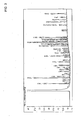
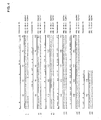

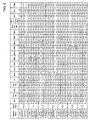

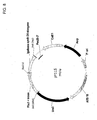

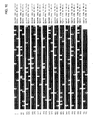
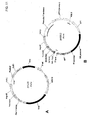


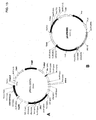
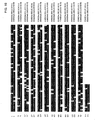
Classifications
-
- C—CHEMISTRY; METALLURGY
- C12—BIOCHEMISTRY; BEER; SPIRITS; WINE; VINEGAR; MICROBIOLOGY; ENZYMOLOGY; MUTATION OR GENETIC ENGINEERING
- C12N—MICROORGANISMS OR ENZYMES; COMPOSITIONS THEREOF; PROPAGATING, PRESERVING, OR MAINTAINING MICROORGANISMS; MUTATION OR GENETIC ENGINEERING; CULTURE MEDIA
- C12N15/00—Mutation or genetic engineering; DNA or RNA concerning genetic engineering, vectors, e.g. plasmids, or their isolation, preparation or purification; Use of hosts therefor
- C12N15/09—Recombinant DNA-technology
- C12N15/63—Introduction of foreign genetic material using vectors; Vectors; Use of hosts therefor; Regulation of expression
- C12N15/79—Vectors or expression systems specially adapted for eukaryotic hosts
- C12N15/82—Vectors or expression systems specially adapted for eukaryotic hosts for plant cells, e.g. plant artificial chromosomes (PACs)
- C12N15/8241—Phenotypically and genetically modified plants via recombinant DNA technology
- C12N15/8242—Phenotypically and genetically modified plants via recombinant DNA technology with non-agronomic quality (output) traits, e.g. for industrial processing; Value added, non-agronomic traits
- C12N15/8243—Phenotypically and genetically modified plants via recombinant DNA technology with non-agronomic quality (output) traits, e.g. for industrial processing; Value added, non-agronomic traits involving biosynthetic or metabolic pathways, i.e. metabolic engineering, e.g. nicotine, caffeine
- C12N15/8247—Phenotypically and genetically modified plants via recombinant DNA technology with non-agronomic quality (output) traits, e.g. for industrial processing; Value added, non-agronomic traits involving biosynthetic or metabolic pathways, i.e. metabolic engineering, e.g. nicotine, caffeine involving modified lipid metabolism, e.g. seed oil composition
-
- C—CHEMISTRY; METALLURGY
- C12—BIOCHEMISTRY; BEER; SPIRITS; WINE; VINEGAR; MICROBIOLOGY; ENZYMOLOGY; MUTATION OR GENETIC ENGINEERING
- C12N—MICROORGANISMS OR ENZYMES; COMPOSITIONS THEREOF; PROPAGATING, PRESERVING, OR MAINTAINING MICROORGANISMS; MUTATION OR GENETIC ENGINEERING; CULTURE MEDIA
- C12N9/00—Enzymes; Proenzymes; Compositions thereof; Processes for preparing, activating, inhibiting, separating or purifying enzymes
- C12N9/10—Transferases (2.)
-
- C—CHEMISTRY; METALLURGY
- C11—ANIMAL OR VEGETABLE OILS, FATS, FATTY SUBSTANCES OR WAXES; FATTY ACIDS THEREFROM; DETERGENTS; CANDLES
- C11B—PRODUCING, e.g. BY PRESSING RAW MATERIALS OR BY EXTRACTION FROM WASTE MATERIALS, REFINING OR PRESERVING FATS, FATTY SUBSTANCES, e.g. LANOLIN, FATTY OILS OR WAXES; ESSENTIAL OILS; PERFUMES
- C11B1/00—Production of fats or fatty oils from raw materials
- C11B1/02—Pretreatment
- C11B1/025—Pretreatment by enzymes or microorganisms, living or dead
-
- C—CHEMISTRY; METALLURGY
- C12—BIOCHEMISTRY; BEER; SPIRITS; WINE; VINEGAR; MICROBIOLOGY; ENZYMOLOGY; MUTATION OR GENETIC ENGINEERING
- C12N—MICROORGANISMS OR ENZYMES; COMPOSITIONS THEREOF; PROPAGATING, PRESERVING, OR MAINTAINING MICROORGANISMS; MUTATION OR GENETIC ENGINEERING; CULTURE MEDIA
- C12N15/00—Mutation or genetic engineering; DNA or RNA concerning genetic engineering, vectors, e.g. plasmids, or their isolation, preparation or purification; Use of hosts therefor
- C12N15/09—Recombinant DNA-technology
- C12N15/63—Introduction of foreign genetic material using vectors; Vectors; Use of hosts therefor; Regulation of expression
- C12N15/79—Vectors or expression systems specially adapted for eukaryotic hosts
- C12N15/82—Vectors or expression systems specially adapted for eukaryotic hosts for plant cells, e.g. plant artificial chromosomes (PACs)
-
- C—CHEMISTRY; METALLURGY
- C12—BIOCHEMISTRY; BEER; SPIRITS; WINE; VINEGAR; MICROBIOLOGY; ENZYMOLOGY; MUTATION OR GENETIC ENGINEERING
- C12N—MICROORGANISMS OR ENZYMES; COMPOSITIONS THEREOF; PROPAGATING, PRESERVING, OR MAINTAINING MICROORGANISMS; MUTATION OR GENETIC ENGINEERING; CULTURE MEDIA
- C12N9/00—Enzymes; Proenzymes; Compositions thereof; Processes for preparing, activating, inhibiting, separating or purifying enzymes
- C12N9/10—Transferases (2.)
- C12N9/1025—Acyltransferases (2.3)
- C12N9/1029—Acyltransferases (2.3) transferring groups other than amino-acyl groups (2.3.1)
-
- C—CHEMISTRY; METALLURGY
- C12—BIOCHEMISTRY; BEER; SPIRITS; WINE; VINEGAR; MICROBIOLOGY; ENZYMOLOGY; MUTATION OR GENETIC ENGINEERING
- C12P—FERMENTATION OR ENZYME-USING PROCESSES TO SYNTHESISE A DESIRED CHEMICAL COMPOUND OR COMPOSITION OR TO SEPARATE OPTICAL ISOMERS FROM A RACEMIC MIXTURE
- C12P7/00—Preparation of oxygen-containing organic compounds
- C12P7/64—Fats; Fatty oils; Ester-type waxes; Higher fatty acids, i.e. having at least seven carbon atoms in an unbroken chain bound to a carboxyl group; Oxidised oils or fats
- C12P7/6409—Fatty acids
- C12P7/6427—Polyunsaturated fatty acids [PUFA], i.e. having two or more double bonds in their backbone
-
- C—CHEMISTRY; METALLURGY
- C12—BIOCHEMISTRY; BEER; SPIRITS; WINE; VINEGAR; MICROBIOLOGY; ENZYMOLOGY; MUTATION OR GENETIC ENGINEERING
- C12P—FERMENTATION OR ENZYME-USING PROCESSES TO SYNTHESISE A DESIRED CHEMICAL COMPOUND OR COMPOSITION OR TO SEPARATE OPTICAL ISOMERS FROM A RACEMIC MIXTURE
- C12P7/00—Preparation of oxygen-containing organic compounds
- C12P7/64—Fats; Fatty oils; Ester-type waxes; Higher fatty acids, i.e. having at least seven carbon atoms in an unbroken chain bound to a carboxyl group; Oxidised oils or fats
- C12P7/6436—Fatty acid esters
- C12P7/6445—Glycerides
- C12P7/6458—Glycerides by transesterification, e.g. interesterification, ester interchange, alcoholysis or acidolysis
-
- C—CHEMISTRY; METALLURGY
- C12—BIOCHEMISTRY; BEER; SPIRITS; WINE; VINEGAR; MICROBIOLOGY; ENZYMOLOGY; MUTATION OR GENETIC ENGINEERING
- C12P—FERMENTATION OR ENZYME-USING PROCESSES TO SYNTHESISE A DESIRED CHEMICAL COMPOUND OR COMPOSITION OR TO SEPARATE OPTICAL ISOMERS FROM A RACEMIC MIXTURE
- C12P7/00—Preparation of oxygen-containing organic compounds
- C12P7/64—Fats; Fatty oils; Ester-type waxes; Higher fatty acids, i.e. having at least seven carbon atoms in an unbroken chain bound to a carboxyl group; Oxidised oils or fats
- C12P7/6436—Fatty acid esters
- C12P7/6445—Glycerides
- C12P7/6463—Glycerides obtained from glyceride producing microorganisms, e.g. single cell oil
-
- C—CHEMISTRY; METALLURGY
- C12—BIOCHEMISTRY; BEER; SPIRITS; WINE; VINEGAR; MICROBIOLOGY; ENZYMOLOGY; MUTATION OR GENETIC ENGINEERING
- C12P—FERMENTATION OR ENZYME-USING PROCESSES TO SYNTHESISE A DESIRED CHEMICAL COMPOUND OR COMPOSITION OR TO SEPARATE OPTICAL ISOMERS FROM A RACEMIC MIXTURE
- C12P7/00—Preparation of oxygen-containing organic compounds
- C12P7/64—Fats; Fatty oils; Ester-type waxes; Higher fatty acids, i.e. having at least seven carbon atoms in an unbroken chain bound to a carboxyl group; Oxidised oils or fats
- C12P7/6436—Fatty acid esters
- C12P7/6445—Glycerides
- C12P7/6472—Glycerides containing polyunsaturated fatty acid [PUFA] residues, i.e. having two or more double bonds in their backbone
Definitions
- This invention is in the field of biotechnology. More specifically, this invention pertains to the identification of nucleic acid fragments encoding ⁇ 9 fatty acid elongase enzymes and the use of these elongases in making long-chain polyunsaturated fatty acids (PUFAs).
- PUFAs long-chain polyunsaturated fatty acids
- PUFAs are important biological components of healthy cells and are recognized as: "essential" fatty acids that cannot be synthesized de novo in mammals and instead must be obtained either in the diet or derived by further desaturation and elongation of linoleic acid (LA; 18:2 ⁇ -6) or ⁇ -linolenic acid (ALA; 18:3 ⁇ -3); constituents of plasma membranes of cells, where they may be found in such forms as phospholipids or triacylglycerols; necessary for proper development (particularly in the developing infant brain) and for tissue formation and repair; and, precursors to several biologically active eicosanoids of importance in mammals (e.g., prostacyclins, eicosanoids, leukotrienes, prostaglandins).
- LA linoleic acid
- ALA ⁇ -linolenic acid
- the present application focuses on use of the ⁇ 9 elongase/ ⁇ 8 desaturase pathway, and more specifically, on the use of ⁇ 9 elongase enzymes.
- Most ⁇ 9 elongase enzymes identified so far have the ability to convert both LA to EDA and ALA to ETrA (wherein DGLA and ETA are subsequently synthesized from EDA and ETrA, respectively, following reaction with a ⁇ 8 desaturase; ARA and EPA are subsequently synthesized from DGLA and ETA, respectively, following reaction with a ⁇ 5 desaturase; and, DHA synthesis requires subsequent expression of an additional C 20/22 elongase and a ⁇ 4 desaturase).
- Elongases which have been identified in the past differ in terms of the substrates upon which they act. They are present in both animals and plants. Those found in mammals can act upon saturated, monounsaturated and polyunsaturated fatty acids. However, those found in plants are specific for saturated and monounsaturated fatty acids. Thus, there is a need for a PUFA-specific elongase to produce PUFAs in plants.
- the elongation process in plants involves a four-step process initiated by the crucial step of condensation of malonate and a fatty acid with release of a carbon dioxide molecule.
- the substrates in fatty acid elongation are CoA-thioesters.
- the condensation step is mediated by a 3-ketoacyl synthase, which is generally rate-limiting to the overall cycle of four reactions and provides some substrate specificity.
- the product of one elongation cycle regenerates a fatty acid that has been extended by two carbon atoms ( Browse et al., Trends in Biochemical Sciences, 27(9):467-473 (September 2002 ); Napier, Trends in Plant Sciences, 7(2):51-54 (February 2002 )).
- PCT Publication No. WO 2005/103253 discloses amino acid and nucleic acid sequences for a ⁇ 8 desaturase enzyme from Pavlova salina. Sayanova et al. (FEBS Lett., 580:1946-1952 (2006 )) describes the isolation and characterization of a cDNA from the free living soil amoeba Acanthamoeba castellanii that, when expressed in Arabidopsis, encodes a C 20 ⁇ 8 desaturase.
- PCT Publication No. WO 2004/071467 (published August 26, 2004 ) concerns the production of PUFAs in plants
- PCT Publication No. WO 2004/071178 (published August 26, 2004 ) concerns annexin promoters and their use in expression of transgenes in plants; both are commonly owned and copending applications.
- the present invention relates to isolated polynucleotides encoding polypeptides having ⁇ 9 elongase activity, and their use in plants, algae, bacteria, yeast and fungi for the production of PUFAs.
- the invention provides an isolated polynucleotide selected from the group consisting of:
- the invention provides polypeptides encoded by the isolated nucleic acid sequences of the invention. Specifically the invention provides a ⁇ 9 elongase polypeptide wherein the amino acid sequence of the polypeptide is set forth in SEQ ID NO:2.
- the invention provides an isolated host cell transformed with the isolated polynucleotides of the invention, where preferred host cells are microbial species as for example algae, bacterial, yeast, oomycetes and fungi.
- a method for the production of eicosatrienoic acid comprising:
- Microbial oils produced by the transformed hosts of the invention are described herein.
- a food product comprising the microbial oils discussed above is also described herein.
- ATCC American Type Culture Collection
- 10801 University Boulevard, Manassas, VA 20110-2209 and bear the following designations, Accession Numbers and dates of deposit (Table 1).
- ATCC Deposits Plasmid Accession Number Date of Deposit pKR72 PTA-6019 May 28, 2004 pKR275 PTA-4989 January 30, 2003 pKR585 PTA-6279 November 4, 2004 pKR578 PTA-6280 November 4, 2004
- SEQ ID Nos:1-17, 21,22,45-48, 51-61, 68-71, 76-79, 81-93, 96-102 and 118-129 are ORFs encoding genes or proteins (or portions thereof), or plasmids, as identified in Table 2.
- Euglena gracilis ⁇ 9 elongase (EgD9e; clone eeg1c.pk001.n5.f)) 1 (777 bp) 2 (258 AA) Synthetic ⁇ 9 elongase, derived from Euglena gracilis, codon-optimized for expression in Yarrowia lipolytica (EgD9eS) 3 (777 bp) 2 (258 AA) Eutreptiella sp. CCMP389 ⁇ 9 elongase (E389D9e) 4 (792 bp) 5 (263 AA) Synthetic ⁇ 9 elongase, derived from Eutreptiella sp.
- CCMP389 codon-optimized for expression in Yarrowia lipolytica (E389D9eS) 6 (792 bp) 5 (263 AA) Isochrysis galbana ⁇ 9 elongase (IgD9e; NCBI Accession No. AAL37626 [GI 17226123], locus AAL37626, CDS AF390174; GenBank Accession No.
- SEQ ID NO:18 is the M13F universal primer used for sequencing the Euglena gracilis cDNA library eeg1c.
- SEQ ID NOs:19 and 20 correspond to primers oEugEL1-1 and oEugEL1-2, respectively, used for amplifying EgD9e from clone eeg1c.pk001.n5.f.
- SEQ ID NOs:23-38 correspond to primers IL3-1A, IL3-1B, IL3-2A, IL3-2B, IL3-3A, IL3-3B, IL3-4A, IL3-4B, IL3-5A, IL3-5B, IL3-6A, IL3-6B, IL3-7A, IL3-7B, IL3-8A and IL3-8B, respectively, used for amplification of IgD9eS.
- SEQ ID NOs:39-42 correspond to primers IL3-1F, IL3-4R, IL3-5F and IL3-8R, respectively, used for amplification of IgD9eS.
- SEQ ID NO:43 is the 417 bp NcoI / PstI fragment from pT9(1-4).
- SEQ ID NO:44 is the 377 bp PstI / Nof1 fragment from pT9(5-8).
- SEQ ID NOs:49 and 50 correspond to primers ig-s and ig-as, respectively, used for amplifying IgD9eS from vector pY115.
- SEQ ID NOs:62 and 63 correspond to primers Eg5-1 and Eg3-3, respectively, used for amplifying EgD8 from cDNA.
- SEQ ID Nos:64-67 correspond to primers T7, M13-28Rev, Eg3-2 and Eg5-2, respectively, used for sequencing EgD8.
- SEQ ID NO:72 is the sequence of the KTi cassette 5'end multiple cloning site (MCS) for pKR457.
- SEQ ID NO:73 is the sequence of the KTi cassette 3' end multiple cloningsite (MCS) for pKR457 including the soy albumin transcription 3' terminator.
- SEQ ID NOs:74 and 75 correspond to primers oSalb-12 and oSalb-13, respectively, used for amplifying the soy albumin transcription terminator from soy genomic DNA.
- SEQ ID NO:80 corresponds to restriction sites added to pKR287 to produce pKR767.
- SEQ ID NOs:94 and 95 correspond to primers oSAlb-9 and oSAlb-2, respectively, used for creation of restriction sites during production of pKR160.
- SEQ ID NOs:103-105 correspond to SMART TM IV oligonucleotide primer, CDSIII/3' PCR primer and 5'-PCR primer, respectively, used for Eutreptiella sp. CCMP389 cDNA synthesis.
- SEQ ID NO:106 is the nucleotide sequence of degenerate primer EuEF3, which encodes the peptide set forth in SEQ ID NO:107.
- SEQ ID NO:108 is the nucleotide sequence of degenerate primer EuER3, which encodes the peptide set forth in SEQ ID NO:109.
- SEQ ID NOs:110-113 correspond to primers 389Elo-5-1, 389Elo-5-2, DNR CDS 5'-2 and 389Elo-5-4, respectively, used for PCR amplification of the 5'-end of cDNA encoding E389D9e.
- SEQ ID NOs:114 and 115 correspond to primers 389Elo-3-1 and 389Elo-3-2, respectively, used for PCR amplification of the 3'-end of cDNA encoding E389D9e.
- SEQ ID NOs:116 and 117 correspond to primers 389ELO-F and 389ELO-R1, respectively, used for amplification of the full length cDNA encoding E389D9e.
- Patents, patent applications, and publications cited herein include the following commonly owned and copending applications: U.S. Patent Applications No. 10/840478 , No. 10/840579 and No. 10/840325 (filed May 6, 2004 ), U.S. Patent Application No. 10/869630 (filed June 16, 2004 ), U.S. Patent Application No. 10/882760 (filed July 1, 2004 ), U.S. Patent Applications No. 10/985109 and No. 10/985691 (filed November 10, 2004 ), U.S. Patent Application No. 10/987548 (filed November 12, 2004 ), U.S. Patent Applications No. 11/024545 and No. 11/024544 (filed December 29, 2004 ), U.S. Patent Application No.
- Novel Euglena gracilis and Eutreptiella sp. CCMP389 ⁇ 9 elongase enzymes and genes encoding the same are described herein that may be used for the manipulation of biochemical pathways for the production of healthful PUFAs.
- PUFAs, or derivatives thereof, made by the methodology disclosed herein can be used as dietary substitutes, or supplements and infant formulas, and for patients undergoing intravenous feeding or for preventing or treating malnutrition.
- the purified PUFAs (or derivatives thereof) may be incorporated into cooking oils, fats or margarines formulated so that in normal use the recipient would receive the desired amount for dietary supplementation.
- the PUFAs may also be incorporated into infant formulas, nutritional supplements or other food products and may find use as anti-inflammatory or cholesterol lowering agents.
- the compositions may be used for pharmaceutical use (human or veterinary).
- ORF Open reading frame
- PCR Polymerase chain reaction
- ATCC American Type Culture Collection
- PUFA Polyunsaturated fatty acid
- TAG Triacylglycerol
- invention or "present invention” as used herein is not meant to be limiting to any one specific embodiment of the invention but applies generally to any and all embodiments of the invention as described in the claims.
- fatty acids refers to long-chain aliphatic acids (alkanoic acids) of varying chain lengths, from about C 12 to C 22 (although both longer and shorter chain-length acids are known). The predominant chain lengths are between C 16 and C 22 . Additional details concerning the differentiation between "saturated fatty acids” versus “unsaturated fatty acids”, “monounsaturated fatty acids” versus “polyunsaturated fatty acids” (or “PUFAs”), and "omega-6 fatty acids” ( ⁇ -6 or n -6) versus “omega-3 fatty acids” ( ⁇ -3 or n -3) are provided in PCT Publication No. WO 2004/101757 .
- Fatty acids are described herein by a simple notation system of "X:Y", wherein X is the number of carbon (C) atoms in the particular fatty acid and Y is the number of double bonds.
- the number following the fatty acid designation indicates the position of the double bond from the carboxyl end of the fatty acid with the "c" affix for the cis -configuration of the double bond [e.g., palmitic acid (16:0), stearic acid (18:0), oleic acid (18:1, 9c), petroselinic acid (18:1, 6c), LA (18:2, 9c,12c), GLA (18:3, 6c,9c,12c) and ALA (18:3, 9c,12c,15c)].
- 18:1, 18:2 and 18:3 refer to oleic, LA and ALA fatty acids. If not specifically written as otherwise, double bonds are assumed to be of the cis configuration. For instance, the double bonds in 18:2 (9,12) would be assumed to be in the cis configuration.
- Nomenclature used to describe PUFAs in the present disclosure is shown below in Table 3.
- the omega-reference system is used to indicate the number of carbons, the number of double bonds and the position of the double bond closest to the omega carbon, counting from the omega carbon (which is numbered 1 for this purpose).
- the remainder of the Table summarizes the common names of ⁇ -3 and ⁇ -6 fatty acids and their precursors, the abbreviations that will be used throughout the remainder of the specification, and each compounds' chemical name.
- essential fatty acid refers to a particular PUFA that an organism must ingest in order to survive, being unable to synthesize the particular essential fatty acid de novo.
- mammals can not synthesize the essential fatty acid LA.
- Other essential fatty acids include, but are not limited to, GLA, DGLA, ARA, EPA and DHA.
- fat refers to a lipid substance that is solid at 25 °C and usually saturated.
- oil refers to a lipid substance that is liquid at 25 °C and usually polyunsaturated. PUFAs are found in the oils of some algae, oleaginous yeasts and filamentous fungi. "Microbial oils” or “single cell oils” are those oils naturally produced by microorganisms during their lifespan:
- triacylglycerol refers to neutral lipids composed of three fatty acyl residues esterified to a glycerol molecule (and such terms will be used interchangeably throughout the present disclosure herein).
- oils can contain long-chain PUFAs, as well as shorter saturated and unsaturated fatty acids and longer chain saturated fatty acids.
- oil biosynthesis generically refers to the synthesis of TAGs in the cell.
- Percent (%) PUFAs in the total lipid and oil fractions refers to the percent of PUFAs relative to the total fatty acids in those fractions.
- PC phosphatidylcholine
- PE phosphatidyletanolamine
- TAG or oil triacylglycerol
- conversion efficiency and “percent substrate conversion” refer to the efficiency by which a particular enzyme (e.g., a desaturase) can convert substrate to product.
- the conversion efficiency is measured according to the following formula: ([product]/[substrate + product])*100, where 'product' includes the immediate product and all products in the pathway derived from it.
- a metabolic pathway, or biosynthetic pathway, in a biochemical sense can be regarded as a series of chemical reactions occurring within a cell, catalyzed by enzymes, to achieve either the formation of a metabolic product to be used or stored by the cell, or the initiation of another metabolic pathway (then called a flux generating step). Many of these pathways are elaborate, and involve a step by step modification of the initial substance to shape it into a product having the exact chemical structure desired.
- PUFA biosynthetic pathway refers to a metabolic process that converts oleic acid to LA, EDA, GLA, DGLA, ARA, ALA, STA, ETrA, ETA, EPA, DPA and DHA. This process is well described in the literature (e.g., see PCT Publications No. WO 2005/003322 and No. WO 2006/052870 ). Simplistically, this process involves elongation of the carbon chain through the addition of carbon atoms and desaturation of the molecule through the addition of double bonds, via a series of special desaturation and elongation enzymes (i.e., "PUFA biosynthetic pathway enzymes") present in the endoplasmic reticulim membrane.
- PUFA biosynthetic pathway enzymes a series of special desaturation and elongation enzymes
- PUFA biosynthetic pathway enzyme refers to any of the following enzymes (and genes which encode said enzymes) associated with the biosynthesis of a PUFA, including: a ⁇ 4 desaturase, a ⁇ 5 desaturase, a ⁇ 6 desaturase, a ⁇ 12 desaturase, a ⁇ 15 desaturase, a ⁇ 17 desaturase, a ⁇ 9 desaturase, a ⁇ 8 desaturase, a ⁇ 9 elongase, a C 14/16 elongase, a C 16/18 elongase, a C 18/20 elongase and/or a C 20/22 elongase.
- omega-3/omega-6 fatty acid biosynthetic pathway refers to a set of genes which, when expressed under the appropriate conditions encode enzymes that catalyze the production of either or both ⁇ -3 and ⁇ -6 fatty acids.
- genes involved in the ⁇ -3/ ⁇ -6 fatty acid biosynthetic pathway encode PUFA biosynthetic pathway enzymes.
- FIG. 1 A representative pathway is illustrated in FIG. 1 , providing for the conversion of myristic acid through various intermediates to DHA, which demonstrates how both ⁇ -3 and ⁇ -6 fatty acids may be produced from a common source. The pathway is naturally divided into two portions where one portion will generate ⁇ -3 fatty acids and the other portion, only ⁇ -6 fatty acids.
- ⁇ -3/ ⁇ -6 fatty acid biosynthetic pathway means that some (or all of) the genes in the pathway express active enzymes, resulting in in vivo catalysis or substrate conversion. It should be understood that " ⁇ -3/ ⁇ -6 fatty acid biosynthetic pathway” or “functional ⁇ -3/ ⁇ -6 fatty acid biosynthetic pathway” does not imply that all of the PUFA biosynthetic pathway enzyme genes are required, as a number of fatty acid products will only require the expression of a subset of the genes of this pathway.
- ⁇ 9 elongase/ ⁇ 8 desaturase pathway refers to a biosynthetic pathway for production of long-chain PUFAs. This pathway, at a minimum, comprises a ⁇ 9 elongase and a ⁇ 8 desaturase, thereby enabling biosynthesis of DGLA and/or ETA from LA and ALA, respectively. With expression of other desaturases and elongases, ARA, EPA, DPA and DHA may also be synthesized. This pathway may be advantageous in some embodiments, as the biosynthesis of GLA and/or STA is excluded.
- intermediate fatty acid refers to any fatty acid produced in a fatty acid metabolic pathway that can be further converted to an intended product fatty acid in this pathway by the action of other metabolic pathway enzymes.
- EDA, ETrA, DGLA, ETA and ARA can be produced and are considered “intermediate fatty acids” since these fatty acids can be further converted to EPA via action of other metabolic pathway enzymes.
- by-product fatty acid refers to any fatty acid produced in a fatty acid metabolic pathway that is not the intended fatty acid product of the pathway nor an "intermediate fatty acid” of the pathway.
- sciadonic acid (SCk) and juniperonic acid (JUP) also can be produced by the action of a Z5 desaturase on either EDA or ETrA, respectively. They are considered to be "by-product fatty acids” since neither can be further converted to EPA by the action of other metabolic pathway enzymes.
- “Desaturase” is a polypeptide that can desaturate, i.e., introduce a double bond, in one or more fatty acids to produce a fatty acid or precursor of interest.
- omega-reference system throughout the specification to refer to specific fatty acids, it is more convenient to indicate the activity of a desaturase by counting from the carboxyl end of the substrate using the delta-system.
- Desaturases of interest include, for example: (1) ⁇ 8 desaturases that will desaturate a fatty acid between the eighth and ninth carbon atom numbered from the carboxyl-.terminal end of the molecule and that can, for example, catalyze the conversion of EDA to DGLA and/or ETrA to ETA; (2) ⁇ 5 desaturases that catalyze the conversion of DGLA to ARA and/or ETA to EPA; (3) ⁇ 6 desaturases that catalyze the conversion of LA to GLA and/or ALA to STA; (4) ⁇ 4 desaturases that catalyze the conversion of DPA to DHA; (5) ⁇ 12 desaturases that catalyze the conversion of oleic acid to LA; (6) ⁇ 15 desaturases that catalyze the conversion of LA to ALA and/or GLA to STA; (7) ⁇ 17 desaturases that catalyze the conversion of ARA to EPA and/or DGLA to ETA; and (8) ⁇ 9 desaturases
- ⁇ 15 and ⁇ 17 desaturases are also occasionally referred to as “omega-3 desaturases”, “w-3 desaturases”, and/or “ ⁇ -3 desaturases”, based on their ability to convert ⁇ -6 fatty acids into their ⁇ -3 counterparts (e.g., conversion of LA into ALA and ARA into EPA, respectively).
- EgD8 refers to a ⁇ 8 desaturase enzyme (SEQ ID NO:61) isolated from Euglena gracilis, encoded by SEQ ID NO:60 herein. EgD8 is 100% identical and functionally equivalent to "Eg5", as described in PCT Publications No. WO 2006/012325 and No. WO 2006/012326 [SEQ ID NO:2 of U.S. Publication No. 2005-0287652-A1 ].
- EgD8S refers to a synthetic ⁇ 8 desaturase derived from Euglena gracilis that is codon-optimized for expression in Yarrowia lipolytica herein (i.e., SEQ ID NOs:68 and 69). EgD8S is 100% identical and functionally equivalent to "D8SF", as described in PCT Publications No. WO 2006/012325 and No. WO 2006/012326 .
- elongase system refers to a suite of four enzymes that are responsible for elongation of a fatty acid carbon chain to produce a fatty acid that is two carbons longer than the fatty acid substrate that the elongase system acts upon. More specifically, the process of elongation occurs in association with fatty acid synthase, whereby CoA is the acyl carrier ( Lassner et al., Plant Cell, 8:281-292 (1996 )).
- malonyl-CoA is condensed with a long-chain acyl-CoA to yield carbon dioxide (CO 2 ) and a ⁇ -ketoacyl-CoA (where the acyl moiety has been elongated by two carbon atoms).
- Subsequent reactions include reduction to ⁇ -hydroxyacyl-CoA, dehydration to an enoyl-CoA and a second reduction to yield the elongated acyl-CoA.
- Examples of reactions catalyzed by elongase systems are the conversion of GLA to DGLA, STA to ETA and EPA to DPA.
- an enzyme catalyzing the first condensation reaction i.e., conversion of malonyl-CoA to ⁇ -ketoacyl-CoA
- elongase an enzyme catalyzing the first condensation reaction
- the substrate selectivity of elongases is somewhat broad but segregated by both chain length and the degree of unsaturation. Accordingly, elongases can have different specificities.
- a C 14/16 elongase will utilize a C 14 substrate (e.g., myristic acid); a C 16/18 elongase will utilize a C 16 substrate (e.g., palmitate); a C 18/20 elongase (also known as a ⁇ 6 elongase as the terms can be used interchangeably) will utilize a C 18 substrate (e.g., GLA, STA); and a C 20/22 elongase will utilize a C 20 substrate (e.g., EPA).
- a " ⁇ 9 elongase" is able to catalyze the conversion of LA and ALA to EDA and ETrA, respectively.
- elongases have broad specificity and thus a single enzyme may be capable of catalyzing several elongase reactions.
- a ⁇ 9 elongase may also act as a C 16/18 elongase, C 18/20 elongase and/or C 20/22 elongase and may have alternate, but not preferred, specificities for ⁇ 5 and ⁇ 6 fatty acids such as EPA and/or GLA, respectively.
- it is desirable to empirically determine the specificity of a fatty acid elongase by transforming a suitable host with the gene for the fatty acid elongase and determining its effect on the fatty acid profile of the host.
- EgD9e refers to a ⁇ 9 elongase enzyme (SEQ ID NO:2) isolated from Euglena gracilis,encoded by SEQ ID NO:1.
- EgD9eS refers to a synthetic ⁇ 9 elongase derived from Euglena gracilis that is codon-optimized for expression in Yarrowia lipolytica (i.e., SEQ ID NOs:3 and 2).
- E389D9e refers to a ⁇ 9 elongase enzyme (SEQ ID NO:5) isolated from Eutreptiella sp. CCMP389, encoded by SEQ ID NO:4.
- E389D9eS refers to a synthetic ⁇ 9 elongase derived from Eutreptiella sp. CCMP389 that is codon-optimized for expression in Yarrowia lipolytica (i.e., SEQ ID NOs:6 and 5).
- IgD9e refers to a ⁇ 9 elongase enzyme (SEQ ID NO:8; NCBI Accession No. AAL37626 [GI 17226123], locus AAL37626, CDS AF390174; GenBank Accession No. AF390174) isolated from Isochrysis galbana, encoded by SEQ ID NO:7.
- IgD9eS refers to a synthetic ⁇ 9 elongase derived from Isochrysis galbana that is codon-optimized for expression in Yarrowia lipolytica (i.e., SEQ ID NOs:9 and 8). Synthesis and functional analysis of IgD9eS is described in PCT Publication No. WO 2006/052870 (wherein IgD9eS is equivalent to SEQ ID NOs:51 and 50 therein).
- amino acid will refer to the basic chemical structural unit of a protein or polypeptide. Amino acids are identified by either the one-letter code or the three-letter codes for amino acids, in conformity with the IUPAC-IYUB standards described in Nucleic Acids Research, 13:3021-3030 (1985 ) and in the Biochemical Journal, 219 (2):345-373 (1984 ).
- conservative amino acid substitution refers to a substitution of an amino acid residue in a given protein with another amino acid, without altering the chemical or functional nature of that protein. For example, it is well known in the art that alterations in a gene that result in the production of a chemically equivalent amino acid at a given site (but that do not affect the structural and functional properties of the encoded, folded protein) are common. For the purposes of the present invention, “conservative amino acid substitutions” are defined as exchanges within one of the following five groups:
- non-conservative amino acid substitution refers to an amino acid substitution that is generally expected to produce the greatest change in protein properties.
- a non-conservative amino acid substitution would be one whereby: 1.) a hydrophilic residue is substituted for/by a hydrophobic residue (e.g., Ser or Thr for/by Leu, Ile, Val); 2.) a Cys or Pro is substituted for/by any other residue; 3.) a residue having an electropositive side chain is substituted for/by an electronegative residue (e.g., Lys, Arg or His for/by Asp or Glu); or, 4.) a residue having a bulky side chain is substituted for/by one not having a side chain (e.g., Phe for/by Gly).
- non-conservative amino acid substitutions between two of the five groups will not affect the activity of the encoded protein.
- polynucleotide polynucleotide sequence
- nucleic acid sequence nucleic acid fragment
- isolated nucleic acid fragment are used interchangeably herein. These terms encompass nucleotide sequences and the like.
- a polynucleotide may be a polymer of RNA or DNA that is single- or double-stranded, that optionally contains synthetic, non-natural or altered nucleotide bases.
- a polynucleotide in the form of a polymer of DNA may be comprised of one or more segments of cDNA, genomic DNA, synthetic DNA, or mixtures thereof.
- Nucleotides are referred to by a single letter designation as follows: "A” for adenylate or deoxyadenylate (for RNA or DNA, respectively), “C” for cytidylate or deoxycytidylate, “G” for guanylate or deoxyguanylate, “U” for uridylate, “T” for deoxythymidylate, “R” for purines (A or G), “Y” for pyrimidines (C or T), "K” for G or T, “H” for A or C or T, “I” for inosine, and “N” for any nucleotide.
- A for adenylate or deoxyadenylate (for RNA or DNA, respectively)
- C for cytidylate or deoxycytidylate
- G for guanylate or deoxyguanylate
- U for uridylate
- T for deoxythymidylate
- R for purines
- fragment that is functionally equivalent and “functionally equivalent subfragment” are used interchangeably herein. These terms refer to a portion or subsequence of an isolated nucleic acid fragment in which the ability to alter gene expression or produce a certain phenotype is retained whether or not the fragment or subfragment encodes an active enzyme.
- the fragment or subfragment can be used in the design of chimeric genes to produce the desired phenotype in a transformed plant. Chimeric genes can be designed for use in suppression by linking a nucleic acid fragment or subfragment thereof, whether or not it encodes an active enzyme, in the sense or antisense orientation relative to a plant promoter sequence.
- conserved domain or "motif” means a set of amino acids conserved at specific positions along an aligned sequence of evolutionarily related proteins. While amino acids at other positions can vary between homologous proteins, amino acids that are highly conserved at specific positions indicate amino acids that are essential in the structure, the stability, or the activity of a protein. Because they are identified by their high degree of conservation in aligned sequences of a family of protein homologues, they can be used as identifiers, or "signatures”, to determine if a protein with a newly determined sequence belongs to a previously identified protein family. For the purposes herein, the following Table describes motifs which are indicative of a protein having ⁇ 9 elongase activity.
- substantially similar nucleic acid sequences may be defined by their ability to hybridize (under moderately stringent conditions, e.g., 0.5X SSC, 0.1 % SDS, 60 °C) with the sequences exemplified herein, or to any portion of the nucleotide sequences disclosed herein and which are functionally equivalent to any of the nucleic acid sequences disclosed herein.
- Stringency conditions can be adjusted to screen for moderately similar fragments, such as homologous sequences from distantly related organisms, to highly similar fragments, such as genes that duplicate functional enzymes from closely related organisms. Post-hybridization washes determine stringency conditions.
- sequences include reference to hybridization, under stringent hybridization conditions, of a nucleic acid sequence to a specified nucleic acid target sequence to a detectably greater degree (e.g., at least 2-fold over background) than its hybridization to non-target nucleic acid sequences and to the substantial exclusion of non-target nucleic acids.
- Selectively hybridizing sequences typically have about at least 80% sequence identity, or 90% sequence identity, up to and including 100% sequence identity (i.e., fully complementary) with each other.
- stringent conditions or “stringent hybridization conditions” includes reference to conditions under which a probe will selectively hybridize to its target sequence. Stringent conditions are sequence-dependent and will be different in different circumstances. By controlling the stringency of the hybridization and/or washing conditions, target sequences can be identified which are 100% complementary to the probe (homologous probing). Alternatively, stringency conditions can be adjusted to allow some mismatching in sequences so that lower degrees of similarity are detected (heterologous probing). Generally, a probe is less than about 1000 nucleotides in length, optionally less than 500 nucleotides in length.
- stringent conditions will be those in which the salt concentration is less than about 1.5 M Na ion, typically about 0.01 to 1.0 M Na ion concentration (or other salts) at pH 7.0 to 8.3 and the temperature is at least about 30 °C for short probes (e.g., 10 to 50 nucleotides) and at least about 60 °C for long probes (e.g., greater than 50 nucleotides).
- Stringent conditions may also be achieved with the addition of destabilizing agents such as formamide.
- Exemplary moderate stringency conditions include hybridization in 40 to 45% formamide, 1 M NaCl, 1% SDS at 37 °C, and a wash in 0.5X to 1X SSC at 55 to 60 °C.
- Exemplary high stringency conditions include hybridization in 50% formamide, 1 M NaCl, 1% SDS at 37 °C, and a wash in 0.1X SSC at 60 to 65 °C.
- Other exemplary stringent hybridization conditions include 0.1X SSC, 0.1% SDS, 65 °C and washed with 2X SSC, 0.1% SDS followed by 0.1 X SSC, 0.1% SDS.
- T m 81.5 °C + 16.6 (log M) + 0.41 (%GC) - 0.61 (% form) - 500/L; where M is the molarity of monovalent cations, %GC is the percentage of guanosine and cytosine nucleotides in the DNA, % form is the percentage of formamide in the hybridization solution, and L is the length of the hybrid in base pairs.
- the T m is the temperature (under defined ionic strength and pH) at which 50% of a complementary target sequence hybridizes to a perfectly matched probe. T m is reduced by about 1 °C for each 1% of mismatching; thus, T m , hybridization and/or wash conditions can be adjusted to hybridize to sequences of the desired identity. For example, if sequences with ⁇ 90% identity are sought, the T m can be decreased 10 °C. Generally, stringent conditions are selected to be about 5 °C lower than the thermal melting point (T m ) for the specific sequence and its complement at a defined ionic strength and pH.
- Hybridization and/or wash conditions can be applied for at least 10, 30, 60, 90,120 or 240 minutes.
- Sequence identity or “identity” in the context of nucleic acid or polypeptide sequences refers to the nucleic acid bases or amino acid residues in two sequences that are the same when aligned for maximum correspondence over a specified comparison window.
- percentage of sequence identity refers to the value determined by comparing two optimally aligned sequences over a comparison window, wherein the portion of the polynucleotide or polypeptide sequence in the comparison window may comprise additions or deletions (i.e., gaps) as compared to the reference sequence (which does not comprise additions or deletions) for optimal alignment of the two sequences.
- the percentage is calculated by determining the number of positions at which the identical nucleic acid base or amino acid residue occurs in both sequences to yield the number of matched positions, dividing the number of matched positions by the total number of positions in the window of comparison and multiplying the results by 100 to yield the percentage of sequence identity.
- percent sequence identities include, but are not limited to, 50%, 55%, 60%, 65%, 70%, 75%, 80%, 85%, 90%, or 95%, or any integer percentage from 50% to 100%. These identities can be determined using any of the programs described herein.
- Sequence alignments and percent identity or similarity calculations may be determined using a variety of comparison methods designed to detect homologous sequences including, but not limited to, the MegAlign TM program of the LASERGENE bioinformatics computing suite (DNASTAR Inc., Madison, WI).
- sequence analysis software is used for analysis, that the results of the analysis will be based on the "default values" of the program referenced, unless otherwise specified.
- default values will mean any set of values or parameters that originally load with the software when first initialized.
- Clustal V method of alignment corresponds to the alignment method labeled Clustal V (described by Higgins and Sharp, CABIOS, 5:151-153 (1989 ); Higgins, D.G. et al., Comput. Appl. Biosci., 8:189-191 (1992 )) and found in the MegAlign TM program of the LASERGENE bioinformatics computing suite ( supra ).
- BLASTN method of alignment is an algorithm provided by the National Center for Biotechnology Information (NCBI) to compare nucleotide sequences using default parameters.
- polypeptides from other species, wherein such polypeptides have the same or similar function or activity.
- percent identities include, but are not limited to, 50%, 55%, 60%, 65%, 70%, 75%, 80%, 85%, 90%, or 95%, or any integer percentage from 50% to 100%.
- any integer amino acid identity from 90% to 100% may be useful in describing the present invention, such as 90%, 91%, 92%, 93%, 94%, 95%, 96%, 97%, 98% or 99%.
- of interest is any full-length complement of this isolated nucleotide fragment.
- gene as it applies to a plant cell encompasses not only chromosomal DNA found within the nucleus, but organelle DNA found within subcellular components (e.g., mitochondrial, plastid) of the cell.
- Gene refers to a nucleic acid fragment that expresses a specific protein, including regulatory sequences preceding (5' non-coding sequences) and following (3' non-coding sequences) the coding sequence.
- “Native gene” refers to a gene as found in nature with its own regulatory sequences.
- “Chimeric gene” refers to any gene that is not a native gene, comprising regulatory and coding sequences that are not found together in nature. Accordingly, a chimeric gene may comprise regulatory sequences and coding sequences that are derived from different sources, or regulatory sequences and coding sequences derived from the same source, but arranged in a manner different than that found in nature.
- a “foreign” gene refers to a gene not normally found in the host organism, but that is introduced into the host organism by gene transfer. Foreign genes can comprise native genes inserted into a non-native organism, or chimeric genes.
- a “transgene” is a gene that has been introduced into the genome by a transformation procedure.
- a "codon-optimized gene” is a gene having its frequency of codon usage designed to mimic the frequency of preferred codon usage of the host cell.
- an "allele” is one of several alternative forms of a gene occupying a given locus on a chromosome. When all the alleles present at a given locus on a chromosome are the same, that plant is homozygous at that locus. If the alleles present at a given locus on a chromosome differ, that plant is heterozygous at that locus.
- Coding sequence refers to a DNA sequence that codes for a specific amino acid sequence.
- Regulatory sequences refer to nucleotide sequences located upstream (5' non-coding sequences), within, or downstream (3' non-coding sequences) of a coding sequence, and which influence the transcription, RNA processing or stability, or translation of the associated coding sequence. Regulatory sequences may include, but are not limited to: promoters, translation leader sequences, introns, polyadenylation recognition sequences, RNA processing sites, effector binding sites and stem-loop structures.
- Promoter refers to a DNA sequence capable of controlling the expression of a coding sequence or functional RNA.
- the promoter sequence consists of proximal and more distal upstream elements, the latter elements often referred to as enhancers.
- an “enhancer” is a DNA sequence that can stimulate promoter activity, and may be an innate element of the promoter or a heterologous element inserted to enhance the level or tissue-specificity of a promoter. Promoters may be derived in their entirety from a native gene, or be composed of different elements derived from different promoters found in nature, or even comprise synthetic DNA segments.
- promoters may direct the expression of a gene in different tissues or cell types, or at different stages of development, or in response to different environmental conditions. It is further recognized that since in most cases the exact boundaries of regulatory sequences have not been completely defined, DNA fragments of some variation may have identical promoter activity. Promoters that cause a gene to be expressed in most cell types at most times are commonly referred to as "constitutive promoters". New promoters of various types useful in plant cells are constantly being discovered; numerous examples may be found in the compilation by Okamuro, J. K., and Goldberg, R. B. Biochemistry of Plants, 15:1-82 (1989 ).
- Translation leader sequence refers to a polynucleotide sequence located between the promoter sequence of a gene and the coding sequence.
- the translation leader sequence is present in the fully processed mRNA upstream of the translation start sequence.
- the translation leader sequence may affect processing of the primary transcript to mRNA, mRNA stability or translation efficiency. Examples of translation leader sequences have been described ( Turner, R. and Foster, G. D., Mol. Biotechnol., 3:225-236 (1995 )).
- 3' non-coding sequences refer to DNA sequences located downstream of a coding sequence and include polyadenylation recognition sequences and other sequences encoding regulatory signals capable of affecting mRNA processing or gene expression.
- the polyadenylation signal is usually characterized by affecting the addition of polyadenylic acid tracts to the 3' end of the mRNA precursor.
- the use of different 3' non-coding sequences is exemplified by Ingelbrecht, I. L., et al. Plant Cell, 1:671-680 (1989 ).
- RNA transcript refers to the product resulting from RNA polymerase-catalyzed transcription of a DNA sequence. When the RNA transcript is a perfect complementary copy of the DNA sequence, it is referred to as the primary transcript. A RNA transcript is referred to as the mature RNA when it is a RNA sequence derived from post-transcriptional processing of the primary transcript. "Messenger RNA” or “mRNA” refers to the RNA that is without introns and that can be translated into protein by the cell. "cDNA” refers to a DNA that is complementary to, and synthesized from, a mRNA template using the enzyme reverse transcriptase.
- RNA transcript that includes the mRNA and can be translated into protein within a cell or in vitro.
- Antisense RNA refers to an RNA transcript that is complementary to all or part of a target primary transcript or mRNA, and that blocks the expression of a target gene ( U.S. Patent No. 5,107,065 ). The complementarity of an antisense RNA may be with any part of the specific gene transcript, i.e., at the 5' non-coding sequence, 3' non-coding sequence, introns, or the coding sequence.
- RNA refers to antisense RNA, ribozyme RNA, or other RNA that may not be translated but yet has an effect on cellular processes.
- complement and “reverse complement” are used interchangeably herein with respect to mRNA transcripts, and are meant to define the antisense RNA of the message.
- operably linked refers to the association of nucleic acid sequences on a single nucleic acid fragment so that the function of one is regulated by the other.
- a promoter is operably linked with a coding sequence when it is capable of regulating the expression of that coding sequence (i.e., the coding sequence is under the transcriptional control of the promoter).
- Coding sequences can be operably linked to regulatory sequences in a sense or antisense orientation.
- the complementary RNA regions can be operably linked, either directly or indirectly, 5' to the target mRNA, or 3' to the target mRNA, or within the target mRNA, or a first complementary region is 5' and its complement is 3' to the target mRNA.
- PCR or “polymerase chain reaction” is a technique for the synthesis of large quantities of specific DNA segments and consists of a series of repetitive cycles (Perkin Elmer Cetus Instruments, Norwalk, CT). Typically, the double-stranded DNA is heat denatured, the two primers complementary to the 3' boundaries of the target segment are annealed at low temperature and then extended at an intermediate temperature. One set of these three consecutive steps is referred to as a "cycle”.
- recombinant refers to an artificial combination of two otherwise separated segments of sequence, e.g., by chemical synthesis or by the manipulation of isolated segments of nucleic acids by genetic engineering techniques.
- Plasmid refers to an extra chromosomal element often carrying genes that are not part of the central metabolism of the cell, and usually in the form of circular double-stranded DNA fragments.
- Such elements may be autonomously replicating sequences, genome integrating sequences, phage or nucleotide sequences, linear or circular, of a single- or double-stranded DNA or RNA, derived from any source, in which a number of nucleotide sequences have been joined or recombined into a unique construction which is capable of introducing a promoter fragment and DNA sequence for a selected gene product along with appropriate 3' untranslated sequence into a cell.
- Transformation cassette refers to a specific vector containing a foreign gene and having elements in addition to the foreign gene that facilitates transformation of a particular host cell.
- Expression cassette refers to a specific vector containing a foreign gene and having elements in addition to the foreign gene that allow for enhanced expression of that gene in a foreign host (i.e., to a discrete nucleic acid fragment into which a nucleic acid sequence or fragment can be moved.).
- a recombinant construct comprises an artificial combination of nucleic acid fragments, e.g., regulatory and coding sequences that are not found together in nature.
- a chimeric construct may comprise regulatory sequences and coding sequences that are derived from different sources, or regulatory sequences and coding sequences derived from the same source, but arranged in a manner different than that found in nature.
- Such a construct may be used by itself or may be used in conjunction with a vector. If a vector is used, then the choice of vector is dependent upon the method that will be used to transform host cells as is well known to those skilled in the art.
- a plasmid vector can be used.
- the skilled artisan is well aware of the genetic elements that must be present on the vector in order to successfully transform, select and propagate host cells comprising any of the isolated nucleic acid fragments of the invention.
- the skilled artisan will also recognize that different independent transformation events will result in different levels and patterns of expression ( Jones et al., EMBO J., 4:2411-2418 (1985 ); De Almeida et al., Mol. Gen. Genetics, 218:78-86 (1989 )), and thus it is preferable if multiple events are screened in order to obtain lines displaying the desired expression level and pattern.
- Such screening may be accomplished by Southern analysis of DNA, Northern analysis of mRNA expression, immunoblotting analysis of protein expression, or phenotypic analysis, among others.
- expression refers to the production of a functional end-product (e.g., a mRNA or a protein [either precursor or mature]).
- introduced means providing a nucleic acid (e.g., expression construct) or protein into a cell. Introduced includes reference to the incorporation of a nucleic acid into a eukaryotic or prokaryotic cell where the nucleic acid may be incorporated into the genome of the cell, and includes reference to the transient provision of a nucleic acid or protein to the cell. Introduced includes reference to stable or transient transformation methods, as well as sexually crossing.
- nucleic acid fragment in the context of inserting a nucleic acid fragment (e.g., a recombinant DNA construct/expression construct) into a cell, means “transfection” or “transformation” or “transduction” and includes reference to the incorporation of a nucleic acid fragment into a eukaryotic or prokaryotic cell where the nucleic acid fragment may be incorporated into the genome of the cell (e.g., chromosome, plasmid, plastid or mitochondrial DNA), converted into an autonomous replicon, or transiently expressed (e.g., transfected mRNA).
- a nucleic acid fragment e.g., a recombinant DNA construct/expression construct
- transduction includes reference to the incorporation of a nucleic acid fragment into a eukaryotic or prokaryotic cell where the nucleic acid fragment may be incorporated into the genome of the cell (e.g., chromosome, plasmid, plastid or mitochondrial
- “Mature” protein refers to a post-translationally processed polypeptide (i.e., one from which any pre- or propeptides present in the primary translation product have been removed).
- "Precursor” protein refers to the primary product of translation of mRNA (i.e., with pre- and propeptides still present). Pre- and propeptides may be but are not limited to intracellular localization signals.
- “Stable transformation” refers to the transfer of a nucleic acid fragment into a genome of a host organism, including both nuclear and organellar genomes, resulting in genetically stable inheritance.
- “transient transformation” refers to the transfer of a nucleic acid fragment into the nucleus, or DNA-containing organelle, of a host organism resulting in gene expression without integration or stable inheritance.
- Host organisms containing the transformed nucleic acid fragments are referred to as "transgenic" organisms.
- transgenic refers to a plant or a cell which comprises within its genome a heterologous polynucleotide.
- the heterologous polynucleotide is stably integrated within the genome such that the polynucleotide is passed on to successive generations.
- the heterologous polynucleotide may be integrated into the genome alone or as part of an expression construct.
- Transgenic is used herein to include any cell, cell line, callus, tissue, plant part or plant, the genotype of which has been altered by the presence of heterologous nucleic acids, including those transgenics initial so altered as well as those created by sexual crosses or asexual propagation from the initial transgenic.
- transgenic does not encompass the alteration of the genome (chromosomal or extra-chromosomal) by conventional plant breeding methods or by naturally occurring events such as random cross-fertilization, non-recombinant viral infection, non-recombinant bacterial transformation, non-recombinant transposition, or spontaneous mutation.
- Antisense inhibition refers to the production of antisense RNA transcripts capable of suppressing the expression of the target protein.
- Co-suppression refers to the production of sense RNA transcripts capable of suppressing the expression of identical or substantially similar foreign or endogenous genes ( U.S. Patent No. 5,231,020 ). Co-suppression constructs in plants previously have been designed by focusing on overexpression of a nucleic acid sequence having homology to an endogenous mRNA, in the sense orientation, which results in the reduction of all RNA having homology to the overexpressed sequence ( Vaucheret et al., Plant J., 16:651-659 (1998 ); Gura, Nature, 404:804-808 (2000 )).
- oilseed plants refer to those organisms that tend to store their energy source in the form of lipid ( Weete, In: Fungal Lipid Biochemistry, 2nd Ed., Plenum, 1980 ).
- oilseed plants include, but are not limited to: soybean ( Glycine and Soja sp .), flax ( Linum sp .), rapeseed ( Brassica sp .), maize, cotton, safflower ( Carthamus sp .) and sunflower ( Helianthus sp .).
- the cellular oil or TAG content generally follows a sigmoid curve, wherein the concentration of lipid increases until it reaches a maximum at the late logarithmic or early stationary growth phase and then gradually decreases during the late stationary and death phases ( Yongmanitchai and Ward, Appl. Environ. Microbiol., 57:419-25 (1991 )).
- oleaginous yeast refers to those microorganisms classified as yeasts that make oil. It is not uncommon for oleaginous microorganisms to accumulate in excess of about 25% of their dry cell weight as oil. Examples of oleaginous yeast include, but are no means limited to, the following genera: Yarrowia, Candida, Rhodotorula, Rhodosporidium, Cryptococcus, Trichosporon and Lipomyces.
- Euglenophyceae refers to a group of unicellular colorless or photosynthetic flagellates ("euglenoids”) found living in freshwater, marine, soil and parasitic environments. The class is characterized by solitary unicells, wherein most are free-swimming and have two flagella (one of which may be nonemergent) arising from an anterior invagination known as a reservoir. Photosynthetic euglenoids contain one to many chloroplasts, which vary from minute disks to expanded plates or ribbons. Colorless euglenoids depend on osmotrophy or phagotrophy for nutrient assimilation. About 1000 species have been described and classified into about 40 genera and 6 orders. Examples of Euglenophyceae include, but are no means limited to, the following genera: Eutreptiella, Euglena and Tetruetreptia.
- Plant refers to whole plants, plant organs, plant tissues, seeds, plant cells, seeds and progeny of the same.
- Plant cells include, without limitation, cells from seeds, suspension cultures, embryos, meristematic regions, callus tissue, leaves, roots, shoots, gametophytes, sporophytes, pollen and microspores.
- Progeny comprises any subsequent generation of a plant.
- Palmitate is the precursor of longer-chain saturated and unsaturated fatty acid derivates, which are formed through the action of elongases and desaturases ( FIG. 1 ).
- TAGs (the primary storage unit for fatty acids) are formed by a series of reactions that involve: 1.) the esterification of one molecule of acyl-CoA to glycerol-3-phosphate via an acyltransferase to produce lysophosphatidic acid; 2.) the esterification of a second molecule of acyl-CoA via an acyltransferase to yield 1,2-diacylglycerol phosphate (commonly identified as phosphatidic acid); 3.) removal of a phosphate by phosphatidic acid phosphatase to yield 1,2-diacylglycerol (DAG); and 4.) the addition of a third fatty acid by the action of an acyltransferase to form TAG.
- a wide spectrum of fatty acids can be incorporated into TAGs, including saturated and unsaturated fatty acids and short-chain and long-chain fatty acids.
- the " ⁇ 9 elongase/ ⁇ 8 desaturase pathway" can be utilized for formation of long-chain ⁇ -3 fatty acids as follows: (1) LA is converted to ALA, the first of the ⁇ -3 fatty acids, by a ⁇ 15 desaturase; (2) ALA is converted to ETrA by a ⁇ 9 elongase; (3) ETrA is converted to ETA by a ⁇ 8 desaturase; (4) ETA is converted to EPA by a ⁇ 5 desaturase; (5) EPA is converted to DPA by a C 20/22 elongase; and (6) DPA is converted to DHA by a ⁇ 4 desaturase.
- ⁇ -6 fatty acids may be converted to ⁇ -3 fatty acids; for example, ETA and EPA are produced from DGLA and ARA, respectively, by ⁇ 17 desaturase activity.
- Alternate pathways for the biosynthesis of ⁇ -3/ ⁇ -6 fatty acids utilize a ⁇ 6 desaturase and C 18/20 elongase (i.e., the " ⁇ 6 desaturase/ ⁇ 6 elongase pathway"). More specifically, LA and ALA may be converted to GLA and STA, respectively, by a ⁇ 6 desaturase; then, a C 18/20 elongase converts GLA to DGLA and/or STA to ETA.
- ⁇ -3/ ⁇ -6 fatty acids will depend on the host cell (and its native PUFA profile and/or desaturase/elongase profile), the availability of substrate, and the desired end product(s).
- expression of the ⁇ 9 elongase/ ⁇ 8 desaturase pathway may be preferred in some embodiments, as opposed to expression of the ⁇ 6 desaturase/ ⁇ 6 elongase pathway, since PUFAs produced via the former pathway are devoid of GLA.
- Useful desaturase and elongase sequences may be derived from any source, e.g., isolated from a natural source (from bacteria, algae, fungi, plants, animals, etc.), produced via a semi-synthetic route or synthesized de novo.
- the particular source of the desaturase and elongase genes introduced into the host is not critical, considerations for choosing a specific polypeptide having desaturase or elongase activity include: 1.) the substrate specificity of the polypeptide; 2.) whether the polypeptide or a component thereof is a rate-limiting enzyme; 3.) whether the desaturase or elongase is essential for synthesis of a desired PUFA; and/or 4.) cofactors required by the polypeptide.
- the expressed polypeptide preferably has parameters compatible with the biochemical environment of its location in the host cell (see PCT Publication No. WO 2004/101757 for additional details).
- each enzyme will also be useful to consider the conversion efficiency of each particular desaturase and/or elongase. More specifically, since each enzyme rarely functions with 100% efficiency to convert substrate to product, the final lipid profile of un-purified oils produced in a host cell will typically be a mixture of various PUFAs consisting of the desired ⁇ -3/ ⁇ -6 fatty acid, as well as various upstream intermediary PUFAs. Thus, consideration of each enzyme's conversion efficiency is also a variable when optimizing biosynthesis of a desired fatty acid that must be considered in light of the final desired lipid profile of the product.
- candidate genes having the appropriate desaturase and elongase activities can be identified according to publicly available literature (e.g., GenBank), the patent literature, and experimental analysis of organisms having the ability to produce PUFAs. These genes will be suitable for introduction into a specific host organism, to enable or enhance the organism's synthesis of PUFAs.
- a nucleotide sequence encoding a ⁇ 9 elongase has been isolated from Euglena gracilis (designated herein as “EgD9e”).
- EgD9e Euglena gracilis
- a nucleotide sequence encoding a ⁇ 9 elongase isolated from Eutreptiella sp. CCMP389 (designated herein as “E389D9e”) is described herein.
- preferred amino acid fragments are at least 90-95% identical to the EgD9e sequence herein.
- Preferred EgD9e encoding nucleic acid sequences corresponding to the instant ORF are those encoding active proteins and which are at least 90-95% identical to the nucleic acid sequence of EgD9e reported herein.
- the instant EgD9e and E389D9e sequences can be codon-optimized for expression in a particular host organism. As is well known in the art, this can be a useful means to further optimize the expression of the enzyme in the alternate host, since use of host-preferred codons can substantially enhance the expression of the foreign gene encoding the polypeptide.
- host-preferred codons can be determined within a particular host species of interest by examining codon usage in proteins (preferably those expressed in the largest amount) and determining which codons are used with highest frequency. Then, the coding sequence for a polypeptide of interest having e.g., elongase activity can be synthesized in whole or in part using the codons preferred in the host species.
- All (or portions) of the DNA also can be synthesized to remove any destabilizing sequences or regions of secondary structure that would be present in the transcribed mRNA. All (or portions) of the DNA also can be synthesized to alter the base composition to one more preferable in the desired host cell.
- EgD9e and E389D9e were codon-optimized for expression in Yarrowia lipolytica. This was possible by first determining the Y. lipolytica codon usage profile (see PCT Publication No. WO 04/101757 ) and identifying those codons that were preferred. Further optimization of gene expression in Y . lipolytica was achieved by determining the consensus sequence around the 'ATG' initiation codon.
- EgD9eS codon-optimized gene
- SEQ ID NO:3 changed the amino acid sequence of the encoded protein (SEQ ID NO:2).
- the codon-optimized gene was about 16.2% more efficient elongating LA to EDA than the wildtype EgD9e gene, when expressed in Y. lipolytica.
- E389D9eS SEQ ID NO:6
- SEQ ID NO:5 the codon-optimized gene
- the present invention concerns an isolated polynucleotide sequence encoding a polypeptide having ⁇ 9 elongase activity, selected from the group consisting of:
- codon-optimized ⁇ 9 elongase proteins suitable for optimal expression in alternate hosts (i.e., other than Yarrowia lipolytica ), based on the wildtype EgD9e and/or E389D9e sequence.
- This alternate host organism may include a plant or plant part.
- the instant invention relates to any codon-optimized ⁇ 9 elongase protein that is derived from the wildtype EgD9e (i.e., encoded by SEQ ID NO:2) that falls within the scope of the appended claims.
- SEQ ID NO:3 which encodes a synthetic ⁇ 9 elongase protein (i.e., EgD9eS)) which was codon-optimized for expression in Yarrowia lipolytica.
- nucleic acid fragment comprising a nucleic acid sequence encoding a ⁇ 9 elongase, excluding SEQ ID NO:8 (i.e., "IgD9e", the ⁇ 9 elongase from Isochrysis galbana (NCBI Accession No. AAL37626 (GI 17226123)), wherein the amino acid sequence comprising said ⁇ 9 elongase contains at least one of the following amino acid sequence motifs selected from the group consisting of:
- the underlined amino acids may be unique to ⁇ 9 elongases.
- FIG. 2 sets forth a comparison of the ⁇ 9 elongases disclosed herein with a ⁇ 9 elongase from Isochrysis galbana using a Clustal V alignment (with default parameters). Specifically, SEQ ID NO:2 (EgD9e), SEQ ID NO:5 (E389D9e) and SEQ ID NO:8 (IgD9e) were compared. Regions comprising the motifs described above are shown in boxes.
- any of the instant elongase sequences i.e., EgD9e, EgD9eS, E389D9e, E389D9eS
- sequence analysis software matches similar sequences by assigning degrees of homology to various substitutions, deletions and other modifications.
- any of the instant elongase sequences or portions thereof may also be employed as hybridization reagents for the identification of ⁇ 9 elongase homologs.
- the basic components of a nucleic acid hybridization test include a probe, a sample suspected of containing the gene or gene fragment of interest and a specific hybridization method. Probes are typically single-stranded nucleic acid sequences that are complementary to the nucleic acid sequences to be detected. Probes are "hybridizable" to the nucleic acid sequence to be detected. Although the probe length can vary from 5 bases to tens of thousands of bases, typically a probe length of about 15 bases to about 30 bases is suitable.
- probe molecule Only part of the probe molecule need be complementary to the nucleic acid sequence to be detected. In addition, the complementarity between the probe and the target sequence need not be perfect. Hybridization does occur between imperfectly complementary molecules with the result that a certain fraction of the bases in the hybridized region are not paired with the proper complementary base.
- Hybridization methods are well defined. Typically the probe and sample must be mixed under conditions that will permit nucleic acid hybridization. This involves contacting the probe and sample in the presence of an inorganic or organic salt under the proper concentration and temperature conditions. The probe and sample nucleic acids must be in contact for a long enough time that any possible hybridization between the probe and sample nucleic acid may occur. The concentration of probe or target in the mixture will determine the time necessary for hybridization to occur. The higher the probe or target concentration, the shorter the hybridization incubation time needed.
- a chaotropic agent may be added (e.g., guanidinium chloride, guanidinium thiocyanate, sodium thiocyanate, lithium tetrachloroacetate, sodium perchlorate, rubidium tetrachloroacetate, potassium iodide, cesium trifluoroacetate).
- a chaotropic agent e.g., guanidinium chloride, guanidinium thiocyanate, sodium thiocyanate, lithium tetrachloroacetate, sodium perchlorate, rubidium tetrachloroacetate, potassium iodide, cesium trifluoroacetate.
- formamide to the hybridization mixture, typically 30-50% (v/v).
- hybridization solutions can be employed. Typically, these comprise from about 20 to 60% volume, preferably 30%, of a polar organic solvent.
- a common hybridization solution employs about 30-50% v/v formamide, about 0.15 to 1 M sodium chloride, about 0.05 to 0.1 M buffers (e.g., sodium citrate, Tris-HCl, PIPES or HEPES (pH range about 6-9)), about 0.05 to 0.2% detergent (e.g., sodium dodecylsulfate), or between 0.5-20 mM EDTA, FICOLL (Pharmacia Inc.) (about 300-500 kdal), polyvinylpyrrolidone (about 250-500 kdal), and serum albumin.
- buffers e.g., sodium citrate, Tris-HCl, PIPES or HEPES (pH range about 6-9)
- detergent e.g., sodium dodecylsulfate
- FICOLL Fracia Inc.
- unlabeled carrier nucleic acids from about 0.1 to 5 mg/mL, fragmented nucleic DNA (e.g., calf thymus or salmon sperm DNA, or yeast RNA), and optionally from about 0.5 to 2% wt/vol glycine.
- Other additives may also be included, such as volume exclusion agents that include a variety of polar watersoluble or swellable agents (e.g., polyethylene glycol), anionic polymers (e.g., polyacrylate or polymethylacrylate) and anionic saccharidic polymers (e.g., dextran sulfate).
- Nucleic acid hybridization is adaptable to a variety of assay formats. One of the most suitable is the sandwich assay format. The sandwich assay is particularly adaptable to hybridization under non-denaturing conditions.
- a primary component of a sandwich-type assay is a solid support. The solid support has adsorbed to it or covalently coupled to it immobilized nucleic acid probe that is unlabeled and complementary to one portion of the sequence.
- any of the ⁇ 9 elongase nucleic acid fragments described herein may be used to isolate genes encoding homologous proteins from the same or other bacterial, algal, fungal, euglenoid or plant species. Isolation of homologous genes using sequence-dependent protocols is well known in the art. Examples of sequence-dependent protocols include, but are not limited to: 1.) methods of nucleic acid hybridization; 2.) methods of DNA and RNA amplification, as exemplified by various uses of nucleic acid amplification technologies [e.g., polymerase chain reaction (PCR), Mullis et al., U.S. Patent No. 4,683,202 ; ligase chain reaction (LCR), Tabor, S.
- PCR polymerase chain reaction
- LCR ligase chain reaction
- genes encoding similar proteins or polypeptides to the ⁇ 9 elongases described herein could be isolated directly by using all or a portion of the instant nucleic acid fragments as DNA hybridization probes to screen libraries from e.g., any desired yeast or fungus using methodology well known to those skilled in the art (wherein those organisms producing EDA and/or ETrA would be preferred).
- Specific oligonucleotide probes based upon the instant nucleic acid sequences can be designed and synthesized by methods known in the art (Maniatis, supra ).
- the entire sequences can be used directly to synthesize DNA probes by methods known to the skilled artisan (e.g., random primers DNA labeling, nick translation or end-labeling techniques), or RNA probes using available in vitro transcription systems.
- specific primers can be designed and used to amplify a part of (or full-length of) the instant sequences.
- the resulting amplification products can be labeled directly during amplification reactions or labeled after amplification reactions, and used as probes to isolate full-length DNA fragments under conditions of appropriate stringency.
- the primers typically have different sequences and are not complementary to each other. Depending on the desired test conditions, the sequences of the primers should be designed to provide for both efficient and faithful replication of the target nucleic acid.
- Methods of PCR primer design are common and well known in the art ( Thein and Wallace, "The use of oligonucleotide as specific hybridization probes in the Diagnosis of Genetic Disorders", in Human Genetic Diseases: A Practical Approach, K. E. Davis Ed., (1986) pp 33-50, IRL: Herndon, VA ; and Rychlik, W., In Methods in Molecular Biology, White, B. A. Ed., (1993) Vol. 15, pp 31-39, PCR Protocols: Current Methods and Applications. Humania: Totowa, NJ ).
- PCR may also be performed on a library of cloned nucleic acid fragments wherein the sequence of one primer is derived from the instant nucleic acid fragments, and the sequence of the other primer takes advantage of the presence of the polyadenylic acid tracts to the 3' end of the mRNA precursor encoding eukaryotic genes.
- the second primer sequence may be based upon sequences derived from the cloning vector.
- the skilled artisan can follow the RACE protocol ( Frohman et al., PNAS USA, 85:8998 (1988 )) to generate cDNAs by using PCR to amplify copies of the region between a single point in the transcript and the 3' or 5' end. Primers oriented in the 3' and 5' directions can be designed from the instant sequences.
- any of the ⁇ 9 elongase nucleic acid fragments described herein may be used for creation of new and improved fatty acid elongases.
- in vitro mutagenesis and selection, chemical mutagenesis, "gene shuffling" methods or other means can be employed to obtain mutations of naturally occurring elongase genes (wherein such mutations may include deletions, insertions and point mutations, or combinations thereof). This would permit production of a polypeptide having elongase activity, respectively, in vivo with more desirable physical and kinetic parameters for function in the host cell such as a longer half-life or a higher rate of production of a desired PUFA.
- the regions of a polypeptide of interest i.e., a ⁇ 9 elongase
- regions of a polypeptide of interest i.e., a ⁇ 9 elongase
- a polypeptide of interest i.e., a ⁇ 9 elongase
- the regions of a polypeptide of interest can be determined through routine mutagenesis, expression of the resulting mutant polypeptides and determination of their activities.
- Mutant proteins and nucleotide sequences encoding them may be derived from EgD9e, EgD9eS, E389D9e and E389D9eS.
- improved fatty acids may be synthesized by domain swapping, wherein a functional domain from any of the ⁇ 9 elongase nucleic acid fragments described herein are exchanged with a functional domain in an alternate elongase gene to thereby result in a novel protein.
- a method for the direct production of PUFAs comprising exposing a fatty acid substrate (i.e., LA and/or ALA) to the elongase enzymes described herein (e.g., EgD9e, EgD9eS, E389D9e, E389D9eS), such that the substrate is converted to the desired fatty acid product (i.e., EDA and/or ETrA).
- a fatty acid substrate i.e., LA and/or ALA
- the elongase enzymes described herein e.g., EgD9e, EgD9eS, E389D9e, E389D9eS
- yeast host cell e.g., oleaginous yeast
- the host cell comprises:
- the ⁇ 9 elongase disclosed herein may be used for the conversion of ALA to ETrA. Accordingly a method is disclosed herein for the production of ETrA, wherein the host cell comprises:
- Each ⁇ 9 elongase gene and its corresponding enzyme product described herein can be used indirectly for the production of various ⁇ -6 and ⁇ -3 PUFAs, including e.g., DGLA, ETA, ARA, EPA, DPA and/or DHA ( FIG. 1 ; see PCT Publication No. WO 2004/101757 ).
- Indirect production of ⁇ -3/ ⁇ -6 PUFAs occurs wherein the fatty acid substrate is converted indirectly into the desired fatty acid product, via means of an intermediate step(s) or pathway intermediate(s).
- the ⁇ 9 elongases described herein may be expressed in conjunction with additional genes encoding enzymes of the PUFA biosynthetic pathway (e.g., ⁇ 6 desaturases, C 18/20 elongases, ⁇ 17 desaturases, ⁇ 15 desaturases, ⁇ 9 desaturases, ⁇ 12 desaturases, C 14/16 elongases, C 16/18 elongases, ⁇ 5 desaturases, ⁇ 8 desaturases, ⁇ 4 desaturases, C 20/22 elongases) to result in higher levels of production of longer-chain ⁇ -3/ ⁇ -6 fatty acids (e.g., ARA, EPA, DPA and DHA).
- enzymes of the PUFA biosynthetic pathway e.g., ⁇ 6 desaturases, C 18/20 elongases, ⁇ 17 desaturases, ⁇ 15 desaturases, ⁇ 9 desaturases, ⁇ 12 desaturases, C 14/16 elongases, C 16/18 elonga
- ⁇ 9 elongases described herein may be minimally expressed in conjunction with a ⁇ 8 desaturase (e.g., a ⁇ 8 desaturase as set forth in SEQ ID NO:61 [EgD8] or a codon-optimized ⁇ 8 desaturase as set forth in SEQ ID NO:69 [EgD8S]).
- a ⁇ 8 desaturase e.g., a ⁇ 8 desaturase as set forth in SEQ ID NO:61 [EgD8] or a codon-optimized ⁇ 8 desaturase as set forth in SEQ ID NO:69 [EgD8S]
- the particular genes included within a particular expression cassette will depend on the host cell (and its PUFA profile and/or desaturase/elongase profile), the availability of substrate and the desired end product(s).
- a recombinant construct comprising any one of the ⁇ 9 elongase polynucleotides disclosed herein operably linked to at least one regulatory sequence suitable for expression in a plant.
- a promoter is a DNA sequence that directs the cellular machinery of a plant to produce RNA from the contiguous coding sequence downstream (3') of the promoter.
- the promoter region influences the rate, developmental stage, and cell type in which the RNA transcript of the gene is made.
- the RNA transcript is processed to produce mRNA which serves as a template for translation of the RNA sequence into the amino acid sequence of the encoded polypeptide.
- the 5' non-translated leader sequence is a region of the mRNA upstream of the protein coding region that may play a role in initiation and translation of the mRNA.
- the 3' transcription termination/polyadenylation signal is a non-translated region downstream of the protein coding region that functions in the plant cell to cause termination of the RNA transcript and the addition of polyadenylate nucleotides to the 3' end of the RNA.
- the origin of the promoter chosen to drive expression of the ⁇ 9 elongase coding sequence is not important as long as it has sufficient transcriptional activity by expressing translatable mRNA for the desired nucleic acid fragments in the desired host tissue at the right time.
- Either heterologous or non-heterologous (i.e., endogenous) promoters can be used.
- suitable promoters include: the ⁇ -prime subunit of ⁇ -conglycinin promoter, the Kunitz trypsin inhibitor 3 promoter, the annexin promoter, the Gly1 promoter, the beta subunit of beta-conglycinin promoter, the P34/Gly Bd m 30K promoter, the albumin promoter, the Leg A1 promoter and the Leg A2 promoter.
- the annexin, or P34, promoter is described in PCT Publication No. WO 2004/071178 (published August 26, 2004 ).
- the level of activity of the annexin promoter is comparable to that of many known strong promoters, such as: (1) the CaMV 35S promoter ( Atanassova et al., Plant Mol. Biol., 37:275-285 (1998 ); Battrawand Hall, Plant Mol. Biol., 15:527-538 (1990 ); Holtorf et al., Plant Mol. Biol., 29:637-646 (1995 ); Jefferson et al., EMBO J., 6:3901-3907 (1987 ); Wilmink et al., Plant Mol.
- the annexin promoter is most active in developing seeds at early stages (before 10 days after pollination) and is largely quiescent in later stages.
- the expression profile of the annexin promoter is different from that of many seed-specific promoters, e.g., seed storage protein promoters, which often provide highest activity in later stages of development ( Chen et al., Dev. Genet., 10:112-122 (1989 ); Ellerstrom et al., Plant Mol. Biol., 32:1019-1027 (1996 ); Keddie et al., Plant Mol.
- the annexin promoter has a more conventional expression profile but remains distinct from other known seed specific promoters. Thus, the annexin promoter will be a very attractive candidate when overexpression, or suppression, of a gene in embryos is desired at an early developing stage. For example, it may be desirable to overexpress a gene regulating early embryo development or a gene involved in the metabolism prior to seed maturation.
- the promoter is then operably linked in a sense orientation using conventional means well known to those skilled in the art.
- Standard recombinant DNA and molecular cloning techniques used herein are well known in the art and are described more fully in Sambrook, J. et al., In Molecular Cloning: A Laboratory Manual; 2nd ed.; Cold Spring Harbor Laboratory Press: Cold Spring Harbor, New York, 1989 (hereinafter "Sambrook et al., 1989") or Ausubel, F. M., Brent, R., Kingston, R. E., Moore, D. D., Seidman, J. G., Smith, J. A. and Struhl, K., Eds.; In Current Protocols in Molecular Biology; John Wiley and Sons: New York, 1990 (hereinafter "Ausubel et al., 1990”).
- the recombinant construct may then be introduced into a plant cell of choice by methods well known to those of ordinary skill in the art (e.g., transfection, transformation and electroporation).
- Oilseed plant cells are the preferred plant cells.
- the transformed plant cell is then cultured and regenerated under suitable conditions permitting expression of the long-chain PUFA which is then optionally recovered and purified.
- Recombinant constructs may be introduced into one plant cell; or, alternatively, each construct may be introduced into separate plant cells.
- Expression in a plant cell may be accomplished in a transient or stable fashion as is described above.
- the desired long-chain PUFAs can be expressed in seed. Seeds and plant parts obtained from such transformed plants are described herein.
- Plant parts include differentiated and undifferentiated tissues including: roots, stems, shoots, leaves, pollen, seeds, tumor tissue and various forms of cells and culture (e.g., single cells, protoplasts, embryos and callus tissue).
- the plant tissue may be in plant or in a plant organ, tissue or cell culture.
- plant organ refers to plant tissue or a group of tissues that constitute a morphologically and functionally distinct part of a plant.
- gene refers to the following: 1.) the entire complement of genetic material (genes and non-coding sequences) that is present in each cell of an organism, or virus or organelle; and/or 2.) a complete set of chromosomes inherited as a (haploid) unit from one parent.
- a method for transforming a cell comprising transforming a cell with a recombinant construct described herein and selecting those cells transformed with said recombinant construct.
- Also disclosed herein is a method for producing a transformed plant comprising transforming a plant cell with the ⁇ 9 elongase polynucleotides described herein and regenerating a plant from the transformed plant cell.
- the particular method of regeneration will depend on the starting plant tissue and the particular plant species to be regenerated.
- the regeneration, development and cultivation of plants from single plant protoplast transformants or from various transformed explants is well known in the art ( Weissbach and Weissbach, In: Methods for Plant Molecular Biology, (Eds.), Academic: San Diego, CA (1988 )).
- This regeneration and growth process typically includes the steps of selection of transformed cells and culturing those individualized cells through the usual stages of embryonic development through the rooted plantlet stage. Transgenic embryos and seeds are similarly regenerated. The resulting transgenic rooted shoots are thereafter planted in an appropriate plant growth medium such as soil.
- the regenerated plants are self-pollinated to provide homozygous transgenic plants. Otherwise, pollen obtained from the regenerated plants is crossed to seed-grown plants of agronomically important lines. Conversely, pollen from plants of these important lines is used to pollinate regenerated plants.
- a transgenic plant containing a desired polypeptide may be cultivated using methods well known to one skilled in the art.
- oilseed plants include: soybean, Brassica species, sunflower, maize, cotton, flax and safflower.
- Examples of PUFAs having at least twenty carbon atoms and five or more carbon-carbon double bonds include ⁇ -3 fatty acids such as EPA, DPA and DHA. Seeds obtained from such plants as well as oil obtained from such seeds, are described herein.
- oilseed plant comprising:
- cassettes used depends in part on the PUFA profile and/or desaturase/elongase profile of the oilseed plant cells to be transformed and the long-chain PUFA(s) which is to be expressed.
- Another method is described herein for making long-chain PUFAs in a plant cell comprising:
- Still another method disclosed herein is for producing at least one PUFA in a soybean cell, said method comprising:
- the ⁇ 9 elongase genes and gene products described herein may also be produced in heterologous microbial host cells, particularly in the cells of oleaginous yeasts (e.g., Yarrowia lipolytica ). Expression in recombinant microbial hosts may be useful for the production of various PUFA pathway intermediates, or for the modulation of PUFA pathways already existing in the host for the synthesis of new products heretofore not possible using the host.
- Microbial expression systems and expression vectors containing regulatory sequences that direct high level expression of foreign proteins are well known to those skilled in the art. Any of these could be used to construct chimeric genes for production of any of the gene products of the instant sequences. These chimeric genes could then be introduced into appropriate microorganisms via transformation to provide high-level expression of the encoded enzymes.
- Vectors or DNA cassettes useful for the transformation of suitable microbial host cells are well known in the art. The specific choice of sequences present in the construct is dependent upon the desired expression products ( supra ), the nature of the host cell and the proposed means of separating transformed cells versus non-transformed cells. Typically, however, the vector or cassette contains sequences directing transcription and translation of the relevant gene(s), a selectable marker and sequences allowing autonomous replication or chromosomal integration. Suitable vectors comprise a region 5' of the gene that controls transcriptional initiation (e.g., a promoter) and a region 3' of the DNA fragment that controls transcriptional termination (i.e., a terminator). It is most preferred when both control regions are derived from genes from the transformed microbial host cell, although it is to be understood that such control regions need not be derived from the genes native to the specific species chosen as a production host.
- Initiation control regions or promoters which are useful to drive expression of the instant ⁇ 9 elongase ORFs in the desired microbial host cell are numerous and familiar to those skilled in the art. Virtually any promoter capable of directing expression of these genes in the selected host cell is suitable. Expression in a microbial host cell can be accomplished in a transient or stable fashion. Transient expression can be accomplished by inducing the activity of a regulatable promoter operably linked to the gene of interest. Stable expression can be achieved by the use of a constitutive promoter operably linked to the gene of interest. As an example, when the host cell is yeast, transcriptional and translational regions functional in yeast cells are provided, particularly from the host species (e.g., see PCT Publication No.
- WO 2004/101757 [ U.S. Publication 2005-0136519-A1 ] and PCT Publication No. WO 2006/052870 [ U.S. Publication 2006-0115881-A1 ] for preferred transcriptional initiation regulatory regions for use in Yarrowia lipolytica ). Any one of a number of regulatory sequences can be used, depending upon whether constitutive or induced transcription is desired, the efficiency of the promoter in expressing the ORF of interest, the ease of construction and the like.
- nucleotide sequences surrounding the translational initiation codon 'ATG' have been found to affect expression in yeast cells. If the desired polypeptide is poorly expressed in yeast, the nucleotide sequences of exogenous genes can be modified to include an efficient yeast translation initiation sequence to obtain optimal gene expression. For expression in yeast, this can be done by site-directed mutagenesis of an inefficiently expressed gene by fusing it in-frame to an endogenous yeast gene, preferably a highly expressed gene. Alternatively, one can determine the consensus translation initiation sequence in the host and engineer this sequence into heterologous genes for their optimal expression in the host of interest.
- the termination region can be derived from the 3' region of the gene from which the initiation region was obtained or from a different gene.
- a large number of termination regions are known and function satisfactorily in a variety of hosts (when utilized both in the same and different genera and species from where they were derived).
- the termination region usually is selected more as a matter of convenience rather than because of any particular property.
- the microbial host is a yeast cell
- the termination region is derived from a yeast gene (particularly Saccharomyces, Schizosaccharomyces, Candida, Yarrowia or Kluyveromyces ).
- the 3'-regions of mammalian genes encoding ⁇ -interferon and ⁇ -2 interferon are also known to function in yeast.
- Termination control regions may also be derived from various genes native to the preferred hosts. Optionally, a termination site may be unnecessary; however, it is most preferred if included.
- termination regions useful in the disclosure herein include: ⁇ 100 bp of the 3' region of the Yarrowia lipolytica extracellular protease (XPR; GenBank Accession No. M17741); the acyl-coA oxidase (Aco3: GenBank Accession No. AJ001301 and No. CAA04661; Pox3: GenBank Accession No. XP_503244) terminators; the Pex20 (GenBank Accession No. AF054613) terminator; the Pex16 (GenBank Accession No.
- some of the molecular features that have been manipulated to control gene expression include: 1.) the nature of the relevant transcriptional promoter and terminator sequences; 2.) the number of copies of the cloned gene and whether the gene is plasmid-borne or integrated into the genome of the host cell; 3.) the final cellular location of the synthesized foreign protein; 4.) the efficiency of translation and correct folding of the protein in the host organism; 5.) the intrinsic stability of the mRNA and protein of the cloned gene within the host cell; and 6.) the codon usage within the cloned gene, such that its frequency approaches the frequency of preferred codon usage of the host cell.
- Each of these types of modifications are means to further optimize expression of the ⁇ 9 elongases described herein.
- a polypeptide suitable for expression in an appropriate microbial host cell e.g., oleaginous yeast
- an appropriate microbial host cell e.g., oleaginous yeast
- a chimeric gene comprising a promoter, ORF and terminator
- Integration of expression cassettes can occur randomly within the host genome or can be targeted through the use of constructs containing regions of homology with the host genome sufficient to target recombination within the host locus. Where constructs are targeted to an endogenous locus, all or some of the transcriptional and translational regulatory regions can be provided by the endogenous locus.
- the preferred method of expressing genes in Yarrowia lipolytica is by integration of linear DNA into the genome of the host; and, integration into multiple locations within the genome can be particularly useful when high level expression of genes are desired. Toward this end, it is desirable to identify a sequence within the genome that is present in multiple copies.
- zeta -directed integration can be ideal as a means to ensure multiple integration of plasmid DNA into Yarrowia lipolytica, thereby permitting high-level gene expression.
- strains of Yarrowia lipolytica possess zeta regions (e.g., the strain identified as ATCC Accession No. #20362).
- preferred alternate loci include: the Ura3 locus (GenBank Accession No. AJ306421), the Leu2 gene locus (GenBank Accession No. AF260230), the Lys5 gene (GenBank Accession No. M34929), the Aco2 gene locus (GenBank Accession No. AJ001300), the Pox3 gene locus (Pox3: GenBank Accession No. XP_503244; or, Aco3: GenBank Accession No. AJ001301), the ⁇ 12 desaturase gene locus ( PCT Publication No. WO 2004/104167 ), the Lip1 gene locus (GenBank Accession No. Z50020) and/or the Lip2 gene locus (GenBank Accession No. AJ012632).
- the Ura3 gene can be used repeatedly in combination with 5-fluoroorotic acid (5-fluorouracil-6-carboxylic acid monohydrate; "5-FOA”) selection ( infra ), to readily permit genetic modifications to be integrated into the Yarrowia genome in a facile manner.
- 5-fluoroorotic acid 5-fluorouracil-6-carboxylic acid monohydrate; "5-FOA" selection ( infra )
- each vector has a different means of selection and should lack homology to the other construct(s) to maintain stable expression and prevent reassortment of elements among constructs. Judicious choice of regulatory regions, selection means and method of propagation of the introduced construct(s) can be experimentally determined so that all introduced genes are expressed at the necessary levels to provide for synthesis of the desired products.
- Constructs comprising the gene of interest may be introduced into a microbial host cell by any standard technique. These techniques include transformation (e.g., lithium acetate transformation [ Methods in Enzymology, 194:186-187 (1991 )]), protoplast fusion, bolistic impact, electroporation, microinjection, or any other method that introduces the gene of interest into the host cell. More specific teachings applicable for oleaginous yeasts (i.e., Yarrowia lipolytica ) include U.S. Patent No. 4,880,741 and U.S. Patent No. 5,071,764 and Chen, D. C. et al. (Appl. Microbiol. Biotechnol., 48(2):232-235 (1997 )).
- transformation e.g., lithium acetate transformation [ Methods in Enzymology, 194:186-187 (1991 )]
- protoplast fusion e.g., bolistic impact, electroporation, microinjection, or any other
- a host cell that has been manipulated by any method to take up a DNA sequence (e.g., an expression cassette) will be referred to as “transformed” or “recombinant”, herein.
- the transformed host will have at least one copy of the expression construct and may have two or more, depending upon whether the gene is integrated into the genome, amplified or is present on an extrachromosomal element having multiple copy numbers.
- the transformed host cell can be identified by various selection techniques, as described in PCT Publication No. WO 2004/101757 [ U.S. Publication 2005-0136519-A1 ] and PCT Publication No. WO 2006/052870 [ U.S. Publication 2006-0115881-A1 ].
- Preferred selection methods for use herein are resistance to kanamycin, hygromycin and the amino glycoside G418, as well as ability to grow on media lacking uracil, leucine, lysine, tryptophan or histidine.
- 5-FOA is used for selection of yeast Ura- mutants.
- the compound is toxic to yeast cells that possess a functioning URA3 gene encoding orotidine 5'-monophosphate decarboxylase (OMP decarboxylase); thus, based on this toxicity, 5-FOA is especially useful for the selection and identification of Ura - mutant yeast strains ( Bartel, P.L. and Fields, S., Yeast 2-Hybrid System, Oxford University: New York, v. 7, pp 109-147,1997 ). More specifically, one can first knockout the native Ura3 gene to produce a strain having a Ura-phenotype, wherein selection occurs based on 5-FOA resistance.
- a cluster of multiple chimeric genes and a new Ura3 gene can be integrated into a different locus of the Yarrowia genome to thereby produce a new strain having a Ura+ phenotype.
- Subsequent integration produces a new Ura3- strain (again identified using 5-FOA selection), when the introduced Ura3 gene is knocked out.
- the Ura3 gene in combination with 5-FOA selection
- substrates suitable for the instant ⁇ 9 elongases may be produced by the host either naturally or transgenically, or they may be provided exogenously.
- Microbial host cells for expression of the instant genes and nucleic acid fragments may include hosts that grow on a variety of feedstocks, including simple or complex carbohydrates, fatty acids, organic acids, oils and alcohols, and/or hydrocarbons over a wide range of temperature and pH values.
- the genes described herein have been isolated for expression in an oleaginous yeast (and in particular Yarrowia lipolytica ); however, it is contemplated that because transcription, translation and the protein biosynthetic apparatus are highly conserved, any bacteria, yeast, algae and/or fungus will be a suitable microbial host for expression of the present nucleic acid fragments.
- Preferred microbial hosts are oleaginous yeasts. These organisms are naturally capable of oil synthesis and accumulation, wherein the oil can comprise greater than about 25% of the cellular dry weight, more preferably greater than about 30% of the cellular dry weight, and most preferably greater than about 40% of the cellular dry weight.
- Genera typically identified as oleaginous yeast include, but are not limited to: Yarrowia, Candida, Rhodotorula, Rhodosporidium, Cryptococcus, Trichosporon and Lipomyces. More specifically, illustrative oil-synthesizing yeasts include: Rhodosporidium toruloides, Lipomyces starkeyii, L. lipoferus, Candida revkaufi, C.
- oleaginous yeast Yarrowia lipolytica Most preferred is the oleaginous yeast Yarrowia lipolytica; and, in a further embodiment, most preferred are the Y. lipolytica strains designated as ATCC #20362, (ATCC #8862, ATCC #18944, ATCC #76982 and/or LGAM S(7)1 ( Papanikolaou S., and Aggelis G., Bioresour. Technol., 82(1):43-9 (2002 )).
- microbial hosts include oleaginous bacteria, algae and other fungi; and, within this broad group of microbial hosts, of particular interest are microorganisms that synthesize ⁇ -3/ ⁇ -6 fatty acids (or those that can be genetically engineered for this purpose [e.g., other yeast such as Saccharomyces cerevisiae ]).
- transformation of Moitierella alpina which is commercially used for production of ARA
- any of the present ⁇ 9 elongase genes under the control of inducible or regulated promoters could yield a transformant organism capable of synthesizing increased quantities of EDA; this could be converted to increased quantities of DGLA if a ⁇ 8 desaturase gene was co-expressed.
- this invention is drawn to a method of producing EDA, respectively, comprising:
- the nucleotide sequence of the gene encoding a ⁇ 9 elongase is SEQ ID NO:1.
- the nucleotide sequence of the gene encoding a ⁇ 9 elongase polypeptide is set forth in SEQ ID NO:3 (wherein at least 106 codons have been optimized for expression in Yarrowia relative to SEQ ID NO:1).
- the nucleotide sequence of a gene encoding a ⁇ 9 elongase polypeptide set forth in SEQ ID NO:6 is also described herein (wherein at least 113 codons have been optimized for expression in Yarrowia relative to SEQ ID NO:4).
- the oleaginous yeast may be genetically engineered to express multiple enzymes necessary for long-chain PUFA biosynthesis (thereby enabling production of e.g., ARA, EPA, DPA and DHA), in addition to the ⁇ 9 elongases described herein.
- an oleaginous yeast comprising:
- the endogenous desaturase activity can be reduced or eliminated by, for example: (1) providing a cassette for transcription of antisense sequences to the ⁇ 15 desaturase transcription product; (2) disrupting the ⁇ 15 desaturase gene through insertion, substitution and/or deletion of all or part of the target gene; or (3) using a host cell which naturally has [or has been mutated to have] low or no ⁇ 15 desaturase activity. Inhibition of undesired desaturase pathways can also be accomplished through the use of specific desaturase inhibitors such as those described in U.S. Patent No. 4,778,630 .
- ⁇ -3 fatty acids it may be desirable to maximize production of ⁇ -3 fatty acids (and minimize synthesis of ⁇ -6 fatty acids).
- a host microorganism wherein the ⁇ 12 desaturase activity that permits conversion of oleic acid to LA is removed or inhibited; subsequently, appropriate expression cassettes would be introduced into the host, along with appropriate substrates (e.g., ALA) for conversion to ⁇ -3 fatty acid derivatives of ALA (e.g., STA, ETrA, ETA, EPA, DPA, DHA).
- biochemical pathways competing with the ⁇ -3 and/or ⁇ -6 fatty acid biosynthetic pathways for energy or carbon, or native PUFA biosynthetic pathway enzymes that interfere with production of a particular PUFA end-product may be eliminated by gene disruption or down-regulated by other means (e.g., antisense mRNA).
- fatty acid biosynthetic pathway it may be useful to modulate the expression of the fatty acid biosynthetic pathway by any one of the strategies described above. For example, methods whereby genes encoding key enzymes in the ⁇ 9 elongase/ ⁇ 8 desaturase biosynthetic pathway are introduced into oleaginous yeasts for the production of ⁇ -3 and/or ⁇ -6 fatty acids are described herein. It may be particularly useful to express the ⁇ 9 elongase genes described herein in oleaginous yeasts that do not naturally possess ⁇ -3 and/or ⁇ -6 fatty acid biosynthetic pathways and coordinate the expression of these genes, to maximize production of preferred PUFA products using various means for metabolic engineering of the host organism.
- the transformed microbial host cell is grown under conditions that optimize expression of chimeric desaturase and elongase genes and produce the greatest and the most economical yield of desired PUFAs.
- media conditions that may be optimized include the type and amount of carbon source, the type and amount of nitrogen source, the carbon-to-nitrogen ratio, the oxygen level, growth temperature, pH, length of the biomass production phase, length of the oil accumulation phase and the time and method of cell harvest.
- Microorganisms of interest such as oleaginous yeast (e.g., Yarrowia lipolytica ) are generally grown in complex media (e.g., yeast extract-peptone-dextrose broth (YPD)) or a defined minimal media that lacks a component necessary for growth and thereby forces selection of the desired expression cassettes (e.g., Yeast Nitrogen Base (DIFCO Laboratories, Detroit, MI)).
- complex media e.g., yeast extract-peptone-dextrose broth (YPD)
- YPD yeast extract-peptone-dextrose broth
- a defined minimal media that lacks a component necessary for growth and thereby forces selection of the desired expression cassettes.
- Fermentation media must contain a suitable carbon source.
- suitable carbon sources may include, but are not limited to: monosaccharides (e.g., glucose, fructose), disaccharides (e.g., lactose, sucrose), oligosaccharides, polysaccharides (e.g., starch, cellulose or mixtures thereof), sugar alcohols (e.g., glycerol) or mixtures from renewable feedstocks (e.g., cheese whey permeate, cornsteep liquor, sugar beet molasses, barley malt).
- monosaccharides e.g., glucose, fructose
- disaccharides e.g., lactose, sucrose
- oligosaccharides e.g., polysaccharides (e.g., starch, cellulose or mixtures thereof)
- sugar alcohols e.g., glycerol
- renewable feedstocks e.g., cheese whey
- carbon sources may include alkanes, fatty acids, esters of fatty acids, monoglycerides, diglycerides, triglycerides, phospholipids and various commercial sources of fatty acids including vegetable oils (e.g., soybean oil) and animal fats.
- the carbon source may include one-carbon sources (e.g., carbon dioxide, methanol, formaldehyde, formate and carbon-containing amines) for which metabolic conversion into key biochemical intermediates has been demonstrated.
- the source of carbon utilized in the methods described herein may encompass a wide variety of carbon-containing sources and will only be limited by the choice of the host organism.
- Preferred carbon sources are sugars, glycerol, and/or fatty acids. Most preferred is glucose and/or fatty acids containing between 10-22 carbons.
- Nitrogen may be supplied from an inorganic (e.g., (NH 4 ) 2 SO 4 ) or organic (e.g., urea or glutamate) source.
- the fermentation media must also contain suitable minerals, salts, cofactors, buffers, vitamins and other components known to those skilled in the art suitable for the growth of the oleaginous host and promotion of the enzymatic pathways necessary for PUFA production.
- metal ions e.g., Mn +2 , Co +2 , Zn +2 , Mg +2
- promote synthesis of lipids and PUFAs Nakahara, T. et al., Ind. Appl. Single Cell Oils, D. J. Kyle and R. Colin, eds. pp 61-97 (1992 )).
- Preferred growth media are common commercially prepared media, such as Yeast Nitrogen Base (DIFCO Laboratories, Detroit, MI). Other defined or synthetic growth media may also be used and the appropriate medium for growth of the transformant host cells will be known by one skilled in the art of microbiology or fermentation science.
- a suitable pH range for the fermentation is typically between about pH 4.0 to pH 8.0, wherein pH 5.5 to pH 7.5 is preferred as the range for the initial growth conditions.
- the fermentation may be conducted under aerobic or anaerobic conditions, wherein microaerobic conditions are preferred.
- PUFAs in oleaginous yeast cells require a two-stage process, since the metabolic state must be "balanced" between growth and synthesis/storage of fats.
- a two-stage fermentation process is necessary for the production of PUFAs in oleaginous yeast (e.g., Yarrowia lipolytica ).
- This approach is described in PCT Publication No. WO 2004/101757 , as are various suitable fermentation process designs (i.e., batch, fed-batch and continuous) and considerations during growth.
- PUFAs may be found in the host microorganisms and plants as free fatty acids or in esterified forms such as acylglycerols, phospholipids, sulfolipids or glycolipids, and may be extracted from the host cells through a variety of means well-known in the art.
- extraction techniques, quality analysis and acceptability standards for yeast lipids is that of Z. Jacobs (Critical Reviews in Biotechnology, 12(5/6):463-491 (1992 )).
- a brief review of downstream processing is also available by A. Singh and O. Ward (Adv. Appl. Microbiol., 45:271-312 (1997 )).
- means for the purification of PUFAs may include extraction with organic solvents, sonication, supercritical fluid extraction (e.g., using carbon dioxide), saponification and physical means such as presses, or combinations thereof.
- solvents e.g., water
- supercritical fluid extraction e.g., using carbon dioxide
- saponification e.g., using carbon dioxide
- physical means such as presses, or combinations thereof.
- soybean oil is produced using a series of steps involving the extraction and purification of an edible oil product from the oil-bearing seed. Soybean oils and soybean byproducts are produced using the generalized steps shown in the Table below.
- soybean seeds are cleaned, tempered, dehulled and flaked, thereby increasing the efficiency of oil extraction.
- Oil extraction is usually accomplished by solvent (e.g., hexane) extraction but can also be achieved by a combination of physical pressure and/or solvent extraction.
- the resulting oil is called crude oil.
- the crude oil may be degummed by hydrating phospholipids and other polar and neutral lipid complexes that facilitate their separation from the nonhydrating, triglyceride fraction (soybean oil).
- the resulting lecithin gums may be further processed to make commercially important lecithin products used in a variety of food and industrial products as emulsification and release (i.e., anti-sticking) agents.
- Degummed oil may be further refined for the removal of impurities (primarily free fatty acids, pigments and residual gums). Refining is accomplished by the addition of a caustic agent that reacts with free fatty acid to form soap and hydrates phosphatides and proteins in the crude oil. Water is used to wash out traces of soap formed during refining. The soapstock byproduct may be used directly in animal feeds or acidulated to recover the free fatty acids. Color is removed through adsorption with a bleaching earth that removes most of the chlorophyll and carotenoid compounds. The refined oil can be hydrogenated, thereby resulting in fats with various melting properties and textures.
- impurities primarily free fatty acids, pigments and residual gums.
- Winterization may be used to remove stearine from the hydrogenated oil through crystallization under carefully controlled cooling conditions.
- Deodorization (principally via steam distillation under vacuum) is the last step and is designed to remove compounds which impart odor or flavor to the oil.
- Other valuable byproducts such as tocopherols and sterols may be removed during the deodorization process.
- Deodorized distillate containing these byproducts may be sold for production of natural vitamin E and other high-value pharmaceutical products.
- Refined, bleached, (hydrogenated, fractionated) and deodorized oils and fats may be packaged and sold directly or further processed into more specialized products.
- soybean seed processing soybean oil production and byproduct utilization can be found in Erickson, Practical Handbook of Soybean Processing and Utilization, The American Oil Chemists' Society and United Soybean Board (1995 ).
- Soybean oil is liquid at room temperature because it is relatively low in saturated fatty acids when compared with oils such as coconut, palm, palm kernel and cocoa butter.
- Plant and microbial oils containing PUFAs that have been refined and/or purified can be hydrogenated, to thereby result in fats with various melting properties and textures.
- Many processed fats including spreads, confectionary fats, hard butters, margarines, baking shortenings, etc.
- Hydrogenation is a chemical reaction in which hydrogen is added to the unsaturated fatty acid double bonds with the aid of a catalyst such as nickel.
- a catalyst such as nickel.
- high oleic soybean oil contains unsaturated oleic, LA and linolenic fatty acids and each of these can be hydrogenated. Hydrogenation has two primary effects. First, the oxidative stability of the oil is increased as a result of the reduction of the unsaturated fatty acid content. Second, the physical properties of the oil are changed because the fatty acid modifications increase the melting point resulting in a semiliquid or solid fat at room temperature.
- Hydrogenated oils have become somewhat controversial due to the presence of trans-fatty acid isomers that result from the hydrogenation process. Ingestion of large amounts of trans-isomers has been linked with detrimental health effects including increased ratios of low density to high density lipoproteins in the blood plasma and increased risk of coronary heart disease.
- the market place currently supports a large variety of food and feed products, incorporating ⁇ -3 and/or ⁇ -6 fatty acids (particularly ARA, EPA and DHA). It is contemplated that the plant/seed oils, altered seeds and microbial oils disclosed herein comprising PUFAs will function in food and feed products to impart the health benefits of current formulations. Compared to other vegetable oils, the oils described herein are believed to function similarly to other oils in food applications from a physical standpoint (for example, partially hydrogenated oils such as soybean oil are widely used as ingredients for soft spreads, margarine and shortenings for baking and frying).
- Plant/seed oils, altered seeds and microbial oils containing ⁇ -3 and/or ⁇ -6 fatty acids described herein will be suitable for use in a variety of food and feed products including, but not limited to: food analogs, meat products, cereal products, snack foods, baked foods and dairy products. Additionally, the present plant/seed oils, altered seeds and microbial oils may be used in formulations to impart health benefit in medical foods including medical nutritionals, dietary supplements, infant formula as well as pharmaceutical products.
- One of skill in the art of food processing arid food formulation will understand how the amount and composition of the plant and microbial oils may be added to the food or feed product. Such an amount will be referred to herein as an "effective" amount and will depend on the food or feed product, the diet that the product is intended to supplement or the medical condition that the medical food or medical nutritional is intended to correct or treat.
- Food analogs can be made using processes well known to those skilled in the art. There can be mentioned meat analogs, cheese analogs, milk analogs and the like. Meat analogs made from soybeans contain soy protein or tofu and other ingredients mixed together to simulate various kinds of meats. These meat alternatives are sold as frozen, canned or dried foods. Usually, they can be used the same way as the foods they replace. Meat alternatives made from soybeans are excellent sources of protein, iron and B vitamins. Examples of meat analogs include, but are not limited to: ham analogs, sausage analogs, bacon analogs, and the like.
- Food analogs can be classified as imitiation or substitutes depending on their functional and compositional characteristics. For example, an imitation cheese need only resemble the cheese it is designed to replace. However, a product can generally be called a substitute cheese only if it is nutritionally equivalent to the cheese it is replacing and meets the minimum compositional requirements for that cheese. Thus, substitute cheese will often have higher protein levels than imitation cheeses and may be fortified with vitamins and minerals.
- Milk analogs or nondairy food products include, but are not limited to: imitation milk and nondairy frozen desserts (e.g., those made from soybeans and/or soy protein products).
- Meat products encompass a broad variety of products.
- “meat” includes "red meats” produced from cattle, hogs and sheep.
- poultry items which include chickens, turkeys, geese, guineas, ducks and the fish and shellfish.
- seasoned and processed meat products fresh, cured and fried, and cured and cooked. Sausages and hot dogs are examples of processed meat products.
- the term "meat products” as used herein includes, but is not limited to, processed meat products.
- a cereal food product is a food product derived from the processing of a cereal grain.
- a cereal grain includes any plant from the grass family that yields an edible grain (seed). The most popular grains are barley, corn, millet, oats, quinoa, rice, rye, sorghum, triticale, wheat and wild rice. Examples of a cereal food product include, but are not limited to: whole grain, crushed grain, grits, flour, bran, germ, breakfast cereals, extruded foods, pastas, and the like.
- a baked goods product comprises any of the cereal food products mentioned above and has been baked or processed in a manner comparable to baking, i.e., to dry or harden by subjecting to heat.
- Examples of a baked good product include, but are not limited to: bread, cakes, doughnuts, bars, pastas, bread crumbs, baked snacks, mini-biscuits, mini-crackers, mini-cookies and mini-pretzels.
- oils disclosed herein can be used as an ingredient.
- a snack food product comprises any of the above or below described food products.
- a fried food product comprises any of the above or below described food products that has been fried.
- a health food product is any food product that imparts a health benefit. Many oilseed-derived food products may be considered as health foods.
- a beverage can be in a liquid or in a dry powdered form.
- non-carbonated drinks there can be mentioned non-carbonated drinks; fruit juices, fresh, frozen, canned or concentrate; flavored or plain milk drinks, etc.
- adult and infant nutritional formulas are well known in the art and commercially available (e.g., Similac®, Ensure®, Jevity®, and Alimentum® from Ross Products Division, Abbott Laboratories).
- infant formulas are liquids or reconstituted powders fed to infants and young children.
- "Infant formula” is defined herein as an enteral nutritional product which can be substituted for human breast milk in feeding infants and typically is composed of a desired percentage of fat mixed with desired percentages of carbohydrates and proteins in an aqueous solution (e.g., see U.S. Patent No. 4,670,285 ).
- a dairy product is a product derived from milk.
- a milk analog or nondairy product is derived from a source other than milk, for example, soymilk as was discussed above. These products include, but are not limited to: whole milk, skim milk, fermented milk products such as yogurt or sour milk, cream, butter, condensed milk, dehydrated milk, coffee whitener, coffee creamer, ice cream, cheese, etc.
- Additional food products into which the PUFA-containing oils described herein could be included are, for example: chewing gums, confections and frostings, gelatins and puddings, hard and soft candies, jams and jellies, white granulated sugar, sugar substitutes, sweet sauces, toppings and syrups, and dry-blended powder mixes.
- a health food product is any food product that imparts a health benefit and includes functional foods, medical foods, medical nutritionals, infant formulas and dietary supplements.
- plant/seed oils, altered seeds and microbial oils disclosed herein may be used in standard pharmaceutical compositions.
- the oils could readily be incorporated into the any of the above mentioned food products, to thereby produce, e.g., a functional or medical food.
- More concentrated formulations comprising PUFAs include capsules, powders, tablets, softgels, gelcaps, liquid concentrates and emulsions which can be used as a dietary supplement in humans or animals other than humans.
- Animal feeds are generically defined herein as products intended for use as feed or for mixing in feed for animals other than humans.
- the plant/seed oils, altered seeds and microbial oils disclosed herein can be used as an ingredient in various animal feeds.
- Pet food products are those products intended to be fed to a pet [e.g., a dog, cat, bird, reptile, rodent]; these products can include the cereal and health food products above, as well as meat and meat byproducts, soy protein products and grass and hay products (e.g., alfalfa, timothy, oat or brome grass, vegetables).
- Ruminant and poultry food products are those wherein the product is intended to be fed to e.g., turkeys, chickens, cattle and swine.
- these products can include cereal and health food products, soy protein products, meat and meat byproducts, and grass and hay products as listed above.
- Aquacultural food products are those products intended to be used in aquafarming, i.e., which concerns the propagation, cultivation or farming of aquatic organisms, animals and/or plants in fresh or marine waters.
- E . coli strains were typically grown at 37 °C on Luria Bertani.(LB) plates.
- Yarrowia lipolytica strains with ATCC Accession Nos. #20362, #76982 and #90812 were purchased from the American Type Culture Collection (Rockville, MD). Y. lipolytica strains were typically grown at 28 °C on YPD agar (1% yeast extract, 2% bactopeptone, 2% glucose, 2% agar).
- Transformation of Y. lipolytica was performed according to the method of Chen, D. C. et al. (Appl. Microbiol. Biotechnol., 48(2):232-235 (1997 )), unless otherwise noted. Briefly, Yarrowia was streaked onto a YPD plate and grown at 30 °C for approximately 18 h. Several large loopfuts of cells were scraped from the plate and resuspended in 1 mL of transformation buffer containing: 2.25 mL of 50% PEG, average MW 3350; 0.125 mL of 2 M Li acetate, pH 6.0; 0.125 mL of 2 M DTT; and 50 ⁇ g sheared salmon sperm DNA.
- MM minimal medium
- yeast nitrogen base Difco Laboratories, Detroit, MI
- ammonium sulfate or amino acids 2% glucose, 0.1% proline, pH 6.1
- Supplements of uracil were added as appropriate to a final concentration of 0.01% (thereby producing "MMU" selection media, prepared with 20 g/L agar).
- transformants were selected on 5-fluoroorotic acid ("FOA"; also 5-fluorouracil-6-carboxylic acid monohydrate) selection media, comprising: 0.17% yeast nitrogen base-(Difco Laboratories, Detroit, MI) without ammonium sulfate or amino acids, 2% glucose, 0.1% proline, 75 mg/L uracil, 75 mg/L uridine, 900 mg/L FOA (Zymo Research Corp., Orange, CA) and 20 g/L agar.
- FAA 5-fluoroorotic acid
- fatty acid analysis For fatty acid analysis, cells were collected by centrifugation and lipids were extracted as described in Bligh, E. G. & Dyer, W. J. (Can. J. Biochem. Physiol., 37:911-917 (1959 )). Fatty acid methyl esters were prepared by transesterification of the lipid extract with sodium methoxide ( Roughan, G., and Nishida I., Arch Biochem Biophys., 276(1):38-46 (1990 )) and subsequently analyzed with a Hewlett-Packard 6890 GC fitted with a 30 m X 0.25 mm (i.d.) HP-INNOWAX (Hewlett-Packard) column. The oven temperature was from 170 °C (25 min hold) to 185 °C at 3.5 °C/min.
- Yarrowia culture (3 mL) was harvested, washed once in distilled water, and dried under vacuum in a Speed-Vac for 5-10 min.
- Sodium methoxide (100 ⁇ L of 1 %) was added to the sample, and then the sample was vortexed and rocked for 20 min. After adding 3 drops of 1 M NaCl and 400 ⁇ L hexane, the sample was vortexed and spun. The upper layer was removed and analyzed by GC as described above.
- the present Example describes the growth of Euglena gracilis, culture lipid analysis and mRNA isolation.
- Euglena gracilis was obtained from Dr. Richard Triemer's lab at Michigan State University (East Lansing, MI). From 10 mL of actively growing culture, a 1 mL aliquot was transferred into 250 mL of Euglena gracilis (Eg) Medium in a 500 mL glass bottle. Eg medium was made by combining 1 g of sodium acetate, 1 g of beef extract (Catalog No. U126-01, Difco Laboratories, Detroit, MI), 2 g of Bacto ® tryptone (Catalog No. 0123-17-3, Difco Laboratories), 2 g of Bacto ® yeast extract (Catalog No. 0127-17-9, Difco Laboratories) in 970 mL of water.
- Eg medium was made by combining 1 g of sodium acetate, 1 g of beef extract (Catalog No. U126-01, Difco Laboratories, Detroit, MI), 2 g of Bacto ® tryptone (Catalog No
- TMSH trimethylsulfonium hydroxide
- Fatty acid methyl esters (5 ⁇ L injected from hexane layer) were separated and quantified using a Hewlett-Packard 6890 Gas Chromatograph fitted with an Omegawax 320 fused silica capillary column (Catalog No. 24152, Supelco Inc.). The oven temperature was programmed to hold at 220 °C for 2.7 min, increase to 240 °C at 20 °C /min and then hold for an additional 2.3 min. Carrier gas was supplied by a Whatman hydrogen generator. Retention times were compared to those for methyl esters of standards commercially available (Catalog No. U-99-A, Nu-Chek Prep, Inc.) and the resulting chromatogram is shown in FIG. 3 .
- RNA STAT-60TM reagent TEL-TEST, Inc., Friendswood, TX
- RNA STAT-60TM reagent TEL-TEST, Inc., Friendswood, TX
- the mRNA was isolated from 1 mg of total RNA using the mRNA Purification Kit (Amersham Biosciences, Piscataway, NJ) following the manufacturer's protocol provided. In this way, 85 ⁇ g of mRNA was obtained.
- a cDNA library was generated using the Cloneminer TM cDNA Library Construction Kit (Catalog No. 18249-029, Invitrogen Corporation, Carlsbad, CA) and following the manufacturer's protocol provided (Version B, 25-0608).
- cDNA was synthesized from 3.2 ⁇ g of mRNA (Example 1) using the Biotin-attB2-Oligo(dT) primer. After synthesis of the first and second strand, the attB1 adapter was added, ligated and the cDNA was size fractionated using column chromatography.
- DNA from fractions 7 and 8 (size ranging from -800-1500 bp) was concentrated, recombined into pDONRTM222 and transformed into E . coli ElectroMAX TM DH10B TM T1 Phage-Resistant cells (Invitrogen Corporation).
- the Euglena gracilis library was named "eeg1c”.
- clones first were recovered from archived glycerol cultures grown/frozen in 384-well freezing media plates, and replicated with a sterile 384 pin replicator (Genetix, Boston, MA) in 384-well microtiter plates containing LB + 75 ⁇ g/mL kanamycin (replicated plates). Plasmids then were isolated, using the Templiphi DNA sequencing template amplification kit method (Amersham Biosciences) following the manufacturer's protocol.
- the Templiphi method uses bacteriophage ⁇ 29 DNA polymerase to amplify circular single-stranded or double-stranded DNA by isothermal rolling circle amplification ( Dean et al., Genome Res., 11:1095-1099 (2001 ); Nelson et al., Biotechniques, 32:S44-S47 (2002 )). After growing 20 h at 37 °C, cells from the replicated plate were added to 5 ⁇ L of dilution buffer and denatured at 95 °C for 3 min to partially lyse cells and release the denatured template.
- Templiphi premix (5 ⁇ L) was then added to each sample and the resulting reaction mixture was incubated at 30 °C for 16 h, then at 65 °C for 10 min to inactivate the ⁇ 29 DNA polymerase activity.
- DNA quantification with the PicoGreen ® dsDNA Quantitation Reagent was performed after diluting the amplified samples 1:3 in distilled water.
- the amplified products then were denatured at 95 °C for 10 min and end-sequenced in 384-well plates, using the M13F universal primer (SEQ ID NO:18), and the ABI BigDye version 3.1 Prism Sequencing Kit.
- SEQ ID NO:18 M13F universal primer
- ABI BigDye version 3.1 Prism Sequencing Kit 100-200 ng of templates and 6.4 pmol of primers were used, and the following reaction conditions were repeated 25 times: 96 °C for 10 sec, 50 °C for 5 sec and 60 °C for 4 min. After ethanol-based cleanup, cycle sequencing reaction products were resolved and detected on Perkin-Elmer ABI 3730xl automated sequencers.
- cDNA clones encoding long-chain polyunsaturated fatty acid elongation enzyme homologs were identified by conducting BLAST (Basic Local Alignment Search Tool; Altschul et al., J. Mol. Biol., 215:403-410 (1993 )) searches for similarity to sequences contained in the BLAST "nr" database (comprising all non-redundant GenBank CDS translations, sequences derived from the 3-dimensional structure Brookhaven Protein Data Bank, the last major release of the SWISS-PROT protein sequence database, EMBL and DDBJ databases).
- BLAST Basic Local Alignment Search Tool
- the cDNA sequences obtained in Example 2 were analyzed for similarity to all publicly available DNA sequences contained in the "nr” database using the BLASTN algorithm provided by the National Center for Biotechnology Information (NCBI).
- the DNA sequences were translated in all reading frames and compared for similarity to all publicly available protein sequences contained in the "nr” database using the BLASTX algorithm ( Gish and States, Nat. Genet., 3:266-272 (1993 )) provided by the NCBI.
- BLASTX Gish and States, Nat. Genet., 3:266-272 (1993 )
- the P-value (probability) of observing a match of a cDNA sequence to a sequence contained in the searched databases merely by chance as calculated by BLAST are reported herein as "pLog" values, which represent the negative of the logarithm of the reported P-value. Accordingly, the greater the pLog value, the greater the likelihood that the cDNA sequence and the BLAST "hit" represent homologous proteins.
- the BLASTX search using the nucleotide sequences from clone eeg1c.pk001.n5.f revealed similarity of the protein encoded by the cDNA to IgD9e (i.e., the long-chain PUFA elongation enzyme from Isochrysis galbana set forth herein as SEQ ID NO:8; NCBI Accession No. AAL37626 (GI 17226123), locus AAL37626, CDS AF390174; Qi et al., FEBS Lett. 510(3):159-165 (2002 )).
- the sequence of a portion of the cDNA insert from clone eeg1c.pk001.n5.f is shown in SEQ ID NO:10 (5' end of cDNA insert).
- the WobbleT primer is an equimolar mix of 21 mer poly(T)A, poly(T)C, and poly(T)G, used to sequence the 3' end of cDNA clones.
- the 3' end sequence is shown in SEQ ID NO:11.
- EgD9e (SEQ ID NO:2) is 31.8% identical to IgD9e (SEQ ID NO:8) using the Clustal V method ( FIG. 4 ). Sequence percent identity calculations performed by the Clustal V method ( Higgins, D.G. and Sharp, P.M., Comput. Appl. Biosci., 5:151-153 (1989 ); Higgins et al., Comput. Appl.
- the present Example describes functional analysis of EgD9e in Saccharomyces cerevisiae. This required: (1) cloning of EgD9e into yeast expression vector pY-75 to produce pY119; (2) comparison of lipid profiles within transformant organisms comprising pY-75 and pY119, after substrate feeding; and (3) comparison of lipid profiles within transformant organisms comprising pY-75 and pY119, after no substrate feeding.
- the yeast episomal plasmid (YEp)-type vector pRS425 ( Christianson et al., Gene, 110:119-122 (1992 )) contains sequences from the Saccharomyces cerevisiae 2 ⁇ endogenous plasmid, a LEU2 selectable marker and sequences based on the backbone of a multifunctional phagemid, pBluescript II SK(+).
- the Saccharomyces cerevisiae strong, constitutive glyceraldehyde-3-phosphate dehydrogenase (GPD) promoter was cloned between the SacII and Spel sites of pRS425 in the same way as described by Jia et al. (Physiol.
- a Not I site was introduced into the Bam HI site of pGPD-425, thus producing a Not I site flanked by Bam HI sites, and this plasmid was called pY-75.
- EgD9e was amplified from eeg1c.pk001.n5.f with oligonucleotide primers oEugEL1-1 (SEQ ID NO:19) and oEugEL1-2 (SEQ ID NO:20) using the VentR ® DNA Polymerase (Catalog No. M0254S, New England Biolabs Inc., Beverly, MA) following the manufacturer's protocol.
- the resulting DNA fragment was cloned into the pCR-Blunt ® cloning vector using the Zero Blunt ® PCR Cloning Kit (Invitrogen Corporation), following the manufacturer's protocol, to produce pKR906.
- EgD9e was released from pKR906 by digestion with Not I and cloned into the Not I site of pY-75 to produce pY119 (SEQ ID NO:21; FIG. 5 ). EgD9e is labeled as "eug el1" in FIG. 5 .
- Plasmids pY119 and pY-75 were transformed into Saccharomyces cerevisiae INVSC1 (Invitrogen Corporation) using standard lithium acetate transformation procedures. Transformants were selected on DOBA media supplemented with CSM-leu (Qbiogene, Carlsbad, CA). Transformants from each plate were inoculated into 2 mL of DOB medium supplemented with CSM-leu (Qbiogene) and 0.2% tergitol.
- Pellets were transesterified ( Roughan, G., and Nishida I., Arch Biochem Biophys., 276(1):38-46 (1990 )) with 500 ⁇ L of 1% sodium methoxide for 30 min at 50 °C after which 500 ⁇ L of 1 M sodium chloride and 100 ⁇ L of heptane were added. After thorough mixing and centrifugation, fatty acid methyl esters (FAMEs) were analyzed by GC as described in Example 1.
- FAMEs fatty acid methyl esters
- results for feeding cells containing pY75 (vector control) or pY119 (3 independent transformants, designated as pY119-5, pY119-6 and pY119-8) are shown in FIG. 6 .
- Fatty acids are identified as 16:0 (palmitate), 16:1(9) (palmitoleic acid), 18:0, 18:1(9) (oleic acid), LA, GLA, ALA, STA, EDA, DGLA, ARA, ETrA, ETA, EPA, 22:2(13,16) (docosadienoic acid), 22:4(7,10,13,16) (adrenic acid), DPA and 24:1 (nervonic acid).
- the elongation efficiency (“% Elo") was calculated for each fatty acid ("FA”) fed as: [%FA product / (%FA product + %FA substrate ) * 100].
- FAMEs from cells where no fatty acid had been fed were analyzed by GC using slightly different temperature profiles in order to achieve separation of oleic acid [OA-18:1 (9)] and vaccenic acid [VA-18:1(11)], the product of palmitoleic acid [PA-16:1(9)] elongation.
- Fatty acid methyl esters (3 ⁇ L injected from hexane layer) were separated and quantified using a Hewlett-Packard 6890 Gas Chromatograph fitted with an Omegawax 320 fused silica capillary column (Supelco Inc., Catalog No. 24152).
- EgD9e may act as both a C 16/18 elongase and a C 18/20 elongase, in addition to its primary role as a ⁇ 9 elongase that is capable of catalyzing the elongation of LA and ALA to EDA and ETrA, respectively.
- the present Example describes the construction of Yarrowia lipolytica expression vector pY115, comprising a chimeric FBAINm::IgD9eS::Pex20 gene, wherein IgD9eS is a synthetic ⁇ 9 elongase derived from Isochrysis galbana and codon-optimized for expression in Yarrowia lipolytica.
- Plasmid pY115 indirectly enabled the ⁇ 9 elongase activity of IgD9eS to be compared to the ⁇ 9 elongase activity of EgD9e, as described in Examples 6 and 7, infra.
- Plasmid pY5-30 ( FIG. 7A ; previously described in PCT Publication No. WO 05/003310 ) is a shuttle plasmid that can replicate both in E. coli and Yarrowia lipolytica.
- Plasmid pY5-30 contains the following: a Yarrowia autonomous replication sequence (ARS18); a ColE1 plasmid origin of replication; an ampicillin-resistance gene (AmpR), for selection in E. coli, a Yarrowia LEU2 gene, for selection in Yarrowia ; and a chimeric TEF::GUS::XPR gene.
- ARS18 Yarrowia autonomous replication sequence
- AmpR ampicillin-resistance gene
- Plasmid pDMW263 (SEQ ID NO:22; FIG. 7B ) was created from pY5-30, by replacing the TEF promoter with the Yarrowia lipolytica FBAINm promoter ( PCT Publication No. WO 05/049805 ) using techniques well known to one skilled in the art. Briefly, this promoter refers to a modified promoter which is located in the 5' upstream untranslated region in front of the 'ATG' translation initiation codon of the fructose-bisphosphate aldolase enzyme (E.C.
- SalI / SacII (8505-2014) FBAINm::GUS::XPR, comprising: • FBAINm: FBAINm promoter ( PCT Publication No. WO 2005/049805 ; labeled as "Fba1+intron” in FIG. 7B ) • GUS: E. coli gene encoding ⁇ -glucuronidase ( Jefferson, R.A. Nature. 14:342:837-838 (1989 ) • XPR: ⁇ 100 bp of the 3' region of the Yarrowia Xpr gene (GenBank Accession No. M17741) 6303-8505 Yarrowia Leu2 gene (GenBank Accession No. AF260230)
- the codon usage of the ⁇ 9 elongase gene of Isochrysis galbana was optimized for expression in Yarrowia lipolytica, in a manner similar to that described in PCT Publication No. WO 2004/101753 ( US-2004-0253621-A1 ) and as described in PCT Publication No. WO 2006/052870 ( US-2006-0115881-A1 ).
- IgD9eS a codon-optimized ⁇ 9 elongase gene
- SEQ ID NO:9 a codon-optimized ⁇ 9 elongase gene
- oligonucleotides were designed to extend the entire length of IgD9eS (e.g., IL3-1A, IL3-1 B, IL3-2A, IL3-2B, IL3-3A, IL3-3B, IL3-4A, IL3-4B, IL3-5A, IL3-5B, IL3-6A, IL3-6B, IL3-7A, IL3-7B, IL3-8A and IL3-8B, corresponding to SEQ ID NOs:23-38).
- Each pair of sense (A) and anti-sense (B) oligonucleotides were complementary, with the exception of a 4 bp overhang at each 5'-end.
- primers IL3-1F, IL3-4R, IL3-5F and IL3-8R also introduced NcoI, PstI, PstI and Not1 restriction sites, respectively, for subsequent subcloning.
- Each oligonucleotide (100 ng) was phosphorylated at 37 °C for 1 h in a volume of 20 ⁇ L containing 50 mM Tris-HCl (pH 7.5), 10 mM MgCl 2 , 10 mM DTT, 0.5 mM spermidine, 0.5 mM ATP and 10 U of T4 polynucleotide kinase.
- Each pair of sense and antisense oligonucleotides was mixed and annealed in a thermocycler using the following parameters: 95 °C (2 min), 85 °C (2 min), 65 °C (15 min), 37 °C (15 min), 24 °C (15 min) and 4 °C (15 min).
- IL3-1A (SEQ ID NO:23) was annealed to IL3-B (SEQ ID NO:24) to produce the double-stranded product "IL3-1AB” .
- IL3-2A (SEQ ID NO:25) was annealed to IL3-2B (SEQ ID NO:26) to produce the double-stranded product "IL3-2AB”, etc.
- Pool 1 (comprising IL3-1AB, IL3-2AB, IL3-3AB and IL3-4AB); and Pool 2 (comprising IL3-5AB, IL3-6AB, IL3-7AB and IL3-8AB).
- Pool 1 (comprising IL3-1AB, IL3-2AB, IL3-3AB and IL3-4AB); and Pool 2 (comprising IL3-5AB, IL3-6AB, IL3-7AB and IL3-8AB).
- Each pool of annealed oligonucleotides was mixed in a volume of 20 ⁇ L with 10 U of T4 DNA ligase and the ligation reaction was incubated overnight at 16 °C.
- the product of each ligation reaction was then used as template to amplify the designed DNA fragment by PCR.
- the ligated "Pool 1" mixture e.g., IL3-1AB, IL3-2AB, IL3-3AB and IL3-4AB
- oligonucleotides IL3-1F and IL3-4R SEQ ID NOs:39 and 40
- the first portion of IgD9eS was amplified by PCR.
- the 417 bp PCR fragment was subcloned into the pGEM-T easy vector (Promega) to generate pT9(1-4) (SEQ ID NO:43).
- the second portion of IgD9eS was amplified similarly by PCR and cloned into the pGEM-T-easy vector to generate pT9(5-8) (SEQ ID NO:44).
- E. coli was transformed separately with pT9(1-4) (SEQ ID NO:43) and pT9(5-8) (SEQ ID NO:44) and the plasmid DNA was isolated from ampicillin-resistant transformants. Plasmid DNA was purified and digested with the appropriate restriction endonucleases to liberate the 417 bp NcoI / PstI fragment of pT9(1-4) and the 377 bp PstI / Not1 fragment of pT9(5-8). These two fragments were then combined and directionally ligated together with Nco1 / Not1 digested pZUF17 (SEQ ID NO:121; FIG. 7C ) to generate pDMW237 (SEQ ID NO:46). Thus, the synthetically produced IgD9eS gene was flanked by a FBAIN promoter and Yarrowia Pex20 terminator within expression vector pDMW237.
- the Nco I/ Sal I DNA fragment from pDMW263 (containing the Yarrowia lipolytica FBAINm promoter) was cloned into the Nco I/ Sal I DNA fragment of pDMW237 (containing IgD9eS), to produce pY115 (SEQ ID NO:45; FIG. 8 ), comprising a chimeric FBAINm::IgD9eS::Pex20 gene.
- FBAINm is labeled as "Fba1+Intron”
- IgD9eS is labeled as "I galbana synth D9 elongas" in FIG. 8 .
- the present Example describes synthesis of Yarrowia lipolytica expression vectors pBY2 (comprising a chimeric FBAINm::EgD9e::Pex20 gene) and pBY1-FAE (comprising a chimeric FBAINm::IgD9eS::Pex20 gene).
- pBY2 comprising a chimeric FBAINm::EgD9e::Pex20 gene
- pBY1-FAE comprising a chimeric FBAINm::IgD9eS::Pex20 gene
- Plasmid pY115 (SEQ ID NO:45; Example 5) was digested with Nco I/ Not I and the resulting DNA ends were filled using Klenow. After filling to form blunt ends, the DNA fragments were treated with calf intestinal alkaline phosphatase and separated using agarose gel electrophoresis. The 6989 bp fragment containing the Yarrowia lipolytica FBAINm promoter was excised from the agarose gel and purified using the QIAquick ® Gel Extraction Kit (Qiagen Inc., Valencia, CA) following the manufacturer's protocol. The purified 6989 bp fragment was ligated with cassette rfA using the Gateway Vector Conversion System (Catalog No. 11823-029, Invitrogen Corporation) following the manufacturer's protocol to form Yarrowia lipolytica Gateway ® destination vector pBY1 (SEQ ID NO:47; FIG. 9A ).
- Gateway Vector Conversion System Catalog No. 11823-029, In
- Plasmid was purified from Euglena gracilis clone eeg1c.pk001.n5.f (Examples 2 and 3) using the QIAprep ® Spin Miniprep Kit (Qiagen Inc., Valencia, CA) following the manufacturer's protocol. Using the Gateway ® LR Clonase TM II enzyme mix (Catalog No. 11791-020, Invitrogen Corporation) and following the manufacturer's protocol, the cDNA from eeg1c.pk001.n5.f was transferred to pBY1 to form pBY2 (SEQ ID NO:48; FIG. 9B ).
- IgD9eS was amplified from pY115 (SEQ ID NO:45; Example 5) with oligonucleotide primers ig-s (SEQ ID NO:49) and ig-as (SEQ ID NO:50) using AccuPrime TM Taq Polymerase High Fidelity (Catalog No. 12346-086, Invitrogen Corporation) following the manufacturer's protocol.
- the resulting DNA fragment was cloned into pENTRT TM /D-TOPO ® using the pENTR TM Directional TOPO ® Cloning Kit (Invitrogen Corporation), following the manufacturer's protocol, to produce pENTR-FAE.
- Plasmid pENTR-FAE was purified using the QIAprep ® Spin Miniprep Kit (Qiagen Inc., Valencia, CA) following the manufacturer's protocol as above. Using the Gateway ® LR Clonase TM II enzyme mix (Catalog No. 11791-020, Invitrogen Corporation) and following the manufacturer's protocol, the CDS for IgD9eS was transferred to pBY1 to form pBY1-FAE (SEQ ID NO:51; FIG. 9C ).
- each vector was transformed into E. coli DH10B TM (Invitrogen Corporation) cells.
- the transformant cells were grown and pBY2 and pBY1-FAE were isolated using the QIAprep ® Spin Miniprep Kit (Qiagen Inc., Valencia, CA).
- the present Example describes functional analysis of EgD9e in Yarrowia lipolytica strain Y2224. This required: (1) construction of strain Y2224 (i.e., a FOA resistant mutant from an autonomous mutation of the Ura3 gene of wildtype Yarrowia strain ATCC #20362); and, (2) comparison of lipid profiles within transformant organisms of Yarrowia lipolytica strain Y2224 that were comprising either pBY2 (expressing EgD9e) or pBY1-FAE (expressing IgD9eS).
- Strain Y2224 was isolated in the following manner: Yarrowia lipolytica ATCC #20362 cells from a YPD agar plate were streaked onto a minimal medium plate (75 mg/L each of uracil and uridine, 6.7 g/L YNB with ammonia sulfate, without amino acid, 20 g/L glucose) containing 250 mg/L 5-FOA (Zymo Research). Plates were incubated at 28 °C and four of the resulting colonies were patched separately onto minimal medium plates containing 200 mg/mL 5-FOA and minimal medium plates lacking uracil and uridine to confirm uracil Ura3 auxotrophy. Subsequently, Yarrowia lipolytica strain Y2224 was grown at 28 °C on YPD agar.
- pBY1-FAE (comprising a chimeric FBAINm::IgD9eS::Pex20 gene) and pBY2 (comprising a chimeric FBAINm::EgD9e::Pex20 gene) were transformed into Yarrowia lipolytica strain Y2224 as described in the General Methods.
- the cells were plated onto minimal media plates lacking uracil and maintained at 30 °C for 2 to 3 days.
- Fatty acids are identified as 16:0 (palmitate), 16:1(9) (palmitoleic acid), 17:1 (9), 18:0, 18:1 (9) (oleic acid), LA and EDA. Elongation Efficiency (“% Elo LA”) was calculated as described in Example 4.
- the present Example describes the expression of Yarrowia lipolytica vector pZuFmEgD9ES, comprising a chimeric FBAINm::EgD9ES::Pex20 gene, wherein EgD9eS is a synthetic ⁇ 9 elongase derived from Euglena gracilis and codon-optimized for expression in Yarrowia.
- the codon usage of the ⁇ 9 elongase gene of Euglena gracilis was optimized for expression in Yarrowia lipolytica , in a manner similar to that described in Example 5 and PCT Publication No. WO 2004/101753 .
- a codon-optimized ⁇ 9 elongase gene (designated "EgD9eS”; SEQ ID NO:3) was designed, based on the coding sequence of EgD9e (i.e., from clone eeg1c.pk001.n5.f), according to the Yarrowia codon usage pattern ( PCT Publication No.
- FIG. 10 shows a comparison of the nucleotide sequences of EgD9e and EgD9eS. None of the modifications in the codon-optimized gene changed the amino acid sequence of the encoded protein (SEQ ID NO:2).
- GenScript Corporation Progencataway, NJ
- cloned into pUC57 GenBank Accession No. Y14837
- Plasmid pZuFmEgD9ES (SEQ ID NO:53), comprising a chimeric FBAINm::EgD9ES::Pex20 gene, was constructed by replacing the Nco I/ Not I fragment of pZUF17 ( FIG. 7C ; SEQ ID NO:121) with the Nco I/ Not I fragment from pEgD9S comprising EgD9eS.
- the product of this ligation was auto-replicating expression vector pZuFmEgD9ES, which thereby contained the following components: Table 9 Components Of Plasmid pZuFmEgD9ES (SEQ ID NO:53) RE Sites And Nucleotides Within SEQ ID NO:53 Description Of Fragment And Chimeric Gene Components Swa I / BsiW I (6067-318) FBAINm::EgD9eS::Pex20, comprising: • FBAINm: Yarrowia lipolytica FBAINm promoter ( PCT Publication No.
- EgD9eS codon-optimized ⁇ 9 elongase (SEQ ID NO:3, described herein as EgD9eS), derived from Euglena gracilis
- Pex20 Pex20 terminator sequence of Yarrowia Pex20 gene (GenBank Accession No. AF054613) 1354-474 ColE1 plasmid origin of replication 2284-1424 Ampicillin-resistance gene (AmpR) for selection in E. coli 3183-4487 Yarrowia autonomous replication sequence (ARS18; GenBank Accession No. A17608) 6020-4533 Yarrowia Ura 3 gene (GenBank Accession No. AJ306421)
- Plasmid pZuFmEgD9E (SEQ ID NO:52), comprising a chimeric FBAINm::EgD9E::Pex20 gene, was synthesized in a similar manner using the pZUF17 plasmid backbone.
- Plasmid pZuFmEgD9E and pZuFmEgD9ES (comprising a chimeric FBAINm::EgD9e::Pex20 gene and FBAINm::EgD9eS::Pex20 gene, respectively) were transformed into strain Y2224 (the FOA resistant mutant from an autonomous mutation of the Ura3 gene of wildtype Yarrowia strain ATCC #20362; Example 7), as described in the General Methods.
- the transformants were selected on MM plates. After 2 days growth at 30 °C, 3,transformants grown on the MM plates were picked and re-streaked onto fresh MM plates.
- the present Example describes construction of Yarrowia lipolytica vector pY120 for expression of EgD9e.
- the Nco I/ Not I DNA fragment from pKR906 (comprising EgD9e; from Example 4) was cloned into the Nco I/ Not I DNA fragment from pY115 ( FIG. 8 ; Example 5; comprising the Yarrowia lipolytica FBAINm promoter) to produce pY120 (SEQ ID NO:54; FIG. 11A ).
- EgD9e is labeled as "eug el1".
- the present Example describes construction of soybean vector pKR912 for expression of EgD9e.
- a starting plasmid pKR72 (ATCC Accession No. PTA-6019; SEQ ID NO:55), a derivative of pKS123 which was previously described in PCT Publication No. WO 02/008269 , contains the hygromycin B phosphotransferase gene (HPT) ( Gritz, L. and Davies, J., Gene, 25:179-188 (1983 )), flanked by the T7 promoter and transcription terminator (T7prom/HPT/T7term cassette), and a bacterial origin of replication (ori) for selection and replication in bacteria (e.g., E . coli ).
- HPT hygromycin B phosphotransferase gene
- T7prom/HPT/T7term cassette flanked by the T7 promoter and transcription terminator
- ori bacterial origin of replication
- pKR72 also contains the HPT gene, flanked by the 35S promoter ( Odell et al., Nature, 313:810-812 (1985 )) and NOS 3' transcription terminator ( Depicker et al., J. Mol. Appl. Genet., 1:561-570 (1982 )) (35S/HPT/NOS3' cassette) for selection in plants such as soybean.
- pKR72 also contains a Not I restriction site, flanked by the promoter for the ⁇ ' subunit of ⁇ -conglycinin ("BCON Pro"; Beachy et al., EMBO J., 4:3047-3053 (1985 )) and the 3' transcription termination region of the phaseolin gene ( Doyle et al., J. Biol. Chem., 261:9228-9238 (1986 )), thus allowing for strong tissue-specific expression in the seeds of soybean of genes cloned into the Not I site.
- BCON Pro the promoter for the ⁇ ' subunit of ⁇ -conglycinin
- phaseolin gene Doyle et al., J. Biol. Chem., 261:9228-9238 (1986 )
- EgD9e was released from pKR906 (Example 4) by digestion with Not I and cloned into the Not I site of pKR72 to produce pKR912 (SEQ ID NO:56).
- SEQ ID NO:56 A schematic depiction of pKR912 is shown in FIG. 11B ; EgD9e is labeled as "eug el1" therein.
- the present Example describes construction of soybean vector pKR911 for expression of EgD9e.
- Vector pKS102 (SEQ ID NO:57), previously described in PCT Publication No. WO 02/00905 , contains a T7prom/HPT/T7term cassette (described in Example 10), and a bacterial origin of replication (ori) for selection and replication in bacteria (e.g., E. coli ).
- Vector pKR197 (SEQ ID NO:58), previously described in PCT Publication No. WO 04/071467 , was constructed by combining the Asc I fragment from plasmid pKS102 (SEQ ID NO:57), containing the T7prom/HPT/T7term cassette and bacterial ori, with the Asc I fragment of plasmid pKR72 (described in Example 10), containing the ⁇ con/ Not I/Phas cassette.
- EgD9e was released from pKR906 (Example 4) by digestion with Not I and cloned into the Not I site of pKR197 to produce intermediate cloning vector pKR911 (SEQ ID NO:59).
- SEQ ID NO:59 A schematic depiction of pKR911 is shown in FIG. 12A ; EgD9e is labeled as "eug el1" therein.
- the present Example describes the isolation of a ⁇ 8 desaturase (designated as "EgD8”) from Euglena gracilis, as disclosed in U.S. Patent Applications No. 11/166003 and No. 11/166993 (corresponding with PCT Publications No. WO 06/012325 and No. WO 06/012326 ).
- the isolation of this gene was desirable to enable co-expression of EgD9e and EgD8, to thereby permit expression of a ⁇ 9 elongase/ ⁇ 8 desaturase pathway and enable accumulation of DGLA and/or ETA from LA and/or ALA.
- Euglena gracilis cDNA was synthesized from 765 ng of mRNA (Example 1) using the SuperScript TM Choice System for cDNA synthesis (Invitrogen TM Life Technologies, Carlsbad, CA) with the provided oligo(dT) primer according to the manufacturer's protocol.
- the synthesized cDNA was dissolved in 20 ⁇ L of water.
- the Euglena gracilis ⁇ 8 desaturase was amplified from cDNA using the conditions described below. Specifically, cDNA (1 ⁇ L) was combined with 50 pmol of Eg5-1 (SEQ ID NO:62), 50 pmol of Eg3-3 (SEQ ID NO:63), 1 ⁇ L of PCR nucleotide mix (10 mM, Promega, Madison, WI), 5 ⁇ L of 10X PCR buffer (Invitrogen Corporation), 1.5 ⁇ L of MgCl 2 (50 mM, Invitrogen Corporation), 0.5 ⁇ L of Taq polymerase (Invitrogen Corporation) and water to 50 ⁇ L.
- Eg5-1 SEQ ID NO:62
- Eg3-3 SEQ ID NO:63
- PCR nucleotide mix 10 mM, Promega, Madison, WI
- 10X PCR buffer Invitrogen Corporation
- MgCl 2 50 mM, Invitrogen Corporation
- Taq polymerase Invitrog
- the reaction conditions were 94 °C for 3 min followed by 35 cycles of 94 °C for 45 sec, 55 °C for 45 sec and 72 °C for 1 min.
- the PCR was finished at 72 °C for 7 min and then held at 4 °C.
- the PCR reaction was analyzed by agarose gel electrophoresis on 5 ⁇ L and a DNA band with molecular weight around 1.3 kB was observed.
- the remaining 45 ⁇ L of product was separated by agarose gel electrophoresis and the DNA band was purified using the Zymoclean TM Gel DNA Recovery Kit (Zymo Research, Orange, CA) following the manufacturer's protocol.
- the resulting DNA was cloned into the pGEM ® -T Easy Vector (Promega) following the manufacturer's protocol. Multiple clones were sequenced using T7 (SEQ ID NO:64), M13-28Rev (SEQ ID NO:65), Eg3-2 (SEQ ID NO:66) and Eg5-2 (SEQ ID NO:67).
- Eg5 a DNA sequence for the Euglena gracilis ⁇ 8 desaturase (i.e., Eg5) was obtained (SEQ ID NO:60). Translation of Eg5 gave rise to the protein sequence set forth in SEQ ID NO:61.
- Eg5 is referred to throughout the remainder of this specification as "EgD8”.
- EgD8S is described herein as SEQ ID NOs:68 and 69.
- the present Example describes construction of soybean vector pKR913 for co-expression of EgD9e and EgD8.
- Vector pKS121 (SEQ ID NO:70), which was previously described in PCT Publication No. WO 02/00904 , contains a Not I site flanked by the Kunitz soybean Trypsin Inhibitor (KTi) promoter ( Jofuku et al., Plant Cell, 1:1079-1093 (1989 )) and the KTi 3' termination region, the isolation of which is described in U.S. Patent No. 6,372,965 (KTi/ Not I/KTi3' cassette).
- KTi Kunitz soybean Trypsin Inhibitor
- Vector pKR457 (SEQ ID NO:71), which was previously described in PCT Publication No. WO 05/047479 , is a derivative of pKS121 where the restriction sites upstream and downstream of the KTi/ Not I/KTi3' cassette have been altered through a number of subcloning steps.
- Vector pKR457 also contains the soy albumin transcription terminator (GM-ALB TERM), which was previously described in PCT Publication No. WO 04/071467 , downstream of the KTi terminator to lengthen and strengthen termination of transcription.
- GM-ALB TERM soy albumin transcription terminator
- Sal I site downstream of the KTi terminator in the KTi/ Not I/KTi3' cassette from pKS121 was removed and a new sequence (SEQ ID NO:73) added containing an Xba I (closest to 3' end of KTi terminator), a Bam HI site, the soy albumin transcription terminator sequence, a Bsi WI site and another Bam HI site.
- the albumin transcription terminator had been previously amplified from soy genomic DNA using primer oSalb-12 (SEQ ID NO:74), designed to introduce a Bsi WI site at the 3' end of the terminator, and primer oSalb-13 (SEQ ID NO:75), designed to introduce a Bam HI site at the 5' end of the terminator.
- EgD8 (SEQ ID NO:60) was released from the pGEM ® -T Easy Vector described in Example 12 by digestion with Not I and cloned into the Not I site of pKR457 to produce pKR680 (SEQ ID NO:76). Plasmid pKR680 was then digested with Bsi WI and the fragment containing EgD8 was cloned into the Bsi WI site of pKR911 (SEQ ID NO:59; Example 11) to produce pKR913 (SEQ ID NO:77). A schematic depiction of pKR913 is shown in FIG. 12B . EgD9e is labeled as "eug el1" and EgD8 is labeled as eug d8-sq5 therein.
- the present Example describes construction of a soybean vector for co-expression of EgD9e and EgD8.
- plasmid pKR680 (SEQ ID NO:76; Example 13) is digested with Bsi WI and the fragment containing EgD8 (SEQ ID NO:60) is cloned into the Bsi WI site of pKR912 (SEQ ID NO:56; Example 10).
- EgD8 is co-expressed with EgD9e behind strong, seed-specific promoters.
- the present Example describes construction of a soybean vector for co-expression of EgD9e and EgD8, in addition with other PUFA genes (i.e., a ⁇ 5 desaturase).
- a sequence of DNA (SEQ ID NO:80) is effectively added into the Sma I site of vector pKR287 (which is described in PCT Publication No. WO 04/071467 ), to produce pKR767 (SEQ ID NO:81).
- pKR287 which is described in PCT Publication No. WO 04/071467
- pKR767 SEQ ID NO:81
- a Sbf I restriction site is added to the 3' end of the Ieg1A transcription terminator of the Gy1/Mad5/legA2 cassette, which is described in PCT Publication Nos. WO 04/071467 and WO 05/0479479 .
- the Gy1/Mad5/legA2 cassette is released from pKR767 by digestion with Sbf I and the resulting fragment is cloned into the Sbf I site of the vector described in Example 14 to produce a new vector that co-expresses all three genes (i.e., EgD9e, EgD8 and Mad5) under control of strong seed-specific promoters.
- the present Example describes a means of co-transforming the soybean expression vector described in Example 15 (expressing EgD9e, EgD8 and Mad5), along with other vectors expressing multiple different seed-specific promoter/long chain PUFA-biosynthetic gene combinations (e.g., expressing a ⁇ 17 desaturase).
- Whole plasmids, or purified Asc I fragments from the plasmids containing the appropriate gene combinations, are used (as could any combination of either fragment of plasmid).
- the vector described in Example 15 could be co-transformed with pKR328 (SEQ ID NO:82, described in PCT Publication No. WO 04/071467 ) containing the Saprolegnia diclina ⁇ 17 desaturase (SdD17) under control of the annexin promoter and having a hygromycin resistance gene for selection in plants.
- pKR328 SEQ ID NO:82, described in PCT Publication No. WO 04/071467
- SdD17 Saprolegnia diclina ⁇ 17 desaturase
- vector described in Example 15 could be co-transformed with pKR886 or pKR886r ( FIG. 13A and FIG. 13B , respectively), two vectors similar to pKR328 but having the SAMS/ALS/ALS3' cassette (which is described in PCT Publication No. WO 04/071467 ) for selection in plants.
- vectors pKR886 (SEQ ID NO:83) and pKR886r (SEQ ID NO:84) are made by cloning the Pst I fragment, containing the Ann/Sdd17/BD30 cassette from pKR271 (SEQ ID NO:85, which is described in PCT Publication No. WO 04/071467 ) into the Sbf I site of pKR226 (SEQ ID NO:86, which is described in PCT Publication No. WO 04/071467 ).
- the present Example describes a means of co-transforming the soybean expression vector described in Example 15 (expressing EgD9e, EgD8 and Mad5), along with other vectors expressing multiple different seed-specific promoter/long chain PUFA-biosynthetic gene combinations (e.g., expressing a ⁇ 17 desaturase and Fad3).
- the vector described in Example 15 could be co-transformed into soybeans with either pKR275 (SEQ ID NO:87, which is described in PCT Publication No. WO 04/071467 and has ATCC Accession Number PTA-4989) or pKR329 (SEQ ID NO:88, which is described in PCT Publication No. WO 04/07146 ).
- Plasmids pKR275 and pKR329 have ALS or hygromycin selection, respectively, and contain the KTi/Fad3/KTi3' gene cassette (which is described in PCT Publication No. WO 04/071467 ) in addition to the Ann/Sdd17/BD30 cassette.
- the Arabidopsis Fad3 gene could be co-expressed with the Saprolegnia diclina ⁇ 17 desaturase (SdD17) behind strong, seed-specific promoters.
- the present Example describes a means of co-transforming the soybean expression vector described in Example 15 (expressing EgD9e, EgD8 and Mad5), along with other vectors expressing multiple different seed-specific promoter/long chain PUFA-biosynthetic gene combinations (e.g., expressing a ⁇ 17 desaturase and a ⁇ 15 desaturase).
- Example 15 The vector described in Example 15 could be co-transformed into soybeans with pKR585 (SEQ ID NO:89, which is described in PCT Publication No. WO 05/0479479 and has ATCC Accession No. PTA-6019), having hygromycin selection and containing the Fusarium moniliforme ⁇ 15 desaturase (FmD15) under control of the KTi promoter.
- pKR585 SEQ ID NO:89, which is described in PCT Publication No. WO 05/0479479 and has ATCC Accession No. PTA-6019
- FmD15 Fusarium moniliforme ⁇ 15 desaturase
- Plasmid pKR669 is produced in the following way.
- the KTi promoter:FmD15:KTi terminator cassette is released from plasmid pKR578 (SEQ ID NO:90, which is described in PCT Publication No. WO 05/0479479 and has ATCC Accession No.
- PTA-6280 by digestion with Bsi WI and is cloned into the Bsi WI site of plasmid pKR226 (SEQ ID NO:86, which is described in PCT Publication No. WO 04/071467 ), containing the ALS gene for selection, the T7prom/HPT/T7term cassette and the bacterial ori region, to produce pKR667 (SEQ ID NO:91).
- Plasmid pKR271 SEQ ID NO:85, which is described in PCT Publication No.
- WO 04/071467 is digested with Pst I and the fragment containing the Saprolegnia diclina ⁇ 17 desaturase is cloned into the Sbf I site of pKR667 to produce pKR669.
- the Fusarium moniliforme ⁇ 15 desaturase could be co-expressed with the Saprolegnia diclina ⁇ 17 desaturase behind strong, seed-specific promoters.
- FIG. 14A A schematic depiction of pKR669 is shown in FIG. 14A .
- the vector described in Example 15 could also be co-transformed into soybeans with pKR873 (SEQ ID NO:92), having ALS selection and containing the Fusarium moniliforme ⁇ 15 desaturase (FmD15) under control of the soy albumin promoter (which is described in PCT Publication No. WO 04/071467 ) in addition to the Ann/Sdd17/BD30 cassette.
- plasmid pKR873 is produced in the following way.
- the SA/ Not I/SA3' cassette is amplified from plasmid pKR132 (SEQ ID NO:93, which is described in PCT Publication No. WO 04/071467 ) using PCR.
- Primer oSAIb-9 (SEQ ID NO:94) is designed to introduce Xba I and Bsi WI sites at the 5' end of the promoter and primer oSAlb-2 (SEQ ID NO:95) is designed to introduce Bsi WI and Xba I sites at the 3' end of the terminator.
- the resulting PCR fragment is subsequently cloned into pCR-Script AMP SK(+) (Stratagene Company, San Diego, CA) to produce pKR160 (SEQ ID NO:96).
- Plasmid pKR160 is then digested with Bsi WI and the SA/ Not I/SA3' cassette ligated into the Bsi WI site of pKR124 (SEQ ID NO:97, which is described in PCT Publication No. WO 05/0479479 ) to produce pKR163 (SEQ ID NO:98).
- the Not I fragment from pY34 (SEQ ID NO:99, which is described in PCT Publication No.
- WO 05/0479479 containing the Fusarium moniliforme ⁇ 15 desaturase, is cloned into the Not I site of pKR163 (SEQ ID NO:98) to produce pKR863 (SEQ ID NO:100)
- the SA/FmD15/SA3' cassette is released from plasmid pKR863 by digestion with Bsi WI and is cloned into the Bsi WI site of plasmid pKR226 (SEQ ID NO:86, which is described in PCT Publication No.
- Plasmid pKR271 (SEQ ID NO:85, which is described in PCT Publication No. WO 04/071467 ) is digested with Pst I and the fragment containing the Saprolegnia diclina ⁇ 17 desaturase is cloned into the Sbf I site of pKR869 (SEQ ID NO:101) to thereby produce pKR873 (SEQ ID NO:92).
- FIG. 14B A schematic depiction of pKR873 is shown in FIG. 14B .
- the present Example describes a means of co-transforming the soybean expression vector described in Example 15 (expressing EgD9e, EgD8 and Mad5), along with other vectors expressing multiple different seed-specific promoter/long chain PUFA-biosynthetic gene combinations (e.g., expressing a ⁇ 17 desaturase and an elongase).
- the vector described in Example 15 could also be co-transformed into soybeans with a vector having ALS selection and containing the Mortierella alpina elongase (which is described in PCT Publication Nos. WO 04/071467 and WO 00/12720 ) under control of the soy albumin promoter (which is described in PCT Publication No. WO 04/071467 ) in addition to the Ann/Sdd17/BD30 cassette.
- This plasmid could be produced in a similar way as described supra. For instance, the Not I fragment from pKR270 (SEQ ID NO:102, which is described in PCT Publication No.
- WO 04/071467 containing the Mortierella alpina elongase (“Maelo"), could be cloned into the Not I site of pKR163 (SEQ ID NO:98) to produce a vector having the SA/Maelo/SA3' cassette.
- the SA/Maelo/SA3' cassette could be released from that plasmid by digestion with Bsi WI and could be cloned into the Bsi WI site of plasmid pKR226 (SEQ ID NO:86, which is described in PCT Publication No.
- Plasmid pKR271 (SEQ ID NO:85, which is described in PCT Publication No. WO 04/071467 ) could then be digested with Pst I and the fragment containing the Saprolegnia diclina ⁇ 17 desaturase could be cloned into the Sbf I site of the new plasmid containing the SA/Maelo/SA3' cassette. In this way, the Mortierella alpina elongase could be co-expressed with the Saprolegnia diclina ⁇ 17 desaturase behind strong, seed-specific promoters.
- the present Example describes a means of co-transforming the soybean expression vector described in Example 15 (expressing EgD9e, EgD8 and Mad5), along with other vectors expressing multiple different seed-specific promoter/long chain PUFA-biosynthetic gene combinations (e.g., expressing C 20/22 elongases and ⁇ 4 desaturases).
- C 20/22 elongases also identified as ⁇ 5 elongases and/or EPA elongases
- ⁇ 4 desaturases can also be co-expressed in soybean expression vectors similar to those described herein.
- a ⁇ 4 desaturase from Schizochytrium aggregatum (described in PCT Publication No. WO 02/090493 ) or a ⁇ 5 elongase from Pavlova (described in PCT Publication No. WO 04/071467 )
- suitable soybean expression vectors such as those described in PCT Publication No. WO 04/071467 .
- PCR primers designed to introduce Not I sites at the 5' and 3' ends of the ⁇ 4 desaturase or ⁇ 5 elongase can be used to amplify the gene.
- the resulting PCR product can then be digested with Not I and can be cloned into a suitable soybean expression vector containing a Not I site flanked by a strong seed-specific promoter and a transcription terminator. Further sub-cloning into other vectors such as those described herein, or in PCT Publication No. WO 04/071467 or PCT Publication No. WO 05/047479 , but not limited to these, should yield vectors suitable for expression and co-expression of the ⁇ 4 desaturase and or ⁇ 5 elongase in soybean.
- the present Example describes the preparation of genomic DNA, RNA and cDNA from Eutreptiella sp. CCMP389, which had been purchased from The Provasoli-Guillard National Center for Culture of Marine Phytoplankton (CCMP) (Bigelow Laboratory tor Ocean Sciences, West Boothbay Harbor, Maine).
- RNA and genomic DNA were isolated from 1 liter of culture using Trizol reagent (Invitrogen, Carlsbad, CA), according to the manufacturer's protocol. Specifically, the cell pellet was resuspended in 0.75 mL of Trizol reagent, mixed with 0.5 mL of 0.5 mm glass beads, and homogenized in a Biospec mini beadbeater (Bartlesville, OK) at the highest setting for 3 min. The mixtures were centrifuged in an Eppendorf centrifuge for 30 sec at 14,000 rpm to remove debris and glass beads. The supernatant was extracted with 150 ⁇ l of 24:1 chloroform:isoamyl alcohol (Invitrogen). The upper aqueous phase was used for RNA isolation and the lower organic phase was used for DNA isolation.
- RNA isolation the aqueous phase was mixed with 0.375 mL of isopropyl alcohol and allowed to incubate at room temperature for 5 min. Precipitated RNA was collected by centrifugation at 8,000 rpm and 4 °C for 5 min. The pellet was washed once with 0.7 mL of 80% ethanol and air dried. In this way, 360 ⁇ g of total RNA were obtained.
- genomic DNA isolation the lower organic phase was mixed with 75 ⁇ l of ethanol and incubated at room temperature for 5 min. The sample was then centrifuged at 5,000 rpm for 2 min in an Eppendorf centrifuge. The pellet was washed with 0.75 mL of 0.1 M sodium citrate:10% ethanol twice. Each time, the sample was incubated for 15 min at room temperature in the wash solution, followed by centrifugation at 5,000 rpm for 5 min at 4 °C. The pellet was air-dried and re-dissolved in 300 ⁇ l of 8 mM NaOH. The pH of the sample was adjusted to 7.5 with 1 M HEPES. The genomic DNA was then further purified with a Qiagen PCR purification kit (Valencia, CA) exactly as described in the manufacturer's protocol. Thus, 40 ⁇ g of genomic DNA was isolated.
- a Qiagen PCR purification kit (Valencia, CA) exactly as described in the manufacturer's protocol.
- Double-stranded cDNA was generated, using the Creator TM SMART TM cDNA Library Construction Kit from BD Bioscience Clontech (Palo Alto, CA). Specifically, for first strand cDNA synthesis, 1 ⁇ l of the total RNA sample (1.2 ⁇ g) was mixed individually with 1 ⁇ l of SMART TM IV oligonucleotide (SEQ ID NO:103), 1 ⁇ l CDSIII/3' PCR primer (SEQ ID NO:104) and 2 ⁇ l of water. The mixture was heated to 75 °C for 5 min and cooled on ice for 5 min.
- the first strand cDNA synthesis mixture was used as template for amplification.
- the reaction mixture contained 2 ⁇ l of the above first strand cDNA sample, 80 ⁇ l of water, 10 ⁇ l of 10X Advantage 2 PCR buffer, 2 ⁇ l 50X dNTP mix (10 mM each of dATP, dCTP, dGTP and dTTP), 2 ⁇ l of 5'-PCR primer (SEQ ID NO:105), 2 ⁇ l CDSIII/3'-PCR primer (SEQ ID NO:104) and 2 ⁇ l 50X Advantage 2 polymerase mix.
- PCR amplification was performed using the following conditions: 95 °C for 1 min, followed by 20 cycles of 95 °C for 10 sec and 68 °C for 6 min.
- Amplification products were purified with a Qiagen PCR purification kit following the manufacturer's protocol exactly. Purified products were eluted with 50 ⁇ l of water.
- the present Example describes the identification of a partial cDNA fragment encoding a ⁇ 9 elongase from Eutreptiella sp. CCMP389, by use of primers derived from conserved regions of the Euglena gracilis (EgD9e; Example 3) and I. galbana (IgD9e) ⁇ 9 elongase sequences. Then, based on the sequence of the partial cDNA fragment, the 5' and 3' ends of the gene were isolated. This enabled assembly of a contig (SEQ ID NO:17), extending 51 bases upstream of the Eutreptiella sp. CCMP389 ⁇ 9 elongase translation initiation 'ATG' codon and 662 bp beyond the ⁇ 9 elongase termination codon.
- Eutreptiella sp. CCMP389 was analyzed for the presence of a ⁇ 9 elongase.
- Design of degenerate primers suitable to isolate the Eutreptiella sp. CCMP389 ⁇ 9 elongase was based on the identification of several stretches of conserved amino acid sequences common to both EgD9e (SEQ ID NO:2) and IgD9e (SEQ ID NO:8), when an alignment of the two elongases was produced using the method of Clustal W (slow, accurate, Gonnet option; Thompson et al., Nucleic Acids Res., 22:4673-4680 (1994 )) of the MegAlign TM program of DNASTAR software (Clustal W alignment not shown herein, in lieu of Clustal V alignment of EgD9e and IgD9e provided as FIG. 4 ).
- the reaction mixture contained 1 ⁇ l of 1:20 diluted cDNA, 5 ⁇ l each of the forward and reverse primers (20 ⁇ M), 14 ⁇ l water and 25 ⁇ l of TaKaRa ExTaq 2X premix (TaKaRa Bio, Mountain View, CA).
- PCR amplification was performed using the following parameters: 94 °C for 1 min, then 35 cycles of 94 °C for 20 sec, 55 °C for 20 sec, and 72 °C for 1 min, followed by a final elongation cycle at 72 °C for 5 min.
- Double-stranded cDNA of Eutreptiella sp. CCMP389 (Example 21) was used as template in two separate rounds of PCR amplification.
- the oligonucleotide primers consisted of a gene specific oligonucleotide (i.e., 389Elo-5-1 [SEQ ID NO:110]) and the generic oligonucleotide 5'-PCR primer (SEQ ID NO:105) from the BD-Clontech Creator TM SMART TM cDNA Library Kit.
- the PCR amplifications were carried out in a 50 ⁇ l total volume, comprising: 1 ⁇ l of 1:10 diluted Eutreptiella sp.
- CCMP389 cDNA as template, 1 ⁇ l of each primer (20 ⁇ M), 22 ⁇ l water and 25 ⁇ l TaKaRa ExTaq 2X premix. Amplification was carried out at 94 °C for 90 sec, then 30 cycles of 94 °C for 30 sec, 55 °C for 30 sec and 72 °C for 1 min, followed by a final elongation cycle at 72 °C for 7 min.
- the second round of PCR amplification used 1 ⁇ l of diluted product (1:50) from the first round PCR reaction as template.
- Primers consisted of a gene specific oligonucleotide (i.e., 389Elo-5-2 (SEQ ID NO:111)) and the oligonucleotide DNR CDS 5'-2 (SEQ ID NO:112). Amplification was conducted as described above.
- the products of the second round PCR reaction were electrophoresed in 1 % (w/v) agarose and appeared as a diffused band spanning the size range of 200 to 800 bp.
- Products between 400 bp to 600 bp were isolated using a Qiagen Gel purification kit according to the manufacturer's protocol, cloned into pCR2.1-TOPO (Invitrogen), and transformed into E . coli. Transformants were selected on LB agar containing ampicillin (100 ⁇ g/mL).
- Sequence analysis of the plasmid DNA from one transformant comprising the 5' region of the putative ⁇ 9 elongase cDNA revealed a fragment of 406 bp (i.e., 5'-cDNA fragment 1; SEQ ID NO:14). This fragment extended to near the gene's 'ATG' translation initiation codon, but neither the start codon nor the first 20 to 30 amino acids were included in SEQ ID NO:14.
- oligonucleotide i.e., 389Elo-5-4 (SEQ ID NO:113) was then designed to obtain the complete 5' end of the gene by PCR, based on the sequence of 5'-cDNA fragment 1 (SEQ ID NO:14).
- the reaction mixture and amplification conditions were identical to those used for the second round of PCR above, except that primer 389Elo-5-2 was replaced with 389Elo-5-4.
- PCR products again appeared as a diffused band between 200 and 800 bp and fragments with a size of 200 to 500 bp were isolated, cloned and transformed as described above.
- Sequence analysis of the plasmid DNA from one transformant comprising the 5' region of the putative ⁇ 9 elongase cDNA revealed a fragment of 197 bp (5'-cDNA fragment 2; SEQ ID NO:15). This included the 5'-end of the cDNA and 51 bp of upstream untranslated region.
- the 3' end of the putative ⁇ 9 delta elongase was also isolated by PCR amplification using cDNA as template.
- the methodology was as described above for isolation of the 5' end; however, the primers used on both the first and second round of PCR amplification were as shown below in Table 11 and were 10 ⁇ M instead of 20 ⁇ M. Additionally, the final elongation cycle at 72 °C was decreased from 7 min to 5 min.
- a ⁇ 1 kB DNA fragment was generated from the 2 nd round PCR amplication, which was purified with a Qiagen PCR purification kit, cloned into pCR2.1-TOPO, transformed and sequenced. Sequence analysis of several clones showed that the ⁇ 1 kB DNA fragment contained the 3'-region of the putative ⁇ 9 elongase cDNA, including the polyA tail.
- the 920 bp assembled contig sequence of the 3'-region is shown as SEQ ID NO:16.
- SEQ ID NO:13 Assembly of the original partial cDNA fragment (SEQ ID NO:13), the two 5' cDNA fragments (SEQ ID NOs:14 and 15) and 3'-cDNA fragment (SEQ ID NO:16) resulted in the complete sequence of the ⁇ 9 elongase from Eutreptiella sp. CCMP389, plus 51 bp of 5' untranslated region and 662 bp of 3' untranslated region (SEQ ID NO:17; 1504 bp).
- the coding region is 792 bp long and encodes a protein of 263 amino acids (SEQ ID NO:5).
- SEQ ID NO:4 is the nucleotide sequence of the coding sequence of Eutreptiella sp. CCMP389 ⁇ 9 elongase (designated herein as E389D9e).
- amino acid fragment described herein as SEQ ID NO:5 shared 38% identity and 56% similarity with IgD9e, the ⁇ 9 elongase of Isochrysis galbana (SEQ ID NO:8), with an expectation value of 2E-43.
- E389D9e is 33.1% identical to IgD9e using the Clustal V method
- E389D9e is 65.1% identical to EgD9e using the Clustal V method ( FIG. 2 ).
- Sequence percent identity calculations performed by the Clustal V method Higgins, D.G. and Sharp, P.M., Comput. Appl. Biosci., 5:151-153 (1989 ); Higgins et al., Comput.
- the present Example describes synthesis of Yarrowia lipolytica expression vector pFBAIN-389EIo (comprising a chimeric FBAINm::E389D9e::Pex20 gene). Delta-9 elongase activity of E389D9e when expressed in Yarrowia lipolytica strain Y2224 was subsequently determined.
- Oligonucleotides 389EIo-F and 389EIo-R1 (SEQ ID NOs:116 and 117, respectively) were used as primers to amplify the full length cDNA of E389D9e (SEQ ID NO:4).
- CCMP389 cDNA (Example 21 as template, were individually carried out in a 50 ⁇ l total volume comprising: 1 ⁇ l each of 20 ⁇ M forward and reverse primers, 1 ⁇ l cDNA, 10 ⁇ l 5X PCR buffer, 1 ⁇ l dNTP mix (10 ⁇ M each), 35 ⁇ l water and 1 ⁇ l Phusion polymerase (New England Biolabs, Inc., Ipswich, MA). Amplification was carried out at 98 °C for 1 min, then 30 cycles of 98 °C for 10 sec, 55 °C for 10 sec, and 72 °C for 30 sec, followed by a final elongation cycle at 72 °C for 5 min.
- the PCR product was digested with Nco I and Ear I to generate a ⁇ 210 bp fragment that contained the 5' region of the ⁇ 9 elongase cDNA. It was also digested with Ear I and Not I to generate a -600 bp fragment that contained the 3' region of the cDNA.
- the Nco I/ Ear I and the Ear I/ Not I digested fragments were purified following gel electrophoresis in 1% (w/v) agarose.
- the Nco I/ Ear I and the Ear I/ Nof I ⁇ 9 elongase digested fragments were directionally ligated with Nco I/ Not I digested pFBAIN-MOD-1 (SEQ ID NO:118), such that the E389D9e gene was under the control of the Y. lipolytica FBAINm promoter and the PEX20-3' terminator region.
- the ligation reaction contained: 10 ⁇ l 2X ligation buffer, 1 ⁇ l T4 DNA ligase (Promega), 4 ⁇ l each of the ⁇ 210 bp and the -600 bp fragment (-300 ng each), and 1 ⁇ l pFBAIN-MOD-1 (-150 ng).
- the reaction mixture was incubated at room temperature for 2 hrs and used to transform E. coli Top10 competent cells (Invitrogen). Plasmid DNA from transformants was recovered using a Qiagen Miniprep kit. Correct clones were identified by restriction mapping and the final construct was designated "pFBAIN-389EIo".
- pFBAIN-389EIo ( FIG. 15A ; SEQ ID NO:119) thereby contained the following components: Table 12 Components Of Plasmid pFBAIN-389EIo (SEQ ID NO:119) RE Sites And Nucleotides Within SEQ ID NO:119 Description Of Fragment And Chimeric Gene Components BglII-BsiWI (6040-301) FBAINm::E389D9e::Pex20, comprising: • FBAINm: Yarrowia lipolytica FBAINm promoter ( PCT Publication No. WO 2005/049805 ) • E389D9e: Eutreptiella sp.
- CCMP389 ⁇ 9 elongase SEQ ID NO:4 described herein
- Pex20 Pex20 terminator sequence of Yarrowia Pex20 gene (GenBank Accession No. AF054613) PacI-BgIII (4533-6040) Yarrowia Ura 3 gene (GenBank Accession No. AJ306421) (3123-4487) Yarrowia autonomous replication sequence (ARS18;GenBank Accession No. A17608) (2464-2864) f1 origin (1424-2284) Ampicillin-resistance gene (AmpR) for selection in E . coli (474-1354) ColE1 plasmid origin of replication
- AmpR Ampicillin-resistance gene
- the present Example describes the functional expression of Yarrowia lipolytica vector pZUFE389S, comprising a chimeric FBAIN::E389D9eS::Pex20 gene, wherein E389D9eS is a synthetic ⁇ 9 elongase derived from Eutreptiella sp. CCMP389 and codon-optimized for expression in Yarrowia.
- the codon usage of the ⁇ 9 elongase gene of Eutreptiella sp. CCMP389 (E389D9e; SEQ ID NOs:4 and 5) was optimized for expression in Yarrowia lipolytica, in a manner similar to that described in Example 5, Example 8 and PCT Publication No. WO 2004/101753 .
- a codon-optimized ⁇ 9 elongase gene designated "E389D9eS", SEQ ID NO:6 was designed, based on the coding sequence of E389D9e (SEQ ID NO:4), according to the Yarrowia codon usage pattern ( PCT Publication No.
- WO 2004/101753 the consensus sequence around the 'ATG' translation initiation codon, and the general rules of RNA stability ( Guhaniyogi, G. and J. Brewer, Gene, 265(1-2):11-23 (2001 )).
- 128 bp of the 792 bp coding region were modified (16.2%) and 113 codons were optimized.
- the GC content was increased from 45.7% within the wildtype gene (i.e., E389D9e) to 50.1 % within the synthetic gene (i.e., E389D9eS).
- FIG. 16 shows a comparison of the nucleotide sequences of E389D9e and E389D9eS. None of the modifications in the codon-optimized gene changed the amino acid sequence of the encoded protein (SEQ ID NO:5).
- E389D9eS gene (SEQ ID NO:6) was synthesized by GenScript Corporation (Piscataway, NJ) and cloned into pUC57 (GenBank Accession No. Y14837) to generate pE389S (SEQ ID NO:120).
- Plasmid pZUFE389S ( FIG. 15B ; SEQ ID NO:122) was constructed by replacing the Nco I/ Not I fragment of pZUF17 ( FIG. 7C ; SEQ ID NO:121) with the Nco I/ Not I fragment from pE389S (SEQ ID NO:120) comprising E389D9eS.
- pZUFE389S The product of this ligation was pZUFE389S, which thereby contained the following components: Table 14 Components Of Plasmid pZUFE389S (SEQ ID NO:122) RE Sites And Nucleotides Within SEQ ID NO:122 Description Of Fragment And Chimeric Gene Components EcoR IlBsiW I (6857-1112) FBAIN::E389D9eS::Pex20, comprising: • FBAIN: Yarrowia lipolytica FBAIN promoter ( PCT Publication No. WO 2005/049805 ) • E389D9eS: codon-optimized ⁇ 9 elongase (SEQ ID NO:6), derived from Eutreptiella sp.
- Plasmid pZUFE389S was transformed into strain Y2224 (the FOA resistant mutant from an autonomous mutation of the Ura3 gene of wildtype Yarrowia strain ATCC #20362; Example 7), as described in the General Methods.
- the transformants were selected on MM plates. After 2 days growth at 30 °C, transformants were picked and re-streaked onto fresh MM plates. Once grown, these strains were individually inoculated into 3 mL liquid MM at 30 °C and shaken at 250 rpm/min for 2 days. The cells were collected by centrifugation, lipids were extracted, and fatty acid methyl esters were prepared by trans-esterification, and subsequently analyzed with a Hewlett-Packard 6890 GC.
- any of the soybean expression vectors created above in Examples 10, 11 and 13-15 for expression of EgD9e could be readily modified to instead enable expression (or co-expression) of EgD9eS, E389D9e and/or E389D9eS using methods similar to, but not limited to, the methods described herein.
- PCR primers designed to introduce Not I sites at the 5' and 3' ends of the ⁇ 9 elongase can be used to amplify the gene.
- the resulting PCR product can then be digested with Not I and can be cloned into a suitable soybean expression vector containing a Not I site flanked by a strong seed-specific promoter and a transcription terminator. Further sub-cloning into other vectors such as those described herein, or in PCT Publication Nos. WO 2004/071467 or WO 2005/047479 (but not limited to these), would yield vectors suitable for expression of ⁇ 9 elongases in soybean.
- promoters, terminators and gene cassettes described herein can be synthesized in a way similar to, but not limited to, that described herein for expression of EgD9e, EgD9eS, E389D9e and/or E389D9eS.
- PCT Publication Nos. WO 2004/071467 and WO 2004/071178 describe the isolation of a number of promoter and transcription terminator sequences for use in embryo-specific expression in soybean.
- PCT Publication Nos. WO 2004/071467 , WO 2005/047479 and WO 2006/012325 describe the synthesis of multiple promoter/gene/terminator cassette combinations by ligating individual promoters, genes and transcription terminators together in unique combinations.
- a Not I site flanked by the suitable promoter such as those listed in, but not limited to, Table 15
- a transcription terminator such as those listed in, but not limited to, Table 16 is used to clone the desired gene.
- Not I sites can be added to a gene of interest such as those listed in, but not limited to, Table 17 using PCR amplification with oligonucleotides designed to introduce Not I sites at the 5' and 3' ends of the gene.
- the resulting PCR product is then digested with Not I and cloned into a suitable promoter/ Not I/terminator cassette.
- PCT Publication Nos. WO 2004/071467 , WO 2005/047479 and WO 2006/012325 describe the further linking together of individual gene cassettes in unique combinations (along with suitable selectable marker cassettes), in order to obtain the desired phenotypic expression. Although this is done mainly using different restriction enzymes sites, one skilled in the art can appreciate that a number of techniques can be utilized to achieve the desired promoter/gene/transcription terminator combination. In so doing, any combination of embryo-specific promoter/gene/transcription terminator cassettes can be achieved. One skilled in the art can also appreciate that these cassettes can be located on individual DNA fragments or on multiple fragments where co-expression of genes is the outcome of co-transformation of multiple DNA fragments.
- Soybean embryogenic suspension cultures (cv. Jack) can be maintained in 35 mL liquid medium SB196 (see recipes below) on rotary shaker, 150 rpm, 26 °C with cool white fluorescent lights on 16:8 h day/night photoperiod at light intensity of 60-85 ⁇ E/m2/s. Cultures are subcultured every seven days to two weeks by inoculating approximately 35 mg of tissue into 35 mL of fresh liquid SB196 (the preferred subculture interval is every seven days).
- Soybean embryogenic suspension cultures can be transformed with the plasmids and DNA fragments described earlier by the method of particle gun bombardment ( Klein et al., Nature (London), 327:70-73 (1987 ); U.S. Patent No. 4,945,050 ).
- a DuPont Biolistic TM PDS1000/HE instrument helium retrofit
- Soybean cultures are initiated twice each month with five-seven days between each initiation.
- Pods with immature seeds from available soybean plants 45-55 days after planting are picked, removed from their shells and placed into a sterilized magenta box.
- the soybean seeds are sterilized by shaking them for 15 min in a 5% Clorox solution with 1 drop of ivory soap (i.e., 95 mL of autoclaved distilled water plus 5 mL Clorox and 1 drop of soap, mixed well). Seeds are rinsed using 2 1-liter bottles of sterile distilled water and those less than 4 mm are placed on individual microscope slides.
- the small end of the seed is cut and the cotyledons pressed out of the seed coat.
- Cotyledons are transferred to plates containing SB1 medium (25-30 cotyledons per plate). Plates are wrapped with fiber tape and stored for eight weeks. After this time, secondary embryos are cut and placed into SB196 liquid media for seven days.
- Either an intact plasmid or a DNA plasmid fragment containing the genes of interest and the selectable marker gene can be used for bombardment.
- Fragments from plasmids such pKR274 (ATCC Accession No. PTA-4988), pKR685 (ATCC Accession No. PTA-6047) or pKR681 (ATCC Accession No. PTA-6046) and/or other expression plasmids can be obtained by gel isolation of digested plasmids. In each case, 100 ⁇ g of plasmid DNA can be used in 0.5 mL of the specific enzyme mix described below.
- Plasmids could be digested with Asc I (100 units) in NEBuffer 4 (20 mM Tris-acetate, 10 mM magnesium acetate, 50 mM potassium acetate, 1 mM dithiothreitol, pH 7.9), 100 ⁇ g/mL BSA, and 5 mM betamercaptoethanol at 37 °C for 1.5 h.
- the resulting DNA fragments could be separated by gel electrophoresis on 1% SeaPlaque® GTG agarose (BioWhitaker Molecular Applications) and the DNA fragments containing PUFA biosynthetic genes could be cut from the agarose gel.
- DNA can be purified from the agarose using the GELase ® digesting enzyme following the manufacturer's protocol. Alternatively, whole plasmids or a combination of whole plasmid with fragment could be used.
- a 50 ⁇ L aliquot of sterile distilled water containing 3 mg of gold particles (3 mg gold) can be added to 5 ⁇ L of a 1 ⁇ g/ ⁇ L DNA solution (either intact plasmid or DNA fragment prepared as described above), 50 ⁇ L 2.5 M CaCl 2 and 20 ⁇ L of 0.1 M spermidine. The mixture is shaken 3 min on level 3 of a vortex shaker and spun for 10 sec in a bench microfuge. After a wash with 400 ⁇ L 100% ethanol, the pellet is suspended by sonication in 40 ⁇ L of 100% ethanol. Five ⁇ L of DNA suspension is dispensed to each flying disk of the Biolistic PDS1000/HE instrument disk. Each 5 ⁇ L aliquot contained approximately 0.375 mg gold per bombardment (e.g., per disk).
- Tissue is bombarded one or two shots per plate with the membrane rupture pressure set at 1100 PSI and the chamber evacuated to a vacuum of 27-28 inches of mercury. Tissue is placed approximately 3.5 inches from the retaining /stopping screen.
- Transformed embryos are selected either using hygromycin (i.e., when the hygromycin B phosphotransferase (HPT) gene was used as the selectable marker) or chlorsulfuron (i.e., when the acetolactate synthase (ALS) gene was used as the selectable marker).
- HPT hygromycin B phosphotransferase
- ALS acetolactate synthase
- the tissue is placed into fresh SB196 media and cultured as described above.
- the SB196 is exchanged with fresh SB196 containing a selection agent of 30 mg/L hygromycin.
- the selection media is refreshed weekly.
- green, transformed tissue may be observed growing from untransformed, necrotic embryogenic clusters. Isolated, green tissue is removed and inoculated into multiwell plates to generate new, clonally propagated, transformed embryogenic suspension cultures.
- the tissue is divided between two flasks with fresh SB196 media and cultured as described above.
- the SB196 is exchanged with fresh SB196 containing selection agent of 100 ng/mL chlorsulfuron.
- the selection media is refreshed weekly.
- green, transformed tissue may be observed growing from untransformed, necrotic embryogenic clusters. Isolated, green tissue is removed and inoculated into multiwell plates containing SB196 to generate new, clonally propagated, transformed embryogenic suspension cultures.
- the tissue In order to obtain whole plants from embryogenic suspension cultures, the tissue needs to be regenerated.
- Transformed embryogenic clusters from production transformation were cultured for four-six weeks (one-three weeks for model system) in multiwell plates as described above at 26 °C in SB196 under cool white fluorescent (Phillips cool white Econowatt F40/CW/RS/EW) and Agro (Phillips F40 Agro) bulbs (40 watt) on a 16:8 hr photoperiod with light intensity of 90-120 ⁇ E/m 2 s.
- embryo clusters were removed to a solid agar media, SB166, for one-two weeks (1 week for model system) and then subcultured to SB103 medium for 3-4 weeks to mature embryos. After maturation on plates in SB103, individual embryos were removed from the clusters, dried and screened for alterations in their fatty acid compositions as described supra. When desired, plants were obtained from some events as described below.
- embryos were matured in soybean histodifferentiation and maturation liquid medium (SHaM liquid media; Schmidt et al., Cell Biology and Morphogenesis 24:393 (2005 )) using a modified procedure.
- SHaM liquid media soybean histodifferentiation and maturation liquid medium
- SB196 soybean histodifferentiation and maturation liquid medium
- embryo clusters were removed to 35 mL of SB228 (SHaM liquid media) in a 250 mL Erlenmeyer flask.
- Tissue was maintained in SHaM liquid media on a rotary shaker at 130 rpm and 26 °C with cool white fluorescent lights on a 16:8 hr day/night photoperiod at a light intensity of 60-85 ⁇ E/m2/s for 2-3 weeks as embryos matured.
- Embryos grown for 2-3 weeks in SHaM liquid media were equivalent in size and fatty acid content to embryos cultured on SB166/SB103 for 5-8 weeks.
- Matured individual embryos can be desiccated by placing them into an empty, small petri dish (35 x 10 mm) for approximately four-seven days. The plates are sealed with fiber tape (creating a small humidity chamber). Desiccated embryos can be planted into SB71-4 medium where they are left to germinate under the same culture conditions described above. Germinated plantlets are removed from germination medium and rinsed thoroughly with water and then planted in Redi-Earth in a 24-cell pack tray, covered with clear plastic dome. After two weeks the dome is removed and plants hardened off for a further week. If plantlets look hardy, they are transplanted to a 10 inch pot of Redi-Earth with up to 3 plantlets per pot. After ten to sixteen weeks, mature seeds can be harvested, chipped and analyzed for fatty acids as described above.
- SB1 Solid Medium (per liter): 1 package MS salts (Gibco/ BRL - Cat. No. 11117-066), 1 mL B5 vitamins 1000X stock, 31.5 g sucrose, 2 mL 2,4-D (20 mg/L final concentration), pH 5.7, 8 g TC agar
- SB 166 Solid Medium (per liter): 1 package MS salts (Gibco/ BRL - Cat. No. 11117-066), 1 mL B5 vitamins 1000X stock, 60 g maltose, 750 mg MgCl 2 hexahydrate, 5 g activated charcoal, pH 5.7, 2 g gelrite
- SB 103 Solid Medium (per liter): 1 package MS salts (Gibco/ BRL - Cat. No. 11117-066), 1 mL B5 vitamins 1000X stock, 60 g maltose, 750 mg MgCl2 hexahydrate, pH 5.7, 2 g gelrite
- SB 71-4 Solid Medium (per liter): 1 bottle Gamborg's B5 salts w/ sucrose (Gibco/ BRL - Cat. No. 21153-036), pH 5.7, 5 g TC agar
- B5 Vitamins Stock (per 100 mL): 10 g myo-inositol, 100 mg nicotinic acid, 100 mg pyridoxine HCl, 1 g thiamine. Store aliquots at -20 °C; if the solution does not dissolve quickly enough, apply a low level of heat via the hot stir plate.
- somatic embryos To induce somatic embryos, cotyledons, 3-5 mm in length dissected from surface sterilized, immature seeds of the soybean cultivar A2872, can be cultured in the light or dark at 26 °C on an appropriate agar medium for six-ten weeks. Somatic embryos, which produce secondary embryos, are then excised and placed into a suitable liquid medium. After repeated selection for clusters of somatic embryos which multiplied as early, globular staged embryos, the suspensions are maintained as described below.
- Soybean embryogenic suspension cultures can be maintained in 35 mL liquid media on a rotary shaker, 150 rpm, at 26 °C with florescent lights on a 16:8 h day/night schedule. Cultures are subcultured every two weeks by inoculating approximately 35 mg of tissue, into 35 mL of liquid medium.
- Soybean embryogenic suspension cultures may then be transformed by the method of particle gun bombardment ( Klein et al., Nature (London), 327:70-73 , U.S. Patent No. 4,945,050 ).
- a DuPont Biolistic TM PDS1000/HE instrument helium retrofit
- a selectable marker gene which can be used to facilitate soybean transformation is a recombinant DNA construct composed of the 35S promoter from Cauliflower Mosaic Virus ( Odell et al., Nature, 313:810-812 (1985 )), the hygromycin B phosphotransferase gene from plasmid pJR225 (from E. coli; Gritz et al., Gene, 25:179-188 (1983 )) and the 3' region of the nopaline synthase gene from the T-DNA of the Ti plasmid of Agrobacterium tumefaciens.
- the seed expression cassette comprising the phaseolin 5' region, the fragment encoding the instant polypeptide and the phaseolin 3' region can be isolated as a restriction fragment. This fragment can then be inserted into a unique restriction site of the vector carrying the marker gene.
- Approximately 300-400 mg of a two-week-old suspension culture is placed in an empty 60x15 mm petri dish and the residual liquid removed from the tissue with a pipette.
- approximately five-ten plates of tissue are normally bombarded.
- Membrane rupture pressure is set at 1100 psi and the chamber is evacuated to a vacuum of 28 inches mercury.
- the tissue is placed approximately 3.5 inches away from the retaining screen and bombarded three times. Following bombardment, the tissue can be divided in half and placed back into liquid and cultured as described above.
- the liquid media may be exchanged with fresh media, and eleven to twelve days post bombardment with fresh media containing 50 mg/mL hygromycin. This selective media can be refreshed weekly.
- green, transformed tissue may be observed growing from untransformed, necrotic embryogenic clusters. Isolated green tissue is removed and inoculated into individual flasks to generate new, clonally propagated, transformed embryogenic suspension cultures. Each new line may be treated as an independent transformation event. These suspensions can then be subcultured and maintained as clusters of immature embryos or regenerated into whole plants by maturation and germination of individual somatic embryos.
Landscapes
- Chemical & Material Sciences (AREA)
- Life Sciences & Earth Sciences (AREA)
- Organic Chemistry (AREA)
- Engineering & Computer Science (AREA)
- Health & Medical Sciences (AREA)
- Wood Science & Technology (AREA)
- Genetics & Genomics (AREA)
- Zoology (AREA)
- Bioinformatics & Cheminformatics (AREA)
- Biotechnology (AREA)
- General Engineering & Computer Science (AREA)
- Microbiology (AREA)
- Biochemistry (AREA)
- General Health & Medical Sciences (AREA)
- Oil, Petroleum & Natural Gas (AREA)
- Chemical Kinetics & Catalysis (AREA)
- General Chemical & Material Sciences (AREA)
- Biomedical Technology (AREA)
- Molecular Biology (AREA)
- Cell Biology (AREA)
- Biophysics (AREA)
- Plant Pathology (AREA)
- Physics & Mathematics (AREA)
- Medicinal Chemistry (AREA)
- Nutrition Science (AREA)
- Micro-Organisms Or Cultivation Processes Thereof (AREA)
- Preparation Of Compounds By Using Micro-Organisms (AREA)
- Breeding Of Plants And Reproduction By Means Of Culturing (AREA)
- Medicines Containing Material From Animals Or Micro-Organisms (AREA)
- Feed For Specific Animals (AREA)
- Fodder In General (AREA)
- Coloring Foods And Improving Nutritive Qualities (AREA)
- Enzymes And Modification Thereof (AREA)
- Pharmaceuticals Containing Other Organic And Inorganic Compounds (AREA)
Applications Claiming Priority (2)
| Application Number | Priority Date | Filing Date | Title |
|---|---|---|---|
| US73998905P | 2005-11-23 | 2005-11-23 | |
| PCT/US2006/044480 WO2007061742A1 (en) | 2005-11-23 | 2006-11-16 | Delta-9 elongases and their use in making polyunsaturated fatty acids |
Publications (2)
| Publication Number | Publication Date |
|---|---|
| EP1951866A1 EP1951866A1 (en) | 2008-08-06 |
| EP1951866B1 true EP1951866B1 (en) | 2014-07-30 |
Family
ID=37836626
Family Applications (2)
| Application Number | Title | Priority Date | Filing Date |
|---|---|---|---|
| EP06837908A Withdrawn EP1957641A2 (en) | 2005-11-23 | 2006-11-16 | Delta-9 elongases and their use in making polyunsaturated fatty acids |
| EP06837764.7A Not-in-force EP1951866B1 (en) | 2005-11-23 | 2006-11-16 | Delta-9 elongases and their use in making polyunsaturated fatty acids |
Family Applications Before (1)
| Application Number | Title | Priority Date | Filing Date |
|---|---|---|---|
| EP06837908A Withdrawn EP1957641A2 (en) | 2005-11-23 | 2006-11-16 | Delta-9 elongases and their use in making polyunsaturated fatty acids |
Country Status (11)
| Country | Link |
|---|---|
| US (6) | US20070118929A1 (enExample) |
| EP (2) | EP1957641A2 (enExample) |
| JP (1) | JP5123861B2 (enExample) |
| KR (1) | KR20080071190A (enExample) |
| CN (1) | CN101365788B (enExample) |
| AU (2) | AU2006316610B2 (enExample) |
| BR (1) | BRPI0620552A2 (enExample) |
| CA (2) | CA2624661C (enExample) |
| DK (1) | DK1951866T3 (enExample) |
| NO (1) | NO20082466L (enExample) |
| WO (2) | WO2007061742A1 (enExample) |
Families Citing this family (60)
| Publication number | Priority date | Publication date | Assignee | Title |
|---|---|---|---|---|
| CA2563875C (en) | 2004-04-22 | 2015-06-30 | Commonwealth Scientific And Industrial Research Organisation | Synthesis of long-chain polyunsaturated fatty acids by recombinant cells |
| CN102559364B (zh) | 2004-04-22 | 2016-08-17 | 联邦科学技术研究组织 | 用重组细胞合成长链多不饱和脂肪酸 |
| GB0603160D0 (en) * | 2006-02-16 | 2006-03-29 | Rothamsted Res Ltd | Nucleic acid |
| BRPI0716075A2 (pt) | 2006-08-29 | 2013-08-06 | Commw Scient Ind Res Org | sÍntese de Ácidos graxos |
| US7863502B2 (en) | 2006-10-23 | 2011-01-04 | E.I. Dupont De Nemours And Company | Delta-8 desaturases and their use in making polyunsaturated fatty acids |
| US8916361B2 (en) * | 2006-11-17 | 2014-12-23 | Abbott Laboratories | Elongase gene and uses thereof |
| US20080125487A1 (en) * | 2006-11-17 | 2008-05-29 | Tapas Das | Elongase gene and uses thereof |
| US7709239B2 (en) * | 2006-12-07 | 2010-05-04 | E.I. Du Pont De Nemours And Company | Mutant Δ8 desaturase genes engineered by targeted mutagenesis and their use in making polyunsaturated fatty acids |
| WO2008100545A2 (en) | 2007-02-12 | 2008-08-21 | E. I. Du Pont De Nemours And Company | Production of arachidonic acid in oilseed plants |
| UA103595C2 (uk) | 2007-04-03 | 2013-11-11 | Е. І. Дю Пон Де Немур Енд Компані | Мультизими і їх застосування в отриманні поліненасичених жирних кислот |
| US8188338B2 (en) | 2007-04-10 | 2012-05-29 | E. I. Du Pont De Nemours And Company | Delta-8 desaturases and their use in making polyunsaturated fatty acids |
| US7794701B2 (en) * | 2007-04-16 | 2010-09-14 | E.I. Du Pont De Nemours And Company | Δ-9 elongases and their use in making polyunsaturated fatty acids |
| AU2008281760B2 (en) | 2007-07-31 | 2014-07-17 | Basf Plant Science Gmbh | Elongases and methods for producing polyunsaturated fatty acids in transgenic organisms |
| US8323935B2 (en) * | 2007-10-03 | 2012-12-04 | E I Du Pont De Nemours And Company | Optimized strains of Yarrowia lipolytica for high eicosapentaenoic acid production |
| CA2701130A1 (en) * | 2007-10-03 | 2009-04-09 | E.I. Du Pont De Nemours And Company | Peroxisome biogenesis factor protein (pex) disruptions for altering the content of polyunsaturated fatty acids and the total lipid content in oleaginous eukaryotic organisms |
| US8168858B2 (en) | 2008-06-20 | 2012-05-01 | E. I. Du Pont De Nemours And Company | Delta-9 fatty acid elongase genes and their use in making polyunsaturated fatty acids |
| CN114045301A (zh) | 2008-11-18 | 2022-02-15 | 联邦科学技术研究组织 | 产生ω-3脂肪酸的酶和方法 |
| BRPI0917722A2 (pt) | 2008-12-18 | 2017-05-30 | Du Pont | organismo transgênico e método para manipular o teor de malonatos em um organismo transgênico |
| AU2010232639B2 (en) | 2009-04-01 | 2016-02-04 | Corteva Agriscience Llc | Use of a seed specific promoter to drive ODP1 expression in cruciferous oilseed plants to increase oil content while maintaining normal germination |
| CA2795907A1 (en) | 2009-04-09 | 2010-10-14 | The Regents Of The University Of Colorado, A Body Corporate | Methods and compositions for inducing physiological hypertrophy |
| BRPI1009731A2 (pt) | 2009-06-16 | 2015-08-25 | Du Pont | Óleo extraído, óleo mesclado, alimento ou ração, produto, biomassa microbiana e ração para animais |
| AU2010260231B2 (en) | 2009-06-16 | 2017-03-02 | E. I. Du Pont De Nemours And Company | Improved optimized strains of Yarrowia lipolytica for high eicosapentaenoic acid production |
| AU2010260227B2 (en) | 2009-06-16 | 2015-01-29 | E. I. Du Pont De Nemours And Company | Improvement of long chain omega-3 and omega-6 polyunsaturated fatty acid biosynthesis by expression of acyl-CoA lysophospholipid acyltransferases |
| EP2449099A2 (en) | 2009-06-30 | 2012-05-09 | E. I. du Pont de Nemours and Company | Plant seeds with altered storage compound levels, related constructs and methods involving genes encoding cytosolic pyrophosphatase |
| US8188335B2 (en) * | 2009-07-17 | 2012-05-29 | Abbott Laboratories | Δ9-elongase for production of polyunsaturated fatty acid-enriched oils |
| AR078829A1 (es) | 2009-10-30 | 2011-12-07 | Du Pont | Plantas y semillas con niveles alterados de compuesto de almacenamiento, construcciones relacionadas y metodos relacionados con genes que codifican proteinas similares a las aldolasas bacterianas de la clase ii del acido 2,4- dihidroxi-hept-2-eno-1,7-dioico |
| IN2012DN05162A (enExample) * | 2009-12-24 | 2015-10-23 | Du Pont | |
| US20110178105A1 (en) | 2010-01-15 | 2011-07-21 | E.I. Du Pont De Nemours And Company | Clinical benefits of eicosapentaenoic acid in humans |
| BR112012022045A8 (pt) | 2010-03-03 | 2018-06-19 | Du Pont | ''planta transgênica,semente transgênica,método para produzir uma planta transgênica,método para produzir sementes transgênicas,produto e/ou subproduto,polinucleotídeo isolado e planta ou semente''. |
| EP2561050A1 (en) | 2010-04-22 | 2013-02-27 | E.I. Du Pont De Nemours And Company | Method for obtaining polyunsaturated fatty acid-containing compositions from microbial biomass |
| AU2011271497A1 (en) | 2010-07-01 | 2013-01-10 | E. I. Du Pont De Nemours And Company | Plant seeds with altered storage compound levels, related constructs and methods involving genes encoding PAE and PAE-like polypeptides |
| WO2012021686A1 (en) | 2010-08-11 | 2012-02-16 | E. I. Du Pont De Nemours And Company | Improved aquaculture meat products |
| US20120040076A1 (en) | 2010-08-11 | 2012-02-16 | E. I. Du Pont De Nemours And Company | Aquaculture feed compositions |
| WO2012021703A1 (en) | 2010-08-11 | 2012-02-16 | E. I. Du Pont De Nemours And Company | A sustainable aquaculture feeding strategy |
| JP5963749B2 (ja) * | 2010-08-26 | 2016-08-03 | イー・アイ・デュポン・ドウ・ヌムール・アンド・カンパニーE.I.Du Pont De Nemours And Company | 変異δ9エロンガーゼおよび多価不飽和脂肪酸の製造におけるそれらの使用 |
| CN103249834B (zh) | 2010-08-26 | 2016-10-26 | 纳幕尔杜邦公司 | 生产高水平二十碳五烯酸的重组微生物宿主细胞 |
| CN103080317B (zh) | 2010-08-26 | 2017-07-11 | 纳幕尔杜邦公司 | 突变型hpgg基序和hdash基序δ‑5去饱和酶以及它们在制备多不饱和脂肪酸中的用途 |
| KR20140000711A (ko) | 2010-12-30 | 2014-01-03 | 이 아이 듀폰 디 네모아 앤드 캄파니 | 수크로스 이용에 있어서의 야로위아 리포라이티카에서의 사카로마이세스 세레비지애 suc2 유전자의 용도 |
| US20130040340A1 (en) | 2011-02-07 | 2013-02-14 | E. I. Du Pont De Nemours And Company | Production of alcohol esters in situ using alcohols and fatty acids produced by microorganisms |
| EP2672833A4 (en) | 2011-02-11 | 2015-06-10 | Du Pont | METHOD FOR OBTAINING COMPOSITION CONTAINING LIPIDS FROM MICROBIAL BIOMASS |
| EP2691518A1 (en) | 2011-03-31 | 2014-02-05 | E.I. Du Pont De Nemours And Company | Yarrowia diacylglycerol acyltransferase promoter regions for gene expression in yeast |
| US20120247066A1 (en) | 2011-04-01 | 2012-10-04 | Ice House America, Llc | Ice bagging apparatus and methods |
| WO2012135777A1 (en) | 2011-04-01 | 2012-10-04 | E. I. Du Pont De Nemours And Company | Yarrowia esterase/lipase promoter regions for gene expression in yeast |
| EP2694657A1 (en) | 2011-04-05 | 2014-02-12 | E. I. Du Pont de Nemours and Company | Yarrowia n-alkane-hydroxylating cytochrome p450 promoter regions for gene expression in yeast |
| US8609369B2 (en) | 2011-04-07 | 2013-12-17 | E I Du Pont De Nemours And Company | Yarrowia peroxisomal 2,4-dienoyl-CoA reductase promoter regions for gene expression in yeast |
| CN104114707A (zh) | 2011-12-22 | 2014-10-22 | 纳幕尔杜邦公司 | 使用大豆蔗糖合酶启动子来增加植物种子脂质含量 |
| ES2635115T3 (es) | 2012-01-23 | 2017-10-02 | E. I. Du Pont De Nemours And Company | Regulación por disminución de expresión génica utilizando micro ARN artificiales para silenciar genes biosintéticos de ácidos grasos |
| PT2861059T (pt) | 2012-06-15 | 2017-08-08 | Grains Res & Dev Corp | Produção de ácidos gordos polinsaturados de cadeia longa em células vegetais |
| WO2014100061A1 (en) | 2012-12-21 | 2014-06-26 | E. I. Du Pont De Nemours And Company | Down-regulation of a polynucleotide encoding a sou2 sorbitol utilization protein to modify lipid production in microbial cells |
| CN105452442A (zh) * | 2013-06-12 | 2016-03-30 | 索拉维斯特生物能源公司 | 生产藻类细胞培养物和生物质、脂质化合物和组合物以及相关产品的方法 |
| WO2015061548A1 (en) | 2013-10-25 | 2015-04-30 | Pioneer Hi-Bred International, Inc. | Stem canker tolerant soybeans and methods of use |
| WO2015089587A1 (en) | 2013-12-18 | 2015-06-25 | Commonwealth Scientific And Industrial Research Organisation | Lipid comprising long chain polyunsaturated fatty acids |
| PH12016502586B1 (en) | 2014-06-27 | 2023-07-19 | Commw Scient Ind Res Org | Lipid comprising docosapentaenoic acid |
| FR3028527A1 (fr) * | 2014-11-13 | 2016-05-20 | Pivert | Identification de facteurs de transcription de yarrowia lipolytica |
| ES2608968B1 (es) * | 2015-09-08 | 2018-03-01 | Neol Biosolutions, S.A. | Producción de aceites microbianos con alto contenido en ácidos grasos de cadena muy larga |
| CN116240272A (zh) | 2015-11-19 | 2023-06-09 | 赛纳生物科技(北京)有限公司 | 一种用于获得多核苷酸的序列信息的试剂盒或系统 |
| CN106874709B (zh) * | 2015-12-12 | 2019-03-01 | 北京大学 | 测序结果中序列数据错误的检测和校正方法 |
| WO2017136204A1 (en) | 2016-02-05 | 2017-08-10 | Pioneer Hi-Bred International, Inc. | Genetic loci associated with brown stem rot resistance in soybean and methods of use |
| FR3053052B1 (fr) * | 2016-06-28 | 2021-02-12 | Fermentalg | Microalgue modifiee pour une production enrichie en tag |
| US10513718B2 (en) * | 2017-06-06 | 2019-12-24 | City University Of Hong Kong | Method of producing polyunsaturated fatty acid |
Family Cites Families (43)
| Publication number | Priority date | Publication date | Assignee | Title |
|---|---|---|---|---|
| US2454404A (en) | 1942-10-03 | 1948-11-23 | American Cyanamid Co | Preparation of piperazine |
| US2454504A (en) | 1946-01-29 | 1948-11-23 | Franz F Ehrenhaft | Nonintermittent cinematographic projector |
| US4670285A (en) | 1982-08-06 | 1987-06-02 | The University Of Toronto Innovations Foundation | Infant formula |
| US4683202A (en) | 1985-03-28 | 1987-07-28 | Cetus Corporation | Process for amplifying nucleic acid sequences |
| US5107065A (en) | 1986-03-28 | 1992-04-21 | Calgene, Inc. | Anti-sense regulation of gene expression in plant cells |
| US5188958A (en) | 1986-05-29 | 1993-02-23 | Calgene, Inc. | Transformation and foreign gene expression in brassica species |
| US5004863B2 (en) | 1986-12-03 | 2000-10-17 | Agracetus | Genetic engineering of cotton plants and lines |
| US5416011A (en) | 1988-07-22 | 1995-05-16 | Monsanto Company | Method for soybean transformation and regeneration |
| WO1992017598A1 (en) | 1991-03-29 | 1992-10-15 | The Board Of Trustees Of The University Of Illinois | Production fo transgenic soybean plants |
| US6372965B1 (en) | 1992-11-17 | 2002-04-16 | E.I. Du Pont De Nemours And Company | Genes for microsomal delta-12 fatty acid desaturases and hydroxylases from plants |
| US6432684B1 (en) | 1997-04-11 | 2002-08-13 | Abbott Laboratories | Human desaturase gene and uses thereof |
| US6075183A (en) * | 1997-04-11 | 2000-06-13 | Abbott Laboratories | Methods and compositions for synthesis of long chain poly-unsaturated fatty acids in plants |
| US5968809A (en) | 1997-04-11 | 1999-10-19 | Abbot Laboratories | Methods and compositions for synthesis of long chain poly-unsaturated fatty acids |
| US5972664A (en) | 1997-04-11 | 1999-10-26 | Abbott Laboratories | Methods and compositions for synthesis of long chain poly-unsaturated fatty acids |
| US6051754A (en) | 1997-04-11 | 2000-04-18 | Abbott Laboratories | Methods and compositions for synthesis of long chain poly-unsaturated fatty acids in plants |
| JP4087460B2 (ja) | 1997-04-11 | 2008-05-21 | カルジーン エル エル シー | 植物における長鎖多不飽和脂肪酸の合成のための方法および組成物 |
| CA2283422A1 (en) | 1997-06-04 | 1998-12-10 | Calgene, Llc | Production of polyunsaturated fatty acids by expression of polyketide-like synthesis genes in plants |
| US6459018B1 (en) * | 1998-06-12 | 2002-10-01 | Monsanto Technology Llc | Polyunsaturated fatty acids in plants |
| US6403349B1 (en) * | 1998-09-02 | 2002-06-11 | Abbott Laboratories | Elongase gene and uses thereof |
| US6677145B2 (en) * | 1998-09-02 | 2004-01-13 | Abbott Laboratories | Elongase genes and uses thereof |
| EP1147174B1 (en) | 1998-12-07 | 2007-02-14 | Washington State University Research Foundation | Desaturases and methods of using them for synthesis of polyunsaturated fatty acids |
| US6825017B1 (en) | 1998-12-07 | 2004-11-30 | Washington State University Research Foundation | Desaturases and methods of using them for synthesis of polyunsaturated fatty acids |
| DK1254238T3 (da) | 2000-02-09 | 2009-11-30 | Basf Se | Nyt elongasegen og fremgangsmåde til fremstilling af flerumættede fedtsyrer |
| HUP0302320A3 (en) | 2000-06-23 | 2005-11-28 | Pioneer Hi Bred Int | Recombinant constructs and their use in reducing gene expression |
| WO2002000905A2 (en) | 2000-06-28 | 2002-01-03 | Monsanto Technology Llc | Plant regulatory sequences for selective control of gene expression |
| HUP0400496A3 (en) | 2000-07-21 | 2005-06-28 | Du Pont | A cytochrome p450 enzyme associated with the synthesis of delta12-epoxy groups in fatty acids of plants |
| AU1844702A (en) | 2000-09-28 | 2002-04-08 | Bioriginal Food And Science Co | Fad4, fad5, fad5-2, and fad6, novel fatty acid desaturase family members and uses thereof |
| GB0107510D0 (en) | 2001-03-26 | 2001-05-16 | Univ Bristol | New elongase gene and a process for the production of -9-polyunsaturated fatty acids |
| TWI377253B (en) | 2001-04-16 | 2012-11-21 | Martek Biosciences Corp | Product and process for transformation of thraustochytriales microorganisms |
| MXPA05005777A (es) * | 2002-12-19 | 2006-03-08 | Univ Bristol | Metodo novedoso para produccion de acidos grasos poliinsaturados. |
| US20040172682A1 (en) | 2003-02-12 | 2004-09-02 | Kinney Anthony J. | Production of very long chain polyunsaturated fatty acids in oilseed plants |
| US7129089B2 (en) | 2003-02-12 | 2006-10-31 | E. I. Du Pont De Nemours And Company | Annexin and P34 promoters and use in expression of transgenic genes in plants |
| BRPI0409209A (pt) * | 2003-04-08 | 2006-03-28 | Basf Plant Science Gmbh | seqüência de ácido nucleico isolado, construto de gene, vetor, organismo não-humano transgênico, processo para produzir ácidos graxos poliinsaturados, óleo, lipìdeos ou ácidos graxos ou uma fração dos mesmos, composição de óleo, de lipìdeo ou de ácido graxo, e, uso de óleo, de lipìdeos ou de ácidos graxos ou de composição de óleo, de lipìdeo ou de ácido graxo |
| US7238482B2 (en) | 2003-05-07 | 2007-07-03 | E. I. Du Pont De Nemours And Company | Production of polyunsaturated fatty acids in oleaginous yeasts |
| US7125672B2 (en) * | 2003-05-07 | 2006-10-24 | E. I. Du Pont De Nemours And Company | Codon-optimized genes for the production of polyunsaturated fatty acids in oleaginous yeasts |
| US7259255B2 (en) | 2003-06-25 | 2007-08-21 | E. I. Du Pont De Nemours And Company | Glyceraldehyde-3-phosphate dehydrogenase and phosphoglycerate mutase promoters for gene expression in oleaginous yeast |
| EP2166071B1 (de) | 2003-08-01 | 2016-01-06 | BASF Plant Science GmbH | Verfahren zur Herstellung mehrfach ungesättigter Fettsäuren in transgenen Organismen |
| US6953287B2 (en) | 2003-11-06 | 2005-10-11 | 3M Innovative Properties Company | Anchor for fiber optic cable |
| CA2542574C (en) | 2003-11-12 | 2014-03-18 | E. I. Du Pont De Nemours And Company | Delta-15 desaturases suitable for altering levels of polyunsaturated fatty acids in oleaginous plants and yeast |
| CA3045858C (en) | 2004-02-27 | 2023-02-21 | Basf Plant Science Gmbh | Process for the production of polyunsaturated fatty acids in transgenic plants |
| CA2563875C (en) | 2004-04-22 | 2015-06-30 | Commonwealth Scientific And Industrial Research Organisation | Synthesis of long-chain polyunsaturated fatty acids by recombinant cells |
| CA2568624C (en) | 2004-06-25 | 2014-03-25 | E. I. Du Pont De Nemours And Company | Delta-8 desaturase and its use in making polyunsaturated fatty acids |
| US7588931B2 (en) | 2004-11-04 | 2009-09-15 | E. I. Du Pont De Nemours And Company | High arachidonic acid producing strains of Yarrowia lipolytica |
-
2006
- 2006-11-16 US US11/601,563 patent/US20070118929A1/en not_active Abandoned
- 2006-11-16 AU AU2006316610A patent/AU2006316610B2/en not_active Ceased
- 2006-11-16 JP JP2008542346A patent/JP5123861B2/ja not_active Expired - Fee Related
- 2006-11-16 CA CA2624661A patent/CA2624661C/en not_active Expired - Fee Related
- 2006-11-16 EP EP06837908A patent/EP1957641A2/en not_active Withdrawn
- 2006-11-16 WO PCT/US2006/044480 patent/WO2007061742A1/en not_active Ceased
- 2006-11-16 KR KR1020087015062A patent/KR20080071190A/ko not_active Withdrawn
- 2006-11-16 CA CA2625855A patent/CA2625855C/en active Active
- 2006-11-16 BR BRPI0620552-6A patent/BRPI0620552A2/pt not_active IP Right Cessation
- 2006-11-16 US US11/601,564 patent/US7645604B2/en active Active
- 2006-11-16 EP EP06837764.7A patent/EP1951866B1/en not_active Not-in-force
- 2006-11-16 CN CN200680051550XA patent/CN101365788B/zh not_active Expired - Fee Related
- 2006-11-16 WO PCT/US2006/044676 patent/WO2007061845A2/en not_active Ceased
- 2006-11-16 AU AU2006318738A patent/AU2006318738B2/en not_active Ceased
- 2006-11-16 DK DK06837764.7T patent/DK1951866T3/da active
- 2006-11-16 US US11/992,899 patent/US8049062B2/en not_active Expired - Fee Related
-
2008
- 2008-06-02 NO NO20082466A patent/NO20082466L/no not_active Application Discontinuation
-
2009
- 2009-11-17 US US12/619,706 patent/US8048653B2/en active Active
-
2010
- 2010-03-17 US US12/725,482 patent/US8420892B2/en active Active
-
2013
- 2013-03-15 US US13/834,813 patent/US9150874B2/en not_active Expired - Fee Related
Also Published As
| Publication number | Publication date |
|---|---|
| US20070118929A1 (en) | 2007-05-24 |
| US20130254931A1 (en) | 2013-09-26 |
| US20100175148A1 (en) | 2010-07-08 |
| US20100075387A1 (en) | 2010-03-25 |
| US8420892B2 (en) | 2013-04-16 |
| EP1951866A1 (en) | 2008-08-06 |
| AU2006316610B2 (en) | 2012-06-14 |
| KR20080071190A (ko) | 2008-08-01 |
| US9150874B2 (en) | 2015-10-06 |
| CA2624661C (en) | 2015-06-30 |
| AU2006316610A1 (en) | 2007-05-31 |
| EP1957641A2 (en) | 2008-08-20 |
| WO2007061845A3 (en) | 2007-08-02 |
| CN101365788A (zh) | 2009-02-11 |
| AU2006318738A1 (en) | 2007-05-31 |
| BRPI0620552A2 (pt) | 2011-11-22 |
| US20070117190A1 (en) | 2007-05-24 |
| US8049062B2 (en) | 2011-11-01 |
| CN101365788B (zh) | 2012-11-14 |
| WO2007061845A2 (en) | 2007-05-31 |
| WO2007061742A1 (en) | 2007-05-31 |
| US7645604B2 (en) | 2010-01-12 |
| JP5123861B2 (ja) | 2013-01-23 |
| AU2006318738B2 (en) | 2011-12-22 |
| CA2625855A1 (en) | 2007-05-31 |
| CA2625855C (en) | 2016-04-19 |
| NO20082466L (no) | 2008-08-20 |
| CA2624661A1 (en) | 2007-05-31 |
| US8048653B2 (en) | 2011-11-01 |
| DK1951866T3 (da) | 2014-10-27 |
| US20090119795A1 (en) | 2009-05-07 |
| JP2009517019A (ja) | 2009-04-30 |
Similar Documents
| Publication | Publication Date | Title |
|---|---|---|
| EP1951866B1 (en) | Delta-9 elongases and their use in making polyunsaturated fatty acids | |
| EP2121737B1 (en) | Delta-8 desaturases and their use in making polyunsaturated fatty acids | |
| EP2035560B1 (en) | Delta-5 desaturase and its use in making polyunsaturated fatty acids | |
| EP2134837B1 (en) | Delta 9 elongases and their use in making polyunsaturated fatty acids | |
| CA2684719C (en) | Delta-5 desaturases and their use in making polyunsaturated fatty acids | |
| US8470571B2 (en) | Delta-8 desaturase and its use in making polyunsaturated fatty acids | |
| US8859849B2 (en) | Delta-8 desaturases and their use in making polyunsaturated fatty acids | |
| AU2013201356A1 (en) | Delta-8 desaturases and their use in making polyunsaturated fatty acids |
Legal Events
| Date | Code | Title | Description |
|---|---|---|---|
| PUAI | Public reference made under article 153(3) epc to a published international application that has entered the european phase |
Free format text: ORIGINAL CODE: 0009012 |
|
| 17P | Request for examination filed |
Effective date: 20080605 |
|
| AK | Designated contracting states |
Kind code of ref document: A1 Designated state(s): AT BE BG CH CY CZ DE DK EE ES FI FR GB GR HU IE IS IT LI LT LU LV MC NL PL PT RO SE SI SK TR |
|
| 17Q | First examination report despatched |
Effective date: 20110321 |
|
| DAX | Request for extension of the european patent (deleted) | ||
| GRAP | Despatch of communication of intention to grant a patent |
Free format text: ORIGINAL CODE: EPIDOSNIGR1 |
|
| INTG | Intention to grant announced |
Effective date: 20140320 |
|
| GRAS | Grant fee paid |
Free format text: ORIGINAL CODE: EPIDOSNIGR3 |
|
| GRAA | (expected) grant |
Free format text: ORIGINAL CODE: 0009210 |
|
| AK | Designated contracting states |
Kind code of ref document: B1 Designated state(s): AT BE BG CH CY CZ DE DK EE ES FI FR GB GR HU IE IS IT LI LT LU LV MC NL PL PT RO SE SI SK TR |
|
| REG | Reference to a national code |
Ref country code: GB Ref legal event code: FG4D |
|
| REG | Reference to a national code |
Ref country code: CH Ref legal event code: EP |
|
| REG | Reference to a national code |
Ref country code: AT Ref legal event code: REF Ref document number: 680023 Country of ref document: AT Kind code of ref document: T Effective date: 20140815 |
|
| REG | Reference to a national code |
Ref country code: IE Ref legal event code: FG4D |
|
| REG | Reference to a national code |
Ref country code: DE Ref legal event code: R096 Ref document number: 602006042532 Country of ref document: DE Effective date: 20140911 |
|
| REG | Reference to a national code |
Ref country code: CH Ref legal event code: NV Representative=s name: MARKS AND CLERK (LUXEMBOURG) LLP, CH |
|
| REG | Reference to a national code |
Ref country code: DK Ref legal event code: T3 Effective date: 20141024 |
|
| REG | Reference to a national code |
Ref country code: NL Ref legal event code: T3 |
|
| REG | Reference to a national code |
Ref country code: AT Ref legal event code: MK05 Ref document number: 680023 Country of ref document: AT Kind code of ref document: T Effective date: 20140730 |
|
| REG | Reference to a national code |
Ref country code: LT Ref legal event code: MG4D |
|
| PG25 | Lapsed in a contracting state [announced via postgrant information from national office to epo] |
Ref country code: BG Free format text: LAPSE BECAUSE OF FAILURE TO SUBMIT A TRANSLATION OF THE DESCRIPTION OR TO PAY THE FEE WITHIN THE PRESCRIBED TIME-LIMIT Effective date: 20141030 Ref country code: LT Free format text: LAPSE BECAUSE OF FAILURE TO SUBMIT A TRANSLATION OF THE DESCRIPTION OR TO PAY THE FEE WITHIN THE PRESCRIBED TIME-LIMIT Effective date: 20140730 Ref country code: PT Free format text: LAPSE BECAUSE OF FAILURE TO SUBMIT A TRANSLATION OF THE DESCRIPTION OR TO PAY THE FEE WITHIN THE PRESCRIBED TIME-LIMIT Effective date: 20141202 Ref country code: GR Free format text: LAPSE BECAUSE OF FAILURE TO SUBMIT A TRANSLATION OF THE DESCRIPTION OR TO PAY THE FEE WITHIN THE PRESCRIBED TIME-LIMIT Effective date: 20141031 Ref country code: SE Free format text: LAPSE BECAUSE OF FAILURE TO SUBMIT A TRANSLATION OF THE DESCRIPTION OR TO PAY THE FEE WITHIN THE PRESCRIBED TIME-LIMIT Effective date: 20140730 Ref country code: ES Free format text: LAPSE BECAUSE OF FAILURE TO SUBMIT A TRANSLATION OF THE DESCRIPTION OR TO PAY THE FEE WITHIN THE PRESCRIBED TIME-LIMIT Effective date: 20140730 |
|
| PG25 | Lapsed in a contracting state [announced via postgrant information from national office to epo] |
Ref country code: CY Free format text: LAPSE BECAUSE OF FAILURE TO SUBMIT A TRANSLATION OF THE DESCRIPTION OR TO PAY THE FEE WITHIN THE PRESCRIBED TIME-LIMIT Effective date: 20140730 Ref country code: IS Free format text: LAPSE BECAUSE OF FAILURE TO SUBMIT A TRANSLATION OF THE DESCRIPTION OR TO PAY THE FEE WITHIN THE PRESCRIBED TIME-LIMIT Effective date: 20141130 Ref country code: PL Free format text: LAPSE BECAUSE OF FAILURE TO SUBMIT A TRANSLATION OF THE DESCRIPTION OR TO PAY THE FEE WITHIN THE PRESCRIBED TIME-LIMIT Effective date: 20140730 Ref country code: AT Free format text: LAPSE BECAUSE OF FAILURE TO SUBMIT A TRANSLATION OF THE DESCRIPTION OR TO PAY THE FEE WITHIN THE PRESCRIBED TIME-LIMIT Effective date: 20140730 Ref country code: LV Free format text: LAPSE BECAUSE OF FAILURE TO SUBMIT A TRANSLATION OF THE DESCRIPTION OR TO PAY THE FEE WITHIN THE PRESCRIBED TIME-LIMIT Effective date: 20140730 |
|
| PG25 | Lapsed in a contracting state [announced via postgrant information from national office to epo] |
Ref country code: CZ Free format text: LAPSE BECAUSE OF FAILURE TO SUBMIT A TRANSLATION OF THE DESCRIPTION OR TO PAY THE FEE WITHIN THE PRESCRIBED TIME-LIMIT Effective date: 20140730 Ref country code: SK Free format text: LAPSE BECAUSE OF FAILURE TO SUBMIT A TRANSLATION OF THE DESCRIPTION OR TO PAY THE FEE WITHIN THE PRESCRIBED TIME-LIMIT Effective date: 20140730 Ref country code: IT Free format text: LAPSE BECAUSE OF FAILURE TO SUBMIT A TRANSLATION OF THE DESCRIPTION OR TO PAY THE FEE WITHIN THE PRESCRIBED TIME-LIMIT Effective date: 20140730 Ref country code: EE Free format text: LAPSE BECAUSE OF FAILURE TO SUBMIT A TRANSLATION OF THE DESCRIPTION OR TO PAY THE FEE WITHIN THE PRESCRIBED TIME-LIMIT Effective date: 20140730 Ref country code: RO Free format text: LAPSE BECAUSE OF FAILURE TO SUBMIT A TRANSLATION OF THE DESCRIPTION OR TO PAY THE FEE WITHIN THE PRESCRIBED TIME-LIMIT Effective date: 20140730 |
|
| REG | Reference to a national code |
Ref country code: DE Ref legal event code: R097 Ref document number: 602006042532 Country of ref document: DE |
|
| PLBE | No opposition filed within time limit |
Free format text: ORIGINAL CODE: 0009261 |
|
| STAA | Information on the status of an ep patent application or granted ep patent |
Free format text: STATUS: NO OPPOSITION FILED WITHIN TIME LIMIT |
|
| PG25 | Lapsed in a contracting state [announced via postgrant information from national office to epo] |
Ref country code: LU Free format text: LAPSE BECAUSE OF FAILURE TO SUBMIT A TRANSLATION OF THE DESCRIPTION OR TO PAY THE FEE WITHIN THE PRESCRIBED TIME-LIMIT Effective date: 20141116 Ref country code: MC Free format text: LAPSE BECAUSE OF FAILURE TO SUBMIT A TRANSLATION OF THE DESCRIPTION OR TO PAY THE FEE WITHIN THE PRESCRIBED TIME-LIMIT Effective date: 20140730 |
|
| 26N | No opposition filed |
Effective date: 20150504 |
|
| GBPC | Gb: european patent ceased through non-payment of renewal fee |
Effective date: 20141116 |
|
| REG | Reference to a national code |
Ref country code: IE Ref legal event code: MM4A |
|
| REG | Reference to a national code |
Ref country code: FR Ref legal event code: PLFP Year of fee payment: 10 |
|
| PG25 | Lapsed in a contracting state [announced via postgrant information from national office to epo] |
Ref country code: IE Free format text: LAPSE BECAUSE OF NON-PAYMENT OF DUE FEES Effective date: 20141116 Ref country code: GB Free format text: LAPSE BECAUSE OF NON-PAYMENT OF DUE FEES Effective date: 20141116 |
|
| PG25 | Lapsed in a contracting state [announced via postgrant information from national office to epo] |
Ref country code: SI Free format text: LAPSE BECAUSE OF FAILURE TO SUBMIT A TRANSLATION OF THE DESCRIPTION OR TO PAY THE FEE WITHIN THE PRESCRIBED TIME-LIMIT Effective date: 20140730 |
|
| PG25 | Lapsed in a contracting state [announced via postgrant information from national office to epo] |
Ref country code: TR Free format text: LAPSE BECAUSE OF FAILURE TO SUBMIT A TRANSLATION OF THE DESCRIPTION OR TO PAY THE FEE WITHIN THE PRESCRIBED TIME-LIMIT Effective date: 20140730 Ref country code: HU Free format text: LAPSE BECAUSE OF FAILURE TO SUBMIT A TRANSLATION OF THE DESCRIPTION OR TO PAY THE FEE WITHIN THE PRESCRIBED TIME-LIMIT; INVALID AB INITIO Effective date: 20061116 |
|
| REG | Reference to a national code |
Ref country code: FR Ref legal event code: PLFP Year of fee payment: 11 |
|
| REG | Reference to a national code |
Ref country code: FR Ref legal event code: PLFP Year of fee payment: 12 |
|
| REG | Reference to a national code |
Ref country code: FR Ref legal event code: PLFP Year of fee payment: 13 |
|
| PGFP | Annual fee paid to national office [announced via postgrant information from national office to epo] |
Ref country code: NL Payment date: 20181114 Year of fee payment: 13 |
|
| PGFP | Annual fee paid to national office [announced via postgrant information from national office to epo] |
Ref country code: DE Payment date: 20181106 Year of fee payment: 13 Ref country code: FI Payment date: 20181109 Year of fee payment: 13 Ref country code: DK Payment date: 20181109 Year of fee payment: 13 |
|
| PGFP | Annual fee paid to national office [announced via postgrant information from national office to epo] |
Ref country code: CH Payment date: 20181115 Year of fee payment: 13 Ref country code: FR Payment date: 20181011 Year of fee payment: 13 Ref country code: BE Payment date: 20181015 Year of fee payment: 13 |
|
| REG | Reference to a national code |
Ref country code: DE Ref legal event code: R119 Ref document number: 602006042532 Country of ref document: DE |
|
| REG | Reference to a national code |
Ref country code: FI Ref legal event code: MAE |
|
| REG | Reference to a national code |
Ref country code: DK Ref legal event code: EBP Effective date: 20191130 |
|
| REG | Reference to a national code |
Ref country code: CH Ref legal event code: PL |
|
| REG | Reference to a national code |
Ref country code: NL Ref legal event code: MM Effective date: 20191201 |
|
| PG25 | Lapsed in a contracting state [announced via postgrant information from national office to epo] |
Ref country code: FI Free format text: LAPSE BECAUSE OF NON-PAYMENT OF DUE FEES Effective date: 20191116 Ref country code: LI Free format text: LAPSE BECAUSE OF NON-PAYMENT OF DUE FEES Effective date: 20191130 Ref country code: CH Free format text: LAPSE BECAUSE OF NON-PAYMENT OF DUE FEES Effective date: 20191130 |
|
| REG | Reference to a national code |
Ref country code: BE Ref legal event code: MM Effective date: 20191130 |
|
| PG25 | Lapsed in a contracting state [announced via postgrant information from national office to epo] |
Ref country code: NL Free format text: LAPSE BECAUSE OF NON-PAYMENT OF DUE FEES Effective date: 20191201 |
|
| PG25 | Lapsed in a contracting state [announced via postgrant information from national office to epo] |
Ref country code: FR Free format text: LAPSE BECAUSE OF NON-PAYMENT OF DUE FEES Effective date: 20191130 Ref country code: DE Free format text: LAPSE BECAUSE OF NON-PAYMENT OF DUE FEES Effective date: 20200603 Ref country code: DK Free format text: LAPSE BECAUSE OF NON-PAYMENT OF DUE FEES Effective date: 20191130 |
|
| PG25 | Lapsed in a contracting state [announced via postgrant information from national office to epo] |
Ref country code: BE Free format text: LAPSE BECAUSE OF NON-PAYMENT OF DUE FEES Effective date: 20191130 |