EP1896090B1 - Oberflächenmodifizierung eines implantierbaren artikels - Google Patents
Oberflächenmodifizierung eines implantierbaren artikels Download PDFInfo
- Publication number
- EP1896090B1 EP1896090B1 EP05755050A EP05755050A EP1896090B1 EP 1896090 B1 EP1896090 B1 EP 1896090B1 EP 05755050 A EP05755050 A EP 05755050A EP 05755050 A EP05755050 A EP 05755050A EP 1896090 B1 EP1896090 B1 EP 1896090B1
- Authority
- EP
- European Patent Office
- Prior art keywords
- acid
- tubing
- treatment time
- implantable
- silicone
- Prior art date
- Legal status (The legal status is an assumption and is not a legal conclusion. Google has not performed a legal analysis and makes no representation as to the accuracy of the status listed.)
- Expired - Lifetime
Links
Images

Classifications
-
- A—HUMAN NECESSITIES
- A61—MEDICAL OR VETERINARY SCIENCE; HYGIENE
- A61L—METHODS OR APPARATUS FOR STERILISING MATERIALS OR OBJECTS IN GENERAL; DISINFECTION, STERILISATION OR DEODORISATION OF AIR; CHEMICAL ASPECTS OF BANDAGES, DRESSINGS, ABSORBENT PADS OR SURGICAL ARTICLES; MATERIALS FOR BANDAGES, DRESSINGS, ABSORBENT PADS OR SURGICAL ARTICLES
- A61L29/00—Materials for catheters, medical tubing, cannulae, or endoscopes or for coating catheters
- A61L29/14—Materials characterised by their function or physical properties, e.g. lubricating compositions
-
- A—HUMAN NECESSITIES
- A61—MEDICAL OR VETERINARY SCIENCE; HYGIENE
- A61L—METHODS OR APPARATUS FOR STERILISING MATERIALS OR OBJECTS IN GENERAL; DISINFECTION, STERILISATION OR DEODORISATION OF AIR; CHEMICAL ASPECTS OF BANDAGES, DRESSINGS, ABSORBENT PADS OR SURGICAL ARTICLES; MATERIALS FOR BANDAGES, DRESSINGS, ABSORBENT PADS OR SURGICAL ARTICLES
- A61L29/00—Materials for catheters, medical tubing, cannulae, or endoscopes or for coating catheters
- A61L29/04—Macromolecular materials
-
- A—HUMAN NECESSITIES
- A61—MEDICAL OR VETERINARY SCIENCE; HYGIENE
- A61L—METHODS OR APPARATUS FOR STERILISING MATERIALS OR OBJECTS IN GENERAL; DISINFECTION, STERILISATION OR DEODORISATION OF AIR; CHEMICAL ASPECTS OF BANDAGES, DRESSINGS, ABSORBENT PADS OR SURGICAL ARTICLES; MATERIALS FOR BANDAGES, DRESSINGS, ABSORBENT PADS OR SURGICAL ARTICLES
- A61L29/00—Materials for catheters, medical tubing, cannulae, or endoscopes or for coating catheters
- A61L29/08—Materials for coatings
- A61L29/085—Macromolecular materials
-
- A—HUMAN NECESSITIES
- A61—MEDICAL OR VETERINARY SCIENCE; HYGIENE
- A61N—ELECTROTHERAPY; MAGNETOTHERAPY; RADIATION THERAPY; ULTRASOUND THERAPY
- A61N1/00—Electrotherapy; Circuits therefor
- A61N1/02—Details
- A61N1/04—Electrodes
- A61N1/05—Electrodes for implantation or insertion into the body, e.g. heart electrode
-
- C—CHEMISTRY; METALLURGY
- C08—ORGANIC MACROMOLECULAR COMPOUNDS; THEIR PREPARATION OR CHEMICAL WORKING-UP; COMPOSITIONS BASED THEREON
- C08J—WORKING-UP; GENERAL PROCESSES OF COMPOUNDING; AFTER-TREATMENT NOT COVERED BY SUBCLASSES C08B, C08C, C08F, C08G or C08H
- C08J7/00—Chemical treatment or coating of shaped articles made of macromolecular substances
- C08J7/12—Chemical modification
- C08J7/14—Chemical modification with acids, their salts or anhydrides
-
- C—CHEMISTRY; METALLURGY
- C08—ORGANIC MACROMOLECULAR COMPOUNDS; THEIR PREPARATION OR CHEMICAL WORKING-UP; COMPOSITIONS BASED THEREON
- C08L—COMPOSITIONS OF MACROMOLECULAR COMPOUNDS
- C08L83/00—Compositions of macromolecular compounds obtained by reactions forming in the main chain of the macromolecule a linkage containing silicon with or without sulfur, nitrogen, oxygen or carbon only; Compositions of derivatives of such polymers
- C08L83/04—Polysiloxanes
-
- C—CHEMISTRY; METALLURGY
- C08—ORGANIC MACROMOLECULAR COMPOUNDS; THEIR PREPARATION OR CHEMICAL WORKING-UP; COMPOSITIONS BASED THEREON
- C08J—WORKING-UP; GENERAL PROCESSES OF COMPOUNDING; AFTER-TREATMENT NOT COVERED BY SUBCLASSES C08B, C08C, C08F, C08G or C08H
- C08J2383/00—Characterised by the use of macromolecular compounds obtained by reactions forming in the main chain of the macromolecule a linkage containing silicon with or without sulfur, nitrogen, oxygen, or carbon only; Derivatives of such polymers
- C08J2383/04—Polysiloxanes
-
- Y—GENERAL TAGGING OF NEW TECHNOLOGICAL DEVELOPMENTS; GENERAL TAGGING OF CROSS-SECTIONAL TECHNOLOGIES SPANNING OVER SEVERAL SECTIONS OF THE IPC; TECHNICAL SUBJECTS COVERED BY FORMER USPC CROSS-REFERENCE ART COLLECTIONS [XRACs] AND DIGESTS
- Y10—TECHNICAL SUBJECTS COVERED BY FORMER USPC
- Y10T—TECHNICAL SUBJECTS COVERED BY FORMER US CLASSIFICATION
- Y10T29/00—Metal working
- Y10T29/49—Method of mechanical manufacture
- Y10T29/49002—Electrical device making
- Y10T29/49117—Conductor or circuit manufacturing
Definitions
- This invention relates to modification of the surface characteristics of at least one surface of an elastomeric article, for example tubing, composed of polymeric materials such as silicone rubber, polypropylene, polyethylene, polyvinylchloride, fluoropolymers and the like or other dielectric materials and to an improved method for effecting such modifications.
- the invention also concerns a method of assembly of an implantable electrode lead.
- silicone rubber especially peroxide cross linked silicone elastomer with silica filling
- this tubing is less than about 2 mm in inner diameter (ID).
- the so called "screw-in" pacing leads make use of very small diameter tubing such as less than 1.4 mm outer diameter (OD) with an ID of 0.9 mm.
- an elongate wire core (usually in the form of a coil) having a helical screw-in electrode at its distal end is placed inside an elongate silicone tube to provide a catheter-like device.
- the core wire is manipulated at the proximal end of this arrangement by the physician during implantation to screw the helical electrode into heart tissue and fix the lead in place.
- silicone rubber has a tacky surface with high surface friction making assembly of internal components into silicone lumens during manufacture of pacemaker and cardiac leads difficult. For example, inserting the spiral conductor into the tubing is difficult because it tends to fasten to the silicone tubing. Also, this surface adherence impedes motion of parts making the extension of a helix in active-fix leads more difficult. Torque transfer through the tubing is difficult making difficult the turning of the core wire to screw the helical electrode into tissue. Further, due to sticking of the core wire to the inside of the tubing, flex life is shortened.
- Another problem of implantable articles is how to obtain surface characteristics promoting growth of tissue on the surface to securely fastened the article after implantation.
- US 5 830 329 describes a process of reducing the friction inside a small diameter tubing by placing the tubing in a close fitting glow discharge chamber with the plasma discharge gas inside the tubing and submitting the inner surface to glow discharge.
- US 6 438 425 concerns another solution to the problem of reducing the coefficient of friction.
- a tubular lead body is extruded to define a plurality of small parallel longitudinally extending grooves on the inner or outer surface of the lead body.
- the grooves may be formed by means of a die having inwardly or outwardly directed projections.
- the assembly of silicone insulated leads is facilitated by using solvents such as isopropyl alcohol as lubiricant or n-heptane in order to temporarily swell the tubing to larger dimensions.
- solvents such as isopropyl alcohol as lubiricant or n-heptane
- the silicone lumens are over-dimensioned to provide some extra mobility of internal parts.
- shrinkage after heptane-swelling is nonuniform and the tubing fastens to the conductors in localized places leaving tensions in the materials which are not easy to relax because of the adherence of silicone to the internal parts.
- relaxation after evaporation of isopropyl alcohol is impeded. Helix extension is also adversely affected by this adherence.
- the present methods do not provide adequate solutions to achieve easy assembly of pacemaker and cardiac leads.
- An object of the invention is to enable easy assembly of pacemaker and cardiac leads.
- Another object is to provide an implantable elastomeric tubing having reduced surface friction on the inner or outer surface or on both surfaces.
- a further object is to provide an implantable elastomeric article having a surface which promotes growth of tissue on the article after implantation.
- An additional object is to provide an implantable elastomeric article having a surface roughness on at least one surface.
- a further object is to provide a method of modifying at least one surface of implantable articles, such as tubing.
- the invention concerns an implantable elastomeric article such as tubing with modified surface characteristics on at least one surface obtained by treatment with an acid.
- the invention also concerns a method of treating at least one surface on an implantable elastomeric article with an acid to modified surface characteristics.
- the invention concerns a method of assembly of an implantable electrode lead made of silicone tubing and a spiral conductor, comprising treating the tubing with an acid before inserting the conductor into the tubing.
- the treatment of a surface of an implantable article of elastomeric material such as silicone provides a surface roughness which decreases the surface friction.
- the contact area between the spiral conductor and the silicone tubing during assembly of a pacemaker or cardiac lead is reduced owing to surface roughness obtained by treating the inside of the tubing with an acid. Thereby adherence between the spiral conductor and the lead is avoided and the insertion of the conductor facilitated. Further, it is possible to move the conductor inside the tubing and thus easier screw the electrode tip into heart tissue.
- a treatment of the outer surface of the silicone tubing may also result in the lead being more easily inserted into a blood vessel.
- the surface roughness obtained by the treatment of an implantable article of elastomeric material with an acid gives a reduced friction between the article and another object.
- such surface roughness on an implantable article may also be of advantage to provide for growth of tissue on the article to fasten the implanted article.
- the invention concerns an implantable elastomeric article having modified surface characteristics on at least one surface obtained by application of an acid on said at least one surface and after a predetermined treatment time removing the acid by rinsing.
- the invention concerns a method of modifying surface characteristics of at least one surface on an implantable elastomeric article, comprising application of an acid on said at least one surface and after a predetermined treatment time removing the acid by rinsing.
- the invention also concerns a method of assembly of an implantable electrode lead including a spiral conductor inside a silicone tube having an inner surface and an outer surface, comprising application of an acid on said inner surface and after a predetermined treatment time removing the acid by rinsing with water followed by inserting the conductor into the tube.
- the implantable elastomeric article of the invention may have a surface roughness of 0.1-50 ⁇ m on the treated surface.
- the surface roughness is the medium depth of depressions in the surface or the height of the corresponding protrusions, from the base to the peak.
- the protrusions are formed in the surface of the elastomeric article by the treatment with an acid.
- the height or depth may be evaluated optically with a visual microscope.
- a precision measurement may be made with an atomic force microscope, e.g. by Pacific Nanotechnology, Inc, Santa Clara, CA or Surface Science Laboratories, Sunnyvale, CA.
- a measurement may also be made using a laser beam to create a " Glitter Effect" as described by Bryan Beckingham and Professor Gregory Campbell, Department of Chemical Engineering, Clarkson University .
- Other methods comprise optical profilers, scatterometry and electron/ion beam methods.
- the preferred implantable elastomeric material is silicone.
- the preferred acid for the treatment is hydrofluoric acid, HF.
- HF hydrofluoric acid
- the treatment with HF may be performed with a HF concentration of 0.02N - 20N.
- concentration is between 0.1N and 10N and especially between 0.5 and 2N.
- An appropriate treatment time would be at most 2 hours, corresponding to a minimum concentration of 0.1N. Rapid process less than 30 sec may be difficult to control. This gives a practical useful upper limit of 10N HF. A higher concentration could work faster if desired for a particular process. However, more rapid treatment leads to deeper and larger pitting before the entire surface is treated uniformly. Therefore, an optimum treatment is in the range of 0.5N - 2N HF for periods between 2.5 minutes and 5.5 minutes, giving the most uniform and finest grain surface roughness structures. Rougher structure may be desirable in some uses, though.
- Treatment times and HF concentration are inversely proportional, to a fairly good approximation over the range of 0.02N - 20N HF.
- the surface roughness can vary from 0.1 ⁇ m (width and depth) to 50 ⁇ m depending on treatment conditions.
- the surface roughness is suitably 0.2 to 20 ⁇ m, preferably 0.3 to 10 ⁇ m. Fine structures in the 0.5-2 ⁇ m range uniformly distributed over entire surface is optimum for effect in an implantable lead. A greater surface roughness may be used to achieve growth of tissue.
- Treatment of silicone tubing is carried out by contacting the silicone surfaces to be treated with 1.0 N (aq) hydrofluoric acid for 5.5 minutes. Contacting the inside of the lumen is facilitated by the use of a syringe to apply vacuum and suck the acid solution into the tubing. External surfaces are treated by immersion. Both internal and external surfaces can be treated simultaneously. Following the contact with acid, the silicone is flushed with distilled water. Then drying of the tubing (optional) is facilitated by an additional flush with isopropyl alcohol followed by blow-drying with pressurized (room temperature) air. The resulting treated surfaces have greater roughness (on microscopic scale), leading to less contact area with other components of the leads.
- HF of concentrations of 0.02N - 20N were tested. Process time should be under 2 hrs to be most practical. Then 0.1N HF is minimum concentration. A rapid process less than 30 sec may also be difficult to control. Then 10N HF would be the practical useful upper limit - but higher concentration could work faster if desired for a particular process. However, more rapid treatment leads to deeper and larger pitting before entire surface is treated uniformly. Therefore, an optimum treatment is in the range of 0.5N - 2N HF for periods between 2.5 minutes and 5.5 minutes, giving the most uniform and finest grain surface roughness structures. Rougher structure may be desirable in some uses, though.
- Treatment times and HF concentration are inversely proportional, to a fairly good approximation over the range of 0.02N - 20N HF.
- the modified surface has roughness imparted by the HF treatment. This roughness can vary from 0.1 ⁇ m (width and depth) to 50 ⁇ m depending on treatment conditions (fine structures in the 0.5-2um range uniformly distributed over entire surface is optimum for effect in device). Should avoid so thin tubing that 50 ⁇ m is more than 20% of wall thickness. Above 50 ⁇ m surface feature size, the surface of the tubing obtains a wet feel, due to macroscopic amounts of unfilled silicone (PDMS) polymer at the surface -- unfilled PDMS has the undesirable feel and properties of a gel instead of a rubber.
- PDMS unfilled silicone
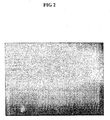
- Fig 2 shows an optical microscope picture (400 ⁇ m x 500 ⁇ m) of untreated tubing (0.072" ID x 0.098" OD) MED4759 silicone rubber (extrusion lines clearly visible).
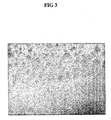
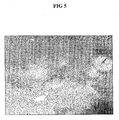
- Figs 3-5 The result of different treatments are shown in Figs 3-5 .
- Fig 3 being a microscope picture (400 ⁇ m x 500 ⁇ m): 20N HF for 44 sec (0.072" ID x 0.098" OD) MED4759 silicone rubber (deeper larger pitting).
- Fig 4 is an optical Microscope picture (400 ⁇ m x 500 ⁇ m): 2N HF for 2.5 min (0.072" ID x 0.098" OD) MED4759 silicone rubber (within optimum range).
- Fig 5 is an optical Microscope picture (400 ⁇ m x 500 ⁇ m): 2N HF for 54 min (0.072" ID x 0.098" OD) MED4759 silicone rubber (wet surface feel, exceeded optimum).
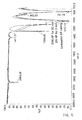
- ATR-FTIR surface measurement of infrared spectroscopy
- Fig 1 comprising ATR-FTIR spectra for surface of untreated tubing, optimal treated tubing, and excessively treated tubing (superimposed). This shows that no chemical modification such as fluorination or oxidation is occurring, and indicates that the HF treatment reduces the filler:polymer ratio at the surface.
- a silicone tubing with surface modification according to the invention gives a 25% reduction in the amount of torque required to extend a helix on an active fixation lead from 0.8 mNm to 0.6 mNm.
- the treated tubing also shows 12% reduction in moment (number of turns) from 8 to 7 on helix extension and 33% reduction in moment (number of turns) from 9 to 6 on helix retraction.
Landscapes
- Health & Medical Sciences (AREA)
- Chemical & Material Sciences (AREA)
- Life Sciences & Earth Sciences (AREA)
- Animal Behavior & Ethology (AREA)
- General Health & Medical Sciences (AREA)
- Public Health (AREA)
- Veterinary Medicine (AREA)
- Epidemiology (AREA)
- Chemical Kinetics & Catalysis (AREA)
- Medicinal Chemistry (AREA)
- Polymers & Plastics (AREA)
- Organic Chemistry (AREA)
- Engineering & Computer Science (AREA)
- Biomedical Technology (AREA)
- Nuclear Medicine, Radiotherapy & Molecular Imaging (AREA)
- Radiology & Medical Imaging (AREA)
- Heart & Thoracic Surgery (AREA)
- General Chemical & Material Sciences (AREA)
- Cardiology (AREA)
- Materials For Medical Uses (AREA)
- Treatments Of Macromolecular Shaped Articles (AREA)
Claims (25)
- Implantierbarer elastomerer Gegenstand, der auf wenigstens einer Fläche eine Oberflächenrauigkeit aufweist, die eine reduzierte Reibung zur Folge hat und durch Aufbringen einer Säure auf die genannte wenigstens eine Fläche und Entfernen der Säure nach einer vorbestimmten Behandlungszeit mittels Spülung erhalten worden ist.
- Implantierbarer elastomerer Gegenstand nach Anspruch 1, der aus Silikon hergestellt ist.
- Implantierbarer elastomerer Gegenstand nach Anspruch 1 oder 2, wobei die benutzte Säure eine Fluorwasserstoffsäure ist.
- Implantierbarer elastomerer Gegenstand nach Anspruch 3, wobei die Konzentration der Säure zwischen 0,1N und 10N, vorzugsweise zwischen 0,2 und 5N und insbesondere zwischen 0,5 und 2N HF liegt.
- Implantierbarer elastomerer Gegenstand nach Anspruch 4, wobei die Behandlungszeit höchstens 2 Stunden, vorzugsweise höchstens 1 Stunde und insbesondere höchstens 20 Minuten beträgt.
- Implantierbarer elastomerer Gegenstand nach Anspruch 5, wobei die Behandlungszeit wenigstens 30 Sekunden, vorzugsweise wenigstens 1 Minute beträgt.
- Implantierbarer elastomerer Gegenstand nach Anspruch 4, wobei die Behandlungszeit zwischen 2 und 10 Minuten, vorzugsweise zwischen 2,5 und 5,5 Minuten liegt.
- Implantierbarer elastomerer Gegenstand nach einem der vorhergehenden Ansprüche, wobei der Gegenstand ein für einen Schrittmacher oder eine kardiale Leitung vorgesehener Silikonschlauch ist, der Schlauch eine Innenfläche und eine Außenfläche aufweist und nur die Innenfläche mit einer Säure behandelt worden ist.
- Implantierbarer elastomerer Gegenstand nach einem der vorhergehenden Ansprüche, wobei der Gegenstand ein für einen Schrittmacher oder für kardiale Leitungen vorgesehener Silikonschlauch ist, der Schlauch eine Innenfläche und eine Außenfläche aufweist und sowohl die Innenfläche als auch die Außenfläche mit einer Säure behandelt worden sind.
- Verfahren zum Erzielen einer rauen Fläche, das an wenigstens einer Fläche eines implantierbaren elastomeren Gegenstandes eine reduzierte Reibung ergibt, gekennzeichnet durch Aufbringen einer Säure auf die genannte wenigstens eine Fläche und Entfernen der Säure nach einer vorbestimmten Behandlungszeit durch Spülung.
- Verfahren nach Anspruch 10, bei dem wenigstens eine Oberfläche mittels Wasser gespült wird.
- Verfahren nach Anspruch 10 oder 11, bei dem der Gegenstand aus Silikon hergestellt ist.
- Verfahren nach einem der Ansprüche 10 bis 12, bei dem die benutzte Säure eine Fluorwasserstoffsäure ist.
- Verfahren nach Anspruch 13, bei dem die Konzentration der Säure zwischen 0,1N und 10N, vorzugsweise zwischen 0,2 und 5N und insbesondere zwischen 0,5 und 2N Fluorwasserstoffsäure liegt.
- Verfahren nach Anspruch 13 oder 14, bei dem die Behandlungszeit höchstens 2 Stunden, vorzugsweise höchstens 1 Stunde und insbesondere höchstens 20 Minuten beträgt.
- Verfahren nach Anspruch 15, bei dem die Behandlungszeit wenigstens 30 Sekunden, vorzugsweise wenigstens 1 Minute beträgt.
- Verfahren nach Anspruch 13 oder 14, bei dem die Behandlungszeit zwischen 2 und 10 Minuten, vorzugsweise zwischen 2,5 und 5,5 Minuten liegt.
- Verfahren nach einem der Ansprüche 10 bis 17, bei dem der Gegenstand ein für einen Schrittmacher oder für kardiale Leitungen vorgesehener Silikonschlauch ist, der Schlauch eine Innenfläche und eine Außenfläche aufweist und die Innenfläche des Schlauches mit einer Säure behandelt wird.
- Verfahren nach Anspruch 18, bei dem sowohl die Innenfläche als auch die Außenfläche des Schlauches mit einer Säure behandelt werden.
- Verfahren zur Montage einer implantierbaren Elektrodenleitung mit einem wendelförmigen Leiter innerhalb eines eine Innenfläche und eine Außenfläche aufweisenden Silikonschlauches, gekennzeichnet durch Aufbringen einer Säure auf die genannte Innenfläche und Entfernen der Säure durch Spülen mit Wasser nach einer vorbestimmten Behandlungszeit woraufhin das Einsetzen des Leiters in den Schlauch folgt.
- Verfahren zur Montage nach Anspruch 20, bei dem die benutzte Säure Fluorwasserstoffsäure ist.
- Verfahren zur Montage nach Anspruch 21, bei dem die Konzentration der Säure zwischen 0,1N und 10N, vorzugsweise zwischen 0,2 und 5N und insbesondere zwischen 0,5 und 2N Fluorwasserstoffsäure liegt.
- Verfahren nach Anspruch 20 oder 21, bei dem die Behandlungszeit höchstens 2 Stunden, vorzugsweise höchstens 1 Stunde und insbesondere höchstens 20 Minuten beträgt.
- Verfahren nach Anspruch 23, bei dem die Behandlungszeit wenigstens 30 Sekunden, vorzugsweise wenigstens 1 Minute beträgt.
- Verfahren nach Anspruch 21 oder 22, bei dem die Behandlungszeit zwischen 2 und 10 Minuten, vorzugsweise zwischen 2,5 und 5,5 Minuten liegt.
Applications Claiming Priority (1)
| Application Number | Priority Date | Filing Date | Title |
|---|---|---|---|
| PCT/SE2005/001029 WO2007001218A1 (en) | 2005-06-29 | 2005-06-29 | Surface modification of implantable article |
Publications (2)
| Publication Number | Publication Date |
|---|---|
| EP1896090A1 EP1896090A1 (de) | 2008-03-12 |
| EP1896090B1 true EP1896090B1 (de) | 2009-09-02 |
Family
ID=37595382
Family Applications (1)
| Application Number | Title | Priority Date | Filing Date |
|---|---|---|---|
| EP05755050A Expired - Lifetime EP1896090B1 (de) | 2005-06-29 | 2005-06-29 | Oberflächenmodifizierung eines implantierbaren artikels |
Country Status (5)
| Country | Link |
|---|---|
| US (1) | US20100114274A1 (de) |
| EP (1) | EP1896090B1 (de) |
| AT (1) | ATE441441T1 (de) |
| DE (1) | DE602005016467D1 (de) |
| WO (1) | WO2007001218A1 (de) |
Families Citing this family (5)
| Publication number | Priority date | Publication date | Assignee | Title |
|---|---|---|---|---|
| US8880193B1 (en) | 2009-05-22 | 2014-11-04 | Advanced Bionics, Llc | Cochlear electrode array |
| US9814874B2 (en) | 2009-12-30 | 2017-11-14 | Cardiac Pacemakers, Inc. | Implantable lead electrode with asymmetrically distributed current density and methods for imparting current density directionality in lead electrodes |
| US8728562B2 (en) * | 2009-12-30 | 2014-05-20 | Cardiac Pacemakers, Inc. | Implantable leads with a unitary silicone component |
| US8463398B2 (en) | 2009-12-30 | 2013-06-11 | Cardiac Pacemakers, Inc. | Electrode surface modification for imparting current density directionality in lead electrodes |
| KR20220069619A (ko) * | 2020-11-20 | 2022-05-27 | 삼성전자주식회사 | 조성물, 이로부터 형성된 필름, 표시 장치, 물품 및 물품 제조방법 |
Family Cites Families (10)
| Publication number | Priority date | Publication date | Assignee | Title |
|---|---|---|---|---|
| EP0258317A4 (de) * | 1986-02-17 | 1990-01-23 | Commw Scient Ind Res Org | Implantierbares material. |
| US4882148A (en) * | 1987-06-18 | 1989-11-21 | Corvita Corporation | Crack prevention and improved thrombogenicity of implanted prostheses by sulfonation |
| US5593550A (en) * | 1994-05-06 | 1997-01-14 | Medtronic, Inc. | Plasma process for reducing friction within the lumen of polymeric tubing |
| US5643712A (en) * | 1994-05-20 | 1997-07-01 | Brasile; Lauren | Method for treating and rendering grafts nonthrombogenic and substantially nonimmunogenic using an extracellular matrix coating |
| CN1210554A (zh) * | 1996-02-09 | 1999-03-10 | 表面溶解实验室公司 | 水基亲水涂料组合物及由其制备的产品 |
| US6438425B1 (en) * | 1999-10-12 | 2002-08-20 | Medtronic, Inc. | Textured silicone tubing for electrical pacing leads |
| US20060121080A1 (en) * | 2002-11-13 | 2006-06-08 | Lye Whye K | Medical devices having nanoporous layers and methods for making the same |
| WO2005004965A2 (en) * | 2003-06-10 | 2005-01-20 | Lumend, Inc. | Catheter systems and methods for crossing vascular occlusions |
| US7981461B2 (en) * | 2004-01-30 | 2011-07-19 | Georgette Frederick S | Metallic bone implant having improved implantability and method of making the same |
| WO2006113808A2 (en) * | 2005-04-20 | 2006-10-26 | University Of Rochester | Methods of making and modifying porous devices for biomedical applications |
-
2005
- 2005-06-29 EP EP05755050A patent/EP1896090B1/de not_active Expired - Lifetime
- 2005-06-29 WO PCT/SE2005/001029 patent/WO2007001218A1/en not_active Ceased
- 2005-06-29 DE DE602005016467T patent/DE602005016467D1/de not_active Expired - Lifetime
- 2005-06-29 US US11/917,424 patent/US20100114274A1/en not_active Abandoned
- 2005-06-29 AT AT05755050T patent/ATE441441T1/de not_active IP Right Cessation
Also Published As
| Publication number | Publication date |
|---|---|
| EP1896090A1 (de) | 2008-03-12 |
| WO2007001218A1 (en) | 2007-01-04 |
| ATE441441T1 (de) | 2009-09-15 |
| US20100114274A1 (en) | 2010-05-06 |
| DE602005016467D1 (de) | 2009-10-15 |
Similar Documents
| Publication | Publication Date | Title |
|---|---|---|
| JP3445273B2 (ja) | インプラント用リード線 | |
| US8449803B2 (en) | Method of forming a catheter | |
| JP3963002B2 (ja) | 高分子物質製の管内通路のプラズマ放電処理装置、同処理方法並びにこれらにより製造したシリコンゴム管 | |
| US8163327B2 (en) | Hydrophilic polymeric coatings for medical articles | |
| US6549811B2 (en) | Medical electrical lead having controlled texture surface and method of making same | |
| JPS58118765A (ja) | カテ−テルおよびその使用方法 | |
| EP1896090B1 (de) | Oberflächenmodifizierung eines implantierbaren artikels | |
| JPH0852225A (ja) | 細長い医療用装置及びリード | |
| JP5956074B2 (ja) | 医療用リードのための向上した低摩擦コーティングおよび製造方法 | |
| EP0460204B1 (de) | Oberflächenbehandlung von silikonröhren zur verbesserung der gleiteigenschaften | |
| US6187265B1 (en) | Apparatus and method to deliver sterilants to articles having contact surfaces | |
| EP1933691B1 (de) | Medizintechnische vorrichtung mit selbstschmierendem element | |
| CN105025944B (zh) | 具有结构化涂层的起搏导线 | |
| WO2011081773A1 (en) | Implantable leads with a low coefficient of friction material | |
| US20110160823A1 (en) | Implantable leads with a low coefficient of friction material | |
| US20170216614A1 (en) | Device for biologically decontaminating percutaneous access points and method therefor | |
| JPH05168695A (ja) | ガイドワイヤ | |
| Wen et al. | Tube-based DBD plasma treatment for improving the performance of the slippery coating layers on medical catheters | |
| US8359106B2 (en) | Cold plasma bonding of polymeric tubing in implantable medical devices | |
| CN113164656A (zh) | 润滑硅树脂 | |
| US20080305278A1 (en) | Glass coating of polymers | |
| WO2024206442A1 (en) | Implantable medical device including polyetherurethane with improved biostability | |
| JP2012524605A (ja) | 複数領域におけるリードのコーティング | |
| JP2004105580A (ja) | 医療用具およびその製造方法 | |
| EP1132100A2 (de) | Verfahren zur Behandlung von medizinisch-chirurgischen Prothesen aus synthetischen Harzen für Menschen oder Tiere |
Legal Events
| Date | Code | Title | Description |
|---|---|---|---|
| PUAI | Public reference made under article 153(3) epc to a published international application that has entered the european phase |
Free format text: ORIGINAL CODE: 0009012 |
|
| 17P | Request for examination filed |
Effective date: 20071213 |
|
| AK | Designated contracting states |
Kind code of ref document: A1 Designated state(s): AT BE BG CH CY CZ DE DK EE ES FI FR GB GR HU IE IS IT LI LT LU MC NL PL PT RO SE SI SK TR |
|
| DAX | Request for extension of the european patent (deleted) | ||
| GRAP | Despatch of communication of intention to grant a patent |
Free format text: ORIGINAL CODE: EPIDOSNIGR1 |
|
| GRAS | Grant fee paid |
Free format text: ORIGINAL CODE: EPIDOSNIGR3 |
|
| GRAA | (expected) grant |
Free format text: ORIGINAL CODE: 0009210 |
|
| AK | Designated contracting states |
Kind code of ref document: B1 Designated state(s): AT BE BG CH CY CZ DE DK EE ES FI FR GB GR HU IE IS IT LI LT LU MC NL PL PT RO SE SI SK TR |
|
| REG | Reference to a national code |
Ref country code: CH Ref legal event code: EP |
|
| REG | Reference to a national code |
Ref country code: IE Ref legal event code: FG4D |
|
| REF | Corresponds to: |
Ref document number: 602005016467 Country of ref document: DE Date of ref document: 20091015 Kind code of ref document: P |
|
| PG25 | Lapsed in a contracting state [announced via postgrant information from national office to epo] |
Ref country code: LT Free format text: LAPSE BECAUSE OF FAILURE TO SUBMIT A TRANSLATION OF THE DESCRIPTION OR TO PAY THE FEE WITHIN THE PRESCRIBED TIME-LIMIT Effective date: 20090902 Ref country code: SE Free format text: LAPSE BECAUSE OF FAILURE TO SUBMIT A TRANSLATION OF THE DESCRIPTION OR TO PAY THE FEE WITHIN THE PRESCRIBED TIME-LIMIT Effective date: 20090902 Ref country code: FI Free format text: LAPSE BECAUSE OF FAILURE TO SUBMIT A TRANSLATION OF THE DESCRIPTION OR TO PAY THE FEE WITHIN THE PRESCRIBED TIME-LIMIT Effective date: 20090902 |
|
| NLV1 | Nl: lapsed or annulled due to failure to fulfill the requirements of art. 29p and 29m of the patents act | ||
| LTIE | Lt: invalidation of european patent or patent extension |
Effective date: 20090902 |
|
| PG25 | Lapsed in a contracting state [announced via postgrant information from national office to epo] |
Ref country code: NL Free format text: LAPSE BECAUSE OF FAILURE TO SUBMIT A TRANSLATION OF THE DESCRIPTION OR TO PAY THE FEE WITHIN THE PRESCRIBED TIME-LIMIT Effective date: 20090902 Ref country code: SI Free format text: LAPSE BECAUSE OF FAILURE TO SUBMIT A TRANSLATION OF THE DESCRIPTION OR TO PAY THE FEE WITHIN THE PRESCRIBED TIME-LIMIT Effective date: 20090902 Ref country code: PL Free format text: LAPSE BECAUSE OF FAILURE TO SUBMIT A TRANSLATION OF THE DESCRIPTION OR TO PAY THE FEE WITHIN THE PRESCRIBED TIME-LIMIT Effective date: 20090902 |
|
| PG25 | Lapsed in a contracting state [announced via postgrant information from national office to epo] |
Ref country code: CY Free format text: LAPSE BECAUSE OF FAILURE TO SUBMIT A TRANSLATION OF THE DESCRIPTION OR TO PAY THE FEE WITHIN THE PRESCRIBED TIME-LIMIT Effective date: 20090902 |
|
| PG25 | Lapsed in a contracting state [announced via postgrant information from national office to epo] |
Ref country code: EE Free format text: LAPSE BECAUSE OF FAILURE TO SUBMIT A TRANSLATION OF THE DESCRIPTION OR TO PAY THE FEE WITHIN THE PRESCRIBED TIME-LIMIT Effective date: 20090902 Ref country code: RO Free format text: LAPSE BECAUSE OF FAILURE TO SUBMIT A TRANSLATION OF THE DESCRIPTION OR TO PAY THE FEE WITHIN THE PRESCRIBED TIME-LIMIT Effective date: 20090902 Ref country code: PT Free format text: LAPSE BECAUSE OF FAILURE TO SUBMIT A TRANSLATION OF THE DESCRIPTION OR TO PAY THE FEE WITHIN THE PRESCRIBED TIME-LIMIT Effective date: 20100104 Ref country code: CZ Free format text: LAPSE BECAUSE OF FAILURE TO SUBMIT A TRANSLATION OF THE DESCRIPTION OR TO PAY THE FEE WITHIN THE PRESCRIBED TIME-LIMIT Effective date: 20090902 Ref country code: IS Free format text: LAPSE BECAUSE OF FAILURE TO SUBMIT A TRANSLATION OF THE DESCRIPTION OR TO PAY THE FEE WITHIN THE PRESCRIBED TIME-LIMIT Effective date: 20100102 Ref country code: ES Free format text: LAPSE BECAUSE OF FAILURE TO SUBMIT A TRANSLATION OF THE DESCRIPTION OR TO PAY THE FEE WITHIN THE PRESCRIBED TIME-LIMIT Effective date: 20091213 |
|
| PG25 | Lapsed in a contracting state [announced via postgrant information from national office to epo] |
Ref country code: SK Free format text: LAPSE BECAUSE OF FAILURE TO SUBMIT A TRANSLATION OF THE DESCRIPTION OR TO PAY THE FEE WITHIN THE PRESCRIBED TIME-LIMIT Effective date: 20090902 |
|
| PG25 | Lapsed in a contracting state [announced via postgrant information from national office to epo] |
Ref country code: AT Free format text: LAPSE BECAUSE OF FAILURE TO SUBMIT A TRANSLATION OF THE DESCRIPTION OR TO PAY THE FEE WITHIN THE PRESCRIBED TIME-LIMIT Effective date: 20090902 Ref country code: BE Free format text: LAPSE BECAUSE OF FAILURE TO SUBMIT A TRANSLATION OF THE DESCRIPTION OR TO PAY THE FEE WITHIN THE PRESCRIBED TIME-LIMIT Effective date: 20090902 |
|
| PLBE | No opposition filed within time limit |
Free format text: ORIGINAL CODE: 0009261 |
|
| STAA | Information on the status of an ep patent application or granted ep patent |
Free format text: STATUS: NO OPPOSITION FILED WITHIN TIME LIMIT |
|
| PG25 | Lapsed in a contracting state [announced via postgrant information from national office to epo] |
Ref country code: DK Free format text: LAPSE BECAUSE OF FAILURE TO SUBMIT A TRANSLATION OF THE DESCRIPTION OR TO PAY THE FEE WITHIN THE PRESCRIBED TIME-LIMIT Effective date: 20090902 |
|
| 26N | No opposition filed |
Effective date: 20100603 |
|
| PG25 | Lapsed in a contracting state [announced via postgrant information from national office to epo] |
Ref country code: GR Free format text: LAPSE BECAUSE OF FAILURE TO SUBMIT A TRANSLATION OF THE DESCRIPTION OR TO PAY THE FEE WITHIN THE PRESCRIBED TIME-LIMIT Effective date: 20091203 |
|
| PG25 | Lapsed in a contracting state [announced via postgrant information from national office to epo] |
Ref country code: MC Free format text: LAPSE BECAUSE OF NON-PAYMENT OF DUE FEES Effective date: 20100630 |
|
| GBPC | Gb: european patent ceased through non-payment of renewal fee |
Effective date: 20100629 |
|
| PG25 | Lapsed in a contracting state [announced via postgrant information from national office to epo] |
Ref country code: IT Free format text: LAPSE BECAUSE OF FAILURE TO SUBMIT A TRANSLATION OF THE DESCRIPTION OR TO PAY THE FEE WITHIN THE PRESCRIBED TIME-LIMIT Effective date: 20090902 |
|
| PG25 | Lapsed in a contracting state [announced via postgrant information from national office to epo] |
Ref country code: IE Free format text: LAPSE BECAUSE OF NON-PAYMENT OF DUE FEES Effective date: 20100629 |
|
| PG25 | Lapsed in a contracting state [announced via postgrant information from national office to epo] |
Ref country code: GB Free format text: LAPSE BECAUSE OF NON-PAYMENT OF DUE FEES Effective date: 20100629 |
|
| PG25 | Lapsed in a contracting state [announced via postgrant information from national office to epo] |
Ref country code: LU Free format text: LAPSE BECAUSE OF NON-PAYMENT OF DUE FEES Effective date: 20100629 Ref country code: HU Free format text: LAPSE BECAUSE OF FAILURE TO SUBMIT A TRANSLATION OF THE DESCRIPTION OR TO PAY THE FEE WITHIN THE PRESCRIBED TIME-LIMIT Effective date: 20100303 Ref country code: BG Free format text: LAPSE BECAUSE OF FAILURE TO SUBMIT A TRANSLATION OF THE DESCRIPTION OR TO PAY THE FEE WITHIN THE PRESCRIBED TIME-LIMIT Effective date: 20090902 |
|
| PG25 | Lapsed in a contracting state [announced via postgrant information from national office to epo] |
Ref country code: TR Free format text: LAPSE BECAUSE OF FAILURE TO SUBMIT A TRANSLATION OF THE DESCRIPTION OR TO PAY THE FEE WITHIN THE PRESCRIBED TIME-LIMIT Effective date: 20090902 |
|
| PGFP | Annual fee paid to national office [announced via postgrant information from national office to epo] |
Ref country code: FR Payment date: 20130702 Year of fee payment: 9 |
|
| PGFP | Annual fee paid to national office [announced via postgrant information from national office to epo] |
Ref country code: CH Payment date: 20140627 Year of fee payment: 10 |
|
| REG | Reference to a national code |
Ref country code: FR Ref legal event code: ST Effective date: 20150227 |
|
| PG25 | Lapsed in a contracting state [announced via postgrant information from national office to epo] |
Ref country code: FR Free format text: LAPSE BECAUSE OF NON-PAYMENT OF DUE FEES Effective date: 20140630 |
|
| REG | Reference to a national code |
Ref country code: CH Ref legal event code: PL |
|
| PG25 | Lapsed in a contracting state [announced via postgrant information from national office to epo] |
Ref country code: CH Free format text: LAPSE BECAUSE OF NON-PAYMENT OF DUE FEES Effective date: 20150630 Ref country code: LI Free format text: LAPSE BECAUSE OF NON-PAYMENT OF DUE FEES Effective date: 20150630 |
|
| PGFP | Annual fee paid to national office [announced via postgrant information from national office to epo] |
Ref country code: DE Payment date: 20160628 Year of fee payment: 12 |
|
| REG | Reference to a national code |
Ref country code: DE Ref legal event code: R119 Ref document number: 602005016467 Country of ref document: DE |
|
| PG25 | Lapsed in a contracting state [announced via postgrant information from national office to epo] |
Ref country code: DE Free format text: LAPSE BECAUSE OF NON-PAYMENT OF DUE FEES Effective date: 20180103 |